WO2019225401A1 - 秘密集約関数計算システム、秘密計算装置、秘密集約関数計算方法、およびプログラム - Google Patents
秘密集約関数計算システム、秘密計算装置、秘密集約関数計算方法、およびプログラム Download PDFInfo
- Publication number
- WO2019225401A1 WO2019225401A1 PCT/JP2019/019093 JP2019019093W WO2019225401A1 WO 2019225401 A1 WO2019225401 A1 WO 2019225401A1 JP 2019019093 W JP2019019093 W JP 2019019093W WO 2019225401 A1 WO2019225401 A1 WO 2019225401A1
- Authority
- WO
- WIPO (PCT)
- Prior art keywords
- share
- secret
- restored
- group
- sorted
- Prior art date
- Legal status (The legal status is an assumption and is not a legal conclusion. Google has not performed a legal analysis and makes no representation as to the accuracy of the status listed.)
- Ceased
Links
Images


Classifications
-
- G—PHYSICS
- G06—COMPUTING OR CALCULATING; COUNTING
- G06F—ELECTRIC DIGITAL DATA PROCESSING
- G06F16/00—Information retrieval; Database structures therefor; File system structures therefor
- G06F16/20—Information retrieval; Database structures therefor; File system structures therefor of structured data, e.g. relational data
- G06F16/24—Querying
- G06F16/242—Query formulation
- G06F16/2433—Query languages
- G06F16/244—Grouping and aggregation
-
- H—ELECTRICITY
- H04—ELECTRIC COMMUNICATION TECHNIQUE
- H04L—TRANSMISSION OF DIGITAL INFORMATION, e.g. TELEGRAPHIC COMMUNICATION
- H04L9/00—Cryptographic mechanisms or cryptographic arrangements for secret or secure communications; Network security protocols
- H04L9/08—Key distribution or management, e.g. generation, sharing or updating, of cryptographic keys or passwords
- H04L9/0816—Key establishment, i.e. cryptographic processes or cryptographic protocols whereby a shared secret becomes available to two or more parties, for subsequent use
- H04L9/085—Secret sharing or secret splitting, e.g. threshold schemes
-
- H—ELECTRICITY
- H04—ELECTRIC COMMUNICATION TECHNIQUE
- H04L—TRANSMISSION OF DIGITAL INFORMATION, e.g. TELEGRAPHIC COMMUNICATION
- H04L2209/00—Additional information or applications relating to cryptographic mechanisms or cryptographic arrangements for secret or secure communication H04L9/00
- H04L2209/46—Secure multiparty computation, e.g. millionaire problem
Definitions
- the present invention relates to a secret calculation technique, and more particularly to a technique for calculating an aggregate function while maintaining confidentiality.
- the aggregate function is an operation for obtaining a statistical value grouped based on the value of the key attribute when the table has the key attribute and the value attribute.
- Aggregate functions are also called group-by operations.
- the key attribute is an attribute used for grouping the records in the table, and examples thereof include a job title and sex.
- the value attribute is an attribute used to calculate a statistical value, and examples thereof include salary and height.
- the group-by operation is, for example, an operation for obtaining an average height for each gender when the key attribute is gender.
- the key attribute may be a composite key with a plurality of attributes. For example, when the key attribute is gender and age, the average height of males in teens, the average height of males in their 20s, etc. There may be.
- Non-Patent Document 1 describes a method of performing a group-by operation by a secret calculation.
- the group-by operation specifically includes group-by count, group-by sum, group-by maximum / minimum value, group-by median, and rank within the group.
- the group-by count is a cross tabulation, and is an operation of tabulating the number of records in each group when the table is grouped based on the value of the key attribute.
- the group-by sum is a sum of desired value attributes in each group.
- the group-by maximum value / minimum value is the maximum value / minimum value of a desired value attribute in each group.
- the group-by median is the median value of the desired value attribute in each group.
- the rank in the group is a function for acquiring the value of the value attribute of each record in the group.
- intermediate data may be obtained during the calculation process. Some of the intermediate data is commonly found among different types of group-by operations. If a plurality of group-by operations are calculated simultaneously or successively while maintaining confidentiality, the amount of calculation may increase due to duplication of processing for obtaining common intermediate data.
- an object of the present invention is to efficiently use intermediate data used in group-by operations when calculating a plurality of group-by operations simultaneously or successively while maintaining confidentiality. To provide technology that can be sought after.
- a secret aggregation function calculation system is a secret aggregation function calculation system including a plurality of secret calculation devices, wherein F is an arbitrary ring, and m is 2 or more N k is an integer greater than or equal to 1, and [k 0 ],..., [k nk-1 ] is a share in which the key attributes k 0 ,..., k nk-1 ⁇ F m are secretly distributed
- F is an arbitrary ring
- m is 2 or more N k is an integer greater than or equal to 1
- [k 0 ],..., [k nk-1 ] is a share in which the key attributes k 0 ,..., k nk-1 ⁇ F m are secretly distributed
- a group sort generator for generating a share ⁇ 0 ⁇ that becomes a replacement ⁇ 0 that stably sorts the bit string b in ascending order from the share ⁇ b ⁇ that becomes m ⁇ 1 , and a share ⁇ b ⁇ And the share ⁇ 0 ⁇ , the restored bit string b ': b' 0 ,..., b ' m-1 that has been sorted by the replacement ⁇ 0 is restored.
- the secret aggregation function technique of the present invention it is possible to efficiently obtain intermediate data used in a group-by operation while maintaining secrecy. By using the intermediate data, when calculating a plurality of group-by operations simultaneously or successively, the total calculation amount can be reduced.
- FIG. 1 is a diagram illustrating a functional configuration of a secret aggregation function calculation system.
- FIG. 2 is a diagram illustrating a functional configuration of the secret computing device.
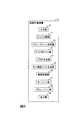
- FIG. 3 is a diagram illustrating a processing procedure of the secret aggregation function calculation method.
- [x] ⁇ [F] represents that a certain value x is concealed by secret sharing on an arbitrary ring F.
- ⁇ b ⁇ ⁇ ⁇ B ⁇ represents that a certain value b of 1 bit is concealed by secret sharing on ring B that can represent 1 bit.
- ⁇ s ⁇ ⁇ ⁇ S m ⁇ represents that a certain substitution s belonging to the m element substitution set S m is concealed by secret sharing or the like.
- the secret-distributed value is also referred to as “share”.
- sorting described in Reference Document 1 below can be used.
- the hybrid substitution ⁇ described in Reference Document 1 below may be used.
- the secret aggregation function calculation system 100 includes N ( ⁇ 2) secret calculation devices 1 1 ,..., 1 N.
- the secret computing devices 1 1 ,..., 1 N are each connected to the communication network 2.
- the communication network 2 is a circuit-switched or packet-switched communication network configured such that connected devices can communicate with each other.
- the Internet a LAN (Local Area Network), or a WAN (Wide Area Network). Etc. can be used.
- Each device does not necessarily need to be able to communicate online via the communication network 2.
- secure computing apparatus 1 1, ..., and stores information to be input to the 1 N in a portable recording medium such as a magnetic tape or a USB memory, secure computing apparatus 1 1 from the portable recording medium, ..., offline to 1 N You may comprise so that it may input.
- a portable recording medium such as a magnetic tape or a USB memory
- the secret computing device 1 n includes an input unit 10, a bit decomposition unit 11, a group sort generation unit 12, a bit string sort unit 13, a flag generation unit 14, a key aggregation sort generation unit 15, a deduplication Section 16, key sort section 17, value sort section 18, and output section 19.
- the secret aggregation function calculation method of the embodiment is realized.
- the secret computing device 1 n is configured, for example, by loading a special program into a known or dedicated computer having a central processing unit (CPU), a main storage (RAM), and the like. It is a special device.
- the secret computing device 1 n executes each process under the control of the central processing unit.
- the data input to the secret computing device 1 n and the data obtained by each processing are stored in, for example, the main storage device, and the data stored in the main storage device is read out to the central processing unit as necessary. Used for other processing.
- At least a part of each processing unit of the secret computing device 1 n may be configured by hardware such as an integrated circuit.
- step S10 the input unit 10 of each secret computing device 1 n uses n k key attributes k 0 ,..., K nk-1 ⁇ F m to share [k 0 ],. k nk-1 ] ⁇ [F] m and n a value attributes v 0 ,..., v na-1 ⁇ F m are concealed by secret sharing [v 0 ],..., [v na-1 ] ⁇ [F] m is received as input.
- n k, n a represents an integer of 1 or more
- m is an integer of 2 or more.
- the input unit 10 outputs the shares [k 0 ],..., [K nk-1 ] of the key attributes k 0 ,..., K nk-1 to the bit decomposition unit 11 and the deduplication unit 16.
- the input unit 10 the value attribute v 0, ..., v na- 1 share [v 0], ..., and outputs it to the value sorting section 18 [v na-1].
- ⁇ b i ⁇ is the i-th element [k 0, i ],..., each of the shares [k 0 ],..., [k nk-1 ] of the key attributes k 0 ,..., k nk-1 . It is a bit string that combines the bit representations of [k nk-1, i ].
- the bit decomposition unit 11 outputs the share ⁇ b ⁇ of the bit string b to the group sort generation unit 12.
- step S12 the group sort generation unit 12 of each secret computing device 1 n uses the share ⁇ b ⁇ of the bit string b to restore the share ⁇ that becomes the replacement ⁇ 0 for stably sorting the bit string b in ascending order. 0 ⁇ ⁇ ⁇ S m ⁇ is generated.
- the stable sort is an operation that preserves the order of elements having the same value when elements having the same value exist in the sort operation. For example, if a table sorted in order of employee numbers is stably sorted by gender, a sort result in which the order of employee numbers is maintained in each gender is obtained.
- the replacement ⁇ 0 is made so that records having the same value of the key attributes k 0 ,..., k nk-1 are consecutive. It can be said that it is an operation of rearranging and grouping.
- the group sort generation unit 12 outputs the share ⁇ b ⁇ of the bit string b and the share ⁇ 0 ⁇ of the replacement ⁇ 0 to the bit string sort unit 13. Further, the group sort generation unit 12 outputs the share ⁇ 0 ⁇ of the replacement ⁇ 0 to the key sort unit 17 and the value sort unit 18.
- the bit string sorting unit 13 outputs the share ⁇ b ′ ⁇ of the sorted bit string b ′ to the flag generation unit 14.
- ⁇ e i ⁇ : ⁇
- a share ⁇ e ⁇ ⁇ ⁇ B ⁇ m is generated.
- Flag e i because true is set when the sorted bit sequence b 'i th element b of' i is i + 1 th element b 'i + 1 is different from the last element of each group (i.e., Group It is a flag indicating the element immediately before the boundary between them.
- the flag generation unit 14 outputs the share ⁇ e ⁇ of the flag e to the key aggregation sort generation unit 15, the deduplication unit 16, and the output unit 19.
- step S15 the key aggregation sort generation unit 15 of each secret computing device 1 n first uses the share ⁇ e ⁇ of the flag e to restore the share ⁇ e that becomes the flag e ′ that is a negative e of the flag e when restored.
- the key aggregation / sort generation unit 15 uses the share ⁇ e ′ ⁇ of the flag e ′ to restore a share ⁇ ⁇ ⁇ that becomes a replacement ⁇ for stably sorting the flag e ′ in ascending order when restored.
- S m The key aggregation / sort generation unit 15 outputs the share ⁇ of the replacement ⁇ to the key sort unit 17 and the output unit 19.
- the deduplicated key attribute k " 0 ,..., k" nk-1 is only the element corresponding to the last element of each group A key attribute value is set, and the other elements are vectors set with predetermined values that cannot be taken by the key attribute.
- the deduplication unit 16 outputs the shares [k “ 0 ], ..., [k" nk-1 ] of the deduplicated key attributes k " 0 , ..., k” nk-1 to the key sort unit 17.
- Kisoto section 17 of each secret computing apparatus 1 n is, deduplicated key attribute k "0, ..., k" nk-1 share [k “0], ..., [k” and nk-1]
- the deduplicated key attributes k " 0 ,..., k" nk-1 are replaced with the replacement ⁇ 0
- a share [k ′ 0 ],..., [k ′ nk-1 ] is generated that becomes sorted key attributes k ′ 0 ,..., k ′ nk ⁇ 1 sorted in order by ⁇ .
- the key sort unit 17 outputs the shares [k ′ 0 ],..., [K ′ nk ⁇ 1 ] of the sorted key attributes k ′ 0 ,..., K ′ nk ⁇ 1 to the output unit 19.
- the value sort unit 18 of the secure computing apparatus 1 n is the value attribute v 0, ..., v na- 1 share [v 0], ..., [ v na-1] and substituted sigma 0 Share ⁇ ⁇ 0 ⁇ is used to restore the value attribute v 0 ,..., v na-1 as a sorted value attribute v ′ 0 ,..., v ′ na-1 sorted by replacement ⁇ 0 [v ' 0 ],..., [v' na-1 ] are generated.
- the value sort unit 18 outputs the shares [v ′ 0 ],..., [V ′ na ⁇ 1 ] of the sorted value attributes v ′ 0 ,..., V ′ na ⁇ 1 to the output unit 19.
- step S19 the output unit 19 of the secure computing apparatus 1 n is sorted key attribute k '0, ..., k' nk-1 share [k '0], ..., [k' nk-1], sorting It requires value attribute v '0, ..., v' na-1 share [v '0], ..., [v' na-1], share ⁇ e ⁇ flag e, and substituted sigma share ⁇
- Output at least one of the following.
- the information to be output by the output unit 19 is selected so as to satisfy intermediate data required for one or more group-by operations to be calculated subsequently.
- the group-by count is an operation of counting the number of records in each group when the table is grouped based on the value of the key attribute.
- the group-by count can be obtained as follows using the share ⁇ e ⁇ of the flag e output from the secret aggregation function calculation system 100 and the share ⁇ of the replacement ⁇ .
- g is the maximum number of groups, and is the number of combinations of values that the key attribute can take, that is, the number of types of values that the key attribute can take.
- the share ⁇ e ⁇ ⁇ ⁇ B ⁇ m of the flag e is converted into a share [e] ⁇ [F] m by secret sharing on an arbitrary ring F.
- the i-th element ⁇ (x) i of the sorted vector ⁇ (x) is set to the total value of the number of records in each group from the 0th to the i-th, so the i-th element of the vector c c i is set to the number of records of the i-th group. Since the key attribute is kept secret, min (g, m) is the maximum value that the number of groups can take, and the actual number of groups is known to each secret computing device 1 n that is less than min (g, m). An unobtainable value (hereinafter, the actual number of groups is g ′).
- the group-by sum is an operation of summing up the sum of desired value attributes for each group when the table is grouped based on the value of the key attribute.
- group-by summation it is possible to calculate a group-by product sum for obtaining the sum of multiplications for each group and a group-by sum of squares for obtaining the sum of squares for each group. If it is a group-by product sum, a group-by sum may be obtained for the result of multiplying the value attribute of each record. In the case of a group-by sum of squares, similarly, a group-by sum may be obtained for the result of squaring the value attribute of each record.
- the group-by sum is the share [v ' 0 ], ..., [v' na-1 ] of the sorted value attributes v ' 0 , ..., v' na-1 output by the secret aggregation function calculation system 100 and the flag e Using the share ⁇ e ⁇ and the replacement ⁇ share ⁇ , the following can be obtained.
- v is a desired value attribute for which a group-by sum is to be obtained among the sorted value attributes v ′ 0 ,..., V ′ na ⁇ 1 .
- prefix-sum is the length of the input vector v, and for each integer i between 0 and m-1, the i-th element v ' i of the output vector v' is the 0th element v of the input vector v This is an operation for setting the sum of values from 0 to the i-th element v i .
- the share ⁇ e ⁇ ⁇ ⁇ B ⁇ m of the flag e is converted into a share [e] ⁇ [F] m by secret sharing on an arbitrary ring F.
- records with the same key attribute value are sorted into the same group when the table is stably sorted by the key attribute, and the sum of the values of the value attribute before that element is set to the last element of each group.
- the element is a vector in which the sum of the value attribute values of the entire table is set.
- the i-th element ⁇ (t) i of the sorted vector ⁇ (t) is set to the i-th element of the vector t because the sum of the values of the value attribute v belonging to each of the groups 0 to i is set.
- the sum of the values of the value attribute v belonging to the i-th group is set.
- the group-by maximum value is an operation for obtaining a maximum value of a desired value attribute for each group when the table is grouped based on the value of the key attribute.
- the group-by maximum value is the share [v ' 0 ],..., [v' na-1 ] and flag of the sorted value attributes v ' 0 ,..., v' na-1 output by the secret aggregation function calculation system 100 Using e share ⁇ e ⁇ and permutation ⁇ share ⁇ , it can be obtained as follows. Note that v is a desired value attribute for which a group-by maximum value is to be obtained among the sorted value attributes v ′ 0 ,..., V ′ na ⁇ 1 .
- the share ⁇ e ⁇ ⁇ ⁇ B ⁇ m of the flag e is converted into a share [e] ⁇ [F] m by secret sharing on an arbitrary ring F.
- the value of the last element when sorting for each group is set to the element of the number of groups from the top (that is, the maximum value of each group), and 0 is set to the elements after that Vector.
- the group-by minimum value is an operation for obtaining a minimum value of a desired value attribute for each group when the table is grouped based on the value of the key attribute.
- the group-by minimum value is the share [v ' 0 ],..., [v' na-1 ] of the sorted value attributes v ' 0 , ..., v' na-1 output by the secret aggregation function calculation system 100 Using e share ⁇ e ⁇ and permutation ⁇ share ⁇ , it can be obtained as follows. Note that v is a desired value attribute for which a group-by minimum value is to be obtained among the sorted value attributes v ′ 0 ,..., V ′ na ⁇ 1 .
- the value of the first element when sorting for each group is set to the element of the number of groups from the top (that is, the minimum value of each group), and 0 is set to the subsequent elements Vector.
- a vector x ′: ⁇ (f ′) 0 ,..., ⁇ (f ′) representing the minimum value of each group when restored from the share [ ⁇ (f ′)] of the sorted vector ⁇ (f ′)
- the ascending order within a group is an operation that, when the table is grouped based on the value of the key attribute, obtains what number the value is in the group when the desired value attribute is sorted in ascending order. is there.
- the ascending order within the group can be obtained as follows using the share ⁇ e ⁇ of the flag e and the share ⁇ of the replacement ⁇ output from the secret aggregation function calculation system 100.
- c is a group-by count result (hereinafter referred to as “cross tabulation”).
- the cross tabulation c can be obtained, for example, using the share ⁇ e ⁇ of the flag e and the share ⁇ of the replacement ⁇ according to the above-described procedure of “group-by count”.
- the cross tabulation c is a vector in which the number of records of each group is set to the elements from the head to the number of groups, and the replacement ⁇ is a replacement in which the last element of each group is arranged in order from the head, so
- the reverse permuted cross tabulation u obtained by reversely applying is a vector in which the number of records of the group is set as the last element of each group.
- prefix-sum is the length of the input vector u, and for each integer i between 0 and m-1, the i-th element s i of the output vector s is from the 0th element u 0 of the input vector u This is an operation for setting the sum of values up to the i-th element u i .
- the descending order within a group is an operation that, when the table is grouped based on the value of the key attribute, obtains what number the value is in the group when the desired value attribute is sorted in descending order. is there.
- the descending order within the group can be obtained as follows using the share ⁇ e ⁇ of the flag e and the share ⁇ of the replacement ⁇ output from the secret aggregation function calculation system 100.
- c is a group-by count result (hereinafter referred to as “cross tabulation”).
- the cross tabulation c can be obtained, for example, using the share ⁇ e ⁇ of the flag e and the share ⁇ of the replacement ⁇ according to the above-described procedure of “group-by count”.
- the shifted cross tabulation c ′ is a vector obtained by shifting the cross tabulation c, which is a vector representing the number of records in each group, forward one by one.
- the shifted cross tabulation c ' is a vector obtained by shifting the cross tabulation c in which the number of records of each group is set to the elements from the head to the number of groups one by one, and the replacement ⁇ is the head of the last element of each group Since the permutation is arranged in order, the reverse permuted cross tabulation u ′ obtained by reversely applying the permutation ⁇ to the shifted cross tabulation c ′ is a vector in which the number of records of the next group is set as the last element of each group. Become.
- postfix-sum is the i-th element s' i of the output vector s' for the integer i between 0 and m-1 where m is the length of the input vector u '. This operation sets the sum of the values from the element u ′ i to the m ⁇ 1 th element u ′ m ⁇ 1 .
- the group-by median value is an operation for obtaining a median value of a desired value attribute for each group when the table is grouped based on key attribute values.
- the group-by median is the share [v ' 0 ], ..., [v' na-1 ] of the value attributes v ' 0 , ..., v' na-1 output by the secret aggregation function calculation system 100 and the flag e.
- c is a group-by count result (hereinafter referred to as “cross tabulation”).
- the cross tabulation c can be obtained, for example, using the share ⁇ e ⁇ of the flag e and the share ⁇ of the replacement ⁇ according to the above-described procedure of “group-by count”. Further, v is a desired value attribute for which a group-by median value is to be obtained among the sorted value attributes v ′ 0 ,..., V ′ na ⁇ 1 .
- a vector a: a 0 ,..., a m ⁇ 1 that represents the ascending order within the group when restored using the share [c] of the cross tabulation c and the share ⁇ of the replacement ⁇ .
- a share [a] ⁇ [F] m with ⁇ F and a vector d: d 0 ,..., d m-1 ⁇ F representing a descending order within the group when restored [d] ⁇ [F] m Is generated.
- the ascending order and descending order are one start.
- the ascending order within the group can be obtained, for example, according to the above-described procedure of ⁇ ascending order within the group >>.
- the descending order within the group can be obtained, for example, according to the above-described procedure of ⁇ descending order within the group >>.
- a ′ is a bit string excluding the least significant bit of ad
- d ′ is a bit string excluding the least significant bit of da.
- each secret computing device 1 n has the sorted key attributes k ′ 0 ,..., K ′ nk ⁇ 1 shares [k ′ 0 ] ,. At least the share [v ' 0 ],..., [v' na-1 ] of attribute v ' 0 ,..., v' na-1 , share of flag e ⁇ e ⁇ , and share of substitution ⁇ ⁇
- a processing unit to be provided may be selected and configured depending on the type of group-by operation to be calculated subsequently.
- the group-by count and the group-by median are group-by operations that require a share ⁇ e ⁇ of flag e and a share ⁇ of replacement ⁇ .
- the group-by sum and group-by maximum / minimum values are the share [v ' 0 ],..., [v' na-1 ] of the sorted value attributes v ' 0 ,..., v' na-1 , flag e Is a group-by operation that requires a share ⁇ e ⁇ and a share ⁇ of replacement ⁇ .
- the rank in the group is a group-by operation that requires the share ⁇ e ⁇ of the flag e and the share ⁇ of the replacement ⁇ .
- each secret computing device 1 n includes, for example, an input unit 10, a bit decomposition unit 11, a group sort generation unit 12, a bit string sort unit 13, a flag generation unit 14, a key aggregation sort generation unit 15, and an output unit 19.
- the deduplication unit 16, the key sort unit 17, and the value sort unit 18 can be configured not to be provided.
- the program describing the processing contents can be recorded on a computer-readable recording medium.
- a computer-readable recording medium any recording medium such as a magnetic recording device, an optical disk, a magneto-optical recording medium, and a semiconductor memory may be used.
- this program is distributed, for example, by selling, transferring, or lending a portable recording medium such as a DVD or CD-ROM in which the program is recorded. Furthermore, the program may be distributed by storing the program in a storage device of the server computer and transferring the program from the server computer to another computer via a network.
- a computer that executes such a program first stores a program recorded on a portable recording medium or a program transferred from a server computer in its own storage device. When executing the process, this computer reads the program stored in its own storage device and executes the process according to the read program.
- the computer may directly read the program from a portable recording medium and execute processing according to the program, and the program is transferred from the server computer to the computer. Each time, the processing according to the received program may be executed sequentially.
- the program is not transferred from the server computer to the computer, and the above processing is executed by a so-called ASP (Application Service Provider) type service that realizes the processing function only by the execution instruction and result acquisition. It is good.
- ASP Application Service Provider
- the program in this embodiment includes information that is used for processing by an electronic computer and that conforms to the program (data that is not a direct command to the computer but has a property that defines the processing of the computer).
- the present apparatus is configured by executing a predetermined program on a computer.
- a predetermined program on a computer.
- at least a part of these processing contents may be realized by hardware.
Landscapes
- Engineering & Computer Science (AREA)
- Theoretical Computer Science (AREA)
- Physics & Mathematics (AREA)
- Databases & Information Systems (AREA)
- General Physics & Mathematics (AREA)
- Data Mining & Analysis (AREA)
- General Engineering & Computer Science (AREA)
- Computational Linguistics (AREA)
- Mathematical Physics (AREA)
- Computer Networks & Wireless Communication (AREA)
- Signal Processing (AREA)
- Computer Security & Cryptography (AREA)
- Storage Device Security (AREA)
- Information Retrieval, Db Structures And Fs Structures Therefor (AREA)
- Library & Information Science (AREA)
- Quality & Reliability (AREA)
- Complex Calculations (AREA)
Abstract
Description
図1を参照して、実施形態の秘密集約関数計算システム100の構成例を説明する。秘密集約関数計算システム100は、N(≧2)台の秘密計算装置11, …, 1Nを含む。本形態では、秘密計算装置11, …, 1Nはそれぞれ通信網2へ接続される。通信網2は、接続される各装置が相互に通信可能なように構成された回線交換方式もしくはパケット交換方式の通信網であり、例えばインターネットやLAN(Local Area Network)、WAN(Wide Area Network)などを用いることができる。なお、各装置は必ずしも通信網2を介してオンラインで通信可能である必要はない。例えば、秘密計算装置11, …, 1Nへ入力する情報を磁気テープやUSBメモリなどの可搬型記録媒体に記憶し、その可搬型記録媒体から秘密計算装置11, …, 1Nへオフラインで入力するように構成してもよい。
group-byカウントは、テーブルをキー属性の値に基づいてグループ分けしたときに、各グループのレコード数を集計する演算である。group-byカウントは、秘密集約関数計算システム100が出力するフラグeのシェア{e}と置換σのシェア{{σ}}とを用いて、以下のように求めることができる。なお、gは最大グループ数であり、キー属性が取り得る値の組み合わせの数、すなわち、キー属性が取り得る値の種類の数である。
group-by総和は、テーブルをキー属性の値に基づいてグループ分けしたときに、グループごとに所望のバリュー属性の総和を集計する演算である。group-by総和を用いれば、グループごとに乗算の和を求めるgroup-by積和や、グループごとに二乗の和を求めるgroup-by二乗和も計算することができる。group-by積和であれば、各レコードのバリュー属性に乗算を施した結果に対してgroup-by総和を求めればよい。また、group-by二乗和であれば、同様に、各レコードのバリュー属性に二乗を施した結果に対してgroup-by総和を求めればよい。group-by総和は、秘密集約関数計算システム100が出力するソート済みバリュー属性v'0, …, v'na-1のシェア[v'0], …, [v'na-1]とフラグeのシェア{e}と置換σのシェア{{σ}}とを用いて、以下のように求めることができる。なお、vはソート済みバリュー属性v'0, …, v'na-1のうちgroup-by総和を求めたい所望のバリュー属性である。
group-by最大値は、テーブルをキー属性の値に基づいてグループ分けしたときに、グループごとに所望のバリュー属性の最大値を得る演算である。group-by最大値は、秘密集約関数計算システム100が出力するソート済みバリュー属性v'0, …, v'na-1のシェア[v'0], …, [v'na-1]とフラグeのシェア{e}と置換σのシェア{{σ}}とを用いて、以下のように求めることができる。なお、vはソート済みバリュー属性v'0, …, v'na-1のうちgroup-by最大値を求めたい所望のバリュー属性である。
group-by最小値は、テーブルをキー属性の値に基づいてグループ分けしたときに、グループごとに所望のバリュー属性の最小値を得る演算である。group-by最小値は、秘密集約関数計算システム100が出力するソート済みバリュー属性v'0, …, v'na-1のシェア[v'0], …, [v'na-1]とフラグeのシェア{e}と置換σのシェア{{σ}}とを用いて、以下のように求めることができる。なお、vはソート済みバリュー属性v'0, …, v'na-1のうちgroup-by最小値を求めたい所望のバリュー属性である。
グループ内の昇順順位は、テーブルをキー属性の値に基づいてグループ分けしたときに、所望のバリュー属性を昇順でソートしたときにその値がグループ内で何番目の値であるかを得る演算である。グループ内の昇順順位は、秘密集約関数計算システム100が出力するフラグeのシェア{e}と置換σのシェア{{σ}}とを用いて、以下のように求めることができる。なお、cはgroup-byカウントの結果(以下、「クロス集計」と呼ぶ)である。クロス集計cは、例えば、上述の≪group-byカウント≫の手順に従って、フラグeのシェア{e}と置換σのシェア{{σ}}とを用いて求めることができる。
グループ内の降順順位は、テーブルをキー属性の値に基づいてグループ分けしたときに、所望のバリュー属性を降順でソートしたときにその値がグループ内で何番目の値であるかを得る演算である。グループ内の降順順位は、秘密集約関数計算システム100が出力するフラグeのシェア{e}と置換σのシェア{{σ}}とを用いて、以下のように求めることができる。なお、cはgroup-byカウントの結果(以下、「クロス集計」と呼ぶ)である。クロス集計cは、例えば、上述の≪group-byカウント≫の手順に従って、フラグeのシェア{e}と置換σのシェア{{σ}}とを用いて求めることができる。
group-by中央値は、テーブルをキー属性の値に基づいてグループ分けしたときに、グループごとに所望のバリュー属性の中央値を得る演算である。group-by中央値は、秘密集約関数計算システム100が出力するバリュー属性v'0, …, v'na-1のシェア[v'0], …, [v'na-1]とフラグeのシェア{e}と置換σのシェア{{σ}}とを用いて、以下のように求めることができる。なお、cはgroup-byカウントの結果(以下、「クロス集計」と呼ぶ)である。クロス集計cは、例えば、上述の≪group-byカウント≫の手順に従って、フラグeのシェア{e}と置換σのシェア{{σ}}とを用いて求めることができる。また、vはソート済みバリュー属性v'0, …, v'na-1のうちgroup-by中央値を求めたい所望のバリュー属性である。
上記の実施形態では、各秘密計算装置1nが、ソート済みキー属性k'0, …, k'nk-1のシェア[k'0], …, [k'nk-1]、ソート済みバリュー属性v'0, …, v'na-1のシェア[v'0], …, [v'na-1]、フラグeのシェア{e}、および置換σのシェア{{σ}}の少なくとも1つを出力するように構成する例を説明したが、後に続いて計算するgroup-by演算の種類によって、備えるべき処理部を選択して構成してもよい。例えば、group-byカウントやgroup-by中央値は、フラグeのシェア{e}および置換σのシェア{{σ}}を必要とするgroup-by演算である。group-by総和やgroup-by最大値/最小値は、ソート済みバリュー属性v'0, …, v'na-1のシェア[v'0], …, [v'na-1]、フラグeのシェア{e}、および置換σのシェア{{σ}}を必要とするgroup-by演算である。グループ内の順位は、フラグeのシェア{e}および置換σのシェア{{σ}}を必要とするgroup-by演算である。すなわち、group-byカウント、group-by中央値、またはグループ内の順位を計算するが、group-by総和やgroup-by最大値/最小値を計算することがない状況であれば、秘密集約関数計算システム100は、少なくともフラグeのシェア{e}および置換σのシェア{{σ}}が出力できればよい。このとき、各秘密計算装置1nは、例えば、入力部10、ビット分解部11、グループソート生成部12、ビット列ソート部13、フラグ生成部14、キー集約ソート生成部15、および出力部19を備え、重複排除部16、キーソート部17、およびバリューソート部18は備えないように構成することができる。
上記実施形態で説明した各装置における各種の処理機能をコンピュータによって実現する場合、各装置が有すべき機能の処理内容はプログラムによって記述される。そして、このプログラムをコンピュータで実行することにより、上記各装置における各種の処理機能がコンピュータ上で実現される。
Claims (5)
- 複数の秘密計算装置を含む秘密集約関数計算システムであって、
Fは任意の環であり、mは2以上の整数であり、nkは1以上の整数であり、[k0], …, [knk-1]はキー属性k0, …, knk-1∈Fmを秘密分散したシェアであり、
上記秘密計算装置は、
上記シェア[k0], …, [knk-1]を用いて、復元すると上記キー属性k0, …, knk-1をビット分解して結合したビット列b:=b0, …, bm-1となるシェア{b}から、復元すると上記ビット列bを昇順に安定ソートする置換σ0となるシェア{{σ0}}を生成するグループソート生成部と、
上記シェア{b}と上記シェア{{σ0}}とを用いて、復元すると上記ビット列bを上記置換σ0でソートしたソート済みビット列b':=b'0, …, b'm-1となるシェア{b'}を生成するビット列ソート部と、
上記シェア{b'}を用いて、0以上m-2以下の各整数iについて{ei}:={b'i≠b'i+1}を設定し、かつ、{em-1}:={1}を設定して、復元するとフラグe:=e0, …, em-1となるシェア{e}を生成するフラグ生成部と、
上記シェア{e}を用いて、復元すると上記フラグeの否定¬eを昇順に安定ソートする置換σとなるシェア{{σ}}を生成するキー集約ソート生成部と、
を含む秘密集約関数計算システム。 - 請求項1に記載の秘密集約関数計算システムであって、
naは1以上の整数であり、[v0], …, [vna-1]はバリュー属性v0, …, vna-1∈Fmを秘密分散したシェアであり、
上記秘密計算装置は、
上記シェア{e}を用いて、0以上m-1以下の各整数iおよび0以上nk-1以下の各整数jについて、{ei}={1}ならば[k"j,i]に[kj,i]を設定し、{ei}≠{1}ならば[k"j,i]に所定の固定値を設定して、復元すると重複排除済みキー属性k"0, …, k"nk-1となるシェア[k"0], …, [k"nk-1]を生成する重複排除部と、
上記シェア[k"0], …, [k"nk-1]と上記シェア{{σ0}}と上記シェア{{σ}}とを用いて、
復元すると上記重複排除済みキー属性k"0, …, k"nk-1を上記置換σ0と上記置換σとで順にソートしたソート済みキー属性k'0, …, k'nk-1となるシェア[k'0], …, [k'nk-1]を生成するキーソート部と、
上記シェア[v0], …, [vna-1]と上記シェア{{σ0}}とを用いて、復元すると上記バリュー属性v0, …, vna-1を上記置換σ0でソートしたソート済みバリュー属性v'0, …, v'na-1となるシェア[v'0], …, [v'na-1]を生成するバリューソート部と、
を含む秘密集約関数計算システム。 - Fは任意の環であり、mは2以上の整数であり、nkは1以上の整数であり、[k0], …, [knk-1]はキー属性k0, …, knk-1∈Fmを秘密分散したシェアであり、
上記シェア[k0], …, [knk-1]を用いて、復元すると上記キー属性k0, …, knk-1をビット分解して結合したビット列b:=b0, …, bm-1となるシェア{b}から、復元すると上記ビット列bを昇順に安定ソートする置換σ0となるシェア{{σ0}}を生成するグループソート生成部と、
上記シェア{b}と上記シェア{{σ0}}とを用いて、復元すると上記ビット列bを上記置換σ0でソートしたソート済みビット列b':=b'0, …, b'm-1となるシェア{b'}を生成するビット列ソート部と、
上記シェア{b'}を用いて、0以上m-2以下の各整数iについて{ei}:={b'i≠b'i+1}を設定し、かつ、{em-1}:={1}を設定して、復元するとフラグe:=e0, …, em-1となるシェア{e}を生成するフラグ生成部と、
上記シェア{e}を用いて、復元すると上記フラグeの否定¬eを昇順に安定ソートする置換σとなるシェア{{σ}}を生成するキー集約ソート生成部と、
を含む秘密計算装置。 - 複数の秘密計算装置を含む秘密集約関数計算システムが実行する秘密集約関数計算方法であって、
Fは任意の環であり、mは2以上の整数であり、nkは1以上の整数であり、[k0], …, [knk-1]はキー属性k0, …, knk-1∈Fmを秘密分散したシェアであり、
上記秘密計算装置のグループソート生成部が、上記シェア[k0], …, [knk-1]を用いて、復元すると上記キー属性k0, …, knk-1をビット分解して結合したビット列b:=b0, …, bm-1となるシェア{b}から、復元すると上記ビット列bを昇順に安定ソートする置換σ0となるシェア{{σ0}}を生成し、
上記秘密計算装置のビット列ソート部が、上記シェア{b}と上記シェア{{σ0}}とを用いて、復元すると上記ビット列bを上記置換σ0でソートしたソート済みビット列b':=b'0, …, b'm-1となるシェア{b'}を生成し、
上記秘密計算装置のフラグ生成部が、上記シェア{b'}を用いて、0以上m-2以下の各整数iについて{ei}:={b'i≠b'i+1}を設定し、かつ、{em-1}:={1}を設定して、復元するとフラグe:=e0, …, em-1となるシェア{e}を生成し、
上記秘密計算装置のキー集約ソート生成部が、上記シェア{e}を用いて、復元すると上記フラグeの否定¬eを昇順に安定ソートする置換σとなるシェア{{σ}}を生成する、
秘密集約関数計算方法。 - 請求項3に記載の秘密計算装置としてコンピュータを機能させるためのプログラム。
Priority Applications (5)
| Application Number | Priority Date | Filing Date | Title |
|---|---|---|---|
| US17/057,120 US11593362B2 (en) | 2018-05-25 | 2019-05-14 | Secure aggregate function computation system, secure computation apparatus, secure aggregate function computation method, and program |
| JP2020521167A JP6989006B2 (ja) | 2018-05-25 | 2019-05-14 | 秘密集約関数計算システム、秘密計算装置、秘密集約関数計算方法、およびプログラム |
| EP19806536.9A EP3806070B1 (en) | 2018-05-25 | 2019-05-14 | Secret aggregate function calculation system, secret calculation device, secret aggregate function calculation method, and program |
| AU2019273208A AU2019273208B2 (en) | 2018-05-25 | 2019-05-14 | Secure aggregate function computation system, secure computation apparatus, secure aggregate function computation method, and program |
| CN201980032660.9A CN112119442B (zh) | 2018-05-25 | 2019-05-14 | 秘密聚合函数计算系统及方法、秘密计算装置、记录介质 |
Applications Claiming Priority (2)
| Application Number | Priority Date | Filing Date | Title |
|---|---|---|---|
| JP2018-100626 | 2018-05-25 | ||
| JP2018100626 | 2018-05-25 |
Publications (1)
| Publication Number | Publication Date |
|---|---|
| WO2019225401A1 true WO2019225401A1 (ja) | 2019-11-28 |
Family
ID=68616723
Family Applications (1)
| Application Number | Title | Priority Date | Filing Date |
|---|---|---|---|
| PCT/JP2019/019093 Ceased WO2019225401A1 (ja) | 2018-05-25 | 2019-05-14 | 秘密集約関数計算システム、秘密計算装置、秘密集約関数計算方法、およびプログラム |
Country Status (6)
| Country | Link |
|---|---|
| US (1) | US11593362B2 (ja) |
| EP (1) | EP3806070B1 (ja) |
| JP (1) | JP6989006B2 (ja) |
| CN (1) | CN112119442B (ja) |
| AU (1) | AU2019273208B2 (ja) |
| WO (1) | WO2019225401A1 (ja) |
Cited By (7)
| Publication number | Priority date | Publication date | Assignee | Title |
|---|---|---|---|---|
| WO2022264237A1 (ja) * | 2021-06-14 | 2022-12-22 | 日本電信電話株式会社 | 累積計算装置、累積計算方法、及びプログラム |
| JPWO2023062834A1 (ja) * | 2021-10-15 | 2023-04-20 | ||
| WO2023157117A1 (ja) * | 2022-02-16 | 2023-08-24 | 日本電信電話株式会社 | 秘密計算装置、秘密計算方法、プログラム |
| JPWO2023157118A1 (ja) * | 2022-02-16 | 2023-08-24 | ||
| JP2024515332A (ja) * | 2021-08-18 | 2024-04-08 | テンセント・テクノロジー・(シェンジェン)・カンパニー・リミテッド | 秘匿マルチパーティ計算に基づく極値の決定方法、装置、コンピュータ機器及びコンピュータプログラム |
| WO2024228294A1 (ja) * | 2023-05-01 | 2024-11-07 | エヌ・ティ・ティ・コミュニケーションズ株式会社 | 分析装置、分析方法及び分析プログラム |
| WO2025062484A1 (ja) * | 2023-09-19 | 2025-03-27 | 日本電信電話株式会社 | 秘密パーセンタイル値計算装置、秘密パーセンタイル値計算方法 |
Families Citing this family (3)
| Publication number | Priority date | Publication date | Assignee | Title |
|---|---|---|---|---|
| US11307860B1 (en) * | 2019-11-22 | 2022-04-19 | Blaize, Inc. | Iterating group sum of multiple accumulate operations |
| CN114153854B (zh) * | 2022-02-09 | 2022-05-10 | 支付宝(杭州)信息技术有限公司 | 一种基于秘密分享的多键分组信息获取方法和系统 |
| JP7740543B2 (ja) * | 2022-06-02 | 2025-09-17 | Ntt株式会社 | 秘密計算装置、秘密計算方法、プログラム |
Citations (3)
| Publication number | Priority date | Publication date | Assignee | Title |
|---|---|---|---|---|
| JPH0581337A (ja) * | 1991-09-21 | 1993-04-02 | Toshiba Corp | データ処理装置 |
| JP2012154968A (ja) * | 2011-01-21 | 2012-08-16 | Nippon Telegr & Teleph Corp <Ntt> | セキュア集合関数システム、秘密集合関数装置、セキュア集合関数処理方法、セキュア集合関数プログラム |
| WO2015107951A1 (ja) * | 2014-01-17 | 2015-07-23 | 日本電信電話株式会社 | 秘密計算方法、秘密計算システム、ソート装置及びプログラム |
Family Cites Families (11)
| Publication number | Priority date | Publication date | Assignee | Title |
|---|---|---|---|---|
| JPH03210684A (ja) * | 1990-01-12 | 1991-09-13 | Mitsubishi Electric Corp | 神経回路網装置 |
| JP3601719B2 (ja) * | 1997-04-18 | 2004-12-15 | 富士通株式会社 | 相関のあるデータ組み合わせの数え上げ方式 |
| US7761450B1 (en) * | 2003-12-24 | 2010-07-20 | Teradata Us, Inc. | Computing percentages in a database system |
| JP5506705B2 (ja) * | 2011-01-24 | 2014-05-28 | 日本電信電話株式会社 | 秘密マッチングシステム、秘密マッチング装置、秘密マッチング方法、秘密マッチングプログラム |
| JP5689826B2 (ja) * | 2012-01-26 | 2015-03-25 | 日本電信電話株式会社 | 秘密計算システム、暗号化装置、秘密計算装置及びその方法、プログラム |
| JP5860378B2 (ja) * | 2012-10-16 | 2016-02-16 | 日本電信電話株式会社 | 秘密計算システム、集約関数装置、秘密計算方法、およびプログラム |
| JP5907902B2 (ja) * | 2013-01-21 | 2016-04-26 | 日本電信電話株式会社 | 秘密計算による表の等結合システム、方法 |
| WO2015107780A1 (ja) * | 2014-01-17 | 2015-07-23 | 日本電信電話株式会社 | 要素複製装置、要素複製方法、およびプログラム |
| EP3278491A4 (en) * | 2015-03-15 | 2019-05-15 | David Chaum | PREPARED AND TRANSACTIONAL MIXTURE |
| JP5968484B1 (ja) * | 2015-03-18 | 2016-08-10 | 日本電信電話株式会社 | シェア復旧システム、シェア復旧方法、およびプログラム |
| EP3384424A4 (en) * | 2015-12-03 | 2019-07-24 | Unbound Tech Ltd | SECURITY OF SQL-BASED DATABASES WITH CRYPTOGRAPHIC PROTOCOLS |
-
2019
- 2019-05-14 EP EP19806536.9A patent/EP3806070B1/en active Active
- 2019-05-14 US US17/057,120 patent/US11593362B2/en active Active
- 2019-05-14 AU AU2019273208A patent/AU2019273208B2/en active Active
- 2019-05-14 JP JP2020521167A patent/JP6989006B2/ja active Active
- 2019-05-14 CN CN201980032660.9A patent/CN112119442B/zh active Active
- 2019-05-14 WO PCT/JP2019/019093 patent/WO2019225401A1/ja not_active Ceased
Patent Citations (3)
| Publication number | Priority date | Publication date | Assignee | Title |
|---|---|---|---|---|
| JPH0581337A (ja) * | 1991-09-21 | 1993-04-02 | Toshiba Corp | データ処理装置 |
| JP2012154968A (ja) * | 2011-01-21 | 2012-08-16 | Nippon Telegr & Teleph Corp <Ntt> | セキュア集合関数システム、秘密集合関数装置、セキュア集合関数処理方法、セキュア集合関数プログラム |
| WO2015107951A1 (ja) * | 2014-01-17 | 2015-07-23 | 日本電信電話株式会社 | 秘密計算方法、秘密計算システム、ソート装置及びプログラム |
Non-Patent Citations (4)
| Title |
|---|
| DAI IKARASHIKOJI CHIDAKOKI HAMADAKATSUMI TAKAHASHI: "Secure Database Operations Using An Improved 3-party Verifiable Secure Function Evaluation", THE 2011 SYMPOSIUM ON CRYPTOGRAPHY AND INFORMATION SECURITY, 2011 |
| DAI IKARASHIKOKI HAMADARYO KIKUCHIKOJI CHIDA: "A Design and an Implementation of Super-highspeed Multi-party Sorting: The Day When Multi-party Computation Reaches Scripting Languages", COMPUTER SECURITY SYMPOSIUM, 2017 |
| KIRIBUCHI, NAOTO ET AL.: "Programmable secure computation library MEVAL3", THE 2018 SYMPOSIUM ON CRYPTOGRAPHY AND INFORMATION SECURITY(SCIS2018, 23 January 2018 (2018-01-23), pages 1 - 8, XP009524184 * |
| See also references of EP3806070A4 |
Cited By (17)
| Publication number | Priority date | Publication date | Assignee | Title |
|---|---|---|---|---|
| JP7544274B2 (ja) | 2021-06-14 | 2024-09-03 | 日本電信電話株式会社 | 累積計算装置、累積計算方法、及びプログラム |
| JPWO2022264237A1 (ja) * | 2021-06-14 | 2022-12-22 | ||
| WO2022264237A1 (ja) * | 2021-06-14 | 2022-12-22 | 日本電信電話株式会社 | 累積計算装置、累積計算方法、及びプログラム |
| JP7651816B2 (ja) | 2021-08-18 | 2025-03-27 | テンセント・テクノロジー・(シェンジェン)・カンパニー・リミテッド | 秘匿マルチパーティ計算に基づく極値の決定方法、装置、コンピュータ機器及びコンピュータプログラム |
| US12506603B2 (en) | 2021-08-18 | 2025-12-23 | Tencent Technology (Shenzhen) Company Limited | Method, device, and storage medium for determining extremum based on secure multi-party computation |
| JP2024515332A (ja) * | 2021-08-18 | 2024-04-08 | テンセント・テクノロジー・(シェンジェン)・カンパニー・リミテッド | 秘匿マルチパーティ計算に基づく極値の決定方法、装置、コンピュータ機器及びコンピュータプログラム |
| WO2023062834A1 (ja) * | 2021-10-15 | 2023-04-20 | 日本電信電話株式会社 | 秘密分割装置、秘密分割方法、及びプログラム |
| JP7694684B2 (ja) | 2021-10-15 | 2025-06-18 | 日本電信電話株式会社 | 秘密分割装置、秘密分割方法、及びプログラム |
| JPWO2023062834A1 (ja) * | 2021-10-15 | 2023-04-20 | ||
| JPWO2023157117A1 (ja) * | 2022-02-16 | 2023-08-24 | ||
| WO2023157117A1 (ja) * | 2022-02-16 | 2023-08-24 | 日本電信電話株式会社 | 秘密計算装置、秘密計算方法、プログラム |
| WO2023157118A1 (ja) * | 2022-02-16 | 2023-08-24 | 日本電信電話株式会社 | 秘密計算装置、秘密計算方法、プログラム |
| JP7768330B2 (ja) | 2022-02-16 | 2025-11-12 | Ntt株式会社 | 秘密計算装置、秘密計算方法、プログラム |
| JP7768329B2 (ja) | 2022-02-16 | 2025-11-12 | Ntt株式会社 | 秘密計算装置、秘密計算方法、プログラム |
| JPWO2023157118A1 (ja) * | 2022-02-16 | 2023-08-24 | ||
| WO2024228294A1 (ja) * | 2023-05-01 | 2024-11-07 | エヌ・ティ・ティ・コミュニケーションズ株式会社 | 分析装置、分析方法及び分析プログラム |
| WO2025062484A1 (ja) * | 2023-09-19 | 2025-03-27 | 日本電信電話株式会社 | 秘密パーセンタイル値計算装置、秘密パーセンタイル値計算方法 |
Also Published As
| Publication number | Publication date |
|---|---|
| EP3806070A1 (en) | 2021-04-14 |
| AU2019273208B2 (en) | 2021-09-16 |
| AU2019273208A1 (en) | 2020-12-10 |
| US11593362B2 (en) | 2023-02-28 |
| JPWO2019225401A1 (ja) | 2021-05-27 |
| CN112119442B (zh) | 2024-07-12 |
| US20210191927A1 (en) | 2021-06-24 |
| EP3806070A4 (en) | 2022-01-26 |
| JP6989006B2 (ja) | 2022-01-05 |
| EP3806070B1 (en) | 2023-07-19 |
| CN112119442A (zh) | 2020-12-22 |
Similar Documents
| Publication | Publication Date | Title |
|---|---|---|
| JP6989006B2 (ja) | 秘密集約関数計算システム、秘密計算装置、秘密集約関数計算方法、およびプログラム | |
| JP6973633B2 (ja) | 秘密集約最大値システム、秘密集約最小値システム、秘密計算装置、秘密集約最大値方法、秘密集約最小値方法、およびプログラム | |
| JP6973632B2 (ja) | 秘密集約総和システム、秘密計算装置、秘密集約総和方法、およびプログラム | |
| JP6605746B2 (ja) | 秘密等結合システム、秘密等結合装置、秘密等結合方法、プログラム | |
| JP6973634B2 (ja) | 秘密集約中央値システム、秘密計算装置、秘密集約中央値方法、およびプログラム | |
| JP6973629B2 (ja) | 秘密集約順位システム、秘密計算装置、秘密集約順位方法、およびプログラム | |
| JP7017178B2 (ja) | 秘密クロス集計システム、秘密計算装置、秘密クロス集計方法、およびプログラム | |
| JP7081663B2 (ja) | 秘密結合システム、方法、秘密計算装置及びプログラム | |
| WO2023281693A1 (ja) | 秘密計算システム、装置、方法及びプログラム |
Legal Events
| Date | Code | Title | Description |
|---|---|---|---|
| 121 | Ep: the epo has been informed by wipo that ep was designated in this application |
Ref document number: 19806536 Country of ref document: EP Kind code of ref document: A1 |
|
| ENP | Entry into the national phase |
Ref document number: 2020521167 Country of ref document: JP Kind code of ref document: A |
|
| NENP | Non-entry into the national phase |
Ref country code: DE |
|
| ENP | Entry into the national phase |
Ref document number: 2019273208 Country of ref document: AU Date of ref document: 20190514 Kind code of ref document: A |
|
| ENP | Entry into the national phase |
Ref document number: 2019806536 Country of ref document: EP Effective date: 20210111 |