WO2019242762A1 - Procédé d'accès aléatoire, terminal, station de base, support de stockage, et dispositif électronique - Google Patents
Procédé d'accès aléatoire, terminal, station de base, support de stockage, et dispositif électronique Download PDFInfo
- Publication number
- WO2019242762A1 WO2019242762A1 PCT/CN2019/092375 CN2019092375W WO2019242762A1 WO 2019242762 A1 WO2019242762 A1 WO 2019242762A1 CN 2019092375 W CN2019092375 W CN 2019092375W WO 2019242762 A1 WO2019242762 A1 WO 2019242762A1
- Authority
- WO
- WIPO (PCT)
- Prior art keywords
- resource
- bwp
- message
- carrier
- lbt
- Prior art date
- Legal status (The legal status is an assumption and is not a legal conclusion. Google has not performed a legal analysis and makes no representation as to the accuracy of the status listed.)
- Ceased
Links
Images




Classifications
-
- H—ELECTRICITY
- H04—ELECTRIC COMMUNICATION TECHNIQUE
- H04W—WIRELESS COMMUNICATION NETWORKS
- H04W74/00—Wireless channel access
- H04W74/08—Non-scheduled access, e.g. ALOHA
- H04W74/0808—Non-scheduled access, e.g. ALOHA using carrier sensing, e.g. carrier sense multiple access [CSMA]
- H04W74/0816—Non-scheduled access, e.g. ALOHA using carrier sensing, e.g. carrier sense multiple access [CSMA] with collision avoidance
-
- H—ELECTRICITY
- H04—ELECTRIC COMMUNICATION TECHNIQUE
- H04L—TRANSMISSION OF DIGITAL INFORMATION, e.g. TELEGRAPHIC COMMUNICATION
- H04L5/00—Arrangements affording multiple use of the transmission path
- H04L5/003—Arrangements for allocating sub-channels of the transmission path
- H04L5/0053—Allocation of signalling, i.e. of overhead other than pilot signals
-
- H—ELECTRICITY
- H04—ELECTRIC COMMUNICATION TECHNIQUE
- H04L—TRANSMISSION OF DIGITAL INFORMATION, e.g. TELEGRAPHIC COMMUNICATION
- H04L5/00—Arrangements affording multiple use of the transmission path
- H04L5/0001—Arrangements for dividing the transmission path
- H04L5/0003—Two-dimensional division
- H04L5/0005—Time-frequency
- H04L5/0007—Time-frequency the frequencies being orthogonal, e.g. OFDM(A) or DMT
- H04L5/001—Time-frequency the frequencies being orthogonal, e.g. OFDM(A) or DMT the frequencies being arranged in component carriers
-
- H—ELECTRICITY
- H04—ELECTRIC COMMUNICATION TECHNIQUE
- H04L—TRANSMISSION OF DIGITAL INFORMATION, e.g. TELEGRAPHIC COMMUNICATION
- H04L5/00—Arrangements affording multiple use of the transmission path
- H04L5/0091—Signalling for the administration of the divided path, e.g. signalling of configuration information
-
- H—ELECTRICITY
- H04—ELECTRIC COMMUNICATION TECHNIQUE
- H04W—WIRELESS COMMUNICATION NETWORKS
- H04W72/00—Local resource management
- H04W72/02—Selection of wireless resources by user or terminal
-
- H—ELECTRICITY
- H04—ELECTRIC COMMUNICATION TECHNIQUE
- H04W—WIRELESS COMMUNICATION NETWORKS
- H04W72/00—Local resource management
- H04W72/04—Wireless resource allocation
- H04W72/044—Wireless resource allocation based on the type of the allocated resource
- H04W72/0453—Resources in frequency domain, e.g. a carrier in FDMA
-
- H—ELECTRICITY
- H04—ELECTRIC COMMUNICATION TECHNIQUE
- H04W—WIRELESS COMMUNICATION NETWORKS
- H04W72/00—Local resource management
- H04W72/20—Control channels or signalling for resource management
- H04W72/23—Control channels or signalling for resource management in the downlink direction of a wireless link, i.e. towards a terminal
-
- H—ELECTRICITY
- H04—ELECTRIC COMMUNICATION TECHNIQUE
- H04W—WIRELESS COMMUNICATION NETWORKS
- H04W74/00—Wireless channel access
- H04W74/08—Non-scheduled access, e.g. ALOHA
- H04W74/0833—Random access procedures, e.g. with 4-step access
-
- H—ELECTRICITY
- H04—ELECTRIC COMMUNICATION TECHNIQUE
- H04W—WIRELESS COMMUNICATION NETWORKS
- H04W74/00—Wireless channel access
- H04W74/08—Non-scheduled access, e.g. ALOHA
- H04W74/0833—Random access procedures, e.g. with 4-step access
- H04W74/0841—Random access procedures, e.g. with 4-step access with collision treatment
-
- H—ELECTRICITY
- H04—ELECTRIC COMMUNICATION TECHNIQUE
- H04W—WIRELESS COMMUNICATION NETWORKS
- H04W80/00—Wireless network protocols or protocol adaptations to wireless operation
- H04W80/02—Data link layer protocols
-
- H—ELECTRICITY
- H04—ELECTRIC COMMUNICATION TECHNIQUE
- H04W—WIRELESS COMMUNICATION NETWORKS
- H04W74/00—Wireless channel access
- H04W74/08—Non-scheduled access, e.g. ALOHA
- H04W74/0808—Non-scheduled access, e.g. ALOHA using carrier sensing, e.g. carrier sense multiple access [CSMA]
-
- H—ELECTRICITY
- H04—ELECTRIC COMMUNICATION TECHNIQUE
- H04W—WIRELESS COMMUNICATION NETWORKS
- H04W74/00—Wireless channel access
- H04W74/08—Non-scheduled access, e.g. ALOHA
- H04W74/0833—Random access procedures, e.g. with 4-step access
- H04W74/0836—Random access procedures, e.g. with 4-step access with 2-step access
Definitions
- the present application relates to the field of communications, and in particular, to a random access method, terminal, base station, storage medium, and electronic device.
- FIG. 1 is a schematic diagram of a random access process in the related technology of the present application. 1234 correspond to msg1 to msg4, respectively. Because LBT is performed before each message is sent, the entire RACH process needs to perform LBT 4 times, which increases the random access delay.
- LBT Listen Before Talk
- Embodiments of the present invention provide a random access method, a terminal, a base station, a storage medium, and an electronic device.
- a random access method which includes: in a random access process, selecting a first resource among a plurality of wireless resources, and sending the first message to a base station using the first resource,
- the wireless resource includes at least one of the following: a bandwidth part BWP, a carrier resource; and receiving a second message sent by the base station, wherein the second message carries indication information of the second resource.
- a random access method including: during a terminal UE random access process, receiving a first message sent by the UE; generating a second message; selecting among a plurality of wireless resources A third resource that uses the third resource to send the second message to the UE, wherein the wireless resource includes at least one of the following: a bandwidth part BWP, a carrier resource, and the second message carries a second resource Instructions.
- a terminal including: a sending module, configured to select a first resource among a plurality of wireless resources during a random access process, and use the first resource to send a first resource to a base station.
- a message wherein the wireless resource includes at least one of: a bandwidth part BWP, a carrier resource; and a receiving module for receiving a second message sent by the base station, wherein the second message carries an indication of the second resource information.
- a base station including: a receiving module configured to receive a first message sent by the UE during a random access process of a terminal UE; and a generating module configured to generate a second message
- a sending module configured to select a third resource from among multiple wireless resources, and use the third resource to send the second message to the UE, wherein the wireless resource includes at least one of the following: a bandwidth portion BWP, Carrier resource, the second message carries indication information of the second resource.
- a storage medium is further provided.
- the storage medium stores a computer program, and the computer program is configured to execute the steps in any one of the foregoing method embodiments when running.
- an electronic device which includes a memory and a processor.
- the memory stores a computer program
- the processor is configured to run the computer program to execute any one of the foregoing. Steps in a method embodiment.
- FIG. 1 is a schematic diagram of a random access process in the related technology of the present application
- FIG. 3 is a flowchart of another random access method according to an embodiment of the present invention.
- FIG. 4 is a structural block diagram of a terminal according to an embodiment of the present invention.
- FIG. 5 is a structural block diagram of a base station according to an embodiment of the present invention.
- FIG. 6 is a schematic diagram of a MAC RAR format in the related art of the present application.
- FIG. 7 is a schematic diagram of a MAC / ARP format of one carrier / BWP in the embodiment of the present invention.
- FIG. 8 is a schematic diagram of the MAC RAR format of two carriers / BWP in the embodiment of the present invention.
- FIG. 9 is a schematic diagram of a MAC RAR format of three carriers / BWP in the embodiment of the present invention.
- FIG. 10 is a schematic diagram of the MAC RAR format of 4 carriers / BWP in the embodiment of the present invention.
- the network architecture running in the embodiment of the present application includes a terminal and a base station, where the terminal interacts with the base station.
- FIG. 2 is a flowchart of a random access method according to an embodiment of the present invention. As shown in FIG. 2, the process includes the following steps:
- Step S202 In the random access process, a first resource is selected from a plurality of wireless resources and a first message is sent to the base station using the first resource, wherein the wireless resource includes at least one of the following: a bandwidth part BWP, and a carrier resource .
- Step S204 Receive a second message sent by the base station, where the second message carries indication information of the second resource.
- the execution subject of the above steps may be a terminal, such as a mobile phone, but is not limited thereto.
- selecting the first resource among the multiple wireless resources includes at least one of the following: selecting the first BWP among multiple bandwidth parts (BWP); including the following two cases: Case 1: Selecting a BWP , Execute LBT, send a message, case 2: select multiple BWPs, perform LBT on multiple BWPs, and LBT successfully sends data; select the first carrier among multiple carrier resources.
- BWP bandwidth parts
- selecting the first BWP among the multiple bandwidth part BWPs includes: selecting the first BWP among the multiple bandwidth part BWPs by at least one of the following: BWP selection threshold, BWP load, listen first and then speak LBT count value, where The LBT count value is used to describe an LBT success rate or an LBT failure rate.
- selecting the first carrier among the multiple carrier resources includes: selecting the first carrier among the multiple carrier resources by at least one of the following: a carrier selection threshold, a carrier load, an LBT success rate, and an LBT failure rate.
- using the first resource to send the first message to the base station includes sending the preamble to the base station using the first resource.
- the second message sent by the receiving base station includes one of the following: receiving a media access control random access response MAC RAR sent by the base station; receiving a timing advance TA sent by the base station, a temporary cell wireless network temporary identifier Temporary C-RNTI And competition resolutions.
- the second message carries a resource location of the second resource and a resource identifier of the second resource.
- the method further includes: sending a third message to the base station using the second resource.
- the method further includes: sending Msg3 according to the LBT result, and once the LBT is successful, repeatedly sending Msg3 multiple times; wherein the maximum number of repetitions of Msg3 is carried in the second message and can be included in RMSI Random Mobile Identity) or MAC RAR or Msg3 retransmission uplink scheduling grant (UL grant).
- the maximum number of retransmissions is configured through a system message, or carried through a retransmission UL grant of Msg3 or a UL grant in MAC RAR.
- FIG. 3 is a flowchart of another random access method according to an embodiment of the present invention. As shown in FIG. 3, the process includes the following steps:
- Step S302 During a random access process of the terminal UE, a first message sent by the UE is received.
- step S304 a second message is generated.
- a third resource is selected from the plurality of wireless resources and a second message is sent to the UE using the third resource, wherein the wireless resource includes at least one of the following: a bandwidth part BWP, a carrier resource, and the second message carries Indication information of the second resource.
- the second resource may be used to send a third message (such as msg3).
- a third message such as msg3
- selecting the second resource among multiple wireless resources includes at least one of the following: selecting a second BWP among multiple bandwidth partial BWPs; and selecting a second carrier among multiple carrier resources.
- selecting the second BWP among the multiple bandwidth part BWPs includes: selecting the second BWP among the multiple bandwidth part BWPs by at least one of the following: BWP selection threshold, BWP load, and listening to the LBT count value first.
- selecting the second carrier among the multiple carrier resources includes: selecting the second carrier among the multiple carrier resources by at least one of the following: carrier selection threshold, carrier load, LBT success rate, and LBT failure rate.
- the method before generating the second message, further includes one of the following: selecting the second resource among multiple wireless resources, where the second message carries the indication information of the second resource; at this time, the base station selects and instructs To the UE; indicate to the UE that the second resource is the resource used to send the first message; at this time, the base station directly indicates that if the resource used when sending Msg1 is directly inherited, the same resource may be the same UL BWP, but for Msg1 and Msg3 may have different resource locations and resource numbers; the second resource is used by the UE to send a third message.
- the method further includes: configuring the maximum number of repetitions of Msg3 by one of the following: a system message, MAC RAR, and a retransmission authorization of Msg3, wherein the maximum number of repetitions is used to instruct the UE to perform Msg3 The maximum number of repetitions.
- a device for random access such as a terminal and a base station.
- This device is used to implement the foregoing embodiments and preferred implementation manners.
- the term "module” may implement a combination of software and / or hardware for a predetermined function.
- FIG. 4 is a structural block diagram of a terminal according to an embodiment of the present invention.
- the apparatus includes: a sending module 40, configured to select a first resource among a plurality of wireless resources during a random access process, and use a first resource.
- a resource sends a first message to a base station, wherein the wireless resource includes at least one of: a bandwidth part BWP, a carrier resource; and a receiving module 42 for receiving a second message sent by the base station, where the second message carries the second message Indication of the resource.
- the second resource is used to send a third message.
- FIG. 5 is a structural block diagram of a base station according to an embodiment of the present invention.
- the apparatus includes: a receiving module 50 configured to receive a first message sent by the UE during a random access process of the terminal UE; and a generating module 52 Is configured to generate a second message; and a sending module 54 is configured to select a third resource among multiple wireless resources and send the second message to the UE using the third resource, wherein the wireless resource includes at least one of the following: a bandwidth portion BWP, carrier resource, and the second message carries indication information of the second resource.
- a receiving module 50 configured to receive a first message sent by the UE during a random access process of the terminal UE
- a generating module 52 Is configured to generate a second message
- a sending module 54 is configured to select a third resource among multiple wireless resources and send the second message to the UE using the third resource, wherein the wireless resource includes at least one of the following: a bandwidth portion BWP, carrier resource, and the second message carries
- the second resource is used by the UE to send a third message.
- each of the above modules can be implemented by software or hardware.
- it can be implemented by the following methods, but is not limited to the above: the above modules are all located in the same processor; The forms are located in different processors.
- This embodiment provides a method and device for signal transmission, which can reduce random access delay, access the network faster or synchronize, and enhance the steps in the random access process, such as increasing the number of repetitions or transmission opportunities. Wait.
- multiple transmission opportunities can be provided, from time domain, frequency domain, etc.
- the frequency domain can use multiple carriers or multiple BWPs, that is, multiple preambles are sent on different carriers or BWPs.
- the base station is configured with multiple carriers or multiple BWPs, there is a problem of selecting carriers or BWPs.
- multi-carrier you can choose by carrier selection threshold, carrier load or LBT failure success rate.
- Multiple BWPs can also be selected by setting BWP selection thresholds, BWP load, or LBT success and failure statistics.
- Msg2, Msg3, and Msg4 a similar scheme can also be used to select the carrier and BWP.
- the base station For multiple transmission opportunity attempts of Msg3, the base station needs to provide resources of multiple carriers or multiple BWPs in order to make a selection. Then if the base station indicates the resources of multiple carriers or multiple BWPs through the MAC RAR, the MAC RAR format defined by the current NR needs to be modified. At present, it can be considered to support a MAC or RAR format indicating up to 4 carriers or BWP. Depending on the number of indications, the format of the corresponding MAC RAR is also different.
- LBT may fail. If LBT fails, the bottom layer reports MAC and LBT failure. After the MAC is received, if the RAR window has not been opened, then the RACH process can be initiated again at this time, and the subsequent processes of the RAR window need not be opened again.
- the MAC When the preamble transmission fails, the MAC receives LBT failure, and PREMBLE_TRANSMISSION_COUNTER and PREMBLE_POWER_RAMPING_COUNTER are not increased. Add another counter, LBT_Failure_Counter. For the case of LBT failure, the counter LBT_Failure_Counter needs to be incremented by one. At the same time, the base station needs to configure the LBT failure threshold for the UE. When either the PREMBLE_TRANSMISSION_COUNTER or LBT_Failure_Counter reaches the threshold, the MAC needs to report to the high-level random access problem so that the high-level can perform the next operation.
- the base station can configure Msg3 transmission opportunities or repetition times through system messages or MAC RAR or Msg3 retransmission authorization.
- the MAC instructs the underlying transmission. If LBT fails, the MAC continues to instruct the underlying until the maximum transmission opportunity or repetition times is reached.
- Embodiment 1 multiple BWP selection in one cell, select one BWP, 4-step RACH
- the BWP selection is performed before each message is sent.
- the main scenario of this implementation mode is the selection of multiple BWPs in a cell, taking the 4-step RACH process as an example.
- Step 1 The UE selects a BWP according to a threshold, a channel occupancy rate, or an LBT failure success rate, for example, selects a channel occupancy rate, and selects a lightly loaded BWP.
- the preamble and Physical Random Access Channel (PRACH) resources are selected according to the RACH common configuration information of the BWP.
- PRACH Physical Random Access Channel
- the reference signal received power (Reference Signaling Power, RSRP) exceeds a certain threshold, and may be selected as a candidate BWP. If there are multiple BWPs that meet the conditions, you can consider other factors or choose one randomly.
- the UE side performs energy or signal detection, and if a certain threshold is exceeded, the channel is considered to be occupied. Count the channel occupancy over a period of time. If the channel occupancy reaches a certain threshold, the load is considered heavy. If there are multiple BWPs that meet the conditions, you can consider other factors or choose one randomly.
- the failure success rate of LBT can count the results over a period of time. For example, in 200ms, the total number of LBTs, the number of LBT successes, and the number of LBT failures, and then the LBT success failure rate is calculated.
- the base station can be configured with a selection threshold. If the statistical success rate of LBT is greater than this threshold, it can be selected. If there are multiple BWPs larger than the threshold, other factors can be considered or one can be selected randomly.
- Step 2 After receiving the Msg1 from the BWP, the base station allocates the resources used by Msg3 and generates a MAC RAR message. Then, the base station chooses to send a downlink BWP of the MAC RAR.
- the downlink BWP can be selected by threshold, channel occupancy rate, or LBT failure success rate.
- the base station performs energy or signal detection, and if a certain threshold is exceeded, the channel is considered to be occupied. Count the channel occupancy over a period of time. If the channel occupancy reaches a certain threshold, the load is considered heavy.
- the base station side counts LBT results over a period of time, for example, within 200 ms, the number of LBT executions, the number of LBT successes and failures, and calculates the LBT failure success rate.
- the LBT success rate reaches a certain threshold, it can be selected as the downlink BWP for sending MAC RAR. If multiple BWPs are selected, other factors can be considered or one is selected at random.
- the base station allocates the resources used by Msg3.
- the resources used by Msg3 can be allocated on the BWP used by Msg1, or a BWP can be selected based on the uplink measurement result, and the resources used by Msg3 can be allocated on the selected BWP.
- the resources used by Msg3 are allocated on multiple BWPs. After the selection is completed, it is placed in the MAC RAR message.
- multiple opportunities can be given, that is, if the LBT fails, the next LBT is performed until the LBT succeeds or a certain chance of trying is reached, and the MAC RAR is sent only once.
- the UE receives the MAC RAR, analyzes it, and performs preamble matching. If the Msg2 reception is successful, the UE generates a corresponding Msg3. The UE then selects the BWP used by Msg3 according to the instructions in the MAC RAR. If there is only one BWP, the UE may send Msg3 at the BWP; if multiple BWPs are indicated, the UE may select the BWP according to the channel occupancy rate or the LBT failure success rate, and then send Msg3 on the selected BWP.
- the base station may configure multiple transmission attempts or multiple repetitions. If the base station is configured with multiple attempts, the UE needs to send according to the LBT result, and Msg3 is sent only once. If the base station configures multiple repetition times, the UE sends according to the LBT result. The number of times that Msg3 is sent is related to the execution result of LBT. Msg3 can be repeatedly sent multiple times.
- Step 4 The base station receives Msg3 on the indicated one or more BWPs. After receiving Msg3 successfully, it generates Msg4. Then select the BWP for downlink transmission based on the channel occupancy rate or LBT failure success rate. After the BWP selection is completed, the base station sends Msg4 on the selected BWP.
- Step 5 After the UE receives Msg4, if the competition decision is successful, it needs to select a suitable BWP to send the Msg4 feedback.
- the BWP can be selected based on the measurement result, the channel occupancy rate, or the LBT failure success rate.
- Embodiment 2 selection of multiple BWPs in one cell, selecting one BWP, 2-step RACH
- the BWP selection is performed before each message is sent.
- This embodiment takes a 2-step RACH process as an example.
- Step 1 The UE selects a BWP according to a threshold, a channel occupancy rate, or the number of times that LBT fails successfully. For example, the UE selects a BWP based on a channel occupancy rate and selects a lightly loaded BWP. After selection, the preamble and PRACH resources are selected according to the RACH common configuration information of the BWP. After the selection is completed, an instruction is given to the bottom layer, and the bottom layer sends Msg1 (corresponding to the preamble and Msg3 in the 4-step RACH process) to the base station according to the MAC instruction.
- Msg1 corresponding to the preamble and Msg3 in the 4-step RACH process
- the RSRP of the downlink measurement result if it exceeds a certain threshold, it can be selected as a candidate BWP. If there are multiple BWPs that meet the conditions, you can consider other factors or choose one randomly.
- the channel occupancy rate includes a situation in which the node and other nodes occupy the channel. For example, according to the received Signal Strength Indication (RSSI) measurement, compared with a threshold value, if a certain threshold is exceeded, the channel is considered to be occupied. Count the channel occupancy over a period of time. If the channel occupancy reaches a certain threshold, the load is considered heavy.
- RSSI Signal Strength Indication
- Step 2 After receiving the Msg1 from the BWP, the base station generates a corresponding Msg2, including TA, Temporary C-RNTI, and competition resolution (corresponding to Msg2 and Msg4 in the 4-step RACH process). Then the base station chooses to send the downlink BWP of Msg2, which can be selected by the channel occupancy rate or the number of successful LBT failures.
- the base station performs energy or signal detection, and if a certain threshold is exceeded, the channel is considered to be occupied. Count the channel occupancy over a period of time. If the channel occupancy reaches a certain threshold, the load is considered heavy.
- the base station side counts LBT results over a period of time, for example, within 200 ms, the number of LBT executions, the number of LBT successes and failures, and calculates the LBT failure success rate.
- the LBT success rate reaches a certain threshold, it can be selected as the downlink BWP for sending MAC RAR. If multiple BWPs are selected, other factors can be considered or one is selected at random.
- Step 3 After the UE receives Msg2, if the competition decision is successful, it needs to select a suitable uplink BWP to send the feedback of Msg2.
- the carrier or BWP can be selected according to the threshold, the channel occupancy rate or the number of LBT failure successes.
- Embodiment 3 multi-carrier and multi-BWP selection, each process involves the choice of carrier and BWP, but each message is sent only on the BWP of the selected carrier, 4-step RACH)
- carrier selection may be performed before each message is sent in the random access process.
- a 4-step RACH process is used as an example.
- Step 1 The UE selects a carrier and a BWP according to a measurement result of each uplink carrier or statistics of a channel occupancy rate or an LBT failure success rate. That is, the carrier selection process involves the selection of BWP, which can be completed together. After the carrier and BWP selection on the corresponding carrier are completed, the UE selects preamble and PRACH resources according to the common RACH configuration of the BWP on the carrier. When the preamble transmission time arrives, the selected carrier, BWP and preamble are indicated to the bottom layer, and the bottom layer sends the preamble to the base station according to the MAC instruction.
- Step 2 After receiving the preamble, the base station first selects the carrier and BWP used by Msg3, and allocates resources on the BWP of the selected carrier to generate a MAC RAR message. Then, the base station chooses to send the downlink carrier and BWP of Msg2. At this time, the base station may select based on the measurement result, the channel occupancy rate, or the LBT failure success rate.
- Solution 1 The base station may allocate Msg3 resources on the BWP of the carrier received by the preamble.
- the base station may select one or more carriers according to the measurement results of the uplink carrier and the BWP, each carrier selects only one BWP, and allocates the resources used by Msg3 on the BWP of the selected carrier;
- the base station may select a carrier according to the measurement results of the uplink carrier and the BWP, may select multiple BWPs on the corresponding carrier, and allocate resources used by Msg3 on the corresponding multiple BWPs of the selected carrier;
- the base station may select multiple carriers for the uplink carrier and the BWP, select multiple BWPs for each carrier, and allocate resources used by Msg3 on the multiple BWPs of the selected carrier.
- Step 3 After the UE receives the MAC RAR, if the parsing is successful and the preamble matches, then the Msg2 is successfully received.
- the UE sends Msg3 according to the resource indication of the MAC RAR. If the base station indicates a BWP of a carrier, the UE may send Msg3 on the corresponding resource. If the base station indicates multiple BWPs of one carrier or one or more BWPs of multiple carriers, the UE may perform carrier and BWP selection according to measurement results, channel occupancy rate, and LBT failure success rate. When the selection is completed, the UE sends Msg3 on the BWP of the corresponding carrier.
- Step 4 After receiving the Msg3, the base station generates a corresponding Msg4. Before sending Msg4, the base station needs to select the downlink carrier and BWP, which can be selected based on the measurement result, channel occupancy rate, or LBT failure success rate. After the selection is completed, the base station sends Msg4 on the BWP of the selected carrier.
- Step 5 After the UE receives Msg4, if the competition decision is successful, the uplink carrier and BWP need to be selected.
- the carrier and BWP for sending Msg3 may be used, and the feedback of Msg4 may be sent according to the channel occupancy rate or LBT failure success rate.
- Embodiment 4 (MAC RAR indicates resource locations used by Msg3 of multiple carriers or multiple BWPs)
- Embodiment 1 when a base station selects multiple carriers or BWPs to allocate resources used by Msg3, it is necessary to indicate resources of multiple carriers or BWPs. In addition to indicating the resource location, it is also necessary to indicate the selected carrier or BWP.
- FIG. 6 is a schematic diagram of the MAC RAR format in the related technology of the present application.
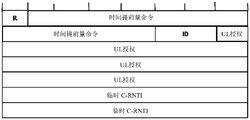
- the bits occupied by UL grants are 25 bits. If up to 4 carriers or BWPs can be indicated, then 2 bits are required to indicate, that is, each carrier or BWP's UL grant needs 27 bits to indicate. Since the existing UL grant may be 1, 2, 3, or 4, the MAC RAR message is variable, and the MAC RAR format in these 4 cases needs to be designed separately.
- FIG. 7 is a schematic diagram of the MAC RAR format of one carrier / BWP in the embodiment of the present invention.
- the ID in FIG. 7 is the ID of the carrier / BWP to which the Msg3 resource is allocated.
- FIG. 8 is a schematic diagram of the MAC RAR format of two carriers / BWP in the embodiment of the present invention.
- TAC Time Advance Command
- ID is the carrier / BWP ID assigned for Msg3 transmission.
- FIG. 9 is a schematic diagram of the MAC RAR format of three carriers / BWP in the embodiment of the present invention.
- FIG. 10 is a schematic diagram of the MAC RAR format of 4 carriers / BWP in the embodiment of the present invention.
- the MAC RAR format designed above based on the selected carrier / BWP is just an example and is not limited to this format.
- Embodiment 5 (LBT fails, the UE reports, the RAR window is not opened, and the next RACH process is initiated)
- the UE-side MAC After selecting the PRACH resource and the preamble code, the UE-side MAC is sent to the bottom layer when the preamble transmission time is approaching. Since LBT needs to be performed, the MAC needs to allow a certain time for the bottom layer. When the LBT fails, the bottom layer needs to instruct the LBT failure to the MAC. After the MAC is received, the RAR window may not be opened. For the case where it is not opened, the MAC can initiate the next random access process. That is, after receiving the LBT failure, the MAC can consider that the random access has failed and execute the following process:
- the MAC After receiving the LBT failure, the MAC considers that the random access has failed, and increases the number of preamble transmissions by one to determine whether the number of preamble transmissions has reached the maximum number of retransmissions. If the maximum number of retransmissions is reached, a random access problem is indicated to the upper layer; if the maximum number of retransmissions is not reached, a random backoff time is selected and the next random access process is performed.
- the PREMBLE_POWER_RAMPING_COUNTER is not incremented when the random access procedure is initiated next time.
- Embodiment 6 (preamble is not transmitted due to LBT failure, a counter is introduced)
- the bottom layer needs to give the upper layer an LBT failure instruction.
- the preamble power ramping does not increase, that is, PREMBLE_POWER_RAMPING_COUNTER does not increase.
- the number of preamble transmissions ie PREAMBLE_TRANSMISSION_COUNTER, does not increase.
- the LBT failure counter that is, when the bottom layer reports LBT failure once, the MAC counts once.
- the LBT failure counter reaches a certain threshold or the PREMBLE_TRANSMISSION_COUNTER is greater than preambleTxMax, the MAC reports the high-level random access problem.
- the threshold of LBT failure counter can be defined in RACH-ConfigCommon or RACH-ConfigGeneric. For example, it can be defined according to the following structure:
- the LBTFailureMax defined here does not limit the value in the example.
- Embodiment 7 Msg3 transmission or retransmission failure, because of LBT, report LBT failure power does not climb
- the bottom layer can report the MAC LBT failure.
- the MAC receives LBT failures and reaches the maximum number of retransmissions of Msg3, it indicates that the current cell is heavily loaded or the channel conditions are not good. At this time, the power is not climbing, and the number of preamble transmissions may be increased or not increased. If the LBT failure counter is defined, in this case, the LBT failure counter is incremented by one.
- Embodiment 8 (Msg3 retransmission performs multiple repetitions)
- repetition times K and repetition RV can be increased.
- This retransmission times and repetition RV can be indicated in a system message or a retransmission authorization indication in Msg3.
- the fields defined in the Msg3 retransmission Physical Downlink Control Channel (PDCCH) message can be as shown in Table 1:
- Embodiment 9 (multiple opportunities and one transmission)
- the base station may indicate the transmission opportunity in a system message or MAC RAR or Msg3 retransmission authorization.
- the UE receives it, it performs LBT on the transmission opportunity indicated by the base station. If the LBT is successful, then Msg3 transmission will be performed. Here, it will be transmitted only once, and the authorized UE will not use it, so it can be released for other nodes to use. Here, the behavior of the UE needs to be constrained.
- the underlying LBT is successful, it instructs LBT success to the MAC. After the MAC is received, the MAC no longer instructs the data to the underlying layer at the next moment or transmission opportunity, so that the underlying layer will not transmit. At this time, the MAC still needs to buffer the Msg3 data packet, so that in the case of failure, the next retransmission is performed.
- an information element can be added to the RACH-ConfigCommon in the system information block 1 (System Information Blocks 1, SIB1), such as Msg3TransOpportunity.
- SIB1 System Information Blocks 1, SIB1
- MACRAR is used to indicate retransmission opportunities, it can be defined as shown in Table 2:
- Embodiment 10 multiple BWP selection of a cell, selecting one or more to perform LBT, but the message is finally sent on one BWP, 4-step RACH)
- the BWP selection is performed before each message is sent.
- the main scenario of this implementation mode is the selection of multiple BWPs in a cell, taking the 4-step RACH process as an example.
- Step 1 The UE selects a BWP according to a threshold, a channel occupancy rate, or an LBT failure success rate, for example, selects a channel occupancy rate, and selects a lightly loaded BWP. There may be one or more BWPs that meet the conditions, and the preamble and PRACH resources are selected according to the RACH common configuration information of the one or more BWPs that meet the conditions.
- the UE indicates the selection result to the bottom layer, and the bottom layer may perform LBT on one or more BWPs. If the LBT of multiple BWPs succeeds, the bottom layer selects one of the BWPs with successful LBTs to send Msg1.
- the UE side performs energy or signal detection, and if a certain threshold is exceeded, the channel is considered to be occupied. Count the channel occupancy over a period of time. If the channel occupancy reaches a certain threshold, the load is considered heavy.
- the failure success rate of LBT can count the results over a period of time. For example, in 200ms, the total number of LBTs, the number of LBT successes, and the number of LBT failures, and then the LBT success failure rate is calculated.
- the base station can be configured with a selection threshold, which is selected based on the threshold value and the statistical success rate of LBT failures.
- Step 2 After receiving the Msg1 from the BWP, the base station allocates the resources used by Msg3 and generates a MAC RAR message. Then, the base station chooses to send a downlink BWP of the MAC RAR.
- the base station allocates the resources used by Msg3, and can allocate the resources used by Msg3 on the UL BWP used by Msg1, or select a UL BWP based on the uplink measurement results, and allocate the resources used by Msg3 on the selected UL BWP, or The base station selects multiple UL BWPs, and allocates resources used by Msg3 on multiple UL BWPs. After the selection is completed, it is placed in the MAC RAR message.
- the base station performs energy or signal detection, and if a certain threshold is exceeded, the channel is considered to be occupied. Count the channel occupancy over a period of time. If the channel occupancy reaches a certain threshold, the load is considered heavy.
- the base station side counts LBT results over a period of time, for example, within 200 ms, the number of LBT executions, the number of LBT successes and failures, and calculates the LBT failure success rate.
- the base station may select one or more downlink BWPs according to certain conditions, perform LBT on the one or more BWPs, and if the LBT is successful, send Msg2.
- Msg2 is sent only once.
- the UE receives Msg2, performs analysis, and performs preamble matching. If the Msg2 reception is successful, the UE generates a corresponding Msg3. The UE then selects the BWP used by Msg3 according to the instructions in Msg2. If there is only one BWP, then the UE can send Msg3 in the BWP; if multiple BWPs are indicated, the UE can perform LBT on multiple BWPs, and if there are BWPs with successful LBT, then select one BWP to send Msg3.
- the failure success rate for LBT is the same as that described in step 1.
- multiple sending opportunities or multiple repetitions can be configured. If the base station is configured with multiple transmission opportunities, the UE executes LBT, and the LBT is successful. Msg3 can be transmitted and transmitted only once, and the number of LBT executions does not exceed the configured maximum attempt opportunity, as in Embodiment 9. If the base station is configured with multiple repetition times and the UE performs LBT, which one is successful, it sends Msg3, and then repeatedly sends Msg3 according to whether the configured number of times is reached, as in Embodiment 8.
- Step 4 The base station receives Msg3 on the indicated one or more BWPs. After receiving Msg3 successfully, it generates Msg4. Then select the BWP for downlink transmission based on the channel occupancy rate or LBT failure success rate. After the BWP selection is completed, the UE sends Msg4 on the selected BWP.
- the base station selects one or more BWPs according to the channel occupancy rate or the LBT failure success rate, and performs LBT in one or more BWPs. If the LBT of multiple downlink BWPs succeeds, the base station selects only one BWP to send Msg4.
- Step 5 After the UE receives Msg4, if the competition decision is successful, it needs to select a suitable BWP to send the Msg4 feedback.
- the BWP can be selected based on the measurement result, the channel occupancy rate, or the LBT failure success rate.
- the UE may select one or more uplink BWPs and perform LBT on one or more BWPs. If the LBT of multiple BWPs is successful, then only one BWP with successful LBT is selected to send feedback.
- Embodiment 11 Selection of multiple BWPs in a cell, selecting one or more BWPs to perform LBT, 2-step RACH)
- the BWP selection is performed before each message is sent.
- This embodiment takes a 2-step RACH process as an example.
- Step 1 The UE selects a BWP according to a threshold, a channel occupancy rate, or an LBT failure success rate, for example, selects a channel occupancy rate, and selects a lightly loaded BWP. There may be one or more BWPs that meet the conditions, and the preamble and PRACH resources are selected according to the RACH common configuration information of the one or more BWPs that meet the conditions.
- the MAC indicates the preamble and PRACH resources selected on one or more BWPs to the bottom layer.
- the bottom layer executes LBT according to the instructions.
- the RSRP of the downlink measurement result if it exceeds a certain threshold, it can be selected as a candidate BWP.
- the UE side performs energy or signal detection, and if a certain threshold is exceeded, the channel is considered to be occupied. Count the channel occupancy over a period of time. If the channel occupancy reaches a certain threshold, the load is considered heavy.
- the failure success rate of LBT can count the results over a period of time. For example, in 200ms, the total number of LBTs, the number of LBT successes, and the number of LBT failures, and then the LBT success failure rate is calculated.
- Step 2 After receiving the Msg1 from the BWP, the base station generates a corresponding Msg2, including TA, Temporary C-RNTI, and competition resolution (corresponding to Msg2 and Msg4 in the 4-step RACH process). Then the base station chooses to send the downlink BWP of Msg2, which can be selected by channel occupancy rate or LBT failure success rate.
- the base station performs energy or signal detection, and if a certain threshold is exceeded, the channel is considered to be occupied. Count the channel occupancy over a period of time. If the channel occupancy reaches a certain threshold, the load is considered heavy.
- the base station side counts LBT results over a period of time, for example, within 200 ms, the number of LBT executions, the number of LBT successes and failures, and calculates the LBT failure success rate.
- the base station may select one or more downlink BWPs according to certain conditions, and perform LBT on the one or more BWPs. If there are multiple LBT successful BWPs, choose one to send Msg2.
- step 3 after the UE receives Msg2, if the preamble matches and the competition resolution is successful, it needs to select a suitable uplink BWP to send the Msg2 feedback.
- the carrier or BWP can be selected according to the measurement result, the channel occupancy rate, or the number of LBT failure successes.
- the UE may select one or more uplink BWPs and perform LBT on one or more BWPs. If the LBT of multiple BWPs is successful, then only one BWP with successful LBT is selected to send feedback.
- Embodiment 11 Selection of multiple BWPs in a cell, selecting one or more BWPs to perform LBT, 2-step RACH)
- RAR window is defined as a maximum of 10ms.
- preamble transmission and MAC RAR transmission are both required to perform LBT, a 10ms RAR window may not be sufficient.
- RA-RNTI Random Access-Radio Network Tempory Identity
- the ra-rnti associated with the prach that sends the random access preamble is calculated as follows (The RA-RNTI associated with the PRACH in which the Random Access Preamble is transmitted, is calculated):
- RA-RNTI 1 + s_id + 14 ⁇ t_id + 14 ⁇ 80 ⁇ f_id + 14 ⁇ 80 ⁇ 8 ⁇ ul_carrier_id
- s_id is the index of the first OFDM symbol that specifies PRACH Occasion (0 ⁇ s_id ⁇ 14), and t_id is the index of the first slot of the designated PRACH transmission opportunity (PRACH Occasion) in the system frame (0 ⁇ t_id ⁇ 80 ), F_id is the index of the designated prachoccasion in the frequency domain (0 ⁇ f_id ⁇ 8), ul_carrier_id is the uplink carrier used for Msg1 transmission (0 is a Non-Supplementary Uplink (NUL) carrier, and 1 is a supplementary uplink ( Supplementary Uplink (SUL) carrier) (where_s_id is the index of the first OFDM symbol of the PRACH (0 ⁇ s_id ⁇ 14), t_id is the index of the first slot of the first slot slot of the system frame (0 ⁇ t_id ⁇ 80), f_id is the index of PRACH in the frequency domain (0 ⁇ f_id ⁇ 8), and ul_car
- the value range of t_id is 0 ⁇ t_id ⁇ X * 8. For example, if the RAR window is expanded to 15ms, then the value range of t_id is 0 ⁇ t_id ⁇ 120; if the RAR window is expanded to 20ms, then the value range of t_id is 0 ⁇ t_id ⁇ 160.
- Embodiment 12 (collection setting of BWP)
- Msg2 and Msg4 need to select BWP during the random access process, but since the base station cannot distinguish which UE the message of the random access process comes from, the base station cannot select the BWP according to the configuration of each UE . If some BWPs are selected according to the channel conditions or LBT failure success rate, the BWPs that actually transmit data are not necessarily the downlink BWPs configured by the UE, which will result in unsuccessful message reception.
- the base station can select the downlink BWP in the corresponding group.
- the base station has 8 UL BWPs (UL BWP1 to UL BWP8) and 8 DL BWPs (DL BWP1 to DL BWP8).
- UL, BWP1 ... UL, and BWP8 respectively Corresponds to DL, BWP1 ... DL, BWP8.
- the UL BWP1 to UL BWP4 and DL BWP1 to DL BWP4 are grouped into a group, namely group A, UL BWP5 to UL BWP8, and DL BWP5 to DL BWP8 are grouped into a group, group B.
- the UE selects UL BWP1 to send the preamble.
- the base station receives the preamble from the UL BWP1, it generates a MAC RAR.
- the base station selects DL BWP according to the channel occupation rate or LBT failure success rate in the group A where UL BWP1 is located, and performs LBT on the selected DL BWP. If LBT succeeds, it sends Msg2.
- the base station For Msg4, if the base station cannot distinguish Msg3 from which UE after analyzing Msg3, then it can also determine the group it belongs to according to the UL BWP sent by Msg3.
- the base station selects DL and BWP according to the channel occupation or LBT failure success rate in the group where the base station is located, and performs LBT on the selected BWP.
- the LBT successfully sends Msg4.
- Embodiment 13 (PDCCH adds multiple BWP indexes)
- multiple BWPs may be indicated on the PDCCH order.
- Each BWP information can adopt this structure: BWP index, preamble index, SSB index, and PRACH MASCK index.
- the preamble index is common to multiple BWPs.
- Each BWP contains parameters such as BWP index, SSB index, and PRACH MASK index.
- Solution 3 The preamble index, SSB index, and PRACH and MASK index are common to multiple BWPs, and only include multiple BWP indexes.
- Embodiment 14 (PDCCH order indicates multiple SSB indices)
- Solution 1 The PRACH and MASK indexes are common, and for each information structure, the preamble index and SSB index are included.
- Solution 2 The preamble index and PRACH and MASK indexes are common, indicating multiple SSB indexes.
- the access or synchronization delay of the UE can be reduced.
- An embodiment of the present application further provides a storage medium.
- the storage medium stores a computer program, and the computer program is configured to execute the steps in any one of the foregoing method embodiments when running.
- the foregoing storage medium may be configured to store a computer program for performing the following steps:
- a first resource is selected from a plurality of wireless resources and a first message is sent to the base station using the first resource, where the wireless resource includes at least one of the following: a bandwidth part BWP, a carrier resource;
- the foregoing storage medium may include, but is not limited to, a U disk, a read-only memory (ROM), a random access memory (Random Access Memory, RAM), A variety of media that can store computer programs, such as removable hard disks, magnetic disks, or optical disks.
- ROM read-only memory
- RAM Random Access Memory
- An embodiment of the present application further provides an electronic device including a memory and a processor.
- the memory stores a computer program
- the processor is configured to run the computer program to perform the steps in any one of the foregoing method embodiments.
- the electronic device may further include a transmission device and an input-output device, wherein the transmission device is connected to the processor, and the input-output device is connected to the processor.
- the foregoing processor may be configured to execute the following steps by a computer program:
- a first resource is selected from a plurality of wireless resources and a first message is sent to the base station using the first resource, where the wireless resource includes at least one of the following: a bandwidth part BWP, a carrier resource;
- modules or steps of the present application may be implemented by a general-purpose computing device, and they may be concentrated on a single computing device or distributed on a network composed of multiple computing devices.
- they may be implemented with program code executable by a computing device, so that they may be stored in a storage device and executed by the computing device, and in some cases, may be in a different order than here
- the steps shown or described are performed, or they are separately made into individual integrated circuit modules, or multiple modules or steps in them are made into a single integrated circuit module for implementation.
- this application is not limited to any particular combination of hardware and software.
Landscapes
- Engineering & Computer Science (AREA)
- Signal Processing (AREA)
- Computer Networks & Wireless Communication (AREA)
- Mobile Radio Communication Systems (AREA)
Abstract
L'invention concerne un procédé d'accès aléatoire, un terminal, une station de base, un support de stockage, et un dispositif électronique. Le procédé consiste à : sélectionner, dans une procédure d'accès aléatoire, une première ressource parmi une pluralité de ressources radio, les ressources radio comprenant une partie de largeur de bande (BWP) et/ou une ressource de porteuse, et utiliser la première ressource pour envoyer un premier message à une station de base ; recevoir, de la station de base, un second message transportant des informations d'indication relatives à une seconde ressource.
Priority Applications (2)
| Application Number | Priority Date | Filing Date | Title |
|---|---|---|---|
| EP19823537.6A EP3813456A4 (fr) | 2018-06-21 | 2019-06-21 | Procédé d'accès aléatoire, terminal, station de base, support de stockage, et dispositif électronique |
| US17/254,569 US11477823B2 (en) | 2018-06-21 | 2019-06-21 | Random access method, user equipment, base station, storage medium, and electronic device |
Applications Claiming Priority (2)
| Application Number | Priority Date | Filing Date | Title |
|---|---|---|---|
| CN201810645967.3 | 2018-06-21 | ||
| CN201810645967.3A CN110636613B (zh) | 2018-06-21 | 2018-06-21 | 随机接入方法、终端、基站、存储介质、电子装置 |
Publications (1)
| Publication Number | Publication Date |
|---|---|
| WO2019242762A1 true WO2019242762A1 (fr) | 2019-12-26 |
Family
ID=68966361
Family Applications (1)
| Application Number | Title | Priority Date | Filing Date |
|---|---|---|---|
| PCT/CN2019/092375 Ceased WO2019242762A1 (fr) | 2018-06-21 | 2019-06-21 | Procédé d'accès aléatoire, terminal, station de base, support de stockage, et dispositif électronique |
Country Status (4)
| Country | Link |
|---|---|
| US (1) | US11477823B2 (fr) |
| EP (1) | EP3813456A4 (fr) |
| CN (1) | CN110636613B (fr) |
| WO (1) | WO2019242762A1 (fr) |
Cited By (1)
| Publication number | Priority date | Publication date | Assignee | Title |
|---|---|---|---|---|
| JP2022102124A (ja) * | 2020-12-25 | 2022-07-07 | シャープ株式会社 | 端末装置、基地局装置、および、通信方法 |
Families Citing this family (20)
| Publication number | Priority date | Publication date | Assignee | Title |
|---|---|---|---|---|
| US11252760B2 (en) * | 2018-06-13 | 2022-02-15 | Samsung Electronics Co., Ltd. | Method and wireless communication system for handling timer operation |
| CN112602368B (zh) * | 2018-06-28 | 2024-08-20 | 株式会社Ntt都科摩 | 用户终端 |
| JP7148607B2 (ja) * | 2018-06-28 | 2022-10-05 | 株式会社Nttドコモ | 端末、無線通信方法、及びシステム |
| CN110769517B (zh) * | 2018-07-26 | 2022-02-01 | 维沃移动通信有限公司 | 一种随机接入方法及相关设备 |
| US10834647B2 (en) | 2018-08-07 | 2020-11-10 | Ofinno, Llc | Beam failure recovery procedure in carrier aggregation |
| CN110856267B (zh) * | 2018-08-20 | 2021-10-01 | 华为技术有限公司 | 一种通信方法及设备 |
| EP3857782A1 (fr) * | 2018-09-25 | 2021-08-04 | Telefonaktiebolaget LM Ericsson (publ) | Sélection d'une partie de bande passante (bwp) |
| US11882461B2 (en) * | 2019-07-08 | 2024-01-23 | Qualcomm Incorporated | Bidirectional listen-before-talk operation |
| CN112584539B (zh) * | 2019-09-30 | 2023-01-13 | 华为技术有限公司 | 一种随机接入方法及装置 |
| WO2021114203A1 (fr) * | 2019-12-13 | 2021-06-17 | Qualcomm Incorporated | Facteur de répétition msg3 conjointe et indication de réglage de puissance de transmission (tpc) |
| CN114930966A (zh) * | 2020-01-10 | 2022-08-19 | 鸿颖创新有限公司 | 用于处理nr-u中的上行链路的(重新)传输的方法和装置 |
| US20230140310A1 (en) * | 2020-04-03 | 2023-05-04 | Nokia Technologies Oy | Apparatus, Method, and Computer Program |
| US11917689B2 (en) * | 2020-07-07 | 2024-02-27 | Qualcomm Incorporated | Redundancy version (RV) determination for message repetition |
| CN116235579A (zh) * | 2020-08-05 | 2023-06-06 | 苹果公司 | 能力降低的用户装备的基站操作 |
| WO2022027356A1 (fr) | 2020-08-05 | 2022-02-10 | Apple Inc. | Accès à un réseau par un équipement utilisateur à capacité réduite |
| JP7507242B2 (ja) | 2020-08-25 | 2024-06-27 | 中興通訊股▲ふん▼有限公司 | 無線ネットワーク一時識別子に関連する方法および装置 |
| CN114760707B (zh) * | 2021-01-08 | 2025-08-12 | 展讯半导体(南京)有限公司 | 随机接入方法及装置、存储介质、终端、基站 |
| WO2022151427A1 (fr) * | 2021-01-15 | 2022-07-21 | Oppo广东移动通信有限公司 | Procédé de transmission, dispositif terminal et dispositif de réseau |
| US12432786B2 (en) * | 2021-12-23 | 2025-09-30 | Qualcomm Incorporated | Uplink (UL) transmission in random access channel (RACH) on flexible cell |
| CN117499944A (zh) * | 2022-07-22 | 2024-02-02 | 大唐移动通信设备有限公司 | 一种信息处理方法、装置及可读存储介质 |
Citations (3)
| Publication number | Priority date | Publication date | Assignee | Title |
|---|---|---|---|---|
| CN102150466A (zh) * | 2008-09-12 | 2011-08-10 | 高通股份有限公司 | 多载波操作中的物理随机接入信道(prach)传输 |
| US20150245307A1 (en) * | 2014-02-21 | 2015-08-27 | Qualcomm Incorporated | Ul out-of-synchronization for a secondary cell carrying pucch |
| CN107371273A (zh) * | 2016-05-13 | 2017-11-21 | 中兴通讯股份有限公司 | 随机接入方法、装置及用户设备 |
Family Cites Families (14)
| Publication number | Priority date | Publication date | Assignee | Title |
|---|---|---|---|---|
| CN101483915B (zh) * | 2008-01-07 | 2012-06-27 | 三星电子株式会社 | 传输随机接入前导信号的设备和方法 |
| KR101568139B1 (ko) * | 2010-01-11 | 2015-11-12 | 삼성전자주식회사 | 이동 통신 시스템 및 그 이동 통신 시스템에서 rach 액세스 방법 |
| MX2012009337A (es) * | 2010-02-12 | 2012-11-29 | Fujitsu Ltd | Aparato de comunicacion por radio, sistema de comunicacion por radio y metodo de comunicacion por radio. |
| KR101382161B1 (ko) * | 2010-02-12 | 2014-04-07 | 알까뗄 루슨트 | 머신형 통신을 위한 네트워크 액세스 방법 및 시스템 |
| US10555344B2 (en) * | 2013-09-24 | 2020-02-04 | Lg Electronics Inc. | MAC layer communication for parallel random access procedures of dual connectivity |
| US10382238B2 (en) * | 2015-07-05 | 2019-08-13 | Ofinno, Llc | Uplink signal transmission in a wireless device |
| US11290215B2 (en) * | 2015-08-06 | 2022-03-29 | Telefonaktiebolaget Lm Ericsson (Publ) | Uplink HARQ procedure for MTC operation |
| CN106993335B (zh) * | 2016-01-21 | 2022-03-01 | 中兴通讯股份有限公司 | 前导码发送、接收方法、装置、用户设备及基站 |
| CN108886435B (zh) * | 2016-02-05 | 2021-12-21 | 瑞典爱立信有限公司 | 确定用于mtc ue的pucch的重复次数的方法 |
| US10045346B1 (en) * | 2016-08-02 | 2018-08-07 | Sprint Spectrum L.P. | Assigning a low-GDV carrier to a high-speed UE |
| US11057926B2 (en) * | 2017-02-04 | 2021-07-06 | Qualcomm Incorporated | Physical uplink shared channel coverage enhancements |
| US10834759B2 (en) * | 2017-03-20 | 2020-11-10 | Motorola Mobility Llc | Feedback for a system information request |
| US10701734B2 (en) * | 2017-12-28 | 2020-06-30 | Asustek Computer Inc. | Method and apparatus of selecting bandwidth part for random access (RA) procedure in a wireless communication system |
| EP3876642B1 (fr) | 2018-05-21 | 2025-09-17 | Comcast Cable Communications LLC | Procédures d'accès aléatoire utilisant plusieurs parties de bande passante actives |
-
2018
- 2018-06-21 CN CN201810645967.3A patent/CN110636613B/zh active Active
-
2019
- 2019-06-21 US US17/254,569 patent/US11477823B2/en active Active
- 2019-06-21 EP EP19823537.6A patent/EP3813456A4/fr active Pending
- 2019-06-21 WO PCT/CN2019/092375 patent/WO2019242762A1/fr not_active Ceased
Patent Citations (3)
| Publication number | Priority date | Publication date | Assignee | Title |
|---|---|---|---|---|
| CN102150466A (zh) * | 2008-09-12 | 2011-08-10 | 高通股份有限公司 | 多载波操作中的物理随机接入信道(prach)传输 |
| US20150245307A1 (en) * | 2014-02-21 | 2015-08-27 | Qualcomm Incorporated | Ul out-of-synchronization for a secondary cell carrying pucch |
| CN107371273A (zh) * | 2016-05-13 | 2017-11-21 | 中兴通讯股份有限公司 | 随机接入方法、装置及用户设备 |
Non-Patent Citations (1)
| Title |
|---|
| See also references of EP3813456A4 * |
Cited By (1)
| Publication number | Priority date | Publication date | Assignee | Title |
|---|---|---|---|---|
| JP2022102124A (ja) * | 2020-12-25 | 2022-07-07 | シャープ株式会社 | 端末装置、基地局装置、および、通信方法 |
Also Published As
| Publication number | Publication date |
|---|---|
| US20210274550A1 (en) | 2021-09-02 |
| EP3813456A4 (fr) | 2022-04-20 |
| CN110636613A (zh) | 2019-12-31 |
| US11477823B2 (en) | 2022-10-18 |
| CN110636613B (zh) | 2023-05-02 |
| EP3813456A1 (fr) | 2021-04-28 |
Similar Documents
| Publication | Publication Date | Title |
|---|---|---|
| CN110636613B (zh) | 随机接入方法、终端、基站、存储介质、电子装置 | |
| US20230209610A1 (en) | Two-step random access procedure in next generation wireless networks | |
| US11690028B2 (en) | Method, user equipment and base station for transmitting uplink signals | |
| US11153913B2 (en) | Random access procedure in next generation wireless networks | |
| US11064538B2 (en) | Methods and apparatuses for performing random access procedures | |
| US12137483B2 (en) | Systems and methods of enhanced random access procedure | |
| CN101980576B (zh) | 随机接入处理方法和用户设备 | |
| US9295084B2 (en) | Method and apparatus for performing contention based random access | |
| WO2017194018A1 (fr) | Procédé et dispositif d'accès aléatoire, équipement utilisateur et support d'enregistrement | |
| EP4070616B1 (fr) | Procédé de procédure d'accès aléatoire et dispositif associé | |
| CN101848539A (zh) | 确定发起随机接入的成员载波及发起时间的方法及设备 | |
| US11937310B2 (en) | Handling timing conflicts involving random access procedure messages | |
| CN107182126A (zh) | 上行反馈信息的传输方法及装置 | |
| WO2017008508A1 (fr) | Procédé et dispositif destinés à établir un accès aléatoire en faisant appel à une porteuse non autorisée | |
| CN107371244B (zh) | Prach信息的通知、发送方法及装置 | |
| CN107294671A (zh) | 随机接入的子帧的发送方法及装置 | |
| RU2789818C1 (ru) | Системы и способы расширенной процедуры случайного доступа | |
| CN118201123A (zh) | 随机接入方法、装置、设备及存储介质 | |
| US20220039168A1 (en) | Method and Device for Sending Information, and Method and Device for Receiving Information |
Legal Events
| Date | Code | Title | Description |
|---|---|---|---|
| 121 | Ep: the epo has been informed by wipo that ep was designated in this application |
Ref document number: 19823537 Country of ref document: EP Kind code of ref document: A1 |
|
| NENP | Non-entry into the national phase |
Ref country code: DE |
|
| ENP | Entry into the national phase |
Ref document number: 2019823537 Country of ref document: EP Effective date: 20210121 |