WO2020003047A1 - Semiconductor device and method for producing semiconductor device - Google Patents
Semiconductor device and method for producing semiconductor device Download PDFInfo
- Publication number
- WO2020003047A1 WO2020003047A1 PCT/IB2019/055013 IB2019055013W WO2020003047A1 WO 2020003047 A1 WO2020003047 A1 WO 2020003047A1 IB 2019055013 W IB2019055013 W IB 2019055013W WO 2020003047 A1 WO2020003047 A1 WO 2020003047A1
- Authority
- WO
- WIPO (PCT)
- Prior art keywords
- insulator
- oxide
- conductor
- transistor
- semiconductor device
- Prior art date
- Legal status (The legal status is an assumption and is not a legal conclusion. Google has not performed a legal analysis and makes no representation as to the accuracy of the status listed.)
- Ceased
Links
Images







Classifications
-
- H—ELECTRICITY
- H10—SEMICONDUCTOR DEVICES; ELECTRIC SOLID-STATE DEVICES NOT OTHERWISE PROVIDED FOR
- H10B—ELECTRONIC MEMORY DEVICES
- H10B12/00—Dynamic random access memory [DRAM] devices
- H10B12/30—DRAM devices comprising one-transistor - one-capacitor [1T-1C] memory cells
-
- H—ELECTRICITY
- H10—SEMICONDUCTOR DEVICES; ELECTRIC SOLID-STATE DEVICES NOT OTHERWISE PROVIDED FOR
- H10B—ELECTRONIC MEMORY DEVICES
- H10B12/00—Dynamic random access memory [DRAM] devices
-
- H—ELECTRICITY
- H10—SEMICONDUCTOR DEVICES; ELECTRIC SOLID-STATE DEVICES NOT OTHERWISE PROVIDED FOR
- H10B—ELECTRONIC MEMORY DEVICES
- H10B12/00—Dynamic random access memory [DRAM] devices
- H10B12/01—Manufacture or treatment
-
- H—ELECTRICITY
- H10—SEMICONDUCTOR DEVICES; ELECTRIC SOLID-STATE DEVICES NOT OTHERWISE PROVIDED FOR
- H10B—ELECTRONIC MEMORY DEVICES
- H10B12/00—Dynamic random access memory [DRAM] devices
- H10B12/01—Manufacture or treatment
- H10B12/02—Manufacture or treatment for one transistor one-capacitor [1T-1C] memory cells
-
- H—ELECTRICITY
- H10—SEMICONDUCTOR DEVICES; ELECTRIC SOLID-STATE DEVICES NOT OTHERWISE PROVIDED FOR
- H10B—ELECTRONIC MEMORY DEVICES
- H10B12/00—Dynamic random access memory [DRAM] devices
- H10B12/01—Manufacture or treatment
- H10B12/02—Manufacture or treatment for one transistor one-capacitor [1T-1C] memory cells
- H10B12/03—Making the capacitor or connections thereto
- H10B12/033—Making the capacitor or connections thereto the capacitor extending over the transistor
- H10B12/0335—Making a connection between the transistor and the capacitor, e.g. plug
-
- H—ELECTRICITY
- H10—SEMICONDUCTOR DEVICES; ELECTRIC SOLID-STATE DEVICES NOT OTHERWISE PROVIDED FOR
- H10B—ELECTRONIC MEMORY DEVICES
- H10B12/00—Dynamic random access memory [DRAM] devices
- H10B12/01—Manufacture or treatment
- H10B12/02—Manufacture or treatment for one transistor one-capacitor [1T-1C] memory cells
- H10B12/05—Making the transistor
-
- H—ELECTRICITY
- H10—SEMICONDUCTOR DEVICES; ELECTRIC SOLID-STATE DEVICES NOT OTHERWISE PROVIDED FOR
- H10B—ELECTRONIC MEMORY DEVICES
- H10B12/00—Dynamic random access memory [DRAM] devices
- H10B12/30—DRAM devices comprising one-transistor - one-capacitor [1T-1C] memory cells
- H10B12/31—DRAM devices comprising one-transistor - one-capacitor [1T-1C] memory cells having a storage electrode stacked over the transistor
-
- H—ELECTRICITY
- H10—SEMICONDUCTOR DEVICES; ELECTRIC SOLID-STATE DEVICES NOT OTHERWISE PROVIDED FOR
- H10D—INORGANIC ELECTRIC SEMICONDUCTOR DEVICES
- H10D1/00—Resistors, capacitors or inductors
- H10D1/60—Capacitors
- H10D1/68—Capacitors having no potential barriers
-
- H—ELECTRICITY
- H10—SEMICONDUCTOR DEVICES; ELECTRIC SOLID-STATE DEVICES NOT OTHERWISE PROVIDED FOR
- H10D—INORGANIC ELECTRIC SEMICONDUCTOR DEVICES
- H10D30/00—Field-effect transistors [FET]
- H10D30/01—Manufacture or treatment
- H10D30/021—Manufacture or treatment of FETs having insulated gates [IGFET]
- H10D30/031—Manufacture or treatment of FETs having insulated gates [IGFET] of thin-film transistors [TFT]
-
- H—ELECTRICITY
- H10—SEMICONDUCTOR DEVICES; ELECTRIC SOLID-STATE DEVICES NOT OTHERWISE PROVIDED FOR
- H10D—INORGANIC ELECTRIC SEMICONDUCTOR DEVICES
- H10D30/00—Field-effect transistors [FET]
- H10D30/60—Insulated-gate field-effect transistors [IGFET]
- H10D30/67—Thin-film transistors [TFT]
- H10D30/6729—Thin-film transistors [TFT] characterised by the electrodes
- H10D30/673—Thin-film transistors [TFT] characterised by the electrodes characterised by the shapes, relative sizes or dispositions of the gate electrodes
- H10D30/6733—Multi-gate TFTs
- H10D30/6734—Multi-gate TFTs having gate electrodes arranged on both top and bottom sides of the channel, e.g. dual-gate TFTs
-
- H—ELECTRICITY
- H10—SEMICONDUCTOR DEVICES; ELECTRIC SOLID-STATE DEVICES NOT OTHERWISE PROVIDED FOR
- H10D—INORGANIC ELECTRIC SEMICONDUCTOR DEVICES
- H10D30/00—Field-effect transistors [FET]
- H10D30/60—Insulated-gate field-effect transistors [IGFET]
- H10D30/67—Thin-film transistors [TFT]
- H10D30/674—Thin-film transistors [TFT] characterised by the active materials
- H10D30/6755—Oxide semiconductors, e.g. zinc oxide, copper aluminium oxide or cadmium stannate
-
- H—ELECTRICITY
- H10—SEMICONDUCTOR DEVICES; ELECTRIC SOLID-STATE DEVICES NOT OTHERWISE PROVIDED FOR
- H10D—INORGANIC ELECTRIC SEMICONDUCTOR DEVICES
- H10D30/00—Field-effect transistors [FET]
- H10D30/60—Insulated-gate field-effect transistors [IGFET]
- H10D30/67—Thin-film transistors [TFT]
- H10D30/6757—Thin-film transistors [TFT] characterised by the structure of the channel, e.g. transverse or longitudinal shape or doping profile
-
- H—ELECTRICITY
- H10—SEMICONDUCTOR DEVICES; ELECTRIC SOLID-STATE DEVICES NOT OTHERWISE PROVIDED FOR
- H10D—INORGANIC ELECTRIC SEMICONDUCTOR DEVICES
- H10D84/00—Integrated devices formed in or on semiconductor substrates that comprise only semiconducting layers, e.g. on Si wafers or on GaAs-on-Si wafers
- H10D84/01—Manufacture or treatment
- H10D84/02—Manufacture or treatment characterised by using material-based technologies
- H10D84/08—Manufacture or treatment characterised by using material-based technologies using combinations of technologies, e.g. using both Si and SiC technologies or using both Si and Group III-V technologies
-
- H—ELECTRICITY
- H10—SEMICONDUCTOR DEVICES; ELECTRIC SOLID-STATE DEVICES NOT OTHERWISE PROVIDED FOR
- H10D—INORGANIC ELECTRIC SEMICONDUCTOR DEVICES
- H10D84/00—Integrated devices formed in or on semiconductor substrates that comprise only semiconducting layers, e.g. on Si wafers or on GaAs-on-Si wafers
- H10D84/80—Integrated devices formed in or on semiconductor substrates that comprise only semiconducting layers, e.g. on Si wafers or on GaAs-on-Si wafers characterised by the integration of at least one component covered by groups H10D12/00 or H10D30/00, e.g. integration of IGFETs
- H10D84/811—Combinations of field-effect devices and one or more diodes, capacitors or resistors
Definitions
- One embodiment of the present invention relates to a semiconductor device and a method for manufacturing the semiconductor device.
- one embodiment of the present invention relates to a semiconductor wafer, a module, and an electronic device.
- one embodiment of the present invention is not limited to the above technical field.
- One embodiment of the invention disclosed in this specification and the like relates to an object, a method, or a manufacturing method.
- one embodiment of the present invention relates to a process, a machine, a manufacture, or a composition (composition of matter).
- the CPU is an aggregate of semiconductor elements having a semiconductor integrated circuit (at least a transistor and a memory) separated from a semiconductor wafer and having electrodes serving as connection terminals formed thereon.
- IC chips Semiconductor circuits (IC chips) such as LSIs, CPUs, and memories are mounted on circuit boards, for example, printed wiring boards, and are used as one of components of various electronic devices.
- a technique for forming a transistor using a semiconductor thin film formed over a substrate having an insulating surface has attracted attention.
- the transistor is widely applied to electronic devices such as an integrated circuit (IC) and an image display device (also simply referred to as a display device).
- IC integrated circuit
- image display device also simply referred to as a display device.
- a silicon-based semiconductor material is widely known as a semiconductor thin film applicable to a transistor, an oxide semiconductor has attracted attention as another material.
- a transistor including an oxide semiconductor has extremely low leakage current in a non-conductive state.
- a low-power-consumption CPU utilizing the characteristic of a transistor including an oxide semiconductor with low leakage current is disclosed (see Patent Document 1).
- a memory device or the like which can hold stored data for a long time by applying a characteristic of a transistor including an oxide semiconductor with low leakage current is disclosed (see Patent Document 2).
- One object of one embodiment of the present invention is to provide a semiconductor device which can be miniaturized or highly integrated. Another object of one embodiment of the present invention is to provide a semiconductor device having favorable electric characteristics. Another object of one embodiment of the present invention is to provide a semiconductor device with high on-state current. Another object of one embodiment of the present invention is to provide a semiconductor device having high frequency characteristics. Another object of one embodiment of the present invention is to provide a semiconductor device with high reliability. Another object of one embodiment of the present invention is to provide a semiconductor device with high productivity.
- One object of one embodiment of the present invention is to provide a semiconductor device which can hold data for a long time.
- An object of one embodiment of the present invention is to provide a semiconductor device with high data writing speed.
- An object of one embodiment of the present invention is to provide a semiconductor device with high design flexibility.
- An object of one embodiment of the present invention is to provide a semiconductor device that can reduce power consumption.
- An object of one embodiment of the present invention is to provide a novel semiconductor device.
- One embodiment of the present invention includes a transistor, a capacitor, an electrode, and an interlayer film, the transistor includes a semiconductor layer, a gate, a source, and a drain, and the transistor and the capacitor One of the source and the drain is in contact with an electrode below the semiconductor layer, and the other of the source and the drain is one of the electrodes of the capacitor above the semiconductor layer. And a semiconductor device.
- the interlayer film be provided with an opening reaching the other of the source and the drain, and one of the electrodes of the capacitor be arranged along the side surface and the bottom surface of the opening.
- an insulator may be provided between one of the electrodes of the capacitor and the interlayer film.
- the semiconductor layer be an oxide semiconductor.
- Another embodiment of the present invention includes a first transistor and a capacitor, wherein the first transistor includes a first to a fourth conductor, a first to a fourth insulator, , A first and a second oxide, a first insulator is disposed on the first conductor, a first oxide is disposed on the first insulator, The first insulator and the first oxide are provided with a first opening reaching the first conductor, and the second conductor and the second conductor are provided on the first oxide and separated from each other. 3 conductors are arranged, at least a part of the second conductor overlaps the first opening, is in contact with the upper surface of the first conductor, and at least a part of the second oxide is on the first oxide.
- a second oxide is disposed so as to overlap a region between the second conductor and the third conductor, a second insulator is disposed on the second oxide, and a second insulator is disposed on the second oxide.
- a fourth conductor is disposed, and a third insulator is disposed on the first insulator, the second conductor, and the third conductor, and an upper surface of the third insulator, A fourth insulator is disposed in contact with the upper surface of the oxide of No.
- the upper surface of the second insulator, and the upper surface of the fourth conductor, and the third insulator and the fourth insulator have A second opening reaching the third conductor is provided, and the capacitor has fifth and sixth conductors and a fifth insulator, and the second opening has the third conductor.
- a fifth conductor is disposed in contact with the upper surface of the fifth conductor, a fifth insulator is disposed on the fifth conductor and the fourth insulator, and a sixth conductor is disposed on the fifth insulator. Is a semiconductor device in which the conductor of the above is disposed.
- a sixth insulator may be further provided between the fifth conductor and the third insulator.
- the sixth insulator have lower hydrogen permeability than the third insulator.
- the length of the fifth conductor in the channel width direction be shorter than the length of the first oxide in the channel width direction.
- the height of a part of the upper surface of the fifth conductor may be substantially equal to the height of the upper surface of the fourth insulator.
- the semiconductor device further includes, under the first insulator, a seventh conductor which is arranged so as to at least partially overlap the fourth conductor.
- the third conductor may be in contact with the side surface of the first oxide at the first opening.
- the semiconductor device further include a seventh insulator disposed between the second conductor, the third conductor, and the third insulator.
- the first oxide and the second oxide preferably include In, the element M (M is Al, Ga, Y, or Sn), and Zn.
- a second transistor is further provided below the first conductor, and a source or a drain of the second transistor is electrically connected to the first conductor.
- the second transistor may be formed over a silicon substrate. Further, in the above, the second transistor may include a third oxide.
- a semiconductor device which can be miniaturized or highly integrated can be provided.
- a semiconductor device having favorable electric characteristics can be provided.
- a semiconductor device with high on-state current can be provided.
- a semiconductor device having high frequency characteristics can be provided.
- a highly reliable semiconductor device can be provided.
- a semiconductor device with high productivity can be provided.
- a semiconductor device capable of holding data for a long time can be provided.
- a semiconductor device with high data writing speed can be provided.
- a semiconductor device with high design flexibility can be provided.
- a semiconductor device that can reduce power consumption can be provided.
- a novel semiconductor device can be provided.
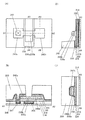
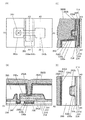
- 3A to 3D are a top view and cross-sectional views of a semiconductor device according to one embodiment of the present invention.
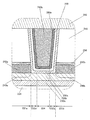
- FIG. 4 is a cross-sectional view of a semiconductor device according to one embodiment of the present invention.
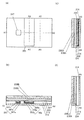
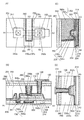
- 7A to 7D are a top view and cross-sectional views illustrating a method for manufacturing a semiconductor device according to one embodiment of the present invention.
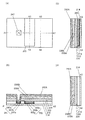
- 7A to 7D are a top view and cross-sectional views illustrating a method for manufacturing a semiconductor device according to one embodiment of the present invention.
- 7A to 7D are a top view and cross-sectional views illustrating a method for manufacturing a semiconductor device according to one embodiment of the present invention.
- 7A to 7D are a top view and cross-sectional views illustrating a method for manufacturing a semiconductor device according to one embodiment of the present invention.
- 7A to 7D are a top view and cross-sectional views illustrating a method for manufacturing a semiconductor device according to one embodiment of the present invention.
- 7A to 7D are a top view and cross-sectional views illustrating a method for manufacturing a semiconductor device according to one embodiment of the present invention.
- 7A to 7D are a top view and cross-sectional views illustrating a method for manufacturing a semiconductor device according to one embodiment of the present invention.
- 7A to 7D are a top view and cross-sectional views illustrating a method for manufacturing a semiconductor device according to one embodiment of the present invention.
- 7A to 7D are a top view and cross-sectional views illustrating a method for manufacturing a semiconductor device according to one embodiment of the present invention.
- 7A to 7D are a top view and cross-sectional views illustrating a method for manufacturing a semiconductor device according to one embodiment of the present invention.
- 7A to 7D are a top view and cross-sectional views illustrating a method for manufacturing a semiconductor device according to one embodiment of the present invention.
- 7A to 7D are a top view and cross-sectional views illustrating a method for manufacturing a semiconductor device according to one embodiment of the present invention.
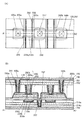
- 3A to 3D are a top view and cross-sectional views of a semiconductor device according to one embodiment of the present invention.
- FIG. 13 is a cross-sectional view illustrating a structure of a memory device according to one embodiment of the present invention.
- FIG. 13 is a cross-sectional view illustrating a structure of a memory device according to one embodiment of the present invention.
- FIG. 13 is a cross-sectional view illustrating a structure of a memory device according to one embodiment of the present invention.
- FIG. 13 is a cross-sectional view illustrating a structure of a memory device according to one embodiment of the present invention.
- FIG. 13 is a cross-sectional view illustrating a structure of a memory device according to one embodiment of the present invention.
- FIGS. 1 is a cross-sectional view illustrating a structure of a memory device according to one embodiment of the present invention.
- FIGS. 4A and 4B are block diagrams illustrating a configuration example of a storage device according to one embodiment of the present invention.
- FIGS. FIGS. 3A to 3H are circuit diagrams illustrating a configuration example of a memory device according to one embodiment of the present invention.
- FIGS. 3A and 3B are schematic diagrams of a semiconductor device according to one embodiment of the present invention.
- FIGS. 4A to 4E are schematic diagrams of a memory device according to one embodiment of the present invention.
- FIGS. 6A to 6H illustrate an electronic device according to one embodiment of the present invention.
- ⁇ ⁇ Particular elements may be omitted in some cases, particularly in a top view (also referred to as a “plan view”) or a perspective view, in order to facilitate understanding of the present invention.
- a top view also referred to as a “plan view”
- a perspective view in order to facilitate understanding of the present invention.
- some hidden lines and the like may be omitted.
- ordinal numbers given as first, second, etc. are used for convenience, and do not indicate the order of steps or the order of lamination. Therefore, for example, the description can be made by appropriately replacing “first” with “second” or “third”.
- ordinal numbers described in this specification and the like do not always coincide with ordinal numbers used for specifying one embodiment of the present invention.
- connection relation is not limited to the predetermined connection relation, for example, the connection relation shown in the figure or the text, and it is assumed that anything other than the connection relation shown in the figure or the text is disclosed in the figure or the text.
- X and Y are objects (for example, devices, elements, circuits, wirings, electrodes, terminals, conductive films, layers, and the like).
- the functions of the source and the drain may be switched when transistors having different polarities are used or when the direction of current changes in circuit operation. Therefore, in this specification and the like, the terms of source and drain may be used interchangeably.
- a channel width in a region where a channel is actually formed corresponds to a channel width (hereinafter, also referred to as an “effective channel width”.
- the effective channel width when the gate electrode covers the side surface of the semiconductor, the effective channel width becomes larger than the apparent channel width, and the effect may not be ignored.
- the proportion of a channel formation region formed on the side surface of the semiconductor may be large. In that case, the effective channel width is larger than the apparent channel width.
- a simple term “channel width” may refer to an apparent channel width.
- a simple term “channel width” may refer to an effective channel width. The values of the channel length, the channel width, the effective channel width, the apparent channel width, and the like can be determined by analyzing a cross-sectional TEM image or the like.
- an impurity in a semiconductor refers to, for example, elements other than the main components of the semiconductor.
- an element having a concentration of less than 0.1 atomic% can be regarded as an impurity.
- the impurity is contained, for example, the DOS (Density of State) of the semiconductor may be increased, or the crystallinity may be reduced.
- the impurity that changes the characteristics of the semiconductor include a Group 1 element, a Group 2 element, a Group 13 element, a Group 14 element, a Group 15 element, and an oxide semiconductor.
- transition metals other than the main components such as hydrogen, lithium, sodium, silicon, boron, phosphorus, carbon, and nitrogen.
- water may function as an impurity in some cases.
- oxygen vacancies may be formed by entry of impurities, for example.
- the impurity that changes the characteristics of the semiconductor include a Group 1 element, a Group 2 element, a Group 13 element, and a Group 15 element other than oxygen and hydrogen.
- silicon oxynitride has a higher oxygen content than nitrogen as its composition.
- silicon nitride oxide has a higher nitrogen content than oxygen as its composition.
- the term “insulator” can be replaced with an insulating film or an insulating layer.
- the term “conductor” can be referred to as a conductive film or a conductive layer.
- the term “semiconductor” can be referred to as a semiconductor film or a semiconductor layer.
- parallel refers to a state where two straight lines are arranged at an angle of ⁇ 10 degrees or more and 10 degrees or less. Therefore, a case where the angle is ⁇ 5 degrees or more and 5 degrees or less is also included.
- substantially parallel refers to a state in which two straight lines are arranged at an angle of ⁇ 30 degrees or more and 30 degrees or less.
- Vertical refers to a state in which two straight lines are arranged at an angle of 80 degrees or more and 100 degrees or less. Therefore, a case where the angle is 85 degrees or more and 95 degrees or less is also included.
- substantially perpendicular refers to a state in which two straight lines are arranged at an angle of 60 degrees or more and 120 degrees or less.
- a barrier film is a film having a function of suppressing permeation of impurities such as water and hydrogen and oxygen, and in the case where the barrier film has conductivity, a conductive barrier film is used. May be called.
- a metal oxide is a metal oxide in a broad sense. Metal oxides are classified into oxide insulators, oxide conductors (including transparent oxide conductors), oxide semiconductors (also referred to as oxide semiconductors or simply OS), and the like. For example, in the case where a metal oxide is used for a semiconductor layer of a transistor, the metal oxide may be referred to as an oxide semiconductor in some cases. That is, a transistor including an oxide or an oxide semiconductor can be referred to as a transistor including an OS @ FET or an OS transistor.
- normally-off means that when a potential is not applied to a gate or a ground potential is applied to a gate, a current per 1 ⁇ m of a channel width flowing through a transistor is 1 ⁇ 10 ⁇ 20 at room temperature. A or lower, 1 ⁇ 10 ⁇ 18 A or lower at 85 ° C., or 1 ⁇ 10 ⁇ 16 A or lower at 125 ° C.
- ⁇ Configuration example of semiconductor device> 1A, 1B, 1C, and 1D are a top view and a cross-sectional view of a semiconductor device including the transistor 200 and the capacitor 100 according to one embodiment of the present invention. is there.
- FIG. 1A is a top view of a semiconductor device including the transistor 200 and the capacitor 100.
- FIG. FIGS. 1B, 1C, and 1D are cross-sectional views of the semiconductor device.
- FIG. 1B is a cross-sectional view of a portion indicated by a dashed line A1-A2 in FIG. 1A, and is also a cross-sectional view of the transistor 200 in a channel length direction.
- FIG. 1C is a cross-sectional view of a portion indicated by a dashed-dotted line A3-A4 in FIG. 1A, and is also a cross-sectional view of the transistor 200 in the channel width direction.
- FIG. 1B is a cross-sectional view of a portion indicated by a dashed line A1-A2 in FIG. 1A, and is also a cross-sectional view of the transistor 200 in a channel length direction.
- FIG. 1C is a cross-sectional view of a portion indicated by a dashed-dotted line A
- 1D is a cross-sectional view of a portion indicated by a dashed-dotted line A5 to A6 in FIG. 1A, and is also a cross-sectional view of a source region or a drain region of the transistor 200 in a channel width direction. Note that for simplification of the drawing, some components are not illustrated in the top view in FIG.
- the semiconductor device of one embodiment of the present invention includes an insulator 214 over a substrate (not illustrated), a transistor 200 over the insulator 214, an insulator 280 over an insulator 256 provided over the transistor 200, An insulator 282 over the insulator 280 and an insulator 281 over the insulator 282 are provided.
- the insulator 214, the insulator 280, the insulator 282, and the insulator 281 function as an interlayer film. As illustrated in FIG. 1, at least a part of the transistor 200 and the capacitor 100 are embedded in the insulator 280 and arranged.
- the transistor 200 includes a semiconductor layer, a first gate, a second gate, a source, and a drain. Further, a conductor 247 is provided below the semiconductor layer of the transistor 200. One of a source and a drain of the transistor 200 is in contact with the conductor 247 below the semiconductor layer, and the other of the source and the drain of the transistor 200 is in contact with one of the electrodes of the capacitor 100 above the semiconductor layer. Touch
- the capacitor 100 is provided in the opening formed in the insulator 256, the insulator 280, the insulator 282, and the insulator 281 so as to reach the other of the source and the drain of the transistor 200.
- the capacitor 100 includes a conductor 110 that is in contact with the other top surface of the source and the drain of the transistor 200 at the opening; an insulator 130 that is provided over the conductor 110 and the insulator 281; And a conductor 120 to be arranged.
- the conductor 110 is preferably disposed along the side and bottom surfaces of the opening.
- an insulator 241 be provided between the conductor 110 and the insulator 280.
- the insulator 241 preferably has a function of suppressing diffusion of hydrogen (for example, at least one of a hydrogen atom and a hydrogen molecule).
- the insulator 241 preferably has a function of suppressing diffusion of oxygen (for example, at least one of an oxygen atom and an oxygen molecule).
- the insulator 241 preferably has lower permeability to one or both of oxygen and hydrogen than the insulator 280.
- Transistor 200 Hereinafter, a typical structure of the transistor 200 will be described. Note that the structure of the transistor 200 described below is one embodiment of the present invention, and the present invention is not limited to this. The structure of the transistor 200 can be changed as appropriate in accordance with the function required for the semiconductor device.
- the transistor 200 includes an insulator 216 over the insulator 214, a conductor 205 arranged to be embedded in the insulator 216, an insulator 216 over the insulator 216, and an insulator over the conductor 205.
- an insulator 224 on the insulator 222 an oxide 230a on the insulator 224, an oxide 230b on the oxide 230a, a conductor 242a and a conductor 242b on the oxide 230b, and an oxide 230b
- the side of the oxide 230b, the side of the conductor 242a, the upper surface of the conductor 242a, the side of the conductor 242b, and the conductor 2 It has an insulator 256 which is in contact with the upper surface of the 2b, and.
- the oxide 230c is in contact with the side surface of the conductor 242a and the side surface of the conductor 242b.
- the conductor 260 has a conductor 260a and a conductor 260b, and the conductor 260a is arranged so as to cover the bottom and side surfaces of the conductor 260b.
- the height of the top surface of the conductor 260 is approximately equal to the height of the top surface of the insulator 250, the top surface of the oxide 230c, and the top surface of the insulator 280.
- the insulator 282 is in contact with the top surfaces of the conductor 260, the oxide 230c, the insulator 250, and the insulator 280.
- an opening is formed in the insulator 216, and the conductor 247 described above is arranged in the opening. At least a portion of the upper surface of the conductor 247 is exposed from the insulator 216, and the height of the upper surface of the conductor 247 preferably approximately matches the height of the upper surface of the insulator 216.
- the conductor 247 electrically connects a transistor, a circuit element such as a switch, a transistor, a capacitor, an inductor, a resistor, or a diode, a wiring, an electrode, or a terminal provided below the insulator 214 to the transistor 200. It functions as a plug or a wiring for making an electrical connection.
- the conductor 247 may be electrically connected to a gate, a source, or a drain of a transistor provided below the insulator 214.
- openings that expose at least part of the conductor 247 are formed in the insulator 222, the insulator 224, the oxide 230a, and the oxide 230b.
- the conductor 242a is provided over the oxide 230b and is in contact with at least a part of the top surface of the conductor 247 through the opening. Further, the conductor 242a may be in contact with the side surface of the oxide 230a and the side surface of the oxide 230b inside the opening. In this manner, by connecting the conductor 242a and the conductor 247, electric resistance between the source or the drain of the transistor 200 and the conductor 247 can be reduced. With such a structure, the frequency characteristics and the electrical characteristics of the semiconductor device including the transistor 200 can be improved.
- a circuit element, a wiring, an electrode, or a terminal which is electrically connected to the conductor 247, such as a switch, a transistor, a capacitor, an inductor, a resistor, or a diode overlaps with the oxide 230. Is preferred. Accordingly, the area occupied by the transistor 200, the circuit element, the wiring, the electrode, or the terminal in a top view can be reduced, so that the semiconductor device according to this embodiment can be miniaturized or highly integrated. .
- the semiconductor device described in this embodiment can also be used as a memory cell of a memory device.
- the conductor 247 may be electrically connected to the sense amplifier.
- the sense amplifier may not function when the parasitic capacitance of the conductor 247 and a wiring connecting the conductor 247 and the sense amplifier is excessively larger than the capacitance of the capacitor 100.
- the parasitic capacitance is reduced as compared with the case where the conductor 247 is provided above the conductor 242a. .
- the wiring does not need to be routed over the transistor 200; therefore, the wiring connecting the conductor 247 and the sense amplifier can be shortened and the parasitic capacitance of the wiring can be reduced.
- the conductor 247 under the oxide 230 the parasitic capacitance generated between the conductor 247 and the conductor 260 and the parasitic capacitance generated between the conductor 247 and the conductor 120 can be reduced. Can be.
- the capacitor 100 may be provided so that the capacitor 100 is included in a range of the oxide 230b in a top view in some cases.
- the length of the conductor 110 in the channel width direction is smaller than the length of the oxide 230b in the channel width direction. Therefore, the capacitor 100 can be provided without increasing the occupied area in a top view, so that the semiconductor device according to this embodiment can be miniaturized or highly integrated.
- the conductor 247 is provided below the conductor 242a; however, the semiconductor device described in this embodiment is not limited to this.
- a structure in which the conductor 247 is provided below the conductor 242b may be employed, or a structure in which the conductor 247 is provided under both the conductor 242a and the conductor 242b may be employed.
- the insulator 214, the insulator 222, the insulator 256, the insulator 282, and the insulator 281 preferably have a function of suppressing at least one diffusion of hydrogen (eg, a hydrogen atom or a hydrogen molecule). Further, the insulator 214, the insulator 222, the insulator 256, the insulator 282, and the insulator 281 preferably have a function of suppressing diffusion of oxygen (for example, at least one of oxygen atoms and oxygen molecules).
- the insulator 214, the insulator 222, the insulator 256, the insulator 282, and the insulator 281 each include one or both of oxygen and hydrogen more than any of the insulator 224, the insulator 250, and the insulator 280.
- the permeability is low.
- the conductor 242a and the conductor 242b are provided over the oxide 230b, and the insulator 256 includes an upper surface and a side surface of the conductor 242a, an upper surface and a side surface of the conductor 242b, and an oxide. It is preferable to be in contact with the side surface of the object 230b, the side surface of the oxide 230a, and the upper surface of the insulator 224. Note that the insulator 256 may have a single-layer structure or a stacked structure. Thus, the side surfaces of the oxide 230a and the oxide 230b do not contact the conductor 242a and the conductor 242b except for the opening, that is, on the outer peripheral side surface.
- the insulator 280 is separated from the insulator 224, the oxide 230a, and the oxide 230b by the insulator 256.
- the conductor 260 functions as a gate electrode of the transistor, and the conductor 242a and the conductor 242b each function as a source electrode or a drain electrode.
- a conductor 260 functioning as a gate electrode is formed in a self-aligned manner so as to fill an opening formed in the insulator 280 or the like. By forming the conductor 260 in this manner, the conductor 260 can be reliably arranged in a region between the conductor 242a and the conductor 242b without alignment.
- the oxide 230 includes an oxide 230a over the insulator 224, an oxide 230b over the oxide 230a, and an oxide 230c which is provided over the oxide 230b and at least part of which is in contact with the top surface of the oxide 230b. Is preferable.
- the oxide 230 in a region where a channel is formed (hereinafter, also referred to as a channel formation region) and in the vicinity thereof, the oxide 230 has a three-layer structure of an oxide 230a, an oxide 230b, and an oxide 230c.
- the present invention is not limited to this.
- the oxide 230 has a single-layer structure of the oxide 230b, a two-layer structure of the oxide 230b and the oxide 230a, a two-layer structure of the oxide 230b and the oxide 230c, or a stacked structure of four or more layers. Is also good.
- each of the oxide 230a, the oxide 230b, and the oxide 230c may have a stacked structure of two or more layers.
- a metal oxide functioning as an oxide semiconductor (hereinafter, also referred to as an oxide semiconductor) is used for the oxide 230 including the channel formation region (the oxide 230a, the oxide 230b, and the oxide 230c). Is preferred.
- the transistor 200 including an oxide semiconductor in a channel formation region has extremely low leakage current (off current) in a non-conduction state; thus, a semiconductor device with low power consumption can be provided. Further, since an oxide semiconductor can be formed by a sputtering method or the like, it can be used for the transistor 200 included in a highly integrated semiconductor device.
- an In-M-Zn oxide (element M is aluminum, gallium, yttrium, tin, copper, vanadium, beryllium, boron, titanium, iron, nickel, germanium, zirconium, molybdenum, lanthanum, cerium , Neodymium, hafnium, tantalum, tungsten, or magnesium, or a plurality thereof).
- element M aluminum, gallium, yttrium, or tin is preferably used.
- an In-Ga oxide or an In-Zn oxide may be used as the oxide 230.
- the carrier density is increased and the resistance may be reduced in some cases. Further, when the concentration of oxygen contained in the oxide 230 decreases, the carrier density increases and the resistance may be reduced in some cases.
- the conductor 242 (the conductor 242a and the conductor 242b) which is provided so as to be in contact with the oxide 230b and functions as a source electrode or a drain electrode has a function of absorbing oxygen of the oxide 230, or
- the oxide 230 has a function of supplying impurities such as hydrogen, nitrogen, or a metal element
- a low-resistance region may be partially formed in the oxide 230 in some cases.
- the conductor 242 is formed over the oxide 230b, and does not contact the side surfaces of the oxide 230a and the oxide 230b and the insulator 224 other than the opening reaching the conductor 247, that is, the outer peripheral side surface.
- oxygen contained in the oxide 230a and the oxide 230b particularly, oxygen contained in the channel formation region and the vicinity thereof can be suppressed from being absorbed by the conductor 242 from the side surfaces of the oxide 230a and the oxide 230b. .
- the insulator 256 is provided so that the side surfaces of the oxide 230a and the oxide 230b do not directly contact the insulator 280. Further, it is provided to suppress oxidation of the conductor 242. Note that in the case where the conductivity does not significantly decrease even when the conductor 242 absorbs an oxidation-resistant material or oxygen, the insulator 256 does not need to have an effect of suppressing oxidation of the conductor 242.
- FIG. 2 is an enlarged view of the vicinity of the channel formation region in FIG.
- a conductor 242 is provided so as to be in contact with the oxide 230b, and a region 249 (a region 249a, a region 249a, And a region 249b) are formed.
- the oxide 230 includes a region 234 functioning as a channel formation region of the transistor 200, a region 231 (a region 231a and a region 231b) functioning as a source or drain region, and a region 232 (a region 232) between the region 234 and the region 231. 232a and a region 232b).
- the area 231 includes the area 249.
- FIG. 2 illustrates an example in which the oxide 230c has a single-layer structure; however, this embodiment is not limited thereto.
- the oxide 230c may have a stacked structure of two or more layers.
- the region 231 functioning as a source or drain region has a low oxygen concentration or an impurity including hydrogen, nitrogen, a metal element, or the like; It is. That is, the region 231 has a higher carrier density and a lower resistance than the region 234.
- the region 234 functioning as a channel formation region is a high-resistance region having a low carrier density because the oxygen concentration is higher or the impurity concentration is lower than that of the region 249 in the region 231, in particular.
- the oxygen concentration of the region 232 is preferably equal to or higher than the oxygen concentration of the region 231, and is preferably equal to or lower than the oxygen concentration of the region 234.
- the impurity concentration of the region 232 is preferably equal to or lower than the impurity concentration of the region 231, and is preferably equal to or higher than the impurity concentration of the region 234.
- the region 232 has approximately the same resistance as the region 234 depending on the concentration of oxygen and the concentration of impurities contained therein, so that the region 232 functions as a channel formation region in the same manner as the region 234.
- the low-resistance region functions as a low-resistance region having approximately the same resistance value or has a higher resistance than the region 231 and a lower resistance than the region 234.
- impurities included in the region 231 are easily diffused in the ab plane direction, and the resistance of the region 232 may be reduced.
- the region 249 which is a low-resistance region includes a metal element
- the region 249 includes, in addition to the metal element included in the oxide 230, aluminum, chromium, copper, silver, gold, platinum, tantalum, nickel, titanium, Molybdenum, tungsten, hafnium, vanadium, niobium, manganese, magnesium, zirconium, beryllium, indium, ruthenium, iridium, strontium, preferably having one or more metal elements selected from metal elements such as lanthanum .
- the region 249 is formed near the interface between the oxide 230b and the conductor 242 in the thickness direction of the oxide 230b; however, this embodiment is not limited to this.
- the region 249 may have substantially the same thickness as the oxide 230b, or may be formed in the oxide 230a.
- the region 249 is formed only in the region 231 in FIG. 2, this embodiment is not limited to this.
- the region 249 may be formed in the region 231 and the region 232, or may be formed in the region 231 and part of the region 232. Alternatively, it may be formed in the region 231, the region 232, and a part of the region 234.
- concentrations of metal elements and impurity elements such as hydrogen and nitrogen detected in each region are not limited to a stepwise change in each region, but also change continuously (also referred to as gradation) in each region. Is also good. That is, the concentration of the metal element and the concentrations of the impurity elements such as hydrogen and nitrogen need only decrease as the region is closer to the channel formation region.
- the conductor 242 for example, aluminum, chromium, copper, silver, gold, platinum, tantalum, nickel, titanium, molybdenum, tungsten, hafnium, vanadium, niobium, It is preferable to use a material containing at least one of a metal element for increasing conductivity, such as manganese, magnesium, zirconium, beryllium, indium, ruthenium, iridium, strontium, and lanthanum, and an impurity.
- a metal element for increasing conductivity such as manganese, magnesium, zirconium, beryllium, indium, ruthenium, iridium, strontium, and lanthanum, and an impurity.
- the conductive film 242A to be the conductor 242 a material or a film formation method in which an impurity such as an element forming an oxygen vacancy or an element captured by the oxygen vacancy is injected into the oxide 230 is used.
- the element includes hydrogen, boron, carbon, nitrogen, fluorine, phosphorus, sulfur, chlorine, a rare gas element, and the like.
- the rare gas element include helium, neon, argon, krypton, and xenon.
- a transistor including an oxide semiconductor when impurities and oxygen vacancies are present in a region where a channel is formed in the oxide semiconductor, electric characteristics are likely to be changed and reliability may be deteriorated.
- oxygen vacancies when oxygen vacancies are included in a region where a channel is formed in the oxide semiconductor, the transistor is likely to have normally-on characteristics. Therefore, it is preferable that oxygen vacancies in the region 234 where a channel is formed be reduced as much as possible.
- the insulator 250 adjacent to the oxide 230 preferably contains more oxygen (also referred to as excess oxygen) than oxygen that satisfies the stoichiometric composition. Oxygen included in the insulator 250 is diffused into the oxide 230, oxygen vacancies in the oxide 230 are reduced, and normally on transistor can be suppressed.
- oxygen vacancies in the region 234 of the oxide 230 can be reduced by diffusion of oxygen included in the insulator 250 to the region 234 of the oxide 230.
- oxygen in the insulator 280 diffuses into the region 234 of the oxide 230 through the oxide 230c; thus, oxygen vacancies in the region 234 of the oxide 230 can be reduced.
- a material in which oxygen is easily transmitted may be used for a layer of the oxide 230c which is in contact with the insulator 280 with a stacked structure. Accordingly, oxygen contained in the insulator 280 is easily diffused into the region 234 of the oxide 230 through the layer of the oxide 230c.
- Oxygen of the insulator 280 can be efficiently supplied to the region 234 of the oxide 230.
- the supply amount of oxygen to the oxide 230 can be controlled, so that a highly reliable transistor in which normally on is suppressed can be obtained.
- the transistor 200 which is one embodiment of the present invention has a structure in which the insulator 282 and the insulator 250 are in direct contact with each other as illustrated in FIGS.
- oxygen contained in the insulator 280 is less likely to be absorbed by the conductor 260. Therefore, oxygen contained in the insulator 280 can be efficiently supplied to the oxide 230a and the oxide 230b through the oxide 230c; thus, oxygen vacancies in the oxide 230a and the oxide 230b can be reduced.
- electrical characteristics and reliability of the transistor 200 can be improved.
- the entry of impurities such as hydrogen contained in the insulator 280 into the insulator 250 can be suppressed; thus, adverse effects on electrical characteristics and reliability of the transistor 200 can be suppressed.
- the insulator 282 silicon nitride, silicon nitride oxide, aluminum oxide, or hafnium oxide can be used. It is particularly preferable to use silicon nitride as the insulator 282.
- the silicon nitride can suitably block impurities (e.g., hydrogen and water) which can enter from the outside.
- the insulator 256 preferably has a function of suppressing transmission of impurities such as hydrogen and water and oxygen.
- the insulator 256 may have a single-layer structure or a stacked structure of two or more layers.
- As the insulator 256 for example, aluminum oxide, hafnium oxide, a silicon oxide film, a silicon nitride film, or a silicon nitride oxide film can be used.
- the same material may be used for the upper layer and the lower layer, or different materials may be used.
- the upper layer and the lower layer of the insulator 256 may be formed using different deposition methods.
- the lower layer of the insulator 256 may be formed by a sputtering method, and the upper layer of the insulator 256 may be formed by an ALD (Atomic Layer Deposition) method.
- the lower layer of the insulator 256 may be formed by an ALD method, and the upper layer of the insulator 256 may be formed by a sputtering method.
- a material that can be used for the oxide 230 may be used for the insulator 256.
- 1D is a cross-sectional view of a portion indicated by a dashed-dotted line A5-A6 in FIG. 1A, and is also a cross-sectional view of the source or drain region of the transistor 200 in the channel width direction.
- the top surface of the conductor 242b and the side surface of the conductor 242b are covered with an insulator 256, so that the top surface of the conductor 242b and the top surface of the conductor 242b are viewed from the top. It is possible to suppress diffusion of impurities such as hydrogen and water and oxygen into the conductor 242b.
- the height of the bottom surface of the conductor 260 in a region where the oxide 230a and the oxide 230b and the conductor 260 do not overlap with each other with reference to the bottom surface of the insulator 224 is It is preferable to be arranged at a position lower than the height of the bottom surface of the oxide 230b.
- the difference between the height of the bottom surface of the conductor 260 and the height of the bottom surface of the oxide 230b in a region where the oxide 230b and the conductor 260 do not overlap with each other is 0 nm to 100 nm, preferably 3 nm to 50 nm. Or less, more preferably 5 nm or more and 20 nm or less.
- the conductor 260 functioning as a gate electrode covers the side surface and the upper surface of the oxide 230b in the channel formation region with the oxide 230c and the insulator 250 interposed therebetween. It is easy to act on the entire oxide 230b in the formation region. Therefore, the on-state current of the transistor 200 can be increased and frequency characteristics can be improved.
- a miniaturized or highly integrated semiconductor device can be provided.
- a semiconductor device having a transistor with high on-state current can be provided.
- a semiconductor device including a transistor having high frequency characteristics can be provided.
- a semiconductor device including a transistor with low off-state current can be provided.
- the following describes a detailed structure of a semiconductor device including the transistor 200 according to one embodiment of the present invention.
- the conductor 205 is provided so as to overlap with the oxide 230 and the conductor 260. It is preferable that the conductor 205 be provided so as to be embedded in the insulator 216.
- the conductor 260 may function as a first gate (also referred to as a top gate) electrode in some cases.
- the conductor 205 functions as a second gate (also referred to as a bottom gate) electrode.
- the Vth of the transistor 200 can be controlled by changing the potential applied to the conductor 205 independently of the potential applied to the conductor 260 without changing the potential.
- Vth of the transistor 200 can be made higher than 0 V and off-state current can be reduced. Therefore, when a negative potential is applied to the conductor 205, the drain current when the potential applied to the conductor 260 is 0 V can be smaller than when no negative potential is applied.
- the conductor 205 is preferably provided to be larger than a region of the oxide 230 which does not overlap with the conductors 242a and 242b as illustrated in FIG.
- the conductor 205 preferably extends in a region outside an end portion of the oxide 230 that intersects with the channel width direction. That is, it is preferable that the conductor 205 and the conductor 260 overlap with each other with the insulator interposed outside the side surface of the oxide 230 in the channel width direction.
- charge-up local charging
- the conductor 205 may overlap with at least the oxide 230 located between the conductor 242a and the conductor 242b.
- the channel formation region is electrically surrounded by an electric field of the conductor 260 having a function as the first gate electrode and an electric field of the conductor 205 having a function of the second gate electrode.
- a structure of a transistor that electrically surrounds a channel formation region by an electric field of the first gate electrode and the second gate electrode is referred to as a surrounded-channel (S-channel) structure.
- the first conductive layer of the conductor 205 is preferably a conductor which suppresses transmission of impurities such as water or hydrogen and oxygen.
- a conductor which suppresses transmission of impurities such as water or hydrogen and oxygen.
- titanium, titanium nitride, tantalum, or tantalum nitride can be used in a single layer or a stacked layer.
- a conductor having good adhesion to the first and third conductive layers may be used.
- the third conductive layer of the conductor 205 is preferably formed using a conductive material mainly containing tungsten, copper, or aluminum.
- the conductor 205 is illustrated as having three layers, the conductor 205 may have a single-layer structure, a two-layer structure, or a multi-layer structure of four or more layers.
- the insulator 214, the insulator 256, the insulator 282, and the insulator 281 function as a barrier insulating film for preventing impurities such as water or hydrogen from entering the transistor 200 from the substrate side or from above. Is preferred. Therefore, the insulator 214, the insulator 256, the insulator 282, and the insulator 281 are formed using a hydrogen atom, a hydrogen molecule, a water molecule, a nitrogen atom, a nitrogen molecule, a nitrogen oxide molecule (eg, N 2 O, NO, NO 2 ), It is preferable to use an insulating material having a function of suppressing diffusion of an impurity such as a copper atom (the impurity is difficult to transmit). Alternatively, it is preferable to use an insulating material having a function of suppressing diffusion of oxygen (for example, at least one of an oxygen atom and an oxygen molecule) (the above-described oxygen is not easily transmitted).
- a hydrogen atom for example, at least one
- aluminum oxide, hafnium oxide, silicon nitride, or the like for the insulator 214, the insulator 256, the insulator 282, and the insulator 281.
- aluminum oxide may be used for the insulator 214, the insulator 256, and the insulator 282, and aluminum nitride may be used for the insulator 281. Accordingly, diffusion of impurities such as water or hydrogen into the insulator 224, the oxide 230, the insulator 250, and the like can be suppressed.
- the resistivity of the insulator 214, the insulator 256, the insulator 282, and the insulator 281 is approximately 1 ⁇ 10 13 ⁇ cm, so that the insulator 214, the insulator
- the body 256, the insulator 282, and the insulator 281 can reduce charge-up of the conductor 205, the conductor 242, or the conductor 260.
- the insulator 214 may have a laminated structure.
- an aluminum oxide film be used as an upper layer of the insulator 214 and a silicon nitride film be used as a lower layer of the insulator 214.
- Oxygen can be supplied below the insulator 214 with the aluminum oxide film.
- the silicon nitride film diffusion of impurities such as hydrogen and water from the substrate side to the transistor 200 side can be suppressed.
- the insulators 216 and 280 preferably have a lower dielectric constant than the insulator 214.
- a material having a low dielectric constant as an interlayer film, parasitic capacitance generated between wirings can be reduced.
- silicon oxide, silicon oxynitride, silicon nitride oxide, silicon nitride, silicon oxide added with fluorine, silicon oxide added with carbon, silicon oxide added with carbon and nitrogen, or Silicon oxide having holes may be used as appropriate.
- the insulator 222 and the insulator 224 have a function as a gate insulator.
- the insulator 224 in contact with the oxide 230 release oxygen by heating.
- oxygen released by heating may be referred to as excess oxygen.
- the insulator 224 may be formed using silicon oxide or silicon oxynitride as appropriate.
- an oxide material from which part of oxygen is released by heating as the insulator 224.
- An oxide from which oxygen is released by heating means that the amount of oxygen released as oxygen molecules by TDS (Thermal Desorption Spectroscopy) analysis is 1.0 ⁇ 10 18 molecules / cm 3 or more, preferably 1 ⁇ 10 18 molecules / cm 3 or more. .0 ⁇ 10 19 molecules / cm 3 or more, more preferably 2.0 ⁇ 10 19 molecules / cm 3 or more, or 3.0 ⁇ 10 oxide is 20 molecules / cm 3 or more.
- the surface temperature of the film at the time of the TDS analysis is preferably in the range of 100 ° C to 700 ° C, or 100 ° C to 400 ° C.
- the insulator 222 preferably functions as a barrier insulating film for preventing impurities such as water or hydrogen from entering the transistor 200 from the substrate side.
- the insulator 222 preferably has lower hydrogen permeability than the insulator 224.
- the insulator 222 have a function of suppressing diffusion of oxygen (for example, at least one of oxygen atoms and oxygen molecules) (the oxygen is hardly transmitted).
- the insulator 222 preferably has lower oxygen permeability than the insulator 224. It is preferable that the insulator 222 have a function of suppressing diffusion of oxygen and impurities because diffusion of oxygen included in the oxide 230 to a lower side than the insulator 222 can be reduced.
- the conductor 205 can be prevented from reacting with oxygen included in the insulator 224 and the oxide 230.
- an insulator containing an oxide of one or both of aluminum and hafnium which is an insulating material, may be used. It is preferable to use aluminum oxide, hafnium oxide, an oxide containing aluminum and hafnium (hafnium aluminate), or the like as the insulator containing one or both oxides of aluminum and hafnium. In the case where the insulator 222 is formed using such a material, the insulator 222 suppresses release of oxygen from the oxide 230 and entry of impurities such as hydrogen from the periphery of the transistor 200 into the oxide 230. Functions as a layer.
- aluminum oxide, bismuth oxide, germanium oxide, niobium oxide, silicon oxide, titanium oxide, tungsten oxide, yttrium oxide, or zirconium oxide may be added to these insulators.
- these insulators may be nitrided. Silicon oxide, silicon oxynitride, or silicon nitride may be stacked over the above insulator.
- the insulator 222 is formed of, for example, aluminum oxide, hafnium oxide, tantalum oxide, zirconium oxide, lead zirconate titanate (PZT), strontium titanate (SrTiO 3 ), or (Ba, Sr) TiO 3 (BST).
- An insulator including a so-called high-k material may be used in a single layer or a stacked structure. When a transistor is miniaturized and highly integrated, a problem such as a leak current may be caused by thinning of a gate insulator. When a high-k material is used for the insulator functioning as a gate insulator, the gate potential during the operation of the transistor can be reduced while the physical thickness is maintained.
- the insulator 222 and the insulator 224 may have a stacked structure of two or more layers.
- the structure is not limited to the laminated structure made of the same material, and may be a laminated structure made of different materials.
- the conductor 247 includes a first conductive layer, a second conductive layer provided inside the first conductive layer, and a third conductive layer provided inside the second conductive layer. And a conductive layer.
- a conductor which suppresses transmission of impurities such as water or hydrogen and oxygen is preferable.
- titanium, titanium nitride, tantalum, or tantalum nitride can be used.
- a conductor having good adhesion to the first conductive layer and the third conductive layer may be used.
- a conductive material mainly containing tungsten, copper, or aluminum is preferably used.
- the conductor 247 is illustrated as having three layers, the conductor 247 may have a single-layer structure, a two-layer structure, or a multi-layer structure of four or more layers.
- an insulator which suppresses diffusion of impurities such as hydrogen and water and oxygen may be provided on a side surface of the conductor 247.
- the oxide 230 includes an oxide 230a, an oxide 230b over the oxide 230a, and an oxide 230c over the oxide 230b.
- the oxide 230c is provided so as to at least partially overlap with a region between the conductors 242a and 242b.
- the oxide 230a is provided below the oxide 230b, diffusion of impurities from the structure formed below the oxide 230a to the oxide 230b can be suppressed.
- the oxide 230c is provided over the oxide 230b, diffusion of impurities into the oxide 230b from a structure formed above the oxide 230c can be suppressed.
- the oxide 230 preferably has a stacked structure of oxides having different atomic ratios of metal atoms. Specifically, in the metal oxide used for the oxide 230a, the atomic ratio of the element M in the constituent elements is larger than that in the metal oxide used for the oxide 230b. Is preferred. In the metal oxide used for the oxide 230a, the atomic ratio of the element M to In is preferably larger than that in the metal oxide used for the oxide 230b. In the metal oxide used for the oxide 230b, the atomic ratio of In to the element M is preferably larger than that in the metal oxide used for the oxide 230a. Further, as the oxide 230c, a metal oxide which can be used for the oxide 230a or the oxide 230b can be used.
- the oxide 230b preferably has crystallinity.
- a CAAC-OS c-axis / aligned / crystalline / oxide / semiconductor
- An oxide having crystallinity, such as a CAAC-OS has a high density and a dense structure with few impurities and defects (such as oxygen vacancies).
- impurities and defects such as oxygen vacancies.
- the energy of the bottom of the conduction band of the oxide 230a and the oxide 230c be higher than the energy of the bottom of the conduction band of the oxide 230b.
- the electron affinity of the oxide 230a and the oxide 230c is preferably smaller than the electron affinity of the oxide 230b.
- the energy level at the bottom of the conduction band changes gently.
- the energy level at the bottom of the conduction band at the junction of the oxide 230a, the oxide 230b, and the oxide 230c changes continuously or forms a continuous junction.
- the defect state density of a mixed layer formed at the interface between the oxide 230a and the oxide 230b and the interface between the oxide 230b and the oxide 230c may be reduced.
- the oxide 230c has a stacked structure
- In: Ga: Zn 4: 2: 3 [atomic ratio] as a lower layer of the oxide 230c
- Ga: A stacked structure of Zn 2: 1 [atomic ratio]
- In: Ga: Zn 4: 2: 3 [atomic ratio] as a lower layer of the oxide 230c
- Ga: Zn 2 as an upper layer of the oxide 230c.
- the main path of the carriers is the oxide 230b.
- the density of defect states at the interface between the oxides 230a and 230b and the interface between the oxides 230b and 230c can be reduced. Therefore, influence of carrier scattering due to interface scattering is small, and the transistor 200 can have high on-state current and high frequency characteristics.
- the oxide 230c has a stacked structure, in addition to the effect of reducing the density of defect states at the interface between the oxide 230b and the oxide 230c, constituent elements of the oxide 230c It is expected to suppress diffusion to More specifically, the oxide 230c has a stacked structure, and an oxide that does not contain In or has a reduced concentration of In is located in the upper layer of the stacked structure, so that In that can diffuse to the insulator 250 side is suppressed. can do. Since the insulator 250 functions as a gate insulator, when In is diffused, the characteristics of the transistor become poor. Therefore, by forming the oxide 230c to have a stacked structure, a highly reliable semiconductor device can be provided.
- a main carrier path may be in the vicinity of the interface between the oxide 230b, the lower layer of the oxide 230c, and the interface.
- oxygen contained in the insulator 280 can be supplied to the channel formation region of the transistor 200 through the lower layer of the oxide 230c. It is preferable that a material through which oxygen is not easily transmitted be used as the upper layer of the oxide 230c. With the use of any of the above materials, oxygen contained in the insulator 280 can be suppressed from penetrating the upper layer of the oxide 230c and being absorbed by the insulator 250 or the conductor 260, so that the channel formation region can be efficiently formed. Oxygen can be supplied.
- the oxide 230 has the region 231 and the region 234. Note that at least a part of the region 231 has a region in contact with the conductor 242.
- one of the region 231a and the region 231b functions as a source region and the other functions as a drain region.
- at least part of the region 234 functions as a region where a channel is formed.
- a metal oxide functioning as an oxide semiconductor is preferably used.
- the off-state current of the transistor can be reduced. With the use of such a transistor, a semiconductor device with low power consumption can be provided.
- the electron affinity or the energy level Ec at the bottom of the conduction band can be obtained from the ionization potential Ip, which is the difference between the vacuum level and the energy Ev at the top of the valence band, and the energy gap Eg.
- the ionization potential Ip can be measured, for example, by using an ultraviolet photoelectron spectroscopy (UPS) device (Ultraviolet @ Photoelectron @ Spectroscopy).
- UPS ultraviolet photoelectron spectroscopy
- the energy gap Eg can be measured using, for example, a spectroscopic ellipsometer.
- a conductor 242 (a conductor 242a and a conductor 242b) functioning as a source electrode and a drain electrode is provided over the oxide 230b.
- the thickness of the conductor 242 may be, for example, 1 nm to 50 nm, preferably 2 nm to 25 nm.
- the conductor 242 aluminum, chromium, copper, silver, gold, platinum, tantalum, nickel, titanium, molybdenum, tungsten, hafnium, vanadium, niobium, manganese, magnesium, zirconium, beryllium, indium, ruthenium, iridium, strontium, It is preferable to use a metal element selected from lanthanum, an alloy containing the above-described metal element as a component, an alloy in which the above-described metal elements are combined, or the like.
- tantalum nitride, titanium nitride, tungsten, a nitride containing titanium and aluminum, a nitride containing tantalum and aluminum, ruthenium oxide, ruthenium nitride, an oxide containing strontium and ruthenium, an oxide containing lanthanum and nickel, and the like are used. Is preferred.
- tantalum nitride, titanium nitride, nitride containing titanium and aluminum, nitride containing tantalum and aluminum, ruthenium oxide, ruthenium nitride, oxide containing strontium and ruthenium, and oxide containing lanthanum and nickel are not easily oxidized.
- a conductive material or a material which maintains conductivity even when oxygen is absorbed is preferable.
- the insulator 250 functions as a gate insulator.
- the insulator 250 is preferably provided in contact with the upper surface of the oxide 230c.
- silicon oxide, silicon oxynitride, silicon nitride oxide, silicon nitride, silicon oxide to which fluorine is added, silicon oxide to which carbon is added, silicon oxide to which carbon and nitrogen are added, or silicon oxide having holes is used. be able to.
- silicon oxide and silicon oxynitride are preferable because they are stable against heat.
- the insulator 250 may be formed using an insulator from which oxygen is released by heating.
- an insulator from which oxygen is released by heating is provided as the insulator 250 in contact with the upper surface of the oxide 230c, oxygen can be effectively supplied to a channel formation region of the oxide 230b.
- the concentration of impurities such as water or hydrogen in the insulator 250 is preferably reduced.
- the thickness of the insulator 250 is preferably greater than or equal to 1 nm and less than or equal to 20 nm.
- a metal oxide may be provided between the insulator 250 and the conductor 260. It is preferable that the metal oxide suppress oxygen diffusion from the insulator 250 to the conductor 260. By providing a metal oxide that suppresses diffusion of oxygen, diffusion of oxygen from the insulator 250 to the conductor 260 is suppressed. That is, a decrease in the amount of oxygen supplied to the oxide 230 can be suppressed. Further, oxidation of the conductor 260 due to oxygen of the insulator 250 can be suppressed.
- the metal oxide may function as part of a gate insulator in some cases. Therefore, in the case where silicon oxide, silicon oxynitride, or the like is used for the insulator 250, the metal oxide is preferably a high-k metal oxide having a high relative dielectric constant.
- the gate insulator has a stacked structure of the insulator 250 and the metal oxide, a stacked structure which is stable against heat and has a high relative dielectric constant can be obtained. Therefore, it is possible to reduce the gate potential applied during the operation of the transistor while maintaining the physical thickness of the gate insulator. Further, the equivalent oxide thickness (EOT) of the insulator functioning as a gate insulator can be reduced.
- EOT equivalent oxide thickness
- hafnium, aluminum, gallium, yttrium, zirconium, tungsten, titanium, tantalum, nickel, germanium, or magnesium, or a metal oxide containing two or more kinds may be used. it can.
- the metal oxide may have a function as part of the gate electrode.
- a conductive material containing oxygen is preferably provided on the channel formation region side.
- a conductor functioning as a gate electrode a conductive material containing a metal element and oxygen contained in a metal oxide in which a channel is formed is preferably used. Further, a conductive material containing the above-described metal element and nitrogen may be used. In addition, indium tin oxide, indium oxide containing tungsten oxide, indium zinc oxide containing tungsten oxide, indium oxide containing titanium oxide, indium tin oxide containing titanium oxide, indium zinc oxide, and silicon were added. Indium tin oxide may be used. Alternatively, indium gallium zinc oxide containing nitrogen may be used. By using such a material, hydrogen contained in a metal oxide in which a channel is formed may be captured in some cases. Alternatively, in some cases, hydrogen mixed in from an outer insulator or the like can be captured.
- the conductor 260 is illustrated as having a two-layer structure, but the present invention is not limited to this.
- the conductor 260 may have a single-layer structure or a stacked structure of three or more layers.
- Conductor 260a is a hydrogen atom, a hydrogen molecule, a water molecule, a nitrogen atom, a nitrogen molecule, nitric oxide molecule (N 2 O, NO, etc. NO 2), conductive having a function of suppressing the diffusion of impurities such as copper atoms It is preferable to use a material. Alternatively, it is preferable to use a conductive material having a function of suppressing diffusion of oxygen (for example, at least one of oxygen atoms and oxygen molecules).
- the conductor 260a has a function of suppressing diffusion of oxygen, it is possible to prevent the conductor 260b from being oxidized by oxygen contained in the insulator 250 and lowering the conductivity.
- the conductive material having a function of suppressing diffusion of oxygen for example, tantalum, tantalum nitride, ruthenium, ruthenium oxide, or the like is preferably used.
- the conductor 260b be formed using a conductive material mainly containing tungsten, copper, or aluminum.
- a conductor having high conductivity is preferably used.
- a conductive material containing tungsten, copper, or aluminum as a main component can be used.
- the conductor 260b may have a stacked structure, for example, a stacked structure of titanium, titanium nitride, and the above conductive material.
- the insulator 280 includes, for example, silicon oxide, silicon oxynitride, silicon nitride oxide, silicon oxide to which fluorine is added, silicon oxide to which carbon is added, silicon oxide to which carbon and nitrogen are added, or silicon oxide having holes. It is preferred to have. In particular, silicon oxide and silicon oxynitride are preferable because they are thermally stable. In particular, a material such as silicon oxide, silicon oxynitride, or silicon oxide having vacancies is preferable because a region containing oxygen which is released by heating can be easily formed. In order to supply oxygen contained in the insulator 280 to the oxide 230c or the oxide 230b through a lower layer of the oxide 230c, the insulator 280 preferably contains more oxygen. It preferably contains more oxygen than the stoichiometric ratio. In order to increase the concentration of oxygen contained in the insulator 280, the deposition gas used for forming the insulator 280 preferably contains oxygen.
- the concentration of impurities such as water or hydrogen in the insulator 280 be reduced.
- the insulator 280 is preferably formed by a sputtering method, because the insulator 280 in which the concentration of impurities such as water or hydrogen is reduced can be obtained.
- silicon oxynitride are suitable for the insulator 280 because the hydrogen concentration in the film is lower.
- the insulator 280 is formed by a CVD method. It may be formed. Although not illustrated, the insulator 280 may have a stacked structure of two or more layers, and may be formed using silicon oxide formed as a first layer using a sputtering method and formed as a second layer using a CVD method. A stacked body including silicon oxynitride may be used. Further, the upper surface of the insulator 280 may be planarized.
- the insulator 282 and the insulator 281 function as barrier insulating films that prevent impurities such as water or hydrogen from entering the insulator 280 from above.
- an insulator such as aluminum oxide, silicon nitride, or silicon nitride oxide may be used.
- aluminum oxide may be used for the insulator 282 and silicon nitride may be used for the insulator 281.
- oxygen can be supplied to the insulator 280.
- the silicon nitride film used for the insulator 281 diffusion of impurities such as hydrogen and water from above to the transistor 200 side can be suppressed.
- An insulator such as silicon oxide or silicon oxynitride, which functions as an interlayer film, may be provided between the insulator 282 and the insulator 281.
- the capacitance of the capacitor 100 can be adjusted. It is preferable that the insulator have a reduced concentration of impurities such as water or hydrogen in the film, similarly to the insulator 224 and the like.
- Capacitance element 100 The capacitor 100 is provided in the openings formed in the insulator 256, the insulator 280, the insulator 282, and the insulator 281 and is in contact with the upper surface of the conductor 242b. And a conductor 120 on the insulator 130.
- the conductor 110, the insulator 130, and the conductor 120 are arranged in openings formed in the insulator 256, the insulator 280, the insulator 282, and the insulator 281.
- the conductor 110 functions as a lower electrode of the capacitor 100
- the conductor 120 functions as an upper electrode of the capacitor 100
- the insulator 130 functions as a dielectric of the capacitor 100.
- the capacitor 100 has a structure in which the upper electrode and the lower electrode face each other not only on the bottom surface but also on the side surfaces of the opening of the insulator 256, the insulator 280, the insulator 282, and the insulator 281 with the dielectric interposed therebetween.
- the capacitance per unit area can be increased. Therefore, the capacitance of the capacitor 100 can be increased as the depth of the opening is increased.
- miniaturization or high integration of the semiconductor device can be promoted.
- the shape of the opening formed in the insulator 256, the insulator 280, the insulator 282, and the insulator 281 as viewed from above may be a quadrangle, a polygon other than a quadrangle, or a polygon in a polygon.
- the shape may be a curved shape or a circular shape including an ellipse.
- the capacitor 100 is preferably provided so that the capacitor 100 is included in a range of the oxide 230b in a top view.
- the length of the conductor 110 in the channel width direction is smaller than the length of the oxide 230b in the channel width direction.
- the conductor 110 is arranged along the openings formed in the insulator 256, the insulator 280, the insulator 282, and the insulator 281. It is preferable that the height of a part of the upper surface of the conductor 110 be approximately equal to the height of the upper surface of the insulator 281. The upper surface of the conductor 242b is in contact with the lower surface of the conductor 110. It is preferable that the conductor 110 be formed by an ALD method, a CVD method, or the like, and a conductor that can be used for the conductor 205 or the conductor 242 be used.
- the contact resistance between the conductor 110 and the conductor 242b can be reduced.
- tantalum nitride formed by an ALD method can be used as the conductor 110.
- the insulator 130 is arranged so as to cover the conductor 110 and part of the insulator 281.
- the insulator 130 is preferably formed by an ALD method, a CVD method, or the like.
- the insulator 130 is formed using, for example, silicon oxide, silicon oxynitride, silicon nitride oxide, silicon nitride, zirconium oxide, aluminum oxide, aluminum oxynitride, aluminum nitride oxide, aluminum nitride, hafnium oxide, hafnium oxynitride, hafnium nitride oxide, or nitrided nitride.
- Hafnium or the like may be used, and a single layer or a single layer can be provided.
- an insulating film stacked in the order of zirconium oxide, aluminum oxide, and zirconium oxide can be used.
- a material having a high dielectric strength such as silicon oxynitride, or a high dielectric constant (high-k) material (a material having a high relative dielectric constant) for the insulator 130.
- a stacked structure of a material having a high dielectric strength and a high-k material may be used.
- an insulator of a high-k material gallium oxide, hafnium oxide, zirconium oxide, an oxide containing aluminum and hafnium, an oxynitride containing aluminum and hafnium, an oxide containing silicon and hafnium, silicon and hafnium are given. Oxynitride or nitride containing silicon and hafnium.
- materials having high dielectric strength include silicon oxide, silicon oxynitride, silicon nitride oxide, silicon nitride, silicon oxide added with fluorine, silicon oxide added with carbon, silicon oxide added with carbon and nitrogen, and vacancies. Silicon oxide or resin.
- SiO x formed by an ALD method can be used.
- an insulating film which is stacked in the order of SiN x formed by using the ALD method, SiO x formed by using the PEALD method, and SiN x formed by using the ALD method can be used. By using such an insulator having a large dielectric strength, the dielectric strength is improved, and electrostatic breakdown of the capacitor 100 can be suppressed.
- the conductor 120 is provided so as to fill openings formed in the insulator 256, the insulator 280, the insulator 282, and the insulator 281.
- the conductor 120 preferably has a region overlapping with the insulator 281 with the insulator 130 interposed therebetween. With such a structure, the conductor 120 can be reliably insulated from the conductor 110 via the insulator 130. Further, a portion of the conductor 120 above the insulator 281 may be drawn and formed in a wiring shape.
- the conductor 120 is preferably formed by an ALD method, a CVD method, or the like, and a conductor that can be used for the conductor 205 may be used.
- a stacked film of titanium nitride formed by an ALD method and tungsten formed thereover by a CVD method can be used as the conductor 120. Note that when the adhesion of tungsten to the insulator 130 is sufficiently high, a single-layered film of tungsten formed by a CVD method may be used as the conductor 120.
- a conductor functioning as a wiring may be provided in contact with the upper surface of the conductor 120.
- the conductor is preferably formed using a conductive material mainly containing tungsten, copper, or aluminum. Further, the conductor may have a stacked structure, for example, a stacked structure of titanium, titanium nitride, and the above conductive material. Note that the conductor may be formed so as to be embedded in an opening provided in the insulator.
- the insulator 241 is preferably provided in contact with the insulator 256, the insulator 280, the insulator 282, and the side surface of the opening formed in the insulator 281.
- the conductor 110 is provided in contact with the inner side surface of the insulator 241
- the insulator 130 is provided in contact with the inner side surface of the conductor 110
- the conductor 120 is provided in contact with the inner side surface of the insulator 130.
- an insulator such as aluminum oxide, silicon nitride, or silicon nitride oxide may be used, for example. Since the insulator 241 is provided in contact with the insulator 281, the insulator 282, the insulator 280, and the insulator 256, impurities such as water or hydrogen from the insulator 280 or the like are mixed into the oxide 230 through the conductor 110. Can be suppressed. In addition, oxygen contained in the insulator 280 can be prevented from being absorbed by the conductor 110.
- an insulator substrate As a substrate over which the transistor 200 is formed, an insulator substrate, a semiconductor substrate, or a conductor substrate may be used, for example.
- the insulator substrate include a glass substrate, a quartz substrate, a sapphire substrate, a stabilized zirconia substrate (such as a yttria-stabilized zirconia substrate), and a resin substrate.
- the semiconductor substrate include a semiconductor substrate formed using silicon and germanium, and a compound semiconductor substrate formed using silicon carbide, silicon germanium, gallium arsenide, indium phosphide, zinc oxide, and gallium oxide.
- a semiconductor substrate having an insulator region inside the above-described semiconductor substrate for example, an SOI (Silicon On Insulator) substrate.
- the conductor substrate include a graphite substrate, a metal substrate, an alloy substrate, and a conductive resin substrate.
- a substrate including a metal nitride, a substrate including a metal oxide, and the like can be given.
- a substrate provided with a conductor or a semiconductor on an insulator substrate a substrate provided with a conductor or an insulator on a semiconductor substrate, a substrate provided with a semiconductor or an insulator on a conductor substrate, and the like.
- a substrate in which an element is provided may be used.
- Elements provided on the substrate include a capacitor, a resistor, a switch, a light-emitting element, a storage element, and the like.
- the insulator examples include an oxide, a nitride, an oxynitride, a nitride oxide, a metal oxide, a metal oxynitride, and a metal nitride oxide having an insulating property.
- Examples of the insulator having a high relative dielectric constant include gallium oxide, hafnium oxide, zirconium oxide, an oxide containing aluminum and hafnium, an oxynitride containing aluminum and hafnium, an oxide containing silicon and hafnium, and silicon and hafnium. Oxynitride or nitride containing silicon and hafnium.
- the insulator having a low relative dielectric constant includes silicon oxide, silicon oxynitride, silicon nitride oxide, silicon oxide to which fluorine is added, silicon oxide to which carbon is added, silicon oxide to which carbon and nitrogen are added, and holes. Silicon oxide, resin, or the like is given.
- a transistor including an oxide semiconductor can have stable electrical characteristics by being surrounded by an insulator having a function of suppressing transmission of impurities such as hydrogen and oxygen.
- the insulator having a function of suppressing the transmission of impurities such as hydrogen and oxygen include boron, carbon, nitrogen, oxygen, fluorine, magnesium, aluminum, silicon, phosphorus, chlorine, argon, gallium, germanium, yttrium, and zirconium.
- Lanthanum, neodymium, hafnium, or an insulator containing tantalum may be used as a single layer or a stacked layer.
- an insulator having a function of suppressing transmission of impurities such as hydrogen and oxygen
- a metal oxide such as tantalum oxide, or a metal nitride such as aluminum nitride, aluminum titanium nitride, titanium nitride, silicon nitride oxide, or silicon nitride can be used.
- the insulator functioning as a gate insulator is preferably an insulator having a region containing oxygen which is released by heating.
- the oxide 230 oxygen vacancies in the oxide 230 can be compensated.
- Conductors include aluminum, chromium, copper, silver, gold, platinum, tantalum, nickel, titanium, molybdenum, tungsten, hafnium, vanadium, niobium, manganese, magnesium, zirconium, beryllium, indium, ruthenium, iridium, strontium, and lanthanum. It is preferable to use a metal element selected from the above, an alloy containing the above-described metal element as a component, an alloy in which the above-described metal elements are combined, or the like.
- tantalum nitride, titanium nitride, tungsten, a nitride containing titanium and aluminum, a nitride containing tantalum and aluminum, ruthenium oxide, ruthenium nitride, an oxide containing strontium and ruthenium, an oxide containing lanthanum and nickel, and the like are used. Is preferred.
- tantalum nitride, titanium nitride, nitride containing titanium and aluminum, nitride containing tantalum and aluminum, ruthenium oxide, ruthenium nitride, oxide containing strontium and ruthenium, and oxide containing lanthanum and nickel are not easily oxidized.
- a conductive material or a material which maintains conductivity even when oxygen is absorbed is preferable.
- a semiconductor having high electric conductivity represented by polycrystalline silicon containing an impurity element such as phosphorus, or a silicide such as nickel silicide may be used.
- a plurality of conductive layers formed of the above materials may be stacked and used.
- a stacked structure in which the above-described material containing a metal element and a conductive material containing oxygen are combined may be employed.
- a stacked structure in which the above-described material containing a metal element and a conductive material containing nitrogen are combined may be employed.
- a stacked structure of a combination of the above-described material containing a metal element, a conductive material containing oxygen, and a conductive material containing nitrogen may be used.
- a stacked structure in which the above-described material containing a metal element and a conductive material containing oxygen are used for a conductor functioning as a gate electrode is used.
- a conductive material containing oxygen is preferably provided on the channel formation region side.
- a conductor functioning as a gate electrode a conductive material containing a metal element and oxygen contained in a metal oxide in which a channel is formed is preferably used.
- a conductive material containing the above-described metal element and nitrogen may be used.
- a conductive material containing nitrogen such as titanium nitride or tantalum nitride may be used.
- indium tin oxide, indium oxide containing tungsten oxide, indium zinc oxide containing tungsten oxide, indium oxide containing titanium oxide, indium tin oxide containing titanium oxide, indium zinc oxide, and silicon were added.
- Indium tin oxide may be used.
- indium gallium zinc oxide containing nitrogen may be used.
- a metal oxide functioning as an oxide semiconductor is preferably used.
- a metal oxide applicable to the oxide 230 according to the present invention will be described.
- the metal oxide preferably contains at least indium or zinc. In particular, it preferably contains indium and zinc. In addition, it is preferable that aluminum, gallium, yttrium, tin, or the like be contained in addition thereto. Further, one or more kinds selected from boron, titanium, iron, nickel, germanium, zirconium, molybdenum, lanthanum, cerium, neodymium, hafnium, tantalum, tungsten, magnesium, and the like may be contained.
- the metal oxide is an In-M-Zn oxide containing indium, the element M, and zinc is considered.
- the element M is aluminum, gallium, yttrium, tin, or the like.
- Other elements applicable to the element M include boron, titanium, iron, nickel, germanium, zirconium, molybdenum, lanthanum, cerium, neodymium, hafnium, tantalum, tungsten, magnesium, and the like.
- a combination of a plurality of the aforementioned elements may be used as the element M.
- a metal oxide containing nitrogen may be collectively referred to as a metal oxide. Further, a metal oxide containing nitrogen may be referred to as metal oxynitride.
- An oxide semiconductor (metal oxide) is classified into a single crystal oxide semiconductor and a non-single-crystal oxide semiconductor.
- the non-single-crystal oxide semiconductor include a CAAC-OS, a polycrystalline oxide semiconductor, an nc-OS, a pseudo-amorphous oxide semiconductor (a-like OS), and an amorphous oxide semiconductor.
- Semiconductors include a CAAC-OS, a polycrystalline oxide semiconductor, an nc-OS, a pseudo-amorphous oxide semiconductor (a-like OS), and an amorphous oxide semiconductor.
- the CAAC-OS has a c-axis orientation and a crystal structure in which a plurality of nanocrystals are connected in an ab plane direction and has a strain.
- the strain refers to a region where the orientation of the lattice arrangement changes between a region where the lattice arrangement is uniform and a region where another lattice arrangement is uniform in a region where a plurality of nanocrystals are connected.
- a nanocrystal is basically a hexagon, but is not limited to a regular hexagon and may be a non-regular hexagon.
- distortion may have a lattice arrangement such as a pentagon and a heptagon.
- a clear crystal grain boundary also referred to as a grain boundary
- the CAAC-OS can tolerate distortion because the arrangement of oxygen atoms is not dense in the ab plane direction, or the substitution distance of a metal element changes the bonding distance between atoms. That's why.
- the CAAC-OS is a layered crystal in which a layer containing indium and oxygen (hereinafter, an In layer) and a layer containing elements M, zinc, and oxygen (hereinafter, an (M, Zn) layer) are stacked. It tends to have a structure (also called a layered structure).
- indium and the element M can be replaced with each other, and when the element M in the (M, Zn) layer is replaced with indium, it can also be expressed as an (In, M, Zn) layer. Further, when indium in the In layer is replaced with the element M, it can also be referred to as an (In, M) layer.
- CAAC-OS is a metal oxide with high crystallinity.
- the CAAC-OS it is difficult to confirm a clear crystal grain boundary; thus, it can be said that electron mobility due to the crystal grain boundary is hardly reduced.
- CAAC-OS impurities and defects oxygen deficiency (V O: also referred to as oxygen vacancy), etc.) with little metal oxide It can be called a thing. Therefore, a metal oxide having a CAAC-OS has stable physical properties. Therefore, a metal oxide including CAAC-OS is resistant to heat and has high reliability.
- the nc-OS has a periodic atomic arrangement in a minute region (eg, a region with a size from 1 nm to 10 nm, particularly a region with a size from 1 nm to 3 nm).
- a minute region eg, a region with a size from 1 nm to 10 nm, particularly a region with a size from 1 nm to 3 nm.
- the nc-OS may not be distinguished from an a-like @ OS or an amorphous oxide semiconductor depending on an analysis method.
- indium-gallium-zinc oxide which is a kind of metal oxide including indium, gallium, and zinc
- IGZO indium-gallium-zinc oxide
- a smaller crystal for example, the above-described nanocrystal
- a large crystal here, a crystal of several mm or a crystal of several cm.
- it may be structurally stable.
- ⁇ A-like ⁇ OS is a metal oxide having a structure between the nc-OS and an amorphous oxide semiconductor.
- a-like @ OS has voids or low density regions. That is, a-like @ OS has lower crystallinity than the nc-OS and the CAAC-OS.
- Oxide semiconductors have various structures, and each has different characteristics.
- the oxide semiconductor of one embodiment of the present invention may include two or more of an amorphous oxide semiconductor, a polycrystalline oxide semiconductor, an a-like @ OS, an nc-OS, and a CAAC-OS.
- the structure of the oxide semiconductor is not particularly limited, but preferably has crystallinity.
- the oxide 230 can have a CAAC-OS structure. When the oxide 230 has the above crystal structure, a highly reliable semiconductor device can be obtained.
- an oxygen vacancy may be formed in some cases.
- electrons serving as carriers are generated in some cases.
- part of hydrogen may be bonded to oxygen which is bonded to a metal atom to generate an electron serving as a carrier. Therefore, a transistor including a metal oxide containing hydrogen is likely to have normally-on characteristics.
- the hydrogen concentration obtained by SIMS is less than 1 ⁇ 10 20 atoms / cm 3 , preferably less than 1 ⁇ 10 19 atoms / cm 3 , and more preferably 5 ⁇ 10 18 atoms / cm 3. It is less than 3 and more preferably less than 1 ⁇ 10 18 atoms / cm 3 .
- an oxide semiconductor is used as a semiconductor layer of the transistor 200 as one embodiment of the present invention; however, one embodiment of the present invention is not limited thereto.
- silicon, germanium, silicon germanium, silicon carbide, gallium arsenide, aluminum gallium arsenide, indium phosphide, gallium nitride, or Various semiconductor materials such as an organic semiconductor may be included.
- FIGS. 3A to 14A are top views.
- FIG. 2B is a cross-sectional view corresponding to a portion indicated by a dashed-dotted line A1-A2 in FIG. 2A, and is also a cross-sectional view of the transistor 200 in the channel length direction.
- (C) in each drawing is a cross-sectional view corresponding to a portion indicated by a dashed line A3-A4 in (A), and is also a cross-sectional view of the transistor 200 in the channel width direction.
- (D) of each drawing is a cross-sectional view corresponding to a portion indicated by a dashed-dotted line of A5-A6 in (A), and is also a cross-sectional view of the source or drain region of the transistor 200 in the channel width direction. Note that for simplification of the drawings, some components are not illustrated in the top view in FIG.
- a substrate (not shown) is prepared, and an insulator 214 is formed over the substrate.
- the insulator 214 is formed by a sputtering method, a chemical vapor deposition (CVD) method, a molecular beam epitaxy (MBE) method, a pulsed laser deposition (PLD: pulsed laser deposition method), or a molecular beam epitaxy (MBE) method. It can be performed using a method or the like.
- the CVD method can be classified into a plasma CVD (Plasma Enhanced CVD) method using plasma, a thermal CVD (TCVD: Thermal CVD) method using heat, an optical CVD (Photo CVD) method using light, and the like.
- a metal CVD (MCVD: Metal CVD) method and an organic metal CVD (MOCVD: Metal Organic CVD) method can be classified according to a source gas used.
- the thermal CVD method is a film formation method which can reduce plasma damage to an object to be processed because plasma is not used.
- a wiring, an electrode, an element (a transistor, a capacitor, or the like) included in a semiconductor device may be charged up by receiving charge from plasma in some cases. At this time, the accumulated charges may destroy wirings, electrodes, elements, and the like included in the semiconductor device.
- a thermal CVD method that does not use plasma, such plasma damage does not occur, so that the yield of semiconductor devices can be increased.
- plasma damage during film formation does not occur, so that a film with few defects can be obtained.
- the ALD method can deposit atoms one by one using the self-controllability property of atoms, so that an extremely thin film can be formed, a film can be formed on a structure having a high aspect ratio, There are effects that a film having few defects such as holes can be formed, a film having excellent coverage can be formed, and a film can be formed at a low temperature.
- the ALD method also includes a plasma-enhanced PEALD (Plasma Enhanced ALD) method using plasma. The use of plasma enables a film formation at a lower temperature, which is preferable in some cases. Some precursors used in the ALD method contain impurities such as carbon.
- a film formed by an ALD method may contain more impurities such as carbon than a film formed by another film formation method in some cases.
- the impurities can be quantified using X-ray photoelectron spectroscopy (XPS: X-ray @ Photoelectron @ Spectroscopy).
- the CVD method and the ALD method are film formation methods in which a film is formed by a reaction on the surface of an object to be processed, unlike a film formation method in which particles emitted from a target or the like are deposited. Therefore, the film forming method is less affected by the shape of the object to be processed and has good step coverage.
- the ALD method since the ALD method has excellent step coverage and excellent thickness uniformity, it is suitable for covering the surface of an opening having a high aspect ratio.
- the ALD method has a relatively low deposition rate, it may be preferable to use the ALD method in combination with another deposition method such as a CVD method with a high deposition rate.
- the composition of the obtained film can be controlled by the flow ratio of the source gas.
- a film having an arbitrary composition can be formed depending on a flow rate ratio of a source gas.
- a film whose composition is continuously changed can be formed by changing the flow ratio of the source gas while forming the film.
- silicon nitride is formed as the insulator 214 by a CVD method.
- an insulator such as silicon nitride which does not easily transmit copper, as the insulator 214, even when a metal such as copper which is easily diffused is used as a conductor below the insulator 214 (not illustrated), Diffusion of the metal into a layer above the insulator 214 can be suppressed.
- the insulator 216 is formed over the insulator 214.
- the insulator 216 can be formed by a sputtering method, a CVD method, an MBE method, a PLD method, an ALD method, or the like.
- an opening reaching the insulator 214 is formed in the insulator 216.
- the opening includes, for example, a groove and a slit. In some cases, a region where an opening is formed is referred to as an opening.
- the opening may be formed by wet etching, but dry etching is more preferable for fine processing.
- an insulator which functions as an etching stopper film when the insulator 216 is etched to form a groove is preferably selected.
- the insulator 214 may be formed using a silicon nitride film, an aluminum oxide film, or a hafnium oxide film.
- a conductive film to be the conductor 205 and the conductor 247 is formed. It is preferable that the conductive film include a conductor having a function of suppressing transmission of oxygen.
- a conductor having a function of suppressing transmission of oxygen For example, tantalum nitride, tungsten nitride, titanium nitride, or the like can be used. Alternatively, a stacked film of tantalum, tungsten, titanium, molybdenum, aluminum, copper, and a molybdenum tungsten alloy can be used.
- the conductive film to be the conductor 205 and the conductor 247 can be formed by a sputtering method, a CVD method, an MBE method, a PLD method, an ALD method, or the like.
- the conductive film serving as the conductor 205 and the conductor 247 has a multilayer structure.
- tantalum nitride is formed by a sputtering method as a conductive film to be the conductors 205a and 247a
- titanium nitride is formed by a CVD method on the tantalum nitride as a conductive film to be the conductors 205b and 247b.
- Form a film is
- a conductive metal such as copper which is easily diffused can be used as a conductive film to be the conductor 205c and the conductor 247c to be described later. Also, the metal can be prevented from diffusing out of the conductor 205 and the conductor 247.
- a conductive film to be the conductors 205c and 247c is formed.
- the conductive film can be formed by a plating method, a sputtering method, a CVD method, an MBE method, a PLD method, an ALD method, or the like.
- a low-resistance conductive material such as tungsten or copper is formed as the conductive film to be the conductors 205c and 247c.
- tungsten may be formed by a CVD method.
- part of the conductive film to be the conductor 205 and the conductor 247 is removed, so that the insulator 216 is exposed.
- the conductive film to be the conductor 205 and the conductive film to be the conductor 247 remain only in the opening.
- the conductor 205 and the conductor 247 having a flat top surface can be formed (see FIG. 3).
- part of the insulator 216 may be removed by the CMP treatment.
- a conductive film to be the conductor 205 and the conductor 247 is formed over the insulator 214.
- the conductive film can be formed by a sputtering method, a CVD method, an MBE method, a PLD method, an ALD method, or the like. Further, the conductive film can be a multilayer film. In this embodiment, tungsten is formed as the conductive film.
- the conductive film is processed by lithography to form the conductor 205 and the conductor 247.
- a resist mask is formed by removing or leaving the exposed region with a developing solution.
- a conductor, a semiconductor, an insulator, or the like can be processed into a desired shape.
- a resist mask may be formed by exposing the resist using KrF excimer laser light, ArF excimer laser light, EUV (Extreme Ultraviolet) light, or the like.
- a liquid immersion technique may be used in which a liquid (for example, water) is filled between the substrate and the projection lens for exposure.
- an electron beam or an ion beam may be used instead of the above-described light.
- a mask is not required. Note that in removing the resist mask, dry etching such as ashing can be performed, wet etching can be performed, wet etching can be performed after the dry etching, or dry etching can be performed after the wet etching.
- a hard mask made of an insulator or a conductor may be used instead of the resist mask.
- an insulating film or a conductive film serving as a hard mask material is formed over the conductive film serving as the conductors 205 and 247, a resist mask is formed thereover, and the hard mask material is etched.
- a hard mask having a desired shape can be formed.
- the etching of the conductive film to be the conductor 205 and the conductor 247 may be performed after removing the resist mask, or may be performed with the resist mask left. In the latter case, the resist mask may disappear during the etching. After etching the conductive film, the hard mask may be removed by etching.
- the material of the hard mask does not affect the post-process or can be used in the post-process, it is not always necessary to remove the hard mask.
- a capacitively coupled plasma (CCP) etching apparatus having parallel plate electrodes can be used.
- the capacitively coupled plasma etching apparatus having the parallel plate type electrode may be configured to apply a high frequency power to one of the parallel plate type electrodes.
- a configuration in which a plurality of different high-frequency power sources are applied to one of the parallel plate electrodes may be employed.
- a configuration in which a high-frequency power source having the same frequency is applied to each of the parallel plate electrodes may be used.
- a configuration in which a high-frequency power source having a different frequency is applied to each of the parallel plate electrodes may be used.
- a dry etching apparatus having a high-density plasma source can be used.
- a dry etching apparatus having a high-density plasma source for example, an inductively coupled plasma (ICP) etching apparatus or the like can be used.
- ICP inductively coupled plasma
- an insulating film to be the insulator 216 is formed over the insulator 214, the conductor 205, and the conductor 247.
- the insulator to be the insulator 216 can be formed by a sputtering method, a CVD method, an MBE method, a PLD method, an ALD method, or the like.
- silicon oxide is formed by a CVD method.
- the thickness of the insulating film serving as the insulator 216 is preferably greater than or equal to the thickness of the conductor 205 and the conductor 247.
- the thickness of the insulating film to be the insulator 216 is greater than or equal to 1 and less than or equal to 3.
- the thickness of the conductor 205 and the conductor 247 is 150 nm
- the thickness of the insulating film to be the insulator 216 is 350 nm.
- the conductor 205, the conductor 247, and the insulator 216 with a flat top surface can be formed.
- the above is a different method for forming the conductor 205 and the conductor 247.
- the insulator 222 is formed over the insulator 216, the conductor 205, and the conductor 247.
- an insulator containing an oxide of one or both of aluminum and hafnium may be formed. Note that it is preferable to use aluminum oxide, hafnium oxide, an oxide containing aluminum and hafnium (hafnium aluminate), or the like as the insulator containing one or both oxides of aluminum and hafnium.
- An insulator containing an oxide of one or both of aluminum and hafnium has a barrier property to oxygen, hydrogen, and water.
- the insulator 222 has a barrier property to hydrogen and water, diffusion of hydrogen and water included in a structure provided around the transistor 200 to the inside of the transistor 200 through the insulator 222 is suppressed. In addition, generation of oxygen vacancies in the oxide 230 can be suppressed.
- the insulator 222 can be formed by a sputtering method, a CVD method, an MBE method, a PLD method, an ALD method, or the like.
- the insulator 224 is formed over the insulator 222.
- the insulator 224 can be formed by a sputtering method, a CVD method, an MBE method, a PLD method, an ALD method, or the like.
- the heat treatment may be performed at a temperature of 250 ° C to 650 ° C, preferably 300 ° C to 500 ° C, more preferably 320 ° C to 450 ° C.
- the heat treatment is performed in an atmosphere of nitrogen or an inert gas, or an atmosphere containing an oxidizing gas at 10 ppm or more, 1% or more, or 10% or more.
- the heat treatment may be performed in a reduced pressure state.
- heat treatment is performed in an atmosphere including an oxidizing gas at 10 ppm or more, 1% or more, or 10% or more to supplement desorbed oxygen. Good.
- the treatment is continuously performed for one hour at a temperature of 400 ° C. in an oxygen atmosphere.
- impurities such as water and hydrogen contained in the insulator 224 can be removed.
- the heat treatment may be performed after the insulator 222 is formed.
- the above-described heat treatment conditions can be used.
- a plasma treatment containing oxygen may be performed under reduced pressure.
- the plasma treatment containing oxygen it is preferable to use, for example, an apparatus having a power supply for generating high-density plasma using microwaves.
- a power supply for applying RF Radio Frequency
- high-density plasma high-density oxygen radicals can be generated.
- RF Radio Frequency
- plasma treatment including oxygen may be performed to supplement desorbed oxygen. Note that by appropriately selecting conditions of the plasma treatment, impurities such as water and hydrogen contained in the insulator 224 can be removed. In that case, the heat treatment may not be performed.
- an aluminum oxide film may be formed over the insulator 224 by, for example, a sputtering method, and CMP treatment may be performed on the aluminum oxide until the aluminum oxide reaches the insulator 224.
- CMP treatment By performing the CMP treatment, the surface of the insulator 224 can be planarized and smoothened.
- the end point of the CMP treatment can be easily detected.
- the insulator 224 is polished by the CMP treatment so that the thickness of the insulator 224 is reduced; however, the thickness of the insulator 224 may be adjusted when the insulator 224 is formed.
- the surface of the insulator 224 is planarized and smoothed, the coverage of an oxide to be formed later is prevented from being deteriorated, and the yield of a semiconductor device can be prevented from being reduced in some cases. Further, it is preferable that aluminum oxide be formed over the insulator 224 by a sputtering method because oxygen can be added to the insulator 224.
- an oxide film 230A and an oxide film 230B are sequentially formed on the insulator 224 (see FIG. 3).
- the oxide film is preferably formed continuously without exposure to the air environment.
- impurities or moisture from the atmospheric environment can be prevented from being attached to the oxide films 230A and 230B, and the vicinity of the interface between the oxide films 230A and 230B can be reduced. Can be kept clean.
- the oxide films 230A and 230B can be formed by a sputtering method, a CVD method, an MBE method, a PLD method, an ALD method, or the like.
- the oxide films 230A and 230B are formed by a sputtering method
- oxygen or a mixed gas of oxygen and a rare gas is used as a sputtering gas.
- excess oxygen in the oxide film to be formed can be increased.
- the above In-M-Zn oxide target can be used.
- part of oxygen contained in a sputtering gas may be supplied to the insulator 224 when the oxide film 230A is formed. Therefore, the proportion of oxygen contained in the sputtering gas of the oxide film 230A may be 70% or more, preferably 80% or more, and more preferably 100%.
- the proportion of oxygen contained in a sputtering gas is greater than or equal to 1% and less than or equal to 30%, preferably greater than or equal to 5% and less than or equal to 20%. Is formed.
- a transistor using an oxygen-deficient oxide semiconductor for a channel formation region can have relatively high field-effect mobility.
- each oxide film may be formed in accordance with characteristics required for the oxide 230 by appropriately selecting a deposition condition and an atomic ratio.
- heat treatment may be performed.
- the above-described heat treatment conditions can be used.
- impurities such as water and hydrogen in the oxide films 230A and 230B can be removed.
- the treatment is continuously performed in an oxygen atmosphere at a temperature of 400 ° C. for one hour.
- openings are formed in the oxide film 230B, the oxide film 230A, the insulator 224, and the insulator 222 by lithography to expose at least part of the conductor 247 (see FIG. 4).
- the opening may be formed by wet etching, but dry etching is more preferable for fine processing.
- the conductive film 242A can be formed by a sputtering method, a CVD method, an MBE method, a PLD method, an ALD method, or the like (see FIG. 4).
- the oxide film 230A, the oxide film 230B, and the conductive film 242A are processed into an island shape to form the oxide 230a, the oxide 230b, and the conductor layer 242B (see FIG. 5). Note that in this step, the thickness of a region of the insulator 224 which does not overlap with the oxide 230a may be small.
- the oxide 230a, the oxide 230b, and the conductor layer 242B are formed so that at least a part thereof overlaps with the conductor 205.
- the side surfaces of the oxide 230a, the oxide 230b, and the conductor layer 242B may be substantially perpendicular to the top surface of the insulator 222. Since the side surfaces of the oxide 230a, the oxide 230b, and the conductor layer 242B are substantially perpendicular to the top surface of the insulator 222, the area and the density can be reduced when the plurality of transistors 200 are provided. It becomes.
- the angle formed between the side surfaces of the oxide 230a, the oxide 230b, and the conductor layer 242B and the top surface of the insulator 222 may be reduced.
- the angle formed between the side surface of the oxide 230a, the oxide 230b, and the conductor layer 242B and the upper surface of the insulator 222 is preferably greater than or equal to 60 ° and less than 70 °.
- the oxide film and the conductive film may be processed by a lithography method. Further, for the processing, a dry etching method or a wet etching method can be used. Processing by dry etching is suitable for fine processing.
- a curved surface be provided between the side surface of the conductor layer 242B and the upper surface of the conductor layer 242B. That is, the end of the side surface and the end of the upper surface are preferably curved (hereinafter also referred to as a round shape).
- the curved surface has, for example, a radius of curvature of 3 nm or more and 10 nm or less, preferably 5 nm or more and 6 nm or less at the end of the conductor layer 242B.
- the conductive film may be processed by a lithography method. Further, for the processing, a dry etching method or a wet etching method can be used. Processing by dry etching is suitable for fine processing.
- an insulator 256 is formed over the insulator 224, the oxide 230a, the oxide 230b, and the conductor layer 242B (see FIG. 6).
- the insulator 256 can be formed by a sputtering method, a CVD method, an MBE method, a PLD method, an ALD method, or the like.
- an insulating film having a function of suppressing transmission of oxygen is preferably used.
- silicon nitride, silicon oxide, or aluminum oxide is formed by a sputtering method.
- a material that can be used for the oxide 230a and the oxide 230b can be used.
- the insulator 256 may have a laminated structure.
- the insulator 256 can be formed using the above method.
- the upper layer and the lower layer of the insulator 256 may be formed using the same method or different methods.
- the above materials can be used for the insulator 256.
- the upper layer and the lower layer of the insulator 256 may be the same material or different materials.
- an aluminum oxide film may be formed by a sputtering method as a lower layer of the insulator 256 and a silicon nitride film may be formed by an ALD method as an upper layer of the insulator 256 (see FIG. 6).
- an insulating film to be the insulator 280 is formed over the insulator 256.
- the insulating film to be the insulator 280 can be formed by a sputtering method, a CVD method, an MBE method, a PLD method, an ALD method, or the like.
- the deposition gas used for forming the insulator 280 contain oxygen.
- the deposition gas used for forming the insulator 280 preferably does not contain hydrogen or contains as little hydrogen as possible. For example, it is preferable to form silicon oxide using a target containing silicon or silicon oxide and using a gas containing argon or oxygen.
- the insulator 280 may have a stacked structure of two or more layers. Silicon oxide is formed as the first layer using a sputtering method, and silicon oxynitride is formed as the second layer using a CVD method. May be. Next, CMP treatment is performed on the insulating film to be the insulator 280, so that the insulator 280 having a flat top surface is formed (see FIG. 6).
- part of the insulator 280, part of the insulator 256, and part of the conductor layer 242B are processed to form an opening exposing the oxide 230b.
- the opening is preferably formed so as to overlap with the conductor 205.
- the conductor 242a and the conductor 242b are formed.
- formation of the opening may reduce the thickness of part of the insulator 224 in some cases (see FIG. 7). Further, part of the upper surface of the oxide 230b exposed from between the conductors 242a and 242b may be removed.
- the parts of the insulator 280, the part of the insulator 256, and the part of the conductor layer 242B may be processed under different conditions.
- part of the insulator 280 may be processed by a dry etching method
- part of the insulator 256 may be processed by a wet etching method
- part of the conductor layer 242B may be processed by a dry etching method.
- the opening formed in the insulator 280 overlaps with a region between the conductor 242a and the conductor 242b.
- the conductor 260 can be arranged between the conductor 242a and the conductor 242b in a self-aligned manner.
- impurities due to an etching gas or the like may be attached or diffused to the surface or inside of the oxide 230a and the oxide 230b.
- impurities include fluorine and chlorine.
- ⁇ Cleaning is performed to remove the above impurities.
- the cleaning method include wet cleaning using a cleaning liquid or the like, plasma treatment using plasma, cleaning by heat treatment, and the like, and the above cleaning may be performed in an appropriate combination.
- Wet cleaning may be performed using an aqueous solution obtained by diluting oxalic acid, phosphoric acid, ammonia water, hydrofluoric acid, or the like with carbonated water or pure water. Alternatively, ultrasonic cleaning using pure water or carbonated water may be performed.
- heat treatment may be performed.
- the heat treatment may be performed under reduced pressure, and the oxide film 230C may be formed continuously without exposure to the air.
- moisture and hydrogen adsorbed on the surface of the oxide 230b and the like can be removed, and the moisture concentration and the hydrogen concentration in the oxide 230a and the oxide 230b can be further reduced.
- the temperature of the heat treatment is preferably from 100 ° C to 400 ° C. In this embodiment, the temperature of the heat treatment is set to 200 ° C. (see FIG. 8).
- the side surface of the oxide 230a, part of the side surface and part of the top surface of the oxide 230b, part of the side surface of the conductor 242, the side surface of the insulator 256, and the insulator 280 is preferably provided to be in contact with the side surface. Since the conductor 242 is surrounded by the insulator 256 and the oxide film 230C, a decrease in conductivity due to oxidation of the conductor 242 in subsequent steps can be suppressed.
- the oxide film 230C can be formed by a sputtering method, a CVD method, an MBE method, a PLD method, an ALD method, or the like.
- the oxide film 230C may be formed using a film formation method similar to that of the oxide film 230A or the oxide film 230B in accordance with characteristics required for the oxide film 230C.
- the oxide film 230C may be a stacked layer.
- the proportion of oxygen contained in the sputtering gas of the oxide film 230C may be 70% or more, preferably 80% or more, and more preferably 100%.
- heat treatment may be performed.
- the heat treatment may be performed under reduced pressure, and the insulating film 250A may be formed continuously without exposure to the air.
- moisture and hydrogen adsorbed on the surface of the oxide film 230C and the like are removed, and further, the moisture concentration and the hydrogen concentration in the oxide 230a, the oxide 230b, and the oxide film 230C are reduced.
- the temperature of the heat treatment is preferably from 100 ° C to 400 ° C. (See FIG. 8).
- the insulating film 250A can be formed by a sputtering method, a CVD method, an MBE method, a PLD method, an ALD method, or the like. It is preferable that silicon oxynitride be formed by a CVD method as the insulating film 250A.
- the temperature at which the insulating film 250A is formed is preferably 350 ° C. or more and less than 450 ° C., particularly preferably about 400 ° C. By forming the insulating film 250A at 400 ° C., an insulator with few impurities can be formed.
- a conductive film 260A and a conductive film 260B are formed.
- the conductive films 260A and 260B can be formed by a sputtering method, a CVD method, an MBE method, a PLD method, an ALD method, or the like.
- a CVD method it is preferable to use a CVD method.
- the conductive film 260A is formed by an ALD method
- the conductive film 260B is formed by a CVD method (see FIG. 8).
- the oxide film 230C, the insulating film 250A, the conductive film 260A, and the conductive film 260B are polished until the insulator 280 is exposed. And a conductor 260b) (see FIG. 9).
- heat treatment may be performed.
- the treatment is performed in a nitrogen atmosphere at a temperature of 400 ° C. for one hour.
- the moisture concentration and the hydrogen concentration in the insulator 250 and the insulator 280 can be reduced.
- the conductor 242 is provided so as to be surrounded by the insulator 256 and the oxide 230c, a decrease in conductivity due to oxidation of the conductor 242 can be suppressed.
- an insulating film serving as the insulator 282 may be formed over the conductor 260, the oxide 230c, the insulator 250, and the insulator 280 (see FIG. 10).
- the insulating film to be the insulator 282 can be formed by a sputtering method, a CVD method, an MBE method, a PLD method, an ALD method, or the like.
- aluminum oxide is preferably formed by, for example, a sputtering method. In this manner, by forming the insulator 282 in contact with the upper surface of the conductor 260, oxygen in the insulator 280 can be suppressed from being absorbed by the conductor 260 in a subsequent heat treatment. It is preferred.
- heat treatment may be performed.
- the treatment is performed in a nitrogen atmosphere at a temperature of 400 ° C. for one hour.
- oxygen added by the formation of the insulator 282 can be supplied to the insulator 280. Further, the oxygen can be supplied to the oxide 230a and the oxide 230b through the oxide 230c.
- an insulator to be the insulator 281 may be formed over the insulator 282.
- the insulating film to be the insulator 281 can be formed by a sputtering method, a CVD method, an MBE method, a PLD method, an ALD method, or the like.
- silicon nitride is preferably formed by a sputtering method. (See FIG. 10).
- an opening 290 reaching the conductor 242b is formed in the insulator 256, the insulator 280, the insulator 282, and the insulator 281 (see FIG. 11).
- the opening 290 may be formed using a lithography method. Since the opening 290 has a large aspect ratio, anisotropic etching is preferably performed. For example, dry etching may be performed.
- the dry etching includes, for example, a C 4 F 6 gas, a C 5 F 6 gas, a C 4 F 8 gas, a CF 4 gas, a SF 6 gas, a CHF 3 gas, a Cl 2 gas, a BCl 3 gas, a SiCl 4 gas, or the like.
- etching gases can be switched as appropriate depending on the object to be etched (the insulator 256, the insulator 280, the insulator 282, and the insulator 281).
- an insulating film to be the insulator 241 is formed.
- the insulating film is formed so as to be in contact with at least the side surface of the opening 290.
- the insulating film may be formed along the side surface and the bottom surface of the opening 290.
- the insulating film can be formed by a sputtering method, a CVD method, an MBE method, a PLD method, an ALD method, or the like.
- an insulating film to be the insulator 241 an insulating film having a function of suppressing transmission of impurities such as water and hydrogen or oxygen is preferably used.
- aluminum oxide or silicon nitride is preferably formed by an ALD method.
- the insulating film is anisotropically etched to form an insulator 241 in contact with the side surface of the opening 290 (see FIG. 11).
- the anisotropic etching may be performed by, for example, a dry etching method.
- a conductive film 110A is formed to cover the insulator 281 and the opening 290.
- the conductive film 110A be formed in contact with the side surface and the bottom surface of the opening 290 having a large aspect ratio.
- the conductive film 110A be formed by a film formation method with good coverage such as an ALD method or a CVD method.
- a tantalum nitride film may be formed by an ALD method.
- a filler 288 is formed on the conductive film 110A (see FIG. 12).
- the filler 288 only needs to be able to fill the opening 290 to the extent that the CMP process performed in the subsequent step can be performed. Therefore, a cavity or the like may be formed in the opening 290.
- an insulator or a conductor may be used.
- a silicon oxide film may be formed by an APCVD method.
- a layer above the insulator 281 is removed by a CMP process, so that the conductor 110 is formed.
- the insulator 281 preferably functions as a stopper for the CMP treatment of the conductive film 110A. Note that part of the insulator 281 may be removed by the CMP treatment.
- the filler 288 in the opening 290 is removed by performing an etching process.
- an etching treatment either a wet etching method or a dry etching method may be used, but in some cases, it is easier to use the wet etching method to remove the filler 288 in the opening 290.
- a hydrofluoric acid-based solution or the like may be used as an etchant.
- the insulator 280 is covered with the insulator 281, the insulator 241 and the conductor 110, the insulator 280 can be prevented from being etched.
- an insulating film 130A is formed over the conductor 110 and the insulator 281 (see FIG. 14).
- the insulating film 130A is preferably formed in contact with the conductor 110 provided inside the opening 290 having a large aspect ratio. Therefore, the insulating film 130A is preferably formed by a film formation method with good coverage such as an ALD method or a CVD method.
- a silicon oxide film is formed by an ALD method.
- a silicon oxide film may be formed by a PEALD method.
- a conductive film 120A is formed on the insulating film 130A (see FIG. 14). At least the conductive film 120A is preferably formed in contact with the insulating film 130A provided inside the opening 290 having a large aspect ratio. For this reason, the conductive film 120A is preferably formed by a film formation method with good embedding property such as an ALD method or a CVD method. For example, a titanium nitride film is formed by an ALD method, and a CVD method is formed thereon. A tungsten film is formed by using the method.
- the upper electrode of the capacitor 100 can be provided with good embedding in the opening 290, so that the capacitance of the capacitor 100 can be increased.
- the conductive film 120A and the insulating film 130A are processed by lithography to form the conductor 120 and the insulator 130 (see FIG. 1).
- the insulating film 130A may be left as it is without being processed into the insulator 130.
- the conductor 120 may be formed so that a portion above the insulator 281 functions as a wiring, or a conductor which functions as a wiring may be formed in a layer above the conductor 120.
- a semiconductor device including the transistor 200 and the capacitor 100 illustrated in FIG. 1 can be manufactured. As illustrated in FIGS. 3 to 14, the transistor 200 and the capacitor 100 can be manufactured by using the method for manufacturing a semiconductor device described in this embodiment.
- a semiconductor device which can be miniaturized or highly integrated can be provided.
- a semiconductor device having favorable electric characteristics can be provided.
- a semiconductor device with high on-state current can be provided.
- a semiconductor device having high frequency characteristics can be provided.
- a highly reliable semiconductor device can be provided.
- a semiconductor device with low off-state current can be provided.
- a semiconductor device with reduced power consumption can be provided.
- a semiconductor device with high productivity can be provided.
- FIGS. 15 and 16 (A) in each drawing shows a top view.
- 6B is a cross-sectional view corresponding to a portion indicated by a dashed-dotted line A1-A2 in FIG. 7A, and is also a cross-sectional view of the transistor 200 in the channel length direction.
- 15C is a cross-sectional view corresponding to a portion indicated by a dashed-dotted line A3-A4 in FIG. 15A, and is also a cross-sectional view of the transistor 200 in the channel width direction.
- FIG. 15D is a cross-sectional view corresponding to a portion indicated by a dashed-dotted line A5-A6 in FIG. 15A, and is also a cross-sectional view of the source or drain region of the transistor 200 in the channel width direction.
- FIG. 1A some components are not illustrated for clarity.
- the insulator 241 is provided in contact with the side surface of the opening where the capacitor 100 is provided; however, this embodiment is not limited to this. As in the semiconductor device illustrated in FIG. 15, a structure in which the insulator 241 is not provided in the capacitor 100 may be employed.
- the conductor 110 preferably has a function of suppressing diffusion of hydrogen (for example, at least one of a hydrogen atom and a hydrogen molecule). Further, the conductor 110 preferably has a function of suppressing diffusion of oxygen (for example, at least one of an oxygen atom and an oxygen molecule).
- the conductor 110 preferably has lower permeability to one or both of oxygen and hydrogen than the insulator 280.
- tantalum, tantalum nitride, titanium, titanium nitride, ruthenium, ruthenium oxide, or the like is preferably used as the conductor 110. With such a structure, impurities such as hydrogen and excessive oxygen can be prevented from being diffused from the insulator 280 to the oxide 230b through the conductor 110.
- the semiconductor device illustrated in FIGS. 16A and 16B includes a transistor 200a and a capacitor 100a, and a transistor 200b and a capacitor 100b.
- each of the transistor 200a and the transistor 200b is a transistor except that the conductor 247, the oxide 230a, the oxide 230b, and the conductor 242 are shared by the transistor 200a and the transistor 200b. It has the same structure as 200. Therefore, the above can be referred to for details.
- the capacitor 100a and the capacitor 100b each have a structure similar to that of the capacitor 100 except that the conductor 120 and the insulator 130 are shared by the capacitor 100a and the capacitor 100b. Therefore, the above can be referred to for details.
- the transistor 200a and the transistor 200b share the conductor 247, so that the area occupied by one transistor in a top view can be reduced.
- the semiconductor device can be further highly integrated.
- a conductor 292 functioning as a wiring is provided in contact with the lower surface of the conductor 247.
- the conductor 120 and the conductor 292 which function as wirings are formed to extend in the A1-A2 direction, and the conductors 260 and 205 which function as wirings are formed as A3-A4. It can be formed to extend in the direction. Accordingly, the semiconductor devices illustrated in FIG. 16 can be provided in a matrix by being arranged in the A1-A2 direction and the A3-A4 direction.
- the insulator 214 may have a stacked structure of the insulator 214a and the insulator 214b.
- silicon nitride may be used for the insulator 214a and aluminum oxide may be used for the insulator 214b.
- silicon nitride be used for the insulator 281 and aluminum oxide be used for the insulator 282.
- the transistor 200a and the transistor 200b are sandwiched with silicon nitride in which impurities such as water or hydrogen are less likely to diffuse, and diffusion of impurities such as water or hydrogen into the oxide 230 is suppressed. Can be.
- FIG. 17 illustrates an example of a semiconductor device (memory device) using the transistor and the capacitor which are one embodiment of the present invention.
- the transistor 200 is provided above the transistor 300 and the capacitor 100 is provided above the transistor 200. It is preferable that at least part of the capacitor 100 or the transistor 300 overlap with the transistor 200. Thus, the area occupied by the capacitor 100, the transistor 200, and the transistor 300 in a top view can be reduced, so that the semiconductor device according to this embodiment can be miniaturized or highly integrated.
- the semiconductor device is, for example, a logic circuit represented by a CPU (Central Processing Unit) or a GPU (Graphics Processing Unit), a DRAM (Dynamic Random Access Memory), or an NVM (Non-Voltage Memory). Can be applied to a memory circuit represented by a CPU (Central Processing Unit) or a GPU (Graphics Processing Unit), a DRAM (Dynamic Random Access Memory), or an NVM (Non-Voltage Memory). Can be applied to a memory circuit represented by a CPU (Central Processing Unit) or a GPU (Graphics Processing Unit), a DRAM (Dynamic Random Access Memory), or an NVM (Non-Voltage Memory). Can be applied to a memory circuit represented by
- the transistor 200 and the capacitor 100 described in the above embodiment can be used as the transistor 200 and the capacitor 100. Therefore, for the transistor 200, the capacitor 100, and a layer including these, the description in the above embodiment can be referred to.
- the transistor 200 and the capacitor 100 have the same structure as the transistor 200 and the capacitor 100 illustrated in FIG. 1, but are not limited thereto.
- the structure illustrated in FIG. 15 or FIG. 16 may be used, and the same applies to the semiconductor devices illustrated in FIGS.
- the transistor 200 is a transistor in which a channel is formed in a semiconductor layer including an oxide semiconductor. Since the off-state current of the transistor 200 is small, stored data can be held for a long time by using the transistor 200 in a memory device. That is, since the refresh operation is not required or the frequency of the refresh operation is extremely low, the power consumption of the storage device can be sufficiently reduced.
- the transistor 200 has favorable electric characteristics at high temperature as compared with a transistor using silicon for the semiconductor layer. For example, the transistor 200 has favorable electrical characteristics even in a temperature range of 125 ° C. to 150 ° C. In a temperature range of 125 ° C. to 150 ° C., the transistor 200 has an on / off ratio of 10 digits or more. In other words, as compared with a transistor using silicon for the semiconductor layer, the transistor 200 has better characteristics such as an on-state current and a frequency characteristic which are examples of transistor characteristics as the temperature increases.
- the wiring 1001 is electrically connected to the source of the transistor 300
- the wiring 1002 is electrically connected to the drain of the transistor 300
- the wiring 1007 is electrically connected to the gate of the transistor 300.
- the wiring 1003 is electrically connected to one of the source and the drain of the transistor 200
- the wiring 1004 is electrically connected to the first gate of the transistor 200
- the wiring 1006 is electrically connected to the second gate of the transistor 200. It is connected to the.
- the other of the source and the drain of the transistor 200 is electrically connected to one of the electrodes of the capacitor 100
- the wiring 1005 is electrically connected to the other of the electrodes of the capacitor 100.
- the wiring 1003 may be electrically connected to the wiring 1001, the wiring 1002, or the wiring 1007.
- the semiconductor device illustrated in FIGS. 17A and 17B can write, hold, and read data because the switching of the transistor 200 has a property of storing electric charge in one of the electrodes of the capacitor 100.
- the transistor 200 is an element provided with a back gate in addition to a source, a gate (front gate), and a drain.
- an MRAM Magnetic Electrode Random Access Memory
- MTJ Magnetic Tunnel Junction
- ReRAM Resistant Random Access Memory
- phase-change memory such as a two-phase memory
- the semiconductor device illustrated in FIGS. 17A and 17B operates by charge or discharge of electrons using a transistor and a capacitor at the time of rewriting information; therefore, the semiconductor device has excellent repetition resistance and small structural change.
- the semiconductor device illustrated in FIG. 17 can form a memory cell array by being arranged in a matrix.
- the transistor 300 can be used as a sense amplifier, a read circuit, a driver circuit, or the like connected to the memory cell array.
- the wiring 1003 be electrically connected to the wiring 1001, the wiring 1002, or the wiring 1007.
- an operating frequency of 200 MHz or more can be realized, for example, when the drive voltage is 2.5 V and the evaluation environment temperature is in a range of ⁇ 40 ° C. to 85 ° C.
- the capacitor 100 can be miniaturized, and the semiconductor device according to this embodiment can be miniaturized or highly integrated.
- the transistor 300 is provided over the substrate 311 and functions as a conductor 316 functioning as a gate electrode, an insulator 315 functioning as a gate insulator, a semiconductor region 313 which is part of the substrate 311, and a source region or a drain region.
- the low resistance region 314a and the low resistance region 314b are provided.
- the insulator 315 is provided over the semiconductor region 313, and the conductor 316 is provided over the insulator 315.
- the transistors 300 formed in the same layer are electrically separated by an insulator 312 functioning as an element isolation insulating layer.
- an insulator similar to an insulator 326 described later or the like can be used as the insulator 312.
- the transistor 300 may be either a p-channel transistor or an n-channel transistor.
- the substrate 311 includes a semiconductor such as a silicon-based semiconductor in a region where a channel of the semiconductor region 313 is formed, a region near the channel, a low-resistance region 314a serving as a source region or a drain region, a low-resistance region 314b, or the like.
- a semiconductor such as a silicon-based semiconductor in a region where a channel of the semiconductor region 313 is formed, a region near the channel, a low-resistance region 314a serving as a source region or a drain region, a low-resistance region 314b, or the like.
- a material including Ge (germanium), SiGe (silicon germanium), GaAs (gallium arsenide), GaAlAs (gallium aluminum arsenide), or the like may be used.
- a structure using silicon whose effective mass is controlled by applying stress to the crystal lattice and changing the la
- the low-resistance regions 314a and 314b have an n-type conductivity element such as arsenic or phosphorus, or a p-type conductivity such as boron, in addition to the semiconductor material applied to the semiconductor region 313. Containing elements.
- the conductor 316 functioning as a gate electrode includes a semiconductor material such as silicon, a metal material, or an alloy containing an element imparting n-type conductivity such as arsenic or phosphorus, or an element imparting p-type conductivity such as boron.
- a conductive material such as a material or a metal oxide material can be used.
- the threshold voltage can be adjusted by changing the material of the conductor. Specifically, it is preferable to use a material such as titanium nitride or tantalum nitride for the conductor. Further, in order to achieve both conductivity and burying property, it is preferable to use a metal material such as tungsten or aluminum as a laminate for the conductor, and it is particularly preferable to use tungsten from the viewpoint of heat resistance.
- a semiconductor region 313 (a part of the substrate 311) in which a channel is formed has a convex shape.
- the conductor 316 is provided so as to cover the side surface and the upper surface of the semiconductor region 313 with the insulator 315 interposed therebetween.
- Such a transistor 300 is also called a FIN transistor because it uses a projection of a semiconductor substrate.
- an insulator may be provided in contact with an upper portion of the projection and functioning as a mask for forming the projection.
- transistor 300 illustrated in FIG. 17 is an example, and there is no particular limitation on the structure, and an appropriate transistor may be used depending on a circuit configuration and a driving method.
- the semiconductor device includes a transistor 300 and a transistor 200 which are stacked.
- the transistor 300 can be formed using a silicon-based semiconductor material and the transistor 200 can be formed using an oxide semiconductor.
- the semiconductor device illustrated in FIG. 17 can be formed by mounting a silicon-based semiconductor material and an oxide semiconductor on different layers.
- the semiconductor device illustrated in FIGS. 17A and 17B can be manufactured by a process similar to that of a manufacturing device using a silicon-based semiconductor material, and can be highly integrated.
- a wiring layer provided with an interlayer film, a wiring, a plug, and the like may be provided between the structures. Further, a plurality of wiring layers can be provided depending on the design.
- a conductor having a function as a plug or a wiring may be given the same reference numeral by combining a plurality of structures.
- a wiring and a plug that is electrically connected to the wiring may be an integral body. That is, a part of the conductor functions as a wiring and a part of the conductor functions as a plug in some cases.
- an insulator 320, an insulator 322, an insulator 324, and an insulator 326 are sequentially stacked as interlayer films.
- a conductor 328 and a conductor 330 are formed over the insulator 320, the insulator 322, the insulator 324, and the insulator 326.
- the conductor 328 and the conductor 330 function as plugs or wirings.
- the conductor 328 and the conductor 330 include a wiring connecting the wiring 1001 and the source of the transistor 300, a wiring connecting the wiring 1002 and the drain of the transistor 300, and a wiring connecting the wiring 1002 and the drain of the transistor 300. It can function as at least one of the wirings connecting the gates.
- the insulator functioning as an interlayer film may function as a flattening film covering the uneven shape below the insulator.
- the upper surface of the insulator 322 may be planarized by a planarization process using a chemical mechanical polishing (CMP) method or the like to improve planarity.
- CMP chemical mechanical polishing
- a wiring layer may be provided over the insulator 326 and the conductor 330.
- an insulator 350, an insulator 352, and an insulator 354 are sequentially stacked.
- a conductor 356 is formed over the insulator 350, the insulator 352, and the insulator 354.
- the conductor 356 functions as a plug or a wiring.
- a conductor 356 is a wiring connecting the wiring 1001 and the source of the transistor 300, a wiring connecting the wiring 1002 and the drain of the transistor 300, and a wiring connecting the wiring 1007 and the gate of the transistor 300. Can function as at least one of the following.
- the insulator 360 is provided over the insulator 354, the insulator 362 is provided over the insulator 360, the insulator 364 is provided over the insulator 362, and the insulator 210 is provided over the insulator 364. Is done.
- An opening is formed in the insulator 364, and a conductor 366 connected to the wiring 1003 is provided in the opening.
- the conductor 366 is in contact with the lower surface of the conductor 247. That is, the conductor 366 functions as a wiring which connects one of the source and the drain of the transistor 200 to the wiring 1003.
- an insulator which can be used for the conductor 356 or the like may be used.
- the transistor 300 is used as part of a sense amplifier
- a structure in which the conductor 366 is in contact with the conductor 356 through the insulator 362 and the insulator 360 may be employed. That is, the wiring 1003 may be connected to at least one of the wiring 1001, the wiring 1002, and the wiring 1007.
- the distance between the wiring connecting the transistor 200 and the transistor 300 can be reduced as compared with the case where the wiring is provided over the transistor 200, and the parasitic capacitance of the wiring can be reduced. Can be smaller.
- the capacitance required for the capacitor 100 can be reduced. Therefore, the capacitor 100 can be miniaturized, and the semiconductor device according to this embodiment can be miniaturized or highly integrated.
- the conductor 247 in contact with the conductor 366, the conductor included in the transistor 200 (the conductor 205), and the like are embedded.
- the conductor 247 has a function as a plug or a wiring which is electrically connected to the transistor 200.
- a wiring layer may be provided over the capacitor 100.
- the insulator 150, the insulator 154, and the insulator 156 are provided so as to sequentially cover the insulator 281.
- a conductor 245 is formed over the insulator 150 and the insulator 154 in contact with the other electrode of the capacitor 100.
- a conductor 153 functioning as a terminal connected to the wiring 1005 is provided in contact with the upper surface of the conductor 245. The conductor 153 is covered with the insulator 156.
- examples of the insulator that can be used as the interlayer film include an oxide, a nitride, an oxynitride, a nitrided oxide, a metal oxide, a metal oxynitride, and a metal nitride oxide having an insulating property.
- a material having a low relative dielectric constant for an insulator functioning as an interlayer film parasitic capacitance generated between wirings can be reduced. Therefore, a material may be selected according to the function of the insulator.
- the insulator 320, the insulator 322, the insulator 326, the insulator 352, the insulator 354, the insulator 362, the insulator 364, the insulator 212, the insulator 150, the insulator 156, and the like have low relative dielectric constants. It is preferable to have an insulator.
- the insulator includes silicon oxide, silicon oxynitride, silicon nitride oxide, silicon nitride, silicon oxide to which fluorine is added, silicon oxide to which carbon is added, silicon oxide to which carbon and nitrogen are added, and silicon oxide having holes.
- the insulator is silicon oxide, silicon oxynitride, silicon nitride oxide, silicon nitride, silicon oxide to which fluorine is added, silicon oxide to which carbon is added, silicon oxide to which carbon and nitrogen are added, or silicon oxide having holes.
- a resin Since silicon oxide and silicon oxynitride are thermally stable, they can be combined with a resin to form a stacked structure that is thermally stable and has a low relative dielectric constant. Examples of the resin include polyester, polyolefin, polyamide (eg, nylon and aramid), polyimide, polycarbonate, and acryl.
- the resistivity of an insulator provided above or below the conductor 153 is 1.0 ⁇ 10 12 ⁇ cm to 1.0 ⁇ 10 15 ⁇ cm, preferably 5.0 ⁇ 10 12 ⁇ cm to 1.0 ⁇ 10 5 ⁇ cm. It is preferably 14 ⁇ cm or less, more preferably 1.0 ⁇ 10 13 ⁇ cm or more and 5.0 ⁇ 10 13 ⁇ cm or less.
- the electric charge accumulated between the wirings can be dispersed, and the transistor and the semiconductor device including the transistor due to the electric charge can be prevented from being poor in characteristics or electrostatic breakdown.
- silicon nitride or silicon nitride oxide can be used as such an insulator.
- the resistivity of the insulator 281 may be set in the above range.
- a transistor including an oxide semiconductor can have stable electrical characteristics by being surrounded by an insulator having a function of suppressing transmission of impurities such as hydrogen and oxygen. Therefore, an insulator having a function of suppressing transmission of impurities such as hydrogen and oxygen can be used for the insulator 324, the insulator 350, the insulator 360, the insulator 210, the insulator 154, and the like.
- Examples of the insulator having a function of suppressing the transmission of impurities such as hydrogen and oxygen include boron, carbon, nitrogen, oxygen, fluorine, magnesium, aluminum, silicon, phosphorus, chlorine, argon, gallium, germanium, yttrium, and zirconium. , Lanthanum, neodymium, hafnium, or an insulator containing tantalum may be used as a single layer or a stacked layer.
- an insulator having a function of suppressing transmission of impurities such as hydrogen and oxygen
- a metal oxide such as tantalum oxide, silicon nitride oxide, silicon nitride, or the like can be used.
- Conductors that can be used for wiring and plugs include aluminum, chromium, copper, silver, gold, platinum, tantalum, nickel, titanium, molybdenum, tungsten, hafnium, vanadium, niobium, manganese, magnesium, zirconium, beryllium, and indium.
- a material containing at least one metal element selected from ruthenium and the like can be used.
- a semiconductor having high electric conductivity, represented by polycrystalline silicon containing an impurity element such as phosphorus, or a silicide such as nickel silicide may be used.
- a metal material, an alloy material, or a metal nitride formed using the above materials is used as the conductor 328, the conductor 330, the conductor 356, the conductor 366, the conductor 247, the conductor 245, and the conductor 153.
- a single layer or a stacked layer of a conductive material such as a material or a metal oxide material can be used. It is preferable to use a high melting point material such as tungsten or molybdenum, which has both heat resistance and conductivity, and it is preferable to use tungsten. Alternatively, it is preferable to use a low-resistance conductive material such as aluminum or copper. By using a low-resistance conductive material, wiring resistance can be reduced.
- a semiconductor device including a transistor including an oxide semiconductor can be miniaturized or highly integrated.
- change in electrical characteristics can be suppressed and reliability can be improved.
- a transistor including an oxide semiconductor with high on-state current can be provided.
- a transistor including an oxide semiconductor with low off-state current can be provided.
- a semiconductor device with reduced power consumption can be provided.
- FIG. 17 illustrates an example in which the transistor 300 in which a channel region is formed is provided over the substrate 311; however, the semiconductor device described in this embodiment is not limited to this.
- a transistor 400 including an oxide semiconductor may be provided below the transistor 200.
- the semiconductor device illustrated in FIG. 18 has a structure similar to that of the semiconductor device illustrated in FIG. 17 except that a transistor 400 is provided instead of the transistor 300.
- the semiconductor device illustrated in FIG. 18 is different from the semiconductor device illustrated in FIG. 17 in that an insulator 412, an insulator 414, an insulator 416, an insulator 422, an insulator 480, and an insulator 482 are provided between the substrate 311 and the insulator 352. , And an insulator 481, and a transistor 400 formed in these layers.
- the insulator 412 is the insulator 212; the insulator 414 is the insulator 214; the insulator 416 is the insulator 216; the insulator 422 is the insulator 222; the insulator 480 is the insulator 280; 482 corresponds to the insulator 282, the insulator 481 corresponds to the insulator 281, and the transistor 400 corresponds to the transistor 200.
- the transistor 400 and the layer including the transistor 400 have the same structure as the above-described transistor 200 and the layer including the transistor 200. Therefore, the above description can be referred to for the details of the transistor 400 and the layer including the transistor 400.
- the conductor 445 is provided so as to be embedded in the openings formed in the insulator 480, the insulator 482, and the insulator 481.
- Each of the conductors 445 functions as a plug that connects the wiring 1001 and the source of the transistor 400, a plug that connects the wiring 1002 to the drain of the transistor 400, and a plug that connects the wiring 1007 and the gate of the transistor 400.
- the conductor 445 is preferably formed using a conductive material mainly containing tungsten, copper, or aluminum. Further, the conductor 445 may have a stacked structure.
- the conductor 445 has a stacked-layer structure
- a conductive material having a function of suppressing transmission of impurities such as water or hydrogen and oxygen be used for the lower conductor.
- a conductive material having a function of suppressing transmission of impurities such as water or hydrogen and oxygen may be used in a single layer or a stacked layer. With the use of the conductive material, oxygen added to the insulator 480 can be prevented from being absorbed by the conductor 445. In addition, entry of impurities such as water or hydrogen from a layer above the insulator 481 into the transistor 400 through the conductor 445 can be suppressed.
- an insulator having an excess oxygen region may be provided in the vicinity of the oxide semiconductor in some cases.
- an insulator having a barrier property is preferably provided between the insulator having the excess oxygen region and a conductor provided in the insulator having the excess oxygen region.
- an insulator 476 may be provided between the insulator 480 containing excess oxygen and the conductor 445.
- the insulator 476 may have a structure similar to that of the insulator 241 described in the above embodiment. With the provision of the insulator 476, excess oxygen included in the insulator 480 can be suppressed from being absorbed by the conductor 445. In addition, with the use of the insulator 476, diffusion of hydrogen which is an impurity to the transistor 400 through the conductor 445 can be suppressed.
- FIG. 19 illustrates an example of a semiconductor device (memory device) using the semiconductor device of one embodiment of the present invention.
- the semiconductor device illustrated in FIG. 19 includes a transistor 200, a transistor 300, and a capacitor 100, similarly to the semiconductor device illustrated in FIG. Note that the semiconductor device illustrated in FIG. 19 is different from the semiconductor device illustrated in FIG. 17 in that the transistor 200 and the transistor 300 are electrically connected to each other through one of the conductors 247 and 366.
- the transistor 200 is provided above the transistor 300 and the capacitor 100 is provided above the transistor 200. It is preferable that at least part of the capacitor 100 or the transistor 300 overlap with the transistor 200. Thus, the area occupied by the capacitor 100, the transistor 200, and the transistor 300 in a top view can be reduced, so that the semiconductor device according to this embodiment can be miniaturized or highly integrated.
- transistors 200 and 300 can be used as the transistors 200 and 300. Therefore, the above description can be referred to for the transistor 200, the transistor 300, and a layer including these.
- the wiring 2001 is electrically connected to the source of the transistor 300, and the wiring 2002 is electrically connected to the drain of the transistor 300.
- the wiring 2003 is electrically connected to one of the source and the drain of the transistor 200
- the wiring 2004 is electrically connected to the first gate of the transistor 200
- the wiring 2006 is electrically connected to the second gate of the transistor 200. It is connected to the.
- the gate of the transistor 300 and the other of the source and the drain of the transistor 200 are electrically connected to one of the electrodes of the capacitor 100
- the wiring 2005 is electrically connected to the other of the electrodes of the capacitor 100.
- a node connected to the gate of the transistor 300, the other of the source and the drain of the transistor 200, and one of the electrodes of the capacitor 100 may be referred to as a node FG hereinafter.
- the semiconductor device illustrated in FIG. 19 has a characteristic that the potential of the gate (node FG) of the transistor 300 can be held by switching of the transistor 200, so that data can be written, held, and read.
- the semiconductor devices illustrated in FIG. 19 can form a memory cell array by being arranged in a matrix.
- the conductor 247 and the conductor 366 are provided so as to overlap with the other of the source and the drain of the transistor 200 and one of the electrodes of the capacitor 100.
- the conductor 247 and the conductor 366 function as part of the node FG, and can electrically connect the gate of the transistor 300, the other of the source and the drain of the transistor 200, and one of the electrodes of the capacitor 100. it can.
- the other of the source and the drain of the transistor 200 may be formed to be depressed.
- the capacitor 100 may be formed so as to fill the other of the source and drain of the transistor 200.
- FIG. 19 illustrates the example in which the transistor 300 in which the channel region is formed is provided over the substrate 311; however, the semiconductor device described in this embodiment is not limited to this.
- a transistor 400 including an oxide semiconductor may be provided below the transistor 200.
- the semiconductor device illustrated in FIG. 20 has a structure similar to that of the semiconductor device illustrated in FIG. 19 except that a transistor 400 is provided instead of the transistor 300.
- the transistor 400 has a structure similar to that of the semiconductor device illustrated in FIG.
- the semiconductor devices illustrated in FIGS. 17 to 20 may be provided over the same substrate.
- a semiconductor device 500A corresponding to the semiconductor device illustrated in FIG. 17 and a semiconductor device 500B corresponding to the semiconductor device illustrated in FIG. 20 may be provided over the same substrate.
- the semiconductor device 500A includes the transistor 300A, the transistor 200A, and the capacitor 100A. Further, the semiconductor device 500B includes a transistor 400B, a transistor 200B, and a capacitor 100B.
- the transistor 300A has a structure similar to that of the transistor 300.
- the transistor 200A and the transistor 200B have a structure similar to that of the transistor 200.
- the capacitor 100A and the capacitor 100B have the same configuration as the capacitor 100.
- the transistor 400B has a structure similar to that of the transistor 400. Therefore, the above description can be referred to for the details of these structures.
- the semiconductor device 500A has a structure in which the wiring 1003 and the wiring 1001 illustrated in FIG. 17 are connected.
- a structure in which a plug connected to the wiring 2003 is provided over the transistor 200B is shown.
- a plug connected to one of the source and the drain of the transistor 200B may have a structure similar to that of the above-described conductor 445, and is preferably provided with an insulator similar to the insulator 476. With such a structure, the plug can be easily formed in the same layer as the capacitor 100A and the capacitor 100B.
- an OS transistor a transistor including an oxide as a semiconductor
- a capacitor according to one embodiment of the present invention
- FIGS Storage device
- An OS memory device is a storage device including at least a capacitor and an OS transistor that controls charging and discharging of the capacitor. Since the off-state current of the OS transistor is extremely small, the OS memory device has excellent holding characteristics and can function as a nonvolatile memory.
- FIG. 22A illustrates an example of a structure of an OS memory device.
- the storage device 1400 includes a peripheral circuit 1411 and a memory cell array 1470.
- the peripheral circuit 1411 includes a row circuit 1420, a column circuit 1430, an output circuit 1440, and a control logic circuit 1460.
- the column circuit 1430 includes, for example, a column decoder, a precharge circuit, a sense amplifier, a write circuit, and the like.
- the precharge circuit has a function of precharging a wiring.
- the sense amplifier has a function of amplifying a data signal read from a memory cell. Note that the wiring is a wiring connected to a memory cell included in the memory cell array 1470, and will be described later in detail.
- the amplified data signal is output to the outside of the storage device 1400 as a data signal RDATA via the output circuit 1440.
- the row circuit 1420 includes, for example, a row decoder, a word line driver circuit, and the like, and can select a row to be accessed.
- a low power supply voltage (VSS), a high power supply voltage (VDD) for the peripheral circuit 1411, and a high power supply voltage (VIL) for the memory cell array 1470 are externally supplied to the storage device 1400. Further, a control signal (CE, WE, RE), an address signal ADDR, and a data signal WDATA are externally input to the storage device 1400.
- the address signal ADDR is input to a row decoder and a column decoder, and WDATA is input to a write circuit.
- the control logic circuit 1460 processes an external input signal (CE, WE, RE) to generate a control signal for a row decoder and a column decoder.
- CE is a chip enable signal
- WE is a write enable signal
- RE is a read enable signal.
- the signal processed by the control logic circuit 1460 is not limited to this, and another control signal may be input as needed.
- the memory cell array 1470 has a plurality of memory cells MC and a plurality of wirings arranged in a matrix. Note that the number of wirings connecting the memory cell array 1470 and the row circuit 1420 is determined by the configuration of the memory cells MC, the number of memory cells MC in one column, and the like. Further, the number of wirings connecting the memory cell array 1470 and the column circuit 1430 is determined by the configuration of the memory cells MC, the number of memory cells MC included in one row, and the like.
- FIG. 22A shows an example in which the peripheral circuit 1411 and the memory cell array 1470 are formed on the same plane; however, this embodiment is not limited to this.
- a memory cell array 1470 may be provided over part of the peripheral circuit 1411.
- a structure in which a sense amplifier is provided so as to overlap with the memory cell array 1470 may be employed.
- FIG. 23 illustrates a configuration example of a memory cell applicable to the above-described memory cell MC.
- FIGS. 23A to 23C show circuit configuration examples of a memory cell of a DRAM.
- a DRAM including a memory cell of one OS transistor and one capacitor may be referred to as a DOSRAM (Dynamic Oxide Semiconductor Random Access Memory).
- a memory cell 1471 illustrated in FIG. 23A includes a transistor M1 and a capacitor CA. Note that the transistor M1 has a gate (sometimes called a front gate) and a back gate.
- a first terminal of the transistor M1 is connected to a first terminal of the capacitor CA, a second terminal of the transistor M1 is connected to a wiring BIL, a gate of the transistor M1 is connected to a wiring WOL, and a back gate of the transistor M1. Are connected to the wiring BGL.
- the second terminal of the capacitor CA is connected to the wiring CAL.
- the wiring BIL functions as a bit line
- the wiring WOL functions as a word line.
- the wiring CAL functions as a wiring for applying a predetermined potential to the second terminal of the capacitor CA. It is preferable that a low-level potential be applied to the wiring CAL during data writing and data reading.
- the wiring BGL functions as a wiring for applying a potential to the back gate of the transistor M1. By applying an arbitrary potential to the wiring BGL, the threshold voltage of the transistor M1 can be increased or decreased.
- the memory cell 1471 illustrated in FIG. 23A corresponds to the storage device illustrated in FIGS. That is, the transistor M1 corresponds to the transistor 200, the capacitor CA corresponds to the capacitor 100, the wiring BIL corresponds to the wiring 1003, the wiring WOL corresponds to the wiring 1004, the wiring BGL corresponds to the wiring 1006, and the wiring CAL corresponds to the wiring 1005.
- the transistor 300 illustrated in FIGS. 17 and 18 corresponds to the transistor provided in the peripheral circuit 1411 of the memory device 1400 illustrated in FIG.
- the transistor 300 illustrated in FIGS. 17 and 18 forms a sense amplifier included in the peripheral circuit 1411.
- the memory cell MC is not limited to the memory cell 1471, and the circuit configuration can be changed.
- the memory cell MC may have a structure in which the back gate of the transistor M1 is connected to the wiring WOL instead of the wiring BGL as in a memory cell 1472 illustrated in FIG.
- the memory cell MC may be a memory cell including a transistor having a single-gate structure, that is, a transistor M1 having no back gate, like the memory cell 1473 illustrated in FIG.
- the transistor 200 can be used as the transistor M1 and the capacitor 100 can be used as the capacitor CA.
- the leakage current of the transistor M1 can be extremely low. That is, the written data can be held for a long time by the transistor M1, so that the frequency of refreshing the memory cell can be reduced. Further, the refresh operation of the memory cell can be made unnecessary. Further, since the leakage current is extremely low, multi-valued data or analog data can be held in the memory cell 1471, the memory cell 1472, and the memory cell 1473.
- FIGS. 23D to 23H show circuit configuration examples of a gain cell memory cell having two transistors and one capacitor.
- the memory cell 1474 illustrated in FIG. 23D includes a transistor M2, a transistor M3, and a capacitor CB.
- the transistor M2 has a front gate (which may be simply referred to as a gate) and a back gate.
- a storage device including a gain cell memory cell including an OS transistor as the transistor M2 may be referred to as a NOSRAM (Nonvolatile Oxide Semiconductor RAM).
- a first terminal of the transistor M2 is connected to a first terminal of the capacitor CB, a second terminal of the transistor M2 is connected to the wiring WBL, a gate of the transistor M2 is connected to the wiring WOL, and a back gate of the transistor M2.
- the second terminal of the capacitor CB is connected to the wiring CAL.
- a first terminal of the transistor M3 is connected to the wiring RBL, a second terminal of the transistor M3 is connected to the wiring SL, and a gate of the transistor M3 is connected to a first terminal of the capacitor CB.
- the wiring WBL functions as a write bit line
- the wiring RBL functions as a read bit line
- the wiring WOL functions as a word line.
- the wiring CAL functions as a wiring for applying a predetermined potential to the second terminal of the capacitor CB. It is preferable that a low-level potential be applied to the wiring CAL during data writing, data holding, and data reading.
- the wiring BGL functions as a wiring for applying a potential to the back gate of the transistor M2. By applying an arbitrary potential to the wiring BGL, the threshold voltage of the transistor M2 can be increased or decreased.
- the memory cell 1474 illustrated in FIG. 23D corresponds to the storage device illustrated in FIGS. That is, the transistor M2 is the transistor 200, the capacitor CB is the capacitor 100, the transistor M3 is the transistor 300, the wiring WBL is the wiring 2003, the wiring WOL is the wiring 2004, the wiring BGL is the wiring 2006, and the wiring CAL is the wiring CAL.
- the wiring RBL corresponds to the wiring 2002, and the wiring SL corresponds to the wiring 2001.
- the memory cell MC is not limited to the memory cell 1474, and the circuit configuration can be changed as appropriate.
- the memory cell MC may have a structure in which the back gate of the transistor M2 is connected to the wiring WOL instead of the wiring BGL as in a memory cell 1475 illustrated in FIG.
- the memory cell MC may be a memory cell including a transistor having a single-gate structure, that is, a transistor M2 having no back gate, like the memory cell 1476 illustrated in FIG.
- the memory cell MC may have a configuration in which the wiring WBL and the wiring RBL are combined as one wiring BIL as in a memory cell 1477 illustrated in FIG.
- the transistor 200 can be used as the transistor M2, the transistor 300 can be used as the transistor M3, and the capacitor 100 can be used as the capacitor CB.
- the leakage current of the transistor M2 can be extremely low.
- the written data can be held for a long time by the transistor M2, so that the frequency of refreshing the memory cell can be reduced. Further, the refresh operation of the memory cell can be made unnecessary. Further, since the leakage current is extremely low, multi-valued data or analog data can be held in the memory cell 1474. The same applies to the memory cells 1475 to 1477.
- the transistor M3 may be a transistor including silicon in a channel formation region (hereinafter, may be referred to as a Si transistor).
- the conductivity type of the Si transistor may be an n-channel type or a p-channel type.
- the Si transistor may have higher field-effect mobility than the OS transistor. Therefore, a Si transistor may be used as the transistor M3 functioning as a reading transistor.
- the transistor M2 can be stacked over the transistor M3, so that the area occupied by the memory cell can be reduced and the memory device can be highly integrated.
- the transistor M3 may be an OS transistor.
- OS transistors are used for the transistors M2 and M3, a circuit can be formed using the memory cell array 1470 using only n-type transistors.
- FIG. 23H shows an example of a gain cell type memory cell having three transistors and one capacitor.
- the memory cell 1478 illustrated in FIG. 23H includes transistors M4 to M6 and a capacitor CC.
- the capacitor CC is provided as appropriate.
- the memory cell 1478 is electrically connected to the wirings BIL, RWL, WWL, BGL, and GNDL.
- the wiring GNDL is a wiring that applies a low-level potential. Note that the memory cell 1478 may be electrically connected to the wirings RBL and WBL instead of the wiring BIL.
- the transistor M4 is an OS transistor having a back gate, and the back gate is electrically connected to the wiring BGL. Note that the back gate and the gate of the transistor M4 may be electrically connected to each other. Alternatively, the transistor M4 may not have a back gate.
- the transistors M5 and M6 may be n-channel Si transistors or p-channel Si transistors, respectively.
- the transistors M4 to M6 may be OS transistors.
- a circuit can be formed using the memory cell array 1470 using only n-type transistors.
- the transistor 200 can be used as the transistor M4, the transistor 300 can be used as the transistors M5 and M6, and the capacitor 100 can be used as the capacitor CC.
- the leakage current of the transistor M4 can be extremely low.
- peripheral circuit 1411 the memory cell array 1470, and the like described in this embodiment are not limited to the above.
- the arrangement or function of these circuits and the wirings, circuit elements, and the like connected to the circuits may be changed, deleted, or added as necessary.
- FIGS. 4 An example of a chip 1200 in which the semiconductor device of the present invention is mounted is described with reference to FIGS.
- a plurality of circuits (systems) are mounted on the chip 1200.
- Such a technique of integrating a plurality of circuits (systems) on a single chip may be referred to as a system-on-chip (System on Chip: SoC).
- SoC System on Chip
- a chip 1200 includes a CPU 1211, a GPU 1212, one or a plurality of analog operation units 1213, one or a plurality of memory controllers 1214, one or a plurality of interfaces 1215, one or a plurality of network circuits 1216, and the like. Having.
- the chip 1200 is provided with bumps (not shown) and is connected to the first surface of a printed circuit board (PCB) 1201 as shown in FIG.
- a plurality of bumps 1202 are provided on the back surface of the first surface of the PCB 1201, and are connected to the motherboard 1203.
- the motherboard 1203 may be provided with a storage device such as a DRAM 1221, a flash memory 1222, or the like.
- a storage device such as a DRAM 1221, a flash memory 1222, or the like.
- the DOSRAM described in the above embodiment can be used as the DRAM 1221.
- the NOSRAM described in the above embodiment can be used for the flash memory 1222.
- the CPU 1211 preferably has a plurality of CPU cores.
- the GPU 1212 preferably has a plurality of GPU cores.
- the CPU 1211 and the GPU 1212 may each have a memory for temporarily storing data.
- a memory common to the CPU 1211 and the GPU 1212 may be provided in the chip 1200.
- the above-described NOSRAM or DOSRAM can be used.
- the GPU 1212 is suitable for parallel calculation of a large number of data, and can be used for image processing and product-sum operation. By providing the GPU 1212 with an image processing circuit or a product-sum operation circuit using the oxide semiconductor of the present invention, image processing and product-sum operation can be performed with low power consumption.
- the CPU 1211 and the GPU 1212 are provided on the same chip, wiring between the CPU 1211 and the GPU 1212 can be shortened, data transfer from the CPU 1211 to the GPU 1212, data transfer between the memories of the CPU 1211 and the GPU 1212, After the calculation by the GPU 1212, the transfer of the calculation result from the GPU 1212 to the CPU 1211 can be performed at high speed.
- the analog operation unit 1213 includes one or both of an A / D (analog / digital) conversion circuit and a D / A (digital / analog) conversion circuit. Further, the above-described product-sum operation circuit may be provided in the analog operation unit 1213.
- the memory controller 1214 includes a circuit functioning as a controller of the DRAM 1221 and a circuit functioning as an interface of the flash memory 1222.
- the interface 1215 has an interface circuit with an externally connected device such as a display device, a speaker, a microphone, a camera, and a controller.
- the controller includes a mouse, a keyboard, a game controller, and the like.
- USB Universal Serial Bus
- HDMI registered trademark
- High-Definition Multimedia Interface or the like can be used.
- the network circuit 1216 has a network circuit such as a LAN (Local Area Network). Further, a circuit for network security may be provided.
- LAN Local Area Network
- the above-described circuit (system) can be formed on the chip 1200 by the same manufacturing process. Therefore, even if the number of circuits required for the chip 1200 increases, the number of manufacturing processes does not need to be increased, and the chip 1200 can be manufactured at low cost.
- the PCB 1201 provided with the chip 1200 having the GPU 1212, the DRAM 1221, and the motherboard 1203 provided with the flash memory 1222 can be referred to as a GPU module 1204.
- the GPU module 1204 Since the GPU module 1204 has the chip 1200 using the SoC technology, its size can be reduced. In addition, since it is excellent in image processing, it is suitable for use in portable electronic devices such as smartphones, tablet terminals, laptop PCs, and portable (portable) game machines. Further, a product-sum operation circuit using the GPU 1212 can be used for a deep neural network (DNN), a convolutional neural network (CNN), a recursive neural network (RNN), a self-encoder, a deep Boltzmann machine (DBM), and a deep belief network ( Since operations such as DBN) can be performed, the chip 1200 can be used as an AI chip or the GPU module 1204 can be used as an AI system module.
- DNN deep neural network
- CNN convolutional neural network
- RNN recursive neural network
- DBM deep Boltzmann machine
- DBM deep Boltzmann machine
- a deep belief network Since operations such as DBN) can be performed, the chip 1200 can be used as
- the semiconductor device described in any of the above embodiments is, for example, a storage device of various electronic devices (eg, an information terminal, a computer, a smartphone, an electronic book terminal, a digital camera (including a video camera), a recording and playback device, a navigation system, and the like).
- the computer includes a tablet computer, a notebook computer, a desktop computer, and a large computer such as a server system.
- the semiconductor device described in any of the above embodiments is applied to various types of removable storage devices such as a memory card (for example, an SD card), a USB memory, and an SSD (solid state drive).
- FIG. 25 schematically shows some configuration examples of the removable storage device.
- the semiconductor device described in the above embodiment is processed into a packaged memory chip, and is used for various storage devices and removable memories.
- FIG. 25A is a schematic diagram of a USB memory.
- the USB memory 1100 has a housing 1101, a cap 1102, a USB connector 1103, and a board 1104.
- the substrate 1104 is housed in the housing 1101.
- a memory chip 1105 and a controller chip 1106 are attached to the substrate 1104.
- the semiconductor device described in the above embodiment can be incorporated in the memory chip 1105 or the like of the substrate 1104.
- FIG. 25B is a schematic diagram of the external appearance of the SD card
- FIG. 25C is a schematic diagram of the internal structure of the SD card.
- the SD card 1110 has a housing 1111, a connector 1112, and a board 1113.
- the substrate 1113 is housed in the housing 1111.
- a memory chip 1114 and a controller chip 1115 are attached to the substrate 1113.
- the capacity of the SD card 1110 can be increased.
- a wireless chip having a wireless communication function may be provided for the substrate 1113. Accordingly, data can be read from and written to the memory chip 1114 by wireless communication between the host device and the SD card 1110.
- the semiconductor device described in the above embodiment can be incorporated in the memory chip 1114 or the like of the substrate 1113.
- FIG. 25D is a schematic diagram of the appearance of the SSD
- FIG. 25E is a schematic diagram of the internal structure of the SSD.
- the SSD 1150 includes a housing 1151, a connector 1152, and a board 1153.
- the substrate 1153 is housed in the housing 1151.
- a memory chip 1154, a memory chip 1155, and a controller chip 1156 are attached to the substrate 1153.
- the memory chip 1155 is a work memory of the controller chip 1156, and for example, a DOSRAM chip may be used.
- the capacity of the SSD 1150 can be increased.
- the semiconductor device described in the above embodiment can be incorporated in the memory chip 1154 or the like of the substrate 1153.
- the semiconductor device can be used for a processor such as a CPU or a GPU or a chip.
- FIG. 26 illustrates a specific example of an electronic device including a processor or a chip such as a CPU or a GPU according to one embodiment of the present invention.
- the GPU or the chip according to one embodiment of the present invention can be mounted on various electronic devices.
- the electronic device include a relatively large screen such as a television device, a monitor for a desktop or notebook type information terminal, a digital signage (digital signage), and a large game machine such as a pachinko machine.
- artificial intelligence can be mounted on the electronic device.
- the electronic device of one embodiment of the present invention may include an antenna. By receiving a signal with the antenna, display of an image, information, or the like can be performed on the display portion.
- the antenna may be used for wireless power transmission.
- the electronic device of one embodiment of the present invention includes sensors (force, displacement, position, speed, acceleration, angular velocity, rotation speed, distance, light, liquid, magnetism, temperature, chemical substance, sound, time, hardness, electric field, current, (Including a function of measuring voltage, power, radiation, flow rate, humidity, gradient, vibration, smell, or infrared light).
- the electronic device of one embodiment of the present invention can have various functions. For example, a function of displaying various information (still images, moving images, text images, etc.) on the display unit, a touch panel function, a function of displaying a calendar, date or time, a function of executing various software (programs), a wireless communication It can have a function, a function of reading a program or data recorded on a recording medium, and the like.
- FIG. 26 illustrates an example of an electronic device.
- FIG. 26A illustrates a mobile phone (smart phone) which is a kind of information terminal.
- the information terminal 5100 includes a housing 5101 and a display portion 5102. As the input interface, a touch panel is provided in the display portion 5102, and buttons are provided in the housing 5101.
- the information terminal 5100 can execute an application using artificial intelligence by applying the chip of one embodiment of the present invention.
- the application using artificial intelligence include an application that recognizes a conversation and displays the content of the conversation on a display unit 5102, and recognizes a character, a graphic, and the like input by a user on a touch panel included in the display unit 5102, An application displayed on the display portion 5102, an application for performing biometric authentication such as a fingerprint or a voiceprint, and the like can be given.
- FIG. 26B illustrates a notebook information terminal 5200.
- the notebook information terminal 5200 includes a main body 5201 of the information terminal, a display portion 5202, and a keyboard 5203.
- the notebook information terminal 5200 can execute an application utilizing artificial intelligence by applying the chip of one embodiment of the present invention.
- applications utilizing artificial intelligence include design support software, text correction software, menu automatic generation software, and the like.
- a new artificial intelligence can be developed.
- a smartphone and a notebook information terminal are illustrated as examples in FIGS. 26A and 26B, respectively, but an information terminal other than the smartphone and the notebook information terminal is applied. be able to.
- Examples of the information terminal other than the smartphone and the notebook information terminal include a PDA (Personal Digital Assistant), a desktop information terminal, and a workstation.
- FIG. 26C illustrates a portable game machine 5300 which is an example of a game machine.
- the portable game machine 5300 includes a housing 5301, a housing 5302, a housing 5303, a display portion 5304, a connection portion 5305, operation keys 5306, and the like.
- the housing 5302 and the housing 5303 can be removed from the housing 5301.
- an image output to the display portion 5304 can be output to another video device (not shown). it can.
- the housing 5302 and the housing 5303 can each function as an operation portion. Thereby, a plurality of players can play the game at the same time.
- the chip described in the above embodiment can be incorporated in a chip or the like provided over the substrate of the housing 5301, the housing 5302, and the housing 5303.
- FIG. 26D illustrates a stationary game machine 5400 which is an example of a game machine.
- a controller 5402 is connected to the stationary game machine 5400 wirelessly or by wire.
- the portable game machine 5300 having artificial intelligence can be realized.
- the expression of the progress of the game, the behavior of the creature appearing in the game, the phenomenon occurring in the game, etc. is determined by the program of the game, but by applying artificial intelligence to the portable game machine 5300, Thus, expressions that are not limited to game programs are possible. For example, it is possible to express the content asking the player, the progress of the game, the timing at which an event in the game occurs, the behavior of a person appearing in the game, and the like, without being limited to the game program. .
- the game player when playing a game that requires a plurality of players on the portable game machine 5300, the game player can be configured as an anthropomorphic person by artificial intelligence. Can play games.
- FIGS. 26C and 26D a portable game machine and a stationary game machine are illustrated as examples of the game machine; however, a game machine to which a GPU or a chip of one embodiment of the present invention is applied is illustrated. It is not limited to.
- a game machine to which the GPU or the chip of one embodiment of the present invention is applied for example, an arcade game machine installed in an entertainment facility (a game center, an amusement park, or the like), a pitching machine installed in a sports facility for batting practice, or the like Is mentioned.
- the GPU or chip of one embodiment of the present invention can be applied to a large-sized computer.
- FIG. 26E is a diagram illustrating a supercomputer 5500 which is an example of a large-sized computer.
- FIG. 26F is a diagram illustrating a rack-mounted computer 5502 included in the supercomputer 5500.
- the supercomputer 5500 has a rack 5501 and a plurality of rack-mounted computers 5502. Note that the plurality of computers 5502 are stored in a rack 5501.
- the computer 5502 is provided with a plurality of substrates 5504, and the GPU or the chip described in the above embodiment can be mounted on the substrates.
- Supercomputer 5500 is a large computer mainly used for scientific and technical calculations. In scientific and technical calculations, enormous calculations must be processed at high speed, so that power consumption is high and chip heat generation is large. By applying the GPU or the chip of one embodiment of the present invention to the supercomputer 5500, a supercomputer with low power consumption can be realized. In addition, heat generation from a circuit can be reduced by low power consumption, so that influence of the heat generation on the circuit itself, peripheral circuits, and modules can be reduced.
- FIGS. 26E and 26F illustrate a supercomputer as an example of a large computer; however, a large computer to which the GPU or the chip of one embodiment of the present invention is applied is not limited thereto.
- Examples of the large computer to which the GPU or the chip of one embodiment of the present invention is applied include a computer (server) that provides a service, a large general-purpose computer (mainframe), and the like.
- the GPU or the chip of one embodiment of the present invention can be applied to an automobile which is a mobile object and a driver's seat around the automobile.
- FIG. 26G is a diagram showing the vicinity of a windshield in a vehicle, which is an example of a moving object.
- FIG. 26G illustrates a display panel 5701 attached to a pillar in addition to a display panel 5701, a display panel 5702, and a display panel 5703 attached to a dashboard.
- the display panels 5701 to 5703 can provide various information by displaying a speedometer, a tachometer, a mileage, a fuel gauge, a gear state, an air conditioner setting, and the like.
- display items, layouts, and the like displayed on the display panel can be appropriately changed in accordance with the user's preference, and the design can be improved.
- the display panels 5701 to 5703 can also be used as lighting devices.
- the display panel 5704 can complement a field of view (blind spot) blocked by pillars by displaying an image from an imaging device (not shown) provided in a car. That is, by displaying an image from an imaging device provided outside the automobile, blind spots can be compensated and safety can be improved. In addition, by displaying an image that complements an invisible part, safety can be confirmed more naturally and without a sense of incongruity.
- the display panel 5704 can be used as a lighting device.
- the GPU or the chip of one embodiment of the present invention can be applied as a component of artificial intelligence
- the chip can be used for, for example, an automatic driving system of an automobile. Further, the chip can be used in a system for performing road guidance, danger prediction, and the like.
- the display panels 5701 to 5704 may be configured to display information such as road guidance and danger prediction.
- a car is described as an example of a moving body, but the moving body is not limited to a car.
- examples of a moving object include a train, a monorail, a ship, and a flying object (a helicopter, an unmanned aerial vehicle (drone), an airplane, a rocket), and the like.
- a system using artificial intelligence can be provided.
- FIG. 26H illustrates an electric refrigerator-freezer 5800 which is an example of an electric appliance.
- the electric refrigerator-freezer 5800 includes a housing 5801, a refrigerator door 5802, a refrigerator door 5803, and the like.
- the electric refrigerator-freezer 5800 having artificial intelligence can be realized.
- the electric refrigerator-freezer 5800 has a function of automatically generating menus based on the ingredients stored in the electric refrigerator-freezer 5800, the expiration date of the ingredients, and the like, and is stored in the electric refrigerator-freezer 5800. It can have a function of automatically adjusting the temperature to the food material.
- an electric refrigerator-freezer has been described as an example of an electric appliance
- other electric appliances include, for example, a vacuum cleaner, a microwave oven, an electronic oven, a rice cooker, a water heater, an IH cooker, a water server, a heating and cooling appliance including an air conditioner, Examples include a washing machine, a dryer, and an audiovisual device.
- the electronic device described in this embodiment mode the function of the electronic device, an application example of artificial intelligence, its effects, and the like can be combined as appropriate with the description of other electronic devices.
Landscapes
- Engineering & Computer Science (AREA)
- Manufacturing & Machinery (AREA)
- Thin Film Transistor (AREA)
- Semiconductor Memories (AREA)
- Non-Volatile Memory (AREA)
- Semiconductor Integrated Circuits (AREA)
- Metal-Oxide And Bipolar Metal-Oxide Semiconductor Integrated Circuits (AREA)
- Power Engineering (AREA)
Abstract
Description
本発明の一態様は、半導体装置、ならびに半導体装置の作製方法に関する。または、本発明の一態様は、半導体ウエハ、モジュール、および電子機器に関する。 << One embodiment of the present invention relates to a semiconductor device and a method for manufacturing the semiconductor device. Alternatively, one embodiment of the present invention relates to a semiconductor wafer, a module, and an electronic device.
なお、本明細書等において半導体装置とは、半導体特性を利用することで機能し得る装置全般を指す。トランジスタなどの半導体素子をはじめ、半導体回路、演算装置、記憶装置は、半導体装置の一態様である。表示装置(液晶表示装置、発光表示装置など)、投影装置、照明装置、電気光学装置、蓄電装置、記憶装置、半導体回路、撮像装置、および電子機器などは、半導体装置を有すると言える場合がある。 Note that a semiconductor device in this specification and the like refers to any device that can function by utilizing semiconductor characteristics. A semiconductor device such as a transistor, a semiconductor circuit, an arithmetic device, and a memory device are one embodiment of a semiconductor device. A display device (a liquid crystal display device, a light-emitting display device, or the like), a projection device, a lighting device, an electro-optical device, a power storage device, a storage device, a semiconductor circuit, an imaging device, an electronic device, or the like sometimes includes a semiconductor device. .
なお、本発明の一態様は、上記の技術分野に限定されない。本明細書等で開示する発明の一態様は、物、方法、または、製造方法に関するものである。または、本発明の一態様は、プロセス、マシン、マニュファクチャ、または、組成物(コンポジション・オブ・マター)に関するものである。 Note that one embodiment of the present invention is not limited to the above technical field. One embodiment of the invention disclosed in this specification and the like relates to an object, a method, or a manufacturing method. Alternatively, one embodiment of the present invention relates to a process, a machine, a manufacture, or a composition (composition of matter).
近年、半導体装置の開発が進められ、LSIやCPUやメモリが主に用いられている。CPUは、半導体ウエハから切り離された半導体集積回路(少なくともトランジスタ及びメモリ)を有し、接続端子である電極が形成された半導体素子の集合体である。 In recent years, semiconductor devices have been developed, and LSIs, CPUs, and memories are mainly used. The CPU is an aggregate of semiconductor elements having a semiconductor integrated circuit (at least a transistor and a memory) separated from a semiconductor wafer and having electrodes serving as connection terminals formed thereon.
LSIやCPUやメモリなどの半導体回路(ICチップ)は、回路基板、例えばプリント配線板に実装され、様々な電子機器の部品の一つとして用いられる。 Semiconductor circuits (IC chips) such as LSIs, CPUs, and memories are mounted on circuit boards, for example, printed wiring boards, and are used as one of components of various electronic devices.
また、絶縁表面を有する基板上に形成された半導体薄膜を用いてトランジスタを構成する技術が注目されている。該トランジスタは集積回路(IC)や画像表示装置(単に表示装置とも表記する)のような電子デバイスに広く応用されている。トランジスタに適用可能な半導体薄膜としてシリコン系半導体材料が広く知られているが、その他の材料として酸化物半導体が注目されている。 技術 In addition, a technique for forming a transistor using a semiconductor thin film formed over a substrate having an insulating surface has attracted attention. The transistor is widely applied to electronic devices such as an integrated circuit (IC) and an image display device (also simply referred to as a display device). Although a silicon-based semiconductor material is widely known as a semiconductor thin film applicable to a transistor, an oxide semiconductor has attracted attention as another material.
また、酸化物半導体を用いたトランジスタは、非導通状態において極めてリーク電流が小さいことが知られている。例えば、酸化物半導体を用いたトランジスタのリーク電流が低いという特性を応用した低消費電力のCPUなどが開示されている(特許文献1参照)。また、例えば、酸化物半導体を用いたトランジスタのリーク電流が低いという特性を応用して、長期にわたり記憶内容を保持することができる記憶装置などが、開示されている(特許文献2参照)。 ト ラ ン ジ ス タ It is known that a transistor including an oxide semiconductor has extremely low leakage current in a non-conductive state. For example, a low-power-consumption CPU utilizing the characteristic of a transistor including an oxide semiconductor with low leakage current is disclosed (see Patent Document 1). Further, for example, a memory device or the like which can hold stored data for a long time by applying a characteristic of a transistor including an oxide semiconductor with low leakage current is disclosed (see Patent Document 2).
また、近年では電子機器の小型化、軽量化に伴い、集積回路のさらなる高密度化への要求が高まっている。また、集積回路を含む半導体装置の生産性の向上が求められている。 近年 In recent years, as electronic devices have become smaller and lighter, demands for higher densities of integrated circuits have been increasing. Further, there is a demand for an improvement in productivity of a semiconductor device including an integrated circuit.
本発明の一態様は、微細化または高集積化が可能な半導体装置を提供することを課題の一つとする。または、本発明の一態様は、良好な電気特性を有する半導体装置を提供することを課題の一つとする。または、本発明の一態様は、オン電流が大きい半導体装置を提供することを課題の一つとする。または、本発明の一態様は、高い周波数特性を有する半導体装置を提供することを課題の一つとする。または、本発明の一態様は、信頼性が良好な半導体装置を提供することを課題の一つとする。または、本発明の一態様は、生産性の高い半導体装置を提供することを課題の一つとする。 One object of one embodiment of the present invention is to provide a semiconductor device which can be miniaturized or highly integrated. Another object of one embodiment of the present invention is to provide a semiconductor device having favorable electric characteristics. Another object of one embodiment of the present invention is to provide a semiconductor device with high on-state current. Another object of one embodiment of the present invention is to provide a semiconductor device having high frequency characteristics. Another object of one embodiment of the present invention is to provide a semiconductor device with high reliability. Another object of one embodiment of the present invention is to provide a semiconductor device with high productivity.
本発明の一態様は、長期間においてデータの保持が可能な半導体装置を提供することを課題の一つとする。本発明の一態様は、データの書き込み速度が速い半導体装置を提供することを課題の一つとする。本発明の一態様は、設計自由度が高い半導体装置を提供することを課題の一つとする。本発明の一態様は、消費電力を抑えることができる半導体装置を提供することを課題の一つとする。本発明の一態様は、新規な半導体装置を提供することを課題の一つとする。 One object of one embodiment of the present invention is to provide a semiconductor device which can hold data for a long time. An object of one embodiment of the present invention is to provide a semiconductor device with high data writing speed. An object of one embodiment of the present invention is to provide a semiconductor device with high design flexibility. An object of one embodiment of the present invention is to provide a semiconductor device that can reduce power consumption. An object of one embodiment of the present invention is to provide a novel semiconductor device.
なお、これらの課題の記載は、他の課題の存在を妨げるものではない。なお、本発明の一態様は、これらの課題の全てを解決する必要はないものとする。なお、これら以外の課題は、明細書、図面、請求項などの記載から、自ずと明らかとなるものであり、明細書、図面、請求項などの記載から、これら以外の課題を抽出することが可能である。 The descriptions of these issues do not disturb the existence of other issues. Note that one embodiment of the present invention does not need to solve all of these problems. It should be noted that issues other than these are obvious from the description of the specification, drawings, claims, etc., and that other issues can be extracted from the description of the description, drawings, claims, etc. It is.
本発明の一態様は、トランジスタと、容量素子と、電極と、層間膜と、を有し、トランジスタは、半導体層と、ゲートと、ソースと、ドレインと、を有し、トランジスタおよび容量素子は、層間膜に埋め込まれて配置され、ソース、およびドレインの一方は、半導体層よりも下方において、電極と接し、ソース、およびドレインの他方は、半導体層よりも上方において、容量素子の電極の一方と接する、半導体装置である。 One embodiment of the present invention includes a transistor, a capacitor, an electrode, and an interlayer film, the transistor includes a semiconductor layer, a gate, a source, and a drain, and the transistor and the capacitor One of the source and the drain is in contact with an electrode below the semiconductor layer, and the other of the source and the drain is one of the electrodes of the capacitor above the semiconductor layer. And a semiconductor device.
また、上記において、層間膜は、ソース、およびドレインの他方に達する開口が設けられ、容量素子の電極の一方は、開口の側面および底面に沿って配置される、ことが好ましい。また、上記において、容量素子の電極の一方と、層間膜の間に絶縁体が設けられてもよい。また、上記において、半導体層は、酸化物半導体である、ことが好ましい。 In the above description, it is preferable that the interlayer film be provided with an opening reaching the other of the source and the drain, and one of the electrodes of the capacitor be arranged along the side surface and the bottom surface of the opening. In the above, an insulator may be provided between one of the electrodes of the capacitor and the interlayer film. In the above description, it is preferable that the semiconductor layer be an oxide semiconductor.
また、本発明の他の一態様は、第1のトランジスタと、容量素子と、を有し、第1のトランジスタは、第1乃至第4の導電体と、第1乃至第4の絶縁体と、第1および第2の酸化物と、を有し、第1の導電体上に、第1の絶縁体が配置され、第1の絶縁体上に、第1の酸化物が配置され、第1の絶縁体および第1の酸化物に、第1の導電体に達する第1の開口が設けられ、第1の酸化物上に、お互いに離間して設けられた第2の導電体および第3の導電体が配置され、第2の導電体の少なくとも一部は、第1の開口と重なり、第1の導電体の上面に接し、第1の酸化物上に、少なくとも一部が第2の導電体と第3の導電体の間の領域と重なるように、第2の酸化物が配置され、第2の酸化物上に、第2の絶縁体が配置され、第2の絶縁体上に、第4の導電体が配置され、第1の絶縁体、第2の導電体、および第3の導電体の上に、第3の絶縁体が配置され、第3の絶縁体の上面、第2の酸化物の上面、第2の絶縁体の上面、および第4の導電体の上面に接して、第4の絶縁体が配置され、第3の絶縁体および第4の絶縁体に、第3の導電体に達する第2の開口が設けられ、容量素子は、第5および第6の導電体と、第5の絶縁体と、を有し、第2の開口で、第3の導電体の上面に接して、第5の導電体が配置され、第5の導電体、および第4の絶縁体の上に、第5の絶縁体が配置され、第5の絶縁体の上に第6の導電体が配置される、半導体装置である。 Another embodiment of the present invention includes a first transistor and a capacitor, wherein the first transistor includes a first to a fourth conductor, a first to a fourth insulator, , A first and a second oxide, a first insulator is disposed on the first conductor, a first oxide is disposed on the first insulator, The first insulator and the first oxide are provided with a first opening reaching the first conductor, and the second conductor and the second conductor are provided on the first oxide and separated from each other. 3 conductors are arranged, at least a part of the second conductor overlaps the first opening, is in contact with the upper surface of the first conductor, and at least a part of the second oxide is on the first oxide. A second oxide is disposed so as to overlap a region between the second conductor and the third conductor, a second insulator is disposed on the second oxide, and a second insulator is disposed on the second oxide. , A fourth conductor is disposed, and a third insulator is disposed on the first insulator, the second conductor, and the third conductor, and an upper surface of the third insulator, A fourth insulator is disposed in contact with the upper surface of the oxide of No. 2, the upper surface of the second insulator, and the upper surface of the fourth conductor, and the third insulator and the fourth insulator have A second opening reaching the third conductor is provided, and the capacitor has fifth and sixth conductors and a fifth insulator, and the second opening has the third conductor. A fifth conductor is disposed in contact with the upper surface of the fifth conductor, a fifth insulator is disposed on the fifth conductor and the fourth insulator, and a sixth conductor is disposed on the fifth insulator. Is a semiconductor device in which the conductor of the above is disposed.
また、上記において、さらに、第5の導電体と第3の絶縁体の間に、第6の絶縁体と、を有してもよい。また、上記において、第6の絶縁体は、第3の絶縁体より、水素の透過性が低い、ことが好ましい。また、上記において、上面視において、第5の導電体のチャネル幅方向の長さは、第1の酸化物のチャネル幅方向の長さより短い、ことが好ましい。また、上記において、第5の導電体の上面の一部の高さは、第4の絶縁体の上面の高さと概略一致してもよい。 In addition, in the above, a sixth insulator may be further provided between the fifth conductor and the third insulator. In the above description, it is preferable that the sixth insulator have lower hydrogen permeability than the third insulator. Further, in the above, it is preferable that, in a top view, the length of the fifth conductor in the channel width direction be shorter than the length of the first oxide in the channel width direction. In the above description, the height of a part of the upper surface of the fifth conductor may be substantially equal to the height of the upper surface of the fourth insulator.
また、上記において、さらに、第1の絶縁体の下に、第4の導電体と少なくとも一部が重なるように配置された、第7の導電体と、を有する、ことが好ましい。また、上記において、第3の導電体は、第1の開口で第1の酸化物の側面と接してもよい。また、上記において、さらに、第2の導電体、および第3の導電体と、第3の絶縁体と、の間に配置された、第7の絶縁体と、を有する、ことが好ましい。また、上記において、第1の酸化物、および第2の酸化物は、Inと、元素M(MはAl、Ga、Y、またはSn)と、Znと、を有する、ことが好ましい。 In the above, it is preferable that the semiconductor device further includes, under the first insulator, a seventh conductor which is arranged so as to at least partially overlap the fourth conductor. In the above, the third conductor may be in contact with the side surface of the first oxide at the first opening. Further, in the above, it is preferable that the semiconductor device further include a seventh insulator disposed between the second conductor, the third conductor, and the third insulator. Further, in the above, the first oxide and the second oxide preferably include In, the element M (M is Al, Ga, Y, or Sn), and Zn.
また、上記において、さらに、第1の導電体の下に第2のトランジスタが設けられ、第2のトランジスタのソースまたはドレインは、第1の導電体と電気的に接続される、ことが好ましい。また、上記において、第2のトランジスタは、シリコン基板に形成されてもよい。また、上記において、第2のトランジスタは、第3の酸化物を有してもよい。 In addition, in the above, it is preferable that a second transistor is further provided below the first conductor, and a source or a drain of the second transistor is electrically connected to the first conductor. In the above description, the second transistor may be formed over a silicon substrate. Further, in the above, the second transistor may include a third oxide.
本発明の一態様により、微細化または高集積化が可能な半導体装置を提供することができる。または、本発明の一態様により、良好な電気特性を有する半導体装置を提供することができる。または、本発明の一態様により、オン電流が大きい半導体装置を提供することができる。または、本発明の一態様により、高い周波数特性を有する半導体装置を提供することができる。または、本発明の一態様により、信頼性が良好な半導体装置を提供することができる。または、本発明の一態様により、生産性の高い半導体装置を提供することができる。 According to one embodiment of the present invention, a semiconductor device which can be miniaturized or highly integrated can be provided. Alternatively, according to one embodiment of the present invention, a semiconductor device having favorable electric characteristics can be provided. Alternatively, according to one embodiment of the present invention, a semiconductor device with high on-state current can be provided. Alternatively, according to one embodiment of the present invention, a semiconductor device having high frequency characteristics can be provided. Alternatively, according to one embodiment of the present invention, a highly reliable semiconductor device can be provided. Alternatively, according to one embodiment of the present invention, a semiconductor device with high productivity can be provided.
または、長期間においてデータの保持が可能な半導体装置を提供することができる。または、データの書き込み速度が速い半導体装置を提供することができる。または、設計自由度が高い半導体装置を提供することができる。または、消費電力を抑えることができる半導体装置を提供することができる。または、新規な半導体装置を提供することができる。 Or a semiconductor device capable of holding data for a long time can be provided. Alternatively, a semiconductor device with high data writing speed can be provided. Alternatively, a semiconductor device with high design flexibility can be provided. Alternatively, a semiconductor device that can reduce power consumption can be provided. Alternatively, a novel semiconductor device can be provided.
なお、これらの効果の記載は、他の効果の存在を妨げるものではない。なお、本発明の一態様は、これらの効果の全てを有する必要はない。なお、これら以外の効果は、明細書、図面、請求項などの記載から、自ずと明らかとなるものであり、明細書、図面、請求項などの記載から、これら以外の効果を抽出することが可能である。 The descriptions of these effects do not disturb the existence of other effects. Note that one embodiment of the present invention does not need to have all of these effects. It should be noted that effects other than these are obvious from the description of the specification, drawings, claims, and the like, and other effects can be extracted from the description of the specification, drawings, claims, and the like. It is.
以下、実施の形態について図面を参照しながら説明する。ただし、実施の形態は多くの異なる態様で実施することが可能であり、趣旨およびその範囲から逸脱することなくその形態および詳細を様々に変更し得ることは、当業者であれば容易に理解される。したがって、本発明は、以下の実施の形態の記載内容に限定して解釈されるものではない。 Hereinafter, embodiments will be described with reference to the drawings. However, it is easily understood by those skilled in the art that the embodiment can be implemented in many different modes, and that the mode and details can be variously changed without departing from the spirit and scope. You. Therefore, the present invention is not construed as being limited to the description of the following embodiments.
また、図面において、大きさ、層の厚さ、または領域は、明瞭化のために誇張されている場合がある。よって、必ずしもそのスケールに限定されない。なお、図面は、理想的な例を模式的に示したものであり、図面に示す形状または値などに限定されない。例えば、実際の製造工程において、エッチングなどの処理により層やレジストマスクなどが意図せずに目減りすることがあるが、理解を容易とするために図面に反映しないことがある。また、図面において、同一部分または同様な機能を有する部分には同一の符号を異なる図面間で共通して用い、その繰り返しの説明は省略する場合がある。また、同様の機能を指す場合には、ハッチパターンを同じくし、特に符号を付さない場合がある。 In the drawings, the size, the layer thickness, or the region is exaggerated for clarity in some cases. Therefore, it is not necessarily limited to the scale. The drawings schematically show ideal examples, and are not limited to the shapes and values shown in the drawings. For example, in an actual manufacturing process, a layer, a resist mask, or the like may be unintentionally reduced due to a process such as etching, but may not be reflected in a drawing for easy understanding. In the drawings, the same portions or portions having similar functions are denoted by the same reference numerals in different drawings, and description of such portions is not repeated in some cases. Further, when referring to the same function, the hatch pattern is the same, and there is a case where no particular reference numeral is given.
また、特に上面図(「平面図」ともいう)や斜視図などにおいて、発明の理解を容易とするため、一部の構成要素の記載を省略する場合がある。また、一部の隠れ線などの記載を省略する場合がある。 特 に Particular elements may be omitted in some cases, particularly in a top view (also referred to as a “plan view”) or a perspective view, in order to facilitate understanding of the present invention. In addition, some hidden lines and the like may be omitted.
また、本明細書等において、第1、第2等として付される序数詞は便宜上用いるものであり、工程順または積層順を示すものではない。そのため、例えば、「第1の」を「第2の」または「第3の」などと適宜置き換えて説明することができる。また、本明細書等に記載されている序数詞と、本発明の一態様を特定するために用いられる序数詞は一致しない場合がある。 In addition, in this specification and the like, ordinal numbers given as first, second, etc. are used for convenience, and do not indicate the order of steps or the order of lamination. Therefore, for example, the description can be made by appropriately replacing “first” with “second” or “third”. In addition, ordinal numbers described in this specification and the like do not always coincide with ordinal numbers used for specifying one embodiment of the present invention.
また、本明細書等において、「上に」、「下に」などの配置を示す語句は、構成同士の位置関係を、図面を参照して説明するために、便宜上用いている。また、構成同士の位置関係は、各構成を描写する方向に応じて適宜変化するものである。したがって、明細書で説明した語句に限定されず、状況に応じて適切に言い換えることができる。 In addition, in this specification and the like, words indicating an arrangement such as "over" and "below" are used for convenience in describing the positional relationship between components with reference to the drawings. Further, the positional relationship between the components changes as appropriate in accordance with the direction in which each component is described. Therefore, the present invention is not limited to the words and phrases described in the specification, and can be appropriately paraphrased according to the situation.
例えば、本明細書等において、XとYとが接続されている、と明示的に記載されている場合は、XとYとが電気的に接続されている場合と、XとYとが機能的に接続されている場合と、XとYとが直接的に接続されている場合と、が、本明細書等に開示されているものとする。したがって、所定の接続関係、例えば、図または文章に示された接続関係に限定されず、図または文章に示された接続関係以外のものも、図または文章に開示されているものとする。 For example, in this specification and the like, when it is explicitly described that X and Y are connected, when X and Y are electrically connected, and when X and Y function It is assumed that the case where the connection is established and the case where X and Y are directly connected are disclosed in this specification and the like. Therefore, the connection relation is not limited to the predetermined connection relation, for example, the connection relation shown in the figure or the text, and it is assumed that anything other than the connection relation shown in the figure or the text is disclosed in the figure or the text.
ここで、X、Yは、対象物(例えば、装置、素子、回路、配線、電極、端子、導電膜、層、など)であるとする。 Here, X and Y are objects (for example, devices, elements, circuits, wirings, electrodes, terminals, conductive films, layers, and the like).
また、ソースやドレインの機能は、異なる極性のトランジスタを採用する場合や、回路動作において電流の方向が変化する場合などには入れ替わることがある。このため、本明細書等においては、ソースやドレインの用語は、入れ替えて用いることができる場合がある。 ソ ー ス In addition, the functions of the source and the drain may be switched when transistors having different polarities are used or when the direction of current changes in circuit operation. Therefore, in this specification and the like, the terms of source and drain may be used interchangeably.
なお、本明細書等において、トランジスタの構造によっては、実際にチャネルの形成される領域におけるチャネル幅(以下、「実効的なチャネル幅」ともいう)と、トランジスタの上面図において示されるチャネル幅(以下、「見かけ上のチャネル幅」ともいう)と、が異なる場合がある。例えば、ゲート電極が半導体の側面を覆う場合、実効的なチャネル幅が、見かけ上のチャネル幅よりも大きくなり、その影響が無視できなくなる場合がある。例えば、微細かつゲート電極が半導体の側面を覆うトランジスタでは、半導体の側面に形成されるチャネル形成領域の割合が大きくなる場合がある。その場合は、見かけ上のチャネル幅よりも、実効的なチャネル幅の方が大きくなる。 Note that in this specification and the like, depending on the structure of a transistor, a channel width in a region where a channel is actually formed (hereinafter, also referred to as an “effective channel width”) corresponds to a channel width ( Hereinafter, it may be referred to as “apparent channel width”. For example, when the gate electrode covers the side surface of the semiconductor, the effective channel width becomes larger than the apparent channel width, and the effect may not be ignored. For example, in a transistor which is fine and has a gate electrode covering a side surface of a semiconductor, the proportion of a channel formation region formed on the side surface of the semiconductor may be large. In that case, the effective channel width is larger than the apparent channel width.
このような場合、実効的なチャネル幅の、実測による見積もりが困難となる場合がある。例えば、設計値から実効的なチャネル幅を見積もるためには、半導体の形状が既知という仮定が必要である。したがって、半導体の形状が正確にわからない場合には、実効的なチャネル幅を正確に測定することは困難である。 場合 In such a case, it may be difficult to estimate the effective channel width by actual measurement. For example, in order to estimate an effective channel width from a design value, it is necessary to assume that the shape of a semiconductor is known. Therefore, when the shape of the semiconductor is not known accurately, it is difficult to accurately measure the effective channel width.
本明細書では、単にチャネル幅と記載した場合には、見かけ上のチャネル幅を指す場合がある。または、本明細書では、単にチャネル幅と記載した場合には、実効的なチャネル幅を指す場合がある。なお、チャネル長、チャネル幅、実効的なチャネル幅、見かけ上のチャネル幅などは、断面TEM像などを解析することなどによって、値を決定することができる。 で は In this specification, a simple term “channel width” may refer to an apparent channel width. Alternatively, in this specification, a simple term "channel width" may refer to an effective channel width. The values of the channel length, the channel width, the effective channel width, the apparent channel width, and the like can be determined by analyzing a cross-sectional TEM image or the like.
なお、半導体の不純物とは、例えば、半導体を構成する主成分以外をいう。例えば、濃度が0.1原子%未満の元素は不純物と言える。不純物が含まれることにより、例えば、半導体のDOS(Density of States)が高くなることや、結晶性が低下することなどが起こる場合がある。半導体が酸化物半導体である場合、半導体の特性を変化させる不純物としては、例えば、第1族元素、第2族元素、第13族元素、第14族元素、第15族元素、および酸化物半導体の主成分以外の遷移金属などがあり、例えば、水素、リチウム、ナトリウム、シリコン、ホウ素、リン、炭素、窒素などがある。酸化物半導体の場合、水も不純物として機能する場合がある。また、酸化物半導体の場合、例えば不純物の混入によって酸素欠損を形成する場合がある。また、半導体がシリコンである場合、半導体の特性を変化させる不純物としては、例えば、酸素、水素を除く第1族元素、第2族元素、第13族元素、第15族元素などがある。 半導体 Note that an impurity in a semiconductor refers to, for example, elements other than the main components of the semiconductor. For example, an element having a concentration of less than 0.1 atomic% can be regarded as an impurity. When the impurity is contained, for example, the DOS (Density of State) of the semiconductor may be increased, or the crystallinity may be reduced. In the case where the semiconductor is an oxide semiconductor, examples of the impurity that changes the characteristics of the semiconductor include a Group 1 element, a Group 2 element, a Group 13 element, a Group 14 element, a Group 15 element, and an oxide semiconductor. And transition metals other than the main components such as hydrogen, lithium, sodium, silicon, boron, phosphorus, carbon, and nitrogen. In the case of an oxide semiconductor, water may function as an impurity in some cases. In the case of an oxide semiconductor, oxygen vacancies may be formed by entry of impurities, for example. In the case where the semiconductor is silicon, examples of the impurity that changes the characteristics of the semiconductor include a Group 1 element, a Group 2 element, a Group 13 element, and a Group 15 element other than oxygen and hydrogen.
なお、本明細書等において、酸化窒化シリコンとは、その組成として、窒素よりも酸素の含有量が多いものである。また、窒化酸化シリコンとは、その組成として、酸素よりも窒素の含有量が多いものである。 Note that in this specification and the like, silicon oxynitride has a higher oxygen content than nitrogen as its composition. In addition, silicon nitride oxide has a higher nitrogen content than oxygen as its composition.
また、本明細書等において、「絶縁体」という用語を、絶縁膜または絶縁層と言い換えることができる。また、「導電体」という用語を、導電膜または導電層と言い換えることができる。また、「半導体」という用語を、半導体膜または半導体層と言い換えることができる。 In this specification and the like, the term "insulator" can be replaced with an insulating film or an insulating layer. Further, the term “conductor” can be referred to as a conductive film or a conductive layer. Further, the term “semiconductor” can be referred to as a semiconductor film or a semiconductor layer.
また、本明細書等において、「平行」とは、二つの直線が−10度以上10度以下の角度で配置されている状態をいう。したがって、−5度以上5度以下の場合も含まれる。また、「概略平行」とは、二つの直線が−30度以上30度以下の角度で配置されている状態をいう。また、「垂直」とは、二つの直線が80度以上100度以下の角度で配置されている状態をいう。したがって、85度以上95度以下の場合も含まれる。また、「概略垂直」とは、二つの直線が60度以上120度以下の角度で配置されている状態をいう。 平行 In this specification and the like, “parallel” refers to a state where two straight lines are arranged at an angle of −10 degrees or more and 10 degrees or less. Therefore, a case where the angle is −5 degrees or more and 5 degrees or less is also included. Further, “substantially parallel” refers to a state in which two straight lines are arranged at an angle of −30 degrees or more and 30 degrees or less. “Vertical” refers to a state in which two straight lines are arranged at an angle of 80 degrees or more and 100 degrees or less. Therefore, a case where the angle is 85 degrees or more and 95 degrees or less is also included. The term “substantially perpendicular” refers to a state in which two straight lines are arranged at an angle of 60 degrees or more and 120 degrees or less.
なお、本明細書において、バリア膜とは、水、水素などの不純物および酸素の透過を抑制する機能を有する膜のことであり、当該バリア膜に導電性を有する場合は、導電性バリア膜と呼ぶことがある。 Note that in this specification, a barrier film is a film having a function of suppressing permeation of impurities such as water and hydrogen and oxygen, and in the case where the barrier film has conductivity, a conductive barrier film is used. May be called.
本明細書等において、金属酸化物(metal oxide)とは、広い意味での金属の酸化物である。金属酸化物は、酸化物絶縁体、酸化物導電体(透明酸化物導電体を含む)、酸化物半導体(Oxide Semiconductorまたは単にOSともいう)などに分類される。例えば、トランジスタの半導体層に金属酸化物を用いた場合、当該金属酸化物を酸化物半導体と呼称する場合がある。つまり、OS FETあるいはOSトランジスタと記載する場合においては、酸化物または酸化物半導体を有するトランジスタと換言することができる。 に お い て In this specification and the like, a metal oxide is a metal oxide in a broad sense. Metal oxides are classified into oxide insulators, oxide conductors (including transparent oxide conductors), oxide semiconductors (also referred to as oxide semiconductors or simply OS), and the like. For example, in the case where a metal oxide is used for a semiconductor layer of a transistor, the metal oxide may be referred to as an oxide semiconductor in some cases. That is, a transistor including an oxide or an oxide semiconductor can be referred to as a transistor including an OS @ FET or an OS transistor.
また、本明細書等において、ノーマリーオフとは、ゲートに電位を印加しない、またはゲートに接地電位を与えたときに、トランジスタに流れるチャネル幅1μmあたりの電流が、室温において1×10⁻²⁰A以下、85℃において1×10⁻¹⁸A以下、または125℃において1×10⁻¹⁶A以下であることをいう。 In this specification and the like, normally-off means that when a potential is not applied to a gate or a ground potential is applied to a gate, a current per 1 μm of a channel width flowing through a transistor is 1 × 10 −20 at room temperature. A or lower, 1 × 10 −18 A or lower at 85 ° C., or 1 × 10 −16 A or lower at 125 ° C.
(実施の形態1)
以下では、本発明の一態様に係るトランジスタ200および容量素子100を有する半導体装置の一例について説明する。
(Embodiment 1)
Hereinafter, an example of a semiconductor device including the
<半導体装置の構成例>
図1(A)、図1(B)、図1(C)、および図1(D)は、本発明の一態様に係るトランジスタ200および容量素子100を有する半導体装置の上面図および断面図である。
<Configuration example of semiconductor device>
1A, 1B, 1C, and 1D are a top view and a cross-sectional view of a semiconductor device including the
図1(A)は、トランジスタ200および容量素子100を有する半導体装置の上面図である。また、図1(B)、図1(C)、および図1(D)は、当該半導体装置の断面図である。ここで、図1(B)は、図1(A)にA1−A2の一点鎖線で示す部位の断面図であり、トランジスタ200のチャネル長方向の断面図でもある。また、図1(C)は、図1(A)にA3−A4の一点鎖線で示す部位の断面図であり、トランジスタ200のチャネル幅方向の断面図でもある。また、図1(D)は、図1(A)にA5−A6の一点鎖線で示す部位の断面図であり、トランジスタ200のソース領域またはドレイン領域におけるチャネル幅方向の断面図でもある。なお、図1(A)の上面図では、図の明瞭化のために一部の要素を省いて図示している。
FIG. 1A is a top view of a semiconductor device including the
本発明の一態様の半導体装置は、基板(図示せず)上の絶縁体214と、絶縁体214上のトランジスタ200と、トランジスタ200に設けられた絶縁体256上の絶縁体280と、絶縁体280上の絶縁体282と、絶縁体282上の絶縁体281と、を有する。絶縁体214、絶縁体280、絶縁体282、および絶縁体281は層間膜として機能する。図1に示すように、トランジスタ200および容量素子100は、少なくとも一部が、絶縁体280に埋め込まれて配置される。
The semiconductor device of one embodiment of the present invention includes an
ここで、トランジスタ200は、半導体層と、第1のゲートと、第2のゲートと、ソースと、ドレインと、を有する。また、導電体247が、トランジスタ200の半導体層の下方に設けられる。トランジスタ200のソース、およびドレインの一方は、半導体層よりも下方において、導電体247と接し、トランジスタ200のソース、およびドレインの他方は、半導体層よりも上方において、容量素子100の電極の一方と接する。
Here, the
容量素子100は、絶縁体256、絶縁体280、絶縁体282、および絶縁体281に形成された、トランジスタ200のソース、およびドレインの他方に達する開口に設けられる。容量素子100は、当該開口でトランジスタ200のソース、およびドレインの他方の上面に接する導電体110と、導電体110および絶縁体281の上に配置される絶縁体130と、絶縁体130の上に配置される導電体120と、を有する。ここで、導電体110は、当該開口の側面および底面に沿って配置されることが好ましい。
The
また、導電体110と絶縁体280の間に絶縁体241が設けられることが好ましい。絶縁体241は、水素(例えば、水素原子、水素分子などの少なくとも一)の拡散を抑制する機能を有することが好ましい。また、絶縁体241は、酸素(例えば、酸素原子、酸素分子などの少なくとも一)の拡散を抑制する機能を有することが好ましい。例えば、絶縁体241は、絶縁体280よりも酸素および水素の一方または双方の透過性が低いことが好ましい。
In addition, it is preferable that an
[トランジスタ200]
以下に、トランジスタ200の代表的な構造について説明する。なお、以下に示すトランジスタ200の構造は、本発明に係る実施の形態の一態様であり、本発明はこれに限られるものではない。トランジスタ200の構造は、半導体装置に求められる機能に合わせて適宜変更することが可能である。
[Transistor 200]
Hereinafter, a typical structure of the
図1に示すように、トランジスタ200は、絶縁体214上の絶縁体216と、絶縁体216に埋め込まれるように配置された導電体205と、絶縁体216上、および導電体205上の絶縁体222と、絶縁体222上の絶縁体224と、絶縁体224上の酸化物230aと、酸化物230a上の酸化物230bと、酸化物230b上の導電体242aおよび導電体242bと、酸化物230b上の酸化物230cと、酸化物230c上の絶縁体250と、絶縁体250上に位置し、酸化物230cと重なる導電体260(導電体260a、および導電体260b)と、絶縁体224の上面の一部、酸化物230aの側面、酸化物230bの側面、導電体242aの側面、導電体242aの上面、導電体242bの側面、および導電体242bの上面と接する絶縁体256と、を有する。また、酸化物230cは、導電体242aの側面、および導電体242bの側面と接する。導電体260は、導電体260aおよび導電体260bを有し、導電体260bの底面および側面を包むように導電体260aが配置される。ここで、図1(B)に示すように、導電体260の上面の高さは、絶縁体250の上面、酸化物230cの上面、および絶縁体280の上面の高さと概略一致する。また、絶縁体282は、導電体260、酸化物230c、絶縁体250、および絶縁体280のそれぞれの上面と接する。
As shown in FIG. 1, the
また、絶縁体216には開口が形成されており、当該開口の中に前述した導電体247が配置されている。導電体247の上面の少なくとも一部は、絶縁体216から露出しており、導電体247の上面の高さと絶縁体216の上面の高さが概略一致することが好ましい。
開口 Further, an opening is formed in the
ここで、導電体247は、絶縁体214より下層に設けられた、スイッチ、トランジスタ、容量素子、インダクタ、抵抗素子、およびダイオードなどの回路素子、配線、電極、または、端子と、トランジスタ200を電気的に接続するためのプラグまたは配線として機能する。例えば、導電体247は、絶縁体214より下層に設けられたトランジスタのゲート、ソースまたはドレインと電気的に接続する構成にすればよい。
Here, the
また、絶縁体222、絶縁体224、酸化物230a、および酸化物230bには、導電体247の少なくとも一部を露出する開口が形成されている。導電体242aは、酸化物230b上に配置され、当該開口を介して導電体247の上面の少なくとも一部と接する。また、導電体242aは、当該開口内部にて、酸化物230aの側面、および酸化物230bの側面に接してもよい。このように、導電体242aと導電体247を接続することで、トランジスタ200のソースまたはドレインと導電体247の間の電気抵抗を低減することができる。このような構成にすることで、トランジスタ200を含む半導体装置の、周波数特性を向上し、電気特性を良好にすることができる。
開口 Further, openings that expose at least part of the
また、導電体247に電気的に接続する、スイッチ、トランジスタ、容量素子、インダクタ、抵抗素子、およびダイオードなどの回路素子、配線、電極、または、端子は、少なくとも一部が、酸化物230と重畳することが好ましい。これにより、トランジスタ200、上記回路素子、配線、電極、または、端子の上面視における占有面積を低減することができるので、本実施の形態に係る半導体装置を微細化または高集積化させることができる。
Further, at least part of a circuit element, a wiring, an electrode, or a terminal which is electrically connected to the
また、本実施の形態に示す半導体装置は、記憶装置のメモリセルとして用いることもできる。このとき、導電体247はセンスアンプに電気的に接続される場合がある。センスアンプは、導電体247および導電体247とセンスアンプを接続する配線の寄生容量が、容量素子100の静電容量より過度に大きいと、機能しない場合がある。
The semiconductor device described in this embodiment can also be used as a memory cell of a memory device. At this time, the
しかしながら、本実施の形態に係る半導体装置では、導電体247を酸化物230の下に設けることで、導電体247を導電体242aの上に設ける場合と比較して、寄生容量を低減している。酸化物230の下に導電体247を設けることで、トランジスタ200の上に配線を引き回す必要がなくなるので、導電体247とセンスアンプを接続する配線を短くし、当該配線の寄生容量を低減することができる。さらに、酸化物230の下に導電体247を設けることで、当該導電体247と導電体260の間に生じる寄生容量、および当該導電体247と導電体120の間に生じる寄生容量を低減することができる。
However, in the semiconductor device according to this embodiment, by providing the
このように、導電体247および導電体247に接続される配線の寄生容量を低減することで、容量素子100に要求される静電容量を小さくすることができる。これにより、容量素子100の大きさを小さくすることができる。例えば、図1(A)に示すように、上面視において、容量素子100が酸化物230bの範囲に収まるように、容量素子100を設けることができる場合がある。この場合、導電体110のチャネル幅方向の長さが、酸化物230bのチャネル幅方向の長さより小さくなる。よって、上面視において、占有面積を増加させずに容量素子100を設けることができるので、本実施の形態に係る半導体装置を微細化または高集積化させることができる。
静電 By reducing the parasitic capacitance of the
また、図1(A)(B)においては、導電体242aの下に導電体247を設ける構成にしたが、本実施の形態に示す半導体装置はこれに限られるものではない。例えば、導電体242bの下に導電体247を設ける構成にしてもよいし、導電体242aと導電体242bの両方の下に導電体247を設ける構成にしてもよい。
1A and 1B, the
また、絶縁体214、絶縁体222、絶縁体256、絶縁体282、および絶縁体281は、水素(例えば、水素原子、水素分子など)の少なくとも一の拡散を抑制する機能を有することが好ましい。また、絶縁体214、絶縁体222、絶縁体256、絶縁体282、および絶縁体281は、酸素(例えば、酸素原子、酸素分子などの少なくとも一)の拡散を抑制する機能を有することが好ましい。例えば、絶縁体214、絶縁体222、絶縁体256、絶縁体282、および絶縁体281は、それぞれ絶縁体224、絶縁体250、および絶縁体280のいずれかよりも酸素および水素の一方または双方の透過性が低いことが好ましい。
The
図1(B)に示すように、導電体242a、および導電体242bは、酸化物230b上に設けられ、絶縁体256は、導電体242aの上面と側面、導電体242bの上面と側面、酸化物230bの側面、酸化物230aの側面、および絶縁体224の上面に接することが好ましい。なお、絶縁体256は、単層構造としてもよいし、積層構造としてもよい。これにより、酸化物230a、および酸化物230bの側面は、上記開口以外、すなわち外周側面では、導電体242a、および導電体242bと接しない。また、絶縁体280は、絶縁体256によって、絶縁体224、酸化物230a、および酸化物230bと離隔される。
As illustrated in FIG. 1B, the
導電体260は、トランジスタのゲート電極として機能し、導電体242a、および導電体242bは、それぞれソース電極またはドレイン電極として機能する。トランジスタ200は、ゲート電極として機能する導電体260が、絶縁体280などに形成される開口を埋めるように自己整合的に形成される。導電体260をこのように形成することにより、導電体242aと導電体242bの間の領域に、導電体260を位置合わせすることなく確実に配置することができる。
The
また、酸化物230は、絶縁体224上の酸化物230aと、酸化物230a上の酸化物230bと、酸化物230b上に配置され、少なくとも一部が酸化物230bの上面に接する酸化物230cと、を有することが好ましい。
The
なお、トランジスタ200では、チャネルが形成される領域(以下、チャネル形成領域ともいう)と、その近傍において、酸化物230が、酸化物230a、酸化物230b、および酸化物230cの3層の積層構造を有する構成について示しているが、本発明はこれに限られるものではない。例えば、酸化物230は、酸化物230bの単層、酸化物230bと酸化物230aの2層構造、酸化物230bと酸化物230cの2層構造、または4層以上の積層構造を設ける構成にしてもよい。また、酸化物230a、酸化物230b、および酸化物230cがそれぞれ2層以上の積層構造を有していてもよい。
Note that in the
また、トランジスタ200は、チャネル形成領域を含む酸化物230(酸化物230a、酸化物230b、および酸化物230c)に、酸化物半導体として機能する金属酸化物(以下、酸化物半導体ともいう)を用いることが好ましい。
In the
チャネル形成領域に酸化物半導体を用いたトランジスタ200は、非導通状態において極めてリーク電流(オフ電流)が小さいため、低消費電力の半導体装置を提供できる。また、酸化物半導体は、スパッタリング法などを用いて成膜できるため、高集積型の半導体装置を構成するトランジスタ200に用いることができる。
The
例えば、酸化物230として、In−M−Zn酸化物(元素Mは、アルミニウム、ガリウム、イットリウム、錫、銅、バナジウム、ベリリウム、ホウ素、チタン、鉄、ニッケル、ゲルマニウム、ジルコニウム、モリブデン、ランタン、セリウム、ネオジム、ハフニウム、タンタル、タングステン、またはマグネシウムなどから選ばれた一種、または複数種)等の金属酸化物を用いるとよい。特に、元素Mは、アルミニウム、ガリウム、イットリウム、または錫を用いるとよい。また、酸化物230として、In−Ga酸化物、In−Zn酸化物を用いてもよい。
For example, as the
ここで、酸化物230は、水素、窒素、または金属元素などの不純物が存在すると、キャリア密度が増大し、低抵抗化する場合がある。また、酸化物230に含まれる酸素濃度が低下すると、キャリア密度が増大し、低抵抗化する場合がある。
Here, in the case where the
酸化物230b上に接するように設けられ、ソース電極やドレイン電極として機能する導電体242(導電体242a、および導電体242b)が、酸化物230の酸素を吸収する機能を有する場合、または酸化物230に水素、窒素、または金属元素などの不純物を供給する機能を有する場合、酸化物230には、部分的に低抵抗領域が形成される場合がある。導電体242は、酸化物230b上に形成されており、導電体247に達する開口以外、すなわち外周側面では、酸化物230a、および酸化物230bの側面や、絶縁体224とは接しない。このため、酸化物230a、酸化物230b、および絶縁体224の少なくとも一に含まれる酸素による導電体242の酸化を抑制することができる。また、酸化物230a、および酸化物230b、特にチャネル形成領域およびその近傍に含まれる酸素が、酸化物230a、および酸化物230bの側面から導電体242に吸収されてしまうことを抑制することができる。
When the conductor 242 (the
絶縁体256は、酸化物230a、および酸化物230bの側面が絶縁体280と直接触れないように設けられている。また、導電体242の酸化を抑制するために設けられている。ただし、導電体242が、耐酸化性材料、または酸素を吸収しても導電性が著しく低下することがない場合は、絶縁体256が導電体242の酸化を抑制する効果を有する必要はない。
The
絶縁体256を設けることで、絶縁体280が有する酸素が酸化物230a、および酸化物230bの側面から供給されるのを抑制することができる。
With the provision of the
ここで、図1(B)におけるチャネル形成領域近傍の拡大図を図2に示す。 FIG. 2 is an enlarged view of the vicinity of the channel formation region in FIG.
図2に示すように、酸化物230b上に接するように導電体242が設けられ、酸化物230の、導電体242との界面とその近傍には、低抵抗領域として、領域249(領域249a、および領域249b)が形成されている。酸化物230は、トランジスタ200のチャネル形成領域として機能する領域234と、ソース領域またはドレイン領域として機能する領域231(領域231a、および領域231b)と、領域234と領域231の間の領域232(領域232a、および領域232b)と、を有する。ここで、領域231は領域249を含んでいる。また、図2において酸化物230cを単層構造とする例を示しているが、本実施の形態はこれに限られない。酸化物230cは、2層以上の積層構造を有していてもよい。
As shown in FIG. 2, a
ソース領域またはドレイン領域として機能する領域231において、特に領域249は、酸素濃度が低い、または水素や、窒素や、金属元素などの不純物を含む、ことでキャリア濃度が増加し、低抵抗化した領域である。すなわち、領域231は、領域234と比較して、キャリア密度が高く、低抵抗な領域である。また、チャネル形成領域として機能する領域234は、領域231のうち、特に領域249よりも、酸素濃度が高い、または不純物濃度が低いため、キャリア密度が低い高抵抗領域である。また、領域232の酸素濃度は、領域231の酸素濃度と同等、またはそれよりも高く、領域234の酸素濃度と同等、またはそれよりも低いことが好ましい。または、領域232の不純物濃度は、領域231の不純物濃度と同等、またはそれよりも低く、領域234の不純物濃度と同等、またはそれよりも高いことが好ましい。
In the region 231 functioning as a source or drain region, particularly, the region 249 has a low oxygen concentration or an impurity including hydrogen, nitrogen, a metal element, or the like; It is. That is, the region 231 has a higher carrier density and a lower resistance than the
すなわち、領域232は、そこに含まれる酸素の濃度や、不純物の濃度により、領域234と同程度の抵抗値を有することで、領域234と同様にチャネル形成領域として機能する場合や、領域231と同程度の抵抗値を有する低抵抗領域、あるいは、領域231より高抵抗であり、かつ領域234より低抵抗である、低抵抗領域として機能する場合がある。特に、酸化物230の一部が、後述するCAAC−OSを有する場合、領域231に含まれる不純物は、a−b面方向に拡散しやすく、領域232は低抵抗化する場合がある。
That is, the region 232 has approximately the same resistance as the
なお、低抵抗領域である領域249が金属元素を含む場合、領域249は、酸化物230に含まれる金属元素の他に、アルミニウム、クロム、銅、銀、金、白金、タンタル、ニッケル、チタン、モリブデン、タングステン、ハフニウム、バナジウム、ニオブ、マンガン、マグネシウム、ジルコニウム、ベリリウム、インジウム、ルテニウム、イリジウム、ストロンチウム、ランタンなどの金属元素の中から選ばれるいずれか一つまたは複数の金属元素を有することが好ましい。
Note that in the case where the region 249 which is a low-resistance region includes a metal element, the region 249 includes, in addition to the metal element included in the
また、図2では、領域249が、酸化物230bの膜厚方向において、酸化物230bの導電体242との界面近傍に形成されているが、本実施の形態は、これに限られない。例えば、領域249は、酸化物230bの膜厚と概略同じ厚さを有していてもよいし、酸化物230aにも、形成されていてもよい。また、図2では、領域249が領域231のみに形成されているが、本実施の形態は、これに限られない。上述の通り、不純物がa−b面方向に拡散する場合、領域249は、領域231、および領域232に形成されていてもよいし、領域231と、領域232の一部と、に形成されていてもよいし、領域231と、領域232と、領域234の一部と、に形成されていてもよい。
In addition, in FIG. 2, the region 249 is formed near the interface between the
また、酸化物230において、各領域の境界を明確に検出することが困難な場合がある。各領域内で検出される金属元素、ならびに水素、および窒素などの不純物元素の濃度は、領域ごとの段階的な変化に限らず、各領域内でも連続的に変化(グラデーションともいう)していてもよい。つまり、チャネル形成領域に近い領域であるほど、金属元素、ならびに水素、および窒素などの不純物元素の濃度が減少していればよい。
In addition, in the
酸化物230を、選択的に低抵抗化するには、導電体242として、例えば、アルミニウム、クロム、銅、銀、金、白金、タンタル、ニッケル、チタン、モリブデン、タングステン、ハフニウム、バナジウム、ニオブ、マンガン、マグネシウム、ジルコニウム、ベリリウム、インジウム、ルテニウム、イリジウム、ストロンチウム、ランタンなどの導電性を高める金属元素、および不純物の少なくとも一を含む材料を用いることが好ましい。または、導電体242となる導電膜242Aの形成において、酸化物230に、酸素欠損を形成する元素、または酸素欠損に捕獲される元素などの不純物が注入される材料や成膜方法などを用いればよい。例えば、当該元素として、水素、ホウ素、炭素、窒素、フッ素、リン、硫黄、塩素、希ガス元素等が挙げられる。また、希ガス元素の代表例としては、ヘリウム、ネオン、アルゴン、クリプトン、およびキセノン等がある。
In order to selectively reduce the resistance of the
ここで、酸化物半導体を用いたトランジスタは、酸化物半導体中のチャネルが形成される領域に不純物および酸素欠損が存在すると、電気特性が変動しやすく、信頼性が悪くなる場合がある。また、酸化物半導体中のチャネルが形成される領域に酸素欠損が含まれていると、トランジスタはノーマリーオン特性となりやすい。したがって、チャネルが形成される領域234中の酸素欠損はできる限り低減されていることが好ましい。
Here, in a transistor including an oxide semiconductor, when impurities and oxygen vacancies are present in a region where a channel is formed in the oxide semiconductor, electric characteristics are likely to be changed and reliability may be deteriorated. In addition, when oxygen vacancies are included in a region where a channel is formed in the oxide semiconductor, the transistor is likely to have normally-on characteristics. Therefore, it is preferable that oxygen vacancies in the
トランジスタのノーマリーオン化を抑制するには、酸化物230と近接する絶縁体250が、化学量論的組成を満たす酸素よりも多くの酸素(過剰酸素ともいう)を含むことが好ましい。絶縁体250が有する酸素は、酸化物230へと拡散し、酸化物230の酸素欠損を低減し、トランジスタのノーマリーオン化を抑制することができる。
In order to suppress the normally-on state of the transistor, the
つまり、絶縁体250が有する酸素が、酸化物230の領域234へと拡散することで、酸化物230の領域234における酸素欠損を低減することができる。また、絶縁体280が有する酸素が、酸化物230cを介して酸化物230の領域234へと拡散することで、酸化物230の領域234における酸素欠損を低減することができる。このとき、酸化物230cを積層構造として、酸化物230cの絶縁体280に接する層に、酸素が透過しやすい材料を用いればよい。これにより、絶縁体280に含まれる酸素を、酸化物230cの当該層を介して酸化物230の領域234へと拡散させやすくなる。さらに、酸化物230cの絶縁体280に接しない層として、酸素が透過しにくい材料を用いることで、絶縁体280が有する酸素が、絶縁体250、あるいは導電体260に拡散することを抑制でき、絶縁体280の酸素を酸化物230の領域234へ効率よく供給することができる。
In other words, oxygen vacancies in the
以上のような構造とすることで、酸化物230への酸素の供給量を制御でき、信頼性が高く、ノーマリーオン化が抑制されたトランジスタが得られる。
With the above structure, the supply amount of oxygen to the
本発明の一態様であるトランジスタ200は、図1(B)(C)に示すように、絶縁体282と、絶縁体250とが、直接接する構造となっている。このような構造とすることで、絶縁体280に含まれる酸素が、導電体260に吸収され難くなる。従って、絶縁体280に含まれる酸素は、酸化物230cを介して、酸化物230aおよび酸化物230bへ効率よく供給することができるので、酸化物230a中および酸化物230b中の酸素欠損を低減し、トランジスタ200の電気特性および信頼性を向上させることができる。また、絶縁体280に含まれる水素などの不純物が絶縁体250へ混入することを抑えることができるので、トランジスタ200の電気特性および信頼性への悪影響を抑制することができる。絶縁体282としては、窒化シリコン、窒化酸化シリコン、酸化アルミニウム、または酸化ハフニウムを用いることができる。絶縁体282としては、特に窒化シリコンを用いると好適である。当該窒化シリコンは、外部から侵入しうる不純物(例えば、水素、水など)を好適にブロックすることができる。
ト ラ ン ジ ス タ The
絶縁体256は、水素や水などの不純物および酸素の透過を抑制する機能を有することが好ましい。絶縁体256は、単層でも、2層以上の積層構造でもよい。絶縁体256としては、例えば、酸化アルミニウム、酸化ハフニウム、酸化シリコン膜、窒化シリコン膜、または窒化酸化シリコン膜を用いることができる。また、絶縁体256を積層する場合、上層と下層に、同じ材料を用いてもよいし、異なる材料を用いてもよい。絶縁体256を積層して、上層と下層に同じ材料を用いる場合、絶縁体256の上層と下層をそれぞれ異なる成膜方法を用いて形成してもよい。例えば、絶縁体256の下層を、スパッタリング法を用いて形成し、絶縁体256の上層を、ALD(Atomic Layer Deposition)法を用いて形成してもよい。また、絶縁体256の下層を、ALD法を用いて形成し、絶縁体256の上層を、スパッタリング法を用いて形成してもよい。また、絶縁体256として、酸化物230に用いることができる材料を用いてもよい。この場合、絶縁体256として、酸素を通しにくい酸化物である、In:Ga:Zn=1:3:4[原子数比]、または1:1:0.5[原子数比]の金属酸化物を用いればよい。
The
図1(D)は、図1(A)にA5−A6の一点鎖線で示す部位の断面図であり、トランジスタ200のソース領域またはドレイン領域のチャネル幅方向の断面図でもある。図1(D)に示すように、導電体242bの上面、および導電体242bの側面は、絶縁体256で覆われる構造となっているので、導電体242bの側面および導電体242bの上面方向から導電体242bへの水素や水などの不純物および酸素の拡散を抑制することができる。従って、導電体242bの周囲からの導電体242bへの酸素の拡散を抑制することができるので、導電体242bの酸化を抑制することができる。なお、導電体242aについても同様の効果を有する。また、酸化物230aの側面、および酸化物230bの側面方向から酸化物230aおよび酸化物230bへの水素や水などの不純物の拡散を抑制することができる。
1D is a cross-sectional view of a portion indicated by a dashed-dotted line A5-A6 in FIG. 1A, and is also a cross-sectional view of the source or drain region of the
また、図1(C)に示すように、絶縁体224の底面を基準として、酸化物230aおよび酸化物230bと、導電体260とが、重ならない領域における導電体260の底面の高さは、酸化物230bの底面の高さより低い位置に配置されていることが好ましい。また、酸化物230bと、導電体260とが、重ならない領域における導電体260の底面の高さと、酸化物230bの底面の高さと、の差は、0nm以上100nm以下、好ましくは、3nm以上50nm以下、より好ましくは、5nm以上20nm以下とする。
Further, as illustrated in FIG. 1C, the height of the bottom surface of the
このように、ゲート電極として機能する導電体260が、チャネル形成領域の酸化物230bの側面および上面を酸化物230cおよび絶縁体250を介して覆う構成となっており、導電体260の電界をチャネル形成領域の酸化物230b全体に作用させやすくなる。よって、トランジスタ200のオン電流を増大させ、周波数特性を向上させることができる。
As described above, the
以上より、微細化または高集積化された半導体装置を提供することができる。または、オン電流が大きいトランジスタを有する半導体装置を提供することができる。または、高い周波数特性を有するトランジスタを有する半導体装置を提供することができる。または、電気特性の変動を抑制し、安定した電気特性を有するとともに、信頼性を向上させた半導体装置を提供することができる。または、オフ電流が小さいトランジスタを有する半導体装置を提供することができる。 As described above, a miniaturized or highly integrated semiconductor device can be provided. Alternatively, a semiconductor device having a transistor with high on-state current can be provided. Alternatively, a semiconductor device including a transistor having high frequency characteristics can be provided. Alternatively, it is possible to provide a semiconductor device in which fluctuation in electric characteristics is suppressed, stable electric characteristics are improved, and reliability is improved. Alternatively, a semiconductor device including a transistor with low off-state current can be provided.
以下では、本発明の一態様に係るトランジスタ200を有する半導体装置の詳細な構成について説明する。
The following describes a detailed structure of a semiconductor device including the
導電体205は、酸化物230、および導電体260と、重なるように配置する。また、導電体205は、絶縁体216に埋め込まれて設けることが好ましい。
The
ここで、導電体260は、第1のゲート(トップゲートともいう)電極として機能する場合がある。また、導電体205は、第2のゲート(ボトムゲートともいう)電極として機能する場合がある。その場合、導電体205に印加する電位を、導電体260に印加する電位と、連動させず、独立して変化させることで、トランジスタ200のVthを制御することができる。特に、導電体205に負の電位を印加することにより、トランジスタ200のVthを0Vより大きくし、オフ電流を低減することが可能となる。したがって、導電体205に負の電位を印加したほうが、印加しない場合よりも、導電体260に印加する電位が0Vのときのドレイン電流を小さくすることができる。
Here, the
なお、導電体205は、図1(A)に示すように、酸化物230の導電体242aおよび導電体242bと重ならない領域の大きさよりも、大きく設けるとよい。特に、図1(C)に示すように、導電体205は、酸化物230のチャネル幅方向と交わる端部よりも外側の領域においても、延伸していることが好ましい。つまり、酸化物230のチャネル幅方向における側面の外側において、導電体205と、導電体260とは、絶縁体を介して重畳していることが好ましい。または、導電体205を大きく設けることによって、導電体205形成以降の作製工程のプラズマを用いた処理において、局所的なチャージング(チャージアップと言う)の緩和ができる場合がある。ただし、本発明の一態様はこれに限定されない。導電体205は、少なくとも導電体242aと、導電体242bとの間に位置する酸化物230と重畳すればよい。
Note that the
上記構成を有することで、第1のゲート電極としての機能を有する導電体260の電界と、第2のゲート電極としての機能を有する導電体205の電界によって、チャネル形成領域を電気的に取り囲むことができる。本明細書において、第1のゲート電極、および第2のゲート電極の電界によって、チャネル形成領域を電気的に取り囲むトランジスタの構造を、surrounded channel(S−channel)構造とよぶ。
With the above structure, the channel formation region is electrically surrounded by an electric field of the
また、導電体205の第1の導電層は、水または水素などの不純物および酸素の透過を抑制する導電体が好ましい。例えば、チタン、窒化チタン、タンタル、または窒化タンタルを、単層または積層で用いることができる。また、導電体205の第2の導電層は、第1の導電層および第3の導電層と密着性が良好な導電体を用いればよい。また、導電体205の第3の導電層は、タングステン、銅、またはアルミニウムを主成分とする導電性材料を用いることが好ましい。なお、導電体205を3層で図示したが、単層構造または2層構造としてもよいし、4層以上の多層構造としてもよい。
Further, the first conductive layer of the
絶縁体214、絶縁体256、絶縁体282、および絶縁体281は、水または水素などの不純物が、基板側から、または、上方からトランジスタ200に混入するのを抑制するバリア絶縁膜として機能することが好ましい。したがって、絶縁体214、絶縁体256、絶縁体282、および絶縁体281は、水素原子、水素分子、水分子、窒素原子、窒素分子、酸化窒素分子(N2O、NO、NO2など)、銅原子などの不純物の拡散を抑制する機能を有する(上記不純物が透過しにくい)絶縁性材料を用いることが好ましい。または、酸素(例えば、酸素原子、酸素分子などの少なくとも一)の拡散を抑制する機能を有する(上記酸素が透過しにくい)絶縁性材料を用いることが好ましい。
The
絶縁体214、絶縁体256、絶縁体282、および絶縁体281として酸化アルミニウム、酸化ハフニウム、または窒化シリコンなどを用いることが好ましい。例えば、絶縁体214、絶縁体256、および絶縁体282に酸化アルミニウムを用い、絶縁体281に窒化アルミニウムを用いればよい。これにより、水または水素などの不純物が、絶縁体224、酸化物230、および絶縁体250などに拡散するのを抑制することができる。
It is preferable to use aluminum oxide, hafnium oxide, silicon nitride, or the like for the
また、絶縁体214、絶縁体256、絶縁体282、および絶縁体281の抵抗率を低くすることが好ましい場合がある。例えば、絶縁体214、絶縁体256、絶縁体282、および絶縁体281の抵抗率を概略1×10¹³Ωcmとすることで、半導体装置作製工程のプラズマ等を用いる処理において、絶縁体214、絶縁体256、絶縁体282、および絶縁体281が、導電体205、導電体242または導電体260のチャージアップを緩和することができる場合がある。絶縁体214、絶縁体256、絶縁体282、および絶縁体281の抵抗率は、好ましくは、1×10¹⁰Ωcm以上1×10¹⁵Ωcm以下とする。
In some cases, it is preferable to reduce the resistivity of the
また、絶縁体214は、積層構造であってもよい。例えば、絶縁体214の上層に酸化アルミニウム膜を用い、絶縁体214の下層に窒化シリコン膜を用いることが好適である。酸化アルミニウム膜によって、絶縁体214の下方に酸素を供給することができる。また、窒化シリコン膜によって、基板側からトランジスタ200側への水素、水などの不純物の拡散を抑制することができる。
絶 縁 Further, the
また、絶縁体216、および絶縁体280は、絶縁体214よりも誘電率が低いことが好ましい。誘電率が低い材料を層間膜とすることで、配線間に生じる寄生容量を低減することができる。例えば、絶縁体216、および絶縁体280として、酸化シリコン、酸化窒化シリコン、窒化酸化シリコン、窒化シリコン、フッ素を添加した酸化シリコン、炭素を添加した酸化シリコン、炭素および窒素を添加した酸化シリコン、または空孔を有する酸化シリコンなどを適宜用いればよい。
The
絶縁体222、および絶縁体224は、ゲート絶縁体としての機能を有する。
(4) The
ここで、酸化物230と接する絶縁体224は、加熱により酸素を脱離することが好ましい。本明細書では、加熱により離脱する酸素を過剰酸素と呼ぶことがある。例えば、絶縁体224は、酸化シリコンまたは酸化窒化シリコンなどを適宜用いればよい。酸素を含む絶縁体を酸化物230に接して設けることにより、酸化物230中の酸素欠損を低減し、トランジスタ200の信頼性を向上させることができる。
Here, it is preferable that the
絶縁体224として、具体的には、加熱により一部の酸素が脱離する酸化物材料を用いることが好ましい。加熱により酸素を脱離する酸化物とは、TDS(Thermal Desorption Spectroscopy)分析にて、酸素分子に換算しての酸素の脱離量が1.0×10¹⁸molecules/cm3以上、好ましくは1.0×1019molecules/cm3以上、さらに好ましくは2.0×1019molecules/cm3以上、または3.0×1020molecules/cm3以上である酸化物である。なお、上記TDS分析時における膜の表面温度としては100℃以上700℃以下、または100℃以上400℃以下の範囲が好ましい。
Specifically, it is preferable to use an oxide material from which part of oxygen is released by heating as the
絶縁体222は、水または水素などの不純物が、基板側からトランジスタ200に混入するのを抑制するバリア絶縁膜として機能することが好ましい。例えば、絶縁体222は、絶縁体224より水素透過性が低いことが好ましい。絶縁体222、および絶縁体256によって、絶縁体224および酸化物230などを囲むことにより、外方から水または水素などの不純物がトランジスタ200に侵入することを抑制することができる。
(4) The
さらに、絶縁体222は、酸素(例えば、酸素原子、酸素分子などの少なくとも一)の拡散を抑制する機能を有する(上記酸素が透過しにくい)ことが好ましい。例えば、絶縁体222は、絶縁体224より酸素透過性が低いことが好ましい。絶縁体222が、酸素や不純物の拡散を抑制する機能を有することで、酸化物230が有する酸素が、絶縁体222より下側へ拡散することを低減できるので、好ましい。また、導電体205が、絶縁体224や、酸化物230が有する酸素と反応することを抑制することができる。
Further, it is preferable that the
絶縁体222は、絶縁性材料であるアルミニウムおよびハフニウムの一方または双方の酸化物を含む絶縁体を用いるとよい。アルミニウムおよびハフニウムの一方または双方の酸化物を含む絶縁体として、酸化アルミニウム、酸化ハフニウム、アルミニウムおよびハフニウムを含む酸化物(ハフニウムアルミネート)などを用いることが好ましい。このような材料を用いて絶縁体222を形成した場合、絶縁体222は、酸化物230からの酸素の放出や、トランジスタ200の周辺部から酸化物230への水素等の不純物の混入を抑制する層として機能する。
(Iv) As the
または、これらの絶縁体に、例えば、酸化アルミニウム、酸化ビスマス、酸化ゲルマニウム、酸化ニオブ、酸化シリコン、酸化チタン、酸化タングステン、酸化イットリウム、酸化ジルコニウムを添加してもよい。またはこれらの絶縁体を窒化処理してもよい。上記の絶縁体に酸化シリコン、酸化窒化シリコンまたは窒化シリコンを積層して用いてもよい。 Alternatively, for example, aluminum oxide, bismuth oxide, germanium oxide, niobium oxide, silicon oxide, titanium oxide, tungsten oxide, yttrium oxide, or zirconium oxide may be added to these insulators. Alternatively, these insulators may be nitrided. Silicon oxide, silicon oxynitride, or silicon nitride may be stacked over the above insulator.
また、絶縁体222は、例えば、酸化アルミニウム、酸化ハフニウム、酸化タンタル、酸化ジルコニウム、チタン酸ジルコン酸鉛(PZT)、チタン酸ストロンチウム(SrTiO3)または(Ba,Sr)TiO3(BST)などのいわゆるhigh−k材料を含む絶縁体を単層または積層で用いてもよい。トランジスタの微細化、および高集積化が進むと、ゲート絶縁体の薄膜化により、リーク電流などの問題が生じる場合がある。ゲート絶縁体として機能する絶縁体にhigh−k材料を用いることで、物理膜厚を保ちながら、トランジスタ動作時のゲート電位の低減が可能となる。
The
なお、絶縁体222、および絶縁体224が、2層以上の積層構造を有していてもよい。その場合、同じ材料からなる積層構造に限定されず、異なる材料からなる積層構造でもよい。
Note that the
導電体247も、導電体205と同様に、第1の導電層と、第1の導電層の内側に配置された第2の導電層と、第2の導電層の内側に配置された第3の導電層と、を有する構成にしてもよい。導電体247の第1の導電層としては、水または水素などの不純物および酸素の透過を抑制する導電体が好ましい。例えば、チタン、窒化チタン、タンタル、または窒化タンタルを用いることができる。また、導電体247の第2の導電層は、第1の導電層および第3の導電層との密着性が良好な導電体を用いればよい。また、導電体247の第3の導電層としては、タングステン、銅、またはアルミニウムを主成分とする導電性材料を用いることが好ましい。なお、導電体247を3層で図示したが、単層構造または2層構造としてもよいし、4層以上の多層構造としてもよい。
Similarly to the
また、導電体247の側面に、絶縁体241と同様に、水素や水などの不純物および酸素の拡散を抑制する絶縁体を設けてもよい。
In addition, similarly to the
酸化物230は、酸化物230aと、酸化物230a上の酸化物230bと、酸化物230b上の酸化物230cと、を有する。ここで、酸化物230cは、少なくとも一部が、導電体242aと導電体242bの間の領域と重なるように配置される。酸化物230bの下に酸化物230aを有することで、酸化物230aよりも下方に形成された構造物から、酸化物230bへの不純物の拡散を抑制することができる。また、酸化物230b上に酸化物230cを有することで、酸化物230cよりも上方に形成された構造物から、酸化物230bへの不純物の拡散を抑制することができる。
The
なお、酸化物230は、各金属原子の原子数比が異なる酸化物により、積層構造を有することが好ましい。具体的には、酸化物230aに用いる金属酸化物において、構成元素中の元素Mの原子数比が、酸化物230bに用いる金属酸化物における、構成元素中の元素Mの原子数比より、大きいことが好ましい。また、酸化物230aに用いる金属酸化物において、Inに対する元素Mの原子数比が、酸化物230bに用いる金属酸化物における、Inに対する元素Mの原子数比より大きいことが好ましい。また、酸化物230bに用いる金属酸化物において、元素Mに対するInの原子数比が、酸化物230aに用いる金属酸化物における、元素Mに対するInの原子数比より大きいことが好ましい。また、酸化物230cは、酸化物230aまたは酸化物230bに用いることができる金属酸化物を、用いることができる。
Note that the
また、酸化物230bは、結晶性を有することが好ましい。例えば、後述するCAAC−OS(c−axis aligned crystalline oxide semiconductor)を用いることが好ましい。CAAC−OSなどの結晶性を有する酸化物は、不純物や欠陥(酸素欠損など)が少なく、結晶性の高い、緻密な構造を有している。よって、ソース電極またはドレイン電極による、酸化物230bからの酸素の引き抜きを抑制することができる。これにより、熱処理を行っても、酸化物230bから酸素が引き抜かれることを低減できるので、トランジスタ200は、製造工程における高い温度(所謂サーマルバジェット)に対して安定である。
酸化 物 The
また、酸化物230aおよび酸化物230cの伝導帯下端のエネルギーが、酸化物230bの伝導帯下端のエネルギーより高くなることが好ましい。また、言い換えると、酸化物230aおよび酸化物230cの電子親和力が、酸化物230bの電子親和力より小さいことが好ましい。
エ ネ ル ギ ー Further, it is preferable that the energy of the bottom of the conduction band of the
ここで、酸化物230a、酸化物230b、および酸化物230cの接合部において、伝導帯下端のエネルギー準位はなだらかに変化する。換言すると、酸化物230a、酸化物230b、および酸化物230cの接合部における伝導帯下端のエネルギー準位は、連続的に変化または連続接合するともいうことができる。このようにするためには、酸化物230aと酸化物230bとの界面、および酸化物230bと酸化物230cとの界面において形成される混合層の欠陥準位密度を低くするとよい。
Here, at the junction of the
具体的には、酸化物230aとして、In:Ga:Zn=1:3:4[原子数比]、または1:1:0.5[原子数比]の金属酸化物を用いればよい。また、酸化物230bとして、In:Ga:Zn=4:2:3[原子数比]、または1:1:1[原子数比]の金属酸化物を用いればよい。また、酸化物230cとして、In:Ga:Zn=1:3:4[原子数比]、In:Ga:Zn=4:2:3[原子数比]、Ga:Zn=2:1[原子数比]、またはGa:Zn=2:5[原子数比]の金属酸化物を用いればよい。また、酸化物230cを積層構造とする場合の具体例としては、酸化物230cの下層としてIn:Ga:Zn=4:2:3[原子数比]と、酸化物230cの上層としてIn:Ga:Zn=1:3:4[原子数比]との積層構造、酸化物230cの下層としてIn:Ga:Zn=4:2:3[原子数比]と、酸化物230cの上層としてGa:Zn=2:1[原子数比]との積層構造、酸化物230cの下層としてIn:Ga:Zn=4:2:3[原子数比]と、酸化物230cの上層としてGa:Zn=2:5[原子数比]との積層構造、酸化物230cの下層としてIn:Ga:Zn=4:2:3[原子数比]と、酸化物230cの上層として酸化ガリウムとの積層構造などが挙げられる。
Specifically, as the
このとき、キャリアの主たる経路は酸化物230bとなる。酸化物230a、酸化物230cを上述の構成とすることで、酸化物230aと酸化物230bとの界面、および酸化物230bと酸化物230cとの界面における欠陥準位密度を低くすることができる。そのため、界面散乱によるキャリア伝導への影響が小さくなり、トランジスタ200は高いオン電流、および高い周波数特性を得ることができる。なお、酸化物230cを積層構造とした場合、上述の酸化物230bと、酸化物230cとの界面における欠陥準位密度を低くする効果に加え、酸化物230cが有する構成元素が、絶縁体250側に拡散するのを抑制することが期待される。より具体的には、酸化物230cを積層構造とし、積層構造の上層にInを含まない、またはInの濃度が低減された酸化物を位置させるため、絶縁体250側に拡散しうるInを抑制することができる。絶縁体250は、ゲート絶縁体として機能するため、Inが拡散した場合、トランジスタの特性不良となる。したがって、酸化物230cを積層構造とすることで、信頼性の高い半導体装置を提供することが可能となる。
At this time, the main path of the carriers is the
また、酸化物230cを積層構造とすることで、キャリアの主たる経路は酸化物230bと、酸化物230cの下層と、その界面近傍となる場合がある。
In addition, when the
また、酸化物230cの下層は、絶縁体280の側面と接するため、絶縁体280に含まれる酸素を酸化物230cの下層を介してトランジスタ200のチャネル形成領域に供給することができる。また、酸化物230cの上層として、酸素が透過しにくい材料を用いることが好ましい。上述した材料を用いることで、絶縁体280に含まれる酸素が酸化物230cの上層を透過して、絶縁体250、または導電体260に吸収されることを抑制でき、効率的にチャネル形成領域に酸素を供給することができる。
(4) Since the lower layer of the
また、酸化物230は、領域231および領域234を有する。なお、領域231の少なくとも一部は、導電体242と接する領域を有する。
酸化 物 The
なお、トランジスタ200をオンさせると、領域231a、および領域231bは、一方がソース領域、他方がドレイン領域として機能する。一方、領域234の少なくとも一部は、チャネルが形成される領域として機能する。
When the
つまり、各領域の範囲を適宜選択することにより、回路設計に合わせて、要求に見合う電気特性を有するトランジスタを容易に提供することができる。 In other words, by appropriately selecting the range of each region, it is possible to easily provide a transistor having electrical characteristics meeting the requirements in accordance with the circuit design.
酸化物230は、酸化物半導体として機能する金属酸化物を用いることが好ましい。例えば、エネルギーギャップが2eV以上、好ましくは2.5eV以上のものを用いることが好ましい。このように、エネルギーギャップの大きい金属酸化物を用いることで、トランジスタのオフ電流を低減することができる。このようなトランジスタを用いることで、低消費電力の半導体装置を提供できる。
(5) As the
電子親和力または伝導帯下端のエネルギー準位Ecは、真空準位と価電子帯上端のエネルギーEvとの差であるイオン化ポテンシャルIpと、エネルギーギャップEgから求めることができる。イオン化ポテンシャルIpは、例えば、紫外線光電子分光分析(UPS:Ultraviolet Photoelectron Spectroscopy)装置を用いて測定することができる。エネルギーギャップEgは、例えば、分光エリプソメータを用いて測定することができる。 The electron affinity or the energy level Ec at the bottom of the conduction band can be obtained from the ionization potential Ip, which is the difference between the vacuum level and the energy Ev at the top of the valence band, and the energy gap Eg. The ionization potential Ip can be measured, for example, by using an ultraviolet photoelectron spectroscopy (UPS) device (Ultraviolet @ Photoelectron @ Spectroscopy). The energy gap Eg can be measured using, for example, a spectroscopic ellipsometer.
酸化物230b上には、ソース電極、およびドレイン電極として機能する導電体242(導電体242a、および導電体242b)が設けられる。導電体242の膜厚は、例えば、1nm以上50nm以下、好ましくは2nm以上25nm以下、とすればよい。
導電 A conductor 242 (a
導電体242としては、アルミニウム、クロム、銅、銀、金、白金、タンタル、ニッケル、チタン、モリブデン、タングステン、ハフニウム、バナジウム、ニオブ、マンガン、マグネシウム、ジルコニウム、ベリリウム、インジウム、ルテニウム、イリジウム、ストロンチウム、ランタンから選ばれた金属元素、または上述した金属元素を成分とする合金か、上述した金属元素を組み合わせた合金等を用いることが好ましい。例えば、窒化タンタル、窒化チタン、タングステン、チタンとアルミニウムを含む窒化物、タンタルとアルミニウムを含む窒化物、酸化ルテニウム、窒化ルテニウム、ストロンチウムとルテニウムを含む酸化物、ランタンとニッケルを含む酸化物などを用いることが好ましい。また、窒化タンタル、窒化チタン、チタンとアルミニウムを含む窒化物、タンタルとアルミニウムを含む窒化物、酸化ルテニウム、窒化ルテニウム、ストロンチウムとルテニウムを含む酸化物、ランタンとニッケルを含む酸化物は、酸化しにくい導電性材料、または、酸素を吸収しても導電性を維持する材料であるため、好ましい。
As the
絶縁体250は、ゲート絶縁体として機能する。絶縁体250は、酸化物230cの上面に接して配置することが好ましい。絶縁体250は、酸化シリコン、酸化窒化シリコン、窒化酸化シリコン、窒化シリコン、フッ素を添加した酸化シリコン、炭素を添加した酸化シリコン、炭素および窒素を添加した酸化シリコン、空孔を有する酸化シリコンを用いることができる。特に、酸化シリコン、および酸化窒化シリコンは熱に対し安定であるため好ましい。
The
絶縁体224と同様に、絶縁体250は、加熱により酸素が放出される絶縁体を用いて形成してもよい。加熱により酸素が放出される絶縁体を、絶縁体250として、酸化物230cの上面に接して設けることにより、酸化物230bのチャネル形成領域に効果的に酸素を供給することができる。また、絶縁体224と同様に、絶縁体250中の水または水素などの不純物濃度が低減されていることが好ましい。絶縁体250の膜厚は、1nm以上20nm以下とするのが好ましい。
同 様 Like the
また、絶縁体250と導電体260との間に金属酸化物を設けてもよい。当該金属酸化物は、絶縁体250から導電体260への酸素拡散を抑制することが好ましい。酸素の拡散を抑制する金属酸化物を設けることで、絶縁体250から導電体260への酸素の拡散が抑制される。つまり、酸化物230へ供給する酸素量の減少を抑制することができる。また、絶縁体250の酸素による導電体260の酸化を抑制することができる。
(4) A metal oxide may be provided between the
また、当該金属酸化物は、ゲート絶縁体の一部としての機能を有する場合がある。したがって、絶縁体250に酸化シリコンや酸化窒化シリコンなどを用いる場合、当該金属酸化物は、比誘電率が高いhigh−k材料である金属酸化物を用いることが好ましい。ゲート絶縁体を、絶縁体250と当該金属酸化物との積層構造とすることで、熱に対して安定、かつ比誘電率の高い積層構造とすることができる。したがって、ゲート絶縁体の物理膜厚を保持したまま、トランジスタ動作時に印加するゲート電位の低減が可能となる。また、ゲート絶縁体として機能する絶縁体の等価酸化膜厚(EOT)を小さくすることが可能となる。
当 該 The metal oxide may function as part of a gate insulator in some cases. Therefore, in the case where silicon oxide, silicon oxynitride, or the like is used for the
具体的には、ハフニウム、アルミニウム、ガリウム、イットリウム、ジルコニウム、タングステン、チタン、タンタル、ニッケル、ゲルマニウム、または、マグネシウムなどから選ばれた一種、または二種以上が含まれた金属酸化物を用いることができる。特に、アルミニウム、またはハフニウムの一方または双方の酸化物を含む絶縁体である、酸化アルミニウム、酸化ハフニウム、アルミニウムおよびハフニウムを含む酸化物(ハフニウムアルミネート)などを用いることが好ましい。 Specifically, one selected from hafnium, aluminum, gallium, yttrium, zirconium, tungsten, titanium, tantalum, nickel, germanium, or magnesium, or a metal oxide containing two or more kinds may be used. it can. In particular, it is preferable to use aluminum oxide, hafnium oxide, an oxide containing aluminum and hafnium (hafnium aluminate), which is an insulator containing one or both oxides of aluminum and hafnium.
または、当該金属酸化物は、ゲート電極の一部としての機能を有する場合がある。この場合は、酸素を含む導電性材料をチャネル形成領域側に設けるとよい。酸素を含む導電性材料をチャネル形成領域側に設けることで、当該導電性材料から離脱した酸素がチャネル形成領域に供給されやすくなる。 Alternatively, the metal oxide may have a function as part of the gate electrode. In this case, a conductive material containing oxygen is preferably provided on the channel formation region side. By providing a conductive material containing oxygen on the channel formation region side, oxygen released from the conductive material is easily supplied to the channel formation region.
特に、ゲート電極として機能する導電体として、チャネルが形成される金属酸化物に含まれる金属元素および酸素を含む導電性材料を用いることが好ましい。また、前述した金属元素および窒素を含む導電性材料を用いてもよい。また、インジウム錫酸化物、酸化タングステンを含むインジウム酸化物、酸化タングステンを含むインジウム亜鉛酸化物、酸化チタンを含むインジウム酸化物、酸化チタンを含むインジウム錫酸化物、インジウム亜鉛酸化物、シリコンを添加したインジウム錫酸化物を用いてもよい。また、窒素を含むインジウムガリウム亜鉛酸化物を用いてもよい。このような材料を用いることで、チャネルが形成される金属酸化物に含まれる水素を捕獲することができる場合がある。または、外方の絶縁体などから混入する水素を捕獲することができる場合がある。 Particularly, as a conductor functioning as a gate electrode, a conductive material containing a metal element and oxygen contained in a metal oxide in which a channel is formed is preferably used. Further, a conductive material containing the above-described metal element and nitrogen may be used. In addition, indium tin oxide, indium oxide containing tungsten oxide, indium zinc oxide containing tungsten oxide, indium oxide containing titanium oxide, indium tin oxide containing titanium oxide, indium zinc oxide, and silicon were added. Indium tin oxide may be used. Alternatively, indium gallium zinc oxide containing nitrogen may be used. By using such a material, hydrogen contained in a metal oxide in which a channel is formed may be captured in some cases. Alternatively, in some cases, hydrogen mixed in from an outer insulator or the like can be captured.
また、トランジスタ200では、導電体260を2層の積層構造として示しているが、本発明はこれに限られるものではない。例えば、導電体260が、単層構造であってもよいし、3層以上の積層構造であってもよい。
{Circle over (2)} In the
導電体260aは、水素原子、水素分子、水分子、窒素原子、窒素分子、酸化窒素分子(N2O、NO、NO2など)、銅原子などの不純物の拡散を抑制する機能を有する導電性材料を用いることが好ましい。または、酸素(例えば、酸素原子、酸素分子などの少なくとも一)の拡散を抑制する機能を有する導電性材料を用いることが好ましい。
また、導電体260aが酸素の拡散を抑制する機能を持つことにより、絶縁体250に含まれる酸素により、導電体260bが酸化して導電率が低下することを抑制することができる。酸素の拡散を抑制する機能を有する導電性材料としては、例えば、タンタル、窒化タンタル、ルテニウム、または酸化ルテニウムなどを用いることが好ましい。
{Circle around (2)} Since the
また、導電体260bは、タングステン、銅、またはアルミニウムを主成分とする導電性材料を用いることが好ましい。また、導電体260は、配線としても機能するため、導電性が高い導電体を用いることが好ましい。例えば、タングステン、銅、またはアルミニウムを主成分とする導電性材料を用いることができる。また、導電体260bは積層構造としてもよく、例えば、チタン、窒化チタンと上記導電性材料との積層構造としてもよい。
導電 Further, it is preferable that the
絶縁体280は、例えば、酸化シリコン、酸化窒化シリコン、窒化酸化シリコン、フッ素を添加した酸化シリコン、炭素を添加した酸化シリコン、炭素および窒素を添加した酸化シリコン、または空孔を有する酸化シリコンなどを有することが好ましい。特に、酸化シリコンおよび酸化窒化シリコンは、熱的に安定であるため好ましい。特に、酸化シリコン、酸化窒化シリコン、空孔を有する酸化シリコンなどの材料は、加熱により脱離する酸素を含む領域を容易に形成することができるため好ましい。絶縁体280に含まれる酸素を、酸化物230c、または酸化物230cの下層を介して酸化物230bに供給するために、絶縁体280はより多くの酸素を含んでいることが好ましく、例えば、化学量論比より多くの酸素を含んでいることが好ましい。絶縁体280に含まれる酸素の濃度を増加させるために、絶縁体280の形成に用いられる成膜ガスには、酸素が含まれていることが好ましい。
The
絶縁体280中の水または水素などの不純物濃度が低減されていることが好ましい。特に、スパッタリング法を用いて絶縁体280を形成することで、水または水素などの不純物濃度が低減された絶縁体280が得られるため好ましい。例えば、シリコンや酸化シリコンを含むターゲットを用い、アルゴンや酸素を含むガスを用いて、スパッタリング法で形成された酸化シリコンは、水素を含む成膜ガスを用いて、CVD法により形成された酸化シリコン、および酸化窒化シリコンと比較して、膜中の水素濃度が低いため、絶縁体280として好適である。また、絶縁体280を形成する際の成膜レートや、酸化物230a、酸化物230b、導電体247に達する開口等による段差部に対する被覆性を考慮して、CVD法を用いて絶縁体280を形成してもよい。また、図示しないが、絶縁体280は、2層以上の積層構造を有していてもよく、1層目にスパッタリング法を用いて形成した酸化シリコン、2層目にCVD法を用いて形成した酸化窒化シリコンを有する積層体としてもよい。また、絶縁体280の上面は、平坦化されていてもよい。
濃度 It is preferable that the concentration of impurities such as water or hydrogen in the
絶縁体282および絶縁体281は、水または水素などの不純物が、上方から絶縁体280に混入するのを抑制するバリア絶縁膜として機能することが好ましい。絶縁体282および絶縁体281としては、酸化アルミニウム、窒化シリコン、または窒化酸化シリコンなどの絶縁体を用いればよい。例えば、絶縁体282に酸化アルミニウムを用い、絶縁体281に窒化シリコンを用いればよい。絶縁体282に用いる酸化アルミニウムによって、絶縁体280に酸素を供給することができる。また、絶縁体281に用いる窒化シリコン膜によって、上方からトランジスタ200側への水素、水などの不純物の拡散を抑制することができる。
It is preferable that the
また、絶縁体282と絶縁体281の間に、層間膜として機能する、酸化シリコンまたは酸化窒化シリコンなどの絶縁体を設けてもよい。当該絶縁体を設けて容量素子100の高さを調整することで、容量素子100の静電容量を調整することができる。当該絶縁体は、絶縁体224などと同様に、膜中の水または水素などの不純物濃度が低減されていることが好ましい。
(4) An insulator such as silicon oxide or silicon oxynitride, which functions as an interlayer film, may be provided between the
[容量素子100]
容量素子100は、絶縁体256、絶縁体280、絶縁体282および絶縁体281に形成された開口の中に配置され、導電体242bの上面に接する導電体110と、導電体110および絶縁体281上の絶縁体130と、絶縁体130上の導電体120と、を有する。ここで、絶縁体256、絶縁体280、絶縁体282および絶縁体281に形成された開口の中に導電体110、絶縁体130、および導電体120の少なくとも一部が配置される。
[Capacitance element 100]
The
導電体110は容量素子100の下部電極として機能し、導電体120は容量素子100の上部電極として機能し、絶縁体130は、容量素子100の誘電体として機能する。容量素子100は、絶縁体256、絶縁体280、絶縁体282および絶縁体281の開口において、底面だけでなく、側面においても上部電極と下部電極とが誘電体を挟んで対向する構成となっており、単位面積当たりの静電容量を大きくすることができる。よって、当該開口の深さを深くするほど、容量素子100の静電容量を大きくすることができる。このように容量素子100の単位面積当たりの静電容量を大きくすることにより、半導体装置の微細化または高集積化を推し進めることができる。
The
絶縁体256、絶縁体280、絶縁体282および絶縁体281に形成された開口を上面から見た形状は、四角形としてもよいし、四角形以外の多角形状としてもよいし、多角形状において角部を湾曲させた形状としてもよいし、楕円を含む円形状としてもよい。ここで、上面視において、当該開口とトランジスタ200の重なる面積が大きい方が好ましい。例えば、図1(A)に示すように、上面視において、容量素子100が酸化物230bの範囲に収まるように、容量素子100を設けることが好ましい。この場合、導電体110のチャネル幅方向の長さが、酸化物230bのチャネル幅方向の長さより小さくなる。このような構成にすることにより、容量素子100とトランジスタ200を有する半導体装置の占有面積を低減することができる。
The shape of the opening formed in the
導電体110は、絶縁体256、絶縁体280、絶縁体282および絶縁体281に形成された開口に沿って配置される。導電体110の上面の一部の高さは、絶縁体281の上面の高さと概略一致することが好ましい。また、導電体110の下面には、導電体242bの上面が接する。導電体110は、ALD法またはCVD法などを用いて成膜することが好ましく、導電体205または導電体242に用いることができる導電体を用いればよい。例えば、導電体110として、導電体242bと同じ導電性材料を用いることで、導電体110と導電体242bの接触抵抗を低減することができる。例えば、導電体110として、ALD法を用いて成膜した窒化タンタルを用いることができる。
The
絶縁体130は、導電体110、および絶縁体281の一部を覆うように配置される。例えば、ALD法またはCVD法などを用いて絶縁体130を成膜することが好ましい。絶縁体130は、例えば、酸化シリコン、酸化窒化シリコン、窒化酸化シリコン、窒化シリコン、酸化ジルコニウム、酸化アルミニウム、酸化窒化アルミニウム、窒化酸化アルミニウム、窒化アルミニウム、酸化ハフニウム、酸化窒化ハフニウム、窒化酸化ハフニウム、窒化ハフニウムなどを用いればよく、積層または単層で設けることができる。例えば、絶縁体130として、酸化ジルコニウム、酸化アルミニウム、酸化ジルコニウムの順番で積層された絶縁膜を用いることができる。
The
また、絶縁体130には、酸化窒化シリコンなどの絶縁耐力が大きい材料、または高誘電率(high−k)材料(高い比誘電率の材料)を用いることが好ましい。または、絶縁耐力が大きい材料とhigh−k材料の積層構造を用いてもよい。
に は Further, it is preferable to use a material having a high dielectric strength, such as silicon oxynitride, or a high dielectric constant (high-k) material (a material having a high relative dielectric constant) for the
なお、high−k材料の絶縁体としては、酸化ガリウム、酸化ハフニウム、酸化ジルコニウム、アルミニウムおよびハフニウムを有する酸化物、アルミニウムおよびハフニウムを有する酸化窒化物、シリコンおよびハフニウムを有する酸化物、シリコンおよびハフニウムを有する酸化窒化物またはシリコンおよびハフニウムを有する窒化物などがある。このようなhigh−k材料を用いることで、絶縁体130を厚くしても容量素子100の静電容量を十分確保することができる。絶縁体130を厚くすることにより、導電体110と導電体120の間に生じるリーク電流を抑制することができる。
Note that as an insulator of a high-k material, gallium oxide, hafnium oxide, zirconium oxide, an oxide containing aluminum and hafnium, an oxynitride containing aluminum and hafnium, an oxide containing silicon and hafnium, silicon and hafnium are given. Oxynitride or nitride containing silicon and hafnium. With the use of such a high-k material, the capacitance of the
一方、絶縁耐力が大きい材料としては、酸化シリコン、酸化窒化シリコン、窒化酸化シリコン、窒化シリコン、フッ素を添加した酸化シリコン、炭素を添加した酸化シリコン、炭素および窒素を添加した酸化シリコン、空孔を有する酸化シリコンまたは樹脂などがある。例えば、ALD法を用いて成膜したSiOxを用いることができる。また、例えば、ALD法を用いて成膜したSiNx、PEALD法を用いて成膜したSiOx、ALD法を用いて成膜したSiNxの順番で積層された絶縁膜を用いることができる。このような、絶縁耐力が大きい絶縁体を用いることで、絶縁耐力が向上し、容量素子100の静電破壊を抑制することができる。
On the other hand, materials having high dielectric strength include silicon oxide, silicon oxynitride, silicon nitride oxide, silicon nitride, silicon oxide added with fluorine, silicon oxide added with carbon, silicon oxide added with carbon and nitrogen, and vacancies. Silicon oxide or resin. For example, SiO x formed by an ALD method can be used. Further, for example, an insulating film which is stacked in the order of SiN x formed by using the ALD method, SiO x formed by using the PEALD method, and SiN x formed by using the ALD method can be used. By using such an insulator having a large dielectric strength, the dielectric strength is improved, and electrostatic breakdown of the
導電体120は、絶縁体256、絶縁体280、絶縁体282および絶縁体281に形成された開口を埋めるように配置される。ここで、導電体120は、絶縁体130を介して絶縁体281と重なる領域を有することが好ましい。このような構成にすることで、導電体120は、絶縁体130を介して、導電体110と確実に絶縁させることができる。また、導電体120の絶縁体281より上の部分は、引き回して配線状に形成してもよい。導電体120は、ALD法またはCVD法などを用いて成膜することが好ましく、導電体205に用いることができる導電体を用いればよい。例えば、導電体120として、ALD法を用いて成膜した窒化チタンと、その上にCVD法を用いて成膜したタングステンの積層膜を用いることができる。なお、絶縁体130に対するタングステンの密着性が十分高い場合は、導電体120として、CVD法を用いて成膜したタングステンの単層膜を用いてもよい。
The
また、導電体120の上面に接して配線として機能する導電体を配置してもよい。該導電体は、タングステン、銅、またはアルミニウムを主成分とする導電性材料を用いることが好ましい。また、当該導電体は、積層構造としてもよく、例えば、チタン、窒化チタンと上記導電性材料との積層としてもよい。なお、当該導電体は、絶縁体に設けられた開口に埋め込むように形成してもよい。
Alternatively, a conductor functioning as a wiring may be provided in contact with the upper surface of the
また、絶縁体256、絶縁体280、絶縁体282および絶縁体281に形成された開口の側面に接して絶縁体241が配置されることが好ましい。絶縁体241の内側の側面に接して導電体110が設けられ、導電体110の内側の側面に接して絶縁体130が設けられ、絶縁体130の内側の側面に接して導電体120が設けられる。
(4) The
絶縁体241としては、例えば、酸化アルミニウム、窒化シリコン、または窒化酸化シリコンなどの絶縁体を用いればよい。絶縁体241は、絶縁体281、絶縁体282、絶縁体280、および絶縁体256に接して設けられるので、絶縁体280などから水または水素などの不純物が、導電体110を通じて酸化物230に混入するのを抑制することができる。また、絶縁体280に含まれる酸素が導電体110に吸収されるのを防ぐことができる。
と し て As the
<半導体装置の構成材料>
以下では、半導体装置に用いることができる構成材料について説明する。
<Structural materials for semiconductor devices>
Hereinafter, constituent materials that can be used for a semiconductor device will be described.
<基板>
トランジスタ200を形成する基板としては、例えば、絶縁体基板、半導体基板、または導電体基板を用いればよい。絶縁体基板としては、例えば、ガラス基板、石英基板、サファイア基板、安定化ジルコニア基板(イットリア安定化ジルコニア基板など)、樹脂基板などがある。また、半導体基板としては、例えば、シリコン、ゲルマニウムを材料とした半導体基板、または炭化シリコン、シリコンゲルマニウム、ヒ化ガリウム、リン化インジウム、酸化亜鉛、酸化ガリウムからなる化合物半導体基板などがある。さらには、前述の半導体基板内部に絶縁体領域を有する半導体基板、例えば、SOI(Silicon On Insulator)基板などがある。導電体基板としては、黒鉛基板、金属基板、合金基板、導電性樹脂基板などがある。または、金属の窒化物を有する基板、金属の酸化物を有する基板などがある。さらには、絶縁体基板に導電体または半導体が設けられた基板、半導体基板に導電体または絶縁体が設けられた基板、導電体基板に半導体または絶縁体が設けられた基板などがある。または、これらの基板に素子が設けられたものを用いてもよい。基板に設けられる素子としては、容量素子、抵抗素子、スイッチ素子、発光素子、記憶素子などがある。
<Substrate>
As a substrate over which the
<絶縁体>
絶縁体としては、絶縁性を有する酸化物、窒化物、酸化窒化物、窒化酸化物、金属酸化物、金属酸化窒化物、金属窒化酸化物などがある。
<Insulator>
Examples of the insulator include an oxide, a nitride, an oxynitride, a nitride oxide, a metal oxide, a metal oxynitride, and a metal nitride oxide having an insulating property.
例えば、トランジスタの微細化、および高集積化が進むと、ゲート絶縁体の薄膜化により、リーク電流などの問題が生じる場合がある。ゲート絶縁体として機能する絶縁体に、high−k材料を用いることで物理膜厚を保ちながら、トランジスタ動作時の低電圧化が可能となる。一方、層間膜として機能する絶縁体には、比誘電率が低い材料を用いることで、配線間に生じる寄生容量を低減することができる。したがって、絶縁体の機能に応じて、材料を選択するとよい。 For example, as transistors become finer and more highly integrated, problems such as leakage current may occur due to thinner gate insulators. When a high-k material is used for an insulator functioning as a gate insulator, a voltage can be reduced during operation of the transistor while a physical thickness is maintained. On the other hand, by using a material having a low relative dielectric constant for an insulator functioning as an interlayer film, parasitic capacitance generated between wirings can be reduced. Therefore, a material may be selected according to the function of the insulator.
また、比誘電率の高い絶縁体としては、酸化ガリウム、酸化ハフニウム、酸化ジルコニウム、アルミニウムおよびハフニウムを有する酸化物、アルミニウムおよびハフニウムを有する酸化窒化物、シリコンおよびハフニウムを有する酸化物、シリコンおよびハフニウムを有する酸化窒化物、またはシリコンおよびハフニウムを有する窒化物などがある。 Examples of the insulator having a high relative dielectric constant include gallium oxide, hafnium oxide, zirconium oxide, an oxide containing aluminum and hafnium, an oxynitride containing aluminum and hafnium, an oxide containing silicon and hafnium, and silicon and hafnium. Oxynitride or nitride containing silicon and hafnium.
また、比誘電率が低い絶縁体としては、酸化シリコン、酸化窒化シリコン、窒化酸化シリコン、フッ素を添加した酸化シリコン、炭素を添加した酸化シリコン、炭素および窒素を添加した酸化シリコン、空孔を有する酸化シリコン、または樹脂などがある。 The insulator having a low relative dielectric constant includes silicon oxide, silicon oxynitride, silicon nitride oxide, silicon oxide to which fluorine is added, silicon oxide to which carbon is added, silicon oxide to which carbon and nitrogen are added, and holes. Silicon oxide, resin, or the like is given.
また、酸化物半導体を用いたトランジスタは、水素などの不純物および酸素の透過を抑制する機能を有する絶縁体で囲うことによって、トランジスタの電気特性を安定にすることができる。水素などの不純物および酸素の透過を抑制する機能を有する絶縁体としては、例えば、ホウ素、炭素、窒素、酸素、フッ素、マグネシウム、アルミニウム、シリコン、リン、塩素、アルゴン、ガリウム、ゲルマニウム、イットリウム、ジルコニウム、ランタン、ネオジム、ハフニウム、またはタンタルを含む絶縁体を、単層で、または積層で用いればよい。具体的には、水素などの不純物および酸素の透過を抑制する機能を有する絶縁体として、酸化アルミニウム、酸化マグネシウム、酸化ガリウム、酸化ゲルマニウム、酸化イットリウム、酸化ジルコニウム、酸化ランタン、酸化ネオジム、酸化ハフニウム、または酸化タンタルなどの金属酸化物、窒化アルミニウム、窒化アルミニウムチタン、窒化チタン、窒化酸化シリコンまたは窒化シリコンなどの金属窒化物を用いることができる。 In addition, a transistor including an oxide semiconductor can have stable electrical characteristics by being surrounded by an insulator having a function of suppressing transmission of impurities such as hydrogen and oxygen. Examples of the insulator having a function of suppressing the transmission of impurities such as hydrogen and oxygen include boron, carbon, nitrogen, oxygen, fluorine, magnesium, aluminum, silicon, phosphorus, chlorine, argon, gallium, germanium, yttrium, and zirconium. , Lanthanum, neodymium, hafnium, or an insulator containing tantalum may be used as a single layer or a stacked layer. Specifically, as an insulator having a function of suppressing transmission of impurities such as hydrogen and oxygen, aluminum oxide, magnesium oxide, gallium oxide, germanium oxide, yttrium oxide, zirconium oxide, lanthanum oxide, neodymium oxide, hafnium oxide, Alternatively, a metal oxide such as tantalum oxide, or a metal nitride such as aluminum nitride, aluminum titanium nitride, titanium nitride, silicon nitride oxide, or silicon nitride can be used.
また、ゲート絶縁体として機能する絶縁体は、加熱により脱離する酸素を含む領域を有する絶縁体であることが好ましい。例えば、加熱により脱離する酸素を含む領域を有する酸化シリコンまたは酸化窒化シリコンを酸化物230と接する構造とすることで、酸化物230が有する酸素欠損を補償することができる。
In addition, the insulator functioning as a gate insulator is preferably an insulator having a region containing oxygen which is released by heating. For example, with a structure in which silicon oxide or silicon oxynitride having a region containing oxygen released by heating is in contact with the
<導電体>
導電体としては、アルミニウム、クロム、銅、銀、金、白金、タンタル、ニッケル、チタン、モリブデン、タングステン、ハフニウム、バナジウム、ニオブ、マンガン、マグネシウム、ジルコニウム、ベリリウム、インジウム、ルテニウム、イリジウム、ストロンチウム、ランタンなどから選ばれた金属元素、または上述した金属元素を成分とする合金か、上述した金属元素を組み合わせた合金等を用いることが好ましい。例えば、窒化タンタル、窒化チタン、タングステン、チタンとアルミニウムを含む窒化物、タンタルとアルミニウムを含む窒化物、酸化ルテニウム、窒化ルテニウム、ストロンチウムとルテニウムを含む酸化物、ランタンとニッケルを含む酸化物などを用いることが好ましい。また、窒化タンタル、窒化チタン、チタンとアルミニウムを含む窒化物、タンタルとアルミニウムを含む窒化物、酸化ルテニウム、窒化ルテニウム、ストロンチウムとルテニウムを含む酸化物、ランタンとニッケルを含む酸化物は、酸化しにくい導電性材料、または、酸素を吸収しても導電性を維持する材料であるため、好ましい。また、リン等の不純物元素を含有させた多結晶シリコンに代表される、電気伝導度が高い半導体、ニッケルシリサイドなどのシリサイドを用いてもよい。
<Conductor>
Conductors include aluminum, chromium, copper, silver, gold, platinum, tantalum, nickel, titanium, molybdenum, tungsten, hafnium, vanadium, niobium, manganese, magnesium, zirconium, beryllium, indium, ruthenium, iridium, strontium, and lanthanum. It is preferable to use a metal element selected from the above, an alloy containing the above-described metal element as a component, an alloy in which the above-described metal elements are combined, or the like. For example, tantalum nitride, titanium nitride, tungsten, a nitride containing titanium and aluminum, a nitride containing tantalum and aluminum, ruthenium oxide, ruthenium nitride, an oxide containing strontium and ruthenium, an oxide containing lanthanum and nickel, and the like are used. Is preferred. In addition, tantalum nitride, titanium nitride, nitride containing titanium and aluminum, nitride containing tantalum and aluminum, ruthenium oxide, ruthenium nitride, oxide containing strontium and ruthenium, and oxide containing lanthanum and nickel are not easily oxidized. A conductive material or a material which maintains conductivity even when oxygen is absorbed is preferable. Alternatively, a semiconductor having high electric conductivity, represented by polycrystalline silicon containing an impurity element such as phosphorus, or a silicide such as nickel silicide may be used.
また、上記の材料で形成される導電層を複数積層して用いてもよい。例えば、前述した金属元素を含む材料と、酸素を含む導電性材料と、を組み合わせた積層構造としてもよい。また、前述した金属元素を含む材料と、窒素を含む導電性材料と、を組み合わせた積層構造としてもよい。また、前述した金属元素を含む材料と、酸素を含む導電性材料と、窒素を含む導電性材料と、を組み合わせた積層構造としてもよい。 Alternatively, a plurality of conductive layers formed of the above materials may be stacked and used. For example, a stacked structure in which the above-described material containing a metal element and a conductive material containing oxygen are combined may be employed. Further, a stacked structure in which the above-described material containing a metal element and a conductive material containing nitrogen are combined may be employed. Further, a stacked structure of a combination of the above-described material containing a metal element, a conductive material containing oxygen, and a conductive material containing nitrogen may be used.
なお、トランジスタのチャネル形成領域に酸化物を用いる場合において、ゲート電極として機能する導電体には、前述した金属元素を含む材料と、酸素を含む導電性材料と、を組み合わせた積層構造を用いることが好ましい。この場合は、酸素を含む導電性材料をチャネル形成領域側に設けるとよい。酸素を含む導電性材料をチャネル形成領域側に設けることで、当該導電性材料から離脱した酸素がチャネル形成領域に供給されやすくなる。 Note that in the case where an oxide is used for a channel formation region of a transistor, a stacked structure in which the above-described material containing a metal element and a conductive material containing oxygen are used for a conductor functioning as a gate electrode is used. Is preferred. In this case, a conductive material containing oxygen is preferably provided on the channel formation region side. By providing a conductive material containing oxygen on the channel formation region side, oxygen released from the conductive material is easily supplied to the channel formation region.
特に、ゲート電極として機能する導電体として、チャネルが形成される金属酸化物に含まれる金属元素および酸素を含む導電性材料を用いることが好ましい。また、前述した金属元素および窒素を含む導電性材料を用いてもよい。例えば、窒化チタン、窒化タンタルなどの窒素を含む導電性材料を用いてもよい。また、インジウム錫酸化物、酸化タングステンを含むインジウム酸化物、酸化タングステンを含むインジウム亜鉛酸化物、酸化チタンを含むインジウム酸化物、酸化チタンを含むインジウム錫酸化物、インジウム亜鉛酸化物、シリコンを添加したインジウム錫酸化物を用いてもよい。また、窒素を含むインジウムガリウム亜鉛酸化物を用いてもよい。このような材料を用いることで、チャネルが形成される金属酸化物に含まれる水素を捕獲することができる場合がある。または、外方の絶縁体などから混入する水素を捕獲することができる場合がある。 Particularly, as a conductor functioning as a gate electrode, a conductive material containing a metal element and oxygen contained in a metal oxide in which a channel is formed is preferably used. Further, a conductive material containing the above-described metal element and nitrogen may be used. For example, a conductive material containing nitrogen such as titanium nitride or tantalum nitride may be used. In addition, indium tin oxide, indium oxide containing tungsten oxide, indium zinc oxide containing tungsten oxide, indium oxide containing titanium oxide, indium tin oxide containing titanium oxide, indium zinc oxide, and silicon were added. Indium tin oxide may be used. Alternatively, indium gallium zinc oxide containing nitrogen may be used. By using such a material, hydrogen contained in a metal oxide in which a channel is formed may be captured in some cases. Alternatively, in some cases, hydrogen mixed in from an outer insulator or the like can be captured.
<金属酸化物>
酸化物230として、酸化物半導体として機能する金属酸化物を用いることが好ましい。以下では、本発明に係る酸化物230に適用可能な金属酸化物について説明する。
<Metal oxide>
As the
金属酸化物は、少なくともインジウムまたは亜鉛を含むことが好ましい。特に、インジウムおよび亜鉛を含むことが好ましい。また、それらに加えて、アルミニウム、ガリウム、イットリウムまたは錫などが含まれていることが好ましい。また、ホウ素、チタン、鉄、ニッケル、ゲルマニウム、ジルコニウム、モリブデン、ランタン、セリウム、ネオジム、ハフニウム、タンタル、タングステン、またはマグネシウムなどから選ばれた一種、または複数種が含まれていてもよい。 The metal oxide preferably contains at least indium or zinc. In particular, it preferably contains indium and zinc. In addition, it is preferable that aluminum, gallium, yttrium, tin, or the like be contained in addition thereto. Further, one or more kinds selected from boron, titanium, iron, nickel, germanium, zirconium, molybdenum, lanthanum, cerium, neodymium, hafnium, tantalum, tungsten, magnesium, and the like may be contained.
ここでは、金属酸化物が、インジウム、元素Mおよび亜鉛を有するIn−M−Zn酸化物である場合を考える。なお、元素Mは、アルミニウム、ガリウム、イットリウム、または錫などとする。そのほかの元素Mに適用可能な元素としては、ホウ素、チタン、鉄、ニッケル、ゲルマニウム、ジルコニウム、モリブデン、ランタン、セリウム、ネオジム、ハフニウム、タンタル、タングステン、マグネシウムなどがある。ただし、元素Mとして、前述の元素を複数組み合わせても構わない場合がある。 Here, the case where the metal oxide is an In-M-Zn oxide containing indium, the element M, and zinc is considered. Note that the element M is aluminum, gallium, yttrium, tin, or the like. Other elements applicable to the element M include boron, titanium, iron, nickel, germanium, zirconium, molybdenum, lanthanum, cerium, neodymium, hafnium, tantalum, tungsten, magnesium, and the like. However, in some cases, a combination of a plurality of the aforementioned elements may be used as the element M.
なお、本明細書等において、窒素を有する金属酸化物も金属酸化物(metal oxide)と総称する場合がある。また、窒素を有する金属酸化物を、金属酸窒化物(metal oxynitride)と呼称してもよい。 Note that in this specification and the like, a metal oxide containing nitrogen may be collectively referred to as a metal oxide. Further, a metal oxide containing nitrogen may be referred to as metal oxynitride.
[金属酸化物の構造]
酸化物半導体(金属酸化物)は、単結晶酸化物半導体と、それ以外の非単結晶酸化物半導体と、に分けられる。非単結晶酸化物半導体としては、例えば、CAAC−OS、多結晶酸化物半導体、nc−OS、擬似非晶質酸化物半導体(a−like OS:amorphous−like oxide semiconductor)、および非晶質酸化物半導体などがある。
[Structure of metal oxide]
An oxide semiconductor (metal oxide) is classified into a single crystal oxide semiconductor and a non-single-crystal oxide semiconductor. Examples of the non-single-crystal oxide semiconductor include a CAAC-OS, a polycrystalline oxide semiconductor, an nc-OS, a pseudo-amorphous oxide semiconductor (a-like OS), and an amorphous oxide semiconductor. Semiconductors.
CAAC−OSは、c軸配向性を有し、かつa−b面方向において複数のナノ結晶が連結し、歪みを有した結晶構造となっている。なお、歪みとは、複数のナノ結晶が連結する領域において、格子配列の揃った領域と、別の格子配列の揃った領域と、の間で格子配列の向きが変化している箇所を指す。 The CAAC-OS has a c-axis orientation and a crystal structure in which a plurality of nanocrystals are connected in an ab plane direction and has a strain. Note that the strain refers to a region where the orientation of the lattice arrangement changes between a region where the lattice arrangement is uniform and a region where another lattice arrangement is uniform in a region where a plurality of nanocrystals are connected.
ナノ結晶は、六角形を基本とするが、正六角形状とは限らず、非正六角形状である場合がある。また、歪みにおいて、五角形、および七角形などの格子配列を有する場合がある。なお、CAAC−OSにおいて、歪み近傍においても、明確な結晶粒界(グレインバウンダリーともいう)を確認することは難しい。すなわち、格子配列の歪みによって、結晶粒界の形成が抑制されていることがわかる。これは、CAAC−OSが、a−b面方向において酸素原子の配列が稠密でないことや、金属元素が置換することで原子間の結合距離が変化することなどによって、歪みを許容することができるためである。 A nanocrystal is basically a hexagon, but is not limited to a regular hexagon and may be a non-regular hexagon. In addition, distortion may have a lattice arrangement such as a pentagon and a heptagon. Note that in the CAAC-OS, it is difficult to confirm a clear crystal grain boundary (also referred to as a grain boundary) even in the vicinity of distortion. That is, it is understood that the formation of crystal grain boundaries is suppressed by the distortion of the lattice arrangement. This is because the CAAC-OS can tolerate distortion because the arrangement of oxygen atoms is not dense in the ab plane direction, or the substitution distance of a metal element changes the bonding distance between atoms. That's why.
また、CAAC−OSは、インジウム、および酸素を有する層(以下、In層)と、元素M、亜鉛、および酸素を有する層(以下、(M,Zn)層)とが積層した、層状の結晶構造(層状構造ともいう)を有する傾向がある。なお、インジウムと元素Mは、互いに置換可能であり、(M,Zn)層の元素Mがインジウムと置換した場合、(In,M,Zn)層と表すこともできる。また、In層のインジウムが元素Mと置換した場合、(In,M)層と表すこともできる。 Further, the CAAC-OS is a layered crystal in which a layer containing indium and oxygen (hereinafter, an In layer) and a layer containing elements M, zinc, and oxygen (hereinafter, an (M, Zn) layer) are stacked. It tends to have a structure (also called a layered structure). Note that indium and the element M can be replaced with each other, and when the element M in the (M, Zn) layer is replaced with indium, it can also be expressed as an (In, M, Zn) layer. Further, when indium in the In layer is replaced with the element M, it can also be referred to as an (In, M) layer.
CAAC−OSは結晶性の高い金属酸化物である。一方、CAAC−OSは、明確な結晶粒界を確認することが難しいため、結晶粒界に起因する電子移動度の低下が起こりにくいといえる。また、金属酸化物の結晶性は不純物の混入や欠陥の生成などによって低下する場合があるため、CAAC−OSは不純物や欠陥(酸素欠損(VO:oxygen vacancyともいう)など)の少ない金属酸化物ともいえる。したがって、CAAC−OSを有する金属酸化物は、物理的性質が安定する。そのため、CAAC−OSを有する金属酸化物は熱に強く、信頼性が高い。 CAAC-OS is a metal oxide with high crystallinity. On the other hand, in the CAAC-OS, it is difficult to confirm a clear crystal grain boundary; thus, it can be said that electron mobility due to the crystal grain boundary is hardly reduced. Moreover, since the crystallinity of the metal oxide that may be reduced by such generation of contamination and defects impurities, CAAC-OS impurities and defects (oxygen deficiency (V O: also referred to as oxygen vacancy), etc.) with little metal oxide It can be called a thing. Therefore, a metal oxide having a CAAC-OS has stable physical properties. Therefore, a metal oxide including CAAC-OS is resistant to heat and has high reliability.
nc−OSは、微小な領域(例えば、1nm以上10nm以下の領域、特に1nm以上3nm以下の領域)において原子配列に周期性を有する。また、nc−OSは、異なるナノ結晶間で結晶方位に規則性が見られない。そのため、膜全体で配向性が見られない。したがって、nc−OSは、分析方法によっては、a−like OSや非晶質酸化物半導体と区別が付かない場合がある。 The nc-OS has a periodic atomic arrangement in a minute region (eg, a region with a size from 1 nm to 10 nm, particularly a region with a size from 1 nm to 3 nm). In the nc-OS, there is no regularity in crystal orientation between different nanocrystals. Therefore, no orientation is observed in the entire film. Therefore, the nc-OS may not be distinguished from an a-like @ OS or an amorphous oxide semiconductor depending on an analysis method.
なお、インジウムと、ガリウムと、亜鉛と、を有する金属酸化物の一種である、インジウム−ガリウム−亜鉛酸化物(以下、IGZO)は、上述のナノ結晶とすることで安定な構造をとる場合がある。特に、IGZOは、大気中では結晶成長がし難い傾向があるため、大きな結晶(ここでは、数mmの結晶、または数cmの結晶)よりも小さな結晶(例えば、上述のナノ結晶)とする方が、構造的に安定となる場合がある。 Note that indium-gallium-zinc oxide (hereinafter, referred to as IGZO), which is a kind of metal oxide including indium, gallium, and zinc, may have a stable structure by being formed using the above-described nanocrystal. is there. In particular, since IGZO tends to be difficult to grow in the air, it is preferable to use a smaller crystal (for example, the above-described nanocrystal) than a large crystal (here, a crystal of several mm or a crystal of several cm). However, it may be structurally stable.
a−like OSは、nc−OSと非晶質酸化物半導体との間の構造を有する金属酸化物である。a−like OSは、鬆または低密度領域を有する。すなわち、a−like OSは、nc−OSおよびCAAC−OSと比べて、結晶性が低い。 {A-like} OS is a metal oxide having a structure between the nc-OS and an amorphous oxide semiconductor. a-like @ OS has voids or low density regions. That is, a-like @ OS has lower crystallinity than the nc-OS and the CAAC-OS.
酸化物半導体(金属酸化物)は、多様な構造をとり、それぞれが異なる特性を有する。本発明の一態様の酸化物半導体は、非晶質酸化物半導体、多結晶酸化物半導体、a−like OS、nc−OS、CAAC−OSのうち、二種以上を有していてもよい。 Oxide semiconductors (metal oxides) have various structures, and each has different characteristics. The oxide semiconductor of one embodiment of the present invention may include two or more of an amorphous oxide semiconductor, a polycrystalline oxide semiconductor, an a-like @ OS, an nc-OS, and a CAAC-OS.
なお、本発明の一態様の半導体装置においては、酸化物半導体(金属酸化物)の構造に特に限定はないが、好ましくは結晶性を有すると好ましい。例えば、酸化物230をCAAC−OS構造とすることが出来る。酸化物230を上記の結晶構造とすることで、高い信頼性を有する半導体装置とすることができる。
Note that in the semiconductor device of one embodiment of the present invention, the structure of the oxide semiconductor (metal oxide) is not particularly limited, but preferably has crystallinity. For example, the
[不純物]
ここで、金属酸化物中における各不純物の影響について説明する。
[impurities]
Here, the influence of each impurity in the metal oxide will be described.
また、金属酸化物にアルカリ金属またはアルカリ土類金属が含まれると、欠陥準位を形成し、キャリアを生成する場合がある。したがって、アルカリ金属またはアルカリ土類金属が含まれている金属酸化物をチャネル形成領域に用いたトランジスタはノーマリーオン特性となりやすい。このため、金属酸化物中のアルカリ金属またはアルカリ土類金属の濃度を低減することが好ましい。具体的には、SIMSにより得られる金属酸化物中のアルカリ金属またはアルカリ土類金属の濃度(二次イオン質量分析法(SIMS:Secondary Ion Mass Spectrometry)により得られる濃度)を、1×10¹⁸atoms/cm3以下、好ましくは2×1016atoms/cm3以下にする。 In addition, when an alkali metal or an alkaline earth metal is contained in a metal oxide, a defect level may be formed and carriers may be generated. Therefore, a transistor in which a metal oxide containing an alkali metal or an alkaline earth metal is used for a channel formation region is likely to have normally-on characteristics. Therefore, it is preferable to reduce the concentration of the alkali metal or the alkaline earth metal in the metal oxide. Specifically, the concentration of an alkali metal or an alkaline earth metal in a metal oxide obtained by SIMS (the concentration obtained by Secondary Ion Mass Spectrometry (SIMS)) is set to 1 × 10 18 atoms. / Cm 3 or less, preferably 2 × 10 16 atoms / cm 3 or less.
また、金属酸化物に含まれる水素は、金属原子と結合する酸素と反応して水になるため、酸素欠損を形成する場合がある。当該酸素欠損に水素が入ることで、キャリアである電子が生成される場合がある。また、水素の一部が金属原子と結合する酸素と結合して、キャリアである電子を生成することがある。従って、水素が含まれている金属酸化物を用いたトランジスタは、ノーマリーオン特性となりやすい。 水 素 Since hydrogen contained in the metal oxide reacts with oxygen bonded to the metal atom to become water, an oxygen vacancy may be formed in some cases. When hydrogen enters the oxygen vacancy, electrons serving as carriers are generated in some cases. In addition, part of hydrogen may be bonded to oxygen which is bonded to a metal atom to generate an electron serving as a carrier. Therefore, a transistor including a metal oxide containing hydrogen is likely to have normally-on characteristics.
このため、金属酸化物中の水素はできる限り低減されていることが好ましい。具体的には、金属酸化物において、SIMSにより得られる水素濃度を、1×10²⁰atoms/cm3未満、好ましくは1×1019atoms/cm3未満、より好ましくは5×1018atoms/cm3未満、さらに好ましくは1×1018atoms/cm3未満とする。不純物が十分に低減された金属酸化物をトランジスタのチャネル形成領域に用いることで、安定した電気特性を付与することができる。 Therefore, it is preferable that hydrogen in the metal oxide is reduced as much as possible. Specifically, in the metal oxide, the hydrogen concentration obtained by SIMS is less than 1 × 10 20 atoms / cm 3 , preferably less than 1 × 10 19 atoms / cm 3 , and more preferably 5 × 10 18 atoms / cm 3. It is less than 3 and more preferably less than 1 × 10 18 atoms / cm 3 . When a metal oxide with sufficiently reduced impurities is used for a channel formation region of a transistor, stable electric characteristics can be provided.
なお、本発明の一態様として、トランジスタ200の半導体層として酸化物半導体を用いる例を示したが、本発明の一態様は、これに限定されない。場合によっては、または、状況に応じて、本発明の一態様では、トランジスタ200の半導体層として、シリコン、ゲルマニウム、シリコンゲルマニウム、炭化シリコン、ガリウムヒ素、アルミニウムガリウムヒ素、インジウムリン、窒化ガリウム、または、有機半導体などのように、様々な半導体材料を有していてもよい。
Note that an example in which an oxide semiconductor is used as a semiconductor layer of the
<半導体装置の作製方法>
次に、図1に示す、トランジスタ200および容量素子100を有する半導体装置について、作製方法を図3乃至図14を用いて説明する。また、図3乃至図14において、各図の(A)は上面図を示す。また、各図の(B)は、(A)に示すA1−A2の一点鎖線で示す部位に対応する断面図であり、トランジスタ200のチャネル長方向の断面図でもある。また、各図の(C)は、(A)にA3−A4の一点鎖線で示す部位に対応する断面図であり、トランジスタ200のチャネル幅方向の断面図でもある。また、各図の(D)は、(A)にA5−A6の一点鎖線で示す部位に対応する断面図であり、トランジスタ200のソース領域またはドレイン領域におけるチャネル幅方向の断面図でもある。なお、各図の(A)の上面図では、図の明瞭化のために一部の要素を省いて図示している。
<Method for Manufacturing Semiconductor Device>
Next, a manufacturing method of the semiconductor device including the
まず、基板(図示しない)を準備し、当該基板上に絶縁体214を成膜する。絶縁体214の成膜は、スパッタリング法、化学気相成長(CVD:Chemical Vapor Deposition)法、分子線エピタキシー(MBE:Molecular Beam Epitaxy)法、パルスレーザ堆積(PLD:Pulsed Laser Deposition)法、またはALD法などを用いて行うことができる。
First, a substrate (not shown) is prepared, and an
なお、CVD法は、プラズマを利用するプラズマCVD(PECVD:Plasma Enhanced CVD)法、熱を利用する熱CVD(TCVD:Thermal CVD)法、光を利用する光CVD(Photo CVD)法などに分類できる。さらに用いる原料ガスによって金属CVD(MCVD:Metal CVD)法、有機金属CVD(MOCVD:Metal Organic CVD)法に分けることができる。 Note that the CVD method can be classified into a plasma CVD (Plasma Enhanced CVD) method using plasma, a thermal CVD (TCVD: Thermal CVD) method using heat, an optical CVD (Photo CVD) method using light, and the like. . Further, a metal CVD (MCVD: Metal CVD) method and an organic metal CVD (MOCVD: Metal Organic CVD) method can be classified according to a source gas used.
プラズマCVD法は、比較的低温で高品質の膜が得られる。また、熱CVD法は、プラズマを用いないため、被処理物へのプラズマダメージを小さくすることが可能な成膜方法である。例えば、半導体装置に含まれる配線、電極、素子(トランジスタ、容量素子など)などは、プラズマから電荷を受け取ることでチャージアップする場合がある。このとき、蓄積した電荷によって、半導体装置に含まれる配線、電極、素子などが破壊される場合がある。一方、プラズマを用いない熱CVD法の場合、こういったプラズマダメージが生じないため、半導体装置の歩留まりを高くすることができる。また、熱CVD法では、成膜中のプラズマダメージが生じないため、欠陥の少ない膜が得られる。 In the plasma CVD method, a high-quality film can be obtained at a relatively low temperature. Further, the thermal CVD method is a film formation method which can reduce plasma damage to an object to be processed because plasma is not used. For example, a wiring, an electrode, an element (a transistor, a capacitor, or the like) included in a semiconductor device may be charged up by receiving charge from plasma in some cases. At this time, the accumulated charges may destroy wirings, electrodes, elements, and the like included in the semiconductor device. On the other hand, in the case of a thermal CVD method that does not use plasma, such plasma damage does not occur, so that the yield of semiconductor devices can be increased. In addition, in the thermal CVD method, plasma damage during film formation does not occur, so that a film with few defects can be obtained.
また、ALD法は、原子の性質である自己制御性を利用し、一層ずつ原子を堆積することができるので、極薄の成膜が可能、アスペクト比の高い構造への成膜が可能、ピンホールなどの欠陥の少ない成膜が可能、被覆性に優れた成膜が可能、および低温での成膜が可能、などの効果がある。また、ALD法には、プラズマを利用した成膜方法PEALD(Plasma Enhanced ALD)法も含まれる。プラズマを利用することで、より低温での成膜が可能となり好ましい場合がある。なお、ALD法で用いるプリカーサには炭素などの不純物を含むものがある。このため、ALD法により設けられた膜は、他の成膜法により設けられた膜と比較して、炭素などの不純物を多く含む場合がある。なお、不純物の定量は、X線光電子分光法(XPS:X−ray Photoelectron Spectroscopy)を用いて行うことができる。 In addition, the ALD method can deposit atoms one by one using the self-controllability property of atoms, so that an extremely thin film can be formed, a film can be formed on a structure having a high aspect ratio, There are effects that a film having few defects such as holes can be formed, a film having excellent coverage can be formed, and a film can be formed at a low temperature. The ALD method also includes a plasma-enhanced PEALD (Plasma Enhanced ALD) method using plasma. The use of plasma enables a film formation at a lower temperature, which is preferable in some cases. Some precursors used in the ALD method contain impurities such as carbon. Therefore, a film formed by an ALD method may contain more impurities such as carbon than a film formed by another film formation method in some cases. The impurities can be quantified using X-ray photoelectron spectroscopy (XPS: X-ray @ Photoelectron @ Spectroscopy).
CVD法およびALD法は、ターゲットなどから放出される粒子が堆積する成膜方法とは異なり、被処理物の表面における反応により膜が形成される成膜方法である。したがって、被処理物の形状の影響を受けにくく、良好な段差被覆性を有する成膜方法である。特に、ALD法は、優れた段差被覆性と、優れた厚さの均一性を有するため、アスペクト比の高い開口部の表面を被覆する場合などに好適である。ただし、ALD法は、比較的成膜速度が遅いため、成膜速度の速いCVD法などの他の成膜方法と組み合わせて用いることが好ましい場合もある。 The CVD method and the ALD method are film formation methods in which a film is formed by a reaction on the surface of an object to be processed, unlike a film formation method in which particles emitted from a target or the like are deposited. Therefore, the film forming method is less affected by the shape of the object to be processed and has good step coverage. In particular, since the ALD method has excellent step coverage and excellent thickness uniformity, it is suitable for covering the surface of an opening having a high aspect ratio. However, since the ALD method has a relatively low deposition rate, it may be preferable to use the ALD method in combination with another deposition method such as a CVD method with a high deposition rate.
CVD法およびALD法は、原料ガスの流量比によって、得られる膜の組成を制御することができる。例えば、CVD法およびALD法では、原料ガスの流量比によって、任意の組成の膜を成膜することができる。また、例えば、CVD法およびALD法では、成膜しながら原料ガスの流量比を変化させることによって、組成が連続的に変化した膜を成膜することができる。原料ガスの流量比を変化させながら成膜する場合、複数の成膜室を用いて成膜する場合と比べて、搬送や圧力調整に掛かる時間を要さない分、成膜に掛かる時間を短くすることができる。したがって、半導体装置の生産性を高めることができる場合がある。 (4) In the CVD method and the ALD method, the composition of the obtained film can be controlled by the flow ratio of the source gas. For example, in the CVD method and the ALD method, a film having an arbitrary composition can be formed depending on a flow rate ratio of a source gas. Further, for example, in the CVD method and the ALD method, a film whose composition is continuously changed can be formed by changing the flow ratio of the source gas while forming the film. When the film is formed while changing the flow ratio of the source gas, the time required for the film formation is shortened because the time required for transport and pressure adjustment is not required as compared with the case where the film is formed using a plurality of film forming chambers. can do. Therefore, the productivity of the semiconductor device can be improved in some cases.
本実施の形態では、絶縁体214として、CVD法によって窒化シリコンを成膜する。このように、絶縁体214として、窒化シリコンなどの銅が透過しにくい絶縁体を用いることにより、絶縁体214より下層(図示せず)の導電体に銅など拡散しやすい金属を用いても、当該金属が絶縁体214より上の層に拡散するのを抑制することができる。
In this embodiment mode, silicon nitride is formed as the
次に、絶縁体214上に絶縁体216を成膜する。絶縁体216の成膜は、スパッタリング法、CVD法、MBE法、PLD法またはALD法などを用いて行うことができる。
Next, an
次に、絶縁体216に絶縁体214に達する開口を形成する。開口とは、例えば、溝やスリットなども含まれる。また、開口が形成された領域を指して開口部とする場合がある。開口の形成はウェットエッチングを用いてもよいが、ドライエッチングを用いるほうが微細加工には好ましい。また、絶縁体214は、絶縁体216をエッチングして溝を形成する際のエッチングストッパ膜として機能する絶縁体を選択することが好ましい。例えば、溝を形成する絶縁体216に酸化シリコン膜を用いた場合は、絶縁体214は窒化シリコン膜、酸化アルミニウム膜、酸化ハフニウム膜を用いるとよい。
Next, an opening reaching the
開口の形成後に、導電体205、および導電体247となる導電膜を成膜する。該導電膜は、酸素の透過を抑制する機能を有する導電体を含むことが望ましい。たとえば、窒化タンタル、窒化タングステン、窒化チタンなどを用いることができる。またはタンタル、タングステン、チタン、モリブデン、アルミニウム、銅、モリブデンタングステン合金との積層膜とすることができる。導電体205、および導電体247となる導電膜の成膜は、スパッタリング法、CVD法、MBE法、PLD法またはALD法などを用いて行うことができる。
(4) After the formation of the opening, a conductive film to be the
本実施の形態では、導電体205および導電体247となる導電膜を、多層構造とする。まず、導電体205aおよび導電体247aとなる導電膜として、スパッタリング法によって窒化タンタルを成膜し、当該窒化タンタルの上に導電体205bおよび導電体247bとなる導電膜として、CVD法によって窒化チタンを成膜する。このような金属窒化物を導電体205、および導電体247となる導電膜の下層に用いることにより、後述する導電体205cおよび導電体247cとなる導電膜として銅などの拡散しやすい金属を用いても、当該金属が導電体205、および導電体247から外に拡散するのを防ぐことができる。
In this embodiment mode, the conductive film serving as the
次に、導電体205cおよび導電体247cとなる導電膜を成膜する。該導電膜の成膜は、メッキ法、スパッタリング法、CVD法、MBE法、PLD法またはALD法などを用いて行うことができる。本実施の形態では、導電体205cおよび導電体247cとなる導電膜として、タングステンや銅などの低抵抗の導電性材料を成膜する。例えば、導電体205cおよび導電体247cとなる導電膜として、CVD法によってタングステンを成膜すればよい。
Next, a conductive film to be the
次に、CMP(Chemical Mechanical Polishing)処理を行うことで、導電体205、および導電体247となる導電膜の一部を除去し、絶縁体216を露出する。その結果、開口部のみに、導電体205となる導電膜、および導電体247となる導電膜が残存する。これにより、上面が平坦な、導電体205、および導電体247を形成することができる(図3参照)。なお、当該CMP処理により、絶縁体216の一部が除去される場合がある。
Next, by performing a CMP (Chemical Mechanical Polishing) process, part of the conductive film to be the
ここからは、上記と異なる導電体205、および導電体247の形成方法について以下に説明する。
From here, a method for forming the
絶縁体214上に、導電体205、および導電体247となる導電膜を成膜する。該導電膜の成膜は、スパッタリング法、CVD法、MBE法、PLD法またはALD法などを用いて行うことができる。また、該導電膜は、多層膜とすることができる。本実施の形態では、該導電膜としてタングステンを成膜する。
(4) A conductive film to be the
次に、リソグラフィー法を用いて、該導電膜を加工し、導電体205、および導電体247を形成する。
Next, the conductive film is processed by lithography to form the
なお、リソグラフィー法では、まず、マスクを介してレジストを露光する。次に、露光された領域を、現像液を用いて除去または残存させてレジストマスクを形成する。次に、当該レジストマスクを介してエッチング処理することで導電体、半導体または絶縁体などを所望の形状に加工することができる。例えば、KrFエキシマレーザ光、ArFエキシマレーザ光、EUV(Extreme Ultraviolet)光などを用いて、レジストを露光することでレジストマスクを形成すればよい。また、基板と投影レンズとの間に液体(例えば水)を満たして露光する、液浸技術を用いてもよい。また、前述した光に代えて、電子ビームやイオンビームを用いてもよい。なお、電子ビームやイオンビームを用いる場合には、マスクは不要となる。なお、レジストマスクの除去には、アッシングなどのドライエッチング処理を行う、ウェットエッチング処理を行う、ドライエッチング処理後にウェットエッチング処理を行う、またはウェットエッチング処理後にドライエッチング処理を行うことができる。 In the lithography method, first, the resist is exposed through a mask. Next, a resist mask is formed by removing or leaving the exposed region with a developing solution. Next, by performing an etching treatment through the resist mask, a conductor, a semiconductor, an insulator, or the like can be processed into a desired shape. For example, a resist mask may be formed by exposing the resist using KrF excimer laser light, ArF excimer laser light, EUV (Extreme Ultraviolet) light, or the like. Alternatively, a liquid immersion technique may be used in which a liquid (for example, water) is filled between the substrate and the projection lens for exposure. Further, an electron beam or an ion beam may be used instead of the above-described light. When an electron beam or an ion beam is used, a mask is not required. Note that in removing the resist mask, dry etching such as ashing can be performed, wet etching can be performed, wet etching can be performed after the dry etching, or dry etching can be performed after the wet etching.
また、レジストマスクの代わりに絶縁体や導電体からなるハードマスクを用いてもよい。ハードマスクを用いる場合、導電体205、および導電体247となる導電膜上にハードマスク材料となる絶縁膜や導電膜を形成し、その上にレジストマスクを形成し、ハードマスク材料をエッチングすることで所望の形状のハードマスクを形成することができる。導電体205、および導電体247となる導電膜のエッチングは、レジストマスクを除去してから行っても良いし、レジストマスクを残したまま行っても良い。後者の場合、エッチング中にレジストマスクが消失することがある。該導電膜のエッチング後にハードマスクをエッチングにより除去しても良い。一方、ハードマスクの材料が後工程に影響が無い、あるいは後工程で利用できる場合、必ずしもハードマスクを除去する必要は無い。
ハ ー ド Alternatively, a hard mask made of an insulator or a conductor may be used instead of the resist mask. In the case of using a hard mask, an insulating film or a conductive film serving as a hard mask material is formed over the conductive film serving as the
ドライエッチング装置としては、平行平板型電極を有する容量結合型プラズマ(CCP:Capacitively Coupled Plasma)エッチング装置を用いることができる。平行平板型電極を有する容量結合型プラズマエッチング装置は、平行平板型電極の一方の電極に高周波電源を印加する構成でもよい。または平行平板型電極の一方の電極に複数の異なった高周波電源を印加する構成でもよい。または平行平板型電極それぞれに同じ周波数の高周波電源を印加する構成でもよい。または平行平板型電極それぞれに周波数の異なる高周波電源を印加する構成でもよい。または高密度プラズマ源を有するドライエッチング装置を用いることができる。高密度プラズマ源を有するドライエッチング装置は、例えば、誘導結合型プラズマ(ICP:Inductively Coupled Plasma)エッチング装置などを用いることができる。 (4) As a dry etching apparatus, a capacitively coupled plasma (CCP) etching apparatus having parallel plate electrodes can be used. The capacitively coupled plasma etching apparatus having the parallel plate type electrode may be configured to apply a high frequency power to one of the parallel plate type electrodes. Alternatively, a configuration in which a plurality of different high-frequency power sources are applied to one of the parallel plate electrodes may be employed. Alternatively, a configuration in which a high-frequency power source having the same frequency is applied to each of the parallel plate electrodes may be used. Alternatively, a configuration in which a high-frequency power source having a different frequency is applied to each of the parallel plate electrodes may be used. Alternatively, a dry etching apparatus having a high-density plasma source can be used. As a dry etching apparatus having a high-density plasma source, for example, an inductively coupled plasma (ICP) etching apparatus or the like can be used.
次に、絶縁体214、導電体205、および導電体247上に絶縁体216となる絶縁膜を成膜する。絶縁体216となる絶縁体の成膜は、スパッタリング法、CVD法、MBE法、PLD法またはALD法などを用いて行うことができる。本実施の形態では、絶縁体216となる絶縁膜として、CVD法によって酸化シリコンを成膜する。
Next, an insulating film to be the
ここで、絶縁体216となる絶縁膜の膜厚は、導電体205、および導電体247の膜厚以上とすることが好ましい。例えば、導電体205、および導電体247の膜厚を1とすると、絶縁体216となる絶縁膜の膜厚は、1以上3以下とする。本実施の形態では、導電体205、および導電体247の膜厚の膜厚を150nmとし、絶縁体216となる絶縁膜の膜厚を350nmとする。
Here, the thickness of the insulating film serving as the
次に、絶縁体216となる絶縁膜にCMP処理を行うことで、絶縁体216となる絶縁膜の一部を除去し、導電体205、および導電体247の表面を露出させる。これにより、上面が平坦な、導電体205、導電体247、および絶縁体216を形成することができる。以上が、導電体205、および導電体247の異なる形成方法である。
Next, by performing a CMP process on the insulating film to be the
次に、絶縁体216、導電体205、および導電体247上に絶縁体222を成膜する。絶縁体222として、アルミニウムおよびハフニウムの一方または双方の酸化物を含む絶縁体を成膜するとよい。なお、アルミニウムおよびハフニウムの一方または双方の酸化物を含む絶縁体として、酸化アルミニウム、酸化ハフニウム、アルミニウムおよびハフニウムを含む酸化物(ハフニウムアルミネート)などを用いることが好ましい。アルミニウムおよびハフニウムの一方または双方の酸化物を含む絶縁体は、酸素、水素、および水に対するバリア性を有する。絶縁体222が、水素および水に対するバリア性を有することで、トランジスタ200の周辺に設けられた構造体に含まれる水素、および水が、絶縁体222を通じてトランジスタ200の内側へ拡散することが抑制され、酸化物230中の酸素欠損の生成を抑制することができる。
Next, the
絶縁体222の成膜は、スパッタリング法、CVD法、MBE法、PLD法、またはALD法などを用いて行うことができる。
成膜 The
次に、絶縁体222上に絶縁体224を成膜する。絶縁体224の成膜は、スパッタリング法、CVD法、MBE法、PLD法、またはALD法などを用いて行うことができる。
Next, an
続いて、加熱処理を行うことが好ましい。加熱処理は、250℃以上650℃以下、好ましくは300℃以上500℃以下、さらに好ましくは320℃以上450℃以下で行えばよい。なお、加熱処理は、窒素または不活性ガス雰囲気、または酸化性ガスを10ppm以上、1%以上、もしくは10%以上含む雰囲気で行う。また、加熱処理は減圧状態で行ってもよい。または、加熱処理は、窒素または不活性ガス雰囲気で加熱処理した後に、脱離した酸素を補うために酸化性ガスを10ppm以上、1%以上、または10%以上含む雰囲気で加熱処理を行ってもよい。 Subsequently, it is preferable to perform a heat treatment. The heat treatment may be performed at a temperature of 250 ° C to 650 ° C, preferably 300 ° C to 500 ° C, more preferably 320 ° C to 450 ° C. Note that the heat treatment is performed in an atmosphere of nitrogen or an inert gas, or an atmosphere containing an oxidizing gas at 10 ppm or more, 1% or more, or 10% or more. The heat treatment may be performed in a reduced pressure state. Alternatively, in the heat treatment, after heat treatment is performed in a nitrogen or inert gas atmosphere, heat treatment is performed in an atmosphere including an oxidizing gas at 10 ppm or more, 1% or more, or 10% or more to supplement desorbed oxygen. Good.
本実施の形態では、窒素雰囲気にて400℃の温度で1時間の処理を行った後に、連続して酸素雰囲気にて400℃の温度で1時間の処理を行う。当該加熱処理によって、絶縁体224に含まれる水、水素などの不純物を除去することができる。
In this embodiment mode, after the treatment is performed at a temperature of 400 ° C. for one hour in a nitrogen atmosphere, the treatment is continuously performed for one hour at a temperature of 400 ° C. in an oxygen atmosphere. By the heat treatment, impurities such as water and hydrogen contained in the
また、加熱処理は、絶縁体222の成膜後に行ってもよい。当該加熱処理は、上述した加熱処理条件を用いることができる。
加熱 The heat treatment may be performed after the
ここで、絶縁体224に過剰酸素領域を形成するために、減圧状態で酸素を含むプラズマ処理を行ってもよい。酸素を含むプラズマ処理は、例えばマイクロ波を用いた高密度プラズマを発生させる電源を有する装置を用いることが好ましい。または、基板側にRF(Radio Frequency)を印加する電源を有してもよい。高密度プラズマを用いることより、高密度の酸素ラジカルを生成することができ、基板側にRFを印加することで、高密度プラズマによって生成された酸素ラジカルを効率よく絶縁体224内に導くことができる。または、この装置を用いて不活性ガスを含むプラズマ処理を行った後に、脱離した酸素を補うために酸素を含むプラズマ処理を行ってもよい。なお、当該プラズマ処理の条件を適宜選択することにより、絶縁体224に含まれる水、水素などの不純物を除去することができる。その場合、加熱処理は行わなくてもよい。
Here, in order to form an excess oxygen region in the
ここで、絶縁体224上に、例えば、スパッタリング法によって、酸化アルミニウムを成膜し、該酸化アルミニウムを絶縁体224に達するまで、CMP処理を行ってもよい。当該CMP処理を行うことで絶縁体224表面の平坦化および平滑化を行うことができる。当該酸化アルミニウムを絶縁体224上に配置してCMP処理を行うことで、CMP処理の終点検出が容易となる。また、CMP処理によって、絶縁体224の一部が研磨されて、絶縁体224の膜厚が薄くなることがあるが、絶縁体224の成膜時に膜厚を調整すればよい。絶縁体224表面の平坦化および平滑化を行うことで、後に成膜する酸化物の被覆率の悪化を防止し、半導体装置の歩留りの低下を防ぐことができる場合がある。また、絶縁体224上に、スパッタリング法によって、酸化アルミニウムを成膜することにより、絶縁体224に酸素を添加することができるので好ましい。
Here, an aluminum oxide film may be formed over the
次に、絶縁体224上に、酸化膜230A、および酸化膜230Bを順に成膜する(図3参照)。なお、上記酸化膜は、大気環境にさらさずに連続して成膜することが好ましい。大気開放せずに成膜することで、酸化膜230A、および酸化膜230B上に大気環境からの不純物または水分が付着することを防ぐことができ、酸化膜230Aと酸化膜230Bとの界面近傍を清浄に保つことができる。
Next, an
酸化膜230Aおよび、酸化膜230Bの成膜はスパッタリング法、CVD法、MBE法、PLD法、またはALD法などを用いて行うことができる。
The
例えば、酸化膜230A、および酸化膜230Bをスパッタリング法によって成膜する場合は、スパッタリングガスとして酸素、または、酸素と希ガスの混合ガスを用いる。スパッタリングガスに含まれる酸素の割合を高めることで、成膜される酸化膜中の過剰酸素を増やすことができる。また、上記の酸化膜をスパッタリング法によって成膜する場合は、上記のIn−M−Zn酸化物ターゲットを用いることができる。
For example, in the case where the
特に、酸化膜230Aの成膜時に、スパッタリングガスに含まれる酸素の一部が絶縁体224に供給される場合がある。したがって、酸化膜230Aのスパッタリングガスに含まれる酸素の割合は70%以上、好ましくは80%以上、より好ましくは100%とすればよい。
Particularly, part of oxygen contained in a sputtering gas may be supplied to the
また、酸化膜230Bをスパッタリング法で成膜する場合、スパッタリングガスに含まれる酸素の割合を1%以上30%以下、好ましくは5%以上20%以下として成膜すると、酸素欠乏型の酸化物半導体が形成される。酸素欠乏型の酸化物半導体をチャネル形成領域に用いたトランジスタは、比較的高い電界効果移動度が得られる。
In the case where the
本実施の形態では、酸化膜230Aとして、スパッタリング法によって、In:Ga:Zn=1:1:0.5(2:2:1)[原子数比]、あるいは1:3:4[原子数比]のターゲットを用いて成膜する。また、酸化膜230Bとして、スパッタリング法によって、In:Ga:Zn=4:2:4.1[原子数比]、あるいは1:1:1[原子数比]のターゲットを用いて成膜する。なお、各酸化膜は、成膜条件、および原子数比を適宜選択することで、酸化物230に求める特性に合わせて形成するとよい。
In this embodiment mode, In: Ga: Zn = 1: 1: 0.5 (2: 2: 1) [atomic ratio] or 1: 3: 4 [atomic number] as the
次に、加熱処理を行ってもよい。加熱処理は、上述した加熱処理条件を用いることができる。加熱処理によって、酸化膜230A、および酸化膜230B中の水、水素などの不純物を除去することなどができる。本実施の形態では、窒素雰囲気にて400℃の温度で1時間の処理を行った後に、連続して酸素雰囲気にて400℃の温度で1時間の処理を行う。
Next, heat treatment may be performed. For the heat treatment, the above-described heat treatment conditions can be used. By the heat treatment, impurities such as water and hydrogen in the
次に、リソグラフィー法を用いて酸化膜230B、酸化膜230A、絶縁体224、および絶縁体222に、導電体247の少なくとも一部を露出する開口を形成する(図4参照)。当該開口の形成はウェットエッチングを用いてもよいが、ドライエッチングを用いるほうが微細加工には好ましい。
Next, openings are formed in the
次に、当該開口の内部にて導電体247と接する導電膜242Aを形成する。導電膜242Aの成膜はスパッタリング法、CVD法、MBE法、PLD法、またはALD法などを用いて行うことができる(図4参照)。
Next, a
次に、酸化膜230A、酸化膜230B、および導電膜242Aを島状に加工して、酸化物230a、酸化物230b、および導電体層242Bを形成する(図5参照)。なお、当該工程において、絶縁体224の酸化物230aと重ならない領域の膜厚が薄くなることがある。
Next, the
なお、酸化物230a、酸化物230b、および導電体層242Bは、少なくとも一部が導電体205と重なるように形成する。または、酸化物230a、酸化物230b、および導電体層242Bの側面は、絶縁体222の上面に対し、概略垂直としてもよい。酸化物230a、酸化物230b、および導電体層242Bの側面が、絶縁体222の上面に対し、概略垂直であることで、複数のトランジスタ200を設ける際に、小面積化、高密度化が可能となる。または、酸化物230a、酸化物230b、および導電体層242Bの側面と絶縁体222の上面のなす角が小さくなる構成にしてもよい。その場合、酸化物230a、酸化物230b、および導電体層242Bの側面と絶縁体222の上面のなす角は60°以上70°未満が好ましい。この様な形状とすることで、これより後の工程において、絶縁体256などの被覆性が向上し、鬆などの欠陥を低減することができる。
Note that the
なお、当該酸化膜および導電膜の加工はリソグラフィー法を用いて行えばよい。また、当該加工はドライエッチング法やウェットエッチング法を用いることができる。ドライエッチング法による加工は微細加工に適している。 Note that the oxide film and the conductive film may be processed by a lithography method. Further, for the processing, a dry etching method or a wet etching method can be used. Processing by dry etching is suitable for fine processing.
なお、導電体層242Bの側面と導電体層242Bの上面との間に、湾曲面を有することが好ましい。つまり、側面の端部と上面の端部は、湾曲していることが好ましい(以下、ラウンド状ともいう)。湾曲面は、例えば、導電体層242Bの端部において、曲率半径が、3nm以上10nm以下、好ましくは、5nm以上6nm以下とする。端部に角を有さないことで、以降の成膜工程における膜の被覆性が向上する。
Note that it is preferable that a curved surface be provided between the side surface of the
なお、当該導電膜の加工はリソグラフィー法を用いて行えばよい。また、当該加工はドライエッチング法やウェットエッチング法を用いることができる。ドライエッチング法による加工は微細加工に適している。 Note that the conductive film may be processed by a lithography method. Further, for the processing, a dry etching method or a wet etching method can be used. Processing by dry etching is suitable for fine processing.
次に絶縁体224、酸化物230a、酸化物230b、および導電体層242Bの上に、絶縁体256を成膜する(図6参照)。
Next, an
絶縁体256の成膜は、スパッタリング法、CVD法、MBE法、PLD法またはALD法などを用いて行うことができる。絶縁体256は、酸素の透過を抑制する機能を有する絶縁膜を用いることが好ましい。例えば、スパッタリング法によって、窒化シリコン、酸化シリコン、または酸化アルミニウムを成膜する。また、絶縁体256として、酸化物230a、および酸化物230bに用いることができる材料を用いることができる。例えば、絶縁体256として、In:Ga:Zn=1:3:4[原子数比]、または1:1:0.5[原子数比]の金属酸化物を用いることが好ましい。
成膜 The
絶縁体256は、積層構造としてもよい。絶縁体256の成膜は、上記方法を用いて行うことができ、絶縁体256の上層と下層の成膜には、同じ方法を用いてもよいし、それぞれ異なる方法を用いてもよい。また、絶縁体256には上記材料を用いることができ、絶縁体256の上層と下層は同じ材料としてもよいし、それぞれ異なる材料としてもよい。例えば、絶縁体256の下層として、スパッタリング法によって、酸化アルミニウム膜を成膜し、絶縁体256の上層として、ALD法によって、酸化アルミニウム膜を成膜することが好ましい。または、絶縁体256の下層として、スパッタリング法によって、酸化アルミニウム膜を成膜し、絶縁体256の上層として、ALD法によって、窒化シリコン膜を成膜してもよい(図6参照)。
The
次に、絶縁体256上に、絶縁体280となる絶縁膜を成膜する。絶縁体280となる絶縁膜の成膜は、スパッタリング法、CVD法、MBE法、PLD法またはALD法などを用いて行うことができる。絶縁体280により多くの酸素を含有させるためには、絶縁体280の形成に用いられる成膜ガスに、酸素が含まれていることが好ましい。また、絶縁体280の水素濃度を低減するためには、絶縁体280の形成に用いられる成膜ガスが、水素を含まない、あるいは極力水素が低減されていることが好ましい。例えば、シリコンや酸化シリコンを含むターゲットを用い、アルゴンや酸素を含むガスを用いて酸化シリコンを形成することが好ましい。また、絶縁体280は、2層以上の積層構造を有していてもよく、1層目にスパッタリング法を用いて酸化シリコンを形成し、2層目にCVD法を用いて酸化窒化シリコンを形成してもよい。次に、絶縁体280となる絶縁膜にCMP処理を行い、上面が平坦な絶縁体280を形成する(図6参照)。
Next, an insulating film to be the
次に、絶縁体280の一部、絶縁体256の一部、および導電体層242Bの一部を加工して、酸化物230bを露出する開口を形成する。当該開口は、導電体205と重なるように形成することが好ましい。当該開口の形成によって、導電体242a、および導電体242bを形成する。また、該開口の形成によって、絶縁体224の一部の膜厚が薄くなる場合がある(図7参照)。また、導電体242a、および導電体242bの間から露出した、酸化物230bの上面の一部が除去される場合がある。
Next, part of the
また、絶縁体280の一部、絶縁体256の一部、および導電体層242Bの一部の加工は、それぞれ異なる条件で加工してもよい。例えば、絶縁体280の一部をドライエッチング法で加工し、絶縁体256の一部をウェットエッチング法で加工し、導電体層242Bの一部をドライエッチング法で加工してもよい。
The parts of the
このとき、絶縁体280に形成された開口は、導電体242aと導電体242bの間の領域に重畳することになる。これにより、後の工程において、導電体242aと導電体242bの間に導電体260を自己整合的に配置することができる。
At this time, the opening formed in the
これまでのドライエッチングなどの処理を行うことによって、エッチングガスなどに起因した不純物が酸化物230a、および酸化物230bなどの表面または内部に付着または拡散することがある。不純物としては、例えば、フッ素または塩素などがある。
処理 By performing a conventional process such as dry etching, impurities due to an etching gas or the like may be attached or diffused to the surface or inside of the
上記の不純物などを除去するために、洗浄を行う。洗浄方法としては、洗浄液など用いたウェット洗浄、プラズマを用いたプラズマ処理、または熱処理による洗浄などがあり、上記洗浄を適宜組み合わせて行ってもよい。 洗浄 Cleaning is performed to remove the above impurities. Examples of the cleaning method include wet cleaning using a cleaning liquid or the like, plasma treatment using plasma, cleaning by heat treatment, and the like, and the above cleaning may be performed in an appropriate combination.
ウェット洗浄としては、シュウ酸、リン酸、アンモニア水、またはフッ化水素酸などを炭酸水または純水で希釈した水溶液を用いて洗浄処理を行ってもよい。または、純水または炭酸水を用いた超音波洗浄を行ってもよい。 Wet cleaning may be performed using an aqueous solution obtained by diluting oxalic acid, phosphoric acid, ammonia water, hydrofluoric acid, or the like with carbonated water or pure water. Alternatively, ultrasonic cleaning using pure water or carbonated water may be performed.
次に加熱処理を行っても良い。加熱処理は、減圧下で行い、大気に暴露することなく、連続して酸化膜230Cを成膜してもよい。このような処理を行うことによって、酸化物230bの表面などに吸着している水分および水素を除去し、さらに酸化物230aおよび酸化物230b中の水分濃度および水素濃度を低減させることができる。加熱処理の温度は、100℃以上400℃以下が好ましい。本実施の形態では、加熱処理の温度を200℃とする(図8参照)。
Next, heat treatment may be performed. The heat treatment may be performed under reduced pressure, and the
ここで、酸化膜230Cは、少なくとも酸化物230aの側面の一部、酸化物230bの側面の一部および上面の一部、導電体242の側面の一部、絶縁体256の側面、および絶縁体280の側面と接するように設けられることが好ましい。導電体242は、絶縁体256、酸化膜230Cに囲まれることで、以降の工程において導電体242の酸化による導電率の低下を抑制することができる。
Here, at least part of the side surface of the
酸化膜230Cの成膜はスパッタリング法、CVD法、MBE法、PLD法、またはALD法などを用いて行うことができる。酸化膜230Cに求める特性に合わせて、酸化膜230A、または酸化膜230Bと同様の成膜方法を用いて、酸化膜230Cを成膜すればよい。本実施の形態では、酸化膜230Cとして、スパッタリング法によって、In:Ga:Zn=1:3:4[原子数比]、あるいは4:2:4.1[原子数比]のターゲットを用いて成膜する。
The
なお、酸化膜230Cは、積層としてもよい。例えば、スパッタリング法によって、In:Ga:Zn=4:2:4.1[原子数比]のターゲットを用いて成膜して、連続してIn:Ga:Zn=1:3:4[原子数比]のターゲットを用いて成膜してもよい。
酸化 Note that the
特に、酸化膜230Cの成膜時に、スパッタリングガスに含まれる酸素の一部が酸化物230aおよび酸化物230bに供給される場合がある。したがって、酸化膜230Cのスパッタリングガスに含まれる酸素の割合は70%以上、好ましくは80%以上、より好ましくは100%とすればよい。
Particularly, when the
次に加熱処理を行っても良い。加熱処理は、減圧下で行い、大気に暴露することなく、連続して絶縁膜250Aを成膜してもよい。このような処理を行うことによって、酸化膜230Cの表面などに吸着している水分および水素を除去し、さらに酸化物230a、酸化物230bおよび酸化膜230C中の水分濃度および水素濃度を低減させることができる。加熱処理の温度は、100℃以上400℃以下が好ましい。(図8参照)。
Next, heat treatment may be performed. The heat treatment may be performed under reduced pressure, and the insulating
絶縁膜250Aは、スパッタリング法、CVD法、MBE法、PLD法、またはALD法などを用いて成膜することができる。絶縁膜250Aとして、CVD法により、酸化窒化シリコンを成膜することが好ましい。なお、絶縁膜250Aを成膜する際の成膜温度は、350℃以上450℃未満、特に400℃前後とすることが好ましい。絶縁膜250Aを、400℃で成膜することで、不純物が少ない絶縁体を成膜することができる。
The insulating
次に、導電膜260Aおよび導電膜260Bを成膜する。導電膜260Aおよび導電膜260Bの成膜は、スパッタリング法、CVD法、MBE法、PLD法またはALD法などを用いて行うことができる。例えば、CVD法を用いることが好ましい。本実施の形態では、ALD法を用いて、導電膜260Aを成膜し、CVD法を用いて導電膜260Bを成膜する(図8参照)。
Next, a
次に、CMP処理によって、酸化膜230C、絶縁膜250A、導電膜260Aおよび導電膜260Bを絶縁体280が露出するまで研磨することによって、酸化物230c、絶縁体250および導電体260(導電体260aおよび導電体260b)を形成する(図9参照)。
Next, the
次に、加熱処理を行ってもよい。本実施の形態では、窒素雰囲気にて400℃の温度で1時間の処理を行う。該加熱処理によって、絶縁体250および絶縁体280中の水分濃度および水素濃度を低減させることができる。
Next, heat treatment may be performed. In this embodiment mode, the treatment is performed in a nitrogen atmosphere at a temperature of 400 ° C. for one hour. By the heat treatment, the moisture concentration and the hydrogen concentration in the
ここで、導電体242は、絶縁体256、酸化物230cに囲まれるように設けられているため、導電体242の酸化による導電率の低下を抑制することができる。
Here, since the
次に、導電体260上、酸化物230c上、絶縁体250上、および絶縁体280上に、絶縁体282となる絶縁膜を形成してもよい(図10参照)。絶縁体282となる絶縁膜の成膜は、スパッタリング法、CVD法、MBE法、PLD法、またはALD法などを用いて行うことができる。絶縁体282となる絶縁膜としては、例えば、スパッタリング法によって、酸化アルミニウムを成膜することが好ましい。このように、導電体260の上面に接して、絶縁体282を形成することで、この後の加熱処理において、絶縁体280が有する酸素が導電体260へ吸収されることを抑制することができるので好ましい。
Next, an insulating film serving as the
次に、加熱処理を行ってもよい。本実施の形態では、窒素雰囲気にて400℃の温度で1時間の処理を行う。該加熱処理によって、絶縁体282の成膜によって添加された酸素を絶縁体280へ供給することができる。また、該酸素は、酸化物230cを介して、酸化物230a、および酸化物230bへ供給することができる。
Next, heat treatment may be performed. In this embodiment mode, the treatment is performed in a nitrogen atmosphere at a temperature of 400 ° C. for one hour. Through the heat treatment, oxygen added by the formation of the
次に絶縁体282上に、絶縁体281となる絶縁体を成膜してもよい。絶縁体281となる絶縁膜の成膜は、スパッタリング法、CVD法、MBE法、PLD法、またはALD法などを用いて行うことができる。絶縁体281となる絶縁膜としては、例えば、スパッタリング法によって、窒化シリコンを成膜することが好ましい。(図10参照)。
Next, an insulator to be the
次に、絶縁体256、絶縁体280、絶縁体282、および絶縁体281に、導電体242bに達する開口290を形成する(図11参照)。開口290の形成は、リソグラフィー法を用いて行えばよい。開口290は、アスペクト比が大きいので、異方性エッチングを行うことが好ましく、例えば、ドライエッチングを行えばよい。当該ドライエッチングには、例えば、C4F6ガス、C5F6ガス、C4F8ガス、CF4ガス、SF6ガス、CHF3ガス、Cl2ガス、BCl3ガスまたはSiCl4ガスなどを単独または2以上のガスを混合して用いることができる。または、上記ガスに酸素ガス、ヘリウムガス、アルゴンガスまたは水素ガスなどを適宜添加することができる。これらのエッチングガスは、エッチングする対象(絶縁体256、絶縁体280、絶縁体282、および絶縁体281)に合わせて適宜切り替えて用いることができる。
Next, an
次に、絶縁体241となる絶縁膜を成膜する。このとき、当該絶縁膜は、少なくとも、開口290の側面に接して成膜されるようにする。例えば、当該絶縁膜は、開口290の側面および底面に沿って成膜されればよい。当該絶縁膜の成膜は、スパッタリング法、CVD法、MBE法、PLD法、またはALD法などを用いて行うことができる。絶縁体241となる絶縁膜としては、水、水素など不純物または酸素の透過を抑制する機能を有する絶縁膜を用いることが好ましい。例えば、ALD法によって、酸化アルミニウムまたは窒化シリコンを成膜することが好ましい。
Next, an insulating film to be the
次に、上記絶縁膜を異方性エッチングして、開口290の側面に接して絶縁体241を形成する(図11参照)。ここで、上記絶縁膜の少なくとも一部が除去され、導電体242bの上面の少なくとも一部が露出される。異方性エッチングは、例えばドライエッチング法などを行えばよい。開口290の側壁部をこのような構成とすることで、外方からの酸素の透過を抑制し、次に形成する導電体110の酸化を防止することができる。また、導電体110から、水、水素などの不純物が外部に拡散することを防ぐことができる。
Next, the insulating film is anisotropically etched to form an
次に、絶縁体281および開口290を覆って導電膜110Aを成膜する。このとき、導電膜110Aは、アスペクト比の大きい、開口290の側面および底面に接して形成されることが好ましい。このため、導電膜110Aは、ALD法またはCVD法などの被覆性の良い成膜方法を用いて成膜することが好ましい。例えば、ALD法を用いて窒化タンタルを成膜すればよい。
Next, a
次に、導電膜110Aの上に充填剤288を成膜する(図12参照)。充填剤288は、この後の工程で行うCMP処理ができる程度に、開口290を埋め込むことができればよい。よって、開口290内に空洞などが形成されていてもよい。充填剤288は絶縁体を用いてもよいし、導電体を用いてもよい。例えば、充填剤288として、APCVD法を用いて酸化シリコンを成膜すればよい。
Next, a
次に、CMP処理を行って、絶縁体281より上の層を除去し、導電体110を形成する。(図13参照)。ここで、絶縁体281が、導電膜110AのCMP処理に対するストッパーとして機能することが好ましい。なお、当該CMP処理により、絶縁体281の一部が除去される場合がある。
(4) Next, a layer above the
次に、エッチング処理を行って、開口290内の充填剤288を除去する。エッチング処理としては、ウェットエッチング法およびドライエッチング法のいずれを用いてもよいが、開口290内の充填剤288を除去するにあたって、ウェットエッチング法を用いた方が容易な場合がある。ウェットエッチングを用いる場合、エッチャントとしてフッ酸系の溶液などを用いればよい。ここで、絶縁体280は、絶縁体281、絶縁体241および導電体110によって覆われているので、エッチングされるのを防ぐことができる。
(4) Next, the
次に、導電体110および絶縁体281の上に絶縁膜130Aを成膜する(図14参照)。絶縁膜130Aは、アスペクト比の大きい開口290の内側に設けられた導電体110に接して形成されることが好ましい。このため、絶縁膜130Aは、ALD法またはCVD法などの被覆性の良い成膜方法を用いて成膜することが好ましく、例えば、ALD法を用いて酸化シリコンを成膜する。なお、PEALD法を用いて、酸化シリコンを成膜してもよい。
Next, an insulating
また、ALD法などの成膜方法を用いて絶縁膜130Aを成膜し、被覆性良く導電体110を覆うことで、容量素子100の上部電極と下部電極が短絡することを防ぐことができる。
{Circle around (7)} By forming the insulating
次に、絶縁膜130Aの上に導電膜120Aを成膜する(図14参照)。少なくとも導電膜120Aは、アスペクト比の大きい開口290の内側に設けられた絶縁膜130Aに接して形成されることが好ましい。このため、導電膜120Aは、ALD法またはCVD法などの埋め込み性の良い成膜方法を用いて成膜することが好ましく、例えば、ALD法を用いて窒化チタンを成膜し、その上にCVD法を用いてタングステンを成膜する。
Next, a
このように、導電膜120Aを成膜することで、開口290中に埋め込み性良く、容量素子100の上部電極を設けることができるので、容量素子100の静電容量を大きくすることができる。
(4) By forming the
次に、導電膜120Aおよび絶縁膜130Aをリソグラフィー法によって加工し、導電体120および絶縁体130を形成する(図1参照)。なお、絶縁膜130Aを絶縁体130に加工せず、絶縁膜130Aのままにしておいてもよい。また、絶縁体281より上の部分が配線として機能するように、導電体120を形成してもよいし、導電体120より上の層に配線として機能する導電体を形成してもよい。
Next, the
以上により、図1に示すトランジスタ200および容量素子100を有する半導体装置を作製することができる。図3乃至図14に示すように、本実施の形態に示す半導体装置の作製方法を用いることで、トランジスタ200および容量素子100を作製することができる。
As described above, a semiconductor device including the
本発明の一態様により、微細化または高集積化が可能な半導体装置を提供することができる。または、本発明の一態様により、良好な電気特性を有する半導体装置を提供することができる。または、本発明の一態様により、オン電流の大きい半導体装置を提供することができる。または、本発明の一態様により、高い周波数特性を有する半導体装置を提供することができる。または、本発明の一態様により、信頼性が良好な半導体装置を提供することができる。または、本発明の一態様により、オフ電流の小さい半導体装置を提供することができる。または、本発明の一態様により、消費電力が低減された半導体装置を提供することができる。または、本発明の一態様により、生産性の高い半導体装置を提供することができる。 According to one embodiment of the present invention, a semiconductor device which can be miniaturized or highly integrated can be provided. Alternatively, according to one embodiment of the present invention, a semiconductor device having favorable electric characteristics can be provided. Alternatively, according to one embodiment of the present invention, a semiconductor device with high on-state current can be provided. Alternatively, according to one embodiment of the present invention, a semiconductor device having high frequency characteristics can be provided. Alternatively, according to one embodiment of the present invention, a highly reliable semiconductor device can be provided. Alternatively, according to one embodiment of the present invention, a semiconductor device with low off-state current can be provided. Alternatively, according to one embodiment of the present invention, a semiconductor device with reduced power consumption can be provided. Alternatively, according to one embodiment of the present invention, a semiconductor device with high productivity can be provided.
<半導体装置の変形例>
以下では、図15および図16を用いて、先の<半導体装置の構成例>で示したものとは異なる、本発明の一態様に係る半導体装置の一例について説明する。
<Modification of Semiconductor Device>
Hereinafter, an example of a semiconductor device according to one embodiment of the present invention, which is different from that described in <Structural Example of Semiconductor Device>, will be described with reference to FIGS.
また、図15および図16において、各図の(A)は上面図を示す。また、各図の(B)は、各図の(A)に示すA1−A2の一点鎖線で示す部位に対応する断面図であり、トランジスタ200のチャネル長方向の断面図でもある。また、図15(C)は、図15(A)にA3−A4の一点鎖線で示す部位に対応する断面図であり、トランジスタ200のチャネル幅方向の断面図でもある。また、図15(D)は、図15(A)にA5−A6の一点鎖線で示す部位に対応する断面図であり、トランジスタ200のソース領域またはドレイン領域におけるチャネル幅方向の断面図でもある。各図の(A)の上面図では、図の明瞭化のために一部の要素を省いて図示している。
In FIGS. 15 and 16, (A) in each drawing shows a top view. 6B is a cross-sectional view corresponding to a portion indicated by a dashed-dotted line A1-A2 in FIG. 7A, and is also a cross-sectional view of the
なお、図15および図16に示す半導体装置において、<半導体装置の構成例>に示した半導体装置(図1参照)を構成する構造と同機能を有する構造には、同符号を付記する。なお、本項目において、トランジスタ200および容量素子100の構成材料については<半導体装置の構成例>で詳細に説明した材料を用いることができる。
In the semiconductor device shown in FIGS. 15 and 16, the same reference numerals are given to structures having the same functions as the structure of the semiconductor device (see FIG. 1) shown in <Example of Configuration of Semiconductor Device>. Note that in this item, as the constituent materials of the
<半導体装置の変形例1>
図1に示す半導体装置においては、容量素子100が設けられる開口の側面に接して絶縁体241が設けられていたが、本実施の形態はこれに限られるものではない。図15に示す半導体装置のように、絶縁体241が容量素子100に設けられていない構成にしてもよい。
<Modification Example 1 of Semiconductor Device>
In the semiconductor device illustrated in FIG. 1, the
この場合、導電体110は、水素(例えば、水素原子、水素分子などの少なくとも一)の拡散を抑制する機能を有することが好ましい。また、導電体110は、酸素(例えば、酸素原子、酸素分子などの少なくとも一)の拡散を抑制する機能を有することが好ましい。導電体110は、絶縁体280よりも酸素および水素の一方または双方の透過性が低いことが好ましい。例えば、導電体110として、タンタル、窒化タンタル、チタン、窒化チタン、ルテニウム、または酸化ルテニウムなどを用いることが好ましい。このような構成にすることで、絶縁体280から酸化物230bに、水素などの不純物や過剰な酸素が導電体110を介して拡散することを防ぐことができる。
In this case, the
<半導体装置の変形例2>
図16(A)および図16(B)に示す半導体装置は、トランジスタ200aおよび容量素子100aと、トランジスタ200bおよび容量素子100bと、を有する。
<Modification 2 of semiconductor device>
The semiconductor device illustrated in FIGS. 16A and 16B includes a
図16に示す半導体装置において、トランジスタ200aおよびトランジスタ200bは、導電体247、酸化物230a、酸化物230b、および導電体242が、トランジスタ200aとトランジスタ200bで共有されていることを除いて、それぞれトランジスタ200と同様の構造である。よって詳細は上記を参酌することができる。また、容量素子100aおよび容量素子100bは、導電体120および絶縁体130が、容量素子100aおよび容量素子100bで共有されていることを除いて、それぞれ容量素子100と同様の構造である。よって詳細は上記を参酌することができる。
In the semiconductor device illustrated in FIG. 16, each of the
図16(A)(B)に示すように、トランジスタ200aとトランジスタ200bが、導電体247を共有する構成にすることにより、トランジスタ1素子当たりの上面視における占有面積を低減することができるので、半導体装置をさらに高集積化させることができる。
As illustrated in FIGS. 16A and 16B, the
なお、図16に示す半導体装置では、導電体247の下面に接して配線として機能する導電体292を設けている。図16(A)に示すように、配線として機能する、導電体120および導電体292をA1−A2方向に伸長して形成し、配線として機能する、導電体260および導電体205をA3−A4方向に伸長して形成することができる。これにより、図16に示す半導体装置を、A1−A2方向およびA3−A4方向に並べて、マトリクス状に設けることができる。
In the semiconductor device illustrated in FIG. 16, a
また、図16(B)に示すように、絶縁体214を絶縁体214aと絶縁体214bの積層構造にしてもよい。例えば、絶縁体214aに窒化シリコンを用い、絶縁体214bに酸化アルミニウムを用いればよい。このとき、絶縁体281に窒化シリコンを用い、絶縁体282に酸化アルミニウムを用いることが好ましい。このような構成にすることで、より水または水素などの不純物を拡散させにくい窒化シリコンで、トランジスタ200aおよびトランジスタ200bを挟み込み、水または水素などの不純物が酸化物230に拡散するのを抑制することができる。
Alternatively, as illustrated in FIG. 16B, the
以上、本実施の形態に示す構成、方法などは、他の実施の形態などに示す構成、方法などと適宜組み合わせて用いることができる。 As described above, the structures, methods, and the like described in this embodiment can be combined as appropriate with any of the structures, methods, and the like described in the other embodiments and the like.
(実施の形態2)
本実施の形態では、半導体装置の一形態を、図17乃至図21を用いて説明する。
(Embodiment 2)
In this embodiment, one embodiment of a semiconductor device is described with reference to FIGS.
[記憶装置1]
本発明の一態様であるトランジスタおよび容量素子を使用した、半導体装置(記憶装置)の一例を図17に示す。本発明の一態様の半導体装置は、トランジスタ200はトランジスタ300の上方に設けられ、容量素子100はトランジスタ200の上方に設けられている。容量素子100、またはトランジスタ300は、少なくとも一部がトランジスタ200と重畳することが好ましい。これにより、容量素子100、トランジスタ200、およびトランジスタ300の上面視における占有面積を低減することができるので、本実施の形態に係る半導体装置を微細化または高集積化させることができる。なお、本実施の形態に係る半導体装置は、例えば、CPU(Central Processing Unit)またはGPU(Graphics Processing Unit)に代表されるロジック回路、あるいはDRAM(Dynamic Random Access Memory)またはNVM(Non−Volatile Memory)に代表されるメモリ回路に適用することができる。
[Storage device 1]
FIG. 17 illustrates an example of a semiconductor device (memory device) using the transistor and the capacitor which are one embodiment of the present invention. In the semiconductor device of one embodiment of the present invention, the
なお、トランジスタ200および容量素子100として、先の実施の形態で説明したトランジスタ200および容量素子100を用いることができる。よって、トランジスタ200、容量素子100およびこれらを含む層については、先の実施の形態の記載を参酌することができる。また、図17に示す半導体装置において、トランジスタ200および容量素子100は、図1に示すトランジスタ200および容量素子100と同じ構造をしているが、これに限られるものではない。例えば、図17に示す半導体装置において、図15または図16に示す構成を用いてもよく、図18乃至図20に示す半導体装置についても同様である。
Note that the
トランジスタ200は、酸化物半導体を有する半導体層にチャネルが形成されるトランジスタである。トランジスタ200は、オフ電流が小さいため、これを記憶装置に用いることにより長期にわたり記憶内容を保持することが可能である。つまり、リフレッシュ動作を必要としない、あるいは、リフレッシュ動作の頻度が極めて少ないため、記憶装置の消費電力を十分に低減することができる。また、半導体層にシリコンを用いるトランジスタと比較して、トランジスタ200は、高温における電気特性が良好である。例えば、トランジスタ200は、125℃乃至150℃の温度範囲においても良好な電気特性を示す。また、125℃乃至150℃の温度範囲において、トランジスタ200は、トランジスタのオン/オフ比が10桁以上を有する。別言すると、半導体層にシリコンを用いるトランジスタと比較して、トランジスタ200は、トランジスタ特性の一例であるオン電流、周波数特性などが高温になるほど優れた特性を有する。
The
図17に示す半導体装置において、配線1001はトランジスタ300のソースと電気的に接続され、配線1002はトランジスタ300のドレインと電気的に接続され、配線1007はトランジスタ300のゲートと電気的に接続されている。また、配線1003はトランジスタ200のソースおよびドレインの一方と電気的に接続され、配線1004はトランジスタ200の第1のゲートと電気的に接続され、配線1006はトランジスタ200の第2のゲートと電気的に接続されている。そして、トランジスタ200のソースおよびドレインの他方は、容量素子100の電極の一方と電気的に接続され、配線1005は容量素子100の電極の他方と電気的に接続されている。また、配線1003を配線1001、配線1002、または配線1007と電気的に接続する構成にしてもよい。
In the semiconductor device illustrated in FIG. 17, the
図17に示す半導体装置は、トランジスタ200のスイッチングによって、容量素子100の電極の一方に充電された電荷が保持可能という特性を有することで、情報の書き込み、保持、読み出しが可能である。また、トランジスタ200は、ソース、ゲート(フロントゲート)、ドレインに加え、バックゲートが設けられた素子である。すなわち、4端子素子であるため、MTJ(Magnetic Tunnel Junction)特性を利用したMRAM(Magnetoresistive Random Access Memory)、ReRAM(Resistive Random Access Memory)、相変化メモリ(Phase−change memory)などに代表される2端子素子と比較して、入出力の独立制御が簡便に行うことができるといった特徴を有する。また、MRAM、ReRAM、相変化メモリは、情報の書き換えの際に、原子レベルで構造変化が生じる場合がある。一方で図17に示す半導体装置は、情報の書き換えの際にトランジスタ及び容量素子を利用した電子のチャージ、またはディスチャージにより動作するため、繰り返し書き換え耐性に優れ、構造変化も少ないといった特徴を有する。
半導体 The semiconductor device illustrated in FIGS. 17A and 17B can write, hold, and read data because the switching of the
また、図17に示す半導体装置は、マトリクス状に配置することで、メモリセルアレイを構成することができる。この場合、トランジスタ300は、当該メモリセルアレイに接続される、センスアンプ、読み出し回路、または駆動回路などとして用いることができる。なお、トランジスタ300をセンスアンプの一部として用いる場合、配線1003を配線1001、配線1002、または配線1007と電気的に接続する構成にすることが好ましい。図17に示す半導体装置をメモリ素子として用いた場合、例えば、駆動電圧が2.5V、評価環境温度が−40℃乃至85℃の範囲において、200MHz以上の動作周波数を実現することができる。
半導体 Further, the semiconductor device illustrated in FIG. 17 can form a memory cell array by being arranged in a matrix. In this case, the
先の実施の形態に示すように、導電体247をトランジスタ200の下側に配置することで、導電体247および導電体247に接続される配線の寄生容量を低減することができる。これにより、トランジスタ300をセンスアンプに用いても、容量素子100に要求される静電容量を小さくすることができる。よって、容量素子100を微細化し、本実施の形態に係る半導体装置を微細化または高集積化させることができる。
As described in the above embodiment, by providing the
<トランジスタ300>
トランジスタ300は、基板311上に設けられ、ゲート電極として機能する導電体316、ゲート絶縁体として機能する絶縁体315、基板311の一部からなる半導体領域313、およびソース領域またはドレイン領域として機能する低抵抗領域314a、および低抵抗領域314bを有する。
<
The
ここで、半導体領域313の上に絶縁体315が配置され、絶縁体315の上に導電体316が配置される。また、同じ層に形成される各トランジスタ300は、素子分離絶縁層として機能する絶縁体312によって、電気的に分離されている。絶縁体312は、後述する絶縁体326などと同様の絶縁体を用いることができる。トランジスタ300は、pチャネル型、あるいはnチャネル型のいずれでもよい。
Here, the
基板311は、半導体領域313のチャネルが形成される領域、その近傍の領域、ソース領域、またはドレイン領域となる低抵抗領域314a、および低抵抗領域314bなどにおいて、シリコン系半導体などの半導体を含むことが好ましく、単結晶シリコンを含むことが好ましい。または、Ge(ゲルマニウム)、SiGe(シリコンゲルマニウム)、GaAs(ガリウムヒ素)、GaAlAs(ガリウムアルミニウムヒ素)などを有する材料で形成してもよい。結晶格子に応力を与え、格子間隔を変化させることで有効質量を制御したシリコンを用いた構成としてもよい。またはGaAsとGaAlAs等を用いることで、トランジスタ300をHEMT(High Electron Mobility Transistor)としてもよい。
The
低抵抗領域314a、および低抵抗領域314bは、半導体領域313に適用される半導体材料に加え、ヒ素、リンなどのn型の導電性を付与する元素、またはホウ素などのp型の導電性を付与する元素を含む。
The low-
ゲート電極として機能する導電体316は、ヒ素、リンなどのn型の導電性を付与する元素、もしくはホウ素などのp型の導電性を付与する元素を含むシリコンなどの半導体材料、金属材料、合金材料、または金属酸化物材料などの導電性材料を用いることができる。
The
なお、導電体の材料により、仕事関数が定まるため、導電体の材料を変更することで、しきい値電圧を調整することができる。具体的には、導電体に窒化チタンや窒化タンタルなどの材料を用いることが好ましい。さらに導電性と埋め込み性を両立するために導電体にタングステンやアルミニウムなどの金属材料を積層として用いることが好ましく、特にタングステンを用いることが耐熱性の点で好ましい。 Note that since the work function is determined by the material of the conductor, the threshold voltage can be adjusted by changing the material of the conductor. Specifically, it is preferable to use a material such as titanium nitride or tantalum nitride for the conductor. Further, in order to achieve both conductivity and burying property, it is preferable to use a metal material such as tungsten or aluminum as a laminate for the conductor, and it is particularly preferable to use tungsten from the viewpoint of heat resistance.
ここで、図17に示すトランジスタ300はチャネルが形成される半導体領域313(基板311の一部)が凸形状を有する。また、半導体領域313の側面および上面を、絶縁体315を介して、導電体316が覆うように設けられている。このようなトランジスタ300は半導体基板の凸部を利用していることからFIN型トランジスタとも呼ばれる。なお、凸部の上部に接して、凸部を形成するためのマスクとして機能する絶縁体を有していてもよい。また、ここでは半導体基板の一部を加工して凸部を形成する場合を示したが、SOI基板を加工して凸形状を有する半導体膜を形成してもよい。
Here, in the
なお、図17に示すトランジスタ300は一例であり、その構造に限定されず、回路構成や駆動方法に応じて適切なトランジスタを用いればよい。
Note that the
また、図17に示すように半導体装置は、トランジスタ300と、トランジスタ200とを、積層して設けている。例えば、トランジスタ300をシリコン系半導体材料で形成し、トランジスタ200を酸化物半導体で形成することができる。このように、図17に示す半導体装置は、シリコン系半導体材料と、酸化物半導体とを、ことなるレイヤーに混載して形成することが可能である。また、図17に示す半導体装置は、シリコン系半導体材料で用いる製造装置と同様のプロセスで作製することが可能であり、高集積化することも可能である。
{As shown in FIG. 17, the semiconductor device includes a
<配線層>
各構造体の間には、層間膜、配線、およびプラグ等が設けられた配線層が設けられていてもよい。また、配線層は、設計に応じて複数層設けることができる。ここで、プラグまたは配線としての機能を有する導電体は、複数の構造をまとめて同一の符号を付与する場合がある。また、本明細書等において、配線と、配線と電気的に接続するプラグとが一体物であってもよい。すなわち、導電体の一部が配線として機能する場合、および導電体の一部がプラグとして機能する場合もある。
<Wiring layer>
A wiring layer provided with an interlayer film, a wiring, a plug, and the like may be provided between the structures. Further, a plurality of wiring layers can be provided depending on the design. Here, a conductor having a function as a plug or a wiring may be given the same reference numeral by combining a plurality of structures. In this specification and the like, a wiring and a plug that is electrically connected to the wiring may be an integral body. That is, a part of the conductor functions as a wiring and a part of the conductor functions as a plug in some cases.
例えば、トランジスタ300上には、層間膜として、絶縁体320、絶縁体322、絶縁体324、および絶縁体326が順に積層して設けられている。また、絶縁体320、絶縁体322、絶縁体324、および絶縁体326には、導電体328、および導電体330が形成されている。導電体328、および導電体330は、プラグ、または配線として機能する。例えば、図17に示すように、導電体328、および導電体330は、配線1001とトランジスタ300のソースを接続する配線、配線1002とトランジスタ300のドレインを接続する配線、および配線1007とトランジスタ300のゲートを接続する配線の少なくとも一として機能させることができる。
For example, over the
また、層間膜として機能する絶縁体は、その下方の凹凸形状を被覆する平坦化膜として機能してもよい。例えば、絶縁体322の上面は、平坦性を高めるために化学機械研磨(CMP)法等を用いた平坦化処理により平坦化されていてもよい。
The insulator functioning as an interlayer film may function as a flattening film covering the uneven shape below the insulator. For example, the upper surface of the
絶縁体326、および導電体330上に、配線層を設けてもよい。例えば、図17において、絶縁体350、絶縁体352、及び絶縁体354が順に積層して設けられている。また、絶縁体350、絶縁体352、及び絶縁体354には、導電体356が形成されている。導電体356は、プラグ、または配線として機能する。例えば、図17に示すように、導電体356は、配線1001とトランジスタ300のソースを接続する配線、配線1002とトランジスタ300のドレインを接続する配線、および配線1007とトランジスタ300のゲートを接続する配線の少なくとも一として機能させることができる。
配線 A wiring layer may be provided over the
絶縁体354の上に絶縁体360が配置され、絶縁体360の上に絶縁体362が配置され、絶縁体362の上に絶縁体364が配置され、絶縁体364の上に絶縁体210が配置される。
The
絶縁体364には開口が形成されており、当該開口の中に、配線1003に接続される導電体366が配置される。導電体366は、導電体247の下面に接する。つまり、導電体366は、トランジスタ200のソースおよびドレインの一方と配線1003を接続する配線として機能する。導電体366は、導電体356等に用いることができる絶縁体を用いればよい。
(4) An opening is formed in the
また、トランジスタ300をセンスアンプの一部として用いる場合、絶縁体362および絶縁体360を貫通して導電体366が導電体356と接する構造にしてもよい。つまり、配線1003と配線1001、配線1002、および配線1007の少なくとも一つが接続される構成にしてもよい。このような構成にすることで、トランジスタ200とトランジスタ300を接続する配線の距離を、当該配線をトランジスタ200の上で引き回した場合と比較して、短くすることができ、当該配線の寄生容量を小さくすることができる。これにより、トランジスタ300をセンスアンプに用いても、容量素子100に要求される静電容量を小さくすることができる。よって、容量素子100を微細化し、本実施の形態に係る半導体装置を微細化または高集積化させることができる。
In the case where the
絶縁体210、絶縁体212、絶縁体214、および絶縁体216には、導電体366と接する導電体247、及びトランジスタ200を構成する導電体(導電体205)等が埋め込まれている。なお、導電体247は、トランジスタ200と電気的に接続するプラグ、または配線としての機能を有する。
In the
また、容量素子100の上に、配線層を設けてもよい。図17に示す半導体装置では、絶縁体281を覆って、絶縁体150、絶縁体154、および絶縁体156が順に積層して設けられている。絶縁体150、および絶縁体154には、容量素子100の電極の他方に接して導電体245が形成されている。導電体245の上面に接して、配線1005に接続される端子として機能する導電体153が設けられている。導電体153は、絶縁体156で覆われている。
配線 Further, a wiring layer may be provided over the
なお、層間膜として用いることができる絶縁体としては、絶縁性を有する酸化物、窒化物、酸化窒化物、窒化酸化物、金属酸化物、金属酸化窒化物、金属窒化酸化物などがある。例えば、層間膜として機能する絶縁体は、比誘電率が低い材料を用いることで、配線間に生じる寄生容量を低減することができる。したがって、絶縁体の機能に応じて、材料を選択するとよい。 Note that examples of the insulator that can be used as the interlayer film include an oxide, a nitride, an oxynitride, a nitrided oxide, a metal oxide, a metal oxynitride, and a metal nitride oxide having an insulating property. For example, by using a material having a low relative dielectric constant for an insulator functioning as an interlayer film, parasitic capacitance generated between wirings can be reduced. Therefore, a material may be selected according to the function of the insulator.
例えば、絶縁体320、絶縁体322、絶縁体326、絶縁体352、絶縁体354、絶縁体362、絶縁体364、絶縁体212、絶縁体150、および絶縁体156等は、比誘電率の低い絶縁体を有することが好ましい。例えば、当該絶縁体は、酸化シリコン、酸化窒化シリコン、窒化酸化シリコン、窒化シリコン、フッ素を添加した酸化シリコン、炭素を添加した酸化シリコン、炭素および窒素を添加した酸化シリコン、空孔を有する酸化シリコンまたは樹脂などを有することが好ましい。または、当該絶縁体は、酸化シリコン、酸化窒化シリコン、窒化酸化シリコン、窒化シリコン、フッ素を添加した酸化シリコン、炭素を添加した酸化シリコン、炭素および窒素を添加した酸化シリコンまたは空孔を有する酸化シリコンと、樹脂と、の積層構造を有することが好ましい。酸化シリコンおよび酸化窒化シリコンは、熱的に安定であるため、樹脂と組み合わせることで、熱的に安定かつ比誘電率の低い積層構造とすることができる。樹脂としては、例えば、ポリエステル、ポリオレフィン、ポリアミド(ナイロン、アラミドなど)、ポリイミド、ポリカーボネートまたはアクリルなどがある。
For example, the
また、導電体153の上または下に設けられる絶縁体の抵抗率が1.0×10¹²Ωcm以上1.0×10¹⁵Ωcm以下、好ましくは5.0×10¹²Ωcm以上1.0×10¹⁴Ωcm以下、より好ましくは1.0×10¹³Ωcm以上5.0×10¹³Ωcm以下であることが好ましい。導電体153の上または下に設けられる絶縁体の抵抗率を上記の範囲にすることで、当該絶縁体は、絶縁性を維持しつつ、トランジスタ200、トランジスタ300、容量素子100、および導電体153等の配線間に蓄積される電荷を分散し、該電荷によるトランジスタ、該トランジスタを有する半導体装置の特性不良や静電破壊を抑制することができ、好ましい。このような絶縁体として、窒化シリコン、または窒化酸化シリコンを用いることができる。例えば、絶縁体281の抵抗率を上記の範囲にすればよい。
Further, the resistivity of an insulator provided above or below the
また、酸化物半導体を用いたトランジスタは、水素などの不純物および酸素の透過を抑制する機能を有する絶縁体で囲うことによって、トランジスタの電気特性を安定にすることができる。従って、絶縁体324、絶縁体350、絶縁体360、絶縁体210、および絶縁体154等には、水素などの不純物および酸素の透過を抑制する機能を有する絶縁体を用いればよい。
In addition, a transistor including an oxide semiconductor can have stable electrical characteristics by being surrounded by an insulator having a function of suppressing transmission of impurities such as hydrogen and oxygen. Therefore, an insulator having a function of suppressing transmission of impurities such as hydrogen and oxygen can be used for the
水素などの不純物および酸素の透過を抑制する機能を有する絶縁体としては、例えば、ホウ素、炭素、窒素、酸素、フッ素、マグネシウム、アルミニウム、シリコン、リン、塩素、アルゴン、ガリウム、ゲルマニウム、イットリウム、ジルコニウム、ランタン、ネオジム、ハフニウムまたはタンタルを含む絶縁体を、単層で、または積層で用いればよい。具体的には、水素などの不純物および酸素の透過を抑制する機能を有する絶縁体として、酸化アルミニウム、酸化マグネシウム、酸化ガリウム、酸化ゲルマニウム、酸化イットリウム、酸化ジルコニウム、酸化ランタン、酸化ネオジム、酸化ハフニウムまたは酸化タンタルなどの金属酸化物、窒化酸化シリコンまたは窒化シリコンなどを用いることができる。 Examples of the insulator having a function of suppressing the transmission of impurities such as hydrogen and oxygen include boron, carbon, nitrogen, oxygen, fluorine, magnesium, aluminum, silicon, phosphorus, chlorine, argon, gallium, germanium, yttrium, and zirconium. , Lanthanum, neodymium, hafnium, or an insulator containing tantalum may be used as a single layer or a stacked layer. Specifically, as an insulator having a function of suppressing transmission of impurities such as hydrogen and oxygen, aluminum oxide, magnesium oxide, gallium oxide, germanium oxide, yttrium oxide, zirconium oxide, lanthanum oxide, neodymium oxide, hafnium oxide, or A metal oxide such as tantalum oxide, silicon nitride oxide, silicon nitride, or the like can be used.
配線、プラグに用いることができる導電体としては、アルミニウム、クロム、銅、銀、金、白金、タンタル、ニッケル、チタン、モリブデン、タングステン、ハフニウム、バナジウム、ニオブ、マンガン、マグネシウム、ジルコニウム、ベリリウム、インジウム、ルテニウムなどから選ばれた金属元素を1種以上含む材料を用いることができる。また、リン等の不純物元素を含有させた多結晶シリコンに代表される、電気伝導度が高い半導体、ニッケルシリサイドなどのシリサイドを用いてもよい。 Conductors that can be used for wiring and plugs include aluminum, chromium, copper, silver, gold, platinum, tantalum, nickel, titanium, molybdenum, tungsten, hafnium, vanadium, niobium, manganese, magnesium, zirconium, beryllium, and indium. A material containing at least one metal element selected from ruthenium and the like can be used. Alternatively, a semiconductor having high electric conductivity, represented by polycrystalline silicon containing an impurity element such as phosphorus, or a silicide such as nickel silicide may be used.
例えば、導電体328、導電体330、導電体356、導電体366、導電体247、導電体245、および導電体153等としては、上記の材料で形成される金属材料、合金材料、金属窒化物材料、または金属酸化物材料などの導電性材料を、単層または積層して用いることができる。耐熱性と導電性を両立するタングステンやモリブデンなどの高融点材料を用いることが好ましく、タングステンを用いることが好ましい。または、アルミニウムや銅などの低抵抗導電性材料で形成することが好ましい。低抵抗導電性材料を用いることで配線抵抗を低くすることができる。
For example, as the
以上が構成例についての説明である。本構成を用いることで、酸化物半導体を有するトランジスタを用いた半導体装置を微細化または高集積化させることができる。または、酸化物半導体を有するトランジスタを用いた半導体装置において、電気特性の変動を抑制すると共に、信頼性を向上させることができる。または、オン電流が大きい酸化物半導体を有するトランジスタを提供することができる。または、オフ電流が小さい酸化物半導体を有するトランジスタを提供することができる。または、消費電力が低減された半導体装置を提供することができる。 The above is the description of the configuration example. With the use of this structure, a semiconductor device including a transistor including an oxide semiconductor can be miniaturized or highly integrated. Alternatively, in a semiconductor device including a transistor including an oxide semiconductor, change in electrical characteristics can be suppressed and reliability can be improved. Alternatively, a transistor including an oxide semiconductor with high on-state current can be provided. Alternatively, a transistor including an oxide semiconductor with low off-state current can be provided. Alternatively, a semiconductor device with reduced power consumption can be provided.
なお、図17において、基板311にチャネル領域が形成されるトランジスタ300を設ける例について示したが、本実施の形態に示す半導体装置はこれに限られるものではない。例えば、図18に示すように、トランジスタ200の下に酸化物半導体を有するトランジスタ400を設ける構成にしてもよい。図18に示す半導体装置は、トランジスタ300の代わりにトランジスタ400が設けられること以外は、図17に示す半導体装置と同様の構成を有する。
Note that FIG. 17 illustrates an example in which the
図18に示す半導体装置は、図17に示す半導体装置と異なり、基板311と絶縁体352の間に、絶縁体412、絶縁体414、絶縁体416、絶縁体422、絶縁体480、絶縁体482、および絶縁体481と、これらの層の中に形成されるトランジスタ400と、を有する。ここで、絶縁体412は絶縁体212と、絶縁体414は絶縁体214と、絶縁体416は絶縁体216と、絶縁体422は絶縁体222と、絶縁体480は絶縁体280と、絶縁体482は絶縁体282と、絶縁体481は絶縁体281と、トランジスタ400はトランジスタ200と、それぞれ対応する。
The semiconductor device illustrated in FIG. 18 is different from the semiconductor device illustrated in FIG. 17 in that an
つまり、トランジスタ400およびトランジスタ400を含む層は、上述のトランジスタ200およびトランジスタ200を含む層と同様の構成を有する。よって、トランジスタ400およびトランジスタ400を含む層の詳細については、上述の記載を参酌することができる。
In other words, the
なお、絶縁体480、絶縁体482、および絶縁体481に形成された開口に埋め込まれるように、導電体445が設けられる。導電体445はそれぞれ、配線1001とトランジスタ400のソースを接続するプラグ、配線1002とトランジスタ400のドレインを接続するプラグ、配線1007とトランジスタ400のゲートを接続するプラグ、として機能する。
Note that the
導電体445は、タングステン、銅、またはアルミニウムを主成分とする導電性材料を用いることが好ましい。また、導電体445は積層構造としてもよい。
The
また、導電体445を積層構造とする場合、下層の導電体には、水または水素などの不純物、および酸素の透過を抑制する機能を有する導電性材料を用いることが好ましい。例えば、タンタル、窒化タンタル、チタン、窒化チタン、ルテニウム、または酸化ルテニウムなどを用いることが好ましい。また、水または水素などの不純物、および酸素の透過を抑制する機能を有する導電性材料は、単層または積層で用いてもよい。当該導電性材料を用いることで、絶縁体480に添加された酸素が導電体445に吸収されるのを防ぐことができる。また、絶縁体481より上層から水または水素などの不純物が、導電体445を通じてトランジスタ400に混入するのを抑制することができる。
In the case where the
なお、トランジスタ400に、酸化物半導体を用いる場合、酸化物半導体の近傍に過剰酸素領域を有する絶縁体が設けることがある。その場合、該過剰酸素領域を有する絶縁体と、該過剰酸素領域を有する絶縁体に設ける導電体との間に、バリア性を有する絶縁体を設けることが好ましい。
Note that in the case where an oxide semiconductor is used for the
例えば、図18に示すように、過剰酸素を有する絶縁体480と、導電体445との間に、絶縁体476を設けるとよい。ここで、絶縁体476は先の実施の形態に示す絶縁体241と同様の構成にすればよい。絶縁体476を設けることで、絶縁体480が有する過剰酸素が、導電体445に吸収されることを抑制することができる。また、絶縁体476を有することで、不純物である水素が、導電体445を介して、トランジスタ400へ拡散することを抑制することができる。
{For example, as shown in FIG. 18, an
[記憶装置2]
本発明の一態様である半導体装置を使用した、半導体装置(記憶装置)の一例を図19に示す。図19に示す半導体装置は、図17で示した半導体装置と同様に、トランジスタ200、トランジスタ300、および容量素子100を有する。ただし、図19に示す半導体装置は、トランジスタ200とトランジスタ300が導電体247および導電体366の一を介して電気的に接続されている点において、図17に示す半導体装置と異なる。
[Storage device 2]
FIG. 19 illustrates an example of a semiconductor device (memory device) using the semiconductor device of one embodiment of the present invention. The semiconductor device illustrated in FIG. 19 includes a
本発明の一態様の半導体装置は、トランジスタ200はトランジスタ300の上方に設けられ、容量素子100はトランジスタ200の上方に設けられている。容量素子100、またはトランジスタ300は、少なくとも一部がトランジスタ200と重畳することが好ましい。これにより、容量素子100、トランジスタ200、およびトランジスタ300の上面視における占有面積を低減することができるので、本実施の形態に係る半導体装置を微細化または高集積化させることができる。
In the semiconductor device of one embodiment of the present invention, the
なお、トランジスタ200およびトランジスタ300として、上記のトランジスタ200およびトランジスタ300を用いることができる。よって、トランジスタ200、トランジスタ300、およびこれらを含む層については、上記の記載を参酌することができる。
Note that the
図19に示す半導体装置において、配線2001はトランジスタ300のソースと電気的に接続され、配線2002はトランジスタ300のドレインと電気的に接続されている。また、配線2003はトランジスタ200のソースおよびドレインの一方と電気的に接続され、配線2004はトランジスタ200の第1のゲートと電気的に接続され、配線2006はトランジスタ200の第2のゲートと電気的に接続されている。そして、トランジスタ300のゲート、およびトランジスタ200のソースおよびドレインの他方は、容量素子100の電極の一方と電気的に接続され、配線2005は容量素子100の電極の他方と電気的に接続されている。なお、以下において、トランジスタ300のゲートと、トランジスタ200のソースおよびドレインの他方と、容量素子100の電極の一方と、接続されたノードをノードFGと呼ぶ場合がある。
In the semiconductor device illustrated in FIG. 19, the
図19に示す半導体装置は、トランジスタ200のスイッチングによって、トランジスタ300のゲート(ノードFG)の電位が保持可能という特性を有することで、情報の書き込み、保持、読み出しが可能である。また、図19に示す半導体装置は、マトリクス状に配置することで、メモリセルアレイを構成することができる。
半導体 The semiconductor device illustrated in FIG. 19 has a characteristic that the potential of the gate (node FG) of the
図19に示す半導体装置では、トランジスタ200のソースおよびドレインの他方と、容量素子100の電極の一方の下に重なるように、導電体247および導電体366を配置する。導電体247および導電体366はノードFGの一部として機能し、トランジスタ300のゲートと、トランジスタ200のソースおよびドレインの他方と、容量素子100の電極の一方と、を電気的に接続させることができる。
In the semiconductor device illustrated in FIG. 19, the
また、図19に示す半導体装置では、トランジスタ200のソースおよびドレインの他方が、窪んで形成される場合がある。このとき、図19に示すように、容量素子100が、トランジスタ200のソースおよびドレインの他方の窪みを埋め込むように形成される場合がある。
In the semiconductor device illustrated in FIG. 19, the other of the source and the drain of the
なお、図19において、基板311にチャネル領域が形成されるトランジスタ300を設ける例について示したが、本実施の形態に示す半導体装置はこれに限られるものではない。例えば、図20に示すように、トランジスタ200の下に酸化物半導体を有するトランジスタ400を設ける構成にしてもよい。図20に示す半導体装置は、トランジスタ300の代わりにトランジスタ400が設けられること以外は、図19に示す半導体装置と同様の構成を有する。また、トランジスタ400は、図18に示す半導体装置と同様の構成を有する。
Note that FIG. 19 illustrates the example in which the
また、図17乃至図20に示す半導体装置を同一基板上に混合して設けてもよい。例えば、図21に示すように、図17に示す半導体装置に対応する半導体装置500Aと、図20に示す半導体装置に対応する半導体装置500Bと、を同一基板上に設ける構成にしてもよい。
半導体 Alternatively, the semiconductor devices illustrated in FIGS. 17 to 20 may be provided over the same substrate. For example, as illustrated in FIG. 21, a
半導体装置500Aは、トランジスタ300A、トランジスタ200A、および容量素子100Aを含む。また、半導体装置500Bは、トランジスタ400B、トランジスタ200B、および容量素子100Bを含む。ここで、トランジスタ300Aは、トランジスタ300と同様の構成を有する。また、トランジスタ200Aおよびトランジスタ200Bは、トランジスタ200と同様の構成を有する。また、容量素子100Aおよび容量素子100Bは、容量素子100と同様の構成を有する。また、トランジスタ400Bは、トランジスタ400と同様の構成を有する。よって、これらの構造の詳細は、上述の記載を参酌することができる。
The
なお、半導体装置500Aでは、図17に示す配線1003と配線1001を接続した構造を示している。
Note that the
また、半導体装置500Bでは、配線2003に接続するプラグをトランジスタ200Bの上に設ける構造を示している。ここで、トランジスタ200Bのソースおよびドレインの一方と接続されるプラグは、上述の導電体445と同様の構造にすればよく、さらに絶縁体476と同様の絶縁体を設けることが好ましい。このような構成にすることで、容量素子100Aおよび容量素子100Bと同じ層に、当該プラグを容易に形成することができる。
In the
本実施の形態は、他の実施の形態などに記載した構成と適宜組み合わせて実施することが可能である。 (4) This embodiment can be implemented in appropriate combination with the structures described in the other embodiments and the like.
(実施の形態3)
本実施の形態では、図22および図23を用いて、本発明の一態様に係る、酸化物を半導体に用いたトランジスタ(以下、OSトランジスタと呼ぶ場合がある)、および容量素子が適用されている記憶装置(以下、OSメモリ装置と呼ぶ場合がある)について説明する。OSメモリ装置は、少なくとも容量素子と、容量素子の充放電を制御するOSトランジスタを有する記憶装置である。OSトランジスタのオフ電流は極めて小さいので、OSメモリ装置は優れた保持特性をもち、不揮発性メモリとして機能させることができる。
(Embodiment 3)
In this embodiment, a transistor including an oxide as a semiconductor (hereinafter, may be referred to as an OS transistor) and a capacitor according to one embodiment of the present invention are described with reference to FIGS. Storage device (hereinafter, may be referred to as an OS memory device) will be described. An OS memory device is a storage device including at least a capacitor and an OS transistor that controls charging and discharging of the capacitor. Since the off-state current of the OS transistor is extremely small, the OS memory device has excellent holding characteristics and can function as a nonvolatile memory.
<記憶装置の構成例>
図22(A)にOSメモリ装置の構成の一例を示す。記憶装置1400は、周辺回路1411、およびメモリセルアレイ1470を有する。周辺回路1411は、行回路1420、列回路1430、出力回路1440、コントロールロジック回路1460を有する。
<Configuration example of storage device>
FIG. 22A illustrates an example of a structure of an OS memory device. The
列回路1430は、例えば、列デコーダ、プリチャージ回路、センスアンプ、および書き込み回路等を有する。プリチャージ回路は、配線をプリチャージする機能を有する。センスアンプは、メモリセルから読み出されたデータ信号を増幅する機能を有する。なお、上記配線は、メモリセルアレイ1470が有するメモリセルに接続されている配線であり、詳しくは後述する。増幅されたデータ信号は、出力回路1440を介して、データ信号RDATAとして記憶装置1400の外部に出力される。また、行回路1420は、例えば、行デコーダ、ワード線ドライバ回路等を有し、アクセスする行を選択することができる。
The
記憶装置1400には、外部から電源電圧として低電源電圧(VSS)、周辺回路1411用の高電源電圧(VDD)、メモリセルアレイ1470用の高電源電圧(VIL)が供給される。また、記憶装置1400には、制御信号(CE、WE、RE)、アドレス信号ADDR、データ信号WDATAが外部から入力される。アドレス信号ADDRは、行デコーダおよび列デコーダに入力され、WDATAは書き込み回路に入力される。
(4) A low power supply voltage (VSS), a high power supply voltage (VDD) for the
コントロールロジック回路1460は、外部からの入力信号(CE、WE、RE)を処理して、行デコーダ、列デコーダの制御信号を生成する。CEは、チップイネーブル信号であり、WEは、書き込みイネーブル信号であり、REは、読み出しイネーブル信号である。コントロールロジック回路1460が処理する信号は、これに限定されるものではなく、必要に応じて、他の制御信号を入力すればよい。
The
メモリセルアレイ1470は、行列状に配置された、複数個のメモリセルMCと、複数の配線を有する。なお、メモリセルアレイ1470と行回路1420とを接続している配線の数は、メモリセルMCの構成、一列に有するメモリセルMCの数などによって決まる。また、メモリセルアレイ1470と列回路1430とを接続している配線の数は、メモリセルMCの構成、一行に有するメモリセルMCの数などによって決まる。
The
なお、図22(A)において、周辺回路1411とメモリセルアレイ1470を同一平面上に形成する例について示したが、本実施の形態はこれに限られるものではない。例えば、図22(B)に示すように、周辺回路1411の一部の上に、メモリセルアレイ1470が重なるように設けられてもよい。例えば、メモリセルアレイ1470の下に重なるように、センスアンプを設ける構成にしてもよい。
Note that FIG. 22A shows an example in which the
図23に上述のメモリセルMCに適用できるメモリセルの構成例について説明する。 FIG. 23 illustrates a configuration example of a memory cell applicable to the above-described memory cell MC.
[DOSRAM]
図23(A)乃至(C)に、DRAMのメモリセルの回路構成例を示す。本明細書等において、1OSトランジスタ1容量素子型のメモリセルを用いたDRAMを、DOSRAM(Dynamic Oxide Semiconductor Random Access Memory)と呼ぶ場合がある。図23(A)に示す、メモリセル1471は、トランジスタM1と、容量素子CAと、を有する。なお、トランジスタM1は、ゲート(フロントゲートと呼ぶ場合がある)、及びバックゲートを有する。
[DOSRAM]
FIGS. 23A to 23C show circuit configuration examples of a memory cell of a DRAM. In this specification and the like, a DRAM including a memory cell of one OS transistor and one capacitor may be referred to as a DOSRAM (Dynamic Oxide Semiconductor Random Access Memory). A
トランジスタM1の第1端子は、容量素子CAの第1端子と接続され、トランジスタM1の第2端子は、配線BILと接続され、トランジスタM1のゲートは、配線WOLと接続され、トランジスタM1のバックゲートは、配線BGLと接続されている。容量素子CAの第2端子は、配線CALと接続されている。 A first terminal of the transistor M1 is connected to a first terminal of the capacitor CA, a second terminal of the transistor M1 is connected to a wiring BIL, a gate of the transistor M1 is connected to a wiring WOL, and a back gate of the transistor M1. Are connected to the wiring BGL. The second terminal of the capacitor CA is connected to the wiring CAL.
配線BILは、ビット線として機能し、配線WOLは、ワード線として機能する。配線CALは、容量素子CAの第2端子に所定の電位を印加するための配線として機能する。データの書き込み時、及び読み出し時において、配線CALには、低レベル電位を印加するのが好ましい。配線BGLは、トランジスタM1のバックゲートに電位を印加するための配線として機能する。配線BGLに任意の電位を印加することによって、トランジスタM1のしきい値電圧を増減することができる。 (4) The wiring BIL functions as a bit line, and the wiring WOL functions as a word line. The wiring CAL functions as a wiring for applying a predetermined potential to the second terminal of the capacitor CA. It is preferable that a low-level potential be applied to the wiring CAL during data writing and data reading. The wiring BGL functions as a wiring for applying a potential to the back gate of the transistor M1. By applying an arbitrary potential to the wiring BGL, the threshold voltage of the transistor M1 can be increased or decreased.
ここで、図23(A)に示すメモリセル1471は、図17および図18に示す記憶装置に対応している。つまり、トランジスタM1はトランジスタ200に、容量素子CAは容量素子100に、配線BILは配線1003に、配線WOLは配線1004に、配線BGLは配線1006に、配線CALは配線1005に対応している。なお、図17および図18に記載のトランジスタ300は、図22(B)に示す記憶装置1400の周辺回路1411に設けられるトランジスタに対応する。例えば、図17および図18に記載のトランジスタ300は、周辺回路1411に含まれるセンスアンプを構成する。
Here, the
また、メモリセルMCは、メモリセル1471に限定されず、回路構成の変更を行うことができる。例えば、メモリセルMCは、図23(B)に示すメモリセル1472のように、トランジスタM1のバックゲートが、配線BGLでなく、配線WOLと接続される構成にしてもよい。また、例えば、メモリセルMCは、図23(C)に示すメモリセル1473のように、シングルゲート構造のトランジスタ、つまりバックゲートを有さないトランジスタM1で構成されたメモリセルとしてもよい。
The memory cell MC is not limited to the
上記実施の形態に示す半導体装置をメモリセル1471等に用いる場合、トランジスタM1としてトランジスタ200を用い、容量素子CAとして容量素子100を用いることができる。トランジスタM1としてOSトランジスタを用いることによって、トランジスタM1のリーク電流を非常に低くすることができる。つまり、書き込んだデータをトランジスタM1によって長時間保持することができるため、メモリセルのリフレッシュの頻度を少なくすることができる。また、メモリセルのリフレッシュ動作を不要にすることができる。また、リーク電流が非常に低いため、メモリセル1471、メモリセル1472、メモリセル1473に対して多値データ、又はアナログデータを保持することができる。
In the case where the semiconductor device described in the above embodiment is used for the
また、DOSRAMにおいて、上記のように、メモリセルアレイ1470の下に重なるように、センスアンプを設ける構成にすると、ビット線を短くすることができる。これにより、ビット線容量が小さくなり、メモリセルの保持容量を低減することができる。
{Circle around (4)} In the DOSRAM, when the sense amplifier is provided so as to overlap with the
[NOSRAM]
図23(D)乃至(H)に、2トランジスタ1容量素子のゲインセル型のメモリセルの回路構成例を示す。図23(D)に示す、メモリセル1474は、トランジスタM2と、トランジスタM3と、容量素子CBと、を有する。なお、トランジスタM2は、フロントゲート(単にゲートと呼ぶ場合がある)、及びバックゲートを有する。本明細書等において、トランジスタM2にOSトランジスタを用いたゲインセル型のメモリセルを有する記憶装置を、NOSRAM(Nonvolatile Oxide Semiconductor RAM)と呼ぶ場合がある。
[NOSRAM]
FIGS. 23D to 23H show circuit configuration examples of a gain cell memory cell having two transistors and one capacitor. The
トランジスタM2の第1端子は、容量素子CBの第1端子と接続され、トランジスタM2の第2端子は、配線WBLと接続され、トランジスタM2のゲートは、配線WOLと接続され、トランジスタM2のバックゲートは、配線BGLと接続されている。容量素子CBの第2端子は、配線CALと接続されている。トランジスタM3の第1端子は、配線RBLと接続され、トランジスタM3の第2端子は、配線SLと接続され、トランジスタM3のゲートは、容量素子CBの第1端子と接続されている。 A first terminal of the transistor M2 is connected to a first terminal of the capacitor CB, a second terminal of the transistor M2 is connected to the wiring WBL, a gate of the transistor M2 is connected to the wiring WOL, and a back gate of the transistor M2. Are connected to the wiring BGL. The second terminal of the capacitor CB is connected to the wiring CAL. A first terminal of the transistor M3 is connected to the wiring RBL, a second terminal of the transistor M3 is connected to the wiring SL, and a gate of the transistor M3 is connected to a first terminal of the capacitor CB.
配線WBLは、書き込みビット線として機能し、配線RBLは、読み出しビット線として機能し、配線WOLは、ワード線として機能する。配線CALは、容量素子CBの第2端子に所定の電位を印加するための配線として機能する。データの書き込み時、データ保持の最中、データの読み出し時において、配線CALには、低レベル電位を印加するのが好ましい。配線BGLは、トランジスタM2のバックゲートに電位を印加するための配線として機能する。配線BGLに任意の電位を印加することによって、トランジスタM2のしきい値電圧を増減することができる。 (4) The wiring WBL functions as a write bit line, the wiring RBL functions as a read bit line, and the wiring WOL functions as a word line. The wiring CAL functions as a wiring for applying a predetermined potential to the second terminal of the capacitor CB. It is preferable that a low-level potential be applied to the wiring CAL during data writing, data holding, and data reading. The wiring BGL functions as a wiring for applying a potential to the back gate of the transistor M2. By applying an arbitrary potential to the wiring BGL, the threshold voltage of the transistor M2 can be increased or decreased.
ここで、図23(D)に示すメモリセル1474は、図19および図20に示す記憶装置に対応している。つまり、トランジスタM2はトランジスタ200に、容量素子CBは容量素子100に、トランジスタM3はトランジスタ300に、配線WBLは配線2003に、配線WOLは配線2004に、配線BGLは配線2006に、配線CALは配線2005に、配線RBLは配線2002に、配線SLは配線2001に対応している。
Here, the
また、メモリセルMCは、メモリセル1474に限定されず、回路の構成を適宜変更することができる。例えば、メモリセルMCは、図23(E)に示すメモリセル1475のように、トランジスタM2のバックゲートが、配線BGLでなく、配線WOLと接続される構成にしてもよい。また、例えば、メモリセルMCは、図23(F)に示すメモリセル1476のように、シングルゲート構造のトランジスタ、つまりバックゲートを有さないトランジスタM2で構成されたメモリセルとしてもよい。また、例えば、メモリセルMCは、図23(G)に示すメモリセル1477のように、配線WBLと配線RBLを一本の配線BILとしてまとめた構成であってもよい。
The memory cell MC is not limited to the
上記実施の形態に示す半導体装置をメモリセル1474等に用いる場合、トランジスタM2としてトランジスタ200を用い、トランジスタM3としてトランジスタ300を用い、容量素子CBとして容量素子100を用いることができる。トランジスタM2としてOSトランジスタを用いることによって、トランジスタM2のリーク電流を非常に低くすることができる。これにより、書き込んだデータをトランジスタM2によって長時間保持することができるため、メモリセルのリフレッシュの頻度を少なくすることができる。また、メモリセルのリフレッシュ動作を不要にすることができる。また、リーク電流が非常に低いため、メモリセル1474に多値データ、又はアナログデータを保持することができる。メモリセル1475乃至1477も同様である。
In the case where the semiconductor device described in the above embodiment is used for the
なお、トランジスタM3は、チャネル形成領域にシリコンを有するトランジスタ(以下、Siトランジスタと呼ぶ場合がある)であってもよい。Siトランジスタの導電型は、nチャネル型としてもよいし、pチャネル型としてもよい。Siトランジスタは、OSトランジスタよりも電界効果移動度が高くなる場合がある。よって、読み出しトランジスタとして機能するトランジスタM3として、Siトランジスタを用いてもよい。また、トランジスタM3にSiトランジスタを用いることで、トランジスタM3の上に積層してトランジスタM2を設けることができるので、メモリセルの占有面積を低減し、記憶装置の高集積化を図ることができる。 Note that the transistor M3 may be a transistor including silicon in a channel formation region (hereinafter, may be referred to as a Si transistor). The conductivity type of the Si transistor may be an n-channel type or a p-channel type. The Si transistor may have higher field-effect mobility than the OS transistor. Therefore, a Si transistor may be used as the transistor M3 functioning as a reading transistor. In addition, by using a Si transistor as the transistor M3, the transistor M2 can be stacked over the transistor M3, so that the area occupied by the memory cell can be reduced and the memory device can be highly integrated.
また、トランジスタM3はOSトランジスタであってもよい。トランジスタM2、M3にOSトランジスタを用いた場合、メモリセルアレイ1470をn型トランジスタのみを用いて回路を構成することができる。
(4) The transistor M3 may be an OS transistor. In the case where OS transistors are used for the transistors M2 and M3, a circuit can be formed using the
また、図23(H)に3トランジスタ1容量素子のゲインセル型のメモリセルの一例を示す。図23(H)に示すメモリセル1478は、トランジスタM4乃至M6、および容量素子CCを有する。容量素子CCは適宜設けられる。メモリセル1478は、配線BIL、RWL、WWL、BGL、およびGNDLに電気的に接続されている。配線GNDLは低レベル電位を与える配線である。なお、メモリセル1478を、配線BILに代えて、配線RBL、WBLに電気的に接続してもよい。
FIG. 23H shows an example of a gain cell type memory cell having three transistors and one capacitor. The
トランジスタM4は、バックゲートを有するOSトランジスタであり、バックゲートは配線BGLに電気的に接続されている。なお、トランジスタM4のバックゲートとゲートとを互いに電気的に接続してもよい。あるいは、トランジスタM4はバックゲートを有さなくてもよい。 (4) The transistor M4 is an OS transistor having a back gate, and the back gate is electrically connected to the wiring BGL. Note that the back gate and the gate of the transistor M4 may be electrically connected to each other. Alternatively, the transistor M4 may not have a back gate.
なお、トランジスタM5、M6はそれぞれ、nチャネル型Siトランジスタまたはpチャネル型Siトランジスタでもよい。或いは、トランジスタM4乃至M6がOSトランジスタでもよい、この場合、メモリセルアレイ1470をn型トランジスタのみを用いて回路を構成することができる。
Note that the transistors M5 and M6 may be n-channel Si transistors or p-channel Si transistors, respectively. Alternatively, the transistors M4 to M6 may be OS transistors. In this case, a circuit can be formed using the
上記実施の形態に示す半導体装置をメモリセル1478に用いる場合、トランジスタM4としてトランジスタ200を用い、トランジスタM5、M6としてトランジスタ300を用い、容量素子CCとして容量素子100を用いることができる。トランジスタM4としてOSトランジスタを用いることによって、トランジスタM4のリーク電流を非常に低くすることができる。
In the case where the semiconductor device described in the above embodiment is used for the
なお、本実施の形態に示す、周辺回路1411、およびメモリセルアレイ1470等の構成は、上記に限定されるものではない。これらの回路、および当該回路に接続される配線、回路素子等の、配置または機能は、必要に応じて、変更、削除、または追加してもよい。
Note that the structures of the
本実施の形態に示す構成は、他の実施の形態などに示す構成と適宜組み合わせて用いることができる。 構成 The structure described in this embodiment can be used in appropriate combination with any of the structures described in the other embodiments and the like.
(実施の形態4)
本実施の形態では、図24を用いて、本発明の半導体装置が実装されたチップ1200の一例を示す。チップ1200には、複数の回路(システム)が実装されている。このように、複数の回路(システム)を一つのチップに集積する技術を、システムオンチップ(System on Chip:SoC)と呼ぶ場合がある。
(Embodiment 4)
In this embodiment, an example of a
図24(A)に示すように、チップ1200は、CPU1211、GPU1212、一または複数のアナログ演算部1213、一または複数のメモリコントローラ1214、一または複数のインターフェース1215、一または複数のネットワーク回路1216等を有する。
As illustrated in FIG. 24A, a
チップ1200には、バンプ(図示しない)が設けられ、図24(B)に示すように、プリント基板(Printed Circuit Board:PCB)1201の第1の面と接続する。また、PCB1201の第1の面の裏面には、複数のバンプ1202が設けられており、マザーボード1203と接続する。
The
マザーボード1203には、DRAM1221、フラッシュメモリ1222等の記憶装置が設けられていてもよい。例えば、DRAM1221に先の実施の形態に示すDOSRAMを用いることができる。また、例えば、フラッシュメモリ1222に先の実施の形態に示すNOSRAMを用いることができる。
(4) The
CPU1211は、複数のCPUコアを有することが好ましい。また、GPU1212は、複数のGPUコアを有することが好ましい。また、CPU1211、およびGPU1212は、それぞれ一時的にデータを格納するメモリを有していてもよい。または、CPU1211、およびGPU1212に共通のメモリが、チップ1200に設けられていてもよい。該メモリには、前述したNOSRAMや、DOSRAMを用いることができる。また、GPU1212は、多数のデータの並列計算に適しており、画像処理や積和演算に用いることができる。GPU1212に、本発明の酸化物半導体を用いた画像処理回路や、積和演算回路を設けることで、画像処理、および積和演算を低消費電力で実行することが可能になる。
(4) The
また、CPU1211、およびGPU1212が同一チップに設けられていることで、CPU1211およびGPU1212間の配線を短くすることができ、CPU1211からGPU1212へのデータ転送、CPU1211、およびGPU1212が有するメモリ間のデータ転送、およびGPU1212での演算後に、GPU1212からCPU1211への演算結果の転送を高速に行うことができる。
In addition, since the
アナログ演算部1213はA/D(アナログ/デジタル)変換回路、およびD/A(デジタル/アナログ)変換回路の一、または両方を有する。また、アナログ演算部1213に上記積和演算回路を設けてもよい。 The analog operation unit 1213 includes one or both of an A / D (analog / digital) conversion circuit and a D / A (digital / analog) conversion circuit. Further, the above-described product-sum operation circuit may be provided in the analog operation unit 1213.
メモリコントローラ1214は、DRAM1221のコントローラとして機能する回路、およびフラッシュメモリ1222のインターフェースとして機能する回路を有する。
The memory controller 1214 includes a circuit functioning as a controller of the
インターフェース1215は、表示装置、スピーカー、マイクロフォン、カメラ、コントローラなどの外部接続機器とのインターフェース回路を有する。コントローラとは、マウス、キーボード、ゲーム用コントローラなどを含む。このようなインターフェースとして、USB(Universal Serial Bus)、HDMI(登録商標)(High−Definition Multimedia Interface)などを用いることができる。
The
ネットワーク回路1216は、LAN(Local Area Network)などのネットワーク回路を有する。また、ネットワークセキュリティー用の回路を有してもよい。
The
チップ1200には、上記回路(システム)を同一の製造プロセスで形成することが可能である。そのため、チップ1200に必要な回路の数が増えても、製造プロセスを増やす必要が無く、チップ1200を低コストで作製することができる。
回路 The above-described circuit (system) can be formed on the
GPU1212を有するチップ1200が設けられたPCB1201、DRAM1221、およびフラッシュメモリ1222が設けられたマザーボード1203は、GPUモジュール1204と呼ぶことができる。
The
GPUモジュール1204は、SoC技術を用いたチップ1200を有しているため、そのサイズを小さくすることができる。また、画像処理に優れていることから、スマートフォン、タブレット端末、ラップトップPC、携帯型(持ち出し可能な)ゲーム機などの携帯型電子機器に用いることが好適である。また、GPU1212を用いた積和演算回路により、ディープニューラルネットワーク(DNN)、畳み込みニューラルネットワーク(CNN)、再帰型ニューラルネットワーク(RNN)、自己符号化器、深層ボルツマンマシン(DBM)、深層信念ネットワーク(DBN)などの演算を実行することができるため、チップ1200をAIチップ、またはGPUモジュール1204をAIシステムモジュールとして用いることができる。
Since the
本実施の形態に示す構成は、他の実施の形態に示す構成と適宜組み合わせて用いることができる。 構成 The structure described in this embodiment can be used in appropriate combination with any of the structures described in the other embodiments.
(実施の形態5)
本実施の形態では、先の実施の形態に示す半導体装置を用いた記憶装置の応用例について説明する。先の実施の形態に示す半導体装置は、例えば、各種電子機器(例えば、情報端末、コンピュータ、スマートフォン、電子書籍端末、デジタルカメラ(ビデオカメラも含む)、録画再生装置、ナビゲーションシステムなど)の記憶装置に適用できる。なお、ここで、コンピュータとは、タブレット型のコンピュータや、ノート型のコンピュータや、デスクトップ型のコンピュータの他、サーバシステムのような大型のコンピュータを含むものである。または、先の実施の形態に示す半導体装置は、メモリカード(例えば、SDカード)、USBメモリ、SSD(ソリッド・ステート・ドライブ)等の各種のリムーバブル記憶装置に適用される。図25にリムーバブル記憶装置の幾つかの構成例を模式的に示す。例えば、先の実施の形態に示す半導体装置は、パッケージングされたメモリチップに加工され、様々なストレージ装置、リムーバブルメモリに用いられる。
(Embodiment 5)
In this embodiment, an application example of a memory device including the semiconductor device described in the above embodiment will be described. The semiconductor device described in any of the above embodiments is, for example, a storage device of various electronic devices (eg, an information terminal, a computer, a smartphone, an electronic book terminal, a digital camera (including a video camera), a recording and playback device, a navigation system, and the like). Applicable to Here, the computer includes a tablet computer, a notebook computer, a desktop computer, and a large computer such as a server system. Alternatively, the semiconductor device described in any of the above embodiments is applied to various types of removable storage devices such as a memory card (for example, an SD card), a USB memory, and an SSD (solid state drive). FIG. 25 schematically shows some configuration examples of the removable storage device. For example, the semiconductor device described in the above embodiment is processed into a packaged memory chip, and is used for various storage devices and removable memories.
図25(A)はUSBメモリの模式図である。USBメモリ1100は、筐体1101、キャップ1102、USBコネクタ1103および基板1104を有する。基板1104は、筐体1101に収納されている。例えば、基板1104には、メモリチップ1105、コントローラチップ1106が取り付けられている。基板1104のメモリチップ1105などに先の実施の形態に示す半導体装置を組み込むことができる。
FIG. 25A is a schematic diagram of a USB memory. The
図25(B)はSDカードの外観の模式図であり、図25(C)は、SDカードの内部構造の模式図である。SDカード1110は、筐体1111、コネクタ1112および基板1113を有する。基板1113は筐体1111に収納されている。例えば、基板1113には、メモリチップ1114、コントローラチップ1115が取り付けられている。基板1113の裏面側にもメモリチップ1114を設けることで、SDカード1110の容量を増やすことができる。また、無線通信機能を備えた無線チップを基板1113に設けてもよい。これによって、ホスト装置とSDカード1110間の無線通信によって、メモリチップ1114のデータの読み出し、書き込みが可能となる。基板1113のメモリチップ1114などに先の実施の形態に示す半導体装置を組み込むことができる。
FIG. 25B is a schematic diagram of the external appearance of the SD card, and FIG. 25C is a schematic diagram of the internal structure of the SD card. The
図25(D)はSSDの外観の模式図であり、図25(E)は、SSDの内部構造の模式図である。SSD1150は、筐体1151、コネクタ1152および基板1153を有する。基板1153は筐体1151に収納されている。例えば、基板1153には、メモリチップ1154、メモリチップ1155、コントローラチップ1156が取り付けられている。メモリチップ1155はコントローラチップ1156のワークメモリであり、例えばDOSRAMチップを用いればよい。基板1153の裏面側にもメモリチップ1154を設けることで、SSD1150の容量を増やすことができる。基板1153のメモリチップ1154などに先の実施の形態に示す半導体装置を組み込むことができる。
FIG. 25D is a schematic diagram of the appearance of the SSD, and FIG. 25E is a schematic diagram of the internal structure of the SSD. The
本実施の形態は、他の実施の形態などに記載した構成と適宜組み合わせて実施することが可能である。 (4) This embodiment can be implemented in appropriate combination with the structures described in the other embodiments and the like.
(実施の形態6)
本発明の一態様に係る半導体装置は、CPUやGPUなどのプロセッサ、またはチップに用いることができる。図26に、本発明の一態様に係るCPUやGPUなどのプロセッサ、またはチップを備えた電子機器の具体例を示す。
(Embodiment 6)
The semiconductor device according to one embodiment of the present invention can be used for a processor such as a CPU or a GPU or a chip. FIG. 26 illustrates a specific example of an electronic device including a processor or a chip such as a CPU or a GPU according to one embodiment of the present invention.
<電子機器・システム>
本発明の一態様に係るGPUまたはチップは、様々な電子機器に搭載することができる。電子機器の例としては、例えば、テレビジョン装置、デスクトップ型またはノート型の情報端末用などのモニタ、デジタルサイネージ(Digital Signage:電子看板)、パチンコ機などの大型ゲーム機、などの比較的大きな画面を備える電子機器の他、デジタルカメラ、デジタルビデオカメラ、デジタルフォトフレーム、電子ブックリーダー、携帯電話機、携帯型ゲーム機、携帯情報端末、音響再生装置、などが挙げられる。また、本発明の一態様に係るGPUまたはチップを電子機器に設けることにより、電子機器に人工知能を搭載することができる。
<Electronic equipment and systems>
The GPU or the chip according to one embodiment of the present invention can be mounted on various electronic devices. Examples of the electronic device include a relatively large screen such as a television device, a monitor for a desktop or notebook type information terminal, a digital signage (digital signage), and a large game machine such as a pachinko machine. , A digital camera, a digital video camera, a digital photo frame, an electronic book reader, a mobile phone, a portable game machine, a portable information terminal, a sound reproducing device, and the like. In addition, by providing a GPU or a chip according to one embodiment of the present invention in an electronic device, artificial intelligence can be mounted on the electronic device.
本発明の一態様の電子機器は、アンテナを有していてもよい。アンテナで信号を受信することで、表示部で映像や情報等の表示を行うことができる。また、電子機器がアンテナ及び二次電池を有する場合、アンテナを、非接触電力伝送に用いてもよい。 電子 The electronic device of one embodiment of the present invention may include an antenna. By receiving a signal with the antenna, display of an image, information, or the like can be performed on the display portion. When the electronic device includes an antenna and a secondary battery, the antenna may be used for wireless power transmission.
本発明の一態様の電子機器は、センサ(力、変位、位置、速度、加速度、角速度、回転数、距離、光、液、磁気、温度、化学物質、音声、時間、硬度、電場、電流、電圧、電力、放射線、流量、湿度、傾度、振動、においまたは赤外線を測定する機能を含むもの)を有していてもよい。 The electronic device of one embodiment of the present invention includes sensors (force, displacement, position, speed, acceleration, angular velocity, rotation speed, distance, light, liquid, magnetism, temperature, chemical substance, sound, time, hardness, electric field, current, (Including a function of measuring voltage, power, radiation, flow rate, humidity, gradient, vibration, smell, or infrared light).
本発明の一態様の電子機器は、様々な機能を有することができる。例えば、様々な情報(静止画、動画、テキスト画像など)を表示部に表示する機能、タッチパネル機能、カレンダー、日付または時刻などを表示する機能、様々なソフトウェア(プログラム)を実行する機能、無線通信機能、記録媒体に記録されているプログラムまたはデータを読み出す機能等を有することができる。図26に、電子機器の例を示す。 The electronic device of one embodiment of the present invention can have various functions. For example, a function of displaying various information (still images, moving images, text images, etc.) on the display unit, a touch panel function, a function of displaying a calendar, date or time, a function of executing various software (programs), a wireless communication It can have a function, a function of reading a program or data recorded on a recording medium, and the like. FIG. 26 illustrates an example of an electronic device.
[情報端末]
図26(A)には、情報端末の一種である携帯電話(スマートフォン)が図示されている。情報端末5100は、筐体5101と、表示部5102と、を有しており、入力用インターフェースとして、タッチパネルが表示部5102に備えられ、ボタンが筐体5101に備えられている。
[Information terminal]
FIG. 26A illustrates a mobile phone (smart phone) which is a kind of information terminal. The
情報端末5100は、本発明の一態様のチップを適用することで、人工知能を利用したアプリケーションを実行することができる。人工知能を利用したアプリケーションとしては、例えば、会話を認識してその会話内容を表示部5102に表示するアプリケーション、表示部5102に備えるタッチパネルに対してユーザが入力した文字、図形などを認識して、表示部5102に表示するアプリケーション、指紋や声紋などの生体認証を行うアプリケーションなどが挙げられる。
The
図26(B)には、ノート型情報端末5200が図示されている。ノート型情報端末5200は、情報端末の本体5201と、表示部5202と、キーボード5203と、を有する。
FIG. 26B illustrates a
ノート型情報端末5200は、先述した情報端末5100と同様に、本発明の一態様のチップを適用することで、人工知能を利用したアプリケーションを実行することができる。人工知能を利用したアプリケーションとしては、例えば、設計支援ソフトウェア、文章添削ソフトウェア、献立自動生成ソフトウェアなどが挙げられる。また、ノート型情報端末5200を用いることで、新規の人工知能の開発を行うことができる。
As in the case of the
なお、上述では、電子機器としてスマートフォン、およびノート型情報端末を例として、それぞれ図26(A)、図26(B)に図示したが、スマートフォン、およびノート型情報端末以外の情報端末を適用することができる。スマートフォン、およびノート型情報端末以外の情報端末としては、例えば、PDA(Personal Digital Assistant)、デスクトップ型情報端末、ワークステーションなどが挙げられる。 Note that, in the above description, a smartphone and a notebook information terminal are illustrated as examples in FIGS. 26A and 26B, respectively, but an information terminal other than the smartphone and the notebook information terminal is applied. be able to. Examples of the information terminal other than the smartphone and the notebook information terminal include a PDA (Personal Digital Assistant), a desktop information terminal, and a workstation.
[ゲーム機]
図26(C)は、ゲーム機の一例である携帯ゲーム機5300を示している。携帯ゲーム機5300は、筐体5301、筐体5302、筐体5303、表示部5304、接続部5305、操作キー5306等を有する。筐体5302、および筐体5303は、筐体5301から取り外すことが可能である。筐体5301に設けられている接続部5305を別の筐体(図示せず)に取り付けることで、表示部5304に出力される映像を、別の映像機器(図示せず)に出力することができる。このとき、筐体5302、および筐体5303は、それぞれ操作部として機能することができる。これにより、複数のプレイヤーが同時にゲームを行うことができる。筐体5301、筐体5302、および筐体5303の基板に設けられているチップなどに先の実施の形態に示すチップを組み込むことができる。
[game machine]
FIG. 26C illustrates a
また、図26(D)は、ゲーム機の一例である据え置き型ゲーム機5400を示している。据え置き型ゲーム機5400には、無線または有線でコントローラ5402が接続されている。
FIG. 26D illustrates a
携帯ゲーム機5300、据え置き型ゲーム機5400などのゲーム機に本発明の一態様のGPUまたはチップを適用することによって、低消費電力のゲーム機を実現することができる。また、低消費電力により、回路からの発熱を低減することができるため、発熱によるその回路自体、周辺回路、およびモジュールへの影響を少なくすることができる。
低 By applying the GPU or the chip of one embodiment of the present invention to a game machine such as the
更に、携帯ゲーム機5300に本発明の一態様のGPUまたはチップを適用することによって、人工知能を有する携帯ゲーム機5300を実現することができる。
Further, by applying the GPU or the chip of one embodiment of the present invention to the
本来、ゲームの進行、ゲーム上に登場する生物の言動、ゲーム上で発生する現象などの表現は、そのゲームが有するプログラムによって定められているが、携帯ゲーム機5300に人工知能を適用することにより、ゲームのプログラムに限定されない表現が可能になる。例えば、プレイヤーが問いかける内容、ゲームの進行状況、ゲーム中のイベントが発生するタイミング、ゲーム上に登場する人物の言動、等をゲームのプログラムに限定されずに変化させて表現することが可能となる。
Originally, the expression of the progress of the game, the behavior of the creature appearing in the game, the phenomenon occurring in the game, etc. is determined by the program of the game, but by applying artificial intelligence to the
また、携帯ゲーム機5300で複数のプレイヤーが必要なゲームを行う場合、人工知能によって擬人的にゲームプレイヤーを構成することができるため、対戦相手を人工知能によるゲームプレイヤーとすることによって、1人でもゲームを行うことができる。
In addition, when playing a game that requires a plurality of players on the
図26(C)、図26(D)では、ゲーム機の一例として携帯ゲーム機、および据え置き型ゲーム機を図示しているが、本発明の一態様のGPUまたはチップを適用するゲーム機はこれに限定されない。本発明の一態様のGPUまたはチップを適用するゲーム機としては、例えば、娯楽施設(ゲームセンター、遊園地など)に設置されるアーケードゲーム機、スポーツ施設に設置されるバッティング練習用の投球マシンなどが挙げられる。 In FIGS. 26C and 26D, a portable game machine and a stationary game machine are illustrated as examples of the game machine; however, a game machine to which a GPU or a chip of one embodiment of the present invention is applied is illustrated. It is not limited to. As a game machine to which the GPU or the chip of one embodiment of the present invention is applied, for example, an arcade game machine installed in an entertainment facility (a game center, an amusement park, or the like), a pitching machine installed in a sports facility for batting practice, or the like Is mentioned.
[大型コンピュータ]
本発明の一態様のGPUまたはチップは、大型コンピュータに適用することができる。
[Large computer]
The GPU or chip of one embodiment of the present invention can be applied to a large-sized computer.
図26(E)は、大型コンピュータの一例である、スーパーコンピュータ5500を示す図である。図26(F)は、スーパーコンピュータ5500が有するラックマウント型の計算機5502を示す図である。
FIG. 26E is a diagram illustrating a
スーパーコンピュータ5500は、ラック5501と、複数のラックマウント型の計算機5502と、を有する。なお、複数の計算機5502は、ラック5501に格納されている。また、計算機5502には、複数の基板5504が設けられ、当該基板上に上記実施の形態で説明したGPUまたはチップを搭載することができる。
The
スーパーコンピュータ5500は、主に科学技術計算に利用される大型コンピュータである。科学技術計算では、膨大な演算を高速に処理する必要があるため、消費電力が高く、チップの発熱が大きい。スーパーコンピュータ5500に本発明の一態様のGPUまたはチップを適用することによって、低消費電力のスーパーコンピュータを実現することができる。また、低消費電力により、回路からの発熱を低減することができるため、発熱によるその回路自体、周辺回路、およびモジュールへの影響を少なくすることができる。
図26(E)、図26(F)では、大型コンピュータの一例としてスーパーコンピュータを図示しているが、本発明の一態様のGPUまたはチップを適用する大型コンピュータはこれに限定されない。本発明の一態様のGPUまたはチップを適用する大型コンピュータとしては、例えば、サービスを提供するコンピュータ(サーバー)、大型汎用コンピュータ(メインフレーム)などが挙げられる。 FIGS. 26E and 26F illustrate a supercomputer as an example of a large computer; however, a large computer to which the GPU or the chip of one embodiment of the present invention is applied is not limited thereto. Examples of the large computer to which the GPU or the chip of one embodiment of the present invention is applied include a computer (server) that provides a service, a large general-purpose computer (mainframe), and the like.
[移動体]
本発明の一態様のGPUまたはチップは、移動体である自動車、および自動車の運転席周辺に適用することができる。
[Mobile]
The GPU or the chip of one embodiment of the present invention can be applied to an automobile which is a mobile object and a driver's seat around the automobile.
図26(G)は、移動体の一例である自動車の室内におけるフロントガラス周辺を示す図である。図26(G)では、ダッシュボードに取り付けられた表示パネル5701、表示パネル5702、表示パネル5703の他、ピラーに取り付けられた表示パネル5704を図示している。
FIG. 26G is a diagram showing the vicinity of a windshield in a vehicle, which is an example of a moving object. FIG. 26G illustrates a
表示パネル5701乃至表示パネル5703は、スピードメーターやタコメーター、走行距離、燃料計、ギア状態、エアコンの設定などを表示することで、様々な情報を提供することができる。また、表示パネルに表示される表示項目やレイアウトなどは、ユーザの好みに合わせて適宜変更することができ、デザイン性を高めることが可能である。表示パネル5701乃至表示パネル5703は、照明装置として用いることも可能である。
The
表示パネル5704には、自動車に設けられた撮像装置(図示しない)からの映像を映し出すことによって、ピラーで遮られた視界(死角)を補完することができる。すなわち、自動車の外側に設けられた撮像装置からの画像を表示することによって、死角を補い、安全性を高めることができる。また、見えない部分を補完する映像を映すことによって、より自然に違和感なく安全確認を行うことができる。表示パネル5704は、照明装置として用いることもできる。
(4) The
本発明の一態様のGPUまたはチップは人工知能の構成要素として適用できるため、例えば、当該チップを自動車の自動運転システムに用いることができる。また、当該チップを道路案内、危険予測などを行うシステムに用いることができる。表示パネル5701乃至表示パネル5704には、道路案内、危険予測などの情報を表示する構成としてもよい。
た め Since the GPU or the chip of one embodiment of the present invention can be applied as a component of artificial intelligence, the chip can be used for, for example, an automatic driving system of an automobile. Further, the chip can be used in a system for performing road guidance, danger prediction, and the like. The
なお、上述では、移動体の一例として自動車について説明しているが、移動体は自動車に限定されない。例えば、移動体としては、電車、モノレール、船、飛行体(ヘリコプター、無人航空機(ドローン)、飛行機、ロケット)なども挙げることができ、これらの移動体に本発明の一態様のチップを適用して、人工知能を利用したシステムを付与することができる。 In the above description, a car is described as an example of a moving body, but the moving body is not limited to a car. For example, examples of a moving object include a train, a monorail, a ship, and a flying object (a helicopter, an unmanned aerial vehicle (drone), an airplane, a rocket), and the like. Thus, a system using artificial intelligence can be provided.
[電化製品]
図26(H)は、電化製品の一例である電気冷凍冷蔵庫5800を示している。電気冷凍冷蔵庫5800は、筐体5801、冷蔵室用扉5802、冷凍室用扉5803等を有する。
[Electric appliances]
FIG. 26H illustrates an electric refrigerator-
電気冷凍冷蔵庫5800に本発明の一態様のチップを適用することによって、人工知能を有する電気冷凍冷蔵庫5800を実現することができる。人工知能を利用することによって電気冷凍冷蔵庫5800は、電気冷凍冷蔵庫5800に保存されている食材、その食材の消費期限などを基に献立を自動生成する機能や、電気冷凍冷蔵庫5800に保存されている食材に合わせた温度に自動的に調節する機能などを有することができる。
電 気 By applying the chip of one embodiment of the present invention to the electric refrigerator-
電化製品の一例として電気冷凍冷蔵庫について説明したが、その他の電化製品としては、例えば、掃除機、電子レンジ、電子オーブン、炊飯器、湯沸かし器、IH調理器、ウォーターサーバ、エアーコンディショナーを含む冷暖房器具、洗濯機、乾燥機、オーディオビジュアル機器などが挙げられる。 Although an electric refrigerator-freezer has been described as an example of an electric appliance, other electric appliances include, for example, a vacuum cleaner, a microwave oven, an electronic oven, a rice cooker, a water heater, an IH cooker, a water server, a heating and cooling appliance including an air conditioner, Examples include a washing machine, a dryer, and an audiovisual device.
本実施の形態で説明した電子機器、その電子機器の機能、人工知能の応用例、その効果などは、他の電子機器の記載と適宜組み合わせることができる。 The electronic device described in this embodiment mode, the function of the electronic device, an application example of artificial intelligence, its effects, and the like can be combined as appropriate with the description of other electronic devices.
本実施の形態は、他の実施の形態などに記載した構成と適宜組み合わせて実施することが可能である。 (4) This embodiment can be implemented in appropriate combination with the structures described in the other embodiments and the like.
100:容量素子、100a:容量素子、100A:容量素子、100b:容量素子、100B:容量素子、110:導電体、110A:導電膜、120:導電体、120A:導電膜、130:絶縁体、130A:絶縁膜、150:絶縁体、152:導電体、153:導電体、154:絶縁体、156:絶縁体、200:トランジスタ、200a:トランジスタ、200A:トランジスタ、200b:トランジスタ、200B:トランジスタ、205:導電体、205a:導電体、205b:導電体、205c:導電体、210:絶縁体、212:絶縁体、214:絶縁体、214a:絶縁体、214b:絶縁体、216:絶縁体、222:絶縁体、224:絶縁体、230:酸化物、230a:酸化物、230A:酸化膜、230b:酸化物、230B:酸化膜、230c:酸化物、230C:酸化膜、231:領域、231a:領域、231b:領域、232:領域、232a:領域、232b:領域、234:領域、241:絶縁体、242:導電体、242a:導電体、242A:導電膜、242b:導電体、242B:導電体層、245:導電体、247:導電体、247a:導電体、247b:導電体、247c:導電体、249:領域、249a:領域、249b:領域、250:絶縁体、250A:絶縁膜、256:絶縁体、260:導電体、260a:導電体、260A:導電膜、260b:導電体、260B:導電膜、280:絶縁体、281:絶縁体、282:絶縁体、288:充填剤、290:開口、292:導電体 100: capacitance element, 100a: capacitance element, 100A: capacitance element, 100b: capacitance element, 100B: capacitance element, 110: conductor, 110A: conductive film, 120: conductor, 120A: conductive film, 130: insulator, 130A: insulating film, 150: insulator, 152: conductor, 153: conductor, 154: insulator, 156: insulator, 200: transistor, 200a: transistor, 200A: transistor, 200b: transistor, 200B: transistor, 205: conductor, 205a: conductor, 205b: conductor, 205c: conductor, 210: insulator, 212: insulator, 214: insulator, 214a: insulator, 214b: insulator, 216: insulator, 222: insulator, 224: insulator, 230: oxide, 230a: oxide, 230A: oxide film, 230b: acid Object, 230B: oxide film, 230c: oxide film, 230C: oxide film, 231: region, 231a: region, 231b: region, 232: region, 232a: region, 232b: region, 234: region, 241: insulator, 242: conductor, 242a: conductor, 242A: conductive film, 242b: conductor, 242B: conductor layer, 245: conductor, 247: conductor, 247a: conductor, 247b: conductor, 247c: conductor 249: region, 249a: region, 249b: region, 250: insulator, 250A: insulating film, 256: insulator, 260: conductor, 260a: conductor, 260A: conductive film, 260b: conductor, 260B: Conductive film, 280: insulator, 281: insulator, 282: insulator, 288: filler, 290: opening, 292: conductor
Claims (16)
前記トランジスタは、半導体層と、ゲートと、ソースと、ドレインと、を有し、
前記トランジスタおよび前記容量素子は、前記層間膜に埋め込まれて配置され、
前記ソース、および前記ドレインの一方は、前記半導体層よりも下方において、前記電極と接し、
前記ソース、および前記ドレインの他方は、前記半導体層よりも上方において、前記容量素子の電極の一方と接する、半導体装置。 A transistor, a capacitor, an electrode, and an interlayer film;
The transistor has a semiconductor layer, a gate, a source, and a drain,
The transistor and the capacitor are embedded in the interlayer film and disposed.
One of the source and the drain is in contact with the electrode below the semiconductor layer,
The semiconductor device, wherein the other of the source and the drain is in contact with one of the electrodes of the capacitor above the semiconductor layer.
前記層間膜は、前記ソース、および前記ドレインの他方に達する開口が設けられ、
前記容量素子の電極の一方は、前記開口の側面および底面に沿って配置される、半導体装置。 In claim 1,
The interlayer film is provided with an opening reaching the other of the source and the drain,
The semiconductor device, wherein one of the electrodes of the capacitor is arranged along a side surface and a bottom surface of the opening.
前記容量素子の電極の一方と、前記層間膜の間に絶縁体が設けられる半導体装置。 In claim 2,
A semiconductor device in which an insulator is provided between one of the electrodes of the capacitor and the interlayer film.
前記半導体層は、酸化物半導体である半導体装置。 In any one of claims 1 to 3,
The semiconductor device, wherein the semiconductor layer is an oxide semiconductor.
前記第1のトランジスタは、
第1乃至第4の導電体と、第1乃至第4の絶縁体と、第1および第2の酸化物と、を有し、
前記第1の導電体上に、前記第1の絶縁体が配置され、
前記第1の絶縁体上に、前記第1の酸化物が配置され、
前記第1の絶縁体および前記第1の酸化物に、前記第1の導電体に達する第1の開口が設けられ、
前記第1の酸化物上に、お互いに離間して設けられた前記第2の導電体および前記第3の導電体が配置され、
前記第2の導電体の少なくとも一部は、前記第1の開口と重なり、前記第1の導電体の上面に接し、
前記第1の酸化物上に、少なくとも一部が前記第2の導電体と前記第3の導電体の間の領域と重なるように、前記第2の酸化物が配置され、
前記第2の酸化物上に、前記第2の絶縁体が配置され、
前記第2の絶縁体上に、前記第4の導電体が配置され、
前記第1の絶縁体、前記第2の導電体、および前記第3の導電体の上に、前記第3の絶縁体が配置され、
前記第3の絶縁体の上面、前記第2の酸化物の上面、前記第2の絶縁体の上面、および前記第4の導電体の上面に接して、前記第4の絶縁体が配置され、
前記第3の絶縁体および前記第4の絶縁体に、前記第3の導電体に達する第2の開口が設けられ、
前記容量素子は、
第5および第6の導電体と、第5の絶縁体と、を有し、
前記第2の開口で、前記第3の導電体の上面に接して、前記第5の導電体が配置され、
前記第5の導電体、および前記第4の絶縁体の上に、前記第5の絶縁体が配置され、
前記第5の絶縁体の上に前記第6の導電体が配置される、半導体装置。 A first transistor and a capacitor,
The first transistor comprises:
Having first to fourth conductors, first to fourth insulators, and first and second oxides;
The first insulator is disposed on the first conductor,
The first oxide is disposed on the first insulator;
A first opening reaching the first conductor is provided in the first insulator and the first oxide;
On the first oxide, the second conductor and the third conductor provided separately from each other are arranged,
At least a portion of the second conductor overlaps the first opening, contacts the upper surface of the first conductor,
The second oxide is arranged on the first oxide such that at least a portion overlaps a region between the second conductor and the third conductor,
The second insulator is disposed on the second oxide,
The fourth conductor is disposed on the second insulator,
The third insulator is disposed on the first insulator, the second conductor, and the third conductor,
The fourth insulator is disposed in contact with an upper surface of the third insulator, an upper surface of the second oxide, an upper surface of the second insulator, and an upper surface of the fourth conductor;
A second opening reaching the third conductor is provided in the third insulator and the fourth insulator;
The capacitance element is
Having fifth and sixth conductors, and a fifth insulator;
The fifth conductor is disposed in contact with an upper surface of the third conductor at the second opening,
The fifth insulator is disposed on the fifth conductor and the fourth insulator,
The semiconductor device, wherein the sixth conductor is disposed on the fifth insulator.
さらに、前記第5の導電体と前記第3の絶縁体の間に、第6の絶縁体と、を有する半導体装置。 In claim 5,
Further, a semiconductor device having a sixth insulator between the fifth conductor and the third insulator.
前記第6の絶縁体は、前記第3の絶縁体より、水素の透過性が低い半導体装置。 In claim 6,
A semiconductor device in which the sixth insulator has lower hydrogen permeability than the third insulator.
上面視において、前記第5の導電体のチャネル幅方向の長さは、前記第1の酸化物のチャネル幅方向の長さより短い、半導体装置。 In any one of claims 5 to 7,
In a top view, the semiconductor device is such that a length of the fifth conductor in a channel width direction is shorter than a length of the first oxide in a channel width direction.
前記第5の導電体の上面の一部の高さは、前記第4の絶縁体の上面の高さと概略一致する、半導体装置。 In any one of claims 5 to 8,
The semiconductor device, wherein a height of a part of an upper surface of the fifth conductor is substantially equal to a height of an upper surface of the fourth insulator.
さらに、前記第1の絶縁体の下に、前記第4の導電体と少なくとも一部が重なるように配置された、第7の導電体と、を有する半導体装置。 In any one of claims 5 to 9,
Further, a semiconductor device including, under the first insulator, a seventh conductor arranged so as to at least partially overlap the fourth conductor.
前記第3の導電体は、前記第1の開口で前記第1の酸化物の側面と接する半導体装置。 In any one of claims 5 to 10,
The semiconductor device, wherein the third conductor is in contact with a side surface of the first oxide at the first opening.
さらに、前記第2の導電体、および前記第3の導電体と、前記第3の絶縁体と、の間に配置された、第7の絶縁体と、を有する半導体装置。 In any one of claims 5 to 11,
Further, a semiconductor device having a seventh insulator disposed between the second conductor, the third conductor, and the third insulator.
前記第1の酸化物、および前記第2の酸化物は、Inと、元素M(MはAl、Ga、Y、またはSn)と、Znと、を有する半導体装置。 In any one of claims 5 to 12,
A semiconductor device in which the first oxide and the second oxide each include In, an element M (M is Al, Ga, Y, or Sn), and Zn.
さらに、前記第1の導電体の下に第2のトランジスタが設けられ、
前記第2のトランジスタのソースまたはドレインは、前記第1の導電体と電気的に接続される、半導体装置。 In any one of claims 5 to 13,
Further, a second transistor is provided below the first conductor,
A semiconductor device, wherein a source or a drain of the second transistor is electrically connected to the first conductor.
前記第2のトランジスタは、シリコン基板に形成される半導体装置。 In claim 14,
A semiconductor device in which the second transistor is formed on a silicon substrate.
前記第2のトランジスタは、第3の酸化物を有する半導体装置。 In claim 14,
The semiconductor device, wherein the second transistor includes a third oxide.
Priority Applications (4)
| Application Number | Priority Date | Filing Date | Title |
|---|---|---|---|
| JP2020526714A JP7264894B2 (en) | 2018-06-29 | 2019-06-17 | semiconductor equipment |
| CN201980044262.9A CN112368846B (en) | 2018-06-29 | 2019-06-17 | Semiconductor device and method for manufacturing semiconductor device |
| KR1020217001128A KR102926648B1 (en) | 2018-06-29 | 2019-06-17 | Semiconductor devices and methods for manufacturing semiconductor devices |
| US17/253,239 US11495601B2 (en) | 2018-06-29 | 2019-06-17 | Semiconductor device and manufacturing method of semiconductor device |
Applications Claiming Priority (2)
| Application Number | Priority Date | Filing Date | Title |
|---|---|---|---|
| JP2018124870 | 2018-06-29 | ||
| JP2018-124870 | 2018-06-29 |
Publications (1)
| Publication Number | Publication Date |
|---|---|
| WO2020003047A1 true WO2020003047A1 (en) | 2020-01-02 |
Family
ID=68986109
Family Applications (1)
| Application Number | Title | Priority Date | Filing Date |
|---|---|---|---|
| PCT/IB2019/055013 Ceased WO2020003047A1 (en) | 2018-06-29 | 2019-06-17 | Semiconductor device and method for producing semiconductor device |
Country Status (5)
| Country | Link |
|---|---|
| US (1) | US11495601B2 (en) |
| JP (1) | JP7264894B2 (en) |
| KR (1) | KR102926648B1 (en) |
| CN (1) | CN112368846B (en) |
| WO (1) | WO2020003047A1 (en) |
Cited By (2)
| Publication number | Priority date | Publication date | Assignee | Title |
|---|---|---|---|---|
| JP2023037592A (en) * | 2021-09-03 | 2023-03-15 | エルジー ディスプレイ カンパニー リミテッド | Thin-film transistor, method of manufacturing the same, and display device including the same |
| WO2025163452A1 (en) * | 2024-01-31 | 2025-08-07 | 株式会社半導体エネルギー研究所 | Semiconductor device |
Families Citing this family (238)
| Publication number | Priority date | Publication date | Assignee | Title |
|---|---|---|---|---|
| US20130023129A1 (en) | 2011-07-20 | 2013-01-24 | Asm America, Inc. | Pressure transmitter for a semiconductor processing environment |
| US20160376700A1 (en) | 2013-02-01 | 2016-12-29 | Asm Ip Holding B.V. | System for treatment of deposition reactor |
| US10858737B2 (en) | 2014-07-28 | 2020-12-08 | Asm Ip Holding B.V. | Showerhead assembly and components thereof |
| US10941490B2 (en) | 2014-10-07 | 2021-03-09 | Asm Ip Holding B.V. | Multiple temperature range susceptor, assembly, reactor and system including the susceptor, and methods of using the same |
| US10276355B2 (en) | 2015-03-12 | 2019-04-30 | Asm Ip Holding B.V. | Multi-zone reactor, system including the reactor, and method of using the same |
| US11139308B2 (en) | 2015-12-29 | 2021-10-05 | Asm Ip Holding B.V. | Atomic layer deposition of III-V compounds to form V-NAND devices |
| US10529554B2 (en) | 2016-02-19 | 2020-01-07 | Asm Ip Holding B.V. | Method for forming silicon nitride film selectively on sidewalls or flat surfaces of trenches |
| US10343920B2 (en) | 2016-03-18 | 2019-07-09 | Asm Ip Holding B.V. | Aligned carbon nanotubes |
| US11453943B2 (en) | 2016-05-25 | 2022-09-27 | Asm Ip Holding B.V. | Method for forming carbon-containing silicon/metal oxide or nitride film by ALD using silicon precursor and hydrocarbon precursor |
| US10612137B2 (en) | 2016-07-08 | 2020-04-07 | Asm Ip Holdings B.V. | Organic reactants for atomic layer deposition |
| US9859151B1 (en) | 2016-07-08 | 2018-01-02 | Asm Ip Holding B.V. | Selective film deposition method to form air gaps |
| US9812320B1 (en) | 2016-07-28 | 2017-11-07 | Asm Ip Holding B.V. | Method and apparatus for filling a gap |
| US9887082B1 (en) | 2016-07-28 | 2018-02-06 | Asm Ip Holding B.V. | Method and apparatus for filling a gap |
| US11532757B2 (en) | 2016-10-27 | 2022-12-20 | Asm Ip Holding B.V. | Deposition of charge trapping layers |
| US10714350B2 (en) | 2016-11-01 | 2020-07-14 | ASM IP Holdings, B.V. | Methods for forming a transition metal niobium nitride film on a substrate by atomic layer deposition and related semiconductor device structures |
| KR102546317B1 (en) | 2016-11-15 | 2023-06-21 | 에이에스엠 아이피 홀딩 비.브이. | Gas supply unit and substrate processing apparatus including the same |
| US11581186B2 (en) | 2016-12-15 | 2023-02-14 | Asm Ip Holding B.V. | Sequential infiltration synthesis apparatus |
| US11447861B2 (en) | 2016-12-15 | 2022-09-20 | Asm Ip Holding B.V. | Sequential infiltration synthesis apparatus and a method of forming a patterned structure |
| US11390950B2 (en) | 2017-01-10 | 2022-07-19 | Asm Ip Holding B.V. | Reactor system and method to reduce residue buildup during a film deposition process |
| US10468261B2 (en) | 2017-02-15 | 2019-11-05 | Asm Ip Holding B.V. | Methods for forming a metallic film on a substrate by cyclical deposition and related semiconductor device structures |
| US10770286B2 (en) | 2017-05-08 | 2020-09-08 | Asm Ip Holdings B.V. | Methods for selectively forming a silicon nitride film on a substrate and related semiconductor device structures |
| US12040200B2 (en) | 2017-06-20 | 2024-07-16 | Asm Ip Holding B.V. | Semiconductor processing apparatus and methods for calibrating a semiconductor processing apparatus |
| US11306395B2 (en) | 2017-06-28 | 2022-04-19 | Asm Ip Holding B.V. | Methods for depositing a transition metal nitride film on a substrate by atomic layer deposition and related deposition apparatus |
| KR20190009245A (en) | 2017-07-18 | 2019-01-28 | 에이에스엠 아이피 홀딩 비.브이. | Methods for forming a semiconductor device structure and related semiconductor device structures |
| US11374112B2 (en) | 2017-07-19 | 2022-06-28 | Asm Ip Holding B.V. | Method for depositing a group IV semiconductor and related semiconductor device structures |
| US10590535B2 (en) | 2017-07-26 | 2020-03-17 | Asm Ip Holdings B.V. | Chemical treatment, deposition and/or infiltration apparatus and method for using the same |
| TWI815813B (en) | 2017-08-04 | 2023-09-21 | 荷蘭商Asm智慧財產控股公司 | Showerhead assembly for distributing a gas within a reaction chamber |
| US10692741B2 (en) | 2017-08-08 | 2020-06-23 | Asm Ip Holdings B.V. | Radiation shield |
| US10770336B2 (en) | 2017-08-08 | 2020-09-08 | Asm Ip Holding B.V. | Substrate lift mechanism and reactor including same |
| US11769682B2 (en) | 2017-08-09 | 2023-09-26 | Asm Ip Holding B.V. | Storage apparatus for storing cassettes for substrates and processing apparatus equipped therewith |
| US11830730B2 (en) | 2017-08-29 | 2023-11-28 | Asm Ip Holding B.V. | Layer forming method and apparatus |
| US11295980B2 (en) | 2017-08-30 | 2022-04-05 | Asm Ip Holding B.V. | Methods for depositing a molybdenum metal film over a dielectric surface of a substrate by a cyclical deposition process and related semiconductor device structures |
| US10658205B2 (en) | 2017-09-28 | 2020-05-19 | Asm Ip Holdings B.V. | Chemical dispensing apparatus and methods for dispensing a chemical to a reaction chamber |
| US10403504B2 (en) | 2017-10-05 | 2019-09-03 | Asm Ip Holding B.V. | Method for selectively depositing a metallic film on a substrate |
| US10923344B2 (en) | 2017-10-30 | 2021-02-16 | Asm Ip Holding B.V. | Methods for forming a semiconductor structure and related semiconductor structures |
| CN111316417B (en) | 2017-11-27 | 2023-12-22 | 阿斯莫Ip控股公司 | Storage device for use with batch furnaces for storing wafer cassettes |
| KR102633318B1 (en) | 2017-11-27 | 2024-02-05 | 에이에스엠 아이피 홀딩 비.브이. | Devices with clean compact zones |
| US10872771B2 (en) | 2018-01-16 | 2020-12-22 | Asm Ip Holding B. V. | Method for depositing a material film on a substrate within a reaction chamber by a cyclical deposition process and related device structures |
| KR102695659B1 (en) | 2018-01-19 | 2024-08-14 | 에이에스엠 아이피 홀딩 비.브이. | Method for depositing a gap filling layer by plasma assisted deposition |
| TWI799494B (en) | 2018-01-19 | 2023-04-21 | 荷蘭商Asm 智慧財產控股公司 | Deposition method |
| US11081345B2 (en) | 2018-02-06 | 2021-08-03 | Asm Ip Holding B.V. | Method of post-deposition treatment for silicon oxide film |
| US10896820B2 (en) | 2018-02-14 | 2021-01-19 | Asm Ip Holding B.V. | Method for depositing a ruthenium-containing film on a substrate by a cyclical deposition process |
| US11685991B2 (en) | 2018-02-14 | 2023-06-27 | Asm Ip Holding B.V. | Method for depositing a ruthenium-containing film on a substrate by a cyclical deposition process |
| US10731249B2 (en) | 2018-02-15 | 2020-08-04 | Asm Ip Holding B.V. | Method of forming a transition metal containing film on a substrate by a cyclical deposition process, a method for supplying a transition metal halide compound to a reaction chamber, and related vapor deposition apparatus |
| KR102636427B1 (en) | 2018-02-20 | 2024-02-13 | 에이에스엠 아이피 홀딩 비.브이. | Substrate processing method and apparatus |
| US10975470B2 (en) | 2018-02-23 | 2021-04-13 | Asm Ip Holding B.V. | Apparatus for detecting or monitoring for a chemical precursor in a high temperature environment |
| US11473195B2 (en) | 2018-03-01 | 2022-10-18 | Asm Ip Holding B.V. | Semiconductor processing apparatus and a method for processing a substrate |
| KR102646467B1 (en) | 2018-03-27 | 2024-03-11 | 에이에스엠 아이피 홀딩 비.브이. | Method of forming an electrode on a substrate and a semiconductor device structure including an electrode |
| KR102600229B1 (en) | 2018-04-09 | 2023-11-10 | 에이에스엠 아이피 홀딩 비.브이. | Substrate supporting device, substrate processing apparatus including the same and substrate processing method |
| US12025484B2 (en) | 2018-05-08 | 2024-07-02 | Asm Ip Holding B.V. | Thin film forming method |
| US12272527B2 (en) | 2018-05-09 | 2025-04-08 | Asm Ip Holding B.V. | Apparatus for use with hydrogen radicals and method of using same |
| KR102596988B1 (en) | 2018-05-28 | 2023-10-31 | 에이에스엠 아이피 홀딩 비.브이. | Method of processing a substrate and a device manufactured by the same |
| US11718913B2 (en) | 2018-06-04 | 2023-08-08 | Asm Ip Holding B.V. | Gas distribution system and reactor system including same |
| KR102568797B1 (en) | 2018-06-21 | 2023-08-21 | 에이에스엠 아이피 홀딩 비.브이. | Substrate processing system |
| US10797133B2 (en) | 2018-06-21 | 2020-10-06 | Asm Ip Holding B.V. | Method for depositing a phosphorus doped silicon arsenide film and related semiconductor device structures |
| US11492703B2 (en) | 2018-06-27 | 2022-11-08 | Asm Ip Holding B.V. | Cyclic deposition methods for forming metal-containing material and films and structures including the metal-containing material |
| CN120591748A (en) | 2018-06-27 | 2025-09-05 | Asm Ip私人控股有限公司 | Cyclic deposition methods for forming metal-containing materials and films and structures |
| US10388513B1 (en) | 2018-07-03 | 2019-08-20 | Asm Ip Holding B.V. | Method for depositing silicon-free carbon-containing film as gap-fill layer by pulse plasma-assisted deposition |
| US10755922B2 (en) | 2018-07-03 | 2020-08-25 | Asm Ip Holding B.V. | Method for depositing silicon-free carbon-containing film as gap-fill layer by pulse plasma-assisted deposition |
| US11053591B2 (en) | 2018-08-06 | 2021-07-06 | Asm Ip Holding B.V. | Multi-port gas injection system and reactor system including same |
| US11430674B2 (en) | 2018-08-22 | 2022-08-30 | Asm Ip Holding B.V. | Sensor array, apparatus for dispensing a vapor phase reactant to a reaction chamber and related methods |
| KR102707956B1 (en) | 2018-09-11 | 2024-09-19 | 에이에스엠 아이피 홀딩 비.브이. | Method for deposition of a thin film |
| US11024523B2 (en) | 2018-09-11 | 2021-06-01 | Asm Ip Holding B.V. | Substrate processing apparatus and method |
| CN110970344B (en) | 2018-10-01 | 2024-10-25 | Asmip控股有限公司 | Substrate holding device, system including the same and method of using the same |
| KR102592699B1 (en) | 2018-10-08 | 2023-10-23 | 에이에스엠 아이피 홀딩 비.브이. | Substrate support unit and apparatuses for depositing thin film and processing the substrate including the same |
| KR102546322B1 (en) | 2018-10-19 | 2023-06-21 | 에이에스엠 아이피 홀딩 비.브이. | Substrate processing apparatus and substrate processing method |
| US12378665B2 (en) | 2018-10-26 | 2025-08-05 | Asm Ip Holding B.V. | High temperature coatings for a preclean and etch apparatus and related methods |
| US11087997B2 (en) | 2018-10-31 | 2021-08-10 | Asm Ip Holding B.V. | Substrate processing apparatus for processing substrates |
| KR102748291B1 (en) | 2018-11-02 | 2024-12-31 | 에이에스엠 아이피 홀딩 비.브이. | Substrate support unit and substrate processing apparatus including the same |
| US11572620B2 (en) | 2018-11-06 | 2023-02-07 | Asm Ip Holding B.V. | Methods for selectively depositing an amorphous silicon film on a substrate |
| US10818758B2 (en) | 2018-11-16 | 2020-10-27 | Asm Ip Holding B.V. | Methods for forming a metal silicate film on a substrate in a reaction chamber and related semiconductor device structures |
| US12040199B2 (en) | 2018-11-28 | 2024-07-16 | Asm Ip Holding B.V. | Substrate processing apparatus for processing substrates |
| US11217444B2 (en) | 2018-11-30 | 2022-01-04 | Asm Ip Holding B.V. | Method for forming an ultraviolet radiation responsive metal oxide-containing film |
| KR102636428B1 (en) | 2018-12-04 | 2024-02-13 | 에이에스엠 아이피 홀딩 비.브이. | A method for cleaning a substrate processing apparatus |
| US11158513B2 (en) | 2018-12-13 | 2021-10-26 | Asm Ip Holding B.V. | Methods for forming a rhenium-containing film on a substrate by a cyclical deposition process and related semiconductor device structures |
| JP7504584B2 (en) | 2018-12-14 | 2024-06-24 | エーエスエム・アイピー・ホールディング・ベー・フェー | Method and system for forming device structures using selective deposition of gallium nitride - Patents.com |
| TWI866480B (en) | 2019-01-17 | 2024-12-11 | 荷蘭商Asm Ip 私人控股有限公司 | Methods of forming a transition metal containing film on a substrate by a cyclical deposition process |
| TWI873122B (en) | 2019-02-20 | 2025-02-21 | 荷蘭商Asm Ip私人控股有限公司 | Method of filling a recess formed within a surface of a substrate, semiconductor structure formed according to the method, and semiconductor processing apparatus |
| JP7509548B2 (en) | 2019-02-20 | 2024-07-02 | エーエスエム・アイピー・ホールディング・ベー・フェー | Cyclic deposition method and apparatus for filling recesses formed in a substrate surface - Patents.com |
| US11482533B2 (en) | 2019-02-20 | 2022-10-25 | Asm Ip Holding B.V. | Apparatus and methods for plug fill deposition in 3-D NAND applications |
| TWI842826B (en) | 2019-02-22 | 2024-05-21 | 荷蘭商Asm Ip私人控股有限公司 | Substrate processing apparatus and method for processing substrate |
| KR102858005B1 (en) | 2019-03-08 | 2025-09-09 | 에이에스엠 아이피 홀딩 비.브이. | Method for Selective Deposition of Silicon Nitride Layer and Structure Including Selectively-Deposited Silicon Nitride Layer |
| US11742198B2 (en) | 2019-03-08 | 2023-08-29 | Asm Ip Holding B.V. | Structure including SiOCN layer and method of forming same |
| KR20200116033A (en) | 2019-03-28 | 2020-10-08 | 에이에스엠 아이피 홀딩 비.브이. | Door opener and substrate processing apparatus provided therewith |
| KR102809999B1 (en) | 2019-04-01 | 2025-05-19 | 에이에스엠 아이피 홀딩 비.브이. | Method of manufacturing semiconductor device |
| US11447864B2 (en) | 2019-04-19 | 2022-09-20 | Asm Ip Holding B.V. | Layer forming method and apparatus |
| KR20200125453A (en) | 2019-04-24 | 2020-11-04 | 에이에스엠 아이피 홀딩 비.브이. | Gas-phase reactor system and method of using same |
| KR102929471B1 (en) | 2019-05-07 | 2026-02-20 | 에이에스엠 아이피 홀딩 비.브이. | Chemical source vessel with dip tube |
| KR102929472B1 (en) | 2019-05-10 | 2026-02-20 | 에이에스엠 아이피 홀딩 비.브이. | Method of depositing material onto a surface and structure formed according to the method |
| JP7598201B2 (en) | 2019-05-16 | 2024-12-11 | エーエスエム・アイピー・ホールディング・ベー・フェー | Wafer boat handling apparatus, vertical batch furnace and method |
| JP7612342B2 (en) | 2019-05-16 | 2025-01-14 | エーエスエム・アイピー・ホールディング・ベー・フェー | Wafer boat handling apparatus, vertical batch furnace and method |
| USD975665S1 (en) | 2019-05-17 | 2023-01-17 | Asm Ip Holding B.V. | Susceptor shaft |
| USD947913S1 (en) | 2019-05-17 | 2022-04-05 | Asm Ip Holding B.V. | Susceptor shaft |
| KR20200141002A (en) | 2019-06-06 | 2020-12-17 | 에이에스엠 아이피 홀딩 비.브이. | Method of using a gas-phase reactor system including analyzing exhausted gas |
| KR102918757B1 (en) | 2019-06-10 | 2026-01-28 | 에이에스엠 아이피 홀딩 비.브이. | Method for cleaning quartz epitaxial chambers |
| KR20200143254A (en) | 2019-06-11 | 2020-12-23 | 에이에스엠 아이피 홀딩 비.브이. | Method of forming an electronic structure using an reforming gas, system for performing the method, and structure formed using the method |
| KR102911421B1 (en) | 2019-07-03 | 2026-01-12 | 에이에스엠 아이피 홀딩 비.브이. | Temperature control assembly for substrate processing apparatus and method of using same |
| JP7499079B2 (en) | 2019-07-09 | 2024-06-13 | エーエスエム・アイピー・ホールディング・ベー・フェー | Plasma device using coaxial waveguide and substrate processing method |
| CN112216646B (en) | 2019-07-10 | 2026-02-10 | Asmip私人控股有限公司 | Substrate support assembly and substrate processing apparatus including the thereof |
| KR102895115B1 (en) | 2019-07-16 | 2025-12-03 | 에이에스엠 아이피 홀딩 비.브이. | Substrate processing apparatus |
| TWI826704B (en) | 2019-07-17 | 2023-12-21 | 荷蘭商Asm Ip私人控股有限公司 | Radical assist ignition plasma system and method |
| KR102860110B1 (en) | 2019-07-17 | 2025-09-16 | 에이에스엠 아이피 홀딩 비.브이. | Methods of forming silicon germanium structures |
| US11643724B2 (en) | 2019-07-18 | 2023-05-09 | Asm Ip Holding B.V. | Method of forming structures using a neutral beam |
| KR102903090B1 (en) | 2019-07-19 | 2025-12-19 | 에이에스엠 아이피 홀딩 비.브이. | Method of Forming Topology-Controlled Amorphous Carbon Polymer Film |
| CN112309843B (en) | 2019-07-29 | 2026-01-23 | Asmip私人控股有限公司 | Selective deposition method for achieving high dopant incorporation |
| CN112309900B (en) | 2019-07-30 | 2025-11-04 | Asmip私人控股有限公司 | Substrate processing equipment |
| US12169361B2 (en) | 2019-07-30 | 2024-12-17 | Asm Ip Holding B.V. | Substrate processing apparatus and method |
| CN112309899B (en) | 2019-07-30 | 2025-11-14 | Asmip私人控股有限公司 | Substrate processing equipment |
| US11587815B2 (en) | 2019-07-31 | 2023-02-21 | Asm Ip Holding B.V. | Vertical batch furnace assembly |
| US11587814B2 (en) | 2019-07-31 | 2023-02-21 | Asm Ip Holding B.V. | Vertical batch furnace assembly |
| US11227782B2 (en) | 2019-07-31 | 2022-01-18 | Asm Ip Holding B.V. | Vertical batch furnace assembly |
| CN112323048B (en) | 2019-08-05 | 2024-02-09 | Asm Ip私人控股有限公司 | Liquid level sensor for chemical source container |
| KR20210018761A (en) | 2019-08-09 | 2021-02-18 | 에이에스엠 아이피 홀딩 비.브이. | heater assembly including cooling apparatus and method of using same |
| USD965524S1 (en) | 2019-08-19 | 2022-10-04 | Asm Ip Holding B.V. | Susceptor support |
| USD965044S1 (en) | 2019-08-19 | 2022-09-27 | Asm Ip Holding B.V. | Susceptor shaft |
| JP7810514B2 (en) | 2019-08-21 | 2026-02-03 | エーエスエム・アイピー・ホールディング・ベー・フェー | Film-forming raw material mixed gas generating device and film-forming device |
| USD979506S1 (en) | 2019-08-22 | 2023-02-28 | Asm Ip Holding B.V. | Insulator |
| KR20210024423A (en) | 2019-08-22 | 2021-03-05 | 에이에스엠 아이피 홀딩 비.브이. | Method for forming a structure with a hole |
| US11286558B2 (en) | 2019-08-23 | 2022-03-29 | Asm Ip Holding B.V. | Methods for depositing a molybdenum nitride film on a surface of a substrate by a cyclical deposition process and related semiconductor device structures including a molybdenum nitride film |
| KR102928101B1 (en) | 2019-08-23 | 2026-02-13 | 에이에스엠 아이피 홀딩 비.브이. | Method for depositing silicon oxide film having improved quality by peald using bis(diethylamino)silane |
| KR102868968B1 (en) | 2019-09-03 | 2025-10-10 | 에이에스엠 아이피 홀딩 비.브이. | Methods and apparatus for depositing a chalcogenide film and structures including the film |
| KR102806450B1 (en) | 2019-09-04 | 2025-05-12 | 에이에스엠 아이피 홀딩 비.브이. | Methods for selective deposition using a sacrificial capping layer |
| KR102733104B1 (en) | 2019-09-05 | 2024-11-22 | 에이에스엠 아이피 홀딩 비.브이. | Substrate processing apparatus |
| US12469693B2 (en) | 2019-09-17 | 2025-11-11 | Asm Ip Holding B.V. | Method of forming a carbon-containing layer and structure including the layer |
| US11562901B2 (en) | 2019-09-25 | 2023-01-24 | Asm Ip Holding B.V. | Substrate processing method |
| CN112593212B (en) | 2019-10-02 | 2023-12-22 | Asm Ip私人控股有限公司 | Method for forming topologically selective silicon oxide film through cyclic plasma enhanced deposition process |
| TWI846953B (en) | 2019-10-08 | 2024-07-01 | 荷蘭商Asm Ip私人控股有限公司 | Substrate processing device |
| TW202128273A (en) | 2019-10-08 | 2021-08-01 | 荷蘭商Asm Ip私人控股有限公司 | Gas injection system, reactor system, and method of depositing material on surface of substratewithin reaction chamber |
| KR102948143B1 (en) | 2019-10-08 | 2026-04-07 | 에이에스엠 아이피 홀딩 비.브이. | Reactor system including a gas distribution assembly for use with activated species and method of using same |
| TWI846966B (en) | 2019-10-10 | 2024-07-01 | 荷蘭商Asm Ip私人控股有限公司 | Method of forming a photoresist underlayer and structure including same |
| US12009241B2 (en) | 2019-10-14 | 2024-06-11 | Asm Ip Holding B.V. | Vertical batch furnace assembly with detector to detect cassette |
| TWI834919B (en) | 2019-10-16 | 2024-03-11 | 荷蘭商Asm Ip私人控股有限公司 | Method of topology-selective film formation of silicon oxide |
| US11637014B2 (en) | 2019-10-17 | 2023-04-25 | Asm Ip Holding B.V. | Methods for selective deposition of doped semiconductor material |
| KR102845724B1 (en) | 2019-10-21 | 2025-08-13 | 에이에스엠 아이피 홀딩 비.브이. | Apparatus and methods for selectively etching films |
| KR20210050453A (en) | 2019-10-25 | 2021-05-07 | 에이에스엠 아이피 홀딩 비.브이. | Methods for filling a gap feature on a substrate surface and related semiconductor structures |
| US11646205B2 (en) | 2019-10-29 | 2023-05-09 | Asm Ip Holding B.V. | Methods of selectively forming n-type doped material on a surface, systems for selectively forming n-type doped material, and structures formed using same |
| KR102890638B1 (en) | 2019-11-05 | 2025-11-25 | 에이에스엠 아이피 홀딩 비.브이. | Structures with doped semiconductor layers and methods and systems for forming same |
| US11501968B2 (en) | 2019-11-15 | 2022-11-15 | Asm Ip Holding B.V. | Method for providing a semiconductor device with silicon filled gaps |
| KR102861314B1 (en) | 2019-11-20 | 2025-09-17 | 에이에스엠 아이피 홀딩 비.브이. | Method of depositing carbon-containing material on a surface of a substrate, structure formed using the method, and system for forming the structure |
| US11450529B2 (en) | 2019-11-26 | 2022-09-20 | Asm Ip Holding B.V. | Methods for selectively forming a target film on a substrate comprising a first dielectric surface and a second metallic surface |
| CN112951697B (en) | 2019-11-26 | 2025-07-29 | Asmip私人控股有限公司 | Substrate processing apparatus |
| CN120432376A (en) | 2019-11-29 | 2025-08-05 | Asm Ip私人控股有限公司 | Substrate processing equipment |
| CN112885692B (en) | 2019-11-29 | 2025-08-15 | Asmip私人控股有限公司 | Substrate processing apparatus |
| JP7527928B2 (en) | 2019-12-02 | 2024-08-05 | エーエスエム・アイピー・ホールディング・ベー・フェー | Substrate processing apparatus and substrate processing method |
| KR20210070898A (en) | 2019-12-04 | 2021-06-15 | 에이에스엠 아이피 홀딩 비.브이. | Substrate processing apparatus |
| US11885013B2 (en) | 2019-12-17 | 2024-01-30 | Asm Ip Holding B.V. | Method of forming vanadium nitride layer and structure including the vanadium nitride layer |
| US11527403B2 (en) | 2019-12-19 | 2022-12-13 | Asm Ip Holding B.V. | Methods for filling a gap feature on a substrate surface and related semiconductor structures |
| TWI887322B (en) | 2020-01-06 | 2025-06-21 | 荷蘭商Asm Ip私人控股有限公司 | Reactor system, lift pin, and processing method |
| KR20210089077A (en) | 2020-01-06 | 2021-07-15 | 에이에스엠 아이피 홀딩 비.브이. | Gas supply assembly, components thereof, and reactor system including same |
| US11993847B2 (en) | 2020-01-08 | 2024-05-28 | Asm Ip Holding B.V. | Injector |
| KR102882467B1 (en) | 2020-01-16 | 2025-11-05 | 에이에스엠 아이피 홀딩 비.브이. | Method of forming high aspect ratio features |
| KR102675856B1 (en) | 2020-01-20 | 2024-06-17 | 에이에스엠 아이피 홀딩 비.브이. | Method of forming thin film and method of modifying surface of thin film |
| TWI889744B (en) | 2020-01-29 | 2025-07-11 | 荷蘭商Asm Ip私人控股有限公司 | Contaminant trap system, and baffle plate stack |
| TW202513845A (en) | 2020-02-03 | 2025-04-01 | 荷蘭商Asm Ip私人控股有限公司 | Semiconductor structures and methods for forming the same |
| TWI908758B (en) | 2020-02-04 | 2025-12-21 | 荷蘭商Asm Ip私人控股有限公司 | Method of verifying an article, apparatus for verifying an article, and system for verifying a reaction chamber |
| US11776846B2 (en) | 2020-02-07 | 2023-10-03 | Asm Ip Holding B.V. | Methods for depositing gap filling fluids and related systems and devices |
| KR102916725B1 (en) | 2020-02-13 | 2026-01-23 | 에이에스엠 아이피 홀딩 비.브이. | Substrate processing apparatus including light receiving device and calibration method of light receiving device |
| KR20210103953A (en) | 2020-02-13 | 2021-08-24 | 에이에스엠 아이피 홀딩 비.브이. | Gas distribution assembly and method of using same |
| US11781243B2 (en) | 2020-02-17 | 2023-10-10 | Asm Ip Holding B.V. | Method for depositing low temperature phosphorous-doped silicon |
| TWI895326B (en) | 2020-02-28 | 2025-09-01 | 荷蘭商Asm Ip私人控股有限公司 | System dedicated for parts cleaning |
| KR102943116B1 (en) | 2020-03-04 | 2026-03-23 | 에이에스엠 아이피 홀딩 비.브이. | Alignment fixture for a reactor system |
| KR20210116240A (en) | 2020-03-11 | 2021-09-27 | 에이에스엠 아이피 홀딩 비.브이. | Substrate handling device with adjustable joints |
| US11876356B2 (en) | 2020-03-11 | 2024-01-16 | Asm Ip Holding B.V. | Lockout tagout assembly and system and method of using same |
| CN113394086A (en) | 2020-03-12 | 2021-09-14 | Asm Ip私人控股有限公司 | Method for producing a layer structure having a target topological profile |
| US12173404B2 (en) | 2020-03-17 | 2024-12-24 | Asm Ip Holding B.V. | Method of depositing epitaxial material, structure formed using the method, and system for performing the method |
| KR102755229B1 (en) | 2020-04-02 | 2025-01-14 | 에이에스엠 아이피 홀딩 비.브이. | Thin film forming method |
| TWI887376B (en) | 2020-04-03 | 2025-06-21 | 荷蘭商Asm Ip私人控股有限公司 | Method for manufacturing semiconductor device |
| TWI888525B (en) | 2020-04-08 | 2025-07-01 | 荷蘭商Asm Ip私人控股有限公司 | Apparatus and methods for selectively etching silcon oxide films |
| KR20210127620A (en) | 2020-04-13 | 2021-10-22 | 에이에스엠 아이피 홀딩 비.브이. | method of forming a nitrogen-containing carbon film and system for performing the method |
| US11821078B2 (en) | 2020-04-15 | 2023-11-21 | Asm Ip Holding B.V. | Method for forming precoat film and method for forming silicon-containing film |
| KR20210128343A (en) | 2020-04-15 | 2021-10-26 | 에이에스엠 아이피 홀딩 비.브이. | Method of forming chromium nitride layer and structure including the chromium nitride layer |
| US11996289B2 (en) | 2020-04-16 | 2024-05-28 | Asm Ip Holding B.V. | Methods of forming structures including silicon germanium and silicon layers, devices formed using the methods, and systems for performing the methods |
| TW202143328A (en) | 2020-04-21 | 2021-11-16 | 荷蘭商Asm Ip私人控股有限公司 | Method for adjusting a film stress |
| KR20210132612A (en) | 2020-04-24 | 2021-11-04 | 에이에스엠 아이피 홀딩 비.브이. | Methods and apparatus for stabilizing vanadium compounds |
| KR102866804B1 (en) | 2020-04-24 | 2025-09-30 | 에이에스엠 아이피 홀딩 비.브이. | Vertical batch furnace assembly comprising a cooling gas supply |
| KR102934380B1 (en) | 2020-04-24 | 2026-03-05 | 에이에스엠 아이피 홀딩 비.브이. | Methods of forming structures including vanadium boride and vanadium phosphide layers |
| KR20210132600A (en) | 2020-04-24 | 2021-11-04 | 에이에스엠 아이피 홀딩 비.브이. | Methods and systems for depositing a layer comprising vanadium, nitrogen, and a further element |
| CN113555279A (en) | 2020-04-24 | 2021-10-26 | Asm Ip私人控股有限公司 | Methods of forming vanadium nitride-containing layers and structures comprising the same |
| KR102783898B1 (en) | 2020-04-29 | 2025-03-18 | 에이에스엠 아이피 홀딩 비.브이. | Solid source precursor vessel |
| KR20210134869A (en) | 2020-05-01 | 2021-11-11 | 에이에스엠 아이피 홀딩 비.브이. | Fast FOUP swapping with a FOUP handler |
| JP7726664B2 (en) | 2020-05-04 | 2025-08-20 | エーエスエム・アイピー・ホールディング・ベー・フェー | Substrate processing system for processing a substrate |
| KR20210137395A (en) | 2020-05-07 | 2021-11-17 | 에이에스엠 아이피 홀딩 비.브이. | Apparatus and methods for performing an in-situ etch of reaction chambers with fluorine-based radicals |
| JP7736446B2 (en) | 2020-05-07 | 2025-09-09 | エーエスエム・アイピー・ホールディング・ベー・フェー | Reactor system with tuned circuit |
| KR102788543B1 (en) | 2020-05-13 | 2025-03-27 | 에이에스엠 아이피 홀딩 비.브이. | Laser alignment fixture for a reactor system |
| KR102936676B1 (en) | 2020-05-15 | 2026-03-10 | 에이에스엠 아이피 홀딩 비.브이. | Methods for silicon germanium uniformity control using multiple precursors |
| TWI911214B (en) | 2020-05-19 | 2026-01-11 | 荷蘭商Asm Ip私人控股有限公司 | Substrate processing apparatus |
| KR20210145079A (en) | 2020-05-21 | 2021-12-01 | 에이에스엠 아이피 홀딩 비.브이. | Flange and apparatus for processing substrates |
| KR102795476B1 (en) | 2020-05-21 | 2025-04-11 | 에이에스엠 아이피 홀딩 비.브이. | Structures including multiple carbon layers and methods of forming and using same |
| KR102702526B1 (en) | 2020-05-22 | 2024-09-03 | 에이에스엠 아이피 홀딩 비.브이. | Apparatus for depositing thin films using hydrogen peroxide |
| KR20210146802A (en) | 2020-05-26 | 2021-12-06 | 에이에스엠 아이피 홀딩 비.브이. | Method for depositing boron and gallium containing silicon germanium layers |
| TWI876048B (en) | 2020-05-29 | 2025-03-11 | 荷蘭商Asm Ip私人控股有限公司 | Substrate processing device |
| TW202212620A (en) | 2020-06-02 | 2022-04-01 | 荷蘭商Asm Ip私人控股有限公司 | Apparatus for processing substrate, method of forming film, and method of controlling apparatus for processing substrate |
| KR20210156219A (en) | 2020-06-16 | 2021-12-24 | 에이에스엠 아이피 홀딩 비.브이. | Method for depositing boron containing silicon germanium layers |
| TWI908816B (en) | 2020-06-24 | 2025-12-21 | 荷蘭商Asm Ip私人控股有限公司 | Method for forming a layer provided with silicon |
| TWI873359B (en) | 2020-06-30 | 2025-02-21 | 荷蘭商Asm Ip私人控股有限公司 | Substrate processing method |
| TW202202649A (en) | 2020-07-08 | 2022-01-16 | 荷蘭商Asm Ip私人控股有限公司 | Substrate processing method |
| TWI864307B (en) | 2020-07-17 | 2024-12-01 | 荷蘭商Asm Ip私人控股有限公司 | Structures, methods and systems for use in photolithography |
| KR20220011092A (en) | 2020-07-20 | 2022-01-27 | 에이에스엠 아이피 홀딩 비.브이. | Method and system for forming structures including transition metal layers |
| TWI878570B (en) | 2020-07-20 | 2025-04-01 | 荷蘭商Asm Ip私人控股有限公司 | Method and system for depositing molybdenum layers |
| US12322591B2 (en) | 2020-07-27 | 2025-06-03 | Asm Ip Holding B.V. | Thin film deposition process |
| KR20220020210A (en) | 2020-08-11 | 2022-02-18 | 에이에스엠 아이피 홀딩 비.브이. | Methods for Depositing a Titinum Aluminun Carbide Film Structuru on a Substrate and Releated Semiconductor Structures |
| KR102915124B1 (en) | 2020-08-14 | 2026-01-19 | 에이에스엠 아이피 홀딩 비.브이. | Method for processing a substrate |
| US12040177B2 (en) | 2020-08-18 | 2024-07-16 | Asm Ip Holding B.V. | Methods for forming a laminate film by cyclical plasma-enhanced deposition processes |
| TWI911263B (en) | 2020-08-25 | 2026-01-11 | 荷蘭商Asm Ip私人控股有限公司 | Method for cleaning a substrate, method for selectively depositing, and reaction system |
| TW202534193A (en) | 2020-08-26 | 2025-09-01 | 荷蘭商Asm Ip私人控股有限公司 | Method of forming metal silicon oxide layer and metal silicon oxynitride layer |
| TWI911265B (en) | 2020-08-27 | 2026-01-11 | 荷蘭商Asm Ip私人控股有限公司 | Method of forming patterned structures, method of manipulating mechanical property, and device structure |
| USD990534S1 (en) | 2020-09-11 | 2023-06-27 | Asm Ip Holding B.V. | Weighted lift pin |
| KR20220036866A (en) | 2020-09-16 | 2022-03-23 | 에이에스엠 아이피 홀딩 비.브이. | Silicon oxide deposition method |
| USD1012873S1 (en) | 2020-09-24 | 2024-01-30 | Asm Ip Holding B.V. | Electrode for semiconductor processing apparatus |
| TWI889903B (en) | 2020-09-25 | 2025-07-11 | 荷蘭商Asm Ip私人控股有限公司 | Semiconductor processing method |
| US12009224B2 (en) | 2020-09-29 | 2024-06-11 | Asm Ip Holding B.V. | Apparatus and method for etching metal nitrides |
| KR20220045900A (en) | 2020-10-06 | 2022-04-13 | 에이에스엠 아이피 홀딩 비.브이. | Deposition method and an apparatus for depositing a silicon-containing material |
| TW202229612A (en) | 2020-10-06 | 2022-08-01 | 荷蘭商Asm Ip私人控股有限公司 | Method and system for forming silicon nitride on a sidewall of a feature |
| CN114293174A (en) | 2020-10-07 | 2022-04-08 | Asm Ip私人控股有限公司 | Gas supply unit and substrate processing apparatus including the same |
| KR102855834B1 (en) | 2020-10-14 | 2025-09-04 | 에이에스엠 아이피 홀딩 비.브이. | Method of Depositing Material on Stepped Structure |
| KR102873665B1 (en) | 2020-10-15 | 2025-10-17 | 에이에스엠 아이피 홀딩 비.브이. | Method of manufacturing semiconductor device, and substrate treatment apparatus using ether-cat |
| KR20220053482A (en) | 2020-10-22 | 2022-04-29 | 에이에스엠 아이피 홀딩 비.브이. | Method of depositing vanadium metal, structure, device and a deposition assembly |
| TW202223136A (en) | 2020-10-28 | 2022-06-16 | 荷蘭商Asm Ip私人控股有限公司 | Method for forming layer on substrate, and semiconductor processing system |
| TW202229620A (en) | 2020-11-12 | 2022-08-01 | 特文特大學 | Deposition system, method for controlling reaction condition, method for depositing |
| TW202229795A (en) | 2020-11-23 | 2022-08-01 | 荷蘭商Asm Ip私人控股有限公司 | A substrate processing apparatus with an injector |
| TW202235649A (en) | 2020-11-24 | 2022-09-16 | 荷蘭商Asm Ip私人控股有限公司 | Methods for filling a gap and related systems and devices |
| KR20220076343A (en) | 2020-11-30 | 2022-06-08 | 에이에스엠 아이피 홀딩 비.브이. | an injector configured for arrangement within a reaction chamber of a substrate processing apparatus |
| KR20220077875A (en) | 2020-12-02 | 2022-06-09 | 에이에스엠 아이피 홀딩 비.브이. | Cleaning fixture for showerhead assemblies |
| US12255053B2 (en) | 2020-12-10 | 2025-03-18 | Asm Ip Holding B.V. | Methods and systems for depositing a layer |
| US12159788B2 (en) | 2020-12-14 | 2024-12-03 | Asm Ip Holding B.V. | Method of forming structures for threshold voltage control |
| CN114639631A (en) | 2020-12-16 | 2022-06-17 | Asm Ip私人控股有限公司 | Fixing device for measuring jumping and swinging |
| TW202232639A (en) | 2020-12-18 | 2022-08-16 | 荷蘭商Asm Ip私人控股有限公司 | Wafer processing apparatus with a rotatable table |
| KR20220090438A (en) | 2020-12-22 | 2022-06-29 | 에이에스엠 아이피 홀딩 비.브이. | Transition metal deposition method |
| TW202226899A (en) | 2020-12-22 | 2022-07-01 | 荷蘭商Asm Ip私人控股有限公司 | Plasma treatment device having matching box |
| KR20220090435A (en) | 2020-12-22 | 2022-06-29 | 에이에스엠 아이피 홀딩 비.브이. | Precursor capsule, vessel and method |
| USD980813S1 (en) | 2021-05-11 | 2023-03-14 | Asm Ip Holding B.V. | Gas flow control plate for substrate processing apparatus |
| USD980814S1 (en) | 2021-05-11 | 2023-03-14 | Asm Ip Holding B.V. | Gas distributor for substrate processing apparatus |
| USD981973S1 (en) | 2021-05-11 | 2023-03-28 | Asm Ip Holding B.V. | Reactor wall for substrate processing apparatus |
| USD1023959S1 (en) | 2021-05-11 | 2024-04-23 | Asm Ip Holding B.V. | Electrode for substrate processing apparatus |
| USD990441S1 (en) | 2021-09-07 | 2023-06-27 | Asm Ip Holding B.V. | Gas flow control plate |
| USD1099184S1 (en) | 2021-11-29 | 2025-10-21 | Asm Ip Holding B.V. | Weighted lift pin |
| USD1060598S1 (en) | 2021-12-03 | 2025-02-04 | Asm Ip Holding B.V. | Split showerhead cover |
| TWI831618B (en) * | 2023-02-21 | 2024-02-01 | 瑞昱半導體股份有限公司 | Common source transistor apparatus |
Citations (9)
| Publication number | Priority date | Publication date | Assignee | Title |
|---|---|---|---|---|
| US6476432B1 (en) * | 2000-03-23 | 2002-11-05 | Micron Technology, Inc. | Structures and methods for enhancing capacitors in integrated circuits |
| JP2006261178A (en) * | 2005-03-15 | 2006-09-28 | Seiko Epson Corp | Organic ferroelectric memory and manufacturing method thereof |
| JP2007525829A (en) * | 2003-12-22 | 2007-09-06 | コーニンクレッカ フィリップス エレクトロニクス エヌ ヴィ | Manufacturing method of nonvolatile ferroelectric memory device and memory device obtained by the method |
| JP2015084418A (en) * | 2013-09-23 | 2015-04-30 | 株式会社半導体エネルギー研究所 | Semiconductor device |
| JP2015109425A (en) * | 2013-10-22 | 2015-06-11 | 株式会社半導体エネルギー研究所 | Semiconductor device and manufacturing method of semiconductor device |
| JP2015109433A (en) * | 2013-10-22 | 2015-06-11 | 株式会社半導体エネルギー研究所 | Semiconductor device |
| JP2016110688A (en) * | 2014-12-01 | 2016-06-20 | 株式会社半導体エネルギー研究所 | Semiconductor device and method of driving the same |
| JP2016149174A (en) * | 2014-12-10 | 2016-08-18 | 株式会社半導体エネルギー研究所 | Semiconductor device and electronic device |
| JP2017028282A (en) * | 2015-07-21 | 2017-02-02 | 株式会社半導体エネルギー研究所 | Method for manufacturing semiconductor device |
Family Cites Families (16)
| Publication number | Priority date | Publication date | Assignee | Title |
|---|---|---|---|---|
| US7170176B2 (en) | 2003-11-04 | 2007-01-30 | Semiconductor Energy Laboratory Co., Ltd. | Semiconductor device |
| WO2010047217A1 (en) | 2008-10-24 | 2010-04-29 | Semiconductor Energy Laboratory Co., Ltd. | Semiconductor device and method for manufacturing the same |
| KR101473684B1 (en) | 2009-12-25 | 2014-12-18 | 가부시키가이샤 한도오따이 에네루기 켄큐쇼 | Semiconductor device |
| KR101809105B1 (en) | 2010-08-06 | 2017-12-14 | 가부시키가이샤 한도오따이 에네루기 켄큐쇼 | Semiconductor integrated circuit |
| JP6231735B2 (en) | 2011-06-01 | 2017-11-15 | 株式会社半導体エネルギー研究所 | Semiconductor device |
| KR20240042562A (en) * | 2013-12-26 | 2024-04-02 | 가부시키가이샤 한도오따이 에네루기 켄큐쇼 | Semiconductor device |
| JP2015149414A (en) | 2014-02-06 | 2015-08-20 | 株式会社東芝 | Semiconductor device and imaging apparatus |
| US9443872B2 (en) | 2014-03-07 | 2016-09-13 | Semiconductor Energy Laboratory Co., Ltd. | Semiconductor device |
| KR102373263B1 (en) | 2014-05-30 | 2022-03-10 | 가부시키가이샤 한도오따이 에네루기 켄큐쇼 | Semiconductor device and method for manufacturing the same |
| TWI766298B (en) * | 2014-11-21 | 2022-06-01 | 日商半導體能源研究所股份有限公司 | Semiconductor device |
| JP2016154225A (en) * | 2015-02-12 | 2016-08-25 | 株式会社半導体エネルギー研究所 | Semiconductor device and manufacturing method of the same |
| JP6705810B2 (en) * | 2015-04-13 | 2020-06-03 | 株式会社半導体エネルギー研究所 | Semiconductor device |
| US10424671B2 (en) | 2015-07-29 | 2019-09-24 | Semiconductor Energy Laboratory Co., Ltd. | Semiconductor device, circuit board, and electronic device |
| US9825177B2 (en) * | 2015-07-30 | 2017-11-21 | Semiconductor Energy Laboratory Co., Ltd. | Manufacturing method of a semiconductor device using multiple etching mask |
| JP6584196B2 (en) * | 2015-07-31 | 2019-10-02 | 株式会社半導体エネルギー研究所 | Semiconductor device |
| US9905657B2 (en) | 2016-01-20 | 2018-02-27 | Semiconductor Energy Laboratory Co., Ltd. | Semiconductor device and method for manufacturing semiconductor device |
-
2019
- 2019-06-17 KR KR1020217001128A patent/KR102926648B1/en active Active
- 2019-06-17 WO PCT/IB2019/055013 patent/WO2020003047A1/en not_active Ceased
- 2019-06-17 US US17/253,239 patent/US11495601B2/en active Active
- 2019-06-17 CN CN201980044262.9A patent/CN112368846B/en active Active
- 2019-06-17 JP JP2020526714A patent/JP7264894B2/en active Active
Patent Citations (9)
| Publication number | Priority date | Publication date | Assignee | Title |
|---|---|---|---|---|
| US6476432B1 (en) * | 2000-03-23 | 2002-11-05 | Micron Technology, Inc. | Structures and methods for enhancing capacitors in integrated circuits |
| JP2007525829A (en) * | 2003-12-22 | 2007-09-06 | コーニンクレッカ フィリップス エレクトロニクス エヌ ヴィ | Manufacturing method of nonvolatile ferroelectric memory device and memory device obtained by the method |
| JP2006261178A (en) * | 2005-03-15 | 2006-09-28 | Seiko Epson Corp | Organic ferroelectric memory and manufacturing method thereof |
| JP2015084418A (en) * | 2013-09-23 | 2015-04-30 | 株式会社半導体エネルギー研究所 | Semiconductor device |
| JP2015109425A (en) * | 2013-10-22 | 2015-06-11 | 株式会社半導体エネルギー研究所 | Semiconductor device and manufacturing method of semiconductor device |
| JP2015109433A (en) * | 2013-10-22 | 2015-06-11 | 株式会社半導体エネルギー研究所 | Semiconductor device |
| JP2016110688A (en) * | 2014-12-01 | 2016-06-20 | 株式会社半導体エネルギー研究所 | Semiconductor device and method of driving the same |
| JP2016149174A (en) * | 2014-12-10 | 2016-08-18 | 株式会社半導体エネルギー研究所 | Semiconductor device and electronic device |
| JP2017028282A (en) * | 2015-07-21 | 2017-02-02 | 株式会社半導体エネルギー研究所 | Method for manufacturing semiconductor device |
Cited By (4)
| Publication number | Priority date | Publication date | Assignee | Title |
|---|---|---|---|---|
| JP2023037592A (en) * | 2021-09-03 | 2023-03-15 | エルジー ディスプレイ カンパニー リミテッド | Thin-film transistor, method of manufacturing the same, and display device including the same |
| JP7465922B2 (en) | 2021-09-03 | 2024-04-11 | エルジー ディスプレイ カンパニー リミテッド | Thin film transistor, its manufacturing method and display device including same |
| US12568649B2 (en) | 2021-09-03 | 2026-03-03 | Lg Display Co., Ltd. | Thin film transistor, fabricating method thereof and display device comprising the same |
| WO2025163452A1 (en) * | 2024-01-31 | 2025-08-07 | 株式会社半導体エネルギー研究所 | Semiconductor device |
Also Published As
| Publication number | Publication date |
|---|---|
| CN112368846A (en) | 2021-02-12 |
| JP7264894B2 (en) | 2023-04-25 |
| US11495601B2 (en) | 2022-11-08 |
| KR20210027367A (en) | 2021-03-10 |
| KR102926648B1 (en) | 2026-02-11 |
| JPWO2020003047A1 (en) | 2021-08-02 |
| CN112368846B (en) | 2025-07-04 |
| US20210273109A1 (en) | 2021-09-02 |
Similar Documents
| Publication | Publication Date | Title |
|---|---|---|
| JP7264894B2 (en) | semiconductor equipment | |
| JP7581215B2 (en) | Semiconductor Device | |
| JP7732011B2 (en) | Semiconductor Devices | |
| US12490475B2 (en) | Semiconductor device and method for manufacturing semiconductor device | |
| WO2020008304A1 (en) | Semiconductor device and method of manufacturing semiconductor device | |
| US12453134B2 (en) | Semiconductor device | |
| WO2020021383A1 (en) | Semiconductor device | |
| US12278291B2 (en) | Thin film transistor array having a stacked multi-layer metal oxide channel formation region | |
| JP7235418B2 (en) | Manufacturing method of semiconductor device | |
| JP7705378B2 (en) | Method for manufacturing a semiconductor device | |
| WO2020049396A1 (en) | Semiconductor device and method for producing semiconductor device | |
| US11417773B2 (en) | Semiconductor device and method for manufacturing semiconductor device | |
| WO2020075022A1 (en) | Transistor, semiconductor device, and electronic apparatus | |
| US11929416B2 (en) | Semiconductor device and method for manufacturing semiconductor device |
Legal Events
| Date | Code | Title | Description |
|---|---|---|---|
| 121 | Ep: the epo has been informed by wipo that ep was designated in this application |
Ref document number: 19826217 Country of ref document: EP Kind code of ref document: A1 |
|
| ENP | Entry into the national phase |
Ref document number: 2020526714 Country of ref document: JP Kind code of ref document: A |
|
| NENP | Non-entry into the national phase |
Ref country code: DE |
|
| ENP | Entry into the national phase |
Ref document number: 20217001128 Country of ref document: KR Kind code of ref document: A |
|
| 122 | Ep: pct application non-entry in european phase |
Ref document number: 19826217 Country of ref document: EP Kind code of ref document: A1 |
|
| WWG | Wipo information: grant in national office |
Ref document number: 201980044262.9 Country of ref document: CN |