WO2020003479A1 - コンピュータシステム、IoT機器監視方法及びプログラム - Google Patents
コンピュータシステム、IoT機器監視方法及びプログラム Download PDFInfo
- Publication number
- WO2020003479A1 WO2020003479A1 PCT/JP2018/024760 JP2018024760W WO2020003479A1 WO 2020003479 A1 WO2020003479 A1 WO 2020003479A1 JP 2018024760 W JP2018024760 W JP 2018024760W WO 2020003479 A1 WO2020003479 A1 WO 2020003479A1
- Authority
- WO
- WIPO (PCT)
- Prior art keywords
- iot device
- password
- monitoring
- access
- computer system
- Prior art date
- Legal status (The legal status is an assumption and is not a legal conclusion. Google has not performed a legal analysis and makes no representation as to the accuracy of the status listed.)
- Ceased
Links
Images




Classifications
-
- H—ELECTRICITY
- H04—ELECTRIC COMMUNICATION TECHNIQUE
- H04L—TRANSMISSION OF DIGITAL INFORMATION, e.g. TELEGRAPHIC COMMUNICATION
- H04L63/00—Network architectures or network communication protocols for network security
- H04L63/14—Network architectures or network communication protocols for network security for detecting or protecting against malicious traffic
- H04L63/1441—Countermeasures against malicious traffic
- H04L63/1466—Active attacks involving interception, injection, modification, spoofing of data unit addresses, e.g. hijacking, packet injection or TCP sequence number attacks
-
- G—PHYSICS
- G06—COMPUTING OR CALCULATING; COUNTING
- G06F—ELECTRIC DIGITAL DATA PROCESSING
- G06F21/00—Security arrangements for protecting computers, components thereof, programs or data against unauthorised activity
- G06F21/30—Authentication, i.e. establishing the identity or authorisation of security principals
- G06F21/45—Structures or tools for the administration of authentication
- G06F21/46—Structures or tools for the administration of authentication by designing passwords or checking the strength of passwords
-
- G—PHYSICS
- G06—COMPUTING OR CALCULATING; COUNTING
- G06F—ELECTRIC DIGITAL DATA PROCESSING
- G06F21/00—Security arrangements for protecting computers, components thereof, programs or data against unauthorised activity
- G06F21/50—Monitoring users, programs or devices to maintain the integrity of platforms, e.g. of processors, firmware or operating systems
- G06F21/55—Detecting local intrusion or implementing counter-measures
-
- H—ELECTRICITY
- H04—ELECTRIC COMMUNICATION TECHNIQUE
- H04L—TRANSMISSION OF DIGITAL INFORMATION, e.g. TELEGRAPHIC COMMUNICATION
- H04L63/00—Network architectures or network communication protocols for network security
- H04L63/02—Network architectures or network communication protocols for network security for separating internal from external traffic, e.g. firewalls
- H04L63/0227—Filtering policies
- H04L63/0236—Filtering by address, protocol, port number or service, e.g. IP-address or URL
-
- H—ELECTRICITY
- H04—ELECTRIC COMMUNICATION TECHNIQUE
- H04L—TRANSMISSION OF DIGITAL INFORMATION, e.g. TELEGRAPHIC COMMUNICATION
- H04L63/00—Network architectures or network communication protocols for network security
- H04L63/08—Network architectures or network communication protocols for network security for authentication of entities
- H04L63/083—Network architectures or network communication protocols for network security for authentication of entities using passwords
Definitions
- the present invention relates to a computer system for monitoring connected IoT devices, an IoT device monitoring method, and a program.
- IoT Internet of Things
- LAN Local Area Network
- action plan information is created in advance, and if the position information of the device to be monitored does not match this action plan information, the device is locked, A configuration is disclosed in which an unauthorized user cannot use a target device even after a password is leaked.
- Patent Document 1 this is a measure to be taken after the password of the IoT device has been leaked, and it has not been possible to judge whether such a password is likely to be broken in the first place.
- the number of IoT devices owned by a single user has increased in recent years, there has been a problem that it takes too much time to judge unauthorized use of all IoT devices in order.
- An object of the present invention is to provide a computer system, an IoT device monitoring method, and a program that improve security by preferentially checking IoT devices with high risk.
- the present invention provides the following solutions.
- the present invention is a computer system for monitoring connected IoT devices, Monitoring means for monitoring a login state of the IoT device; Detecting means for detecting unauthorized access based on a result of the monitoring; Learning means for learning either or both of the detected unauthorized access ID and / or password; Determining means for determining whether or not both or either of the ID or password held by the IoT device in advance is easily released by accessing the IoT device; A priority access means for controlling to access in a predetermined priority order; A computer system is provided.
- a computer system for monitoring a connected IoT device monitors a login state of the IoT device, detects an unauthorized access based on a result of the monitoring, and detects an ID of the detected unauthorized access. Or, learn both or any of the passwords, determine whether or not both or any of the IDs and passwords held by the IoT device in advance are likely to be released by accessing the IoT device, and access to determine The IoT device that performs the control performs access in a predetermined priority order.
- the present invention is in the category of computer systems, but in other categories such as IoT device monitoring methods and programs, similar functions and effects are exhibited in accordance with the category.
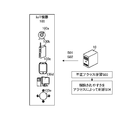
- FIG. 1 is a diagram showing an outline of the IoT device monitoring system 1.
- FIG. 2 is an overall configuration diagram of the IoT device monitoring system 1.
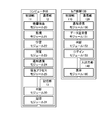
- FIG. 3 is a functional block diagram of the computer 10 and the IoT device 100.
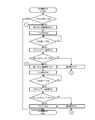
- FIG. 4 is a flowchart illustrating an IoT device monitoring process executed by the computer 10 and the IoT device 100.
- FIG. 5 is a flowchart illustrating an IoT device login process executed by the IoT device 100.
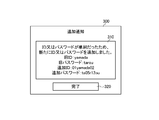
- FIG. 6 is a diagram illustrating an example of the addition notification screen.
- FIG. 7 is a diagram illustrating an example of the first input screen.
- FIG. 8 is a diagram illustrating an example of the second input screen.
- FIG. 1 is a diagram for explaining an outline of an IoT device monitoring system 1 according to a preferred embodiment of the present invention.
- the IoT device monitoring system 1 includes a computer 10 and IoT devices (a network camera 100a, a sensor device 100b, a mobile terminal 100c, a computer device 100d, and a drone 100e) 100, and a computer that monitors the IoT devices 100 connected to the computer 10. System.
- the numbers of the computers 10 and the IoT devices 100 can be appropriately changed. Further, the type of the IoT device 100 can be appropriately changed. Further, the computer 10 and the IoT device 100 are not limited to actual devices, and may be virtual devices. Further, each process described below may be realized by any one of the computer 10 and the IoT device 100 or a combination of a plurality of them.
- the computer 10 is a computer device connected to the IoT device 100 so that data communication is possible.
- the computer 10 may be a network device such as a router that connects the IoT device 100 to the LAN.
- the IoT device 100 is a terminal device connected to the computer 10 so that data communication is possible.
- the IoT device 100 includes, for example, a network camera 100a that captures an image such as a moving image and a still image, a sensor device 100b that acquires environmental data such as spatial data such as sunshine, temperature, and wind power, and time data, a mobile phone, and a mobile phone.
- a network camera 100a that captures an image such as a moving image and a still image
- a sensor device 100b that acquires environmental data such as spatial data such as sunshine, temperature, and wind power, and time data
- a mobile phone and a mobile phone.
- portable terminals 100c and computer devices 100d which are appliances such as portable music players, and unmanned aircraft and unmanned vehicles
- the drone 100e and other articles are appliances such as portable music players, and unmanned aircraft and unmanned vehicles.
- the computer 10 monitors the log-in state of the IoT device 100 (Step S01).
- the login state is a state in which both or either the ID or the password has been released.
- Unauthorized access is defined as an ID or password that has been entered more than a predetermined number of times (for example, three times) in spite of a past ID or password input error being less than a predetermined number of times (for example, three times). Is released.
- the computer 10 learns the ID and / or password of the detected unauthorized access (step S03).
- the computer 10 learns, for example, a combination of an ID or a password frequently used for unauthorized access as teacher data, and also learns a combination of an ID or a password that has been unauthorizedly accessed this time.
- the computer 10 determines from the access to the IoT device 100 whether or not the ID and / or the password held in advance by the IoT device 100 different from the IoT device 100 to which the unauthorized access has been performed are easily released. (Step S04). For example, the computer 10 attempts to access the IoT device 100 based on an ID or a password that matches or is similar to the above-described teacher data. In this case, it is determined that it is difficult to release.
- the computer 10 executes control such that the IoT device 100 accessed to make this determination is accessed with a predetermined priority.
- the predetermined priority is such that, for example, a higher priority is given to a device with a large number of external accesses, and a lower priority is given to a device with a low number of accesses, and control is performed such that access is made.
- the computer 10 executes control to increase the priority and access the IoT device 100 that has detected access from an IP address that is not stored.
- FIG. 2 is a diagram showing a system configuration of an IoT device monitoring system 1 which is a public embodiment of the present invention.
- the IoT device monitoring system 1 includes a computer 10, IoT devices (network camera 100a, sensor device 100b, portable terminal 100c, computer device 100d, drone 100e) 100, and a public line network (Internet network, third and fourth generation communication networks). Etc.) 5 and a computer system for monitoring the IoT device 100 connected to the computer 10.
- each device constituting the IoT device monitoring system 1 can be changed as appropriate. Further, the IoT device monitoring system 1 is not limited to a real device, and may be realized by virtual devices. Further, each process described later may be realized by any one of the devices constituting the IoT device monitoring system 1 or a combination of a plurality of devices. Further, the computer 10 may be a network device such as a router that connects the IoT device 100 to the LAN.
- the computer 10 is the above-described computer device having the functions described below.
- the IoT device 100 is the above-described terminal device having the functions described below.
- FIG. 3 is a functional block diagram of the computer 10 and the IoT device 100.
- the computer 10 includes, as the control unit 11, a CPU (Central Processing Unit), a RAM (Random Access Memory), a ROM (Read Only Memory), and the like, and as a communication unit 12, a device that enables communication with other devices. For example, it is provided with a device compatible with WiFi (Wireless @ Fidelity) compliant with IEEE 802.11. Further, the computer 10 includes, as the storage unit 13, a data storage unit such as a hard disk, a semiconductor memory, a recording medium, and a memory card.
- a data storage unit such as a hard disk, a semiconductor memory, a recording medium, and a memory card.
- control unit 11 reads a predetermined program and cooperates with the communication unit 12 to cooperate with the device detection module 20, the monitoring module 21, the learning module 22, the setting module 23, the notification transmitting module 24, the priority access module. 25 is realized.
- control unit 11 reads a predetermined program, and realizes the determination module 30 and the storage module 31 in cooperation with the storage unit 13.
- the IoT device 100 includes a CPU, a RAM, a ROM, and the like as the control unit 110, and includes a device that enables communication with another device as the communication unit 120. Further, the IoT device 100 includes, as the input / output unit 140, a display unit that outputs and displays data and images controlled by the control unit 110, an input unit such as a touch panel, a keyboard, and a mouse that receives input from a user, a moving image, An imaging unit for capturing an image such as a still image, various devices for acquiring environmental data and executing various processes, and the like are provided.
- the control unit 110 reads a predetermined program, and realizes the notification reception module 150, the data transmission / reception module 151, the determination module 152, and the login module 153 in cooperation with the communication unit 120. Further, in the IoT device 100, the control unit 110 reads a predetermined program, and realizes the display module 160 in cooperation with the input / output unit 140.
- FIG. 4 is a diagram illustrating a flowchart of the IoT device monitoring process executed by the computer 10 and the IoT device 100. The processing executed by the module of each device described above will be described together with this processing.
- the device detection module 20 detects the IoT device 100 connected to itself (step S10).
- step S10 the device detection module 20 detects the IoT device 100 connected to the LAN or the WAN by itself.
- the device detection module 20 detects, as the IoT device 100, a network camera 100a, a sensor device 100b, a mobile terminal 100b, a computer device 100d, and a drone 100e.
- the monitoring module 21 monitors the log-in state of the detected IoT device 100 (Step S11).
- the login state means a state in which both or either the ID or the password of the IoT device 100 has been released.
- the monitoring module 21 monitors whether the IoT device 100 is in a login state.
- the monitoring module 21 measures the number of external accesses to the IoT device 100 (step S12). In step S12, the monitoring module 21 measures the number of times that the IoT device 100 is simply accessed from the external IP address as the number of accesses.
- the monitoring module 21 stores the IP address that has accessed the IoT device 100 in the storage module 31 (Step S13).
- the monitoring module 21 determines whether an unauthorized access has been detected based on the monitoring result (Step S14).
- the monitoring module 21 receives an input of a number of times exceeding the number of incorrectly input IDs or passwords received in the past, and detects that both or either of the IDs or passwords have been released. .
- the monitoring module 21 receives the ID or password input five times, which is more than this time, although the number of ID or password input errors received in the past was less than three times, and as a result, If one or both of the ID and the password are released, it is detected as an unauthorized access.
- the monitoring module 21 may detect an unauthorized access by another method. For example, when logging in from location information different from the location information for normal login, when logging in at a time different from the time zone for normal login, when logging in from a terminal different from the terminal for normal login, etc. In the case where a different login is accepted, an unauthorized access may be detected.
- step S14 if the monitoring module 21 has not detected an unauthorized access (step S14 NO), the monitoring module 21 ends this processing.
- step S14 when the monitoring module 21 detects unauthorized access (step S14 YES), the learning module 22 learns both or any of the detected ID and password in which the unauthorized access was performed (step S15). ).
- step S15 the learning module 22 learns the ID or password frequently used for unauthorized access and the ID or password used for unauthorized access this time as teacher data.
- the ID or password frequently used for unauthorized access may be an initial setting (ID is admin, password is admin, ID is user, password is user, etc.), or the same or any of a plurality of IoT devices.
- the priority access module 25 controls the priority of access to the IoT device 100 (step S16). In step S16, the priority access module 25 controls the IoT device 200 to access to determine whether the ID or the password is easily released based on a predetermined priority.
- the priority access module 25 determines a priority order based on the number of accesses measured by the processing in step S12 described above. For example, the priority access module 25 determines the priority of the IoT devices 100 in the order of the number of accesses. As a result, the priority access module 25 controls to access the IoT device 200 with a large number of accesses with a higher priority. The determination module 30 sequentially accesses the target IoT device 100 based on the control result.
- the priority access module 25 determines a priority order based on a new IP address different from the IP address stored in the process of step S13 described above. For example, when the IP address is a new IP address, the priority access module 25 controls to increase the priority of the IoT device 100 to access. At this time, the priority may be determined in the order of the number of such new IP addresses, or each time a new IP address is detected, the priority may be determined by setting the priority one step higher than the previous state. Is also good.
- the priority access module 25 may determine the priority by combining the above two methods. For example, the priority of the IoT device 100 that has detected a new IP address with a large number of accesses is increased, and the IoT device 100 that has detected the new IP address with a low number of accesses is determined as the next priority of the IoT device 100. It is like doing. Further, the priority access module 25 can determine the priority order as appropriate based on the combination.
- the determination module 30 determines whether or not both the ID and / or the password held in the storage module 31 by the IoT device 100 different from the IoT device 100 that has detected the unauthorized access this time are likely to be released. The determination is made based on the access (step S17). In step S17, the determination module 30 attempts to access the IoT device 100 based on the learned teacher data. The determination module 30 determines that the IoT device 100 is easily released when the IoT device 100 is in the login state as a result of the attempt, and determines that it is difficult to release the IoT device 100 when the IoT device 100 is not in the login state. The determination module 30 performs this determination by repeating this access a plurality of times. At this time, the determination module 30 determines the access order of the IoT device 100 based on the priority determined by the processing in step S16 described above, and tries access based on the access order.
- step S17 when the determination module 30 determines that the release is difficult (step S17 NO), the determination module 30 ends the process.
- the determination module 30 may transmit a notification to that effect to a terminal owned by the user, the mobile terminal 100c, or the computer device 100d.
- the terminal, the portable terminal 100c, and the computer device 100d may display this notification.
- step S17 when the determination module 30 determines that the IoT device 100 is easily released (step S17 YES), the setting module 23 sets the IoT device 100 separately from the ID or password of the IoT device 100 held by the storage module 31. , A new ID or password is set (step S18).
- step S18 the setting module 23 sets a new ID or password in addition to the held ID or password. That is, in the IoT device 100, two IDs or passwords are set. At this time, the setting module 23 sets an ID or password that does not easily match the frequently used ID or password used for unauthorized access described above. The setting module 23 sets an ID or a password in consideration of user's convenience.
- the setting module 23 inserts alphanumeric characters into a part of the original ID or password, inserts alphanumeric characters into one or both of the beginning and end of the ID or password, and combines them.
- an ID or password that does not easily match an ID or password frequently used for unauthorized access is set. For example, when the original ID is “yamada”, the setting module 23 sets “01yama02da”. Similarly, when the original password is “tarou”, the setting module 23 sets “ta05r12ou”.
- the ID or password set by the setting module 23 is not limited to the example described above, and can be changed as appropriate.
- the notification transmitting module 24 transmits a notification indicating that a new ID or password has been set to the IoT device 100 (step S19).
- this notification is transmitted to the mobile terminal 100c or the computer device 100d having the display unit, the input / output unit, and the like as the IoT device 100.
- the notification transmission module 24 may transmit this notification to a terminal device or the like owned by another user.
- the notification receiving module 150 receives a notification.
- the display module 160 displays an additional notification screen based on the notification (Step S20).
- FIG. 6 is a diagram illustrating an example of the addition notification screen.
- the display module 160 displays the additional content display area 310 and the completion icon 320 as the additional notification screen 300.
- the additional content display area 310 is an area for displaying the reason for adding the ID or password, the ID or password before addition, and the ID or password after addition.
- the display module 160 displays, as an addition reason, "A new ID or password has been added because the ID or password was simple.”
- the display module 160 displays an additional reason based on the content frequently used for the unauthorized access described above.
- the display module 160 displays “old ID: yamada” as an ID before addition, and displays “old password: tarou” as a password before addition.
- the display module 160 displays “01yamada02” as the added ID and “ta05r12ou” as the added password.
- the completion icon 320 ends this screen by receiving an input from the user.
- the display module 160 determines whether or not an input for ending the display of the additional notification screen has been received (step S21). In step S21, when the display module 160 determines that the input has not been received (step S21 NO), that is, when it determines that the input of the completion icon 320 has not been received, the display module 160 repeats this process.
- step S21 if the display module 160 determines that the input has been received (step S21: YES), that is, if the input of the completion icon 320 has been received, the display module 160 ends this processing.
- the above is the IoT device monitoring process.
- FIG. 5 is a diagram illustrating a flowchart of the IoT device login processing executed by the IoT device 100. The processing executed by each module described above will be described together with this processing.
- the display module 160 determines whether or not the input of the login to the IoT device 100 has been received (Step S30). In step S30, the display module 160 accepts an input of login to the IoT device 100 by activating a dedicated application, a web browser, or the like.
- step S30 when the display module 160 determines that the input has not been received (step S30: NO), the display module 160 ends this processing.
- step S30 determines in step S30 that the input has been received (step S30: YES)
- the display module 160 displays the first input screen (step S31).
- FIG. 7 is a diagram illustrating an example of the first input screen.
- the display module 160 displays an ID input area 410, a password input area 420, and a login icon 430 as the first input screen 400.
- the ID input area 410 is an area for receiving an input from a user and receiving an ID input.
- the password input area 420 is an area for receiving an input from a user and receiving an input of a password.
- the ID input area 410 and the password input area 420 display a virtual keyboard in response to receiving an input from the user, and may receive an input from the user by receiving an input to the virtual keyboard. The input from the user may be received by an input or the like.
- the login icon 430 receives an input from the user, and the data transmission / reception module 151 transmits the received ID or password to the target IoT device 100 as login data.
- the display module 160 receives the input of the ID or the password (Step S32).
- the display module 160 receives an input of the original ID or password. That is, in the present embodiment, the input of “yamada” as the ID and the input of “tarou” as the password are accepted.
- the display module 160 determines whether the input has been completed (step S33). In step S33, the display module 160 determines based on whether the input of the login icon 430 has been received.
- step S33 when the display module 160 determines that the process is not completed (NO in step S33), that is, when it determines that the input of the login icon 430 has not been received, the display module 160 repeats this process.
- step S33 when the display module 160 determines that the input has been completed (YES in step S33), that is, when determining that the input of the login icon 430 has been received, the data transmission / reception module 151 replaces the received ID or password with the received ID or password.
- the login data is transmitted to the target IoT device 100 (step S34).
- the data transmission / reception module 151 receives the login data.
- the determination module 152 determines whether the received login data is correct login data (step S35).
- the determination module 152 determines whether the ID and the password included in the login data are correct.
- the determination module 152 determines that the login data is not correct (step S35 NO)
- the determination module 152 counts an input error, transmits a notification urging the user to input an ID or a password again to the IoT device 100, and displays the notification.
- the module 160 displays this notification (step S36), and repeats the above-described processing from step S31. Further, when the determination module 152 counts the input error for a predetermined number of times or more, the IoT device monitoring system 1 executes the IoT device monitoring process described above.
- step S35 when the determination module 152 determines that the login data is correct (step S35: YES), the determination module 152 transmits the second input screen to the IoT device 100, and the display module 160 This second input screen is displayed (step S37).
- FIG. 8 is a diagram illustrating an example of the second input screen.
- the display module 160 displays an additional ID input area 510, an additional password input area 520, and a login icon 530 as the second input screen 500.
- the additional ID input area 510 is an area for receiving an input from the user and inputting the ID set in the processing of step S15 described above.
- the additional password input area 520 is an area for receiving an input from the user and inputting the password set in the process of step S15 described above.
- the additional ID input area 510 and the additional password input area 520 may display a virtual keyboard in response to receiving an input from the user, and may receive an input from the user by receiving an input to the virtual keyboard. Alternatively, input from the user may be received by voice input or the like.
- the login icon 530 receives an input from the user, and the data transmission / reception module 151 transmits the received additional ID or additional password to the target IoT device 100 as login data.
- the display module 160 accepts the input of the additional ID or the additional password (Step S38).
- step S28 the display module 160 accepts the input of the newly set ID or password. That is, in this embodiment, the input of “01yamada02” as the additional ID and the input of “ta05r12ou” as the additional password are received.
- the display module 160 determines whether the input has been completed (step S39). In step S29, the display module 160 determines based on whether the input of the login icon 530 has been received.
- step S39 if the display module 160 determines that the process is not completed (step S39 NO), that is, if it determines that the input of the login icon 530 has not been received, the display module 160 repeats this process.
- step S39 when the display module 160 determines that the input is completed (step S39 YES), that is, when it determines that the input of the login icon 530 has been received, the data transmission / reception module 151 transmits the received additional ID or additional password. Is transmitted to the target IoT device 100 as login data (step S40).
- the data transmission / reception module 151 receives the login data.
- the determination module 152 determines whether the received login data is correct login data (step S41).
- the processing in step S41 is the same as the processing in step S35 described above.
- the determination module 152 determines that the log-in data is not correct (step S41 NO)
- the determination module 152 counts an input error and notifies the IoT device 100 of a notification urging the input of the ID or the password again.
- the display module 160 displays this notification (step S42), and repeats the above-described processing from step S37.
- the determination module 152 counts the input error for a predetermined number of times or more, the IoT device monitoring system 1 executes the IoT device monitoring process described above.
- step S41 when the determination module 152 determines that the login data is correct (step S41: YES), the login module 153 logs in to the IoT device 100 (step S43).
- the original ID or password is input on the first input screen and the newly set ID or password is input on the second input screen.
- the newly set ID or password may be input, and the original ID or password may be input on the second input screen. That is, a configuration may be employed in which an input for inputting a new ID or password is received before or after the login screen of the IoT device 100.
- the above is the IoT device login processing.
- the means and functions described above are realized by a computer (including a CPU, an information processing device, and various terminals) reading and executing a predetermined program.
- the program is provided, for example, in a form of being provided from a computer via a network (SaaS: Software as a Service).
- the program is provided in a form recorded on a computer-readable recording medium such as a flexible disk, a CD (eg, a CD-ROM), and a DVD (eg, a DVD-ROM, a DVD-RAM).
- the computer reads the program from the recording medium, transfers the program to an internal storage device or an external storage device, stores the program, and executes the program.
- the program may be recorded in a storage device (recording medium) such as a magnetic disk, an optical disk, or a magneto-optical disk in advance, and may be provided to the computer from the storage device via a communication line.
- the present invention is not limited to these embodiments.
- the effects described in the embodiments of the present invention merely enumerate the most preferable effects resulting from the present invention, and the effects according to the present invention are limited to those described in the embodiments of the present invention. is not.
Landscapes
- Engineering & Computer Science (AREA)
- Computer Security & Cryptography (AREA)
- General Engineering & Computer Science (AREA)
- Computer Hardware Design (AREA)
- Signal Processing (AREA)
- Computer Networks & Wireless Communication (AREA)
- Computing Systems (AREA)
- Theoretical Computer Science (AREA)
- Software Systems (AREA)
- Physics & Mathematics (AREA)
- General Physics & Mathematics (AREA)
- Information Transfer Between Computers (AREA)
- Storage Device Security (AREA)
Abstract
Description
前記IoT機器のログイン状態を監視する監視手段と、
前記監視の結果に基づいて、不正アクセスを検出する検出手段と、
前記検出された不正アクセスのID又はパスワードの双方又はいずれかを学習する学習手段と、
前記IoT機器が事前に保有しているID又はパスワードの双方又はいずれかが解除されやすいかどうかを当該IoT機器に対するアクセスによって判断する判断手段と、
判断するためにアクセスするIoT機器は、所定の優先順位でアクセスするように制御する優先アクセス手段と、
を備えることを特徴とするコンピュータシステムを提供する。
本発明の好適な実施形態の概要について、図1に基づいて説明する。図1は、本発明の好適な実施形態であるIoT機器監視システム1の概要を説明するための図である。IoT機器監視システム1は、コンピュータ10、IoT機器(ネットワークカメラ100a、センサ装置100b、携帯端末100c、コンピュータ装置100d、ドローン100e)100から構成され、コンピュータ10に接続されたIoT機器100を監視するコンピュータシステムである。
図2に基づいて、本発明の好適な実施形態であるIoT機器監視システム1のシステム構成について説明する。図2は、本発明の公的な実施形態であるIoT機器監視システム1のシステム構成を示す図である。IoT機器監視システム1は、コンピュータ10、IoT機器(ネットワークカメラ100a、センサ装置100b、携帯端末100c、コンピュータ装置100d、ドローン100e)100、公衆回線網(インターネット網や、第3、第4世代通信網等)5から構成され、コンピュータ10に接続されたIoT機器100を監視するコンピュータシステムである。
図3に基づいて、本発明の好適な実施形態であるIoT機器監視システム1の機能について説明する。図3は、コンピュータ10、IoT機器100の機能ブロック図を示す図である。
図4に基づいて、IoT機器監視システム1が実行するIoT機器監視処理について説明する。図4は、コンピュータ10、IoT機器100が実行するIoT機器監視処理のフローチャートを示す図である。上述した各装置のモジュールが実行する処理について、本処理に併せて説明する。
図5に基づいて、IoT機器監視システム1が実行するIoT機器ログイン処理について説明する。図5は、IoT機器100が実行するIoT機器ログイン処理のフローチャートを示す図である。上述した各モジュールが実行する処理について、本処理に併せて説明する。
Claims (8)
- 接続されたIoT機器を監視するコンピュータシステムであって、
前記IoT機器のログイン状態を監視する監視手段と、
前記監視の結果に基づいて、不正アクセスを検出する検出手段と、
前記検出された不正アクセスのID又はパスワードの双方又はいずれかを学習する学習手段と、
前記IoT機器が事前に保有しているID又はパスワードの双方又はいずれかが解除されやすいかどうかを当該IoT機器に対するアクセスによって判断する判断手段と、
判断するためにアクセスするIoT機器は、所定の優先順位でアクセスするように制御する優先アクセス手段と、
を備えることを特徴とするコンピュータシステム。 - 前記監視手段は、前記IoT機器への外部からのアクセス数を計測し、
前記優先アクセス手段は、前記アクセス数が多いIoT機器に対して優先順位を上げてアクセスするように制御する、
ことを特徴とする請求項1に記載のコンピュータシステム。 - 前記監視手段は、前記IoT機器にアクセスしたIPアドレスを記憶し、
前記優先アクセス手段は、前記IoT機器へのアクセスが、記憶されたIPアドレスに存在しない新しいIPアドレスによる場合に、当該IPアドレスでアクセスされたIoT機器に対して優先順位を上げてアクセスするように制御する、
ことを特徴とする請求項1に記載のコンピュータシステム。 - 解除されやすいと判断した場合に、前記IoT機器が事前に保有しているパスワードとは別に、当該IoT機器に対して新たなパスワードを設定する設定手段と、
を備えることを特徴とする請求項1に記載にコンピュータシステム。 - 前記設定手段は、新たなパスワードを設定するとともに、前記IoT機器が事前に保有しているIDとは別に、当該IoT機器に対して新たなIDを設定する、
ことを特徴とする請求項4に記載のコンピュータシステム。 - 前記新たなパスワードを設定した際に、前記IoT機器のログイン画面の前後に、新たなパスワードを入力させるための入力を受け付ける受付手段と、
を備えることを特徴とする請求項4に記載のコンピュータシステム。 - 接続されたIoT機器を監視するコンピュータシステムが実行するIoT機器監視方法であって、
前記IoT機器のログイン状態を監視するステップと、
前記監視の結果に基づいて、不正アクセスを検出するステップと、
前記検出された不正アクセスのID又はパスワードの双方又はいずれかを学習するステップと、
前記IoT機器が事前に保有しているID又はパスワードの双方又はいずれかが解除されやすいかどうかを当該IoT機器に対するアクセスによって判断するステップと、
判断するためにアクセスするIoT機器は、所定の優先順位でアクセスするように制御するステップと、
を備えることを特徴とするIoT機器監視方法。 - 接続されたIoT機器を監視するコンピュータシステムに、
前記IoT機器のログイン状態を監視するステップ、
前記監視の結果に基づいて、不正アクセスを検出するステップ、
前記検出された不正アクセスのID又はパスワードの双方又はいずれかを学習するステップ、
前記IoT機器が事前に保有しているID又はパスワードの双方又はいずれかが解除されやすいかどうかを当該IoT機器に対するアクセスによって判断するステップ、
判断するためにアクセスするIoT機器は、所定の優先順位でアクセスするように制御するステップ、
を実行させるためのコンピュータ読み取り可能なプログラム。
Priority Applications (4)
| Application Number | Priority Date | Filing Date | Title |
|---|---|---|---|
| US17/270,621 US20220417281A1 (en) | 2018-06-29 | 2018-06-29 | Computer system, and method and program for monitoring iot device |
| PCT/JP2018/024760 WO2020003479A1 (ja) | 2018-06-29 | 2018-06-29 | コンピュータシステム、IoT機器監視方法及びプログラム |
| JP2020526840A JP6928302B2 (ja) | 2018-06-29 | 2018-06-29 | コンピュータシステム、IoT機器監視方法及びプログラム |
| CN201880096942.0A CN112639777B (zh) | 2018-06-29 | 2018-06-29 | 计算机系统、IoT设备监视方法以及程序 |
Applications Claiming Priority (1)
| Application Number | Priority Date | Filing Date | Title |
|---|---|---|---|
| PCT/JP2018/024760 WO2020003479A1 (ja) | 2018-06-29 | 2018-06-29 | コンピュータシステム、IoT機器監視方法及びプログラム |
Publications (1)
| Publication Number | Publication Date |
|---|---|
| WO2020003479A1 true WO2020003479A1 (ja) | 2020-01-02 |
Family
ID=68984957
Family Applications (1)
| Application Number | Title | Priority Date | Filing Date |
|---|---|---|---|
| PCT/JP2018/024760 Ceased WO2020003479A1 (ja) | 2018-06-29 | 2018-06-29 | コンピュータシステム、IoT機器監視方法及びプログラム |
Country Status (4)
| Country | Link |
|---|---|
| US (1) | US20220417281A1 (ja) |
| JP (1) | JP6928302B2 (ja) |
| CN (1) | CN112639777B (ja) |
| WO (1) | WO2020003479A1 (ja) |
Citations (4)
| Publication number | Priority date | Publication date | Assignee | Title |
|---|---|---|---|---|
| WO2017208969A1 (ja) * | 2016-06-01 | 2017-12-07 | 日本電信電話株式会社 | 検知装置、検知方法、検知システム、および検知プログラム |
| JP6310621B1 (ja) * | 2016-11-30 | 2018-04-11 | 株式会社オプティム | コンピュータシステム、IoT機器監視方法及びプログラム |
| JP6310620B1 (ja) * | 2016-11-30 | 2018-04-11 | 株式会社オプティム | コンピュータシステム、IoT機器監視方法及びプログラム |
| US20180144139A1 (en) * | 2016-11-21 | 2018-05-24 | Zingbox, Ltd. | Iot device risk assessment |
Family Cites Families (16)
| Publication number | Priority date | Publication date | Assignee | Title |
|---|---|---|---|---|
| US7385920B2 (en) * | 2003-09-15 | 2008-06-10 | Qualcomm Incorporated | Flow admission control for wireless systems |
| US7849320B2 (en) * | 2003-11-25 | 2010-12-07 | Hewlett-Packard Development Company, L.P. | Method and system for establishing a consistent password policy |
| JP4820374B2 (ja) * | 2005-12-15 | 2011-11-24 | ネットスター株式会社 | ウェブアクセス監視方法及びそのプログラム |
| JP5157778B2 (ja) * | 2008-09-18 | 2013-03-06 | 富士通株式会社 | 監視装置、監視方法及びコンピュータプログラム |
| US8621642B2 (en) * | 2008-11-17 | 2013-12-31 | Digitalpersona, Inc. | Method and apparatus for an end user identity protection suite |
| US9258715B2 (en) * | 2009-12-14 | 2016-02-09 | Apple Inc. | Proactive security for mobile devices |
| US8233390B2 (en) * | 2010-02-22 | 2012-07-31 | Telefonaktiebolaget L M Ericsson (Publ) | Priority and source aware packet memory reservation and flow control in forwarding planes |
| US8762747B2 (en) * | 2011-06-27 | 2014-06-24 | Qualcomm Incorporated | Inductive charging and data transfer for mobile computing devices organized into a mesh network |
| WO2013109330A2 (en) * | 2011-10-31 | 2013-07-25 | The Florida State University Research Foundation, Inc. | System and methods for analyzing and modifying passwords |
| JP5792654B2 (ja) * | 2012-02-15 | 2015-10-14 | 株式会社日立製作所 | セキュリティ監視システムおよびセキュリティ監視方法 |
| US9292694B1 (en) * | 2013-03-15 | 2016-03-22 | Bitdefender IPR Management Ltd. | Privacy protection for mobile devices |
| US9692784B1 (en) * | 2016-10-25 | 2017-06-27 | Fortress Cyber Security, LLC | Security appliance |
| JP2018088177A (ja) * | 2016-11-29 | 2018-06-07 | オムロン株式会社 | 情報処理装置、情報処理システム、情報処理方法、および情報処理プログラム |
| CN207517054U (zh) * | 2017-01-04 | 2018-06-19 | 意法半导体股份有限公司 | 串流开关 |
| CN207440765U (zh) * | 2017-01-04 | 2018-06-01 | 意法半导体股份有限公司 | 片上系统和移动计算设备 |
| CN107483234B (zh) * | 2017-08-01 | 2021-06-22 | 深圳市盛路物联通讯技术有限公司 | 物联网接入点拆分式备份的方法及装置 |
-
2018
- 2018-06-29 CN CN201880096942.0A patent/CN112639777B/zh active Active
- 2018-06-29 WO PCT/JP2018/024760 patent/WO2020003479A1/ja not_active Ceased
- 2018-06-29 JP JP2020526840A patent/JP6928302B2/ja active Active
- 2018-06-29 US US17/270,621 patent/US20220417281A1/en not_active Abandoned
Patent Citations (4)
| Publication number | Priority date | Publication date | Assignee | Title |
|---|---|---|---|---|
| WO2017208969A1 (ja) * | 2016-06-01 | 2017-12-07 | 日本電信電話株式会社 | 検知装置、検知方法、検知システム、および検知プログラム |
| US20180144139A1 (en) * | 2016-11-21 | 2018-05-24 | Zingbox, Ltd. | Iot device risk assessment |
| JP6310621B1 (ja) * | 2016-11-30 | 2018-04-11 | 株式会社オプティム | コンピュータシステム、IoT機器監視方法及びプログラム |
| JP6310620B1 (ja) * | 2016-11-30 | 2018-04-11 | 株式会社オプティム | コンピュータシステム、IoT機器監視方法及びプログラム |
Non-Patent Citations (1)
| Title |
|---|
| YAMAGUCHI RIE ET AL: "A proposal of multi-factor authentication probability with smartphone as a case ( non official translation )", ABSTRACTS OF THE 32ND SYMPOSIUM ON CRYPTOGRAPHY AND INFORMATION SECURITY (SCIS 2015), 20 January 2015 (2015-01-20), pages 1 - 8 * |
Also Published As
| Publication number | Publication date |
|---|---|
| CN112639777A (zh) | 2021-04-09 |
| CN112639777B (zh) | 2025-06-03 |
| JP6928302B2 (ja) | 2021-09-01 |
| JPWO2020003479A1 (ja) | 2021-04-08 |
| US20220417281A1 (en) | 2022-12-29 |
Similar Documents
| Publication | Publication Date | Title |
|---|---|---|
| US20210258330A1 (en) | Detecting compromised credentials in a credential stuffing attack | |
| US10148631B1 (en) | Systems and methods for preventing session hijacking | |
| US9184921B2 (en) | Input challenge based authentication | |
| US9172692B2 (en) | Systems and methods for securely transferring authentication information between a user and an electronic resource | |
| US9246949B2 (en) | Secure capability negotiation between a client and server | |
| US9888035B2 (en) | Systems and methods for detecting man-in-the-middle attacks | |
| WO2016165557A1 (zh) | 验证码的实现方法及装置 | |
| US10509903B2 (en) | Computer system, IoT device monitoring method, and program | |
| CN118713924B (zh) | 端口安全自动化测试方法、装置、设备及存储介质 | |
| US20150229655A1 (en) | Systems and methods for informing users about applications available for download | |
| US9992193B2 (en) | High-safety user multi-authentication system and method | |
| US10621332B2 (en) | Computer system, IoT device monitoring method, and program | |
| CN115515139A (zh) | 漏洞安全检测方法、装置、设备及存储介质 | |
| EP3591591A1 (en) | Information processing device and information processing method | |
| WO2020003479A1 (ja) | コンピュータシステム、IoT機器監視方法及びプログラム | |
| EP3679699B1 (en) | Preventing counterfeit communication devices from accessing resources | |
| US11652814B2 (en) | Password protection in a computing environment | |
| Sindhu et al. | A critical analysis of privacy implications surrounding Alexa and voice assistants | |
| WO2023197642A1 (zh) | 身份验证方法、设备、存储介质及程序产品 | |
| CN110875921B (zh) | 一种打印机网络访问安全检测方法、装置及电子设备 | |
| US20250028810A1 (en) | Interaction-based authentication and user interface adjustment | |
| US20250384151A1 (en) | Method to prevent data theft from a storage device | |
| WO2017149779A1 (ja) | 機器監視システム、機器監視方法及びプログラム | |
| JP2014078185A (ja) | 情報処理システムおよび方法、並びに情報処理端末 | |
| WO2022079657A1 (en) | A method and system for authenticating a user |
Legal Events
| Date | Code | Title | Description |
|---|---|---|---|
| 121 | Ep: the epo has been informed by wipo that ep was designated in this application |
Ref document number: 18923870 Country of ref document: EP Kind code of ref document: A1 |
|
| ENP | Entry into the national phase |
Ref document number: 2020526840 Country of ref document: JP Kind code of ref document: A |
|
| NENP | Non-entry into the national phase |
Ref country code: DE |
|
| 122 | Ep: pct application non-entry in european phase |
Ref document number: 18923870 Country of ref document: EP Kind code of ref document: A1 |
|
| WWG | Wipo information: grant in national office |
Ref document number: 201880096942.0 Country of ref document: CN |