WO2020003588A1 - Système d'aide à la collecte et procédé d'aide - Google Patents
Système d'aide à la collecte et procédé d'aide Download PDFInfo
- Publication number
- WO2020003588A1 WO2020003588A1 PCT/JP2019/005965 JP2019005965W WO2020003588A1 WO 2020003588 A1 WO2020003588 A1 WO 2020003588A1 JP 2019005965 W JP2019005965 W JP 2019005965W WO 2020003588 A1 WO2020003588 A1 WO 2020003588A1
- Authority
- WO
- WIPO (PCT)
- Prior art keywords
- shelf
- sorting
- picking
- work
- shelves
- Prior art date
- Legal status (The legal status is an assumption and is not a legal conclusion. Google has not performed a legal analysis and makes no representation as to the accuracy of the status listed.)
- Ceased
Links
Images




Classifications
-
- B—PERFORMING OPERATIONS; TRANSPORTING
- B65—CONVEYING; PACKING; STORING; HANDLING THIN OR FILAMENTARY MATERIAL
- B65G—TRANSPORT OR STORAGE DEVICES, e.g. CONVEYORS FOR LOADING OR TIPPING, SHOP CONVEYOR SYSTEMS OR PNEUMATIC TUBE CONVEYORS
- B65G1/00—Storing articles, individually or in orderly arrangement, in warehouses or magazines
- B65G1/02—Storage devices
- B65G1/04—Storage devices mechanical
- B65G1/137—Storage devices mechanical with arrangements or automatic control means for selecting which articles are to be removed
- B65G1/1373—Storage devices mechanical with arrangements or automatic control means for selecting which articles are to be removed for fulfilling orders in warehouses
-
- B—PERFORMING OPERATIONS; TRANSPORTING
- B65—CONVEYING; PACKING; STORING; HANDLING THIN OR FILAMENTARY MATERIAL
- B65G—TRANSPORT OR STORAGE DEVICES, e.g. CONVEYORS FOR LOADING OR TIPPING, SHOP CONVEYOR SYSTEMS OR PNEUMATIC TUBE CONVEYORS
- B65G1/00—Storing articles, individually or in orderly arrangement, in warehouses or magazines
- B65G1/02—Storage devices
- B65G1/04—Storage devices mechanical
- B65G1/137—Storage devices mechanical with arrangements or automatic control means for selecting which articles are to be removed
- B65G1/1373—Storage devices mechanical with arrangements or automatic control means for selecting which articles are to be removed for fulfilling orders in warehouses
- B65G1/1378—Storage devices mechanical with arrangements or automatic control means for selecting which articles are to be removed for fulfilling orders in warehouses the orders being assembled on fixed commissioning areas remote from the storage areas
-
- B—PERFORMING OPERATIONS; TRANSPORTING
- B65—CONVEYING; PACKING; STORING; HANDLING THIN OR FILAMENTARY MATERIAL
- B65G—TRANSPORT OR STORAGE DEVICES, e.g. CONVEYORS FOR LOADING OR TIPPING, SHOP CONVEYOR SYSTEMS OR PNEUMATIC TUBE CONVEYORS
- B65G1/00—Storing articles, individually or in orderly arrangement, in warehouses or magazines
- B65G1/02—Storage devices
- B65G1/04—Storage devices mechanical
- B65G1/10—Storage devices mechanical with relatively movable racks to facilitate insertion or removal of articles
-
- G—PHYSICS
- G06—COMPUTING OR CALCULATING; COUNTING
- G06Q—INFORMATION AND COMMUNICATION TECHNOLOGY [ICT] SPECIALLY ADAPTED FOR ADMINISTRATIVE, COMMERCIAL, FINANCIAL, MANAGERIAL OR SUPERVISORY PURPOSES; SYSTEMS OR METHODS SPECIALLY ADAPTED FOR ADMINISTRATIVE, COMMERCIAL, FINANCIAL, MANAGERIAL OR SUPERVISORY PURPOSES, NOT OTHERWISE PROVIDED FOR
- G06Q10/00—Administration; Management
- G06Q10/08—Logistics, e.g. warehousing, loading or distribution; Inventory or stock management
-
- G—PHYSICS
- G06—COMPUTING OR CALCULATING; COUNTING
- G06Q—INFORMATION AND COMMUNICATION TECHNOLOGY [ICT] SPECIALLY ADAPTED FOR ADMINISTRATIVE, COMMERCIAL, FINANCIAL, MANAGERIAL OR SUPERVISORY PURPOSES; SYSTEMS OR METHODS SPECIALLY ADAPTED FOR ADMINISTRATIVE, COMMERCIAL, FINANCIAL, MANAGERIAL OR SUPERVISORY PURPOSES, NOT OTHERWISE PROVIDED FOR
- G06Q10/00—Administration; Management
- G06Q10/08—Logistics, e.g. warehousing, loading or distribution; Inventory or stock management
- G06Q10/087—Inventory or stock management, e.g. order filling, procurement or balancing against orders
Definitions
- the present invention relates to a picking support system and a picking support method.
- picking work is performed by workers.
- the picking work is a work in which the worker collects the articles specified by the order from the stored articles and sorts them to the destination.
- Patent Document 1 discloses a technique of automatically transporting a target article or a shelf storing the target article to a picking station in a distribution warehouse.
- Patent Literature 2 in a distribution warehouse, an unmanned transporter transports a shelf storing target articles and boxes in which the target articles are sorted to an operator's place, and the worker performs a picking operation. Then, a technique of moving a shelf to a storage space according to an event is disclosed.
- the prior art does not consider moving the shelf for storing the articles to be picked to the worker but moving the sorting shelf for storing the articles taken out of the shelves.
- the present invention has been made in view of the above problems, and an object of the present invention is to provide a picking support system and a support method capable of improving work efficiency.
- a picking support system includes a plurality of shelves that are movable and can accommodate at least one article, and a control device that controls movement of each shelf, The apparatus moves a sorting shelf selected from each shelf to a work place selected from a plurality of work places, and picks an item from a storage shelf arranged at the selected work place to the sorting shelf. Is repeatedly executed while changing the work place until the sorting shelf accommodates a predetermined article.
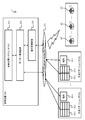
- FIG. 1 is an overall schematic diagram of a picking support system according to an embodiment. Explanatory drawing which shows the state of the warehouse to which the picking support system is applied.
- FIG. 2 is a functional configuration diagram of the picking support system.
- 5 is a flowchart of a picking support method.
- 9 is a flowchart of a picking support method according to the second embodiment.
- the picking support system according to the present embodiment accommodates articles as ordered while moving the sorting shelf between a plurality of work stations. That is, in the picking support system according to the present embodiment, not only storage shelves but also sorting shelves can be moved in, for example, a warehouse, and a plurality of sorting shelves and a plurality of storage shelves can be moved between a plurality of work stations provided in the warehouse. Are moved, and a predetermined article is stored in the sorting shelf, and the sorting shelf is completed.
- the work station corresponds to “work place”, “predetermined position”, and “next predetermined position”.
- the sorting shelf (article storage shelf) is first conveyed to a predetermined work station to store the articles on the storage shelf, and then conveyed to the next predetermined work station to be transferred to another work station. Another article is stored from the storage shelf. Thereafter, in this manner, the sorting shelf accommodates articles while walking between a plurality of predetermined work stations.
- the sorting shelf containing the articles (predetermined articles) according to the order moves to, for example, a shipping station, where the predetermined articles are taken out for shipment.
- the sorting shelves from which the predetermined articles have been taken out are returned to the shelves provided in the warehouse.
- the storage shelf and the sorting shelf have basically the same structure, but may differ in shape, color, accessories, and the like.
- Sorting shelves standing by at shelves are usually in a state where no items are stored (empty state), while storage shelves waiting at shelves are storing one or more items. It is thought that there are many. However, the storage shelf from which all the stored articles are taken out by the picking operation is empty until the articles are refilled.
- the picking support system 1 is applied to a facility for storing and sorting articles such as a distribution warehouse 1, for example.
- One area in the warehouse 100 is a shelf area (also referred to as a storage area).
- a plurality of movable shelves DS and SS are provided in the shelves.
- Each of the shelves DS and SS has basically the same structure, and includes a storage section for storing at least one article Gd.
- the first shelf among the plurality of shelves is a storage shelf DS for storing articles to be picked.
- the second shelf among the plurality of shelves is a sorting shelf SS in which articles are stored.
- the other area in the warehouse 100 is a work area.
- a plurality of work stations WST are provided in the work area.
- an operator takes out articles from the storage shelves DS and stores them in the sorting shelf SS.
- the sorting shelf SS moves between predetermined work stations until a predetermined article is stored in the sorting shelf SS.
- sorting shelf SS contains all the predetermined articles
- the articles are transported to the shipping station SST, and the predetermined articles are taken out.
- the empty sorting shelf SS is returned to the shelf place.
- the movement of the shelves DS and SS and the instruction of the picking work in each work station are controlled by the control device 200.
- the control device 200 can be configured using, for example, a computer including an arithmetic device, a memory, an auxiliary storage device, an input / output circuit, a communication circuit, and a user interface device (all not shown).
- the functions 201 to 204 as the picking support system 1 described later are realized by the arithmetic device executing a predetermined computer program called into the memory.
- the control device 200 includes, for example, an order information acquisition function 201, a shelf information acquisition function 202, a transfer plan planning and instruction function 203, and a work plan planning and instruction function 204.
- the order information acquisition function 201 is a function for acquiring order information from an order reception server or an inventory management system (not shown).
- the order information is information for specifying the type and quantity of articles to be taken out (shipped) from the warehouse 100.
- the shelf information acquisition function 202 is a function of acquiring information on each of the shelves DS and SS arranged in the warehouse 100.
- the shelf information includes, for example, the type of shelf (storage shelf DS or sorting shelf SS), the position of the shelf, the number of the automatic guided vehicle assigned to the shelf, the moving speed of the shelf, and the type of article stored in the shelf. And quantity.
- the transfer plan planning and instruction function 203 creates a transfer plan that specifies when and to which work station WST the shelves DS and SS are to be moved, and according to the transfer plan, sends the unmanned guided vehicle assigned to each shelf to the unmanned guided vehicle. This function gives instructions.
- the work planning and instruction function 204 is a function for creating a plan for picking work at each work station and instructing work contents to a terminal PC installed at each work station.
- the work plan includes the work contents such as how many articles are to be moved from which storage shelf DS to which sorting shelf SS at which work station.
- the content of the work performed in the work station is displayed on the terminal PC associated with each work station.
- the operator transfers articles between the storage shelf DS and the sorting shelf SS arriving at the work station in accordance with the work content displayed on the terminal PC.
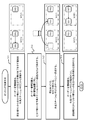
- the step S1 of performing the product sorting from the first storage shelf DS1 to the sorting shelf SS1 at the first position (predetermined position) WST2, and the sorting shelf SS1 includes: Step S2 of moving to the second position (the next predetermined position) WST1 by the carrier, and Step S3 of performing product sorting from the second storage shelf DS2 to the sorting shelf SS1 at the second position. .
- the sorting shelf SS1 is transported to the predetermined position (which can also be referred to as a predetermined position) to store the articles.
- the number of picking operations is not limited to three, but may be four or five.
- the sorting shelf SS1 walks across a plurality of work stations until all the designated predetermined articles are stored, and picking work is performed at each work station.
- step S4 When the sorting shelf SS1 stores a predetermined article, it is conveyed to the shipping station SST and delivers the stored predetermined article (step S4).
- the predetermined article taken out of the sorting shelf SS1 is packed and shipped.
- the sorting shelf SS1 from which the predetermined article has been taken out is returned to the shelf place and stands by (step S5).
- the second storage shelves DS2 and the first storage shelves DS1 that have been performing the sorting work (picking work) at the first position WST2 may match.
- the second storage shelf DS may be different from the first storage shelf DS1 that has been sorting at the first position WST2.
- the sorting shelf SS is moved. Move from the first position WST2 to the second position WST1.
- the predetermined condition may be that the time estimated to be required for completing the sorting operation at the second position WST1 is equal to or less than a predetermined threshold.
- the time required for completing the sorting operation (estimated work completion time) is calculated based on at least one of the number of articles to be picked out from the storage shelf DS, the number of types, and the number of sorting destinations. Is also good.
- the sorting shelf SS that moves to the second position WST1 is transported to the second position WST1 based on the estimated start time of the sorting operation performed with the second storage shelf DS2 at the second position WST1. May be determined.
- the estimated start time of the sorting operation is a time estimated to be required until the second storage shelf DS2 arrives at the second position WST1, and is estimated to be required until the sorting shelf SS arrives at the second position WST1. May be calculated using at least one of the following times.
- the sorting shelf SS1 can be transported between a plurality of different positions WST, and the sorting operation can be performed at each position WST. For this reason, in the picking support system 1 of the present embodiment, the efficiency of the picking operation can be improved.
- FIG. 2 is an explanatory diagram showing an outline of a picking operation performed in the warehouse 100.
- a storage area 101 for storing articles and a work area 102 for performing a picking operation (sorting operation) are set.
- the shipping station described in FIG. 1 is omitted in FIG.
- Each storage shelf DS stores one or more types of articles.
- a plurality of transport vehicles AC are arranged. The transport vehicle AC is controlled by an operation management device 230 described later.
- each of the shelves DS and SS and each of the transport vehicles AC are separated from each other, and a combination of both is provided with a degree of freedom.
- This makes it possible to flexibly draft a rack transport plan, and further improves the workability of maintenance work such as inspection and replacement of the transport vehicle AC.
- at least a part of the transport vehicle AC may be associated with a specific shelf.
- the transport vehicle AC may be fixedly attached to the lower part of the shelf, or control for always assigning a specific transport vehicle AC to a specific shelf may be executed.
- the transport vehicle AC moves from the operation management device 230 to the designated storage shelf DS or the sorting shelf SS.
- the jack mechanism (not shown) provided on the upper surface of the transport vehicle AC lifts the storage shelf DS or the sorting shelf SS directly above.
- the transport vehicle AC moves to the designated work stations WST1 and WST2 in the work area 102 while keeping the storage shelf DS or the sorting shelf SS lifted.
- work stations WST1 and WST2 are not distinguished, they are described as work stations WST.
- the transport vehicle AC When the transport vehicle AC reaches the work station WST specified by the operation management device 230, the transport vehicle AC lowers the storage shelf DS or the sorting shelf SS to the floor. When the work (sorting work, picking work) of transferring the articles stored in the storage shelf DS to the sorting shelf SS is completed, the transport vehicle AC lifts the storage shelf DS or the sorting shelf SS again and moves. The transport vehicle AC returns the storage shelf DS or the sorting shelf SS to the original position, or moves the storage shelf DS or the sorting shelf SS to another work station WST.
- a plurality of work stations WSTi (i is an integer satisfying 1 ⁇ i ⁇ n.
- the work station WSTi is a gate Gij (i is an integer satisfying 1 ⁇ j ⁇ m.
- a terminal PCi a terminal PCi.
- the gate Gij is an arrival point of the storage shelf DS and the sorting shelf SS.
- One gate Gij corresponds to one storage shelf DS or sorting shelf SS.
- a predetermined gate among the gates G installed in the work station corresponds to the storage shelf DS, and the other predetermined gates correspond to the sorting shelf SS.
- the gates G11 and G12 correspond to the storage shelves DS, respectively, and the gate G13 corresponds to the sorting shelf SS.
- each work station WST can receive a plurality of storage shelves DS and one sorting shelf SS.
- the replacement time of the storage shelf DS can be shortened, so that the efficiency of the picking operation can be improved.
- the storage shelf DS used for the next picking operation is received by the other gate G12. Can be kept. As a result, picking work can be continuously performed on different sorting shelves SS, and work efficiency is improved.
- the terminal PCi is a computer that displays information from the order management device 220 and is operated by the worker Wi.
- the terminal PC may be a physical computer terminal installed in the work station WST, or may be a virtual terminal on which a headset worn by an operator projects.
- FIG. 3 is an explanatory diagram showing a control configuration of the picking support system 1.
- the picking support system 1 includes at least one control device 200, a plurality of transport vehicles AC, a plurality of terminals PCi, and a plurality of gates Gij.
- the control device 200 includes, for example, a warehouse management system 210, an order management device 220, and an operation management device 230.
- the warehouse management system 210 is referred to as a WMS (Warehouse ⁇ Management ⁇ System).
- Each of the devices 210, 220, and 230 may be configured as a separate device, and connected so as to enable two-way communication over a network.
- the functions of the devices 210 to 230 may be provided in one physical computer.
- the order management device 220 and the operation management device 230 may be provided in parallel, and the WMS 210 may cooperatively control the order management device 220 and the operation management device 230.
- the WMS 210 is communicably connected to the order management device 220.
- the order management device 220 is communicably connected to the operation management device 230.
- the order management device 220, the operation management device 230, each carrier AC, each terminal PCi, and each gate Gij are communicably connected via a communication network CN.
- Each carrier AC is connected to a communication network CN via a wireless communication device (not shown).
- each transport vehicle AC is connected to the operation management device 230 via the communication network CN so as to be capable of two-way communication.
- At least a part of each gate Gij or at least a part of each terminal PCi may be wirelessly connected to the communication network CN.
- the WMS 210 controls the order management device 220.
- the WMS 210 transmits, for example, order information, storage shelf data, and sorting shelf data to the order management device 220.
- the order is information including the article name, quantity, and delivery destination of the article.
- the storage shelf data is data relating to the transport shelf DS in which articles are stored.
- Sorting shelf data is data relating to the sorting shelf SS for sorting articles.
- the order management device 220 controls the operation management device 230. For example, when receiving the notification of the end of the sorting work from the work station WSTn, the order management device 220 instructs the operation management device 230 to return the storage shelf DS and the sorting shelf SS to the original positions.
- the order information acquisition function 201 and the shelf information acquisition function 202 are provided in the WMS 210.
- the transfer planning and instruction function 203 and the work planning and instruction function 204 are provided in the order management device 220.
- step may be abbreviated as “S”.
- the order management device 220 receives a notification from the terminal PC2 of the work station WST2 that the sorting work from the storage shelf DS1 to the sorting shelf SS1 has been completed (S11).
- the order management device 220 instructs the operation management device 230 to move the sorting shelf SS1 from the work station WST2 to the work station WST1 (S12).
- the operation management device 230 instructs the transport vehicle AC1 to transport the sorting shelf SS1 to the gate G13 of the work station WST1 according to the instruction from the order management device 220 (S13).
- the transport vehicle AC1 transports the sorting shelf SS1 to the gate G13 of the work station WST1 according to an instruction from the operation management device 230.
- the order management device 220 transmits a message for notifying the work contents to the terminal PC1 of the work station WST1 (S14).
- this message is displayed on the terminal PC1, the worker W1 starts the sorting work from the storage shelf DS2 to the sorting shelf SS1.
- the sorting shelf SS1 can be transported between a plurality of different positions WST, and the sorting operation can be performed at each position WST.
- the efficiency of the picking operation can be improved.
- the second embodiment will be described with reference to FIGS. In the present embodiment, the description will focus on the differences from the first embodiment.
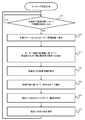
- FIG. 5 is a flowchart of the picking support processing according to the present embodiment.
- the terminal PC2 of the work station WST2 monitors whether the estimated work completion time (remaining work time) required to complete the sorting work from the storage shelf DS1 to the sorting shelf SS1 is equal to or less than a predetermined threshold ThE. (S21). When the estimated work completion time is equal to or less than the threshold ThE (S21: YES), the terminal PC1 notifies the order management device 220 (S22).
- the estimated work completion time can be appropriately determined based on, for example, the number of articles, the number of types of articles, the number of sorting destinations, and the like related to the sorting work from the storage shelf DS1 to the sorting shelf SS1.
- the order management device 220 may be notified before the completion of the sorting operation. Thereby, the efficiency of the picking operation can be further improved.
- the order management device 220 extracts a combination of the storage shelf DS, the sorting shelf SS, and the transport vehicle AC to be transported to the work station WST2 (S23).
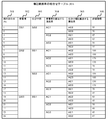
- FIG. 6 shows an example of the table 30 indicating combinations of shelves and transport vehicles.
- the table 30 shows a result of extracting a combination of the storage shelf DS, the sorting shelf SS, and the transport vehicle AC to be transported to the work station WST2.
- the table 30 includes, for example, a combination number 301, a storage shelf 302, a sorting shelf 303, a transport vehicle 304 for transporting the storage shelf, and a transport vehicle 305 for transporting the sorting shelf.
- the combination number 301 is information for identifying the combination.
- the storage shelf 302 is information for specifying the storage shelf DS related to the combination.
- the sorting shelf 303 is information for specifying the sorting shelf SS related to the combination.
- the transport vehicle 304 that transports the storage shelves is information for specifying the transport vehicle AC that transports the storage shelves DS according to the combination.
- the transport vehicle 305 that transports the sorting shelves is information for specifying the transport vehicle AC that transports the sorting shelves SS related to the combination.
- the combination of the storage shelf DS and the sorting shelf SS is extracted to process an unprocessed order among the orders transmitted from the WMS 210 to the order management device 220.
- the order management device 220 calculates an evaluation index for each combination of the extracted storage shelf DS, sorting shelf SS, and carrier AC (S24).
- FIGS. 7 to 9 show examples of information used to calculate an evaluation index.
- the table 31 in FIG. 7 represents an estimated time until the storage shelf DS and the sorting shelf SS can be moved to the work station WST2.
- the table 31 includes, for example, a shelf 311 and an estimated time 312 until it becomes movable.
- the shelf 311 is information for specifying target shelves DS and SS.
- the estimated time 312 indicates a time until the shelf specified by the shelf 311 can be moved to the work station WST2.
- the estimated movement time is “0 seconds”. It is assumed that the storage shelf DS2 is currently used for the sorting operation at the work station WST1. The time required for the storage shelf DS2 to be movable to the work station WST2 is estimated to be "10 seconds" based on the number of articles remaining in the sorting work and the like. Since the storage shelves DS3 and the sorting shelves SS2 are currently waiting in the storage area 101, the time until they can be moved is estimated to be “0 seconds”.
- FIG. 8 is a table 32 showing the estimated time required for the transport vehicle AC to move to the position of the storage shelf DS or the sorting shelf SS.
- the table 32 includes, for example, a transport vehicle 321 and a required time 322 of arrival at a target shelf.
- the transport vehicle 321 is information for specifying the transport vehicle AC.
- the required arrival time at the target shelf 322 is an estimated value of the time required for the specified transport vehicle AC to arrive at the target shelf DS, SS.
- the estimated time until the transport vehicle AC arrives at the target shelf can be appropriately estimated, for example, according to the distance between the transport vehicle AC and the target shelf.
- the time required for the transport vehicle AC to reach the target shelf is “0 seconds”.
- the transport vehicle AC determines that the transport of the other shelf is completed at the estimated time required for the transport vehicle AC to move to the target shelf position. It also includes the time required.
- the transporting vehicle AC transports another shelf to the work station WST and waits for completion of the sorting work at the work station WST, the time required for completing the sorting work is also included.
- the transport vehicle AC2 is transporting the storage shelf DS4. Therefore, the estimation of the time required for the transport vehicle AC2 to move to the positions of the storage shelves DS1 to DS3 and the sorting shelves SS2 and SS3 includes the time required for the transport vehicle AC2 to finish transporting the storage shelf DS4. Further, in FIG. 2, the transport vehicle AC1 is waiting at the work station WST2 while holding the sorting shelf SS1. Therefore, the estimated time for the transport vehicle AC1 to move to the position of the sorting shelf SS1 is “0 second”, but the estimated time for the transport vehicle AC1 to move to the positions of the storage shelves DS1 to DS3 and the sorting shelf SS2 is estimated. Includes an estimated time until the sorting operation of the sorting shelf SS1 is completed.
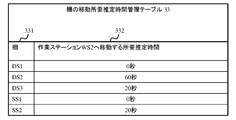
- FIG. 9 is a table 33 showing estimated values of the time required to move the storage shelf DS and the sorting shelf SS to the work station WST2.
- the table 33 includes, for example, a shelf 331 and an estimated time 332 required for the shelf to move to the work station WST2.
- the shelf 331 is information for specifying a target shelf.
- the required estimated time 332 is an estimated value of the time required for the target shelf to reach the mobile station WST2.
- the estimated required movement time 332 can be appropriately calculated according to the distance between the target shelf and the work station WST2. In the example of FIG. 2, since the storage shelf DS1 and the sorting shelf SS1 are already in the work station WST2, the estimated time is “0 second”. Since the storage shelf DS2 is waiting for the completion of the sorting work at another work station WST1, the time required to complete the sorting work and the time required to move from the work station WST1 to the work station WST2 are considered. And is estimated to be “60 seconds”.
- Table 30A shown in FIG. 10 is obtained by adding evaluation index value 306 to table 30 described in FIG.
- the evaluation index is an estimated value of the time required for the combination of each storage shelf DS, sorting shelf SS, and carrier AC to start sorting at the work station WST2 by using the information in FIGS. Is calculated.
- the evaluation index can be calculated as a simple sum of the estimated times described in FIGS.
- the evaluation index is calculated more precisely than the simple sum of the estimated times described in FIGS.
- the estimated time until the sorting shelf SS2 becomes movable is “5 seconds”.
- the estimated time required for the transportation vehicle AC3 to move to the position of the sorting shelf SS2 is “10 seconds”. Therefore, when the transport vehicle AC3 moves to the position of the sorting shelf SS2, it can be estimated that the work at the work station WST1 of the sorting shelf SS2 has been completed. In this case, the estimated time until the sorting shelf SS2 becomes movable does not need to be considered as an evaluation index.
- the time required for the transport vehicle AC1 to transport the storage rack DS1 and start work at the work station WST2 is “15 seconds”, and the transport vehicle AC3 transports the sorting shelf SS2.
- the time required until work can be started at the work station WST2 is estimated to be “30 seconds”.
- the time required for the combination of the transport vehicle AC1 and the storage shelf DS1, and the transport vehicle AC3 and the sorting shelf SS2 to be able to start work at the work station WST2 is “15 seconds” or “30 seconds”. It may be estimated as the longer “30 seconds”. That is, in the present embodiment, the estimated required time at each stage is not simply summed, but the actual required time is estimated and used as the evaluation index. This makes it possible to more accurately create a delivery plan (shelf transport plan) for the transport vehicle AC.
- the method of calculating the evaluation index is not limited to the above example.
- an estimation model for estimating an evaluation index may be learned from the past picking work actual value and simulation data, and the estimation result of the learning model may be used as the evaluation index.
- the order management device 201 determines which of the combinations shown in the table 30A of FIG. 10 has the smallest evaluation index (the storage shelf DS, the transport vehicle AC that transports the storage shelf DS, the sorting shelf SS, the sorting shelf, Is selected (combination of transport vehicles AC for transporting) (S25).
- the combination with the combination number 301 of “NO. 2” has the smallest evaluation index “30” and is selected.
- the order management device 220 instructs the operation management device 230 to carry, based on the combination selected in step S25 (S26). Further, the order management device 220 transmits the work contents to the terminal PC and causes the work contents to be displayed on the screen of the terminal PC (S27).
- this embodiment also has the same operation and effect as the first embodiment.
- the estimated time required to start the work at the work station WST is calculated as an evaluation index from the estimated time required for the transport vehicle AC to transfer the storage shelf DS and the sorting shelf SS to the work station WST. Then, in this embodiment, a combination of the storage shelf DS, the sorting shelf SS, and the transport vehicle AC is selected based on the evaluation index such that the operation start time at the work station WST is shortened.
- the time until the completion of the sorting operation can be shortened, and the efficiency of the picking operation can be improved.
- the sorting shelf SS at the work station WST1, the sorting operation of the articles stored in the storage shelves DS2 and DS4 is performed. Then, after the sorting shelf SS moves to the work station WST2, sorting of the articles stored in different storage shelves DS1 is performed. The combination of the storage shelves DS and the sorting shelves SS that have been sorted at the work station WST1 may be further sorted at the work station WST2.
- the combination of the storage shelves DS and the sorting shelves SS that have been sorted at a certain first work station WST can be moved to another work station WST to perform the sorting work again.
- the storage shelf DS is stored in another work station WST where the worker W qualified to sort the article is present.
- the sorting operation can be performed by transporting the sorting shelf SS.
- the storage shelf DS and the sorting shelf SS are transported to the work station WST where the human worker W is arranged. This allows the human worker W to sort the articles that the picking robot cannot sort.
- the present invention is not limited to the above embodiment. Those skilled in the art can make various additions and changes without departing from the scope of the present invention.
- the above embodiment is not limited to the configuration example illustrated in the accompanying drawings.
- the configuration and the processing method of the embodiment can be appropriately changed within a range that achieves the object of the present invention.
Landscapes
- Engineering & Computer Science (AREA)
- Business, Economics & Management (AREA)
- Economics (AREA)
- Mechanical Engineering (AREA)
- Marketing (AREA)
- General Business, Economics & Management (AREA)
- Entrepreneurship & Innovation (AREA)
- Human Resources & Organizations (AREA)
- Theoretical Computer Science (AREA)
- Operations Research (AREA)
- Quality & Reliability (AREA)
- Strategic Management (AREA)
- Tourism & Hospitality (AREA)
- Physics & Mathematics (AREA)
- Development Economics (AREA)
- General Physics & Mathematics (AREA)
- Finance (AREA)
- Accounting & Taxation (AREA)
- Warehouses Or Storage Devices (AREA)
Abstract
L'invention concerne un système d'aide à la collecte qui peut améliorer l'efficacité de travail. Le système d'aide à la collecte (1) comprend : une pluralité d'étagères (DS, SS) qui sont mobiles et qui peuvent recevoir chacune au moins un article ; et un dispositif de commande (200) qui commande le déplacement de chacune des étagères. Le dispositif de commande entraîne une série de processus, selon lesquels une étagère de tri (SS) sélectionnée parmi les étagères est déplacée vers une station de travail sélectionnée parmi une pluralité de stations de travail (WST) et un article est déplacé à partir d'une étagère de dépôt (DS), disposée au niveau de la station de travail sélectionnée, jusqu'à l'étagère de tri par l'intermédiaire d'une opération de collecte, à effectuer de manière répétée pendant le changement de la station de travail jusqu'à ce que l'étagère de tri reçoive un article prescrit.
Priority Applications (2)
| Application Number | Priority Date | Filing Date | Title |
|---|---|---|---|
| US16/650,293 US11440733B2 (en) | 2018-06-27 | 2019-02-19 | Picking assistance system and assistance method |
| CN201980004605.9A CN111683882B (zh) | 2018-06-27 | 2019-02-19 | 拣选支援系统及支援方法 |
Applications Claiming Priority (2)
| Application Number | Priority Date | Filing Date | Title |
|---|---|---|---|
| JP2018121477A JP7199848B2 (ja) | 2018-06-27 | 2018-06-27 | ピッキング支援方法 |
| JP2018-121477 | 2018-06-27 |
Publications (1)
| Publication Number | Publication Date |
|---|---|
| WO2020003588A1 true WO2020003588A1 (fr) | 2020-01-02 |
Family
ID=68986271
Family Applications (1)
| Application Number | Title | Priority Date | Filing Date |
|---|---|---|---|
| PCT/JP2019/005965 Ceased WO2020003588A1 (fr) | 2018-06-27 | 2019-02-19 | Système d'aide à la collecte et procédé d'aide |
Country Status (4)
| Country | Link |
|---|---|
| US (1) | US11440733B2 (fr) |
| JP (1) | JP7199848B2 (fr) |
| CN (1) | CN111683882B (fr) |
| WO (1) | WO2020003588A1 (fr) |
Families Citing this family (11)
| Publication number | Priority date | Publication date | Assignee | Title |
|---|---|---|---|---|
| JP6786743B1 (ja) | 2020-06-25 | 2020-11-18 | 和則 藤沢 | ピッキング支援システム及びプログラム |
| JP2022012801A (ja) | 2020-07-02 | 2022-01-17 | 株式会社日立製作所 | 物品自動搬送システムおよび物品自動搬送方法 |
| JP7524088B2 (ja) * | 2021-01-21 | 2024-07-29 | 株式会社東芝 | プログラム |
| JP7482095B2 (ja) * | 2021-09-14 | 2024-05-13 | 株式会社東芝 | 情報処理装置、情報処理方法、コンピュータプログラム及び情報処理システム |
| JP7818767B2 (ja) * | 2022-01-17 | 2026-02-24 | 株式会社Pal | 物流倉庫設備 |
| JP7404424B2 (ja) * | 2022-03-16 | 2023-12-25 | 株式会社東芝 | 情報処理装置、情報処理方法、プログラムおよび情報処理システム |
| JP7814249B2 (ja) * | 2022-06-14 | 2026-02-16 | 株式会社日立製作所 | ピッキングシステム運用支援装置およびピッキングシステム |
| JP7722333B2 (ja) * | 2022-11-01 | 2025-08-13 | 株式会社ダイフク | 積み付け作業支援装置 |
| WO2025046803A1 (fr) * | 2023-08-30 | 2025-03-06 | 株式会社Fuji | Dispositif de déplacement automatique, dispositif de gestion, système de transport, procédé de commande et procédé de gestion |
| JP7415076B1 (ja) * | 2023-09-19 | 2024-01-16 | 株式会社東芝 | 情報処理装置、情報処理方法、プログラムおよび情報処理システム |
| JP7806774B2 (ja) * | 2023-09-27 | 2026-01-27 | 株式会社ダイフク | ピッキングシステム |
Citations (3)
| Publication number | Priority date | Publication date | Assignee | Title |
|---|---|---|---|---|
| JP2012521338A (ja) * | 2009-03-27 | 2012-09-13 | キヴァ システムズ,インコーポレイテッド | 在庫システムにおいて要求を履行する方法及びシステム |
| JP5329431B2 (ja) * | 2007-01-05 | 2013-10-30 | アマゾン・テクノロジーズ・インコーポレーテッド | 在庫要求を遂行する方法及びシステム |
| JP2015535787A (ja) * | 2012-10-04 | 2015-12-17 | アマゾン・テクノロジーズ・インコーポレーテッド | 在庫ピアでの注文対応 |
Family Cites Families (7)
| Publication number | Priority date | Publication date | Assignee | Title |
|---|---|---|---|---|
| US8805573B2 (en) | 2012-01-04 | 2014-08-12 | Amazon Technologies, Inc. | System and method for order fulfillment |
| US20160229631A1 (en) | 2013-12-24 | 2016-08-11 | Hitachi, Ltd. | Picking System |
| CN105992745A (zh) * | 2014-02-18 | 2016-10-05 | 株式会社日立制作所 | 搬运车控制装置以及搬运车控制系统 |
| US9656806B2 (en) * | 2015-02-13 | 2017-05-23 | Amazon Technologies, Inc. | Modular, multi-function smart storage containers |
| WO2017090108A1 (fr) * | 2015-11-25 | 2017-06-01 | 株式会社日立製作所 | Système d'agencement d'étagère, robot de transport, et procédé d'agencement d'étagère |
| US11076137B1 (en) * | 2016-06-20 | 2021-07-27 | Amazon Technologies, Inc. | Modifying projected images |
| JP6739299B2 (ja) * | 2016-09-13 | 2020-08-12 | 株式会社日立製作所 | 搬送システム及び搬送方法 |
-
2018
- 2018-06-27 JP JP2018121477A patent/JP7199848B2/ja active Active
-
2019
- 2019-02-19 US US16/650,293 patent/US11440733B2/en active Active
- 2019-02-19 WO PCT/JP2019/005965 patent/WO2020003588A1/fr not_active Ceased
- 2019-02-19 CN CN201980004605.9A patent/CN111683882B/zh active Active
Patent Citations (3)
| Publication number | Priority date | Publication date | Assignee | Title |
|---|---|---|---|---|
| JP5329431B2 (ja) * | 2007-01-05 | 2013-10-30 | アマゾン・テクノロジーズ・インコーポレーテッド | 在庫要求を遂行する方法及びシステム |
| JP2012521338A (ja) * | 2009-03-27 | 2012-09-13 | キヴァ システムズ,インコーポレイテッド | 在庫システムにおいて要求を履行する方法及びシステム |
| JP2015535787A (ja) * | 2012-10-04 | 2015-12-17 | アマゾン・テクノロジーズ・インコーポレーテッド | 在庫ピアでの注文対応 |
Also Published As
| Publication number | Publication date |
|---|---|
| US11440733B2 (en) | 2022-09-13 |
| JP7199848B2 (ja) | 2023-01-06 |
| CN111683882A (zh) | 2020-09-18 |
| JP2020001868A (ja) | 2020-01-09 |
| US20200231383A1 (en) | 2020-07-23 |
| CN111683882B (zh) | 2021-11-26 |
Similar Documents
| Publication | Publication Date | Title |
|---|---|---|
| JP7199848B2 (ja) | ピッキング支援方法 | |
| JP7084257B2 (ja) | ピッキング支援システムおよび支援方法 | |
| CN110544058B (zh) | 物品运送系统、订单管理装置和物品运送系统的控制方法 | |
| JP7052147B2 (ja) | 荷物搬送システムおよび方法 | |
| AU2019339988B2 (en) | Robot control system and method, computing device, and storage medium | |
| JP6633815B2 (ja) | 中継式物品仕分けシステムおよび仕分け方法 | |
| JP7186160B2 (ja) | 中継式物品仕分けシステムおよび仕分け方法 | |
| CN110197350B (zh) | 一种物品出库方法和装置 | |
| US12033113B2 (en) | System and method for order processing | |
| CN110582455A (zh) | 自动化仓库履行操作和系统 | |
| CN117921713A (zh) | 一种机器人控制系统和方法、计算设备及存储介质 | |
| JP6856135B2 (ja) | 搬送作業制御装置、搬送作業制御方法、及び、搬送作業制御プログラム | |
| KR20220010737A (ko) | 자동화 보관 시스템에 보관된 상품의 주문을 준비하기 위한 방법 및 제어 시스템 | |
| CN109823757A (zh) | 一种板件出库方法、系统及存储介质 | |
| EP4177690A1 (fr) | Système et procédé de conception de flux logistique personnalisé fondé sur un service en nuage | |
| CN117406737A (zh) | 一种车间无人化分拣与配送方法及系统 | |
| CN116490886A (zh) | 用于执行机器人辅助上架任务的预分拣系统 | |
| JP7450819B2 (ja) | 倉庫管理システム、倉庫管理装置、倉庫管理方法およびプログラム | |
| CN114655621A (zh) | 搬运控制系统、搬运系统、部件安装系统及搬运控制方法 | |
| TW202319317A (zh) | 貨物揀選系統、揀選設備和貨物揀選方法 | |
| JP7758483B2 (ja) | 情報処理システム、倉庫の管理方法及び倉庫制御装置 | |
| KR101568644B1 (ko) | 이벤트 기반 생산-물류 통합 시뮬레이션 시스템 및 시뮬레이션 방법 | |
| EP4177689A1 (fr) | Dispositif et procédé de conception de flux logistiques personnalisés | |
| US11714419B2 (en) | Automatic article conveying system and automatic article conveying method | |
| CN114535143A (zh) | 物流货物拣选方法、装置、设备及存储介质 |
Legal Events
| Date | Code | Title | Description |
|---|---|---|---|
| 121 | Ep: the epo has been informed by wipo that ep was designated in this application |
Ref document number: 19826361 Country of ref document: EP Kind code of ref document: A1 |
|
| NENP | Non-entry into the national phase |
Ref country code: DE |
|
| 122 | Ep: pct application non-entry in european phase |
Ref document number: 19826361 Country of ref document: EP Kind code of ref document: A1 |