WO2020004247A1 - Collyre pour le traitement de la kératoconjonctivite épidémique, dispositif de génération de collyre activé par plasma destiné à générer ledit collyre, et procédé de traitement de la kératoconjonctivite épidémique - Google Patents
Collyre pour le traitement de la kératoconjonctivite épidémique, dispositif de génération de collyre activé par plasma destiné à générer ledit collyre, et procédé de traitement de la kératoconjonctivite épidémique Download PDFInfo
- Publication number
- WO2020004247A1 WO2020004247A1 PCT/JP2019/024648 JP2019024648W WO2020004247A1 WO 2020004247 A1 WO2020004247 A1 WO 2020004247A1 JP 2019024648 W JP2019024648 W JP 2019024648W WO 2020004247 A1 WO2020004247 A1 WO 2020004247A1
- Authority
- WO
- WIPO (PCT)
- Prior art keywords
- plasma
- eye drop
- container
- generating
- electrode
- Prior art date
- Legal status (The legal status is an assumption and is not a legal conclusion. Google has not performed a legal analysis and makes no representation as to the accuracy of the status listed.)
- Ceased
Links
Images






Classifications
-
- A—HUMAN NECESSITIES
- A61—MEDICAL OR VETERINARY SCIENCE; HYGIENE
- A61P—SPECIFIC THERAPEUTIC ACTIVITY OF CHEMICAL COMPOUNDS OR MEDICINAL PREPARATIONS
- A61P27/00—Drugs for disorders of the senses
- A61P27/02—Ophthalmic agents
-
- A—HUMAN NECESSITIES
- A61—MEDICAL OR VETERINARY SCIENCE; HYGIENE
- A61K—PREPARATIONS FOR MEDICAL, DENTAL OR TOILETRY PURPOSES
- A61K41/00—Medicinal preparations obtained by treating materials with wave energy or particle radiation ; Therapies using these preparations
- A61K41/10—Inactivation or decontamination of a medicinal preparation prior to administration to an animal or a person
-
- A—HUMAN NECESSITIES
- A61—MEDICAL OR VETERINARY SCIENCE; HYGIENE
- A61F—FILTERS IMPLANTABLE INTO BLOOD VESSELS; PROSTHESES; DEVICES PROVIDING PATENCY TO, OR PREVENTING COLLAPSING OF, TUBULAR STRUCTURES OF THE BODY, e.g. STENTS; ORTHOPAEDIC, NURSING OR CONTRACEPTIVE DEVICES; FOMENTATION; TREATMENT OR PROTECTION OF EYES OR EARS; BANDAGES, DRESSINGS OR ABSORBENT PADS; FIRST-AID KITS
- A61F9/00—Methods or devices for treatment of the eyes; Devices for putting in contact-lenses; Devices to correct squinting; Apparatus to guide the blind; Protective devices for the eyes, carried on the body or in the hand
- A61F9/0008—Introducing ophthalmic products into the ocular cavity or retaining products therein
-
- A—HUMAN NECESSITIES
- A61—MEDICAL OR VETERINARY SCIENCE; HYGIENE
- A61F—FILTERS IMPLANTABLE INTO BLOOD VESSELS; PROSTHESES; DEVICES PROVIDING PATENCY TO, OR PREVENTING COLLAPSING OF, TUBULAR STRUCTURES OF THE BODY, e.g. STENTS; ORTHOPAEDIC, NURSING OR CONTRACEPTIVE DEVICES; FOMENTATION; TREATMENT OR PROTECTION OF EYES OR EARS; BANDAGES, DRESSINGS OR ABSORBENT PADS; FIRST-AID KITS
- A61F9/00—Methods or devices for treatment of the eyes; Devices for putting in contact-lenses; Devices to correct squinting; Apparatus to guide the blind; Protective devices for the eyes, carried on the body or in the hand
- A61F9/0008—Introducing ophthalmic products into the ocular cavity or retaining products therein
- A61F9/0026—Ophthalmic product dispenser attachments to facilitate positioning near the eye
-
- A—HUMAN NECESSITIES
- A61—MEDICAL OR VETERINARY SCIENCE; HYGIENE
- A61K—PREPARATIONS FOR MEDICAL, DENTAL OR TOILETRY PURPOSES
- A61K31/00—Medicinal preparations containing organic active ingredients
- A61K31/70—Carbohydrates; Sugars; Derivatives thereof
- A61K31/715—Polysaccharides, i.e. having more than five saccharide radicals attached to each other by glycosidic linkages; Derivatives thereof, e.g. ethers, esters
- A61K31/726—Glycosaminoglycans, i.e. mucopolysaccharides
- A61K31/728—Hyaluronic acid
-
- A—HUMAN NECESSITIES
- A61—MEDICAL OR VETERINARY SCIENCE; HYGIENE
- A61K—PREPARATIONS FOR MEDICAL, DENTAL OR TOILETRY PURPOSES
- A61K33/00—Medicinal preparations containing inorganic active ingredients
- A61K33/24—Heavy metals; Compounds thereof
- A61K33/38—Silver; Compounds thereof
-
- A—HUMAN NECESSITIES
- A61—MEDICAL OR VETERINARY SCIENCE; HYGIENE
- A61K—PREPARATIONS FOR MEDICAL, DENTAL OR TOILETRY PURPOSES
- A61K41/00—Medicinal preparations obtained by treating materials with wave energy or particle radiation ; Therapies using these preparations
-
- A—HUMAN NECESSITIES
- A61—MEDICAL OR VETERINARY SCIENCE; HYGIENE
- A61K—PREPARATIONS FOR MEDICAL, DENTAL OR TOILETRY PURPOSES
- A61K47/00—Medicinal preparations characterised by the non-active ingredients used, e.g. carriers or inert additives; Targeting or modifying agents chemically bound to the active ingredient
- A61K47/02—Inorganic compounds
-
- A—HUMAN NECESSITIES
- A61—MEDICAL OR VETERINARY SCIENCE; HYGIENE
- A61K—PREPARATIONS FOR MEDICAL, DENTAL OR TOILETRY PURPOSES
- A61K47/00—Medicinal preparations characterised by the non-active ingredients used, e.g. carriers or inert additives; Targeting or modifying agents chemically bound to the active ingredient
- A61K47/30—Macromolecular organic or inorganic compounds, e.g. inorganic polyphosphates
- A61K47/36—Polysaccharides; Derivatives thereof, e.g. gums, starch, alginate, dextrin, hyaluronic acid, chitosan, inulin, agar or pectin
-
- H—ELECTRICITY
- H05—ELECTRIC TECHNIQUES NOT OTHERWISE PROVIDED FOR
- H05B—ELECTRIC HEATING; ELECTRIC LIGHT SOURCES NOT OTHERWISE PROVIDED FOR; CIRCUIT ARRANGEMENTS FOR ELECTRIC LIGHT SOURCES, IN GENERAL
- H05B41/00—Circuit arrangements or apparatus for igniting or operating discharge lamps
- H05B41/14—Circuit arrangements
- H05B41/24—Circuit arrangements in which the lamp is fed by high frequency AC, or with separate oscillator frequency
-
- H—ELECTRICITY
- H05—ELECTRIC TECHNIQUES NOT OTHERWISE PROVIDED FOR
- H05H—PLASMA TECHNIQUE; PRODUCTION OF ACCELERATED ELECTRICALLY-CHARGED PARTICLES OR OF NEUTRONS; PRODUCTION OR ACCELERATION OF NEUTRAL MOLECULAR OR ATOMIC BEAMS
- H05H1/00—Generating plasma; Handling plasma
- H05H1/24—Generating plasma
-
- H—ELECTRICITY
- H05—ELECTRIC TECHNIQUES NOT OTHERWISE PROVIDED FOR
- H05H—PLASMA TECHNIQUE; PRODUCTION OF ACCELERATED ELECTRICALLY-CHARGED PARTICLES OR OF NEUTRONS; PRODUCTION OR ACCELERATION OF NEUTRAL MOLECULAR OR ATOMIC BEAMS
- H05H1/00—Generating plasma; Handling plasma
- H05H1/24—Generating plasma
- H05H1/2406—Generating plasma using dielectric barrier discharges, i.e. with a dielectric interposed between the electrodes
-
- H—ELECTRICITY
- H05—ELECTRIC TECHNIQUES NOT OTHERWISE PROVIDED FOR
- H05H—PLASMA TECHNIQUE; PRODUCTION OF ACCELERATED ELECTRICALLY-CHARGED PARTICLES OR OF NEUTRONS; PRODUCTION OR ACCELERATION OF NEUTRAL MOLECULAR OR ATOMIC BEAMS
- H05H1/00—Generating plasma; Handling plasma
- H05H1/24—Generating plasma
- H05H1/48—Generating plasma using an arc
-
- H—ELECTRICITY
- H05—ELECTRIC TECHNIQUES NOT OTHERWISE PROVIDED FOR
- H05H—PLASMA TECHNIQUE; PRODUCTION OF ACCELERATED ELECTRICALLY-CHARGED PARTICLES OR OF NEUTRONS; PRODUCTION OR ACCELERATION OF NEUTRAL MOLECULAR OR ATOMIC BEAMS
- H05H1/00—Generating plasma; Handling plasma
- H05H1/24—Generating plasma
- H05H1/48—Generating plasma using an arc
- H05H1/481—Hollow cathodes
-
- A—HUMAN NECESSITIES
- A61—MEDICAL OR VETERINARY SCIENCE; HYGIENE
- A61J—CONTAINERS SPECIALLY ADAPTED FOR MEDICAL OR PHARMACEUTICAL PURPOSES; DEVICES OR METHODS SPECIALLY ADAPTED FOR BRINGING PHARMACEUTICAL PRODUCTS INTO PARTICULAR PHYSICAL OR ADMINISTERING FORMS; DEVICES FOR ADMINISTERING FOOD OR MEDICINES ORALLY; BABY COMFORTERS; DEVICES FOR RECEIVING SPITTLE
- A61J1/00—Containers specially adapted for medical or pharmaceutical purposes
- A61J1/05—Containers specially adapted for medical or pharmaceutical purposes for collecting, storing or administering blood, plasma or medical fluids ; Infusion or perfusion containers
- A61J1/06—Ampoules or carpules
- A61J1/067—Flexible ampoules, the contents of which are expelled by squeezing
-
- A—HUMAN NECESSITIES
- A61—MEDICAL OR VETERINARY SCIENCE; HYGIENE
- A61K—PREPARATIONS FOR MEDICAL, DENTAL OR TOILETRY PURPOSES
- A61K9/00—Medicinal preparations characterised by special physical form
- A61K9/0012—Galenical forms characterised by the site of application
- A61K9/0048—Eye, e.g. artificial tears
-
- A—HUMAN NECESSITIES
- A61—MEDICAL OR VETERINARY SCIENCE; HYGIENE
- A61K—PREPARATIONS FOR MEDICAL, DENTAL OR TOILETRY PURPOSES
- A61K9/00—Medicinal preparations characterised by special physical form
- A61K9/08—Solutions
-
- A—HUMAN NECESSITIES
- A61—MEDICAL OR VETERINARY SCIENCE; HYGIENE
- A61L—METHODS OR APPARATUS FOR STERILISING MATERIALS OR OBJECTS IN GENERAL; DISINFECTION, STERILISATION OR DEODORISATION OF AIR; CHEMICAL ASPECTS OF BANDAGES, DRESSINGS, ABSORBENT PADS OR SURGICAL ARTICLES; MATERIALS FOR BANDAGES, DRESSINGS, ABSORBENT PADS OR SURGICAL ARTICLES
- A61L2/00—Disinfection or sterilisation of materials or objects, in general; Accessories therefor
- A61L2/02—Disinfection or sterilisation of materials or objects, in general; Accessories therefor using physical processes
- A61L2/08—Radiation
- A61L2/088—Radiation using photocatalysts or photosensitisers
-
- H—ELECTRICITY
- H05—ELECTRIC TECHNIQUES NOT OTHERWISE PROVIDED FOR
- H05H—PLASMA TECHNIQUE; PRODUCTION OF ACCELERATED ELECTRICALLY-CHARGED PARTICLES OR OF NEUTRONS; PRODUCTION OR ACCELERATION OF NEUTRAL MOLECULAR OR ATOMIC BEAMS
- H05H1/00—Generating plasma; Handling plasma
- H05H1/24—Generating plasma
- H05H1/2406—Generating plasma using dielectric barrier discharges, i.e. with a dielectric interposed between the electrodes
- H05H1/2441—Generating plasma using dielectric barrier discharges, i.e. with a dielectric interposed between the electrodes characterised by the physical-chemical properties of the dielectric, e.g. porous dielectric
Definitions
- the present invention relates to a novel and effective ophthalmic solution for epidemic keratoconjunctivitis, a plasma active ophthalmic solution generating apparatus for producing the eye drop, and a method for treating epidemic keratoconjunctivitis.
- Conjunctivitis has been known as a disease that causes inflammation by congestion of the white of the eyes and the back of the eyelids red.
- conjunctivitis There are various types of conjunctivitis, including bacterial conjunctivitis caused by infection, viral conjunctivitis, and allergic conjunctivitis caused by allergy.
- EKC epidemic conkeratoconjunctivitis
- Patent Literature 1 (WO2009 / 041049) discloses a technique of sterilizing bacteria in a liquid by irradiating plasma to a liquid adjusted to have a pH of 4.8 or less. Patent Document 1 describes that superoxide anion radicals, hydroperoxy radicals, and the like may have a bactericidal effect.
- the plasma sterilization technology is also disclosed in Non-Patent Document 1 (H. Yasuda, M. Hashimoto, M. M. Rahman, K. Takashima, A. Mizuno, Plasma Process. Polym. 2010, 7, 7, 301-308.). Have been.
- the non-equilibrium discharge plasma (low-temperature plasma) in the open air can generate a large amount of radicals due to the atmospheric pressure, and does not thermally damage the sterilization target because the gas temperature is low.
- This non-equilibrium discharge plasma is capable of performing a plasma process at around room temperature, and effects of inactivating microorganisms and inactivating viruses have been assumed.
- the pandemic of the virus due to the new influenza and foot-and-mouth disease is expected to become a serious problem, and sterilization using atmospheric pressure low-temperature plasma that can inactivate the virus in a short time without using drugs and inducing drug resistance is expected.
- Technology is expected.
- epidemic keratoconjunctivitis caused by adenovirus.
- the current treatment method for epidemic keratoconjunctivitis is to apply an anti-inflammatory drug in a symptomatic treatment, and to add a steroid to the cornea when inflammation and cloudiness are observed.
- antimicrobial agents are instilled.
- the present invention has been made in view of the above-mentioned problems, and is a novel and effective therapeutic eye drop for epidemic keratoconjunctivitis, a plasma active eye drop generating apparatus for producing the eye drop, and a method for treating epidemic keratoconjunctivitis
- the purpose is to provide.
- the present invention is a plasma active eye drop generating apparatus for generating an eye drop for treating epidemic keratoconjunctivitis, comprising a power supply unit and a container body for hermetically sealing a predetermined liquid in an aseptic state.
- a plasma generation electrode disposed around an insertion space into which an eyedropper having a portion is inserted; and a high voltage generation unit connected to the power supply unit for receiving power supply and applying a high voltage current to the plasma generation electrode.
- the plasma generating electrode is a plasma-activated eye drop for treating epidemic keratoconjunctivitis, which is plasma-activated by receiving high-voltage current from the high-voltage generator and irradiating the predetermined liquid with plasma.
- An apparatus for generating plasma-activated eye drops for generating eye drops for treating epidemic keratoconjunctivitis characterized by generating eye drops.
- the high voltage generator is an LF (low frequency) band AC high voltage generator
- the plasma generation electrode has a higher current than the LF band AC high voltage generator. It is preferable to irradiate the eye drop container with atmospheric pressure non-thermal equilibrium plasma in response to this.
- the predetermined liquid in the eye drop container is a plasma irradiation solution capable of plasma activation, and about half of the container volume of the container body is filled with gas or air.
- the high-voltage generating unit applies AC power having a driving voltage of 2 kV to 10 kV, a driving current of 0.1 to 0.5 A, and a frequency of 30 KHz to 80 KHz between the plasma generation electrodes to thereby generate the plasma activation electrode. It is preferable to produce eye drops.
- the plasma irradiation solution is preferably any of ultrapure water, a sodium hyaluronate solution and a silver nitrate solution, or a mixed solution using these.
- the plasma generating electrode is constituted by an electrode wire serving as a core material and a dielectric covering the periphery of the electrode wire, is processed into a spiral shape, and has a hollow space.
- the eyedropper is inserted into the eyedropper.
- the plasma generating electrode has a planar electrode formed at two places on an inner surface and an outer surface of a planar thin film dielectric, and the plasma generating electrode is rounded into a cylindrical shape. It is preferable that the eye drop container is inserted into a hollow space of the cylindrical plasma generating electrode.
- the material of the electrode wire is a flexible copper wire, a stainless wire, an aluminum wire, an iron wire, a gold wire or any of these alloy wires, and the dielectric material. Is preferably a polymer having a siloxane bond or a polymer having a plurality of aromatic imide bonds.
- the plasma active ophthalmic solution generating apparatus it is preferable that the plasma generating electrode and the eye dropping container are in close contact with each other.
- the plasma activated eye drop generating apparatus further includes an insulated casing, the casing having an insertion opening into which the eye drop container is inserted, and a switch for starting plasma irradiation. And at least an indicator indicating the completion of the plasma irradiation.
- the present invention has a container main body that is inserted into the plasma-activated eye drop generation device and hermetically seals at least a predetermined liquid to be irradiated with plasma in an aseptic state, and is connected to the container main body. And a bottle cap.
- the predetermined liquid is a plasma irradiation solution capable of plasma activation, and about half of the container volume of the container body is filled with gas or air, and the eyedropper is made of low-density polyethylene. It is preferable to be formed.
- the plasma irradiation solution is preferably any one of ultrapure water, a sodium hyaluronate solution and a silver nitrate solution, or a mixed solution using these.
- the present invention provides an ophthalmic solution for treating epidemic keratoconjunctivitis, wherein the plasma activated ophthalmic solution-generating device is used to convert a plasma irradiation solution capable of plasma activation into an atmospheric pressure non-thermal equilibrium plasma. And is generated by irradiating.
- the plasma irradiation solution is one of ultrapure water, a sodium hyaluronate solution and a silver nitrate solution, or a mixed solution using these. .
- the present invention provides a method for producing a plasma active eye drop using a plasma active eye drop generating apparatus for generating an eye drop for treating epidemic keratoconjunctivitis, which is supplied with power and receives high pressure.
- the present invention provides a method for treating epidemic keratoconjunctivitis, wherein the ophthalmic container according to claim 1 is placed before the instillation space of the plasma activated ophthalmic solution generating apparatus according to claim 1 before instillation.
- the predetermined period be within 10 minutes.
- the present invention is an eye drop kit for treating epidemic keratoconjunctivitis, comprising the plasma active eye drop generator and a package of the eye drop container.
- the present invention is a plasma-activated eye drop generating apparatus for generating an eye drop for treating epidemic keratoconjunctivitis, wherein an eye drop container having a power supply unit and a container body for hermetically sealing and sealing a predetermined liquid in an aseptic state is inserted.
- a plasma generating electrode disposed around the insertion space to be inserted, and a high voltage generating unit connected to the power supply unit for receiving power supply and applying a high voltage current to the plasma generating electrode;
- the generating electrode receives a high-voltage current from the high-voltage generating unit and irradiates the predetermined liquid with plasma to generate a plasma-activated eye drop, which is a plasma-activated eye drop for treating epidemic keratoconjunctivitis.
- the present invention can produce a novel and effective therapeutic eye drop for epidemic keratoconjunctivitis.
- FIG. 1A is an explanatory diagram of an eye drop container to be inserted into the plasma activated eye drop generation device according to the embodiment of the present invention
- FIG. 1B is an image diagram of a package of the eye drop container.
- FIG. 2A is a front view illustrating an example of the above-described plasma active eye drop generating apparatus
- FIG. 2B is a right side view illustrating an example of the above-described plasma active eye drop generating apparatus
- FIG. FIG. 2 is a functional block diagram of the plasma activated eye drop generation device.
- FIG. 2 is a conceptual diagram showing an example of an AC high voltage application circuit provided in the plasma active eye drop generator.
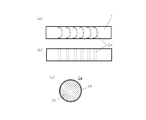
- FIG. 4A and 4B are explanatory views of an electrode structure of a plasma generation electrode according to a first modification of the embodiment
- FIG. 4C is a cross section of the plasma generation electrode according to the first modification
- FIG. 5A is a diagram showing a chemical structure of polysiloxane, which is a dielectric material coated on the surface of the plasma generation electrode according to the first modification
- FIG. 5B is a diagram showing a plasma according to the first modification. It is a polyimide which is a dielectric material coated on the surface of the generation electrode.
- FIG. 6A is an explanatory view of an electrode structure (inner surface) of a plasma generation electrode according to a second modification of the embodiment
- FIG. 6B is an electrode structure (outer surface) of the plasma generation electrode according to the second modification.
- FIG. 6C is a cross-sectional view of a plasma generation electrode according to the second modification, and
- FIG. 6D is a perspective view of the plasma generation electrode according to the second modification.
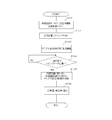
- FIG. 7 is a flowchart showing a procedure of a method for treating epidemic keratoconjunctivitis using the plasma active eye drop producing apparatus.
- FIG. 8 is a diagram showing a spectrum waveform of light generated from a plasma generation electrode of the plasma active eye drop generation device.
- FIG. 9 is a diagram showing experimental results for verifying the bactericidal activity of the plasma active eye drops.
- FIG. 10 is a figure which shows the experimental result for verifying the bactericidal activity of a plasma active eye drop.
- Adenovirus causing epidemic keratoconjunctivitis (EKC) will be described.
- Adenovirus (AD, ⁇ Adenovirus) is a small spherical particle virus having a diameter of 70 nm to 90 nm, a DNA gene, and a capsid (icosahedral) structure.
- Adenovirus cells have twelve antenna-like protrusions on the surface, and do not retain the envelope composed of proteins and lipids.
- Adenovirus is a relatively common type of virus that causes conjunctivitis, pharyngitis, and high fever.
- 51 serotypes of adenovirus have been registered.
- the serotypes that cause conjunctivitis are Ad3, 4, 7, 8, 11, 19, 37, 54, 56.
- These serotypes have an affinity for conjunctival epithelial cells and infection begins when viral fibers adhere to host cell receptors. Thereafter, inclusion bodies are formed in the nucleus and the infected cells are destroyed. The speed of destruction differs for each serotype.
- the present inventor has focused on a plasma phenomenon having a virus inactivating action for the treatment of adenovirus-based epidemic keratoconjunctivitis.
- the present invention was found by finding out the necessary pharmaceutical composition for this purpose.
- FIG. 1a is a conceptual diagram of an eye drop container 1 (UDDC, ⁇ Unit ⁇ Dose ⁇ ophthalmic ⁇ Dropper ⁇ Container), which includes a container body 1a and a bottle cap 1b connected to the container body 1a.
- the container body 1a of the eye drop container 1 has a size of, for example, about 50 mm in width ⁇ 10 mm in depth ⁇ 10 mm in height, and has a structure and a size that can be mounted inside a plasma active eye drop generating apparatus described later.
- a plasma irradiation solution (Plasma irradiating solution) to be irradiated with plasma is hermetically sealed in an aseptic condition (for example, about 0.5 ml of liquid) inside the container body 1a, and about half of the volume of the container is gas or air. be satisfied.
- This plasma irradiation solution is filled with, for example, any one of ultrapure water, sodium hyaluronate solution and silver nitrate solution, or a mixed solution using these, and sterilized. Of course, another liquid having a plasma activating effect may be used.
- the material of the eyedropper 1 is, for example, low density polyethylene (LDPE) or a resin similar to this.
- the eyedropper container 1 is sold as a part of an eyedrop kit for treating epidemic keratoconjunctivitis, for example, as a package as shown in FIG. 1b.
- a plasma activated ophthalmic solution ophthalmic solution generating device (Plasma Activated Ophthalmic Solution Device) (hereinafter referred to as a generating device) for treatment of EKC will be described with reference to FIG.
- the generator 2 irradiates the eyedropper 1 with plasma, and generates an eyedrop for treating epidemic keratoconjunctivitis by using the plasma irradiation solution inside as a plasma active solution.
- the generator 2 is very small, lightweight and portable, for example, about 50 mm wide ⁇ 20 mm deep ⁇ 100 mm high and weighs about 10 g.
- the generator 2 includes a housing 2a that is insulated to irradiate the eyedropper 1 with plasma. As shown in FIGS. 2A and 2B, a switch 2b for starting plasma irradiation, an indicator 2c indicating plasma irradiation conditions (e.g., irradiation completion), and an eyedropper 1 are inserted into the exterior of the housing 2a. 2d.
- a switch 2b for starting plasma irradiation As shown in FIGS. 2A and 2B, a switch 2b for starting plasma irradiation, an indicator 2c indicating plasma irradiation conditions (e.g., irradiation completion), and an eyedropper 1 are inserted into the exterior of the housing 2a. 2d.
- the generating device 2 includes a plasma generating electrode 2e, a power supply unit 2f connected to an AC power supply, an LF (low frequency) band AC high voltage generating unit (high voltage generating unit) 2g, Is provided.
- the plasma generating electrode 2e is arranged around an insertion space S into which the eye drop container 1 having the container main body 1a for hermetically sealing and sealing a predetermined liquid is aseptically inserted, and irradiates the liquid in the eye drop container 1 with plasma.
- the power supply 2f is housed inside the housing 2a and connected to a battery or a commercial power supply.
- the generation device 2 is driven by a battery or a commercial power supply.
- the LF band AC high voltage generating unit 2g is connected to the power supply unit 2f to receive power supply, and applies a high voltage current to the plasma generation electrode 2e.
- the LF band AC high voltage generator 2g applies an electric field intermittently to the plasma generating electrode 2e so that electrons can selectively receive energy, and ⁇ electron temperature ⁇ (electron energy) is higher than the gas temperature. Can create a state. This state is called atmospheric pressure non-thermal equilibrium plasma (low-temperature plasma).
- the plasma generation electrode 2e is characteristically composed of a metal and a dielectric, is connected to the LF band AC high voltage generator 2g, receives a high voltage current, and generates plasma between the electrodes.
- the eye drop container 1 is arranged between the electrodes of the plasma generation electrode 2e.
- the generator 2 has an optimum plasma generation method and conditions for generating a plasma active eye drop that inactivates adenovirus.
- FIG. 3 is a conceptual diagram of the plasma generation circuit, which basically requires a power supply unit 2f and a plasma generation electrode 2e.
- the plasma generation circuit has a pair of plasma generation electrodes 2e and a power supply 2f for applying an AC voltage to the pair of electrodes 2e.
- the pair of electrodes 2e has a dielectric film such as polysiloxane formed on the surface, and when an AC voltage is applied from the power supply unit 2f to the pair of electrodes 2e, the inside of the discharge space is reduced. , A plasma state is generated.
- the plasma generation electrode 2e shown in FIG. 3 has electrodes 21 and 22 using two parallel plate electrodes, and a voltage of, for example, AC 4 kV pp and a resonance frequency of about 40 kHz is applied between the electrodes. It is applied from the power supply unit 2f.
- the eye drop container 1 is placed between the high voltage electrode 21 and the ground electrode 22, and there is an insulating barrier 2 h having a gap of about 2 mm between the high voltage electrode 21 and the ground electrode 22 and the eye drop container 1.
- This insulating barrier 2h becomes the plasma irradiation distance, and this irradiation distance is also important in order to produce a plasma active eye drop exhibiting an optimal adenovirus bactericidal effect. Therefore, it is conceivable to make the high-voltage electrode 21 and the ground electrode 22 and the eyedropper container 1 as close as possible.
- the type of gas to be used is air, helium, argon, nitrogen, a mixed gas thereof, or a mixed gas of oxygen and nitrogen diluted with argon or helium.
- Low-temperature plasma is generated between the electrodes 21 and 22 via the insulating barrier 2h, and the radicals generated therein are injected into the liquid in the eyedropper 1 to generate plasma-activated eye drops.
- the generated radical species varies depending on the type of gas used, and is, for example, an oxygen radical, a hydroxyl radical, or an ozone radical.
- Plasma Activated Ophthalmic Solution is a solution that is generated by irradiating the ophthalmic container 1 in which sterilized ophthalmic solution is sealed with plasma by the generator 2.
- oxygen radicals, nitrogen radicals, hydroxyl radicals, nitric oxide and the like are generated by reacting with electrons, ions, radicals, light, electric field and the like, and oxygen, nitrogen, water vapor and the like in the atmosphere.
- hydrogen peroxide, nitrate ions, nitrite ions, and the like are generated in the plasma active eye drop solvent. It also reacts with the components in the solution to produce reaction products, which oxidatively degrade the adenovirus capsid.
- the viral DNA in the oxidatively degraded capsid is attacked by oxygen radicals and ultraviolet rays, and finally the adenovirus is inactivated.
- the inventors described in FIG. 8 below how the virus was damaged by using ⁇ phage, which is an E. coli virus irradiated with plasma by a dielectric barrier discharge method. was examined.
- the plasma generation electrode 2e for generating the plasma is of a dielectric barrier discharge type, thereby enabling downsizing.
- a dielectric barrier discharge in which a dielectric is formed on a surface of an electrode with a material such as glass or ceramic to generate plasma is known. Nitrogen molecules and the like present in the atmosphere are present in the atmosphere in a stable state, and it is necessary to apply an extremely high voltage to ionize these molecules into a plasma state.
- the degree of freedom of the electrode shape is limited, which is not suitable for miniaturization of the device, the shape stability generated by high-temperature firing is low, the manufacturing cost is high, and the weight is high.
- the use environment is limited, for example, the dielectric barrier discharge using ceramics still requires a high voltage and consumes a large amount of power.
- the plasma generating electrode 2e used in the first modification solves such a conventional problem, and has a high degree of freedom in mounting, low cost, low power consumption, and high productivity and freedom in use environment. It is possible to provide a high plasma generator.
- the electrode structure of the plasma generation electrode 2e according to the first modification will be described with reference to FIG. 4A and 4B are conceptual views from the front of the plasma generating electrode 2e.
- the cross-sectional shape has a circular linear shape, and a pair of electrodes is processed into a twisted structure.
- the plasma generation electrode 2e has an electrode wire 23 as a core material and a dielectric 24 covering the periphery of the electrode wire 23.
- the plasma generating electrode 2e is formed into a spiral shape and has a structure in which the eye drop container 1 is inserted into the hollow space, so that the space between the plasma generating electrode 2e and the eye drop container 1 is as small as possible. Can adhere.
- the structure of the plasma generating electrode 2e is not limited to this, and may be a plate material, a tube material, or a conductor formed in a film shape.
- the ⁇ electrode wire 23 is covered with a film of a dielectric 24 on its periphery.
- the thickness of the dielectric 24 is about 50 to 200 ⁇ m with respect to the cross-sectional diameter of the electrode wire 23 of 5 mm. It should be noted that if the thickness of the dielectric 24 is increased, the strength is increased, but on the other hand, it is difficult to discharge, so that a high discharge voltage needs to be applied. It is desirable to make it as thin as possible within.
- the electrode wire 23 As the material of the electrode wire 23, a flexible copper wire, a SUS wire (stainless steel wire), an aluminum wire, an iron wire, a gold wire, an alloy wire thereof, or the like can be used.
- the electrode wire 23 does not necessarily need to be formed in a spiral shape from a straight one, and may be formed in a ring shape, for example, and is not limited to the form shown in FIG.
- a dielectric film may be formed on the flat plate electrode.
- the material of the dielectric 24 is a polymer (polysiloxane) having a siloxane bond in which silicon and oxygen are linearly connected as shown in FIG. 5A, or a polymer having a plurality of aromatic imide bonds (FIG. 5B). Polyimide). (4) The dielectric strength and the gap between the electrode and the dielectric are proportional, and the thickness of the dielectric is inversely proportional. By eliminating the gap and reducing the thickness as much as possible, plasma can be generated with low power and high efficiency.
- FIG. 5 a shows the chemical formula of silicon.
- R, R 'or the degree of polymerization n it can be variously changed to oily (silicone oil), rubbery (silicone rubber), or resinous (silicon resin in a narrow sense, silicone resin).
- FIG. 5b shows a polyimide chemical formula. A case where R and ⁇ R ′ ⁇ are aromatic is called an aromatic polyimide, and most of those industrially used are the aromatic polyimides. Then, using these polymers as the material of the dielectric 24, it is applied to the electrode wires 23, dried after application, and a film of the dielectric 24 having a constant thickness is formed on the surface of the electrode wires 23.
- the film of the dielectric 24 can be formed by coating and drying on the surface of the electrode wire 23, the degree of freedom of the shape of the electrode wire 23 can be increased.
- the method of forming the film of the dielectric 24 is not limited to this, and for example, a method of dipping, printing, spraying, or screen printing is also possible.
- the formation of the dielectric 24 can be performed by a step of coating and drying, and the thickness of the dielectric 24 formed after drying is about 100 ⁇ m. This is very advantageous for reducing the effective discharge distance regardless of the shape of the electrode. If the effective discharge distance can be reduced, the energy required for discharge can be reduced, and plasma can be generated with power consumption of about several watts. Furthermore, since the degree of freedom in forming the dielectric 24 is high, plasma can be generated with a simple electrode configuration, and the shape of the stranded wire can be changed by bending.
- the LF band AC high voltage generator 2g applies AC power of 2 to 10 kV as a driving voltage, 0.1 to 0.5 A as a driving current, and a frequency of 30 kHz to 80 kHz between the pair of electrodes.
- the plasma generation electrode 2e may have an electrode structure as shown in FIG.
- the plasma generating electrode 2e has planar electrodes 23a and 23b formed at two locations on the inner surface and the outer surface of a planar thin film dielectric 24 made of polysiloxane or polyimide. 2e is formed by being rounded into a cylindrical shape as shown in FIG. 6d. The eye drop container 1 is inserted into the hollow space of the cylindrical plasma generating electrode 2e.
- a user such as an EKC-infected patient sets the eye drop container 1 in the insertion space S of the generating device 2 before instillation (S101).
- the switch 2b for starting plasma irradiation on the eye drop container 1 of the generation device 2 is turned ON (S102).
- the generation switch 2b is used as a trigger to start plasma irradiation on the ophthalmic container 1 in which the sterilized ophthalmic solution is sealed, and the plasma active ophthalmic solution is generated in the ophthalmic container 1 (S103).
- the indicator 2c of the generation device 2 is turned on or blinks to notify the user of the completion of the generation of the plasma active eye drops.
- the user removes the eye drop container 1 from the generating device 2 and removes and instills the cap 1b of the eye drop container 1 within a predetermined time after the generation is completed (for example, about 10 minutes immediately after the generation is completed) (S105).
- a predetermined time after the generation is completed for example, about 10 minutes immediately after the generation is completed
- the inventors have found that it is most stable to generate the plasma active ophthalmic solution shortly before instillation. I discovered that it was a method that could be instilled in the state, and found the necessary configuration for that. And finally, for complete cure of adenovirus disease, it is instilled several times a day every several hours and is continued for several days (S106).
- the plasma active eye drop generating apparatus 2 for generating the eye drop for treating epidemic keratoconjunctivitis hermetically seals the power supply unit 2f and a predetermined liquid in an aseptic state.
- a high voltage generator 2g a high voltage generator 2g.
- the plasma generating electrode 2e receives a high-voltage current from the high-voltage generating unit 2g and irradiates the predetermined liquid with plasma to generate a plasma-activated eye drop, which is a plasma-activated eye drop for treating epidemic keratoconjunctivitis. .
- the generator 2 irradiates the plasma irradiation solution in the eye dropper 1 (or the solution in the generator 2) with plasma under predetermined conditions to generate a plasma-activated eye drop, and the plasma-activated eye drops are produced under the predetermined conditions.
- the generator 2 irradiates the plasma irradiation solution in the eye dropper 1 (or the solution in the generator 2) with plasma under predetermined conditions to generate a plasma-activated eye drop, and the plasma-activated eye drops are produced under the predetermined conditions.
- the present inventor administers plasma-activated eye drops, which are plasma-irradiated liquids, to the surface of a living body (cells).
- plasma-activated eye drops which are plasma-irradiated liquids
- it has succeeded in obtaining an effect of inactivating viruses such as adenovirus.
- reactive oxygen species generated by irradiation with atmospheric pressure non-thermal equilibrium plasma enhances virus inactivation (infectivity) by oxidatively decomposing a virus capsid.
- Plasma (radical) at a density that does not affect normal cells can destroy capsids and exert antiviral activity.
- the supply form of the present invention can be an eye drop kit for treating epidemic keratoconjunctivitis comprising a package of the plasma active eye drop generator 2 and the eye drop container 1.
- FIG. 8 shows an emission spectrum when plasma is generated in the atmosphere by a plasma generator, in which ultraviolet light having a strong luminance in the ultraviolet region having a wavelength of about 10 to 400 nm, light emission of N 2 plasma, and light emission of O 2 plasma are observed. Have been. It is considered that radicals are generated from these ultraviolet rays, N 2 plasma, O 2 plasma and the like from the plasma active ophthalmic solution, which is a factor of killing adenovirus.
- FIGS. 9 and 10 show the results of experiments verifying the bactericidal activity of the plasma-active eye drops according to the present embodiment.
- Escherichia coli ⁇ E. coli ⁇ ATCC13706 ⁇ and phage (virus infecting bacteria): ⁇ X174 ⁇ phage were used.
- the CFU in the figure is an abbreviation of Colony @ Forming @ Unit and represents a unit of the amount of bacteria. For example, $ 20 CFU / ml indicates that there are 20 bacteria in 1 ml. Since Escherichia coli and phages are sterilized after plasma irradiation, the vertical axis indicates the number of surviving bacteria at the time and the relative value with the value immediately before irradiation as 1.
- an adenovirus inactivating effect can be imparted by a plasma-activated solution using a different solution or a container material.
- radically active solutions can be used as a disinfectant or disinfecting method for bacteria and viruses present on the surface of body organs.
- the present invention can be realized not only as such a generating device, but also as a method for generating a plasma-activated eye drop having the characteristic means of such a generating device as steps.
Landscapes
- Health & Medical Sciences (AREA)
- Engineering & Computer Science (AREA)
- Life Sciences & Earth Sciences (AREA)
- Plasma & Fusion (AREA)
- Physics & Mathematics (AREA)
- Animal Behavior & Ethology (AREA)
- General Health & Medical Sciences (AREA)
- Veterinary Medicine (AREA)
- Public Health (AREA)
- Chemical & Material Sciences (AREA)
- Medicinal Chemistry (AREA)
- Pharmacology & Pharmacy (AREA)
- Epidemiology (AREA)
- Spectroscopy & Molecular Physics (AREA)
- Ophthalmology & Optometry (AREA)
- Inorganic Chemistry (AREA)
- Vascular Medicine (AREA)
- Heart & Thoracic Surgery (AREA)
- Biomedical Technology (AREA)
- Nuclear Medicine, Radiotherapy & Molecular Imaging (AREA)
- General Chemical & Material Sciences (AREA)
- Chemical Kinetics & Catalysis (AREA)
- Organic Chemistry (AREA)
- Bioinformatics & Cheminformatics (AREA)
- Molecular Biology (AREA)
- Dermatology (AREA)
- Pharmaceuticals Containing Other Organic And Inorganic Compounds (AREA)
- Plasma Technology (AREA)
- Medicinal Preparation (AREA)
- Apparatus For Disinfection Or Sterilisation (AREA)
- Medical Preparation Storing Or Oral Administration Devices (AREA)
Abstract
Priority Applications (3)
| Application Number | Priority Date | Filing Date | Title |
|---|---|---|---|
| JP2019562020A JP6714787B2 (ja) | 2018-06-28 | 2019-06-21 | 流行性角結膜炎の治療用点眼剤、当該点眼剤を生成するプラズマ活性点眼剤生成装置、及び流行性角結膜炎の治療方法 |
| CN201980043433.6A CN116018882A (zh) | 2018-06-28 | 2019-06-21 | 流行性角膜结膜炎的治疗用滴眼剂、生成该滴眼剂的等离子体活性滴眼剂生成装置及流行性角膜结膜炎的治疗方法 |
| EP19825775.0A EP3817516B1 (fr) | 2018-06-28 | 2019-06-21 | Collyre pour le traitement de la kératoconjonctivite épidémique, dispositif de génération de collyre activé par plasma destiné à générer ledit collyre, et procédé de traitement de la kératoconjonctivite épidémique |
Applications Claiming Priority (2)
| Application Number | Priority Date | Filing Date | Title |
|---|---|---|---|
| US201862691144P | 2018-06-28 | 2018-06-28 | |
| US62/691,144 | 2018-06-28 |
Publications (1)
| Publication Number | Publication Date |
|---|---|
| WO2020004247A1 true WO2020004247A1 (fr) | 2020-01-02 |
Family
ID=68984983
Family Applications (1)
| Application Number | Title | Priority Date | Filing Date |
|---|---|---|---|
| PCT/JP2019/024648 Ceased WO2020004247A1 (fr) | 2018-06-28 | 2019-06-21 | Collyre pour le traitement de la kératoconjonctivite épidémique, dispositif de génération de collyre activé par plasma destiné à générer ledit collyre, et procédé de traitement de la kératoconjonctivite épidémique |
Country Status (5)
| Country | Link |
|---|---|
| US (1) | US11602561B2 (fr) |
| EP (1) | EP3817516B1 (fr) |
| JP (1) | JP6714787B2 (fr) |
| CN (1) | CN116018882A (fr) |
| WO (1) | WO2020004247A1 (fr) |
Cited By (1)
| Publication number | Priority date | Publication date | Assignee | Title |
|---|---|---|---|---|
| WO2021199814A1 (fr) * | 2020-03-31 | 2021-10-07 | 参天製薬株式会社 | Composition ophtalmique aqueuse contenant un sel d'argent au moyen de laquelle un récipient de résine est rempli |
Citations (2)
| Publication number | Priority date | Publication date | Assignee | Title |
|---|---|---|---|---|
| WO2009041049A1 (fr) | 2007-09-27 | 2009-04-02 | Satoshi Ikawa | Procédé et appareil de pasteurisation |
| JP2016098196A (ja) * | 2014-11-20 | 2016-05-30 | 国立大学法人名古屋大学 | 滲出型加齢黄斑変性治療薬とその製造方法 |
Family Cites Families (10)
| Publication number | Priority date | Publication date | Assignee | Title |
|---|---|---|---|---|
| JP2009183867A (ja) * | 2008-02-06 | 2009-08-20 | Tohoku Univ | 機能水製造方法および装置 |
| JP5455030B2 (ja) * | 2009-11-30 | 2014-03-26 | 国立大学法人東京工業大学 | 包装容器内プラズマ処理方法およびその装置 |
| GB2509063A (en) * | 2012-12-18 | 2014-06-25 | Linde Ag | Plasma device with earth electrode |
| JP6706203B2 (ja) * | 2013-12-10 | 2020-06-03 | ノバ プラズマ リミテッド | インプラントを扱うための容器、機器、及び方法 |
| JP6381111B2 (ja) * | 2014-06-13 | 2018-08-29 | 国立大学法人名古屋大学 | 抗腫瘍水溶液および抗癌剤とそれらの製造方法 |
| US10669169B2 (en) * | 2014-12-15 | 2020-06-02 | VitalFluid B.V. | Plasma activated water |
| JP6840326B2 (ja) * | 2015-02-18 | 2021-03-10 | 国立大学法人東海国立大学機構 | プラズマ殺菌水溶液とその製造方法および殺菌方法 |
| US10399723B2 (en) * | 2015-03-11 | 2019-09-03 | Plasmology4, Inc. | Container treatment system |
| CA2985302A1 (fr) * | 2015-05-11 | 2016-11-17 | Nova Plasma Ltd. | Recipient et procede pour manipuler un implant |
| US9826618B2 (en) * | 2015-09-30 | 2017-11-21 | Chiscan Holdings, Llc | Devices for controlling non-thermal plasma emitters |
-
2019
- 2019-06-21 WO PCT/JP2019/024648 patent/WO2020004247A1/fr not_active Ceased
- 2019-06-21 EP EP19825775.0A patent/EP3817516B1/fr active Active
- 2019-06-21 US US16/448,650 patent/US11602561B2/en active Active
- 2019-06-21 JP JP2019562020A patent/JP6714787B2/ja active Active
- 2019-06-21 CN CN201980043433.6A patent/CN116018882A/zh active Pending
Patent Citations (2)
| Publication number | Priority date | Publication date | Assignee | Title |
|---|---|---|---|---|
| WO2009041049A1 (fr) | 2007-09-27 | 2009-04-02 | Satoshi Ikawa | Procédé et appareil de pasteurisation |
| JP2016098196A (ja) * | 2014-11-20 | 2016-05-30 | 国立大学法人名古屋大学 | 滲出型加齢黄斑変性治療薬とその製造方法 |
Non-Patent Citations (7)
| Title |
|---|
| H. YASUDAT. MIURAH. KURITAK. TAKASHIMAA. MIZUNO, PLASMA PROCESS. POLYM., vol. 7, 2010, pages 301 - 308 |
| MIZUNO, AKIRA: "Destruction of biological particles using non-thermal plasma", J. CLIN. BIOCHEM. NUTR., vol. 60, no. 1, 2017, pages 12 - 24, XP055673237, ISSN: 0912-0009 * |
| RINA KOBASHIRI, HACHIRO YASUDA, SATOSHI TANAKA, TOSHIHIKO EKI, HIROFUMI KURITA, KAZUNORI TAKASHIMA, AKIRA MIZUNO: "Investigation of chemical species in plasma treated water essential for inactivation of cells and proteins", PROCEEDINGS OF 2016 ANNUAL MEETING OF THE INSTITUTE OF ELECTROSTATICS JAPAN, vol. 16, 2016, pages 215 - 216, XP009525285 * |
| SAKUDO, AKIKAZU ET AL.: "Nitrogen Gas Plasma Generated by a Static Induction Thyristor as a Pulsed Power Supply Inactivates Adenovirus", PLOS ONE, vol. 11, no. 6, 2016, pages 1 - 17, XP055673240, ISSN: 1932-6203 * |
| See also references of EP3817516A4 |
| YASUDA, HACHIRO ET AL.: "Biological Evaluation of DNA Damage in Bacteriophages Inactivated by Atmospheric Pressure Cold Plasma", PLASMA PROCESS. POLYM., vol. 7, 2010, pages 301 - 308, XP055673235, ISSN: 1612-8869 * |
| ZIMMERMANN, J. L. ET AL.: "Effects of cold atmospheric plasmas on adenoviruses in solution", J. PHYS. D: APPL. PHYS., vol. 44, no. 505201, 2011, pages 1 - 9, XP020213980, ISSN: 0022-3727 * |
Cited By (4)
| Publication number | Priority date | Publication date | Assignee | Title |
|---|---|---|---|---|
| WO2021199814A1 (fr) * | 2020-03-31 | 2021-10-07 | 参天製薬株式会社 | Composition ophtalmique aqueuse contenant un sel d'argent au moyen de laquelle un récipient de résine est rempli |
| CN115348871A (zh) * | 2020-03-31 | 2022-11-15 | 参天制药株式会社 | 填充于树脂制容器的含银盐的眼科用水性组合物 |
| CN115348871B (zh) * | 2020-03-31 | 2025-08-08 | 参天制药株式会社 | 填充于树脂制容器的含银盐的眼科用水性组合物 |
| TWI896607B (zh) * | 2020-03-31 | 2025-09-11 | 日商參天製藥股份有限公司 | 填充於樹脂製容器之含銀鹽眼科用水性組合物 |
Also Published As
| Publication number | Publication date |
|---|---|
| US20200000913A1 (en) | 2020-01-02 |
| EP3817516A1 (fr) | 2021-05-05 |
| JP6714787B2 (ja) | 2020-06-24 |
| EP3817516A4 (fr) | 2022-06-22 |
| JPWO2020004247A1 (ja) | 2020-07-09 |
| CN116018882A (zh) | 2023-04-25 |
| US11602561B2 (en) | 2023-03-14 |
| EP3817516B1 (fr) | 2023-05-24 |
Similar Documents
| Publication | Publication Date | Title |
|---|---|---|
| CN104013985B (zh) | 便携式微等离子体消毒器 | |
| ES2286638T3 (es) | Tratamiento de material biologico que contiene celulas vivas, utilizando un plasma generado mediante una descarga de gas. | |
| Ranjan et al. | Nonthermal plasma in dentistry: an update | |
| US20120156091A1 (en) | Methods and devices for treating surfaces with surface plasma` | |
| US20180140824A1 (en) | Non-thermal plasma device | |
| JP2014167913A (ja) | 生体膜の処理のためのシステムおよび方法 | |
| CN104981270A (zh) | 采用低压等离子体处理生物组织的设备和方法 | |
| Suresh et al. | Applications of cold atmospheric pressure plasma in dentistry—A review | |
| JP6714787B2 (ja) | 流行性角結膜炎の治療用点眼剤、当該点眼剤を生成するプラズマ活性点眼剤生成装置、及び流行性角結膜炎の治療方法 | |
| CN106693009B (zh) | 一种大气压柔性冷等离子体射流内窥镜灭菌装置及方法 | |
| RU2638569C1 (ru) | Способ стерилизации газоразрядной плазмой атмосферного давления и устройство для его осуществления | |
| CN110538334B (zh) | 基于氩气和乙醇混合气体的等离子体灭菌及抗感染装置 | |
| Han | Review of major directions in non-equilibrium atmospheric plasma treatments in medical, biological, and bioengineering applications | |
| KR20100058755A (ko) | 박테리아 살균용 저온 평판 플라즈마 장치 | |
| KR20150142722A (ko) | 플라즈마를 이용하는 여드름 치료기 | |
| CN113692100B (zh) | 应用于内窥镜内壁消毒的多段电极等离子体射流触发方法 | |
| Ramireddy et al. | Cold atmospheric helium plasma induces apoptosis by increasing intracellular reactive oxygen and nitrogen species | |
| JP7637226B2 (ja) | 殺菌・滅菌用混合ガスを生成するためのプラズマ源 | |
| Ryan et al. | Overview of current applications in plasma medicine | |
| Sarkar et al. | Electrical Discharges: An Emerging Modality in Sterilization, Disinfection, and Therapeutics. | |
| CN111420109A (zh) | 电磁脉冲协同等离子体高效空气净化消毒设备 | |
| Neuber | Non-thermal atmospheric-pressure plasma for sterilization of surfaces and biofilms | |
| JP2622681B2 (ja) | オゾン化ガスを用いた消毒殺菌装置 | |
| Kolomiets et al. | Application of cold atmospheric plasma for the sterilization of objects of complex form | |
| JP2622682B2 (ja) | オゾンガスによる殺菌消毒装置 |
Legal Events
| Date | Code | Title | Description |
|---|---|---|---|
| ENP | Entry into the national phase |
Ref document number: 2019562020 Country of ref document: JP Kind code of ref document: A |
|
| 121 | Ep: the epo has been informed by wipo that ep was designated in this application |
Ref document number: 19825775 Country of ref document: EP Kind code of ref document: A1 |
|
| NENP | Non-entry into the national phase |
Ref country code: DE |
|
| WWE | Wipo information: entry into national phase |
Ref document number: 2019825775 Country of ref document: EP |
|
| ENP | Entry into the national phase |
Ref document number: 2019825775 Country of ref document: EP Effective date: 20210128 |