WO2020004376A1 - Information processing device and information processing method - Google Patents
Information processing device and information processing method Download PDFInfo
- Publication number
- WO2020004376A1 WO2020004376A1 PCT/JP2019/025115 JP2019025115W WO2020004376A1 WO 2020004376 A1 WO2020004376 A1 WO 2020004376A1 JP 2019025115 W JP2019025115 W JP 2019025115W WO 2020004376 A1 WO2020004376 A1 WO 2020004376A1
- Authority
- WO
- WIPO (PCT)
- Prior art keywords
- transition time
- learning
- driving
- log
- information processing
- Prior art date
- Legal status (The legal status is an assumption and is not a legal conclusion. Google has not performed a legal analysis and makes no representation as to the accuracy of the status listed.)
- Ceased
Links
Images


Classifications
-
- G—PHYSICS
- G09—EDUCATION; CRYPTOGRAPHY; DISPLAY; ADVERTISING; SEALS
- G09B—EDUCATIONAL OR DEMONSTRATION APPLIANCES; APPLIANCES FOR TEACHING, OR COMMUNICATING WITH, THE BLIND, DEAF OR MUTE; MODELS; PLANETARIA; GLOBES; MAPS; DIAGRAMS
- G09B9/00—Simulators for teaching or training purposes
- G09B9/02—Simulators for teaching or training purposes for teaching control of vehicles or other craft
- G09B9/04—Simulators for teaching or training purposes for teaching control of vehicles or other craft for teaching control of land vehicles
- G09B9/05—Simulators for teaching or training purposes for teaching control of vehicles or other craft for teaching control of land vehicles the view from a vehicle being simulated
-
- G—PHYSICS
- G09—EDUCATION; CRYPTOGRAPHY; DISPLAY; ADVERTISING; SEALS
- G09B—EDUCATIONAL OR DEMONSTRATION APPLIANCES; APPLIANCES FOR TEACHING, OR COMMUNICATING WITH, THE BLIND, DEAF OR MUTE; MODELS; PLANETARIA; GLOBES; MAPS; DIAGRAMS
- G09B9/00—Simulators for teaching or training purposes
- G09B9/02—Simulators for teaching or training purposes for teaching control of vehicles or other craft
- G09B9/04—Simulators for teaching or training purposes for teaching control of vehicles or other craft for teaching control of land vehicles
- G09B9/052—Simulators for teaching or training purposes for teaching control of vehicles or other craft for teaching control of land vehicles characterised by provision for recording or measuring trainee's performance
-
- A—HUMAN NECESSITIES
- A63—SPORTS; GAMES; AMUSEMENTS
- A63F—CARD, BOARD, OR ROULETTE GAMES; INDOOR GAMES USING SMALL MOVING PLAYING BODIES; VIDEO GAMES; GAMES NOT OTHERWISE PROVIDED FOR
- A63F13/00—Video games, i.e. games using an electronically generated display having two or more dimensions
- A63F13/60—Generating or modifying game content before or while executing the game program, e.g. authoring tools specially adapted for game development or game-integrated level editor
- A63F13/67—Generating or modifying game content before or while executing the game program, e.g. authoring tools specially adapted for game development or game-integrated level editor adaptively or by learning from player actions, e.g. skill level adjustment or by storing successful combat sequences for re-use
-
- A—HUMAN NECESSITIES
- A63—SPORTS; GAMES; AMUSEMENTS
- A63F—CARD, BOARD, OR ROULETTE GAMES; INDOOR GAMES USING SMALL MOVING PLAYING BODIES; VIDEO GAMES; GAMES NOT OTHERWISE PROVIDED FOR
- A63F13/00—Video games, i.e. games using an electronically generated display having two or more dimensions
- A63F13/80—Special adaptations for executing a specific game genre or game mode
- A63F13/803—Driving vehicles or craft, e.g. cars, airplanes, ships, robots or tanks
-
- B—PERFORMING OPERATIONS; TRANSPORTING
- B60—VEHICLES IN GENERAL
- B60W—CONJOINT CONTROL OF VEHICLE SUB-UNITS OF DIFFERENT TYPE OR DIFFERENT FUNCTION; CONTROL SYSTEMS SPECIALLY ADAPTED FOR HYBRID VEHICLES; ROAD VEHICLE DRIVE CONTROL SYSTEMS FOR PURPOSES NOT RELATED TO THE CONTROL OF A PARTICULAR SUB-UNIT
- B60W60/00—Drive control systems specially adapted for autonomous road vehicles
- B60W60/005—Handover processes
- B60W60/0057—Estimation of the time available or required for the handover
-
- G—PHYSICS
- G06—COMPUTING OR CALCULATING; COUNTING
- G06N—COMPUTING ARRANGEMENTS BASED ON SPECIFIC COMPUTATIONAL MODELS
- G06N20/00—Machine learning
-
- G—PHYSICS
- G06—COMPUTING OR CALCULATING; COUNTING
- G06N—COMPUTING ARRANGEMENTS BASED ON SPECIFIC COMPUTATIONAL MODELS
- G06N3/00—Computing arrangements based on biological models
- G06N3/02—Neural networks
- G06N3/04—Architecture, e.g. interconnection topology
- G06N3/044—Recurrent networks, e.g. Hopfield networks
-
- G—PHYSICS
- G06—COMPUTING OR CALCULATING; COUNTING
- G06N—COMPUTING ARRANGEMENTS BASED ON SPECIFIC COMPUTATIONAL MODELS
- G06N3/00—Computing arrangements based on biological models
- G06N3/02—Neural networks
- G06N3/08—Learning methods
-
- G—PHYSICS
- G06—COMPUTING OR CALCULATING; COUNTING
- G06N—COMPUTING ARRANGEMENTS BASED ON SPECIFIC COMPUTATIONAL MODELS
- G06N3/00—Computing arrangements based on biological models
- G06N3/02—Neural networks
- G06N3/08—Learning methods
- G06N3/09—Supervised learning
-
- G—PHYSICS
- G06—COMPUTING OR CALCULATING; COUNTING
- G06T—IMAGE DATA PROCESSING OR GENERATION, IN GENERAL
- G06T19/00—Manipulating three-dimensional [3D] models or images for computer graphics
-
- B—PERFORMING OPERATIONS; TRANSPORTING
- B60—VEHICLES IN GENERAL
- B60W—CONJOINT CONTROL OF VEHICLE SUB-UNITS OF DIFFERENT TYPE OR DIFFERENT FUNCTION; CONTROL SYSTEMS SPECIALLY ADAPTED FOR HYBRID VEHICLES; ROAD VEHICLE DRIVE CONTROL SYSTEMS FOR PURPOSES NOT RELATED TO THE CONTROL OF A PARTICULAR SUB-UNIT
- B60W2556/00—Input parameters relating to data
- B60W2556/45—External transmission of data to or from the vehicle
-
- G—PHYSICS
- G06—COMPUTING OR CALCULATING; COUNTING
- G06N—COMPUTING ARRANGEMENTS BASED ON SPECIFIC COMPUTATIONAL MODELS
- G06N20/00—Machine learning
- G06N20/10—Machine learning using kernel methods, e.g. support vector machines [SVM]
Definitions
- the present disclosure relates to an information processing device and an information processing method.
- Patent Document 1 discloses a step of receiving a data value representing a switch from automatic driving to manual driving of a second automatic traveling vehicle, and operating the first automatic traveling vehicle depending on the received data value. Describes that the driver is notified that switching to manual driving is necessary.
- Patent Literature 1 describes switching between automatic operation and manual operation, but does not consider a method of performing switching without discomfort at the time of switching.
- a log related to driving in a driving simulator an acquisition unit that acquires a transition time of mode switching obtained corresponding to the log, and a learning unit that learns a relationship between the log and the transition time. And an arithmetic unit for calculating the transition time corresponding to an arbitrary driving state based on a learning result by the learning unit.
- a log relating to driving in a driving simulator acquiring a transition time of mode switching obtained in correspondence with the log, and learning a relationship between the log and the transition time. And calculating the transition time corresponding to an arbitrary log based on a result of the learning.
- FIG. 1 is a schematic diagram illustrating a configuration of a system according to an embodiment of the present disclosure. Three examples of the environment where the vehicle travels on the game program, "sandy ground”, “tunnel”, and “rainy day” are given, and the correlation f ( ⁇ ) between various logs and the transition time is learned in each environment. It is a schematic diagram which shows a situation.
- FIG. 9 is a schematic diagram showing a transition time ⁇ e between automatic operation and manual operation when a mode is switched between automatic operation and manual operation.
- the present disclosure relates to a technology for acquiring a log related to driving when a vehicle is driven by a simulator, learning a behavior at the time of mode switching from the acquired log, and optimally adjusting parameters at the time of mode switching.
- a description will be given by taking the operation of a vehicle as an example, but the environment for acquiring the log is not limited to the operation of the vehicle, and can be applied to various environments.
- a simulator that drives a vehicle is used to learn logs obtained from the simulator.
- logs according to various driving conditions such as weather, road surface conditions, vehicle type, vehicle specifications (size, weight, etc.) and driving conditions (speed, acceleration, steering angle) during driving can be easily created. Can be obtained.
- driving conditions speed, acceleration, steering angle
- a game program can be used as a simulator.
- a game program such as GTS (Gran Turismo Sports) (registered trademark) which is already commercially available, logs corresponding to various driving states can be acquired. By learning a large number of logs, the learning result can be applied to an actual vehicle. Further, by using a game program in the development process, it is possible to learn in a situation that is not assumed in a commercially available game.
- FIG. 1 is a schematic diagram showing a concept of applying a learning result of a game to an actual vehicle.
- the user operates the controller 20 while looking at the screen 10, acquires logs in various driving states, and performs learning.
- the learning result is applied to the actual vehicle 30.
- an electric power steering (EPS) will be described as an example.
- the EPS motor performs steering assist during manual driving and controls the steering angle during automatic driving, and the control is different.
- simply turning off the automatic driving may cause a drop in the steering torque when the driver operates the steering, which may cause anxiety of the driver.
- the behavior of the simulator at the time of such mode switching is learned, and the optimal parameters at the time of mode switching are learned.
- the optimal mode switching can be realized even at the time of mode switching of the actual vehicle, and it is possible to suppress the driver from feeling uncomfortable. it can.
- the learning result obtained by the simulator is applied to the actual vehicle, it is preferable that the learning result is corrected, scaled, etc., and then applied to the actual vehicle in consideration of the fact that the simulator and the actual vehicle are not completely the same. .
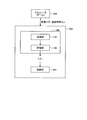
- FIG. 2 is a schematic diagram illustrating a configuration of a system 1000 according to an embodiment of the present disclosure. As shown in FIG. 2, the system 1000 includes a learning device 100 and a simulator 200. As the simulator 200, a game program can be applied as described above.
- the learning device 100 performs learning based on various logs obtained from the simulator 200 and the transition time ⁇ e of mode switching.
- Various logs include various information related to the transition time.
- the various logs include various environmental information such as weather, wind direction, wind force, road surface condition, road surface friction coefficient, corner radius, road condition, and the like.
- the road surface state includes information such as a paved road or an unpaved road, and whether the road is dry or wet.
- the road condition includes information such as the speed limit of the road, the type of the general road or the expressway, the number of other vehicles existing in the surrounding area, the distance to the other vehicles, and the corner radius when running on a corner.
- the various logs include vehicle information such as the operation amount and the state amount of the vehicle.
- the operation amount includes a steering angle, an accelerator opening, a brake depression amount, a gear shift position, light illuminance, an angle of a seat back, an angle of an armrest, a distance between a seat and a steering wheel, and the like.
- vehicle size such as vehicle speed, vehicle acceleration, yaw rate, vehicle center of gravity position, rotation angle, tire load, tire friction coefficient, cooling water temperature, oil temperature, vehicle type, vehicle weight, vehicle width, vehicle length, etc.
- various logs include personal information (profile information) about the driver.
- the personal information includes information such as name, age, gender, driving history, and the like.
- the transition time corresponds to the time for transition from one mode to another mode at the time of mode switching.
- the transition time is set for each parameter such as an accelerator opening, a brake operation amount, and a steering angle.
- the transition time changes according to environmental information and vehicle information. For example, taking the transition time of the accelerator opening as an example, when switching the mode from automatic driving to manual driving, if the road surface friction coefficient is extremely low, such as when driving on snowy roads, the transition time is made longer by increasing the accelerator time. It is desirable to smoothly shift the opening from automatic operation to manual operation. This is because if the transition time is short, the behavior of the vehicle may be unstable, such as the vehicle slipping.
- the mode when the mode is switched from the automatic driving to the manual driving, if the vehicle acceleration is large, it is desirable to make the transition time longer and smoothly shift the accelerator opening from the automatic driving to the manual driving. This is because if the transition time is short, the vehicle behavior may be unstable, such as a shock when switching to manual driving.
- the environment information and the vehicle information indicated by the various logs are closely related to the transition time of the mode switching, and the transition time differs depending on the environment information and the vehicle information. Further, the transition time differs for each parameter such as the accelerator opening, the brake operation amount, and the steering angle.
- transition times corresponding to various logs are defined in advance, and therefore, by using the simulator 200, transition times for various logs can be acquired.
- various information for various logs can be obtained by using a program under development.
- the learning device 100 learns the relationship between various logs including the environment information and the vehicle information and the transition time, and obtains the correlation f ( ⁇ ) between the various logs and the transition time.
- the correlation f ( ⁇ ) is obtained, the transition time can be calculated based on various logs.
- the learning device 100 learns a log related to driving in the simulator 200, an acquisition unit 102 that acquires a transition time of mode switching obtained corresponding to the log, and learns a relationship between the log and the transition time.
- the learning unit 104 is provided.
- a calculation unit 302 that calculates a transition time corresponding to an arbitrary driving state based on a learning result by the learning unit 104 is provided.
- the arithmetic unit 302 may be provided in a device different from the learning device 100, and an information processing device 300 including the learning device 100 and the arithmetic unit 302 may be configured.
- the components of the learning device 100, the simulator 200, and the information processing device 300 illustrated in FIG. 2 are configured by a circuit (hardware) or a central processing unit such as a CPU and a program (software) for causing the central processing unit to function. be able to.
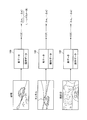
- FIG. 3 shows three examples of environments in which a vehicle runs on a game program, such as “sandy ground”, “tunnel”, and “rainy day”.
- FIG. 7 is a schematic diagram showing a state of learning a correlation f ( ⁇ ) of FIG.
- the learning device 100 acquires a log of the operating state according to each environment and performs learning.
- a sequence-to-sequence or sequence-to-value prediction is performed using a recurrent neural network.
- a recurrent neural network is a network in which the contents of the next time are determined by an input one time before and an intermediate layer.
- the correlation f ( ⁇ ) is found to be obtained.
- the generality of the recurrent neural network is high, and it is easy to acquire this transition from vehicle information and operation information under various conditions.
- the sequence-to-sequence and the sequence-to-value are methods for determining the transition range.
- the correlation f ( ⁇ ) will be appropriately described as a function f ( ⁇ ).
- the input to the learning device 100 is a log indicating environmental information and vehicle information, and as described above, various environmental information such as weather, wind direction, wind power, road surface condition, road surface friction coefficient, corner radius, road condition, and the like. , Accelerator opening, brake depression, steering angle, vehicle speed, vehicle acceleration, yaw rate, cooling water temperature, oil temperature, vehicle type, vehicle weight, vehicle size, engine displacement, motor output, vehicle body Cd value, etc. It includes various vehicle information such as specifications, tire types, specifications such as tire width and size, and the like.
- transition time ⁇ e1,. . . ⁇ ei is obtained.
- the function f ( ⁇ ) indicating the relationship with ⁇ ei is learned.
- ⁇ Transition times ⁇ e1,. . . ⁇ ei corresponds to the transition time of various parameters related to operation when switching from automatic operation to manual operation.
- the various parameters are parameters such as an accelerator opening, a brake depression amount, and a steering angle.
- FIG. 4 is a schematic diagram showing a transition time ⁇ e between automatic operation and manual operation when the mode is switched between automatic operation and manual operation. As an example, FIG. 4 shows the transition time ⁇ e of the accelerator opening as an example.
- the operation is not completely switched to the manual operation during the predetermined transition time ⁇ e, and the state of the automatic operation is maintained. Then, the operation is completely switched to the manual operation at time t2, and the manual operation is performed after time t2. Thus, the manual operation can be actually performed after the transition time ⁇ e has elapsed since the automatic operation was turned off at the time t1.
- the transition time ⁇ e varies depending on the situation at the time of mode switching, and has a different value according to the above-described environment information and vehicle information.
- logs in respective environments and transition times ⁇ e1,. . . ⁇ ei is acquired from the simulator 200, and the function f ( ⁇ ) is learned.
- ⁇ e1 is the transition time of the accelerator
- ⁇ e2 is the transition time of the brake
- ⁇ e3 is the transition time of the steering angle.
- the transition time of various parameters can be obtained by substituting the operation log into the function f ( ⁇ ).
- the accelerator opening (indicated by a broken line in FIG. 4) in the transition time from time t1 to time t2 is approximated based on the change in the accelerator opening before time t1. I get it.
- the accelerator opening at the transition time can be approximated by learning the accelerator opening at the transition time on the simulator 200.
- a method such as DMP (dynamic movement primitives), GP (Gaussian Process), NN (Neural Network), or the like can be used.
- the approximation processing using these methods can be performed by, for example, the calculation unit 302 included in the information processing apparatus 300 described above.
- a log related to driving in the driving simulator and an acquiring unit that acquires a transition time of mode switching obtained according to the log, A learning unit that learns a relationship between the log and the transition time; A calculating unit that calculates the transition time corresponding to an arbitrary driving state based on a learning result by the learning unit;
- An information processing device comprising: (2) The transition time is a transition time related to operation mode switching, The information processing device according to (1). (3) The mode switching is switching from the automatic operation mode to the manual operation mode, The information processing device according to (2).
- the log includes personal information about the driver, environmental information during driving, or vehicle information during driving, The information processing apparatus according to any one of (1) to (3).
- REFERENCE SIGNS LIST 100 learning device 102 acquisition unit 104 learning unit 200 simulator 300 information processing device 302 arithmetic unit
Landscapes
- Engineering & Computer Science (AREA)
- Theoretical Computer Science (AREA)
- Physics & Mathematics (AREA)
- General Physics & Mathematics (AREA)
- Software Systems (AREA)
- General Engineering & Computer Science (AREA)
- Data Mining & Analysis (AREA)
- Evolutionary Computation (AREA)
- Computing Systems (AREA)
- Artificial Intelligence (AREA)
- Mathematical Physics (AREA)
- Multimedia (AREA)
- Biophysics (AREA)
- General Health & Medical Sciences (AREA)
- Molecular Biology (AREA)
- Biomedical Technology (AREA)
- Life Sciences & Earth Sciences (AREA)
- Health & Medical Sciences (AREA)
- Computational Linguistics (AREA)
- Educational Administration (AREA)
- Educational Technology (AREA)
- Business, Economics & Management (AREA)
- Aviation & Aerospace Engineering (AREA)
- Computer Vision & Pattern Recognition (AREA)
- Medical Informatics (AREA)
- Human Computer Interaction (AREA)
- Mechanical Engineering (AREA)
- Automation & Control Theory (AREA)
- Transportation (AREA)
- Computer Graphics (AREA)
- Computer Hardware Design (AREA)
- Control Of Driving Devices And Active Controlling Of Vehicle (AREA)
- Traffic Control Systems (AREA)
- Processing Or Creating Images (AREA)
Abstract
Description
本開示は、情報処理装置及び情報処理方法に関する。 The present disclosure relates to an information processing device and an information processing method.
従来、下記の特許文献1には、第2自動走行車両の自動運転から手動運転への切り替えを表すデータ値を受信し、受信したデータ値に依存して、第1自動走行車両を動作させるステップとして、運転者に手動運転への切り替えが必要となることを通知することが記載されている。
Conventionally, the following
自動運転から手動運転に切り換わる場合などのように、1の状態から他の状態にモードが切り換わる場合には、切り換わりに応じてユーザに違和感を与えてしまう場合がある。この違和感は、切り換わりが生じる時点の状態に依存するため、切り換わりが生じる時点の様々な状態を考慮してモードの切り換えを行うことが望ましい。 (4) When the mode is switched from one state to another state, such as when switching from automatic operation to manual operation, the user may feel uncomfortable depending on the switching. Since this uncomfortable feeling depends on the state at the time of the switching, it is desirable to switch the mode in consideration of various states at the time of the switching.
しかしながら、上記特許文献1には、自動運転と手動運転の切り換わりについては記載されているが、切り換わりの際に違和感無く切り換えを行う手法については、何ら考慮していなかった。
However,
そこで、1の状態から他の状態に切り換わる場合に、ユーザに違和感を生じさせることなく切り換えを行うことが望まれていた。 Therefore, when switching from one state to another state, it has been desired to perform the switching without causing the user to feel uncomfortable.
本開示によれば、運転シミュレータにおける運転に関わるログと、前記ログに対応して得られるモード切換の遷移時間を取得する取得部と、前記ログと前記遷移時間との関係を学習する学習部と、前記学習部による学習結果に基づいて、任意の運転状態に対応する前記遷移時間を演算する演算部と、を備える、情報処理装置が提供される。 According to the present disclosure, a log related to driving in a driving simulator, an acquisition unit that acquires a transition time of mode switching obtained corresponding to the log, and a learning unit that learns a relationship between the log and the transition time. And an arithmetic unit for calculating the transition time corresponding to an arbitrary driving state based on a learning result by the learning unit.
また、本開示によれば、運転シミュレータにおける運転に関わるログと、前記ログに対応して得られるモード切換の遷移時間を取得することと、前記ログと前記遷移時間との関係を学習することと、前記学習の結果に基づいて、任意のログに対応する前記遷移時間を演算することと、を含む、情報処理方法が提供される。 According to the present disclosure, a log relating to driving in a driving simulator, acquiring a transition time of mode switching obtained in correspondence with the log, and learning a relationship between the log and the transition time. And calculating the transition time corresponding to an arbitrary log based on a result of the learning.
以上説明したように本開示によれば、そこで、1の状態から他の状態に切り換わる場合に、ユーザに違和感を生じさせることなく切り換えを行うことが可能となる。
なお、上記の効果は必ずしも限定的なものではなく、上記の効果とともに、または上記の効果に代えて、本明細書に示されたいずれかの効果、または本明細書から把握され得る他の効果が奏されてもよい。
As described above, according to the present disclosure, when switching from one state to another state, it is possible to perform switching without causing a user to feel uncomfortable.
Note that the above effects are not necessarily limited, and any of the effects described in the present specification or other effects that can be grasped from the present specification, together with or instead of the above effects. May be played.
以下に添付図面を参照しながら、本開示の好適な実施の形態について詳細に説明する。なお、本明細書及び図面において、実質的に同一の機能構成を有する構成要素については、同一の符号を付することにより重複説明を省略する。 Hereinafter, preferred embodiments of the present disclosure will be described in detail with reference to the accompanying drawings. In the specification and the drawings, components having substantially the same functional configuration are denoted by the same reference numerals, and redundant description is omitted.
なお、説明は以下の順序で行うものとする。
1.本開示の概要
1.1.概要
1.2.シミュレータについて
1.3.モード切換時の学習について
1.4.自動運転と手動運転のモード切換を学習することの意義
2.システムの構成例
2.1.システムの全体構成
2.2.学習器による学習の例
2.3.遷移時間の例
2.4.遷移時間における近似方法
The description will be made in the following order.
1. Overview of the present disclosure 1.1. Overview 1.2. About simulator 1.3. About learning at the time of mode switching 1.4. Significance of learning mode switching between automatic operation and manual operation System configuration example 2.1. Overall configuration of system 2.2. Example of learning by learning device 2.3. Example of transition time 2.4. Approximation method at transition time
1.本開示の概要
1.1.概要
本開示は、例えばシミュレータで車両を運転する際に運転に関するログを取得し、取得したログからモード切換時の挙動を学習し、モード切換時のパラメータを最適に調整する技術に関する。なお、以下では、車両の運転を例に挙げて説明を行うが、ログを取得する環境は車両の運転に限られるものではなく、様々な環境に適用が可能である。
1. Overview of the present disclosure 1.1. Overview The present disclosure relates to a technology for acquiring a log related to driving when a vehicle is driven by a simulator, learning a behavior at the time of mode switching from the acquired log, and optimally adjusting parameters at the time of mode switching. In the following, a description will be given by taking the operation of a vehicle as an example, but the environment for acquiring the log is not limited to the operation of the vehicle, and can be applied to various environments.
1.2.シミュレータについて
本開示では、車両の運転を行うシミュレータを用いて、シミュレータから得られるログを学習する。シミュレータを用いることで、運転時の天候、路面状況、車種、車両の諸元(大きさ、重量など)、運転状態(速度、加速度、操舵角)などの様々な運転状態に応じたログを容易に取得することができる。一方、実車からログを取得しようとしても、様々な運転状態に応じたログを短時間で収集することには困難が伴う。従って、シミュレータを用いることで、運転状態に応じた各種ログを簡素な手法で効率良く収集することが可能である。
1.2. Simulator In the present disclosure, a simulator that drives a vehicle is used to learn logs obtained from the simulator. By using the simulator, logs according to various driving conditions such as weather, road surface conditions, vehicle type, vehicle specifications (size, weight, etc.) and driving conditions (speed, acceleration, steering angle) during driving can be easily created. Can be obtained. On the other hand, even when trying to acquire logs from an actual vehicle, it is difficult to collect logs according to various driving states in a short time. Therefore, by using the simulator, it is possible to efficiently collect various logs according to the driving state by a simple method.
より好適な手法では、シミュレータとしてゲームのプログラムを活用することができる。例えば、既に市販されているGTS(グランツーリスモ スポーツ)(登録商標)などのゲームのプログラムを用いることで、様々な運転状態に応じたログを取得することができる。そして、多数のログを学習することで、学習結果を実車へ適用することも可能となる。更に、開発過程のゲームのプログラムを利用することで、市販のゲームでは想定していない状況下における学習も可能である。 で は In a more preferable method, a game program can be used as a simulator. For example, by using a game program such as GTS (Gran Turismo Sports) (registered trademark) which is already commercially available, logs corresponding to various driving states can be acquired. By learning a large number of logs, the learning result can be applied to an actual vehicle. Further, by using a game program in the development process, it is possible to learn in a situation that is not assumed in a commercially available game.
図1は、ゲームによる学習結果を実車に適用する概念を示す模式図である。ゲームにおける学習時には、ユーザが画面10を見ながらコントローラ20を操作し、様々な運転状態でログを取得し、学習を行う。学習結果は実車30へ適用される。
FIG. 1 is a schematic diagram showing a concept of applying a learning result of a game to an actual vehicle. At the time of learning in the game, the user operates the
1.3.モード切換時の学習について
本開示では、特に運転のモード切換時のログに基づいて学習を行い、モード切換時のパラメータを最適に調整する。運転時のモード切換として様々なものを想定できるが、本開示では特に自動運転と手動運転のモード切換に着目する。なお、他のモード切換についても、同様の観点で適用可能である。
1.3. About learning at the time of mode switching In the present disclosure, learning is performed based on a log at the time of operating mode switching, and parameters at the time of mode switching are optimally adjusted. Although various modes can be assumed as the mode switching during operation, the present disclosure particularly focuses on mode switching between automatic operation and manual operation. Note that other mode switching can be applied from the same viewpoint.
1.4.自動運転と手動運転のモード切換を学習することの意義
自動運転と手動運転との間でモード切換を行う場合、運転の主体がコンピュータ(AI)と人の間で切り換わる。このため、運転の各種パラメータがシームレスに切り換わらないと、切り換え時に違和感が生じてしまう。
1.4. Significance of learning mode switching between automatic operation and manual operation When performing mode switching between automatic operation and manual operation, the subject of operation switches between a computer (AI) and a person. For this reason, if various parameters of the operation are not switched seamlessly, a sense of incongruity occurs at the time of switching.
例えば、電動パワーステアリング(EPS)を例に挙げて説明すると、EPSのモータは、手動運転中は操舵のアシストを行い、自動運転中は操舵の角度をコントロールしており、制御が異なる。自動運転から手動運転に切り換える場合に、単純に自動運転をオフにするだけでは、ドライバーがステアリングを操作する際の操舵トルクに落差が生じ、ドライバーの不安を招来する可能性がある。 For example, an electric power steering (EPS) will be described as an example. The EPS motor performs steering assist during manual driving and controls the steering angle during automatic driving, and the control is different. When switching from the automatic driving to the manual driving, simply turning off the automatic driving may cause a drop in the steering torque when the driver operates the steering, which may cause anxiety of the driver.
本開示では、このようなモード切換時のシミュレータの挙動を学習し、モード切換時の最適なパラメータを学習する。学習により得られたモード切換時の最適なパラメータを実車に適用することで、実車のモード切換時においても、最適なモード切換を実現することができ、ドライバーに違和感が生じることを抑制することができる。 In the present disclosure, the behavior of the simulator at the time of such mode switching is learned, and the optimal parameters at the time of mode switching are learned. By applying the optimal parameters at the time of mode switching obtained by learning to the actual vehicle, the optimal mode switching can be realized even at the time of mode switching of the actual vehicle, and it is possible to suppress the driver from feeling uncomfortable. it can.
なお、シミュレータで得られた学習結果を実車に適用する際には、シミュレータと実車が完全同一でないことを考慮し、学習結果の補正、スケーリング等を行ってから実車に適用することが好適である。 When the learning result obtained by the simulator is applied to the actual vehicle, it is preferable that the learning result is corrected, scaled, etc., and then applied to the actual vehicle in consideration of the fact that the simulator and the actual vehicle are not completely the same. .
2.システムの構成例
2.1.システムの全体構成
図2は、本開示の一実施形態に係るシステム1000の構成を示す模式図である。図2に示すように、このシステム1000は、学習器100とシミュレータ200を備える。シミュレータ200として、上述のようにゲームのプログラムを適用することができる。
2. System configuration example 2.1. Overall Configuration of System FIG. 2 is a schematic diagram illustrating a configuration of a system 1000 according to an embodiment of the present disclosure. As shown in FIG. 2, the system 1000 includes a
学習器100は、シミュレータ200から得られる各種ログと、モード切換の遷移時間Δeに基づいて学習を行う。各種ログは、遷移時間に関係する様々な情報を含む。各種ログは、天候、風向き、風力、路面状態、路面摩擦係数、コーナの半径、道路状況、等の様々な環境情報を含む。路面状態は、舗装路か未舗装路か、ドライかウェットか等の情報を含む。道路状況は、道路の制限速度、一般道か高速道路の種別、周囲に存在する他車両の数、他車両との距離、コーナを走行している場合はコーナ半径、等の情報を含む。
The
また、各種ログは、車両の操作量、状態量などの車両情報を含む。操作量として、操舵角、アクセル開度、ブレーキ踏込量、ギヤシフト位置、ライト照度、座席背もたれの角度、アームレストの角度、座席とハンドル間の距離、等が挙げられる。また、状態量として、車両速度、車両加速度、ヨーレート、車両重心位置、回転角、タイヤ荷重、タイヤ摩擦係数、冷却水温、油温、車種、車両重量、車幅や車長などの車両の大きさ、エンジン排気量、モータ出力、車体Cd値などの車両諸元、タイヤ種別、タイヤの幅や大きさなどの諸元、等が挙げられる。 各種 The various logs include vehicle information such as the operation amount and the state amount of the vehicle. The operation amount includes a steering angle, an accelerator opening, a brake depression amount, a gear shift position, light illuminance, an angle of a seat back, an angle of an armrest, a distance between a seat and a steering wheel, and the like. In addition, as the state quantity, vehicle size such as vehicle speed, vehicle acceleration, yaw rate, vehicle center of gravity position, rotation angle, tire load, tire friction coefficient, cooling water temperature, oil temperature, vehicle type, vehicle weight, vehicle width, vehicle length, etc. , An engine displacement, a motor output, a vehicle specification such as a vehicle Cd value, a tire type, a specification such as a tire width and a tire size, and the like.
更に、各種ログは、運転者に関する個人情報(プロファイル情報)を含む。個人情報は、氏名、年齢、性別、運転歴、等の情報を含む。 Furthermore, various logs include personal information (profile information) about the driver. The personal information includes information such as name, age, gender, driving history, and the like.
遷移時間は、モード切換の際に、あるモードから他のモードへ遷移する時間に相当する。遷移時間は、アクセル開度、ブレーキ操作量、ステアリング操舵角などのパラメータ毎に設定される。 The transition time corresponds to the time for transition from one mode to another mode at the time of mode switching. The transition time is set for each parameter such as an accelerator opening, a brake operation amount, and a steering angle.
この遷移時間は、環境情報、車両情報に応じて変化する。例えば、アクセル開度の遷移時間を例に挙げると、自動運転から手動運転へモード切換を行う際に、雪道走行時など路面摩擦係数が極度に低い場合は、遷移時間をより長くしてアクセル開度を滑らかに自動運転から手動運転に遷移させることが望ましい。遷移時間が短いと、車両がスリップするなど車両挙動が不安定になる可能性があるためである。 The transition time changes according to environmental information and vehicle information. For example, taking the transition time of the accelerator opening as an example, when switching the mode from automatic driving to manual driving, if the road surface friction coefficient is extremely low, such as when driving on snowy roads, the transition time is made longer by increasing the accelerator time. It is desirable to smoothly shift the opening from automatic operation to manual operation. This is because if the transition time is short, the behavior of the vehicle may be unstable, such as the vehicle slipping.
同様に、自動運転から手動運転へモード切換を行う際に、車両の加速度が大きい場合は、遷移時間をより長くしてアクセル開度を滑らかに自動運転から手動運転に遷移させることが望ましい。遷移時間が短いと、手動運転に切り換えた際にショックを感じるなど、車両挙動が不安定になる可能性があるためである。 Similarly, when the mode is switched from the automatic driving to the manual driving, if the vehicle acceleration is large, it is desirable to make the transition time longer and smoothly shift the accelerator opening from the automatic driving to the manual driving. This is because if the transition time is short, the vehicle behavior may be unstable, such as a shock when switching to manual driving.
以上のように、各種ログが示す環境情報、車両情報は、モード切換の遷移時間と密接に関連しており、環境情報、車両情報に応じて遷移時間は異なる。また、アクセル開度、ブレーキ操作量、ステアリング操舵角などのパラメータ毎に遷移時間は異なる。シミュレータ200では、各種ログに対応する遷移時間が予め規定されているため、シミュレータ200を用いることで、各種ログに対する遷移時間を取得することができる。特にシミュレータ200としてゲームプログラムを利用する場合は、開発中のプログラムを用いることで、各種ログに対する様々の情報を取得することが可能である。
As described above, the environment information and the vehicle information indicated by the various logs are closely related to the transition time of the mode switching, and the transition time differs depending on the environment information and the vehicle information. Further, the transition time differs for each parameter such as the accelerator opening, the brake operation amount, and the steering angle. In the
学習器100は、環境情報、車両情報を含む各種ログと遷移時間の関係を学習し、各種ログと遷移時間との相関関係f(θ)を得る。相関関係f(θ)が得られると、各種ログに基づいて遷移時間を演算することが可能となる。学習の際には、例えば入力(各種ログ)に対する出力(遷移時間)の教師データを参照し、出力が教師データと一致するように相関関係f(θ)を学習する。
The
図2に示すように、学習器100は、シミュレータ200における運転に関わるログと、ログに対応して得られるモード切換の遷移時間を取得する取得部102と、ログと遷移時間との関係を学習する学習部104を備える。また、学習部104による学習結果に基づいて、任意の運転状態に対応する遷移時間を演算する演算部302が備えられている。演算部302は、学習器100とは別の装置に設けられていても良く、学習器100と演算部302を含む情報処理装置300が構成されても良い。なお、図2に示す学習器100、シミュレータ200、情報処理装置300の構成要素は、回路(ハードウェア)、またはCPUなどの中央演算処理装置とこれを機能させるためのプログラム(ソフトウェア)から構成することができる。
As illustrated in FIG. 2, the
2.2.学習器による学習の例
図3は、ゲームプログラム上で車両が走行する環境として、「砂地」、「トンネル」、「雨の日」の3つの例を挙げ、各環境において各種ログと遷移時間との相関関係f(θ)を学習する様子を示す模式図である。この環境が異なる3つの例において、学習器100は、それぞれの環境に応じた運転状態のログを取得し、学習を行う。
2.2. Example of learning by learning device FIG. 3 shows three examples of environments in which a vehicle runs on a game program, such as “sandy ground”, “tunnel”, and “rainy day”. FIG. 7 is a schematic diagram showing a state of learning a correlation f (θ) of FIG. In three examples in which the environments are different, the
ここでは、ニューラルネットワークを用いる一例を挙げる。リカレントニューラルネットワークを用いてシーケンス トゥ シーケンス、もしくはシーケンス トゥ バリューの予測を行う。リカレントニューラルネットワークは一時刻前の入力と中間層によって次時刻の内容が決定されるネットワークである。 Here is an example using a neural network. A sequence-to-sequence or sequence-to-value prediction is performed using a recurrent neural network. A recurrent neural network is a network in which the contents of the next time are determined by an input one time before and an intermediate layer.
この一時刻前を自動運転時とし、一時刻後を手動運転時とすると、相関関係f(θ)が求められることが分かる。リカレントニューラルネットワークの汎化性は高く、様々な条件の車情報、操作情報からこの遷移を獲得することが容易となる。なお、シーケンス トゥ シーケンスとシーケンス トゥ バリューはその遷移範囲の決定の仕方である。以降、相関関係f(θ)を、適宜、関数f(θ)として説明を行う。 す る と If the automatic operation is performed one time before this time and the manual operation is performed one time after this time, the correlation f (θ) is found to be obtained. The generality of the recurrent neural network is high, and it is easy to acquire this transition from vehicle information and operation information under various conditions. The sequence-to-sequence and the sequence-to-value are methods for determining the transition range. Hereinafter, the correlation f (θ) will be appropriately described as a function f (θ).
学習器100への入力は、環境情報、車両情報を示すログであり、上述したように、天候、風向き、風力、路面状態、路面摩擦係数、コーナの半径、道路状況、等の様々な環境情報、アクセル開度、ブレーキ踏込量、操舵角、車両速度、車両加速度、ヨーレート、冷却水温、油温、車種、車両重量、車両の大きさ、エンジン排気量、モータ出力、車体Cd値などの車両諸元、タイヤ種別、タイヤの幅や大きさなどの諸元、等の様々な車両情報を含む。
The input to the
また、シミュレータ200から、自動運転から手動運転に切り換わる際の遷移時間Δe1,...Δeiが取得される。学習器100では、入力である各種ログと遷移時間Δe1,...Δeiとの関係を示す関数f(θ)を学習する。
{The transition time Δe1,. . . Δei is obtained. In the
遷移時間Δe1,...Δeiは、自動運転から手動運転に切り換わる際における、運転に関する各種パラメータの遷移時間に相当する。上述したように、各種パラメータは、アクセル開度、ブレーキ踏込量、操舵角などのパラメータである。 {Transition times Δe1,. . . Δei corresponds to the transition time of various parameters related to operation when switching from automatic operation to manual operation. As described above, the various parameters are parameters such as an accelerator opening, a brake depression amount, and a steering angle.
2.3.遷移時間の例
図4は、自動運転と手動運転との間でモードが切り換わる際に、自動運転と手動運転の間の遷移時間Δeを示す模式図である。一例として、図4では、アクセル開度の遷移時間Δeを例に挙げて示している。
2.3. Example of Transition Time FIG. 4 is a schematic diagram showing a transition time Δe between automatic operation and manual operation when the mode is switched between automatic operation and manual operation. As an example, FIG. 4 shows the transition time Δe of the accelerator opening as an example.
図4において、時刻t0からt1までは自動運転が行われている。そして、時刻t1で自動運転から手動運転へのモード切換が行われるものとする。上述したように、時刻t1で単純に自動運転をオフにして手動運転に切り換えると、アクセル開度に落差が生じ、車両の挙動が不安定になったり、ドライバーに違和感が生じる可能性がある。 に お い て In FIG. 4, automatic operation is performed from time t0 to time t1. Then, it is assumed that mode switching from automatic operation to manual operation is performed at time t1. As described above, if the automatic driving is simply turned off at the time t1 to switch to the manual driving, a drop occurs in the accelerator opening, and the behavior of the vehicle may become unstable or the driver may feel uncomfortable.
このため、シミュレータ200上では、時刻t1で自動運転がオフになっても、所定の遷移時間Δeの間は完全には手動運転に切り換わらず、自動運転の状態が維持される。そして、時刻t2で完全に手動運転に切り換わり、時刻t2以降は手動運転が行われる。このように、時刻t1で自動運転がオフになってから、遷移時間Δeが経過した後に実際に手動運転が可能となる。
Therefore, on the
この遷移時間Δeは、モード切換時の状況によって異なり、上述した環境情報、車両情報に応じて異なる値となる。図4に示す例では、「砂地」、「トンネル」、「雨の日」の3つの例について、それぞれの環境におけるログと、遷移時間Δe1,...Δeiがシミュレータ200から取得され、関数f(θ)学習される。なお、一例として、Δe1はアクセルの遷移時間であり、Δe2はブレーキの遷移時間であり、Δe3は操舵角の遷移時間である。
遷移 The transition time Δe varies depending on the situation at the time of mode switching, and has a different value according to the above-described environment information and vehicle information. In the example illustrated in FIG. 4, regarding three examples of “sandy ground”, “tunnel”, and “rainy day”, logs in respective environments and transition times Δe1,. . . Δei is acquired from the
以上のようにして、学習により関数f(θ)が求まると、運転ログを関数f(θ)に代入することで、各種パラメータの遷移時間を求めることが可能である。 As described above, when the function f (θ) is obtained by learning, the transition time of various parameters can be obtained by substituting the operation log into the function f (θ).
2.4.遷移時間における近似方法
学習により求めた関数f(θ)を用いて各種パラメータの遷移時間を求めることで、環境情報、車両情報に応じた最適の遷移時間をパラメータ毎に求めることができる。また、遷移時間における各パラメータの変化は、直前の特性を近似することで求めることができる。
2.4. Approximation Method in Transition Time By calculating the transition time of various parameters using the function f (θ) obtained by learning, it is possible to obtain the optimum transition time for each parameter according to environmental information and vehicle information. The change of each parameter in the transition time can be obtained by approximating the immediately preceding characteristic.
図4に示す例では、時刻t1から時刻t2の間の遷移時間におけるアクセル開度(図4中に破線で示す)は、時刻t1よりも以前のアクセル開度の変化に基づいて近似することで求まる。また、遷移時間におけるアクセル開度は、シミュレータ200上での遷移時間におけるアクセル開度を学習することで近似することができる。
In the example shown in FIG. 4, the accelerator opening (indicated by a broken line in FIG. 4) in the transition time from time t1 to time t2 is approximated based on the change in the accelerator opening before time t1. I get it. The accelerator opening at the transition time can be approximated by learning the accelerator opening at the transition time on the
近似の方法として、DMP(dynamic movement primitives)、GP(Gaussian Process)、NN(Neural Network)等の手法を用いることができる。これらの手法を用いた近似処理は、例えば上述した情報処理装置300が備える演算部302にて行うことができる。
As an approximation method, a method such as DMP (dynamic movement primitives), GP (Gaussian Process), NN (Neural Network), or the like can be used. The approximation processing using these methods can be performed by, for example, the
これにより、ユーザに不自然を感じさせない遷移時間と、遷移時間における遷移特性をシミュレータ200から得られるデータに基づいて学習することが可能となる。
Thereby, it is possible to learn the transition time at which the user does not feel unnatural and the transition characteristics at the transition time based on the data obtained from the
以上説明したように本実施形態によれば、様々な条件に応じた遷移時間をシミュレータ200を用いて学習することで、モード切り換え時にシームレスな切り換えが可能となり、ユーザに違和感が生じることを抑止することが可能となる。
As described above, according to the present embodiment, by learning transition times according to various conditions using the
なお、以上の説明では、運転に関するモード切り換えの遷移時間を学習し、実車に適用する手法について説明したが、本開示の適用は運転に限定されるものではない。本開示は、例えば料理やフィットネスの負荷など、モード切り換えが行われる様々な事象について適用が可能である。 In the above description, a method of learning the transition time of the mode switching related to driving and applying the mode to the actual vehicle has been described, but the application of the present disclosure is not limited to driving. The present disclosure is applicable to various events in which mode switching is performed, for example, a load of cooking or fitness.
以上、添付図面を参照しながら本開示の好適な実施形態について詳細に説明したが、本開示の技術的範囲はかかる例に限定されない。本開示の技術分野における通常の知識を有する者であれば、請求の範囲に記載された技術的思想の範疇内において、各種の変更例または修正例に想到し得ることは明らかであり、これらについても、当然に本開示の技術的範囲に属するものと了解される。 Although the preferred embodiments of the present disclosure have been described above in detail with reference to the accompanying drawings, the technical scope of the present disclosure is not limited to such examples. It is apparent that a person having ordinary knowledge in the technical field of the present disclosure can arrive at various changes or modifications within the scope of the technical idea described in the claims. It is naturally understood that the above also belongs to the technical scope of the present disclosure.
また、本明細書に記載された効果は、あくまで説明的または例示的なものであって限定的ではない。つまり、本開示に係る技術は、上記の効果とともに、または上記の効果に代えて、本明細書の記載から当業者には明らかな他の効果を奏しうる。 効果 In addition, the effects described in this specification are merely illustrative or exemplary, and are not restrictive. That is, the technology according to the present disclosure can exhibit other effects that are obvious to those skilled in the art from the description in the present specification, in addition to or instead of the above effects.
なお、以下のような構成も本開示の技術的範囲に属する。
(1)
運転シミュレータにおける運転に関わるログと、前記ログに対応して得られるモード切換の遷移時間を取得する取得部と、
前記ログと前記遷移時間との関係を学習する学習部と、
前記学習部による学習結果に基づいて、任意の運転状態に対応する前記遷移時間を演算する演算部と、
を備える、情報処理装置。
(2)
前記遷移時間は、運転のモード切換に関する遷移時間である、
前記(1)に記載の情報処理装置。
(3)
前記モード切換は、自動運転モードから手動運転モードへの切り換えである、
前記(2)に記載の情報処理装置。
(4)
前記ログは、運転者に関する個人情報、運転時の環境情報、又は運転時の車両情報を含む、
前記(1)~(3)のいずれかに記載の情報処理装置。
(5)
前記遷移時間におけるパラメータの変化を前記遷移時間以前の前記パラメータの変化に基づいて計算する、
前記(1)~(3)のいずれかに記載の情報処理装置。
(6)
運転シミュレータにおける運転に関わるログと、前記ログに対応して得られるモード切換の遷移時間を取得することと、
前記ログと前記遷移時間との関係を学習することと、
前記学習の結果に基づいて、任意のログに対応する前記遷移時間を演算することと、
を含む、情報処理方法。
The following configuration also belongs to the technical scope of the present disclosure.
(1)
A log related to driving in the driving simulator, and an acquiring unit that acquires a transition time of mode switching obtained according to the log,
A learning unit that learns a relationship between the log and the transition time;
A calculating unit that calculates the transition time corresponding to an arbitrary driving state based on a learning result by the learning unit;
An information processing device comprising:
(2)
The transition time is a transition time related to operation mode switching,
The information processing device according to (1).
(3)
The mode switching is switching from the automatic operation mode to the manual operation mode,
The information processing device according to (2).
(4)
The log includes personal information about the driver, environmental information during driving, or vehicle information during driving,
The information processing apparatus according to any one of (1) to (3).
(5)
Calculating a change in the parameter at the transition time based on the change in the parameter before the transition time,
The information processing apparatus according to any one of (1) to (3).
(6)
Acquiring a log related to driving in the driving simulator and a transition time of mode switching obtained in accordance with the log;
Learning the relationship between the log and the transition time;
Calculating the transition time corresponding to an arbitrary log based on the result of the learning;
An information processing method, including:
100 学習器
102 取得部
104 学習部
200 シミュレータ
300 情報処理装置
302 演算部
REFERENCE SIGNS
Claims (6)
前記ログと前記遷移時間との関係を学習する学習部と、
前記学習部による学習結果に基づいて、任意の運転状態に対応する前記遷移時間を演算する演算部と、
を備える、情報処理装置。 A log related to driving in the driving simulator, and an acquiring unit that acquires a transition time of mode switching obtained according to the log,
A learning unit that learns a relationship between the log and the transition time;
A calculating unit that calculates the transition time corresponding to an arbitrary driving state based on a learning result by the learning unit;
An information processing device comprising:
前記ログと前記遷移時間との関係を学習することと、
前記学習の結果に基づいて、任意のログに対応する前記遷移時間を演算することと、
を含む、情報処理方法。 Acquiring a log related to driving in the driving simulator and a transition time of mode switching obtained corresponding to the log,
Learning the relationship between the log and the transition time;
Calculating the transition time corresponding to an arbitrary log based on the result of the learning;
An information processing method, including:
Priority Applications (1)
| Application Number | Priority Date | Filing Date | Title |
|---|---|---|---|
| US17/250,253 US20210264806A1 (en) | 2018-06-29 | 2019-06-25 | Information processing apparatus and information processing method |
Applications Claiming Priority (2)
| Application Number | Priority Date | Filing Date | Title |
|---|---|---|---|
| JP2018-124101 | 2018-06-29 | ||
| JP2018124101A JP2021165048A (en) | 2018-06-29 | 2018-06-29 | Information processing device and information processing method |
Publications (1)
| Publication Number | Publication Date |
|---|---|
| WO2020004376A1 true WO2020004376A1 (en) | 2020-01-02 |
Family
ID=68986699
Family Applications (1)
| Application Number | Title | Priority Date | Filing Date |
|---|---|---|---|
| PCT/JP2019/025115 Ceased WO2020004376A1 (en) | 2018-06-29 | 2019-06-25 | Information processing device and information processing method |
Country Status (3)
| Country | Link |
|---|---|
| US (1) | US20210264806A1 (en) |
| JP (1) | JP2021165048A (en) |
| WO (1) | WO2020004376A1 (en) |
Cited By (2)
| Publication number | Priority date | Publication date | Assignee | Title |
|---|---|---|---|---|
| WO2022208676A1 (en) * | 2021-03-30 | 2022-10-06 | 本田技研工業株式会社 | Vehicle and device for controlling same |
| KR20220168458A (en) * | 2021-06-16 | 2022-12-23 | 아주대학교산학협력단 | Apparatus and method for transition of control authority in consideration of change in driving environmental factor |
Families Citing this family (2)
| Publication number | Priority date | Publication date | Assignee | Title |
|---|---|---|---|---|
| WO2020111118A1 (en) * | 2018-11-29 | 2020-06-04 | テイ・エス テック株式会社 | Seat system and seat experience device |
| JP6803448B1 (en) * | 2019-12-02 | 2020-12-23 | Toyo Tire株式会社 | Maximum friction coefficient estimation system and maximum friction coefficient estimation method |
Citations (6)
| Publication number | Priority date | Publication date | Assignee | Title |
|---|---|---|---|---|
| JP2004352001A (en) * | 2003-05-28 | 2004-12-16 | Honda Motor Co Ltd | Automatic vehicle steering system |
| DE102011015032A1 (en) * | 2011-03-25 | 2012-09-27 | Audi Ag | Method for changing value of effective control variable from effective control value to another effective control value, involves receiving value for transition time by combination device |
| US20150321663A1 (en) * | 2014-05-09 | 2015-11-12 | Hyundai Motor Company | Fail safe method of engine clutch actuator of hybrid vehicle equipped with dual clutch |
| US20170066326A1 (en) * | 2014-02-18 | 2017-03-09 | Jaguar Land Rover Limited | Control system and method |
| WO2017163538A1 (en) * | 2016-03-25 | 2017-09-28 | ソニー株式会社 | Information processing device |
| JP2018024345A (en) * | 2016-08-10 | 2018-02-15 | 株式会社Subaru | Vehicle travel control device |
Family Cites Families (8)
| Publication number | Priority date | Publication date | Assignee | Title |
|---|---|---|---|---|
| US20020146667A1 (en) * | 2001-02-14 | 2002-10-10 | Safe Drive Technologies, Llc | Staged-learning process and system for situational awareness training using integrated media |
| US20040158476A1 (en) * | 2003-02-06 | 2004-08-12 | I-Sim, Llc | Systems and methods for motor vehicle learning management |
| WO2005027077A2 (en) * | 2003-09-05 | 2005-03-24 | Craft Frederick G | System for combining driving simulators and data acquisition systems and methods of use thereof |
| US20060040239A1 (en) * | 2004-08-02 | 2006-02-23 | J. J. Keller & Associates, Inc. | Driving simulator having articial intelligence profiles, replay, hazards, and other features |
| EP1915748A2 (en) * | 2005-07-12 | 2008-04-30 | Eastern Virginia Medical School | System and method for automatic driver evaluation |
| US9315195B2 (en) * | 2009-10-20 | 2016-04-19 | Cartasite, Inc. | Driver, vehicle, and operational analysis |
| US10013893B2 (en) * | 2011-10-31 | 2018-07-03 | Lifelong Driver Llc | Driver training |
| US10259467B2 (en) * | 2015-06-17 | 2019-04-16 | Systems Technology, Inc. | Driver simulation system and methods of performing the same |
-
2018
- 2018-06-29 JP JP2018124101A patent/JP2021165048A/en active Pending
-
2019
- 2019-06-25 WO PCT/JP2019/025115 patent/WO2020004376A1/en not_active Ceased
- 2019-06-25 US US17/250,253 patent/US20210264806A1/en not_active Abandoned
Patent Citations (6)
| Publication number | Priority date | Publication date | Assignee | Title |
|---|---|---|---|---|
| JP2004352001A (en) * | 2003-05-28 | 2004-12-16 | Honda Motor Co Ltd | Automatic vehicle steering system |
| DE102011015032A1 (en) * | 2011-03-25 | 2012-09-27 | Audi Ag | Method for changing value of effective control variable from effective control value to another effective control value, involves receiving value for transition time by combination device |
| US20170066326A1 (en) * | 2014-02-18 | 2017-03-09 | Jaguar Land Rover Limited | Control system and method |
| US20150321663A1 (en) * | 2014-05-09 | 2015-11-12 | Hyundai Motor Company | Fail safe method of engine clutch actuator of hybrid vehicle equipped with dual clutch |
| WO2017163538A1 (en) * | 2016-03-25 | 2017-09-28 | ソニー株式会社 | Information processing device |
| JP2018024345A (en) * | 2016-08-10 | 2018-02-15 | 株式会社Subaru | Vehicle travel control device |
Cited By (4)
| Publication number | Priority date | Publication date | Assignee | Title |
|---|---|---|---|---|
| WO2022208676A1 (en) * | 2021-03-30 | 2022-10-06 | 本田技研工業株式会社 | Vehicle and device for controlling same |
| JP7497520B2 (en) | 2021-03-30 | 2024-06-10 | 本田技研工業株式会社 | Vehicle and its control device |
| KR20220168458A (en) * | 2021-06-16 | 2022-12-23 | 아주대학교산학협력단 | Apparatus and method for transition of control authority in consideration of change in driving environmental factor |
| KR102549419B1 (en) * | 2021-06-16 | 2023-06-28 | 아주대학교산학협력단 | Apparatus and method for transition of control authority in consideration of change in driving environmental factor |
Also Published As
| Publication number | Publication date |
|---|---|
| JP2021165048A (en) | 2021-10-14 |
| US20210264806A1 (en) | 2021-08-26 |
Similar Documents
| Publication | Publication Date | Title |
|---|---|---|
| WO2020004376A1 (en) | Information processing device and information processing method | |
| JP3844141B2 (en) | Vehicle driving force control device | |
| Pasquier et al. | Fuzzylot: a novel self-organising fuzzy-neural rule-based pilot system for automated vehicles | |
| Zhao et al. | Model-free optimal control based intelligent cruise control with hardware-in-the-loop demonstration [research frontier] | |
| WO2012088635A1 (en) | Adaptive cruise control system and method for vehicle | |
| JP7819420B2 (en) | Vehicle simulation method and system | |
| US12420642B2 (en) | Battery electric vehicle | |
| US20250196640A1 (en) | Vehicle management system and battery electric vehicle | |
| CN115285101B (en) | Vehicle driving linkage control method and system, storage medium and vehicle | |
| CN118991921A (en) | Steering feedback control for a steer-by-wire system of a vehicle | |
| CN116052504B (en) | Method and device for processing brake data of automobile simulated driver and electronic equipment | |
| CN112319478B (en) | Vehicle drive mode switching method, device and storage medium, electric commercial vehicle | |
| JP2005124287A (en) | Vehicle drive control device | |
| US20250178622A1 (en) | Vehicle control system | |
| Naranjo et al. | A throttle and brake fuzzy controller: towards the automatic car | |
| US20250222778A1 (en) | Using ‘Dynamic Regenerative Braking’ to Enhance Crash Avoidance | |
| Krupka et al. | Learned steering feel by a neural network for a steer-by-wire system | |
| CN115782599B (en) | A machine learning-based energy recovery method for electric vehicles | |
| CN118769924A (en) | Control method, device and storage medium of distributed drive vehicle chassis | |
| JPH10197409A (en) | Method for controlling vehicle velocity of vehicle automatic-driving apparatus | |
| US20260124927A1 (en) | Control device and control method of vehicle | |
| US20250153578A1 (en) | Battery electric vehicle | |
| US20250222784A1 (en) | Battery electric vehicle | |
| CN121849234A (en) | Vehicle in-situ steering control method, system and application | |
| WO2025100066A1 (en) | Vehicle management system and electric vehicle |
Legal Events
| Date | Code | Title | Description |
|---|---|---|---|
| 121 | Ep: the epo has been informed by wipo that ep was designated in this application |
Ref document number: 19825501 Country of ref document: EP Kind code of ref document: A1 |
|
| NENP | Non-entry into the national phase |
Ref country code: DE |
|
| 122 | Ep: pct application non-entry in european phase |
Ref document number: 19825501 Country of ref document: EP Kind code of ref document: A1 |
|
| NENP | Non-entry into the national phase |
Ref country code: JP |