WO2020004385A1 - Copolymère hydrophile et instrument médical - Google Patents
Copolymère hydrophile et instrument médical Download PDFInfo
- Publication number
- WO2020004385A1 WO2020004385A1 PCT/JP2019/025155 JP2019025155W WO2020004385A1 WO 2020004385 A1 WO2020004385 A1 WO 2020004385A1 JP 2019025155 W JP2019025155 W JP 2019025155W WO 2020004385 A1 WO2020004385 A1 WO 2020004385A1
- Authority
- WO
- WIPO (PCT)
- Prior art keywords
- group
- hydrophilic copolymer
- medical device
- oso
- monomer
- Prior art date
- Legal status (The legal status is an assumption and is not a legal conclusion. Google has not performed a legal analysis and makes no representation as to the accuracy of the status listed.)
- Ceased
Links
Images


Classifications
-
- C—CHEMISTRY; METALLURGY
- C09—DYES; PAINTS; POLISHES; NATURAL RESINS; ADHESIVES; COMPOSITIONS NOT OTHERWISE PROVIDED FOR; APPLICATIONS OF MATERIALS NOT OTHERWISE PROVIDED FOR
- C09D—COATING COMPOSITIONS, e.g. PAINTS, VARNISHES OR LACQUERS; FILLING PASTES; CHEMICAL PAINT OR INK REMOVERS; INKS; CORRECTING FLUIDS; WOODSTAINS; PASTES OR SOLIDS FOR COLOURING OR PRINTING; USE OF MATERIALS THEREFOR
- C09D139/00—Coating compositions based on homopolymers or copolymers of compounds having one or more unsaturated aliphatic radicals, each having only one carbon-to-carbon double bond, and at least one being terminated by a single or double bond to nitrogen or by a heterocyclic ring containing nitrogen; Coating compositions based on derivatives of such polymers
- C09D139/04—Homopolymers or copolymers of monomers containing heterocyclic rings having nitrogen as ring member
- C09D139/06—Homopolymers or copolymers of N-vinyl-pyrrolidones
-
- A—HUMAN NECESSITIES
- A61—MEDICAL OR VETERINARY SCIENCE; HYGIENE
- A61L—METHODS OR APPARATUS FOR STERILISING MATERIALS OR OBJECTS IN GENERAL; DISINFECTION, STERILISATION OR DEODORISATION OF AIR; CHEMICAL ASPECTS OF BANDAGES, DRESSINGS, ABSORBENT PADS OR SURGICAL ARTICLES; MATERIALS FOR BANDAGES, DRESSINGS, ABSORBENT PADS OR SURGICAL ARTICLES
- A61L29/00—Materials for catheters, medical tubing, cannulae, or endoscopes or for coating catheters
- A61L29/08—Materials for coatings
- A61L29/085—Macromolecular materials
-
- A—HUMAN NECESSITIES
- A61—MEDICAL OR VETERINARY SCIENCE; HYGIENE
- A61L—METHODS OR APPARATUS FOR STERILISING MATERIALS OR OBJECTS IN GENERAL; DISINFECTION, STERILISATION OR DEODORISATION OF AIR; CHEMICAL ASPECTS OF BANDAGES, DRESSINGS, ABSORBENT PADS OR SURGICAL ARTICLES; MATERIALS FOR BANDAGES, DRESSINGS, ABSORBENT PADS OR SURGICAL ARTICLES
- A61L29/00—Materials for catheters, medical tubing, cannulae, or endoscopes or for coating catheters
- A61L29/14—Materials characterised by their function or physical properties, e.g. lubricating compositions
-
- A—HUMAN NECESSITIES
- A61—MEDICAL OR VETERINARY SCIENCE; HYGIENE
- A61L—METHODS OR APPARATUS FOR STERILISING MATERIALS OR OBJECTS IN GENERAL; DISINFECTION, STERILISATION OR DEODORISATION OF AIR; CHEMICAL ASPECTS OF BANDAGES, DRESSINGS, ABSORBENT PADS OR SURGICAL ARTICLES; MATERIALS FOR BANDAGES, DRESSINGS, ABSORBENT PADS OR SURGICAL ARTICLES
- A61L31/00—Materials for other surgical articles, e.g. stents, stent-grafts, shunts, surgical drapes, guide wires, materials for adhesion prevention, occluding devices, surgical gloves, tissue fixation devices
- A61L31/08—Materials for coatings
- A61L31/10—Macromolecular materials
-
- C—CHEMISTRY; METALLURGY
- C08—ORGANIC MACROMOLECULAR COMPOUNDS; THEIR PREPARATION OR CHEMICAL WORKING-UP; COMPOSITIONS BASED THEREON
- C08F—MACROMOLECULAR COMPOUNDS OBTAINED BY REACTIONS ONLY INVOLVING CARBON-TO-CARBON UNSATURATED BONDS
- C08F216/00—Copolymers of compounds having one or more unsaturated aliphatic radicals, each having only one carbon-to-carbon double bond, and at least one being terminated by an alcohol, ether, aldehydo, ketonic, acetal or ketal radical
- C08F216/12—Copolymers of compounds having one or more unsaturated aliphatic radicals, each having only one carbon-to-carbon double bond, and at least one being terminated by an alcohol, ether, aldehydo, ketonic, acetal or ketal radical by an ether radical
- C08F216/14—Monomers containing only one unsaturated aliphatic radical
- C08F216/16—Monomers containing no hetero atoms other than the ether oxygen
- C08F216/18—Acyclic compounds
-
- C—CHEMISTRY; METALLURGY
- C08—ORGANIC MACROMOLECULAR COMPOUNDS; THEIR PREPARATION OR CHEMICAL WORKING-UP; COMPOSITIONS BASED THEREON
- C08F—MACROMOLECULAR COMPOUNDS OBTAINED BY REACTIONS ONLY INVOLVING CARBON-TO-CARBON UNSATURATED BONDS
- C08F216/00—Copolymers of compounds having one or more unsaturated aliphatic radicals, each having only one carbon-to-carbon double bond, and at least one being terminated by an alcohol, ether, aldehydo, ketonic, acetal or ketal radical
- C08F216/36—Copolymers of compounds having one or more unsaturated aliphatic radicals, each having only one carbon-to-carbon double bond, and at least one being terminated by an alcohol, ether, aldehydo, ketonic, acetal or ketal radical by a ketonic radical
-
- C—CHEMISTRY; METALLURGY
- C08—ORGANIC MACROMOLECULAR COMPOUNDS; THEIR PREPARATION OR CHEMICAL WORKING-UP; COMPOSITIONS BASED THEREON
- C08F—MACROMOLECULAR COMPOUNDS OBTAINED BY REACTIONS ONLY INVOLVING CARBON-TO-CARBON UNSATURATED BONDS
- C08F220/00—Copolymers of compounds having one or more unsaturated aliphatic radicals, each having only one carbon-to-carbon double bond, and only one being terminated by only one carboxyl radical or a salt, anhydride ester, amide, imide or nitrile thereof
- C08F220/02—Monocarboxylic acids having less than ten carbon atoms; Derivatives thereof
- C08F220/10—Esters
- C08F220/38—Esters containing sulfur
- C08F220/382—Esters containing sulfur and containing oxygen, e.g. 2-sulfoethyl (meth)acrylate
-
- C—CHEMISTRY; METALLURGY
- C08—ORGANIC MACROMOLECULAR COMPOUNDS; THEIR PREPARATION OR CHEMICAL WORKING-UP; COMPOSITIONS BASED THEREON
- C08F—MACROMOLECULAR COMPOUNDS OBTAINED BY REACTIONS ONLY INVOLVING CARBON-TO-CARBON UNSATURATED BONDS
- C08F220/00—Copolymers of compounds having one or more unsaturated aliphatic radicals, each having only one carbon-to-carbon double bond, and only one being terminated by only one carboxyl radical or a salt, anhydride ester, amide, imide or nitrile thereof
- C08F220/02—Monocarboxylic acids having less than ten carbon atoms; Derivatives thereof
- C08F220/52—Amides or imides
- C08F220/54—Amides, e.g. N,N-dimethylacrylamide or N-isopropylacrylamide
-
- C—CHEMISTRY; METALLURGY
- C08—ORGANIC MACROMOLECULAR COMPOUNDS; THEIR PREPARATION OR CHEMICAL WORKING-UP; COMPOSITIONS BASED THEREON
- C08F—MACROMOLECULAR COMPOUNDS OBTAINED BY REACTIONS ONLY INVOLVING CARBON-TO-CARBON UNSATURATED BONDS
- C08F220/00—Copolymers of compounds having one or more unsaturated aliphatic radicals, each having only one carbon-to-carbon double bond, and only one being terminated by only one carboxyl radical or a salt, anhydride ester, amide, imide or nitrile thereof
- C08F220/02—Monocarboxylic acids having less than ten carbon atoms; Derivatives thereof
- C08F220/52—Amides or imides
- C08F220/54—Amides, e.g. N,N-dimethylacrylamide or N-isopropylacrylamide
- C08F220/56—Acrylamide; Methacrylamide
-
- C—CHEMISTRY; METALLURGY
- C09—DYES; PAINTS; POLISHES; NATURAL RESINS; ADHESIVES; COMPOSITIONS NOT OTHERWISE PROVIDED FOR; APPLICATIONS OF MATERIALS NOT OTHERWISE PROVIDED FOR
- C09D—COATING COMPOSITIONS, e.g. PAINTS, VARNISHES OR LACQUERS; FILLING PASTES; CHEMICAL PAINT OR INK REMOVERS; INKS; CORRECTING FLUIDS; WOODSTAINS; PASTES OR SOLIDS FOR COLOURING OR PRINTING; USE OF MATERIALS THEREFOR
- C09D129/00—Coating compositions based on homopolymers or copolymers of compounds having one or more unsaturated aliphatic radicals, each having only one carbon-to-carbon double bond, and at least one being terminated by an alcohol, ether, aldehydo, ketonic, acetal, or ketal radical; Coating compositions based on hydrolysed polymers of esters of unsaturated alcohols with saturated carboxylic acids; Coating compositions based on derivatives of such polymers
- C09D129/02—Homopolymers or copolymers of unsaturated alcohols
-
- C—CHEMISTRY; METALLURGY
- C09—DYES; PAINTS; POLISHES; NATURAL RESINS; ADHESIVES; COMPOSITIONS NOT OTHERWISE PROVIDED FOR; APPLICATIONS OF MATERIALS NOT OTHERWISE PROVIDED FOR
- C09D—COATING COMPOSITIONS, e.g. PAINTS, VARNISHES OR LACQUERS; FILLING PASTES; CHEMICAL PAINT OR INK REMOVERS; INKS; CORRECTING FLUIDS; WOODSTAINS; PASTES OR SOLIDS FOR COLOURING OR PRINTING; USE OF MATERIALS THEREFOR
- C09D129/00—Coating compositions based on homopolymers or copolymers of compounds having one or more unsaturated aliphatic radicals, each having only one carbon-to-carbon double bond, and at least one being terminated by an alcohol, ether, aldehydo, ketonic, acetal, or ketal radical; Coating compositions based on hydrolysed polymers of esters of unsaturated alcohols with saturated carboxylic acids; Coating compositions based on derivatives of such polymers
- C09D129/12—Homopolymers or copolymers of unsaturated ketones
-
- C—CHEMISTRY; METALLURGY
- C09—DYES; PAINTS; POLISHES; NATURAL RESINS; ADHESIVES; COMPOSITIONS NOT OTHERWISE PROVIDED FOR; APPLICATIONS OF MATERIALS NOT OTHERWISE PROVIDED FOR
- C09D—COATING COMPOSITIONS, e.g. PAINTS, VARNISHES OR LACQUERS; FILLING PASTES; CHEMICAL PAINT OR INK REMOVERS; INKS; CORRECTING FLUIDS; WOODSTAINS; PASTES OR SOLIDS FOR COLOURING OR PRINTING; USE OF MATERIALS THEREFOR
- C09D133/00—Coating compositions based on homopolymers or copolymers of compounds having one or more unsaturated aliphatic radicals, each having only one carbon-to-carbon double bond, and at least one being terminated by only one carboxyl radical, or of salts, anhydrides, esters, amides, imides, or nitriles thereof; Coating compositions based on derivatives of such polymers
- C09D133/24—Homopolymers or copolymers of amides or imides
- C09D133/26—Homopolymers or copolymers of acrylamide or methacrylamide
-
- A—HUMAN NECESSITIES
- A61—MEDICAL OR VETERINARY SCIENCE; HYGIENE
- A61L—METHODS OR APPARATUS FOR STERILISING MATERIALS OR OBJECTS IN GENERAL; DISINFECTION, STERILISATION OR DEODORISATION OF AIR; CHEMICAL ASPECTS OF BANDAGES, DRESSINGS, ABSORBENT PADS OR SURGICAL ARTICLES; MATERIALS FOR BANDAGES, DRESSINGS, ABSORBENT PADS OR SURGICAL ARTICLES
- A61L2400/00—Materials characterised by their function or physical properties
- A61L2400/10—Materials for lubricating medical devices
-
- A—HUMAN NECESSITIES
- A61—MEDICAL OR VETERINARY SCIENCE; HYGIENE
- A61L—METHODS OR APPARATUS FOR STERILISING MATERIALS OR OBJECTS IN GENERAL; DISINFECTION, STERILISATION OR DEODORISATION OF AIR; CHEMICAL ASPECTS OF BANDAGES, DRESSINGS, ABSORBENT PADS OR SURGICAL ARTICLES; MATERIALS FOR BANDAGES, DRESSINGS, ABSORBENT PADS OR SURGICAL ARTICLES
- A61L2420/00—Materials or methods for coatings medical devices
- A61L2420/02—Methods for coating medical devices
-
- A—HUMAN NECESSITIES
- A61—MEDICAL OR VETERINARY SCIENCE; HYGIENE
- A61M—DEVICES FOR INTRODUCING MEDIA INTO, OR ONTO, THE BODY; DEVICES FOR TRANSDUCING BODY MEDIA OR FOR TAKING MEDIA FROM THE BODY; DEVICES FOR PRODUCING OR ENDING SLEEP OR STUPOR
- A61M25/00—Catheters; Hollow probes
- A61M25/0043—Catheters; Hollow probes characterised by structural features
- A61M25/0045—Catheters; Hollow probes characterised by structural features multi-layered, e.g. coated
- A61M2025/0046—Coatings for improving slidability
-
- A—HUMAN NECESSITIES
- A61—MEDICAL OR VETERINARY SCIENCE; HYGIENE
- A61M—DEVICES FOR INTRODUCING MEDIA INTO, OR ONTO, THE BODY; DEVICES FOR TRANSDUCING BODY MEDIA OR FOR TAKING MEDIA FROM THE BODY; DEVICES FOR PRODUCING OR ENDING SLEEP OR STUPOR
- A61M25/00—Catheters; Hollow probes
- A61M25/0043—Catheters; Hollow probes characterised by structural features
- A61M25/0045—Catheters; Hollow probes characterised by structural features multi-layered, e.g. coated
-
- C—CHEMISTRY; METALLURGY
- C08—ORGANIC MACROMOLECULAR COMPOUNDS; THEIR PREPARATION OR CHEMICAL WORKING-UP; COMPOSITIONS BASED THEREON
- C08F—MACROMOLECULAR COMPOUNDS OBTAINED BY REACTIONS ONLY INVOLVING CARBON-TO-CARBON UNSATURATED BONDS
- C08F218/00—Copolymers of compounds having one or more unsaturated aliphatic radicals, each having only one carbon-to-carbon double bond, and at least one being terminated by an acyloxy radical of a saturated carboxylic acid, of carbonic acid or of a haloformic acid
- C08F218/02—Esters of monocarboxylic acids
- C08F218/04—Vinyl esters
- C08F218/08—Vinyl acetate
-
- C—CHEMISTRY; METALLURGY
- C08—ORGANIC MACROMOLECULAR COMPOUNDS; THEIR PREPARATION OR CHEMICAL WORKING-UP; COMPOSITIONS BASED THEREON
- C08F—MACROMOLECULAR COMPOUNDS OBTAINED BY REACTIONS ONLY INVOLVING CARBON-TO-CARBON UNSATURATED BONDS
- C08F226/00—Copolymers of compounds having one or more unsaturated aliphatic radicals, each having only one carbon-to-carbon double bond, and at least one being terminated by a single or double bond to nitrogen or by a heterocyclic ring containing nitrogen
- C08F226/06—Copolymers of compounds having one or more unsaturated aliphatic radicals, each having only one carbon-to-carbon double bond, and at least one being terminated by a single or double bond to nitrogen or by a heterocyclic ring containing nitrogen by a heterocyclic ring containing nitrogen
- C08F226/10—N-Vinyl-pyrrolidone
Definitions
- the present invention relates to a medical device having a hydrophilic copolymer and a coating layer containing the hydrophilic copolymer.
- a medical device such as a catheter inserted into a living body is required to have high slidability in order to reduce damage to a living tissue and improve operability of an operator. Furthermore, the above-mentioned medical device reaches the diseased part while moving or rotating in the longitudinal direction, but in the process, friction with the inner wall of the living organ is frequently generated, so that the medical device can withstand a plurality of frictions. Required. Therefore, the medical device described above is required to exhibit high slidability until reaching the affected part (that is, high initial slidability and high slidability even after multiple rubs). . On the other hand, medical devices used in some procedures of the intervention are required to exhibit low slidability after reaching the diseased part so as not to be displaced when performing treatment on the diseased part.
- Japanese Patent No. 4198348 discloses a medical device having a coating layer containing a temperature-sensitive polymer and a reactive polymer having a photoreactive group, and the medical device before and after reaching a target site. It describes that the lubricity changes.
- the coating layer described in Japanese Patent No. 4198348 has a low initial slidability in a steady environment (25 ° C.) and a large slidability when rubbed a plurality of times. It was found to fluctuate. Such a coating layer does not satisfy the need for a medical device that exhibits high slidability until it reaches the affected part.
- an object of the present invention is to exhibit high slidability until reaching the affected part (the initial slidability is high and high slidability can be maintained even after a plurality of frictions), and after reaching the affected part.
- An object of the present invention is to provide means capable of realizing a medical device exhibiting low slidability.
- the homopolymer has a structural unit derived from the polymerizable monomer (A) having a lower critical solution temperature (LCST) of more than 50 mol%.
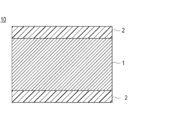
- FIG. 1 is a partial cross-sectional view schematically illustrating a layered configuration on a surface of a typical embodiment of a medical device (hereinafter, also simply referred to as a medical device) according to the present invention.
- FIG. 2 is a partial cross-sectional view schematically showing a configuration example having a different surface lamination configuration as an application example of the embodiment of FIG. 1.
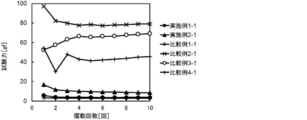
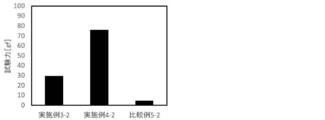
- It is a schematic diagram of the friction measuring machine used for the sliding property test of an Example. It is a graph showing the change of the test force (sliding resistance value) at the time of performing 10 reciprocal sliding tests in water of 25 degreeC about the coating layer of an Example and a comparative example. It is a graph showing the test force (sliding resistance value) at the time of carrying out one reciprocation of the sliding property test in the water of 60 degreeC about the coating layer of an Example and a comparative example.
- X to Y indicating a range includes X and Y, and means “X or more and Y or less”. Unless otherwise specified, the operation, physical properties, and the like are measured at room temperature (20 to 25 ° C.) / Relative humidity of 40 to 60% RH.
- the term “(meth) acryl” includes both acryl and methacryl.
- the term “(meth) acrylic acid” includes both acrylic acid and methacrylic acid.
- the term “(meth) acryloyl” includes both acryloyl and methacryloyl.
- the term “(meth) acryloyl group” includes both acryloyl and methacryloyl groups.
- the homopolymer has a structural unit derived from a polymerizable monomer (A) having a lower critical solution temperature (LCST) (hereinafter, also referred to as monomer A).
- A polymerizable monomer having a lower critical solution temperature (LCST)
- sulfonic acid groups —SO 3 H
- sulfate groups —OSO 3 H
- sulfite groups —OSO 2 H
- salts thereof a structural unit derived from a polymerizable monomer (B) (hereinafter also referred to as monomer B) having a polymerizable monomer (C) having a photoreactive group (hereinafter also referred to as monomer C) And a structural unit derived therefrom.
- the coating layer containing the hydrophilic copolymer according to one embodiment of the present invention has a high initial slidability in a steady environment (25 ° C.) and can maintain a high slidability even after multiple rubs. it can.
- the coating layer containing the hydrophilic copolymer has significantly reduced slidability when heated. Therefore, by controlling the temperature, the medical device having the coating layer on the surface can exhibit high slidability until reaching the affected part and low slidability after reaching the affected part.
- the coating layer described in Japanese Patent No. 4198348 has low slidability at an initial stage (first reciprocation of sliding) in a steady environment (25 ° C.) (described later). Comparative Example 4-1).
- the inventors of the present invention have conducted intensive studies on the configuration of the coating layer, and have found that the use of the monomer B as a raw material dramatically improves the initial slidability in a steady environment (25 ° C.). I found it.
- the sulfonic acid group (—SO 3 H), the sulfate group (—OSO 3 H), the sulfite group (—OSO 2 H) or the group of these salts contained in the monomer B has more water than other substituents. Since the sum energy is large, it is easily anionized and easily hydrated with surrounding water. Therefore, it is considered that the coating layer containing the structural unit derived from the monomer B has improved slidability.
- the structural unit derived from the monomer A has a property that the homopolymer has LSCT (that is, is temperature-sensitive), in other words, changes from hydrophilic to hydrophobic when the temperature increases. Therefore, it is considered that when the coating layer containing the constituent units is heated, the moisture contained in the coating layer is released, and the coating layer shrinks to roughen the surface, thereby lowering the slidability.
- LSCT temperature-sensitive
- the photoreactive group contained in the structural unit derived from the monomer C generates a reactive species by irradiation with an active energy ray, and is converted from a hydrocarbon group present in a base material (base material layer) or a copolymer. Withdraw hydrogen atoms to form covalent bonds. Therefore, the coating layer containing the constituent unit is firmly fixed on the substrate. Further, since the coating layer itself is crosslinked, the strength of the coating layer is improved. Therefore, it is considered that the formed coating layer is hardly broken by friction (the friction resistance is improved).
- the coating layer described in Japanese Patent No. 4198348 contains a photoreactive group, it was found that the slidability fluctuated significantly when rubbed a plurality of times (see Comparative Example 4-1 described later). ).
- the present inventors believe that the coating layer disclosed in Japanese Patent No. 4198348 is composed of a mixture of polymers, so that the temperature-sensitive polymer is easily eluted. As a result, the upper layer of the coating layer is It was presumed that it was not firmly fixed to the base material and might be peeled off by friction.
- the monomer A is preferably a homopolymer having a lower critical solution temperature (LCST) of 30 to 70 ° C., for example, N-isopropylacrylamide (NIPAAm) (about 32 ° C.), N-vinyl isopropyl acrylamide ( About 39 ° C.), N-vinyl-n-propylacrylamide (about 32 ° C.), vinyl methyl ether (about 34 ° C.), 2-ethyl-2-oxazoline (about 65 ° C.), 2-isopropyl-2-oxazoline (about 38 ° C.).
- NIPAAm N-isopropylacrylamide
- NIPAAm N-isopropylacrylamide
- NIPAAm N-vinyl isopropyl acrylamide
- N-vinyl-n-propylacrylamide about 32 ° C.
- vinyl methyl ether about 34 ° C.
- 2-ethyl-2-oxazoline about 65 ° C.
- the lower critical solution temperature (LCST) of the obtained hydrophilic copolymer can be in a desired range (40 to 70 ° C.).
- the monomer A is particularly preferably N-isopropylacrylamide (NIPAAm).
- the monomer A may be used alone or in combination of two or more.
- the monomer A either a synthetic product or a commercially available product may be used.
- a commercial product it can be obtained from Sigma-Aldrich Corporation or the like.
- the content of the structural units derived from the monomer A is more than 50 mol% when the total of the structural units derived from all the monomers is 100 mol%.
- the coating layer formed does not have a reduced slidability to a desired range even when heated (see Comparative Example 5-2 described later). Therefore, even after the medical device reaches the diseased part, the slidability remains high even after the heat treatment, and there is a possibility that a positional shift may occur.
- the lower limit of the content is preferably 60 mol% or more, more preferably 70 mol% or more, and still more preferably 80 mol% or more. It is preferably at least 85 mol%, most preferably at least 90 mol%.
- the upper limit of the content is preferably 98 mol% from the viewpoint of further improving the slidability after initial or / and multiple friction in a steady environment (25 ° C.) and allowing the medical device to more smoothly reach the affected part. Or less, more preferably 96 mol% or less, and most preferably 94 mol% or less.
- the content is substantially the same as the ratio of the charged amount (mol) of the monomer A to the total charged amount (mol) of the monomer in producing the polymer.
- the monomer B is at least one group selected from the group consisting of a sulfonic acid group (—SO 3 H), a sulfate group (—OSO 3 H), a sulfite group (—OSO 2 H), and a salt group thereof.
- a polymerizable monomer having The salt is not particularly limited, and examples thereof include a sodium salt, a potassium salt, and an ammonium salt.
- the monomer B preferably has an ethylenically unsaturated group such as a (meth) acryloyl group, a vinyl group and an allyl group, in addition to the above groups.
- the monomer B is preferably a compound represented by the following formula (2), (3) or (4), from the viewpoint of further improving the slidability in a steady environment (25 ° C.), More preferably, it is a compound represented by the following formula (2).
- R 21 is a hydrogen atom or a methyl group, preferably a hydrogen atom.
- Z 2 is an oxygen atom (—O—) or —NH—, preferably —NH—.
- R 22 is a linear or branched alkylene group having 1 to 20 carbon atoms, preferably carbon atom, from the viewpoint of further improving the slidability in a steady environment (25 ° C.).
- It is a chain or branched alkylene group, particularly preferably a branched alkylene group having 3 to 5 carbon atoms.
- the branched alkylene group having 3 to 5 carbon atoms includes -CH (CH 3 ) -CH 2- , -C (CH 3 ) 2 -CH 2- , -CH (CH 3 ) -CH (CH 3 )- , -C (CH 3) 2 -CH 2 -CH 2 -, - CH (CH 3) -CH (CH 3) -CH 2 -, - CH (CH 3) -CH 2 -CH (CH 3) —, —CH 2 —C (CH 3 ) 2 —CH 2 —, —C (CH 3 ) 2 —CH (CH 3 ) — and the like (provided that the above groups in formula (2) are linked together)
- the order is not particularly limited.) Among them, a group represented by —C (CH 3 ) 2 —CH 2 — is particularly preferable.
- X is selected from the group consisting of a sulfonic acid group (—SO 3 H), a sulfate group (—OSO 3 H), a sulfite group (—OSO 2 H), and a salt group thereof.
- a sulfonic acid group, a sulfuric acid group, and a group of these salts since the acid dissociation degree is high (that is, it is easy to be anionized), and further improvement in slidability in a steady environment (25 ° C.) can be expected.
- a sulfonic acid group or a salt thereof in view of the availability of monomers.
- Examples of the compound represented by the above formula (2) include 2- (meth) acrylamido-2-methyl-1-propanesulfonic acid, 1-[(meth) acryloyloxymethyl] -1-propanesulfonic acid, -[(Meth) acryloyloxy] -2-propanesulfonic acid, 3-[(meth) acryloyloxy] -1-methyl-1-propanesulfonic acid, 2-sulfoethyl (meth) acrylate, 3-sulfopropyl (meth) Acrylates and salts thereof are exemplified.
- the salt is not particularly limited, and examples thereof include a sodium salt, a potassium salt, and an ammonium salt. These compounds may be used alone or in combination of two or more. Among them, 2-acrylamido-2-methyl-1-propanesulfonic acid (AMPS) and a salt thereof are preferable.
- AMPS 2-acrylamido-2-methyl-1-propanesulfonic acid
- the compound represented by the above formula (2) may be either a synthetic product or a commercially available product, and a commercially available product can be obtained from Tokyo Chemical Industry Co., Ltd. or the like.
- R 31 is a hydrogen atom or a methyl group.
- R 32 is a single bond or a linear or branched alkylene group having 1 to 20 carbon atoms, preferably a single bond or a linear or branched alkylene group having 1 to 12 carbon atoms.
- An alkylene group more preferably a single bond or a linear or branched alkylene group having 1 to 8 carbon atoms, still more preferably a single bond or a linear or branched alkylene group having 1 to 4 carbon atoms. And particularly preferably a single bond.
- specific examples of the alkylene group are the same as those in the above formula (2), and thus description thereof is omitted here.
- X is selected from the group consisting of a sulfonic acid group (—SO 3 H), a sulfate group (—OSO 3 H), a sulfite group (—OSO 2 H), and a salt group thereof.
- a sulfonic acid group, a sulfuric acid group, and a group of these salts since the acid dissociation degree is high (that is, it is easy to be anionized), and further improvement in slidability in a steady environment (25 ° C.) can be expected.
- a sulfonic acid group or a salt thereof in view of the availability of monomers.
- Examples of the compound represented by the above formula (3) include vinyl sulfonic acid, allyl sulfonic acid, methallyl sulfonic acid, 2-propene-1-sulfonic acid, 2-methyl-2-propene-1-sulfonic acid and These salts and the like can be mentioned. These compounds may be used alone or in combination of two or more.
- either a synthetic product or a commercially available product may be used.
- the commercially available product include Asahi Kasei Finechem Co., Ltd. and Tokyo Chemical Industry Co., Ltd. (for example, 2-methyl-2-propene). -1-sulfonic acid sodium salt).
- R 41 is a hydrogen atom or a methyl group.
- R 42 is a linear or branched alkylene group having 1 to 20 carbon atoms, preferably a linear or branched alkylene group having 1 to 12 carbon atoms, Preferred are straight-chain or branched-chain alkylene groups having 1 to 8 carbon atoms, and even more preferred are straight-chain or branched-chain alkylene groups having 1 to 6 carbon atoms.
- specific examples of the alkylene group are the same as those in the above formula (2), and thus description thereof is omitted here.
- X is selected from the group consisting of a sulfonic acid group (—SO 3 H), a sulfate group (—OSO 3 H), a sulfite group (—OSO 2 H), and a salt group thereof.
- a sulfonic acid group, a sulfuric acid group, and a group of these salts since the acid dissociation degree is high (that is, it is easy to be anionized), and further improvement in slidability in a steady environment (25 ° C.) can be expected.
- a sulfonic acid group or a salt thereof in view of the availability of monomers.
- Examples of the compound represented by the above formula (4) include 2-sulfoxyethyl vinyl ether, 3-sulfoxy-n-propyl vinyl ether and salts thereof. These compounds may be used alone or in combination of two or more.
- the lower limit of the content of the structural units derived from the monomer B is preferably 0.5 mol when the total of the structural units derived from all the monomers is 100 mol%. %, More preferably 1 mol% or more, even more preferably 2 mol% or more, and particularly preferably 4 mol% or more.
- the value is equal to or more than the above lower limit, the slidability at the initial stage and / or after a plurality of rubs in a steady environment (25 ° C.) increases, so that the medical device can reach the affected part more smoothly.
- the upper limit of the content is preferably 30 mol% or less, more preferably 20 mol% or less, still more preferably 10 mol% or less, and particularly preferably 8 mol% or less. If it is less than the upper limit, the slidability can be significantly reduced by heating. Therefore, after the medical device reaches the diseased part and is then subjected to the heat treatment, it is possible to prevent the displacement from being properly performed.
- the content is substantially equal to the ratio of the charged amount (mol) of the monomer B to the total charged amount (mol) of all the monomers in producing the polymer.
- the content molar ratio of the structural unit derived from the monomer A and the structural unit derived from the monomer B is preferably 70: 30 to 99.5: 0.5, more preferably 80:20 to 99: 1, even more preferably 85:15 to 98: 2, particularly preferably 90:10 to 97: 3. is there. If the lower limit of the range of the ratio is 70:30 or more, the slidability of the coating layer is sufficiently reduced by heating. Therefore, after the medical device reaches the diseased part, misalignment can be prevented by heat treatment. it can.
- the upper limit of the range of the ratio is 99.5: 0.5 or less, the slidability after initial or / and multiple friction in a steady environment (25 ° C.) becomes higher, so that the medical device can be more smoothly. It can reach the affected area.
- the monomer C is a polymerizable monomer having a photoreactive group.
- the photoreactive group refers to a group capable of generating a reactive species such as a radical, nitrene, or carbene by irradiation with an active energy ray and reacting with a base material layer to form a chemical bond.
- the monomer C preferably has an ethylenically unsaturated group such as a (meth) acryloyl group, a vinyl group and an allyl group in addition to the photoreactive group.
- Examples of the photoreactive group include an azide group, a diazo group, a diazirine group, a ketone group, and a quinone group.
- azide group examples include aryl azide groups such as phenyl azide and 4-fluoro-3-nitrophenyl azide; acyl azide groups such as benzoyl azide and p-methyl benzoyl azide; A sulfonyl azide group such as benzenesulfonyl azide; a phosphoryl azide group such as diphenylphosphoryl azide and diethylphosphoryl azide;
- diazo group examples include diazoalkanes such as diazomethane and diphenyldiazomethane; diazoketones such as diazoacetophenone and 1-trifluoromethyl-1-diazo-2-pentanone; diazoacetates such as t-butyldiazoacetate and phenyldiazoacetate; groups derived from ⁇ -diazoacetoacetate such as t-butyl- ⁇ -diazoacetoacetate; and the like.
- diazoalkanes such as diazomethane and diphenyldiazomethane
- diazoketones such as diazoacetophenone and 1-trifluoromethyl-1-diazo-2-pentanone
- diazoacetates such as t-butyldiazoacetate and phenyldiazoacetate
- groups derived from ⁇ -diazoacetoacetate such as t-butyl- ⁇ -diazoacetoacetate
- diazirine group examples include groups derived from 3-trifluoromethyl-3-phenyldiazirine and the like.
- ketone group examples include groups having a structure such as acetophenone, benzophenone, anthrone, xanthine, and thioxanthone.
- Examples of the quinone group include groups derived from anthraquinone and the like.
- photoreactive groups are appropriately selected according to the type of the substrate layer of the medical device.
- the base material layer is formed from a polyolefin resin such as a polyethylene resin, a polyamide resin, a polyurethane resin, a polyester resin, or the like, it is preferably a ketone group or a phenylazide group, and the availability of the monomer is improved.
- a group having a benzophenone structure is more preferable. That is, in one embodiment of the present invention, the monomer C has a benzophenone structure.
- Examples of the monomer C include 2-azidoethyl (meth) acrylate, 2-azidopropyl (meth) acrylate, 3-azidopropyl (meth) acrylate, 4-azidobutyl (meth) acrylate, 4- (meth) acryloyloxy Benzophenone, 4- (meth) acryloyloxyethoxybenzophenone, 4- (meth) acryloyloxy-4′-methoxybenzophenone, 4- (meth) acryloyloxyethoxy-4′-methoxybenzophenone, 4- (meth) acryloyloxy-4 '-Bromobenzophenone, 4- (meth) acryloyloxyethoxy-4'-bromobenzophenone, 4-styrylmethoxybenzophenone, 4- (meth) acryloyloxythioxanthone and the like. Among them, 4- (meth) acryloyloxybenzoph
- the monomer C either a synthetic product or a commercially available product may be used, and a commercially available product can be obtained from MRC Unitech Corporation or the like.
- the lower limit of the content of the structural units derived from the monomer C is preferably 0.1 mol%, when the total of the structural units derived from all the monomers is 100 mol%. It is at least 0.2 mol%, still more preferably at least 0.5 mol%, particularly preferably at least 1 mol%.
- the hydrophilic copolymer can be sufficiently bonded to the base material (base material layer), and thus the formed coating layer can be firmly fixed to the base material. Further, since the coating layer itself is crosslinked, the strength of the coating layer is improved. Therefore, the formed coating layer is less likely to be broken by friction (friction resistance is improved).
- the upper limit of the content is preferably 40 mol% or less, more preferably 20 mol% or less, still more preferably 10 mol% or less, particularly preferably 5 mol% or less. It is preferably at most 3 mol%.
- the content is equal to or less than the upper limit, the synthesis of the copolymer is easy.
- the formed coating layer has high slidability in a steady environment (25 ° C.), and greatly increases slidability by heating. To decline. Therefore, it is advantageous in achieving both smooth arrival of the medical device at the affected part and prevention of displacement at the affected part.
- the content is substantially equivalent to the ratio of the charged amount (mol) of the monomer C to the total charged amount (mol) of all the monomers in producing the polymer.
- the hydrophilic copolymer of the present invention is a polymerizable monomer other than the above-mentioned monomer A, monomer B, and monomer C (hereinafter, referred to as “other polymers”) as long as the effects of the present invention are not impaired.
- a monomer a polymerizable monomer other than the above-mentioned monomer A, monomer B, and monomer C (hereinafter, referred to as “other polymers”) as long as the effects of the present invention are not impaired.
- the content of structural units derived from other monomers is preferably less than 10 mol%, based on 100 mol% of the total amount of structural units derived from all monomers, More preferably, it is less than 5 mol%, and still more preferably, it is less than 1 mol% (lower limit: 0 mol%).
- the hydrophilic copolymer of the present invention is composed of monomer A, monomer B and monomer C.
- the content is substantially the same as the ratio of the charged amount (mol) of the other monomers to the total charged amount (mol) of all the monomers in producing the polymer.
- the terminal of the hydrophilic copolymer according to the present invention is not particularly limited and is appropriately defined depending on the type of the raw material used, but is usually a hydrogen atom.
- the structure of the copolymer is not particularly limited, and may be any of a random copolymer, an alternating copolymer, a periodic copolymer, and a block copolymer. From the viewpoint of maintaining, it is preferably a random copolymer.
- the lower limit of the lower critical solution temperature (LCST) of the hydrophilic copolymer of the present invention is preferably 40 ° C. or higher, more preferably 45 ° C. or higher, and even more preferably 50 ° C. or higher.
- the temperature is at least 40 ° C., when the coating layer containing the copolymer is introduced into the body, the slidability does not significantly decrease due to the influence of body temperature. In other words, even if the coating layer is introduced into the body, high slidability can be exhibited unless heat treatment is intentionally performed.
- the upper limit of the LCST of the hydrophilic copolymer of the present invention is preferably 70 ° C. or lower, more preferably 65 ° C. or lower, and even more preferably 60 ° C. or lower.
- the hydrophilic copolymer according to one embodiment of the present invention has a lower critical solution temperature (LCST) of 40 to 70 ° C.
- LCST of a hydrophilic copolymer is measured by the following method.
- ⁇ LCST measurement method The coating solution is prepared by dissolving the hydrophilic copolymer in methanol to a concentration of 10% by weight. Next, a nylon elastomer sheet (12.5 mm ⁇ 100 mm) is dipped in the above-mentioned coating solution and pulled up at a speed of 15 mm / sec. Next, the nylon elastomer sheet is dried at room temperature (25 ° C.) for 1 hour to remove the solvent. Next, a sample of the sample is obtained by irradiating the nylon elastomer sheet with UV light having a wavelength of 365 nm and a lamp power of 1 kW until the integrated light amount becomes 500 mJ / cm 2 . The UV irradiator uses UVC-1212 / 1M NLC3-AA04 (high-pressure mercury lamp) manufactured by Ushio Inc.
- UVC-1212 / 1M NLC3-AA04 high-pressure mercury lamp
- the slidability of the obtained sample is evaluated using a friction measuring device (manufactured by Trinity Lab Co., Ltd., Handy Tribomaster TL201) 20 shown in FIG. 3 according to the following method.
- the sample 16 is fixed in the petri dish 12, immersed in water 17 at a predetermined temperature at a height at which the entire sample 16 is immersed, and left standing for 10 seconds.
- This petri dish 12 is placed on the moving table 15 of the friction measuring machine 20 shown in FIG.
- a silicon terminal ( ⁇ 10 mm, R1 mm) 13 is brought into contact with the sheet, and a load 14 of 50 g is applied on the terminal.
- the sliding resistance value (gf) when the moving table 15 is reciprocated once horizontally is measured.
- the temperature of the water 17 in which the sample 16 is immersed was changed at an interval of 5 ° C. from 25 ° C., and the sliding resistance value (gf) at the time of the first reciprocation at each temperature was measured, and the value was 20 gf. Is the lowest critical solution temperature (LCST) of the hydrophilic copolymer.
- the weight average molecular weight of the hydrophilic copolymer of the present invention is preferably from 1,000 to 500,000, more preferably from 2,000 to 200,000, and still more preferably from 5,000 to 100,000. And particularly preferably from 10,000 to 50,000, and most preferably from 20,000 to 40,000.
- a value measured by gel permeation chromatography (GPC) using polystyrene as a standard substance is adopted as the weight average molecular weight.
- the method for producing the hydrophilic copolymer according to the present invention is not particularly limited, and known polymerization methods such as radical polymerization, anionic polymerization, and cationic polymerization can be adopted, and preferably, radical polymerization which is easy to produce is used.
- the polymerization method is usually carried out by stirring and heating the above-mentioned monomer A, monomer B, monomer C and, if necessary, other monomers together with a polymerization initiator in a polymerization solvent.
- a method of polymerizing is employed.
- the polymerization temperature is not particularly limited, but is preferably 25 to 100 ° C, more preferably 30 to 80 ° C.
- the polymerization time is also not particularly limited, but is preferably 30 minutes to 24 hours, more preferably 1 to 5 hours.
- polymerization solvent examples include water; alcohols such as methanol, ethanol, propanol, n-butanol, and 2,2,2-trifluoroethanol; polyhydric alcohols such as ethylene glycol, diethylene glycol, propylene glycol, and dipropylene glycol; Is preferably an aqueous solvent. From the viewpoint of dissolving the raw materials used for the polymerization, these may be used alone or in combination of two or more.
- the concentration of the polymerizable monomer is not particularly limited, but is preferably 0.05 to 1 g / mL as a total solid content (g) of each polymerizable monomer with respect to the polymerization solvent (mL), more preferably 0.1-0.5 g / mL.
- the preferred range of the ratio of the charged amount (mol) of each monomer to the total charged amount (mol) of all the monomers is as described above.
- the reaction solution containing the polymerizable monomer may be subjected to a degassing treatment before adding the polymerization initiator.
- the degassing treatment may be performed by bubbling the reaction solution with an inert gas such as nitrogen gas or argon gas for about 0.5 to 5 hours. During the degassing treatment, the reaction solution may be heated to about 30 to 100 ° C.
- polymerization initiators can be used and are not particularly limited.
- KPS potassium
- persulfates such as sodium persulfate and ammonium persulfate
- peroxides such as hydrogen peroxid
- the amount of the polymerization initiator is preferably 0.01 to 10 mol%, more preferably 0.1 to 5 mol%, based on the total amount (mol) of the polymerizable monomer.
- a chain transfer agent e.g., ethylene glycol dimethacrylate, ethylene glycol dimethacrylate, ethylene glycol dimethacrylate, ethylene glycol dimethacrylate, ethylene glycol dimethacrylate, ethylene glycol dimethacrylate, ethylene glycol dimethacrylate, ethylene glycol dimethacrylate, ethylene glycol dimethacrylate, ethylene glycol dimethacrylate, ethylene glycol dimethacrylate, ethylene glycol dimethacrylate, ethylene glycol dimethacrylate, ethylene glycol dimethacrylate, ethylene glycol dimethacrylate, ethylene glycol dimethacrylate, ethylene glycol dimethacrylate, ethylene glycol dimethacrylate, ethylene glycol dimethacrylate, ethylene glycol dimethacrylate, ethylene glycol dimethacrylate, ethylene glycol dimethacrylate, ethylene glycol dimethacrylate, sulfate, ethylene glycol dimeth
- the environment (atmosphere) in which the polymerization reaction is performed is not particularly limited, and the polymerization reaction may be performed in an air atmosphere, an inert gas atmosphere such as a nitrogen gas or an argon gas, or the like. During the polymerization reaction, the reaction solution may be stirred.
- the copolymer may precipitate during the polymerization reaction.
- the copolymer after polymerization can be purified by a general purification method such as a reprecipitation method, a dialysis method, an ultrafiltration method, and an extraction method.
- the purified copolymer can be dried by any method such as freeze-drying, reduced-pressure drying, spray-drying, or heat-drying.However, from the viewpoint that the effect on the physical properties of the polymer is small, lyophilization or reduced-pressure Drying is preferred.
- the ratio of the constituent units derived from each polymerizable monomer in the obtained copolymer is confirmed by analyzing the peak intensity of the group contained in each constituent unit using a known means such as NMR or IR. Can be.
- the amount of unreacted monomer contained in the obtained copolymer is preferably 0.01% by weight or less based on the whole copolymer.
- the content of the remaining monomer can be measured by a known means such as high performance liquid chromatography.
- the present invention also provides a medical device having a substrate layer and a coating layer formed on at least a part of the surface of the substrate layer and containing the above-mentioned hydrophilic copolymer.
- FIG. 1 is a partial cross-sectional view schematically showing a laminated structure on the surface of a typical embodiment of the medical device according to the present invention.
- FIG. 2 is a partial cross-sectional view schematically showing a configuration example having a different laminated structure on the surface as an application example of the present embodiment.
- 1 and 2 1 represents a substrate layer, 1a represents a substrate layer core, 1b represents a substrate surface layer, 2 represents a coating layer, and 10 represents a medical device.
- the base material layer 1 is fixed to at least a part of the base material layer 1 (in the drawings, the base material layer in the drawings).
- a coating layer 2 containing a hydrophilic copolymer shown as an example immobilized on the entire surface (entire surface)).
- the coating layer 2 is bonded to the base material layer 1 via a photoreactive group of the hydrophilic copolymer.
- the substrate layer used in the present embodiment may be composed of any material as long as it can react with the photoreactive group contained in the above-mentioned hydrophilic copolymer to form a chemical bond.
- examples of the material forming (forming) the base layer 1 include a metal material, a polymer material, and ceramics.
- the base material layer 1 may be formed (formed) of the entire base material layer 1 (all) with any of the above materials as shown in FIG. 1 or as shown in FIG.
- the surface of the base material layer core portion 1a formed (formed) of any of the above materials is coated (coated) with any of the above materials by an appropriate method to form (formed) the base material surface layer 1b. May have a modified structure.
- the surface of the base layer core 1a formed of a resin material or the like is coated (coated) with a metal material by an appropriate method (a conventionally known method such as plating, metal deposition, and sputtering).
- the molecular material is coated (coated) by a suitable method (a conventionally known method such as dipping (dipping), spraying (spraying), application / printing, etc.) or the reinforcing material of the base layer core portion 1a and the height of the base material surface layer 1b are increased.
- the base material layer core portion 1a has a multilayer structure in which different materials are laminated in multiple layers, or a structure (composite) in which members made of different materials are connected to each other for each part of the medical device. Is also good. Further, another middle layer (not shown) may be formed between the base layer core 1a and the base surface layer 1b. Further, the substrate surface layer 1b may be a multilayer structure in which different materials are laminated in multiple layers, or a structure (composite) in which members made of different materials are connected to each other for each part of the medical device. Good.
- the metal material is not particularly limited, and may be a balloon, a catheter, a guide wire, a micro balloon, a micro catheter, a micro guide wire, a stent delivery catheter, and ablation.
- Metal materials generally used for medical devices such as catheters are used.
- various stainless steels such as SUS304, SUS316, SUS316L, SUS420J2 and SUS630, gold, platinum, silver, copper, nickel, cobalt, titanium, iron, aluminum, tin or nickel-titanium (Ni-Ti ) Alloy, nickel-cobalt (Ni-Co) alloy, cobalt-chromium (Co-Cr) alloy, zinc-tungsten (Zn-W) alloy and the like. These may be used alone or in combination of two or more.
- an optimum metal material may be appropriately selected as a base material layer for a balloon, a catheter, a guide wire, a micro balloon, a micro catheter, a micro guide wire, a stent delivery catheter, an ablation catheter, or the like.
- the polymer material is not particularly limited, but may be a balloon, a catheter, a guidewire, a microballoon, a microcatheter, a microguidewire, or a stent delivery.
- a polymer material for example, an elastomer generally used for a medical device such as a catheter and an ablation catheter is used.
- polyamide resin polyamide elastomer (for example, nylon elastomer), linear low density polyethylene (LLDPE), low density polyethylene (LDPE), polyethylene such as high density polyethylene (HDPE), polyolefin resin such as polypropylene, polyethylene Polyester resin such as terephthalate, polyester elastomer, styrene resin such as polystyrene, cyclic polyolefin resin, modified polyolefin resin, epoxy resin, urethane resin, diallyl phthalate resin (allyl resin), polycarbonate resin, fluorine resin, amino resin (urea resin, melamine Resin, benzoguanamine resin), acrylic resin, polyacetal resin, vinyl acetate resin, phenol resin, vinyl chloride resin, silicone resin (silicon resin) Polyether resin, and polyimide resin.
- LLDPE linear low density polyethylene
- LDPE low density polyethylene
- HDPE high density polyethylene
- polyolefin resin such as polypropylene
- polymer material it is possible to appropriately select an optimum polymer material as a base layer of a balloon, a catheter, a guide wire, a micro balloon, a micro catheter, a micro guide wire, a stent delivery catheter, an ablation catheter, etc. which are used. Good.
- the shape of the base material layer is not particularly limited, and is appropriately selected depending on a use mode such as a sheet shape, a wire shape, and a tubular shape.
- the method for producing a medical device according to the present invention is not particularly limited except for using the above-mentioned hydrophilic copolymer, and may be the same as a known method or It can be applied with appropriate modification.
- a method is preferred in which the coating liquid is prepared by dissolving the hydrophilic copolymer according to the present invention in a solvent, and the coating liquid is coated on the substrate layer of the medical device.
- a solvent used to dissolve the hydrophilic copolymer can be appropriately selected, and examples thereof include methanol, ethanol, n-propanol, and isopropanol.
- the concentration of the hydrophilic copolymer in the coating solution is not particularly limited, but is preferably 0.01 to 50% by weight, more preferably 0.05 to 40% by weight, and still more preferably 0 to 40% by weight. From 1 to 30% by weight. Within such a range, the coatability of the coating liquid will be good. In addition, a uniform coating layer having a desired thickness can be easily obtained by one coating, which is preferable in terms of production efficiency.
- concentration of the hydrophilic copolymer is less than 0.01% by weight, a sufficient amount of the hydrophilic copolymer may not be fixed on the surface of the base material layer in some cases.
- the concentration of the hydrophilic copolymer exceeds 50% by weight, the viscosity of the coating solution may be too high to obtain a coating layer having a uniform thickness. However, even if it deviates from the above range, it can be sufficiently used as long as it does not affect the operation and effect of the present invention.
- the surface of the base material layer may be preliminarily treated by ultraviolet irradiation treatment, plasma treatment, corona discharge treatment, flame treatment, oxidation treatment, silane coupling treatment, phosphoric acid coupling treatment, or the like.
- the solvent of the coating liquid is only water, it is difficult to apply the solvent to the surface of the hydrophobic base material layer, but the surface of the base material layer becomes hydrophilic by plasma treatment of the base material layer surface. Thereby, the wettability of the coating liquid to the surface of the base material layer is improved, and a uniform coating layer can be formed.
- a covalent bond with a photoreactive group of a hydrophilic copolymer can be formed.
- the method for applying the coating liquid on the surface of the base material layer is not particularly limited, but may be a coating / printing method, a dipping method (dipping method, dip coating method), a spraying method (spray method), a spin coating method, or a mixing method.
- a conventionally known method such as a solution impregnation sponge coating method can be applied.
- the dipping method (dipping method, dip coating method) is preferred.
- the base layer may be immersed in a coating solution and the inside of the system may be depressurized and defoamed. By defoaming under reduced pressure, the solution can be quickly penetrated into the narrow and narrow inner surface, and the formation of the coating layer can be promoted.
- a coating layer can be formed on a desired surface portion of the base material layer.
- an appropriate member or material capable of attaching / detaching (attaching / detaching) the surface part of the base material layer which does not need to form a coating layer in advance.
- the base material layer After protecting (coating, etc.) with the coating solution, the base material layer is immersed in the coating solution, and the coating solution is coated on the base material layer.
- a coating layer can be formed on a desired surface portion of the base material layer.
- the formation method is not limited at all, and the coating layer can be formed by appropriately using a conventionally known method.
- a coating solution is applied to a predetermined surface portion of a medical device,
- a coating method using a coating device such as a spray device, a bar coater, a die coater, a reverse coater, a comma coater, a gravure coater, a spray coater, a doctor knife, etc.
- a coating device such as a spray device, a bar coater, a die coater, a reverse coater, a comma coater, a gravure coater, a spray coater, a doctor knife, etc.
- the dipping method is preferably used.
- drying process After immersing the substrate layer in the coating liquid containing the hydrophilic copolymer of the present invention as described above, it is preferable to take out the substrate layer from the coating liquid and dry the coating.
- the drying conditions are not particularly limited as long as the solvent of the coating solution can be removed.
- the drying may be performed by using a dryer or the like, or by natural drying.
- the pressure conditions during drying are not particularly limited, and the drying may be performed under normal pressure (atmospheric pressure), or may be performed under increased or reduced pressure.
- the drying means (apparatus) for example, an oven, a vacuum dryer, or the like can be used, but in the case of natural drying, the drying means (apparatus) is not particularly required.
- the coating after the drying step is irradiated with an active energy ray. Thereby, the photoreactive group of the hydrophilic copolymer in the coating is activated, and a covalent bond is formed between the copolymer and the base material layer or between the copolymers.
- the remaining radicals in the photoreactive group are combined with the radicals on the polyethylene base layer to form a covalent bond between the hydrophilic copolymer and the polyethylene base layer.
- the coating layer containing the hydrophilic copolymer of the present invention is firmly fixed on the surface of the base material layer.
- the active energy ray examples include an ultraviolet ray, an electron beam, a gamma ray, and the like, and are preferably an ultraviolet ray or an electron beam, and more preferably an ultraviolet ray in consideration of an influence on a human body.
- a wavelength at which the photoreactive group can be activated can be appropriately selected as the irradiation wavelength.
- the irradiation intensity of the ultraviolet ray is not particularly limited, but is preferably 1 to 5000 mW / cm 2 .
- the accumulated light quantity of ultraviolet rays is not particularly limited, preferably 50 ⁇ 5000mJ / cm 2, more preferably 100 ⁇ 1000mJ / cm 2.
- the device for irradiating ultraviolet rays include a high-pressure mercury lamp, a low-pressure mercury lamp, a metal halide lamp, a xenon lamp, and a halogen lamp.
- the surface of the base material layer may be washed with a solvent (for example, a solvent used for preparing a coating solution) to remove an unreacted hydrophilic copolymer.
- a solvent for example, a solvent used for preparing a coating solution
- ⁇ Immobilization of the coating film (coating layer) on the base material layer can be confirmed by using a known analysis means such as FT-IR and XPS. For example, it can be confirmed by performing FT-IR measurement before and after irradiation with an active energy ray and comparing the ratio of the peak of a bond formed by irradiation with the active energy ray to the peak of an invariable bond.
- a coating layer containing the hydrophilic copolymer of the present invention is formed on the surface of the medical device of the present invention.
- the coating layer has a high initial slidability in a steady environment (25 ° C.) and can maintain a high slidability even after a plurality of frictions.
- the coating layer is heated, the slidability is significantly reduced. Therefore, by controlling the temperature, the medical device having the coating layer on its surface can exhibit high slidability until reaching the affected part and low slidability after reaching the affected part.
- the coating layer of the medical device according to the present invention has a sliding resistance value in a steady environment (25 ° C.) of preferably 20 gf or less, more preferably 15 gf or less, and even more preferably 10 gf or less. It is particularly preferably 5 gf or less (lower limit: 0 gf). If the medical device can be maintained at or below the upper limit even after a plurality of rubs, the medical device can smoothly reach the affected part or be collected smoothly from the affected part.
- the coating layer of the medical device according to the present invention has a sliding resistance at 60 ° C. of preferably 25 gf or more, more preferably 30 gf or more, and even more preferably 40 gf or more, It is particularly preferred that it is 50 gf or more.
- the sliding resistance at 60 ° C. preferably 25 gf or more, more preferably 30 gf or more, and even more preferably 40 gf or more, It is particularly preferred that it is 50 gf or more.
- the upper limit of the value is not particularly limited, but is, for example, 200 gf or less.
- the sliding resistance at 25 ° C. and 60 ° C. of the coating layer is measured by using a friction measuring machine (manufactured by Trinity Lab Co., Ltd., Handy Tribomaster TL201) 20 shown in FIG. 3 according to the following method. Specifically, as shown in FIG. 3, a sample 16 having a coating layer on the upper surface is fixed in a petri dish 12 and immersed in water 17 at 25 ° C. or 60 ° C. at a height at which the entire sample 16 is immersed. Let stand for seconds. This petri dish 12 is placed on the moving table 15 of the friction measuring machine 20. A silicon terminal ( ⁇ 10 mm, R1 mm) 13 is brought into contact with the sheet, and a load 14 of 50 g is applied on the terminal. With the sliding distance set to 20 mm and the sliding speed set to 16.7 mm / sec, the moving table 15 is reciprocated horizontally 10 times and the sliding resistance value (gf) is measured.
- a friction measuring machine manufactured by Trinity Lab Co., Ltd., Handy Tri
- ⁇ Slidability of the medical device obtained as described above can be controlled by temperature. Therefore, another embodiment of the present invention is a method for using a medical device, in which the medical device is heated after the medical device reaches the affected part (target site).
- the method of heating the medical device is not particularly limited.
- a method of connecting a fluid supply source to the medical device and supplying a heated fluid (for example, physiological saline) from the fluid supply source to the inside of the medical device particularly, Japanese Patent Application Laid-Open No. 2015-97547 (corresponding to U.S. Patent Application Publication No. 2015/018873) and the like, a method of connecting an energy supply source to a medical device and supplying electric energy from the energy supply source to the medical device (particularly). No. 2017-195910).
- the lower limit of the heating temperature of the medical device is preferably 40 ° C. or higher, and more preferably 50 ° C. or higher from the viewpoint of shortening the working time.
- the upper limit of the heating temperature is preferably 70 ° C. or lower, more preferably 65 ° C. or lower, and still more preferably 60 ° C. or lower, in consideration of safety for living organisms.
- the heating time of the medical device varies depending on the heating temperature and the like, but is preferably within 1 minute.
- the heating of the medical device is stopped, so that the coating layer is naturally cooled to about body temperature. Thereby, the slidability of the coating layer is restored, and the medical device can be smoothly collected from the affected part.
- the medical device may be intentionally cooled for the purpose of shortening the operation time. Examples of a method for cooling the medical device include a method in which a coolant supply source is connected to the medical device, and a coolant is supplied from the coolant supply source to the inside of the medical device.
- the medical device according to the present invention is not particularly limited as long as it can be heated by the above method after reaching the diseased part.
- a balloon, a catheter, a guide wire, a micro balloon, a micro catheter, a micro guide wire, and a stent Delivery catheters, ablation catheters, and the like More specifically, the following medical devices are exemplified: (A) Catheters, such as gastric tube catheters, feeding catheters, and tubes for tube feeding, which are orally or nasally inserted or placed in the digestive tract.
- this reaction solution was placed in a 30 mL eggplant-shaped flask, oxygen was removed by sufficient nitrogen bubbling, and 28 mg (0.100 mmol) of a polymerization initiator (V-501 manufactured by Wako Pure Chemical Industries, Ltd.) was added.
- the container was quickly sealed and polymerized in a water bath at 80 ° C. for 2 hours.
- the precipitate was reprecipitated in ether, the supernatant was removed by decantation, and dried under reduced pressure to obtain a copolymer.
- the obtained copolymer was a random body and had a weight average molecular weight of about 30,000.
- the weight average molecular weight is a value measured by gel permeation chromatography (GPC) using polystyrene as a standard substance.
- this reaction solution was placed in a 30 mL eggplant-shaped flask, oxygen was removed by sufficient nitrogen bubbling, and 28 mg (0.100 mmol) of a polymerization initiator (V-501 manufactured by Wako Pure Chemical Industries, Ltd.) was added.
- the container was quickly sealed and polymerized in a water bath at 80 ° C. for 2 hours.
- the precipitate was reprecipitated in ether, the supernatant was removed by decantation, and dried under reduced pressure to obtain a copolymer.
- the obtained copolymer was a random body and had a weight average molecular weight of about 30,000.
- this reaction solution was placed in a 30 mL eggplant-shaped flask, oxygen was removed by sufficient nitrogen bubbling, and 28 mg (0.100 mmol) of a polymerization initiator (V-501 manufactured by Wako Pure Chemical Industries, Ltd.) was added.
- the container was quickly sealed and polymerized in a water bath at 80 ° C. for 2 hours.
- the precipitate was reprecipitated in acetone, the supernatant was removed by decantation, and the residue was dried under reduced pressure to obtain a copolymer.
- the obtained copolymer was a random body and had a weight average molecular weight of about 30,000.
- this reaction solution was placed in a 30 mL eggplant-shaped flask, oxygen was removed by sufficient nitrogen bubbling, and 28 mg (0.100 mmol) of a polymerization initiator (V-501 manufactured by Wako Pure Chemical Industries, Ltd.) was added.
- the container was quickly sealed and polymerized in a water bath at 80 ° C. for 2 hours.
- the precipitate was reprecipitated in ether, the supernatant was removed by decantation, and dried under reduced pressure to obtain a copolymer.
- the obtained copolymer was a random body and had a weight average molecular weight of about 30,000.
- the container was quickly sealed and polymerized in a water bath at 80 ° C. for 2 hours. Next, the precipitate was reprecipitated in ether, the supernatant was removed by decantation, and the residue was dried under reduced pressure to obtain a copolymer (corresponding to a reactive polymer disclosed in Japanese Patent No. 4198348).
- the obtained copolymer was a random body and had a weight average molecular weight of about 30,000.
- the obtained copolymer was a random body and had a weight average molecular weight of about 30,000.
- NIPAAm N-isopropylacrylamide (corresponding to monomer A)
- VP 1-vinyl-2-pyrrolidone
- NAV N-vinylacetamide
- VA vinyl acetate AMPS
- Na 2-acrylamido-2-methyl-1-propanesulfonic acid sodium salt
- MBP 4-methacryloyloxybenzophenone (corresponding to monomer C).
- Example 1-1 The copolymer obtained in Production Example 1 (corresponding to the hydrophilic copolymer according to the present invention) was dissolved in methanol to a concentration of 10% by weight to prepare a coating solution. Next, a nylon elastomer sheet (12.5 mm ⁇ 100 mm) was dipped in the above coating solution and pulled up at a speed of 15 mm / sec. Next, the nylon elastomer sheet was dried at room temperature for 1 hour to remove the solvent.
- a nylon elastomer sheet was irradiated with UV light having a wavelength of 365 nm and a lamp power of 1 kW until the integrated light amount became 500 mJ / cm 2 to obtain a sample.
- the UV irradiation device used was UVC-1212 / 1M NLC3-AA04 (high-pressure mercury lamp) from Ushio Inc.
- the sample 16 was fixed in the petri dish 12, immersed in water 17 at a temperature of 25 ° C. at which the entire sample 16 was immersed, and allowed to stand for 10 seconds.
- This petri dish 12 was placed on the moving table 15 of the friction measuring machine 20 shown in FIG.
- a silicon terminal ( ⁇ 10 mm, R1 mm) 13 was brought into contact with the sheet, and a load 14 of 50 g was applied on the terminal.
- the sliding resistance (gf) was measured when the moving table 15 was reciprocated horizontally 10 times with the sliding distance set to 20 mm and the sliding speed set to 16.7 mm / sec.
- the change in the sliding resistance value for 10 repetitions of sliding was evaluated by averaging the sliding resistance values during the forward trip from the first reciprocation to the 10th reciprocation for each number of reciprocations and plotting them on a graph as a test force. .
- Example 2-1 A sample was prepared and the sliding resistance was measured in the same manner as in Example 1-1, except that the copolymer obtained in Production Example 2 was used instead of the copolymer obtained in Production Example 1. Was.
- Example 2-1 A sample was prepared in the same manner as in Example 1-1 except that the copolymer obtained in Production Example 4 was used instead of the copolymer obtained in Production Example 1, and acetone was used instead of methanol as a coating solvent. Was prepared and the sliding resistance value was measured.
- FIG. 4 shows the results of the slidability test at a water temperature of 25 ° C.
- the samples of Example 1-1, Example 2-1 and Comparative example 1-1 exhibited a sliding resistance value of 20 gf or less at 25 ° C. through the first to tenth reciprocating strokes, and exhibited high sliding resistance at the initial stage and after a plurality of rubs. Showed sex.
- the samples of Comparative Example 2-1, Comparative Example 3-1 and Comparative Example 4-1 had a sliding resistance value exceeding 20 gf at the initial stage (first reciprocation of sliding). This is presumed to be because it does not have a structural unit derived from the monomer B, which is a slidable component. Further, in the samples of Comparative Example 3-1 and Comparative Example 4-1, the sliding resistance value was significantly disturbed at the first to fourth round trips, and the sliding resistance value was significantly increased at the 5 to 10 round trips.
- the coating layer of these samples was composed of a mixture of polymers, it is considered that PNIPAAm having no photoreactive group or the copolymer obtained in Production Example 6 eluted from the coating layer.
- Example 1-1 and Example 1-2 ⁇ LCST measurement of hydrophilic copolymer>
- the sliding resistance value (gf) was measured.
- the lowest temperature at which the sliding resistance value at the first reciprocation exceeded 20 gf was defined as the lower critical solution temperature (LCST) of the hydrophilic copolymer.
- Example 3-2 The copolymer obtained in Production Example 1 (corresponding to the hydrophilic copolymer according to the present invention) was dissolved in methanol to a concentration of 10% by weight to prepare a coating solution. Next, a nylon elastomer sheet (12.5 mm ⁇ 100 mm) was dipped in the above coating solution and pulled up at a speed of 15 mm / sec. Next, the nylon elastomer sheet was dried at room temperature for 1 hour to remove the solvent.
- the nylon elastomer sheet was irradiated with UV light having a wavelength of 365 nm and a lamp power of 1 kW until the integrated light amount became 500 mJ / cm 2 .
- the UV irradiation device used was UVC-1212 / 1M NLC3-AA04 (high-pressure mercury lamp) from Ushio Inc.
- the sample 16 was fixed in the petri dish 12, immersed in water 17 at 60 ° C. at a height at which the entire sample 16 was immersed, and allowed to stand for 10 seconds.
- This petri dish 12 was placed on the moving table 15 of the friction measuring machine 20 shown in FIG.
- a silicon terminal ( ⁇ 10 mm, R1 mm) 13 was brought into contact with the sheet, and a load 14 of 50 g was applied on the terminal.
- the sliding resistance (gf) was measured when the moving table 15 was reciprocated once horizontally in a setting of a sliding distance of 20 mm and a sliding speed of 16.7 mm / sec.
- the change of the initial sliding resistance value with respect to the temperature rise was evaluated by averaging the sliding resistance values at the time of the first reciprocating outward trip and plotting them as a test force on a graph.
- Example 4-2 A sample was prepared and the sliding resistance was measured in the same manner as in Example 3-2 except that the copolymer obtained in Production Example 2 was used instead of the copolymer obtained in Production Example 1. Was.
- FIG. 5 shows the results of the slidability test at a water temperature of 60 ° C.
- the samples of Example 3-2 and Example 4-2 showed a sliding resistance value of 25 gf or more at 60 ° C.
- Comparative Example 5-2 exhibited a low sliding resistance value even at 60 ° C. Since the copolymer according to Production Example 3 had too few constituent units derived from monomer A, the contribution of the constituent units derived from monomer B was large, and the slidability did not decrease even when heated. Conceivable.
- the coating layer containing the hydrophilic copolymer according to the present invention has high initial (first reciprocal sliding) slidability and a plurality of rubs in a steady environment (25 ° C.). High slidability was maintained even after (sliding 10 reciprocations). On the other hand, when the coating layer containing the hydrophilic copolymer according to the present invention was heated, the slidability was significantly reduced. Therefore, by controlling the temperature, the medical device having the coating layer on its surface can exhibit high slidability until reaching the affected part and low slidability after reaching the affected part.
- 1 base material layer 1 base material layer, 1a base material layer core, 1b substrate surface layer, 2 coating layer, 10 medical equipment, 12 Petri dishes, 13 HDPE terminal, 14 load, 15 moving table, 16 samples, 17 water, 20 Friction measuring machine.
Landscapes
- Chemical & Material Sciences (AREA)
- Health & Medical Sciences (AREA)
- Organic Chemistry (AREA)
- Life Sciences & Earth Sciences (AREA)
- Engineering & Computer Science (AREA)
- Materials Engineering (AREA)
- Wood Science & Technology (AREA)
- Chemical Kinetics & Catalysis (AREA)
- Medicinal Chemistry (AREA)
- Polymers & Plastics (AREA)
- Epidemiology (AREA)
- Animal Behavior & Ethology (AREA)
- General Health & Medical Sciences (AREA)
- Public Health (AREA)
- Veterinary Medicine (AREA)
- Heart & Thoracic Surgery (AREA)
- Surgery (AREA)
- Vascular Medicine (AREA)
- Materials For Medical Uses (AREA)
- Addition Polymer Or Copolymer, Post-Treatments, Or Chemical Modifications (AREA)
Abstract
La présente invention concerne un moyen permettant d'obtenir un instrument médical qui présente une aptitude au glissement élevée jusqu'à ce qu'il atteigne une lésion mais une faible aptitude au glissement après avoir atteint la lésion. La présente invention concerne un copolymère hydrophile qui comprend : plus de 50 % en moles d'une unité structurale qui est dérivée d'un monomère polymérisable (A) qui a une température de solution critique inférieure (LCST) en tant qu'homopolymère ; une unité structurale qui est dérivée d'un monomère polymérisable (B) qui a au moins un groupe choisi parmi le groupe acide sulfonique (-SO3H), le groupe acide sulfurique (-OSO3H), le groupe acide sulfureux (-OSO2H), et leurs sels ; et une unité structurale qui est dérivée d'un monomère polymérisable (C) qui a un groupe photoréactif.
Priority Applications (3)
| Application Number | Priority Date | Filing Date | Title |
|---|---|---|---|
| CN201980039654.6A CN112368309B (zh) | 2018-06-27 | 2019-06-25 | 亲水性共聚物及医疗器械 |
| JP2020527543A JP7252225B2 (ja) | 2018-06-27 | 2019-06-25 | 親水性共重合体および医療用具 |
| US17/126,978 US20210102019A1 (en) | 2018-06-27 | 2020-12-18 | Hydrophilic copolymer and medical device |
Applications Claiming Priority (2)
| Application Number | Priority Date | Filing Date | Title |
|---|---|---|---|
| JP2018-122005 | 2018-06-27 | ||
| JP2018122005 | 2018-06-27 |
Related Child Applications (1)
| Application Number | Title | Priority Date | Filing Date |
|---|---|---|---|
| US17/126,978 Continuation US20210102019A1 (en) | 2018-06-27 | 2020-12-18 | Hydrophilic copolymer and medical device |
Publications (1)
| Publication Number | Publication Date |
|---|---|
| WO2020004385A1 true WO2020004385A1 (fr) | 2020-01-02 |
Family
ID=68986673
Family Applications (1)
| Application Number | Title | Priority Date | Filing Date |
|---|---|---|---|
| PCT/JP2019/025155 Ceased WO2020004385A1 (fr) | 2018-06-27 | 2019-06-25 | Copolymère hydrophile et instrument médical |
Country Status (4)
| Country | Link |
|---|---|
| US (1) | US20210102019A1 (fr) |
| JP (1) | JP7252225B2 (fr) |
| CN (1) | CN112368309B (fr) |
| WO (1) | WO2020004385A1 (fr) |
Cited By (2)
| Publication number | Priority date | Publication date | Assignee | Title |
|---|---|---|---|---|
| WO2021033767A1 (fr) * | 2019-08-21 | 2021-02-25 | テルモ株式会社 | Instrument pour traitement médical et procédé de fabrication de celui-ci |
| WO2021033764A1 (fr) * | 2019-08-21 | 2021-02-25 | テルモ株式会社 | Instrument pour traitement médical et procédé de fabrication de celui-ci |
Citations (6)
| Publication number | Priority date | Publication date | Assignee | Title |
|---|---|---|---|---|
| JP2014212685A (ja) * | 2013-04-01 | 2014-11-13 | 独立行政法人産業技術総合研究所 | ソフトアクチュエータの駆動変位の増幅方法及び該方法により駆動変位が増幅されたアクチュエータ |
| JP2015503998A (ja) * | 2012-01-18 | 2015-02-05 | サーモディクス,インコーポレイテッド | 微粒子が少ない、医療装置用潤滑性コーティング |
| JP2016511646A (ja) * | 2013-01-04 | 2016-04-21 | サーモディクス,インコーポレイティド | ビニルピロリドンポリマーおよび酸性ポリマーを含んでいる層を備えた、粒子が少ない潤滑性コーティング |
| WO2018038063A1 (fr) * | 2016-08-25 | 2018-03-01 | テルモ株式会社 | Copolymère hydrophile et dispositif médical |
| JP2018058050A (ja) * | 2016-10-07 | 2018-04-12 | トヨタ自動車株式会社 | 温度応答性吸湿材料 |
| JP2018087316A (ja) * | 2016-08-03 | 2018-06-07 | 東ソー株式会社 | ブロック共重合体およびそれを用いた表面処理剤 |
Family Cites Families (7)
| Publication number | Priority date | Publication date | Assignee | Title |
|---|---|---|---|---|
| US20050070688A1 (en) * | 2003-09-26 | 2005-03-31 | 3M Innovative Properties Company | Reactive hydrophilic oligomers |
| US8541498B2 (en) * | 2010-09-08 | 2013-09-24 | Biointeractions Ltd. | Lubricious coatings for medical devices |
| MY185995A (en) * | 2015-07-27 | 2021-06-14 | Jsr Corp | Method for producing medical device and medical device |
| US10774165B2 (en) * | 2015-08-04 | 2020-09-15 | Jsr Corporation | Polymer composition, article, medical device, article production method, and cell cluster production method |
| EP3356485B1 (fr) * | 2015-09-30 | 2020-08-05 | 3M Innovative Properties Company | Compositions d'hydrogel liées à des substrats polymères |
| US20190338060A1 (en) * | 2016-12-12 | 2019-11-07 | Clariant International Ltd. | Polymer Comprising Certain Level Of Bio-Based Carbon |
| JP7248967B2 (ja) * | 2018-04-23 | 2023-03-30 | 国立大学法人北海道大学 | ハイドロゲル及びハイドロゲルの製造方法 |
-
2019
- 2019-06-25 WO PCT/JP2019/025155 patent/WO2020004385A1/fr not_active Ceased
- 2019-06-25 JP JP2020527543A patent/JP7252225B2/ja active Active
- 2019-06-25 CN CN201980039654.6A patent/CN112368309B/zh active Active
-
2020
- 2020-12-18 US US17/126,978 patent/US20210102019A1/en active Pending
Patent Citations (6)
| Publication number | Priority date | Publication date | Assignee | Title |
|---|---|---|---|---|
| JP2015503998A (ja) * | 2012-01-18 | 2015-02-05 | サーモディクス,インコーポレイテッド | 微粒子が少ない、医療装置用潤滑性コーティング |
| JP2016511646A (ja) * | 2013-01-04 | 2016-04-21 | サーモディクス,インコーポレイティド | ビニルピロリドンポリマーおよび酸性ポリマーを含んでいる層を備えた、粒子が少ない潤滑性コーティング |
| JP2014212685A (ja) * | 2013-04-01 | 2014-11-13 | 独立行政法人産業技術総合研究所 | ソフトアクチュエータの駆動変位の増幅方法及び該方法により駆動変位が増幅されたアクチュエータ |
| JP2018087316A (ja) * | 2016-08-03 | 2018-06-07 | 東ソー株式会社 | ブロック共重合体およびそれを用いた表面処理剤 |
| WO2018038063A1 (fr) * | 2016-08-25 | 2018-03-01 | テルモ株式会社 | Copolymère hydrophile et dispositif médical |
| JP2018058050A (ja) * | 2016-10-07 | 2018-04-12 | トヨタ自動車株式会社 | 温度応答性吸湿材料 |
Cited By (2)
| Publication number | Priority date | Publication date | Assignee | Title |
|---|---|---|---|---|
| WO2021033767A1 (fr) * | 2019-08-21 | 2021-02-25 | テルモ株式会社 | Instrument pour traitement médical et procédé de fabrication de celui-ci |
| WO2021033764A1 (fr) * | 2019-08-21 | 2021-02-25 | テルモ株式会社 | Instrument pour traitement médical et procédé de fabrication de celui-ci |
Also Published As
| Publication number | Publication date |
|---|---|
| JP7252225B2 (ja) | 2023-04-04 |
| JPWO2020004385A1 (ja) | 2021-08-02 |
| US20210102019A1 (en) | 2021-04-08 |
| CN112368309A (zh) | 2021-02-12 |
| CN112368309B (zh) | 2022-09-09 |
Similar Documents
| Publication | Publication Date | Title |
|---|---|---|
| JP7368446B2 (ja) | 親水性共重合体および医療用具 | |
| US10022478B2 (en) | Medical device | |
| US11872326B2 (en) | Medical instrument | |
| CN106999636B (zh) | 医疗用具及其制造方法 | |
| US12054564B2 (en) | Medical device and method for manufacturing same | |
| JP7389102B2 (ja) | 医療用具の製造方法および医療用具 | |
| US20220168479A1 (en) | Medical device and method for manufacturing same | |
| US20200197576A1 (en) | Method for producing medical instrument | |
| US20220168476A1 (en) | Medical device and method for manufacturing same | |
| US20220176022A1 (en) | Medical device and method for manufacturing same | |
| US9956324B2 (en) | Medical material, and medical device using the medical material | |
| JP7252225B2 (ja) | 親水性共重合体および医療用具 | |
| JP2026084700A (ja) | 医療用具の製造方法 |
Legal Events
| Date | Code | Title | Description |
|---|---|---|---|
| 121 | Ep: the epo has been informed by wipo that ep was designated in this application |
Ref document number: 19825502 Country of ref document: EP Kind code of ref document: A1 |
|
| ENP | Entry into the national phase |
Ref document number: 2020527543 Country of ref document: JP Kind code of ref document: A |
|
| NENP | Non-entry into the national phase |
Ref country code: DE |
|
| 122 | Ep: pct application non-entry in european phase |
Ref document number: 19825502 Country of ref document: EP Kind code of ref document: A1 |