WO2020004393A1 - Procédé de traitement pour particules de médicament brut de taille de particule non uniforme - Google Patents
Procédé de traitement pour particules de médicament brut de taille de particule non uniforme Download PDFInfo
- Publication number
- WO2020004393A1 WO2020004393A1 PCT/JP2019/025177 JP2019025177W WO2020004393A1 WO 2020004393 A1 WO2020004393 A1 WO 2020004393A1 JP 2019025177 W JP2019025177 W JP 2019025177W WO 2020004393 A1 WO2020004393 A1 WO 2020004393A1
- Authority
- WO
- WIPO (PCT)
- Prior art keywords
- particles
- weight
- powder
- crushing
- drug substance
- Prior art date
- Legal status (The legal status is an assumption and is not a legal conclusion. Google has not performed a legal analysis and makes no representation as to the accuracy of the status listed.)
- Ceased
Links
Images


Classifications
-
- A—HUMAN NECESSITIES
- A61—MEDICAL OR VETERINARY SCIENCE; HYGIENE
- A61K—PREPARATIONS FOR MEDICAL, DENTAL OR TOILETRY PURPOSES
- A61K31/00—Medicinal preparations containing organic active ingredients
- A61K31/63—Compounds containing para-N-benzenesulfonyl-N-groups, e.g. sulfanilamide, p-nitrobenzenesulfonyl hydrazide
- A61K31/635—Compounds containing para-N-benzenesulfonyl-N-groups, e.g. sulfanilamide, p-nitrobenzenesulfonyl hydrazide having a heterocyclic ring, e.g. sulfadiazine
-
- A—HUMAN NECESSITIES
- A61—MEDICAL OR VETERINARY SCIENCE; HYGIENE
- A61K—PREPARATIONS FOR MEDICAL, DENTAL OR TOILETRY PURPOSES
- A61K9/00—Medicinal preparations characterised by special physical form
- A61K9/20—Pills, tablets, discs, rods
-
- A—HUMAN NECESSITIES
- A61—MEDICAL OR VETERINARY SCIENCE; HYGIENE
- A61K—PREPARATIONS FOR MEDICAL, DENTAL OR TOILETRY PURPOSES
- A61K31/00—Medicinal preparations containing organic active ingredients
- A61K31/16—Amides, e.g. hydroxamic acids
- A61K31/165—Amides, e.g. hydroxamic acids having aromatic rings, e.g. colchicine, atenolol, progabide
- A61K31/167—Amides, e.g. hydroxamic acids having aromatic rings, e.g. colchicine, atenolol, progabide having the nitrogen of a carboxamide group directly attached to the aromatic ring, e.g. lidocaine, paracetamol
-
- A—HUMAN NECESSITIES
- A61—MEDICAL OR VETERINARY SCIENCE; HYGIENE
- A61K—PREPARATIONS FOR MEDICAL, DENTAL OR TOILETRY PURPOSES
- A61K31/00—Medicinal preparations containing organic active ingredients
- A61K31/185—Acids; Anhydrides, halides or salts thereof, e.g. sulfur acids, imidic, hydrazonic or hydroximic acids
- A61K31/19—Carboxylic acids, e.g. valproic acid
- A61K31/192—Carboxylic acids, e.g. valproic acid having aromatic groups, e.g. sulindac, 2-aryl-propionic acids, ethacrynic acid
-
- A—HUMAN NECESSITIES
- A61—MEDICAL OR VETERINARY SCIENCE; HYGIENE
- A61K—PREPARATIONS FOR MEDICAL, DENTAL OR TOILETRY PURPOSES
- A61K31/00—Medicinal preparations containing organic active ingredients
- A61K31/185—Acids; Anhydrides, halides or salts thereof, e.g. sulfur acids, imidic, hydrazonic or hydroximic acids
- A61K31/19—Carboxylic acids, e.g. valproic acid
- A61K31/195—Carboxylic acids, e.g. valproic acid having an amino group
- A61K31/197—Carboxylic acids, e.g. valproic acid having an amino group the amino and the carboxyl groups being attached to the same acyclic carbon chain, e.g. gamma-aminobutyric acid [GABA], beta-alanine, epsilon-aminocaproic acid or pantothenic acid
-
- A—HUMAN NECESSITIES
- A61—MEDICAL OR VETERINARY SCIENCE; HYGIENE
- A61K—PREPARATIONS FOR MEDICAL, DENTAL OR TOILETRY PURPOSES
- A61K45/00—Medicinal preparations containing active ingredients not provided for in groups A61K31/00 - A61K41/00
- A61K45/06—Mixtures of active ingredients without chemical characterisation, e.g. antiphlogistics and cardiaca
-
- A—HUMAN NECESSITIES
- A61—MEDICAL OR VETERINARY SCIENCE; HYGIENE
- A61K—PREPARATIONS FOR MEDICAL, DENTAL OR TOILETRY PURPOSES
- A61K47/00—Medicinal preparations characterised by the non-active ingredients used, e.g. carriers or inert additives; Targeting or modifying agents chemically bound to the active ingredient
- A61K47/02—Inorganic compounds
-
- A—HUMAN NECESSITIES
- A61—MEDICAL OR VETERINARY SCIENCE; HYGIENE
- A61K—PREPARATIONS FOR MEDICAL, DENTAL OR TOILETRY PURPOSES
- A61K47/00—Medicinal preparations characterised by the non-active ingredients used, e.g. carriers or inert additives; Targeting or modifying agents chemically bound to the active ingredient
- A61K47/30—Macromolecular organic or inorganic compounds, e.g. inorganic polyphosphates
- A61K47/36—Polysaccharides; Derivatives thereof, e.g. gums, starch, alginate, dextrin, hyaluronic acid, chitosan, inulin, agar or pectin
- A61K47/38—Cellulose; Derivatives thereof
-
- A—HUMAN NECESSITIES
- A61—MEDICAL OR VETERINARY SCIENCE; HYGIENE
- A61K—PREPARATIONS FOR MEDICAL, DENTAL OR TOILETRY PURPOSES
- A61K9/00—Medicinal preparations characterised by special physical form
- A61K9/14—Particulate form, e.g. powders, Processes for size reducing of pure drugs or the resulting products, Pure drug nanoparticles
- A61K9/16—Agglomerates; Granulates; Microbeadlets ; Microspheres; Pellets; Solid products obtained by spray drying, spray freeze drying, spray congealing,(multiple) emulsion solvent evaporation or extraction
-
- A—HUMAN NECESSITIES
- A61—MEDICAL OR VETERINARY SCIENCE; HYGIENE
- A61K—PREPARATIONS FOR MEDICAL, DENTAL OR TOILETRY PURPOSES
- A61K9/00—Medicinal preparations characterised by special physical form
- A61K9/14—Particulate form, e.g. powders, Processes for size reducing of pure drugs or the resulting products, Pure drug nanoparticles
- A61K9/16—Agglomerates; Granulates; Microbeadlets ; Microspheres; Pellets; Solid products obtained by spray drying, spray freeze drying, spray congealing,(multiple) emulsion solvent evaporation or extraction
- A61K9/1605—Excipients; Inactive ingredients
- A61K9/1611—Inorganic compounds
-
- A—HUMAN NECESSITIES
- A61—MEDICAL OR VETERINARY SCIENCE; HYGIENE
- A61K—PREPARATIONS FOR MEDICAL, DENTAL OR TOILETRY PURPOSES
- A61K9/00—Medicinal preparations characterised by special physical form
- A61K9/14—Particulate form, e.g. powders, Processes for size reducing of pure drugs or the resulting products, Pure drug nanoparticles
- A61K9/16—Agglomerates; Granulates; Microbeadlets ; Microspheres; Pellets; Solid products obtained by spray drying, spray freeze drying, spray congealing,(multiple) emulsion solvent evaporation or extraction
- A61K9/1605—Excipients; Inactive ingredients
- A61K9/1629—Organic macromolecular compounds
- A61K9/1652—Polysaccharides, e.g. alginate, cellulose derivatives; Cyclodextrin
Definitions
- the present invention relates to a pretreatment method such as a tableting step or a granulating step in the production of a pharmaceutical preparation using a drug substance having irregular powder physical properties (particle diameter, particle shape, density, etc.).
- a dry direct compression method of tableting a mixture of an active substance and an excipient without preparing granules dry direct compression method
- dry granulation method dry roller compactor method, roll granulator method
- wet granulation method wet granulation method
- the drug substance and the excipient powder are continuously supplied quantitatively into the manufacturing process, and the mixing, binder addition, granulation, drying, sizing, and tableting are performed in the same continuous production system.
- Continuous granulation systems capable of producing solid pharmaceutical preparations of high quality have been developed. For example, an additive is blended with the drug substance and supplied to a continuous granulation system via a quantitative feeder, and then a binder solution is added.
- a process analysis system PAT system
- a method is recommended that facilitates scale-up of granulated products of the same quality by monitoring and controlling the situation.
- the powder physical properties (particle size, shape, particle density, etc.) of the drug substance particles to be processed fluctuate depending on the season (summer and winter) and lots even among the same drug manufacturers, as well as between different drug substance manufacturers. It is well known. Then, if the powder physical properties of the drug substance particles fluctuate, the product quality in the post-process fluctuates, and it becomes difficult to manufacture a product having the same quality. However, a pretreatment method such as homogenization of drug substance particles for eliminating variation caused by seasonal variation or the like has not been known.
- the particle size of drug substances and additives before about 1970 was relatively large, and there were many drug substances with high solubility and irregular particle sizes, and there was no problem in solubility and dissolution rate. Furthermore, the air conditioning equipment in the working environment of pharmaceutical manufacturing at that time was undeveloped and the humidity was high (probable), so there was almost no adverse effect such as secondary aggregation of the drug substance and additives, and the force acting on those particles was gravity. (Mass) was dominant. On the other hand, recent drug substances have become hardly soluble, and drug substance manufacturers have used pin mills, hammer mills, jet mills, etc. to finely convert drug substances to improve solubility etc. In many cases, the drug substance is supplied (commercially available) with pulverized and irregular powder properties.
- the drug substance As the drug substance is finely pulverized, electrostatic charging, intermolecular force (Van der Waals force), surface energy, and the like act strongly. In addition, even when a drug substance with extremely high solubility is formulated with an insoluble additive, the drug substance with high solubility selectively binds to the binder mist by spray addition of a binder solution. There is a case where the particles are aggregated to form a gel (pulverized powder) on the surface and dissolution is delayed. In particular, a drug substance having a low content and a unique color tone may cause a problem in uniformity such as color spots and spots when formulated.
- Powder physical properties (particle size distribution, particle shape / density, etc.) in drug substance synthesis also differ depending on the installation environment of facilities at each drug substance maker. It is well known that the same equipment of the same manufacturer is affected by seasonal fluctuations (temperature and humidity in summer and winter) and the environment in which the equipment is installed. For example, plants for the synthesis and crystallization processes of drug substances have been installed. In many cases, the environment is not an environment where air conditioning is complete and temperature control is carefully performed, as in the manufacturing process of pharmaceuticals, but an environment close to outdoors. In particular, the temperature control in the cooling step at the end of the synthesis of the drug substance is almost complete, and there are still few cases of production in an environment with complete air conditioning equipment.
- the cooling rate in the cooling process varies greatly depending on the size of the equipment and the environment of the equipment.
- the powder properties particle size, particle size distribution, particle shape, particle density, chargeability, intermolecular force
- Etc. are inevitable to fluctuate.
- the synthesized drug substance contains large-sized crystals generated in the crystallization step in the manufacturing process, lumps due to secondary aggregation, etc., and contains many large particles of 500 ⁇ m or more.
- the particle size is not uniform.
- drug substance manufacturers supply the drug substance by pulverizing it using a jet mill, pin mill, hammer mill or the like (commercially available).
- Pharmaceutical (pharmaceutical) manufacturers that produce fine granules, granules, capsules, tablets, and the like are suffering because of easy aggregation.
- the obtained fine granules, granules, capsules can be obtained.
- the physical properties (particle size, shape, density, etc.) of the preparations and tablets fluctuate, and it has been difficult to produce a final product having the same quality at all times.
- Drug substance fine particles having a particle size of 50 to 60 ⁇ m or less have extremely strong electrostatic charge and exist as secondary aggregated particles.
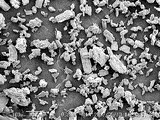
- Large and irregular particles having a particle size of 500 ⁇ m or more look like single particles, but are actually particles in which needle-like crystals, flake-like crystals, and the like are accumulated and stacked (Photo 1 (FIG. 1) and Photo 1). 2 (see FIG. 2: enlarged photograph in the center of photograph 1). If these are pulverized with a strong impact force, they become fine particles having a size of 50 to 60 ⁇ m or less, so that secondary aggregated particles are generated.
- ibuprofen has a melting point of 74 ° C. to 77 ° C.
- a strong impact force such as a pin mill or a hammer mill
- it is stuck to the pulverizing pin or the inner wall due to heat generation.
- continuous operation becomes difficult.
- acetaminophen drug substance is supplied (commercially available) with particles pulverized by a strong impact force such as a pin mill or a hammer mill, so that there are many secondary aggregated particles and many needle-like particles. As a result, the liquidity is reduced.
- the present invention provides a pretreatment method for preparing a drug substance having powder properties, particularly, irregular particle sizes.
- the pretreatment method according to the present invention (hereinafter, sometimes referred to as “the pretreatment method”) is required to have better fluidity and homogeneity of powder than those obtained by other production methods.
- a pretreatment method such as a tableting step or a granulation step in the production of pharmaceutical preparations, which can be a powder having high applicability to a dry direct compression method or a production method using a continuous granulation system. Make it an issue.
- this pretreatment method is a sizing method, it is not always performed before the tableting step or the granulating step.
- APIs with high pharmacological activity, poor solubility and high cohesiveness are finely pulverized using a jet mill, pin mill, hammer mill or the like to improve the solubility.
- fine particles having a particle size of 50 to 60 ⁇ m or less may be excessively pulverized when pulverized by a pin mill, a hammer mill, or the like.
- electrostatic charging, intermolecular force (Van der Waals force), surface energy, and the like is strong. Acts and secondary aggregates to form a drug substance with extremely poor fluidity.
- the secondary agglomerated drug substance particles and the like tend to be non-uniformly dispersed in the binder solution, as a result, the secondary agglomerated partly reduces the elution rate and small lumps are present. In some cases, it became a granulated material, and the uniformity of the content became somewhat difficult. Further, the pulverization step may cause a decrease in yield and an increase in cost due to adhesion to the wall surface of the apparatus. In addition, there is a problem that some drugs become unstable due to mechanically strong force such as pulverization or pressure, impact, heat generation and the like during compression molding and tableting.
- the present inventors have improved the fluidity of the drug, and by controlling the particle size by the action of selectively crushing only large particles without overcrushing, the solubility and homogeneity are improved, and the productivity is improved. It has been studied as an object of the present invention to provide a pretreatment method in the production of a pharmaceutical preparation for enhancing the pharmaceutical preparation.
- the present inventors have conducted intensive studies to solve the above-mentioned problems, and as a result, when formulating a drug, powder physical properties (particle size, shape, particle density, etc.) are not only between different drug substance manufacturers, Even for the same drug substance manufacturer, if the drug substance fluctuates depending on the season (summer and winter) or lots, additives such as dispersants are blended, and the mixture is crushed and sized once or multiple times. It has been found that it is important to disperse and adhere an additive such as a dispersant on the surface of the drug particles, and to obtain a powder having a specific particle size distribution.
- An additive such as a dispersant added to the drug substance only needs to be able to improve fluidity and suppress secondary aggregation, and it is not always necessary to form a continuous layer.
- a dispersing agent is added to a drug substance containing 1% by weight or more of particles of 500 ⁇ m or more and 10% by weight or more of particles of 60 ⁇ m or less based on 100% by weight of the drug substance.
- crushing and sizing to disperse and adhere an additive containing at least a dispersant on the surface of the drug substance particles, and to 100% by weight of the powder.
- a powder containing 25% by weight or less of particles of 180 ⁇ m or more and 25% by weight or less of particles of 60 ⁇ m or less was prepared.
- the particles were dispersed in a drug substance containing 1% by volume or more of particles of 500 ⁇ m or more and 10% by volume or more of particles of 50 ⁇ m or less based on 100% by volume of the drug substance.
- the mixture is crushed and sized to disperse and adhere an additive containing at least a dispersant to the surface of the drug substance particles.
- a powder containing 50% by volume or less of particles of 200 ⁇ m or more and 70% by volume or less of particles of 50 ⁇ m or less was prepared.
- fluidity, solubility, and homogeneity are improved without using a large amount of various additives, and the fluctuation range of powder physical properties (particle size, particle size distribution, particle shape, density, etc.) is improved.
- the dispersant and, if desired, the solubilizing agent and the other additives are blended with the drug substance, using a crushing and sizing machine, crystals or aggregates having a large particle size of the drug substance are used.
- the lumps are selectively crushed and sized, and the dispersant and other additives are dispersed and adhered to the surface of the drug substance particles, thereby improving the cohesion and low fluidity of the drug, improving dissolution and moldability. It has been found that preparations such as miniaturized tablets and sustained-release tablets that are excellent in taste and bitterness masking can be produced.
- Pulverization, crushing, sizing, and dispersion are described as follows.
- 1) Pulverization is a unit operation to apply a strong impact to large particles using a hammer mill, pin mill, jet mill, or the like to adjust the particles to a small size.
- Sizing / dispersion is a process in which the drug substance particles, in which aggregated particles and crystals (needle, columnar, flake, etc.) are accumulated and laminated, are slightly disintegrated to disintegrate, disperse, and regulate the size. It is a unit operation that is partially overlapped with the operation similar to the pulverization and is easily confused, but is clearly divided in the field of powder engineering.
- the present invention relates to, for example, the following (1) to (13), but is not limited thereto.
- the particles are dispersed in a drug substance containing 1% by weight or more of particles of 500 ⁇ m or more and 10% by weight or more of particles of 60 ⁇ m or less based on 100% by weight of the drug substance.
- a pretreatment method in the production of a pharmaceutical preparation wherein the powder contains particles having a size of 180 ⁇ m or more and 25% by weight or less and particles having a size of 60 ⁇ m or less and 25% by weight or less.
- the particle size distribution is measured by a laser diffraction method, based on 100% by volume of the drug substance, 1% by volume or more of particles of 500 ⁇ m or more, and 10% by volume or more of particles of 50 ⁇ m or less.
- a pretreatment method in the production of a pharmaceutical preparation wherein the powder contains 50% by volume or less of particles of 200 ⁇ m or more and 70% by volume or less of particles of 50 ⁇ m or less.
- a water-soluble additive and at least one selected from 0 to 15% by weight of sugar alcohols are blended and crushed and sized at least once to disperse and adhere the additive to the surface of the drug substance particles.
- additives other than the dispersant are aminoalkyl methacrylate copolymer E, aminoalkyl methacrylate copolymer L, aminoalkyl methacrylate copolymer LD, methacrylic acid copolymer S, ammonium alkyl methacrylate copolymer, crystalline cellulose, low-substituted hydroxypropylcellulose, Crospovidone, light anhydrous silicic acid, hydrous silicon dioxide, calcium silicate, sodium carboxymethyl starch, titanium oxide, iron oxide, talc, starch, lubricant, carboxyvinyl polymer, hydroxypropylcellulose, polyvinylpyrrolidone, polyvinyl alcohol Acrylic acid / methyl methacrylate copolymer, polyvinyl alcohol, polyvinyl alcohol / polyethylene glycol / graft copolymer, copolybid , Hydroxypropyl methylcellulose, lactose, sugars, sugar alcohols and trehalose, and at least one
- a powder containing a wide range of drug content (0.5 to 98% by weight) can be prepared, and by using this powder, the drug content uniformity is excellent and commercial production is possible from a trial scale. Since the scale-up is easy and the manufacturing process can be simplified, the production cost can be reduced. Further, according to the pretreatment method, it is not necessary to use a large amount of various kinds of additives in order to improve fluidity and solubility, so that it is possible to produce a tablet that is smaller than before. it can.
- the powder prepared by this pretreatment method even in the case of a drug substance where tableting failure is likely to occur due to direct contact with the metal surface of a die or punch of a tableting machine, the surface of the drug substance particles has a dispersing agent. Since it is coated with additive particles such as an insoluble additive, a surfactant (solubiliser), and a water-soluble polymer, it also has a secondary effect such as reduction in occurrence of tableting trouble. Furthermore, when the powder prepared by this pretreatment method is subjected to a dry direct compression method, the water content is adjusted to a value suitable for tableting (the total amount of the powder is 100% by weight, depending on the physical properties and the mixing ratio of the drug substance and the additives). On the other hand, by adding approximately 0.5 to 3.0% by weight of water), secondary aggregation can be reduced and high tablet hardness can be ensured.
- additive particles such as an insoluble additive, a surfactant (solubiliser), and a water-soluble polymer
- FIG. 1 is a SEM photograph ( ⁇ 100) of lot A of bulk ibuprofen powder (Photo 1).
- FIG. 2 is an enlarged SEM photograph ( ⁇ 200) of the central part of photograph 1 (primary powder A of ibuprofen) (photo 2).
- FIG. 3 is an SEM photograph ( ⁇ 100) of lot B of ibuprofen bulk powder (a lot manufactured by the same manufacturer with a different season from lot A) (photo 3).
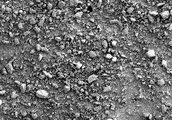
- FIG. 4 is an SEM photograph ( ⁇ 100) of a crushed and sized product of ibuprofen (Photo 4).
- the present invention relates to a method of adding an additive containing at least a dispersant to a drug substance (A) having a specific particle size distribution, and then pulverizing and sizing once or more times to form an additive on the surface of the drug substance particles.
- the present invention relates to a pretreatment method such as a tableting step or a granulating step in the production of a pharmaceutical preparation, wherein a powder (B) having a specific particle size distribution is dispersed and adhered.
- the weight distribution is evaluated by a sieving method (apparatus: low tap sieve shaker or the like), and a laser diffraction method (also referred to as “laser diffraction scattering method”).
- a sieving method apparatus: low tap sieve shaker or the like
- a laser diffraction method also referred to as “laser diffraction scattering method”.
- the powder prepared by the pretreatment method has high productivity because the fluidity and the like are improved, and the fluctuation range of the physical properties of the powder is small and the uniformity is high. Therefore, when using the powder obtained by the pretreatment method to formulate tablets, etc., it can be applied to the dry direct punching method in which the granulation step is omitted, or to a continuous granulation system in which quality control is difficult, and To reduce the cost and the production of small, high-content tablets, etc.
- the powder obtained by mixing the drug substance and the additive having the specific particle size distribution described above is crushed and sized using a crushing and sizing machine, and is applied to the surface of the drug substance particles. It is important that additives such as a dispersant and a solubilizer are dispersed and adhered to obtain a powder having the above-mentioned specific particle size distribution.
- the apparatus used for crushing and sizing is not particularly limited, but may be a stone mill (grinder) or a rod-shaped or impeller-type rotating body (rotation speed: about 800 to 3000 rpm).
- a crusher / sizing machine that adjusts the particle size by the action of selectively crushing large particles is suitable.
- the charged raw material powder is fed between two upper and lower non-porous grinders whose spacing can be freely adjusted, and is crushed by the compression, shearing, rolling friction, etc. generated there, gradually becoming rounder and more smoothly.
- a milling mill Supermascolloider (registered trademark) or the like
- the clearance (grinding wheel gap) of the milling mill is usually 30 to 5000 ⁇ m, preferably 500 to 3000 ⁇ m, more preferably 1000 to 2000 ⁇ m.
- the raw material powder is discharged from a number of openings provided in the screen.
- an impeller-type pulverizer / granulator such as Comill having the following.
- the screen diameter (diameter of the opening of the screen) of the crushing and sizing machine is preferably about 0.5 mm to 4 mm.
- FIGS. 1 and 2 show electron micrographs of ibuprofen drug substance particles before crushing and sizing (Photo 1: ⁇ 100 times, Photo 2: magnification of central part ⁇ 200 times) and FIG. 4 show ibuprofen drug substances after crushing and sizing.
- 1 shows an electron micrograph (photograph 4: ⁇ 100) of the sample.
- Photo 1 the ibuprofen drug substance particles are each seen as a single large particle, but in Photo 2, an enlarged central part of Photo 1, the crystals are stacked and aggregated.
- Photo 4 the stacked and aggregated particles are large. It can be confirmed that they are crushed and dispersed. Further, by comparing Photo 1 and Photo 3, it can be confirmed that even in the same manufacturer, the particle size, particle shape, and the like are different due to the different seasons (summer and winter) in which each lot is manufactured.
- the melting point of ibuprofen is about 74-77 ° C.
- a pin mill, hammer mill, etc. When crushed by a pin mill, hammer mill, etc., it generates heat due to impact and adheres to the inner wall of the device, crushing pins, hammer, etc., making continuous crushing (operation) for a long time difficult.
- Some drugs, such as pregabalin and candesartan are unstable due to strong mechanical shock such as pulverization or heat generation.
- the present pretreatment method for selectively adjusting the particle size is useful with less instability.
- the coarse crystals and lumps of the drug are selectively loosened and finely divided, and the particles in the fine powder region are uniformly dispersed without being excessively pulverized.
- the additive such as a dispersant is uniformly attached to the particle surface, that is, the powder having a specific particle size distribution is obtained by crushing and sizing.
- the elongated needle-like crystals can be more uniformly dispersed by crushing and sizing to adjust the particle diameter so that the ratio of major axis / minor axis becomes 3 or less. .
- the crushing and sizing step is preferably performed not only once, but also as many times as necessary, depending on the mixing ratio and amount of the drug substance and the additives, and the working environment.
- the particle size of the additive for example, crystalline cellulose or disintegrant
- the powder may be displayed larger than the particle size of the drug substance.
- This pretreatment method prepares a powder that can be supplied to a dry direct punching method or a wet granulation system, and a drug substance having the above particle size distribution is added to a dispersant (hydrous silicon dioxide (carplex) or light anhydrous silicic acid).
- a dispersant hydrous silicon dioxide (carplex) or light anhydrous silicic acid.
- (Aerosil) 0.1 to 6.0% by weight, crushed and sized and dispersed, and further added with other additives, for example, water-soluble polymer binder, sugar alcohol, trehalose , A carboxyvinyl polymer or the like is crushed and sized to be dispersed and adhered to the surface of drug substance particles to prepare a powder having a specific particle size distribution.
- the hard-flowing drug substance and the dispersant such as hydrated silicon dioxide and light anhydrous silicic acid
- the dispersant such as hydrated silicon dioxide and light anhydrous silicic acid
- the water content is adjusted to a value suitable for tableting
- an insoluble additive such as crystalline cellulose or a disintegrant
- a water-soluble polymer binder such as carboxyvinyl polymer or hydroxypropyl cellulose
- API can be obtained.
- an intermediate layer may be provided to avoid contact.
- the water content of drug substances and excipients received from drug substance manufacturers and excipient manufacturers is lower than the water level (0.5 to 3.0% by weight) suitable for tableting because the shipping standards of each company have become stricter. It is often over-dried. For this reason, the electrostatic charge, the intermolecular force (Van der Waals force), and the surface energy of the drug substance are increased, and secondary aggregation is likely to occur. Furthermore, tablet hardness tends to be low. Therefore, in the present pretreatment method, if necessary, the water content is adjusted to a value suitable for tableting (0.5 to 3.0% by weight of water is added to 100% by weight of the total amount of powder). In addition, since electrostatic charge, intermolecular force (Van der Waals force) and surface energy of the drug substance can be suppressed, problems related to content uniformity due to secondary agglomeration and the like and tablet hardness related to formulation can be solved.
- surface modification with a surfactant may be effective to improve its solubility
- a powdery surfactant for example, Add powdered macrogol, sodium lauryl sulfate, etc. as it is or after dissolving it in water for water adjustment, crush and size once or multiple times, and uniformly disperse and adhere to the surface of drug substance particles. You may.
- a single kind or a plurality of kinds may be blended, and the kind is not limited to a specific range as long as it is used for the prevention or treatment of a disease as a medicament.
- the compounding ratio of the drug in the present invention is not particularly limited, but the drug can be contained in a wide range of 0.5 to 98% by weight based on 100% by weight of the preparation.
- the insoluble additive and the water-soluble polymer additive are crushed and adjusted on the surface of the drug substance particles even in the dry direct punching method in which the granulation step is omitted.
- the granulation step is omitted.
- uniformly dispersing (glazing) and adhering to prepare a powder having a specific particle size distribution, binding and sustained release properties can be produced.
- water also acts as a binder, and tablets having a hardness of 30N or more can be manufactured.
- the pretreatment method is excellent in dispersion of the drug substance particles present in the secondary aggregated small agglomerates, even when formulated by a dry direct punching method or a wet continuous granulation system following the pretreatment method, Tablets and granules having excellent content uniformity can be obtained.
- the sizing method which is the pretreatment method, can be used not only in the production of tablets and granules, but also in the production of powders and the like.
- a dispersant (Carplex or Aerosil) is used for the large-sized crystals produced in the crystallization step of the drug substance synthesis and the drug substance that has undergone secondary aggregation with respect to 100% by weight of the drug substance.
- a dispersant is dispersed and adhered to the surface of the drug substance particles by a crushing and sizing machine, whereby the particle diameter of the mixed powder is adjusted and the Properties and dispersibility can be improved.
- 0.0 to 25.0% by weight of a carboxyvinyl polymer, a water-soluble polymer, etc. and 1.0 to 35.0% by weight of crystalline cellulose, sugar alcohols, disintegrant, etc.
- crystalline cellulose, a disintegrant, etc., and a surfactant (solubiliser) powder are blended with the mixed powder, water content is adjusted if necessary, and water-soluble additives (for example, , Sugar alcohol, hydroxypropylcellulose, polyvinylpyrrolidone, carboxyvinyl polymer, etc.) in an amount of 0.0 to 35.0% by weight, and uniformly dispersed and adhered thereto. Not only content uniformity but also solubility can be improved.
- additives used in the present pretreatment method various additives commonly used in the production of general preparations can be appropriately blended according to the purpose, and disintegrants, binders, flavoring agents, coloring agents , Tonics, surfactants (solubilisers), antioxidants, preservatives, plasticizers, pH adjusters, sweeteners, flavors and the like.
- Examples of the dispersant used in this pretreatment method include hydrous silicon dioxide, light anhydrous silicic acid, synthetic aluminum silicate, heavy anhydrous silicic acid, magnesium aluminate hydroxide, magnesium aluminate metasilicate, and calcium hydrogen phosphate granules. And the like. Preferred are hydrated silicon dioxide and light anhydrous silicic acid, and more preferred are hydrated silicon dioxide. These dispersants may be used alone or in any combination of two or more.
- the mixing ratio of the dispersant in the present invention is not particularly limited, but is 0.1 to 6.0% by weight, preferably 0.3 to 2.0% by weight, based on 100% by weight of the preparation. Yes, it is not necessary to completely cover the surface of the drug substance particles.
- the particle size of the dispersant is preferably 1/10 or less, more preferably 1/100 or less, of the drug substance particles.
- a surfactant such as liquid horisorbate 80
- a solubilizing agent such as liquid horisorbate 80
- a surfactant (solubilizing agent) used in the production method of the present invention in powder form, for example, macrogol powder such as Macrogol 4000, Macrogol 6000 or Macrogol 20000, sodium lauryl sulfate, and the like can be mentioned.
- a liquid for example, polysorbate 20, polysorbate 40, polysorbate 80, macrogol 200, macrogol 400 and the like can be mentioned.
- surfactants preferred are polysorbate, macrogol (polyethylene glycol), sodium lauryl sulfate, etc., which are used for improving elution and the like.
- These surfactants may be used alone or in any combination of two or more.
- the mixing ratio of the surfactant (solubiliser) in the present invention is not particularly limited, but is 0 to 6.0% by weight, preferably 0.5 to 3.0% by weight, based on 100% by weight of the preparation. 0% by weight.
- excipient used in the pretreatment method examples include sugars (lactose, glucose, fructose, sucrose, etc.), sugar alcohols (D-mannitol), crystalline cellulose, powdered cellulose, corn starch, potato starch, partially pregelatinized Starch, sodium carboxymethyl starch, dextrin, ⁇ -cyclodextrin, carmellose sodium, light anhydrous silicic acid, hydrous silicon dioxide, silicon dioxide, precipitated calcium carbonate, anhydrous calcium hydrogen phosphate, magnesium oxide, titanium oxide, calcium lactate, Examples thereof include magnesium aluminate metasilicate, synthetic hydrotalcite, talc, kaolin and the like, and preferred is crystalline cellulose.
- excipients may be used alone or in any combination of two or more.
- the mixing ratio of the excipient in the present invention is not particularly limited, but is 0.0 to 85.0% by weight, preferably 2.0 to 60.0% by weight with respect to 100% by weight of the preparation. It is.
- disintegrants used in the present pretreatment method include carboxymethyl celluloses (eg, carmellose, carmellose sodium, carmellose calcium, croscarmellose sodium, crystalline cellulose carmellose sodium, etc.), carboxymethyl starches (eg, , Carboxymethyl starch, sodium carboxymethyl starch (sodium starch glycolate), crospovidone, low-substituted hydroxypropylcellulose, low-substituted hydroxymethyl starch sodium, starches (partially pregelatinized starch, corn starch, potato starch, etc.) ), Alginic acid or bentonite.
- carboxymethyl celluloses eg, carmellose, carmellose sodium, carmellose calcium, croscarmellose sodium, crystalline cellulose carmellose sodium, etc.
- carboxymethyl starches eg, Carboxymethyl starch, sodium carboxymethyl starch (sodium starch glycolate), crospovidone, low-substituted hydroxypropy
- crospovidone low-substituted hydroxypropylcellulose, sodium carboxymethyl starch, partially pregelatinized starch, and more preferably, crospovid or low-substituted hydroxypropylcellulose, particularly preferably low-substituted hydroxypropyl Cellulose.
- These disintegrants may be used alone or in any combination of two or more.
- the mixing ratio of the disintegrant in the present invention is not particularly limited, but is 0.0 to 30.0% by weight, preferably 1.5 to 20.0% by weight based on 100% by weight of the preparation. It is.
- sustained-release base used in the present pretreatment method for example, those capable of forming a hydrogel upon contact with water to control the release of the drug are preferable, such as hydroxypropylcellulose (high-viscosity grade), methylcellulose, and hypromellose.
- hydroxypropylcellulose high-viscosity grade
- methylcellulose methylcellulose
- hypromellose hydroxypropylcellulose
- carboxymethylcellulose carboxymethylcellulose sodium
- cellulose derivatives such as carboxymethylethylcellulose, carboxyvinyl polymers, sodium alginate and the like, preferably, hypromellose, sodium carboxymethylcellulose or carboxyvinyl polymer, more preferably, Hypromellose or carboxyvinyl polymer.
- sustained-release bases may be used alone, but it is preferable to use two or more of them in combination so as to adjust the preparation so as to exhibit a desired sustained-release property.
- the amount of the sustained-release base in the present invention is not particularly limited, but is 0.0 to 20.0% by weight, preferably 1.0 to 15. 0% by weight.
- Lubricants used in the present pretreatment method include, for example, stearic acid, magnesium stearate, calcium stearate, talc, sucrose fatty acid ester, glycerin fatty acid ester, hardened oil, polyethylene glycol, dimethylpolysiloxane, carnauba wax, lauryl sulfate Sodium, beeswax, beeswax and the like can be mentioned, and preferred is magnesium stearate.
- These lubricants may be used alone or in any combination of two or more.
- the blending ratio of the lubricant in the present invention is not particularly limited, but is 0.05 to 3.0% by weight, preferably 0.1 to 2.5% by weight based on 100% by weight of the preparation. It is.
- binder used in this pretreatment method examples include polyvinyl alcohol / acrylic acid / methyl methacrylate copolymer (POVACOAT), hydroxypropylcellulose (HPC), hydroxypropylmethylcellulose (HPMC), polyvinylpyrrolidone, Solution or powder binders such as polyvinyl alcohol / polyethylene glycol / graft copolymer, ethyl acrylate / methyl methacrylate copolymer, copolyvidone (trade name: Kollidon), and the like.
- POVACOAT polyvinyl alcohol / acrylic acid / methyl methacrylate copolymer
- HPMC hydroxypropylmethylcellulose
- Solution or powder binders such as polyvinyl alcohol / polyethylene glycol / graft copolymer, ethyl acrylate / methyl methacrylate copolymer, copolyvidone (trade name: Kollidon), and the like.
- a water-soluble polymer binder having a small molecular weight has an effect of lowering the interfacial tension by adhering to the surface of drug substance particles, and can improve the solubility of a poorly soluble drug substance.
- a water-soluble polymer binder having a large molecular weight forms a gel due to adhesion of water, delays elution, and has a sustained release effect.
- the blending ratio of the binder in the present invention is not particularly limited, but is 0.1 to 5.0% by weight, preferably 0.5 to 3.0% by weight based on 100% by weight of the preparation. is there.
- copolydone as the binder in the present invention because moldability is further improved.
- the particle size distribution analyzer is a low tap sieve shaker (Iida Manufacturing Co., Ltd.) [Examples 1 to 10 and Comparative Examples 1 and 2] or Mastersizer 2000 (Malvern Co., Ltd., dispersed compressed air pressure: 2 to 4 Bar) [ Examples 11 to 14], the crushing and sizing machine was a stone mill type grinder Supermass Colloider MKCA6-5JR or MKZA10-15J (manufactured by Masuyuki Sangyo Co., Ltd.) or Comil QC-197S or QC-U20 (manufactured by Powrex),
- the tableting machine used was a rotary tableting machine VEL5 type (manufactured by Kikusui Seisakusho) or an HT-CVX-MS type tableting machine (Hata Iron Works).
- % (percentage) represents “% by weight (percentage by weight)” unless otherwise specified.
- additives crystalline cellulose, disintegrant, etc.
- Example 1 200.0 g of pregabalin powder having irregular particle diameters containing 31% of particles having a particle size of 500 ⁇ m or more and 14.5% of particles having a particle size of 60 ⁇ m or less and 1.5 g of a carplex were crushed and sieved with a mill and mill (stone mill type grinder, trade name: 35.0 g of crystalline cellulose (KG-1000), 2.5 g of a surfactant (solubiliser) powder, and D-mannitol (commercially available) (Name: Mannit P Mitsubishi Foodtech Co., Ltd.) was added, and the mixture was crushed and sized and uniformly dispersed to obtain 264.0 g of powder for direct compression.
- a mill and mill stone mill type grinder, trade name: 35.0 g of crystalline cellulose (KG-1000), 2.5 g of a surfactant (solubiliser) powder, and D-mannitol (commercially available) (Name: Mannit P Mitsubishi Foodtech Co., Ltd.) was added, and the mixture was crushed and sized and
- This powder was tableted with a tableting machine manufactured by Kikusui Seisakusho (VEL5 type, tableting pressure: 14 kN) to obtain a tablet having a tablet hardness of 119 N. Further, the dissolution rate at 15 minutes of this tablet was 89%.
- Example 2 300.0 g of pregabalin powder having irregular particle diameters containing 31% of particles having a particle size of 500 ⁇ m or more and 14.5% of particles having a particle size of 60 ⁇ m or less and 1.6 g of carplex are crushed using a crushing and sizing machine (supermass colloider). After sizing and uniformly dispersing, 5.0 g of disintegrant (L-HPC), lactose hydrate 22.0 g and macrogol powder 5.5 g were added, and the mixture was crushed, sieved and uniformly dispersed, and 334.1 g of powder was obtained. Obtained.
- disintegrant L-HPC
- This powder was tableted with a tableting machine manufactured by Kikusui Seisakusho (VEL5 type, tableting pressure: 14 kN) to obtain a tablet having a tablet hardness of 117 N. Further, the dissolution rate at 15 minutes of this tablet was 89%.
- Pregabalin (300.0 g) 89.8% (Based on 100% of pregabalin, 31% of particles of 500 ⁇ m or more, 14.5% of particles of 60 ⁇ m or less) Carplex (1.6g) 0.5% Crushing and sizing 1 (Super Mass Colloider) (9.8% of particles having a size of 180 ⁇ m or more and 3.5% of particles having a size of 60 ⁇ m or less with respect to 100% of the powder after crushing and sizing 1) Lactose hydrate (22.0 g) 6.5% Disintegrant (L-HPC) (5.0 g) 1.5% Macrogol 6000 (5.5g) 1.6% Crushing and sizing 2 (Comil) (Based on 100% of the powder after crushing and sizing 2, 7.2% of particles of 180 ⁇ m or more, 12.4% of fine particles of 60 ⁇ m or less)
- Example 3 1.5 g of carplex and 15.0 g of disintegrant (L-HPC) were added to 200.0 g of celecoxib powder having irregular particle diameters containing 32.1% of particles of 500 ⁇ m or more and 18.5% of particles of 60 ⁇ m or less. Lactose hydrate 45.5 g, Macrogol 4000 powder 5.5 g, HPC-SSL 9.0 g, and lubricant 2 in a powder crushed and sized and uniformly dispersed using a crushing and sizing machine (Super Mass Colloider). After adding 0.0 g, the mixture was pulverized, sized, and uniformly dispersed to obtain 281.0 g of a powder for direct compression.
- L-HPC disintegrant
- This powder was tableted with a tableting machine manufactured by Kikusui Seisakusho (VEL5 type, tableting pressure: 14 kN) to obtain a tablet having a tablet hardness of 121 N. Further, the dissolution rate at 15 minutes of the tablet was 91%.
- Example 4 0.3 g of carplex is added to 60.0 g of acetaminophen containing 14% of particles of 500 ⁇ m or more and 32.9% of particles of 60 ⁇ m or less, and crushed using a crushing and sizing machine (supermass colloider). The resulting mixture was sized and uniformly dispersed, and 400.0 g of crystalline cellulose (Seolas KG-1000) and 130.0 g of a disintegrant (low-substituted hydroxypropylcellulose: L-HPC) were added. % Water was added to adjust the water content to a water value suitable for tableting, followed by pulverization and sizing and uniform dispersion with a co-mill.
- Example 5 96.0 g of acetaminophen powder containing 14% of particles having a particle size of 500 ⁇ m or more and 32.9% of particles having a particle size of 60 ⁇ m or less and 0.4 g of Aerosil are crushed and sized and uniformly dispersed by a crushing and sizing machine (supermass colloider). To the powder thus obtained, 300.0 g of crystalline cellulose (Seolas KG-1000; Asahi Kasei Chemicals) and 160.0 g of a carboxyvinyl polymer were added, and the mixture was crushed and sized and uniformly dispersed to obtain 556.4 g of a powder to be supplied to a wet continuous granulation system. Obtained.
- This powder was tableted with a tableting machine manufactured by Kikusui Seisakusho (VEL5 type, tableting pressure: 14 kN) to obtain tablets having a tablet hardness of 52N. Further, the dissolution rate at 15 minutes of the tablet was 92%.
- Example 6 Water is added to 700.0 g of acetaminophen powder containing 14% of particles having a particle size of 500 ⁇ m or more and 32.9% of particles having a particle size of 60 ⁇ m or less and 3.2 g of carplex to adjust the water content, and crystalline cellulose (KG-1000) 18. 0 g and 20.0 g of disintegrant (NBD-21) were added, and the mixture was crushed and sized using a crushing and sizing machine (Supermass Colloider). This was dispersed to obtain 743.2 g of a powder for direct compression.
- NBD-21 disintegrant
- This powder was tableted with a tableting machine manufactured by Kikusui Seisakusho (VEL5 type, tableting pressure: 14 kN) to obtain a tablet having a tablet hardness of 49N. Further, the dissolution rate at 15 minutes of this tablet was 89.5%.
- Example 7 300.0 g of acetaminophen powder containing 14% of particles having a particle size of 500 ⁇ m or more and 32.9% of particles having a particle size of 60 ⁇ m or less and 1.5 g of carplex are crushed and sized by a crushing and sizing machine (supermass colloider). The dispersed powder is adjusted to a water value suitable for tableting, 55.0 g of a carboxyvinyl polymer is added, crushed and sized and uniformly dispersed, and 7.0 g of hydroxypropylcellulose (HPC) and 3.0 g of trehalose are further added.
- HPC hydroxypropylcellulose
- Example 8 To 200.0 g of acetaminophen powder containing 14% of particles having a particle size of 500 ⁇ m or more and 32.9% of particles having a particle size of 60 ⁇ m or less, 3.0 g of Aerosil was added and crushed and sized using a crushing and sizing machine (supermass colloider). To the uniformly dispersed powder, 350.0 g of crystalline cellulose (Seolas KG-1000) and 130.0 g of trehalose were added, and the mixture was crushed and sized and uniformly dispersed to obtain 683.0 g of a powder for direct compression.
- a crushing and sizing machine supermass colloider
- This powder was tableted with a tableting machine manufactured by Kikusui Seisakusho (VEL5 type, tableting pressure: 14 kN) to obtain a tablet having a tablet hardness of 51N. Further, the dissolution rate at 15 minutes of the tablet was 91%.
- Microcrystalline cellulose (KG-1000) (350.0 g) 51.24% Trehalose (130.0 g) 19.03% Crushed granulation 2 (Comil) (Based on 100% of the powder after crushing and sizing 2, 5.8% of particles of 180 ⁇ m or more and 19.3% of fine particles of 60 ⁇ m or less)
- Example 9 To 300.0 g of ibuprofen powder containing 11% of particles having a particle size of 500 ⁇ m or more and 27.2% of particles having a particle size of 60 ⁇ m or less, 3.0 g of carplex was added, and the resulting mixture was crushed and sized and uniformly dispersed using a crushing and sizing machine ( Komil). 11.0 g of Macrogol 4000 powder, 350.0 g of crystalline cellulose (KG-1000), and 26.0 g of HPC-SSL were further added, and the mixture was crushed and sized using a crushing and sizing machine (Komil). 0 g of powder was obtained.
- Komil crushing and sizing machine
- This powder was tableted with a tableting machine manufactured by Kikusui Seisakusho (VEL5 type, tableting pressure: 14 kN) to obtain a tablet having a tablet hardness of 51N. Further, the dissolution rate at 15 minutes of this tablet was 87.5%.
- Example 10 To 300.0 g of ibuprofen powder containing 11% of particles of 500 ⁇ m or more and 27.2% of particles of 60 ⁇ m or less, 6.20 g of crystalline cellulose (Seolas KG-1000) and a disintegrant (low-substituted hydroxypropylcellulose: L-HPC) ) 16.40 g was added and mixed, adjusted to a moisture value suitable for tableting, and 2.25 g of carplex was further added and mixed, followed by crushing and sizing using a crushing and sizing machine (Comil), and uniformly dispersed. A powder for direct compression was obtained.
- Comil crushing and sizing machine
- a lubricant magnesium sterate
- a tableting machine VEL5, tableting pressure 14 kN
- Kikusui Seisakusho. 54N tablets were obtained. Further, the dissolution rate at 15 minutes of the tablet was 86%.
- Example 11 To 25,000 g of acetaminophen, about 2% by weight of water (543 g) based on the total amount of the powder was added and mixed. 867 g of crystalline cellulose (Seolas KG-1000), 675 g of low-substituted hydroxypropylcellulose (L-HPC NBD-021) and 275 g of copolyvidone (Kollidon VA64 Fine) were added and mixed. After adding and mixing 242 g of hydrous silicon dioxide (carplex), the mixture was crushed and sized and uniformly dispersed by a crushing and sizing machine (Comil: screen diameter 0.8 mm).
- Comil screen diameter 0.8 mm
- Example 12 250 g of water-containing silicon dioxide (carplex) was added to 25,000 g of acetaminophen and mixed, and then crushed and sized with a crushing and sizing machine (supermass colloider: clearance 1500 ⁇ m). After about 2% by weight of water (537 g) was added and mixed, the mixture was crushed and sized and uniformly dispersed by a crushing and sizing machine (Comil: screen diameter: 1.6 mm). To this, 858 g of crystalline cellulose (Seolas KG-1000), 668 g of low-substituted hydroxypropylcellulose (L-HPC NBD-021) and 272 g of copolyvidone (Kollidon VA64 Fine) were added and mixed.
- Example 13 2.9 g of hydrous silicon dioxide (carplex) was added to 300.0 g of acetaminophen and mixed, and then crushed and sized with a crushing and sizing machine (Comil: screen diameter: 0.8 mm), uniformly dispersed, and powdered. After adding and mixing about 2% by weight of water (6.5 g) with respect to the total amount, the mixture was crushed and sized and uniformly dispersed by a crushing and sizing machine (Comil: screen diameter: 1.6 mm).
- Example 14 2.9 g of hydrous silicon dioxide (carplex) was added to 300.0 g of acetaminophen and mixed, and then crushed and sized with a crushing and sizing machine (supermass colloider: clearance 1500 ⁇ m), uniformly dispersed, and dispersed in the entire amount of powder. On the other hand, about 2% by weight of water (6.5 g) was added and mixed, followed by crushing and sizing and uniform dispersion by a sieving and sizing machine (Comil: screen diameter: 1.6 mm).
- a sieving and sizing machine Comil: screen diameter: 1.6 mm
- the particle size distribution of two lots different from the acetaminophen drug substance lot used in Examples 11 to 14 was similarly measured by a diffraction method. The results were 3.57% by volume, 25.11% by volume of particles of 50 ⁇ m or less, 5.82% by volume of particles of 500 ⁇ m or more, and 21.08% by volume of particles of 50 ⁇ m or less.
- Comparative Example 1 (Comparison with Example 1 ) 200.0 g of pregabalin powder, which is irregular and contains 31% or more of particles of 500 ⁇ m or more, has 1.5 g of carplex, 35.0 g of crystalline cellulose (KG-1000), 2.5 g of powder of surfactant (solubiliser), and 22.0 g of D-mannitol (trade name: Mannit P Mitsubishi Foodtech Co., Ltd.) and magnesium stearate were added and mixed with a container rotary mixer to obtain 264.0 g of powder.
- This powder was tableted using a tableting machine (VEL5, tableting pressure: 14 kN) manufactured by Kikusui Seisakusho to obtain a tablet having a tablet hardness of 35N.
- Comparative Example 2 (Comparison with Example 6) Water was added to 700.0 g of acetaminophen powder containing 14% of particles of 500 ⁇ m or more and 3.2 g of carplex to adjust the water content, and 18.0 g of crystalline cellulose (KG-1000) and 20 g of disintegrant (NBD-21) were added. 0.0g and 2.0 g of a lubricant were mixed and mixed by a container rotary mixer to obtain 743.2.0 g of a premix drug substance for direct compression. The premixed drug substance was tableted with a tableting machine manufactured by Kikusui Seisakusho (VEL5 type, tableting pressure: 14 kN) to obtain tablets having a tablet hardness of 27N.
- a tableting machine manufactured by Kikusui Seisakusho
- the dissolution rate at 15 minutes of this tablet was 65%.
- Components (Blending amount)] [Blending ratio (% by weight)] Acetaminophen (700.0 g) 94.19% Carplex (3.2g) 0.43% Water-regulated crystalline cellulose (KG-1000) (18.0 g) 2.42% Disintegrant (NBD-21) (20.0 g) 2.69% Lubricant (2.0 g) 0.27%
- Container rotation type mixer Simple crushing, sizing and dispersing processes are not required. Therefore, the particle size was slightly larger but not measured.
- Recent drug substances are often poorly soluble or hardly flowable, and have problems in operability in formulation, uniformity of formulation content, tablet hardness, etc., but according to the pretreatment method of the present invention, A powder mixture containing the drug substance and additives with excellent solubility, solubility, and homogeneity can be obtained, so that formulation can be achieved by simplified and efficient manufacturing processes such as direct tableting and continuous granulation systems. As a result, the manufacturing time and the manufacturing cost are reduced, which is very useful and practical.
Landscapes
- Health & Medical Sciences (AREA)
- Chemical & Material Sciences (AREA)
- Public Health (AREA)
- Veterinary Medicine (AREA)
- Epidemiology (AREA)
- Life Sciences & Earth Sciences (AREA)
- Animal Behavior & Ethology (AREA)
- General Health & Medical Sciences (AREA)
- Medicinal Chemistry (AREA)
- Pharmacology & Pharmacy (AREA)
- Engineering & Computer Science (AREA)
- Bioinformatics & Cheminformatics (AREA)
- Inorganic Chemistry (AREA)
- Pain & Pain Management (AREA)
- Medicinal Preparation (AREA)
- Acyclic And Carbocyclic Compounds In Medicinal Compositions (AREA)
- Pharmaceuticals Containing Other Organic And Inorganic Compounds (AREA)
- Medicines That Contain Protein Lipid Enzymes And Other Medicines (AREA)
Abstract
Priority Applications (5)
| Application Number | Priority Date | Filing Date | Title |
|---|---|---|---|
| CN201980042527.1A CN112351772B (zh) | 2018-06-26 | 2019-06-25 | 颗粒尺寸不一致的原料药颗粒的处理方法 |
| EP19824521.9A EP3815680A4 (fr) | 2018-06-26 | 2019-06-25 | Procédé de traitement pour particules de médicament brut de taille de particule non uniforme |
| US17/255,200 US20210267900A1 (en) | 2018-06-26 | 2019-06-25 | Processing method for drug substance particles of non-uniform particle size |
| CA3104820A CA3104820A1 (fr) | 2018-06-26 | 2019-06-25 | Procede de traitement pour particules de medicament brut de taille de particule non uniforme |
| JP2020527545A JP7106161B2 (ja) | 2018-06-26 | 2019-06-25 | 粒子サイズが不揃いな原薬粒子の処理方法 |
Applications Claiming Priority (2)
| Application Number | Priority Date | Filing Date | Title |
|---|---|---|---|
| JP2018121227 | 2018-06-26 | ||
| JP2018-121227 | 2018-06-26 |
Publications (1)
| Publication Number | Publication Date |
|---|---|
| WO2020004393A1 true WO2020004393A1 (fr) | 2020-01-02 |
Family
ID=68984520
Family Applications (1)
| Application Number | Title | Priority Date | Filing Date |
|---|---|---|---|
| PCT/JP2019/025177 Ceased WO2020004393A1 (fr) | 2018-06-26 | 2019-06-25 | Procédé de traitement pour particules de médicament brut de taille de particule non uniforme |
Country Status (6)
| Country | Link |
|---|---|
| US (1) | US20210267900A1 (fr) |
| EP (1) | EP3815680A4 (fr) |
| JP (1) | JP7106161B2 (fr) |
| CN (1) | CN112351772B (fr) |
| CA (1) | CA3104820A1 (fr) |
| WO (1) | WO2020004393A1 (fr) |
Cited By (1)
| Publication number | Priority date | Publication date | Assignee | Title |
|---|---|---|---|---|
| JP7430937B1 (ja) | 2022-10-12 | 2024-02-14 | 浩 坂本 | プレミックス粒子の製造方法 |
Families Citing this family (3)
| Publication number | Priority date | Publication date | Assignee | Title |
|---|---|---|---|---|
| CN113318081A (zh) * | 2021-05-11 | 2021-08-31 | 哈尔滨华瑞生化药业有限责任公司 | 一种布洛芬颗粒及其制备方法 |
| CN117430256A (zh) * | 2023-09-26 | 2024-01-23 | 上海理工大学 | 一种富氧药剂在水体中的高效分散方法 |
| CN117645900A (zh) * | 2023-12-04 | 2024-03-05 | 内蒙古浩源农业科技发展有限公司 | 小米糠油的制备方法 |
Citations (5)
| Publication number | Priority date | Publication date | Assignee | Title |
|---|---|---|---|---|
| JP2004121822A (ja) * | 2002-08-01 | 2004-04-22 | Shimizu Pharmaceutical Co Ltd | 固形透析用剤およびその製造方法 |
| JP2009126783A (ja) * | 2007-11-19 | 2009-06-11 | Freunt Ind Co Ltd | 球形粒及びその製造方法 |
| JP2015085225A (ja) | 2013-10-29 | 2015-05-07 | フロイント産業株式会社 | 連続造粒装置及び連続顆粒製造システム |
| JP2017088459A (ja) * | 2015-11-13 | 2017-05-25 | 株式会社トクヤマ | 耐水性窒化アルミニウム粉末 |
| WO2017195796A1 (fr) * | 2016-05-10 | 2017-11-16 | 日本臓器製薬株式会社 | Procédé de fabrication de préparation d'acétaminophène |
Family Cites Families (2)
| Publication number | Priority date | Publication date | Assignee | Title |
|---|---|---|---|---|
| JP5122765B2 (ja) * | 2006-06-09 | 2013-01-16 | 電気化学工業株式会社 | 蛍光体の製造方法、蛍光体と照明器具 |
| JP7105473B2 (ja) | 2017-04-19 | 2022-07-25 | 日本臓器製薬株式会社 | プレミックス原薬の製造方法 |
-
2019
- 2019-06-25 EP EP19824521.9A patent/EP3815680A4/fr active Pending
- 2019-06-25 CN CN201980042527.1A patent/CN112351772B/zh active Active
- 2019-06-25 JP JP2020527545A patent/JP7106161B2/ja active Active
- 2019-06-25 CA CA3104820A patent/CA3104820A1/fr active Pending
- 2019-06-25 WO PCT/JP2019/025177 patent/WO2020004393A1/fr not_active Ceased
- 2019-06-25 US US17/255,200 patent/US20210267900A1/en not_active Abandoned
Patent Citations (5)
| Publication number | Priority date | Publication date | Assignee | Title |
|---|---|---|---|---|
| JP2004121822A (ja) * | 2002-08-01 | 2004-04-22 | Shimizu Pharmaceutical Co Ltd | 固形透析用剤およびその製造方法 |
| JP2009126783A (ja) * | 2007-11-19 | 2009-06-11 | Freunt Ind Co Ltd | 球形粒及びその製造方法 |
| JP2015085225A (ja) | 2013-10-29 | 2015-05-07 | フロイント産業株式会社 | 連続造粒装置及び連続顆粒製造システム |
| JP2017088459A (ja) * | 2015-11-13 | 2017-05-25 | 株式会社トクヤマ | 耐水性窒化アルミニウム粉末 |
| WO2017195796A1 (fr) * | 2016-05-10 | 2017-11-16 | 日本臓器製薬株式会社 | Procédé de fabrication de préparation d'acétaminophène |
Non-Patent Citations (1)
| Title |
|---|
| See also references of EP3815680A4 |
Cited By (2)
| Publication number | Priority date | Publication date | Assignee | Title |
|---|---|---|---|---|
| JP7430937B1 (ja) | 2022-10-12 | 2024-02-14 | 浩 坂本 | プレミックス粒子の製造方法 |
| JP2024057190A (ja) * | 2022-10-12 | 2024-04-24 | 浩 坂本 | プレミックス粒子の製造方法 |
Also Published As
| Publication number | Publication date |
|---|---|
| CN112351772B (zh) | 2023-05-16 |
| CN112351772A (zh) | 2021-02-09 |
| JPWO2020004393A1 (ja) | 2021-07-15 |
| EP3815680A4 (fr) | 2022-03-23 |
| EP3815680A1 (fr) | 2021-05-05 |
| JP7106161B2 (ja) | 2022-07-26 |
| CA3104820A1 (fr) | 2020-01-02 |
| US20210267900A1 (en) | 2021-09-02 |
Similar Documents
| Publication | Publication Date | Title |
|---|---|---|
| US11433031B2 (en) | Method for manufacturing acetaminophen preparation | |
| CN101657186B (zh) | 剂型用粒状材料 | |
| JP7106161B2 (ja) | 粒子サイズが不揃いな原薬粒子の処理方法 | |
| JP5515198B2 (ja) | メコバラミン含有粉体 | |
| WO2008081268A2 (fr) | Compositions pharmaceutiques d'entacapone | |
| JP6624662B2 (ja) | アセトアミノフェン製剤及びその製造方法 | |
| JP7105473B2 (ja) | プレミックス原薬の製造方法 | |
| CN101340896A (zh) | 含有低溶解性药物的压缩的固体剂型和其制备方法 | |
| JP7109255B2 (ja) | 粉砕物の製造方法及び錠剤の製造方法 | |
| JP7430937B1 (ja) | プレミックス粒子の製造方法 | |
| HK1262022A1 (en) | Method for manufacturing acetaminophen preparation | |
| HK1262022B (en) | Method for manufacturing acetaminophen preparation | |
| CN117964525A (zh) | 一种原料药的前处理方法及其组合物 |
Legal Events
| Date | Code | Title | Description |
|---|---|---|---|
| 121 | Ep: the epo has been informed by wipo that ep was designated in this application |
Ref document number: 19824521 Country of ref document: EP Kind code of ref document: A1 |
|
| ENP | Entry into the national phase |
Ref document number: 2020527545 Country of ref document: JP Kind code of ref document: A |
|
| ENP | Entry into the national phase |
Ref document number: 3104820 Country of ref document: CA |
|
| NENP | Non-entry into the national phase |
Ref country code: DE |
|
| ENP | Entry into the national phase |
Ref document number: 2019824521 Country of ref document: EP Effective date: 20210126 |