WO2020004601A1 - オキシムエステル化合物およびこれを含有する光重合開始剤 - Google Patents
オキシムエステル化合物およびこれを含有する光重合開始剤 Download PDFInfo
- Publication number
- WO2020004601A1 WO2020004601A1 PCT/JP2019/025755 JP2019025755W WO2020004601A1 WO 2020004601 A1 WO2020004601 A1 WO 2020004601A1 JP 2019025755 W JP2019025755 W JP 2019025755W WO 2020004601 A1 WO2020004601 A1 WO 2020004601A1
- Authority
- WO
- WIPO (PCT)
- Prior art keywords
- group
- carbon atoms
- compound
- general formula
- oxime ester
- Prior art date
- Legal status (The legal status is an assumption and is not a legal conclusion. Google has not performed a legal analysis and makes no representation as to the accuracy of the status listed.)
- Ceased
Links
- 0 *C(C(*)=O)=NOC(*)=O Chemical compound *C(C(*)=O)=NOC(*)=O 0.000 description 39
- BEBAEXLQLULWMX-UHFFFAOYSA-N C#CC(OCC1CC2OC2CC1)=O Chemical compound C#CC(OCC1CC2OC2CC1)=O BEBAEXLQLULWMX-UHFFFAOYSA-N 0.000 description 1
- FPEUFCBYRMCORW-UHFFFAOYSA-N CCC(C(c(cc1c2c3)ccc1[n](CC)c2ccc3C(CCC1CCCCC1)=O)=O)N(C)C Chemical compound CCC(C(c(cc1c2c3)ccc1[n](CC)c2ccc3C(CCC1CCCCC1)=O)=O)N(C)C FPEUFCBYRMCORW-UHFFFAOYSA-N 0.000 description 1
- HZVGCYGQGCKWAZ-UHFFFAOYSA-N CC[n](c1ccccc1c1c2)c1ccc2C(C1(CCCCC1)Br)=O Chemical compound CC[n](c1ccccc1c1c2)c1ccc2C(C1(CCCCC1)Br)=O HZVGCYGQGCKWAZ-UHFFFAOYSA-N 0.000 description 1
- HUMNYLRZRPPJDN-UHFFFAOYSA-N O=Cc1ccccc1 Chemical compound O=Cc1ccccc1 HUMNYLRZRPPJDN-UHFFFAOYSA-N 0.000 description 1
Classifications
-
- C—CHEMISTRY; METALLURGY
- C07—ORGANIC CHEMISTRY
- C07D—HETEROCYCLIC COMPOUNDS
- C07D295/00—Heterocyclic compounds containing polymethylene-imine rings with at least five ring members, 3-azabicyclo [3.2.2] nonane, piperazine, morpholine or thiomorpholine rings, having only hydrogen atoms directly attached to the ring carbon atoms
- C07D295/04—Heterocyclic compounds containing polymethylene-imine rings with at least five ring members, 3-azabicyclo [3.2.2] nonane, piperazine, morpholine or thiomorpholine rings, having only hydrogen atoms directly attached to the ring carbon atoms with substituted hydrocarbon radicals attached to ring nitrogen atoms
- C07D295/10—Heterocyclic compounds containing polymethylene-imine rings with at least five ring members, 3-azabicyclo [3.2.2] nonane, piperazine, morpholine or thiomorpholine rings, having only hydrogen atoms directly attached to the ring carbon atoms with substituted hydrocarbon radicals attached to ring nitrogen atoms substituted by doubly bound oxygen or sulphur atoms
- C07D295/104—Heterocyclic compounds containing polymethylene-imine rings with at least five ring members, 3-azabicyclo [3.2.2] nonane, piperazine, morpholine or thiomorpholine rings, having only hydrogen atoms directly attached to the ring carbon atoms with substituted hydrocarbon radicals attached to ring nitrogen atoms substituted by doubly bound oxygen or sulphur atoms with the ring nitrogen atoms and the doubly bound oxygen or sulfur atoms attached to the same carbon chain, which is not interrupted by carbocyclic rings
- C07D295/108—Heterocyclic compounds containing polymethylene-imine rings with at least five ring members, 3-azabicyclo [3.2.2] nonane, piperazine, morpholine or thiomorpholine rings, having only hydrogen atoms directly attached to the ring carbon atoms with substituted hydrocarbon radicals attached to ring nitrogen atoms substituted by doubly bound oxygen or sulphur atoms with the ring nitrogen atoms and the doubly bound oxygen or sulfur atoms attached to the same carbon chain, which is not interrupted by carbocyclic rings to an acyclic saturated chain
-
- C—CHEMISTRY; METALLURGY
- C07—ORGANIC CHEMISTRY
- C07D—HETEROCYCLIC COMPOUNDS
- C07D209/00—Heterocyclic compounds containing five-membered rings, condensed with other rings, with one nitrogen atom as the only ring hetero atom
- C07D209/56—Ring systems containing three or more rings
- C07D209/80—[b, c]- or [b, d]-condensed
- C07D209/82—Carbazoles; Hydrogenated carbazoles
- C07D209/86—Carbazoles; Hydrogenated carbazoles with only hydrogen atoms, hydrocarbon or substituted hydrocarbon radicals, directly attached to carbon atoms of the ring system
-
- G—PHYSICS
- G03—PHOTOGRAPHY; CINEMATOGRAPHY; ANALOGOUS TECHNIQUES USING WAVES OTHER THAN OPTICAL WAVES; ELECTROGRAPHY; HOLOGRAPHY
- G03F—PHOTOMECHANICAL PRODUCTION OF TEXTURED OR PATTERNED SURFACES, e.g. FOR PRINTING, FOR PROCESSING OF SEMICONDUCTOR DEVICES; MATERIALS THEREFOR; ORIGINALS THEREFOR; APPARATUS SPECIALLY ADAPTED THEREFOR
- G03F7/00—Photomechanical, e.g. photolithographic, production of textured or patterned surfaces, e.g. printing surfaces; Materials therefor, e.g. comprising photoresists; Apparatus specially adapted therefor
- G03F7/004—Photosensitive materials
- G03F7/027—Non-macromolecular photopolymerisable compounds having carbon-to-carbon double bonds, e.g. ethylenic compounds
- G03F7/028—Non-macromolecular photopolymerisable compounds having carbon-to-carbon double bonds, e.g. ethylenic compounds with photosensitivity-increasing substances, e.g. photoinitiators
- G03F7/031—Organic compounds not covered by group G03F7/029
-
- C—CHEMISTRY; METALLURGY
- C07—ORGANIC CHEMISTRY
- C07D—HETEROCYCLIC COMPOUNDS
- C07D209/00—Heterocyclic compounds containing five-membered rings, condensed with other rings, with one nitrogen atom as the only ring hetero atom
- C07D209/02—Heterocyclic compounds containing five-membered rings, condensed with other rings, with one nitrogen atom as the only ring hetero atom condensed with one carbocyclic ring
- C07D209/04—Indoles; Hydrogenated indoles
- C07D209/10—Indoles; Hydrogenated indoles with substituted hydrocarbon radicals attached to carbon atoms of the hetero ring
- C07D209/14—Radicals substituted by nitrogen atoms, not forming part of a nitro radical
-
- C—CHEMISTRY; METALLURGY
- C07—ORGANIC CHEMISTRY
- C07D—HETEROCYCLIC COMPOUNDS
- C07D295/00—Heterocyclic compounds containing polymethylene-imine rings with at least five ring members, 3-azabicyclo [3.2.2] nonane, piperazine, morpholine or thiomorpholine rings, having only hydrogen atoms directly attached to the ring carbon atoms
- C07D295/04—Heterocyclic compounds containing polymethylene-imine rings with at least five ring members, 3-azabicyclo [3.2.2] nonane, piperazine, morpholine or thiomorpholine rings, having only hydrogen atoms directly attached to the ring carbon atoms with substituted hydrocarbon radicals attached to ring nitrogen atoms
- C07D295/10—Heterocyclic compounds containing polymethylene-imine rings with at least five ring members, 3-azabicyclo [3.2.2] nonane, piperazine, morpholine or thiomorpholine rings, having only hydrogen atoms directly attached to the ring carbon atoms with substituted hydrocarbon radicals attached to ring nitrogen atoms substituted by doubly bound oxygen or sulphur atoms
-
- C—CHEMISTRY; METALLURGY
- C07—ORGANIC CHEMISTRY
- C07D—HETEROCYCLIC COMPOUNDS
- C07D335/00—Heterocyclic compounds containing six-membered rings having one sulfur atom as the only ring hetero atom
- C07D335/04—Heterocyclic compounds containing six-membered rings having one sulfur atom as the only ring hetero atom condensed with carbocyclic rings or ring systems
- C07D335/10—Dibenzothiopyrans; Hydrogenated dibenzothiopyrans
- C07D335/12—Thioxanthenes
-
- C—CHEMISTRY; METALLURGY
- C08—ORGANIC MACROMOLECULAR COMPOUNDS; THEIR PREPARATION OR CHEMICAL WORKING-UP; COMPOSITIONS BASED THEREON
- C08F—MACROMOLECULAR COMPOUNDS OBTAINED BY REACTIONS ONLY INVOLVING CARBON-TO-CARBON UNSATURATED BONDS
- C08F2/00—Processes of polymerisation
- C08F2/46—Polymerisation initiated by wave energy or particle radiation
- C08F2/48—Polymerisation initiated by wave energy or particle radiation by ultraviolet or visible light
- C08F2/50—Polymerisation initiated by wave energy or particle radiation by ultraviolet or visible light with sensitising agents
-
- G—PHYSICS
- G02—OPTICS
- G02B—OPTICAL ELEMENTS, SYSTEMS OR APPARATUS
- G02B5/00—Optical elements other than lenses
- G02B5/20—Filters
-
- G—PHYSICS
- G02—OPTICS
- G02B—OPTICAL ELEMENTS, SYSTEMS OR APPARATUS
- G02B5/00—Optical elements other than lenses
- G02B5/20—Filters
- G02B5/22—Absorbing filters
- G02B5/223—Absorbing filters containing organic substances, e.g. dyes, inks or pigments
-
- G—PHYSICS
- G03—PHOTOGRAPHY; CINEMATOGRAPHY; ANALOGOUS TECHNIQUES USING WAVES OTHER THAN OPTICAL WAVES; ELECTROGRAPHY; HOLOGRAPHY
- G03F—PHOTOMECHANICAL PRODUCTION OF TEXTURED OR PATTERNED SURFACES, e.g. FOR PRINTING, FOR PROCESSING OF SEMICONDUCTOR DEVICES; MATERIALS THEREFOR; ORIGINALS THEREFOR; APPARATUS SPECIALLY ADAPTED THEREFOR
- G03F7/00—Photomechanical, e.g. photolithographic, production of textured or patterned surfaces, e.g. printing surfaces; Materials therefor, e.g. comprising photoresists; Apparatus specially adapted therefor
- G03F7/0005—Production of optical devices or components in so far as characterised by the lithographic processes or materials used therefor
- G03F7/0007—Filters, e.g. additive colour filters; Components for display devices
-
- G—PHYSICS
- G03—PHOTOGRAPHY; CINEMATOGRAPHY; ANALOGOUS TECHNIQUES USING WAVES OTHER THAN OPTICAL WAVES; ELECTROGRAPHY; HOLOGRAPHY
- G03F—PHOTOMECHANICAL PRODUCTION OF TEXTURED OR PATTERNED SURFACES, e.g. FOR PRINTING, FOR PROCESSING OF SEMICONDUCTOR DEVICES; MATERIALS THEREFOR; ORIGINALS THEREFOR; APPARATUS SPECIALLY ADAPTED THEREFOR
- G03F7/00—Photomechanical, e.g. photolithographic, production of textured or patterned surfaces, e.g. printing surfaces; Materials therefor, e.g. comprising photoresists; Apparatus specially adapted therefor
- G03F7/004—Photosensitive materials
- G03F7/027—Non-macromolecular photopolymerisable compounds having carbon-to-carbon double bonds, e.g. ethylenic compounds
- G03F7/028—Non-macromolecular photopolymerisable compounds having carbon-to-carbon double bonds, e.g. ethylenic compounds with photosensitivity-increasing substances, e.g. photoinitiators
- G03F7/029—Inorganic compounds; Onium compounds; Organic compounds having hetero atoms other than oxygen, nitrogen or sulfur
Definitions
- the present invention relates to an oxime ester compound and a photopolymerization initiator containing the same, and more particularly, to an oxime ester compound useful as a photopolymerization initiator used in a polymerizable composition and a photopolymerization initiator containing the same.
- the polymerizable composition is obtained by adding a polymerization initiator to an ethylenically unsaturated compound, and can be polymerized and cured by irradiation with energy rays (light), so that a photocurable ink, a photosensitive printing plate, It is used for various photoresists.
- Patent Document 1 proposes an oxime ester photopolymerization initiator having a carbazole skeleton
- Patent Document 2 discloses an oxime ester compound having a triarylamine skeleton.
- Polymerization initiators have been proposed.
- a polymerizable composition containing a colorant such as a color filter is required to have high sensitivity, and it is necessary to increase the concentration of a polymerization initiator in a resist.
- an object of the present invention is to provide an oxime ester compound useful as a photopolymerization initiator used in a polymerizable composition and a photopolymerization initiator containing the same.
- the oxime ester compound of the present invention is particularly useful as a polymerization initiator having high sensitivity and excellent transparency.
- the present inventors have conducted intensive studies to solve the above problems, and as a result, have found that a compound having the following structure can solve the above problems, and have completed the present invention.
- the oxime ester compound of the present invention has the following general formula (I): And a photo-radical cleavable group having no oxime ester group in the same molecule.
- R 1 and R 2 each independently represent a hydrogen atom, a halogen atom, a nitro group, a cyano group, a hydrocarbon group having 1 to 20 carbon atoms or a hydrocarbon group having 2 to 20 carbon atoms.
- R 1 and R 2 Represents a heterocyclic-containing group
- One or more of the hydrogen atoms in the groups represented by R 1 and R 2 is a halogen atom, nitro group, cyano group, hydroxyl group, amino group, carboxyl group, methacryloyl group, acryloyl group, epoxy group, vinyl group , A vinyl ether group, a mercapto group, an isocyanate group or a heterocyclic group having 2 to 20 carbon atoms
- R 3 represents a hydrogen atom or a hydrocarbon group having 1 to 20
- a 1 represents an aromatic ring having 6 to 20 carbon atoms
- R 11 represents a group represented by the general formula (I)
- R 12 is a photoradical cleavable group not having the oxime ester group, a hydrocarbon group having 1 to 20 carbon atoms substituted with the photoradical cleavable group not having the oxime ester group, or the oxime ester
- R 13 each independently represents a halogen atom, a nitro group, a cyano group, a hydrocarbon group having 1 to 20 carbon atoms or a heterocyclic group having 2 to 20 carbon atoms
- One or more hydrogen atoms in the groups represented by R 12 and R 13 are a halogen atom, a nitro group, a cyano group, a hydroxyl group, an amino group, a carboxyl group,
- a 1 is preferably a structure represented by the following general formula (III ⁇ ) or (III ⁇ ).
- X 1 represents an oxygen atom, a sulfur atom, a selenium atom, CR 21 R 22 , CO, NR 23 or PR 24
- X 2 represents a single bond, a non-bond, an oxygen atom, a sulfur atom, a selenium atom, CR 21 R 22 , CO, NR 23 or PR 24
- R 21, R 22, R 23 and R 24 represent each independently a hydrogen atom, a hydrocarbon group or a group having 2 to 20 carbon atoms containing heterocyclic ring carbon atoms 1 ⁇ 20, R 21,
- a hydrogen atom in the groups represented by R 22 , R 23 and R 24 may be substituted by a halogen atom, a nitro group, a cyano group, a hydroxyl group, a carboxyl group or a heterocyclic group having 2 to 20 carbon atoms.
- R 12 in the general formula (II) is preferably a photo-radical cleavable group having no oxime ester group.
- the photo-radical cleavable group having no oxime ester group has the following general formula (IV ⁇ ), (IV ⁇ ), (IV ⁇ ), (IV ⁇ ), (IV ⁇ ) ) And (IV ⁇ ).
- R 31 represents OR 41 , NR 42 R 43 or a heterocyclic group having 2 to 20 carbon atoms
- R 32 and R 33 represent R 41 or OR 41 , R 32 and R 33 may combine to form a ring
- R 41 represents a hydrogen atom or a hydrocarbon group having 1 to 20 carbon atoms
- R 42 and R 43 represent a hydrocarbon group having 1 to 20 carbon atoms
- R 71 represents a hydrocarbon group having 1 to 20 carbon atoms
- R 72 and R 73 represent R 41 or OR 41
- R 34, R 35, R 36 , R 37, R 38, R 39, R 40, Ar 1, Ar 2, Ar 3, Ar 4, Ar 5, Ar 6 and Ar 7 are 6 to 20 carbon atoms
- the polymerization initiator of the present invention is characterized by containing the oxime ester compound of the present invention.
- the polymerizable composition according to the present invention is characterized by containing the polymerization initiator (A) and the ethylenically unsaturated compound (B) according to the present invention.
- the polymerizable composition according to the present invention preferably further contains a colorant (C).
- the cured product according to the present invention is obtained from the polymerizable composition according to the present invention.
- the color filter according to the present invention is characterized by comprising the cured product according to the present invention.
- a display device includes the color filter according to the present invention.
- the method for producing a cured product according to the present invention includes a step of irradiating the polymerizable composition according to the present invention with light, or a step of curing the polymerizable composition according to the present invention by heating. It is.
- an oxime ester compound useful as a photopolymerization initiator used in a polymerizable composition and a photopolymerization initiator containing the same can be provided.
- the oxime ester compound of the present invention is a useful novel compound having high sensitivity and excellent transparency, and is useful as a polymerization initiator.
- the polymerizable composition containing the polymerization initiator is useful because a color filter having high luminance and a display device including the color filter can be provided.
- the oxime ester compound of the present invention and the photopolymerization initiator containing the same, as well as the polymerizable composition containing the compound, a cured product thereof, a color filter and a display device will be described in detail based on preferred embodiments.
- the oxime ester compound of the present invention has the general formula (I): And a photo-radical cleavable group having no oxime ester group in the same molecule.
- the oxime ester compound of the present invention has geometric isomers due to the double bond of the oxime, but these are not distinguished. That is, in the present specification, the oxime ester compound of the present invention and the exemplified compound thereof represent one or a mixture of two or more of these geometric isomers, and are not limited to a structure showing a specific isomer. Absent.
- the photoradical cleavable group having no oxime ester group means a group other than the oxime ester group that is cleaved to generate a radical when irradiated with light (active energy) such as ultraviolet light.
- R 1 and R 2 each independently represent a hydrogen atom, a halogen atom, a nitro group, a cyano group, a hydrocarbon group having 1 to 20 carbon atoms or a hydrocarbon group having 2 to 20 carbon atoms.
- R 1 and R 2 Represents a heterocyclic-containing group
- One or more of the hydrogen atoms in the groups represented by R 1 and R 2 is a halogen atom, nitro group, cyano group, hydroxyl group, amino group, carboxyl group, methacryloyl group, acryloyl group, epoxy group, vinyl group , A vinyl ether group, a mercapto group, an isocyanate group or a heterocyclic group having 2 to 20 carbon atoms
- R 3 represents a hydrogen atom or a hydrocarbon group having 1 to 20
- the hydrocarbon group having 1 to 20 carbon atoms represented by R 1 to R 3 in the general formula (I) is not particularly limited, but is preferably an alkyl group having 1 to 20 carbon atoms, An alkenyl group having 2 to 20 atoms, a cycloalkyl group having 3 to 20 carbon atoms, a cycloalkylalkyl group having 4 to 20 carbon atoms, an aryl group having 6 to 20 carbon atoms, and an aryl having 7 to 20 carbon atoms And an alkyl group.
- alkyl group having 1 to 20 carbon atoms examples include methyl, ethyl, propyl, isopropyl, butyl, isobutyl, s-butyl, t-butyl, amyl, isoamyl, t-amyl, hexyl, heptyl, octyl, isooctyl, 2-ethylhexyl, t-octyl, nonyl, isononyl, decyl, isodecyl, undecyl, dodecyl, tetradecyl, hexadecyl, octadecyl, icosyl and the like.
- alkenyl group having 2 to 20 carbon atoms examples include vinyl, ethylene, 2-propenyl, 3-butenyl, 2-butenyl, 4-pentenyl, 3-pentenyl, 2-hexenyl, 3-hexenyl, 5-hexenyl, Examples include 2-heptenyl, 3-heptenyl, 4-heptenyl, 3-octenyl, 3-nonenyl, 4-decenyl, 3-undecenyl, 4-dodecenyl and 4,8,12-tetradecatrienylallyl.
- cycloalkyl group having 3 to 20 carbon atoms means a saturated monocyclic or polycyclic alkyl group having 3 to 20 carbon atoms.
- cyclopropyl, cyclobutyl, cyclopentyl, cyclohexyl, cycloheptyl, cyclooctyl, cyclononyl, cyclodecyl, adamantyl, decahydronaphthyl, octahydropentalene, bicyclo [1.1.1] pentanyl and the like can be mentioned.
- a cycloalkylalkyl group having 4 to 20 carbon atoms means a group having 4 to 20 carbon atoms in which a hydrogen atom of the alkyl group is substituted by a cycloalkyl group.
- cyclopropylmethyl, 2-cyclobutylethyl, 3-cyclopentylpropyl, 4-cyclohexylbutyl, cycloheptylmethyl, cyclooctylmethyl, 2-cyclononylethyl, 2-cyclodecylethyl, 3-3-adamantylpropyl and deca Hydronaphthylpropyl and the like can be mentioned.
- aryl group having 6 to 20 carbon atoms examples include phenyl, tolyl, xylyl, ethylphenyl, naphthyl, anthryl, phenanthrenyl, phenyl, biphenylyl, naphthyl, anthryl and the like substituted with one or more of the above alkyl groups. .
- arylalkyl group having 7 to 20 carbon atoms means a group having 7 to 20 carbon atoms in which a hydrogen atom of the alkyl group is substituted with an aryl group.
- benzyl, ⁇ -methylbenzyl, ⁇ , ⁇ -dimethylbenzyl, phenylethyl, naphthylpropyl and the like can be mentioned.
- alkyl groups having 1 to 12 carbon atoms alkenyl groups having 2 to 10 carbon atoms, and alkenyl groups having 3 to 10 carbon atoms are highly sensitive as polymerization initiators.
- Particularly preferred are a cycloalkyl group, a cycloalkylalkyl group having 4 to 15 carbon atoms, an aryl group having 6 to 15 carbon atoms, and an arylalkyl group having 7 to 15 carbon atoms.
- a hydrogen atom in the group represented by heterocyclic-containing group and R 1 and R 2 R 1 and carbon atoms represented by R 2 2 ⁇ 20 are replaced
- the heterocyclic-containing group having 2 to 20 carbon atoms include pyrrolyl, pyridyl, pyridylethyl, pyrimidyl, pyridazyl, piperazyl, piperidyl, pyranyl, pyranylethyl, pyrazolyl, triazyl, triazylmethyl, pyrrolidyl, quinolyl, isoquinolyl, imidazolyl , Benzimidazolyl, triazolyl, furyl, furanyl, benzofuranyl, thienyl, thiophenyl, benzothiophenyl, thiadiazolyl, thiazolyl, benzothiazolyl, oxazolyl, benzoxazolyl, isothi
- the methylene group in the groups represented by R 1 and R 2 is —O—, —CO—, —COO—, —OCO—, —NR 3 —, —NR 3 CO— , —S—, —CS—, —SO 2 —, —SCO—, —COS—, —OCS— or CSO—, and this substitution may be one or more groups.
- a group which can be substituted continuously two or more oxygen atoms may be substituted continuously under the condition that the oxygen atoms are not adjacent to each other.
- halogen atom in the general formula (I) examples include fluorine, chlorine, bromine and iodine.
- a cured product using a compound in which n 1 as the polymerization initiator (A) is preferable because of excellent transparency and luminance.
- R 1 is preferably an alkyl group having 1 to 12 carbon atoms because of its high solubility in an organic solvent
- R 2 is preferably a methyl group, an ethyl group or a phenyl group. Is preferred because of its high reactivity.
- heterocyclic-containing groups having 2 to 20 carbon atoms are particularly preferable because of high sensitivity as a polymerization initiator.
- a 1 represents an aromatic ring having 6 to 20 carbon atoms
- R 11 represents a group represented by the general formula (I)
- R 12 represents a photoradical cleavable group having no oxime ester group, a hydrocarbon group having 1 to 20 carbon atoms substituted with a photoradical cleavable group having no oxime ester group, or an oxime ester group.
- R 13 each independently represents a halogen atom, a nitro group, a cyano group, a hydrocarbon group having 1 to 20 carbon atoms or a heterocyclic group having 2 to 20 carbon atoms;
- One or more hydrogen atoms in the groups represented by R 12 and R 13 are a halogen atom, a nitro group, a cyano group, a hydroxyl group, an amino group, a carboxyl group, a methacryloyl group, an acryloyl group, an epoxy group, a vinyl group , A vinyl ether group, a mercapto group, an isocyanate group or a heterocyclic group having 2 to 20 carbon atoms,
- One or more of the methylene groups in the groups represented by R 12 and R 13 may be selected from the group consisting of —O—, —CO—, —COO—,
- the aromatic ring having 6 to 20 carbon atoms represented by A 1 in the general formula (II) means an aromatic ring-containing structure having 6 to 20 carbon atoms, and is an aromatic hydrocarbon ring or It is a group containing an aromatic heterocycle.
- the aromatic hydrocarbon ring means a structure containing an aromatic hydrocarbon ring without an aromatic heterocyclic ring, for example, cyclobutadiene, benzene, cyclooctatetraene, cyclotetradecaheptaene, cyclooctadecanona. Ene, naphthalene, anthracene, triphenylamine, diphenyl sulfide, fluorene and the like.
- the aromatic heterocyclic ring means a structure containing an aromatic heterocyclic ring, and includes, for example, furan, thiophene, pyrrole, pyrazole, imidazole, pyridine, pyridazine, pyrimidine, pyrazine, carbazole, and indole, and the above structures and the like. .
- the hydrocarbon group having 1 to 20 carbon atoms represented by R 12 to R 13 in the general formula (II) includes a hydrocarbon group having 1 to 20 carbon atoms represented by R 1 and the like in the general formula (I). The same thing as the hydrogen group is mentioned.
- R 12 ⁇ heterocycle-containing group having 2 to 20 carbon atoms represented by R 13 in, and a hydrogen atom in the group represented by R 12 ⁇ R 13 may be substituted
- Examples of the heterocyclic group having 2 to 20 carbon atoms include the same groups as the heterocyclic group having 2 to 20 represented by R 1 and the like in the general formula (I).
- the methylene group in the groups represented by R 12 to R 13 in the general formula (II) is —O—, —CO—, —COO—, —OCO—, —NR 14 —, —NR 14 CO— , —S—, —CS—, —SO 2 —, —SCO—, —COS—, —OCS— or CSO—, which may be one or more groups;
- two or more oxygen atoms may be continuously substituted under the condition that oxygen atoms are not adjacent to each other.
- R 14 in the general formula (II) represents a hydrogen atom or a hydrocarbon group having 1 to 20 carbon atoms, and examples of the hydrocarbon group having 1 to 20 carbon atoms include the same ones as R 1 to R 3.
- R 14 in the general formula (II) represents a hydrogen atom or a hydrocarbon group having 1 to 20 carbon atoms, and examples of the hydrocarbon group having 1 to 20 carbon atoms include the same ones as R 1 to R 3.
- halogen atom in the general formula (II) examples include fluorine, chlorine, bromine and iodine.
- a compound in which A 1 in the general formula (II) is diphenyl sulfide is preferable because it has high sensitivity and excellent transparency when used as a polymerization initiator.
- a compound in which A 1 in the general formula (II) is fluorene is preferred because it has high sensitivity and excellent transparency when used as a polymerization initiator.
- a compound in which A 1 in the general formula (II) is carbazole is preferable because, when used as a polymerization initiator, the compound has high sensitivity even in a long-wavelength light source of 360 nm or more, and has high sensitivity even when used in combination with a pigment or the like. .
- a compound in which A 1 in the general formula (II) is indole is preferable when used as a polymerization initiator because it has high sensitivity and excellent transparency.
- a represents an integer of 1 to 20, and when a is an integer of 2 or more, a plurality of R 11 may be the same or different, and b is 1 to 20 Represents an integer, when b is an integer of 2 or more, a plurality of R 12 may be the same or different, c represents an integer of 0 to 20, and when c is an integer of 2 or more, A plurality of R 13 may be the same or different, but a + b + c is 20 or less.
- a compound in which a and b in the general formula (II) are 1 to 3 is preferable because when used as a polymerization initiator, transparency and sensitivity are excellent. Is particularly preferred.
- a compound in which R 12 in the general formula (II) is a photo-radical cleavable group having no oxime ester group is preferable because of excellent sensitivity.
- a 1 preferably has a structure represented by the general formula (III ⁇ ) or (III ⁇ ).
- X 1 represents an oxygen atom, a sulfur atom, a selenium atom, CR 21 R 22 , CO, NR 23 or PR 24
- X 2 represents a single bond, a non-bond, an oxygen atom
- a sulfur atom, a selenium atom, CR 21 R 22 , CO, NR 23 or PR 24 wherein R 21 , R 22 , R 23 and R 24 are each independently a hydrogen atom, a carbon atom having 1 to 20 carbon atoms.
- the hydrogen atom in the groups represented by R 21 , R 22 , R 23 and R 24 is a halogen atom, a nitro group, a cyano group, It may be substituted with a hydroxyl group, a carboxyl group or a heterocyclic group having 2 to 20 carbon atoms, and one or more of methylene groups in the groups represented by R 21 , R 22 , R 23 and R 24 Is next to oxygen It may be substituted by -O- under unsuitable conditions.
- the hydrocarbon group having 1 to 20 carbon atoms represented by R 21 to R 24 includes 1 to 20 carbon atoms represented by R 1 or the like in the general formula (1). And the same as the above hydrocarbon group.
- Preferred structures represented by the general formula (III ⁇ ) include diphenyl sulfide (X 1 is a sulfur atom and X 2 is not bonded) and fluorene (X 1 is CR 21 R 22 and X 2 is a single bond because of high sensitivity. ) And carbazole (X 1 is a sulfur atom, X 2 is a single bond).
- a compound in which X 2 in the general formula (III ⁇ ) is a single bond is preferable because it is excellent in sensitivity when used as a polymerization initiator.
- halogen atom in the general formula (III ⁇ ) examples include fluorine, chlorine, bromine, and iodine.
- the photo-radical cleavable group is not particularly limited, but is preferably a group represented by any of the following formulas (IV ⁇ ) to (IV ⁇ ) because of its high activity against ultraviolet rays.
- R 31 represents OR 41 , NR 42 R 43 or a heterocyclic group having 2 to 20 carbon atoms
- R 32 and R 33 represent R 41 or OR 41 , R 32 and R 33 may combine to form a ring
- R 41 represents a hydrogen atom or a hydrocarbon group having 1 to 20 carbon atoms
- R 42 and R 43 each represent a carbon atom having 1 to 20 carbon atoms.
- R 20 represents a hydrocarbon group
- R 71 represents a hydrocarbon group having 1 to 20 carbon atoms
- R 72 and R 73 represent R 41 or OR 41
- R 34 , R 35 , R 36 , R 37 , R 38 , R 39 , R 40 , Ar 1 , Ar 2 , Ar 3 , Ar 4 , Ar 5 , Ar 6 and Ar 7 represent an aryl group having 6 to 20 carbon atoms
- v1, v2, v3 , V4, v5, v6 and v7 represent 0 or 1 and * represents a bond.
- the heterocyclic ring-containing group having 2 to 20 carbon atoms represented by R 31 in formula (IV ⁇ ) is the same as exemplified for R 1 and the like in formula (1).
- a heterocyclic ring containing a nitrogen atom is used.
- the heterocycle containing a nitrogen atom include an aziridine ring, an azetidine ring, an azolidine ring, an azole ring, an azinane ring, an azepane ring, a morpholine ring and a thiazine ring, and the like.
- a thiazine ring is preferred, and a morpholine ring is particularly preferred.
- the ring formed by R 32 and R 33 in the general formula (IV ⁇ ) includes a saturated aliphatic ring such as a cyclopentane ring, a cyclohexane ring, a cycloheptane ring, a cyclooctane ring, the above aromatic hydrocarbon ring, and the above aromatic heterocyclic ring.
- a saturated aliphatic ring such as a cyclopentane ring, a cyclohexane ring, a cycloheptane ring, a cyclooctane ring, the above aromatic hydrocarbon ring, and the above aromatic heterocyclic ring.
- the ring include a saturated aliphatic ring because of high transparency and high solubility in a solvent, and a cyclohexane ring is particularly preferable because of high stability of the compound.
- hydrocarbon groups having 1 to 20 carbon atoms represented by R 41 to R 43 and R 71 in the general formula (IV ⁇ ) are the same as those exemplified for R 1 and the like in the general formula (1). .
- a compound in which the photoradical cleavable group having no oxime ester group is represented by the general formula (IV ⁇ ) is preferable because of excellent sensitivity, and R 31 in the general formula (IV ⁇ ) is OR 41 or NR 42 R 43 .
- Compounds are more preferred, and compounds in which R 31 in formula (IV ⁇ ) is NR 42 R 43 are particularly preferred.
- Preferred photoradical cleavable groups include the following (IV ⁇ 1) to (IV ⁇ 5), (IV ⁇ 1), (IV ⁇ 1), (IV ⁇ 1) and (IV ⁇ 1). Among these, photo-radical cleavable groups represented by (IV ⁇ 1) to (IV ⁇ 5) are preferable because of high sensitivity. When a light source containing ultraviolet light in a long wavelength range of 365 nm or more is used, photo-radical cleavable groups represented by (IV ⁇ 1), (IV ⁇ 1), (IV ⁇ 1) and (IV ⁇ 1) are preferable.
- oxime ester compound of the present invention examples include the following compound No. 1-1 to No. 1-76, no. 2-1 to No. 2-100, no. 3-1 to No. 3-70, no. 4-1 to No. 4-72, no. 5-1 to No. 5-68, No. 6-1 to No. 6-11.
- the oxime ester compound of the present invention is not at all limited by the following compounds.
- the compound having the group represented by the general formula (I) and the photoradical cleavable group in the same molecule is not particularly limited, but can be synthesized, for example, by the following method.
- a ketone compound 1 is obtained by reacting a known aromatic ring-containing compound with a known and commercially available acid chloride.
- the ketone compound 1 ' is obtained by reacting with a bromide having a group, and the oxime compound 1 is obtained by reacting the ketone compound 1' with hydroxylamine hydrochloride.
- the oxime compound 1 is reacted with an acid chloride in the presence of triethylamine (TEA) to obtain the oxime ester compound A of the present invention represented by the general formula (I).
- TAA triethylamine
- the oxime compound and the oxime ester compound can also be produced by the method described in Japanese Patent No. 4223071.
- a method according to the following reaction formula, which is produced by the following method is mentioned. That is, a ketone compound 2 is obtained by reacting a known aromatic ring-containing compound with an acid chloride, and a ketone compound 2 ′ is obtained by reacting the ketone compound 2 with a bromide having a photoradical cleavable group to obtain a ketone compound 2 ′.
- the oxime compound 2 is obtained by reacting 2 ′ with isobutyl nitrite. Subsequently, the oxime compound 2 is reacted with an acid anhydride or an acid chloride in the presence of TEA to obtain the oxime ester compound B of the present invention represented by the general formula (I).
- novel oxime ester compounds of the present invention described above are useful as pharmaceuticals, agricultural chemicals, base generators, polymerization initiators, etc., and are particularly useful as polymerization initiators (photopolymerization initiators or thermal polymerization initiators). Further, the novel oxime ester compound of the present invention can be suitably used also as a sensitizer.
- the polymerizable composition according to the present invention contains the polymerization initiator (A) of the present invention and an ethylenically unsaturated compound (B), and as an optional component, a colorant (C), an alkali developable compound (D), Components such as an inorganic compound and a solvent may be contained in combination.
- the polymerization initiator (A) according to the present invention contains at least one compound having the group represented by the general formula (I) and the above-mentioned photoradical cleavable group in the same molecule. May be used in combination.
- the content of the oxime ester compound of the present invention in the polymerization initiator (A) of the present invention is preferably 30 to 100% by mass, more preferably 50 to 100% by mass.
- the polymerization initiator (A) of the present invention is useful as a polymerization initiator for the ethylenically unsaturated compound (B).
- photopolymerization initiators that do not belong to the oxime ester compound of the present invention are not particularly limited as long as they generate radicals by light irradiation, and conventionally known compounds can be used.
- Preferred examples include compounds, acetophenone-based compounds, benzyl-based compounds, benzophenone-based compounds, and thioxanthone-based compounds.
- Examples of the oxime ester-based compound include a compound having a group represented by the general formula (I), which is preferably used in the polymerizable composition according to the present invention because of its good sensitivity among photopolymerization initiators. can do.
- R 1, R 2 and n are the same as R 1, R 2 and n, respectively, in formula (I), R 51 and R 52 each independently represent a hydrogen atom, a nitro group, a cyano group, a hydrocarbon group having 1 to 20 carbon atoms or a group having 2 to 20 carbon atoms containing a heterocyclic ring;
- the hydrocarbon group having 1 to 20 is preferably an alkyl group having 1 to 20 carbon atoms, an aryl group having 6 to 20 carbon atoms, and an arylalkyl group having 7 to 20 carbon atoms.
- X 11 represents an oxygen atom, a sulfur atom, a selenium atom, CR 53 R 54 , CO, NR 55 or PR 56
- X 12 represents a non-bond, a direct bond, a hydrocarbon group having 1 to 20 carbon atoms, or CO
- R 53 to R 56 each independently represent a hydrogen atom, a hydrocarbon group having 1 to 20 carbon atoms or a group having 2 to 20 carbon atoms containing a heterocycle, and are represented by R 53 to R 56.
- the hydrogen atom in the group is substituted with a halogen atom, a nitro group, a cyano group, a hydroxyl group, an amino group, a carboxyl group, a methacryloyl group, an acryloyl group, an epoxy group, a vinyl group, a mercapto group, an isocyanate group, and a heterocyclic group.
- the methylene group in the groups represented by R 51 to R 56 is represented by —O—, —CO—, —COO—, —OCO—, —S—, —SO 2 —, and —SCO under the condition that oxygen is not adjacent. May be substituted with-or -COS-, R 51 to R 56 may each independently form a ring together with either of the adjacent benzene rings, d represents a number from 0 to 4, and e represents a number from 0 to 3.
- the hydrocarbon group having 1 to 20 carbon atoms represented by R 51 to R 56 in the general formula (V) is the same as the hydrocarbon group having 1 to 20 carbon atoms described in R 1 and the like. .
- the heterocyclic-containing group having 2 to 20 carbon atoms represented by R 51 to R 56 in the general formula (V) is a heterocyclic-containing group having 2 to 20 carbon atoms described in R 1 and the like. It is the same as the groups of 2020.
- ⁇ Preferred oxime ester-based compounds represented by the general formula (V) are, for example, compounds No. A2-1 to No. A2-28.
- the polymerization initiator (A) used in the polymerizable composition according to the present invention is not at all limited by the following compounds.
- acetophenone-based compound examples include diethoxyacetophenone, 2-hydroxy-2-methyl-1-phenylpropan-1-one, 4′-isopropyl-2-hydroxy-2-methylpropiophenone, and 2-hydroxymethyl-2.
- Benzyl compounds include benzyl and the like.
- benzophenone compound examples include benzophenone, methyl o-benzoylbenzoate, Michler's ketone, 4,4'-bisdiethylaminobenzophenone, 4,4'-dichlorobenzophenone, and 4-benzoyl-4'-methyldiphenyl sulfide. .
- thioxanthone compound examples include thioxanthone, 2-methylthioxanthone, 2-ethylthioxanthone, 2-chlorothioxanthone, 2-isopropylthioxanthone, and 2,4-diethylthioxanthone.
- photoinitiators include phosphine oxide compounds such as 2,4,6-trimethylbenzoyldiphenylphosphine oxide and bis (cyclopentadienyl) -bis [2,6-difluoro-3- (pyr-1-). Yl)] titanocene compounds such as titanium.
- radical initiators include ADEKA OPTOMER N-1414, N-1717, N-1919, ADEKA ARKULS NCI-831, NCI-930 (all manufactured by ADEKA); IRGACURE184, IRGACURE369, IRGACURE651, IRGACURE907, IRGACURE @ X 01, IRGACURE OXE 02, IRGACURE 784 (all manufactured by BASF); TR-PBG-304, TR-PBG-305, TR-PBG-309 and TR-PBG-314 (all manufactured by TRONLY);
- the content of the polymerization initiator (A) is not particularly limited, but is preferably 1 to 70 parts by mass relative to 100 parts by mass of the ethylenically unsaturated compound (B). Parts, more preferably 1 to 50 parts by weight, and most preferably 5 to 30 parts by weight.
- Ethylenically unsaturated compound (B) may have an ethylenically unsaturated bond.
- the ethylenically unsaturated compound (B) is not particularly limited, and those conventionally used in polymerizable compositions can be used. Examples thereof include ethylene, propylene, butylene, isobutylene, vinyl chloride, and vinylidene chloride.
- Vinylidene fluoride unsaturated aliphatic hydrocarbons such as tetrafluoroethylene; (meth) acrylic acid, ⁇ -chloroacrylic acid, itaconic acid, maleic acid, citraconic acid, fumaric acid, hymic acid, crotonic acid, isocrotonic acid, Vinyl acetic acid, allyl acetic acid, cinnamic acid, sorbic acid, mesaconic acid, mono [2- (meth) acryloyloxyethyl succinate], mono [2- (meth) acryloyloxyethyl phthalate], ⁇ -carboxypolycaprolactone Mono (meth) acrylates and other polymers having carboxy and hydroxyl groups at both ends (Meth) acrylate; hydroxyethyl (meth) acrylate malate, hydroxypropyl (meth) acrylate malate, dicyclopentadiene malate, or polyfunctional having one carboxyl group
- A4 methyl (meth) acrylate, butyl (meth) acrylate, isobutyl (meth) acrylate, t-butyl (meth) acrylate, cyclohexyl (meth) acrylate, n-octyl (meth) acrylate, ( Isooctyl (meth) acrylate, isononyl (meth) acrylate, stearyl (meth) acrylate, lauryl (meth) acrylate, methoxyethyl (meth) acrylate, dimethylaminomethyl (meth) acrylate, dimethyl (meth) acrylate Aminoethyl, aminopropyl (meth) acrylate, dimethylaminopropyl (meth) acrylate, ethoxyethyl (meth) acrylate, poly (ethoxy) ethyl (meth) acrylate, butoxyethoxyethyl (me
- ethylenically unsaturated compound (B) commercially available products can be used.
- Kayarad DPHA, DPEA-12, PEG400DA, THE-330, RP-1040, NPGDA, PET30 (Nippon Kayaku) SPC-1000 , SPC-3000 (manufactured by Showa Denko), Aronix M-140, M-215, M-350 (manufactured by Toagosei Co., Ltd.), NK ester A-DPHA-TMPT, A-DCP, A-HD-N, A-9300 , TMPT, DCP, NPG and HD-N (manufactured by Shin-Nakamura Chemical Co., Ltd.).
- a polymer mono (meth) acrylate having a carboxy group and a hydroxyl group at both terminals a polyfunctional (meth) acrylate having one carboxy group and two or more (meth) acryloyl groups, an unsaturated monoacrylate, Esters of a basic acid and a polyhydric alcohol or a polyhydric phenol are suitable when the polymerizable composition of the present invention is used as an alkali-developable photosensitive resin composition described later.
- the ethylenically unsaturated compounds can be used alone or as a mixture of two or more kinds. When two or more kinds are used as a mixture, they are previously copolymerized and used as a copolymer. You may.
- the polymerizable composition according to the present invention may further contain a coloring agent (C) to form a colored polymerizable composition.
- a coloring agent (C) examples include pigments, dyes, and natural pigments. These colorants (C) can be used alone or in combination of two or more.
- pigments include nitroso compounds; nitro compounds; azo compounds; diazo compounds; xanthene compounds; quinoline compounds; anthraquinone compounds; coumarin compounds; phthalocyanine compounds; isoindolinone compounds; isoindoline compounds; quinacridone compounds; antanthrone compounds; Perylene compounds; diketopyrrolopyrrole compounds; thioindigo compounds; dioxazine compounds; triphenylmethane compounds; quinophthalone compounds; naphthalenetetracarboxylic acids; metal complex compounds of azo dyes and cyanine dyes; lake pigments; Carbon black obtained by the above method, or carbon black such as acetylene black, Ketjen black or lamp black; Prepared or coated with an epoxy resin, carbon black previously dispersed in a solvent in a solvent to adsorb 20 to 200 mg / g of resin, carbon black subjected to acidic or alkaline surface treatment, average Those having a
- pigment a commercially available pigment can also be used.
- dye As the dye, azo dye, anthraquinone dye, indigoid dye, triarylmethane dye, xanthene dye, alizarin dye, acridine dye stilbene dye, thiazole dye, naphthol dye, quinoline dye, nitro dye, indamine dye, oxazine dye, phthalocyanine dye, Dyes such as cyanine dyes and the like can be mentioned, and these may be used as a mixture of two or more.
- the content of the coloring agent (C) is preferably 50 to 350 parts by mass, more preferably 100 to 250 parts by mass, based on 100 parts by mass of the ethylenically unsaturated compound (B). Department.
- the polymerizable composition according to the present invention may further contain an alkali-developable compound (D) to form an alkali-developable photosensitive resin composition.
- an alkali-developable compound (D) to form an alkali-developable photosensitive resin composition.
- What contains a coloring agent (C) and an alkali developable compound (D) simultaneously is also called a colored alkali developable photosensitive resin composition.
- the alkali developable compound (D) is not particularly limited as long as it is soluble in an alkaline aqueous solution, and examples thereof include resins described in JP-A-2004-264414.
- alkali developable compound (D) examples include acrylate copolymers, phenol and / or cresol novolak epoxy resins, polyphenylmethane type epoxy resins having polyfunctional epoxy groups, and epoxy compounds such as epoxy acrylate resins.
- a resin obtained by allowing an unsaturated monobasic acid to act on the epoxy group and then reacting with a polybasic acid anhydride can be used.
- the epoxy acrylate resin referred to herein is a resin obtained by reacting (meth) acrylic acid with an epoxy compound.
- examples of the epoxy acrylate resin include Ripoxy @ SPC-2000, Dicklight UE-777 manufactured by DIC, and Upika manufactured by Nippon Japan. 4015 and the like.
- the compound having an alkali developability which may have an ethylenically unsaturated bond preferably contains 0.2 to 1.0 equivalent of an unsaturated group.
- an epoxy acrylate resin and a polymer having a carboxyl group are preferred.
- the polymer having a carboxyl group is not particularly limited as long as it has a structural unit having a carboxyl group (hereinafter, referred to as “structural unit (U1)”).
- a structural unit having a crosslinkable group such as a vinyl group, a vinyl ether group, a mercapto group, an oxetanyl group, or an isocyanate group (hereinafter, referred to as “structural unit (U2)”) and a structural unit having a silyl group (hereinafter, referred to as “structural unit (U3 ) ").
- the polymer having a carboxyl group may have a structural unit other than the structural units (U1) to (U3) (hereinafter, referred to as “structural unit (U4)”).
- the structural unit (U1) may be a structural unit derived from at least one selected from the group consisting of unsaturated carboxylic acids and unsaturated carboxylic anhydrides (hereinafter, referred to as “compound (u1)”). preferable.
- the compound (u1) for example, monocarboxylic acid, dicarboxylic acid, anhydride of dicarboxylic acid and the like can be mentioned.
- the monocarboxylic acid include acrylic acid, methacrylic acid, crotonic acid, 2-acryloyloxyethylsuccinic acid, 2-methacryloyloxyethylsuccinic acid, 2-acryloyloxyethylhexahydrophthalic acid, and 2-methacryloyloxyethylhexahydro acid.
- Phthalic acid and the like dicarboxylic acids, for example, maleic acid, fumaric acid, citraconic acid and the like; and dicarboxylic acid anhydrides, for example, the above-mentioned dicarboxylic acid anhydrides.
- acrylic acid, methacrylic acid, 2-acryloyloxyethylsuccinic acid, 2-methacryloyloxyethylsuccinic acid or maleic anhydride is preferred from the viewpoint of copolymerization reactivity and solubility of the obtained copolymer in a developing solution.
- the compound (u1) can be used alone or in combination of two or more.
- the structural unit (U2) is preferably a structural unit derived from a polymerizable unsaturated compound having an epoxy group or an oxetanyl group (hereinafter, referred to as “compound (u2)”).
- the compound (u2) is preferably at least one selected from the group consisting of a polymerizable unsaturated compound having an epoxy group and a polymerizable unsaturated compound having an oxetanyl group.
- Examples of the polymerizable unsaturated compound having an epoxy group include oxiranyl (cyclo) alkyl (meth) acrylate, oxiranyl (cyclo) alkyl ⁇ -alkylacrylate, and a glycidyl ether compound having a polymerizable unsaturated bond;
- Examples of the polymerizable unsaturated compound having an oxetanyl group include, for example, (meth) acrylic acid ester having an oxetanyl group.
- the compound (u2) include oxiranyl (meth) acrylate (cyclo) alkyl esters such as glycidyl (meth) acrylate, 2-methylglycidyl (meth) acrylate, and 4-hydroxybutyl.
- Examples of the oxiranyl (cyclo) alkyl esters of ⁇ -alkyl acrylates include glycidyl ⁇ -ethyl acrylate, glycidyl ⁇ -n-propyl acrylate, glycidyl ⁇ -n-butyl acrylate, and 6,7- Examples include epoxyheptyl and 3,4-epoxycyclohexyl ⁇ -ethyl acrylate.
- Examples of the glycidyl ether compound having a polymerizable unsaturated bond include o-vinylbenzyl glycidyl ether, m-vinylbenzyl glycidyl ether, and p-vinylbenzyl glycidyl ether.
- Examples of the (meth) acrylate having an oxetanyl group include 3-((meth) acryloyloxymethyl) oxetane, 3-((meth) acryloyloxymethyl) -3-ethyloxetane, and 3-((meth) acryloyloxy) Methyl) -2-methyloxetane, 3-((meth) acryloyloxyethyl) -3-ethyloxetane, 2-ethyl-3-((meth) acryloyloxyethyl) oxetane, 3-methyl-3- (meth) acryloyl Oxymethyl oxetane, 3-ethyl-3- (meth) acryloyloxymethyl oxetane and the like can be mentioned.
- a structural unit having a methacryloyl group or an acryloyl group as the crosslinkable group a structural unit having a (meth) acryloyloxy group can be preferably used.
- the structural unit having a (meth) acryloyloxy group is obtained by reacting a (meth) acrylate having an epoxy group with a carboxyl group in the polymer.
- the structural unit having a (meth) acryloyloxy group after the reaction is represented by the following general formula (U): It is desirable that the structural unit is represented by
- R 1000 and R 1001 are each independently a hydrogen atom or a methyl group.
- u is an integer of 1 to 6.
- R 1002 is a divalent group represented by the following general formula (U ⁇ ) or the following general formula (U ⁇ ), and * represents a bond.
- R 1003 is a hydrogen atom or a methyl group.
- * indicates a bond.
- R 1002 is represented by the general formula (U ⁇ ).
- R 1002 in the general formula (U) is represented by the general formula (U ⁇ ).
- an unsaturated compound having an epoxy group such as a (meth) acrylic acid ester
- an appropriate catalyst preferably a polymer containing a polymerization inhibitor is used.
- the unsaturated compound having an epoxy group is added to the combined solution, and the mixture is stirred under heating for a predetermined time.
- the catalyst include tetrabutylammonium bromide.
- the polymerization inhibitor include p-methoxyphenol and the like.
- the reaction temperature is preferably from 70 ° C to 100 ° C.
- the reaction time is preferably from 8 hours to 12 hours.
- the content ratio of the structural unit having a (meth) acryloyloxy group as a crosslinkable group is from 10 mol% to 70 mol% of all the structural units having a carboxyl group. And more preferably 20 to 50 mol%.
- the structural unit (U3) is preferably a structural unit derived from a polymerizable unsaturated compound having a silyl group (hereinafter, referred to as “compound (u3)”).
- Examples of the compound (u3) include 3- (meth) acryloyloxypropylmethyldimethoxysilane, 3- (meth) acryloyloxypropylethyldimethoxysilane, 3- (meth) acryloyloxypropyltrimethoxysilane, 3- (meth) Acryloyloxypropyltriethoxysilane and the like can be mentioned.
- the above-mentioned compound (u3) can be used alone or in combination of two or more.
- the structural unit (U4) is a structural unit other than the above (U1) to (U3), and is a polymerizable unsaturated compound other than the above (u1) to (u3) (hereinafter, referred to as “compound (u4)”). It is preferably a structural unit derived therefrom.
- the compound (u4) include alkyl (meth) acrylate, cycloalkyl (meth) acrylate, aryl (meth) acrylate, aralkyl (meth) acrylate, dialkyl unsaturated dicarboxylate, and the like.
- Examples thereof include (meth) acrylic esters having a 5-membered oxygen heterocyclic ring or a 6-membered oxygen-containing heterocyclic ring, vinyl aromatic compounds, conjugated diene compounds, and other polymerizable unsaturated compounds.
- alkyl (meth) acrylate examples include methyl acrylate, n-propyl (meth) acrylate, i-propyl (meth) acrylate, n-butyl (meth) acrylate, sec-butyl (meth) acrylate , T-butyl (meth) acrylate and the like;
- cycloalkyl (meth) acrylate examples include cyclohexyl (meth) acrylate, 2-methylcyclohexyl (meth) acrylate, and tricyclo [5.2.1.0 2,6 ] decane-8 (meth) acrylate. -Yl, 2- (tricyclo [5.2.1.0 2,6 ] decane-8-yloxy) ethyl (meth) acrylate, isobornyl (meth) acrylate and the like.
- Examples of (meth) acrylic acid aryl esters include phenyl acrylate and the like;
- Examples of the aralkyl (meth) acrylate include benzyl (meth) acrylate.
- Examples of the unsaturated dicarboxylic acid dialkyl ester include diethyl maleate and diethyl fumarate.
- Examples of the (meth) acrylate having a 5-membered oxygen-containing ring or a 6-membered oxygen-containing ring include tetrahydrofuran-2-yl (meth) acrylate, tetrahydropyran-2-yl (meth) acrylate and (meth) acrylate. ) 2-Methyltetrahydropyran-2-yl acrylate and the like.
- vinyl aromatic compound examples include styrene and ⁇ -methylstyrene.
- conjugated diene compound examples include 1,3-butadiene and isoprene.
- polymerizable unsaturated compounds include, for example, 2-hydroxyethyl (meth) acrylate, acrylonitrile, methacrylonitrile, acrylamide, methacrylamide and the like.
- Decane-8-yl, styrene, p-methoxystyrene, tetrahydrofuran-2-yl methacrylate, 1,3-butadiene and the like are preferred.
- the compound (u4) can be used alone or in combination of two or more.
- the preferred polymer having a carboxyl group according to the present invention is synthesized by copolymerizing a mixture of polymerizable unsaturated compounds containing the above-mentioned compounds (u1) to (u4) in the following proportions. be able to.
- a (meth) acryloyloxy group is reacted by reacting a (meth) acrylic ester having an epoxy group with a carboxyl group in a structural unit derived from the compound (u1) in the obtained copolymer. Having a structural unit.
- Compound (u1) preferably 0.1 mol% to 30 mol%, more preferably 1 mol% to 20 mol%, still more preferably 5 mol% to 15 mol%
- Compound (u2) preferably 1 mol% to 95 mol%, more preferably 10 mol% to 60 mol%, and still more preferably 20 mol% to 30 mol%
- Compound (u3) preferably 50 mol% or less, more preferably 1 mol% to 40 mol%, further preferably 10 mol% to 30 mol%
- Compound (u4) preferably 80 mol% or less, more preferably 1 mol% to 60 mol%, and still more preferably 25 mol% to 50 mol% It is preferable to use in the range.
- the polymerizable composition containing a polymer having a carboxyl group obtained by copolymerizing a mixture of polymerizable unsaturated compounds containing the compound (u1) to the compound (u4) in the above range has good coatability. Since a high resolution is achieved without impairing the pattern, it is preferable because a cured film having a highly balanced characteristic can be obtained even with a high-definition pattern.
- the weight average molecular weight (Mw) of the polymer having a carboxyl group is preferably from 2,000 to 100,000, more preferably from 5,000 to 50,000.
- Mw weight average molecular weight
- the method of measuring the weight average molecular weight refers to the weight average molecular weight (Mw) in terms of polystyrene measured by gel permeation chromatography (GPC).
- the polymer having a carboxyl group can be produced by polymerizing a mixture of the above-mentioned polymerizable unsaturated compounds, preferably in a suitable solvent, preferably in the presence of a radical polymerization initiator.
- Examples of the solvent used for the polymerization include diethylene glycol monoethyl ether acetate, diethylene glycol diethyl ether, diethylene glycol ethyl methyl ether, diethylene glycol dimethyl ether, propylene glycol monomethyl ether, ethylene glycol monobutyl ether acetate, propylene glycol monomethyl ether acetate (PGMEA), and dipropylene.
- Examples thereof include glycol monomethyl ether acetate, 3-methoxybutyl acetate, cyclohexanol acetate, benzyl alcohol, and 3-methoxybutanol. These solvents can be used alone or in combination of two or more.
- the radical polymerization initiator is not particularly limited, and includes, for example, 2,2′-azobisisobutyronitrile, 2,2′-azobis- (2,4-dimethylvaleronitrile), 2,2 ′ -Azobis- (4-methoxy-2,4-dimethylvaleronitrile), 4,4'-azobis (4-cyanovaleric acid), dimethyl-2,2'-azobis (2-methylpropionate), 2,2 And azo compounds such as' -azobis (4-methoxy-2,4-dimethylvaleronitrile).
- These radical polymerization initiators can be used alone or in combination of two or more.
- polymers having a carboxyl group a polymer described in JP-A-2005-234362 is preferred, and an unsaturated monobasic acid is allowed to act on an epoxy group of an epoxy compound represented by the following general formula (VI): Further, a polymer obtained by reacting a polybasic acid anhydride is preferable.
- X 21 is a direct bond, a methylene group, an alkylidene group having 1 to 4 carbon atoms, an alicyclic hydrocarbon group having 3 to 20 carbon atoms, —O—, —S—. , —SO 2 —, —SS—, —SO—, —CO—, —OCO— or a group represented by the following (VI ⁇ ), (VI ⁇ ) or (VI ⁇ ), and the alkylidene group is a halogen atom.
- R 61 and R 62 may be each independently an alkyl group having 1 to 5 carbon atoms, an alkoxy group having 1 to 8 carbon atoms, an alkenyl group having 2 to 5 carbon atoms, or halogen. Represents an atom, the alkyl group, the alkoxy group and the alkenyl group may be substituted with a halogen atom, When a plurality of R 61 and R 62 are present, they may be the same or different, f is an integer of 0 to 4, g is an integer of 0 to 4, and m is 0 to 10 Is an integer of The optical isomer that exists when m is not 0 may be any isomer.
- Z 1 represents a hydrogen atom, a phenyl group which may be substituted by an alkyl group having 1 to 10 carbon atoms or an alkoxy group having 1 to 10 carbon atoms, or 1 A cycloalkyl group having 3 to 10 carbon atoms which may be substituted by an alkyl group having 1 to 10 carbon atoms or an alkoxy group having 1 to 10 carbon atoms, wherein Y 1 is an alkyl group having 1 to 10 carbon atoms, Represents an alkoxy group having 1 to 10 carbon atoms, an alkenyl group having 2 to 10 carbon atoms or a halogen atom; the alkyl group, alkoxy group and alkenyl group may be substituted with a halogen atom, and j is an integer of 0 to 5 And * represents a bond.
- Y 2 and Z 2 may each independently be an alkyl group having 1 to 10 carbon atoms which may be substituted with a halogen atom, or may be substituted with a halogen atom.
- Examples of the unsaturated monobasic acid acting on an epoxy compound include acrylic acid, methacrylic acid, crotonic acid, cinnamic acid, sorbic acid, hydroxyethyl methacrylate / malate, hydroxyethyl acrylate / malate, hydroxypropyl methacrylate / malate, and hydroxypropyl acrylate -Malate, dicyclopentadiene malate and the like.
- Examples of the polybasic acid anhydride to be acted on after the action of the unsaturated monobasic acid include biphenyltetracarboxylic dianhydride, tetrahydrophthalic anhydride, succinic anhydride, biphthalic anhydride, maleic anhydride, and trimellitic acid.
- the reaction molar ratio of the epoxy compound, the unsaturated monobasic acid and the polybasic acid anhydride is preferably as follows. That is, in an epoxy adduct having a structure in which 0.1 to 1.0 carboxyl groups of an unsaturated monobasic acid are added to one epoxy group of an epoxy compound, one hydroxyl group of the epoxy adduct is used. It is preferable that the ratio of the acid anhydride structure of the polybasic acid anhydride be 0.1 to 1.0.
- the reaction of the epoxy compound, the unsaturated monobasic acid and the polybasic acid anhydride can be carried out according to a conventional method.
- Preferred examples of the polymer having a carboxyl group include the following [Polymer U1] and [Polymer U2].
- the polymer U1 has a structural unit (U1), a structural unit (U2), and a structural unit (U4).
- the polymer U2 has a structural unit (U1), a structural unit (U2), a structural unit (U3), and a structural unit (U4).
- the alkali developable photosensitive resin composition of the present invention which is one embodiment of the polymerizable composition according to the present invention, comprises, as essential components, a polymerization initiator (A) and an ethylenically unsaturated compound (B). And an alkali developable compound (D), and as an optional component, a combination of components such as an inorganic compound and a solvent.
- an alkali developable compound (D) and as an optional component, a combination of components such as an inorganic compound and a solvent.
- those containing the coloring agent (C) are also referred to as the colored alkali-developable photosensitive resin composition according to the present invention.
- the ethylenically unsaturated compound (B) and the alkali developable compound (D) may be the same compound, may be different, and may be used alone or in combination of two or more. .
- Monofunctional or polyfunctional epoxy compounds can be used.
- the compound having an alkali developability which may have an ethylenically unsaturated bond preferably has an acid value of solid in the range of 5 to 120 mgKOH / g, and the amount of the monofunctional or polyfunctional epoxy compound used is preferably It is preferable to select so as to satisfy the above acid value.
- Monofunctional epoxy compounds include glycidyl methacrylate, methyl glycidyl ether, ethyl glycidyl ether, propyl glycidyl ether, isopropyl glycidyl ether, butyl glycidyl ether, isobutyl glycidyl ether, t-butyl glycidyl ether, pentyl glycidyl ether, hexyl glycidyl ether, heptyl glycidyl Ether, octyl glycidyl ether, nonyl glycidyl ether, decyl glycidyl ether, undecyl glycidyl ether, dodecyl glycidyl ether, tridecyl glycidyl ether, tetradecyl glycidyl ether, pentadecyl
- the polyfunctional epoxy compound When one or more compounds selected from the group consisting of bisphenol-type epoxy compounds and glycidyl ethers are used as the polyfunctional epoxy compound, a (colored) alkali-developable photosensitive resin composition having better properties can be obtained. It is preferable because it is possible.
- the bisphenol type epoxy compound an epoxy compound represented by the general formula (VI) can be used, and for example, a bisphenol type epoxy compound such as a hydrogenated bisphenol type epoxy compound can also be used.
- glycidyl ethers include ethylene glycol diglycidyl ether, propylene glycol diglycidyl ether, 1,4-butanediol diglycidyl ether, 1,6-hexanediol diglycidyl ether, 1,8-octanediol diglycidyl ether, 1,10-decanediol diglycidyl ether, 2,2-dimethyl-1,3-propanediol diglycidyl ether, diethylene glycol diglycidyl ether, triethylene glycol diglycidyl ether, tetraethylene glycol diglycidyl ether, hexaethylene glycol diglycidyl Ether, 1,4-cyclohexanedimethanol diglycidyl ether, 1,1,1-tri (glycidyloxymethyl) propane, 1,1,1-tol (Glycidyloxymethyl) ethane, 1,1,1-tri (glycidy
- Novolak epoxy compounds such as phenol novolak epoxy compounds, biphenyl novolak epoxy compounds, cresol novolak epoxy compounds, bisphenol A novolak epoxy compounds, dicyclopentadiene novolak epoxy compounds, and the like; 3,4-epoxy-6-methyl Alicyclic epoxy such as cyclohexylmethyl-3,4-epoxy-6-methylcyclohexanecarboxylate, 3,4-epoxycyclohexylmethyl-3,4-epoxycyclohexanecarboxylate, 1-epoxyethyl-3,4-epoxycyclohexane Compounds; glycidyl esters such as diglycidyl phthalate, diglycidyl tetrahydrophthalate, and glycidyl dimer; tetraglycidyl diamido Glycidylamines such as diphenylmethane, triglycidyl P-aminophenol and N, N-diglycidylan
- the content of the compound having an alkali-developable property that may have the ethylenically unsaturated bond according to the present invention is preferably 1 to 20% by mass, particularly preferably 3 to 12% by mass in the alkali-developable photosensitive resin composition.
- a solvent can be further added to the polymerizable composition according to the present invention.
- a solvent capable of dissolving or dispersing the above-mentioned components (such as the polymerization initiator (A) and the ethylenically unsaturated compound (B)) if necessary, for example, methyl ethyl ketone, methyl amyl ketone, diethyl ketone , Acetone, methyl isopropyl ketone, methyl isobutyl ketone, cyclohexanone, 2-heptanone and other ketones; ethers such as ethyl ether, dioxane, tetrahydrofuran, 1,2-dimethoxyethane, 1,2-diethoxyethane, dipropylene glycol dimethyl ether Ester solvents such as methyl acetate, ethyl acetate, n-propyl acetate, isopropyl acetate, n-
- ketones, ether ester solvents and the like especially propylene glycol-1-monomethyl ether-2-acetate, cyclohexanone, etc., have good compatibility between the resist and the polymerization initiator (A) in the polymerizable composition. preferable.
- the polymerizable composition according to the present invention may further contain, if necessary, p-anisole, hydroquinone, pyrocatechol, t-butylcatechol, an inorganic compound, a latent additive, an organic polymer, a chain transfer agent, and a sensitizer.
- a dispersant for dispersing the colorant (C) and / or the inorganic compound can be added to the polymerizable composition according to the present invention.
- the dispersant is not limited as long as it can disperse and stabilize the colorant (C) or the inorganic compound, and a commercially available dispersant, for example, BYK series manufactured by BYK-Chemie can be used.
- a polymer dispersant comprising a polyester, polyether or polyurethane having a basic functional group, a nitrogen atom as a basic functional group, and the functional group having a nitrogen atom is an amine and / or a quaternary salt thereof. Yes, those having an amine value of 1 to 100 mgKOH / g are preferably used.
- the latent additive is represented by the following general formulas (A) to (C).
- ring A 2 is a six-membered alicyclic ring, aromatic ring or heterocyclic ring
- R 81 , R 82 , R 83 , R 84 and R 85 are a hydrogen atom, a halogen Atom, cyano group, hydroxyl group, nitro group, carboxyl group, optionally substituted alkyl group having 1 to 40 carbon atoms, aryl group having 6 to 20 carbon atoms, aryl having 7 to 20 carbon atoms Represents an alkyl group, a heterocyclic group containing 2 to 20 carbon atoms or —OR 86 , At least one of R 81 , R 82 , R 83 , R 84 and R 85 is not a hydrogen atom, R 86 is an alkyl group having 1 to 20 carbon atoms, an alkenyl group having 2 to 20 carbon atoms, an aryl group having 6 to 20 carbon atoms, an arylalkyl group having
- X 7 is a group represented by the following general formula (2), R 92 , R 93 , R 94 and R 95 each represent a hydrogen atom, a halogen atom, a cyano group, a hydroxyl group, a nitro group, a carboxyl group, an alkyl group having 1 to 40 carbon atoms which may have a substituent, An aryl group having 6 to 20 atoms, an arylalkyl group having 7 to 20 carbon atoms or a heterocyclic group having 2 to 20 carbon atoms, At least one of R 92 , R 93 , R 94 and R 95 is not a hydrogen atom.
- X 8 represents —CR 97 R 98 —, —NR 99 —, a divalent aliphatic hydrocarbon group having 1 to 35 carbon atoms, or an aromatic hydrocarbon having 6 to 35 carbon atoms.
- the methylene group in the aliphatic hydrocarbon group may be -O-, -S-, -CO-, -COO-, -OCO- or -NH-, or a bonding group in which these are combined without adjacent oxygen atoms.
- R 97 and R 98 represent a hydrogen atom, an alkyl group having 1 to 8 carbon atoms, an aryl group having 6 to 20 carbon atoms or an arylalkyl group having 7 to 20 carbon atoms
- Z 5 and Z 6 are each independently a direct bond, —O—, —S—,> CO, —CO—O—, —O—CO—, —SO 2 —, —SS—, —SO— or > NR 100
- R 99 and R 100 each represent a hydrogen atom, an aliphatic hydrocarbon group having 1 to 35 carbon atoms which may have a substituent, or an aromatic hydrocarbon having 6 to 35 carbon atoms which may have a substituent.
- R 111 , R 112 , R 113 and R 114 each represent a hydrogen atom, a halogen atom, a cyano group, a hydroxyl group, a nitro group, a carboxyl group, and a carbon atom 1 which may have a substituent.
- Y 11 is a trivalent aliphatic hydrocarbon group having 3 to 35 carbon atoms, an alicyclic hydrocarbon group having 3 to 35 carbon atoms, and 6 to 35 carbon atoms.
- 121 is a hydrogen atom, an aliphatic hydrocarbon group which may carbon atoms 1 to 35 which
- Y 12 is a carbon atom, a tetravalent aliphatic hydrocarbon group having 1 to 35 carbon atoms, an aromatic hydrocarbon group having 6 to 35 carbon atoms, or a carbon atom.
- Y 13 is a pentavalent aliphatic hydrocarbon group having 2 to 35 carbon atoms, an aromatic hydrocarbon group having 6 to 30 carbon atoms, or a pentavalent aromatic hydrocarbon group having 2 to 30 carbon atoms.
- Y 14 is a hexavalent aliphatic hydrocarbon group having 2 to 35 carbon atoms, an aromatic hydrocarbon group having 6 to 35 carbon atoms, or a hydrocarbon group having 2 to 35 carbon atoms.
- Z 11 to Z 16 are And each independently represents a group in the same range as the groups represented by Z 11 to Z 13 in formula (3).
- an organic polymer excluding the ethylenically unsaturated compound (B)
- an organic polymer excluding the ethylenically unsaturated compound (B)
- the use of an organic polymer to improve the properties of a cured product includes, for example, polystyrene.
- a sulfur atom-containing compound is generally used as a chain transfer agent or a sensitizer.
- Alkyl compound trimethylolpropane tris (3-mercaptoisobutyrate), butanediol bis (3-mercaptoisobutyrate), hexanedithiol, decanedithiol, 1,4-di Tylmercaptobenzene, butanediol bisthiopropionate, butanediol bisthioglycolate, ethylene glycol bisthioglycolate, trimethylolpropane tristhioglycolate, butanediol bisthiopropionate, trimethylolpropane tristhiopropionate , Trimethylolpropane tristhioglycolate, pentaerythritol tetrakisthiopropionate, pentaerythritol tetrakisthioglycolate, trishydroxyethyltristhiopropionate, diethylthioxanthone, diisopropylthi
- C1 aliphatic polyfunctional thiol compounds such as tris (2-hydroxyethyl) isocyanurate trimercaptopropionate, Karenz MT @ BD1, PE1, NR1 manufactured by Showa Denko KK, and the like.
- the surfactant examples include fluorine surfactants such as perfluoroalkyl phosphate esters and perfluoroalkyl carboxylate salts; anionic surfactants such as higher fatty acid alkali salts, alkyl sulfonates and alkyl sulfates; higher amine halogens Cationic surfactants such as acid salts and quaternary ammonium salts; Nonionic surfactants such as polyethylene glycol alkyl ether, polyethylene glycol fatty acid ester, sorbitan fatty acid ester and fatty acid monoglyceride; Amphoteric surfactant; Silicone surfactant And the like, and these may be used in combination.
- fluorine surfactants such as perfluoroalkyl phosphate esters and perfluoroalkyl carboxylate salts
- anionic surfactants such as higher fatty acid alkali salts, alkyl sulfonates and alkyl sulfates
- silane coupling agent for example, a silane coupling agent manufactured by Shin-Etsu Chemical Co., Ltd. can be used, and among them, isocyanate group, acryloyl group, methacryloyl group such as KBE-9007, KBM-5103, KBM-502, and KBE-403.
- a silane coupling agent having a group or an epoxy group is preferably used.
- Examples of the melamine compound include all or part of active methylol groups (CH 2 OH groups) in nitrogen compounds such as (poly) methylol melamine, (poly) methylol glycoluril, (poly) methylol benzoguanamine, and (poly) methylol urea. And at least two of them are alkyl etherified compounds.
- examples of the alkyl group constituting the alkyl ether include a methyl group, an ethyl group and a butyl group, which may be the same or different.
- the methylol group that has not been alkyletherified may be self-condensed in one molecule, or may be condensed between two molecules to form an oligomer component as a result.
- hexamethoxymethylmelamine, hexabutoxymethylmelamine, tetramethoxymethylglycoluril, tetrabutoxymethylglycoluril and the like can be used.
- alkyl etherified melamine such as hexamethoxymethyl melamine and hexabutoxymethyl melamine is preferred.
- an existing leveling agent can be used as long as it has a leveling effect.
- a silicone-based leveling agent and a fluorine-based leveling agent can be particularly preferably used.
- silicone-based leveling agent commercially available silicone-based leveling agents can be used, for example, BYK-300, BYK-306, BYK-307, BYK-310, BYK-315, BYK-313, BYK-320, BYK-322.
- fluorine-based leveling agent commercially available fluorine-based leveling agents can be used, for example, Optool DSX, Optool DAC-HP (all manufactured by Daikin Industries); Surflon S-242, Surflon S-243, Surflon S-420, Surflon S-611, Surflon S-651, Surflon S-386 (manufactured by AGC Seimi Chemical); BYK-340 (manufactured by BYK Japan); AC 110a, AC 100a (manufactured by Algin) (Chemie); MegaFac F-114, MegaFac F-410, MegaFac F-444, MegaFac EXP TP-2066, MegaFac F-430, MegaFac F-472SF, MegaFac F-477, MegaFac F -552, Megafac F-553, Megafac F-554, Megafac F-555, Megafac R-94, Megafac RS-72-K
- the polymerizable composition according to the present invention excludes a polymerization initiator (A), an ethylenically unsaturated compound (B), a coloring agent (C), an alkali developable compound (D), a solvent, an inorganic compound, and an organic polymer.
- the use amount of the optional component is appropriately selected according to the purpose of use and is not particularly limited, but is preferably 50 parts by mass or less in total with respect to 100 parts by mass of the ethylenically unsaturated compound (B).
- the cured product according to the present invention is obtained by curing the polymerizable composition or the alkali-developable photosensitive resin composition according to the present invention.
- the polymerizable composition, the alkali-developable photosensitive resin composition or the cured product according to the present invention is a photocurable paint or varnish; a photocurable adhesive; a printed circuit board; a display device (color television, PC monitor, portable information terminal).
- the polymerizable composition or the alkali-developable photosensitive resin composition according to the present invention is useful as a polymerizable composition for a color filter because it can form a high-intensity cured product.
- the polymerizable composition or the alkali-developable photosensitive resin composition according to the present invention can also be used for forming a spacer for a liquid crystal display panel and for forming a projection for a vertical alignment type liquid crystal display element.
- it is useful as a polymerizable composition for simultaneously forming projections and spacers for a vertical alignment type liquid crystal display device.
- the polymerizable composition or the alkali-developable photosensitive resin composition according to the present invention may be a spin coater, a roll coater, a bar coater, a die coater, a curtain coater, various types of printing, known means such as immersion, soda glass, quartz.
- the present invention can be applied to a support substrate such as glass, a semiconductor substrate, metal, paper, and plastic. Also, once applied on a supporting substrate such as a film, it can be transferred onto another supporting substrate, and the application method is not limited.
- the method includes a step of irradiating the polymerizable composition with light or a step of curing the polymerizable composition by heating.
- Light sources used in the step of irradiating light include an ultra-high pressure mercury lamp, a high pressure mercury lamp, a medium pressure mercury lamp, a low pressure mercury lamp, a mercury vapor arc lamp, a xenon arc lamp, a carbon arc lamp, a metal halide lamp, a fluorescent lamp, and a tungsten lamp.
- High energy rays such as electromagnetic energy, electron beam, X-ray, and radiation having a wavelength of 2,000 ⁇ to 7000 ⁇ obtained from lamps, excimer lamps, germicidal lamps, light emitting diodes, CRT light sources, etc. can be used, but are preferable. Examples thereof include an ultra-high pressure mercury lamp, a mercury vapor arc lamp, a carbon arc lamp, and a xenon arc lamp that emit light having a wavelength of 300 to 450 nm.
- a laser direct drawing method for directly forming an image from digital information from a computer or the like without using a mask has improved not only productivity but also resolution and positional accuracy.
- the laser light light having a wavelength of 340 to 430 nm is preferably used.
- the heating temperature is appropriately set in accordance with the thickness of the coating film or cured product of the composition to be treated, the polymerization initiation temperature of the thermal polymerization initiator, and the like.
- the temperature is preferably from 100 ° C. to 200 ° C., particularly preferably from 100 ° C. to 150 ° C.
- the heating temperature indicates, for example, the surface temperature of the polymerizable composition or the cured product.
- the heating time can be 10 minutes or more and 2 hours or less. Note that the heating time indicates a time period after the composition or the cured product has reached a predetermined temperature and is kept at that temperature.
- the above-mentioned spacer for a liquid crystal display panel includes (1) a step of forming a coating film of the polymerizable composition according to the present invention on a substrate, and (2) irradiation of the coating film with radiation through a mask having a predetermined pattern shape. (3) baking step after exposure, (4) step of developing a film after exposure, and (5) step of heating the film after development.
- the polymerizable composition according to the present invention to which the ink repellent is added is useful as a partition wall forming resin composition for an ink jet system, and the composition is used for a color filter, and particularly, an ink jet system having a profile angle of 50 ° or more. It is preferably used for a partition for a color filter.
- a fluorine surfactant and a composition comprising the fluorine surfactant are suitably used.
- An optical element manufactured by the above-described optical element manufacturing method is preferably used.
- Intermediate 2-C In a four-necked flask, intermediate 2-A (12.7 g, 47.4 mmol), intermediate 2-B (10.5 g, 43.1 mol), and potassium carbonate (11. 9 g, 86.3 mmol) and 60.0 g of dimethylformacetamide were charged, and the mixture was heated and refluxed under a nitrogen stream for 12 hours. After cooling to room temperature, ion-exchanged water and ethyl acetate were charged, and oil-water separation was performed at 60 ° C. The organic layer was washed with water three times while heating to 60 ° C., and after cooling to room temperature, the precipitate was separated by filtration to obtain Intermediate 2-C (8.5 g, yield 57%).
- a + was given when the line width was 35 ⁇ m or more, A was given when the line width was 32.5 ⁇ m or more and less than 35 ⁇ m, A ⁇ was given when the line width was 30 ⁇ m or more and less than 32.5 ⁇ m, and B was given when B was less than 30 ⁇ m.
- the ones with sensitivities of A +, A and A- can be preferably used as color filters, those with sensitivities of A + and A are more preferable, those with sensitivities of A + are Are particularly preferred. Those with sensitivity B cannot be used as color filters.
- Y value the higher the luminance and the higher the transmittance in the visible light region, which is useful.
- Those having a Y value of 9.5 or more can be used as color filters, those having a Y value of 11.0 or more can be particularly preferably used, and those having a Y value of less than 9.5 are not suitable as color filters.
- the polymerizable composition according to the present invention has high sensitivity and the cured product of the present invention has high luminance. Since the polymerizable composition and the cured product are obtained, the oxime ester compound of the present invention is useful as a polymerization initiator.
Landscapes
- Chemical & Material Sciences (AREA)
- Organic Chemistry (AREA)
- Physics & Mathematics (AREA)
- General Physics & Mathematics (AREA)
- Spectroscopy & Molecular Physics (AREA)
- Optics & Photonics (AREA)
- Inorganic Chemistry (AREA)
- Health & Medical Sciences (AREA)
- Chemical Kinetics & Catalysis (AREA)
- Medicinal Chemistry (AREA)
- Polymers & Plastics (AREA)
- Indole Compounds (AREA)
- Polymerisation Methods In General (AREA)
- Materials For Photolithography (AREA)
Abstract
Description

R1およびR2で表される基中の水素原子の1つまたは2つ以上はハロゲン原子、ニトロ基、シアノ基、水酸基、アミノ基、カルボキシル基、メタクリロイル基、アクリロイル基、エポキシ基、ビニル基、ビニルエーテル基、メルカプト基、イソシアネート基または炭素原子数2~20の複素環含有基で置換されていてもよく、
R1およびR2で表される基中のメチレン基の1つまたは2つ以上は、酸素が隣り合わない条件で-O-、-CO-、-COO-、-OCO-、-NR3-、-NR3CO-、-S-、-CS-、-SO2-、-SCO-、-COS-、-OCS-またはCSO-で置換されていてもよく、
R3は、水素原子、炭素原子数1~20の炭化水素基を表し、
nは0または1を表し、*は結合手を表す。
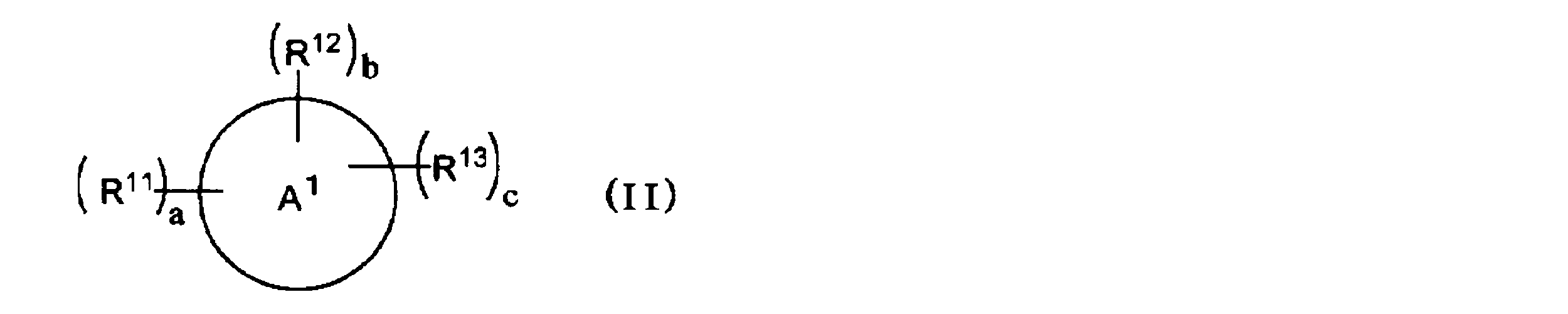
R11は、前記一般式(I)で表される基を表し、
R12は、前記オキシムエステル基を有さない光ラジカル開裂性基、前記オキシムエステル基を有さない光ラジカル開裂性基で置換された炭素原子数1~20の炭化水素基、または前記オキシムエステル基を有さない光ラジカル開裂性基で置換された炭素原子数2~20の複素環含有基を表し、
R13は、それぞれ独立にハロゲン原子、ニトロ基、シアノ基、炭素原子数1~20の炭化水素基または炭素原子数2~20の複素環含有基を表し、
R12およびR13で表される基中の水素原子の1つまたは2つ以上はハロゲン原子、ニトロ基、シアノ基、水酸基、アミノ基、カルボキシル基、メタクリロイル基、アクリロイル基、エポキシ基、ビニル基、ビニルエーテル基、メルカプト基、イソシアネート基または炭素原子数2~20の複素環含有基で置換されていてもよく、
R12およびR13で表される基中のメチレン基の1つまたは2つ以上は、酸素が隣り合わない条件で-O-、-CO-、-COO-、-OCO-、-NR14-、-NR14CO-、-S-、-CS-、-SO2-、-SCO-、-COS-、-OCS-またはCSO-で置換されていてもよく、
R14は、水素原子、炭素原子数1~20の炭化水素基を表し、
aは1~20の整数を表し、aが2以上の整数の場合、複数存在するR11は、同一であっても異なっていてもよく、
bは1~20の整数を表し、bが2以上の整数の場合、複数存在するR12は、同一であっても異なっていてもよく、
cは0~20の整数を表し、cが2以上の整数の場合、複数存在するR13は、同一であっても異なっていてもよいが、
a+b+cは20以下である。

X2は、単結合、無結合、酸素原子、硫黄原子、セレン原子、CR21R22、CO、NR23またはPR24を表し、
R21、R22、R23およびR24は、それぞれ独立に、水素原子、炭素原子数1~20の炭化水素基または複素環を含有する炭素原子数2~20の基を表し、R21、R22、R23およびR24で表される基中の水素原子は、ハロゲン原子、ニトロ基、シアン基、水酸基、カルボキシル基または炭素原子数2~20の複素環基で置換されていてもよく、
R21、R22、R23およびR24で表される基中のメチレン基の1つまたは2つ以上は、酸素が隣り合わない条件で-O-に置換されていてもよい。

R32およびR33は、R41またはOR41を表し、
R32とR33は結合して環を形成していてもよく、
R41は、水素原子または炭素原子数1~20の炭化水素基を表し、
R42およびR43は、炭素原子数1~20の炭化水素基を表し、
R71は、炭素原子数1~20の炭化水素基を表し、
R72およびR73は、R41またはOR41を表し、
R34、R35、R36、R37、R38、R39、R40、Ar1、Ar2、Ar3、Ar4、Ar5、Ar6およびAr7は、炭素原子数6~20のアリール基を表し、
v1、v2、v3、v4、v5、v6およびv7は、0または1を表し、*は、結合手を表す。

R1およびR2で表される基中の水素原子の1つまたは2つ以上はハロゲン原子、ニトロ基、シアノ基、水酸基、アミノ基、カルボキシル基、メタクリロイル基、アクリロイル基、エポキシ基、ビニル基、ビニルエーテル基、メルカプト基、イソシアネート基または炭素原子数2~20の複素環含有基で置換されていてもよく、
R1およびR2で表される基中のメチレン基の1つまたは2つ以上は、酸素が隣り合わない条件で-O-、-CO-、-COO-、-OCO-、-NR3-、-NR3CO-、-S-、-CS-、-SO2-、-SCO-、-COS-、-OCS-またはCSO-で置換されていてもよく、
R3は、水素原子、炭素原子数1~20の炭化水素基を表し、
nは0または1を表し、*は結合手を表す。
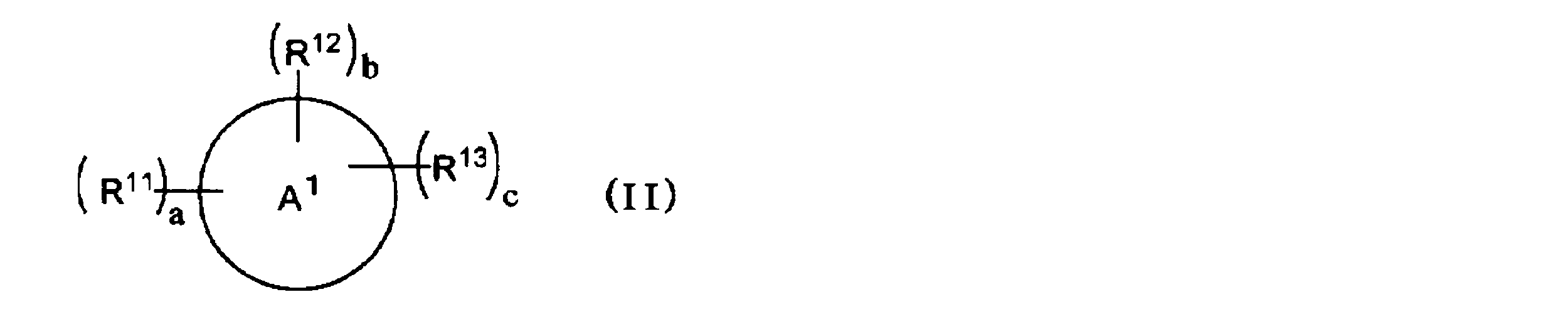
R11は、一般式(I)で表される基を表し、
R12は、オキシムエステル基を有さない光ラジカル開裂性基、オキシムエステル基を有さない光ラジカル開裂性基で置換された炭素原子数1~20の炭化水素基、またはオキシムエステル基を有さない光ラジカル開裂性基で置換された炭素原子数2~20の複素環含有基を表し、
R13は、それぞれ独立にハロゲン原子、ニトロ基、シアノ基、炭素原子数1~20の炭化水素基または炭素原子数2~20の複素環含有基を表し、
R12およびR13で表される基中の水素原子の1つまたは2つ以上はハロゲン原子、ニトロ基、シアノ基、水酸基、アミノ基、カルボキシル基、メタクリロイル基、アクリロイル基、エポキシ基、ビニル基、ビニルエーテル基、メルカプト基、イソシアネート基または炭素原子数2~20の複素環含有基で置換されていてもよく、
R12およびR13で表される基中のメチレン基の1つまたは2つ以上は、酸素が隣り合わない条件で-O-、-CO-、-COO-、-OCO-、-NR14-、-NR14CO-、-S-、-CS-、-SO2-、-SCO-、-COS-、-OCS-またはCSO-で置換されていてもよく、
R14は、水素原子、炭素原子数1~20の炭化水素基を表し、
aは1~20の整数を表し、aが2以上の整数の場合、複数存在するR11は、同一であっても異なっていてもよく、
bは1~20の整数を表し、bが2以上の整数の場合、複数存在するR12は、同一であっても異なっていてもよく、
cは0~20の整数を表し、cが2以上の整数の場合、複数存在するR13は、同一であっても異なっていてもよいが、a+b+cは20以下である。



R32とR33は結合して環を形成していてもよく、R41は、水素原子または炭素原子数1~20の炭化水素基を表し、R42およびR43は、炭素原子数1~20の炭化水素基を表し、R71は、炭素原子数1~20の炭化水素基を表し、R72およびR73は、R41またはOR41を表し、R34、R35、R36、R37、R38、R39、R40、Ar1、Ar2、Ar3、Ar4、Ar5、Ar6およびAr7は、炭素原子数6~20のアリール基を表し、v1、v2、v3、v4、v5、v6およびv7は、0または1を表し、*は、結合手を表す。

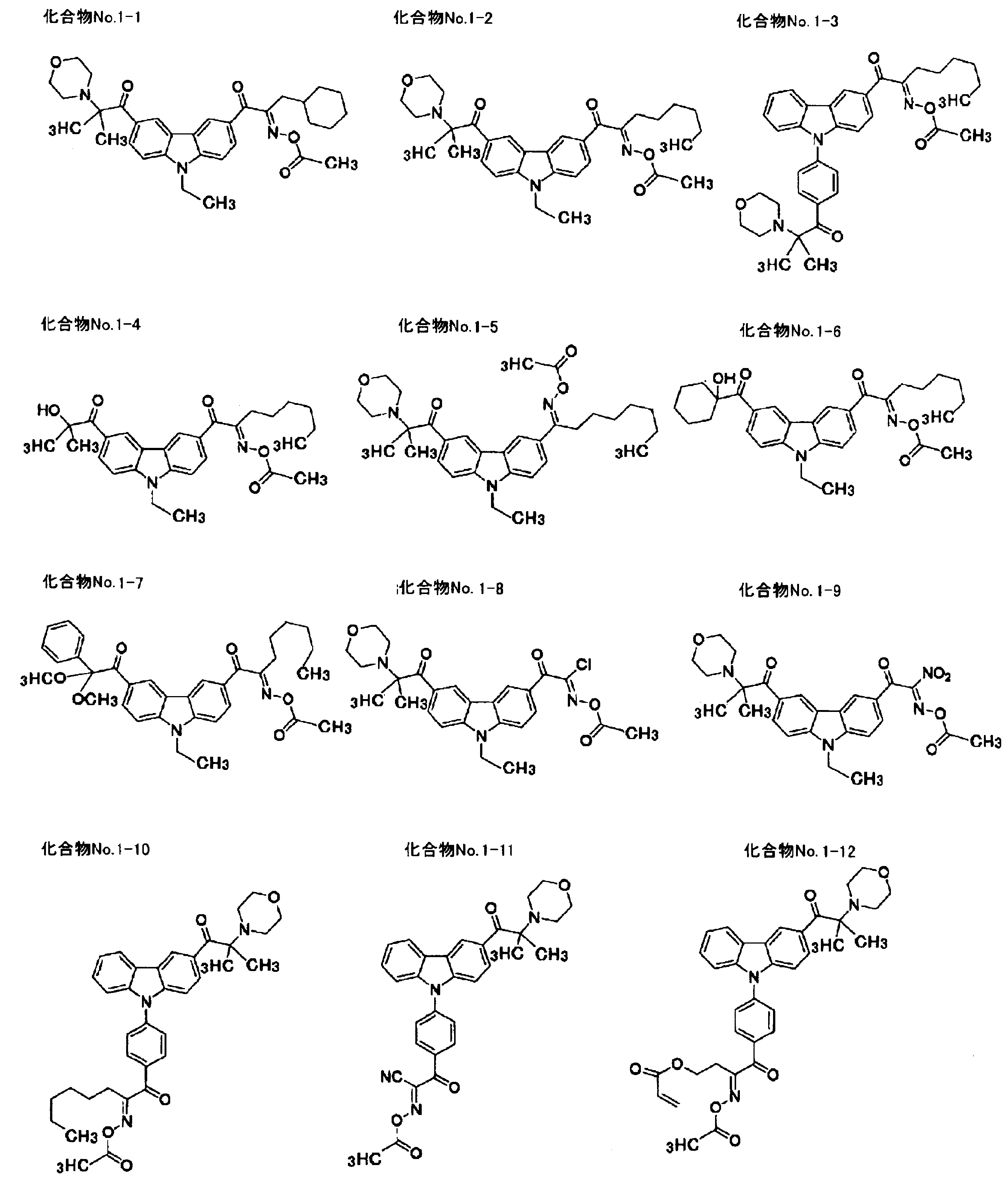

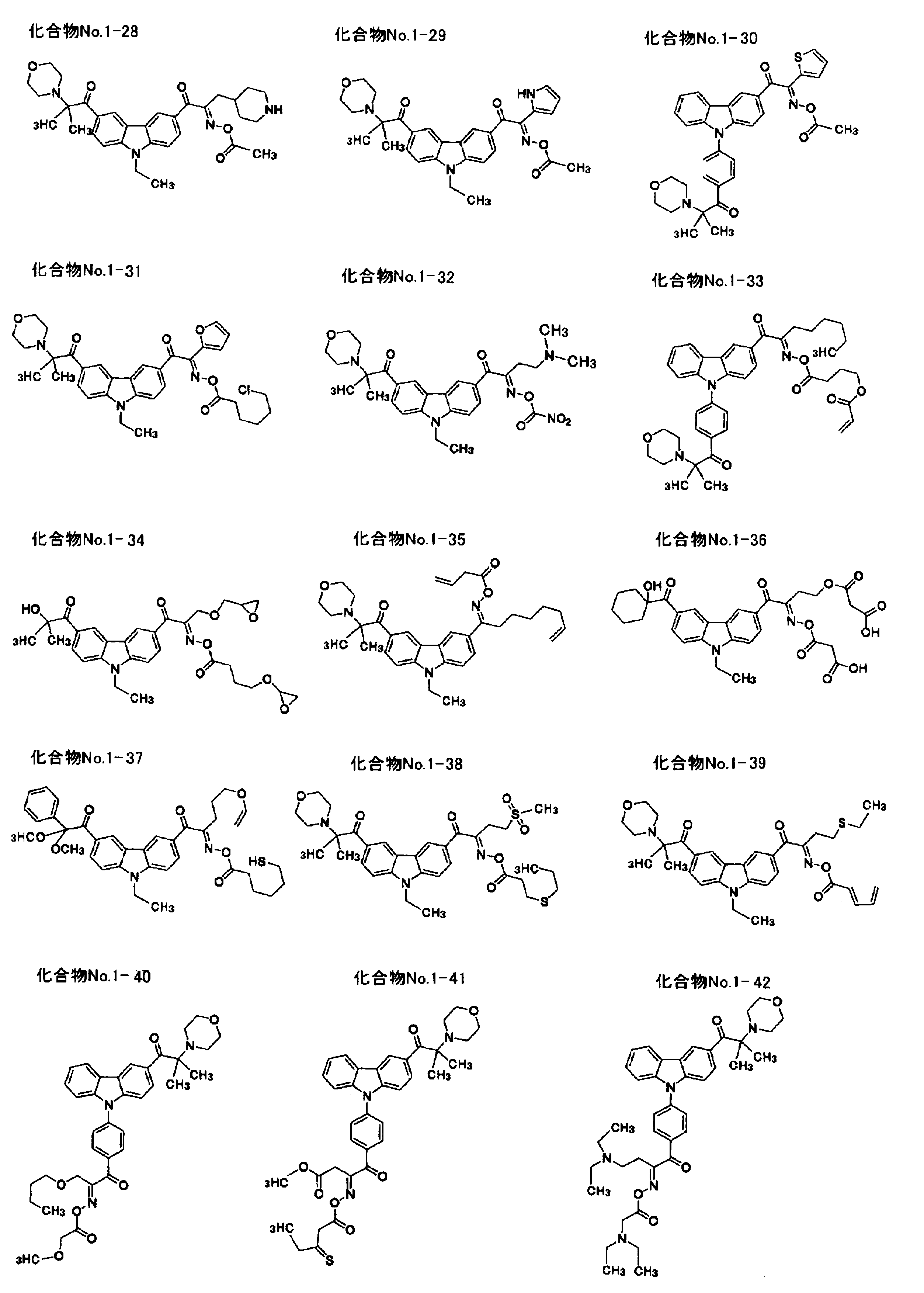
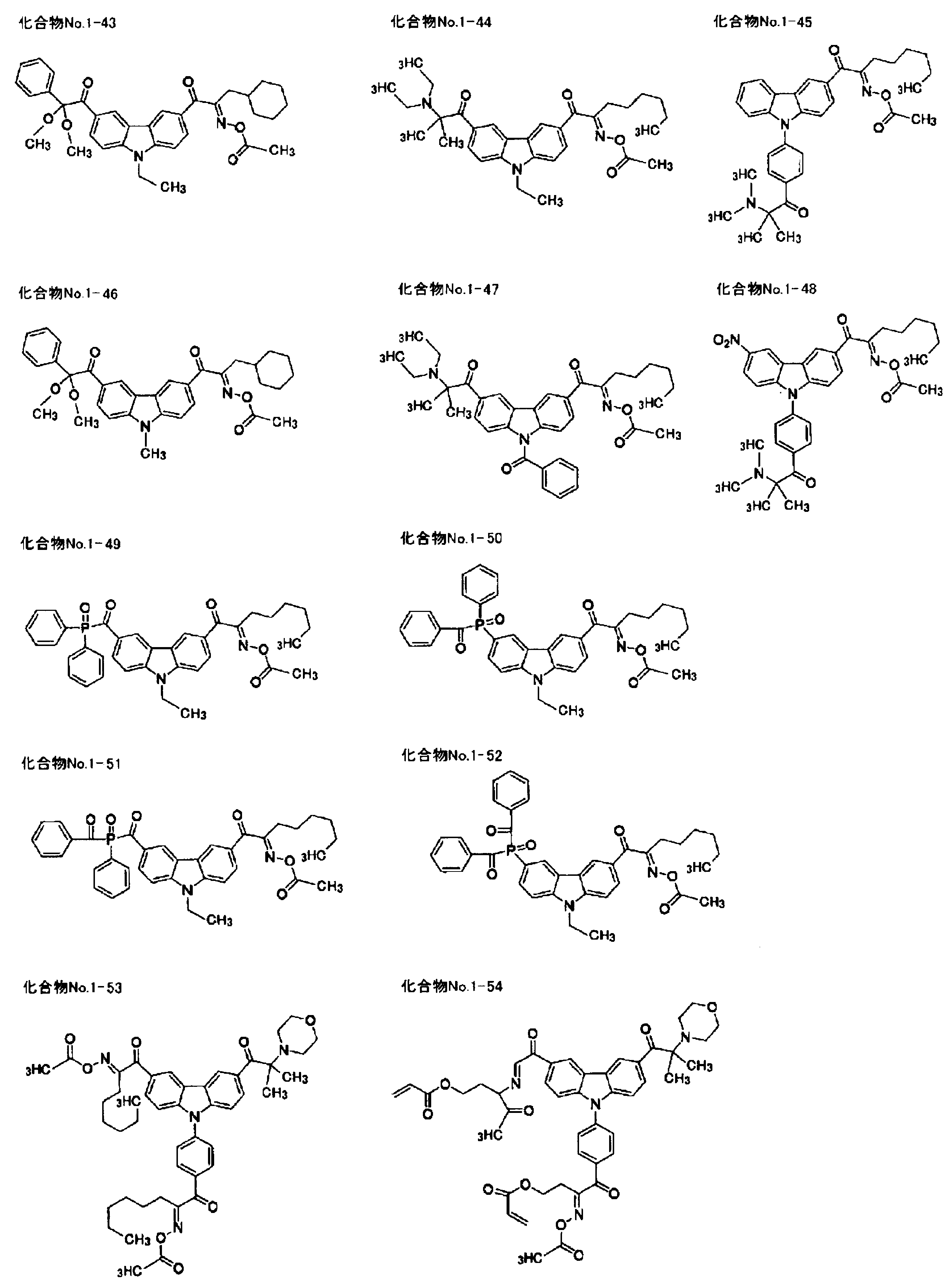

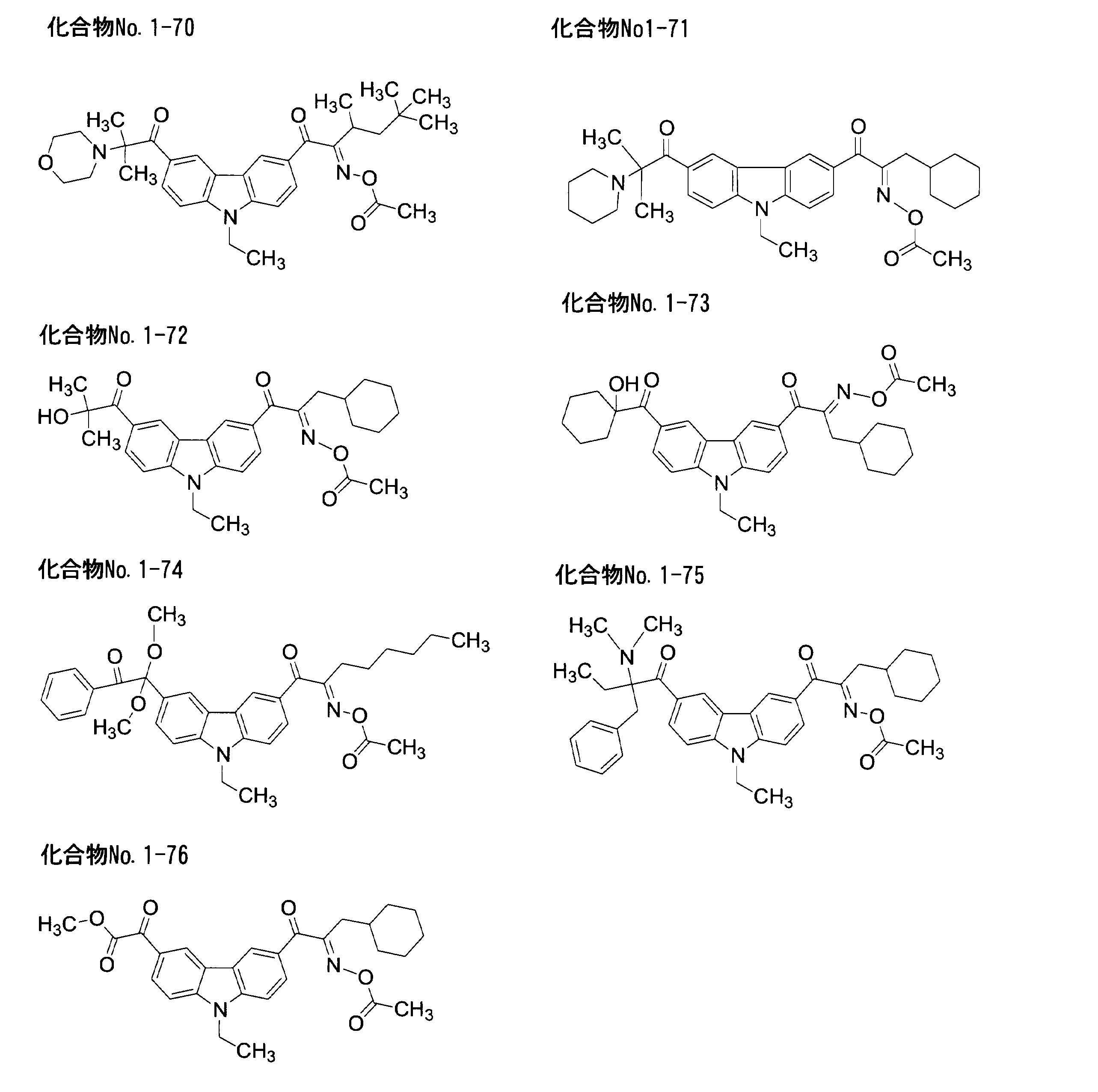


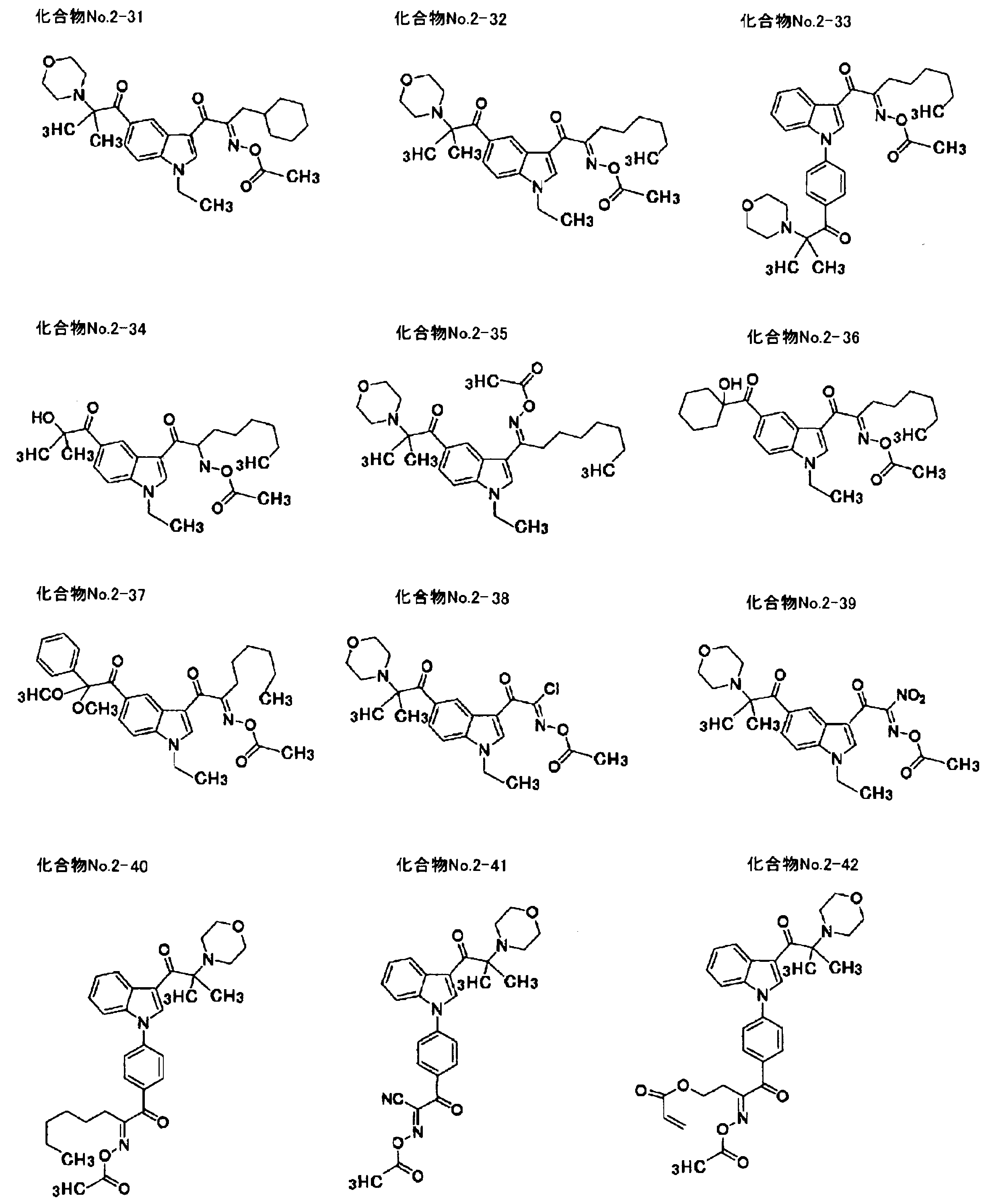
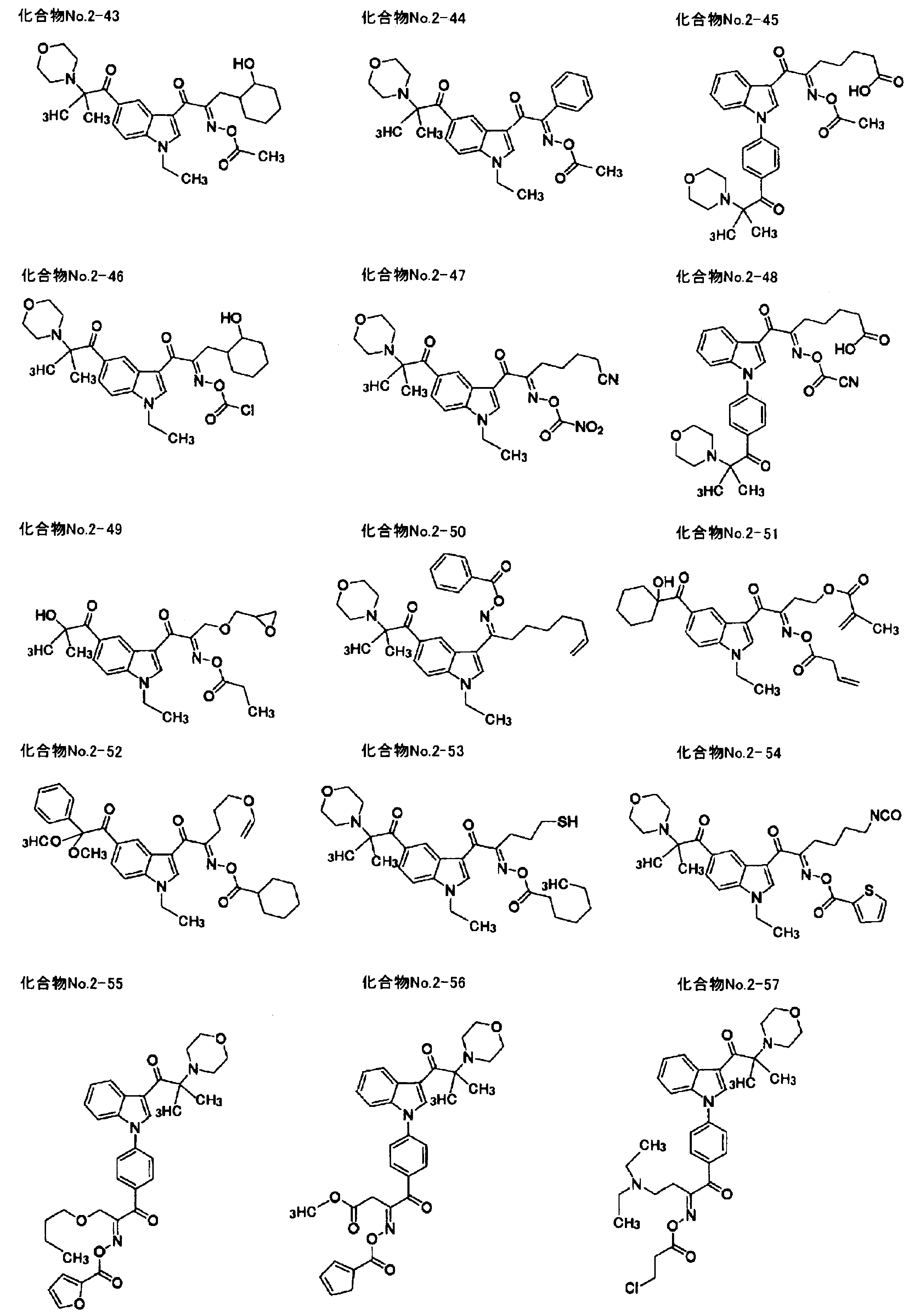

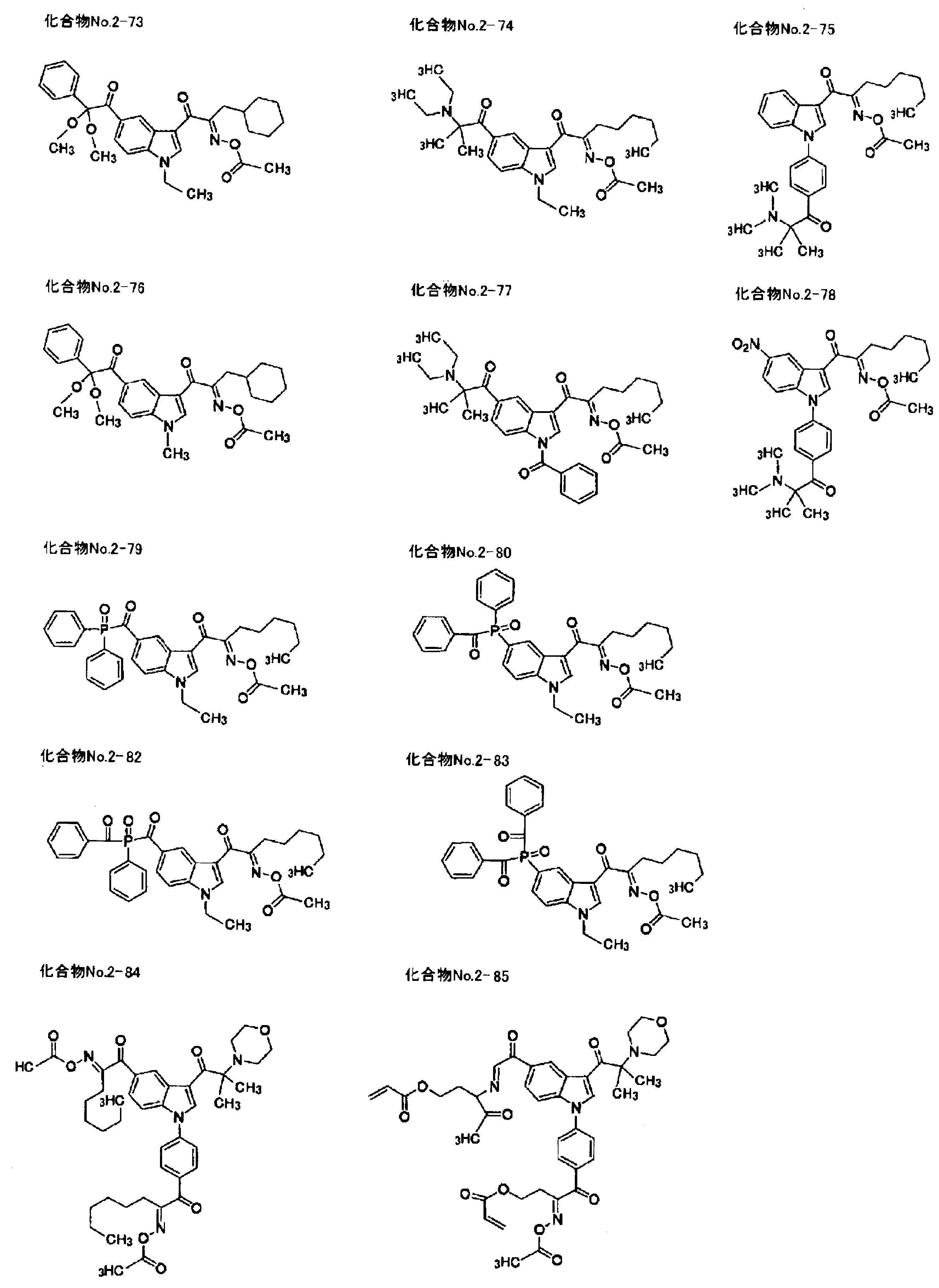
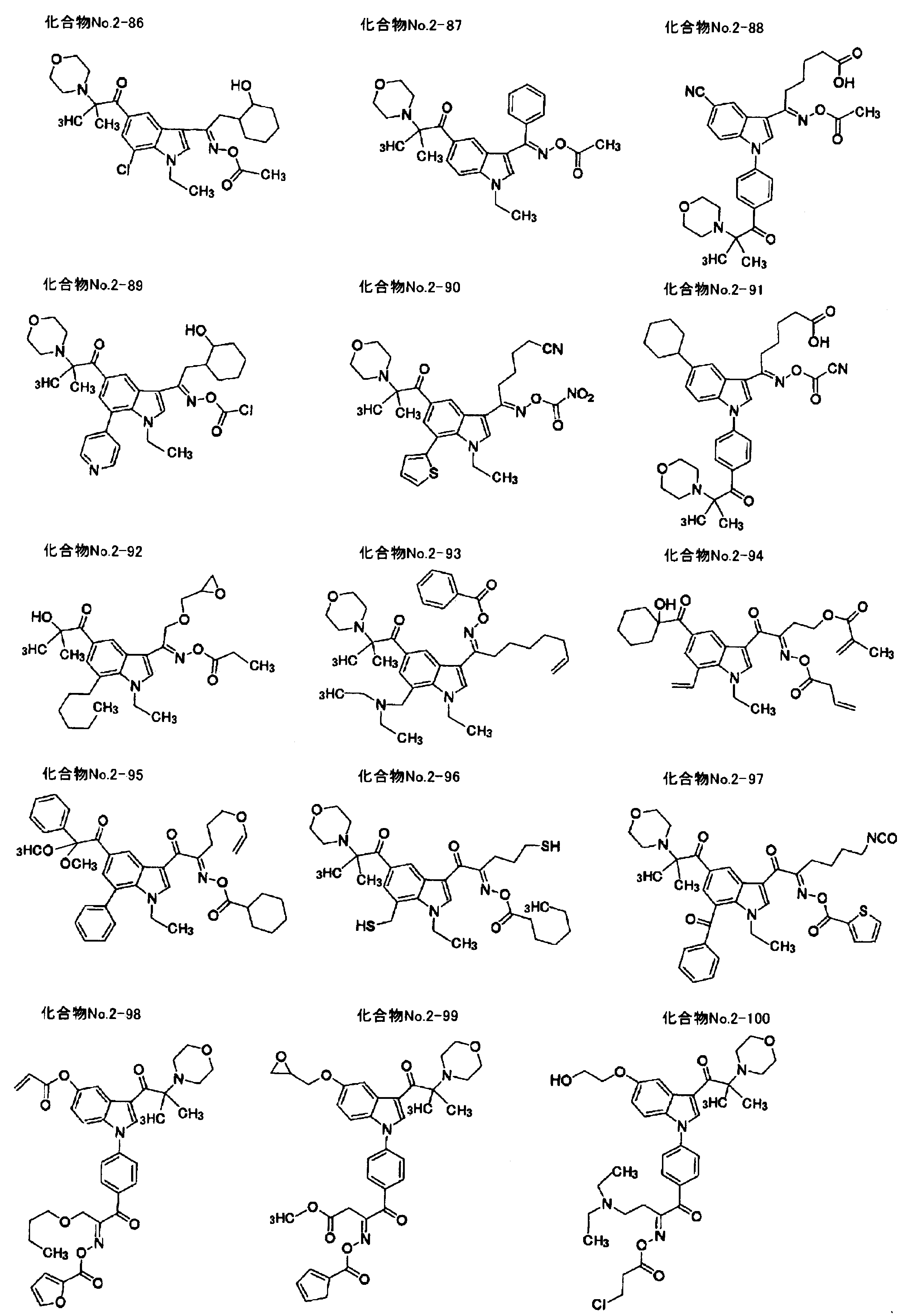
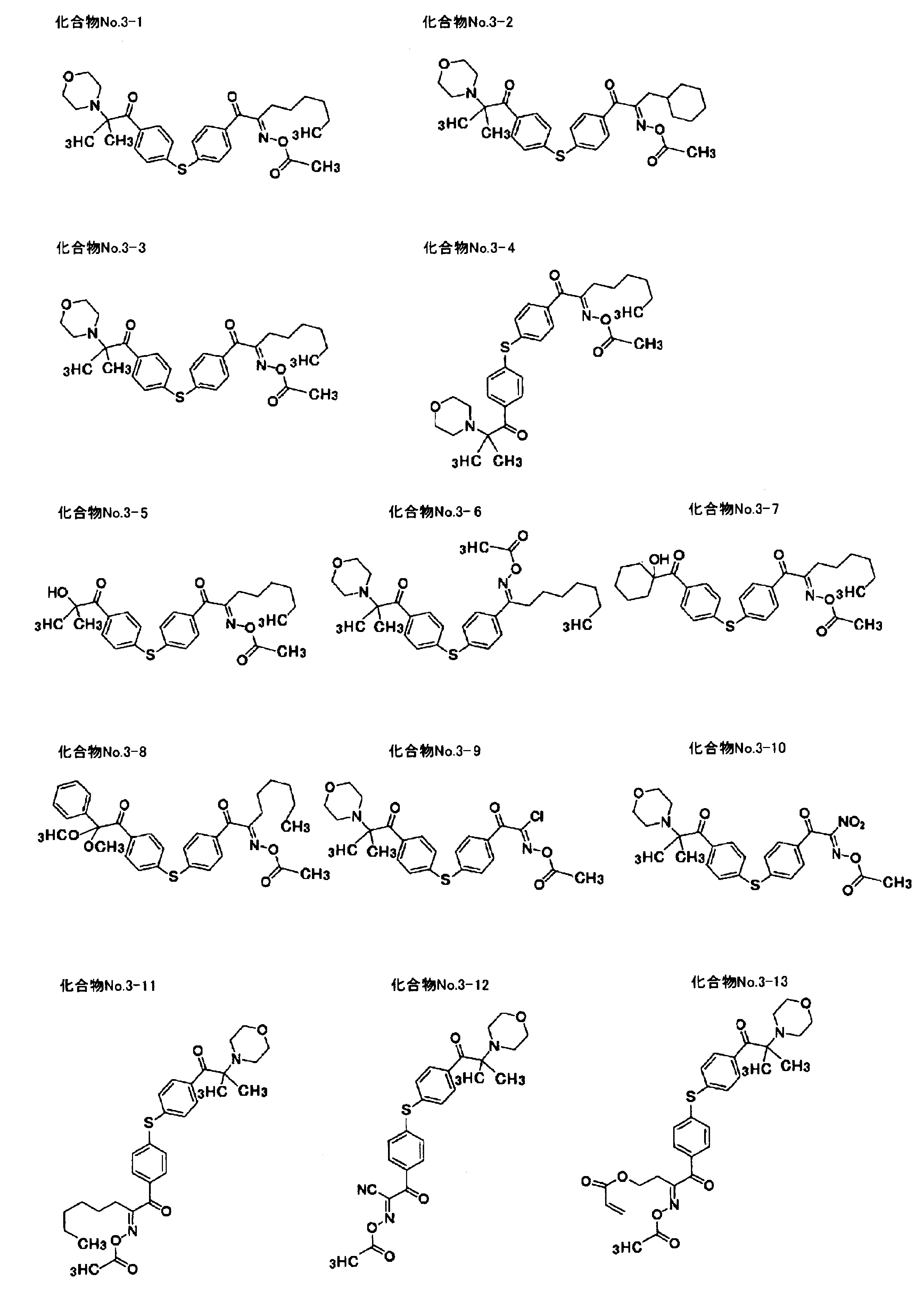

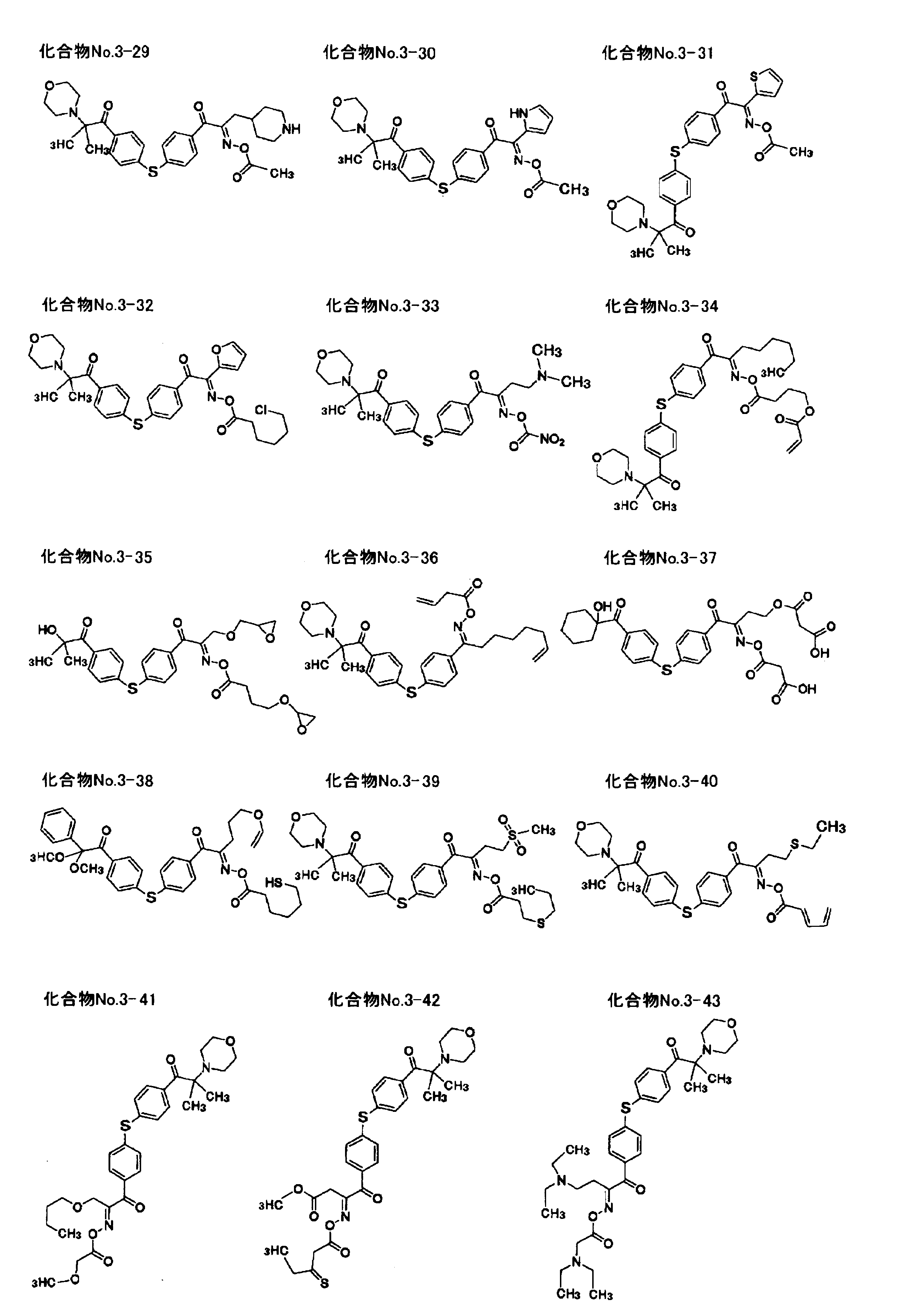
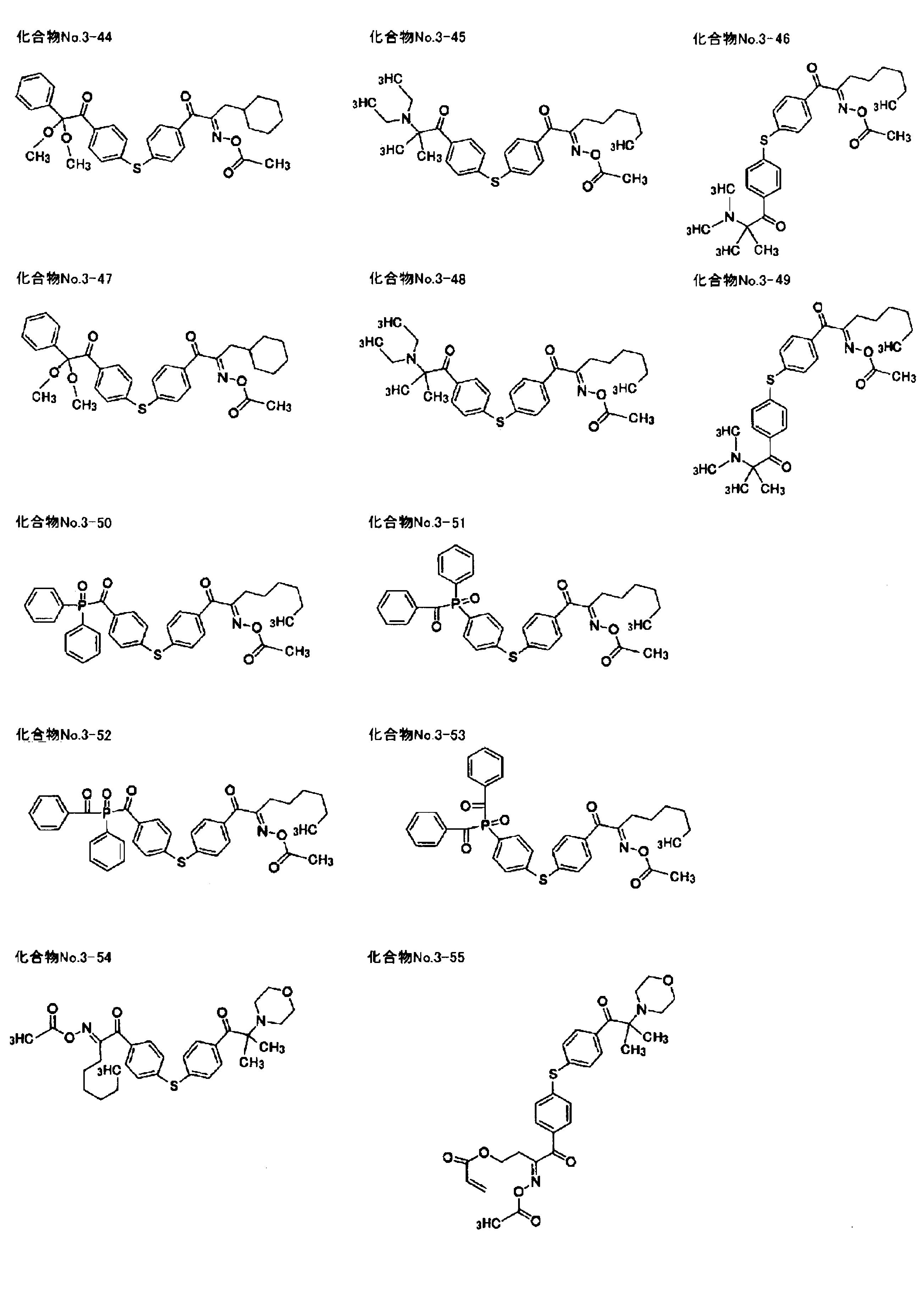
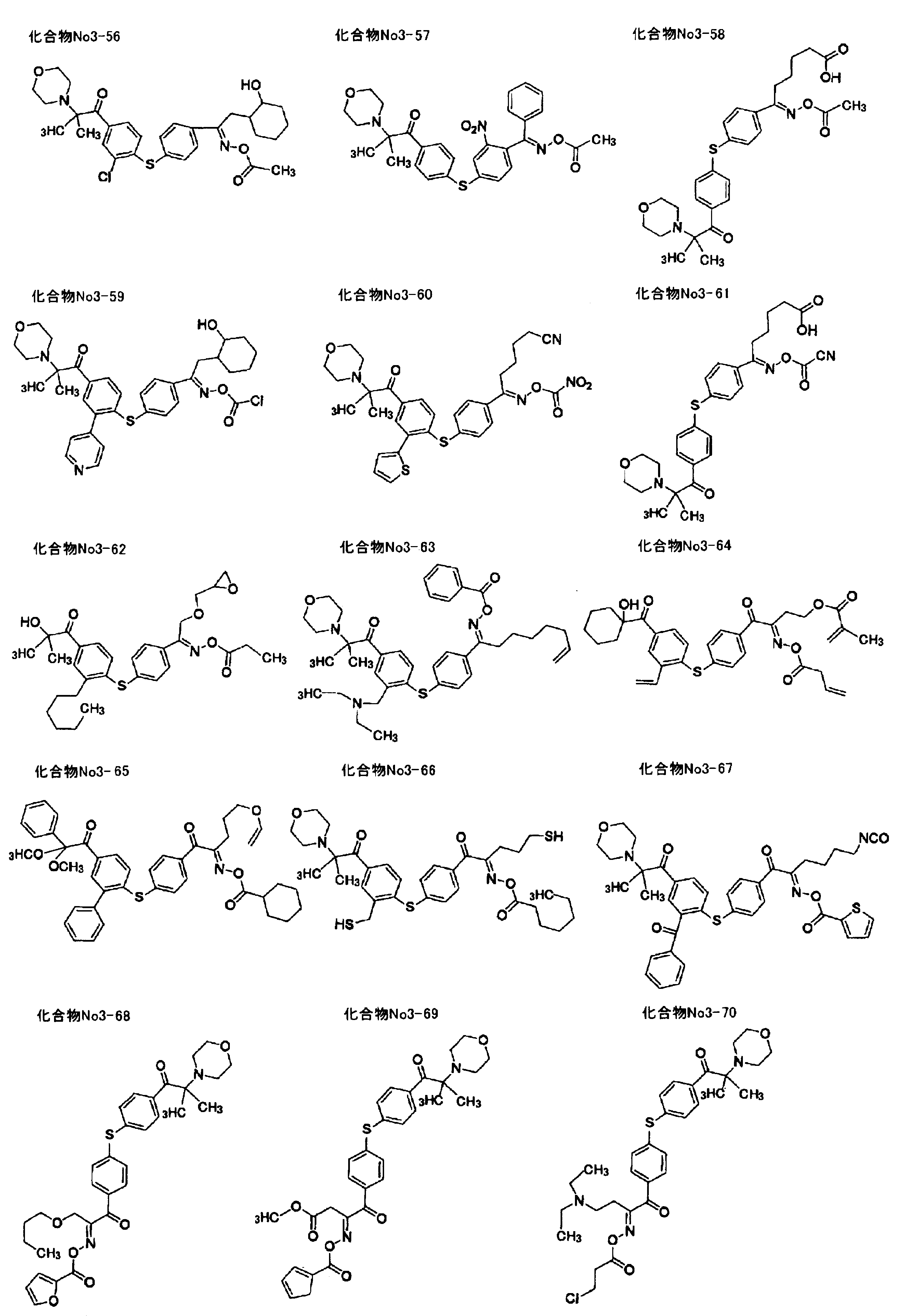
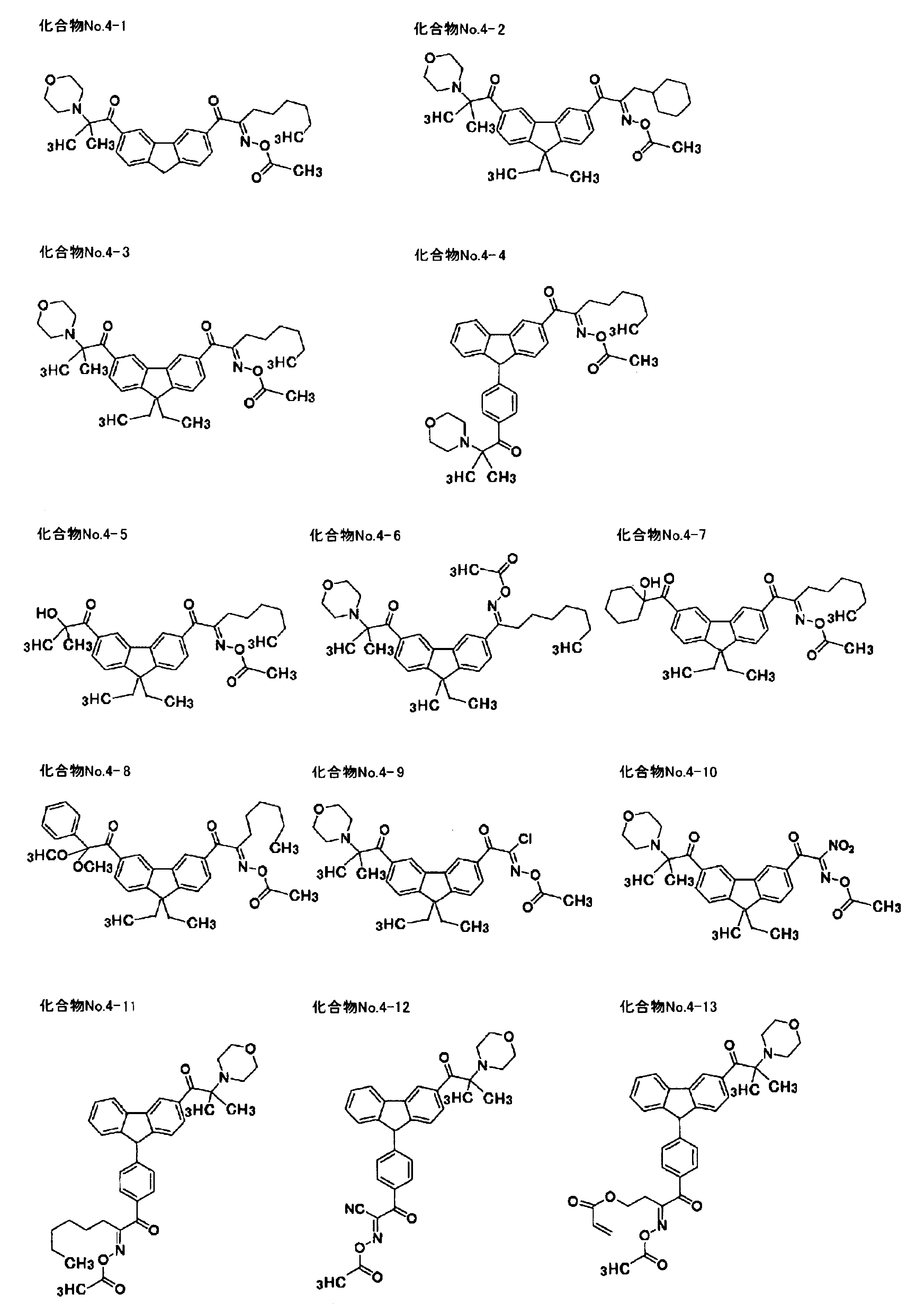
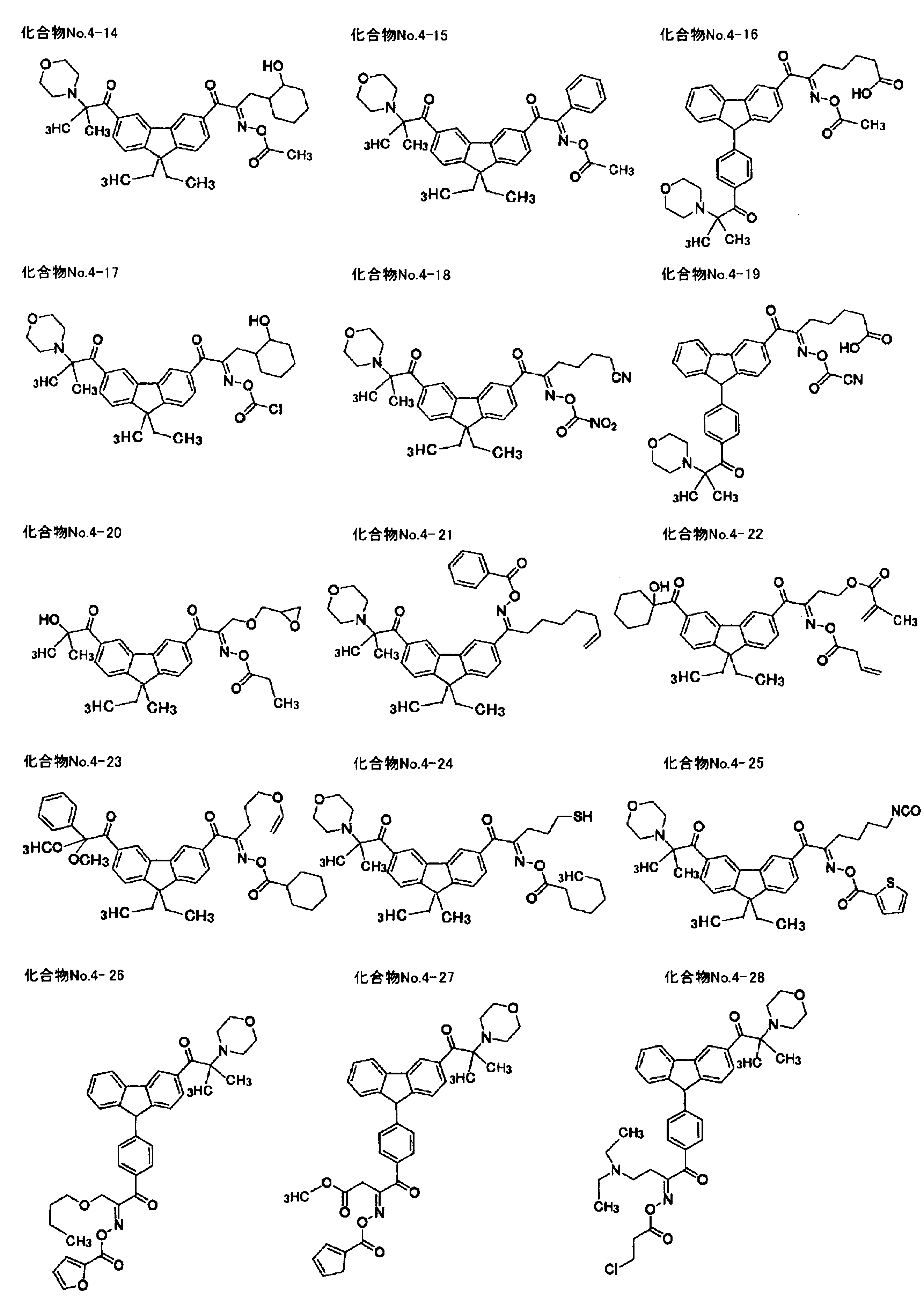


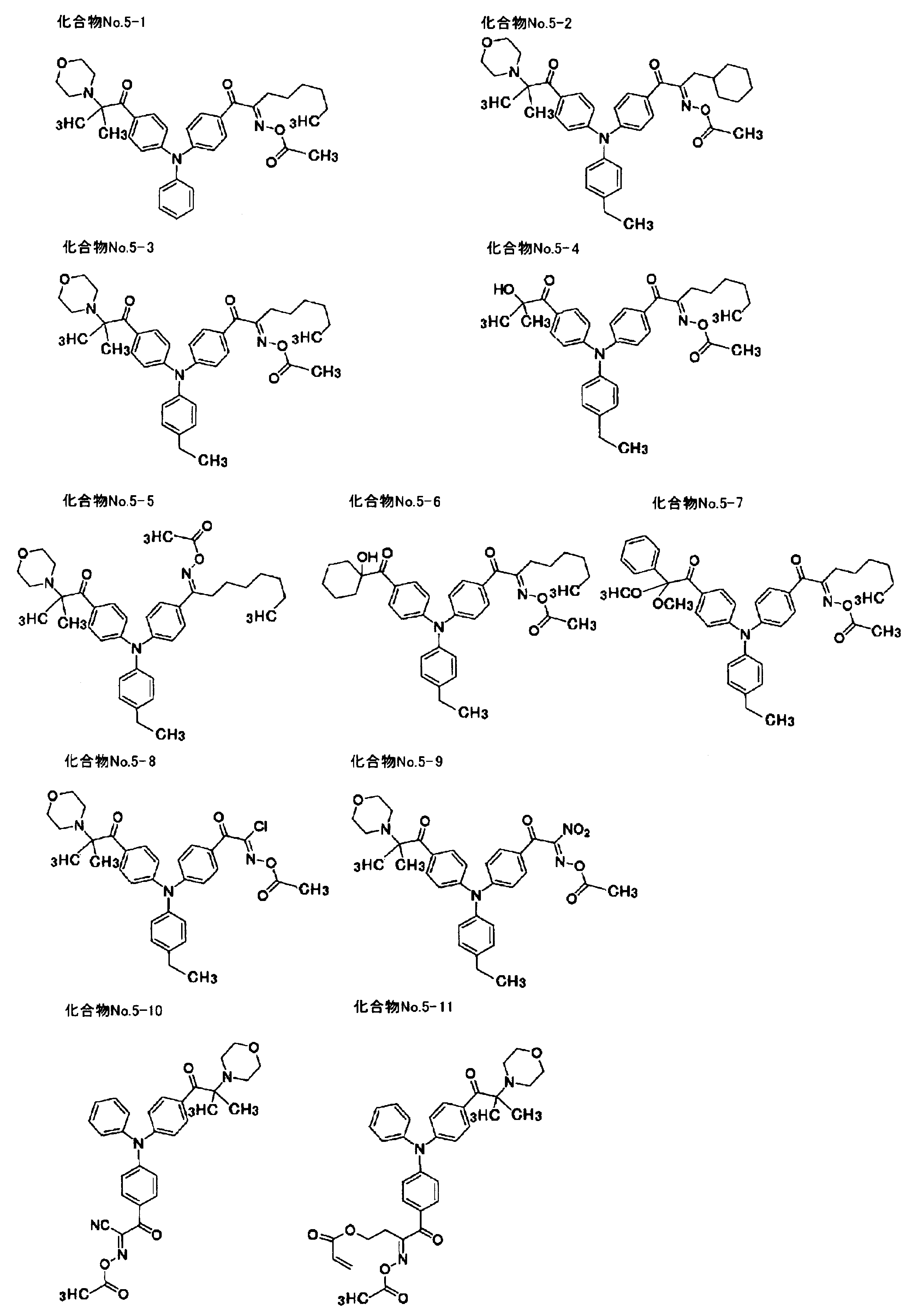

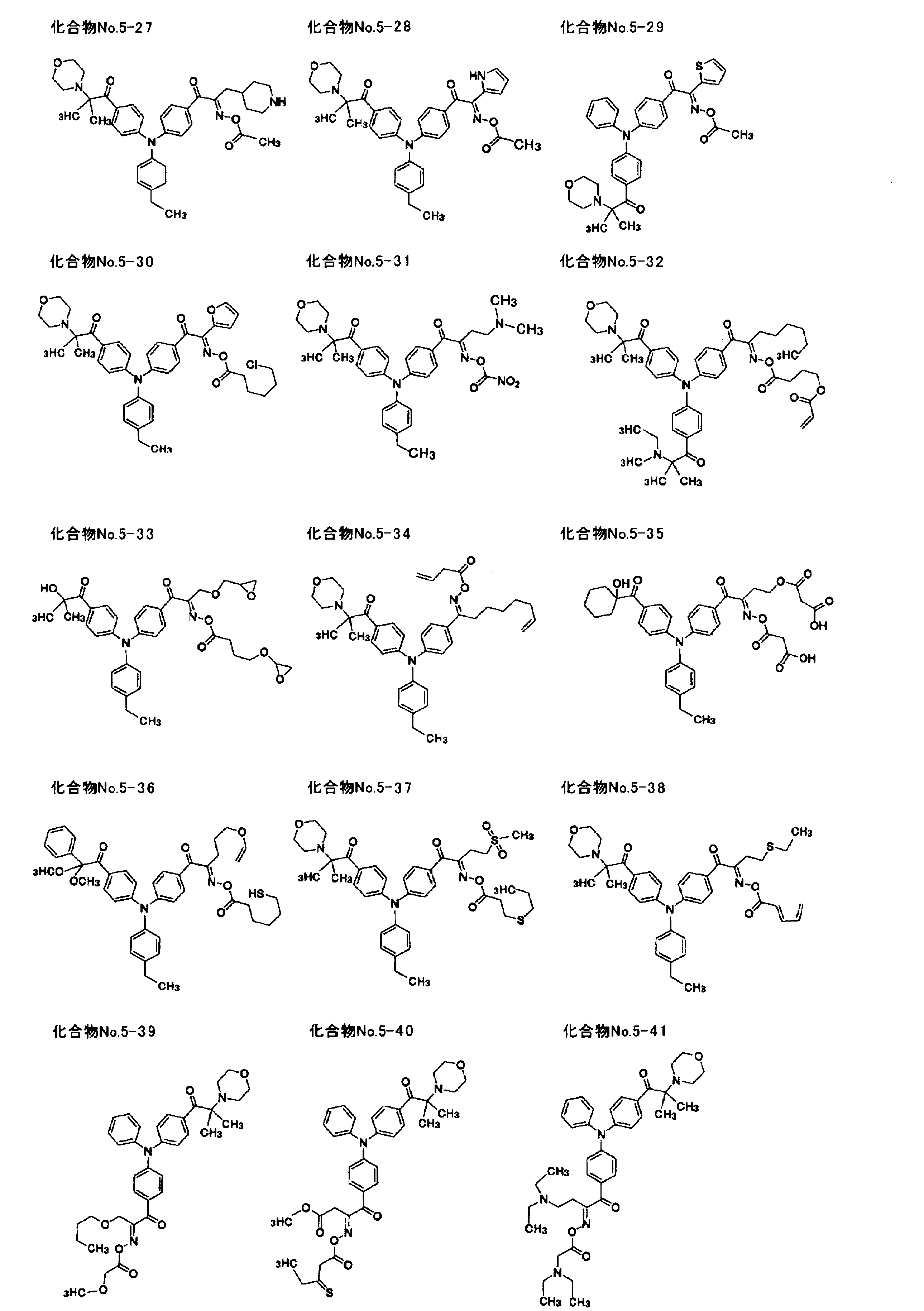
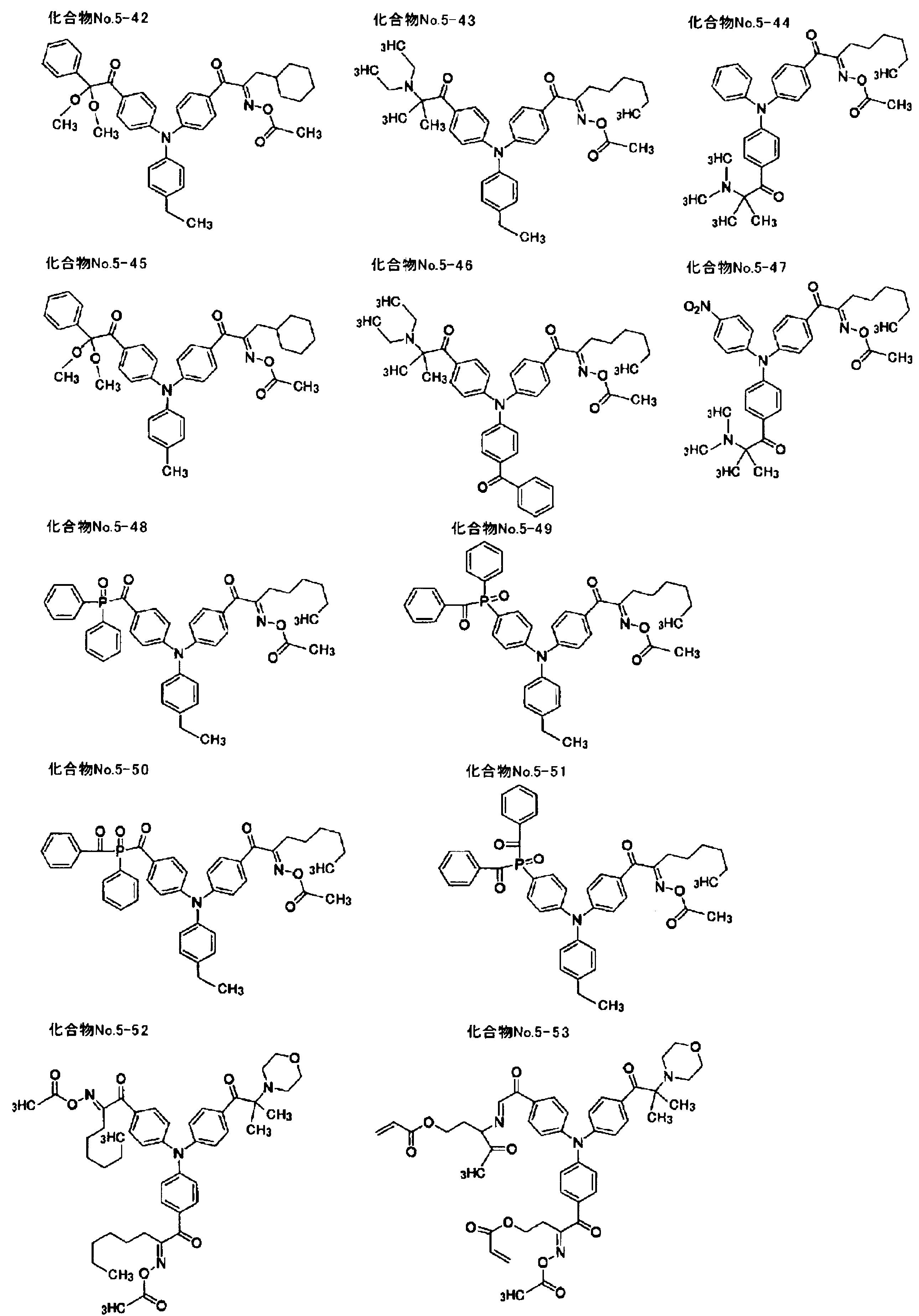

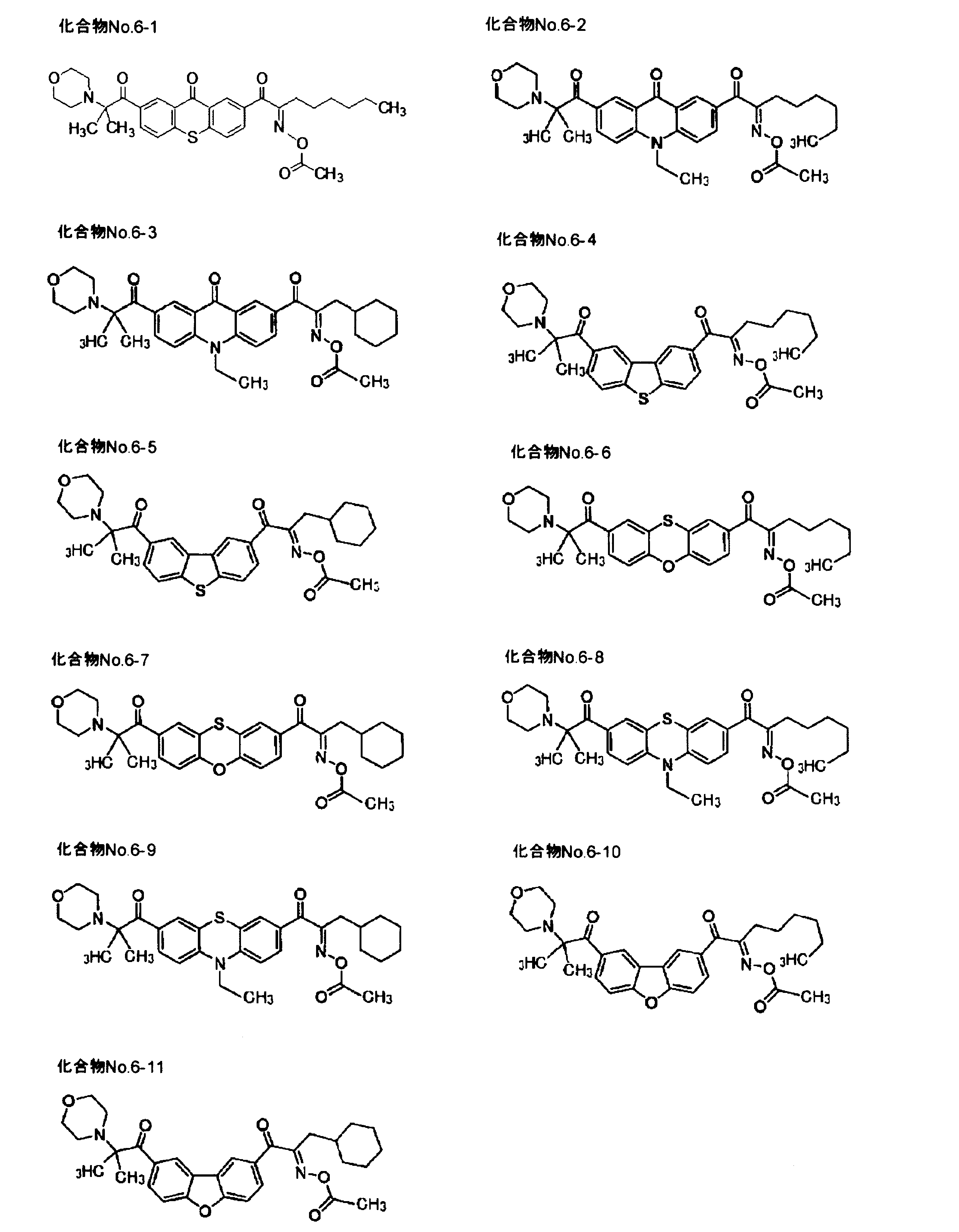
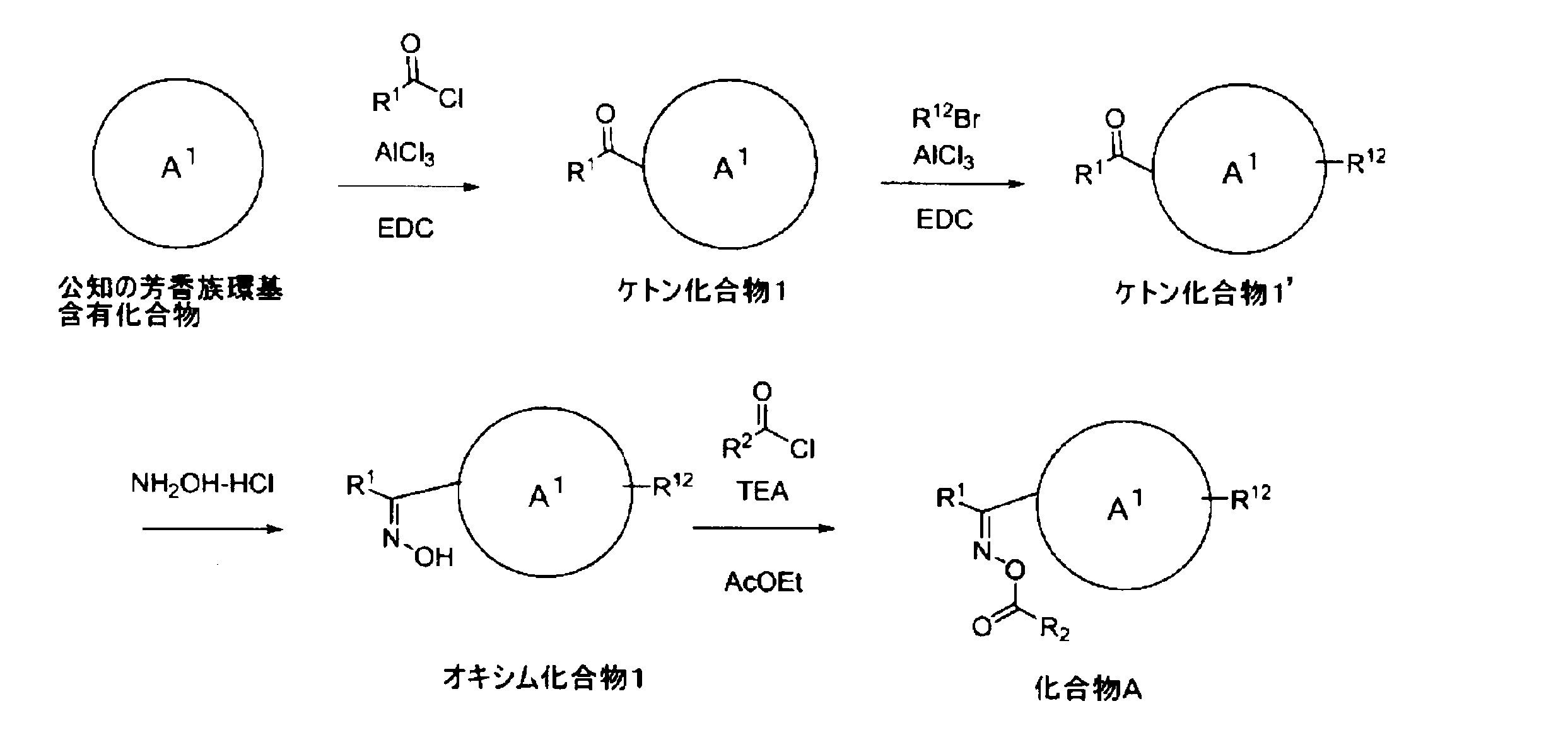
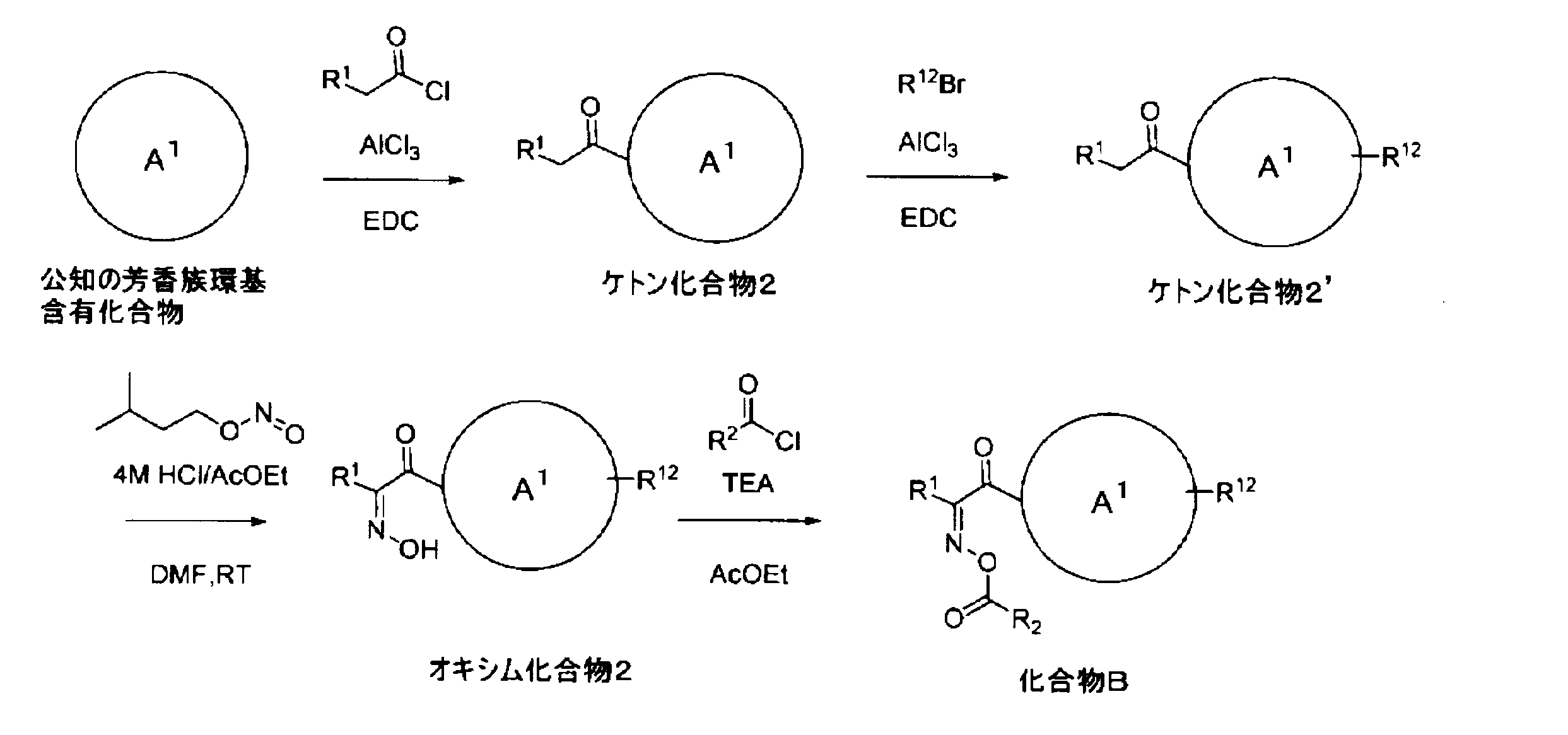
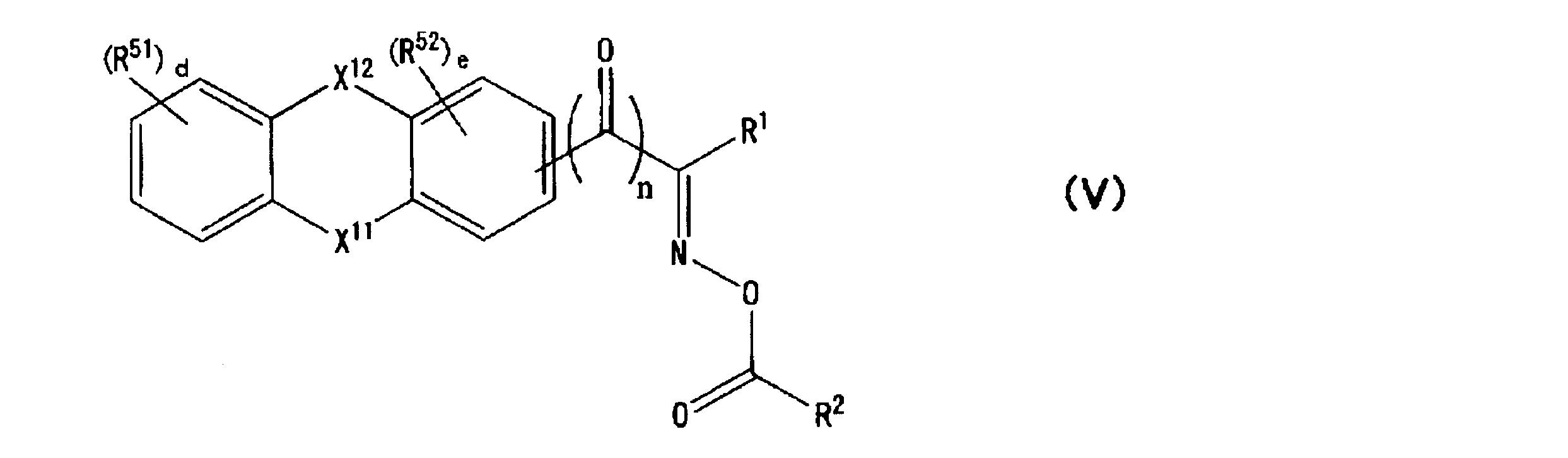
R51およびR52は、それぞれ独立に、水素原子、ニトロ基、シアノ基、炭素原子数1~20の炭化水素基または複素環を含有する炭素原子数2~20の基を表し、炭素原子数1~20の炭化水素基としては、炭素原子数1~20のアルキル基、炭素原子数6~20のアリール基、炭素原子数7~20のアリールアルキル基が好ましく、
X11は、酸素原子、硫黄原子、セレン原子、CR53R54、CO、NR55またはPR56を表し、
X12は、無結合、直接結合、炭素原子数1~20の炭化水素基、COを表し、
R53~R56は、それぞれ独立に、水素原子、炭素原子数1~20の炭化水素基または複素環を含有する炭素原子数2~20の基を表し、R53~R56で表される基中の水素原子は、ハロゲン原子、ニトロ基、シアノ基、水酸基、アミノ基、カルボキシル基、メタクリロイル基、アクリロイル基、エポキシ基、ビニル基、メルカプト基、イソシアネート基、複素環含有基で置換される場合もあり、
R51~R56で表される基中のメチレン基は、酸素が隣り合わない条件で-O-、-CO-、-COO-、-OCO-、-S-、-SO2-、-SCO-または-COS-で置換される場合もあり、
R51~R56は、それぞれ独立に、隣接するどちらかのベンゼン環と一緒になって環を形成する場合もあり、
dは0~4の数を、eは0~3の数を表す。
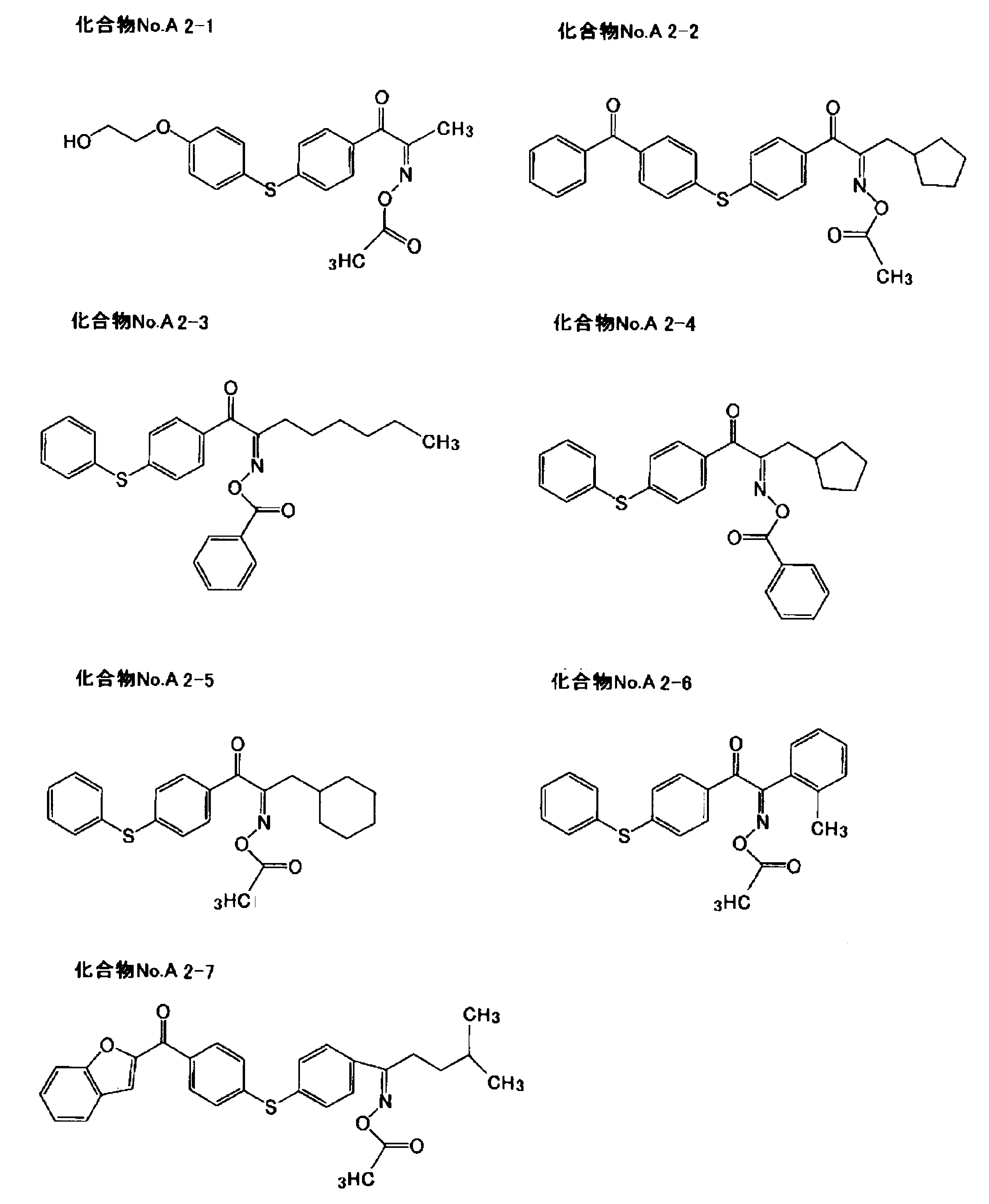
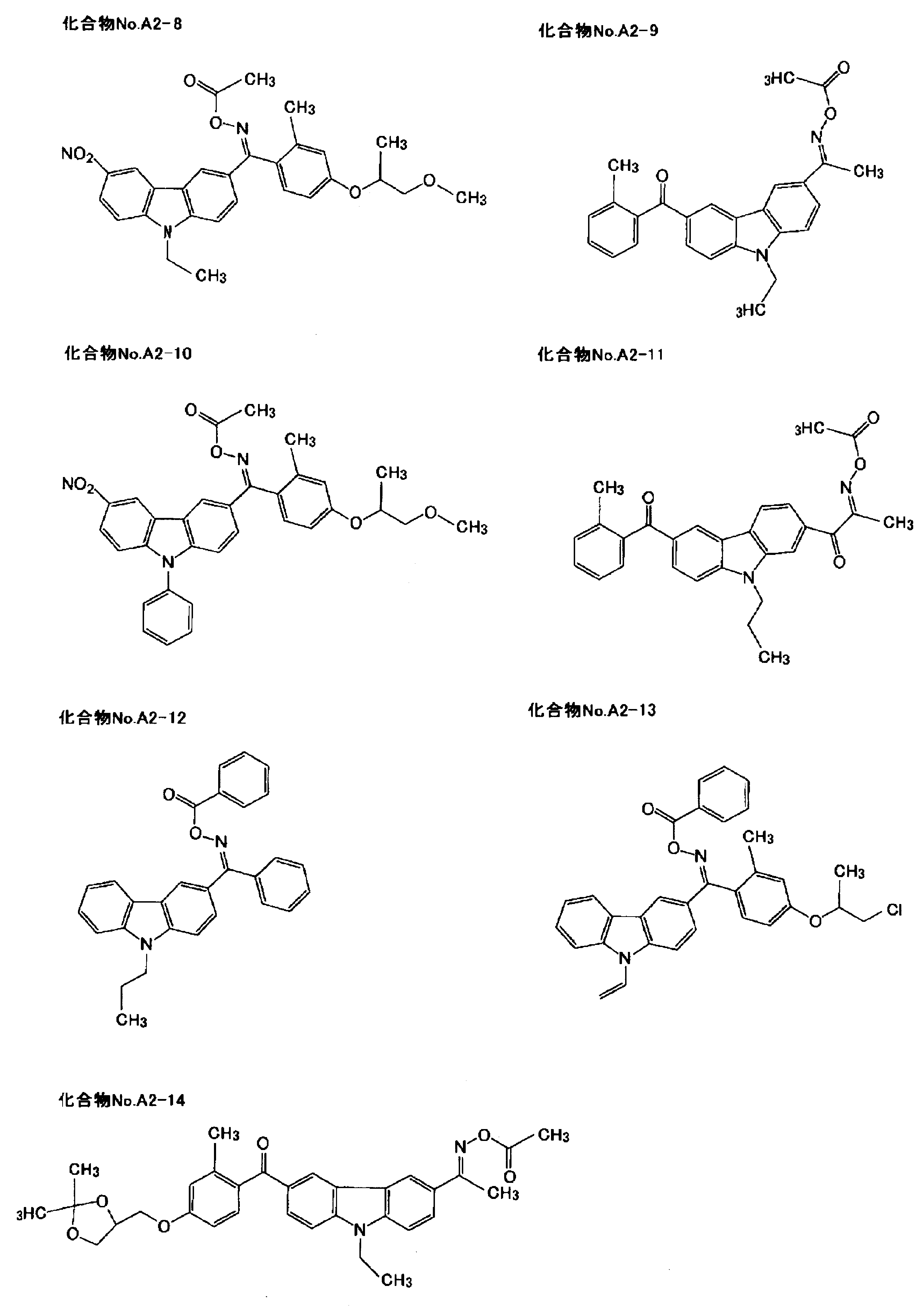
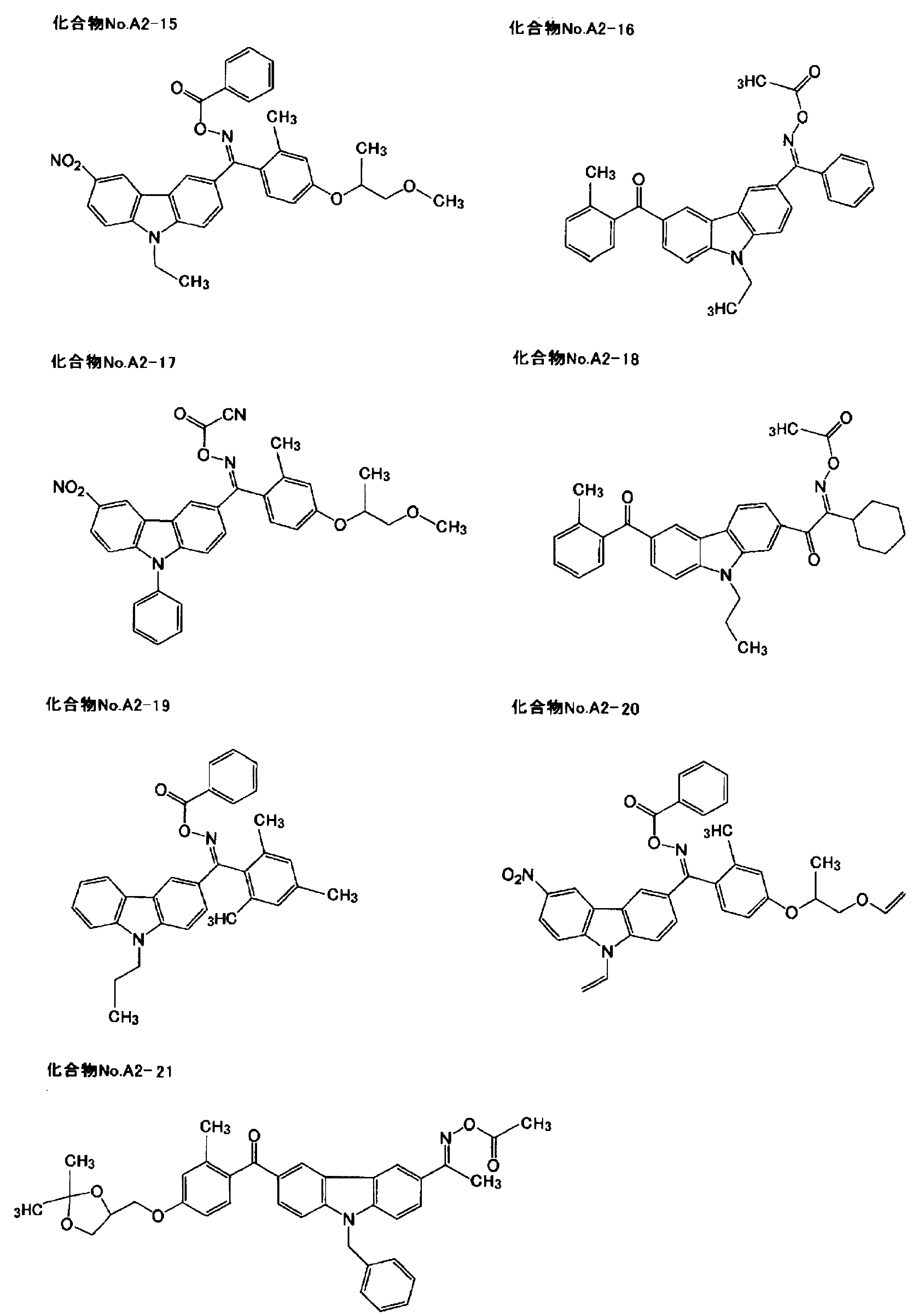
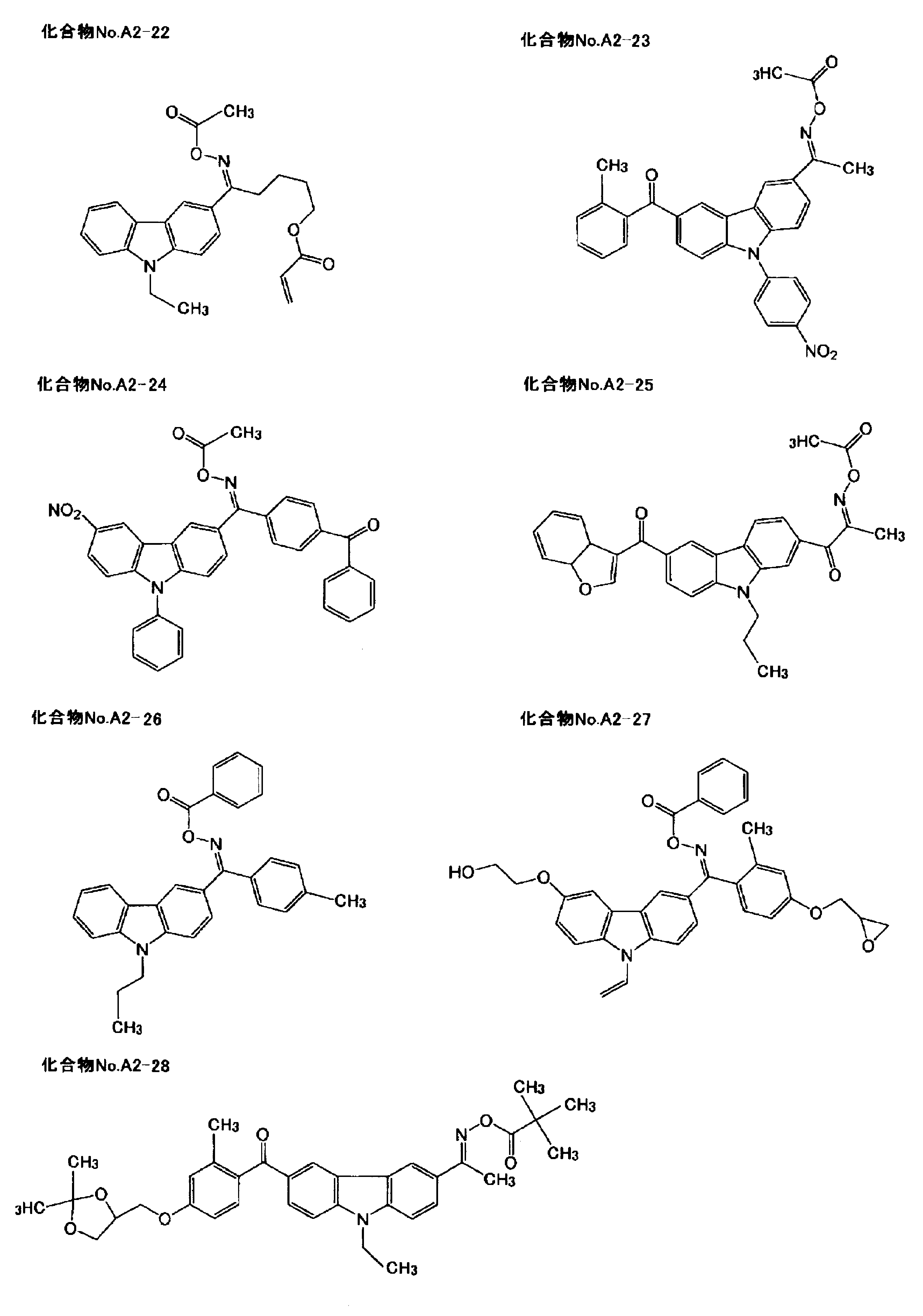




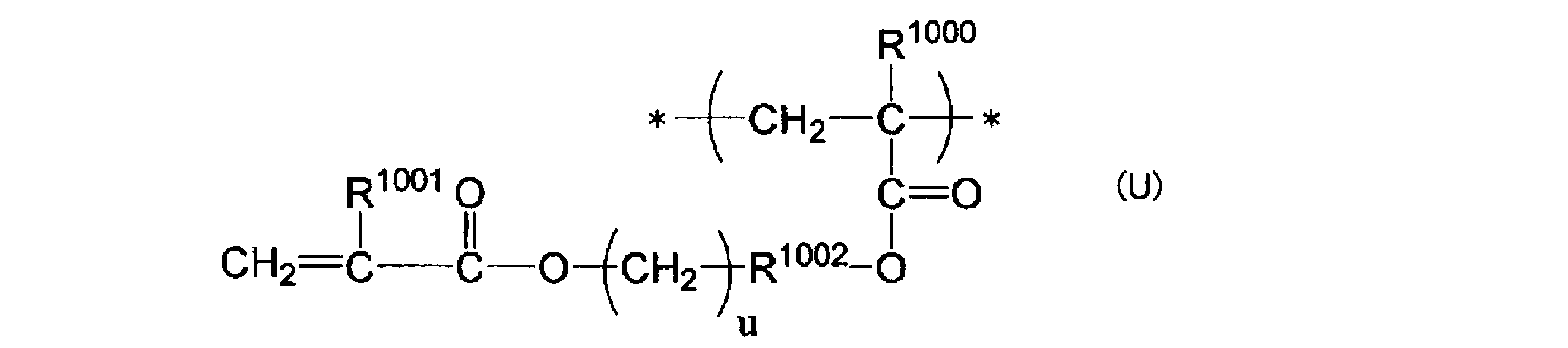

(メタ)アクリル酸シクロアルキルエステルとして、例えば、(メタ)アクリル酸シクロヘキシル、(メタ)アクリル酸2-メチルシクロヘキシル、(メタ)アクリル酸トリシクロ[5.2.1.02,6]デカン-8-イル、(メタ)アクリル酸2-(トリシクロ[5.2.1.02,6]デカン-8-イルオキシ)エチル、(メタ)アクリル酸イソボロニル等を挙げることができる。
(メタ)アクリル酸アラルキルエステルとして、例えば、(メタ)アクリル酸ベンジル等を挙げることができる。
化合物(u2):好ましくは1モル%~95モル%、より好ましくは10モル%~60モル%、さらに好ましくは20モル%~30モル%
化合物(u3):好ましくは50モル%以下、より好ましくは1モル%~40モル%、さらに好ましくは10モル%~30モル%
化合物(u4):好ましくは80モル%以下、より好ましくは1モル%~60モル%、さらに好ましくは25モル%~50モル%
の範囲で使用することが好ましい。

R61、およびR62がそれぞれ複数存在する場合は、同一の場合も異なる場合もあり、fは、0~4の整数であり、gは、0~4の整数であり、mは0~10の整数であり、
mが0で無い場合に存在する光学異性体は、どの異性体でもよい。




R81、R82、R83、R84およびR85のうち少なくとも1つは水素原子でなく、
R86は、炭素原子数1~20のアルキル基、炭素原子数2~20のアルケニル基、炭素原子数6~20のアリール基、炭素原子数7~20のアリールアルキル基、炭素原子数2~20の複素環含有基またはトリアルキルシリル基を表す。
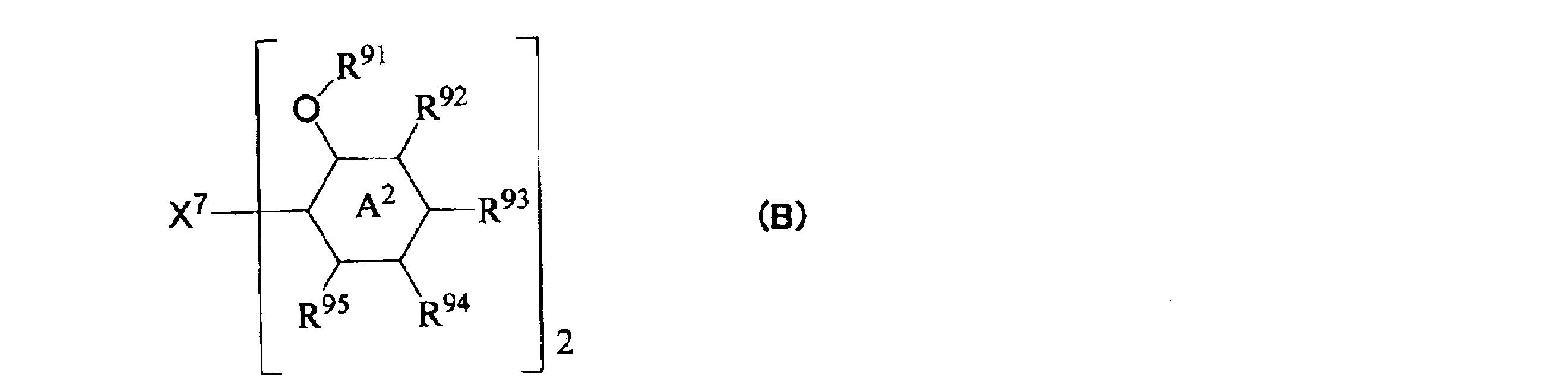
X7は、下記一般式(2)で表される基であり、
R92、R93、R94およびR95は、水素原子、ハロゲン原子、シアノ基、水酸基、ニトロ基、カルボキシル基、置換基を有していてもよい炭素原子数1~40のアルキル基、炭素原子数6~20のアリール基、炭素原子数7~20のアリールアルキル基または炭素原子数2~20の複素環含有基を表し、
R92、R93、R94およびR95のうち少なくとも1つは水素原子でない。

脂肪族炭化水素基中のメチレン基は、-O-、-S-、-CO-、-COO-、-OCO-または-NH-、あるいは酸素原子が隣り合うことなしにこれらを組み合わせた結合基で置換されていてもよく、
R97およびR98は、水素原子、炭素原子数1~8のアルキル基、炭素原子数6~20のアリール基または炭素原子数7~20のアリールアルキル基を表し、
Z5およびZ6は、それぞれ独立に、直接結合、-O-、-S-、>CO、-CO-O-、-O-CO-、-SO2-、-SS-、-SO-または>NR100を表し、
R99およびR100は、水素原子、置換基を有していてもよい炭素原子数1~35の脂肪族炭化水素基、置換基を有していてもよい炭素原子数6~35の芳香族炭化水素基または置換基を有していてもよい炭素原子数2~35の複素環基を表し、*は結合手を表す。






Chemie製);メガファックF-114、メガファックF-410、メガファックF-444、メガファックEXP TP-2066、メガファックF-430、メガファックF-472SF、メガファックF-477、メガファックF-552、メガファックF-553、メガファックF-554、メガファックF-555、メガファックR-94、メガファックRS-72-K、メガファックRS-75、メガファックF-556、メガファックEXP TF-1367、メガファックEXP TF-1437、メガファックF-558、メガファックEXP TF-1537(以上、DIC製);FC-4430、FC-4432(以上、住友スリーエム製);フタージェント 100、フタージェント 100C、フタージェント 110、フタージェント 150、フタージェント 150CH、フタージェント A-K、フタージェント 501、フタージェント 250、フタージェント 251、フタージェント 222F、フタージェント 208G、フタージェント 300、フタージェント 310、フタージェント 400SW(以上、ネオス製);PF-136A、PF-156A、PF-151N、PF-636、PF-6320、PF-656、PF-6520」、PF-651、PF-652、PF-3320(以上、北村化学産業製)等の市販品を使用することができる。
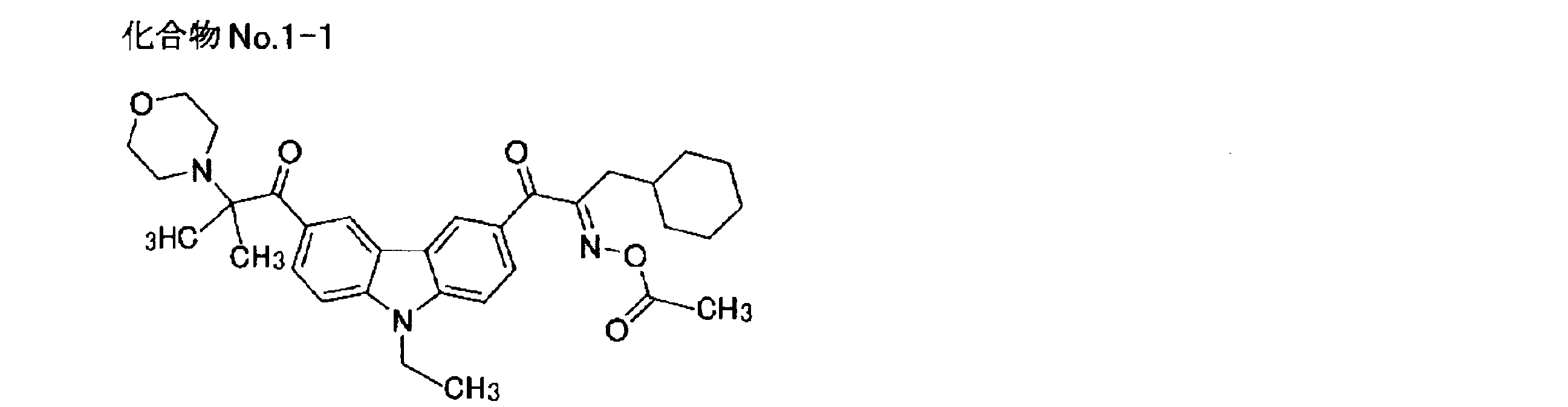
四つ口フラスコに塩化アルミニウム(16.8g、126mmol)、ジクロロエタン120.0gを仕込み、氷冷下、エチルカルバゾール(23.4g、120mmol)、3-シクロヘキシルプロパノイルクロリド(16.8g、126mmol)の順に仕込んだ。室温で1時間反応させたのち、反応液を氷水にあけ、油水分離を行った。有機層をイオン交換水で3回洗浄行った後、脱溶媒後、淡黄色固体の中間体1-Aを得た(32.4g、収率81%)。

四つ口フラスコに塩化アルミニウム(17.4g、131mmol)、ジクロロエタン90.0gを仕込み、氷冷下、中間体1-A(20.7g、62.2mmol)、2-ブロモイソブチリルブロミド(15.0g、65.3mmol)の順に仕込んだ。室温で1時間反応させたのち、反応液を氷水にあけ、油水分離を行った。有機層をイオン交換水で3回洗浄行った後、脱溶媒後、淡黄色固体の中間体1-Bを得た(27.0g、収率90%)。
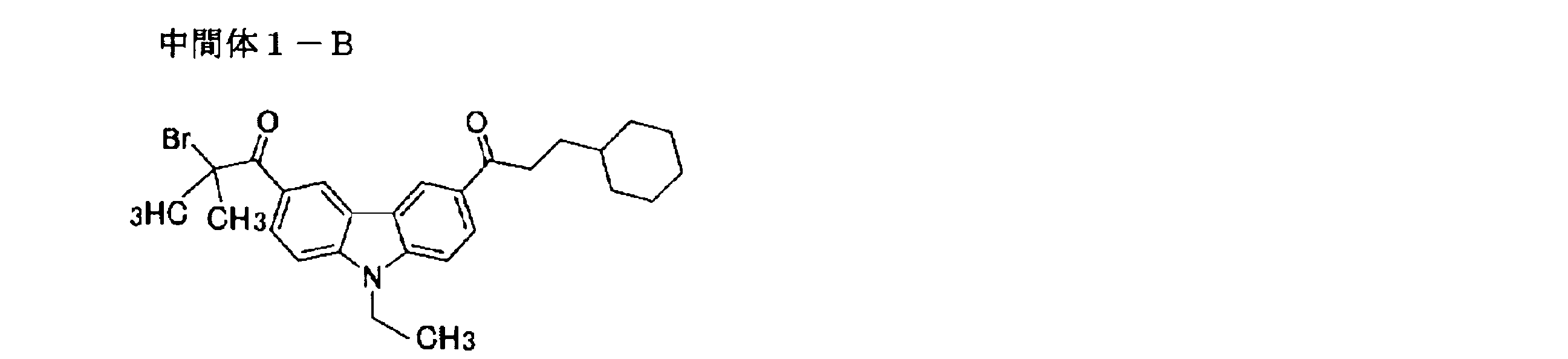
中間体1-B(30.0g、62.2mmol)、キシレン(54.2g)、メタノール(27.1g)、炭酸カリウム(17.2g、124.4mmol)gを仕込み、室温で3時間撹拌した。無機塩をろ別し、ろ液を脱溶媒後、淡黄色油状の中間体1-Cを得た(27.1g、収率100%)。
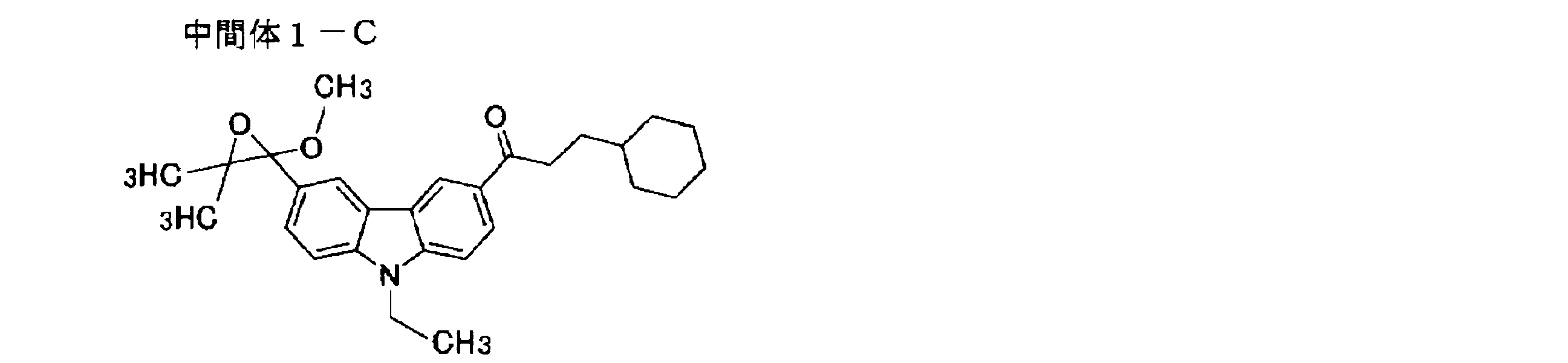
四つ口フラスコに中間体1-C(27.1g、62.2mmol)、モルホリン81.3gを仕込み、窒素気流下還流を行った。12時間撹拌反応後、脱溶媒を行った。酢酸エチル、1%塩酸を仕込み撹拌後、油水分離を行った。有機層を3回水洗し、脱溶媒後、淡黄色油状の中間体1-Dを得た(28.9g、収率95%)。
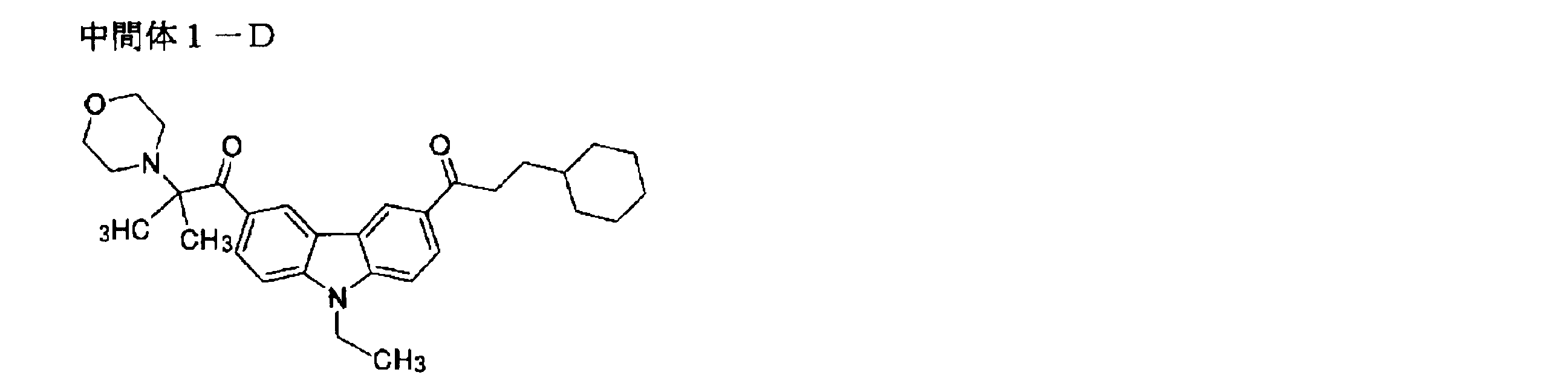
四つ口フラスコに中間体1-D(8.73g、17.8mmol)、DMF30.0g、5℃で撹拌しながら35%塩酸4.0g、亜硝酸イソブチル(3.87g、37.5mmol)を仕込み、室温で12時間反応させた。酢酸エチルを仕込み、油水分離後、有機層を3回水洗し、脱溶媒後、中間体1-Eを得た(9.0g、収率97%)。
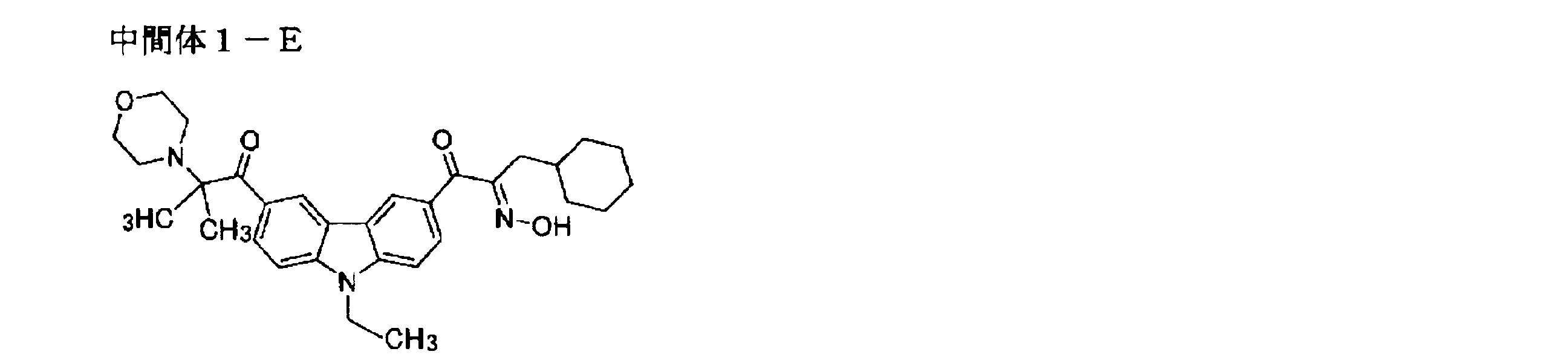
四つ口フラスコに中間体1-E(9.24g、17.9mmol)、酢酸エチル30.0gを仕込み、氷冷下、塩化アセチル(1.54g、19.7mmol)、トリエチルアミン(1.99g、19.7mmol)の順に滴下した。室温で1時間撹拌後、イオン交換水を仕込み油水分離を行った。有機層を3回水洗し、脱溶媒後、シリカゲルカラム(酢酸エチル/ヘキサン=3/10)に付し、化合物No.1-1を得た(2.1g、収率21%)。得られた化合物No.1-1のNMRデータを[表1]に示す。
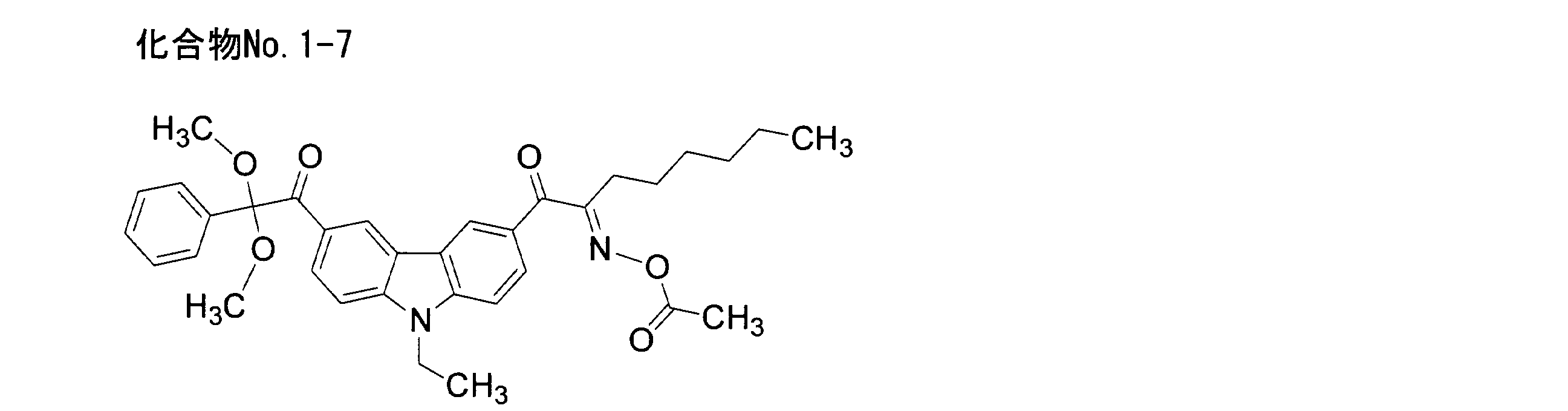
中間体1-Aの製造に用いた3-シクロヘキシルプロパノイルクロリドを、ベンゾイルフォルミルクロライドに、中間体1-Bの製造に用いた酸クロライドを、オクタノイルクロライドに変更した以外、製造例1と同様の方法で、中間体1-7-Aを得た。
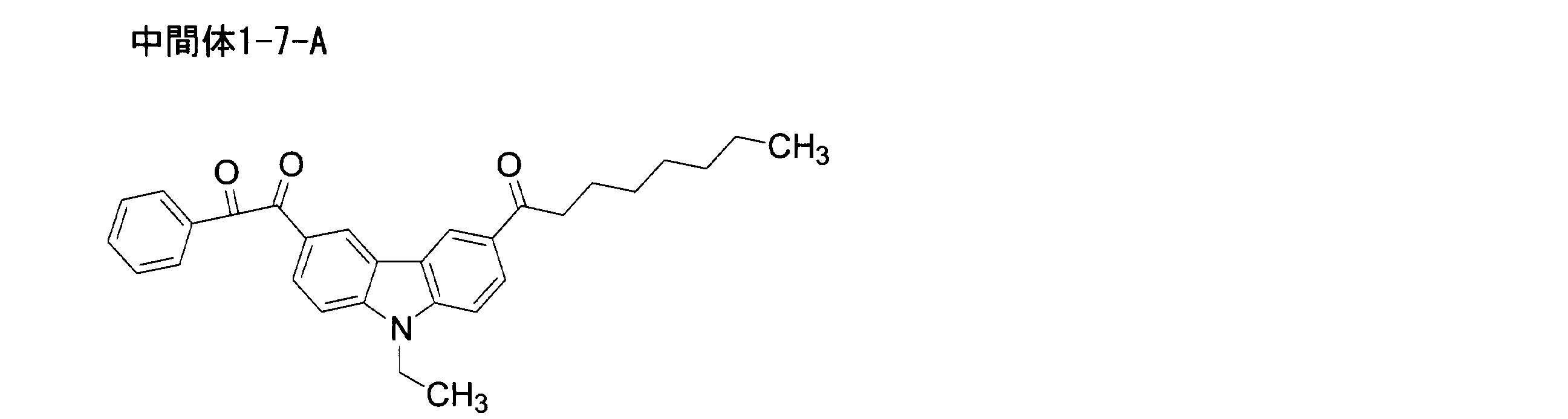
中間体1-7-A(9.1g、20.0mmol)、ジオキサン(30.0g)、ジメチル硫酸(3.2g、60.0mmol)を仕込み、室温を保持しながらナトリウムメチラート(3.2g、60.0mmol)を添加した。室温で5時間反応させた後、酢酸エチル、イオン交換水を仕込み、油水分離した。有機層を3回水洗後、脱溶媒し、シリカゲルカラムに付し、中間体1-7-Bを得た。

中間体1-Dを中間体1-7-Bに変更した以外、製造例1と同様の方法で、化合物No.1-7を得た。
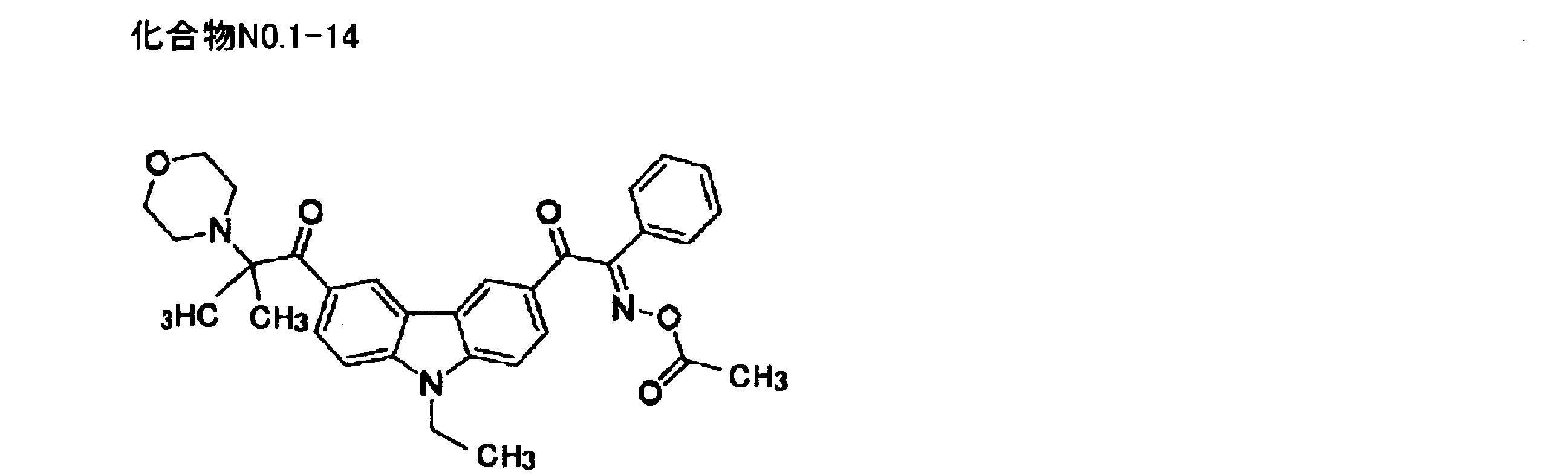
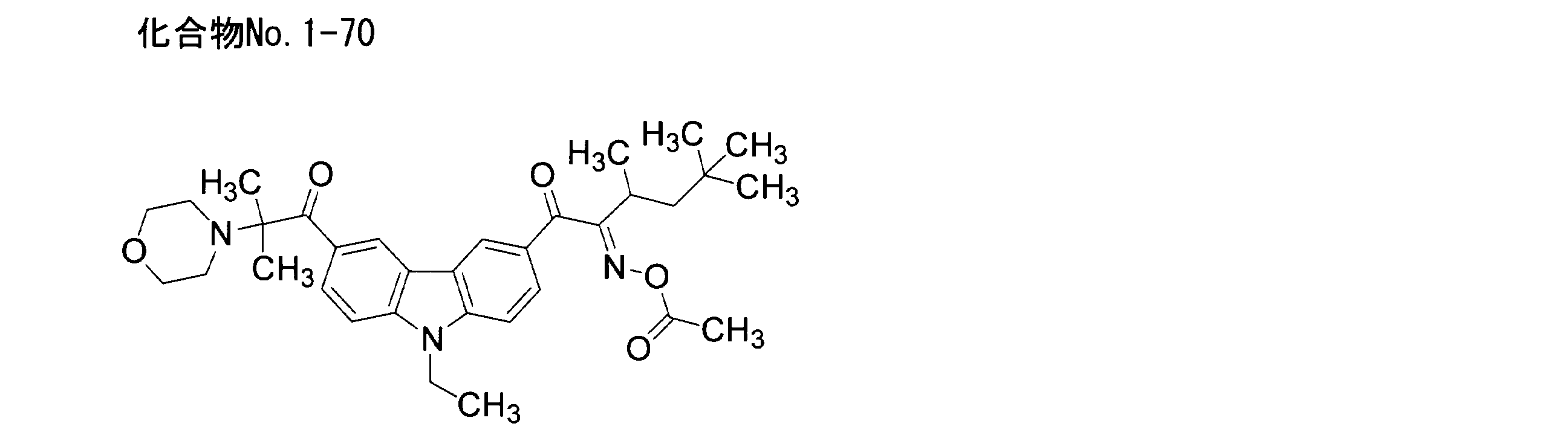
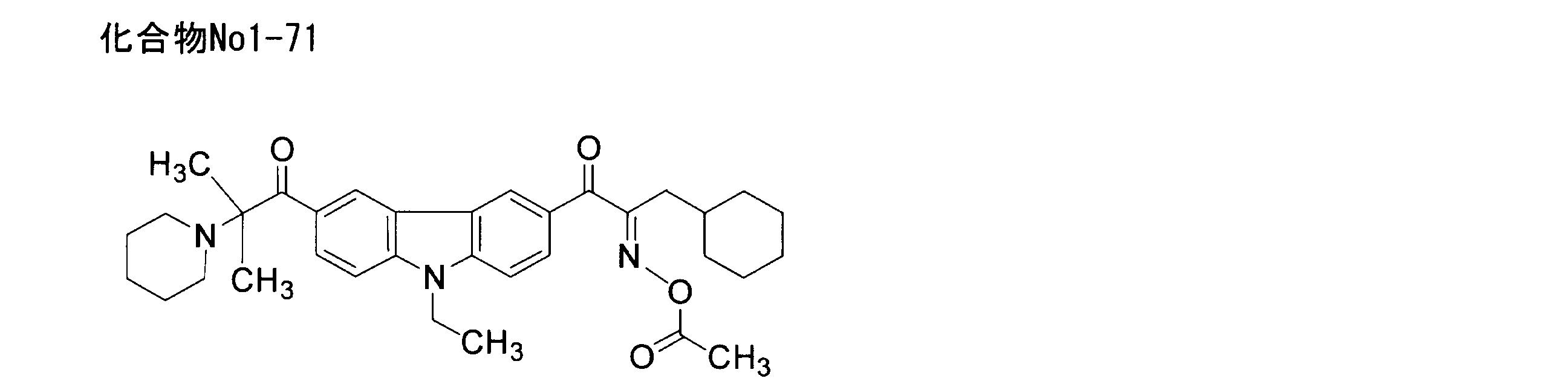
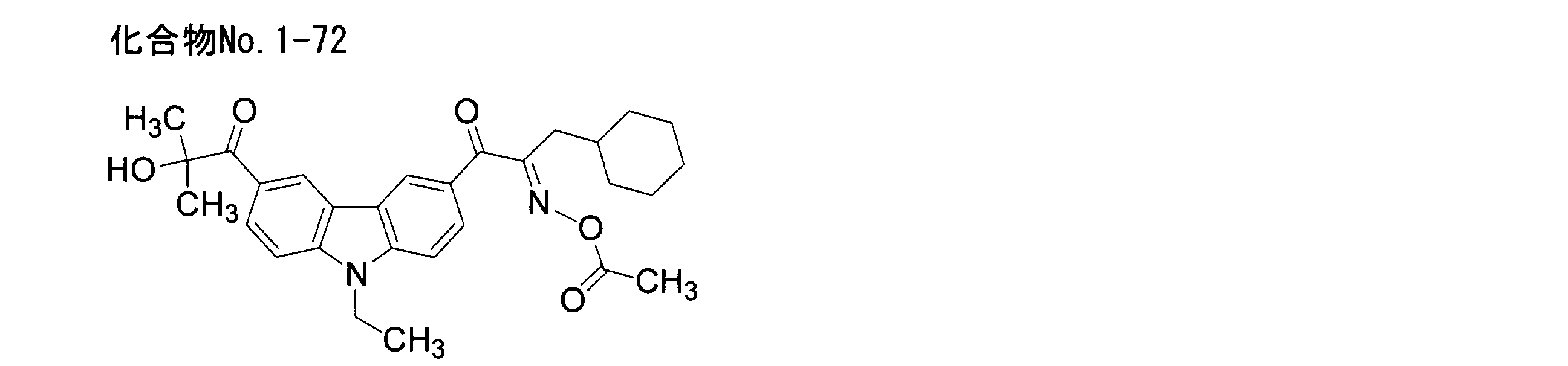
化合物1-B(5.75g、11.9mmol)、THF(17.2g)、イオン交換水(17.2g)、48%水酸化ナトリウム水溶液(1.1g)を仕込み、室温で24時間反応させた。酢酸エチルで抽出を行い、有機層を3回水洗後、脱溶媒し、中間体1-72-Aを得た。
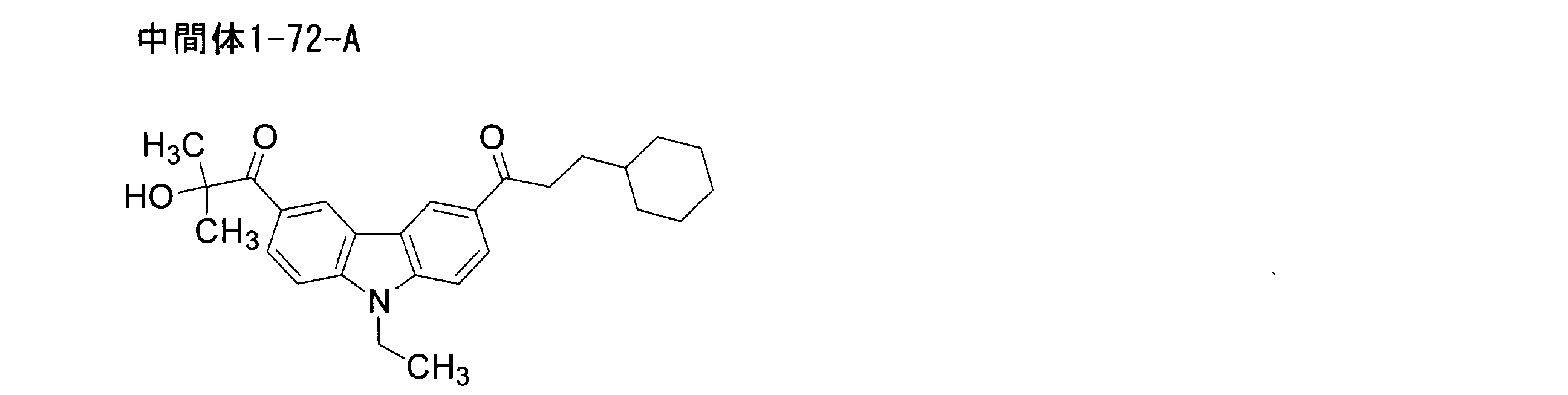
その後、製造例1と同様にして、化合物No.1-72を得た。得られた化合物No.1-72のNMRデータを[表1]に示す。
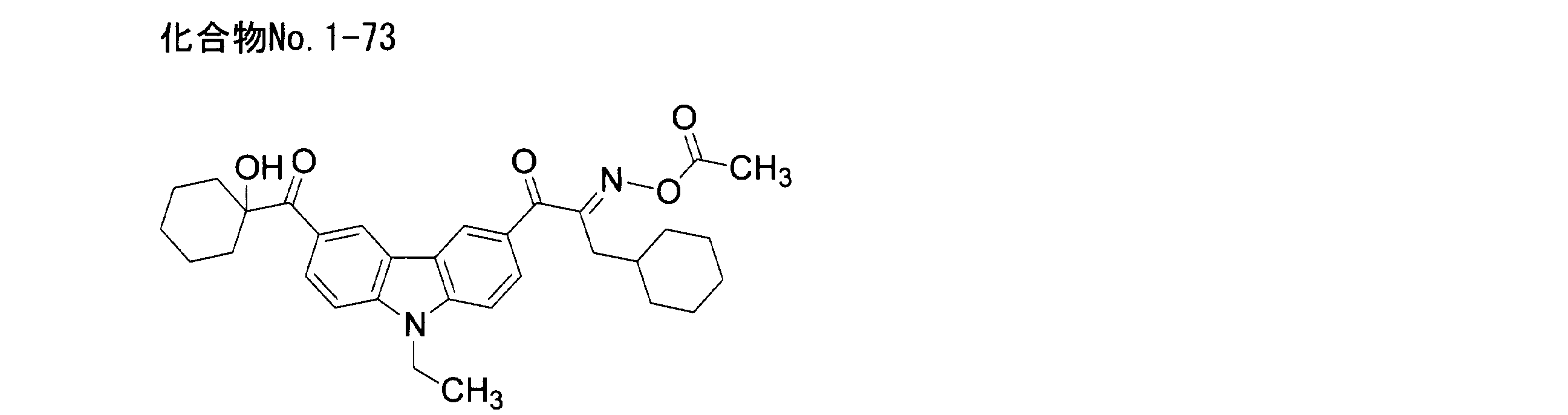
中間体1-Bの製造の際に用いた、酸クロライドをシクロヘキサンカルボニルクロライドに変更した以外、実施例1と同様の方法で中間体1-73-Aを得た。

中間体1-73-A(11.9g、39.0mmol)、塩化メチレン(50g)を仕込み、氷冷下、臭素(6.8g、42.9mmol)をゆっくり仕込んだ。室温で1時間反応させた後、脱溶媒し、中間体1-73-Bを得た。

中間体1-73-B(5.9g、15.6mmol)、THF(12.0g)、イオン交換水(12.0g)、48%水酸化ナトリウム水溶液(1.9g)を仕込み、室温で24時間反応させた。酢酸エチルで抽出を行い、有機層を3回水洗後、脱溶媒し、中間体1-73-Cを得た。
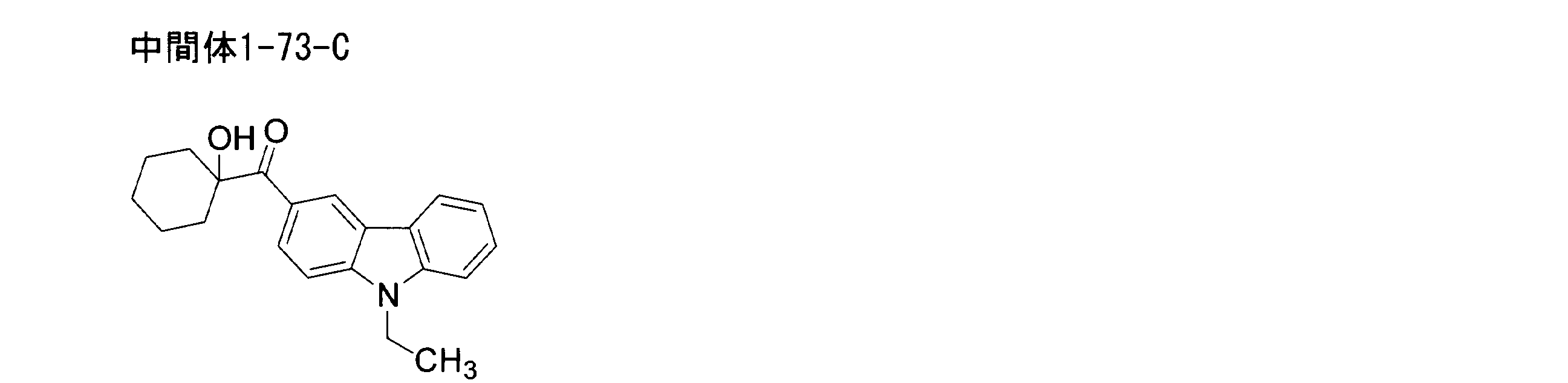
中間体1-Aの製造の際に用いたエチルカルバゾールを、中間体1-73-Cに変更し、3-シクロヘキシルプロパノイルクロリドをオクタノイルクロライドに変更した以外、中間体1-Aの製造と同様の方法で中間体1-73-Dを得た。

中間体1-Dを中間体1-73-Dに変更した以外、製造例1と同様の方法で、化合物No.1-73を得た。
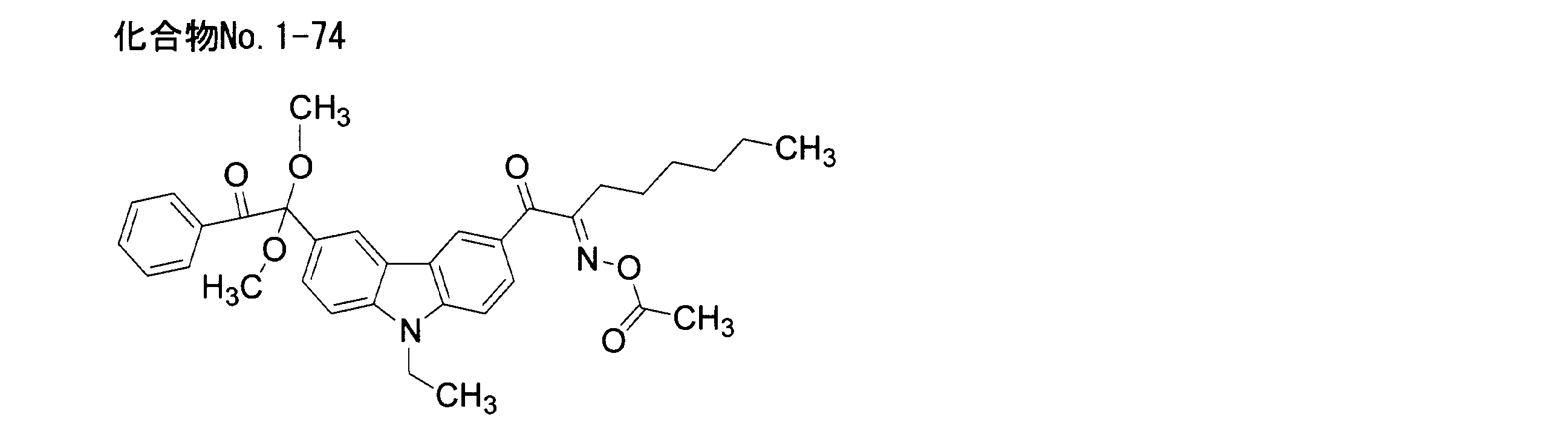
中間体1-7-Bの製造と同様の方法で得られた異性体として中間体1-74-Aを得た。なお、化合物No.1-7の中間体1-7-Bと、化合物No.1-74の中間体1-74-Aは、同一の製造方法で製造される異性体であり、シリカゲルカラムを用いて精製分離した。
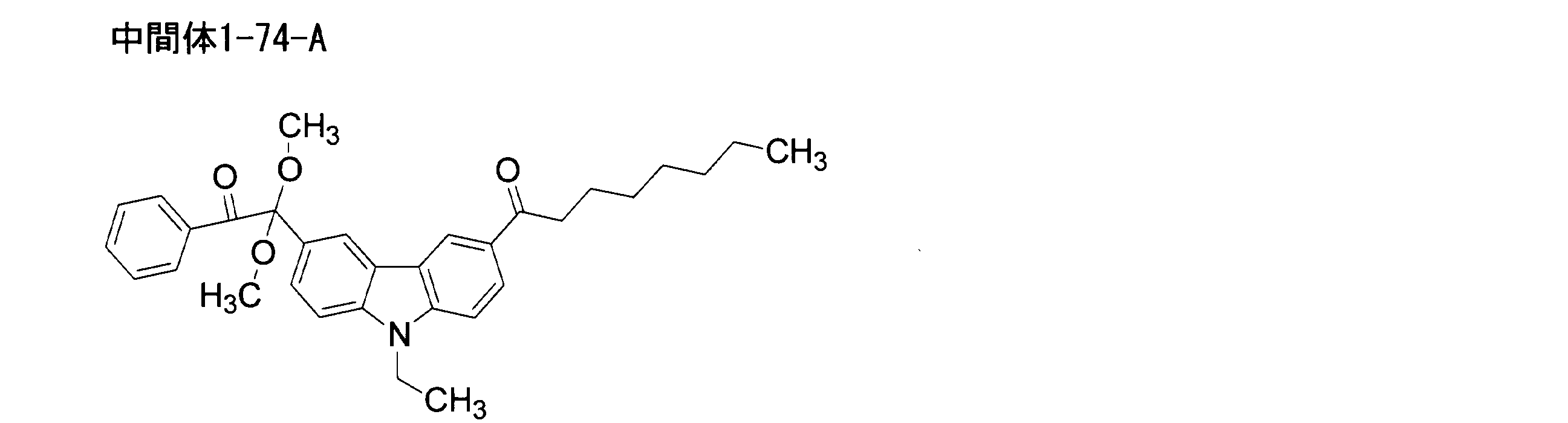
その後、中間体1-Dを中間体1-74-Aに変更した以外、製造例1と同様の方法で、化合物No.1-74を得た。
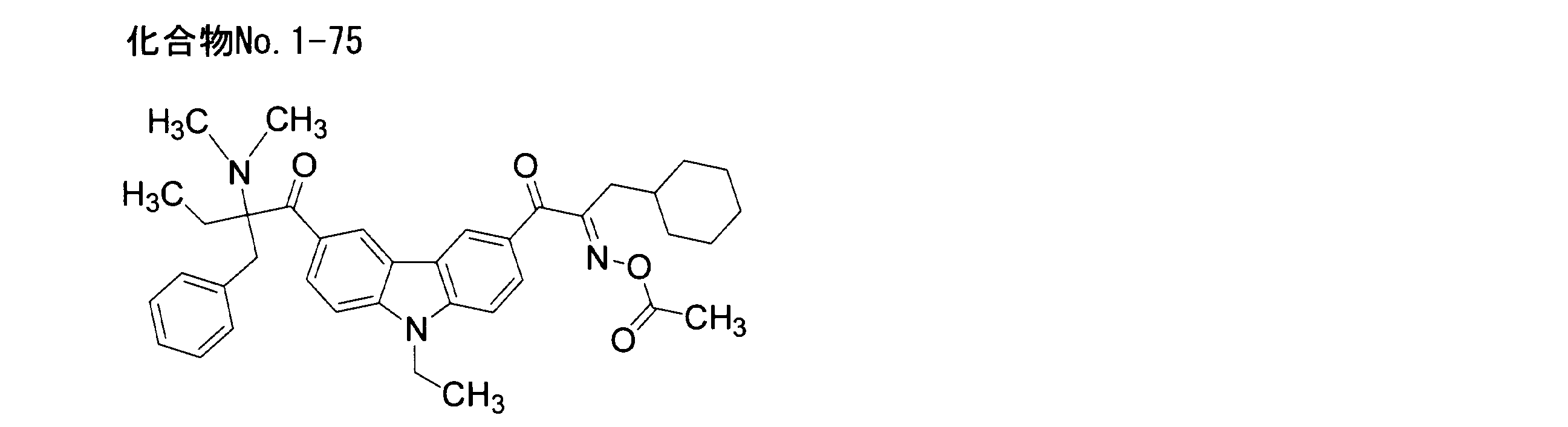
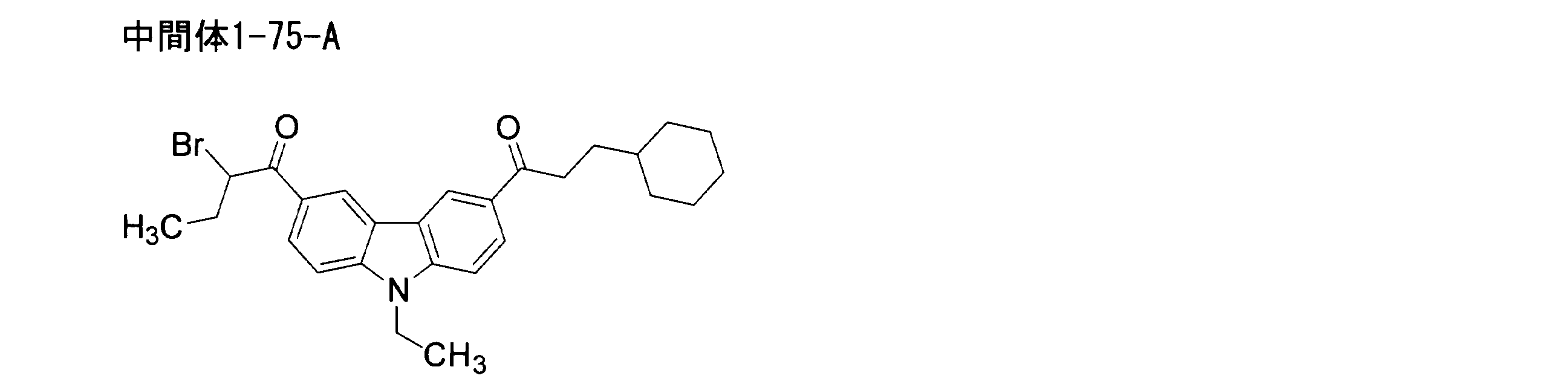

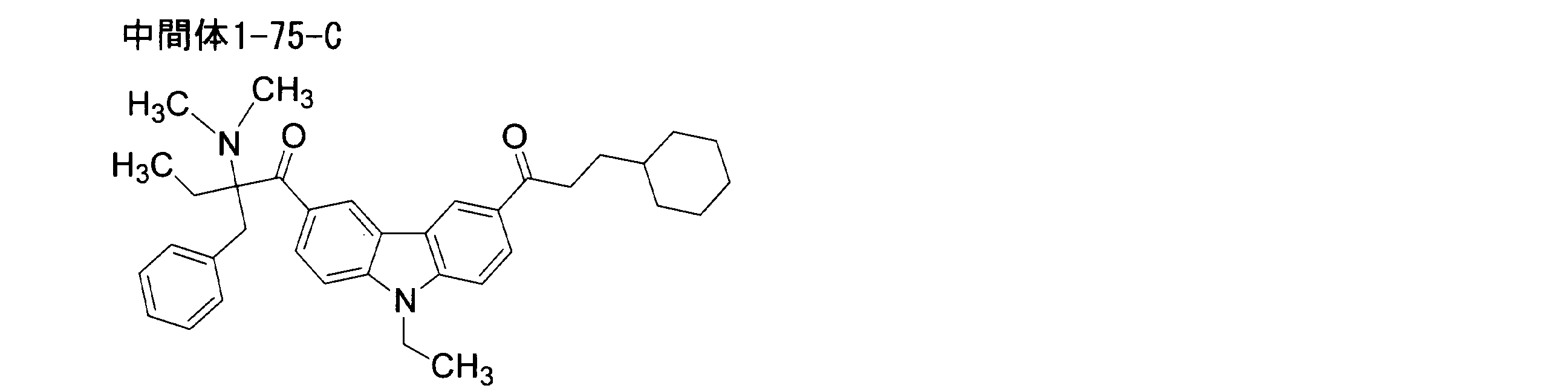
中間体1-Dを中間体1-75-Cに変更した以外、製造例1と同様の方法で、化合物No.1-75を得た。

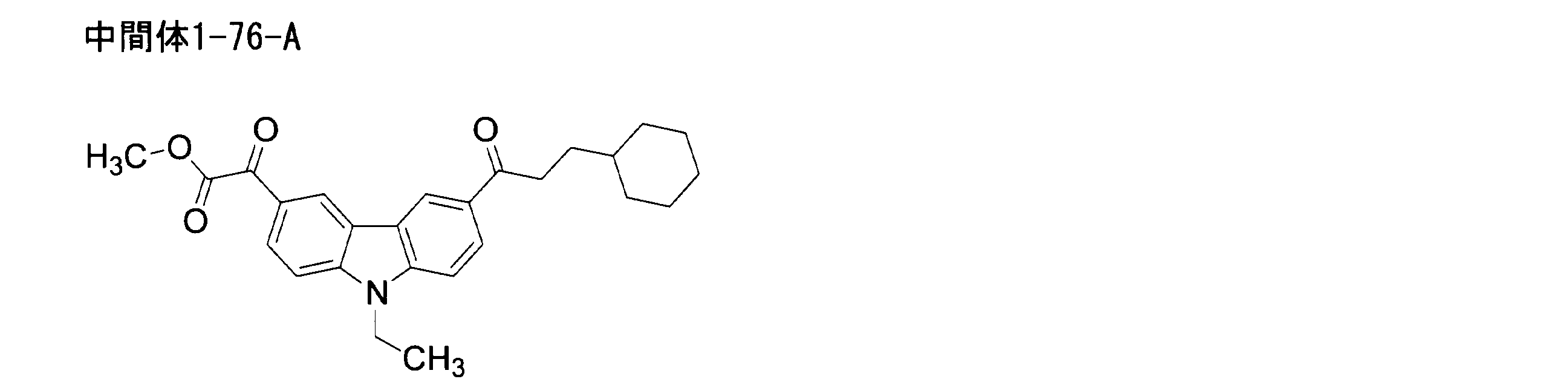
中間体1-Dを中間体1-76-Aに変更した以外、製造例1と同様の方法で、化合物No.1-76を得た。得られた化合物No.1-76のNMRデータを[表1]に示す。
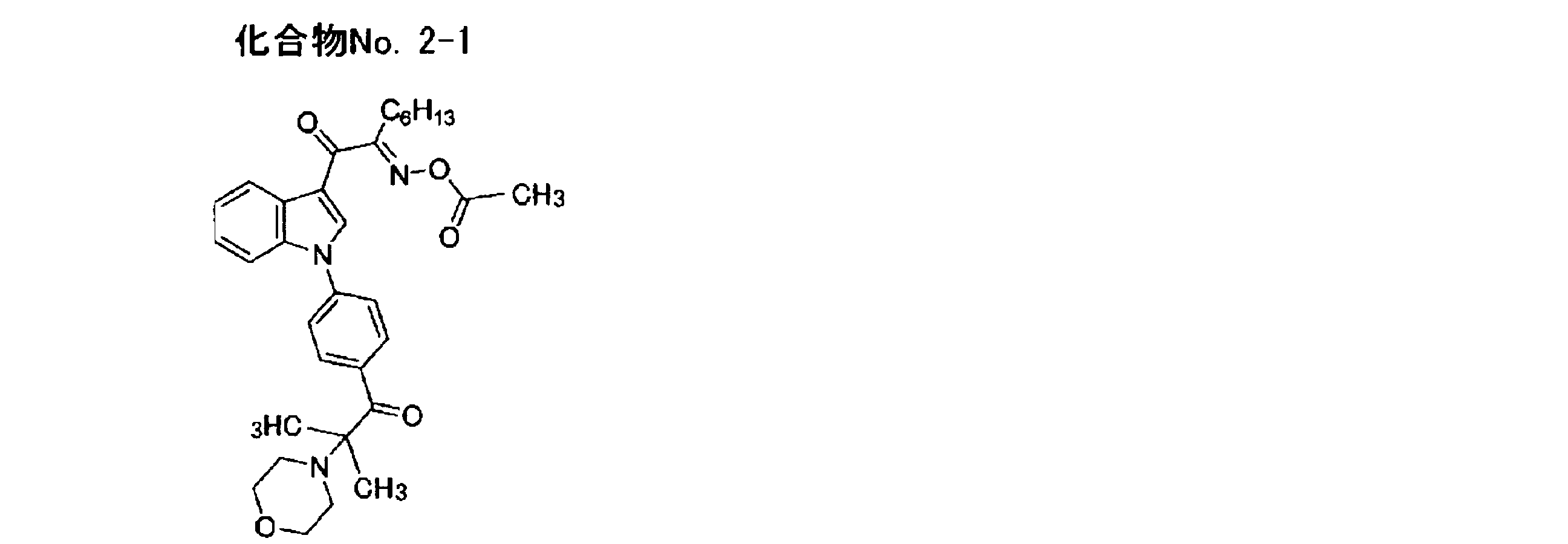
四つ口フラスコに中間体2-A(12.7g、47.4mmol)、中間体2-B(10.5g、43.1mol)、炭酸カリウム(11.9g、86.3mmol)、ジメチルフォルムアセトアミド60.0gを仕込み、窒素気流下加熱還流を12時間行った。室温まで冷却後、イオン交換水、酢酸エチルを仕込み、60℃で油水分離を行った。有機層を60℃に加温しながら3回水洗し、室温まで冷却後、析出物をろ別し、中間体2-Cを得た(8.5g、収率57%)。
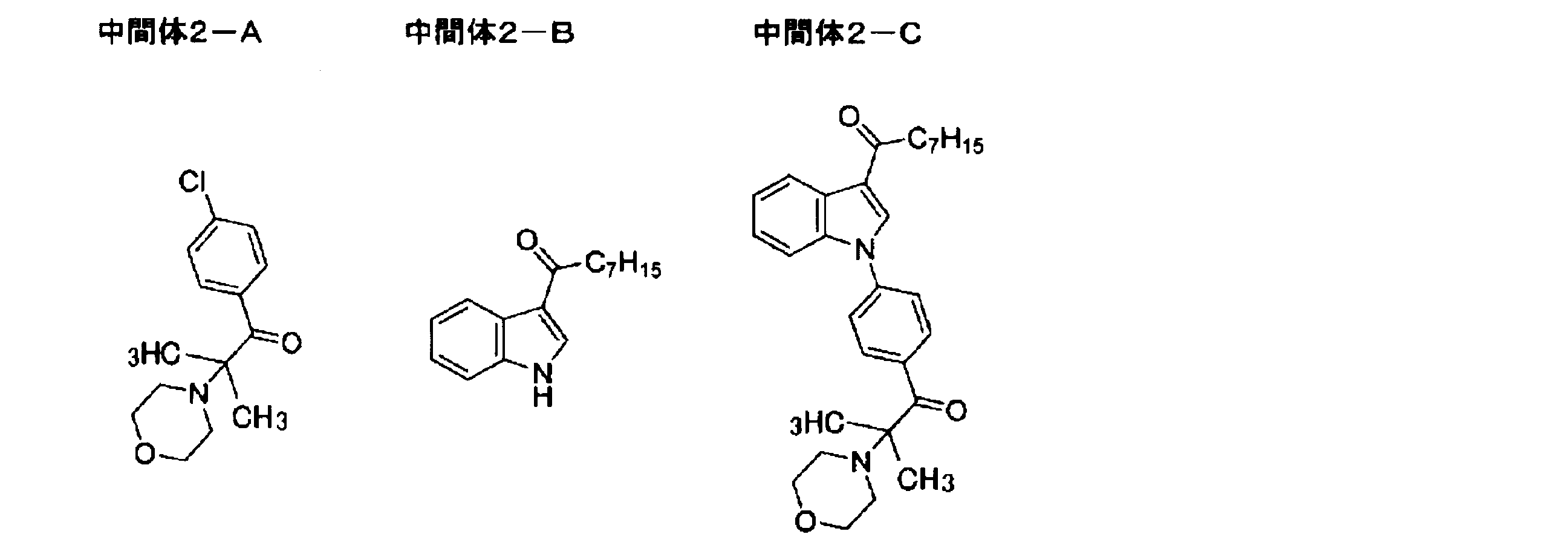
四つ口ナスフラスコに中間体2-C(4.35g、9.16mmol)、DMF(40.0g)を仕込み、氷冷下撹拌しながら35%塩酸(2.00g)、亜硝酸イソブチル(1.98、10.1mol)を滴下し、40℃で30時間撹拌した。イオン交換水、酢酸エチルを加え、油水分離し、有機層を3回水洗した。次に有機層へ氷冷下、塩化アセチル(1.51g、19.2mmol)、トリエチルアミン(1.95g、19.2mmol)を滴下した。室温で1時間撹拌後、イオン交換水を加え、油水分離し有機層を3回水洗した。脱溶媒後、シリカゲルカラム(酢酸エチル/ヘキサン=2/10)に付し、化合物No.2-1(2.1g:収率45%)を得た。得られた化合物No.2-1のNMRデータを[表1]に示す。
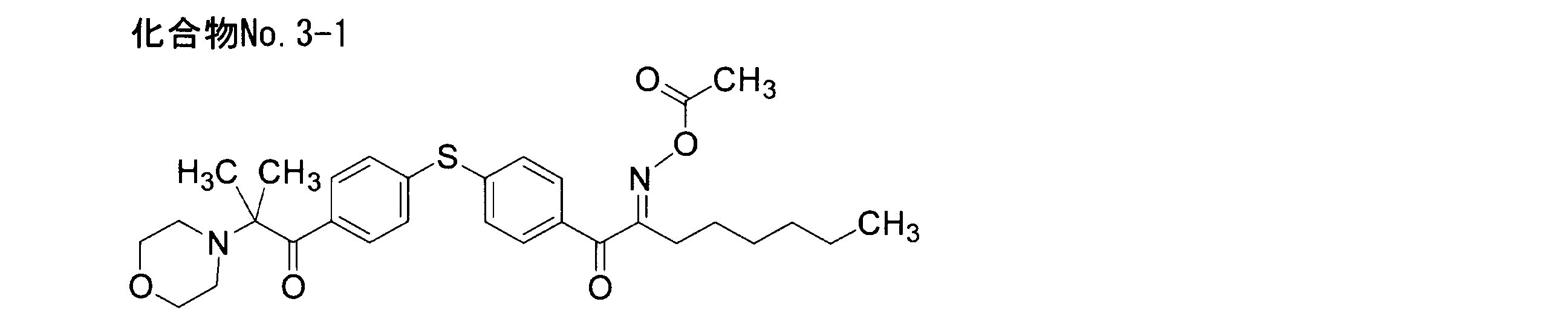

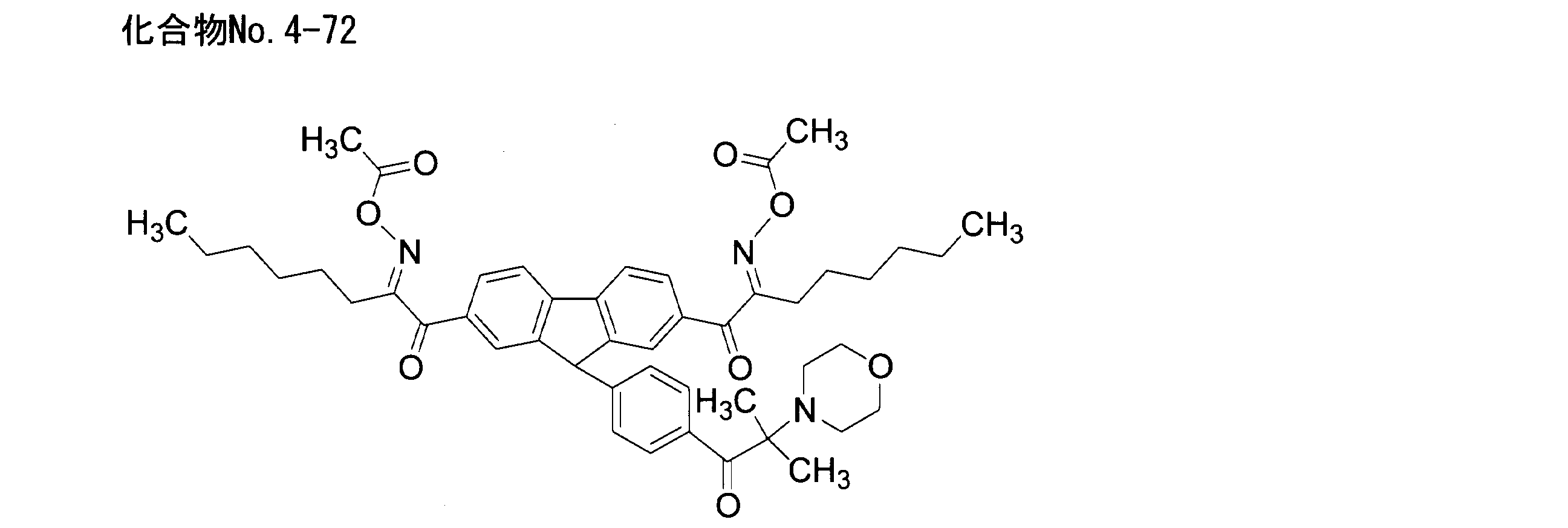
塩化アルミニウム(309.56g、71.7mmol)、ジクロロエタン(30.0g)を仕込み、氷冷下、フルオレン(3.97g、23.9mmol)、オクタノイルクロライド(7.97g、49.0mmol)の順に仕込んだ。室温で1時間反応させたのち、反応液を氷水中に注ぎ、析出物をろ別した。イオン交換水、メタノールで洗浄し、中間体4-72-Aを得た。
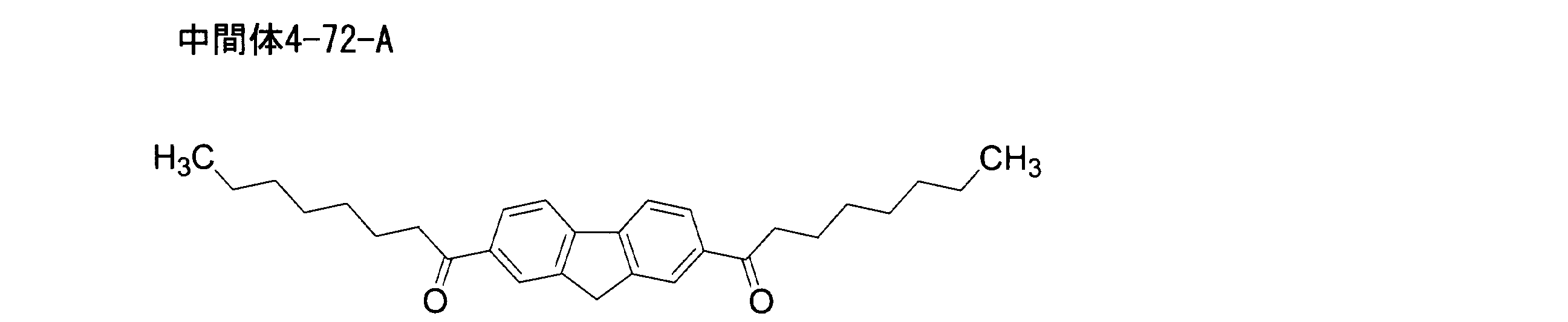
得られた中間体4-72-Aに対し、中間体2-Cの合成と同様にして中間体4-72-Bを得た。
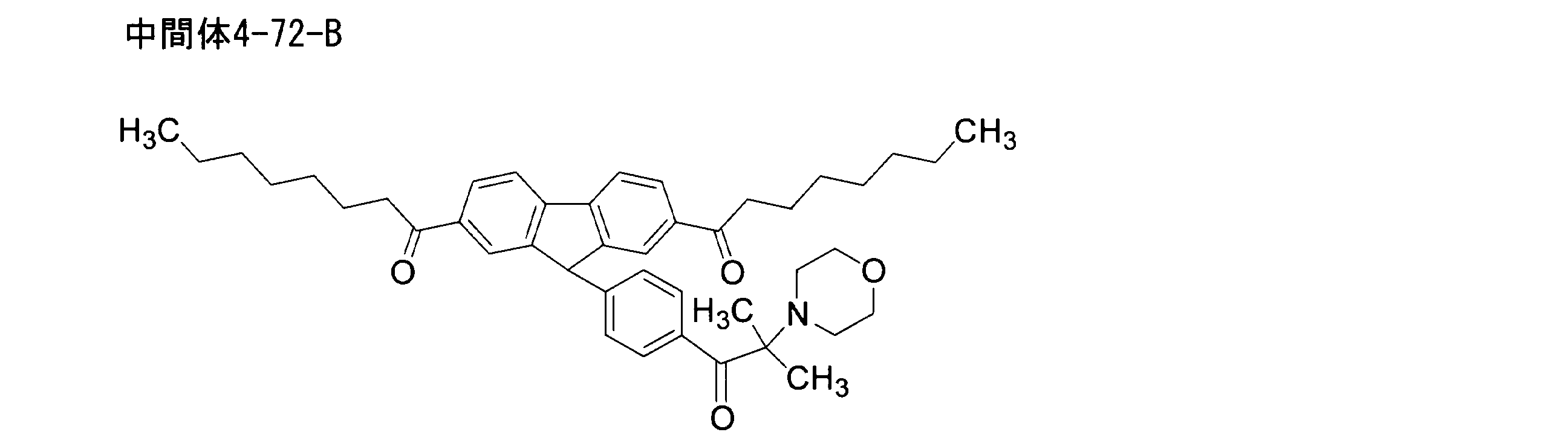
化合物No.2-1の製造と同様にして、化合物No.4-72を得た。得られた化合物No.4-72のNMRデータを[表1]に示す。
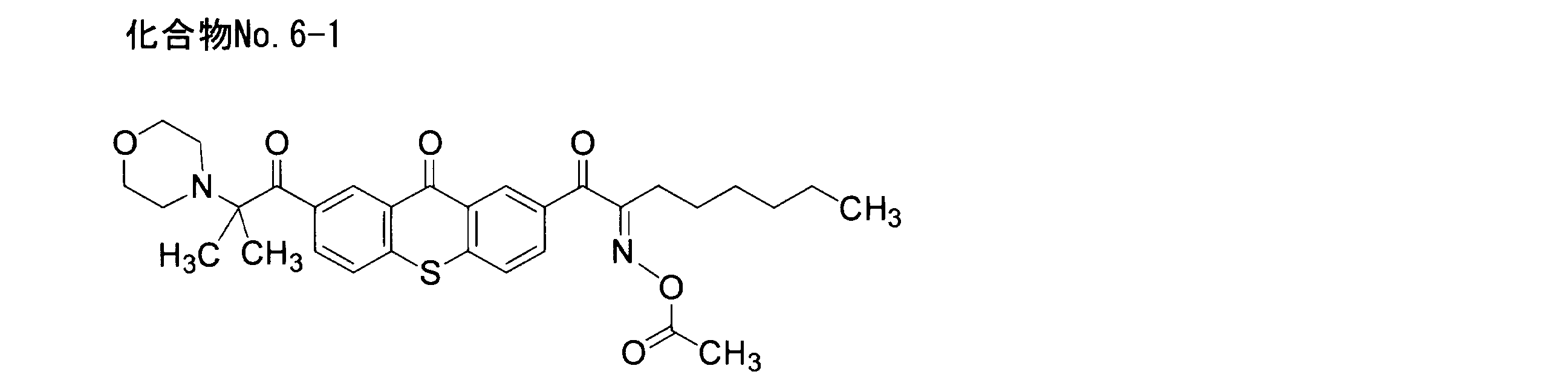
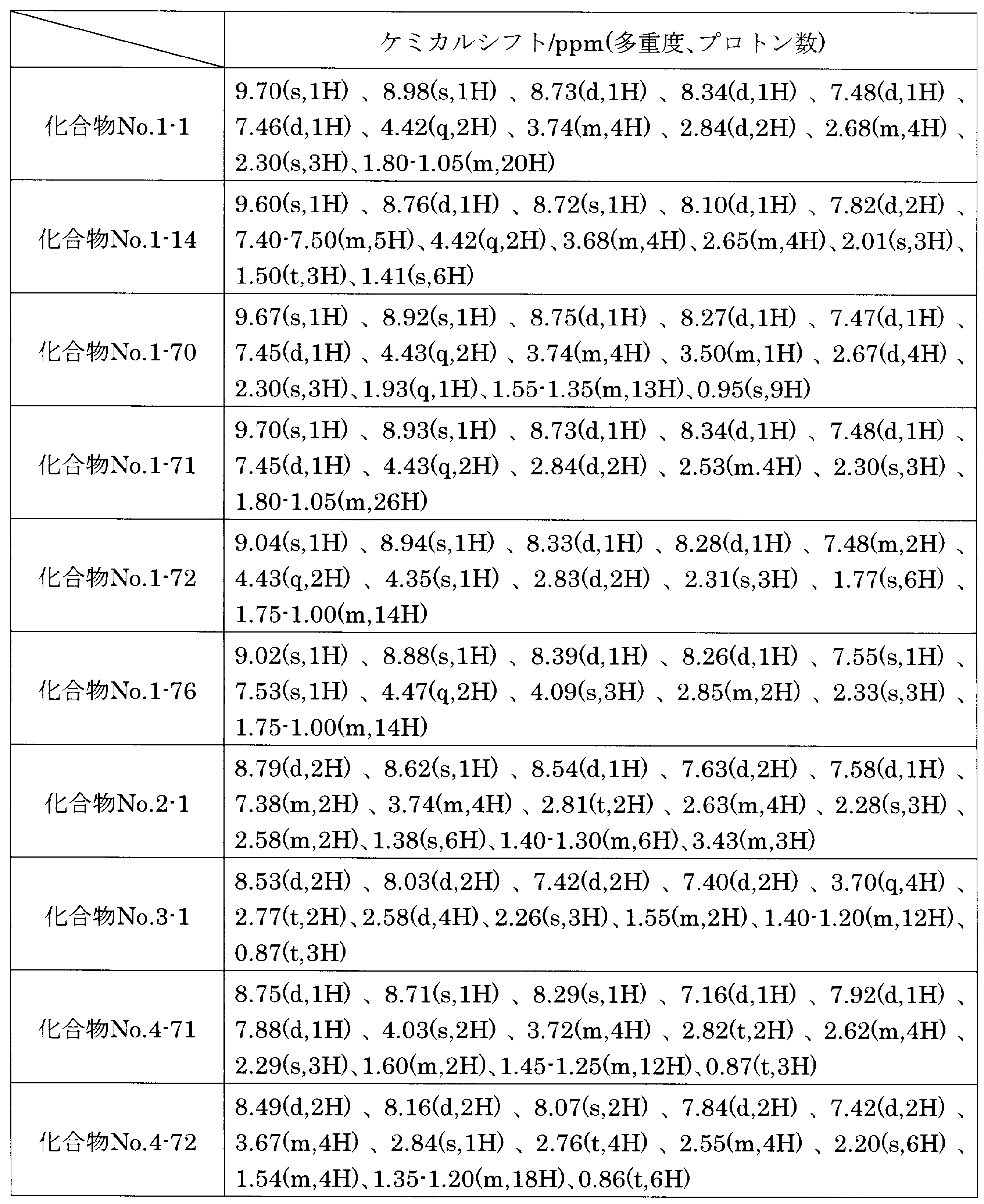
分散剤としてDISPERBYK-161(12.5質量部;ビックケミージャパン製)および着色剤としてピグメントブルー15:6(15質量部)を、PGMEA(72.5質量部)に、ビーズミルを使用して分散させてブルー顔料分散液を製造した。
[表2]、[表3]の配合に従って各成分を調製し、実施例1~15および比較例1~4の重合性組成物を得た。なお、表中の数字は質量部を表す。
A-1 :化合物No.1-1
A-2 :化合物No.1-7
A-3 :化合物No.1-14
A-4 :化合物No.1-70
A-5 :化合物No.1-71
A-6 :化合物No.1-72
A-7 :化合物No.1-73
A-8 :化合物No.1-74
A-9 :化合物No.1-75
A-10:化合物No.1-76
A-11:化合物No.2-1
A-12:化合物No.3-1
A-13:化合物No.4-71
A-14:化合物No.4-72
A-15:化合物No.6-1
A’-1:化合物No.A2-9
A’-2:2-メチル-1-[4-(メチルチオ)フェニル]-2-モルホリノプロパン-1-オン
B-1 :SPC-3000(カルボキシル基を有する重合体;昭和電工社製、固形分42.7%、PGMEA溶液)
C-1 :カヤラッドDPHA(エチレン性不飽和化合物;日本化薬社製)
D-1 :ブルー顔料分散液No.1
E-1 :KBE-403(カップリング剤、信越化学株式会社製)
F-1 :PGMEA(溶剤)
得られた重合性組成物およびその硬化物において感度および輝度の評価を下記の手順で行った。結果を[表2]、[表3]に併記する。
ガラス基板上に各重合性組成物をスピンコート(ポストベイク後の色度座標(x、y)=(0.135,0.098)になるように)し、ホットプレートを用いて、90℃で120秒間プリベイクを行った後、23℃で60秒間冷却した。その後、超高圧水銀ランプを用いてフォトマスク(マスク開口30μm)を介して露光した(露光ギャップ100μm、露光量40mJ/cm2)。現像液として0.04質量%KOH水溶液を用いて現像した後、よく水洗し、クリーンオーブンを用いて230℃で20分ポストベイクを行い、パターンを定着させた。得られたパターンを電子顕微鏡で観察し、マスク開口に対応する部分の線幅を測定した。
ガラス基板上に各重合性組成物をスピンコート(ポストベイク後の色度座標(x、y)=(0.135,0.098)になるように)し、ホットプレートを用いて、90℃で120秒間プリベイクを行った後、23℃で60秒間冷却した。その後、超高圧水銀ランプを用いて150mJ/cm2で露光後、クリーンオーブンを用いて230℃で20分ポストベイクを行い、評価サンプルを作成した。得られたサンプルの380~780nmにおける透過率から、JIS Z8701に準拠してY値を求めた。Y値が高いほど輝度が高く可視光領域において高い透過率を有することを意味し、有用である。Y値が9.5以上のものは、カラーフィルタとして使用でき、Y値が11.0以上の物は特に好ましく使用でき、Y値が9.5未満のものはカラーフィルタとして適さない。
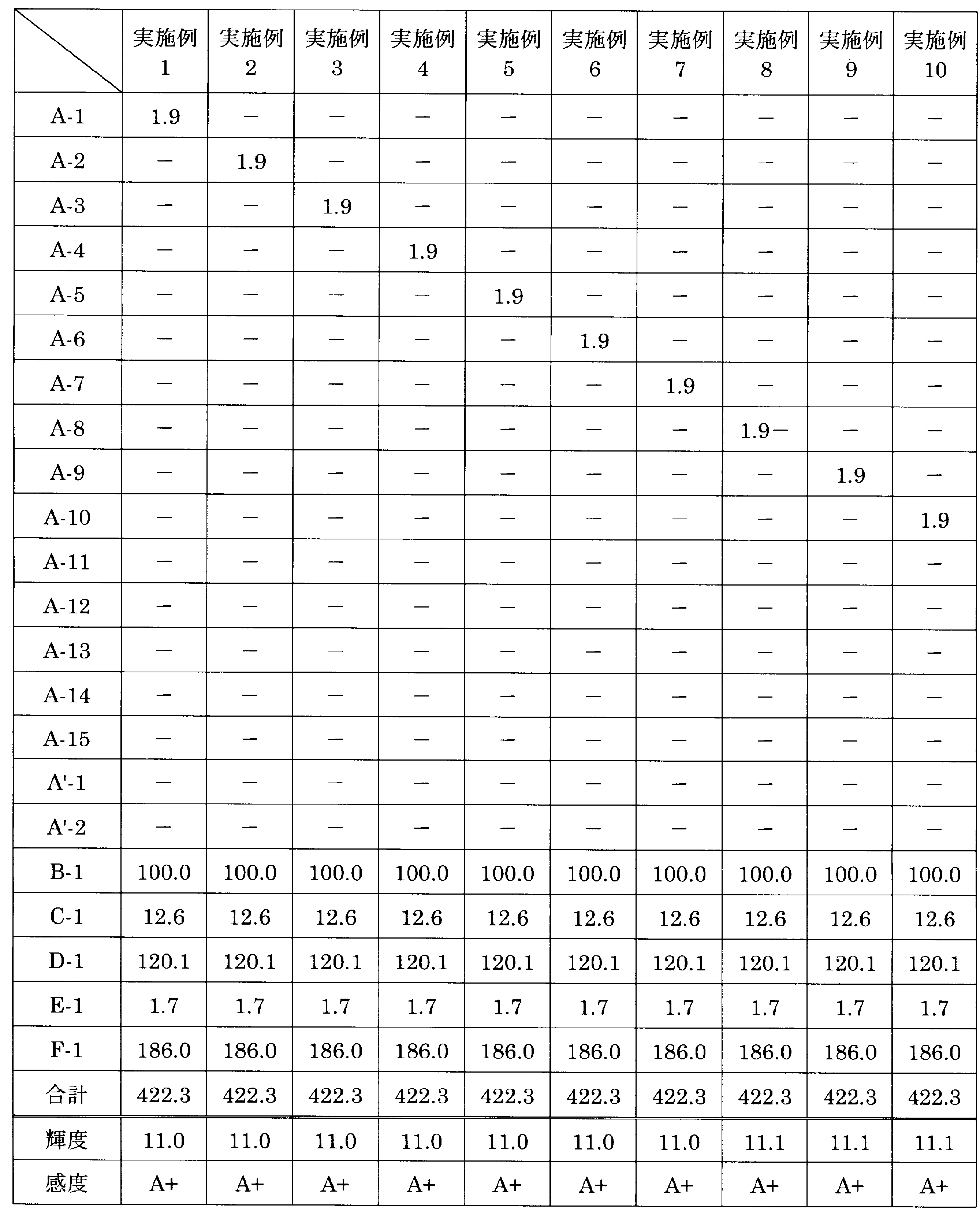
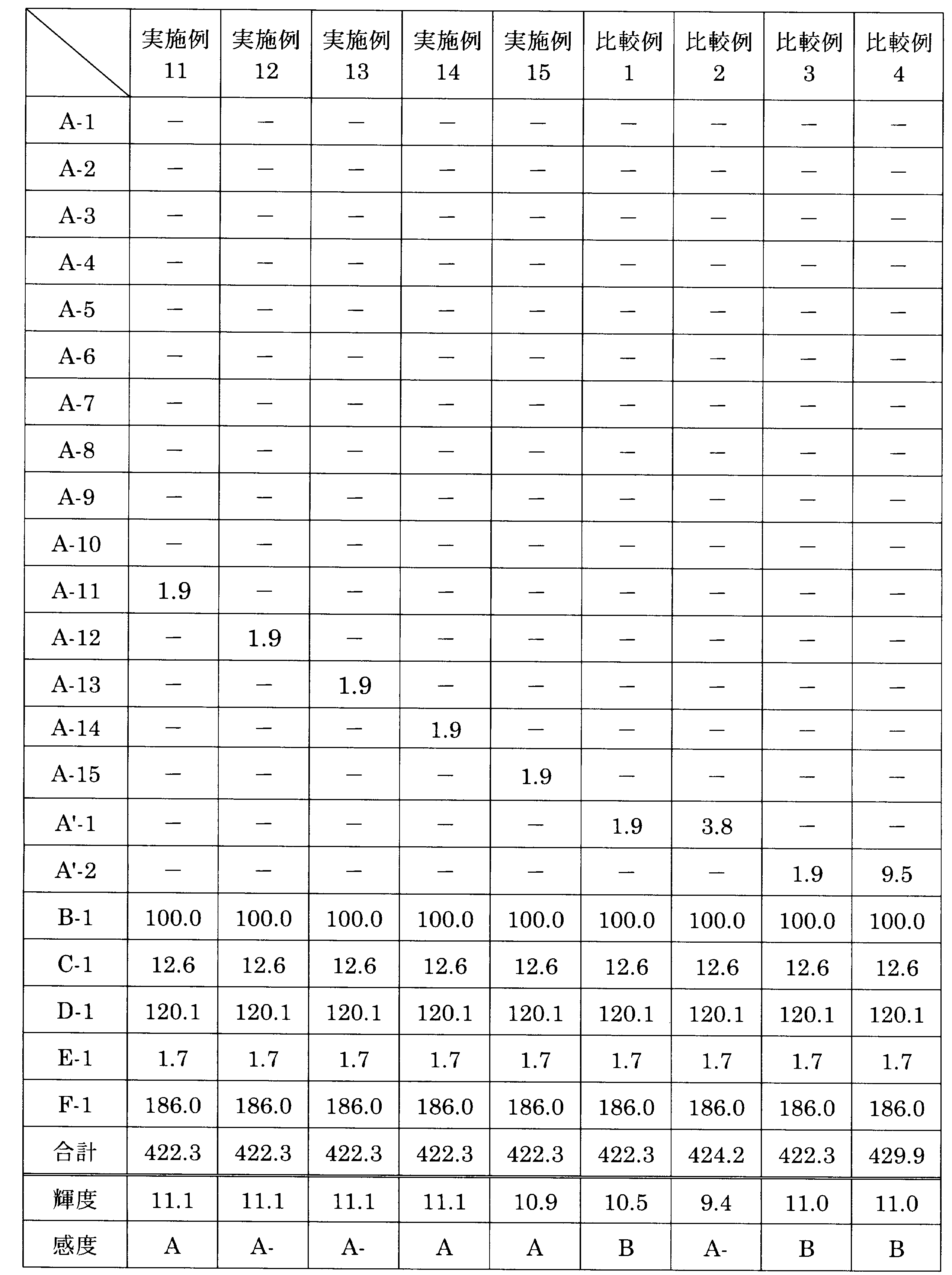
[表4]に記載の化合物を試料として採取し、示差熱熱重量同時測定装置(エスアイアイ・ナノテクノロジー社製、型式:EXSTAR TG/DTA6200」)を用いて、試料約5~10mg、窒素200mL/min雰囲気下、昇温開始温度30℃、昇温終了温度500℃、昇温速度10℃/minで昇温した際における試料について熱減量を測定した。30℃時点の試料重量に対して10%減量した時点の温度を10%重量減少温度とした。なお、10%重量減少温度が230℃以上で、耐熱性に優れる光ラジカル重合開始剤として用いることができる。

Claims (12)
- 下記一般式(I)で表される基と、オキシムエステル基を有さない光ラジカル開裂性基と、を同一分子内に有することを特徴とするオキシムエステル化合物。
(一般式(I)中、R1およびR2は、それぞれ独立に水素原子、ハロゲン原子、ニトロ基、シアノ基、炭素原子数1~20の炭化水素基または炭素原子数2~20の複素環含有基を表し、
R1およびR2で表される基中の水素原子の1つまたは2つ以上はハロゲン原子、ニトロ基、シアノ基、水酸基、アミノ基、カルボキシル基、メタクリロイル基、アクリロイル基、エポキシ基、ビニル基、ビニルエーテル基、メルカプト基、イソシアネート基または炭素原子数2~20の複素環含有基で置換されていてもよく、
R1およびR2で表される基中のメチレン基の1つまたは2つ以上は、酸素が隣り合わない条件で-O-、-CO-、-COO-、-OCO-、-NR3-、-NR3CO-、-S-、-CS-、-SO2-、-SCO-、-COS-、-OCS-またはCSO-で置換されていてもよく、
R3は、水素原子、炭素原子数1~20の炭化水素基を表し、
nは0または1を表し、*は結合手を表す。) - 下記一般式(II)で表される構造を有する請求項1記載のオキシムエステル化合物。
(一般式(II)中、A1は、炭素原子数6~20の芳香族環を表し、
R11は、前記一般式(I)で表される基を表し、
R12は、前記オキシムエステル基を有さない光ラジカル開裂性基、前記オキシムエステル基を有さない光ラジカル開裂性基で置換された炭素原子数1~20の炭化水素基、または前記オキシムエステル基を有さない光ラジカル開裂性基で置換された炭素原子数2~20の複素環含有基を表し、
R13は、それぞれ独立にハロゲン原子、ニトロ基、シアノ基、炭素原子数1~20の炭化水素基または炭素原子数2~20の複素環含有基を表し、
R12およびR13で表される基中の水素原子の1つまたは2つ以上はハロゲン原子、ニトロ基、シアノ基、水酸基、アミノ基、カルボキシル基、メタクリロイル基、アクリロイル基、エポキシ基、ビニル基、ビニルエーテル基、メルカプト基、イソシアネート基または炭素原子数2~20の複素環含有基で置換されていてもよく、
R12およびR13で表される基中のメチレン基の1つまたは2つ以上は、酸素が隣り合わない条件で-O-、-CO-、-COO-、-OCO-、-NR14-、-NR14CO-、-S-、-CS-、-SO2-、-SCO-、-COS-、-OCS-またはCSO-で置換されていてもよく、
R14は、水素原子、炭素原子数1~20の炭化水素基を表し、
aは1~20の整数を表し、aが2以上の整数の場合、複数存在するR11は、同一であっても異なっていてもよく、
bは1~20の整数を表し、bが2以上の整数の場合、複数存在するR12は、同一であっても異なっていてもよく、
cは0~20の整数を表し、cが2以上の整数の場合、複数存在するR13は、同一であっても異なっていてもよいが、
a+b+cは20以下である。) - A1が、下記一般式(IIIα)または(IIIβ)で表される構造である請求項2記載のオキシムエステル化合物。
(一般式(IIIα)中、X1は、酸素原子、硫黄原子、セレン原子、CR21R22、CO、NR23またはPR24を表し、
X2は、単結合、無結合、酸素原子、硫黄原子、セレン原子、CR21R22、CO、NR23またはPR24を表し、
R21、R22、R23およびR24は、それぞれ独立に、水素原子、炭素原子数1~20の炭化水素基または複素環を含有する炭素原子数2~20の基を表し、R21、R22、R23およびR24で表される基中の水素原子は、ハロゲン原子、ニトロ基、シアン基、水酸基、カルボキシル基または炭素原子数2~20の複素環基で置換されていてもよく、
R21、R22、R23およびR24で表される基中のメチレン基の1つまたは2つ以上は、酸素が隣り合わない条件で-O-に置換されていてもよい。)

- 前記一般式(II)中のR12が、前記オキシムエステル基を有さない光ラジカル開裂性基である請求項2または3記載のオキシムエステル化合物。
- 前記オキシムエステル基を有さない光ラジカル開裂性基が下記一般式(IVα)、(IVβ)、(IVγ)、(IVδ)、(IVε)、(IVζ)および(IVθ)で表される基である請求項1~4のうちいずれか一項記載のオキシムエステル化合物。
(一般式(IVα)~(IVθ)中、R31は、OR41、NR42R43または炭素原子数2~20の複素環含有基を表し、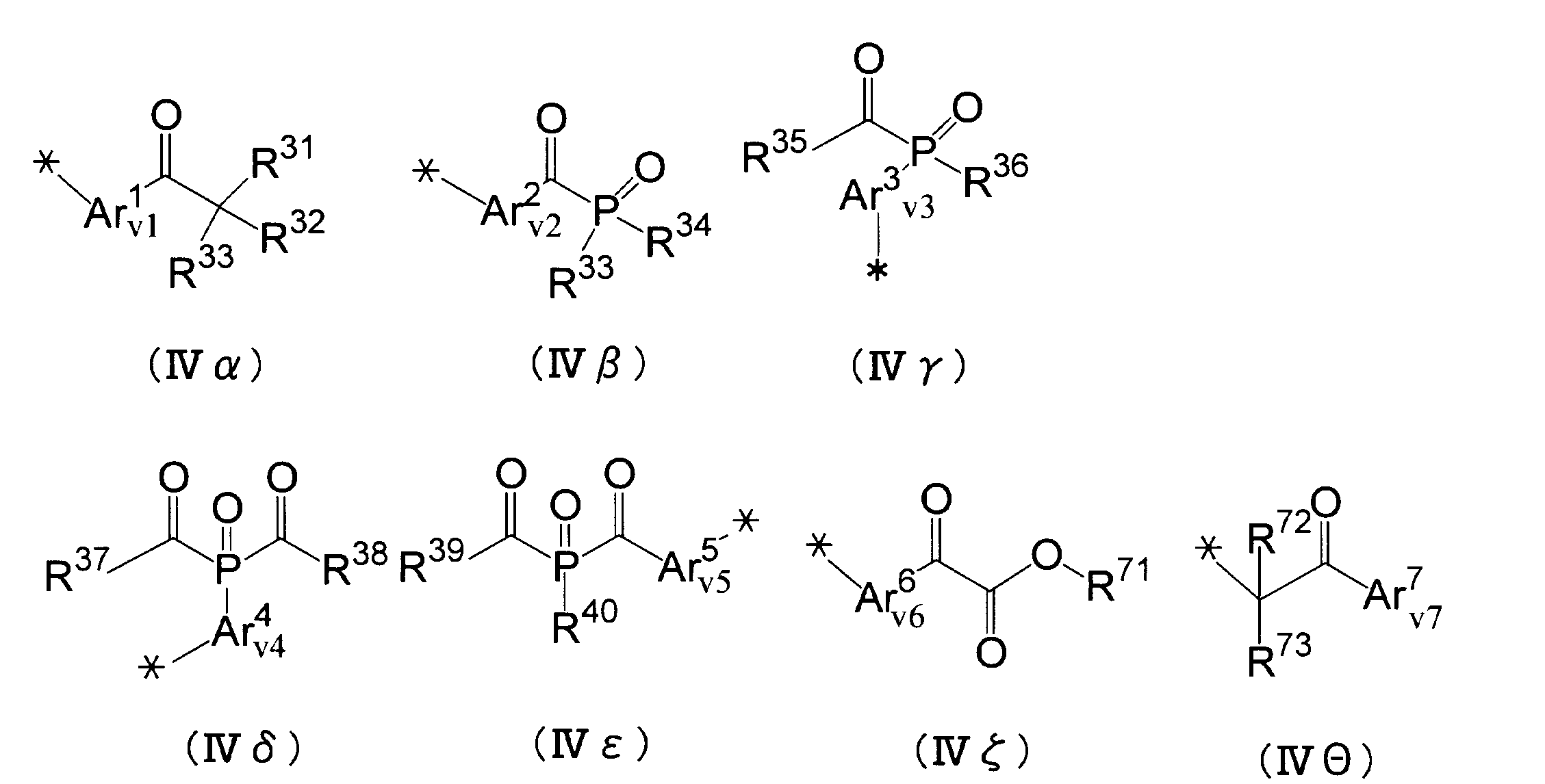
R32およびR33は、R41またはOR41を表し、
R32とR33は結合して環を形成していてもよく、
R41は、水素原子または炭素原子数1~20の炭化水素基を表し、
R42およびR43は、炭素原子数1~20の炭化水素基を表し、
R71は、炭素原子数1~20の炭化水素基を表し、
R72およびR73は、R41またはOR41を表し、
R34、R35、R36、R37、R38、R39、R40、Ar1、Ar2、Ar3、Ar4、Ar5、Ar6およびAr7は、炭素原子数6~20のアリール基を表し、
v1、v2、v3、v4、v5、v6およびv7は、0または1を表し、*は、結合手を表す。) - 請求項1~5のうちいずれか一項記載のオキシムエステル化合物を含有することを特徴とする重合開始剤。
- 請求項6記載の重合開始剤(A)およびエチレン性不飽和化合物(B)を含有することを特徴とする重合性組成物。
- さらに、着色剤(C)を含有する請求項7記載の重合性組成物。
- 請求項7または8記載の重合性組成物より得られることを特徴とする硬化物。
- 請求項9記載の硬化物からなることを特徴とするカラーフィルタ。
- 請求項10に記載のカラーフィルタを備えてなることを特徴とする表示装置。
- 請求項7または8記載の重合性組成物に光照射をする工程、もしくは、請求項7または8記載の重合性組成物を加熱によって硬化させる工程を有することを特徴とする硬化物の製造方法。
Priority Applications (5)
| Application Number | Priority Date | Filing Date | Title |
|---|---|---|---|
| EP19825412.0A EP3819291B1 (en) | 2018-06-29 | 2019-06-27 | Oxime ester compound and photopolymerization initiator containing same |
| KR1020217003099A KR102764847B1 (ko) | 2018-06-29 | 2019-06-27 | 옥심에스테르 화합물 및 이것을 함유하는 광중합개시제 |
| JP2020527670A JP7394759B2 (ja) | 2018-06-29 | 2019-06-27 | オキシムエステル化合物およびこれを含有する光重合開始剤 |
| CN201980027228.0A CN112004800B (zh) | 2018-06-29 | 2019-06-27 | 肟酯化合物和含有其的光聚合引发剂 |
| US17/256,320 US12013637B2 (en) | 2018-06-29 | 2019-06-27 | Oxime ester compound and photopolymerization initiator containing same |
Applications Claiming Priority (4)
| Application Number | Priority Date | Filing Date | Title |
|---|---|---|---|
| JP2018125614 | 2018-06-29 | ||
| JP2018-125614 | 2018-06-29 | ||
| JP2019-057429 | 2019-03-25 | ||
| JP2019057429 | 2019-03-25 |
Publications (1)
| Publication Number | Publication Date |
|---|---|
| WO2020004601A1 true WO2020004601A1 (ja) | 2020-01-02 |
Family
ID=68984930
Family Applications (1)
| Application Number | Title | Priority Date | Filing Date |
|---|---|---|---|
| PCT/JP2019/025755 Ceased WO2020004601A1 (ja) | 2018-06-29 | 2019-06-27 | オキシムエステル化合物およびこれを含有する光重合開始剤 |
Country Status (7)
| Country | Link |
|---|---|
| US (1) | US12013637B2 (ja) |
| EP (1) | EP3819291B1 (ja) |
| JP (1) | JP7394759B2 (ja) |
| KR (1) | KR102764847B1 (ja) |
| CN (1) | CN112004800B (ja) |
| TW (1) | TWI801619B (ja) |
| WO (1) | WO2020004601A1 (ja) |
Cited By (21)
| Publication number | Priority date | Publication date | Assignee | Title |
|---|---|---|---|---|
| WO2020238862A1 (zh) * | 2019-05-30 | 2020-12-03 | 常州强力先端电子材料有限公司 | 芴类引发剂、包含其的光固化组合物及应用 |
| WO2021132330A1 (ja) | 2019-12-26 | 2021-07-01 | 住友化学株式会社 | 表示装置 |
| WO2021193543A1 (ja) * | 2020-03-24 | 2021-09-30 | 株式会社Adeka | 化合物、組成物、硬化物及び硬化物の製造方法 |
| WO2021200277A1 (ja) | 2020-03-31 | 2021-10-07 | 住友化学株式会社 | 硬化性樹脂組成物及び表示装置 |
| WO2021200276A1 (ja) | 2020-03-31 | 2021-10-07 | 住友化学株式会社 | 硬化性樹脂組成物及び表示装置 |
| WO2021200278A1 (ja) | 2020-03-31 | 2021-10-07 | 住友化学株式会社 | 硬化性樹脂組成物及び表示装置 |
| JP2021195408A (ja) * | 2020-06-10 | 2021-12-27 | 大日本印刷株式会社 | 重合性液晶組成物、重合体、位相差フィルム及びその製造方法、転写用積層体、光学部材及びその製造方法、並びに表示装置 |
| JPWO2022039027A1 (ja) * | 2020-08-20 | 2022-02-24 | ||
| WO2022044823A1 (ja) | 2020-08-31 | 2022-03-03 | 住友化学株式会社 | 積層体及び表示装置 |
| WO2022044824A1 (ja) | 2020-08-31 | 2022-03-03 | 住友化学株式会社 | 積層体及び表示装置 |
| WO2022044822A1 (ja) | 2020-08-31 | 2022-03-03 | 住友化学株式会社 | 樹脂組成物、樹脂膜及び表示装置 |
| WO2022075452A1 (ja) * | 2020-10-08 | 2022-04-14 | 株式会社Adeka | 化合物、重合開始剤、重合性組成物、硬化物、カラーフィルタ及び硬化物の製造方法 |
| WO2022230326A1 (ja) | 2021-04-28 | 2022-11-03 | 住友化学株式会社 | 硬化膜及び表示装置 |
| WO2022230327A1 (ja) | 2021-04-28 | 2022-11-03 | 住友化学株式会社 | 硬化膜及び表示装置 |
| WO2023085072A1 (ja) * | 2021-11-09 | 2023-05-19 | 富士フイルム株式会社 | 着色硬化性組成物、硬化物の製造方法、膜、光学素子、イメージセンサ、固体撮像素子、画像表示装置、及び、ラジカル重合開始剤 |
| WO2023189203A1 (ja) | 2022-03-31 | 2023-10-05 | 住友化学株式会社 | 組成物、膜及び表示装置 |
| WO2023189204A1 (ja) | 2022-03-31 | 2023-10-05 | 住友化学株式会社 | 組成物、膜及び表示装置 |
| WO2023189205A1 (ja) | 2022-03-31 | 2023-10-05 | 住友化学株式会社 | 組成物、膜及び表示装置 |
| WO2024004426A1 (ja) * | 2022-06-27 | 2024-01-04 | 富士フイルム株式会社 | 硬化性組成物、硬化物の製造方法、膜、光学素子、イメージセンサ、固体撮像素子、画像表示装置、及び、ラジカル重合開始剤 |
| WO2024004425A1 (ja) * | 2022-06-27 | 2024-01-04 | 富士フイルム株式会社 | 硬化性組成物、硬化物の製造方法、膜、光学素子、イメージセンサ、固体撮像素子、画像表示装置、及び、ラジカル重合開始剤 |
| WO2024018770A1 (ja) | 2022-07-21 | 2024-01-25 | 住友化学株式会社 | 組成物、膜及び表示装置 |
Families Citing this family (8)
| Publication number | Priority date | Publication date | Assignee | Title |
|---|---|---|---|---|
| JP7449765B2 (ja) * | 2020-04-10 | 2024-03-14 | 株式会社Dnpファインケミカル | 感光性着色樹脂組成物、硬化物、カラーフィルタ、表示装置 |
| KR102795112B1 (ko) * | 2021-07-21 | 2025-04-10 | 삼성에스디아이 주식회사 | 감광성 수지 조성물, 감광성 수지막, 컬러필터 및 cmos 이미지 센서 |
| US11981759B2 (en) * | 2022-05-18 | 2024-05-14 | Canon Kabushiki Kaisha | Photocurable composition |
| CN116082298B (zh) * | 2022-11-11 | 2025-04-25 | 材料科学姑苏实验室 | 一种肟酯类光引发剂及包含其的感光性组合物 |
| CN116655327B (zh) * | 2023-06-07 | 2024-04-16 | 湖南省勘测设计院有限公司 | 一种高强防水混凝土及其制备方法 |
| PL445910A1 (pl) * | 2023-08-25 | 2025-03-03 | Photo Hitech Spółka Z Ograniczoną Odpowiedzialnością | Pochodne 1,1-dimetoksy-1-fenylo-propan-2-onu, sposoby wytwarzania pochodnych 1,1-dimetoksy-1-fenylo-propan-2-onu, zastosowanie pochodnych 1,1-dimetoksy-1-fenylo-propan-2-onu i związki pośrednie do wytwarzania pochodnych 1,1-dimetoksy-1-fenylo-propan-2-onu |
| PL445909A1 (pl) * | 2023-08-25 | 2025-03-03 | Photo Hitech Spółka Z Ograniczoną Odpowiedzialnością | Pochodne 1,1-dimetoksy-1-fenylo-propan-2-onu, sposoby wytwarzania pochodnych 1,1-dimetoksy-1-fenylo-propan-2-onu i zastosowanie pochodnych 1,1-dimetoksy-1-fenylo-propan-2-onu |
| WO2025044765A1 (zh) * | 2023-08-29 | 2025-03-06 | 北京云基科技股份有限公司 | 肟酯化合物、光刻胶及其应用 |
Citations (9)
| Publication number | Priority date | Publication date | Assignee | Title |
|---|---|---|---|---|
| JP2004264414A (ja) | 2003-02-28 | 2004-09-24 | Konica Minolta Holdings Inc | 感光性平版印刷版材料の現像処理方法、感光性平版印刷版材料用固形状のアルカリ現像剤及び平版印刷版 |
| JP2005234362A (ja) | 2004-02-20 | 2005-09-02 | Jsr Corp | スペーサー形成用感放射線性樹脂組成物、スペーサーとその形成方法および液晶表示素子 |
| JP2008094770A (ja) * | 2006-10-13 | 2008-04-24 | Adeka Corp | オキシムエステル化合物及び該化合物を有効成分とする光重合開始剤 |
| JP4223071B2 (ja) | 2006-12-27 | 2009-02-12 | 株式会社Adeka | オキシムエステル化合物及び該化合物を含有する光重合開始剤 |
| JP2010526846A (ja) * | 2007-05-11 | 2010-08-05 | ビーエーエスエフ ソシエタス・ヨーロピア | オキシムエステル光重合開始剤 |
| JP2010527338A (ja) | 2007-05-11 | 2010-08-12 | ビーエーエスエフ ソシエタス・ヨーロピア | オキシムエステル光重合開始剤 |
| JP2011225484A (ja) * | 2010-04-20 | 2011-11-10 | Jsr Corp | 新規化合物、感放射線性組成物、硬化膜及びその形成方法 |
| WO2017033880A1 (ja) | 2015-08-24 | 2017-03-02 | 株式会社Adeka | オキシムエステル化合物及び該化合物を含有する重合開始剤 |
| JP2017179211A (ja) * | 2016-03-31 | 2017-10-05 | 株式会社Adeka | 硬化性組成物、アルカリ現像性硬化性組成物及び硬化物並びに硬化物を製造する方法 |
Family Cites Families (15)
| Publication number | Priority date | Publication date | Assignee | Title |
|---|---|---|---|---|
| DE19548370A1 (de) | 1995-12-27 | 1997-07-03 | Basf Ag | Iminoxysubstituierte Phenylessigsäurederivate |
| US5994359A (en) | 1995-12-27 | 1999-11-30 | Basf Aktiengesellschaft | Imino oxyphenyl acetic acid derivatives, methods and intermediates for their preparation and use thereof |
| ITVA20030028A1 (it) * | 2003-08-07 | 2005-02-08 | Lamberti Spa | Sistemi fotopolimerizzabili trasparenti per la preparazione di rivestimenti ad elevato spessore. |
| JP4559166B2 (ja) * | 2004-09-07 | 2010-10-06 | マミヤ・オーピー株式会社 | 紙幣識別機の紙幣引き抜き防止機構 |
| US8748531B2 (en) | 2010-12-10 | 2014-06-10 | Bridgestone Corporation | Polymers functionalized with oxime compounds containing an acyl group |
| TWI668210B (zh) | 2013-11-28 | 2019-08-11 | 塔可馬科技股份有限公司 | 光起始劑及包括該光起始劑之光敏性組合物 |
| JP6449445B2 (ja) * | 2014-09-04 | 2019-01-09 | アイ ジー エム マルタ リミテッド | 多環式光開始剤 |
| JP6530902B2 (ja) * | 2014-10-22 | 2019-06-12 | 株式会社Adeka | 新規重合開始剤及び該重合開始剤を含有するラジカル重合性組成物 |
| JP6572608B2 (ja) | 2015-04-24 | 2019-09-11 | 三菱ケミカル株式会社 | ホログラム記録媒体用組成物及びこれを用いたホログラム記録媒体、並びに化合物 |
| WO2017051680A1 (ja) | 2015-09-25 | 2017-03-30 | 株式会社Adeka | オキシムエステル化合物及び該化合物を含有する重合開始剤 |
| TWI731895B (zh) | 2015-12-08 | 2021-07-01 | 日商富士軟片股份有限公司 | 感放射線性樹脂組成物、硬化膜、圖案形成方法、固體攝影元件及影像顯示裝置 |
| TWI736595B (zh) * | 2016-03-25 | 2021-08-21 | 日商富士軟片股份有限公司 | 感光性組成物、彩色濾光片、圖案形成方法、固體攝像元件及圖像顯示裝置 |
| CN108368191A (zh) | 2016-03-29 | 2018-08-03 | 株式会社艾迪科 | 光聚合引发剂组合物及感光性组合物 |
| CN108475019B (zh) | 2016-03-29 | 2022-02-11 | 株式会社艾迪科 | 黑色感光性树脂组合物 |
| US10023540B2 (en) * | 2016-09-29 | 2018-07-17 | Tokyo Ohka Kogyo Co., Ltd. | Hydrogen barrier agent, hydrogen barrier film forming composition, hydrogen barrier film, method for producing hydrogen barrier film, and electronic element |
-
2019
- 2019-06-27 KR KR1020217003099A patent/KR102764847B1/ko active Active
- 2019-06-27 WO PCT/JP2019/025755 patent/WO2020004601A1/ja not_active Ceased
- 2019-06-27 US US17/256,320 patent/US12013637B2/en active Active
- 2019-06-27 JP JP2020527670A patent/JP7394759B2/ja active Active
- 2019-06-27 CN CN201980027228.0A patent/CN112004800B/zh active Active
- 2019-06-27 EP EP19825412.0A patent/EP3819291B1/en active Active
- 2019-06-28 TW TW108122840A patent/TWI801619B/zh active
Patent Citations (9)
| Publication number | Priority date | Publication date | Assignee | Title |
|---|---|---|---|---|
| JP2004264414A (ja) | 2003-02-28 | 2004-09-24 | Konica Minolta Holdings Inc | 感光性平版印刷版材料の現像処理方法、感光性平版印刷版材料用固形状のアルカリ現像剤及び平版印刷版 |
| JP2005234362A (ja) | 2004-02-20 | 2005-09-02 | Jsr Corp | スペーサー形成用感放射線性樹脂組成物、スペーサーとその形成方法および液晶表示素子 |
| JP2008094770A (ja) * | 2006-10-13 | 2008-04-24 | Adeka Corp | オキシムエステル化合物及び該化合物を有効成分とする光重合開始剤 |
| JP4223071B2 (ja) | 2006-12-27 | 2009-02-12 | 株式会社Adeka | オキシムエステル化合物及び該化合物を含有する光重合開始剤 |
| JP2010526846A (ja) * | 2007-05-11 | 2010-08-05 | ビーエーエスエフ ソシエタス・ヨーロピア | オキシムエステル光重合開始剤 |
| JP2010527338A (ja) | 2007-05-11 | 2010-08-12 | ビーエーエスエフ ソシエタス・ヨーロピア | オキシムエステル光重合開始剤 |
| JP2011225484A (ja) * | 2010-04-20 | 2011-11-10 | Jsr Corp | 新規化合物、感放射線性組成物、硬化膜及びその形成方法 |
| WO2017033880A1 (ja) | 2015-08-24 | 2017-03-02 | 株式会社Adeka | オキシムエステル化合物及び該化合物を含有する重合開始剤 |
| JP2017179211A (ja) * | 2016-03-31 | 2017-10-05 | 株式会社Adeka | 硬化性組成物、アルカリ現像性硬化性組成物及び硬化物並びに硬化物を製造する方法 |
Cited By (29)
| Publication number | Priority date | Publication date | Assignee | Title |
|---|---|---|---|---|
| WO2020238862A1 (zh) * | 2019-05-30 | 2020-12-03 | 常州强力先端电子材料有限公司 | 芴类引发剂、包含其的光固化组合物及应用 |
| WO2021132330A1 (ja) | 2019-12-26 | 2021-07-01 | 住友化学株式会社 | 表示装置 |
| JP7735253B2 (ja) | 2020-03-24 | 2025-09-08 | 株式会社Adeka | 化合物、組成物、硬化物及び硬化物の製造方法 |
| WO2021193543A1 (ja) * | 2020-03-24 | 2021-09-30 | 株式会社Adeka | 化合物、組成物、硬化物及び硬化物の製造方法 |
| JPWO2021193543A1 (ja) * | 2020-03-24 | 2021-09-30 | ||
| CN115052861B (zh) * | 2020-03-24 | 2024-11-29 | 株式会社艾迪科 | 化合物、组合物、固化物及固化物的制造方法 |
| CN115052861A (zh) * | 2020-03-24 | 2022-09-13 | 株式会社艾迪科 | 化合物、组合物、固化物及固化物的制造方法 |
| WO2021200277A1 (ja) | 2020-03-31 | 2021-10-07 | 住友化学株式会社 | 硬化性樹脂組成物及び表示装置 |
| WO2021200276A1 (ja) | 2020-03-31 | 2021-10-07 | 住友化学株式会社 | 硬化性樹脂組成物及び表示装置 |
| WO2021200278A1 (ja) | 2020-03-31 | 2021-10-07 | 住友化学株式会社 | 硬化性樹脂組成物及び表示装置 |
| JP2021195408A (ja) * | 2020-06-10 | 2021-12-27 | 大日本印刷株式会社 | 重合性液晶組成物、重合体、位相差フィルム及びその製造方法、転写用積層体、光学部材及びその製造方法、並びに表示装置 |
| JP7562995B2 (ja) | 2020-06-10 | 2024-10-08 | 大日本印刷株式会社 | 重合性液晶組成物、重合体、位相差フィルム及びその製造方法、転写用積層体、光学部材及びその製造方法、並びに表示装置 |
| JPWO2022039027A1 (ja) * | 2020-08-20 | 2022-02-24 | ||
| WO2022039027A1 (ja) * | 2020-08-20 | 2022-02-24 | 富士フイルム株式会社 | 感光性組成物、転写フィルム |
| WO2022044822A1 (ja) | 2020-08-31 | 2022-03-03 | 住友化学株式会社 | 樹脂組成物、樹脂膜及び表示装置 |
| WO2022044824A1 (ja) | 2020-08-31 | 2022-03-03 | 住友化学株式会社 | 積層体及び表示装置 |
| WO2022044823A1 (ja) | 2020-08-31 | 2022-03-03 | 住友化学株式会社 | 積層体及び表示装置 |
| JPWO2022075452A1 (ja) * | 2020-10-08 | 2022-04-14 | ||
| CN116096706A (zh) * | 2020-10-08 | 2023-05-09 | 株式会社艾迪科 | 化合物、聚合引发剂、聚合性组合物、固化物、滤色器及固化物的制造方法 |
| WO2022075452A1 (ja) * | 2020-10-08 | 2022-04-14 | 株式会社Adeka | 化合物、重合開始剤、重合性組成物、硬化物、カラーフィルタ及び硬化物の製造方法 |
| WO2022230327A1 (ja) | 2021-04-28 | 2022-11-03 | 住友化学株式会社 | 硬化膜及び表示装置 |
| WO2022230326A1 (ja) | 2021-04-28 | 2022-11-03 | 住友化学株式会社 | 硬化膜及び表示装置 |
| WO2023085072A1 (ja) * | 2021-11-09 | 2023-05-19 | 富士フイルム株式会社 | 着色硬化性組成物、硬化物の製造方法、膜、光学素子、イメージセンサ、固体撮像素子、画像表示装置、及び、ラジカル重合開始剤 |
| WO2023189203A1 (ja) | 2022-03-31 | 2023-10-05 | 住友化学株式会社 | 組成物、膜及び表示装置 |
| WO2023189204A1 (ja) | 2022-03-31 | 2023-10-05 | 住友化学株式会社 | 組成物、膜及び表示装置 |
| WO2023189205A1 (ja) | 2022-03-31 | 2023-10-05 | 住友化学株式会社 | 組成物、膜及び表示装置 |
| WO2024004426A1 (ja) * | 2022-06-27 | 2024-01-04 | 富士フイルム株式会社 | 硬化性組成物、硬化物の製造方法、膜、光学素子、イメージセンサ、固体撮像素子、画像表示装置、及び、ラジカル重合開始剤 |
| WO2024004425A1 (ja) * | 2022-06-27 | 2024-01-04 | 富士フイルム株式会社 | 硬化性組成物、硬化物の製造方法、膜、光学素子、イメージセンサ、固体撮像素子、画像表示装置、及び、ラジカル重合開始剤 |
| WO2024018770A1 (ja) | 2022-07-21 | 2024-01-25 | 住友化学株式会社 | 組成物、膜及び表示装置 |
Also Published As
| Publication number | Publication date |
|---|---|
| TW202014402A (zh) | 2020-04-16 |
| TWI801619B (zh) | 2023-05-11 |
| CN112004800A (zh) | 2020-11-27 |
| KR102764847B1 (ko) | 2025-02-06 |
| EP3819291A4 (en) | 2022-04-27 |
| JP7394759B2 (ja) | 2023-12-08 |
| US12013637B2 (en) | 2024-06-18 |
| EP3819291A1 (en) | 2021-05-12 |
| US20210271163A1 (en) | 2021-09-02 |
| CN112004800B (zh) | 2024-12-03 |
| JPWO2020004601A1 (ja) | 2021-08-02 |
| EP3819291B1 (en) | 2026-04-15 |
| KR20210027433A (ko) | 2021-03-10 |
Similar Documents
| Publication | Publication Date | Title |
|---|---|---|
| JP7394759B2 (ja) | オキシムエステル化合物およびこれを含有する光重合開始剤 | |
| CN111132963B (zh) | 化合物、组合物、固化物及固化物的制造方法 | |
| WO2017170182A1 (ja) | 感光性組成物及び新規化合物 | |
| KR102545326B1 (ko) | 옥심에스테르 화합물 및 상기 화합물을 함유하는 광중합 개시제 | |
| JP2017179211A (ja) | 硬化性組成物、アルカリ現像性硬化性組成物及び硬化物並びに硬化物を製造する方法 | |
| CN105473666B (zh) | 化合物及含有该化合物的组合物 | |
| WO2017170183A1 (ja) | 組成物及び新規化合物 | |
| WO2017033880A1 (ja) | オキシムエステル化合物及び該化合物を含有する重合開始剤 | |
| JP7422076B2 (ja) | 化合物、チオール発生剤、組成物、硬化物及び硬化物の製造方法 | |
| WO2022075452A1 (ja) | 化合物、重合開始剤、重合性組成物、硬化物、カラーフィルタ及び硬化物の製造方法 | |
| KR102818078B1 (ko) | 옥심에스테르 화합물 및 상기 화합물을 함유하는 광중합 개시제 | |
| JP6621643B2 (ja) | オキシムエステル化合物及び該化合物を含有する重合開始剤 | |
| WO2023282045A1 (ja) | 化合物、組成物、硬化物及び硬化物の製造方法 | |
| JP2017149661A (ja) | オキシムエステル化合物及び該化合物を含有する重合開始剤 |
Legal Events
| Date | Code | Title | Description |
|---|---|---|---|
| 121 | Ep: the epo has been informed by wipo that ep was designated in this application |
Ref document number: 19825412 Country of ref document: EP Kind code of ref document: A1 |
|
| ENP | Entry into the national phase |
Ref document number: 2020527670 Country of ref document: JP Kind code of ref document: A |
|
| NENP | Non-entry into the national phase |
Ref country code: DE |
|
| ENP | Entry into the national phase |
Ref document number: 20217003099 Country of ref document: KR Kind code of ref document: A |
|
| WWE | Wipo information: entry into national phase |
Ref document number: 2019825412 Country of ref document: EP |
|
| WWG | Wipo information: grant in national office |
Ref document number: 2019825412 Country of ref document: EP |