WO2020008723A1 - Procédé de production de structure cellulaire, support, et procédé de production de support - Google Patents
Procédé de production de structure cellulaire, support, et procédé de production de support Download PDFInfo
- Publication number
- WO2020008723A1 WO2020008723A1 PCT/JP2019/018605 JP2019018605W WO2020008723A1 WO 2020008723 A1 WO2020008723 A1 WO 2020008723A1 JP 2019018605 W JP2019018605 W JP 2019018605W WO 2020008723 A1 WO2020008723 A1 WO 2020008723A1
- Authority
- WO
- WIPO (PCT)
- Prior art keywords
- cell
- carrier
- culture
- cells
- producing
- Prior art date
- Legal status (The legal status is an assumption and is not a legal conclusion. Google has not performed a legal analysis and makes no representation as to the accuracy of the status listed.)
- Ceased
Links
Images



Classifications
-
- C—CHEMISTRY; METALLURGY
- C12—BIOCHEMISTRY; BEER; SPIRITS; WINE; VINEGAR; MICROBIOLOGY; ENZYMOLOGY; MUTATION OR GENETIC ENGINEERING
- C12M—APPARATUS FOR ENZYMOLOGY OR MICROBIOLOGY; APPARATUS FOR CULTURING MICROORGANISMS FOR PRODUCING BIOMASS, FOR GROWING CELLS OR FOR OBTAINING FERMENTATION OR METABOLIC PRODUCTS, i.e. BIOREACTORS OR FERMENTERS
- C12M23/00—Constructional details, e.g. recesses, hinges
- C12M23/50—Means for positioning or orientating the apparatus
-
- C—CHEMISTRY; METALLURGY
- C12—BIOCHEMISTRY; BEER; SPIRITS; WINE; VINEGAR; MICROBIOLOGY; ENZYMOLOGY; MUTATION OR GENETIC ENGINEERING
- C12N—MICROORGANISMS OR ENZYMES; COMPOSITIONS THEREOF; PROPAGATING, PRESERVING, OR MAINTAINING MICROORGANISMS; MUTATION OR GENETIC ENGINEERING; CULTURE MEDIA
- C12N13/00—Treatment of microorganisms or enzymes with electrical or wave energy, e.g. magnetism, sonic waves
-
- C—CHEMISTRY; METALLURGY
- C12—BIOCHEMISTRY; BEER; SPIRITS; WINE; VINEGAR; MICROBIOLOGY; ENZYMOLOGY; MUTATION OR GENETIC ENGINEERING
- C12M—APPARATUS FOR ENZYMOLOGY OR MICROBIOLOGY; APPARATUS FOR CULTURING MICROORGANISMS FOR PRODUCING BIOMASS, FOR GROWING CELLS OR FOR OBTAINING FERMENTATION OR METABOLIC PRODUCTS, i.e. BIOREACTORS OR FERMENTERS
- C12M21/00—Bioreactors or fermenters specially adapted for specific uses
- C12M21/08—Bioreactors or fermenters specially adapted for specific uses for producing artificial tissue or for ex-vivo cultivation of tissue
-
- C—CHEMISTRY; METALLURGY
- C12—BIOCHEMISTRY; BEER; SPIRITS; WINE; VINEGAR; MICROBIOLOGY; ENZYMOLOGY; MUTATION OR GENETIC ENGINEERING
- C12M—APPARATUS FOR ENZYMOLOGY OR MICROBIOLOGY; APPARATUS FOR CULTURING MICROORGANISMS FOR PRODUCING BIOMASS, FOR GROWING CELLS OR FOR OBTAINING FERMENTATION OR METABOLIC PRODUCTS, i.e. BIOREACTORS OR FERMENTERS
- C12M23/00—Constructional details, e.g. recesses, hinges
- C12M23/02—Form or structure of the vessel
- C12M23/06—Tubular
-
- C—CHEMISTRY; METALLURGY
- C12—BIOCHEMISTRY; BEER; SPIRITS; WINE; VINEGAR; MICROBIOLOGY; ENZYMOLOGY; MUTATION OR GENETIC ENGINEERING
- C12M—APPARATUS FOR ENZYMOLOGY OR MICROBIOLOGY; APPARATUS FOR CULTURING MICROORGANISMS FOR PRODUCING BIOMASS, FOR GROWING CELLS OR FOR OBTAINING FERMENTATION OR METABOLIC PRODUCTS, i.e. BIOREACTORS OR FERMENTERS
- C12M23/00—Constructional details, e.g. recesses, hinges
- C12M23/20—Material Coatings
-
- C—CHEMISTRY; METALLURGY
- C12—BIOCHEMISTRY; BEER; SPIRITS; WINE; VINEGAR; MICROBIOLOGY; ENZYMOLOGY; MUTATION OR GENETIC ENGINEERING
- C12M—APPARATUS FOR ENZYMOLOGY OR MICROBIOLOGY; APPARATUS FOR CULTURING MICROORGANISMS FOR PRODUCING BIOMASS, FOR GROWING CELLS OR FOR OBTAINING FERMENTATION OR METABOLIC PRODUCTS, i.e. BIOREACTORS OR FERMENTERS
- C12M23/00—Constructional details, e.g. recesses, hinges
- C12M23/44—Multiple separable units; Modules
-
- C—CHEMISTRY; METALLURGY
- C12—BIOCHEMISTRY; BEER; SPIRITS; WINE; VINEGAR; MICROBIOLOGY; ENZYMOLOGY; MUTATION OR GENETIC ENGINEERING
- C12M—APPARATUS FOR ENZYMOLOGY OR MICROBIOLOGY; APPARATUS FOR CULTURING MICROORGANISMS FOR PRODUCING BIOMASS, FOR GROWING CELLS OR FOR OBTAINING FERMENTATION OR METABOLIC PRODUCTS, i.e. BIOREACTORS OR FERMENTERS
- C12M25/00—Means for supporting, enclosing or fixing the microorganisms, e.g. immunocoatings
- C12M25/14—Scaffolds; Matrices
-
- C—CHEMISTRY; METALLURGY
- C12—BIOCHEMISTRY; BEER; SPIRITS; WINE; VINEGAR; MICROBIOLOGY; ENZYMOLOGY; MUTATION OR GENETIC ENGINEERING
- C12M—APPARATUS FOR ENZYMOLOGY OR MICROBIOLOGY; APPARATUS FOR CULTURING MICROORGANISMS FOR PRODUCING BIOMASS, FOR GROWING CELLS OR FOR OBTAINING FERMENTATION OR METABOLIC PRODUCTS, i.e. BIOREACTORS OR FERMENTERS
- C12M25/00—Means for supporting, enclosing or fixing the microorganisms, e.g. immunocoatings
- C12M25/16—Particles; Beads; Granular material; Encapsulation
-
- C—CHEMISTRY; METALLURGY
- C12—BIOCHEMISTRY; BEER; SPIRITS; WINE; VINEGAR; MICROBIOLOGY; ENZYMOLOGY; MUTATION OR GENETIC ENGINEERING
- C12M—APPARATUS FOR ENZYMOLOGY OR MICROBIOLOGY; APPARATUS FOR CULTURING MICROORGANISMS FOR PRODUCING BIOMASS, FOR GROWING CELLS OR FOR OBTAINING FERMENTATION OR METABOLIC PRODUCTS, i.e. BIOREACTORS OR FERMENTERS
- C12M27/00—Means for mixing, agitating or circulating fluids in the vessel
- C12M27/16—Vibrating; Shaking; Tilting
-
- C—CHEMISTRY; METALLURGY
- C12—BIOCHEMISTRY; BEER; SPIRITS; WINE; VINEGAR; MICROBIOLOGY; ENZYMOLOGY; MUTATION OR GENETIC ENGINEERING
- C12M—APPARATUS FOR ENZYMOLOGY OR MICROBIOLOGY; APPARATUS FOR CULTURING MICROORGANISMS FOR PRODUCING BIOMASS, FOR GROWING CELLS OR FOR OBTAINING FERMENTATION OR METABOLIC PRODUCTS, i.e. BIOREACTORS OR FERMENTERS
- C12M35/00—Means for application of stress for stimulating the growth of microorganisms or the generation of fermentation or metabolic products; Means for electroporation or cell fusion
- C12M35/06—Magnetic means
-
- C—CHEMISTRY; METALLURGY
- C12—BIOCHEMISTRY; BEER; SPIRITS; WINE; VINEGAR; MICROBIOLOGY; ENZYMOLOGY; MUTATION OR GENETIC ENGINEERING
- C12N—MICROORGANISMS OR ENZYMES; COMPOSITIONS THEREOF; PROPAGATING, PRESERVING, OR MAINTAINING MICROORGANISMS; MUTATION OR GENETIC ENGINEERING; CULTURE MEDIA
- C12N11/00—Carrier-bound or immobilised enzymes; Carrier-bound or immobilised microbial cells; Preparation thereof
- C12N11/02—Enzymes or microbial cells immobilised on or in an organic carrier
-
- C—CHEMISTRY; METALLURGY
- C12—BIOCHEMISTRY; BEER; SPIRITS; WINE; VINEGAR; MICROBIOLOGY; ENZYMOLOGY; MUTATION OR GENETIC ENGINEERING
- C12N—MICROORGANISMS OR ENZYMES; COMPOSITIONS THEREOF; PROPAGATING, PRESERVING, OR MAINTAINING MICROORGANISMS; MUTATION OR GENETIC ENGINEERING; CULTURE MEDIA
- C12N5/00—Undifferentiated human, animal or plant cells, e.g. cell lines; Tissues; Cultivation or maintenance thereof; Culture media therefor
- C12N5/0062—General methods for three-dimensional culture
-
- C—CHEMISTRY; METALLURGY
- C12—BIOCHEMISTRY; BEER; SPIRITS; WINE; VINEGAR; MICROBIOLOGY; ENZYMOLOGY; MUTATION OR GENETIC ENGINEERING
- C12N—MICROORGANISMS OR ENZYMES; COMPOSITIONS THEREOF; PROPAGATING, PRESERVING, OR MAINTAINING MICROORGANISMS; MUTATION OR GENETIC ENGINEERING; CULTURE MEDIA
- C12N5/00—Undifferentiated human, animal or plant cells, e.g. cell lines; Tissues; Cultivation or maintenance thereof; Culture media therefor
- C12N5/06—Animal cells or tissues; Human cells or tissues
- C12N5/0602—Vertebrate cells
- C12N5/0693—Tumour cells; Cancer cells
-
- C—CHEMISTRY; METALLURGY
- C12—BIOCHEMISTRY; BEER; SPIRITS; WINE; VINEGAR; MICROBIOLOGY; ENZYMOLOGY; MUTATION OR GENETIC ENGINEERING
- C12N—MICROORGANISMS OR ENZYMES; COMPOSITIONS THEREOF; PROPAGATING, PRESERVING, OR MAINTAINING MICROORGANISMS; MUTATION OR GENETIC ENGINEERING; CULTURE MEDIA
- C12N2513/00—3D culture
-
- C—CHEMISTRY; METALLURGY
- C12—BIOCHEMISTRY; BEER; SPIRITS; WINE; VINEGAR; MICROBIOLOGY; ENZYMOLOGY; MUTATION OR GENETIC ENGINEERING
- C12N—MICROORGANISMS OR ENZYMES; COMPOSITIONS THEREOF; PROPAGATING, PRESERVING, OR MAINTAINING MICROORGANISMS; MUTATION OR GENETIC ENGINEERING; CULTURE MEDIA
- C12N2537/00—Supports and/or coatings for cell culture characterised by physical or chemical treatment
Definitions
- the present disclosure relates to a method for producing a cell construct, a carrier, and a method for producing a carrier.
- Patent Document 1 discloses a method in which a solution in which adhesive cells are suspended (cell suspension) is treated with a cell-adhesive surface-treated culture vessel. To form spheroids by autonomously aggregating cells with each other. Further, in Patent Document 2, spheroids as a cell mass are pierced into a needle-shaped body provided on a substrate and arranged in a desired shape, and then cultured in a culture medium, whereby the arranged spheroids are compared with each other. To obtain a three-dimensional cell construct. Further, Patent Document 3 discloses a method of forming an aggregate (cell construct) by attaching magnetic nanoparticles to cells and suspending the cells with magnetism by applying magnetism.
- JP-T-2017-532971 Japanese Patent No. 4517125 JP-T-2012-503492
- an object of the present disclosure is to provide a method for producing a cell construct that can freely control the structure of a cell construct to be produced, has high throughput, and has low invasiveness to cells.
- the method for producing a cell construct includes a carrier having a magnetic part formed only in part and a cell holding part for holding cells, and holding cells in the cell holding part of the carrier. (A) preparing a plurality of culture carriers containing at least one of the cell holding carriers, and (B) arranging a plurality of the culture carriers in a container by applying a magnetic field. (C) culturing the cells held in the cell holding portion of the culture carrier while maintaining the state where the culture carriers are arranged. According to this configuration, it is possible to provide a method for producing a cell construct that can freely control the structure of the cell construct to be produced, has high throughput, and has low invasiveness to cells.
- the carrier has a columnar shape, has the magnetic portion on one end side from the center in the height direction, even if the cell holding portion extends in the height direction. Good.
- the carrier is columnar, has a magnetic portion at one end side from the center in the height direction, and the cell holding portion extends in the height direction, thereby efficiently producing a thick cell construct. be able to.
- the step (B) may include a step (b1) of applying vibration to the container.
- the culture carriers can be arranged with high accuracy, so that the variation in the shape of the cell construct to be produced can be reduced.
- the vibration in the step (B), may be switched on and off while the magnetic field is applied.
- the possibility that even the arrangement of the culture carriers arranged as desired is removed by the vibration can be reduced.
- the magnetic flux density of the magnetic field when the vibration is applied may be smaller than the magnetic flux density of the magnetic field before the application of the vibration.
- the culture carriers not arranged as desired can be removed. The rearrangement can be performed efficiently, and the variation in the shape of the cell construct to be produced can be further reduced.
- the step (B) may include a step (b2) of removing an unsequenced culture carrier.
- the shape of the cell construct can be accurately controlled by removing the unsequenced culture carriers.
- two or more types of the culture carriers may be used.
- two or more types of culture carriers a cell construct having a complicated structure can be produced.
- the culture carriers have affinity or repulsion with each other depending on the characteristics. May have. As described above, between two or more types of culture carriers, at least some of the characteristics are different from each other, and the culture carriers have affinity or repulsion with each other depending on the characteristics, so that they are arranged using only a magnetic field. Can produce a cell construct having a more complicated structure as compared with the case where is carried out, and the culture carriers can be precisely arranged. In addition, since the culture carriers have affinity or repulsion with each other, the state in which the culture carriers are arranged can be easily maintained.
- the plurality of culture carriers have engaging portions that engage with each other, and in the step (B), the plurality of culture carriers are They may be arranged in engagement with each other.
- the plurality of culture carriers are They may be arranged in engagement with each other.
- the container has a fitting portion with which the culture carrier is fitted, and in the step (B), the culture carrier is fitted with the fitting portion. They may be arranged in an array.
- the container has a fitting portion to which the culture carrier is fitted, and by arranging the culture carrier by fitting it to the fitting portion, compared with the case where the arrangement is performed using only the magnetic field.
- a cell construct having a more complicated structure can be produced, and carriers for culture can be precisely arranged.
- the carrier for culture fits into the fitting portion of the container, it is easy to maintain the state where the carriers for culture are arranged.
- the method for producing a cell construct may include a step (D) of removing the magnetic part from the cell construct. As described above, by removing the magnetic part from the cell construct, it is possible to produce a cell construct having less substances other than cells.
- the method for producing a cell construct may include a step (E) of removing the carrier from the cell construct.
- a step (E) of removing the carrier from the cell construct by removing the carrier from the cell construct, the portion occupied by the carrier in the cell construct becomes hollow. Therefore, it is possible to produce a cell construct having a complicated structure, for example, a cell construct having many voids and high oxygen permeability. Further, a cell construct containing less substances other than cells can be produced.
- the magnetic field is applied to a plurality of regions separated from each other in the container, and a plurality of the culture carriers are arranged in the plurality of regions. May be.
- a plurality of cell constructs can be simultaneously produced in one container. Cell constructs can be produced at high throughput.
- a plurality of culture carriers including the cell holding carriers are prepared, so that two or more types of culture carriers holding cells of different cell types are used. Also, it becomes easy to use two or more types of culture carriers that hold cells at different cell ratios.
- the method for producing a cell construct includes a step (A) of preparing a plurality of culture carriers including a carrier, and a step (B) of arranging a plurality of culture carriers in a container by applying a magnetic field. (B3) retaining the cells in the cell retaining portion of the arranged culture carrier, and culturing the cells retained in the culture carrier while maintaining the state where the culture carriers are arranged in the container ( C). According to this configuration, it is possible to provide a method for producing a cell construct that can freely control the structure of the cell construct to be produced, has high throughput, and has low invasiveness to cells.
- step (B) of arranging the culture supports there is no need to control the operating conditions so that the cells are not adversely affected.
- the operation of the step (B) is simplified.
- At least two or more types of cells may be contained in the cell suspension.
- a suspension containing at least two or more types of cells a cell construct containing two or more types of cells can be produced.
- the cell holding carriers in the step (B), may be arranged such that at least some of the cells held by the adjacent cell holding carriers come into contact with each other. As described above, by arranging the cell holding carriers such that at least some of the cells held by the adjacent cell holding carriers come into contact with each other, the time required for organization can be shortened. Can be manufactured.
- the unsequenced culture support removed may be reused for producing a cell construct.
- the production cost of the cell construct can be reduced.
- the carrier has a cell holding part for holding cells and a magnetic part, and the magnetic part is located only in a part.
- a carrier can be used in the method for producing a cell construct according to some embodiments.
- a method for producing a carrier is a method for producing a carrier having a cell holding portion for retaining cells and a magnetic portion, wherein the magnetic portion is located only in part, The method includes a step of forming a layer containing a sol containing magnetic particles and a layer containing a sol having cell retention properties, and a step of solidifying the sol in the mold. According to such a production method, a carrier used in a method for producing a cell construct according to some embodiments can be easily produced.
- the mold is made of an elastic body. According to such a production method, since the mold is made of an elastic body, the carrier can be easily taken out by deforming the mold after the sol is solidified.
- a kit for producing a cell construct according to one embodiment includes a magnetic part formed only in part, a carrier having a cell holding part for holding cells, and a cell holding part for holding the cells in the cell holding part of the carrier. Culturing support containing at least one of the following cell holding carriers. According to such a kit, the method for producing a cell construct according to some embodiments can be easily performed.
- a kit for producing a cell construct according to one embodiment includes a magnetic part formed only in part, a carrier having a cell holding part for holding cells, and a cell holding part for holding the cells in the cell holding part of the carrier.
- a carrier for culture containing at least one of the above-mentioned cell holding carriers, and an instruction manual. According to such a kit, the method for producing a cell construct according to some embodiments can be easily performed.
- FIG. 1 It is the schematic which shows an example of the manufacturing method of a cell construct. It is a figure which shows an example of the shape of a support
- (A) is a figure which shows an example of the removal method of the magnetic part from a cell structure
- (B) is a figure which shows an example of the removal method of the carrier from a cell structure. It is the schematic which shows the example which arrange
- the method includes a step (B) and a step (C) of culturing the cells 20 held on the culture carrier while maintaining the state where the culture carriers are arranged in the container.
- the culture carrier can be arranged in a desired shape in the container.
- the method for producing a cell construct involves puncturing the cell mass with a needle and arranging the cells.
- a cell construct can be produced with high throughput and low invasiveness as compared with the case where the cell itself is magnetized.
- a plurality of culture carriers including the cell holding carrier are prepared, so that two or more types of cells having different cell types are held. It becomes easy to use a culture carrier or to use two or more types of culture carriers that hold cells at different cell ratios.
- the carrier for culture used in the method for producing a cell construct of the present disclosure includes a carrier having a magnetic part formed only in part and a cell holding part for holding cells (hereinafter, a carrier before holding cells). May be referred to as a "cell-free carrier"), and at least one of a cell-retaining carrier obtained by retaining cells in a cell-retaining portion of the carrier, and optionally other than a cell-free carrier and a cell-retaining carrier. What further contains other carriers can be used.
- step (C) of the method for producing a cell construct of the present disclosure the cells held on the culture carrier are cultured as described above. Therefore, in the method for producing a cell construct according to the present disclosure, in the case where the culture carrier arranged in step (B) includes a cell non-carrier, the cell retention of the arranged cell non-carrier in step (C) is performed. After performing the step (b3) of retaining cells in the part, the cells retained in the culture carrier can be cultured.
- Step (A) of preparing a plurality of culture carriers including a cell holding carrier, step (B) of arranging a plurality of culture carriers in a container by applying a magnetic field, and (C) culturing the cells held on the carrier for culture while maintaining the state in which the cells are arranged (Embodiment 1); (2) a step (A) of preparing a plurality of culture carriers including a cell-free carrier, a step (B) of arranging a plurality of culture carriers in a container by applying a magnetic field, and an arranged culture carrier. (B3) holding the cells in the cell holding portion, and culturing the cells held in the culture carrier while maintaining the state where the culture carriers are arranged in the container (C).
- the method for producing a cell construct of the present disclosure is not limited to Embodiments 1 and 2 described below.
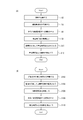
- FIG. 1 and FIG. 7A show an example of the flow of the method for producing a cell construct.
- a plurality of culture carriers including the cell holding carrier 30 are prepared in the culture container 40 (vessel) (step (A)).
- a magnetic field 51 is applied to the bottom of the culture vessel 40 by approaching the magnet 50 from below the outside of the culture vessel 40, and a plurality of culture carriers including the plurality of cell holding carriers 30 are arranged in the culture vessel 40.
- Step (B) Thereafter, the cells 20 held in the cell holding portion 11 of the cell holding carrier 30 are cultured while maintaining the state in which the culture carriers including the cell holding carrier 30 are arranged in the culture vessel 40 (step (C)). .
- a plurality of culture carriers including the cell holding carrier 30 are prepared.
- a plurality of carriers (cell-free carriers) 10 each having a magnetic part 12 and a cell holding part 11 are prepared, and the carriers 10 are placed in a culture vessel 40.
- a carrier suspension by suspending in a cell-compatible liquid such as a liquid medium.
- a cell suspension 21 in which cells are suspended in a liquid medium is added to the suspension of the carrier 10, and the cells 20 are held in the cell holding unit 11, thereby obtaining a cell holding carrier 30.
- a culture carrier holding the cells 20 in an arbitrary state can be easily prepared.
- the state of the cell 20 includes, for example, the activity of the cell 20.
- the culture carrier holding the cells 20 in an arbitrary state it becomes easy to adjust the quality of the cell construct 100 and the culture time in the step (C).
- the apparatus used for manufacturing the cell construct 100 is simplified. In addition to this, productivity can be increased by reducing the loss of the culture carrier and reducing the risk of contamination of microorganisms and the like.
- the carrier 10 (carrier without cells) is not particularly limited, and can be produced, for example, by using a carrier production method described later.
- the carrier for culture prepared in the step (A) may contain the cell non-retaining carrier 10 as long as the cell construct 100 can be formed in the step (C).
- the method of preparing the culture carrier including the cell holding carrier 30 in the step (A) is not limited to the above example.
- a commercially available cell-holding carrier 30 may be purchased to prepare a carrier for culturing, or a method for manufacturing the carrier 10 may be prepared as described later.
- the cell holding carrier 30 in which the cells 20 are embedded in the cell holding unit 11 in advance can also be used as a culture carrier.
- a culture carrier including the cell holding carrier 30 may be prepared by contacting the cell 20 with the cell holding unit 11 of the carrier 10 and holding the cell 20 using a cell printer, a cell spray, optical tweezers, a manipulator, or the like.
- the step (S4) of preparing the cell suspension 21 is performed after the step (S2) of preparing the carrier 10, but the preparation of the carrier 10 and the suspension The preparation may be performed simultaneously, or the cell suspension 21 may be prepared before preparing the carrier 10.
- the carrier 10 is not particularly limited, and a carrier having a magnetic part 12 formed only in part and a cell holding part 11 for holding cells 20 can be used. Unlike the case where the entirety of the carrier 10 is the magnetic part 12 because the magnetic part 12 is located only in a part, in the step (B), the culture medium is arranged in a specific direction by applying the magnetic field 51. Is easy. Therefore, the cell construct 100 having a complicated structure can be efficiently produced. That is, by using the carrier 10, the cell construct 100 having a structure in which the directionality is important can be suitably manufactured. Further, by using the carrier 10, there is no need to directly impart magnetism to the cells 20, so that the invasiveness to the cells is low.
- the cell holding part 11 has a property of holding the cell 20.
- the phrase “the cell holding unit 11 holds a cell” includes that the cell 20 is embedded in the cell holding unit 11 in addition to the fact that the cell 20 is bonded to the cell holding unit 11.
- the cell holding unit 11 is formed by, for example, solidifying a sol having cell holding properties.
- the sol having cell retention refers to a sol or the like to which the cells 20 can bind when solidified or the cells 20 can be embedded.
- the cell holding unit 11 can be composed of, for example, a hydrogel, and particularly preferably has high biocompatibility, and is a polysaccharide such as agarose, alginic acid, or hyaluronic acid; a biopolymer constituting an extracellular matrix such as elastin or collagen. Denatured biopolymers such as gelatin; soluble basement membrane preparations such as Matrigel (registered trademark) and Geltrex (registered trademark) extracted from cells and tissues; and synthetic polymers such as polyethylene glycol as base materials. Is formed.
- the cell holding portion 11 is preferably formed using a hydrogel as a base material because the affinity for the cell 20 is high. Since there is no toxicity and the cells 20 are activated, the cell holding unit 11 is more preferably formed using an extracellular matrix as a base material.
- the magnetic part 12 has a property induced by the magnetic field 51 by applying the magnetic field 51.
- the magnetic portion 12 may be, for example, a gel containing magnetic particles, and may be formed by kneading the gel with the magnetic particles.
- the magnetic part 12 may be formed by inserting a magnetic material into the carrier 10.
- the magnetic particles may be magnet powder, iron powder, or the like, and the magnetic material may be a magnet, iron core, or the like.
- the gel can be composed of, for example, a hydrogel, and it is particularly desirable that the gel has high biocompatibility.
- Gels include polysaccharides such as agarose, alginic acid, and hyaluronic acid; biopolymers constituting extracellular matrices such as elastin and collagen; denatured forms of biopolymers such as gelatin; Matrigel (registered trademark) extracted from cells and tissues And a soluble basement membrane preparation such as Geltrex (registered trademark); and a synthetic polymer such as polyethylene glycol.
- the magnetic part 12 can also have the properties of the cell retention part 11.
- a member that is both the magnetic part 12 and the cell holding part 11 can be formed by adding magnetic particles or the like to the gel having cell holding properties to impart magnetism.
- the shape of the carrier 10 may be, for example, columnar, spherical, sheet-like, fibrous, or any other shape, and may be selected according to the shape of the cell construct 100 to be manufactured.
- the carrier 10 has a columnar shape, has a magnetic part 12 on one end side from the center in the height direction, and the cell holding part 11 extends in the height direction. Since the carrier 10 has a columnar shape and has the magnetic portion 12 at one end side from the center in the height direction, it is easy to arrange the culture carriers upright in the culture vessel 40 in the step (B) described later. Become.
- the carrier 10 since the carrier 10 has the cell holding portion 11 extending in the height direction, a plurality of cells 20 can be held in a stacked state along the height direction of the carrier 10. Therefore, in the step (C) to be described later, by culturing while holding the cells 20, the cell construct 100 having the stacked cells 20 and having a thickness can be efficiently produced.
- the thickness of the cell construct 100 to be manufactured can be appropriately adjusted by adjusting the range in which the cell holding unit 11 extends and the range in which the cell 20 is held by the cell holding unit 11. In one example, a cell construct 100 in which three to four layers of cells 20 are stacked can be produced.
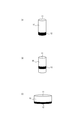
- the columnar carrier is not particularly limited, and for example, a carrier 10 having a shape as shown in FIG.
- the carrier 10 has a magnetic part 12 formed at one end and a cell holding part 11 extending in the longitudinal direction, and has a columnar shape as a whole. .
- the magnetic part 12 does not need to be formed at the end.
- the magnetic part 12 is formed at one end side from the center in the height direction.
- the overall shape of the carrier 10 is not particularly limited, and may be, for example, a columnar shape in which the shorter direction is the height direction as shown in FIG. In the example shown in FIG.
- the carrier 10 has a magnetic part 12 formed at one end in the short direction and a cell holding part 11 extending in the long direction.
- the carrier 10 having the shape shown in FIG. 2C, a stable arrangement can be performed when the carriers 10 are arranged by the magnetic field 51.
- the magnetic part 12 may be formed only near the center of the carrier 10.
- the carrier 10 is suspended in a cell-compatible liquid, for example, in the culture vessel 40 to obtain a carrier suspension.
- a buffer such as phosphate buffered saline, a liquid medium such as Eagle's minimum essential medium, or the like can be used.
- stirring, ultrasonic dispersion, aeration and the like can be used as a method of suspending the carrier 10 in a cell-compatible liquid.
- the carrier 10 may be directly suspended in the cell suspension 21 described later without preparing the carrier suspension.
- the cell 20 may be a prokaryotic cell or a eukaryotic cell.
- Eukaryotic cells may be mammalian cells such as humans and mice, or cells derived from other vertebrates.
- the cells 20 may be stem cells such as embryonic stem cells, induced pluripotent stem cells, and mesenchymal cells.
- the cells 20 may be endodermal cells such as hepatocytes differentiated from stem cells, mesodermal cells such as cardiomyocytes, and ectodermal cells such as nerve cells.
- the cell 20 may be a gene mutant cell derived from a tumor such as a cancer cell. By embedding in the cell holding part 11 as well as the adherent cells, floating cells such as blood cells can be used as the cells 20.
- cells 20 according to the type of the desired cell construct 100 can be used.
- the cell 20 held by the cell holding unit 11 may be only one type, or may be two or more types.
- a cell construct 100 including two or more types of cells 20 can be manufactured.
- the cell suspension 21 can be obtained by suspending the above-described cells in a cell-compatible liquid.
- a commercially available liquid medium or the like can be used as the cell-compatible liquid.
- a method for suspending cells in a cell-compatible liquid a method such as stirring, ultrasonic dispersion, or aeration can be used.
- Step of retaining cells In the step (A) of the embodiment, the carrier suspension and the cell suspension 21 are brought into contact with each other in, for example, a culture vessel 40 to hold the cells 20 in the cell holding unit 11 of the carrier 10, and the cell holding carrier 30 is obtain.
- the condition for retaining the cells 20 is preferably a condition that does not affect the cells 20, and for example, a temperature condition of 37 ° C. or lower for human cells.
- the cell concentration in the cell suspension 21 may be determined based on the adhesiveness between the cell holding unit 11 and the cells 20, and when the adhesiveness is low, the higher the cell concentration, the better. In addition, if the proliferation ability of the cells 20 is high, the cell concentration in the cell suspension 21 may be low.
- the form of the container used in one embodiment is not particularly limited, and may be a general culture container 40.
- the inner surface of the culture vessel 40 is made of a material to which the cells 20 are unlikely to adhere. Since the inner surface of the culture container 40 is made of a material to which the cells 20 are unlikely to adhere, it is possible to prevent the cells 20 and the cell holding carrier 30 from adhering to an undesired portion of the inner surface of the culture container 40.
- a plurality of culture carriers are arranged in the culture vessel 40 by applying a magnetic field 51.
- the magnetic field 51 is applied by, for example, approaching the magnet 50 from below the outside of the culture vessel 40 to attract the magnetic part 12 of the carrier 10 to a portion where the magnetic field 51 is applied.
- a plurality of culture carriers including the plurality of cell holding carriers 30 are arranged in the culture vessel 40.
- the carrier for culture may be arranged in a liquid phase or in a gas phase.
- the culture vessel 40 for performing the step (B) may or may not be filled with a liquid such as a liquid medium.
- the magnet 50 for example, an electromagnet or a permanent magnet can be used. If an electromagnet is used, the application and removal of the magnetic field 51 can be easily performed. Further, if a permanent magnet is used, the magnetic field 51 can be stably applied.
- the culture carrier can be arranged as desired by adjusting the pattern to which the magnetic field 51 is applied. Therefore, the cell construct produced according to the method for producing a cell construct according to the present embodiment 100 structures can be freely controlled.
- the distance between the culture carriers to be arranged may be a distance at which the cells 20 are in contact with each other.
- the culture carrier may be replaced with the cells 20. They can be arranged so that they are separated from each other. If at least a part of the cells 20 is brought into contact between the carriers for culture, the time required for cell-cell adhesion can be shortened, and the cell construct 100 can be manufactured at high throughput.
- the arrangement is performed using the magnetic field 51, so that the production of the cell construct 100 at high throughput can be realized. Furthermore, in many cases, the magnetic field 51 does not adversely affect the cells 20, and thus the method for producing a cell construct according to the present embodiment has low invasiveness to the cells 20.
- the step (B) may include a step (b1) of applying vibration to the culture vessel 40.
- the culture carriers can be suitably arranged.
- the culture carriers that have not been arranged as desired are once released from being fixed by the magnetic field 51 due to vibration, and are rearranged. Therefore, the carriers for culture can be arranged with high accuracy, and the variation in the shape of the cell construct 100 to be produced can be reduced.
- the vibration may be switched on and off while the magnetic field 51 is applied.
- the step (B) by switching the vibration on and off while the magnetic field 51 is applied, the culture carriers that are not arranged as desired are rearranged, and then the culture is temporarily performed without vibration.
- the carrier can be fixed by the magnetic field 51 and then re-excited if necessary. Therefore, it is possible to reduce the possibility that even the arrangement of the culture carriers arranged as desired is detached by the vibration.
- the magnetic flux density of the magnetic field 51 when the vibration is applied may be smaller than the magnetic flux density of the magnetic field 51 before the vibration is applied.
- the cultivation cells not arranged as desired can be obtained.
- the fixation of the carrier by the magnetic field 51 can be temporarily reduced during the vibration. Therefore, it is easy to move the culture carriers that are not arranged as desired by shaking, so that the culture carriers that are not arranged as desired can be efficiently rearranged, and the cells to be produced can be easily rearranged. Variations in the shape of the structure 100 can be reduced.
- the step (B) may further include a step (b2) for removing the unsequenced culture carriers.
- the removal method is not particularly limited. For example, a gentle removal method such as inverting the culture container 40 or adding a washing solution while applying the magnetic field 51 to the bottom of the culture container 40 is preferable.
- the shape of the cell construct 100 can be accurately controlled by removing the unsequenced culture carriers.
- the removed carrier for culture may be reused for the production of the cell construct 100. If the carrier for culture is reused, the production cost of the cell construct 100 can be reduced.
- Step (C)> the cells 20 held in the cell holder 11 of the culture carrier are cultured in the culture vessel 40 while maintaining the state where the culture carriers are arranged. By the culturing, cell-to-cell adhesion occurs between the cells 20 held in the cell holding unit 11 of the nearby culture carrier. As a result, a cell construct 100 in which the cells 20 held in the cell holding unit 11 adhere to each other is obtained.
- an appropriate medium can be selected according to the type of the cells 20.
- the cell 20 is a hepatocyte, it can be performed using a liquid medium (medium 41) such as a hepatocyte medium.
- the culture medium for hepatocytes include HepatoZYME and the like.
- the culture may be performed after performing an operation of further holding the cells 20 in the cell holding unit 11 of the culture carrier in the arranged state.
- the holding of the cells 20 in the cell holding part 11 of the cultured carriers in the arranged state can be performed by the same operation as the operation of holding the cells 20 in the carrier 10 in the step (A) described above.
- the cells 20 may be cultured with the magnetic field 51 applied, or the culture may be performed with the application of the magnetic field 51 stopped.
- the culture is performed while the magnetic field 51 is applied.
- a sheet-like planar cell construct 100 can be manufactured in addition to a three-dimensional cellular construct 100 such as a spherical or columnar form.
- a cell construct 100 including a three-dimensional structure such as a sweat tissue and pores, which is planar, such as a skin tissue, can be suitably produced.
- the carrier 10 and the magnetic part 12 do not adversely affect many assays. Therefore, in many assays, the cell construct 100 can be used without removing the carrier 10 and the magnetic part 12 from the manufactured cell construct 100. By not removing the magnetic part 12 from the cell construct 100, the cell construct 100 can be easily fixed or moved by the magnetic field 51.
- the manufactured cell construct 100 can be lifted and recovered from the culture vessel 40 by stopping the application of the magnetic field 51, when the cell construct 100 is collected, the cell construct 100 may be damaged by enzyme treatment or the like. There is no need to perform any possible processing. Therefore, the cell construct 100 can be collected in an intact state.
- the method for producing a cell construct may further include a step (D) of removing the magnetic part 12 from the cell construct 100 after the step (C).
- a step (D) of removing the magnetic part 12 from the cell construct 100 it is possible to manufacture the cell construct 100 containing less substances other than the cells 20.
- the cell construct 100 is used for applications involving a magnetic field, such as by measuring the manufactured cell construct 100 by NMR, it is preferable to remove the magnetic part 12 in step (D).
- the removal of the magnetic part 12 can be performed, for example, as shown in FIG.
- the magnetic part 12 and the cell holding part 11 are formed of different materials.
- the magnetic part 12 is made of agarose and magnetic particles
- the cell holding part 11 is made of collagen.
- a substance capable of degrading only the material forming the magnetic part 12 such as agarose-degrading enzyme
- the magnetic part 12 is detached from the cell construct 100, and the cell construct 100 is raised in the culture container 40.
- the addition and reaction of a substance capable of decomposing only the material forming the magnetic part 12, such as an agarose-decomposing enzyme, may be performed with or without the magnetic field 51 applied.
- the method for producing a cell construct may further include a step (E) of removing the carrier 10 from the cell construct 100.
- a step (E) of removing the carrier 10 from the cell construct 100 By removing the carrier 10 from the cell construct 100, the portion occupied by the carrier 10 in the cell construct 100 becomes hollow. Therefore, it is possible to manufacture a cell construct 100 having a complicated structure, such as a cell construct 100 having many voids and high oxygen permeability. Further, by removing the carrier 10 from the cell construct 100, it is possible to produce the cell construct 100 containing less substances other than the cells 20.
- the carrier 10 is formed of a material that can be degraded by an enzyme, and the carrier 10 is removed by decomposing the carrier 10 by enzymatic treatment after the production of the cell construct 100.
- FIG. 5B is a schematic diagram illustrating an example of the step (E). In the example of FIG.
- the carrier 10 is mainly manufactured from collagen. After the cultivation, the collagen-degrading enzyme is added to the medium 41 and reacted. When the collagen-decomposing enzyme decomposes the carrier 10, the carrier 10 is removed from the cell construct 100, and a cell construct 100 'having many voids and high oxygen permeability is obtained. The addition of the collagen-decomposing enzyme and the collagen-decomposition reaction may be performed with or without the magnetic field 51 being applied.
- the above-described steps (A) to (C) and any other steps (D) or (E) may be repeated a plurality of times.
- the cell construct 100 having a more complicated structure can be manufactured.
- the culture carriers are arranged by applying the magnetic field 51 in the step (B)
- the unaligned culture carriers are removed in the step (b2).
- a culture carrier is added to the culture vessel 40 again, the cells are arranged by the magnetic field 51, and the cells 20 are cultured.
- FIG. 7 (B) shows another example of the flow of the method for producing a cell construct.
- the carrier 10, the carrier suspension, the cells 20, the cell suspension 21, and the culture vessel 40 include the same ones as in the first embodiment, and the description thereof will be omitted below.
- the method for producing a cell construct may include the above-mentioned step (D) or step (E), as in the first embodiment. Step (D) and step (E) can be performed in the same manner as in the first embodiment, and a description thereof will be omitted below.
- Step (A)> a plurality of culture carriers including the carrier 10 (cell-free carrier) having the magnetic part 12 and the cell holder 11 are prepared.
- the carrier 10 is not particularly limited, and can be manufactured by using, for example, a carrier manufacturing method described later.
- the culture carrier may include the cell holding carrier 30.
- Step (B) can be performed in the same manner as in step (B) of Embodiment 1 described above, except that the culture carrier including the cell-free carrier 10 is arranged.
- Step (C)> In the step (C), after the cells 20 are held in the cell holder 11 of the arranged culture carrier (step (b3)), the state where the culture carriers are arranged in the culture vessel 40 is maintained. Then, the cells 20 held on the culture carrier are cultured.
- the holding of the cells 20 in the cell holding unit 11 of the arranged culture carriers is performed in the step (A) of the above-described first embodiment except that the culture carriers are fixed by applying the magnetic field 51.
- the cell 20 can be held in the cell holding portion 11 of the carrier 10 in the same manner.
- the cells 20 are held in the cell holding portion 11 of the cell non-holding carrier 10 included in the culture carrier arranged in the step (B), and the cell holding carrier 30 is placed in the culture vessel 40. Are arranged.
- the culturing can be performed in the same manner as the culturing in step (C) of the first embodiment.
- sheet-like, tubular, cell construct 100 is organized into a desired shape such as spherical, produced at low invasive with respect to high throughput and cell be able to.
- a desired shape such as spherical, produced at low invasive with respect to high throughput and cell be able to.
- the method for producing a cell construct according to the present disclosure is not limited to the above-described embodiment.
- two or more carriers 10 may be used. If two or more types of the carriers 10 are used, the manner in which the cells 20 are retained and the manner in which the culture carriers are arranged can be different for each type of the carriers 10. Therefore, by using two or more types of culture carriers, it is possible to produce the cell construct 100 having a more complicated structure than when using one type of culture carrier. For example, by using two or more types of columnar culture carriers having different heights, the cell construct 100 having a different thickness depending on the site can be produced. In addition, two or more types of culture carriers are different from each other in at least one selected from the group consisting of shape, material, specific gravity, position of the magnetic part 12, magnetic strength of the magnetic part 12, and area of the cell holding part 11. obtain.
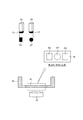
- the culture carrier may have an engaging portion that engages with each other, for example, as shown in FIG.
- a plurality of carriers for culture can be arranged by engaging the engaging portions with each other.
- the culture carrier has the engagement portion, not only the magnetic field 51 but also the engagement between the engagement portions affects the arrangement. Accordingly, the culture carriers can be arranged in a more complicated shape as compared with the case where the arrangement is performed using only the magnetic field 51, and thus the cell construct 100 having a more complicated structure can be manufactured.
- the culture carriers since the culture carriers are engaged with each other, the culture carriers can be arranged with higher precision as compared with the case where the arrangement is performed only by the magnetic field 51.
- the engaging portions of the culture carriers are engaged with each other, it is easy to maintain the state where the culture carriers are arranged.
- the culture carrier having the engaging portion is not limited to the illustrated example.
- the culture carriers are different from each other, and the culture carriers have an affinity for each other due to the characteristics. Alternatively, it may have resilience. At least some of the characteristics are different from each other between the two or more types of culture carriers, and the culture carriers have affinity or repulsion with each other due to the characteristics. Affinity or repulsion due to the influence of the carrier on the culture. Accordingly, the culture carriers can be arranged in a more complicated shape as compared with the case where the arrangement is performed using only the magnetic field 51, and thus the cell construct 100 having a more complicated structure can be manufactured.
- the state in which the culture carriers are arranged can be easily maintained.
- at least one property selected from the group consisting of hydrophobicity, hydrophilicity, a protein covering the surface of the carrier 10, and charge is different between two or more types of culture carriers.
- the carrier 10c is provided with a positive charge
- the carrier 10d is provided with a negative charge. Therefore, in the step (B), the carriers 10c and 10d are electrically attracted or repelled, and the carriers 10c and 10d are easily arranged alternately.
- the culture vessel 40 may have a fitting portion into which the culture carrier fits, as shown in FIG. Since the culture vessel 40 has a fitting portion to which the culture carrier is fitted, in the step (B), the culture carrier can be fitted to the fitting portion and arranged. Therefore, a cell pattern 100 having a complicated pattern can be formed, and the carriers for culture can be arranged with high precision, as compared with the case where the arrangement is performed using only the magnetic field 51. Further, since the culture carrier is fitted into the fitting portion of the culture vessel 40, it is easy to maintain the state where the culture carriers are arranged.
- the fitting portion can be formed in a shape corresponding to the type of the culture carrier to be arranged. The fitting portion may have any shape as long as it can fit at least a part of the culture carrier.
- the shapes of the bottoms 12e 'and 12f' of the magnetic portions 12e and 012f of the carrier 10e and the carrier 10f are different from each other.
- Fitting portions 43e and 43f into which the 12e 'and 12f' are fitted are formed on the bottom surface 42 of the culture vessel 40, respectively. Therefore, when the magnetic field 51 is applied in the step (B), the carriers 10e and 10f can be precisely arranged by fitting the fitting portions 43e and 43f with the fitting portions 12e ′ and 12f ′. It is easy to maintain the arrangement state.
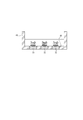
- a magnetic field 51 is applied to a plurality of regions 70 separated from each other in the culture vessel 40, and a plurality of culture carriers are arranged in the plurality of regions. Good.
- the plurality of culture carriers are moved within the region having the outermost magnetic field range in which the carrier 10 can be fixed. Are arranged.
- a plurality of cell constructs 100 can be produced simultaneously in one culture vessel, and the cell constructs 100 can be produced at high throughput.
- the intervals between the plurality of regions 70 to which the magnetic field 51 is applied need not be equal, but from the viewpoint of production efficiency, it is desirable that the intervals be such that the number of the regions 70 per unit area of the bottom surface 42 is maximized.
- the carrier 10 that can be used in the above-described method for producing a cell construct of the present disclosure is not particularly limited, and can be suitably produced using the method for producing a carrier of the present disclosure.
- the method for manufacturing a carrier is a method for manufacturing the above-described carrier 10, and includes a layer including a sol containing magnetic particles in a mold, and a sol having cell retention properties. And a step of solidifying the sol in the mold.
- the layer made of the sol containing the magnetic particles and the layer made of the sol having cell holding properties become the magnetic part 12 and the cell holding part 11 by solidification of the sol.
- the carrier 10 used in the production method of the cell construct according to some embodiments can be easily produced.
- the type of sol is not particularly limited, but polysaccharides such as agarose, alginic acid, and hyaluronic acid; biopolymers constituting extracellular matrix such as elastin and collagen; denatured biopolymers such as gelatin; extracted from cells and tissues Soluble basement membrane preparations such as Matrigel (registered trademark) and Geltrex (registered trademark); and synthetic polymers such as ethylene glycol.
- Sols used to form the cell holding unit 11 and the magnetic unit 12 may be different from each other. Note that, by mixing the cells 20 with the sol and then solidifying the sol, the holding of the cells 20 in the cell holding unit 11 and the formation of the cell holding unit 11 may be performed simultaneously.
- the carrier 10 is formed, and then the cell suspension 21 is mixed with the carrier 10 to hold the cell 20 in comparison with the case where the cell 20 is retained. Therefore, it is not necessary to use the cell suspension 21 having a high concentration, so that the cells 20 can be prevented from being wasted.
- any mold can be used, but from the viewpoint of easily removing the manufactured carrier 10, it is preferable to use a mold made of an elastic material such as silicone rubber made of dimethylpolysiloxane or the like. .
- the kit for producing a cell construct includes a carrier 10 having a magnetic part 12 formed only in part and a cell holding part 11 for holding cells 20, and a cell holding part 11 of the carrier 10. And a culture carrier containing at least one of the cell holding carriers 30 in which the cells 20 are held.
- the method for producing a cell construct according to an embodiment of the present disclosure can be easily performed.
- the kit for producing a cell construct according to one embodiment includes at least one selected from the group consisting of an instruction manual for the kit, a culture vessel 40, a magnetic field applicator, and a cell-compatible liquid.
- the kit for producing a cell construct may include a document that describes how to download the instruction manual from the server instead of the instruction manual.
- PDMS dimethylpolysiloxane
- a Matrigel (registered trademark) solution manufactured by BD Biosciences
- the Matrigel solution (sol) was overlaid using an inkjet spotter to a height of about 9/10 of the non-through hole.
- the mold was placed in a 37 ° C. incubator to solidify the Matrigel solution.
- a carrier having a columnar shape, having a magnetic part in which magnetic particles were embedded near one end, and the entire surface of the carrier being a cell holding part was obtained.
- the diameter of the non-through hole was increased by applying tension to the mold, and the carrier was taken out of the non-through hole.
- the removed carrier was dispersed in a liquid medium.
- HepG2 cells a liver cancer-derived cell line
- the cells were cultured on a culture dish.
- the cells were detached from the culture dish with a sufficient amount of enzyme.
- the detached cells were suspended in a liquid medium to obtain a cell suspension.
- a liquid medium in which a carrier was dispersed was introduced into a culture well (culture vessel), and the cell suspension was mixed therein.
- the mixed solution was incubated, and the cells were held in the cell holding portion on the carrier to obtain a cell holding carrier.
- a magnetic field was applied by arranging a magnet outside the bottom of the culture well, the cell holding carriers were arranged in such a manner that the magnetic part was directed to the bottom of the culture well, and the cell holding carriers were brought close to each other.
- the method for producing a cell construct, the carrier, and the method for producing a carrier according to the present disclosure can be used in the fields of regenerative medicine, disease models, drug efficacy tests, safety tests, and the like.
Landscapes
- Health & Medical Sciences (AREA)
- Engineering & Computer Science (AREA)
- Life Sciences & Earth Sciences (AREA)
- Chemical & Material Sciences (AREA)
- Bioinformatics & Cheminformatics (AREA)
- Organic Chemistry (AREA)
- Wood Science & Technology (AREA)
- Zoology (AREA)
- Genetics & Genomics (AREA)
- Biomedical Technology (AREA)
- Biotechnology (AREA)
- General Health & Medical Sciences (AREA)
- Microbiology (AREA)
- Biochemistry (AREA)
- General Engineering & Computer Science (AREA)
- Sustainable Development (AREA)
- Clinical Laboratory Science (AREA)
- Cell Biology (AREA)
- Immunology (AREA)
- Oncology (AREA)
- Molecular Biology (AREA)
- Micro-Organisms Or Cultivation Processes Thereof (AREA)
- Apparatus Associated With Microorganisms And Enzymes (AREA)
- Immobilizing And Processing Of Enzymes And Microorganisms (AREA)
Abstract
La présente invention concerne un procédé de production d'une structure cellulaire qui comprend : dans un récipient (40), l'application d'un champ magnétique à des supports de culture comprenant les supports (10), qui présentent une partie magnétique (12) formée dans uniquement une partie de ce derniers et une partie de maintien de cellules (11), et/ou des supports de maintien de cellules (30) afin de disposer les multiples supports ; et ensuite la culture des cellules (20) qui sont maintenues sur les parties de maintien de cellules (11) tout en maintenant l'état agencé.
Priority Applications (3)
| Application Number | Priority Date | Filing Date | Title |
|---|---|---|---|
| EP19829840.8A EP3819374A4 (fr) | 2018-07-04 | 2019-05-09 | Procédé de production de structure cellulaire, support, et procédé de production de support |
| US17/252,977 US12037571B2 (en) | 2018-07-04 | 2019-05-09 | Method of producing cell structure, carrier, and method of producing carrier |
| CN201980043430.2A CN112384617B (zh) | 2018-07-04 | 2019-05-09 | 细胞构建物的制造方法、载体及载体的制造方法 |
Applications Claiming Priority (2)
| Application Number | Priority Date | Filing Date | Title |
|---|---|---|---|
| JP2018-127773 | 2018-07-04 | ||
| JP2018127773A JP7151218B2 (ja) | 2018-07-04 | 2018-07-04 | 細胞構築物の製造方法、担体、および担体の製造方法 |
Publications (1)
| Publication Number | Publication Date |
|---|---|
| WO2020008723A1 true WO2020008723A1 (fr) | 2020-01-09 |
Family
ID=69059875
Family Applications (1)
| Application Number | Title | Priority Date | Filing Date |
|---|---|---|---|
| PCT/JP2019/018605 Ceased WO2020008723A1 (fr) | 2018-07-04 | 2019-05-09 | Procédé de production de structure cellulaire, support, et procédé de production de support |
Country Status (5)
| Country | Link |
|---|---|
| US (1) | US12037571B2 (fr) |
| EP (1) | EP3819374A4 (fr) |
| JP (1) | JP7151218B2 (fr) |
| CN (1) | CN112384617B (fr) |
| WO (1) | WO2020008723A1 (fr) |
Cited By (1)
| Publication number | Priority date | Publication date | Assignee | Title |
|---|---|---|---|---|
| JP2025501412A (ja) * | 2022-01-04 | 2025-01-17 | ロナウク, インク. | 細胞培養殖方法 |
Families Citing this family (1)
| Publication number | Priority date | Publication date | Assignee | Title |
|---|---|---|---|---|
| IT201900018614A1 (it) * | 2019-10-11 | 2021-04-11 | Fondazione St Italiano Tecnologia | Sistema e metodo di co-coltura cellulare |
Citations (6)
| Publication number | Priority date | Publication date | Assignee | Title |
|---|---|---|---|---|
| US4517125A (en) | 1983-02-03 | 1985-05-14 | Chugai Seiyaku Kabushiki Kaisha | Novel vitamin D3 derivatives and process for producing the same |
| JP2004313007A (ja) * | 2003-04-10 | 2004-11-11 | Pentax Corp | 細胞培養担体、細胞培養方法および細胞培養装置 |
| JP2012503492A (ja) | 2008-09-25 | 2012-02-09 | ウイリアム、マーシュ、ライス、ユーニヴァーサティ | 細胞および材料の磁気誘導およびパターン形成のためのシステムおよび方法 |
| JP2017510254A (ja) * | 2014-02-26 | 2017-04-13 | ブリガム・アンド・ウイミンズ・ホスピタル・インコーポレイテッド | 磁気自己組織化のためのシステム及び方法 |
| JP2017532971A (ja) | 2014-10-29 | 2017-11-09 | コーニング インコーポレイテッド | 細胞培養集合体を生成するためのマイクロウェル設計および製造 |
| JP2018127773A (ja) | 2017-02-06 | 2018-08-16 | 日立造船株式会社 | サクション基礎 |
Family Cites Families (20)
| Publication number | Priority date | Publication date | Assignee | Title |
|---|---|---|---|---|
| JP4666335B2 (ja) * | 2002-09-04 | 2011-04-06 | 晶夫 岸田 | 機械的振動による生物機能の制御方法とその装置 |
| DE10335130A1 (de) * | 2003-07-31 | 2005-02-24 | Blue Membranes Gmbh | Immobilisierung von Katalysatoren auf porösen Körpern auf Kohlenstoffbasis |
| WO2004083412A1 (fr) * | 2003-03-18 | 2004-09-30 | Japan Tissue Engineering Co., Ltd | Procede de culture cellulaire et couche de cellules |
| JP2004313008A (ja) | 2003-04-10 | 2004-11-11 | Pentax Corp | 細胞培養方法および細胞培養装置 |
| US20040248291A1 (en) | 2003-04-10 | 2004-12-09 | Pentax Corporation | Method for culturing cells, cell culture carriers and cell culture apparatus |
| CN1788080A (zh) * | 2003-05-14 | 2006-06-14 | 株式会社日本组织工程 | 细胞培养方法及培养的组织 |
| WO2005003332A2 (fr) | 2003-06-30 | 2005-01-13 | University Of South Florida | Appareil et procede de culture cellulaire tridimensionnelle magnetique |
| US20090137018A1 (en) * | 2003-06-30 | 2009-05-28 | University Of South Florida | Magnetic three-dimensional cell culture apparatus and method |
| EP1654529A4 (fr) * | 2003-07-08 | 2006-12-20 | Univ Johns Hopkins | Procede et systeme de microreseau magnetique concus pour pieger et manipuler des cellules |
| WO2005010139A2 (fr) | 2003-07-23 | 2005-02-03 | University Of South Florida | Microtransporteurs ferromagnetiques de culture cellulaire et tissulaire |
| DE102004009985A1 (de) * | 2004-03-01 | 2005-09-22 | Fraunhofer-Gesellschaft zur Förderung der angewandten Forschung e.V. | Magnetische Manipulation von biologischen Proben |
| US20090305089A1 (en) * | 2006-07-14 | 2009-12-10 | Akermin, Inc. | Organelles in bioanodes, biocathodes, and biofuel cells |
| US7993525B2 (en) * | 2006-12-29 | 2011-08-09 | Intel Corporation | Device and method for particle complex handling |
| CN101679947B (zh) | 2007-03-30 | 2013-03-06 | 国立大学法人九州大学 | 细胞立体构造体的生产方法 |
| JP5407345B2 (ja) * | 2009-01-13 | 2014-02-05 | 大日本印刷株式会社 | 生体組織の作製方法 |
| US8883471B2 (en) * | 2009-09-25 | 2014-11-11 | N3D Biosciences, Inc. | Materials for magnetizing cells and magnetic manipulation |
| US9518249B2 (en) * | 2010-12-16 | 2016-12-13 | General Electric Company | Cell carrier, associated methods for making cell carrier and culturing cells using the same |
| US11332704B2 (en) * | 2013-07-09 | 2022-05-17 | Universal Bio Research Co., Ltd. | Culture device, culture system, and culture method |
| EP2995381A1 (fr) * | 2014-09-09 | 2016-03-16 | Roche Diagniostics GmbH | Ensemble de supports de récipient d'échantillon pour un système de distribution d'échantillons de laboratoire, ledit système de distribution et système d'automatisation de laboratoire |
| CN108138132A (zh) * | 2015-09-30 | 2018-06-08 | 富士胶片株式会社 | 片状细胞结构体的制造方法及片状细胞结构体 |
-
2018
- 2018-07-04 JP JP2018127773A patent/JP7151218B2/ja active Active
-
2019
- 2019-05-09 CN CN201980043430.2A patent/CN112384617B/zh active Active
- 2019-05-09 US US17/252,977 patent/US12037571B2/en active Active
- 2019-05-09 WO PCT/JP2019/018605 patent/WO2020008723A1/fr not_active Ceased
- 2019-05-09 EP EP19829840.8A patent/EP3819374A4/fr active Pending
Patent Citations (6)
| Publication number | Priority date | Publication date | Assignee | Title |
|---|---|---|---|---|
| US4517125A (en) | 1983-02-03 | 1985-05-14 | Chugai Seiyaku Kabushiki Kaisha | Novel vitamin D3 derivatives and process for producing the same |
| JP2004313007A (ja) * | 2003-04-10 | 2004-11-11 | Pentax Corp | 細胞培養担体、細胞培養方法および細胞培養装置 |
| JP2012503492A (ja) | 2008-09-25 | 2012-02-09 | ウイリアム、マーシュ、ライス、ユーニヴァーサティ | 細胞および材料の磁気誘導およびパターン形成のためのシステムおよび方法 |
| JP2017510254A (ja) * | 2014-02-26 | 2017-04-13 | ブリガム・アンド・ウイミンズ・ホスピタル・インコーポレイテッド | 磁気自己組織化のためのシステム及び方法 |
| JP2017532971A (ja) | 2014-10-29 | 2017-11-09 | コーニング インコーポレイテッド | 細胞培養集合体を生成するためのマイクロウェル設計および製造 |
| JP2018127773A (ja) | 2017-02-06 | 2018-08-16 | 日立造船株式会社 | サクション基礎 |
Non-Patent Citations (3)
| Title |
|---|
| ITO AKIRA, ET AL.: "Contruction of 3D tissue-like structure using functional magnetite nanoparticles", YAKUGAKU ZASSHI, vol. 128, no. 1, January 2008 (2008-01-01), pages 21 - 28, XP055672563 * |
| See also references of EP3819374A4 |
| TASOGLU, S. ET AL.: "Guided and magnetic self-assembly of tunable magnetoceptive gels", NATURE COMMUNICATIONS, vol. 5, no. 4702, 1 September 2014 (2014-09-01), pages 1 - 11, XP055405461 * |
Cited By (1)
| Publication number | Priority date | Publication date | Assignee | Title |
|---|---|---|---|---|
| JP2025501412A (ja) * | 2022-01-04 | 2025-01-17 | ロナウク, インク. | 細胞培養殖方法 |
Also Published As
| Publication number | Publication date |
|---|---|
| EP3819374A1 (fr) | 2021-05-12 |
| US12037571B2 (en) | 2024-07-16 |
| CN112384617A (zh) | 2021-02-19 |
| JP7151218B2 (ja) | 2022-10-12 |
| JP2020005524A (ja) | 2020-01-16 |
| US20210115371A1 (en) | 2021-04-22 |
| EP3819374A4 (fr) | 2022-03-30 |
| CN112384617B (zh) | 2024-05-10 |
Similar Documents
| Publication | Publication Date | Title |
|---|---|---|
| KR101678796B1 (ko) | 세포 배양 장치 및 방법 | |
| AU2017365846B2 (en) | Cellular microcompartment and preparation methods | |
| CN106459925B (zh) | 培养方法和细胞团 | |
| JP5234428B2 (ja) | 細胞集合体形成器具、細胞集合体培養器具、細胞集合体転写キット及び細胞集合体の培養方法 | |
| JPWO2016021498A1 (ja) | 繊維状タンパク質材料の作製方法、および細胞培養方法 | |
| CN107075443B (zh) | 三维细胞培养系统和使用该系统的细胞培养方法 | |
| WO2020008723A1 (fr) | Procédé de production de structure cellulaire, support, et procédé de production de support | |
| Tabata et al. | Stem cell culture and differentiation in 3-D scaffolds | |
| EP3098304A1 (fr) | Systeme de dilatation a cellules sans decollement de cellules hybrides pour la mise en culture de cellules adherentes et protocole de procedure associe | |
| Huang et al. | Current Advances in 3D Dynamic Cell Culture Systems. Gels 2022, 8, 829 | |
| US20250101359A1 (en) | 3d hydrogel system for cell scale-up and bioproduction | |
| AU2024353260A1 (en) | 3d hydrogel system for cell scale-up and bioproduction | |
| CN115093967A (zh) | 细胞培养板及其使用方法 | |
| HK1195332B (en) | Devices and methods for culture of cells |
Legal Events
| Date | Code | Title | Description |
|---|---|---|---|
| 121 | Ep: the epo has been informed by wipo that ep was designated in this application |
Ref document number: 19829840 Country of ref document: EP Kind code of ref document: A1 |
|
| NENP | Non-entry into the national phase |
Ref country code: DE |
|
| WWE | Wipo information: entry into national phase |
Ref document number: 2019829840 Country of ref document: EP |
|
| ENP | Entry into the national phase |
Ref document number: 2019829840 Country of ref document: EP Effective date: 20210204 |