WO2020009151A1 - Oligonucléotides pour réguler l'épissage de la protéine tau, et leurs utilisations - Google Patents
Oligonucléotides pour réguler l'épissage de la protéine tau, et leurs utilisations Download PDFInfo
- Publication number
- WO2020009151A1 WO2020009151A1 PCT/JP2019/026470 JP2019026470W WO2020009151A1 WO 2020009151 A1 WO2020009151 A1 WO 2020009151A1 JP 2019026470 W JP2019026470 W JP 2019026470W WO 2020009151 A1 WO2020009151 A1 WO 2020009151A1
- Authority
- WO
- WIPO (PCT)
- Prior art keywords
- aso
- seq
- tau
- antisense oligonucleotide
- nucleotide
- Prior art date
- Legal status (The legal status is an assumption and is not a legal conclusion. Google has not performed a legal analysis and makes no representation as to the accuracy of the status listed.)
- Ceased
Links
Images









Classifications
-
- A—HUMAN NECESSITIES
- A61—MEDICAL OR VETERINARY SCIENCE; HYGIENE
- A61P—SPECIFIC THERAPEUTIC ACTIVITY OF CHEMICAL COMPOUNDS OR MEDICINAL PREPARATIONS
- A61P25/00—Drugs for disorders of the nervous system
- A61P25/28—Drugs for disorders of the nervous system for treating neurodegenerative disorders of the central nervous system, e.g. nootropic agents, cognition enhancers, drugs for treating Alzheimer's disease or other forms of dementia
-
- C—CHEMISTRY; METALLURGY
- C12—BIOCHEMISTRY; BEER; SPIRITS; WINE; VINEGAR; MICROBIOLOGY; ENZYMOLOGY; MUTATION OR GENETIC ENGINEERING
- C12N—MICROORGANISMS OR ENZYMES; COMPOSITIONS THEREOF; PROPAGATING, PRESERVING, OR MAINTAINING MICROORGANISMS; MUTATION OR GENETIC ENGINEERING; CULTURE MEDIA
- C12N15/00—Mutation or genetic engineering; DNA or RNA concerning genetic engineering, vectors, e.g. plasmids, or their isolation, preparation or purification; Use of hosts therefor
- C12N15/09—Recombinant DNA-technology
- C12N15/11—DNA or RNA fragments; Modified forms thereof; Non-coding nucleic acids having a biological activity
- C12N15/113—Non-coding nucleic acids modulating the expression of genes, e.g. antisense oligonucleotides; Antisense DNA or RNA; Triplex- forming oligonucleotides; Catalytic nucleic acids, e.g. ribozymes; Nucleic acids used in co-suppression or gene silencing
-
- A—HUMAN NECESSITIES
- A61—MEDICAL OR VETERINARY SCIENCE; HYGIENE
- A61P—SPECIFIC THERAPEUTIC ACTIVITY OF CHEMICAL COMPOUNDS OR MEDICINAL PREPARATIONS
- A61P43/00—Drugs for specific purposes, not provided for in groups A61P1/00-A61P41/00
-
- A—HUMAN NECESSITIES
- A01—AGRICULTURE; FORESTRY; ANIMAL HUSBANDRY; HUNTING; TRAPPING; FISHING
- A01K—ANIMAL HUSBANDRY; AVICULTURE; APICULTURE; PISCICULTURE; FISHING; REARING OR BREEDING ANIMALS, NOT OTHERWISE PROVIDED FOR; NEW BREEDS OF ANIMALS
- A01K2217/00—Genetically modified animals
- A01K2217/05—Animals comprising random inserted nucleic acids (transgenic)
- A01K2217/052—Animals comprising random inserted nucleic acids (transgenic) inducing gain of function
-
- A—HUMAN NECESSITIES
- A01—AGRICULTURE; FORESTRY; ANIMAL HUSBANDRY; HUNTING; TRAPPING; FISHING
- A01K—ANIMAL HUSBANDRY; AVICULTURE; APICULTURE; PISCICULTURE; FISHING; REARING OR BREEDING ANIMALS, NOT OTHERWISE PROVIDED FOR; NEW BREEDS OF ANIMALS
- A01K2227/00—Animals characterised by species
- A01K2227/10—Mammal
- A01K2227/105—Murine
-
- A—HUMAN NECESSITIES
- A01—AGRICULTURE; FORESTRY; ANIMAL HUSBANDRY; HUNTING; TRAPPING; FISHING
- A01K—ANIMAL HUSBANDRY; AVICULTURE; APICULTURE; PISCICULTURE; FISHING; REARING OR BREEDING ANIMALS, NOT OTHERWISE PROVIDED FOR; NEW BREEDS OF ANIMALS
- A01K2267/00—Animals characterised by purpose
- A01K2267/03—Animal model, e.g. for test or diseases
- A01K2267/0306—Animal model for genetic diseases
- A01K2267/0312—Animal model for Alzheimer's disease
-
- A—HUMAN NECESSITIES
- A01—AGRICULTURE; FORESTRY; ANIMAL HUSBANDRY; HUNTING; TRAPPING; FISHING
- A01K—ANIMAL HUSBANDRY; AVICULTURE; APICULTURE; PISCICULTURE; FISHING; REARING OR BREEDING ANIMALS, NOT OTHERWISE PROVIDED FOR; NEW BREEDS OF ANIMALS
- A01K2267/00—Animals characterised by purpose
- A01K2267/03—Animal model, e.g. for test or diseases
- A01K2267/0306—Animal model for genetic diseases
- A01K2267/0318—Animal model for neurodegenerative disease, e.g. non- Alzheimer's
-
- C—CHEMISTRY; METALLURGY
- C12—BIOCHEMISTRY; BEER; SPIRITS; WINE; VINEGAR; MICROBIOLOGY; ENZYMOLOGY; MUTATION OR GENETIC ENGINEERING
- C12N—MICROORGANISMS OR ENZYMES; COMPOSITIONS THEREOF; PROPAGATING, PRESERVING, OR MAINTAINING MICROORGANISMS; MUTATION OR GENETIC ENGINEERING; CULTURE MEDIA
- C12N2310/00—Structure or type of the nucleic acid
- C12N2310/10—Type of nucleic acid
- C12N2310/11—Antisense
-
- C—CHEMISTRY; METALLURGY
- C12—BIOCHEMISTRY; BEER; SPIRITS; WINE; VINEGAR; MICROBIOLOGY; ENZYMOLOGY; MUTATION OR GENETIC ENGINEERING
- C12N—MICROORGANISMS OR ENZYMES; COMPOSITIONS THEREOF; PROPAGATING, PRESERVING, OR MAINTAINING MICROORGANISMS; MUTATION OR GENETIC ENGINEERING; CULTURE MEDIA
- C12N2310/00—Structure or type of the nucleic acid
- C12N2310/30—Chemical structure
- C12N2310/31—Chemical structure of the backbone
- C12N2310/315—Phosphorothioates
-
- C—CHEMISTRY; METALLURGY
- C12—BIOCHEMISTRY; BEER; SPIRITS; WINE; VINEGAR; MICROBIOLOGY; ENZYMOLOGY; MUTATION OR GENETIC ENGINEERING
- C12N—MICROORGANISMS OR ENZYMES; COMPOSITIONS THEREOF; PROPAGATING, PRESERVING, OR MAINTAINING MICROORGANISMS; MUTATION OR GENETIC ENGINEERING; CULTURE MEDIA
- C12N2310/00—Structure or type of the nucleic acid
- C12N2310/30—Chemical structure
- C12N2310/32—Chemical structure of the sugar
- C12N2310/321—2'-O-R Modification
-
- C—CHEMISTRY; METALLURGY
- C12—BIOCHEMISTRY; BEER; SPIRITS; WINE; VINEGAR; MICROBIOLOGY; ENZYMOLOGY; MUTATION OR GENETIC ENGINEERING
- C12N—MICROORGANISMS OR ENZYMES; COMPOSITIONS THEREOF; PROPAGATING, PRESERVING, OR MAINTAINING MICROORGANISMS; MUTATION OR GENETIC ENGINEERING; CULTURE MEDIA
- C12N2310/00—Structure or type of the nucleic acid
- C12N2310/30—Chemical structure
- C12N2310/32—Chemical structure of the sugar
- C12N2310/323—Chemical structure of the sugar modified ring structure
- C12N2310/3231—Chemical structure of the sugar modified ring structure having an additional ring, e.g. LNA, ENA
-
- C—CHEMISTRY; METALLURGY
- C12—BIOCHEMISTRY; BEER; SPIRITS; WINE; VINEGAR; MICROBIOLOGY; ENZYMOLOGY; MUTATION OR GENETIC ENGINEERING
- C12N—MICROORGANISMS OR ENZYMES; COMPOSITIONS THEREOF; PROPAGATING, PRESERVING, OR MAINTAINING MICROORGANISMS; MUTATION OR GENETIC ENGINEERING; CULTURE MEDIA
- C12N2310/00—Structure or type of the nucleic acid
- C12N2310/30—Chemical structure
- C12N2310/34—Spatial arrangement of the modifications
- C12N2310/346—Spatial arrangement of the modifications having a combination of backbone and sugar modifications
-
- C—CHEMISTRY; METALLURGY
- C12—BIOCHEMISTRY; BEER; SPIRITS; WINE; VINEGAR; MICROBIOLOGY; ENZYMOLOGY; MUTATION OR GENETIC ENGINEERING
- C12N—MICROORGANISMS OR ENZYMES; COMPOSITIONS THEREOF; PROPAGATING, PRESERVING, OR MAINTAINING MICROORGANISMS; MUTATION OR GENETIC ENGINEERING; CULTURE MEDIA
- C12N2310/00—Structure or type of the nucleic acid
- C12N2310/30—Chemical structure
- C12N2310/35—Nature of the modification
- C12N2310/351—Conjugate
- C12N2310/3517—Marker; Tag
-
- C—CHEMISTRY; METALLURGY
- C12—BIOCHEMISTRY; BEER; SPIRITS; WINE; VINEGAR; MICROBIOLOGY; ENZYMOLOGY; MUTATION OR GENETIC ENGINEERING
- C12N—MICROORGANISMS OR ENZYMES; COMPOSITIONS THEREOF; PROPAGATING, PRESERVING, OR MAINTAINING MICROORGANISMS; MUTATION OR GENETIC ENGINEERING; CULTURE MEDIA
- C12N2320/00—Applications; Uses
- C12N2320/30—Special therapeutic applications
- C12N2320/33—Alteration of splicing
Definitions
- the present invention relates to an antisense oligonucleotide (hereinafter, abbreviated as “ASO”) that controls the splicing of exon 10 of the mRNA precursor of Microtubule-associated protein tau (hereinafter sometimes abbreviated as “Tau” or “MAPT”). May be used) and its uses.
- ASO antisense oligonucleotide
- Tau Microtubule-associated protein tau
- dementia greatly reduces the quality of life of the patient himself, and the burden on the caring family is very large.
- Symptoms due to dementia vary widely such as memory impairment, visual impairment, speech impairment, behavioral problems, sleep disorders, and depressive symptoms.
- Degenerative diseases of the brain that cause such dementia include Alzheimer's disease, frontotemporal dementia (FTD), dementia with Lewy bodies, cerebrovascular dementia, and progressive supranuclear palsy. supranuclear palsy (PSP), corticobasal degeneration (CBD), etc. are known, and most are sporadic cases with no clear family history.
- FTD Dementia due to FTD is the most common progressive dementia after Alzheimer's disease, especially in Europe and the United States.
- the main feature of FTD is that the frontal lobe and temporal lobe are degenerative sites, and its histopathological findings are three types: frontal lobe degeneration type, Pick disease type, and motor neuron disease type.
- Symptoms include behavioral abnormalities due to higher brain dysfunction such as personality disorders and abnormal social behavior.
- the pathology of FTD is extremely complicated, and fundamental research has not yet been established because studies on diagnostic methods and therapeutic methods have not been sufficiently advanced.
- FTD has pathologically similar characteristics to Alzheimer's disease, PSP and CBD. That is, the accumulation of phosphorylated tau, called neurofibrillary tangles, at the disease site is observed in the cytoplasm of nerve cells, neurites, and the like, and these diseases are collectively referred to as tauopathy.
- tau is a protein that binds to microtubules, it has been known that there are six isoforms due to alternative splicing, and 3-repeat tau ( 3R-tau) and 4-repeat tau (4R-tau). It is known that the ratios of these isoforms differ pathologically depending on the disease.Although Alzheimer's disease is mostly 1: 1, 4D-tau is superior in FTD, PSP and CBD. I know.
- FTD amyotrophic lateral sclerosis
- ASO an artificial nucleic acid
- ASO forms Watson-Crick base pairs with RNA in the nucleus, enabling specific RNA expression control that cannot be obtained with conventional low-molecular-weight compounds.
- Chemical modification enhances RNA binding, nuclease resistance, pharmacokinetics, and pharmacological effects.
- ASO is efficiently taken up by nerve cells and has a long CNS half-life. In addition, it has little induction of an immune response, is highly tolerated by living organisms, has been improved, can be administered to individual organs at various times and stages, and has shown long-term pharmacological effects in humans.
- One of the mechanisms of ASO action is to control the splicing of target genes, such as by inhibiting the binding of trans factors to pre-mRNA by masking the splicing cis sequence or inhibiting the formation of higher-order structures. It is known to regulate the expression level of RNA splice isoforms.
- Patent Document 1 The US company Ionis has developed 2'-O-methoxyethyl (MOE) -modified ASO having the ability to control alternative splicing of tau (hereinafter also referred to as "Tau splicing control ability") (Patent Document 1, Non-Patent Document 1). Patent Document 2). There are also reports on methods for producing disease model cells and animals through splicing regulation using MOE-modified ASO (Patent Document 2, Non-Patent Documents 3 and 4). However, conventional tau-targeted MOE-modified ASO is not effective enough in terms of control of Taus splicing and in vivo stability, and it is thought that high dose administration is required to achieve therapeutic effects. May cause adverse event of origin. In addition, there have been no reports of preclinical studies on the treatment of pathological conditions using ASO for tauopathy such as FTD. Therefore, there is a demand for the development of ASO for a stronger and more stable tau mRNA precursor.
- MOE 2'-O-methoxy
- an object of the present invention is to provide an ASO for tau pre-mRNA that is more excellent in the control of Taus splicing and / or in vivo stability than the conventionally known MOE-modified ASO. It is an object of the present invention to provide a novel means for treating and / or preventing tauopathy including FTD by adjusting the ratio of tau / 3R-tau isoform. Another object of the present invention is to provide a novel cell and animal model of tauopathy using ASO for the tau mRNA precursor, and to provide a means for searching for a therapeutic agent for tauopathy using the model. .
- the present inventors have conducted intensive studies to achieve the above object, and as a result, designed an ASO complementary to a specific region in exon 10 of the tau pre-mRNA (see FIG. 1), When a part of nucleotides was converted to 2'-O, 4'-C-ethylene-crosslinked nucleic acid (Ethylene-bridged nucleic acid, ENA (registered trademark)) into cultured cells, these ENA-modified ASOs It was found to have a significantly better Tawexon 10 skipping effect than the MOE-modified ASO having the same nucleotide sequence (see FIG. 2).
- the present invention can be used for screening for therapeutic and / or prophylactic drug candidates for tauopathy using a model, and completed the present invention.
- an antisense oligonucleotide comprising a nucleotide sequence complementary to a sequence consisting of at least 10 consecutive nucleotides in a region within exon 10 of a tau pre-mRNA, consisting of the nucleotide sequence represented by SEQ ID NO: 44
- [5] The antisense oligonucleotide according to [3], comprising a nucleotide sequence represented by any one of SEQ ID NOs: 3 to 20, 29, 30, 36, and 37 (though thymine may be uracil). .
- [6] The antisense oligonucleotide according to any one of [1] to [5], wherein the pyrimidine nucleotide is a 2′-O, 4′-C-ethylene cross-linked nucleic acid.
- [7] The antisense oligonucleotide according to any one of [1] to [6], wherein at least one phosphodiester bond is phosphorothioated.
- a Tawexon 10 skipping promoter comprising the antisense oligonucleotide according to any one of [1] to [7].
- An agent for treating or preventing a tauopathy associated with accumulation of 4R-tau comprising the antisense oligonucleotide according to any one of [1] to [7].
- Tauopathy is frontotemporal dementia, frontotemporal lobar degeneration, basal ganglia degeneration, progressive supranuclear palsy, Alzheimer's disease, neurofibrillary tangles, senile dementia, chronic traumatic encephalopathy Or the agent according to [9], which is a silvery granular dementia.
- a method for producing a cell or animal model of tauopathy associated with accumulation of 3R-tau comprising incorporating the antisense oligonucleotide according to any one of [1] to [7] into a mammalian cell or mammal .
- a method for screening a therapeutic or preventive drug for a tauopathy associated with accumulation of 3R-tau (1) a step of exposing a test substance to the model according to [12]; (2) testing one or more phenotypes of the tauopathy in the model; (3) comparing the phenotype with the model that has not been exposed to the test substance; and (4) selecting the test substance with the improved phenotype as a candidate for a therapeutic or preventive drug for the tauopathy.
- a method comprising the steps of: [14] An antisense oligonucleotide comprising a nucleotide sequence complementary to a sequence consisting of at least 10 consecutive nucleotides in a region in intron 10 of a tau pre-mRNA, which comprises the nucleotide sequence represented by SEQ ID NO: 45 A Tawexon 10 skipping-inhibiting antisense oligonucleotide, comprising at least one 2'-O, 4'-C-ethylene bridged nucleic acid. [15] The antisense oligonucleotide according to [14], wherein the nucleotide length is 10 to 30 nucleotides.
- a Tawexon 10 skipping inhibitor comprising the antisense oligonucleotide according to any one of [14] to [20].
- An agent for treating or preventing tauopathy associated with accumulation of 3R-tau comprising the antisense oligonucleotide according to any one of [14] to [20].
- the agent according to [22], wherein the tauopathy is Pick's disease.
- a method for producing a cell or animal model of tauopathy associated with accumulation of 4R-tau comprising incorporating the antisense oligonucleotide according to any one of [14] to [20] into a mammalian cell or mammal. .
- a method for screening a therapeutic or preventive drug for a tauopathy associated with accumulation of 4R-tau (1) a step of exposing a test substance to the model according to [25]; (2) testing one or more phenotypes of the tauopathy in the model; (3) comparing the phenotype with the model that has not been exposed to the test substance; and (4) selecting the test substance with the improved phenotype as a candidate for a therapeutic or preventive drug for the tauopathy.
- a method comprising the steps of:
- the alternative splicing of Tawexon 10 can be strongly and stably controlled, and the dosage, the number of administrations, and the production cost can be reduced, and invasiveness and the occurrence of adverse events can be reduced. While suppressing, normalization of the ratio of 4R-tau / 3R-tau isoform or suppression of accumulation of highly toxic 4-tau enables treatment and prevention of tauopathy including sporadic FTD. Further, the use of the ENA-modified ASO of the present invention enables the production of tauopathy cells and animal models, which is useful for elucidating the pathology of these diseases and for screening therapeutic agents.
- FIG. 3 shows target regions on the tau gene of 39 ENA-modified ASOs (NK-01 to 39). Exon 10 is the boxed part of the tau gene.
- FIG. 4 shows the superiority of the skipping efficacy of HEK293 cell endogenous Tawexon 10 over MOE-modified ASO of four ENA-modified ASOs (NK-05, 12, 16, 18). In the figure, N indicates no transfection treatment, M indicates mock transfection, and NK-41 indicates control ASO.
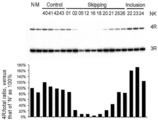
- FIG. 7 is a view showing the skipping or inclusion effect of 17 types of ENA-modified ASO (NK-01, 02, 05, 12, 16, 18, 20 to 26, and 40 to 43) on endogenous tauexon 10 in HEK293 cells.
- FIG. 2 is a view showing the skipping effect of 18 kinds of ENA-modified ASO (NK-03 to 20) on endogenous Tawexon 10 in HEK293 cells. N indicates no transfection treatment, M indicates mock transfection, and NK-41 indicates control ASO.
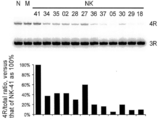
- FIG. 2 is a view showing the skipping effect of 11 types of ENA-modified ASO (NK-02, 05, 18, 27-30, 34-37) on endogenous tauexon 10 in HEK293 cells. N indicates no transfection treatment, M indicates mock transfection, and NK-41 indicates control ASO.
- FIG. 2 is a diagram showing the skipping effect of intracerebroventricular mouse Tawexon 10 by bolus injection of two types of ENA-modified ASO (NK-02, 05) into wild-type neonatal mice.
- NS indicates saline administration
- NK-41 indicates control ASO.
- FIG. 3 shows the dose-dependent skipping effect of mouse tawexon 10 in the central nervous system by the administration of two ENA-modified ASOs (NK-02, 05) to wild-type adult mice by a bolus in the lateral ventricle.
- NS indicates saline administration
- NK-41 indicates control ASO.
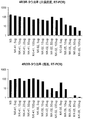
- FIG. 2 is a graph showing the dose-dependent skipping effect of tawexon 10 in the central nervous system by bolus injection of lateral ventricle into adult tau model mice of ENA-modified ASO (NK-18).
- NS indicates saline administration
- NK-41 indicates control ASO.
- FIG. 3 is a graph showing the sustained skipping effect of mouse Tawexon 10 in the central nervous system by bolus injection of two types of ENA-modified ASO (NK-02, 05) into a wild-type adult mouse.
- NS indicates saline administration, and NK-41 indicates control ASO.
- FIG. 3 is a graph showing the sustained skipping effect of mouse Tawexon 10 in the central nervous system by bolus injection of two types of ENA-modified ASO (NK-02, 05) into a wild-type adult mouse.
- NS indicates saline administration
- NK-41 indicates control ASO.
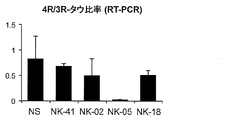
- FIG. 3 is a view showing the skipping effect of human tau transgene exon 10 in the central nervous system by bolus injection of three types of ENA-modified ASO (NK-02, 05, 18) into a neonatal tau model mouse by intraventricular bolus.
- NS indicates saline administration
- NK-41 indicates control ASO.
- FIG. 2 is a diagram showing the skipping effect of human tau transgene exon 10 in the central nervous system by bolus injection of three types of ENA-modified ASO (NK-02, 05, 18) into adult tau model mice.
- NS indicates saline administration
- NK-41 indicates control ASO.
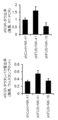
- FIG. 2 is a view showing the skipping effect of intracerebroventricular bolus administration of ENA-modified ASO to adult sporadic FTD model mice (humanized tau and FUS KD mice) by intracerebroventricular bolus.
- NS indicates saline administration
- shCont indicates mice into which control AAV-shRNA was introduced
- NK-41 indicates control ASO.
- FIG. 4 is a view showing the skipping effect of intracerebroventricular mouse tawexon 10 by administration of a bolus of the lateral ventricle to an adult sporadic FTD model mouse (FUS KD mouse) of ENA-modified ASO (NK-18).
- shCont indicates a mouse into which control AAV-shRNA has been introduced, and NK-41 indicates control ASO.
- shCont indicates a mouse
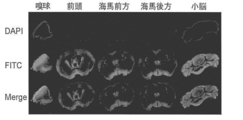
- FIG. 2 is a diagram confirming tissue distribution in the central nervous system by FIB-labeled ENA-modified ASO (base sequence is the same as NK-18) administered to adult mice by a bolus of lateral ventricle. This shows that ENA-modified ASO is widely distributed throughout the brain.
- DAPI is a nuclear stain that shows the shape of the whole brain here.
- Fig. 4 shows the detection results of the distribution of ASO in the brain and nerve cells by bolus injection (NK-18 @ 50 ⁇ g injection) into the mouse lateral ventricle using an anti-ENA-modified ASO antibody.
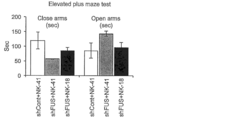
- FIG. 2 is a diagram showing improvement of abnormal emotional behavior by administration of a bolus of lateral ventricle to adult sporadic FTD model mice (humanized tau and FUS KD mice) of ENA-modified ASO.
- NK-41 indicates control ASO.
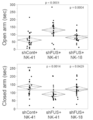
- FIG. 4 shows the therapeutic effect of ENA-modified ASO on adult sporadic FTD model mice (FUS KD mice) by bolus injection into the lateral ventricle.
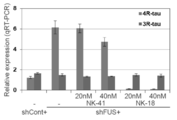
- FIG. 3 shows the skipping effect of endogenous Tauexon 10 of ENA-modified ASO (NK-18) on human iPS cell-derived differentiated motor neurons (under FUSFKD).
- shCont indicates control AAV-shRNA
- NK-41 indicates control ASO.
- the present invention provides an antisense oligonucleotide (ASO) for tau pre-mRNA having Taus splicing controlling ability (hereinafter, also referred to as “ASO of the present invention”).
- ASO of the present invention includes those having an action of enhancing the Tawexon 10 skipping and those having an action of suppressing the Tauexon 10 skipping.
- ASOs having the respective functions will be described.
- Tauexon 10 skipping-enhancing ASO The present invention provides an antisense oligonucleotide (hereinafter, also referred to as “enhancing ASO of the present invention”) against tau pre-mRNA, which enhances exon 10 skipping in alternative splicing of tau.
- enhancing exon 10 skipping refers to reducing the ratio of 4R-tau / 3R-tau isoform when ASO is introduced in a subject, as compared with the case where ASO is not introduced.
- the region of the tau pre-mRNA targeted by the enhancing ASO of the present invention is a region in exon 10 consisting of the nucleotide sequence represented by SEQ ID NO: 44 (gcaacgtccagtccaagtgtggctcaaaggataatcaa).
- FIG. 1 shows exon 10 of the human tau gene and its vicinity (part of intron 9 and part of intron 10) (SEQ ID NO: 46; 46010279 of the genomic sequence of human chromosome 17 registered in the NCBI database (NC_000017.11)). (Corresponding to the sequence at positions 46046010512).
- the region surrounded by a square in the sequence is exon 10 (region of nucleotides 32 to 124 in the nucleotide sequence represented by SEQ ID NO: 46).
- the region targeted by the enhancing ASO of the present invention is a region represented by nucleotide numbers 63 to 102 in the nucleotide sequence represented by SEQ ID NO: 46.
- the enhancing ASO of the present invention has at least 10 (eg, 10, 15, 16, 17, 18, 19, 20 or more) consecutive nucleotides in the target region as a target sequence.
- the enhancer ASO of the present invention comprises at least 15 contiguous (eg, 15, 15) nucleotides in the region of nucleotide numbers 4 to 38 (acgtccagtccaagtgtggctcaaaggataatatc; SEQ ID NO: 47) in the nucleotide sequence represented by SEQ ID NO: 44.
- a sequence consisting of 16, 17, 18, 19, 20 or more nucleotides is defined as a target sequence.
- Tawexon 10 skipping inhibitory antisense oligonucleotide The present invention also provides an antisense oligonucleotide to a tau pre-mRNA which suppresses exon 10 skipping in the alternative splicing of tau (hereinafter, also referred to as “the inhibitory ASO of the present invention”).
- “suppressing exon 10 skipping” refers to increasing the ratio of 4R-tau / 3R-tau isoform when ASO is introduced into a subject, as compared to when ASO is not introduced.
- the region of the tau pre-mRNA targeted by the inhibitory ASO of the present invention is a region in intron 10 near exon 10 consisting of the nucleotide sequence represented by SEQ ID NO: 45 (tgagtaccttcacacgtcccatgcgccgtgc). In the nucleotide sequence shown in FIG. 1 (SEQ ID NO: 46), it is a region of nucleotide numbers 126 to 156.
- the suppressive ASO of the present invention uses at least 10 (eg, 10, 15, 16, 17, 18, 19, 20 or more) consecutive nucleotides in the target region as a target sequence.
- the inhibitory ASO of the present invention comprises at least 15 contiguous amino acids (eg, 15, 15) in the region of nucleotide numbers 7 to 27 (ccttcacacgtcccatgcgcc; SEQ ID NO: 48) in the nucleotide sequence represented by SEQ ID NO: 44. 16, 17, 18, 19, and 20 nucleotides) are used as target sequences.
- ASO of the present invention 1-3. Structural Features of ASO of the Present Invention
- structural features common to the enhancing ASO of the present invention and the inhibitory ASO of the present invention will be described.
- the enhancing ASO of the present invention and the inhibitory ASO of the present invention are collectively referred to as “ASO of the present invention”.
- the ASO of the present invention comprises a nucleotide sequence consisting of at least 10 (eg, 10, 15, 16, 17, 18, 19, 20 or more), preferably 15 or more in each of the above-mentioned target regions.
- Target sequence the term "complementary nucleotide sequence” means not only a nucleotide sequence that is completely complementary to a target sequence (that is, a nucleotide sequence that hybridizes without mismatch), but also hybridizes with a target sequence under physiological conditions of a mammalian cell. Where possible, it is used to include nucleotide sequences containing one to several (eg, 2, 3, 4 or 5) mismatches.
- a sequence completely complementary to the target sequence in the tau pre-mRNA 80% or more (eg, 85% or more, 90% or more, 95% or more, 96% or more, 97% or more, 98% or more, 99% or more), and most preferably 100% identity.
- the complementarity of individual bases is not limited to the formation of Watson-Crick base pairs with target bases, but forms Hoogsteen base pairs and wobble base pairs. Including doing.
- the length of the ASO of the present invention is not particularly limited, but is usually 10 to 50 nucleotides, preferably 10 to 30 nucleotides, more preferably 15 to 30 nucleotides, and still more preferably 18 to 22 nucleotides. Long.
- the structural unit of the ASO of the present invention includes, for example, ribonucleotides and deoxyribonucleotides. These nucleotides may be modified (modified nucleotide residues may be referred to as “modified nucleotide residues”) or unmodified (unmodified nucleotide residues are referred to as “unmodified nucleotide residues”). Residues).
- the nucleotide residue contains a sugar, a base and a phosphate as constituent elements.
- the ribonucleotide has a ribose residue as a sugar, and has adenine (A), guanine (G), cytosine (C) and uracil (U) as bases (which can be replaced with thymine (T)),
- the deoxyribonucleotide residue has a deoxyribose residue as a sugar, and adenine (dA), guanine (dG), cytosine (dC) and thymine (dT) (which can be replaced with uracil (dU)) as bases.
- adenine (dA), guanine (dG), cytosine (dC) and thymine (dT) which can be replaced with uracil (dU)
- nucleotides having adenine, guanine, cytosine, uracil, and thymine may be referred to as adenine nucleotides, guanine nucleotides, cytosine nucleotides, uracil nucleotides, and thymine nucleotides, respectively.
- each of the components is, for example, the same or substantially the same as a naturally occurring one, preferably the same or substantially the same as a naturally occurring one in the human body. .
- the modified nucleotide residue may be modified, for example, in any of the components of the unmodified nucleotide residue.
- “modification” includes, for example, substitution, addition and / or deletion of the above-mentioned components, and substitution, addition and / or deletion of atoms and / or functional groups in the above-mentioned components.
- the modified nucleotide residues include naturally occurring nucleotide residues, artificially modified nucleotide residues, and the like.
- the modified nucleotide residues derived from nature for example, Limbach et al., 1994, Summary: the modified nucleosides of RNA, Nucleic Acids Res. 22: 2183 to 2196 can be referred to.
- examples of the modified nucleotide residue include a residue of a substitute for the nucleotide.
- the modification of the nucleotide residue includes, for example, modification of a sugar-phosphate skeleton (the skeleton also includes a base) (hereinafter, sugar phosphate skeleton).
- a ribose residue can be modified.
- the ribose residue can modify, for example, the 2′-position carbon, specifically, for example, the hydroxyl group bonded to the 2′-position carbon can be modified with a methyl group, or the hydroxyl group can be substituted with hydrogen or a halogen such as fluoro. .
- the ribose residue can be substituted with deoxyribose.
- the ribose residue can be substituted with, for example, a stereoisomer, and may be substituted with, for example, an arabinose residue.
- nucleic acid in which the hydroxyl group bonded to the carbon at the 2'-position of the sugar is modified with a methoxy group as described above may be referred to as a 2'-O-methyl-modified nucleic acid.
- nucleic acid includes nucleic acid monomers such as nucleotides.
- the sugar phosphate skeleton may be substituted with, for example, a non-ribose residue (which also includes non-deoxyribose residues) and / or a non-ribose phosphate skeleton having non-phosphate.
- the non-ribose phosphate skeleton includes, for example, an uncharged body of the sugar phosphate skeleton.
- Examples of the substitute for the nucleotide substituted with the non-ribose phosphate skeleton include morpholino, cyclobutyl, and pyrrolidine.
- the alternatives include, for example, artificial nucleic acids.
- BNA Bridged Nucleic Acid
- BNA Bridged Nucleic Acid
- BNA Bridged Nucleic Acid
- BNA Bridged Nucleic Acid
- LNA locked artificial nucleic acid
- ENA 2′-O, 4′-C-ethylene crosslinked nucleic acid
- R is a hydrogen atom, an alkyl group having 1 to 7 carbon atoms which may form a branch or a ring, an alkenyl group having 2 to 7 carbon atoms which may form a branch or a ring, It represents an aryl group having 3 to 12 carbon atoms which may be contained, an aralkyl group having an aryl moiety having 3 to 12 carbon atoms which may contain a hetero atom, or an amino-protecting group for nucleic acid synthesis.
- R is a hydrogen atom, a methyl group, an ethyl group, an n-propyl group, an isopropyl group, a phenyl group, or a benzyl group, and more preferably, R is a hydrogen atom or a methyl group.
- Base represents a base.
- ENA having the following nucleoside structure is preferred from the viewpoint that there is no extra modification other than stabilization of the A-type (RNA type) structure efficiently.
- Base represents a base.
- the ASO of the present invention is characterized by containing at least one 2'-O, 4'-C-ethylene bridged nucleic acid (ENA) as a modified nucleotide residue.
- ENA 2'-O, 4'-C-ethylene bridged nucleic acid
- the ENA modification can increase the binding power to the target RNA and the metabolic stability in vivo due to its cross-linked structure.
- the ASO of the present invention contains two or more (eg, 2, 3, 4, 5, 6, 7, 8, 9, or 10 or more) ENA residues.
- all pyrimidine (cytosine, thymine or uracil) nucleotides in the ASO of the invention are ENA.
- the purine (adenine or guanine) nucleotide contained in the ASO of the present invention can be a 2'-O-methyl-modified nucleic acid.
- the ASO of the invention may be an ASO wherein the pyrimidine nucleotide is ENA and the purine nucleotide is a 2'-O-methyl modified nucleic acid.
- the ratio of ENA to 2'-O-methyl modified nucleic acid varies depending on the nucleotide sequence of the ASO, but is usually 1: 4 to 4: 1, and 2: 3 to 3: 2. It is preferable that
- a phosphate group can be modified.
- the phosphate group closest to the sugar residue is called an ⁇ -phosphate group.
- the ⁇ -phosphate group is negatively charged and its charge is evenly distributed over two oxygen atoms that are unbound to sugar residues.
- two oxygen atoms that are not bonded to a sugar residue are hereinafter referred to as “non-linking oxygen”.
- linking oxygen the two oxygen atoms bonded to the sugar residue are hereinafter referred to as “linking oxygen”. It is preferable that, for example, the ⁇ -phosphate group is modified so as to be uncharged or the charge distribution in the unbound oxygen becomes asymmetric.
- the phosphate group may, for example, replace the non-bonded oxygen.
- the oxygen is, for example, any of S (sulfur), Se (selenium), B (boron), C (carbon), H (hydrogen), N (nitrogen), and OR (R is an alkyl group or an aryl group) And is preferably substituted with S.
- One or both of the non-bonded oxygens may be substituted, and preferably, one or both of them are substituted with S.
- modified phosphate group for example, phosphorothioate, phosphorodithioate, phosphoroselenate, boranophosphate, boranophosphate ester, hydrogen phosphonate, phosphoramidate, alkyl or aryl phosphonate, and Examples include phosphotriesters, and phosphorothioates and phosphorodithioates are preferred.
- the phosphate group may be replaced by a phosphorus-free linker.
- the linker include siloxane, carbonate, carboxymethyl, carbamate, amide, thioether, ethylene oxide linker, sulfonate, sulfonamide, thioformacetal, formacetal, oxime, methyleneimino, methylenemethylimino, methylenehydrazo, methylene Examples thereof include dimethylhydrazo and methyleneoxymethylimino, and preferably include a methylenecarbonylamino group and a methylenemethylimino group.
- the phosphate group may be replaced by another phosphate-free linker.
- Such linkers include, for example, those described in "Med. @Chem. @Commun., @ 2014, # 5, @ 1454-1471".
- At least 1/2, more preferably at least 2/3, of the phosphate groups contained in the ASO of the present invention have undergone one or more of the above phosphate group modifications, particularly preferably All phosphate groups are modified.
- All phosphate groups are modified.
- 9 or more, preferably 12 or more, and more preferably all of the phosphate groups are phosphorothioated, phosphorodithioated, or the like. Substitution of the unbound oxygen at the phosphodiester bond with a sulfur atom is important in the tissue distribution of ASO.
- the ASO of the present invention may be modified, for example, at least one nucleotide residue at the 3 'end and the 5' end.
- the modification may be, for example, either one of the 3 'end and the 5' end, or both.
- the modification is, for example, as described above, and is preferably performed on a terminal phosphate group.
- the phosphate group may be modified, for example, as a whole or one or more atoms in the phosphate group. In the former case, for example, the entire phosphate group may be substituted or deleted.
- Modification of the terminal nucleotide residue includes, for example, addition of another molecule.
- the other molecule include a labeling substance described later and a functional molecule such as a protective group.
- the protecting group include S (sulfur), Si (silicon), B (boron), and an ester-containing group.
- the functional molecule such as the labeling substance can be used, for example, for detecting ASO of the present invention.
- the other molecule may be added to, for example, the phosphate group of the nucleotide residue, or may be added to the phosphate group or the sugar residue via a spacer.
- the terminal atom of the spacer can be added or substituted to, for example, the bonding oxygen of the phosphate group or O, N, S or C of the sugar residue.
- the binding site of the sugar residue is preferably, for example, C at the 3'-position or C at the 5'-position, or an atom bonded thereto.
- the spacer can be added or substituted, for example, to a terminal atom of a nucleotide substitute such as the PNA.
- the spacer is not particularly limited, for example, - (CH 2) n - , - (CH 2) n N -, - (CH 2) n O -, - (CH 2) n S-, O (CH 2 CH 2 O) n CH 2 CH 2 OH, abasic sugars, amides, carboxy, amines, oxyamines, oximines, thioethers, disulfides, thioureas, sulfonamides, morpholinos, etc., and also including biotin reagents and fluorescein reagents Good.
- the molecule to be added to the terminal may be, for example, a dye, an intercalating agent (for example, acridine), a cross-linking agent (for example, psoralen, mitomycin C), porphyrin (TPPC4, texaphyrin, sapphirin), or a polycyclic compound.
- an intercalating agent for example, acridine
- a cross-linking agent for example, psoralen, mitomycin C
- porphyrin TPPC4, texaphyrin, sapphirin
- Aromatic hydrocarbon eg, phenazine, dihydrophenazine
- artificial endonuclease eg, EDTA
- lipophilic carrier eg, cholesterol, cholic acid, adamantaneacetic acid, 1-pyrenebutyric acid, dihydrotestosterone, 1,3-bis-) O (hexadecyl) glycerol, geranyloxyhexyl group, hexadecylglycerol, borneol, menthol, 1,3-propanediol, heptadecyl group, palmitic acid, myristic acid, O3- (oleoyl) lithocholic acid, O3- (oleoyl) Cholic acid, dimethoxytrityl, or phenoki Gin) and peptide conjugates (e.g., antennapedia peptide, Tat peptide), alkylating agents, phosphate, amino, mercapto, P
- the 5 ′ end may be modified with, for example, a phosphate group or a phosphate group analog.
- the phosphate group is, for example, 5 ′ monophosphate ((HO) 2 (O) PO-5 ′), 5 ′ diphosphate ((HO) 2 (O) POP (HO) (O) —O— 5 '), 5' triphosphate ((HO) 2 (O) PO- (HO) (O) POP (HO) (O) -O-5 '), 5'-guanosine cap (7-methylated or Unmethylated, 7m-GO-5 '-(HO) (O) PO- (HO) (O) POP (HO) (O) -O-5'), 5'-adenosine cap (Appp), any Modified or unmodified nucleotide cap structure (NO-5 '-(HO) (O) PO- (HO) (O) POP (HO) (O) -O-5'), 5 'monothiophosphoric
- the base is not particularly limited, and may be, for example, a natural base or a non-natural base.
- the base may be, for example, of natural origin or synthetic.
- As the base for example, a general base, a modified analog thereof, a universal base and the like can be used.
- Examples of the base include purine bases such as adenine and guanine, and pyrimidine bases such as cytosine, uracil and thymine.
- Other examples of the base include inosine, thymine, xanthine, hypoxanthine, nubularine, isoguanisine, tubercidine and the like.
- the base is, for example, an alkyl derivative such as 2-aminoadenine or 6-methylated purine; an alkyl derivative such as 2-propylated purine; 5-halouracil and 5-halocytosine; 5-propynyluracil and 5-propynylcytosine; -Azouracil, 6-azocytosine and 6-azothymine; 5-uracil (pseudouracil), 4-thiouracil, 5-halouracil, 5- (2-aminopropyl) uracil, 5-aminoallyluracil; 8-halation, amination, Thiolated, thioalkylated, hydroxylated and other 8-substituted purines; 5-trifluoromethylated and other 5-substituted pyrimidines; 7-methylguanine; 5-substituted pyrimidines; 6-azapyrimidines; -6 and O-6 substituted purines (including 2-aminopropyl adenine
- Examples of the universal base include C-phenyl, C-naphthyl and other aromatic derivatives, inosine, azole carbozamide, nitroazole derivatives (3-nitropyrrole, 4-nitroindole, 5-nitro Indole, 6-nitroindole, etc.) (Loakes, 2001, Nucleic Acids Res. 29: 2437), and the bases described in WO 2007/026485, but are not limited thereto.
- modified nucleotide residue may include, for example, a residue lacking a base, that is, an abasic sugar phosphate skeleton. Further, as the modified nucleotide residue, for example, the residue described in WO 2004/080406 can be used.
- the ASO of the present invention may be labeled with a labeling substance, for example.
- the labeling substance is not particularly limited, and examples thereof include a fluorescent substance, a dye, and an isotope.
- the fluorescent substance include fluorophores such as pyrene, TAMRA, fluorescein, Cy3 dye, and Cy5 dye.
- the dye include Alexa dyes such as Alexa488.
- the isotope include a stable isotope and a radioactive isotope, and a stable isotope is preferable.
- the stable isotope has, for example, a low risk of exposure and does not require a dedicated facility, so that it is excellent in handleability and cost can be reduced.
- the stable isotope does not change the physical properties of the labeled compound, for example, and is excellent in tracer properties.
- the stable isotope is not particularly limited, and includes, for example, 2 H, 13 C, 15 N, 17 O, 18 O, 33 S, 34 S, and 36 S.
- the enhancing ASO of the present invention for example, when the length of the target sequence is 18 mer, for example, the following nucleotide sequence (the underlined portion is complementary to the target region in exon 10 represented by SEQ ID NO: 44) ASO) which is a complementary sequence to the target sequence.
- enhancing ASO of the present invention include a nucleotide sequence represented by any of SEQ ID NOS: 3 to 20, more preferably a nucleotide sequence represented by any of SEQ ID NOS: 5 to 18, ASO that is included as a complementary strand sequence to the target sequence is exemplified.
- ASO included as an array is exemplified.
- tggacgttgc taagatcca SEQ ID NO: 27
- ctggacgttgc taagatcc SEQ ID NO: 28
- gccacacttggactggacg SEQ ID NO: 29
- agccacacttggactggac SEQ ID NO: 30
- tattatcctttgagccaca SEQ ID NO: 31
- the nucleotide sequence represented by any of SEQ ID NOs: 34 to 37 preferably the nucleotide sequence represented by SEQ ID NOs: 36 or 37 is replaced with a complementary strand to the target sequence.
- ASO included as an array is exemplified. ggacgttgc taagatcc (SEQ ID NO: 34) tggacgttgc taagatc (SEQ ID NO: 35) ccacacttggactggac (SEQ ID NO: 36) gccacacttggactgga (SEQ ID NO: 37) (In the above nucleotide sequence, thymine may be uracil.)
- ASO containing the following nucleotide sequence as a complementary sequence to the target sequence is exemplified.
- gcacggcgcatgggacgt (SEQ ID NO: 24) cacggcgcatgggacgtg (SEQ ID NO: 68) acggcgcatgggacgtgt (SEQ ID NO: 69) cggcgcatgggacgtgtg (SEQ ID NO: 70) ggcgcatgggacgtgtga (SEQ ID NO: 23) gcgcatgggacgtgtgaa (SEQ ID NO: 71) cgcatgggacgtgtgaag (SEQ ID NO: 72) gcatgggacgtgtgaagg (SEQ ID NO: 22) catgggacgtgtgtg
- a specific example of the inhibitory ASO of the present invention includes an ASO containing the nucleotide sequence represented by any of SEQ ID NOs: 22, 23, 71 and 72 as a complementary sequence to the target sequence.
- ASO containing the nucleotide sequence represented by SEQ ID NO: 32 or 33 as a complementary strand sequence to the target sequence can be mentioned.
- ggacgtgtgaaggtactca SEQ ID NO: 32
- gggacgtgtgaaggtactc SEQ ID NO: 33
- thymine may be uracil.
- ASO containing the nucleotide sequence represented by SEQ ID NO: 38 or 39 as a complementary strand sequence to the target sequence can be mentioned.
- gacgtgtgaaggtactc SEQ ID NO: 38
- ggacgtgtgaaggtact SEQ ID NO: 39
- thymine may be uracil.
- the ASO of the present invention can be produced by a chemical synthesis method known per se.
- the phosphoramidite method, the H-phosphonate method and the like can be mentioned.
- the chemical synthesis method can be carried out, for example, using a commercially available automatic nucleic acid synthesizer.
- an amidite is used, for example, as a commercially available amidite, RNA (Phosphoramidites (2′-O-TBDMSi, trade name, Chisato Pharmaceutical), ACE amidite, TOM amidite, CEE amidite, CEM amidite, TEM amidite, and the like.
- the present invention also relates to a Tawexon 10 skipping accelerator comprising the enhancing ASO of the present invention, and a Tawexon 10 skipping inhibitor comprising the inhibitory ASO of the present invention (inclusively, the present invention And the "Taus splicing control agent of the present invention").
- the Tous splicing regulator of the present invention can be introduced into a subject expressing a tau gene, for example, by bringing the ASO of the present invention into contact with the ASO alone or together with a pharmacologically acceptable carrier. it can.
- the contacting step can be performed by administering the Taus splicing control agent of the present invention to the animal.
- the method can be carried out by adding the Taus splicing regulator of the present invention to the culture medium of the culture.
- the Taus splicing control agent of the present invention may further contain a nucleic acid introducing reagent.
- the nucleic acid introduction reagent include atelocollagen; liposome; nanoparticle; lipofectin, lipofectamine, DOGS (transfectam), DOPE, DOTAP, DDAB, DHDEAB, HDEAB, polybrene, and poly (ethyleneimine) (PEI). Can be used.
- ASO of the present invention enhances or suppresses exon 10 skipping and can control the ratio of 4R-tau / 3R-tau isoform, so that 4R / 3R-tau expression Can be used for the treatment and / or prevention of tauopathy with imbalance of That is, the medicament containing the enhancing ASO of the present invention as an active ingredient can be used for treatment and / or prevention of tauopathy accompanied by accumulation of 4R-tau.
- Tauopathy with 4R-tau accumulation includes, for example, frontotemporal dementia (FTD), frontotemporal lobar degeneration (FTLD), basal ganglia degeneration (CBD), progressive supranuclear palsy ( PSP), Alzheimer's disease (AD), senile dementia with neurofibrillary tangles (SD-NFT), chronic traumatic encephalopathy, dementia with granular silver and the like.
- the medicament comprising the inhibitory ASO of the present invention as an active ingredient can be used for treatment and / or prevention of tauopathy accompanied by accumulation of 3R-tau.
- Examples of a tauopathy accompanied by accumulation of 3R-tau include Pick's disease and the like.
- the ASO of the present invention may be used alone or may be formulated as a pharmaceutical composition together with a pharmaceutically acceptable carrier.
- Pharmaceutically acceptable carriers include, for example, sucrose, excipients such as starch, cellulose, binders such as methyl cellulose, starch, disintegrants such as carboxymethyl cellulose, magnesium stearate, lubricants such as aerosil, citric acid, Menthol and other fragrances, sodium benzoate, preservatives such as sodium bisulfite, citric acid, stabilizers such as sodium citrate, methylcellulose, suspending agents such as polyvinyl pyrrolide, dispersants such as surfactants, water, Examples include, but are not limited to, diluents such as physiological saline and base wax.
- the medicament of the present invention may further contain a nucleic acid introducing reagent.
- a nucleic acid introduction reagent the same reagent as described above can be used.
- the pharmaceutical of the present invention may be a pharmaceutical composition in which the ASO of the present invention is encapsulated in liposomes.
- Liposomes are micro-closed vesicles having an internal phase surrounded by one or more lipid bilayers, and are usually capable of retaining a water-soluble substance in the internal phase and a fat-soluble substance in the lipid bilayer.
- the term "encapsulation" may mean that the ASO of the present invention may be held in a liposome internal phase or may be held in a lipid bilayer.
- the liposome used in the present invention may be a monolayer membrane or a multilayer membrane, and the particle size may be appropriately selected, for example, in the range of 10 to 1000 nm, preferably 50 to 300 nm. Considering the delivery property to the target tissue, the particle size may be, for example, 200 nm or less, preferably 100 nm or less.
- Examples of a method for encapsulating a water-soluble compound such as an oligonucleotide in a liposome include a lipid film method (vortex method), a reverse phase evaporation method, a surfactant removal method, a freeze-thaw method, and a remote loading method.
- the method is not limited to this, and any known method can be appropriately selected.
- the medicament of the present invention can be orally or parenterally administered to mammals (eg, human, rat, mouse, guinea pig, rabbit, sheep, horse, pig, cow, monkey). However, it is desirable to administer parenterally.
- mammals eg, human, rat, mouse, guinea pig, rabbit, sheep, horse, pig, cow, monkey.
- parenterally it is desirable to administer parenterally.
- Formulations suitable for parenteral administration include aqueous and non-aqueous isotonic sterile injection solutions. It may contain antioxidants, buffers, bacteriostats, tonicity agents and the like. Aqueous and non-aqueous aseptic suspensions may also be mentioned, which may contain suspending agents, solubilizers, thickeners, stabilizers, preservatives and the like.
- the preparation can be enclosed in a container such as an ampoule or a vial in a unit dose or in multiple doses.
- the active ingredient and a pharmaceutically acceptable carrier may be lyophilized and stored in a state that may be dissolved or suspended in a suitable sterile vehicle immediately before use.
- the content of the ASO of the present invention in the pharmaceutical composition is, for example, about 0.1 to 100% by weight of the whole pharmaceutical composition.
- the route of administration of the medicament of the present invention is not particularly limited as long as a therapeutically or prophylactically effective amount of the ASO of the present invention is delivered and introduced into a target tissue in which accumulation of 4R or 3R tau is observed, that is, cells of central nervous tissue.
- a target tissue in which accumulation of 4R or 3R tau is observed that is, cells of central nervous tissue.
- intraventricular administration is preferred.
- the dose of the medicament of the present invention varies depending on the purpose of administration, the administration method, the type of target disease, the severity, the situation of the subject to be administered (sex, age, body weight, etc.).
- a single dose of the ASO of the present invention is preferably 2 nmol / kg to 50 nmol / kg, and when administered locally, it is preferably 1 pmol / kg to 10 nmol / kg.
- Such an amount can be administered, for example, at intervals of 1 to 6 months, preferably 2 to 4 months, more preferably about 3 months.
- the ASO of the present invention is remarkably excellent in terms of Taus splicing control power and in vivo stability as compared with conventionally known ASOs, and thus can exhibit therapeutic and / or prophylactic effects with a small dose and administration frequency. It can improve patient's quality of life, reduce medical costs, and suppress the occurrence of adverse events.
- the medicament of the present invention is used in combination with other therapeutic agents for tauopathy, for example, tau hyperphosphorylation inhibitors (eg, GSK3 ⁇ inhibitors (eg, lithium, tideglucib), etc.), tau aggregation inhibitors (eg, methylene blue, etc.) can do.
- tau hyperphosphorylation inhibitors eg, GSK3 ⁇ inhibitors (eg, lithium, tideglucib), etc.
- tau aggregation inhibitors eg, methylene blue, etc.
- These concomitant drugs can be formulated together with the medicament of the present invention and administered as a single preparation, or can be formulated separately from the medicament of the present invention, and be administered by the same or different route as the medicament of the present invention. Can be administered simultaneously or with a time lag.
- the dose of these concomitant drugs may be an amount usually used when the drug is administered alone, or may be reduced from an amount usually used.
- the present invention also includes a method for treating and / or preventing a mammal (animal to be treated or prevented) from administering an effective amount of the ASO of the present invention or the medicament of the present invention to a mammal (animal to be treated or prevented).
- the effective amount, dosage, specific examples of mammals, and other matters are described in 2-2. As described in the above.
- the ASO of the present invention enhances or suppresses exon 10 skipping, and can control the ratio of 4R-tau / 3R-tau isoform.
- 4R / A cell or animal model of tauopathy with an imbalance in 3R-tau expression can be generated. That is, by incorporating the enhancing ASO of the present invention, a model of tauopathy accompanied by accumulation of 3R-tau can be prepared. Examples of a tauopathy accompanied by accumulation of 3R-tau include Pick's disease and the like.
- a model of tauopathy accompanied by accumulation of 4R-tau can be produced. Examples of the tauopathy accompanied by the accumulation of 4R-tau include FTD, CBD, PSP, and silvery granular dementia.
- Cells or animals that incorporate the ASO of the present invention are not particularly limited, and mammals other than humans, preferably mice, rats, hamsters, guinea pigs, rabbits, monkeys, and other experimental animals, or cells derived from those animals And primary or subculture, but preferably are established cultured cells, more preferably human cultured cells.
- stem cells include embryonic stem cells (embryonic stem cells: ES cells), induced pluripotent stem cells (induced pluripotent stem cells: iPS cells), pluripotent germ stem cells, embryonic germ stem cells (EG cells), and neural stem cells.
- stem cells mesenchymal stem cells, and the like.
- the cells or animals that take up the ASO of the present invention may be normal animals or cells derived therefrom, or animals or animals having tauopathy associated with tau overexpression or imbalance in 4R / 3R-tau expression.
- Cells or the like may be derived.
- Examples of an animal having a tauopathy with an abnormal balance of tau overexpression or 4R / 3R-tau expression include, for example, an Alzheimer's disease model mouse into which a tau gene has been introduced, and a sporadic FTD model mouse in which FUS has been knocked down. But not limited thereto.
- a cultured cell into which a tau gene has been introduced or a cultured cell from which FUS has been knocked down may be used.
- a method of adding the ASO of the present invention to a medium of the cells or the like can be mentioned.
- the ASO of the present invention can be incorporated into an animal by administering the ASO of the present invention to the animal.
- the administration method is such that an amount of ASO of the present invention that is effective for expressing the disease state is delivered and introduced into a tissue in which the accumulation of 4R or 3R-tau is observed in the target disease, that is, a cell of the central nervous tissue.
- intraventricular administration is preferred.
- Confirmation that the animal or cell or the like incorporating the ASO of the present invention is a disease model of interest can be performed by measuring the balance of 4R / 3R-tau expression in the central nervous system of the animal or the cell or the like. By examining one or more phenotypes of the disease, such as the behavioral abnormalities of the disease and the presence / absence / degree of the pathology.
- the tauopathy cell or animal model obtained as described above can be used, for example, for screening for a therapeutic and / or prophylactic agent for the tauopathy. That is, the present invention is a method for screening a therapeutic or preventive drug for tauopathy involving accumulation of 3R-tau or 4R-tau, (1) exposing a test substance to the model, (2) testing one or more phenotypes of the tauopathy in the model; (3) comparing the phenotype with the model that has not been exposed to the test substance; and (4) selecting the test substance with the improved phenotype as a candidate for a therapeutic or preventive drug for the tauopathy.
- Providing a method comprising:
- Exposure of the test substance to the model in step (1) can be performed in the same manner as in the case of ASO uptake of the present invention, depending on the form of the model.
- step (2) one or more phenotypes of tauopathy, for example, the balance of 4R / 3R-tau expression, and the presence or absence of behavioral abnormalities in animals, as used to confirm the establishment of the above model ⁇ Test the degree.
- a model that has not been exposed to the test substance used as a control in step (3) a separate model created by the same method may be used, or the same model before exposure of the test substance may be used. Is also good.
- a test substance that significantly improves the tauopathy phenotype can be selected as a candidate substance for a therapeutic and / or prophylactic drug for the tauopathy.
- Example 1 Production of ASO for Tau mRNA Precursor
- 39 sequences (NK-01 to 39) that base-pair with sequences within Tauexon 10 or its vicinity (intron 9 or intron 10) ) And ASO composed of non-specific sequences (NK-40 to 43) were designed as controls.
- FIG. 1 shows ASO target regions of NK-01 to 39.
- the nucleotide sequence of each ASO is as follows.
- NK-01 agccagaaaaaggatga (SEQ ID NO: 1)
- NK-02 tggacgttgctaagatcc
- NK-03 cacacttggactggacgt
- NK-04 ccacacttggactggacg
- NK-05 gccacacttggactggac
- NK-06 agccacacttggactgga (SEQ ID NO: 6)
- NK-07 gagccacacttggactgg (SEQ ID NO: 7)
- NK-08 tgagccacacttggactg (SEQ ID NO: 8)
- NK-09 ttgagccacacttggact (SEQ ID NO: 9)
- NK-10 tttgagccacacttggac (SEQ ID NO: 10)
- NK-11 ctttt
- ENA was used for cytosine and thymine, and all phosphate groups were phosphorothioated.
- ASO in which all nucleotide residues of NK-05, 12, 16, 18, and 41 were MOE-modified was also synthesized.
- Example 2 Comparison of Tous splicing controllability between ENA-modified ASO and MOE-modified ASO
- ENA-modified ASO having the nucleotide sequences of SEQ ID NOS: 5, 12, 16 and 18, and four types of MOE-modified having the same sequence Tous splicing control power was compared with ASO.
- Human cultured cells (HEK293 cells) were transfected with 50 nM of each ASO using Lipofectamine 2000 (# 11668027, Thermo). Cells cultured 48 hours after transfection were lysed using TRIzol (# 15596018, Thermo), and RNA was extracted using the RNeasy Mini Kit (# 74104, Qiagen).
- RT-PCR uses CCATGCCAGACCTGAAGAAT (SEQ ID NO: 79) as a forward primer and TGCTCAGGTCAACTGGTTTG (SEQ ID NO: 80) as a reverse primer, and uses AmpliTaq DNA Polymerase (# N8080152, Thermo), P-32 Deoxycytidine 5'-triphosphate (# NEG013H, PerkinElmer).
- FIG. 2 shows the results. For all sequences, the effect of ENA-modified ASO on Tauexon 10 skipping was significantly higher (about 3 to about 9-fold) than on MOE-modified ASO having the same sequence.
- Example 3 Identification of enhancer ASO and inhibitory ASO and their target regions 13 types (NK-01, 02, 05, 12, 16, 18, 20 to NK-01) of the ASO for the tau pre-mRNA prepared in Example 1 26) and 4 types of control ASO (NK-40 to 43) were introduced into human cultured cells (HEK293 cells) in the same manner as in Example 2, and the effect on endogenous Tawexon 10 skipping was determined by RT.
- ASO was measured by PCR to screen for Taus splicing controlling ASO. The results are shown in FIG.
- Six ASOs (NK-02, 05, 12, 16, 18, and 20) having a target sequence in a specific region within exon 10 exhibited a high Tawexon 10 skipping promoting effect.
- three types of ASO (NK-22, 23, 24) having a target sequence in a specific region intron 10 showed a high effect of suppressing Tauexon 10 skipping (exon 10 inclusion).
- Example 4 Detailed examination of hyperactive ASO A total of 18 types of 18-mer ASOs (NK-03 to 20) complementary to the tau pre-mRNA target regions of the six high-efficiency ASOs identified in Example 3 were prepared. In the same manner as in Example 2, each was introduced into human cultured cells (HEK293 cells), and the effect of endogenous Tawexon 10 on skipping was measured by RT-PCR to screen for ASO having the ability to control Taus splicing. Was done. FIG. 4 shows the results. Five types of ASO (NK-05, 13-16) showed particularly high Tawexon 10 skipping promoting effect.
- Example 5 Examination of Optimal Length of Hyperactive ASO
- NK-02, 05 For each of the two highly efficient 18 mer ASOs (NK-02, 05) identified in Example 3, a 17 mer ASO with one terminal nucleotide removed (NK-34-37) and 11 types of ASO (NK-02, 05, 18, 27-30, 34) including 19 mer ASO (NK-27-30) with one nucleotide added to one end.
- To 37) were introduced into human cultured cells (HEK293 cells) in the same manner as in Example 2, and the effect of endogenous Tauexon 10 on skipping was measured by RT-PCR to determine the ability of controlling Taus splicing. ASOs were screened.
- FIG. 5 shows the results.
- NK-05 ASO showed a high Tawexon 10 skipping promoting effect, suggesting the optimalness of the 18-mer length.
- Example 6-1 Effect of hyperactive ASO on wild-type mice
- RNA was extracted from the central nervous system in the same manner as in Example 2, and 4R-tau and 3R-tau mRNAs were measured by RT-PCR. Their ratio was calculated.
- FIG. 6 shows the results.
- NK-02,05 ASO significantly promoted mouse Tawexon 10 skipping in the central nervous system of neonatal mice.
- 05 ASO bolus injection into the lateral ventricle
- RNA was extracted from the cerebral cortex and hippocampus in the same manner as in Example 2, and 4R-tau and 3R-tau mRNAs were extracted by RT-PCR. Measured and their ratio was calculated.
- the results are shown in FIG. NK-05 ASO promoted mouse Tawexon 10 skipping in a dose-dependent manner in both cerebral cortex and hippocampus.
- NK-02 ASO also promoted mouse Tauexon 10 skipping in the hippocampus in a dose-dependent manner, but the effect was higher with NK-05 ASO.
- 2, 4, 6, 8, 10 and 12 weeks after administration RNA was extracted from the cerebral cortex and hippocampus in the same manner as in Example 2, and 4R-tau and 3R-tau mRNAs were measured by RT-PCR. Then, their ratio was calculated.
- FIG. 8 shows the results. The effects of NK-02,05 ASO persisted for as long as at least 12 weeks. During this time, good biotolerability was also observed.
- Example 6-2 Dose-dependent effect of enhancing ASO on tauopathy model mouse
- RNA was extracted in the same manner as in Example 2, mRNA of 4R-tau and 3R-tau were measured by RT-PCR, and their ratio was calculated. The results are shown in FIG. 7-2 (upper figure).
- NK-18 ASO promoted mouse Tawexon 10 skipping in the cerebral cortex in a dose-dependent manner.
- Example 7 Effect of hyperactive ASO on tauopathy model mouse
- Humanized tau mouse (hT-PAC-N) having human tau transgene (obtained from a newborn of Jackson Laboratory (# 17326), gender: Male or female (4 to 6 each) NK-02, 05, 18 ASO, 10 ⁇ g, bolus injection into lateral ventricle, 1 week after administration, RNA was extracted from central nervous system in the same manner as in Example 2. Then, mRNAs of 4R-tau and 3R-tau were measured by RT-PCR, and their ratio was calculated. The results are shown in FIG. 9 (newborn). NK-05 ASO significantly promoted mouse Tauexon 10 skipping in the central nervous system of neonatal model mice.
- NK-02 and 18 ASO also showed no significant difference, but tended to promote skipping of Tawexon 10.
- NK-02 , 05, 18 ASO 100 ⁇ g, bolus of lateral ventricle, 6 weeks after administration
- RNA was extracted from cerebral cortex and hippocampus (adult) in the same manner as in Example 2, and 4R-tau and RT-PCR were extracted by RT-PCR. 3R-tau mRNA was measured and their ratio was calculated. The results are shown in FIG. 10 (adult).
- NK-02, NK-05 and NK-18 ASO all significantly promoted mouse Tauexon 10 skipping in both cerebral cortex and hippocampus. Among them, NK-05 ASO most strongly promoted Tauexon 10 skipping.
- AAV-shRNA source: (1) created by injecting AAV-shFUS into hT-PAC-N (Cell Reports (2017) 18 : 1118-1131), gender: male, 6 weeks old
- NK-05, 18 ASO 100 ⁇ g, bolus injection into the lateral ventricle, 6 weeks after administration, RNA was released from the central nervous system in the same manner as in Example 2.
- NK-05 (n 3) significantly reduced the 4R / 3R-tau mRNA ratio in the central nervous system of the model mouse (FIG. 11-1 left).
- proteins were extracted from hippocampus using RIPA buffer, and Western blot was performed using each 20 ⁇ g protein, anti-RD3 antibody (# 05-803, Millipore) and anti-RD4 antibody (# 05-804, Millipore). , 4R-tau and 3R-tau proteins were measured and their ratios were calculated.
- NK-05 and 18 showed a decrease or tendency of the 4R / 3R-tau protein ratio in the central nervous system of the model mouse (FIG. 11-1 right).
- Control AAV-shRNA (shCont) -introduced mouse or sporadic FTD model mouse in which AAV-shRNA was introduced and FUS was knocked down source: same as (3), gender: male, 6 weeks old
- N 3 each
- NK-18 ASO was administered in a bolus of 50 ⁇ g in the lateral ventricle.
- RNA was extracted from the hippocampus in the same manner as in Example 2, and 4R was subjected to RT-PCR.
- NK-18 markedly reduced the 4R / 3R-tau mRNA ratio in the central nervous system of the model mouse.
- proteins were extracted from hippocampus using RIPA buffer, and Western blot was performed using each 20 ⁇ g protein, anti-RD3 antibody (# 05-803, Millipore) and anti-RD4 antibody (# 05-804, Millipore).
- 4R-tau and 3R-tau proteins were measured and their ratios were calculated. The results are shown in FIG. 11-2 (lower figure).
- NK-18 showed a decrease in the ratio of 4R / 3R-tau protein in the central nervous system of the model mouse.
- Example 8 Distribution of ASO in the Brain and Uptake into Neurons (1) 100 ⁇ g of NK-18 ASO conjugated with fluorescence (FITC) was administered to a wild-type adult mouse by a bolus of the lateral ventricle. The distribution of ASO was examined. The results are shown in FIG. Wide distribution of ASO in the brain and high uptake into nerve cells were confirmed. DAPI is a nuclear stain that shows the shape of the whole brain here. (2) 50 ⁇ g of NK-18 ASO was administered as a bolus in the lateral ventricle, and the distribution of the ASO in the brain and nerve cells was examined one month after administration with an anti-ENA-modified ASO antibody (ordered antibody, Maybel Co., Ltd.) . The results are shown in FIG. 12-2. Wide distribution of ASO in the brain and high uptake into nerve cells were confirmed.
- FITC fluorescence
- Example 9 Effect of ASO on ASO treatment of sporadic FTD model mice
- the emotional effect of intracerebroventricular bolus administration of 100 ⁇ g NK-18 to adult sporadic FTD model mice (humanized tau and FUS KD mice) Indicates improvement in abnormal behavior.
- (1) Four weeks after administration of control AAV-shRNA (shCont) or AAV-shFUS to the bilateral hippocampus of hT-PAC-N mice, ASO was administered as a bolus to the lateral ventricle. Emotional abnormal behavior was analyzed by the Elevated plus maze test. The results are shown in FIG.
- Example 10 Effect of hyperactive ASO using motoneurons in which FUS was knocked down
- human iPS cells were induced to differentiate into motoneurons, and AAV-shFUS
- FIG. 14 shows the results.
- AAV-shFUS increased 4R-tau mRNA expression
- shCont indicates control AAV-shRNA
- NK-41 indicates control ASO.
- the ASO of the present invention has both high Taus splicing control power and long-term in vivo stability, and is also tolerated by intracerebroventricular administration in mice, so that it is superior to tauopathy with a small dose and frequency of administration. It is expected to exhibit therapeutic effects. Therefore, the ASO of the present invention not only provides a new therapeutic means for tauopathies for which there has been no effective treatment until now, but also has a low administration burden, is minimally invasive, and reduces the occurrence of adverse events. It can be suppressed and is also useful for improving the quality of life of patients. Furthermore, it leads to a reduction in manufacturing costs (medical costs). In addition, the use of the ASO of the present invention makes it possible to highly control the expression ratio of 4R / 3R-tau. And / or very useful for prophylactic drug screening.
Landscapes
- Health & Medical Sciences (AREA)
- Engineering & Computer Science (AREA)
- Life Sciences & Earth Sciences (AREA)
- Biomedical Technology (AREA)
- Bioinformatics & Cheminformatics (AREA)
- Genetics & Genomics (AREA)
- Organic Chemistry (AREA)
- Chemical & Material Sciences (AREA)
- General Health & Medical Sciences (AREA)
- Biotechnology (AREA)
- General Engineering & Computer Science (AREA)
- Zoology (AREA)
- Wood Science & Technology (AREA)
- Molecular Biology (AREA)
- Neurology (AREA)
- Neurosurgery (AREA)
- Nuclear Medicine, Radiotherapy & Molecular Imaging (AREA)
- General Chemical & Material Sciences (AREA)
- Public Health (AREA)
- Veterinary Medicine (AREA)
- Pharmacology & Pharmacy (AREA)
- Chemical Kinetics & Catalysis (AREA)
- Medicinal Chemistry (AREA)
- Animal Behavior & Ethology (AREA)
- Psychiatry (AREA)
- Plant Pathology (AREA)
- Hospice & Palliative Care (AREA)
- Microbiology (AREA)
- Biophysics (AREA)
- Physics & Mathematics (AREA)
- Biochemistry (AREA)
- Pharmaceuticals Containing Other Organic And Inorganic Compounds (AREA)
- Medicines That Contain Protein Lipid Enzymes And Other Medicines (AREA)
Abstract
Priority Applications (4)
| Application Number | Priority Date | Filing Date | Title |
|---|---|---|---|
| EP19830765.4A EP3819378A4 (fr) | 2018-07-04 | 2019-07-03 | Oligonucléotides pour réguler l'épissage de la protéine tau, et leurs utilisations |
| CN201980044932.7A CN112469827B (zh) | 2018-07-04 | 2019-07-03 | 控制Tau的剪接的反义寡核苷酸及其用途 |
| US17/257,412 US12570974B2 (en) | 2018-07-04 | 2019-07-03 | Oligonucleotides for controlling tau splicing, and uses thereof |
| JP2020529033A JP7340794B2 (ja) | 2018-07-04 | 2019-07-03 | タウのスプライシングを制御するアンチセンスオリゴヌクレオチド及びその用途 |
Applications Claiming Priority (2)
| Application Number | Priority Date | Filing Date | Title |
|---|---|---|---|
| JP2018-127872 | 2018-07-04 | ||
| JP2018127872 | 2018-07-04 |
Publications (1)
| Publication Number | Publication Date |
|---|---|
| WO2020009151A1 true WO2020009151A1 (fr) | 2020-01-09 |
Family
ID=69059193
Family Applications (1)
| Application Number | Title | Priority Date | Filing Date |
|---|---|---|---|
| PCT/JP2019/026470 Ceased WO2020009151A1 (fr) | 2018-07-04 | 2019-07-03 | Oligonucléotides pour réguler l'épissage de la protéine tau, et leurs utilisations |
Country Status (5)
| Country | Link |
|---|---|
| US (1) | US12570974B2 (fr) |
| EP (1) | EP3819378A4 (fr) |
| JP (1) | JP7340794B2 (fr) |
| CN (1) | CN112469827B (fr) |
| WO (1) | WO2020009151A1 (fr) |
Cited By (1)
| Publication number | Priority date | Publication date | Assignee | Title |
|---|---|---|---|---|
| JP2024524332A (ja) * | 2021-07-02 | 2024-07-05 | オーフス ウニベルシテット | アルツハイマー病の治療方法 |
Families Citing this family (1)
| Publication number | Priority date | Publication date | Assignee | Title |
|---|---|---|---|---|
| MX2024003519A (es) | 2021-09-24 | 2024-04-01 | Alnylam Pharmaceuticals Inc | Composiciones de agentes de acido ribonucleico de interferencia (arni) de proteina tau asociada a microtubulos (mapt) y sus metodos de uso. |
Citations (12)
| Publication number | Priority date | Publication date | Assignee | Title |
|---|---|---|---|---|
| US3687808A (en) | 1969-08-14 | 1972-08-29 | Univ Leland Stanford Junior | Synthetic polynucleotides |
| JP2000297097A (ja) | 1999-02-12 | 2000-10-24 | Sankyo Co Ltd | 新規ヌクレオシド及びオリゴヌクレオチド類縁体 |
| WO2001032703A1 (fr) * | 1999-11-05 | 2001-05-10 | MAX-PLANCK-Gesellschaft zur Förderung der Wissenschaften e.V. | Substance capable de commander l'inclusion de l'exon 10 du gene tau, et utilisation therapeutique de celle-ci dans les tauopathies |
| JP2002241393A (ja) | 2000-08-10 | 2002-08-28 | Sankyo Co Ltd | ヌクレオシド及びオリゴヌクレオチド類縁体を含有する核酸試薬及び医薬 |
| WO2004080406A2 (fr) | 2003-03-07 | 2004-09-23 | Alnylam Pharmaceuticals | Compositions therapeutiques |
| WO2007026485A1 (fr) | 2005-08-30 | 2007-03-08 | Inter-University Research Institute Corporation National Institutes Of Natural Sciences | Base universelle |
| US20140298496A1 (en) | 2011-06-23 | 2014-10-02 | Cold Spring Harbor Laboratory | Phenocopy model of disease |
| JP2015107972A (ja) * | 2007-04-05 | 2015-06-11 | ザ ジェイ.ディヴィッド グラッドストン インスティテューツ | 神経の過度な興奮を緩和する薬剤 |
| JP2015516953A (ja) * | 2012-03-30 | 2015-06-18 | ワシントン・ユニバーシティWashington University | 発作を減少させるためおよび神経変性症候群を改質するためにタウ発現を調節する方法 |
| WO2016006697A1 (fr) | 2014-07-10 | 2016-01-14 | 賢二 中野 | Anticancéreux anti-sens |
| WO2016019063A1 (fr) | 2014-07-29 | 2016-02-04 | Isis Pharmaceuticals, Inc. | Compositions et méthodes pour moduler l'expression de tau |
| JP2018127872A (ja) | 2017-02-09 | 2018-08-16 | 正信 宮原 | マグネットキャッチ |
Family Cites Families (6)
| Publication number | Priority date | Publication date | Assignee | Title |
|---|---|---|---|---|
| CN1721437A (zh) | 2004-07-13 | 2006-01-18 | 中南大学 | 一种与Tau蛋白相关的多肽抗原及抗体 |
| BR112014029566A2 (pt) * | 2012-05-31 | 2017-07-25 | Univ Osaka City | agente terapêutico ou agente profilático para desordens cognitivas, anticorpo monoclonal, anticorpo para proteína tau fosforilada, e, peptídeo |
| CN111254145A (zh) * | 2013-03-14 | 2020-06-09 | Ionis制药公司 | 用于调节tau表达的组合物和方法 |
| TWI657819B (zh) * | 2013-07-19 | 2019-05-01 | 美商Ionis製藥公司 | 用於調節τ蛋白表現之組合物 |
| JP2017536119A (ja) * | 2014-11-19 | 2017-12-07 | ロシュ イノベーション センター コペンハーゲン エーエス | キラルホスホロチオエート連結を含むlnaギャップマーオリゴヌクレオチド |
| WO2018066701A1 (fr) * | 2016-10-07 | 2018-04-12 | 国立大学法人京都大学 | Agent prophylactique ou thérapeutique pour la dlft et sa méthode de dépistage |
-
2019
- 2019-07-03 CN CN201980044932.7A patent/CN112469827B/zh active Active
- 2019-07-03 WO PCT/JP2019/026470 patent/WO2020009151A1/fr not_active Ceased
- 2019-07-03 US US17/257,412 patent/US12570974B2/en active Active
- 2019-07-03 EP EP19830765.4A patent/EP3819378A4/fr active Pending
- 2019-07-03 JP JP2020529033A patent/JP7340794B2/ja active Active
Patent Citations (12)
| Publication number | Priority date | Publication date | Assignee | Title |
|---|---|---|---|---|
| US3687808A (en) | 1969-08-14 | 1972-08-29 | Univ Leland Stanford Junior | Synthetic polynucleotides |
| JP2000297097A (ja) | 1999-02-12 | 2000-10-24 | Sankyo Co Ltd | 新規ヌクレオシド及びオリゴヌクレオチド類縁体 |
| WO2001032703A1 (fr) * | 1999-11-05 | 2001-05-10 | MAX-PLANCK-Gesellschaft zur Förderung der Wissenschaften e.V. | Substance capable de commander l'inclusion de l'exon 10 du gene tau, et utilisation therapeutique de celle-ci dans les tauopathies |
| JP2002241393A (ja) | 2000-08-10 | 2002-08-28 | Sankyo Co Ltd | ヌクレオシド及びオリゴヌクレオチド類縁体を含有する核酸試薬及び医薬 |
| WO2004080406A2 (fr) | 2003-03-07 | 2004-09-23 | Alnylam Pharmaceuticals | Compositions therapeutiques |
| WO2007026485A1 (fr) | 2005-08-30 | 2007-03-08 | Inter-University Research Institute Corporation National Institutes Of Natural Sciences | Base universelle |
| JP2015107972A (ja) * | 2007-04-05 | 2015-06-11 | ザ ジェイ.ディヴィッド グラッドストン インスティテューツ | 神経の過度な興奮を緩和する薬剤 |
| US20140298496A1 (en) | 2011-06-23 | 2014-10-02 | Cold Spring Harbor Laboratory | Phenocopy model of disease |
| JP2015516953A (ja) * | 2012-03-30 | 2015-06-18 | ワシントン・ユニバーシティWashington University | 発作を減少させるためおよび神経変性症候群を改質するためにタウ発現を調節する方法 |
| WO2016006697A1 (fr) | 2014-07-10 | 2016-01-14 | 賢二 中野 | Anticancéreux anti-sens |
| WO2016019063A1 (fr) | 2014-07-29 | 2016-02-04 | Isis Pharmaceuticals, Inc. | Compositions et méthodes pour moduler l'expression de tau |
| JP2018127872A (ja) | 2017-02-09 | 2018-08-16 | 正信 宮原 | マグネットキャッチ |
Non-Patent Citations (15)
| Title |
|---|
| "Concise Encyclopedia Of Polymer Science And Engineering", 1990, JOHN WILEY & SONS, pages: 858 - 859 |
| "NCBI", Database accession no. NC 000017.11 |
| ENGLISCH ET AL.: "Angewandte Chemie", vol. 30, 1991, pages: 613 |
| ISHIGAKI, S. ET AL., CELL REP, vol. 18, no. 5, 31 January 2017 (2017-01-31), pages 1118 - 1131 |
| KOJI MORITA , CHIKAKO HASEGAWA , MASAKATSU KANEKO , SHINYA TSUTSUNI , JUNKO SONE , TOMI ISHIKAWA , TAKESHI IMANISHI , MAKOTO KOIZU: "2'-O,4'-C-ethylene-bridged nucleic acid (ENA): highly nuclease resistant and thermodinamically stable oligonucleotides for antisense drug", BIOORGANIC AND MEDICINAL CHEMISTRY LETTERS, vol. 12, no. 1, 1 January 2002 (2002-01-01), pages 73 - 76, XP002290399, ISSN: 0960-894X, DOI: 10.1016/S0960-894X(01)00683-7 * |
| LIMBACH ET AL.: "Summary: the modified nucleosides of RNA", NUCLEIC ACIDS RES, vol. 22, 1994, pages 2183 - 2196, XP001152667 |
| LISOWIEC, J. ET AL.: "Structural determinants for alternative splicing regulation of the MART pre- mRNA", RNA BIOLOGY, vol. 12, no. 3, 2015, pages 330 - 342, XP055227477, DOI: 10.1080/15476286.2015.1017214 * |
| LOAKES, NUCLEIC ACIDS RES, vol. 29, 2001, pages 2437 |
| MED. CHEM. COMMUN., vol. 5, 2014, pages 1454 - 1471 |
| MOL BRAIN, vol. 8, 2015, pages 79 |
| SAHASHI, K. ET AL., EMBO MOL MED, vol. 5, no. 10, October 2013 (2013-10-01), pages 1586 - 601 |
| SAHASHI, K. ET AL., GENES DEV, vol. 26, no. 16, 15 August 2012 (2012-08-15), pages 1874 - 84 |
| SCHOCH, K. M. ET AL.: "Increased 4R-tau induces pathological change in a human-tau mouse model", NEURON, vol. 90, no. 5, 2016, pages 941 - 941, XP029565205, DOI: 10.1016/j.neuron.2016.04.042 * |
| SCHOCH, K.M. ET AL., NEURON, vol. 90, no. 5, 1 June 2016 (2016-06-01), pages 941 - 7 |
| See also references of EP3819378A4 |
Cited By (1)
| Publication number | Priority date | Publication date | Assignee | Title |
|---|---|---|---|---|
| JP2024524332A (ja) * | 2021-07-02 | 2024-07-05 | オーフス ウニベルシテット | アルツハイマー病の治療方法 |
Also Published As
| Publication number | Publication date |
|---|---|
| EP3819378A4 (fr) | 2022-09-14 |
| EP3819378A1 (fr) | 2021-05-12 |
| US20210230598A1 (en) | 2021-07-29 |
| US12570974B2 (en) | 2026-03-10 |
| JP7340794B2 (ja) | 2023-09-08 |
| CN112469827B (zh) | 2024-05-24 |
| CN112469827A (zh) | 2021-03-09 |
| JPWO2020009151A1 (ja) | 2021-08-02 |
Similar Documents
| Publication | Publication Date | Title |
|---|---|---|
| JP7307417B2 (ja) | Tdp-43の発現量を調節するアンチセンスオリゴヌクレオチド及びその用途 | |
| US20220411796A1 (en) | Compositions and methods for decreasing tau expression | |
| JP6882741B2 (ja) | プロレニン遺伝子またはプロレニン受容体遺伝子の発現を抑制する一本鎖核酸分子およびその用途 | |
| JP7340794B2 (ja) | タウのスプライシングを制御するアンチセンスオリゴヌクレオチド及びその用途 | |
| CN104220598B (zh) | 骨膜素基因的表达抑制核酸分子、骨膜素基因的表达抑制方法及其用途 | |
| JP7427227B2 (ja) | 腫瘍細胞の生存を低下させるkrasアンチセンスオリゴヌクレオチド及びその用途 | |
| WO2021132648A1 (fr) | Oligonucléotide anti-sens inhibant l'expression de recql, et application associée | |
| JP7033300B2 (ja) | XPA pre-mRNAのプロセシングにおけるエクソン3のスキッピングを誘導するアンチセンスオリゴヌクレオチド | |
| JP7427228B2 (ja) | 腫瘍細胞の生存を低下させるdffaアンチセンスオリゴヌクレオチド及びその用途 | |
| WO2024005158A1 (fr) | Oligonucléotide | |
| WO2021132660A1 (fr) | MOLÉCULE D'ACIDE NUCLÉIQUE SIMPLE BRIN POUR LA SUPPRESSION DE L'EXPRESSION DU GÈNE TGF-β1 | |
| US10337009B2 (en) | Single-stranded nucleic acid molecule for inhibiting TGF-β1 expression | |
| HK40108162A (en) | Compositions and methods for decreasing tau expression | |
| WO2021107097A1 (fr) | Molécule d'acide nucléique pour traitement de l'hépatite b | |
| BR112018012304B1 (pt) | Oligonucleotídeo, seu uso para o tratamento de uma doença associada à tau, e composição | |
| HK40019204B (zh) | 抑制tmprss6基因表达的核酸产品和其用途 |
Legal Events
| Date | Code | Title | Description |
|---|---|---|---|
| 121 | Ep: the epo has been informed by wipo that ep was designated in this application |
Ref document number: 19830765 Country of ref document: EP Kind code of ref document: A1 |
|
| ENP | Entry into the national phase |
Ref document number: 2020529033 Country of ref document: JP Kind code of ref document: A |
|
| NENP | Non-entry into the national phase |
Ref country code: DE |
|
| WWE | Wipo information: entry into national phase |
Ref document number: 2019830765 Country of ref document: EP |
|
| ENP | Entry into the national phase |
Ref document number: 2019830765 Country of ref document: EP Effective date: 20210204 |
|
| WWG | Wipo information: grant in national office |
Ref document number: 17257412 Country of ref document: US |