WO2020009231A1 - Nouvelle lipase capable de décomposer de l'huile ou de la graisse contenant de l'acide gras trans - Google Patents
Nouvelle lipase capable de décomposer de l'huile ou de la graisse contenant de l'acide gras trans Download PDFInfo
- Publication number
- WO2020009231A1 WO2020009231A1 PCT/JP2019/026848 JP2019026848W WO2020009231A1 WO 2020009231 A1 WO2020009231 A1 WO 2020009231A1 JP 2019026848 W JP2019026848 W JP 2019026848W WO 2020009231 A1 WO2020009231 A1 WO 2020009231A1
- Authority
- WO
- WIPO (PCT)
- Prior art keywords
- polypeptide
- acid sequence
- polynucleotide
- lipase
- cell
- Prior art date
- Legal status (The legal status is an assumption and is not a legal conclusion. Google has not performed a legal analysis and makes no representation as to the accuracy of the status listed.)
- Ceased
Links
Images








Classifications
-
- C—CHEMISTRY; METALLURGY
- C12—BIOCHEMISTRY; BEER; SPIRITS; WINE; VINEGAR; MICROBIOLOGY; ENZYMOLOGY; MUTATION OR GENETIC ENGINEERING
- C12N—MICROORGANISMS OR ENZYMES; COMPOSITIONS THEREOF; PROPAGATING, PRESERVING, OR MAINTAINING MICROORGANISMS; MUTATION OR GENETIC ENGINEERING; CULTURE MEDIA
- C12N9/00—Enzymes; Proenzymes; Compositions thereof; Processes for preparing, activating, inhibiting, separating or purifying enzymes
- C12N9/14—Hydrolases (3)
- C12N9/16—Hydrolases (3) acting on ester bonds (3.1)
- C12N9/18—Carboxylic ester hydrolases (3.1.1)
- C12N9/20—Triglyceride splitting, e.g. by means of lipase
-
- A—HUMAN NECESSITIES
- A61—MEDICAL OR VETERINARY SCIENCE; HYGIENE
- A61K—PREPARATIONS FOR MEDICAL, DENTAL OR TOILETRY PURPOSES
- A61K38/00—Medicinal preparations containing peptides
-
- A—HUMAN NECESSITIES
- A61—MEDICAL OR VETERINARY SCIENCE; HYGIENE
- A61K—PREPARATIONS FOR MEDICAL, DENTAL OR TOILETRY PURPOSES
- A61K38/00—Medicinal preparations containing peptides
- A61K38/16—Peptides having more than 20 amino acids; Gastrins; Somatostatins; Melanotropins; Derivatives thereof
- A61K38/43—Enzymes; Proenzymes; Derivatives thereof
- A61K38/46—Hydrolases (3)
- A61K38/465—Hydrolases (3) acting on ester bonds (3.1), e.g. lipases, ribonucleases
-
- A—HUMAN NECESSITIES
- A61—MEDICAL OR VETERINARY SCIENCE; HYGIENE
- A61K—PREPARATIONS FOR MEDICAL, DENTAL OR TOILETRY PURPOSES
- A61K8/00—Cosmetics or similar toiletry preparations
- A61K8/18—Cosmetics or similar toiletry preparations characterised by the composition
- A61K8/30—Cosmetics or similar toiletry preparations characterised by the composition containing organic compounds
- A61K8/64—Proteins; Peptides; Derivatives or degradation products thereof
- A61K8/66—Enzymes
-
- A—HUMAN NECESSITIES
- A61—MEDICAL OR VETERINARY SCIENCE; HYGIENE
- A61Q—SPECIFIC USE OF COSMETICS OR SIMILAR TOILETRY PREPARATIONS
- A61Q19/00—Preparations for care of the skin
- A61Q19/008—Preparations for oily skin
-
- C—CHEMISTRY; METALLURGY
- C02—TREATMENT OF WATER, WASTE WATER, SEWAGE, OR SLUDGE
- C02F—TREATMENT OF WATER, WASTE WATER, SEWAGE, OR SLUDGE
- C02F3/00—Biological treatment of water, waste water, or sewage
- C02F3/34—Biological treatment of water, waste water, or sewage characterised by the microorganisms used
- C02F3/342—Biological treatment of water, waste water, or sewage characterised by the microorganisms used characterised by the enzymes used
-
- C—CHEMISTRY; METALLURGY
- C02—TREATMENT OF WATER, WASTE WATER, SEWAGE, OR SLUDGE
- C02F—TREATMENT OF WATER, WASTE WATER, SEWAGE, OR SLUDGE
- C02F3/00—Biological treatment of water, waste water, or sewage
- C02F3/34—Biological treatment of water, waste water, or sewage characterised by the microorganisms used
- C02F3/343—Biological treatment of water, waste water, or sewage characterised by the microorganisms used for digestion of grease, fat, oil
-
- C—CHEMISTRY; METALLURGY
- C11—ANIMAL OR VEGETABLE OILS, FATS, FATTY SUBSTANCES OR WAXES; FATTY ACIDS THEREFROM; DETERGENTS; CANDLES
- C11D—DETERGENT COMPOSITIONS; USE OF SINGLE SUBSTANCES AS DETERGENTS; SOAP OR SOAP-MAKING; RESIN SOAPS; RECOVERY OF GLYCEROL
- C11D3/00—Other compounding ingredients of detergent compositions covered in group C11D1/00
- C11D3/16—Organic compounds
- C11D3/38—Products with no well-defined composition, e.g. natural products
- C11D3/386—Preparations containing enzymes, e.g. protease or amylase
- C11D3/38627—Preparations containing enzymes, e.g. protease or amylase containing lipase
-
- C—CHEMISTRY; METALLURGY
- C12—BIOCHEMISTRY; BEER; SPIRITS; WINE; VINEGAR; MICROBIOLOGY; ENZYMOLOGY; MUTATION OR GENETIC ENGINEERING
- C12Y—ENZYMES
- C12Y301/00—Hydrolases acting on ester bonds (3.1)
- C12Y301/01—Carboxylic ester hydrolases (3.1.1)
- C12Y301/01003—Triacylglycerol lipase (3.1.1.3)
-
- C—CHEMISTRY; METALLURGY
- C02—TREATMENT OF WATER, WASTE WATER, SEWAGE, OR SLUDGE
- C02F—TREATMENT OF WATER, WASTE WATER, SEWAGE, OR SLUDGE
- C02F2101/00—Nature of the contaminant
- C02F2101/30—Organic compounds
- C02F2101/32—Hydrocarbons, e.g. oil
-
- C—CHEMISTRY; METALLURGY
- C02—TREATMENT OF WATER, WASTE WATER, SEWAGE, OR SLUDGE
- C02F—TREATMENT OF WATER, WASTE WATER, SEWAGE, OR SLUDGE
- C02F2101/00—Nature of the contaminant
- C02F2101/30—Organic compounds
- C02F2101/34—Organic compounds containing oxygen
Definitions
- the present disclosure relates to a novel lipase that degrades trans fatty acid-containing fats and oils, and applications thereof (for example, wastewater treatment and oil treatment).
- the present disclosure relates to a novel lipase that degrades fats and oils even at high temperatures and its application.
- Oil dirt are stains that are difficult to wash in situations such as kitchens, sinks, kitchens, pipes, drains, ventilation fans, and laundry. Oil stains are a source of foul odors and pests, and can also cause environmental pollution. Therefore, the establishment of technological technology in oil treatment is eagerly desired from both public health and environmental aspects.
- the grease trap which is a treatment facility that removes oil contained in kitchen wastewater by solid-liquid separation in the restaurant industry, is a source of foul odors and pests, and it takes labor and cost for maintenance such as collecting, transporting, and cleaning separated oil.
- the establishment of a revolutionary technology for extinguishing the oil in the grease trap has been eagerly desired by the industry, mainly the restaurant industry.
- the present inventors have found a lipase that decomposes trans fat fatty acids.
- This lipase has the ability to decompose oils and fats even at high temperatures, and was found to be excellent in thermostability.
- the present disclosure also relates to applications of the lipase of the present disclosure, such as oil treatment.
- the present disclosure provides the following.
- (Item 1) (A) a polypeptide comprising the amino acid sequence shown in SEQ ID NO: 4, 11, 16 or 18; (B) a polypeptide having a biological activity, comprising an amino acid sequence containing one or more amino acid substitutions, additions, deletions or a combination thereof in the amino acid sequence of (a); (C) a polypeptide having at least 70% sequence identity to the amino acid sequence shown in (a) or (b) and having biological activity; (D) a polypeptide comprising the amino acid sequence encoded by the nucleic acid sequence shown in SEQ ID NO: 1, 7, 15, or 17; (E) a polypeptide having a biological activity, which is encoded by a nucleic acid sequence containing one or more nucleotide substitutions, additions, deletions or a combination thereof in the nucleic acid sequence shown in (d); (F) a polypeptide having a biological activity encoded by a nucleic acid sequence having at least 70% sequence identity to the nucleic acid
- (Item 2) 2. The polypeptide according to item 1, wherein the biological activity is an ability associated with assimilation of the trans-fatty acid-containing fat or oil, or an ability to degrade the trans-fatty acid-containing fat or oil.
- (Item 3) 3. The polypeptide according to item 1 or 2, wherein 45 to 70 ° C. is an optimum temperature for decomposing oils and fats.
- (Item 4) 4. The polypeptide according to any one of items 1 to 3, wherein 35 to 55 ° C. is an optimal temperature for decomposing fats and oils.
- (Item 5) Item 5. The polypeptide according to any one of items 1 to 4, which has heat stability at 65 ° C or higher, preferably at 85 ° C or lower.
- (Item 6) Item 6.
- (Item 9) (A) a polynucleotide comprising the nucleic acid sequence of SEQ ID NO: 1, 7, 15, or 17; (B) a polynucleotide comprising a nucleic acid sequence comprising one or more nucleotide substitutions, additions, deletions or a combination thereof in the nucleic acid sequence shown in (A); (C) a polynucleotide comprising a nucleic acid sequence having at least 70% or more sequence identity with the nucleic acid sequence shown in (A) or (B), and encoding a polypeptide having biological activity; (D) a nucleic acid sequence which hybridizes under stringent conditions to a polynucleotide comprising the nucleic acid sequence shown in any one of (A) to (C) or a complementary sequence thereof, and has a biological activity.
- a cell or cell-free expression system comprising the polynucleotide according to any one of items 9 to 16.
- Item 18 Item 19.
- Oil disintegrant containing. (Item 19) 19.
- a cell or cell-free expression system comprising the polypeptide according to any one of items 1 to 8, or the polynucleotide according to any one of items 9 to 16, a cell or a cell-free expression system according to item 17 Or a kit for oil cracking, comprising an oil cracking agent according to item 18 and an additional oil treatment component.
- a cell or cell-free expression system comprising the polypeptide according to any one of items 1 to 8, or the polynucleotide according to any one of items 9 to 16, a cell or a cell-free expression system according to item 17.
- an oil decomposition removal method comprising applying the oil decomposition agent according to item 18 or 19 to a treatment target.
- the method according to item 21, wherein the object to be treated includes a trans fatty acid or a trans fatty acid-containing fat or oil.
- Item 23 Item 19. The polypeptide according to any one of Items 1 to 8, the cell or the cell-free expression system containing the polynucleotide according to any one of Items 9 to 16, or the cell or the cell-free expression system according to Item 17. Including detergents.
- Cell or cell-free expression comprising the polypeptide according to any one of items 1 to 8, or the polynucleotide according to any one of items 9 to 16, in a fat modification / oil production technique (eg, transesterification). 20. Use of a cell or cell-free expression system according to item 17, or an lipolytic agent according to item 18 or 19.
- the lipase of the present disclosure facilitates the treatment of trans fatty acid-containing fats and oils, which were conventionally difficult to remove.
- fats and oils can be removed and oils can be treated in a high-temperature environment or a low-temperature environment, which has been difficult to use with conventional microorganisms and enzymes. Therefore, the novel lipase of the present disclosure can be used for detergents, leather industry, food industry, purification of environmental pollution by fats and oils, garbage treatment, composting treatment, waste treatment and composting such as wastewater treatment, pharmaceuticals such as digestive agents, oily substances, etc. Useful in technical fields such as cosmetics for the skin.
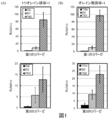
- FIG. 1 shows the expression level of the gene encoding the lipase of the present disclosure when fats and oils are added.
- RNA was extracted from the KH-1 strain, and the resultant was subjected to quantitative RT-PCR.
- the expression level of the disclosed lipase gene was quantified. Ole indicates oleic acid culture, TOle indicates triolein culture, ED indicates elaidic acid culture, and TED indicates results in trielaidin culture.
- the expression level is normalized by the expression level of the rpoD gene, and is shown as a relative value when the expression level in oleic acid culture or triolein is set to 1.
- (A) shows the relative value when the expression level in triolein is 1
- (B) shows the relative value when the expression level in oleic acid is 1.
- the upper graph shows the expression level of the representative sequence of the first lipase gene
- the lower graph shows the expression level of the representative sequence of the second lipase gene. Error bars indicate standard deviation.
- FIG. 2 shows the purification of the representative sequence of the first lipase of the present disclosure from the culture supernatant of the KH-1 strain cultured at 28 ° C.
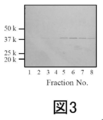
- FIG. 3 shows the purification of a representative sequence of the second lipase of the present disclosure from the culture supernatant of the KH-1 strain cultured at 15 ° C.
- the culture supernatant of the KH-1 strain cultured at 15 ° C. was purified by hydrophobic column chromatography. The result of having analyzed the elution fraction by CBB staining is shown.
- FIG. 4 shows, from the left, the optimal temperature (A), thermostability (B), optimal pH (C) and pH stability (D) of the representative sequence of the first lipase.
- the vertical axis of the graphs of (A) to (D) indicates relative lipase activity
- the horizontal axis of (A) and (B) indicates temperature
- the horizontal axis of (C) and (D) indicates pH. Show.
- the vertical axis of the graphs of (A) to (D) indicates relative lipase activity
- the horizontal axis of (A) and (B) indicates temperature
- the horizontal axis of (C) and (D) indicates pH.
- “ ⁇ ” indicates the result of analysis using an acetate buffer in the pH range of 3.0 to 5.0
- “ ⁇ ” indicates the result of analysis using a sodium phosphate buffer at pH 5
- the results analyzed in the range of 0.0 to 7.0, the results of analysis in the range of pH 7.0 to 9.0 using the Tris-HCl buffer, and the results of analysis in the range of pH 7.0 to 9.0 using the Tris-HCl buffer were shown.
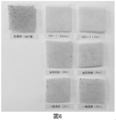
- FIG. 6 shows the results of comparing the decomposition activity of the culture supernatant containing the representative sequences of the first and second lipases with the detergents for oil and general detergents on the exhaust fan stain.
- the upper left filter is a filter before the treatment to which the oil has adhered
- the upper middle and right filters show the filters immersed in the KH-1 culture supernatant for 30 minutes and 1 hour, respectively.
- the middle and right sides of the middle row show filters immersed in an oil detergent for 2 hours and 4 hours, respectively.
- the middle and right sides of the lower row show filters immersed in a general detergent for 2 hours and 4 hours, respectively.
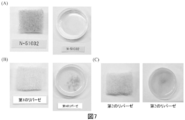
- FIG. 7 shows a comparison of the ventilator soil degradation activity of a representative sequence of the first lipase and a representative sequence of the second lipase with Novozym® 51032 lipase (Novozymes).
- A The left side shows a photograph of the ventilation fan filter after immersion in Novozym 51032 lipase (N-51032) for 30 minutes, and the right side shows a photograph of the Novozym 51032 lipase solution after immersion in the ventilation fan filter.
- B The left side shows a photograph of the ventilation fan filter after soaking for 30 minutes in the representative sequence of the first lipase, and the right side shows the typical sequence of the first lipase after soaking the ventilation filter. 2 shows a photograph of a solution of.
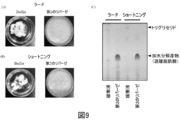
- FIG. 8 shows the lard and shortening degradation activity of a representative sequence of the first lipase. Representative sequences of the first lipase were purified by hydrophobic column chromatography from the KH-1 strain cultured at 28 ° C.
- FIG. 9 shows the lard and shortening degrading activities of representative sequences of the second lipase. Representative sequences of the second lipase were purified by hydrophobic column chromatography from the KH-1 strain cultured at 15 ° C.
- FIG. 10 shows a treatment test of trans-fatty acid-containing wastewater using strain KH-1 and BR3200 (BioRemove3200, Novozymes).
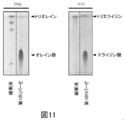
- FIG. 11 shows the degradation of triolein and trielaidin under conditions of 37 ° C. by the representative sequence of the first lipase. The left side shows the degradation of triolein, and the right side shows the degradation of trielaidin.
- TOle indicates triolein and TED indicates trielaidin.
- the signal of triglyceride (triolein or trielaidin) is shown on the upper side of each plate, and the signal of free fatty acid (oleic acid or elaidic acid) is shown on the lower side.
- the results of treatment with only a buffer containing no enzyme are also shown.
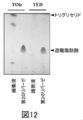
- FIG. 12 shows the degradation of triolein and trielaidin under conditions of 37 ° C. by the representative sequence of the second lipase.
- the left side shows the degradation of triolein, and the right side shows the degradation of trielaidin.
- TOle indicates triolein and TED indicates trielaidin.
- the signal of triglyceride is shown on the upper side of each plate, and the signal of free fatty acid is shown on the lower side.
- FIG. 13 shows the degradation of triolein and trielaidin under 15 ° C. conditions by the lipase of the present disclosure. From the culture supernatant of the KH-1 strain, those having the representative sequence of the first lipase and those having the representative sequence of the second lipase were purified by a Butyl @ Sepharose column, and mixed with trielaidin or triolein at 15 ° C. For 24 hours. The left side shows the treatment with triolein, and the right side shows the treatment with trielaidin.
- each plate the left side shows the treatment with the solution containing the representative sequence of the second lipase, and the right side shows the treatment with the solution containing the representative sequence of the first lipase.
- the signal of triglyceride (triolein or trielaidin) is shown on the upper side of each plate, and the signal of free fatty acid (oleic acid or elaidic acid) is shown on the lower side.
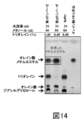
- FIG. 14 shows triolein fat modification by the first and second lipases of the present disclosure. The results of TLC analysis of representative sequences of the first and second lipases, or those obtained by mixing and reacting a buffer alone with methanol and triolein, and a sample of methyl oleate are shown.
- Each signal corresponds to oleic acid methyl ester, triolein, oleic acid and diacylglycerol in order from the top.
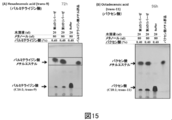
- FIG. 15 shows fat modification of trans fatty acids by the first and second lipases of the present disclosure.
- A TLC analysis of representative sequences of the first and second lipases, or those obtained by mixing and reacting a buffer alone with methanol and palmiteridic acid, and a sample of methyl palmiteridate The results obtained are shown.
- Each signal corresponds to palmiteridic acid methyl ester and palmiteridic acid in order from the top.
- FIG. 16 shows the lipolytic activity of the modified first lipase of the present invention.
- the left side shows the degradation of triolein (TOle), and the right side shows the degradation of trielaidin (TED).
- TOle triolein
- TED trielaidin
- FIG. 17 shows the lipolytic activity of the modified second lipase of the present invention.
- the left side shows the degradation of triolein (TOle), and the right side shows the degradation of trielaidin (TED).
- TOle triolein
- TED trielaidin
- the left lane shows the results of the treatment with the buffer solution alone
- the right lane shows the results of the treatment with the modified second lipase.
- the upper arrow corresponds to undecomposed fats and oils
- the lower arrow corresponds to free fatty acids.
- lipase is a type of esterase and refers to an enzyme that reversibly catalyzes a reaction of hydrolyzing neutral fats (glycerol esters) to decompose them into fatty acids and glycerol.
- the lipases of the present disclosure are classified as triglycerol lipases, which are classified under EC 3.1.1.3 by enzyme number (EC number).
- the lipase activity is determined by performing an enzymatic reaction using 4-nitrophenyl palmitate (4-NPP), which is an ester of palmitic acid and 4-nitrophenol, as a substrate, and producing p-lipase by hydrolysis of the ester.
- the amount of nitrophenol can be determined by measuring the absorbance at 410 nm.
- 4-NPP (18.9 mg) is added to 3% (v / v) Triton X-100 (12 ml) and dissolved at 70 ° C. to obtain a substrate solution.
- NaOH or HCl was added to 1 mL of the substrate solution, 0.9 mL of ion-exchanged water, and 150 mM @ GTA buffer (150 mM @ 3,3-dimethylglutamic acid, 150 mM @ Tris, and 150 mM @ 2-amino-2-methyl-1,3-propanediol to obtain a pH of 7).
- 150 mM @ GTA buffer 150 mM @ 3,3-dimethylglutamic acid, 150 mM @ Tris, and 150 mM @ 2-amino-2-methyl-1,3-propanediol to obtain a pH of 7.
- 0.1 mL of the culture supernatant is added thereto, and the value at 410 nm is measured while stirring.
- the lipase activity is measured by defining the amount of enzyme producing 1 ⁇ mol of 4-nitrophenol as 1 unit (U), and calculating the unit per 1
- the ability to decompose and consume fats and oils and fatty acids can be measured by analyzing the fats and oils remaining in the medium and the free fatty acids produced by hydrolysis by thin-layer chromatography.
- the specific quantitative procedure is as follows. First, an oil or fat is extracted by adding an equal amount of chloroform to the culture supernatant. 5 ⁇ l of the extract is developed on a silica gel-coated plate using a developing solvent containing chloroform, acetone and methanol at a volume ratio of 96: 4: 1, respectively. The plate is treated with molybdate n-hydrate to develop a grease.
- trans fatty acid-containing fats and oils refers to fats and oils containing trans fatty acids.
- Trans fatty acid is used in the sense commonly used in the art and means an unsaturated fatty acid having a trans double bond. Trans fatty acids are naturally present in trace amounts as conjugated linoleic acid or vaccenic acid, but are produced in large amounts in the fats and oils industry during the production of saturated fatty acids by hydrogenation of unsaturated fatty acids, and are used in foods such as margarine and shortening. Is also included.
- the trans fatty acid includes elaidic acid, palmitlaidic acid (palmitelaidic acid), vaccenic acid, and the like, but the type of trans fatty acid is not particularly limited when referred to herein.
- the ratio of trans fatty acid present in the trans fatty acid-containing fat or oil is not particularly limited.
- the term “ability associated with the assimilation of trans-fatty acid-containing fats and oils” refers to the activity of microorganisms to assimilate the trans-fatty acid-containing fats and oils.
- "utilizing trans fatty acid-containing fats and oils” is used in a meaning commonly used in the art, and means that microorganisms take in trans fat-containing fats and oils as a nutrient source such as a carbon source.
- “Utilization” includes hydrolysis to glycerol and free fatty acids, as well as conversion to part of other substances.
- the ability to decompose trans-fatty acid-containing fats and oils refers to activity of hydrolyzing trans-fatty acid-containing fats and oils to glycerol and free fatty acids.
- the “ability to decompose fats and oils” (at each temperature) is measured as follows. That is, lipase is purified by the method described in the present specification, lipase is mixed with p-nitrophenyl palmitate at a constant temperature at a temperature to be measured, and the measurement is performed by measuring the absorbance at 410 nm. Can be. Alternatively, the culture supernatant of the KH-1 strain or a derivative thereof is recovered by the method described herein, and the lipase-containing culture supernatant or the crude lipase solution is p-nitrophenyl palmited at constant temperature. It can be measured by mixing with tartrate and measuring the absorbance at 410 nm.
- the term “optimal temperature” for the ability to decompose fats and oils is used in the sense commonly used in the art, and the activity of decomposing fats and oils is a certain level or more than desired (for example, the enzyme has It refers to the temperature range where 80% or more of the maximum level of activity is retained, but in other embodiments it may refer to the maximum level.)
- the first lipase of the present disclosure has a peak activity of decomposing fats and oils at about 60 ° C., and retains 80% or more of the activity in the range of about 45 to 70 ° C.
- the second lipase of the present disclosure has a peak activity of decomposing fats and oils at about 50 ° C., and retains 80% or more of the peak activity in the range of about 35 to 55 ° C.
- the optimal temperature of the first lipase of the present disclosure is 45-75 ° C, preferably 50-70 ° C, more preferably 55-65 ° C, even more preferably. It is intended to be between 58 and 63 ° C, most preferably at 60 ° C.
- the optimal temperature of the second lipase of the present disclosure is intended to be 35-55 ° C, preferably 40-55 ° C, more preferably 45-50 ° C.
- the lipases of the present disclosure can be modified to alter the optimal temperature, with a lower limit of the optimal temperature of 20 ° C, 25 ° C, 30 ° C, 35 ° C, 40 ° C, 45 ° C., 50 ° C., 55 ° C., 60 ° C., or the like (or a temperature between them changed by 1 ° C.).
- the temperature may be 65 ° C., 70 ° C., 75 ° C., 80 ° C. (or a temperature between them changed by 1 ° C.).
- thermoostability has the same meaning as terms such as “temperature stability” and “heat resistance”, and is used in a meaning commonly used in the art, and the enzyme is used at a high temperature. Means to maintain the activity. In general, it is known that an enzyme is inactivated at a temperature of about 50 ° C. due to a change in molecular structure or the like. In contrast, in the case of the first lipase of the present disclosure, as an example, the relative enzyme activity when treated at 30 ° C. for 30 minutes as 100% is about 30 to about 85 ° C.
- the lipase of the present disclosure has high thermostability because the enzyme activity is 100% or more even after treatment for 30 minutes in a temperature range of about 30% and retains about 30% of the enzyme activity even after treatment for 30 minutes at 90 ° C. It can be said that it has.
- the relative enzyme activity when the enzyme activity after treatment at 70 ° C. for 30 minutes is 100% is, for example, 30% in a temperature range of about 15 to about 75 ° C. 90% or more is maintained even after the minute treatment and about 80% even at 80 ° C.
- the expression similar to “maintaining thermostability” refers to a relative enzyme activity of about 50% or more when the enzyme activity after treatment at about 30 ° C. for 30 minutes is 100%. Means to be retained.
- the term “optimal pH” for the ability to decompose fats and oils is used in the sense normally used in this technical field, and the activity of decomposing fats and oils is a certain level or more (for example, the maximum level of the enzyme). Refers to the pH range at which 80% or more of the activity is maintained, but in another embodiment it may refer to the maximum level.) Both the first and second lipases of the present disclosure have an activity of decomposing fats and oils at about pH 9, and retain 80% or more of the activity in the range of about pH 7.5 to pH 9.5.
- the optimal pH of the (first and second) lipase of the present disclosure is between pH 7.5 and pH 9.5, preferably between pH 8.0 and pH 8.5. It is intended to be pH 9.3, more preferably pH 9.
- Burkholderia arboris means an arboris species belonging to the genus Burkholderia (Birkholderia) in biotaxology.
- the Burkholderia arboris sp.
- Strain KH-1 herein encodes at least two types of lipases (ie, a representative sequence of a "first lipase” and a representative sequence of a "second lipase” of the present disclosure). It has a gene.
- the lipases of the present disclosure include, but are not limited to, those produced by the strain KH-1 belonging to the species Burkholderia arboris or a derivative thereof.
- the term "cell-free expression system” is used in the sense commonly used in the art, and uses the transcription / translation mechanism of a biomolecule extracted from a cell to generate a target recombinant in vitro. Refers to a system that produces proteins.
- the cell-free expression system for producing the lipase of the present disclosure is not particularly limited, but a cell-free expression system derived from a prokaryote such as Escherichia coli can be used.
- oil treatment component means a component that assists the assimilation and decomposition of fats and oils. Specifically, components such as biosurfactants that promote the dispersion of fats and oils, components that break down fats and oils into fatty acids and glycerol, those that break down fatty acids, those that break down glycerol, and those that adsorb oil What is removed from the object of processing is included.
- the oil treatment component includes a biosurfactant produced by the KH-1 strain.
- oil disintegrant refers to an oil or fat containing, as an active ingredient, the Burgholderia arboris sp. KH-1 bacterial strain of the present disclosure or the first or second lipase of the present disclosure produced by the bacterial strain. Refers to a formulation that can be degraded.
- an oil decomposer may be used in combination with an oil treatment component. In this case, the timing of the combined use of the oil decomposer and the oil treatment component may be used simultaneously or one of them may be used first.
- the lipolytic agent includes a component to enhance the activity of the bacterial strain or a lipase derived from the bacterial strain to be used (for example, a carbon source or a nitrogen source), a surfactant, a desiccant, a component for maintaining bacteria for a long time, Preservatives, excipients, fortifiers, antioxidants and the like may be further included.
- the oil disintegrant provided in the present disclosure is provided in a liquid state, a solid state, or a dry state.
- a bacterial culture solution (which may be concentrated or diluted as necessary), a culture supernatant, a solution in which enzyme components derived from the culture solution are adsorbed to a support, and an enzyme is separated and purified from the culture solution And those suspended in a solvent.
- solids are suspended and frozen in a solvent containing a protective agent such as glycerol, or immobilized on a carrier (covalently bonded to a carrier, adsorbed by electrostatic interaction / hydrophobic interaction, etc.). , Carrier cross-linked, etc.), dehydrated by centrifugation, press compression, etc., and further, dried and dried products.
- the lipolytic agent is typically provided in the form of a liquid, powder, granules, and may be provided as a detergent or as a component of a detergent, together with other components.
- a “derivative”, “analog” or “variant” is preferably, but not intended to be, limited to a protein (e.g., a lipase) that is of interest.
- a protein e.g., a lipase
- sequences that are aligned over amino acid sequences of the same size or aligned by computer homology programs known in the art are aligned over amino acid sequences of the same size or aligned by computer homology programs known in the art.
- nucleic acids that are at least 30%, 40%, 50%, 60%, 70%, 80%, 90%, 95%, or 99% identical or that encode such molecules are (highly) ) Is capable of hybridizing to a sequence encoding a component protein under stringent, moderately stringent, or non-stringent conditions. .
- the biological function of such proteins can be determined by suitable and available in vitro assays described herein or known in the art.
- “functionally active” or “functionally active” refers herein to a biological activity, such as a biological activity, according to aspects to which the polypeptides, ie, fragments or derivatives of the disclosure are related. Has a structural, regulatory, or biochemical function of a protein.
- a lipase fragment is a polypeptide containing any region of the lipase, and as long as it serves the purpose of the present disclosure (for example, degradation of trans fatty acid-containing fats and oils), the biological function of the natural lipase is not necessarily required. It is not necessary to have all of.
- protein polypeptide
- oligopeptide and “peptide” are used interchangeably in the present specification and refer to a polymer of amino acids of any length.
- This polymer may be linear, branched, or cyclic.
- Amino acids may be natural or non-natural, and may be modified amino acids.
- the term may also include those assembled into a complex of multiple polypeptide chains.
- the term also includes naturally or artificially modified amino acid polymers. Such modifications include, for example, disulfide bond formation, glycosylation, lipidation, acetylation, phosphorylation or any other manipulation or modification (eg, conjugation with a labeling component).
- amino acid is a general term for organic compounds having an amino group and a carboxyl group.
- amino acid sequence may be chemically modified.
- any of the amino acids in the amino acid sequence may form a salt or a solvate.
- any of the amino acids in the amino acid sequence may be L-type or D-type.
- the protein according to the embodiment of the present disclosure includes the above “specific amino acid sequence”.
- Examples of the chemical modification of an amino acid contained in a protein in vivo include N-terminal modification (eg, acetylation, myristoylation, etc.), C-terminal modification (eg, amidation, glycosylphosphatidylinositol addition, etc.), or side chain Modifications (eg, phosphorylation, sugar chain addition, etc.) are known.
- Amino acids may be natural or non-natural as long as they meet the purpose of the present disclosure.
- polynucleotide As used herein, the terms “polynucleotide”, “oligonucleotide” and “nucleic acid” are used interchangeably herein and refer to a polymer of nucleotides of any length. The term also includes “oligonucleotide derivatives" or “polynucleotide derivatives". The term “oligonucleotide derivative” or “polynucleotide derivative” includes oligonucleotides or polynucleotides that include derivatives of nucleotides or have unusual bonds between nucleotides, and are used interchangeably.
- oligonucleotide examples include 2′-O-methyl-ribonucleotide, an oligonucleotide derivative in which a phosphoric diester bond in an oligonucleotide is converted to a phosphorothioate bond, and a phosphodiester bond in an oligonucleotide.
- nucleic acid sequence also includes conservatively modified variants (eg, degenerate codon substitutions) and complementary sequences thereof, as well as explicitly stated sequences. Is contemplated. Specifically, degenerate codon substitutions create a sequence in which the third position of one or more selected (or all) codons is replaced with a mixed base and / or deoxyinosine residue. (Batzer et al., Nucleic Acid Res. 19: 5081 (1991); Ohtsuka et al., J. Biol. Chem. 260: 2605-2608 (1985); Rossolini et al., Mol. Cell. .Probes 8: 91-98 (1994)).
- degenerate codon substitutions create a sequence in which the third position of one or more selected (or all) codons is replaced with a mixed base and / or deoxyinosine residue.
- nucleic acid is also used interchangeably with gene, cDNA, mRNA, oligonucleotide, and polynucleotide.
- nucleotide may be natural or non-natural.
- the term “gene” refers to a factor that defines a genetic trait, and the term “gene” may refer to “polynucleotide”, “oligonucleotide”, and “nucleic acid”.
- ⁇ homology '' of a gene refers to the degree of identity between two or more gene sequences, and generally having ⁇ homology '' means that the degree of identity or similarity is high.
- the higher the homology of a certain two genes the higher the identity or similarity of their sequences.
- Whether or not two genes have homology can be determined by direct sequence comparison or, in the case of nucleic acids, a hybridization method under stringent conditions.
- the DNA sequences between the gene sequences are typically at least 50% identical, preferably at least 70% identical, more preferably at least 80%, 90% , 95%, 96%, 97%, 98% or 99% identical, the genes are homologous.
- a “homolog” or “homologous gene product” refers to another species, preferably a microorganism, more preferably a microorganism, that performs the same biological function as the protein component of the complex further described herein. Means protein in bacteria. Such homologues may also be referred to as “orthologous gene products.” It is understood that such homologs, homologous gene products, orthologous gene products, and the like, can be used as long as they meet the purpose of the present disclosure.
- Amino acids can be referred to herein by either their commonly known three letter symbols or by the one letter symbols recommended by the IUPAC-IUBACBiochemical Nomenclature Commission. Nucleotides may also be referred to by the generally recognized one-letter code.
- BLAST a sequence analysis tool
- the search for identity can be performed, for example, using NCBI's BLAST2.7.1 (issued on October 19, 2017).
- the value of “identity” usually refers to a value obtained by performing alignment using BLAST as described above under default conditions.
- Similarity is a numerical value calculated for similar amino acids in addition to identity.
- ⁇ several '' may be, for example, 15, 14, 13, 12, 11, 10, 9, 8, 7, 6, 5, 4, 3, or 2, It may be less than any of these values. It is known that polypeptides in which one or several amino acid residues have been deleted, added, inserted, or substituted with other amino acids maintain their biological activity (Market et al., Proc. Natl Acad Sci USA.1984 Sep; 81 (18): 5662-5666., Zoller et al., Nucleic Acids Res. 1982 Oct 25; 10 (20): 6487-6500., Wang et al., Science. 1984 Jun. 29; 224 (4656): 1431-1433.).
- Deleted proteins can be prepared by, for example, site-directed mutagenesis, random mutagenesis, or biopanning using a protein phage library.
- site-directed mutagenesis method for example, KOD-Plus- Mutagenesis Kit (TOYOBO CO., LTD.) Can be used. It is possible to select a protein having the same activity as that of the wild type from the mutant type protein into which a deletion or the like has been introduced by performing various characterizations such as FACS analysis and ELISA.
- “70% or more” which is a numerical value of identity or the like is, for example, 70% or more, 75% or more, 80% or more, 85% or more, 90% or more, 95% or more, 96% or more. , 97% or more, 98% or more, 99% or more, or 100%, and may be in the range of any two of the starting values.
- the “identity” is calculated by calculating the ratio of the number of homologous amino acids in the amino acid sequence between two or more amino acids according to the known method described above.
- the amino acid sequences of the amino acid sequence group to be compared are aligned, and a gap is introduced in a part of the amino acid sequence when necessary to maximize the ratio of the same amino acid.
- Methods for alignment, methods for calculating proportions, methods for comparing, and their associated computer programs are well known in the art (eg, BLAST, etc., described above).
- identity and “similarity” can be represented by values measured by BLAST of NCBI unless otherwise specified.
- Blastp can be used as the default algorithm for comparing amino acid sequences with BLAST. The measurement result is quantified as Positives or Identities.
- polynucleotide that hybridizes under stringent conditions refers to well-known conditions commonly used in the art.
- a polynucleotide can be obtained by using a polynucleotide selected from the polynucleotides of the present disclosure as a probe and using a colony hybridization method, a plaque hybridization method, a Southern blot hybridization method, or the like. Specifically, after performing hybridization at 65 ° C.
- SSC saline-sodiumcitrate
- the composition of a 1-fold concentration SSC solution is 150 mM sodium chloride and 15 mM sodium citrate
- stringent conditions for example, the following conditions can be adopted.
- a polypeptide used in the present disclosure is encoded by a nucleic acid molecule that hybridizes under highly or moderately stringent conditions to a nucleic acid molecule encoding a polypeptide specifically described in the present disclosure. Polypeptides are also included.
- the lipase of the present disclosure may preferably be “purified” or “isolated”.
- the term “purified” substance or biological factor refers to a substance or biological factor from which at least a part of a factor naturally associated with the substance or biological factor has been removed. .
- the purity of the biological agent in the purified biological agent is higher (ie, more concentrated) than the state in which the biological agent is normally present.
- the term “purified” preferably refers to at least 75%, more preferably at least 85%, even more preferably at least 95%, and most preferably at least 98% by weight. It means that the same type of biological factor is present.
- the substance or biological agent used in the present disclosure is preferably a "purified” substance.
- an “isolated” substance or biological agent eg, a nucleic acid or protein
- isolated does not necessarily have to be expressed in purity, as it will vary depending on its purpose, but if necessary, preferably at least 75% by weight, more preferably Means that at least 85%, even more preferably at least 95%, and most preferably at least 98% by weight of the same type of biological agent is present.
- the substance used in the present disclosure is preferably an "isolated" substance or biological agent.
- fragment or “fragment” is used interchangeably and refers to a polypeptide or a polypeptide having a sequence length of 1 to n ⁇ 1 relative to a full-length polypeptide or polynucleotide (length is n). Refers to a polynucleotide.
- the length of the fragment or fragment can be appropriately changed depending on the purpose.For example, as a lower limit of the length, in the case of a polypeptide, 3, 4, 5, 6, 7, 8, 9, It includes 10, 15, 20, 25, 30, 40, 50 and more amino acids, and lengths represented by integers not specifically listed herein (eg, 11 and the like) are also suitable as lower limits.
- nucleotides can be also, in the case of polynucleotides, 5, 6, 7, 8, 9, 10, 15, 20, 25, 30, 40, 50, 75, 100 and more nucleotides may be mentioned, specifically listed here.
- a length represented by a non-integer integer eg, 11, etc.
- such a fragment or fragment falls within the scope of the present disclosure, for example, when a full-length fragment functions as a lipolytic molecule, as long as the fragment or fragment itself also has a function as a lipolytic molecule. It is understood to enter.
- biological function refers to a specific function that a gene, a nucleic acid molecule or a polypeptide can have in vivo or in vitro when referring to a gene or a nucleic acid molecule or polypeptide related thereto.
- This includes, but is not limited to, for example, decomposition of fats and oils (for example, decomposition of trans fatty acids-containing fats and oils).
- examples of the present disclosure include, but are not limited to, decomposition of trans-fatty acid-containing fats and oils, decomposition of cis-fatty acid-containing fats and oils, and decomposition of saturated fatty acid-containing fats and oils containing no double bond.
- a biological function may be performed by a corresponding “biological activity”.
- biological activity refers to an activity that a certain factor (eg, a polynucleotide, a protein, etc.) may have, and has various functions (eg, activity of decomposing trans-fatty acid-containing fats and oils). The activity to exert is included.
- Biological activity may be an activity exerted in a living body or an activity exerted outside a living body by secretion or the like. For example, if a factor is an enzyme, its biological activity includes the enzymatic activity. Such a biological activity can be measured by techniques well known in the art.
- “activity” indicates or reveals binding (either directly or indirectly); affects response (ie, has a measurable effect in response to some exposure or stimulus); Refers to various measurable indices, such as the affinity of a compound for binding directly to a polypeptide or polynucleotide of the disclosure, or the amount of upstream or downstream protein or some other Similar functional measures may also be included.
- “ expression ”of a gene, a polynucleotide, a polypeptide, or the like means that the gene or the like undergoes a certain action in vivo to take another form.
- it means that a gene, a polynucleotide, or the like is transcribed and translated to form a polypeptide, but transcription is also an embodiment of expression of mRNA.
- the term "expression product” as used herein includes such a polypeptide or protein, or mRNA. More preferably, such polypeptide forms may have undergone post-translational processing.
- the lipase expression level can be determined by any method.
- the expression level of lipase can be known by evaluating the amount of lipase mRNA, the amount of lipase protein, and the biological activity of lipase protein.
- the amount of lipase mRNA or protein can be determined by the methods detailed elsewhere herein or by other methods known in the art.
- a functional equivalent of the “lipase” of the present disclosure is not the lipase of the present disclosure itself, but a mutant or variant thereof (for example, an amino acid sequence variant or the like), and the biological equivalent of the lipase.
- Those having an action, and those capable of being converted to a mutant or a variant having a biological action of the lipase at the time of acting for example, a nucleic acid encoding the mutant or the variant, (Including vectors, cells, etc., containing nucleic acids).
- Bio searches include stringent hybridization, macroarrays in which genomic DNA is attached to a nylon membrane or the like, or microarrays (microarray assays) in which they are attached to a glass plate, PCR, and in situ hybridization. It is not limited to. As used herein, it is intended that the genes used in the present disclosure should also include corresponding genes identified by such electronic and biological searches.
- insertion, substitution or deletion of one or more amino acids, or addition of one or more amino acids to one or both termini thereof in an amino acid sequence can be used.
- "in the amino acid sequence, insertion, substitution or deletion of one or more amino acids, or addition to one or both ends thereof” refers to well-known technical techniques such as site-directed mutagenesis. It means that the modification has been made by a method or by a natural mutation, such as by substitution of a plurality of amino acids to the extent that can occur naturally.
- the modified amino acid sequence may be, for example, an insertion, substitution, or deletion of 1 to 30, preferably 1 to 20, more preferably 1 to 9, more preferably 1 to 5, and particularly preferably 1 to 2 amino acids.
- the modified amino acid sequence preferably has one or more amino acid sequences (preferably one or more or one, two, three, four, or four) in the amino acid sequence of SEQ ID NOs: 4 to 6, 11 to 14, 16 or 18. 5, 6, 7, 8, 9, 10, 11, 12, 13, 14, or 15) conservative substitutions.
- conservative substitution means that one or more amino acid residues are substituted with another chemically similar amino acid residue so as not to substantially alter the function of the protein. For example, a case where a certain hydrophobic residue is replaced with another hydrophobic residue, a case where a certain polar residue is replaced with another polar residue having the same charge, and the like can be mentioned.
- amino acids for which such substitutions can be made are known in the art for each amino acid.
- specific examples include non-polar (hydrophobic) amino acids such as alanine, valine, isoleucine, leucine, proline, tryptophan, phenylalanine, and methionine.
- Polar (neutral) amino acids include glycine, serine, threonine, tyrosine, glutamine, asparagine, cysteine, and the like.
- positively charged (basic) amino acids include arginine, histidine, and lysine.
- negatively charged (acidic) amino acids include aspartic acid and glutamic acid.
- kits refers to a unit which is usually divided into two or more compartments and provided with parts to be provided (for example, enzymes, fat / oil decomposers, buffers, instructions, and the like).
- This kit form is preferred when it is intended to provide a composition that should not be provided as a mixture for stability and the like, but is preferably used by mixing immediately before use.
- kits preferably include instructions that describe how to use the parts provided (eg, enzymes or lipolytic agents) or how to treat reagents or spent effluent. Or it is advantageous to have instructions.
- the kit When the kit is used as a reagent kit in the present specification, the kit usually contains instructions and the like describing how to use enzymes, fat and oil decomposers, and the like.
- the “instruction” describes a method for using a lipase of the present disclosure to a user.
- This instruction includes a statement instructing how to use the lipase of the present disclosure.
- These instructions may be obtained from the competent authority of the country in which the invention is implemented (eg, the Ministry of Health, Labor and Welfare or the Ministry of Agriculture, Forestry and Fisheries in Japan, the Food and Drug Administration (FDA) in the United States, the Ministry of Agriculture (USDA) ), Etc.), and specify that they have been approved by the competent authority.
- the instruction sheet may be provided in a paper medium, but is not limited thereto.
- the instruction sheet may be provided in a form such as an electronic medium (for example, a homepage provided on the Internet, an e-mail).
- the present disclosure provides novel polypeptides.
- the present disclosure typically discloses representative sequences of a first lipase and a second lipase from a Burkholderia arboris sp. Strain KH-1 or derivative thereof, and derivatives thereof. provide.
- the polypeptide of the present disclosure comprises: (A) a polypeptide comprising the amino acid sequence shown in SEQ ID NO: 4, 11, 16 or 18; (B) a polypeptide having a biological activity, comprising an amino acid sequence containing one or more amino acid substitutions, additions, deletions or a combination thereof in the amino acid sequence of (a); (C) a polypeptide having at least 70% sequence identity to the amino acid sequence shown in (a) or (b) and having biological activity; (D) a polypeptide comprising the amino acid sequence encoded by the nucleic acid sequence shown in SEQ ID NO: 1, 7, 15, or 17; (E) a polypeptide having a biological activity, which is encoded by a nucleic acid sequence containing one or more nucleotide substitutions, additions, deletions or a combination thereof in the nucleic acid sequence shown in (d); (F) a polypeptide having a biological activity encoded by a nucleic acid sequence having at least 70% sequence identity to the nucleic acid
- the present disclosure provides a nucleic acid sequence encoding a novel polypeptide.
- the polynucleotide of the present disclosure comprises: (A) a polynucleotide comprising the nucleic acid sequence of SEQ ID NO: 1, 7, 15, or 17; (B) a polynucleotide comprising a nucleic acid sequence comprising one or more nucleotide substitutions, additions, deletions or a combination thereof in the nucleic acid sequence shown in (A); (C) a polynucleotide comprising a nucleic acid sequence having at least 70% or more sequence identity with the nucleic acid sequence shown in (A) or (B), and encoding a polypeptide having biological activity; (D) a nucleic acid sequence which hybridizes under stringent conditions to a polynucleotide comprising the nucleic acid sequence shown in any one of (A) to (C) or a complementary sequence thereof, and has a biological activity.
- the biological activity possessed by the polypeptides of the present disclosure may be at least one of any of the properties possessed by the first or second lipases of the present disclosure, such as, for example, the ability associated with assimilation of trans-fatty acid containing fats and oils. Or the ability to degrade trans-fatty acid containing fats or oils, or both.
- the polypeptides encoded by the polypeptides or polynucleotides of the present disclosure have the ability to be associated with assimilation of trans-fatty acid containing fats, or the ability to degrade trans fatty acid containing fats, or both. obtain.
- the polypeptide encoded by the polypeptide or polynucleotide of the present disclosure has the ability to degrade fat at 15 ° C, alternatively at 10 ° C.
- the first lipase of the present disclosure, the polypeptide encoded by the polypeptide or polynucleotide is 45-75 ° C, 50-70 ° C, preferably 55-65 ° C, 58-63 ° C. Alternatively, 60 ° C. is the optimum temperature for the ability to decompose fats and oils.
- the polypeptide encoded by the polypeptide or polynucleotide, which is the second lipase of the present disclosure is 35 to 55 ° C., 40 to 55 ° C., preferably 45 to 55 ° C., 45 to 50 ° C., or 50 ° C.
- the optimal temperature for the ability to decompose is at least 50 ° C, at least 55 ° C, at least 60 ° C, at least 65 ° C, at least 70 ° C, or at least 75 ° C. C. or higher, which may have a thermal stability of 50 ° C. or less, 55 ° C.
- the polypeptide encoded by the polypeptide or polynucleotide, the first lipase of the present disclosure may preferably have thermostability at 65 ° C. or higher, which may be maintained up to 85 ° C. or lower. .
- the polypeptide encoded by the polypeptide or polynucleotide, which is the second lipase of the present disclosure, is at least 40 ° C, at least 45 ° C, at least 55 ° C, at least 60 ° C, at least 65 ° C, at least 70 ° C, or at least 75 ° C.
- it can be kept at 85 ° C. or lower.
- the polypeptide encoded by the polypeptide or polynucleotide, which is the second lipase of the present disclosure, preferably has thermostability at 50 ° C or higher, and this thermostability can be maintained at 80 ° C or lower.
- the polypeptide encoded by the polypeptide or polynucleotide of the present disclosure may be, but is not limited to, from a Burkholderia arboris species.
- the enzyme may be derived from, but is not limited to, Burkholderia arboris strain KH-1 or a derivative thereof.
- the present disclosure provides an lipolytic agent comprising a cell or cell-free expression system comprising any of the above polypeptides or polynucleotides.
- a cell of the present disclosure contains the polypeptide of the first or second lipase of the present disclosure, or has a polynucleotide encoding the polypeptide of the first or second lipase of the present disclosure incorporated therein so that it can be expressed. It is.
- the cell-free expression system is provided so that a polynucleotide encoding the polypeptide of the first or second lipase of the present disclosure can be expressed, and the polypeptide is expressed by an appropriate mechanism to exert an oil-degrading effect.
- the lipolytic agent comprises an additional oil treatment component.
- the present disclosure provides a kit for lipolysis or grease treatment comprising a polypeptide of the disclosure, or a cell or cell-free expression system of the disclosure, or an oleolytic agent and an additional oleaginous component. provide. It is understood that the oil disintegrant and oil treatment components included in the kits of the present disclosure can be of any type described elsewhere herein and in any combination.
- the present disclosure provides a method for removing lipolysis, which comprises applying the polypeptide of the present disclosure, or the cell or cell-free expression system of the present disclosure, or the lipolytic agent of the present disclosure to a treatment target. I do.
- the treatment target preferably includes a trans fatty acid-containing fat or oil, but is not limited thereto. It is shown herein that even if the subject does not contain trans fatty acid-containing fats and oils, the lipase of the present disclosure can perform oil decomposition very efficiently.
- the present disclosure provides a detergent comprising a polypeptide of the present disclosure, a cell or cell-free expression system of the present disclosure, or an lipolytic agent of the present disclosure.
- the present invention provides an application in a fat modification / oil production technology (eg, transesterification) using the polypeptide of the present disclosure, the cell or cell-free expression system of the present disclosure, or the lipolytic agent of the present disclosure.
- a fat modification / oil production technology eg, transesterification
- the fat modification / oil production technology include a reaction for producing an ester, for example, a methyl ester and an ethyl ester, a substitution reaction of a fatty acid-containing fatty acid, and production of diacylglycerol and monoacylglycerol.
- Polypeptides of the present disclosure are intended to include not only polypeptides having the amino acid sequences of SEQ ID NOs: 4-6, SEQ ID NOs: 11-14, 16 or 18, but also variants thereof. Such polypeptides include amino acid sequences containing substitutions, additions, deletions or combinations thereof of one or more amino acids with respect to the amino acid sequences of SEQ ID NOs: 4 to 6, 11 to 14, 16 or 18. And polypeptides having biological activity.
- positions 1, 3, 6, 137, 220, 227, 243, 276 The amino acids corresponding to positions 316 and 316 are replaced.
- the present disclosure further provides nucleic acid sequences encoding the novel polypeptides, wherein the nucleic acid sequences include the nucleic acid sequences shown in SEQ ID NOs: 1-3, 7-10, 15 or 17, as well as modifications thereof.
- the body is also intended to be included.
- Such nucleic acid sequences include substitutions, additions, deletions or a combination thereof of one or more nucleotides with respect to the nucleic acid sequences of SEQ ID NOs: 1 to 3, 7 to 10, 15 or 17. Nucleic acid sequences encoding polypeptides having activity.
- the position where the mutation can be introduced in the amino acid sequence or the nucleic acid sequence may be any position as long as the variant having the mutation at that position retains the activity of the lipase of the present disclosure, and the mutation may be introduced at a plurality of positions. May be done.
- the first lipase of the present disclosure it may have a mutation at any position of SEQ ID NO: 6 (full-length amino acid sequence).
- position 131 of SEQ ID NO: 6 In one example, position 131 of SEQ ID NO: 6
- mutations at residues other than those corresponding to S, D at position 308, and H at position 330 are desirable, but not limited thereto.
- the first or second lipase of the present disclosure can be purified from, for example, Burkholderia arboris sp. Strain KH-1 (accession number NITE BP-02731) or a derivative thereof.
- the first lipase of the present disclosure comprises: (A) culturing the KH-1 strain or a derivative thereof in a medium containing 1% canola oil at 28 ° C. for 24 hours or more; (B) The culture supernatant of (a) is sterilized with a 0.45 ⁇ m pore filter and buffered with 20 mM Tris-HCl (pH 7.0) containing about 10 column volumes of 0.5 M NaCl and 2 mM CaCl 2.
- the protein can be purified by a method including a step of eluting the isolated protein.
- the second lipase of the present disclosure comprises: (A) culturing the KH-1 strain or a derivative thereof in a medium containing 1% canola oil at 15 ° C.
- the protein can be purified by a method including a step of eluting the isolated protein.
- detailed conditions such as culture conditions of the KH-1 strain or a derivative thereof and column chromatography conditions are appropriately adjusted by those skilled in the art.
- the first and second lipases of the present disclosure can also be produced by a secretory production system using a microorganism.
- the first or second lipase of the present disclosure comprises: (A) Gene transfer of a nucleic acid molecule (for example, SEQ ID NO: 1, 7, 15, or 17 or a modified sequence thereof) encoding a mature form of the first or second lipase of the present disclosure into a pBIC1 plasmid (Takara Bio Inc.) Then, it can be produced by a method comprising a step of expressing in a Brevibacillus bacterium, and a step of (b) purifying a protein secreted from the Brevibacillus bacterium by Ni-Sepharose.
- the recombinant lipase protein of the present disclosure uses a CORYNEX® system (Ajinomoto) using Corynebacterium glutamicum, a Pichia pastoris expression system (ThermoFisher), a baculovirus expression system using insect cells (ThermoFisher), and a koji mold.
- the protein can be produced by an expression system such as a protein secretion expression system (Ozeki), a periplasmic secretion production system of Escherichia coli by the pET system (Merck), or the like.
- lipase of the present disclosure can be expressed using various expression systems such as an intracellular expression system and a cell-free expression system in addition to the secretory production system of microorganisms.
- the lipase of the present disclosure is useful for treating fats and oils, and can be used for treating wastewater and wastewater containing fats and oils.
- the lipase of the present disclosure is used in wastewater treatment.
- the lipase of the present disclosure can be used in applications such as factory drainage, kitchen drainage, and house drainage.
- the lipase of the present disclosure is used as a detergent.
- the lipases of the present disclosure can be used in applications such as laundry detergents, kitchen detergents, cleaning detergents, industrial detergents, and the like.
- Detergents comprising the lipases of the present disclosure are particularly useful for drain cleaners, such as pipe cleaners.
- the lipase of the present disclosure is used in fat modification and fat production technology.
- the lipases of the present disclosure can be used in applications such as food, industry, and fuel.
- the lipases of the present disclosure can be used as an environmental pollution measure.
- the lipase of the present disclosure when used in environmental pollution control, can be used to remove contaminants such as oil-borne soil, groundwater, and marine pollution.
- the lipases of the present disclosure are used in waste disposal and composting.
- the lipase of the present disclosure when used in waste treatment and composting, disposes of garbage, including extinguishing, composting, agriculture and food waste feed, oily sludge from pressure flotation equipment and grease traps Can be used in applications such as volume reduction.
- a lipase of the present disclosure is used as a medicament.
- the lipase of the present disclosure when used as a pharmaceutical, it can be used in applications such as digestives and lipolysis promoters.
- the lipase of the present disclosure is used as a cosmetic.
- the lipases of the present disclosure can be used in applications such as cosmetics for improving, preventing or treating greasy skin.
- it may be used as a component containing an isolated enzyme, or may be used as a component containing bacteria itself.
- Example 1 Expression analysis of putative lipase
- the KH-1 strain was transformed into an inorganic salt medium containing 1% canola oil (Na 2 HPO 4 3.5 g / L, KH 2 PO 4 2.0 g / L, (NH 4 ) 2 SO 4 4.0 g / L, MgCl 2 2 ⁇ 6H 2 O 0.34g / L , FeSO 4 ⁇ 7H 2 O 2.8mg / L, MnSO 4 ⁇ 5H 2 O 2.4mg / L, CoCl 2 ⁇ 6H 2 O 2.4mg / L, CaCl 2 ⁇ 2H 2 O 1.7mg / L, CuCl 2 ⁇ 2H 2 O 0.2mg / L, ZnSO 4 ⁇ 7H 2 O 0.3mg / L, and NaMoO 4 0.25mg / L) 3L, HITACHI U-2810 spectrometer Using a photometer (Hitachi, Tokyo), inoculate the cells so that the final concentration based on the optical
- RNA was extracted from each culture sampled over time using a high-purity RNA isolation kit (Roche). Using 2 ⁇ g of total RNA as a template, genomic DNA was removed using PrimeScript TM RT Reagent Kit with gDNA Eraser Perfect Real Time (Takara Bio Inc.) to synthesize cDNA. Thereafter, the cDNA stock solution was diluted three-fold using the dilution solution included in the kit. Quantitative real-time RT-PCR was performed with Applied Biosystems StepOnePlus TM (Applied Biosystems) using synthetic primers specific for the genes encoding the first and second lipases of the present disclosure.
- Applied Biosystems Applied Biosystems
- the PCR reaction was performed in a 20 ⁇ l solution containing PowerUp TM SYBR (registered trademark) Green Master Mix (Thermo Fisher Scientific) (10 ⁇ l), each primer (0.5 ⁇ M final concentration), and cDNA (1 ⁇ l).
- the PCR reaction was performed using a fast cycling mode using a program in which a cycle of denaturation at 95 ° C. for 2 minutes was performed once, and then a cycle of 95 ° C. for 3 seconds and 60 ° C. for 30 seconds was repeated 40 times.
- Expression levels were normalized with the expression level of RNA polymerase sigma factor (rpoD).
- the data was analyzed by the comparative Ct method ( ⁇ Ct method) after confirming that the melting curve had a single peak.
- the relative expression level when each lipase gene expressed when cultured in the LB medium is set to 1 as a control is shown.
- Example 2 Mutant experiment
- Example 3 Induction of expression of first and second lipases of the present disclosure by trans fatty acids and trans fatty acids containing trans fatty acids
- the expression levels of the genes encoding the representative sequences of the first and second lipases of the present disclosure when trans fatty acids (elaidic acid) and trans fatty acids containing fats and oils (trielaidin) were added were determined. Comparison was made with cis fatty acid (oleic acid) and cis fatty acid-containing fatty acid (triolein).
- the KH-1 strain was cultured on a triolein plate for 2 days. Thereafter, the KH-1 strain was scraped off with a cotton swab, suspended in PBS, and then washed twice with PBS. A 5% final concentration of Triton X-100 solution containing 2% final concentration of oleic acid, triolein, elaidic acid or trielaidin was prepared as a stock solution of fats and oils and dissolved at 70 ° C.
- the expression level of the gene encoding the representative sequence of the first lipase increased about 100-fold after the treatment with trielaidin (FIG. 1A and 1B, upper row). This result suggests that trans-fatty acids or trans-fatty acid-containing fats and oils may serve as inducers of the first lipase.
- the expression of the gene encoding the representative sequence of the second lipase also increased by about 10 to 20 times after the treatment with trielaidin (FIGS. 1A and 1B, lower row). Suggest that it may also be an inducer for the second lipase.
- Example 4 Purification of first lipase from supernatant of KH-1 strain cultured at 28 ° C
- purification of a representative sequence of the first lipase from the KH-1 strain culture supernatant at 28 ° C. is shown.
- the protein purified from the culture supernatant at 28 ° C. showed a molecular weight of about 30 kDa (FIG. 2).
- the lipase purified from the culture supernatant of KH-1 at 28 ° C. by hydrophobic column chromatography was almost a single band, indicating that the lipase consisted of almost a single protein.
- the N-terminal sequence of the protein purified from the culture supernatant at 28 ° C. was read as Ala-Asp-Asn-Tyr-Ala, and was confirmed to be the product of the gene encoding the first lipase.
- Example 5 Purification of second lipase from supernatant of KH-1 strain cultured at 15 ° C
- purification of a representative sequence of the second lipase from the culture supernatant of the KH-1 strain at 15 ° C. is shown.
- the protein purified from the culture supernatant at 15 ° C. showed a molecular weight of about 40 kDa (FIG. 3).
- the lipase purified from the culture supernatant of KH-1 at 15 ° C. by hydrophobic column chromatography was almost a single band, indicating that the lipase consisted of almost a single protein.
- the amino acid sequence of the mature protein of the representative sequence of the second lipase corresponds to the sequence from position 49 or 51 of the product deduced from the gene sequence obtained from the RAST genetic information, It was suggested that the amino acid residue at position 48 or 50 was cleaved after secretion from the cell as a presequence.
- Example 6 Thermal stability, optimal temperature, optimal pH and pH stability of lipase of the present disclosure
- This example shows the thermostability, optimal temperature, optimal pH and pH stability of the first and second lipases of the present disclosure.
- Representative sequences of the first and second lipases of the present disclosure were purified from KH-1 strain cultured at 28 ° C. or 15 ° C., respectively, by hydrophobic column chromatography and adjusted to 5 U / ml. Each lipase activity was quantified by measuring the hydrolysis of p-nitrophenyl palmitate under the following conditions (A) to (D).
- a buffer adjusted to a temperature between 10 and 80 ° C. was mixed with a representative sequence of the first or second lipase of the present disclosure, and the lipase activity was measured immediately at each temperature.
- the first or second lipase of the present disclosure was incubated at a temperature between 30-95 ° C for 30 minutes, after which each lipase activity was measured at 37 ° C.
- C acetate buffer (pH 3.0-5.0), sodium phosphate buffer (pH 5.0-7.0), Tris-HCl buffer (pH 7.0-9.0) or CAPS buffer ( (pH 9.0-11.0) and a representative sequence of the first or second lipase of the present disclosure were mixed, and then the lipase activity was measured. It is shown as a relative intensity when the lipase activity at pH 9.0 is 100%.
- each of the buffers used in (C) and a solution of the representative sequence of the first or second lipase of the present disclosure are mixed at a volume ratio of 1: 1 and left at 28 ° C. for 24 hours.
- the lipase activity was then measured at pH 7.0.
- the optimal temperature of the representative sequence of the first lipase of the present disclosure was 60 ° C. and showed thermostability over a wide temperature range between 30 ° C. and 85 ° C. (FIG. 4).
- the optimal temperature of the representative sequence of the second lipase of the present disclosure was 50 ° C. and showed thermostability over a wide temperature range between 15 ° C. and 80 ° C. (FIG. 5).
- the optimal pH of the representative sequence of the first lipase of the present disclosure was pH 9.0, and the stable pH was pH 9.0 to 9.5.
- the optimum pH of the representative sequence of the second lipase of the present disclosure was pH 9.0, and the stable pH was pH 7.5 to 10.5.
- Example 7 Comparison of ventilating fan soil decomposition activity between KH-1 strain culture supernatant and detergent
- the KH-1 strain culture supernatant was compared with the detergent for oil and the general detergent for the activity of decomposing the dirt of the ventilation fan.
- Example 2 As the culture supernatant of the KH-1 strain, the supernatant of the culture obtained by culturing the KH-1 strain in a medium containing 1% canola oil at 28 ° C. for 24 hours was used.
- a detergent for oil and a general detergent a natural enzyme detergent for Nikoeko kitchen (Nicoeco, Nagano, diluted 143 times with water according to instructions) and Family® (Kao, Tokyo, diluted 666 times according to instructions) It was used.
- Example 7 The results of Example 7 are shown in FIG.
- the general detergent and detergent for oil could not completely remove oil stains by immersion washing for 4 hours, but the KH-1 strain culture supernatant was immersed in washing for 1 hour to make the filter as good as new. It could be washed until it was.
- Example 8 Comparison of Ventilation Fan Soil Degradation Activity of Enzyme of the Present Disclosure Derived from KH-1 and N-51032
- the decomposing activity of the ventilator soil on the representative sequences of the first and second lipases of the present disclosure derived from the KH-1 strain and Novozym 51032 lipase (Novozymes) was compared.
- the representative sequence of the first lipase and the representative sequence of the second lipase of the present disclosure derived from the KH-1 strain can be obtained by subjecting the culture supernatant of the KH-1 strain to hydrophobic column chromatography as described above. Obtained by purification.
- Novozym 51032 lipase (N-51032) was purchased from Novozymes. Each lipase was dissolved in a 20 mM Tris-HCl buffer (pH 7.4) containing 2 mM CaCl 2 and 0.25% Triton X-100 to a concentration of 15 U / ml.
- the ventilation fan filter on which oil stains were deposited was cut into 2 cm square plates, placed in a plate, 5 ml of each lipase solution was added to each plate, and immersed for 30 minutes.
- FIG. 7 shows the ventilation fan filter after immersion in the lipase solution and the lipase solution after immersion. Both the fan filters soaked in the representative sequences of the first and second lipases of the present disclosure had significantly more oil stains degraded than the fan filters soaked in Novozym 51032 lipase.
- Example 9 Degradation of lard and shortening by the first lipase of the present disclosure This example demonstrates lard and shortening degradation activity by representative sequences of the first lipase of the present disclosure.
- a stock solution was prepared by dissolving lard or shortening in ⁇ (C) 2.5% ⁇ Triton X-100 to a final concentration of 2%. 0.2 ml of the stock solution in which lard and shortening were melted at 65 ° C. was added to 1.8 ml of the lipase-containing buffer. The final concentration of Triton X-100 and each fat is 0.25% and 0.2%, respectively. After incubation at 28 ° C. for 24 hours, the fat and oil were extracted with an equal volume of chloroform, and 5 ⁇ l of the extract was subjected to thin-layer chromatography.
- Example 9 The result of Example 9 is shown in FIG. From the experimental results in this example, lard and shortening treated with the buffer alone were still in a solid state after the treatment, whereas fats and oils treated with the representative sequence of the first lipase were dissolved. (FIGS. 8A and 8B). The results of thin layer chromatography also demonstrated that triglycerides in lard and shortening were decomposed into free fatty acids (FIG. 8 (C)). The first lipase of the present disclosure has been shown to have the activity of hydrolyzing and solubilizing lard and shortening.
- Example 10 Degradation of lard and shortening by the second lipase of the present disclosure This example shows the activity of degrading lard and shortening by the second lipase of the present disclosure.
- a stock solution was prepared by dissolving lard or shortening in ⁇ (C) 2.5% ⁇ Triton X-100 to a final concentration of 2%. 0.2 ml of the stock solution in which lard and shortening were melted at 65 ° C. was added to 1.8 ml of the lipase-containing buffer. The final concentration of Triton X-100 and each fat is 0.25% and 0.2%, respectively. After incubation at 28 ° C. for 24 hours, the fat and oil were extracted with an equal volume of chloroform, and 5 ⁇ l of the extract was subjected to thin-layer chromatography.
- Example 10 The result of Example 10 is shown in FIG. From the experimental results in this example, lard and shortening treated with the buffer alone were still in a solid state after the treatment, whereas fats and oils treated with the representative sequence of the second lipase were dissolved. (FIGS. 9A and 9B). The results of thin-layer chromatography also demonstrated that triglycerides in lard and shortening were decomposed into free fatty acids (FIG. 9 (C)). Representative sequences of the second lipase of the present disclosure have been shown to have the activity of hydrolyzing and solubilizing lard and shortening.
- Example 11 Treatment test of wastewater containing trans fatty acid by KH-1 strain
- a treatment test of a trans fatty acid-containing wastewater by a lipase contained in the KH-1 strain and BioRemove 3200 (BR3200, Novozymes) will be described.
- N (nitrogen) and P (phosphorus) equivalent to an inorganic salt medium were added to a wastewater sample.
- the KH-1 strain was cultured in an LB medium, washed after culture, inoculated to an OD of 0.1, and subjected to conditions for secreting lipase.
- BR3200 BioRemove 3200, Novozymes
- This wastewater sample was cultured at 28 ° C. for 24 hours or 48 hours. Thereafter, the sample was developed on a silica gel-coated plate using a developing solvent containing chloroform, acetone and methanol at a volume ratio of 96: 4: 1, respectively. Decomposition of the fat was detected by color development with molybdic acid n-hydrate using thin layer chromatography.
- the lipase secreted by the KH-1 strain was found to be capable of decomposing the oil in the wastewater sample to about 50% of BR3200 by treatment for 24 hours (FIG. 10). Furthermore, the lipase secreted by the KH-1 strain was able to decompose the oil in the wastewater sample to about 1/7 of BR3200 by the treatment for 48 hours.
- Example 12 Decomposition of each fat and oil by the first lipase of the present disclosure
- This example shows the degradation of triolein and trielaidin by representative sequences of the first lipase of the present disclosure.
- a representative sequence of the first lipase of the present disclosure is obtained by purifying KH-1 strain from a culture supernatant cultured at 28 ° C. in an inorganic salt medium containing 1% canola oil by hydrophobic column chromatography. It was used. Triolein and trielaidin were dissolved in distilled water containing 5% Triton X-100 to a final concentration of 2% to give a stock solution (10 ⁇ stock solution).
- a solution of a representative sequence of the first lipase of the disclosure (in a 20 mM Tris buffer (containing 2 mM CaCl 2 and 0.5% Triton X-100; pH 7.0) at a final concentration of 30 U / ml) or lipase 100 ⁇ l of each of the same buffer solution was dispensed into a tube, and the above-mentioned 10 ⁇ stock solution of fats and oils was added so that the volume ratio became 1/10.
- the final concentration of each fat is 0.2%
- the final concentration of Triton X-100 is 0.5%.
- Example 13 Decomposition of each fat and oil by the second lipase of the present disclosure
- This example shows the degradation of triolein and trielaidin by those of the representative sequence of the second lipase of the present disclosure.
- a representative sequence of the second lipase of the present disclosure is obtained by purifying KH-1 strain from a culture supernatant cultured at 15 ° C. in an inorganic salt medium containing 1% canola oil by hydrophobic column chromatography. It was used. Second lipase solution of the present disclosure (in a final concentration of 0.3 U / ml in 20 mM Tris buffer (containing 2 mM CaCl 2 and 0.5% Triton X-100; pH 7.0)) or the same buffer without lipase was dispensed into tubes, and the above 10 ⁇ stock solution of fats and oils was added so that the volume ratio was 1/10.
- each fat is 0.2%, and the final concentration of Triton X-100 is 0.5%.
- These solutions were incubated at 37 ° C. for 22 hours. Thereafter, using a developing solvent containing chloroform, acetone and methanol in a volume ratio of 96: 4: 1, respectively, the mixture was developed on a silica gel coated plate. Degradation of the fats and oils was detected by color development with molybtonic acid n-hydrate using thin layer chromatography.
- Example 14 Decomposition of each fat and oil by lipase of the present disclosure at low temperature
- This example demonstrates the degradation of triolein and trielaidin by a representative sequence of the first and second lipases of the present disclosure under 15 ° C. conditions.
- the representative sequence of the first lipase had a final concentration of 6 U / ml using 4-NPP as a substrate, and the representative sequence of the second lipase had a final concentration of 6 U / ml using 4-NPP as a substrate.
- These solutions were incubated at 15 ° C. for 72 hours. Thereafter, using a developing solvent containing chloroform, acetone and methanol in a volume ratio of 96: 4: 1, respectively, the mixture was developed on a silica gel coated plate. Degradation of the fats and oils was detected by color development with molybtonic acid n-hydrate using thin layer chromatography.
- Triolein a cis triglyceride
- Trielidine which is a trans-glyceride
- elaidic acid by both the first and second lipase treatments
- Example 15 Triolein fat modification and fatty acid methyl ester fat production technology
- the KH-1 strain was fermented for 48 hours in a BS culture solution containing 1% canola oil, and the supernatant was used to purify a representative sequence of the first and second lipases using a Butyl Sepharose column. did.
- the solutions of the first and second lipase were adjusted to 5 U / ml.
- Triolein was dissolved in methanol to a concentration of 0.5% to obtain a stock solution.
- a mixed solution of 80 ⁇ l of the stock solution and 20 ⁇ l of each enzyme solution was dispensed into a tube with a screw cap, and allowed to stand in a 37 ° C. incubator for 96 hours.
- a mixture mixed with a buffer containing no lipase was used as a control.
- Example 15 The result of Example 15 is shown in FIG. Both the first lipase and the second lipase of the present invention catalyzed the transesterification reaction of triolein, which is a cis triglyceride, to produce oleic acid methyl ester.
- Example 16 Fat modification of trans fatty acids and fat production technology of fatty acid methyl esters
- the KH-1 strain was fermented for 48 hours in a BS culture solution containing 1% canola oil, and the supernatant was used to purify a representative sequence of the first and second lipases using a Butyl Sepharose column. did.
- the solutions of the first and second lipase were adjusted to 5 U / ml.
- Each trans fatty acid monomer of (A) palmiteridic acid and (B) vaccenic acid was dissolved in methanol so that each fatty acid monomer became 0.5% to obtain a stock solution.
- a mixture of 80 ⁇ l of each trans fatty acid stock solution and 20 ⁇ l of each enzyme solution was dispensed into a tube with a screw cap, and allowed to stand in a 37 ° C. incubator for 72 hours.
- a mixture mixed with a buffer containing no lipase was used as a control.
- 100 ⁇ l of water and 50 ⁇ l of chloroform were added to each solution, and the mixture was vortexed well and then centrifuged at 12,000 g for 5 minutes.
- 5 ⁇ l of the lower chloroform layer was subjected to TLC analysis using a developing solvent containing hexane, diethyl ether and acetic acid at a volume ratio of 80: 20: 1, respectively.
- Example 16 The result of Example 16 is shown in FIG. Both the first lipase and the second lipase of the present invention catalyzed the transesterification reaction of trans fatty acids palmiteridic acid and vaccenic acid to produce palmiteridic acid methyl ester and vaccenic acid methyl ester, respectively. . This has revealed that these enzymes are also useful for the reaction of trans fatty acids other than elaidic acid.
- Example 17 Lipolytic activity of the modified lipase of the first invention of the present invention
- Example 1 the lipolytic activity of the modified first lipase of the present invention was analyzed.
- the recombinant lipase has AD + 6xHis + DDDK (Enterokinase recognition sequence) added to the N-terminal of the mature sequence.
- Triolein Triolein
- Trielaidin trielaidin
- Reaction solution 20 mM Tris-HCl (pH 7.0), 2 mM CaCl 2 , 0.5% Triton X100 ⁇ Fat and fat final concentration: 0.2%
- Treatment method 100 ⁇ l of the enzyme solution was placed in an Eppendorf tube, and 1/5 each of 10 ⁇ each fat and oil stock was added.
- Example 17 The results of Example 17 are shown in FIG. The variants having the above nine mutations also had high fat and oil decomposition activity.
- Example 18 Lipolytic activity of the modified second lipase of the present invention
- Example 1 the lipolytic activity of the modified second lipase of the present invention was analyzed.
- the cells were cultured for 72 hours at 30 ° C. in a TM medium supplemented with MgCl 2 to a final concentration of 20 mM and neomycin to a final concentration of 50 ⁇ g / ml.
- 50 ml of the supernatant of the cultured bacteria was applied to a Butyl Sepharose column, and eluted with 20 mM Tris-HCl and 2 mM CaCl 2 containing 0.25% Triton X-100.
- AD + 6xHis + DDDK Enterokinase recognition sequence
- Triolein Triolein
- Trielaidin trielaidin
- Reaction solution 20 mM Tris-HCl (pH 7.0), 2 mM CaCl 2 , 0.5% Triton X100 ⁇ Fat and fat final concentration: 0.2%
- Treatment method 100 ⁇ l of the enzyme solution was placed in an Eppendorf tube, and 1/5 each of 10 ⁇ each fat and oil stock was added.
- Example 18 The result of Example 18 is shown in FIG. The variants having the above 15 mutations also had high fat and oil decomposition activity.
- the present disclosure has utility in decomposing trans-fatty acid-containing fats and oils, for example, in treating trans-fatty acid-containing wastewater, which is a problem in food factories and the like.
- SEQ ID NO: 1 Mature sequence of a representative nucleic acid sequence of the first lipase of the present disclosure
- SEQ ID NO: 2 Nucleic acid sequence
- SEQ ID NO: 3 comprising a nucleotide encoding a pre-sequence in the representative nucleic acid sequence of the first lipase of the present disclosure
- SEQ ID NO: 4 Mature sequence of the representative amino acid sequence of the first lipase of the present disclosure SEQ ID NO: 5
- the representative amino acid sequence of the first lipase of the present disclosure comprising a pre-sequence
- Amino acid sequence SEQ ID NO: 6
- SEQ ID NO: 7 Mature sequence sequence sequence of a representative nucleic acid sequence of the second lipase of the present disclosure
- SEQ ID NO: 8 Representative of the second lipase of the present disclosure
- SEQ ID NO: 9 comprising nucleotides
Landscapes
- Life Sciences & Earth Sciences (AREA)
- Health & Medical Sciences (AREA)
- Chemical & Material Sciences (AREA)
- Engineering & Computer Science (AREA)
- Organic Chemistry (AREA)
- Microbiology (AREA)
- General Health & Medical Sciences (AREA)
- Bioinformatics & Cheminformatics (AREA)
- Wood Science & Technology (AREA)
- Zoology (AREA)
- Genetics & Genomics (AREA)
- Animal Behavior & Ethology (AREA)
- Veterinary Medicine (AREA)
- Public Health (AREA)
- Medicinal Chemistry (AREA)
- Biochemistry (AREA)
- General Engineering & Computer Science (AREA)
- Epidemiology (AREA)
- Oil, Petroleum & Natural Gas (AREA)
- Biodiversity & Conservation Biology (AREA)
- Hydrology & Water Resources (AREA)
- Environmental & Geological Engineering (AREA)
- Water Supply & Treatment (AREA)
- Pharmacology & Pharmacy (AREA)
- Immunology (AREA)
- Proteomics, Peptides & Aminoacids (AREA)
- Chemical Kinetics & Catalysis (AREA)
- Biotechnology (AREA)
- Biomedical Technology (AREA)
- Molecular Biology (AREA)
- Birds (AREA)
- Dermatology (AREA)
- Gastroenterology & Hepatology (AREA)
- Enzymes And Modification Thereof (AREA)
- Micro-Organisms Or Cultivation Processes Thereof (AREA)
- Peptides Or Proteins (AREA)
- Fats And Perfumes (AREA)
- Preparation Of Compounds By Using Micro-Organisms (AREA)
Abstract
La présente invention concerne une technique de décomposition d'une huile ou d'une graisse contenant un acide gras trans. Une nouvelle lipase selon la présente invention a une activité pour décomposer une huile ou une graisse contenant un acide gras trans. La lipase selon la présente invention comprend un polypeptide comprenant une séquence d'acides aminés représentée par la SEQ ID NO : 4, 11, 16 ou 18, ou un polypeptide codé par une séquence nucléotidique représentée par la SEQ ID NO : 1, 7, 15 ou 17, ou un polypeptide ayant au moins 70 % d'homologie de séquence avec les polypeptides mentionnés ci-dessus. La lipase a une aptitude à décomposer une huile ou une graisse même à une température élevée, et s'est avérée avoir une excellente stabilité thermique. La lipase selon la présente invention est utile pour un traitement d'huile, tel que le traitement d'eaux usées, un détergent, et une technique pour modifier une graisse ou pour produire une huile ou une graisse.
Priority Applications (4)
| Application Number | Priority Date | Filing Date | Title |
|---|---|---|---|
| CN201980058385.8A CN112654708A (zh) | 2018-07-06 | 2019-07-05 | 分解含反式脂肪酸油脂的新型脂肪酶 |
| EP19829890.3A EP3819379A4 (fr) | 2018-07-06 | 2019-07-05 | Nouvelle lipase capable de décomposer de l'huile ou de la graisse contenant de l'acide gras trans |
| US17/258,127 US20210277369A1 (en) | 2018-07-06 | 2019-07-05 | Novel lipase capable of decomposing oil or fat containing trans-fatty acid |
| JP2020529069A JP7084656B2 (ja) | 2018-07-06 | 2019-07-05 | トランス脂肪酸含有油脂を分解する新規リパーゼ |
Applications Claiming Priority (2)
| Application Number | Priority Date | Filing Date | Title |
|---|---|---|---|
| JP2018-129504 | 2018-07-06 | ||
| JP2018129504 | 2018-07-06 |
Publications (1)
| Publication Number | Publication Date |
|---|---|
| WO2020009231A1 true WO2020009231A1 (fr) | 2020-01-09 |
Family
ID=69059238
Family Applications (1)
| Application Number | Title | Priority Date | Filing Date |
|---|---|---|---|
| PCT/JP2019/026848 Ceased WO2020009231A1 (fr) | 2018-07-06 | 2019-07-05 | Nouvelle lipase capable de décomposer de l'huile ou de la graisse contenant de l'acide gras trans |
Country Status (5)
| Country | Link |
|---|---|
| US (1) | US20210277369A1 (fr) |
| EP (1) | EP3819379A4 (fr) |
| JP (1) | JP7084656B2 (fr) |
| CN (1) | CN112654708A (fr) |
| WO (1) | WO2020009231A1 (fr) |
Families Citing this family (3)
| Publication number | Priority date | Publication date | Assignee | Title |
|---|---|---|---|---|
| USD822159S1 (en) | 2016-11-23 | 2018-07-03 | Neoperl Gmbh | Faucet stream straightener |
| JPWO2020009232A1 (ja) * | 2018-07-06 | 2020-07-16 | 国立大学法人東海国立大学機構 | 脂肪酸含有油脂を分解する新規微生物 |
| CN118530781A (zh) * | 2024-04-08 | 2024-08-23 | 江南大学 | 一种富含甘油二酯的人造奶油/起酥油基料油的制备方法及其产品 |
Citations (3)
| Publication number | Priority date | Publication date | Assignee | Title |
|---|---|---|---|---|
| JP2008086277A (ja) * | 2006-10-04 | 2008-04-17 | Asahi Kasei Pharma Kk | 新規なコレステロールエステラーゼの製造方法 |
| JP2010227858A (ja) * | 2009-03-27 | 2010-10-14 | Nagoya Institute Of Technology | 弱酸性条件で増殖・油脂分解可能なリパーゼ分泌微生物による油脂含有排水の処理方法とグリーストラップ浄化方法及び油脂分解剤 |
| JP2018129504A (ja) | 2016-12-14 | 2018-08-16 | 株式会社ディスコ | 基板加工方法 |
Family Cites Families (6)
| Publication number | Priority date | Publication date | Assignee | Title |
|---|---|---|---|---|
| CN101240268A (zh) * | 2003-04-28 | 2008-08-13 | 诺维信公司 | 磷脂酶和其生产方法 |
| EP2298872A3 (fr) * | 2004-09-30 | 2011-08-10 | Novozymes A/S | Polypeptides dotés d'activité lipase et polynucléotides les codant |
| WO2006047469A2 (fr) * | 2004-10-21 | 2006-05-04 | Novozymes, Inc. | Polypeptides a activite lipase et polynucleotides les codant |
| JP5640211B2 (ja) * | 2009-03-27 | 2014-12-17 | 国立大学法人名古屋大学 | リパーゼまたはその分泌微生物と加水分解生成物分解微生物との複合効果による油脂含有排水の処理方法とグリーストラップ浄化方法及び油脂分解剤 |
| DE102013013609A1 (de) * | 2013-08-09 | 2015-03-05 | Zyrus Beteiligungsgesellschaft Mbh & Co. Patente I Kg | Autodisplay einer aktiven Lipase aus Burkholderia cepacia auf Mikroorganismen |
| ES2797725T3 (es) * | 2014-12-22 | 2020-12-03 | Novozymes As | Composiciones detergentes, variantes de lipasa y polinucleótidos que codifican las mismas |
-
2019
- 2019-07-05 WO PCT/JP2019/026848 patent/WO2020009231A1/fr not_active Ceased
- 2019-07-05 US US17/258,127 patent/US20210277369A1/en active Pending
- 2019-07-05 JP JP2020529069A patent/JP7084656B2/ja active Active
- 2019-07-05 EP EP19829890.3A patent/EP3819379A4/fr active Pending
- 2019-07-05 CN CN201980058385.8A patent/CN112654708A/zh active Pending
Patent Citations (3)
| Publication number | Priority date | Publication date | Assignee | Title |
|---|---|---|---|---|
| JP2008086277A (ja) * | 2006-10-04 | 2008-04-17 | Asahi Kasei Pharma Kk | 新規なコレステロールエステラーゼの製造方法 |
| JP2010227858A (ja) * | 2009-03-27 | 2010-10-14 | Nagoya Institute Of Technology | 弱酸性条件で増殖・油脂分解可能なリパーゼ分泌微生物による油脂含有排水の処理方法とグリーストラップ浄化方法及び油脂分解剤 |
| JP2018129504A (ja) | 2016-12-14 | 2018-08-16 | 株式会社ディスコ | 基板加工方法 |
Non-Patent Citations (24)
| Title |
|---|
| ALTSCHUL ET AL., J. MOL. BIOL., vol. 215, 1990, pages 403 - 410 |
| AUSUBEL ET AL.: "DNA Cloning 1: Core Techniques, A Practical Approach", 1995, WILEY INTERSCIENCE PUBLISHERS |
| BATZER ET AL., NUCLEIC ACID RES., vol. 19, 1991, pages 5081 |
| BORGDORF, R.; MUKHERJEE, K.D.; WARWEL, S.: "Anwendung lipasekatalysierter Reaktionen bei der Herstellung spezieller cis- und trans-Octadecensauren", BIOKONVERSION NACHWACHSENDER ROHSTOFFE : WORKSHOP AM 30.06. UND 01.07.1997 IN DETMOLD, vol. 10, 1998, pages 197 - 202, XP009525709, ISBN: 3-7843-2926-8 * |
| DATABASE Protein [online] 22 January 2016 (2016-01-22), "triacylglycerol lipase [Burkholderia cepacia]", XP055673932, retrieved from NCBI Database accession no. KVK76798.1 * |
| DATABASE Protein [online] 29 October 2016 (2016-10-29), "triacylglycerol lipase [Burkholderia sp. NFACC38- 1]", XP055673929, retrieved from NCBI Database accession no. SET69416 * |
| DATABASE Protein [online] 8 January 2016 (2016-01-08), "triacylglycerol lipase [Burkholderia cepacia JBK9", XP055673925, retrieved from NCBI Database accession no. ALX14739 * |
| LU , Y. ET AL.: "Identification of bacteria producing a thermophilic lipase with positional non-specificity and characterization of the lipase", ANNALS OF MICROBIOLOGY, vol. 59, no. 3, 2009, pages 565 - 571, XP055673920, DOI: 10.1007/BF03175147 * |
| MARIE-ANGE TESTEMANON DUQUENNEJEAN M FRANCOISJEAN-LUC PARROU: "Validation of reference genes for quantitative expression analysis by real-time RT-PCR in Saccharomyces cerevisiae", BMC MOLECULAR BIOLOGY, vol. 10, 2009, pages 99, XP021062364, DOI: 10.1186/1471-2199-10-99 |
| MARK ET AL., PROC NATL ACAD SCI USA., vol. 81, no. 18, September 1984 (1984-09-01), pages 5662 - 5666 |
| MARYAM TAKENORI : "Quantification of trans fatty acid", FOOD INDUSTRY FOR TOMORROW, vol. 425, 2012, pages 11 - 16, XP009525458, ISSN: 0385-5864 * |
| MATSUOKA, H. ET AL.: "Symbiotic effects of a lipase-secreting bacterium, Burkholderia arboris SL1B1, and a glycerol-assimilating yeast, Candida cylindracea SL1B2, on triacylglycerol degradation", JOURNAL OF BIOSCIENCE AND BIOENGINEERING, vol. 107, no. 4, April 2009 (2009-04-01), pages 401 - 408, XP026077569, DOI: 10.1016/j.jbiosc.2008.12.001 * |
| NEEDLEMANWUNSCH, J. MOL. BIOL., vol. 48, 1970, pages 443 - 453 |
| OHTSUKA ET AL., J. BIOL. CHEM., vol. 260, 1985, pages 2605 - 2608 |
| PEARSONLIPMAN, PROC. NATL. ACAD. SCI., USA, vol. 85, 1988, pages 2444 - 2448 |
| ROSSOLINI ET AL., MOL. CELL. PROBES, vol. 8, 1994, pages 91 - 98 |
| SAMBROOK ET AL.: "Molecular Cloning: A Laboratory Manual", vol. 1, 2001, COLD SPRING HARBOR LABORATORY PRESS, pages: 42 - 45 |
| SAVLI, H.KARADENIZLI, A.KOLAYLI, F.GUNDES, S.OZBEK, U.VAHABOGLU, H.: "Expression stability of six housekeeping genes: A proposal for resistance gene quantification studies of Pseudomonas aeruginosa by real-time quantitative RT-PCR", J. MED. MICROBIOL., vol. 52, 2003, pages 403 - 408 |
| See also references of EP3819379A4 |
| SEIJ I ISHIIHIROSHI OKUMURACHIYO MATSUBARAFUMI NINOMIYAHIROSHI YOSHIOKA: "Netsukannousei Polima wo Mochiita Suichuyubun no Kani Sokutei Hoho [Simple method of measuring oil-in-water content using heat sensitive polymer", JOURNAL OF WATER AND WASTE, vol. 46, no. 12, 2004 |
| SMITHWATERMAN, J. MOL. BIOL., vol. 147, 1981, pages 195 - 197 |
| TAKEDA, Y. ET AL.: "Purification, characterization, and molecular cloning of organic- solvent-tolerant cholesterol esterase from cyclohexane-tolerant Burkholderia cepacia strain ST-200", EXTREMOPHILES, vol. 10, no. 4, 7 February 2006 (2006-02-07), pages 269 - 277, XP019431284, DOI: 10.1007/s00792-005-0494-8 * |
| WANG ET AL., SCIENCE, vol. 224, no. 4656, 29 June 1984 (1984-06-29), pages 1431 - 1433 |
| ZOLLER ET AL., NUCLEIC ACIDS RES, vol. 10, no. 20, 25 October 1982 (1982-10-25), pages 6487 - 6500 |
Also Published As
| Publication number | Publication date |
|---|---|
| JPWO2020009231A1 (ja) | 2021-08-12 |
| EP3819379A4 (fr) | 2022-04-27 |
| US20210277369A1 (en) | 2021-09-09 |
| CN112654708A (zh) | 2021-04-13 |
| EP3819379A1 (fr) | 2021-05-12 |
| JP7084656B2 (ja) | 2022-06-15 |
Similar Documents
| Publication | Publication Date | Title |
|---|---|---|
| Kanmani et al. | Utilization of coconut oil mill waste as a substrate for optimized lipase production, oil biodegradation and enzyme purification studies in Staphylococcus pasteuri | |
| Kublicki et al. | Wheat germ lipase: Isolation, purification and applications | |
| WO2012099018A1 (fr) | Nouvelle estérase dérivée d'un compost de feuilles | |
| Saengsanga et al. | Molecular and enzymatic characterization of alkaline lipase from Bacillus amyloliquefaciens E1PA isolated from lipid-rich food waste | |
| JP7084656B2 (ja) | トランス脂肪酸含有油脂を分解する新規リパーゼ | |
| Jiewei et al. | Purification and characterization of a cold-adapted lipase from Oceanobacillus strain PT-11 | |
| Abdella et al. | Production, purification, and characterization of cold-active lipase from the psychrotroph Pseudomonas sp. A6 | |
| JP2025100716A (ja) | トランス脂肪酸含有エステル体を分解する新規エステラーゼ | |
| Yao et al. | A novel esterase from a soil metagenomic library displaying a broad substrate range | |
| Al-Kadmy et al. | Sequencing analysis and efficient biodiesel production by lipase from Pseudomonas aeruginosa | |
| Sürmeli et al. | Sequence identification and in silico characterization of novel thermophilic lipases from Geobacillus species | |
| Bhardwaj et al. | Influence of culture conditions on the production of extracellular esterase from Bacillus licheniformis and its characterization | |
| Yoo et al. | A novel enantioselective SGNH family esterase (NmSGNH1) from Neisseria meningitides: Characterization, mutational analysis, and ester synthesis | |
| JP7450265B2 (ja) | 脂肪酸含有油脂を分解する新規微生物 | |
| JP2025010255A (ja) | 低温で高い油脂分解能力を有する新規微生物 | |
| Joseph et al. | Production and biotechnological application of extracellular alkalophilic lipase from marine macroalga-associated Shewanella algae to produce enriched C20-22 n-3 polyunsaturated fatty acid concentrate | |
| CN101326283B (zh) | 新型脂肪酶 | |
| RU2333958C2 (ru) | Бутинол i эстераза | |
| EP4397754A1 (fr) | Agent enzymatique pour transestérification contenant une lipase en tant que principe actif | |
| JP4416470B2 (ja) | 高機能脱窒油脂分解菌、当該高機能脱窒油脂分解菌を用いた廃水浄化方法 | |
| Pothayi et al. | Screening, purification and characterization of extracellular lipases from mangrove sediment yeasts. | |
| Shakir et al. | Production and partial purification of lipase and esterase from a local isolate of bacillus subtilis | |
| Batumalaie et al. | Malaysian Journal of Microbiology | |
| CN106148300B (zh) | 一种酯酶est112-2及其编码基因和应用 | |
| EL-Sayed et al. | Production, Characterization and Immobilization of a Fusarium solani Lipase by Chitosan Magnetic Nanoparticles |
Legal Events
| Date | Code | Title | Description |
|---|---|---|---|
| 121 | Ep: the epo has been informed by wipo that ep was designated in this application |
Ref document number: 19829890 Country of ref document: EP Kind code of ref document: A1 |
|
| ENP | Entry into the national phase |
Ref document number: 2020529069 Country of ref document: JP Kind code of ref document: A |
|
| NENP | Non-entry into the national phase |
Ref country code: DE |