WO2020013219A1 - Station de base, système de communication, procédé de communication et support d'enregistrement sur lequel le programme de commande de communication est enregistré - Google Patents
Station de base, système de communication, procédé de communication et support d'enregistrement sur lequel le programme de commande de communication est enregistré Download PDFInfo
- Publication number
- WO2020013219A1 WO2020013219A1 PCT/JP2019/027297 JP2019027297W WO2020013219A1 WO 2020013219 A1 WO2020013219 A1 WO 2020013219A1 JP 2019027297 W JP2019027297 W JP 2019027297W WO 2020013219 A1 WO2020013219 A1 WO 2020013219A1
- Authority
- WO
- WIPO (PCT)
- Prior art keywords
- mobile station
- communication
- period
- base station
- unit
- Prior art date
- Legal status (The legal status is an assumption and is not a legal conclusion. Google has not performed a legal analysis and makes no representation as to the accuracy of the status listed.)
- Ceased
Links
Images




Classifications
-
- G—PHYSICS
- G08—SIGNALLING
- G08G—TRAFFIC CONTROL SYSTEMS
- G08G1/00—Traffic control systems for road vehicles
- G08G1/09—Arrangements for giving variable traffic instructions
- G08G1/0962—Arrangements for giving variable traffic instructions having an indicator mounted inside the vehicle, e.g. giving voice messages
- G08G1/0967—Systems involving transmission of highway information, e.g. weather, speed limits
- G08G1/096766—Systems involving transmission of highway information, e.g. weather, speed limits where the system is characterised by the origin of the information transmission
- G08G1/096783—Systems involving transmission of highway information, e.g. weather, speed limits where the system is characterised by the origin of the information transmission where the origin of the information is a roadside individual element
-
- H—ELECTRICITY
- H04—ELECTRIC COMMUNICATION TECHNIQUE
- H04W—WIRELESS COMMUNICATION NETWORKS
- H04W72/00—Local resource management
- H04W72/50—Allocation or scheduling criteria for wireless resources
- H04W72/54—Allocation or scheduling criteria for wireless resources based on quality criteria
-
- G—PHYSICS
- G08—SIGNALLING
- G08G—TRAFFIC CONTROL SYSTEMS
- G08G1/00—Traffic control systems for road vehicles
- G08G1/01—Detecting movement of traffic to be counted or controlled
- G08G1/056—Detecting movement of traffic to be counted or controlled with provision for distinguishing direction of travel
-
- G—PHYSICS
- G08—SIGNALLING
- G08G—TRAFFIC CONTROL SYSTEMS
- G08G1/00—Traffic control systems for road vehicles
- G08G1/09—Arrangements for giving variable traffic instructions
- G08G1/091—Traffic information broadcasting
- G08G1/094—Hardware aspects; Signal processing or signal properties, e.g. frequency bands
-
- G—PHYSICS
- G08—SIGNALLING
- G08G—TRAFFIC CONTROL SYSTEMS
- G08G1/00—Traffic control systems for road vehicles
- G08G1/09—Arrangements for giving variable traffic instructions
- G08G1/0962—Arrangements for giving variable traffic instructions having an indicator mounted inside the vehicle, e.g. giving voice messages
- G08G1/0967—Systems involving transmission of highway information, e.g. weather, speed limits
- G08G1/096708—Systems involving transmission of highway information, e.g. weather, speed limits where the received information might be used to generate an automatic action on the vehicle control
- G08G1/096725—Systems involving transmission of highway information, e.g. weather, speed limits where the received information might be used to generate an automatic action on the vehicle control where the received information generates an automatic action on the vehicle control
-
- G—PHYSICS
- G08—SIGNALLING
- G08G—TRAFFIC CONTROL SYSTEMS
- G08G1/00—Traffic control systems for road vehicles
- G08G1/09—Arrangements for giving variable traffic instructions
- G08G1/0962—Arrangements for giving variable traffic instructions having an indicator mounted inside the vehicle, e.g. giving voice messages
- G08G1/0967—Systems involving transmission of highway information, e.g. weather, speed limits
- G08G1/096733—Systems involving transmission of highway information, e.g. weather, speed limits where a selection of the information might take place
- G08G1/096741—Systems involving transmission of highway information, e.g. weather, speed limits where a selection of the information might take place where the source of the transmitted information selects which information to transmit to each vehicle
-
- H—ELECTRICITY
- H04—ELECTRIC COMMUNICATION TECHNIQUE
- H04W—WIRELESS COMMUNICATION NETWORKS
- H04W48/00—Access restriction; Network selection; Access point selection
- H04W48/16—Discovering, processing access restriction or access information
-
- H—ELECTRICITY
- H04—ELECTRIC COMMUNICATION TECHNIQUE
- H04W—WIRELESS COMMUNICATION NETWORKS
- H04W88/00—Devices specially adapted for wireless communication networks, e.g. terminals, base stations or access point devices
- H04W88/08—Access point devices
-
- H—ELECTRICITY
- H04—ELECTRIC COMMUNICATION TECHNIQUE
- H04L—TRANSMISSION OF DIGITAL INFORMATION, e.g. TELEGRAPHIC COMMUNICATION
- H04L69/00—Network arrangements, protocols or services independent of the application payload and not provided for in the other groups of this subclass
- H04L69/40—Network arrangements, protocols or services independent of the application payload and not provided for in the other groups of this subclass for recovering from a failure of a protocol instance or entity, e.g. service redundancy protocols, protocol state redundancy or protocol service redirection
-
- H—ELECTRICITY
- H04—ELECTRIC COMMUNICATION TECHNIQUE
- H04W—WIRELESS COMMUNICATION NETWORKS
- H04W4/00—Services specially adapted for wireless communication networks; Facilities therefor
- H04W4/30—Services specially adapted for particular environments, situations or purposes
- H04W4/40—Services specially adapted for particular environments, situations or purposes for vehicles, e.g. vehicle-to-pedestrians [V2P]
- H04W4/44—Services specially adapted for particular environments, situations or purposes for vehicles, e.g. vehicle-to-pedestrians [V2P] for communication between vehicles and infrastructures, e.g. vehicle-to-cloud [V2C] or vehicle-to-home [V2H]
-
- H—ELECTRICITY
- H04—ELECTRIC COMMUNICATION TECHNIQUE
- H04W—WIRELESS COMMUNICATION NETWORKS
- H04W72/00—Local resource management
- H04W72/50—Allocation or scheduling criteria for wireless resources
- H04W72/51—Allocation or scheduling criteria for wireless resources based on terminal or device properties
Definitions
- the present invention relates to a base station, a communication system, a communication method, and a communication control program.
- a road-vehicle communication technology in which communication is performed between a mobile station and a base station installed along a moving path of the mobile station is known.
- Patent Document 1 describes a road-vehicle communication technology related to large-capacity data transmission.
- Patent Document 2 discloses a communication system that predicts whether or not a failure will occur in a radio wave propagation path, and switches from a satellite communication system to a terrestrial communication system when predicting that a failure will occur. .
- Patent Literature 1 The road-vehicle communication technology described in Patent Literature 1 does not consider a communication failure that occurs between roads and vehicles.
- Patent Document 2 requires both a satellite communication system and a terrestrial communication system. That is, if there is no alternative communication system, the mobile station may be in a state where communication is not possible, and communication may not be performed properly.
- the base station of the present invention includes a communication unit that communicates with the mobile station, a prediction unit that predicts a period during which communication with the mobile station is hindered, and communication data to be transmitted to the mobile station during the hindrance period.
- the communication system of the present invention includes the base station according to any one of the embodiments and a mobile station communicating with the base station.
- the communication method of the present invention predicts a period during which communication with the mobile station is hindered, and transmits communication data to be transmitted to the mobile station during the hindered period during a period before the hindered period. Then, communication with the mobile station is controlled.
- the communication method of the present invention predicts a period during which communication with the mobile station is hindered, and transmits communication data to be transmitted to the mobile station during the hindered period during a period before the hindered period. Then, communication with the mobile station is controlled, and communication is performed according to the control.
- the communication control program provides a computer with a communication process for communicating with a mobile station, a prediction process for estimating a period during which communication with the mobile station is hindered, and a transmission process to the mobile station during the hindered period. And a control process for controlling communication with the mobile station so as to transmit communication data to be transmitted in a period before the hindered period.
- FIG. 1 is a diagram illustrating a configuration example of a communication system according to a first embodiment.
- FIG. 2 is a block diagram illustrating a configuration example of a base station according to the first embodiment.
- FIG. 2 is a block diagram illustrating a configuration example of a mobile station according to the first embodiment.
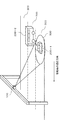
- FIG. 2 is a diagram illustrating a base station and a mobile station according to the first embodiment.
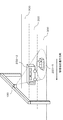
- FIG. 2 is a diagram illustrating a base station and a mobile station according to the first embodiment.
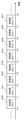
- FIG. 2 is a diagram illustrating time slots related to wireless communication between a base station and a mobile station.
- FIG. 9 is a diagram showing time slots related to wireless communication between a base station and a mobile station after a setting change.
- FIG. 9 is a diagram showing time slots related to wireless communication between a base station and a mobile station after a setting change.
- FIG. 2 is a diagram illustrating a base station and a mobile station according to the first embodiment.
- FIG. 2 is a diagram illustrating time slots related to wireless communication between a base station and a mobile station.
- 5 is a flowchart illustrating communication processing executed by the base station according to the first embodiment. It is a figure showing the example of composition of the communications system in a 2nd embodiment.
- FIG. 11 is a block diagram illustrating a configuration example of a base station according to a second embodiment.
- FIG. 11 is a block diagram illustrating a configuration example of a mobile station according to a second embodiment.
- FIG. 14 is a block diagram illustrating a configuration example of a base station according to a third embodiment.
- FIG. 1 is a block diagram illustrating a configuration example of a communication system 1 according to the first embodiment.
- Communication system 1 includes base station 100 and mobile station 200.
- the base station 100 and the mobile station 200 are configured to communicate according to, for example, a specification such as LTE (Long Term Evolution, registered trademark).
- LTE Long Term Evolution, registered trademark
- the base station 100 and the mobile station 200 can be connected to each other to communicate with each other via a wireless transmission path.
- the base station 100 transmits a signal to the mobile station 200.
- the base station 100 receives a signal transmitted from the mobile station 200.
- the mobile station 200 is, for example, a wireless communication device mounted on a vehicle such as an automobile. Note that a vehicle on which the mobile station 200 is mounted is also simply referred to as a mobile station.
- FIG. 2 is a block diagram illustrating a configuration example of the base station 100.
- the base station 100 includes an external interface unit 110, a modem unit 120, a transmission / reception unit 130, a variable directional antenna 140, an image capturing unit 150, an arithmetic unit 160, a directivity control unit 170.
- Communication data corresponding to predetermined information is input to the external interface unit 110.
- the external interface unit 110 inputs the communication data to the modem unit 120.
- communication data addressed to the mobile station 200 and transmitted from the core network is input to the external interface unit 110.
- the communication data is, for example, image data, moving image data, control data, and the like.
- the moving image data is, for example, data related to a news moving image, which is a moving image such as a news program in television broadcasting, an advertisement moving image, and the like.
- the control data is data related to control information and the like necessary for controlling a vehicle such as an automobile and realizing automatic driving.
- the modulation and demodulation unit 120 modulates a carrier with communication data according to predetermined information. Further, the modem unit 120 demodulates a carrier wave modulated and transmitted with predetermined communication data in the mobile station 200 and received via the variable directional antenna 140 and the transmission / reception unit 130, and outputs information corresponding to the predetermined communication data. To get.
- the transmission / reception unit 130 converts the frequency of the carrier modulated by the modulation / demodulation unit 120 into a predetermined frequency and transmits the converted frequency. Further, transmitting / receiving section 130 converts the frequency of the carrier transmitted from mobile station 200 via variable directional antenna 140 to a predetermined frequency and receives the same.
- the carrier wave modulated by the modulator / demodulator 120 and the frequency is converted to a predetermined frequency is transmitted to the mobile station 200 via the variable directional antenna 140.
- the variable directional antenna 140 is an antenna that can control the communication direction, such as a phased array antenna.
- the image photographing unit 150 photographs a predetermined range.
- the image photographing unit 150 acquires image information indicating an image of the mobile station 200, for example, when the mobile station 200 moving within a predetermined range is photographed.
- the image information is assumed to be information corresponding to a still image, for example.
- the image information may be information corresponding to a moving image.
- the calculation unit 160 estimates the position and the moving direction of the mobile station 200 based on the image information acquired by the image capturing unit 150. In addition, the arithmetic unit 160 determines whether or not one mobile station 200 and another mobile station 200 have a predetermined positional relationship based on the image information acquired by the image capturing unit 150. That one mobile station 200 and another mobile station 200 have a predetermined positional relationship means that the other mobile station 200 is on the communication path between one mobile station 200 and the variable directional antenna 140, This means that communication via the communication path is interrupted.
- the signal transmitted from variable directional antenna 140 toward one mobile station 200 is blocked by another mobile station 200, and that one mobile station 200 cannot sufficiently receive the signal.
- the other mobile station 200 may be referred to as an obstacle.
- Calculation section 160 controls directivity control section 170 to control communication between base station 100 and mobile station 200.
- Arithmetic unit 160 determines whether one mobile station 200 and another mobile station 200 are in a predetermined position when directivity control unit 170 determines that one mobile station 200 and another mobile station 200 have a predetermined positional relationship. Is input (hereinafter, referred to as directivity control information).
- Directivity control section 170 controls the communication direction of variable directional antenna 140 based on the directivity control information input from operation section 160.
- the directivity control unit 170 Before the mobile station 200 has a predetermined positional relationship, the communication direction of the variable directional antenna 140 is controlled so that the base station 100 can preferentially communicate with one mobile station 200 over other mobile stations 200. .
- the directivity control unit 170 transmits, for example, communication data to be transmitted while one mobile station 200 and another mobile station 200 have a predetermined positional relationship, to one mobile station 200 and another mobile station 200.
- the communication direction of the variable directional antenna 140 is controlled so that transmission can be performed before the mobile station 200 has a predetermined positional relationship.
- the directivity control unit 170 equally distributes the plurality of mobile stations 200 to each other.
- the communication direction of the variable directional antenna 140 is controlled so that communication is performed.
- FIG. 3 is a block diagram showing a configuration example of the mobile station 200.
- the mobile station 200 includes an external interface unit 210, a modem unit 220, and a transmission / reception unit 230, and is connected to an antenna 240.
- Communication data corresponding to predetermined information is input to the external interface unit 210 based on a user operation of the mobile station 200.
- the communication data is, for example, image data, moving image data, control data, and the like.
- the moving image data is, for example, moving image data recorded by a drive recorder.
- the control data is, for example, data related to control information and the like required to control a vehicle such as an automobile and realize automatic driving.
- the modulation and demodulation unit 220 modulates a carrier with communication data according to predetermined information.
- the modulation / demodulation unit 220 demodulates a carrier wave modulated and transmitted with predetermined communication data in the base station 100 and received via the antenna 240 and the transmission / reception unit 230, and acquires information corresponding to the predetermined communication data. .
- the transmission / reception unit 230 converts the frequency of the carrier modulated by the modem 220 into a predetermined frequency and transmits the converted frequency. Further, transmitting / receiving section 230 converts the frequency of the carrier transmitted from base station 100 via antenna 240 to a predetermined frequency and receives the same.
- the carrier modulated by the modulator / demodulator 220 and the frequency of which is converted to a predetermined frequency is transmitted to the base station 100 via the antenna 240.
- FIG. 4 is a diagram illustrating a situation in which the base station 100 according to the present embodiment is installed above the roadway 300, and the mobile station 200-1 and the mobile station 200-2 are traveling on the roadway 300.
- the mobile station 200-1 and the mobile station 200-2 are vehicles such as automobiles.
- the base stations 100 may be installed at intervals of several hundred meters along the roadway 300, for example.
- the communication system 1 may be configured so that the plurality of base stations 100 operate in cooperation with each other.
- the mobile station 200-1 is, for example, a vehicle such as an ordinary car.
- the mobile station 200-2 is a large vehicle larger than the mobile station 200-1.
- the mobile station 200-2 is, for example, a bus.
- the mobile station 200-1 and the mobile station 200-2 are running side by side in a state where the mobile station 200-1 has advanced in the traveling direction from the mobile station 200-2.
- the base station 100 and the mobile station 200-1 or the mobile station 200-2 perform road-to-vehicle communication.
- the base station 100 controls the communication direction of the variable directional antenna 140 so that, for example, the mobile station 200-1 or the mobile station 200-2 is within the communication area 500 indicating a range in which communication with the base station 100 is possible.
- the communication area 500 is moved.
- the base station 100 can communicate with the mobile station 200-1.
- mobile station 200-2 is in communication area 500
- base station 100 can communicate with mobile station 200-2.
- the size and the like of the communication area 500 can be changed depending on the performance of the variable directional antenna 140 to be used.
- the base station 100 is installed at a position where the image photographing unit 150 of the base station 100 can photograph the mobile station 200-1 and the mobile station 200-2 traveling on the roadway 300.
- the image information acquired by the image photographing unit 150 includes information indicating the mobile station 200-1 and the mobile station 200-2.
- FIG. 5 is a diagram showing a situation after a predetermined time has elapsed from the situation shown in FIG.
- the mobile station 200-2 When the mobile station 200-2 is traveling at a higher speed than the mobile station 200-1, the mobile station 200-2 overtakes the mobile station 200-1 after a predetermined time elapses, as shown in FIG. It is expected that. In such a situation, the mobile station 200-1 and the mobile station 200-2 have a predetermined positional relationship, and the base station 100 may not be able to communicate with the mobile station 200-1. Therefore, base station 100 determines that mobile station 200-1 and mobile station 200-2 have a predetermined positional relationship as described below, and controls variable directional antenna 140.
- the arithmetic unit 160 recognizes the existence and position of the mobile station 200-1 and the mobile station 200-2 based on the image information acquired by the image photographing unit 150.
- the calculation unit 160 may be configured to recognize the shapes and dimensions of the mobile station 200-1 and the mobile station 200-2.
- the arithmetic unit 160 detects the presence of the license plates of the mobile station 200-1 and the mobile station 200-2 included in the still image acquired by the image capturing unit 150, and detects the mobile station 200-1 and the mobile station 200-1. It may be configured to recognize the existence and position of 200-2.
- the base station 100 may be configured such that the storage unit stores information in which a still image of a front part of the vehicle is associated with a vehicle type, a shape and a size of the vehicle, and the like. Good.
- the arithmetic unit 160 is configured to recognize a vehicle type, a vehicle shape, a vehicle size, and the like based on the still image acquired by the image photographing unit 150 and information stored in the storage unit. You may.
- the arithmetic unit 160 recognizes the moving direction and the moving speed of the mobile station 200-1 and the mobile station 200-2 based on the image information acquired by the image photographing unit 150. For example, the arithmetic unit 160 recognizes feature points included in each of the plurality of still images acquired by the image capturing unit 150, and determines the mobile station 200-1 and the mobile station 200-1 based on a change in the coordinate values of the feature points. The moving direction and the moving speed of the station 200-2 may be recognized.
- the calculation unit 160 may be configured to recognize the size and shape of the roadway 300 based on the still image acquired by the image capturing unit 150.
- the calculation unit 160 determines whether or not the mobile station 200-1 and the mobile station 200-2 have a predetermined positional relationship based on the recognized information. Specifically, for example, the arithmetic unit 160 recognizes that the mobile station 200-2 is moving at a higher speed than the mobile station 200-1, and determines the installation position of the variable directional antenna 140 and the variable directional antenna. Based on the performance value (radiation pattern etc.) of the directivity of 140, the size and shape of the roadway 300, the information indicating the traveling direction of the mobile station, etc., is the situation shown in FIG. It may be configured to determine whether or not it is.
- the arithmetic unit 160 takes the mobile station 200-1 and the mobile station 200-1 into account, taking into account the lighting status of a device indicating the direction of movement of the vehicle, such as a direction indicator provided in the mobile station 200-1 and the mobile station 200-2. It may be configured to determine whether or not the mobile station 200-2 has a predetermined positional relationship.
- the calculation unit 160 may be configured to recognize a lighting state of a direction indicator or the like based on a plurality of still images acquired by the image capturing unit 150, for example.
- the arithmetic unit 160 estimates a period in which the mobile station 200-1 and the mobile station 200-2 are in a predetermined positional relationship based on the recognized information. Specifically, for example, the arithmetic unit 160 calculates the moving speed and moving direction and size of the mobile station 200-1 and the mobile station 200-2, and the performance value (radiation pattern and the like) related to the directivity of the variable directional antenna 140. Based on this, the period may be estimated. Note that a period in which the mobile station 200-1 and the mobile station 200-2 have a predetermined positional relationship corresponds to a period in which communication between the base station 100 and the mobile station 200-1 is interrupted.
- directivity control section 170 sets mobile station 200-1 and mobile station 200-2. Before the predetermined positional relationship is established, the communication direction of the variable directional antenna 140 is controlled so that the base station 100 can preferentially communicate with the mobile station 200-1 over the mobile station 200-2.
- FIG. 6 is a diagram showing time slots related to wireless communication between a base station and a mobile station.
- wireless communication between the base station and each mobile station is performed by a time division multiple access system, and a time slot for the mobile station 200-1 and a time slot for the mobile station 200-2 are used.
- time slots are alternately set. That is, it is assumed that communication between the base station 100 and the mobile station 200-1 and communication between the base station 100 and the mobile station 200-2 are performed alternately.
- FIG. 7 is a diagram illustrating time slots related to wireless communication between the base station and the mobile station after the setting is changed.
- the arithmetic unit 160 sets the time slot 401 and the time slot 403 set for the mobile station 200-2 to be used for communication with the mobile station 200-1. Further, the directivity control section 170 controls the communication direction of the variable directivity antenna 140 so as to be able to communicate with the mobile station 200-1 during the period from time T0 to time T4 shown in FIG.
- the arithmetic unit 160 sets the time slot 404 and the time slot 406 set for the mobile station 200-1 to be used for communication with the mobile station 200-2. Further, the directivity control section 170 controls the communication direction of the variable directivity antenna 140 so as to be able to communicate with the mobile station 200-2 during the period from time T4 to time T8 shown in FIG.
- the communication direction of the variable directivity antenna 140 is alternately switched between the direction where the mobile station 200-1 is located and the direction where the mobile station 200-2 is located.
- the directivity control unit 170 communicates with the variable directional antenna 140 so that the base station 100 can communicate with the mobile station 200-1. Control the direction. That is, directivity control section 170 controls the communication direction of variable directional antenna 140 such that mobile station 200-1 is in communication area 500. Then, during a period from time T0 to time T4, base station 100 transmits a signal to mobile station 200-1.
- the directivity control unit 170 controls the communication direction of the variable directional antenna 140 so that the base station 100 can communicate with the mobile station 200-2. I do. That is, directivity control section 170 controls the communication direction of variable directional antenna 140 such that mobile station 200-2 is within communication area 500. Specifically, for example, when the arithmetic unit 160 determines that the time has reached the time T4, the directivity control unit 170 determines that the mobile station 200-2 is in the communication area 500 during the period from the time T4 to the time T8. , The communication direction of the variable directional antenna 140 is controlled.
- base station 100 transmits a signal to mobile station 200-2.
- arithmetic unit 160 may be configured to alternately set the time slot for mobile station 200-1 and the time slot for mobile station 200-2.
- the calculation unit 160 may be configured to determine whether or not the time T8 has been reached. When arithmetic unit 160 determines that time T8 has been reached, base station 100 communicates with mobile station 200-1 or mobile station 200-2 alternately.
- the arithmetic unit 160 and the directivity control unit 170 determine the communication direction of the variable directional antenna 140 based on the image information captured by the image capturing unit 150 so as to follow the communication area 500 in accordance with the movement of the mobile station 200. May be configured to be controlled.
- FIG. 7 shows an example in which all time slots in the period from time T0 to time T4 are set in mobile station 200-1, but mobile station 200-1 in the period from time T0 to time T4.
- the time slots set in the mobile station 200-1 and the mobile station 200-2 are determined such that the number of time slots set in the mobile station 200-2 is larger than the number of time slots set in the mobile station 200-2. It may be constituted as follows. Specifically, for example, the configuration may be such that the time slots 400, 401, and 402 are set in the mobile station 200-1, and the time slot 403 is set in the mobile station 200-2.
- time slot can be referred to as a radio resource specified by a frequency component and a time component.
- “Time slot is set” may also be referred to as “wireless resource is allocated”.
- FIG. 8 is a diagram showing a situation in which the base station 100 according to the present embodiment is installed above the roadway 300, and the mobile station 200-3 and the mobile station 200-4 are traveling on the roadway 300.
- the mobile station 200-3 and the mobile station 200-4 are vehicles such as ordinary cars.
- the base stations 100 may be installed at intervals of several hundred meters along the road 300, for example.
- the base station 100 and the mobile station 200-3 or the mobile station 200-4 perform road-vehicle communication.
- the base station 100 controls the communication direction of the variable directional antenna 140 so that, for example, the mobile station 200-3 or the mobile station 200-4 is in the communication area 500 indicating the range in which communication with the base station 100 is possible.
- the base station 100 can communicate with the mobile station 200-3.
- the base station 100 can communicate with the mobile station 200-4.
- the size and the like of the communication area 500 can be changed depending on the performance of the variable directional antenna 140 to be used.
- the base station 100 is installed at a position where the image photographing unit 150 of the base station 100 can photograph the mobile stations 200-3 and 200-4 traveling on the roadway 300.
- FIG. 8 shows a situation where mobile station 200-3 and mobile station 200-4 are not in a predetermined positional relationship.
- Each of the mobile station 200-3 and the mobile station 200-4 is an ordinary car, and they are traveling on the roads 300 at both ends. Therefore, operation unit 160 determines that mobile station 200-3 and mobile station 200-4 do not have a predetermined positional relationship based on the above-described method.
- FIG. 9 is a diagram showing time slots related to wireless communication between a base station and a mobile station. Specifically, for example, as shown in FIG. 9, when the wireless communication between the base station 100 and the mobile station 200 is performed by the time division multiple access method, the arithmetic unit 160 And the time slot for mobile station 200-4 are set alternately.
- directivity control section 170 controls the communication direction of variable directivity antenna 140 so that base station 100 can communicate with mobile station 200-3 or mobile station 200-4 according to the set time slot. . That is, according to the control by the directivity control unit 170, the communication direction of the variable directivity antenna 140 is alternately switched between the direction in which the mobile station 200-3 is located and the direction in which the mobile station 200-4 is located.
- the directivity control unit 170 controls the communication direction of the variable directivity antenna 140 so that the base station 100 can communicate with the mobile station 200-3. That is, directivity control section 170 controls the communication direction of variable directional antenna 140 such that mobile station 200-3 is within communication area 500, as shown in FIG.
- the directivity control unit 170 controls the communication direction of the variable directivity antenna 140 so that the base station 100 can communicate with the mobile station 200-4. That is, directivity control section 170 controls the communication direction of variable directivity antenna 140 such that mobile station 200-4 is within communication area 500, as shown in FIG.
- FIG. 10 is a flowchart showing communication processing executed by the base station 100.
- the image photographing unit 150 acquires image information of the mobile station 200 (Step S101).
- the arithmetic unit 160 determines whether one mobile station 200 and another mobile station 200 have a predetermined positional relationship based on the image information acquired by the image capturing unit 150 by using the above-described method (see FIG. 1). Step S102).
- the base station 100 communicates with one mobile station (step S103). ). Specifically, for example, the arithmetic unit 160 estimates a period in which one mobile station 200 and another mobile station 200 are in a predetermined positional relationship by using the above-described method. Then, the arithmetic unit 160 sets the time slot set in the other mobile station 200 to the one mobile station 200 in a period before the period in which the one mobile station 200 and the other mobile station 200 have a predetermined positional relationship. The setting is changed so as to be used for communication with 200.
- the arithmetic unit 160 communicates a time slot set in one mobile station 200 with another mobile station 200 during a period in which one mobile station 200 and another mobile station 200 have a predetermined positional relationship. Change settings to use for.
- Directivity control section 170 controls variable directional antenna 140 so that it can communicate with one mobile station 200 during a period before one mobile station 200 and another mobile station 200 have a predetermined positional relationship. Control the communication direction. Then, base station 100 transmits a signal to one mobile station 200.
- Calculating section 160 determines whether or not a period in which a predetermined positional relationship has been reached (step S104). Specifically, for example, the calculation unit 160 determines whether or not the time T4 illustrated in FIG. 7 has been reached.
- base station 100 communicates with the other mobile station (step S105). Specifically, for example, during a period in which one mobile station 200 and another mobile station 200 have a predetermined positional relationship, the directivity control unit 170 can change the directivity so that the mobile station 200 can communicate with another mobile station 200. The communication direction of the antenna 140 is controlled. Then, base station 100 transmits a signal to another mobile station 200.
- step S104 If the calculation unit 160 determines that the period of the predetermined positional relationship has not arrived (N in step S104), the processing proceeds to step S103. Specifically, for example, the base station 100 continues transmitting a signal to one mobile station 200.
- Calculating section 160 determines whether or not the period in which the predetermined positional relationship has been completed (step S106). Specifically, for example, the calculation unit 160 determines whether or not time T8 illustrated in FIG. 7 has been reached.
- base station 100 ends the processing in step S105 and returns to normal communication (S107). Specifically, for example, when the time slot for one mobile station 200 and the time slot for another mobile station 200 are set alternately, the base station 100 It communicates alternately with one mobile station 200 or another mobile station 200.
- step S106 If the calculation unit 160 determines that the period of the predetermined positional relationship has not ended (N in step S106), the processing proceeds to step S105. Specifically, for example, the base station 100 continues transmitting a signal to another mobile station 200.
- the base station 100 performs normal communication with the mobile station 200. (Step S107). Specifically, for example, the arithmetic unit 160 does not change the setting of the time slot for one mobile station 200 and the time slot for another mobile station 200. That is, the time slot for one mobile station 200 and the time slot for another mobile station 200 remain set alternately. Then, the base station 100 alternately communicates with one mobile station 200 or another mobile station 200 based on the set time slot.
- the base station 100 determines whether one mobile station 200 and another mobile station 200 have a predetermined positional relationship based on the image information acquired by the image capturing unit 150. . If the base station 100 determines that one mobile station 200 and another mobile station 200 have a predetermined positional relationship, the base station 100 sets the time slot set for the other mobile station 200 to one mobile station 200. To be used for communication.
- the base station can appropriately communicate with the mobile station in a situation where communication is not possible. For example, when communication between the base station and one mobile station may be interrupted, the base station may preferentially assign a radio line to the one mobile station over the other mobile stations. it can.
- the base station communicates with another mobile station during a period in which communication between the base station and one mobile station may be interrupted. Therefore, the base station can increase the use efficiency of the radio link.
- the base station controls the variable directional antenna based on the acquired image information. Therefore, it is possible to appropriately grasp the position and the moving direction of the mobile station and efficiently control the communication direction of the variable directional antenna.
- the communication between the base station and the mobile station may be performed using a millimeter wave band, a microwave band (UHF (Ultra High Frequency) band, or the like), or the like.
- a microwave band UHF (Ultra High Frequency) band, or the like
- a plurality of variable directional antennas 140 may be provided.
- the directivity control unit 170 may be configured to select the variable directivity antenna 140 that emits a radio wave from the plurality of variable directivity antennas 140.
- base station 100 can select an appropriate variable directional antenna 140 in communication between base station 100 and mobile station 200.
- the base station 100 stores image information (hereinafter also referred to as past image information) obtained by photographing the mobile station 200-1 and the mobile station 200-2 in the past in the storage means, and the mobile station 200-1 and the base station It may be configured to store information associated with information indicating a temporal transition of communication quality (such as a bit error rate) between the communication quality and the communication quality 100.
- the information indicating the temporal transition of the communication quality between the mobile station 200-1 and the base station 100 includes, for example, information indicating the communication quality from the previous image information capturing time to a predetermined time.
- the base station 100 specifies past image information corresponding to the acquired image information based on the acquired image information and the information stored in the storage unit. For example, the base station 100 compares the characteristic points of the acquired image information with the characteristic points of the past image information, and specifies the past image information corresponding to the acquired image information based on the degree of matching of these characteristic points. May be configured.
- the base station 100 determines whether the mobile station 200-1 and the mobile station 200-2 have a predetermined positional relationship based on the information indicating the temporal transition of the communication quality associated with the past image information. Determine whether or not.
- the base station 100 communicates between the mobile station 200-1 and the base station 100 based on the information indicating the temporal transition of the communication quality associated with the specified past image information and the time at which the image information was acquired. It is determined whether or not the communication quality between the mobile phones deteriorates after the time. If the base station 100 determines that the communication quality between the mobile station 200-1 and the base station 100 deteriorates after the time, the base station 100 establishes a predetermined positional relationship between the mobile station 200-1 and the mobile station 200-2. It is determined to be.
- base station 100 is installed so as to transmit a signal toward mobile station 200 from the front of mobile station 200 in the traveling direction.
- the base station 100 may be installed so as to transmit a signal toward the mobile station 200 from behind the traveling direction of the mobile station 200.
- the communication system 1 is configured such that the plurality of base stations 100 operate in cooperation with each other, and the plurality of base stations 100 transmit signals to the mobile station 200 from the front in the traveling direction and the rear in the traveling direction of the mobile station 200. It may be.
- the image information processed by the arithmetic unit 160 may be composed of photographed image data itself, or may be composed of numerical information extracted by performing predetermined processing on the image data. If the numerical information has a smaller data capacity than the image data itself, the processing load of the arithmetic unit 160 can be reduced.
- FIGS. 4, 5 and 8 show an example in which the base station 100 communicates with two mobile stations. However, the base station 100 is configured to communicate with three or more mobile stations. You may.
- the external interface unit 110, the modem unit 120, and the transmission / reception unit 130 are realized by a transmission circuit and a reception circuit.
- the image photographing unit 150 is realized by a CPU (Central Processing Unit) that executes processing according to program control, a plurality of circuits, a memory, a camera, and the like.
- a CPU Central Processing Unit
- the operation unit 160 and the directivity control unit 170 are realized by a CPU that executes processing according to program control, a plurality of circuits, a memory, and the like.
- the external interface unit 210, the modem unit 220, and the transmission / reception unit 230 are realized by a transmission circuit and a reception circuit.
- FIG. 11 is a block diagram illustrating a configuration example of a communication system 2 according to the second embodiment.
- the communication system 2 includes a base station 101 and a mobile station 201.
- the mobile station 201 acquires information or the base station 101 performs a predetermined process based on the information provided from the mobile station 201. Is different.
- the other components are denoted by the same reference numerals as the corresponding components in the first embodiment shown in FIG. 1 and the like, and description thereof is omitted.
- the base station 101 and the mobile station 201 are configured to communicate according to, for example, specifications such as LTE.
- the base station 101 and the mobile station 201 can be connected to each other to communicate with each other via a wireless transmission path.
- the base station 101 transmits a signal to the mobile station 201.
- the base station 101 receives a signal transmitted from the mobile station 201.
- the mobile station 201 is, for example, a wireless communication device mounted on a vehicle such as an automobile. Note that a vehicle on which the mobile station 201 is mounted is also simply referred to as a mobile station.
- FIG. 12 is a block diagram showing a configuration example of the base station 101.
- the base station 101 includes an external interface unit 110, a modem unit 121, a transmission / reception unit 130, a variable directional antenna 140, an image capturing unit 150, a calculation unit 161, a directivity control unit 171.
- the modulation and demodulation unit 121 modulates a carrier with communication data according to predetermined information.
- the modem 121 demodulates a carrier wave modulated and transmitted with predetermined communication data in the mobile station 201 and received via the variable directional antenna 140 and the transmission / reception unit 130, and outputs information corresponding to the predetermined communication data. To get.
- the modem unit 121 acquires, for example, the following information (hereinafter, also referred to as mobile station information).
- the mobile station information may also be referred to as information indicating a situation around the mobile station 201 and a state of the mobile station 201.
- the information indicating the movement of another mobile station 201 existing around the mobile station 201 includes, for example, information indicating the moving speed of the other mobile station 201 and information indicating the moving direction of the other mobile station 201.
- the information indicating the moving speed of another mobile station 201 is, for example, information indicating a relative moving speed of another mobile station 201 with respect to one mobile station 201 or indicating an absolute moving speed of the other mobile station 201. Contains information.
- Information indicating the moving direction of another mobile station 201 is, for example, information indicating the relative moving direction of another mobile station 201 with respect to one mobile station 201 or the absolute moving direction of the other mobile station 201. Is included.
- the calculation unit 161 estimates the position and the moving direction of the mobile station 201 based on the image information and the mobile station information acquired by the image capturing unit 150. In addition, the arithmetic unit 161 determines whether or not one mobile station 201 and another mobile station 201 have a predetermined positional relationship based on the image information and the mobile station information acquired by the image capturing unit 150.
- the arithmetic unit 161 determines the position of one mobile station 201 or one mobile station based on mobile station information received from one mobile station 201 in addition to the image information acquired by the image capturing unit 150. Estimate the moving speed of the station 201, the surroundings of one mobile station 201, whether or not one mobile station 201 is going to change lanes, etc. Is determined to be in a predetermined positional relationship.
- the operation unit 161 controls the directivity control unit 171 to control communication between the base station 101 and the mobile station 201.
- the directivity control unit 171 determines that one mobile station 201 and the other mobile station 201 have a predetermined positional relationship. Is input (hereinafter, referred to as directivity control information).
- the directivity control unit 171 controls the communication direction of the variable directional antenna 140 based on the directivity control information input from the calculation unit 161.
- the directivity control unit 171 determines that one mobile station 201 and another mobile station 201 are different from each other. Before the mobile station 201 has a predetermined positional relationship, the communication direction of the variable directional antenna 140 is controlled so that the base station 101 can preferentially communicate with one mobile station 201 over other mobile stations 201. .
- the specific method is the same as the method of the first embodiment.
- the directivity control unit 171 equally distributes the plurality of mobile stations 201 to each other.
- the communication direction of the variable directional antenna 140 is controlled so that communication is performed.
- the specific method is the same as the method of the first embodiment.
- FIG. 13 is a block diagram showing a configuration example of the mobile station 201.
- the mobile station 201 includes an external interface unit 210, a modem unit 221, a transmitting / receiving unit 230, an image capturing unit 250, a sensor 260, a position information generating unit 270, a direction instruction unit 280, , An operation unit 290, and an antenna 240 is connected.
- the modulation / demodulation unit 221 modulates a carrier with communication data corresponding to predetermined information.
- the predetermined information is, for example, mobile station information generated by the arithmetic unit 290.
- the modulation / demodulation unit 221 demodulates a carrier wave modulated and transmitted with predetermined communication data in the base station 101 and received via the antenna 240 and the transmission / reception unit 230, and obtains information corresponding to the predetermined communication data. .
- the image photographing unit 250 photographs a predetermined range.
- the image capturing unit 250 captures, for example, the periphery of the mobile station 201. For example, when another mobile station 201 moving around the mobile station 201 is captured, the image capturing section 250 acquires image information indicating an image of the other mobile station 201.
- the sensor 260 acquires information indicating a change in the moving speed of the mobile station 201 and information indicating the moving direction of the mobile station 201.
- the sensor 260 includes, for example, an acceleration sensor and a steering wheel angle sensor (such as a steering sensor and a steering force angle meter).
- the information indicating a change in the moving speed of the mobile station 201 is, for example, information indicating a temporal change in the moving speed of the mobile station 201.
- the position information generation unit 270 receives a signal from an artificial satellite or the like using GPS (Global Positioning System) or the like, and generates information indicating the position of the mobile station 201 based on the received signal.
- GPS Global Positioning System
- the direction instructing unit 280 is a device for indicating the direction of the route after the change to the surroundings when the mobile station 201 turns right or left or changes the route.
- the direction instruction unit 280 inputs information indicating the changed direction of the route to the arithmetic unit 290.
- the arithmetic unit 290 calculates the image information obtained by the image capturing unit 250, the information indicating the change in the moving speed of the mobile station 201 obtained by the sensor 260, the information indicating the moving direction of the mobile station 201, and the position information generating unit 270. Based on the information indicating the position of the mobile station 201 and the information indicating the route direction after the change input from the direction instruction unit 280, the position of the mobile station 201, the moving direction of the mobile station 201, the moving speed of the mobile station 201, The mobile station 201 estimates the acceleration of the mobile station 201, the motion of another mobile station 201 existing around the mobile station 201, and the like. Arithmetic unit 290 generates mobile station information based on the estimation.
- the arithmetic unit 290 recognizes the feature points of the other mobile stations 201 included in each of the plurality of still images, and The information including the information indicating the movement of the other mobile station 201 is generated from the change of the coordinate value of the feature point.
- the information indicating the movement of the other mobile station 201 includes information indicating the moving direction of the other mobile station 201 and the moving speed of the other mobile station 201.
- the arithmetic unit 290 generates information indicating the moving speed of the mobile station 201 based on a temporal change of the information indicating the position of the mobile station 201 calculated by the position information generating unit 270.
- the arithmetic unit 290 generates information indicating a change in the moving speed of the mobile station 201 based on the information acquired by the sensor 260.
- the arithmetic unit 290 estimates whether or not the mobile station 201 changes lanes based on the information indicating the moving direction acquired by the sensor 260 and the information input from the direction indicating unit 280.
- the arithmetic unit 290 generates information indicating the lane change of the mobile station 201, including information indicating whether the mobile station 201 changes lanes based on the estimation.
- the arithmetic unit 290 estimates whether the steering operation of the mobile station 201 has been performed based on the information acquired by the sensor 260.
- operation unit 290 estimates whether or not operation of direction instruction unit 280 has been performed based on information input from direction instruction unit 280.
- the calculation unit 290 may be configured to estimate whether or not the mobile station 201 changes lanes based on these estimations.
- the arithmetic unit 290 may be configured to estimate whether or not the mobile station 201 is changing lanes based on the above estimation.
- Calculation section 290 inputs generated mobile station information to modulation / demodulation section 221.
- the base station 101 determines whether one mobile station 201 and another mobile station 201 have a predetermined positional relationship based on image information or mobile station information captured by the image capturing unit 150. Is determined. Then, when the base station 101 determines that one mobile station 201 and another mobile station 201 have a predetermined positional relationship, the base station 101 sets the time slot set for the other mobile station 201 to one mobile station 201. To use for communication.
- the base station can appropriately communicate with the mobile station in a situation where communication is not possible. For example, when there is a possibility that communication with one mobile station may be interrupted, the base station can assign a radio line to the one mobile station with priority over the other mobile stations.
- the base station communicates with another mobile station during a period in which communication with one mobile station may be interrupted. Therefore, the base station can increase the use efficiency of the radio link.
- the base station controls the variable directional antenna based on the acquired image information. Therefore, the base station can appropriately grasp the moving direction of the mobile station and efficiently control the communication direction of the variable directional antenna.
- the base station determines whether or not one mobile station and another mobile station have a predetermined positional relationship in consideration of mobile station information in addition to image information captured by the base station. Therefore, the base station can make the above determination more accurately according to the situation around the mobile station and the state of the mobile station. Therefore, the base station can more efficiently control the communication direction of the variable directional antenna, and can use the wireless channel more efficiently.
- the mobile station 201 may be configured to transmit mobile station information to the base station 101 using a signal of a frequency in a microwave band (UHF band or the like).
- a signal having a frequency in the microwave band has a property of wrapping around a shadow of an obstacle or the like. Therefore, by using a signal of a frequency in the microwave band, even if there is an obstacle between the base station 101 and the mobile station 201, the base station 101 can receive the mobile station information transmitted from the mobile station 201. The possibility of being able to do so can be improved.
- the mobile station 201 may be configured to transmit information indicating the vehicle type, the size of the vehicle body, and the like of the mobile station 201 to the base station 101.
- the base station 101 determines whether one mobile station 201 and the other mobile station 201 are based on image information captured by the base station, mobile station information, and information indicating the vehicle type and the size of the vehicle body of the mobile station 201. It may be configured to determine whether or not the positional relationship is satisfied.
- the base station 101 may be configured to request the mobile station 201 for mobile station information.
- the mobile station 201 may be configured to transmit mobile station information to the base station 101 based on the request. Specifically, for example, when the base station 101 can communicate with the mobile station 201, the base station 101 transmits the request. Then, the mobile station 201 may be configured to transmit the mobile station information to the base station 101 based on the request.
- the base station 101 may be configured to acquire information indicating the vehicle type, the size of the vehicle body, and the like of the mobile station 201 using ETC (Electronic Toll Collection System). Then, the base station 101 determines whether one mobile station 201 and another mobile station 201 have a predetermined positional relationship based on information acquired using ETC, image information captured by the base station, and mobile station information. It may be configured to determine whether or not it is.
- ETC Electronic Toll Collection System
- the modulation / demodulation unit 121 is realized by a transmission circuit and a reception circuit.
- the operation unit 161 and the directivity control unit 171 are realized by a CPU that executes processing according to program control, a plurality of circuits, a memory, and the like.
- the modulation / demodulation unit 221 is realized by a transmission circuit and a reception circuit.
- the image photographing unit 250 is realized by a CPU that executes processing according to program control, a plurality of circuits, a memory, a camera, and the like.
- the sensor 260 is implemented by a CPU that executes processing according to program control, a plurality of circuits, a memory, an acceleration sensor, a steering wheel angle sensor (a steering sensor, a steering force angle meter, and the like).
- the position information generation unit 270 is realized by a CPU that executes processing according to program control, a plurality of circuits, a memory, a GPS receiver, and the like.
- the direction instructing unit 280 is realized by a CPU that executes processing under program control, a plurality of circuits, a memory, a lamp, and the like.
- the operation unit 290 is realized by a CPU that executes processing according to program control, a plurality of circuits, a memory, and the like.
- FIG. 14 is a block diagram illustrating a configuration example of the base station 10 according to the third embodiment.
- the base station 10 includes a communication unit 11, a prediction unit 12, and a control unit 13.
- the base station 10 corresponds to, for example, the base station 100 in the first embodiment shown in FIG.
- the base station 10 corresponds to, for example, the base station 101 in the second embodiment shown in FIG.
- the communication unit 11 corresponds to, for example, the modem unit 120 and the transmission / reception unit 130 in the first embodiment shown in FIG.
- the communication unit 11 corresponds to, for example, the modem unit 121 and the transmission / reception unit 130 in the second embodiment shown in FIG.
- the prediction unit 12 corresponds to, for example, the calculation unit 160 in the first embodiment shown in FIG. 2 or the calculation unit 161 in the second embodiment shown in FIG.
- the communication unit 11 communicates with the mobile station.
- the mobile station corresponds to, for example, the mobile station 200 in the first embodiment shown in FIG. 1 or the mobile station 201 in the second embodiment shown in FIG.
- the prediction unit 12 predicts a period during which communication with the mobile station is hindered.
- the period in which communication with the mobile station is hindered corresponds to, for example, a period from time T4 to time T8 shown in FIG.
- the control unit 13 controls the communication unit 11 to transmit communication data to be transmitted to the mobile station during the hindered period during a period before the hindrance period.
- the period before the hindered period corresponds to, for example, a period from time T0 to time T4 shown in FIG.
- the base station 10 communicates with the mobile station. Further, the base station 10 predicts a period during which communication with the mobile station is hindered. Then, the base station 10 controls the communication unit to transmit communication data to be transmitted to the mobile station during the hindered period in a period before the hindrance period.
- the base station 10 can appropriately communicate with the mobile station in a situation where communication is not possible.
- the present invention is not limited to the above embodiments.
- the present invention can be implemented based on the modification, replacement, and adjustment of each embodiment.
- the present invention can be implemented by arbitrarily combining the embodiments. That is, the present invention includes various variations and modifications that can be realized in accordance with all disclosure contents and technical ideas of the present specification.
- the reference numerals in the drawings attached to the respective drawings are added to each element for convenience as an example for facilitating understanding, and are not intended to limit the present invention to the illustrated embodiments.
- (Appendix 1) Communication means for communicating with the mobile station; Prediction means for predicting a period in which communication with the mobile station is hindered, Control means for controlling the communication means, so as to transmit communication data to be transmitted to the mobile station during the hindered period in a period before the hindered period,
- a base station comprising: (Appendix 2) Having a photographing means for acquiring image information of the mobile station, The base station according to supplementary note 1, wherein the prediction unit predicts the hindered period based on the image information.
- the prediction unit recognizes the mobile station and an obstacle that hinders communication between the communication unit and the mobile station based on the image information, The base station according to claim 2, wherein the prediction unit predicts the hindered period caused by the obstacle.
- the control means by allocating to the mobile station a radio resource used for communication with another mobile station different from the mobile station, so as to transmit the communication data in a period before the hindered period 4.
- the base station according to any one of supplementary notes 1 to 4, wherein the control unit controls the communication unit to communicate with another mobile station different from the mobile station during the hindered period.
- the control means allocates a radio resource used for communication with the mobile station to the other mobile station during the hindered period, and controls the communication means to communicate with the other mobile station.
- a base station as described in. The communication means receives, from the mobile station, information indicating a situation around the mobile station and a state of the mobile station, The base station according to any one of supplementary notes 1 to 6, wherein the prediction unit predicts the hindered period based on a situation around the mobile station and information indicating a state of the mobile station.
- the base station according to any one of supplementary notes 1 to 7, wherein the communication unit communicates with the mobile station using a variable directional antenna.
- a communication system comprising: the base station; and the mobile station communicating with the base station.
- (Appendix 10) Predict the period during which communication with mobile stations will be impeded, A communication method for controlling communication with the mobile station such that communication data to be transmitted to the mobile station during the interrupted period is transmitted during a period before the interrupted period.
- (Appendix 11) Predict the period during which communication with mobile stations will be impeded, Controlling communication with the mobile station so as to transmit communication data to be transmitted to the mobile station during the interrupted period during a period before the interrupted period, A communication method that communicates according to the control.
Landscapes
- Engineering & Computer Science (AREA)
- Signal Processing (AREA)
- Computer Networks & Wireless Communication (AREA)
- Physics & Mathematics (AREA)
- General Physics & Mathematics (AREA)
- Life Sciences & Earth Sciences (AREA)
- Atmospheric Sciences (AREA)
- Computer Security & Cryptography (AREA)
- Quality & Reliability (AREA)
- Multimedia (AREA)
- Mobile Radio Communication Systems (AREA)
Abstract
Le problème décrit par la présente invention est de fournir une station de base qui peut communiquer de manière appropriée avec une station mobile dans une situation dans laquelle une communication peut être impossible, un système de communication, un procédé de communication et un programme de commande de communication. La solution selon l'invention porte sur une unité de communication qui communique avec une station mobile. Une unité de prédiction prédit une période pendant laquelle la communication avec la station mobile est perturbée. Une unité de commande commande l'unité de communication de telle sorte que des données de communication devant être transmises à la station mobile pendant la période de perturbation sont transmises dans une période avant la période de perturbation.
Priority Applications (2)
| Application Number | Priority Date | Filing Date | Title |
|---|---|---|---|
| US17/258,619 US11627588B2 (en) | 2018-07-12 | 2019-07-10 | Base station, communication system, communication method, and non-transitory storing medium |
| JP2020530223A JP7143886B2 (ja) | 2018-07-12 | 2019-07-10 | 基地局、通信システム、通信方法、および通信制御用プログラム |
Applications Claiming Priority (2)
| Application Number | Priority Date | Filing Date | Title |
|---|---|---|---|
| JP2018-132331 | 2018-07-12 | ||
| JP2018132331 | 2018-07-12 |
Publications (1)
| Publication Number | Publication Date |
|---|---|
| WO2020013219A1 true WO2020013219A1 (fr) | 2020-01-16 |
Family
ID=69142001
Family Applications (1)
| Application Number | Title | Priority Date | Filing Date |
|---|---|---|---|
| PCT/JP2019/027297 Ceased WO2020013219A1 (fr) | 2018-07-12 | 2019-07-10 | Station de base, système de communication, procédé de communication et support d'enregistrement sur lequel le programme de commande de communication est enregistré |
Country Status (3)
| Country | Link |
|---|---|
| US (1) | US11627588B2 (fr) |
| JP (1) | JP7143886B2 (fr) |
| WO (1) | WO2020013219A1 (fr) |
Cited By (2)
| Publication number | Priority date | Publication date | Assignee | Title |
|---|---|---|---|---|
| PT117388A (pt) * | 2021-08-08 | 2023-02-08 | Maria Batista Ferreira Pires Carla | Sistema/kit compreendendo uma forma farmacêutica de corticoide e aveia e um dispositivo de doseamento para aplicação da mesma |
| WO2024075317A1 (fr) * | 2022-10-04 | 2024-04-11 | パナソニックコネクト株式会社 | Système de communication sans fil, terminal utilisateur et procédé de communication sans fil |
Citations (6)
| Publication number | Priority date | Publication date | Assignee | Title |
|---|---|---|---|---|
| JP2001230735A (ja) * | 2000-02-17 | 2001-08-24 | Communications Research Laboratory Mphpt | 電波伝搬路障害予測方法およびその障害低減方法 |
| JP2010199937A (ja) * | 2009-02-25 | 2010-09-09 | Sumitomo Electric Ind Ltd | 通信制御装置とこれを備えた路側通信機、及び、スロット割当方法 |
| JP2013048484A (ja) * | 2012-11-02 | 2013-03-07 | Panasonic Corp | 無線通信装置および無線通信方法 |
| JP2013522985A (ja) * | 2010-03-17 | 2013-06-13 | クゥアルコム・インコーポレイテッド | マルチモードモバイルデバイスの複数の無線通信間のインデバイス(in−device)干渉の低減 |
| JP2016046657A (ja) * | 2014-08-22 | 2016-04-04 | パナソニック株式会社 | 通信システム、制御局及びリソース制御方法 |
| JP2016131284A (ja) * | 2015-01-13 | 2016-07-21 | 株式会社デンソー | 車車間通信装置 |
Family Cites Families (5)
| Publication number | Priority date | Publication date | Assignee | Title |
|---|---|---|---|---|
| JP3447579B2 (ja) * | 1998-10-07 | 2003-09-16 | 松下電器産業株式会社 | 無線通信装置及び無線通信方法 |
| JP3760079B2 (ja) | 2000-03-15 | 2006-03-29 | 株式会社デンソー | 無線通信システム、基地局及び端末局 |
| EP2744269B1 (fr) * | 2011-08-08 | 2017-11-22 | Nec Corporation | Dispositif de régulation de congestion, procédé de régulation de congestion |
| JP5927133B2 (ja) * | 2013-03-04 | 2016-05-25 | ヤフー株式会社 | 無線通信端末、無線通信方法、プログラムおよび無線通信システム |
| DE102016221986A1 (de) * | 2016-11-09 | 2018-05-09 | Volkswagen Aktiengesellschaft | Verfahren, Computerprogramm und Vorrichtung für ein Mobilgerät zum Anpassen einer Kommunikation über ein mobiles Kommunikationssystem |
-
2019
- 2019-07-10 WO PCT/JP2019/027297 patent/WO2020013219A1/fr not_active Ceased
- 2019-07-10 JP JP2020530223A patent/JP7143886B2/ja active Active
- 2019-07-10 US US17/258,619 patent/US11627588B2/en active Active
Patent Citations (6)
| Publication number | Priority date | Publication date | Assignee | Title |
|---|---|---|---|---|
| JP2001230735A (ja) * | 2000-02-17 | 2001-08-24 | Communications Research Laboratory Mphpt | 電波伝搬路障害予測方法およびその障害低減方法 |
| JP2010199937A (ja) * | 2009-02-25 | 2010-09-09 | Sumitomo Electric Ind Ltd | 通信制御装置とこれを備えた路側通信機、及び、スロット割当方法 |
| JP2013522985A (ja) * | 2010-03-17 | 2013-06-13 | クゥアルコム・インコーポレイテッド | マルチモードモバイルデバイスの複数の無線通信間のインデバイス(in−device)干渉の低減 |
| JP2013048484A (ja) * | 2012-11-02 | 2013-03-07 | Panasonic Corp | 無線通信装置および無線通信方法 |
| JP2016046657A (ja) * | 2014-08-22 | 2016-04-04 | パナソニック株式会社 | 通信システム、制御局及びリソース制御方法 |
| JP2016131284A (ja) * | 2015-01-13 | 2016-07-21 | 株式会社デンソー | 車車間通信装置 |
Cited By (2)
| Publication number | Priority date | Publication date | Assignee | Title |
|---|---|---|---|---|
| PT117388A (pt) * | 2021-08-08 | 2023-02-08 | Maria Batista Ferreira Pires Carla | Sistema/kit compreendendo uma forma farmacêutica de corticoide e aveia e um dispositivo de doseamento para aplicação da mesma |
| WO2024075317A1 (fr) * | 2022-10-04 | 2024-04-11 | パナソニックコネクト株式会社 | Système de communication sans fil, terminal utilisateur et procédé de communication sans fil |
Also Published As
| Publication number | Publication date |
|---|---|
| JP7143886B2 (ja) | 2022-09-29 |
| US20210274518A1 (en) | 2021-09-02 |
| JPWO2020013219A1 (ja) | 2021-06-24 |
| US11627588B2 (en) | 2023-04-11 |
Similar Documents
| Publication | Publication Date | Title |
|---|---|---|
| JP7223153B2 (ja) | チャネル負荷を予測するための方法 | |
| US12022367B2 (en) | Method and apparatus for controlling communication between devices in a network | |
| US11700514B2 (en) | Method for a wireless communication from a first transportation vehicle to a road infrastructure station and apparatus for use in a transportation vehicle and adapted transportation vehicle | |
| US20230256997A1 (en) | Intelligent beam prediction method | |
| US10271246B2 (en) | Method for transferring a mobile network subscriber station in a handover process in a mobile network, mobile network subscriber station, and mobile network management unit for use in the method and vehicle | |
| US10833737B2 (en) | Method and apparatus for controlling multi-antenna of vehicle in autonomous driving system | |
| EP3530033B1 (fr) | Agencement et procédé de commande de message de système de transport intelligent | |
| CN115380546B (zh) | 具有传感器数据过滤条件的针对传感器数据的车辆请求 | |
| EP3383077B1 (fr) | Dispositif et procédé de communication à ondes millimétriques montés dans un véhicule | |
| CN112311846A (zh) | 用于更新车辆的环境模型的方法、计算机程序、装置、车辆和交通实体 | |
| EP3905732A1 (fr) | Procédé et appareil pour gérer une communication entre une station de base d'un système de communication mobile cellulaire et au moins un partenaire de communication mobile, programme informatique, appareil pour la réalisation des étapes du procédé et véhicule | |
| CN112583872B (zh) | 一种通信方法及装置 | |
| US20200029191A1 (en) | Method and apparatus for setting a server bridge in an autonomous driving system | |
| JP6883594B2 (ja) | 通信装置、通信システム、移動体、隊列走行システム、サーバ、通信方法、情報管理方法及びプログラム | |
| JP7143886B2 (ja) | 基地局、通信システム、通信方法、および通信制御用プログラム | |
| US10104678B2 (en) | Wireless communication device | |
| US20230337222A1 (en) | Communication device, communication method, and communication program product | |
| JP6904311B2 (ja) | 車車間通信システム、車両用通信装置 | |
| CN116195279A (zh) | 数据发送装置、数据发送方法、以及数据发送程序 | |
| CN113741506A (zh) | 一种无人机跟随车辆的方法及装置 | |
| US12414098B2 (en) | Beam-based communication in network nodes | |
| US11751131B2 (en) | Vehicle, network node, apparatus, computer program, and method for selecting a mobile communications system for a mobile communications service | |
| CN117980970A (zh) | 用于汽车车辆的高分辨率相机系统 |
Legal Events
| Date | Code | Title | Description |
|---|---|---|---|
| 121 | Ep: the epo has been informed by wipo that ep was designated in this application |
Ref document number: 19835126 Country of ref document: EP Kind code of ref document: A1 |
|
| ENP | Entry into the national phase |
Ref document number: 2020530223 Country of ref document: JP Kind code of ref document: A |
|
| NENP | Non-entry into the national phase |
Ref country code: DE |
|
| 122 | Ep: pct application non-entry in european phase |
Ref document number: 19835126 Country of ref document: EP Kind code of ref document: A1 |