WO2020015744A1 - Azaindole derivative and use thereof as fgfr and c-met inhibitor - Google Patents
Azaindole derivative and use thereof as fgfr and c-met inhibitor Download PDFInfo
- Publication number
- WO2020015744A1 WO2020015744A1 PCT/CN2019/096841 CN2019096841W WO2020015744A1 WO 2020015744 A1 WO2020015744 A1 WO 2020015744A1 CN 2019096841 W CN2019096841 W CN 2019096841W WO 2020015744 A1 WO2020015744 A1 WO 2020015744A1
- Authority
- WO
- WIPO (PCT)
- Prior art keywords
- alkyl
- added
- pharmaceutically acceptable
- isomer
- acceptable salt
- Prior art date
- Legal status (The legal status is an assumption and is not a legal conclusion. Google has not performed a legal analysis and makes no representation as to the accuracy of the status listed.)
- Ceased
Links
- 0 COCCNC* Chemical compound COCCNC* 0.000 description 7
- XBVFSJZNZFULDM-UHFFFAOYSA-N CCN(CC1)CCC1[n]1ncc(-c2cnc3[nH]cc(Cc(c(F)c(cc4OC)OC)c4F)c3n2)c1 Chemical compound CCN(CC1)CCC1[n]1ncc(-c2cnc3[nH]cc(Cc(c(F)c(cc4OC)OC)c4F)c3n2)c1 XBVFSJZNZFULDM-UHFFFAOYSA-N 0.000 description 2
- LPTVWZSQAIDCEB-UHFFFAOYSA-N Brc1cnc2[nH]ccc2c1 Chemical compound Brc1cnc2[nH]ccc2c1 LPTVWZSQAIDCEB-UHFFFAOYSA-N 0.000 description 1
- NFYZJKOJCRMDRO-UHFFFAOYSA-N C1OCC1N1CCCCC1 Chemical compound C1OCC1N1CCCCC1 NFYZJKOJCRMDRO-UHFFFAOYSA-N 0.000 description 1
- NOTGQZXRSCRDAL-VLZANSJNSA-N CC(C)(C)OC(N(CC1)CCC1N/C=C(/BOC(C)(C)C(C)(C)O)\C=N)=O Chemical compound CC(C)(C)OC(N(CC1)CCC1N/C=C(/BOC(C)(C)C(C)(C)O)\C=N)=O NOTGQZXRSCRDAL-VLZANSJNSA-N 0.000 description 1
- RODBCDDVRDNIHN-UHFFFAOYSA-N CC(C)(C)OC(N(CC1)CCC1[n]1ncc(-c2cnc3[nH]cc(C(c(c(F)c(cc4OC)OC)c4F)O)c3n2)c1)=O Chemical compound CC(C)(C)OC(N(CC1)CCC1[n]1ncc(-c2cnc3[nH]cc(C(c(c(F)c(cc4OC)OC)c4F)O)c3n2)c1)=O RODBCDDVRDNIHN-UHFFFAOYSA-N 0.000 description 1
- MQWCXKGKQLNYQG-UHFFFAOYSA-N CC(CC1)CCC1O Chemical compound CC(CC1)CCC1O MQWCXKGKQLNYQG-UHFFFAOYSA-N 0.000 description 1
- DWPMJTVAEDBIES-UHFFFAOYSA-N CC(CC1)CCN1C(C)=O Chemical compound CC(CC1)CCN1C(C)=O DWPMJTVAEDBIES-UHFFFAOYSA-N 0.000 description 1
- JAOYKRSASYNDGH-UHFFFAOYSA-N CC(c(c(Cl)c(cc1)F)c1Cl)O Chemical compound CC(c(c(Cl)c(cc1)F)c1Cl)O JAOYKRSASYNDGH-UHFFFAOYSA-N 0.000 description 1
- IZGVOANXLNJMDM-UHFFFAOYSA-N CC1=CCNCC1 Chemical compound CC1=CCNCC1 IZGVOANXLNJMDM-UHFFFAOYSA-N 0.000 description 1
- UZOFELREXGAFOI-UHFFFAOYSA-N CC1CCNCC1 Chemical compound CC1CCNCC1 UZOFELREXGAFOI-UHFFFAOYSA-N 0.000 description 1
- OVRKATYHWPCGPZ-UHFFFAOYSA-N CC1CCOCC1 Chemical compound CC1CCOCC1 OVRKATYHWPCGPZ-UHFFFAOYSA-N 0.000 description 1
- VSYGKZKULIGNSA-UHFFFAOYSA-N CCC(CNC(C)C)O Chemical compound CCC(CNC(C)C)O VSYGKZKULIGNSA-UHFFFAOYSA-N 0.000 description 1
- XZEAPAPJQUWKCC-UHFFFAOYSA-N CCN(CC1)CCC1(C)C#N Chemical compound CCN(CC1)CCC1(C)C#N XZEAPAPJQUWKCC-UHFFFAOYSA-N 0.000 description 1
- HVCNXQOWACZAFN-UHFFFAOYSA-N CCN1CCOCC1 Chemical compound CCN1CCOCC1 HVCNXQOWACZAFN-UHFFFAOYSA-N 0.000 description 1
- ZUFKSXUQDMASLJ-UHFFFAOYSA-N CN(C)CC[n]1ncc(-c2cnc3[n](CO)cc(Cc(c(F)c(cc4OC)OC)c4F)c3c2)c1 Chemical compound CN(C)CC[n]1ncc(-c2cnc3[n](CO)cc(Cc(c(F)c(cc4OC)OC)c4F)c3c2)c1 ZUFKSXUQDMASLJ-UHFFFAOYSA-N 0.000 description 1
- VEONCPPMVGLFKS-UHFFFAOYSA-N CN(CC1)CCC1[n]1ncc(-c2cnc3[nH]ccc3n2)c1 Chemical compound CN(CC1)CCC1[n]1ncc(-c2cnc3[nH]ccc3n2)c1 VEONCPPMVGLFKS-UHFFFAOYSA-N 0.000 description 1
- SJRJJKPEHAURKC-UHFFFAOYSA-N CN1CCOCC1 Chemical compound CN1CCOCC1 SJRJJKPEHAURKC-UHFFFAOYSA-N 0.000 description 1
- PBMUAEMOXKRFTD-UHFFFAOYSA-N COC(C1)C(F)=C(C=O)C(F)=C1OC Chemical compound COC(C1)C(F)=C(C=O)C(F)=C1OC PBMUAEMOXKRFTD-UHFFFAOYSA-N 0.000 description 1
- VBTUVUVONPFJJP-UHFFFAOYSA-N COc(c(F)c1C(c(c2c3)c[nH]c2ncc3Br)O)cc(OC)c1F Chemical compound COc(c(F)c1C(c(c2c3)c[nH]c2ncc3Br)O)cc(OC)c1F VBTUVUVONPFJJP-UHFFFAOYSA-N 0.000 description 1
- UPXDBMMFXQJUBC-UHFFFAOYSA-N COc(c(F)c1Cc(c2c3)c[nH]c2ncc3Br)cc(OC)c1F Chemical compound COc(c(F)c1Cc(c2c3)c[nH]c2ncc3Br)cc(OC)c1F UPXDBMMFXQJUBC-UHFFFAOYSA-N 0.000 description 1
- DCOZBAKWFGGXKL-UHFFFAOYSA-N COc(c(F)c1Cc(c2c3)c[n](CO)c2ncc3-c2c[n](C3CCOCC3)nc2)cc(OC)c1F Chemical compound COc(c(F)c1Cc(c2c3)c[n](CO)c2ncc3-c2c[n](C3CCOCC3)nc2)cc(OC)c1F DCOZBAKWFGGXKL-UHFFFAOYSA-N 0.000 description 1
- FZOGOQFHPAWBTA-UHFFFAOYSA-N COc(c(F)c1Cc(c2c3)n[nH]c2ncc3-c2c[n](C3CCNCC3)nc2)cc(OC)c1F Chemical compound COc(c(F)c1Cc(c2c3)n[nH]c2ncc3-c2c[n](C3CCNCC3)nc2)cc(OC)c1F FZOGOQFHPAWBTA-UHFFFAOYSA-N 0.000 description 1
- FVICXVMCYMYWTM-UHFFFAOYSA-N COc(cc(c(F)c1C=O)OC)c1F Chemical compound COc(cc(c(F)c1C=O)OC)c1F FVICXVMCYMYWTM-UHFFFAOYSA-N 0.000 description 1
- KKWMGIQEJSZJLI-UHFFFAOYSA-N COc(cc(c(F)c1CO)OC)c1F Chemical compound COc(cc(c(F)c1CO)OC)c1F KKWMGIQEJSZJLI-UHFFFAOYSA-N 0.000 description 1
- MTBYXRPYYOPPBH-UHFFFAOYSA-N COc(cc(c(F)c1Cc(c2c3)c[nH]c2ncc3-c(cn[n]2C3CCNCC3)c2Cl)OC)c1F Chemical compound COc(cc(c(F)c1Cc(c2c3)c[nH]c2ncc3-c(cn[n]2C3CCNCC3)c2Cl)OC)c1F MTBYXRPYYOPPBH-UHFFFAOYSA-N 0.000 description 1
- KCQMTJBIVONYDV-UHFFFAOYSA-N COc(cc(c(F)c1Cc(c2c3)c[nH]c2ncc3-c2c[n](C3CCOCC3)nc2)OC)c1F Chemical compound COc(cc(c(F)c1Cc(c2c3)c[nH]c2ncc3-c2c[n](C3CCOCC3)nc2)OC)c1F KCQMTJBIVONYDV-UHFFFAOYSA-N 0.000 description 1
- FCIZBIIHFPNCQR-UHFFFAOYSA-N COc(cc(c(F)c1Cc(c2c3)c[nH]c2ncc3-c2c[n](C3CN(CCO)C3)nc2)OC)c1F Chemical compound COc(cc(c(F)c1Cc(c2c3)c[nH]c2ncc3-c2c[n](C3CN(CCO)C3)nc2)OC)c1F FCIZBIIHFPNCQR-UHFFFAOYSA-N 0.000 description 1
- CYXJNJIINZEURD-UHFFFAOYSA-N COc(cc(c(F)c1Cc2c[nH]c3ncc(-c4c[n](C5CCNCC5)nc4)nc23)OC)c1F Chemical compound COc(cc(c(F)c1Cc2c[nH]c3ncc(-c4c[n](C5CCNCC5)nc4)nc23)OC)c1F CYXJNJIINZEURD-UHFFFAOYSA-N 0.000 description 1
- PSOYVGCFAUOFOZ-UHFFFAOYSA-N COc(nc(c(F)c1C=O)OC)c1F Chemical compound COc(nc(c(F)c1C=O)OC)c1F PSOYVGCFAUOFOZ-UHFFFAOYSA-N 0.000 description 1
- GSEZHCLWHDZJAB-UHFFFAOYSA-N CS(OC1CCOCC1)(=O)=O Chemical compound CS(OC1CCOCC1)(=O)=O GSEZHCLWHDZJAB-UHFFFAOYSA-N 0.000 description 1
- SQMUEHLQZHHYDH-UHFFFAOYSA-N Cc([n](CCO)nc1C)c1-c1cnc2[nH]cc(Cc(c(F)c(cc3OC)OC)c3F)c2c1 Chemical compound Cc([n](CCO)nc1C)c1-c1cnc2[nH]cc(Cc(c(F)c(cc3OC)OC)c3F)c2c1 SQMUEHLQZHHYDH-UHFFFAOYSA-N 0.000 description 1
- IPAJQKDDINSTOY-UHFFFAOYSA-N N#C[I]1CCNCC1 Chemical compound N#C[I]1CCNCC1 IPAJQKDDINSTOY-UHFFFAOYSA-N 0.000 description 1
- LMYJGUNNJIDROI-UHFFFAOYSA-N OC1CCOCC1 Chemical compound OC1CCOCC1 LMYJGUNNJIDROI-UHFFFAOYSA-N 0.000 description 1
- KZTWONRVIPPDKH-UHFFFAOYSA-N OCCN1CCCCC1 Chemical compound OCCN1CCCCC1 KZTWONRVIPPDKH-UHFFFAOYSA-N 0.000 description 1
Classifications
-
- C—CHEMISTRY; METALLURGY
- C07—ORGANIC CHEMISTRY
- C07D—HETEROCYCLIC COMPOUNDS
- C07D471/00—Heterocyclic compounds containing nitrogen atoms as the only ring hetero atoms in the condensed system, at least one ring being a six-membered ring with one nitrogen atom, not provided for by groups C07D451/00 - C07D463/00
- C07D471/02—Heterocyclic compounds containing nitrogen atoms as the only ring hetero atoms in the condensed system, at least one ring being a six-membered ring with one nitrogen atom, not provided for by groups C07D451/00 - C07D463/00 in which the condensed system contains two hetero rings
- C07D471/04—Ortho-condensed systems
-
- A—HUMAN NECESSITIES
- A61—MEDICAL OR VETERINARY SCIENCE; HYGIENE
- A61K—PREPARATIONS FOR MEDICAL, DENTAL OR TOILETRY PURPOSES
- A61K31/00—Medicinal preparations containing organic active ingredients
- A61K31/33—Heterocyclic compounds
- A61K31/395—Heterocyclic compounds having nitrogen as a ring hetero atom, e.g. guanethidine or rifamycins
- A61K31/435—Heterocyclic compounds having nitrogen as a ring hetero atom, e.g. guanethidine or rifamycins having six-membered rings with one nitrogen as the only ring hetero atom
- A61K31/4353—Heterocyclic compounds having nitrogen as a ring hetero atom, e.g. guanethidine or rifamycins having six-membered rings with one nitrogen as the only ring hetero atom ortho- or peri-condensed with heterocyclic ring systems
- A61K31/437—Heterocyclic compounds having nitrogen as a ring hetero atom, e.g. guanethidine or rifamycins having six-membered rings with one nitrogen as the only ring hetero atom ortho- or peri-condensed with heterocyclic ring systems the heterocyclic ring system containing a five-membered ring having nitrogen as a ring hetero atom, e.g. indolizine, beta-carboline
-
- A—HUMAN NECESSITIES
- A61—MEDICAL OR VETERINARY SCIENCE; HYGIENE
- A61K—PREPARATIONS FOR MEDICAL, DENTAL OR TOILETRY PURPOSES
- A61K31/00—Medicinal preparations containing organic active ingredients
- A61K31/33—Heterocyclic compounds
- A61K31/395—Heterocyclic compounds having nitrogen as a ring hetero atom, e.g. guanethidine or rifamycins
- A61K31/495—Heterocyclic compounds having nitrogen as a ring hetero atom, e.g. guanethidine or rifamycins having six-membered rings with two or more nitrogen atoms as the only ring heteroatoms, e.g. piperazine or tetrazines
- A61K31/4985—Pyrazines or piperazines ortho- or peri-condensed with heterocyclic ring systems
-
- A—HUMAN NECESSITIES
- A61—MEDICAL OR VETERINARY SCIENCE; HYGIENE
- A61K—PREPARATIONS FOR MEDICAL, DENTAL OR TOILETRY PURPOSES
- A61K31/00—Medicinal preparations containing organic active ingredients
- A61K31/33—Heterocyclic compounds
- A61K31/395—Heterocyclic compounds having nitrogen as a ring hetero atom, e.g. guanethidine or rifamycins
- A61K31/535—Heterocyclic compounds having nitrogen as a ring hetero atom, e.g. guanethidine or rifamycins having six-membered rings with at least one nitrogen and one oxygen as the ring hetero atoms, e.g. 1,2-oxazines
- A61K31/5375—1,4-Oxazines, e.g. morpholine
- A61K31/5377—1,4-Oxazines, e.g. morpholine not condensed and containing further heterocyclic rings, e.g. timolol
-
- A—HUMAN NECESSITIES
- A61—MEDICAL OR VETERINARY SCIENCE; HYGIENE
- A61P—SPECIFIC THERAPEUTIC ACTIVITY OF CHEMICAL COMPOUNDS OR MEDICINAL PREPARATIONS
- A61P35/00—Antineoplastic agents
-
- C—CHEMISTRY; METALLURGY
- C07—ORGANIC CHEMISTRY
- C07D—HETEROCYCLIC COMPOUNDS
- C07D487/00—Heterocyclic compounds containing nitrogen atoms as the only ring hetero atoms in the condensed system, not provided for by groups C07D451/00 - C07D477/00
- C07D487/02—Heterocyclic compounds containing nitrogen atoms as the only ring hetero atoms in the condensed system, not provided for by groups C07D451/00 - C07D477/00 in which the condensed system contains two hetero rings
- C07D487/04—Ortho-condensed systems
-
- C—CHEMISTRY; METALLURGY
- C07—ORGANIC CHEMISTRY
- C07D—HETEROCYCLIC COMPOUNDS
- C07D519/00—Heterocyclic compounds containing more than one system of two or more relevant hetero rings condensed among themselves or condensed with a common carbocyclic ring system not provided for in groups C07D453/00 or C07D455/00
Definitions
- the invention discloses a series of azaindole derivatives and their application in the preparation of a medicament for treating diseases related to FGFR and c-Met. Specifically disclosed are compounds represented by formula (I), tautomers thereof, or pharmaceutically acceptable salts thereof.
- FGFR Fibroblast growth factor receptor
- FGF fibroblast growth factor
- the FGFRs family includes the following types: FGFR1b, FGFR1c, FGFR2b, FGFR2c, FGFR3b, FGFR3c, FGFR4 . Different subtypes of FGFR are not the same as the FGF that binds them.
- FGFR FGFR activation mutations or overexpression of ligands / receptors cause continuous constitutive activation, not only with The occurrence, development, and poor prognosis of tumors are closely related, and they also play an important role in tumor neovascularization, tumor invasion and metastasis. Therefore, FGFR is considered an important target for antitumor.
- the c-Met protein (also known as the hepatocyte growth factor (HGF) receptor) is a transmembrane 190 kDa heterodimer with tyrosine kinase activity, which is encoded by the c-Met oncogene.
- c-MET is currently the only known hepatocyte growth factor HGF receptor.
- the combination of HGF and c-MET can activate a downstream signaling cascade, which first phosphorylates cytosolic tyrosine kinase and then causes autophosphorylation of MET. Recruitment and phosphorylation of various cytoplasmic effector proteins, including GRB2, GAB1, PLC, and SOS.
- GAB1 Once GAB1 is activated, it will form a binding site for downstream proteins (PI3K, etc.). Entering the nucleus through the RAS-MAPK and PI3K-AKT signaling pathways affects gene expression and cell cycle progression.
- the HGF / c-Met signaling pathway has been shown to demonstrate a variety of cellular responses, including mitogenic activity, value-added activity, morphogenic activity, and angiogenic activity. About 5-10% of tumor patients have c-Met abnormalities, including liver cancer, gastric cancer, non-small cell lung cancer, bladder cancer, breast cancer, colorectal cancer, head and neck squamous cell carcinoma, hypopharyngeal cancer, ovarian cancer, etc. Clinically proven inhibitors of the HGF / c-Met pathway have significant potential for the treatment of cancer.
- Patent WO2010059771 (A1)) reports small molecule inhibitors with c-Met activity.
- FGFR and c-Met are both members of the receptor tyrosine kinase (RTK) family.
- the signaling pathways regulated by the two are PI3K-AKT-mTOR and RAS-RAF-MEK-ERK. Numerous studies have demonstrated that tumor escape can occur between FGFR and c-Met targets.
- c-Met and FGFR are both members of the receptor tyrosine kinase (RTK) family.
- the signaling pathways regulated by the two are PI3K-AKT-mTOR and RAS-RAF-MEK-ERK.
- the FGFR target and the c-Met target can be synergistic and complementary.
- FGFR mutation and c-Met mutation can easily play a signal compensatory role when the other side is inhibited, thereby making tumor cells resistant to a single inhibitor.
- Patent WO2010059771A1 discloses Met and RON inhibitors: Comparative Examples 1a and 1b; at present, no dual-target small molecule inhibitors with high activity on both FGFR and c-Met have been found.
- the present invention provides a compound represented by formula (I), an isomer thereof, or a pharmaceutically acceptable salt thereof,
- X 1 , X 2 and X 3 are each independently selected from CH, C (CH 3 ) and N;
- T is selected from CH and N;
- R 1 and R 4 are each independently selected from H, F, Cl, Br, I, OH, NH 2 ;
- R 2 and R 3 are each independently selected from H, F, Cl, Br, I, OH, NH 2 , CN, COOH, C 1-6 alkyl and C 1-6 heteroalkyl, said C 1-6 C 1-6 alkyl or heteroalkyl is optionally substituted with 1, 2 or 3 R a;
- R 5 is selected from H, C 1-6 alkyl, C 1-6 heteroalkyl, C 3-6 cycloalkyl, 4- to 6-membered heterocycloalkyl, 5- to 6-membered heterocycloalkenyl, and C 1-6 alkyl, C 1-6 heteroalkyl, C 3-6 cycloalkyl, 4- to 6-membered heterocycloalkyl, 5- to 6-membered heterocycloalkenyl are optionally substituted by 1, 2 or 3 R b Replace
- Ring B is selected from phenyl and 5- to 6-membered heteroaryl, which is optionally substituted with 1, 2 or 3 R 6 ;
- R 6 is independently selected from H, F, Cl, Br, I, OH, NH 2 , CN, COOH, C 1-3 alkyl, and C 1-3 heteroalkyl, and C 1-3 alkyl and C 1-3 heteroalkyl is optionally substituted with 1, 2 or 3 R c ;
- R 6 respectively attached to adjacent carbon atoms and the C atom to which they are attached together form a 4- to 6-membered heterocycloalkyl group optionally substituted with 1, 2 or 3 R c ;
- L is selected from a single bond and-(CR d R e ) m- ;
- n is selected from 1, 2, 3 and 4;
- R a is independently selected from H, F, Cl, Br, I, OH, NH 2 , CN, COOH, C 1-3 alkyl, and C 1-3 heteroalkyl, and C 1-3 alkyl and C 1-3 heteroalkyl is optionally substituted by 1, 2 or 3 R;
- R b is independently selected from H, F, Cl, Br, I, OH, NH 2 , CN, COOH, C 1-3 alkyl, C 1-3 heteroalkyl, and 4- to 6-membered heterocycloalkyl,
- the C 1-3 alkyl group, C 1-3 heteroalkyl group and 4- to 6-membered heterocycloalkyl group are optionally substituted with 1, 2 or 3 R;
- R c is selected from H, F, Cl, Br, I, OH, NH 2 , CH 3 and CH 3 CH 2 ;
- R d and R e are each independently selected from H, F, Cl, Br, I, OH, NH 2, CH 3 , and CH 3 CH 2;
- R is selected from F, Cl, Br, I, OH, CN, NH 2, CN, COOH, CH 3, CH 3 CH 2, CH 3 CH 2 CH 2, (CH 3) 2 CH, CF 3, CHF 2, CH 2 F, CH 3 O and
- the R a is independently selected from H, F, Cl, Br, I, OH, NH 2 , CN, COOH, CH 3 , CH 3 CH 2 , CH 3 CH 2 CH 2 , ( CH 3 ) 2 CH, CF 3 , CHF 2 , CH 2 F, Other variables are as defined in the present invention.
- the aforementioned R b is independently selected from H, F, Cl, Br, I, OH, NH 2 , CN, COOH, CH 3 , CH 3 CH 2 , CH 3 CH 2 CH 2 , ( CH 3 ) 2 CH, CF 3 , CHF 2 , CH 2 F, Other variables are as defined in the present invention.
- R 2 and R 3 are independently selected from H, F, Cl, Br, I, OH, NH 2 , CN, COOH, CH 3 , CH 2 CH 3 , CH 3 CH 2 CH 2 ⁇ (CH 3 ) 2 CH ⁇
- CH 3 , CH 2 CH 3 , CH 3 CH 2 CH 2 , (CH 3 ) 2 CH optionally substituted with 1,2 or 3 substituents R a, the other variables are as defined in the present invention.
- R 2 and R 3 are independently selected from H, F, Cl, Br, I, OH, NH 2 , CN, COOH, CH 3 , CH 2 F, CHF 2 , CF 3 , CH 2 CH 3 , CH 3 CH 2 CH 2 , (CH 3 ) 2 CH, Other variables are as defined in the present invention.
- the R 5 is selected from the group consisting of H, CH 3 , CH 3 CH 2 , CH 3 CH 2 CH 2 , (CH 3 ) 2 CH, C (R b ) 3 , CH (R b ) 2 , CH 2 (R b ), Other variables are as defined in the present invention.
- the aforementioned R 5 is selected from H, CH 3 , CH 3 CH 2 , CH 3 CH 2 CH 2 , (CH 3 ) 2 CH, CF 3 , CHF 2 , CH 2 F, Other variables are as defined in the present invention.
- the aforementioned R 6 is independently selected from H, F, Cl, Br, I, OH, NH 2 , CN, COOH, CH 3 , CH 2 CH 3 , CH 3 CH 2 CH 2 , ( CH 3 ) 2 CH and The CH 3 , CH 2 CH 3 , CH 3 CH 2 CH 2 , (CH 3 ) 2 CH and It is optionally substituted by 1, 2 or 3 R c and other variables are as defined in the present invention.
- the aforementioned R 6 is independently selected from H, F, Cl, Br, I, OH, NH 2 , CN, COOH, CH 3 , CH 3 CH 2 , CH 3 CH 2 CH 2 , ( CH 3 ) 2 CH, CF 3 , CHF 2 , CH 2 F and Other variables are as defined in the present invention.
- the two R c linked above at the same carbon atom are linked together to form a piperidinyl group optionally substituted by 1, 2 or 3 R.
- Other variables are as defined in the present invention.
- the two R c connected to the same carbon atom are linked together to form Other variables are as defined in the present invention.
- the above-mentioned L is selected from a single bond, -CH 2 -and -CH 2 CH 2- , and other variables are as defined in the present invention.
- the ring B is selected from phenyl, pyrazolyl, imidazolyl, pyridyl, and pyrazinyl, and the phenyl, pyrazolyl, imidazolyl, pyridyl, and pyrazinyl is optionally 1, 2 or 3 R 6 substitutions, other variables are as defined in the present invention.
- the ring B is selected from Other variables are as defined in the present invention.
- the ring B is selected from Other variables are as defined in the present invention.
- the present invention also has some solutions from any combination of the above variables.
- the aforementioned compound, an isomer thereof, or a pharmaceutically acceptable salt thereof is selected from the group consisting of
- T 1 , T 2 , T 3 and T 4 are independently selected from C (R 6 ) and N;
- the aforementioned compound, an isomer thereof, or a pharmaceutically acceptable salt thereof is selected from the group consisting of
- R 1 , R 2 , R 3 , R 4 , R 5 and L are as defined in the present invention.
- the present invention also provides a compound represented by the following formula, an isomer thereof, or a pharmaceutically acceptable salt thereof, said compound being selected from
- the invention also provides the application of the above-mentioned compound, its isomer or a pharmaceutically acceptable salt thereof in the preparation of a medicament for treating diseases related to c-Met and FGFR inhibitors.
- pharmaceutically acceptable refers to those compounds, materials, compositions, and / or dosage forms that are within the scope of sound medical judgment and are suitable for use in contact with human and animal tissues Without excessive toxicity, irritation, allergic reactions or other problems or complications, commensurate with a reasonable benefit / risk ratio.
- pharmaceutically acceptable salt refers to a salt of a compound of the present invention, prepared from a compound having a specific substituent and a relatively non-toxic acid or base found in the present invention.
- base addition salts can be obtained by contacting a sufficient amount of a base with a neutral form of such compounds in a pure solution or a suitable inert solvent.
- Pharmaceutically acceptable base addition salts include sodium, potassium, calcium, ammonium, organic amine or magnesium salts or similar salts.
- acid addition salts can be obtained by contacting the neutral form of such compounds with a sufficient amount of acid in a pure solution or a suitable inert solvent.
- Examples of pharmaceutically acceptable acid addition salts include inorganic acid salts including, for example, hydrochloric acid, hydrobromic acid, nitric acid, carbonic acid, bicarbonate, phosphoric acid, monohydrogen phosphate, dihydrogen phosphate, sulfuric acid, Hydrogen sulfate, hydroiodic acid, phosphorous acid, etc .; and organic acid salts, such as acetic acid, propionic acid, isobutyric acid, maleic acid, malonic acid, benzoic acid, succinic acid, suberic acid, Similar acids such as fumaric acid, lactic acid, mandelic acid, phthalic acid, benzenesulfonic acid, p-toluenesulfonic acid, citric acid, tartaric acid, and methanesulfonic acid; also include salts of amino acids (such as arginine, etc.) , And salts of organic acids such as glucuronic acid. Certain specific compounds of the present invention contain basic and acidic functional groups
- the pharmaceutically acceptable salts of the present invention can be synthesized from the parent compound containing an acid group or a base by a conventional chemical method. Generally, such salts are prepared by reacting these compounds in the form of a free acid or base with a stoichiometric appropriate base or acid in water or an organic solvent or a mixture of the two.
- the compounds of the invention may exist in specific geometric or stereoisomeric forms.
- This invention contemplates all such compounds, including cis and trans isomers, (-)-and (+)-enantiomers, (R)-and (S) -enantiomers, diastereomers Isomers, (D) -isomers, (L) -isomers, and racemic and other mixtures thereof, such as enantiomeric or diastereomeric enriched mixtures, all of which belong to the present invention Within the scope of the invention. Additional asymmetric carbon atoms may be present in substituents such as alkyl. All these isomers and their mixtures are included in the scope of the present invention.
- enantiomers or “optical isomers” refer to stereoisomers in mirror image relationship to each other.
- cis-trans isomer or “geometric isomer” are caused by the inability of a double bond or a single bond of a ring-forming carbon atom to rotate freely.
- diastereomer refers to a stereoisomer in which a molecule has two or more centers of chirality and is in a non-mirror relationship between molecules.
- wedge solid line key And wedge dashed keys Represents the absolute configuration of a solid center, using straight solid line keys And straight dashed keys Represents the relative configuration of the solid center, with wavy lines Represents a wedge solid line key Or wedge-shaped dotted key Or with wavy lines Represents a straight solid line key And straight dashed keys
- the following formula (A) indicates that the compound exists as a single isomer of formula (A-1) or formula (A-2) or as two isomers of formula (A-1) and formula (A-2) Exists in the form of a mixture;
- the following formula (B) represents that the compound exists as a single isomer of the formula (B-1) or (B-2) or in the form of both (B-1) and (B-2) The isomers exist as a mixture.
- the following formula (C) represents that the compound exists as a single isomer of the formula (C-1) or (C-2) or in the form of the two isomers of the formula (C-1) and the formula (C-2) It exists as a mixture.
- tautomer or “tautomeric form” means that at room temperature, the isomers of different functional groups are in dynamic equilibrium and can be quickly converted to each other. If tautomers are possible (eg in solution), the chemical equilibrium of the tautomers can be reached.
- proton tautomers also known as prototropic tautomers
- proton migration such as keto-enol isomerization and imine-ene Amine isomerization.
- Valence tautomers include recombination of some bonding electrons for mutual conversion.
- a specific example of the keto-enol tautomerization is the interconversion between two tautomers of pentane-2,4-dione and 4-hydroxypent-3-en-2-one.
- the terms “rich in one isomer”, “enriched in isomers”, “enriched in one enantiomer” or “enantiomerically enriched” refer to one of the isomers or the The enantiomeric content is less than 100%, and the content of the isomer or enantiomer is 60% or more, or 70% or more, or 80% or more, or 90% or more, or 95% or more, or 96% or more, or 97% or more, or 98% or more, or 99% or more, or 99.5% or more, or 99.6% or more, or 99.7% or more, or 99.8% or more, or more 99.9%.
- the terms “isomer excess” or “enantiomeric excess” refer to the difference between the two isomers or the relative percentages of the two enantiomers. For example, if the content of one isomer or enantiomer is 90%, and the content of the other isomer or enantiomer is 10%, the isomer or enantiomeric excess (ee value) is 80% .
- Optically active (R)-and (S) -isomers and D and L isomers can be prepared by chiral synthesis or chiral reagents or other conventional techniques. If an enantiomer of a compound of the present invention is desired, it can be prepared by asymmetric synthesis or derivatization with a chiral auxiliary, in which the resulting diastereomeric mixture is separated and the auxiliary group is cleaved to provide pure The desired enantiomer.
- a diastereomeric salt is formed with a suitable optically active acid or base, and then a conventional method known in the art Diastereomeric resolution is performed and the pure enantiomer is recovered.
- the separation of enantiomers and diastereoisomers is usually accomplished by using chromatography that employs a chiral stationary phase and optionally is combined with chemical derivatization (such as the generation of amino groups from amines) Formate).
- the compounds of the invention may contain atomic isotopes in unnatural proportions on one or more of the atoms constituting the compound.
- compounds such as tritium ( 3 H), iodine-125 ( 125 I) or C-14 ( 14 C) can be labeled with radioisotopes.
- deuterated drugs can be replaced by heavy hydrogen. The bond between deuterium and carbon is stronger than the bond between ordinary hydrogen and carbon. Compared with non-deuterated drugs, deuterated drugs have reduced side effects and increased drug stability. , Enhance efficacy, extend the biological half-life of drugs and other advantages. Transformations of all isotopic compositions of the compounds of the invention, whether radioactive or not, are included within the scope of the invention.
- “Optional” or “optionally” refers to events or conditions described later that may, but need not, occur, and that the description includes situations in which the events or conditions occur and situations in which the events or conditions do not occur.
- substituted refers to the replacement of any one or more hydrogen atoms on a specific atom with a substituent, and can include deuterium and hydrogen variants, as long as the valence of the specific atom is normal and the substituted compound is stable of.
- O oxygen
- Oxygen substitution does not occur on aromatic groups.
- optionally substituted means that it may or may not be substituted, and unless otherwise specified, the kind and number of substituents may be arbitrary on the basis of chemically achievable.
- any variable such as R
- its definition in each case is independent.
- the group may be optionally substituted with at most two R, and R in each case has independent options.
- combinations of substituents and / or variants are only permitted if such combinations result in stable compounds.
- linking group When the number of a linking group is 0, such as-(CRR) 0- , the linking group is a single bond.
- substituents When a substituent is vacant, it means that the substituent does not exist.
- X in A-X indicates that the structure is actually A.
- substituents may be bonded through any of its atoms, for example, pyridyl as a substituent may be passed through any of the pyridine rings. The carbon atom is attached to a substituted group.
- the intermediate linking group L is -MW-.
- -MW- can be connected to ring A and ring B in the same direction as the reading order from left to right. You can also connect ring A and ring B in the opposite direction from the reading order from left to right.
- C 1-6 alkyl is used to indicate a straight or branched chain saturated hydrocarbon group consisting of 1 to 6 carbon atoms.
- the C 1-6 alkyl includes C 1-5 , C 1-4 , C 1-3 , C 1-2 , C 2-6 , C 2-4 , C 6 and C 5 alkyl, etc .; it may Is monovalent (such as methyl), divalent (such as methylene) or polyvalent (such as methine).
- C 1-6 alkyl examples include, but are not limited to, methyl (Me), ethyl (Et), propyl (including n-propyl and isopropyl), butyl (including n-butyl, isobutyl , S-butyl and t-butyl), pentyl (including n-pentyl, isopentyl and neopentyl), hexyl and the like.
- C 1-3 alkyl is used to indicate a straight or branched chain saturated hydrocarbon group consisting of 1 to 3 carbon atoms.
- the C 1-3 alkyl group includes C 1-2 and C 2-3 alkyl groups, and the like; it may be monovalent (such as methyl), divalent (such as methylene), or polyvalent (such as methine).
- Example C 1- 3 alkyl groups include, but are not limited to, methyl (Me), ethyl (Et), propyl (including n- propyl and isopropyl) and the like.
- heteroalkyl itself or in combination with another term means a stable straight or branched chain alkyl radical group or a combination thereof composed of a certain number of carbon atoms and at least one heteroatom or heteroatom group.
- the heteroatoms are selected from B, O, N, and S, where nitrogen and sulfur atoms are optionally oxidized, and nitrogen heteroatoms are optionally quaternized.
- the heteroalkyl is C 1-6 heteroalkyl; in other embodiments, the heteroalkyl is C 1-3 heteroalkyl.
- a heteroatom or heteroatom group can be located at any internal position of the heteroalkyl group, including the position where the alkyl group is attached to the rest of the molecule, but the terms "alkoxy”, “alkylamino”, and “alkylthio” (or thioalkane (Oxy) is a customary expression and refers to those alkyl groups which are each connected to the rest of the molecule through an oxygen, amino or sulfur atom.
- Up to two heteroatoms
- C 1-3 alkoxy refers to those alkyl groups containing 1 to 3 carbon atoms that are attached to the rest of the molecule through one oxygen atom.
- the C 1-3 alkoxy group includes C 1-2 , C 2-3 , C 3 and C 2 alkoxy, and the like.
- Examples of C 1-3 alkoxy include, but are not limited to, methoxy, ethoxy, propoxy (including n-propoxy and isopropoxy), and the like.
- C 3-6 cycloalkyl means a saturated cyclic hydrocarbon group consisting of 3 to 6 carbon atoms, which is a monocyclic and bicyclic system.
- the C 3-6 cycloalkyl includes C 3-5 , C 4-5 and C 5-6 cycloalkyl and the like; it may be monovalent, divalent or polyvalent.
- Examples of C 3-6 cycloalkyl include, but are not limited to, cyclopropyl, cyclobutyl, cyclopentyl, cyclohexyl, and the like.
- the term "4- to 6-membered heterocycloalkyl" itself or in combination with other terms means a saturated cyclic group consisting of 4 to 6 ring atoms, which has 1, 2, 3 or 4 ring atoms Are heteroatoms independently selected from O, S, and N, and the rest are carbon atoms, wherein the nitrogen atom is optionally quaternized, and the nitrogen and sulfur heteroatoms can be optionally oxidized (ie, NO and S (O) p , p Is 1 or 2). It includes single ring and double ring systems, where the double ring system includes a spiro ring, a parallel ring and a bridge ring.
- a heteroatom may occupy a connection position between the heterocycloalkyl group and the rest of the molecule.
- the 4- to 6-membered heterocycloalkyl includes 5- to 6, 4-, 5-, and 6-membered heterocycloalkyl.
- 4- to 6-membered heterocycloalkyl examples include, but are not limited to, azetidinyl, oxetanyl, thietanyl, pyrrolidinyl, pyrazolidinyl, imidazolidinyl, tetrahydrothienyl ( Including tetrahydrothiophen-2-yl and tetrahydrothiophen-3-yl, etc.), tetrahydrofuryl (including tetrahydrofuran-2-yl, etc.), tetrahydropyranyl, piperidinyl (including 1-piperidinyl, 2- Piperidinyl and 3-piperidinyl, etc.), piperazinyl (including 1-piperazinyl and 2-piperazinyl, etc.), morpholinyl (including 3-morpholinyl and 4-morpholinyl, etc.), Dioxanyl, dithiazyl, isoxazolidinyl, isothiazolyl,
- the term "5- to 6-membered heterocycloalkenyl” refers to a partially unsaturated cyclic group consisting of 5 to 6 ring atoms containing at least one carbon-carbon double bond, respectively or in combination with other terms, respectively.
- 1, 2, 3, or 4 ring atoms are heteroatoms independently selected from O, S, and N, and the rest are carbon atoms, wherein the nitrogen atom is optionally quaternized, and the nitrogen and sulfur heteroatoms may be optionally Oxidation (ie NO and S (O) p , p is 1 or 2).
- the 5- to 6-membered heterocyclenyl includes 5- and 6-membered heterocyclenyl and the like. Examples of 5-6 membered heterocyclenyl include, but are not limited to
- 5-10 membered heteroaryl ring and “5-10 membered heteroaryl group” in the present invention are used interchangeably, and the term “5-10 membered heteroaryl group” means from 5 to 10 rings
- a cyclic group consisting of atoms with a conjugated ⁇ -electron system.
- One, two, three or four ring atoms are heteroatoms independently selected from O, S and N, and the rest are carbon atoms. It can be a monocyclic, fused bicyclic or fused tricyclic system, where each ring is aromatic.
- the nitrogen and sulfur heteroatoms can be optionally oxidized (ie NO and S (O) p , p is 1 or 2).
- 5- to 10-membered heteroaryl groups can be attached to the rest of the molecule through heteroatoms or carbon atoms.
- the 5-10 membered heteroaryl group includes 5-8 membered, 5-7 membered, 5-6 membered, 5 membered and 6 membered heteroaryl, and the like.
- Examples of the 5- to 10-membered heteroaryl include, but are not limited to, pyrrolyl (including N-pyrrolyl, 2-pyrrolyl and 3-pyrrolyl, etc.), pyrazolyl (including 2-pyrazolyl and 3-pyryl Oxazolyl, etc.), imidazolyl (including N-imidazolyl, 2-imidazolyl, 4-imidazolyl, and 5-imidazolyl, etc.), oxazolyl (including 2-oxazolyl, 4-oxazolyl, and 5- Oxazolyl, etc.), triazolyl (1H-1,2,3-triazolyl, 2H-1,2,3-triazolyl, 1H-1,2,4-triazolyl, and 4H-1, 2,4-triazolyl, etc.), tetrazolyl, isoxazolyl (3-isooxazolyl, 4-isooxazolyl and 5-isooxazolyl, etc.), thiazolyl (including
- C n-n + m or C n -C n + m includes any specific case of n to n + m carbons, for example, C 1-12 includes C 1 , C 2 , C 3 , C 4 , C 5 , C 6 , C 7 , C 8 , C 9 , C 10 , C 11 , and C 12 , and also include any range from n to n + m, for example, C 1-12 includes C 1- 3 , C 1-6 , C 1-9 , C 3-6 , C 3-9 , C 3-12 , C 6-9 , C 6-12 , and C 9-12, etc.
- n yuan to n + m means that the number of atoms on the ring is n to n + m.
- 3-12-membered rings include 3-, 4-, 5-, 6-, 7-, 8-, and 9-membered rings.
- 10-membered ring, 11-membered ring, and 12-membered ring including any range from n to n + m, for example, 3-12-membered ring includes 3-6-membered ring, 3-9-membered ring, 5-6-membered ring Ring, 5-7 member ring, 6-7 member ring, 6-8 member ring, and 6-10 member ring, etc.
- leaving group refers to a functional group or atom that can be replaced by another functional group or atom through a substitution reaction (eg, an affinity substitution reaction).
- representative leaving groups include triflate; chlorine, bromine, and iodine; sulfonate groups such as mesylate, tosylate, p-bromobenzenesulfonate, and p-toluenesulfonic acid. Esters, etc .; acyloxy, such as acetoxy, trifluoroacetoxy and the like.
- protecting group includes but is not limited to "amino protecting group", “hydroxy protecting group” or “mercapto protecting group”.
- amino protecting group refers to a protecting group suitable for preventing side reactions at the amino nitrogen position.
- Representative amino protecting groups include, but are not limited to: formyl; acyl, such as alkanoyl (such as acetyl, trichloroacetyl, or trifluoroacetyl); alkoxycarbonyl, such as tert-butoxycarbonyl (Boc) ; Arylmethoxycarbonyl, such as benzyloxycarbonyl (Cbz) and 9-fluorenylmethoxycarbonyl (Fmoc); Arylmethyl, such as benzyl (Bn), trityl (Tr), 1,1-di -(4'-methoxyphenyl) methyl; silyl, such as trimethylsilyl (TMS) and tert-butyldi
- hydroxy protecting group refers to a protecting group suitable for preventing side reactions of a hydroxyl group.
- Representative hydroxy protecting groups include, but are not limited to: alkyl groups such as methyl, ethyl, and tert-butyl; acyl groups such as alkanoyl (such as acetyl); aryl methyl groups such as benzyl (Bn), Oxybenzyl (PMB), 9-fluorenylmethyl (Fm) and diphenylmethyl (diphenylmethyl, DPM); silyl groups such as trimethylsilyl (TMS) and tert-butyl Dimethylsilyl (TBS) and more.
- alkyl groups such as methyl, ethyl, and tert-butyl
- acyl groups such as alkanoyl (such as acetyl)
- aryl methyl groups such as benzyl (Bn), Oxybenzyl (PMB), 9-fluorenylmethyl
- the compounds of the present invention can be prepared by a variety of synthetic methods well known to those skilled in the art, including the specific embodiments listed below, the embodiments formed by combining them with other chemical synthesis methods, and those familiar to those skilled in the art. Equivalent alternatives, preferred embodiments include, but are not limited to, the embodiments of the present invention.
- aq stands for water
- HATU O- (7-azabenzotriazol-1-yl) -N, N, N ', N'-tetramethylurea hexafluorophosphate
- EDC stands for N- (3-dimethylaminopropyl) -N'-ethylcarbodiimide hydrochloride
- m-CPBA stands for 3-chloroperoxybenzoic acid
- eq stands for equivalent, equivalent
- CDI stands for Carbonyl diimidazole
- DCM stands for dichloromethane
- PE stands for petroleum ether
- DIAD diisopropyl azodicarboxylate
- DMF stands for N, N-dimethylformamide
- DMSO stands for dimethyl sulfoxide
- EtOAc stands for ethyl acetate EtOH for ethanol; MeOH for methanol
- CBz benzyl
- this patent finds a highly active small molecule mother nucleus that inhibits c-Met and FGFR simultaneously. This dual-target inhibitor will potentially reduce tumor cell-dependent escape and improve the therapeutic effect. Drugs that act on these targets are also highly anticipated.
- Comparative Example 1C 400 mg, 1.03 mmol
- Example 11 (398.54 mg, 1.24 mmol)
- Pd (dppf) Cl 2 75.42 mg, 103.08 ⁇ mol
- potassium phosphate 712.10 mg, 3.09 mmol
- 10 mL of water and 10 mL of ethyl acetate were added to the reaction solution, and the mixture was separated.
- the aqueous phase was extracted with 10 mL of ethyl acetate.
- the organic phases were combined, dried over anhydrous sodium sulfate, and evaporated to dryness to obtain Comparative Example 1D (300 mg, yield : 57.82%).
- Comparative Example 1D (30 mg, 59.60 ⁇ mol) and hydrogen chloride / ethyl acetate (4 M, 0.1 mL) were added to methanol (2 mL), and then the reaction was stirred at 20 ° C. for 16 hours under the protection of nitrogen. The reaction solution was directly spin-dried at low temperature to obtain a crude product. The crude product was sent for preparation and separation ( ⁇ m column: YMC-Actus Triart C 18 100 * 30mm * 5 ⁇ m; mobile phase: [water (0.05% hydrochloric acid) -ACN]; B%: 40% -60%, 7min) to obtain the product. Comparative Example 1E (10 mg, yield: 40.02%) was finally obtained as a yellow oil.
- Comparative Example 1E (100 mg, 238.50 ⁇ mol) was sent to SFC for resolution.
- SFC chromatographic column: YMC CHIRAL Amylose-C (250mm * 30mm, 10 ⁇ m; mobile phase: [0.1% NH 3 H 2 O EtOH]; B%: 55% -55%, min).
- SFC is directly separated by rotary evaporation Two products were obtained by evaporation to dryness, wherein Comparative Example 1a (relative retention time 4.20 min) and Comparative Example 1b (relative retention time 11.30 min).
- Example 1C To a solution of Example 1B (1.5 g, 5.62 mmol) in EtOH (10 mL) and H 2 O (10 mL), sodium cyanide (330.30 mg, 6.74 mmol) was added, and the reaction solution was stirred at 80 ° C. for 4 hours. The reaction solution was cooled, added with water (20 mL), extracted with ethyl acetate (20 mL x 2), washed with saturated brine (20 mL), dried, filtered, and the filtrate was dried to obtain Example 1C.
- Example 1C To a solution of Example 1C (1 g, 4.69 mmol) in toluene (10 mL) was slowly added dropwise a solution of diisobutylaluminum hydride (DIBAL-H) in toluene (1M, 9.38 mL) at -50 ° C, and the solution was added dropwise. After completion, the reaction solution was stirred at -50 ° C for 2 hours.
- DIBAL-H diisobutylaluminum hydride
- Example 1E 450 mg, 1.15 mmol
- dichloromethane 5 mL
- DMP Dess-Martin reagent
- the reaction solution was stirred at 26 ° C. for 16 hours.
- the reaction solution was filtered, and the filtrate was directly spin-dried.
- Example 1G To a solution of Example 1F (450 mg, 1.15 mmol) in ethanol (6 mL) was added hydrazine hydrate (294.59 mg, 5.77 mmol, 85% purity), and the reaction solution was stirred at 100 ° C for 1 hour. The reaction solution was spin-dried to obtain Example 1G.
- Example 1G (60mg, 156.18 ⁇ mol), Example 1I (55.35 mg, 171.80 ⁇ mol), Pd (dppf) Cl 2 (5.71 mg, 7.81 ⁇ mol) and potassium carbonate (43.17 mg, 312.36 ⁇ mol)
- a suspension of dioxane (2 mL) and water (1 mL) was heated to 100 ° C. and reacted for 2 hours.
- the reaction solution was cooled, water (5 mL) was added, and ethyl acetate (5 mL x 2) was extracted.
- the organic phases were washed with saturated brine (5 mL), dried over anhydrous sodium sulfate, filtered, and the filtrate was spin-dried.
- Example 1 the free base can be obtained by separating it in dichloromethane and then washing it with 1N sodium bicarbonate, and concentrating the organic phase.
- Example 1G 100 mg, 260.30 ⁇ mol
- 2,3 dihydropyran ((24.08 mg, 286.33 ⁇ mol)
- dichloromethane 2 mL
- methanesulfonic acid 3.75 mg, 39.04 ⁇ mol
- the reaction solution was added with dichloromethane (5 mL), washed with water (3 mL), washed with saturated brine (3 mL), dried over anhydrous sodium sulfate, filtered, and the filtrate was vacuum-spun. Dry to obtain Example 2A.
- Example 2A (60 mg, 128.13 ⁇ mol), 4-pyrazole boronic acid pinacol ester (32.32 mg, 166.56 ⁇ mol) and Pd (dppf) Cl 2 (9.38 mg, 12.81 ⁇ mol), potassium carbonate (35.42 mg, 256.25 ⁇ mol)
- a mixture of dioxane (2 mL) and water (1 mL) under a nitrogen atmosphere was reacted at 100 ° C. for 20 minutes under microwave conditions.
- Example 2B (30 mg, 65.87 ⁇ mol) and 1- (1-Boc-4-piperidine) pyrazole-4-oxanesulfonate (27.60 mg, 98.80 ⁇ mol), cesium carbonate (42.92 mg, 131.74 ⁇ mol)
- the N, N-dimethylformamide (2 mL) suspension was stirred at 100 ° C for 3 hours.
- the reaction solution was filtered, and the filtrate was directly spin-dried in vacuum.
- Example 2C (40mg, 62.63 ⁇ mol) was added with methanol. (2 mL) was dissolved, 3 mL of the above solution was added dropwise, and stirred at 40 ° C. for 20 min.
- the reaction solution was spin-dried under vacuum, and purified by preparative HPLC (hydrochloric acid system) to obtain the hydrochloride of Example 2.
- the free base can be obtained by separating it in dichloromethane and then washing with 1N sodium bicarbonate, and concentrating the organic phase.
- Example 2 To a solution of Example 2 (20 mg, 40.74 ⁇ mol) in dichloromethane (2 mL) and methanol (1 mL) at 16 ° C., anhydrous acetaldehyde (24.47 mg, 244.43 ⁇ mol) and acetic acid (19.57 mg, (325.91 ⁇ mol) after stirring for 20 min, sodium triacetylborohydride (12.95 mg, 61.11 ⁇ mol) was added, and stirring was continued for 40 min; the reaction solution was directly dried with nitrogen, and the residue was purified by preparative HPLC (hydrochloric acid system) to obtain the salt of Example 3. Acid salt.
- Example 3 The free base can be obtained by separating it in dichloromethane and then washing with 1N sodium bicarbonate, and concentrating the organic phase.
- Example 4 The following Example 4 and its hydrochloride were prepared as described in Example 3.
- Example 5B (150 mg, 262.89 ⁇ mol) was dissolved in a single-necked flask (50 mL) containing dichloromethane (3.00 mL), and then triethylsilane (335.92 uL, 2.10 mmol) and trifluoroacetic acid (6.00 mL, 81.04) were added. mmol). The reaction solution was stirred at a temperature of 30 ° C for 14 hours. The reaction solution was concentrated under reduced pressure, and separated and purified by preparative HPLC (TFA system) to obtain the trifluoroacetate of Example 5.
- Example 5 The free base can be obtained by separating it in dichloromethane and then washing with 1N sodium bicarbonate, and concentrating the organic phase.
- Example 5 (90 mg, 158.31 ⁇ mol, TFA salt) was dissolved in a single-necked flask (50 mL) containing methanol (4.00 mL) / dichloromethane (8.00 mL), and then diisopropylamine (204.61 mg, 1.58 mmol) was added, Acetic acid (76.05 mg, 1.27 mmol) and acetaldehyde acetic acid solution (95.01 mg, 949.88 ⁇ mol, 44%), and then sodium borohydride acetate (50.33 mg, 237.47 ⁇ mol) was added, and stirring was continued at room temperature at 15 ° C. for 1 hour.
- Example 6 The free base can be obtained by separating it in dichloromethane and then washing with 1N sodium bicarbonate, and concentrating the organic phase.
- Example 9B (100 mg, 175.56 ⁇ mol) was dissolved in a single-necked flask (50 mL) containing dichloromethane (1.00 mL), and then triethylsilane (61.24 mg, 526.69 ⁇ mol) and trifluoroacetic acid (60.05 mg, 526.69) were added. ⁇ mol). The reaction solution was stirred at a temperature of 30 ° C for 13 hours. Triethylsilane (0.14 mL) and trifluoroacetic acid (0.26 mL) were then added. The reaction solution was further stirred at a temperature of 30 ° C for 3 hours.
- Example 9 The reaction solution was concentrated under reduced pressure, water (5 mL) was added, and the pH was adjusted to about 8 with a saturated sodium hydroxide aqueous solution. Dichloromethane (5 mL * 3) was added for extraction three times. The organic phases were combined and washed with saturated brine (5 mL). , Dried over anhydrous sodium sulfate, filtered, and concentrated under reduced pressure to obtain Example 9.
- Example 9 (50 mg, 88.10 ⁇ mol, TFA salt) was dissolved in a sample bottle (5 mL) containing 1,2-dichloroethane (1.00 mL), and then triethylamine (35.66 mg, 352.42 ⁇ mol) and ethyl acetate were added.
- Aldehyde 11.64mg, 264.31 ⁇ mol
- acetic acid 10.58mg, 176.21 ⁇ mol
- pH 5-6
- sodium borohydride acetate 37.35mg, 176.21 ⁇ mol
- Example 12 The free base can be obtained by separating it in dichloromethane and then washing it with 1N sodium bicarbonate, and concentrating the organic phase.
- Example 9 (50 mg, 110.26 ⁇ mol, TFA salt) was dissolved in a single-necked bottle (50 mL) containing acetone (1.00 mL), and then 2-bromopropane (27.12 mg, 220.52 ⁇ mol) and potassium carbonate (45.71 mg, 330.78) were added. ⁇ mol). The mixture was stirred at 60 ° C for 14 hours. The reaction solution was filtered, and the filtrate was concentrated under reduced pressure to obtain a crude compound, which was separated and purified (TFA) by preparative HPLC (TFA system) to obtain the trifluoroacetate of Example 14.
- TFA 2-bromopropane
- TFA system preparative HPLC
- Example 9 (50 mg, 88.10 ⁇ mol, TFA salt) was dissolved in a sample bottle (5 mL) containing N, N-dimethylformamide (1.00 mL), and then diisopropylamine (45.55 mg, 352.42 ⁇ mol) was added, HATU (50.25 mg, 132.16 ⁇ mol), acetic acid (10.58 mg, 176.21 ⁇ mol). Stir at room temperature 25 ° C for 3 hours. The reaction solution was filtered, and the filtrate was separated and purified (TFA) by preparative HPLC (TFA system) to obtain the trifluoroacetate of Example 17.
- Example 17 The free base can be obtained by separating it in dichloromethane and then washing it with 1N sodium bicarbonate, and concentrating the organic phase.
- Example 9 (50 mg, 110.26 ⁇ mol, TFA salt) was dissolved in a single-necked flask (50 mL) containing acetone (1.00 mL), and then oxetanyl mesylate (20.13 mg, 132.31 ⁇ mol) and potassium carbonate (30.48) were added. mg, 220.52 ⁇ mol). The mixture was stirred at 60 ° C for 12 hours. The reaction solution was filtered, and the filtrate was concentrated under reduced pressure to obtain a crude compound, which was separated and purified ( ⁇ m TFA) by preparative HPLC (TFA system) to obtain the trifluoroacetate of Example 18.
- Example 18 The free base can be obtained by separating it in dichloromethane and then washing with 1N sodium bicarbonate, and concentrating the organic phase.
- Example 20A To a solution of 2-methoxy-4-carboxylic acid methyl ester-nitrobenzene (1 g, 4.74 mmol) in methanol (15 mL) was added palladium on carbon (dry, 10%, 0.1 g), replaced with nitrogen twice, and replaced with hydrogen 2 This was followed by stirring at 30 ° C for 3 hours under a stream of hydrogen (30 psi). The reaction solution was filtered, and the filtrate was concentrated in vacuo to obtain Example 20A.
- Example 20A To a solution of Example 20A (0.4g, 2.21mmol) in dichloromethane (5mL) at 0 ° C, bromosuccinimide (392.93mg, 2.21mmol) was added. After the addition, the temperature was raised to 30 ° C and stirred 2 hour. The reaction solution was added dropwise an aqueous sodium hydrogen sulfite solution (1 mL), water (5 mL), and dichloromethane (2 x 5 mL) were extracted. The organic phases were combined with saturated brine (5 mL) and washed, dried over anhydrous sodium sulfate, filtered, and the filtrate was vacuum-dried. The residue was separated and purified through a flash silica gel column to obtain Example 20B.
- Example 20C To a solution of Example 20C (300 mg, 1.07 mmol) in tetrahydrofuran (6 mL) and water (3 mL) was added vinyl bis-linalool borate (181.83 mg, 1.18 mmol), Pd (dppf) Cl 2 (392.66 mg , 536.64 ⁇ mol), potassium phosphate (455.64 mg, 2.15 mmol), and heated to 80 ° C. for 5 hours under the protection of nitrogen. Cool to room temperature, add water (5 mL), extract with ethyl acetate (5 mL x 2), combine the organic phases with saturated brine (5 mL x 2), wash, dry over anhydrous sodium sulfate, filter, and spin dry the filtrate in vacuo. The residue is passed through flash silica gel Column separation gave Example 20D.
- Example 20D 100 mg, 441.20 ⁇ mol
- dichloromethane 5 mL
- dimethyl sulfide 27.41 mg, 441.20 ⁇ mol
- Example 20F (100 mg, 234.93 ⁇ mol) was dissolved in a sample bottle (5 mL) containing dichloromethane (2.00 mL), and then triethylsilane (218.54 mg, 1.88 mmol) and trifluoroacetic acid (2 mL, 27.01 mmol) were added. ). The reaction solution was stirred at a temperature of 30 ° C for 3 hours. The reaction solution was concentrated under reduced pressure to obtain Example 20G.
- Example 20G (62 mg, 156.71 ⁇ mol) was dissolved in a single-necked bottle (50 mL) containing N, N-dimethylformamide (1 mL), and diisopropylamine (81.01 mg, 626.84 ⁇ mol) and HATU (89.38 mg) were added. (235.07 ⁇ mol), and the mixture was stirred at room temperature at 30 ° C. for 0.5 hours, and then methylamine hydrochloride (21.16 mg, 313.42 ⁇ mol) was added. The reaction solution was placed at room temperature at 30 ° C. and stirring was continued for 12 hours.
- Example 20H was obtained.
- Example 20H (30mg, 73.41 ⁇ mol), dissolved in a single-necked flask (50mL) containing dioxane (1mL) / water (0.5mL), and then added 1- (1-Boc-4-piperidine) pyrazole 4-naphthyl borate (30.47 mg, 80.75 ⁇ mol), Pd (dppf) Cl 2 (2.69 mg, 3.67 ⁇ mol), potassium carbonate (25.36 mg, 183.52 ⁇ mol), replaced with nitrogen 3 times, and then the reaction solution was Under the protection of nitrogen, the mixture was stirred at 100 ° C for 14 hours. Water (10 mL) was added and extracted twice with ethyl acetate (10 mL * 2). The organic phases were combined and dried over anhydrous sodium sulfate to give the crude compound. The crude product was separated by preparative chromatography (ethyl acetate) to give Example 20I.
- Example 20I (30 mg, 51.81 ⁇ mol) was dissolved in a single-necked flask (50 mL) containing hydrogen chloride / ethyl acetate (4M, 2.00 mL), and the reaction solution was stirred at a temperature of 30 ° C. for 1.5 hours. The reaction solution was directly concentrated under reduced pressure, and separated and purified ([mu] m TFA) by preparative HPLC (TFA system) to obtain the trifluoroacetate of Example 20.
- the free base can be obtained by separating it in dichloromethane and then washing with 1N sodium bicarbonate, and concentrating the organic phase.
- Example 21A To a solution of Example 1H (12 g, 57.39 mmol) and 4-iodopyrazole in acetonitrile (150 mL) was added cesium carbonate (18.70 g, 57.39 mmol), and the reaction solution was heated to 50 ° C and heated for 4 hours. The reaction solution was cooled, filtered, and concentrated. The residue was separated through a flash silica gel column to obtain Example 21A.
- Example 21A (1 g, 3.1 mmol) was added to a thumb bottle containing hydrogen chloride / ethyl acetate (4M, 10 mL), and stirring was continued for 16 hours. The reaction solution was concentrated under reduced pressure to obtain Example 21B.
- Example 21B (370mg, 1.55mmol) and triethylamine (1.08mL, 7.77mmol) to dichloromethane (5mL), then add methanesulfonyl chloride (195.87mg, 1.71mmol) and continue Stir for 2 hours.
- the reaction mixture was cooled to room temperature, quenched by adding water (3 mL), and extracted with ethyl acetate (3 mL * 3). The organic phase was washed with saturated brine, and the layers were separated, dried over anhydrous sodium sulfate, and concentrated in vacuo under reduced pressure.
- Example 21C was obtained.
- Example 21C 500 mg, 1.58 mmol
- morphine 413.39 mg, 4.75 mmol
- cesium carbonate (1.03 g, 3.16 mmol) was added, and the mixture was mixed.
- the reaction mixture was filtered and concentrated under reduced pressure.
- Example 21E (119.21 mg, 0.48 mmol) and Example 21D (150 mg, 0.48 mmol) were sequentially added to tetrahydrofuran (3 mL), then water (1 mL), and finally Pd (dppf) Cl 2 ( 35.74 mg, 0.048 mmol) and potassium phosphate (207.34 mg, 0.96 mmol).
- the mixture was kept under stirring at 100 ° C. under a nitrogen atmosphere for 6 hours.
- Example 21F 50 mg, 0.17 mmol
- 2,6-difluoro, 3,5-dimethoxybenzaldehyde 67.98 mg, 0.34 mmol
- Potassium hydroxide 18.87 mg, 0.34 mmol
- the mixed solution was continuously stirred for 16 hours under the protection of nitrogen. It was quenched by adding water (10 mL), extracted with ethyl acetate (10 mL * 3), and the organic phase was washed with saturated brine. After separation, the solution was dried over anhydrous sodium sulfate and concentrated under reduced pressure under vacuum.
- Example 21G 50 mg, 0.1 mmol was first added to dichloromethane (3 mL), then triethylsilane (34.92 mg, 0.3 mmol) and trifluoroacetic acid (1 mL) were added, and stirring was continued for 3 hours. .
- the reaction solution was directly concentrated under reduced pressure.
- the free base can be obtained by separating it in dichloromethane and then washing it with 1N sodium bicarbonate, and concentrating the organic phase.
- Example 22A (10 g, 49.47 mmol) and 5-bromo-7-azaindole (8.12 g, 41.22 mmol) were added to methanol (80 mL), and potassium hydroxide (4.63 g, 82.44 mmol) was added to the solution while stirring. In the reaction solution, the reaction was stirred at 15 to 20 ° C for 16 hours. A large amount of white precipitated out. After filtration, the filter cake was washed with 5 mL of methanol, and dried under reduced pressure at 50 ° C to obtain Example 22B.
- Example 22B (10.00g, 25.05mmol), triethylsilane (14.56g, 125.25mmol) was added to dichloromethane (100mL), and trifluoroacetic acid (14.28g, 125.25mmol) was added to the reaction solution with stirring. Stir at 15-20 ° C for 16 hours. The reaction solution was directly spin-dried under reduced pressure at 40-50 ° C, and then dichloromethane (50 mL) was added and then spin-dried to obtain Example 22C.
- Example 22C (10.00g, 26.10mmol) was dissolved in N, N-dimethylformamide (100mL), the reaction temperature was lowered to 0 ° C, and sodium hydride (2.09g, 52.19mmol, 60 was added to the reaction solution with stirring. % Purity) was used for 5 minutes, and stirring was continued at 0 ° C. for 25 minutes, and then chloromethyltrimethylsilyl ether (6.53 g, 39.15 mmol) was added to the reaction solution at 0 ° C., and the reaction solution was continuously stirred for 30 min. 100 ml of water was added to the reaction solution, and the mixture was extracted twice with ethyl acetate (100 mL * 2). The organic phases were combined, dried over anhydrous sodium sulfate, and dried under reduced pressure at 40-50 ° C to obtain Example 22D.
- tetrahydropyran-4-ol 200 mg, 1.96 mmol was added to dichloromethane (3 mL), followed by methanesulfonyl chloride (269.18 mg, 2.35 mmol) and triethylamine (594.47 mg, 5.87). mmol), and then kept stirring at 20 ° C for 2 hours. Water was added to the reaction mixture, followed by extraction with dichloromethane (10 mL * 3). The organic phase was washed with saturated brine, separated, dried over anhydrous sodium sulfate, and concentrated under reduced pressure to obtain Example 22F.
- Example 22G (25 mg, 43 ⁇ mol) was added to trifluoroacetic acid (1 mL), and then continuously stirred for 1 hour. The reaction solution was concentrated under reduced pressure to obtain Example 22H.
- Example 22H (20 mg, 0.04 mmol) was first added to methanol (2 mL), and then potassium carbonate (57.05 mg, 0.4 mmol) was added, followed by continuous stirring for 1 hour. The reaction solution was filtered and concentrated in vacuo. Purification by preparative separation (TFA) gave the trifluoroacetate of Example 22.
- TFA preparative separation
- N-Boc-3-hydroxyazetidine 500 mg, 2.89 mmol was dissolved in a single-necked flask (50 mL) containing dichloromethane (5 mL), and then triethylamine (584.20 mg, 5.77 mmol) was added, followed by Methanesulfonyl chloride (396.81 mg, 3.46 mmol) was slowly added dropwise at 0 ° C, and the mixture was stirred at 0 ° C for 2 hours. Water (10 mL) was added to quench the reaction, and the mixture was extracted twice with ethyl acetate (10 mL * 2). The organic phases were combined, washed with saturated brine (10 mL), dried over anhydrous sodium sulfate, and concentrated under reduced pressure to obtain Example 24A.
- Example 22E (50 mg, 99.88 ⁇ mol), dissolved in a sample bottle (5 mL) containing N, N-dimethylformamide (1 mL) / water (0.5 mL), and then added Example 24A (25.10 mg, 99.88 ⁇ mol) ), Cesium carbonate (65.09 mg, 199.76 ⁇ mol), and the reaction solution was stirred at 100 ° C. for 14 hours.
- the reaction solution was added with water (10 mL), and extracted twice with ethyl acetate (10 mL * 2).
- the organic phases were combined, washed with saturated brine (10 mL * 3) 3 times, dried over anhydrous sodium sulfate, and concentrated under reduced pressure to obtain a crude compound. .
- Example 24B (50 mg, 76.24 ⁇ mol) was dissolved in a single-necked flask (50 mL) containing dichloromethane (2.00 mL), and then trifluoroacetic acid (1.02 mL, 13.74 mmol) was added, and the reaction solution was stirred at a temperature of 25 ° C. 2 hours. A small amount of starting material remained, and a main peak was formed as an intermediate. The reaction solution was directly concentrated under reduced pressure to obtain a crude product. The crude product was dissolved in MeOH (2 mL), potassium carbonate (168.60 mg, 1.22 mmol) was added, and the mixture was stirred at 25 ° C for 16 hours, and then the reaction solution was transferred to 50 ° C and heated.
- Example 24 can be obtained by separating it in dichloromethane and then washing it with 1N sodium bicarbonate, and concentrating the organic phase.
- Example 24 as a raw material and are prepared by the methods described in Examples 12, 17, and 18, respectively.
- Example 24A (600.00 mg, 2.39 mmol) was added, and cesium carbonate (1.56 g, 4.78 mmol) and stirred at 100 ° C for 14 hours.
- the reaction solution was added with water (20 mL), and extracted three times with ethyl acetate (20 mL * 3).
- the organic phases were combined, washed with saturated brine (10 mL * 3) three times, dried over anhydrous sodium sulfate, and concentrated under reduced pressure to obtain a crude product.
- Example 27A (800 mg, 2.29 mmol) was dissolved in a single-necked flask (50 mL) containing trifluoroacetic acid (5 mL) and stirred at a temperature of room temperature of 25 ° C. for 1 hour. The reaction solution was concentrated under reduced pressure to obtain Example 27B.
- Example 27C (102.19 mg, 348.63 ⁇ mol) was dissolved in a single-necked flask (50 mL) containing dioxane (2 mL) / water (1 mL), and then added to Example 27D (150 mg, 348.63 ⁇ mol), Pd (dppf ) Cl 2 (12.75 mg, 17.43 ⁇ mol), potassium phosphate (68.33 mg, 679.27 ⁇ mol), replaced with nitrogen 3 times, and then the reaction solution was stirred at 100 ° C. for 14 hours under the protection of nitrogen. The reaction solution was filtered, and the filtrate was added with water (10 mL) and extracted three times with ethyl acetate (10 mL * 3).
- Example 27 The free base can be obtained by separating it in dichloromethane and then washing it with 1N sodium bicarbonate, and concentrating the organic phase.
- Example 21C To Example 21C (220 mg, 695.95 ⁇ mol) and dimethylamine hydrochloride (113.50 mg, 1.39 mmol) in acetonitrile (5 mL) were added cesium carbonate (680.26 mg, 2.09 mmol), and the reaction solution was stirred at 100 ° C. for 24 hours. . The reaction solution was filtered and spin-dried to obtain Example 28B.
- Example 28A 100 mg, 178.41 ⁇ mol
- Example 28B 94.59 mg, 356.82 ⁇ mol
- H 2 O 0.4 mL
- N N-dimethylformamide
- Pd (dppf) Cl 2 13.05 mg, 17.84 ⁇ mol
- sodium carbonate 37.82 mg, 356.82 ⁇ mol
- the reaction solution was extracted with water (5 mL) and ethyl acetate (5 mL x 2).
- Example 28C To a solution of Example 28C (55 mg, 96.20 ⁇ mol) in dichloromethane (2 mL) was added trifluoroacetic acid (308.00 mg, 2.70 mmol, 0.2 mL), and the reaction solution was stirred at 20 ° C. for 16 hours. The reaction solution was directly vacuum-dried to obtain Example 28D.
- Example 28D To a solution of Example 28D (60 mg, 102.47 ⁇ mol, TFA salt) in methanol (2 mL) was added potassium carbonate (28.32 mg, 204.95 ⁇ mol), and the reaction solution was reacted at 22 ° C. for 30 min under the protection of nitrogen. The reaction solution was filtered, and the filtrate was spin-dried. The residue was purified by preparative HPLC (hydrochloric acid system) to obtain the hydrochloride salt of Example 28.
- Example 28 The free base can be obtained by separating it in dichloromethane and then washing with 1N sodium bicarbonate, and concentrating the organic phase.
- Example 29B 59 mg, 0.088 mmol
- stirring was continued for 1 hour.
- the reaction solution was spin-dried under vacuum to obtain Example 29C, which was directly used in the next reaction.
- Example 29C At 20 ° C, potassium carbonate (58.88 mg, 0.43 mmol) and methanol (2 mL) were sequentially added to Example 29C (40 mg, 0.085 mmol), followed by continued stirring for 1 hour. The reaction solution was filtered and spin-dried under vacuum. Purification by preparative separation (TFA) gave the trifluoroacetate of Example 29.
- TFA preparative separation
- Pinacol 4-pyrazole borate (100 mg, 515.36 ⁇ mol), dissolved in a single-necked flask (50 mL) containing dichloromethane (2 mL), and then added triethylamine (104.30 mg, 1.03 mmol), slowly at 0 ° Methanesulfonyl chloride (70.84 mg, 618.43 ⁇ mol) was slowly added dropwise, and the mixture was stirred at 0 ° C. for 2 hours. The reaction solution was quenched by adding water (10 mL), and extracted three times with dichloromethane (10 mL * 3). The organic phases were combined, washed once with saturated brine (10 mL), dried over anhydrous sodium sulfate, and concentrated under reduced pressure.
- Example 30A Example 30A.
- Example 30B (90 mg, 193.78 ⁇ mol) was dissolved in a single-necked flask (50 mL) containing dichloromethane (1.00 mL), and then triethylsilane (180.26 mg, 1.55 mmol) and trifluoroacetic acid (1.54 g, 13.51 mmol). The reaction solution was stirred at a temperature of 15 ° C for 1 hour. The reaction solution was concentrated under reduced pressure and directly passed through preparative HPLC (TFA system) to obtain the trifluoroacetate of Example 30. In Example 30, the free base can be obtained by separating it in dichloromethane and then washing with 1N sodium bicarbonate, and concentrating the organic phase.
- TFA system preparative HPLC
- Example 22E (100 mg, 199.76 ⁇ mol) was dissolved in a single-necked bottle (50 mL) containing N, N-dimethylformamide (2 mL), and then Example 31A (124.80 mg, 399.51 ⁇ mol) was added, and cesium carbonate (130.17 mg , 399.51 ⁇ mol), and stirred at a temperature of 100 ° C. for 14 hours.
- the reaction solution was added with water (20 mL), and extracted three times with ethyl acetate (20 mL * 3). The organic phases were combined, washed three times with saturated brine (20 mL * 3), dried over anhydrous sodium sulfate, and concentrated under reduced pressure to obtain a crude product.
- Example 31B (200 mg, 312.11 ⁇ mol) was dissolved in a single-necked flask (50 mL) containing acetone (2 mL), and then an aqueous HCl solution (1.5 mL, 3 M) was added and stirred at a temperature of 15 ° C. for 14 hours. Add an aqueous solution of sodium hydroxide (3M), adjust the pH to about 8 and extract three times with ethyl acetate (20mL * 3). Combine the organic phases, wash once with saturated brine (10mL * 3), and dry over anhydrous sodium sulfate. Concentrated under reduced pressure to give Example 31C.
- 3M sodium hydroxide
- Example 31C (160mg, 268.12 ⁇ mol, crude product), dissolved in a single-necked bottle (50mL) containing methanol (2mL), and then sodium borohydride (20.29mg, 536.25 ⁇ mol) was added at 0 ° C, and slowly restored to 15 ° C with stirring 2 hours.
- a saturated ammonium chloride aqueous solution (10 mL) was added to quench the reaction, and the mixture was extracted three times with ethyl acetate (10 mL * 3). The organic phases were combined, washed with saturated brine (10 mL) once, dried over anhydrous sodium sulfate, and concentrated under reduced pressure.
- Example 31D was obtained.
- Example 31D 120 mg, 200.42 ⁇ mol was dissolved in a single-necked flask (50 mL) containing dichloromethane (2.00 mL), trifluoroacetic acid (3.08 g, 27.01 mmol) was added, and the mixture was stirred at 15 ° C for 2 hours. .
- the reaction solution was directly concentrated under reduced pressure to obtain a crude product.
- the crude product was dissolved in methanol (2.00 mL), potassium carbonate (553.97 mg, 4.01 mmol) was added, and the mixture was stirred at 15 ° C for 14 hours. Water (10 mL) was added, and extraction was performed three times with dichloromethane (10 mL * 3).
- Example 31 The free base can be obtained by separating it in dichloromethane and then washing with 1N sodium bicarbonate, and concentrating the organic phase.
- Example 22C To dioxane (5 mL) / water (2.5 mL) of Example 32C was added Example 22C (490.48 mg, 1.28 mmol), Pd (dppf) Cl 2 (46.83 mg, 64.00 ⁇ mol), and potassium phosphate (543.41 mg, 2.56 mmol), and reacted at 100 ° C for 16 hours under a nitrogen atmosphere.
- Water (50 mL) was added to the reaction solution, and ethyl acetate (50 mL) was added for extraction twice. The organic phases were combined and concentrated to obtain a crude product.
- the mixed product of Example 32D was obtained.
- Trifluoroacetic acid (3.85 g, 33.76 mmol) was added to a dichloromethane (2.5 mL) solution of Example 32D (250.00 mg, 440.43 ⁇ mol), and the mixture was stirred at 20 ° C. for 16 hours.
- the reaction solution was concentrated and dried to obtain a crude product.
- the crude product is sent to SFC for resolution.
- the resolution conditions are: column: DAICEL CHIRALCEL OD (250mm * 30mm, 10 ⁇ m); mobile phase: [0.1% NH 3 H 2 O EtOH]; B%: 45% -45%, min .
- Example 32 retention time 2.14min
- Example 33 (retention time 4.29min) were obtained.
- Embodiment 32 is a diagrammatic representation of Embodiment 32.
- Example 35 adopts a preparation method similar to that of Example 9. Feeding Example 32 (25 mg, 53.47 ⁇ mol) gives the trifluoroacetate of Example 35.
- Example 35 The free base can be obtained by separating it in dichloromethane and then washing with 1N sodium bicarbonate, and concentrating the organic phase.
- Example 34A To a solution of 3,5-dimethylpyrazole (0.2 g, 2.08 mmol) in acetonitrile (40 mL) was added iodine simple substance (3.17 g, 12.48 mmol), ceramide nitrate (684.35 mg, 1.25 mmol), and stirred at 20 ° C. 3 hours. A saturated sodium thiosulfate solution (10 mL) was added to the reaction solution to quench the reaction, and ethyl acetate was added for extraction (100 mL * 2). The organic phase was dried under reduced pressure to obtain Example 34A.
- Example 34B To a solution of Example 1H (393.63 mg, 1.88 mmol) in acetonitrile (10 mL) was added cesium carbonate (1.12 g, 3.42 mmol) and Example 34A (0.38 g, 1.71 mmol), followed by stirring at 65 ° C for 3 hours. The reaction solution was filtered through celite, and the filtrate was concentrated and dried to obtain Example 34B.
- Example 34C To a solution of Example 34C (10 mg, 18.99 ⁇ mol) in methanol (2 mL) was added hydrochloric acid (2M, 1 mL), and the mixture was stirred at 20 ° C. for 0.5 hours. The reaction solution was concentrated under reduced pressure to obtain a crude product. The crude product was sent to preparative HPLC (hydrochloric acid system) for separation (HCl. The sample was lyophilized to obtain the hydrochloride salt of Example 34.
- Example 34 can be separated by washing it in dichloromethane and then washing it with 1N sodium bicarbonate. The organic phase was concentrated to give the free base.
- Example 40A LiHMDS (1M, 27.34mL) was added dropwise to a solution of Example 40A (2.7g, 9.11mmol) in THF (30mL) at -78 ° C, stirred at -78 ° C for 30 minutes, and then hexachloroethane (4.31 g, 18.22 mmol), and continued to stir at -78 ° C for 1.5 hours.
- Example 40B To a solution of Example 40B (2.30 g, 6.95 mmol) in tetrahydrofuran (21 mL) / methanol (14 mL) / water (7 mL) was added zinc powder (3.64 g, 55.63 mmol), and ammonium chloride solid (4.84 g, 90.40 mmol) . After stirring at 25 ° C for 16 hours, the reaction solution was filtered with suction, the filtrate was added with water (50 mL), extracted with ethyl acetate (50 mL), the organic phases were combined, dried over anhydrous sodium sulfate and concentrated to obtain Example 40C.
- Example 40 a preparation method similar to that in Example 9 was used.
- Example 40E (50.00 mg, 102.47 ⁇ mol) was fed to obtain the hydrochloride of Example 40.
- Example 40 The free base can be obtained by separating it in dichloromethane and then washing it with 1N sodium bicarbonate, and concentrating the organic phase.
- Example 42A 600 mg, 1.69 mmol, 1 eq
- Example 27D 799.39 mg, 1.86 mmol
- THF 2 mL
- H2O 1 mL
- Pd (dppf) Cl 2 123.59 mg, 168.90 ⁇ mol
- Potassium phosphate 717.06 mg, 3.38 mmol
- Example 42C Hydrochloride / ethyl acetate (4N, 10 mL) was added to the single-necked flask of Example 42B (300 mg, 518.49 ⁇ mol), and the mixture was stirred at 20 ° C. for 0.5 hours. The reaction solution was concentrated under reduced pressure and spin-dried to obtain the product Example 42C.
- Example 42C To a solution of Example 42C (100 mg, 194.19 ⁇ mol) in methanol (2 mL) / dichloromethane (4 mL) were added acetic acid (93.29 mg, 1.55 mmol), acetaldehyde (142.58 mg, 1.17 mmol), and then borohydride acetate. Sodium (61.74 mg, 291.29 ⁇ mol). Stir at 20 ° C for 0.5 hour. The reaction solution was concentrated under reduced pressure to obtain a crude product. The crude product was sent to preparative HPLC (hydrochloric acid system) to obtain the hydrochloride salt of Example 42.
- Example 42 The free base can be obtained by separating it in dichloromethane and then washing with 1N sodium bicarbonate, and concentrating the organic phase.
- Example 27D (277.57mg, 0.65mmol) was first added to water (2mL) and tetrahydrofuran (4mL), and then Example 44B (100mg, 0.54mmol) and potassium phosphate (228.23mg, 1.08mmol) were added. And Pd (dppf) Cl 2 (39.34 mg, 0.054 mmol), the reaction solution was stirred at 80 ° C. for 16 hours. Water was first added to the reaction solution for quenching, and then the mixture was extracted with ethyl acetate (10 mL * 3). The organic phase was washed with saturated brine. After separation, the organic phase was dried by adding anhydrous sodium sulfate and concentrated under reduced pressure under vacuum.
- Example 44 The free base can be obtained by separating it in dichloromethane and then washing with 1N sodium bicarbonate, and concentrating the organic phase.
- Example 21A 200 mg, 620.884 ⁇ mol
- Example 21E (197.01 mg, 807.10 ⁇ mol) in dioxane (4 mL) and water (1 mL)
- Pd (dppf) Cl2 45.43 mg, 62.08 ⁇ mol
- anhydrous potassium phosphate 263.57 mg, 1.24 mmol
- the reaction solution was heated to 100 ° C. for 6 hours under the protection of nitrogen.
- the reaction solution was cooled to room temperature, and water (5 mL) and ethyl acetate (5 mL) were added for extraction.
- the organic phase was washed with saturated brine (5 mL), dried over anhydrous sodium sulfate, filtered, and the filtrate was spin-dried.
- the residue was passed through a flash silica gel column.
- Example 46A 120 mg, 384.17 ⁇ mol
- 2,6-difluoro-dimethoxybenzaldehyde (.32 mg, 768.33 ⁇ mol)
- methanol 5 mL
- potassium hydroxide 43.11 mg, 768.33 ⁇ mol
- Example 46B To a solution of Example 46B (100 mg, 194.36 ⁇ mol) and triethylsilane (180.79 mg, 1.55 mmol) in dichloromethane (3 mL) was added trifluoroacetic acid (4.62 g, 40.52 mmol), and the reaction solution was stirred at 32 ° C. After 2 hours, the reaction solution was spin-dried and directly separated and purified (hydrochloric acid system) to obtain the hydrochloride of Example 46.
- Example 46 The free base can be obtained by separating it in dichloromethane and then washing it with 1N sodium bicarbonate, and concentrating the organic phase.
- 2,3,5,6-tetrafluoropyridine (2 g, 13.24 mmol) was added to methanol (20 mL), and then a 10 mL methanol solution of sodium methoxide (2.86 g, 52.96 mmol) was added dropwise to the reaction solution at 70 ° C. The reaction took 4 hours. The reaction solution was concentrated under reduced pressure, then 60 mL of ethyl acetate was added, and then 60 mL of water was added, and the layers were separated.
- Example 48A was obtained.
- N, N-dimethylformamide (667.78mg, 9.14mmol) is added dropwise to the reaction solution, and the reaction temperature rises. The temperature was reduced to 15 to 20 ° C, and the mixture was stirred at this temperature for 1 hour.
- To the reaction solution was added 10 mL of water, followed by extraction with ethyl acetate (10 mL * 2). The organic phases were combined, washed with saturated brine (10 mL), and then After drying over sodium sulfate and concentration under reduced pressure at 40-50 ° C, Example 48B was obtained.
- Example 48B 200 mg, 0.98 mmol and Example 46A (256.28 mg, 0.82 mmol) were added to methanol (2 mL), and potassium hydroxide (92.07 mg, 1.64 mmol) was added to the reaction solution with stirring. Stir at 15-20 ° C for 16 hours. 5 mL of water was added to the reaction solution, followed by extraction with dichloromethane (10 mL * 2). The organic phases were combined, dried over anhydrous sodium sulfate, and concentrated under reduced pressure to obtain Example 48C.
- Example 48C (250 mg, 484.96 ⁇ mol), triethylsilane (281.95 mg, 2.42 mmol) was added to dichloromethane (6 mL), and trifluoroacetic acid (276.47 mg, 2.42 mmol) was added to the reaction solution with stirring, Stir at 15-20 ° C for 16 hours. The reaction solution was directly spin-dried under reduced pressure at 40-50 ° C. Dichloromethane (10 mL) was added and then spin-dried to obtain the crude target product. The trifluoroacetate of Example 48 was obtained by separation and purification through preparative HPLC (TFA). Example 48 The free base can be obtained by separating it in dichloromethane and then washing with 1N sodium bicarbonate, and concentrating the organic phase.
- TFA preparative HPLC
- N / A means not measured.
- Example 27D (0.1 g, 424.61 ⁇ mol, HCl) was dissolved in dioxane (4 mL) and water (1 mL), and then Example 27D (219.23 mg, 509.54 ⁇ mol) and potassium phosphate (270.40 mg, 1.27 mmol) were added. ) And Pd (dppf) Cl 2 (31.07 mg, 42.46 ⁇ mol) were reacted at 100 ° C. for 16 hours.
- Example 50 The free base can be obtained by separating it in dichloromethane and then washing with 1N sodium bicarbonate, and concentrating the organic phase.
- Example 51 uses a preparation method similar to that in Example 42, and the trifluoroacetate of Example 51 is obtained by feeding Example 50 (0.05g, 118.36 ⁇ mol).
- Example 51 can be obtained by dichloromethane in 1 Wash with sodium hydrogen, separate the organic phase, and concentrate the organic phase to obtain the free base.
- N-BOC-bis (2-hydroxyethyl) amine (1.5 g, 7.31 mmol) was dissolved in dichloromethane (15 mL), and triethylamine (3.70 g, 36.54 mmol, 5.09 mL) was added, and the solution was added dropwise at 0 ° C.
- Methanesulfonyl chloride (1.84 g, 16.08 mmol) was reacted at 0 ° C for 1 hr.
- the reaction solution was poured into 10 mL of water and extracted with 5 mL of dichloromethane three times. The organic phases were combined and dried over anhydrous sodium sulfate, filtered, and dried under reduced pressure to obtain Example 57A.
- Example 57A (1.99 g, 5.51 mmol) was added at -60 ° C, and the reaction was carried out at 10 ° C for 16 hours.
- the reaction solution was poured into 20 ml of water, extracted with ethyl acetate (15 ml), washed with saturated brine (50 ml), and dried over anhydrous sodium sulfate.
- Example 57B (0.5g, 1.37mmol) was dissolved in dioxane (8mL) and H2O (2mL), and then Example 27D (706.75mg, 1.64mmol), potassium phosphate (1.16g, 5.48mmol) and Pd (dppf) Cl 2 (100.16 mg, 136.89 ⁇ mol) was reacted at 100 ° C. for 16 hours.
- the reaction solution was filtered off with diatomaceous earth and the catalyst, and then added to 20 mL of water, and extracted with 20 mL of ethyl acetate three times, dried over anhydrous sodium sulfate, filtered, and dried under reduced pressure to a crude product.
- Example 57C (0.5 g, 849.41 ⁇ mol) was dissolved in ethyl acetate (1 mL), hydrogen chloride / ethyl acetate (4M, 849.41 uL) was added, and the reaction was stirred at 10 ° C. for 1 hour. The reaction solution was filtered. Ethyl acetate (1 mL) was washed three times to obtain the hydrochloride salt of Example 57.
- Example 57 The free base can be obtained by separating it in dichloromethane and then washing with 1N sodium bicarbonate, and concentrating the organic phase.
- Example 58 adopts a preparation method similar to that of Example 42, and feeding Example 57 (0.05 g, 95.24 ⁇ mol)) to obtain the trifluoroacetate of Example 58.
- Example 58 The free base can be obtained by separating it in dichloromethane and then washing it with 1N sodium bicarbonate, and concentrating the organic phase.
- N-tert-butoxycarbonyl-4-piperidone 5 g, 25.09 mmol
- tetrahydrofuran 50 mL
- LDA 2.55 mL
- N-phenyltrifluoromethylsulfonamide 10.76 g, 30.11 mmol
- Example 63A (1 g, 3.02 mmol), dibinalol borate (919.76 mg, 3.62 mmol), Pd (dppf) Cl 2 (220.85 mg, 30.83 ⁇ mol) and potassium acetate (888.68 mg, 9.06 mmol) Added to dioxane (20 mL) together, then the reaction was warmed to 105 ° C and the reaction was stirred for 16 hours under nitrogen protection. 40 mL of water and 40 mL of ethyl acetate were added to the reaction solution, and the layers were separated. The aqueous phase was extracted with 40 mL of ethyl acetate. The organic phases were combined, dried over anhydrous sodium sulfate, and dried under vacuum. The crude product was separated by a flash silica gel column to obtain Example 63B.
- Example 28A 50 mg, 89.20 ⁇ mol), 2,6-dibromopyrazine (31.83 mg, 133.81 ⁇ mol), Pd (dppf) Cl 2 (3.26 mg, 4.46 ⁇ mol), and potassium phosphate (56.81 mg, 267.61 ⁇ mol)
- a microwave tube containing dioxane (1 mL) and water (0.5 mL)
- 2 mL of water and 2 mL of ethyl acetate were added to the reaction solution, and the layers were separated.
- Example 63C The aqueous phase was extracted with 2 mL of ethyl acetate, and the organic phases were combined. The organic phase was dried over anhydrous sodium sulfate and then purified directly through a silica gel plate to obtain Example 63C.
- Example 63C (15 mg, 25.36 ⁇ mol), Example 63B (7.84 mg, 25.36 ⁇ mol), Pd (dppf) Cl 2 (1.86 mg, 2.54 ⁇ mol) and potassium phosphate (16.15 mg, 76.08 ⁇ mol) were added to the device together Dioxane (0.5 mL) and water (0.25 mL) were placed in a microwave tube, and then heated to 105 ° C. for 0.5 hours by a microwave synthesizer. 0.5 ml of ethyl acetate was added to the reaction solution, and the aqueous phase was extracted with 0.5 ml of ethyl acetate. The combined organic phases were dried over anhydrous sodium sulfate. The dried organic phase was directly purified through a silica gel plate to obtain Example 63D.
- Example 63D (10 mg, 14.41 ⁇ mol) was added to a thumb flask (1 mL) filled with dichloromethane (1 mL) and then trifluoroacetic acid (16.43 mg, 144.12 ⁇ mol, 10.67 uL) was added and the reaction was stirred at 10-20 ° C 1 hour.
- the reaction solution was directly concentrated by rotary evaporation to obtain a crude product.
- the reaction solution was directly concentrated to obtain a crude product, which was directly used in the next reaction without further purification.
- Example 63E was finally obtained as a yellow oil.
- Example 63E (7 mg, 14.18 ⁇ mol) was added to a thumb flask (10 mL) containing methanol (1 mL), and then potassium carbonate (5.88 mg, 42.55 ⁇ mol) was added to the reaction solution at one time. The final reaction solution was at 15 Stir for 1 hour at -20 ° C under nitrogen. LCMS showed the completion of the reaction. The reaction solution was directly spin-dried under vacuum to obtain a crude product. The crude product was sent directly to preparative HPLC (HCl system) to obtain the hydrochloride salt of Example 63.
- Example 63 The free base can be obtained by separating it in dichloromethane and then washing it with 1N sodium bicarbonate, and concentrating the organic phase.
- Example 63D (50 mg, 72.06 ⁇ mol) was added to a thumb flask (10 mL) filled with methanol (2 mL), and then PtO2 (9.82 mg, 43.24 ⁇ mol) was added to the reaction solution, and then hydrogen was replaced three times, and finally the reaction solution The reaction was stirred at 20 ° C for 16 hours under the protection of hydrogen (15 psi). The reaction solution was filtered to obtain a filtrate, which was rotary-evaporated and vacuum-dried to obtain a crude product. The crude product was purified by a silica gel plate to obtain Example 63F.
- Example 63F (40 mg, 57.48 ⁇ mol) was dissolved in a thumb flask (10 mL) containing dichloromethane (2 mL), and then trifluoroacetic acid (65.54 mg, 574.82 ⁇ mol, 42.56 uL) was added to the reaction solution, and finally The reaction solution was stirred at 10-20 ° C for 16 hours under the protection of nitrogen. The reaction solution was directly dried by rotary evaporation under vacuum to obtain a crude product. The crude was used directly in the next reaction without further purification. Example 63G was finally obtained.
- Example 63G (25 mg, 50.45 ⁇ mol) was added to a thumb flask (10 mL) filled with methanol (1 mL), and potassium carbonate (20.92 mg, 151.36 ⁇ mol) was then added to the reaction solution at one time. The reaction was stirred at 15-20 ° C for 16 hours. The reaction solution was directly filtered, and the filtrate was collected, and dried by rotary evaporation and vacuum drying to obtain a crude product. The crude was used directly in the next step without further purification. Example 63H was finally obtained.
- Example 63H (20 mg, 42.97 ⁇ mol) was added to a thumb flask (10 mL) filled with dichloromethane (4 mL) and methanol (2 mL), followed by acetaldehyde (11.36 mg, 257.79 ⁇ mol, 14.47 uL) and acetic acid (2.58 mg, 42.97 ⁇ mol, 2.46 uL) followed by sodium acetate borohydride (13.66 mg, 64.45 ⁇ mol), and the reaction solution was reacted at 15-20 ° C for 2 hours. LCMS showed that the starting material disappeared and the product appeared. The reaction solution was directly subjected to rotary evaporation and vacuum-dried to obtain a crude product. The crude product was separated by liquid phase (HCl system) to obtain the hydrochloride salt of Example 65.
- Example 65 The free base can be obtained by separating it in dichloromethane and then washing with 1N sodium bicarbonate, and concentrating the organic phase.
- Example 22C 80mg, 208.78 ⁇ mol, 1eq
- Example 66A 55.56mg, 208.78 ⁇ mol
- Pd (dppf) Cl2 7.64mg, 10.44 ⁇ mol
- potassium phosphate 57.71mg, 417.55 ⁇ mol
- the suspension of dioxane (2 mL) and water (0.5 mL) was heated to 100 ° C. for 20 minutes under microwave conditions.
- Example 66 was dissolved in dichloromethane, and 2 equivalents of acid was added dropwise, and the product was precipitated to obtain a salt corresponding to Example 66.
- 5-Bromo-7-azaindole (5g, 25.38mmol) was dissolved in a round bottom flask (100mL) containing DMF (50mL), and then ⁇ (1.52g, 38.06mmol, 60%) at 0 ° C Purity) was slowly added to the reaction solution, and then the reaction was stirred at 10-15 ° C for 0.5 hours. Finally, benzenesulfonyl chloride (5.38g, 30.45mmol) was added to the stirred reaction solution, and the temperature was between 10-15 ° C and The reaction was stirred under nitrogen for 16 hours.
- Example 74A 10 ml of saturated ammonium chloride aqueous solution was added to the reaction solution to quench the reaction, and then 50 ml of water and 50 ml of dichloromethane were added to separate the liquid. The aqueous phase was extracted with 50 ml of dichloromethane. The organic phases were combined, and anhydrous sodium sulfate Dry and spin dry to obtain Example 74A.
- Example 74A (4 g, 11.86 mmol) was dissolved in a 100 mL round bottom flask containing ⁇ (20 mL), and then LDA (2M, 17.79 mL) was added dropwise to the reaction solution at -78 ° C and stirred for 0.5 After 4 hours, methyl iodide (5.05 g, 35.59 mmol, 2.22 mL) was added dropwise to the stirred reaction solution at -78 ° C. Finally, the reaction solution was stirred under nitrogen protection at 15 ° C for 16 hours.
- Example 74B (3.5g, 9.97mmol) and ⁇ (2M, 70.00mL) were added to a thumb flask containing ⁇ (70mL), and the reaction was stirred at 65 ° C and nitrogen for 2 hours. . 100 mL of ethyl acetate was added to the reaction solution for extraction, the liquid phase was separated, and then the aqueous phase was extracted with 100 mL of ethyl acetate. The organic phases were combined, washed with 100 mL of saturated brine, dried over anhydrous sodium sulfate, and evaporated to dryness to obtain an example. 74C.
- Example 74C (1g, 4.74mmol), 2,6-difluoro, 3,5-dimethoxybenzaldehyde (1.05g, 5.21mmol) and ⁇ (531.70mg, 9.48mmol) were added together
- a thumb flask (10 mL) filled with MeOH (10 mL)
- the reaction solution was evaporated to dryness by rotary evaporation to obtain a crude product.
- Example 74D (320 mg, 774.42 ⁇ mol), triethylsilane (450.23 mg, 3.87 mmol) and trifluoroacetic acid (441.51 mg, 3.87 mmol) to a reaction flask (100 mL) containing DCM (5 mL), The reaction was then stirred at 10-15 ° C for 16 hours under nitrogen. The reaction solution was directly evaporated to dryness by rotary evaporation to obtain Example 74E.
- Example 74E (200 mg, 503.51 ⁇ mol), 1-ethyl-4-boronic acid linalyl ester-1 hydrogen-pyrazol-1-yl) piperidine (184.42 mg, 604.21 ⁇ mol), Pd (dppf) Cl 2 (36.84 mg, 50.35 ⁇ mol) and potassium phosphate (347.84 mg, 1.51 mmol) were added to dioxane (2 mL) and H 2 O (1 mL), and then heated to 100 ° C. by a microwave synthesizer under nitrogen protection and reacted with 0.5 hour. 10 mL of water and 10 mL of ethyl acetate were added to the reaction solution, and the mixture was separated.
- Example 74 The hydrochloride of Example 74 can be obtained by dissolving it in dichloromethane and then washing with 1N sodium bicarbonate, separating the organic phase, and concentrating the organic phase to obtain the free base of Example 74.
- a 33 P isotope-labeled kinase activity test (Reaction Biology Corp) was used to determine the IC 50 value to evaluate the test compounds' ability to inhibit human FGFR1, FGFR4, and c-Met.
- Buffer conditions 20 mM Hepes (pH 7.5), 10 mM MgCl 2 , 1 mM EGTA, 0.02% Brij35, 0.02 mg / ml BSA, 0.1 mM Na 3 VO 4 , 2 mM DTT, 1% DMSO.
- Test procedure Dissolve the test compound in DMSO at room temperature to prepare a 10 mM solution for use. Dissolve the substrate in the newly prepared buffer, add the test kinase to it and mix well. Using the acoustic technique (Echo 550), the DMSO solution in which the test compound was dissolved was added to the above-mentioned mixed reaction solution.
- the compound concentration in the reaction solution is 1 ⁇ M, 0.25 ⁇ M, 0.156 ⁇ M, 3.91 nM, 0.977 nM, 0.244 nM, 0.061 nM, 0.0153 nM, 0.00381 nM or 10 ⁇ M, 2.50 ⁇ M, 0.62 ⁇ M, 0.156 ⁇ M, 39.1 nM, 9.8 nM, 2.4nM, 0.61nM, 0.15nM, 0.038nM.
- 33 P-ATP activity 0.01 ⁇ Ci / ⁇ l, corresponding concentrations are listed in Table 1.
- FGFR1, FGFR4, c-Met and the substrate supplier's article number, batch number, and concentration information in the reaction solution are listed in Table 1.
- the reaction solution was spotted on a P81 ion exchange filter paper (Whatman # 3698-915). After repeatedly washing the filter paper with a 0.75% phosphoric acid solution, the radioactivity of the phosphorylated substrate remaining on the filter paper was measured.
- the kinase activity data is represented by a comparison of the kinase activity of the test compound and the kinase activity of the blank group (containing DMSO only). IC 50 values were obtained by curve fitting using Prism4 software (GraphPad).
- Table 1 Information about kinases, substrates and ATP in in vitro tests.
- IC 50 unit is nM
- N / A means not measured.
- the compounds of the present invention have greatly improved the activity of FGFR1 and FGFR4, while still maintaining excellent c-Met activity, which is unexpected.
- the compound of the present invention is based on c-Met and FGFR dual kinase protein structure analysis, and finds a highly active small molecule mother nucleus that simultaneously inhibits c-Met and FGFR.
- the dual-target inhibitor, the FGFR target and the c-Met target can cooperate and complement each other.
- the FGFR mutation and the c-Met mutation can easily play a signal compensatory role when the other is inhibited, thereby making the tumor cells resistant to a single inhibitor. Inhibition of such dual targets will potentially reduce tumor cell-dependent escape and greatly improve the efficacy of tumor treatment.
- Experimental procedure 0.4 mg / ml of a clear solution of a test compound in a specific vehicle was injected into a male CD-1 mouse through a tail vein (overnight fast, 7-9 weeks of age) at a dose of 2 mg / kg. About 30 ⁇ L of blood was collected from the jugular or tail vein at 0.0833, 0.25, 0.5, 1.0, 2.0, 4.0, 8.0, and 24 hours after intravenous administration. The test compound suspended at 2.0 mg / ml in the corresponding vehicle was orally administered to male CD-1 mice (overnight fast, 7-9 weeks of age) at a dose of 10 mg / kg. The experimental conditions are shown in Table 3.
- mice After oral administration, 0.0833, 0.25, 0.5, 1.0, 2.0, 4.0, 6.0, 8.0 male Male CD-1 mice and about 24 ⁇ L blood were collected from the jugular or tail vein. Plasma was placed in an anticoagulation tube containing EDTA-K2 and centrifuged. LC-MS / MS method was used to determine the blood drug concentration, and WinNonlin TM Version 6.3 (Pharsight, Mountain View, CA) pharmacokinetic software was used to calculate the relevant pharmacokinetic parameters by non-compartment model linear logarithmic trapezoid method. The experimental results are shown in Table 4.
- Example 46 is high oral bioavailability
- Example 48 is medium bioavailability.
- the series of compounds have excellent pharmacokinetic properties.
- SNU-16 gastric cancer model establishment method Logarithmic growth phase SNU-16 cells were collected and resuspended in 50% PBS (pH7.4, 0.01M) and 50% Matrigel after cell counting, and the cell concentration was adjusted to 4 ⁇ 107 cells The cells were placed in an ice box, the cell suspension was aspirated with a 1-mL syringe, and injected into the subcutaneous armpit of the front right side of nude mice. Each animal was inoculated with 200 ⁇ L (8 ⁇ 106 cells / head) to establish a SNU-16 transplant.
- Tumor model Observe the status of the animals regularly, use the electronic vernier caliper to measure the tumor diameter, enter the data into an Excel spreadsheet, calculate the tumor volume, and monitor the tumor growth.
- tumor volume When the tumor volume reaches 100-300 mm3, select tumor-bearing mice that are in good health and have similar tumor volumes.
- the random block method is used.
- the tumor diameter was measured twice a week after the start of the experiment, the tumor volume was calculated, and the animal weight was weighed and recorded.
- Tumor growth inhibition (TGI) analysis of the tumor's evolutionary growth potential is evaluated by the relationship between tumor volume and time.
- the major axis (L) and minor axis (W) of the subcutaneous tumor are measured twice a week with a caliper, and the tumor volume (TV) is calculated by the formula ((LxW 2 ) / 2).
- TGI was calculated from the median tumor volume in the solvent group and the measurable difference between the tumor volume in the drug group and the percent value in the tumor volume of the solvent control group.
- % TGI ((intermediate tumor volume (control)-intermediate tumor volume (administration group)) / intermediate tumor volume (control group)) X 100%
- BID twice a day
- QD once a day
- TGI% tumor growth inhibition rate
- the compound of the present invention shows excellent tumor suppressive effect in the tumor model SNU-16.
Landscapes
- Chemical & Material Sciences (AREA)
- Organic Chemistry (AREA)
- Health & Medical Sciences (AREA)
- Veterinary Medicine (AREA)
- General Health & Medical Sciences (AREA)
- Medicinal Chemistry (AREA)
- Public Health (AREA)
- Pharmacology & Pharmacy (AREA)
- Life Sciences & Earth Sciences (AREA)
- Animal Behavior & Ethology (AREA)
- Epidemiology (AREA)
- General Chemical & Material Sciences (AREA)
- Nuclear Medicine, Radiotherapy & Molecular Imaging (AREA)
- Chemical Kinetics & Catalysis (AREA)
- Pharmaceuticals Containing Other Organic And Inorganic Compounds (AREA)
- Nitrogen Condensed Heterocyclic Rings (AREA)
- Nitrogen And Oxygen Or Sulfur-Condensed Heterocyclic Ring Systems (AREA)
Abstract
Description
相关申请的引用References to related applications
本申请主张如下优先权:This application claims the following priority:
CN201810798237.7,申请日2018-07-19;CN201810798237.7, application date 2018-07-19;
CN201811039652.0,申请日2018-09-06;CN201811039652.0, application date 2018-09-06;
CN201811445346.7,申请日2018-11-29。CN201811445346.7, application date 2018-11-29.
本发明公开了一系列氮杂吲哚衍生物,及其在制备治疗与FGFR和c-Met相关疾病的药物中的应用。具体公开了式(Ι)所示化合物、其互变异构体或其药学上可接受的盐。The invention discloses a series of azaindole derivatives and their application in the preparation of a medicament for treating diseases related to FGFR and c-Met. Specifically disclosed are compounds represented by formula (I), tautomers thereof, or pharmaceutically acceptable salts thereof.
FGFR是一类具有传导生物信号、调节细胞生长、参与组织修复等功能的生物活性物质,近年来,已有多个FGFR家族成员被发现在肿瘤发生、发展过程中起重要作用。成纤维细胞生长因子受体(FGFR)是一类可与成纤维细胞生长因子(FGF)特异性结合的受体蛋白,FGFRs家族包括以下类型:FGFR1b、FGFR1c、FGFR2b、FGFR2c、FGFR3b、FGFR3c、FGFR4。不同亚型的FGFR与之结合的FGF不一样,FGFs与FGFRs结合后导致胞内多个酪氨酸残基的自身磷酸化,磷酸化的FGFRs激活下游的信号通路包括MEK/MAPK、PLCy/PKC、PI3K/AKT、STATS等。在肿瘤中,如在肝癌,膀胱癌,肺癌,乳腺癌,子宫内膜癌,脑胶质瘤,前列腺癌等,FGFR激活突变或者配体/受体过表达导致其持续组成型激活,不仅与肿瘤的发生、发展、不良预后等密切相关,并且在肿瘤新生血管生成、肿瘤的侵袭与转移等过程中也发挥重要作用。因此,FGFR被认为是抗肿瘤重要靶点。FGFR is a type of biologically active substance that has functions of transmitting biological signals, regulating cell growth, and participating in tissue repair. In recent years, many members of the FGFR family have been found to play important roles in tumorigenesis and development. Fibroblast growth factor receptor (FGFR) is a type of receptor protein that can specifically bind to fibroblast growth factor (FGF). The FGFRs family includes the following types: FGFR1b, FGFR1c, FGFR2b, FGFR2c, FGFR3b, FGFR3c, FGFR4 . Different subtypes of FGFR are not the same as the FGF that binds them. The combination of FGFs and FGFRs results in the autophosphorylation of multiple tyrosine residues in the cell. Phosphorylated FGFRs activate downstream signaling pathways including MEK / MAPK, PLCy / PKC , PI3K / AKT, STATS, etc. In tumors, such as liver cancer, bladder cancer, lung cancer, breast cancer, endometrial cancer, glioma, prostate cancer, etc., FGFR activation mutations or overexpression of ligands / receptors cause continuous constitutive activation, not only with The occurrence, development, and poor prognosis of tumors are closely related, and they also play an important role in tumor neovascularization, tumor invasion and metastasis. Therefore, FGFR is considered an important target for antitumor.
c-Met蛋白(也称为肝细胞生长因子(HGF)受体)是具有酪氨酸激酶活性的跨膜190kDa异源二聚体,其有c-Met癌基因编码。c-MET是目前唯一已知肝细胞生长因子HGF受体,HGF与c-MET结合可激活下游信号级联反应,首先使胞质酪氨酸激酶磷酸化,继而导致MET的自身磷酸化。招募并磷酸化各种胞质效应蛋白,包括GRB2、GAB1、PLC和SOS。GAB1一旦激活便会为下游蛋白(PI3K等)形成结合位点。通过RAS-MAPK及PI3K-AKT信号通路进入细胞核影响基因表达和细胞周期进程。已经显示,HGF/c-Met信号途径证明各种细胞反应,包括促有丝分裂活性、增值活性、形态发生活性和血管生成活性。约有5-10%的肿瘤患者存在c-Met异常,包括肝癌,胃癌,非小细胞肺癌,膀胱癌,乳腺癌,结直肠癌,头颈部鳞癌,下咽癌,卵巢癌等。临床证实HGF/c-Met途径的抑制剂具有显著的治疗癌症的潜力。专利WO2010059771(A1))报道了具有c-Met活性的小分子抑制剂。The c-Met protein (also known as the hepatocyte growth factor (HGF) receptor) is a transmembrane 190 kDa heterodimer with tyrosine kinase activity, which is encoded by the c-Met oncogene. c-MET is currently the only known hepatocyte growth factor HGF receptor. The combination of HGF and c-MET can activate a downstream signaling cascade, which first phosphorylates cytosolic tyrosine kinase and then causes autophosphorylation of MET. Recruitment and phosphorylation of various cytoplasmic effector proteins, including GRB2, GAB1, PLC, and SOS. Once GAB1 is activated, it will form a binding site for downstream proteins (PI3K, etc.). Entering the nucleus through the RAS-MAPK and PI3K-AKT signaling pathways affects gene expression and cell cycle progression. The HGF / c-Met signaling pathway has been shown to demonstrate a variety of cellular responses, including mitogenic activity, value-added activity, morphogenic activity, and angiogenic activity. About 5-10% of tumor patients have c-Met abnormalities, including liver cancer, gastric cancer, non-small cell lung cancer, bladder cancer, breast cancer, colorectal cancer, head and neck squamous cell carcinoma, hypopharyngeal cancer, ovarian cancer, etc. Clinically proven inhibitors of the HGF / c-Met pathway have significant potential for the treatment of cancer. Patent WO2010059771 (A1)) reports small molecule inhibitors with c-Met activity.
FGFR和c-Met同属受体酪氨酸激酶(RTK)家族成员,受两者共同调节的信号通路有PI3K-AKT-mTOR和RAS-RAF-MEK-ERK等。众多的研究证明FGFR和c-Met靶点间会出现肿瘤的逃逸。FGFR and c-Met are both members of the receptor tyrosine kinase (RTK) family. The signaling pathways regulated by the two are PI3K-AKT-mTOR and RAS-RAF-MEK-ERK. Numerous studies have demonstrated that tumor escape can occur between FGFR and c-Met targets.
从分子作用机制上来看,c-Met和FGFR同属受体酪氨酸激酶(RTK)家族成员,受两者共同调节的信号通路有PI3K-AKT-mTOR和RAS-RAF-MEK-ERK等。FGFR靶点和c-Met靶点间能够协同互补,FGFR突变和c-Met突变容易在对方被抑制时发挥信号代偿作用,从而使肿瘤细胞对单一抑制剂耐药。From the molecular mechanism of action, c-Met and FGFR are both members of the receptor tyrosine kinase (RTK) family. The signaling pathways regulated by the two are PI3K-AKT-mTOR and RAS-RAF-MEK-ERK. The FGFR target and the c-Met target can be synergistic and complementary. FGFR mutation and c-Met mutation can easily play a signal compensatory role when the other side is inhibited, thereby making tumor cells resistant to a single inhibitor.
专利WO2010059771A1公开了Met和RON抑制剂:对照例1a和1b;目前,未发现同时对FGFR和c-Met均具有高活性双靶点小分子抑制剂。Patent WO2010059771A1 discloses Met and RON inhibitors: Comparative Examples 1a and 1b; at present, no dual-target small molecule inhibitors with high activity on both FGFR and c-Met have been found.
发明内容Summary of the invention
本发明提供了式(Ⅰ)所示化合物、其异构体或其药学上可接受的盐,The present invention provides a compound represented by formula (I), an isomer thereof, or a pharmaceutically acceptable salt thereof,

其中,among them,
X 1、X 2和X 3分别独立地选自CH、C(CH 3)和N; X 1 , X 2 and X 3 are each independently selected from CH, C (CH 3 ) and N;
T选自CH和N;T is selected from CH and N;
R 1和R 4分别独立地选自H、F、Cl、Br、I、OH、NH 2; R 1 and R 4 are each independently selected from H, F, Cl, Br, I, OH, NH 2 ;
R 2和R 3分别独立地选自H、F、Cl、Br、I、OH、NH 2、CN、COOH、C 1-6烷基和C 1-6杂烷基,所述C 1-6烷基或C 1-6杂烷基任选被1、2或3个R a取代; R 2 and R 3 are each independently selected from H, F, Cl, Br, I, OH, NH 2 , CN, COOH, C 1-6 alkyl and C 1-6 heteroalkyl, said C 1-6 C 1-6 alkyl or heteroalkyl is optionally substituted with 1, 2 or 3 R a;
R 5选自H、C 1-6烷基、C 1-6杂烷基、C 3-6环烷基、4~6元杂环烷基、5~6元杂环烯基,所述C 1-6烷基、C 1-6杂烷基、C 3-6环烷基、4~6元杂环烷基、5~6元杂环烯基任选被1、2或3个R b取代; R 5 is selected from H, C 1-6 alkyl, C 1-6 heteroalkyl, C 3-6 cycloalkyl, 4- to 6-membered heterocycloalkyl, 5- to 6-membered heterocycloalkenyl, and C 1-6 alkyl, C 1-6 heteroalkyl, C 3-6 cycloalkyl, 4- to 6-membered heterocycloalkyl, 5- to 6-membered heterocycloalkenyl are optionally substituted by 1, 2 or 3 R b Replace
环B选自苯基和5~6元杂芳基,所述苯基和5~6元杂芳基任选被1、2或3个R 6取代; Ring B is selected from phenyl and 5- to 6-membered heteroaryl, which is optionally substituted with 1, 2 or 3 R 6 ;
R 6分别独立地选自H、F、Cl、Br、I、OH、NH 2、CN、COOH、C 1-3烷基和C 1-3杂烷基,所述C 1-3烷基和C 1-3杂烷基任选被1、2或3个R c取代; R 6 is independently selected from H, F, Cl, Br, I, OH, NH 2 , CN, COOH, C 1-3 alkyl, and C 1-3 heteroalkyl, and C 1-3 alkyl and C 1-3 heteroalkyl is optionally substituted with 1, 2 or 3 R c ;
或者,分别连接在相邻碳原子的两个R 6与它们连接的C原子共同构成一个任选被1、2或3个R c取代的4~6元杂环烷基; Or, two R 6 respectively attached to adjacent carbon atoms and the C atom to which they are attached together form a 4- to 6-membered heterocycloalkyl group optionally substituted with 1, 2 or 3 R c ;
L选自单键和-(CR dR e) m-; L is selected from a single bond and-(CR d R e ) m- ;
m选自1、2、3和4;m is selected from 1, 2, 3 and 4;
R a分别独立地选自H、F、Cl、Br、I、OH、NH 2、CN、COOH、C 1-3烷基和C 1-3杂烷基,所述C 1-3烷基和C 1-3杂烷基任选被1、2或3个R取代; R a is independently selected from H, F, Cl, Br, I, OH, NH 2 , CN, COOH, C 1-3 alkyl, and C 1-3 heteroalkyl, and C 1-3 alkyl and C 1-3 heteroalkyl is optionally substituted by 1, 2 or 3 R;
R b分别独立地选自H、F、Cl、Br、I、OH、NH 2、CN、COOH、C 1-3烷基、C 1-3杂烷基和4~6元杂环烷基,所述C 1-3烷基、C 1-3杂烷基和4~6元杂环烷基任选被1、2或3个R取代; R b is independently selected from H, F, Cl, Br, I, OH, NH 2 , CN, COOH, C 1-3 alkyl, C 1-3 heteroalkyl, and 4- to 6-membered heterocycloalkyl, The C 1-3 alkyl group, C 1-3 heteroalkyl group and 4- to 6-membered heterocycloalkyl group are optionally substituted with 1, 2 or 3 R;
R c选自H、F、Cl、Br、I、OH、NH 2、CH 3和CH 3CH 2; R c is selected from H, F, Cl, Br, I, OH, NH 2 , CH 3 and CH 3 CH 2 ;
或者连接在相同碳原子的两个R c与它们连接的C原子共同构成一个任选被1、2或3个R取代的4~6元杂环烷基; Or two R c attached to the same carbon atom and the C atom attached to them together form a 4- to 6-membered heterocycloalkyl group optionally substituted with 1, 2 or 3 R;
R d和R e分别独立地选自H、F、Cl、Br、I、OH、NH 2、CH 3和CH 3CH 2; R d and R e are each independently selected from H, F, Cl, Br, I, OH, NH 2, CH 3 , and CH 3 CH 2;
R选自F、Cl、Br、I、OH、CN、NH
2、CN、COOH、CH
3、CH
3CH
2、CH
3CH
2CH
2、(CH
3)
2CH、CF
3、CHF
2、CH
2F、CH
3O和

所述C 1-6杂烷基、C 1-3杂烷基、5~6元杂芳基、4~6元杂环烷基和5~6元杂环烯基分别独立地包含1、2、3或4个独立选自-NH-、-O-、-S-、-C(=O)-、-S(=O)-、-S(=O) 2-和N的杂原子或杂原子团。 The C 1-6 heteroalkyl, C 1-3 heteroalkyl, 5- to 6-membered heteroaryl, 4- to 6-membered heterocycloalkyl, and 5- to 6-membered heterocycloalkenyl each independently contain 1, 2 , 3 or 4 heteroatoms independently selected from -NH-, -O-, -S-, -C (= O)-, -S (= O)-, -S (= O) 2 -and N or Heteroatoms.
本发明的一些方案中,上述R
a分别独立地选自H、F、Cl、Br、I、OH、NH
2、CN、COOH、CH
3、CH
3CH
2、CH
3CH
2CH
2、(CH
3)
2CH、CF
3、CHF
2、CH
2F、

本发明的一些方案中,上述R
b分别独立地选自H、F、Cl、Br、I、OH、NH
2、CN、COOH、CH
3、CH
3CH
2、CH
3CH
2CH
2、(CH
3)
2CH、CF
3、CHF
2、CH
2F、


本发明的一些方案中,上述R 2和R 3分别独立地选自H、F、Cl、Br、I、OH、NH 2、CN、COOH、C 1- 3烷基、C 1-3烷基-NC(=O)-和C 1-3烷氧基,其中所述C 1-3烷基、C 1-3烷基-NC(=O)-和C 1-3烷氧基任选被1、2或3个R a取代,其他变量如本发明所定义。 Some aspects of the present invention, the above-described R 2 and R 3 are each independently selected from H, F, Cl, Br, I, OH, NH 2, CN, COOH, C 1- 3 alkyl group, C 1-3 alkyl -NC (= O)-and C 1-3 alkoxy, wherein the C 1-3 alkyl, C 1-3 alkyl-NC (= O)-and C 1-3 alkoxy are optionally 1, 2 or 3 R a substitutions, other variables are as defined in the present invention.
本发明的一些方案中,上述R
2和R
3分别独立地选自H、F、Cl、Br、I、OH、NH
2、CN、COOH、CH
3、CH
2CH
3、CH
3CH
2CH
2、(CH
3)
2CH、


本发明的一些方案中,上述R
2和R
3分别独立地选自H、F、Cl、Br、I、OH、NH
2、CN、COOH、CH
3、CH
2F、CHF
2、CF
3、CH
2CH
3、CH
3CH
2CH
2、(CH
3)
2CH、

本发明的一些方案中,上述R 5选自H、C 1-3烷基、C 1-3烷氧基、C 1-3烷基-C(=O)-、C 1-3烷基-S(=O) 2-、C 1-3烷基-S(=O) 2-C 1-3烷基-、C 1-3烷氨基、环己烷基、哌啶基、吗啉基、四氢吡喃基、四氢呋喃基、1,2,3,6-四氢吡啶、吖丁啶基、噁丁环基、吡咯烷基和哌嗪基,所述C 1-3烷基、C 1-3烷氧基、C 1-3烷基-C(=O)-、C 1- 3烷基-S(=O) 2-、C 1-3烷基-S(=O) 2-C 1-3烷基-、C 1-3烷氨基、环己烷基、哌啶基、吗啉基、四氢吡喃基、四氢呋喃基、1,2,3,6-四氢吡啶、吖丁啶基、噁丁环基、吡咯烷基和哌嗪基任选被1、2或3个R b取代,其他变量如本发明所定义。 In some aspects of the present invention, the R 5 is selected from the group consisting of H, C 1-3 alkyl, C 1-3 alkoxy, C 1-3 alkyl-C (= O)-, and C 1-3 alkyl- S (= O) 2- , C 1-3 alkyl-S (= O) 2 -C 1-3 alkyl-, C 1-3 alkylamino, cyclohexane, piperidinyl, morpholinyl, Tetrahydropyranyl, tetrahydrofuranyl, 1,2,3,6-tetrahydropyridine, azetidinyl, oxetanyl, pyrrolidinyl and piperazinyl, said C 1-3 alkyl, C 1-3 alkoxy, C 1-3 alkyl -C (= O) -, C 1- 3 alkyl -S (= O) 2 -, C 1-3 alkyl -S (= O) 2 -C 1- 3 alkyl-, C 1-3 alkylamino, cyclohexane, piperidinyl, morpholinyl, tetrahydropyranyl, tetrahydrofuranyl, 1,2,3,6-tetrahydropyridine, azetidinyl, Butyl, pyrrolidinyl and piperazinyl are optionally substituted with 1, 2 or 3 Rb , other variables are as defined in the present invention.
本发明的一些方案中,上述R
5选自H、CH
3、CH
3CH
2、CH
3CH
2CH
2、(CH
3)
2CH、C(R
b)
3、CH(R
b)
2、CH
2(R
b)、


本发明的一些方案中,上述R
5选自H、CH
3、CH
3CH
2、CH
3CH
2CH
2、(CH
3)
2CH、CF
3、CHF
2、CH
2F、


本发明的一些方案中,上述R
6分别独立地选自H、F、Cl、Br、I、OH、NH
2、CN、COOH、CH
3、CH
2CH
3、CH
3CH
2CH
2、(CH
3)
2CH和


本发明的一些方案中,上述R
6分别独立地选自H、F、Cl、Br、I、OH、NH
2、CN、COOH、CH
3、CH
3CH
2、CH
3CH
2CH
2、(CH
3)
2CH、CF
3、CHF
2、CH
2F和

本发明的一些方案中,上述连接在相同碳原子的两个R c连接在一起,形成一个任选被1、2或3个R取代的哌啶基,其他变量如本发明所定义。 In some aspects of the present invention, the two R c linked above at the same carbon atom are linked together to form a piperidinyl group optionally substituted by 1, 2 or 3 R. Other variables are as defined in the present invention.
本发明的一些方案中,上述连接在相同碳原子的两个R
c连接在一起,形成

本发明的一些方案中,上述L选自单键、-CH 2-和-CH 2CH 2-,其他变量如本发明所定义。 In some aspects of the present invention, the above-mentioned L is selected from a single bond, -CH 2 -and -CH 2 CH 2- , and other variables are as defined in the present invention.
本发明的一些方案中,上述环B选自苯基、吡唑基、咪唑基、吡啶基和吡嗪基,所述苯基、吡唑基、咪唑基、吡啶基和吡嗪基任选被1、2或3个R 6取代,其他变量如本发明所定义。 In some aspects of the present invention, the ring B is selected from phenyl, pyrazolyl, imidazolyl, pyridyl, and pyrazinyl, and the phenyl, pyrazolyl, imidazolyl, pyridyl, and pyrazinyl is optionally 1, 2 or 3 R 6 substitutions, other variables are as defined in the present invention.
本发明的一些方案中,上述环B选自


本发明的一些方案中,上述环B选自


本发明的一些方案中,上述结构片段


本发明的一些方案中,上述结构片段


本发明还有一些方案由上述变量任意组合而来。The present invention also has some solutions from any combination of the above variables.
本发明的一些方案中,上述化合物、其异构体或其药学上可接受的盐,其选自In some embodiments of the present invention, the aforementioned compound, an isomer thereof, or a pharmaceutically acceptable salt thereof is selected from the group consisting of

其中,among them,
T 1、T 2、T 3和T 4分别独立地选自C(R 6)和N; T 1 , T 2 , T 3 and T 4 are independently selected from C (R 6 ) and N;
T、X 1、X 2、X 3、R 1、R 2、R 3、R 4、R 5、R 6和L如本发明所定义。 T, X 1, X 2, X 3, R 1, R 2, R 3, R 4, R 5, R 6 and L are as defined herein.
本发明的一些方案中,上述化合物、其异构体或其药学上可接受的盐,其选自In some embodiments of the present invention, the aforementioned compound, an isomer thereof, or a pharmaceutically acceptable salt thereof is selected from the group consisting of


其中,among them,
R 1、R 2、R 3、R 4、R 5和L如本发明所定义。 R 1 , R 2 , R 3 , R 4 , R 5 and L are as defined in the present invention.
本发明还提供了下式所示化合物、其异构体或其药学上可接受的盐,所述化合物选自The present invention also provides a compound represented by the following formula, an isomer thereof, or a pharmaceutically acceptable salt thereof, said compound being selected from


本发明还提供了上述的化合物、其异构体或其药学上可接受的盐在制备治疗与c-Met和FGFR抑制剂相关疾病的药物中的应用。The invention also provides the application of the above-mentioned compound, its isomer or a pharmaceutically acceptable salt thereof in the preparation of a medicament for treating diseases related to c-Met and FGFR inhibitors.
定义和说明Definition and description
除非另有说明,本文所用的下列术语和短语旨在具有下列含义。一个特定的术语或短语在没有特别定义的情况下不应该被认为是不确定的或不清楚的,而应该按照普通的含义去理解。当本文中出现商品名时,意在指代其对应的商品或其活性成分。Unless otherwise stated, the following terms and phrases used herein are intended to have the following meanings. A particular term or phrase should not be considered uncertain or unclear without a special definition, but should be understood in its ordinary meaning. When a trade name appears herein, it is intended to refer to its corresponding product or its active ingredient.
这里所采用的术语“药学上可接受的”,是针对那些化合物、材料、组合物和/或剂型而言,它们在可靠的医学判断的范围之内,适用于与人类和动物的组织接触使用,而没有过多的毒性、刺激性、过敏性反应或其它问题或并发症,与合理的利益/风险比相称。The term "pharmaceutically acceptable" as used herein refers to those compounds, materials, compositions, and / or dosage forms that are within the scope of sound medical judgment and are suitable for use in contact with human and animal tissues Without excessive toxicity, irritation, allergic reactions or other problems or complications, commensurate with a reasonable benefit / risk ratio.
术语“药学上可接受的盐”是指本发明化合物的盐,由本发明发现的具有特定取代基的化合物与相对无毒的酸或碱制备。当本发明的化合物中含有相对酸性的功能团时,可以通过在纯的溶液或合适的惰性溶剂中用足够量的碱与这类化合物的中性形式接触的方式获得碱加成盐。药学上可接受的碱加成盐包括钠、钾、钙、铵、有机胺或镁盐或类似的盐。当本发明的化合物中含有相对碱性的官能团时,可以通过在纯的溶液或合适的惰性溶剂中用足够量的酸与这类化合物的中性形式接触的方式获得酸加成盐。药学上可接受的酸加成盐的实例包括无机酸盐,所述无机酸包括例如盐酸、氢溴酸、硝酸、碳酸,碳酸氢根,磷酸、磷酸一氢根、磷酸二氢根、硫酸、硫酸氢根、氢碘酸、亚磷酸等;以及有机酸盐,所述有机酸包括如乙酸、丙酸、异丁酸、马来酸、丙二酸、苯甲酸、琥珀酸、辛二酸、反丁烯二酸、乳酸、扁桃酸、邻苯二甲酸、苯磺酸、对甲苯磺酸、柠檬酸、酒石酸和甲磺酸等类似的酸;还包括氨基酸(如精氨酸等)的盐,以及如葡糖醛酸等有机酸的盐。本发明的某些特定的化合物含有碱性和酸性的官能团,从而可以被转换成任一碱或酸加成盐。The term "pharmaceutically acceptable salt" refers to a salt of a compound of the present invention, prepared from a compound having a specific substituent and a relatively non-toxic acid or base found in the present invention. When the compounds of the present invention contain relatively acidic functional groups, base addition salts can be obtained by contacting a sufficient amount of a base with a neutral form of such compounds in a pure solution or a suitable inert solvent. Pharmaceutically acceptable base addition salts include sodium, potassium, calcium, ammonium, organic amine or magnesium salts or similar salts. When the compounds of the present invention contain relatively basic functional groups, acid addition salts can be obtained by contacting the neutral form of such compounds with a sufficient amount of acid in a pure solution or a suitable inert solvent. Examples of pharmaceutically acceptable acid addition salts include inorganic acid salts including, for example, hydrochloric acid, hydrobromic acid, nitric acid, carbonic acid, bicarbonate, phosphoric acid, monohydrogen phosphate, dihydrogen phosphate, sulfuric acid, Hydrogen sulfate, hydroiodic acid, phosphorous acid, etc .; and organic acid salts, such as acetic acid, propionic acid, isobutyric acid, maleic acid, malonic acid, benzoic acid, succinic acid, suberic acid, Similar acids such as fumaric acid, lactic acid, mandelic acid, phthalic acid, benzenesulfonic acid, p-toluenesulfonic acid, citric acid, tartaric acid, and methanesulfonic acid; also include salts of amino acids (such as arginine, etc.) , And salts of organic acids such as glucuronic acid. Certain specific compounds of the present invention contain basic and acidic functional groups, and thus can be converted into any base or acid addition salt.
本发明的药学上可接受的盐可由含有酸根或碱基的母体化合物通过常规化学方法合成。一般情况下,这样的盐的制备方法是:在水或有机溶剂或两者的混合物中,经由游离酸或碱形式的这些化合物与化学计量的适当的碱或酸反应来制备。The pharmaceutically acceptable salts of the present invention can be synthesized from the parent compound containing an acid group or a base by a conventional chemical method. Generally, such salts are prepared by reacting these compounds in the form of a free acid or base with a stoichiometric appropriate base or acid in water or an organic solvent or a mixture of the two.
本发明的化合物可以存在特定的几何或立体异构体形式。本发明设想所有的这类化合物,包括顺式和反式异构体、(-)-和(+)-对映体、(R)-和(S)-对映体、非对映异构体、(D)-异构体、(L)-异构体,及其外消旋混合物和其他混合物,例如对映异构体或非对映体富集的混合物,所有这些混合物都属于本发明的范围之内。烷基等取代基中可存在另外的不对称碳原子。所有这些异构体以及它们的混合物,均包括在本发明的范围之内。The compounds of the invention may exist in specific geometric or stereoisomeric forms. This invention contemplates all such compounds, including cis and trans isomers, (-)-and (+)-enantiomers, (R)-and (S) -enantiomers, diastereomers Isomers, (D) -isomers, (L) -isomers, and racemic and other mixtures thereof, such as enantiomeric or diastereomeric enriched mixtures, all of which belong to the present invention Within the scope of the invention. Additional asymmetric carbon atoms may be present in substituents such as alkyl. All these isomers and their mixtures are included in the scope of the present invention.
除非另有说明,术语“对映异构体”或者“旋光异构体”是指互为镜像关系的立体异构体。Unless otherwise stated, the terms "enantiomers" or "optical isomers" refer to stereoisomers in mirror image relationship to each other.
除非另有说明,术语“顺反异构体”或者“几何异构体”系由因双键或者成环碳原子单键不能自由旋转而引起。Unless otherwise stated, the terms "cis-trans isomer" or "geometric isomer" are caused by the inability of a double bond or a single bond of a ring-forming carbon atom to rotate freely.
除非另有说明,术语“非对映异构体”是指分子具有两个或多个手性中心,并且分子间为非镜像的关系的立体异构体。Unless otherwise stated, the term "diastereomer" refers to a stereoisomer in which a molecule has two or more centers of chirality and is in a non-mirror relationship between molecules.
除非另有说明,“(D)”或者“(+)”表示右旋,“(L)”或者“(-)”表示左旋,“(DL)”或者“(±)”表示外消旋。Unless otherwise stated, "(D)" or "(+)" means right-handed, "(L)" or "(-)" means left-handed, and "(DL)" or "(±)" means racemic.
除非另有说明,用楔形实线键


除非另有说明,当化合物中存在双键结构,如碳碳双键、碳氮双键和氮氮双键,且双键上的各个原子均连接有两个不同的取代基时(包含氮原子的双键中,氮原子上的一对孤对电子视为其连接的一个取代基),如果该化合物中双键上的原子与其取代基之间用波浪线


本发明的化合物可以存在特定的。除非另有说明,术语“互变异构体”或“互变异构体形式”是指在室温下,不同官能团异构体处于动态平衡,并能很快的相互转化。若互变异构体是可能的(如在溶液中),则可以达到互变异构体的化学平衡。例如,质子互变异构体(proton tautomer)(也称质子转移互变异构体(prototropic tautomer))包括通过质子迁移来进行的互相转化,如酮-烯醇异构化和亚胺-烯胺异构化。价键异构体(valence tautomer)包括一些成键电子的重组来进行的相互转化。其中酮-烯醇互变异构化的具体实例是戊烷-2,4-二酮与4-羟基戊-3-烯-2-酮两个互变异构体之间的互变。The compounds of the invention may be specific. Unless otherwise stated, the term "tautomer" or "tautomeric form" means that at room temperature, the isomers of different functional groups are in dynamic equilibrium and can be quickly converted to each other. If tautomers are possible (eg in solution), the chemical equilibrium of the tautomers can be reached. For example, proton tautomers (also known as prototropic tautomers) include interconversions via proton migration, such as keto-enol isomerization and imine-ene Amine isomerization. Valence tautomers include recombination of some bonding electrons for mutual conversion. A specific example of the keto-enol tautomerization is the interconversion between two tautomers of pentane-2,4-dione and 4-hydroxypent-3-en-2-one.
除非另有说明,术语“富含一种异构体”、“异构体富集”、“富含一种对映体”或者“对映体富集”指其中一种异构体或对映体的含量小于100%,并且,该异构体或对映体的含量大于等于60%,或者大于等于70%,或者大于等于80%,或者大于等于90%,或者大于等于95%,或者大于等于96%,或者大于等于97%,或者大于等于98%,或者大于等于99%,或者大于等于99.5%,或者大于等于99.6%,或者大于等于99.7%, 或者大于等于99.8%,或者大于等于99.9%。Unless otherwise stated, the terms "rich in one isomer", "enriched in isomers", "enriched in one enantiomer" or "enantiomerically enriched" refer to one of the isomers or the The enantiomeric content is less than 100%, and the content of the isomer or enantiomer is 60% or more, or 70% or more, or 80% or more, or 90% or more, or 95% or more, or 96% or more, or 97% or more, or 98% or more, or 99% or more, or 99.5% or more, or 99.6% or more, or 99.7% or more, or 99.8% or more, or more 99.9%.
除非另有说明,术语“异构体过量”或“对映体过量”指两种异构体或两种对映体相对百分数之间的差值。例如,其中一种异构体或对映体的含量为90%,另一种异构体或对映体的含量为10%,则异构体或对映体过量(ee值)为80%。Unless otherwise stated, the terms "isomer excess" or "enantiomeric excess" refer to the difference between the two isomers or the relative percentages of the two enantiomers. For example, if the content of one isomer or enantiomer is 90%, and the content of the other isomer or enantiomer is 10%, the isomer or enantiomeric excess (ee value) is 80% .
可以通过的手性合成或手性试剂或者其他常规技术制备光学活性的(R)-和(S)-异构体以及D和L异构体。如果想得到本发明某化合物的一种对映体,可以通过不对称合成或者具有手性助剂的衍生作用来制备,其中将所得非对映体混合物分离,并且辅助基团裂开以提供纯的所需对映异构体。或者,当分子中含有碱性官能团(如氨基)或酸性官能团(如羧基)时,与适当的光学活性的酸或碱形成非对映异构体的盐,然后通过本领域所公知的常规方法进行非对映异构体拆分,然后回收得到纯的对映体。此外,对映异构体和非对映异构体的分离通常是通过使用色谱法完成的,所述色谱法采用手性固定相,并任选地与化学衍生法相结合(例如由胺生成氨基甲酸盐)。本发明的化合物可以在一个或多个构成该化合物的原子上包含非天然比例的原子同位素。例如,可用放射性同位素标记化合物,比如氚( 3H),碘-125( 125I)或C-14( 14C)。又例如,可用重氢取代氢形成氘代药物,氘与碳构成的键比普通氢与碳构成的键更坚固,相比于未氘化药物,氘代药物有降低毒副作用、增加药物稳定性、增强疗效、延长药物生物半衰期等优势。本发明的化合物的所有同位素组成的变换,无论放射性与否,都包括在本发明的范围之内。“任选”或“任选地”指的是随后描述的事件或状况可能但不是必需出现的,并且该描述包括其中所述事件或状况发生的情况以及所述事件或状况不发生的情况。 Optically active (R)-and (S) -isomers and D and L isomers can be prepared by chiral synthesis or chiral reagents or other conventional techniques. If an enantiomer of a compound of the present invention is desired, it can be prepared by asymmetric synthesis or derivatization with a chiral auxiliary, in which the resulting diastereomeric mixture is separated and the auxiliary group is cleaved to provide pure The desired enantiomer. Alternatively, when the molecule contains a basic functional group (such as an amino group) or an acidic functional group (such as a carboxyl group), a diastereomeric salt is formed with a suitable optically active acid or base, and then a conventional method known in the art Diastereomeric resolution is performed and the pure enantiomer is recovered. In addition, the separation of enantiomers and diastereoisomers is usually accomplished by using chromatography that employs a chiral stationary phase and optionally is combined with chemical derivatization (such as the generation of amino groups from amines) Formate). The compounds of the invention may contain atomic isotopes in unnatural proportions on one or more of the atoms constituting the compound. For example, compounds such as tritium ( 3 H), iodine-125 ( 125 I) or C-14 ( 14 C) can be labeled with radioisotopes. As another example, deuterated drugs can be replaced by heavy hydrogen. The bond between deuterium and carbon is stronger than the bond between ordinary hydrogen and carbon. Compared with non-deuterated drugs, deuterated drugs have reduced side effects and increased drug stability. , Enhance efficacy, extend the biological half-life of drugs and other advantages. Transformations of all isotopic compositions of the compounds of the invention, whether radioactive or not, are included within the scope of the invention. "Optional" or "optionally" refers to events or conditions described later that may, but need not, occur, and that the description includes situations in which the events or conditions occur and situations in which the events or conditions do not occur.
术语“被取代的”是指特定原子上的任意一个或多个氢原子被取代基取代,可以包括重氢和氢的变体,只要特定原子的价态是正常的并且取代后的化合物是稳定的。当取代基为氧(即=O)时,意味着两个氢原子被取代。氧取代不会发生在芳香基上。术语“任选被取代的”是指可以被取代,也可以不被取代,除非另有规定,取代基的种类和数目在化学上可以实现的基础上可以是任意的。The term "substituted" refers to the replacement of any one or more hydrogen atoms on a specific atom with a substituent, and can include deuterium and hydrogen variants, as long as the valence of the specific atom is normal and the substituted compound is stable of. When the substituent is oxygen (= O), it means that two hydrogen atoms are substituted. Oxygen substitution does not occur on aromatic groups. The term "optionally substituted" means that it may or may not be substituted, and unless otherwise specified, the kind and number of substituents may be arbitrary on the basis of chemically achievable.
当任何变量(例如R)在化合物的组成或结构中出现一次以上时,其在每一种情况下的定义都是独立的。因此,例如,如果一个基团被0-2个R所取代,则所述基团可以任选地至多被两个R所取代,并且每种情况下的R都有独立的选项。此外,取代基和/或其变体的组合只有在这样的组合会产生稳定的化合物的情况下才是被允许的。When any variable (such as R) occurs more than one time in the composition or structure of a compound, its definition in each case is independent. Thus, for example, if one group is substituted with 0-2 R, the group may be optionally substituted with at most two R, and R in each case has independent options. In addition, combinations of substituents and / or variants are only permitted if such combinations result in stable compounds.
当一个连接基团的数量为0时,比如-(CRR) 0-,表示该连接基团为单键。 When the number of a linking group is 0, such as-(CRR) 0- , the linking group is a single bond.
当其中一个变量选自单键时,表示其连接的两个基团直接相连,比如A-L-Z中L代表单键时表示该结构实际上是A-Z。When one of the variables is selected from a single bond, the two groups connected to it are directly connected. For example, in A-L-Z, when L represents a single bond, the structure is actually A-Z.
当一个取代基为空缺时,表示该取代基是不存在的,比如A-X中X为空缺时表示该结构实际上是A。当所列举的取代基中没有指明其通过哪一个原子连接到被取代的基团上时,这种取代基可以通过其任何原子相键合,例如,吡啶基作为取代基可以通过吡啶环上任意一个碳原子连接到被取代的基团上。When a substituent is vacant, it means that the substituent does not exist. For example, X in A-X indicates that the structure is actually A. When the listed substituents do not indicate which atom is connected to the substituted group, such substituents may be bonded through any of its atoms, for example, pyridyl as a substituent may be passed through any of the pyridine rings. The carbon atom is attached to a substituted group.
当所列举的连接基团没有指明其连接方向,其连接方向是任意的,例如,


除非另有规定,术语“C 1-6烷基”用于表示直链或支链的由1至6个碳原子组成的饱和碳氢基团。所述C 1-6烷基包括C 1-5、C 1-4、C 1-3、C 1-2、C 2-6、C 2-4、C 6和C 5烷基等;其可以是一价(如甲基)、二价(如亚甲基)或者多价(如次甲基)。C 1-6烷基的实例包括但不限于甲基(Me)、乙基(Et)、丙基(包括n-丙基和异丙基)、丁基(包括n-丁基,异丁基,s-丁基和t-丁基)、戊基(包括n-戊基,异戊基和新戊基)、己基等。 Unless otherwise specified, the term "C 1-6 alkyl" is used to indicate a straight or branched chain saturated hydrocarbon group consisting of 1 to 6 carbon atoms. The C 1-6 alkyl includes C 1-5 , C 1-4 , C 1-3 , C 1-2 , C 2-6 , C 2-4 , C 6 and C 5 alkyl, etc .; it may Is monovalent (such as methyl), divalent (such as methylene) or polyvalent (such as methine). Examples of C 1-6 alkyl include, but are not limited to, methyl (Me), ethyl (Et), propyl (including n-propyl and isopropyl), butyl (including n-butyl, isobutyl , S-butyl and t-butyl), pentyl (including n-pentyl, isopentyl and neopentyl), hexyl and the like.
除非另有规定,术语“C 1-3烷基”用于表示直链或支链的由1至3个碳原子组成的饱和碳氢基团。所述C 1-3烷基包括C 1-2和C 2-3烷基等;其可以是一价(如甲基)、二价(如亚甲基)或者多价(如次甲基)。C 1- 3烷基的实例包括但不限于甲基(Me)、乙基(Et)、丙基(包括n-丙基和异丙基)等。 Unless otherwise specified, the term "C 1-3 alkyl" is used to indicate a straight or branched chain saturated hydrocarbon group consisting of 1 to 3 carbon atoms. The C 1-3 alkyl group includes C 1-2 and C 2-3 alkyl groups, and the like; it may be monovalent (such as methyl), divalent (such as methylene), or polyvalent (such as methine). . Example C 1- 3 alkyl groups include, but are not limited to, methyl (Me), ethyl (Et), propyl (including n- propyl and isopropyl) and the like.
术语“杂烷基”本身或者与另一术语联合,表示由一定数目碳原子和至少一个杂原子或杂原子团组成的,稳定的直链或支链的烷基原子团或其组合物。在一些实施方案中,杂原子选自B、O、N和S,其中氮和硫原子任选地被氧化,氮杂原子任选地被季铵化。在另一些实施方案中,杂原子团选自-C(=O)O-、-C(=O)-、-C(=S)-、-S(=O)、-S(=O) 2-、-C(=O)N(H)-、-N(H)-、-C(=NH)-、-S(=O) 2N(H)-和-S(=O)N(H)-。在一些实施方案中,所述杂烷基为C 1-6杂烷基;在另一些实施方案中,所述杂烷基为C 1-3杂烷基。杂原子或杂原子团可以位于杂烷基的任何内部位置,包括该烷基与分子其余部分的连接位置,但术语“烷氧基”、“烷氨基”和“烷硫基”(或硫代烷氧基)属于惯用表达,是指分别通过一个氧原子、氨基或硫原子连接到分子的其余部分的那些烷基基团。杂烷基的实例包括但不限于-OCH 3、-OCH 2CH 3、-OCH 2CH 2CH 3、-OCH 2(CH 3) 2、-CH 2-CH 2-O-CH 3、-NHCH 3、-N(CH 3) 2、-NHCH 2CH 3、-N(CH 3)(CH 2CH 3)、-CH 2-CH 2-NH-CH 3、-CH 2-CH 2-N(CH 3)-CH 3、-SCH 3、-SCH 2CH 3、-SCH 2CH 2CH 3、-SCH 2(CH 3) 2、-CH 2-S-CH 2-CH 3、-CH 2-CH 2、-S(=O)-CH 3、-CH 2-CH 2-S(=O) 2-CH 3、和。至多两个杂原子可以是连续的,例如-CH 2-NH-OCH 3。 The term "heteroalkyl" itself or in combination with another term means a stable straight or branched chain alkyl radical group or a combination thereof composed of a certain number of carbon atoms and at least one heteroatom or heteroatom group. In some embodiments, the heteroatoms are selected from B, O, N, and S, where nitrogen and sulfur atoms are optionally oxidized, and nitrogen heteroatoms are optionally quaternized. In other embodiments, the heteroatomic group is selected from -C (= O) O-, -C (= O)-, -C (= S)-, -S (= O), -S (= O) 2 -, -C (= O) N (H)-, -N (H)-, -C (= NH)-, -S (= O) 2 N (H)-, and -S (= O) N ( H)-. In some embodiments, the heteroalkyl is C 1-6 heteroalkyl; in other embodiments, the heteroalkyl is C 1-3 heteroalkyl. A heteroatom or heteroatom group can be located at any internal position of the heteroalkyl group, including the position where the alkyl group is attached to the rest of the molecule, but the terms "alkoxy", "alkylamino", and "alkylthio" (or thioalkane (Oxy) is a customary expression and refers to those alkyl groups which are each connected to the rest of the molecule through an oxygen, amino or sulfur atom. Examples of heteroalkyl include, but are not limited to, -OCH 3 , -OCH 2 CH 3 , -OCH 2 CH 2 CH 3 , -OCH 2 (CH 3 ) 2 , -CH 2 -CH 2 -O-CH 3 , -NHCH 3 , -N (CH 3 ) 2 , -NHCH 2 CH 3 , -N (CH 3 ) (CH 2 CH 3 ), -CH 2 -CH 2 -NH-CH 3 , -CH 2 -CH 2 -N ( CH 3 ) -CH 3 , -SCH 3 , -SCH 2 CH 3 , -SCH 2 CH 2 CH 3 , -SCH 2 (CH 3 ) 2 , -CH 2 -S-CH 2 -CH 3 , -CH 2- CH 2 , -S (= O) -CH 3 , -CH 2 -CH 2 -S (= O) 2 -CH 3 , and. Up to two heteroatoms may be continuous, such as -CH 2 -NH-OCH 3 .
除非另有规定,术语“C 1-3烷氧基”表示通过一个氧原子连接到分子的其余部分的那些包含1至3个碳原子的烷基基团。所述C 1-3烷氧基包括C 1-2、C 2-3、C 3和C 2烷氧基等。C 1-3烷氧基的实例包括但不限于甲氧基、乙氧基、丙氧基(包括正丙氧基和异丙氧基)等。 Unless otherwise specified, the term "C 1-3 alkoxy" refers to those alkyl groups containing 1 to 3 carbon atoms that are attached to the rest of the molecule through one oxygen atom. The C 1-3 alkoxy group includes C 1-2 , C 2-3 , C 3 and C 2 alkoxy, and the like. Examples of C 1-3 alkoxy include, but are not limited to, methoxy, ethoxy, propoxy (including n-propoxy and isopropoxy), and the like.
除非另有规定,“C 3-6环烷基”表示由3至6个碳原子组成的饱和环状碳氢基团,其为单环和双环体系,所述C 3-6环烷基包括C 3-5、C 4-5和C 5-6环烷基等;其可以是一价、二价或者多价。C 3-6环烷基的实例包括, 但不限于,环丙基、环丁基、环戊基、环己基等。 Unless otherwise specified, "C 3-6 cycloalkyl" means a saturated cyclic hydrocarbon group consisting of 3 to 6 carbon atoms, which is a monocyclic and bicyclic system. The C 3-6 cycloalkyl includes C 3-5 , C 4-5 and C 5-6 cycloalkyl and the like; it may be monovalent, divalent or polyvalent. Examples of C 3-6 cycloalkyl include, but are not limited to, cyclopropyl, cyclobutyl, cyclopentyl, cyclohexyl, and the like.
除非另有规定,术语“4-6元杂环烷基”本身或者与其他术语联合分别表示由4至6个环原子组成的饱和环状基团,其1、2、3或4个环原子为独立选自O、S和N的杂原子,其余为碳原子,其中氮原子任选地被季铵化,氮和硫杂原子可任选被氧化(即NO和S(O) p,p是1或2)。其包括单环和双环体系,其中双环体系包括螺环、并环和桥环。此外,就该“4-6元杂环烷基”而言,杂原子可以占据杂环烷基与分子其余部分的连接位置。所述4-6元杂环烷基包括5-6元、4元、5元和6元杂环烷基等。4-6元杂环烷基的实例包括但不限于氮杂环丁基、氧杂环丁基、硫杂环丁基、吡咯烷基、吡唑烷基、咪唑烷基、四氢噻吩基(包括四氢噻吩-2-基和四氢噻吩-3-基等)、四氢呋喃基(包括四氢呋喃-2-基等)、四氢吡喃基、哌啶基(包括1-哌啶基、2-哌啶基和3-哌啶基等)、哌嗪基(包括1-哌嗪基和2-哌嗪基等)、吗啉基(包括3-吗啉基和4-吗啉基等)、二噁烷基、二噻烷基、异噁唑烷基、异噻唑烷基、1,2-噁嗪基、1,2-噻嗪基、六氢哒嗪基、高哌嗪基或高哌啶基等。 Unless otherwise specified, the term "4- to 6-membered heterocycloalkyl" itself or in combination with other terms means a saturated cyclic group consisting of 4 to 6 ring atoms, which has 1, 2, 3 or 4 ring atoms Are heteroatoms independently selected from O, S, and N, and the rest are carbon atoms, wherein the nitrogen atom is optionally quaternized, and the nitrogen and sulfur heteroatoms can be optionally oxidized (ie, NO and S (O) p , p Is 1 or 2). It includes single ring and double ring systems, where the double ring system includes a spiro ring, a parallel ring and a bridge ring. In addition, as far as the "4- to 6-membered heterocycloalkyl group" is concerned, a heteroatom may occupy a connection position between the heterocycloalkyl group and the rest of the molecule. The 4- to 6-membered heterocycloalkyl includes 5- to 6, 4-, 5-, and 6-membered heterocycloalkyl. Examples of 4- to 6-membered heterocycloalkyl include, but are not limited to, azetidinyl, oxetanyl, thietanyl, pyrrolidinyl, pyrazolidinyl, imidazolidinyl, tetrahydrothienyl ( Including tetrahydrothiophen-2-yl and tetrahydrothiophen-3-yl, etc.), tetrahydrofuryl (including tetrahydrofuran-2-yl, etc.), tetrahydropyranyl, piperidinyl (including 1-piperidinyl, 2- Piperidinyl and 3-piperidinyl, etc.), piperazinyl (including 1-piperazinyl and 2-piperazinyl, etc.), morpholinyl (including 3-morpholinyl and 4-morpholinyl, etc.), Dioxanyl, dithiazyl, isoxazolidinyl, isothiazolyl, 1,2-oxazinyl, 1,2-thiazinyl, hexahydropyridazinyl, homopiperazinyl or homopiperazine Pyridyl and so on.
除非另有规定,术语“5-6元杂环烯基”本身或者与其他术语联合分别表示包含至少一个碳-碳双键的由5至6个环原子组成的部分不饱和的环状基团,其1、2、3或4个环原子为独立选自O、S和N的杂原子,其余为碳原子,其中氮原子任选地被季铵化,氮和硫杂原子可任选被氧化(即NO和S(O)
p,p是1或2)。其包括单环和双环体系,其中双环体系包括螺环、并环和桥环,此体系的任意环都是非芳香性的。此外,就该“5-6元杂环烯基”而言,杂原子可以占据杂环烯基与分子其余部分的连接位置。所述5-6元杂环烯基包括5元和6元杂环烯基等。5-6元杂环烯基的实例包括但不限于


除非另有规定,本发明术语“5-10元杂芳环”和“5-10元杂芳基”可以互换使用,术语“5-10元杂芳基”是表示由5至10个环原子组成的具有共轭π电子体系的环状基团,其1、2、3或4个环原子为独立选自O、S和N的杂原子,其余为碳原子。其可以是单环、稠合双环或稠合三环体系,其中各个环均为芳香性的。其中氮原子任选地被季铵化,氮和硫杂原子可任选被氧化(即NO和S(O) p,p是1或2)。5-10元杂芳基可通过杂原子或碳原子连接到分子的其余部分。所述5-10元杂芳基包括5-8元、5-7元、5-6元、5元和6元杂芳基等。所述5-10元杂芳基的实例包括但不限于吡咯基(包括N-吡咯基、2-吡咯基和3-吡咯基等)、吡唑基(包括2-吡唑基和3-吡唑基等)、咪唑基(包括N-咪唑基、2-咪唑基、4-咪唑基和5-咪唑基等)、噁唑基(包括2-噁唑基、4-噁唑基和5-噁唑基等)、三唑基(1H-1,2,3-三唑基、2H-1,2,3-三唑基、1H-1,2,4-三唑基和4H-1,2,4-三唑基等)、四唑基、异噁唑基(3-异噁唑基、4-异噁唑基和5-异噁唑基等)、噻唑基(包括2-噻唑基、4-噻唑基和5-噻唑基等)、呋喃基(包括2-呋喃基和3-呋喃基等)、噻吩基(包括2-噻吩基和3-噻 吩基等)、吡啶基(包括2-吡啶基、3-吡啶基和4-吡啶基等)、吡嗪基、嘧啶基(包括2-嘧啶基和4-嘧啶基等)、苯并噻唑基(包括5-苯并噻唑基等)、嘌呤基、苯并咪唑基(包括2-苯并咪唑基等)、苯并噁唑基、吲哚基(包括5-吲哚基等)、异喹啉基(包括1-异喹啉基和5-异喹啉基等)、喹喔啉基(包括2-喹喔啉基和5-喹喔啉基等)或喹啉基(包括3-喹啉基和6-喹啉基等)。 Unless otherwise specified, the terms "5-10 membered heteroaryl ring" and "5-10 membered heteroaryl group" in the present invention are used interchangeably, and the term "5-10 membered heteroaryl group" means from 5 to 10 rings A cyclic group consisting of atoms with a conjugated π-electron system. One, two, three or four ring atoms are heteroatoms independently selected from O, S and N, and the rest are carbon atoms. It can be a monocyclic, fused bicyclic or fused tricyclic system, where each ring is aromatic. Where the nitrogen atom is optionally quaternized, the nitrogen and sulfur heteroatoms can be optionally oxidized (ie NO and S (O) p , p is 1 or 2). 5- to 10-membered heteroaryl groups can be attached to the rest of the molecule through heteroatoms or carbon atoms. The 5-10 membered heteroaryl group includes 5-8 membered, 5-7 membered, 5-6 membered, 5 membered and 6 membered heteroaryl, and the like. Examples of the 5- to 10-membered heteroaryl include, but are not limited to, pyrrolyl (including N-pyrrolyl, 2-pyrrolyl and 3-pyrrolyl, etc.), pyrazolyl (including 2-pyrazolyl and 3-pyryl Oxazolyl, etc.), imidazolyl (including N-imidazolyl, 2-imidazolyl, 4-imidazolyl, and 5-imidazolyl, etc.), oxazolyl (including 2-oxazolyl, 4-oxazolyl, and 5- Oxazolyl, etc.), triazolyl (1H-1,2,3-triazolyl, 2H-1,2,3-triazolyl, 1H-1,2,4-triazolyl, and 4H-1, 2,4-triazolyl, etc.), tetrazolyl, isoxazolyl (3-isooxazolyl, 4-isooxazolyl and 5-isooxazolyl, etc.), thiazolyl (including 2-thiazolyl , 4-thiazolyl and 5-thiazolyl, etc.), furyl (including 2-furyl and 3-furyl, etc.), thienyl (including 2-thienyl and 3-thienyl, etc.), pyridyl (including 2 -Pyridyl, 3-pyridyl and 4-pyridyl, etc.), pyrazinyl, pyrimidinyl (including 2-pyrimidyl and 4-pyrimidyl, etc.), benzothiazolyl (including 5-benzothiazolyl, etc.) , Purinyl, benzimidazolyl (including 2-benzimidazolyl, etc.), benzoxazolyl, indolyl (including 5-indolyl, etc.), isoquinolinyl (including 1-isoquinolinyl And 5-isoquinolinyl, etc.), quinoxalinyl (including 2-quinoxaline And) quinolinyl or 5-quinoxalinyl group (including 3-quinolyl, 6-quinolyl and the like).
除非另有规定,C n-n+m或C n-C n+m包括n至n+m个碳的任何一种具体情况,例如C 1-12包括C 1、C 2、C 3、C 4、C 5、C 6、C 7、C 8、C 9、C 10、C 11、和C 12,也包括n至n+m中的任何一个范围,例如C 1-12包括C 1- 3、C 1-6、C 1-9、C 3-6、C 3-9、C 3-12、C 6-9、C 6-12、和C 9-12等;同理,n元至n+m元表示环上原子数为n至n+m个,例如3-12元环包括3元环、4元环、5元环、6元环、7元环、8元环、9元环、10元环、11元环、和12元环,也包括n至n+m中的任何一个范围,例如3-12元环包括3-6元环、3-9元环、5-6元环、5-7元环、6-7元环、6-8元环、和6-10元环等。 Unless otherwise specified, C n-n + m or C n -C n + m includes any specific case of n to n + m carbons, for example, C 1-12 includes C 1 , C 2 , C 3 , C 4 , C 5 , C 6 , C 7 , C 8 , C 9 , C 10 , C 11 , and C 12 , and also include any range from n to n + m, for example, C 1-12 includes C 1- 3 , C 1-6 , C 1-9 , C 3-6 , C 3-9 , C 3-12 , C 6-9 , C 6-12 , and C 9-12, etc. Similarly, n yuan to n + m means that the number of atoms on the ring is n to n + m. For example, 3-12-membered rings include 3-, 4-, 5-, 6-, 7-, 8-, and 9-membered rings. , 10-membered ring, 11-membered ring, and 12-membered ring, including any range from n to n + m, for example, 3-12-membered ring includes 3-6-membered ring, 3-9-membered ring, 5-6-membered ring Ring, 5-7 member ring, 6-7 member ring, 6-8 member ring, and 6-10 member ring, etc.
术语“离去基团”是指可以被另一种官能团或原子通过取代反应(例如亲和取代反应)所取代的官能团或原子。例如,代表性的离去基团包括三氟甲磺酸酯;氯、溴、碘;磺酸酯基,如甲磺酸酯、甲苯磺酸酯、对溴苯磺酸酯、对甲苯磺酸酯等;酰氧基,如乙酰氧基、三氟乙酰氧基等等。The term "leaving group" refers to a functional group or atom that can be replaced by another functional group or atom through a substitution reaction (eg, an affinity substitution reaction). For example, representative leaving groups include triflate; chlorine, bromine, and iodine; sulfonate groups such as mesylate, tosylate, p-bromobenzenesulfonate, and p-toluenesulfonic acid. Esters, etc .; acyloxy, such as acetoxy, trifluoroacetoxy and the like.
术语“保护基”包括但不限于“氨基保护基”、“羟基保护基”或“巯基保护基”。术语“氨基保护基”是指适合用于阻止氨基氮位上副反应的保护基团。代表性的氨基保护基包括但不限于:甲酰基;酰基,例如链烷酰基(如乙酰基、三氯乙酰基或三氟乙酰基);烷氧基羰基,如叔丁氧基羰基(Boc);芳基甲氧羰基,如苄氧羰基(Cbz)和9-芴甲氧羰基(Fmoc);芳基甲基,如苄基(Bn)、三苯甲基(Tr)、1,1-二-(4'-甲氧基苯基)甲基;甲硅烷基,如三甲基甲硅烷基(TMS)和叔丁基二甲基甲硅烷基(TBS)等等。术语“羟基保护基”是指适合用于阻止羟基副反应的保护基。代表性羟基保护基包括但不限于:烷基,如甲基、乙基和叔丁基;酰基,例如链烷酰基(如乙酰基);芳基甲基,如苄基(Bn),对甲氧基苄基(PMB)、9-芴基甲基(Fm)和二苯基甲基(二苯甲基,DPM);甲硅烷基,如三甲基甲硅烷基(TMS)和叔丁基二甲基甲硅烷基(TBS)等等。The term "protecting group" includes but is not limited to "amino protecting group", "hydroxy protecting group" or "mercapto protecting group". The term "amino protecting group" refers to a protecting group suitable for preventing side reactions at the amino nitrogen position. Representative amino protecting groups include, but are not limited to: formyl; acyl, such as alkanoyl (such as acetyl, trichloroacetyl, or trifluoroacetyl); alkoxycarbonyl, such as tert-butoxycarbonyl (Boc) ; Arylmethoxycarbonyl, such as benzyloxycarbonyl (Cbz) and 9-fluorenylmethoxycarbonyl (Fmoc); Arylmethyl, such as benzyl (Bn), trityl (Tr), 1,1-di -(4'-methoxyphenyl) methyl; silyl, such as trimethylsilyl (TMS) and tert-butyldimethylsilyl (TBS) and the like. The term "hydroxy protecting group" refers to a protecting group suitable for preventing side reactions of a hydroxyl group. Representative hydroxy protecting groups include, but are not limited to: alkyl groups such as methyl, ethyl, and tert-butyl; acyl groups such as alkanoyl (such as acetyl); aryl methyl groups such as benzyl (Bn), Oxybenzyl (PMB), 9-fluorenylmethyl (Fm) and diphenylmethyl (diphenylmethyl, DPM); silyl groups such as trimethylsilyl (TMS) and tert-butyl Dimethylsilyl (TBS) and more.
本发明的化合物可以通过本领域技术人员所熟知的多种合成方法来制备,包括下面列举的具体实施方式、其与其他化学合成方法的结合所形成的实施方式以及本领域技术上人员所熟知的等同替换方式,优选的实施方式包括但不限于本发明的实施例。The compounds of the present invention can be prepared by a variety of synthetic methods well known to those skilled in the art, including the specific embodiments listed below, the embodiments formed by combining them with other chemical synthesis methods, and those familiar to those skilled in the art. Equivalent alternatives, preferred embodiments include, but are not limited to, the embodiments of the present invention.
本发明所使用的溶剂可经市售获得。本发明采用下述缩略词:aq代表水;HATU代表O-(7-氮杂苯并三唑-1-基)-N,N,N',N'-四甲基脲六氟磷酸盐;EDC代表N-(3-二甲基氨基丙基)-N'-乙基碳二亚胺盐酸盐;m-CPBA代表3-氯过氧苯甲酸;eq代表当量、等量;CDI代表羰基二咪唑;DCM代表二氯甲烷;PE代表石油醚;DIAD代表偶氮二羧酸二异丙酯;DMF代表N,N-二甲基甲酰胺;DMSO代表二甲亚砜;EtOAc代表乙酸乙酯;EtOH代表乙醇;MeOH代表甲醇;CBz代表苄氧羰基,是一种胺保护基团;BOC代表叔丁氧羰基是一种胺保护基团;HOAc代表乙酸;NaCNBH 3代表氰基硼氢化钠;r.t.代表室温;O/N 代表过夜;THF代表四氢呋喃;Boc 2O代表二-叔丁基二碳酸酯;TFA代表三氟乙酸;DIPEA代表二异丙基乙基胺;SOCl 2代表氯化亚砜;CS 2代表二硫化碳;TsOH代表对甲苯磺酸;NFSI代表N-氟-N-(苯磺酰基)苯磺酰胺;NCS代表1-氯吡咯烷-2,5-二酮;n-Bu 4NF代表氟化四丁基铵;iPrOH代表2-丙醇;mp代表熔点;LDA代表二异丙基胺基锂;Pd(dppf)Cl 2代表[1,1’-双(二苯基膦基)二茂铁]二氯化钯。 The solvent used in the present invention is commercially available. The following abbreviations are used in the present invention: aq stands for water; HATU stands for O- (7-azabenzotriazol-1-yl) -N, N, N ', N'-tetramethylurea hexafluorophosphate ; EDC stands for N- (3-dimethylaminopropyl) -N'-ethylcarbodiimide hydrochloride; m-CPBA stands for 3-chloroperoxybenzoic acid; eq stands for equivalent, equivalent; CDI stands for Carbonyl diimidazole; DCM stands for dichloromethane; PE stands for petroleum ether; DIAD stands for diisopropyl azodicarboxylate; DMF stands for N, N-dimethylformamide; DMSO stands for dimethyl sulfoxide; EtOAc stands for ethyl acetate EtOH for ethanol; MeOH for methanol; CBz for benzyloxycarbonyl, an amine protecting group; BOC for t-butoxycarbonyl, an amine protecting group; HOAc for acetic acid; NaCNBH 3 for sodium cyanoborohydride Rt stands for room temperature; O / N stands for overnight; THF stands for tetrahydrofuran; Boc 2 O stands for di-tert-butyl dicarbonate; TFA stands for trifluoroacetic acid; DIPEA stands for diisopropylethylamine; SOCl 2 stands for subchloride Sulfone; CS 2 for carbon disulfide; TsOH for p-toluenesulfonic acid; NFSI for N-fluoro-N- (benzenesulfonyl) benzenesulfonamide; NCS for 1-chloropyrrolidine-2,5-dione; n-Bu 4 NF stands for fluorine Tetrabutylammonium; iPrOH represents 2-propanol; mp Representative mp; LDA lithium diisopropylamide Representative; Pd (dppf) Cl 2 representative of [1,1'-bis (diphenylphosphino) ferrocene ] Palladium dichloride.
化合物经手工或者

技术效果Technical effect
本专利基于c-Met和FGFR激酶蛋白分析,找到了同时抑制c-Met和FGFR的高活性小分子母核。此双靶点的抑制剂,将潜在着减少肿瘤细胞依赖性的逃逸,提高治疗效果,同时作用于这些靶点的药物是非常期待。Based on the analysis of c-Met and FGFR kinase proteins, this patent finds a highly active small molecule mother nucleus that inhibits c-Met and FGFR simultaneously. This dual-target inhibitor will potentially reduce tumor cell-dependent escape and improve the therapeutic effect. Drugs that act on these targets are also highly anticipated.
下面通过实施例对本发明进行详细描述,但并不意味着对本发明任何不利限制。本文已经详细地描述了本发明,其中也公开了其具体实施例方式,对本领域的技术人员而言,在不脱离本发明精神和范围的情况下针对本发明具体实施方式进行各种变化和改进将是显而易见的。The following describes the present invention in detail through examples, but it does not imply any disadvantageous limitation to the present invention. The present invention has been described in detail herein, and its specific embodiments are also disclosed. For those skilled in the art, various changes and improvements can be made to the specific embodiments of the present invention without departing from the spirit and scope of the present invention. Will be obvious.
流程A1Process A1

对照例1a、1bComparative Examples 1a, 1b

对照例1AComparative Example 1A

在-78℃以及氮气保护下向装有2,4-二氯-1-氟苯(1g,6.06mmol)的四氢呋喃(10mL)溶液中滴加正丁基锂(2.5M,2.91mL),然后搅拌一个小时后将甲酸甲酯(436.76mg,7.27mmol)滴加到搅拌中的反应液中,最后反应液在10-15℃氮气保护下搅拌反应16小时。向反应液中加入5mL饱和氯化铵水溶液淬灭反应,搅拌10分钟后直接分液,水相再用10毫升乙酸乙酯萃取,合并有机相,旋蒸蒸干得到粗品。粗品通过正己烷(5mL)打浆,过滤后旋干得白色固体对照例1A(1g,收率:85.49%)。To a solution of 2,4-dichloro-1-fluorobenzene (1 g, 6.06 mmol) in tetrahydrofuran (10 mL) was added dropwise n-butyllithium (2.5M, 2.91 mL) at -78 ° C under a nitrogen atmosphere, and then After stirring for one hour, methyl formate (436.76 mg, 7.27 mmol) was added dropwise to the stirred reaction solution, and the final reaction solution was stirred for 16 hours under the protection of nitrogen at 10-15 ° C. 5 mL of saturated ammonium chloride aqueous solution was added to the reaction solution to quench the reaction. After stirring for 10 minutes, the solution was separated. The aqueous phase was extracted with 10 mL of ethyl acetate. The organic phases were combined and evaporated to dryness to obtain a crude product. The crude product was slurried with n-hexane (5 mL), filtered and spin-dried to obtain Comparative Example 1A (1 g, yield: 85.49%) as a white solid.
1H NMR(400MHz,CHLOROFORM-d)δ10.46(s,1H),7.38-7.42(m,1H),7.29-7.33(m,1H). 1 H NMR (400MHz, CHLOROFORM-d) δ 10.46 (s, 1H), 7.38-7.42 (m, 1H), 7.29-7.33 (m, 1H).
对照例1BComparative Example 1B

0℃下将甲基格试试剂(2.5M,6.22mL)缓慢滴加到装有对照例1A(2g,10.36mmol)的四氢呋喃(10mL)中,然后氮气保护以及15-20℃下搅拌反应16小时。向反应液中加入2mL(0.5M)的稀盐酸淬灭反应,然后再加入20mL水和20mL乙酸乙酯萃取分液,水相再用20mL乙酸乙酯萃取,合并有机相,无水硫酸钠干燥,旋蒸蒸干得到粗品。将粗品通过硅胶柱(石油醚/乙酸乙酯=5/1)纯化得到黄色油状对照例1B(1g,收率:46.16%)。Slowly add the methylcell test reagent (2.5M, 6.22mL) to the tetrahydrofuran (10mL) containing Comparative Example 1A (2g, 10.36mmol) at 0 ° C, then protect it with nitrogen and stir the reaction at 15-20 ° C. 16 hour. 2 mL (0.5M) of dilute hydrochloric acid was added to the reaction solution to quench the reaction, and then 20 mL of water and 20 mL of ethyl acetate were added to separate the liquid. The aqueous phase was extracted with 20 mL of ethyl acetate. The organic phases were combined and dried over anhydrous sodium sulfate , Rotary steamed to dryness to obtain the crude product. The crude product was purified through a silica gel column (petroleum ether / ethyl acetate = 5/1) to obtain Comparative Example 1B (1 g, yield: 46.16%) as a yellow oil.
1H NMR(400MHz,CHLOROFORM-d)δ7.25-7.29(m,1H),7.01-7.05(m,1H),5.56-5.62(m,1H),2.89-2.92(d,J=10.4Hz,1H),1.65-1.66(d,J=6.8Hz,3H). 1 H NMR (400MHz, CHLOROFORM-d) δ 7.25-7.29 (m, 1H), 7.01-7.05 (m, 1H), 5.56-5.62 (m, 1H), 2.89-2.92 (d, J = 10.4Hz, 1H), 1.65-1.66 (d, J = 6.8Hz, 3H).
对照例1CComparative Example 1C

将对照例1B(900mg,4.31mmol),5-溴-7-氮杂吲哚(424.14mg,2.15mmol)和三氟甲磺酸(1.94g,12.92mmol)一起加到二氯甲烷(20mL)中,然后10-20℃以及氮气保护下搅拌反应16小时。向反应液中加入20mL水和20mL二氯甲烷分液萃取,水相再用20mL二氯甲烷萃取,合并有机相,无水硫酸钠干燥,旋蒸蒸干得到粗品。将粗品通过硅胶柱(石油醚/乙酸乙酯=5/1)纯化得到产物。最终得到黄色固体对照例1C(400mg,收率:23.94%)。Comparative Example 1B (900 mg, 4.31 mmol), 5-bromo-7-azaindole (424.14 mg, 2.15 mmol) and trifluoromethanesulfonic acid (1.94 g, 12.92 mmol) were added to dichloromethane (20 mL) The reaction was stirred at 10-20 ° C for 16 hours under nitrogen. 20 mL of water and 20 mL of dichloromethane were added to the reaction solution for liquid separation and extraction, and the aqueous phase was extracted with 20 mL of dichloromethane. The organic phases were combined, dried over anhydrous sodium sulfate, and evaporated to dryness to obtain a crude product. The crude product was purified through a silica gel column (petroleum ether / ethyl acetate = 5/1) to obtain the product. Control Example 1C (400 mg, yield: 23.94%) was finally obtained as a yellow solid.
LCMS(ESI)m/z:386.9 388.9(M+1) + LCMS (ESI) m / z: 386.9 388.9 (M + 1) +
对照例1DComparative Example 1D

将对照例1C(400mg,1.03mmol),实施例1I(398.54mg,1.24mmol),Pd(dppf)Cl 2(75.42mg,103.08μmol)和磷酸钾(712.10mg,3.09mmol)一起加到水(3mL)和二氧六环(6mL)中,然后氮气保护下通过微波合成仪加热到100℃并且反应0.5小时。向反应液中加入10mL水和10mL乙酸乙酯萃取,分液,水相再用10mL乙酸乙酯萃取,合并有机相,无水硫酸钠干燥,旋蒸蒸干得到对照例1D(300mg,收率:57.82%)。 Comparative Example 1C (400 mg, 1.03 mmol), Example 11 (398.54 mg, 1.24 mmol), Pd (dppf) Cl 2 (75.42 mg, 103.08 μmol) and potassium phosphate (712.10 mg, 3.09 mmol) were added to water ( 3 mL) and dioxane (6 mL), and then heated to 100 ° C by a microwave synthesizer under a nitrogen atmosphere and reacted for 0.5 hours. 10 mL of water and 10 mL of ethyl acetate were added to the reaction solution, and the mixture was separated. The aqueous phase was extracted with 10 mL of ethyl acetate. The organic phases were combined, dried over anhydrous sodium sulfate, and evaporated to dryness to obtain Comparative Example 1D (300 mg, yield : 57.82%).
LCMS(ESI)m/z:503.2(M+1) + LCMS (ESI) m / z: 503.2 (M + 1) +
对照例1EComparative Example 1E

将对照例1D(30mg,59.60μmol)和氯化氢/乙酸乙酯(4M,0.1mL)一起加到甲醇(2mL)中,然后20℃以及氮气保护下搅拌反应16小时。将反应液直接低温旋干得到粗品。粗品送制备分离(μm色谱柱:YMC-Actus Triart C 18 100*30mm*5μμm;流动相:[水(0.05%盐酸)-ACN];B%:40%-60%,7min)得到产物。最终得到黄色油状对照例1E(10mg,收率:40.02%)。 Comparative Example 1D (30 mg, 59.60 μmol) and hydrogen chloride / ethyl acetate (4 M, 0.1 mL) were added to methanol (2 mL), and then the reaction was stirred at 20 ° C. for 16 hours under the protection of nitrogen. The reaction solution was directly spin-dried at low temperature to obtain a crude product. The crude product was sent for preparation and separation (μm column: YMC-Actus Triart C 18 100 * 30mm * 5μm; mobile phase: [water (0.05% hydrochloric acid) -ACN]; B%: 40% -60%, 7min) to obtain the product. Comparative Example 1E (10 mg, yield: 40.02%) was finally obtained as a yellow oil.
LCMS(ESI)m/z:419.1(M+1) + LCMS (ESI) m / z: 419.1 (M + 1) +
1H NMR(400MHz,METHANOL-d4)δ8.60(s,1H),8.04(s,1H),8.01(s,1H),7.78(s,1H),7.73(m,1H),7.03-7.26(m,1H),5.37-5.43(m,1H),4.30(t,J=5.6Hz,2H),3.93(t,J=5.0Hz,2H),1.96(d,J=7.2Hz,3H). 1 H NMR (400MHz, METHANOL-d4) δ 8.60 (s, 1H), 8.04 (s, 1H), 8.01 (s, 1H), 7.78 (s, 1H), 7.73 (m, 1H), 7.03-7.26 (m, 1H), 5.37-5.43 (m, 1H), 4.30 (t, J = 5.6 Hz, 2H), 3.93 (t, J = 5.0 Hz, 2H), 1.96 (d, J = 7.2 Hz, 3H) .
对照例1a、1bComparative Examples 1a, 1b

将对照例1E(100mg,238.50μmol)送SFC进行拆分。SFC(色谱柱:YMC CHIRAL Amylose-C(250mm*30mm,10μm;流动相:[0.1%NH 3H 2O EtOH];B%:55%-55%,min)。SFC拆分过后直接旋蒸蒸干得到两个产物,其中对照例1a(相对保留时间4.20min),对照例1b(相对保留时间11.30min)。 Comparative Example 1E (100 mg, 238.50 μmol) was sent to SFC for resolution. SFC (chromatographic column: YMC CHIRAL Amylose-C (250mm * 30mm, 10μm; mobile phase: [0.1% NH 3 H 2 O EtOH]; B%: 55% -55%, min). SFC is directly separated by rotary evaporation Two products were obtained by evaporation to dryness, wherein Comparative Example 1a (relative retention time 4.20 min) and Comparative Example 1b (relative retention time 11.30 min).
对照例1a:Comparative Example 1a:
LCMS(ESI)m/z:419.1(M+1) + LCMS (ESI) m / z: 419.1 (M + 1) +
1H NMR(400MHz,METHANOL-d4)δ8.32(m,1H),7.84(s,1H),7.61(s,1H),7.50-7.32(m,3H),7.19(m,1H), 5.25-5.30(m,1H),5.25(t,J=5.2Hz,2H),3.91(t,J=5.6Hz,2H),1.88(d,J=7.2Hz,3H)。 1 H NMR (400MHz, METHANOL-d4) δ 8.32 (m, 1H), 7.84 (s, 1H), 7.61 (s, 1H), 7.50-7.32 (m, 3H), 7.19 (m, 1H), 5.25 -5.30 (m, 1H), 5.25 (t, J = 5.2Hz, 2H), 3.91 (t, J = 5.6Hz, 2H), 1.88 (d, J = 7.2Hz, 3H).
对照例1b:Comparative Example 1b:
LCMS(ESI)m/z:419.1(M+1) + LCMS (ESI) m / z: 419.1 (M + 1) +
1H NMR(400MHz,METHANOL-d4)δ8.20(m,1H),7.72(s,1H),7.49(s,1H),7.25-7.28(m,3H),7.05-7.09(m,1H),5.13-5.19(m,1H),4.13(t,J=5.6Hz,2H),3.79(t,J=5.2Hz,2H),1.76(d,J=7.2Hz,3H)。 1 H NMR (400MHz, METHANOL-d4) δ 8.20 (m, 1H), 7.72 (s, 1H), 7.49 (s, 1H), 7.25-7.28 (m, 3H), 7.05-7.09 (m, 1H) 5.13-5.19 (m, 1H), 4.13 (t, J = 5.6 Hz, 2H), 3.79 (t, J = 5.2 Hz, 2H), 1.76 (d, J = 7.2 Hz, 3H).
流程BProcess B

实施例1Example 1

实施例1AExample 1A

在0℃条件下,向2,6-二氟-3,5-二甲氧基-苯甲醛(2.0g,9.89mmol)的四氢呋喃(20mL)溶液中分批加入硼氢化钠(748.6mg,19.79mmol)。加入完成之后,慢慢升温到20℃反应6小时;反应液加入稀盐酸(5mL,2M)淬灭,然后加水(15mL),乙酸乙酯(15mL x 2)萃取,饱和食盐水(15mL)洗涤,无水硫酸钠干燥,过滤,滤液直接旋干,得到实施例1A,直接用于下一步。To a solution of 2,6-difluoro-3,5-dimethoxy-benzaldehyde (2.0 g, 9.89 mmol) in tetrahydrofuran (20 mL) at 0 ° C was added portionwise sodium borohydride (748.6 mg, 19.79 mmol). After the addition was completed, slowly warmed to 20 ° C for 6 hours; the reaction solution was quenched by adding dilute hydrochloric acid (5mL, 2M), and then extracted with water (15mL), ethyl acetate (15mL x 2), and washed with saturated brine (15mL). , Dried over anhydrous sodium sulfate, filtered, and the filtrate was directly spin-dried to obtain Example 1A, which was directly used in the next step.
LCMS(ESI)m/z:204.2(M+1) + LCMS (ESI) m / z: 204.2 (M + 1) +
实施例1BExample 1B

在0℃条件下,向实施例1A(2.4g,11.75mmol)的四氢呋喃(30mL)溶液中,慢慢加入三溴化膦(3.82g,14.11mmol,1.2eq),该反应液在0℃条件下继续搅拌2小时。反应液加水(20mL),乙酸乙酯(20mL x 2)萃取,合并的有机相依次用饱和碳酸氢钠溶液(15mL)和食盐水(15mL)洗涤,无水硫酸钠干燥,过滤,滤液真空旋干,残余物通过快速硅胶柱分离(石油醚/乙酸乙酯=1/0~10/1)得到实施例1B。To a solution of Example 1A (2.4 g, 11.75 mmol) in tetrahydrofuran (30 mL) at 0 ° C, phosphine tribromide (3.82 g, 14.11 mmol, 1.2 eq) was slowly added. The reaction solution was at 0 ° C. Continue stirring for 2 hours. The reaction solution was added with water (20 mL) and extracted with ethyl acetate (20 mL), and the combined organic phases were sequentially washed with a saturated sodium bicarbonate solution (15 mL) and brine (15 mL), dried over anhydrous sodium sulfate, filtered, and the filtrate was spin-dried in vacuo. The residue was separated through a flash silica gel column (petroleum ether / ethyl acetate = 1/0 to 10/1) to obtain Example 1B.
实施例1CExample 1C

向实施例1B(1.5g,5.62mmol)的EtOH(10mL)和H 2O(10mL)溶液中,加入氰化钠(330.30mg,6.74mmol),反应液在80℃下搅拌4小时。反应液冷却,加水(20mL),乙酸乙酯(20mL x 2)萃取,饱和食盐水(20mL)洗涤,干燥,过滤,滤液旋干得到实施例1C。 To a solution of Example 1B (1.5 g, 5.62 mmol) in EtOH (10 mL) and H 2 O (10 mL), sodium cyanide (330.30 mg, 6.74 mmol) was added, and the reaction solution was stirred at 80 ° C. for 4 hours. The reaction solution was cooled, added with water (20 mL), extracted with ethyl acetate (20 mL x 2), washed with saturated brine (20 mL), dried, filtered, and the filtrate was dried to obtain Example 1C.
实施例1DExample 1D

在-50℃条件下,向实施例1C(1g,4.69mmol)的甲苯(10mL)溶液中慢慢滴加二异丁基氢化铝(DIBAL-H)甲苯溶液(1M,9.38mL),滴加完成之后,该反应液在-50℃下搅拌2小时,该反应液升温到室温,加入稀盐酸(1M,30mL)水溶液淬灭反应,搅拌30min,加水(20mL),乙酸乙酯(30mL x 2)萃取,合并有机相用饱和食盐水(20mL)洗涤,无水硫酸钠干燥,过滤,真空浓缩。残余物通过快速硅胶柱分离(石油醚:乙酸乙酯=5:1)纯化得到实施例1D。To a solution of Example 1C (1 g, 4.69 mmol) in toluene (10 mL) was slowly added dropwise a solution of diisobutylaluminum hydride (DIBAL-H) in toluene (1M, 9.38 mL) at -50 ° C, and the solution was added dropwise. After completion, the reaction solution was stirred at -50 ° C for 2 hours. The reaction solution was warmed to room temperature, and the reaction was quenched by addition of a dilute hydrochloric acid (1M, 30mL) aqueous solution, stirred for 30min, water (20mL), and ethyl acetate (30mL) ), And the combined organic phases were washed with saturated brine (20 mL), dried over anhydrous sodium sulfate, filtered, and concentrated in vacuo. The residue was purified by flash silica gel column separation (petroleum ether: ethyl acetate = 5: 1) to obtain Example ID.
实施例1EExample 1E

在-78℃条件下,向2-氟-5-溴吡啶(708.24mg,4.02mmol)的四氢呋喃(10mL)溶液中,慢慢滴加二异丙基胺锂(LDA)(2M,2.68mL),滴加完成之后,该反应液在-78℃下搅拌30分钟,再将实施 例1D(580mg,2.68mmol)的四氢呋喃(10mL)溶液慢慢滴加到上述溶液中,-78℃下继续搅拌1.5小时。反应液升温到0℃,氯化铵水溶液(10mL)淬灭反应,加水(10mL),乙酸乙酯(15mL*2)萃取,合并有机相饱和食盐水(15mL)洗涤,无水硫酸钠干燥,过滤,真空旋干。残余物通过快速硅胶柱分离(石油醚:乙酸乙酯=10:1)纯化得到实施例1E。To a solution of 2-fluoro-5-bromopyridine (708.24 mg, 4.02 mmol) in tetrahydrofuran (10 mL) at -78 ° C, lithium diisopropylamine (LDA) (2M, 2.68 mL) was slowly added dropwise. After the dropwise addition was completed, the reaction solution was stirred at -78 ° C for 30 minutes, and then the tetrahydrofuran (10 mL) solution of Example 1D (580mg, 2.68mmol) was slowly added dropwise to the above solution, and the stirring was continued at -78 ° C. 1.5 hours. The reaction solution was warmed to 0 ° C, and the reaction was quenched by aqueous ammonium chloride solution (10 mL). Water (10 mL) and ethyl acetate (15 mL * 2) were added for extraction. The organic phases were combined with saturated brine (15 mL), washed, and dried over anhydrous sodium sulfate. Filter and spin dry under vacuum. The residue was purified by flash silica gel column separation (petroleum ether: ethyl acetate = 10: 1) to obtain Example 1E.
LCMS(ESI)m/z:392.1(M+1) + LCMS (ESI) m / z: 392.1 (M + 1) +
实施例1FExample 1F

向实施例1E(450mg,1.15mmol)的二氯甲烷(5mL)溶液中加入戴斯-马丁试剂(DMP)(973.38mg,2.29mmol),反应液在26℃下搅拌16小时。反应液过滤,滤液直接旋干,残余物通过快速硅胶柱分离(石油醚:乙酸乙酯=5:1)纯化得到实施例1FTo a solution of Example 1E (450 mg, 1.15 mmol) in dichloromethane (5 mL) was added Dess-Martin reagent (DMP) (973.38 mg, 2.29 mmol), and the reaction solution was stirred at 26 ° C. for 16 hours. The reaction solution was filtered, and the filtrate was directly spin-dried. The residue was purified by a silica gel column (petroleum ether: ethyl acetate = 5: 1) to obtain Example 1F.
LCMS(ESI)m/z:389.9(M+1) + LCMS (ESI) m / z: 389.9 (M + 1) +
实施例1GExample 1G

向实施例1F(450mg,1.15mmol)的乙醇(6mL)溶液中加入水合肼(294.59mg,5.77mmol,85%纯度),反应液在100℃搅拌1小时。反应液直接旋干得到实施例1G。To a solution of Example 1F (450 mg, 1.15 mmol) in ethanol (6 mL) was added hydrazine hydrate (294.59 mg, 5.77 mmol, 85% purity), and the reaction solution was stirred at 100 ° C for 1 hour. The reaction solution was spin-dried to obtain Example 1G.
LCMS(ESI)m/z:384.1(M+1) + LCMS (ESI) m / z: 384.1 (M + 1) +
实施例1HExample 1H

在0℃条件下,向2-溴乙醇(10g,80.02mmol)的二氯甲烷(100mL)溶液中加入甲烷磺酸(1.15g,12.00mmol)和3,4-二氢吡喃(7.40g,88.03mmol),该反应液在0℃下搅拌4小时。加水(10mL)淬灭,碳酸氢钠水溶液中和pH 7-8,加水(50mL),二氯甲烷(100mL x 2)萃取,饱和食盐水(100mL)洗涤,干燥,过滤,浓缩得到实施例1H。To a solution of 2-bromoethanol (10 g, 80.02 mmol) in dichloromethane (100 mL) at 0 ° C, methanesulfonic acid (1.15 g, 12.00 mmol) and 3,4-dihydropyran (7.40 g, 88.03 mmol), and the reaction solution was stirred at 0 ° C for 4 hours. Add water (10 mL) to quench, neutralize pH 7-8 with aqueous sodium bicarbonate solution, add water (50 mL), extract with dichloromethane (100 mL), wash with saturated brine (100 mL), dry, filter, and concentrate to obtain Example 1H. .
1H NMR(400MHz,CHLOROFORM-d)δ4.68(t,J=3.51Hz,1H),3.98-4.06(m,1H),3.85-3.94(m,1H),3.73-3.82(m,1H),3.45-3.57(m,3H),1.41-1.91(m,8H). 1 H NMR (400MHz, CHLOROFORM-d) δ 4.68 (t, J = 3.51 Hz, 1H), 3.98-4.06 (m, 1H), 3.85-3.94 (m, 1H), 3.73-3.82 (m, 1H) , 3.45-3.57 (m, 3H), 1.41-1.91 (m, 8H).
实施例1IExample 1I

称取4-吡唑硼酸频哪醇酯(25g,128.84mmol),实施例1H(53.88g,257.68mmol),碳酸钾(35.61g,257.68mmol),加入N,N-二甲基甲酰胺(100mL),在60℃搅拌16小时。向反应液中加入700mL水,用乙酸乙酯萃取3遍,每次300mL,合并有机相,无水硫酸钠干燥,过滤,减压浓缩得粗品。粗品以石油醚/乙酸乙酯=1/0到1/1的极性进行快速硅胶柱分离到实施例1I。Weigh out 4-pyrazoleboronic acid pinacol ester (25 g, 128.84 mmol), Example 1H (53.88 g, 257.68 mmol), potassium carbonate (35.61 g, 257.68 mmol), and add N, N-dimethylformamide ( 100 mL), and stirred at 60 ° C for 16 hours. 700 mL of water was added to the reaction solution, and extracted three times with 300 mL of ethyl acetate. The organic phases were combined, dried over anhydrous sodium sulfate, filtered, and concentrated under reduced pressure to obtain a crude product. The crude product was isolated on a fast silica gel column with a polarity of petroleum ether / ethyl acetate = 1/0 to 1/1 to Example 11.
1H NMR(400MHz,CHLOROFORM-d)δ7.77(s,1H),7.76(s,1H),4.49-4.51(m,1H),4.31-4.33(m,2H),4.03-4.10(m,2H),3.60-3.75(m,2H),1.45-1.68(m,6H),1.30(s,12H). 1 H NMR (400MHz, CHLOROFORM-d) δ 7.77 (s, 1H), 7.76 (s, 1H), 4.49-4.51 (m, 1H), 4.31-4.33 (m, 2H), 4.03-4.10 (m, 2H), 3.60-3.75 (m, 2H), 1.45-1.68 (m, 6H), 1.30 (s, 12H).
实施例1JExample 1J

在氮气保护下,实施例1G(60mg,156.18μmol),实施例1I(55.35mg,171.80μmol),Pd(dppf)Cl 2(5.71mg,7.81μmol)和碳酸钾(43.17mg,312.36μmol)的二氧六环(2mL)和水(1mL)混悬液,加热到100℃反应2小时。反应液冷却,加水(5mL),乙酸乙酯(5mL x 2)萃取,合并有机相饱和食盐水(5mL)洗涤,无水硫酸钠干燥,过滤,滤液旋干,残余物通过制备色谱板分离(石油醚:乙酸乙酯=1:1)纯化得到实施例1J。 Under the protection of nitrogen, Example 1G (60mg, 156.18 μmol), Example 1I (55.35 mg, 171.80 μmol), Pd (dppf) Cl 2 (5.71 mg, 7.81 μmol) and potassium carbonate (43.17 mg, 312.36 μmol) A suspension of dioxane (2 mL) and water (1 mL) was heated to 100 ° C. and reacted for 2 hours. The reaction solution was cooled, water (5 mL) was added, and ethyl acetate (5 mL x 2) was extracted. The organic phases were washed with saturated brine (5 mL), dried over anhydrous sodium sulfate, filtered, and the filtrate was spin-dried. The residue was separated by a preparative chromatography plate ( Petroleum ether: ethyl acetate = 1: 1) Purification gave Example 1J.
LCMS(ESI)m/z:500.2(M+1) + LCMS (ESI) m / z: 500.2 (M + 1) +
实施例1Example 1

在0℃条件下,向甲醇(2mL)中慢慢加入乙酰氯(0.5mL),滴加完成之后,16℃下搅拌30min,然后将上述溶液加入到实施例1J(50mg,100.10μmol)的甲醇(1mL)中,40℃下搅拌30min。反应液直接真空旋干,残余物通过制备HPLC(TFA体系)纯化得到实施例1的三氟乙酸盐。实施例1可以通过将其在二氯甲烷中,然后通过1N碳酸氢钠洗涤,分离有机相,浓缩有机相得到游离碱。At 0 ° C, slowly add acetyl chloride (0.5mL) to methanol (2mL). After the dropwise addition is complete, stir at 16 ° C for 30min, and then add the above solution to the methanol of Example 1J (50mg, 100.10μmol). (1 mL), stirred at 40 ° C for 30 min. The reaction solution was spin-dried directly under vacuum, and the residue was purified by preparative HPLC (TFA system) to obtain the trifluoroacetate of Example 1. In Example 1, the free base can be obtained by separating it in dichloromethane and then washing it with 1N sodium bicarbonate, and concentrating the organic phase.
LCMS(ESI)m/z:416.2(M+1) + LCMS (ESI) m / z: 416.2 (M + 1) +
1H NMR(400MHz,DMSO-d6)δ13.29(s,1H),8.78(d,J=2.01Hz,1H),8.28(d,J=1.76Hz,1H),8.22(s,1H),7.93(s,1H),6.93(t,J=8.28Hz,1H),4.30(s,2H),4.19(t,J=5.65Hz,2H),3.85(s,6H),3.79(br t,J=5.52Hz,2H). 1 H NMR (400 MHz, DMSO-d6) δ 13.29 (s, 1H), 8.78 (d, J = 2.01 Hz, 1H), 8.28 (d, J = 1.76 Hz, 1H), 8.22 (s, 1H), 7.93 (s, 1H), 6.93 (t, J = 8.28Hz, 1H), 4.30 (s, 2H), 4.19 (t, J = 5.65Hz, 2H), 3.85 (s, 6H), 3.79 (br t, J = 5.52Hz, 2H).
流程CProcess C

实施例2Example 2

实施例2AExample 2A

在0℃条件下,向实施例1G(100mg,260.30μmol)和2,3二氢吡喃((24.08mg,286.33μmol)的二氯甲烷(2mL)溶液中,加入甲烷磺酸(3.75mg,39.04μmol),反应液在0℃下继续搅拌1小时。反应液加二氯甲烷(5mL),水(3mL)洗,饱和食盐水(3mL)洗涤,无水硫酸钠干燥,过滤,滤液真空旋干得到实施例2A。To a solution of Example 1G (100 mg, 260.30 μmol) and 2,3 dihydropyran ((24.08 mg, 286.33 μmol) in dichloromethane (2 mL) at 0 ° C, methanesulfonic acid (3.75 mg, 39.04 μmol), and the reaction solution was stirred at 0 ° C for 1 hour. The reaction solution was added with dichloromethane (5 mL), washed with water (3 mL), washed with saturated brine (3 mL), dried over anhydrous sodium sulfate, filtered, and the filtrate was vacuum-spun. Dry to obtain Example 2A.
LCMS(ESI)m/z:468.2(M+1) + LCMS (ESI) m / z: 468.2 (M + 1) +
实施例2BExample 2B

实施例2A(60mg,128.13μmol),4-吡唑硼酸频哪醇酯(32.32mg,166.56μmol)和Pd(dppf)Cl 2(9.38mg,12.81μmol),碳酸钾(35.42mg,256.25μmol)的二氧六环(2mL)和水(1mL)混合液,氮气保护下,微波条件100℃反应20min。反应液不处理直接取反应液上层用制备层析板分离(二氯甲烷:甲醇=10:1)得到实施例2B。 Example 2A (60 mg, 128.13 μmol), 4-pyrazole boronic acid pinacol ester (32.32 mg, 166.56 μmol) and Pd (dppf) Cl 2 (9.38 mg, 12.81 μmol), potassium carbonate (35.42 mg, 256.25 μmol) A mixture of dioxane (2 mL) and water (1 mL) under a nitrogen atmosphere was reacted at 100 ° C. for 20 minutes under microwave conditions. The reaction solution was not treated, and the upper layer of the reaction solution was directly separated and separated by a preparative chromatography plate (dichloromethane: methanol = 10: 1) to obtain Example 2B.
LCMS(ESI)m/z:456.1(M+1) + LCMS (ESI) m / z: 456.1 (M + 1) +
实施例2CExample 2C

实施例2B(30mg,65.87μmol)和1-(1-Boc-4-哌啶)吡唑-4-氧甲磺酸酯(27.60mg,98.80μmol),碳酸铯(42.92mg,131.74μmol)的N,N-二甲基甲酰胺(2mL)混悬液在100℃下搅拌3小时。反应液过滤,滤液直接真空旋干,残余物通过制备层析板分离(石油醚:乙酸乙酯=10:1)纯化得到实施例2C。Example 2B (30 mg, 65.87 μmol) and 1- (1-Boc-4-piperidine) pyrazole-4-oxanesulfonate (27.60 mg, 98.80 μmol), cesium carbonate (42.92 mg, 131.74 μmol) The N, N-dimethylformamide (2 mL) suspension was stirred at 100 ° C for 3 hours. The reaction solution was filtered, and the filtrate was directly spin-dried in vacuum. The residue was purified by preparative chromatography (petroleum ether: ethyl acetate = 10: 1) to obtain Example 2C.
LCMS(ESI)m/z:639.3(M+1) + LCMS (ESI) m / z: 639.3 (M + 1) +
实施例2Example 2

在0℃条件下,慢慢把乙酰氯(2mL)滴加到甲醇(10mL)中,滴加完成之后,混合液在15℃下继续搅拌10min,然后实施例2C(40mg,62.63μmol)用甲醇(2mL)溶解,滴加上述溶液3mL,40℃下搅拌20min。反应液直接真空旋干,通过制备HPLC(盐酸体系)纯化得到实施例2的盐酸盐。实施例2可以通过将其在二氯甲烷中,然后通过1N碳酸氢钠洗涤,分离有机相,浓缩有机相得到游离碱。At 0 ° C, acetyl chloride (2mL) was slowly added dropwise to methanol (10mL). After the dropwise addition was completed, the mixture was stirred at 15 ° C for 10min, and then Example 2C (40mg, 62.63μmol) was added with methanol. (2 mL) was dissolved, 3 mL of the above solution was added dropwise, and stirred at 40 ° C. for 20 min. The reaction solution was spin-dried under vacuum, and purified by preparative HPLC (hydrochloric acid system) to obtain the hydrochloride of Example 2. In Example 2, the free base can be obtained by separating it in dichloromethane and then washing with 1N sodium bicarbonate, and concentrating the organic phase.
LCMS(ESI)m/z:455.2(M+1) + LCMS (ESI) m / z: 455.2 (M + 1) +
1H NMR(400MHz,METHANOL-d4)δ9.02(s,1H),8.85(d,J=1.50Hz,1H),8.35(s,1H),8.05(s,1H),6.87(t,J=8.32Hz,1H),4.64-4.74(m,1H),4.54(s,2H),3.89(s,6H),3.61-3.64(m,2H),3.23-3.31(m,2H),2.32-2.47(m,4H). 1 H NMR (400MHz, METHANOL-d4) δ 9.02 (s, 1H), 8.85 (d, J = 1.50 Hz, 1H), 8.35 (s, 1H), 8.05 (s, 1H), 6.87 (t, J = 8.32Hz, 1H), 4.64-4.74 (m, 1H), 4.54 (s, 2H), 3.89 (s, 6H), 3.61-3.64 (m, 2H), 3.23-3.31 (m, 2H), 2.32 2.47 (m, 4H).
实施例3Example 3

在16℃条件下,向实施例2(20mg,40.74μmol)的二氯甲烷(2mL)和甲醇(1mL)的溶液中,加入无水乙醛(24.47mg,244.43μmol),醋酸(19.57mg,325.91μmol)搅拌20min之后,加入三乙酰基硼氢化钠(12.95mg,61.11μmol),继续搅拌40min;反应液直接用氮气吹干,残余物通过制备HPLC(盐酸体系)纯化得到实施例3的盐酸盐。实施例3可以通过将其在二氯甲烷中,然后通过1N碳酸氢钠洗涤,分离有机相,浓缩有机相得到游离碱。To a solution of Example 2 (20 mg, 40.74 μmol) in dichloromethane (2 mL) and methanol (1 mL) at 16 ° C., anhydrous acetaldehyde (24.47 mg, 244.43 μmol) and acetic acid (19.57 mg, (325.91 μmol) after stirring for 20 min, sodium triacetylborohydride (12.95 mg, 61.11 μmol) was added, and stirring was continued for 40 min; the reaction solution was directly dried with nitrogen, and the residue was purified by preparative HPLC (hydrochloric acid system) to obtain the salt of Example 3. Acid salt. Example 3 The free base can be obtained by separating it in dichloromethane and then washing with 1N sodium bicarbonate, and concentrating the organic phase.
LCMS(ESI)m/z:483.2(M+1) + LCMS (ESI) m / z: 483.2 (M + 1) +
1H NMR(400MHz,METHANOL-d4)δ9.05(s,1H),8.89-8.96(m,1H),8.38(s,1H),8.05(s,1H),6.85(t,J=8.28Hz,1H),4.62-4.74(m,1H),4.54(s,2H),3.87(s,6H),3.78(br d,J=12.55Hz,2H),3.46-3.61(m,1H),3.19-3.30(m,3H),2.36-2.50(m,4H),1.38-1.46(m,3H). 1 H NMR (400MHz, METHANOL-d4) δ 9.05 (s, 1H), 8.89-8.96 (m, 1H), 8.38 (s, 1H), 8.05 (s, 1H), 6.85 (t, J = 8.28Hz , 1H), 4.62-4.74 (m, 1H), 4.54 (s, 2H), 3.87 (s, 6H), 3.78 (br d, J = 12.55Hz, 2H), 3.46-3.61 (m, 1H), 3.19 -3.30 (m, 3H), 2.36-2.50 (m, 4H), 1.38-1.46 (m, 3H).
如下实施例4以及其盐酸盐如实施例3中描述的方法制备。The following Example 4 and its hydrochloride were prepared as described in Example 3.

流程DProcess D

实施例5Example 5

实施例5AExample 5A

5-溴-4,7-二氮杂吲哚(500mg,2.52mmol),溶于含二氧六环(10mL)/水(5mL)的单口瓶(50mL)中,再加入1-(1-Boc-4-哌啶)吡唑-4-硼酸嚬哪醇酯(1.05g,2.78mmol),Pd(dppf)Cl2(92.38mg,126.25μmol),碳酸钾(872.45mg,6.31mmol),置换3次氮气,然后将反应液在氮气的保护下,100℃的温度下搅拌14小时。将反应液加入水(30mL),用乙酸乙酯(30mL*2)萃取2次,合并有机相,用饱和食盐水(20mL)洗涤,无水硫酸钠干燥,过滤,减压浓缩得粗品。粗品经快速硅胶柱(石油醚:乙酸乙酯=1/0-1/1)分离纯化,得实施例5A。5-Bromo-4,7-diazaindole (500mg, 2.52mmol) was dissolved in a single-necked flask (50mL) containing dioxane (10mL) / water (5mL), and 1- (1- Boc-4-piperidine) pyrazole-4-boronic acid pinacol ester (1.05 g, 2.78 mmol), Pd (dppf) Cl2 (92.38 mg, 126.25 μmol), potassium carbonate (872.45 mg, 6.31 mmol), substitution 3 Nitrogen was added, and then the reaction solution was stirred at 100 ° C for 14 hours under the protection of nitrogen. The reaction solution was added with water (30 mL), and extracted twice with ethyl acetate (30 mL * 2). The organic phases were combined, washed with saturated brine (20 mL), dried over anhydrous sodium sulfate, filtered, and concentrated under reduced pressure to obtain a crude product. The crude product was separated and purified through a fast silica gel column (petroleum ether: ethyl acetate = 1 / 0-1 / 1) to obtain Example 5A.
1H NMR(400MHz,CHLOROFORM-d)δ9.37(br s,1H),8.50(s,1H),8.06(d,J=9.54Hz,2H),7.59(t,J=3.26Hz,1H),6.71(dd,J=2.01,3.51Hz,1H),4.20-4.40(m,3H),2.81-3.01(m,2H),2.20(br d,J=12.55Hz,2H),1.98(dq,J=4.27,12.30Hz,2H),1.48(s,9H). 1 H NMR (400MHz, CHLOROFORM-d) δ 9.37 (br s, 1H), 8.50 (s, 1H), 8.06 (d, J = 9.54 Hz, 2H), 7.59 (t, J = 3.26 Hz, 1H) , 6.71 (dd, J = 2.01, 3.51 Hz, 1H), 4.20-4.40 (m, 3H), 2.81-3.01 (m, 2H), 2.20 (br d, J = 12.55Hz, 2H), 1.98 (dq, J = 4.27, 12.30 Hz, 2H), 1.48 (s, 9H).
实施例5BExample 5B

实施例5A(100mg,271.42μmol),2,6-二氟,3,5-二甲氧基苯甲醛(109.74mg,542.84μmol),氢氧化钾(30.46mg,542.84μmol)溶于含甲醇(2mL)的单口瓶(50mL)中,置换3次氮气,然后将反应液在氮气的保护下,室温30℃的温度下搅拌16小时。将反应液减压浓缩得粗品。粗品经快速硅胶柱(石油醚:乙酸乙酯=1/0-0/1)分离纯化,得实施例5B。Example 5A (100 mg, 271.42 μmol), 2,6-difluoro, 3,5-dimethoxybenzaldehyde (109.74 mg, 542.84 μmol), potassium hydroxide (30.46 mg, 542.84 μmol) was dissolved in methanol ( 2 mL) in a single-necked flask (50 mL), replaced with nitrogen three times, and then the reaction solution was stirred at a temperature of 30 ° C. for 16 hours under the protection of nitrogen. The reaction solution was concentrated under reduced pressure to obtain a crude product. The crude product was separated and purified through a fast silica gel column (petroleum ether: ethyl acetate = 1 / 0-0 / 1) to obtain Example 5B.
LCMS(ESI)m/z:571.3(M+1) + LCMS (ESI) m / z: 571.3 (M + 1) +
实施例5Example 5

将实施例5B(150mg,262.89μmol)溶于含二氯甲烷(3.00mL)的单口瓶(50mL)中,然后加入三乙基硅烷(335.92uL,2.10mmol)和三氟乙酸(6.00mL,81.04mmol)。将反应液在30℃的温度下搅拌14小时。将反应液减压浓缩,经过制备HPLC(TFA体系)分离纯化,得实施例5的三氟乙酸盐。实施例5可以通过将其在二氯甲烷中,然后通过1N碳酸氢钠洗涤,分离有机相,浓缩有机相得到游离碱。Example 5B (150 mg, 262.89 μmol) was dissolved in a single-necked flask (50 mL) containing dichloromethane (3.00 mL), and then triethylsilane (335.92 uL, 2.10 mmol) and trifluoroacetic acid (6.00 mL, 81.04) were added. mmol). The reaction solution was stirred at a temperature of 30 ° C for 14 hours. The reaction solution was concentrated under reduced pressure, and separated and purified by preparative HPLC (TFA system) to obtain the trifluoroacetate of Example 5. Example 5 The free base can be obtained by separating it in dichloromethane and then washing with 1N sodium bicarbonate, and concentrating the organic phase.
LCMS(ESI)m/z:476.9(M+1) + LCMS (ESI) m / z: 476.9 (M + 1) +
1H NMR(400MHz,DMSO-d6)δ11.76(d,J=2.51Hz,1H),8.74(br s,1H),8.61(s,1H),8.48(br d,J=8.03Hz,1H),8.36(s,1H),8.12(s,1H),7.43(d,J=2.01Hz,1H),6.89(t,J=8.28Hz,1H),4.50-4.68(m,1H),4.10(s,2H),3.85(s,6H),3.47(br s,2H),3.02-3.23(m,2H),2.03-2.37(m,4H). 1 H NMR (400MHz, DMSO-d6) δ 11.76 (d, J = 2.51 Hz, 1H), 8.74 (br s, 1H), 8.61 (s, 1H), 8.48 (br d, J = 8.03 Hz, 1H ), 8.36 (s, 1H), 8.12 (s, 1H), 7.43 (d, J = 2.01 Hz, 1H), 6.89 (t, J = 8.28 Hz, 1H), 4.50-4.68 (m, 1H), 4.10 (s, 2H), 3.85 (s, 6H), 3.47 (br s, 2H), 3.02-3.23 (m, 2H), 2.03-2.37 (m, 4H).
实施例6Example 6

将实施例5(90mg,158.31μmol,TFA盐)溶于含甲醇(4.00mL)/二氯甲烷(8.00mL)的单口瓶(50mL)中,然后加入二异丙胺(204.61mg,1.58mmol),醋酸(76.05mg,1.27mmol)和乙醛醋酸溶液(95.01mg,949.88μmol,44%),随后再加入醋酸硼氢化钠(50.33mg,237.47μmol),在室温15℃下,继续搅拌1小时。将反应液浓缩掉大部分溶剂,直接经制备HPLC(TFA体系)分离纯化得实施例6的三氟乙酸盐。实施例 6可以通过将其在二氯甲烷中,然后通过1N碳酸氢钠洗涤,分离有机相,浓缩有机相得到游离碱。Example 5 (90 mg, 158.31 μmol, TFA salt) was dissolved in a single-necked flask (50 mL) containing methanol (4.00 mL) / dichloromethane (8.00 mL), and then diisopropylamine (204.61 mg, 1.58 mmol) was added, Acetic acid (76.05 mg, 1.27 mmol) and acetaldehyde acetic acid solution (95.01 mg, 949.88 μmol, 44%), and then sodium borohydride acetate (50.33 mg, 237.47 μmol) was added, and stirring was continued at room temperature at 15 ° C. for 1 hour. Most of the solvent was concentrated from the reaction solution, and the trifluoroacetate of Example 6 was separated and purified directly by preparative HPLC (TFA system). Example 6 The free base can be obtained by separating it in dichloromethane and then washing with 1N sodium bicarbonate, and concentrating the organic phase.
LCMS(ESI)m/z:483.1(M+1) + LCMS (ESI) m / z: 483.1 (M + 1) +
1H NMR(400MHz,DMSO-d6)δ11.77(d,J=2.01Hz,1H),9.33(br s,1H),8.57-8.69(m,1H),8.38(s,1H),8.05-8.20(m,1H),7.30-7.50(m,1H),6.90(t,J=8.41Hz,1H),4.45-4.67(m,1H),4.11(s,2H),3.85(s,6H),3.66-3.68(m,1H),3.08-3.41(m,5H),2.32-2.42(m,2H),2.15-2.30(m,2H),1.24-1.32(m,3H). 1 H NMR (400MHz, DMSO-d6) δ 11.77 (d, J = 2.01 Hz, 1H), 9.33 (br s, 1H), 8.57-8.69 (m, 1H), 8.38 (s, 1H), 8.05- 8.20 (m, 1H), 7.30-7.50 (m, 1H), 6.90 (t, J = 8.41 Hz, 1H), 4.45-4.67 (m, 1H), 4.11 (s, 2H), 3.85 (s, 6H) , 3.66-3.68 (m, 1H), 3.08-3.41 (m, 5H), 2.32-2.42 (m, 2H), 2.15-2.30 (m, 2H), 1.24-1.32 (m, 3H).
如下实施例以及其相应的盐如实施例5和6中描述的方法制备。The following examples and their corresponding salts were prepared as described in Examples 5 and 6.

流程EProcess E

实施例9Example 9

实施例9AExample 9A

5-溴-7-氮杂吲哚(3g,15.23mmol),1-(1-Boc-4-哌啶)吡唑-4-硼酸嚬哪醇酯(6.32g,16.75mmol),碳酸钾(5.26g,38.06mmol)、Pd(dppf)Cl 2(557.05mg,761.30μmol)放入混合溶剂二氧六环(60mL)和水H 2O(30mL),用氮气置换后,加热到100℃搅拌1小时。将反应液加入水(40mL),用乙酸乙酯(30mL*2)萃取2次,合并有机相,用饱和食盐水(30mL)洗涤,无水硫酸钠干燥,过滤,减压浓缩得粗品。粗品经快速硅胶柱(石油醚:乙酸乙酯=1/0-4/1)分离纯化,得实施例9A。 5-bromo-7-azaindole (3g, 15.23mmol), 1- (1-Boc-4-piperidine) pyrazole-4-boronic acid panacol ester (6.32g, 16.75mmol), potassium carbonate 5.26 g, 38.06 mmol), Pd (dppf) Cl 2 (557.05 mg, 761.30 μmol) were placed in a mixed solvent of dioxane (60 mL) and water H 2 O (30 mL), replaced with nitrogen, and heated to 100 ° C. with stirring 1 hour. The reaction solution was added with water (40 mL), and extracted twice with ethyl acetate (30 mL * 2). The organic phases were combined, washed with saturated brine (30 mL), dried over anhydrous sodium sulfate, filtered, and concentrated under reduced pressure to obtain a crude product. The crude product was separated and purified through a fast silica gel column (petroleum ether: ethyl acetate = 1 / 0-4 / 1) to obtain Example 9A.
LCMS(ESI)m/z:368.2(M+1) + LCMS (ESI) m / z: 368.2 (M + 1) +
实施例9BExample 9B

实施例9A(1.00g,2.72mmol),2,6-二氟,3,5-二甲氧基苯甲醛(1.10g,5.44mmol),氢氧化钾(305.38 mg,5.44mmol)溶于含甲醇(10mL)的单口瓶(50mL)中,置换3次氮气,然后将反应液在氮气的保护下,室温30℃的温度下搅拌16小时。将反应液减压浓缩得粗品。粗品经硅胶柱(石油醚:乙酸乙酯=1/0-0/1)分离纯化,得实施例9A。Example 9A (1.00g, 2.72mmol), 2,6-difluoro, 3,5-dimethoxybenzaldehyde (1.10g, 5.44mmol), potassium hydroxide (305.38 mg, 5.44mmol) was dissolved in methanol (10 mL) in a single-necked flask (50 mL), the nitrogen was replaced 3 times, and then the reaction solution was stirred under the protection of nitrogen at a room temperature of 30 ° C. for 16 hours. The reaction solution was concentrated under reduced pressure to obtain a crude product. The crude product was separated and purified through a silica gel column (petroleum ether: ethyl acetate = 1 / 0-0 / 1) to obtain Example 9A.
1H NMR(400MHz,CHLOROFORM-d)δ9.59(br s,1H),8.46(d,J=2.01Hz,1H),8.17(d,J=1.51Hz,1H),7.67-7.85(m,2H),7.09(s,1H),6.64(t,J=8.28Hz,1H),6.53(br s,1H),4.20-4.48(m,3H),3.83-3.95(m,6H),2.93(br s,3H),2.21(br s,2H),1.89-2.04(m,2H),1.49(s,9H). 1 H NMR (400MHz, CHLOROFORM-d) δ 9.59 (br s, 1H), 8.46 (d, J = 2.01 Hz, 1H), 8.17 (d, J = 1.51 Hz, 1H), 7.67-7.85 (m, 2H), 7.09 (s, 1H), 6.64 (t, J = 8.28Hz, 1H), 6.53 (br s, 1H), 4.20-4.48 (m, 3H), 3.83-3.95 (m, 6H), 2.93 ( br s, 3H), 2.21 (br s, 2H), 1.89-2.04 (m, 2H), 1.49 (s, 9H).
实施例9Example 9

将实施例9B(100mg,175.56μmol)溶于含二氯甲烷(1.00mL)的单口瓶(50mL)中,然后加入三乙基硅烷(61.24mg,526.69μmol)和三氟乙酸(60.05mg,526.69μmol)。将反应液在30℃的温度下搅拌13小时。之后补加三乙基硅烷(0.14mL)和三氟乙酸(0.26mL)。再将反应液在30℃的温度下搅拌3小时。将反应液减压浓缩,加入水(5mL),用饱和氢氧化钠水溶液调节pH=8左右,加入二氯甲烷(5mL*3)萃取3次,合并有机相,用饱和食盐水(5mL)洗涤,无水硫酸钠干燥,过滤,减压浓缩,得实施例9。Example 9B (100 mg, 175.56 μmol) was dissolved in a single-necked flask (50 mL) containing dichloromethane (1.00 mL), and then triethylsilane (61.24 mg, 526.69 μmol) and trifluoroacetic acid (60.05 mg, 526.69) were added. μmol). The reaction solution was stirred at a temperature of 30 ° C for 13 hours. Triethylsilane (0.14 mL) and trifluoroacetic acid (0.26 mL) were then added. The reaction solution was further stirred at a temperature of 30 ° C for 3 hours. The reaction solution was concentrated under reduced pressure, water (5 mL) was added, and the pH was adjusted to about 8 with a saturated sodium hydroxide aqueous solution. Dichloromethane (5 mL * 3) was added for extraction three times. The organic phases were combined and washed with saturated brine (5 mL). , Dried over anhydrous sodium sulfate, filtered, and concentrated under reduced pressure to obtain Example 9.
LCMS(ESI)m/z:454.0(M+1) + LCMS (ESI) m / z: 454.0 (M + 1) +
1H NMR(400MHz,METHANOL-d4)δ8.38(d,J=2.01Hz,1H),8.14(d,J=2.01Hz,1H),8.06(s,1H),7.83(s,1H),7.11(s,1H),6.75(t,J=8.28Hz,1H),4.29-4.36(m,1H),4.12(s,2H),3.85(s,6H),3.20(br d,J=12.55Hz,2H),2.76(dt,J=2.51,12.55Hz,2H),2.14(br d,J=12.55Hz,2H),1.91-2.06(m,2H). 1 H NMR (400MHz, METHANOL-d4) δ 8.38 (d, J = 2.01 Hz, 1H), 8.14 (d, J = 2.01 Hz, 1H), 8.06 (s, 1H), 7.83 (s, 1H), 7.11 (s, 1H), 6.75 (t, J = 8.28Hz, 1H), 4.29-4.36 (m, 1H), 4.12 (s, 2H), 3.85 (s, 6H), 3.20 (br d, J = 12.55 Hz, 2H), 2.76 (dt, J = 2.51, 12.55 Hz, 2H), 2.14 (br d, J = 12.55 Hz, 2H), 1.91-2.06 (m, 2H).
实施例12Example 12

将实施例9(50mg,88.10μmol,TFA盐)溶于含1,2-二氯乙烷(1.00mL)的样品瓶(5mL)中,然后加入三乙胺(35.66mg,352.42μmol)和乙醛(11.64mg,264.31μmol),再加入醋酸(10.58mg,176.21μmol)调节pH=5~6,在室温25℃下,搅拌0.5小时,然后再加入醋酸硼氢化钠(37.35mg,176.21μmol)。在室温25℃下,继续搅拌12小时。将反应液过滤,滤液减压浓缩得粗品,粗品经制备级HPLC分离纯化(TFA体系)得实施例12的三氟乙酸盐。实施例12可以通过将其在二氯甲烷中,然后通过1N碳酸氢钠 洗涤,分离有机相,浓缩有机相得到游离碱。Example 9 (50 mg, 88.10 μmol, TFA salt) was dissolved in a sample bottle (5 mL) containing 1,2-dichloroethane (1.00 mL), and then triethylamine (35.66 mg, 352.42 μmol) and ethyl acetate were added. Aldehyde (11.64mg, 264.31μmol), then add acetic acid (10.58mg, 176.21μmol) to adjust pH = 5-6, stir at room temperature 25 ° C for 0.5 hours, and then add sodium borohydride acetate (37.35mg, 176.21μmol) . Stirring was continued at 25 ° C for 12 hours. The reaction solution was filtered, and the filtrate was concentrated under reduced pressure to obtain a crude product. The crude product was separated and purified by preparative HPLC (TFA system) to obtain the trifluoroacetate of Example 12. Example 12 The free base can be obtained by separating it in dichloromethane and then washing it with 1N sodium bicarbonate, and concentrating the organic phase.
LCMS(ESI)m/z:482.2(M+1) + LCMS (ESI) m / z: 482.2 (M + 1) +
1H NMR(400MHz,DMSO-d6)δ11.40(s,1H),8.46(d,J=2.01Hz,1H),8.24(s,1H),8.07(d,J=1.76Hz,1H),7.85(s,1H),7.08(s,1H),6.88(t,J=8.41Hz,1H),4.12-4.27(m,1H),4.05(s,2H),3.84(s,6H),3.00(br d,J=11.04Hz,2H),2.38-2.65(m,4H),1.97-2.12(m,4H),1.04(t,J=7.15Hz,3H). 1 H NMR (400MHz, DMSO-d6) δ 11.40 (s, 1H), 8.46 (d, J = 2.01 Hz, 1H), 8.24 (s, 1H), 8.07 (d, J = 1.76 Hz, 1H), 7.85 (s, 1H), 7.08 (s, 1H), 6.88 (t, J = 8.41Hz, 1H), 4.12-4.27 (m, 1H), 4.05 (s, 2H), 3.84 (s, 6H), 3.00 (br d, J = 11.04 Hz, 2H), 2.38-2.65 (m, 4H), 1.97-2.12 (m, 4H), 1.04 (t, J = 7.15Hz, 3H).
实施例14Example 14

将实施例9(50mg,110.26μmol,TFA盐)溶于含丙酮(1.00mL)的单口瓶(50mL)中,然后加入2-溴丙烷(27.12mg,220.52μmol),碳酸钾(45.71mg,330.78μmol)。在室温60℃下,搅拌14小时。将反应液过滤,滤液减压浓缩得粗品化合物,经制备级HPLC(TFA体系)分离纯化(TFA)得实施例14的三氟乙酸盐。实施例14可以通过将其在二氯甲烷中,然后通过1N碳酸氢钠洗涤,分离有机相,浓缩有机相得到游离碱。Example 9 (50 mg, 110.26 μmol, TFA salt) was dissolved in a single-necked bottle (50 mL) containing acetone (1.00 mL), and then 2-bromopropane (27.12 mg, 220.52 μmol) and potassium carbonate (45.71 mg, 330.78) were added. μmol). The mixture was stirred at 60 ° C for 14 hours. The reaction solution was filtered, and the filtrate was concentrated under reduced pressure to obtain a crude compound, which was separated and purified (TFA) by preparative HPLC (TFA system) to obtain the trifluoroacetate of Example 14. Example 14 The free base can be obtained by separating it in dichloromethane and then washing it with 1N sodium bicarbonate, and concentrating the organic phase.
LCMS(ESI)m/z:496.2(M+1) + LCMS (ESI) m / z: 496.2 (M + 1) +
1H NMR(400MHz,METHANOL-d4)δ8.47(br d,J=6.78Hz,1H),8.32(s,1H),8.14(s,1H),7.95(s,1H),7.20(s,1H),6.79(t,J=8.28Hz,1H),4.55-4.71(m,1H),4.16(s,2H),3.88(s,6H),3.57-3.73(m,3H),2.33-2.58(m,4H),1.37-1.49(m,6H). 1 H NMR (400MHz, METHANOL-d4) δ 8.47 (br d, J = 6.78 Hz, 1H), 8.32 (s, 1H), 8.14 (s, 1H), 7.95 (s, 1H), 7.20 (s, 1H), 6.79 (t, J = 8.28Hz, 1H), 4.55-4.71 (m, 1H), 4.16 (s, 2H), 3.88 (s, 6H), 3.57-3.73 (m, 3H), 2.33-2.58 (m, 4H), 1.37-1.49 (m, 6H).
实施例17Example 17

将实施例9(50mg,88.10μmol,TFA盐)溶于含N,N-二甲基甲酰胺(1.00mL)的样品瓶(5mL)中,然后加入二异丙胺(45.55mg,352.42μmol),HATU(50.25mg,132.16μmol),醋酸(10.58mg,176.21μmol)。在室温25℃下,搅拌3小时。将反应液过滤,滤液经制备级HPLC(TFA体系)分离纯化(TFA)得实施例17的三氟乙酸盐。实施例17可以通过将其在二氯甲烷中,然后通过1N碳酸氢钠洗涤,分离有机相,浓缩有机相得到游离碱。Example 9 (50 mg, 88.10 μmol, TFA salt) was dissolved in a sample bottle (5 mL) containing N, N-dimethylformamide (1.00 mL), and then diisopropylamine (45.55 mg, 352.42 μmol) was added, HATU (50.25 mg, 132.16 μmol), acetic acid (10.58 mg, 176.21 μmol). Stir at room temperature 25 ° C for 3 hours. The reaction solution was filtered, and the filtrate was separated and purified (TFA) by preparative HPLC (TFA system) to obtain the trifluoroacetate of Example 17. Example 17 The free base can be obtained by separating it in dichloromethane and then washing it with 1N sodium bicarbonate, and concentrating the organic phase.
LCMS(ESI)m/z:496.1(M+1) + LCMS (ESI) m / z: 496.1 (M + 1) +
1H NMR(400MHz,METHANOL-d4)δ8.67(d,J=1.60Hz,1H),8.57(s,1H),8.26(s,1H),7.98(s,1H),7.33(s, 1H),6.81(t,J=8.28Hz,1H),4.70(br d,J=13.40Hz,1H),4.47-4.62(m,1H),4.23(s,2H),4.06-4.16(m,1H),3.88(s,6H),3.34-3.42(m,1H),2.81-2.98(m,1H),2.17-2.31(m,5H),1.94-2.16(m,2H). 1 H NMR (400MHz, METHANOL-d4) δ 8.67 (d, J = 1.60 Hz, 1H), 8.57 (s, 1H), 8.26 (s, 1H), 7.98 (s, 1H), 7.33 (s, 1H ), 6.81 (t, J = 8.28 Hz, 1H), 4.70 (br d, J = 13.40 Hz, 1H), 4.47-4.62 (m, 1H), 4.23 (s, 2H), 4.06-4.16 (m, 1H ), 3.88 (s, 6H), 3.34-3.42 (m, 1H), 2.81-2.98 (m, 1H), 2.17-2.31 (m, 5H), 1.94-2.16 (m, 2H).
实施例18Example 18

将实施例9(50mg,110.26μmol,TFA盐)溶于含丙酮(1.00mL)的单口瓶(50mL)中,然后加入氧杂环丁基甲磺酸酯(20.13mg,132.31μmol),碳酸钾(30.48mg,220.52μmol)。在室温60℃下,搅拌12小时。将反应液过滤,滤液减压浓缩得粗品化合物,经制备级HPLC(TFA体系)分离纯化(μm TFA)得实施例18的三氟乙酸盐。实施例18可以通过将其在二氯甲烷中,然后通过1N碳酸氢钠洗涤,分离有机相,浓缩有机相得到游离碱。Example 9 (50 mg, 110.26 μmol, TFA salt) was dissolved in a single-necked flask (50 mL) containing acetone (1.00 mL), and then oxetanyl mesylate (20.13 mg, 132.31 μmol) and potassium carbonate (30.48) were added. mg, 220.52 μmol). The mixture was stirred at 60 ° C for 12 hours. The reaction solution was filtered, and the filtrate was concentrated under reduced pressure to obtain a crude compound, which was separated and purified (µm TFA) by preparative HPLC (TFA system) to obtain the trifluoroacetate of Example 18. Example 18 The free base can be obtained by separating it in dichloromethane and then washing with 1N sodium bicarbonate, and concentrating the organic phase.
LCMS(ESI)m/z:532.1(M+1) + LCMS (ESI) m / z: 532.1 (M + 1) +
1H NMR(400MHz,CHLOROFORM-d)δ8.26(br s,1H),8.05(s,1H),7.75(s,1H),7.70(s,1H),7.13(s,1H),6.46(t,J=8.03Hz,1H),4.22-4.32(m,1H),4.06(s,2H),3.89(br d,J=12.55Hz,2H),3.79(s,6H),2.92(br t,J=11.04Hz,2H),2.82(s,3H),2.22-2.31(m,2H),2.08-2.19(m,2H). 1 H NMR (400MHz, CHLOROFORM-d) δ8.26 (br s, 1H), 8.05 (s, 1H), 7.75 (s, 1H), 7.70 (s, 1H), 7.13 (s, 1H), 6.46 ( t, J = 8.03 Hz, 1H), 4.22-4.32 (m, 1H), 4.06 (s, 2H), 3.89 (br d, J = 12.55Hz, 2H), 3.79 (s, 6H), 2.92 (br t , J = 11.04 Hz, 2H), 2.82 (s, 3H), 2.22-2.31 (m, 2H), 2.08-2.19 (m, 2H).
如下实施例以及其相应的盐如实施例9或者12中描述的方法制备。The following examples and their corresponding salts were prepared as described in Example 9 or 12.


如下实施例如实施例14中描述的方法制备。The following example is prepared by the method described in Example 14.

流程FProcess F

实施例20Example 20

实施例20AExample 20A

向2-甲氧基-4-甲酸甲酯-硝基苯(1g,4.74mmol)的甲醇(15mL)溶液中加入钯碳(干,10%,0.1g),氮气置换2次,氢气置换2次,然后在氢气(30psi)气流下,30℃下搅拌3小时。反应液过滤,滤液真空浓缩,得到实施例20A。To a solution of 2-methoxy-4-carboxylic acid methyl ester-nitrobenzene (1 g, 4.74 mmol) in methanol (15 mL) was added palladium on carbon (dry, 10%, 0.1 g), replaced with nitrogen twice, and replaced with hydrogen 2 This was followed by stirring at 30 ° C for 3 hours under a stream of hydrogen (30 psi). The reaction solution was filtered, and the filtrate was concentrated in vacuo to obtain Example 20A.
1H NMR(400MHz,CHLOROFORM-d)δ7.56(dd,J=1.76,8.02Hz,1H),7.46(d,J=1.52Hz,1H),6.67(d,J=8.02Hz,1H),4.23(br s,2H),3.91(s,3H),3.87(s,3H) 1 H NMR (400MHz, CHLOROFORM-d) δ 7.56 (dd, J = 1.76, 8.02 Hz, 1H), 7.46 (d, J = 1.52 Hz, 1H), 6.67 (d, J = 8.02 Hz, 1H), 4.23 (br s, 2H), 3.91 (s, 3H), 3.87 (s, 3H)
实施例20BExample 20B

在0℃条件下,向实施例20A(0.4g,2.21mmol)的二氯甲烷(5mL)溶液中加入溴代丁二酰亚胺(392.93mg,2.21mmol),加完升温到30℃搅拌2小时。反应液滴加亚硫酸氢钠水溶液(1mL),加水(5mL),二氯甲烷(2x 5mL)萃取,合并有机相饱和食盐水(5mL)洗涤,无水硫酸钠干燥,过滤,滤液真空旋干,残余物通过快速硅胶柱分离纯化,得到实施例20B。To a solution of Example 20A (0.4g, 2.21mmol) in dichloromethane (5mL) at 0 ° C, bromosuccinimide (392.93mg, 2.21mmol) was added. After the addition, the temperature was raised to 30 ° C and stirred 2 hour. The reaction solution was added dropwise an aqueous sodium hydrogen sulfite solution (1 mL), water (5 mL), and dichloromethane (2 x 5 mL) were extracted. The organic phases were combined with saturated brine (5 mL) and washed, dried over anhydrous sodium sulfate, filtered, and the filtrate was vacuum-dried. The residue was separated and purified through a flash silica gel column to obtain Example 20B.
LCMS(ESI)m/z:260.1(M+1) + LCMS (ESI) m / z: 260.1 (M + 1) +
1H NMR(400MHz,CHLOROFORM-d)δ7.81(d,J=1.51Hz,1H),7.39(d,J=1.51Hz,1H),4.66(br s,2H),3.92(s,3H),3.88(s,3H). 1 H NMR (400MHz, CHLOROFORM-d) δ 7.81 (d, J = 1.51 Hz, 1H), 7.39 (d, J = 1.51 Hz, 1H), 4.66 (br s, 2H), 3.92 (s, 3H) , 3.88 (s, 3H).
实施例20CExample 20C

往乙腈(25mL)中加入氯化铜(2.15g,15.96mmol),亚硝酸叔丁酯(1.65g,15.96mmol),加热到60℃搅拌30min,加入溶有实施例20B(4.15g,15.96mmol)的乙腈(25mL)溶液,继续搅拌1.5小时。稀盐酸(2M,10mL)萃灭反应,加入水(50mL),乙酸乙酯萃取(100mL x 2),食盐水洗(30mL),有机相无水硫酸钠干燥,过滤浓缩,粗品经快速硅胶柱(石油醚/乙酸乙酯=0/1到5/1)纯化得到实施例20CAdd copper chloride (2.15g, 15.96mmol) and tert-butyl nitrite (1.65g, 15.96mmol) to acetonitrile (25mL), heat to 60 ° C and stir for 30min, and add Example 20B (4.15g, 15.96mmol) ) Of acetonitrile (25 mL), and stirring was continued for 1.5 hours. Dilute hydrochloric acid (2M, 10mL) to extract the reaction, add water (50mL), extract with ethyl acetate (100mL), wash with brine (30mL), dry the organic phase with anhydrous sodium sulfate, filter and concentrate, and pass the crude product through a fast silica gel column ( Petroleum ether / ethyl acetate = 0/1 to 5/1) Purified to obtain Example 20C
1H NMR(400MHz,CHLOROFORM-d)δ7.93(s,1H),7.54(s,1H),3.97(s,3H),3.94(s,3H). 1 H NMR (400MHz, CHLOROFORM-d) δ 7.93 (s, 1H), 7.54 (s, 1H), 3.97 (s, 3H), 3.94 (s, 3H).
实施例20DExample 20D

向实施例20C(300mg,1.07mmol)的四氢呋喃(6mL)和水(3mL)溶液中加入乙烯基双联嚬哪醇硼酸酯(181.83mg,1.18mmol),Pd(dppf)Cl 2(392.66mg,536.64μmol),磷酸钾(455.64mg,2.15mmol),氮气保护下,加热到80℃反应5小时。冷却到室温,加水(5mL),乙酸乙酯(5mL x 2)萃取,合并有机相饱和食盐水(5mL x 2)洗涤,无水硫酸钠干燥,过滤,滤液真空旋干,残余物通过快速硅胶柱分离得到实施例20D。 To a solution of Example 20C (300 mg, 1.07 mmol) in tetrahydrofuran (6 mL) and water (3 mL) was added vinyl bis-linalool borate (181.83 mg, 1.18 mmol), Pd (dppf) Cl 2 (392.66 mg , 536.64 μmol), potassium phosphate (455.64 mg, 2.15 mmol), and heated to 80 ° C. for 5 hours under the protection of nitrogen. Cool to room temperature, add water (5 mL), extract with ethyl acetate (5 mL x 2), combine the organic phases with saturated brine (5 mL x 2), wash, dry over anhydrous sodium sulfate, filter, and spin dry the filtrate in vacuo. The residue is passed through flash silica gel Column separation gave Example 20D.
LCMS(ESI)m/z:227.2(M+1) + LCMS (ESI) m / z: 227.2 (M + 1) +
1H NMR(400MHz,CHLOROFORM-d)δ7.89(d,J=1.76Hz,1H),7.50(d,J=1.76Hz,1H),7.14(dd,J=10.92,17.44Hz,1H),5.85(d,J=17.57Hz,1H),5.48(d,J=11.04Hz,1H),3.96(d,J=9.03Hz,6H) 1 H NMR (400MHz, CHLOROFORM-d) δ 7.89 (d, J = 1.76 Hz, 1H), 7.50 (d, J = 1.76 Hz, 1H), 7.14 (dd, J = 10.92, 17.44 Hz, 1H), 5.85 (d, J = 17.57 Hz, 1H), 5.48 (d, J = 11.04 Hz, 1H), 3.96 (d, J = 9.03 Hz, 6H)
实施例20EExample 20E

在-78℃条件下,向实施例20D(100mg,441.20μmol)的二氯甲烷(5mL)溶液中通臭氧气体,保持5分钟,直到反应液变蓝,然后加入二甲硫醚(27.41mg,441.20μmol),反应液升温到室温继续搅拌2小时。反应液直接浓缩,得到实施例20E。At -78 ° C, a solution of Example 20D (100 mg, 441.20 μmol) in dichloromethane (5 mL) was passed through with ozone gas and kept for 5 minutes until the reaction solution turned blue, and then dimethyl sulfide (27.41 mg, 441.20 μmol), the reaction solution was warmed to room temperature and stirred for 2 hours. The reaction solution was directly concentrated to obtain Example 20E.
1H NMR(400MHz,CHLOROFORM-d)δ10.47-10.66(m,1H),8.19(d,J=2.01Hz,1H),7.80(d,J=1.76Hz,1H),4.02(s,3H),3.96(s,3H). 1 H NMR (400MHz, CHLOROFORM-d) δ10.47-10.66 (m, 1H), 8.19 (d, J = 2.01Hz, 1H), 7.80 (d, J = 1.76Hz, 1H), 4.02 (s, 3H ), 3.96 (s, 3H).
实施例20FExample 20F

5-溴-7-氮杂吲哚(50mg,253.77μmol),实施例20E(63.82mg,279.14μmol),氢氧化钾(28.48mg,507.53μmol)溶于含甲醇(1mL)的单口瓶(50mL)中,置换3次氮气,然后将反应液在氮气的保护下,室温30℃的温度下搅拌14小时。加入水(2mL)用氢氧化钾调pH=8~9,搅拌0.5小时,加入乙酸乙酯(5mL)萃取,用水(5mL*2)洗两次,合并水相,然后加HCl(6M)调节pH=3~4,加入乙酸乙酯(10mL*2)萃取,合并有机相,无水硫酸钠干燥,得到实施例20F。5-Bromo-7-azaindole (50 mg, 253.77 μmol), Example 20E (63.82 mg, 279.14 μmol), potassium hydroxide (28.48 mg, 507.53 μmol) was dissolved in a single-mouth bottle (50 mL) containing methanol (1 mL) ), The nitrogen was replaced 3 times, and then the reaction solution was stirred under the protection of nitrogen at a temperature of room temperature of 30 ° C. for 14 hours. Add water (2mL) to adjust pH = 8-9 with potassium hydroxide, stir for 0.5 hours, add ethyl acetate (5mL) for extraction, wash twice with water (5mL * 2), combine the aqueous phases, and then adjust with HCl (6M) pH = 3 to 4, ethyl acetate (10 mL * 2) was added for extraction, and the organic phases were combined and dried over anhydrous sodium sulfate to obtain Example 20F.
LCMS(ESI)m/z:426.9(M+1) + LCMS (ESI) m / z: 426.9 (M + 1) +
实施例20GExample 20G

将实施例20F(100mg,234.93μmol)溶于含二氯甲烷(2.00mL)的样品瓶(5mL)中,然后加入三乙基硅烷(218.54mg,1.88mmol)和三氟乙酸(2mL,27.01mmol)。将反应液在30℃的温度下搅拌3小时。将反应液减压浓缩,得实施例20G。Example 20F (100 mg, 234.93 μmol) was dissolved in a sample bottle (5 mL) containing dichloromethane (2.00 mL), and then triethylsilane (218.54 mg, 1.88 mmol) and trifluoroacetic acid (2 mL, 27.01 mmol) were added. ). The reaction solution was stirred at a temperature of 30 ° C for 3 hours. The reaction solution was concentrated under reduced pressure to obtain Example 20G.
LCMS(ESI)m/z:396.9(M+1) + LCMS (ESI) m / z: 396.9 (M + 1) +
实施例20HExample 20H

将实施例20G(62mg,156.71μmol)溶于含N,N-二甲基甲酰胺(1mL)的单口瓶(50mL)中,再加入二异丙胺(81.01mg,626.84μmol)和HATU(89.38mg,235.07μmol),置于室温30℃下,搅拌0.5小时,然后再加入甲胺盐酸盐(21.16mg,313.42μmol),将该反应液置于室温30℃下,继续搅拌12小时。加入水(10mL)淬灭,用乙酸乙酯(10mL*2)萃取两次,合并有机相,无水硫酸钠干燥,得到粗品化合物。经过制备级TLC板分离纯化(乙酸乙酯),得到实施例20H。Example 20G (62 mg, 156.71 μmol) was dissolved in a single-necked bottle (50 mL) containing N, N-dimethylformamide (1 mL), and diisopropylamine (81.01 mg, 626.84 μmol) and HATU (89.38 mg) were added. (235.07 μmol), and the mixture was stirred at room temperature at 30 ° C. for 0.5 hours, and then methylamine hydrochloride (21.16 mg, 313.42 μmol) was added. The reaction solution was placed at room temperature at 30 ° C. and stirring was continued for 12 hours. Water (10 mL) was added for quenching, extraction was performed twice with ethyl acetate (10 mL * 2), and the organic phases were combined and dried over anhydrous sodium sulfate to obtain a crude compound. After isolation and purification (ethyl acetate) on a preparative TLC plate, Example 20H was obtained.
LCMS(ESI)m/z:409.9(M+1) + LCMS (ESI) m / z: 409.9 (M + 1) +
实施例20IExample 20I

实施例20H(30mg,73.41μmol),溶于含二氧六环(1mL)/水(0.5mL)的单口瓶(50mL)中,再加入1-(1-Boc-4-哌啶)吡唑-4-硼酸嚬哪醇酯(30.47mg,80.75μmol),Pd(dppf)Cl 2(2.69mg,3.67μmol),碳酸钾(25.36mg,183.52μmol),置换3次氮气,然后将反应液在氮气的保护下,100℃的温度下搅拌14小时。加入水(10mL),用乙酸乙酯(10mL*2)萃取两次,合并有机相,无水硫酸钠干燥,得到粗品化合物。粗品经制备色谱板分离(乙酸乙酯)得实施例20I。 Example 20H (30mg, 73.41μmol), dissolved in a single-necked flask (50mL) containing dioxane (1mL) / water (0.5mL), and then added 1- (1-Boc-4-piperidine) pyrazole 4-naphthyl borate (30.47 mg, 80.75 μmol), Pd (dppf) Cl 2 (2.69 mg, 3.67 μmol), potassium carbonate (25.36 mg, 183.52 μmol), replaced with nitrogen 3 times, and then the reaction solution was Under the protection of nitrogen, the mixture was stirred at 100 ° C for 14 hours. Water (10 mL) was added and extracted twice with ethyl acetate (10 mL * 2). The organic phases were combined and dried over anhydrous sodium sulfate to give the crude compound. The crude product was separated by preparative chromatography (ethyl acetate) to give Example 20I.
LCMS(ESI)m/z:579.1(M+1) + LCMS (ESI) m / z: 579.1 (M + 1) +
实施例20Example 20

将实施例20I(30mg,51.81μmol)溶于含氯化氢/乙酸乙酯(4M,2.00mL)的单口瓶(50mL)中,将反应液在30℃的温度下搅拌1.5小时。将反应液直接减压浓缩,经过制备级HPLC(TFA体系)分离纯化(μm TFA),得实施例20的三氟乙酸盐。实施例20可以通过将其在二氯甲烷中,然后通过1N碳酸氢钠洗涤,分离有机相,浓缩有机相得到游离碱。Example 20I (30 mg, 51.81 μmol) was dissolved in a single-necked flask (50 mL) containing hydrogen chloride / ethyl acetate (4M, 2.00 mL), and the reaction solution was stirred at a temperature of 30 ° C. for 1.5 hours. The reaction solution was directly concentrated under reduced pressure, and separated and purified ([mu] m TFA) by preparative HPLC (TFA system) to obtain the trifluoroacetate of Example 20. In Example 20, the free base can be obtained by separating it in dichloromethane and then washing with 1N sodium bicarbonate, and concentrating the organic phase.
LCMS(ESI)m/z:479.1(M+1) + LCMS (ESI) m / z: 479.1 (M + 1) +
1H NMR(400MHz,DMSO-d6)δ11.45(br s,1H),8.69(br s,1H),8.48-8.52(m 3H),7.93-8.27(m,2H),7.34-7.54(m,2H),7.18(s,1H),4.45-4.50(m,1H),4.15-4.19(m,2H),4.11(br s,1H),3.89(s,3H),3.10-3.15(m,4H),2.75(s,3H),2.15-2.33(m,4H). 1 H NMR (400MHz, DMSO-d6) δ 11.45 (br s, 1H), 8.69 (br s, 1H), 8.48-8.52 (m 3H), 7.93-8.27 (m, 2H), 7.34-7.54 (m , 2H), 7.18 (s, 1H), 4.45-4.50 (m, 1H), 4.15-4.19 (m, 2H), 4.11 (br s, 1H), 3.89 (s, 3H), 3.10-3.15 (m, 4H), 2.75 (s, 3H), 2.15-2.33 (m, 4H).
流程GProcess G

实施例21Example 21

实施例21AExample 21A

向实施例1H(12g,57.39mmol)和4-碘吡唑的乙腈(150mL)溶液中加入碳酸铯(18.70g,57.39mmol),反应液升温到50℃加热4小时。反应液冷却,过滤,浓缩,残余物通过快速硅胶柱分离得到实施例21A。To a solution of Example 1H (12 g, 57.39 mmol) and 4-iodopyrazole in acetonitrile (150 mL) was added cesium carbonate (18.70 g, 57.39 mmol), and the reaction solution was heated to 50 ° C and heated for 4 hours. The reaction solution was cooled, filtered, and concentrated. The residue was separated through a flash silica gel column to obtain Example 21A.
1H NMR(400MHz,CHLOROFORM-d)δ7.53(d,J=19.07Hz,2H),4.52(d,J=3.76Hz,1H),4.33(t,J=5.27Hz,2H),4.03(td,J=5.14,10.79Hz,1H),3.73(td,J=5.33,10.92Hz,1H),3.57-3.66(m,1H),3.41-3.50(m,1H),1.72-1.83(m,1H),1.42-1.68(m,5H). 1 H NMR (400MHz, CHLOROFORM-d) δ 7.53 (d, J = 19.07 Hz, 2H), 4.52 (d, J = 3.76 Hz, 1H), 4.33 (t, J = 5.27 Hz, 2H), 4.03 ( td, J = 5.14, 10.79 Hz, 1H), 3.73 (td, J = 5.33, 10.92 Hz, 1H), 3.57-3.66 (m, 1H), 3.41-3.50 (m, 1H), 1.72-1.83 (m, 1H), 1.42-1.68 (m, 5H).
实施例21BExample 21B

在26℃下,将实施例21A(1g,3.1mmol)加入到含有氯化氢/乙酸乙酯(4M,10mL)的拇指瓶中,持续搅拌16小时。将反应液减压浓缩后得到实施例21B。At 26 ° C, Example 21A (1 g, 3.1 mmol) was added to a thumb bottle containing hydrogen chloride / ethyl acetate (4M, 10 mL), and stirring was continued for 16 hours. The reaction solution was concentrated under reduced pressure to obtain Example 21B.
1H NMR(400MHz,CHLOROFORM-d)δppm 7.51(s,1H),7.47(s,1H),4.19-4.26(m,2H),3.90-3.96(m,2H). 1 H NMR (400MHz, CHLOROFORM-d) δ ppm 7.51 (s, 1H), 7.47 (s, 1H), 4.19-4.26 (m, 2H), 3.90-3.96 (m, 2H).
实施例21CExample 21C

0℃时,先将实施例21B(370mg,1.55mmol)和三乙胺(1.08mL,7.77mmol)加入到二氯甲烷(5mL)中,然后加入甲烷磺酰氯(195.87mg,1.71mmol)并持续搅拌2小时。先将反应混合物冷却至室温,加水(3mL)淬灭,乙酸乙酯萃取(3mL*3),有机相中用饱和食盐水洗涤,分液后,无水硫酸钠干燥,真空减压浓缩。得到实施例21C。At 0 ° C, first add Example 21B (370mg, 1.55mmol) and triethylamine (1.08mL, 7.77mmol) to dichloromethane (5mL), then add methanesulfonyl chloride (195.87mg, 1.71mmol) and continue Stir for 2 hours. The reaction mixture was cooled to room temperature, quenched by adding water (3 mL), and extracted with ethyl acetate (3 mL * 3). The organic phase was washed with saturated brine, and the layers were separated, dried over anhydrous sodium sulfate, and concentrated in vacuo under reduced pressure. Example 21C was obtained.
实施例21DExample 21D

在25℃和氮气氛围下,将实施例21C(500mg,1.58mmol)和吗菲林(413.39mg,4.75mmol)加入到乙腈(8mL)中,然后加入碳酸铯(1.03g,3.16mmol),将混合物在80℃油浴锅里持续加热并搅拌16小时。将反应混合物过滤并减压浓缩。将反应液通过快速硅胶柱分离分离(石油醚/乙酸乙酯=5/1)纯化,得到实施例21D。At 25 ° C. under a nitrogen atmosphere, Example 21C (500 mg, 1.58 mmol) and morphine (413.39 mg, 4.75 mmol) were added to acetonitrile (8 mL), and then cesium carbonate (1.03 g, 3.16 mmol) was added, and the mixture was mixed. Heat and stir in an oil bath at 80 ° C for 16 hours. The reaction mixture was filtered and concentrated under reduced pressure. The reaction solution was separated and purified through a silica gel column (petroleum ether / ethyl acetate = 5/1) to obtain Example 21D.
LCMS(ESI)m/z:308.0(M+1) + LCMS (ESI) m / z: 308.0 (M + 1) +
1H NMR(400MHz,CHLOROFORM-d)δppm 7.46(s,1H),7.42(s,1H),4.13-4.23(m,2H),3.56-3.67(m,4H),2.67-2.76(m,2H),2.45-2.51(m,4H). 1 H NMR (400MHz, CHLOROFORM-d) δppm 7.46 (s, 1H), 7.42 (s, 1H), 4.13-4.23 (m, 2H), 3.56-3.67 (m, 4H), 2.67-2.76 (m, 2H ), 2.45-2.51 (m, 4H).
实施例21EExample 21E

向5-溴-7-氮杂吲哚(1g,5.08mmol)和双联嚬哪醇硼酸酯(1.55g,6.09mmol)的二氧六环(15mL)溶液中加入醋酸钾(996.21mg,10.15mmol)和Pd(dppf)Cl 2.CH 2Cl 2(414.47mg,507.53μmol),反应液在氮气保护下,加热到80℃反应16小时;反应液冷却,过滤,残余物通过快速硅胶柱分离得到实施例21E。 To a solution of 5-bromo-7-azaindole (1 g, 5.08 mmol) and dibinacol borate (1.55 g, 6.09 mmol) in dioxane (15 mL) was added potassium acetate (996.21 mg, 10.15 mmol) and Pd (dppf) Cl 2 .CH 2 Cl 2 (414.47 mg, 507.53 μmol), the reaction solution was heated to 80 ° C. for 16 hours under nitrogen protection; the reaction solution was cooled, filtered, and the residue was passed through a fast silica gel column Example 21E was isolated.
1H NMR(400MHz,CHLOROFORM-d)δ10.47(br s,1H),8.68(d,J=1.26Hz,1H),8.41(d,J=1.26Hz,1H),7.31(d,J=3.51Hz,1H),6.52(d,J=3.51Hz,1H),1.30(s,12H). 1 H NMR (400MHz, CHLOROFORM-d) δ 10.47 (br s, 1H), 8.68 (d, J = 1.26 Hz, 1H), 8.41 (d, J = 1.26 Hz, 1H), 7.31 (d, J = 3.51Hz, 1H), 6.52 (d, J = 3.51Hz, 1H), 1.30 (s, 12H).
实施例21FExample 21F

26℃时,将实施例21E(119.21mg,0.48mmol),实施例21D(150mg,0.48mmol)依次加入到四氢呋喃(3mL)中,然后加入水(1mL),最后加入Pd(dppf)Cl 2(35.74mg,0.048mmol)和磷酸钾(207.34mg,0.96mmol),将混合物置于100℃和氮气氛围下持续搅拌6小时。先将反应混合物冷却至室温,加水(10mL)淬灭,乙酸乙酯萃取(10mL*3),有机相中用饱和食盐水洗涤,分液后,无水硫酸钠干燥,真空减压浓缩。通过快速硅胶柱分离分离纯化(二氯甲烷:甲醇=5:1)得到实施例21F。 At 26 ° C, Example 21E (119.21 mg, 0.48 mmol) and Example 21D (150 mg, 0.48 mmol) were sequentially added to tetrahydrofuran (3 mL), then water (1 mL), and finally Pd (dppf) Cl 2 ( 35.74 mg, 0.048 mmol) and potassium phosphate (207.34 mg, 0.96 mmol). The mixture was kept under stirring at 100 ° C. under a nitrogen atmosphere for 6 hours. The reaction mixture was cooled to room temperature, quenched by addition of water (10 mL), extracted with ethyl acetate (10 mL * 3), and the organic phase was washed with saturated brine. After separation, the solution was dried over anhydrous sodium sulfate and concentrated in vacuo under reduced pressure. Separation and purification through a flash silica gel column (dichloromethane: methanol = 5: 1) gave Example 21F.
LCMS(ESI)m/z:298.2(M+1) + LCMS (ESI) m / z: 298.2 (M + 1) +
实施例21GExample 21G

30℃时,将实施例21F(50mg,0.17mmol)和2,6-二氟,3,5-二甲氧基苯甲醛(67.98mg,0.34mmol)依次加入到甲醇(5mL)中,然后加入氢氧化钾(18.87mg,0.34mmol),将混合溶液在氮气保护下持续搅拌16小时。加水(10mL)淬灭,乙酸乙酯萃取(10mL*3),有机相中用饱和食盐水洗涤,分液后,无水硫酸钠干燥,真空减压浓缩。将粗产品通过制备层析板分离(二氯甲烷/甲醇=20/1)得到实施例21G。At 30 ° C, Example 21F (50 mg, 0.17 mmol) and 2,6-difluoro, 3,5-dimethoxybenzaldehyde (67.98 mg, 0.34 mmol) were sequentially added to methanol (5 mL), and then Potassium hydroxide (18.87 mg, 0.34 mmol), and the mixed solution was continuously stirred for 16 hours under the protection of nitrogen. It was quenched by adding water (10 mL), extracted with ethyl acetate (10 mL * 3), and the organic phase was washed with saturated brine. After separation, the solution was dried over anhydrous sodium sulfate and concentrated under reduced pressure under vacuum. The crude product was separated by a preparative chromatography plate (dichloromethane / methanol = 20/1) to obtain Example 21G.
LCMS(ESI)m/z:500.4(M+1) + LCMS (ESI) m / z: 500.4 (M + 1) +
实施例21Example 21

26℃时,先将实施例21G(50mg,0.1mmol)加入到二氯甲烷(3mL)中,然后加入三乙基硅烷(34.92mg,0.3mmol)和三氟乙酸(1mL),持续搅拌3小时。直接将反应液减压浓缩。将粗产品通过制备层析板分离(二氯甲烷:甲醇=10:1)并送制备HPLC(TFA体系)得到实施例21的三氟乙酸盐。实施例21可以通过将其在二氯甲烷中,然后通过1N碳酸氢钠洗涤,分离有机相,浓缩有机相得到游离碱。At 26 ° C, Example 21G (50 mg, 0.1 mmol) was first added to dichloromethane (3 mL), then triethylsilane (34.92 mg, 0.3 mmol) and trifluoroacetic acid (1 mL) were added, and stirring was continued for 3 hours. . The reaction solution was directly concentrated under reduced pressure. The crude product was separated by a preparative chromatography plate (dichloromethane: methanol = 10: 1) and sent to preparative HPLC (TFA system) to obtain the trifluoroacetate of Example 21. Example 21 The free base can be obtained by separating it in dichloromethane and then washing it with 1N sodium bicarbonate, and concentrating the organic phase.
LCMS(ESI)m/z:484.4(M+1) + LCMS (ESI) m / z: 484.4 (M + 1) +
1H NMR(400MHz,DMSO-d 6)δppm 11.47(s,1H),8.48(d,J=2.01Hz,1H),8.27(s,1H),8.10(s,1H),7.13(s,1H),6.89(t,J=8.41Hz,1H),4.58-4.62(m,2H),4.06(s,2H),3.84(s,6H),3.70-3.83(m,4H),3.67-3.69(m,4H),2.55-2.58(m,4H). 1 H NMR (400MHz, DMSO-d 6 ) δ ppm 11.47 (s, 1H), 8.48 (d, J = 2.01 Hz, 1H), 8.27 (s, 1H), 8.10 (s, 1H), 7.13 (s, 1H ), 6.89 (t, J = 8.41 Hz, 1H), 4.58-4.62 (m, 2H), 4.06 (s, 2H), 3.84 (s, 6H), 3.70-3.83 (m, 4H), 3.67-3.69 ( m, 4H), 2.55-2.58 (m, 4H).
流程HProcess H

实施例22Example 22

实施例22AExample 22A

0℃下,将3,5-二甲氧基苯甲醛(300g,1.81mol)加入到乙腈(4500mL),然后将Select F(1.28kg,3.61mol)到反应液中,反应温度升至20℃,在该温度下机械搅拌96小时。停止反应,搅拌下向反应液中加入15L水,有析出,过滤,滤饼溶解到1L二氯甲烷中,用无水硫酸钠干燥,减压浓缩得粗品。粗品通过过柱(石油醚:乙酸乙酯=20/1~10/1)纯化得实施例22A。At 0 ° C, 3,5-dimethoxybenzaldehyde (300g, 1.81mol) was added to acetonitrile (4500mL), then SelectF (1.28kg, 3.61mol) was added to the reaction solution, and the reaction temperature was raised to 20 ° C. , Mechanical stirring at this temperature for 96 hours. The reaction was stopped, and 15 L of water was added to the reaction solution with stirring, and precipitated, filtered, and the filter cake was dissolved in 1 L of dichloromethane, dried over anhydrous sodium sulfate, and concentrated under reduced pressure to obtain a crude product. The crude product was purified through a column (petroleum ether: ethyl acetate = 20/1 to 10/1) to obtain Example 22A.
1H NMR(400MHz,CHLOROFORM-d)δ10.38(S,1H)6.91(t,J=8.16Hz,1H)3.94(s,6H). 1 H NMR (400 MHz, CHLOROFORM-d) δ 10.38 (S, 1H) 6.91 (t, J = 8.16 Hz, 1H) 3.94 (s, 6H).
实施例22BExample 22B

将实施例22A(10g,49.47mmol)和5-溴-7氮杂吲哚(8.12g,41.22mmol)加入到甲醇(80mL)中,搅拌下将氢氧化钾(4.63g,82.44mmol)加入到反应液中,反应在15~20℃搅拌16小时。有大量白色固析出。过滤,滤饼用5mL甲醇洗涤,50℃减压旋干得到实施例22B。Example 22A (10 g, 49.47 mmol) and 5-bromo-7-azaindole (8.12 g, 41.22 mmol) were added to methanol (80 mL), and potassium hydroxide (4.63 g, 82.44 mmol) was added to the solution while stirring. In the reaction solution, the reaction was stirred at 15 to 20 ° C for 16 hours. A large amount of white precipitated out. After filtration, the filter cake was washed with 5 mL of methanol, and dried under reduced pressure at 50 ° C to obtain Example 22B.
1H NMR(400MHz,DMSO-d6)δ8.36(d,J=2.26Hz,1H),8.12(d,J=2.01Hz,1H),7.40(s,1H),7.05(t,J=8.16Hz,1H),6.41(s,1H),6.15(br s,1H),3.95(s,6H). 1 H NMR (400MHz, DMSO-d6) δ 8.36 (d, J = 2.26 Hz, 1H), 8.12 (d, J = 2.01 Hz, 1H), 7.40 (s, 1H), 7.05 (t, J = 8.16 Hz, 1H), 6.41 (s, 1H), 6.15 (br s, 1H), 3.95 (s, 6H).
实施例22CExample 22C

实施例22B(10.00g,25.05mmol),三乙基硅烷(14.56g,125.25mmol)加入到二氯甲烷(100mL)中,搅拌下将三氟乙酸(14.28g,125.25mmol)加入到反应液中,15~20℃搅拌16小时。反应液直接40~50℃减压旋干,加二氯甲烷(50mL)然后再旋干,得实施例22C。Example 22B (10.00g, 25.05mmol), triethylsilane (14.56g, 125.25mmol) was added to dichloromethane (100mL), and trifluoroacetic acid (14.28g, 125.25mmol) was added to the reaction solution with stirring. Stir at 15-20 ° C for 16 hours. The reaction solution was directly spin-dried under reduced pressure at 40-50 ° C, and then dichloromethane (50 mL) was added and then spin-dried to obtain Example 22C.
1H NMR(400MHz,DMSO-d6)δ11.74(br s,1H),8.19-8.31(m,1H),8.09(d,J=2.01Hz,1H),7.25(d,J=2.01Hz,1H),6.89(t,J=8.41Hz,1H),4.03(s,2H),3.79-3.90(m,6H). 1 H NMR (400MHz, DMSO-d6) δ 11.74 (br s, 1H), 8.19-8.31 (m, 1H), 8.09 (d, J = 2.01Hz, 1H), 7.25 (d, J = 2.01Hz, 1H), 6.89 (t, J = 8.41 Hz, 1H), 4.03 (s, 2H), 3.79-3.90 (m, 6H).
实施例22DExample 22D

实施例22C(10.00g,26.10mmol)溶于N,N-二甲基甲酰胺(100mL)中,反应温度降至0℃,搅拌下向反应液中加入氢化钠(2.09g,52.19mmol,60%纯度)用时5分钟,继续在0℃搅拌25分钟,然后在0℃下将氯甲基三甲基硅乙基醚(6.53g,39.15mmol)加入到反应液中,反应液继续搅拌30min。反应液中加入100毫升水,用乙酸乙酯(100mL*2)萃取两次,合并有机相,用无水硫酸钠干燥,40~50℃减压旋干得实施例22D。Example 22C (10.00g, 26.10mmol) was dissolved in N, N-dimethylformamide (100mL), the reaction temperature was lowered to 0 ° C, and sodium hydride (2.09g, 52.19mmol, 60 was added to the reaction solution with stirring. % Purity) was used for 5 minutes, and stirring was continued at 0 ° C. for 25 minutes, and then chloromethyltrimethylsilyl ether (6.53 g, 39.15 mmol) was added to the reaction solution at 0 ° C., and the reaction solution was continuously stirred for 30 min. 100 ml of water was added to the reaction solution, and the mixture was extracted twice with ethyl acetate (100 mL * 2). The organic phases were combined, dried over anhydrous sodium sulfate, and dried under reduced pressure at 40-50 ° C to obtain Example 22D.
实施例22EExample 22E

取100mL的单口瓶,在加入二氧六环(20mL)和H 2O(10mL)的单口瓶中,依次加入实施例22D(2.1g,4.09mmol),4-吡唑硼酸频哪醇酯(1.59g,8.18mmol),Pd(dppf)Cl 2(149.63mg,204.50μmol),碳酸钾(1.41g,10.23mmol),置换3次氮气,氮气保护,100℃的温度下,搅拌14小时。将反应液加入水(50mL),用乙酸乙酯(50mL*3)萃取3次,合并有机相,饱和食盐水(30mL)洗1次,无水硫酸钠干燥,减压浓缩,得到粗品化合物经过柱层析分离纯化(石油醚/乙酸乙酯=1/0~0/1)得到实施例22E。 A 100 mL single-necked flask was taken, and in a single-necked flask containing dioxane (20 mL) and H 2 O (10 mL), Example 22D (2.1 g, 4.09 mmol), 4-pyrazoleboronic acid pinacol ester ( 1.59 g, 8.18 mmol), Pd (dppf) Cl 2 (149.63 mg, 204.50 μmol), potassium carbonate (1.41 g, 10.23 mmol), replaced with nitrogen 3 times, protected by nitrogen, and stirred at 100 ° C. for 14 hours. The reaction solution was added with water (50 mL) and extracted three times with ethyl acetate (50 mL * 3). The organic phases were combined, washed once with saturated brine (30 mL), dried over anhydrous sodium sulfate, and concentrated under reduced pressure to obtain a crude compound. Separation and purification by column chromatography (petroleum ether / ethyl acetate = 1/0 to 0/1) gave Example 22E.
实施例22FExample 22F

0℃时,将四氢吡喃-4-醇(200mg,1.96mmol)加入到二氯甲烷(3mL),然后依次加入甲磺酰氯(269.18mg,2.35mmol)和三乙胺(594.47mg,5.87mmol),然后置于20℃下持续搅拌2小时。向反应混合物中加入水,然后用二氯甲烷(10mL*3)萃取,有机相中加入饱和食盐水洗涤,分液,无水硫酸钠干燥,真空减压浓缩得到实施例22F。At 0 ° C, tetrahydropyran-4-ol (200 mg, 1.96 mmol) was added to dichloromethane (3 mL), followed by methanesulfonyl chloride (269.18 mg, 2.35 mmol) and triethylamine (594.47 mg, 5.87). mmol), and then kept stirring at 20 ° C for 2 hours. Water was added to the reaction mixture, followed by extraction with dichloromethane (10 mL * 3). The organic phase was washed with saturated brine, separated, dried over anhydrous sodium sulfate, and concentrated under reduced pressure to obtain Example 22F.
实施例22GExample 22G

20°氮气下,先将实施例22E(50.00mg,0.1mmol)加入到N,N-二甲基甲酰胺(2mL)中,然后加入实施例22F(36.00mg,0.2mmol)和碳酸铯(65.08mg,0.2mmol),最后将反应混合物置于100℃下持续加热16小时。将反应液过滤后,真空减压浓缩。将混合液通过制备层析板分离(二氯甲烷:甲醇=1:1)得到实施例22G。Under 20 ° nitrogen, Example 22E (50.00 mg, 0.1 mmol) was first added to N, N-dimethylformamide (2 mL), and then Example 22F (36.00 mg, 0.2 mmol) and cesium carbonate (65.08) were added. mg, 0.2 mmol), and finally the reaction mixture was heated at 100 ° C for 16 hours. The reaction solution was filtered and concentrated under reduced pressure. The mixed solution was separated by a preparative chromatography plate (dichloromethane: methanol = 1: 1) to obtain Example 22G.
LCMS(ESI)m/z:585.5(M+1) + LCMS (ESI) m / z: 585.5 (M + 1) +
实施例22HExample 22H

在20℃下,将实施例22G(25mg,43μmol)加入到三氟乙酸(1mL)中,然后持续搅拌1小时。将反应液减压浓缩,得到实施例22H。At 20 ° C., Example 22G (25 mg, 43 μmol) was added to trifluoroacetic acid (1 mL), and then continuously stirred for 1 hour. The reaction solution was concentrated under reduced pressure to obtain Example 22H.
LCMS(ESI)m/z:485.4(M+1) + LCMS (ESI) m / z: 485.4 (M + 1) +
实施例22Example 22

20℃下,先将实施例22H(20mg,0.04mmol)加入到甲醇(2mL)中,然后加入碳酸钾(57.05mg,0.4mmol),然后持续搅拌1小时。将反应液过滤,真空减压浓缩。通过制备分离(TFA)纯化,得到实施例22的三氟乙酸盐。实施例22可以通过将其在二氯甲烷中,然后通过1N碳酸氢钠洗涤,分离有机相,浓缩有机相得到游离碱。At 20 ° C, Example 22H (20 mg, 0.04 mmol) was first added to methanol (2 mL), and then potassium carbonate (57.05 mg, 0.4 mmol) was added, followed by continuous stirring for 1 hour. The reaction solution was filtered and concentrated in vacuo. Purification by preparative separation (TFA) gave the trifluoroacetate of Example 22. Example 22 The free base can be obtained by separating it in dichloromethane and then washing with 1N sodium bicarbonate, and concentrating the organic phase.
LCMS(ESI)m/z:455.3(M+1) + LCMS (ESI) m / z: 455.3 (M + 1) +
1H NMR(400MHz,METHANOL-d 4)δ8.47(s,1H),8.36(s,1H),8.17(s,1H),7.91(s,1H)7.13-7.23(m,3H),6.79(t,J=8.53Hz,1H),4.10-4.22(m,6H),3.88(s,6H),3.58-3.61(m,1H),2.12-2.15(m,4H). 1 H NMR (400MHz, METHANOL-d 4 ) δ 8.47 (s, 1H), 8.36 (s, 1H), 8.17 (s, 1H), 7.91 (s, 1H) 7.13-7.23 (m, 3H), 6.79 (t, J = 8.53 Hz, 1H), 4.10-4.22 (m, 6H), 3.88 (s, 6H), 3.58-3.61 (m, 1H), 2.12-2.15 (m, 4H).
流程IProcess I

实施例24Example 24

实施例24AExample 24A

N-Boc-3-羟基氮杂环丁烷(500mg,2.89mmol)溶于含二氯甲烷(5mL)的单口瓶(50mL)中,然后加入三乙胺(584.20mg,5.77mmol),随后在0℃慢慢滴加甲烷磺酰氯(396.81mg,3.46mmol),0℃的温度下搅拌2小时。加入水(10mL)淬灭反应,用乙酸乙酯(10mL*2)萃取两次,合并有机相,用饱和食盐水(10mL)洗,无水硫酸钠干燥,减压浓缩得到实施例24A。N-Boc-3-hydroxyazetidine (500 mg, 2.89 mmol) was dissolved in a single-necked flask (50 mL) containing dichloromethane (5 mL), and then triethylamine (584.20 mg, 5.77 mmol) was added, followed by Methanesulfonyl chloride (396.81 mg, 3.46 mmol) was slowly added dropwise at 0 ° C, and the mixture was stirred at 0 ° C for 2 hours. Water (10 mL) was added to quench the reaction, and the mixture was extracted twice with ethyl acetate (10 mL * 2). The organic phases were combined, washed with saturated brine (10 mL), dried over anhydrous sodium sulfate, and concentrated under reduced pressure to obtain Example 24A.
1H NMR(400MHz,CHLOROFORM-d)δ5.09-5.17(m,1H),4.21(dd,J=6.53,10.04Hz,2H),4.03(dd,J=4.27,10.29Hz,2H),3.00(s,3H),1.37(s,9H). 1 H NMR (400MHz, CHLOROFORM-d) δ 5.09-5.17 (m, 1H), 4.21 (dd, J = 6.53, 10.04 Hz, 2H), 4.03 (dd, J = 4.27, 10.29 Hz, 2H), 3.00 (s, 3H), 1.37 (s, 9H).
实施例24BExample 24B

实施例22E(50mg,99.88μmol),溶于含N,N-二甲基甲酰胺(1mL)/水(0.5mL)的样品瓶(5mL)中,然后加入实施例24A(25.10mg,99.88μmol),碳酸铯(65.09mg,199.76μmol),将反应液置于100℃的温度下搅拌14小时。将反应液加入水(10mL),用乙酸乙酯(10mL*2)萃取两次,合并有机相,饱和食盐水(10mL*3)洗3次,无水硫酸钠干燥,减压浓缩得到粗品化合物。粗品经制备级TLC(石油醚:乙酸乙酯=1:1)分离纯化,得实施例24B。Example 22E (50 mg, 99.88 μmol), dissolved in a sample bottle (5 mL) containing N, N-dimethylformamide (1 mL) / water (0.5 mL), and then added Example 24A (25.10 mg, 99.88 μmol) ), Cesium carbonate (65.09 mg, 199.76 μmol), and the reaction solution was stirred at 100 ° C. for 14 hours. The reaction solution was added with water (10 mL), and extracted twice with ethyl acetate (10 mL * 2). The organic phases were combined, washed with saturated brine (10 mL * 3) 3 times, dried over anhydrous sodium sulfate, and concentrated under reduced pressure to obtain a crude compound. . The crude product was separated and purified by preparative TLC (petroleum ether: ethyl acetate = 1: 1) to obtain Example 24B.
LCMS(ESI)m/z:656.3(M+1) + LCMS (ESI) m / z: 656.3 (M + 1) +
实施例24Example 24

将实施例24B(50mg,76.24μmol)溶于含二氯甲烷(2.00mL)的单口瓶(50mL)中,然后加入三氟乙酸(1.02mL,13.74mmol)将反应液在25℃的温度下搅拌2小时。显示原料有少量剩余,生成一主峰为中间体。将反应液直接减压浓缩得粗品,将该粗品溶于MeOH(2mL),加入碳酸钾(168.60mg,1.22mmol)置于25℃的温度下搅拌16小时,然后将反应液转移到50℃加热搅拌1小时。将反应液过滤,滤液经过制备级HPLC分离纯化(TFA体系),得实施例24的三氟乙酸盐。实施例24可以通过将其在二氯甲烷中,然后通过1N碳酸氢钠洗涤,分离有机相,浓缩有机相得到游离。Example 24B (50 mg, 76.24 μmol) was dissolved in a single-necked flask (50 mL) containing dichloromethane (2.00 mL), and then trifluoroacetic acid (1.02 mL, 13.74 mmol) was added, and the reaction solution was stirred at a temperature of 25 ° C. 2 hours. A small amount of starting material remained, and a main peak was formed as an intermediate. The reaction solution was directly concentrated under reduced pressure to obtain a crude product. The crude product was dissolved in MeOH (2 mL), potassium carbonate (168.60 mg, 1.22 mmol) was added, and the mixture was stirred at 25 ° C for 16 hours, and then the reaction solution was transferred to 50 ° C and heated. Stir for 1 hour. The reaction solution was filtered, and the filtrate was separated and purified by preparative HPLC (TFA system) to obtain the trifluoroacetate of Example 24. Example 24 can be obtained by separating it in dichloromethane and then washing it with 1N sodium bicarbonate, and concentrating the organic phase.
LCMS(ESI)m/z:426.0(M+1) + LCMS (ESI) m / z: 426.0 (M + 1) +
1H NMR(400MHz,METHANOL-d4)δ8.45(br s,1H),8.32(d,J=2.01Hz,1H),8.11(d,J=13.55Hz,2H),7.22(s,1H),6.78(t,J=8.28Hz,1H),5.44-5.59(m,1H),4.57-4.67(m,4H),4.16(s,2H),3.87(s,6H). 1 H NMR (400MHz, METHANOL-d4) δ 8.45 (br s, 1H), 8.32 (d, J = 2.01 Hz, 1H), 8.11 (d, J = 13.55 Hz, 2H), 7.22 (s, 1H) , 6.78 (t, J = 8.28 Hz, 1H), 5.44-5.59 (m, 1H), 4.57-4.67 (m, 4H), 4.16 (s, 2H), 3.87 (s, 6H).
如下实施例以及其相应的盐以实施例24作为原料,分别采用如实施例12、17和18中描述的方法制备。The following examples and their corresponding salts use Example 24 as a raw material and are prepared by the methods described in Examples 12, 17, and 18, respectively.

流程JProcess J

实施例27Example 27

实施例27AExample 27A

4-碘吡唑(463.13mg,2.39mmol)溶于含N,N-二甲基甲酰胺(6mL)的单口瓶(50mL)中,然后加入实施例24A(600.00mg,2.39mmol),碳酸铯(1.56g,4.78mmol),100℃的温度下搅拌14小时。将反应液加入水(20mL),用乙酸乙酯(20mL*3)萃取三次,合并有机相,用饱和食盐水(10mL*3)洗三次,无水硫酸钠干燥,减压浓缩得粗品,粗品产物经过柱层析分离纯化(石油醚/乙酸乙酯=1/0~3/1)得到实施例27A。4-iodopyrazole (463.13 mg, 2.39 mmol) was dissolved in a single-necked flask (50 mL) containing N, N-dimethylformamide (6 mL), and then Example 24A (600.00 mg, 2.39 mmol) was added, and cesium carbonate (1.56 g, 4.78 mmol) and stirred at 100 ° C for 14 hours. The reaction solution was added with water (20 mL), and extracted three times with ethyl acetate (20 mL * 3). The organic phases were combined, washed with saturated brine (10 mL * 3) three times, dried over anhydrous sodium sulfate, and concentrated under reduced pressure to obtain a crude product. The product was separated and purified by column chromatography (petroleum ether / ethyl acetate = 1/0 to 3/1) to obtain Example 27A.
1H NMR(400MHz,CHLOROFORM-d)δ7.52-7.59(m,2H),5.03(tt,J=5.46,7.84Hz,1H),4.32-4.39(m,2H),4.24-4.29(m,2H),1.44(s,9H). 1 H NMR (400MHz, CHLOROFORM-d) δ 7.52-7.59 (m, 2H), 5.03 (tt, J = 5.46, 7.84 Hz, 1H), 4.32-4.39 (m, 2H), 4.24-4.29 (m, 2H), 1.44 (s, 9H).
实施例27BExample 27B

将实施例27A(800mg,2.29mmol),溶于含三氟乙酸(5mL)的单口瓶(50mL)中,在室温25℃的温度下搅拌1小时。将反应液减压浓缩得实施例27B。Example 27A (800 mg, 2.29 mmol) was dissolved in a single-necked flask (50 mL) containing trifluoroacetic acid (5 mL) and stirred at a temperature of room temperature of 25 ° C. for 1 hour. The reaction solution was concentrated under reduced pressure to obtain Example 27B.
LCMS(ESI)m/z:249.9(M+1) + LCMS (ESI) m / z: 249.9 (M + 1) +
1H NMR(400MHz,CHLOROFORM-d)δ7.76(s,1H),7.72(s,1H),5.58-5.66(m,1H),4.69-4.75(m,4H). 1 H NMR (400MHz, CHLOROFORM-d) δ 7.76 (s, 1H), 7.72 (s, 1H), 5.58-5.66 (m, 1H), 4.69-4.75 (m, 4H).
实施例27CExample 27C

将实施例27B(500mg,1.38mmol,TFA盐),溶于含丙酮(5mL)的单口瓶(50mL)中,然后加入2-溴乙醇(344.18mg,2.75mmol),碳酸钾(951.66mg,6.89mmol),60℃的温度下搅拌14小时。将反应液过滤,滤液减压浓缩得粗品化合物,粗品经柱层析(二氯甲烷:甲醇=1:0到10:1)分离纯化,得实施例27C。Example 27B (500mg, 1.38mmol, TFA salt) was dissolved in a single-necked flask (50mL) containing acetone (5mL), and then 2-bromoethanol (344.18mg, 2.75mmol) and potassium carbonate (951.66mg, 6.89) were added. mmol) and stirred at 60 ° C. for 14 hours. The reaction solution was filtered, and the filtrate was concentrated under reduced pressure to obtain a crude compound. The crude product was separated and purified by column chromatography (dichloromethane: methanol = 1: 0 to 10: 1) to obtain Example 27C.
LCMS(ESI)m/z:293.9(M+1) + LCMS (ESI) m / z: 293.9 (M + 1) +
1H NMR(400MHz,CHLOROFORM-d)δ7.54(s,1H),7.50(s,1H),4.92-5.07(m,1H),4.30-4.44(m,4H),4.16-4.21(m,2H),3.73-3.78(m,2H). 1 H NMR (400MHz, CHLOROFORM-d) δ7.54 (s, 1H), 7.50 (s, 1H), 4.92-5.07 (m, 1H), 4.30-4.44 (m, 4H), 4.16-4.21 (m, 2H), 3.73-3.78 (m, 2H).
实施例27DExample 27D

20℃时,在氮气保护下,先将实施例22C(4g,10.44mmol)加入到二氧六环(50mL),然后依次加入双联嚬哪醇硼酸酯(3.98g,15.66mmol),Pd(dppf)Cl 2(763.81mg,1.04mmol)和乙酸钾(2.05g,20.88mmol),然后将反应置于100℃下持续搅拌16小时。反应液过滤直接减压浓缩旋干,残余物通过快速硅胶柱分离(石油醚/乙酸乙酯=0/1到3/1)。得到实施例27D。 At 20 ° C, under the protection of nitrogen, Example 22C (4g, 10.44mmol) was first added to dioxane (50mL), and then di-binalol borate (3.98g, 15.66mmol), Pd (dppf) Cl 2 (763.81 mg, 1.04 mmol) and potassium acetate (2.05 g, 20.88 mmol), and then the reaction was kept at 100 ° C. with continuous stirring for 16 hours. The reaction solution was filtered and concentrated under reduced pressure. The residue was separated by flash silica gel column (petroleum ether / ethyl acetate = 0/1 to 3/1). Example 27D was obtained.
LCMS(ESI)m/z:431.3(M+1) + LCMS (ESI) m / z: 431.3 (M + 1) +
1H NMR(400MHz,CHLOROFORM-d)δ8.60(d,J=1.00Hz,1H),8.41(d,J=1.26Hz,1H),7.19(s,1H)6.99(s,1H),6.40-6.48(m,1H),4.06(s,2H),3.79(s,6H),1.31(s,12H). 1 H NMR (400MHz, CHLOROFORM-d) δ 8.60 (d, J = 1.00 Hz, 1H), 8.41 (d, J = 1.26 Hz, 1H), 7.19 (s, 1H) 6.99 (s, 1H), 6.40 -6.48 (m, 1H), 4.06 (s, 2H), 3.79 (s, 6H), 1.31 (s, 12H)
实施例27Example 27

将实施例27C(102.19mg,348.63μmol),溶于含二氧六环(2mL)/水(1mL)的单口瓶(50mL)中,再加入实施例27D(150mg,348.63μmol),Pd(dppf)Cl 2(12.75mg,17.43μmol),磷酸钾(68.33mg,679.27μmol),置换3次氮气,然后将反应液在氮气的保护下,100℃的温度下搅拌14小 时。将反应液过滤,滤液加入水(10mL),用乙酸乙酯(10mL*3)萃取三次,合并有机相,用饱和食盐水(10mL)洗,无水硫酸钠干燥,得到粗品化合物。粗品经制备级HPLC(TFA体系)分离纯化(TFA)得实施例27的三氟乙酸盐。实施例27可以通过将其在二氯甲烷中,然后通过1N碳酸氢钠洗涤,分离有机相,浓缩有机相得到游离碱。 Example 27C (102.19 mg, 348.63 μmol) was dissolved in a single-necked flask (50 mL) containing dioxane (2 mL) / water (1 mL), and then added to Example 27D (150 mg, 348.63 μmol), Pd (dppf ) Cl 2 (12.75 mg, 17.43 μmol), potassium phosphate (68.33 mg, 679.27 μmol), replaced with nitrogen 3 times, and then the reaction solution was stirred at 100 ° C. for 14 hours under the protection of nitrogen. The reaction solution was filtered, and the filtrate was added with water (10 mL) and extracted three times with ethyl acetate (10 mL * 3). The organic phases were combined, washed with saturated brine (10 mL), and dried over anhydrous sodium sulfate to obtain a crude compound. The crude product was separated and purified (TFA) by preparative HPLC (TFA system) to obtain the trifluoroacetate of Example 27. Example 27 The free base can be obtained by separating it in dichloromethane and then washing it with 1N sodium bicarbonate, and concentrating the organic phase.
LCMS(ESI)m/z:514.0(M+45) + LCMS (ESI) m / z: 514.0 (M + 45) +
1H NMR(400MHz,DMSO-d6)δ11.44(s,1H),8.48(d,J=2.01Hz,1H),8.36(s,1H),8.10(d,J=1.76Hz,1H),8.00(s,1H),7.09(s,1H),6.89(t,J=8.53Hz,1H),5.21-5.43(m,1H),4.82(t,J=5.65Hz,1H),4.20-4.47(m,4H),4.02-4.08(m,4H),3.84(s,6H),3.57(q,J=5.52Hz,2H). 1 H NMR (400MHz, DMSO-d6) δ 11.44 (s, 1H), 8.48 (d, J = 2.01 Hz, 1H), 8.36 (s, 1H), 8.10 (d, J = 1.76 Hz, 1H), 8.00 (s, 1H), 7.09 (s, 1H), 6.89 (t, J = 8.53Hz, 1H), 5.21-5.43 (m, 1H), 4.82 (t, J = 5.65Hz, 1H), 4.20-4.47 (m, 4H), 4.02-4.08 (m, 4H), 3.84 (s, 6H), 3.57 (q, J = 5.52 Hz, 2H).
流程KProcess K

实施例28Example 28

实施例28AExample 28A

将实施例22D(10g,19.48mmol)和双联频哪醇硼酸酯(7.42g,29.21mmol)加入到盛有二氧六环(100mL)的单口瓶中,将碳酸钾(3.82g,38.95mmol)和Pd(dppf)Cl 2(712.54mg,973.81μmol)加入到反应瓶中,氮气置换三次,反应温度升至90℃,在该温度下搅拌16小时。反应冷却至15~20℃,抽滤滤液40~50℃减压旋干得粗品。粗品通过过柱(先石油醚/乙酸乙酯=20/1~10/1然后换二氯甲烷/甲醇=20/1~10/1)纯化得到实施例28A。 Example 22D (10 g, 19.48 mmol) and bis pinacol borate (7.42 g, 29.21 mmol) were added to a single-necked bottle containing dioxane (100 mL), and potassium carbonate (3.82 g, 38.95) mmol) and Pd (dppf) Cl 2 (712.54 mg, 973.81 μmol) were added to the reaction flask, replaced with nitrogen three times, the reaction temperature was raised to 90 ° C., and the mixture was stirred at this temperature for 16 hours. The reaction was cooled to 15-20 ° C, and the filtrate was filtered at 40-50 ° C under reduced pressure and spin-dried to obtain a crude product. The crude product was purified through a column (petroleum ether / ethyl acetate = 20/1 to 10/1 and then changed to dichloromethane / methanol = 20/1 to 10/1) to obtain Example 28A.
LCMS(ESI)m/z:561.2(M+1) + LCMS (ESI) m / z: 561.2 (M + 1) +
1H NMR(400MHz,CHLOROFORM-d)δppm 8.78(d,J=1.51Hz,1H)8.54(d,J=1.26Hz,1H)7.37(s,1H)7.13(s,1H)6.59-6.69(m,1H)5.70(s,2H)4.23(br s,2H)3.98(s,6H)3.55-3.61(m,2H)2.15(s,3H)1.48(s,12H)0.93-0.99(m,2H)0.00(s,8H). 1 H NMR (400MHz, CHLOROFORM-d) δ ppm 8.78 (d, J = 1.51 Hz, 1H) 8.54 (d, J = 1.26 Hz, 1H) 7.37 (s, 1H) 7.13 (s, 1H) 6.59-6.69 (m , 1H) 5.70 (s, 2H) 4.23 (br s, 2H) 3.98 (s, 6H) 3.55-3.61 (m, 2H) 2.15 (s, 3H) 1.48 (s, 12H) 0.93-0.99 (m, 2H) 0.00 (s, 8H).
实施例28BExample 28B

向实施例21C(220mg,695.95μmol)和二甲胺盐酸盐(113.50mg,1.39mmol)的乙腈(5mL)中加入碳酸铯(680.26mg,2.09mmol),该反应液在100℃搅拌24小时。反应液过滤直接旋干,得到实施例28B。To Example 21C (220 mg, 695.95 μmol) and dimethylamine hydrochloride (113.50 mg, 1.39 mmol) in acetonitrile (5 mL) were added cesium carbonate (680.26 mg, 2.09 mmol), and the reaction solution was stirred at 100 ° C. for 24 hours. . The reaction solution was filtered and spin-dried to obtain Example 28B.
LCMS(ESI)m/z:265.9(M+1) + LCMS (ESI) m / z: 265.9 (M + 1) +
1H NMR(400MHz,CHLOROFORM-d)δ7.54(s,1H),7.50(s,1H),4.22(t,J=6.53Hz,2H),2.73(t,J=6.53Hz,2H),2.27(s,6H). 1 H NMR (400MHz, CHLOROFORM-d) δ7.54 (s, 1H), 7.50 (s, 1H), 4.22 (t, J = 6.53Hz, 2H), 2.73 (t, J = 6.53Hz, 2H), 2.27 (s, 6H).
实施例28CExample 28C

向实施例28A(100mg,178.41μmol)和实施例28B(94.59mg,356.82μmol)的H 2O(0.4mL)和N,N-二甲基甲酰胺(2mL)溶液中加入Pd(dppf)Cl 2(13.05mg,17.84μmol)和碳酸钠(37.82mg,356.82μmol),在氮气保护下,加热到80℃反应16小时。反应液中水(5mL),乙酸乙酯(5mL x2)萃取,合并有机相饱和食盐水(5mL)洗涤,无水硫酸钠干燥,过滤,滤液旋干,残余物通过制备色谱板分离(二氯甲烷:甲醇=10:1)纯化得到实施例28C。 To the solutions of Example 28A (100 mg, 178.41 μmol) and Example 28B (94.59 mg, 356.82 μmol) in H 2 O (0.4 mL) and N, N-dimethylformamide (2 mL) were added Pd (dppf) Cl 2 (13.05 mg, 17.84 μmol) and sodium carbonate (37.82 mg, 356.82 μmol), and heated to 80 ° C. for 16 hours under the protection of nitrogen. The reaction solution was extracted with water (5 mL) and ethyl acetate (5 mL x 2). The organic phases were combined with saturated brine (5 mL) and washed, dried over anhydrous sodium sulfate, filtered, and the filtrate was spin-dried. The residue was separated by a preparative chromatography plate (dichloro Methane: methanol = 10: 1) was purified to give Example 28C.
LCMS(ESI)m/z:572.3(M+1) + LCMS (ESI) m / z: 572.3 (M + 1) +
实施例28DExample 28D

向实施例28C(55mg,96.20μmol)的二氯甲烷(2mL)溶液中加入三氟乙酸(308.00mg,2.70mmol,0.2mL),反应液在20℃下搅拌16小时。反应液直接真空旋干得到实施例28D。To a solution of Example 28C (55 mg, 96.20 μmol) in dichloromethane (2 mL) was added trifluoroacetic acid (308.00 mg, 2.70 mmol, 0.2 mL), and the reaction solution was stirred at 20 ° C. for 16 hours. The reaction solution was directly vacuum-dried to obtain Example 28D.
LCMS(ESI)m/z:472.2(M+1) + LCMS (ESI) m / z: 472.2 (M + 1) +
实施例28Example 28

向实施例28D(60mg,102.47μmol,TFA盐)的甲醇(2mL)溶液中加入碳酸钾(28.32mg,204.95μmol),该反应液在氮气保护下,22℃反应30min。反应液过滤,滤液旋干,残余物通过制备HPLC(盐酸体系)纯化得到实施例28的盐酸盐。实施例28可以通过将其在二氯甲烷中,然后通过1N碳酸氢钠洗涤,分离有机相,浓缩有机相得到游离碱。To a solution of Example 28D (60 mg, 102.47 μmol, TFA salt) in methanol (2 mL) was added potassium carbonate (28.32 mg, 204.95 μmol), and the reaction solution was reacted at 22 ° C. for 30 min under the protection of nitrogen. The reaction solution was filtered, and the filtrate was spin-dried. The residue was purified by preparative HPLC (hydrochloric acid system) to obtain the hydrochloride salt of Example 28. Example 28 The free base can be obtained by separating it in dichloromethane and then washing with 1N sodium bicarbonate, and concentrating the organic phase.
LCMS(ESI)m/z:442.0(M+1) + LCMS (ESI) m / z: 442.0 (M + 1) +
1H NMR(400MHz,METHANOL-d4)δ8.83(d,J=1.51Hz,1H),8.65(s,1H),8.33(s,1H),8.10(s,1H),7.41(s,1H),6.80(t,J=8.41Hz,1H),4.67-4.76(m,2H),4.24(s,2H),3.86(s,6H),3.76(t,J=5.65Hz,2H),3.02(s,6H). 1 H NMR (400MHz, METHANOL-d4) δ 8.83 (d, J = 1.51 Hz, 1H), 8.65 (s, 1H), 8.33 (s, 1H), 8.10 (s, 1H), 7.41 (s, 1H ), 6.80 (t, J = 8.41 Hz, 1H), 4.67-4.76 (m, 2H), 4.24 (s, 2H), 3.86 (s, 6H), 3.76 (t, J = 5.65 Hz, 2H), 3.02 (s, 6H).
流程LProcess L

实施例29Example 29

实施例29AExample 29A

0℃和氮气保护下,先将N-Boc-3-羟甲基氮杂环丁烷(200mg,1.07mmol)加入到二氯甲烷(5mL)中,然后加入三乙胺(216.18mg,2.14mmol)和甲磺酰氯(146.83mg,1.28mmol),20℃下,持续搅拌3小时。向反应混合液中加入水(10mL),然后加入二氯甲烷(10mL*3)萃取,有机相用饱和食盐水(10mL)洗涤,用无水硫酸钠干燥,真空减压浓缩得到实施例29A。Under 0 ° C and nitrogen protection, first add N-Boc-3-hydroxymethylazetidine (200mg, 1.07mmol) to dichloromethane (5mL), and then add triethylamine (216.18mg, 2.14mmol ) And methanesulfonyl chloride (146.83 mg, 1.28 mmol), stirring was continued at 20 ° C for 3 hours. Water (10 mL) was added to the reaction mixture, followed by extraction with dichloromethane (10 mL * 3). The organic phase was washed with saturated brine (10 mL), dried over anhydrous sodium sulfate, and concentrated under reduced pressure to obtain Example 29A.
实施例29BExample 29B

20℃氮气下,先将实施例29A(50.00mg,0.1mmol)加入到N,N-二甲基甲酰胺(3mL)中,然后加入实施例22E(53.00mg,0.2mmol)和碳酸铯(65.09mg,0.2mmol),反应混合物置于100℃下持续加热16小时。将反应液过滤,真空减压浓缩,通过硅胶板(石油醚/乙酸乙酯=1/2)纯化得到的产物为实施例29B。Under nitrogen at 20 ° C, Example 29A (50.00 mg, 0.1 mmol) was first added to N, N-dimethylformamide (3 mL), and then Example 22E (53.00 mg, 0.2 mmol) and cesium carbonate (65.09) were added. mg, 0.2 mmol), and the reaction mixture was heated at 100 ° C for 16 hours. The reaction solution was filtered, and concentrated under reduced pressure under vacuum. The product purified through a silica gel plate (petroleum ether / ethyl acetate = 1/2) was Example 29B.
LCMS(ESI)m/z:670.5(M+1) + LCMS (ESI) m / z: 670.5 (M + 1) +
实施例29CExample 29C

20℃时,将三氟乙酸(1mL)加入到实施例29B(59mg,0.088mmol)中并持续搅拌1小时。反应液真空旋干,得到实施例29C,直接用于下一步反应。At 20 ° C, trifluoroacetic acid (1 mL) was added to Example 29B (59 mg, 0.088 mmol) and stirring was continued for 1 hour. The reaction solution was spin-dried under vacuum to obtain Example 29C, which was directly used in the next reaction.
LCMS(ESI)m/z:470.3(M+1) + LCMS (ESI) m / z: 470.3 (M + 1) +
实施例29Example 29

20℃时,将碳酸钾(58.88mg,0.43mmol)和甲醇(2mL)依次加入到实施例29C(40mg,0.085mmol) 中,然后持续搅拌1小时。反应液过滤后真空旋干。通过制备分离(TFA)纯化,得到实施例29的三氟乙酸盐。实施例29可以通过将其在二氯甲烷中,然后通过1N碳酸氢钠洗涤,分离有机相,浓缩有机相得到游离碱。At 20 ° C, potassium carbonate (58.88 mg, 0.43 mmol) and methanol (2 mL) were sequentially added to Example 29C (40 mg, 0.085 mmol), followed by continued stirring for 1 hour. The reaction solution was filtered and spin-dried under vacuum. Purification by preparative separation (TFA) gave the trifluoroacetate of Example 29. Example 29 The free base can be obtained by separating it in dichloromethane and then washing with 1N sodium bicarbonate, and concentrating the organic phase.
LCMS(ESI)m/z:440.4(M+1) + LCMS (ESI) m / z: 440.4 (M + 1) +
1H NMR(400MHz,METHANOL-d 4)δ8.40(d,J=2.0Hz,1H),8.18(d,J=2.0Hz,1H),8.07(s,1H),7.92(s,1H),7.15(s,1H),6.78(t,J=8.16Hz,1H),4.62(s,2H),4.48(d,J=6.52Hz,2H),4.07-4.20(m,6H),3.87(s,6H),3.52(br d,J=7.78Hz,1H). 1 H NMR (400MHz, METHANOL-d 4 ) δ 8.40 (d, J = 2.0 Hz, 1H), 8.18 (d, J = 2.0 Hz, 1H), 8.07 (s, 1H), 7.92 (s, 1H) , 7.15 (s, 1H), 6.78 (t, J = 8.16 Hz, 1H), 4.62 (s, 2H), 4.48 (d, J = 6.52 Hz, 2H), 4.07-4.20 (m, 6H), 3.87 ( s, 6H), 3.52 (br d, J = 7.78 Hz, 1H).
流程MProcess M

实施例30Example 30

实施例30AExample 30A

4-吡唑硼酸嚬哪醇酯(100mg,515.36μmol),溶于含二氯甲烷(2mL)的单口瓶(50mL)中,然后加入三乙胺(104.30mg,1.03mmol),0℃下慢慢滴加甲烷磺酰氯(70.84mg,618.43μmol),在0℃的温度下搅拌2小时。将反应液加入水(10mL)淬灭,用二氯甲烷(10mL*3)萃取3次,合并有机相,饱和食盐水(10mL)洗1次,无水硫酸钠干燥,减压浓缩,得到实施例30A。Pinacol 4-pyrazole borate (100 mg, 515.36 μmol), dissolved in a single-necked flask (50 mL) containing dichloromethane (2 mL), and then added triethylamine (104.30 mg, 1.03 mmol), slowly at 0 ° Methanesulfonyl chloride (70.84 mg, 618.43 μmol) was slowly added dropwise, and the mixture was stirred at 0 ° C. for 2 hours. The reaction solution was quenched by adding water (10 mL), and extracted three times with dichloromethane (10 mL * 3). The organic phases were combined, washed once with saturated brine (10 mL), dried over anhydrous sodium sulfate, and concentrated under reduced pressure. Example 30A.
LCMS(ESI)m/z:273.2(M+1) + LCMS (ESI) m / z: 273.2 (M + 1) +
1H NMR(400MHz,CHLOROFORM-d)δ8.33(s,1H),7.91-8.08(m,1H),3.32(s,3H),1.33(s,12H). 1 H NMR (400MHz, CHLOROFORM-d) δ 8.33 (s, 1H), 7.91-8.08 (m, 1H), 3.32 (s, 3H), 1.33 (s, 12H).
实施例30BExample 30B

将实施例30A(120mg,300.61μmol),溶于含二氧六环(2mL)/水(1mL)的单口瓶(50mL)中,然后加入实施例22B(98.17mg,360.73μmol),Pd(dppf)Cl 2(11.00mg,15.03μmol),碳酸钾(103.87mg,751.53μmol),置换3次氮气,然后将反应液在氮气的保护下,80℃的温度下搅拌14小时。将反应液加入水(10mL),用乙酸乙酯(10mL*3)萃取三次,合并有机相,无水硫酸钠干燥,得到粗品化合物。粗品经制备级TLC(展开剂石油醚:乙酸乙酯=1:1)分离纯化,得实施例30B。 Example 30A (120 mg, 300.61 μmol) was dissolved in a single-necked flask (50 mL) containing dioxane (2 mL) / water (1 mL), and then Example 22B (98.17 mg, 360.73 μmol), Pd (dppf ) Cl 2 (11.00 mg, 15.03 μmol), potassium carbonate (103.87 mg, 75.53 μmol), replaced with nitrogen 3 times, and then the reaction solution was stirred at 80 ° C. for 14 hours under the protection of nitrogen. The reaction solution was added with water (10 mL) and extracted three times with ethyl acetate (10 mL * 3). The organic phases were combined and dried over anhydrous sodium sulfate to obtain a crude compound. The crude product was separated and purified by preparative TLC (developer petroleum ether: ethyl acetate = 1: 1) to obtain Example 30B.
LCMS(ESI)m/z:464.9(M+1) + LCMS (ESI) m / z: 464.9 (M + 1) +
实施例30Example 30

将实施例30B(90mg,193.78μmol)溶于含二氯甲烷(1.00mL)的单口瓶(50mL)中,然后加入三乙基硅烷(180.26mg,1.55mmol)和三氟乙酸(1.54g,13.51mmol)。将反应液在15℃的温度下搅拌1小时。将反应液减压浓缩,直接经过制备级HPLC(TFA体系),得实施例30的三氟乙酸盐。实施例30可以通过将其在二氯甲烷中,然后通过1N碳酸氢钠洗涤,分离有机相,浓缩有机相得到游离碱。Example 30B (90 mg, 193.78 μmol) was dissolved in a single-necked flask (50 mL) containing dichloromethane (1.00 mL), and then triethylsilane (180.26 mg, 1.55 mmol) and trifluoroacetic acid (1.54 g, 13.51 mmol). The reaction solution was stirred at a temperature of 15 ° C for 1 hour. The reaction solution was concentrated under reduced pressure and directly passed through preparative HPLC (TFA system) to obtain the trifluoroacetate of Example 30. In Example 30, the free base can be obtained by separating it in dichloromethane and then washing with 1N sodium bicarbonate, and concentrating the organic phase.
LCMS(ESI)m/z:448.9(M+1) + LCMS (ESI) m / z: 448.9 (M + 1) +
1H NMR(400MHz,DMSO-d6)δ11.54(br s,1H),8.77(s,1H),8.63(d,J=1.76Hz,1H),8.49(s,1H),8.33(d,J=1.51Hz,1H),7.09(s,1H),6.78-6.97(m,1H),4.08(s,2H),3.85(s,6H),3.61(s,3H). 1 H NMR (400MHz, DMSO-d6) δ 11.54 (br s, 1H), 8.77 (s, 1H), 8.63 (d, J = 1.76 Hz, 1H), 8.49 (s, 1H), 8.33 (d, J = 1.51 Hz, 1H), 7.09 (s, 1H), 6.78-6.97 (m, 1H), 4.08 (s, 2H), 3.85 (s, 6H), 3.61 (s, 3H).
流程NProcess N

实施例31Example 31

实施例31AExample 31A

4-羟基环己酮乙二醇缩醛(500mg,3.16mmol)溶于含二氯甲烷(7mL)的单口瓶(50mL)中,然后加入三乙胺(639.65mg,6.32mmol),4-N,N-二甲胺基吡啶(77.23mg,632.12μmol),0℃的温度下慢慢滴加对甲苯黄酰氯(723.08mg,3.79mmol),慢慢恢复到室温15℃的温度下搅拌14小时。将反应液加入水(20mL)淬灭,用乙酸乙酯(20mL*3)萃取三次,合并有机相,用饱和食盐水(20mL*1)洗一次,无水硫酸钠干燥,减压浓缩得粗品,粗品产物经过柱层析分离纯化(石油醚/乙酸乙酯=1/0~3/1得到实施例31A。4-Hydroxycyclohexanone glycol acetal (500 mg, 3.16 mmol) was dissolved in a single-necked flask (50 mL) containing dichloromethane (7 mL), and then triethylamine (639.65 mg, 6.32 mmol) was added, 4-N , N-Dimethylaminopyridine (77.23mg, 632.12μmol), p-toluolyl chloride (723.08mg, 3.79mmol) was slowly added dropwise at a temperature of 0 ° C, and the temperature was gradually restored to room temperature and the temperature was stirred at 15 ° C for 14 hours. . The reaction solution was quenched by adding water (20 mL), and extracted three times with ethyl acetate (20 mL * 3). The organic phases were combined, washed once with saturated brine (20 mL * 1), dried over anhydrous sodium sulfate, and concentrated under reduced pressure to obtain a crude product. The crude product was separated and purified by column chromatography (petroleum ether / ethyl acetate = 1/0 to 3/1 to obtain Example 31A.
1H NMR(400MHz,CHLOROFORM-d)δ7.79(d,J=8.28Hz,2H),7.33(d,J=8.03Hz,2H),4.64(tt,J=3.11,6.05Hz,1H),3.84-3.98(m,4H),2.39-2.53(m,3H),1.69-1.94(m,6H),1.53-1.60(m,2H). 1 H NMR (400MHz, CHLOROFORM-d) δ 7.79 (d, J = 8.28 Hz, 2H), 7.33 (d, J = 8.03 Hz, 2H), 4.64 (tt, J = 3.11, 6.05 Hz, 1H), 3.84-3.98 (m, 4H), 2.39-2.53 (m, 3H), 1.69-1.94 (m, 6H), 1.53-1.60 (m, 2H)
实施例31BExample 31B

实施例22E(100mg,199.76μmol)溶于含N,N-二甲基甲酰胺(2mL)的单口瓶(50mL)中,然后加入实施例31A(124.80mg,399.51μmol),碳酸铯(130.17mg,399.51μmol),100℃的温度下搅拌14小时。将反应液加入水(20mL),用乙酸乙酯(20mL*3)萃取三次,合并有机相,用饱和食盐水(20mL*3)洗三次,无水硫酸钠干燥,减压浓缩得粗品,粗品产物经过柱层析分离纯化(石油醚/乙酸乙酯=1/0~1/1得到实施例31B。Example 22E (100 mg, 199.76 μmol) was dissolved in a single-necked bottle (50 mL) containing N, N-dimethylformamide (2 mL), and then Example 31A (124.80 mg, 399.51 μmol) was added, and cesium carbonate (130.17 mg , 399.51 μmol), and stirred at a temperature of 100 ° C. for 14 hours. The reaction solution was added with water (20 mL), and extracted three times with ethyl acetate (20 mL * 3). The organic phases were combined, washed three times with saturated brine (20 mL * 3), dried over anhydrous sodium sulfate, and concentrated under reduced pressure to obtain a crude product. The product was separated and purified by column chromatography (petroleum ether / ethyl acetate = 1/0 to 1/1 to obtain Example 31B.
LCMS(ESI)m/z:641.1(M+1) + LCMS (ESI) m / z: 641.1 (M + 1) +
实施例31CExample 31C

将实施例31B(200mg,312.11μmol),溶于含丙酮(2mL)的单口瓶(50mL)中,然后加入HCl水溶液(1.5mL,3M)在室温15℃的温度下搅拌14小时。加入氢氧化钠(3M)水溶液,调节pH=8左右,用乙酸乙酯(20mL*3)萃取3次,合并有机相,饱和食盐水(10mL*3)洗1次,无水硫酸钠干燥,减压浓缩,得实施例31C。Example 31B (200 mg, 312.11 μmol) was dissolved in a single-necked flask (50 mL) containing acetone (2 mL), and then an aqueous HCl solution (1.5 mL, 3 M) was added and stirred at a temperature of 15 ° C. for 14 hours. Add an aqueous solution of sodium hydroxide (3M), adjust the pH to about 8 and extract three times with ethyl acetate (20mL * 3). Combine the organic phases, wash once with saturated brine (10mL * 3), and dry over anhydrous sodium sulfate. Concentrated under reduced pressure to give Example 31C.
LCMS(ESI)m/z:597.1(M+1) + LCMS (ESI) m / z: 597.1 (M + 1) +
实施例31DExample 31D

实施例31C(160mg,268.12μmol,粗品),溶于含甲醇(2mL)的单口瓶(50mL)中,然后0℃下加入硼氢化钠(20.29mg,536.25μmol),慢慢恢复到15℃搅拌2小时。加入饱和氯化铵水溶液(10mL)淬灭反应,用乙酸乙酯(10mL*3)萃取3次,合并有机相,饱和食盐水(10mL)洗1次,无水硫酸钠干燥,减压浓缩,得到实施例31D。Example 31C (160mg, 268.12μmol, crude product), dissolved in a single-necked bottle (50mL) containing methanol (2mL), and then sodium borohydride (20.29mg, 536.25μmol) was added at 0 ° C, and slowly restored to 15 ° C with stirring 2 hours. A saturated ammonium chloride aqueous solution (10 mL) was added to quench the reaction, and the mixture was extracted three times with ethyl acetate (10 mL * 3). The organic phases were combined, washed with saturated brine (10 mL) once, dried over anhydrous sodium sulfate, and concentrated under reduced pressure. Example 31D was obtained.
LCMS(ESI)m/z:599.2(M+1) + LCMS (ESI) m / z: 599.2 (M + 1) +
实施例31Example 31

将实施例31D(120mg,200.42μmol)溶于含二氯甲烷(2.00mL)的单口瓶(50mL)中,加入三氟乙酸(3.08g,27.01mmol),置于15℃的温度下搅拌2小时。将反应液直接减压浓缩得粗品,将该粗品溶于甲醇(2.00mL),加入碳酸钾(553.97mg,4.01mmol),置于15℃的温度下搅拌14小时。加入水(10mL),用二氯甲烷(10mL*3)萃取三次,合并有机相,饱和食盐水(10mL)洗1次,无水硫酸钠干燥,得到粗品化合物。将混合物溶解到MeOH(2mL)中,加入碳酸钾(600mg)继续搅拌2小时。加入HCl(3M)水溶液调节pH为5左右,用二氯甲烷(10mL*3)萃取3次,合并有机相,饱和食盐水(10mL)洗1次,无水硫酸钠干燥,减压浓缩,得到粗品化合物,粗品经制备HPLC(TFA体系)分离纯化,得实施例31的三氟乙酸盐。实施例31可以通过将其在二氯甲烷中,然后通过1N碳酸氢钠洗涤,分离有机相,浓缩有机相得到游离碱。Example 31D (120 mg, 200.42 μmol) was dissolved in a single-necked flask (50 mL) containing dichloromethane (2.00 mL), trifluoroacetic acid (3.08 g, 27.01 mmol) was added, and the mixture was stirred at 15 ° C for 2 hours. . The reaction solution was directly concentrated under reduced pressure to obtain a crude product. The crude product was dissolved in methanol (2.00 mL), potassium carbonate (553.97 mg, 4.01 mmol) was added, and the mixture was stirred at 15 ° C for 14 hours. Water (10 mL) was added, and extraction was performed three times with dichloromethane (10 mL * 3). The organic phases were combined, washed once with saturated brine (10 mL), and dried over anhydrous sodium sulfate to obtain a crude compound. The mixture was dissolved in MeOH (2 mL), potassium carbonate (600 mg) was added, and stirring was continued for 2 hours. HCl (3M) aqueous solution was added to adjust the pH to about 5, and extracted three times with dichloromethane (10 mL * 3). The organic phases were combined, washed once with saturated brine (10 mL), dried over anhydrous sodium sulfate, and concentrated under reduced pressure to obtain The crude compound was separated and purified by preparative HPLC (TFA system) to obtain the trifluoroacetate of Example 31. Example 31 The free base can be obtained by separating it in dichloromethane and then washing with 1N sodium bicarbonate, and concentrating the organic phase.
LCMS(ESI)m/z:469.2(M+1) + LCMS (ESI) m / z: 469.2 (M + 1) +
1H NMR(400MHz,DMSO-d6)δ11.46(br s,1H),8.46(d,J=1.76Hz,1H),8.20(s,1H),8.10(s,1H),7.83(s,1H),7.09(s,1H),6.89(t,J=8.41Hz,1H),4.11-4.24(m,1H),4.06(s,2H),3.84(s,6H),2.06(br d,J=10.79Hz,2H),1.95(br d,J=9.54Hz,2H),1.77-1.89(m,2H),1.32-1.44(m,2H).1HNMR (400MHz, DMSO-d6) δ 11.46 (br, 1H), 8.46 (d, J = 1.76 Hz, 1H), 8.20 (s, 1H), 8.10 (s, 1H), 7.83 (s, 1H ), 7.09 (s, 1H), 6.89 (t, J = 8.41 Hz, 1H), 4.11-4.24 (m, 1H), 4.06 (s, 2H), 3.84 (s, 6H), 2.06 (br, J = 10.79 Hz, 2H), 1.95 (br, J = 9.54 Hz, 2H), 1.77-1.89 (m, 2H), 1.32-1.44 (m, 2H).
流程OProcess O

实施例32Example 32

实施例32AExample 32A

0℃下向4-羟基-N-Boc-哌啶(25g,124.22mmol)的二氯甲烷(250mL)溶液里加入三乙胺(43.22mL,310.54mmol),在0℃滴加甲烷磺酰氯(28.46g,248.43mmol,),并在0℃下搅拌1小时。0℃下加水(250mL)淬灭,分液,得有机相,用二氯甲烷(250mL)萃取两次,合并有机相,水(250mL)洗两次,有机相再用用无水硫酸钠干燥,浓缩得产物实施例32A。To a solution of 4-hydroxy-N-Boc-piperidine (25 g, 124.22 mmol) in dichloromethane (250 mL) at 0 ° C was added triethylamine (43.22 mL, 310.54 mmol), and methanesulfonyl chloride ( 28.46 g, 248.43 mmol,), and stirred at 0 ° C for 1 hour. Water (250 mL) was added to quench at 0 ° C, and the layers were separated to obtain an organic phase. The organic phase was extracted twice with dichloromethane (250 mL). The organic phases were combined, washed twice with water (250 mL), and the organic phase was dried over anhydrous sodium sulfate. , And concentrated to give the product Example 32A.
1H NMR(400MHz,CHLOROFORM-d)δ4.86(tt,J=3.70,7.72Hz,1H),3.61-3.76(m,2H),3.28(ddd,J=3.76,8.16,13.68Hz,2H),2.97-3.07(m,3H),1.89-2.01(m,2H),1.75-1.86(m,2H),1.38-1.50(m,9H). 1 H NMR (400MHz, CHLOROFORM-d) δ 4.86 (tt, J = 3.70, 7.72 Hz, 1H), 3.61-3.76 (m, 2H), 3.28 (ddd, J = 3.76, 8.16, 13.68Hz, 2H) , 2.97-3.07 (m, 3H), 1.89-2.01 (m, 2H), 1.75-1.86 (m, 2H), 1.38-1.50 (m, 9H).
实施例32BExample 32B

0℃下向4-溴-3-甲基吡唑(5g,31.06mmol)的N,N-二甲基甲酰胺(150mL)分批加入钠氢(2.48g,62.11mmol,60%纯度),0℃搅拌1小时,再继续加入实施例32A(9.54g,34.16mmol),90℃搅拌4小时。加水(100mL)淬灭反应,加乙酸乙酯(150mL)萃取三次,合并有机相水洗(150mL)三次,用无水硫酸钠干燥得粗品。粗品经快速硅胶柱分离(石油醚:乙酸乙酯=3:1)得洗脱液。洗脱液浓缩得实施例32B核磁表明产物为混合物,混合物直接用于下一步。To N-N-dimethylformamide (150 mL) of 4-bromo-3-methylpyrazole (5 g, 31.06 mmol) was added sodium hydrogen (2.48 g, 62.11 mmol, 60% purity) in portions at 0 ° C. After stirring at 0 ° C for 1 hour, Example 32A (9.54 g, 34.16 mmol) was further added and stirred at 90 ° C for 4 hours. Water (100 mL) was added to quench the reaction, and ethyl acetate (150 mL) was added for extraction three times. The combined organic phases were washed with water (150 mL) three times and dried over anhydrous sodium sulfate to obtain a crude product. The crude product was separated on a fast silica gel column (petroleum ether: ethyl acetate = 3: 1) to obtain an eluent. The eluate was concentrated to give Example 32B. The NMR indicated that the product was a mixture and the mixture was used directly in the next step.
LCMS(ESI)m/z:289.8(M-56) + LCMS (ESI) m / z: 289.8 (M-56) +
1H NMR(400MHz,CHLOROFORM-d)δ7.41(s,1H),7.34(s,1H),4.24(br s,4H),4.04-4.17(m,3H),2.84(br s,4H),2.27(s,3H),2.21(s,3H),2.04-2.16(m,4H),1.73-1.90(m,4H),1.45(d,J=0.75Hz,18H). 1 H NMR (400MHz, CHLOROFORM-d) δ7.41 (s, 1H), 7.34 (s, 1H), 4.24 (br s, 4H), 4.04-4.17 (m, 3H), 2.84 (br s, 4H) , 2.27 (s, 3H), 2.21 (s, 3H), 2.04-2.16 (m, 4H), 1.73-1.90 (m, 4H), 1.45 (d, J = 0.75Hz, 18H).
实施例32CExample 32C

向实施例32B(4g,11.62mmol)的二氧六环(40mL)的溶液中加入双联嚬那醇硼酸酯(3.25g,12.78mmol),Pd(dppf)Cl 2(850.21mg,1.16mmol),乙酸钾(2.85g,29.05mmol),氮气置换3次,氮气保护下100℃搅拌16小时。反应液加水(150mL),用乙酸乙酯萃取(150mL*3),合并有机相,用无水硫酸钠干燥后浓缩得粗品。粗品经快速硅胶柱分离(石油醚:乙酸乙酯=3:1)得洗脱液,洗脱液经浓缩旋干。得混合产物实施例32C。 To a solution of Example 32B (4 g, 11.62 mmol) in dioxane (40 mL) was added dibionacol borate (3.25 g, 12.78 mmol), Pd (dppf) Cl 2 (850.21 mg, 1.16 mmol ), Potassium acetate (2.85 g, 29.05 mmol), replaced with nitrogen 3 times, and stirred at 100 ° C. for 16 hours under nitrogen protection. Water (150 mL) was added to the reaction solution, and the mixture was extracted with ethyl acetate (150 mL * 3). The organic phases were combined, dried over anhydrous sodium sulfate, and concentrated to obtain a crude product. The crude product was separated on a flash silica gel column (petroleum ether: ethyl acetate = 3: 1) to obtain an eluent, and the eluate was concentrated and dried. A mixed product Example 32C was obtained.
LCMS(ESI)m/z:392.3(M+1) + LCMS (ESI) m / z: 392.3 (M + 1) +
实施例32DExample 32D

向实施例32C的二氧六环(5mL)/水(2.5mL)加入实施例22C(490.48mg,1.28mmol),Pd(dppf)Cl 2(46.83mg,64.00μmol),磷酸钾(543.41mg,2.56mmol),氮气保护下100℃反应16小时。反应液加入水(50mL),加入乙酸乙酯(50mL)分别萃取两次,合并有机相浓缩得粗品。粗品经快速硅胶柱分离(石油醚:乙酸乙酯=3:1)得洗脱液,再减压浓缩。得实施例32D的混合产物。 To dioxane (5 mL) / water (2.5 mL) of Example 32C was added Example 22C (490.48 mg, 1.28 mmol), Pd (dppf) Cl 2 (46.83 mg, 64.00 μmol), and potassium phosphate (543.41 mg, 2.56 mmol), and reacted at 100 ° C for 16 hours under a nitrogen atmosphere. Water (50 mL) was added to the reaction solution, and ethyl acetate (50 mL) was added for extraction twice. The organic phases were combined and concentrated to obtain a crude product. The crude product was separated on a fast silica gel column (petroleum ether: ethyl acetate = 3: 1) to obtain an eluent, and then concentrated under reduced pressure. The mixed product of Example 32D was obtained.
LCMS(ESI)m/z:568.2(M+1) + LCMS (ESI) m / z: 568.2 (M + 1) +
1H NMR(400MHz,CHLOROFORM-d)δ8.24-8.32(m,1H),7.97-8.03(m,1H),7.50(s,1H),7.22(s,1H),6.49(t,J=8.16Hz,1H),4.18-4.41(m,3H),4.10-4.15(m,2H),3.84(s,6H),2.90(br s,2H),2.37-2.42(m,3H),2.18(br d,J=10.79Hz,2H),1.96(dq,J=4.52,12.30Hz,2H),1.68(s,3H),1.44-1.53(m,9H). 1 H NMR (400MHz, CHLOROFORM-d) δ 8.24-8.32 (m, 1H), 7.97-8.03 (m, 1H), 7.50 (s, 1H), 7.22 (s, 1H), 6.49 (t, J = 8.16Hz, 1H), 4.18-4.41 (m, 3H), 4.10-4.15 (m, 2H), 3.84 (s, 6H), 2.90 (br s, 2H), 2.37-2.42 (m, 3H), 2.18 ( br d, J = 10.79 Hz, 2H), 1.96 (dq, J = 4.52, 12.30 Hz, 2H), 1.68 (s, 3H), 1.44-1.53 (m, 9H).
实施例32、33Examples 32, 33

向实施例32D(250.00mg,440.43μmol)的二氯甲烷(2.5mL)溶液中加入三氟乙酸(3.85g,33.76mmol),20℃下搅拌16小时。反应液浓缩,旋干得粗品。粗品一起送SFC拆分,拆分条件是:色谱柱:DAICEL CHIRALCEL OD(250mm*30mm,10μm);流动相:[0.1%NH 3H 2O EtOH];B%:45%-45%,min。分别得实施例32(保留时间2.14min),实施例33(保留时间4.29min。 Trifluoroacetic acid (3.85 g, 33.76 mmol) was added to a dichloromethane (2.5 mL) solution of Example 32D (250.00 mg, 440.43 μmol), and the mixture was stirred at 20 ° C. for 16 hours. The reaction solution was concentrated and dried to obtain a crude product. The crude product is sent to SFC for resolution. The resolution conditions are: column: DAICEL CHIRALCEL OD (250mm * 30mm, 10μm); mobile phase: [0.1% NH 3 H 2 O EtOH]; B%: 45% -45%, min . Example 32 (retention time 2.14min) and Example 33 (retention time 4.29min) were obtained.
LCMS(ESI)m/z:468.2(M+1) + LCMS (ESI) m / z: 468.2 (M + 1) +
实施例32:Embodiment 32:
1H NMR(400MHz,METHANOL-d4)δ8.15(s,1H),7.94(d,J=1.51Hz,1H),7.58(s,1H),7.20(s,1H),6.71(t,J=8.28Hz,1H),4.28-4.42(m,1H),4.09(s,2H),3.82(s,6H),3.20(d,J=12.55Hz,2H),2.77(t,J=12.05Hz,2H),2.39(s,3H),2.04-2.14(m,2H),1.87-1.99(m,2H). 1 H NMR (400MHz, METHANOL-d4) δ 8.15 (s, 1H), 7.94 (d, J = 1.51 Hz, 1H), 7.58 (s, 1H), 7.20 (s, 1H), 6.71 (t, J = 8.28 Hz, 1H), 4.28-4.42 (m, 1H), 4.09 (s, 2H), 3.82 (s, 6H), 3.20 (d, J = 12.55Hz, 2H), 2.77 (t, J = 12.05Hz , 2H), 2.39 (s, 3H), 2.04-2.14 (m, 2H), 1.87-1.99 (m, 2H).
实施例33:Example 33:
1H NMR(400MHz,METHANOL-d4)δ8.19(br s,1H),7.94(s,1H),7.64(s,1H),7.19(br s,1H),6.57(br t, J=8.03Hz,1H),3.92-4.09(m,3H),3.67-3.79(m,6H),3.05(br d,J=12.05Hz,2H),2.56(t,J=11.80Hz,2H),2.28(s,3H),1.90-1.94(m,2H),1.70-1.85(m,2H). 1 H NMR (400MHz, METHANOL-d4) δ 8.19 (br s, 1H), 7.94 (s, 1H), 7.64 (s, 1H), 7.19 (br s, 1H), 6.57 (br t, J = 8.03 Hz, 1H), 3.92-4.09 (m, 3H), 3.67-3.79 (m, 6H), 3.05 (br d, J = 12.05 Hz, 2H), 2.56 (t, J = 11.80 Hz, 2H), 2.28 ( s, 3H), 1.90-1.94 (m, 2H), 1.70-1.85 (m, 2H).
实施例35Example 35

实施例35采用类似实施例9的制备方法,投料实施例32(25mg,53.47μmol)得实施例35的三氟乙酸盐。实施例35可以通过将其在二氯甲烷中,然后通过1N碳酸氢钠洗涤,分离有机相,浓缩有机相得到游离碱。Example 35 adopts a preparation method similar to that of Example 9. Feeding Example 32 (25 mg, 53.47 μmol) gives the trifluoroacetate of Example 35. Example 35 The free base can be obtained by separating it in dichloromethane and then washing with 1N sodium bicarbonate, and concentrating the organic phase.
LCMS(ESI)m/z:482.2(M+1) + LCMS (ESI) m / z: 482.2 (M + 1) +
1H NMR(400MHz,METHANOL-d4)δ8.50(s,1H),8.40(br s,1H),7.77(s,1H),7.48(s,1H),6.79(t,J=8.28Hz,1H),4.73(br t,J=11.42Hz,1H),4.21(s,2H),3.85(s,6H),3.65-3.76(m,2H),3.34-3.42(m,2H),2.98(s,3H),2.25-2.54(m,7H). 1 H NMR (400MHz, METHANOL-d4) δ 8.50 (s, 1H), 8.40 (br s, 1H), 7.77 (s, 1H), 7.48 (s, 1H), 6.79 (t, J = 8.28 Hz, 1H), 4.73 (br t, J = 11.42 Hz, 1H), 4.21 (s, 2H), 3.85 (s, 6H), 3.65-3.76 (m, 2H), 3.34-3.42 (m, 2H), 2.98 ( s, 3H), 2.25-2.54 (m, 7H).
如下实施例以及其相应的盐分别如实施例32和35中描述的方法制备。The following examples and their corresponding salts were prepared as described in Examples 32 and 35, respectively.


流程PProcess P

实施例34Example 34

实施例34AExample 34A

向3,5-二甲基吡唑(0.2g,2.08mmol)的乙腈(40mL)溶液中加入碘单质(3.17g,12.48mmol),硝酸铈胺(684.35mg,1.25mmol),20℃下搅拌3小时。向反应液中加入饱和的硫代硫酸钠溶液(10mL)淬灭反应,加乙酸乙酯萃取(100mL*2),有机相减压旋干得实施例34A。To a solution of 3,5-dimethylpyrazole (0.2 g, 2.08 mmol) in acetonitrile (40 mL) was added iodine simple substance (3.17 g, 12.48 mmol), ceramide nitrate (684.35 mg, 1.25 mmol), and stirred at 20 ° C. 3 hours. A saturated sodium thiosulfate solution (10 mL) was added to the reaction solution to quench the reaction, and ethyl acetate was added for extraction (100 mL * 2). The organic phase was dried under reduced pressure to obtain Example 34A.
1H NMR(400MHz,CHLOROFORM-d)δ2.27(s,6H). 1 H NMR (400MHz, CHLOROFORM-d) δ2.27 (s, 6H).
实施例34BExample 34B

向实施例1H(393.63mg,1.88mmol)的乙腈(10mL)溶液中加入碳酸铯(1.12g,3.42mmol),实施例34A(0.38g,1.71mmol),65℃下搅拌3小时。反应液经硅藻土过滤,滤液浓缩旋干得实施例34B。To a solution of Example 1H (393.63 mg, 1.88 mmol) in acetonitrile (10 mL) was added cesium carbonate (1.12 g, 3.42 mmol) and Example 34A (0.38 g, 1.71 mmol), followed by stirring at 65 ° C for 3 hours. The reaction solution was filtered through celite, and the filtrate was concentrated and dried to obtain Example 34B.
LCMS(ESI)m/z:266.9(M+1) + LCMS (ESI) m / z: 266.9 (M + 1) +
1H NMR(400MHz,CHLOROFORM-d)δ4.48(t,J=3.51Hz,1H),4.23(t,J=5.52Hz,2H),3.99(td,J=5.08,10.42Hz,1H),3.37-3.72(m,3H),2.31(s,3H),2.20(s,3H),1.41-1.78(m,8H). 1 H NMR (400MHz, CHLOROFORM-d) δ 4.48 (t, J = 3.51 Hz, 1H), 4.23 (t, J = 5.52 Hz, 2H), 3.99 (td, J = 5.08, 10.42 Hz, 1H), 3.37-3.72 (m, 3H), 2.31 (s, 3H), 2.20 (s, 3H), 1.41-1.78 (m, 8H).
实施例34CExample 34C

向实施例34B(30mg,85.67μmol)和实施例27D(44.23mg,102.80μmol)的二氧六环(1mL)/水(0.5mL)溶液中加入Pd(dppf)Cl 2(6.27mg,8.57μmol),磷酸钾(45.46mg,214.17μmol),于100℃搅拌3小时。二氧六环层分液后减压浓缩得粗品,经制备硅胶板分离(二氯甲烷:乙酸乙酯=1:1)得实施例34C To a solution of Example 34B (30 mg, 85.67 μmol) and Example 27D (44.23 mg, 102.80 μmol) in dioxane (1 mL) / water (0.5 mL) was added Pd (dppf) Cl 2 (6.27 mg, 8.57 μmol ), Potassium phosphate (45.46 mg, 214.17 μmol), and stirred at 100 ° C. for 3 hours. The dioxane layer was separated and concentrated under reduced pressure to obtain a crude product, which was separated by a preparative silica gel plate (dichloromethane: ethyl acetate = 1: 1) to obtain Example 34C.
LCMS(ESI)m/z:527.1(M+1) + LCMS (ESI) m / z: 527.1 (M + 1) +
实施例34Example 34

向实施例34C(10mg,18.99μmol)的甲醇(2mL)溶液中加入盐酸(2M,1mL),20℃下搅拌0.5小时。反应液经减压浓缩得粗产物。粗品送制备HPLC(盐酸体系)分离(HCl。样品经冻干得实施例34的盐酸盐。实施例34可以通过将其在二氯甲烷中,然后通过1N碳酸氢钠洗涤,分离有机相,浓缩有机相得到游离碱。To a solution of Example 34C (10 mg, 18.99 μmol) in methanol (2 mL) was added hydrochloric acid (2M, 1 mL), and the mixture was stirred at 20 ° C. for 0.5 hours. The reaction solution was concentrated under reduced pressure to obtain a crude product. The crude product was sent to preparative HPLC (hydrochloric acid system) for separation (HCl. The sample was lyophilized to obtain the hydrochloride salt of Example 34. Example 34 can be separated by washing it in dichloromethane and then washing it with 1N sodium bicarbonate. The organic phase was concentrated to give the free base.
LCMS(ESI)m/z:443.1(M+1) + LCMS (ESI) m / z: 443.1 (M + 1) +
1H NMR(400MHz,METHANOL-d4)δ8.58(s,1H),8.46(s,1H),7.59(s,1H),6.79(t,J=8.28Hz,1H),4.43(br t,J=4.52Hz,2H),4.25(s,2H),3.96(br t,J=4.27Hz,2H),3.85(s,6H),2.43(s,3H),2.38(s,3H). 1 H NMR (400MHz, METHANOL-d4) δ 8.58 (s, 1H), 8.46 (s, 1H), 7.59 (s, 1H), 6.79 (t, J = 8.28 Hz, 1H), 4.43 (br t, J = 4.52 Hz, 2H), 4.25 (s, 2H), 3.96 (br t, J = 4.27 Hz, 2H), 3.85 (s, 6H), 2.43 (s, 3H), 2.38 (s, 3H).
如下实施例以及其相应的盐如实施例34中描述的方法制备。The following examples and their corresponding salts were prepared as described in Example 34.


流程QProcess Q

实施例40Example 40

实施例40AExample 40A

向4-硝基吡唑(2g,17.69mmol)的乙腈(60mL)溶液中加入实施例32A(4.94g,17.69mmol,1eq),碳酸钾(7.33g,53.06mmol),80℃下搅拌5小时。继续于100℃下剧烈回流16小时。减压过滤,得滤液,浓缩后加水(100mL),乙酸乙酯(100mL)萃取,得有机相,用无水硫酸钠干燥得并浓缩粗品再经制备层析板分离(石油醚:乙酸乙酯=3:1)得实施例40A。To a solution of 4-nitropyrazole (2g, 17.69mmol) in acetonitrile (60mL) was added Example 32A (4.94g, 17.69mmol, 1eq), potassium carbonate (7.33g, 53.06mmol), and the mixture was stirred at 80 ° C for 5 hours. . Vigorous reflux continued at 100 ° C for 16 hours. Filter under reduced pressure to obtain a filtrate. After concentrating, add water (100 mL) and extract with ethyl acetate (100 mL) to obtain an organic phase. The organic phase is obtained by drying over anhydrous sodium sulfate, and the crude product is concentrated and separated by preparative chromatography (petroleum ether: ethyl acetate = 3: 1) Example 40A was obtained.
1H NMR(400MHz,CHLOROFORM-d)δ8.16(s,1H),8.07(s,1H),4.25-4.32(m,3H),2.74-2.98(m,2H),2.06-2.23(m,2H),1.79-2.00(m,2H),1.47(s,9H). 1 H NMR (400MHz, CHLOROFORM-d) δ8.16 (s, 1H), 8.07 (s, 1H), 4.25-4.32 (m, 3H), 2.74-2.98 (m, 2H), 2.06-2.23 (m, 2H), 1.79-2.00 (m, 2H), 1.47 (s, 9H).
实施例40BExample 40B

氮气保护,-78℃下向实施例40A(2.7g,9.11mmol)的THF(30mL)溶液中滴加LiHMDS(1M,27.34mL),-78℃搅拌30分钟,再加入六氯乙烷(4.31g,18.22mmol),-78℃继续搅拌搅拌1.5小时。0℃下饱和氯化铵溶液淬灭反应,用乙酸乙酯萃取100mL三次,合并有机相,浓缩干燥得粗品再经制备层析板分离(石油醚:乙酸乙酯=3:1)得实施例40B。Under nitrogen protection, LiHMDS (1M, 27.34mL) was added dropwise to a solution of Example 40A (2.7g, 9.11mmol) in THF (30mL) at -78 ° C, stirred at -78 ° C for 30 minutes, and then hexachloroethane (4.31 g, 18.22 mmol), and continued to stir at -78 ° C for 1.5 hours. The reaction was quenched with a saturated ammonium chloride solution at 0 ° C, and 100 mL was extracted three times with ethyl acetate. The organic phases were combined, concentrated and dried to obtain a crude product, and then separated by a preparative chromatography plate (petroleum ether: ethyl acetate = 3: 1) to obtain an example. 40B.
1H NMR(400MHz,CHLOROFORM-d)δ8.17(s,1H),4.48(tt,J=4.08,11.36Hz,1H),4.29(br s,2H),2.89(br s,2H),2.10(dq,J=4.52,12.30Hz,2H),1.90-1.92(m,2H),1.47(s,9H). 1 H NMR (400MHz, CHLOROFORM-d) δ 8.17 (s, 1H), 4.48 (tt, J = 4.08, 11.36 Hz, 1H), 4.29 (br s, 2H), 2.89 (br s, 2H), 2.10 (dq, J = 4.52, 12.30 Hz, 2H), 1.90-1.92 (m, 2H), 1.47 (s, 9H)
实施例40CExample 40C

向实施例40B(2.30g,6.95mmol)的四氢呋喃(21mL)/甲醇(14mL)/水(7mL)溶液中加入锌粉(3.64g,55.63mmol),氯化铵固体(4.84g,90.40mmol)。25℃下搅拌16小时,反应液抽滤,滤液再加水(50mL),加乙酸乙酯萃取(50mL),有机相合并,用无水硫酸钠干燥浓缩得实施例40C。To a solution of Example 40B (2.30 g, 6.95 mmol) in tetrahydrofuran (21 mL) / methanol (14 mL) / water (7 mL) was added zinc powder (3.64 g, 55.63 mmol), and ammonium chloride solid (4.84 g, 90.40 mmol) . After stirring at 25 ° C for 16 hours, the reaction solution was filtered with suction, the filtrate was added with water (50 mL), extracted with ethyl acetate (50 mL), the organic phases were combined, dried over anhydrous sodium sulfate and concentrated to obtain Example 40C.
LCMS(ESI)m/z:245.0(M-56) + LCMS (ESI) m / z: 245.0 (M-56) +
实施例40DExample 40D

向实施例40C(370.00mg,1.23mmol)的乙腈(10mL)溶液中中加入亚硝酸叔丁酯(190.28mg,1.85mmol),20℃下搅拌15分钟,再加溴化铜(357.18mg,1.60mmol),继续搅拌1小时,然后于60℃继续搅拌16小时。过滤浓缩得粗品经制备层析板(二氯甲烷:甲醇=10:1)分离得实施例40D。To a solution of Example 40C (370.00 mg, 1.23 mmol) in acetonitrile (10 mL) was added tert-butyl nitrite (190.28 mg, 1.85 mmol), stirred at 20 ° C for 15 minutes, and then copper bromide (357.18 mg, 1.60) was added. mmol), stirring was continued for 1 hour, and then stirring was continued at 60 ° C for 16 hours. The crude product was filtered and concentrated to obtain a crude product, which was separated into a chromatographic plate (dichloromethane: methanol = 10: 1) to obtain Example 40D.
LCMS(ESI)m/z:265.8(M+1) + LCMS (ESI) m / z: 265.8 (M + 1) +
1H NMR(400MHz,CHLOROFORM-d)δ7.51(s,1H),4.51(br s,1H),3.74-4.17(m,4H),3.37-3.68(m,1H),2.81-3.23(m,2H),2.27(br s,3H),2.17(s,2H),2.00-2.03(m,1H),1.14-1.29(m,2H). 1 H NMR (400MHz, CHLOROFORM-d) δ7.51 (s, 1H), 4.51 (br s, 1H), 3.74-4.17 (m, 4H), 3.37-3.68 (m, 1H), 2.81-3.23 (m , 2H), 2.27 (br s, 3H), 2.17 (s, 2H), 2.00-2.03 (m, 1H), 1.14-1.29 (m, 2H).
实施例40EExample 40E

向实施例40D(70.00mg,264.60μmol)和实施例27D(125.23mg,291.06μmol)的四氢呋喃/水(2mL/1mL)溶液中加入Pd(dppf)Cl 2(19.36mg,26.46μmol),磷酸钾(112.33mg,529.20μmol),氮气保护下80℃搅拌5小时。加2mL乙酸乙酯直接分层,取上层有机相,减压浓缩得粗品再经制备层析板分离(二氯甲烷:甲醇=10:1)得实施例40E。 To a solution of Example 40D (70.00 mg, 264.60 μmol) and Example 27D (125.23 mg, 291.06 μmol) in tetrahydrofuran / water (2 mL / 1 mL) was added Pd (dppf) Cl 2 (19.36 mg, 26.46 μmol), potassium phosphate (112.33 mg, 529.20 μmol), and stirred at 80 ° C. for 5 hours under a nitrogen atmosphere. Add 2 mL of ethyl acetate to separate the layers directly, take the upper organic phase, concentrate under reduced pressure to obtain a crude product, and separate it through a preparative chromatography plate (dichloromethane: methanol = 10: 1) to obtain Example 40E.
LCMS(ESI)m/z:488.1(M+1) + LCMS (ESI) m / z: 488.1 (M + 1) +
实施例40Example 40

实施例40采用类似实施例9的制备方法,投料实施例40E(50.00mg,102.47μmol)得实施例40的盐酸盐。实施例40可以通过将其在二氯甲烷中,然后通过1N碳酸氢钠洗涤,分离有机相,浓缩有机相得到游离碱。In Example 40, a preparation method similar to that in Example 9 was used. Example 40E (50.00 mg, 102.47 μmol) was fed to obtain the hydrochloride of Example 40. Example 40 The free base can be obtained by separating it in dichloromethane and then washing it with 1N sodium bicarbonate, and concentrating the organic phase.
LCMS(ESI)m/z:516.2(M+1) + LCMS (ESI) m / z: 516.2 (M + 1) +
1H NMR(400MHz,METHANOL-d4)δ8.82(br s,1H),8.60(br s,1H),8.04(s,1H),7.54(s,1H),6.79(t,J=8.28Hz,1H),4.23(s,2H),3.85(s,6H),3.76-3.79(m,2H),3.22-3.29(m,3H),2.39-2.58(m,2H),2.31-2.35(m,2H),1.42(t,J=7.15Hz,3H). 1 H NMR (400 MHz, METHANOL-d4) δ 8.82 (br s, 1H), 8.60 (br s, 1H), 8.04 (s, 1H), 7.54 (s, 1H), 6.79 (t, J = 8.28 Hz , 1H), 4.23 (s, 2H), 3.85 (s, 6H), 3.76-3.79 (m, 2H), 3.22-3.29 (m, 3H), 2.39-2.58 (m, 2H), 2.31-2.35 (m , 2H), 1.42 (t, J = 7.15 Hz, 3H).
流程RProcess R

实施例42Example 42

实施例42AExample 42A

向3-氰基-4-溴吡唑(1g,5.81mmol)的乙腈(30mL)溶液中加入碳酸铯(5.68g,17.44mmol),再加入实施例32A(1.71g,6.11mmol),加热至90℃搅拌3小时。反应液过滤得滤液,减压浓缩旋干得粗品再经快速硅胶柱分离(石油醚:乙酸乙酯=3:1)分离得洗脱液,减压浓缩得产物实施例42A。To a solution of 3-cyano-4-bromopyrazole (1 g, 5.81 mmol) in acetonitrile (30 mL) was added cesium carbonate (5.68 g, 17.44 mmol), and then Example 32A (1.71 g, 6.11 mmol) was added and heated to Stir at 90 ° C for 3 hours. The reaction solution was filtered to obtain a filtrate, which was concentrated under reduced pressure and spun dry to obtain a crude product, and then separated by a rapid silica gel column separation (petroleum ether: ethyl acetate = 3: 1) to obtain an eluent, which was concentrated under reduced pressure to obtain product Example 42A.
1H NMR(400MHz,CHLOROFORM-d)δ7.67(s,1H),7.53(s,1H),4.86-4.90(m,2H),4.17-4.36(m,2H),3.62-3.75(m,4H),3.27-3.34(m,4H),2.81-2.96(m,2H),2.06-2.15(m,2H),1.74-2.01(m,10H),1.45(s,9H). 1 H NMR (400MHz, CHLOROFORM-d) δ7.67 (s, 1H), 7.53 (s, 1H), 4.86-4.90 (m, 2H), 4.17-4.36 (m, 2H), 3.62-3.75 (m, 4H), 3.27-3.34 (m, 4H), 2.81-2.96 (m, 2H), 2.06-2.15 (m, 2H), 1.74-2.01 (m, 10H), 1.45 (s, 9H).
实施例42BExample 42B

向实施例42A(600mg,1.69mmol,1eq),实施例27D(799.39mg,1.86mmol)的溶液中THF(2mL)/H2O(1mL)加入Pd(dppf)Cl 2(123.59mg,168.90μmol),磷酸钾(717.06mg,3.38mmol),氮气保护下80℃搅拌16小时。加乙酸乙酯(100mL*2)萃取静置分层,合并有机相得粗品再经硅胶层析(石油醚:乙酸乙酯=0:1)分离得产物实施例42B。 To a solution of Example 42A (600 mg, 1.69 mmol, 1 eq) and Example 27D (799.39 mg, 1.86 mmol) in THF (2 mL) / H2O (1 mL) was added Pd (dppf) Cl 2 (123.59 mg, 168.90 μmol), Potassium phosphate (717.06 mg, 3.38 mmol) was stirred at 80 ° C for 16 hours under a nitrogen atmosphere. Ethyl acetate (100 mL * 2) was added, the layers were separated by extraction, and the organic phases were combined to obtain a crude product, which was then separated by silica gel chromatography (petroleum ether: ethyl acetate = 0: 1) to obtain the product Example 42B.
实施例42CExample 42C

向实施例42B(300mg,518.49μmol)的单口瓶中加入氯化氢/乙酸乙酯(4N,10mL),20℃下搅拌0.5小时。反应液减压浓缩旋干得产物实施例42C。Hydrochloride / ethyl acetate (4N, 10 mL) was added to the single-necked flask of Example 42B (300 mg, 518.49 μmol), and the mixture was stirred at 20 ° C. for 0.5 hours. The reaction solution was concentrated under reduced pressure and spin-dried to obtain the product Example 42C.
LCMS(ESI)m/z:479.1(M+1) + LCMS (ESI) m / z: 479.1 (M + 1) +
实施例42Example 42

向实施例42C(100mg,194.19μmoll)的甲醇(2mL)/二氯甲烷(4mL)的溶液中加入醋酸(93.29mg,1.55mmol),乙醛(142.58mg,1.17mmol),再加入醋酸硼氢化钠(61.74mg,291.29μmol)。20℃下搅拌0.5小时。反应液减压浓缩得粗品。粗品送制备HPLC(盐酸体系)得实施例42的盐酸盐。实施例42可以通过将其在二氯甲烷中,然后通过1N碳酸氢钠洗涤,分离有机相,浓缩有机相得到游离碱。To a solution of Example 42C (100 mg, 194.19 μmol) in methanol (2 mL) / dichloromethane (4 mL) were added acetic acid (93.29 mg, 1.55 mmol), acetaldehyde (142.58 mg, 1.17 mmol), and then borohydride acetate. Sodium (61.74 mg, 291.29 μmol). Stir at 20 ° C for 0.5 hour. The reaction solution was concentrated under reduced pressure to obtain a crude product. The crude product was sent to preparative HPLC (hydrochloric acid system) to obtain the hydrochloride salt of Example 42. Example 42 The free base can be obtained by separating it in dichloromethane and then washing with 1N sodium bicarbonate, and concentrating the organic phase.
LCMS(ESI)m/z:507.1(M+1) + LCMS (ESI) m / z: 507.1 (M + 1) +
1H NMR(400MHz,METHANOL-d4)δ8.91(s,1H),8.71(s,1H),8.53(s,1H),7.51(s,1H),6.79(t,J=8.28Hz,1H),4.25(s,2H),3.85(s,6H),3.80(br d,J=14.31Hz,2H),3.55-3.58(m,1H),3.19-3.29(m,2H),2.44-2.55(m,4H),1.40-1.46(m,3H). 1 H NMR (400MHz, METHANOL-d4) δ 8.91 (s, 1H), 8.71 (s, 1H), 8.53 (s, 1H), 7.51 (s, 1H), 6.79 (t, J = 8.28Hz, 1H ), 4.25 (s, 2H), 3.85 (s, 6H), 3.80 (br d, J = 14.31 Hz, 2H), 3.55-3.58 (m, 1H), 3.19-3.29 (m, 2H), 2.44-2.55 (m, 4H), 1.40-1.46 (m, 3H).
如下实施例43和45以及其相应的盐如实施例42中描述的方法制备。The following Examples 43 and 45 and their corresponding salts were prepared as described in Example 42.


流程SProcess S

实施例44Example 44

实施例44AExample 44A

0℃下,先将3-氰基,4-溴吡唑(200mg,1.16mmol)加入到N,N-二甲基甲酰胺(3mL)中,然后加入氢化钠(93.02mg,60%纯度,2.33mmol),最后缓慢加入碘甲烷(198.07mg,1.4mmol),然后将反应液置于20℃下持续搅拌2小时。先向反应液中加水淬灭,然后加入乙酸乙酯(5mL*3)萃取,有机相加入饱和食盐水(5mL),分液后,加入无水硫酸钠干燥,真空减压浓缩。将粗产品拌样,通过快速硅胶柱分离分离(石油醚/乙酸乙酯=0/1~5/1)纯化,得到实施例44B。At 0 ° C, first add 3-cyano, 4-bromopyrazole (200mg, 1.16mmol) to N, N-dimethylformamide (3mL), and then add sodium hydride (93.02mg, 60% purity, 2.33 mmol), and finally methyl iodide (198.07 mg, 1.4 mmol) was slowly added, and then the reaction solution was stirred at 20 ° C. for 2 hours. Water was first added to the reaction solution for quenching, and then ethyl acetate (5 mL * 3) was added for extraction. The organic phase was added with saturated brine (5 mL). After separation, the mixture was dried by adding anhydrous sodium sulfate and concentrated in vacuo under reduced pressure. The crude product was sampled and purified by silica gel column separation (petroleum ether / ethyl acetate = 0/1 to 5/1) to obtain Example 44B.
实施例44Example 44

20℃时,先将实施例27D(277.57mg,0.65mmol)加入到水(2mL)和四氢呋喃(4mL)中,然后加入实施例44B(100mg,0.54mmol)、磷酸钾(228.23mg,1.08mmol)和Pd(dppf)Cl 2(39.34mg,0.054mmol),将反应液置于80℃下持续搅拌16小时。先向反应液中加入水淬灭,然后用乙酸乙酯(10mL*3)萃取,有机相用饱和食盐水洗涤,分液后,有机相中加入无水硫酸钠干燥,真空减压浓缩。粗产品通过硅胶板(乙酸乙酯)纯化后再经制备分离(TFA)纯化。得到实施例44的三氟乙酸盐。实施例44可以通过将其在二氯甲烷中,然后通过1N碳酸氢钠洗涤,分离有机相,浓缩有机相得到游离碱。 At 20 ° C, Example 27D (277.57mg, 0.65mmol) was first added to water (2mL) and tetrahydrofuran (4mL), and then Example 44B (100mg, 0.54mmol) and potassium phosphate (228.23mg, 1.08mmol) were added. And Pd (dppf) Cl 2 (39.34 mg, 0.054 mmol), the reaction solution was stirred at 80 ° C. for 16 hours. Water was first added to the reaction solution for quenching, and then the mixture was extracted with ethyl acetate (10 mL * 3). The organic phase was washed with saturated brine. After separation, the organic phase was dried by adding anhydrous sodium sulfate and concentrated under reduced pressure under vacuum. The crude product was purified on a silica gel plate (ethyl acetate) and then purified by preparative separation (TFA). The trifluoroacetate of Example 44 was obtained. Example 44 The free base can be obtained by separating it in dichloromethane and then washing with 1N sodium bicarbonate, and concentrating the organic phase.
LCMS(ESI)m/z:410.0(M+1) + LCMS (ESI) m / z: 410.0 (M + 1) +
1H NMR(400MHz,METHANOL-d 4)δ8.49(s,1H),8.38(d,J=2.0Hz,1H),8.15(s,1H),7.27(s,1H),6.77(t,J=8.4Hz,1H),4.17(s,2H),4.07(s,3H),3.87(s,6H). 1 H NMR (400 MHz, METHANOL-d 4 ) δ 8.49 (s, 1H), 8.38 (d, J = 2.0 Hz, 1H), 8.15 (s, 1H), 7.27 (s, 1H), 6.77 (t, J = 8.4Hz, 1H), 4.17 (s, 2H), 4.07 (s, 3H), 3.87 (s, 6H).
流程TProcess T

实施例46Example 46

实施例46AExample 46A

向实施例21A(200mg,620.84μmol)和实施例21E(197.01mg,807.10μmol)的二氧六环(4mL)和水(1mL)的溶液中加入Pd(dppf)Cl2(45.43mg,62.08μmol)和无水磷酸钾(263.57mg,1.24mmol),反应液在氮气保护下,加热到100℃反应6小时。反应液冷却到室温,加水(5mL),乙酸乙酯(5mL x 2)萃取,合并有机相饱和食盐水(5mL)洗涤,无水硫酸钠干燥,过滤,滤液旋干,残余物通过快速硅胶柱分离得到实施例46ATo a solution of Example 21A (200 mg, 620.884 μmol) and Example 21E (197.01 mg, 807.10 μmol) in dioxane (4 mL) and water (1 mL) was added Pd (dppf) Cl2 (45.43 mg, 62.08 μmol) And anhydrous potassium phosphate (263.57 mg, 1.24 mmol), the reaction solution was heated to 100 ° C. for 6 hours under the protection of nitrogen. The reaction solution was cooled to room temperature, and water (5 mL) and ethyl acetate (5 mL) were added for extraction. The organic phase was washed with saturated brine (5 mL), dried over anhydrous sodium sulfate, filtered, and the filtrate was spin-dried. The residue was passed through a flash silica gel column. Isolated Example 46A
LCMS(ESI)m/z:313.4(M+1) + LCMS (ESI) m / z: 313.4 (M + 1) +
1H NMR(400MHz,CHLOROFORM-d)δ9.11(br s,1H),8.45(s,1H),8.02(d,J=1.51Hz,1H),7.81(d,J=7.28Hz,2H),7.33(br s,1H),6.51(d,J=2.01Hz,1H),4.58(br t,J=3.51Hz,2H),4.40(br t,J=5.14Hz,3H),4.06-4.18(m,2H),3.83(td,J=5.24,10.85Hz,1H),3.62-3.73(m,2H),3.40-3.52(m,2H),1.39-1.64(m,10H). 1 H NMR (400MHz, CHLOROFORM-d) δ 9.11 (br s, 1H), 8.45 (s, 1H), 8.02 (d, J = 1.51 Hz, 1H), 7.81 (d, J = 7.28 Hz, 2H) , 7.33 (br s, 1H), 6.51 (d, J = 2.01 Hz, 1H), 4.58 (br t, J = 3.51 Hz, 2H), 4.40 (br t, J = 5.14 Hz, 3H), 4.06-4.18 (m, 2H), 3.83 (td, J = 5.24, 10.85 Hz, 1H), 3.62-3.73 (m, 2H), 3.40-3.52 (m, 2H), 1.39-1.64 (m, 10H).
实施例46BExample 46B

向实施例46A(120mg,384.17μmol)和2,6-二氟-二甲氧基苯甲醛(.32mg,768.33μmol)的甲醇(5mL)溶液中加入氢氧化钾(43.11mg,768.33μmol),反应液在30℃下搅拌16小时,反应液浓缩,制备色谱板分离纯化,得到实施例46B。To a solution of Example 46A (120 mg, 384.17 μmol) and 2,6-difluoro-dimethoxybenzaldehyde (.32 mg, 768.33 μmol) in methanol (5 mL) was added potassium hydroxide (43.11 mg, 768.33 μmol), The reaction solution was stirred at 30 ° C. for 16 hours, and the reaction solution was concentrated. The chromatographic plate was separated and purified to obtain Example 46B.
LCMS(ESI)m/z:514.5(M+1) + LCMS (ESI) m / z: 514.5 (M + 1) +
1H NMR(400MHz,DMSO-d6)δ8.46(s,1H),8.15(s,1H),8.00(s,1H),7.85(s,1H),7.21(s,1H),6.98(s,1H),5.94-6.06(m,2H),5.53(s,1H),4.56(s,1H),4.33(br s,2H),3.85(s,7H),3.67-3.83(m,5H). 1 H NMR (400MHz, DMSO-d6) δ 8.46 (s, 1H), 8.15 (s, 1H), 8.00 (s, 1H), 7.85 (s, 1H), 7.21 (s, 1H), 6.98 (s , 1H), 5.94-6.06 (m, 2H), 5.53 (s, 1H), 4.56 (s, 1H), 4.33 (br s, 2H), 3.85 (s, 7H), 3.67-3.83 (m, 5H) .
实施例46Example 46

向实施例46B(100mg,194.36μmol)和三乙基硅烷(180.79mg,1.55mmol)的二氯甲烷(3mL)溶液中加入三氟乙酸(4.62g,40.52mmol),反应液在32℃下搅拌2小时,反应液旋干,直接制备分离纯化(盐酸体系)得到实施例46的盐酸盐。实施例46可以通过将其在二氯甲烷中,然后通过1N碳酸氢钠洗涤,分离有机相,浓缩有机相得到游离碱。To a solution of Example 46B (100 mg, 194.36 μmol) and triethylsilane (180.79 mg, 1.55 mmol) in dichloromethane (3 mL) was added trifluoroacetic acid (4.62 g, 40.52 mmol), and the reaction solution was stirred at 32 ° C. After 2 hours, the reaction solution was spin-dried and directly separated and purified (hydrochloric acid system) to obtain the hydrochloride of Example 46. Example 46 The free base can be obtained by separating it in dichloromethane and then washing it with 1N sodium bicarbonate, and concentrating the organic phase.
LCMS(ESI)m/z:414.5(M+1) + LCMS (ESI) m / z: 414.5 (M + 1) +
1H NMR(400MHz,METHANOL-d4)δ8.52(s,2H),8.14(s,1H),7.95(s,1H),7.29(s,1H),6.80(t,J=8.53Hz,1H),4.33(t,J=5.27Hz,2H),4.21(s,2H),3.97(t,J=5.40Hz,2H),3.88(s,7H). 1 H NMR (400MHz, METHANOL-d4) δ 8.52 (s, 2H), 8.14 (s, 1H), 7.95 (s, 1H), 7.29 (s, 1H), 6.80 (t, J = 8.53Hz, 1H ), 4.33 (t, J = 5.27 Hz, 2H), 4.21 (s, 2H), 3.97 (t, J = 5.40 Hz, 2H), 3.88 (s, 7H).
流程UProcess U

实施例48Example 48

实施例48AExample 48A

2,3,5,6-四氟吡啶(2g,13.24mmol)加入到甲醇(20mL)中,然后将甲醇钠(2.86g,52.96mmol)的10mL甲醇溶液滴加到反应液中,70℃下反应4小时。反应液减压浓缩,然后加60mL乙酸乙酯,再加60 mL水,分液,有机相用饱和食盐水洗涤,再用无水硫酸钠干燥,减压浓缩得粗产物再通过过柱纯化(石油醚/乙酸乙酯=40/1~10/1).得到实施例48A。2,3,5,6-tetrafluoropyridine (2 g, 13.24 mmol) was added to methanol (20 mL), and then a 10 mL methanol solution of sodium methoxide (2.86 g, 52.96 mmol) was added dropwise to the reaction solution at 70 ° C. The reaction took 4 hours. The reaction solution was concentrated under reduced pressure, then 60 mL of ethyl acetate was added, and then 60 mL of water was added, and the layers were separated. The organic phase was washed with saturated brine, dried over anhydrous sodium sulfate, and concentrated under reduced pressure to obtain a crude product, which was then purified through a column ( Petroleum ether / ethyl acetate = 40/1 to 10/1). Example 48A was obtained.
1H NMR(400MHz,CHLOROFORM-d)δ7.15-7.19(m,1H)3.92(s,6H) 1 H NMR (400MHz, CHLOROFORM-d) δ7.15-7.19 (m, 1H) 3.92 (s, 6H)
实施例48BExample 48B

将二异丙胺(462.23mg,4.57mmol)加入到盛有THF(5mL)的反应瓶中,反应温度降至-78℃,搅拌下将正丁基锂(2M,13.70mL)滴加到反应瓶中,反应温度升至0℃,在该温度下搅拌30分钟,然后反应温度降至-78℃,在该温度下将实施例48A(800mg,4.57mmol)的THF(5mL)溶液慢慢滴加(用时(10分钟)到反应瓶中,滴加完毕在-78℃下搅拌1小时,将N,N-二甲基甲酰胺(667.78mg,9.14mmol)滴加到反应液中,反应温度升至15~20℃,在该温度下搅拌1小时。向反应液中加入10mL水,然后用乙酸乙酯(10mL*2)萃取,合并有机相,用饱和食盐水洗涤(10mL),然后用无水硫酸钠干燥,40~50℃减压浓缩得到实施例48B。Diisopropylamine (462.23mg, 4.57mmol) was added to a reaction flask containing THF (5mL), the reaction temperature was lowered to -78 ° C, and n-butyllithium (2M, 13.70mL) was added dropwise to the reaction flask with stirring. The reaction temperature was raised to 0 ° C, stirred at this temperature for 30 minutes, and then the reaction temperature was decreased to -78 ° C. At this temperature, the THF (5mL) solution of Example 48A (800mg, 4.57mmol) was slowly added dropwise. (It takes (10 minutes) into the reaction flask, and after stirring, the mixture is stirred at -78 ° C for 1 hour. N, N-dimethylformamide (667.78mg, 9.14mmol) is added dropwise to the reaction solution, and the reaction temperature rises. The temperature was reduced to 15 to 20 ° C, and the mixture was stirred at this temperature for 1 hour. To the reaction solution was added 10 mL of water, followed by extraction with ethyl acetate (10 mL * 2). The organic phases were combined, washed with saturated brine (10 mL), and then After drying over sodium sulfate and concentration under reduced pressure at 40-50 ° C, Example 48B was obtained.
1H NMR(400MHz,CHLOROFORM-d)δ10.33(s,1H)3.96(s,6H). 1 H NMR (400MHz, CHLOROFORM-d) δ 10.33 (s, 1H) 3.96 (s, 6H).
实施例48CExample 48C

将实施例48B(200mg,0.98mmol)和实施例46A(256.28mg,0.82mmol)加入到甲醇(2mL)中,搅拌下将氢氧化钾(92.07mg,1.64mmol)加入到反应液中,反应在15~20℃搅拌16小时。反应液中加入5mL水,然后用二氯甲烷(10mL*2)萃取,合并有机相,用无水硫酸钠干燥,减压浓缩得实施例48C。Example 48B (200 mg, 0.98 mmol) and Example 46A (256.28 mg, 0.82 mmol) were added to methanol (2 mL), and potassium hydroxide (92.07 mg, 1.64 mmol) was added to the reaction solution with stirring. Stir at 15-20 ° C for 16 hours. 5 mL of water was added to the reaction solution, followed by extraction with dichloromethane (10 mL * 2). The organic phases were combined, dried over anhydrous sodium sulfate, and concentrated under reduced pressure to obtain Example 48C.
实施例48Example 48

实施例48C(250mg,484.96μmol),三乙基硅烷(281.95mg,2.42mmol)加入到二氯甲烷(6mL)中, 搅拌下将三氟乙酸(276.47mg,2.42mmol)加入到反应液中,15~20℃搅拌16小时。反应液直接40~50℃减压旋干,加二氯甲烷(10mL)然后再旋干,得目标产物粗品,再通过制备HPLC(TFA)分离纯化得到实施例48的三氟乙酸盐。实施例48可以通过将其在二氯甲烷中,然后通过1N碳酸氢钠洗涤,分离有机相,浓缩有机相得到游离碱。Example 48C (250 mg, 484.96 μmol), triethylsilane (281.95 mg, 2.42 mmol) was added to dichloromethane (6 mL), and trifluoroacetic acid (276.47 mg, 2.42 mmol) was added to the reaction solution with stirring, Stir at 15-20 ° C for 16 hours. The reaction solution was directly spin-dried under reduced pressure at 40-50 ° C. Dichloromethane (10 mL) was added and then spin-dried to obtain the crude target product. The trifluoroacetate of Example 48 was obtained by separation and purification through preparative HPLC (TFA). Example 48 The free base can be obtained by separating it in dichloromethane and then washing with 1N sodium bicarbonate, and concentrating the organic phase.
LCMS(ESI)m/z:415.9(M+1) + LCMS (ESI) m / z: 415.9 (M + 1) +
1H NMR(400MHz,METHANOL-d4)δ8.54(s,2H)8.15(s,1H)7.96(s,1H)7.34(s,1H)4.33(t,J=5.27Hz,2H)4.25(s,2H)3.98(s,6H)3.95-3.97(m,2H). 1 H NMR (400MHz, METHANOL-d4) δ 8.54 (s, 2H) 8.15 (s, 1H) 7.96 (s, 1H) 7.34 (s, 1H) 4.33 (t, J = 5.27 Hz, 2H) 4.25 (s , 2H) 3.98 (s, 6H) 3.95-3.97 (m, 2H).
如下实施例以及其相应的盐如实施例48中描述的方法制备。The following examples and their corresponding salts were prepared as described in Example 48.

N/A,表示未测。N / A, means not measured.
实施例50Example 50

将实施例27D(0.1g,424.61μmol,HCl)溶到二氧六环(4mL)和水(1mL)中,然后加入实施例27D (219.23mg,509.54μmol),磷酸钾(270.40mg,1.27mmol)和Pd(dppf)Cl 2(31.07mg,42.46μmol)100℃下反应16小时。将反应液用硅藻土滤掉无极盐和催化剂,然后加入10mL水中,乙酸乙酯10mL萃取三次,无水硫酸钠干燥,过滤,减压旋干成粗品。粗品用HPLC制备分离(TFA体系)纯化得到实施例50的三氟乙酸盐。实施例50可以通过将其在二氯甲烷中,然后通过1N碳酸氢钠洗涤,分离有机相,浓缩有机相得到游离碱。 Example 27D (0.1 g, 424.61 μmol, HCl) was dissolved in dioxane (4 mL) and water (1 mL), and then Example 27D (219.23 mg, 509.54 μmol) and potassium phosphate (270.40 mg, 1.27 mmol) were added. ) And Pd (dppf) Cl 2 (31.07 mg, 42.46 μmol) were reacted at 100 ° C. for 16 hours. The reaction solution was filtered through diatomaceous earth to remove the non-polar salt and catalyst, and then added to 10 mL of water, and extracted with 10 mL of ethyl acetate three times, dried over anhydrous sodium sulfate, filtered, and dried under reduced pressure to a crude product. The crude product was purified by HPLC preparative separation (TFA system) to obtain the trifluoroacetate of Example 50. Example 50 The free base can be obtained by separating it in dichloromethane and then washing with 1N sodium bicarbonate, and concentrating the organic phase.
1H NMR(METHANOL-d4,400MHz):δ8.86(s,1H),8.51(br s,1H),8.38(br s,1H),8.19(s,1H),7.27(s,1H),6.78(t,J=8.2Hz,1H),4.83(s,2H),4.69(s,2H),4.19(s,2H),3.87ppm(s,6H). 1 H NMR (METHANOL-d4, 400 MHz): δ 8.86 (s, 1H), 8.51 (br s, 1H), 8.38 (br s, 1H), 8.19 (s, 1H), 7.27 (s, 1H), 6.78 (t, J = 8.2Hz, 1H), 4.83 (s, 2H), 4.69 (s, 2H), 4.19 (s, 2H), 3.87ppm (s, 6H).
实施例51Example 51

实施例51采用类似实施例42的制备方法,投料实施例50(0.05g,118.36μmol)得实施例51的三氟乙酸盐实施例51可以通过将其在二氯甲烷中,然后通过1N碳酸氢钠洗涤,分离有机相,浓缩有机相得到游离碱。Example 51 uses a preparation method similar to that in Example 42, and the trifluoroacetate of Example 51 is obtained by feeding Example 50 (0.05g, 118.36 μmol). Example 51 can be obtained by dichloromethane in 1 Wash with sodium hydrogen, separate the organic phase, and concentrate the organic phase to obtain the free base.
1H NMR(400MHz,METHANOL-d4)δ8.87(s,1H),8.50(s,1H),8.35(d,J=2.0Hz,1H),8.18(s,1H),7.27(s,1H),6.78(t,J=8.3Hz,1H),4.19(s,2H),3.83-3.90(s,6H),3.62(q,J=7.3Hz,2H),1.51(t,J=7.2Hz,3H). 1 H NMR (400MHz, METHANOL-d4) δ 8.87 (s, 1H), 8.50 (s, 1H), 8.35 (d, J = 2.0 Hz, 1H), 8.18 (s, 1H), 7.27 (s, 1H ), 6.78 (t, J = 8.3Hz, 1H), 4.19 (s, 2H), 3.83-3.90 (s, 6H), 3.62 (q, J = 7.3Hz, 2H), 1.51 (t, J = 7.2Hz , 3H).
如下实施例以及其相应的盐如实施例50、51中描述的方法制备。The following examples and their corresponding salts were prepared as described in Examples 50, 51.


流程VProcess V

实施例57Example 57

实施例57AExample 57A

将N-BOC-二(2-羟乙基)胺(1.5g,7.31mmol)溶到二氯甲烷(15mL),加入三乙胺(3.70g,36.54mmol,5.09mL),0℃下滴加甲烷磺酰氯(1.84g,16.08mmol),0℃下反应1hr。将反应液倒入10mL水中,二氯甲烷5mL萃取三次,合并有机相并用无水硫酸钠干燥,过滤,减压旋干得实施例57A。N-BOC-bis (2-hydroxyethyl) amine (1.5 g, 7.31 mmol) was dissolved in dichloromethane (15 mL), and triethylamine (3.70 g, 36.54 mmol, 5.09 mL) was added, and the solution was added dropwise at 0 ° C. Methanesulfonyl chloride (1.84 g, 16.08 mmol) was reacted at 0 ° C for 1 hr. The reaction solution was poured into 10 mL of water and extracted with 5 mL of dichloromethane three times. The organic phases were combined and dried over anhydrous sodium sulfate, filtered, and dried under reduced pressure to obtain Example 57A.
实施例57BExample 57B

将4-溴苯乙腈(0.9g,4.59mmol)溶到四氢呋喃(9mL)溶剂中,在-60℃下加入双(三甲基硅基)氨基锂(LiHMDS,1M,16.07mL),升至10℃下搅拌1小时,然后在-60℃下加入实施例57A(1.99g,5.51mmol),10℃下反应16小时。反应液倒入20ml水中,乙酸乙酯(15ml x 3)萃取,饱和食盐水(50ml x 3)洗涤,无水硫酸钠干燥。粗品用柱层析(石油醚/乙酸乙酯=20/1–3/1)纯化得到实施例57B。Dissolve 4-bromophenylacetonitrile (0.9g, 4.59mmol) in a tetrahydrofuran (9mL) solvent, add lithium bis (trimethylsilyl) amino (LiHMDS, 1M, 16.07mL) at -60 ° C, and increase to 10 After stirring at 1 ° C for 1 hour, Example 57A (1.99 g, 5.51 mmol) was added at -60 ° C, and the reaction was carried out at 10 ° C for 16 hours. The reaction solution was poured into 20 ml of water, extracted with ethyl acetate (15 ml), washed with saturated brine (50 ml), and dried over anhydrous sodium sulfate. The crude product was purified by column chromatography (petroleum ether / ethyl acetate = 20 / 1–3 / 1) to obtain Example 57B.
实施例57CExample 57C

将实施例57B(0.5g,1.37mmol)溶到二氧六环(8mL)和H2O(2mL)中,然后加入实施例27D(706.75mg,1.64mmol),磷酸钾(1.16g,5.48mmol)和Pd(dppf)Cl 2(100.16mg,136.89μmol),100℃下反应16小时。将反应液用硅藻土滤掉无极盐和催化剂,然后加入20mL水中,乙酸乙酯20mL萃取三次,无水硫酸钠干燥,过滤,减压旋干成粗品。粗品用快速硅胶柱分离纯化(石油醚/乙酸乙酯=10/1–0/1)得到实施例57C。 Example 57B (0.5g, 1.37mmol) was dissolved in dioxane (8mL) and H2O (2mL), and then Example 27D (706.75mg, 1.64mmol), potassium phosphate (1.16g, 5.48mmol) and Pd (dppf) Cl 2 (100.16 mg, 136.89 μmol) was reacted at 100 ° C. for 16 hours. The reaction solution was filtered off with diatomaceous earth and the catalyst, and then added to 20 mL of water, and extracted with 20 mL of ethyl acetate three times, dried over anhydrous sodium sulfate, filtered, and dried under reduced pressure to a crude product. The crude product was separated and purified with a silica gel column (petroleum ether / ethyl acetate = 10 / 1-0 / 1) to obtain Example 57C.
实施例57Example 57

将实施例57C(0.5g,849.41μmol)溶到乙酸乙酯(1mL),加入氯化氢/乙酸乙酯(4M,849.41uL),反应在10℃下搅拌1小时。将反应液过滤。乙酸乙酯(1mL)洗涤三次,得实施例57的盐酸盐。实施例57可以通过将其在二氯甲烷中,然后通过1N碳酸氢钠洗涤,分离有机相,浓缩有机相得到游离碱。Example 57C (0.5 g, 849.41 μmol) was dissolved in ethyl acetate (1 mL), hydrogen chloride / ethyl acetate (4M, 849.41 uL) was added, and the reaction was stirred at 10 ° C. for 1 hour. The reaction solution was filtered. Ethyl acetate (1 mL) was washed three times to obtain the hydrochloride salt of Example 57. Example 57 The free base can be obtained by separating it in dichloromethane and then washing with 1N sodium bicarbonate, and concentrating the organic phase.
LCMS(ESI)m/z:489.1(M+1) + LCMS (ESI) m / z: 489.1 (M + 1) +
1H NMR(400MHz,METHANOL-d4)δ8.99(d,J=1.5Hz,1H),8.75(d,J=1.5Hz,1H),7.94(s,1H),7.91(s,1H),7.96-7.90(m,1H),7.84(s,1H),7.82(s,1H),7.53(s,1H),6.86-6.74(m,1H),4.31(s,2H),3.90-3.84(m,6H),3.76-3.65(m,2H),3.52-3.39(m,2H),2.59-2.40(m,4H). 1 H NMR (400MHz, METHANOL-d4) δ 8.99 (d, J = 1.5 Hz, 1H), 8.75 (d, J = 1.5 Hz, 1H), 7.94 (s, 1H), 7.91 (s, 1H), 7.96-7.90 (m, 1H), 7.84 (s, 1H), 7.82 (s, 1H), 7.53 (s, 1H), 6.86-6.74 (m, 1H), 4.31 (s, 2H), 3.90-3.84 ( m, 6H), 3.76-3.65 (m, 2H), 3.52-3.39 (m, 2H), 2.59-2.40 (m, 4H).
实施例58Example 58

实施例58采用类似实施例42的制备方法,投料实施例57(0.05g,95.24μmol))得实施例58的三氟乙酸盐。实施例58可以通过将其在二氯甲烷中,然后通过1N碳酸氢钠洗涤,分离有机相,浓缩有机相得到游离碱。Example 58 adopts a preparation method similar to that of Example 42, and feeding Example 57 (0.05 g, 95.24 μmol)) to obtain the trifluoroacetate of Example 58. Example 58 The free base can be obtained by separating it in dichloromethane and then washing it with 1N sodium bicarbonate, and concentrating the organic phase.
LCMS(ESI)m/z:517.1(M+1) + LCMS (ESI) m / z: 517.1 (M + 1) +
1H NMR(400MHz,METHANOL-d4)δ8.54(br s,2H),7.86-7.80(m,2H),7.74(br d,J=8.0Hz,2H),7.37-7.20(m,1H),6.78(t,J=8.3Hz,1H),4.21(br s,2H),3.91(br s,2H),3.87-3.86(m,1H),3.87(s,6H),3.48-3.35(m,4H),2.66-2.31(m,4H),1.46(t,J=7.2Hz,3H). 1 H NMR (400MHz, METHANOL-d4) δ 8.54 (br s, 2H), 7.86-7.80 (m, 2H), 7.74 (br d, J = 8.0Hz, 2H), 7.37-7.20 (m, 1H) , 6.78 (t, J = 8.3 Hz, 1H), 4.21 (br s, 2H), 3.91 (br s, 2H), 3.87-3.86 (m, 1H), 3.87 (s, 6H), 3.48-3.35 (m , 4H), 2.66-2.31 (m, 4H), 1.46 (t, J = 7.2Hz, 3H).
如下实施例如实施例57、58中描述的方法制备。The following examples are prepared by the method described in Examples 57, 58.

流程WProcess W

实施例63AExample 63A

在-78℃且氮气保护下向装有N-叔丁氧羰基-4-哌啶酮(5g,25.09mmol)的四氢呋喃(50mL)溶液中滴加LDA(2M,12.55mL)同时保持搅拌,滴加完成后仍在-78℃搅拌0.5小时。随后-78℃下将N-苯基三氟甲基磺酰胺(10.76g,30.11mmol)溶解在四氢呋喃(100mL)中滴加到搅拌中的反应液中,然后慢慢升温到0℃并在0℃下继续搅拌3小时。向反应液中加入20mL饱和的氯化铵水溶液淬灭反应,然后加入100mL 水和100mL乙酸乙酯,分液,水相再用100mL乙酸乙酯萃取,合并有机相,无水硫酸钠干燥,真空旋干得到粗品。粗品通过快速硅胶柱分离得到实施例63A,To a solution of N-tert-butoxycarbonyl-4-piperidone (5 g, 25.09 mmol) in tetrahydrofuran (50 mL) at -78 ° C under nitrogen was added dropwise LDA (2M, 12.55 mL) while keeping stirring, dropping After the addition was complete, the mixture was stirred at -78 ° C for 0.5 hours. Subsequently, N-phenyltrifluoromethylsulfonamide (10.76 g, 30.11 mmol) was dissolved in tetrahydrofuran (100 mL) at -78 ° C and added dropwise to the stirred reaction solution, and then slowly warmed to 0 ° C and at 0 ° C. Stirring was continued at 3 ° C for 3 hours. 20 mL of saturated ammonium chloride aqueous solution was added to the reaction solution to quench the reaction, and then 100 mL of water and 100 mL of ethyl acetate were added, and the layers were separated. The aqueous phase was extracted with 100 mL of ethyl acetate. The organic phases were combined, dried over anhydrous sodium sulfate, and vacuumed. Spin-dry to get crude. The crude product was separated through a rapid silica gel column to obtain Example 63A.
1H NMR(400MHz,CHLOROFORM-d)δ5.69(s,1H),3.97(m,2H),3.56(m,2H),3.37(m,2H),1.40(s,9H). 1 H NMR (400MHz, CHLOROFORM-d) δ 5.69 (s, 1H), 3.97 (m, 2H), 3.56 (m, 2H), 3.37 (m, 2H), 1.40 (s, 9H).
实施例63BExample 63B

将实施例63A(1g,3.02mmol),双联嚬哪醇硼酸酯(919.76mg,3.62mmol),Pd(dppf)Cl 2(220.85mg,301.83μmol)和醋酸钾(888.68mg,9.06mmol)一起加到二氧六环(20mL)中,然后反应升温到105℃并且在氮气保护下搅拌反应16小时。向反应液中加入40mL水和40mL乙酸乙酯,分液,水相再用40mL乙酸乙酯萃取,合并有机相,无水硫酸钠干燥,真空旋干。粗品通过快速硅胶柱分离,得到实施例63B。 Example 63A (1 g, 3.02 mmol), dibinalol borate (919.76 mg, 3.62 mmol), Pd (dppf) Cl 2 (220.85 mg, 30.83 μmol) and potassium acetate (888.68 mg, 9.06 mmol) Added to dioxane (20 mL) together, then the reaction was warmed to 105 ° C and the reaction was stirred for 16 hours under nitrogen protection. 40 mL of water and 40 mL of ethyl acetate were added to the reaction solution, and the layers were separated. The aqueous phase was extracted with 40 mL of ethyl acetate. The organic phases were combined, dried over anhydrous sodium sulfate, and dried under vacuum. The crude product was separated by a flash silica gel column to obtain Example 63B.
1H NMR(400MHz,CHLOROFORM-d)δ6.46(s,1H),3.95(d,J=2.8Hz,2H),3.44(m,2H),2.23(m,2H),1.46(s,9H),1.27(s,12H). 1 H NMR (400MHz, CHLOROFORM-d) δ 6.46 (s, 1H), 3.95 (d, J = 2.8 Hz, 2H), 3.44 (m, 2H), 2.23 (m, 2H), 1.46 (s, 9H ), 1.27 (s, 12H).
实施例63CExample 63C

将实施例28A(50mg,89.20μmol),2,6-二溴吡嗪(31.83mg,133.81μmol),Pd(dppf)Cl 2(3.26mg,4.46μmol)和磷酸钾(56.81mg,267.61μmol)一起加到装有二氧六环(1mL)和水(0.5mL)的微波管中,随后通过微波合成仪加热到105℃并反应0.5小时。向反应液中加入2mL水和2mL乙酸乙酯,分液,水相再用2mL乙酸乙酯萃取,合并有机相。无水硫酸钠干燥有机相,然后直接通过硅胶板纯化得到实施例63C。 Example 28A (50 mg, 89.20 μmol), 2,6-dibromopyrazine (31.83 mg, 133.81 μmol), Pd (dppf) Cl 2 (3.26 mg, 4.46 μmol), and potassium phosphate (56.81 mg, 267.61 μmol) Add together to a microwave tube containing dioxane (1 mL) and water (0.5 mL), then heat to 105 ° C with a microwave synthesizer and react for 0.5 hours. 2 mL of water and 2 mL of ethyl acetate were added to the reaction solution, and the layers were separated. The aqueous phase was extracted with 2 mL of ethyl acetate, and the organic phases were combined. The organic phase was dried over anhydrous sodium sulfate and then purified directly through a silica gel plate to obtain Example 63C.
1H NMR(400MHz,CHLOROFORM-d)δ9.08(s,1H),9.01(d,J=2.01Hz,1H),8.70(d,J=2.51Hz,1H),8.69(s,1H),7.31(s,1H),6.62(t,J=8.03Hz,1H),5.71(s,2H),5.39(s,2H),4.26(s,2H),3.95(s,6H),3.62(d,J=8.03Hz,2H),-0.02-0.01(m,9H). 1 H NMR (400MHz, CHLOROFORM-d) δ 9.08 (s, 1H), 9.01 (d, J = 2.01 Hz, 1H), 8.70 (d, J = 2.51 Hz, 1H), 8.69 (s, 1H), 7.31 (s, 1H), 6.62 (t, J = 8.03Hz, 1H), 5.71 (s, 2H), 5.39 (s, 2H), 4.26 (s, 2H), 3.95 (s, 6H), 3.62 (d , J = 8.03 Hz, 2H), -0.02-0.01 (m, 9H).
实施例63DExample 63D

将实施例63C(15mg,25.36μmol),实施例63B(7.84mg,25.36μmol),Pd(dppf)Cl 2(1.86mg,2.54μmol)和磷酸钾(16.15mg,76.08μmol)一起加到装有二氧六环(0.5mL)和水(0.25mL)的微波管中,然后通过微波合成仪加热到105℃反应0.5小时。向反应液中加入0.5ml乙酸乙酯萃取,水相再用0.5ml乙酸乙酯萃取,合并有机相用无水硫酸钠干燥。干燥后的有机相直接通过硅胶板纯化得到实施例63D。 Example 63C (15 mg, 25.36 μmol), Example 63B (7.84 mg, 25.36 μmol), Pd (dppf) Cl 2 (1.86 mg, 2.54 μmol) and potassium phosphate (16.15 mg, 76.08 μmol) were added to the device together Dioxane (0.5 mL) and water (0.25 mL) were placed in a microwave tube, and then heated to 105 ° C. for 0.5 hours by a microwave synthesizer. 0.5 ml of ethyl acetate was added to the reaction solution, and the aqueous phase was extracted with 0.5 ml of ethyl acetate. The combined organic phases were dried over anhydrous sodium sulfate. The dried organic phase was directly purified through a silica gel plate to obtain Example 63D.
LCMS(ESI)m/z:694.3(M+1) + LCMS (ESI) m / z: 694.3 (M + 1) +
实施例63EExample 63E

将实施例63D(10mg,14.41μmol)加到装有二氯甲烷(1mL)的拇指瓶(1毫升)中然后再加入三氟乙酸(16.43mg,144.12μmol,10.67uL)10-20℃搅拌反应1小时。将反应液直接旋蒸浓缩得到粗品。反应液直接浓缩得到粗品,直接用于下一步反应未做进一步纯化。最终得到黄色油状实施例63E。Example 63D (10 mg, 14.41 μmol) was added to a thumb flask (1 mL) filled with dichloromethane (1 mL) and then trifluoroacetic acid (16.43 mg, 144.12 μmol, 10.67 uL) was added and the reaction was stirred at 10-20 ° C 1 hour. The reaction solution was directly concentrated by rotary evaporation to obtain a crude product. The reaction solution was directly concentrated to obtain a crude product, which was directly used in the next reaction without further purification. Example 63E was finally obtained as a yellow oil.
LCMS(ESI)m/z:494.2(M+1) + LCMS (ESI) m / z: 494.2 (M + 1) +
实施例63Example 63

将实施例63E(7mg,14.18μmol)加到装有甲醇(1mL)的拇指瓶(10毫升)中,然后把碳酸钾(5.88mg,42.55μmol)一次加到反应液中,最后反应液在15-20℃且氮气保护下搅拌1小时。LCMS显示反应完成产物出现。将反应液直接真空旋干得到粗品。将粗品直接送制备HPLC(HCl体系)得到实施例63的盐酸盐。实施例63可以通过将其在二氯甲烷中,然后通过1N碳酸氢钠洗涤,分离有机相,浓缩有机相得到游离碱。Example 63E (7 mg, 14.18 μmol) was added to a thumb flask (10 mL) containing methanol (1 mL), and then potassium carbonate (5.88 mg, 42.55 μmol) was added to the reaction solution at one time. The final reaction solution was at 15 Stir for 1 hour at -20 ° C under nitrogen. LCMS showed the completion of the reaction. The reaction solution was directly spin-dried under vacuum to obtain a crude product. The crude product was sent directly to preparative HPLC (HCl system) to obtain the hydrochloride salt of Example 63. Example 63 The free base can be obtained by separating it in dichloromethane and then washing it with 1N sodium bicarbonate, and concentrating the organic phase.
LCMS(ESI)m/z:464.2(M+1) + LCMS (ESI) m / z: 464.2 (M + 1) +
1H NMR(400MHz,METHANOL-d4)δ9.20-9.25(m,1H),8.91(s,1H),7.87(s,1H),7.49(s,1H),7.05(br s,1H),6.78(br s,1H),5.35(br s,1H),4.26(s,2H),4.05(br s,1H),3.87(s,6H),3.61(br t,J=6.02Hz,2H),3.15(br s,1H),2.21(br s,1H),2.03-2.05(m,1H). 1 H NMR (400MHz, METHANOL-d4) δ 9.20-9.25 (m, 1H), 8.91 (s, 1H), 7.87 (s, 1H), 7.49 (s, 1H), 7.05 (br s, 1H), 6.78 (br s, 1H), 5.35 (br s, 1H), 4.26 (s, 2H), 4.05 (br s, 1H), 3.87 (s, 6H), 3.61 (br t, J = 6.02 Hz, 2H) , 3.15 (br s, 1H), 2.21 (br s, 1H), 2.03-2.05 (m, 1H).
实施例63FExample 63F

将实施例63D(50mg,72.06μmol)加到装有甲醇(2mL)的拇指瓶(10毫升)中,再向反应液中加入PtO2(9.82mg,43.24μmol),然后置换氢气三次,最后反应液在20℃及氢气(15psi)保护下搅拌反应16小时。将反应液过滤得到滤液,旋蒸真空旋干,得到粗品。粗品通过硅胶板纯化得到实施例63F。Example 63D (50 mg, 72.06 μmol) was added to a thumb flask (10 mL) filled with methanol (2 mL), and then PtO2 (9.82 mg, 43.24 μmol) was added to the reaction solution, and then hydrogen was replaced three times, and finally the reaction solution The reaction was stirred at 20 ° C for 16 hours under the protection of hydrogen (15 psi). The reaction solution was filtered to obtain a filtrate, which was rotary-evaporated and vacuum-dried to obtain a crude product. The crude product was purified by a silica gel plate to obtain Example 63F.
LCMS(ESI)m/z[M+H]+:696.3LCMS (ESI) m / z [M + H] +: 696.3
实施例63GExample 63G

将实施例63F(40mg,57.48μmol)溶解到装有二氯甲烷(2mL)的拇指瓶(10mL)中,然后把三氟乙酸(65.54mg,574.82μmol,42.56uL)加到反应液中,最后反应液在氮气保护下10-20℃搅拌16小时。将反应液直接通过旋蒸真空旋干得到粗品。粗品直接用于下一步反应,未进行进一步纯化。最终得到实施例63G。Example 63F (40 mg, 57.48 μmol) was dissolved in a thumb flask (10 mL) containing dichloromethane (2 mL), and then trifluoroacetic acid (65.54 mg, 574.82 μmol, 42.56 uL) was added to the reaction solution, and finally The reaction solution was stirred at 10-20 ° C for 16 hours under the protection of nitrogen. The reaction solution was directly dried by rotary evaporation under vacuum to obtain a crude product. The crude was used directly in the next reaction without further purification. Example 63G was finally obtained.
LCMS(ESI)m/z[M+H]+:496.2LCMS (ESI) m / z [M + H] +: 496.2
实施例63HExample 63H

将实施例63G(25mg,50.45μmol)加到装有甲醇(1mL)的拇指瓶(10毫升)中,然后把碳酸钾(20.92mg,151.36μmol)一次加到反应液中,最后反应在氮气保护及15-20℃下搅拌反应16小时。反应液 直接过滤,收集滤液,旋蒸真空旋干得到粗品。粗品直接用于下一步,未进行进一步纯化。最终得到实施例63H。Example 63G (25 mg, 50.45 μmol) was added to a thumb flask (10 mL) filled with methanol (1 mL), and potassium carbonate (20.92 mg, 151.36 μmol) was then added to the reaction solution at one time. The reaction was stirred at 15-20 ° C for 16 hours. The reaction solution was directly filtered, and the filtrate was collected, and dried by rotary evaporation and vacuum drying to obtain a crude product. The crude was used directly in the next step without further purification. Example 63H was finally obtained.
LCMS(ESI)m/z[M+H]+:466.2LCMS (ESI) m / z [M + H] +: 466.2
实施例65Example 65

将实施例63H(20mg,42.97μmol)加到装有二氯甲烷(4mL)和甲醇(2mL)的拇指瓶(10毫升)中,然后加入乙醛(11.36mg,257.79μmol,14.47uL)和醋酸(2.58mg,42.97μmol,2.46uL)随后再加入醋酸硼氢化钠(13.66mg,64.45μmol),反应液在15-20℃下反应2小时。LCMS显示原料消失,且出现产物。反应液直接通过旋蒸,真空旋干得到粗品。粗品送液相分离(HCl体系)得到实施例65的盐酸盐。实施例65可以通过将其在二氯甲烷中,然后通过1N碳酸氢钠洗涤,分离有机相,浓缩有机相得到游离碱。Example 63H (20 mg, 42.97 μmol) was added to a thumb flask (10 mL) filled with dichloromethane (4 mL) and methanol (2 mL), followed by acetaldehyde (11.36 mg, 257.79 μmol, 14.47 uL) and acetic acid (2.58 mg, 42.97 μmol, 2.46 uL) followed by sodium acetate borohydride (13.66 mg, 64.45 μmol), and the reaction solution was reacted at 15-20 ° C for 2 hours. LCMS showed that the starting material disappeared and the product appeared. The reaction solution was directly subjected to rotary evaporation and vacuum-dried to obtain a crude product. The crude product was separated by liquid phase (HCl system) to obtain the hydrochloride salt of Example 65. Example 65 The free base can be obtained by separating it in dichloromethane and then washing with 1N sodium bicarbonate, and concentrating the organic phase.
LCMS(ESI)m/z[M+H]+:494.2LCMS (ESI) m / z [M + H] +: 494.2
1H NMR(400MHz,METHANOL-d4)δ9.51(s,1H),9.26(d,J=2.01Hz,1H),9.25-9.28(m,1H),8.72(s,1H),7.55(s,1H),6.83(t,J=8.28Hz,1H),4.33(s,2H),3.88(s,6H),3.81(br d,J=11.80Hz,2H),3.35-3.44(m,2H),3.19-3.28(m,2H),2.37-2.43(m,4H),1.47(t,J=7.15Hz,3H) 1 H NMR (400MHz, METHANOL-d4) δ 9.51 (s, 1H), 9.26 (d, J = 2.01 Hz, 1H), 9.25-9.28 (m, 1H), 8.72 (s, 1H), 7.55 (s , 1H), 6.83 (t, J = 8.28 Hz, 1H), 4.33 (s, 2H), 3.88 (s, 6H), 3.81 (br d, J = 11.80 Hz, 2H), 3.35-3.44 (m, 2H ), 3.19-3.28 (m, 2H), 2.37-2.43 (m, 4H), 1.47 (t, J = 7.15Hz, 3H)
流程XProcess X

实施例66AExample 66A

在0℃条件下,将氢化钠(61.84mg,1.55mmol,60%纯度)慢慢加入到4-吡唑频那醇硼酸酯(200mg,1.03mmol)的DMF(5mL)溶液中,该温度下搅拌30min,然后将2,2-二甲基环氧烷(297.28mg,4.12mmol,366.11uL)加入上述反应液中,加热到80℃,反应5.5hr。反应液中加水(5mL)淬灭,乙酸乙酯 (5mL*2)萃取,合并有机相饱和食盐水(6mL)洗涤,无水硫酸钠干燥,过滤,滤液真空旋干,残余物通过快速硅胶柱(~石油醚:乙酸乙酯=3:1)纯化得到实施例66A。At 0 ° C, sodium hydride (61.84mg, 1.55mmol, 60% purity) was slowly added to a solution of 4-pyrazole pinacol borate (200mg, 1.03mmol) in DMF (5mL) at this temperature. After stirring for 30 min, 2,2-dimethylalkylene oxide (297.28 mg, 4.12 mmol, 366.11 uL) was added to the above reaction solution, heated to 80 ° C., and reacted for 5.5 hr. The reaction solution was quenched by adding water (5 mL), and extracted with ethyl acetate (5 mL * 2). The organic phases were combined with saturated brine (6 mL), washed, dried over anhydrous sodium sulfate, filtered, and the filtrate was spin-dried in vacuo. The residue was passed through a flash silica gel column. (~ Petroleum ether: ethyl acetate = 3: 1) was purified to obtain Example 66A.
1H NMR(400MHz,CHLOROFORM-d)δ7.83(s,1H),7.70(s,1H),4.05-4.11(m,2H),1.33(s,12H),1.16(s,6H) 1 H NMR (400MHz, CHLOROFORM-d) δ7.83 (s, 1H), 7.70 (s, 1H), 4.05-4.11 (m, 2H), 1.33 (s, 12H), 1.16 (s, 6H)
实施例66Example 66

在氮气保护下,实施例22C(80mg,208.78μmol,1eq),实施例66A(55.56mg,208.78μmol),Pd(dppf)Cl2(7.64mg,10.44μmol)和磷酸钾(57.71mg,417.55μmol)的二氧六环(2mL)和水(0.5mL)混悬液,微波条件下加热到100℃反应20min。直接取反应液上层通过快速制备板(石油醚:乙酸乙酯=0:1)纯化得到实施例66。将实施例66溶解在二氯甲烷中,滴加2个当量的酸,产品析出,将得到对应实施例66的盐。Under nitrogen protection, Example 22C (80mg, 208.78μmol, 1eq), Example 66A (55.56mg, 208.78μmol), Pd (dppf) Cl2 (7.64mg, 10.44μmol) and potassium phosphate (57.71mg, 417.55μmol) The suspension of dioxane (2 mL) and water (0.5 mL) was heated to 100 ° C. for 20 minutes under microwave conditions. The upper layer of the reaction solution was directly taken and purified through a rapid preparation plate (petroleum ether: ethyl acetate = 0: 1) to obtain Example 66. Example 66 was dissolved in dichloromethane, and 2 equivalents of acid was added dropwise, and the product was precipitated to obtain a salt corresponding to Example 66.
LCMS(ESI)m/z[M+H]+:443.5LCMS (ESI) m / z [M + H] +: 443.5
1H NMR(400MHz,METHANOL-d4)δ8.39(d,J=1.76Hz,1H),8.15(d,J=2.01Hz,1H),8.01(s,1H),7.84(s,1H),7.12(s,1H),6.75(t,J=8.28Hz,1H),4.16(s,2H),4.12(s,2H),3.85(s,6H),1.23(s,7H). 1 H NMR (400MHz, METHANOL-d4) δ 8.39 (d, J = 1.76 Hz, 1H), 8.15 (d, J = 2.01 Hz, 1H), 8.01 (s, 1H), 7.84 (s, 1H), 7.12 (s, 1H), 6.75 (t, J = 8.28Hz, 1H), 4.16 (s, 2H), 4.12 (s, 2H), 3.85 (s, 6H), 1.23 (s, 7H).
如下实施例以及其相应的盐如实施例66中描述的方法制备。The following examples and their corresponding salts were prepared as described in Example 66.


流程YProcess Y

实施例74Example 74

实施例74AExample 74A

将5-溴-7氮杂吲哚(5g,25.38mmol)溶解到装有DMF(50mL)的圆底烧瓶中(100mL),然后0℃下将□□□(1.52g,38.06mmol,60%纯度)慢慢加到反应液中,然后在10-15℃下搅拌反应0.5小时,最后将苯磺酰氯(5.38g,30.45mmol)加到搅拌中的反应液中,并且在10-15℃且氮气保护下搅拌反应16小时。向反应液中加入10毫升饱和氯化铵水溶液淬灭反应,然后加入50毫升水和50毫升二氯甲烷萃取分液,水相再用50毫升二氯甲烷萃取,合并有机相,无水硫酸钠干燥,旋蒸蒸干得到实施例74A。5-Bromo-7-azaindole (5g, 25.38mmol) was dissolved in a round bottom flask (100mL) containing DMF (50mL), and then □□□ (1.52g, 38.06mmol, 60%) at 0 ° C Purity) was slowly added to the reaction solution, and then the reaction was stirred at 10-15 ° C for 0.5 hours. Finally, benzenesulfonyl chloride (5.38g, 30.45mmol) was added to the stirred reaction solution, and the temperature was between 10-15 ° C and The reaction was stirred under nitrogen for 16 hours. 10 ml of saturated ammonium chloride aqueous solution was added to the reaction solution to quench the reaction, and then 50 ml of water and 50 ml of dichloromethane were added to separate the liquid. The aqueous phase was extracted with 50 ml of dichloromethane. The organic phases were combined, and anhydrous sodium sulfate Dry and spin dry to obtain Example 74A.
实施例74BExample 74B

将实施例74A(4g,11.86mmol)溶解到装有□□□□(20mL)的100mL圆底烧瓶中,然后-78℃下将LDA(2M,17.79mL)滴加到反应液中并且搅拌0.5小时,然后-78℃下再将碘甲烷(5.05g,35.59mmol,2.22mL)滴加到搅拌中的反应液中,最后反应液在氮气保护及15℃下搅拌反应16小时。向反应液中入5mL 饱和氯化铵水溶液淬灭反应,然后加入20mL水和20mL乙酸乙酯萃取分液,水相再用20mL乙酸乙酯萃取,合并有机相,无水硫酸钠干燥,旋蒸蒸干得到粗品。将粗品通过快速硅胶柱(石油醚/乙酸乙酯=10/1到5/1)得到实施例74B。Example 74A (4 g, 11.86 mmol) was dissolved in a 100 mL round bottom flask containing □□□□ (20 mL), and then LDA (2M, 17.79 mL) was added dropwise to the reaction solution at -78 ° C and stirred for 0.5 After 4 hours, methyl iodide (5.05 g, 35.59 mmol, 2.22 mL) was added dropwise to the stirred reaction solution at -78 ° C. Finally, the reaction solution was stirred under nitrogen protection at 15 ° C for 16 hours. 5 mL of saturated ammonium chloride aqueous solution was added to the reaction solution to quench the reaction, and then 20 mL of water and 20 mL of ethyl acetate were added to separate the liquid. The aqueous phase was extracted with 20 mL of ethyl acetate. The organic phases were combined, dried over anhydrous sodium sulfate, and rotary evaporated. Evaporate to a crude product. The crude product was passed through a fast silica gel column (petroleum ether / ethyl acetate = 10/1 to 5/1) to give Example 74B.
LCMS(ESI)m/z:352.8(M+1) + LCMS (ESI) m / z: 352.8 (M + 1) +
实施例74CExample 74C

将实施例74B(3.5g,9.97mmol)和□□□□(2M,70.00mL)一起加到装有□□(70mL)的拇指瓶中,然后反应在65℃以及氮气保护下搅拌反应2小时。向反应液中加入100mL乙酸乙酯萃取,分液,然后水相再用100mL乙酸乙酯萃取,合并有机相,再用100mL饱和食盐水洗涤,无水硫酸钠干燥,旋蒸蒸干得到实施例74C。Example 74B (3.5g, 9.97mmol) and □□□□ (2M, 70.00mL) were added to a thumb flask containing □□ (70mL), and the reaction was stirred at 65 ° C and nitrogen for 2 hours. . 100 mL of ethyl acetate was added to the reaction solution for extraction, the liquid phase was separated, and then the aqueous phase was extracted with 100 mL of ethyl acetate. The organic phases were combined, washed with 100 mL of saturated brine, dried over anhydrous sodium sulfate, and evaporated to dryness to obtain an example. 74C.
LCMS(ESI)m/z:212.9(M+1) + LCMS (ESI) m / z: 212.9 (M + 1) +
实施例74DExample 74D

将实施例74C(1g,4.74mmol),2,6-二氟,3,5-二甲氧基苯甲醛(1.05g,5.21mmol)和□□□□(531.70mg,9.48mmol)一起加到装有MeOH(10mL)的拇指瓶(10mL)中,氮气保护以及10-15℃下搅拌反应16小时。将反应液通过旋蒸蒸干得到粗品。粗品通过快速硅胶柱(石油醚/乙酸乙酯=3/1)纯化得到实施例74D。Example 74C (1g, 4.74mmol), 2,6-difluoro, 3,5-dimethoxybenzaldehyde (1.05g, 5.21mmol) and □□□□ (531.70mg, 9.48mmol) were added together In a thumb flask (10 mL) filled with MeOH (10 mL), the reaction was stirred at 10-15 ° C for 16 hours under nitrogen protection. The reaction solution was evaporated to dryness by rotary evaporation to obtain a crude product. The crude product was purified by a flash silica gel column (petroleum ether / ethyl acetate = 3/1) to obtain Example 74D.
LCMS(ESI)m/z:415.1(M+1) + LCMS (ESI) m / z: 415.1 (M + 1) +
实施例74EExample 74E

将实施例74D(320mg,774.42μmol),三乙基硅烷(450.23mg,3.87mmol)和三氟乙酸(441.51mg,3.87mmol)一起加到装有DCM(5mL)的反应瓶(100mL)中,然后在10-15℃以及氮气保护下搅拌反应16小时。将反应液直接通过旋蒸蒸干得到实施例74E。Add Example 74D (320 mg, 774.42 μmol), triethylsilane (450.23 mg, 3.87 mmol) and trifluoroacetic acid (441.51 mg, 3.87 mmol) to a reaction flask (100 mL) containing DCM (5 mL), The reaction was then stirred at 10-15 ° C for 16 hours under nitrogen. The reaction solution was directly evaporated to dryness by rotary evaporation to obtain Example 74E.
LCMS(ESI)m/z:398.9(M+1) + LCMS (ESI) m / z: 398.9 (M + 1) +
实施例74Example 74

将实施例74E(200mg,503.51μmol),1-乙基-4-硼酸嚬哪醇酯-1氢-吡唑-1-基)哌啶(184.42mg,604.21μmol),Pd(dppf)Cl 2(36.84mg,50.35μmol)和磷酸钾(347.84mg,1.51mmol)一起加到二恶烷(2mL)和H 2O(1mL)中,然后氮气保护下通过微波合成仪加热到100℃并且反应0.5小时。向反应液中加入10mL水和10mL乙酸乙酯萃取,分液,水相再用10mL乙酸乙酯萃取,合并有机相,无水硫酸钠干燥,旋蒸蒸干得到粗品。粗品通过制备分离(HCl体系)最终得到实施例74的盐酸盐。实施例74的盐酸盐可以通过将其在二氯甲烷中,然后通过1N碳酸氢钠洗涤,分离有机相,浓缩有机相得到实施例74的游离碱。 Example 74E (200 mg, 503.51 μmol), 1-ethyl-4-boronic acid linalyl ester-1 hydrogen-pyrazol-1-yl) piperidine (184.42 mg, 604.21 μmol), Pd (dppf) Cl 2 (36.84 mg, 50.35 μmol) and potassium phosphate (347.84 mg, 1.51 mmol) were added to dioxane (2 mL) and H 2 O (1 mL), and then heated to 100 ° C. by a microwave synthesizer under nitrogen protection and reacted with 0.5 hour. 10 mL of water and 10 mL of ethyl acetate were added to the reaction solution, and the mixture was separated. The aqueous phase was extracted with 10 mL of ethyl acetate. The organic phases were combined, dried over anhydrous sodium sulfate, and evaporated to dryness to obtain a crude product. The crude product was isolated by preparation (HCl system) to finally give the hydrochloride salt of Example 74. The hydrochloride of Example 74 can be obtained by dissolving it in dichloromethane and then washing with 1N sodium bicarbonate, separating the organic phase, and concentrating the organic phase to obtain the free base of Example 74.
LCMS(ESI)m/z:496.3(M+1) + LCMS (ESI) m / z: 496.3 (M + 1) +
1H NMR(400MHz,METHANOL-d 4)δ8.64-8.66(m,1H),8.54(s,1H),8.37~8.41(m,1H),8.00~8.01(m,1H),6.77~6.83(m,1H),4.73(s,1H),4.16(s,2H),3.73(s,2H),3.85(s,6H),3.79~3.82(m,2H),3.28~3.30(m,2H),2.17(s,3H),2.45(s,4H),1.45(t,J=7.2Hz,3H). 1 H NMR (400 MHz, METHANOL-d 4 ) δ 8.64-8.66 (m, 1H), 8.54 (s, 1H), 8.37 to 8.41 (m, 1H), 8.00 to 8.01 (m, 1H), 6.77 to 6.83 (m, 1H), 4.73 (s, 1H), 4.16 (s, 2H), 3.73 (s, 2H), 3.85 (s, 6H), 3.79 to 3.82 (m, 2H), 3.28 to 3.30 (m, 2H ), 2.17 (s, 3H), 2.45 (s, 4H), 1.45 (t, J = 7.2Hz, 3H).
实验例1:本发明化合物的体外酶活性测试Experimental Example 1: In vitro enzyme activity test of the compound of the present invention
采用 33P同位素标记激酶活性测试(Reaction Biology Corp)测定IC 50值来评价受试化合物对人FGFR1、FGFR4、c-Met的抑制能力。 A 33 P isotope-labeled kinase activity test (Reaction Biology Corp) was used to determine the IC 50 value to evaluate the test compounds' ability to inhibit human FGFR1, FGFR4, and c-Met.
缓冲液条件:20mM Hepes(pH 7.5),10mM MgCl 2,1mM EGTA,0.02%Brij35,0.02mg/ml BSA,0.1mM Na 3VO 4,2mM DTT,1%DMSO。 Buffer conditions: 20 mM Hepes (pH 7.5), 10 mM MgCl 2 , 1 mM EGTA, 0.02% Brij35, 0.02 mg / ml BSA, 0.1 mM Na 3 VO 4 , 2 mM DTT, 1% DMSO.
试验步骤:室温下,将受试化合物溶解在DMSO中配制成10mM溶液待用。将底物溶解在新配制的缓冲液中,向其中加入受测激酶并混合均匀。利用声学技术(Echo 550)将溶有受试化合物的DMSO溶液加入上述混匀的反应液中。反应液中化合物浓度为1μM,0.25μM,0.156μM,3.91nM,0.977nM,0.244nM,0.061nM,0.0153nM,0.00381nM或为10μM,2.50μM,0.62μM,0.156μM,39.1nM,9.8nM,2.4nM,0.61nM,0.15nM,0.038nM。孵化15分钟后,加入 33P-ATP(活度0.01μCi/μl,相应浓度列在表1中)开始反应。FGFR1、FGFR4、c-Met和其底物的供应商货号、批号以及在反应液中的浓度信息列在表1中。反应在室温下进行120分钟后,将反应液点在P81离子交换滤纸(Whatman#3698-915)上。用0.75%磷酸溶液反复清洗滤纸后,测定滤纸上残留的磷酸化底物的放射性。激酶活性数据用含有受试化合物的激 酶活性和空白组(仅含有DMSO)的激酶活性的比对表示,通过Prism4软件(GraphPad)进行曲线拟合得到IC 50值,实验结果如表2所示。 Test procedure: Dissolve the test compound in DMSO at room temperature to prepare a 10 mM solution for use. Dissolve the substrate in the newly prepared buffer, add the test kinase to it and mix well. Using the acoustic technique (Echo 550), the DMSO solution in which the test compound was dissolved was added to the above-mentioned mixed reaction solution. The compound concentration in the reaction solution is 1 μM, 0.25 μM, 0.156 μM, 3.91 nM, 0.977 nM, 0.244 nM, 0.061 nM, 0.0153 nM, 0.00381 nM or 10 μM, 2.50 μM, 0.62 μM, 0.156 μM, 39.1 nM, 9.8 nM, 2.4nM, 0.61nM, 0.15nM, 0.038nM. After 15 minutes of incubation, 33 P-ATP (activity 0.01 μCi / μl, corresponding concentrations are listed in Table 1) was added to start the reaction. FGFR1, FGFR4, c-Met and the substrate supplier's article number, batch number, and concentration information in the reaction solution are listed in Table 1. After the reaction was carried out at room temperature for 120 minutes, the reaction solution was spotted on a P81 ion exchange filter paper (Whatman # 3698-915). After repeatedly washing the filter paper with a 0.75% phosphoric acid solution, the radioactivity of the phosphorylated substrate remaining on the filter paper was measured. The kinase activity data is represented by a comparison of the kinase activity of the test compound and the kinase activity of the blank group (containing DMSO only). IC 50 values were obtained by curve fitting using Prism4 software (GraphPad).
表1:体外测试中激酶、底物和ATP的相关信息。Table 1: Information about kinases, substrates and ATP in in vitro tests.

表2 实施例的激酶IC 50测试结果 Table 2 Kinase IC 50 test results of the examples


注:Note:
IC 50单位为nM; IC 50 unit is nM;
N/A,表示未测。N / A, means not measured.
结论:与对照例相比,本发明化合物在FGFR1和FGFR4活性均得到了大幅提高,同时依然保持优异的c-Met活性,这是令人意想不到的。本发明化合物是基于c-Met和FGFR双激酶蛋白结构分析,找到了同时抑制c-Met和FGFR的高活性小分子母核。此双靶点的抑制剂,FGFR靶点和c-Met靶点间能够协同互补,FGFR突变和c-Met突变容易在对方被抑制时发挥信号代偿作用,从而使肿瘤细胞对单一抑制剂耐药,这类双靶点的抑制将潜在着减少肿瘤细胞依赖性的逃逸,极大地提高的肿瘤治疗效果。Conclusion: Compared with the control examples, the compounds of the present invention have greatly improved the activity of FGFR1 and FGFR4, while still maintaining excellent c-Met activity, which is unexpected. The compound of the present invention is based on c-Met and FGFR dual kinase protein structure analysis, and finds a highly active small molecule mother nucleus that simultaneously inhibits c-Met and FGFR. The dual-target inhibitor, the FGFR target and the c-Met target, can cooperate and complement each other. The FGFR mutation and the c-Met mutation can easily play a signal compensatory role when the other is inhibited, thereby making the tumor cells resistant to a single inhibitor. Inhibition of such dual targets will potentially reduce tumor cell-dependent escape and greatly improve the efficacy of tumor treatment.
实验例2:本发明化合物的药代动力学评价Experimental Example 2: Evaluation of pharmacokinetics of the compound of the present invention
实验过程:将0.4mg/ml在特定溶媒中的试验化合物的澄清溶液经尾静脉注射到雄性CD-1小鼠体内(过夜禁食,7-9周龄),给药剂量为2mg/kg。静脉给药后0.0833、0.25、0.5、1.0、2.0、4.0、8.0和24h从颈静脉或尾静脉采血约30μL。将2.0mg/ml悬浮在对应溶媒中的试验化合物灌胃给予到雄性CD-1小鼠(过夜禁食,7-9周龄),给药剂量为10mg/kg。实验条件详细见表3。口服给药后0.0833、0.25、0.5、1.0、2.0、4.0、6.0、8.0雄性Male CD-1小鼠和24h从颈静脉或尾静脉采血约30μL。置于添加了EDTA-K2的抗凝管中,离心分离血浆。采用LC-MS/MS法测定血药浓度,使用WinNonlin TM Version 6.3(Pharsight,Mountain View,CA)药动学软件,以非房室模型线性对数梯形法计算相关药代动力学参数。实验结果如表4所示。 Experimental procedure: 0.4 mg / ml of a clear solution of a test compound in a specific vehicle was injected into a male CD-1 mouse through a tail vein (overnight fast, 7-9 weeks of age) at a dose of 2 mg / kg. About 30 μL of blood was collected from the jugular or tail vein at 0.0833, 0.25, 0.5, 1.0, 2.0, 4.0, 8.0, and 24 hours after intravenous administration. The test compound suspended at 2.0 mg / ml in the corresponding vehicle was orally administered to male CD-1 mice (overnight fast, 7-9 weeks of age) at a dose of 10 mg / kg. The experimental conditions are shown in Table 3. After oral administration, 0.0833, 0.25, 0.5, 1.0, 2.0, 4.0, 6.0, 8.0 male Male CD-1 mice and about 24 μL blood were collected from the jugular or tail vein. Plasma was placed in an anticoagulation tube containing EDTA-K2 and centrifuged. LC-MS / MS method was used to determine the blood drug concentration, and WinNonlin TM Version 6.3 (Pharsight, Mountain View, CA) pharmacokinetic software was used to calculate the relevant pharmacokinetic parameters by non-compartment model linear logarithmic trapezoid method. The experimental results are shown in Table 4.
表3 各化合物小鼠药代动力学实验条件Table 3 Experimental conditions of mouse pharmacokinetics of each compound


表4 各化合物小鼠药代动力学实验结果Table 4 Pharmacokinetic experimental results of mice for each compound

注:血浆清除率(Cl)mL/min/kg,稳态表观分布容积(V dss)L/kg,消除半衰期(T 1/2)和0点到最后一个可定量时间点血浆浓度曲线下面积(AUC 0-last),生物利用度F%,达峰浓度(C max),达峰时间T max Note: Plasma clearance (Cl) mL / min / kg, steady-state apparent distribution volume (V dss ) L / kg, elimination half-life (T 1/2 ) and 0 to the last quantifiable time point under the plasma concentration curve Area (AUC 0-last ), bioavailability F%, peak concentration ( Cmax ), peak time Tmax
结论:从实验结果来看,静脉给药,两个化合物均表现出中等偏低的清除率,高分布容积,中等的半衰期,高的药物暴露量。口服给药,两个化合物均表现出快速达峰,高的口服暴露量。其中实施例46是高口服生物利用,实施例48中等生物利用度。系列化合物具有优异的药代性质。Conclusion: Judging from the experimental results, both compounds showed moderately low clearance, high distribution volume, medium half-life, and high drug exposure when administered intravenously. Orally, both compounds showed rapid peaks and high oral exposure. Among them, Example 46 is high oral bioavailability, and Example 48 is medium bioavailability. The series of compounds have excellent pharmacokinetic properties.
实验例3:本发明化合物的体内药效学评价Experimental Example 3: In vivo pharmacodynamic evaluation of a compound of the present invention
SNU-16胃癌模型的建立方法:收取对数生长期SNU-16细胞,细胞计数后重悬于50%PBS(pH7.4,0.01M)及50%Matrigel中,调整细胞浓度至4×10⁷细胞/mL;将细胞置于冰盒中,用1-mL注射器吸取细胞悬液,注射到裸鼠前右侧腋窝皮下,每只动物接种200μL(8×106细胞/只),建立SNU-16移植瘤模型。定期观察动物状态,使用电子游标卡尺测量瘤径,数据输入Excel电子表格,计算肿瘤体积,监测肿瘤生长情况。待瘤体积达到100~300mm3,挑选健康状况良好、肿瘤体积相近的荷瘤鼠,采用随机区组法,每组动物数n=7,每组平均肿瘤体积约145mm3。实验开始后每周测量2次瘤径,计算肿瘤体积,同时称量动物体重并记录。SNU-16 gastric cancer model establishment method: Logarithmic growth phase SNU-16 cells were collected and resuspended in 50% PBS (pH7.4, 0.01M) and 50% Matrigel after cell counting, and the cell concentration was adjusted to 4 × 10⁷ cells The cells were placed in an ice box, the cell suspension was aspirated with a 1-mL syringe, and injected into the subcutaneous armpit of the front right side of nude mice. Each animal was inoculated with 200 μL (8 × 10⁶ cells / head) to establish a SNU-16 transplant. Tumor model. Observe the status of the animals regularly, use the electronic vernier caliper to measure the tumor diameter, enter the data into an Excel spreadsheet, calculate the tumor volume, and monitor the tumor growth. When the tumor volume reaches 100-300 mm3, select tumor-bearing mice that are in good health and have similar tumor volumes. The random block method is used. The number of animals in each group is n = 7, and the average tumor volume in each group is about 145 mm3. The tumor diameter was measured twice a week after the start of the experiment, the tumor volume was calculated, and the animal weight was weighed and recorded.
肿瘤生长抑制(TGI)分析肿瘤的演化生长势通过肿瘤体积与时间的关系来进行评价的。皮下肿瘤的长轴(L)和短轴(W)通过测径器每周测定两次,肿瘤的体积(TV)通过公式((LxW 2)/2)进行计算。TGI由溶剂组小鼠肿瘤体积的中值和药物组小鼠肿瘤体积中值得差值来进行计算,以溶剂对照组肿瘤体积中值得百分比来表示。 Tumor growth inhibition (TGI) analysis of the tumor's evolutionary growth potential is evaluated by the relationship between tumor volume and time. The major axis (L) and minor axis (W) of the subcutaneous tumor are measured twice a week with a caliper, and the tumor volume (TV) is calculated by the formula ((LxW 2 ) / 2). TGI was calculated from the median tumor volume in the solvent group and the measurable difference between the tumor volume in the drug group and the percent value in the tumor volume of the solvent control group.
通过下述公式进行计算:It is calculated by the following formula:
%TGI=((中间肿瘤体积(对照)-中间肿瘤体积(给药组))/中间肿瘤体积(对照组))X 100%% TGI = ((intermediate tumor volume (control)-intermediate tumor volume (administration group)) / intermediate tumor volume (control group)) X 100%
试验数据使用SPSS 19.0进行计算和相关统计学处理。数据除特别说明外,用均数±标准误(Mean±SE)表示,两组间比较用T-test进行分析。P<0.05表明存在显著性差异。单独溶剂30%PEG400(含 70%去离子水,v/v)为阴性对照。实验结果如表5所示。The experimental data were calculated and statistically processed using SPSS 19.0. Unless otherwise specified, the data are expressed as mean ± standard error (Mean ± SE), and comparison between the two groups is analyzed by T-test. P <0.05 indicates a significant difference. Solvent alone 30% PEG400 (containing 70% deionized water, v / v) was used as a negative control. The experimental results are shown in Table 5.
表5 小鼠体内抗肿瘤活性试验结果Table 5 Antitumor activity test results in mice
注:BID:一天两次,QD:一天一次,TGI%:肿瘤生长抑制率Note: BID: twice a day, QD: once a day, TGI%: tumor growth inhibition rate
结论:本发明化合物在肿瘤模型SNU-16中,展示出优异的肿瘤抑制效果。Conclusion: The compound of the present invention shows excellent tumor suppressive effect in the tumor model SNU-16.
Claims (24)


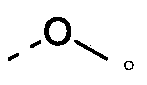


Priority Applications (5)
| Application Number | Priority Date | Filing Date | Title |
|---|---|---|---|
| EP19837159.3A EP3825314A4 (en) | 2018-07-19 | 2019-07-19 | AZAINDOLE DERIVATIVE AND ITS USE AS AN FGFR AND C-MET INHIBITOR |
| KR1020217004999A KR102592556B1 (en) | 2018-07-19 | 2019-07-19 | Azaindole derivatives and their use as FGFR and C-Met inhibitors |
| JP2021502901A JP7317938B2 (en) | 2018-07-19 | 2019-07-19 | Azaindole derivatives and their use as FGFR and C-Met inhibitors |
| CN201980047115.7A CN112469718B (en) | 2018-07-19 | 2019-07-19 | Azaindole derivatives and their use as FGFR and C-Met inhibitors |
| US17/261,460 US12312347B2 (en) | 2018-07-19 | 2019-07-19 | Azaindole derivative and use thereof as FGFR and C-Met inhibitor |
Applications Claiming Priority (6)
| Application Number | Priority Date | Filing Date | Title |
|---|---|---|---|
| CN201810798237 | 2018-07-19 | ||
| CN201810798237.7 | 2018-07-19 | ||
| CN201811039652.0 | 2018-09-06 | ||
| CN201811039652 | 2018-09-06 | ||
| CN201811445346.7 | 2018-11-29 | ||
| CN201811445346 | 2018-11-29 |
Publications (1)
| Publication Number | Publication Date |
|---|---|
| WO2020015744A1 true WO2020015744A1 (en) | 2020-01-23 |
Family
ID=69164273
Family Applications (1)
| Application Number | Title | Priority Date | Filing Date |
|---|---|---|---|
| PCT/CN2019/096841 Ceased WO2020015744A1 (en) | 2018-07-19 | 2019-07-19 | Azaindole derivative and use thereof as fgfr and c-met inhibitor |
Country Status (6)
| Country | Link |
|---|---|
| US (1) | US12312347B2 (en) |
| EP (1) | EP3825314A4 (en) |
| JP (1) | JP7317938B2 (en) |
| KR (1) | KR102592556B1 (en) |
| CN (1) | CN112469718B (en) |
| WO (1) | WO2020015744A1 (en) |
Cited By (26)
| Publication number | Priority date | Publication date | Assignee | Title |
|---|---|---|---|---|
| WO2021143875A1 (en) * | 2020-01-15 | 2021-07-22 | 南京明德新药研发有限公司 | Crystal form of azaindole derivative and application thereof |
| US11820747B2 (en) | 2021-11-02 | 2023-11-21 | Flare Therapeutics Inc. | PPARG inverse agonists and uses thereof |
| CN117447470A (en) * | 2023-02-20 | 2024-01-26 | 杭州医学院 | A kind of pyrrolopyridine derivative as HPK1 inhibitor, preparation method and application thereof |
| WO2024206858A1 (en) | 2023-03-30 | 2024-10-03 | Revolution Medicines, Inc. | Compositions for inducing ras gtp hydrolysis and uses thereof |
| WO2024229406A1 (en) | 2023-05-04 | 2024-11-07 | Revolution Medicines, Inc. | Combination therapy for a ras related disease or disorder |
| WO2025034702A1 (en) | 2023-08-07 | 2025-02-13 | Revolution Medicines, Inc. | Rmc-6291 for use in the treatment of ras protein-related disease or disorder |
| WO2025080946A2 (en) | 2023-10-12 | 2025-04-17 | Revolution Medicines, Inc. | Ras inhibitors |
| WO2025171296A1 (en) | 2024-02-09 | 2025-08-14 | Revolution Medicines, Inc. | Ras inhibitors |
| WO2025240847A1 (en) | 2024-05-17 | 2025-11-20 | Revolution Medicines, Inc. | Ras inhibitors |
| WO2025255438A1 (en) | 2024-06-07 | 2025-12-11 | Revolution Medicines, Inc. | Methods of treating a ras protein-related disease or disorder |
| WO2025265060A1 (en) | 2024-06-21 | 2025-12-26 | Revolution Medicines, Inc. | Therapeutic compositions and methods for managing treatment-related effects |
| WO2026006747A1 (en) | 2024-06-28 | 2026-01-02 | Revolution Medicines, Inc. | Ras inhibitors |
| WO2026015790A1 (en) | 2024-07-12 | 2026-01-15 | Revolution Medicines, Inc. | Methods of treating a ras related disease or disorder |
| WO2026015825A1 (en) | 2024-07-12 | 2026-01-15 | Revolution Medicines, Inc. | Use of ras inhibitor for treating pancreatic cancer |
| WO2026015801A1 (en) | 2024-07-12 | 2026-01-15 | Revolution Medicines, Inc. | Methods of treating a ras related disease or disorder |
| WO2026015796A1 (en) | 2024-07-12 | 2026-01-15 | Revolution Medicines, Inc. | Methods of treating a ras related disease or disorder |
| WO2026050446A1 (en) | 2024-08-29 | 2026-03-05 | Revolution Medicines, Inc. | Ras inhibitors |
| WO2026072904A2 (en) | 2024-09-26 | 2026-04-02 | Revolution Medicines, Inc. | Compositions and methods for treating lung cancer |
| WO2026090127A1 (en) | 2024-10-22 | 2026-04-30 | Revolution Medicines, Inc. | Methods of treating a ras protein-related disease or disorder |
| WO2026090116A2 (en) | 2024-10-21 | 2026-04-30 | Revolution Medicines, Inc. | Ras inhibitors |
| WO2026090245A1 (en) | 2024-10-22 | 2026-04-30 | Revolution Medicines, Inc. | Use of ras inhibitors for treating cancer |
| WO2026106912A1 (en) | 2024-11-12 | 2026-05-21 | Revolution Medicines, Inc. | Ras inhibitors |
| WO2026112260A1 (en) | 2024-11-21 | 2026-05-28 | Revolution Medicines, Inc. | Ras inhibitors |
| WO2026122764A2 (en) | 2024-12-06 | 2026-06-11 | Revolution Medicines, Inc. | Ras inhibitors |
| WO2026128688A2 (en) | 2024-12-13 | 2026-06-18 | Revolution Medicines, Inc. | Ras inhibitors |
| WO2026161839A1 (en) | 2025-01-27 | 2026-07-30 | Revolution Medicines, Inc. | Ras inhibitors |
Families Citing this family (2)
| Publication number | Priority date | Publication date | Assignee | Title |
|---|---|---|---|---|
| EP4067351B1 (en) * | 2019-11-29 | 2025-01-22 | NovaOnco JS Therapeutics Co., Ltd. | Diazaindole derivative and use thereof as chk1 inhibitor |
| KR20250005346A (en) * | 2022-04-25 | 2025-01-09 | 일라이 릴리 앤드 캄파니 | FGFR2 inhibitor compounds |
Citations (9)
| Publication number | Priority date | Publication date | Assignee | Title |
|---|---|---|---|---|
| CN1925855A (en) * | 2003-12-19 | 2007-03-07 | 普莱希科公司 | Compounds and methods for development of Ret modulators |
| CN101027302A (en) * | 2004-07-27 | 2007-08-29 | Sgx药物公司 | Pyrrolo-pyridine kinase modulators |
| CN101243084A (en) * | 2005-06-22 | 2008-08-13 | 普莱希科公司 | Pyrrolo [2, 3-B ] pyridine derivatives as protein kinase inhibitors |
| WO2008124850A1 (en) * | 2007-04-10 | 2008-10-16 | Sgx Pharmaceuticals, Inc. | Fused ring heterocycle kinase modulators |
| CN101641351A (en) * | 2006-12-21 | 2010-02-03 | 普莱希科公司 | Be used for Compounds and methods for and indication thereof that kinases is regulated |
| WO2010059771A1 (en) | 2008-11-20 | 2010-05-27 | Osi Pharmaceuticals, Inc. | Substituted pyrrolo[2,3-b]-pyridines and-pyrazines |
| CN104710417A (en) * | 2013-12-11 | 2015-06-17 | 上海科州药物研发有限公司 | Azaindole derivatives and synthesis method thereof |
| CN105073747A (en) * | 2013-03-15 | 2015-11-18 | 普莱希科公司 | Heterocyclic compounds and their applications |
| WO2016044067A1 (en) * | 2014-09-15 | 2016-03-24 | Plexxikon Inc. | Heterocyclic compounds and uses thereof |
Family Cites Families (1)
| Publication number | Priority date | Publication date | Assignee | Title |
|---|---|---|---|---|
| EP1609375B1 (en) * | 2004-01-14 | 2016-04-13 | Ajinomoto Co., Inc. | Glycine-containing food and use thereof |
-
2019
- 2019-07-19 CN CN201980047115.7A patent/CN112469718B/en active Active
- 2019-07-19 JP JP2021502901A patent/JP7317938B2/en active Active
- 2019-07-19 US US17/261,460 patent/US12312347B2/en active Active
- 2019-07-19 KR KR1020217004999A patent/KR102592556B1/en active Active
- 2019-07-19 EP EP19837159.3A patent/EP3825314A4/en not_active Withdrawn
- 2019-07-19 WO PCT/CN2019/096841 patent/WO2020015744A1/en not_active Ceased
Patent Citations (9)
| Publication number | Priority date | Publication date | Assignee | Title |
|---|---|---|---|---|
| CN1925855A (en) * | 2003-12-19 | 2007-03-07 | 普莱希科公司 | Compounds and methods for development of Ret modulators |
| CN101027302A (en) * | 2004-07-27 | 2007-08-29 | Sgx药物公司 | Pyrrolo-pyridine kinase modulators |
| CN101243084A (en) * | 2005-06-22 | 2008-08-13 | 普莱希科公司 | Pyrrolo [2, 3-B ] pyridine derivatives as protein kinase inhibitors |
| CN101641351A (en) * | 2006-12-21 | 2010-02-03 | 普莱希科公司 | Be used for Compounds and methods for and indication thereof that kinases is regulated |
| WO2008124850A1 (en) * | 2007-04-10 | 2008-10-16 | Sgx Pharmaceuticals, Inc. | Fused ring heterocycle kinase modulators |
| WO2010059771A1 (en) | 2008-11-20 | 2010-05-27 | Osi Pharmaceuticals, Inc. | Substituted pyrrolo[2,3-b]-pyridines and-pyrazines |
| CN105073747A (en) * | 2013-03-15 | 2015-11-18 | 普莱希科公司 | Heterocyclic compounds and their applications |
| CN104710417A (en) * | 2013-12-11 | 2015-06-17 | 上海科州药物研发有限公司 | Azaindole derivatives and synthesis method thereof |
| WO2016044067A1 (en) * | 2014-09-15 | 2016-03-24 | Plexxikon Inc. | Heterocyclic compounds and uses thereof |
Non-Patent Citations (1)
| Title |
|---|
| MCCOULL, WILLIAM ET AL.: "Identification and Optimisation of 7-Azaindole PAK1 Inhibitors with Improved Potency and Kinase Selectivity", MED. CHEM. COMMUN., vol. 5, 19 August 2014 (2014-08-19), XP055197248, DOI: 20191008110651X * |
Cited By (32)
| Publication number | Priority date | Publication date | Assignee | Title |
|---|---|---|---|---|
| WO2021143875A1 (en) * | 2020-01-15 | 2021-07-22 | 南京明德新药研发有限公司 | Crystal form of azaindole derivative and application thereof |
| CN115052877A (en) * | 2020-01-15 | 2022-09-13 | 深圳市瓴方生物医药科技有限公司 | Crystal form of azaindole derivative and application thereof |
| JP2023510932A (en) * | 2020-01-15 | 2023-03-15 | 深▲せん▼市▲りん▼方生物医薬科技有限公司 | Crystal forms of azaindole derivatives and their applications |
| CN115052877B (en) * | 2020-01-15 | 2023-08-22 | 无锡瓴方生物医药科技有限公司 | Crystal form of azaindole derivative and application thereof |
| JP7432739B2 (en) | 2020-01-15 | 2024-02-16 | 无錫▲りん▼方生物医薬科技有限公司 | Crystal forms of azaindole derivatives and their applications |
| US11919898B2 (en) * | 2020-01-15 | 2024-03-05 | Shenzhen Lingfang Biotech Co., Ltd. | Crystal form of azaindole derivative and use thereof |
| US11820747B2 (en) | 2021-11-02 | 2023-11-21 | Flare Therapeutics Inc. | PPARG inverse agonists and uses thereof |
| CN117447470A (en) * | 2023-02-20 | 2024-01-26 | 杭州医学院 | A kind of pyrrolopyridine derivative as HPK1 inhibitor, preparation method and application thereof |
| CN117447470B (en) * | 2023-02-20 | 2026-05-01 | 杭州医学院 | Pyrrolopyridine derivative as HPK1 inhibitor, preparation method and application thereof |
| WO2024206858A1 (en) | 2023-03-30 | 2024-10-03 | Revolution Medicines, Inc. | Compositions for inducing ras gtp hydrolysis and uses thereof |
| WO2024229406A1 (en) | 2023-05-04 | 2024-11-07 | Revolution Medicines, Inc. | Combination therapy for a ras related disease or disorder |
| WO2025034702A1 (en) | 2023-08-07 | 2025-02-13 | Revolution Medicines, Inc. | Rmc-6291 for use in the treatment of ras protein-related disease or disorder |
| WO2025080946A2 (en) | 2023-10-12 | 2025-04-17 | Revolution Medicines, Inc. | Ras inhibitors |
| WO2025171296A1 (en) | 2024-02-09 | 2025-08-14 | Revolution Medicines, Inc. | Ras inhibitors |
| WO2025240847A1 (en) | 2024-05-17 | 2025-11-20 | Revolution Medicines, Inc. | Ras inhibitors |
| WO2025255438A1 (en) | 2024-06-07 | 2025-12-11 | Revolution Medicines, Inc. | Methods of treating a ras protein-related disease or disorder |
| WO2025265060A1 (en) | 2024-06-21 | 2025-12-26 | Revolution Medicines, Inc. | Therapeutic compositions and methods for managing treatment-related effects |
| WO2026006747A1 (en) | 2024-06-28 | 2026-01-02 | Revolution Medicines, Inc. | Ras inhibitors |
| WO2026015825A1 (en) | 2024-07-12 | 2026-01-15 | Revolution Medicines, Inc. | Use of ras inhibitor for treating pancreatic cancer |
| WO2026015801A1 (en) | 2024-07-12 | 2026-01-15 | Revolution Medicines, Inc. | Methods of treating a ras related disease or disorder |
| WO2026015796A1 (en) | 2024-07-12 | 2026-01-15 | Revolution Medicines, Inc. | Methods of treating a ras related disease or disorder |
| WO2026015790A1 (en) | 2024-07-12 | 2026-01-15 | Revolution Medicines, Inc. | Methods of treating a ras related disease or disorder |
| WO2026050446A1 (en) | 2024-08-29 | 2026-03-05 | Revolution Medicines, Inc. | Ras inhibitors |
| WO2026072904A2 (en) | 2024-09-26 | 2026-04-02 | Revolution Medicines, Inc. | Compositions and methods for treating lung cancer |
| WO2026090116A2 (en) | 2024-10-21 | 2026-04-30 | Revolution Medicines, Inc. | Ras inhibitors |
| WO2026090245A1 (en) | 2024-10-22 | 2026-04-30 | Revolution Medicines, Inc. | Use of ras inhibitors for treating cancer |
| WO2026090127A1 (en) | 2024-10-22 | 2026-04-30 | Revolution Medicines, Inc. | Methods of treating a ras protein-related disease or disorder |
| WO2026106912A1 (en) | 2024-11-12 | 2026-05-21 | Revolution Medicines, Inc. | Ras inhibitors |
| WO2026112260A1 (en) | 2024-11-21 | 2026-05-28 | Revolution Medicines, Inc. | Ras inhibitors |
| WO2026122764A2 (en) | 2024-12-06 | 2026-06-11 | Revolution Medicines, Inc. | Ras inhibitors |
| WO2026128688A2 (en) | 2024-12-13 | 2026-06-18 | Revolution Medicines, Inc. | Ras inhibitors |
| WO2026161839A1 (en) | 2025-01-27 | 2026-07-30 | Revolution Medicines, Inc. | Ras inhibitors |
Also Published As
| Publication number | Publication date |
|---|---|
| US12312347B2 (en) | 2025-05-27 |
| JP7317938B2 (en) | 2023-07-31 |
| KR102592556B1 (en) | 2023-10-23 |
| EP3825314A1 (en) | 2021-05-26 |
| JP2021531290A (en) | 2021-11-18 |
| EP3825314A4 (en) | 2022-04-06 |
| CN112469718A (en) | 2021-03-09 |
| US20210253571A1 (en) | 2021-08-19 |
| KR20210035236A (en) | 2021-03-31 |
| CN112469718B (en) | 2022-08-30 |
Similar Documents
| Publication | Publication Date | Title |
|---|---|---|
| CN112469718B (en) | Azaindole derivatives and their use as FGFR and C-Met inhibitors | |
| CN116761799B (en) | Pyrimidine-pyran compounds | |
| CN105916855B (en) | Substituted 4,5,6,7-Tetrahydropyrazolo[1,5-A]pyrazine Derivatives as Casein Kinase 1D/E Inhibitors | |
| WO2019154365A1 (en) | Atr inhibitor and application thereof | |
| WO2023138601A1 (en) | Bridged ring-substituted heteroaryl-pyran derivative, and use thereof | |
| WO2022222995A1 (en) | Picolinamide compound | |
| WO2020200316A1 (en) | Pyrazolopyridine compound as ret inhibitor and application thereof | |
| WO2021180181A1 (en) | Pyrimidoheterocyclic compounds and application thereof | |
| CN112689627B (en) | Tricyclic substituted piperidinediones | |
| CN114502561A (en) | LSD1 inhibitors | |
| WO2020035065A1 (en) | Pyrazole derivative as ret inhibitor | |
| CN111247151B (en) | 2, 3-dihydro-1H-pyrrolizine-7-formamide derivatives and application thereof | |
| CN114174282A (en) | Pyridazinone derivatives as thyroxine receptor-beta agonists and uses thereof | |
| CN111465598B (en) | Glucoside derivatives as SGLTs inhibitors and their applications | |
| CN111372930B (en) | SGLTs inhibitor and application thereof | |
| WO2025218798A1 (en) | Kras g12d degradation agent as well as preparation method therefor and use thereof | |
| CN112752749B (en) | Fluorovinylbenzamide-based compounds as PD-L1 immunomodulators | |
| WO2023208127A1 (en) | Heteroaryl-substituted bicyclic compound and use thereof | |
| CN115515963B (en) | Pyrimidine tri-fused ring compound and application thereof | |
| CN113874379B (en) | Tetraheterocyclic compounds as Cdc7 inhibitors | |
| CN111315750B (en) | Pyridopyrimidines as mTORC1/2 Dual Kinase Inhibitors | |
| HK40040832A (en) | Azaindole derivative and use thereof as fgfr and c-met inhibitor | |
| HK40036987A (en) | Atr inhibitor and application thereof | |
| WO2026046365A1 (en) | Smarca2 inhibitor, and preparation method therefor and use thereof | |
| HK40032577A (en) | Pyridopyrimidine compounds acting as mtorc 1/2 double-kinase inhibitors |
Legal Events
| Date | Code | Title | Description |
|---|---|---|---|
| 121 | Ep: the epo has been informed by wipo that ep was designated in this application |
Ref document number: 19837159 Country of ref document: EP Kind code of ref document: A1 |
|
| ENP | Entry into the national phase |
Ref document number: 2021502901 Country of ref document: JP Kind code of ref document: A |
|
| NENP | Non-entry into the national phase |
Ref country code: DE |
|
| ENP | Entry into the national phase |
Ref document number: 20217004999 Country of ref document: KR Kind code of ref document: A |
|
| ENP | Entry into the national phase |
Ref document number: 2019837159 Country of ref document: EP Effective date: 20210219 |
|
| WWW | Wipo information: withdrawn in national office |
Ref document number: 2019837159 Country of ref document: EP |
|
| WWG | Wipo information: grant in national office |
Ref document number: 17261460 Country of ref document: US |