WO2020031282A1 - Dispositif terminal, dispositif de station de base, système de communication radio, et procédé de communication radio - Google Patents
Dispositif terminal, dispositif de station de base, système de communication radio, et procédé de communication radio Download PDFInfo
- Publication number
- WO2020031282A1 WO2020031282A1 PCT/JP2018/029694 JP2018029694W WO2020031282A1 WO 2020031282 A1 WO2020031282 A1 WO 2020031282A1 JP 2018029694 W JP2018029694 W JP 2018029694W WO 2020031282 A1 WO2020031282 A1 WO 2020031282A1
- Authority
- WO
- WIPO (PCT)
- Prior art keywords
- resource
- terminal device
- data
- base station
- control information
- Prior art date
- Legal status (The legal status is an assumption and is not a legal conclusion. Google has not performed a legal analysis and makes no representation as to the accuracy of the status listed.)
- Ceased
Links
Images




Classifications
-
- H—ELECTRICITY
- H04—ELECTRIC COMMUNICATION TECHNIQUE
- H04L—TRANSMISSION OF DIGITAL INFORMATION, e.g. TELEGRAPHIC COMMUNICATION
- H04L1/00—Arrangements for detecting or preventing errors in the information received
- H04L1/12—Arrangements for detecting or preventing errors in the information received by using return channel
- H04L1/16—Arrangements for detecting or preventing errors in the information received by using return channel in which the return channel carries supervisory signals, e.g. repetition request signals
- H04L1/18—Automatic repetition systems, e.g. Van Duuren systems
- H04L1/1867—Arrangements specially adapted for the transmitter end
- H04L1/189—Transmission or retransmission of more than one copy of a message
-
- H—ELECTRICITY
- H04—ELECTRIC COMMUNICATION TECHNIQUE
- H04W—WIRELESS COMMUNICATION NETWORKS
- H04W72/00—Local resource management
- H04W72/20—Control channels or signalling for resource management
-
- H—ELECTRICITY
- H04—ELECTRIC COMMUNICATION TECHNIQUE
- H04L—TRANSMISSION OF DIGITAL INFORMATION, e.g. TELEGRAPHIC COMMUNICATION
- H04L1/00—Arrangements for detecting or preventing errors in the information received
- H04L1/08—Arrangements for detecting or preventing errors in the information received by repeating transmission, e.g. Verdan system
-
- H—ELECTRICITY
- H04—ELECTRIC COMMUNICATION TECHNIQUE
- H04L—TRANSMISSION OF DIGITAL INFORMATION, e.g. TELEGRAPHIC COMMUNICATION
- H04L5/00—Arrangements affording multiple use of the transmission path
- H04L5/003—Arrangements for allocating sub-channels of the transmission path
- H04L5/0053—Allocation of signalling, i.e. of overhead other than pilot signals
-
- H—ELECTRICITY
- H04—ELECTRIC COMMUNICATION TECHNIQUE
- H04W—WIRELESS COMMUNICATION NETWORKS
- H04W4/00—Services specially adapted for wireless communication networks; Facilities therefor
- H04W4/30—Services specially adapted for particular environments, situations or purposes
- H04W4/40—Services specially adapted for particular environments, situations or purposes for vehicles, e.g. vehicle-to-pedestrians [V2P]
- H04W4/46—Services specially adapted for particular environments, situations or purposes for vehicles, e.g. vehicle-to-pedestrians [V2P] for vehicle-to-vehicle communication [V2V]
-
- H—ELECTRICITY
- H04—ELECTRIC COMMUNICATION TECHNIQUE
- H04W—WIRELESS COMMUNICATION NETWORKS
- H04W72/00—Local resource management
- H04W72/02—Selection of wireless resources by user or terminal
-
- H—ELECTRICITY
- H04—ELECTRIC COMMUNICATION TECHNIQUE
- H04W—WIRELESS COMMUNICATION NETWORKS
- H04W72/00—Local resource management
- H04W72/50—Allocation or scheduling criteria for wireless resources
- H04W72/51—Allocation or scheduling criteria for wireless resources based on terminal or device properties
-
- H—ELECTRICITY
- H04—ELECTRIC COMMUNICATION TECHNIQUE
- H04W—WIRELESS COMMUNICATION NETWORKS
- H04W72/00—Local resource management
- H04W72/50—Allocation or scheduling criteria for wireless resources
- H04W72/54—Allocation or scheduling criteria for wireless resources based on quality criteria
- H04W72/542—Allocation or scheduling criteria for wireless resources based on quality criteria using measured or perceived quality
-
- H—ELECTRICITY
- H04—ELECTRIC COMMUNICATION TECHNIQUE
- H04L—TRANSMISSION OF DIGITAL INFORMATION, e.g. TELEGRAPHIC COMMUNICATION
- H04L1/00—Arrangements for detecting or preventing errors in the information received
- H04L1/0001—Systems modifying transmission characteristics according to link quality, e.g. power backoff
- H04L1/0015—Systems modifying transmission characteristics according to link quality, e.g. power backoff characterised by the adaptation strategy
-
- H—ELECTRICITY
- H04—ELECTRIC COMMUNICATION TECHNIQUE
- H04L—TRANSMISSION OF DIGITAL INFORMATION, e.g. TELEGRAPHIC COMMUNICATION
- H04L5/00—Arrangements affording multiple use of the transmission path
- H04L5/0001—Arrangements for dividing the transmission path
- H04L5/0003—Two-dimensional division
- H04L5/0005—Time-frequency
- H04L5/0007—Time-frequency the frequencies being orthogonal, e.g. OFDM(A) or DMT
-
- H—ELECTRICITY
- H04—ELECTRIC COMMUNICATION TECHNIQUE
- H04W—WIRELESS COMMUNICATION NETWORKS
- H04W72/00—Local resource management
- H04W72/04—Wireless resource allocation
- H04W72/044—Wireless resource allocation based on the type of the allocated resource
- H04W72/0446—Resources in time domain, e.g. slots or frames
-
- H—ELECTRICITY
- H04—ELECTRIC COMMUNICATION TECHNIQUE
- H04W—WIRELESS COMMUNICATION NETWORKS
- H04W92/00—Interfaces specially adapted for wireless communication networks
- H04W92/16—Interfaces between hierarchically similar devices
- H04W92/18—Interfaces between hierarchically similar devices between terminal devices
Definitions
- the present invention relates to a terminal device, a base station device, a wireless communication system, and a wireless communication method.
- the traffic of mobile terminals occupies most of the network resources.
- the traffic used by mobile terminals tends to increase in the future.
- next-generation for example, 5G (fifth-generation mobile communication)
- 4G fourth-generation mobile communication
- 3GPP working groups eg, TSG-RAN @ WG1, TSG-RAN @ WG2, etc.
- 5G is classified into eMBB (Enhanced Mobile Broadband), Massive MTC (Machine Type Communications), and URLLC (Ultra-Reliable and Low Latency Communication) to cope with various services as described above. Support for many use cases is envisioned.
- eMBB Enhanced Mobile Broadband
- Massive MTC Machine Type Communications
- URLLC Ultra-Reliable and Low Latency Communication
- the V2X communication includes, for example, V2V (Vehicle to Vehicle) indicating communication between vehicles, V2P (Vehicle to Vehicle) indicating communication between a vehicle and a pedestrian (Pedestrian), and communication of road infrastructure such as vehicles and signs.
- V2I Vehicle-to-Infrastructure
- 3GPP TR 22.886 “Study on enhancement of 3GPP Support for 5G V2X Services”, V15.1.0, March 2017.
- An object of the disclosed technology is to provide a terminal device, a base station device, a wireless communication system, and a wireless communication method capable of realizing V2X communication satisfying low delay and high reliability requirements.
- a terminal device disclosed by the present application provides a selection unit that autonomously selects a first resource for data transmission from a plurality of resources, and a base station using the first resource.
- a first transmitting unit that transmits the data to another terminal device located in a cell of the device, and a second resource that is transmitted from the base station device and that does not overlap with the first resource.
- a receiving unit that receives the control information; and a repetitive transmitting unit that retransmits the data to the another terminal device using the second resource specified by the control information.
- V2X communication that satisfies the requirements of low delay and high reliability can be realized.
- FIG. 1 is a diagram illustrating a configuration example of the wireless communication system according to the first embodiment.
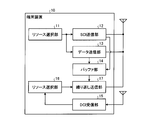
- FIG. 2 is a diagram illustrating an example of a functional configuration of the terminal device according to the first embodiment.
- FIG. 3 is a diagram illustrating an example of a functional configuration of the base station device according to the first embodiment.
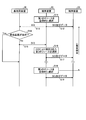
- FIG. 4 is a sequence diagram illustrating an example of an operation of the wireless communication system according to the first embodiment.
- FIG. 5 is a diagram for explaining a specific example of the operation of the wireless communication system in Comparative Example 1.
- FIG. 6 is a diagram for explaining a specific example of the operation of the wireless communication system in Comparative Example 2.
- FIG. 7 is a diagram for explaining a specific example of the operation of the wireless communication system in Comparative Example 3.
- FIG. 5 is a diagram for explaining a specific example of the operation of the wireless communication system in Comparative Example 1.
- FIG. 8 is a diagram illustrating a specific example of the operation of the wireless communication system according to the first embodiment.
- FIG. 9 is a diagram illustrating an example of a functional configuration of the terminal device according to the second embodiment.
- FIG. 10 is a diagram illustrating an example of a functional configuration of the base station device according to the second embodiment.
- FIG. 11 is a sequence diagram illustrating an example of an operation of the wireless communication system according to the second embodiment.
- FIG. 12 is a sequence diagram for explaining an example of the operation of the wireless communication system 1 when the base station device transmits data to the terminal device by itself.
- FIG. 13 is a diagram illustrating an example of a hardware configuration of a terminal device.
- FIG. 14 is a diagram illustrating an example of a hardware configuration of the base station device.
- FIG. 1 is a diagram illustrating a configuration example of the wireless communication system 1 according to the first embodiment.
- the wireless communication system 1 illustrated in FIG. 1 includes a terminal device 10, a terminal device 20, and a base station device 30.
- the terminal device 10 and the terminal device 20 are located in the cell C formed by the base station device 30.
- the terminal device 10 and the terminal device 20 are, for example, automobiles.
- the base station device 30 is, for example, a gNB as a next-generation NodeB or an RSU (Road @ Side @ Unit).
- the terminal device 10 and the base station device 30 are connected by a wireless link 40, and the terminal device 10 and the terminal device 20 are connected by a wireless link 50.
- the wireless link 40 is called a Uu link
- the wireless link 50 is called a side link or PC5 link.
- FIG. 1 shows an example in which the terminal device 10 and the terminal device 20 are located in the cell C, it is assumed that another terminal device (not shown) is also located in the cell C.
- the terminal device 10 transmits side link control information (SCI: Sidelink Control Information) and data to the terminal device 20 via the wireless link 50.
- SCI is transmitted via a PSCCH (Physical Sidelink Control Channel) that is a side link control channel.
- the data is transmitted via a PSSCH (Physical Sidelink Shared Channel) which is a side link data channel.
- PSCCH Physical Sidelink Control Channel
- PSSCH Physical Sidelink Shared Channel
- the terminal device 10 repeatedly transmits the same data. That is, when data to be transmitted occurs, the terminal device 10 autonomously selects a “first resource” for data transmission from a plurality of resources, and uses the first resource to transmit the data. Send.
- the terminal device 10 receives the downlink control information (DCI: Downlink Control Information) specifying the “second resource” that does not overlap with the first resource, transmitted from the base station device 30. Then, the terminal device 10 retransmits data to the terminal device 20 using the second resource specified by the DCI.
- DCI Downlink Control Information
- the base station device 30 determines whether or not the data reception quality of the terminal device 20 is good by detecting the PSCCH using the first resource. Then, when it is determined that the data reception quality is not good, the base station device 30 allocates a second resource that is used by the terminal device 10 for data retransmission and that does not overlap with the first resource. select. Then, the base station device 30 transmits the DCI specifying the second resource to the terminal device 10. DCI is transmitted via a PDCCH (Physical Downlink Control Channel) which is a downlink control channel.
- PDCCH Physical Downlink Control Channel
- the terminal device 10 transmits the second resource specified by the DCI transmitted from the base station device 30. To retransmit the data. Thereby, at the time of the initial transmission of data by the terminal device 10, communication between the terminal device 10 and the base station device 30 is omitted, so that a delay in a side link is suppressed.
- the terminal device 10 retransmits data, the resources specified by the DCI by the base station device 30 are used, so that the used resources do not collide between the terminal device 10 and other terminal devices in the cell C. In addition, the probability that data will collide with each other is reduced. As a result, V2X communication that satisfies the requirements of low delay and high reliability can be realized.
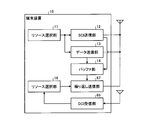
- FIG. 2 is a diagram illustrating an example of a functional configuration of the terminal device 10 according to the first embodiment.
- the terminal device 10 includes a resource selection unit 11, an SCI transmission unit 12, a data transmission unit 13, a buffer unit 14, a DCI reception unit 15, a resource selection unit 16, a repetition transmission unit And 17.
- the resource selection unit 11 autonomously selects a first resource for data transmission from a plurality of resources.
- the plurality of resources are included, for example, in a resource pool of mode 4 introduced as one of the communication modes of V2X communication.
- the SCI transmission unit 12 transmits the SCI indicating the position of the first resource to the terminal device 20.
- the SCI format 1 having a plurality of fields defined in advance in the communication standard of V2X communication is used.
- the SCI indicating the position of the first resource reaches not only the terminal device 20 but also the base station device 30 forming the cell C where the terminal device 20 is located.
- the SCI transmission unit 12 transmits uplink control information (UCI: Uplink Control Information) indicating the position of the first resource to the base station apparatus via PUCCH (Physical Uplink Control Channel) which is an uplink control channel. 30.
- the SCI transmission unit 12 is an example of a second transmission unit.
- the data transmission unit 13 transmits data to the terminal device 20 using the first resource.
- the data transmission unit 13 is an example of a first transmission unit.
- the buffer unit 14 is a storage area for temporarily storing the SCI transmitted from the SCI transmission unit 12 and the data transmitted from the data transmission unit 13.
- the DCI receiving unit 15 receives the DCI transmitted from the base station device 30 via the PDCCH and designating a second resource that does not overlap with the first resource.
- the resource selecting unit 16 selects the second resource specified by the DCI.
- the second resource specified by the DCI does not overlap with the first resource used for the initial transmission of data in at least one of the frequency domain and the time domain.
- the second resource only needs to be such that at least either the frequency domain or the time domain does not overlap with the first resource used for the initial transmission of data.
- the repetitive transmission unit 17 retransmits data to the terminal device 20 using the second resource specified by the DCI. Specifically, the repetitive transmission unit 17 retransmits the data stored in the buffer unit 14 to the terminal device 20 using the second resource specified by the DCI. Then, the repetitive transmission unit 17 rewrites the position of the first resource indicated by the SCI stored in the buffer unit 14 to the position of the second resource, and transmits the rewritten SCI to the terminal device 20 together with the data. I do.
- the repetition transmission unit 17 selects the data from the plurality of resources.
- the “third resource” for retransmission is autonomously selected.
- the plurality of resources are included, for example, in a resource pool of mode 4 introduced as one of the communication modes of V2X communication.
- the repetitive transmission unit 17 retransmits data to the terminal device 20 using the third resource.
- the repetitive transmission unit 17 transmits the SCI including the information indicating the position of the third resource to the terminal device 20 together with the data.
- the DCI is transmitted from the base station device 30 to the terminal device 10 when the data reception quality of the terminal device 20 is not good, and is not transmitted when the data reception quality of the terminal device 20 is good.
- the DCI specifying the second resource is set to the DCI reception time from the initial transmission of the data by the data transmission unit 13 until a predetermined time has elapsed. It is not received by the unit 15. Therefore, if the DCI specifying the second resource is not received before the predetermined time elapses from the initial transmission of data by the data transmission unit 13, the repetitive transmission unit 17 may stop retransmission of data. Good.
- FIG. 3 is a diagram illustrating an example of a functional configuration of the base station device 30 according to the first embodiment.
- the base station device 30 includes an SCI detection unit 31, a reception quality determination unit 32, a resource selection unit 33, and a DCI transmission unit.
- the SCI detection unit 31 detects an SCI transmitted from the terminal device 10 to the terminal device 20 and indicating the position of the first resource. That is, when the SCI transmitted from the terminal device 10 to the terminal device 20 and indicating the position of the first resource reaches the base station device 30, the SCI detection unit 31 detects the SCI.
- the reception quality determination unit 32 determines whether the reception quality of data in the terminal device 20 is good, using the SCI indicating the position of the first resource. For example, when the first resource indicated by the SCI is used (selected) by another terminal device located in the cell C, the probability of data collision in the first resource increases, and the terminal device 10 Is difficult to reach the terminal device 20. In this case, the reception quality determination unit 32 detects the number of other terminal devices selecting the first resource indicated by the SCI, and when the number of detected other terminal devices exceeds a predetermined number, It is determined that the data reception quality in the device 20 is not good.
- the reception quality determination unit 32 measures the average value of RSRP (Reference Signal Received Power) and the average value of RSSI (Received Signal Strength Indicator) in the first resource indicated by SCI, and receives the signal based on the measurement result. The quality may be determined.
- RSRP Reference Signal Received Power
- RSSI Received Signal Strength Indicator
- the resource selection unit 33 is a second resource used by the terminal device 10 for retransmission of data when the reception quality determination unit 32 determines that the reception quality of data in the terminal device 20 is not good, A second resource that does not overlap with the first resource is selected. For example, when the terminal device 10 selects the first resource from the mode 4 resource pool, the resource selection unit 33 selects, from among a plurality of resources belonging to a frequency domain or a time domain that do not overlap with the mode 4 resource pool, Select a second resource.
- the DCI transmitting unit 34 transmits DCI specifying the selected second resource to the terminal device 10 via the PDCCH.
- DCI for example, DCI format 5A having a plurality of fields defined in advance in the communication standard of V2X communication is used.
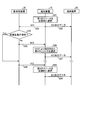
- FIG. 4 is a sequence diagram illustrating an example of an operation of the wireless communication system 1 according to the first embodiment.
- the terminal device 10 autonomously selects a first resource for data transmission from a plurality of resources (step S11).
- the terminal device 10 transmits data to the terminal device 20 using the first resource, and transmits an SCI indicating the position of the first resource to the terminal device 20 together with the data (step S12).
- the SCI indicating the position of the first resource reaches not only the terminal device 20 but also the base station device 30 forming the cell C where the terminal device 20 is located (step S13).
- the base station device 30 determines whether or not the reception quality of data in the terminal device 20 is good, using the SCI indicating the position of the first resource (step S14). If it is determined that the data reception quality in the terminal device 20 is not good (No in step S14), the base station device 30 is a second resource used by the terminal device 10 for retransmission of data, and is a first resource. And a second resource that does not overlap with. Then, the base station device 30 transmits DCI specifying the selected second resource to the terminal device 10 via the PDCCH (step S15).
- the terminal device 10 receives the DCI specifying the second resource transmitted from the base station device 30.
- the terminal device 10 selects the second resource specified by the DCI (Step S16).
- the terminal device 10 retransmits data to the terminal device 20 using the second resource specified by the DCI, and transmits the SCI indicating the position of the second resource to the terminal device 20 together with the data (step S17).
- the base station device 30 stops selecting the second resource. As a result, the DCI specifying the second resource is not transmitted from the base station device 30 to the terminal device 10. If the DCI designating the second resource is not received before the predetermined time T elapses from the initial data transmission performed in step S12, the terminal device 10 retransmits the data from the plurality of resources. The third resource of trust is autonomously selected (step S18). Then, the terminal device 10 retransmits the data using the third resource, and transmits the SCI indicating the position of the third resource to the terminal device 20 together with the data (step S19).
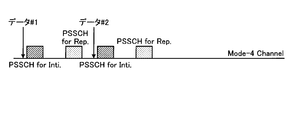
- FIG. 5 is a diagram for explaining a specific example of the operation of the wireless communication system in Comparative Example 1.
- Comparative example 1 shown in FIG. 5 corresponds to a repetition based on mode 4 introduced as one of the communication modes of V2X communication.
- the terminal device autonomously selects a first resource for transmission of data # 1 from among a plurality of resources, and selects the selected first resource.
- the data # 1 is transmitted to another terminal device using the resource.
- Initial transmission of data # 1 in the terminal device is performed via a PSSCH (see “PSSCH @ for ⁇ Inti.” In FIG. 5) corresponding to the first resource.
- the terminal device autonomously selects, from among the plurality of resources, another resource separated by a predetermined number of time units (for example, subframes) in the time direction from the first resource, and selects the selected other resource. To retransmit the data # 1 to another terminal device.
- Retransmission of data # 1 in the terminal device is performed via a PSSCH (see “PSSCH @ for ⁇ Rep.” In FIG. 5) corresponding to another resource. Thereafter, when data # 2 to be transmitted occurs, initial transmission and retransmission of data # 2 are performed in the same manner as in initial transmission and retransmission of data # 1.
- the resource for data transmission and the resource for data retransmission are autonomously selected by the terminal device, so that the probability of collision between PSSCHs (data) increases. As a result, high reliability such as a packet reception rate of 99.999% is not guaranteed.
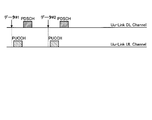
- FIG. 6 is a diagram for explaining a specific example of the operation of the wireless communication system in Comparative Example 2.
- Comparative Example 2 shown in FIG. 6 corresponds to communication based on the Uu link.
- the terminal device transmits UCI including data # 1 to the base station device.
- the transmission of UCI including data # 1 is performed via PUCCH, which is an uplink control channel.
- the base station device that has received the UCI including the data # 1 transmits the data # 1 to another terminal device.
- the transmission of data # 1 in the base station device is performed via a PDSCH (Physical Downlink Shared Channel).
- PDSCH Physical Downlink Shared Channel
- FIG. 7 is a diagram for explaining a specific example of the operation of the wireless communication system in Comparative Example 3.
- Comparative example 3 shown in FIG. 7 corresponds to communication based on mode 3 introduced as one of the communication modes of V2X communication.
- the terminal device transmits UCI indicating this to the base station device.
- the transmission of UCI in the terminal device is performed via PUCCH which is an uplink control channel.
- the base station apparatus that has received the UCI transmits DCI instructing the terminal apparatus to voluntarily select a resource for transmitting data # 1.
- the transmission of DCI in the base station apparatus is performed via PDCCH, which is a downlink control channel.
- the terminal device that has received the DCI autonomously selects a resource for transmitting data # 1, and transmits data # 1 to another terminal device using the selected resource. Transmission of data # 1 in the terminal device is performed via the PSSCH. Thereafter, when data # 2 to be transmitted occurs, data # 2 is transmitted in the same manner as data # 1 is transmitted.
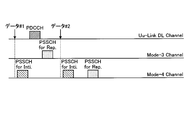
- FIG. 8 is a diagram for explaining a specific example of the operation of the wireless communication system 1 according to the first embodiment.
- the terminal device 10 autonomously selects a first resource for transmission of data # 1 from among a plurality of resources, and selects the selected first resource.
- the data # 1 is transmitted to the terminal device 20 by using the resources of.
- the initial transmission of the data # 1 in the terminal device 10 is performed via the PSSCH corresponding to the first resource (see "PSSCH @ for ⁇ Inti.” In FIG. 8).
- the terminal device 10 transmits the SCI indicating the position of the first resource to the terminal device 20 together with the data # 1. At this time, the SCI indicating the position of the first resource reaches not only the terminal device 20 but also the base station device 30 forming the cell C where the terminal device 20 is located.
- the base station device 30 that has detected the SCI indicating the position of the first resource determines whether the data reception quality of the terminal device 20 is good using the SCI. Since the reception quality of data in the terminal device 20 is not good, the base station device 30 selects a second resource that does not overlap with the first resource, and transmits DCI specifying the second resource to the terminal device 10. I do.
- the transmission of DCI in the base station apparatus 30 is performed via a PDCCH that is a downlink control channel.
- the terminal device 10 receives the DCI specifying the second resource transmitted from the base station device 30, and selects the second resource specified by the DCI.
- the terminal device 10 retransmits the data # 1 to the terminal device 20 using the second resource specified by the DCI.
- the retransmission of the data # 1 in the terminal device 10 is performed via the PSSCH (see “PSSCH @ for ⁇ Rep.” In FIG. 8) corresponding to the second resource.
- the terminal device 10 autonomously selects a first resource for transmission of data # 2 from a plurality of resources, and selects the selected first resource. To transmit the data # 2 to the terminal device 20.
- the initial transmission of the data # 2 in the terminal device 10 is performed via the PSSCH (see “PSSCH @ for ⁇ Inti.” In FIG. 8) corresponding to the first resource.
- the terminal device 10 transmits the SCI indicating the position of the first resource to the terminal device 20 together with the data # 2. At this time, the SCI indicating the position of the first resource reaches not only the terminal device 20 but also the base station device 30 forming the cell C where the terminal device 20 is located.
- the base station device 30 that has detected the SCI indicating the position of the first resource determines whether the data reception quality of the terminal device 20 is good using the SCI. Since the data reception quality in the terminal device 20 is good, the base station device 30 does not select the second resource. As a result, the DCI specifying the second resource is not transmitted from the base station device 30 to the terminal device 10.
- the terminal device 10 waits until a predetermined time elapses from the initial transmission of data, autonomously selects a third resource for retransmission of data # 2 from a plurality of resources, and selects the selected third resource. To transmit the data # 2 to the terminal device 20.
- the retransmission of the data # 2 in the terminal device 10 is performed via the PSSCH corresponding to the third resource (see “PSSCH for for Rep.” In FIG. 8).
- the terminal device 10 transmits the SCI indicating the position of the third resource to the terminal device 20 together with the data # 3.
- the terminal device 10 uses the second resource specified by the DCI transmitted from the base station device 30. And resend the data. Thereby, at the time of the initial transmission of data by the terminal device 10, communication between the terminal device 10 and the base station device 30 is omitted, so that a delay in a side link is suppressed.
- the terminal device 10 retransmits data, the resources specified by the DCI by the base station device 30 are used, so that the used resources do not collide between the terminal device 10 and other terminal devices in the cell C. In addition, the probability that data will collide with each other is reduced. As a result, V2X communication that satisfies the requirements of low delay and high reliability can be realized.
- the terminal device 10 selects the data from the plurality of resources. Autonomously selects a third resource for retransmission of the. Then, the terminal device 10 retransmits data to the terminal device 20 using the third resource. Thereby, the communication between the terminal device 10 and the base station device 30 at the time of initial transmission and retransmission of data by the terminal device 10 is omitted, so that a delay in a side link is suppressed. As a result, V2X communication with lower delay can be realized while satisfying the requirement of high reliability.
- a feature of the second embodiment is that the base station apparatus transmits DCI instructing the voluntary selection of the third resource for data retransmission, and the terminal apparatus that has received the DCI selects the third resource voluntarily. Then, data is retransmitted using the third resource.
- FIG. 9 is a diagram illustrating an example of a functional configuration of the terminal device 10 according to the second embodiment. 9, the same parts as those in FIG. 2 are denoted by the same reference numerals, and description thereof will be omitted. As shown in FIG. 9, the terminal device 10 has a DCI receiving unit 65 instead of the DCI receiving unit 15 of FIG.
- the DCI receiving unit 65 receives the DCI transmitted from the base station device 30 via the PDCCH and specifying the second resource or the DCI instructing the voluntary selection of the third resource for data retransmission. I do.
- Repetitive transmitting section 67 retransmits data to terminal device 20 using the second resource specified by DCI, similarly to repetitive transmitting section 17 in FIG.
- repetitive transmitting section 67 autonomously selects “third resource” for data retransmission from a plurality of resources. select.
- the plurality of resources are included, for example, in a resource pool of mode 4 introduced as one of the communication modes of V2X communication.
- the repetitive transmission unit 67 retransmits data to the terminal device 20 using the third resource.
- the repetitive transmission unit 67 transmits the SCI including the information indicating the position of the third resource to the terminal device 20 together with the data.
- FIG. 10 is a diagram illustrating an example of a functional configuration of the base station device 30 according to the second embodiment. 10, the same parts as those in FIG. 3 are denoted by the same reference numerals, and description thereof will be omitted.
- the base station device 30 includes a resource selection unit 73 and a DCI transmission unit 74 instead of the resource selection unit 33 and the DCI transmission unit 34.
- the resource selection unit 73 is a second resource used by the terminal device 10 for retransmission of data when the reception quality determination unit 32 determines that the reception quality of data in the terminal device 20 is not good, A second resource that does not overlap with the first resource is selected. The resource selection unit 73 stops selecting the second resource when the reception quality determination unit 32 determines that the reception quality of data in the terminal device 20 is good.
- the DCI transmitting unit 74 transmits, to the terminal device 10, the DCI instructing the voluntary selection of the third resource for data retransmission.
- DCI format 5A having a plurality of fields defined in advance in the communication standard of V2X communication is used.
- information such as a flag for instructing voluntary selection of a third resource for data retransmission is added to the DCI format 5A.
- FIG. 11 is a sequence diagram illustrating an example of an operation of the wireless communication system 1 according to the second embodiment.
- steps S21 to S27 correspond to steps S11 to S17 in FIG. 4, and a description thereof will be omitted.
- the base station device 30 When it is determined that the data reception quality in the terminal device 20 is good (step S24 Yes), the base station device 30 performs the following processing. That is, the base station device 30 stops the selection of the second resource, and transmits, via the PDCCH, the DCI instructing the voluntary selection of the third resource for data retransmission to the terminal device 10 ( Step S28).
- the terminal device 10 receives the DCI transmitted from the base station device 30 and instructing the voluntary selection of the third resource for data retransmission.
- the terminal device 10 autonomously selects a third resource for data retransmission from a plurality of resources (step S29). Then, the terminal device 10 retransmits the data using the third resource, and transmits the SCI indicating the position of the third resource to the terminal device 20 together with the data (step S30).
- the base station device 30 transmits the DCI instructing the voluntary selection of the third resource for data retransmission, and the terminal device 10 that has received the DCI transmits the third resource to the third resource. Select voluntarily and retransmit data using third resource. This allows the terminal device 10 to retransmit the data without waiting for the reception of the DCI, thereby realizing V2X communication with lower delay.
- the DCI that specifies the second resource used for data retransmission from the base station device 30 to the terminal device 10 is used.
- the disclosed technology is not limited to this.
- the base station device 30 may transmit the data to the terminal device 20 by itself when the reception quality of the data at the terminal device 20 is not good.
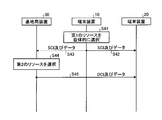
- FIG. 12 is a sequence diagram illustrating an example of the operation of the wireless communication system 1 when the base station device 30 transmits data to the terminal device 20 by itself.
- the terminal device 10 autonomously selects a first resource for data transmission from a plurality of resources (step S41).
- the terminal device 10 transmits data to the terminal device 20 using the first resource, and transmits an SCI indicating the position of the first resource to the terminal device 20 together with the data (step S42).
- the SCI and the data indicating the position of the first resource reach not only the terminal device 20 but also the base station device 30 forming the cell C where the terminal device 20 is located (step S43).
- the data that has reached the base station device 30 is stored in a predetermined buffer provided in the base station device 30.
- the SCI indicating the position of the first resource is detected by the base station device 30.
- the base station device 30 determines whether or not the reception quality of data in the terminal device 20 is good, using the SCI indicating the position of the first resource.
- the base station device 30 selects a second resource that does not overlap with the first resource (step S44).
- the base station device 30 transmits the data stored in the buffer to the terminal device 20 by using the selected second resource, and transmits the DCI indicating the position of the second resource to the terminal device 20 together with the data. Transmit (step S45).
- the DCI indicating the position of the second resource is transmitted via the PDCCH, and the data is transmitted via the PDSCH.
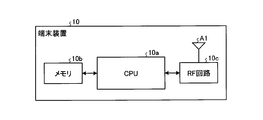
- FIG. 13 is a diagram illustrating a hardware configuration example of the terminal device 10.
- the terminal device 10 includes a CPU (Central Processing Unit) 10a, a memory 10b, and an RF (Radio Frequency) circuit 10c having an antenna A1.
- the memory 10b includes, for example, a RAM such as an SDRAM (Synchronous Dynamic Random Access Memory), a ROM (Read Only Memory), and a flash memory.
- the buffer unit 14 is realized by, for example, the memory 10b.
- the resource selection unit 11 and the resource selection unit 16 are realized by, for example, the CPU 10a.
- the SCI transmission unit 12, the data transmission unit 13, the DCI reception units 15, 65, and the repetition transmission units 17, 67 are realized by, for example, the CPU 10a and the RF circuit 10c.
- FIG. 14 is a diagram illustrating an example of a hardware configuration of the base station device 30.
- the base station device 30 includes a DSP (Digital Signal Processor) 30a, an FPGA (Field Programmable Gate Array) 30b, a memory 30c, an RF circuit 30d, and a network IF (Inter Face) 30e.
- the DSP 30a and the FPGA 30b are connected so that various signals and data can be input and output via a network IF 30e such as a switch.
- the RF circuit 30d has an antenna A2.
- the memory 30c includes, for example, a RAM such as an SDRAM, a ROM, and a flash memory.
- the reception quality determination unit 32 and the resource selection units 33 and 73 are realized by, for example, the DSP 30a and the FPGA 30b.
- the SCI detection unit 31 and the DCI transmission units 34 and 74 are realized by, for example, the RF circuit 30d, the DSP 30a, and the FPGA 30b.
- REFERENCE SIGNS LIST 1 wireless communication system 10 20 terminal device 11 resource selection unit 12 SCI transmission unit 13 data transmission unit 14 buffer unit 15, 65 DCI reception unit 16 resource selection unit 17, 67 repetition transmission unit 31 SCI detection unit 32 reception quality determination unit 33 , 73 Resource selection unit 34, 74 DCI transmission unit
Landscapes
- Engineering & Computer Science (AREA)
- Signal Processing (AREA)
- Computer Networks & Wireless Communication (AREA)
- Quality & Reliability (AREA)
- Mobile Radio Communication Systems (AREA)
Abstract
L'invention concerne un dispositif terminal qui comprend : une unité de sélection qui sélectionne de manière autonome une première ressource pour une transmission de données parmi de multiples ressources ; une première unité de transmission qui transmet des données à un autre dispositif terminal dans la plage d'une cellule d'un dispositif de station de base à l'aide de la première ressource ; une unité de réception qui reçoit des informations de commande transmises depuis le dispositif de station de base et désigne une seconde ressource qui ne chevauche pas la première ressource ; et une unité de transmission répétitive qui retransmet les données à l'autre dispositif terminal à l'aide de la seconde ressource désignée par les informations de commande.
Priority Applications (6)
| Application Number | Priority Date | Filing Date | Title |
|---|---|---|---|
| PCT/JP2018/029694 WO2020031282A1 (fr) | 2018-08-07 | 2018-08-07 | Dispositif terminal, dispositif de station de base, système de communication radio, et procédé de communication radio |
| EP18929205.5A EP3836660A4 (fr) | 2018-08-07 | 2018-11-08 | Dispositif terminal, dispositif de communication sans fil, système de communication sans fil, et procédé de communication sans fil |
| PCT/JP2018/041550 WO2020031397A1 (fr) | 2018-08-07 | 2018-11-08 | Dispositif terminal, dispositif de communication sans fil, système de communication sans fil, et procédé de communication sans fil |
| JP2020535483A JPWO2020031397A1 (ja) | 2018-08-07 | 2018-11-08 | 端末装置、無線通信装置、無線通信システム及び無線通信方法 |
| CN201880097428.9A CN112740780A (zh) | 2018-08-07 | 2018-11-08 | 终端装置、无线通信装置、无线通信系统和无线通信方法 |
| US17/169,015 US20210160846A1 (en) | 2018-08-07 | 2021-02-05 | Terminal device, wireless communication device, wireless communication system and wireless communication method |
Applications Claiming Priority (1)
| Application Number | Priority Date | Filing Date | Title |
|---|---|---|---|
| PCT/JP2018/029694 WO2020031282A1 (fr) | 2018-08-07 | 2018-08-07 | Dispositif terminal, dispositif de station de base, système de communication radio, et procédé de communication radio |
Publications (1)
| Publication Number | Publication Date |
|---|---|
| WO2020031282A1 true WO2020031282A1 (fr) | 2020-02-13 |
Family
ID=69413450
Family Applications (2)
| Application Number | Title | Priority Date | Filing Date |
|---|---|---|---|
| PCT/JP2018/029694 Ceased WO2020031282A1 (fr) | 2018-08-07 | 2018-08-07 | Dispositif terminal, dispositif de station de base, système de communication radio, et procédé de communication radio |
| PCT/JP2018/041550 Ceased WO2020031397A1 (fr) | 2018-08-07 | 2018-11-08 | Dispositif terminal, dispositif de communication sans fil, système de communication sans fil, et procédé de communication sans fil |
Family Applications After (1)
| Application Number | Title | Priority Date | Filing Date |
|---|---|---|---|
| PCT/JP2018/041550 Ceased WO2020031397A1 (fr) | 2018-08-07 | 2018-11-08 | Dispositif terminal, dispositif de communication sans fil, système de communication sans fil, et procédé de communication sans fil |
Country Status (5)
| Country | Link |
|---|---|
| US (1) | US20210160846A1 (fr) |
| EP (1) | EP3836660A4 (fr) |
| JP (1) | JPWO2020031397A1 (fr) |
| CN (1) | CN112740780A (fr) |
| WO (2) | WO2020031282A1 (fr) |
Families Citing this family (7)
| Publication number | Priority date | Publication date | Assignee | Title |
|---|---|---|---|---|
| CN115428490B (zh) * | 2020-04-09 | 2024-07-05 | 富士通株式会社 | 边链路发送和接收方法以及装置 |
| WO2021205611A1 (fr) * | 2020-04-09 | 2021-10-14 | 富士通株式会社 | Dispositif, procédé et système de communication |
| US11606806B2 (en) * | 2020-07-22 | 2023-03-14 | Qualcomm Incorporated | Resource management techniques for full-duplex and half-duplex vehicle-to-everything systems |
| US12289612B2 (en) | 2020-07-22 | 2025-04-29 | Qualcomm Incorporated | Cooperative full-duplex techniques for sidelink communications |
| CN116134874B (zh) * | 2020-08-17 | 2026-06-16 | Lg电子株式会社 | 用于有效支持nr v2x通信的方法和设备 |
| JP7487066B2 (ja) | 2020-10-14 | 2024-05-20 | 株式会社東芝 | 無線基地局、制御システム、電子装置、および無線通信端末 |
| JP2025059215A (ja) * | 2023-09-29 | 2025-04-10 | キヤノン株式会社 | 基地局装置、ユーザ端末装置、制御方法、プログラム、通信システム |
Citations (2)
| Publication number | Priority date | Publication date | Assignee | Title |
|---|---|---|---|---|
| JP2016032252A (ja) * | 2014-07-30 | 2016-03-07 | ソニー株式会社 | 装置 |
| US20170280469A1 (en) * | 2014-11-25 | 2017-09-28 | Lg Electronics Inc. | Method for assisting device-to-device communication in wireless communication system supporting device-to-device communication and device therefor |
Family Cites Families (8)
| Publication number | Priority date | Publication date | Assignee | Title |
|---|---|---|---|---|
| JP5285117B2 (ja) * | 2011-05-02 | 2013-09-11 | 株式会社エヌ・ティ・ティ・ドコモ | ユーザ端末、無線基地局装置、無線通信システム及び無線通信方法 |
| JP5939299B2 (ja) * | 2012-05-31 | 2016-06-22 | 富士通株式会社 | 無線通信システム、無線基地局装置、端末装置、及び無線リソースの割り当て方法 |
| EP3100573B1 (fr) * | 2014-01-29 | 2019-03-13 | Interdigital Patent Holdings, Inc. | Sélection de ressource pour une découverte ou une communication entre des dispositifs |
| JP6364196B2 (ja) * | 2014-01-30 | 2018-07-25 | 株式会社Nttドコモ | ユーザ端末、無線基地局、無線通信システム及び無線通信方法 |
| CN105338464B (zh) * | 2014-06-17 | 2020-10-20 | 索尼公司 | 无线通信系统中的用户设备侧的电子设备和无线通信方法 |
| US10484926B2 (en) * | 2015-08-12 | 2019-11-19 | Intel Corporation | Methods to enable high data rate relay operation using D2D air-interface |
| CN108353396A (zh) * | 2015-11-05 | 2018-07-31 | 株式会社Ntt都科摩 | 用户装置、基站、信号发送方法以及资源分配方法 |
| EP3412055B1 (fr) * | 2016-03-31 | 2021-05-05 | Lenovo Innovations Limited (Hong Kong) | Déclenchement de transmissions à l'aide d'informations de localisation |
-
2018
- 2018-08-07 WO PCT/JP2018/029694 patent/WO2020031282A1/fr not_active Ceased
- 2018-11-08 CN CN201880097428.9A patent/CN112740780A/zh active Pending
- 2018-11-08 WO PCT/JP2018/041550 patent/WO2020031397A1/fr not_active Ceased
- 2018-11-08 EP EP18929205.5A patent/EP3836660A4/fr not_active Withdrawn
- 2018-11-08 JP JP2020535483A patent/JPWO2020031397A1/ja active Pending
-
2021
- 2021-02-05 US US17/169,015 patent/US20210160846A1/en not_active Abandoned
Patent Citations (2)
| Publication number | Priority date | Publication date | Assignee | Title |
|---|---|---|---|---|
| JP2016032252A (ja) * | 2014-07-30 | 2016-03-07 | ソニー株式会社 | 装置 |
| US20170280469A1 (en) * | 2014-11-25 | 2017-09-28 | Lg Electronics Inc. | Method for assisting device-to-device communication in wireless communication system supporting device-to-device communication and device therefor |
Also Published As
| Publication number | Publication date |
|---|---|
| US20210160846A1 (en) | 2021-05-27 |
| JPWO2020031397A1 (ja) | 2021-08-12 |
| CN112740780A (zh) | 2021-04-30 |
| EP3836660A1 (fr) | 2021-06-16 |
| WO2020031397A1 (fr) | 2020-02-13 |
| EP3836660A4 (fr) | 2021-11-10 |
Similar Documents
| Publication | Publication Date | Title |
|---|---|---|
| US20210160846A1 (en) | Terminal device, wireless communication device, wireless communication system and wireless communication method | |
| JP2023144026A (ja) | 通信方法及び装置 | |
| JP7027706B2 (ja) | 送信装置、受信装置、送信方法、受信方法及び記録媒体 | |
| CN108141701B (zh) | 用于选择传输格式的方法和设备 | |
| US11929960B2 (en) | Resource allocation method and device, storage medium and terminal | |
| CN115804202B (zh) | 无线通信方法、终端设备和网络设备 | |
| US10841068B2 (en) | DL HARQ timing in TDD with 1 ms tti and reduced processing time | |
| JP2021516479A (ja) | データ伝送方法及び装置、コンピュータ記憶媒体 | |
| EP3944591B1 (fr) | Procédés d'envoi de configuration de service et de transmission de service, support d'informations, terminal et station de base | |
| US12003331B2 (en) | Wireless data transmission apparatus, wireless data reception apparatus and methods | |
| WO2018015612A1 (fr) | Détermination d'un schéma de modulation et de codage pour une transmission de diffusion non sélective ou sélective | |
| WO2019141371A1 (fr) | Connectivité multiple basée sur une première connexion de liaison latérale et une seconde connexion via une station de base pour des réseaux sans fil | |
| JP7774021B2 (ja) | フィードバック情報の伝送方法及び端末デバイス | |
| JP2024517827A (ja) | 車両間通信におけるue間調整要求信号 | |
| US11419107B2 (en) | Method and apparatus for setting up radio bearer in wireless communication system | |
| WO2018029632A1 (fr) | Synchronisation de programmation ul en tdd avec un tti de 1 ms et un temps de traitement réduit | |
| US20230134394A1 (en) | Terminal device, wireless communication system, and retransmission control method | |
| CN113784385A (zh) | 一种通信方法及相关装置 | |
| WO2021205611A1 (fr) | Dispositif, procédé et système de communication | |
| WO2016173644A1 (fr) | Utilisation de multiples ressources de message de découverte de dispositif à dispositif (d2d) pour transmettre un message de service dans un réseau sans fil | |
| KR102874331B1 (ko) | 무선 통신 시스템에서 패킷의 송수신을 제어하는 방법 및 장치 | |
| KR102695280B1 (ko) | V2x 통신을 지원하는 통신 시스템에서 송신/수신을 위한 설정 정보를 포함하는 제어 정보의 송수신 방법 및 장치 | |
| KR102931109B1 (ko) | 낮은 우선순위를 갖는 Configured Grant 데이터 전송 방법 및 장치 | |
| JP2025529743A (ja) | 無線通信におけるチャネルアクセス機構 | |
| CN119422403A (zh) | 设备到设备通信的系统和方法 |
Legal Events
| Date | Code | Title | Description |
|---|---|---|---|
| 121 | Ep: the epo has been informed by wipo that ep was designated in this application |
Ref document number: 18929481 Country of ref document: EP Kind code of ref document: A1 |
|
| NENP | Non-entry into the national phase |
Ref country code: DE |
|
| 122 | Ep: pct application non-entry in european phase |
Ref document number: 18929481 Country of ref document: EP Kind code of ref document: A1 |
|
| NENP | Non-entry into the national phase |
Ref country code: JP |