WO2020031358A1 - Dispositif utilisateur et procédé de transmission - Google Patents
Dispositif utilisateur et procédé de transmission Download PDFInfo
- Publication number
- WO2020031358A1 WO2020031358A1 PCT/JP2018/030002 JP2018030002W WO2020031358A1 WO 2020031358 A1 WO2020031358 A1 WO 2020031358A1 JP 2018030002 W JP2018030002 W JP 2018030002W WO 2020031358 A1 WO2020031358 A1 WO 2020031358A1
- Authority
- WO
- WIPO (PCT)
- Prior art keywords
- random access
- transmission resource
- index
- transmission
- access preamble
- Prior art date
- Legal status (The legal status is an assumption and is not a legal conclusion. Google has not performed a legal analysis and makes no representation as to the accuracy of the status listed.)
- Ceased
Links
Images





Classifications
-
- H—ELECTRICITY
- H04—ELECTRIC COMMUNICATION TECHNIQUE
- H04W—WIRELESS COMMUNICATION NETWORKS
- H04W16/00—Network planning, e.g. coverage or traffic planning tools; Network deployment, e.g. resource partitioning or cells structures
- H04W16/24—Cell structures
- H04W16/28—Cell structures using beam steering
-
- H—ELECTRICITY
- H04—ELECTRIC COMMUNICATION TECHNIQUE
- H04W—WIRELESS COMMUNICATION NETWORKS
- H04W74/00—Wireless channel access
- H04W74/002—Transmission of channel access control information
-
- H—ELECTRICITY
- H04—ELECTRIC COMMUNICATION TECHNIQUE
- H04W—WIRELESS COMMUNICATION NETWORKS
- H04W56/00—Synchronisation arrangements
- H04W56/001—Synchronization between nodes
-
- H—ELECTRICITY
- H04—ELECTRIC COMMUNICATION TECHNIQUE
- H04W—WIRELESS COMMUNICATION NETWORKS
- H04W72/00—Local resource management
- H04W72/20—Control channels or signalling for resource management
-
- H—ELECTRICITY
- H04—ELECTRIC COMMUNICATION TECHNIQUE
- H04W—WIRELESS COMMUNICATION NETWORKS
- H04W74/00—Wireless channel access
- H04W74/08—Non-scheduled access, e.g. ALOHA
- H04W74/0833—Random access procedures, e.g. with 4-step access
-
- H—ELECTRICITY
- H04—ELECTRIC COMMUNICATION TECHNIQUE
- H04W—WIRELESS COMMUNICATION NETWORKS
- H04W74/00—Wireless channel access
- H04W74/08—Non-scheduled access, e.g. ALOHA
- H04W74/0833—Random access procedures, e.g. with 4-step access
- H04W74/0838—Random access procedures, e.g. with 4-step access using contention-free random access [CFRA]
Definitions
- the present invention relates to a user apparatus and a transmission method in a wireless communication system.
- NR New Radio
- 5G 5th Generation Partnership Project
- NR New Radio
- 5G 5th Generation Partnership Project
- the study of a so-called wireless communication system is in progress (eg, Non-Patent Document 1).
- various wireless technologies are being studied in order to satisfy a requirement that a delay in a wireless section be 1 ms or less while realizing a throughput of 10 Gbps or more.
- NR In NR, it is assumed that a wide frequency range from a low frequency band similar to LTE to a higher frequency band than LTE is used. In particular, since propagation loss increases in a high frequency band, application of beamforming having a high beam gain is being studied to compensate for the increase.
- the base station or the user apparatus determines the direction of the transmission beam so as to improve the reception quality on the communication partner side by performing beam search (beam @ sweeping) or the like. It is possible.
- control information serving as a trigger for starting a random access procedure is an SSB index specifying a block of a synchronization signal and a RACH specifying a relative position of a transmission resource for transmitting a random access preamble.
- a receiving unit that receives control information, including an occassion index, from the base station; and, after receiving the control information, a time until the transmission preparation of the random access preamble is completed, the SSB index, and the RACH ocation index.
- a technology that enables a user apparatus to accurately determine a transmission position of a random access preamble in a wireless communication system in which beamforming is performed.
- FIG. 2 is a configuration diagram of a communication system according to the present embodiment.
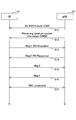
- FIG. 9 is a diagram illustrating an example of a random access procedure.
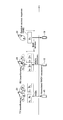
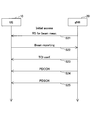
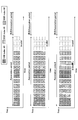
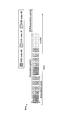
- FIG. 4 is a diagram illustrating a relationship between a beam and RACH. It is a figure showing the example of beam management. It is a figure which shows the example which matched several PRACH @ occasion with one SS / PRBCH index. It is a figure which shows the example of the allocation method of RACH @ occursion @ index. It is a figure which shows the transmission position of the message 1 of Example 1-5. It is a figure which shows the example of association @ cycle. It is a figure showing an example of a sequence of an operation example.
- FIG. 2 is a diagram illustrating an example of a functional configuration of a user device 10.
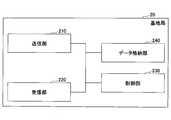
- FIG. 2 is a diagram illustrating an example of a functional configuration of a base station 20.
- FIG. 2 is a diagram illustrating an example of a hardware configuration of a user apparatus 10 and a base station 20.
- the wireless communication system in the following embodiments basically conforms to the NR, this is merely an example, and the wireless communication system in the present embodiment partially or entirely includes a wireless communication system other than the NR. It may be based on a communication system (eg, LTE).
- a communication system eg, LTE
- FIG. 1 shows a configuration diagram of a wireless communication system according to the present embodiment.
- the wireless communication system according to the present embodiment includes a user device 10 and a base station 20, as shown in FIG. FIG. 1 shows one user apparatus 10 and one base station 20, but this is an example, and a plurality of base stations 20 may be provided.
- the user device 10 is a communication device having a wireless communication function such as a smartphone, a mobile phone, a tablet, a wearable terminal, and a communication module for M2M (Machine-to-Machine), and is wirelessly connected to the base station 20 to perform wireless communication. Use various communication services provided by.
- the base station 20 is a communication device that provides one or more cells and wirelessly communicates with the user device 10. Both the user apparatus 10 and the base station 20 can perform signal transmission and reception by performing beamforming. Further, the user device 10 may be referred to as a UE, and the base station 20 may be referred to as an eNB.
- the duplex (duplex) method may be a TDD (Time Division Duplex) method or an FDD (Frequency Division Duplex) method.
- transmitting a signal using a beam is synonymous with transmitting a signal multiplied by a precoding vector (precoded with a precoding vector).
- transmitting a signal using a beam may be expressed as transmitting a signal at a specific antenna port.
- An antenna port refers to a logical antenna port defined in the 3GPP standard.
- the beam forming method is not limited to the above method.
- a method of changing the angle of each antenna element may be used, or a method using a precoding vector and changing the angle of the antenna element may be used.
- a method combining the methods may be used, or another method may be used.
- Random access procedure An example of a random access procedure according to the present embodiment will be described with reference to FIG. 2 may be called initial access.
- the base station 20 transmits an SS / PBCH block (also referred to as SSB) at a predetermined cycle, and the user device 10 receives the SS / PBCH block (S11).
- the SS / PBCH block includes a synchronization signal, a part of system information necessary for initial access (system frame number (SFN), information necessary for reading remaining system information, and the like).
- SFN system frame number
- the user device 10 receives the RMSI from the base station 20 (S12).
- the RMSI includes, for example, information on SIB1 in LTE.
- Msg2 includes a PDCCH used for the scheduling and a PSDCH carrying entity information unless otherwise specified.
- the user apparatus 10 that has received the ⁇ RA ⁇ response transmits Message3 (Msg3) including the predetermined information to the base station 20 (Step S15).
- Message3 is, for example, RRC ⁇ connection ⁇ request.
- the base station 20 that has received the Message3 transmits the Message4 (Msg4, for example, RRC ⁇ connection ⁇ setup) to the user device 10 (S16).
- Msg4 for example, RRC ⁇ connection ⁇ setup
- the user device 10 recognizes that the Message 4 is the Message 4 addressed to itself corresponding to the Message 3, and completes the random access procedure.
- An RRC connection is established (S17).
- FIG. 2 shows an example in which Message3 and Message4 are transmitted, but this is only an example.
- the technology according to the present embodiment can also be applied to a random access procedure in a case where Message 3 and Message 4 are not transmitted.
- FIG. 3 is a diagram illustrating an example in which the user apparatus 10 selects a beam in the case of performing multi-beam operation.
- the base station 20 transmits SSB with each of the four transmission beams indicated by A, B, C, and D.
- SSB-A is transmitted by beam A
- SSB-B is transmitted by beam B
- SSB-C is transmitted by beam C
- SSB-D is transmitted by beam D.
- the user apparatus 10 selects, for example, the SSB with the highest received power and / or the SSB with the highest SN ratio, and transmits RA @ preamble using the resource B associated with the index of the SSB.
- a resource for transmitting RA @ preamble may be referred to as RACH @ occasion.
- the base station 20 recognizes that the transmission beam B is selected as the transmission beam to the user apparatus 10 by receiving the RA @ preamble in the resource B, and for example, generates the RA @ response using the transmission beam B. Send.
- the relation between SSB (beam) and RACH @ occasion is notified to the user apparatus 10 in advance.
- FIG. 4 shows an operation example regarding beam management.
- the user apparatus 10 receives each RS (reference signal, eg, CSI-RS) or SSB transmitted from the base station 20 for each beam to measure each beam.
- Perform S21), for example, transmit the RS resource index (or SSB index) and the measurement result (RSRP and / or RSRQ) to the base station 20 as a beam report (S22).
- the beam report may be performed for each reception beam of the user device 10.
- the base station 20 transmits configuration information of TCI (Transmission Configuration Indication) to the user device 10.
- the information includes, for example, information (QCL relation) indicating the binding between the information of the SSB and the antenna port of the DM-RS.
- QCL relation information indicating the binding between the information of the SSB and the antenna port of the DM-RS.
- the user apparatus 10 can receive (demodulate) the PDCCH and the PDSCH, assuming the transmission beam used in the base station 20 (S24, S25).
- QCL Quadrature Co-Location (pseudo collocation)
- the wideband characteristic large-scale properties of the signal (or the radio channel corresponding to the antenna port) received by the user apparatus 10 from one antenna port is different from that of another antenna.
- the wideband characteristics include Doppler spread (Doppler @ spread) related to frequency offset, Doppler shift (Doppler @ shift), average delay (average @ delay) related to timing offset, delay spread (delay @ spread), and the like. It can also have an average gain (average @ gain).
- an antenna port of a certain SSB (or an antenna port of a CSI-RS) has a QCL relationship with a PDCCH (an antenna port of a DM-RS)
- the user apparatus 10 transmits them with the same downlink beam. It is possible to receive assuming that it will come.
- Preamble @ index (6 bits), PRACH @ Mask @ Index (4 bits), SS @ block @ index (6 bits), etc. are transmitted to the user device 10 using DCI @ format.
- the information may be notified by RRC signaling.
- the user apparatus 10 can execute the non-collision type RACH procedure by transmitting the Preamble of the designated Preindex @ index. Further, when a certain preamble @ index (for example, 000000) is specified, the user apparatus 10 may execute the collision type RACH procedure. That is, the user apparatus 10 may randomly select a Preamble @ index to be used from the Preamble @ index for the collision type RACH procedure.
- the PRACH @ mask @ index is information for notifying which time resource position of the RACH resource specified by the RACH configuration @ index (within the RACH configuration table) is used (Non-Patent Document 3). In the NR, the above-mentioned Preamble index, PRACH Mask Index, DCI format, etc. may be notified in different bit sizes or different formats.
- the PRACH mask index specifies which time resource position of the RACH resource specified by the RACH configuration index (in the RACH configuration table) is to be used. It is possible to set up to eight consecutive RACH @ occasions in a transmission resource associated with one SS @ block.
- the RACH configuration index specifies the relative position (relative position of a transmission resource for transmitting a random access preamble) of each RACH occurrence in each SS block (synchronous signal block).
- the PRACH mask index field indicates the PRACH occurrence of the PRACH transmission.
- the plurality of PRACH @ occasions are associated with one SS / PBCH index given in the SS / PBCH index field of the PDCCH @ order.
- the ordering of a plurality of PRACH occasions is as follows.
- a plurality of frequency-multiplexed PRACH occasions are ordered in ascending order of the frequency resource index.
- a plurality of time-multiplexed PRACH occasions in a PRACH slot are ordered in ascending time resource index order.
- the PRACH slots are ordered in ascending index order.
- FIG. 5 shows an example in which a plurality of PRACH @ occations are associated with one SS / PRBCH index.
- a plurality of PRACH occasions indicated by RACH occasion0index0, 1, 2, and 3 are assigned to transmission resources associated with Synchronization Signal Block (SSB) index # 0.
- a plurality of PRACH occurrences indicated by RACH occurrence index 0, 1, 2, and 3 are associated with a transmission resource associated with Synchronization Signal Block (SSB) index # 1, and RACH occurrence index 0, 1,
- a plurality of PRACH @ occasions indicated by 2, 3, and 3 are used for Synchronization @ Si.
- SSB index # transmission resources associated with the 2.
- the SSB @ index one or more transmission resources in the time direction in the Association @ period shown in FIG. 5 are specified, and by specifying the RACH @ occasion @ index, the SSB @ index is specified.
- a time and frequency position (relative position) in each transmission resource of one or a plurality of transmission resources is specified.
- AAssociation period shown in FIG. 5 is a cycle related to association between a plurality of PRACH occasions and SS / PBCH blocks.
- the Association ⁇ period may be defined so as to be mapped to the RACH ⁇ occasion at least once in the Association ⁇ period from all the transmitted SS / PBCH blocks based on the RACH ⁇ configuration ⁇ period specified by the RACH ⁇ configuration ⁇ table.
- RACH occasion index may be continuously assigned to a plurality of discontinuous RACH occasions corresponding to the same SS / PBCH block in Association period, or continuous For a plurality of RACH @ occasion that have not been performed, they may be allocated from the first RACH @ ococation @ index.
- RACH @ occasion @ index may not be assigned, and the first RACH @ occasion may be continued. It may be allocated from the index.
- the positions and the numbers of the time / frequency resources need not be limited to those shown in FIG.
- the timing at which the user device 10 can transmit the message 1 is, for example, after the user device 10 receives the PDCCH order (after receiving an instruction to perform RACH from the network), and prepares for transmission on the user device side.
- the processing time on the user device side may be specified in the specification).
- the user device 10 may try to execute the transmission of RA @ preamble, and the transmission preparation may be completed. It may be a perfect timing.
- the timing at which the user device 10 can transmit the message 1 is not limited to the PDCCH order, and may be a timing at which the user device 10 is ready to transmit RA @ preamble according to a notification from the network. .
- the user device 10 may notify the base station 20 of the time required for the user device side to prepare for transmission in advance.
- the message 1 (PRACH) is transmitted at a position where the RACH @ occasion @ index is 0 or 1 in the transmission resource associated with the second-order SSB @ index # 0 in the first association @ period. Is also good.
- the transmission position of the message 1 is determined by the specified RACH occlusion index and the specified timing immediately after the timing after the reception of the PDCCH order, at which the user apparatus 10 can transmit the message 1.
- PRACH time and frequency resources used for transmitting the message 1
- PRACH time and frequency resources for transmitting the message 1
- a message 1 (PRACH) at a position where RACH @ occasion @ index is 0 or 1 in a transmission resource whose first (first) SSB @ index is # 0 in the next association @ period shown in FIG. May be transmitted.
- an SSB index and a RACH occasion index are assigned to transmission resources.
- the RACH @ occasion @ index indicated by the PDCCH @ order is 2 or 3
- the SSB @ index indicated by the PDCCH @ order is # 1 or 2.
- the position where RACH @ occasion @ index is 2 or 3 enables user apparatus 10 to transmit message 1 after receiving PDCCH @ order. It is later than the timing. Also, the position of the first transmission resource corresponding to SSB @ index # 1 and # 2 is after the timing when the user apparatus 10 can transmit the message 1 after receiving the PDCCH @ order.
- the message 1 (PRACH) is located at the position of the transmission resource, which is the first transmission resource in the first association @ period and is provided with the corresponding SSB @ index and the corresponding RACH @ occasion @ index. ) May be sent.
- the transmission position of the message 1 is determined as the position of the transmission resource, which is the first transmission resource in the first association @ period and to which the corresponding SSB @ index and the corresponding RACH @ occasion @ index are assigned.
- Example 4 a message 1 (PRACH) at the position of the transmission resource, which is the second transmission resource in the first association @ period and is provided with the corresponding SSB @ index and the corresponding RACH @ occasion @ index ) May be sent.
- PRACH Physical Downlink Control
- the transmission position of message 1 is determined by the position of the transmission resource, which is the second transmission resource in the first association @ period, and to which the corresponding SSB @ index and the corresponding RACH @ occasion @ index are assigned. By doing so, it is possible to accurately specify the time and frequency resources used for transmitting the message 1 (PRACH).
- Example 5 of the first (first-order) transmission resource in the next association @ period shown in FIG. 5, the transmission resource to which the corresponding SSB @ index and the corresponding RACH @ occasion @ index are assigned The location may send message 1 (PRACH).
- PRACH message 1
- the transmission position of message 1 is determined by the transmission resource of the first (first-order) transmission resource in the next association @ period, to which the corresponding SSB @ index and the corresponding RACH @ occasion @ index are assigned.
- the time and frequency resources used for transmitting the message 1 (PRACH) can be specified accurately.
- FIG. 7 is a diagram showing a transmission position of the message 1 of the examples 1 to 5.
- one cycle of transmission resources corresponding to SSB @ index # 0, SSB @ index # 1, and SSB @ index # 2 in the association @ period is defined as one association @ cycle.
- the transmission position of the message 1 is the timing after the reception of the PDCCH @ order, after the timing at which the user equipment becomes possible to transmit, and the provision of the corresponding SSB @ index and the corresponding RACH @ ocation @ index. It is the position of the earliest transmission resource among the transmission resources thus set.
- the transmission position of the message 1 is the timing after the reception of the PDCCH order, including the timing after the timing at which the user apparatus can transmit and the timing at which the user apparatus can transmit.
- the association @ cycle immediately after the association @ cycle the position of the transmission resource to which the corresponding SSB @ index and the corresponding RACH @ occasion @ index are assigned.
- the transmission position of the message 1 is the timing after the reception of the PDCCH order, which is after the timing when the user apparatus can transmit, and includes the timing when the user apparatus can transmit.
- the association @ period immediately after the association @ period the position of the earliest transmission resource among the transmission resources to which the corresponding SSB @ index and the corresponding RACH @ occasion @ index is assigned.
- the user apparatus After receiving the PDCCH order, the user apparatus determines the transmission position of the message 1 and transmits the message 1 according to the method described in (a) above. As a premise of the operation example, it is assumed that the user apparatus 10 is in the connected mode and the base station 20 has detected that the user apparatus 10 may be out of UL synchronization.
- FIG. 9 shows an example of a sequence of an operation example.
- the PDCCH order including the SSB index and the RACH occasion index is transmitted from the base station 20 to the user apparatus 10.
- the user device 10 determines the transmission position of the message 1 based on the SSB @ index and the RACH_occasion @ index received in S101 after the timing at which the user device can transmit, and the corresponding SSB @ index and the corresponding It is determined to be the position of the earliest transmission resource among the transmission resources to which RACH @ occursion @ index has been assigned.
- the user device 10 transmits the message 1 at the transmission position of the message 1 determined in S102.
- the transmission position of the message 1 is determined by the timing after the reception of the PDCCH @ order, after the timing when the user equipment becomes able to transmit, and the corresponding SSB @ index and the corresponding RACH @ ocation @ index.
- the time and frequency resources used for transmission of the message 1 (PRACH) can be accurately specified, and the message 1 (PRACH) Can be reduced when transmitting the data.
- PRACH the time and frequency resources used for transmitting the message 1
- the user device 10 and the base station 20 have all the functions described in the present embodiment. However, the user apparatus 10 and the base station 20 may have only some of the functions described in the present embodiment. Note that the user device 10 and the base station 20 may be collectively referred to as a communication device.
- FIG. 10 is a diagram illustrating an example of a functional configuration of the user device 10.
- the user device 10 includes a transmission unit 110, a reception unit 120, a control unit 130, and a data storage unit 140.
- the functional configuration shown in FIG. 10 is only an example. As long as the operation according to the present embodiment can be executed, the names of the functional divisions and the functional units may be any.
- transmitting section 110 may be referred to as a transmitter
- receiving section 120 may be referred to as a receiver.
- Transmission section 110 creates transmission from transmission data and transmits the transmission signal wirelessly. Further, the transmitting unit 110 can form one or a plurality of beams.
- the receiving unit 120 wirelessly receives various signals and obtains a higher-layer signal from the received physical-layer signal. Further, receiving section 120 includes a measuring section that measures a signal to be received and obtains received power and the like.
- the control unit 130 controls the user device 10.
- the function of the control unit 130 related to transmission may be included in the transmission unit 110, and the function of the control unit 130 related to reception may be included in the reception unit 120.
- the data storage unit 140 stores, for example, setting information and the like.
- the setting information related to transmission may be stored in the transmitting unit 110, and the setting information related to reception may be stored in the receiving unit 120.
- the receiving unit 120 is configured to receive, from the base station 20, control information serving as a trigger for starting a random access procedure, and obtain a Preamble ⁇ index, a PRACH ⁇ occasion ⁇ index, an SS ⁇ block ⁇ index, etc. from the received control information.
- the unit 130 transmits the message 1 based on the time from when the control information that triggers the start of the random access procedure is received from the base station 20 to when the user apparatus 10 becomes available for transmission, PRACH @ occasion @ index, and SS @ block @ index. It is configured to determine a position.
- the transmission unit 110 is configured to transmit the message 1 at the determined transmission position of the message 1 based on the control of the control unit 130.
- control unit 130 determines the transmission position of the message 1 at the timing after the reception of the PDCCH @ order, after the timing at which the user apparatus 10 can transmit, and the corresponding SSB @ index and the corresponding It may be configured to determine the position of the earliest transmission resource among the transmission resources to which RACH @ occursion @ index is assigned.
- control unit 130 determines the transmission position of the message 1 at the timing after the reception of the PDCCH order, after the timing at which the user device 10 can transmit, and when the user device 10 transmits. It may be configured to determine the position of the transmission resource to which the corresponding SSB @ index and the corresponding RACH @ occasion @ index are included in the association @ cycle immediately after the association @ cycle including the enabled timing.
- control unit 130 determines the transmission position of the message 1 at the timing after the reception of the PDCCH order, after the timing at which the user device 10 can transmit, and when the user device 10 transmits.
- a configuration configured to determine the position of the earliest transmission resource among the transmission resources to which the corresponding SSB @ index and the corresponding RACH @ occasion @ index are included in the association @ period immediately after the association @ period including the enabled timing. May be done.
- FIG. 11 is a diagram illustrating an example of a functional configuration of the base station 20.
- the base station 20 includes a transmission unit 210, a reception unit 220, a control unit 230, and a data storage unit 240.
- the functional configuration shown in FIG. 11 is only an example. As long as the operation according to the present embodiment can be executed, the names of the functional divisions and the functional units may be any.
- transmitting section 210 may be referred to as a transmitter
- receiving section 220 may be referred to as a receiver.
- the transmission unit 210 has a function of generating a signal to be transmitted to the user device 10 and transmitting the signal wirelessly. Further, the transmission unit 210 forms one or a plurality of beams.
- the receiving unit 220 includes a function of receiving various signals transmitted from the user device 10 and acquiring, for example, information of a higher layer from the received signals.
- receiving section 220 includes a measuring section that measures a signal to be received and obtains received power and the like.
- the control unit 230 controls the base station 20. Note that the function of the control unit 230 related to transmission may be included in the transmission unit 210, and the function of the control unit 230 related to reception may be included in the reception unit 220.
- the data storage unit 240 stores, for example, setting information and the like.
- the setting information related to transmission may be stored in the transmitting unit 210, and the setting information related to receiving may be stored in the receiving unit 220.
- each functional block may be realized by one device in which a plurality of elements are physically and / or logically combined, or two or more devices physically and / or logically separated from each other directly and And / or indirectly (for example, wired and / or wireless), and may be implemented by these multiple devices.
- both the user apparatus 10 and the base station 20 according to the embodiment of the present invention may function as a computer that performs processing according to the present embodiment.
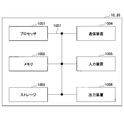
- FIG. 12 is a diagram illustrating an example of a hardware configuration of the user apparatus 10 and the base station 20 according to the present embodiment.
- Each of the above-described user device 10 and base station 20 may be physically configured as a computer device including a processor 1001, a memory 1002, a storage 1003, a communication device 1004, an input device 1005, an output device 1006, a bus 1007, and the like. Good.
- the term “apparatus” can be read as a circuit, a device, a unit, or the like.
- the hardware configuration of the user device 10 and the base station 20 may be configured to include one or more devices 1001 to 1006 illustrated in the drawing, or may be configured without including some devices. You may.
- the functions of the user apparatus 10 and the base station 20 are performed by reading predetermined software (program) on hardware such as the processor 1001 and the memory 1002, so that the processor 1001 performs an operation. It is realized by controlling data reading and / or writing in the storage 1003.
- the processor 1001 controls the entire computer by operating an operating system, for example.
- the processor 1001 may be configured by a central processing unit (CPU: Central Processing Unit) including an interface with a peripheral device, a control device, an arithmetic device, a register, and the like.
- CPU Central Processing Unit
- the processor 1001 reads a program (program code), a software module, or data from the storage 1003 and / or the communication device 1004 to the memory 1002, and executes various processes according to these.
- a program program that causes a computer to execute at least a part of the operation described in the above embodiment is used.
- the transmission unit 110, the reception unit 120, the control unit 130, and the data storage unit 140 of the user device 10 illustrated in FIG. 10 may be realized by a control program stored in the memory 1002 and operated by the processor 1001. Further, for example, the transmission unit 210, the reception unit 220, the control unit 230, and the data storage unit 240 of the base station 20 illustrated in FIG.
- Process 11 are realized by a control program stored in the memory 1002 and operated by the processor 1001. Is also good. Although it has been described that the various processes described above are executed by one processor 1001, the processes may be executed simultaneously or sequentially by two or more processors 1001. Processor 1001 may be implemented with one or more chips. Note that the program may be transmitted from a network via a telecommunication line.
- the memory 1002 is a computer-readable recording medium, such as a ROM (Read Only Memory), an EPROM (Erasable Programmable ROM), an EEPROM (Electrically Erasable Programmable ROM), and a RAM (Random Access Memory) or a RAM (Random Access Memory). May be done.
- the memory 1002 may be called a register, a cache, a main memory (main storage device), or the like.
- the memory 1002 can store a program (program code), a software module, and the like that can be executed to execute the processing according to the embodiment of the present invention.
- the storage 1003 is a computer-readable recording medium, for example, an optical disk such as a CD-ROM (Compact Disc ROM), a hard disk drive, a flexible disk, a magneto-optical disk (eg, a compact disk, a digital versatile disk, a Blu-ray). (Registered trademark) disk, a smart card, a flash memory (for example, a card, a stick, a key drive), a floppy (registered trademark) disk, and a magnetic strip.
- the storage 1003 may be called an auxiliary storage device.
- the storage medium described above may be, for example, a database including the memory 1002 and / or the storage 1003, a server, or any other suitable medium.
- the communication device 1004 is hardware (transmitting / receiving device) for performing communication between computers via a wired and / or wireless network, and is also referred to as, for example, a network device, a network controller, a network card, a communication module, or the like.
- the transmitting unit 110 and the receiving unit 120 of the user device 10 may be realized by the communication device 1004.
- the transmission unit 210 and the reception unit 220 of the base station 20 may be realized by the communication device 1004.
- the input device 1005 is an input device (for example, a keyboard, a mouse, a microphone, a switch, a button, a sensor, and the like) that receives an external input.
- the output device 1006 is an output device that performs output to the outside (for example, a display, a speaker, an LED lamp, and the like). Note that the input device 1005 and the output device 1006 may have an integrated configuration (for example, a touch panel).
- the devices such as the processor 1001 and the memory 1002 are connected by a bus 1007 for communicating information.
- the bus 1007 may be configured by a single bus, or may be configured by a different bus between the devices.
- the user apparatus 10 and the base station 20 are respectively a microprocessor, a digital signal processor (DSP), an ASIC (Application Specific Integrated Circuit), a PLD (Programmable Logic Digital FPGA, an FPGA, etc.), and an ASIC (Application Specific Integrated Circuit). It may be configured to include hardware, and some or all of the functional blocks may be realized by the hardware. For example, the processor 1001 may be implemented by at least one of these hardware.
- the SSB index specifying the block of the synchronization signal and the relative position of the transmission resource for transmitting the random access preamble are control information that triggers the start of the random access procedure.
- a receiving unit that receives control information from the base station, including a RACH occurrence index that specifies the time until the transmission preparation of the random access preamble is completed after receiving the control information, the SSB index, and the Based on a RACH occurrence index, a control unit that determines a position of a transmission resource that transmits the random access preamble, and a transmission unit that transmits the random access preamble at a position of the transmission resource determined by the control unit. Over The device is provided.
- Time and frequency resources used for transmitting a random access preamble can be specified accurately.
- control unit is a transmission resource associated with the SSB index, and a position designated by the RACH occasion index in a transmission resource at a position earliest with respect to time receives the control information. After that, when it is detected that the timing before the time until the preparation for the transmission of the random access preamble is completed has elapsed, the relative position of the block of the synchronization signal and the transmission resource for transmitting the random access preamble is detected. A position designated by the RACH occasion index in a transmission resource associated with the SSB index in the second order within a cycle related to the position is determined as a position of the transmission resource transmitting the random access preamble. It may be.
- the control unit is a transmission resource associated with the SSB index, the position of the earliest position with respect to time, in the transmission resource, in the position specified by the RACH ccocation index, after receiving the control information If it is detected that the timing before the time until the transmission preparation of the random access preamble is completed has elapsed, the relative position of the block of the synchronization signal and the transmission resource for transmitting the random access preamble In the next cycle of the cycle related to the association, the position specified by the RACH occasion index in the transmission resource associated with the first-order SSB index, the position of the transmission resource for transmitting the random access preamble It may be determined Te.
- the control unit is a transmission resource associated with the SSB index, the position of the earliest position with respect to time, in the transmission resource, in the position specified by the RACH ccocation index, after receiving the control information .
- the location of the transmission resource, after receiving the control information if it is detected that the timing after the time until the preparation for the transmission of the random access preamble is completed is later than the block of the synchronization signal,
- a transmission resource for transmitting the random access preamble In the cycle related to the association with the relative position of the resource, the position of the transmission resource, which is the first-order transmission resource, to which the SSB index and the RACH occasion index are assigned, is referred to as the random access preamble.
- the position of the transmission resource to be transmitted may be determined.
- the transmission position of the random access preamble is defined as the first transmission resource in the first association @ period, and the transmission resource to which the corresponding SSB @ index and the corresponding RACH @ occasion @ index are assigned.
- the control unit is a transmission resource associated with the SSB index, the position of the earliest position with respect to time, in the transmission resource, in the position specified by the RACH ccocation index, after receiving the control information .
- the location of the transmission resource, after receiving the control information if it is detected that the timing after the time until the preparation for the transmission of the random access preamble is completed is later than the block of the synchronization signal,
- a transmission resource for transmitting the random access preamble In the cycle related to the association with the relative position of the source, the position of the transmission resource, which is the second-order transmission resource to which the SSB index and the RACH occasion index are added, is referred to as the random access preamble.
- the position of the transmission resource to be transmitted may be determined.
- the transmission position of the random access preamble is defined as the transmission resource of the second transmission resource in the first association ⁇ period, which is provided with the corresponding SSB ⁇ index and the corresponding RACH ⁇ occasion ⁇ index.
- the control unit is a transmission resource associated with the SSB index, the position of the earliest position with respect to time, in the transmission resource, in the position specified by the RACH ccocation index, after receiving the control information .
- the location of the transmission resource, after receiving the control information if it is detected that the timing after the time until the preparation for the transmission of the random access preamble is completed is later than the block of the synchronization signal,
- a transmission resource for transmitting the random access preamble In the next cycle of the cycle related to the association with the relative position of the resource, the position of the transmission resource, which is the first transmission resource, to which the SSB index and the RACHRAoccasion index are added, is It may be determined as the position of the transmission resource for transmitting the access preamble.
- the transmission position of the random access preamble is determined as the transmission resource of the first (first-order) transmission resource in the next association ⁇ period, to which the corresponding SSB ⁇ index and the corresponding RACH ⁇ occasion ⁇ index are assigned, , It is possible to accurately specify the time and frequency resources used for transmitting the random access preamble.
- the SSB index that specifies the block of the synchronization signal and the RACH @ ocation that specifies the relative position of the transmission resource for transmitting the random access preamble is control information that triggers the start of the random access procedure. Including an index, control information, receiving the control information from the base station, and after receiving the control information, the time until the preparation for the transmission of the random access preamble is completed, the SSB index, and the RACH occposition index, Determining a position of a transmission resource for transmitting the random access preamble, and transmitting the random access preamble at a position of the transmission resource determined by the control unit. Method of transmitting the access preamble is provided.
- Time and frequency resources used for transmitting a random access preamble can be specified accurately.
- transmitting the random access preamble within a time interval of about one association @ period after the preparation for transmitting the random access preamble is completed in the user apparatus it is possible to reduce delay in transmitting the random access preamble. it can.
- the operation of a plurality of functional units may be physically performed by one component, or the operation of one functional unit may be physically performed by a plurality of components.
- the order of the processing may be changed as long as there is no contradiction.
- the user device 10 and the base station 20 have been described using a functional block diagram for convenience of description of the process, such a device may be realized by hardware, software, or a combination thereof.
- the software operated by the processor of the user device 10 according to the embodiment of the present invention and the software operated by the processor of the base station 20 according to the embodiment of the present invention are respectively random access memory (RAM), flash memory, and read-only.
- the data may be stored in a memory (ROM), EPROM, EEPROM, register, hard disk (HDD), removable disk, CD-ROM, database, server, or any other suitable storage medium.
- the time-frequency resource position for transmitting the random access preamble is set to the SSB @ index and the corresponding RACH @ ocation @ index. Based on the method of identification. However, even in the case where the preamble @ index is divided for each SSB (the case where a plurality of SSBs are linked to one RACH @ ocation), the above-described method takes the time position of the resource into consideration. It is possible to apply in the same way.
- the present invention can be applied to contention free random access other than PDCCH order such as handover or addition of PSCell.
- the present invention is applicable to the case of CSI-RS based random access instead of SS block.
- the notification of information is not limited to the aspect / embodiment described in this specification, and may be performed by another method.
- the information is notified by physical layer signaling (for example, DCI (Downlink Control Information), UCI (Uplink Control Information)), higher layer signaling (for example, RRC (Radio Resource Control) signaling, MAC (Medium Access Control signaling), MAC (Medium Access Control signaling).
- RRC Radio Resource Control
- MAC Medium Access Control signaling
- MAC Medium Access Control signaling
- MAC Medium Access Control signaling
- RRC signaling may be called an RRC message, for example, RRC message.
- Each aspect / embodiment described herein may be implemented in LTE (Long Term Evolution), LTE-A (LTE-Advanced), SUPER 3G, IMT-Advanced, 4G, 5G, FRA (Future Radio Access), W-CDMA.
- LTE Long Term Evolution
- LTE-A Long Term Evolution-Advanced
- SUPER 3G IMT-Advanced
- 4G 5G
- FRA Full Radio Access
- W-CDMA Wideband
- GSM registered trademark
- CDMA2000 Code Division Multiple Access 2000
- UMB User Mobile Broadband
- IEEE 802.11 Wi-Fi
- IEEE 802.16 WiMAX
- IEEE 802.20 UWB (Ultra-WideBand
- the present invention may be applied to a system using Bluetooth (registered trademark), another appropriate system, and / or a next-generation system extended based on the system.
- the specific operation described as being performed by the base station 20 in this specification may be performed by an upper node (upper node) in some cases.
- an upper node In a network consisting of one or more network nodes (network @ nodes) having a base station 20, various operations performed for communication with the user equipment 10 may be performed by the base station 20 and / or other than the base station 20.
- a network node eg, such as, but not limited to, an MME or S-GW.
- MME Mobility Management Entity
- S-GW network node
- the user equipment 10 can be configured by a person skilled in the art by a subscriber station, mobile unit, subscriber unit, wireless unit, remote unit, mobile device, wireless device, wireless communication device, remote device, mobile subscriber station, access terminal, mobile terminal, It may also be called a wireless terminal, remote terminal, handset, user agent, mobile client, client, or some other suitable term.
- Base station 20 may also be referred to by those skilled in the art as NB (NodeB), eNB (enhanced NodeB), base station (Base ⁇ Station), gNB, or some other suitable terminology.
- determining may encompass a wide variety of actions.
- “Judgment” and “decision” include, for example, judging, calculating, computing, processing, deriving, investing, and searching (up) (for example, a table). , A search in a database or another data structure), ascertaining is regarded as "determined", “determined”, and the like.
- “determination” and “decision” include receiving (for example, receiving information), transmitting (for example, transmitting information), input, output, and access. (E.g., accessing data in a memory) may be regarded as "determined” or "determined”.
- judgment and “decision” means that resolving, selecting, choosing, establishing, comparing, and the like are regarded as “judgment” and “determined”. May be included. In other words, “judgment” and “decision” may include deeming any operation as “judgment” and “determined”.
Landscapes
- Engineering & Computer Science (AREA)
- Computer Networks & Wireless Communication (AREA)
- Signal Processing (AREA)
- Mobile Radio Communication Systems (AREA)
Abstract
La présente invention concerne un dispositif d'utilisateur doté : d'une unité de réception pour recevoir, en provenance d'une station de base, des informations de commande qui déclenchent le début d'une procédure d'accès aléatoire et comprennent un indice SSB spécifiant un bloc d'un signal de synchronisation et un indice d'occasion RACH désignant une position relative d'une ressource de transmission pour transmettre un préambule d'accès aléatoire ; d'une unité de commande qui détermine la position d'une ressource de transmission pour transmettre le préambule d'accès aléatoire, sur la base d'un temps pris à partir de la réception des informations de commande à l'achèvement de la préparation pour transmettre le préambule d'accès aléatoire, l'indice SSB, et l'indice d'occasion RACH ; et d'une unité de transmission qui transmet le préambule d'accès aléatoire à la position de la ressource de transmission déterminée par l'unité de commande.
Priority Applications (5)
| Application Number | Priority Date | Filing Date | Title |
|---|---|---|---|
| EP18929281.6A EP3836719A4 (fr) | 2018-08-09 | 2018-08-09 | Dispositif utilisateur et procédé de transmission |
| PCT/JP2018/030002 WO2020031358A1 (fr) | 2018-08-09 | 2018-08-09 | Dispositif utilisateur et procédé de transmission |
| US17/263,457 US20210298087A1 (en) | 2018-08-09 | 2018-08-09 | User equipment and transmission method |
| JP2020535454A JP7349435B2 (ja) | 2018-08-09 | 2018-08-09 | 端末、送信方法、通信システム、及び基地局 |
| CN201880096172.XA CN112514512B (zh) | 2018-08-09 | 2018-08-09 | 用户装置及发送方法 |
Applications Claiming Priority (1)
| Application Number | Priority Date | Filing Date | Title |
|---|---|---|---|
| PCT/JP2018/030002 WO2020031358A1 (fr) | 2018-08-09 | 2018-08-09 | Dispositif utilisateur et procédé de transmission |
Publications (1)
| Publication Number | Publication Date |
|---|---|
| WO2020031358A1 true WO2020031358A1 (fr) | 2020-02-13 |
Family
ID=69414732
Family Applications (1)
| Application Number | Title | Priority Date | Filing Date |
|---|---|---|---|
| PCT/JP2018/030002 Ceased WO2020031358A1 (fr) | 2018-08-09 | 2018-08-09 | Dispositif utilisateur et procédé de transmission |
Country Status (5)
| Country | Link |
|---|---|
| US (1) | US20210298087A1 (fr) |
| EP (1) | EP3836719A4 (fr) |
| JP (1) | JP7349435B2 (fr) |
| CN (1) | CN112514512B (fr) |
| WO (1) | WO2020031358A1 (fr) |
Cited By (2)
| Publication number | Priority date | Publication date | Assignee | Title |
|---|---|---|---|---|
| WO2024157357A1 (fr) * | 2023-01-24 | 2024-08-02 | 株式会社Nttドコモ | Terminal, procédé de communication sans fil et station de base |
| WO2024157358A1 (fr) * | 2023-01-24 | 2024-08-02 | 株式会社Nttドコモ | Terminal, procédé de communication sans fil, et station de base |
Families Citing this family (5)
| Publication number | Priority date | Publication date | Assignee | Title |
|---|---|---|---|---|
| CN112567826B (zh) * | 2018-08-10 | 2024-04-23 | 联想(新加坡)私人有限公司 | 识别同步信号/物理广播信道块时机 |
| KR102902138B1 (ko) * | 2019-06-27 | 2025-12-19 | 삼성전자 주식회사 | 무선 통신 시스템에서 랜덤 액세스을 위한 방법 및 장치 |
| CN114430926B (zh) * | 2019-10-03 | 2024-07-26 | Lg电子株式会社 | 在无线通信系统中发送和接收信号的方法和设备 |
| CN114830749A (zh) * | 2019-12-17 | 2022-07-29 | Oppo广东移动通信有限公司 | 信号检测方法、信号传输方法、终端设备和网络设备 |
| EP4434168A4 (fr) * | 2021-11-15 | 2025-08-27 | Commscope Technologies Llc | Systèmes et procédés de formation de faisceaux de canaux de diffusion et de synchronisation |
Family Cites Families (13)
| Publication number | Priority date | Publication date | Assignee | Title |
|---|---|---|---|---|
| KR101226819B1 (ko) * | 2006-08-21 | 2013-01-25 | 삼성전자주식회사 | 광대역 무선 통신 시스템에서 역방향 접근채널의 프리앰블송수신 방법 및 장치 |
| WO2010052522A1 (fr) * | 2008-11-07 | 2010-05-14 | Nokia Corporation | Regroupement de messages de canal d'accès aléatoire |
| CN101841922B (zh) * | 2009-03-16 | 2015-01-28 | 中兴通讯股份有限公司 | 选择随机接入资源的方法及终端 |
| CN102573101A (zh) * | 2012-02-13 | 2012-07-11 | 中国科学院计算技术研究所 | Lte系统用户设备随机接入的方法和装置 |
| CN106304383A (zh) * | 2015-05-22 | 2017-01-04 | 中兴通讯股份有限公司 | 一种随机接入的方法、基站以及用户设备 |
| JP6642842B2 (ja) * | 2015-08-14 | 2020-02-12 | ホアウェイ・テクノロジーズ・カンパニー・リミテッド | 情報伝送方法、基地局、およびユーザ機器 |
| KR101934160B1 (ko) * | 2015-09-24 | 2019-01-02 | 주식회사 케이티 | Mtc 단말을 위한 랜덤 액세스 응답 수신 방법 및 장치 |
| US11277866B2 (en) * | 2016-05-27 | 2022-03-15 | Ntt Docomo, Inc. | Communication device and random access control method |
| JP6863724B2 (ja) * | 2016-12-02 | 2021-04-21 | 株式会社ガスター | 給湯システム |
| SG11201900189YA (en) * | 2017-05-03 | 2019-02-27 | Lg Electronics Inc | Method for transmitting and receiving random access channel, and device for same |
| KR102429435B1 (ko) * | 2018-01-11 | 2022-08-04 | 삼성전자주식회사 | 랜덤 액세스 프로세스에서 시간-주파수 리소스를 결정하고 구성하는 방법들 및 장치들 |
| WO2019158984A1 (fr) | 2018-02-16 | 2019-08-22 | Telefonaktiebolaget Lm Ericsson (Publ) | Procédés fournissant une indication d'occasion de rach pour une procédure d'accès aléatoire initiée par un ordre de pdcch et terminaux sans fil et stations de base associés |
| JP7158174B2 (ja) * | 2018-05-10 | 2022-10-21 | シャープ株式会社 | 基地局装置、端末装置、通信方法、および、集積回路 |
-
2018
- 2018-08-09 WO PCT/JP2018/030002 patent/WO2020031358A1/fr not_active Ceased
- 2018-08-09 JP JP2020535454A patent/JP7349435B2/ja active Active
- 2018-08-09 CN CN201880096172.XA patent/CN112514512B/zh active Active
- 2018-08-09 US US17/263,457 patent/US20210298087A1/en active Pending
- 2018-08-09 EP EP18929281.6A patent/EP3836719A4/fr active Pending
Non-Patent Citations (4)
| Title |
|---|
| 3GPP TS 38.213, June 2018 (2018-06-01) |
| 3GPP TS 38.300, December 2017 (2017-12-01) |
| 3GPP TS 38.321, June 2018 (2018-06-01) |
| NTT DOCOMO, INC.: "Remaining issues on RACH procedure", 3GPP TSG RAN WG1 MEETING #93 R1-1807603, 20 May 2018 (2018-05-20), XP051442611 * |
Cited By (2)
| Publication number | Priority date | Publication date | Assignee | Title |
|---|---|---|---|---|
| WO2024157357A1 (fr) * | 2023-01-24 | 2024-08-02 | 株式会社Nttドコモ | Terminal, procédé de communication sans fil et station de base |
| WO2024157358A1 (fr) * | 2023-01-24 | 2024-08-02 | 株式会社Nttドコモ | Terminal, procédé de communication sans fil, et station de base |
Also Published As
| Publication number | Publication date |
|---|---|
| JPWO2020031358A1 (ja) | 2021-08-10 |
| EP3836719A4 (fr) | 2022-03-30 |
| CN112514512A (zh) | 2021-03-16 |
| EP3836719A1 (fr) | 2021-06-16 |
| JP7349435B2 (ja) | 2023-09-22 |
| US20210298087A1 (en) | 2021-09-23 |
| CN112514512B (zh) | 2024-07-30 |
Similar Documents
| Publication | Publication Date | Title |
|---|---|---|
| JP7154302B2 (ja) | ユーザ装置及び通信方法 | |
| WO2020135400A1 (fr) | Procédé de communication et appareil de communication | |
| JP7349435B2 (ja) | 端末、送信方法、通信システム、及び基地局 | |
| WO2020224575A1 (fr) | Procédé et appareil de communication | |
| JP7117370B2 (ja) | ユーザ装置 | |
| US20200187266A1 (en) | Random access method, device, and system | |
| JP7150042B2 (ja) | 信号伝送方法、ネットワーク装置及び端末装置 | |
| CN105103470A (zh) | 用于设备到设备通信的网络协助的多小区设备发现协议 | |
| WO2019159304A1 (fr) | Dispositif utilisateur et dispositif de station de base | |
| CN116325605B (zh) | Tci状态列表更新方法、装置、设备及存储介质 | |
| US20230049532A1 (en) | Random access method and terminal device | |
| KR20260018180A (ko) | 정보 결정 방법, 단말 기기 및 네트워크 기기 | |
| US11044701B2 (en) | Communication method and communication apparatus | |
| US11979913B2 (en) | User equipment and signal monitoring method | |
| US11419144B2 (en) | User apparatus and base station apparatus | |
| WO2025168028A1 (fr) | Procédé de transfert intercellulaire, et dispositif, support de stockage et produit | |
| JPWO2018173229A1 (ja) | ユーザ装置、及びランダムアクセスプリアンブル送信方法 | |
| CN117880859A (zh) | 波形切换方法、设备、介质、芯片系统及产品 | |
| JP7568368B2 (ja) | 端末、基地局、通信システム及び通信方法 | |
| JP7434347B2 (ja) | 端末及び通信方法 | |
| CA3092291C (fr) | Dispositif utilisateur et dispositif de station de base | |
| JP7390394B2 (ja) | 端末、通信システム及び通信方法 | |
| EP3648519B1 (fr) | Sélection du bloc de signal de synchronisation pour l'accès initial | |
| WO2019244319A1 (fr) | Équipement d'utilisateur | |
| WO2019211913A1 (fr) | Dispositif utilisateur et dispositif station de base |
Legal Events
| Date | Code | Title | Description |
|---|---|---|---|
| 121 | Ep: the epo has been informed by wipo that ep was designated in this application |
Ref document number: 18929281 Country of ref document: EP Kind code of ref document: A1 |
|
| ENP | Entry into the national phase |
Ref document number: 2020535454 Country of ref document: JP Kind code of ref document: A |
|
| NENP | Non-entry into the national phase |
Ref country code: DE |
|
| ENP | Entry into the national phase |
Ref document number: 2018929281 Country of ref document: EP Effective date: 20210309 |