WO2020031436A1 - Méthode de mesure de peptide natriurétique cérébral et trousse de mesure de peptide natriurétique cérébral - Google Patents
Méthode de mesure de peptide natriurétique cérébral et trousse de mesure de peptide natriurétique cérébral Download PDFInfo
- Publication number
- WO2020031436A1 WO2020031436A1 PCT/JP2019/016737 JP2019016737W WO2020031436A1 WO 2020031436 A1 WO2020031436 A1 WO 2020031436A1 JP 2019016737 W JP2019016737 W JP 2019016737W WO 2020031436 A1 WO2020031436 A1 WO 2020031436A1
- Authority
- WO
- WIPO (PCT)
- Prior art keywords
- natriuretic peptide
- brain natriuretic
- metal film
- bnp
- protease inhibitor
- Prior art date
- Legal status (The legal status is an assumption and is not a legal conclusion. Google has not performed a legal analysis and makes no representation as to the accuracy of the status listed.)
- Ceased
Links
Images



Classifications
-
- G—PHYSICS
- G01—MEASURING; TESTING
- G01N—INVESTIGATING OR ANALYSING MATERIALS BY DETERMINING THEIR CHEMICAL OR PHYSICAL PROPERTIES
- G01N33/00—Investigating or analysing materials by specific methods not covered by groups G01N1/00 - G01N31/00
- G01N33/48—Biological material, e.g. blood, urine; Haemocytometers
- G01N33/50—Chemical analysis of biological material, e.g. blood, urine; Testing involving biospecific ligand binding methods; Immunological testing
- G01N33/58—Chemical analysis of biological material, e.g. blood, urine; Testing involving biospecific ligand binding methods; Immunological testing involving labelled substances
- G01N33/582—Chemical analysis of biological material, e.g. blood, urine; Testing involving biospecific ligand binding methods; Immunological testing involving labelled substances with fluorescent label
-
- G—PHYSICS
- G01—MEASURING; TESTING
- G01N—INVESTIGATING OR ANALYSING MATERIALS BY DETERMINING THEIR CHEMICAL OR PHYSICAL PROPERTIES
- G01N33/00—Investigating or analysing materials by specific methods not covered by groups G01N1/00 - G01N31/00
- G01N33/48—Biological material, e.g. blood, urine; Haemocytometers
- G01N33/50—Chemical analysis of biological material, e.g. blood, urine; Testing involving biospecific ligand binding methods; Immunological testing
- G01N33/53—Immunoassay; Biospecific binding assay; Materials therefor
- G01N33/543—Immunoassay; Biospecific binding assay; Materials therefor with an insoluble carrier for immobilising immunochemicals
- G01N33/54366—Apparatus specially adapted for solid-phase testing
- G01N33/54373—Apparatus specially adapted for solid-phase testing involving physiochemical end-point determination, e.g. wave-guides, FETS, gratings
-
- G—PHYSICS
- G01—MEASURING; TESTING
- G01N—INVESTIGATING OR ANALYSING MATERIALS BY DETERMINING THEIR CHEMICAL OR PHYSICAL PROPERTIES
- G01N21/00—Investigating or analysing materials by the use of optical means, i.e. using sub-millimetre waves, infrared, visible or ultraviolet light
- G01N21/62—Systems in which the material investigated is excited whereby it emits light or causes a change in wavelength of the incident light
- G01N21/63—Systems in which the material investigated is excited whereby it emits light or causes a change in wavelength of the incident light optically excited
- G01N21/64—Fluorescence; Phosphorescence
- G01N21/645—Specially adapted constructive features of fluorimeters
- G01N21/648—Specially adapted constructive features of fluorimeters using evanescent coupling or surface plasmon coupling for the excitation of fluorescence
-
- G—PHYSICS
- G01—MEASURING; TESTING
- G01N—INVESTIGATING OR ANALYSING MATERIALS BY DETERMINING THEIR CHEMICAL OR PHYSICAL PROPERTIES
- G01N2333/00—Assays involving biological materials from specific organisms or of a specific nature
- G01N2333/435—Assays involving biological materials from specific organisms or of a specific nature from animals; from humans
- G01N2333/575—Hormones
- G01N2333/58—Atrial natriuretic factor complex; Atriopeptin; Atrial natriuretic peptide [ANP]; Brain natriuretic peptide [BNP, proBNP]; Cardionatrin; Cardiodilatin
Definitions
- the present invention relates to a method for measuring brain natriuretic peptide and a kit for measuring brain natriuretic peptide.
- BNP Brain natriuretic peptide
- Patent Document 1 discloses a method for measuring the concentration of BNP using a sandwich immunoassay using magnetic particles as a solid phase.
- An object of the present invention is to provide a BNP measurement method and a BNP measurement kit that can measure the concentration of BNP in a sample with higher sensitivity and higher reproducibility than conventional measurement methods.
- a measurement chip including a metal film and a binding substance immobilized on the metal film and specifically binding to the brain natriuretic peptide is prepared.
- a kit for measuring brain natriuretic peptide includes a metal membrane, a measurement chip immobilized on the metal membrane, and a binding substance that binds to brain natriuretic peptide, and a serine protease inhibitor. And a pretreatment agent containing one or more protease inhibitors selected from the group consisting of cysteine protease inhibitors, and a labeling reagent for labeling brain natriuretic peptide with a fluorescent substance.
- the BNP concentration in a sample can be measured with higher sensitivity and higher reproducibility than the conventional measurement method.
- FIG. 1 is a flowchart showing an example of the method for measuring cerebral diuretic peptide according to the present embodiment.
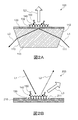
- FIG. 2A is a schematic cross-sectional view for explaining the configuration of a measurement chip for PC-SPFS
- FIG. 2B is a schematic cross-sectional view for explaining the configuration of a measurement chip for GC-SPFS.
- FIG. 3 is a schematic cross-sectional view showing an example of a measurement chip for PC-SPFS.
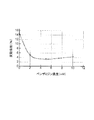
- FIG. 4 is a graph showing the relationship between aprotinin concentration and measurement reproducibility (coefficient of variation) when aprotinin is used as a protease inhibitor.
- FIG. 5 is a graph showing the relationship between benzamidine concentration and measurement reproducibility (coefficient of variation) when benzamidine is used as a protease inhibitor.
- BNP brain natriuretic peptide
- SPFS Surface Plasmon-field enhanced Fluorescence Spectroscopy
- SPR surface plasmon resonance
- the amount of a specimen (for example, blood or a diluent thereof) may be small.
- a mechanical stimulus to the specimen on the reaction field in order to ensure that a small amount of BNP in the specimen is captured by a BNP-binding substance (for example, an anti-BNP antibody) immobilized on the reaction field.
- a BNP-binding substance for example, an anti-BNP antibody
- the present inventors have conducted intensive studies based on the above idea, and as a result, by adding a protease inhibitor to the sample at the pretreatment stage of the measurement, the BNP can be measured with high sensitivity and high reproducibility by SPFS. They have found that it is possible and completed the method for measuring BNP according to the present embodiment.
- FIG. 1 is a flowchart illustrating an example of the BNP measurement method according to the present embodiment.
- Step S10 a measurement chip including a metal film and a binding substance that specifically binds to BNP is prepared (Step S10).
- SPFS an evanescent wave generated when a metal film is irradiated with light (in this embodiment, excitation light) and surface plasmons are combined to generate SPR.
- a method for generating the SPR a method of disposing a prism on one surface of a metal film (Kretschmann arrangement), a method of forming a diffraction grating on the metal film, and the like are known.
- An SPFS employing the former method is referred to as prism coupling (PC) -SPFS, and an SPFS employing the latter method is referred to as grating coupling (GC) -SPFS.
- the method of measuring BNP according to the present embodiment may employ either PC-SPFS or GC-SPFS.
- the metal film causes SPR when irradiated with excitation light.
- the kind of the metal constituting the metal film is not particularly limited as long as the metal can cause SPR.
- Examples of the metal constituting the metal film include gold, silver, copper, aluminum and alloys thereof.
- the binding substance can specifically bind to BNP, and is immobilized on a metal film to capture BNP in the sample. Usually, the binding substance is uniformly immobilized in a predetermined region (reaction field) on the metal film.
- the type of the binding substance immobilized on the metal film is not particularly limited as long as it can specifically bind to BNP. Examples of the binding substance include an antibody capable of specifically binding to BNP (anti-BNP antibody), a nucleic acid capable of specifically binding to BNP, a lipid capable of specifically binding to BNP, and an antibody other than an antibody capable of specifically binding to BNP. Proteins.
- the anti-BNP antibody may be a monoclonal antibody, a polyclonal antibody, or a fragment of the antibody.
- the kind of the binding substance immobilized on the metal film may be one kind or two or more kinds.
- the anti-BNP antibody immobilized on the metal film is one or more anti-BNP monoclonal antibodies or anti-BNP polyclonal antibodies.
- the method for immobilizing the binding substance is not particularly limited.
- a self-assembled monolayer hereinafter, referred to as “SAM”) or a polymer film to which a binding substance (for example, an anti-BNP antibody) is bound may be formed on a metal film.
- SAMs include films formed with substituted aliphatic thiols, such as HOOC- (CH 2 ) 11 -SH.
- the material constituting the polymer film include polyethylene glycol and MPC polymer.
- a polymer having a reactive group (or a functional group convertible into a reactive group) capable of binding to a binding substance (for example, an anti-BNP antibody) is immobilized on a metal film, and the binding substance (for example, an anti-BNP antibody) is attached to the polymer.
- a binding substance for example, an anti-BNP antibody
- the measuring chip is preferably a structure with each piece having a length of several mm to several cm, but may be a smaller structure or a larger structure which is not included in the category of “chip”.
- FIG. 2A is a schematic cross-sectional view for explaining the configuration of a measurement chip for PC-SPFS
- FIG. 2B is a schematic cross-sectional view for explaining the configuration of a measurement chip for GC-SPFS.
- the size and shape of each component are not accurate for convenience of explanation.
- These figures show examples in which an anti-BNP antibody is used as a binding substance.
- the measurement chip 100 for PC-SPFS has a prism 110, a metal film 120, and (a layer of) the anti-BNP antibody 130.
- the prism 110 is made of a dielectric material transparent to the excitation light L1, and has an incident surface 111 on which the excitation light L1 is incident, a film forming surface 112 on which the excitation light L1 is reflected, and an emission surface 113 on which the reflected light L2 is emitted. Having.
- the shape of the prism 110 is not particularly limited. In the example shown in FIG. 2A, the shape of the prism 110 is a column having a trapezoidal bottom surface.
- the surface corresponding to one bottom side of the trapezoid is the film forming surface 112, the surface corresponding to one leg is the incident surface 111, and the surface corresponding to the other leg is the emission surface 113.
- the material of the prism 110 include resin and glass.
- the material of the prism 110 is preferably a resin having a refractive index of 1.4 to 1.6 with respect to the excitation light and a small birefringence.
- the metal film 120 is disposed on the deposition surface 112 of the prism 110.
- the method for forming the metal film 120 is not particularly limited. Examples of the method for forming the metal film 120 include sputtering, vapor deposition, and plating.
- the thickness of the metal film 120 is not particularly limited, but is preferably in the range of 30 to 70 nm.
- the measurement chip 200 for GC-SPFS has a metal film 210 on which a diffraction grating 211 is formed and (a layer of) the anti-BNP antibody 130.
- the method for forming the metal film 210 is not particularly limited. Examples of the method for forming the metal film 210 include sputtering, vapor deposition, and plating.
- the thickness of the metal film 210 is not particularly limited, but is preferably in the range of 30 to 500 nm.
- the shape of the diffraction grating 211 is not particularly limited as long as an evanescent wave can be generated.
- the diffraction grating 211 may be a one-dimensional diffraction grating or a two-dimensional diffraction grating.
- the one-dimensional diffraction grating a plurality of parallel ridges are formed on the surface of the metal film 210 at predetermined intervals.
- convex portions having a predetermined shape are periodically arranged on the surface of the metal film 210. Examples of the arrangement of the convex portions include a square lattice, a triangular (hexagonal) lattice, and the like.
- Examples of the cross-sectional shape of the diffraction grating 211 include a rectangular wave shape, a sine wave shape, a sawtooth shape, and the like.
- the method for forming the diffraction grating 211 is not particularly limited. For example, after the metal film 210 is formed on a flat substrate (not shown), the metal film 210 may be provided with an uneven shape. Further, the metal film 210 may be formed on a substrate (not shown) provided with a concavo-convex shape in advance. In any case, the metal film 210 including the diffraction grating 211 can be formed.
- the metal film 210 (diffraction grating 211) is irradiated with the excitation light L1 so that SPR occurs in the metal film 210 (diffraction grating 211)
- the electric field enhanced by the SPR causes the metal film 210 (diffraction). It occurs near the grating 211).
- the fluorescent substance 150 is excited by the enhanced electric field and emits the fluorescent light L3.
- FIG. 3 is a schematic cross-sectional view showing an example of a measurement chip for PC-SPFS.
- the measurement chip 300 includes a prism 110 having an entrance surface 111, a deposition surface 112, and an emission surface 113, a metal film 120 formed on the deposition surface 112 of the prism 110, And a channel cover 310 disposed on the film formation surface 112 or the metal film 120.
- the entrance plane 111 and the exit plane 113 are present before and behind the plane of the paper, respectively.
- the measurement chip 300 further has a flow channel 320, a liquid injection part 330 connected to one end of the flow channel 320, and a storage part 340 connected to the other end of the flow channel 320.
- the channel lid 310 is bonded to the metal film 120 (or the prism 110) via an adhesive layer 350 such as a double-sided tape, and the adhesive layer 350 plays a role in defining the side surface shape of the channel 320. I also carry.
- the anti-BNP antibody 130 is immobilized in a part of the metal film 120 (reaction field) exposed in the flow channel 320.
- the liquid injection section 330 is closed by the liquid injection section covering film 331, and the storage section 340 is closed by the storage section covering film 341.
- the storage portion covering film 341 is provided with a vent hole 342.
- the channel lid 310 is formed of a material transparent to the fluorescent light L3. However, as long as it does not hinder the extraction of the fluorescent light L3, a part of the channel cover 310 may be formed of a material opaque to the fluorescent light L3. Examples of the material transparent to the fluorescent light L3 include a resin.
- the channel lid 310 may be bonded to the metal film 120 (or the prism 110) by laser welding, ultrasonic welding, pressure bonding using a clamp member, or the like without using the adhesive layer 350. In this case, the side surface shape of the channel 320 is defined by the channel lid 310.
- a pipette tip is inserted into the liquid injection section 330.
- the opening of the liquid injection part 330 (the through-hole provided in the liquid injection part covering film 331) is in contact with the outer periphery of the pipette tip without any gap. Therefore, the liquid can be introduced into the flow channel 320 by injecting the liquid from the pipette tip into the liquid injection portion 330, and the liquid in the flow channel 320 can be introduced by suctioning the liquid in the liquid injection portion 330 into the pipette tip. Liquid can be removed. Further, by alternately injecting and sucking the liquid, the liquid can be reciprocated in the flow channel 320.
- a pretreatment sample is obtained by adding a protease inhibitor to a sample that may contain BNP (step S20).
- the type of specimen is not particularly limited.
- specimens include blood, serum, plasma and diluents thereof.
- whole blood can also be used as a specimen.
- the addition of protease to a sample is performed by adding a pretreatment agent containing a protease inhibitor to the sample.
- the pretreatment agent may be a protease inhibitor alone or may be a composition containing a protease inhibitor.
- the pretreatment agent is a liquid containing a protease.
- the liquid containing the protease inhibitor can also serve as a diluent for the specimen.
- the timing of adding the protease inhibitor (pretreatment agent) to the sample is not particularly limited as long as it is performed at the beginning of the measurement, but the earlier the timing, the better.
- the protease inhibitor can be added to the sample at the same time as blood collection.
- the sample is diluted before the measurement, if a liquid containing a protease inhibitor is used as a diluent, the protease inhibitor can be added to the sample at the beginning of the measurement.
- protease inhibitor is not particularly limited as long as it can inhibit BNP degradation by erythrocyte-derived protease.
- protease inhibitors include serine protease inhibitors and cysteine protease inhibitors.
- serine protease inhibitors include benzamidine, aprotinin, TLCK (Tosyl-L-lysyl-chloromehethane @ hydrochloride), PMFS (Phenylmethylsulfonyl @ fluoride), and AEBSF (Aminozyl.
- cysteine proteases include aprotinin, PMFS, AEBSF.
- the final concentration of the protease inhibitor (the concentration in the pretreated sample) may be appropriately set according to the type of the protease inhibitor to be used.
- the concentration of benzamidine in the pretreated sample is preferably 1 mM or more, more preferably 1.5 mM or more, and more preferably 2 mM or more from the viewpoint of preventing BNP degradation. Is more preferable, and 3 mM is particularly preferable.
- the upper limit of the concentration of benzamidine in the pretreated sample is not particularly limited, but is, for example, 10 mM or less, 5 mM or less, and 3.5 mM or less.
- the concentration of aprotinin in the pretreated sample is preferably 1 ⁇ g / mL or more, more preferably 1.5 ⁇ g / mL or more, from the viewpoint of preventing BNP degradation. It is more preferably at least 2 ⁇ g / mL.
- the upper limit of the aprotinin concentration in the pretreated sample is not particularly limited, but is, for example, 50 ⁇ g / mL or less, 10 ⁇ g / mL or less, and 5 ⁇ g / mL.
- the TLCK concentration in the pretreated sample is preferably 0.1 mM or more, more preferably 0.4 mM or more, from the viewpoint of preventing BNP degradation.
- the upper limit of the TLCK concentration in the pretreated sample is not particularly limited, but is, for example, 1 mM or less.
- the concentration of PMFS in the pretreated sample is preferably 0.1 mM or more, more preferably 2 mM or more, from the viewpoint of preventing BNP degradation.
- the upper limit of the PMFS concentration in the pretreated sample is not particularly limited, but is, for example, 10 mM or less.
- the AEBSF concentration in the pretreated sample is preferably 0.4 mM or more, more preferably 2 mM or more, from the viewpoint of preventing BNP degradation.
- the upper limit of the AEBSF concentration in the pretreated sample is not particularly limited, but is, for example, 4 mM or less.
- a metal protease inhibitor may be further added to the sample in addition to the serine protease inhibitor or the cysteine protease inhibitor.
- a pretreatment agent containing a metalloprotease inhibitor may be added to the specimen.
- metalloprotease inhibitors include ethylenediaminetetraacetic acid, ethylenediaminetetraacetic acid, glycol etherdiaminetetraacetic acid, and glycoletherdiaminetetraacetic acid.
- concentration of the metal protease inhibitor in the pretreated sample is not particularly limited, but is preferably, for example, 1.5 mg / mL to 1.8 mg / mL.
- the pretreatment sample is provided on the metal film of the measurement chip, and BNP contained in the pretreatment sample is bound to the binding substance immobilized on the metal film (primary reaction; step S30).
- the method of providing the pre-processed sample is not particularly limited.
- the pretreatment sample may be provided on a metal film using a pipette having a pipette tip mounted on the tip.
- the surface of the metal film is washed with a buffer solution or the like to remove components not bound to the binding substance.
- a mechanical stimulus is applied to the pretreated sample to bind BNP to the binding substance.
- BNP degradation due to protease from erythrocytes is unlikely to occur, so that the reproducibility of the measurement results is high. Is not easily reduced.
- a labeling reagent is provided on the metal film of the measurement chip, and BNP bound to the binding substance is labeled with a fluorescent substance (secondary reaction; step S40).
- the method for providing the labeling reagent is not particularly limited.
- the labeling reagent may be provided on the metal film using a pipette having a pipette tip mounted on the tip.
- the surface of the metal film is washed with a buffer solution or the like to remove the fluorescent substance not labeling BNP.
- the type of labeling reagent is not particularly limited as long as BNP bound to the binding substance can be labeled with a fluorescent substance.
- the labeling reagent is a fluorescent-labeled binding substance that specifically binds to BNP.
- the type of the binding substance contained in the labeling reagent is not particularly limited as long as it can specifically bind to BNP.
- the binding substance include an antibody capable of specifically binding to BNP (anti-BNP antibody), a nucleic acid capable of specifically binding to BNP, a lipid capable of specifically binding to BNP, and an antibody other than an antibody capable of specifically binding to BNP. Proteins.
- the type of the binding substance contained in the labeling reagent may be the same as or different from the type of the binding substance immobilized on the metal film.
- the anti-BNP antibody may be a monoclonal antibody, a polyclonal antibody, or a fragment of the antibody.
- the type of the binding substance contained in the labeling reagent may be one type, or two or more types.
- the fluorescent-labeled anti-BNP antibody is one or more anti-BNP monoclonal antibodies or anti-BNP polyclonal antibodies. In this case, it is preferable that the anti-BNP monoclonal antibody and the anti-BNP polyclonal antibody labeled with a fluorescent substance are different from one or more kinds of anti-BNP monoclonal antibodies immobilized on the metal film.
- the type of fluorescent substance is not particularly limited as long as it can be used in SPFS.
- fluorescent materials include cyanine dyes, Alexa Fluor® dyes from Thermo Scientific, and CF dyes from Biotium. Alexa @ Fluor dyes and CF dyes have a high quantum efficiency with respect to the wavelength of excitation light used in SPFS among commercially available fluorescent dyes. Further, since the CF dye does not cause much fading at the time of fluorescence detection, fluorescence detection can be stably performed.
- the method for labeling the binding substance with a fluorescent substance is not particularly limited, and may be appropriately selected from known methods. For example, a fluorescent substance may be bound to an amino group or a sulfhydryl group of a binding substance (for example, an anti-BNP antibody).
- BNP was labeled with a fluorescent substance after binding BNP to the binding substance immobilized on the metal film.
- BNP was bound before binding BNP to the binding substance immobilized on the metal film. It may be labeled with a fluorescent substance.
- the sample or the pretreatment sample and the labeling reagent may be mixed before the pretreatment sample is provided on the metal film.
- the step of binding BNP to the binding substance immobilized on the metal film and the step of labeling BNP with a fluorescent substance may be performed simultaneously. In this case, the pretreatment sample and the labeling reagent may be provided simultaneously on the metal film.
- fluorescence indicating the amount of BNP is measured by SPFS (step S50). Specifically, in a state in which BNP labeled with a fluorescent substance is bound to a binding substance immobilized on the metal film, the metal film is irradiated with excitation light so that SPR occurs in the metal film, and thereby the fluorescent light is irradiated. The fluorescence emitted from the substance is measured. Usually, a signal value correlated with the amount of BNP is calculated by subtracting a previously measured optical blank value from a measured fluorescence value. If necessary, the signal value may be converted to the amount or concentration of BNP by using a previously prepared calibration curve or the like.
- the excitation light L 1 is applied to the metal film 120 via the prism 110.
- SPR occurs in the metal film 120
- the fluorescent substance 150 existing near the metal film 120 is excited by the enhanced electric field and emits the fluorescent light L3.
- the incident angle of the excitation light L1 with respect to the metal film 120 is set so that SPR occurs in the metal film 120, but is preferably a resonance angle or an enhancement angle.
- the “resonance angle” means an incident angle when the amount of the reflected light L2 is minimized when scanning the incident angle of the excitation light L1 with respect to the metal film 120.
- the “enhancement angle” refers to scattered light having the same wavelength as the excitation light L1 emitted above the metal film 120 (on the opposite side of the prism 110) when the incident angle of the excitation light L1 with respect to the metal film 120 is scanned. It means the angle of incidence when the amount of (plasmon scattered light) is at a maximum.
- the excitation light L1 is directly applied to the metal film 210 (diffraction grating 211).
- SPR occurs in the metal film 210 (diffraction grating 211), and the fluorescent substance 150 existing near the metal film 210 (diffraction grating 211) is excited by the enhanced electric field and emits the fluorescent light L3.
- the incident angle of the excitation light L1 with respect to the metal film 210 is set so that SPR occurs in the metal film 210, and an angle at which the intensity of the enhanced electric field formed by the SPR is the highest is preferable.
- the optimum incident angle of the excitation light L1 is appropriately set according to the pitch of the diffraction grating 211, the wavelength of the excitation light L1, the type of metal forming the metal film 210, and the like.
- the type of the excitation light is not particularly limited, but is usually a laser beam.
- the excitation light is a laser light emitted from a laser light source having an output of 15 to 30 mW.
- the wavelength of the excitation light is appropriately set according to the excitation wavelength of the fluorescent substance used.
- the fluorescence detector is installed in a direction in which the fluorescence intensity is highest with respect to the measurement chip.
- the direction in which the intensity of the fluorescent light L3 is highest is the normal direction of the metal film 120. It is installed directly above.
- the direction in which the intensity of the fluorescent light L3 is highest is a direction inclined to some extent with respect to the normal line of the metal film 120.
- the instrument is placed not directly above the measuring chip.
- the detector is, for example, a photomultiplier tube (PMT) or an avalanche photodiode (APD).
- the concentration of BNP contained in the sample can be measured.
- the BNP kit comprises a set of the measurement chip, a sample pretreatment agent containing the protease inhibitor (a serine protease inhibitor or a cysteine protease inhibitor), and the labeling reagent. It was done.
- a sample pretreatment agent containing the protease inhibitor (a serine protease inhibitor or a cysteine protease inhibitor)
- the labeling reagent By setting the measurement chip, the sample pretreatment agent, and the labeling reagent in advance as described above, a user (a medical worker or the like) can more easily perform the above-described BNP measurement method.
- BNP in a sample can be measured with high sensitivity and higher reproducibility using SPFS.
- a measurement chip 300 having the configuration shown in FIG. 3 was prepared.
- a mouse anti-BNP monoclonal antibody was immobilized on a specific region (reaction portion) of the metal film 120 (gold thin film) exposed in the flow channel 320.
- the first diluent is a MES buffer without protease inhibitors.
- the second diluent is a MES buffer containing a predetermined amount of aprotinin as a protease inhibitor.
- the third diluent is a MES buffer containing a predetermined amount of TLCK as a protease inhibitor.
- the fourth diluent is a MES buffer containing a predetermined amount of benzamidine as a protease inhibitor.
- the fifth diluent is a MES buffer containing a predetermined amount of EDTA as a protease inhibitor.
- the concentration of EDTA was 1.5 mg / mL in the first pretreatment sample prepared using the first diluent containing no protease inhibitor.
- the EDTA concentration was 1.5 mg / mL, and the aprotinin concentration was 1 ⁇ g / mL.
- the concentration of EDTA was 1.5 mg / mL, and the concentration of TLCK was 0.4 mM.
- the concentration of EDTA was 1.5 mg / mL, and the concentration of benzamidine was 2 mM.
- the EDTA concentration was 5.2 mg / mL.
- a pre-processed sample (any one of the first to fifth pre-processed samples) was introduced into the flow channel 320 from the liquid injection unit 330 by a pipette tip, and the liquid was reciprocated (primary reaction). After removing the pre-processed sample in the flow channel 320 from the liquid injection part 330, the flow channel 320 was washed once with a cleaning liquid. Then, a mouse anti-BNP monoclonal antibody labeled with a labeling reagent (CF dye (Biotium) via an amino group) was introduced into the flow channel 320 from the liquid injection part 330, and sent back and forth (secondary reaction).
- CF dye Biotium
- the inside of the flow channel 320 was washed three times with a cleaning liquid, and then the measurement liquid was introduced into the flow channel 320 from the liquid injection part 330.
- the fluorescence value was measured by SPFS, that is, the metal film 120 was irradiated with excitation light (laser light) from the prism 110 side so that the incident angle of the excitation light with respect to the metal film 120 became the enhancement angle, and emitted at that time.
- the previously measured optical blank value was subtracted from the obtained fluorescence value to calculate a signal value correlated with the amount of BNP, and the same measurement was performed six times for each pretreated sample.
- the coefficient of variation cv (%) of the six measurement results was calculated.
- the variation coefficient is 8% or less, it is evaluated that reproducibility is sufficiently high.
- Table 1 shows the coefficient of variation of the results of six measurements for each pretreated sample.
- EDTA metal protease inhibitor
- aprotinin serine protease inhibitor
- TLCK serine protease inhibitor
- benzamidine serine protease inhibitor, cysteine protease inhibitor
- FIGS. 4 and 5 show that when the concentration of aprotinin is 1 ⁇ g / mL or more, the reproducibility of the measurement results is improved.
- FIG. 5 shows that when the concentration of benzamidine is 1 mM or more, the reproducibility of the measurement results is improved.
- ⁇ ⁇ BNP can be measured with high sensitivity and high reproducibility by using the BNP measurement method or the measurement kit according to the present embodiment. Therefore, the BNP detection method and measurement kit according to the present invention are useful for, for example, clinical tests.
Landscapes
- Health & Medical Sciences (AREA)
- Life Sciences & Earth Sciences (AREA)
- Engineering & Computer Science (AREA)
- Immunology (AREA)
- Molecular Biology (AREA)
- Biomedical Technology (AREA)
- Chemical & Material Sciences (AREA)
- Hematology (AREA)
- Urology & Nephrology (AREA)
- Cell Biology (AREA)
- Microbiology (AREA)
- Biotechnology (AREA)
- Food Science & Technology (AREA)
- Medicinal Chemistry (AREA)
- Physics & Mathematics (AREA)
- Analytical Chemistry (AREA)
- Biochemistry (AREA)
- General Health & Medical Sciences (AREA)
- General Physics & Mathematics (AREA)
- Pathology (AREA)
- Investigating, Analyzing Materials By Fluorescence Or Luminescence (AREA)
- Investigating Or Analysing Materials By Optical Means (AREA)
Abstract
La présente invention concerne une méthode de mesure de BNP avec laquelle il est possible de mesurer la concentration de BNP dans un échantillon avec une sensibilité plus élevée et une reproductibilité plus élevée que dans les procédés classiques. Un inhibiteur de protéase est ajouté à un échantillon qui contient un peptide natriurétique cérébral pour obtenir un échantillon de prétraitement. L'échantillon de prétraitement est disposé sur un film métallique auquel une substance de liaison capable de se lier spécifiquement au peptide natriurétique cérébral est immobilisée de façon à amener le peptide natriurétique cérébral contenu dans l'échantillon de prétraitement à se lier à la substance de liaison. Avant ou après la liaison à la substance de liaison, le peptide natriurétique cérébral est marqué avec une substance fluorescente. Dans un état dans lequel le peptide natriurétique cérébral marqué avec la substance fluorescente est lié à la substance de liaison immobilisée sur le film métallique, le film métallique est irradié avec une lumière d'excitation de façon à provoquer une résonance plasmonique de surface dans le film métallique, puis la fluorescence libérée à partir de la substance fluorescente est détectée.
Priority Applications (3)
| Application Number | Priority Date | Filing Date | Title |
|---|---|---|---|
| JP2020536320A JPWO2020031436A1 (ja) | 2018-08-06 | 2019-04-19 | 脳性ナトリウム利尿ペプチドの測定方法および脳性ナトリウム利尿ペプチドの測定キット |
| EP19846908.2A EP3819638A4 (fr) | 2018-08-06 | 2019-04-19 | Méthode de mesure de peptide natriurétique cérébral et trousse de mesure de peptide natriurétique cérébral |
| US17/266,547 US20210318326A1 (en) | 2018-08-06 | 2019-04-19 | Method for measuring brain natriuretic peptide and kit for measuring brain natriuretic peptide |
Applications Claiming Priority (2)
| Application Number | Priority Date | Filing Date | Title |
|---|---|---|---|
| JP2018147725 | 2018-08-06 | ||
| JP2018-147725 | 2018-08-06 |
Publications (1)
| Publication Number | Publication Date |
|---|---|
| WO2020031436A1 true WO2020031436A1 (fr) | 2020-02-13 |
Family
ID=69415424
Family Applications (1)
| Application Number | Title | Priority Date | Filing Date |
|---|---|---|---|
| PCT/JP2019/016737 Ceased WO2020031436A1 (fr) | 2018-08-06 | 2019-04-19 | Méthode de mesure de peptide natriurétique cérébral et trousse de mesure de peptide natriurétique cérébral |
Country Status (4)
| Country | Link |
|---|---|
| US (1) | US20210318326A1 (fr) |
| EP (1) | EP3819638A4 (fr) |
| JP (1) | JPWO2020031436A1 (fr) |
| WO (1) | WO2020031436A1 (fr) |
Cited By (2)
| Publication number | Priority date | Publication date | Assignee | Title |
|---|---|---|---|---|
| JPWO2022181196A1 (fr) * | 2021-02-26 | 2022-09-01 | ||
| CN115343468A (zh) * | 2022-06-24 | 2022-11-15 | 宁波海尔施智造有限公司 | 一种Tosyl磁珠的包被方法及其在试剂盒中的应用 |
Families Citing this family (1)
| Publication number | Priority date | Publication date | Assignee | Title |
|---|---|---|---|---|
| CN115876738A (zh) * | 2022-12-12 | 2023-03-31 | 天津大学 | 基于智能手机的适配体荧光脑利钠肽检测装置和传感方法 |
Citations (6)
| Publication number | Priority date | Publication date | Assignee | Title |
|---|---|---|---|---|
| JP2006527190A (ja) * | 2003-04-17 | 2006-11-30 | サイファージェン バイオシステムズ インコーポレイテッド | ナトリウム利尿ペプチドに関連したポリペプチド、並びにこれらの同定および使用法 |
| JP2008534440A (ja) * | 2005-02-14 | 2008-08-28 | バイオ−ラッド・ラボラトリーズ・インコーポレーテッド | ナトリウム利尿ペプチド類を含有する安定化した組成物 |
| JP2010032360A (ja) | 2008-07-29 | 2010-02-12 | Chisso Corp | 磁性粒子を用いた測定対象物質の濃度測定法 |
| WO2016098581A1 (fr) * | 2014-12-15 | 2016-06-23 | コニカミノルタ株式会社 | Dispositif de mesure par fluorescence activée par plasmons de surface et procédé de mesure par fluorescence activée par plasmons de surface |
| JP2018054495A (ja) * | 2016-09-29 | 2018-04-05 | コニカミノルタ株式会社 | 血液検査用センサチップ、血液検査装置及び血液検査方法 |
| JP2018147725A (ja) | 2017-03-06 | 2018-09-20 | 国立大学法人京都大学 | 照明装置 |
-
2019
- 2019-04-19 EP EP19846908.2A patent/EP3819638A4/fr not_active Withdrawn
- 2019-04-19 US US17/266,547 patent/US20210318326A1/en not_active Abandoned
- 2019-04-19 WO PCT/JP2019/016737 patent/WO2020031436A1/fr not_active Ceased
- 2019-04-19 JP JP2020536320A patent/JPWO2020031436A1/ja active Pending
Patent Citations (6)
| Publication number | Priority date | Publication date | Assignee | Title |
|---|---|---|---|---|
| JP2006527190A (ja) * | 2003-04-17 | 2006-11-30 | サイファージェン バイオシステムズ インコーポレイテッド | ナトリウム利尿ペプチドに関連したポリペプチド、並びにこれらの同定および使用法 |
| JP2008534440A (ja) * | 2005-02-14 | 2008-08-28 | バイオ−ラッド・ラボラトリーズ・インコーポレーテッド | ナトリウム利尿ペプチド類を含有する安定化した組成物 |
| JP2010032360A (ja) | 2008-07-29 | 2010-02-12 | Chisso Corp | 磁性粒子を用いた測定対象物質の濃度測定法 |
| WO2016098581A1 (fr) * | 2014-12-15 | 2016-06-23 | コニカミノルタ株式会社 | Dispositif de mesure par fluorescence activée par plasmons de surface et procédé de mesure par fluorescence activée par plasmons de surface |
| JP2018054495A (ja) * | 2016-09-29 | 2018-04-05 | コニカミノルタ株式会社 | 血液検査用センサチップ、血液検査装置及び血液検査方法 |
| JP2018147725A (ja) | 2017-03-06 | 2018-09-20 | 国立大学法人京都大学 | 照明装置 |
Non-Patent Citations (3)
| Title |
|---|
| ALEXANDER BELENKY; ANDREW SMITH; BIN ZHANG; SPENCER LIN; NORMAND DESPRES; ALAN H B WU; BARRY I BLUESTEIN: "The effect of class-specific protease inhibitors on the stabilization of B-type natriuretic peptide in human plasma", CLINICAL CHIMICA ACTA, vol. 340, no. 1-2, 1 February 2004 (2004-02-01), pages 163 - 172, XP055685664, ISSN: 0009-8981, DOI: 10.1016/j.cccn.2003.10.026 * |
| See also references of EP3819638A4 * |
| T TSUJI, K IMAGAWA, H MASUDA, M HARAIKAWA, K SHIBATA, M KONO, K INOUYE, K UCHIDA: "Stabilization of human brain natriureticpeptide in blood samples", CLINICAL CHEMISTRY, vol. 40, no. 4, 1 April 1994 (1994-04-01), pages 672 - 673, XP055779679, DOI: 10.1093/clinchem/40.4.672 * |
Cited By (3)
| Publication number | Priority date | Publication date | Assignee | Title |
|---|---|---|---|---|
| JPWO2022181196A1 (fr) * | 2021-02-26 | 2022-09-01 | ||
| JP7817756B2 (ja) | 2021-02-26 | 2026-02-19 | 学校法人関西学院 | センシング用チップ、センシング用チップの製造方法、センシング用キット、測定方法及び測定装置 |
| CN115343468A (zh) * | 2022-06-24 | 2022-11-15 | 宁波海尔施智造有限公司 | 一种Tosyl磁珠的包被方法及其在试剂盒中的应用 |
Also Published As
| Publication number | Publication date |
|---|---|
| US20210318326A1 (en) | 2021-10-14 |
| EP3819638A4 (fr) | 2021-11-03 |
| JPWO2020031436A1 (ja) | 2021-08-26 |
| EP3819638A1 (fr) | 2021-05-12 |
Similar Documents
| Publication | Publication Date | Title |
|---|---|---|
| US8097862B2 (en) | Fluorescence detecting method and fluorescence detecting apparatus | |
| US20130078146A1 (en) | Surface plasmon resonance fluorescence analysis device and surface plasmon resonance fluorescence analysis method | |
| JP6565934B2 (ja) | 表面プラズモン増強蛍光測定装置および表面プラズモン増強蛍光測定方法 | |
| JP2002508837A (ja) | 蛍光の検出性を強化するための光学的基板 | |
| US20090242802A1 (en) | Flourescence detecting method and fluorescence detecting apparatus | |
| WO2015129361A1 (fr) | Puce de détection pour spectroscopie de fluorescence activée par champ de plasmons de surface | |
| JPWO2015129615A1 (ja) | 測定方法および測定装置 | |
| WO2020031436A1 (fr) | Méthode de mesure de peptide natriurétique cérébral et trousse de mesure de peptide natriurétique cérébral | |
| US10677732B2 (en) | Detection chip, detection kit, detection system, and method for detecting detection target substance | |
| EP3321688B1 (fr) | Dispositif de détection et procédé de détection | |
| JPWO2018034143A1 (ja) | 測定方法、測定装置および測定システム | |
| JPWO2018051863A1 (ja) | 測定方法 | |
| JPWO2018034208A1 (ja) | 測定方法 | |
| JP7807502B2 (ja) | エクソソームの測定方法およびエクソソームの測定キット | |
| JP6631538B2 (ja) | 検出チップおよび検出方法 | |
| JP2015111063A (ja) | 表面プラズモン増強蛍光測定方法および表面プラズモン増強蛍光測定装置 | |
| JP2013088221A (ja) | 計測を行う方法及び計測装置 | |
| EP3677912A1 (fr) | Procédé et kit de détection d'antigène de surface de l'hépatite b | |
| JPWO2016093037A1 (ja) | 検出装置および検出方法 | |
| JP2021021569A (ja) | 検出方法および検出キット | |
| JP6481371B2 (ja) | 検出方法および検出キット | |
| WO2015155799A1 (fr) | Dispositif et procédé de mesure de fluorescence améliorée par plasmons de surface | |
| JP7623124B2 (ja) | 細胞外小胞の内包物の測定方法および測定キット | |
| JP2012233860A (ja) | 生体試料中の分析対象物のアッセイ方法及びそれに用いたpoct装置 | |
| WO2021009995A1 (fr) | Dispositif de détection et procédé de détection |
Legal Events
| Date | Code | Title | Description |
|---|---|---|---|
| 121 | Ep: the epo has been informed by wipo that ep was designated in this application |
Ref document number: 19846908 Country of ref document: EP Kind code of ref document: A1 |
|
| ENP | Entry into the national phase |
Ref document number: 2020536320 Country of ref document: JP Kind code of ref document: A |
|
| NENP | Non-entry into the national phase |
Ref country code: DE |
|
| ENP | Entry into the national phase |
Ref document number: 2019846908 Country of ref document: EP Effective date: 20210204 |