WO2020049914A1 - Dispositif de traitement d'image, procédé, et programme - Google Patents
Dispositif de traitement d'image, procédé, et programme Download PDFInfo
- Publication number
- WO2020049914A1 WO2020049914A1 PCT/JP2019/030258 JP2019030258W WO2020049914A1 WO 2020049914 A1 WO2020049914 A1 WO 2020049914A1 JP 2019030258 W JP2019030258 W JP 2019030258W WO 2020049914 A1 WO2020049914 A1 WO 2020049914A1
- Authority
- WO
- WIPO (PCT)
- Prior art keywords
- image
- attribute information
- image processing
- subject
- layout
- Prior art date
- Legal status (The legal status is an assumption and is not a legal conclusion. Google has not performed a legal analysis and makes no representation as to the accuracy of the status listed.)
- Ceased
Links
Images





Classifications
-
- G—PHYSICS
- G06—COMPUTING OR CALCULATING; COUNTING
- G06T—IMAGE DATA PROCESSING OR GENERATION, IN GENERAL
- G06T11/00—Two-dimensional [2D] image generation
-
- G—PHYSICS
- G06—COMPUTING OR CALCULATING; COUNTING
- G06T—IMAGE DATA PROCESSING OR GENERATION, IN GENERAL
- G06T1/00—General purpose image data processing
-
- G—PHYSICS
- G06—COMPUTING OR CALCULATING; COUNTING
- G06T—IMAGE DATA PROCESSING OR GENERATION, IN GENERAL
- G06T11/00—Two-dimensional [2D] image generation
- G06T11/10—Texturing; Colouring; Generation of textures or colours
-
- G—PHYSICS
- G06—COMPUTING OR CALCULATING; COUNTING
- G06T—IMAGE DATA PROCESSING OR GENERATION, IN GENERAL
- G06T11/00—Two-dimensional [2D] image generation
- G06T11/60—Creating or editing images; Combining images with text
-
- G—PHYSICS
- G06—COMPUTING OR CALCULATING; COUNTING
- G06T—IMAGE DATA PROCESSING OR GENERATION, IN GENERAL
- G06T3/00—Geometric image transformations in the plane of the image
- G06T3/10—Selection of transformation methods according to the characteristics of the input images
-
- G—PHYSICS
- G06—COMPUTING OR CALCULATING; COUNTING
- G06T—IMAGE DATA PROCESSING OR GENERATION, IN GENERAL
- G06T3/00—Geometric image transformations in the plane of the image
- G06T3/40—Scaling of whole images or parts thereof, e.g. expanding or contracting
-
- G—PHYSICS
- G06—COMPUTING OR CALCULATING; COUNTING
- G06T—IMAGE DATA PROCESSING OR GENERATION, IN GENERAL
- G06T3/00—Geometric image transformations in the plane of the image
- G06T3/60—Rotation of whole images or parts thereof
-
- G—PHYSICS
- G06—COMPUTING OR CALCULATING; COUNTING
- G06V—IMAGE OR VIDEO RECOGNITION OR UNDERSTANDING
- G06V20/00—Scenes; Scene-specific elements
-
- G—PHYSICS
- G09—EDUCATION; CRYPTOGRAPHY; DISPLAY; ADVERTISING; SEALS
- G09G—ARRANGEMENTS OR CIRCUITS FOR CONTROL OF INDICATING DEVICES USING STATIC MEANS TO PRESENT VARIABLE INFORMATION
- G09G5/00—Control arrangements or circuits for visual indicators common to cathode-ray tube indicators and other visual indicators
-
- H—ELECTRICITY
- H04—ELECTRIC COMMUNICATION TECHNIQUE
- H04N—PICTORIAL COMMUNICATION, e.g. TELEVISION
- H04N1/00—Scanning, transmission or reproduction of documents or the like, e.g. facsimile transmission; Details thereof
- H04N1/387—Composing, repositioning or otherwise geometrically modifying originals
-
- H—ELECTRICITY
- H04—ELECTRIC COMMUNICATION TECHNIQUE
- H04N—PICTORIAL COMMUNICATION, e.g. TELEVISION
- H04N5/00—Details of television systems
- H04N5/222—Studio circuitry; Studio devices; Studio equipment
- H04N5/262—Studio circuits, e.g. for mixing, switching-over, change of character of image, other special effects ; Cameras specially adapted for the electronic generation of special effects
- H04N5/265—Mixing
-
- H—ELECTRICITY
- H04—ELECTRIC COMMUNICATION TECHNIQUE
- H04N—PICTORIAL COMMUNICATION, e.g. TELEVISION
- H04N5/00—Details of television systems
- H04N5/66—Transforming electric information into light information
Definitions
- the present invention relates to an image processing apparatus, method, and program, and more particularly, to an image processing apparatus, method, and program for laying out an object extracted from an image on another image.
- Patent Literature 1 extracts a logo mark from an image of a business card, determines attributes (name, address, company name) from the logo mark, and corrects the extracted character information to improve character recognition accuracy. Is described.
- Patent Document 2 discloses extracting face parts from a photograph, exaggerating and correcting the face parts according to the characteristics of the person, and combining the material parts with material information (such as a celebrity face).
- the task of extracting objects from an image, editing the extracted objects, or arranging the edited objects at any position in another image is difficult to perform on a mobile information terminal such as a smartphone with a small screen It is.
- Patent Documents 1 to 4 all presuppose work on a desktop personal computer, and do not disclose a technique for reducing the operation burden on a portable information terminal having a small screen.
- the present invention has been made in view of such a problem, an image processing apparatus that can streamline the work of laying out an object extracted from an image on another image and reduce the burden on a user who performs the work, It is intended to provide a method and a program.
- An image processing device is an image processing device that combines an object extracted from a first image with a second image, wherein the first attribute information is attribute information of the object;
- An attribute information acquisition unit that acquires surrounding attribute information that is attribute information around the object and second attribute information that is attribute information of the second image; first attribute information; surrounding attribute information;
- a determining unit that determines a layout when the object is combined with the second image based on the information; and a determining unit that determines the layout based on the layout determined by the determining unit, the first attribute information, the surrounding attribute information, and the second attribute information.
- a correction unit configured to correct at least one of the second image and the object, and a combining unit configured to combine the object with the second image based on the layout determined by the determining unit.
- the surrounding attribute information includes a tilt, a size, and a position of the object in the first image on the subject in the yaw direction, the pitch direction, and the roll direction. And at least one of the colors of the object around the object, and the second attribute information is at least one of the yaw direction, the pitch direction, the roll direction inclination, the size, and the object color of the object in the second image. including.
- the determining unit includes a tilt of the subject in the first image in the yaw direction, the pitch direction, and the roll direction, and a yaw direction, the pitch direction, and the roll of the subject in the second image.
- a layout for rotating and / or deforming the object is determined according to the difference from the inclination of the direction.
- the layout for rotating and / or deforming the object is performed by projective transformation.
- the determining unit determines a layout in which the position of the object on the subject in the second image matches the position of the object on the subject in the first image.
- the position of the first image on the subject includes at least one of a forehead and a cheek of the face of the subject of the first image, and
- the position on the subject includes at least one of a forehead and a cheek of the face of the subject in the second image.
- the correction unit enlarges or reduces the size of the object according to a difference between the size of the subject in the first image and the size of the subject in the second image. To correct the object.
- the correction unit corrects the color of the object to a color that matches the color of the second image.
- the correction unit corrects the object so as to conform to attributes around the object arranged in the second image.
- the attribute around the object arranged in the second image includes at least one of gloss and reflectance
- the correction unit sets the attribute around the object as the attribute around the object.
- the object is corrected by adding a mirror image to the object accordingly.
- the correction unit corrects the second image so that the attribute of the second image matches the attribute of the object.
- the attribute of the object includes blur of characters.
- the object includes at least one of a character and a design.
- An image processing method is an image processing method in which a computer combines an object extracted from a first image with a second image, the first attribute being attribute information of the object. Acquiring information, surrounding attribute information that is attribute information around the object, and second attribute information that is attribute information of the second image, first attribute information, surrounding attribute information, and second attribute Determining a layout for combining the object with the second image based on the information; and determining the layout of the second image and the object based on the layout, the first attribute information, the surrounding attribute information, and the second attribute information. A step of correcting at least one of them and a step of combining the object with the second image based on the layout are executed.
- the image processing program according to the fifteenth aspect of the present invention is a program for causing a computer to execute the image processing method according to the fourteenth aspect.
- a layout for combining an object with a second image is determined based on first attribute information, surrounding attribute information, and second attribute information, and the layout determined by the determination unit and the first attribute are determined. At least one of the second image and the object is corrected based on the information, the surrounding attribute information, and the second attribute information.
- Block diagram of the image processing apparatus 100 Diagram showing an example of a first image
- the figure which shows an example of the 2nd image attribute information table T3 Flow chart showing the flow of object composition processing
- FIG. 10 is a diagram illustrating an example of a corrected object obj6 in which an image modification of “moving object shake” is given to a subject “OBJ6” of “Shinkansen” in the second image corresponding to the moving object movement of “fast” object obj5;
- FIG. 1 is a block diagram of an image processing apparatus according to a preferred embodiment of the present invention.
- the image processing apparatus 100 includes a first image acquisition unit 11, a second image acquisition unit 12, an object extraction unit 13, an object attribute information extraction unit 14, a second image attribute information extraction unit 15, a layout determination unit 16, a correction unit 17, It comprises a synthesizing unit 18, a display unit 19, a display control unit 20, and an attribute information database (abbreviated as Database, DB) 21.
- Database Database
- the image processing apparatus 100 itself can be typically configured by a portable information processing terminal such as a smartphone, a tablet computer, and a notebook computer, but may be configured by a desktop computer.
- a portable information processing terminal such as a smartphone, a tablet computer, and a notebook computer, but may be configured by a desktop computer.
- the first image acquisition unit 11, the second image acquisition unit 12, the object extraction unit 13, the object attribute information extraction unit 14, the second image attribute information extraction unit 15, the layout determination unit 16, the correction unit 17, and the synthesis unit 18 may be constituted by a plurality of computers (processors).
- the processor includes a CPU (Central Processing Unit), an ASIC (Application Specific Integrated Circuit), a GPU (Graphics Processing Unit), and the like.
- the display unit 19 is configured by a display device such as a liquid crystal display.
- the display control unit 20 is configured by a display driver IC (Integrated Circuit) or the like.
- the attribute information database 21 is configured by various memories such as an SDRAM and a flash memory, but may be configured by cloud computing.
- the first image acquisition unit 11 acquires a first image from an imaging device, an external semiconductor memory, an external server connected via a network, or the like.
- the first image is an image from which an object is extracted.
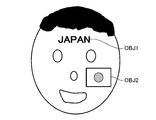
- FIG. 2 shows an example of the first image.
- This first image has an object OBJ1 which is a paint of a logo "JAPAN” applied to the forehead of a person's face and an object OBJ2 which is a sun-shaped paint applied to a cheek portion of the person's face.
- object OBJ1 which is a paint of a logo "JAPAN” applied to the forehead of a person's face
- object OBJ2 which is a sun-shaped paint applied to a cheek portion of the person's face.
- the second image acquiring unit 12 acquires a second image from an imaging device, an external semiconductor memory, an external server connected via a network, or the like.
- the second image is an image to which the objects extracted from the first image are combined.
- the object extracting unit 13 extracts an object from the first image acquired by the first image acquiring unit 11.
- the object attribute information extraction unit 14 extracts object attribute information that is attribute information on an image of the extracted object and object surrounding attribute information that is attribute information of an image around the object extracted in the first image.
- the object attribute information includes the type of the object, the position of the object, if the type of the object is a character such as a logo, the character information, the size of the object, and the color information of the object.
- the object surrounding attribute information includes the type of the object image of the extracted object (for example, the face of a person), the direction of the object image of the extracted object (for example, the front direction), the size of the object image of the extracted object, The tilt angle of the tilt of the object image of the extracted object in the yaw direction, the pitch direction, and the roll direction, the position of the extracted object in the object image (for example, forehead, cheek, etc.), the color of the object image around the extracted object ( For example, when the surrounding subject is a person's forehead, the skin color of the person is included, and when the surrounding subject is a night view, black is included.
- the yaw direction refers to a direction in which a subject whose front, rear, left, right, and top and bottom are determined is rotated around the vertical axis (that is, the rotation direction in a horizontal plane), and the pitch direction refers to the left and right axes.
- the direction of rotation about the center is referred to, and the roll direction is the direction of rotation about the front and rear axes.
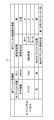
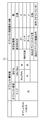
- the object attribute information and the object surrounding attribute information relating to the extracted object OBJ1 are stored in the attribute information DB 21 as the object attribute information table T1.
- the extracted object attribute information and the object surrounding attribute information relating to the object OBJ2 are stored in the attribute information DB 21 as the object attribute information table T2.
- An object attribute information table is created each time an object is extracted.
- the second image attribute information extracting unit 15 extracts the attribute information of the second image acquired by the second image acquiring unit 12.
- the attribute information of the second image includes the type (for example, face) of the subject in the second image, the size of the subject in the second image, the coordinates of regions having different colors, the colors assigned to the regions, and the like.
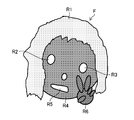
- FIG. 5 shows an example of the second image.
- the face image F of the subject includes a black hair region R1, a right eye region R2, a left eye region R3, a nose region R4, a mouth region R5, and a hand region R6. .
- the second image attribute information is stored in the attribute information DB 21 as a second image attribute information table T3.
- the second image attribute information table only needs to be created once when the second image is acquired.
- the layout determining unit 16 determines the layout (composition position) of the object in the second image based on the object attribute information, the object surrounding attribute information, and the second image attribute information.
- the correction unit 17 corrects at least one of the extracted object and the second image based on the object attribute information, the object surrounding attribute information, and the second image attribute information.
- the combining unit 18 creates a combined image by combining the object (the corrected object if the object has been corrected) with the combining position of the second image (the corrected second image if the second image has been corrected). I do.
- the display unit 19 displays an arbitrary image such as a first image, a second image, an extracted object, a corrected object, a corrected second image, and a composite image according to the control of the display control unit 20.
- the display control unit 20 performs control to switch the display content of the display unit 19 according to a user instruction or various programs.
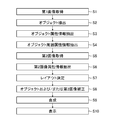
- FIG. 7 is a flowchart showing the flow of the object synthesizing process executed by the image processing apparatus 100.
- a program for causing the image processing apparatus 100 and various other computers (processors) to execute this processing is stored in a recording medium readable by the image processing apparatus 100 and various other computers (processors), such as an SDRAM, a ROM, and a CD-ROM. Has been recorded.
- the first image obtaining unit 11 obtains a first image.
- the object extraction unit 13 extracts an object from the first image.
- the object attribute information extraction unit 14 extracts object attribute information from the extracted object.
- the object attribute information extracting unit 14 extracts object surrounding attribute information that is attribute information of an image around the object extracted in the first image.
- the second image acquisition unit 12 acquires a second image.
- the second image attribute information extraction unit 15 extracts the attribute information of the second image.
- step S7 the layout determining unit 16 determines the composition position of the object in the second image based on the object attribute information, the object surrounding attribute information, and the second image attribute information.
- the correction unit 17 corrects at least one of the extracted object and the second image based on the object attribute information, the object surrounding attribute information, and the second image attribute information.
- the combining unit 18 combines the object (the corrected object if the object is corrected) with the combining position of the second image (the corrected second image if the second image is corrected). Create an image.
- the display control unit 20 controls the display unit 19 to display the composite image.
- FIGS. 8 to 13 show examples of correction of the object and / or the second image, layout of the object, and a composite image of the object and the second image.
- the combining position of the object OBJ1 in the second image is determined to be “forehead”.
- the color of the logo of the object “JAPAN” in the attribute information of the object OBJ1 is “black”, and the color of the area to which the combined position of the object in the second image attribute information belongs is “brown”.
- the object obj1 of the logo "JAPAN” corrected to invert the black logo to white is combined with the forehead, and a combined image Fs1 is obtained.
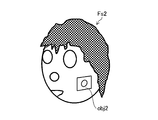
- the composite position of the object in the second image is determined to be “left cheek”.
- the subject orientation in the object attribute information of the object OBJ2 (FIG. 2) of the sun-shaped paint is “front”, and the subject orientation in the second image attribute information is 45 degrees in the right yaw direction.
- the pitch is 10 degrees in the lower pitch direction
- an affine transformation (more generally, a projective transformation) that translates, rotates, expands, or contracts the object OBJ2 so that it is oriented 45 degrees in the right yaw direction and 10 degrees in the lower pitch direction
- the synthesized image Fs2 is obtained.
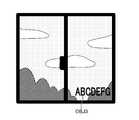
- the color of the object attribute information of the object OBJ3 of the logo “ABCDEFG” is “black”, the shooting scene of the object surrounding attribute information is “day”, and the shooting in the second image attribute information is It is assumed that the scene is “night view”.
- the object obj3 of the logo “ABCDEFG” corrected to invert the black logo to white is synthesized.
- the combination position is determined at the lower right position of the image common to the first image and the second image.
- the shooting scene information can be obtained or estimated from shooting date and time information included in image tag information (Exif: Exchangeable image file format) and color information such as brightness (luminance), saturation, and hue of the image.
- image tag information Exif: Exchangeable image file format
- color information such as brightness (luminance), saturation, and hue of the image.
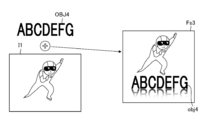
- the decoration image in which the object OBJ4 of the logo “ABCDEFG” extracted from the first image is specularly reflected is a logo ”
- the correction to be added to the object OBJ4 of "ABCDEFG” is performed, and the corrected object obj4 is obtained.
- a composite image Fs3 is obtained in which the corrected object obj4 is composited below the second image.
- the character information included in the object attribute information of the object “obj” of “speed” is “speed”
- the type of character modification is “moving object shake”
- the object obj6 is obtained by performing the image modification of “moving body shake” on the object OBJ6 of “Shinkansen” in the second image.
- the combination position of the “fast” object obj5 is determined to be a blank portion of the second image. By combining the “fast” object obj5 with the second image, a combined image Fs4 is obtained.
- the common correction includes adjustment of the object size. That is, the object is enlarged or enlarged such that the ratio between the object size included in the object attribute information and the subject size of the first image included in the object surrounding attribute information is maintained in relation to the subject of the second image after the composition. Reduction is performed.
- the user can obtain a composite image without having to manually correct the object, correct the second image, and determine the composite position.
Landscapes
- Engineering & Computer Science (AREA)
- Physics & Mathematics (AREA)
- General Physics & Mathematics (AREA)
- Theoretical Computer Science (AREA)
- Multimedia (AREA)
- Signal Processing (AREA)
- Computer Hardware Design (AREA)
- Image Processing (AREA)
- Processing Or Creating Images (AREA)
- Transforming Electric Information Into Light Information (AREA)
- Editing Of Facsimile Originals (AREA)
- Controls And Circuits For Display Device (AREA)
Abstract
L'objectif de la présente invention est de rationaliser des opérations pour mettre en page des objets extraits d'une image dans une autre image, réduisant ainsi la charge de travail sur un utilisateur effectuant les opérations. En S6, une seconde unité d'extraction d'informations d'attribut d'image 15 extrait des informations d'attribut relatives à une seconde image. En S7, une unité de détermination de mise en page 16 détermine des positions de composition pour des objets dans la seconde image sur la base des informations d'attribut d'objet, des informations d'attribut d'environnement d'objet, et des secondes informations d'attribut d'image. En S8, une unité de correction 17 corrige les objets extraits et/ou la seconde image sur la base des informations d'attribut d'objet, des informations d'attribut d'environnement d'objet, et des secondes informations d'attribut d'image. En S9, une unité de composition 18 génère une image composite dans laquelle les objets (objets corrigés si les objets ont été corrigés) sont composés aux positions de composition dans la seconde image (seconde image corrigée si la seconde image a été corrigée). En S10, une unité de commande d'affichage 20 amène une unité d'affichage 19 à afficher l'image composite.
Priority Applications (3)
| Application Number | Priority Date | Filing Date | Title |
|---|---|---|---|
| JP2020541067A JP7100139B2 (ja) | 2018-09-06 | 2019-08-01 | 画像処理装置、方法およびプログラム |
| CN201980057076.9A CN112640412B (zh) | 2018-09-06 | 2019-08-01 | 图像处理装置、方法及记录介质 |
| US17/160,692 US11403798B2 (en) | 2018-09-06 | 2021-01-28 | Image processing apparatus, method, and program |
Applications Claiming Priority (2)
| Application Number | Priority Date | Filing Date | Title |
|---|---|---|---|
| JP2018-166965 | 2018-09-06 | ||
| JP2018166965 | 2018-09-06 |
Related Child Applications (1)
| Application Number | Title | Priority Date | Filing Date |
|---|---|---|---|
| US17/160,692 Continuation US11403798B2 (en) | 2018-09-06 | 2021-01-28 | Image processing apparatus, method, and program |
Publications (1)
| Publication Number | Publication Date |
|---|---|
| WO2020049914A1 true WO2020049914A1 (fr) | 2020-03-12 |
Family
ID=69722461
Family Applications (1)
| Application Number | Title | Priority Date | Filing Date |
|---|---|---|---|
| PCT/JP2019/030258 Ceased WO2020049914A1 (fr) | 2018-09-06 | 2019-08-01 | Dispositif de traitement d'image, procédé, et programme |
Country Status (4)
| Country | Link |
|---|---|
| US (1) | US11403798B2 (fr) |
| JP (1) | JP7100139B2 (fr) |
| CN (1) | CN112640412B (fr) |
| WO (1) | WO2020049914A1 (fr) |
Citations (4)
| Publication number | Priority date | Publication date | Assignee | Title |
|---|---|---|---|---|
| WO2013160663A2 (fr) * | 2012-04-23 | 2013-10-31 | Clothes Network Ltd. | Système et procédé d'analyse d'image |
| US20140035950A1 (en) * | 2009-02-02 | 2014-02-06 | Adobe Systems Incorporated | System and Method for Image Composition Using Non-Destructive Editing Model and Fast Gradient Solver |
| EP2750372A1 (fr) * | 2012-12-28 | 2014-07-02 | Samsung Electronics Co., Ltd | Dispositif photographique de production d'images composites et son procédé d'utilisation |
| JP2015002423A (ja) * | 2013-06-14 | 2015-01-05 | ソニー株式会社 | 画像処理装置、サーバ及び記憶媒体 |
Family Cites Families (13)
| Publication number | Priority date | Publication date | Assignee | Title |
|---|---|---|---|---|
| JPH06342457A (ja) | 1992-09-14 | 1994-12-13 | Fuji Photo Film Co Ltd | 画像処理方法及び装置 |
| JPH07203299A (ja) * | 1994-01-10 | 1995-08-04 | Fujitsu Ltd | カラー画像の色調整,及び画像合成方法,並びに装置 |
| JP2000209425A (ja) * | 1998-11-09 | 2000-07-28 | Canon Inc | 画像処理装置及び方法並びに記憶媒体 |
| JP2005228185A (ja) | 2004-02-16 | 2005-08-25 | E4C-Link Corp | キャラクター提供システム |
| JP2008282094A (ja) | 2007-05-08 | 2008-11-20 | Canon Inc | 文字認識処理装置 |
| US7970237B2 (en) * | 2007-08-01 | 2011-06-28 | Adobe Systems Incorporated | Spatially-varying convolutions for rendering glossy reflection effects |
| JP4877319B2 (ja) * | 2008-12-24 | 2012-02-15 | カシオ計算機株式会社 | 画像生成装置、プログラム、画像表示方法、及び、撮像方法 |
| JP5636807B2 (ja) | 2010-08-12 | 2014-12-10 | 富士ゼロックス株式会社 | 画像処理装置及びプログラム |
| JP5991536B2 (ja) * | 2013-02-01 | 2016-09-14 | パナソニックIpマネジメント株式会社 | メイクアップ支援装置、メイクアップ支援方法、およびメイクアップ支援プログラム |
| CN104424624B (zh) * | 2013-08-28 | 2018-04-10 | 中兴通讯股份有限公司 | 一种图像合成的优化方法及装置 |
| JP6075315B2 (ja) * | 2014-03-28 | 2017-02-08 | 株式会社Jvcケンウッド | 合成画像作成システム、合成画像作成方法、及び合成画像作成プログラム |
| US10192361B2 (en) * | 2015-07-06 | 2019-01-29 | Seiko Epson Corporation | Head-mounted display device and computer program |
| CN107945102A (zh) * | 2017-10-23 | 2018-04-20 | 深圳市朗形网络科技有限公司 | 一种图片合成的方法及装置 |
-
2019
- 2019-08-01 CN CN201980057076.9A patent/CN112640412B/zh active Active
- 2019-08-01 WO PCT/JP2019/030258 patent/WO2020049914A1/fr not_active Ceased
- 2019-08-01 JP JP2020541067A patent/JP7100139B2/ja active Active
-
2021
- 2021-01-28 US US17/160,692 patent/US11403798B2/en active Active
Patent Citations (4)
| Publication number | Priority date | Publication date | Assignee | Title |
|---|---|---|---|---|
| US20140035950A1 (en) * | 2009-02-02 | 2014-02-06 | Adobe Systems Incorporated | System and Method for Image Composition Using Non-Destructive Editing Model and Fast Gradient Solver |
| WO2013160663A2 (fr) * | 2012-04-23 | 2013-10-31 | Clothes Network Ltd. | Système et procédé d'analyse d'image |
| EP2750372A1 (fr) * | 2012-12-28 | 2014-07-02 | Samsung Electronics Co., Ltd | Dispositif photographique de production d'images composites et son procédé d'utilisation |
| JP2015002423A (ja) * | 2013-06-14 | 2015-01-05 | ソニー株式会社 | 画像処理装置、サーバ及び記憶媒体 |
Also Published As
| Publication number | Publication date |
|---|---|
| US11403798B2 (en) | 2022-08-02 |
| US20210150790A1 (en) | 2021-05-20 |
| JPWO2020049914A1 (ja) | 2021-09-24 |
| CN112640412A (zh) | 2021-04-09 |
| CN112640412B (zh) | 2023-03-10 |
| JP7100139B2 (ja) | 2022-07-12 |
Similar Documents
| Publication | Publication Date | Title |
|---|---|---|
| US12106445B2 (en) | Automatic image inpainting | |
| KR102304674B1 (ko) | 얼굴 표정 합성 방법과 장치, 전자 기기, 및 저장 매체 | |
| AU2009209293B2 (en) | Representing flat designs to be printed on curves of a 3-dimensional product | |
| JP2017059235A (ja) | イメージの明るさを調整する方法及び装置 | |
| US10810776B2 (en) | Image processing device and image processing method | |
| JP5966657B2 (ja) | 画像生成装置、画像生成方法及びプログラム | |
| JP7100139B2 (ja) | 画像処理装置、方法およびプログラム | |
| JP4323910B2 (ja) | 画像合成装置及び方法 | |
| JP4372494B2 (ja) | 画像処理装置、画像処理方法、プログラム、記録媒体 | |
| CN117499795A (zh) | 信息处理方法以及信息处理装置 | |
| CN110147511B (zh) | 一种页面处理方法、装置、电子设备及介质 | |
| US20200311998A1 (en) | Image processing method, program, and image processing system | |
| JP2005094424A (ja) | 原画像と装飾画像との合成 | |
| JP2001307122A (ja) | 顔写真画像切り抜き方法 | |
| JP4171722B2 (ja) | プログラム、情報記憶媒体、写真印刷装置及び写真印刷方法 | |
| JP4084784B2 (ja) | プログラム、情報記憶媒体、写真印刷装置及び写真印刷方法 | |
| JP7713733B2 (ja) | 衣服の試着シミュレーションシステム及びプログラム | |
| JP6330312B2 (ja) | 顔画像処理装置、投影システム、画像処理方法及びプログラム | |
| JP6668646B2 (ja) | 画像処理装置、画像処理方法及びプログラム | |
| CN118612400A (zh) | 近眼显示设备的畸变标定方法、显示方法、装置及设备 | |
| JP5207941B2 (ja) | 画像処理装置、画像処理方法及びプログラム | |
| JP2024017389A (ja) | 画像処理装置、画像処理方法及びプログラム | |
| US20180268560A1 (en) | Feature impression axis determination system, feature impression axis determination method, and program thereof | |
| JP2006085613A (ja) | 画像処理方法および装置 | |
| JP2009246637A (ja) | 画像合成装置、画像合成方法、及びコンピュータプログラム |
Legal Events
| Date | Code | Title | Description |
|---|---|---|---|
| 121 | Ep: the epo has been informed by wipo that ep was designated in this application |
Ref document number: 19856894 Country of ref document: EP Kind code of ref document: A1 |
|
| ENP | Entry into the national phase |
Ref document number: 2020541067 Country of ref document: JP Kind code of ref document: A |
|
| NENP | Non-entry into the national phase |
Ref country code: DE |
|
| 122 | Ep: pct application non-entry in european phase |
Ref document number: 19856894 Country of ref document: EP Kind code of ref document: A1 |