WO2020053953A1 - 照合システム及び照合サーバ - Google Patents
照合システム及び照合サーバ Download PDFInfo
- Publication number
- WO2020053953A1 WO2020053953A1 PCT/JP2018/033588 JP2018033588W WO2020053953A1 WO 2020053953 A1 WO2020053953 A1 WO 2020053953A1 JP 2018033588 W JP2018033588 W JP 2018033588W WO 2020053953 A1 WO2020053953 A1 WO 2020053953A1
- Authority
- WO
- WIPO (PCT)
- Prior art keywords
- data
- collation
- server
- matching
- database
- Prior art date
- Legal status (The legal status is an assumption and is not a legal conclusion. Google has not performed a legal analysis and makes no representation as to the accuracy of the status listed.)
- Ceased
Links
Images




Classifications
-
- G—PHYSICS
- G06—COMPUTING OR CALCULATING; COUNTING
- G06F—ELECTRIC DIGITAL DATA PROCESSING
- G06F21/00—Security arrangements for protecting computers, components thereof, programs or data against unauthorised activity
- G06F21/30—Authentication, i.e. establishing the identity or authorisation of security principals
- G06F21/31—User authentication
- G06F21/316—User authentication by observing the pattern of computer usage, e.g. typical user behaviour
-
- G—PHYSICS
- G06—COMPUTING OR CALCULATING; COUNTING
- G06F—ELECTRIC DIGITAL DATA PROCESSING
- G06F21/00—Security arrangements for protecting computers, components thereof, programs or data against unauthorised activity
- G06F21/30—Authentication, i.e. establishing the identity or authorisation of security principals
- G06F21/31—User authentication
- G06F21/32—User authentication using biometric data, e.g. fingerprints, iris scans or voiceprints
-
- G—PHYSICS
- G06—COMPUTING OR CALCULATING; COUNTING
- G06F—ELECTRIC DIGITAL DATA PROCESSING
- G06F21/00—Security arrangements for protecting computers, components thereof, programs or data against unauthorised activity
- G06F21/30—Authentication, i.e. establishing the identity or authorisation of security principals
- G06F21/44—Program or device authentication
-
- G—PHYSICS
- G06—COMPUTING OR CALCULATING; COUNTING
- G06F—ELECTRIC DIGITAL DATA PROCESSING
- G06F21/00—Security arrangements for protecting computers, components thereof, programs or data against unauthorised activity
- G06F21/60—Protecting data
- G06F21/62—Protecting access to data via a platform, e.g. using keys or access control rules
- G06F21/6218—Protecting access to data via a platform, e.g. using keys or access control rules to a system of files or objects, e.g. local or distributed file system or database
-
- G—PHYSICS
- G06—COMPUTING OR CALCULATING; COUNTING
- G06N—COMPUTING ARRANGEMENTS BASED ON SPECIFIC COMPUTATIONAL MODELS
- G06N20/00—Machine learning
-
- G—PHYSICS
- G06—COMPUTING OR CALCULATING; COUNTING
- G06T—IMAGE DATA PROCESSING OR GENERATION, IN GENERAL
- G06T7/00—Image analysis
-
- G—PHYSICS
- G06—COMPUTING OR CALCULATING; COUNTING
- G06V—IMAGE OR VIDEO RECOGNITION OR UNDERSTANDING
- G06V40/00—Recognition of biometric, human-related or animal-related patterns in image or video data
- G06V40/10—Human or animal bodies, e.g. vehicle occupants or pedestrians; Body parts, e.g. hands
- G06V40/16—Human faces, e.g. facial parts, sketches or expressions
- G06V40/161—Detection; Localisation; Normalisation
- G06V40/165—Detection; Localisation; Normalisation using facial parts and geometric relationships
-
- H—ELECTRICITY
- H04—ELECTRIC COMMUNICATION TECHNIQUE
- H04L—TRANSMISSION OF DIGITAL INFORMATION, e.g. TELEGRAPHIC COMMUNICATION
- H04L63/00—Network architectures or network communication protocols for network security
- H04L63/08—Network architectures or network communication protocols for network security for authentication of entities
-
- H—ELECTRICITY
- H04—ELECTRIC COMMUNICATION TECHNIQUE
- H04L—TRANSMISSION OF DIGITAL INFORMATION, e.g. TELEGRAPHIC COMMUNICATION
- H04L63/00—Network architectures or network communication protocols for network security
- H04L63/08—Network architectures or network communication protocols for network security for authentication of entities
- H04L63/0861—Network architectures or network communication protocols for network security for authentication of entities using biometrical features, e.g. fingerprint, retina-scan
-
- H—ELECTRICITY
- H04—ELECTRIC COMMUNICATION TECHNIQUE
- H04L—TRANSMISSION OF DIGITAL INFORMATION, e.g. TELEGRAPHIC COMMUNICATION
- H04L67/00—Network arrangements or protocols for supporting network services or applications
- H04L67/01—Protocols
- H04L67/10—Protocols in which an application is distributed across nodes in the network
- H04L67/1097—Protocols in which an application is distributed across nodes in the network for distributed storage of data in networks, e.g. transport arrangements for network file system [NFS], storage area networks [SAN] or network attached storage [NAS]
-
- H—ELECTRICITY
- H04—ELECTRIC COMMUNICATION TECHNIQUE
- H04L—TRANSMISSION OF DIGITAL INFORMATION, e.g. TELEGRAPHIC COMMUNICATION
- H04L67/00—Network arrangements or protocols for supporting network services or applications
- H04L67/50—Network services
- H04L67/56—Provisioning of proxy services
- H04L67/568—Storing data temporarily at an intermediate stage, e.g. caching
-
- G—PHYSICS
- G06—COMPUTING OR CALCULATING; COUNTING
- G06F—ELECTRIC DIGITAL DATA PROCESSING
- G06F2221/00—Indexing scheme relating to security arrangements for protecting computers, components thereof, programs or data against unauthorised activity
- G06F2221/21—Indexing scheme relating to G06F21/00 and subgroups addressing additional information or applications relating to security arrangements for protecting computers, components thereof, programs or data against unauthorised activity
- G06F2221/2129—Authenticate client device independently of the user
-
- G—PHYSICS
- G06—COMPUTING OR CALCULATING; COUNTING
- G06T—IMAGE DATA PROCESSING OR GENERATION, IN GENERAL
- G06T2211/00—Image generation
- G06T2211/40—Computed tomography
- G06T2211/441—AI-based methods, deep learning or artificial neural networks
-
- G—PHYSICS
- G06—COMPUTING OR CALCULATING; COUNTING
- G06T—IMAGE DATA PROCESSING OR GENERATION, IN GENERAL
- G06T7/00—Image analysis
- G06T7/10—Segmentation; Edge detection
- G06T7/136—Segmentation; Edge detection involving thresholding
-
- G—PHYSICS
- G07—CHECKING-DEVICES
- G07C—TIME OR ATTENDANCE REGISTERS; REGISTERING OR INDICATING THE WORKING OF MACHINES; GENERATING RANDOM NUMBERS; VOTING OR LOTTERY APPARATUS; ARRANGEMENTS, SYSTEMS OR APPARATUS FOR CHECKING NOT PROVIDED FOR ELSEWHERE
- G07C9/00—Individual registration on entry or exit
- G07C9/30—Individual registration on entry or exit not involving the use of a pass
- G07C9/32—Individual registration on entry or exit not involving the use of a pass in combination with an identity check
- G07C9/37—Individual registration on entry or exit not involving the use of a pass in combination with an identity check using biometric data, e.g. fingerprints, iris scans or voice recognition
-
- H—ELECTRICITY
- H04—ELECTRIC COMMUNICATION TECHNIQUE
- H04L—TRANSMISSION OF DIGITAL INFORMATION, e.g. TELEGRAPHIC COMMUNICATION
- H04L63/00—Network architectures or network communication protocols for network security
- H04L63/08—Network architectures or network communication protocols for network security for authentication of entities
- H04L63/0884—Network architectures or network communication protocols for network security for authentication of entities by delegation of authentication, e.g. a proxy authenticates an entity to be authenticated on behalf of this entity vis-à-vis an authentication entity
Definitions
- the present invention relates to a collation system that collates detection data acquired by a detection device with registered data registered in advance.
- AI Artificial Intelligence
- IoT Internet-of-Things
- an edge node is provided at a user side edge portion of a network connecting a cloud server and an end user, and the edge node performs processing in place of the cloud server, thereby reducing the load on the cloud server and processing.
- the invention which aims at improving the real-time property is disclosed.
- cloud computing and edge computing include the following.
- authentication systems used for facility security face authentication, fingerprint authentication, iris authentication, car number authentication, etc.
- face authentication, fingerprint authentication, iris authentication, car number authentication, etc. require real-time performance, but require an image analysis engine and a search / match server for matching.
- image analysis engine and a search / match server for matching.
- the load on the network and the load on the server increase.
- cost-related issues such as the need to upgrade the system by replacing servers are required. There is.
- image analysis and collation functions are implemented in an edge device integrated with a sensor or an edge server integrated with a gateway, it is necessary to simultaneously process authentication of many people and vehicles on one server. Since it is eliminated, it is possible to distribute the calculation load and the communication load. Another advantage is that the system can be easily expanded by adding a small-scale server when the number of sensors increases.
- the edge server uses a smaller computer and storage than the cloud server, so that it may not be possible to secure a sufficient storage capacity and calculation speed for building a database. In this case, even if the data analysis is executed by the edge server, it is necessary to finally perform the authentication by the cloud server, so that the load is not sufficiently distributed.
- the present invention has been made in view of the above-described conventional circumstances, and provides a collation system capable of reducing the load on a cloud server and reducing the traffic between the cloud server and the edge server.
- the purpose is to:
- a collation system is configured as follows. (1) In a collation system for collating detected data acquired by a detecting device with pre-registered registered data, a first collating server having a main database storing all registered data; A second matching server that is located closer to the first matching server and has a sub-database that stores a part of the registration data, wherein the second matching server converts the detected data acquired by the detection device to the second matching server.
- the first matching server compares the detection data received from the second matching server with the registered data in the main database, and compares the matching result with the second matching server. And transmitting to the multiplexer server.
- the first and second collation servers respectively include a data analysis unit that analyzes the detection data, and a detection data based on an analysis result by the data analysis unit.
- a matching unit for calculating the degree of conformity with the registered data; and a model storage unit for storing an inference model used for analysis in the data analysis unit, wherein each model storage of the first and second matching servers is provided.
- the units store the same inference model.
- the collation unit of the second collation server compares the calculated conformity with a predetermined determination criterion value to detect the detection data acquired by the detection device. It is determined whether or not registration data matching with the sub-database exists in the sub-database, and the matching unit of the first matching server compares the calculated degree of matching with a predetermined determination reference value, so that the detection device It is characterized in that it is determined whether or not registered data matching the detected data obtained by the above exists in the main database.
- the first collation server may determine whether the degree of conformity calculated by the first or second collation server based on the detection data acquired by the detection device.
- a learning data storage unit that stores the detection data as learning data when the detection data is within a predetermined range; and a learning unit that re-learns an inference model based on the learning data stored in the learning data storage unit. It is characterized by the following.
- the first verification server stores the inference model re-learned by the learning unit in its own model storage unit and transmits the inference model to the second verification server.
- the second matching server stores the inference model received from the first matching server in its own model storage unit.
- the second collation server calculates the number of collations for each registered data based on a history of collation results by the first or second collation server, and performs collation. For each of the predetermined number of registered data in the order of the number of times, check whether each registered data exists in the sub-database, receive registration data not existing in the sub-database from the first collation server, and Is stored.
- a face image of a person is acquired as detection data by the imaging device serving as the detection device, and the face image is compared with registration data, and the person is registered.
- the method is applied to a face authentication system that determines whether or not a face is recognized.
- the present invention it is possible to provide a collation system capable of reducing the load on the cloud server and reducing the traffic between the cloud server and the edge server.
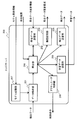
- FIG. 2 is a diagram illustrating an example of functional blocks of a cloud server of the collation system in FIG. 1.
- FIG. 2 is a diagram illustrating an example of a functional block of an edge server of the matching system in FIG. 1.
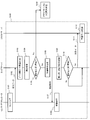
- FIG. 11 is a diagram illustrating a sequence example of a matching process in the edge server.
- FIG. 9 is a diagram illustrating a sequence example of a matching process in the cloud server.
- FIG. 13 is a diagram illustrating a sequence example of a database update process of the edge server. It is a figure which shows the example of a sequence of the relearning process of an inference model.
- FIG. 1 shows a schematic configuration of a collation system according to an embodiment of the present invention.
- the verification system includes a cloud server 100, an edge server 200, a sensor 300, and an actuator 400.
- This collation system is configured to collate the detection data acquired by the sensor 300 with registration data registered in advance in the database of the edge server 200 or the cloud server 100, and control the actuator 400 based on the result.
- the cloud server 100 corresponds to the first matching server according to the present invention
- the edge server 200 corresponds to the second matching server according to the present invention
- the sensor 300 corresponds to the detecting device according to the present invention. ing.
- the edge server 200 is connected to the cloud server 100 via the Internet, for example.
- Terminal devices such as the sensor 300 and the actuator 400 are connected to the edge server 200 via, for example, an intranet or a dedicated bus.
- the above connection method is merely an example, and the components (each device and server) of the present system can be connected via various types of wireless or wired networks.
- edge server 200, the sensor 300, and the actuator 400 shown in FIG. 1 merely represent an example of an entity arranged at the edge (user side) of the network, and may have another device configuration.
- the edge server and the terminal device (sensor or actuator) may be mounted on the same hardware as an edge device.
- a plurality of sensors and actuators may be connected to one edge server. The number of sensors and actuators connected to one edge server is arbitrary.
- the sensor 300 is a device that acquires detection data collated by the edge server 200 or the cloud server 100.
- an imaging device camera
- a thermometer that measures ambient temperature and outputs temperature data
- vibration data by measuring acceleration applied to itself.
- Various types of sensors can be used, such as an acceleration sensor.
- the actuator 400 is a device that is controlled in accordance with the result of the detection data collation.
- various output devices such as a monitor, a speaker, and a lamp may be controlled in accordance with the result of matching the detected data.
- the edge server 200 is located closer to the cloud server 100 when viewed from the terminal device.
- “close” means that the distance in the network space is short (that is, the communication time is short), and does not mean that the physical distance is short.
- the communication time is generally shorter (or longer) as the physical distance is shorter (or farther)
- the physical distance and the distance in the network space often have a correlation.
- Examples of modes of disposing the edge server 200 closer to the cloud server 100 as viewed from the terminal device include the following (A) to (D). In addition, these are only examples, and arrangement
- the edge server 200 is configured as a device (edge device) integrated with the terminal device.
- a terminal device is connected to the edge server 200 so as to be communicable by cable or short-range wireless communication.
- the edge server 200 is arranged in the local network where the terminal device is located, and the cloud server 100 is arranged in an external network.
- the edge server 200 is arranged in the middle of the network path between the terminal device and the cloud server 100.
- FIG. 2 shows an example of functional blocks of the cloud server 100.
- FIG. 3 shows an example of a functional block of the edge server 200.
- the cloud server 100 has a function of centrally controlling the system and a function of complementing the operation of the edge server 200.
- the edge server 200 includes a data analysis unit 201, a collation data storage unit 202, a collation unit 203, a history storage unit 204, a detection data transmission unit 205, a learning data transmission unit 206, a model storage unit 207, and an actuator control unit 208.
- the data analysis unit 201 receives the detection data (or data that has been subjected to the pre-processing of data analysis) acquired by the sensor 300, and analyzes the detection data to extract a feature amount necessary for collation.
- the data analysis by the data analysis unit 201 is performed using an inference model (a machine learning model or a deep learning model) stored in the model storage unit 207.
- the collation data storage unit 202 has a database function of storing registration data registered in advance in the system for collation and associated attribute data.
- the registered data in the collation data storage unit 202 is collated with the feature amount of the detection data extracted by the data analysis unit 201.
- the collation data storage unit 202 stores only a part (subset) of registration data, not all registration data handled by the present system.
- the registration data stored in the verification data storage unit 202 may be different for each edge server 200. That is, in the matching data storage unit 202 of each edge server 200, registered data that is highly likely to be matched by the edge server 200 is selectively stored.
- the collation unit 203 performs collation on the collation data storage unit 202 with the feature amount of the detection data extracted by the data analysis unit 201 as an input. Specifically, the matching unit 203 searches the matching data storage unit 202 using the input detection data as a key, specifies registered data (and its attribute data) most suitable for the detection data, and Acquire the degree of conformity between the data and the registered data. As the fitness, various types of values can be used. For example, values such as reliability, likelihood, and Euclidean distance can be used as the fitness. As a result of the collation, if a degree of conformity exceeding a predetermined determination reference value is obtained, it is determined that the collation is successful (registered data matching the detection data exists in the collation data storage unit 202). Determines that the matching has failed (registration data matching the detection data does not exist in the matching data storage unit 202). Further, the collating unit 203 is configured to request the cloud server 100 to collate and obtain a collation result in the case of a collation failure.
- the history storage unit 204 stores history data of the comparison performed by the comparison unit 203.
- the history data includes, for example, an ID for identifying each history, a time of collation, detection data (or its characteristic amount), identification information of the sensor 300 from which the detection data was obtained (for example, sensor ID), and processing of the detection data. It is composed of identification information of the edge server 200 (for example, edge ID), data of a collation result (for example, identification information of retrieved registered data, success / failure of collation, matching degree), and the like.
- the detection data transmission unit 205 transmits the detection data (or data that has been subjected to preprocessing for data analysis) acquired by the sensor 300 to the cloud server 100. However, the detection data transmission unit 205 does not transmit all the detection data, but transmits the detection data only when it is determined that the collation has failed.
- the learning data transmission unit 206 associates the detection data acquired by the sensor 300 (or data that has been subjected to data analysis preprocessing) with the data of the collation result by the collation unit 203, and transmits the data as learning data to the cloud server 100. I do. However, the learning data transmission unit 206 does not transmit all the detection data, but transmits only those that satisfy a predetermined condition (described later).
- the model storage unit 207 stores an inference model used when the data analysis unit 201 performs data analysis.
- the inference model in the model storage unit 207 is appropriately updated by the re-learned inference model transmitted from the cloud server 100.
- the actuator control unit 208 generates a control command for controlling the operation of the actuator 400 based on the result of the comparison by the comparison unit 203 (or the cloud server 100), and transmits the control command to the actuator 400.
- the actuator control unit 208 may generate a control command for controlling the operation of another device such as the sensor 300 instead of or in addition to the control command of the actuator 400, and transmit the control command to the corresponding device.
- the cloud server 100 includes a data analysis unit 101, a collation data storage unit 102, a collation unit 103, a history storage unit 104, a learning data storage unit 105, a learning unit 106, a model storage unit 107, and a collation result transmission unit 108.
- the data analysis unit 101 receives the detection data transmitted from the edge server 200 (or data that has been subjected to data analysis preprocessing), analyzes the detection data, and extracts a feature amount necessary for collation. Data analysis by the data analysis unit 101 is performed using an inference model (a machine learning model or a deep learning model) stored in the model storage unit 107.
- an inference model a machine learning model or a deep learning model
- the collation data storage unit 102 has a database function of storing registration data registered in advance in the system for collation and associated attribute data.
- the registered data in the collation data storage unit 102 is collated with the feature amount of the detection data extracted by the data analysis unit 101.
- the collation data storage unit 102 stores all registration data handled by the present system.
- the collation unit 103 performs collation on the collation data storage unit 102 with the feature amount of the detection data extracted by the data analysis unit 101 as an input. Specifically, the collation unit 103 searches the collation data storage unit 102 using the input detection data as a key, specifies registered data (and its attribute data) most suitable for the detection data, and Acquire the degree of conformity between the data and the registered data. As a result, if a degree of conformity exceeding a predetermined criterion value is obtained, it is determined that collation has succeeded (registered data matching the detection data exists in the collation data storage unit 102). It is determined that the collation has failed (registration data matching the detection data does not exist in the collation data storage unit 102).
- the history storage unit 104 stores history data of the comparison performed by the comparison unit 103.
- the history data includes, for example, an ID for identifying each history, a time of collation, detection data (or its characteristic amount), identification information of the sensor 300 from which the detection data was obtained (for example, sensor ID), and processing of the detection data. It is composed of identification information of the edge server 200 (for example, edge ID), data of a collation result (for example, identification information of retrieved registered data, success / failure of collation, matching degree), and the like.
- the learning data storage unit 105 associates the detection data acquired by the sensor 300 (or the data that has been subjected to the pre-processing of data analysis) with the data of the collation result by the collation unit 103 and stores the data as learning data. However, the learning data transmission unit 105 does not store all pieces of detection data, but stores only those that satisfy a predetermined condition (described later). The learning data storage unit 105 also stores learning data received from the edge server 200.
- the learning unit 106 re-learns an inference model used for data analysis by the data analysis units 101 and 201 based on the learning data stored in the learning data storage unit 105. Re-learning of the inference model may be performed by machine learning, deep learning, or other techniques.
- the learning unit 106 stores the re-learned inference model in the model storage unit 107, transmits the inference model to the edge server 200, and stores it in the model storage unit 207. Therefore, the same latest inference model is stored in the model storage units 101 and 201.
- the model storage unit 107 stores an inference model used when the data analysis unit 101 analyzes data.
- the inference model in the model storage unit 107 is appropriately updated by the inference model re-learned by the learning unit 106.
- the collation result transmission unit 108 transmits the collation result (for example, the retrieved registration data, the success or failure of the collation, the degree of conformity) by the collation unit 103 to the edge server 200 that has transmitted the collated detection data.
- the collation result for example, the retrieved registration data, the success or failure of the collation, the degree of conformity
- a face image of a person taken by an imaging device (camera) installed as a sensor 300 near the entrance door of the facility is authenticated, and the door is opened and closed according to whether the person is a registered person.
- a case where the present verification system is applied to a face authentication system controlled by the actuator 400 will be described as an example.
- the database (102, 202) of each server (100, 200) for example, registration data including a face image of a person registered in advance and its feature amount, and the sex, age, / Attribute data including “not allowed” is stored.
- FIG. 4 shows a sequence example of the matching processing in the edge server 200.
- the sensor 300 performs sensing (step S101).
- the detection data obtained by the sensing is transmitted to the edge server 200 (Step S102).
- a face image of a person is transmitted to the edge server 200 as detection data.
- the edge server 200 Upon receiving the detection data from the sensor 300, the edge server 200 performs the following processing. First, the data analysis unit 201 performs data analysis to extract a feature amount of the detected data (step S103).
- the collation unit 203 searches the collation data storage unit 202 using the feature amount extracted by the data analysis unit 201 as a key, and specifies registered data (and its attribute data) most suitable for the detected data. Then, the degree of conformity between the detection data and the registration data is obtained (step S104).
- the matching unit 203 compares the matching obtained by the matching with a first threshold value (90% in this example), which is a determination reference value, and determines that the matching is successful if the matching is equal to or greater than the first threshold, and otherwise determines If the collation fails, it is determined (step S105).
- the actuator control unit 208 If the collation is determined to be successful in step S105, the actuator control unit 208 generates a control command based on the attribute data retrieved from the collation data storage unit 202 (step S106). For example, if “entry permitted” is set in the attribute data of the registration data that matches the person photographed by the camera, a control command to instruct door opening or key release is generated, but “entrance impossible” is generated. If it is set, a control command for instructing display of a message indicating that it is impossible to enter, output of a warning sound, lighting of a lamp, and the like is generated.
- the control command generated by the actuator control unit 208 is transmitted to the actuator 400 (or an output device such as a monitor, a speaker, and a lamp provided near the actuator 400) (Step S107).
- the actuator 400 (or the output device) operates based on the control command received from the edge server 200 (Step S108). For example, an operation of opening a door or releasing a key is performed. Alternatively, operations such as displaying a message indicating that it is impossible to enter the building, outputting a warning sound, and lighting a lamp are performed.
- the edge server 200 when it is determined that the matching is successful in step S105, the edge server 200 causes the history storage unit 104 to store the history data of the matching performed by the matching unit 103.
- the history data for example, the success or failure of the collation, the identification information (for example, personal ID) of the registered data successfully collated, the authentication time, and the like are recorded (step S109).
- the learning data transmitting unit 206 determines whether or not to transmit the learning data to the cloud server 100 based on the degree of matching acquired by the collation by the collating unit 203 (Step S110).
- the learning data is transmitted on condition that the degree of matching is within a predetermined range.
- a second threshold value for example, 95%) that defines the upper limit of the predetermined range
- the learning data is transmitted to the cloud server 100 (Step S111). That is, when the matching is successful (the degree of conformity is equal to or more than the first threshold) but the reliability is not so high (the degree of conformity is less than the second threshold), the learning data is transmitted.
- the cloud server 100 stores the learning data received from the edge server 200 in the learning data storage unit 105 (Step S112).
- step S105 if it is determined in step S105 that the matching has failed, the process proceeds to the matching process (step S200) by the cloud server 100.
- FIG. 5 shows a sequence example of the collation processing in the cloud server 100.
- the detection data transmission unit 205 transmits, to the cloud server 100, the detection data in which the matching has failed (the degree of matching is less than the first threshold) (Step S201). That is, when it is determined that there is no registered data matching the detected data in the database of the edge server 200, the detected data is transmitted to the cloud server 100.
- the cloud server 100 When the cloud server 100 receives the detection data from the edge server 200, the cloud server 100 performs the following processing. First, the data analysis unit 101 performs data analysis to extract a feature amount of detected data (step S202).
- the collation unit 103 searches the collation data storage unit 102 using the feature amount extracted by the data analysis unit 101 as a key, and specifies registered data (and its attribute data) most suitable for the detected data, Then, the degree of matching between the detected data and the registered data is obtained (step S203).
- the matching unit 103 compares the matching obtained by the matching with a first threshold (90% in this example), which is a criterion value. If the matching is equal to or greater than the first threshold, the matching is determined to be a successful match. If not, it is determined that the collation has failed (step S204).
- the matching result transmitting unit 108 determines that the matching is successful in step S204, the matching result transmitting unit 108 transmits a matching success notification indicating that the matching by the matching unit 103 is successful to the edge server 200 (step S205).
- a matching failure notification indicating that matching by the matching unit 103 has failed is transmitted to the edge server 200 (step S209). At the time of these notifications, not only the success or failure of the collation, but also the identification information of the searched registered data and its attribute data are transmitted.
- the actuator control unit 208 When the edge server 200 receives the matching success notification or the matching failure notification from the cloud server 100, the actuator control unit 208 generates a control command based on the attribute data received together with the notification (Step S210). For example, in the case of the verification success notification, if “entry permitted” is set in the attribute data received with the notification, a control command to instruct door opening or key release is generated. If it is set, a control command for instructing display of a message indicating that it is impossible to enter, output of a warning sound, lighting of a lamp, and the like is generated. Also, in the case of the verification failure notification, a control command for instructing display of a message indicating that entry is not possible, output of a warning sound, lighting of a lamp, and the like is generated.
- the control command generated by the actuator control unit 208 is transmitted to the actuator 400 (or an output device such as a monitor, a speaker, and a lamp provided near the actuator 400) (step S211).
- the actuator 400 (or the output device) operates based on the control command received from the edge server 200 (Step S212). For example, an operation of opening a door or releasing a key is performed. Alternatively, operations such as displaying a message indicating that it is impossible to enter the building, outputting a warning sound, and lighting a lamp are performed.
- the edge server 200 causes the history storage unit 104 to store the history data of the collation executed by the cloud server 100.
- the history data for example, success or failure of the collation, identification information (for example, personal ID) of the registered data that has been successfully collated, an authentication time, and the like are recorded (step S213). It is needless to say that if the verification fails, the identification information of the person is not stored.
- the cloud server 100 determines whether or not to store the learning data in the learning data storage unit 105 based on the matching degree acquired by the matching by the matching unit 103 (Stes S206 and S207).
- the learning data is stored in the learning data storage unit 105 on condition that the degree of matching is within a predetermined range. In this example, if the matching is successful (the fitness is equal to or more than the first threshold), the learning data is stored if the fitness is lower than a second threshold (for example, 95%) that defines the upper limit of the predetermined range (step S204). : Yes, step S206: Yes, step S208).
- step S204 No, step S207: Yes, step S208. That is, when the matching is successful (the degree of conformity is equal to or more than the first threshold) but the reliability is not so high (the degree of conformity is less than the second threshold), the learning data is stored. Further, if the matching fails (the degree of conformity is less than the first threshold) but the reliability is a certain level (the degree of conformity is equal to or greater than the third threshold), the learning data is stored.
- a third threshold for example, 85%
- third threshold ⁇ first threshold ⁇ second threshold is a threshold value used as learning data in order to prevent detection data that has succeeded in matching but has a low degree of conformity from being further deteriorated in matching accuracy in future matching.
- the third threshold value is a threshold value for determining, from the failed detection data, data that may have actually been successfully verified as learning data. Instead of using the third threshold value, all pieces of detection data that failed to match may be used as learning data, but many learning data that does not contribute to re-learning will be included. For this reason, it can be said that it is preferable to use the third threshold value so as to exclude those having an excessively low degree of matching.
- FIG. 6 shows a sequence example of the database update process of the edge server 200.
- the edge server 200 can perform many matchings. Since people who visit facilities tend to change over time, the system is optimized by updating the registered data in the collation data storage unit 202 as needed.
- the timing of the optimization may be a regular one-day cycle, a one-month cycle, or an arbitrary timing instructed by the system operator.
- the communication between the edge server 200 and the cloud server 100 may be monitored, and the optimization may be performed when the number of times the cloud server 100 has transmitted the matching success notification within the predetermined period is equal to or more than the predetermined number.
- the edge server 200 performs the following processing when the timing to execute the optimization comes. First, the history data in the history storage unit 204 for the latest fixed period (for example, one day, one month, etc.) is totaled, and the number of times of collation for each registered data is calculated (step S301). Next, it is confirmed whether the registered data exists in the collation data storage unit 202 with respect to a predetermined number of registered data in the order of the number of times of collation, and the registration data that does not exist in the collation data storage unit 202 is specified (step S302). ).
- the history data in the history storage unit 204 for the latest fixed period for example, one day, one month, etc.
- the edge server 200 transmits to the cloud server 100 a collation data update request for requesting transmission of registration data that does not exist in the collation data storage unit 202 (Step S303).
- the cloud server 100 reads the registration data corresponding to the verification data update request from the verification data storage unit 102, and transmits the read registration data to the edge server 200 (Step S304).
- the edge server 200 deletes unnecessary registration data from the collation data storage unit 202 in the order of smaller number of collations, and stores the registration data received from the cloud server 100 in the collation data storage unit 202 (Step S305).
- the number of times of the latest verification (face authentication) in the edge server 200 is totaled to create a visit frequency ranking, and the top 1000 persons in the visit frequency ranking are specified.
- the registration data of a person not existing in the storage unit 202 is received from the cloud server 100 and stored in the collation data storage unit 202. At this time, if the registered data is simply added to the collation data storage unit 202, the number of registered data may exceed the upper limit (1000 in this example). In this case, the number of registered data is adjusted by deleting the excess registered data in the collation data storage unit 202 in order from the bottom of the visit count ranking.
- the edge server 200 may notify the cloud server 100 of identification information (for example, a list of personal IDs) of all registered data held by the edge server 200. This allows the cloud server 100 to know which edge server 200 currently holds which registration data. Also, by performing such information sharing, when the registration data is changed in the cloud server 100, the latest registration data is transmitted to the edge server 200 holding the corresponding registration data, and the collation data is transmitted.
- the storage unit 202 can be updated. This allows the edge server 200 to perform the collation using the latest registration data, and also allows the cloud server 100 to share information of the registration data owned by each edge server 200.
- FIG. 7 shows an example of a sequence of the re-learning process of the inference model.
- the timing of updating the inference model may be a periodic one-day cycle, a one-month cycle, or any timing instructed by the system operator.
- a certain degree or more of learning data is transmitted to the cloud server 100 due to a low degree of matching when the edge server 200 succeeds in matching, or the number of times that the learning data is transmitted from the edge server 200 within a predetermined period is reduced.
- the optimization may be performed when the number of times reaches a predetermined number or more.
- Correction may be manually performed on data that has been successfully collated so that accurate learning can be performed.
- the cloud server 100 performs the following processing when the timing to execute the re-learning of the inference model comes.
- the learning unit 106 re-learns the inference model based on the learning data stored in the learning data storage unit 105 (step S401).
- the learning unit 106 may perform new learning, or may perform learning using only new learning data by a known method called fine tuning. Also, new learning or fine tuning may be performed using only learning data having a high frequency of occurrence.
- the learning unit 106 stores the latest inference model obtained by the re-learning in the model storage unit 107 and transmits the model to the edge server 200 (step S402).
- the edge server 200 stores the latest inference model received from the cloud server 100 in the model storage unit 207, and uses it for subsequent data analysis by the data analysis unit 201 (Step S403).
- the inference model may be overwritten and updated, but in consideration of the possibility that the accuracy of the updated model may be degraded, a past inference model may be saved and restored. .
- the past inference model may be stored only in the model storage unit 107 of the cloud server 100, or may be stored in the model storage unit 207 of the edge server 200.
- the cloud server 100 holds the main database (102) storing all registration data handled by the system, and the sub-database (202) storing a part of registration data. Is held by the edge server 200 arranged near the sensor 300. In the sub database (202) of the edge server 200, only registered data that is highly likely to be collated by the edge server 200 is stored. Then, the edge server 200 checks the detection data acquired by the sensor 300 with the registration data in the sub-database, and when it is determined that the registration data matching the detection data does not exist in the sub-database, It is configured to transmit data to the cloud server 100 and request collation with registered data in the main database.
- the edge server 200 After the matching is performed by the edge server 200, only a part of the detection data for which the matching has failed is compared by the cloud server 100. This can reduce the processing load on the cloud server 100 and the communication load between the edge server 200 and the cloud server 100. In addition, since most of the detection data can be collated by the edge server 200 near the sensor 300, a collation result can be obtained immediately. Further, even when the registration data is not synchronized between the edge server 200 and the cloud server 100 (for example, when new registration data is not registered in the edge server 200), the matching in the edge server 200 fails. In this case, since the collation is performed by the cloud server 100, the collation using the latest registration data can be performed.
- the load of collation can be distributed to each edge server 200, and the load can be further reduced.
- simple machine learning by small-scale mounting processing can be realized. As a result, since the AI engine is no longer a large AI engine as in the past, simple machine learning can be easily performed.
- the detection data itself is transmitted to the cloud server 100 to request the matching, but a part of the detection data or the feature amount of the detection data is used. May be transmitted.
- a partial image obtained by cutting out a portion to be watched in a face image, which is detection data, or distance information between face parts such as eyes, a nose, and a mouth may be transmitted as a feature amount of the detection data.
- the amount of transmission data can be reduced, so that the communication load can be reduced.
- the processing load on the cloud server 100 can be reduced.
- the learning data (detection data and data of the matching result) is appropriately transmitted from the edge server 200 to the cloud server 200.
- the learning data is temporarily stored in a memory in the edge server 200.
- And may be transmitted to the cloud server 200 at a predetermined timing. For example, it may be performed at a timing when the amount of accumulated data exceeds a predetermined value, may be performed at a timing when a randomly calculated random value exceeds a predetermined value, and may be performed at a predetermined time period (e.g., at night) when traffic is small.
- the transmission may be performed during a peak off time period where the influence of the load is small.
- a part of the detection data or a feature amount of the detection data may be transmitted as the learning data.
- a partial image obtained by cutting out a portion to be watched in a face image, which is detection data, or distance information between face parts such as eyes, a nose, and a mouth may be transmitted as learning data.
- the matching system of the present example is applied to a face authentication system is described as an example, but it goes without saying that the matching system can be applied to other systems.
- the occurrence of an event is specified based on detection data obtained from sensors installed at various locations in the factory, the control content to be executed in response to the event is searched from a database, and the corresponding actuator is controlled. It may be applied to a device control system to be operated.
- the database of the cloud server 100 and the edge server 200 may store a plurality of registration data indicating a preset event and attribute data indicating control to be executed in response to the event.
- the present invention has been described in detail based on the embodiments. However, it is needless to say that the present invention is not limited to the collation system described here, but can be widely applied to collation systems other than the above.
- the present invention can be provided as, for example, a method and a method for executing the processing according to the present invention, a program for realizing such a method and the method, and a storage medium for storing the program.
- the present invention can be used for various collation systems that collate detection data acquired by a detection device with registered data registered in advance.
Landscapes
- Engineering & Computer Science (AREA)
- Theoretical Computer Science (AREA)
- Computer Security & Cryptography (AREA)
- General Engineering & Computer Science (AREA)
- Physics & Mathematics (AREA)
- Computer Hardware Design (AREA)
- General Physics & Mathematics (AREA)
- Software Systems (AREA)
- Computer Networks & Wireless Communication (AREA)
- Signal Processing (AREA)
- Health & Medical Sciences (AREA)
- General Health & Medical Sciences (AREA)
- Computing Systems (AREA)
- Oral & Maxillofacial Surgery (AREA)
- Computer Vision & Pattern Recognition (AREA)
- Social Psychology (AREA)
- Human Computer Interaction (AREA)
- Geometry (AREA)
- Artificial Intelligence (AREA)
- Multimedia (AREA)
- Data Mining & Analysis (AREA)
- Evolutionary Computation (AREA)
- Medical Informatics (AREA)
- Mathematical Physics (AREA)
- Biomedical Technology (AREA)
- Databases & Information Systems (AREA)
- Bioethics (AREA)
- Image Analysis (AREA)
- Telephonic Communication Services (AREA)
- Information Retrieval, Db Structures And Fs Structures Therefor (AREA)
Priority Applications (4)
| Application Number | Priority Date | Filing Date | Title |
|---|---|---|---|
| EP18933358.6A EP3851971B1 (de) | 2018-09-11 | 2018-09-11 | Verifizierungssystem und verifizierungsserver |
| JP2020546574A JP7132346B2 (ja) | 2018-09-11 | 2018-09-11 | 照合システム及び照合サーバ |
| PCT/JP2018/033588 WO2020053953A1 (ja) | 2018-09-11 | 2018-09-11 | 照合システム及び照合サーバ |
| US17/265,911 US11967174B2 (en) | 2018-09-11 | 2018-09-11 | Verification system and verification server |
Applications Claiming Priority (1)
| Application Number | Priority Date | Filing Date | Title |
|---|---|---|---|
| PCT/JP2018/033588 WO2020053953A1 (ja) | 2018-09-11 | 2018-09-11 | 照合システム及び照合サーバ |
Publications (1)
| Publication Number | Publication Date |
|---|---|
| WO2020053953A1 true WO2020053953A1 (ja) | 2020-03-19 |
Family
ID=69777675
Family Applications (1)
| Application Number | Title | Priority Date | Filing Date |
|---|---|---|---|
| PCT/JP2018/033588 Ceased WO2020053953A1 (ja) | 2018-09-11 | 2018-09-11 | 照合システム及び照合サーバ |
Country Status (4)
| Country | Link |
|---|---|
| US (1) | US11967174B2 (de) |
| EP (1) | EP3851971B1 (de) |
| JP (1) | JP7132346B2 (de) |
| WO (1) | WO2020053953A1 (de) |
Cited By (4)
| Publication number | Priority date | Publication date | Assignee | Title |
|---|---|---|---|---|
| CN111641948A (zh) * | 2020-04-30 | 2020-09-08 | 深圳精匠云创科技有限公司 | 边缘计算接入时的注册方法及边缘计算节点装置 |
| JP2022037056A (ja) * | 2019-03-04 | 2022-03-08 | パナソニックIpマネジメント株式会社 | 顔認証システムおよび顔認証方法 |
| CN119449299A (zh) * | 2024-11-14 | 2025-02-14 | 北京邮电大学 | 一种云边端环境下的自适应身份认证和密钥协商方法 |
| US12499668B2 (en) | 2021-03-11 | 2025-12-16 | Hitachi Kokusai Electric Inc. | Image analysis system an update method for machine learning model |
Families Citing this family (11)
| Publication number | Priority date | Publication date | Assignee | Title |
|---|---|---|---|---|
| JP6845204B2 (ja) * | 2018-10-30 | 2021-03-17 | ファナック株式会社 | ノウハウ作成装置、ノウハウ作成方法及びノウハウ作成プログラム |
| JP7299972B2 (ja) | 2019-04-24 | 2023-06-28 | 真旭 徳山 | 情報処理システム、情報処理方法、及びプログラム |
| WO2020218084A1 (ja) | 2019-04-26 | 2020-10-29 | 真旭 徳山 | リモコン装置、情報処理方法及びプログラム |
| US11446567B2 (en) * | 2019-06-11 | 2022-09-20 | Universal City Studios Llc | Digital character interacting with customer in physical realm |
| CN114207610B (zh) * | 2019-07-31 | 2023-03-24 | 德山真旭 | 终端装置、信息处理方法以及程序 |
| EP4075867A4 (de) * | 2019-12-31 | 2023-01-25 | Huawei Technologies Co., Ltd. | Anwendungsfall-bestimmungsverfahren, -vorrichtung und -system |
| WO2021152736A1 (ja) * | 2020-01-29 | 2021-08-05 | 日本電気株式会社 | 監視システム、監視装置、監視方法、およびプログラム |
| US20230224360A1 (en) * | 2020-06-15 | 2023-07-13 | Nippon Telegraph And Telephone Corporation | Processing system, and processing method |
| US11516199B2 (en) * | 2020-07-17 | 2022-11-29 | Cisco Technology, Inc. | Zero trust for edge devices |
| CN114067473B (zh) * | 2020-08-07 | 2023-01-06 | 比亚迪股份有限公司 | 综合调度系统中的门禁权限管理方法、装置及设备 |
| CN115089167A (zh) * | 2022-06-10 | 2022-09-23 | 涂中科技(安徽)有限公司 | 用于元宇宙的人体面部动作传感系统 |
Citations (5)
| Publication number | Priority date | Publication date | Assignee | Title |
|---|---|---|---|---|
| JP2006085268A (ja) * | 2004-09-14 | 2006-03-30 | Fuji Photo Film Co Ltd | 生体認証システムおよび生体認証方法 |
| JP2014002634A (ja) * | 2012-06-20 | 2014-01-09 | Nippon Telegr & Teleph Corp <Ntt> | 通信制御システム、集約サーバおよび通信制御方法 |
| US9679075B1 (en) * | 2014-04-30 | 2017-06-13 | Instart Logic, Inc. | Efficient delivery of animated image files |
| JP2017152852A (ja) | 2016-02-23 | 2017-08-31 | 株式会社日立製作所 | 通信システム、通信装置、および通信システムの通信制御方法 |
| JP2018045369A (ja) * | 2016-09-13 | 2018-03-22 | 株式会社東芝 | 認識装置、認識システム、認識方法およびプログラム |
Family Cites Families (5)
| Publication number | Priority date | Publication date | Assignee | Title |
|---|---|---|---|---|
| JP3590285B2 (ja) * | 1999-01-27 | 2004-11-17 | 株式会社東芝 | 生体情報認識装置およびその方法 |
| US8185747B2 (en) * | 2003-05-22 | 2012-05-22 | Access Security Protection, Llc | Methods of registration for programs using verification processes with biometrics for fraud management and enhanced security protection |
| JP2010061261A (ja) * | 2008-09-02 | 2010-03-18 | Fujitsu Ltd | 認証システムおよび認証方法 |
| JP6838903B2 (ja) * | 2016-09-13 | 2021-03-03 | 東芝テック株式会社 | 物品読取装置およびプログラム |
| KR20210050884A (ko) * | 2019-10-29 | 2021-05-10 | 삼성전자주식회사 | 화자 인식을 위한 등록 방법 및 장치 |
-
2018
- 2018-09-11 WO PCT/JP2018/033588 patent/WO2020053953A1/ja not_active Ceased
- 2018-09-11 US US17/265,911 patent/US11967174B2/en active Active
- 2018-09-11 EP EP18933358.6A patent/EP3851971B1/de active Active
- 2018-09-11 JP JP2020546574A patent/JP7132346B2/ja active Active
Patent Citations (5)
| Publication number | Priority date | Publication date | Assignee | Title |
|---|---|---|---|---|
| JP2006085268A (ja) * | 2004-09-14 | 2006-03-30 | Fuji Photo Film Co Ltd | 生体認証システムおよび生体認証方法 |
| JP2014002634A (ja) * | 2012-06-20 | 2014-01-09 | Nippon Telegr & Teleph Corp <Ntt> | 通信制御システム、集約サーバおよび通信制御方法 |
| US9679075B1 (en) * | 2014-04-30 | 2017-06-13 | Instart Logic, Inc. | Efficient delivery of animated image files |
| JP2017152852A (ja) | 2016-02-23 | 2017-08-31 | 株式会社日立製作所 | 通信システム、通信装置、および通信システムの通信制御方法 |
| JP2018045369A (ja) * | 2016-09-13 | 2018-03-22 | 株式会社東芝 | 認識装置、認識システム、認識方法およびプログラム |
Non-Patent Citations (1)
| Title |
|---|
| See also references of EP3851971A4 |
Cited By (6)
| Publication number | Priority date | Publication date | Assignee | Title |
|---|---|---|---|---|
| JP2022037056A (ja) * | 2019-03-04 | 2022-03-08 | パナソニックIpマネジメント株式会社 | 顔認証システムおよび顔認証方法 |
| JP7266185B2 (ja) | 2019-03-04 | 2023-04-28 | パナソニックIpマネジメント株式会社 | 顔認証システムおよび顔認証方法 |
| CN111641948A (zh) * | 2020-04-30 | 2020-09-08 | 深圳精匠云创科技有限公司 | 边缘计算接入时的注册方法及边缘计算节点装置 |
| CN111641948B (zh) * | 2020-04-30 | 2023-07-18 | 深圳精匠云创科技有限公司 | 边缘计算接入时的注册方法及边缘计算节点装置 |
| US12499668B2 (en) | 2021-03-11 | 2025-12-16 | Hitachi Kokusai Electric Inc. | Image analysis system an update method for machine learning model |
| CN119449299A (zh) * | 2024-11-14 | 2025-02-14 | 北京邮电大学 | 一种云边端环境下的自适应身份认证和密钥协商方法 |
Also Published As
| Publication number | Publication date |
|---|---|
| US11967174B2 (en) | 2024-04-23 |
| EP3851971A4 (de) | 2022-05-04 |
| JP7132346B2 (ja) | 2022-09-06 |
| US20210192183A1 (en) | 2021-06-24 |
| EP3851971A1 (de) | 2021-07-21 |
| EP3851971B1 (de) | 2025-05-14 |
| JPWO2020053953A1 (ja) | 2021-08-30 |
Similar Documents
| Publication | Publication Date | Title |
|---|---|---|
| JP7132346B2 (ja) | 照合システム及び照合サーバ | |
| US12230080B2 (en) | Information processing apparatus, information processing system, and information processing method | |
| US10657782B2 (en) | Networked premises security | |
| US12223811B2 (en) | Artificial intelligence (AI)-based security systems for monitoring and securing physical locations | |
| US20180295141A1 (en) | System, method, and computer program for detecting regular and irregular events associated with various entities | |
| WO2017202169A1 (zh) | 门禁控制数据处理方法、门禁控制方法和电子设备 | |
| US11954990B2 (en) | Artificial intelligence (AI)-based security systems for monitoring and securing physical locations | |
| JP6572537B2 (ja) | 認証装置、方法及びプログラム | |
| KR20170080454A (ko) | 온칩 상황 인식 접촉 리스트를 제공하는 시스템 및 방법 | |
| US12026596B2 (en) | Computerized system and method for adaptive stranger detection | |
| JP2011008529A (ja) | 生体認証装置、生体認証方法およびそのプログラム | |
| US12387570B2 (en) | Artificial intelligence (AI)-based security systems for monitoring and securing physical locations | |
| JPWO2015016262A1 (ja) | 情報処理装置、認証システム、認証方法、及びプログラム | |
| US11503468B2 (en) | System and method for continuously validating and authenticating a host and sensor pair | |
| WO2021182025A1 (ja) | データ管理システム、データ管理方法およびデータ管理プログラム | |
| KR102635351B1 (ko) | 범죄 예방 시스템 | |
| CN117711102A (zh) | 人脸识别系统的控制方法、装置、门禁设备及存储介质 | |
| CN111316266B (zh) | 一种用于改善由通信设备所执行的用户认证的方法 | |
| JP7782669B2 (ja) | 更新通知装置、認証装置、更新通知方法、及びプログラム | |
| KR20220147185A (ko) | 이상 행동 예측 시스템 및 방법, 컴퓨터 프로그램 | |
| CN118692197A (zh) | 一种室内入侵报警方法、装置、电子设备和存储介质 | |
| CN118734272A (zh) | 一种身份核验方法、装置、系统、电子设备及存储介质 | |
| HK40033509B (zh) | 基於车联网的数据存储方法、装置和计算机设备 |
Legal Events
| Date | Code | Title | Description |
|---|---|---|---|
| WWE | Wipo information: entry into national phase |
Ref document number: 2020546574 Country of ref document: JP |
|
| NENP | Non-entry into the national phase |
Ref country code: DE |
|
| ENP | Entry into the national phase |
Ref document number: 2018933358 Country of ref document: EP Effective date: 20210412 |
|
| WWG | Wipo information: grant in national office |
Ref document number: 2018933358 Country of ref document: EP |