WO2020054872A1 - Agent thérapeutique pour douleur de zona aiguë - Google Patents
Agent thérapeutique pour douleur de zona aiguë Download PDFInfo
- Publication number
- WO2020054872A1 WO2020054872A1 PCT/JP2019/036240 JP2019036240W WO2020054872A1 WO 2020054872 A1 WO2020054872 A1 WO 2020054872A1 JP 2019036240 W JP2019036240 W JP 2019036240W WO 2020054872 A1 WO2020054872 A1 WO 2020054872A1
- Authority
- WO
- WIPO (PCT)
- Prior art keywords
- pain
- acid
- therapeutic agent
- active ingredient
- phenytoin
- Prior art date
- Legal status (The legal status is an assumption and is not a legal conclusion. Google has not performed a legal analysis and makes no representation as to the accuracy of the status listed.)
- Ceased
Links
Images
Classifications
-
- A—HUMAN NECESSITIES
- A61—MEDICAL OR VETERINARY SCIENCE; HYGIENE
- A61K—PREPARATIONS FOR MEDICAL, DENTAL OR TOILETRY PURPOSES
- A61K31/00—Medicinal preparations containing organic active ingredients
- A61K31/33—Heterocyclic compounds
- A61K31/395—Heterocyclic compounds having nitrogen as a ring hetero atom, e.g. guanethidine or rifamycins
- A61K31/41—Heterocyclic compounds having nitrogen as a ring hetero atom, e.g. guanethidine or rifamycins having five-membered rings with two or more ring hetero atoms, at least one of which being nitrogen, e.g. tetrazole
- A61K31/4164—1,3-Diazoles
- A61K31/4166—1,3-Diazoles having oxo groups directly attached to the heterocyclic ring, e.g. phenytoin
-
- A—HUMAN NECESSITIES
- A61—MEDICAL OR VETERINARY SCIENCE; HYGIENE
- A61K—PREPARATIONS FOR MEDICAL, DENTAL OR TOILETRY PURPOSES
- A61K31/00—Medicinal preparations containing organic active ingredients
- A61K31/66—Phosphorus compounds
- A61K31/675—Phosphorus compounds having nitrogen as a ring hetero atom, e.g. pyridoxal phosphate
-
- A—HUMAN NECESSITIES
- A61—MEDICAL OR VETERINARY SCIENCE; HYGIENE
- A61P—SPECIFIC THERAPEUTIC ACTIVITY OF CHEMICAL COMPOUNDS OR MEDICINAL PREPARATIONS
- A61P25/00—Drugs for disorders of the nervous system
- A61P25/04—Centrally acting analgesics, e.g. opioids
-
- A—HUMAN NECESSITIES
- A61—MEDICAL OR VETERINARY SCIENCE; HYGIENE
- A61P—SPECIFIC THERAPEUTIC ACTIVITY OF CHEMICAL COMPOUNDS OR MEDICINAL PREPARATIONS
- A61P31/00—Antiinfectives, i.e. antibiotics, antiseptics, chemotherapeutics
- A61P31/12—Antivirals
- A61P31/20—Antivirals for DNA viruses
- A61P31/22—Antivirals for DNA viruses for herpes viruses
Definitions
- the present invention relates to a novel use of a compound used as a therapeutic agent for epilepsy. Specifically, the present invention relates to a therapeutic agent for acute shingles pain using a hydantoin-based compound selected from the group consisting of phenytoin, phosphenytoin, mephenytoin, nilvanol, amino (diphenylhydantoin) valeric acid and etotoin as an active ingredient. About.
- Shingles is a disease caused by recurrent infection of varicella-zoster virus (VZV), which reactivates VZV that has latently infected sensory ganglia such as the dorsal root ganglia and trigeminal ganglia. It is caused by transformation. VZV causes chickenpox (chickenpox) upon primary infection, and after healing, latently infects sensory ganglia. When the virus is reactivated due to a decrease in immunity, stress, or the like, VZV proliferating in the ganglia is transmitted to the periphery through the axons of the primary sensory nerve, and blisters on the skin. Skin lesions occur in the zonal region of the sensory ganglia, and are called shingles, which causes neural lesions such as neuralgia and paresthesia.
- VZV varicella-zoster virus
- Pain in shingles is caused by acute shingles pain caused by inflammation occurring before or simultaneously with appearance of rash, and acute inflammatory inflammation causing severe damage to nerves.
- There is postherpetic neuralgia whose pain persists after healing. Both acute and postherpetic neuralgia often make daily life difficult.
- non-steroidal anti-inflammatory drugs aspirin, etenzamid, loxonin, ibuprofen, diclofenac, etc.
- analgesics acetaminophen
- Opioids morphine, codeine phosphate, oxycodone
- Antiviral agents vitamin, acyclovir, valacyclovir, etc. have been used for the treatment of acute herpes zoster itself.
- pregabalin is mainly used for the treatment of postherpetic neuralgia, and tricyclic antidepressants (amitriptyline, imipramine, etc.), nortriptyline, gabapentin and the like are sometimes used.
- tricyclic antidepressants amitriptyline, imipramine, etc.
- nortriptyline gabapentin and the like are sometimes used.
- antiepileptic drugs are used as analgesic aids.
- a therapeutic agent for epilepsy as a hydantoin-based drug, for example, phenytoin, phosphenytoin, mephenytoin, nilvanol, amino (diphenylhydantoin) valeric acid and etotoin are used.
- a mechanism has been proposed that inhibits the voltage-gated sodium channel of S. cerevisiae and suppresses abnormal excitation of the brain, thereby exhibiting an anticonvulsant effect.
- these remedies for epilepsy are said to be effective also for neuropathic pain, there are no reports to date that they are also effective for acute phase pain.
- An object of the present invention is to provide a new therapeutic agent for acute shingles pain.
- the present invention provides a therapeutic agent for acute shingles pain, comprising as an active ingredient a hydantoin-based compound selected from the group consisting of phenytoin, phosphenytoin, mephenytoin, nilvanol, amino (diphenylhydantoin) valeric acid and etotoin. I do.
- the present invention provides an acute band comprising a hydantoin-based compound selected from the group consisting of phenytoin, phosphenytoin, mephenytoin, nilvanol, amino (diphenylhydantoin) valeric acid and etotoin, and a pharmaceutically acceptable carrier.
- a pharmaceutical composition for treating herpes pain comprising a hydantoin-based compound selected from the group consisting of phenytoin, phosphenytoin, mephenytoin, nilvanol, amino (diphenylhydantoin) valeric acid and etotoin.
- the present invention provides a hydantoin-based compound selected from the group consisting of phenytoin, phosphenytoin, mephenytoin, nilvanol, amino (diphenylhydantoin) valeric acid and etotoin for the treatment of acute shingles pain. provide.
- the invention provides administering to a patient an hydantoin-based compound selected from the group consisting of phenytoin, phosphenytoin, mephenytoin, nilvanol, amino (diphenylhydantoin) valeric acid, and etotoin.
- an hydantoin-based compound selected from the group consisting of phenytoin, phosphenytoin, mephenytoin, nilvanol, amino (diphenylhydantoin) valeric acid, and etotoin.
- Acute shingles pain by administering to a shingles patient a therapeutic agent containing a phenytoin, phosphenytoin, mephenytoin, nilvanol, a hydantoin-based compound selected from the group consisting of amino (diphenylhydantoin) valeric acid and etotoin, Can be treated.
- the administration subject is a warm-blooded animal, and is a human or non-human mammal. In one embodiment, the subject is a human.
- the active ingredient used in the therapeutic agent of the present invention is a hydantoin compound selected from the group consisting of phenytoin, phosphenytoin, mephenytoin, nilvanol, amino (diphenylhydantoin) valeric acid and etotoin.
- Phenytoin is listed in the Japanese Pharmacopoeia, for example, is sold by Dainippon Sumitomo Pharma Co., Ltd. under the trade name of Aleviatin or from Daiichi Sankyo Co., Ltd. under the trade name of Hydantol. It is sold by Eisai Co., Ltd. under the sales name.
- phosphenitoin is a prodrug of phenytoin.
- Etotoin is sold by Dainippon Sumitomo Pharma Co., Ltd. under the trade name of Axenon.
- mephenytoin, nirvanol, and amino (diphenylhydantoin) valeric acid are not currently on the market, but are compounds that have been known for a long time as therapeutic agents for epilepsy.
- phenytoin and phosphenytoin are preferable, and phosphenytoin is particularly recommended.
- phosphenitoin is preferably used because it is hydrolyzed in vivo by alkaline phosphatase to phenytoin, which is an active metabolite, and acts as phenytoin. Side effects of phenytoin are reduced, and it is preferably used.
- hydantoin-based compound as the active ingredient of the present invention contains an asymmetric center, for example, etotoin, it may exist as a racemate, a racemic mixture, or a single enantiomer.
- the present invention is meant to include all such isomers of the compounds, either as a single species or as a mixture thereof.
- the hydantoin compound as the active ingredient of the present invention can be used in the form of a salt.
- phosphenitoin has a phosphate group
- amino (diphenylhydantoin) valeric acid has an amino group and a carboxyl group
- their pharmaceutically acceptable salt forms can also be used.
- the term “pharmaceutically acceptable salt” refers to a salt prepared from a pharmaceutically acceptable non-toxic base or acid.
- pharmaceutically acceptable non-toxic bases including inorganic bases and organic bases.
- such salts include aluminum, ammonium, calcium, copper (second and first), ferric, ferrous, lithium, magnesium, manganese (second and first), potassium, sodium, zinc. And the like.
- ammonium, calcium, magnesium, potassium and sodium salts are preferred.
- phosphenitoin its sodium salt and potassium salt are preferred, and the sodium salt is particularly recommended.
- the hydantoin-based compound as the active ingredient of the present invention is basic, its corresponding salt can be prepared from pharmaceutically acceptable non-toxic inorganic and organic acids.
- Such acids include, for example, acetic acid, benzenesulfonic acid, benzoic acid, camphorsulfonic acid, citric acid, ethanesulfonic acid, fumaric acid, gluconic acid, glutamic acid, hydrobromic acid, hydrochloric acid, isethionic acid, lactic acid, maleic acid , Malic acid, mandelic acid, methanesulfonic acid, mucoic acid, nitric acid, pamoic acid, pantothenic acid, phosphoric acid, succinic acid, sulfuric acid, tartaric acid, p-toluenesulfonic acid and the like.
- the molecule when it has both an acidic group and a basic group such as amino (diphenylhydantoin) valeric acid, it can exist in the form of a zwitterion.
- hydantoin compound includes a pharmaceutically acceptable salt.
- the appropriate dosage level of the active ingredient used in the present invention is usually about 0.01 to 500 mg / kg of patient weight / day, and can be administered in single or multiple doses. Suitable dosage levels can be about 0.01-250 mg / kg / day, about 0.05-100 mg / kg / day, or about 0.1-50 mg / kg / day. Within this range, the dosage may be 0.05-0.5, 0.5-5 or 5-50 mg / kg / day.
- the active ingredient may be administered in a regimen of 1 to 4 times a day, or may be administered once or twice a day.
- the specific dose level and frequency of dosing for any particular patient will vary, and the activity of the specific active ingredient used, metabolic stability and length of action of the active ingredient, age, weight, overall health It will be appreciated by those skilled in the art that it will depend on a variety of factors, including, gender, diet, mode and frequency of administration, rate of excretion, drug combination, the severity of the particular condition, and the host being treated.
- the active ingredient of the present invention can be orally, parenterally (eg, intramuscular, intraperitoneal, intravenous, ICV, intracisternal injection or infusion, subcutaneous injection, or implantation), inhalation spray, nasal, vaginal, rectal, sublingual. It may be administered by oral, buccal or topical routes of administration and may be formulated alone or together in suitable dosage unit formulations containing conventional non-toxic pharmaceutically acceptable carriers suitable for each route of administration.
- compositions The active ingredient of the therapeutic agent of the present invention is administered to a patient as a pharmaceutical composition in combination with a pharmaceutically acceptable carrier.
- Pharmaceutical compositions include those suitable for oral, rectal, topical, and parenteral (eg, subcutaneous, intramuscular, and intravenous) administration; however, the most suitable route in a given case will be specific And the nature and severity of the condition to which the active ingredient is administered.
- the pharmaceutical compositions are prepared by uniformly and intimately bringing into association the active ingredient with liquid carriers or finely divided solid carriers or both, and then, if necessary, shaping the product into the desired formulation.
- the active ingredient in the pharmaceutical composition comprises an amount sufficient to produce an effect on the course or symptoms of the disease.
- compositions containing the active ingredient may be in a form suitable for oral use, such as tablets, troches, lozenges, aqueous or oily suspensions, dispersible powders or granules, emulsions, solutions, hard or soft capsules, or Formulated in syrup or elixir.
- Compositions for oral use can be prepared according to any of the methods known in the art for the manufacture of pharmaceutical compositions, such compositions comprising sweetening, flavoring, coloring and preservative agents.
- excipients are inert diluents, such as calcium carbonate, sodium carbonate, lactose, calcium phosphate or sodium phosphate; granulating and disintegrating agents, such as corn starch or alginic acid; binders, such as starch, gelatin or acacia. And a lubricant such as magnesium stearate, stearic acid or talc.
- the tablets may be uncoated or they may be coated by known techniques to delay disintegration and absorption in the gastrointestinal tract and thereby provide a sustained action over a longer period. For example, a time delay material such as glyceryl monostearate or glyceryl distearate may be used. They may also be coated by known methods to form osmotic therapeutic tablets for controlled release. Oral tablets may also be formulated for immediate release, such as fast dissolving tablets or wafers, fast dissolving tablets or fast dissolving films.
- Formulations for oral use may also include hard gelatin capsules in which the active ingredient is mixed with an inert solid diluent, such as calcium carbonate, calcium phosphate or kaolin, or a water or oil medium such as peanut oil, wherein the active ingredient is It may be presented as liquid paraffin or soft gelatin capsules mixed with olive oil.
- an inert solid diluent such as calcium carbonate, calcium phosphate or kaolin, or a water or oil medium such as peanut oil, wherein the active ingredient is It may be presented as liquid paraffin or soft gelatin capsules mixed with olive oil.
- Aqueous suspensions contain the active ingredients in admixture with excipients suitable for the manufacture of aqueous suspensions.
- excipients are suspending agents such as sodium carboxymethylcellulose, methylcellulose, hydroxy-propylmethylcellulose, sodium alginate, polyvinyl-pyrrolidone, tragacanth gum and acacia; dispersants or wetting agents are naturally occurring phosphorus
- Oily suspensions may be formulated by suspending the active ingredient in a vegetable oil, for example arachis oil, olive oil, sesame oil or coconut oil, or in a mineral oil such as liquid paraffin.
- the oily suspensions may contain a thickening agent, for example beeswax, hard paraffin or cetyl alcohol. Sweetening agents such as those set forth above, and flavoring agents may be added to provide a palatable oral preparation. These compositions may be preserved by the addition of an anti-oxidant such as ascorbic acid.
- Dispersible powders and granules suitable for preparation of an aqueous suspension by the addition of water provide the active ingredient in admixture with a dispersing or wetting agent, suspending agent and one or more preservatives.
- a dispersing or wetting agent e.g., glycerol, glycerol, glycerol, glycerol, glycerol, glycerol, glycerin, glycerin, glycerin, glycerin, glycerin, sorbitol, sorbitol, sorbitol, sorbitol, sorbitol, sorbitol, sorbitol, sorbitol, sorbitol, sorbitol, glycerol, glycerol, glycerol, glycerol, glycerol, glycerol, glycerol, glycerol, glycerol
- the pharmaceutical composition of the present invention can be in the form of an oil-in-water emulsion.
- the oily phase may be a vegetable oil such as olive oil or peanut oil, or a mineral oil such as liquid paraffin or a mixture thereof.
- Suitable emulsifiers include naturally occurring gums such as gum arabic or tragacanth, naturally occurring phospholipids such as soybean, lecithin, and esters or partial esters derived from fatty acids and hexitol anhydrides such as sorbitan monooleate, and The condensation product of the partial ester and ethylene oxide, for example, polyoxyethylene sorbitan monooleate.
- These emulsions may also contain sweetening and flavoring agents.
- Syrups and elixirs may be formulated with sweetening agents, for example glycerol, propylene glycol, sorbitol or sucrose. Such formulations may also contain a demulcent, a preservative and flavoring and coloring agents.
- sweetening agents for example glycerol, propylene glycol, sorbitol or sucrose.
- Such formulations may also contain a demulcent, a preservative and flavoring and coloring agents.
- compositions of the present invention may be in the form of a sterile injectable aqueous or oleaginous suspension.
- This suspension may be formulated according to the known art using those dispersing or wetting agents and suspending agents which have been mentioned above.
- the sterile injectable preparation may also be a sterile injectable solution or suspension in a non-toxic parenterally-acceptable diluent or solvent.
- Acceptable vehicles or solvents include water, Ringer's solution and isotonic saline solution.
- vehicles or solvents for oily suspensions include sterile fixed oils, for example, any non-irritating fixed oil including synthetic mono- or diglycerides.
- compositions of the present invention can also be administered in the form of a suppository for rectal administration of a drug.
- a suppository for rectal administration of a drug.
- These compositions can be prepared by mixing the drug with a suitable nonirritating excipient that is solid at room temperature but liquid at rectal temperature, and thus melts in the rectum to release the drug. it can.
- suitable nonirritating excipient that is solid at room temperature but liquid at rectal temperature, and thus melts in the rectum to release the drug. it can.
- Such materials are cocoa butter and polyethylene glycol.
- transdermal absorption such as transdermal absorption, creams, ointments, jellies, solutions or suspensions, etc.
- transdermal patches are used for topical administration.
- the pharmaceutical composition of the present invention is preferably an injection, an oral preparation or a percutaneous absorption preparation.
- the therapeutic agent of the present invention is used for the treatment of acute shingles pain
- a pharmaceutical composition a formulation for injection, particularly intravenous injection, is used so that the blood concentration can be increased immediately after administration and the effect can be exerted. preferable.
- mice Female C57BL / 6J mice (6 weeks old at the start of the experiment, weighing 18-20 g, SLC Japan) were used for the experiments. The breeding was performed in a 12-hour light / dark cycle (light period from 7:00 am to 7:00 pm) in an environment at room temperature of 22 ⁇ 1 ° C. and humidity of 55 ⁇ 10%. Water and feed (CA-1; CLEA Japan) were freely available.
- mice After carrying the mice, they were bred for a period of about 1 week (see the research schedule table below). Under mouse anesthesia with pentobarbital (50 mg / kg, intraperitoneal), the right hind limb and abdomen were depilated using hair clippers and depilatory cream. Three days after depilation, the mouse was kept under anesthesia, the epidermis of the lower knee joint (shin) of the hind limb was dissected with a 27G injection needle bundled into 10 pieces, and 1 ⁇ 10 6 plaque-forming unit / 10 ⁇ l of HSV-1 ( (No. 7401H strain).
- phosphenitoin sodium injection product name: Hostin (registered trademark) 750 mg intravenously
- the dose of phosphenitoin studied is 15 or 30 mg / kg as phosphenitoin sodium.
- physiological saline without drug is administered as a control.
- the mouse was placed in an observation cage (W10 ⁇ D10 ⁇ H15 cm) covered with a wire net, and left for about 30 minutes to adapt to the experimental environment.
- the mice were stimulated by applying two kinds of von Frey filaments (hereinafter referred to as VFF) having strengths of 0.17 g and 1.20 g to the hind footpads of the mice so as to bend slightly.
- VFF von Frey filaments
- the measurement of pain-like behavior was performed on the 6th day of HSV-1 inoculation, in which shingles-like rash developed in all mice and pain-like behavior was stably observed. After drug administration, measurements were performed at intervals of 1 hour or more in order to minimize the “fit-in” to the measurements of the mice. Therefore, for one dose, pain-like behavior was observed in the following two groups. Group A measurement: 0 (pre), 60 minutes, 120 minutes, 240 minutes, 24 hours later Group B measurement: 0 (pre), 30 minutes, 90 minutes, 180 minutes, 24 hours later Regarding A and B counties An experiment was conducted using eight mice each. As a result, experimental results were obtained using 16 mice at the 24 hour point and 8 mice at the other time points.
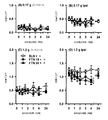
- Example 1 Phosphenytoin (15 and 30 mg / kg as phosphenitoin sodium, tail) against acute shingles pain observed on day 6 of HSV-1 inoculation (hypersensitivity to 0.17 g and 1.2 g stimulation of hind footpad) Intravenous administration).
- mice were administered tail vein with 15 or 30 mg / kg of phosphenitoin sodium (FTN) and saline (SLN) as a control.
- FTN phosphenitoin sodium
- SSN saline
- Sodium phosphenitoin 15 and 30 mg / kg showed an inhibitory effect on the hyperalgesic response (hypersensitivity to 1.2 g of stimulus) on the inoculated side (FIG. 1 (D)).
- a significant inhibitory effect was observed at 2 and 4 hours after administration in the 15 mg / kg administration group and at 4 hours after administration in the 30 mg / kg administration group as compared to the control (P ⁇ 0.05).
- the therapeutic agent of the present invention can be a therapeutic agent for acute shingles pain, has more options for treating acute shingles pain, and can be applied to a wide range of patients.
Landscapes
- Health & Medical Sciences (AREA)
- Life Sciences & Earth Sciences (AREA)
- Medicinal Chemistry (AREA)
- Veterinary Medicine (AREA)
- Public Health (AREA)
- General Health & Medical Sciences (AREA)
- Animal Behavior & Ethology (AREA)
- Pharmacology & Pharmacy (AREA)
- Chemical & Material Sciences (AREA)
- Virology (AREA)
- Nuclear Medicine, Radiotherapy & Molecular Imaging (AREA)
- General Chemical & Material Sciences (AREA)
- Chemical Kinetics & Catalysis (AREA)
- Organic Chemistry (AREA)
- Epidemiology (AREA)
- Engineering & Computer Science (AREA)
- Biotechnology (AREA)
- Molecular Biology (AREA)
- Communicable Diseases (AREA)
- Pain & Pain Management (AREA)
- Bioinformatics & Cheminformatics (AREA)
- Biomedical Technology (AREA)
- Neurology (AREA)
- Neurosurgery (AREA)
- Oncology (AREA)
- Pharmaceuticals Containing Other Organic And Inorganic Compounds (AREA)
Abstract
La présente invention concerne un agent thérapeutique pour douleur du zona aiguë. L'invention concerne un agent thérapeutique pour douleur de zona aiguë, qui comprend, en tant que principe actif, un composé d'hydantoïne choisi dans le groupe constitué par la phénytoïne, la fosphenytoïne, la méphénytoïne, le nirvanol, l'acide amino(diphénylhydantoïne)valérique et l'éthotoïne, et une composition médicinale.
Priority Applications (2)
| Application Number | Priority Date | Filing Date | Title |
|---|---|---|---|
| JP2020546240A JPWO2020054872A1 (ja) | 2018-09-14 | 2019-09-13 | 急性帯状疱疹痛の治療剤 |
| CN201980074822.5A CN113557018A (zh) | 2018-09-14 | 2019-09-13 | 急性带状疱疹疼痛的治疗剂 |
Applications Claiming Priority (2)
| Application Number | Priority Date | Filing Date | Title |
|---|---|---|---|
| JP2018172958 | 2018-09-14 | ||
| JP2018-172958 | 2018-09-14 |
Publications (1)
| Publication Number | Publication Date |
|---|---|
| WO2020054872A1 true WO2020054872A1 (fr) | 2020-03-19 |
Family
ID=69777666
Family Applications (1)
| Application Number | Title | Priority Date | Filing Date |
|---|---|---|---|
| PCT/JP2019/036240 Ceased WO2020054872A1 (fr) | 2018-09-14 | 2019-09-13 | Agent thérapeutique pour douleur de zona aiguë |
Country Status (3)
| Country | Link |
|---|---|
| JP (1) | JPWO2020054872A1 (fr) |
| CN (1) | CN113557018A (fr) |
| WO (1) | WO2020054872A1 (fr) |
Citations (2)
| Publication number | Priority date | Publication date | Assignee | Title |
|---|---|---|---|---|
| WO2001000191A2 (fr) * | 1999-06-23 | 2001-01-04 | Warner-Lambert Company | Utilisation de fosphenytoine pour le traitement de douleur neuropathique aigue |
| JP2001500121A (ja) * | 1996-08-23 | 2001-01-09 | アルゴス ファーマシューティカル コーポレーション | 神経障害性の痛みを治療する組成物を含む抗けいれん剤 |
-
2019
- 2019-09-13 CN CN201980074822.5A patent/CN113557018A/zh active Pending
- 2019-09-13 WO PCT/JP2019/036240 patent/WO2020054872A1/fr not_active Ceased
- 2019-09-13 JP JP2020546240A patent/JPWO2020054872A1/ja active Pending
Patent Citations (2)
| Publication number | Priority date | Publication date | Assignee | Title |
|---|---|---|---|---|
| JP2001500121A (ja) * | 1996-08-23 | 2001-01-09 | アルゴス ファーマシューティカル コーポレーション | 神経障害性の痛みを治療する組成物を含む抗けいれん剤 |
| WO2001000191A2 (fr) * | 1999-06-23 | 2001-01-04 | Warner-Lambert Company | Utilisation de fosphenytoine pour le traitement de douleur neuropathique aigue |
Non-Patent Citations (3)
| Title |
|---|
| AHMED, A. ET AL.: "Vericella Zoster Virus: structure, mode of transmission and treatment", LIFE SCIENCE JOURNAL, vol. 14, no. 12, 2017, pages 96 - 103, XP055692263 * |
| DE QUEIROZ, R. B. ET AL.: "Antinoiciceptive effect of Hydantoin 3-Phenyl-5-(4-ethylphenyl)- imidazolidine-2,4-dione in mice", MOLECULES, vol. 20, no. 1, 2015, pages 974 - 986, XP055692264 * |
| MURAKAWA, KAZUSHIGE ET AL.: "Herpes zoster and postherpetic neuralgia", JOURNAL OF CLINICAL AND EXPERIMENTAL MEDICINE, vol. 223, no. 9, 2007, pages 747 - 752 * |
Also Published As
| Publication number | Publication date |
|---|---|
| CN113557018A (zh) | 2021-10-26 |
| JPWO2020054872A1 (ja) | 2021-12-02 |
Similar Documents
| Publication | Publication Date | Title |
|---|---|---|
| TWI405576B (zh) | 疼痛疾病治療劑 | |
| JP2004524337A (ja) | 異痛症および他の種々のタイプの慢性疼痛または幻肢痛を治療するための化合物のペプチドクラスの新規使用 | |
| JP2009533359A (ja) | 神経障害性疼痛を治療するためのイミダゾ[2,1−b]−1,3,4−チアジアゾール−2−スルホンアミド化合物の使用 | |
| CN106456637B (zh) | (s)-吡吲哚及其药学上可接受的盐的药学用途 | |
| US20220096475A1 (en) | Method for treating sarcoidosis-associated pulmonary hypertension | |
| JP2023506480A (ja) | アルツハイマー病の治療のための化合物 | |
| BG107529A (bg) | Карбаматни съединения за използване при профилактика или лечение на невропатична болка, мигренозна невралгия и болка свързана с мигрена | |
| US10548870B2 (en) | Method for treating multiple sclerosis | |
| JP2023526517A (ja) | 運動失調症を治療するためのアセチルロイシンと4-アミノピリジン又はアセタゾラミドとの組合せ | |
| CN119632973A (zh) | 漆黄素制备治疗心脏有关疾病的药物中的应用 | |
| KR102927058B1 (ko) | 진통 가려움 완화 약학 조성물 및 그 응용 방법 | |
| JPWO2020054872A1 (ja) | 急性帯状疱疹痛の治療剤 | |
| JP2001526217A (ja) | 血管性頭痛に対する局所麻酔薬の新規な使用 | |
| JPWO2018151285A1 (ja) | 掻痒性皮膚疾患の予防又は治療薬 | |
| US9192602B2 (en) | Indication of anthra[2,1,c][1,2,5]thiadiazole-6,11-dione compound in alleviating pain | |
| CN116115760A (zh) | Eed抑制剂在制备治疗神经免疫性疾病药物中的应用 | |
| Clifford et al. | Dimethyl myleran therapy combined with abdominal aortic occlusion | |
| US20250352500A1 (en) | Use of phenolic acids derivatives in treating ischemic stroke | |
| US20250009766A1 (en) | Cannabigerol for treatment of seizures and epilepsy | |
| JP7257091B2 (ja) | 認知症の治療及び予防薬 | |
| US20250177335A1 (en) | Compositions and methods of use of beta-hydroxy-beta-methylbutyrate (hmb) for modulating autophagy and lipophagy | |
| US12419887B2 (en) | Transitioning patients treated for pulmonary arterial hypertension to selexipag | |
| CN111743894A (zh) | 倍半萜内酯类化合物在制备治疗视神经炎药物上的应用 | |
| JP2011509267A (ja) | 神経因性疼痛を癒すためのアセトアミノフェンのニトロオキシ誘導体と抗痙攣剤とを含む組成物 | |
| JP6216913B1 (ja) | 医薬組成物 |
Legal Events
| Date | Code | Title | Description |
|---|---|---|---|
| 121 | Ep: the epo has been informed by wipo that ep was designated in this application |
Ref document number: 19860043 Country of ref document: EP Kind code of ref document: A1 |
|
| ENP | Entry into the national phase |
Ref document number: 2020546240 Country of ref document: JP Kind code of ref document: A |
|
| NENP | Non-entry into the national phase |
Ref country code: DE |
|
| 122 | Ep: pct application non-entry in european phase |
Ref document number: 19860043 Country of ref document: EP Kind code of ref document: A1 |