WO2020066038A1 - Procédé d'affichage de terminal, terminal, programme de terminal, procédé de communication de serveur, serveur, et programme de serveur - Google Patents
Procédé d'affichage de terminal, terminal, programme de terminal, procédé de communication de serveur, serveur, et programme de serveur Download PDFInfo
- Publication number
- WO2020066038A1 WO2020066038A1 PCT/JP2018/041409 JP2018041409W WO2020066038A1 WO 2020066038 A1 WO2020066038 A1 WO 2020066038A1 JP 2018041409 W JP2018041409 W JP 2018041409W WO 2020066038 A1 WO2020066038 A1 WO 2020066038A1
- Authority
- WO
- WIPO (PCT)
- Prior art keywords
- information
- user
- server
- company
- terminal
- Prior art date
- Legal status (The legal status is an assumption and is not a legal conclusion. Google has not performed a legal analysis and makes no representation as to the accuracy of the status listed.)
- Ceased
Links
Images













Classifications
-
- G—PHYSICS
- G06—COMPUTING OR CALCULATING; COUNTING
- G06Q—INFORMATION AND COMMUNICATION TECHNOLOGY [ICT] SPECIALLY ADAPTED FOR ADMINISTRATIVE, COMMERCIAL, FINANCIAL, MANAGERIAL OR SUPERVISORY PURPOSES; SYSTEMS OR METHODS SPECIALLY ADAPTED FOR ADMINISTRATIVE, COMMERCIAL, FINANCIAL, MANAGERIAL OR SUPERVISORY PURPOSES, NOT OTHERWISE PROVIDED FOR
- G06Q10/00—Administration; Management
- G06Q10/06—Resources, workflows, human or project management; Enterprise or organisation planning; Enterprise or organisation modelling
- G06Q10/063—Operations research, analysis or management
- G06Q10/0639—Performance analysis of employees; Performance analysis of enterprise or organisation operations
-
- G—PHYSICS
- G06—COMPUTING OR CALCULATING; COUNTING
- G06Q—INFORMATION AND COMMUNICATION TECHNOLOGY [ICT] SPECIALLY ADAPTED FOR ADMINISTRATIVE, COMMERCIAL, FINANCIAL, MANAGERIAL OR SUPERVISORY PURPOSES; SYSTEMS OR METHODS SPECIALLY ADAPTED FOR ADMINISTRATIVE, COMMERCIAL, FINANCIAL, MANAGERIAL OR SUPERVISORY PURPOSES, NOT OTHERWISE PROVIDED FOR
- G06Q10/00—Administration; Management
- G06Q10/10—Office automation; Time management
-
- G—PHYSICS
- G06—COMPUTING OR CALCULATING; COUNTING
- G06Q—INFORMATION AND COMMUNICATION TECHNOLOGY [ICT] SPECIALLY ADAPTED FOR ADMINISTRATIVE, COMMERCIAL, FINANCIAL, MANAGERIAL OR SUPERVISORY PURPOSES; SYSTEMS OR METHODS SPECIALLY ADAPTED FOR ADMINISTRATIVE, COMMERCIAL, FINANCIAL, MANAGERIAL OR SUPERVISORY PURPOSES, NOT OTHERWISE PROVIDED FOR
- G06Q20/00—Payment architectures, schemes or protocols
- G06Q20/08—Payment architectures
- G06Q20/12—Payment architectures specially adapted for electronic shopping systems
-
- G—PHYSICS
- G06—COMPUTING OR CALCULATING; COUNTING
- G06Q—INFORMATION AND COMMUNICATION TECHNOLOGY [ICT] SPECIALLY ADAPTED FOR ADMINISTRATIVE, COMMERCIAL, FINANCIAL, MANAGERIAL OR SUPERVISORY PURPOSES; SYSTEMS OR METHODS SPECIALLY ADAPTED FOR ADMINISTRATIVE, COMMERCIAL, FINANCIAL, MANAGERIAL OR SUPERVISORY PURPOSES, NOT OTHERWISE PROVIDED FOR
- G06Q20/00—Payment architectures, schemes or protocols
- G06Q20/30—Payment architectures, schemes or protocols characterised by the use of specific devices or networks
- G06Q20/32—Payment architectures, schemes or protocols characterised by the use of specific devices or networks using wireless devices
- G06Q20/325—Payment architectures, schemes or protocols characterised by the use of specific devices or networks using wireless devices using wireless networks
- G06Q20/3255—Payment architectures, schemes or protocols characterised by the use of specific devices or networks using wireless devices using wireless networks using mobile network messaging services for payment, e.g. SMS
-
- G—PHYSICS
- G06—COMPUTING OR CALCULATING; COUNTING
- G06Q—INFORMATION AND COMMUNICATION TECHNOLOGY [ICT] SPECIALLY ADAPTED FOR ADMINISTRATIVE, COMMERCIAL, FINANCIAL, MANAGERIAL OR SUPERVISORY PURPOSES; SYSTEMS OR METHODS SPECIALLY ADAPTED FOR ADMINISTRATIVE, COMMERCIAL, FINANCIAL, MANAGERIAL OR SUPERVISORY PURPOSES, NOT OTHERWISE PROVIDED FOR
- G06Q20/00—Payment architectures, schemes or protocols
- G06Q20/38—Payment protocols; Details thereof
- G06Q20/386—Payment protocols; Details thereof using messaging services or messaging apps
-
- G—PHYSICS
- G06—COMPUTING OR CALCULATING; COUNTING
- G06Q—INFORMATION AND COMMUNICATION TECHNOLOGY [ICT] SPECIALLY ADAPTED FOR ADMINISTRATIVE, COMMERCIAL, FINANCIAL, MANAGERIAL OR SUPERVISORY PURPOSES; SYSTEMS OR METHODS SPECIALLY ADAPTED FOR ADMINISTRATIVE, COMMERCIAL, FINANCIAL, MANAGERIAL OR SUPERVISORY PURPOSES, NOT OTHERWISE PROVIDED FOR
- G06Q20/00—Payment architectures, schemes or protocols
- G06Q20/38—Payment protocols; Details thereof
- G06Q20/40—Authorisation, e.g. identification of payer or payee, verification of customer or shop credentials; Review and approval of payers, e.g. check credit lines or negative lists
- G06Q20/405—Establishing or using transaction specific rules
-
- G—PHYSICS
- G06—COMPUTING OR CALCULATING; COUNTING
- G06Q—INFORMATION AND COMMUNICATION TECHNOLOGY [ICT] SPECIALLY ADAPTED FOR ADMINISTRATIVE, COMMERCIAL, FINANCIAL, MANAGERIAL OR SUPERVISORY PURPOSES; SYSTEMS OR METHODS SPECIALLY ADAPTED FOR ADMINISTRATIVE, COMMERCIAL, FINANCIAL, MANAGERIAL OR SUPERVISORY PURPOSES, NOT OTHERWISE PROVIDED FOR
- G06Q30/00—Commerce
- G06Q30/02—Marketing; Price estimation or determination; Fundraising
- G06Q30/0281—Customer communication at a business location, e.g. providing product or service information, consulting
-
- G—PHYSICS
- G06—COMPUTING OR CALCULATING; COUNTING
- G06Q—INFORMATION AND COMMUNICATION TECHNOLOGY [ICT] SPECIALLY ADAPTED FOR ADMINISTRATIVE, COMMERCIAL, FINANCIAL, MANAGERIAL OR SUPERVISORY PURPOSES; SYSTEMS OR METHODS SPECIALLY ADAPTED FOR ADMINISTRATIVE, COMMERCIAL, FINANCIAL, MANAGERIAL OR SUPERVISORY PURPOSES, NOT OTHERWISE PROVIDED FOR
- G06Q30/00—Commerce
- G06Q30/02—Marketing; Price estimation or determination; Fundraising
- G06Q30/0282—Rating or review of business operators or products
-
- G—PHYSICS
- G06—COMPUTING OR CALCULATING; COUNTING
- G06Q—INFORMATION AND COMMUNICATION TECHNOLOGY [ICT] SPECIALLY ADAPTED FOR ADMINISTRATIVE, COMMERCIAL, FINANCIAL, MANAGERIAL OR SUPERVISORY PURPOSES; SYSTEMS OR METHODS SPECIALLY ADAPTED FOR ADMINISTRATIVE, COMMERCIAL, FINANCIAL, MANAGERIAL OR SUPERVISORY PURPOSES, NOT OTHERWISE PROVIDED FOR
- G06Q30/00—Commerce
- G06Q30/06—Buying, selling or leasing transactions
-
- G—PHYSICS
- G06—COMPUTING OR CALCULATING; COUNTING
- G06Q—INFORMATION AND COMMUNICATION TECHNOLOGY [ICT] SPECIALLY ADAPTED FOR ADMINISTRATIVE, COMMERCIAL, FINANCIAL, MANAGERIAL OR SUPERVISORY PURPOSES; SYSTEMS OR METHODS SPECIALLY ADAPTED FOR ADMINISTRATIVE, COMMERCIAL, FINANCIAL, MANAGERIAL OR SUPERVISORY PURPOSES, NOT OTHERWISE PROVIDED FOR
- G06Q50/00—Information and communication technology [ICT] specially adapted for implementation of business processes of specific business sectors, e.g. utilities or tourism
- G06Q50/10—Services
Definitions
- the present disclosure relates to a method for displaying information on a plurality of business partners on a terminal.
- Patent Literature 1 discloses an information providing system that enables communication between a customer and a store using chat.
- a method for displaying a terminal of a user who transmits / receives information to / from a server includes: transmitting first information including user information to the server by the communication unit; Receiving information from the server via the communication unit, information on at least one or more candidate companies that are candidates for conducting a transaction with the user, and evaluation information on evaluation of at least one or more candidate companies, based on the evaluation information, Displaying information on at least one or more candidate companies in a display area of the terminal.
- a terminal of a user who transmits / receives information to / from the server transmits first information including the user information to the server, and selects a candidate for performing a transaction with the user based on the first information.
- a communication unit that receives, from a server, information on at least one or more candidate companies and evaluation information on evaluation of at least one or more candidate companies; and information on at least one or more candidate companies based on the evaluation information.
- a program for causing a computer of a terminal of a user who transmits and receives information to and from a server to execute first information including user information to the server by a communication unit; Receiving, from the server, information on at least one or more candidate companies that are candidates for conducting a transaction with the user and evaluation information on evaluation of at least one or more candidate companies based on the one information, And causing the computer to display information on at least one or more candidate companies in the display area of the terminal based on the evaluation information.
- a communication method of a server that transmits and receives information to and from a user terminal includes receiving, from a terminal, first information including user information by a communication unit, based on the first information. And transmitting, to the terminal via the communication unit, information on at least one or more candidate companies that are candidates for conducting a transaction with the user and evaluation information on evaluation of at least one or more candidate companies.
- a server that transmits and receives information to and from a terminal of a user includes a communication unit that receives first information including user information from the terminal by a communication unit, based on the first information, A control unit that controls transmission of information on at least one or more candidate companies, which are candidates for conducting a transaction with the user, and evaluation information on evaluation of at least one or more candidate companies to the terminal by the communication unit;
- FIG. 1 is a diagram illustrating a configuration of a communication system according to one aspect of an embodiment.
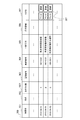
- FIG. 3 is a conceptual data diagram showing a configuration example of user information.
- FIG. 4 is a conceptual data diagram showing a configuration example of request information.
- FIG. 4 is a conceptual data diagram showing a configuration example of request information in a state where details are disclosed.
- FIG. 9 is a sequence diagram showing an example of exchange between devices in a communication system until an estimate is transmitted to a terminal.
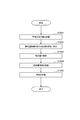
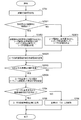
- 6 is a flowchart illustrating an operation example of a terminal that implements the exchange in FIG. 5.
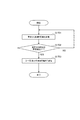
- 6 is a flowchart illustrating an operation example of a server realizing the exchange in FIG. 5.
- 6 is a flowchart illustrating an operation example of a company server that implements the exchange in FIG. 5.
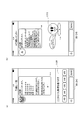
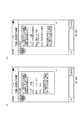
- FIG. 5A is a screen view of a terminal showing an example when the terminal requests an estimate.
- B is a screen diagram of a terminal showing an example of a talk room with a server.
- C is a screen diagram of a terminal showing an example in which a list of talk rooms is shown.
- A is a screen diagram of a terminal showing an example of a talk room with a company server.
- B is a screen diagram of a terminal showing an example of a talk room with a server.
- C is a screen diagram of a terminal showing a list of the talk rooms from which some talk rooms have been deleted.
- A is a screen diagram of a terminal showing an example of a rich menu.
- FIG. 9 is a sequence diagram showing an example of exchange between devices in the communication system until a privilege is transmitted to the terminal.
- 14 is a flowchart illustrating an operation example of a server that implements the exchange in FIG. 14 is a flowchart illustrating an operation example of a terminal that realizes the exchange in FIG.
- FIG. 9 is a flowchart illustrating another operation example when the server transmits an estimate to the terminal.
- FIG. 5 is a screen view of a terminal showing an example when estimates are transmitted collectively from a server to the terminal. The figure which shows the example of the request information in which the recommended user was shown. The screen figure which shows the example of the talk room where the recommended user is shown. The data conceptual diagram showing the example of composition of company information.
- FIG. 9 is a sequence diagram showing an example of an exchange when a server performs matching between a user and a company.
- FIG. 9 is a flowchart illustrating an operation example when matching a user of a server with a company.
- (A), (b) is an image figure for showing the example of the relation between two requests at the time of performing matching.
- (A), (b) is a screen figure in the company server which shows the example at the time of recommending a specific user when a request is made from the server to the company server.
- (A) is a block diagram showing another configuration example of a terminal
- (b) is a block diagram showing another configuration example of a server
- (c) is a block diagram showing another configuration example of a company server.
- FIG. 1 illustrates a configuration of a communication system 1 according to an embodiment of the present disclosure.
- the server 10 the terminal 20 (the terminal 20 ⁇ / b> A, the terminal 20 ⁇ / b> B, the terminal 20 ⁇ / b> C) and the enterprise server 40 are connected via the network 30.
- the server 10 provides a service for transmitting and receiving a message between the terminals 20 (which may include the enterprise server 40) to the terminal 20 owned by the user via the network 30.
- the number of terminals 20 connected to the network 30 is not limited.
- the network 30 has a role of connecting one or more terminals 20 and one or more servers 10. That is, the network 30 refers to a communication network that provides a connection path so that data can be transmitted and received after the terminal 20 connects to the server 10.
- the network 30 includes, for example and without limitation, an ad hoc network (ad @ hoc @ network), an intranet, an extranet, a virtual private network (virtual @ private @ network: VPN), a local area network (local @ area @ network: LAN), and wireless.
- ad hoc network ad @ hoc @ network
- VPN virtual private network
- LAN local area network
- Network 30 may include one or more networks 30.
- Terminal 20 may be any terminal as long as it is an information processing terminal capable of realizing the functions described in each embodiment.
- the terminal 20 may include, by way of example and not limitation, a smartphone, a mobile phone (feature phone), a computer (eg, but not limited to, a desktop, laptop, tablet, etc.), a media computer platform (eg, without limitation, a cable, satellite set, etc.). Top box, digital video recorder), handheld computing device (eg, without limitation, PDA (personal digital assistant), e-mail client, etc.), wearable terminal (glasses type device, watch type device, etc.), or other type of computer , Or a communication platform.
- the terminal 20 may be expressed as an information processing terminal.
- terminal 20 Since the configurations of terminal 20A, terminal 20B and terminal 20C are basically the same, terminal 20 will be described in the following description.
- the terminal used by the user X is expressed as a terminal 20X
- user information in a predetermined service associated with the user X or the terminal 20X is expressed as user information X.
- the user information is information of a user associated with an account used by the user in a predetermined service.
- the user information is, by way of example and not limitation, a user's name, a user's icon image, a user's age, a user's gender, a user's address, and a user's hobby that are input by the user or given by a predetermined service.
- the information includes information associated with the user, such as a preference and a user identifier, and may be one or a combination of these, or may not be.
- the server 10 has a function of providing a predetermined service to the terminal 20.
- the server 10 may be any device as long as the information processing device can realize the functions described in the embodiments.
- the server 10 includes, but is not limited to, a server device, a computer (for example, but not limited to, a desktop, a laptop, a tablet, etc.), a media computer platform (for example, but not limited to, a cable, a satellite set-top box, and a digital video recorder). ), A handheld computing device (such as, but not limited to, a PDA, an email client, etc.), or any other type of computer, or communication platform.
- the server 10 may be expressed as an information processing device. When it is not necessary to distinguish the server 10 and the terminal 20, the server 10 and the terminal 20 may or may not be expressed as information processing devices, respectively.
- HW Hardware
- the terminal 20 includes a control unit 21 (CPU: central processing unit (central processing unit)), a storage unit 28, a communication I / F 22 (interface), an input / output unit 23, a display unit 24, a microphone 233, a speaker 232, and a camera 234.
- a control unit 21 CPU: central processing unit (central processing unit)
- storage unit 28 a storage unit 28, a communication I / F 22 (interface), an input / output unit 23, a display unit 24, a microphone 233, a speaker 232, and a camera 234.
- a communication I / F 22 interface
- the components of the HW of the terminal 20 are interconnected via a bus B as an example, but not by way of limitation. Note that it is not essential that the HW configuration of the terminal 20 include all components.
- terminal 20 may or may not be configured to remove individual components or multiple components, such as microphone 233, camera 234, and the like.
- the communication I / F 22 transmits and receives various data via the network 30.
- the communication may be performed by wire or wireless, and any communication protocol may be used as long as mutual communication can be performed.
- the communication I / F 22 has a function of executing communication with the server 10 via the network 30.
- the communication I / F 22 transmits various data to the server 10 according to an instruction from the control unit 21.
- the communication I / F 22 receives various data transmitted from the server 10 and transmits the data to the control unit 21.
- the communication I / F 22 may be simply referred to as a communication unit. Further, when the communication I / F 22 is configured by a physically structured circuit, it may be expressed as a communication circuit.
- the communication I / F 22 may or may not have a function of executing communication with the enterprise server 40 via the network 30.
- the input / output unit 23 includes a device for inputting various operations on the terminal 20 and a device for outputting a processing result processed by the terminal 20.
- the input unit and the output unit may be integrated, may be separated into the input unit and the output unit, or may not be.
- the input unit is realized by any one or a combination of all types of devices that can receive an input from a user and transmit information related to the input to the control unit 21.
- the input unit includes, but is not limited to, a touch panel 231, a touch display, hardware keys such as a keyboard, a pointing device such as a mouse, a camera 234 (operation input through a moving image), a microphone 233 (operation input by voice). including.
- the output unit is realized by any one or a combination of all types of devices capable of outputting the processing result processed by the control unit 21.
- the output unit includes, for example and without limitation, a touch panel, a touch display, a speaker 232 (audio output), a lens (for example, but not limited to, 3D (three dimensions) output and a hologram output), a printer, and the like.
- the display unit 24 is realized by any one or a combination of all types of devices capable of displaying according to the display data written in the frame buffer.
- the display unit 24 includes, for example and without limitation, a touch panel, a touch display, a monitor (for example, but not limited to, a liquid crystal display and an OELD (organic electroluminescence display)), a head mounted display (HDM: Head Mounted Display), a projection mapping, and a hologram. And a device capable of displaying an image, text information, or the like in the air or the like (which may or may not be a vacuum). Note that these display units 24 may or may not be able to display display data in 3D.
- the input / output unit 23 is a touch panel
- the input / output unit 23 and the display unit 24 may be arranged so as to face each other with substantially the same size and shape.
- the control unit 21 includes a physically structured circuit for executing a function realized by a code or an instruction included in a program, and includes, for example, but not limited to, a data processing device built in hardware. Is realized by: Therefore, the control unit 21 may or may not be expressed as a control circuit.
- the control unit 21 includes, for example and without limitation, a central processing unit (CPU), a microprocessor, a processor core, a multiprocessor, an ASIC (application-specific integrated circuit), and an FPGA (field programmable). gate array).
- CPU central processing unit
- microprocessor a processor core
- ASIC application-specific integrated circuit
- FPGA field programmable gate array
- the storage unit 28 has a function of storing various programs and various data required for the operation of the terminal 20.
- the storage unit 28 includes, without limitation, various storage media such as a hard disk drive (HDD), a solid state drive (SSD), a flash memory, a random access memory (RAM), and a read only memory (ROM). Further, the storage unit 28 may or may not be expressed as a memory.
- the terminal 20 stores the program P in the storage unit 28, and executes the program P so that the control unit 21 executes a process as each unit included in the control unit 21. That is, the program P stored in the storage unit 28 causes the terminal 20 to realize each function executed by the control unit 21.
- This program P may or may not be expressed as a program module.
- the microphone 233 is used for inputting audio data.
- the speaker 232 is used for outputting audio data.
- the camera 234 is used for acquiring moving image data.
- the server 10 includes a control unit 11 (CPU), a storage unit 15, a communication I / F 14 (interface), an input / output unit 12, and a display unit 13.
- the components of the HW of the server 10 are interconnected via a bus B, for example and not limitation.
- the HW of the server 10 does not necessarily include all components as a configuration of the HW of the server 10.
- the HW of the server 10 may or may not be configured to remove the display unit 13.
- the control unit 11 includes a physically structured circuit for executing a function realized by a code or an instruction included in a program, and includes, for example, but not limited to, a data processing device built in hardware. Is realized by:
- the control unit 11 is typically a central processing unit (CPU), and may be a microprocessor, a processor core, a multiprocessor, an ASIC, an FPGA, or not. In the present disclosure, the control unit 11 is not limited to these.
- the storage unit 15 has a function of storing various programs and various data necessary for the operation of the server 10.
- the storage unit 15 is realized by various storage media such as an HDD, an SSD, and a flash memory.
- the storage unit 15 is not limited to these. Further, the storage unit 15 may or may not be expressed as a memory.
- the communication I / F 14 transmits and receives various data via the network 30.
- the communication may be performed by wire or wireless, and any communication protocol may be used as long as mutual communication can be performed.
- the communication I / F 14 has a function of executing communication with the terminal 20 and the company server 40 via the network 30.
- the communication I / F 14 transmits various data to the terminal 20 or the company server 40 according to an instruction from the control unit 11. Further, the communication I / F 14 receives various data transmitted from the terminal 20 or the company server 40 and transmits the data to the control unit 11.
- the communication I / F 14 may be simply referred to as a communication unit. Further, when the communication I / F 14 is configured by a physically structured circuit, it may be expressed as a communication circuit.
- the input / output unit 12 is realized by a device for inputting various operations to the server 10.
- the input / output unit 12 is realized by any one or a combination of all types of devices that can receive an input from a user and transmit information related to the input to the control unit 11.
- the input / output unit 12 is typically realized by a hardware key represented by a keyboard or the like, or a pointing device such as a mouse.
- the input / output unit 12 may or may not include a touch panel, a camera (operation input via a moving image), a microphone (operation input by voice) as an example without limitation.
- the input / output unit 12 is not limited to these.
- the display unit 13 is typically realized by a monitor (a liquid crystal display or an OELD (organic electroluminescence display) as an example without limitation).
- the display unit 13 may or may not be a head mounted display (HDM). Note that these display units 13 may or may not be capable of displaying display data in 3D. However, in the present disclosure, the display unit 13 is not limited to these.
- the server 10 stores the program P in the storage unit 15 and executes the program P so that the control unit 11 executes processing as each unit included in the control unit 11. That is, the program P stored in the storage unit 15 causes the server 10 to realize each function executed by the control unit 11.
- This program P may or may not be expressed as a program module.
- the company server 40 includes a control unit 41 (CPU), a storage unit 45, a communication I / F 44 (interface), an input / output unit 42, and a display unit 43.
- the components of the HW of the enterprise server 40 are interconnected via a bus B, for example and not limitation.
- the HW of the company server 40 does not necessarily include all components as a configuration of the HW of the company server 40.
- the HW of the enterprise server 40 may or may not be configured to remove the display unit 43.
- the control unit 41 includes a physically structured circuit for executing a function realized by a code or an instruction included in a program, and includes, for example, but not limited to, a data processing device built in hardware. Is realized by:
- the control unit 41 is typically a central processing unit (CPU), and may be or may not be a microprocessor, a processor core, a multiprocessor, an ASIC, an FPGA. In the present disclosure, the control unit 41 is not limited to these.
- the storage unit 45 has a function of storing various programs and various data required for the operation of the enterprise server 40.
- the storage unit 45 is realized by various storage media such as an HDD, an SSD, and a flash memory.
- the storage unit 45 is not limited thereto. Further, the storage unit 45 may or may not be expressed as a memory.
- the communication I / F 44 transmits and receives various data via the network 30.
- the communication may be performed by wire or wireless, and any communication protocol may be used as long as mutual communication can be performed.
- the communication I / F 44 has a function of executing communication with the server 10 via the network 30.
- the communication I / F 44 transmits various data to the server 10 according to an instruction from the control unit 41. Further, the communication I / F 44 receives various data transmitted from the server 10 and transmits the data to the control unit 41. Further, the communication I / F 44 may be simply referred to as a communication unit. Further, when the communication I / F 44 is configured by a physically structured circuit, it may be expressed as a communication circuit.
- the communication I / F 44 may or may not have a function of executing communication with the terminal 20 via the network 30.
- the input / output unit 42 is realized by a device for inputting various operations to the enterprise server 40.
- the input / output unit 42 is realized by any one or a combination of all types of devices that can receive an input from a user and transmit information related to the input to the control unit 41.
- the input / output unit 42 is typically realized by a hardware key represented by a keyboard or the like, or a pointing device such as a mouse.
- the input / output unit 42 may or may not include a touch panel, a camera (operation input via a moving image), and a microphone (operation input via voice) as examples, without limitation.
- the input / output unit 42 is not limited to these.
- the display unit 43 is typically realized by a monitor (a liquid crystal display unit or an OELD (organic electroluminescence display) as an example without limitation).
- the display unit 43 may or may not be a head mounted display (HDM). Note that these display units 43 may or may not be able to display display data in 3D. However, in the present disclosure, the display unit 43 is not limited thereto.
- the control unit 21 of the terminal 20, the control unit 11 of the server 10, or the control unit 41 of the enterprise server 40 includes not only a CPU having a control circuit but also an integrated circuit (IC (Integrated Circuit) chip, LSI (Large Scale)). Integration)), etc., each processing may be realized by a logic circuit (hardware) or a dedicated circuit, or may not be. Further, these circuits may be realized by one or a plurality of integrated circuits, and the plurality of processes described in each embodiment may or may not be realized by one integrated circuit. Further, the LSI may be referred to as a VLSI, a super LSI, an ultra LSI, or the like, depending on the degree of integration. Therefore, the control unit 21 may or may not be expressed as a control circuit.
- the program P of each embodiment of the present disclosure may be provided in a state stored in a computer-readable storage medium. It does not have to be done.
- the storage medium can store the program P in a “temporary tangible medium”.
- the program P may or may not be for realizing a part of the function of each embodiment of the present disclosure.
- a so-called difference file difference program
- the storage medium may include one or more semiconductor-based or other integrated circuits (ICs), such as, but not limited to, a field programmable gate array (FPGA) or an application specific integrated circuit (ASIC), ⁇ Disk drive (HDD), hybrid hard drive (HHD), optical disk, optical disk drive (ODD), magneto-optical disk, magneto-optical drive, floppy diskette, floppy disk drive (FDD), magnetic tape, solid A drive (SSD), RAM drive, secure digital card, or drive, any other suitable storage media, or a suitable combination of two or more thereof.
- ICs such as, but not limited to, a field programmable gate array (FPGA) or an application specific integrated circuit (ASIC), ⁇ Disk drive (HDD), hybrid hard drive (HHD), optical disk, optical disk drive (ODD), magneto-optical disk, magneto-optical drive, floppy diskette, floppy disk drive (FDD), magnetic tape, solid A drive (SSD), RAM drive, secure digital card, or drive, any other suitable storage
- the server 10, the terminal 20, or the company server 40 reads the program P stored in the storage medium and executes the read program P to realize the functions of the plurality of functional units described in each embodiment. it can.
- the program PDD of the present disclosure may be provided to the server 10, the terminal 20, or the company server 40 via any transmission medium (such as a communication network or a broadcast wave) capable of transmitting the program, It does not have to be done.
- the server 10, the terminal 20, or the company server 40 realizes the functions of the plurality of functional units described in each embodiment by executing the program P downloaded via the Internet or the like without limitation.
- each embodiment of the present disclosure can also be realized in the form of a data signal embedded in a carrier wave, in which the program P is embodied by electronic transmission.
- At least a part of the processing in the server 10, the terminal 20, or the enterprise server 40 may or may not be realized by cloud computing including one or more computers.
- At least a part of the processing in the terminal 20 may be performed by the server 10 or may not be performed.
- at least a part of the processing of each functional unit of the control unit 21 of the terminal 20 may be configured to be performed by the server 10 or may not be performed.
- At least a part of the processing in the server 10 may be performed by the terminal 20 or may not be performed.
- each functional unit of the control unit 11 of the server 10 may be performed by the terminal 20 or may not be performed.
- the configuration of the determination in the embodiment of the present disclosure is not essential, and a predetermined process is performed when the determination condition is satisfied, or a predetermined process is performed when the determination condition is not satisfied. It may or may not be.
- the program of the present disclosure includes, without limitation, script languages such as ActionScript and JavaScript (registered trademark), object-oriented programming languages such as Objective-C and Java (registered trademark), and markup languages such as HTML5.
- script languages such as ActionScript and JavaScript (registered trademark)
- object-oriented programming languages such as Objective-C and Java (registered trademark)
- markup languages such as HTML5.
- an estimation request is transmitted from the user terminal 20 to the server 10, and estimation information is received from each company server 40 via the server 10.
- the server 10 transmits, to the user terminal 20, the evaluation information of each of the company servers 40 that performs the estimation. Since the terminal 20 displays the evaluation of each of the company servers 40, the user can recognize the objective evaluation of each of the company servers 40, and does not select a company that estimates the estimate cheaper than the actual one. You can do so. In the following, it is assumed that the terminal 20 and the company server 40 use the messaging service provided by the server 10.
- the terminal 20 includes a message processing unit 211 and a display processing unit 212 as functions realized by the control unit 21.
- the message processing unit 211 receives an input from a user or an input of a message received by the communication I / F 12 according to a messaging application provided in a messaging service provided by the server 10 and instructs the display processing unit 212 to display the message. I do.
- the communication I / F 22 is instructed to transmit the received input content to the server 10.
- the display processing unit 212 instructs the display unit 24 to display display information indicating the content of the talk room in accordance with the instruction from the message processing unit 211.
- the display processing unit 212 indicates, in response to the estimation request made by the user, information transmitted from the server 10 that can specify the company server 40 that makes the estimation request and the evaluation of the company server 40. Display evaluation information. At this time, information that can specify the corporate server 40 may or may not be displayed based on the evaluation information.
- the display based on the evaluation information is not limited, and is, for example, a display based on the order of the evaluations indicated by the evaluation information of the company server 40 in the descending order or the order in which the evaluations are low, or an evaluation value (
- the display may indicate numerical values, levels, graphs, and the like, or may be a display that distinguishes the highly evaluated company server 40 from the low-rated company server 40.
- This display method may or may not be determined by the display processing unit 212 based on the settings predetermined by the user. Alternatively, it may or may not be designated by the server 10.
- the display processing unit 212 displays information related to the exchange with the server 10 or the company server 40 in accordance with the estimation request performed by the terminal 20.
- the server 10 includes a determining unit 111 and a message processing unit 112 as functions realized by the control unit 11.
- the storage unit 15 stores user information 200 indicating user information and company information 2100 indicating information of a company (company server 40).
- the message processing unit 112 analyzes a message (estimation request) transmitted to the talk room transmitted from the user's terminal 20 by a function of managing a talk room for exchange between users, and the determining unit 111 A function of transmitting a quote request to the determined company server 40.
- the talk room is a place for exchanging messages between users (including the enterprise server 40) using the messaging service via the messaging service provided by the server 10, and participating in the talk room.
- the message sent by the user is a user interface that can be viewed by all users participating in the talk room.
- the talk room can be opened by a user (including the company server 40) using the messaging service or the server 10, and when the talk room is opened, the user who is associated with the talk room is A message can be sent to the talk room.
- the user who can send a message to the talk room can be set by a user who has opened the talk room or a user who participates in the talk room. In addition, the user can exit the talk room at his / her option.
- the server 10 can also close the talk room as needed.
- the message processing unit 112 instructs the determination unit 111 to determine the company server 40 that transmits the estimation request according to the estimation request when the estimation request is received from the user. Then, the determination unit 111 transmits to the plurality of company servers 40 determined that there is an estimation request (request information). Details of the request information will be described later.
- the message processing unit 112 transmits to the terminal 20 that the estimate is presented from the plurality of company servers 40 determined by the determination unit 111, together with the evaluation information on each company server 40.
- the evaluation information may or may not be stored in the storage unit 15 in advance. If the information is not stored in the storage unit 15, it may be obtained from the network 30 or an external device.
- the evaluation information is information indicating the evaluation of each company server 40.
- the evaluation may be expressed by an objective numerical value, a level notation (which may be a numerical value or a symbol), a document, or the like.
- As the evaluation information of the company server 40 it is preferable to use information obtained by totaling evaluations from many users who are sent to the company server 40.
- the evaluation information may or may not be updated as appropriate.
- the evaluation information may be based on the past performance of the corporate server 40, may use all the past data, or may be within a predetermined period (for example, within the past two years from the present, but not limited thereto). May be used.
- the message processing unit 112 also has a function of transmitting a benefit to the user when the company requesting the service for the user is determined, and when the company provides information on the amount charged by the company. Have. Further, the message processing unit 112 determines whether the terminal unit 20 or the company server 40 has determined the company server 40 that transmits the estimation request from the compatibility with the user information 200 and the company information 2100 using the user information 200 and the company information 2100. , And / or one of them is transmitted to the talk room.
- the determining unit 111 has a function of determining a company server 40 to which an estimation request is to be transmitted, based on a user's estimation request from the terminal 20, that is, information provided by the user. That is, the determination unit 111 performs matching between the content of the estimation request from the user and the company server 40.
- the decision unit 111 decides at least two company servers 40 as companies for which an estimation request is to be made.
- the determination unit 111 may determine the contents of the estimation request from the user and the company server 40 that is good at the contents of the request or is assumed to be compatible with the user, You don't have to.
- the determination unit 111 refers to the user information 200 and the company information 2100 to determine. Otherwise, for example, the determination unit 111 may randomly determine a predetermined number of the company servers 40. A method for determining the company server 40 in consideration of the relevance between the user and the company will be described later.
- the corporate server 40 includes a message processing unit 411 and a display processing unit 412 as functions realized by the control unit 41.
- the message processing unit 411 has a function of processing a message transmitted from the server 10 or the terminal 20 via the communication I / F 44.
- the message processing unit 411 causes the display processing unit 412 to display information indicating that there is request information indicating the contents of the estimate from the user transmitted from the server 10.
- the message processing unit 411 causes the communication I / F 44 to transmit information about the estimated amount for the estimation request indicated by the request information input from the operator of the company server 40 to the server 10.
- the display processing unit 412 has a function of displaying, on the display unit 43, the contents of a talk room for exchange with the server 10 or the terminal 20.
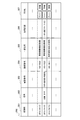
- FIG. 2 is a data conceptual diagram illustrating an example of the user information stored in the storage unit 15 of the server 10.
- the user information 200 is information on each user who uses the service provided by the server 10.
- the user information 200 includes, for example, identification information 201, a name 202, a telephone number 203, a mail address 204, a postal code 205, a partial address 206, and an address 207 for each user.
- the attached information may or may not include each information illustrated in FIG.
- Each piece of information shown in the user information 200 is input by the user to his / her own terminal 20 and transmitted by the communication I / F 22 to the server 10 in accordance with an instruction from the control unit 11 of the terminal 20.
- the user information 200 includes information on the user who cannot uniquely identify the user (an example of the first information without limitation) and information on the user (an example of the second information without limitation). included.
- the information on the individual user who cannot identify the individual user corresponds to the identification information 201, the postal code 205, and the partial address 206.
- the name 202, the telephone number 203, the mail address 204, and the address 207 correspond to information that can specify the individual user.
- the identification information 201 is an identifier for the server 10 to uniquely identify each user in the communication system 1.
- the identification information 201 may be in any form as long as the information can identify the user, and may be a combination using a part or all of alphabets, symbols, numbers, and the like.
- the name 202 is the name of the user indicated by the corresponding identification information 201, and is the name registered when the user himself uses the service provided by the server 10.
- the telephone number 203 is information indicating the telephone number of a device capable of making a voice call with the user indicated by the corresponding identification information 201. Note that a plurality of telephone numbers 203 may be stored for one user.
- the e-mail address 204 is information indicating an address at which the user indicated by the corresponding identification information 201 can be contacted by e-mail. Note that a plurality of mail addresses 204 may be stored for one user.
- the postal code 205 is information indicating the postal code assigned to the address of the user indicated by the corresponding identification information 201.
- the partial address 206 is information indicating a place where the user indicated by the corresponding identification information 201 resides, and is information indicating an approximate place.
- the address 207 is information indicating the address of the place where the user resides indicated by the corresponding identification information 201. In general, an address is obtained by combining the partial address 206 and the address 207.
- the server 10 can provide the company server 40 with detailed information of the user himself if the user permits.
- FIG. 3 is a data conceptual diagram showing an example of request information indicating a request provided from the server 10 to the company server 40.
- Request information 300 shown in FIG. 3 is information for requesting a user to provide a service provided by the enterprise server 40, and is information provided from the server 10.
- request information 300 is information in which request date 301, name 302, telephone number 303, postal code 304, partial address 305, address details 306, and other 307 are associated. It is.
- the request information 300 only needs to include information necessary for providing the service, and may not include all of the information illustrated in FIG. 3. If the information is related to the user, information other than FIG. 3 is added. May be included.
- the request information 300 is stored in the storage unit 45 of the company server 40.
- Request date 301 is information indicating the date on which the user made a request.
- @Name 302 is information indicating the name of the user.
- the telephone number 303 is information indicating the telephone number of a device capable of making a voice call with the corresponding user. Note that a plurality of telephone numbers 303 may be stored for one user.
- the postal code 304 is information indicating the postal code assigned to the address of the corresponding user.
- the partial address 305 is information indicating a place where the corresponding user lives, and is information indicating an approximate place. With the approximate location information, it is not possible to specify the exact location of the user, but it is possible to estimate roughly when moving.
- the address details 306 are information indicating the address of the place where the corresponding user resides. Generally, an address is obtained by combining a partial address 305 and address details 306.
- ⁇ Circle around (3) ⁇ is provided with a chat button for talking with the corresponding user and a detail button 327 for acquiring detailed information on the user when permission from the corresponding user is obtained.
- chat button When the chat button is clicked, a chat room between the company server 40 and the corresponding user on the screen of the messaging service provided by the server 10 is activated, and a chat can be performed.
- details button 327 when the details button 327 is clicked, detailed information on the corresponding user can be obtained under the condition that the permission from the user has been obtained.
- the request information 300 shown in FIG. 3 is information in an initial stage provided from the server 10 and is information that discloses information to the extent that a user cannot be specified. Therefore, the information that can specify the user is blank at the initial stage. At this time, when the operator of the company server 40 clicks the detail button 327 with the permission of the user, detailed user information corresponding to the user can be acquired from the server 10.
- FIG. 4 shows the request information 300 when the detail button 327 shown in FIG. 3 is clicked.
- the name of “B Fuji @ B child” and its telephone number 303 and address details 306 are clear to the enterprise server 40.
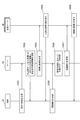
- FIG. 5 is a sequence diagram illustrating an operation of the communication system 1 according to the present embodiment.
- the sequence diagram shown in FIG. 5 is a diagram showing a flow from when a user requests service provision to when the company server 40 sends an estimate to the user.
- the user accesses, for example, a web form for requesting a service provided by each company server 40 provided by the server 10 from his / her own terminal 20, and transmits an estimate request to the server 10. (Step S501).
- the request is for a move
- the user inputs information such as a move destination and the number of movers, and transmits the information from the terminal 20 to the server 10.
- the server 10 that has received the estimation request transmits to the terminal 20 that the estimation request is transmitted from each company server to the terminal 20 that has transmitted the estimation request.
- server 10 may send a quote from each company server later via a dedicated talk room between server 10 and terminal 20, and an evaluation indicating the ratings of those companies.
- the information is notified to the terminal 20 (step S502).
- the server 10 transmits an estimate request from the user to a plurality of company servers (step S503).
- Each of the company servers 40 that has received the estimation request calculates an approximate estimated amount only from the conditions included in the estimation request. Then, by writing the calculated estimated amount in a talk room opened between the terminal 20 and the terminal 20, information indicating the estimated amount is transmitted to the terminal 20 via the server 10 (step S504).
- the user of the terminal 20 displays the displayed simple estimated amount, and the user confirms the content. Then, the user makes an input to the company server presenting the estimate to approve the disclosure of information in order to request a detailed estimate.
- the terminal 20 notifies the server 10 that the information disclosure has been accepted (step S505).
- the server 10 deletes the talk with the company for which the terminal 20 did not approve the disclosure of the information (step S506).
- the personal information of the user is transmitted (step S507).
- the user can disclose the detailed information to the company server that he / she feels trustworthy and can make an estimate.
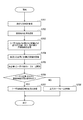
- FIG. 6 is a flowchart showing a process for obtaining an estimate in the terminal 20 for realizing the exchange shown in FIG.
- the user transmits a request for moving estimation to the server 10 from the terminal 20 in order to receive the service from the company server 40 (step S601). That is, the terminal 20 receives the input of the estimation request received from the user to the input / output unit 23. Then, in accordance with this input, the communication I / F 22 transmits an estimate request to the server 10 via the network 30.
- the communication I / F 22 receives the company information for transmitting the estimate transmitted from the server 10 having received the estimate request.
- Communication I / F 22 transmits the received company information to control unit 21.
- the display processing unit 212 of the control unit 21 displays the transmitted company information on the display unit 24 (Step S602).
- the control unit 21 determines whether the communication I / F 22 has received the information of the estimated amount (Step S603). The control unit 21 waits until information of the estimated amount is received (NO in step S603). Note that the estimated amount received at this stage is an approximate estimated amount.
- step S603 When the information on the estimated amount is received (YES in step S603), the display processing unit 212 of the control unit 21 displays the received information on the estimated amount in the talk room corresponding to the transmitted corporate server (step S604). It should be noted that the reception of the company information at which the estimate is to be transmitted in step S602 and the reception of the information on the estimated amount in step S603 may or may not be simultaneous.
- Step S605 When the user sees the approximate estimate and feels that he / she wants a detailed estimate, he / she performs an input to permit transmission of the user's own detailed information to the company server 40 in order to request a detailed estimate.
- the input / output unit 23 of the terminal 20 determines whether there is an input from the user for permitting disclosure of the detailed information (Step S605).
- the control unit 21 transmits information indicating the permission of the disclosure of the detailed information to the server 10 via the communication I / F 22. (Step S606).
- This information includes information indicating to which company server 40 the disclosure permission is given.
- the information that can specify the company server 40 information that can specify the talk room where the user was talking can be used.
- the control unit 21 determines whether or not the communication I / F 22 has received the talk room deletion information (Step S607).
- the talk room deletion information referred to here is transmitted from the server 10 and indicates deletion of a talk room with the company server 40 to which the user did not give permission to disclose detailed information. If the talk room deletion information has not been received (NO in step S607), the process proceeds to step S609. If the talk room deletion information has been received (YES in step S607), the message processing unit 211 can indicate the talk room deletion information from among the talk room group in the messaging service used by the user. The talk room with the company server 40 is deleted (step S608).
- control unit 21 determines whether the communication I / F 22 has received the detailed estimation information (Step S609).
- the communication I / F 22 transmits the received estimation information to the control unit 21.
- the display processing unit 212 of the control unit 21 displays the received detailed estimation information in the talk room (step S610).
- the control unit 21 determines whether or not detailed estimation information has been received from all the enterprise servers 40 to which disclosure of the detailed information has been accepted in step S605 (step S611). If detailed estimation information has not been received from all of the target company servers 40 (NO in step S611), the process returns to step S607, and if received (YES in step S611), the process ends. I do.
- FIG. 7 is a flowchart showing the processing of the server 10 when the user makes an estimation request.
- the communication I / F 14 of the server 10 receives an estimate request from the terminal 20 via the network 30 (Step S701).
- the communication I / F 14 transmits the received estimation request to the control unit 11.
- the control unit 11 selects a predetermined number of company servers 40 as the transmission destination of the estimation request according to a predetermined standard (step S702).
- the control unit 11 opens a talk room between the server 10 and the user's terminal 20, and sends a quote from a plurality of companies selected to the user on the opened talk room, The evaluation information is notified (step S703).
- the control unit 11 sends a quote request from the user to the company server 40 via the network 30 to the communication I / F 14 in order to notify each of the selected company servers 40 that there is a request for quote from the user. Instruct to send the indicated information.
- the communication I / F 14 transmits an estimate request from the user to each of the designated company servers 40 in accordance with the instruction (step S704).
- the server 10 may transmit the estimation request of only one user, or may transmit the estimation request of a plurality of users.
- control unit 11 opens a talk room between the selected company server 40 and the user (step S705).
- each company server 40 can start exchange with the user via the talk room.
- the control unit 11 determines whether there is a request to disclose detailed information of the user of the terminal 20 from both the user terminal 20 and the company server 40 (step S706). This can be determined based on whether or not there has been communication indicating a request for disclosure of detailed information from each of the user terminal 20 and the company server 40.
- step S706 When there is a request to disclose detailed information about the user from each of the user terminal 20 and the enterprise server 40 (YES in step S706), the control unit 11 of the server 10 stores the user information stored in the storage unit 15 Using the information, the detailed information of the user is transmitted to the company server 40 (step S707).
- step S706 it is assumed that there is a request for disclosure of detailed information about the user from each of the user terminal 20 and the company server 40 (step S706), but this is only a disclosure request from the user terminal 20. It may be, or may not be only a disclosure request from the user terminal 20. Further, only a disclosure request from the enterprise server 40 may be used, but in this case, a disclosure request of detailed information of a user who has given evidence with permission from the user may be used.
- step S706 when there is no request to disclose detailed information about the user from each of the user terminal 20 and the company server 40 (NO in step S706), the control unit 11 of the server 10 Is deleted (step S708).
- the absence of the request for disclosure of the detailed information about the user from each of the user terminal 20 and the enterprise server 40 means that the notification of the disclosure request from the user terminal 20 has not been made. From the company company 40 to the company server 40. Further, the absence of the notification of the disclosure request from the user terminal 20 means that there is a disclosure request for another company, and that a predetermined time has elapsed since the talk room with the company server 40 was opened. You can also judge by having.
- FIG. 8 is a flowchart showing a process in the company server 40 for realizing the exchange shown in FIG.
- the communication I / F 44 of the company server 40 receives an estimate request from the user from the server 10 (step S801).
- This estimation request includes information sufficient for making a simple estimation of the approximate moving source, moving destination, and number of moving users.
- the communication I / F 44 transmits the received estimation request to the control unit 41.
- the display processing unit 412 of the control unit 41 displays the estimation request on the display unit 43.
- the operator of the company server 40 determines an approximate estimate.
- the approximate estimated amount refers to the amount of money in the range that the company server 40 can estimate based on the information in the given range, and is not limited to the information in the given range.
- there may be a plurality of past cases to be extracted here and in that case, (i) an estimate of a case with a high degree of similarity or a face value of a request may be used as an approximate estimate, (Ii) The average value of the estimated amount or the invoice amount of a plurality of cases, or (iii) the predetermined ratio of a high degree of similarity of the plurality of cases, or the average value of the estimated amount or the invoice amount of a predetermined number of cases.
- the control unit 41 instructs the communication I / F 44 to transmit the set approximate estimated amount to the terminal 20 of the user who has determined the estimated amount.
- the communication I / F 44 transmits the information of the estimated amount to the terminal 20 of the designated user (Step S802).
- the control unit 41 sets the company server 40 to the input / output unit 42 from the operator.
- the communication I / F 41 transmits a request to disclose detailed information of the corresponding user.
- the communication I / F 41 transmits a request for disclosure of detailed information to the server 10 (step S805).
- the communication I / F 44 receives the detailed information of the corresponding user transmitted from the server 10.
- the communication I / F 44 transmits the received detailed information to the control unit 41.
- the display processing unit 412 of the control unit 41 causes the display unit 43 to display the received detailed information (Step S806).
- the operator of the company server 40 determines a detailed estimated amount (step S807). This determination may be made by the enterprise server 40. For example, a program for calculating a moving cost based on a moving source, a moving destination, and the number of persons to be moved may be stored in advance, and the estimated amount may be calculated by executing the program.
- the control unit 41 causes the communication I / F 44 to transmit information on the determined detailed estimated amount.
- the communication I / F 41 transmits the detailed estimated amount information to the user terminal 20 via the network 30 (step S808), and ends the processing. If it is determined in step S803 that the user does not approve the disclosure of the detailed information (NO in step S803), the process ends.
- the operator of the company server 40 may directly visit the user to make the estimate in order to actually formulate the estimate. Needless to say.
- the above is the processing up to issuing a detailed estimate in the company server 40.
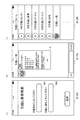
- FIG. 9A is a diagram illustrating an example of an input UI displayed on the display unit 24 when a user requests a quote using his / her own terminal 20.
- FIG. 9A shows an example of a display screen including an input field 901 for inputting information about a destination and an input field 902 for inputting the number of people to be moved, as the minimum necessary items for moving. .
- the input field 901 it is not necessary to input the details of the address, and it may or may not be limited to local information.
- the terminal 20 transmits an estimate request to the server 10 (see step S501 in FIG. 5).
- the server 10 Upon receiving the estimation request, the server 10 is notified that an estimate is sent from the company server 40 selected by the server 10 as shown in FIG. 9B, for example (see step S502 in FIG. 5). .
- the example of FIG. 9B shows an example in which estimates from five companies from company A to company E come. Then, as shown in FIG. 9B, information on the evaluation of each company is shown. In the example of FIG. 9B, the evaluation is shown in a star shape, and the evaluation is higher as the number of stars is larger.
- the method of displaying the evaluation information is not limited to the method shown in FIG. 9B, and various modes such as evaluation using numerical values and character colors, evaluation using sentences, and the like may be used.
- the evaluation information can be stored in advance or obtained from a network for use.
- the numerical values indicating the evaluation may or may not be displayed in descending order or ascending order. If the evaluation is lower than a predetermined threshold, the company may or may not be displayed. Such a company with a low evaluation may or may not be configured to not request a request for an estimate from the company server 40 with a low evaluation by screening in the server 10 in advance. In addition, for a company whose evaluation is lower than that of another predetermined company, the user may or may not be able to make the setting so as not to be displayed on the screen.
- the control unit 11 compares the evaluation of the other predetermined company with the evaluation of the target for determining whether or not to display, and the evaluation is higher than the evaluation of the other predetermined company. If it is lower, it is determined not to display.
- FIG. 9C is an example of a screen displayed on the user terminal 20, and is a diagram showing a list of talk rooms.
- the list of talk rooms may be referred to as a talk list.
- the display is switched to the display of the dedicated talk room.
- FIG. 9C it can be understood that there is a talk room with each company server 40 for which estimation is performed.
- a talk screen with the company A moving center is displayed on the display unit 24 of the terminal 20 as shown in FIG. 10A.
- FIG. 10A it can be understood that the company A moving center has presented the XXXXXX yen as an approximate estimated amount of moving.
- the user touches a location 1001 displayed as “disclose” in FIG. Can be notified to the server 10 that the disclosure of the server is permitted.
- the detailed information is not disclosed to the company A moving center by touching the portion 1002 displayed as “not disclosed” in FIG. become.
- the terminal 20 may or may not transmit to the server 10 information indicating that the subsequent negotiations will be terminated.
- the selection of the company that discloses the detailed information can be made by selecting from the list of the talks with the respective companies as shown in FIG. May be determined by selecting (touching) a company that discloses. Then, the talk with the untouched company that is not selected at this time may be configured to be deleted.
- the touch on the end button 1011 may be at a stage where a company requesting a detailed estimate is determined, or may be a stage at which a company actually requesting a move is determined.
- the talk room is deleted for a company for which the detailed information is not disclosed at that time. That is, as shown in FIG. 10C, the talk room is deleted.
- FIG. 10C shows an example in which the user selects Company A, Company D, and Company E, and the talk room between Company B and Company C is deleted.
- the selection of a trader who makes a detailed estimation is not limited to the example shown in FIG.
- a configuration may be made such that selection can be made in the form of a rich menu 1101 on a talk between the server 10 and a user.
- the rich menu is a menu specific to an account, and is a menu in which a user involved in a talk, or the (operator of) the server 10 or the (operator of) the enterprise server 40 can set the contents. is there. That is, in this case, it means a dedicated menu for selecting a trader to estimate.
- the content of the rich menu is set by the server 10 or the company server 40 so that the service provider provides convenience to the user.
- image information 1111 for exchanging with a trader may be prepared in advance and configured to be used by the user.
- This image is stored in the server 10 or another server with which the server 10 can communicate, and the user can download and use the image and may be called a stamp.
- the image is not limited, and may be, for example, an image for price negotiation, as shown in FIG. 11B, an image for requesting a schedule adjustment, or the like.
- the amount may be configured to be changeable.
- the user may specify (input) the amount of money to be displayed as an image on the terminal 20.
- the negotiation that is, the transaction is executed using the image information
- the user himself transmits a message (character information, text) for the transaction directly to the talk room. Needless to say, it may be something.
- the case of requesting a moving estimate has been described as an example, but the estimation target is not limited to moving. It goes without saying that any service for which an estimate may be requested may be targeted as long as there are multiple competitors. Any service can be used as long as it can provide a rough estimate with simple information and a detailed estimate with detailed information.
- the system shown in the first embodiment is used for estimating insurance, estimating real estate sales, estimating professional services, estimating hospitals, estimating the construction of an in-house system, estimating crowdsourcing, estimating the EC site to be used, etc. Can also be used. Some of these will be described.
- the user receives the evaluation information of the insurance company.
- the insurance company evaluation information is, for example, but not limited to, information indicating an evaluation based on the performance of the insurance company, user evaluation, cost performance, and the like.
- the insurer may or may not provide an estimate of the cost of insurance and a plan at that stage. Then, the user can disclose the detailed information to the insurance company trusted by the user to make a detailed estimate.
- the user himself / herself presents the condition of the desired property.
- the user receives the evaluation information of the real estate company.
- the real estate trading evaluation information is, for example, information indicating the evaluation based on the real estate trading results, the area of specialty, cost performance, and the like, without limitation.
- the real estate company may or may not simply present the conditions according to the wishes and estimates of the selling and renting expenses and the rental expenses in that case. After that, the detailed information can be disclosed to the real estate company trusted by the user to make a detailed estimate.
- the user when requesting a lawyer as professionalism, first, information that the user can not specify about what kind of defense you want to do and what kind of situation it is Only disclose. In response, the user receives the evaluation information of the lawyer.
- the lawyer's evaluation information is, for example but not limited to, information based on a field of specialty, customer evaluation, request cost, and the like.
- the lawyer may or may not estimate the approximate cost of the response while receiving the simple information from the user. Thereafter, the user may be configured to disclose the detailed information to a trusted lawyer.
- a request for an estimate of the approximate treatment cost is made by disclosing only information such as the name of the disease and the condition of the patient.
- the user receives the evaluation information of the hospital or doctor.
- the evaluation information of a hospital or a doctor is, for example and not limited to, information indicating an evaluation based on a treatment field, a medical record, a patient's impression, a treatment cost, and the like, which he is good at.
- the detailed information may be disclosed to a doctor, a hospital, or the like trusted by the user, and the user may receive a detailed estimate.
- An EC (Electronic @ Commerce) site refers to a site that sells its own products (or other companies may be included) on its own website on the Internet.
- EC sites include, by way of example and not limitation, goods sales services, video distribution services, electronic book sales services, travel agency services, and the like.
- an EC site that provides a travel service discloses information that cannot identify the user, such as the travel destination desired by the user and the date and time. The user receives the evaluation information of each EC site.
- the evaluation information of the EC site in the case of the travel service is, for example, information indicating the evaluation based on the travel destination that is good at, the number of people that are good, the cost performance, and the like, without limitation.
- the EC site presents an approximate estimate or plan. Then, among them, a configuration may be adopted in which detailed information is provided to an EC site that attracts the user's heart.
- the EC site may be operated by a company or may be operated by an individual.
- the system according to the present embodiment is useful for various types of industries.
- a two-stage estimation is provided.
- the user determines a company (corporate server 40) for which detailed information is to be disclosed using only evaluation information. It is good also as a structure which performs.
- the server 10 when the server 10 requests disclosure of detailed information from both the user and the corporate server, the server 10 transmits the detailed information of the user held by the server 10 to the corporate server.
- the method of transmitting the detailed information of the user to the company server 40 is not limited to this. It goes without saying that the user himself / herself may transmit his / her detailed information directly to the company server 40. Further, the selection of the information to be displayed on the terminal 20 may be performed by the terminal 20 by itself, or may be specified by the server 10.
- the evaluation information has been described as indicating the evaluation of each of the company servers 40 as a whole company.
- the evaluation information is not limited to the evaluation of the company itself. It may indicate the evaluation of an actual person in charge of the service provided by the company server 40.
- FIG. 12A when there is evaluation information of a person in charge of a company, the evaluation information of the person in charge may or may not be shown.
- FIG. 12A is an example of a screen displayed on the display unit 24 of the user terminal 20, and is a screen diagram illustrating a talk room between the server 10 and the user. As shown in FIG. 12A, the name of the person in charge and its evaluation are shown in association with the company name.
- an evaluation is shown in which the person in charge is expressed in the text, but the evaluation of the person in charge is not limited to the evaluation based on such a sentence. Instead, it may be represented by information in which the evaluation of the person in charge is quantified using symbols, numerical values, or the like. Further, not only the name but also a photograph of the person in charge may be displayed.
- FIG. 12A an example is shown in which H is in charge of a company B who receives a user's service, and the evaluation indicates "quick and efficient work". Is shown. Also, when there is an evaluation of the person in charge, the evaluation of the company may or may not be present.
- the server 10 may or may not store in advance the person in charge evaluation information indicating the evaluation of each person in charge belonging to each of the company servers 40 in the storage unit 15. If not stored, it may be obtained from the company server 40 by communication. It goes without saying that the evaluation of the person in charge and the evaluation of the company itself may be written in parallel.
- the control unit 11 of the server 10 uses the user information 200 to specify a company that matches the user's preference. Then, when transmitting the evaluation information, the identified company is notified that it is recommended.
- This notification may be in any form as long as the recommended company can be compared with other companies, for example, an image indicating the recommendation or a character linked to the company name (As an example, not a limitation, recommended images or characters are displayed in balloons in company names.) Recommended companies are displayed in a different color from non-recommended companies. It is good to do.
- This display mode may be determined by the terminal 20 or may be specified by the server 10.
- FIG. 12B illustrates an example in which the display unit 24 of the user terminal 20 indicates a recommended company.
- FIG. 12B is a diagram illustrating an example of a talk room between the user and the server 10 on the display unit 24 of the terminal 20 of the user, which is transmitted in response to an estimation request from the user from the server 10.
- This screen is a screen displaying information indicating that a notification of the estimated amount is transmitted from the company server 40.
- the name of the company B is displayed in a different form from other companies so as to indicate that the company B is recommended.
- text such as "recommended” may be displayed in association with the company name in a manner that is easier for the user to understand, or may not be displayed.
- a plurality of companies are introduced to the user, and the company name is displayed in such a manner that a company recommended to the user from the server 10 can be seen. The user can understand at a glance which company is recommended to the user.
- the user information 200 may further include user preference information
- the server 10 may store information indicating a characteristic of the company server 40 in the storage unit 15.
- the user determines the company server 40 requesting the service, and receives the service from the company server 40. At that time, that is, after receiving the service from the corporate server 40, the user transmits the user evaluation information indicating the evaluation based on the user's own impression of the corporate server 40 to the server 10 using his / her own terminal 20. It is good to do. Then, the server 10 stores the user evaluation information in the storage unit 15.
- the control unit 11 of the server 10 may or may not reflect the user evaluation information when the service from each company is received from each user in the evaluation information of each company.
- the control unit 11 may or may not reflect the user evaluation information in the evaluation information of the company each time the user evaluation information is received.
- the reflection of the user evaluation information in the evaluation information of the company may or may not be performed at predetermined intervals (for example, every month). In this way, the company can be evaluated using raw information of the company closer to the current time.
- the evaluation of the company is performed, but the evaluation of the person in charge of the actual work may be transmitted, or both may or may not be transmitted.
- the terminal 20 transmits information (estimation request, an example of first information, not limitation) to the server 10 to the extent that the user cannot identify himself / herself as information of the user from the user.
- Evaluation information is received and displayed as an example of information on the company server that receives the request based on the evaluation information.
- the server 10 transmits, to the terminal 20, evaluation information of each of the companies making the estimate as a response to the request from the terminal 20.
- the server 10 provides the user of the terminal 20 with information on the evaluation of the service of the company and the like, thereby providing the user with information that is helpful in determining the company that requests the service. As a result, user convenience can be improved.
- the terminal 20 transmits the detailed information of the user from the server 10 by accepting the disclosure of the user's own detailed information or transmitting the detailed information by the user in a talk room with each company server. And send further user information to each company server.
- the company server can make a detailed estimate.
- the server 10 can present information necessary for the company server 40 to make a detailed estimate, and can improve the convenience of the estimation operation of the company server 40.
- the terminal 20 can change and display the display mode of each company, that is, the character color and the size of the character, based on the evaluation information of the company transmitted from the server 10. For example, as an example of information indicating the level of evaluation of each company, a display color of a company with a high evaluation can be displayed in a manner different from a display color of a company with a low evaluation.
- the server 10 may be configured to transmit display information indicating the evaluation of each company to the terminal 20.
- the terminal 20 can show the evaluation of each company by changing the display mode, and can make the user recognize the evaluation of the company.
- the terminal 20 may display information indicating each company in accordance with a display order determined based on the evaluation information of the company transmitted from the server 10, and transmit the evaluation information from the server 10 to the terminal 20. In doing so, display information indicating information indicating each company server 40 may be transmitted in an order based on the evaluation information.
- the user can recognize the level of the evaluation between the companies according to the order in which the companies providing the service are displayed.
- the terminal 20 may not display, based on the evaluation information transmitted from the server 10, other companies having a lower evaluation than a predetermined company.
- the server 10 may transmit the evaluation information so as to include information indicating whether or not to display as a company to be estimated according to the evaluation indicated by the evaluation information.
- the terminal 20 does not display a company with a low evaluation, thereby preventing the user from making a request to the company. Therefore, it is possible to suppress the possibility that dissatisfaction when a service is received by a user requesting an actual service from a company with a low evaluation is generated.
- the evaluation information indicating the evaluation of each company is not limited and may be, for example, information indicating the degree of evaluation (information indicating the evaluation itself).
- the user can directly and easily recognize the evaluation of each company, and can obtain an easy-to-understand index for determining a company to request a service.
- the user of the terminal 20 may transmit to the server 10 the detailed information to be transmitted to the company server 40 that has determined that the detailed information of the terminal 20 may be disclosed. Further, the server 10 may be configured to directly receive the detailed information of the user from the terminal 20.
- the server 10 obtains the detailed information from the user terminal 20, transmits the detailed information to the company server 40, and sends the estimate to the company server 40. You can ask.
- the terminal 20 may receive information indicating the evaluation of the person in charge as the information about the person who actually performs the service in the company. Information indicating the evaluation of the person in charge may be transmitted from the server 10 to the terminal 20.
- the user can make a request after recognizing the person in charge who will actually be in contact with the user, and thus may be able to receive a satisfactory service. Get higher.
- the terminal 20 can display the corporate server 40 recommended by the server 10 separately from other corporate servers 40.
- the server 10 selects a company that matches the taste of the user of the terminal 20.
- the terminal 20 and the server 10 can provide the user with information on which company is the company server 40 that provides a more suitable service for the user, and selects the company that requests the service. In this case, it is possible to assist the user at the time, that is, to provide information for determination.
- the terminal 20 transmits information for the user to negotiate (transact) with the company server 40 to the server 10. Then, the server 10 receives the information for the negotiation (transaction) and transmits the information to the company server 40.
- the information indicating the transaction may be a message (character information) or an image indicating the details of the transaction.
- the user may transmit user evaluation information indicating an evaluation which is a user's own impression.
- This evaluation may be information indicating the evaluation of the person in charge of the company server 40 who has actually been in charge, or both.
- the terminal 20 can transmit to the server 10 the evaluation of the user's own company or the person in charge after receiving the service. Then, the server 10 receives the evaluation, and thereafter, when presenting the evaluation information to other users, reflects the user's evaluation on the evaluation information and provides information on the real-time evaluation. be able to.
- the terminal 20 displays a list indicating each company (for example, a list of company names and a list of corresponding talks). Then, the terminal 20 accepts from the user a selection as to whether or not to disclose its own detailed information for each of the companies making the estimation. Then, the communication between the terminal 20 and the company server 40 that has determined not to disclose the detailed information ends.
- the terminal 20 can individually negotiate with each company via the talk room set up by the server 10.
- the user can negotiate with each company without knowing the exchange with other companies and the situation thereof, and can conduct transactions in an advantageous manner by himself.
- the terminal 20 may display information of each of the company servers 40 performing the transaction via the rich menu in the talk room with the server 10.
- ⁇ Second embodiment> In the first embodiment, an example in which a user can make a certain estimate without disclosing detailed information, and can disclose detailed information to a trusted company to have a detailed estimate was explained. Thus, unnecessary information diffusion by the user can be prevented, and an increase in the number of contacts such as business telephone calls by the trader can be suppressed.
- the estimation system shown in the first embodiment when used, a deviation from the actual bill may occur, but the server 10 should recognize even if there is such a deviation. There is also a possibility that upper management may not be able to recognize such a divergence on the part of the company.
- Such a discrepancy in the estimate is not a limitation, but is an example.
- a trader person in charge
- the estimate is suppressed unnecessarily, and the actual amount is Or the requester makes an unreasonable request at the time of the request.
- Such a discrepancy between the estimate and the actual billing can create user dissatisfaction, which in turn has the consequence of reducing the reputation of the company. Therefore, in the second embodiment, a system capable of suppressing a difference between such an estimation and an actual request will be described.
- the process in the second embodiment is a process from before and after the service issues a bill after making an estimate and actually requesting a service. Therefore, the configuration is not different from the configuration shown in FIG. 1 of the first embodiment, and the description of the common functions and processes in the second embodiment is omitted.
- the server 10 transmits a function that prompts the user to provide information on the amount of a charge and transmits a certain privilege when the information on the amount of the charge is received from the user. Function to perform
- the control unit 11 When a contract is made between the user and the company, the control unit 11 has a function of prompting the user to provide information on the amount charged from the company in a talk with the user. Then, a document for requesting presentation of information on the amount charged by the company (for example, but not limited to, directly writing information of the amount and scan data of the invoice) is transmitted. At this time, when information on the charged amount is presented, the user is also notified that a privilege is given.
- the privilege referred to here may be anything that has some form of gain for the user, and is not limited and, for example, points that can be used on a messaging application, points that can be used as money in other services, electronic money, virtual money, virtual money It may be a currency, some kind of goods, a voucher or an electronic voucher for redeeming for goods, a service for drawing lots on a terminal, or a combination thereof.
- transmitting points as a privilege means adding a point corresponding to the privilege to a point associated with a user identifier (user ID) on the messaging application.
- transmitting electronic money means adding an amount corresponding to a privilege to electronic money associated with the identifier of the user on the network.
- Transmitting virtual currency is almost synonymous with transmitting electronic money, but means associating (adding) an amount of money as information that can be used as a money substitute that can be used only within a given service to a user. I do.
- transmitting an article means notifying that the article is to be sent to the user, and actually sending the article to the user's address.
- transmitting a voucher or an electronic voucher for exchanging for an article means transmitting display information indicating that the voucher can be exchanged for an article.
- a voucher or an electronic voucher is information (right) that can be exchanged for an article by presenting the display information to a store that provides the article.
- transmitting a service that allows lottery to be drawn on the terminal means giving a user the right to draw an electronic lottery to be performed on the terminal.
- the electronic lottery as referred to herein is a type of prize that can be obtained, for example, a point that can be used in the messaging service provided by the server 10, some electronic information (for example, wallpaper), money, or some kind of article is won. May be.
- the terminal 20 accepts, via the input / output unit 23, information on the amount of the charge charged from the company server 40 based on an instruction from the user, and transmits the information to the server 10.
- the input of the billing amount information may be a form in which the user directly inputs a billing amount to the touch panel 231 of the input / output unit 23, or a form in which image information of the bill captured by the camera 234 is received. Is also good.
- the control unit 21 of the terminal 20 transmits the information to the talk room with the server 10 via the communication I / F 22.
- the communication I / F 22 of the terminal 20 has a function of receiving a privilege transmitted from the server 10.
- the control unit 21 may or may not store the received privilege information in the storage unit 28.
- FIG. 13 shows the processing after the sequence diagram shown in FIG. 5, and FIG. 13 shows the processing after step S508 in FIG.
- step S1301 when the user of the terminal 20 who has received the detailed estimate is satisfied with the contents of the estimate, he requests the company server 40 for a service (request for moving) (step S1301). .
- the user uses the terminal 20 to notify the determined moving company in the talk room with the server 10 (step S1302).
- the server 10 Upon receiving the notification of the decision of the moving company, the server 10 transmits a bill request for a bill to the user (step S1303). That is, the server 10 sends a notice requesting transmission of a bill transmitted from the corporate server 40 or information of the billing amount indicated in the bill to the talk room in the talk room with the terminal 20 after the move. Do.
- step S1304 the company server 40 sends a bill to the terminal 20 (step S1304).
- the data is sent from the company server 40 to the terminal 20 in the form of electronic data.
- the bill may be mailed separately or handed directly to the user. It may be something.
- the processes of step S1303 and step S1304 may be performed in reverse order. That is, the configuration may be such that step S1304 is performed first, and then step S1303 is performed. Further, the processing of step S1303 and step S1304 may be performed simultaneously and in parallel.
- the user Upon receiving the bill, the user transmits billing information via a talk room with the server 10 (step S1305).
- Sending the billing information may be writing the billing amount directly into the talk room, sending electronic billing data, or scanning the actual billing data. It may be transmitted.
- the server 10 that has checked the billing information from the user transmits a predetermined privilege to the terminal 20 of the user (step S1306).
- the communication I / F 14 of the server 10 receives the trader determination information from the user terminal 20 (Step S1401).
- the communication I / F 14 transmits the received trader determination information to the control unit 11.
- the message processing unit 112 of the control unit 11 that has received the vendor determination information transmits a bill request for requesting billing information to the talk room with the user (step S1402).
- the control unit 11 determines whether or not the bill information has been received from the user (step S1403).
- the message processing unit 112 of the control unit 11 transmits the privilege to the user (step S1404). ), And terminate the process.
- the process ends without transmitting the privilege to the user.
- the case where the bill information is not received means that the user himself / herself indicates that he does not intend to transmit the bill amount information or that the user has received the service for a predetermined time.
- the case where the bill information has not been received even after the elapse and the bill information has not been received may be adopted. The above is the processing of the server 10.
- FIG. 15 is a flowchart showing a process of the terminal 20 for realizing the exchange shown in the sequence diagram of FIG.
- the user transmits the trader determination information to the server 10 from his / her own terminal 20 (step S1501).
- a user may use his / her own terminal 20 to transmit vendor-determined information via a talk room with the server 10.
- the communication I / F 22 of the terminal 20 receives a request for sending bill information from the server 10.
- the communication I / F 22 upon receiving the request for sending the bill information from the server 10, transmits the request to the message processing unit 211.
- the message processing unit 211 instructs the display processing unit 212 to display the document information indicating the request to send the received bill information in the talk room.
- the display processing unit 212 Upon receiving the instruction, causes the display unit 24 to display an image of the talk room indicating the request for sending the bill information (step S1502).
- the user receives the service of the company server 40 (for example, moves). Then, the user terminal 20 receives the bill information from the company server 40 (step S1503). As described above, the receipt of the bill information may be handed or mailed.
- the user who has received the bill from the company server 40 that has received the service transmits the information on the bill indicated in the bill to the server 10 via the communication I / F (step S1504).
- a user may use terminal 20 to transmit via a talk room between the user and server 10.
- the communication I / F 22 receives the privilege transmitted from the server 10 in response to the transmission of the bill information (step S1505), and ends the process.
- FIGS. 16A and 16B are screen diagrams showing an example of exchange of contents (messages, stamps, images, moving images, etc.) in the talk room between the server 10 and the terminal 20.
- FIG. 16A shows a pattern in which the user has directly written the bill
- FIG. 16B shows a photograph of the bill (a captured image of the bill captured by the user using the camera 234 of the terminal 20). , Or scan data of an invoice) in a talk room.
- the user sees the estimate from each company server 40 and fulfills a contract with a satisfactory company.
- the user writes in the talk room that the company to receive the service has been determined, as indicated by a message 1601 in FIG.
- the example illustrated in FIG. 16A indicates that the user has been determined to be “company A” as a service provider.
- the server 10 transmits a message requesting the user to disclose the information on the amount of money when the bill is generated.
- a message 1602 when the (operator of) the server 10 requests presentation of the final amount and presents the billed amount, a privilege, that is, some kind of reward is given.
- a message indicating this is written.
- the timing at which the server 10 executes the message 1602 may be any time after the message 1601 of information indicating that the company requesting the service has been determined by the user. May be immediately after the transmission of the message, or after the date and time when the information on the date and time of receiving the service from the user is received in the message 1601.
- the user After receiving the actual service, the user writes information about the amount charged.
- the user As shown in a message 1603, an example is shown in which a message indicating that the charge amount was XXXXXX yen was made.
- the server 10 In response to the message 1603 written by the user, the server 10 writes a message 1604 indicating that the privilege is transmitted, and actually transmits the privilege.
- FIG. 16B and FIG. 16A are only the difference between the message 1603 and the image 1613. In the example of FIG. The difference is that it is attached to the talk room, and the rest is common.
- the server 10 can recognize the face value of the bill actually made by the company server 40.
- the information of the billing amount is directly received from the user.
- the user pays to the company server 40 using, for example, virtual money that can be used in the messaging application or a transaction that uses point settlement.
- the user can refer to the payment information and acquire information on the amount of the charge without asking the user.
- the permission may be obtained in advance from the user or the charged amount may be confirmed in the talk room. It is desirable to have obtained or obtained the permission for permission.
- each company server 40 exchanges an estimate via a talk room that is individually set up with a user.
- a corporate server 40 that tries to obtain a cheap estimate quickly and receive a request.
- the user who sees the estimate makes a request for the low price without waiting for the estimate communication from another company server 40.
- the configuration may be adopted in which the enterprise server 40 once collects estimates from the respective enterprise servers 40 and, when a certain number of estimates are obtained, notifies the user of the estimated amount collectively, or may not adopt it. Good.
- the server 10 may operate as shown in FIG.
- the processing shown in FIG. 17 is processing after receiving an estimate from the user terminal 20 and notifying that the estimate from each company server 40 will be sent later.
- the communication I / F 14 of the server 10 receives, from the company, that is, each company server 40, estimation information indicating the amount of the estimation performed for the estimation request performed by the user (step S1701). ).
- the communication I / F 14 transmits the received estimation information to the control unit 11.
- the control unit 11 stores the received estimation information in the storage unit 15 in association with the identification information indicating the company server 40 that has transmitted the estimation information.
- the control unit 11 determines whether the estimation information has been received from a predetermined number or more of the plurality of company servers 40 out of the plurality of company servers 40 that perform estimation for the user. That is, the control unit 11 determines whether or not the number of pieces of estimation information transmitted from the company server 40 in response to the user's estimation request and stored in the storage unit 15 is equal to or greater than a predetermined number (step S1702).
- the predetermined number may be at least two as long as the user can compare and evaluate the estimated amount, and may be at least two, and may be equal to the total number of the enterprise servers 40 to be estimated.
- step S1702 If the total number of estimation information is not equal to or more than the predetermined number (NO in step S1702), the process returns to step S1701, and waits until the next estimation information is received. If the total number of the estimated information is equal to or more than the predetermined number (YES in step S1702), the control unit 11 summarizes the estimated information and compares the estimated amount of each of the company servers 40 in the talk room with the user. Transmission is made as possible (step S1703). Here, the collective transmission of the estimate information may be such that the server 10 writes the amount indicated by each estimate information directly in the talk room between the user and the talk room. This may be transmitted to the talk room in order.
- the server 10 can prevent any of the company servers 40 performing the estimation from receiving a request by making a cheap estimate earlier than the other company servers 40. Further, the server 10 can give the user an opportunity to consider which company server 40 to make a request based on the estimated amount.
- FIG. 18 is a diagram showing an example of a talk room screen that can be viewed by the user when receiving estimates from a predetermined number of company servers 40.
- the estimated amounts from the three companies, the A company, the D company, and the E company are collected and transmitted to the user.
- the example of FIG. 18 shows an example in which Company A has an XXXXXX circle, Company B has a YYYYY circle, and Company C has a ZZZZZZ circle.
- the company name (identification information) of each company and the estimated amount may or may not be displayed in descending order (or ascending order) of the estimated amount made by each company.
- the server 10 sends the message 1801 and the estimated amounts from the plurality of company servers 40 are arranged in parallel. This is because the estimate information sent by each company server 40 is transmitted in order as it is. It may be realized by doing.
- the exchange between the user and the server 10 using the rich menu shown in FIG. 11A is also applicable to the present embodiment.
- a rich menu in which a transmission button for transmitting information on the estimated amount and a transmission button for transmitting information on the billing amount can be used.
- the transmission buttons for example, the information of the estimated amount (data file) stored in the storage unit 28 in the user's terminal 20 and the information of the bill (data file) are designated, and the server 10 is designated.
- such information may be transmitted, and in that case, the trouble of the user's input can be reduced.
- the user or the (operator of) the server 10 exchanges image information (e.g., (Stamp) may or may not be exchanged.
- image information e.g., (Stamp) may or may not be exchanged.
- the server 10 may transmit image information indicating appreciation when the user transmits the information of the bill amount to the talk room.
- the terminal 20 may transmit, to the server 10, user evaluation information including the evaluation of the user related to the amount of the company server 40, together with the transmission of the amount of the charge.
- the processing is stopped until the server 10 transmits the privilege to the terminal 20.
- the server 10 may further execute the following processing by receiving the information on the amount charged by the company server 40. That is, the server 10 may correct the evaluation information of the company when the billed amount deviates from the estimated amount by a certain amount or more.
- the control unit 11 of the server 10 determines that the billed amount is considerably larger than the estimated amount, and determines that the evaluation information of the company server 40 is larger than the estimated amount.
- the correction for lowering may or may not be performed.
- the control unit 11 of the server 10 determines that the estimated amount is considerably smaller than the billed amount, and determines that the estimated amount is considerably smaller than the billed amount.
- a correction may be made to increase the evaluation information of the company server 40 assuming that the company is the company making the request.
- the increase and decrease of the evaluation information can be executed by addition and subtraction as long as the evaluation information is set by numerical values, levels, and the like. In addition, it is possible to add evaluation information in writing.
- the server 10 receives the billing information from the user's terminal 20, but this may be received from the company server 40. Further, information on the amount of the charge may be received from both the terminal 20 and the company server 40.
- the control unit 11 of the server 10 waits until a predetermined number of estimates arrive, and when the predetermined number of estimates are received, transmits the data to the terminal 20 collectively. But this is not the case. Estimates may be transmitted according to time instead of the number of estimates. That is, the control unit 11 of the server 10 measures a predetermined time (for example, 48 hours) after transmitting the estimation request to each company server 40. Then, when the predetermined time has elapsed, the information of the estimate currently received at that time may be transmitted to the terminal 20 irrespective of the number of the estimate information. Further, when the estimation information is transmitted to the terminal 20 after the elapse of the predetermined time, the server 10 may transmit them all at once or may not transmit them at once.
- a predetermined time for example, 48 hours
- the server 10 obtains information on the amount of money actually charged by the company server 40 by receiving information on the amount of money charged from the user terminal 20. This is not the case.
- the server 10 has a payment service for payment by electronic money or the like, and the terminal 20 makes a payment to the company server 40 by using the payment service, the server 10 automatically
- the payment amount paid from 20 to the company server 40 may be acquired as information on the billing amount. In this case, it is desirable that the server 10 obtains consent from the terminal 20 and the company server 40 to obtain information on the payment amount.
- the control unit 11 of the server 10 predicts the billing amount charged by the company server 40 for each of the company servers 40 for which the estimation is made, and estimates the billing amount for the predicted billing amount May or may not be transmitted to the terminal 20.
- the control unit 11 stores in the storage unit 15 the service performed in the past, information on the service content, and information on the amount charged at that time for each company server 40. These pieces of information may be stored in an external device that the server 10 can access.
- the control unit 11 obtains data having information on service contents having a correlation of a predetermined level or more with the contents of the request for each company that makes an estimate. Then, when the service content having a high correlation is executed, the amount of the charge made by the enterprise server 40 is transmitted to the user who has newly requested for an estimate as a predicted charge amount which is a predicted value of the charge amount. You may do it.
- the average value may be transmitted as a predicted billing amount which is a predicted value of the billed amount, or the highest value among the plurality of billed amounts may be transmitted. The amount or the cheapest amount may be transmitted to the user terminal 20 as the predicted amount.
- the method of predicting the billing amount is not limited to this, and various methods can be used, and a prediction method that the operator of the server 10 finds suitable is good.
- the control unit 11 may, for each company, determine a billing amount from the service contents based on the contents of the service provided by the company in the past and the billed amount.
- a learning model that has been learned may be constructed, an estimate request made by the user for the learning model may be input, and the billing amount may be calculated.
- the control unit 11 After the user makes a quote request, after the quote information is transmitted from each company (or may be before), and before the user determines the company to actually request the service, the control unit 11 The information of the calculated estimated charge is transmitted to the terminal 20. Then, the terminal 20 displays the received information on the estimated billing amount on the display unit 24. At this time, the terminal 20 may or may not display the estimated information transmitted by the enterprise server 40 and the estimated billing amount predicted by the server 10 on the display unit 24 in a comparable manner. In addition, information indicating that the estimated billing amount is the amount estimated by the server 10 may or may not be displayed. Further, instead of (or together with) the estimated charge amount, a difference between the estimated charge amount and the estimated amount may be displayed. As described above, the server 10 may provide the predicted billing amount to the user as a determination material for determining a company that requests the service.
- the user of the terminal 20 receives the quote from the company server 40, and then, after receiving the service from the company server 40 to the server 10, the amount charged from the company server 40. Send the information.
- the server 10 receives the information of the billed amount.
- the server 10 can obtain information on the respective denominations of the estimate and the bill made by the company server 40. Therefore, the server 10 can recognize whether or not there is a difference between the estimate made by the company server 40 and the bill. Therefore, as an example and not by way of limitation, when there is a difference between the estimate and the request, the evaluation of the company server 40 can be lowered. In addition, as the evaluation, a document evaluation such as "a request may be more than an estimate" may be added. In this case, the user can acquire information on evaluations of more companies. Therefore, the user can acquire more information as a basis for determining a company that provides the service.
- the terminal 20 transmits, using the camera 234, an image of the bill transmitted from the company server 40 as information on the billed amount, using the camera 234 according to the instruction from the user. Further, the server 10 receives, from the terminal 20, an image obtained by capturing the bill as information on the amount charged by the company server 40.
- the server 10 When the server 10 receives the information on the amount charged from the company server 40 from the terminal 20, the server 10 transmits information on the privilege to (the user of) the terminal 20. Then, the terminal 20 receives the information on the privilege transmitted from the server 10.
- the server 10 can give the terminal 20 a reward for providing the information on the billing amount.
- the terminal 20 sends money to the company server 40 via the server 10. That is, when the server 10 has a function of exchanging money or the like by e-commerce, the payment amount to the company server 40 from the terminal 20 can be acquired as billing amount information.
- the server 10 can acquire the information on the amount charged to the terminal 20 from the company server 40 without receiving the information on the amount charged from the user, that is, without bothering the user. it can.
- the server 10 refers to a request made by the company server 40 in the past and information on the service provided at that time, and the company actually provides the service in response to a quote request from a new user. Is predicted, and the predicted amount is transmitted to the user terminal 20. The terminal 20 receives the information on the estimated amount and displays the information on the display unit 24.
- the terminal 20 and the server 10 can provide the user with further information for determining a company requesting the service, thereby improving the convenience in using the user's service. Can be done.
- the server 10 When the server 10 receives the estimation information from the company server 40 without waiting for the elapse of the predetermined time after transmitting the estimation request from the user to the company server 40, the server 10 waits until the predetermined time elapses. , Does not transmit the estimation information to the terminal 20. Then, when the predetermined time has elapsed, the server 10 transmits the estimation information currently received from the enterprise server 40 to the terminal 20 at that time. Therefore, the terminal 20 receives one or more pieces of the first estimation information after a predetermined time that has been determined after the estimation request is made. Further, the server 10 does not transmit the estimated information from the enterprise server 40 until the predetermined number of estimated information is received from the enterprise server 40, and does not transmit the estimated information to the terminal 20. , And may be configured to be transmitted to the terminal 20 collectively.
- the server 10 temporarily stores the information on the estimated amount, so that the terminal 20 can compare the estimated amounts from the corporate server 40 to which a plurality of estimation requests have been received at the time of receiving the information for the first time. Can be enhanced. Therefore, a certain company server 40 can quickly send estimate information at a lower price than the actual amount to be charged, and it is possible to reduce the possibility that the user requests the company and is dissatisfied with the server 10. .
- the terminal 20 may be configured to display image information in which the estimation information from each of the company servers 40 transmitted from the server 10 is summarized, or may be character information instead of an image.
- the terminal 20 receives the estimate information from the plurality of company servers 40 transmitted collectively from the server 10 and displays the information on the display unit 24 in the order indicated by the estimated amount of the estimate information.
- the terminal 20 transmits to the server 10 information on negotiations (transactions) made by the user with the company server 40.
- the information indicating the transaction may be a message (character information) or an image indicating the content of the transaction.
- the user may transmit at least user evaluation information indicating an evaluation which is the user's own impression related to the billed amount.
- This evaluation may be information indicating the evaluation of the person in charge of the company server 40 who has actually been in charge, or both.
- the terminal 20 can transmit to the server 10 the evaluation of the user's own company or the person in charge after receiving the service. Then, the server 10 receives the evaluation, and thereafter, when presenting the evaluation information to other users, reflects the user's evaluation on the evaluation information and provides information on the real-time evaluation. be able to.
- the terminal 20 displays a list indicating each company (for example, a list of company names and a list of corresponding talks). Then, the terminal 20 accepts from the user a selection as to whether or not to disclose its own detailed information for each of the companies making the estimation. Then, the communication between the terminal 20 and the company server 40 that has determined not to disclose the detailed information ends.
- the terminal 20 can individually negotiate with each company via the talk room set up by the server 10.
- the user can negotiate with each company without knowing the exchange with other companies and the situation thereof, and can conduct transactions in an advantageous manner by himself.
- the terminal 20 may display information of each of the company servers 40 performing the transaction via the rich menu in the talk room with the server 10.
- ⁇ Third embodiment> In the first embodiment and the second embodiment, the system in which the user can select a more suitable corporate server 40 when receiving the service desired by the user has been described.
- a configuration that is advantageous to the enterprise server 40 as a function provided by the server 10 will be described. Note that, as in the second embodiment, the configuration of each device is the same as that of the first embodiment. Therefore, a configuration different from the first and second embodiments will be described, and a description of the common configuration will be given. Is omitted.
- the server 10 transmits information that is useful not only to the user but also to the company server 40.
- the server 10 notifies the corporate server 40 at the time of the estimation request if the compatibility with the user's request is good.
- good compatibility means that the company server 40 can perform a job that matches the user's preference, that the field that the company server 40 is good at matches the user's request, and the like. It may or may not be.
- the fact that the corporate server 40 matches the user's preference means that the user's preference includes, for example, price, quality, speed, and the performance of the client (eg, actively working while talking to the user, , Etc.), and responsiveness, etc., match the characteristics in providing the service with the enterprise server 40.
- the user's favorite price indicates whether he / she prefers high cost performance.
- the user's favorite quality indicates whether the user prefers the quality, that is, the quality of the service (quality).
- the user's favorite speed indicates whether or not to emphasize the speed of work.
- the user's preference may or may not be information indicating which of the preferences, such as price, quality, and speed, is prioritized.
- control unit 11 of the server 10 may further include information other than that illustrated in FIG. 2, such as user preferences and hobbies, in the stored user information 200. And not necessarily. If included, it becomes easier to select a corporate server 40 that is more compatible with the user. However, even if it is not included, it is possible to identify a field that is good at the corporate server 40 from only the user information 200 shown in FIG. From the agreement, the compatibility can be determined.
- the control unit 11 of the server 10 considers the relevance between the user who has made the estimate request and another user who has made another estimate request, as provision of useful information for the enterprise server 40. Also performs matching. Matching in consideration of the relevance with another user is the relevance between the request of another user and the request of the user who made a new quote request when the company server 40 actually provides the service. This means performing matching based on the degree of the degree (the degree of the correlation is high or low). As an example, but not a limitation, in the case where the company server 40 is a moving company, it is determined that the relevance is high if moving from any region to any region matches or the moving source matches as a request. Good. In addition, if the request date (moving desired date) matches, it can be determined that the relevance is higher. When the relevance is high, it can be said that there is a high possibility that the user actually requests the company server 40.
- the control unit 11 of the server 10 has a function of performing matching between a user request and the company server 40. Specifically, upon receiving an estimate request from a user, the user information of the user who made the estimate request is read from the storage unit 15. At the same time, it reads the company information 2100 which is information indicating the characteristic of each of the company servers 40 stored in the storage unit 15 described later. Then, the control unit 11 determines the compatibility between the user information of the user who has made the estimation request and the special characteristics of each company indicated by the company information 2100. By way of example and not limitation, it is possible to calculate a correlation value for each of the items associated with the user information and the company information, and determine whether the compatibility is good based on whether the correlation value exceeds a predetermined threshold. .
- the company server 40 receives the request information 300 from the server 10. Then, the received request information 300 is displayed on the display unit 43. At this time, for the user that the server 10 has determined to be compatible, a display mode different from that of the other users indicates a recommendation, that is, indicates that the possibility of making a request (transaction) is high, or indicates that the user is recommended.
- the displayed character information may be displayed.
- information about a recommended user from the server 10 to the company server 40 may be displayed in a talk room between the company server 40 and the server 10. Whether it is recommended or not is information indicating the evaluation of the user as viewed from the company server 40.
- FIG. 19 shows an example in which the request information 300 includes a recommendation degree 1901 as an example in which evaluation information about a user is included.
- the recommendation degree 1901 is information indicating the degree of recommendation of the user to the company server 40 as viewed from the server 10, and is evaluation information of the corresponding user as viewed from the company server 40.
- the recommendation degree is indicated by a numerical value.
- the recommendation degree may be indicated by a rank such as A, B, or C, or may be simply a binary value indicating whether or not the recommendation is made. It may be a value.
- the operator of the enterprise server 40 can determine the user who transmits the estimate (it can be determined that the service can be provided) by looking at the request information 300 as shown in FIG. Note that whether or not the user is recommended may be notified from the server 10 to the company server 40 in a talk room between the server 10 and the company server 40.
- FIGS. 20A and 20B the information indicating the user's evaluation and the enterprise server 40 may be provided.
- FIG. 20A is an example in which the user's evaluation is displayed in the talk room with an asterisk, and is a diagram illustrating a screen example of the talk room displayed on the display unit 43 of the company server 40.
- FIG. 20B is a diagram illustrating a screen example of a talk room directly indicating that the evaluation is recommended by the user.
- the company server 40 can display the evaluation information indicating the user's evaluation transmitted from the server 10 on the display unit 43.
- FIG. 21 is a data conceptual diagram showing an example of company information 2100 which is data used to determine matching (compatibility) between the company server 40 and the user, and which indicates the characteristics of each company server 40.
- the company information 2100 may be stored in the storage unit 15 or may be stored in an external device accessible by the server 10.
- the company information 2100 is information in which a company name 2101, a telephone number 2102, a location 2103, a specialty area 2104, a specialty person 2105, and a company characteristic 2106 are associated with each other. Information other than the company name 2101 may or may not be included in the company information 2100. Note that the company information 2100 shown in FIG. 21 shows an example in which each company is a moving company, and if it is another industry, information on items corresponding to other industries may be included.
- the company name 2101 is identification information for uniquely specifying the corresponding company server 40. Instead of the company name, another identifier of the company server 40 may be used.
- the telephone number 2102 is information indicating a telephone number used for contacting the company indicated by the corresponding company name 2101.
- Location 2103 is information indicating the location of the company indicated by the corresponding company name 2101.
- the specialty area 2104 is information indicating an area where the company indicated by the corresponding company name 2101 is good at providing the service.
- the company server 40 is a moving company, a moving operation is performed.
- the number of good people 2105 is information indicating the number of users who are good at providing the service to the company indicated by the corresponding company name 2101. If the company server 40 is a moving company, the number of households that the user performing the moving is good at moving (for example, whether the user is a living alone, a family of four, a family of two, etc.) is determined. This is the information to be shown.
- the company characteristic 2106 is information indicating the characteristic (attribute) of the company indicated by the corresponding company name 2101 other than the above.
- the company characteristics 2106 may be any information as long as it is the characteristics of the company, such as good cost performance, quality of service, speed up to service provision, and attitude as a company in providing services. May be. In the example shown in FIG. 21, the company characteristics 2106 are shown in sentences for easy understanding, but this is based on various items (for example, cost performance, quality, speed, etc., not limitation) for each company. May be expressed as information in which information indicating the degree (level) of the company of the item is associated.
- the company whose company name 2101 is indicated by "Company B Moving Honpo" has a telephone number of 080-XXXX-XXXX and an address in Gotanda, Shinagawa-ku, Tokyo, and is good at providing services. It can be understood that the area to be referred to is the entire Kanto area, and the number of specialties is 2 to 8, which means that quick response is intended.
- the server 10 mainly determines the compatibility with the requesting user (whether or not to recommend it) by using information such as the specialty area 2104, the number of specialty people 2105, and the company characteristics 2106.
- the server 10 may determine compatibility by using all of these pieces of information, or may determine compatibility without using all of the information.
- FIG. 22 is a sequence diagram showing an exchange between the devices when the server 10 introduces a user who is presumed to be compatible with the company server 40. After the user makes an estimate request, the company server 40 The flow from receiving an approximate estimate is shown.
- Steps S501 and S504 shown in FIG. 22 are the same as steps S501 and S504 in the sequence diagram shown in FIG. 5, and a description thereof will be omitted.
- the server 10 executes matching between the user's request indicated in the quote request and the company server 40 (step S2201). That is, the server 10 specifies the company server 40 that seems to be compatible with the user's request. Conversely, a recommended user that is compatible with the company server 40 is specified. Specifying a recommended user here includes at least one of identifying a recommended user as viewed from the corporate server 40 and identifying an index indicating how much the user is recommended.
- the server 10 transmits the request information including the user evaluation information determined by the matching to the company server 40 (Step S2202).
- This request information may or may not include requests from a plurality of users.
- the server 10 may or may not notify the user terminal 20 that the approximate estimated amount will be notified from the company server 40 later.
- the operator of the company server 40 looks at the request information transmitted from the server 10, determines whether or not to receive a request from the user, and determines whether or not to transmit an estimate (step S2203). Then, for the user determined to transmit the estimate, an approximate estimate is calculated from the contents of the estimate request of the user.
- the company server 40 transmits the calculated estimated amount and information on which the estimated amount for the estimation request from any user can be specified to the server 10 (step S2204).
- step S2205 When the server 10 receives the estimated amount and the information indicating which request is the estimated amount from the enterprise server 40, the server 10 establishes a talk room between the user who made the request and the enterprise server 40, and the talk room
- the estimated amount from the company server 40 is posted above and transmitted to the terminal 20 (step S2205).
- the processing of steps S2204 and S2205 corresponds to the processing of step S504 in FIG.
- the operator of the enterprise server 40 can determine whether to issue a request for estimation (whether or not to provide a service) based on the evaluation of the request from one or more users.
- FIG. 2205 information on the estimated amount is transmitted from the company server 40 to the terminal 20 via the server 10, but this is directly performed by the company server 40. May be transmitted to the terminal 20.
- FIG. 23 is a flowchart showing the operation when the processing of steps S2201 to S2205 shown in FIG. 22 is realized, and the processing is incorporated into the flowchart shown in FIG. Therefore, here, the contents of the processing described with reference to FIG. 7 will be simplified, and points different from FIG. 7 will be described in detail.
- the server 10 receives an estimation request from the terminal 20 (Step S701).
- the control unit 11 determines whether or not there is a correlation with another requested case (step S2301).
- the control unit 11 determines whether or not there is a correlation from the contents of the estimation request shown in step S701 based on the degree of coincidence with the contents of the estimation request requested by another user. If the control unit 11 determines that there is a correlation with the requested other case (YES in step S2301), the control unit 11 performs matching from the content indicated by the user information 200 and the content indicated by the company information 2100. Then, the user's evaluation for the enterprise server 40 that has made an upward revision of the evaluation based on the correlation with the requested other matter is determined (step S2302), and the process proceeds to step S2304.
- a preference for cost performance As characteristics of the user, a preference for cost performance, a preference for service quality, and a preference for speed of providing a service are set.
- the service quality evaluation and the service provision speed evaluation are set, it is calculated whether each item satisfies the user's preference and, if so, the degree of the degree.
- the degree of the degree By integrating the evaluations, it is possible to determine user evaluations for the enterprise server 40. At this time, when simply determining whether or not the recommendation is made, it can be determined based on whether or not the evaluation exceeds a predetermined threshold.
- the control unit 11 determines whether or not the corporate server 40 satisfies each of the characteristics (preferences) of the user, and the number of satisfactions may be used as the user's evaluation for the corporate server 40.
- the control unit 11 determines that there is no correlation with the requested other case (NO in step S2301), the control unit 11 displays the content indicated by the user information 200 and the company information 2100. Matching is performed based on the contents, and the evaluation of the user for the company server 40 is determined (step S2303).
- the control unit 11 transmits the request information 300 including the evaluation information of the user to the company server 40 via the communication I / F 14 (Step S2304).
- the control unit 11 determines whether or not the communication I / F 14 has received information on the approximate estimated amount from the company server 40 (step S2305). It waits until information of the approximate estimated amount is received (NO in step S2305).
- the control unit 11 requests the enterprise server 40 and an estimate corresponding to the estimated amount. Establish a talk room with the user. Then, the control unit 11 transmits the information of the estimated amount received from the company server 40 to the talk room (step S2306). After that, the processing shifts to the processing of step S704.
- the processing from step S2301 to step S2305 is processing executed instead of the processing from step S702 to step S703 shown in FIG.
- FIG. 24A shows a situation in which an estimate request has been made to a company A that has already made an estimate request on a route 2401 from a user U1 to U1a to U1b.
- the user U1 may or may not decide to make a request to the company A in response to the estimation request of the route 2401. In such a situation, it is assumed that a new estimate request has been transmitted from the user U2 to the server 10.
- the server 10 can recognize from the content of the estimation request of the user U2 that the request is a moving request indicated by the path 2402 from U2a to U2b as the moving content.
- the control unit 11 of the server 10 calculates a correlation value between the path 2401 and the path 2402. That is, the control unit 11 calculates how close the position of the route 2401 and the shape of the route 2402 are to each other. If the correlation value is higher than a predetermined threshold value and the desired moving date coincides, the estimation request from the user U2 is sent to the company A, which is the company that transmitted the estimation request from the user U1. To determine the matching. That is, the control unit 11 determines to transmit a quote request from the user U2 to the company A.
- FIG. 24 (b) it is assumed that the user U1 has already made an estimate request to the company A which has already made an estimate request on the route 2411 indicated by U1a to U1b.
- the user U1 may or may not decide to make a request to the company A in response to the estimation request of the route 2411.
- a request for moving indicated by a route 2412 from U2a to U2b has been made by the user U2 as a new estimation request.
- the control unit 11 of the server 10 determines that the request from the user U2 has the same departure point as the request from the user U1, and that the directions of the route 2411 and the route 2412 are in the same direction at least a fixed amount.
- the estimation request from the user U2 determines the matching with the company A that has transmitted the estimation request of the user U2. That is, the control unit 11 determines to transmit a quote request from the user U2 to the company A.
- the control unit 11 may calculate the vector of the path 2411 and the path 2412 and determine the matching based on the fact that the correlation value between the vectors is equal to or greater than a predetermined threshold, for example, but not limited to. .
- an inner product of the vector of the path 2411 and the vector of the path 2412 is calculated, and when the inner product is equal to or larger than a predetermined value, the correlation value is determined to be equal to or larger than the threshold and matching is performed. Is determined.
- FIG. 24 (b) when the departure points of the two requests are the same, if the users U1 and U2 give permission, for example, as shown in a route 2413, one of the arrival points is passed.
- the billing amount for the user U1 and the user U2 can also be reduced, so that the estimated amount for the user U1 and the user U2 can be reduced, and the possibility of receiving an order can be reduced. Can be enhanced.
- FIG. 25 is a screen diagram showing an example of a talk room between the server 10 and the company server 40, which can be viewed on a device on the company server 40 side.
- FIG. 25A shows a case where the processing of step S2303 is performed in FIG. 23, that is, when the new estimation request has no correlation with other past estimation requests, 4 shows an example of a message transmitted to the server 40.
- a request from a user A to the company server 40 is received from the server 10 and a person B is requested to make a request to the company server 40. Is sent, indicating that the matching rate is high.
- a message may or may not be transmitted so that the request of the user A and the request of the user B are displayed together. Alternatively, only one of the request contents may be shown.
- FIG. 25 (b) shows a case where the processing in step S2302 is performed in FIG. 23, that is, when a new estimation request has a correlation with another past estimation request
- 4 shows an example of a message transmitted to the server 40.
- the server 10 requests the company server 40 from the user A, and the content of the quote request from the user A has a high matching rate with the company server 40. That is, a message indicating compatibility is transmitted.
- the request contents of the user A who is the new requester and the request contents of the user B who is the requester of another estimate request having a past relationship are also combined.
- a message may or may not be sent to be displayed.
- the operator of the enterprise server 40 can easily compare the request contents of the user A with the request contents of the new user A.
- the enterprise server 40 can obtain the advantage that it is easy to reduce the amount of the estimate and to easily determine whether or not to receive the request.
- the aspect shown in the above-described first embodiment may or may not be applied to the third embodiment.
- the exchange between the user and the server 10 using the rich menu shown in FIG. 11A can be applied to the present embodiment instead of replacing the user with the company server 40.
- these buttons may or may not be buttons for initiating a talk with each user.
- the company server 40 (operator) or the server 10 (operator) exchanges information related to the user requesting an estimate.
- the exchange using the image information (stamp) may or may not be performed.
- the corporate server 40 may use image information indicating that there is a willingness to reduce the amount of service provided in a talk with the user, thereby making it easier for the user to make a request. can do.
- the enterprise server 40 may transmit evaluation information that evaluates the user to the server 10 after the service is provided or in the process of providing the service (including before the service is provided) as a user. Good.
- the server 10 may or may not register the evaluation of the user made by the company in the user information 200 as metadata. Further, the evaluation of the user of the company may or may not be reflected in the calculation of the matching rate of the user to the company server 40 thereafter.
- the control unit 11 of the server 10 specifies a compatible company from the contents of the request for quote.
- the control unit 11 determines the user's request based on the contents of the estimation request and the information of each company (an example of information about the company, not the limitation) or information indicating the characteristics of the company (an example of information about the company, not the limitation). Identify companies that are compatible with the quote request.
- the control unit 11 of the server 10 transmits an estimate request from the user to the company server 40 via the communication I / F 14 and informs that the user is a recommended user for the company server 40. Send the indicated information.
- the display unit 43 of the company server 40 displays the received request information together with the received request information in a display mode in which the user who made the request indicates that the recommendation is recommended.
- the server 10 can obtain the trust from the company server 40 by providing the information of the recommended user to the company server 40, and can also establish a company suitable for the user for the user.
- the possibility of introduction can be increased, and the trust of the user can be obtained.
- the company server 40 can determine whether to increase or decrease the estimated amount in order to receive a request from a user who is well suited to the field in which the company is good.
- control unit 11 determines whether the user recommends the company server 40 based on the degree of matching and the degree of association between the content indicated by the user's estimation request and the company information (special color) of the company server 40.
- the information indicating whether or not the information is transmitted is transmitted.
- the server 10 transmits request information 300 that summarizes requests from a plurality of users to the company server 40, and attaches information on whether or not the request is recommended to the company to the request information 300 at that time.
- the information on whether or not the recommendation is made may be information based on whether or not the user is highly likely to transact with the company server 40.
- the enterprise server 40 receives a request for estimation from a plurality of users, specifies which user should be given priority as the company among those requests, and gives priority to that user. be able to.
- the storage unit 15 of the server 10 stores the user information 200.
- the user information 200 includes information (for example, first information, not limitation) on the user who cannot identify the user and the request content can be understood to some extent, and information on the user capable of identifying the user (second information, not limitation). Example) is included.
- the corporate server 40 can calculate the approximate estimated amount by providing information (example of the first information, not limitation) on the user who cannot identify the user but can understand the request content to some extent. Can tell.
- the user can know the approximate price of the service he / she wants to receive without disclosing information that can identify him / her (not a limitation, an example of the first information). By not disclosing information that can identify itself, it is not necessary to receive advertisements or sales from various traders thereafter.
- the enterprise server 40 can formulate a detailed estimate, and the user makes a request from the detailed estimate. It can be used as a judgment material for judging whether or not (whether or not to receive a service).
- the server 10 transmits the contents of the request from the user to the company server 40, but for information (an example of the second information, not limitation) that can identify the individual user. Does not send. Then, when there is consent from the user, information (an example of second information, not limitation) that can specify the user is transmitted.
- the server 10 can transmit an estimate request from the user to the company server 40 without revealing the user's personal information, and transmits the user's personal information to the company server 40 only when there is consent from the user. Therefore, the server 10 can obtain the trust of the user.
- the control unit 11 of the server 10 uses information on transactions made by the company in the past in determining a recommended user for the company. That is, when there is a new estimate request having a high correlation with the contents of the past estimate request transmitted from the server 10 to the company server 40, the company server 40 is good at the request, If the relevance is high, there is a possibility that the request can reduce the number of items for providing the service, so it is introduced as a recommended user.
- the server 10 can provide highly reliable information to the enterprise server 40.
- the server 10 determines, when determining whether or not there is a recommended user for the company server 40, in a field or characteristic (eg, not limited to, A recommended user is determined using information on the area 2104, the number of specialty persons 2105, and the company characteristics 2106).
- a field or characteristic eg, not limited to, A recommended user is determined using information on the area 2104, the number of specialty persons 2105, and the company characteristics 2106.
- a recommended user is determined using information indicating a specialty or a characteristic field, so that the possibility of actually requesting a user from the user can be improved.
- the server 10 can provide, in the moving indicated by the estimation request from the user, the information of the area of the moving source and the information of the area of the moving destination, and the area where the company is good, that is, the service. It is possible to determine whether or not the user requesting an estimate is recommended for the company server 40 based on the information indicating the appropriate area.
- the server 10 can increase the user's satisfaction by providing the user with a service in an area where the company server 40 is good at providing the service. Further, the server 10 can introduce a more suitable user to the enterprise server 40, so that a high quality service can be provided.
- the company server 40 transmits information related to negotiations (transactions) that the company server 40 has made with the user to the server 10. Then, the server 10 receives information for conducting the negotiation (transaction).
- the information on the transaction may be a message (character information) or an image showing the details of the transaction.
- the company server 40 can transmit information on the negotiation (transaction) performed with the user to the server 10, and the server 10 can obtain the information. Therefore, the server 10 can confirm whether or not a fair transaction has been performed between the user and the company server 40, and can evaluate each of the user and the company server 40 from the content of the transaction. it can. This evaluation may or may not be reflected in the user information 200 and the company information 2100, respectively. When this is reflected, in subsequent matching between the user and the company server 40, matching using the latest user or company information can be realized.
- each of the terminal 20, the server 10, and the company server 40 shown in the above embodiment may be configured as shown in FIG. 26 instead of the configuration shown in FIG. That is, as shown in FIG. 26A, the terminal 20 may include a communication unit 22 and a control unit 21.
- the communication unit 22 of the terminal 20 transmits user information (estimation request) from the server 10. It transmits and receives from the server 10 the company server 40 that performs the transaction and the evaluation information indicating the evaluation, and displays the company server and the evaluation information on the display unit 24.
- the server 10 may include a communication unit 14 as shown in FIG. 26B.
- the communication unit 14 of the server 10 receives the user information (estimation request) from the user terminal 20 and performs a transaction.
- the terminal 20 may include a communication unit 22 and a display unit 24, as shown in FIG. 26A.
- the communication unit 22 transmits user information (estimation request).
- the information about the estimated amount from the company server 40 is received from the server 10.
- the display unit 24 of the terminal 20 displays the received information on the estimated amount in the display area.
- the user of the terminal 20 receives the bill from the company server 40 that has requested and received the service.
- the server 10 may include a communication unit 14, as shown in FIG. 26B, and receives user information (estimation request).
- the communication unit 14 transmits the estimation request to the company server 40, and receives the estimated amount from the company server 40.
- the communication unit 14 of the server 10 transmits the estimated amount to the terminal 20.
- the communication unit 14 receives, from the terminal 20, information on the charge from the company server 40 that provided the service.
- the server 10 can obtain the information of the estimated amount and the information of the charged amount, and thus can confirm whether there is a difference between the estimated amount and the charged amount. Also, as shown in FIG.
- the server 10 may be composed of a communication unit 14, receives user information (estimation request), determines a company server 40 to which the estimation request is transmitted, The data is transmitted to the determined company server 40. At this time, the server 10 also transmits, to the company server 40, information on the user recommended for the company server 40, which evaluates the user as recommended.
- the corporate server 40 may include a display unit 43 and a communication unit 44, as shown in FIG. 26C, and the server 10 evaluates that the user is recommended along with an estimate request from the user. Information to be received. Then, the display unit 43 displays the content of the estimation request and information indicating that the user is recommended.
- the server 10 can provide useful information for the company server 40, and the company server 40 can obtain information for selecting a request to receive an order.
Landscapes
- Business, Economics & Management (AREA)
- Engineering & Computer Science (AREA)
- Strategic Management (AREA)
- Accounting & Taxation (AREA)
- Finance (AREA)
- Physics & Mathematics (AREA)
- Theoretical Computer Science (AREA)
- General Physics & Mathematics (AREA)
- General Business, Economics & Management (AREA)
- Development Economics (AREA)
- Economics (AREA)
- Marketing (AREA)
- Entrepreneurship & Innovation (AREA)
- Human Resources & Organizations (AREA)
- Tourism & Hospitality (AREA)
- Game Theory and Decision Science (AREA)
- Quality & Reliability (AREA)
- Operations Research (AREA)
- Educational Administration (AREA)
- Computer Networks & Wireless Communication (AREA)
- Data Mining & Analysis (AREA)
- Primary Health Care (AREA)
- General Health & Medical Sciences (AREA)
- Health & Medical Sciences (AREA)
- Computer Security & Cryptography (AREA)
- Management, Administration, Business Operations System, And Electronic Commerce (AREA)
- Information Transfer Between Computers (AREA)
- Telephonic Communication Services (AREA)
Abstract
L'invention concerne un procédé d'affichage pour un terminal d'utilisateur qui envoie des informations à destination et reçoit des informations en provenance d'un serveur, ledit procédé d'affichage comportant les étapes consistant à: envoyer des premières informations comprenant des informations concernant un utilisateur à un serveur via une unité de communication; recevoir, en provenance du serveur via l'unité de communication, des informations se rapportant à au moins une entreprise candidate, et des informations d'évaluation se rapportant à l'évaluation de l'entreprise ou des entreprises candidates, l'entreprise ou les entreprises candidates étant des candidates à la réalisation de transactions avec l'utilisateur, et étant sélectionnées sur la base des premières informations; et afficher les informations se rapportant à l'entreprise ou aux entreprises candidates dans une région d'affichage du terminal sur la base des informations d'évaluation.
Priority Applications (3)
| Application Number | Priority Date | Filing Date | Title |
|---|---|---|---|
| KR1020217011318A KR102694254B1 (ko) | 2018-09-25 | 2018-11-07 | 단말의 표시 방법, 단말, 단말의 프로그램, 서버의 통신 방법, 서버, 서버의 프로그램 |
| CN201880093538.8A CN112136147A (zh) | 2018-09-25 | 2018-11-07 | 终端的显示方法、终端、终端的程序、服务器的通信方法、服务器以及服务器的程序 |
| US17/128,477 US20210110442A1 (en) | 2018-09-25 | 2020-12-21 | Terminal display method, terminal, computer-readable storage medium including terminal program, server communication method, server, and computer-readable storage medium including server program |
Applications Claiming Priority (2)
| Application Number | Priority Date | Filing Date | Title |
|---|---|---|---|
| JP2018-179568 | 2018-09-25 | ||
| JP2018179568A JP6998284B2 (ja) | 2018-09-25 | 2018-09-25 | プログラム、情報処理方法、端末、サーバ |
Related Child Applications (1)
| Application Number | Title | Priority Date | Filing Date |
|---|---|---|---|
| US17/128,477 Continuation US20210110442A1 (en) | 2018-09-25 | 2020-12-21 | Terminal display method, terminal, computer-readable storage medium including terminal program, server communication method, server, and computer-readable storage medium including server program |
Publications (1)
| Publication Number | Publication Date |
|---|---|
| WO2020066038A1 true WO2020066038A1 (fr) | 2020-04-02 |
Family
ID=69951245
Family Applications (1)
| Application Number | Title | Priority Date | Filing Date |
|---|---|---|---|
| PCT/JP2018/041409 Ceased WO2020066038A1 (fr) | 2018-09-25 | 2018-11-07 | Procédé d'affichage de terminal, terminal, programme de terminal, procédé de communication de serveur, serveur, et programme de serveur |
Country Status (5)
| Country | Link |
|---|---|
| US (1) | US20210110442A1 (fr) |
| JP (2) | JP6998284B2 (fr) |
| KR (1) | KR102694254B1 (fr) |
| CN (1) | CN112136147A (fr) |
| WO (1) | WO2020066038A1 (fr) |
Families Citing this family (2)
| Publication number | Priority date | Publication date | Assignee | Title |
|---|---|---|---|---|
| JP6933406B1 (ja) * | 2020-06-18 | 2021-09-08 | 株式会社ジャパンゴルフマネージメント | 管理サーバおよびマッチング方法 |
| JP7732111B2 (ja) * | 2022-09-21 | 2025-09-01 | 富士フイルム株式会社 | 配送料金算出装置 |
Citations (3)
| Publication number | Priority date | Publication date | Assignee | Title |
|---|---|---|---|---|
| JP2002334202A (ja) * | 2001-05-09 | 2002-11-22 | Hightech:Kk | アウトソーシング企業評価方法、アウトソーシング企業評価システム、及びサーバ |
| JP2017227949A (ja) * | 2016-06-20 | 2017-12-28 | ヤフー株式会社 | 提示装置、提示方法、及び提示プログラム |
| WO2018116359A1 (fr) * | 2016-12-19 | 2018-06-28 | 株式会社オプティム | Système informatique, procédé de fourniture d'information, et programme |
Family Cites Families (14)
| Publication number | Priority date | Publication date | Assignee | Title |
|---|---|---|---|---|
| JP2001344461A (ja) | 2000-05-30 | 2001-12-14 | Omc Inc | 見積もり情報提供システム |
| JP2001344510A (ja) | 2000-06-02 | 2001-12-14 | Yoshihiro Kagawa | 情報提供システム及び情報提供方法並びに情報提供用ソフトウェアを記録した記録媒体 |
| JP2002189791A (ja) * | 2000-12-21 | 2002-07-05 | Mitsubishi Electric Corp | 不動産流通システム |
| JP2002197211A (ja) * | 2000-12-25 | 2002-07-12 | Canon Inc | 修理仲介システム、修理仲介サーバ、修理仲介方法、修理仲介プログラムおよび該プログラムを記録した記録媒体 |
| JP2005301495A (ja) | 2004-04-08 | 2005-10-27 | Carzone:Kk | 自動車売却システム |
| JP2009015773A (ja) * | 2007-07-09 | 2009-01-22 | Nihon Keizai Advertising Co Ltd | 引越情報提供システム |
| JP2013210840A (ja) * | 2012-03-30 | 2013-10-10 | Alternative Inc | 修理依頼仲介システム、このシステムが備えるサーバ、修理依頼仲介方法、この修理依頼方法をサーバに実行させるためのコンピュータプログラム及びこのコンピュータプログラムを記録する可搬式記録媒体 |
| US20150302103A1 (en) * | 2012-05-17 | 2015-10-22 | Leo Jeremias | Computer system and methods for chat enabled online search |
| JP6088293B2 (ja) | 2013-03-06 | 2017-03-01 | 大成建設株式会社 | 建物管理システム |
| CN105934770B (zh) * | 2014-01-24 | 2020-08-04 | 可可株式会社 | 消息中介方法、消息处理方法、服务管理方法及执行上述方法的装置 |
| US20150371305A1 (en) * | 2014-06-24 | 2015-12-24 | Venkatesh GANAPATHY | Automated system and method for facilitating moving logistics |
| WO2017033255A1 (fr) | 2015-08-24 | 2017-03-02 | 楽天株式会社 | Système intermédiaire d'achat, dispositif de traitement d'informations, procédé de commande et programme |
| JP7023043B2 (ja) | 2016-01-29 | 2022-02-21 | ヤフー株式会社 | 査定先設定装置、査定先設定システム、及び査定先設定方法 |
| WO2018170016A1 (fr) * | 2017-03-14 | 2018-09-20 | Konnekti, Inc. | Système et procédé d'optimisation du routage et de la fourniture de services et de biens, et notifications associées |
-
2018
- 2018-09-25 JP JP2018179568A patent/JP6998284B2/ja active Active
- 2018-11-07 WO PCT/JP2018/041409 patent/WO2020066038A1/fr not_active Ceased
- 2018-11-07 CN CN201880093538.8A patent/CN112136147A/zh active Pending
- 2018-11-07 KR KR1020217011318A patent/KR102694254B1/ko active Active
-
2020
- 2020-12-21 US US17/128,477 patent/US20210110442A1/en not_active Abandoned
-
2021
- 2021-05-17 JP JP2021083348A patent/JP7273097B2/ja active Active
Patent Citations (3)
| Publication number | Priority date | Publication date | Assignee | Title |
|---|---|---|---|---|
| JP2002334202A (ja) * | 2001-05-09 | 2002-11-22 | Hightech:Kk | アウトソーシング企業評価方法、アウトソーシング企業評価システム、及びサーバ |
| JP2017227949A (ja) * | 2016-06-20 | 2017-12-28 | ヤフー株式会社 | 提示装置、提示方法、及び提示プログラム |
| WO2018116359A1 (fr) * | 2016-12-19 | 2018-06-28 | 株式会社オプティム | Système informatique, procédé de fourniture d'information, et programme |
Also Published As
| Publication number | Publication date |
|---|---|
| CN112136147A (zh) | 2020-12-25 |
| JP7273097B2 (ja) | 2023-05-12 |
| JP2020052590A (ja) | 2020-04-02 |
| JP2021144720A (ja) | 2021-09-24 |
| US20210110442A1 (en) | 2021-04-15 |
| JP6998284B2 (ja) | 2022-01-18 |
| KR102694254B1 (ko) | 2024-08-12 |
| KR20210065966A (ko) | 2021-06-04 |
Similar Documents
| Publication | Publication Date | Title |
|---|---|---|
| US11651401B2 (en) | Transactional platform | |
| US11379797B2 (en) | Appointment scheduling | |
| JP6017464B2 (ja) | ソーシャル・ネットワーキング・システムにおけるコネクションのアクティビティに基づくソーシャル取引の提供 | |
| US20220292151A1 (en) | System and Method for Controlling Visibility of Elements of Displayed Electronic Content | |
| US10868789B2 (en) | Social matching | |
| KR102273932B1 (ko) | 블록체인 기반의 리뷰 임베디드 플랫폼 서버 및 그의 운용방법 | |
| US20250022023A1 (en) | Transactional platform utilizing artificial intelligence | |
| US20170161807A1 (en) | System and method for providing a barter system in a network environment | |
| JP7273097B2 (ja) | プログラム、情報処理方法、端末 | |
| JP4376703B2 (ja) | インセンティブ管理装置、インセンティブ管理方法、及びインセンティブ管理システム | |
| KR101853226B1 (ko) | 친구 추천 방법 및 서버 및 사용자 단말 | |
| JP7290384B2 (ja) | 端末の通信方法、端末、端末のプログラム、サーバの通信方法、サーバ、サーバのプログラム | |
| JP7272771B2 (ja) | サーバの通信方法、サーバ、サーバのプログラム、情報処理装置の通信方法、情報処理装置、情報処理装置のプログラム | |
| JP2020067867A (ja) | プログラム、情報処理方法、および情報処理装置 | |
| JP2020119220A (ja) | 情報処理方法、プログラム、端末、サーバ、情報処理装置 | |
| JP2020107151A (ja) | 情報処理方法、プログラム、及び情報処理装置 | |
| KR20220096365A (ko) | 온라인을 이용한 보험설계 지원시스템 | |
| JP2021184185A (ja) | 情報処理方法、情報処理装置、プログラム、及び情報処理端末 | |
| JP2020129280A (ja) | 情報処理方法、情報処理装置、及び情報処理プログラム | |
| WO2025027383A1 (fr) | Plateforme transactionnelle utilisant une intelligence artificielle | |
| JP2023020306A (ja) | サーバ、情報処理方法およびプログラム | |
| JP2023020311A (ja) | プログラム、情報処理方法および端末 | |
| CA3033682A1 (fr) | Systeme et procede de recherche et de surveillance des biens disponibles aux fins d`acquisition |
Legal Events
| Date | Code | Title | Description |
|---|---|---|---|
| 121 | Ep: the epo has been informed by wipo that ep was designated in this application |
Ref document number: 18935678 Country of ref document: EP Kind code of ref document: A1 |
|
| NENP | Non-entry into the national phase |
Ref country code: DE |
|
| ENP | Entry into the national phase |
Ref document number: 20217011318 Country of ref document: KR Kind code of ref document: A |
|
| 122 | Ep: pct application non-entry in european phase |
Ref document number: 18935678 Country of ref document: EP Kind code of ref document: A1 |