WO2020066084A1 - Détecteur, procédé de détection, et programme de détection - Google Patents
Détecteur, procédé de détection, et programme de détection Download PDFInfo
- Publication number
- WO2020066084A1 WO2020066084A1 PCT/JP2019/015708 JP2019015708W WO2020066084A1 WO 2020066084 A1 WO2020066084 A1 WO 2020066084A1 JP 2019015708 W JP2019015708 W JP 2019015708W WO 2020066084 A1 WO2020066084 A1 WO 2020066084A1
- Authority
- WO
- WIPO (PCT)
- Prior art keywords
- advertisement
- information
- publisher
- advertisement request
- client
- Prior art date
- Legal status (The legal status is an assumption and is not a legal conclusion. Google has not performed a legal analysis and makes no representation as to the accuracy of the status listed.)
- Ceased
Links
Images





Classifications
-
- G—PHYSICS
- G06—COMPUTING OR CALCULATING; COUNTING
- G06Q—INFORMATION AND COMMUNICATION TECHNOLOGY [ICT] SPECIALLY ADAPTED FOR ADMINISTRATIVE, COMMERCIAL, FINANCIAL, MANAGERIAL OR SUPERVISORY PURPOSES; SYSTEMS OR METHODS SPECIALLY ADAPTED FOR ADMINISTRATIVE, COMMERCIAL, FINANCIAL, MANAGERIAL OR SUPERVISORY PURPOSES, NOT OTHERWISE PROVIDED FOR
- G06Q30/00—Commerce
- G06Q30/02—Marketing; Price estimation or determination; Fundraising
- G06Q30/0241—Advertisements
-
- G—PHYSICS
- G06—COMPUTING OR CALCULATING; COUNTING
- G06Q—INFORMATION AND COMMUNICATION TECHNOLOGY [ICT] SPECIALLY ADAPTED FOR ADMINISTRATIVE, COMMERCIAL, FINANCIAL, MANAGERIAL OR SUPERVISORY PURPOSES; SYSTEMS OR METHODS SPECIALLY ADAPTED FOR ADMINISTRATIVE, COMMERCIAL, FINANCIAL, MANAGERIAL OR SUPERVISORY PURPOSES, NOT OTHERWISE PROVIDED FOR
- G06Q30/00—Commerce
- G06Q30/02—Marketing; Price estimation or determination; Fundraising
- G06Q30/0241—Advertisements
- G06Q30/0248—Avoiding fraud
-
- G—PHYSICS
- G06—COMPUTING OR CALCULATING; COUNTING
- G06F—ELECTRIC DIGITAL DATA PROCESSING
- G06F16/00—Information retrieval; Database structures therefor; File system structures therefor
- G06F16/90—Details of database functions independent of the retrieved data types
- G06F16/95—Retrieval from the web
- G06F16/955—Retrieval from the web using information identifiers, e.g. uniform resource locators [URL]
-
- G—PHYSICS
- G06—COMPUTING OR CALCULATING; COUNTING
- G06Q—INFORMATION AND COMMUNICATION TECHNOLOGY [ICT] SPECIALLY ADAPTED FOR ADMINISTRATIVE, COMMERCIAL, FINANCIAL, MANAGERIAL OR SUPERVISORY PURPOSES; SYSTEMS OR METHODS SPECIALLY ADAPTED FOR ADMINISTRATIVE, COMMERCIAL, FINANCIAL, MANAGERIAL OR SUPERVISORY PURPOSES, NOT OTHERWISE PROVIDED FOR
- G06Q30/00—Commerce
- G06Q30/02—Marketing; Price estimation or determination; Fundraising
-
- G—PHYSICS
- G06—COMPUTING OR CALCULATING; COUNTING
- G06Q—INFORMATION AND COMMUNICATION TECHNOLOGY [ICT] SPECIALLY ADAPTED FOR ADMINISTRATIVE, COMMERCIAL, FINANCIAL, MANAGERIAL OR SUPERVISORY PURPOSES; SYSTEMS OR METHODS SPECIALLY ADAPTED FOR ADMINISTRATIVE, COMMERCIAL, FINANCIAL, MANAGERIAL OR SUPERVISORY PURPOSES, NOT OTHERWISE PROVIDED FOR
- G06Q30/00—Commerce
- G06Q30/02—Marketing; Price estimation or determination; Fundraising
- G06Q30/0241—Advertisements
- G06Q30/0277—Online advertisement
Definitions
- the present invention relates to a detection device, a detection method, and a detection program.
- Online advertising is one of the monetization methods in websites and mobile applications.
- online advertising there are mainly four types of stakeholders: end users, publishers, advertisers, and advertising networks.
- End users browse online advertisements through web browsers and mobile apps.
- the publisher provides the advertiser with an advertisement display frame prepared in a Web site or mobile application managed by the publisher, and receives an advertisement fee for the advertiser. Advertisers place ads.
- the advertising network is responsible for mediating the interaction between the publisher and the advertiser.
- ⁇ ⁇ Advertising fraud is an attack that wastes advertising costs paid by advertisers using means that do not actually produce advertising effects.
- a Web advertisement is viewed by an audience such as an end user who has accessed a Web site with a browser, and is displayed on the assumption that the Web advertisement is clicked.
- the attacker generates fraudulent advertising traffic by generating illegal Web traffic that does not produce an advertising effect or by generating an automatic click.
- an attacker infects a terminal (client) used by an end user with adware, PUP (Potentially Unwanted Program), or the like, and automatically generates an advertisement request from the infected client.
- an attacker can avoid detection of advertisement fraud.
- an attacker can use a large number of clients and publisher sites under his control to perform advertising fraud in a distributed manner.
- the attacker can arbitrarily set the number of advertisement requests and the advertisement revenue generated by the advertisement requests for each client and publisher site. Therefore, if the attacker sets the number of advertisement requests and the advertisement revenue to the same value as those of a regular end user or publisher site, advertisement fraud is not detected by the conventional technology based on the burstiness of advertisement requests.
- the present invention has been made in view of the above, and an object of the present invention is to detect advertisement fraud that is difficult for an attacker to avoid.
- a detection device displays, from an advertisement request for browsing an online advertisement, client information regarding a client that has transmitted the advertisement request, and an advertisement.
- An extraction unit that extracts publisher information related to the publisher's website, and calculates a predetermined feature amount for a plurality of advertisement requests including at least a benign advertisement request using the client information and the publisher information.
- a determiner creating unit that creates a determiner that determines whether the advertisement request is malicious using the feature amount.
- FIG. 1 is a schematic diagram illustrating a schematic configuration of the detection device.
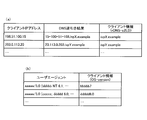
- FIG. 2 is a diagram illustrating a data configuration of the advertisement request log.
- FIG. 3 is an explanatory diagram for explaining client information.
- FIG. 4 is an explanatory diagram for describing publisher information.
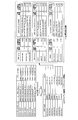
- FIG. 5 is an explanatory diagram for explaining the processing of the feature extraction unit.
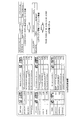
- FIG. 6 is an explanatory diagram for explaining the processing of the feature extraction unit.
- FIG. 7 is a flowchart illustrating the detection processing procedure.
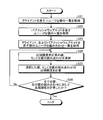
- FIG. 8 is a flowchart illustrating a feature extraction processing procedure.
- FIG. 9 is a diagram illustrating an example of a computer that executes a detection program.
- FIG. 1 is a schematic diagram illustrating a schematic configuration of the detection device.
- a control unit implemented using a CPU (Central Processing Unit) of a general-purpose computer functions as a feature extraction unit 11, a determination unit creation unit 12, and a determination unit 14, as shown in FIG. .
- these functional units may be implemented in different or partially different hardware.
- the determination unit 14 may be implemented in hardware different from the feature extraction unit 11 and the determination unit creation unit 12.
- the determination unit 13 is stored in a semiconductor memory element such as a RAM (Random Access Memory) or a flash memory (Flash Memory), or a storage unit realized by a storage device such as a hard disk or an optical disk. .
- a semiconductor memory element such as a RAM (Random Access Memory) or a flash memory (Flash Memory), or a storage unit realized by a storage device such as a hard disk or an optical disk.
- the feature extracting unit 11 functions as an extracting unit. That is, the feature extraction unit 11 extracts, from an advertisement request for browsing an online advertisement, client information regarding a client that has transmitted the advertisement request and publisher information regarding a website of a publisher that displays the advertisement. In addition, the feature extracting unit 11 calculates a predetermined feature amount for a plurality of advertisement requests including at least a benign advertisement request using the client information and the publisher information.
- the feature extraction unit 11 receives an advertisement request for browsing an online advertisement via an input unit such as a keyboard (not shown) or a communication control unit such as a NIC (Network Interface Card).
- FIG. 2 is a diagram illustrating a data configuration of the advertisement request.
- the advertisement request includes a client IP address, a user agent, a publisher URL, and the like.
- the client IP address is the IP address of the client used by the end user who browses the advertisement, that is, the client from which the advertisement request is transmitted.
- the user agent is a user agent such as software or hardware used for browsing an advertisement in a client.
- the publisher URL is the URL of the publisher's website where the advertisement was displayed.
- the determiner creating unit 12 described later performs processing using an advertisement request for learning.
- a learning malicious advertisement request log and a learning benign advertisement request log are used.
- the learning malicious advertisement request log is a log of a malicious advertisement request generated by advertisement fraud.
- the learning benign advertisement request log is a log of a benign advertisement request generated by the activity of a legitimate end user.
- the determination unit 14 described below performs processing using a test advertisement request log, which is a test advertisement request.
- the test advertisement request log is a log of an advertisement request to be determined whether or not the advertisement is malicious.
- the feature extraction unit 11 includes a client information extraction unit 11a, a publisher information extraction unit 11b, and an appearance frequency calculation unit 11c.
- the client information extraction unit 11a extracts client information relating to a client that has transmitted the advertisement request.
- FIG. 3 is a diagram for explaining client information.
- the client information extracting unit 11a extracts information of a network to which the IP address of the transmission source of the advertisement request belongs, as shown in FIG. Specifically, using the client IP address included in the advertisement request, the client information extraction unit 11a performs reverse DNS lookup for resolving a domain name from this IP address. Then, the client information extraction unit 11a extracts a partial character string (hereinafter, referred to as rDNS-e2LD) representing the minimum unit of a part that can be registered on the Internet as desired by the user, from the domain name resulting from the reverse DNS lookup. This is client information.
- rDNS-e2LD partial character string
- the client information extraction unit 11a extracts rDNS-e2LD from the domain name with reference to the publicly known Public Suffix List.
- Public @ Suffix represents a character string that cannot be controlled by an individual user at the top of the domain name. Therefore, the client information extraction unit 11a may extract up to one level lower than Public @ Suffix included in the domain name as rDNS-e2LD.
- the client information extraction unit 11a determines “ispX.example” or “ispX.example” as rDNS-e2LD from the domain of the DNS reverse lookup result. "IspY.example” is extracted.
- the client information extracting unit 11a may extract information on the operating environment of the client as the client information, as shown in FIG. Specifically, the client information extraction unit 11a uses the user agent included in the advertisement request and connects a type of the OS represented by the user agent and a major version number (hereinafter, referred to as OS-version). Is extracted, and this is used as client information.
- OS-version major version number
- the client information extraction unit 11a defines a signature for each OS type and version in advance, and performs signature matching on a character string representing a user agent. That is, the client information extraction unit 11a extracts the type and the version number of the OS representing the user agent by specifying the signature corresponding to the user agent.
- the client information extraction unit 11a can define a signature using, for example, open-core software uap-core.
- the client information extraction unit 11a extracts the OS-version "bbbbb7" from the character string "aaaa / 5.0 (bbbb @ NT @ 6.1;...)" Representing the user agent.
- the publisher information extraction unit 11b extracts publisher information relating to the publisher website displaying the advertisement.
- FIG. 4 is a diagram for explaining publisher information.
- the publisher information extraction unit 11b extracts the domain name of the publisher website as shown in FIG. Specifically, the publisher information extracting unit 11b extracts the FQDN (Fully Qualified Domain Domain Name) of the publisher site from the publisher URL included in the advertisement request, and sets this as publisher information.
- FQDN Full Qualified Domain Domain Name
- the publisher information extraction unit 11b excludes a part representing a scheme such as “http: //” or “https: //” from the URL and a part representing a path name after a delimiter such as “/” from the URL. , FQDN can be extracted. In the example illustrated in FIG. 4, the publisher information extraction unit 11b extracts FQDN “example.com” from the publisher URL “https://example.com/.
- the appearance frequency calculation unit 11c calculates a predetermined feature amount for a plurality of advertisement requests including at least a benign advertisement request using client information and publisher information. For example, the appearance frequency calculation unit 11c calculates a feature amount using the appearance frequency of a plurality of advertisement requests including at least a benign advertisement request of the client information and the publisher information.
- FIGS. 5 and 6 are explanatory diagrams for explaining the processing of the feature extracting unit 11.
- FIG. 5 illustrates a process of calculating the appearance frequency of client information and publisher information.
- the client information extracting unit 11a extracts the client information
- the publisher information extracting unit 11b extracts the publisher information.
- the publisher information extracting unit 11b extracts FQDN as publisher information.
- the client information extraction unit 11a extracts rDNS-e2LD and OS-version as client information. Note that the client information and the publisher information are not limited to these. For example, the client information extraction unit 11a may extract only one of rDNS-e2LD and OS-version as client information.
- the appearance frequency calculation unit 11c calculates the appearance frequency of the client information and the publisher information. Specifically, first, the appearance frequency calculation unit 11c totals the client information and the publisher information of each advertisement request shown in FIG. 5B. For example, the appearance frequency calculation unit 11c acquires a list of unique values that appear in all advertisement requests for each of rDNS-e2LD, OS-version, and FQDN. Also, the appearance frequency calculation unit 11c calculates the combination of unique values appearing in the same advertisement request for each of the three combinations of rDNS-e2LD and FQDN, rDNS-e2LD and OS-version, and OS-version and FQDN. Get a list.
- ⁇ Appearance frequency calculation section 11c calculates the appearance frequency of all the advertisement requests shown in FIG. 5A for each value or combination of values in the acquired list.
- the appearance frequency may be the number of appearances in all advertisement requests, or a value obtained by normalizing the number of appearances from 0 to 1. In the example shown in FIG. 5C, both of them are calculated. For example, in the combination of OS-version "bbbbb7" and FQDN "example.net", the number of appearances in all the advertisement requests is two, the appearance frequency is 2, and the normalized appearance frequency is 0.285. ing.
- the appearance frequency calculation unit 11c calculates a feature amount using the calculated appearance frequency.
- FIG. 6 illustrates an example of a feature amount calculation process using the appearance frequency calculated as illustrated in FIG. 5.
- the appearance frequency calculation unit 11c uses the calculated appearance frequency to calculate a feature vector having the appearance frequency of client information and publisher information of each advertisement request as a component as a feature amount of each advertisement request. Generate.
- the appearance frequency calculated as shown in FIG. A feature vector is generated as shown in FIG.
- the feature vector for each advertisement request is (rDNS-e2LD, OS-version, FQDN, rDNS-e2LD and FQDN, rDNS-e2LD and OS-version, OS-version and FQDN) in this order.
- the appearance frequency of each value is generated as a component. Note that this order is not particularly limited, and may be common to all advertisement requests.
- the feature vector shown in FIG. 6D is a six-dimensional vector generated using the normalized appearance frequency values shown by shading in FIG. 6A as components. That is, this feature vector is the appearance of rDNS-e2LD “ispX.example”, OS-version “bbbbb7”, FQDN “example.com”, and a combination thereof in the record of the advertisement request log shown in FIG. Generated using frequency.
- the feature extraction unit 11 calculates feature amounts for a large number of advertisement requests including a benign advertisement request. That is, the feature extracting unit 11 calculates the feature amount of each advertisement request using the statistical tendency of the advertisement request generated by a legitimate end user. Because it is difficult for an attacker to manipulate the statistical trends generated by legitimate end users, the features for many ad requests, including these benign ad requests, can be manipulated by the attacker. Difficult value.
- the determiner creating unit 12 creates a determiner 13 that determines whether the advertisement request is malicious using the calculated feature amount. More specifically, for example, the determiner creating unit 12 uses the malignant feature vector calculated from the learning malicious advertisement request log and the benign feature vector calculated from the learning benign advertisement request log to determine Learn how to assign malicious labels to various ad requests. As a result, the determiner creating unit 12 creates the determiner 13 that assigns either the bad label or the benign label to the advertisement request.
- the determination unit 14 determines whether the advertisement request is malicious using the created determiner 13. Specifically, the determination unit 14 inputs a predetermined feature amount calculated by the feature extraction unit 11 for the test advertisement request log to the determination unit 13. For example, when the number of records included in the test advertisement request log is small, the appearance frequency calculation unit 11c of the feature extraction unit 11 applies the application frequency value calculated for the learning advertisement request log, The feature amount of each advertisement request may be calculated.
- the determiner 14 determines that the test advertisement request is malicious.
- the determination unit 14 determines that the test advertisement request is not benign, that is, not malignant.
- FIG. 7 is a flowchart illustrating the detection processing procedure.
- the flowchart of FIG. 7 is started, for example, at the timing when the user performs an operation input for instructing the start of the detection process.
- the feature extraction unit 11 when the feature extraction unit 11 receives an input of an advertisement request log (step S1), the feature extraction unit 11 performs a feature extraction process for each advertisement request. That is, the feature extracting unit 11 calculates a predetermined feature amount for all the inputted advertisement requests using the client information and the publisher information (Step S2).
- the determiner creating unit 12 creates the determiner 13 that determines whether the advertisement request log is malicious or not using the feature amount calculated for the learning advertisement request log (step S3). That is, the determiner creator 12 uses the malignant feature amount calculated from the learning malicious advertisement request log and the benign feature amount calculated from the learning benign advertisement request log to add the malicious label / A determiner 13 for assigning one of the benign labels is created.
- the determination unit 14 determines whether or not the test advertisement request log is malicious by inputting the feature amount calculated for the test advertisement request log into the created determiner 13 (step S4). Thus, a series of detection processing ends.
- FIG. 8 is a flowchart showing the procedure of the feature extraction process (step S2).
- the client information extracting unit 11a extracts client information representing a client from the advertisement request.
- the appearance frequency calculation unit 11c acquires a list of unique values of the client information appearing in all the inputted advertisement requests (step S21).
- the publisher information extraction unit 11b extracts publisher information indicating a publisher website from the advertisement request. Then, the appearance frequency calculation unit 11c acquires a list of unique values of publisher information appearing in all the input advertisement requests (step S22).
- ⁇ Appearance frequency calculation unit 11c acquires a list of combinations of unique values of client information and publisher information appearing in the same advertisement request (step S23).
- the appearance frequency calculation unit 11c sequentially selects a value or a combination of values from the acquired list (step S24), and calculates an appearance frequency that appears in all the advertisement requests as a feature amount for the selected value or combination of values. (Step S25).
- the appearance frequency calculation unit 11c repeats the process of calculating the appearance frequency for the list value or the combination of the values (step S26, No ⁇ step S24). Then, when the appearance frequency has been calculated for all of the values in the list or the combination of the values (Yes in step S26), the appearance frequency calculation unit 11c ends the series of feature extraction processing.
- the feature extraction unit 11 displays the client information on the client that is the transmission source of the advertisement request and the advertisement from the advertisement request for browsing the online advertisement.
- Publisher information relating to the publisher's website to be extracted is extracted, and a predetermined feature amount is calculated for a plurality of advertisement requests including at least a benign advertisement request using the client information and the publisher information.
- the determiner creating unit 12 creates a determiner 13 that determines whether the advertisement request is malicious using the calculated feature amount.
- Non-patent document 1 the number of advertisement requests and the CTR (Click Through Rate) generated for each advertisement viewing user and each publisher site are measured, and advertisement fraud is detected based on the burstiness of the measured values (Non-patent document). Reference 1).
- advertisement fraud has been detected based on the fact that advertisement profit generated by advertisement fraud is higher than advertisement profit generated by a normal publisher (see Non-Patent Document 2).
- advertisement fraud was detected by utilizing the fact that advertisement requests generated by advertisement fraud and advertisement revenue generated by advertisement requests show higher burstiness than advertisement requests by legitimate end users .
- the feature extracting unit 11 calculates, for each advertisement request, a feature amount for a large number of advertisement requests including a benign advertisement request generated by an authorized end user. That is, the feature extracting unit 11 calculates the feature amount of each advertisement request using the statistical tendency of a benign advertisement request. For example, the feature extraction unit 11 calculates the feature amount using the frequency of appearance of client information and publisher information for a large number of advertisement requests including a benign advertisement request generated by a legitimate end user.
- the feature extraction unit 11 extracts, for example, information on the network to which the IP address of the transmission source of the advertisement request belongs as the client information, and calculates the feature amount using the extracted information. Alternatively, the feature extracting unit 11 extracts information on the operating environment of the client as the client information, and calculates a feature amount using the extracted information. The feature extracting unit 11 extracts a domain name of a publisher's website as publisher information, and calculates a feature amount using the extracted domain name.
- Attackers have difficulty manipulating statistical trends generated by legitimate end users. Even if an attacker attacks with a large number of clients and publisher websites, it is difficult to set these feature values to the same value as an advertisement request by a legitimate end user. Therefore, the feature amount for a large number of advertisement requests including such a benign advertisement request is a value that is difficult for an attacker to operate.
- the detection device 10 creates the determiner 13 that determines whether the advertisement request is malicious using the feature amount that is difficult for the attacker to operate. Using the determiner 13 created here, the determiner 14 determines whether the advertisement request is malicious. Therefore, the detection device 10 can detect advertisement fraud that is difficult for an attacker to avoid.
- the detection device 10 can be implemented by installing a detection program for executing the above detection processing as package software or online software on a desired computer.
- the information processing device can function as the detection device 10.
- the information processing device referred to here includes a desktop or notebook personal computer.
- the information processing apparatus includes a mobile communication terminal such as a smartphone, a mobile phone, or a PHS (Personal Handyphone System), and a slate terminal such as a PDA (Personal Digital Assistant).
- the function of the detection device 10 may be implemented in a cloud server.
- FIG. 9 is a diagram illustrating an example of a computer that executes a detection program.
- the computer 1000 has, for example, a memory 1010, a CPU 1020, a hard disk drive interface 1030, a disk drive interface 1040, a serial port interface 1050, a video adapter 1060, and a network interface 1070. These components are connected by a bus 1080.
- the memory 1010 includes a ROM (Read Only Memory) 1011 and a RAM 1012.
- the ROM 1011 stores, for example, a boot program such as a BIOS (Basic Input Output System).
- BIOS Basic Input Output System
- the hard disk drive interface 1030 is connected to the hard disk drive 1031.
- the disk drive interface 1040 is connected to the disk drive 1041.
- a removable storage medium such as a magnetic disk or an optical disk is inserted.
- a mouse 1051 and a keyboard 1052 are connected to the serial port interface 1050.
- the display 1061 is connected to the video adapter 1060, for example.
- the hard disk drive 1031 stores, for example, the OS 1091, the application program 1092, the program module 1093, and the program data 1094. Each piece of information described in the above embodiment is stored in, for example, the hard disk drive 1031 or the memory 1010.
- the detection program is stored in the hard disk drive 1031 as, for example, a program module 1093 in which a command to be executed by the computer 1000 is described. Specifically, a program module 1093 in which each process executed by the detection device 10 described in the above embodiment is described is stored in the hard disk drive 1031.
- Data used for information processing by the detection program is stored as the program data 1094, for example, in the hard disk drive 1031. Then, the CPU 1020 reads the program module 1093 and the program data 1094 stored in the hard disk drive 1031 into the RAM 1012 as necessary, and executes the above-described procedures.
- the program module 1093 and the program data 1094 related to the detection program are not limited to being stored in the hard disk drive 1031.
- the program module 1093 and the program data 1094 are stored in a removable storage medium and read out by the CPU 1020 via the disk drive 1041 or the like. May be done.
- the program module 1093 and the program data 1094 related to the detection program are stored in another computer connected via a network such as a LAN or a WAN (Wide Area Network), and are read out by the CPU 1020 via the network interface 1070. You may.
Landscapes
- Business, Economics & Management (AREA)
- Engineering & Computer Science (AREA)
- Accounting & Taxation (AREA)
- Development Economics (AREA)
- Finance (AREA)
- Strategic Management (AREA)
- Theoretical Computer Science (AREA)
- Physics & Mathematics (AREA)
- General Physics & Mathematics (AREA)
- Entrepreneurship & Innovation (AREA)
- Marketing (AREA)
- General Business, Economics & Management (AREA)
- Economics (AREA)
- Game Theory and Decision Science (AREA)
- Databases & Information Systems (AREA)
- Data Mining & Analysis (AREA)
- General Engineering & Computer Science (AREA)
- Management, Administration, Business Operations System, And Electronic Commerce (AREA)
Abstract
L'invention concerne une unité d'extraction de caractéristiques (11) qui : extrait, à partir d'une demande de publicité demandant la visualisation d'une publicité en ligne, des informations de client relatives à un client qui a envoyé la demande de publicité, et des informations d'éditeur relatives à un site web d'un éditeur affichant la publicité ; et calcule une quantité de caractéristiques prescrites pour une pluralité de requêtes de publicité comprenant au moins une requête de publicité bénigne, dans laquelle les informations de client et les informations d'éditeur sont utilisées. Une unité de création d'évaluateur (12) crée un évaluateur (13) pour évaluer si une demande de publicité est malveillante ou non, à l'aide de la quantité de caractéristique calculée.
Priority Applications (3)
| Application Number | Priority Date | Filing Date | Title |
|---|---|---|---|
| US17/278,673 US11620675B2 (en) | 2018-09-25 | 2019-04-10 | Detector, detection method, and detection program |
| EP19867456.6A EP3839780B1 (fr) | 2018-09-25 | 2019-04-10 | Détecteur, procédé de détection, et programme de détection |
| JP2020547931A JP6989027B2 (ja) | 2018-09-25 | 2019-04-10 | 検知装置、検知方法および検知プログラム |
Applications Claiming Priority (2)
| Application Number | Priority Date | Filing Date | Title |
|---|---|---|---|
| JP2018-179229 | 2018-09-25 | ||
| JP2018179229 | 2018-09-25 |
Publications (1)
| Publication Number | Publication Date |
|---|---|
| WO2020066084A1 true WO2020066084A1 (fr) | 2020-04-02 |
Family
ID=69951315
Family Applications (1)
| Application Number | Title | Priority Date | Filing Date |
|---|---|---|---|
| PCT/JP2019/015708 Ceased WO2020066084A1 (fr) | 2018-09-25 | 2019-04-10 | Détecteur, procédé de détection, et programme de détection |
Country Status (4)
| Country | Link |
|---|---|
| US (1) | US11620675B2 (fr) |
| EP (1) | EP3839780B1 (fr) |
| JP (1) | JP6989027B2 (fr) |
| WO (1) | WO2020066084A1 (fr) |
Cited By (3)
| Publication number | Priority date | Publication date | Assignee | Title |
|---|---|---|---|---|
| JP2023162109A (ja) * | 2022-04-26 | 2023-11-08 | ネットマーブル・コーポレイション | 広告詐欺探知装置及び方法 |
| JP2023164277A (ja) * | 2022-04-28 | 2023-11-10 | ネットマーブル・コーポレイション | 広告詐欺ユーザを分類するための装置及び方法 |
| JP2024505980A (ja) * | 2021-02-03 | 2024-02-08 | グーグル エルエルシー | 覆い隠されたコンポーネントとのインタラクションを阻止することによるユーザインタラクション乗っ取り攻撃の防止 |
Families Citing this family (1)
| Publication number | Priority date | Publication date | Assignee | Title |
|---|---|---|---|---|
| CN115423536B (zh) * | 2022-10-31 | 2023-01-17 | 北京学橙归来科技有限公司 | 一种在用户管理系统中发布广告信息的控制方法 |
Citations (3)
| Publication number | Priority date | Publication date | Assignee | Title |
|---|---|---|---|---|
| JP2008135030A (ja) * | 2006-11-28 | 2008-06-12 | Nhn Corp | 有無線ネットワークを介して提供される広告を管理する方法及びこの方法を実行するシステム |
| US20100082400A1 (en) * | 2008-09-29 | 2010-04-01 | Yahoo! Inc.. | Scoring clicks for click fraud prevention |
| US20180253755A1 (en) * | 2016-05-24 | 2018-09-06 | Tencent Technology (Shenzhen) Company Limited | Method and apparatus for identification of fraudulent click activity |
Family Cites Families (6)
| Publication number | Priority date | Publication date | Assignee | Title |
|---|---|---|---|---|
| US8667117B2 (en) * | 2007-05-31 | 2014-03-04 | Microsoft Corporation | Search ranger system and double-funnel model for search spam analyses and browser protection |
| US8797866B2 (en) * | 2010-02-12 | 2014-08-05 | Cisco Technology, Inc. | Automatic adjusting of reputation thresholds in order to change the processing of certain packets |
| US9734508B2 (en) * | 2012-02-28 | 2017-08-15 | Microsoft Technology Licensing, Llc | Click fraud monitoring based on advertising traffic |
| US10387911B1 (en) * | 2012-06-01 | 2019-08-20 | Integral Ad Science, Inc. | Systems, methods, and media for detecting suspicious activity |
| US10333964B1 (en) * | 2015-05-29 | 2019-06-25 | Microsoft Technology Licensing, Llc | Fake account identification |
| US12073430B2 (en) * | 2017-10-26 | 2024-08-27 | Yahoo Ad Tech Llc | Method and system for detecting fraudulent advertisement activity |
-
2019
- 2019-04-10 EP EP19867456.6A patent/EP3839780B1/fr active Active
- 2019-04-10 WO PCT/JP2019/015708 patent/WO2020066084A1/fr not_active Ceased
- 2019-04-10 US US17/278,673 patent/US11620675B2/en active Active
- 2019-04-10 JP JP2020547931A patent/JP6989027B2/ja active Active
Patent Citations (3)
| Publication number | Priority date | Publication date | Assignee | Title |
|---|---|---|---|---|
| JP2008135030A (ja) * | 2006-11-28 | 2008-06-12 | Nhn Corp | 有無線ネットワークを介して提供される広告を管理する方法及びこの方法を実行するシステム |
| US20100082400A1 (en) * | 2008-09-29 | 2010-04-01 | Yahoo! Inc.. | Scoring clicks for click fraud prevention |
| US20180253755A1 (en) * | 2016-05-24 | 2018-09-06 | Tencent Technology (Shenzhen) Company Limited | Method and apparatus for identification of fraudulent click activity |
Non-Patent Citations (5)
| Title |
|---|
| B. STONE-GROSSR. STEVENSA. ZARRASR. KEMMERERC. KRUEGELG. VIGNA: "Understanding Fraudulent Activities in Online Ad Exchanges", PROCEEDINGS OF THE 2011 ACM SIGCOMM CONFERENCE ON INTERNET MEASUREMENT CONFERENCE (IMC, 2011, pages 279 - 294 |
| FUMIHIRO KANAI, DAIKI CHIBA, YUTA TAKADA, MITSUAKI AKIYAMA, TAKESHI YAGI, KUNIO HADO: "An Empirical Analysis of Online Advertising Fraud by analyzing User Activities Observed in the Ad Network", IEICE TECHNICAL REPORT, vol. 117, no. 481 (ICSS2017-67), 28 February 2018 (2018-02-28), pages 97 - 102, XP009526586 * |
| HAIDER RAKIN, IQBAL ANINDYA, RAHMAN ATIF HASAN, RAHMAN M. SOHEL: "An ensemble learning based approach for impression fraud detection in mobile advertising", JOURNAL OF NETWORK AND COMPUTER APPLICATIONS, vol. 112, 1 June 2018 (2018-06-01), pages 126 - 141, XP055788730, ISSN: 1084-8045, DOI: 10.1016/j.jnca.2018.02.021 * |
| See also references of EP3839780A4 |
| V. DAVES. GUHAY. ZHANG: "ViceROI: Catching Click-Spam in Search Ad Networks", PROCEEDINGS OF THE 2013 ACM SIGSAC CONFERENCE ON COMPUTER AND COMMUNICATIONS SECURITY (CCS, 2013, pages 765 - 776 |
Cited By (5)
| Publication number | Priority date | Publication date | Assignee | Title |
|---|---|---|---|---|
| JP2024505980A (ja) * | 2021-02-03 | 2024-02-08 | グーグル エルエルシー | 覆い隠されたコンポーネントとのインタラクションを阻止することによるユーザインタラクション乗っ取り攻撃の防止 |
| JP7705463B2 (ja) | 2021-02-03 | 2025-07-09 | グーグル エルエルシー | 覆い隠されたコンポーネントとのインタラクションを阻止することによるユーザインタラクション乗っ取り攻撃の防止 |
| US12499223B2 (en) | 2021-02-03 | 2025-12-16 | Google Llc | Preventing user interaction hijacking attacks by blocking interactions with obscured components |
| JP2023162109A (ja) * | 2022-04-26 | 2023-11-08 | ネットマーブル・コーポレイション | 広告詐欺探知装置及び方法 |
| JP2023164277A (ja) * | 2022-04-28 | 2023-11-10 | ネットマーブル・コーポレイション | 広告詐欺ユーザを分類するための装置及び方法 |
Also Published As
| Publication number | Publication date |
|---|---|
| US20220036402A1 (en) | 2022-02-03 |
| JP6989027B2 (ja) | 2022-01-05 |
| JPWO2020066084A1 (ja) | 2021-02-18 |
| EP3839780B1 (fr) | 2024-10-02 |
| EP3839780A1 (fr) | 2021-06-23 |
| EP3839780A4 (fr) | 2022-05-04 |
| US11620675B2 (en) | 2023-04-04 |
Similar Documents
| Publication | Publication Date | Title |
|---|---|---|
| US11356479B2 (en) | Systems and methods for takedown of counterfeit websites | |
| Stone-Gross et al. | Understanding fraudulent activities in online ad exchanges | |
| Venkatadri et al. | Privacy risks with Facebook's PII-based targeting: Auditing a data broker's advertising interface | |
| Haider et al. | An ensemble learning based approach for impression fraud detection in mobile advertising | |
| US9954841B2 (en) | Distinguish valid users from bots, OCRs and third party solvers when presenting CAPTCHA | |
| JP6198972B2 (ja) | 広告における広告主識別子の自動検証 | |
| Sigler | Crypto-jacking: how cyber-criminals are exploiting the crypto-currency boom | |
| US8495742B2 (en) | Identifying malicious queries | |
| Kotzias et al. | Measuring {PUP} Prevalence and {PUP} Distribution through {Pay-Per-Install} Services | |
| Alrwais et al. | Understanding the dark side of domain parking | |
| US12041084B2 (en) | Systems and methods for determining user intent at a website and responding to the user intent | |
| Chua et al. | Threats to online advertising and countermeasures: A technical survey | |
| JP6989027B2 (ja) | 検知装置、検知方法および検知プログラム | |
| Pooranian et al. | Online advertising security: Issues, taxonomy, and future directions | |
| Cho et al. | An empirical study of click fraud in mobile advertising networks | |
| Hyslip et al. | Assessing the capacity of DRDoS-for-hire services in cybercrime markets | |
| US20150082426A1 (en) | Method and System for Inferring Risk of Data Leakage from Third-Party Tags | |
| Bose et al. | Assessing anti-phishing preparedness: A study of online banks in Hong Kong | |
| Dwyer et al. | Malvertising-a rising threat to the online ecosystem | |
| Saha Roy et al. | Phishing in the free waters: A study of phishing attacks created using free website building services | |
| US12353499B2 (en) | Using embedded elements for online content verification | |
| Munir et al. | {PURL}: Safe and Effective Sanitization of Link Decoration | |
| US20130339158A1 (en) | Determining legitimate and malicious advertisements using advertising delivery sequences | |
| Pan et al. | Assessing the threat of web worker distributed attacks | |
| Gadient et al. | Phish what you wish |
Legal Events
| Date | Code | Title | Description |
|---|---|---|---|
| 121 | Ep: the epo has been informed by wipo that ep was designated in this application |
Ref document number: 19867456 Country of ref document: EP Kind code of ref document: A1 |
|
| ENP | Entry into the national phase |
Ref document number: 2020547931 Country of ref document: JP Kind code of ref document: A |
|
| ENP | Entry into the national phase |
Ref document number: 2019867456 Country of ref document: EP Effective date: 20210319 |
|
| NENP | Non-entry into the national phase |
Ref country code: DE |