WO2020077555A1 - Gel comprenant des matériaux hybrides à changement de phase - Google Patents
Gel comprenant des matériaux hybrides à changement de phase Download PDFInfo
- Publication number
- WO2020077555A1 WO2020077555A1 PCT/CN2018/110590 CN2018110590W WO2020077555A1 WO 2020077555 A1 WO2020077555 A1 WO 2020077555A1 CN 2018110590 W CN2018110590 W CN 2018110590W WO 2020077555 A1 WO2020077555 A1 WO 2020077555A1
- Authority
- WO
- WIPO (PCT)
- Prior art keywords
- phase change
- gel
- change material
- diisocyanate
- surfactant
- Prior art date
- Legal status (The legal status is an assumption and is not a legal conclusion. Google has not performed a legal analysis and makes no representation as to the accuracy of the status listed.)
- Ceased
Links
Images
Classifications
-
- C—CHEMISTRY; METALLURGY
- C08—ORGANIC MACROMOLECULAR COMPOUNDS; THEIR PREPARATION OR CHEMICAL WORKING-UP; COMPOSITIONS BASED THEREON
- C08L—COMPOSITIONS OF MACROMOLECULAR COMPOUNDS
- C08L75/00—Compositions of polyureas or polyurethanes; Compositions of derivatives of such polymers
- C08L75/04—Polyurethanes
- C08L75/08—Polyurethanes from polyethers
-
- C—CHEMISTRY; METALLURGY
- C08—ORGANIC MACROMOLECULAR COMPOUNDS; THEIR PREPARATION OR CHEMICAL WORKING-UP; COMPOSITIONS BASED THEREON
- C08G—MACROMOLECULAR COMPOUNDS OBTAINED OTHERWISE THAN BY REACTIONS ONLY INVOLVING UNSATURATED CARBON-TO-CARBON BONDS
- C08G18/00—Polymeric products of isocyanates or isothiocyanates
- C08G18/06—Polymeric products of isocyanates or isothiocyanates with compounds having active hydrogen
- C08G18/08—Processes
- C08G18/10—Prepolymer processes involving reaction of isocyanates or isothiocyanates with compounds having active hydrogen in a first reaction step
-
- C—CHEMISTRY; METALLURGY
- C08—ORGANIC MACROMOLECULAR COMPOUNDS; THEIR PREPARATION OR CHEMICAL WORKING-UP; COMPOSITIONS BASED THEREON
- C08G—MACROMOLECULAR COMPOUNDS OBTAINED OTHERWISE THAN BY REACTIONS ONLY INVOLVING UNSATURATED CARBON-TO-CARBON BONDS
- C08G18/00—Polymeric products of isocyanates or isothiocyanates
- C08G18/06—Polymeric products of isocyanates or isothiocyanates with compounds having active hydrogen
- C08G18/28—Polymeric products of isocyanates or isothiocyanates with compounds having active hydrogen characterised by the compounds used containing active hydrogen
- C08G18/40—High-molecular-weight compounds
- C08G18/48—Polyethers
- C08G18/4833—Polyethers containing oxyethylene units
- C08G18/4837—Polyethers containing oxyethylene units and other oxyalkylene units
- C08G18/485—Polyethers containing oxyethylene units and other oxyalkylene units containing mixed oxyethylene-oxypropylene or oxyethylene-higher oxyalkylene end groups
-
- C—CHEMISTRY; METALLURGY
- C08—ORGANIC MACROMOLECULAR COMPOUNDS; THEIR PREPARATION OR CHEMICAL WORKING-UP; COMPOSITIONS BASED THEREON
- C08G—MACROMOLECULAR COMPOUNDS OBTAINED OTHERWISE THAN BY REACTIONS ONLY INVOLVING UNSATURATED CARBON-TO-CARBON BONDS
- C08G18/00—Polymeric products of isocyanates or isothiocyanates
- C08G18/06—Polymeric products of isocyanates or isothiocyanates with compounds having active hydrogen
- C08G18/70—Polymeric products of isocyanates or isothiocyanates with compounds having active hydrogen characterised by the isocyanates or isothiocyanates used
- C08G18/72—Polyisocyanates or polyisothiocyanates
- C08G18/74—Polyisocyanates or polyisothiocyanates cyclic
- C08G18/76—Polyisocyanates or polyisothiocyanates cyclic aromatic
- C08G18/7614—Polyisocyanates or polyisothiocyanates cyclic aromatic containing only one aromatic ring
- C08G18/7621—Polyisocyanates or polyisothiocyanates cyclic aromatic containing only one aromatic ring being toluene diisocyanate including isomer mixtures
-
- C—CHEMISTRY; METALLURGY
- C08—ORGANIC MACROMOLECULAR COMPOUNDS; THEIR PREPARATION OR CHEMICAL WORKING-UP; COMPOSITIONS BASED THEREON
- C08J—WORKING-UP; GENERAL PROCESSES OF COMPOUNDING; AFTER-TREATMENT NOT COVERED BY SUBCLASSES C08B, C08C, C08F, C08G or C08H
- C08J3/00—Processes of treating or compounding macromolecular substances
- C08J3/02—Making solutions, dispersions, lattices or gels by other methods than by solution, emulsion or suspension polymerisation techniques
- C08J3/03—Making solutions, dispersions, lattices or gels by other methods than by solution, emulsion or suspension polymerisation techniques in aqueous media
- C08J3/075—Macromolecular gels
-
- C—CHEMISTRY; METALLURGY
- C08—ORGANIC MACROMOLECULAR COMPOUNDS; THEIR PREPARATION OR CHEMICAL WORKING-UP; COMPOSITIONS BASED THEREON
- C08J—WORKING-UP; GENERAL PROCESSES OF COMPOUNDING; AFTER-TREATMENT NOT COVERED BY SUBCLASSES C08B, C08C, C08F, C08G or C08H
- C08J3/00—Processes of treating or compounding macromolecular substances
- C08J3/20—Compounding polymers with additives, e.g. colouring
- C08J3/205—Compounding polymers with additives, e.g. colouring in the presence of a continuous liquid phase
- C08J3/2053—Compounding polymers with additives, e.g. colouring in the presence of a continuous liquid phase the additives only being premixed with a liquid phase
-
- C—CHEMISTRY; METALLURGY
- C08—ORGANIC MACROMOLECULAR COMPOUNDS; THEIR PREPARATION OR CHEMICAL WORKING-UP; COMPOSITIONS BASED THEREON
- C08G—MACROMOLECULAR COMPOUNDS OBTAINED OTHERWISE THAN BY REACTIONS ONLY INVOLVING UNSATURATED CARBON-TO-CARBON BONDS
- C08G2220/00—Compositions for preparing gels other than hydrogels, aerogels and xerogels
-
- C—CHEMISTRY; METALLURGY
- C08—ORGANIC MACROMOLECULAR COMPOUNDS; THEIR PREPARATION OR CHEMICAL WORKING-UP; COMPOSITIONS BASED THEREON
- C08J—WORKING-UP; GENERAL PROCESSES OF COMPOUNDING; AFTER-TREATMENT NOT COVERED BY SUBCLASSES C08B, C08C, C08F, C08G or C08H
- C08J2375/00—Characterised by the use of polyureas or polyurethanes; Derivatives of such polymers
- C08J2375/04—Polyurethanes
- C08J2375/08—Polyurethanes from polyethers
-
- C—CHEMISTRY; METALLURGY
- C08—ORGANIC MACROMOLECULAR COMPOUNDS; THEIR PREPARATION OR CHEMICAL WORKING-UP; COMPOSITIONS BASED THEREON
- C08L—COMPOSITIONS OF MACROMOLECULAR COMPOUNDS
- C08L101/00—Compositions of unspecified macromolecular compounds
- C08L101/12—Compositions of unspecified macromolecular compounds characterised by physical features, e.g. anisotropy, viscosity or electrical conductivity
- C08L101/14—Compositions of unspecified macromolecular compounds characterised by physical features, e.g. anisotropy, viscosity or electrical conductivity the macromolecular compounds being water soluble or water swellable, e.g. aqueous gels
Definitions
- the present invention relates to a gel comprising hybrid phase change materials, in particular to a gel comprising a dispersion of hybrid phase change materials.
- PCMs phase change materials
- a known PCM is water with a phase change temperature of 0°C.
- a desired temperature range of 0°C or below an aqueous solution of an inorganic salt, with a eutectic composition, is typically used.
- an inorganic salt or a hydrate of an inorganic salt has relatively low cost, and shows good thermal conductivity and latent heat, it causes a lot of problems, such as phase separation, poor cycling stability, sub-cooling, considerable volume change (e.g., up to 10 vol%) , and corrosion to external packages (e.g., metals) .
- organic PCMs have some problems such as lower latent heat, lower thermal conductivity and considerable volume change, they show good compatibility with metals, little or no sub-cooling, no phase separation and good cycling stability. Generally, the inorganic and organic PCMs are not compatible, so they are used singly.
- the present disclosure provides a novel article comprising PCMs, which can avoid the above-mentioned problems.
- the present disclosure provides a gel obtained from: i) at least one hydrophilic polyurethane prepolymer, ii) an organic phase change material comprising one or more alkanes, iii) an inorganic phase change material selected from the group consisting of water and an aqueous solution of an inorganic salt, and iv) a surfactant.
- the present disclosure provides a method for preparing a gel, comprising the steps: mixing an organic phase change material, an inorganic phase change material selected from the group consisting of water and an aqueous solution of an inorganic salt and a surfactant to form a dispersion; mixing the resultant dispersion with at least one hydrophilic polyurethane prepolymer to form a gel.
- the present disclosure provides a packaging article comprising a gel according to the present disclosure.
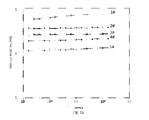
- Fig. 1a showed storage module versus angle frequency curves of the gels of Inventive Examples 1#-5# at room temperature.
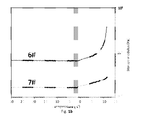
- Fig. 1b showed storage module-angle versus temperature curves of the gels of Inventive Examples 6# and 7#.
- the present disclosure provides a gel obtained from: i) at least one hydrophilic polyurethane prepolymer, ii) an organic phase change material comprising one or more alkanes, iii) an inorganic phase change material selected from the group consisting of water and an aqueous solution of an inorganic salt, and iv) a surfactant.
- the hydrophilic polyurethane prepolymer is an isocyanate-terminated prepolymer, and is the reaction product of (a) a polyether polyol having at least 30 wt%of oxyethylene groups, and (b) a di-functional isocyanate composition selected from the group consisting of a pure diisocyanate, a composition of diisocyanates, and a composition of diisocyanate (s) and poly-functional isocyanate (s) .
- pure diisocyanate refers to only one kind of di-functional isocyanate without considering how many isomers this kind of di-functional isocyanate may comprise.
- composition of diisocyanate refers to at least two kinds of different di-functional isocyanate without considering how many isomers each kind of di-functional isocyanate may comprise.
- poly-functional isocyanate refers to isocyanates with at least three functionalities, such as tri-isocyanate.
- the polyether polyol has a nominal hydroxyl functionality of from 1.6 to 8, and a number average molecular weight of from 1,000 to 12,000.
- the hydrophilic polyurethane prepolymer has a free NCO content of from 1 to 5 wt%, or from 1.5 to 3 wt%, based on the total weight of the hydrophilic polyurethane prepolymer.
- Suitable polyols and isocyanates are commercially available or can be prepared using standard processes known to those skilled in the art.
- di-functional isocyanates include but are not limited to isophorone diisocyanate, tolutene-2, 4-diisocyanate, toluene-2, 6-diisocyanate, mixtures of toluene-2, 4-and 2, 6-diisocyanate, ethylene diisocyanate, ethylidene diisocyanate, propylene-1, 2-diisocyanate, cyclohexylene-1, 2-diisocyanate, cyclohexylene-1, 4-diisocyanate, m-phenylene diisocyanate, 3, 3'-diphenyl-4, 4'-biphenylene diisocyanate, 4, 4'-biphenylene diisocyanate, 4, 4'-diphenylmethane diisocyanate, 3, 3'-dichloro-4, 4'-biphenylene diisocyanate, 1, 6-hexamethylene diisocyanate, 1, 4-tetramethylene
- poly-functional isocyanates include but are not limited to 2, 4, 6-toluene triisocyanate, p, p', p"-triphenylmethane triisocyanate, trifunctional trimer of isophorone diisocyanate, trifunctional biuret of hexamethylene diisocyanate, trifunctional trimer of hexamethylene diisocyanate and polymeric 4, 4'-diphenylmethane diisocyanate, and mixtures thereof.
- the polyether polyol and the diisocyanate are admixed at from 20 to 100°C, optionally in the presence of a urethane-forming catalyst such as a tin compound or a tertiary amine, for a time sufficient to form the hydrophilic polyurethane prepolymer.
- a urethane-forming catalyst such as a tin compound or a tertiary amine
- the ratio of the reactive functional groups of the polyol to the reactive functional groups of the isocyanate is sufficient to obtain the desired free NCO content, e.g. from 1 to 5 wt%, in the prepolymer, and can be readily calculated by one skilled in the art in order to determine how much polyol and isocyanate to employ in the preparation of the prepolymer.
- additives such as additives known in the art for use in forming prepolymers and polyurethanes, may be used in the preparation of the hydrophilic polyurethane prepolymer.
- the composition for forming the hydrophilic polyurethane prepolymer may include at least one catalyst, at least one crosslinker, and/or at least one chain extender. Further information on the preparation of the hydrophilic polyurethane prepolymer may be found in US 2006/0142529 and US 2015/0087737.
- Suitable common catalysts are substances generally known in the art for promoting the reaction of isocyanate with a polyol and includes basic substances such as sodium bicarbonate or the tertiary amines and organometallic compounds.
- suitable catalysts include n-methyl morpholine, n-ethyl morpholine, trimethylamine, tetramethyl butane diamine, triethylenediamaine, dimethylaminoethanolamine, bezylidimethylamine, dibutyl tin dilaurate and stannous octoate.
- Suitable examples of the cross-linker may include low molecular weight polyols typically having an average hydroxyl functionality of from 3 to 4, or low molecular weight amines having typically 3 or 4 amine moieties. Illustrative and preferred examples are glycerin, trimethylolpropane and low molecular weight alkoxylated derivatives thereof. Ethylene diamine is also commonly used although it is a less preferred amine crosslinking agent for use with the present invention. Such cross-linking agent may be present in an amount of from 0.1 to 5, preferably from 0.5 to 3 and more preferably from 1 to 3 percent of the total amount by weight of polyether polyol.
- Suitable examples of the chain extender may include low molecular weight hydroxyl and amine terminated compounds with functionality of 2.
- Illustrative and preferred examples are diethylene glycol, 1, 4-butanediol, 1, 6-hexanediol, ethanolamine, diethanolamine, methyldiethanolamine, etc.
- the polyether polyol advantageously is a polyoxypropylene-polyoxyethylene polyol having a number average molecular weight of from 3,000 g/mole to 9,000 g/mole and a polyoxyethylene content of at least 30 wt. %, based on a total weight of the polyoxyethylene-polyoxypropylene polyol.
- the polyoxypropylene-polyoxyethylene polyol may have a nominal hydroxyl functionality from 1.6 to 8.0, e.g., from 1.6 to 4.0. In one embodiment of the invention, the remainder of the weight content of the polyoxyethylene-polyoxypropylene polyol based on a total of 100 wt.
- the polyoxypropylene content is at least 5 wt. %in the polyol.
- the polyoxyethylene content advantageously is from 55 wt. %to 85 wt. %, from 60 wt. %to 80 wt. %, from 65 wt. %to 80 wt. %, from 70 wt. %to 80 wt. %, and/or from 74 wt. %to 76 wt. %, with the remainder being polyoxypropylene.
- the polyether polyol may include at least one other polyether polyol other than the polyoxypropylene-polyoxyethylene polyol.
- the at least one other polyether polyol may have an average nominal hydroxyl functionality from 1.6 to 8, e.g., from 1.6 to 4.0, and a number average molecular weight from 1000 to 12,000, e.g., from 1,000 to 8,000, from 1,200 to 6,000, from 2,000 to 5,500, etc.
- combinations of optional amines, and other polyether polyols including monohydroxyl substances and low molecular weight diol and triol substances, of varying functionality and polyoxyethylene content may be used in the composition for preparing the hydrophilic polyurethane prepolymer.
- the polyether polyol may also include polyethylene glycol (also known as PEG and polyoxyethylene glycol) .
- the polyethylene glycol may have a weight average molecular weight from 500 g/mol to 2000 g/mol, e.g., from 500 g/mol to 1500 g/mol, from 750 g/mol to 1250 g/mol, from 900 g/mol to 1100 g/mol, etc.
- a hydrophilic polyurethane prepolymer having a positive amount of less than 5 wt. %, or less than 3 wt. %, isocyanate groups are employed to prepare the coolant gel.
- the hydrophilic polyurethane prepolymer has from 1 to 3 wt. %, from 1 to 5 wt. %, from 1.5 to 5 wt. %, or from 1.5 to 3 wt. %, free isocyanate groups.
- the hydrophilic polyurethane prepolymer is contacted with a stoichiometric excess of water to form the coolant gel. Mixtures of hydrophilic polyurethane prepolymers can be employed.
- hydrophilic polyurethane prepolymers are known in the art. Useful prepolymers are available from The Dow Chemical Company under the HYPOL TM brand including, HYPOL JT6005 prepolymer and HYPOL 2060GS prepolymer.
- HYPOL JT6005 prepolymer is a TDI-based polyurethane prepolymer having an NCO content of 3.0%as determined by ASTM D 5155 and a viscosity at 23°C of 12,000 mPa ⁇ s as determined by ASTM D 4889.
- HYPOL 2060GS prepolymer is a TDI-based polyurethane prepolymer having an NCO content of 3.0%as determined by ASTM D 5155 and a viscosity at 23°C of 10,000 mPa ⁇ s as determined by ASTM D 4889.
- the at least one hydrophilic polyurethane prepolymer may have a content of 1-15wt%, preferably 2-10wt%, more preferably 2-8wt%, most preferably 2-6wt%, based on the weight of the gel.
- the organic phase change material comprising one or more alkanes may be a conventional one in the art.
- the alkane comprises 4 to 50 carbon atoms, preferably 5 to 40 carbon atoms, more preferably 8 to 35 carbon atoms, most preferably 10 to 30 carbon atoms.
- the alkane comprises, but not limited to, tetradecane, hexadecane, heptadecane, dodecane and octadecane, eicosane, triacontane, or mixtures thereof.
- the alkane comprises, but not limited to, n-tetradecane, n-hexadecane, n-heptadecane, n-dodecane and n-octadecane, n-eicosane, n-triacontane, or mixtures thereof.
- the organic phase change material comprising one or more alkanes may have a content of 10-80wt%, preferably 15-70wt%, more preferably 20-60wt%, based on the weight of the gel.
- the organic phase change material may further comprise an additional phase change material selected from the group consisting of a fatty acid, a fatty acid ester and an alcohol.
- said fatty acid comprises 4 to 30 carbon atoms, preferably 6 to 25 carbon atoms, more preferably 10 to 20 carbon atoms.
- Suitable examples of fatty acids include, but not limited to, hexylic acid, palmitic acid, stearic acid and the like.
- said fatty acid ester comprises a fatty acid moiety having 4 to 30 carbon atoms, preferably 6 to 25 carbon atoms, more preferably 10 to 20 carbon atoms.
- Suitable examples of fatty acid esters include, but not limited to, glycerin ester of palmitic acid, stearic acid and the like.
- said alcohol includes, but not limited to, ethylene glycol, 1, 3-propylene glycol, 1, 2-propylene glycol, 1, 3-butylene glycol, hexylene glycol, diethylene glycol, glycerin, water soluble polyol like polyethylene glycol, and any combination thereof.
- the additional phase change material selected from the group consisting of a fatty acid, a fatty acid ester and an alcohol has a content of 0-40wt%, preferably 1-30wt%, more preferably 10-30wt%, based on the weight of the gel.
- the inorganic phase change material according to the present disclosure may be water.
- the inorganic phase change material may be an aqueous solution of an inorganic salt.
- the inorganic salt according to the present disclosure may be the conventional phase change materials in the art.
- suitable examples of the inorganic salt include, but not limited to, chlorides (such as NaCl and KCl) , carbonates, sulfates and the like.
- the inorganic phase change material may have a content of 5-70wt%, preferably 10-60wt%, more preferably 20-50wt%, based on the weight of the gel.
- the surfactant may be conventional in the art.
- the surfactant comprises a cation surfactant, an anion surfactant and a non-ionic surfactant.
- the surfactant is preferably a non-ion surfactant, including, but not limited to, poly (ethylene oxide) -based non-ionic surfactant and glycol-based non-ionic surfactant.
- non-ionic surfactants include, but not limit to, ECOSUR TM available from The Dow Chemical Company.
- the surfactant may have a content of 0.1-10wt%, preferably 0.5-8wt%, more preferably 1-5wt%, based on the weight of the gel.
- the gel may also be obtained by further adding additives.
- suitable additives include, but not limited to, water soluble polymers, fillers, defoamers and biocides.
- water soluble polymers include, but not limited to, polysaccharide, cellulose, polyacrylic acid or its salt, polyacryamide, and mixture thereof.
- defoamers include, but not limited to, silicone-based defoamers, mineral oil-based defoamers, ethylene oxide/propylene oxide-based defoamers, or mixtures thereof.
- the additives may have a total content of 0.01-10wt%, preferably 0.05-5wt%, more preferably 0.1-1wt%, based on the weight of the gel.
- the gel is free of thermally conductive filler.
- thermally conductive fillers are selected from the group consisting of oxide powders, flakes and fibers composed of aluminum oxide (alumina) , zinc oxide, magnesium oxide and silicon dioxide; nitride powders, flakes and fibers composed of boron nitride, aluminum nitride and silicon nitride; metal and metal alloy powders, flakes and fibers composed of gold, silver, aluminum, iron, copper, tin, tin base alloy used as lead-free solder; carbon fiber, graphite flakes or fibers; silicon carbide powder; and calcium fluoride powder; and the like.
- the present disclosure provides a method for preparing a gel, comprising the steps: mixing an organic phase change material, an inorganic phase change material selected from the group consisting of water and an aqueous solution of an inorganic salt and a surfactant to form a dispersion; mixing the resultant dispersion with at least one hydrophilic polyurethane prepolymer to form a gel.
- the above step of mixing an organic phase change material, an inorganic phase change and a surfactant may be carried out under stirring at 100-5000 rpm, preferably 200-3000 rpm, more preferably 300-2000 rpm.
- the above step of mixing an organic phase change material, an inorganic phase change and a surfactant may be carried out under stirring for 1-120 min, preferably 5-60 min, more preferably 10-30 min.
- the above step of mixing the resultant dispersion with at least one hydrophilic polyurethane prepolymer may be carried out under stirring at 100-5000 rpm, preferably 200-3000 rpm, more preferably 300-2000 rpm.
- the above step of mixing the resultant dispersion with at least one hydrophilic polyurethane prepolymer may be carried out under stirring for 0.1-60 min, preferably 0.5-30 min, more preferably 0.5-10 min.
- the present disclosure provides a packaging article comprising a gel according to the present disclosure.
- the packaging article may be flexible.
- the gel according to the present disclosure may be coupled with a barrier film to form the flexible wrapping material.
- the packaging article may be rigid, for example, it may be a rigid box having the gel according to the present disclosure.
- the PCM dispersion was first prepared by mixing water, a surfactant and phase change material (s) under stirring at 800 rpm for about 20 min.
- HYPOL JT6005 was mixed with the prepared PCM dispersion under stirring at 1000rpm for 2 min to form a gel.
- the gels were prepared according to the method as described in the above example 1. The components and their amounts were listed in Table 1 below.
- Fig. 1a showed storage module versus angle frequency curves of the gels of Inventive Example 1#-5# at room temperature
- Fig. 1b showed storage module-angle versus temperature curves of the gels of Inventive Example 6# and 7#.
- the behavior of the gels was solid-like rather than liquid-like, proving that cross-linked network was formed within the gels.
- the storage modulus of the gels was also measured during temperature change from 30 to -15°C.
- Fig. 1b the storage modulus of the gels was almost independent on temperature change before the phase change, while it increased significantly after phase change.
- the gel was prepared according to the method as described in the above example 1. The components and their amounts were listed in Table 3 below.
- Thermal conductivity was measured by Hot Thermal constants analyzer (Model 2700 Multimeter/Data Acquisition System) .
- Thermal conductivity of n-tetradedecane was only 0.15 W/m ⁇ K. While n-tetradedecane was added into the gel with water, the thermal conductivity was significantly increased to 0.42 W/m ⁇ K (Inventive Example 6# in Table 3) .
- the gels of Inventive Examples 8# and 9# as well as commercial products of Comparative Examples 3# (the main ingredient of the PCM is n-tetradecane, available from Hangzhou RUHR New Material Technology Co. Ltd as product OP5E) and 4# (the PCM is water absorbed in the super water absorption resin grains, available from Shenzhen Fresh Cold Chain Co., Ltd in the form of ice pack) were first kept in a refrigerator at -20°C for a certain period of time to allow the temperature of the gel drop from room temperature to -20°C, upon which cooling phase change was happened. The PCMs changed from liquid to solid state, with the cold stored simultaneously.
- the main ingredient of the PCM is n-tetradecane, available from Hangzhou RUHR New Material Technology Co. Ltd as product OP5E
- 4# the PCM is water absorbed in the super water absorption resin grains, available from Shenzhen Fresh Cold Chain Co., Ltd in the form of ice pack
- the frozen gels and commercial products were put in incubators at room temperature, and Bluetooth temperature sensors were put on the surfaces of the gels and the commercial products to monitor and record the temperature change along with time. Then, the incubators were sealed immediately.
- the duration time of temperature below 8°C was recorded and listed in Table 5 below. As shown in Table 5, when the cold storage time at -20°C was 6 hours, the duration time below 8°C of the gel of Inventive Example 8# was 29.1 hours, significantly longer than those of commercial products, which were 21.8 hours for Comparative Example 3# and 15.9 hours for Comparative Example 4#. As cold storage time at -20°C was increased to 8, 10 or 12 hours, respectively, the duration time below 8°C of the gels of Inventive Example 8# or 9# was still longer than commercial products, as shown in Table 5.
- inorganic and organic PCMs according to the present disclosure were combined together with HYPOL hydrophilic polyurethane prepolymer to form a gel.
- the hybrid PCMs achieved synergistic effects such as longer temperature control, longer cold/heat release and higher efficiency with less weight.
- the resultant gel could be leak-proof and avoid the risk of contamination to the temperature sensitive materials.
Landscapes
- Chemical & Material Sciences (AREA)
- Health & Medical Sciences (AREA)
- Chemical Kinetics & Catalysis (AREA)
- Medicinal Chemistry (AREA)
- Polymers & Plastics (AREA)
- Organic Chemistry (AREA)
- Dispersion Chemistry (AREA)
- Polyurethanes Or Polyureas (AREA)
Abstract
L'invention concerne un gel obtenu à partir de: i) au moins un prépolymère de polyuréthane hydrophile, ii) un matériau à changement de phase organique comprenant un ou plusieurs alcane(s), iii) un matériau à changement de phase inorganique choisi dans le groupe constitué par l'eau et une solution aqueuse d'un sel inorganique, et iv) un tensioactif.
Priority Applications (1)
| Application Number | Priority Date | Filing Date | Title |
|---|---|---|---|
| PCT/CN2018/110590 WO2020077555A1 (fr) | 2018-10-17 | 2018-10-17 | Gel comprenant des matériaux hybrides à changement de phase |
Applications Claiming Priority (1)
| Application Number | Priority Date | Filing Date | Title |
|---|---|---|---|
| PCT/CN2018/110590 WO2020077555A1 (fr) | 2018-10-17 | 2018-10-17 | Gel comprenant des matériaux hybrides à changement de phase |
Publications (1)
| Publication Number | Publication Date |
|---|---|
| WO2020077555A1 true WO2020077555A1 (fr) | 2020-04-23 |
Family
ID=70282904
Family Applications (1)
| Application Number | Title | Priority Date | Filing Date |
|---|---|---|---|
| PCT/CN2018/110590 Ceased WO2020077555A1 (fr) | 2018-10-17 | 2018-10-17 | Gel comprenant des matériaux hybrides à changement de phase |
Country Status (1)
| Country | Link |
|---|---|
| WO (1) | WO2020077555A1 (fr) |
Cited By (2)
| Publication number | Priority date | Publication date | Assignee | Title |
|---|---|---|---|---|
| US20210269582A1 (en) * | 2020-02-28 | 2021-09-02 | Microtek Laboratories, Inc. | Radiation curable phase change material solutions and shape stable thermoset phase change material gels formed therefrom |
| CN117070072A (zh) * | 2023-08-19 | 2023-11-17 | 大连理工大学 | 一种具有传感功能的柔性可穿戴式相变热管理材料及其制备方法 |
Citations (12)
| Publication number | Priority date | Publication date | Assignee | Title |
|---|---|---|---|---|
| US20020018884A1 (en) * | 2000-03-31 | 2002-02-14 | Timothy Thomson | Foam composite |
| US20030088019A1 (en) * | 2001-07-19 | 2003-05-08 | Barbara Pause | Material made from a polyurethane gel, production process and uses |
| CN101455856A (zh) * | 2008-12-26 | 2009-06-17 | 深圳清华大学研究院 | 运动损伤护理用相变蓄能材料 |
| CN101503617A (zh) * | 2009-03-05 | 2009-08-12 | 中国科学技术大学 | 一种水性聚氨酯微胶囊化相变储能材料及其制备方法 |
| CN101555401A (zh) * | 2008-04-10 | 2009-10-14 | 中国科学院化学研究所 | 有机相变储能材料的微胶囊及其制备方法 |
| US20110281485A1 (en) * | 2010-05-13 | 2011-11-17 | E.I. Du Pont De Nemours And Company | Phase change material compositions |
| CN102321452A (zh) * | 2011-06-22 | 2012-01-18 | 新疆大学 | 一种交联型固-固相变储能材料的制备方法 |
| CN102677471A (zh) * | 2012-05-29 | 2012-09-19 | 东华大学 | 一种溶胶-凝胶技术制备调温织物的方法 |
| US20130295371A1 (en) * | 2010-02-26 | 2013-11-07 | Peterson Chemical Technology, Inc. | Thermal Storage Gelatinous Triblock Copolymer Elastomer Particles in Polyurethane Flexible Foams |
| WO2014008259A1 (fr) * | 2012-07-03 | 2014-01-09 | Peterson Chemical Technology, Inc. | Polymères de type gel de polyuréthane, procédés et utilisation dans des mousses souples |
| US20150197610A1 (en) * | 2010-02-26 | 2015-07-16 | Peterson Chemical Technology, Inc. | Polyurethane Gel Particles, Methods and Use in Flexible Foams |
| CN107090075A (zh) * | 2016-01-25 | 2017-08-25 | 意大利凝胶技术有限公司 | 温度调节聚氨酯凝胶 |
-
2018
- 2018-10-17 WO PCT/CN2018/110590 patent/WO2020077555A1/fr not_active Ceased
Patent Citations (12)
| Publication number | Priority date | Publication date | Assignee | Title |
|---|---|---|---|---|
| US20020018884A1 (en) * | 2000-03-31 | 2002-02-14 | Timothy Thomson | Foam composite |
| US20030088019A1 (en) * | 2001-07-19 | 2003-05-08 | Barbara Pause | Material made from a polyurethane gel, production process and uses |
| CN101555401A (zh) * | 2008-04-10 | 2009-10-14 | 中国科学院化学研究所 | 有机相变储能材料的微胶囊及其制备方法 |
| CN101455856A (zh) * | 2008-12-26 | 2009-06-17 | 深圳清华大学研究院 | 运动损伤护理用相变蓄能材料 |
| CN101503617A (zh) * | 2009-03-05 | 2009-08-12 | 中国科学技术大学 | 一种水性聚氨酯微胶囊化相变储能材料及其制备方法 |
| US20130295371A1 (en) * | 2010-02-26 | 2013-11-07 | Peterson Chemical Technology, Inc. | Thermal Storage Gelatinous Triblock Copolymer Elastomer Particles in Polyurethane Flexible Foams |
| US20150197610A1 (en) * | 2010-02-26 | 2015-07-16 | Peterson Chemical Technology, Inc. | Polyurethane Gel Particles, Methods and Use in Flexible Foams |
| US20110281485A1 (en) * | 2010-05-13 | 2011-11-17 | E.I. Du Pont De Nemours And Company | Phase change material compositions |
| CN102321452A (zh) * | 2011-06-22 | 2012-01-18 | 新疆大学 | 一种交联型固-固相变储能材料的制备方法 |
| CN102677471A (zh) * | 2012-05-29 | 2012-09-19 | 东华大学 | 一种溶胶-凝胶技术制备调温织物的方法 |
| WO2014008259A1 (fr) * | 2012-07-03 | 2014-01-09 | Peterson Chemical Technology, Inc. | Polymères de type gel de polyuréthane, procédés et utilisation dans des mousses souples |
| CN107090075A (zh) * | 2016-01-25 | 2017-08-25 | 意大利凝胶技术有限公司 | 温度调节聚氨酯凝胶 |
Cited By (3)
| Publication number | Priority date | Publication date | Assignee | Title |
|---|---|---|---|---|
| US20210269582A1 (en) * | 2020-02-28 | 2021-09-02 | Microtek Laboratories, Inc. | Radiation curable phase change material solutions and shape stable thermoset phase change material gels formed therefrom |
| US12162978B2 (en) * | 2020-02-28 | 2024-12-10 | Microtek Laboratories, Inc. | Radiation curable phase change material solutions and shape stable thermoset phase change material gels formed therefrom |
| CN117070072A (zh) * | 2023-08-19 | 2023-11-17 | 大连理工大学 | 一种具有传感功能的柔性可穿戴式相变热管理材料及其制备方法 |
Similar Documents
| Publication | Publication Date | Title |
|---|---|---|
| US12077707B2 (en) | Compositions comprising phase change materials and methods of making the same | |
| Aydın et al. | Polyurethane rigid foam composites incorporated with fatty acid ester-based phase change material | |
| CN109219625A (zh) | 具有涂层的粘弹性聚氨酯泡沫 | |
| JP6529079B2 (ja) | 蓄熱粒子、その製造方法および蓄熱材 | |
| WO2020077555A1 (fr) | Gel comprenant des matériaux hybrides à changement de phase | |
| EP0030599A1 (fr) | Compositions à base de nitrate de magnésium/chlorure de magnésium hydratés susceptibles de changement réversible de phase et leur préparation | |
| CN111479837B (zh) | 用于保持食品新鲜度的柔性包装材料 | |
| WO2020077554A1 (fr) | Matériaux de type à changement de phase comportant un gel | |
| BR112017026610B1 (pt) | Sistema de reação para formar uma espuma de poliuretano viscoelástica, espuma de poliuretano viscoelástica, e método para formar uma espuma de poliuretano viscoelástica | |
| JPH08325563A (ja) | 保冷剤組成物 | |
| US20250340771A1 (en) | Compositions comprising latent heat storage materials and methods of making the same |
Legal Events
| Date | Code | Title | Description |
|---|---|---|---|
| 121 | Ep: the epo has been informed by wipo that ep was designated in this application |
Ref document number: 18937219 Country of ref document: EP Kind code of ref document: A1 |
|
| NENP | Non-entry into the national phase |
Ref country code: DE |
|
| 122 | Ep: pct application non-entry in european phase |
Ref document number: 18937219 Country of ref document: EP Kind code of ref document: A1 |