WO2020090016A1 - 有機化合物の製造方法およびコリネ型細菌 - Google Patents
有機化合物の製造方法およびコリネ型細菌 Download PDFInfo
- Publication number
- WO2020090016A1 WO2020090016A1 PCT/JP2018/040415 JP2018040415W WO2020090016A1 WO 2020090016 A1 WO2020090016 A1 WO 2020090016A1 JP 2018040415 W JP2018040415 W JP 2018040415W WO 2020090016 A1 WO2020090016 A1 WO 2020090016A1
- Authority
- WO
- WIPO (PCT)
- Prior art keywords
- acid
- protein
- gene
- seq
- general formula
- Prior art date
- Legal status (The legal status is an assumption and is not a legal conclusion. Google has not performed a legal analysis and makes no representation as to the accuracy of the status listed.)
- Ceased
Links
Images



Classifications
-
- C—CHEMISTRY; METALLURGY
- C12—BIOCHEMISTRY; BEER; SPIRITS; WINE; VINEGAR; MICROBIOLOGY; ENZYMOLOGY; MUTATION OR GENETIC ENGINEERING
- C12N—MICROORGANISMS OR ENZYMES; COMPOSITIONS THEREOF; PROPAGATING, PRESERVING, OR MAINTAINING MICROORGANISMS; MUTATION OR GENETIC ENGINEERING; CULTURE MEDIA
- C12N15/00—Mutation or genetic engineering; DNA or RNA concerning genetic engineering, vectors, e.g. plasmids, or their isolation, preparation or purification; Use of hosts therefor
- C12N15/09—Recombinant DNA-technology
- C12N15/11—DNA or RNA fragments; Modified forms thereof; Non-coding nucleic acids having a biological activity
- C12N15/52—Genes encoding for enzymes or proenzymes
-
- C—CHEMISTRY; METALLURGY
- C12—BIOCHEMISTRY; BEER; SPIRITS; WINE; VINEGAR; MICROBIOLOGY; ENZYMOLOGY; MUTATION OR GENETIC ENGINEERING
- C12N—MICROORGANISMS OR ENZYMES; COMPOSITIONS THEREOF; PROPAGATING, PRESERVING, OR MAINTAINING MICROORGANISMS; MUTATION OR GENETIC ENGINEERING; CULTURE MEDIA
- C12N9/00—Enzymes; Proenzymes; Compositions thereof; Processes for preparing, activating, inhibiting, separating or purifying enzymes
- C12N9/88—Lyases (4.)
-
- C—CHEMISTRY; METALLURGY
- C12—BIOCHEMISTRY; BEER; SPIRITS; WINE; VINEGAR; MICROBIOLOGY; ENZYMOLOGY; MUTATION OR GENETIC ENGINEERING
- C12P—FERMENTATION OR ENZYME-USING PROCESSES TO SYNTHESISE A DESIRED CHEMICAL COMPOUND OR COMPOSITION OR TO SEPARATE OPTICAL ISOMERS FROM A RACEMIC MIXTURE
- C12P13/00—Preparation of nitrogen-containing organic compounds
-
- C—CHEMISTRY; METALLURGY
- C12—BIOCHEMISTRY; BEER; SPIRITS; WINE; VINEGAR; MICROBIOLOGY; ENZYMOLOGY; MUTATION OR GENETIC ENGINEERING
- C12P—FERMENTATION OR ENZYME-USING PROCESSES TO SYNTHESISE A DESIRED CHEMICAL COMPOUND OR COMPOSITION OR TO SEPARATE OPTICAL ISOMERS FROM A RACEMIC MIXTURE
- C12P7/00—Preparation of oxygen-containing organic compounds
- C12P7/02—Preparation of oxygen-containing organic compounds containing a hydroxy group
- C12P7/04—Preparation of oxygen-containing organic compounds containing a hydroxy group acyclic
- C12P7/18—Preparation of oxygen-containing organic compounds containing a hydroxy group acyclic polyhydric
-
- C—CHEMISTRY; METALLURGY
- C12—BIOCHEMISTRY; BEER; SPIRITS; WINE; VINEGAR; MICROBIOLOGY; ENZYMOLOGY; MUTATION OR GENETIC ENGINEERING
- C12P—FERMENTATION OR ENZYME-USING PROCESSES TO SYNTHESISE A DESIRED CHEMICAL COMPOUND OR COMPOSITION OR TO SEPARATE OPTICAL ISOMERS FROM A RACEMIC MIXTURE
- C12P7/00—Preparation of oxygen-containing organic compounds
- C12P7/40—Preparation of oxygen-containing organic compounds containing a carboxyl group including Peroxycarboxylic acids
- C12P7/42—Hydroxy-carboxylic acids
-
- C—CHEMISTRY; METALLURGY
- C12—BIOCHEMISTRY; BEER; SPIRITS; WINE; VINEGAR; MICROBIOLOGY; ENZYMOLOGY; MUTATION OR GENETIC ENGINEERING
- C12P—FERMENTATION OR ENZYME-USING PROCESSES TO SYNTHESISE A DESIRED CHEMICAL COMPOUND OR COMPOSITION OR TO SEPARATE OPTICAL ISOMERS FROM A RACEMIC MIXTURE
- C12P7/00—Preparation of oxygen-containing organic compounds
- C12P7/40—Preparation of oxygen-containing organic compounds containing a carboxyl group including Peroxycarboxylic acids
- C12P7/44—Polycarboxylic acids
- C12P7/50—Polycarboxylic acids having keto groups, e.g. 2-ketoglutaric acid
Definitions
- the present invention relates to a method for producing an organic compound and a coryneform bacterium.
- bioresources which are renewable resources, as raw materials in place of petroleum resources, which are considered to be the cause of global warming. Therefore, for the purpose of producing chemical products from bio-derived raw materials such as sugars, research for producing chemical products used for industrial raw materials, fuels, feeds, food additives, etc. using microorganisms and their transformants. Is being actively practiced. For example, it has been reported that a transformant of yeast or Escherichia coli is used to produce an organic compound such as an alcohol or an amino acid from a saccharide (see US Pat. No. 9926577 and US Pat. No. 8647847).
- An object of the present invention is to provide a novel method for producing an organic compound and a coryneform bacterium that can be used in this production method.
- the production of chemical products using microorganisms is generally limited to microbial metabolites as the production target.
- microbial metabolites even among microbial metabolites, there are many microbial metabolites that are difficult to produce due to lack of energy in the microbial metabolism system and imbalance of redox balance.
- One effective approach to solve such a problem is to create a transformant.
- the present inventors believe that it may take a long time to develop a bacterium capable of producing a target compound if the problem is solved only by this method.
- a microorganism containing a gene encoding an enzyme that catalyzes an aldol reaction between pyruvic acid and a carbonyl compound, a pyruvic acid-supplying compound selected from pyruvic acid and a saccharide The following general formula (1): R 101 C (O) R 102 (Wherein R 101 and R 102 are, independently of each other, hydrogen or an alkyl group having 1 to 5 carbon atoms) Cultured in the presence of a carbonyl compound represented by The following general formula (2): R 101 C (R 102 ) (OH) CH 2 COCOOH (R 101 and R 102 in the general formula (2) are the same groups as R 101 and R 102 in the general formula (1), respectively) There is provided a method for producing ⁇ -keto acid, which comprises the step of producing ⁇ -keto acid represented by
- the following genes (A) a first gene encoding an enzyme that catalyzes an aldol reaction between pyruvic acid and a carbonyl compound, A microorganism containing a second gene encoding an enzyme that catalyzes a decarboxylation reaction of ⁇ -keto acid and (c) a third gene encoding an enzyme that catalyzes a reduction reaction of an aldehyde is prepared from pyruvic acid and a saccharide.
- a selected pyruvic acid-supplying compound The following general formula (3): R 103 C (O) R 104 (Wherein R 103 and R 104 , independently of each other, are hydrogen or an alkyl group having 1 to 5 carbon atoms, provided that when R 103 is hydrogen, R 104 is not hydrogen.) Cultured in the presence of a carbonyl compound represented by The following general formula (4): R 103 C (R 104 ) (OH) CH 2 CH 2 OH (R 103 and R 104 in the general formula (4) are the same groups as R 103 and R 104 in the general formula (3), respectively) A method for producing a 1,3-diol is provided, which comprises a step of producing a 1,3-diol represented by
- the following genes (A) a first gene encoding an enzyme that catalyzes an aldol reaction between pyruvic acid and a carbonyl compound, A microorganism containing a second gene encoding an enzyme that catalyzes a decarboxylation reaction of ⁇ -keto acid and (c) a third gene encoding an enzyme that catalyzes a reduction reaction of an aldehyde is prepared from pyruvic acid and a saccharide.
- a method for producing 1,3-butanediol which comprises culturing in the presence of a selected pyruvic acid-supplying compound to produce 1,3-butanediol.
- a microorganism containing (a) a first gene encoding an enzyme that catalyzes an aldol reaction between a pyruvic acid and a carbonyl compound, and (d) a fourth gene encoding an enzyme that catalyzes a reduction reaction of ⁇ -keto acid is treated with pyruvin.
- a pyruvic acid-supplying compound selected from acids and sugars The following general formula (1): R 101 C (O) R 102 (Wherein R 101 and R 102 are, independently of each other, hydrogen or an alkyl group having 1 to 5 carbon atoms) Cultured in the presence of a carbonyl compound represented by The following general formula (5): R 101 C (R 102 ) (OH) CH 2 CH (OH) COOH (R 101 and R 102 in the general formula (5) are the same groups as R 101 and R 102 in the general formula (1), respectively)
- a method for producing 2,4-dihydroxycarboxylic acid which comprises the step of producing 2,4-dihydroxycarboxylic acid represented by
- R 101 C (R 102 ) (OH) CH 2 COCOOH wherein R 101 and R 102 are, independently of each other, hydrogen or an alkyl group having 1 to 5 carbon atoms
- a method for producing 2-amino-4-hydroxycarboxylic acid which comprises the step of producing 2-amino-4-hydroxycarboxylic acid represented by
- R 101 C (R 102 ) (OH) CH 2 CH (NH 2 ) COOH (Wherein R 101 and R 102 are, independently of each other, hydrogen or an alkyl group having 1 to 5 carbon atoms) 2-amino-4-hydroxycarboxylic acid represented by Reacting in the presence of glutamate / phenylalanine / leucine / valine dehydrogenase,
- R 101 C (R 102 ) (OH) CH 2 COCOOH R 101 and R 102 in the general formula (2) are the same groups as R 101 and R 102 in the general formula (6), respectively
- a method for producing ⁇ -keto acid which comprises the step of producing ⁇ -keto acid represented by
- a microorganism containing (a) a first gene encoding an enzyme that catalyzes an aldol reaction between pyruvic acid and a carbonyl compound, and (e) a fifth gene encoding an enzyme that catalyzes a reductive amination reaction of ⁇ -keto acid.
- a pyruvic acid-supplying compound selected from pyruvic acid and sugars The following general formula (1): R 101 C (O) R 102 (Wherein R 101 and R 102 are, independently of each other, hydrogen or an alkyl group having 1 to 5 carbon atoms) Cultured in the presence of a carbonyl compound represented by The following general formula (6): R 101 C (R 102 ) (OH) CH 2 CH (NH 2 ) COOH (R 101 and R 102 in the general formula (6) are the same groups as R 101 and R 102 in the general formula (1), respectively)
- a method for producing 2-amino-4-hydroxycarboxylic acid which comprises the step of producing 2-amino-4-hydroxycarboxylic acid represented by
- a microorganism containing (a) a first gene encoding an enzyme that catalyzes an aldol reaction between pyruvic acid and a carbonyl compound, and (e) a fifth gene encoding an enzyme that catalyzes a reductive amination reaction of ⁇ -keto acid.
- a homoserine, threonine and 2- A method of making at least one of aminobutyric acid is provided.
- a ninth aspect of the present invention The following genes: (A) a first gene encoding an enzyme that catalyzes an aldol reaction between pyruvic acid and a carbonyl compound, (E) Fifth gene encoding an enzyme that catalyzes a reductive amination reaction of ⁇ -keto acid, and (f) methyl having methyl phosphate having a phosphate group of 2-amino-4-phosphonooxycarboxylic acid A microorganism containing a sixth gene encoding an enzyme that catalyzes a reaction of substituting with a mercapto group, a pyruvic acid-supplying compound selected from pyruvic acid and saccharides, and methyl mercaptan,
- a first gene selected from the group consisting of: (1-1) a gene comprising a protein consisting of the amino acid sequence set forth in SEQ ID NO: 2, which encodes a protein that catalyzes the aldol reaction between pyruvic acid and a carbonyl compound, (1-2) A protein comprising an amino acid sequence in which one or several amino acids are deleted, substituted or added in SEQ ID NO: 2, which has an activity of catalyzing the aldol reaction between pyruvic acid and a carbonyl compound.
- the encoding gene (1-3) a gene comprising a protein consisting of the amino acid sequence set forth in SEQ ID NO: 4, which encodes a protein that catalyzes the aldol reaction between pyruvic acid and a carbonyl compound, (1-4) A protein comprising an amino acid sequence in which one or several amino acids are deleted, substituted or added in SEQ ID NO: 4, which has an activity of catalyzing the aldol reaction between pyruvic acid and a carbonyl compound.
- the encoding gene (1-5) a protein consisting of the amino acid sequence set forth in SEQ ID NO: 6, which encodes a protein that catalyzes an aldol reaction between pyruvic acid and a carbonyl compound; and (1-6) 1 in SEQ ID NO: 6 or A gene encoding a protein having an amino acid sequence in which several amino acids have been deleted, substituted or added, the protein having an activity of catalyzing the aldol reaction between pyruvic acid and a carbonyl compound;
- a coryneform bacterium comprising:
- a method for producing an organic compound and a coryneform bacterium that can be used in this production method are provided.
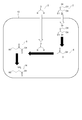
- FIG. 3 is a schematic diagram showing a process in which a microorganism produces 4-hydroxy-2-oxobutyric acid.
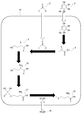
- FIG. 3 is a schematic diagram showing a process in which a microorganism produces 1,3-butanediol.
- FIG. 3 is a schematic diagram showing a process in which a microorganism produces 2,4-dihydroxybutyric acid.
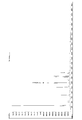
- the schematic diagram which shows the process in which a microorganism produces methionine The figure which shows the result of a gas chromatograph mass spectrometry.
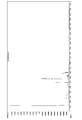
- the figure which shows the result of a gas chromatograph mass spectrometry The figure which shows the result of a gas chromatograph mass spectrometry.
- the figure which shows the result of a gas chromatograph mass spectrometry The figure which shows the result of a gas chromatograph mass spectrometry.
- the method for producing ⁇ -keto acid is A microorganism containing a gene encoding an enzyme that catalyzes an aldol reaction between pyruvic acid and a carbonyl compound, a pyruvic acid-supplying compound selected from pyruvic acid and a saccharide,
- R 101 C (R 102 ) (OH) CH 2 COCOOH (R 101 and R 102 in the general formula (2) are the same groups as R 101 and R 102 in the general formula (1), respectively)
- the above-mentioned microorganism containing a gene encoding an enzyme that catalyzes the aldol reaction between pyruvic acid and a carbonyl compound (hereinafter referred to as the first gene) is also referred to as “ ⁇ -keto acid-producing microorganism”.
- the ⁇ -keto acid-producing microorganism may be a microorganism that naturally has the first gene, or may be a microorganism obtained by transforming a host with the first gene.
- the case where the ⁇ -keto acid-producing microorganism is a transformant will be described as an example.
- Transformant (1.1.1)
- Host any microorganism can be used.
- the host for example, yeast, bacteria, more specifically aerobic bacteria, more specifically coryneform bacteria, Escherichia coli, or Vibrio natriegens can be used.
- the host is a coryneform bacterium.
- Coryneform bacteria are a group of microorganisms defined in Bargeys Manual of Determinative Bacteriology, Vol.8, 599 (1974), and are under normal aerobic conditions. There is no particular limitation as long as it proliferates. Specific examples include Corynebacterium, Brevibacterium, Arthrobacter, Mycobacterium, Micrococcus and the like. Among the coryneform bacteria, Corynebacterium is preferable.
- Corynebacterium examples include Corynebacterium glutamicum, Corynebacterium efficiens, Corynebacterium ammoniagenes, Corynebacterium halotolerance, and Corynebacterium alkano.
- Riticom Corynebacterium alkanolyticum
- Corynebacterium glutamicum is preferable because of its high productivity of ⁇ -keto acid.
- Suitable strains include ATCC13032 strain, ATCC13869 strain, ATCC13058 strain, ATCC13059 strain, ATCC13060 strain, ATCC13232 strain, ATCC13286 strain, ATCC13287 strain, ATCC13655 strain, ATCC13745 strain, ATCC13746 strain, ATCC13761 strain, ATCC14020 strain, ATCC31831 strain, MJ-233. (FERMBP-1497), MJ-233AB-41 (FERMBP-1498) and the like. Among them, ATCC13032 strain and ATCC13869 strain are preferable.
- coryneforms such as Brevibacterium flavum, Brevibacterium lactofermentum, Brevibacterium divaricatum, Corynebacterium lilium. Bacteria are also unified in corynebacterium glutamicum (Corynebacterium glutamicum) [Liebl, W. et al. , And Corynebacterium glutamicum and their distinction by rRNA gene restriction patterns. Int J Sysst Bacteriol. 41: 255-260. (1991), Komagata K. et al., Coryneform bacteria classification, fermentation and industry, 45: 944-963 (1987) ].
- Brevibacterium lactofermentum ATCC13869 strain of old classification Brevibacterium flavum MJ-233 strain (FERM BP-1497), MJ-233AB-41 strain (FERM BP-1498), etc. are also suitable Corynebacterium glutamicum. ..
- Brevibacterium genus include Brevibacterium ammoniagenes (eg ATCC 6872 strain) and the like.
- Arthrobacter examples include Arthrobacter globiformis (eg, ATCC8010 strain, ATCC4336 strain, ATCC21056 strain, ATCC31250 strain, ATCC31738 strain, ATCC35698 strain).
- Mycobacterium bovis for example, ATCC19210 strain, ATCC27289 strain
- Mycobacterium bovis for example, ATCC19210 strain, ATCC27289 strain
- Micrococcus genus bacteria include Micrococcus freudenreichii (for example, No.239 strain (FERM P-13221)), Micrococcus leuteus (for example, No.240 strain (FERM P-13222)), and Micrococcus freudenreichii.
- Micrococcus ureae for example, IAM1010 strain
- Micrococcus roseus for example, IFO3764 strain
- the first gene encodes “an enzyme that catalyzes the aldol reaction between pyruvic acid and a carbonyl compound”.
- Enzyme that catalyzes the aldol reaction between pyruvic acid and a carbonyl compound means purified protein, pyruvic acid (initial substrate concentration 1 mM) and carbonyl compound (initial substrate concentration 1 mM) as an enzyme reaction solution according to the measurement method described below.
- the carbonyl compound in the "enzyme which catalyzes the aldol reaction of pyruvic acid and a carbonyl compound" is, for example, formaldehyde, acetaldehyde, propionaldehyde, butyraldehyde, isobutyraldehyde, valeraldehyde or acetone.
- Butyraldehyde is specifically normal butyraldehyde or isobutyraldehyde.
- Valeraldehyde is specifically normal valeraldehyde.
- the "enzyme that catalyzes the aldol reaction between pyruvic acid and a carbonyl compound” is, for example, aldolase.
- the first gene may be a gene encoding an aldolase exemplified below.
- Examples of the aldolase contained in (a1), (a2), (a3) and (a4) include eda protein.
- the eda protein is from E. coli.
- Examples of the aldolase contained in (a2) include dgoA protein.
- the dgoA protein is from E. coli.
- Examples of the aldolase contained in (a5) include yjhH protein.
- the yjhH protein is from E. coli.
- Examples of the aldolase contained in (a6) include yagE protein.
- the yagE protein is from E. coli.
- Examples of the aldolase contained in (a7) include nanA protein.
- the nanA protein is from E. coli.
- the aldolase contained in (a8) include mhpE protein.
- the mhpE protein is from E. coli.
- the aldolase contained in (a8) and (a10) include hpaI protein.
- the hpaI protein is from E. coli.
- the aldolase contained in (a8) and (a14) include bphI protein.
- the bphI protein is from Burkholderia xenovorans.
- the bphI gene may be introduced into the host in a state linked to the bphJ gene.
- the aldolase contained in (a9) include phdJ protein.
- the phdJ protein is derived from Nocardioides sp.
- the aldolase contained in (a11) include garL protein.
- the garL protein is from E. coli.
- the aldolase contained in (a12) include rhmA protein.
- the rhmA protein is from E. coli.
- Examples of the aldolase contained in (a13) include galC protein.
- the galC protein is from Pseudomonas putida.
- the first gene may encode a class I aldolase or a class II aldolase.
- class I aldolases include eda protein, yjhH protein, yagE protein, dgoA protein, nanA protein, mphE protein and phdJ protein.
- class II aldolases include hpaI protein, garL protein, rhmA protein, galC protein and bphI protein.
- the first gene is selected from the group consisting of: (1-1) A gene comprising a protein consisting of the amino acid sequence set forth in SEQ ID NO: 2 (that is, an hpaI protein derived from Escherichia coli), which encodes a protein that catalyzes an aldol reaction between pyruvic acid and a carbonyl compound, (1-2) A protein comprising an amino acid sequence in which one or several amino acids are deleted, substituted or added in SEQ ID NO: 2, which has an activity of catalyzing the aldol reaction between pyruvic acid and a carbonyl compound.
- the encoding gene (1-3) a gene comprising a protein consisting of the amino acid sequence set forth in SEQ ID NO: 4 (that is, a rhmA protein derived from Escherichia coli), which encodes a protein that catalyzes an aldol reaction between pyruvic acid and a carbonyl compound, (1-4) A protein comprising an amino acid sequence in which one or several amino acids are deleted, substituted or added in SEQ ID NO: 4, which has an activity of catalyzing the aldol reaction between pyruvic acid and a carbonyl compound.
- the encoding gene (1-5) a gene comprising a protein consisting of the amino acid sequence set forth in SEQ ID NO: 6 (that is, a nanA protein derived from Escherichia coli), which encodes a protein that catalyzes an aldol reaction between pyruvic acid and a carbonyl compound, (1-6) A protein consisting of an amino acid sequence in which one or several amino acids are deleted, substituted or added in SEQ ID NO: 6, which has the activity of catalyzing the aldol reaction between pyruvic acid and a carbonyl compound.
- the encoding gene (1-7) A gene comprising a protein consisting of the amino acid sequence of SEQ ID NO: 8 (that is, an eda protein derived from Escherichia coli), which encodes a protein that catalyzes an aldol reaction between pyruvic acid and a carbonyl compound, (1-8) A protein consisting of an amino acid sequence in which one or several amino acids are deleted, substituted or added in SEQ ID NO: 8 and which has an activity to catalyze the aldol reaction between pyruvic acid and a carbonyl compound.
- SEQ ID NO: 8 that is, an eda protein derived from Escherichia coli
- the encoding gene (1-9) a gene comprising a protein consisting of the amino acid sequence set forth in SEQ ID NO: 10 (that is, a yjhH protein derived from Escherichia coli), which encodes a protein that catalyzes the aldol reaction between pyruvic acid and a carbonyl compound, (1-10) A protein consisting of an amino acid sequence in which one or several amino acids are deleted, substituted or added in SEQ ID NO: 10, which has the activity of catalyzing the aldol reaction between pyruvic acid and a carbonyl compound.
- the encoding gene (1-11) A gene comprising a protein consisting of the amino acid sequence set forth in SEQ ID NO: 12 (that is, a dgoA protein derived from Escherichia coli), which encodes a protein that catalyzes an aldol reaction between pyruvic acid and a carbonyl compound, (1-12) A protein consisting of an amino acid sequence in which one or several amino acids are deleted, substituted or added in SEQ ID NO: 12, which has an activity to catalyze the aldol reaction between pyruvic acid and a carbonyl compound.
- the encoding gene (1-13) a gene comprising a protein consisting of the amino acid sequence set forth in SEQ ID NO: 14 (that is, a mhpE protein derived from Escherichia coli), which encodes a protein that catalyzes an aldol reaction between pyruvic acid and a carbonyl compound, (1-14) A protein having an amino acid sequence in which one or several amino acids are deleted, substituted or added in SEQ ID NO: 14, which has an activity of catalyzing the aldol reaction of pyruvic acid and a carbonyl compound.
- the encoding gene (1-15) A gene comprising a protein consisting of the amino acid sequence of SEQ ID NO: 16 (that is, a GarL protein derived from Escherichia coli), which encodes a protein that catalyzes an aldol reaction between pyruvic acid and a carbonyl compound, (1-16) A protein consisting of an amino acid sequence in which one or several amino acids are deleted, substituted or added in SEQ ID NO: 16, which protein has an activity to catalyze the aldol reaction between pyruvic acid and a carbonyl compound.
- SEQ ID NO: 16 that is, a GarL protein derived from Escherichia coli
- the encoding gene (1-17) a protein comprising the amino acid sequence of SEQ ID NO: 18 (that is, a GalC protein derived from Pseudomonas putida), the gene encoding a protein that catalyzes an aldol reaction between pyruvic acid and a carbonyl compound, (1-18) A protein consisting of an amino acid sequence in which one or several amino acids are deleted, substituted or added in SEQ ID NO: 18, which has the activity of catalyzing the aldol reaction between pyruvic acid and a carbonyl compound.
- the encoding gene (1-19) A gene comprising a protein consisting of the amino acid sequence set forth in SEQ ID NO: 20 (that is, a phdJ protein derived from Nocardioides genus), which encodes a protein that catalyzes the aldol reaction between pyruvic acid and a carbonyl compound.
- the encoding gene (1-21) a gene comprising a protein consisting of the amino acid sequence set forth in SEQ ID NO: 22 (that is, a bphI protein derived from Burkholderia zenovorans), which encodes a protein that catalyzes an aldol reaction between pyruvic acid and a carbonyl compound, And (1-22) a protein consisting of an amino acid sequence in which one or several amino acids are deleted, substituted or added in SEQ ID NO: 22, which has an activity to catalyze the aldol reaction between pyruvic acid and a carbonyl compound
- SEQ ID NO: 22 that is, a bphI protein derived from Burkholderia zenovorans
- amino acid residues in the protein three-dimensional structure or the kind of amino acid residue , But preferably 1 to 60, more preferably 1 to 30, further preferably 1 to 15, further preferably 1 to 10, and further preferably 1 to 5.
- a conservative mutation is a polar amino acid between Phe, Trp, and Tyr when the substitution site is an aromatic amino acid, and a Leu, Ile, and Val when the substitution site is a hydrophobic amino acid.
- Gln and Asn in the case of a basic amino acid, between Lys, Arg, His, in the case of an acidic amino acid, between Asp and Glu, in the case of an amino acid having a hydroxyl group.
- substitution considered as conservative substitution, specifically, substitution from Ala to Ser or Thr, substitution from Arg to Gln, His or Lys, substitution from Asn to Glu, Gln, Lys, His or Asp, Asp to Asn, Glu or Gln substitution, Cys to Ser or Ala substitution, Gln to Asn, Glu, Lys, His, Asp or Arg substitution, Glu to Gly, Asn, Gln, Lys or Asp substitution Substitution, Gly to Pro, His to Asn, Lys, Gln, Arg or Tyr, Ile to Leu, Met, Val or Phe, Leu to Ile, Met, Val or Phe, Lys to Asn, Glu, Gln, His or Arg substitution, Met to Ile, Leu, Val or Phe substitution, Phe to Trp, Tyr, Met, Ile or Leu substitution, Ser to Thr or Ala Substitution, Thr to Ser or Ala, Trp to Phe or Tyr, Tyr to His, Phe or Trp,
- a gene encoding a protein having an amino acid sequence in which one or several amino acids are deleted, substituted or added in SEQ ID NO: 2 and having an activity of catalyzing the aldol reaction between pyruvic acid and a carbonyl compound Means “80% or more, preferably 90% or more, more preferably 95% or more, still more preferably 97% or more, still more preferably 98% or more, still more preferably 99% with respect to the amino acid sequence of SEQ ID NO: 2.
- a gene having a homology of at least% and coding for a protein having an activity of catalyzing the aldol reaction between pyruvic acid and a carbonyl compound may be used.
- a gene encoding a protein having an amino acid sequence in which one or several amino acids are deleted, substituted or added in SEQ ID NO: 4 and having an activity of catalyzing an aldol reaction between pyruvic acid and a carbonyl compound Means “80% or more, preferably 90% or more, more preferably 95% or more, further preferably 97% or more, further preferably 98% or more, further preferably 99% based on the amino acid sequence of SEQ ID NO: 4.
- a gene having a homology of at least% and coding for a protein having an activity of catalyzing the aldol reaction between pyruvic acid and a carbonyl compound may be used.
- a gene comprising a protein consisting of an amino acid sequence in which one or several amino acids are deleted, substituted or added in SEQ ID NO: 6, which encodes a protein having an activity of catalyzing the aldol reaction between pyruvic acid and a carbonyl compound "Has 80% or more, preferably 95% or more, more preferably 97% or more, still more preferably 98% or more, still more preferably 99% or more homology to the amino acid sequence of SEQ ID NO: 6. It may be a "gene encoding a protein having an amino acid sequence and having an activity of catalyzing the aldol reaction between pyruvic acid and a carbonyl compound".
- a gene which encodes a protein having an amino acid sequence in which one or several amino acids are deleted, substituted or added in SEQ ID NO: 8 and having an activity of catalyzing the aldol reaction between pyruvic acid and a carbonyl compound "Has 80% or more, preferably 95% or more, more preferably 97% or more, still more preferably 98% or more, still more preferably 99% or more homology to the amino acid sequence of SEQ ID NO: 8. It may be a "gene encoding a protein having an amino acid sequence and having an activity of catalyzing the aldol reaction between pyruvic acid and a carbonyl compound".
- a gene which encodes a protein having an amino acid sequence in which one or several amino acids are deleted, substituted or added in SEQ ID NO: 10 and having an activity of catalyzing the aldol reaction between pyruvic acid and a carbonyl compound "Has 80% or more, preferably 95% or more, more preferably 97% or more, still more preferably 98% or more, still more preferably 99% or more homology to the amino acid sequence of SEQ ID NO: 10. It may be a "gene encoding a protein having an amino acid sequence and having an activity of catalyzing the aldol reaction between pyruvic acid and a carbonyl compound".
- Gene encoding a protein having an amino acid sequence in which one or several amino acids are deleted, substituted or added in SEQ ID NO: 12 and having an activity of catalyzing the aldol reaction between pyruvic acid and a carbonyl compound "Has 80% or more, preferably 95% or more, more preferably 97% or more, still more preferably 98% or more, still more preferably 99% or more homology to the amino acid sequence of SEQ ID NO: 12. It may be a "gene encoding a protein having an amino acid sequence and having an activity of catalyzing the aldol reaction between pyruvic acid and a carbonyl compound”.
- a gene which encodes a protein having an amino acid sequence in which one or several amino acids are deleted, substituted or added in SEQ ID NO: 14 and having an activity of catalyzing an aldol reaction between pyruvic acid and a carbonyl compound "Has 80% or more, preferably 95% or more, more preferably 97% or more, still more preferably 98% or more, still more preferably 99% or more homology to the amino acid sequence of SEQ ID NO: 14. It may be a "gene encoding a protein having an amino acid sequence and having an activity of catalyzing the aldol reaction between pyruvic acid and a carbonyl compound".
- Gene encoding a protein having an amino acid sequence in which one or several amino acids are deleted, substituted or added in SEQ ID NO: 16 and having an activity of catalyzing the aldol reaction between pyruvic acid and a carbonyl compound "Has 80% or more, preferably 95% or more, more preferably 97% or more, still more preferably 98% or more, still more preferably 99% or more homology to the amino acid sequence of SEQ ID NO: 16. It may be a "gene encoding a protein having an amino acid sequence and having an activity of catalyzing the aldol reaction between pyruvic acid and a carbonyl compound”.
- a gene encoding a protein having an amino acid sequence in which one or several amino acids are deleted, substituted or added in SEQ ID NO: 18 and having an activity of catalyzing the aldol reaction between pyruvic acid and a carbonyl compound "Has 80% or more, preferably 95% or more, more preferably 97% or more, still more preferably 98% or more, still more preferably 99% or more homology to the amino acid sequence of SEQ ID NO: 18. It may be a "gene encoding a protein having an amino acid sequence and having an activity of catalyzing the aldol reaction between pyruvic acid and a carbonyl compound".
- a gene comprising a protein consisting of an amino acid sequence in which one or several amino acids are deleted, substituted or added in SEQ ID NO: 20, which encodes a protein having an activity to catalyze the aldol reaction between pyruvic acid and a carbonyl compound "Has 80% or more, preferably 95% or more, more preferably 97% or more, still more preferably 98% or more, still more preferably 99% or more homology to the amino acid sequence of SEQ ID NO: 20. It may be a "gene encoding a protein having an amino acid sequence and having an activity of catalyzing the aldol reaction between pyruvic acid and a carbonyl compound".
- Gene encoding a protein having an amino acid sequence in which one or several amino acids are deleted, substituted or added in SEQ ID NO: 22 and having an activity of catalyzing the aldol reaction between pyruvic acid and a carbonyl compound “Has 80% or more, preferably 95% or more, more preferably 97% or more, still more preferably 98% or more, still more preferably 99% or more homology to the amino acid sequence of SEQ ID NO: 22. It may be a "gene encoding a protein having an amino acid sequence and having an activity of catalyzing the aldol reaction between pyruvic acid and a carbonyl compound".
- the E. coli-derived hpaI protein UniprotKB accession number is, for example, Q47098
- the E. coli-derived rhmA protein UniprotKB accession number is, for example, P76469-derived E. coli-derived nanA protein, UniprotKBLab0Lb, pAb6abAsion, etc.
- the eda protein UniprotKB accession number is, for example, P0A955, the E. coli-derived yjhH protein UniprotKB accession number is, for example, P39359, and the E. coli-derived dgoA protein is UniprotKB accession number6, number Eq.
- the conventional mhpE protein UniprotKB accession number is, for example, P51020
- the E. coli-derived garL protein UniprotKB accession number is, for example, P23522
- the Pseudomonas putida-derived galC protein is Uniprothion, for example, 88 urnJonce ox
- Qb is QJ access.
- the first gene is An hpaI gene derived from Escherichia coli, which comprises the nucleotide sequence of SEQ ID NO: 1, An Escherichia coli-derived rhmA gene consisting of the nucleotide sequence of SEQ ID NO: 3, A nanA gene derived from Escherichia coli, which comprises the nucleotide sequence of SEQ ID NO: 5; An eda gene derived from Escherichia coli, which comprises the nucleotide sequence of SEQ ID NO: 7, A yjhH gene derived from Escherichia coli, which comprises the nucleotide sequence of SEQ ID NO: 9; A dgoA gene derived from Escherichia coli, which comprises the nucleotide sequence of SEQ ID NO: 11, An Escherichia coli-derived mhpE gene consisting of the nucleotide sequence of SEQ ID NO: 13, A GarL gene derived from Escherichia
- SEQ ID Nos: 1, 3, 5, 7, 9, 11, 13, 15, 17, 19 and 21 and SEQ ID Nos: 2, 4, 6, 8, 10, 12, 14, 16, 18, 20 The amino acid sequences described in and 22 are as follows.
- PSI-Blast or PHI-Blast can be used to perform an iterated search that detects positional relationships (Id.) Between molecules and relationships between molecules that share a common pattern.
- BLAST Altschul et al.
- Gapped BLAST the default parameters of each program can be used. See http://www.ncbi.nlm.nih.gov.
- the activity of catalyzing the aldol reaction between pyruvic acid and a carbonyl compound is carried out, for example, by carrying out the enzyme reaction in 100 mM HEPES-NaOH buffer (pH 8.0) containing 2 mM magnesium chloride at 25 ° C. It can be calculated by measuring the initial production rate of the aldol compound produced from the carbonyl compound and the carbonyl compound. The production rate of the aldol compound can be calculated, for example, from the time change of the concentration of the aldol compound itself.
- the activity of forming 1 ⁇ mol of the aldol compound in 1 minute at 25 ° C. is defined as 1 unit.
- a gene comprising a protein consisting of an amino acid sequence in which one or several amino acids are deleted, substituted or added in SEQ ID NO: 2 and having an activity of catalyzing the aldol reaction between pyruvic acid and a carbonyl compound can be selected from a DNA library of another species by PCR or hybridization using, for example, a primer or probe designed according to the information based on the nucleotide sequence of SEQ ID NO: 2. .. The gene thus selected encodes a protein having a high probability of catalyzing the aldol reaction between pyruvic acid and a carbonyl compound.
- a gene consisting of a protein consisting of an amino acid sequence in which one or several amino acids are deleted, substituted or added in SEQ ID NO: 4, which encodes a protein having an activity of catalyzing the aldol reaction between pyruvic acid and a carbonyl compound (The “rhmA gene mutant)” can be selected from a DNA library of another organism species by a method similar to the above method for selecting an hpaI gene mutant.
- a gene comprising a protein consisting of an amino acid sequence in which one or several amino acids are deleted, substituted or added in SEQ ID NO: 6, which encodes a protein having an activity of catalyzing the aldol reaction between pyruvic acid and a carbonyl compound can be selected from a DNA library of another species by a method similar to the above method for selecting an hpaI gene mutant.
- a gene comprising a protein consisting of an amino acid sequence in which one or several amino acids are deleted, substituted or added in SEQ ID NO: 8 and having an activity of catalyzing the aldol reaction between pyruvic acid and a carbonyl compound can be selected from a DNA library of another species by a method similar to the above method for selecting an hpaI gene mutant.
- a gene comprising a protein consisting of an amino acid sequence in which one or several amino acids are deleted, substituted or added in SEQ ID NO: 10 and having an activity of catalyzing the aldol reaction between pyruvic acid and a carbonyl compound can be selected from a DNA library of another species by a method similar to the above method for selecting an hpaI gene mutant.
- a gene comprising a protein consisting of an amino acid sequence in which one or several amino acids are deleted, substituted or added in SEQ ID NO: 12 and having an activity of catalyzing the aldol reaction between pyruvic acid and a carbonyl compound can be selected from a DNA library of another species by a method similar to the above method for selecting an hpaI gene mutant.
- a gene comprising a protein consisting of an amino acid sequence in which one or several amino acids are deleted, substituted or added in SEQ ID NO: 14 and having an activity of catalyzing the aldol reaction between pyruvic acid and a carbonyl compound can be selected from a DNA library of another species by a method similar to the above method for selecting an hpaI gene mutant.
- a gene comprising a protein having an amino acid sequence in which one or several amino acids are deleted, substituted or added in SEQ ID NO: 16 and which has an activity of catalyzing the aldol reaction between pyruvic acid and a carbonyl compound can be selected from a DNA library of another species by a method similar to the above method for selecting an hpaI gene mutant.
- a gene comprising a protein consisting of an amino acid sequence in which one or several amino acids are deleted, substituted or added in SEQ ID NO: 18 and which has an activity of catalyzing the aldol reaction between pyruvic acid and a carbonyl compound can be selected from a DNA library of another species by a method similar to the above method for selecting an hpaI gene mutant.
- a gene comprising a protein having an amino acid sequence in which one or several amino acids are deleted, substituted or added in SEQ ID NO: 20 and having an activity of catalyzing the aldol reaction between pyruvic acid and a carbonyl compound can be selected from a DNA library of another organism species by a method similar to the above method for selecting an hpaI gene mutant.
- a gene consisting of a protein consisting of an amino acid sequence in which one or several amino acids are deleted, substituted or added in SEQ ID NO: 22, which encodes a protein having an activity of catalyzing the aldol reaction between pyruvic acid and a carbonyl compound (bphI gene mutant)” can be selected from a DNA library of another species by a method similar to the above method for selecting an hpaI gene mutant.
- the first gene can be incorporated into an appropriate plasmid vector for transformation.
- the plasmid vector a known plasmid vector can be used depending on the host.
- the plasmid vector may contain a gene that controls the autonomous replication function in the host, or may contain a base sequence necessary for integration into the chromosome of the host.
- a transformant can be prepared using the obtained recombinant vector.
- Transformation method a known method can be used without limitation.
- known methods include, for example, calcium chloride / rubidium chloride method, calcium phosphate method, DEAE-dextran mediated transfection, electric pulse method and the like.
- the obtained transformant may be cultured immediately after transformation using a medium usually used for culturing the transformant.
- the culture temperature may be any temperature as long as it is a temperature suitable for the growth of transformants.
- the pH of the medium may be any pH as long as it is a pH suitable for the growth of transformants.
- the pH of the medium can be adjusted by a known method.
- the culture time may be any time as long as it is sufficient for the transformant to grow.
- the first gene when a transformant is produced using a recombinant vector as described above, the first gene may be integrated into the host chromosome or, alternatively, in the form of the recombinant vector in the host cytoplasm. It may exist.
- the host may be a wild strain, a mutant strain thereof, or an artificial gene recombinant.
- the host may be a gene-disrupted strain or a gene-deleted strain obtained by disrupting or deleting at least one of the following genes originally possessed by the wild-type coryneform bacterium.
- lactate dehydrogenase (ldhA) gene phosphoenolpyruvate carboxylase (ppc) gene, pyruvate carboxylase (pyc) gene, pyruvate dehydrogenase (pyruvate dehydrogenase, For example, poxB) gene, glutamate-pyruvate aminotransferase (eg, alaA) gene, acetolactate synthase (eg, ilvB) gene, N-succinyldiene Minopimereto (N-succinyldiaminopimelate aminotransferase, for example Cg0931) gene, S- (hydroxymethyl) Miko thiol dehydrogenase (S- (hydroxymethyl) mycothiol dehydrogenase, e.g., adhE) gene, and acetaldehyde dehydrogenase (acetaldehyde Dehydrogenase, e.g. ald
- Construction of a gene-disrupted strain or a gene-deficient strain can be performed by a known method.
- the encoding gene (1-3) a gene comprising a protein consisting of the amino acid sequence set forth in SEQ ID NO: 4, which encodes a protein that catalyzes the aldol reaction between pyruvic acid and a carbonyl compound, (1-4) A protein comprising an amino acid sequence in which one or several amino acids are deleted, substituted or added in SEQ ID NO: 4, which has an activity of catalyzing the aldol reaction between pyruvic acid and a carbonyl compound.
- the encoding gene (1-5) a protein consisting of the amino acid sequence set forth in SEQ ID NO: 6, which encodes a protein that catalyzes an aldol reaction between pyruvic acid and a carbonyl compound; and (1-6) 1 in SEQ ID NO: 6 or A gene encoding a protein having an amino acid sequence in which several amino acids have been deleted, substituted or added, the protein having an activity of catalyzing the aldol reaction between pyruvic acid and a carbonyl compound; Coryneform bacteria including can be used.
- An ⁇ -keto acid-producing microorganism (eg, the above-mentioned transformant) can be cultured in the presence of a pyruvate-supplying compound and a carbonyl compound to produce ⁇ -keto acid.
- a pyruvate-supplying compound and a carbonyl compound can be cultured in the presence of a pyruvate-supplying compound and a carbonyl compound to produce ⁇ -keto acid.
- “Culturing in the presence of a pyruvic acid-supplying compound and a carbonyl compound” can be carried out by culturing in a culture medium containing the pyruvic acid-supplying compound and the carbonyl compound.
- culturing in the presence of a pyruvic acid-supplying compound and a carbonyl compound can be carried out by culturing in a culture medium containing the pyruvic acid-supplying compound and the carbonyl compound.
- culturing under aerobic conditions means culturing under conditions in which oxygen is supplied to the culture medium in an amount sufficient for the growth of transformants during the culturing period.
- Culturing under aerobic conditions can be performed by a known method.
- Culturing under aerobic conditions can be realized by supplying oxygen to the culture medium by, for example, aeration, stirring, shaking, or a combination thereof. More specifically, the culture under aerobic conditions can be realized by shaking culture or deep aeration stirring culture.
- the growth culture and the subsequent production culture can be performed as follows, for example.
- a container containing the culture solution used for the growth culture hereinafter, referred to as the growth culture solution
- the transformant suspended in the growth culture solution is centrifuged to transform the vessel.
- the body can be precipitated.
- the culture medium for growth is removed from the container, and the isolated transformant is suspended in a culture medium used for production culture (hereinafter referred to as the culture medium for production) to perform production culture.
- the pyruvic acid-supplying compound and the carbonyl compound are added to the growth medium containing the transformant, and the aerobic condition is changed to anaerobic or microaerobic.
- the production culture can be carried out without changing the culture solution by changing the biological conditions. In this way, the multiplication culture and the production culture can be continuously performed.
- culture means maintaining a transformant under specific controlled conditions suitable for growth of the transformant.
- the transformant may or may not grow during the culture period. Therefore, the term “culture” can be referred to as "incubation”.
- Proliferation culture medium As the proliferation culture medium, a medium usually used for culturing transformants, for example, a known medium containing a carbon source, a nitrogen source, inorganic salts and the like can be used. it can.
- the culture temperature in the growth culture may be any temperature as long as it is a temperature suitable for growing the transformant.
- the pH of the culture medium for growth may be any pH as long as it is a pH suitable for the growth of transformants.
- the pH of the culture medium for growth can be adjusted by a known method.
- the culture time in the growth culture may be any time as long as it is a time sufficient for the transformant to grow.
- Culture medium for production As the culture medium for production, a culture medium containing a pyruvic acid-supplying compound, a carbonyl compound, and other necessary components can be used. As other necessary components, for example, inorganic salts, carbon sources other than sugars, or nitrogen sources can be used.
- the concentration of each component in the culture medium described herein refers to the final concentration in the culture medium at the time when each component is added.
- pyruvic acid-supplying compound a compound selected from pyruvic acid and saccharides can be used.
- the pyruvic acid-supplying compound may be pyruvic acid itself or a saccharide that is converted into pyruvic acid in the living body of a microorganism.
- pyruvic acid-supplying compound pyruvic acid, saccharides, or a combination thereof can be used.
- any saccharide can be used as long as it can be taken into the living body by the transformant and can be converted into pyruvic acid.
- the saccharides monosaccharides such as glucose, fructose, mannose, xylose, arabinose and galactose; disaccharides such as sucrose, maltose, lactose, cellobiose, xylobiose and trehalose; polysaccharides such as starch; molasses Etc. Of these, monosaccharides are preferable, and fructose and glucose are more preferable.
- a saccharide containing glucose as a constituent monosaccharide specifically, a disaccharide such as sucrose, an oligosaccharide containing glucose as a constituent monosaccharide, and a polysaccharide containing glucose as a constituent monosaccharide are also preferable.
- the saccharides may be used alone or in combination of two or more.
- sugars are saccharified liquids obtained by saccharifying non-edible agricultural wastes such as rice straw, bagasse, and corn stover, and energy crops such as switchgrass, napiergrass, and miscanus with saccharifying enzymes.
- the concentration of the pyruvic acid-supplying compound in the production medium can be as high as possible within the range that does not inhibit the production of ⁇ -keto acid.
- the concentration of the pyruvic acid-supplying compound in the production medium is preferably within the range of 0.1-40 (w / v)%, more preferably within the range of 1-20 (w / v)%. preferable. Further, in accordance with the decrease in the pyruvic acid-supplying compound associated with the production of ⁇ -keto acid, the addition of the pyruvic acid-supplying compound can be performed.
- R 101 C (O) R 102 (Wherein R 101 and R 102 are, independently of each other, hydrogen or an alkyl group having 1 to 5 carbon atoms)
- a carbonyl compound represented by can be used.
- R 101 is hydrogen or an alkyl group having 1 to 5 carbon atoms
- R 102 is hydrogen.
- R 101 is a methyl group
- R 102 is an alkyl group having 1 to 5 carbon atoms. You can
- a carbonyl compound in which R 101 is hydrogen and R 102 is hydrogen ie formaldehyde
- a carbonyl compound in which R 101 is a methyl group and R 102 is hydrogen ie, acetaldehyde
- a carbonyl compound in which R 101 is an ethyl group and R 102 is hydrogen ie, propionaldehyde
- a carbonyl compound in which R 101 is a propyl group and R 102 is hydrogen that is, butyraldehyde
- a carbonyl compound in which R 101 is a normal propyl group and R 102 is hydrogen That is, normal butyraldehyde
- a carbonyl compound in which R 101 is an isopropyl group and R 102 is hydrogen ie, isobutyraldehyde
- R 101 is a pentyl group, and R 102 is hydrogen.
- a carbonyl compound ie, valeraldehyde
- a carbonyl compound in which R 101 is a normal pentyl group and R 102 is hydrogen ie, normal valeraldehyde
- R 101 and R 102 in the general formula (1) are both methyl groups (that is, acetone) can also be used.
- the carbonyl compounds may be used alone or in combination of two or more.
- the concentration of the carbonyl compound in the culture broth for production is preferably in the range of 0.001 to 10 (w / v)%, more preferably in the range of 0.01 to 1 (w / v)%. preferable. Further, additional addition of the carbonyl compound can be carried out according to the decrease of the carbonyl compound accompanying the production of ⁇ -keto acid.
- inorganic salts can be added.
- metal salts such as phosphates, sulfates, magnesium, potassium, manganese, iron and zinc can be used.
- the inorganic salt one kind may be used, or two or more kinds may be mixed and used.
- the concentration of the inorganic salt in the culture broth for production varies depending on the inorganic salt used, but is usually about 0.01 to 1 (w / v)%.
- carbon sources other than sugars can be added if necessary.
- sugar alcohols such as mannitol, sorbitol, xylitol, glycerol and glycerin
- organic acids such as acetic acid, fermentation, lactic acid, fumaric acid, maleic acid and gluconic acid
- carbonization such as normal paraffin Hydrogen or the like can be used.
- a nitrogen source can be added.
- inorganic or organic ammonium salts such as ammonium chloride, ammonium sulfate, ammonium nitrate and ammonium acetate; urea; aqueous ammonia; nitrates such as sodium nitrate and potassium nitrate can be used.
- corn steep liquor; meat extract; yeast extract; soybean hydrolysate; protein hydrolysate such as peptone, NZ-amine or casein hydrolysate; nitrogen-containing organic compounds such as amino acids can also be used.
- the nitrogen source one kind may be used, or two or more kinds may be mixed and used.
- the concentration of the nitrogen source in the culture broth for production varies depending on the nitrogen compound used, but is usually about 0.1 to 10 (w / v)%.
- vitamins can be added if necessary.
- vitamins include biotin, thiamine (vitamin B1), pyridoxine (vitamin B6), pantothenic acid, inositol, nicotinic acid and the like.
- Specific culture medium for production contains glucose, formaldehyde, potassium dihydrogen phosphate, dipotassium hydrogen phosphate, magnesium sulfate, iron (II) sulfate and manganese (II) sulfate, and has a pH of 6.0.
- a medium can be used.
- Specific production broths include pyruvic acid, formaldehyde, potassium dihydrogen phosphate, dipotassium hydrogen phosphate, magnesium sulfate, iron (II) sulfate, manganese (II) sulfate and 4-morpholinopropanesulfonic acid.
- a medium can also be used.
- a culture medium obtained by adding a pyruvic acid-supplying compound and a carbonyl compound to a base culture medium having the same composition as the growth culture medium used in the growth culture can also be used.
- the pyruvic acid-supplying compound is present in a sufficient amount in the above-mentioned base culture solution, the pyruvic acid-supplying compound need not be added.
- the culture temperature in the production culture may be any temperature as long as it is a temperature suitable for producing ⁇ -keto acid.
- the culture temperature in the production culture is preferably about 20 to 50 ° C, more preferably about 25 to 47 ° C. Within the above temperature range, ⁇ -keto acid can be efficiently produced.
- the pH of the culture medium for production may be any pH as long as it is a pH suitable for producing ⁇ -keto acid.
- the pH of the production medium is preferably maintained within the range of about 6-8.
- the pH of the culture medium for production should be adjusted using an inorganic or organic acid; an alkaline solution such as an aqueous potassium hydroxide solution; urea; calcium carbonate; ammonia; a pH buffer solution containing 4-morpholinopropanesulfonic acid, etc. You can During production culture, the pH of the production culture solution can be appropriately adjusted as necessary.
- the culture time in the production culture may be any time as long as it is a time sufficient for the transformant to produce ⁇ -keto acid.
- the culture time in the production culture is preferably about 3 hours to 7 days, more preferably about 1 to 3 days.
- the production culture may be performed under aerobic conditions, and may be performed under anaerobic conditions or microaerobic conditions.
- Production culture is preferably carried out under anaerobic or microaerobic conditions.
- the transformant When the transformant is cultured under anaerobic or microaerobic conditions, the transformant does not substantially grow, and ⁇ -keto acid can be produced more efficiently.
- “Anaerobic conditions or microaerobic conditions” refer to conditions in which the dissolved oxygen concentration in the culture medium for production is within the range of 0 to 2 ppm, for example.
- the "anaerobic condition or microaerobic condition” preferably refers to a condition in which the dissolved oxygen concentration in the production medium is within the range of 0 to 1 ppm, more preferably the dissolved oxygen in the production medium. It refers to the condition that the concentration is within the range of 0 to 0.5 ppm.
- the dissolved oxygen concentration in the culture solution can be measured using, for example, a dissolved oxygen meter.
- anaerobic conditions is a technical term that refers to conditions under which there are no electron acceptors such as dissolved oxygen and oxides such as nitric acid.
- these electron acceptors are not sufficient, or due to the nature of the electron acceptors, the transformant does not grow, and the carbon source supplied by that amount is for the production of ⁇ -keto acid. If it is used and its production efficiency can be improved, it is not necessary to adopt the above strict conditions.
- the production culture solution may contain dissolved oxygen and oxides such as nitric acid.
- An electron acceptor may be present.
- the expression "anaerobic or microaerobic conditions" as used herein also includes such conditions.
- Anaerobic conditions and microaerobic conditions can be realized by, for example, not passing gas containing oxygen, because oxygen supplied from the gas-liquid interface becomes insufficient for the growth of transformants.
- it can be realized by aerating an inert gas, specifically nitrogen gas, into the culture medium for production.
- it can be realized by sealing the container used for production culture.
- the production culture is preferably carried out in a state in which the transformant is suspended at high density in the culture medium for production. By culturing the transformant in such a state, it is possible to more efficiently produce ⁇ -keto acid.
- the “state in which the transformant is suspended in the culture medium for production at a high density” means, for example, that the transformant is contained in the culture medium for production and the weight% of wet cells of the transformant is 1 to 50 (w. / V) indicates a state of being suspended so as to fall within the range of%.
- the “state in which the transformant is suspended in the culture medium for production at a high density” is preferably such that the transformant is contained in the culture medium for production and the weight% of wet cells of the transformant is 3 to 30 ( w / v) It refers to the state of being suspended so as to be in the range of%.
- the production culture is carried out under a condition of anaerobic or microaerobic conditions in which the transformant is suspended in the culture medium for production at a high density.
- R 101 C (O) R 102 (Wherein R 101 and R 102 are, independently of each other, hydrogen or an alkyl group having 1 to 5 carbon atoms)
- R 101 C (R 102 ) (OH) CH 2 COCOOH R 101 and R 102 in the general formula (2) are the same groups as R 101 and R 102 in the general formula (1), respectively)
- the ⁇ -keto acid represented by can be produced.
- R 101 when a carbonyl compound in which R 101 is hydrogen and R 102 is hydrogen is used, in the general formula (2), R 101 is hydrogen. , And R 102 is hydrogen, an ⁇ -keto acid (ie, 4-hydroxy-2-oxobutyric acid) can be produced.
- R 101 when a carbonyl compound in which R 101 is a methyl group and R 102 is hydrogen is used, in the general formula (2), R 101 is a methyl group, and R is An ⁇ -keto acid where 102 is hydrogen (ie 4-hydroxy-2-oxovaleric acid) can be produced.
- R 101 when a carbonyl compound in which R 101 is a normal propyl group and R 102 is hydrogen is used, in the general formula (2), R 101 is a normal propyl group. It is possible to produce an ⁇ -keto acid which is a group and R 102 is hydrogen (ie 4-hydroxy-2-oxo-normal heptanoic acid). Further, specifically, in the general formula (1), when a carbonyl compound in which R 101 is an isopropyl group and R 102 is hydrogen is used, in the general formula (2), R 101 is isopropyl. It is possible to produce an ⁇ -keto acid (ie 4-hydroxy-2-oxoisoenanthic acid) which is a group and R 102 is hydrogen.
- R 101 when a carbonyl compound in which R 101 is a pentyl group and R 102 is hydrogen is used, in the general formula (2), R 101 is a pentyl group, and R An ⁇ -keto acid where 102 is hydrogen (ie 4-hydroxy-2-oxocaprylic acid) can be produced.
- R 101 when a carbonyl compound in which R 101 is a normal pentyl group and R 102 is hydrogen is used, in the general formula (2), R 101 is normal pentyl. It is possible to produce an ⁇ -keto acid which is a group and R 102 is hydrogen (ie 4-hydroxy-2-oxonormalcaprylic acid).
- the above ⁇ -keto acid can be recovered by recovering the production culture medium, but it is also possible to separate and purify the ⁇ -keto acid from the production culture medium by a known method.
- known methods include a crystallization method, a chromatography method, an ion exchange resin method, an activated carbon adsorption elution method, a solvent extraction method and the like.
- ⁇ -keto acids when multiple types of carbonyl compounds are used, multiple types of ⁇ -keto acids are produced in the culture medium. Plural kinds of ⁇ -keto acids can be separated from each other by crystallization or chromatography.
- the ⁇ -keto acid-producing microorganism 1 takes in glucose 2 and formaldehyde 3. Glucose 2 is then converted to pyruvate 4 through glycolysis. Next, pyruvic acid 4 and formaldehyde 3 are converted into 4-hydroxy-2-oxobutyric acid 5 by the “enzyme that catalyzes the aldol reaction between pyruvic acid and an aldehyde” encoded by the first gene. As described above, 4-hydroxy-2-oxobutyric acid is produced.
- the production method described above finds a production process in which a microorganism having a specific gene is cultured in the presence of a carbonyl compound to obtain an intermediate which is a key to the synthesis of useful substances such as amino acids. It was made. In general, carbonyl compounds are harmful to the growth of microorganisms, so it was surprising that useful compounds were obtained in the presence thereof. In addition, at this time, since the carbonyl compound is incorporated into the microbial metabolic system, an intermediate that is not produced by a normal microbial metabolic system was obtained, which indicates that future needs for producing various compounds from biologically-derived raw materials are obtained. Expected as a method to satisfy In fact, as will be described later in the present specification, the development of various useful substances through this intermediate shows some of the possibility of producing various compounds by the technique of the present invention.
- the method for producing 1,3-diol is The following genes: (A) a first gene encoding an enzyme that catalyzes an aldol reaction between pyruvic acid and a carbonyl compound, A microorganism containing a second gene encoding an enzyme that catalyzes a decarboxylation reaction of ⁇ -keto acid and (c) a third gene encoding an enzyme that catalyzes a reduction reaction of an aldehyde is prepared from pyruvic acid and a saccharide.
- a selected pyruvic acid-supplying compound The following general formula (3): R 103 C (O) R 104 (Wherein R 103 and R 104 , independently of each other, are hydrogen or an alkyl group having 1 to 5 carbon atoms, provided that when R 103 is hydrogen, R 104 is not hydrogen.) Cultured in the presence of a carbonyl compound represented by The following general formula (4): R 103 C (R 104 ) (OH) CH 2 CH 2 OH (R 103 and R 104 in the general formula (4) are the same groups as R 103 and R 104 in the general formula (3), respectively) To produce a 1,3-diol represented by
- the above-mentioned microorganism containing the first, second and third genes is also referred to as "1,3-diol producing microorganism".
- the 1,3-diol producing microorganism may be a microorganism that naturally has the first, second and third genes, or can be obtained by transforming a host with the first, second and third genes. It may be a microorganism.
- the 1,3-diol producing microorganism is a transformant will be described as an example.
- the second gene encodes “an enzyme that catalyzes the decarboxylation reaction of ⁇ -keto acid”.
- “An enzyme that catalyzes the decarboxylation reaction of ⁇ -keto acid” means that an enzyme reaction solution containing purified protein and ⁇ -keto acid (initial substrate concentration 1 mM) is used as the enzyme reaction solution according to the measurement method described below.
- the second gene encodes, for example, an enzyme that catalyzes the decarboxylation reaction of ⁇ -keto acid obtained by the aldol reaction catalyzed by the protein encoded by the first gene.
- the ⁇ -keto acid in the “enzyme that catalyzes the decarboxylation reaction of ⁇ -keto acid” is represented by the general formula (2) described in the section “(1.) Method for producing ⁇ -keto acid”, for example. ⁇ -keto acid.
- the “enzyme that catalyzes the decarboxylation reaction of ⁇ -keto acid” is, for example, decarboxylase.
- the second gene may be a gene encoding a decarboxylase exemplified below.
- Examples of the decarboxylase contained in (b1) include pdc protein.
- the pdc protein is from Zymomonas mobilis.
- Examples of the decarboxylase contained in (b2) include mdlC protein.
- the mdlC protein is from Pseudomonas putida.
- Examples of the decarboxylase contained in (b3) include kivD protein.
- the kivD protein is from Lactococcus lactis.
- the second gene is selected from the group consisting of: (2-1) A gene comprising a protein consisting of the amino acid sequence of SEQ ID NO: 24 (that is, mdlC protein derived from Pseudomonas putida), which encodes a protein that catalyzes the decarboxylation reaction of ⁇ -keto acid, and (2) -2) A gene encoding a protein having an amino acid sequence in which one or several amino acids have been deleted, substituted or added in SEQ ID NO: 24, the protein having an activity of catalyzing the decarboxylation reaction of ⁇ -keto acid. ..
- a gene comprising a protein consisting of an amino acid sequence in which one or several amino acids are deleted, substituted or added in SEQ ID NO: 24, which encodes a protein having an activity of catalyzing the decarboxylation reaction of ⁇ -keto acid is , “80% or more, preferably 90% or more, more preferably 95% or more, further preferably 97% or more, further preferably 98% or more, further preferably 99% based on the amino acid sequence of SEQ ID NO: 24. It may be a "gene encoding a protein having an amino acid sequence having the above-mentioned homology and having an activity of catalyzing the decarboxylation reaction of ⁇ -keto acid".
- UniprotKB accession number of mdlC protein derived from Pseudomonas putida is, for example, P20906.
- the second gene is the Pseudomonas putida-derived mdlC gene consisting of the nucleotide sequence of SEQ ID NO: 23.
- the base sequence shown in SEQ ID NO: 23 and the amino acid sequence shown in SEQ ID NO: 24 are as follows.
- the activity of catalyzing the decarboxylation reaction of ⁇ -keto acid is, for example, 100 mM potassium phosphate buffer containing 0.5 mM thiamine pyrophosphate, 1 mM magnesium chloride, 10 mM NADH and an excess amount of alcohol dehydrogenase (pH 6. It can be calculated by measuring the initial production rate of an alcohol compound produced by sequentially reducing the aldehyde compound produced from the raw material ⁇ -keto acid at 30 ° C. in 0). The production rate of the alcohol compound can be calculated, for example, from the change over time in the concentration of the alcohol compound itself.
- the concentration of the alcohol compound can be measured, for example, by detecting the alcohol compound using high performance liquid chromatography and comparing it with a standard product having a known concentration.
- the activity of decarboxylating 1 ⁇ mol of ⁇ -keto acid per minute at 30 ° C. is defined as 1 unit.
- the “gene variant)” can be selected from a DNA library of another species by a method similar to the above-mentioned method for selecting the hpaI gene variant.
- the third gene encodes “an enzyme that catalyzes the reduction reaction of aldehyde”. “Enzyme that catalyzes the reduction reaction of aldehyde” means 10 mU / when measured by an enzyme reaction solution containing purified protein and aldehyde (initial substrate concentration 1 mM) An enzyme having an activity equal to or higher than mg protein.
- the third gene encodes, for example, an enzyme that catalyzes the reduction reaction of the aldehyde obtained by the decarboxylation reaction catalyzed by the protein encoded by the second gene.
- the aldehyde in the "enzyme which catalyzes the reduction reaction of aldehyde” is, for example, 3-hydroxybutyraldehyde, 3-hydroxyvaleraldehyde, 3-hydroxyhexylaldehyde, 3-hydroxyisohexylaldehyde, 3-hydroxyheptylaldehyde or 3-methyl. It is 3-hydroxybutyraldehyde.
- the “enzyme that catalyzes the reduction reaction of aldehyde” is, for example, alcohol dehydrogenase.
- the third gene may be, for example, a gene encoding 1,3-propanediol dehydrogenase (1,3-propanediol dehydrogenase, EC number 1.1.1.102).
- 1,3-propanediol dehydrogenase examples include dhaT protein and lpo protein.
- the dhaT protein is derived from Klebsiella pneumoniae.
- the lpo protein is derived from Lactobacillus reuteri.
- the third gene is selected from the group consisting of: (3-1) A gene comprising a protein consisting of the amino acid sequence set forth in SEQ ID NO: 26 (that is, a Klebsiella pneumoniae-derived dhaT protein), which codes for a protein that catalyzes an aldehyde reduction reaction, and (3-2) sequence A gene encoding a protein having an amino acid sequence in which one or several amino acids are deleted, substituted or added in No. 26, and which has an activity of catalyzing the reduction reaction of aldehyde.
- (3-1) A gene comprising a protein consisting of the amino acid sequence set forth in SEQ ID NO: 26 that is, a Klebsiella pneumoniae-derived dhaT protein
- sequence A gene encoding a protein having an amino acid sequence in which one or several amino acids are deleted, substituted or added in No. 26, and which has an activity of catalyzing the reduction reaction of aldehyde.
- a gene encoding a protein having an amino acid sequence in which one or several amino acids are deleted, substituted or added in SEQ ID NO: 26 and having an activity of catalyzing the reduction reaction of aldehyde is defined as "SEQ ID NO: 80% or more, preferably 90% or more, more preferably 95% or more, further preferably 97% or more, further preferably 98% or more, more preferably 99% or more homology to the amino acid sequence described in 26. It may be a "gene encoding a protein having an activity of catalyzing the reduction reaction of aldehyde", which is composed of an amino acid sequence having
- Klebsiella pneumoniae-derived dhaT protein UniprotKB accession number is, for example, Q59477.
- the third gene is the Klebsiella pneumoniae-derived dhaT gene consisting of the nucleotide sequence of SEQ ID NO: 25.
- the base sequence shown in SEQ ID NO: 25 and the amino acid sequence shown in SEQ ID NO: 26 are as follows.
- the activity of catalyzing the reduction reaction of aldehyde is performed, for example, by performing the enzyme reaction in 50 mM MES-NaOH buffer (pH 6.5) containing 0.2 mM NADH at 30 ° C. to reduce the raw material aldehyde to an alcohol compound. It can be calculated by measuring the initial consumption rate of NADH consumed during the operation. The initial consumption rate of NADH can be calculated, for example, by measuring the rate of decrease in absorbance at 340 nm derived from NADH in the enzyme reaction solution.
- the activity of reducing 1 ⁇ mol of aldehyde per minute at 30 ° C. is defined as 1 unit.
- a gene consisting of an amino acid sequence in which one or several amino acids are deleted, substituted or added in SEQ ID NO: 26, which encodes a protein having an activity to catalyze an aldehyde reduction reaction (dhaT gene mutant) can be selected from a DNA library of another species by a method similar to the above method for selecting hpaI gene variants.
- the first, second and third genes can be incorporated into a suitable plasmid vector for transformation.
- plasmid vector a plasmid vector similar to the plasmid vector described in the section “(1.1.3) Construction of recombinant vector for transformation” can be used.
- the first, second, and third genes may be integrated into individual plasmid vectors or may be integrated into the same plasmid vector.
- a transformant can be prepared using the obtained recombinant vector.
- each of the first, second, and third genes may be integrated into the host chromosome, or the recombinant vector may be used. May be present in the cytoplasm of the host.
- the host may be a wild strain, a mutant strain thereof, or an artificial gene recombinant.
- the host is a gene-disrupted strain or gene similar to the gene-disrupted strain or gene-deleted strain described in the section "(1.1.5) Destruction or deletion of host chromosomal gene".
- Deletion strains can be used.
- As a method for producing a gene-disrupted strain or a gene-deleted strain the same methods as those described in the section "(1.1.5) Destruction or deletion of host chromosomal gene” can be used. ..
- the productivity of 1,3-diol can be improved and the production of by-products can be suppressed.
- 1,3-Diol-Producing Microorganisms Specifically, as 1,3-diol-producing microorganisms, A first gene selected from the group consisting of: (1-1) a gene comprising a protein consisting of the amino acid sequence set forth in SEQ ID NO: 2, which encodes a protein that catalyzes the aldol reaction between pyruvic acid and a carbonyl compound, (1-2) A protein comprising an amino acid sequence in which one or several amino acids are deleted, substituted or added in SEQ ID NO: 2, which has an activity of catalyzing the aldol reaction between pyruvic acid and a carbonyl compound.
- the encoding gene (1-3) a gene comprising a protein consisting of the amino acid sequence set forth in SEQ ID NO: 4, which encodes a protein that catalyzes the aldol reaction between pyruvic acid and a carbonyl compound, (1-4) A protein comprising an amino acid sequence in which one or several amino acids are deleted, substituted or added in SEQ ID NO: 4, which has an activity of catalyzing the aldol reaction between pyruvic acid and a carbonyl compound.
- the encoding gene (1-5) a protein consisting of the amino acid sequence set forth in SEQ ID NO: 6, which encodes a protein that catalyzes an aldol reaction between pyruvic acid and a carbonyl compound; and (1-6) 1 in SEQ ID NO: 6 or A gene encoding a protein having an amino acid sequence in which several amino acids have been deleted, substituted or added, the protein having an activity of catalyzing the aldol reaction between pyruvic acid and a carbonyl compound; A second gene selected from the group consisting of: (2-1) a protein comprising the amino acid sequence set forth in SEQ ID NO: 24, encoding a protein that catalyzes the decarboxylation reaction of ⁇ -keto acid, and (2-2) 1 or a number in SEQ ID NO: 24 Selected from the group consisting of: a protein consisting of an amino acid sequence in which 4 amino acids have been deleted, substituted or added, which encodes a protein having an activity of catalyzing the decar
- a 1,3-diol-producing microorganism may be cultured in the presence of a pyruvic acid-supplying compound and a carbonyl compound to produce 1,3-diol. it can.
- “Culturing in the presence of a pyruvic acid-supplying compound and a carbonyl compound” can be carried out by culturing in a culture medium containing the pyruvic acid-supplying compound and the carbonyl compound.
- "culturing in the presence of a pyruvic acid-supplying compound and a carbonyl compound” can be carried out by culturing in a culture medium containing the pyruvic acid-supplying compound and the carbonyl compound.
- the proliferative culture and the subsequent production culture can be carried out, for example, as described in the section “(1.2) Culture step”.
- (2.2.1) Proliferation medium As the proliferation medium, the same culture medium as the proliferation medium described in the column of "(1.2.1) Proliferation medium” may be used. it can.
- a production medium a culture medium containing a pyruvic acid-supplying compound, a carbonyl compound, and other necessary components can be used.
- a carbon source or a nitrogen source other than inorganic salts and sugars can be used.
- the pyruvic acid supply compound As the pyruvic acid supply compound, the pyruvic acid supply compound described in the column of “(1.2.2) culture medium for production” can be used.
- R 103 C (O) R 104 (Wherein R 103 and R 104 , independently of each other, are hydrogen or an alkyl group having 1 to 5 carbon atoms, provided that when R 103 is hydrogen, R 104 is not hydrogen.)
- a carbonyl compound represented by can be used.
- the carbonyl compound a carbonyl compound in which R 103 is hydrogen or an alkyl group having 1 to 5 carbon atoms in the general formula (3) and R 104 is hydrogen is used. can do.
- R 103 is a methyl group
- R 104 is an alkyl group having 1 to 5 carbon atoms. You can
- a carbonyl compound in which R 103 is a methyl group and R 104 is hydrogen ie, acetaldehyde
- a carbonyl compound in which R 103 is a propyl group and R 104 is hydrogen that is, butyraldehyde
- a carbonyl compound in which R 103 is a normal propyl group and R 104 is hydrogen That is, normal butyraldehyde
- R 103 is an isopropyl group and R 104 is hydrogen (ie, isobutyraldehyde)
- R 103 is a pentyl group, and R 104 is hydrogen.
- a carbonyl compound ie, valeraldehyde
- a carbonyl compound in which R 103 is a normal pentyl group and R 104 is hydrogen ie, normal valeraldehyde
- a ketone that is, acetone
- the carbonyl compounds may be used alone or in combination of two or more.
- the concentration of the carbonyl compound in the culture broth for production is preferably in the range of 0.001 to 10 (w / v)%, more preferably in the range of 0.01 to 1 (w / v)%. preferable. Further, additional addition of the carbonyl compound can be performed according to the decrease of the carbonyl compound accompanying the production of 1,3-diol.
- Specific culture medium for production contains glucose, acetaldehyde, potassium dihydrogen phosphate, dipotassium hydrogen phosphate, magnesium sulfate, iron (II) sulfate and manganese (II) sulfate and has a pH of 6.0.
- a medium can be used.
- the production culture medium it is also possible to use a culture medium obtained by adding a pyruvic acid-supplying compound and a carbonyl compound to a base culture medium having the same composition as the growth medium used in the growth culture. When the pyruvic acid-supplying compound is present in a sufficient amount in the above-mentioned base culture solution, the pyruvic acid-supplying compound need not be added.
- the culture temperature in the production culture may be any temperature as long as it is a temperature suitable for producing 1,3-diol.
- the culture temperature in the production culture is preferably about 20 to 50 ° C, more preferably about 25 to 47 ° C. Within the above temperature range, 1,3-diol can be efficiently produced.
- the pH of the culture medium for production may be any pH as long as it is a pH suitable for producing 1,3-diol.
- the pH of the production medium is preferably maintained within the range of about 6-8.
- the pH of the culture medium for production should be adjusted using an inorganic or organic acid; an alkaline solution such as an aqueous potassium hydroxide solution; urea; calcium carbonate; ammonia; a pH buffer solution containing 4-morpholinopropanesulfonic acid, etc. You can During production culture, the pH of the production culture solution can be appropriately adjusted as necessary.
- the culture time in the production culture may be any time as long as it is a time sufficient for the transformant to produce 1,3-diol.
- the culture time in the production culture is preferably about 3 hours to 7 days, more preferably about 1 to 3 days.
- the production culture may be performed under aerobic conditions, and may be performed under anaerobic conditions or microaerobic conditions.
- Production culture is preferably carried out under anaerobic or microaerobic conditions.
- the transformant When the transformant is cultured under anaerobic or microaerobic conditions, the transformant does not substantially grow, and 1,3-diol can be produced more efficiently.
- the "anaerobic condition or microaerobic condition” may be the same as the “anaerobic condition or microaerobic condition” described in the "(1.2.3) Production culture condition” column. it can.
- the production culture is preferably carried out in a state in which the transformant is suspended at high density in the culture medium for production. By culturing the transformant in such a state, it is possible to more efficiently produce 1,3-diol.
- the production culture is carried out under a condition of anaerobic or microaerobic conditions in which the transformant is suspended in the culture medium for production at a high density.
- R 103 C (O) R 104 (Here, R 103 and R 104 are each independently hydrogen or an alkyl group having 1 to 5 carbon atoms. However, neither R 103 nor R 104 is hydrogen.)
- R 103 C (R 104 ) (OH) CH 2 CH 2 OH (R 103 and R 104 in the general formula (4) are the same groups as R 103 and R 104 in the general formula (3), respectively)
- the 1,3-diol represented by can be produced.
- R 103 is a methyl group.
- R 104 is hydrogen
- a 1,3-diol ie, 1,3-butanediol
- R 103 in the general formula (4) is an ethyl group
- R is 1,3-diols (ie, 1,3-pentanediol) where 104 is hydrogen can be produced.
- R 103 is a propyl group
- R is It is possible to produce a 1,3-diol in which 104 is hydrogen (ie, 1,3-hexanediol).
- R 103 is a normal propyl group. It is possible to produce a 1,3-diol which is a group and R 104 is hydrogen (ie 1,3-normal hexanediol).
- R 103 is isopropyl. It is possible to produce a 1,3-diol which is a group and R 104 is hydrogen (ie 4-methyl-1,3-pentanediol).
- R 103 is a pentyl group and R It is possible to produce a 1,3-diol in which 104 is hydrogen (ie, 1,3-heptanediol).
- R 103 is normal pentyl. It is possible to produce a 1,3-diol (ie, 1,3-normal heptanediol) which is a group and R 104 is hydrogen.
- R 103 and R 104 are both methyl groups 1,3 It is possible to produce a diol (ie 3-methyl-1,3-butanediol).
- 1,3-diol can be recovered by collecting the production medium, it is also possible to separate and purify the 1,3-diol from the production medium by a known method.
- known methods include a distillation method, a concentration method, an ion exchange resin method, an activated carbon adsorption elution method, a solvent extraction method, a crystallization method and the like.
- substances such as ⁇ -keto acid generated by the aldol reaction catalyzed by the enzyme encoded by the first gene can also be recovered from the production culture medium.
- FIG. 2 schematically shows a process in which a 1,3-diol-producing microorganism produces 1,3-diol.
- the pyruvic acid-supplying compound is glucose
- the carbonyl compound is acetaldehyde
- the 1,3-diol is 1,3-butanediol is described as an example.
- the 1,3-diol producing microorganism 6 takes in glucose 2 and acetaldehyde 7.
- Glucose 2 is then converted to pyruvate 4 through glycolysis.
- pyruvic acid 4 and acetaldehyde 7 are converted into 4-hydroxy-2-oxovaleric acid 8 by the “enzyme that catalyzes the aldol reaction between pyruvic acid and aldehyde” encoded by the first gene.
- 4-hydroxy-2-oxovaleric acid 8 is converted into 3-hydroxybutyraldehyde 9 by the “enzyme that catalyzes the decarboxylation reaction of ⁇ -keto acid” encoded by the second gene.
- 3-hydroxybutyraldehyde 9 is converted to 1,3-butanediol 10 by the “enzyme that catalyzes the reduction reaction of aldehyde” encoded by the third gene. As described above, 1,3-butanediol is produced.
- the method for producing 1,3-butanediol includes a step of culturing a 1,3-diol-producing microorganism in the presence of a pyruvic acid-supplying compound to produce 1,3-butanediol. Including. This embodiment can be carried out according to the same procedure as in the above-mentioned “method for producing 1,3-diol” except that acetaldehyde is not added to the production medium.
- the present inventors consider as follows the reason why 1,3-butanediol can be produced even if the production medium does not contain acetaldehyde.
- the 1,3-diol-producing microorganism takes up the pyruvic acid-supplying compound in the production medium into the living body.
- the pyruvic acid-supplying compound is pyruvic acid
- a part of pyruvic acid is converted into acetaldehyde by the enzyme encoded by the second gene.
- the pyruvic acid-supplying compound is a saccharide
- the saccharide is converted into pyruvic acid, and then a part of pyruvic acid is converted into acetaldehyde by the enzyme encoded by the second gene.
- acetaldehyde and pyruvate are converted to 4-hydroxy-2-oxovaleric acid by the enzyme encoded by the first gene.
- 4-hydroxy-2-oxovaleric acid is converted to 3-hydroxybutyraldehyde by the enzyme encoded by the second gene.
- 3-hydroxybutyraldehyde is converted to 1,3-butanediol.
- the 1,3-diol producing microorganism can produce acetaldehyde in vivo. Therefore, 1,3-butanediol is produced even if the production medium does not contain acetaldehyde.
- the acetaldehyde produced by the 1,3-diol-producing microorganism may be secreted from the 1,3-diol-producing microorganism into the culture solution.
- the method for producing 2,4-dihydroxycarboxylic acid is The following genes: A microorganism containing (a) a first gene encoding an enzyme that catalyzes an aldol reaction between a pyruvic acid and a carbonyl compound, and (d) a fourth gene encoding an enzyme that catalyzes a reduction reaction of ⁇ -keto acid is treated with pyruvin.
- a pyruvic acid-supplying compound selected from acids and sugars The following general formula (1): R 101 C (O) R 102 (Wherein R 101 and R 102 are, independently of each other, hydrogen or an alkyl group having 1 to 5 carbon atoms) Cultured in the presence of a carbonyl compound represented by The following general formula (5): R 101 C (R 102 ) (OH) CH 2 CH (OH) COOH (R 101 and R 102 in the general formula (5) are the same groups as R 101 and R 102 in the general formula (1), respectively) And producing a 2,4-dihydroxycarboxylic acid represented by
- the above-mentioned microorganism containing the first and fourth genes is also referred to as "2,4-dihydroxycarboxylic acid-producing microorganism".
- the 2,4-dihydroxycarboxylic acid-producing microorganism may be a microorganism that naturally has the first and fourth genes, or a microorganism obtained by transforming a host with the first and fourth genes. Good.
- a case where the 2,4-dihydroxycarboxylic acid-producing microorganism is a transformant will be described as an example.
- the fourth gene encodes “an enzyme that catalyzes the reduction reaction of ⁇ -keto acid”. “Enzyme that catalyzes the reduction reaction of ⁇ -keto acid” is measured using an enzyme reaction solution containing purified protein and ⁇ -keto acid (initial substrate concentration 1 mM) as the enzyme reaction solution according to the measurement method described below. In this case, it means an enzyme having an activity of 10 mU / mg protein or more.
- the fourth gene encodes, for example, an enzyme that catalyzes the reduction reaction of ⁇ -keto acid obtained by the aldol reaction catalyzed by the protein encoded by the first gene.
- the ⁇ -keto acid in the “enzyme which catalyzes the reduction reaction of ⁇ -keto acid” is represented by, for example, the general formula (2) described in the section “(1.) Method for producing ⁇ -keto acid”. It is an ⁇ -keto acid.
- the “enzyme that catalyzes the reduction reaction of ⁇ -keto acid” is, for example, dehydrogenase.
- the fourth gene may be, for example, a gene encoding lactate dehydrogenase (EC number 1.1.1.27).
- lactate dehydrogenase examples include ldhA protein.
- the ldhA protein is a protein derived from Lactococcus lactis.
- the “protein derived from Lactococcus lactis” may be a protein isolated from Lactococcus lactis, or a mutant of the isolated protein as long as the activity of the protein is maintained. May be.
- the ldhA protein is a protein derived from Lactococcus lactis NBRC100676 strain. More preferably, it is the ldhA protein derived from Lactococcus lactis NBRC100676 strain, in which the glutamine residue at the 85th position from the N-terminus is replaced with a cysteine residue.
- the fourth gene is selected from the group consisting of: (4-1) A protein consisting of the amino acid sequence of SEQ ID NO: 28 (that is, the ldhA protein derived from Lactococcus lactis NBRC100676 strain, in which the glutamine residue at the 85th position from the N-terminus is replaced with a cysteine residue.
- a protein which encodes a protein that catalyzes a reduction reaction of ⁇ -keto acid
- (4-2) an amino acid sequence in which one or several amino acids in SEQ ID NO: 28 are deleted, substituted, or added
- a gene encoding a protein having the activity of catalyzing the reduction reaction of ⁇ -keto acid.
- a gene consisting of an amino acid sequence in which one or several amino acids are deleted, substituted or added in SEQ ID NO: 28, which encodes a protein having an activity of catalyzing the reduction reaction of ⁇ -keto acid is "80% or more, preferably 90% or more, more preferably 95% or more, still more preferably 97% or more, still more preferably 98% or more, still more preferably 99% or more with respect to the amino acid sequence of SEQ ID NO: 28. , which is a gene consisting of an amino acid sequence having homology with, and which encodes a protein having an activity of catalyzing the reduction reaction of ⁇ -keto acid.
- a gene consisting of an amino acid sequence in which one or several amino acids are deleted, substituted or added in SEQ ID NO: 28, which encodes a protein having an activity of catalyzing the reduction reaction of ⁇ -keto acid is It preferably encodes a protein that maintains a cysteine residue at the 85th residue from the N-terminus.
- the fourth gene is the ldhA gene derived from the Lactococcus lactis NBRC100676 strain, which comprises the nucleotide sequence of SEQ ID NO: 27.
- the base sequence shown in SEQ ID NO: 27 encodes a protein having a cysteine residue at the 85th residue from the N-terminus.
- the base sequence shown in SEQ ID NO: 27 and the amino acid sequence shown in SEQ ID NO: 28 are as follows.
- the activity of catalyzing the reduction reaction of ⁇ -keto acid is, for example, 60 mM containing 0.25 mM NADH, 50 mM potassium chloride, 5 mM magnesium chloride, 5 mM magnesium chloride, 5 mM D-fructose 1,6-bisphosphoric acid. It can be calculated by carrying out in HEPES-NaOH buffer (pH 7.0) at 30 ° C. and measuring the initial consumption rate of NADH consumed when the starting ⁇ -keto acid is reduced. The initial consumption rate of NADH can be calculated, for example, by measuring the rate of decrease in absorbance at 340 nm derived from NADH in the enzyme reaction solution.
- the activity of reducing 1 ⁇ mol of ⁇ -keto acid per minute at 30 ° C. is defined as 1 unit.
- a gene consisting of an amino acid sequence in which one or several amino acids are deleted, substituted or added in SEQ ID NO: 28, which encodes a protein having an activity of catalyzing the reduction reaction of ⁇ -keto acid (ldhA gene "Mutant)" can be selected from DNA libraries of other species by a method similar to the above method for selecting hpaI gene mutants.
- the first and fourth genes can be incorporated into a suitable plasmid vector for transformation.
- plasmid vector a plasmid vector similar to the plasmid vector described in the section “(1.1.3) Construction of recombinant vector for transformation” can be used.
- the first and fourth genes may be integrated into separate plasmid vectors or the same plasmid vector.
- a transformant can be prepared using the obtained recombinant vector.
- Transformation As a transformation method, a known method can be used without limitation. As such a known method, a method similar to the method described in the section "(1.1.4) Transformation” can be used.
- each of the first and fourth genes may be integrated into the host chromosome, or the recombinant vector may be used in the form of the host. May be present in the cytoplasm of.
- the host may be a mutant strain thereof or an artificial gene recombinant in addition to the wild strain.
- the host is a coryneform bacterium
- the host is a gene-disrupted strain or gene similar to the gene-disrupted strain or gene-deleted strain described in the section "(1.1.5) Destruction or deletion of host chromosomal gene".
- Deletion strains can be used.
- As a method for producing a gene-disrupted strain or a gene-deleted strain the same methods as those described in the section "(1.1.5) Destruction or deletion of host chromosomal gene” can be used. ..
- the productivity of 2,4-dihydroxycarboxylic acid can be improved and the production of by-products can be suppressed.
- the encoding gene (1-3) a gene comprising a protein consisting of the amino acid sequence set forth in SEQ ID NO: 4, which encodes a protein that catalyzes the aldol reaction between pyruvic acid and a carbonyl compound, (1-4) A protein comprising an amino acid sequence in which one or several amino acids are deleted, substituted or added in SEQ ID NO: 4, which has an activity of catalyzing the aldol reaction between pyruvic acid and a carbonyl compound.
- the encoding gene (1-5) a protein consisting of the amino acid sequence set forth in SEQ ID NO: 6, which encodes a protein that catalyzes an aldol reaction between pyruvic acid and a carbonyl compound; and (1-6) 1 in SEQ ID NO: 6 or A gene comprising a protein having an amino acid sequence in which several amino acids have been deleted, substituted or added, the protein encoding a protein having an activity to catalyze the aldol reaction between pyruvic acid and a carbonyl compound; and selected from the group consisting of: 4th gene: (4-1) a protein consisting of the amino acid sequence set forth in SEQ ID NO: 28, which codes for a protein that catalyzes a reduction reaction of ⁇ -keto acid, and (4-2) one or several of SEQ ID NO: 28 A coryneform bacterium containing a gene encoding a protein having an amino acid sequence in which the amino acid of 1 is deleted, substituted, or added, and which has an activity of
- Step A 2,4-dihydroxycarboxylic acid-producing microorganism (for example, the above-mentioned transformant) is cultured in the presence of a pyruvic acid-supplying compound and a carbonyl compound to give 2,4-dihydroxycarboxylic acid.
- a pyruvic acid-supplying compound and a carbonyl compound can be produced.
- “Culturing in the presence of a pyruvic acid-supplying compound and a carbonyl compound” can be carried out by culturing in a culture medium containing the pyruvic acid-supplying compound and the carbonyl compound.
- "culturing in the presence of a pyruvic acid-supplying compound and a carbonyl compound” can be carried out by culturing in a culture medium containing the pyruvic acid-supplying compound and the carbonyl compound.
- the proliferative culture and the subsequent production culture can be carried out, for example, as described in the section “(1.2) Culture step”.
- (3.2.1) Proliferation medium As the proliferation medium, the same culture medium as the proliferation medium described in the column of "(1.2.1) Proliferation medium” may be used. it can.
- (3.2.2) Production Culture Solution As the production culture solution, the same culture solution as the production culture solution described in the section “(1.2.2) Production culture solution” may be used. it can.
- Specific culture medium for production contains glucose, formaldehyde, potassium dihydrogen phosphate, dipotassium hydrogen phosphate, magnesium sulfate, iron (II) sulfate and manganese (II) sulfate and has a pH of 7.0.
- a medium can be used.
- the culture temperature in the production culture may be any temperature as long as it is a temperature suitable for producing 2,4-dihydroxycarboxylic acid.
- the culture temperature in the production culture is preferably about 20 to 50 ° C, more preferably about 25 to 47 ° C. Within the above temperature range, 2,4-dihydroxycarboxylic acid can be efficiently produced.
- the pH of the culture medium for production may be any pH as long as it is a pH suitable for producing 2,4-dihydroxycarboxylic acid.
- the pH of the production medium is preferably maintained within the range of about 6-8.
- the pH of the culture medium for production should be adjusted using an inorganic or organic acid; an alkaline solution such as an aqueous potassium hydroxide solution; urea; calcium carbonate; ammonia; a pH buffer solution containing 4-morpholinopropanesulfonic acid, etc. You can During production culture, the pH of the production culture solution can be appropriately adjusted as necessary.
- the culture time in the production culture may be any time as long as it is a time sufficient for the transformant to produce 2,4-dihydroxycarboxylic acid.
- the culture time in the production culture is preferably about 3 hours to 7 days, more preferably about 1 to 3 days.
- the production culture may be performed under aerobic conditions, and may be performed under anaerobic conditions or microaerobic conditions.
- Production culture is preferably carried out under anaerobic or microaerobic conditions.
- the transformant When the transformant is cultured under anaerobic or microaerobic conditions, the transformant does not substantially grow, and it is possible to more efficiently produce 2,4-dihydroxycarboxylic acid.
- the "anaerobic condition or microaerobic condition” may be the same as the “anaerobic condition or microaerobic condition” described in the "(1.2.3) Production culture condition” column. it can.
- the production culture is preferably carried out in a state in which the transformant is suspended at high density in the culture medium for production. By culturing the transformant in such a state, it is possible to more efficiently produce 2,4-dihydroxycarboxylic acid.
- the production culture is carried out under a condition of anaerobic or microaerobic conditions in which the transformant is suspended in the culture medium for production at a high density.
- R 101 C (O) R 102 (Wherein R 101 and R 102 are, independently of each other, hydrogen or an alkyl group having 1 to 5 carbon atoms)
- R 101 C (R 102 ) (OH) CH 2 CH (OH) COOH R 101 and R 102 in the general formula (5) are the same groups as R 101 and R 102 in the general formula (1), respectively) 2,4-dihydroxycarboxylic acid represented by can be produced.
- R 101 is hydrogen in the general formula (5).
- R 101 is a methyl group in the general formula (5), and R is 2,4-dihydroxycarboxylic acid in which 102 is hydrogen (ie, 2,4-dihydroxyvaleric acid) can be produced.
- R 101 when a carbonyl compound in which R 101 is an ethyl group and R 102 is hydrogen is used, in the general formula (5), R 101 is an ethyl group, and R is 2,4-dihydroxycarboxylic acid in which 102 is hydrogen (ie, 2,4-dihydroxycaproic acid) can be produced.
- R 101 when a carbonyl compound in which R 101 is a propyl group and R 102 is hydrogen is used, in the general formula (5), R 101 is a propyl group, and R is It is possible to produce a 2,4-dihydroxycarboxylic acid in which 102 is hydrogen (ie, a 2,4-dihydroxyenanthic acid).
- R 101 is a normal propyl group
- R 102 is hydrogen
- R 101 when a carbonyl compound in which R 101 is an isopropyl group and R 102 is hydrogen is used, in the general formula (5), R 101 is no It is possible to produce a 2,4-dihydroxycarboxylic acid that is an isopropyl group and R 102 is hydrogen (ie, 2,4-dihydroxyisoenanthic acid).
- R 101 when a carbonyl compound in which R 101 is a pentyl group and R 102 is hydrogen is used, in the general formula (5), R 101 is a pentyl group, and R 2,4-dihydroxycarboxylic acid in which 102 is hydrogen (ie, 2,4-dihydroxycaprylic acid) can be produced.
- R 101 is normal pentyl. It is possible to produce a 2,4-dihydroxycarboxylic acid which is a group and R 102 is hydrogen (ie 2,4-dihydroxy normalcaprylic acid). More specifically, in the general formula (1), when a carbonyl compound in which both R 101 and R 102 are methyl groups is used, in the general formula (5), both R 101 and R 102 are methyl.
- the group 2,4-dihydroxycarboxylic acid ie 4-methyl-2,4-dihydroxyvaleric acid
- the above 2,4-dihydroxycarboxylic acid can be recovered by collecting the production medium, but it is also possible to separate and purify the 2,4-dihydroxycarboxylic acid from the production medium by a known method.
- known methods include a crystallization method, a chromatography method, an ion exchange resin method, an activated carbon adsorption elution method, a solvent extraction method and the like.
- substances such as ⁇ -keto acid produced by the aldol reaction catalyzed by the enzyme encoded by the first gene can also be recovered from the culture medium for production.
- multiple types of carbonyl compounds when multiple types of carbonyl compounds are used, multiple types of 2,4-dihydroxycarboxylic acid are produced in the culture solution.
- a plurality of types of 2,4-dihydroxycarboxylic acid can be separated from each other by crystallization or chromatography.
- FIG. 3 schematically shows a process in which a 2,4-dihydroxycarboxylic acid-producing microorganism produces 2,4-dihydroxycarboxylic acid.
- the pyruvic acid supplying compound is glucose
- the carbonyl compound is formaldehyde
- the 2,4-dihydroxycarboxylic acid is 2,4-dihydroxybutyric acid
- the 2,4-dihydroxycarboxylic acid-producing microorganism 11 takes in glucose 2 and formaldehyde 3. Glucose 2 is then converted to pyruvate 4 through glycolysis. Next, pyruvic acid 4 and formaldehyde 3 are converted into 4-hydroxy-2-oxobutyric acid 5 by the “enzyme that catalyzes the aldol reaction between pyruvic acid and an aldehyde” encoded by the first gene. Next, 4-hydroxy-2-oxobutyric acid 5 is converted to 2,4-dihydroxybutyric acid 12 by the “enzyme that catalyzes the reduction reaction of ⁇ -keto acid” encoded by the fourth gene. As described above, 2,4-dihydroxybutyric acid is produced.
- the method for producing 2-amino-4-hydroxycarboxylic acid is The following genes: A microorganism containing (a) a first gene encoding an enzyme that catalyzes an aldol reaction between pyruvic acid and a carbonyl compound, and (e) a fifth gene encoding an enzyme that catalyzes a reductive amination reaction of ⁇ -keto acid.
- a pyruvic acid-supplying compound selected from pyruvic acid and sugars The following general formula (1): R 101 C (O) R 102 (Wherein R 101 and R 102 are, independently of each other, hydrogen or an alkyl group having 1 to 5 carbon atoms) Cultured in the presence of a carbonyl compound represented by The following general formula (6): R 101 C (R 102 ) (OH) CH 2 CH (NH 2 ) COOH (R 101 and R 102 in the general formula (6) are the same groups as R 101 and R 102 in the general formula (1), respectively) To produce a 2-amino-4-hydroxycarboxylic acid.
- the above-mentioned microorganism containing the first and fifth genes is also referred to as "2-amino-4-hydroxycarboxylic acid-producing microorganism".
- the 2-amino-4-hydroxycarboxylic acid-producing microorganism may be a microorganism that naturally has the first and fifth genes, or is a microorganism obtained by transforming a host with the first and fifth genes. It may be.
- the case where the 2-amino-4-hydroxycarboxylic acid-producing microorganism is a transformant will be described as an example.
- First Gene As the first gene, the same gene as the first gene described in the column of “(1.1.2) First gene” can be used.
- the fifth gene encodes “an enzyme that catalyzes the reductive amination reaction of ⁇ -keto acid”. “Enzyme that catalyzes the reductive amination reaction of ⁇ -keto acid” refers to an enzyme reaction solution containing purified protein and ⁇ -keto acid (initial substrate concentration 1 mM) as the enzyme reaction solution according to the measurement method described below. It means an enzyme having an activity of 10 mU / mg protein or more when measured by.
- the fifth gene encodes, for example, an enzyme that catalyzes the reductive amination reaction of ⁇ -keto acid obtained by the aldol reaction catalyzed by the protein encoded by the first gene.
- the ⁇ -keto acid in the “enzyme which catalyzes the reductive amination reaction of ⁇ -keto acid” is represented by the general formula (2) described in the section “(1.) Method for producing ⁇ -keto acid”.
- the “enzyme that catalyzes the reductive amination reaction of ⁇ -keto acid” is, for example, glutamic acid / phenylalanine / leucine / valine dehydrogenase [Glutamate / phenylalanine / leucine / valine dehydrogenase, (IPR006095)].
- Glutamic acid / phenylalanine / leucine / valine dehydrogenase is used in the art to refer to the dehydrogenase family that includes glutamate dehydrogenase, phenylalanine dehydrogenase, leucine dehydrogenase and valine dehydrogenase.
- glutamate / phenylalanine / leucine / valine dehydrogenase is at least one dehydrogenase selected from the group consisting of glutamate dehydrogenase, phenylalanine dehydrogenase, leucine dehydrogenase and valine dehydrogenase.
- the fifth gene may be a gene encoding glutamate / phenylalanine / leucine / valine dehydrogenase exemplified below.
- Examples of the dehydrogenase contained in (d1) include leuDH protein.
- the leuDH protein is derived from Lysinibacillus sphaericus, Bacillus cereus or Geobacillus stearothermophillus.
- Examples of the dehydrogenase contained in (d2) include phedh protein.
- the phedh protein is from Bacillus badius.
- Examples of the dehydrogenase contained in (d3) include valdh protein.
- the valdh protein is from streptomyces fradiae.
- the fifth gene is selected from the group consisting of: (5-1) A gene comprising a protein consisting of the amino acid sequence set forth in SEQ ID NO: 30 (that is, leuDH protein derived from Lysinibacillus sphaericus), which encodes a protein that catalyzes the reductive amination reaction of ⁇ -keto acid, (5-2) A protein having an amino acid sequence in which one or several amino acids are deleted, substituted or added in SEQ ID NO: 30, which has an activity to catalyze the reductive amination reaction of ⁇ -keto acid A gene that encodes (5-3) a protein comprising the amino acid sequence of SEQ ID NO: 32 (that is, phedh protein derived from Bacillus badius), which encodes a protein that catalyzes the reductive amination reaction of ⁇ -keto acid, (5-4) A protein consisting of an amino acid sequence in which one or several amino acids are deleted, substituted or added in SEQ ID NO: 32
- a gene that encodes (5-5) A gene comprising a protein consisting of the amino acid sequence set forth in SEQ ID NO: 34 (that is, a valdh protein derived from Streptomyces fladie), which encodes a protein that catalyzes a reductive amination reaction of ⁇ -keto acid, And (5-6) a protein consisting of an amino acid sequence in which one or several amino acids are deleted, substituted or added in SEQ ID NO: 34, which has an activity of catalyzing the reductive amination reaction of ⁇ -keto acid A gene that encodes a protein.
- a gene comprising a protein consisting of an amino acid sequence in which one or several amino acids are deleted, substituted or added in SEQ ID NO: 30 and which has an activity of catalyzing the reductive amination reaction of ⁇ -keto acid.
- a gene comprising a protein consisting of an amino acid sequence in which one or several amino acids are deleted, substituted or added in SEQ ID NO: 32, which encodes a protein having an activity of catalyzing the reductive amination reaction of ⁇ -keto acid
- Is 80% or more, preferably 90% or more, more preferably 95% or more, still more preferably 97% or more, still more preferably 98% or more, still more preferably with respect to the amino acid sequence of SEQ ID NO: 32. It may be a "gene encoding a protein having an amino acid sequence having a homology of 99% or more and having an activity of catalyzing the reductive amination reaction of ⁇ -keto acid".
- a gene which encodes a protein having an amino acid sequence in which one or several amino acids are deleted, substituted or added in SEQ ID NO: 34, and which has an activity of catalyzing the reductive amination reaction of ⁇ -keto acid "Is” 80% or more, preferably 90% or more, more preferably 95% or more, still more preferably 97% or more, still more preferably 98% or more, still more preferably with respect to the amino acid sequence of SEQ ID NO: 34. It may be a "gene encoding a protein having an amino acid sequence having a homology of 99% or more and having an activity of catalyzing the reductive amination reaction of ⁇ -keto acid".
- the fifth gene is A leuDH gene derived from Lysinibacillus sphaericus comprising the nucleotide sequence of SEQ ID NO: 30; It is the phedh gene derived from Bacillus badius, which consists of the nucleotide sequence set forth in SEQ ID NO: 32, or the valdh gene derived from Streptomyces frazier, which consists of the nucleotide sequence set forth in SEQ ID NO: 34.
- the base sequence shown in SEQ ID NO: 29 and the amino acid sequence shown in SEQ ID NO: 30 are as follows.
- the base sequence shown in SEQ ID NO: 31 and the amino acid sequence shown in SEQ ID NO: 32 are as follows.
- the base sequence shown in SEQ ID NO: 33 and the amino acid sequence shown in SEQ ID NO: 34 are as follows.
- the enzyme reaction is performed at 25 ° C. in 100 mM HEPES-KOH buffer (pH 7.5) containing 0.2 mM NADH and 200 mM ammonium chloride. It can be calculated by measuring the initial consumption rate of NADH consumed when the raw material ⁇ -keto acid is reduced to ⁇ -amino acid. The initial consumption rate of NADH can be calculated, for example, by measuring the rate of decrease in absorbance at 340 nm derived from NADH in the enzyme reaction solution.
- the activity of reducing 1 ⁇ mol of ⁇ -keto acid to ⁇ -amino acid at 25 ° C. for 1 minute is defined as 1 unit.
- a gene comprising a protein consisting of an amino acid sequence in which one or several amino acids are deleted, substituted or added in SEQ ID NO: 30 and which has an activity of catalyzing the reductive amination reaction of ⁇ -keto acid.
- (LeuDH gene mutant) can be selected from a DNA library of another species by a method similar to the above method for selecting an hpaI gene mutant.
- a gene comprising a protein consisting of an amino acid sequence in which one or several amino acids are deleted, substituted or added in SEQ ID NO: 32, which encodes a protein having an activity of catalyzing the reductive amination reaction of ⁇ -keto acid
- the “(phedh gene variant)” can be selected from a DNA library of another species by a method similar to the above method for selecting an hpaI gene variant.
- the “(valdh gene mutant)” can be selected from a DNA library of another species by a method similar to the above method for selecting an hpaI gene mutant.
- the first and fifth genes can be incorporated into a suitable plasmid vector for transformation.
- plasmid vector a plasmid vector similar to the plasmid vector described in the section “(1.1.3) Construction of recombinant vector for transformation” can be used.
- the first and fifth genes may be integrated into separate plasmid vectors or the same plasmid vector.
- a transformant can be prepared using the obtained recombinant vector.
- Transformation As a transformation method, a known method can be used without limitation. As such a known method, a method similar to the method described in the section "(1.1.4) Transformation” can be used.
- each of the first and fifth genes may be integrated into the host chromosome, or alternatively, the recombinant vector may be used in the form of the host. May be present in the cytoplasm of.
- the host may be a wild strain, a mutant strain thereof, or an artificial gene recombinant.
- the host is a gene-disrupted strain or gene similar to the gene-disrupted strain or gene-deleted strain described in the section "(1.1.5) Destruction or deletion of host chromosomal gene".
- Deletion strains can be used.
- As a method for producing a gene-disrupted strain or a gene-deleted strain the same methods as those described in the section "(1.1.5) Destruction or deletion of host chromosomal gene” can be used. ..
- By using such a gene-disrupted strain or gene-deleted strain as a host it is possible to improve the productivity of 2-amino-4-hydroxycarboxylic acid and suppress the production of by-products.
- 2-amino-4-hydroxycarboxylic Acid-Producing Microorganisms Specifically, as 2-amino-4-hydroxycarboxylic acid-producing microorganisms, A first gene selected from the group consisting of: (1-1) a gene comprising a protein consisting of the amino acid sequence set forth in SEQ ID NO: 2, which encodes a protein that catalyzes the aldol reaction between pyruvic acid and a carbonyl compound, (1-2) A protein comprising an amino acid sequence in which one or several amino acids are deleted, substituted or added in SEQ ID NO: 2, which has an activity of catalyzing the aldol reaction between pyruvic acid and a carbonyl compound.
- the encoding gene (1-3) a gene comprising a protein consisting of the amino acid sequence set forth in SEQ ID NO: 4, which encodes a protein that catalyzes the aldol reaction between pyruvic acid and a carbonyl compound, (1-4) A protein comprising an amino acid sequence in which one or several amino acids are deleted, substituted or added in SEQ ID NO: 4, which has an activity of catalyzing the aldol reaction between pyruvic acid and a carbonyl compound.
- the encoding gene (1-5) a protein consisting of the amino acid sequence set forth in SEQ ID NO: 6, which encodes a protein that catalyzes an aldol reaction between pyruvic acid and a carbonyl compound; and (1-6) 1 in SEQ ID NO: 6 or A gene comprising a protein having an amino acid sequence in which several amino acids have been deleted, substituted or added, the protein encoding a protein having an activity to catalyze the aldol reaction between pyruvic acid and a carbonyl compound; and selected from the group consisting of: Fifth Gene: (5-1) A gene comprising a protein consisting of the amino acid sequence of SEQ ID NO: 30, which encodes a protein that catalyzes the reductive amination reaction of ⁇ -keto acid, (5-2) A protein having an amino acid sequence in which one or several amino acids are deleted, substituted or added in SEQ ID NO: 30, which has an activity to catalyze the reductive amination reaction of ⁇ -keto acid A
- a gene that encodes (5-5) a gene consisting of the amino acid sequence set forth in SEQ ID NO: 34, which codes for a protein that catalyzes the reductive amination reaction of ⁇ -keto acid, and (5-6) 1 in SEQ ID NO: 34
- a coryneform bacterium containing a gene encoding a protein having an amino acid sequence in which several amino acids have been deleted, substituted or added, the protein having an activity of catalyzing the reductive amination reaction of ⁇ -keto acid Can be used.
- Step 2-amino-4-hydroxycarboxylic acid-producing microorganism (for example, the above-mentioned transformant) is cultured in the presence of a pyruvic acid-supplying compound and a carbonyl compound to give 2-amino-4-hydroxy-4-carboxylic acid.
- a hydroxycarboxylic acid can be produced.
- “Culturing in the presence of a pyruvic acid-supplying compound and a carbonyl compound” can be carried out by culturing in a culture medium containing the pyruvic acid-supplying compound and the carbonyl compound.
- "culturing in the presence of a pyruvic acid-supplying compound and a carbonyl compound” can be carried out by culturing in a culture medium containing the pyruvic acid-supplying compound and the carbonyl compound.
- the proliferative culture and the subsequent production culture can be carried out, for example, as described in the section “(1.2) Culture step”.
- (4.2.1) Proliferation medium As the proliferation medium, the same culture medium as the proliferation medium described in the column of "(1.2.1) Proliferation medium” may be used. it can.
- (4.2.2) Production Culture Solution As the production culture solution, the same culture solution as the production culture solution described in the section “(1.2.2) Production culture solution” may be used. it can.
- Specific production broth includes glucose, formaldehyde, ammonium sulfate, potassium dihydrogen phosphate, dipotassium hydrogen phosphate, magnesium sulfate, iron (II) sulfate and manganese (II) sulfate, and has a pH of 7.0.
- a medium having a can be used.
- the culture temperature in the production culture may be any temperature as long as it is a temperature suitable for producing 2-amino-4-hydroxycarboxylic acid.
- the culture temperature in the production culture is preferably about 20 to 50 ° C, more preferably about 25 to 47 ° C. Within the above temperature range, 2-amino-4-hydroxycarboxylic acid can be efficiently produced.
- the pH of the culture medium for production may be any pH as long as it is a pH suitable for producing 2-amino-4-hydroxycarboxylic acid.
- the pH of the production medium is preferably maintained within the range of about 6-8.
- the pH of the culture medium for production should be adjusted using an inorganic or organic acid; an alkaline solution such as an aqueous potassium hydroxide solution; urea; calcium carbonate; ammonia; a pH buffer solution containing 4-morpholinopropanesulfonic acid, etc. You can During production culture, the pH of the production culture solution can be appropriately adjusted as necessary.
- the culture time in the production culture may be any time as long as it is a time sufficient for the transformant to produce 2-amino-4-hydroxycarboxylic acid.
- the culture time in the production culture is preferably about 3 hours to 7 days, more preferably about 1 to 3 days.
- the production culture may be performed under aerobic conditions, and may be performed under anaerobic conditions or microaerobic conditions.
- Production culture is preferably carried out under anaerobic or microaerobic conditions.
- the transformant When the transformant is cultured under anaerobic or microaerobic conditions, the transformant does not substantially grow, and 2-amino-4-hydroxycarboxylic acid can be produced more efficiently.
- the "anaerobic condition or microaerobic condition” may be the same as the “anaerobic condition or microaerobic condition” described in the "(1.2.3) Production culture condition” column. it can.
- the production culture is preferably carried out in a state in which the transformant is suspended at high density in the culture medium for production.
- 2-amino-4-hydroxycarboxylic acid can be produced more efficiently.
- the production culture is carried out under a condition of anaerobic or microaerobic conditions in which the transformant is suspended in the culture medium for production at a high density.
- R 101 C (O) R 102 (Wherein R 101 and R 102 are, independently of each other, hydrogen or an alkyl group having 1 to 5 carbon atoms)
- R 101 C (R 102 ) (OH) CH 2 CH (NH 2 ) COOH R 101 and R 102 in the general formula (6) are the same groups as R 101 and R 102 in the general formula (1), respectively) 2-amino-4-hydroxycarboxylic acid represented by can be produced.
- R 101 when a carbonyl compound in which R 101 is hydrogen and R 102 is hydrogen is used, in the general formula (6), R 101 is hydrogen. And, it is possible to produce a 2-amino-4-hydroxycarboxylic acid (ie, 2-amino-4-hydroxybutyric acid) in which R 102 is hydrogen.
- R 101 when a carbonyl compound in which R 101 is a methyl group and R 102 is hydrogen is used, in the general formula (6), R 101 is a methyl group, and R 2-Amino-4-hydroxycarboxylic acid in which 102 is hydrogen (ie, 2-amino-4-hydroxyvaleric acid) can be produced.
- R 101 is a normal propyl group. It is possible to produce a 2-amino-4-hydroxycarboxylic acid which is a group and R 102 is hydrogen (ie, 2-amino-4-hydroxynormal heptanoic acid). Further, specifically, in the general formula (1), when a carbonyl compound in which R 101 is an isopropyl group and R 102 is hydrogen is used, in the general formula (6), R 101 is isopropyl.
- R 101 is normal pentyl.
- R 102 is hydrogen
- 2-amino-4-hydroxycarboxylic acid which is a group and R 102 is hydrogen
- both R 101 and R 102 are methyl.
- the group 2-amino-4-hydroxycarboxylic acid ie 4-methyl-2-amino-4-hydroxyvaleric acid
- 2-amino-4-hydroxybutyric acid obtained by using a carbonyl compound in which R 101 is hydrogen and R 102 is hydrogen is also called homoserine.
- Homoserine is, for example, L-homoserine.
- a homoserine derivative is produced in addition to homoserine in the production medium.
- Homoserine derivatives include threonine and 2-aminobutyric acid.
- Threonine is produced from homoserine by, for example, an enzyme (eg, homoserine kinase and threonine synthase) that converts homoserine into threonine, which is retained by a 2-amino-4-hydroxycarboxylic acid-producing microorganism.
- Threonine is, for example, L-threonine.
- 2-Aminobutyric acid is an enzyme that converts threonine into 2-aminobutyric acid, which is retained by, for example, a 2-amino-4-hydroxycarboxylic acid-producing microorganism (for example, threonine deaminase and either an amino acid dehydrogenase or an aminotransferase). Produced from threonine.
- the amino acid dehydrogenase is, for example, glutamate / phenylalanine / leucine / valine dehydrogenase.
- Glutamic acid / phenylalanine / leucine / valine dehydrogenase is specifically leucine dehydrogenase.
- the above-mentioned 2-amino-4-hydroxycarboxylic acid or homoserine derivative can be recovered by collecting the production medium, and further, 2-amino-4-hydroxycarboxylic acid is separated from the production medium by a known method. It can also be purified. Examples of such known methods include a crystallization method, a chromatography method, an ion exchange resin method, an activated carbon adsorption elution method, a solvent extraction method and the like.
- substances such as ⁇ -keto acid produced by the aldol reaction catalyzed by the enzyme encoded by the first gene can also be recovered from the culture medium for production.
- the 2-amino-4-hydroxycarboxylic acid-producing microorganism 13 takes in glucose 2 and formaldehyde 3. Glucose 2 is then converted to pyruvate 4 through glycolysis. Next, pyruvic acid 4 and formaldehyde 3 are converted into 4-hydroxy-2-oxobutyric acid 5 by the “enzyme that catalyzes the aldol reaction between pyruvic acid and an aldehyde” encoded by the first gene. Next, 4-hydroxy-2-oxobutyric acid 5 is converted to homoserine 14 by the “enzyme that catalyzes the reductive amination reaction of ⁇ -keto acid” encoded by the fifth gene. Homoserine is produced as described above.
- the method for producing 2-amino-4-hydroxycarboxylic acid is The following general formula (2): R 101 C (R 102 ) (OH) CH 2 COCOOH (Wherein R 101 and R 102 are, independently of each other, hydrogen or an alkyl group having 1 to 5 carbon atoms)
- R 101 and R 102 are, independently of each other, hydrogen or an alkyl group having 1 to 5 carbon atoms
- the ⁇ -keto acid represented by Reacting in the presence of glutamate / phenylalanine / leucine / valine dehydrogenase The following general formula (6): R 101 C (R 102 ) (OH) CH 2 CH (NH 2 ) COOH (R 101 and R 102 in the general formula (6) are the same groups as R 101 and R 102 in the general formula (2), respectively)
- the reaction of ⁇ -keto acid, a nitrogen source and a reducing agent in the presence of glutamic acid / phenylalanine / leucine / valine dehydrogenase can be carried out, for example, by reacting ⁇ -keto acid, a nitrogen source and a reducing agent with glutamic acid / phenylalanine / leucine / valine dehydrogenase. It can be performed in a reaction solution containing a buffer.
- ⁇ -keto acid has the following general formula (2): R 101 C (R 102 ) (OH) CH 2 COCOOH (Wherein R 101 and R 102 are, independently of each other, hydrogen or an alkyl group having 1 to 5 carbon atoms) Represented by
- the ⁇ -keto acid is an ⁇ -keto in the above general formula (2), wherein R 101 is hydrogen or an alkyl group having 1 to 5 carbon atoms and R 102 is hydrogen. Acids can be used.
- the ⁇ -keto acid is the ⁇ -keto acid represented by the general formula (2), in which R 101 is a methyl group and R 102 is an alkyl group having 1 to 5 carbon atoms. Can be used.
- ⁇ -keto acid represented by the general formula (2) in the general formula (2), An ⁇ -keto acid where R 101 is hydrogen and R 102 is hydrogen (ie 4-hydroxy-2-oxobutyric acid); An ⁇ -keto acid in which R 101 is a methyl group and R 102 is hydrogen (ie 4-hydroxy-2-oxovaleric acid); An ⁇ -keto acid where R 101 is an ethyl group and R 102 is hydrogen (ie 4-hydroxy-2-oxocaproic acid); An ⁇ -keto acid in which R 101 is a propyl group and R 102 is hydrogen (that is, 4-hydroxy-2-oxoenanthic acid), specifically, R 101 is a normal propyl group, and R An ⁇ -keto acid in which 102 is hydrogen (ie, 4-hydroxy-2-oxonormalheptanoic acid), or an ⁇ -keto acid in which R 101 is an isopropyl group and R 102 is hydrogen (ie, 4 -H
- the ⁇ -keto acid represented by the general formula (2) the ⁇ -keto acid in which R 101 and R 102 are both methyl groups in the general formula (2) (that is, 4-methyl- 4-Hydroxy-2-oxovaleric acid) can also be used.
- the ⁇ -keto acids may be used alone or in combination of two or more.
- the concentration of ⁇ -keto acid in the reaction solution can be as high as possible within the range that does not inhibit the production of 2-amino-4-hydroxycarboxylic acid.
- the concentration of ⁇ -keto acid in the reaction solution is preferably in the range of 0.1 mM to 1 M, more preferably in the range of 1 mM to 300 mM. Further, according to the decrease in ⁇ -keto acid accompanying the production of 2-amino-4-hydroxycarboxylic acid, additional addition of ⁇ -keto acid can be performed.
- nitrogen source any compound that supplies an amino group in a reductive amination reaction catalyzed by glutamic acid / phenylalanine / leucine / valine dehydrogenase can be used.
- an ammonium salt that dissociates in the reaction solution to generate an ammonium ion for example, ammonium chloride, ammonium sulfate, or ammonium carbonate can be used.
- the concentration of the nitrogen source in the reaction solution can be as high as possible within the range that does not inhibit the production of 2-amino-4-hydroxycarboxylic acid.
- the concentration of the nitrogen source in the reaction solution is preferably in the range of 0.1 mM to 1 M, and more preferably in the range of 1 mM to 300 mM. Further, according to the decrease of the nitrogen source accompanying the production of 2-amino-4-hydroxycarboxylic acid, the additional addition of the nitrogen source can be performed.
- any electron donor capable of utilizing glutamic acid / phenylalanine / leucine / valine dehydrogenase can be used.
- NADH and NADPH can be used.
- the concentration of the reducing agent in the reaction solution is preferably in the range of 0.01 mM to 100 mM, more preferably in the range of 0.1 mM to 10 mM.
- the reducing agent that decreases with the production of 2-amino-4-hydroxycarboxylic acid can be regenerated by using an appropriate compound and enzyme. Suitable compounds and enzymes are, for example, ethanol and alcohol dehydrogenase.
- Glutamic acid / phenylalanine / leucine / valine dehydrogenase As glutamic acid / phenylalanine / leucine / valine dehydrogenase, any enzyme included in glutamic acid / phenylalanine / leucine / valine dehydrogenase can be used. According to one example, "glutamate / phenylalanine / leucine / valine dehydrogenase" is at least one dehydrogenase selected from the group consisting of glutamate dehydrogenase, phenylalanine dehydrogenase, leucine dehydrogenase and valine dehydrogenase.
- the dehydrogenases exemplified below can be used as the glutamic acid / phenylalanine / leucine / valine dehydrogenase.
- Examples of the dehydrogenase contained in (d1) include leuDH protein.
- the leuDH protein is derived from Lysinibacillus sphaericus, Bacillus cereus or Geobacillus stearothermophillus.
- Examples of the dehydrogenase contained in (d2) include phedh protein.
- the phedh protein is from Bacillus badius.
- Examples of the dehydrogenase contained in (d3) include valdh protein.
- the valdh protein is from streptomyces fradiae.
- the glutamate / phenylalanine / leucine / valine dehydrogenase is selected from the group consisting of: (5′-1) a protein consisting of the amino acid sequence of SEQ ID NO: 30, which catalyzes the reductive amination reaction of ⁇ -keto acid, (5′-2) A protein having an amino acid sequence in which one or several amino acids are deleted, substituted or added in SEQ ID NO: 30, and has an activity of catalyzing the reductive amination reaction of ⁇ -keto acid protein, (5′-3) A protein consisting of the amino acid sequence of SEQ ID NO: 32, which protein catalyzes the reductive amination reaction of ⁇ -keto acid, (5′-4) A protein having an amino acid sequence in which one or several amino acids are deleted, substituted or added in SEQ ID NO: 32, and has an activity of catalyzing the reductive amination reaction of ⁇ -keto acid protein, (5'-5) A protein consisting of the amino acid sequence of
- a protein consisting of an amino acid sequence in which one or several amino acids are deleted, substituted or added in SEQ ID NO: 30 and having an activity of catalyzing the reductive amination reaction of ⁇ -keto acid is 80% or more, preferably 90% or more, more preferably 95% or more, still more preferably 97% or more, still more preferably 98% or more, still more preferably 99% or more with respect to the amino acid sequence of SEQ ID NO: 30. It may be a protein consisting of amino acid sequences having homology and having the activity of catalyzing the reductive amination reaction of ⁇ -keto acid.
- a protein consisting of an amino acid sequence in which one or several amino acids are deleted, substituted or added in SEQ ID NO: 32 and having an activity of catalyzing the reductive amination reaction of ⁇ -keto acid is 80% or more, preferably 90% or more, more preferably 95% or more, still more preferably 97% or more, still more preferably 98% or more, still more preferably 99% or more with respect to the amino acid sequence of SEQ ID NO: 32. It may be a protein consisting of amino acid sequences having homology and having the activity of catalyzing the reductive amination reaction of ⁇ -keto acid.
- a protein consisting of an amino acid sequence in which one or several amino acids are deleted, substituted or added in SEQ ID NO: 34, which has an activity of catalyzing the reductive amination reaction of ⁇ -keto acid is 80% or more, preferably 90% or more, more preferably 95% or more, still more preferably 97% or more, still more preferably 98% or more, still more preferably 99% or more with respect to the amino acid sequence of SEQ ID NO: 34. It may be a protein consisting of amino acid sequences having homology and having the activity of catalyzing the reductive amination reaction of ⁇ -keto acid.
- the activity that catalyzes the reductive amination reaction of ⁇ -keto acid can be measured by the same method as the method for measuring the activity described in the section “(4.1.3) Fifth gene”.
- glutamate / phenylalanine / leucine / valine dehydrogenase for example, a commercially available enzyme may be used, or by expressing a gene encoding glutamate / phenylalanine / leucine / valine dehydrogenase in a host such as Escherichia coli or coryneform bacterium.
- the obtained enzyme may be used.
- a cell lysate of a microorganism expressing the enzyme can be used as the enzyme, or an enzyme-containing solution obtained by purifying the cell lysate can be used as the enzyme.
- the concentration of glutamic acid / phenylalanine / leucine / valine dehydrogenase in the reaction solution can be made as high as possible without inhibiting the production of 2-amino-4-hydroxycarboxylic acid.
- the concentration of glutamate / phenylalanine / leucine / valine dehydrogenase in the reaction solution is preferably in the range of 0.01 ug / mL to 1 mg / mL, more preferably in the range of 0.1 to 100 ug / mL.
- Buffer contains, for example, a buffer and other necessary components.
- any buffer can be used.
- the buffer for example, HEPES or glycine can be used.
- the concentration of the buffer in the reaction solution can be in the range of 1 mM to 1M.
- inorganic salts can be added.
- the reaction temperature may be any temperature as long as it is a temperature suitable for producing 2-amino-4-hydroxycarboxylic acid.
- the reaction temperature is preferably about 4-80 ° C, more preferably about 20-60 ° C.
- 2-amino-4-hydroxycarboxylic acid can be efficiently produced.
- the pH of the reaction solution may be any pH as long as it is a pH suitable for producing 2-amino-4-hydroxycarboxylic acid.
- the pH of the reaction solution is preferably maintained within the range of about 5-11.
- the pH of the reaction solution can be adjusted using hydrochloric acid, an aqueous potassium hydroxide solution or the like. During the reaction, the pH of the reaction solution can be appropriately adjusted as necessary.
- the reaction time may be any time as long as it is a time sufficient to produce 2-amino-4-hydroxycarboxylic acid.
- the reaction time is preferably about 1 minute to 10 days, more preferably about 1 hour to 3 days.
- R 101 C (R 102 ) (OH) CH 2 COCOOH wherein R 101 and R 102 are, independently of each other, hydrogen or an alkyl group having 1 to 5 carbon atoms
- R 101 and R 102 are, independently of each other, hydrogen or an alkyl group having 1 to 5 carbon atoms
- R 101 C (R 102 ) (OH) CH 2 CH (NH 2 ) COOH R 101 and R 102 in the general formula (6) are the same groups as R 101 and R 102 in the general formula (2), respectively
- 2-amino-4-hydroxycarboxylic acid represented by can be produced.
- R 101 is hydrogen in the general formula (6).
- R 102 is hydrogen, a 2-amino-4-hydroxycarboxylic acid (ie, 2-amino-4-hydroxybutyric acid) can be produced.
- R 101 in the general formula (6) is a methyl group, and , R 102 can be hydrogen to produce 2-amino-4-hydroxycarboxylic acid (ie 2-amino-4-hydroxyvaleric acid).
- R 101 when an R- 101 is an ethyl group and an ⁇ -keto acid in which R 102 is hydrogen is used, in the general formula (6), R 101 is an ethyl group, and , R 102 is hydrogen, a 2-amino-4-hydroxycarboxylic acid (ie, 2-amino-4-hydroxycaproic acid) can be produced.
- R 101 when R 101 is a propyl group and R 102 is hydrogen, an ⁇ -keto acid is used.
- R 101 is a propyl group, and , 2-amino-4-hydroxycarboxylic acid where R 102 is hydrogen (ie, 2-amino-4-hydroxyenanthic acid) can be produced.
- R 101 in the general formula (6) is It is possible to produce a 2-amino-4-hydroxycarboxylic acid that is a normal propyl group and R 102 is hydrogen (ie, 2-amino-4-hydroxy normal heptanoic acid). Further, specifically, when an ⁇ -keto acid in which R 101 is an isopropyl group and R 102 is hydrogen in the general formula (2) is used, R 101 in the general formula (6) is used.
- 2-amino-4-hydroxycarboxylic acid ie, 2-amino-4-hydroxyisoenanthic acid
- R 102 is hydrogen
- an ⁇ -keto acid is used.
- R 101 is an isopentyl group
- R 102 can be hydrogen to produce 2-amino-4-hydroxycarboxylic acid (ie, 2-amino-4-hydroxycaprylic acid).
- R 101 in the general formula (6) is It is possible to produce a 2-amino-4-hydroxycarboxylic acid that is a normal pentyl group and R 102 is hydrogen (ie, 2-amino-4-hydroxynormalcaprylic acid).
- R 101 and R 102 are both methyl groups
- both R 101 and R 102 are methyl groups.
- -Amino-4-hydroxycarboxylic acid ie 4-methyl-2-amino-4-hydroxyvaleric acid
- 2-Amino-4-hydroxycarboxylic acid can be recovered by recovering the reaction solution, but it is also possible to separate and purify 2-amino-4-hydroxycarboxylic acid from the reaction solution by a known method.
- known methods include a crystallization method, a chromatography method, an ion exchange resin method, an activated carbon adsorption elution method, a solvent extraction method and the like. ..
- multiple types of 2-amino-4-hydroxycarboxylic acid are produced in the reaction solution.
- a plurality of types of 2-amino-4-hydroxycarboxylic acid can be separated from each other by crystallization or a chromatography method.
- oxidative deamination of glutamic acid / phenylalanine / leucine / valine dehydrogenase can be used to produce ⁇ -keto acids from 2-amino-4-hydroxycarboxylic acids. Therefore, according to another embodiment, there is provided a method for producing ⁇ -keto acid using an oxidative deamination reaction of glutamic acid / phenylalanine / leucine / valine dehydrogenase.
- the method for producing ⁇ -keto acid according to this embodiment is The following general formula (6): R 101 C (R 102 ) (OH) CH 2 CH (NH 2 ) COOH (Wherein R 101 and R 102 are, independently of each other, hydrogen or an alkyl group having 1 to 5 carbon atoms) 2-amino-4-hydroxycarboxylic acid selected from 2-amino-4-hydroxycarboxylic acid represented by Reacting in the presence of glutamate / phenylalanine / leucine / valine dehydrogenase,
- R 101 C (R 102 ) (OH) CH 2 COCOOH R 101 and R 102 in the general formula (2) are the same groups as R 101 and R 102 in the general formula (6), respectively
- R 101 C (R 102 ) (OH) CH 2 CH (NH 2 ) COOH wherein R 101 and R 102 are, independently of each other, hydrogen or an alkyl group having 1 to 5 carbon atoms
- the reaction of 2-amino-4-hydroxycarboxylic acid in the presence of glutamic acid / phenylalanine / leucine / valine dehydrogenase includes, for example, 2-amino-4-hydroxycarboxylic acid, an oxidizing agent and glutamic acid / phenylalanine / leucine / valine dehydrogenase. It can be performed in a reaction solution containing a buffer.
- 2-amino-4-hydroxycarboxylic acid represented by the general formula (6) the general formula (6) described in the column “(5.3) Recovery of 2-amino-4-hydroxycarboxylic acid” can be used.
- 2-amino-4-hydroxycarboxylic acid represented by can be used.
- the 2-amino-4-hydroxycarboxylic acid may be used alone or in combination of two or more. When one type of 2-amino-4-hydroxycarboxylic acid is used in the reaction solution, it is possible to easily separate and purify the ⁇ -keto acid, which will be described later.
- glutamic acid / phenylalanine / leucine / valine dehydrogenase As glutamic acid / phenylalanine / leucine / valine dehydrogenase, glutamic acid / phenylalanine / leucine / valine dehydrogenase described in the column of “(5.1.4) glutamic acid / phenylalanine / leucine / valine dehydrogenase” can be used.
- any electron acceptor which can utilize glutamic acid / phenylalanine / leucine / valine dehydrogenase can be used.
- NAD + and NADP + can be used.
- the concentration of the oxidizing agent in the reaction solution is preferably in the range of 0.01 mM to 100 mM, more preferably in the range of 0.1 mM to 10 mM.
- the oxidant that decreases with the production of ⁇ -keto acid can be regenerated by using an appropriate compound and enzyme. Suitable compounds and enzymes are, for example, pyruvate and lactate dehydrogenase.
- the buffer described in the "(5.1.5) Buffer" column can be used as the buffer.
- the reaction temperature may be any temperature as long as it is a temperature suitable for producing ⁇ -keto acid.
- the reaction temperature is preferably about 4-80 ° C, more preferably about 20-60 ° C. Within the above temperature range, ⁇ -keto acid can be efficiently produced.
- the pH of the reaction solution may be any pH as long as it is a pH suitable for producing ⁇ -keto acid.
- the pH of the reaction solution is preferably maintained within the range of about 5-11.
- the pH of the reaction solution can be adjusted using hydrochloric acid, an aqueous solution of potassium hydroxide or the like. During the reaction, the pH of the reaction solution can be appropriately adjusted as necessary.
- the reaction time may be any time as long as it is a time sufficient for producing ⁇ -keto acid.
- the reaction time is preferably about 1 minute to 10 days, more preferably about 1 hour to 3 days.
- R 101 C (R 102 ) (OH) CH 2 CH (NH 2 ) COOH wherein R 101 and R 102 are, independently of each other, hydrogen or an alkyl group having 1 to 5 carbon atoms
- R 101 and R 102 are, independently of each other, hydrogen or an alkyl group having 1 to 5 carbon atoms
- the ⁇ -keto acid represented by can be produced.
- R 101 in the general formula (2) is ethyl. It is possible to produce an ⁇ -keto acid (ie 4-hydroxy-2-oxocaproic acid) which is a group and R 102 is hydrogen.
- R 101 in the general formula (2) is propyl
- R 101 in the general formula (2) is propyl
- the general formula (2) when 2-amino-4-hydroxycarboxylic acid in which R 101 is a normal propyl group and R 102 is hydrogen is used, the general formula (2) Among them, an ⁇ -keto acid (that is, 4-hydroxy-2-oxo-normal heptanoic acid) in which R 101 is a normal propyl group and R 102 is hydrogen can be produced.
- an ⁇ -keto acid ie 4-hydroxy-2-oxocaprylic acid
- R 101 is a normal pentyl group and R 102 is hydrogen
- the general formula (2) when 2-amino-4-hydroxycarboxylic acid in which R 101 is a normal pentyl group and R 102 is hydrogen is used, the general formula (2) Among them, an ⁇ -keto acid (that is, 4-hydroxy-2-oxo-normalcaprylic acid) in which R 101 is a normal pentyl group and R 102 is hydrogen can be produced.
- both R 101 and R 102 are methyl groups
- the above ⁇ -keto acid can be recovered by recovering the reaction liquid, but it is also possible to separate and purify the ⁇ -keto acid from the reaction liquid by a known method.
- known methods include a crystallization method, a chromatography method, an ion exchange resin method, an activated carbon adsorption elution method, a solvent extraction method and the like.
- the method for producing 2-amino-4-methylthiocarboxylic acid is The following genes: (A) a first gene encoding an enzyme that catalyzes an aldol reaction between pyruvic acid and a carbonyl compound, (E) Fifth gene encoding an enzyme that catalyzes a reductive amination reaction of ⁇ -keto acid, and (f) methyl having methyl phosphate having a phosphate group of 2-amino-4-phosphonooxycarboxylic acid A microorganism containing a sixth gene encoding an enzyme that catalyzes a reaction of substituting with a mercapto group, a pyruvic acid-supplying compound selected from pyruvic acid and saccharides, and methyl mercaptan, The following general formula (1): R 101 C (O) R 102 (Wherein R 101 and R 102 are, independently of each other, hydrogen or an alkyl group
- the above-mentioned microorganism containing the first, fifth and sixth genes is also referred to as "2-amino-4-methylthiocarboxylic acid-producing microorganism".
- the 2-amino-4-methylthiocarboxylic acid-producing microorganism may be a microorganism that naturally has the first, fifth and sixth genes, or the host is transformed with the first, fifth and sixth genes. It may be a microorganism thus obtained.
- the case where the 2-amino-4-methylthiocarboxylic acid-producing microorganism is a transformant will be described as an example.
- the sixth gene is an enzyme that catalyzes the reaction of substituting the phosphoric acid group of 2-amino-4-phosphonooxycarboxylic acid with the methylmercapto group of methylmercaptan.
- the “enzyme that catalyzes the reaction of substituting the phosphoric acid group of 2-amino-4-phosphonooxycarboxylic acid with the methylmercapto group of methylmercaptan” means a purified protein as an enzyme reaction solution according to the measurement method described later.
- An activity of 0.1 mU / mg protein or more when measured using an enzyme reaction solution containing 2-amino-4-phosphonooxycarboxylic acid (initial substrate concentration 1 mM) and methyl mercaptan (initial substrate concentration 5 mM) refers to the enzyme that it has.
- the sixth gene is, for example, a methyl group of methyl mercaptan having a phosphate group of 2-amino-4-phosphonooxycarboxylic acid obtained through a reductive amination reaction catalyzed by a protein encoded by the fifth gene. Encodes an enzyme that catalyzes the reaction of substituting with a mercapto group.
- the "enzyme that catalyzes the reaction of substituting the phosphate group of 2-amino-4-phosphonooxycarboxylic acid with the methylmercapto group of methylmercaptan” is, for example, a transsulfation enzyme.
- 2-amino-4-hydroxycarboxylic acid obtained by the reaction catalyzed by the protein encoded by the fifth gene is 2-amino-4 which is retained by the 2-amino-4-methylthiocarboxylic acid-producing microorganism.
- 2-amino-4-phosphonooxycarboxylic acid is converted to 2-amino-4-phosphonooxycarboxylic acid by an enzyme that phosphorylates a hydroxycarboxylic acid (eg homoserine kinase).
- 2-Amino-4-phosphonooxycarboxylic acid is used as a substrate for the reaction catalyzed by the protein encoded by the sixth gene.
- the sixth gene may be, for example, a gene encoding cystathionine ⁇ -synthase (Cystathionine ⁇ -synthase, EC number 2.5.1.48).
- cystathionine ⁇ -synthase examples include CGS1 protein.
- the CGS1 protein is derived from Arabidopsis thaliana. More preferably, the CGS1 protein is a CGS1 mature protein from Arabidopsis thaliana.
- the Arabidopsis thaliana-derived CGS1 mature protein is a wild-type CGS1 protein derived from Arabidopsis thaliana, in which amino acid residues 2 to 68 from the N-terminus are deleted.
- the sixth gene is selected from the group consisting of: (6-1) A protein having the amino acid sequence set forth in SEQ ID NO: 36 (that is, a CGS1 mature protein derived from Arabidopsis thaliana), wherein methyl mercaptan has a phosphate group of 2-amino-4-phosphonooxycarboxylic acid.
- a gene encoding a protein that catalyzes a reaction of substituting with a methylmercapto group and (6-2) a protein comprising an amino acid sequence in which one or several amino acids in SEQ ID NO: 36 are deleted, substituted or added ,
- a gene encoding a protein having an activity of catalyzing a reaction of substituting with a methylmercapto group refers to "80% or more, preferably 90% or more, more preferably 95% or more with respect to the amino acid sequence of SEQ ID NO: 36.
- a protein having an amino acid sequence having a homology of 97% or more, more preferably 98% or more, further preferably 99% or more, and a phosphoric acid of 2-amino-4-phosphonooxycarboxylic acid Has the activity of catalyzing the reaction of substituting the group with the methylmercapto group of methylmercaptan Protein may be a coding gene for "a.
- the sixth gene is a gene synthesized from the Arabidopsis thaliana-derived CGS1 gene consisting of the nucleotide sequence set forth in SEQ ID NO: 35, so that the location of the mature protein is optimally expressed in coryneform bacteria. Is.
- the base sequence shown in SEQ ID NO: 35 and the amino acid sequence shown in SEQ ID NO: 36 are as follows.
- the activity of catalyzing the reaction of substituting the phosphoric acid group of 2-amino-4-phosphonooxycarboxylic acid with the methylmercapto group of methylmercaptan is, for example, 100 mM HEPES-containing 1 mM dithiothreitol for the enzyme reaction. It can be calculated by carrying out at 25 ° C. in a KOH buffer (pH 7.5) and measuring the initial generation rate of inorganic phosphate ions liberated with the reaction. If necessary, a trace amount of pyridoxal phosphate may be added. The production rate of inorganic phosphate ions can be calculated, for example, from the change over time in the concentration of inorganic phosphate ions.
- the concentration of the inorganic phosphate ion can be measured by, for example, the malachite green method after mixing the enzyme reaction solution and 20% (w / v) trichloroacetic acid at a ratio of 1: 2 to stop the reaction.
- the activity of forming 1 ⁇ mol of a sulfide compound in 1 minute at 25 ° C. is defined as 1 unit.
- a gene encoding a protein having an activity of catalyzing a reaction of substituting with a methylmercapto group is obtained from a DNA library of another species by a method similar to the above method for selecting an hpaI gene mutant. You can choose.
- the first, fifth and sixth genes can be incorporated into a suitable plasmid vector for transformation.
- plasmid vector a plasmid vector similar to the plasmid vector described in the section “(1.1.3) Construction of recombinant vector for transformation” can be used.
- the first, fifth, and sixth genes may be integrated into individual plasmid vectors, or may be integrated into the same plasmid vector.
- a transformant can be prepared using the obtained recombinant vector.
- Transformation As a transformation method, a known method can be used without limitation. As such a known method, a method similar to the method described in the section "(1.1.4) Transformation" can be used.
- each of the first, fifth, and sixth genes may be integrated into the host chromosome, or alternatively, the recombinant vector It may be present in the form of cytoplasm in the host.
- the host may be a mutant strain thereof or an artificial gene recombinant in addition to the wild strain.
- the host is a coryneform bacterium
- the host is a gene-disrupted strain or gene similar to the gene-disrupted strain or gene-deleted strain described in the section "(1.1.5) Destruction or deletion of host chromosomal gene".
- Deletion strains can be used.
- As a method for producing a gene-disrupted strain or a gene-deleted strain the same methods as those described in the section "(1.1.5) Destruction or deletion of host chromosomal gene” can be used. ..
- By using such a gene-disrupted strain or gene-deleted strain as a host it is possible to improve the productivity of 2-amino-4-methylthiocarboxylic acid and suppress the production of by-products.
- 2-amino-4-methylthiocarboxylic Acid-Producing Microorganisms Specifically, as 2-amino-4-methylthiocarboxylic acid-producing microorganisms, A first gene selected from the group consisting of: (1-1) a gene comprising a protein consisting of the amino acid sequence set forth in SEQ ID NO: 2, which encodes a protein that catalyzes the aldol reaction between pyruvic acid and a carbonyl compound, (1-2) A protein comprising an amino acid sequence in which one or several amino acids are deleted, substituted or added in SEQ ID NO: 2, which has an activity of catalyzing the aldol reaction between pyruvic acid and a carbonyl compound.
- the encoding gene (1-3) a gene comprising a protein consisting of the amino acid sequence set forth in SEQ ID NO: 4, which encodes a protein that catalyzes the aldol reaction between pyruvic acid and a carbonyl compound, (1-4) A protein comprising an amino acid sequence in which one or several amino acids are deleted, substituted or added in SEQ ID NO: 4, which has an activity of catalyzing the aldol reaction between pyruvic acid and a carbonyl compound.
- the encoding gene (1-5) a protein consisting of the amino acid sequence set forth in SEQ ID NO: 6, which encodes a protein that catalyzes an aldol reaction between pyruvic acid and a carbonyl compound; and (1-6) 1 in SEQ ID NO: 6 or A gene encoding a protein having an amino acid sequence in which several amino acids have been deleted, substituted or added, the protein having an activity of catalyzing the aldol reaction between pyruvic acid and a carbonyl compound; Fifth gene selected from the group consisting of: (5-1) A gene comprising a protein consisting of the amino acid sequence of SEQ ID NO: 30, which encodes a protein that catalyzes the reductive amination reaction of ⁇ -keto acid, (5-2) A protein having an amino acid sequence in which one or several amino acids are deleted, substituted or added in SEQ ID NO: 30, which has an activity to catalyze the reductive amination reaction of ⁇ -keto acid A gene that encodes (5-3)
- a gene that encodes (5-5) a gene consisting of the amino acid sequence set forth in SEQ ID NO: 34, which codes for a protein that catalyzes the reductive amination reaction of ⁇ -keto acid, and (5-6) 1 in SEQ ID NO: 34
- a gene consisting of an amino acid sequence in which several amino acids have been deleted, substituted or added which encodes a protein having an activity of catalyzing the reductive amination reaction of ⁇ -keto acid
- the group consisting of 6th gene selected from: (6-1) A protein comprising the amino acid sequence of SEQ ID NO: 36, which catalyzes a reaction in which a phosphoric acid group of 2-amino-4-phosphonooxycarboxylic acid is replaced with a methylmercapto group of methylmercaptan
- (6-1) A protein comprising the amino acid sequence of SEQ ID NO: 36, which catalyzes a reaction in which a phosphoric acid group of 2-amino-4-phosphon
- a coryneform bacterium containing a gene encoding a protein having the activity of catalyzing the reaction of substituting the phosphoric acid group of a carboxylic acid with the methylmercapto group of methylmercaptan can be used.
- culturing in the presence of a pyruvic acid-supplying compound, a carbonyl compound and methyl mercaptan is carried out by culturing in a culture medium containing a pyruvic acid-supplying compound, a carbonyl compound and methyl mercaptan. it can.
- the growth culture and the subsequent production culture can be performed as follows, for example.
- a container containing the culture solution used for the growth culture hereinafter, referred to as the growth culture solution
- the transformant suspended in the growth culture solution is centrifuged to transform the vessel.
- the body can be precipitated.
- the culture medium for growth is removed from the container, and the isolated transformant is suspended in a culture medium used for production culture (hereinafter referred to as the culture medium for production) to perform production culture.
- the growth culture and the subsequent production culture after the growth culture, a pyruvic acid-supplying compound, a carbonyl compound and methyl mercaptan are added to a growth medium containing a transformant, and aerobic conditions are anaerobic conditions or By changing to microaerobic conditions, production culture can be performed without exchanging the culture solution. In this way, the multiplication culture and the production culture can be continuously performed.
- (6.2.1) Proliferation medium As the proliferation medium, the same culture medium as the proliferation medium described in the column of "(1.2.1) Proliferation medium” may be used. it can.
- a culture medium containing a pyruvic acid-supplying compound, a carbonyl compound, methyl mercaptan and other necessary components can be used.
- a carbon source or a nitrogen source other than inorganic salts and sugars can be used.
- the pyruvic acid supply compound As the pyruvic acid supply compound, the pyruvic acid supply compound described in the column of “(1.2.2) culture medium for production” can be used.
- the concentration of methyl mercaptan in the culture medium for production is preferably in the range of 1 mM to 1 M, more preferably in the range of 10 mM to 300 mM. Further, according to the decrease of methyl mercaptan accompanying the production of 2-amino-4-methylthiocarboxylic acid, additional addition of methyl mercaptan can be performed.
- Specific production broths include glucose, formaldehyde, methyl mercaptan, ammonium sulfate, potassium dihydrogen phosphate, dipotassium hydrogen phosphate, magnesium sulfate, iron (II) sulfate and manganese (II) sulfate, and 7.
- a medium having a pH of 0 can be used.
- the production culture medium it is also possible to use a culture medium obtained by adding a pyruvic acid-supplying compound, a carbonyl compound and methyl mercaptan to a base culture medium having the same composition as that of the growth medium used in the growth culture. it can.
- the pyruvic acid-supplying compound is present in a sufficient amount in the above-mentioned base culture solution, the pyruvic acid-supplying compound need not be added.
- the culture temperature in the production culture may be any temperature as long as it is a temperature suitable for producing 2-amino-4-methylthiocarboxylic acid.
- the culture temperature in the production culture is preferably about 20 to 50 ° C, more preferably about 25 to 47 ° C. Within the above temperature range, 2-amino-4-methylthiocarboxylic acid can be efficiently produced.
- the pH of the culture medium for production may be any pH as long as it is suitable for producing 2-amino-4-methylthiocarboxylic acid.
- the pH of the production medium is preferably maintained within the range of about 6-8.
- the pH of the culture medium for production should be adjusted using an inorganic or organic acid; an alkaline solution such as an aqueous potassium hydroxide solution; urea; calcium carbonate; ammonia; a pH buffer solution containing 4-morpholinopropanesulfonic acid, etc. You can During production culture, the pH of the production culture solution can be appropriately adjusted as necessary.
- the culture time in the production culture may be any time as long as it is a time sufficient for the transformant to produce 2-amino-4-methylthiocarboxylic acid.
- the culture time in the production culture is preferably about 3 hours to 7 days, more preferably about 1 to 3 days.
- the production culture may be performed under aerobic conditions, and may be performed under anaerobic conditions or microaerobic conditions.
- Production culture is preferably carried out under anaerobic or microaerobic conditions.
- the transformant When the transformant is cultured under anaerobic or microaerobic conditions, the transformant does not substantially grow and 2-amino-4-methylthiocarboxylic acid can be produced more efficiently.
- anaerobic condition or microaerobic condition is the same as the “anaerobic condition or microaerobic condition” described in the column “(1.2.3) Production culture condition” described in the column. It can be a condition.
- the production culture is preferably carried out in a state in which the transformant is suspended at high density in the culture medium for production.
- the transformant is cultured in such a state, 2-amino-4-methylthiocarboxylic acid can be produced more efficiently.
- the production culture is carried out under a condition of anaerobic or microaerobic conditions in which the transformant is suspended in the culture medium for production at a high density.
- R 101 C (O) R 102 (Wherein R 101 and R 102 are, independently of each other, hydrogen or an alkyl group having 1 to 5 carbon atoms)
- R 101 C (R 102 ) (SCH 3 ) CH 2 CH (NH 2 ) COOH R 101 and R 102 in the general formula (7) are the same groups as R 101 and R 102 in the general formula (1), respectively) 2-amino-4-methylthiocarboxylic acid represented by can be produced.
- R 101 is hydrogen in the general formula (7).
- 2-amino-4-methylthiocarboxylic acid in which R 102 is hydrogen ie, 2-amino-4-methylthiobutyric acid
- R 101 in the general formula (7) is a methyl group
- R is 2-Amino-4-methylthiocarboxylic acid in which 102 is hydrogen (ie, 2-amino-4-methylthiovaleric acid) can be produced.
- R 101 is a normal propyl group. It is possible to produce 2-amino-4-methylthiocarboxylic acid which is a group and R 102 is hydrogen (ie 2-amino-4-methylthionormal heptanoic acid). Further, specifically, in the general formula (1), when a carbonyl compound in which R 101 is an isopropyl group and R 102 is hydrogen is used, in the general formula (7), R 101 is isopropyl.
- R 101 in the general formula (7) is normal pentyl. It is possible to produce 2-amino-4-methylthiocarboxylic acid (ie, 2-amino-4-methylthionormalcaprylic acid), which is a group and R 102 is hydrogen.
- 2-amino in which R 101 and R 102 are both methyl groups in the general formula (1) is used, 2-amino in which R 101 and R 102 are both methyl groups in the general formula (7)
- -4-methylthiocarboxylic acid ie 4-methyl-2-amino-4-methylthiovaleric acid.
- 2-amino-4-methylthiobutyric acid is also called methionine. Methionine is, for example, L-methionine.
- the above-mentioned 2-amino-4-methylthiocarboxylic acid can be recovered by recovering the production medium, and further, 2-amino-4-methylthiocarboxylic acid can be separated and purified from the production medium by a known method.
- a known method include a crystallization method, a chromatography method, an ion exchange resin method, an activated carbon adsorption elution method, a solvent extraction method and the like.
- substances such as ⁇ -keto acid produced by the aldol reaction catalyzed by the enzyme encoded by the first gene can also be recovered from the culture medium for production.
- multiple types of 2-amino-4-methylthiocarboxylic acid are produced in the culture solution.
- a plurality of types of 2-amino-4-methylthiocarboxylic acid can be separated from each other by crystallization or chromatography.
- FIG. 5 schematically shows a process in which a 2-amino-4-methylthiocarboxylic acid-producing microorganism produces 2-amino-4-methylthiocarboxylic acid.
- the pyruvic acid-supplying compound is glucose
- the carbonyl compound is formaldehyde
- the 2-amino-4-methylthiocarboxylic acid is methionine
- the 2-amino-4-methylthiocarboxylic acid-producing microorganism 15 takes in glucose 2, formaldehyde 3 and methyl mercaptan 16. Glucose 2 is then converted to pyruvate 4 through glycolysis. Next, pyruvic acid 4 and formaldehyde 3 are converted into 4-hydroxy-2-oxobutyric acid 5 by the “enzyme that catalyzes the aldol reaction between pyruvic acid and an aldehyde” encoded by the first gene.
- 4-hydroxy-2-oxobutyric acid 5 is converted to homoserine 14 by the “enzyme that catalyzes the reductive amination reaction of ⁇ -keto acid” encoded by the fifth gene.
- homoserine 14 is converted into O-phosphohomoserine 17 by homoserine kinase naturally possessed by the 2-amino-4-methylthiocarboxylic acid-producing microorganism.
- Methyl mercaptan 16 and O-phosphohomoserine 17 are converted to methionine 18 by the "enzyme that converts O-phosphohomoserine to methionine" encoded by the sixth gene. As described above, methionine is produced.
- a microorganism containing a gene encoding an enzyme which catalyzes an aldol reaction between pyruvic acid and a carbonyl compound, and a pyruvic acid-supplying compound selected from pyruvic acid and saccharides The following general formula (1): R 101 C (O) R 102 (Wherein R 101 and R 102 are, independently of each other, hydrogen or an alkyl group having 1 to 5 carbon atoms) Cultured in the presence of a carbonyl compound represented by The following general formula (2): R 101 C (R 102 ) (OH) CH 2 COCOOH (R 101 and R 102 in the general formula (2) are the same groups as R 101 and R 102 in the general formula (1), respectively) A method for producing ⁇ -keto acid, which comprises the step of producing ⁇ -keto acid represented by [A2] The method according to [A1], wherein R 102 is hydrogen in the general formulas
- R 101 is hydrogen, a methyl group, an ethyl group, a propyl group or a pentyl group
- R 102 is hydrogen [A1] or [A2].
- R 102 is hydrogen [A1 ] The method of any one of [A3].
- [A5] The method according to any one of [A1] to [A4], wherein the culture is performed by culturing the microorganism in a culture medium containing the pyruvic acid-supplying compound and a carbonyl compound.
- [A6] The method according to [A5], wherein the culture medium is a culture medium containing the pyruvic acid-supplying compound and the carbonyl compound.
- the pyruvic acid-supplying compound is added to the culture solution at a concentration of 0.1 to 40 (w / v)%, preferably 1 to 20 (w / v)% [A6. ] The method of description.
- the carbonyl compound is added to the culture solution at a concentration of 0.001 to 10 (w / v)%, preferably 0.01 to 1 (w / v)% [A6]. Alternatively, the method described in [A7]. [A9] The method according to any one of [A1] to [A8], wherein the pyruvic acid-supplying compound is a saccharide.
- the saccharide is a monosaccharide such as fructose or glucose; a disaccharide such as sucrose; a polysaccharide such as a polysaccharide containing glucose as a constituent monosaccharide; or a saccharifying enzyme for a plant (for example, non-edible agricultural waste or an energy crop).
- [A11] The method according to any one of [A1] to [A10], wherein the saccharide is glucose.
- the pyruvic acid-supplying compound is pyruvic acid.
- [A13] The method according to any one of [A1] to [A12], wherein the culture is performed under anaerobic conditions or microaerobic conditions.
- [A14] The method according to [A13], wherein the culture is performed by culturing the microorganism in a culture medium containing the pyruvic acid-supplying compound and the carbonyl compound.
- the dissolved oxygen concentration in the culture medium is in the range of 0 to 2 ppm, preferably in the range of 0 to 1 ppm, and more preferably in the range of 0 to The method according to [A14], which is a condition within a range of 0.5 ppm.
- [A16] The method according to any one of [A1] to [A15], wherein the culturing is performed in a state in which the microorganism is suspended in a culture solution at a high density.
- [A17] The method according to [A16], wherein the culture is performed by culturing the microorganism in a culture medium containing the pyruvic acid-supplying compound and a carbonyl compound.
- the wet cell content of the microorganism is 1 to 50 (w / v)% in the culture solution.
- [A19] The method according to any one of [A1] to [A18], wherein the gene encodes aldolase.
- [A20] The method according to any one of [A1] to [A19], wherein the gene encodes a type I aldolase.
- A21] The method according to any one of [A1] to [A19], wherein the gene encodes a type II aldolase.
- the gene encodes an aldolase selected from the group consisting of: (A1) 2-dehydro-3-deoxy-phosphogluconate aldolase, (A2) 2-dehydro-3-deoxy-6-phosphogluconate aldolase, (A3) 4-hydroxy-2-oxoglutarate aldolase, (A4) (4S) -4-hydroxyl-2-oxoglutarate aldolase ((4S) -4-hydroxyl-2-oxoglutarate aldolase), (A5) 2-dehydro-3-deoxy-D-pentonate aldolase, (A6) 2-dehydro-3-deoxy-D-gluconate aldolase, (A7) 3-deoxy-D-manno-octulosonate aldolase, (A8) 4-hydroxyl-2-oxovalerate aldolase, (A9) 4- (2-carboxyphenyl) -2-oxobut-3-enoate aldolase (4- (2-carboxyphenyl) -2-ox
- the gene is eda protein, preferably eda protein derived from E. coli; dgoA protein, preferably dgoA protein derived from E. coli; yjhH protein, preferably yjhH protein derived from E. coli; yagE protein, preferably E. coli.
- coli derived hpaI protein bphI protein, preferably Burkholderia BphI protein derived from xenoborans; phdJ protein, preferably phdJ protein derived from Nocardioides genus; garL protein, preferably [A1] to [A22] that encode an aldolase selected from the group consisting of an E. coli-derived galL protein; a rhmA protein, preferably an E. coli-derived rhmA protein; and a galC protein, preferably a Pseudomonas putida-derived galC protein; The method according to any one of 1.
- the gene is selected from the group consisting of: (1-1) a gene comprising a protein consisting of the amino acid sequence set forth in SEQ ID NO: 2, which encodes a protein that catalyzes the aldol reaction between pyruvic acid and a carbonyl compound, (1-2) A protein comprising an amino acid sequence in which one or several amino acids are deleted, substituted or added in SEQ ID NO: 2, which has an activity of catalyzing the aldol reaction between pyruvic acid and a carbonyl compound.
- the encoding gene (1-3) a gene comprising a protein consisting of the amino acid sequence set forth in SEQ ID NO: 4, which encodes a protein that catalyzes the aldol reaction between pyruvic acid and a carbonyl compound, (1-4) A protein comprising an amino acid sequence in which one or several amino acids are deleted, substituted or added in SEQ ID NO: 4, which has an activity of catalyzing the aldol reaction between pyruvic acid and a carbonyl compound.
- the encoding gene (1-5) a gene comprising a protein consisting of the amino acid sequence set forth in SEQ ID NO: 6, which encodes a protein that catalyzes the aldol reaction between pyruvic acid and a carbonyl compound, (1-6) A protein consisting of an amino acid sequence in which one or several amino acids are deleted, substituted or added in SEQ ID NO: 6, which has the activity of catalyzing the aldol reaction between pyruvic acid and a carbonyl compound.
- the encoding gene (1-7) a gene comprising a protein consisting of the amino acid sequence of SEQ ID NO: 8, which encodes a protein that catalyzes the aldol reaction between pyruvic acid and a carbonyl compound, (1-8) A protein consisting of an amino acid sequence in which one or several amino acids are deleted, substituted or added in SEQ ID NO: 8 and which has an activity to catalyze the aldol reaction between pyruvic acid and a carbonyl compound.
- the encoding gene (1-9) a gene comprising a protein consisting of the amino acid sequence set forth in SEQ ID NO: 10, which encodes a protein that catalyzes an aldol reaction between pyruvic acid and a carbonyl compound, (1-10) A protein consisting of an amino acid sequence in which one or several amino acids are deleted, substituted or added in SEQ ID NO: 10, which has the activity of catalyzing the aldol reaction between pyruvic acid and a carbonyl compound.
- the encoding gene (1-11) a gene comprising a protein consisting of the amino acid sequence set forth in SEQ ID NO: 12, which encodes a protein that catalyzes the aldol reaction between pyruvic acid and a carbonyl compound, (1-12) A protein consisting of an amino acid sequence in which one or several amino acids are deleted, substituted or added in SEQ ID NO: 12, which has an activity to catalyze the aldol reaction between pyruvic acid and a carbonyl compound.
- the encoding gene (1-13) a gene comprising a protein consisting of the amino acid sequence of SEQ ID NO: 14, which encodes a protein that catalyzes the aldol reaction of pyruvic acid and a carbonyl compound, (1-14) A protein having an amino acid sequence in which one or several amino acids are deleted, substituted or added in SEQ ID NO: 14, which has an activity of catalyzing the aldol reaction of pyruvic acid and a carbonyl compound.
- the encoding gene (1-15) a protein comprising the amino acid sequence of SEQ ID NO: 16, which encodes a protein that catalyzes an aldol reaction between pyruvic acid and a carbonyl compound, (1-16) A protein consisting of an amino acid sequence in which one or several amino acids are deleted, substituted or added in SEQ ID NO: 16, which protein has an activity to catalyze the aldol reaction between pyruvic acid and a carbonyl compound.
- the encoding gene (1-17) a gene comprising a protein consisting of the amino acid sequence of SEQ ID NO: 18, which encodes a protein that catalyzes the aldol reaction between pyruvic acid and a carbonyl compound, (1-18) A protein consisting of an amino acid sequence in which one or several amino acids are deleted, substituted or added in SEQ ID NO: 18, which has the activity of catalyzing the aldol reaction between pyruvic acid and a carbonyl compound.
- the encoding gene (1-19) a gene comprising a protein consisting of the amino acid sequence of SEQ ID NO: 20, which encodes a protein that catalyzes the aldol reaction of pyruvic acid and a carbonyl compound, (1-20) A protein consisting of an amino acid sequence in which one or several amino acids are deleted, substituted or added in SEQ ID NO: 20, which has an activity to catalyze the aldol reaction between pyruvic acid and a carbonyl compound.
- the encoding gene (1-21) a protein consisting of the amino acid sequence set forth in SEQ ID NO: 22, which codes for a protein that catalyzes an aldol reaction between pyruvic acid and a carbonyl compound, and (1-22) 1 or in SEQ ID NO: 22
- a gene encoding a protein having an amino acid sequence in which several amino acids have been deleted, substituted or added, the protein having an activity to catalyze the aldol reaction between pyruvic acid and a carbonyl compound; The method according to any one of [A1] to [A23].
- the gene is selected from the group consisting of: A gene comprising the nucleotide sequence set forth in SEQ ID NO: 1, A gene comprising the nucleotide sequence set forth in SEQ ID NO: 3, A gene comprising the nucleotide sequence set forth in SEQ ID NO: 5, A gene comprising the nucleotide sequence set forth in SEQ ID NO: 7, A gene comprising the nucleotide sequence set forth in SEQ ID NO: 9, A gene comprising the nucleotide sequence set forth in SEQ ID NO: 11, A gene comprising the nucleotide sequence set forth in SEQ ID NO: 13, A gene comprising the nucleotide sequence set forth in SEQ ID NO: 15, A gene comprising the nucleotide sequence set forth in SEQ ID NO: 17, A gene having the nucleotide sequence set forth in SEQ ID NO: 19 and a gene having the nucleotide sequence set forth in SEQ ID NO: 21; The method according to any one of [A1] to [A24].
- the microorganism is an aerobic bacterium, preferably a coryneform bacterium, more preferably a Corynebacterium bacterium, and more preferably a Corynebacterium glutamicum [A1] to [A1].
- the microorganism is a lactate dehydrogenase gene, a phosphoenolpyruvate carboxylase gene, a pyruvate carboxylase gene, a pyruvate dehydrogenase gene, a glutamic acid- Pyruvate aminotransferase (glutamate-pyruvate aminotransferase) gene, acetolactate synthase gene, N-succinyldiaminopimelate aminotransferase gene, S- (hydroxymethyl) mycothiol dehydrogenase (S- (hydroxymethyl) ) mycothiol dehydrogenase) gene and at least one heredity selected from the group consisting of acetaldehyde dehydrogenase gene
- the method according to any one of [A1] to [A27], which is a defective strain of offspring.
- genes The following genes: (A) a first gene encoding an enzyme that catalyzes an aldol reaction between pyruvic acid and a carbonyl compound, A microorganism containing a second gene encoding an enzyme that catalyzes a decarboxylation reaction of ⁇ -keto acid and (c) a third gene encoding an enzyme that catalyzes a reduction reaction of an aldehyde is prepared from pyruvic acid and a saccharide.
- a selected pyruvic acid-supplying compound The following general formula (3): R 103 C (O) R 104 (Wherein R 103 and R 104 , independently of each other, are hydrogen or an alkyl group having 1 to 5 carbon atoms, provided that when R 103 is hydrogen, R 104 is not hydrogen.) Cultured in the presence of a carbonyl compound represented by The following general formula (4): R 103 C (R 104 ) (OH) CH 2 CH 2 OH (R 103 and R 104 in the general formula (4) are the same groups as R 103 and R 104 in the general formula (3), respectively)
- a method for producing 1,3-diol which comprises the step of producing 1,3-diol represented by [B2] The method according to [B1], wherein R 104 is hydrogen in the general formulas (3) and (4).
- R 103 is hydrogen, a methyl group, an ethyl group, a propyl group or a pentyl group
- R 104 is hydrogen [B1] or [B2].
- R 104 is hydrogen [B1] to The method according to any one of [B3].
- [B5] The method according to any one of [B1] to [B4], wherein the culture is performed by culturing the microorganism in a culture medium containing the pyruvic acid-supplying compound and a carbonyl compound.
- the culture medium is a culture medium to which the pyruvic acid-supplying compound and the carbonyl compound have been added.
- the pyruvic acid-supplying compound is added to the culture solution at a concentration of 0.1 to 40 (w / v)%, preferably 1 to 20 (w / v)% [B6. ] The method of description.
- the carbonyl compound is added to the culture medium at a concentration of 0.001 to 10 (w / v)%, preferably 0.01 to 1 (w / v)% [B6]. Alternatively, the method described in [B7].
- the pyruvic acid-supplying compound is a saccharide.
- the saccharide is a monosaccharide such as fructose or glucose; a disaccharide such as sucrose; a polysaccharide such as polysaccharide containing glucose as a constituent monosaccharide; or a saccharifying enzyme for a plant (for example, non-edible agricultural waste or an energy crop).
- the anaerobic condition or the slightly aerobic condition is such that the dissolved oxygen concentration in the culture medium is in the range of 0 to 2 ppm, preferably in the range of 0 to 1 ppm, and more preferably in the range of 0 to
- [B17] The method according to [B16], wherein the culture is performed by culturing the microorganism in a culture medium containing the pyruvic acid-supplying compound and the carbonyl compound.
- the wet cell weight% of the microorganism is 1 to 50 (w / v)% in the culture solution.
- the method according to [B17] which is in a turbid state.
- [B19] The method according to any one of [B1] to [B18], which further comprises recovering the produced 1,3-diol.
- the following genes (A) a first gene encoding an enzyme that catalyzes an aldol reaction between pyruvic acid and a carbonyl compound, A microorganism containing a second gene encoding an enzyme that catalyzes the decarboxylation reaction of ⁇ -keto acid and (c) a third gene encoding an enzyme that catalyzes the reduction reaction of aldehyde, A method for producing 1,3-butanediol, which comprises a step of culturing in the presence of a selected pyruvic acid-supplying compound to produce 1,3-butanediol.
- [B21] The method according to [B20], wherein the culturing is performed by culturing the microorganism in a culture solution containing the pyruvic acid-supplying compound.
- the culture medium is a culture medium to which the pyruvic acid-supplying compound is added.
- the pyruvic acid-supplying compound is added to the culture solution at a concentration of 0.1 to 40 (w / v)%, preferably 1 to 20 (w / v)% [B22. ] The method of description.
- [B24] The method according to any one of [B20] to [B23], wherein the pyruvic acid-supplying compound is a saccharide.
- the saccharide is a monosaccharide such as fructose or glucose; a disaccharide such as sucrose; a polysaccharide such as polysaccharide containing glucose as a constituent monosaccharide; or a saccharifying enzyme for a plant (for example, non-edible agricultural waste or an energy crop).
- [B26] The method according to any one of [B20] to [B25], wherein the saccharide is glucose.
- [B27] The method according to any one of [B20] to [B26], wherein the culture is performed under anaerobic conditions or microaerobic conditions.
- [B28] The method according to [B27], wherein the culture is performed by culturing the microorganism in a culture medium containing the pyruvic acid-supplying compound.
- the anaerobic condition or the slightly aerobic condition is such that the dissolved oxygen concentration in the culture medium is in the range of 0 to 2 ppm, preferably in the range of 0 to 1 ppm, and more preferably in the range of 0 to The method according to [B28], which is a condition within a range of 0.5 ppm.
- [B30] The method according to any one of [B20] to [B29], wherein the culturing is performed in a state in which the microorganism is suspended in a culture solution at a high density.
- [B31] The method according to [B30], wherein the culture is performed by culturing the microorganism in a culture medium containing the pyruvic acid-supplying compound.
- the wet cell weight% of the microorganism is 1 to 50 (w / v)% in the culture solution.
- the method according to [B31] which is in a turbid state.
- [B33] The method according to any one of [B20] to [B32], further comprising recovering the produced 1,3-butanediol.
- [B34] The method according to any one of [B1] to [B33], wherein the first gene encodes aldolase.
- [B35] The method according to any one of [B1] to [B34], wherein the first gene encodes a type I aldolase.
- [B36] The method according to any one of [B1] to [B34], wherein the first gene encodes a type II aldolase.
- the first gene encodes an aldolase selected from the group consisting of: (A1) 2-dehydro-3-deoxy-phosphogluconate aldolase, (A2) 2-dehydro-3-deoxy-6-phosphogluconate aldolase, (A3) 4-hydroxy-2-oxoglutarate aldolase, (A4) (4S) -4-hydroxyl-2-oxoglutarate aldolase ((4S) -4-hydroxyl-2-oxoglutarate aldolase), (A5) 2-dehydro-3-deoxy-D-pentonate aldolase, (A6) 2-dehydro-3-deoxy-D-gluconate aldolase, (A7) 3-deoxy-D-manno-octulosonate aldolase, (A8) 4-hydroxyl-2-oxovalerate aldolase, (A9) 4- (2-carboxyphenyl) -2-oxobut-3-enoate aldolase (4- (2-carboxyphenyl)
- the first gene is eda protein, preferably eda protein derived from E. coli; dgoA protein, preferably dgoA protein derived from E. coli; yjhH protein, preferably yjhH protein derived from E. coli; yagE protein, preferably E. coli-derived yagE protein; nanA protein, preferably E. coli-derived nanA protein; mhpE protein, preferably E. coli-derived mhpE protein; hpaI protein, preferably E.
- coli-derived hpaI protein bphI protein, preferably Burk BphI protein from Horderia xenovorans; phdJ protein, preferably phdJ protein from Nocardioides genus; garL protein, preferred Encodes an aldolase selected from the group consisting of a galL protein derived from Escherichia coli; a rhmA protein, preferably a rhmA protein derived from E. coli, and a galC protein, preferably a galC protein derived from Pseudomonas putida [B1] to [B1]. B37].
- the first gene is selected from the group consisting of: (1-1) a gene comprising a protein consisting of the amino acid sequence set forth in SEQ ID NO: 2, which encodes a protein that catalyzes the aldol reaction between pyruvic acid and a carbonyl compound, (1-2) A protein comprising an amino acid sequence in which one or several amino acids are deleted, substituted or added in SEQ ID NO: 2, which has an activity of catalyzing the aldol reaction between pyruvic acid and a carbonyl compound.
- the encoding gene (1-3) a gene comprising a protein consisting of the amino acid sequence set forth in SEQ ID NO: 4, which encodes a protein that catalyzes the aldol reaction between pyruvic acid and a carbonyl compound, (1-4) A protein comprising an amino acid sequence in which one or several amino acids are deleted, substituted or added in SEQ ID NO: 4, which has an activity of catalyzing the aldol reaction between pyruvic acid and a carbonyl compound.
- the encoding gene (1-5) a gene comprising a protein consisting of the amino acid sequence set forth in SEQ ID NO: 6, which encodes a protein that catalyzes the aldol reaction between pyruvic acid and a carbonyl compound, (1-6) A protein consisting of an amino acid sequence in which one or several amino acids are deleted, substituted or added in SEQ ID NO: 6, which has the activity of catalyzing the aldol reaction between pyruvic acid and a carbonyl compound.
- the encoding gene (1-7) a gene comprising a protein consisting of the amino acid sequence of SEQ ID NO: 8, which encodes a protein that catalyzes the aldol reaction between pyruvic acid and a carbonyl compound, (1-8) A protein consisting of an amino acid sequence in which one or several amino acids are deleted, substituted or added in SEQ ID NO: 8 and which has an activity to catalyze the aldol reaction between pyruvic acid and a carbonyl compound.
- the encoding gene (1-9) a gene comprising a protein consisting of the amino acid sequence set forth in SEQ ID NO: 10, which encodes a protein that catalyzes an aldol reaction between pyruvic acid and a carbonyl compound, (1-10) A protein consisting of an amino acid sequence in which one or several amino acids are deleted, substituted or added in SEQ ID NO: 10, which has the activity of catalyzing the aldol reaction between pyruvic acid and a carbonyl compound.
- the encoding gene (1-11) a gene comprising a protein consisting of the amino acid sequence set forth in SEQ ID NO: 12, which encodes a protein that catalyzes the aldol reaction between pyruvic acid and a carbonyl compound, (1-12) A protein consisting of an amino acid sequence in which one or several amino acids are deleted, substituted or added in SEQ ID NO: 12, which has an activity to catalyze the aldol reaction between pyruvic acid and a carbonyl compound.
- the encoding gene (1-13) a gene comprising a protein consisting of the amino acid sequence of SEQ ID NO: 14, which encodes a protein that catalyzes the aldol reaction of pyruvic acid and a carbonyl compound, (1-14) A protein having an amino acid sequence in which one or several amino acids are deleted, substituted or added in SEQ ID NO: 14, which has an activity of catalyzing the aldol reaction of pyruvic acid and a carbonyl compound.
- the encoding gene (1-15) a protein comprising the amino acid sequence of SEQ ID NO: 16, which encodes a protein that catalyzes an aldol reaction between pyruvic acid and a carbonyl compound, (1-16) A protein consisting of an amino acid sequence in which one or several amino acids are deleted, substituted or added in SEQ ID NO: 16, which protein has an activity to catalyze the aldol reaction between pyruvic acid and a carbonyl compound.
- the encoding gene (1-17) a gene comprising a protein consisting of the amino acid sequence of SEQ ID NO: 18, which encodes a protein that catalyzes the aldol reaction between pyruvic acid and a carbonyl compound, (1-18) A protein consisting of an amino acid sequence in which one or several amino acids are deleted, substituted or added in SEQ ID NO: 18, which has the activity of catalyzing the aldol reaction between pyruvic acid and a carbonyl compound.
- the encoding gene (1-19) a gene comprising a protein consisting of the amino acid sequence of SEQ ID NO: 20, which encodes a protein that catalyzes the aldol reaction of pyruvic acid and a carbonyl compound, (1-20) A protein consisting of an amino acid sequence in which one or several amino acids are deleted, substituted or added in SEQ ID NO: 20, which has an activity to catalyze the aldol reaction between pyruvic acid and a carbonyl compound.
- the encoding gene (1-21) a protein consisting of the amino acid sequence set forth in SEQ ID NO: 22, which codes for a protein that catalyzes an aldol reaction between pyruvic acid and a carbonyl compound, and (1-22) 1 or in SEQ ID NO: 22
- a gene encoding a protein having an amino acid sequence in which several amino acids have been deleted, substituted or added, the protein having an activity to catalyze the aldol reaction between pyruvic acid and a carbonyl compound The method according to any one of [B1] to [B38].
- the first gene is selected from the group consisting of: A gene comprising the nucleotide sequence set forth in SEQ ID NO: 1, A gene comprising the nucleotide sequence set forth in SEQ ID NO: 3, A gene comprising the nucleotide sequence set forth in SEQ ID NO: 5, A gene comprising the nucleotide sequence set forth in SEQ ID NO: 7, A gene comprising the nucleotide sequence set forth in SEQ ID NO: 9, A gene comprising the nucleotide sequence set forth in SEQ ID NO: 11, A gene comprising the nucleotide sequence set forth in SEQ ID NO: 13, A gene comprising the nucleotide sequence set forth in SEQ ID NO: 15, A gene comprising the nucleotide sequence set forth in SEQ ID NO: 17, A gene having the nucleotide sequence set forth in SEQ ID NO: 19 and a gene having the nucleotide sequence set forth in SEQ ID NO: 21; The method according to any one of [B1] to [B39].
- [B41] The method according to any one of [B1] to [B40], wherein the second gene encodes the enzyme that catalyzes the decarboxylation reaction of ⁇ -keto acid obtained by the aldol reaction.
- [B42] The method according to any one of [B1] to [B41], wherein the second gene encodes a decarboxylase.
- the second gene encodes a decarboxylase selected from the group consisting of: (B1) pyruvate decarboxylase, (B2) benzoylformate decarboxylase, and (b3) indolepyruvate decarboxylase; The method according to any one of [B1] to [B42].
- the second gene is derived from a pdc protein, preferably a pdc protein derived from Zymomonas mobilis; an mdlC protein, preferably an mdlC protein derived from Pseudomonas putida; a kivD protein, preferably a kivD protein derived from Lactococcus lactis.
- the second gene is selected from the group consisting of: (2-1) a protein comprising the amino acid sequence set forth in SEQ ID NO: 24, which codes for a protein that catalyzes the decarboxylation reaction of ⁇ -keto acid; and (2-2) 1 or a number in SEQ ID NO: 24.
- a gene consisting of an amino acid sequence in which 4 amino acids have been deleted, substituted or added, and which has the activity of catalyzing the decarboxylation reaction of ⁇ -keto acid; The method according to any one of [B1] to [B45].
- [B47] The method according to any one of [B1] to [B46], wherein the second gene is a gene having the nucleotide sequence set forth in SEQ ID NO: 23.
- the third gene encodes the enzyme that catalyzes a reduction reaction of an aldehyde that is different from the aldehyde that is a substrate of the aldol reaction catalyzed by the enzyme encoded by the first gene [B1] to The method according to any one of [B47].
- the third gene is a 1,3-propanediol selected from the group consisting of a dhaT protein, preferably a dhaT protein derived from Klebsiella pneumoniae; and an lpo protein, preferably an lpo protein derived from Lactobacillus reuteri.
- a dhaT protein preferably a dhaT protein derived from Klebsiella pneumoniae
- an lpo protein preferably an lpo protein derived from Lactobacillus reuteri.
- the third gene is selected from the group consisting of: (3-1) A protein consisting of the amino acid sequence of SEQ ID NO: 26, which encodes a protein that catalyzes a reduction reaction of an aldehyde, and (3-2) 1 or several amino acids in SEQ ID NO: 26 A gene coding for a protein consisting of a deleted, substituted or added amino acid sequence, which has the activity of catalyzing the reduction reaction of aldehydes; The method according to any one of [B1] to [B52]. [B54] The method according to any one of [B1] to [B53], wherein the third gene is a gene having the nucleotide sequence set forth in SEQ ID NO: 25.
- the microorganism is an aerobic bacterium, preferably coryneform bacterium, more preferably Corynebacterium, and more preferably Corynebacterium glutamicum [B1] to [B1]. B54].
- the microorganism is a lactate dehydrogenase gene, a phosphoenolpyruvate carboxylase gene, a pyruvate carboxylase gene, a pyruvate dehydrogenase gene, a glutamate-.
- a microorganism containing (a) a first gene encoding an enzyme that catalyzes an aldol reaction between a pyruvic acid and a carbonyl compound, and (d) a fourth gene encoding an enzyme that catalyzes a reduction reaction of ⁇ -keto acid is treated with pyruvin.
- a pyruvic acid-supplying compound selected from acids and sugars The following general formula (1): R 101 C (O) R 102 (Wherein R 101 and R 102 are, independently of each other, hydrogen or an alkyl group having 1 to 5 carbon atoms) Cultured in the presence of a carbonyl compound represented by The following general formula (5): R 101 C (R 102 ) (OH) CH 2 CH (OH) COOH (R 101 and R 102 in the general formula (5) are the same groups as R 101 and R 102 in the general formula (1), respectively)
- a method for producing 2,4-dihydroxycarboxylic acid which comprises the step of producing 2,4-dihydroxycarboxylic acid represented by [C2] The method according to [C1], wherein R 102 is hydrogen in the general formulas (1) and (5).
- R 101 is hydrogen, methyl group, ethyl group, propyl group or pentyl group
- R 102 is hydrogen [C1] or [C2].
- [C4] The method according to any one of [C1] to [C3], wherein R 101 and R 102 are hydrogen in the general formulas (1) and (5).
- [C5] The method according to any one of [C1] to [C4], wherein the culture is performed by culturing the microorganism in a culture medium containing the pyruvic acid-supplying compound and a carbonyl compound.
- [C6] The method according to [C5], wherein the culture medium is a culture medium containing the pyruvic acid-supplying compound and the carbonyl compound.
- the pyruvic acid-supplying compound is added to the culture solution at a concentration of 0.1 to 40 (w / v)%, preferably 1 to 20 (w / v)% [C6. ] The method of description.
- the carbonyl compound is added to the culture medium at a concentration of 0.001 to 10 (w / v)%, preferably 0.01 to 1 (w / v)% [C6].
- the saccharide is a monosaccharide such as fructose or glucose; a disaccharide such as sucrose; a polysaccharide such as polysaccharide containing glucose as a constituent monosaccharide; or a saccharifying enzyme for a plant (for example, non-edible agricultural waste or an energy crop).
- the method according to any one of [C1] to [C9] which is a saccharified solution obtained by treating with.
- [C11] The method according to any one of [C1] to [C10], wherein the saccharide is glucose.
- [C12] The method according to any one of [C1] to [C11], wherein the pyruvic acid-supplying compound is pyruvic acid.
- [C13] The method according to any one of [C1] to [C12], wherein the culture is performed under anaerobic conditions or microaerobic conditions.
- [C14] The method according to [C13], wherein the culture is performed by culturing the microorganism in a culture medium containing the pyruvic acid-supplying compound and the carbonyl compound.
- the anaerobic condition or the slightly aerobic condition is such that the dissolved oxygen concentration in the culture medium is in the range of 0 to 2 ppm, preferably in the range of 0 to 1 ppm, and more preferably in the range of 0 to
- [C16] The method according to any one of [C1] to [C15], wherein the culturing is performed in a state in which the microorganism is suspended in a culture solution at a high density.
- [C17] The method according to [C16], wherein the culturing is performed by culturing the microorganism in a culture medium containing the pyruvic acid-supplying compound and the carbonyl compound.
- the wet microorganism cell weight% of the microorganism is 1 to 50 (w / v)% in the culture medium.
- the method according to [C17] which is in a turbid state.
- [C19] The method according to any one of [C1] to [C18], wherein the first gene encodes aldolase.
- [C20] The method according to any one of [C1] to [C19], wherein the first gene encodes a type I aldolase.
- [C21] The method according to any one of [C1] to [C29], wherein the first gene encodes a type II aldolase.
- the first gene encodes an aldolase selected from the group consisting of: (A1) 2-dehydro-3-deoxy-phosphogluconate aldolase, (A2) 2-dehydro-3-deoxy-6-phosphogluconate aldolase, (A3) 4-hydroxy-2-oxoglutarate aldolase, (A4) (4S) -4-hydroxyl-2-oxoglutarate aldolase ((4S) -4-hydroxyl-2-oxoglutarate aldolase), (A5) 2-dehydro-3-deoxy-D-pentonate aldolase, (A6) 2-dehydro-3-deoxy-D-gluconate aldolase, (A7) 3-deoxy-D-manno-octulosonate aldolase, (A8) 4-hydroxyl-2-oxovalerate aldolase, (A9) 4- (2-carboxyphenyl) -2-oxobut-3-enoate aldolase (4- (2-carboxyphenyl)
- the first gene is eda protein, preferably eda protein derived from E. coli; dgoA protein, preferably dgoA protein derived from E. coli; yjhH protein, preferably yjhH protein derived from E. coli; yagE protein, preferably E. coli-derived yagE protein; nanA protein, preferably E. coli-derived nanA protein; mhpE protein, preferably E. coli-derived mhpE protein; hpaI protein, preferably E.
- coli-derived hpaI protein bphI protein, preferably Burk BphI protein from Horderia xenovorans; phdJ protein, preferably phdJ protein from Nocardioides genus; garL protein, preferred Encodes an aldolase selected from the group consisting of an E. coli-derived galL protein; a rhmA protein, preferably an E. coli-derived rhmA protein; and a galC protein, preferably a Pseudomonas putida-derived galC protein [C1] to [C1]. The method according to any one of C22].
- the first gene is selected from the group consisting of: (1-1) a gene comprising a protein consisting of the amino acid sequence set forth in SEQ ID NO: 2, which encodes a protein that catalyzes the aldol reaction between pyruvic acid and a carbonyl compound, (1-2) A protein comprising an amino acid sequence in which one or several amino acids are deleted, substituted or added in SEQ ID NO: 2, which has an activity of catalyzing the aldol reaction between pyruvic acid and a carbonyl compound.
- the encoding gene (1-3) a gene comprising a protein consisting of the amino acid sequence set forth in SEQ ID NO: 4, which encodes a protein that catalyzes the aldol reaction between pyruvic acid and a carbonyl compound, (1-4) A protein comprising an amino acid sequence in which one or several amino acids are deleted, substituted or added in SEQ ID NO: 4, which has an activity of catalyzing the aldol reaction between pyruvic acid and a carbonyl compound.
- the encoding gene (1-5) a gene comprising a protein consisting of the amino acid sequence set forth in SEQ ID NO: 6, which encodes a protein that catalyzes the aldol reaction between pyruvic acid and a carbonyl compound, (1-6) A protein consisting of an amino acid sequence in which one or several amino acids are deleted, substituted or added in SEQ ID NO: 6, which has the activity of catalyzing the aldol reaction between pyruvic acid and a carbonyl compound.
- the encoding gene (1-7) a gene comprising a protein consisting of the amino acid sequence of SEQ ID NO: 8, which encodes a protein that catalyzes the aldol reaction between pyruvic acid and a carbonyl compound, (1-8) A protein consisting of an amino acid sequence in which one or several amino acids are deleted, substituted or added in SEQ ID NO: 8 and which has an activity to catalyze the aldol reaction between pyruvic acid and a carbonyl compound.
- the encoding gene (1-9) a gene comprising a protein consisting of the amino acid sequence set forth in SEQ ID NO: 10, which encodes a protein that catalyzes an aldol reaction between pyruvic acid and a carbonyl compound, (1-10) A protein consisting of an amino acid sequence in which one or several amino acids are deleted, substituted or added in SEQ ID NO: 10, which has the activity of catalyzing the aldol reaction between pyruvic acid and a carbonyl compound.
- the encoding gene (1-11) a gene comprising a protein consisting of the amino acid sequence set forth in SEQ ID NO: 12, which encodes a protein that catalyzes the aldol reaction between pyruvic acid and a carbonyl compound, (1-12) A protein consisting of an amino acid sequence in which one or several amino acids are deleted, substituted or added in SEQ ID NO: 12, which has an activity to catalyze the aldol reaction between pyruvic acid and a carbonyl compound.
- the encoding gene (1-13) a gene comprising a protein consisting of the amino acid sequence of SEQ ID NO: 14, which encodes a protein that catalyzes the aldol reaction of pyruvic acid and a carbonyl compound, (1-14) A protein having an amino acid sequence in which one or several amino acids are deleted, substituted or added in SEQ ID NO: 14, which has an activity of catalyzing the aldol reaction of pyruvic acid and a carbonyl compound.
- the encoding gene (1-15) a protein comprising the amino acid sequence of SEQ ID NO: 16, which encodes a protein that catalyzes an aldol reaction between pyruvic acid and a carbonyl compound, (1-16) A protein consisting of an amino acid sequence in which one or several amino acids are deleted, substituted or added in SEQ ID NO: 16, which protein has an activity to catalyze the aldol reaction between pyruvic acid and a carbonyl compound.
- the encoding gene (1-17) a gene comprising a protein consisting of the amino acid sequence of SEQ ID NO: 18, which encodes a protein that catalyzes the aldol reaction between pyruvic acid and a carbonyl compound, (1-18) A protein consisting of an amino acid sequence in which one or several amino acids are deleted, substituted or added in SEQ ID NO: 18, which has the activity of catalyzing the aldol reaction between pyruvic acid and a carbonyl compound.
- the encoding gene (1-19) a gene comprising a protein consisting of the amino acid sequence of SEQ ID NO: 20, which encodes a protein that catalyzes the aldol reaction of pyruvic acid and a carbonyl compound, (1-20) A protein consisting of an amino acid sequence in which one or several amino acids are deleted, substituted or added in SEQ ID NO: 20, which has an activity to catalyze the aldol reaction between pyruvic acid and a carbonyl compound.
- the encoding gene (1-21) a protein consisting of the amino acid sequence set forth in SEQ ID NO: 22, which codes for a protein that catalyzes an aldol reaction between pyruvic acid and a carbonyl compound, and (1-22) 1 or in SEQ ID NO: 22
- a gene encoding a protein having an amino acid sequence in which several amino acids have been deleted, substituted or added, the protein having an activity to catalyze the aldol reaction between pyruvic acid and a carbonyl compound The method according to any one of [C1] to [C23].
- the first gene is selected from the group consisting of: A gene comprising the nucleotide sequence set forth in SEQ ID NO: 1, A gene comprising the nucleotide sequence set forth in SEQ ID NO: 3, A gene comprising the nucleotide sequence set forth in SEQ ID NO: 5, A gene comprising the nucleotide sequence set forth in SEQ ID NO: 7, A gene comprising the nucleotide sequence set forth in SEQ ID NO: 9, A gene comprising the nucleotide sequence set forth in SEQ ID NO: 11, A gene comprising the nucleotide sequence set forth in SEQ ID NO: 13, A gene comprising the nucleotide sequence set forth in SEQ ID NO: 15, A gene comprising the nucleotide sequence set forth in SEQ ID NO: 17, A gene having the nucleotide sequence set forth in SEQ ID NO: 19 and a gene having the nucleotide sequence set forth in SEQ ID NO: 21; The method according to any one of [C1] to [C24].
- [C26] The fourth gene described in any one of [C1] to [C23], which encodes the enzyme that catalyzes the reduction reaction of ⁇ -keto acid from ⁇ -keto acid obtained by the aldol reaction.
- Method. [C27] The method according to any one of [C1] to [C26], wherein the fourth gene encodes dehydrogenase.
- the fourth gene is a ldhA protein, preferably a ldhA protein derived from Lactococcus lactis, more preferably a ldhA protein derived from a Lactococcus lactis NBRC100676 strain, and still more preferably a ldhA protein derived from a Lactococcus lactis NBRC100676 strain.
- the fourth gene is selected from the group consisting of: (4-1) a gene comprising a protein consisting of the amino acid sequence set forth in SEQ ID NO: 28, which codes for a protein that catalyzes a reduction reaction of ⁇ -keto acid; Which has a deletion, substitution or addition of the amino acid of, and which encodes a protein having an activity of catalyzing the reduction reaction of ⁇ -keto acid; The method according to any one of [C1] to [C29].
- [C31] The protein having the amino acid sequence in which one or several amino acids are deleted, substituted or added in SEQ ID NO: 28, which encodes the protein having an activity of catalyzing the reduction reaction of ⁇ -keto acid
- the fourth gene is a gene having the nucleotide sequence set forth in SEQ ID NO: 27.
- the microorganism is an aerobic bacterium, preferably a coryneform bacterium, more preferably a Corynebacterium bacterium, more preferably a Corynebacterium glutamicum [C1] to [C1] C32].
- the microorganism is a lactate dehydrogenase gene, a phosphoenolpyruvate carboxylase gene, a pyruvate carboxylase gene, a pyruvate dehydrogenase gene, a glutamic acid- Pyruvate aminotransferase (glutamate-pyruvate aminotransferase) gene, acetolactate synthase gene, N-succinyldiaminopimelate aminotransferase gene, S- (hydroxymethyl) mycothiol dehydrogenase (S- (hydroxymethyl) ) mycothiol dehydrogenase) gene and at least one heredity selected from the group consisting of acetaldehyde dehydrogenase gene
- the method according to any one of [C1] to [C34], which is a defective strain of offspring.
- a microorganism containing (a) a first gene encoding an enzyme that catalyzes an aldol reaction between pyruvic acid and a carbonyl compound, and (e) a fifth gene encoding an enzyme that catalyzes a reductive amination reaction of ⁇ -keto acid.
- a pyruvic acid-supplying compound selected from pyruvic acid and sugars The following general formula (1): R 101 C (O) R 102 (Wherein R 101 and R 102 are, independently of each other, hydrogen or an alkyl group having 1 to 5 carbon atoms) Cultured in the presence of a carbonyl compound represented by The following general formula (6): R 101 C (R 102 ) (OH) CH 2 CH (NH 2 ) COOH (R 101 and R 102 in the general formula (6) are the same groups as R 101 and R 102 in the general formula (1), respectively)
- a method for producing 2-amino-4-hydroxycarboxylic acid which comprises the step of producing 2-amino-4-hydroxycarboxylic acid represented by [D2] The method according to [D1], wherein R 102 is hydrogen in the general formulas (1) and (6).
- R 101 is hydrogen, a methyl group, an ethyl group, a propyl group or a pentyl group
- R 102 is hydrogen [D1] or [D2].
- the method described in. [D4] The method according to any one of [D1] to [D3], wherein R 101 and R 102 in the general formulas (1) and (6) are hydrogen.
- [D5] The method according to any one of [D1] to [D4], which further comprises recovering the produced 2-amino-4-hydroxycarboxylic acid.
- a microorganism containing (a) a first gene encoding an enzyme that catalyzes an aldol reaction between a pyruvic acid and a carbonyl compound, and (e) a fifth gene encoding an enzyme that catalyzes a reductive amination reaction of ⁇ -keto acid.
- formaldehyde which is a carbonyl compound
- a pyruvic acid-supplying compound selected from pyruvic acid and saccharides
- a method for producing at least one of homoserine, threonine, and 2-aminobutyric acid which comprises: [D7] The method according to [D6], further comprising recovering at least one of the produced homoserine, threonine and 2-aminobutyric acid.
- the culture medium is a culture medium containing the pyruvic acid-supplying compound and the carbonyl compound.
- the pyruvic acid-supplying compound is added to the culture solution at a concentration of 0.1 to 40 (w / v)%, preferably 1 to 20 (w / v)% [D9. ] The method of description.
- the carbonyl compound is added to the culture medium at a concentration of 0.001 to 10 (w / v)%, preferably 0.01 to 1 (w / v)% [D9]. Alternatively, the method according to [D10].
- [D12] The method according to any one of [D1] to [D11], wherein the pyruvic acid-supplying compound is a saccharide.
- the saccharide is a monosaccharide such as fructose or glucose; a disaccharide such as sucrose; a polysaccharide such as a polysaccharide containing glucose as a constituent monosaccharide; or a saccharifying enzyme for a plant (for example, non-edible agricultural waste or an energy crop).
- [D14] The method according to any one of [D1] to [D13], wherein the saccharide is glucose.
- [D15] The method according to any one of [D1] to [D14], wherein the pyruvic acid-supplying compound is pyruvic acid.
- [D16] The method according to any one of [D1] to [D15], wherein the culture is performed under anaerobic conditions or microaerobic conditions.
- [D17] The method according to [D16], wherein the culture is performed by culturing the microorganism in a culture medium containing the pyruvic acid-supplying compound and the carbonyl compound.
- the anaerobic condition or the slightly aerobic condition is such that the dissolved oxygen concentration in the culture medium is in the range of 0 to 2 ppm, preferably in the range of 0 to 1 ppm, and more preferably in the range of 0 to The method according to [D17], which is a condition within a range of 0.5 ppm.
- [D19] The method according to any one of [D1] to [D18], wherein the culturing is performed in a state in which the microorganism is suspended in a culture solution at a high density.
- [D20] The method according to [D19], wherein the culture is performed by culturing the microorganism in a culture medium containing the pyruvic acid-supplying compound and the carbonyl compound.
- the wet cell weight% of the microorganism is 1 to 50 (w / v)% in the culture solution.
- [D22] The method according to any one of [D1] to [D21], wherein the first gene encodes aldolase.
- [D23] The method according to any one of [D1] to [D22], wherein the first gene encodes a type I aldolase.
- [D24] The method according to any one of [D1] to [D22], wherein the first gene encodes a type II aldolase.
- the first gene encodes an aldolase selected from the group consisting of: (A1) 2-dehydro-3-deoxy-phosphogluconate aldolase, (A2) 2-dehydro-3-deoxy-6-phosphogluconate aldolase, (A3) 4-hydroxy-2-oxoglutarate aldolase, (A4) (4S) -4-hydroxyl-2-oxoglutarate aldolase ((4S) -4-hydroxyl-2-oxoglutarate aldolase), (A5) 2-dehydro-3-deoxy-D-pentonate aldolase, (A6) 2-dehydro-3-deoxy-D-gluconate aldolase, (A7) 3-deoxy-D-manno-octulosonate aldolase, (A8) 4-hydroxyl-2-oxovalerate aldolase, (A9) 4- (2-carboxyphenyl) -2-oxobut-3-enoate aldolase (4- (2-carboxyphenyl)
- the first gene is eda protein, preferably eda protein derived from E. coli; dgoA protein, preferably dgoA protein derived from E. coli; yjhH protein, preferably yjhH protein derived from E. coli; yagE protein, preferably E. coli-derived yagE protein; nanA protein, preferably E. coli-derived nanA protein; mhpE protein, preferably E. coli-derived mhpE protein; hpaI protein, preferably E.
- coli-derived hpaI protein bphI protein, preferably Burk BphI protein from Horderia xenovorans; phdJ protein, preferably phdJ protein from Nocardioides genus; garL protein, preferred Encodes an aldolase selected from the group consisting of an E. coli-derived garL protein; a rhmA protein, preferably an E. coli-derived rhmA protein; and a galC protein, preferably a Pseudomonas putida-derived galC protein [D1] to [D1]. D25].
- the first gene is selected from the group consisting of: (1-1) a gene comprising a protein consisting of the amino acid sequence set forth in SEQ ID NO: 2, which encodes a protein that catalyzes the aldol reaction between pyruvic acid and a carbonyl compound, (1-2) A protein comprising an amino acid sequence in which one or several amino acids are deleted, substituted or added in SEQ ID NO: 2, which has an activity of catalyzing the aldol reaction between pyruvic acid and a carbonyl compound.
- the encoding gene (1-3) a gene comprising a protein consisting of the amino acid sequence set forth in SEQ ID NO: 4, which encodes a protein that catalyzes the aldol reaction between pyruvic acid and a carbonyl compound, (1-4) A protein comprising an amino acid sequence in which one or several amino acids are deleted, substituted or added in SEQ ID NO: 4, which has an activity of catalyzing the aldol reaction between pyruvic acid and a carbonyl compound.
- the encoding gene (1-5) a gene comprising a protein consisting of the amino acid sequence set forth in SEQ ID NO: 6, which encodes a protein that catalyzes the aldol reaction between pyruvic acid and a carbonyl compound, (1-6) A protein consisting of an amino acid sequence in which one or several amino acids are deleted, substituted or added in SEQ ID NO: 6, which has the activity of catalyzing the aldol reaction between pyruvic acid and a carbonyl compound.
- the encoding gene (1-7) a gene comprising a protein consisting of the amino acid sequence of SEQ ID NO: 8, which encodes a protein that catalyzes the aldol reaction between pyruvic acid and a carbonyl compound, (1-8) A protein consisting of an amino acid sequence in which one or several amino acids are deleted, substituted or added in SEQ ID NO: 8 and which has an activity to catalyze the aldol reaction between pyruvic acid and a carbonyl compound.
- the encoding gene (1-9) a gene comprising a protein consisting of the amino acid sequence set forth in SEQ ID NO: 10, which encodes a protein that catalyzes an aldol reaction between pyruvic acid and a carbonyl compound, (1-10) A protein consisting of an amino acid sequence in which one or several amino acids are deleted, substituted or added in SEQ ID NO: 10, which has the activity of catalyzing the aldol reaction between pyruvic acid and a carbonyl compound.
- the encoding gene (1-11) a gene comprising a protein consisting of the amino acid sequence set forth in SEQ ID NO: 12, which encodes a protein that catalyzes the aldol reaction between pyruvic acid and a carbonyl compound, (1-12) A protein consisting of an amino acid sequence in which one or several amino acids are deleted, substituted or added in SEQ ID NO: 12, which has an activity to catalyze the aldol reaction between pyruvic acid and a carbonyl compound.
- the encoding gene (1-13) a gene comprising a protein consisting of the amino acid sequence of SEQ ID NO: 14, which encodes a protein that catalyzes the aldol reaction of pyruvic acid and a carbonyl compound, (1-14) A protein having an amino acid sequence in which one or several amino acids are deleted, substituted or added in SEQ ID NO: 14, which has an activity of catalyzing the aldol reaction of pyruvic acid and a carbonyl compound.
- the encoding gene (1-15) a protein comprising the amino acid sequence of SEQ ID NO: 16, which encodes a protein that catalyzes an aldol reaction between pyruvic acid and a carbonyl compound, (1-16) A protein consisting of an amino acid sequence in which one or several amino acids are deleted, substituted or added in SEQ ID NO: 16, which protein has an activity to catalyze the aldol reaction between pyruvic acid and a carbonyl compound.
- the encoding gene (1-17) a gene comprising a protein consisting of the amino acid sequence of SEQ ID NO: 18, which encodes a protein that catalyzes the aldol reaction between pyruvic acid and a carbonyl compound, (1-18) A protein consisting of an amino acid sequence in which one or several amino acids are deleted, substituted or added in SEQ ID NO: 18, which has the activity of catalyzing the aldol reaction between pyruvic acid and a carbonyl compound.
- the encoding gene (1-19) a gene comprising a protein consisting of the amino acid sequence of SEQ ID NO: 20, which encodes a protein that catalyzes the aldol reaction of pyruvic acid and a carbonyl compound, (1-20) A protein consisting of an amino acid sequence in which one or several amino acids are deleted, substituted or added in SEQ ID NO: 20, which has an activity to catalyze the aldol reaction between pyruvic acid and a carbonyl compound.
- the encoding gene (1-21) a protein consisting of the amino acid sequence set forth in SEQ ID NO: 22, which codes for a protein that catalyzes an aldol reaction between pyruvic acid and a carbonyl compound, and (1-22) 1 or in SEQ ID NO: 22
- a gene encoding a protein having an amino acid sequence in which several amino acids have been deleted, substituted or added, the protein having an activity to catalyze the aldol reaction between pyruvic acid and a carbonyl compound The method according to any one of [D1] to [D26].
- the first gene is selected from the group consisting of: A gene comprising the nucleotide sequence set forth in SEQ ID NO: 1, A gene comprising the nucleotide sequence set forth in SEQ ID NO: 3, A gene comprising the nucleotide sequence set forth in SEQ ID NO: 5, A gene comprising the nucleotide sequence set forth in SEQ ID NO: 7, A gene comprising the nucleotide sequence set forth in SEQ ID NO: 9, A gene comprising the nucleotide sequence set forth in SEQ ID NO: 11, A gene comprising the nucleotide sequence set forth in SEQ ID NO: 13, A gene comprising the nucleotide sequence set forth in SEQ ID NO: 15, A gene comprising the nucleotide sequence set forth in SEQ ID NO: 17, A gene having the nucleotide sequence set forth in SEQ ID NO: 19 and a gene having the nucleotide sequence set forth in SEQ ID NO: 21; The method according to any one of [D1] to [D27].
- [D29] The method according to any one of [D1] to [D28], wherein the fifth gene encodes the enzyme that catalyzes the reductive amination reaction of ⁇ -keto acid obtained by the aldol reaction.
- [D30] The method according to any one of [D1] to [D29], wherein the fifth gene encodes glutamic acid / phenylalanine / leucine / valine dehydrogenase.
- [D31] The method according to any one of [D1] to [D30], wherein the fifth gene encodes at least one dehydrogenase selected from the group consisting of glutamate dehydrogenase, phenylalanine dehydrogenase, leucine dehydrogenase and valine dehydrogenase.
- the fifth gene encodes a glutamic acid / phenylalanine / leucine / valine dehydrogenase selected from the group consisting of: (D1) leucine dehydrogenase (EC number 1.4.1.9), (D2) phenylalanine dehydrogenase (EC number 1.4.1.10), and (d3) valine dehydrogenase (EC numbers 1.4.1.8 and 1.4.1.13); The method according to any one of [D1] to [D31].
- the fifth gene is leuDH protein, preferably leuDH protein derived from ricinibacillus sphericus, leuDH protein derived from Bacillus cereus, or leuDH protein derived from Geobacillus stearothermophilus; phedh protein, preferably derived from Bacillus badius.
- the fifth gene is selected from the group consisting of: (5-1) A gene comprising a protein consisting of the amino acid sequence of SEQ ID NO: 30, which encodes a protein that catalyzes the reductive amination reaction of ⁇ -keto acid, (5-2) A protein having an amino acid sequence in which one or several amino acids are deleted, substituted or added in SEQ ID NO: 30, which has an activity to catalyze the reductive amination reaction of ⁇ -keto acid
- a gene that encodes (5-5) a gene consisting of the amino acid sequence set forth in SEQ ID NO: 34, which codes for a protein that catalyzes the reductive amination reaction of ⁇ -keto acid, and (5-6) 1 in SEQ ID NO: 34 Or a gene consisting of an amino acid sequence in which several amino acids have been deleted, substituted or added, which encodes a protein having the activity of catalyzing the reductive amination reaction of ⁇ -keto acid; The method according to any one of [D1] to [D33].
- the fifth gene is selected from the group consisting of: A gene comprising the nucleotide sequence set forth in SEQ ID NO: 29, A gene consisting of the nucleotide sequence set forth in SEQ ID NO: 31, and a valdh gene consisting of the nucleotide sequence set forth in SEQ ID NO: 33; The method according to any one of [D1] to [D34].
- the microorganism is an aerobic bacterium, preferably a coryneform bacterium, more preferably a Corynebacterium genus (Corynebacterium), and more preferably a Corynebacterium glutamicum [D1] to [D1]. D35].
- the microorganism is a lactate dehydrogenase gene, a phosphoenolpyrvate carboxylase gene, a pyruvate carboxylase gene, a pyruvate dehydrogenase gene, a glutamic acid- Pyruvate aminotransferase (glutamate-pyruvate aminotransferase) gene, acetolactate synthase gene, N-succinyldiaminopimelate aminotransferase gene, S- (hydroxymethyl) mycothiol dehydrogenase (S- (hydroxymethyl) ) mycothiol dehydrogenase) gene and at least one heredity selected from the group consisting of acetaldehyde dehydrogenase gene
- R 101 is hydrogen, methyl group, ethyl group, propyl group or pentyl group
- R 102 is hydrogen [E1] or [E2].
- the method described in. [E4] The method according to any one of [E1] to [E3], wherein R 101 and R 102 are hydrogen in the general formulas (1) and (7).
- [E5] The method according to any one of [E1] to [E4], wherein the culture is performed by culturing the microorganism in a culture solution containing the pyruvic acid-supplying compound, the carbonyl compound, and methyl mercaptan. ..
- [E6] The method according to [E5], wherein the culture medium is a culture medium to which the pyruvic acid-supplying compound, the carbonyl compound and methyl mercaptan are added.
- the pyruvic acid-supplying compound is added to the culture solution at a concentration of 0.1 to 40 (w / v)%, preferably 1 to 20 (w / v)% [E6. ] The method of description.
- the carbonyl compound is added to the culture medium at a concentration of 0.001 to 10 (w / v)%, preferably 0.01 to 1 (w / v)% [E6].
- [E9] The method according to any one of [E6] to [E8], wherein methyl mercaptan is added so as to have a concentration of 1 mM to 1 M, preferably 10 mM to 300 mM in the culture medium.
- the pyruvic acid-supplying compound is a saccharide.
- the saccharide is a monosaccharide such as fructose or glucose; a disaccharide such as sucrose; a polysaccharide such as polysaccharide containing glucose as a constituent monosaccharide; or a saccharifying enzyme for a plant (for example, non-edible agricultural waste or an energy crop).
- [E15] The method according to [E17], wherein the culture is performed by culturing the microorganism in a culture solution containing the pyruvic acid-supplying compound, the carbonyl compound, and methyl mercaptan.
- the anaerobic condition or the slightly aerobic condition is such that the dissolved oxygen concentration in the culture medium is in the range of 0 to 2 ppm, preferably in the range of 0 to 1 ppm, and more preferably in the range of 0 to
- the method according to [E15] which is a condition within a range of 0.5 ppm.
- [E20] The method according to any one of [E1] to [E19], wherein the first gene encodes aldolase.
- [E21] The method according to any one of [E1] to [E20], wherein the first gene encodes a type I aldolase.
- the first gene encodes a type II aldolase.
- the first gene encodes an aldolase selected from the group consisting of: (A1) 2-dehydro-3-deoxy-phosphogluconate aldolase, (A2) 2-dehydro-3-deoxy-6-phosphogluconate aldolase, (A3) 4-hydroxy-2-oxoglutarate aldolase, (A4) (4S) -4-hydroxyl-2-oxoglutarate aldolase ((4S) -4-hydroxyl-2-oxoglutarate aldolase), (A5) 2-dehydro-3-deoxy-D-pentonate aldolase, (A6) 2-dehydro-3-deoxy-D-gluconate aldolase, (A7) 3-deoxy-D-manno-octulosonate aldolase, (A8) 4-hydroxyl-2-oxovalerate aldolase, (A9) 4- (2-carboxyphenyl) -2-oxobut-3-enoate aldolase (4- (2-carboxyphenyl)
- the first gene is eda protein, preferably eda protein derived from E. coli; dgoA protein, preferably dgoA protein derived from E. coli; yjhH protein, preferably yjhH protein derived from E. coli; yagE protein, preferably E. coli-derived yagE protein; nanA protein, preferably E. coli-derived nanA protein; mhpE protein, preferably E. coli-derived mhpE protein; hpaI protein, preferably E.
- coli-derived hpaI protein bphI protein, preferably Burk BphI protein from Horderia xenovorans; phdJ protein, preferably phdJ protein from Nocardioides genus; garL protein, preferred Encodes an aldolase selected from the group consisting of an Escherichia coli-derived galL protein; a rhmA protein, preferably an E. coli-derived rhmA protein; and a galC protein, preferably a Pseudomonas putida-derived galC protein [E1] to [E1]. The method of any one of E23].
- the first gene is selected from the group consisting of: (1-1) a gene comprising a protein consisting of the amino acid sequence set forth in SEQ ID NO: 2, which encodes a protein that catalyzes the aldol reaction between pyruvic acid and a carbonyl compound, (1-2) A protein comprising an amino acid sequence in which one or several amino acids are deleted, substituted or added in SEQ ID NO: 2, which has an activity of catalyzing the aldol reaction between pyruvic acid and a carbonyl compound.
- the encoding gene (1-3) a gene comprising a protein consisting of the amino acid sequence set forth in SEQ ID NO: 4, which encodes a protein that catalyzes the aldol reaction between pyruvic acid and a carbonyl compound, (1-4) A protein comprising an amino acid sequence in which one or several amino acids are deleted, substituted or added in SEQ ID NO: 4, which has an activity of catalyzing the aldol reaction between pyruvic acid and a carbonyl compound.
- the encoding gene (1-5) a gene comprising a protein consisting of the amino acid sequence set forth in SEQ ID NO: 6, which encodes a protein that catalyzes the aldol reaction between pyruvic acid and a carbonyl compound, (1-6) A protein consisting of an amino acid sequence in which one or several amino acids are deleted, substituted or added in SEQ ID NO: 6, which has the activity of catalyzing the aldol reaction between pyruvic acid and a carbonyl compound.
- the encoding gene (1-7) a gene comprising a protein consisting of the amino acid sequence of SEQ ID NO: 8, which encodes a protein that catalyzes the aldol reaction between pyruvic acid and a carbonyl compound, (1-8) A protein consisting of an amino acid sequence in which one or several amino acids are deleted, substituted or added in SEQ ID NO: 8 and which has an activity to catalyze the aldol reaction between pyruvic acid and a carbonyl compound.
- the encoding gene (1-9) a gene comprising a protein consisting of the amino acid sequence set forth in SEQ ID NO: 10, which encodes a protein that catalyzes an aldol reaction between pyruvic acid and a carbonyl compound, (1-10) A protein consisting of an amino acid sequence in which one or several amino acids are deleted, substituted or added in SEQ ID NO: 10, which has the activity of catalyzing the aldol reaction between pyruvic acid and a carbonyl compound.
- the encoding gene (1-11) a gene comprising a protein consisting of the amino acid sequence set forth in SEQ ID NO: 12, which encodes a protein that catalyzes the aldol reaction between pyruvic acid and a carbonyl compound, (1-12) A protein consisting of an amino acid sequence in which one or several amino acids are deleted, substituted or added in SEQ ID NO: 12, which has an activity to catalyze the aldol reaction between pyruvic acid and a carbonyl compound.
- the encoding gene (1-13) a gene comprising a protein consisting of the amino acid sequence of SEQ ID NO: 14, which encodes a protein that catalyzes the aldol reaction of pyruvic acid and a carbonyl compound, (1-14) A protein having an amino acid sequence in which one or several amino acids are deleted, substituted or added in SEQ ID NO: 14, which has an activity of catalyzing the aldol reaction of pyruvic acid and a carbonyl compound.
- the encoding gene (1-15) a protein comprising the amino acid sequence of SEQ ID NO: 16, which encodes a protein that catalyzes an aldol reaction between pyruvic acid and a carbonyl compound, (1-16) A protein consisting of an amino acid sequence in which one or several amino acids are deleted, substituted or added in SEQ ID NO: 16, which protein has an activity to catalyze the aldol reaction between pyruvic acid and a carbonyl compound.
- the encoding gene (1-17) a gene comprising a protein consisting of the amino acid sequence of SEQ ID NO: 18, which encodes a protein that catalyzes the aldol reaction between pyruvic acid and a carbonyl compound, (1-18) A protein consisting of an amino acid sequence in which one or several amino acids are deleted, substituted or added in SEQ ID NO: 18, which has the activity of catalyzing the aldol reaction between pyruvic acid and a carbonyl compound.
- the encoding gene (1-19) a gene comprising a protein consisting of the amino acid sequence of SEQ ID NO: 20, which encodes a protein that catalyzes the aldol reaction of pyruvic acid and a carbonyl compound, (1-20) A protein consisting of an amino acid sequence in which one or several amino acids are deleted, substituted or added in SEQ ID NO: 20, which has an activity to catalyze the aldol reaction between pyruvic acid and a carbonyl compound.
- the encoding gene (1-21) a protein consisting of the amino acid sequence set forth in SEQ ID NO: 22, which codes for a protein that catalyzes an aldol reaction between pyruvic acid and a carbonyl compound, and (1-22) 1 or in SEQ ID NO: 22
- a gene encoding a protein having an amino acid sequence in which several amino acids have been deleted, substituted or added, the protein having an activity to catalyze the aldol reaction between pyruvic acid and a carbonyl compound The method according to any one of [E1] to [E24].
- the first gene is selected from the group consisting of: A gene comprising the nucleotide sequence set forth in SEQ ID NO: 1, A gene comprising the nucleotide sequence set forth in SEQ ID NO: 3, A gene comprising the nucleotide sequence set forth in SEQ ID NO: 5, A gene comprising the nucleotide sequence set forth in SEQ ID NO: 7, A gene comprising the nucleotide sequence set forth in SEQ ID NO: 9, A gene comprising the nucleotide sequence set forth in SEQ ID NO: 11, A gene comprising the nucleotide sequence set forth in SEQ ID NO: 13, A gene comprising the nucleotide sequence set forth in SEQ ID NO: 15, A gene comprising the nucleotide sequence set forth in SEQ ID NO: 17, A gene having the nucleotide sequence set forth in SEQ ID NO: 19 and a gene having the nucleotide sequence set forth in SEQ ID NO: 21; The method according to any one of [E1] to [E25].
- [E29] The method according to any one of [E1] to [E28], wherein the fifth gene encodes at least one dehydrogenase selected from the group consisting of glutamate dehydrogenase, phenylalanine dehydrogenase, leucine dehydrogenase and valine dehydrogenase.
- the fifth gene encodes a glutamic acid / phenylalanine / leucine / valine dehydrogenase selected from the group consisting of: (D1) leucine dehydrogenase (EC number 1.4.1.9), (D2) phenylalanine dehydrogenase (EC number 1.4.1.10), and (d3) valine dehydrogenase (EC numbers 1.4.1.8 and 1.4.1.13); The method according to any one of [E1] to [E29].
- the fifth gene is leuDH protein, preferably leuDH protein derived from ricinibacillus sphaericus, leuDH protein derived from Bacillus cereus, or leuDH protein derived from Geobacillus stearothermophilus; phedh protein, preferably derived from Bacillus badius.
- the fifth gene is selected from the group consisting of: (5-1) A gene comprising a protein consisting of the amino acid sequence of SEQ ID NO: 30, which encodes a protein that catalyzes the reductive amination reaction of ⁇ -keto acid, (5-2) A protein having an amino acid sequence in which one or several amino acids are deleted, substituted or added in SEQ ID NO: 30, which has an activity to catalyze the reductive amination reaction of ⁇ -keto acid A gene that encodes (5-3) a gene comprising a protein consisting of the amino acid sequence set forth in SEQ ID NO: 32, the protein encoding a protein that catalyzes the reductive amination reaction of ⁇ -keto acid, (5-4) A protein consisting of an amino acid sequence in which one or several amino acids are deleted, substituted or
- a gene that encodes (5-5) a gene consisting of the amino acid sequence set forth in SEQ ID NO: 34, which codes for a protein that catalyzes the reductive amination reaction of ⁇ -keto acid, and (5-6) 1 in SEQ ID NO: 34 Or a gene consisting of an amino acid sequence in which several amino acids have been deleted, substituted or added, which encodes a protein having the activity of catalyzing the reductive amination reaction of ⁇ -keto acid; The method according to any one of [E1] to [E31].
- the fifth gene is selected from the group consisting of: A gene comprising the nucleotide sequence set forth in SEQ ID NO: 30, A gene having the nucleotide sequence set forth in SEQ ID NO: 32, and a gene having the nucleotide sequence set forth in SEQ ID NO: 34; The method according to any one of [E1] to [E32].
- [E34] The method according to any one of [B1] to [B33], wherein the sixth gene encodes a transsulfation enzyme.
- [E35] The method according to any one of [E1] to [E34], wherein the sixth gene encodes cystathionine ⁇ -synthase.
- [E36] The method according to any one of [E1] to [E35], wherein the sixth gene encodes a CGS1 protein, preferably a CGS1 protein derived from Arabidopsis thaliana, and more preferably a mature CGS1 protein derived from Arabidopsis thaliana.
- the sixth gene is selected from the group consisting of: (6-1) A protein consisting of the amino acid sequence of SEQ ID NO: 36, which catalyzes a reaction in which a phosphoric acid group of 2-amino-4-phosphonooxycarboxylic acid is replaced with a methylmercapto group of methylmercaptan (6-2) A protein comprising a gene encoding a protein, and (6-2) consisting of an amino acid sequence in which one or several amino acids are deleted, substituted or added in SEQ ID NO: 36, which is 2-amino-4-phosphonooxy.
- the sixth gene is the method according to any one of [E1] to [E37], which is a gene having the nucleotide sequence set forth in SEQ ID NO: 35.
- the microorganism is an aerobic bacterium, preferably a coryneform bacterium, more preferably a Corynebacterium bacterium, and more preferably a Corynebacterium glutamicum [E1] to [E1]. The method of any one of E38].
- the microorganism is a lactate dehydrogenase gene, a phosphoenolpyrvate carboxylase gene, a pyruvate carboxylase gene, a pyruvate dehydrogenase gene, a glutamic acid- Pyruvate aminotransferase (glutamate-pyruvate aminotransferase) gene, acetolactate synthase gene, N-succinyldiaminopimelate aminotransferase gene, S- (hydroxymethyl) mycothiol dehydrogenase (S- (hydroxymethyl) ) mycothiol dehydrogenase) gene and at least one heredity selected from the group consisting of acetaldehyde dehydrogenase gene
- the reaction solution is a reaction solution in which the ⁇ -keto acid represented by the general formula (2), the nitrogen source, the reducing agent, and glutamic acid / phenylalanine / leucine / valine dehydrogenase are added [F4] ] The method of description.
- the ⁇ -keto acid represented by the general formula (2) is added to [F5] at a concentration of 0.1 mM to 1 M, preferably 1 mM to 300 mM in the reaction solution. The method described.
- [F7] The method according to [F5] or [F6], wherein the nitrogen source is added so as to have a concentration of 0.1 mM to 1 M, preferably 1 mM to 300 mM in the reaction solution.
- [F8] The reducing agent according to any one of [F5] to [F7], which is added so as to have a concentration of 0.01 mM to 100 mM, preferably 0.1 mM to 10 mM in the reaction solution.
- the glutamate / phenylalanine / leucine / valine dehydrogenase is the at least one dehydrogenase selected from the group consisting of glutamate dehydrogenase, phenylalanine dehydrogenase, leucine dehydrogenase and valine dehydrogenase, and any one of [F1] to [F12]. the method of.
- glutamate / phenylalanine / leucine / valine dehydrogenase is selected from the group consisting of: (D1) leucine dehydrogenase, (D2) phenylalanine dehydrogenase, and (d3) valine dehydrogenase; The method according to any one of [F1] to [F13].
- Glutamic acid / phenylalanine / leucine / valine dehydrogenase is a leuDH protein, preferably leuDH protein from Riciniva cillus sphaericus, leuDH protein from Bacillus cereus or leuDH protein from Geobacillus stearothermophilus; phedh protein, preferably, The method according to any one of [F1] to [F14], which is a dehydrogenase selected from the group consisting of phedh protein derived from Bacillus badius; [F16] glutamate / phenylalanine / leucine / valine dehydrogenase is selected from the group consisting of: (5′-1) a protein consisting of the amino acid sequence of SEQ ID NO: 30, which catalyzes the reductive amination reaction of ⁇ -keto acid, (5′-2) A protein having an amino acid sequence in which one or several amino acids are deleted, substituted or added in
- the reaction solution is a reaction solution in which the 2-amino-4-hydroxycarboxylic acid represented by the general formula (6), the oxidizing agent, and glutamic acid / phenylalanine / leucine / valine dehydrogenase are added [ G4].
- the 2-amino-4-hydroxycarboxylic acid represented by the general formula (6) is added to the reaction solution at a concentration of 0.1 mM to 1 M, preferably 1 mM to 300 mM. [G5].
- [G9] The method according to any one of [G1] to [G8], wherein the oxidizing agent is at least one selected from the group consisting of NAD + and NADP + .
- the glutamate / phenylalanine / leucine / valine dehydrogenase is at least one dehydrogenase selected from the group consisting of glutamate dehydrogenase, phenylalanine dehydrogenase, leucine dehydrogenase, and valine dehydrogenase, and any one of [G1] to [G9] the method of.
- glutamate / phenylalanine / leucine / valine dehydrogenase is selected from the group consisting of: (D1) leucine dehydrogenase, (D2) phenylalanine dehydrogenase, and (d3) valine dehydrogenase; The method according to any one of [G1] to [G10].
- Glutamic acid / phenylalanine / leucine / valine dehydrogenase is a leuDH protein, preferably leuDH protein derived from ricinibacillus sphaericus, leuDH protein derived from Bacillus cereus or leuDH protein derived from Geobacillus stearothermophilus; phedh protein, preferably, The method according to any one of [G1] to [G11], which is a dehydrogenase selected from the group consisting of a phedh protein derived from Bacillus badius; [G13] Glutamic acid / phenylalanine / leucine / valine dehydrogenase is selected from the group consisting of: (5′-1) a protein consisting of the amino acid sequence of SEQ ID NO: 30, which catalyzes the reductive amination reaction of ⁇ -keto acid, (5′-2) A protein having an amino acid sequence in which one or several amino
- [H1] First gene selected from the group consisting of: (1-1) a gene comprising a protein consisting of the amino acid sequence set forth in SEQ ID NO: 2, which encodes a protein that catalyzes the aldol reaction between pyruvic acid and a carbonyl compound, (1-2) A protein comprising an amino acid sequence in which one or several amino acids are deleted, substituted or added in SEQ ID NO: 2, which has an activity of catalyzing the aldol reaction between pyruvic acid and a carbonyl compound.
- the encoding gene (1-3) a gene comprising a protein consisting of the amino acid sequence set forth in SEQ ID NO: 4, which encodes a protein that catalyzes the aldol reaction between pyruvic acid and a carbonyl compound, (1-4) A protein comprising an amino acid sequence in which one or several amino acids are deleted, substituted or added in SEQ ID NO: 4, which has an activity of catalyzing the aldol reaction between pyruvic acid and a carbonyl compound.
- the encoding gene (1-5) a protein consisting of the amino acid sequence set forth in SEQ ID NO: 6, which encodes a protein that catalyzes an aldol reaction between pyruvic acid and a carbonyl compound; and (1-6) 1 in SEQ ID NO: 6 or A gene encoding a protein having an amino acid sequence in which several amino acids have been deleted, substituted or added, the protein having an activity of catalyzing the aldol reaction between pyruvic acid and a carbonyl compound; Coryneform bacteria including.
- the encoding gene (1-3) a gene comprising a protein consisting of the amino acid sequence set forth in SEQ ID NO: 4, which encodes a protein that catalyzes the aldol reaction between pyruvic acid and a carbonyl compound, (1-4) A protein comprising an amino acid sequence in which one or several amino acids are deleted, substituted or added in SEQ ID NO: 4, which has an activity of catalyzing the aldol reaction between pyruvic acid and a carbonyl compound.
- the encoding gene (1-5) a gene comprising a protein consisting of the amino acid sequence set forth in SEQ ID NO: 6, which encodes a protein that catalyzes the aldol reaction between pyruvic acid and a carbonyl compound, (1-6) A protein consisting of an amino acid sequence in which one or several amino acids are deleted, substituted or added in SEQ ID NO: 6, which has the activity of catalyzing the aldol reaction between pyruvic acid and a carbonyl compound.
- Encoding gene (1-7) a gene comprising a protein consisting of the amino acid sequence of SEQ ID NO: 8, which encodes a protein that catalyzes the aldol reaction between pyruvic acid and a carbonyl compound, (1-8) A protein consisting of an amino acid sequence in which one or several amino acids are deleted, substituted or added in SEQ ID NO: 8 and which has an activity to catalyze the aldol reaction between pyruvic acid and a carbonyl compound.
- the encoding gene (1-9) a gene comprising a protein consisting of the amino acid sequence set forth in SEQ ID NO: 10, which encodes a protein that catalyzes an aldol reaction between pyruvic acid and a carbonyl compound, (1-10) A protein consisting of an amino acid sequence in which one or several amino acids are deleted, substituted or added in SEQ ID NO: 10, which has the activity of catalyzing the aldol reaction between pyruvic acid and a carbonyl compound.
- the encoding gene (1-11) a gene comprising a protein consisting of the amino acid sequence set forth in SEQ ID NO: 12, which encodes a protein that catalyzes the aldol reaction between pyruvic acid and a carbonyl compound, (1-12) A protein consisting of an amino acid sequence in which one or several amino acids are deleted, substituted or added in SEQ ID NO: 12, which has an activity to catalyze the aldol reaction between pyruvic acid and a carbonyl compound.
- the encoding gene (1-13) a gene comprising a protein consisting of the amino acid sequence of SEQ ID NO: 14, which encodes a protein that catalyzes the aldol reaction of pyruvic acid and a carbonyl compound, (1-14) A protein having an amino acid sequence in which one or several amino acids are deleted, substituted or added in SEQ ID NO: 14, which has an activity of catalyzing the aldol reaction of pyruvic acid and a carbonyl compound.
- the encoding gene (1-15) a protein comprising the amino acid sequence of SEQ ID NO: 16, which encodes a protein that catalyzes an aldol reaction between pyruvic acid and a carbonyl compound, (1-16) A protein consisting of an amino acid sequence in which one or several amino acids are deleted, substituted or added in SEQ ID NO: 16, which protein has an activity to catalyze the aldol reaction between pyruvic acid and a carbonyl compound.
- the encoding gene (1-17) a gene comprising a protein consisting of the amino acid sequence of SEQ ID NO: 18, which encodes a protein that catalyzes the aldol reaction between pyruvic acid and a carbonyl compound, (1-18) A protein consisting of an amino acid sequence in which one or several amino acids are deleted, substituted or added in SEQ ID NO: 18, which has the activity of catalyzing the aldol reaction between pyruvic acid and a carbonyl compound.
- the encoding gene (1-19) a gene comprising a protein consisting of the amino acid sequence of SEQ ID NO: 20, which encodes a protein that catalyzes the aldol reaction of pyruvic acid and a carbonyl compound, (1-20) A protein consisting of an amino acid sequence in which one or several amino acids are deleted, substituted or added in SEQ ID NO: 20, which has an activity to catalyze the aldol reaction between pyruvic acid and a carbonyl compound.
- the encoding gene (1-21) a protein consisting of the amino acid sequence set forth in SEQ ID NO: 22, which codes for a protein that catalyzes an aldol reaction between pyruvic acid and a carbonyl compound, and (1-22) 1 or in SEQ ID NO: 22
- [H3] The protein having the amino acid sequence set forth in SEQ ID NO: 2, wherein the gene encoding the protein that catalyzes the aldol reaction between pyruvic acid and a carbonyl compound has the base sequence set forth in SEQ ID NO: 1.
- the gene having the amino acid sequence set forth in SEQ ID NO: 4, wherein the gene encoding the protein that catalyzes the aldol reaction between pyruvic acid and a carbonyl compound has the base sequence set forth in SEQ ID NO: 3.
- [H5] The gene having the amino acid sequence set forth in SEQ ID NO: 6, wherein the gene encoding the protein that catalyzes the aldol reaction between pyruvic acid and a carbonyl compound has the base sequence set forth in SEQ ID NO: 5.
- [H6] The gene having the amino acid sequence set forth in SEQ ID NO: 8, wherein the gene encoding the protein that catalyzes the aldol reaction between pyruvic acid and a carbonyl compound has the base sequence set forth in SEQ ID NO: 7.
- [H7] The gene consisting of the amino acid sequence of SEQ ID NO: 10, wherein the gene encoding the protein that catalyzes the aldol reaction of pyruvic acid and a carbonyl compound consists of the base sequence of SEQ ID NO: 9.
- the protein having the amino acid sequence set forth in SEQ ID NO: 12, wherein the gene encoding the protein that catalyzes the aldol reaction between pyruvic acid and a carbonyl compound has the base sequence set forth in SEQ ID NO: 11.
- [H9] The gene having the amino acid sequence set forth in SEQ ID NO: 14, wherein the gene encoding the protein that catalyzes the aldol reaction between pyruvic acid and a carbonyl compound has the base sequence set forth in SEQ ID NO: 13.
- the protein having the amino acid sequence set forth in SEQ ID NO: 16 wherein the gene encoding the protein that catalyzes the aldol reaction between pyruvic acid and a carbonyl compound has the base sequence set forth in SEQ ID NO: 15.
- [H11] The gene having the amino acid sequence set forth in SEQ ID NO: 18, wherein the gene encoding the protein that catalyzes the aldol reaction between pyruvic acid and a carbonyl compound has the base sequence set forth in SEQ ID NO: 17.
- the protein having the amino acid sequence set forth in SEQ ID NO: 20, wherein the gene encoding the protein that catalyzes the aldol reaction between pyruvic acid and a carbonyl compound has the base sequence set forth in SEQ ID NO: 19.
- the gene consisting of the amino acid sequence set forth in SEQ ID NO: 22, wherein the gene encoding the protein that catalyzes the aldol reaction of pyruvic acid and a carbonyl compound consists of the base sequence set forth in SEQ ID NO: 21.
- the coryneform bacterium according to any one of [H1] to [H12], which is a gene.
- the coryneform bacterium is a bacterium of the genus Corynebacterium, preferably Corynebacterium glutamicum, and more preferably, accession numbers NITE BP-02780, NITE BP-02781, and NITE BP-.
- coryneform bacterium according to any one of [H1] to [H13], which is a coryneform bacterium that is 02782, NITE BP-02783, or NITE BP-02784.
- [H15] The method according to any one of [H1] to [H14], wherein the coryneform bacterium is a coryneform bacterium transformed with the first gene.
- the coryne according to any one of [H1] to [H15] which further comprises a gene encoding a protein having a deleted, substituted or added amino acid sequence and having an activity of cat
- Type bacteria [H17] The gene consisting of the amino acid sequence of SEQ ID NO: 24, wherein the gene encoding the protein that catalyzes the decarboxylation reaction of ⁇ -keto acid is a gene consisting of the base sequence of SEQ ID NO: 23. The coryneform bacterium according to [H16]. [H18] The gene having the amino acid sequence set forth in SEQ ID NO: 26, wherein the gene encoding the protein that catalyzes an aldehyde reduction reaction is a gene having the base sequence set forth in SEQ ID NO: 25 [H16 ] Or [H17] coryneform bacterium.
- the coryneform bacterium is a bacterium of the genus Corynebacterium, preferably Corynebacterium glutamicum, and more preferably a coryneform whose accession number is NITE BP-02780 or NITE BP-02781.
- the coryneform bacterium according to any one of [H16] to [H18], which is a bacterium.
- [H21] Fourth gene selected from the group consisting of: (4-1) a gene comprising a protein consisting of the amino acid sequence set forth in SEQ ID NO: 28, which codes for a protein that catalyzes a reduction reaction of ⁇ -keto acid, and (4-2) one or several of SEQ ID NO: 28 Any of [H1] to [H20], which further comprises a gene encoding a protein having an amino acid sequence in which the amino acid of is deleted, substituted or added, and which has an activity of catalyzing the reduction reaction of ⁇ -keto acid The coryneform bacterium according to 1.
- the gene consisting of the amino acid sequence set forth in SEQ ID NO: 28, wherein the gene encoding the protein that catalyzes the reduction reaction of ⁇ -keto acid is a gene consisting of the base sequence set forth in SEQ ID NO: 27.
- the coryneform bacterium is a bacterium of the genus Corynebacterium, preferably Corynebacterium glutamicum, and more preferably a coryneform bacterium with a deposit number of NITE BP-02782 [H20]. ] Or [H21] coryneform bacterium.
- [H23] The method according to any one of [H20] to [H22], wherein the coryneform bacterium is a coryneform bacterium transformed with the first and fourth genes.
- a gene that encodes (5-5) a gene consisting of the amino acid sequence set forth in SEQ ID NO: 34, which codes for a protein that catalyzes the reductive amination reaction of ⁇ -keto acid, and (5-6) 1 in SEQ ID NO: 34
- a protein comprising an amino acid sequence in which several amino acids are deleted, substituted or added further comprising a gene encoding a protein having an activity to catalyze the reductive amination reaction of ⁇ -keto acid [H1] ⁇ The coryneform bacterium of any one of [H23].
- [H25] The protein consisting of the amino acid sequence set forth in SEQ ID NO: 30, wherein the gene encoding the protein that catalyzes the reductive amination reaction of ⁇ -keto acid, is the same as the base sequence set forth in SEQ ID NO: 29.
- Coryneform bacterium according to [H24], which is a gene consisting of [H26] The gene consisting of the amino acid sequence set forth in SEQ ID NO: 32, wherein the gene encoding the protein that catalyzes the reductive amination reaction of ⁇ -keto acid is the same as the base sequence set forth in SEQ ID NO: 31.
- the coryneform bacterium according to [H24] or [H25], which is a gene consisting of [H27] The gene consisting of the amino acid sequence set forth in SEQ ID NO: 34, wherein the gene encoding the protein that catalyzes the reductive amination reaction of ⁇ -keto acid, is the same as the base sequence set forth in SEQ ID NO: 33.
- the coryneform bacterium is a bacterium of the genus Corynebacterium, preferably Corynebacterium glutamicum, and more preferably a coryneform bacterium with a deposit number of NITE BP-02783. ] The coryneform bacterium of any one of [H27]. [H29] The method according to any one of [H24] to [H28], wherein the coryneform bacterium is a coryneform bacterium transformed with the first and fifth genes.
- [H30] Fifth gene selected from the group consisting of: (5-1) A gene comprising a protein consisting of the amino acid sequence of SEQ ID NO: 30, which encodes a protein that catalyzes the reductive amination reaction of ⁇ -keto acid, (5-2) A protein having an amino acid sequence in which one or several amino acids are deleted, substituted or added in SEQ ID NO: 30, which has an activity to catalyze the reductive amination reaction of ⁇ -keto acid A gene that encodes (5-3) a gene comprising a protein consisting of the amino acid sequence set forth in SEQ ID NO: 32, the protein encoding a protein that catalyzes the reductive amination reaction of ⁇ -keto acid, (5-4) A protein consisting of an amino acid sequence in which one or several amino acids are deleted, substituted or added in SEQ ID NO: 32, which has an activity to catalyze the reductive amination reaction of ⁇ -keto acids.
- a gene that encodes (5-5) a gene consisting of the amino acid sequence set forth in SEQ ID NO: 34, which codes for a protein that catalyzes the reductive amination reaction of ⁇ -keto acid, and (5-6) 1 in SEQ ID NO: 34
- a gene consisting of an amino acid sequence in which several amino acids have been deleted, substituted or added which encodes a protein having an activity of catalyzing the reductive amination reaction of ⁇ -keto acid
- the group consisting of 6th gene selected from: (6-1) A protein consisting of the amino acid sequence of SEQ ID NO: 36, which catalyzes a reaction in which a phosphoric acid group of 2-amino-4-phosphonooxycarboxylic acid is replaced with a methylmercapto group of methylmercaptan
- (6-1) A protein consisting of the amino acid sequence of SEQ ID NO: 36, which catalyzes a reaction in which a phosphoric acid group of 2-amino-4-
- the coryneform bacterium according to any one of [H1] to [H29], further comprising a gene encoding a protein having an activity of catalyzing the reaction of substituting the phosphoric acid group of the carboxylic acid with the methylmercapto group of methylmercaptan. .. [H31]
- the gene consisting of the amino acid sequence set forth in SEQ ID NO: 30, wherein the gene encoding the protein that catalyzes the reductive amination reaction of ⁇ -keto acid, is derived from the base sequence set forth in SEQ ID NO: 29.
- Coryneform bacterium according to [H30], which is a gene consisting of [H32] The gene consisting of the amino acid sequence set forth in SEQ ID NO: 32, wherein the gene encoding the protein that catalyzes the reductive amination reaction of ⁇ -keto acid is the same as the base sequence set forth in SEQ ID NO: 31.
- the coryneform bacterium according to [H30] or [H31], which is a gene consisting of [H33] The protein consisting of the amino acid sequence set forth in SEQ ID NO: 34, wherein the gene encoding the protein that catalyzes the reductive amination reaction of ⁇ -keto acid, is the same as the base sequence set forth in SEQ ID NO: 33.
- [H34] The protein having the amino acid sequence set forth in SEQ ID NO: 36, which catalyzes the reaction of substituting the phosphoric acid group of 2-amino-4-phosphonooxycarboxylic acid with the methylmercapto group of methylmercaptan
- the coryneform bacterium is a bacterium of the genus Corynebacterium, preferably Corynebacterium glutamicum, and more preferably a coryneform bacterium with a deposit number of NITE BP-02784 [H30. ] The coryneform bacterium of any one of [H34].
- LB medium After 10 g of bactotryptone (manufactured by Difco), 5.0 g of yeast extract (manufactured by Difco), and 10 g of sodium chloride were dissolved in 1 L of water, and the pH was adjusted to 7.0 using a 5M aqueous sodium hydroxide solution, Liquid medium prepared by autoclave sterilization at 121 ° C. for 20 minutes.
- Bactotryptone manufactured by Difco
- yeast extract manufactured by Difco
- sodium chloride 10 g and agar 15 g were dissolved and suspended in 1 L of water, and the pH was adjusted to 7.0 using a 5 M sodium hydroxide aqueous solution.
- a solid medium prepared by autoclaving at 121 ° C. for 20 minutes, cooling to 50 ° C., dispensing to a Petri dish, and solidification by cooling.
- BHIS medium Brain heart infusion (manufactured by Difco) 36 g and sorbitol 91 g were dissolved in 1 L of water, and the pH was adjusted to 7.0 with a 5 M aqueous sodium hydroxide solution, followed by autoclave sterilization at 121 ° C. for 20 minutes. Prepared liquid medium.
- BHIS-GIT medium Brain heart infusion (manufactured by Difco) 36 g, glycine 8.0 g, isoniazid 1.3 g, Tween 80 3 mL, and sorbitol 91 g were dissolved in 1 L of water, and the pH was adjusted to 7.0 using a 5 M aqueous sodium hydroxide solution. Then, a liquid medium prepared by autoclave sterilization at 121 ° C. for 20 minutes.
- TG buffer A buffer solution prepared by dissolving 0.12 g of trishydroxymethylaminomethane and 10 g of glycerol in 1 L of water and adjusting the pH to 7.5 with 6M hydrochloric acid, followed by autoclave sterilization at 121 ° C. for 20 minutes. ..
- BR buffer Potassium dihydrogen phosphate 0.50 g, dipotassium hydrogen phosphate 0.50 g, magnesium sulfate heptahydrate 0.50 g, iron (II) sulfate heptahydrate 6.0 mg, manganese (II) sulfate monohydrate
- a buffer obtained by dissolving 4.2 mg in 1.0 L of water and adjusting the pH to 7.0 with a 5 M aqueous potassium hydroxide solution.
- BS buffer Potassium dihydrogen phosphate 0.50 g, dipotassium hydrogen phosphate 0.50 g, magnesium sulfate heptahydrate 0.50 g, iron (II) sulfate heptahydrate 6.0 mg, manganese (II) sulfate monohydrate
- a buffer solution obtained by dissolving 4.2 mg and 21 g of 4-morpholinopropanesulfonic acid in 1.0 L of water and adjusting the pH to 7.0 using a 5 M aqueous potassium hydroxide solution.
- BT buffer Ammonium sulfate 7.0 g, potassium dihydrogen phosphate 0.50 g, dipotassium hydrogen phosphate 0.50 g, magnesium sulfate heptahydrate 0.50 g, iron (II) sulfate heptahydrate 6.0 mg, manganese sulfate (II )
- a buffer solution obtained by dissolving 4.2 mg of monohydrate in 1.0 L of water and adjusting the pH to 7.0 using a 5 M aqueous potassium hydroxide solution.
- Plasmid extraction The plasmid was extracted and purified using NucleoSpin (registered trademark) Plasmid EasyPure (manufactured by Machray-Nagel) according to the instructions.
- PCR PCR was performed according to the instruction using any of the following DNA polymerases and reagents attached thereto: PrimeSTAR (registered trademark) HS DNA Polymerase (manufactured by Takara Bio Inc.), PrimeSTAR (registered trademark) Max DNA Polymerase (Takara). Bios), Tks Gflex TM DNA Polymerase (Takara Bio).
- the analysis conditions are according to the Na-type rapid conditions shown in the Shimadzu High Performance Liquid Chromatograph Prominence Amino Acid Analysis System Operation Manual, and the ammonia trap column ISC-30 / S 0504 NA (manufactured by Shimadzu Corporation) and the analysis column Shim-pack AMINO-NA. The analysis was performed using (manufactured by Shimadzu Corporation).
- GCMS Gas Chromatography Mass Spectrometry
- Centrifugation was performed at 15,000 xg and 4 ° C for 5 minutes, and 500 ⁇ L of the aqueous layer was collected. To this, 300 ⁇ L of isopropanol was added, and the mixture was centrifuged at 15,000 ⁇ g and 4 ° C. for 5 minutes, and then the supernatant was removed. The genomic DNA obtained as a precipitate was washed by adding 500 ⁇ L of 70% ethanol, followed by centrifugation at 15000 ⁇ g and 4 ° C. for 5 minutes. This washing was repeated twice, and after drying at room temperature, the obtained genomic DNA was dissolved in 100 ⁇ L of TE buffer.
- a glycerol stock of a Corynebacterium glutamicum ATCC13032-derived strain to be transformed was inoculated into A agar medium under aseptic conditions and cultured at 33 ° C.
- the bacterial cells grown on the agar medium were inoculated into 10 mL of A medium and shake culture was performed at 33 ° C. to obtain a seed culture solution.
- This seed culture was inoculated into 100 mL of BHIS medium prepared in a 500 mL flask so that the turbidity was 0.2.
- the mixture was shaken at 33 ° C. and cultured until the turbidity reached 0.5-0.7.
- This culture solution was centrifuged at 4 ° C. and 5500 ⁇ g for 20 minutes to remove the supernatant.
- the collected cells were washed with 10 mL of TG buffer and centrifuged at 4500C and 5500 xg for 5 minutes to remove the supernatant. After this washing was carried out twice, it was washed with 10 mL of 10% glycerol aqueous solution and centrifuged at 4 ° C. and 5500 ⁇ g for 5 minutes to remove the supernatant.
- the obtained bacterial cell pellet was suspended in 1 mL of 10% glycerol aqueous solution, dispensed 150 ⁇ L each into a sterilized 1.5 mL tube, frozen with liquid nitrogen, and stored as competent cells at ⁇ 80 ° C. .
- the turbidity of the culture broth of Escherichia coli and Corynebacterium glutamicum was measured using Ultrospec 8000 (manufactured by GE Healthcare) at a wavelength of 610 nm.
- Plasmid Construction (2-1) Gene Deletion Edition 2-1 (1) Construction of Plasmid for Gene Disruption Using pNIC28-Bsa4 (manufactured by Source BioScience) as a template, GEP007 (SEQ ID NO: 37) and GEP008 (SEQ ID NO: 38) A DNA fragment containing the sacB gene derived from Bacillus subtilis [Mol. Microbiol. , 6, 1195 (1992)] was amplified by the PCR method. This PCR product was treated with BamHI and PstI, subjected to agarose gel electrophoresis, and then a DNA fragment was extracted and purified.
- plasmid pHSG299 (manufactured by Takara Bio Inc.) having a gene conferring resistance to kanamycin was treated with BamHI and PstI, and after agarose gel electrophoresis, a DNA fragment was extracted and purified. These two DNA fragments were ligated with each other using DNA Ligation Kit ⁇ Mighty Mix> (manufactured by Takara Bio Inc.) according to the instructions, and a plasmid pGE015 was obtained.
- PrimeSTAR registered trademark
- pGE015 was prepared using pGE015 as a template and the DNAs of the nucleotide sequences shown in GEP808 (SEQ ID NO: 39) and GEP809 (SEQ ID NO: 40).
- Mutagenesis and plasmid amplification were carried out using Mutagenesis Basal Kit (manufactured by Takara Bio Inc.) according to the instructions, and pGE209 was obtained.
- ppc gene deletion strain Using pGE020, Corynebacterium glutamicum ATCC13032 strain was transformed by electroporation and kanamycin resistant on A medium containing 25 ⁇ g / ml kanamycin at 33 ° C. Selected strains. Next, the obtained kanamycin resistant strain was spread on Suc agar medium and cultured at 33 ° C. The grown colonies were further cultured in medium A, and a strain lacking the ppc gene was selected by colony PCR. This was named GES007.
- pGE015 was treated with EcoRI, which was subjected to agarose gel electrophoresis, followed by extraction and purification. These three DNA fragments were mixed, and the plasmid obtained by the same operation as when pGE020 was prepared was designated as pGE033.
- pGE015 was treated with EcoRI, which was subjected to agarose gel electrophoresis, followed by extraction and purification. These three DNA fragments were mixed, and the plasmid obtained by the same operation as that for preparing pGE020 was designated as pGE177.
- pGE015 was treated with EcoRI, which was subjected to agarose gel electrophoresis, followed by extraction and purification. These three DNA fragments were mixed, and the plasmid obtained by the same operation as when pGE020 was prepared was designated as pGE191.
- pGE015 was treated with EcoRI, which was subjected to agarose gel electrophoresis, followed by extraction and purification. These three DNA fragments were mixed, and the plasmid obtained by the same operation as when pGE020 was prepared was designated as pGE210.
- pGE015 was treated with EcoRI, which was subjected to agarose gel electrophoresis, followed by extraction and purification. These three DNA fragments were mixed, and the plasmid obtained by the same operation as when pGE020 was prepared was designated as pGE228.
- pGE015 was treated with EcoRI, which was subjected to agarose gel electrophoresis, followed by extraction and purification.
- a plasmid obtained by mixing these three DNA fragments and carrying out the same operation as when pGE020 was prepared was designated as pGE253.
- pGE209 was treated with KpnI and BamHI, and this was subjected to agarose gel electrophoresis, followed by extraction and purification. These three DNA fragments were mixed, and the plasmid obtained by the same operation as when pGE020 was prepared was designated as pGE1171.
- GES435 was transformed by electroporation using pGE1171, and the strain selected by the same operation as when GES007 was created was named GES1042.
- pGE209 was treated with KpnI and BamHI, and this was subjected to agarose gel electrophoresis, followed by extraction and purification.
- a plasmid obtained by mixing these three DNA fragments and carrying out the same operation as when pGE020 was prepared was designated as pGE1172.
- GES1042 was transformed by the electroporation method using pGE1172, and the strain selected by the same operation as when creating GES007 was named GES1211.
- the Corynebacterium glutamicum NBRC12169 strain was obtained from the Biotechnology Center, National Institute of Technology and Evaluation, Institute of Product Evaluation Technology, cultured according to the attached instructions, and the cells were collected by centrifugation.
- the bacterial cell pellet was washed with 1 mL of 10 mM Cyclohexylenedinitrilotetraacetic acid, 25 mM Tris-HCl (pH 8.0) buffer, centrifuged at 6,000 xg and 4 ° C for 5 minutes, and recovered again.
- the cell pellet was suspended in 300 ⁇ L of Buffer A1 containing 15 mg / mL lysozyme (supplied with NucleoSpin (registered trademark) Plasmid EasyPure manufactured by Machray-Nagel Co., Ltd.) and shaken at 37 ° C. for 2 hours. Thereafter, the pCG1 plasmid was extracted and purified according to the instructions of NucleoSpin (registered trademark) Plasmid EasyPure.
- a PCR product was obtained by a PCR method using a combination of DNAs having the nucleotide sequences shown in GEP445 (SEQ ID NO: 85) and GEP446 (SEQ ID NO: 86), which was extracted after agarose gel electrophoresis. , Purified. This is a DNA fragment containing the replication origin pCG1ori for Corynebacterium.
- the above three DNA fragments were mixed, and the DNA fragment binding reaction was performed using In-Fusion (registered trademark) HD Cloning Kit according to the instructions.
- E. E. coli DH5 ⁇ Competent Cells (manufactured by Takara Bio Inc.) were transformed according to the instructions.
- the transformant of interest was selected by culturing on LB agar medium containing 50 ⁇ g / ml of kanamycin. This transformant was cultured in LB medium containing 50 ⁇ g / ml of kanamycin, and the obtained culture suspension was used for plasmid extraction.
- the plasmid thus obtained was designated as pGE403.
- PCR products were obtained by the PCR method, and these were subjected to agarose gel electrophoresis. After that, extraction and purification were performed.
- a PCR product was obtained by a PCR method using pFLAG-CTC (manufactured by Sigma-Aldrich) as a template and a combination of DNAs having the nucleotide sequences represented by GEP467 (SEQ ID NO: 89) and GEP468 (SEQ ID NO: 90).
- coli DH5 ⁇ Competent Cells (manufactured by Takara Bio Inc.) were transformed according to the instructions.
- the transformant of interest was selected by culturing on LB agar medium containing 50 ⁇ g / ml of kanamycin. This transformant was cultured in LB medium containing 50 ⁇ g / ml of kanamycin, and the obtained culture suspension was used for plasmid extraction.
- the thus obtained plasmid was designated as pGE409.
- a PCR product was obtained by a PCR method using a combination of DNAs having the nucleotide sequences shown in GEP2268 (SEQ ID NO: 91) and GEP2269 (SEQ ID NO: 92). After gel electrophoresis, extraction and purification were performed. This is a DNA fragment containing the Escherichia coli BL21 (DE3) strain hpaI gene (Ec_hpaI). Further, pET-15b (manufactured by Novagen) was treated with NdeI, which was subjected to agarose gel electrophoresis, followed by extraction and purification.
- coli DH5 ⁇ Competent Cells (manufactured by Takara Bio Inc.) were transformed according to the instructions.
- the transformant of interest was selected by culturing on LB agar medium containing 50 ⁇ g / ml of kanamycin. This transformant was cultured in LB medium containing 50 ⁇ g / ml of kanamycin, and the obtained culture suspension was used for plasmid extraction.
- a plasmid pGE1143 in which Ec_hpaI was subcloned into pGE409 was obtained.
- PCR products were obtained by the PCR method, and these were extracted after agarose gel electrophoresis. , Purified. This is a DNA fragment containing PgapA-hpaI-TrrnB. Furthermore, pGE1171 was treated with XhoI, and this was subjected to agarose gel electrophoresis, followed by extraction and purification. These two DNA fragments were mixed, and a DNA fragment ligation reaction was performed using In-Fusion (registered trademark) HD Cloning Kit according to the instructions.
- In-Fusion registered trademark
- E. E. coli DH5 ⁇ Competent Cells (manufactured by Takara Bio Inc.) were transformed according to the instructions.
- the transformant of interest was selected by culturing on LB agar medium containing 50 ⁇ g / ml of kanamycin. This transformant was cultured in LB medium containing 50 ⁇ g / ml of kanamycin, and the obtained culture suspension was used for plasmid extraction.
- the plasmid thus obtained was designated as pGE1185.
- pGE1172 was treated with XhoI, and this was subjected to agarose gel electrophoresis, followed by extraction and purification.
- a plasmid obtained by mixing these two DNA fragments and carrying out the same operation as in the case of creating pGE1185 was designated as pGE1186.
- pGE1185 was used to transform GES1052 by the electroporation method, and a strain in which PgapA-hpaI-TrrnB was inserted at the position of the adhE gene was selected by the same operation as in the production of GES1052. This was named GES1063.
- GES1042 was transformed by the electroporation method, and a strain in which the ald gene was replaced with PgapA-hpaI-TrrnB was selected by the same operation as in the production of GES1052. This was named GES1053.
- GES1053 was transformed by the electroporation method, and a strain in which PgapA-hpaI-TrrnB was inserted at the position of the adhE gene was selected by the same operation as in the preparation of GES1052. This was named GES1064.
- a PCR product was obtained by the PCR method using a combination of DNAs having the nucleotide sequences shown in GEP2765 (SEQ ID NO: 99) and GEP2766 (SEQ ID NO: 100), and these were subjected to agarose gel electrophoresis. After that, extraction and purification were performed. This is a DNA fragment containing the Escherichia coli DH5 ⁇ strain rhmA gene (Ec_rhmA). Further, pGE409 was treated with NdeI and BamHI, subjected to agarose gel electrophoresis, and then extracted and purified. These two DNA fragments were mixed, and a plasmid pGE1258 in which Ec_rhmA was cloned into pGE409 was obtained by the same operation as in the preparation of GE1143.
- telomere sequences shown in GEP2637 SEQ ID NO: 95
- GEP2638 SEQ ID NO: 96
- PCR products were obtained by the PCR method, and these were extracted after agarose gel electrophoresis. , Purified. This is a DNA fragment containing PgapA-rhmA-TrrnB.
- pGE1218 was treated with XhoI, and this was subjected to agarose gel electrophoresis, followed by extraction and purification. These two DNA fragments were mixed, and the plasmid obtained by the same operation as when pGE1185 was prepared was designated as pGE1304.
- pGE1302 ( ⁇ ald :: rhmA substitution strain construction plasmid)
- pGE1258 a combination of DNAs having the nucleotide sequences shown in GEP2639 (SEQ ID NO: 97) and GEP2640 (SEQ ID NO: 98) was used.
- PCR products were obtained by the PCR method, and these were subjected to agarose gel electrophoresis, followed by extraction and purification.
- pGE1221 was treated with XhoI, which was subjected to agarose gel electrophoresis, followed by extraction and purification. This is a DNA fragment containing PgapA-rhmA-TrrnB. These two DNA fragments were mixed, and the plasmid obtained by the same operation as when pGE1185 was prepared was designated as pGE1302.
- E. coli DH5 ⁇ Competent Cells (manufactured by Takara Bio Inc.) was purchased, and this was inoculated into LB agar medium under aseptic conditions and cultured at 37 ° C. The bacterial cells grown on the agar medium were inoculated into 10 mL of LB medium to collect the grown bacterial cells, and genomic DNA was extracted.
- a PCR product was obtained by a PCR method using a combination of DNAs having the nucleotide sequences shown in GEP2722 (SEQ ID NO: 101) and GEP2723 (SEQ ID NO: 102), and these were subjected to agarose gel electrophoresis. After that, extraction and purification were performed. This is a DNA fragment containing the E. coli DH5 ⁇ strain nanA gene (Ec_nanA). Further, pGE409 was treated with NdeI and BamHI, subjected to agarose gel electrophoresis, and then extracted and purified. These two DNA fragments were mixed, and a plasmid pGE1226 in which Ec_nanA had been cloned into pGE409 was obtained by the same operation as in the preparation of pGE1143.
- telomere sequences shown in GEP2637 SEQ ID NO: 95
- GEP2638 SEQ ID NO: 96
- PCR products were obtained by the PCR method, and these were extracted after agarose gel electrophoresis. , Purified. This is a DNA fragment containing PgapA-nanA-TrrnB.
- pGE1218 was treated with XhoI, and this was subjected to agarose gel electrophoresis, followed by extraction and purification.
- a plasmid obtained by mixing these two DNA fragments and carrying out the same operation as in the preparation of pGE1185 was designated as pGE1272.
- pGE1273 ( ⁇ ald :: nanA Substituted Strain Construction Plasmid)
- pGE1226 As a template, a combination of DNAs having the nucleotide sequences shown in GEP2639 (SEQ ID NO: 97) and GEP2640 (SEQ ID NO: 98) was used. Then, PCR products were obtained by the PCR method, and these were subjected to agarose gel electrophoresis, followed by extraction and purification. Further, pGE1221 was treated with XhoI, which was subjected to agarose gel electrophoresis, followed by extraction and purification. This is a DNA fragment containing PgapA-nanA-TrrnB. A plasmid obtained by mixing these two DNA fragments and performing the same operation as in the case of preparing pGE1185 was designated as pGE1273.
- GES1042 was transformed by the electroporation method, and a strain in which the ald gene had been replaced with PgapA-nanA-TrrnB was selected by the same operation as when GES1052 was created. This was named GES1189. Further, pGE1272 was used to transform GES1189 by electroporation, and a strain in which PgapA-nanA-TrrnB was inserted at the position of the adhE gene was selected by the same procedure as in the production of GES1052. This was named GES1233.
- GES1042 was transformed by the electroporation method, and a strain in which the ald gene had been replaced with PgapA-nanA-TrrnB was selected by the same operation as when GES1052 was created. This was named GES1189. Further, pGE1272 was used to transform GES1189 by electroporation, and a strain in which PgapA-nanA-TrrnB was inserted at the position of the adhE gene was selected by the same procedure as in the production of GES1052. This was named GES1233.
- the Corynebacterium casei JCM12072 strain was obtained from the RIKEN BioResource Research Center, cultured according to the attached instructions, and the cells were collected by centrifugation.
- the bacterial cell pellet was suspended in 1 mL of 10 mM Cyclohexylenedinitrilotetracetic acid, 25 mM Tris-HCl (pH 8.0) buffer, centrifuged at 6,000 xg at 4 ° C for 5 minutes, and recovered again.
- the bacterial cell pellet was suspended in 300 ⁇ L of Buffer A1 containing 15 mg / mL lysozyme (attached to NucleoSpin (registered trademark) Plasmid EasyPure manufactured by Machray-Nagel Co., Ltd.) and shaken at 37 ° C. for 2 hours. Then, the pCASE1 plasmid was extracted and purified according to the instructions of NucleoSpin (registered trademark) Plasmid EasyPure.
- a PCR product was obtained by a PCR method using a combination of DNAs having the nucleotide sequences shown in GEP443 (SEQ ID NO: 103) and GEP444 (SEQ ID NO: 104), which was extracted after agarose gel electrophoresis. , Purified. This is a DNA fragment containing the replication origin pCASE1ori for Corynebacterium.
- the above three DNA fragments were mixed, and the DNA fragment binding reaction was performed using In-Fusion (registered trademark) HD Cloning Kit according to the instructions.
- E. E. coli DH5 ⁇ Competent Cells (manufactured by Takara Bio Inc.) were transformed according to the instructions.
- the transformant of interest was selected by culturing on LB agar medium containing 50 ⁇ g / ml of kanamycin. This transformant was cultured in LB medium containing 50 ⁇ g / ml of kanamycin, and the obtained culture suspension was used for plasmid extraction.
- the plasmid thus obtained was designated as pGE402.
- a PCR product was obtained by the PCR method, which was then subjected to agarose gel electrophoresis. After that, extraction and purification were performed.
- a PCR product was obtained by a PCR method using pFLAG-CTC (manufactured by Sigma-Aldrich) as a template and a combination of DNAs having the nucleotide sequences represented by GEP467 (SEQ ID NO: 89) and GEP468 (SEQ ID NO: 90).
- coli DH5 ⁇ Competent Cells (manufactured by Takara Bio Inc.) were transformed according to the instructions.
- the transformant of interest was selected by culturing on LB agar medium containing 50 ⁇ g / ml of kanamycin. This transformant was cultured in LB medium containing 50 ⁇ g / ml of kanamycin, and the obtained culture suspension was used for plasmid extraction.
- the thus obtained plasmid was designated as pGE411.
- pHSG298 manufactured by Takara Bio Inc.
- GEP437 SEQ ID NO: 83
- GEP438 SEQ ID NO: 84
- the above two DNA fragments and the DNA fragment containing pCASE1ori obtained at the time of creating pGE402 were mixed, and the DNA fragment binding reaction was performed using In-Fusion (registered trademark) HD Cloning Kit according to the instructions. .. Using the reaction product, E. E. coli DH5 ⁇ Competent Cells (manufactured by Takara Bio Inc.) were transformed according to the instructions.
- the transformant of interest was selected by culturing on LB agar medium containing 100 ⁇ g / ml spectinomycin. This transformant was cultured in an LB medium containing 100 ⁇ g / ml spectinomycin, and the resulting culture suspension was used for plasmid extraction.
- the plasmid thus obtained was designated as pGE619.
- PCR product was obtained by the PCR method, which was then subjected to agarose gel electrophoresis. After that, extraction and purification were performed.
- a PCR product was obtained by a PCR method using pFLAG-CTC (manufactured by Sigma-Aldrich) as a template and a combination of DNAs having the nucleotide sequences shown in GEP467 (SEQ ID NO: 89) and GEP2897 (SEQ ID NO: 109), This was subjected to agarose gel electrophoresis, followed by extraction and purification. These are DNA fragments containing the ldhA promoter (PldhA) and the Escherichia coli ribosomal RNA transcription terminator (TrrnB) of the ATCC13032 strain, respectively.
- pFLAG-CTC manufactured by Sigma-Aldrich
- pGE619 was treated with BamHI and EcoRV, and this was subjected to agarose gel electrophoresis, followed by extraction and purification. These three DNA fragments were mixed, and a DNA fragment ligation reaction was performed using In-Fusion (registered trademark) HD Cloning Kit according to the instructions. Using the reaction product, E. E. coli DH5 ⁇ Competent Cells (manufactured by Takara Bio Inc.) were transformed according to the instructions. The transformant of interest was selected by culturing on LB agar medium containing 100 ⁇ g / ml spectinomycin. This transformant was cultured in an LB medium containing 100 ⁇ g / ml spectinomycin, and the resulting culture suspension was used for plasmid extraction. The plasmid thus obtained was designated as pGE945-2.
- telomere sequences shown in GEP2653 SEQ ID NO: 112
- GEP2654 SEQ ID NO: 113
- a PCR product was obtained by the PCR method, which was extracted after agarose gel electrophoresis. , Purified.
- pGE409 was treated with NdeI, and this was subjected to agarose gel electrophoresis, followed by extraction and purification. These two DNA fragments were mixed, and a plasmid pGE1197 in which Pp_mdlC was subcloned into pGE409 was obtained by the same operation as in the case of preparing pGE1185.
- pET-15b manufactured by Novagen
- NdeI agarose gel electrophoresis
- the pGE1150 was treated with NdeI and BamHI, and the 1.2 kb DNA fragment was subjected to agarose gel electrophoresis, followed by extraction and purification. Furthermore, pGE945-2 was treated with NdeI and BamHI, and this was subjected to agarose gel electrophoresis, followed by extraction and purification. These two DNA fragments were mixed, and the Ligation high Ver. 2 (manufactured by Toyobo Co., Ltd.) was used as instructed to perform the DNA fragment binding reaction. Using the reaction product, E. E. coli DH5 ⁇ Competent Cells (manufactured by Takara Bio Inc.) were transformed according to the instructions.
- the transformant of interest was selected by culturing on LB agar medium containing 100 ⁇ g / ml spectinomycin. This transformant was cultured in an LB medium containing 100 ⁇ g / ml spectinomycin, and the resulting culture suspension was used for plasmid extraction. Thus, a plasmid pGE1190 in which Kp_dhaT was subcloned into pGE945-2 was obtained.
- PrimeSTAR (registered trademark) using the DNAs of the nucleotide sequences shown in GEP2803 (SEQ ID NO: 118) and GEP2804 (SEQ ID NO: 119) with pGE1274 as a template for the purpose of introducing a mutation into lactate dehydrogenase derived from Lactococcus lactis NBRC100676 strain.
- Mutagenesis Basal Kit (manufactured by Takara Bio Inc.) was used according to the instructions, and mutation was introduced and the plasmid was amplified to obtain a plasmid pGE1275 having the sequence of Ll_ldhA mutant gene Ll_ldhA Q85C.
- telomere sequences represented by GEP2801 (SEQ ID NO: 120) and GEP2802 (SEQ ID NO: 121)
- a PCR product was obtained by the PCR method, which was extracted after agarose gel electrophoresis. , Purified.
- pGE945-2 was treated with NdeI and BamHI, and this was subjected to agarose gel electrophoresis, followed by extraction and purification. These two DNA fragments were mixed, and a DNA fragment ligation reaction was performed using In-Fusion (registered trademark) HD Cloning Kit according to the instructions.
- In-Fusion registered trademark
- coli DH5 ⁇ Competent Cells (manufactured by Takara Bio Inc.) were transformed according to the instructions.
- the transformant of interest was selected by culturing on LB agar medium containing 100 ⁇ g / ml spectinomycin. This transformant was cultured in an LB medium containing 100 ⁇ g / ml spectinomycin, and the resulting culture suspension was used for plasmid extraction.
- a plasmid pGE1286 in which Ll_ldhAQ85C was subcloned into pGE945-2 was obtained.
- telomere sequences shown in GEP2655 SEQ ID NO: 124) and GEP2650 (SEQ ID NO: 125)
- a PCR product was obtained by the PCR method, which was extracted after agarose gel electrophoresis. , Purified.
- pGE945-2 was treated with NdeI and BamHI, and this was subjected to agarose gel electrophoresis, followed by extraction and purification. These two DNA fragments were mixed, and a plasmid pGE1203 in which Ls_leudh had been subcloned into pGE945-2 was obtained by the same operation as that used in the preparation of pGE1286.
- pET-15b manufactured by Novagen
- NdeI agarose gel electrophoresis
- pMK-AtCGS is Corynebacterium glutamicum for the amino acid sequence after the 69th amino acid in the amino acid sequence encoded by the CGS1 gene of Arabidopsis thaliana (Biochem. J. 331, 639-648 (1998), DDBJ accession number: U43709). It is a plasmid containing a synthetic DNA with optimized expression of.
- a PCR product was obtained by a PCR method using a combination of DNAs having the nucleotide sequences shown in GEP1053 (SEQ ID NO: 130) and GEP1054 (SEQ ID NO: 131), which was extracted after agarose gel electrophoresis. , Purified.
- This is a DNA fragment containing the Arabidopsis thaliana CGS1 gene (AtCGS1) whose expression in Corynebacterium glutamicum was optimized.
- pGE411 was treated with NdeI, and this was subjected to agarose gel electrophoresis, followed by extraction and purification. These two DNA fragments were mixed, and a plasmid pGE479 in which AtCGS1 was subcloned into pGE411 was obtained by the same operation as in the production of pGE1185.
- PGE479 was treated with NdeI and BamHI, and a 1.5 kb DNA fragment was subjected to agarose gel electrophoresis, followed by extraction and purification. Further, pGE409 was treated with NdeI and BamHI, subjected to agarose gel electrophoresis, and then extracted and purified. These two DNA fragments were mixed, and the Ligation high Ver. 2 (manufactured by Toyobo Co., Ltd.) was used as instructed to perform the DNA fragment binding reaction. Using the reaction product, E. E. coli DH5 ⁇ Competent Cells (manufactured by Takara Bio Inc.) were transformed according to the instructions.
- the transformant of interest was selected by culturing on LB agar medium containing 50 ⁇ g / ml of kanamycin. This transformant was cultured in LB medium containing 50 ⁇ g / ml of kanamycin, and the obtained culture suspension was used for plasmid extraction. Thus, a plasmid pGE513 in which AtCGS1 was subcloned into pGE409 was obtained.
- a PCR product was obtained by a PCR method using a combination of DNAs having the nucleotide sequences shown in GEP2769 (SEQ ID NO: 142) and GEP2770 (SEQ ID NO: 143), and these were subjected to agarose gel. After electrophoresis, extraction and purification were performed. This is a DNA fragment containing the Pseudomonas putida NBRC14164 strain galC gene (Pp_galC). Further, pGE409 was treated with NdeI and BamHI, subjected to agarose gel electrophoresis, and then extracted and purified. These two DNA fragments were mixed, and a plasmid pGE1260 in which Pp_galC had been cloned into pGE409 was obtained by the same operation as in the preparation of pGE1185.
- the Nocardioides NBRC109351 strain was obtained from the Biotechnology Center, National Institute of Technology and Evaluation, and cultivated according to the attached instructions, and then genomic DNA was extracted. Using the genomic DNA of NBRC109351 strain as a template, a PCR product was obtained by a PCR method using a combination of DNAs having the nucleotide sequences shown in GEP2716 (SEQ ID NO: 144) and GEP2717 (SEQ ID NO: 145), which was then subjected to agarose gel electrophoresis. After that, extraction and purification were performed. This is a DNA fragment containing the phdJ gene (Ns_phdJ) of Nocardioides NBRC109351 strain.
- Ns_phdJ phdJ gene
- pGE409 was treated with NdeI and BamHI, subjected to agarose gel electrophoresis, and then extracted and purified. These two DNA fragments were mixed, and a plasmid pGE1239 in which Ns_phdJ had been cloned into pGE409 was obtained by the same operation as in the preparation of pGE1185.
- the Burkholderia xenovorans DSMZ17367 strain was obtained from Deutsche Sammlung von Mikroorganismen und Zellkulturen GmbH, and after culturing according to the attached instructions, genomic DNA extraction was performed.
- genomic DNA of the DSMZ17367 strain was obtained as a template, a PCR product was obtained by the PCR method using a combination of DNAs having the nucleotide sequences shown in GEP2771 (SEQ ID NO: 146) and GEP2772 (SEQ ID NO: 147), which was then subjected to agarose gel electrophoresis. After that, extraction and purification were performed.
- Bacterial cell construction (3-1) Preparation of Pp_mdlC and Kp_dhaT overexpression plasmid introduced strain GES1070 was transformed by electroporation using pGE1197 and pGE1190, and 25 ⁇ g / ml kanamycin and 100 ⁇ g / ml spectinomycete were prepared at 33 ° C. A kanamycin spectinomycete resistant strain was selected on A-containing agar medium. This was named GES1206.
- GES1063 was transformed by electroporation using pGE1197 and pGE1190, and a kanamycin spectinomycete resistant strain was selected on A agar medium containing 25 ⁇ g / ml kanamycin and 100 ⁇ g / ml spectinomycete at 33 ° C. This was named GES1077.
- GES1064 was transformed by electroporation using pGE1197 and pGE1190, and a kanamycin / spectinomycete resistant strain was selected on A agar medium containing 25 ⁇ g / ml kanamycin and 100 ⁇ g / ml spectinomycete at 33 ° C. This was named GES1068.
- Corynebacterium glutamicum GES1068 has been deposited at the Patent Microorganism Depositary Center, Institute for Product Evaluation Technology, 2-5-8 Kazusa Kamasa, Kisarazu City, Chiba Prefecture, Japan (zip code 292-0818). (Date: September 13, 2018, accession number: NITE BP-02780) GES1223 was transformed by electroporation using pGE1197 and pGE1190, and a kanamycin spectinomycete resistant strain was selected on A agar medium containing 25 ⁇ g / ml kanamycin and 100 ⁇ g / ml spectinomycete at 33 ° C. This was named GES1253.
- GES1233 was transformed by electroporation using pGE1197 and pGE1190, and a kanamycin / spectinomycete resistant strain was selected on A agar medium containing 25 ⁇ g / ml kanamycin and 100 ⁇ g / ml spectinomycete at 33 ° C. This was named GES1254.
- Corynebacterium glutamicum GES1254 was deposited at the Patent Microorganism Depositary Center, Institute for Product Evaluation and Technology, Incorporated Administrative Agency, 2-5-8 Kazusa Kamasa, Kisarazu City, Chiba Prefecture, Japan (Zip Code 292-0818). (Date: September 13, 2018, accession number: NITE BP-02781) GES1242 was transformed by electroporation with pGE1197 and pGE1190, and a kanamycin spectinomycete resistant strain was selected on A agar medium containing 25 ⁇ g / ml kanamycin and 100 ⁇ g / ml spectinomycete at 33 ° C. This was named GES1282.
- Corynebacterium glutamicum GES1232 has been deposited at the Patent Microorganism Depositary Center, Institute for Product Evaluation and Technology, 2-5-8 Kazusa, Kamasa, Kisarazu City, Chiba Prefecture, Japan (Postal Code 292-0818). (Date: September 13, 2018, accession number: NITE BP-02782) GES1211 was transformed by electroporation with pGE1286, and a spectinomycete resistant strain was selected on A agar medium containing 100 ⁇ g / ml spectinomycete at 33 ° C. This was named GES1294.
- Corynebacterium glutamicum GES1073 has been deposited at the Patent Microorganism Depositary Center, Institute for Product Evaluation and Technology, Incorporated Administrative Agency, 2-5-8 Kazusa, Kamasa, Kisarazu City, Chiba Prefecture, Japan (zip code 292-0818). Date: September 13, 2018, accession number: NITE BP-02783) GES1211 was transformed by electroporation with pGE1203, and a spectinomycete resistant strain was selected on A medium containing 100 ⁇ g / ml spectinomycete at 33 ° C. This was named GES1295.
- Corynebacterium glutamicum GES1097 was deposited at the Patent Microorganism Depositary Center, Institute for Product Evaluation Technology, Incorporated Administrative Agency, 2-5-8 Kazusa Kamasa, Kisarazu City, Chiba Prefecture, Japan (zip code 292-0818). Date: September 13, 2018, trust number: NITE BP-02784)
- This seed culture was inoculated into 500 mL of BA medium containing 25 ⁇ g / mL kanamycin and 100 ⁇ g / mL spectinomycin prepared in a 2 L flask so that the turbidity was 0.1.
- the plate was shaken at 33 ° C. and cultured overnight.
- This main culture liquid was centrifuged at 4 ° C. and 5500 ⁇ g for 15 minutes to remove the supernatant.
- the wet bacterial cells thus obtained were used in the following reaction.
- bacterial cells having a gene encoding a class 2 aldolase different from GES1077, such as GES1282 also contained saccharides and It was found that by culturing in the presence of an aldehyde, pyruvic acid was produced from a saccharide, and the enzyme catalyzed the aldol reaction between this and the aldehyde to produce an aldol compound represented by HOB. ..
- This seed culture was inoculated into 500 mL of BA medium containing 25 ⁇ g / mL kanamycin and 100 ⁇ g / mL spectinomycin prepared in a 2 L flask so that the turbidity was 0.1.
- the plate was shaken at 33 ° C. and cultured overnight.
- This main culture liquid was centrifuged at 4 ° C. and 5500 ⁇ g for 15 minutes to remove the supernatant.
- the wet bacterial cells thus obtained were used in the following reaction.
- cells having a gene encoding a class 2 aldolase different from GES1077 and GES1068 such as GES1282 and capable of producing HOB when cultured in the presence of saccharides and formaldehyde further encode decarboxylase and alcohol dehydrogenase. It was found that when carrying the gene, HOB can be further converted into PDO to produce PDO.
- BDO can be produced by culturing bacterial cells having genes encoding aldolase, decarboxylase and alcohol dehydrogenase such as GES1068 in the presence of sugars and acetaldehyde.
- BDO is generated by further decarboxylation and reduction by the catalytic action of mdlC and dhaT. Therefore, with respect to the bacterial cell having a gene encoding aldolase and further having genes encoding decarboxylase and alcohol dehydrogenase, BDO can be produced by culturing only saccharides as a carbon source. Actually, when GES1077 was cultured under the condition described in 4-2 (2) without addition of formaldehyde, BDO was produced at 0.60 mM after 22 hours.
- FIG. 6 shows the results of gas chromatograph mass spectrometry when propionaldehyde was used.
- FIG. 7 shows the results of gas chromatograph mass spectrometry when normal butyraldehyde was used.
- FIG. 8 shows the result of gas chromatograph mass spectrometry when isobutyraldehyde was used.
- FIG. 8 shows the result of gas chromatograph mass spectrometry when normal valeraldehyde was used.
- This seed culture was inoculated into 500 mL of BA medium containing 100 ⁇ g / mL of spectinomycin prepared in a 2 L flask so that the turbidity was 0.1. The plate was shaken at 33 ° C. and cultured overnight. This main culture liquid was centrifuged at 4 ° C. and 5500 ⁇ g for 15 minutes to remove the supernatant. The wet bacterial cells thus obtained were used in the following reaction.
- the cells grown on the agar medium were inoculated into 10 mL of LB medium containing 100 ⁇ g / mL of ampicillin, and shake culture was performed at 37 ° C. to obtain a seed culture solution.
- This seed culture was inoculated into 100 mL of LB medium containing 100 ⁇ g / mL of ampicillin prepared in a 500 mL flask so that the turbidity was 0.1.
- the mixture was shaken at 37 ° C. and cultured until the turbidity reached 0.7. IPTG was added to a final concentration of 0.2 mM, and shake culture was performed overnight at 16 ° C. This main culture solution was centrifuged at 4 ° C.
- the wet cells thus obtained were once frozen at ⁇ 80 ° C. and then thawed at room temperature. Suspended in 4.5 mL of 50 mM sodium phosphate buffer (pH 8.0), 500 mM sodium chloride, 10% glycerol, added 2.0 g of glass beads YGB01 ⁇ 0.1 mm (manufactured by Yasui Kikai Co., Ltd.), and added multi beads. Using Shocker MB1001C (S) (produced by Yasui Kikai Co., Ltd.), the cells were disrupted at 2500 rpm and 4 ° C. Centrifugation was performed at 18,000 xg and 4 ° C for 3 minutes, and the supernatant was collected. The protein concentration of this disrupted solution was measured and found to be 12 mg / mL.
- the oxidative deamination activity for L-homoserine was measured.
- the reaction conditions were as follows. The cell lysate that had been appropriately diluted was mixed with 100 mM glycine-KCl-KOH (pH 10.0), 2.5 mM NAD + , 50 mM L-homoserine, and a continuous increase in absorption by NADH at 340 nm was measured by Varioskan. It measured using LUX (Thermo Fisher company make). As a result, the specific activity of the disrupted cell suspension solution against L-homoserine was 0.21 U / mg protein.
- GES1057 the protein concentration of the disrupted solution obtained by the same operation as GES1007 was measured and found to be 4.2 mg / mL.
- the oxidative deamination reaction activity against L-homoserine was measured in the same manner as in 4-6- (1). It was 21 U / mg protein.
- leucine dehydrogenase valine dehydrogenase
- phenylalanine dehydrogenase are all expected to catalyze the reductive amination reaction of HOB to L-homoserine.
- leucine dehydrogenase was purified and enzymatic kinetic analysis was performed on the reductive amination reaction of HOB.
- a buffer pH 8.0
- 500 mM sodium chloride, 10% glycerol, 500 mM imidazole was fractionated as an elution buffer.
- the fraction containing leucine dehydrogenase confirmed by SDS-PAGE was recovered and concentrated by ultrafiltration, and then 50 mM potassium phosphate (pH 7.4) was added using PD-10 column (GE Healthcare).
- the buffer was replaced with 100 mM sodium chloride, 1 mM EDTA, 10% glycerol, and the solution was concentrated again using ultrafiltration to obtain a 5.9 mg / mL leucine dehydrogenase aqueous solution.
- leucine dehydrogenase shows catalytic activity for the reductive amination reaction of HOB as expected. From these results, it is considered that valine dehydrogenase and phenylalanine dehydrogenase also show catalytic activity for reductive amination reaction.
- L-threonine is dehydrated by an endogenous metabolic system to become 2-oxobutyric acid, which is converted to 2-aminobutyric acid by an endogenous amino acid dehydrogenase or leucine dehydrogenase specifically possessed by GES1073. It turns out that it can be manufactured.
- a bacterium that has a gene encoding aldolase such as GES1097 and a gene encoding dehydrogenase having a reductive amination activity for HOB, and can produce L-homoserine when cultured in the presence of saccharides and formaldehyde.
- L-homoserine is converted to L-methionine via OPH by culturing in the presence of sugar, formaldehyde and methyl mercaptan. It was found that L-methionine can be produced.
- the bacterial cells grown on the agar medium were inoculated into 10 mL of BA medium containing 25 ⁇ g / mL of kanamycin, shaken at 33 ° C., and cultured overnight. The culture was centrifuged at 4 ° C. and 5500 ⁇ g for 15 minutes to remove the supernatant. The wet bacterial cells thus obtained were used in the following reaction.
Landscapes
- Chemical & Material Sciences (AREA)
- Organic Chemistry (AREA)
- Life Sciences & Earth Sciences (AREA)
- Engineering & Computer Science (AREA)
- Wood Science & Technology (AREA)
- Zoology (AREA)
- Health & Medical Sciences (AREA)
- Genetics & Genomics (AREA)
- Bioinformatics & Cheminformatics (AREA)
- Biotechnology (AREA)
- General Engineering & Computer Science (AREA)
- Microbiology (AREA)
- Biochemistry (AREA)
- General Health & Medical Sciences (AREA)
- General Chemical & Material Sciences (AREA)
- Chemical Kinetics & Catalysis (AREA)
- Biomedical Technology (AREA)
- Molecular Biology (AREA)
- Physics & Mathematics (AREA)
- Biophysics (AREA)
- Plant Pathology (AREA)
- Medicinal Chemistry (AREA)
- Preparation Of Compounds By Using Micro-Organisms (AREA)
- Micro-Organisms Or Cultivation Processes Thereof (AREA)
Abstract
Description
微生物を用いた化成品の生産は、その生産対象として微生物代謝物に限定されることが一般的である。また、微生物代謝物であっても、微生物代謝系中のエネルギー不足や酸化還元バランスの不均衡によって、生産が困難な微生物代謝物も多く存在する。このような課題を解決するための一つの有効なアプローチとして、形質転換体を作成することが挙げられる。しかし、本発明者らは、この手法のみによって課題解決しようとすると、対象化合物を生産できる菌体の開発に多くの時間がかかる場合があると考えている。一方、今後、微生物代謝物以外の多様な化合物も生物由来原料から生産することが求められてくると考えている。そこで本発明者らは、有用な物質の生産については微生物の形質転換体作成のみに依存しない、新規なプロセス開発を検討した。
ピルビン酸とカルボニル化合物とのアルドール反応を触媒する酵素をコードする遺伝子を含む微生物を、ピルビン酸および糖類から選ばれるピルビン酸供給化合物と、
下記一般式(1):
R101C(O)R102
(ここでR101およびR102は、互いに独立に、水素、または1~5個の炭素原子を有するアルキル基である)
により表されるカルボニル化合物と
の存在下で培養して、
下記一般式(2):
R101C(R102)(OH)CH2COCOOH
(上記一般式(2)におけるR101およびR102は、それぞれ上記一般式(1)におけるR101およびR102と同じ基である)
により表されるα-ケト酸を生産する工程を含む、α-ケト酸の製造方法が提供される。
以下の遺伝子:
(a)ピルビン酸とカルボニル化合物とのアルドール反応を触媒する酵素をコードする第1遺伝子、
(b)α-ケト酸の脱炭酸反応を触媒する酵素をコードする第2遺伝子、および
(c)アルデヒドの還元反応を触媒する酵素をコードする第3遺伝子
を含む微生物を、ピルビン酸および糖類から選ばれるピルビン酸供給化合物と、
下記一般式(3):
R103C(O)R104
(ここでR103およびR104は、互いに独立に、水素、または1~5個の炭素原子を有するアルキル基である。ただし、R103が水素であるとき、R104は水素ではない。)
により表されるカルボニル化合物と
の存在下で培養して、
下記一般式(4):
R103C(R104)(OH)CH2CH2OH
(上記一般式(4)におけるR103およびR104は、それぞれ上記一般式(3)におけるR103およびR104と同じ基である)
により表される1,3-ジオールを生産する工程を含む、1,3-ジオールの製造方法が提供される。
以下の遺伝子:
(a)ピルビン酸とカルボニル化合物とのアルドール反応を触媒する酵素をコードする第1遺伝子、
(b)α-ケト酸の脱炭酸反応を触媒する酵素をコードする第2遺伝子、および
(c)アルデヒドの還元反応を触媒する酵素をコードする第3遺伝子
を含む微生物を、ピルビン酸および糖類から選ばれるピルビン酸供給化合物の存在下で培養して、1,3-ブタンジオールを生産する工程を含む、1,3-ブタンジオールの製造方法が提供される。
以下の遺伝子:
(a)ピルビン酸とカルボニル化合物とのアルドール反応を触媒する酵素をコードする第1遺伝子、および
(d)α-ケト酸の還元反応を触媒する酵素をコードする第4遺伝子
を含む微生物を、ピルビン酸および糖類から選ばれるピルビン酸供給化合物と、
下記一般式(1):
R101C(O)R102
(ここでR101およびR102は、互いに独立に、水素、または1~5個の炭素原子を有するアルキル基である)
により表されるカルボニル化合物と
の存在下で培養して、
下記一般式(5):
R101C(R102)(OH)CH2CH(OH)COOH
(上記一般式(5)におけるR101およびR102は、それぞれ上記一般式(1)におけるR101およびR102と同じ基である)
により表される2,4-ジヒドロキシカルボン酸を生産する工程を含む、2,4-ジヒドロキシカルボン酸の製造方法が提供される。
下記一般式(2):
R101C(R102)(OH)CH2COCOOH
(ここでR101およびR102は、互いに独立に、水素、または1~5個の炭素原子を有するアルキル基である)
により表されるα-ケト酸と窒素源と還元剤とを、
グルタミン酸/フェニルアラニン/ロイシン/バリンデヒドロゲナーゼの存在下で反応させて、
下記一般式(6):
R101C(R102)(OH)CH2CH(NH2)COOH
(上記一般式(6)におけるR101およびR102は、それぞれ上記一般式(2)におけるR101およびR102と同じ基である)
により表される2-アミノ-4-ヒドロキシカルボン酸を生産する工程を含む、2-アミノ-4-ヒドロキシカルボン酸の製造方法が提供される。
下記一般式(6):
R101C(R102)(OH)CH2CH(NH2)COOH
(ここでR101およびR102は、互いに独立に、水素、または1~5個の炭素原子を有するアルキル基である)
により表される2-アミノ-4-ヒドロキシカルボン酸と酸化剤とを、
グルタミン酸/フェニルアラニン/ロイシン/バリンデヒドロゲナーゼの存在下で反応させて、
下記一般式(2):
R101C(R102)(OH)CH2COCOOH
(上記一般式(2)におけるR101およびR102は、それぞれ上記一般式(6)におけるR101およびR102と同じ基である)
により表されるα-ケト酸を生産する工程を含む、α-ケト酸の製造方法が提供される。
以下の遺伝子:
(a)ピルビン酸とカルボニル化合物とのアルドール反応を触媒する酵素をコードする第1遺伝子、および
(e)α-ケト酸の還元的アミノ化反応を触媒する酵素をコードする第5遺伝子
を含む微生物を、ピルビン酸および糖類から選ばれるピルビン酸供給化合物と、
下記一般式(1):
R101C(O)R102
(ここでR101およびR102は、互いに独立に、水素、または1~5個の炭素原子を有するアルキル基である)
により表されるカルボニル化合物と
の存在下で培養して、
下記一般式(6):
R101C(R102)(OH)CH2CH(NH2)COOH
(上記一般式(6)におけるR101およびR102は、それぞれ上記一般式(1)におけるR101およびR102と同じ基である)
により表される2-アミノ-4-ヒドロキシカルボン酸を生産する工程を含む、2-アミノ-4-ヒドロキシカルボン酸の製造方法が提供される。
以下の遺伝子:
(a)ピルビン酸とカルボニル化合物とのアルドール反応を触媒する酵素をコードする第1遺伝子、および
(e)α-ケト酸の還元的アミノ化反応を触媒する酵素をコードする第5遺伝子
を含む微生物を、ピルビン酸および糖類から選ばれるピルビン酸供給化合物とホルムアルデヒドとの存在下で培養して、ホモセリン、スレオニンおよび2-アミノ酪酸のうち少なくとも1つを生産する工程を含む、ホモセリン、スレオニンおよび2-アミノ酪酸のうち少なくとも1つの製造方法が提供される。
以下の遺伝子:
(a)ピルビン酸とカルボニル化合物とのアルドール反応を触媒する酵素をコードする第1遺伝子、
(e)α-ケト酸の還元的アミノ化反応を触媒する酵素をコードする第5遺伝子、および
(f)2-アミノ-4-ホスホノオキシカルボン酸が有するリン酸基をメチルメルカプタンが有するメチルメルカプト基で置換する反応を触媒する酵素をコードする第6遺伝子
を含む微生物を、ピルビン酸および糖類から選ばれるピルビン酸供給化合物と、メチルメルカプタンと、
下記一般式(1):
R101C(O)R102
(ここでR101およびR102は、互いに独立に、水素、または1~5個の炭素原子を有するアルキル基である)
により表されるカルボニル化合物と
の存在下で培養して、
下記一般式(7):
R101C(R102)(SCH3)CH2CH(NH2)COOH
(上記一般式(7)におけるR101およびR102は、それぞれ上記一般式(1)におけるR101およびR102と同じ基である)
により表される2-アミノ-4-メチルチオカルボン酸を生産する工程を含む、2-アミノ-4-メチルチオカルボン酸の製造方法が提供される。
以下からなる群より選択される第1遺伝子:
(1-1)配列番号2に記載のアミノ酸配列からなるタンパク質であって、ピルビン酸とカルボニル化合物とのアルドール反応を触媒するタンパク質をコードする遺伝子、
(1-2)配列番号2において1又は数個のアミノ酸が欠失、置換若しくは付加されたアミノ酸配列からなるタンパク質であって、ピルビン酸とカルボニル化合物とのアルドール反応を触媒する活性を有するタンパク質をコードする遺伝子、
(1-3)配列番号4に記載のアミノ酸配列からなるタンパク質であって、ピルビン酸とカルボニル化合物とのアルドール反応を触媒するタンパク質をコードする遺伝子、
(1-4)配列番号4において1又は数個のアミノ酸が欠失、置換若しくは付加されたアミノ酸配列からなるタンパク質であって、ピルビン酸とカルボニル化合物とのアルドール反応を触媒する活性を有するタンパク質をコードする遺伝子、
(1-5)配列番号6に記載のアミノ酸配列からなるタンパク質であって、ピルビン酸とカルボニル化合物とのアルドール反応を触媒するタンパク質をコードする遺伝子、および
(1-6)配列番号6において1又は数個のアミノ酸が欠失、置換若しくは付加されたアミノ酸配列からなるタンパク質であって、ピルビン酸とカルボニル化合物とのアルドール反応を触媒する活性を有するタンパク質をコードする遺伝子;
を含むコリネ型細菌が提供される。
(1.)α-ケト酸の製造方法
α-ケト酸の製造方法は、
ピルビン酸とカルボニル化合物とのアルドール反応を触媒する酵素をコードする遺伝子を含む微生物を、ピルビン酸および糖類から選ばれるピルビン酸供給化合物と、
下記一般式(1):
R101C(O)R102
(ここでR101およびR102は、互いに独立に、水素、または1~5個の炭素原子を有するアルキル基である)
により表されるカルボニル化合物と
の存在下で培養して、
下記一般式(2):
R101C(R102)(OH)CH2COCOOH
(上記一般式(2)におけるR101およびR102は、それぞれ上記一般式(1)におけるR101およびR102と同じ基である)
により表されるα-ケト酸を生産する工程を含む。
(1.1.1)宿主
宿主としては、任意の微生物を使用することができる。宿主としては、例えば、酵母、細菌、より具体的には、好気性細菌、より具体的には、コリネ型細菌、大腸菌、またはビブリオ ナトリエゲンス(Vibrio natriegens)を使用することができる。好ましくは、宿主はコリネ型細菌である。
第1遺伝子は、「ピルビン酸とカルボニル化合物とのアルドール反応を触媒する酵素」をコードする。「ピルビン酸とカルボニル化合物とのアルドール反応を触媒する酵素」とは、後述の測定方法に従って、酵素反応液として、精製タンパク質、ピルビン酸(初期基質濃度 1mM)およびカルボニル化合物(初期基質濃度 1mM)を含む酵素反応液を使用して測定した場合に、10mU/mg protein以上の活性を有する酵素をいう。「ピルビン酸とカルボニル化合物とのアルドール反応を触媒する酵素」におけるカルボニル化合物は、例えば、ホルムアルデヒド、アセトアルデヒド、プロピオンアルデヒド、ブチルアルデヒド、イソブチルアルデヒド、バレルアルデヒドまたはアセトンである。ブチルアルデヒドは、具体的には、ノルマルブチルアルデヒドまたはイソブチルアルデヒドである。バレルアルデヒドは、具体的には、ノルマルバレルアルデヒドである。「ピルビン酸とカルボニル化合物とのアルドール反応を触媒する酵素」は、例えば、アルドラーゼである。
(a2)2-デヒドロ-3-デオキシ-6-ホスホグルコネートアルドラーゼ(2-dehydro-3-deoxy-6-phosphogluconate aldolase、EC番号4.1.2.55)、
(a3)4-ヒドロキシ-2-オキソグルタレートアルドラーゼ(4-hydroxy-2-oxoglutarate aldolase、EC番号:4.1.3.16)、
(a4)(4S)-4-ヒドロキシル-2-オキソグルタレートアルドラーゼ((4S)-4-hydroxyl-2-oxoglutarate aldolase、EC番号4.1.3.42)、
(a5)2-デヒドロ-3-デオキシ-D-ペントネートアルドラーゼ(2-dehydro-3-deoxy-D-pentonate aldolase、EC番号4.1.2.28)、
(a6)2-デヒドロ-3-デオキシ-D-グルコネートアルドラーゼ(2-dehydro-3-deoxy-D-gluconate aldolase、EC番号4.1.2.51)、
(a7)3-デオキシ-D-マンノ-オクツロソネートアルドラーゼ(3-deoxy-D-manno-octulosonate aldolase、EC番号4.1.2.23)、
(a8)4-ヒドロキシル-2-オキソバレレートアルドラーゼ(4-hydroxyl-2-oxovalerate aldolase、EC番号4.1.3.39)、
(a9)4-(2-カルボキシフェニル)-2-オキソブ-3-エノエートアルドラーゼ(4-(2-carboxyphenyl)-2-oxobut-3-enoate aldolase、EC番号4.1.2.34)、
(a10)4-ヒドロキシ-2-オキソヘプタンジオエートアルドラーゼ(4-hydroxy-2-oxoheptanedioate aldolase、EC番号4.1.2.52)、
(a11)2-デヒドロ-3-デオキシグルカレートアルドラーゼ(2-dehydro-3-deoxyglucarate aldolase、EC番号4.1.2.20)、
(a12)2-ケト-3-デオキシ-L-ラムノネートアルドラーゼ(2-keto-3-deoxy-L-rhamnonate aldolase、EC番号4.1.2.53)、
(a13)4-ヒドロキシル-4-メチル-2-オキソグルタレートアルドラーゼ(4-hydroxyl-4-methyl-2-oxoglutarate aldolase、EC番号4.1.3.17)、および
(a14)4-ヒドロキシ-2-オキソヘキサノネートアルドラーゼ(4-hydroxy-2-oxohexanonate aldolase、EC番号4.1.3.43)。
(a2)に含まれるアルドラーゼとしては、例えば、dgoAタンパク質が挙げられる。好ましくは、dgoAタンパク質は、大腸菌由来である。
(a5)に含まれるアルドラーゼとしては、例えば、yjhHタンパク質が挙げられる。好ましくは、yjhHタンパク質は、大腸菌由来である。
(a6)に含まれるアルドラーゼとしては、例えば、yagEタンパク質が挙げられる。好ましくは、yagEタンパク質は、大腸菌由来である。
(a7)に含まれるアルドラーゼとしては、例えば、nanAタンパク質が挙げられる。好ましくは、nanAタンパク質は、大腸菌由来である。
(a8)に含まれるアルドラーゼとしては、例えば、mhpEタンパク質が挙げられる。好ましくは、mhpEタンパク質は、大腸菌由来である。なお、第1遺伝子がmhpE遺伝子である場合、mhpE遺伝子は、mhpF遺伝子と連結した状態で宿主に導入されてもよい。
(a8)および(a10)に含まれるアルドラーゼとしては、例えば、hpaIタンパク質が挙げられる。好ましくは、hpaIタンパク質は大腸菌由来である。
(a8)および(a14)に含まれるアルドラーゼとしては、例えば、bphIタンパク質が挙げられる。好ましくは、bphIタンパク質は、バークホルデリア ゼノボランス(Burkholderia xenovorans)由来である。なお、第1遺伝子がbphI遺伝子である場合、bphI遺伝子は、bphJ遺伝子と連結した状態で宿主に導入されてもよい。
(a9)に含まれるアルドラーゼとしては、例えば、phdJタンパク質が挙げられる。好ましくは、phdJタンパク質は、ノカルディオイデス属菌(Nocardioides sp.)由来である。
(a11)に含まれるアルドラーゼとしては、例えば、garLタンパク質が挙げられる。好ましくは、garLタンパク質は、大腸菌由来である。
(a12)に含まれるアルドラーゼとしては、例えば、rhmAタンパク質が挙げられる。好ましくは、rhmAタンパク質は、大腸菌由来である。
(a13)に含まれるアルドラーゼとしては、例えば、galCタンパク質が挙げられる。好ましくは、galCタンパク質は、シュードモナス プチダ(Pseudomonas putida)由来である。
(1-1)配列番号2に記載のアミノ酸配列からなるタンパク質(すなわち、大腸菌由来のhpaIタンパク質)であって、ピルビン酸とカルボニル化合物とのアルドール反応を触媒するタンパク質をコードする遺伝子、
(1-2)配列番号2において1又は数個のアミノ酸が欠失、置換若しくは付加されたアミノ酸配列からなるタンパク質であって、ピルビン酸とカルボニル化合物とのアルドール反応を触媒する活性を有するタンパク質をコードする遺伝子、
(1-3)配列番号4に記載のアミノ酸配列からなるタンパク質(すなわち、大腸菌由来のrhmAタンパク質)であって、ピルビン酸とカルボニル化合物とのアルドール反応を触媒するタンパク質をコードする遺伝子、
(1-4)配列番号4において1又は数個のアミノ酸が欠失、置換若しくは付加されたアミノ酸配列からなるタンパク質であって、ピルビン酸とカルボニル化合物とのアルドール反応を触媒する活性を有するタンパク質をコードする遺伝子、
(1-5)配列番号6に記載のアミノ酸配列からなるタンパク質(すなわち、大腸菌由来のnanAタンパク質)であって、ピルビン酸とカルボニル化合物とのアルドール反応を触媒するタンパク質をコードする遺伝子、
(1-6)配列番号6において1又は数個のアミノ酸が欠失、置換若しくは付加されたアミノ酸配列からなるタンパク質であって、ピルビン酸とカルボニル化合物とのアルドール反応を触媒する活性を有するタンパク質をコードする遺伝子、
(1-7)配列番号8に記載のアミノ酸配列からなるタンパク質(すなわち、大腸菌由来のedaタンパク質)であって、ピルビン酸とカルボニル化合物とのアルドール反応を触媒するタンパク質をコードする遺伝子、
(1-8)配列番号8において1又は数個のアミノ酸が欠失、置換若しくは付加されたアミノ酸配列からなるタンパク質であって、ピルビン酸とカルボニル化合物とのアルドール反応を触媒する活性を有するタンパク質をコードする遺伝子、
(1-9)配列番号10に記載のアミノ酸配列からなるタンパク質(すなわち、大腸菌由来のyjhHタンパク質)であって、ピルビン酸とカルボニル化合物とのアルドール反応を触媒するタンパク質をコードする遺伝子、
(1-10)配列番号10において1又は数個のアミノ酸が欠失、置換若しくは付加されたアミノ酸配列からなるタンパク質であって、ピルビン酸とカルボニル化合物とのアルドール反応を触媒する活性を有するタンパク質をコードする遺伝子、
(1-11)配列番号12に記載のアミノ酸配列からなるタンパク質(すなわち、大腸菌由来のdgoAタンパク質)であって、ピルビン酸とカルボニル化合物とのアルドール反応を触媒するタンパク質をコードする遺伝子、
(1-12)配列番号12において1又は数個のアミノ酸が欠失、置換若しくは付加されたアミノ酸配列からなるタンパク質であって、ピルビン酸とカルボニル化合物とのアルドール反応を触媒する活性を有するタンパク質をコードする遺伝子、
(1-13)配列番号14に記載のアミノ酸配列からなるタンパク質(すなわち、大腸菌由来のmhpEタンパク質)であって、ピルビン酸とカルボニル化合物とのアルドール反応を触媒するタンパク質をコードする遺伝子、
(1-14)配列番号14において1又は数個のアミノ酸が欠失、置換若しくは付加されたアミノ酸配列からなるタンパク質であって、ピルビン酸とカルボニル化合物とのアルドール反応を触媒する活性を有するタンパク質をコードする遺伝子、
(1-15)配列番号16に記載のアミノ酸配列からなるタンパク質(すなわち、大腸菌由来のgarLタンパク質)であって、ピルビン酸とカルボニル化合物とのアルドール反応を触媒するタンパク質をコードする遺伝子、
(1-16)配列番号16において1又は数個のアミノ酸が欠失、置換若しくは付加されたアミノ酸配列からなるタンパク質であって、ピルビン酸とカルボニル化合物とのアルドール反応を触媒する活性を有するタンパク質をコードする遺伝子、
(1-17)配列番号18に記載のアミノ酸配列からなるタンパク質(すなわち、シュードモナス プチダ由来のgalCタンパク質)であって、ピルビン酸とカルボニル化合物とのアルドール反応を触媒するタンパク質をコードする遺伝子、
(1-18)配列番号18において1又は数個のアミノ酸が欠失、置換若しくは付加されたアミノ酸配列からなるタンパク質であって、ピルビン酸とカルボニル化合物とのアルドール反応を触媒する活性を有するタンパク質をコードする遺伝子、
(1-19)配列番号20に記載のアミノ酸配列からなるタンパク質(すなわち、ノカルディオイデス属菌由来のphdJタンパク質)であって、ピルビン酸とカルボニル化合物とのアルドール反応を触媒するタンパク質をコードする遺伝子、
(1-20)配列番号20において1又は数個のアミノ酸が欠失、置換若しくは付加されたアミノ酸配列からなるタンパク質であって、ピルビン酸とカルボニル化合物とのアルドール反応を触媒する活性を有するタンパク質をコードする遺伝子、
(1-21)配列番号22に記載のアミノ酸配列からなるタンパク質(すなわち、バークホルデリア ゼノボランス由来のbphIタンパク質)であって、ピルビン酸とカルボニル化合物とのアルドール反応を触媒するタンパク質をコードする遺伝子、および
(1-22)配列番号22において1又は数個のアミノ酸が欠失、置換若しくは付加されたアミノ酸配列からなるタンパク質であって、ピルビン酸とカルボニル化合物とのアルドール反応を触媒する活性を有するタンパク質をコードする遺伝子。
配列番号1に記載の塩基配列からなる、大腸菌由来のhpaI遺伝子、
配列番号3に記載の塩基配列からなる、大腸菌由来のrhmA遺伝子、
配列番号5に記載の塩基配列からなる、大腸菌由来のnanA遺伝子、
配列番号7に記載の塩基配列からなる、大腸菌由来のeda遺伝子、
配列番号9に記載の塩基配列からなる、大腸菌由来のyjhH遺伝子、
配列番号11に記載の塩基配列からなる、大腸菌由来のdgoA遺伝子、
配列番号13に記載の塩基配列からなる、大腸菌由来のmhpE遺伝子、
配列番号15に記載の塩基配列からなる、大腸菌由来のgarL遺伝子、
配列番号17に記載の塩基配列からなる、シュードモナス プチダ由来由来のgalC遺伝子、
配列番号19に記載の塩基配列からなる、ノカルディオイデス属菌由来のphdJ遺伝子、または
配列番号21に記載の塩基配列からなる、バークホルデリア ゼノボランス由来のbphI遺伝子である。


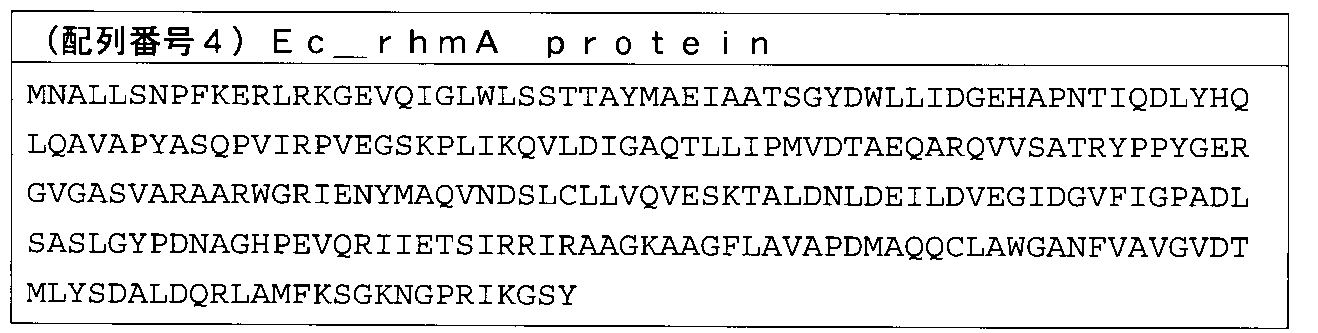

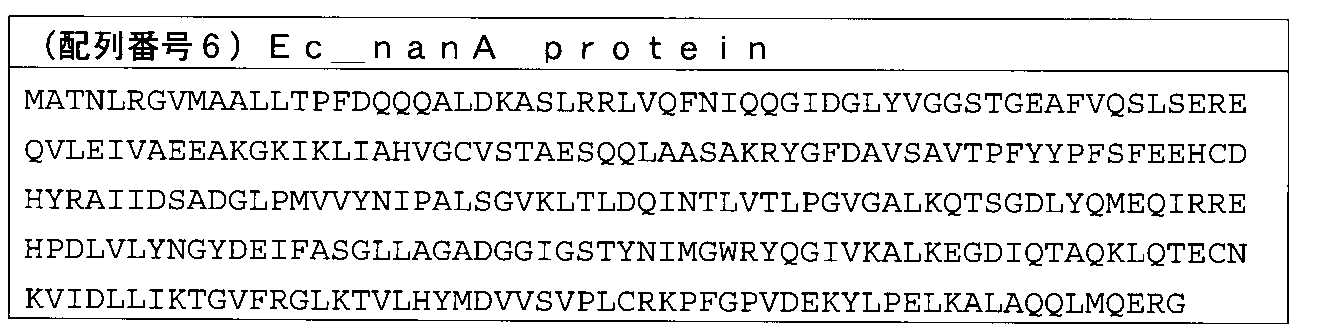

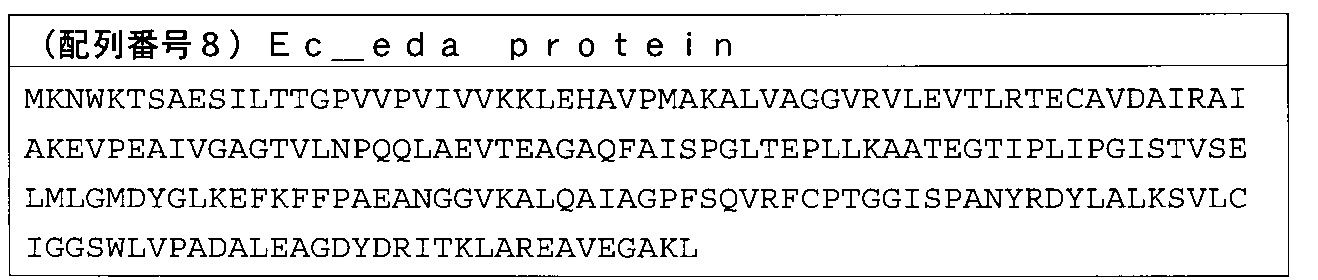


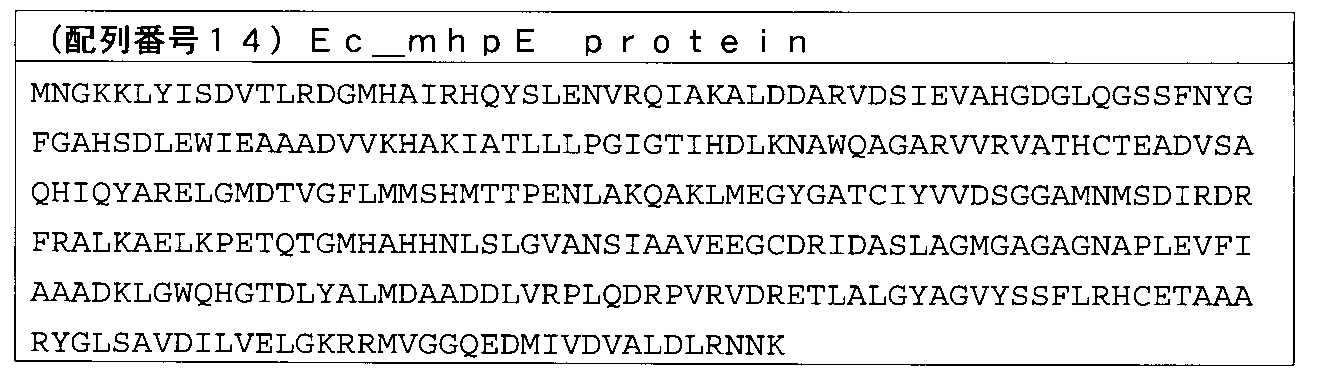


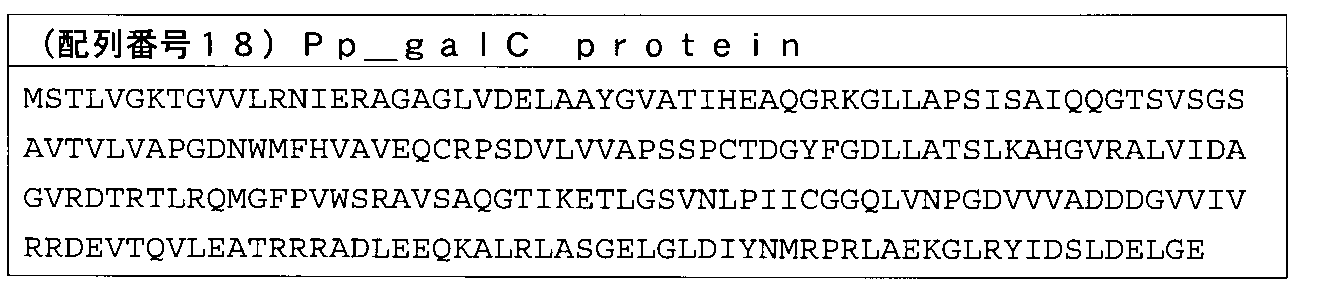
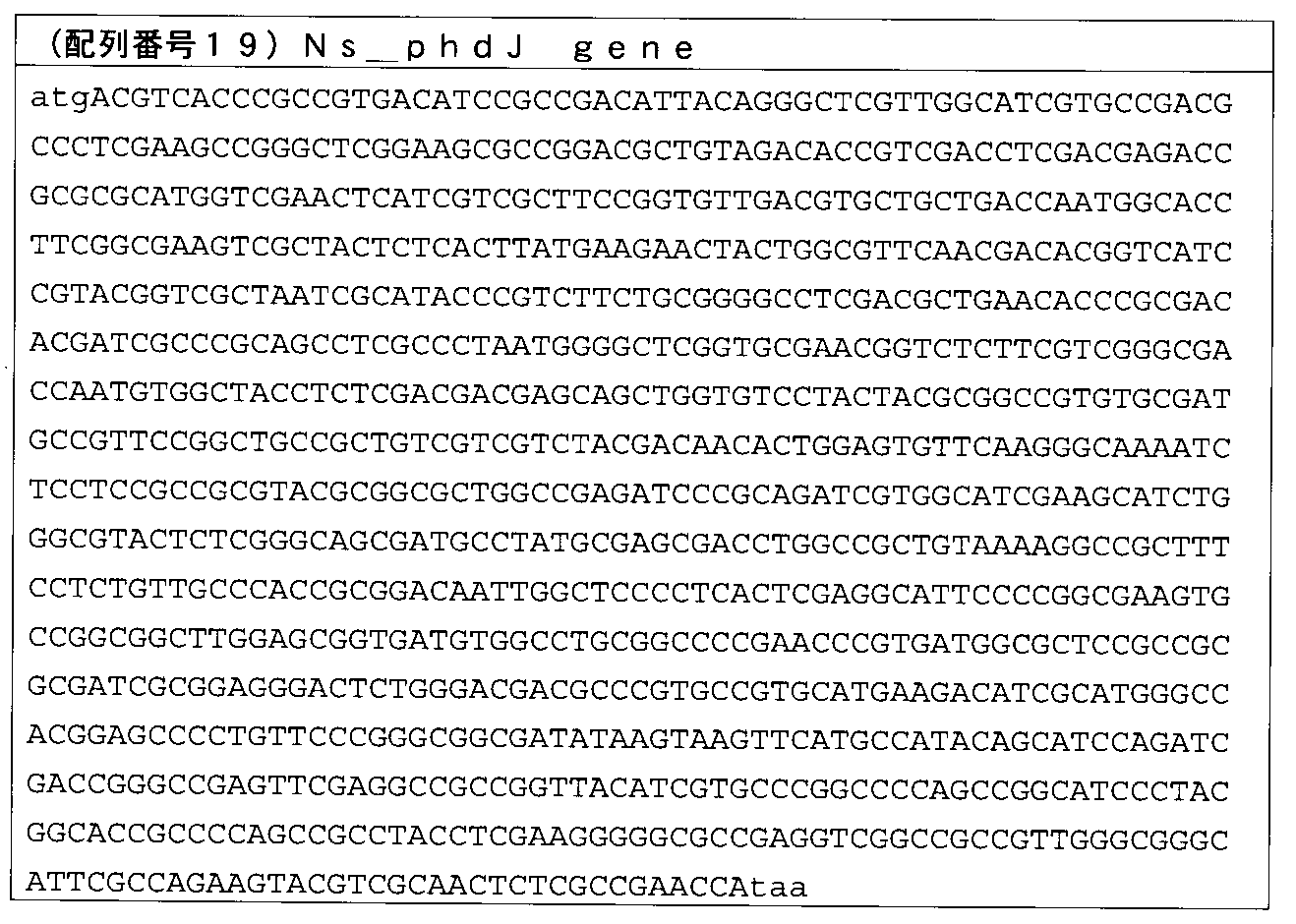


第1遺伝子は、形質転換のために適切なプラスミドベクターに組み込むことができる。
得られた組換えベクターを用いて形質転換体を作製することができる。
形質転換方法は、公知の方法を制限無く使用できる。このような公知の方法として、例えば塩化カルシウム/塩化ルビジウム法、リン酸カルシウム法、DEAE-デキストラン介在トランスフェクション、電気パルス法などが挙げられる。
培養温度は、形質転換体の増殖に適した温度であれば、任意の温度であってもよい。培地のpHは、形質転換体の増殖に適したpHであれば、任意のpHであってもよい。培地のpHの調整は、公知の方法によって行うことができる。培養時間は、形質転換体が増殖するのに十分な時間であれば、任意の時間であってもよい。
宿主は、野生株の他に、その変異株や人為的な遺伝子組換え体であってもよい。宿主がコリネ型細菌である場合、宿主は、野生株のコリネ型細菌が本来有する下記遺伝子の少なくとも一つを破壊または欠失させることにより得られた遺伝子破壊株または遺伝子欠失株であってもよい:ラクテート(乳酸)デヒドロゲナーゼ(lactate dehydrogenase、例えばldhA)遺伝子、フォスフォエノールピルベートカルボキシラーゼ(phosphoenolpyrvate carboxylase、例えばppc)遺伝子、ピルビン酸カルボキシラーゼ(pyruvate carboxylase、例えばpyc)遺伝子、ピルビン酸デヒドロゲナーゼ(pyruvate dehydrogenase、 例えばpoxB)遺伝子、グルタミン酸-ピルビン酸アミノトランスフェラーゼ(glutamate-pyruvate aminotransferase、例えばalaA)遺伝子、アセトラクテートシンターゼ(acetolactate synthase、例えばilvB)遺伝子、N-スクシニルジアミノピメレート(N-succinyldiaminopimelate aminotransferase、例えばcg0931)遺伝子、S-(ヒドロキシメチル)ミコチオールデヒドロゲナーゼ(S-(hydroxymethyl)mycothiol dehydrogenase、例えばadhE)遺伝子、およびアセトアルデヒドデヒドロゲナーゼ(acetaldehyde dehydrogenase、例えばald)遺伝子。このような遺伝子破壊株または遺伝子欠失株を宿主として用いることにより、α-ケト酸の生産性を向上させたり、副生成物の生成を抑制したりすることができる。
具体的には、α-ケト酸生産微生物としては、
以下からなる群より選択される第1遺伝子:
(1-1)配列番号2に記載のアミノ酸配列からなるタンパク質であって、ピルビン酸とカルボニル化合物とのアルドール反応を触媒するタンパク質をコードする遺伝子、
(1-2)配列番号2において1又は数個のアミノ酸が欠失、置換若しくは付加されたアミノ酸配列からなるタンパク質であって、ピルビン酸とカルボニル化合物とのアルドール反応を触媒する活性を有するタンパク質をコードする遺伝子、
(1-3)配列番号4に記載のアミノ酸配列からなるタンパク質であって、ピルビン酸とカルボニル化合物とのアルドール反応を触媒するタンパク質をコードする遺伝子、
(1-4)配列番号4において1又は数個のアミノ酸が欠失、置換若しくは付加されたアミノ酸配列からなるタンパク質であって、ピルビン酸とカルボニル化合物とのアルドール反応を触媒する活性を有するタンパク質をコードする遺伝子、
(1-5)配列番号6に記載のアミノ酸配列からなるタンパク質であって、ピルビン酸とカルボニル化合物とのアルドール反応を触媒するタンパク質をコードする遺伝子、および
(1-6)配列番号6において1又は数個のアミノ酸が欠失、置換若しくは付加されたアミノ酸配列からなるタンパク質であって、ピルビン酸とカルボニル化合物とのアルドール反応を触媒する活性を有するタンパク質をコードする遺伝子;
を含むコリネ型細菌を使用することができる。
α-ケト酸生産微生物(例えば、上述した形質転換体)を、ピルビン酸供給化合物およびカルボニル化合物の存在下で培養して、α-ケト酸を生産することができる。「ピルビン酸供給化合物およびカルボニル化合物の存在下で培養すること」は、ピルビン酸供給化合物およびカルボニル化合物を含む培養液中で培養することにより行うことができる。好ましくは、「ピルビン酸供給化合物およびカルボニル化合物の存在下で培養すること」は、ピルビン酸供給化合物およびカルボニル化合物を添加した培養液中で培養することにより行うことができる。
増殖用培養液は、形質転換体の培養に通常使用される培地、例えば、炭素源、窒素源および無機塩類等を含有する公知の培地を用いることができる。
増殖培養における培養温度は、形質転換体の増殖に適した温度であれば、任意の温度であってもよい。増殖用培養液のpHは、形質転換体の増殖に適したpHであれば、任意のpHであってもよい。増殖用培養液のpHの調整は、公知の方法によって行うことができる。増殖培養における培養時間は、形質転換体が増殖するのに十分な時間であれば、任意の時間であってもよい。
生産用培養液としては、ピルビン酸供給化合物、カルボニル化合物、及びその他必要な成分を含有する培養液を用いることができる。その他必要な成分として、例えば、無機塩類、糖類以外の炭素源、又は窒素源を用いることができる。本明細書に記載される、培養液中の各成分の濃度は、各成分が添加された時点における培養液中の最終濃度を指す。
R101C(O)R102
(ここでR101およびR102は、互いに独立に、水素、または1~5個の炭素原子を有するアルキル基である)
により表されるカルボニル化合物を使用することができる。
一例によれば、カルボニル化合物としては、上記一般式(1)において、R101は水素、または1~5個の炭素原子を有するアルキル基であり、かつ、R102は水素であるカルボニル化合物を使用することができる。
別の例によると、カルボニル化合物は、上記一般式(1)において、R101はメチル基であり、かつ、R102は1~5個の炭素原子を有するアルキル基であるカルボニル化合物を使用することができる。
R101が水素であり、かつ、R102が水素であるカルボニル化合物(すなわち、ホルムアルデヒド);
R101がメチル基であり、かつ、R102が水素であるカルボニル化合物(すなわち、アセトアルデヒド);
R101がエチル基であり、かつ、R102が水素であるカルボニル化合物(すなわち、プロピオンアルデヒド);
R101がプロピル基であり、かつ、R102が水素であるカルボニル化合物(すなわち、ブチルアルデヒド)、具体的には、R101がノルマルプロピル基であり、かつ、R102が水素であるカルボニル化合物(すなわち、ノルマルブチルアルデヒド)、または、R101がイソプロピル基であり、かつ、R102が水素であるカルボニル化合物(すなわち、イソブチルアルデヒド);または
R101がペンチル基であり、かつ、R102が水素であるカルボニル化合物(すなわち、バレルアルデヒド)、具体的には、R101がノルマルペンチル基であり、かつ、R102が水素であるカルボニル化合物(すなわち、ノルマルバレルアルデヒド);
を使用することができる。
また、カルボニル化合物としては、上記一般式(1)中、R101およびR102がいずれもメチル基であるカルボニル化合物(すなわち、アセトン)を使用することもできる。
カルボニル化合物は、1種を使用してもよく、2種以上を混合して使用してもよい。
生産培養における培養温度は、α-ケト酸の生産に適した温度であれば、任意の温度であってもよい。生産培養における培養温度は、約20~50℃が好ましく、約25~47℃がより好ましい。上記温度範囲であれば、効率良くα-ケト酸を製造できる。生産用培養液のpHは、α-ケト酸の生産に適したpHであれば、任意のpHであってもよい。生産用培養液のpHは、約6~8の範囲内に維持することが好ましい。生産用培養液のpHの調整は、無機あるいは有機の酸;水酸化カリウム水溶液等のアルカリ溶液;尿素;炭酸カルシウム;アンモニア;4-モルホリノプロパンスルホン酸等を含むpH緩衝液等を用いて行うことができる。生産培養中も必要に応じて生産用培養液のpHは、適宜調整することができる。生産培養における培養時間は、形質転換体がα-ケト酸を生産するのに十分な時間であれば、任意の時間であってもよい。生産培養における培養時間は、約3時間~7日間が好ましく、約1~3日間がより好ましい。
生産培養は、好気的条件の下で行われてもよく、嫌気的条件または微好気的条件の下で行われてもよい。これは、上述した形質転換体が、好気的条件の下でも嫌気的条件または微好気的条件の下でも働く、α-ケト酸を生産する経路を有しているためである。α-ケト酸を生産する経路は、後述の「(1.3)作用および効果」の欄で述べる。
生産培養は、好ましくは、嫌気的条件または微好気的条件の下で行われる。
生産培養は、好ましくは、形質転換体を生産用培養液中に高密度に懸濁させた状態で行われる。このような状態で形質転換体を培養すると、一層効率的にα-ケト酸を生産することができる。
上述のとおり、第1遺伝子を含む形質転換体を生産用培養液中で培養すると、生産用培養液中にα-ケト酸が生産される。
R101C(O)R102
(ここでR101およびR102は、互いに独立に、水素、または1~5個の炭素原子を有するアルキル基である)
により表されるカルボニル化合物を使用した場合、下記一般式(2):
R101C(R102)(OH)CH2COCOOH
(上記一般式(2)におけるR101およびR102は、それぞれ上記一般式(1)におけるR101およびR102と同じ基である)
により表されるα-ケト酸を生産することができる。
上記一般式(1)中、R101がメチル基であり、かつ、R102が水素であるカルボニル化合物を使用した場合、上記一般式(2)中、R101がメチル基であり、かつ、R102が水素であるα-ケト酸(すなわち、4-ヒドロキシ-2-オキソ吉草酸)を生産することができる。
上記一般式(1)中、R101がエチル基であり、かつ、R102が水素であるカルボニル化合物を使用した場合、上記一般式(2)中、R101がエチル基であり、かつ、R102が水素であるα-ケト酸(すなわち、4-ヒドロキシ-2-オキソカプロン酸)を生産することができる。
上記一般式(1)中、R101がプロピル基であり、かつ、R102が水素であるカルボニル化合物を使用した場合、上記一般式(2)中、R101がプロピル基であり、かつ、R102が水素であるα-ケト酸(すなわち、4-ヒドロキシ-2-オキソエナント酸)を生産することができる。具体的には、上記一般式(1)中、R101がノルマルプロピル基であり、かつ、R102が水素であるカルボニル化合物を使用した場合、上記一般式(2)中、R101がノルマルプロピル基であり、かつ、R102が水素であるα-ケト酸(すなわち、4-ヒドロキシ-2-オキソノルマルヘプタン酸)を生産することができる。また、具体的には、上記一般式(1)中、R101がイソプロピル基であり、かつ、R102が水素であるカルボニル化合物を使用した場合、上記一般式(2)中、R101がイソプロピル基であり、かつ、R102が水素であるα-ケト酸(すなわち、4-ヒドロキシ-2-オキソイソエナント酸)を生産することができる。
上記一般式(1)中、R101がペンチル基であり、かつ、R102が水素であるカルボニル化合物を使用した場合、上記一般式(2)中、R101がペンチル基であり、かつ、R102が水素であるα-ケト酸(すなわち、4-ヒドロキシ-2-オキソカプリル酸)を生産することができる。具体的には、上記一般式(1)中、R101がノルマルペンチル基であり、かつ、R102が水素であるカルボニル化合物を使用した場合、上記一般式(2)中、R101がノルマルペンチル基であり、かつ、R102が水素であるα-ケト酸(すなわち、4-ヒドロキシ-2-オキソノルマルカプリル酸)を生産することができる。
上記一般式(1)中、R101およびR102がいずれもメチル基であるカルボニル化合物を使用した場合、上記一般式(2)中、R101およびR102がいずれもメチル基であるα-ケト酸(すなわち、4-メチル-4-ヒドロキシ-2-オキソ吉草酸)を生産することができる。
α-ケト酸生産微生物がα-ケト酸を生産するプロセスを模式的に図1に示す。図1に示すプロセスにおいては、ピルビン酸供給化合物がグルコースであり、カルボニル化合物がホルムアルデヒドであり、α-ケト酸が4-ヒドロキシ-2-オキソ酪酸である場合を例として説明する。
1,3-ジオールの製造方法は、
以下の遺伝子:
(a)ピルビン酸とカルボニル化合物とのアルドール反応を触媒する酵素をコードする第1遺伝子、
(b)α-ケト酸の脱炭酸反応を触媒する酵素をコードする第2遺伝子、および
(c)アルデヒドの還元反応を触媒する酵素をコードする第3遺伝子
を含む微生物を、ピルビン酸および糖類から選ばれるピルビン酸供給化合物と、
下記一般式(3):
R103C(O)R104
(ここでR103およびR104は、互いに独立に、水素、または1~5個の炭素原子を有するアルキル基である。ただし、R103が水素であるとき、R104は水素ではない。)
により表されるカルボニル化合物と
の存在下で培養して、
下記一般式(4):
R103C(R104)(OH)CH2CH2OH
(上記一般式(4)におけるR103およびR104は、それぞれ上記一般式(3)におけるR103およびR104と同じ基である)
により表される1,3-ジオールを生産する工程を含む。
(2.1.1)宿主
宿主としては、「(1.1.1)宿主」の欄に記載した宿主と同様の宿主を使用することができる。
次に、宿主に導入される第1、第2および第3遺伝子について説明する。
第1遺伝子としては、「(1.1.2)第1遺伝子」の欄に記載した第1遺伝子と同様の遺伝子を使用することができる。。
第2遺伝子は、「α-ケト酸の脱炭酸反応を触媒する酵素」をコードする。「α-ケト酸の脱炭酸反応を触媒する酵素」とは、後述の測定方法に従って、酵素反応液として、精製タンパク質およびα-ケト酸(初期基質濃度 1mM)を含む酵素反応液を使用して測定した場合に、1mU/mg protein以上の活性を有する酵素をいう。第2遺伝子は、例えば、第1遺伝子がコードするタンパク質が触媒するアルドール反応により得られたα-ケト酸の脱炭酸反応を触媒する酵素をコードする。「α-ケト酸の脱炭酸反応を触媒する酵素」におけるα-ケト酸は、例えば、「(1.)α-ケト酸の製造方法」の欄に記載した、一般式(2)により表されるα-ケト酸である。「α-ケト酸の脱炭酸反応を触媒する酵素」は、例えば、脱炭酸酵素である。
(b2)ベンゾイルフォルメートデカルボキシラーゼ(benzoylformate decarboxylase、EC番号4.1.1.7)、および
(b3)インドールピルベートデカルボキシラーゼ(indolepyruvate decarboxylase、EC番号4.1.1.74)。
(b2)に含まれる脱炭酸酵素としては、例えば、mdlCタンパク質が挙げられる。好ましくは、mdlCタンパク質は、シュードモナス プチダ(Pseudomonas putida)由来である。
(b3)に含まれる脱炭酸酵素としては、例えば、kivDタンパク質が挙げられる。好ましくは、kivDタンパク質は、ラクトコッカス ラクティス(Lactococcus lactis)由来である。
(2-1)配列番号24に記載のアミノ酸配列からなるタンパク質(すなわち、シュードモナス プチダ由来のmdlCタンパク質)であって、α-ケト酸の脱炭酸反応を触媒するタンパク質をコードする遺伝子、および
(2-2)配列番号24において1又は数個のアミノ酸が欠失、置換若しくは付加されたアミノ酸配列からなるタンパク質であって、α-ケト酸の脱炭酸反応を触媒する活性を有するタンパク質をコードする遺伝子。
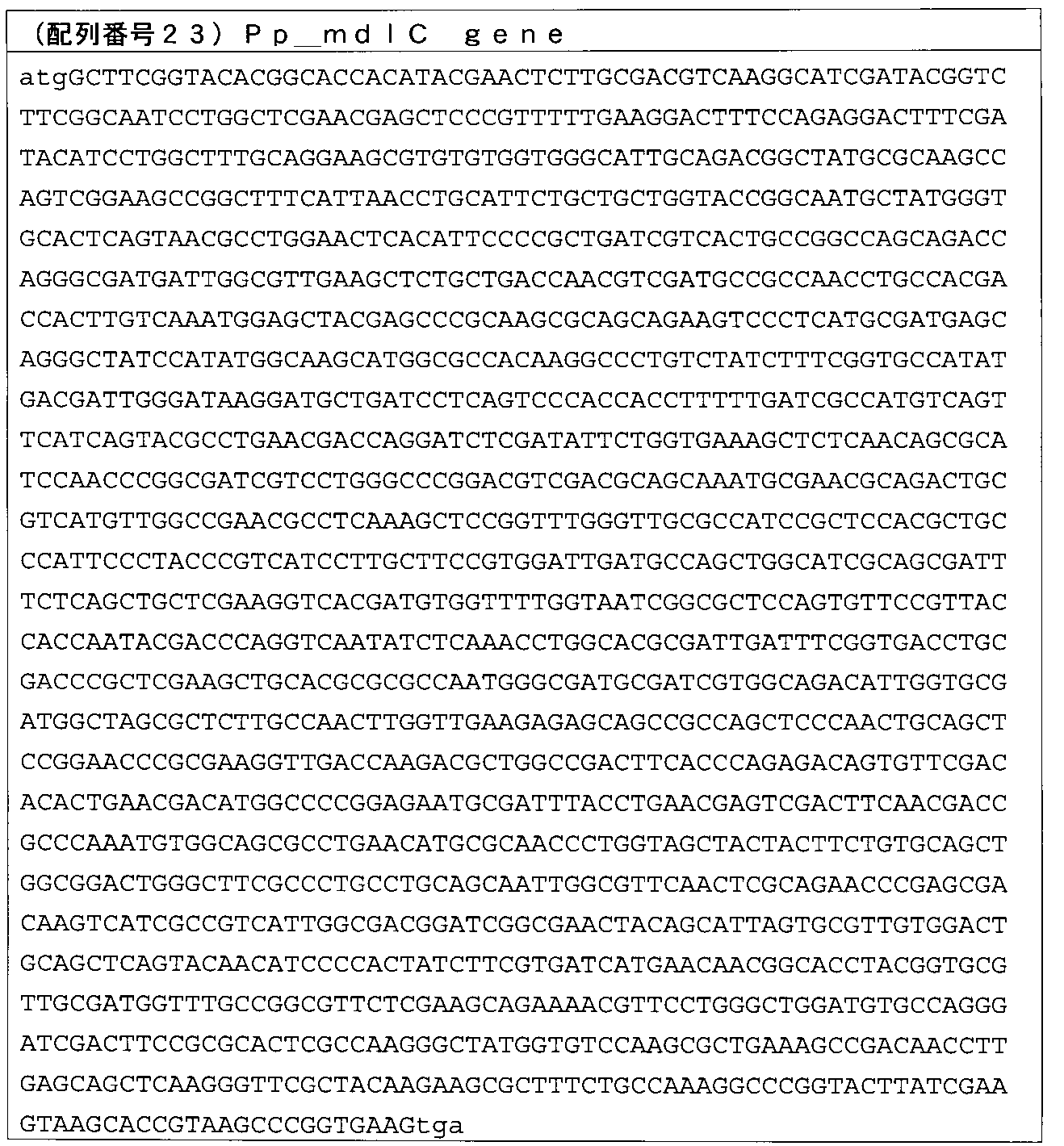

第3遺伝子は、「アルデヒドの還元反応を触媒する酵素」をコードする。「アルデヒドの還元反応を触媒する酵素」とは、後述の測定方法に従って、酵素反応液として、精製タンパク質およびアルデヒド(初期基質濃度 1mM)を含む酵素反応液を使用して測定した場合に、10mU/mg protein以上の活性を有する酵素をいう。第3遺伝子は、例えば、第2遺伝子がコードするタンパク質が触媒する脱炭酸反応により得られたアルデヒドの還元反応を触媒する酵素をコードする。「アルデヒドの還元反応を触媒する酵素」におけるアルデヒドは、例えば、3-ヒドロキシブチルアルデヒド、3-ヒドロキシバレルアルデヒド、3-ヒドロキシヘキシルアルデヒド、3-ヒドロキシイソヘキシルアルデヒド、3-ヒドロキシヘプチルアルデヒドまたは3-メチル-3-ヒドロキシブチルアルデヒドである。「アルデヒドの還元反応を触媒する酵素」は、例えば、アルコールデヒドロゲナーゼである。
(3-1)配列番号26に記載のアミノ酸配列からなるタンパク質(すなわち、クレブシエラ ニューモニエ由来のdhaTタンパク質)であって、アルデヒドの還元反応を触媒するタンパク質をコードする遺伝子、および
(3-2)配列番号26において1又は数個のアミノ酸が欠失、置換若しくは付加されたアミノ酸配列からなるタンパク質であって、アルデヒドの還元反応を触媒する活性を有するタンパク質をコードする遺伝子。


第1、第2、および第3遺伝子は、形質転換のために適切なプラスミドベクターに組み込むことができる。
形質転換方法は、公知の方法を制限無く使用できる。このような公知の方法としては、「(1.1.4)形質転換」の欄に記載した方法と同様の方法を使用することができる。
宿主は、野生株の他に、その変異株や人為的な遺伝子組換え体であってもよい。宿主がコリネ型細菌である場合、宿主は、「(1.1.5)宿主染色体遺伝子の破壊または欠失」の欄に記載した遺伝子破壊株または遺伝子欠失株と同様の遺伝子破壊株または遺伝子欠失株を使用することができる。また、遺伝子破壊株または遺伝子欠失株を作製する方法としては、「(1.1.5)宿主染色体遺伝子の破壊または欠失」の欄に記載した方法と同様の方法を使用することができる。このような遺伝子破壊株または遺伝子欠失株を宿主として用いることにより、1,3-ジオールの生産性を向上させたり、副生成物の生成を抑制したりすることができる。
具体的には、1,3-ジオール生産微生物としては、
以下からなる群より選択される第1遺伝子:
(1-1)配列番号2に記載のアミノ酸配列からなるタンパク質であって、ピルビン酸とカルボニル化合物とのアルドール反応を触媒するタンパク質をコードする遺伝子、
(1-2)配列番号2において1又は数個のアミノ酸が欠失、置換若しくは付加されたアミノ酸配列からなるタンパク質であって、ピルビン酸とカルボニル化合物とのアルドール反応を触媒する活性を有するタンパク質をコードする遺伝子、
(1-3)配列番号4に記載のアミノ酸配列からなるタンパク質であって、ピルビン酸とカルボニル化合物とのアルドール反応を触媒するタンパク質をコードする遺伝子、
(1-4)配列番号4において1又は数個のアミノ酸が欠失、置換若しくは付加されたアミノ酸配列からなるタンパク質であって、ピルビン酸とカルボニル化合物とのアルドール反応を触媒する活性を有するタンパク質をコードする遺伝子、
(1-5)配列番号6に記載のアミノ酸配列からなるタンパク質であって、ピルビン酸とカルボニル化合物とのアルドール反応を触媒するタンパク質をコードする遺伝子、および
(1-6)配列番号6において1又は数個のアミノ酸が欠失、置換若しくは付加されたアミノ酸配列からなるタンパク質であって、ピルビン酸とカルボニル化合物とのアルドール反応を触媒する活性を有するタンパク質をコードする遺伝子;
以下からなる群より選択される第2遺伝子:
(2-1)配列番号24に記載のアミノ酸配列からなるタンパク質であって、α-ケト酸の脱炭酸反応を触媒するタンパク質をコードする遺伝子、および
(2-2)配列番号24において1又は数個のアミノ酸が欠失、置換若しくは付加されたアミノ酸配列からなるタンパク質であって、α-ケト酸の脱炭酸反応を触媒する活性を有するタンパク質をコードする遺伝子;および
以下からなる群より選択される第3遺伝子:
(3-1)配列番号26に記載のアミノ酸配列からなるタンパク質であって、アルデヒドの還元反応を触媒するタンパク質をコードする遺伝子、および
(3-2)配列番号26において1又は数個のアミノ酸が欠失、置換若しくは付加されたアミノ酸配列からなるタンパク質であって、アルデヒドの還元反応を触媒する活性を有するタンパク質をコードする遺伝子
を含むコリネ型細菌を使用することができる。
1,3-ジオール生産微生物(例えば、上述した形質転換体)を、ピルビン酸供給化合物およびカルボニル化合物の存在下で培養して、1,3-ジオールを生産することができる。「ピルビン酸供給化合物およびカルボニル化合物の存在下で培養すること」は、ピルビン酸供給化合物およびカルボニル化合物を含む培養液中で培養することにより行うことができる。好ましくは、「ピルビン酸供給化合物およびカルボニル化合物の存在下で培養すること」は、ピルビン酸供給化合物およびカルボニル化合物を添加した培養液中で培養することにより行うことができる。
増殖用培養液としては、「(1.2.1)増殖用培養液」の欄に記載した増殖用培養液と同様の培養液を使用することができる。
生産用培養液としては、ピルビン酸供給化合物、カルボニル化合物、及びその他必要な成分を含有する培養液を用いることができる。その他必要な成分として、例えば、無機塩類、糖類以外の炭素源又は窒素源を用いることができる。
R103C(O)R104
(ここでR103およびR104は、互いに独立に、水素、または1~5個の炭素原子を有するアルキル基である。ただし、R103が水素であるとき、R104は水素ではない。)
により表されるカルボニル化合物を使用することができる。
一例によれば、カルボニル化合物としては、上記一般式(3)において、R103は水素、または1~5個の炭素原子を有するアルキル基であり、かつ、R104は水素であるカルボニル化合物を使用することができる。
別の例によると、カルボニル化合物は、上記一般式(3)において、R103はメチル基であり、かつ、R104は1~5個の炭素原子を有するアルキル基であるカルボニル化合物を使用することができる。
R103がメチル基であり、かつ、R104が水素であるカルボニル化合物(すなわち、アセトアルデヒド);
R103がエチル基であり、かつ、R104が水素であるカルボニル化合物(すなわち、プロピオンアルデヒド);
R103がプロピル基であり、かつ、R104が水素であるカルボニル化合物(すなわち、ブチルアルデヒド)、具体的には、R103がノルマルプロピル基であり、かつ、R104が水素であるカルボニル化合物(すなわち、ノルマルブチルアルデヒド)、または、R103がイソプロピル基であり、かつ、R104が水素であるカルボニル化合物(すなわち、イソブチルアルデヒド);または
R103がペンチル基であり、かつ、R104が水素であるカルボニル化合物(すなわち、バレルアルデヒド)、具体的には、R103がノルマルペンチル基であり、かつ、R104が水素であるカルボニル化合物(すなわち、ノルマルバレルアルデヒド);
を使用することができる。
また、カルボニル化合物としては、上記一般式(3)中、R103およびR104がいずれもメチル基であるケトン(すなわち、アセトン)を使用することができる。
カルボニル化合物は、1種を使用してもよく、2種以上を混合して使用してもよい。
また、生産用培養液としては、増殖培養で用いた増殖用培養液と同じ組成のベース培養液に、ピルビン酸供給化合物とカルボニル化合物とを添加して得られる培養液を用いることもできる。なお、上述のベース培養液中に十分な量でピルビン酸供給化合物が存在する場合、ピルビン酸供給化合物を添加しなくてもよい。
生産培養における培養温度は、1,3-ジオールの生産に適した温度であれば、任意の温度であってもよい。生産培養における培養温度は、約20~50℃が好ましく、約25~47℃がより好ましい。上記温度範囲であれば、効率良く1,3-ジオールを製造できる。生産用培養液のpHは、1,3-ジオールの生産に適したpHであれば、任意のpHであってもよい。生産用培養液のpHは、約6~8の範囲内に維持することが好ましい。生産用培養液のpHの調整は、無機あるいは有機の酸;水酸化カリウム水溶液等のアルカリ溶液;尿素;炭酸カルシウム;アンモニア;4-モルホリノプロパンスルホン酸等を含むpH緩衝液等を用いて行うことができる。生産培養中も必要に応じて生産用培養液のpHは、適宜調整することができる。生産培養における培養時間は、形質転換体が1,3-ジオールを生産するのに十分な時間であれば、任意の時間であってもよい。生産培養における培養時間は、約3時間~7日間が好ましく、約1~3日間がより好ましい。
生産培養は、好気的条件の下で行われてもよく、嫌気的条件または微好気的条件の下で行われてもよい。これは、上述した形質転換体が、好気的条件の下でも嫌気的条件または微好気的条件の下でも働く、1,3-ジオールを生産する経路を有しているためである。1,3-ジオールを生産する経路は、後述の「(2.3)作用および効果」の欄で述べる。
生産培養は、好ましくは、嫌気的条件または微好気的条件の下で行われる。
生産培養は、好ましくは、形質転換体を生産用培養液中に高密度に懸濁させた状態で行われる。このような状態で形質転換体を培養すると、一層効率的に1,3-ジオールを生産することができる。
上述のとおり、第1、第2および第3遺伝子を含む形質転換体を生産用培養液中で培養すると、生産用培養液中に1,3-ジオールが生産される。
下記一般式(3):
R103C(O)R104
(ここでR103およびR104は、互いに独立に、水素、または1~5個の炭素原子を有するアルキル基である。ただし、R103およびR104は、何れも水素ではない。)
により表されるカルボニル化合物を使用した場合、下記一般式(4):
R103C(R104)(OH) CH2CH2OH
(上記一般式(4)におけるR103およびR104は、それぞれ上記一般式(3)におけるR103およびR104と同じ基である)
により表される1,3-ジオールを生産することができる。
上記一般式(3)中、R103がエチル基であり、かつ、R104が水素であるカルボニル化合物を使用した場合、上記一般式(4)中、R103がエチル基であり、かつ、R104が水素である1,3-ジオール(すなわち、1,3-ペンタンジオール)を生産することができる。
上記一般式(3)中、R103がプロピル基であり、かつ、R104が水素であるカルボニル化合物を使用した場合、上記一般式(4)中、R103がプロピル基であり、かつ、R104が水素である1,3-ジオール(すなわち、1,3-ヘキサンジオール)を生産することができる。具体的には、上記一般式(3)中、R103がノルマルプロピル基であり、かつ、R104が水素であるカルボニル化合物を使用した場合、上記一般式(4)中、R103がノルマルプロピル基であり、かつ、R104が水素である1,3-ジオール(すなわち、1,3-ノルマルヘキサンジオール)を生産することができる。また、具体的には、上記一般式(3)中、R103がイソプロピル基であり、かつ、R103が水素であるカルボニル化合物を使用した場合、上記一般式(4)中、R103がイソプロピル基であり、かつ、R104が水素である1,3-ジオール(すなわち、4-メチル-1,3-ペンタンジオール)を生産することができる。
上記一般式(3)中、R103がペンチル基であり、かつ、R104が水素であるカルボニル化合物を使用した場合、上記一般式(4)中、R103がペンチル基であり、かつ、R104が水素である1,3-ジオール(すなわち、1,3-ヘプタンジオール)を生産することができる。具体的には、上記一般式(3)中、R103がノルマルペンチル基であり、かつ、R104が水素であるカルボニル化合物を使用した場合、上記一般式(4)中、R103がノルマルペンチル基であり、かつ、R104が水素である1,3-ジオール(すなわち、1,3-ノルマルヘプタンジオール)を生産することができる。
上記一般式(3)中、R103およびR104がいずれもメチル基であるカルボニル化合物を使用した場合、上記一般式(4)中、R103およびR104がいずれもメチル基である1,3-ジオール(すなわち、3-メチル-1,3-ブタンジオール)を生産することができる。
なお、生産用培養液からは、第1遺伝子がコードする酵素が触媒するアルドール反応によって生じたα-ケト酸等の物質を回収することもできる。
1,3-ジオール生産微生物が1,3-ジオールを生産するプロセスを模式的に図2に示す。図2に示すプロセスにおいては、ピルビン酸供給化合物がグルコースであり、カルボニル化合物がアセトアルデヒドであり、1,3-ジオールが1,3-ブタンジオールである場合を例として説明する。
すなわち、この実施形態に係る1,3-ブタンジオールの製造方法は、1,3-ジオール生産微生物を、ピルビン酸供給化合物の存在下で培養して、1,3-ブタンジオールを生産する工程を含む。
この実施形態は、アセトアルデヒドを生産用培養液に添加しないことを除いて、上述の「1,3-ジオールの製造方法」と同様の手順に従って実施することができる。
2,4-ジヒドロキシカルボン酸の製造方法は、
以下の遺伝子:
(a)ピルビン酸とカルボニル化合物とのアルドール反応を触媒する酵素をコードする第1遺伝子、および
(d)α-ケト酸の還元反応を触媒する酵素をコードする第4遺伝子
を含む微生物を、ピルビン酸および糖類から選ばれるピルビン酸供給化合物と、
下記一般式(1):
R101C(O)R102
(ここでR101およびR102は、互いに独立に、水素、または1~5個の炭素原子を有するアルキル基である)
により表されるカルボニル化合物と
の存在下で培養して、
下記一般式(5):
R101C(R102)(OH)CH2CH(OH)COOH
(上記一般式(5)におけるR101およびR102は、それぞれ上記一般式(1)におけるR101およびR102と同じ基である)
により表される2,4-ジヒドロキシカルボン酸を生産する工程を含む。
(3.1.1)宿主
宿主としては、「(1.1.1)宿主」の欄に記載した宿主と同様の宿主を使用することができる。
次に、宿主に導入される第1および第4遺伝子について説明する。
第1遺伝子としては、「(1.1.2)第1遺伝子」の欄に記載した第1遺伝子と同様の遺伝子を使用することができる。
第4遺伝子は、「α-ケト酸の還元反応を触媒する酵素」をコードする。「α-ケト酸の還元反応を触媒する酵素」とは、後述の測定方法に従って、酵素反応液として、精製タンパク質およびα-ケト酸(初期基質濃度 1mM)を含む酵素反応液を使用して測定した場合に、10mU/mg protein以上の活性を有する酵素をいう。第4遺伝子は、例えば、第1遺伝子がコードするタンパク質が触媒するアルドール反応により得られたα-ケト酸の還元反応を触媒する酵素をコードする。「α-ケト酸の還元反応を触媒する酵素」におけるα-ケト酸は、例えば、「(1.)α-ケト酸の製造方法」の欄に記載した、一般式(2)により表されるα-ケト酸である。「α-ケト酸の還元反応を触媒する酵素」は、例えば、デヒドロゲナーゼである。
(4-1)配列番号28に記載のアミノ酸配列からなるタンパク質(すなわち、ラクトコッカス ラクティスNBRC100676株由来のldhAタンパク質であって、N末端から85番目のグルタミン残基がシステイン残基に置換されているタンパク質)であって、α-ケト酸の還元反応を触媒するタンパク質をコードする遺伝子、および
(4-2)配列番号28において1又は数個のアミノ酸が欠失、置換若しくは付加されたアミノ酸配列からなるタンパク質であって、α-ケト酸の還元反応を触媒する活性を有するタンパク質をコードする遺伝子。


第1および第4遺伝子は、形質転換のために適切なプラスミドベクターに組み込むことができる。
形質転換方法は、公知の方法を制限無く使用できる。このような公知の方法としては、「(1.1.4)形質転換」の欄に記載した方法と同様の方法を使用することができる。
宿主は、野生株の他に、その変異株や人為的な遺伝子組換え体であってもよい。宿主がコリネ型細菌である場合、宿主は、「(1.1.5)宿主染色体遺伝子の破壊または欠失」の欄に記載した遺伝子破壊株または遺伝子欠失株と同様の遺伝子破壊株または遺伝子欠失株を使用することができる。また、遺伝子破壊株または遺伝子欠失株を作製する方法としては、「(1.1.5)宿主染色体遺伝子の破壊または欠失」の欄に記載した方法と同様の方法を使用することができる。このような遺伝子破壊株または遺伝子欠失株を宿主として用いることにより2,4-ジヒドロキシカルボン酸の生産性を向上させたり、副生成物の生成を抑制したりすることができる。
具体的には、2,4-ジヒドロキシカルボン酸生産微生物としては、
以下からなる群より選択される第1遺伝子:
(1-1)配列番号2に記載のアミノ酸配列からなるタンパク質であって、ピルビン酸とカルボニル化合物とのアルドール反応を触媒するタンパク質をコードする遺伝子、
(1-2)配列番号2において1又は数個のアミノ酸が欠失、置換若しくは付加されたアミノ酸配列からなるタンパク質であって、ピルビン酸とカルボニル化合物とのアルドール反応を触媒する活性を有するタンパク質をコードする遺伝子、
(1-3)配列番号4に記載のアミノ酸配列からなるタンパク質であって、ピルビン酸とカルボニル化合物とのアルドール反応を触媒するタンパク質をコードする遺伝子、
(1-4)配列番号4において1又は数個のアミノ酸が欠失、置換若しくは付加されたアミノ酸配列からなるタンパク質であって、ピルビン酸とカルボニル化合物とのアルドール反応を触媒する活性を有するタンパク質をコードする遺伝子、
(1-5)配列番号6に記載のアミノ酸配列からなるタンパク質であって、ピルビン酸とカルボニル化合物とのアルドール反応を触媒するタンパク質をコードする遺伝子、および
(1-6)配列番号6において1又は数個のアミノ酸が欠失、置換若しくは付加されたアミノ酸配列からなるタンパク質であって、ピルビン酸とカルボニル化合物とのアルドール反応を触媒する活性を有するタンパク質をコードする遺伝子;および
以下からなる群より選択される第4遺伝子:
(4-1)配列番号28に記載のアミノ酸配列からなるタンパク質であって、α-ケト酸の還元反応を触媒するタンパク質をコードする遺伝子、および
(4-2)配列番号28において1又は数個のアミノ酸が欠失、置換若しくは付加されたアミノ酸配列からなるタンパク質であって、α-ケト酸の還元反応を触媒する活性を有するタンパク質をコードする遺伝子
を含むコリネ型細菌を使用することができる。
2,4-ジヒドロキシカルボン酸生産微生物(例えば、上述した形質転換体)を、ピルビン酸供給化合物およびカルボニル化合物の存在下で培養して、2,4-ジヒドロキシカルボン酸を生産することができる。「ピルビン酸供給化合物およびカルボニル化合物の存在下で培養すること」は、ピルビン酸供給化合物およびカルボニル化合物を含む培養液中で培養することにより行うことができる。好ましくは、「ピルビン酸供給化合物およびカルボニル化合物の存在下で培養すること」は、ピルビン酸供給化合物およびカルボニル化合物を添加した培養液中で培養することにより行うことができる。
増殖用培養液としては、「(1.2.1)増殖用培養液」の欄に記載した増殖用培養液と同様の培養液を使用することができる。
生産用培養液としては、「(1.2.2)生産用培養液」の欄に記載した生産用培養液と同様の培養液を使用することができる。
生産培養における培養温度は、2,4-ジヒドロキシカルボン酸の生産に適した温度であれば、任意の温度であってもよい。生産培養における培養温度は、約20~50℃が好ましく、約25~47℃がより好ましい。上記温度範囲であれば、効率良く2,4-ジヒドロキシカルボン酸を製造できる。生産用培養液のpHは、2,4-ジヒドロキシカルボン酸の生産に適したpHであれば、任意のpHであってもよい。生産用培養液のpHは、約6~8の範囲内に維持することが好ましい。生産用培養液のpHの調整は、無機あるいは有機の酸;水酸化カリウム水溶液等のアルカリ溶液;尿素;炭酸カルシウム;アンモニア;4-モルホリノプロパンスルホン酸等を含むpH緩衝液等を用いて行うことができる。生産培養中も必要に応じて生産用培養液のpHは、適宜調整することができる。生産培養における培養時間は、形質転換体が2,4-ジヒドロキシカルボン酸を生産するのに十分な時間であれば、任意の時間であってもよい。生産培養における培養時間は、約3時間~7日間が好ましく、約1~3日間がより好ましい。
生産培養は、好気的条件の下で行われてもよく、嫌気的条件または微好気的条件の下で行われてもよい。これは、上述した形質転換体が、好気的条件の下でも嫌気的条件または微好気的条件の下でも働く、2,4-ジヒドロキシカルボン酸を生産する経路を有しているためである。2,4-ジヒドロキシカルボン酸を生産する経路は、後述の「(3.3)作用および効果」の欄で述べる。
生産培養は、好ましくは、嫌気的条件または微好気的条件の下で行われる。
生産培養は、好ましくは、形質転換体を生産用培養液中に高密度に懸濁させた状態で行われる。このような状態で形質転換体を培養すると、一層効率的に2,4-ジヒドロキシカルボン酸を生産することができる。
上述のとおり、第1および第4遺伝子を含む形質転換体を生産用培養液中で培養すると、生産用培養液中に2,4-ジヒドロキシカルボン酸が生産される。
R101C(O)R102
(ここでR101およびR102は、互いに独立に、水素、または1~5個の炭素原子を有するアルキル基である)
により表されるカルボニル化合物を使用した場合、下記一般式(5):
R101C(R102)(OH)CH2CH(OH)COOH
(上記一般式(5)におけるR101およびR102は、それぞれ上記一般式(1)におけるR101およびR102と同じ基である)
により表される2,4-ジヒドロキシカルボン酸を生産することができる。
上記一般式(1)中、R101がメチル基であり、かつ、R102が水素であるカルボニル化合物を使用した場合、上記一般式(5)中、R101がメチル基であり、かつ、R102が水素である2,4-ジヒドロキシカルボン酸(すなわち、2,4-ジヒドロキシ吉草酸)を生産することができる。
上記一般式(1)中、R101がエチル基であり、かつ、R102が水素であるカルボニル化合物を使用した場合、上記一般式(5)中、R101がエチル基であり、かつ、R102が水素である2,4-ジヒドロキシカルボン酸(すなわち、2,4-ジヒドロキシカプロン酸)を生産することができる。
上記一般式(1)中、R101がプロピル基であり、かつ、R102が水素であるカルボニル化合物を使用した場合、上記一般式(5)中、R101がプロピル基であり、かつ、R102が水素である2,4-ジヒドロキシカルボン酸(すなわち、2,4-ジヒドロキシエナント酸)を生産することができる。具体的には、上記一般式(1)中、R101がノルマルプロピル基であり、かつ、R102が水素であるカルボニル化合物を使用した場合、上記一般式(5)中、R101がノルマルプロピル基であり、かつ、R102が水素である2,4-ジヒドロキシカルボン酸(すなわち、2,4-ジヒドロキシノルマルヘプタン酸)を生産することができる。また、具体的には、上記一般式(1)中、R101がイソプロピル基であり、かつ、R102が水素であるカルボニル化合物を使用した場合、上記一般式(5)中、R101がノイソプロピル基であり、かつ、R102が水素である2,4-ジヒドロキシカルボン酸(すなわち、2,4-ジヒドロキシイソエナント酸)を生産することができる。
上記一般式(1)中、R101がペンチル基であり、かつ、R102が水素であるカルボニル化合物を使用した場合、上記一般式(5)中、R101がペンチル基であり、かつ、R102が水素である2,4-ジヒドロキシカルボン酸(すなわち、2,4-ジヒドロキシカプリル酸)を生産することができる。具体的には、上記一般式(1)中、R101がノルマルペンチル基であり、かつ、R102が水素であるカルボニル化合物を使用した場合、上記一般式(5)中、R101がノルマルペンチル基であり、かつ、R102が水素である2,4-ジヒドロキシカルボン酸(すなわち、2,4-ジヒドロキシノルマルカプリル酸)を生産することができる。
より具体的には、上記一般式(1)中、R101およびR102がいずれもメチル基であるカルボニル化合物を使用した場合、上記一般式(5)中、R101およびR102がいずれもメチル基である2,4-ジヒドロキシカルボン酸(すなわち、4-メチル-2,4-ジヒドロキシ吉草酸)を生産することができる。
2,4-ジヒドロキシカルボン酸生産微生物が2,4-ジヒドロキシカルボン酸を生産するプロセスを模式的に図3に示す。図3に示すプロセスにおいては、ピルビン酸供給化合物がグルコースであり、カルボニル化合物がホルムアルデヒドであり、2,4-ジヒドロキシカルボン酸が2,4-ジヒドロキシ酪酸である場合を例として説明する。
2-アミノ-4-ヒドロキシカルボン酸の製造方法は、
以下の遺伝子:
(a)ピルビン酸とカルボニル化合物とのアルドール反応を触媒する酵素をコードする第1遺伝子、および
(e)α-ケト酸の還元的アミノ化反応を触媒する酵素をコードする第5遺伝子
を含む微生物を、ピルビン酸および糖類から選ばれるピルビン酸供給化合物と、
下記一般式(1):
R101C(O)R102
(ここでR101およびR102は、互いに独立に、水素、または1~5個の炭素原子を有するアルキル基である)
により表されるカルボニル化合物と
の存在下で培養して、
下記一般式(6):
R101C(R102)(OH)CH2CH(NH2)COOH
(上記一般式(6)におけるR101およびR102は、それぞれ上記一般式(1)におけるR101およびR102と同じ基である)
により表される2-アミノ-4-ヒドロキシカルボン酸を生産する工程を含む。
(4.1.1)宿主
宿主としては、「(1.1.1)宿主」の欄に記載した宿主と同様の宿主を使用することができる。
次に、宿主に導入される第1および第5遺伝子について説明する。
第1遺伝子としては、「(1.1.2)第1遺伝子」の欄に記載した第1遺伝子と同様の遺伝子を使用することができる。
第5遺伝子は、「α-ケト酸の還元的アミノ化反応を触媒する酵素」をコードする。「α-ケト酸の還元的アミノ化反応を触媒する酵素」とは、後述の測定方法に従って、酵素反応液として、精製タンパク質およびα-ケト酸(初期基質濃度 1mM)を含む酵素反応液を使用して測定した場合に、10mU/mg protein以上の活性を有する酵素をいう。第5遺伝子は、例えば、第1遺伝子がコードするタンパク質が触媒するアルドール反応により得られたα-ケト酸の還元的アミノ化反応を触媒する酵素をコードする。「α-ケト酸の還元的アミノ化反応を触媒する酵素」におけるα-ケト酸は、例えば、「(1.)α-ケト酸の製造方法」の欄に記載した、一般式(2)により表されるα-ケト酸である。「α-ケト酸の還元的アミノ化反応を触媒する酵素」は、例えば、グルタミン酸/フェニルアラニン/ロイシン/バリンデヒドロゲナーゼ[Glutamate/phenylalanine/leucine/valine dehydrogenase, (IPR006095)]である。「グルタミン酸/フェニルアラニン/ロイシン/バリンデヒドロゲナーゼ」は、当該技術分野において、グルタミン酸デヒドロゲナーゼ、フェニルアラニンデヒドロゲナーゼ、ロイシンデヒドロゲナーゼおよびバリンデヒドロゲナーゼを包含するデヒドロゲナーゼファミリーを意味する用語として使用されている。一例によると、「グルタミン酸/フェニルアラニン/ロイシン/バリンデヒドロゲナーゼ」は、グルタミン酸デヒドロゲナーゼ、フェニルアラニンデヒドロゲナーゼ、ロイシンデヒドロゲナーゼおよびバリンデヒドロゲナーゼからなる群より選択される少なくとも一つのデヒドロゲナーゼである。
(d2)フェニルアラニンデヒドロゲナーゼ(phenylalanine dehydrogenase、EC番号1.4.1.20)、および
(d3)バリンデヒドロゲナーゼ(valine dehydrogenase、EC番号1.4.1.8および1.4.1.23)。
(d2)に含まれるデヒドロゲナーゼとしては、例えば、phedhタンパク質が挙げられる。好ましくは、phedhタンパク質は、バシラス バディウス(Bacillus badius)由来である。
(d3)に含まれるデヒドロゲナーゼとしては、例えば、valdhタンパク質が挙げられる。好ましくは、valdhタンパク質は、ストレプトミセス フラジエ(streptomyces fradiae)由来である。
(5-1)配列番号30に記載のアミノ酸配列からなるタンパク質(すなわち、リシニバシラス スフェリカス由来のleuDHタンパク質)であって、α-ケト酸の還元的アミノ化反応を触媒するタンパク質をコードする遺伝子、
(5-2)配列番号30において1又は数個のアミノ酸が欠失、置換若しくは付加されたアミノ酸配列からなるタンパク質であって、α-ケト酸の還元的アミノ化反応を触媒する活性を有するタンパク質をコードする遺伝子、
(5-3)配列番号32に記載のアミノ酸配列からなるタンパク質(すなわち、バシラス バディウス由来のphedhタンパク質)であって、α-ケト酸の還元的アミノ化反応を触媒するタンパク質をコードする遺伝子、
(5-4)配列番号32において1又は数個のアミノ酸が欠失、置換若しくは付加されたアミノ酸配列からなるタンパク質であって、α-ケト酸の還元的アミノ化反応を触媒する活性を有するタンパク質をコードする遺伝子、
(5-5)配列番号34に記載のアミノ酸配列からなるタンパク質(すなわち、ストレプトミセス フラジエ由来のvaldhタンパク質)であって、α-ケト酸の還元的アミノ化反応を触媒するタンパク質をコードする遺伝子、および
(5-6)配列番号34において1又は数個のアミノ酸が欠失、置換若しくは付加されたアミノ酸配列からなるタンパク質であって、α-ケト酸の還元的アミノ化反応を触媒する活性を有するタンパク質をコードする遺伝子。
配列番号30に記載の塩基配列からなる、リシニバシラス スフェリカス由来のleuDH遺伝子、
配列番号32に記載の塩基配列からなる、バシラス バディウス由来のphedh遺伝子、または
配列番号34に記載の塩基配列からなる、ストレプトミセス フラジエ由来のvaldh遺伝子である。


第1および第5遺伝子は、形質転換のために適切なプラスミドベクターに組み込むことができる。
形質転換方法は、公知の方法を制限無く使用できる。このような公知の方法としては、「(1.1.4)形質転換」の欄に記載した方法と同様の方法を使用することができる。
宿主は、野生株の他に、その変異株や人為的な遺伝子組換え体であってもよい。宿主がコリネ型細菌である場合、宿主は、「(1.1.5)宿主染色体遺伝子の破壊または欠失」の欄に記載した遺伝子破壊株または遺伝子欠失株と同様の遺伝子破壊株または遺伝子欠失株を使用することができる。また、遺伝子破壊株または遺伝子欠失株を作製する方法としては、「(1.1.5)宿主染色体遺伝子の破壊または欠失」の欄に記載した方法と同様の方法を使用することができる。このような遺伝子破壊株または遺伝子欠失株を宿主として用いることにより2-アミノ-4-ヒドロキシカルボン酸の生産性を向上させたり、副生成物の生成を抑制したりすることができる。
具体的には、2-アミノ-4-ヒドロキシカルボン酸生産微生物としては、
以下からなる群より選択される第1遺伝子:
(1-1)配列番号2に記載のアミノ酸配列からなるタンパク質であって、ピルビン酸とカルボニル化合物とのアルドール反応を触媒するタンパク質をコードする遺伝子、
(1-2)配列番号2において1又は数個のアミノ酸が欠失、置換若しくは付加されたアミノ酸配列からなるタンパク質であって、ピルビン酸とカルボニル化合物とのアルドール反応を触媒する活性を有するタンパク質をコードする遺伝子、
(1-3)配列番号4に記載のアミノ酸配列からなるタンパク質であって、ピルビン酸とカルボニル化合物とのアルドール反応を触媒するタンパク質をコードする遺伝子、
(1-4)配列番号4において1又は数個のアミノ酸が欠失、置換若しくは付加されたアミノ酸配列からなるタンパク質であって、ピルビン酸とカルボニル化合物とのアルドール反応を触媒する活性を有するタンパク質をコードする遺伝子、
(1-5)配列番号6に記載のアミノ酸配列からなるタンパク質であって、ピルビン酸とカルボニル化合物とのアルドール反応を触媒するタンパク質をコードする遺伝子、および
(1-6)配列番号6において1又は数個のアミノ酸が欠失、置換若しくは付加されたアミノ酸配列からなるタンパク質であって、ピルビン酸とカルボニル化合物とのアルドール反応を触媒する活性を有するタンパク質をコードする遺伝子;および
以下からなる群より選択される第5遺伝子:
(5-1)配列番号30に記載のアミノ酸配列からなるタンパク質であって、α-ケト酸の還元的アミノ化反応を触媒するタンパク質をコードする遺伝子、
(5-2)配列番号30において1又は数個のアミノ酸が欠失、置換若しくは付加されたアミノ酸配列からなるタンパク質であって、α-ケト酸の還元的アミノ化反応を触媒する活性を有するタンパク質をコードする遺伝子、
(5-3)配列番号32に記載のアミノ酸配列からなるタンパク質であって、α-ケト酸の還元的アミノ化反応を触媒するタンパク質をコードする遺伝子、
(5-4)配列番号32において1又は数個のアミノ酸が欠失、置換若しくは付加されたアミノ酸配列からなるタンパク質であって、α-ケト酸の還元的アミノ化反応を触媒する活性を有するタンパク質をコードする遺伝子、
(5-5)配列番号34に記載のアミノ酸配列からなるタンパク質であって、α-ケト酸の還元的アミノ化反応を触媒するタンパク質をコードする遺伝子、および
(5-6)配列番号34において1又は数個のアミノ酸が欠失、置換若しくは付加されたアミノ酸配列からなるタンパク質であって、α-ケト酸の還元的アミノ化反応を触媒する活性を有するタンパク質をコードする遺伝子
を含むコリネ型細菌を使用することができる。
2-アミノ-4-ヒドロキシカルボン酸生産微生物(例えば、上述した形質転換体)を、ピルビン酸供給化合物およびカルボニル化合物の存在下で培養して、2-アミノ-4-ヒドロキシカルボン酸を生産することができる。「ピルビン酸供給化合物およびカルボニル化合物の存在下で培養すること」は、ピルビン酸供給化合物およびカルボニル化合物を含む培養液中で培養することにより行うことができる。好ましくは、「ピルビン酸供給化合物およびカルボニル化合物の存在下で培養すること」は、ピルビン酸供給化合物およびカルボニル化合物を添加した培養液中で培養することにより行うことができる。
増殖用培養液としては、「(1.2.1)増殖用培養液」の欄に記載した増殖用培養液と同様の培養液を使用することができる。
生産用培養液としては、「(1.2.2)生産用培養液」の欄に記載した生産用培養液と同様の培養液を使用することができる。
生産培養における培養温度は、2-アミノ-4-ヒドロキシカルボン酸の生産に適した温度であれば、任意の温度であってもよい。生産培養における培養温度は、約20~50℃が好ましく、約25~47℃がより好ましい。上記温度範囲であれば、効率良く2-アミノ-4-ヒドロキシカルボン酸を製造できる。生産用培養液のpHは、2-アミノ-4-ヒドロキシカルボン酸の生産に適したpHであれば、任意のpHであってもよい。生産用培養液のpHは、約6~8の範囲内に維持することが好ましい。生産用培養液のpHの調整は、無機あるいは有機の酸;水酸化カリウム水溶液等のアルカリ溶液;尿素;炭酸カルシウム;アンモニア;4-モルホリノプロパンスルホン酸等を含むpH緩衝液等を用いて行うことができる。生産培養中も必要に応じて生産用培養液のpHは、適宜調整することができる。生産培養における培養時間は、形質転換体が2-アミノ-4-ヒドロキシカルボン酸を生産するのに十分な時間であれば、任意の時間であってもよい。生産培養における培養時間は、約3時間~7日間が好ましく、約1~3日間がより好ましい。
生産培養は、好気的条件の下で行われてもよく、嫌気的条件または微好気的条件の下で行われてもよい。これは、上述した形質転換体が、好気的条件の下でも嫌気的条件または微好気的条件の下でも働く、2-アミノ-4-ヒドロキシカルボン酸を生産する経路を有しているためである。2-アミノ-4-ヒドロキシカルボン酸を生産する経路は、後述の「(4.3)作用および効果」の欄で述べる。
生産培養は、好ましくは、嫌気的条件または微好気的条件の下で行われる。
生産培養は、好ましくは、形質転換体を生産用培養液中に高密度に懸濁させた状態で行われる。このような状態で形質転換体を培養すると、一層効率的に2-アミノ-4-ヒドロキシカルボン酸を生産することができる。
上述のとおり、第1および第5遺伝子を含む形質転換体を生産用培養液中で培養すると、生産用培養液中に2-アミノ-4-ヒドロキシカルボン酸が生産される。
R101C(O)R102
(ここでR101およびR102は、互いに独立に、水素、または1~5個の炭素原子を有するアルキル基である)
により表されるカルボニル化合物を使用した場合、下記一般式(6):
R101C(R102)(OH)CH2CH(NH2)COOH
(上記一般式(6)におけるR101およびR102は、それぞれ上記一般式(1)におけるR101およびR102と同じ基である)
により表される2-アミノ-4-ヒドロキシカルボン酸を生産することができる。
上記一般式(1)中、R101がメチル基であり、かつ、R102が水素であるカルボニル化合物を使用した場合、上記一般式(6)中、R101がメチル基であり、かつ、R102が水素である2-アミノ-4-ヒドロキシカルボン酸(すなわち、2-アミノ-4-ヒドロキシ吉草酸)を生産することができる。
上記一般式(1)中、R101がエチル基であり、かつ、R102が水素であるカルボニル化合物を使用した場合、上記一般式(6)中、R101がエチル基であり、かつ、R102が水素である2-アミノ-4-ヒドロキシカルボン酸(すなわち、2-アミノ-4-ヒドロキシカプロン酸)を生産することができる。
上記一般式(1)中、R101がプロピル基であり、かつ、R102が水素であるカルボニル化合物を使用した場合、上記一般式(6)中、R101がプロピル基であり、かつ、R102が水素である2-アミノ-4-ヒドロキシカルボン酸(すなわち、4-ヒドロキシ-2-オキソエナント酸)を生産することができる。具体的には、上記一般式(1)中、R101がノルマルプロピル基であり、かつ、R102が水素であるカルボニル化合物を使用した場合、上記一般式(6)中、R101がノルマルプロピル基であり、かつ、R102が水素である2-アミノ-4-ヒドロキシカルボン酸(すなわち、2-アミノ-4-ヒドロキシノルマルヘプタン酸)を生産することができる。また、具体的には、上記一般式(1)中、R101がイソプロピル基であり、かつ、R102が水素であるカルボニル化合物を使用した場合、上記一般式(6)中、R101がイソプロピル基であり、かつ、R102が水素である2-アミノ-4-ヒドロキシカルボン酸(すなわち、2-アミノ-4-ヒドロキシイソエナント酸)を生産することができる。
上記一般式(1)中、R101がペンチル基であり、かつ、R102が水素であるカルボニル化合物を使用した場合、上記一般式(6)中、R101がペンチル基であり、かつ、R102が水素である2-アミノ-4-ヒドロキシカルボン酸(すなわち、2-アミノ-4-ヒドロキシカプリル酸)を生産することができる。具体的には、上記一般式(1)中、R101がノルマルペンチル基であり、かつ、R102が水素であるカルボニル化合物を使用した場合、上記一般式(6)中、R101がノルマルペンチル基であり、かつ、R102が水素である2-アミノ-4-ヒドロキシカルボン酸(すなわち、2-アミノ-4-ヒドロキシノルマルカプリル酸)を生産することができる。
より具体的には、上記一般式(1)中、R101およびR102がいずれもメチル基であるカルボニル化合物を使用した場合、上記一般式(6)中、R101およびR102がいずれもメチル基である2-アミノ-4-ヒドロキシカルボン酸(すなわち、4-メチル-2-アミノ-4-ヒドロキシ吉草酸)を生産することができる。
また、複数種類のカルボニル化合物を使用した場合、培養液中に複数種類の2-アミノ-4-ヒドロキシカルボン酸が生産される。複数種類の2-アミノ-4-ヒドロキシカルボン酸は、晶析やクロマトグラフィーによって、互いに分離することができる。
2-アミノ-4-ヒドロキシカルボン酸生産微生物が2-アミノ-4-ヒドロキシカルボン酸を生産するプロセスを模式的に図4に示す。図4に示すプロセスにおいては、ピルビン酸供給化合物がグルコースであり、カルボニル化合物がホルムアルデヒドであり、2-アミノ-4-ヒドロキシカルボン酸がホモセリンである場合を例として説明する。
「(4.)2-アミノ-4-ヒドロキシカルボン酸の製造方法」の欄では、微生物を使用した生物学的方法により2-アミノ-4-ヒドロキシカルボン酸を製造する方法について説明したが、この方法は微生物を使用することなく、化学的方法により実施することもできる。
すなわち、2-アミノ-4-ヒドロキシカルボン酸の製造方法は、
下記一般式(2):
R101C(R102)(OH)CH2COCOOH
(ここでR101およびR102は、互いに独立に、水素、または1~5個の炭素原子を有するアルキル基である)
により表されるα-ケト酸と窒素源と還元剤とを、
グルタミン酸/フェニルアラニン/ロイシン/バリンデヒドロゲナーゼの存在下で反応させて、
下記一般式(6):
R101C(R102)(OH)CH2CH(NH2)COOH
(上記一般式(6)におけるR101およびR102は、それぞれ上記一般式(2)におけるR101およびR102と同じ基である)
により表される2-アミノ-4-ヒドロキシカルボン酸を生産する工程を含む。
反応液に含まれる各成分について以下で説明する。本明細書に記載される、反応液中の各成分の濃度は、各成分が添加された時点における反応液中の最終濃度を指す。
(5.1.1)α-ケト酸
α-ケト酸は、下記一般式(2):
R101C(R102)(OH)CH2COCOOH
(ここでR101およびR102は、互いに独立に、水素、または1~5個の炭素原子を有するアルキル基である)
により表される。
一例によれば、α-ケト酸は、上記一般式(2)において、R101は水素、または1~5個の炭素原子を有するアルキル基であり、かつ、R102は水素であるα-ケト酸を使用することができる。
別の例によると、α-ケト酸は、上記一般式(2)において、R101はメチル基であり、かつ、R102は1~5個の炭素原子を有するアルキル基であるα-ケト酸を使用することができる。
R101が水素であり、かつ、R102が水素であるα-ケト酸(すなわち、4-ヒドロキシ-2-オキソ酪酸);
R101がメチル基であり、かつ、R102が水素であるα-ケト酸(すなわち、4-ヒドロキシ-2-オキソ吉草酸);
R101がエチル基であり、かつ、R102が水素であるα-ケト酸(すなわち、4-ヒドロキシ-2-オキソカプロン酸);
R101がプロピル基であり、かつ、R102が水素であるα-ケト酸(すなわち、4-ヒドロキシ-2-オキソエナント酸)、具体的には、R101がノルマルプロピル基であり、かつ、R102が水素であるα-ケト酸(すなわち、4-ヒドロキシ-2-オキソノルマルヘプタン酸)、または、R101がイソプロピル基であり、かつ、R102が水素であるα-ケト酸(すなわち、4-ヒドロキシ-2-オキソイソエナント酸);または
R101がペンチル基であり、かつ、R102が水素であるα-ケト酸(すなわち、4-ヒドロキシ-2-オキソカプリル酸)、具体的には、R101がノルマルペンチル基であり、かつ、R102が水素であるα-ケト酸(すなわち、4-ヒドロキシ-2-オキソノルマルカプリル酸);
を使用することができる。
また、上記一般式(2)により表されるα-ケト酸としては、上記一般式(2)中、R101およびR102がいずれもメチル基であるα-ケト酸(すなわち、4-メチル-4-ヒドロキシ-2-オキソ吉草酸)を使用することもできる。
α-ケト酸は、1種を使用してもよく、2種以上を混合して使用してもよい。
窒素源としては、グルタミン酸/フェニルアラニン/ロイシン/バリンデヒドロゲナーゼが触媒する還元的アミノ化反応においてアミノ基を供給する任意の化合物を使用することができる。窒素源としては、具体的には、反応液中で解離してアンモニウムイオンを生じるアンモニウム塩、例えば、塩化アンモニウム、硫酸アンモニウム、炭酸アンモニウムを使用することができる。
還元剤としては、グルタミン酸/フェニルアラニン/ロイシン/バリンデヒドロゲナーゼが利用できる任意の電子供与体を使用することができる。例えば、NADH、NADPHを使用することができる。
グルタミン酸/フェニルアラニン/ロイシン/バリンデヒドロゲナーゼとしては、グルタミン酸/フェニルアラニン/ロイシン/バリンデヒドロゲナーゼに包含される任意の酵素を使用することができる。一例によると、「グルタミン酸/フェニルアラニン/ロイシン/バリンデヒドロゲナーゼ」は、グルタミン酸デヒドロゲナーゼ、フェニルアラニンデヒドロゲナーゼ、ロイシンデヒドロゲナーゼおよびバリンデヒドロゲナーゼからなる群より選択される少なくとも一つのデヒドロゲナーゼである。
(d2)フェニルアラニンデヒドロゲナーゼ(phenylalanine dehydrogenase、EC番号1.4.1.20)、および
(d3)バリンデヒドロゲナーゼ(valine dehydrogenase、EC番号1.4.1.8および1.4.1.23)。
(d2)に含まれるデヒドロゲナーゼとしては、例えば、phedhタンパク質が挙げられる。好ましくは、phedhタンパク質は、バシラス バディウス(Bacillus badius)由来である。
(d3)に含まれるデヒドロゲナーゼとしては、例えば、valdhタンパク質が挙げられる。好ましくは、valdhタンパク質は、ストレプトミセス フラジエ(streptomyces fradiae)由来である。
(5’-1) 配列番号30に記載のアミノ酸配列からなるタンパク質であって、α-ケト酸の還元的アミノ化反応を触媒するタンパク質、
(5’-2) 配列番号30において1又は数個のアミノ酸が欠失、置換若しくは付加されたアミノ酸配列からなるタンパク質であって、α-ケト酸の還元的アミノ化反応を触媒する活性を有するタンパク質、
(5’-3) 配列番号32に記載のアミノ酸配列からなるタンパク質であって、α-ケト酸の還元的アミノ化反応を触媒するタンパク質、
(5’-4) 配列番号32において1又は数個のアミノ酸が欠失、置換若しくは付加されたアミノ酸配列からなるタンパク質であって、α-ケト酸の還元的アミノ化反応を触媒する活性を有するタンパク質、
(5’-5) 配列番号34に記載のアミノ酸配列からなるタンパク質であって、α-ケト酸の還元的アミノ化反応を触媒するタンパク質、および
(5’-6) 配列番号34において1又は数個のアミノ酸が欠失、置換若しくは付加されたアミノ酸配列からなるタンパク質であって、α-ケト酸の還元的アミノ化反応を触媒する活性を有するタンパク質。
バッファーは、例えば、緩衝剤およびその他必要な成分を含有する。
反応温度は、2-アミノ-4-ヒドロキシカルボン酸の生産に適した温度であれば、任意の温度であってもよい。反応温度は、約4~80℃が好ましく、約20~60℃がより好ましい。上記温度範囲であれば、効率良く2-アミノ-4-ヒドロキシカルボン酸を製造できる。反応液のpHは、2-アミノ-4-ヒドロキシカルボン酸の生産に適したpHであれば、任意のpHであってもよい。反応液のpHは、約5~11の範囲内に維持することが好ましい。反応液のpHの調整は、塩酸や水酸化カリウム水溶液等を用いて行うことができる。反応中も必要に応じて反応液のpHは、適宜調整することができる。反応時間は、2-アミノ-4-ヒドロキシカルボン酸が生産されるのに十分な時間であれば、任意の時間であってもよい。反応時間は、約1分~10日間時間が好ましく、約1時間~3日間がより好ましい。
上述したとおり、α-ケト酸と窒素源と還元剤とをグルタミン酸/フェニルアラニン/ロイシン/バリンデヒドロゲナーゼの存在下で反応させると、2-アミノ-4-ヒドロキシカルボン酸が生産される。
R101C(R102)(OH)CH2COCOOH
(ここでR101およびR102は、互いに独立に、水素、または1~5個の炭素原子を有するアルキル基である)
により表されるα-ケト酸を使用した場合、下記一般式(6):
R101C(R102)(OH)CH2CH(NH2)COOH
(上記一般式(6)におけるR101およびR102は、それぞれ上記一般式(2)におけるR101およびR102と同じ基である)
により表される2-アミノ-4-ヒドロキシカルボン酸を生産することができる。
上記一般式(2)中、R101がメチル基であり、かつ、R102が水素であるα-ケト酸を使用した場合、上記一般式(6)中、R101がメチル基であり、かつ、R102が水素である2-アミノ-4-ヒドロキシカルボン酸(すなわち、2-アミノ-4-ヒドロキシ吉草酸)を生産することができる。
上記一般式(2)中、R101がエチル基であり、かつ、R102が水素であるα-ケト酸を使用した場合、上記一般式(6)中、R101がエチル基であり、かつ、R102が水素である2-アミノ-4-ヒドロキシカルボン酸(すなわち、2-アミノ-4-ヒドロキシカプロン酸)を生産することができる。
上記一般式(2)中、R101がプロピル基であり、かつ、R102が水素であるα-ケト酸を使用した場合、上記一般式(6)中、R101がプロピル基であり、かつ、R102が水素である2-アミノ-4-ヒドロキシカルボン酸(すなわち、2-アミノ-4-ヒドロキシエナント酸)を生産することができる。具体的には、上記一般式(2)中、R101がノルマルプロピル基であり、かつ、R102が水素であるα-ケト酸を使用した場合、上記一般式(6)中、R101がノルマルプロピル基であり、かつ、R102が水素である2-アミノ-4-ヒドロキシカルボン酸(すなわち、2-アミノ-4-ヒドロキシノルマルヘプタン酸)を生産することができる。また、具体的には、上記一般式(2)中、R101がイソプロピル基であり、かつ、R102が水素であるα-ケト酸を使用した場合、上記一般式(6)中、R101がイソプロピル基であり、かつ、R102が水素である2-アミノ-4-ヒドロキシカルボン酸(すなわち、2-アミノ-4-ヒドロキシイソエナント酸)を生産することができる。
上記一般式(2)中、R101がペンチル基であり、かつ、R102が水素であるα-ケト酸を使用した場合、上記一般式(6)中、R101がイソペンチル基であり、かつ、R102が水素である2-アミノ-4-ヒドロキシカルボン酸(すなわち、2-アミノ-4-ヒドロキシカプリル酸)を生産することができる。具体的には、上記一般式(2)中、R101がノルマルペンチル基であり、かつ、R102が水素であるα-ケト酸を使用した場合、上記一般式(6)中、R101がノルマルペンチル基であり、かつ、R102が水素である2-アミノ-4-ヒドロキシカルボン酸(すなわち、2-アミノ-4-ヒドロキシノルマルカプリル酸)を生産することができる。
上記一般式(2)中、R101およびR102がいずれもメチル基であるα-ケト酸を使用した場合、上記一般式(6)中、R101およびR102がいずれもメチル基である2-アミノ-4-ヒドロキシカルボン酸(すなわち、4-メチル-2-アミノ-4-ヒドロキシ吉草酸)を生産することができる。
上述の2-アミノ-4-ヒドロキシカルボン酸の製造方法は、グルタミン酸/フェニルアラニン/ロイシン/バリンデヒドロゲナーゼの還元的アミノ化反応を利用する。
一般的に、グルタミン酸/フェニルアラニン/ロイシン/バリンデヒドロゲナーゼ等のアミノ酸デヒドロゲナーゼは、還元的アミノ化反応およびその逆反応、すなわち、酸化的脱アミノ化反応のいずれの反応も触媒し、また、これらデヒドロゲナーゼの活性強度には相関がある(例えば、Biochim. Biophys. Acta 96, 248-262 (1965)、J. Biol. Chem. 253, 5719-5725 (1978)、Eur. J. Biochem. 100, 29-39 (1979))。したがって、グルタミン酸/フェニルアラニン/ロイシン/バリンデヒドロゲナーゼの酸化的脱アミノ化を利用して、2-アミノ-4-ヒドロキシカルボン酸からα-ケト酸を生産することができる。
よって、別の実施形態によれば、グルタミン酸/フェニルアラニン/ロイシン/バリンデヒドロゲナーゼの酸化的脱アミノ化反応を利用したα-ケト酸の製造方法が提供される。すなわち、この実施形態にかかるα-ケト酸の製造方法は、
下記一般式(6):
R101C(R102)(OH)CH2CH(NH2)COOH
(ここでR101およびR102は、互いに独立に、水素、または1~5個の炭素原子を有するアルキル基である)
により表される2-アミノ-4-ヒドロキシカルボン酸から選ばれる2-アミノ-4-ヒドロキシカルボン酸と酸化剤とを、
グルタミン酸/フェニルアラニン/ロイシン/バリンデヒドロゲナーゼの存在下で反応させて、
下記一般式(2):
R101C(R102)(OH)CH2COCOOH
(上記一般式(2)におけるR101およびR102は、それぞれ上記一般式(6)におけるR101およびR102と同じ基である)
により表されるα-ケト酸を生産する工程を含む。
2-アミノ-4-ヒドロキシカルボン酸は、1種を使用してもよく、2種以上を混合して使用してもよい。
なお、1種類の2-アミノ-4-ヒドロキシカルボン酸を反応液中に使用した場合、後述する、α-ケト酸の分離精製を容易に行うことが可能である。
R101C(R102)(OH)CH2CH(NH2)COOH
(ここでR101およびR102は、互いに独立に、水素、または1~5個の炭素原子を有するアルキル基である)
により表される2-アミノ-4-ヒドロキシカルボン酸を使用した場合、
下記一般式(2):
R101C(R102)(OH)CH2COCOOH
(上記一般式(2)におけるR101およびR102は、それぞれ上記一般式(6)におけるR101およびR102と同じ基である)
により表されるα-ケト酸を生産することができる。
上記一般式(6)中、R101がメチル基であり、かつ、R102が水素である2-アミノ-4-ヒドロキシカルボン酸を使用した場合、上記一般式(2)中、R101がメチル基であり、かつ、R102が水素であるα-ケト酸(すなわち、4-ヒドロキシ-2-オキソ吉草酸)を生産することができる。
上記一般式(6)中、R101がエチル基であり、かつ、R102が水素である2-アミノ-4-ヒドロキシカルボン酸を使用した場合、上記一般式(2)中、R101がエチル基であり、かつ、R102が水素であるα-ケト酸(すなわち、4-ヒドロキシ-2-オキソカプロン酸)を生産することができる。
上記一般式(6)中、R101がプロピル基であり、かつ、R102が水素である2-アミノ-4-ヒドロキシカルボン酸を使用した場合、上記一般式(2)中、R101がプロピル基であり、かつ、R102が水素であるα-ケト酸(すなわち、4-ヒドロキシ-2-オキソエナント酸)を生産することができる。具体的には、上記一般式(6)中、R101がノルマルプロピル基であり、かつ、R102が水素である2-アミノ-4-ヒドロキシカルボン酸を使用した場合、上記一般式(2)中、R101がノルマルプロピル基であり、かつ、R102が水素であるα-ケト酸(すなわち、4-ヒドロキシ-2-オキソノルマルヘプタン酸)を生産することができる。また、具体的には、上記一般式(6)中、R101がイソプロピル基であり、かつ、R102が水素である2-アミノ-4-ヒドロキシカルボン酸を使用した場合、上記一般式(2)中、R101がイソプロピル基であり、かつ、R102が水素であるα-ケト酸(すなわち、4-ヒドロキシ-2-オキソイソエナント酸)を生産することができる。
上記一般式(6)中、R101がペンチル基であり、かつ、R102が水素である2-アミノ-4-ヒドロキシカルボン酸を使用した場合、上記一般式(2)中、R101がペンチル基であり、かつ、R102が水素であるα-ケト酸(すなわち、4-ヒドロキシ-2-オキソカプリル酸)を生産することができる。具体的には、上記一般式(6)中、R101がノルマルペンチル基であり、かつ、R102が水素である2-アミノ-4-ヒドロキシカルボン酸を使用した場合、上記一般式(2)中、R101がノルマルペンチル基であり、かつ、R102が水素であるα-ケト酸(すなわち、4-ヒドロキシ-2-オキソノルマルカプリル酸)を生産することができる。
上記一般式(6)中、R101およびR102がいずれもメチル基である2-アミノ-4-ヒドロキシカルボン酸を使用した場合、上記一般式(2)中、R101およびR102がいずれもメチル基であるα-ケト酸(すなわち、4-メチル-4-ヒドロキシ-2-オキソ吉草酸)を生産することができる。
2-アミノ-4-メチルチオカルボン酸の製造方法は、
以下の遺伝子:
(a)ピルビン酸とカルボニル化合物とのアルドール反応を触媒する酵素をコードする第1遺伝子、
(e)α-ケト酸の還元的アミノ化反応を触媒する酵素をコードする第5遺伝子、および
(f)2-アミノ-4-ホスホノオキシカルボン酸が有するリン酸基をメチルメルカプタンが有するメチルメルカプト基で置換する反応を触媒する酵素をコードする第6遺伝子
を含む微生物を、ピルビン酸および糖類から選ばれるピルビン酸供給化合物と、メチルメルカプタンと、
下記一般式(1):
R101C(O)R102
(ここでR101およびR102は、互いに独立に、水素、または1~5個の炭素原子を有するアルキル基である)
により表されるカルボニル化合物と
の存在下で培養して、
下記一般式(7):
R101C(R102)(SCH3)CH2CH(NH2)COOH
(上記一般式(7)におけるR101およびR102は、それぞれ上記一般式(1)におけるR101およびR102と同じ基である)
により表される2-アミノ-4-メチルチオカルボン酸を生産する工程を含む。
(6.1.1)宿主
宿主としては、「(1.1.1)宿主」の欄に記載した宿主と同様の宿主を使用することができる。
次に、宿主に導入される第1、第5および第6遺伝子について説明する。
第1遺伝子としては、「(1.1.2)第1遺伝子」の欄に記載した第1遺伝子と同様の遺伝子を使用することができる。
第5遺伝子としては、「(4.1.3)第5遺伝子」の欄に記載した第1遺伝子と同様の遺伝子を使用することができる。
第6遺伝子は、「2-アミノ-4-ホスホノオキシカルボン酸が有するリン酸基をメチルメルカプタンが有するメチルメルカプト基で置換する反応を触媒する酵素」をコードする。「2-アミノ-4-ホスホノオキシカルボン酸が有するリン酸基をメチルメルカプタンが有するメチルメルカプト基で置換する反応を触媒する酵素」とは、後述の測定方法に従って、酵素反応液として、精製タンパク質、2-アミノ-4-ホスホノオキシカルボン酸(初期基質濃度 1mM)およびメチルメルカプタン(初期基質濃度 5mM)を含む酵素反応液を使用して測定した場合に、0.1mU/mg protein以上の活性を有する酵素をいう。第6遺伝子は、例えば、第5遺伝子がコードするタンパク質が触媒する還元的アミノ化反応を経由して得られる2-アミノ-4-ホスホノオキシカルボン酸が有するリン酸基をメチルメルカプタンが有するメチルメルカプト基で置換する反応を触媒する酵素をコードする。「2-アミノ-4-ホスホノオキシカルボン酸が有するリン酸基をメチルメルカプタンが有するメチルメルカプト基で置換する反応を触媒する酵素」は、例えば、トランススルフレーション酵素である。
(6-1)配列番号36に記載のアミノ酸配列からなるタンパク質(すなわち、シロイヌナズナ由来のCGS1成熟タンパク質)であって、2-アミノ-4-ホスホノオキシカルボン酸が有するリン酸基をメチルメルカプタンが有するメチルメルカプト基で置換する反応を触媒するタンパク質をコードする遺伝子、および
(6-2)配列番号36において1又は数個のアミノ酸が欠失、置換若しくは付加されたアミノ酸配列からなるタンパク質であって、2-アミノ-4-ホスホノオキシカルボン酸が有するリン酸基をメチルメルカプタンが有するメチルメルカプト基で置換する反応を触媒する活性を有するタンパク質をコードする遺伝子。

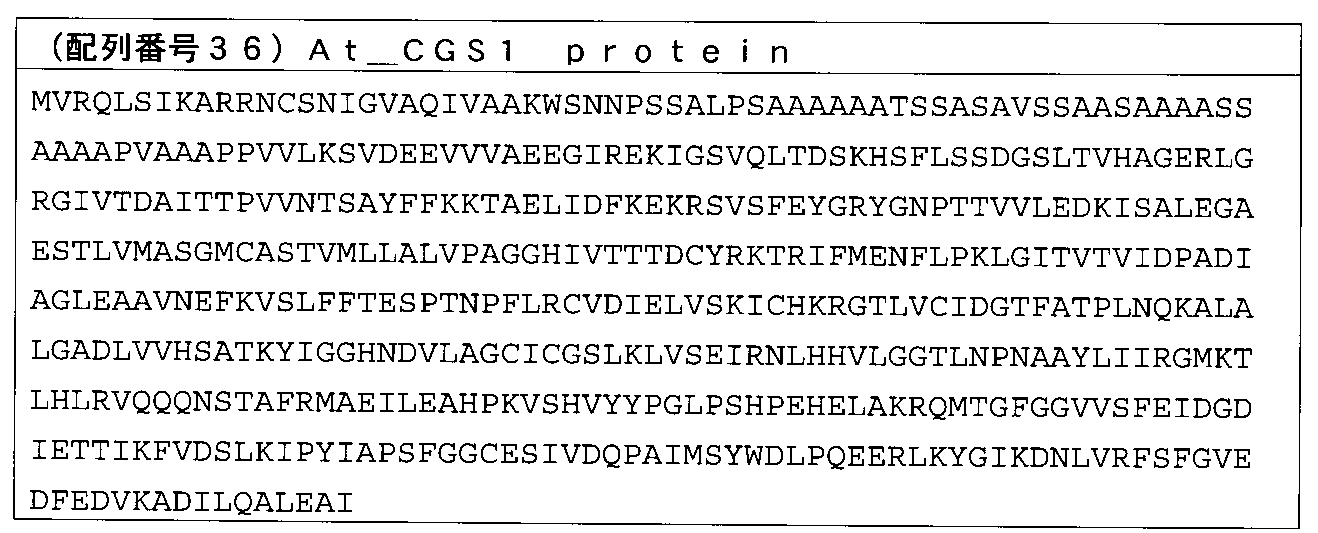
第1、第5および第6遺伝子は、形質転換のために適切なプラスミドベクターに組み込むことができる。
形質転換方法は、公知の方法を制限無く使用できる。このような公知の方法としては、「(1.1.4)形質転換」の欄に記載した方法と同様の方法を使用することができる。
宿主は、野生株の他に、その変異株や人為的な遺伝子組換え体であってもよい。宿主がコリネ型細菌である場合、宿主は、「(1.1.5)宿主染色体遺伝子の破壊または欠失」の欄に記載した遺伝子破壊株または遺伝子欠失株と同様の遺伝子破壊株または遺伝子欠失株を使用することができる。また、遺伝子破壊株または遺伝子欠失株を作製する方法としては、「(1.1.5)宿主染色体遺伝子の破壊または欠失」の欄に記載した方法と同様の方法を使用することができる。このような遺伝子破壊株または遺伝子欠失株を宿主として用いることにより2-アミノ-4-メチルチオカルボン酸の生産性を向上させたり、副生成物の生成を抑制したりすることができる。
具体的には、2-アミノ-4-メチルチオカルボン酸生産微生物としては、
以下からなる群より選択される第1遺伝子:
(1-1)配列番号2に記載のアミノ酸配列からなるタンパク質であって、ピルビン酸とカルボニル化合物とのアルドール反応を触媒するタンパク質をコードする遺伝子、
(1-2)配列番号2において1又は数個のアミノ酸が欠失、置換若しくは付加されたアミノ酸配列からなるタンパク質であって、ピルビン酸とカルボニル化合物とのアルドール反応を触媒する活性を有するタンパク質をコードする遺伝子、
(1-3)配列番号4に記載のアミノ酸配列からなるタンパク質であって、ピルビン酸とカルボニル化合物とのアルドール反応を触媒するタンパク質をコードする遺伝子、
(1-4)配列番号4において1又は数個のアミノ酸が欠失、置換若しくは付加されたアミノ酸配列からなるタンパク質であって、ピルビン酸とカルボニル化合物とのアルドール反応を触媒する活性を有するタンパク質をコードする遺伝子、
(1-5)配列番号6に記載のアミノ酸配列からなるタンパク質であって、ピルビン酸とカルボニル化合物とのアルドール反応を触媒するタンパク質をコードする遺伝子、および
(1-6)配列番号6において1又は数個のアミノ酸が欠失、置換若しくは付加されたアミノ酸配列からなるタンパク質であって、ピルビン酸とカルボニル化合物とのアルドール反応を触媒する活性を有するタンパク質をコードする遺伝子;
以下からなる群より選択される第5遺伝子:
(5-1)配列番号30に記載のアミノ酸配列からなるタンパク質であって、α-ケト酸の還元的アミノ化反応を触媒するタンパク質をコードする遺伝子、
(5-2)配列番号30において1又は数個のアミノ酸が欠失、置換若しくは付加されたアミノ酸配列からなるタンパク質であって、α-ケト酸の還元的アミノ化反応を触媒する活性を有するタンパク質をコードする遺伝子、
(5-3)配列番号32に記載のアミノ酸配列からなるタンパク質であって、α-ケト酸の還元的アミノ化反応を触媒するタンパク質をコードする遺伝子、
(5-4)配列番号32において1又は数個のアミノ酸が欠失、置換若しくは付加されたアミノ酸配列からなるタンパク質であって、α-ケト酸の還元的アミノ化反応を触媒する活性を有するタンパク質をコードする遺伝子、
(5-5)配列番号34に記載のアミノ酸配列からなるタンパク質であって、α-ケト酸の還元的アミノ化反応を触媒するタンパク質をコードする遺伝子、および
(5-6)配列番号34において1又は数個のアミノ酸が欠失、置換若しくは付加されたアミノ酸配列からなるタンパク質であって、α-ケト酸の還元的アミノ化反応を触媒する活性を有するタンパク質をコードする遺伝子;および
以下からなる群より選択される第6遺伝子:
(6-1)配列番号36に記載のアミノ酸配列からなるタンパク質であって、2-アミノ-4-ホスホノオキシカルボン酸が有するリン酸基をメチルメルカプタンが有するメチルメルカプト基で置換する反応を触媒するタンパク質をコードする遺伝子、および
(6-2)配列番号36において1又は数個のアミノ酸が欠失、置換若しくは付加されたアミノ酸配列からなるタンパク質であって、2-アミノ-4-ホスホノオキシカルボン酸が有するリン酸基をメチルメルカプタンが有するメチルメルカプト基で置換する反応を触媒する活性を有するタンパク質をコードする遺伝子
を含むコリネ型細菌を使用することができる。
2-アミノ-4-メチルチオカルボン酸生産微生物(例えば、上述した形質転換体)を、ピルビン酸供給化合物とカルボニル化合物とメチルメルカプタンとの存在下で培養して、2-アミノ-4-メチルチオカルボン酸を生産することができる。「ピルビン酸供給化合物とカルボニル化合物とメチルメルカプタンとの存在下で培養すること」は、ピルビン酸供給化合物とカルボニル化合物とメチルメルカプタンとを含む培養液中で培養することにより行うことができる。好ましくは、「ピルビン酸供給化合物とカルボニル化合物とメチルメルカプタンとの存在下で培養すること」は、ピルビン酸供給化合物とカルボニル化合物とメチルメルカプタンとを添加した培養液中で培養することにより行うことができる。
増殖用培養液としては、「(1.2.1)増殖用培養液」の欄に記載した増殖用培養液と同様の培養液を使用することができる。
生産用培養液としては、ピルビン酸供給化合物、カルボニル化合物、メチルメルカプタン及びその他必要な成分を含有する培養液を用いることができる。その他必要な成分として、例えば、無機塩類、糖類以外の炭素源又は窒素源を用いることができる。
生産培養における培養温度は、2-アミノ-4-メチルチオカルボン酸の生産に適した温度であれば、任意の温度であってもよい。生産培養における培養温度は、約20~50℃が好ましく、約25~47℃がより好ましい。上記温度範囲であれば、効率良く2-アミノ-4-メチルチオカルボン酸を製造できる。生産用培養液のpHは、2-アミノ-4-メチルチオカルボン酸の生産に適したpHであれば、任意のpHであってもよい。生産用培養液のpHは、約6~8の範囲内に維持することが好ましい。生産用培養液のpHの調整は、無機あるいは有機の酸;水酸化カリウム水溶液等のアルカリ溶液;尿素;炭酸カルシウム;アンモニア;4-モルホリノプロパンスルホン酸等を含むpH緩衝液等を用いて行うことができる。生産培養中も必要に応じて生産用培養液のpHは、適宜調整することができる。生産培養における培養時間は、形質転換体が2-アミノ-4-メチルチオカルボン酸を生産するのに十分な時間であれば、任意の時間であってもよい。生産培養における培養時間は、約3時間~7日間が好ましく、約1~3日間がより好ましい。
生産培養は、好気的条件の下で行われてもよく、嫌気的条件または微好気的条件の下で行われてもよい。これは、上述した形質転換体が、好気的条件の下でも嫌気的条件または微好気的条件の下でも働く、2-アミノ-4-メチルチオカルボン酸を生産する経路を有しているためである。2-アミノ-4-メチルチオカルボン酸を生産する経路は、後述の「(6.3)作用および効果」の欄で述べる。
生産培養は、好ましくは、嫌気的条件または微好気的条件の下で行われる。
生産培養は、好ましくは、形質転換体を生産用培養液中に高密度に懸濁させた状態で行われる。このような状態で形質転換体を培養すると、一層効率的に2-アミノ-4-メチルチオカルボン酸を生産することができる。
上述のとおり、第1、第5および第6遺伝子を含む形質転換体を生産用培養液中で培養すると、生産用培養液中に2-アミノ-4-メチルチオカルボン酸が生産される。
R101C(O)R102
(ここでR101およびR102は、互いに独立に、水素、または1~5個の炭素原子を有するアルキル基である)
により表されるカルボニル化合物を使用した場合、下記一般式(7):
R101C(R102)(SCH3)CH2CH(NH2)COOH
(上記一般式(7)におけるR101およびR102は、それぞれ上記一般式(1)におけるR101およびR102と同じ基である)
により表される2-アミノ-4-メチルチオカルボン酸を生産することができる。
上記一般式(1)中、R101がメチル基であり、かつ、R102が水素であるカルボニル化合物を使用した場合、上記一般式(7)中、R101がメチル基であり、かつ、R102が水素である2-アミノ-4-メチルチオカルボン酸(すなわち、2-アミノ-4-メチルチオ吉草酸)を生産することができる。
上記一般式(1)中、R101がエチル基であり、かつ、R102が水素であるカルボニル化合物を使用した場合、上記一般式(7)中、R101がエチル基であり、かつ、R102が水素である2-アミノ-4-メチルチオカルボン酸(すなわち、2-アミノ-4-メチルチオカプロン酸)を生産することができる。
上記一般式(1)中、R101がプロピル基であり、かつ、R102が水素であるカルボニル化合物を使用した場合、上記一般式(7)中、R101がプロピル基であり、かつ、R102が水素である2-アミノ-4-メチルチオカルボン酸(すなわち、2-アミノ-4-メチルチオエナント酸)を生産することができる。具体的には、上記一般式(1)中、R101がノルマルプロピル基であり、かつ、R102が水素であるカルボニル化合物を使用した場合、上記一般式(7)中、R101がノルマルプロピル基であり、かつ、R102が水素である2-アミノ-4-メチルチオカルボン酸(すなわち、2-アミノ-4-メチルチオノルマルヘプタン酸)を生産することができる。また、具体的には、上記一般式(1)中、R101がイソプロピル基であり、かつ、R102が水素であるカルボニル化合物を使用した場合、上記一般式(7)中、R101がイソプロピル基であり、かつ、R102が水素である2-アミノ-4-メチルチオカルボン酸(すなわち、2-アミノ-4-メチルチオイソエナント酸)を生産することができる。
上記一般式(1)中、R101がペンチル基であり、かつ、R102が水素であるカルボニル化合物を使用した場合、上記一般式(7)中、R101がペンチル基であり、かつ、R102が水素である2-アミノ-4-メチルチオカルボン酸(すなわち、2-アミノ-4-メチルチオカプリル酸)を生産することができる。具体的には、上記一般式(1)中、R101がノルマルペンチル基であり、かつ、R102が水素であるカルボニル化合物を使用した場合、上記一般式(7)中、R101がノルマルペンチル基であり、かつ、R102が水素である2-アミノ-4-メチルチオカルボン酸(すなわち、2-アミノ-4-メチルチオノルマルカプリル酸)を生産することができる。
上記一般式(1)中、R101およびR102がいずれもメチル基であるカルボニル化合物を使用した場合、上記一般式(7)中、R101およびR102がいずれもメチル基である2-アミノ-4-メチルチオカルボン酸(すなわち、4-メチル-2-アミノ-4-メチルチオ吉草酸)を生産することができる。
なお、2-アミノ-4-メチルチオ酪酸はメチオニンとも呼ばれる。メチオニンは、例えば、L-メチオニンである。
2-アミノ-4-メチルチオカルボン酸生産微生物が2-アミノ-4-メチルチオカルボン酸を生産するプロセスを模式的に図5に示す。図5に示すプロセスにおいては、ピルビン酸供給化合物がグルコースであり、カルボニル化合物がホルムアルデヒドであり、2-アミノ-4-メチルチオカルボン酸がメチオニンである場合を例として説明する。
以下に、本発明の好ましい実施形態をまとめて示す。
[A1] ピルビン酸とカルボニル化合物とのアルドール反応を触媒する酵素をコードする遺伝子を含む微生物を、ピルビン酸および糖類から選ばれるピルビン酸供給化合物と、
下記一般式(1):
R101C(O)R102
(ここでR101およびR102は、互いに独立に、水素、または1~5個の炭素原子を有するアルキル基である)
により表されるカルボニル化合物と
の存在下で培養して、
下記一般式(2):
R101C(R102)(OH)CH2COCOOH
(上記一般式(2)におけるR101およびR102は、それぞれ上記一般式(1)におけるR101およびR102と同じ基である)
により表されるα-ケト酸を生産する工程を含む、α-ケト酸の製造方法。
[A2] 前記一般式(1)及び(2)中、R102が水素である[A1]に記載の方法。
[A3] 前記一般式(1)及び(2)中、R101が、水素、メチル基、エチル基、プロピル基またはペンチル基であり、かつ、R102が水素である[A1]または[A2]に記載の方法。
[A4] 前記一般式(1)及び(2)中、R101が、水素、メチル基、エチル基、ノルマルプロピル基、イソプロピル基またはノルマルペンチル基であり、かつ、R102が水素である[A1]~[A3]の何れか1に記載の方法。
[A5] 前記培養が、前記ピルビン酸供給化合物およびカルボニル化合物を含む培養液中で前記微生物を培養することにより行われる[A1]~[A4]の何れか1に記載の方法。
[A6] 前記培養液は、前記ピルビン酸供給化合物およびカルボニル化合物を添加した培養液である[A5]に記載の方法。
[A7] 前記ピルビン酸供給化合物は、前記培養液中で0.1~40(w/v)%、好ましくは、1~20(w/v)%の濃度になるように添加される[A6]に記載の方法。
[A8] カルボニル化合物は、前記培養液中で0.001~10(w/v)%、好ましくは、0.01~1(w/v)%の濃度になるように添加される[A6]または[A7]に記載の方法。
[A9] 前記ピルビン酸供給化合物は、糖類である[A1]~[A8]の何れか1に記載の方法。
[A10] 前記糖類は、単糖、例えばフルクトースもしくはグルコース;二糖、例えばスクロース;多糖、例えば構成単糖としてグルコースを含む多糖;または植物(例えば非可食農産廃棄物またはエネルギー作物)を糖化酵素で処理することにより得られた糖化液である[A1]~[A9]の何れか1に記載の方法。
[A11] 前記糖類は、グルコースである[A1]~[A10]の何れか1に記載の方法。
[A12] 前記ピルビン酸供給化合物は、ピルビン酸である[A1]~[A8]の何れか1に記載の方法。
[A13] 前記培養が、嫌気的条件または微好気的条件の下で行われる[A1]~[A12]の何れか1に記載の方法。
[A14] 前記培養が、前記ピルビン酸供給化合物およびカルボニル化合物を含む培養液中で前記微生物を培養することにより行われる[A13]に記載の方法。
[A15] 前記嫌気的条件または前記微好気的条件は、前記培養液中の溶存酸素濃度が0~2ppmの範囲内にあり、好ましくは0~1ppmの範囲内にあり、より好ましくは0~0.5ppmの範囲内にある条件である[A14]に記載の方法。
[A16] 前記培養が、前記微生物を培養液中に高密度に懸濁させた状態で行われる[A1]~[A15]の何れか1に記載の方法。
[A17] 前記培養が、前記ピルビン酸供給化合物およびカルボニル化合物を含む培養液中で前記微生物を培養することにより行われる[A16]に記載の方法。
[A18] 前記微生物を前記培養液中に高密度に懸濁させた前記状態は、前記微生物を前記培養液中に、前記微生物の湿菌体重量%が1~50(w/v)%の範囲内になるように懸濁させた状態、好ましくは、前記微生物を前記培養液中に、前記微生物の湿菌体重量%が3~30(w/v)%の範囲内になるように懸濁させた状態である[A17]に記載の方法。
[A19] 前記遺伝子は、アルドラーゼをコードする[A1]~[A18]の何れか1に記載の方法。
[A20] 前記遺伝子は、タイプIのアルドラーゼをコードする[A1]~[A19]の何れか1に記載の方法。
[A21] 前記遺伝子は、タイプIIのアルドラーゼをコードする[A1]~[A19]の何れか1に記載の方法。
[A22] 前記遺伝子は、以下からなる群より選択されるアルドラーゼをコードする:
(a1)2-デヒドロ-3-デオキシ-ホスホグルコネートアルドラーゼ(2-dehydro-3-deoxy-phosphogluconate aldolase)、
(a2)2-デヒドロ-3-デオキシ-6-ホスホグルコネートアルドラーゼ(2-dehydro-3-deoxy-6-phosphogluconate aldolase)、
(a3)4-ヒドロキシ-2-オキソグルタレートアルドラーゼ(4-hydroxy-2-oxoglutarate aldolase)、
(a4)(4S)-4-ヒドロキシル-2-オキソグルタレートアルドラーゼ((4S)-4-hydroxyl-2-oxoglutarate aldolase)、
(a5)2-デヒドロ-3-デオキシ-D-ペントネートアルドラーゼ(2-dehydro-3-deoxy-D-pentonate aldolase)、
(a6)2-デヒドロ-3-デオキシ-D-グルコネートアルドラーゼ(2-dehydro-3-deoxy-D-gluconate aldolase)、
(a7)3-デオキシ-D-マンノ-オクツロソネートアルドラーゼ(3-deoxy-D-manno-octulosonate aldolase)、
(a8)4-ヒドロキシル-2-オキソバレレートアルドラーゼ(4-hydroxyl-2-oxovalerate aldolase)、
(a9)4-(2-カルボキシフェニル)-2-オキソブ-3-エノエートアルドラーゼ(4-(2-carboxyphenyl)-2-oxobut-3-enoate aldolase)、
(a10)4-ヒドロキシ-2-オキソヘプタンジオエートアルドラーゼ(4-hydroxy-2-oxoheptanedioate aldolase)、
(a11)2-デヒドロ-3-デオキシグルカレートアルドラーゼ(2-dehydro-3-deoxyglucarate aldolase)、
(a12)2-ケト-3-デオキシ-L-ラムノネートアルドラーゼ(2-keto-3-deoxy-L-rhamnonate aldolase)、
(a13)4-ヒドロキシル-4-メチル-2-オキソグルタレートアルドラーゼ(4-hydroxyl-4-methyl-2-oxoglutarate aldolase)、および
(a14)4-ヒドロキシ-2-オキソヘキサノネートアルドラーゼ(4-hydroxy-2-oxohexanonate aldolase);
[A1]~[A21]の何れか1に記載の方法。
[A23] 前記遺伝子は、edaタンパク質、好ましくは、大腸菌由来のedaタンパク質;dgoAタンパク質、好ましくは、大腸菌由来のdgoAタンパク質;yjhHタンパク質、好ましくは、大腸菌由来のyjhHタンパク質;yagEタンパク質、好ましくは、大腸菌由来のyagEタンパク質;nanAタンパク質、好ましくは、大腸菌由来のnanAタンパク質;mhpEタンパク質、好ましくは、大腸菌由来のmhpEタンパク質;hpaIタンパク質、好ましくは、大腸菌由来のhpaIタンパク質;bphIタンパク質、好ましくは、バークホルデリア ゼノボランス由来のbphIタンパク質;phdJタンパク質、好ましくは、ノカルディオイデス属菌由来のphdJタンパク質;garLタンパク質、好ましくは、大腸菌由来のgarLタンパク質;rhmAタンパク質、好ましくは、大腸菌由来のrhmAタンパク質;およびgalCタンパク質、好ましくは、シュードモナス プチダ由来のgalCタンパク質;からなる群より選択されるアルドラーゼをコードする[A1]~[A22]の何れか1に記載の方法。
[A24] 前記遺伝子は以下からなる群より選択される:
(1-1)配列番号2に記載のアミノ酸配列からなるタンパク質であって、ピルビン酸とカルボニル化合物とのアルドール反応を触媒するタンパク質をコードする遺伝子、
(1-2)配列番号2において1又は数個のアミノ酸が欠失、置換若しくは付加されたアミノ酸配列からなるタンパク質であって、ピルビン酸とカルボニル化合物とのアルドール反応を触媒する活性を有するタンパク質をコードする遺伝子、
(1-3)配列番号4に記載のアミノ酸配列からなるタンパク質であって、ピルビン酸とカルボニル化合物とのアルドール反応を触媒するタンパク質をコードする遺伝子、
(1-4)配列番号4において1又は数個のアミノ酸が欠失、置換若しくは付加されたアミノ酸配列からなるタンパク質であって、ピルビン酸とカルボニル化合物とのアルドール反応を触媒する活性を有するタンパク質をコードする遺伝子、
(1-5)配列番号6に記載のアミノ酸配列からなるタンパク質であって、ピルビン酸とカルボニル化合物とのアルドール反応を触媒するタンパク質をコードする遺伝子、
(1-6)配列番号6において1又は数個のアミノ酸が欠失、置換若しくは付加されたアミノ酸配列からなるタンパク質であって、ピルビン酸とカルボニル化合物とのアルドール反応を触媒する活性を有するタンパク質をコードする遺伝子、
(1-7)配列番号8に記載のアミノ酸配列からなるタンパク質であって、ピルビン酸とカルボニル化合物とのアルドール反応を触媒するタンパク質をコードする遺伝子、
(1-8)配列番号8において1又は数個のアミノ酸が欠失、置換若しくは付加されたアミノ酸配列からなるタンパク質であって、ピルビン酸とカルボニル化合物とのアルドール反応を触媒する活性を有するタンパク質をコードする遺伝子、
(1-9)配列番号10に記載のアミノ酸配列からなるタンパク質であって、ピルビン酸とカルボニル化合物とのアルドール反応を触媒するタンパク質をコードする遺伝子、
(1-10)配列番号10において1又は数個のアミノ酸が欠失、置換若しくは付加されたアミノ酸配列からなるタンパク質であって、ピルビン酸とカルボニル化合物とのアルドール反応を触媒する活性を有するタンパク質をコードする遺伝子、
(1-11)配列番号12に記載のアミノ酸配列からなるタンパク質であって、ピルビン酸とカルボニル化合物とのアルドール反応を触媒するタンパク質をコードする遺伝子、
(1-12)配列番号12において1又は数個のアミノ酸が欠失、置換若しくは付加されたアミノ酸配列からなるタンパク質であって、ピルビン酸とカルボニル化合物とのアルドール反応を触媒する活性を有するタンパク質をコードする遺伝子、
(1-13)配列番号14に記載のアミノ酸配列からなるタンパク質であって、ピルビン酸とカルボニル化合物とのアルドール反応を触媒するタンパク質をコードする遺伝子、
(1-14)配列番号14において1又は数個のアミノ酸が欠失、置換若しくは付加されたアミノ酸配列からなるタンパク質であって、ピルビン酸とカルボニル化合物とのアルドール反応を触媒する活性を有するタンパク質をコードする遺伝子、
(1-15)配列番号16に記載のアミノ酸配列からなるタンパク質であって、ピルビン酸とカルボニル化合物とのアルドール反応を触媒するタンパク質をコードする遺伝子、
(1-16)配列番号16において1又は数個のアミノ酸が欠失、置換若しくは付加されたアミノ酸配列からなるタンパク質であって、ピルビン酸とカルボニル化合物とのアルドール反応を触媒する活性を有するタンパク質をコードする遺伝子、
(1-17)配列番号18に記載のアミノ酸配列からなるタンパク質であって、ピルビン酸とカルボニル化合物とのアルドール反応を触媒するタンパク質をコードする遺伝子、
(1-18)配列番号18において1又は数個のアミノ酸が欠失、置換若しくは付加されたアミノ酸配列からなるタンパク質であって、ピルビン酸とカルボニル化合物とのアルドール反応を触媒する活性を有するタンパク質をコードする遺伝子、
(1-19)配列番号20に記載のアミノ酸配列からなるタンパク質であって、ピルビン酸とカルボニル化合物とのアルドール反応を触媒するタンパク質をコードする遺伝子、
(1-20)配列番号20において1又は数個のアミノ酸が欠失、置換若しくは付加されたアミノ酸配列からなるタンパク質であって、ピルビン酸とカルボニル化合物とのアルドール反応を触媒する活性を有するタンパク質をコードする遺伝子、
(1-21)配列番号22に記載のアミノ酸配列からなるタンパク質であって、ピルビン酸とカルボニル化合物とのアルドール反応を触媒するタンパク質をコードする遺伝子、および
(1-22)配列番号22において1又は数個のアミノ酸が欠失、置換若しくは付加されたアミノ酸配列からなるタンパク質であって、ピルビン酸とカルボニル化合物とのアルドール反応を触媒する活性を有するタンパク質をコードする遺伝子;
[A1]~[A23]の何れか1に記載の方法。
[A25] 前記遺伝子は以下からなる群より選択される:
配列番号1に記載の塩基配列からなる遺伝子、
配列番号3に記載の塩基配列からなる遺伝子、
配列番号5に記載の塩基配列からなる遺伝子、
配列番号7に記載の塩基配列からなる遺伝子、
配列番号9に記載の塩基配列からなる遺伝子、
配列番号11に記載の塩基配列からなる遺伝子、
配列番号13に記載の塩基配列からなる遺伝子、
配列番号15に記載の塩基配列からなる遺伝子、
配列番号17に記載の塩基配列からなる遺伝子、
配列番号19に記載の塩基配列からなる遺伝子、および
配列番号21に記載の塩基配列からなる遺伝子;
[A1]~[A24]の何れか1に記載の方法。
[A26] 前記微生物は、好気性細菌、好ましくは、コリネ型細菌、より好ましくは、コリネバクテリウム属(Corynebacterium)菌、より好ましくは、コリネバクテリウム グルタミカム(Corynebacterium glutamicum)である[A1]~[A25]の何れか1に記載の方法。
[A27] 前記微生物は、前記遺伝子によって形質転換された微生物である[A1]~[A26]の何れか1に記載の方法。
[A28] 前記微生物は、ラクテート(乳酸)デヒドロゲナーゼ(lactate dehydrogenase)遺伝子、フォスフォエノールピルベートカルボキシラーゼ(phosphoenolpyrvate carboxylase)遺伝子、ピルビン酸カルボキシラーゼ(pyruvate carboxylase)遺伝子、ピルビン酸デヒドロゲナーゼ(pyruvate dehydrogenase)遺伝子、グルタミン酸-ピルビン酸アミノトランスフェラーゼ(glutamate-pyruvate aminotransferase)遺伝子、アセトラクテートシンターゼ(acetolactate synthase)遺伝子、N-スクシニルジアミノピメレート(N-succinyldiaminopimelate aminotransferase)遺伝子、S-(ヒドロキシメチル)ミコチオールデヒドロゲナーゼ(S-(hydroxymethyl)mycothiol dehydrogenase)遺伝子、およびアセトアルデヒドデヒドロゲナーゼ(acetaldehyde dehydrogenase)遺伝子からなる群より選択される少なくとも一つの遺伝子の欠損株である[A1]~[A27]の何れか1に記載の方法。
[A29] 前記培養の前に、前記微生物を好気的条件下で培養することを更に含む[A1]~[A28]の何れか1に記載の方法。
[A30] 生産されたα-ケト酸を回収することを更に含む[A1]~[A29]の何れか1に記載の方法。
以下の遺伝子:
(a)ピルビン酸とカルボニル化合物とのアルドール反応を触媒する酵素をコードする第1遺伝子、
(b)α-ケト酸の脱炭酸反応を触媒する酵素をコードする第2遺伝子、および
(c)アルデヒドの還元反応を触媒する酵素をコードする第3遺伝子
を含む微生物を、ピルビン酸および糖類から選ばれるピルビン酸供給化合物と、
下記一般式(3):
R103C(O)R104
(ここでR103およびR104は、互いに独立に、水素、または1~5個の炭素原子を有するアルキル基である。ただし、R103が水素であるとき、R104は水素ではない。)
により表されるカルボニル化合物と
の存在下で培養して、
下記一般式(4):
R103C(R104)(OH)CH2CH2OH
(上記一般式(4)におけるR103およびR104は、それぞれ上記一般式(3)におけるR103およびR104と同じ基である)
により表される1,3-ジオールを生産する工程を含む、1,3-ジオールの製造方法。
[B2] 前記一般式(3)及び(4)中、R104が水素である[B1]に記載の方法。
[B3] 前記一般式(3)及び(4)中、R103が、水素、メチル基、エチル基、プロピル基またはペンチル基であり、かつ、R104が水素である[B1]または[B2]に記載の方法。
[B4] 前記一般式(3)及び(4)中、R103が、メチル基、エチル基、ノルマルプロピル基、イソプロピル基またはノルマルペンチル基であり、かつ、R104が水素である[B1]~[B3]の何れか1に記載の方法。
[B5] 前記培養が、前記ピルビン酸供給化合物およびカルボニル化合物を含む培養液中で前記微生物を培養することにより行われる[B1]~[B4]の何れか1に記載の方法。
[B6] 前記培養液は、前記ピルビン酸供給化合物およびカルボニル化合物を添加した培養液である[B5]に記載の方法。
[B7] 前記ピルビン酸供給化合物は、前記培養液中で0.1~40(w/v)%、好ましくは、1~20(w/v)%の濃度になるように添加される[B6]に記載の方法。
[B8] カルボニル化合物は、前記培養液中で0.001~10(w/v)%、好ましくは、0.01~1(w/v)%の濃度になるように添加される[B6]または[B7]に記載の方法。
[B9] 前記ピルビン酸供給化合物は、糖類である[B1]~[B8]の何れか1に記載の方法。
[B10] 前記糖類は、単糖、例えばフルクトースもしくはグルコース;二糖、例えばスクロース;多糖、例えば構成単糖としてグルコースを含む多糖;または植物(例えば非可食農産廃棄物またはエネルギー作物)を糖化酵素で処理することにより得られた糖化液である[B1]~[B9]の何れか1に記載の方法。
[B11] 前記糖類は、グルコースである[B1]~[B10]の何れか1に記載の方法。
[B12] 前記ピルビン酸供給化合物は、ピルビン酸である[B1]~[B8]の何れか1に記載の方法。
[B13] 前記培養が、嫌気的条件または微好気的条件の下で行われる[B1]~[B12]の何れか1に記載の方法。
[B14] 前記培養が、前記ピルビン酸供給化合物およびカルボニル化合物を含む培養液中で前記微生物を培養することにより行われる[B13]に記載の方法。
[B15] 前記嫌気的条件または前記微好気的条件は、前記培養液中の溶存酸素濃度が0~2ppmの範囲内にあり、好ましくは0~1ppmの範囲内にあり、より好ましくは0~0.5ppmの範囲内にある条件である[B14]に記載の方法。
[B16] 前記培養が、前記微生物を培養液中に高密度に懸濁させた状態で行われる[B1]~[B15]の何れか1に記載の方法。
[B17] 前記培養が、前記ピルビン酸供給化合物およびカルボニル化合物を含む培養液中で前記微生物を培養することにより行われる[B16]に記載の方法。
[B18] 前記微生物を前記培養液中に高密度に懸濁させた前記状態は、前記微生物を前記培養液中に、前記微生物の湿菌体重量%が1~50(w/v)%の範囲内になるように懸濁させた状態、好ましくは、前記微生物を前記培養液中に、前記微生物の湿菌体重量%が3~30(w/v)%の範囲内になるように懸濁させた状態である[B17]に記載の方法。
[B19] 生産された1,3-ジオールを回収することを更に含む[B1]~[B18]の何れか1に記載の方法。
[B20] 以下の遺伝子:
(a)ピルビン酸とカルボニル化合物とのアルドール反応を触媒する酵素をコードする第1遺伝子、
(b)α-ケト酸の脱炭酸反応を触媒する酵素をコードする第2遺伝子、および
(c)アルデヒドの還元反応を触媒する酵素をコードする第3遺伝子
を含む微生物を、ピルビン酸および糖類から選ばれるピルビン酸供給化合物の存在下で培養して、1,3-ブタンジオールを生産する工程を含む、1,3-ブタンジオールの製造方法。
[B21] 前記培養が、前記ピルビン酸供給化合物を含む培養液中で前記微生物を培養することにより行われる[B20]に記載の方法。
[B22] 前記培養液は、前記ピルビン酸供給化合物を添加した培養液である[B21]に記載の方法。
[B23] 前記ピルビン酸供給化合物は、前記培養液中で0.1~40(w/v)%、好ましくは、1~20(w/v)%の濃度になるように添加される[B22]に記載の方法。
[B24] 前記ピルビン酸供給化合物は、糖類である[B20]~[B23]の何れか1に記載の方法。
[B25] 前記糖類は、単糖、例えばフルクトースもしくはグルコース;二糖、例えばスクロース;多糖、例えば構成単糖としてグルコースを含む多糖;または植物(例えば非可食農産廃棄物またはエネルギー作物)を糖化酵素で処理することにより得られた糖化液である[B20]~[B24]の何れか1に記載の方法。
[B26] 前記糖類は、グルコースである[B20]~[B25]の何れか1に記載の方法。
[B27] 前記培養が、嫌気的条件または微好気的条件の下で行われる[B20]~[B26]の何れか1に記載の方法。
[B28] 前記培養が、前記ピルビン酸供給化合物を含む培養液中で前記微生物を培養することにより行われる[B27]に記載の方法。
[B29] 前記嫌気的条件または前記微好気的条件は、前記培養液中の溶存酸素濃度が0~2ppmの範囲内にあり、好ましくは0~1ppmの範囲内にあり、より好ましくは0~0.5ppmの範囲内にある条件である[B28]に記載の方法。
[B30] 前記培養が、前記微生物を培養液中に高密度に懸濁させた状態で行われる[B20]~[B29]の何れか1に記載の方法。
[B31] 前記培養が、前記ピルビン酸供給化合物を含む培養液中で前記微生物を培養することにより行われる[B30]に記載の方法。
[B32] 前記微生物を前記培養液中に高密度に懸濁させた前記状態は、前記微生物を前記培養液中に、前記微生物の湿菌体重量%が1~50(w/v)%の範囲内になるように懸濁させた状態、好ましくは、前記微生物を前記培養液中に、前記微生物の湿菌体重量%が3~30(w/v)%の範囲内になるように懸濁させた状態である[B31]に記載の方法。
[B33] 生産された1,3-ブタンジオールを回収することを更に含む[B20]~[B32]の何れか1に記載の方法。
[B34] 前記第1遺伝子は、アルドラーゼをコードする[B1]~[B33]の何れか1に記載の方法。
[B35] 前記第1遺伝子は、タイプIのアルドラーゼをコードする[B1]~[B34]の何れか1に記載の方法。
[B36] 前記第1遺伝子は、タイプIIのアルドラーゼをコードする[B1]~[B34]の何れか1に記載の方法。
[B37] 前記第1遺伝子は、以下からなる群より選択されるアルドラーゼをコードする:
(a1)2-デヒドロ-3-デオキシ-ホスホグルコネートアルドラーゼ(2-dehydro-3-deoxy-phosphogluconate aldolase)、
(a2)2-デヒドロ-3-デオキシ-6-ホスホグルコネートアルドラーゼ(2-dehydro-3-deoxy-6-phosphogluconate aldolase)、
(a3)4-ヒドロキシ-2-オキソグルタレートアルドラーゼ(4-hydroxy-2-oxoglutarate aldolase)、
(a4)(4S)-4-ヒドロキシル-2-オキソグルタレートアルドラーゼ((4S)-4-hydroxyl-2-oxoglutarate aldolase)、
(a5)2-デヒドロ-3-デオキシ-D-ペントネートアルドラーゼ(2-dehydro-3-deoxy-D-pentonate aldolase)、
(a6)2-デヒドロ-3-デオキシ-D-グルコネートアルドラーゼ(2-dehydro-3-deoxy-D-gluconate aldolase)、
(a7)3-デオキシ-D-マンノ-オクツロソネートアルドラーゼ(3-deoxy-D-manno-octulosonate aldolase)、
(a8)4-ヒドロキシル-2-オキソバレレートアルドラーゼ(4-hydroxyl-2-oxovalerate aldolase)、
(a9)4-(2-カルボキシフェニル)-2-オキソブ-3-エノエートアルドラーゼ(4-(2-carboxyphenyl)-2-oxobut-3-enoate aldolase)、
(a10)4-ヒドロキシ-2-オキソヘプタンジオエートアルドラーゼ(4-hydroxy-2-oxoheptanedioate aldolase)、
(a11)2-デヒドロ-3-デオキシグルカレートアルドラーゼ(2-dehydro-3-deoxyglucarate aldolase)、
(a12)2-ケト-3-デオキシ-L-ラムノネートアルドラーゼ(2-keto-3-deoxy-L-rhamnonate aldolase)、
(a13)4-ヒドロキシル-4-メチル-2-オキソグルタレートアルドラーゼ(4-hydroxyl-4-methyl-2-oxoglutarate aldolase)、および
(a14)4-ヒドロキシ-2-オキソヘキサノネートアルドラーゼ(4-hydroxy-2-oxohexanonate aldolase);
[B1]~[B36]の何れか1に記載の方法。
[B38] 前記第1遺伝子は、edaタンパク質、好ましくは、大腸菌由来のedaタンパク質;dgoAタンパク質、好ましくは、大腸菌由来のdgoAタンパク質;yjhHタンパク質、好ましくは、大腸菌由来のyjhHタンパク質;yagEタンパク質、好ましくは、大腸菌由来のyagEタンパク質;nanAタンパク質、好ましくは、大腸菌由来のnanAタンパク質;mhpEタンパク質、好ましくは、大腸菌由来のmhpEタンパク質;hpaIタンパク質、好ましくは、大腸菌由来のhpaIタンパク質;bphIタンパク質、好ましくは、バークホルデリア ゼノボランス由来のbphIタンパク質;phdJタンパク質、好ましくは、ノカルディオイデス属菌由来のphdJタンパク質;garLタンパク質、好ましくは、大腸菌由来のgarLタンパク質;rhmAタンパク質、好ましくは、大腸菌由来のrhmAタンパク質;およびgalCタンパク質、好ましくは、シュードモナス プチダ由来のgalCタンパク質;からなる群より選択されるアルドラーゼをコードする[B1]~[B37]の何れか1に記載の方法。
[B39] 前記第1遺伝子は以下からなる群より選択される:
(1-1)配列番号2に記載のアミノ酸配列からなるタンパク質であって、ピルビン酸とカルボニル化合物とのアルドール反応を触媒するタンパク質をコードする遺伝子、
(1-2)配列番号2において1又は数個のアミノ酸が欠失、置換若しくは付加されたアミノ酸配列からなるタンパク質であって、ピルビン酸とカルボニル化合物とのアルドール反応を触媒する活性を有するタンパク質をコードする遺伝子、
(1-3)配列番号4に記載のアミノ酸配列からなるタンパク質であって、ピルビン酸とカルボニル化合物とのアルドール反応を触媒するタンパク質をコードする遺伝子、
(1-4)配列番号4において1又は数個のアミノ酸が欠失、置換若しくは付加されたアミノ酸配列からなるタンパク質であって、ピルビン酸とカルボニル化合物とのアルドール反応を触媒する活性を有するタンパク質をコードする遺伝子、
(1-5)配列番号6に記載のアミノ酸配列からなるタンパク質であって、ピルビン酸とカルボニル化合物とのアルドール反応を触媒するタンパク質をコードする遺伝子、
(1-6)配列番号6において1又は数個のアミノ酸が欠失、置換若しくは付加されたアミノ酸配列からなるタンパク質であって、ピルビン酸とカルボニル化合物とのアルドール反応を触媒する活性を有するタンパク質をコードする遺伝子、
(1-7)配列番号8に記載のアミノ酸配列からなるタンパク質であって、ピルビン酸とカルボニル化合物とのアルドール反応を触媒するタンパク質をコードする遺伝子、
(1-8)配列番号8において1又は数個のアミノ酸が欠失、置換若しくは付加されたアミノ酸配列からなるタンパク質であって、ピルビン酸とカルボニル化合物とのアルドール反応を触媒する活性を有するタンパク質をコードする遺伝子、
(1-9)配列番号10に記載のアミノ酸配列からなるタンパク質であって、ピルビン酸とカルボニル化合物とのアルドール反応を触媒するタンパク質をコードする遺伝子、
(1-10)配列番号10において1又は数個のアミノ酸が欠失、置換若しくは付加されたアミノ酸配列からなるタンパク質であって、ピルビン酸とカルボニル化合物とのアルドール反応を触媒する活性を有するタンパク質をコードする遺伝子、
(1-11)配列番号12に記載のアミノ酸配列からなるタンパク質であって、ピルビン酸とカルボニル化合物とのアルドール反応を触媒するタンパク質をコードする遺伝子、
(1-12)配列番号12において1又は数個のアミノ酸が欠失、置換若しくは付加されたアミノ酸配列からなるタンパク質であって、ピルビン酸とカルボニル化合物とのアルドール反応を触媒する活性を有するタンパク質をコードする遺伝子、
(1-13)配列番号14に記載のアミノ酸配列からなるタンパク質であって、ピルビン酸とカルボニル化合物とのアルドール反応を触媒するタンパク質をコードする遺伝子、
(1-14)配列番号14において1又は数個のアミノ酸が欠失、置換若しくは付加されたアミノ酸配列からなるタンパク質であって、ピルビン酸とカルボニル化合物とのアルドール反応を触媒する活性を有するタンパク質をコードする遺伝子、
(1-15)配列番号16に記載のアミノ酸配列からなるタンパク質であって、ピルビン酸とカルボニル化合物とのアルドール反応を触媒するタンパク質をコードする遺伝子、
(1-16)配列番号16において1又は数個のアミノ酸が欠失、置換若しくは付加されたアミノ酸配列からなるタンパク質であって、ピルビン酸とカルボニル化合物とのアルドール反応を触媒する活性を有するタンパク質をコードする遺伝子、
(1-17)配列番号18に記載のアミノ酸配列からなるタンパク質であって、ピルビン酸とカルボニル化合物とのアルドール反応を触媒するタンパク質をコードする遺伝子、
(1-18)配列番号18において1又は数個のアミノ酸が欠失、置換若しくは付加されたアミノ酸配列からなるタンパク質であって、ピルビン酸とカルボニル化合物とのアルドール反応を触媒する活性を有するタンパク質をコードする遺伝子、
(1-19)配列番号20に記載のアミノ酸配列からなるタンパク質であって、ピルビン酸とカルボニル化合物とのアルドール反応を触媒するタンパク質をコードする遺伝子、
(1-20)配列番号20において1又は数個のアミノ酸が欠失、置換若しくは付加されたアミノ酸配列からなるタンパク質であって、ピルビン酸とカルボニル化合物とのアルドール反応を触媒する活性を有するタンパク質をコードする遺伝子、
(1-21)配列番号22に記載のアミノ酸配列からなるタンパク質であって、ピルビン酸とカルボニル化合物とのアルドール反応を触媒するタンパク質をコードする遺伝子、および
(1-22)配列番号22において1又は数個のアミノ酸が欠失、置換若しくは付加されたアミノ酸配列からなるタンパク質であって、ピルビン酸とカルボニル化合物とのアルドール反応を触媒する活性を有するタンパク質をコードする遺伝子;
[B1]~[B38]の何れか1に記載の方法。
[B40] 前記第1遺伝子は以下からなる群より選択される:
配列番号1に記載の塩基配列からなる遺伝子、
配列番号3に記載の塩基配列からなる遺伝子、
配列番号5に記載の塩基配列からなる遺伝子、
配列番号7に記載の塩基配列からなる遺伝子、
配列番号9に記載の塩基配列からなる遺伝子、
配列番号11に記載の塩基配列からなる遺伝子、
配列番号13に記載の塩基配列からなる遺伝子、
配列番号15に記載の塩基配列からなる遺伝子、
配列番号17に記載の塩基配列からなる遺伝子、
配列番号19に記載の塩基配列からなる遺伝子、および
配列番号21に記載の塩基配列からなる遺伝子;
[B1]~[B39]の何れか1に記載の方法。
[B41] 前記第2遺伝子は、前記アルドール反応により得られたα-ケト酸の脱炭酸反応を触媒する前記酵素をコードする[B1]~[B40]の何れか1に記載の方法。
[B42] 前記第2遺伝子は、脱炭酸酵素をコードする[B1]~[B41]の何れか1に記載の方法。
[B43] 前記第2遺伝子は、以下からなる群より選択される脱炭酸酵素をコードする:
(b1)ピルベートデカルボキシラーゼ(pyruvate decarboxylase)、
(b2)ベンゾイルフォルメートデカルボキシラーゼ(benzoylformate decarboxylase)、および
(b3)インドールピルベートデカルボキシラーゼ(indolepyruvate decarboxylase);
[B1]~[B42]の何れか1に記載の方法。
[B44] 前記第2遺伝子は、pdcタンパク質、好ましくは、ザイモモナス モビリス由来のpdcタンパク質;mdlCタンパク質、好ましくは、シュードモナス プチダ由来のmdlCタンパク質;kivDタンパク質、好ましくは、ラクトコッカス ラクティス由来のkivDタンパク質;からなる群より選択される脱炭酸酵素をコードする[B1]~[B43]の何れか1に記載の方法。
[B45] 前記第2遺伝子は、mdlCタンパク質、好ましくは、シュードモナス プチダ由来のmdlCタンパク質をコードする[B1]~[B44]の何れか1に記載の方法。
[B46] 前記第2遺伝子は以下からなる群より選択される:
(2-1)配列番号24に記載のアミノ酸配列からなるタンパク質であって、α-ケト酸の脱炭酸反応を触媒するタンパク質をコードする遺伝子、および
(2-2)配列番号24において1又は数個のアミノ酸が欠失、置換若しくは付加されたアミノ酸配列からなるタンパク質であって、α-ケト酸の脱炭酸反応を触媒する活性を有するタンパク質をコードする遺伝子;
[B1]~[B45]の何れか1に記載の方法。
[B47] 前記第2遺伝子は、配列番号23に記載の塩基配列からなる遺伝子である[B1]~[B46]の何れか1に記載の方法。
[B48] 前記第3遺伝子は、前記第1遺伝子がコードする前記酵素が触媒する前記アルドール反応の基質であるアルデヒドとは種類が異なるアルデヒドの還元反応を触媒する前記酵素をコードする[B1]~[B47]の何れか1に記載の方法。
[B49] 前記第3遺伝子は、前記脱炭酸反応により得られたアルデヒドの還元反応を触媒する前記酵素をコードする[B1]~[B48]の何れか1に記載の方法。
[B50] 前記第3遺伝子は、アルコールデヒドロゲナーゼをコードする[B1]~[B49]の何れか1に記載の方法。
[B51] 前記第3遺伝子は、1,3-プロパンジオールデヒドロゲナーゼ(1,3-propanediol dehydrogenase)をコードする[B1]~[B50]の何れか1に記載の方法。
[B52] 前記第3遺伝子は、dhaTタンパク質、好ましくは、クレブシエラ ニューモニエ由来のdhaTタンパク質;およびlpoタンパク質、好ましくは、ラクトバチルス ロイテリ由来のlpoタンパク質;からなる群より選択される1,3-プロパンジオールデヒドロゲナーゼをコードする[B1]~[B51]の何れか1に記載の方法。
[B53] 前記第3遺伝子は以下からなる群より選択される:
(3-1)配列番号26に記載のアミノ酸配列からなるタンパク質であって、アルデヒドの還元反応を触媒するタンパク質をコードする遺伝子、および
(3-2)配列番号26において1又は数個のアミノ酸が欠失、置換若しくは付加されたアミノ酸配列からなるタンパク質であって、アルデヒドの還元反応を触媒する活性を有するタンパク質をコードする遺伝子;
[B1]~[B52]の何れか1に記載の方法。
[B54] 前記第3遺伝子は、配列番号25に記載の塩基配列からなる遺伝子である[B1]~[B53]の何れか1に記載の方法。
[B55] 前記微生物は、好気性細菌、好ましくは、コリネ型細菌、より好ましくは、コリネバクテリウム属(Corynebacterium)菌、より好ましくは、コリネバクテリウム グルタミカム(Corynebacterium glutamicum)である[B1]~[B54]の何れか1に記載の方法。
[B56] 前記微生物は、前記第1、前記第2および前記第3遺伝子によって形質転換された微生物である[B1]~[B55]の何れか1に記載の方法。
[B57] 前記微生物は、ラクテート(乳酸)デヒドロゲナーゼ(lactate dehydrogenase)遺伝子、フォスフォエノールピルベートカルボキシラーゼ(phosphoenolpyrvate carboxylase)遺伝子、ピルビン酸カルボキシラーゼ(pyruvate carboxylase)遺伝子、ピルビン酸デヒドロゲナーゼ(pyruvate dehydrogenase)遺伝子、グルタミン酸-ピルビン酸アミノトランスフェラーゼ(glutamate-pyruvate aminotransferase)遺伝子、アセトラクテートシンターゼ(acetolactate synthase)遺伝子、N-スクシニルジアミノピメレート(N-succinyldiaminopimelate aminotransferase)遺伝子、S-(ヒドロキシメチル)ミコチオールデヒドロゲナーゼ(S-(hydroxymethyl)mycothiol dehydrogenase)遺伝子、およびアセトアルデヒドデヒドロゲナーゼ(acetaldehyde dehydrogenase)遺伝子からなる群より選択される少なくとも一つの遺伝子の欠損株である[B1]~[B56]の何れか1に記載の方法。
[B58] 前記培養の前に、前記微生物を好気的条件下で培養することを更に含む[B1]~[B57]の何れか1に記載の方法。
(a)ピルビン酸とカルボニル化合物とのアルドール反応を触媒する酵素をコードする第1遺伝子、および
(d)α-ケト酸の還元反応を触媒する酵素をコードする第4遺伝子
を含む微生物を、ピルビン酸および糖類から選ばれるピルビン酸供給化合物と、
下記一般式(1):
R101C(O)R102
(ここでR101およびR102は、互いに独立に、水素、または1~5個の炭素原子を有するアルキル基である)
により表されるカルボニル化合物と
の存在下で培養して、
下記一般式(5):
R101C(R102)(OH)CH2CH(OH)COOH
(上記一般式(5)におけるR101およびR102は、それぞれ上記一般式(1)におけるR101およびR102と同じ基である)
により表される2,4-ジヒドロキシカルボン酸を生産する工程を含む、2,4-ジヒドロキシカルボン酸の製造方法。
[C2] 前記一般式(1)及び(5)中、R102が水素である[C1]に記載の方法。
[C3] 前記一般式(1)及び(5)中、R101が、水素、メチル基、エチル基、プロピル基またはペンチル基であり、かつ、R102が水素である[C1]または[C2]の何れか1に記載の方法。
[C4] 前記一般式(1)及び(5)中、R101およびR102が、水素である[C1]~[C3]の何れか1に記載の方法。
[C5] 前記培養が、前記ピルビン酸供給化合物およびカルボニル化合物を含む培養液中で前記微生物を培養することにより行われる[C1]~[C4]の何れか1に記載の方法。
[C6] 前記培養液は、前記ピルビン酸供給化合物およびカルボニル化合物を添加した培養液である[C5]に記載の方法。
[C7] 前記ピルビン酸供給化合物は、前記培養液中で0.1~40(w/v)%、好ましくは、1~20(w/v)%の濃度になるように添加される[C6]に記載の方法。
[C8] カルボニル化合物は、前記培養液中で0.001~10(w/v)%、好ましくは、0.01~1(w/v)%の濃度になるように添加される[C6]または[C7]に記載の方法。
[C9] 前記ピルビン酸供給化合物は、糖類である[C1]~[C8]の何れか1に記載の方法。
[C10] 前記糖類は、単糖、例えばフルクトースもしくはグルコース;二糖、例えばスクロース;多糖、例えば構成単糖としてグルコースを含む多糖;または植物(例えば非可食農産廃棄物またはエネルギー作物)を糖化酵素で処理することにより得られた糖化液である[C1]~[C9]の何れか1に記載の方法。
[C11] 前記糖類は、グルコースである[C1]~[C10]の何れか1に記載の方法。
[C12] 前記ピルビン酸供給化合物は、ピルビン酸である[C1]~[C11]の何れか1に記載の方法。
[C13] 前記培養が、嫌気的条件または微好気的条件の下で行われる[C1]~[C12]の何れか1に記載の方法。
[C14] 前記培養が、前記ピルビン酸供給化合物およびカルボニル化合物を含む培養液中で前記微生物を培養することにより行われる[C13]に記載の方法。
[C15] 前記嫌気的条件または前記微好気的条件は、前記培養液中の溶存酸素濃度が0~2ppmの範囲内にあり、好ましくは0~1ppmの範囲内にあり、より好ましくは0~0.5ppmの範囲内にある条件である[C14]に記載の方法。
[C16] 前記培養が、前記微生物を培養液中に高密度に懸濁させた状態で行われる[C1]~[C15]の何れか1に記載の方法。
[C17] 前記培養が、前記ピルビン酸供給化合物およびカルボニル化合物を含む培養液中で前記微生物を培養することにより行われる[C16]に記載の方法。
[C18] 前記微生物を前記培養液中に高密度に懸濁させた前記状態は、前記微生物を前記培養液中に、前記微生物の湿菌体重量%が1~50(w/v)%の範囲内になるように懸濁させた状態、好ましくは、前記微生物を前記培養液中に、前記微生物の湿菌体重量%が3~30(w/v)%の範囲内になるように懸濁させた状態である[C17]に記載の方法。
[C19] 前記第1遺伝子は、アルドラーゼをコードする[C1]~[C18]の何れか1に記載の方法。
[C20] 前記第1遺伝子は、タイプIのアルドラーゼをコードする[C1]~[C19]の何れか1に記載の方法。
[C21] 前記第1遺伝子は、タイプIIのアルドラーゼをコードする[C1]~[C29]の何れか1に記載の方法。
[C22] 前記第1遺伝子は、以下からなる群より選択されるアルドラーゼをコードする:
(a1)2-デヒドロ-3-デオキシ-ホスホグルコネートアルドラーゼ(2-dehydro-3-deoxy-phosphogluconate aldolase)、
(a2)2-デヒドロ-3-デオキシ-6-ホスホグルコネートアルドラーゼ(2-dehydro-3-deoxy-6-phosphogluconate aldolase)、
(a3)4-ヒドロキシ-2-オキソグルタレートアルドラーゼ(4-hydroxy-2-oxoglutarate aldolase)、
(a4)(4S)-4-ヒドロキシル-2-オキソグルタレートアルドラーゼ((4S)-4-hydroxyl-2-oxoglutarate aldolase)、
(a5)2-デヒドロ-3-デオキシ-D-ペントネートアルドラーゼ(2-dehydro-3-deoxy-D-pentonate aldolase)、
(a6)2-デヒドロ-3-デオキシ-D-グルコネートアルドラーゼ(2-dehydro-3-deoxy-D-gluconate aldolase)、
(a7)3-デオキシ-D-マンノ-オクツロソネートアルドラーゼ(3-deoxy-D-manno-octulosonate aldolase)、
(a8)4-ヒドロキシル-2-オキソバレレートアルドラーゼ(4-hydroxyl-2-oxovalerate aldolase)、
(a9)4-(2-カルボキシフェニル)-2-オキソブ-3-エノエートアルドラーゼ(4-(2-carboxyphenyl)-2-oxobut-3-enoate aldolase)、
(a10)4-ヒドロキシ-2-オキソヘプタンジオエートアルドラーゼ(4-hydroxy-2-oxoheptanedioate aldolase)、
(a11)2-デヒドロ-3-デオキシグルカレートアルドラーゼ(2-dehydro-3-deoxyglucarate aldolase)、
(a12)2-ケト-3-デオキシ-L-ラムノネートアルドラーゼ(2-keto-3-deoxy-L-rhamnonate aldolase)、
(a13)4-ヒドロキシル-4-メチル-2-オキソグルタレートアルドラーゼ(4-hydroxyl-4-methyl-2-oxoglutarate aldolase)、および
(a14)4-ヒドロキシ-2-オキソヘキサノネートアルドラーゼ(4-hydroxy-2-oxohexanonate aldolase);
[C1]~[C21]の何れか1に記載の方法。
[C23] 前記第1遺伝子は、edaタンパク質、好ましくは、大腸菌由来のedaタンパク質;dgoAタンパク質、好ましくは、大腸菌由来のdgoAタンパク質;yjhHタンパク質、好ましくは、大腸菌由来のyjhHタンパク質;yagEタンパク質、好ましくは、大腸菌由来のyagEタンパク質;nanAタンパク質、好ましくは、大腸菌由来のnanAタンパク質;mhpEタンパク質、好ましくは、大腸菌由来のmhpEタンパク質;hpaIタンパク質、好ましくは、大腸菌由来のhpaIタンパク質;bphIタンパク質、好ましくは、バークホルデリア ゼノボランス由来のbphIタンパク質;phdJタンパク質、好ましくは、ノカルディオイデス属菌由来のphdJタンパク質;garLタンパク質、好ましくは、大腸菌由来のgarLタンパク質;rhmAタンパク質、好ましくは、大腸菌由来のrhmAタンパク質;およびgalCタンパク質、好ましくは、シュードモナス プチダ由来のgalCタンパク質;からなる群より選択されるアルドラーゼをコードする[C1]~[C22]の何れか1に記載の方法。
[C24] 前記第1遺伝子は以下からなる群より選択される:
(1-1)配列番号2に記載のアミノ酸配列からなるタンパク質であって、ピルビン酸とカルボニル化合物とのアルドール反応を触媒するタンパク質をコードする遺伝子、
(1-2)配列番号2において1又は数個のアミノ酸が欠失、置換若しくは付加されたアミノ酸配列からなるタンパク質であって、ピルビン酸とカルボニル化合物とのアルドール反応を触媒する活性を有するタンパク質をコードする遺伝子、
(1-3)配列番号4に記載のアミノ酸配列からなるタンパク質であって、ピルビン酸とカルボニル化合物とのアルドール反応を触媒するタンパク質をコードする遺伝子、
(1-4)配列番号4において1又は数個のアミノ酸が欠失、置換若しくは付加されたアミノ酸配列からなるタンパク質であって、ピルビン酸とカルボニル化合物とのアルドール反応を触媒する活性を有するタンパク質をコードする遺伝子、
(1-5)配列番号6に記載のアミノ酸配列からなるタンパク質であって、ピルビン酸とカルボニル化合物とのアルドール反応を触媒するタンパク質をコードする遺伝子、
(1-6)配列番号6において1又は数個のアミノ酸が欠失、置換若しくは付加されたアミノ酸配列からなるタンパク質であって、ピルビン酸とカルボニル化合物とのアルドール反応を触媒する活性を有するタンパク質をコードする遺伝子、
(1-7)配列番号8に記載のアミノ酸配列からなるタンパク質であって、ピルビン酸とカルボニル化合物とのアルドール反応を触媒するタンパク質をコードする遺伝子、
(1-8)配列番号8において1又は数個のアミノ酸が欠失、置換若しくは付加されたアミノ酸配列からなるタンパク質であって、ピルビン酸とカルボニル化合物とのアルドール反応を触媒する活性を有するタンパク質をコードする遺伝子、
(1-9)配列番号10に記載のアミノ酸配列からなるタンパク質であって、ピルビン酸とカルボニル化合物とのアルドール反応を触媒するタンパク質をコードする遺伝子、
(1-10)配列番号10において1又は数個のアミノ酸が欠失、置換若しくは付加されたアミノ酸配列からなるタンパク質であって、ピルビン酸とカルボニル化合物とのアルドール反応を触媒する活性を有するタンパク質をコードする遺伝子、
(1-11)配列番号12に記載のアミノ酸配列からなるタンパク質であって、ピルビン酸とカルボニル化合物とのアルドール反応を触媒するタンパク質をコードする遺伝子、
(1-12)配列番号12において1又は数個のアミノ酸が欠失、置換若しくは付加されたアミノ酸配列からなるタンパク質であって、ピルビン酸とカルボニル化合物とのアルドール反応を触媒する活性を有するタンパク質をコードする遺伝子、
(1-13)配列番号14に記載のアミノ酸配列からなるタンパク質であって、ピルビン酸とカルボニル化合物とのアルドール反応を触媒するタンパク質をコードする遺伝子、
(1-14)配列番号14において1又は数個のアミノ酸が欠失、置換若しくは付加されたアミノ酸配列からなるタンパク質であって、ピルビン酸とカルボニル化合物とのアルドール反応を触媒する活性を有するタンパク質をコードする遺伝子、
(1-15)配列番号16に記載のアミノ酸配列からなるタンパク質であって、ピルビン酸とカルボニル化合物とのアルドール反応を触媒するタンパク質をコードする遺伝子、
(1-16)配列番号16において1又は数個のアミノ酸が欠失、置換若しくは付加されたアミノ酸配列からなるタンパク質であって、ピルビン酸とカルボニル化合物とのアルドール反応を触媒する活性を有するタンパク質をコードする遺伝子、
(1-17)配列番号18に記載のアミノ酸配列からなるタンパク質であって、ピルビン酸とカルボニル化合物とのアルドール反応を触媒するタンパク質をコードする遺伝子、
(1-18)配列番号18において1又は数個のアミノ酸が欠失、置換若しくは付加されたアミノ酸配列からなるタンパク質であって、ピルビン酸とカルボニル化合物とのアルドール反応を触媒する活性を有するタンパク質をコードする遺伝子、
(1-19)配列番号20に記載のアミノ酸配列からなるタンパク質であって、ピルビン酸とカルボニル化合物とのアルドール反応を触媒するタンパク質をコードする遺伝子、
(1-20)配列番号20において1又は数個のアミノ酸が欠失、置換若しくは付加されたアミノ酸配列からなるタンパク質であって、ピルビン酸とカルボニル化合物とのアルドール反応を触媒する活性を有するタンパク質をコードする遺伝子、
(1-21)配列番号22に記載のアミノ酸配列からなるタンパク質であって、ピルビン酸とカルボニル化合物とのアルドール反応を触媒するタンパク質をコードする遺伝子、および
(1-22)配列番号22において1又は数個のアミノ酸が欠失、置換若しくは付加されたアミノ酸配列からなるタンパク質であって、ピルビン酸とカルボニル化合物とのアルドール反応を触媒する活性を有するタンパク質をコードする遺伝子;
[C1]~[C23]の何れか1に記載の方法。
[C25] 前記第1遺伝子は以下からなる群より選択される:
配列番号1に記載の塩基配列からなる遺伝子、
配列番号3に記載の塩基配列からなる遺伝子、
配列番号5に記載の塩基配列からなる遺伝子、
配列番号7に記載の塩基配列からなる遺伝子、
配列番号9に記載の塩基配列からなる遺伝子、
配列番号11に記載の塩基配列からなる遺伝子、
配列番号13に記載の塩基配列からなる遺伝子、
配列番号15に記載の塩基配列からなる遺伝子、
配列番号17に記載の塩基配列からなる遺伝子、
配列番号19に記載の塩基配列からなる遺伝子、および
配列番号21に記載の塩基配列からなる遺伝子;
[C1]~[C24]の何れか1に記載の方法。
[C26] 前記第4遺伝子は、前記アルドール反応により得られたα-ケト酸のα-ケト酸の還元反応を触媒する前記酵素をコードする[C1]~[C23]の何れか1に記載の方法。
[C27] 前記第4遺伝子は、デヒドロゲナーゼをコードする[C1]~[C26]の何れか1に記載の方法。
[C28] 前記第4遺伝子は、乳酸デヒドロゲナーゼをコードする[C1]~[C27]の何れか1に記載の方法。
[C29] 前記第4遺伝子は、ldhAタンパク質、好ましくは、ラクトコッカス ラクティス由来のldhAタンパク質、より好ましくは、ラクトコッカス ラクティスNBRC100676株由来のldhAタンパク質、さらに好ましくは、ラクトコッカス ラクティスNBRC100676株由来のldhAタンパク質であって、N末端から85番目のグルタミン残基がシステイン残基に置換されているタンパク質をコードする[C1]~[C28]の何れか1に記載の方法。
[C30] 前記第4遺伝子は以下からなる群より選択される:
(4-1)配列番号28に記載のアミノ酸配列からなるタンパク質であって、α-ケト酸の還元反応を触媒するタンパク質をコードする遺伝子、および
(4-2)配列番号28において1又は数個のアミノ酸が欠失、置換若しくは付加されたアミノ酸配列からなるタンパク質であって、α-ケト酸の還元反応を触媒する活性を有するタンパク質をコードする遺伝子;
[C1]~[C29]の何れか1に記載の方法。
[C31] 配列番号28において1又は数個のアミノ酸が欠失、置換若しくは付加されたアミノ酸配列からなる前記タンパク質であって、α-ケト酸の還元反応を触媒する活性を有する前記タンパク質をコードする前記遺伝子は、N末端から85番目の残基にシステイン残基を維持しているタンパク質をコードしている[C1]~[C30]の何れか1に記載の方法。
[C32] 前記第4遺伝子は、配列番号27に記載の塩基配列からなる遺伝子である[C1]~[C31]の何れか1に記載の方法。
[C33] 前記微生物は、好気性細菌、好ましくは、コリネ型細菌、より好ましくは、コリネバクテリウム属(Corynebacterium)菌、より好ましくは、コリネバクテリウム グルタミカム(Corynebacterium glutamicum)である[C1]~[C32]の何れか1に記載の方法。
[C34] 前記微生物は、前記第1および前記第4遺伝子によって形質転換された微生物である[C1]~[C33]の何れか1に記載の方法。
[C35] 前記微生物は、ラクテート(乳酸)デヒドロゲナーゼ(lactate dehydrogenase)遺伝子、フォスフォエノールピルベートカルボキシラーゼ(phosphoenolpyrvate carboxylase)遺伝子、ピルビン酸カルボキシラーゼ(pyruvate carboxylase)遺伝子、ピルビン酸デヒドロゲナーゼ(pyruvate dehydrogenase)遺伝子、グルタミン酸-ピルビン酸アミノトランスフェラーゼ(glutamate-pyruvate aminotransferase)遺伝子、アセトラクテートシンターゼ(acetolactate synthase)遺伝子、N-スクシニルジアミノピメレート(N-succinyldiaminopimelate aminotransferase)遺伝子、S-(ヒドロキシメチル)ミコチオールデヒドロゲナーゼ(S-(hydroxymethyl)mycothiol dehydrogenase)遺伝子、およびアセトアルデヒドデヒドロゲナーゼ(acetaldehyde dehydrogenase)遺伝子からなる群より選択される少なくとも一つの遺伝子の欠損株である[C1]~[C34]の何れか1に記載の方法。
[C36] 前記培養の前に、前記微生物を好気的条件下で培養することを更に含む[C1]~[C35]の何れか1に記載の方法。
[C37] 生産された2,4-ジヒドロキシカルボン酸を回収することを更に含む[C1]~[C36]の何れか1に記載の方法。
(a)ピルビン酸とカルボニル化合物とのアルドール反応を触媒する酵素をコードする第1遺伝子、および
(e)α-ケト酸の還元的アミノ化反応を触媒する酵素をコードする第5遺伝子
を含む微生物を、ピルビン酸および糖類から選ばれるピルビン酸供給化合物と、
下記一般式(1):
R101C(O)R102
(ここでR101およびR102は、互いに独立に、水素、または1~5個の炭素原子を有するアルキル基である)
により表されるカルボニル化合物と
の存在下で培養して、
下記一般式(6):
R101C(R102)(OH)CH2CH(NH2)COOH
(上記一般式(6)におけるR101およびR102は、それぞれ上記一般式(1)におけるR101およびR102と同じ基である)
により表される2-アミノ-4-ヒドロキシカルボン酸を生産する工程を含む、2-アミノ-4-ヒドロキシカルボン酸の製造方法。
[D2] 前記一般式(1)及び(6)中、R102が水素である[D1]に記載の方法。
[D3] 前記一般式(1)及び(6)中、R101が、水素、メチル基、エチル基、プロピル基またはペンチル基であり、かつ、R102が水素である[D1]または[D2]に記載の方法。
[D4] 前記一般式(1)及び(6)中、R101およびR102が、水素である[D1]~[D3]の何れか1に記載の方法。
[D5] 生産された2-アミノ-4-ヒドロキシカルボン酸を回収することを更に含む[D1]~[D4]の何れか1に記載の方法。
[D6] 以下の遺伝子:
(a)ピルビン酸とカルボニル化合物とのアルドール反応を触媒する酵素をコードする第1遺伝子、および
(e)α-ケト酸の還元的アミノ化反応を触媒する酵素をコードする第5遺伝子
を含む微生物を、ピルビン酸および糖類から選ばれるピルビン酸供給化合物とホルムアルデヒド(これは、カルボニル化合物である)との存在下で培養して、ホモセリン、スレオニンおよび2-アミノ酪酸のうち少なくとも1つを生産する工程を含む、ホモセリン、スレオニンおよび2-アミノ酪酸のうち少なくとも1つの製造方法。
[D7] 生産されたホモセリン、スレオニンおよび2-アミノ酪酸のうち少なくとも1つを回収することを更に含む[D6]に記載の方法。
[D8] 前記培養が、前記ピルビン酸供給化合物およびカルボニル化合物を含む培養液中で前記微生物を培養することにより行われる[D1]~[D7]の何れか1に記載の方法。
[D9] 前記培養液は、前記ピルビン酸供給化合物およびカルボニル化合物を添加した培養液である[D8]に記載の方法。
[D10] 前記ピルビン酸供給化合物は、前記培養液中で0.1~40(w/v)%、好ましくは、1~20(w/v)%の濃度になるように添加される[D9]に記載の方法。
[D11] カルボニル化合物は、前記培養液中で0.001~10(w/v)%、好ましくは、0.01~1(w/v)%の濃度になるように添加される[D9]または[D10]に記載の方法。
[D12] 前記ピルビン酸供給化合物は、糖類である[D1]~[D11]の何れか1に記載の方法。
[D13] 前記糖類は、単糖、例えばフルクトースもしくはグルコース;二糖、例えばスクロース;多糖、例えば構成単糖としてグルコースを含む多糖;または植物(例えば非可食農産廃棄物またはエネルギー作物)を糖化酵素で処理することにより得られた糖化液である[D1]~[D12]の何れか1に記載の方法。
[D14] 前記糖類は、グルコースである[D1]~[D13]の何れか1に記載の方法。
[D15] 前記ピルビン酸供給化合物は、ピルビン酸である[D1]~[D14]の何れか1に記載の方法。
[D16] 前記培養が、嫌気的条件または微好気的条件の下で行われる[D1]~[D15]の何れか1に記載の方法。
[D17] 前記培養が、前記ピルビン酸供給化合物およびカルボニル化合物を含む培養液中で前記微生物を培養することにより行われる[D16]に記載の方法。
[D18] 前記嫌気的条件または前記微好気的条件は、前記培養液中の溶存酸素濃度が0~2ppmの範囲内にあり、好ましくは0~1ppmの範囲内にあり、より好ましくは0~0.5ppmの範囲内にある条件である[D17]に記載の方法。
[D19] 前記培養が、前記微生物を培養液中に高密度に懸濁させた状態で行われる[D1]~[D18]の何れか1に記載の方法。
[D20] 前記培養が、前記ピルビン酸供給化合物およびカルボニル化合物を含む培養液中で前記微生物を培養することにより行われる[D19]に記載の方法。
[D21] 前記微生物を前記培養液中に高密度に懸濁させた前記状態は、前記微生物を前記培養液中に、前記微生物の湿菌体重量%が1~50(w/v)%の範囲内になるように懸濁させた状態、好ましくは、前記微生物を前記培養液中に、前記微生物の湿菌体重量%が3~30(w/v)%の範囲内になるように懸濁させた状態である[D20]に記載の方法。
[D22] 前記第1遺伝子は、アルドラーゼをコードする[D1]~[D21]の何れか1に記載の方法。
[D23] 前記第1遺伝子は、タイプIのアルドラーゼをコードする[D1]~[D22]の何れか1に記載の方法。
[D24] 前記第1遺伝子は、タイプIIのアルドラーゼをコードする[D1]~[D22]の何れか1に記載の方法。
[D25] 前記第1遺伝子は、以下からなる群より選択されるアルドラーゼをコードする:
(a1)2-デヒドロ-3-デオキシ-ホスホグルコネートアルドラーゼ(2-dehydro-3-deoxy-phosphogluconate aldolase)、
(a2)2-デヒドロ-3-デオキシ-6-ホスホグルコネートアルドラーゼ(2-dehydro-3-deoxy-6-phosphogluconate aldolase)、
(a3)4-ヒドロキシ-2-オキソグルタレートアルドラーゼ(4-hydroxy-2-oxoglutarate aldolase)、
(a4)(4S)-4-ヒドロキシル-2-オキソグルタレートアルドラーゼ((4S)-4-hydroxyl-2-oxoglutarate aldolase)、
(a5)2-デヒドロ-3-デオキシ-D-ペントネートアルドラーゼ(2-dehydro-3-deoxy-D-pentonate aldolase)、
(a6)2-デヒドロ-3-デオキシ-D-グルコネートアルドラーゼ(2-dehydro-3-deoxy-D-gluconate aldolase)、
(a7)3-デオキシ-D-マンノ-オクツロソネートアルドラーゼ(3-deoxy-D-manno-octulosonate aldolase)、
(a8)4-ヒドロキシル-2-オキソバレレートアルドラーゼ(4-hydroxyl-2-oxovalerate aldolase)、
(a9)4-(2-カルボキシフェニル)-2-オキソブ-3-エノエートアルドラーゼ(4-(2-carboxyphenyl)-2-oxobut-3-enoate aldolase)、
(a10)4-ヒドロキシ-2-オキソヘプタンジオエートアルドラーゼ(4-hydroxy-2-oxoheptanedioate aldolase)、
(a11)2-デヒドロ-3-デオキシグルカレートアルドラーゼ(2-dehydro-3-deoxyglucarate aldolase)、
(a12)2-ケト-3-デオキシ-L-ラムノネートアルドラーゼ(2-keto-3-deoxy-L-rhamnonate aldolase)、
(a13)4-ヒドロキシル-4-メチル-2-オキソグルタレートアルドラーゼ(4-hydroxyl-4-methyl-2-oxoglutarate aldolase)、および
(a14)4-ヒドロキシ-2-オキソヘキサノネートアルドラーゼ(4-hydroxy-2-oxohexanonate aldolase);
[D1]~[D24]の何れか1に記載の方法。
[D26] 前記第1遺伝子は、edaタンパク質、好ましくは、大腸菌由来のedaタンパク質;dgoAタンパク質、好ましくは、大腸菌由来のdgoAタンパク質;yjhHタンパク質、好ましくは、大腸菌由来のyjhHタンパク質;yagEタンパク質、好ましくは、大腸菌由来のyagEタンパク質;nanAタンパク質、好ましくは、大腸菌由来のnanAタンパク質;mhpEタンパク質、好ましくは、大腸菌由来のmhpEタンパク質;hpaIタンパク質、好ましくは、大腸菌由来のhpaIタンパク質;bphIタンパク質、好ましくは、バークホルデリア ゼノボランス由来のbphIタンパク質;phdJタンパク質、好ましくは、ノカルディオイデス属菌由来のphdJタンパク質;garLタンパク質、好ましくは、大腸菌由来のgarLタンパク質;rhmAタンパク質、好ましくは、大腸菌由来のrhmAタンパク質;およびgalCタンパク質、好ましくは、シュードモナス プチダ由来のgalCタンパク質;からなる群より選択されるアルドラーゼをコードする[D1]~[D25]の何れか1に記載の方法。
[D27] 前記第1遺伝子は以下からなる群より選択される:
(1-1)配列番号2に記載のアミノ酸配列からなるタンパク質であって、ピルビン酸とカルボニル化合物とのアルドール反応を触媒するタンパク質をコードする遺伝子、
(1-2)配列番号2において1又は数個のアミノ酸が欠失、置換若しくは付加されたアミノ酸配列からなるタンパク質であって、ピルビン酸とカルボニル化合物とのアルドール反応を触媒する活性を有するタンパク質をコードする遺伝子、
(1-3)配列番号4に記載のアミノ酸配列からなるタンパク質であって、ピルビン酸とカルボニル化合物とのアルドール反応を触媒するタンパク質をコードする遺伝子、
(1-4)配列番号4において1又は数個のアミノ酸が欠失、置換若しくは付加されたアミノ酸配列からなるタンパク質であって、ピルビン酸とカルボニル化合物とのアルドール反応を触媒する活性を有するタンパク質をコードする遺伝子、
(1-5)配列番号6に記載のアミノ酸配列からなるタンパク質であって、ピルビン酸とカルボニル化合物とのアルドール反応を触媒するタンパク質をコードする遺伝子、
(1-6)配列番号6において1又は数個のアミノ酸が欠失、置換若しくは付加されたアミノ酸配列からなるタンパク質であって、ピルビン酸とカルボニル化合物とのアルドール反応を触媒する活性を有するタンパク質をコードする遺伝子、
(1-7)配列番号8に記載のアミノ酸配列からなるタンパク質であって、ピルビン酸とカルボニル化合物とのアルドール反応を触媒するタンパク質をコードする遺伝子、
(1-8)配列番号8において1又は数個のアミノ酸が欠失、置換若しくは付加されたアミノ酸配列からなるタンパク質であって、ピルビン酸とカルボニル化合物とのアルドール反応を触媒する活性を有するタンパク質をコードする遺伝子、
(1-9)配列番号10に記載のアミノ酸配列からなるタンパク質であって、ピルビン酸とカルボニル化合物とのアルドール反応を触媒するタンパク質をコードする遺伝子、
(1-10)配列番号10において1又は数個のアミノ酸が欠失、置換若しくは付加されたアミノ酸配列からなるタンパク質であって、ピルビン酸とカルボニル化合物とのアルドール反応を触媒する活性を有するタンパク質をコードする遺伝子、
(1-11)配列番号12に記載のアミノ酸配列からなるタンパク質であって、ピルビン酸とカルボニル化合物とのアルドール反応を触媒するタンパク質をコードする遺伝子、
(1-12)配列番号12において1又は数個のアミノ酸が欠失、置換若しくは付加されたアミノ酸配列からなるタンパク質であって、ピルビン酸とカルボニル化合物とのアルドール反応を触媒する活性を有するタンパク質をコードする遺伝子、
(1-13)配列番号14に記載のアミノ酸配列からなるタンパク質であって、ピルビン酸とカルボニル化合物とのアルドール反応を触媒するタンパク質をコードする遺伝子、
(1-14)配列番号14において1又は数個のアミノ酸が欠失、置換若しくは付加されたアミノ酸配列からなるタンパク質であって、ピルビン酸とカルボニル化合物とのアルドール反応を触媒する活性を有するタンパク質をコードする遺伝子、
(1-15)配列番号16に記載のアミノ酸配列からなるタンパク質であって、ピルビン酸とカルボニル化合物とのアルドール反応を触媒するタンパク質をコードする遺伝子、
(1-16)配列番号16において1又は数個のアミノ酸が欠失、置換若しくは付加されたアミノ酸配列からなるタンパク質であって、ピルビン酸とカルボニル化合物とのアルドール反応を触媒する活性を有するタンパク質をコードする遺伝子、
(1-17)配列番号18に記載のアミノ酸配列からなるタンパク質であって、ピルビン酸とカルボニル化合物とのアルドール反応を触媒するタンパク質をコードする遺伝子、
(1-18)配列番号18において1又は数個のアミノ酸が欠失、置換若しくは付加されたアミノ酸配列からなるタンパク質であって、ピルビン酸とカルボニル化合物とのアルドール反応を触媒する活性を有するタンパク質をコードする遺伝子、
(1-19)配列番号20に記載のアミノ酸配列からなるタンパク質であって、ピルビン酸とカルボニル化合物とのアルドール反応を触媒するタンパク質をコードする遺伝子、
(1-20)配列番号20において1又は数個のアミノ酸が欠失、置換若しくは付加されたアミノ酸配列からなるタンパク質であって、ピルビン酸とカルボニル化合物とのアルドール反応を触媒する活性を有するタンパク質をコードする遺伝子、
(1-21)配列番号22に記載のアミノ酸配列からなるタンパク質であって、ピルビン酸とカルボニル化合物とのアルドール反応を触媒するタンパク質をコードする遺伝子、および
(1-22)配列番号22において1又は数個のアミノ酸が欠失、置換若しくは付加されたアミノ酸配列からなるタンパク質であって、ピルビン酸とカルボニル化合物とのアルドール反応を触媒する活性を有するタンパク質をコードする遺伝子;
[D1]~[D26]の何れか1に記載の方法。
[D28] 前記第1遺伝子は以下からなる群より選択される:
配列番号1に記載の塩基配列からなる遺伝子、
配列番号3に記載の塩基配列からなる遺伝子、
配列番号5に記載の塩基配列からなる遺伝子、
配列番号7に記載の塩基配列からなる遺伝子、
配列番号9に記載の塩基配列からなる遺伝子、
配列番号11に記載の塩基配列からなる遺伝子、
配列番号13に記載の塩基配列からなる遺伝子、
配列番号15に記載の塩基配列からなる遺伝子、
配列番号17に記載の塩基配列からなる遺伝子、
配列番号19に記載の塩基配列からなる遺伝子、および
配列番号21に記載の塩基配列からなる遺伝子;
[D1]~[D27]の何れか1に記載の方法。
[D29] 前記第5遺伝子は、前記アルドール反応により得られたα-ケト酸の還元的アミノ化反応を触媒する前記酵素をコードする[D1]~[D28]の何れか1に記載の方法。
[D30] 前記第5遺伝子は、グルタミン酸/フェニルアラニン/ロイシン/バリンデヒドロゲナーゼをコードする[D1]~[D29]の何れか1に記載の方法。
[D31] 前記第5遺伝子は、グルタミン酸デヒドロゲナーゼ、フェニルアラニンデヒドロゲナーゼ、ロイシンデヒドロゲナーゼおよびバリンデヒドロゲナーゼからなる群より選択される少なくとも一つのデヒドロゲナーゼをコードする[D1]~[D30]の何れか1に記載の方法。
[D32] 前記第5遺伝子は、以下からなる群より選択されるグルタミン酸/フェニルアラニン/ロイシン/バリンデヒドロゲナーゼをコードする:
(d1)ロイシンデヒドロゲナーゼ(leucine dehydrogenase、EC番号1.4.1.9)、
(d2)フェニルアラニンデヒドロゲナーゼ(phenylalanine dehydrogenase、EC番号1.4.1.20)、および
(d3)バリンデヒドロゲナーゼ(valine dehydrogenase、EC番号1.4.1.8および1.4.1.23);
[D1]~[D31]の何れか1に記載の方法。
[D33] 前記第5遺伝子は、leuDHタンパク質、好ましくは、リシニバシラス スフェリカス由来のleuDHタンパク質、バシラス セレウス由来のleuDHタンパク質、またはジオバシラス ステアロサーモフィラス由来のleuDHタンパク質;phedhタンパク質、好ましくは、バシラス バディウス由来のphedhタンパク質;およびvaldhタンパク質、好ましくは、ストレプトミセス フラジエ由来のvaldhタンパク質;からなる群より選択されるアルドラーゼをコードする[D1]~[D32]の何れか1に記載の方法。
[D34] 前記第5遺伝子は以下からなる群より選択される:
(5-1)配列番号30に記載のアミノ酸配列からなるタンパク質であって、α-ケト酸の還元的アミノ化反応を触媒するタンパク質をコードする遺伝子、
(5-2)配列番号30において1又は数個のアミノ酸が欠失、置換若しくは付加されたアミノ酸配列からなるタンパク質であって、α-ケト酸の還元的アミノ化反応を触媒する活性を有するタンパク質をコードする遺伝子、
(5-3)配列番号32に記載のアミノ酸配列からなるタンパク質であって、α-ケト酸の還元的アミノ化反応を触媒するタンパク質をコードする遺伝子、
(5-4)配列番号32において1又は数個のアミノ酸が欠失、置換若しくは付加されたアミノ酸配列からなるタンパク質であって、α-ケト酸の還元的アミノ化反応を触媒する活性を有するタンパク質をコードする遺伝子、
(5-5)配列番号34に記載のアミノ酸配列からなるタンパク質であって、α-ケト酸の還元的アミノ化反応を触媒するタンパク質をコードする遺伝子、および
(5-6)配列番号34において1又は数個のアミノ酸が欠失、置換若しくは付加されたアミノ酸配列からなるタンパク質であって、α-ケト酸の還元的アミノ化反応を触媒する活性を有するタンパク質をコードする遺伝子;
[D1]~[D33]の何れか1に記載の方法。
[D35] 前記第5遺伝子は以下からなる群より選択される:
配列番号29に記載の塩基配列からなる遺伝子、
配列番号31に記載の塩基配列からなる遺伝子、および
配列番号33に記載の塩基配列からなるvaldh遺伝子;
[D1]~[D34]の何れか1に記載の方法。
[D36] 前記微生物は、好気性細菌、好ましくは、コリネ型細菌、より好ましくは、コリネバクテリウム属(Corynebacterium)菌、より好ましくは、コリネバクテリウム グルタミカム(Corynebacterium glutamicum)である[D1]~[D35]の何れか1に記載の方法。
[D37] 前記微生物は、前記第1および前記第5遺伝子によって形質転換された微生物である[D1]~[D36]の何れか1に記載の方法。
[D38] 前記微生物は、ラクテート(乳酸)デヒドロゲナーゼ(lactate dehydrogenase)遺伝子、フォスフォエノールピルベートカルボキシラーゼ(phosphoenolpyrvate carboxylase)遺伝子、ピルビン酸カルボキシラーゼ(pyruvate carboxylase)遺伝子、ピルビン酸デヒドロゲナーゼ(pyruvate dehydrogenase)遺伝子、グルタミン酸-ピルビン酸アミノトランスフェラーゼ(glutamate-pyruvate aminotransferase)遺伝子、アセトラクテートシンターゼ(acetolactate synthase)遺伝子、N-スクシニルジアミノピメレート(N-succinyldiaminopimelate aminotransferase)遺伝子、S-(ヒドロキシメチル)ミコチオールデヒドロゲナーゼ(S-(hydroxymethyl)mycothiol dehydrogenase)遺伝子、およびアセトアルデヒドデヒドロゲナーゼ(acetaldehyde dehydrogenase)遺伝子からなる群より選択される少なくとも一つの遺伝子の欠損株である[D1]~[D37]の何れか1に記載の方法。
[D39] 前記培養の前に、前記微生物を好気的条件下で培養することを更に含む[D1]~[D38]の何れか1に記載の方法。
(a)ピルビン酸とカルボニル化合物とのアルドール反応を触媒する酵素をコードする第1遺伝子、
(e)α-ケト酸の還元的アミノ化反応を触媒する酵素をコードする第5遺伝子、および
(f)2-アミノ-4-ホスホノオキシカルボン酸が有するリン酸基をメチルメルカプタンが有するメチルメルカプト基で置換する反応を触媒する酵素をコードする第6遺伝子
を含む微生物を、ピルビン酸および糖類から選ばれるピルビン酸供給化合物と、メチルメルカプタンと、
下記一般式(1):
R101C(O)R102
(ここでR101およびR102は、互いに独立に、水素、または1~5個の炭素原子を有するアルキル基である)
により表されるカルボニル化合物と
の存在下で培養して、
下記一般式(7):
R101C(R102)(SCH3)CH2CH(NH2)COOH
(上記一般式(7)におけるR101およびR102は、それぞれ上記一般式(1)におけるR101およびR102と同じ基である)
により表される2-アミノ-4-メチルチオカルボン酸を生産する工程を含む、2-アミノ-4-メチルチオカルボン酸の製造方法。
[E2] 前記一般式(1)及び(7)中、R102が水素である[E1]に記載の方法。
[E3] 前記一般式(1)及び(7)中、R101が、水素、メチル基、エチル基、プロピル基またはペンチル基であり、かつ、R102が水素である[E1]または[E2]に記載の方法。
[E4] 前記一般式(1)及び(7)中、R101およびR102が、水素である[E1]~[E3]の何れか1に記載の方法。
[E5] 前記培養が、前記ピルビン酸供給化合物と前記カルボニル化合物とメチルメルカプタンとを含む培養液中で前記微生物を培養することにより行われる[E1]~[E4]の何れか1に記載の方法。
[E6] 前記培養液は、前記ピルビン酸供給化合物と前記カルボニル化合物とメチルメルカプタンとを添加した培養液である[E5]に記載の方法。
[E7] 前記ピルビン酸供給化合物は、前記培養液中で0.1~40(w/v)%、好ましくは、1~20(w/v)%の濃度になるように添加される[E6]に記載の方法。
[E8] カルボニル化合物は、前記培養液中で0.001~10(w/v)%、好ましくは、0.01~1(w/v)%の濃度になるように添加される[E6]または[E7]に記載の方法。
[E9] メチルメルカプタンは、前記培養液中で1mM~1M、好ましくは、10mM~300mMの濃度になるように添加される[E6]~[E8]の何れか1に記載の方法。
[E10] 前記ピルビン酸供給化合物は、糖類である[E1]~[E9]の何れか1に記載の方法。
[E11] 前記糖類は、単糖、例えばフルクトースもしくはグルコース;二糖、例えばスクロース;多糖、例えば構成単糖としてグルコースを含む多糖;または植物(例えば非可食農産廃棄物またはエネルギー作物)を糖化酵素で処理することにより得られた糖化液である[E1]~[E10]の何れか1に記載の方法。
[E12] 前記糖類は、グルコースである[E1]~[E11]の何れか1に記載の方法。
[E13] 前記ピルビン酸供給化合物は、ピルビン酸である[E1]~[E9]の何れか1に記載の方法。
[E14] 前記培養が、嫌気的条件または微好気的条件の下で行われる[E1]~[E13]の何れか1に記載の方法。
[E15] 前記培養が、前記ピルビン酸供給化合物と前記カルボニル化合物とメチルメルカプタンとを含む培養液中で前記微生物を培養することにより行われる[E17]に記載の方法。
[E16] 前記嫌気的条件または前記微好気的条件は、前記培養液中の溶存酸素濃度が0~2ppmの範囲内にあり、好ましくは0~1ppmの範囲内にあり、より好ましくは0~0.5ppmの範囲内にある条件である[E15]に記載の方法。
[E17] 前記培養が、前記微生物を培養液中に高密度に懸濁させた状態で行われる[E1]~[E16]の何れか1に記載の方法。
[E18] 前記培養が、前記ピルビン酸供給化合物と前記カルボニル化合物とメチルメルカプタンとを含む培養液中で前記微生物を培養することにより行われる[E17]に記載の方法。
[E19] 前記微生物を前記培養液中に高密度に懸濁させた前記状態は、前記微生物を前記培養液中に、前記微生物の湿菌体重量%が1~50(w/v)%の範囲内になるように懸濁させた状態、好ましくは、前記微生物を前記培養液中に、前記微生物の湿菌体重量%が3~30(w/v)%の範囲内になるように懸濁させた状態である[E18]に記載の方法。
[E20] 前記第1遺伝子は、アルドラーゼをコードする[E1]~[E19]の何れか1に記載の方法。
[E21] 前記第1遺伝子は、タイプIのアルドラーゼをコードする[E1]~[E20]の何れか1に記載の方法。
[E22] 前記第1遺伝子は、タイプIIのアルドラーゼをコードする[E1]~[E20]の何れか1に記載の方法。
[E23] 前記第1遺伝子は、以下からなる群より選択されるアルドラーゼをコードする:
(a1)2-デヒドロ-3-デオキシ-ホスホグルコネートアルドラーゼ(2-dehydro-3-deoxy-phosphogluconate aldolase)、
(a2)2-デヒドロ-3-デオキシ-6-ホスホグルコネートアルドラーゼ(2-dehydro-3-deoxy-6-phosphogluconate aldolase)、
(a3)4-ヒドロキシ-2-オキソグルタレートアルドラーゼ(4-hydroxy-2-oxoglutarate aldolase)、
(a4)(4S)-4-ヒドロキシル-2-オキソグルタレートアルドラーゼ((4S)-4-hydroxyl-2-oxoglutarate aldolase)、
(a5)2-デヒドロ-3-デオキシ-D-ペントネートアルドラーゼ(2-dehydro-3-deoxy-D-pentonate aldolase)、
(a6)2-デヒドロ-3-デオキシ-D-グルコネートアルドラーゼ(2-dehydro-3-deoxy-D-gluconate aldolase)、
(a7)3-デオキシ-D-マンノ-オクツロソネートアルドラーゼ(3-deoxy-D-manno-octulosonate aldolase)、
(a8)4-ヒドロキシル-2-オキソバレレートアルドラーゼ(4-hydroxyl-2-oxovalerate aldolase)、
(a9)4-(2-カルボキシフェニル)-2-オキソブ-3-エノエートアルドラーゼ(4-(2-carboxyphenyl)-2-oxobut-3-enoate aldolase)、
(a10)4-ヒドロキシ-2-オキソヘプタンジオエートアルドラーゼ(4-hydroxy-2-oxoheptanedioate aldolase)、
(a11)2-デヒドロ-3-デオキシグルカレートアルドラーゼ(2-dehydro-3-deoxyglucarate aldolase)、
(a12)2-ケト-3-デオキシ-L-ラムノネートアルドラーゼ(2-keto-3-deoxy-L-rhamnonate aldolase)、
(a13)4-ヒドロキシル-4-メチル-2-オキソグルタレートアルドラーゼ(4-hydroxyl-4-methyl-2-oxoglutarate aldolase)、および
(a14)4-ヒドロキシ-2-オキソヘキサノネートアルドラーゼ(4-hydroxy-2-oxohexanonate aldolase);
[E1]~[E22]の何れか1に記載の方法。
[E24] 前記第1遺伝子は、edaタンパク質、好ましくは、大腸菌由来のedaタンパク質;dgoAタンパク質、好ましくは、大腸菌由来のdgoAタンパク質;yjhHタンパク質、好ましくは、大腸菌由来のyjhHタンパク質;yagEタンパク質、好ましくは、大腸菌由来のyagEタンパク質;nanAタンパク質、好ましくは、大腸菌由来のnanAタンパク質;mhpEタンパク質、好ましくは、大腸菌由来のmhpEタンパク質;hpaIタンパク質、好ましくは、大腸菌由来のhpaIタンパク質;bphIタンパク質、好ましくは、バークホルデリア ゼノボランス由来のbphIタンパク質;phdJタンパク質、好ましくは、ノカルディオイデス属菌由来のphdJタンパク質;garLタンパク質、好ましくは、大腸菌由来のgarLタンパク質;rhmAタンパク質、好ましくは、大腸菌由来のrhmAタンパク質;およびgalCタンパク質、好ましくは、シュードモナス プチダ由来のgalCタンパク質;からなる群より選択されるアルドラーゼをコードする[E1]~[E23]の何れか1に記載の方法。
[E25] 前記第1遺伝子は以下からなる群より選択される:
(1-1)配列番号2に記載のアミノ酸配列からなるタンパク質であって、ピルビン酸とカルボニル化合物とのアルドール反応を触媒するタンパク質をコードする遺伝子、
(1-2)配列番号2において1又は数個のアミノ酸が欠失、置換若しくは付加されたアミノ酸配列からなるタンパク質であって、ピルビン酸とカルボニル化合物とのアルドール反応を触媒する活性を有するタンパク質をコードする遺伝子、
(1-3)配列番号4に記載のアミノ酸配列からなるタンパク質であって、ピルビン酸とカルボニル化合物とのアルドール反応を触媒するタンパク質をコードする遺伝子、
(1-4)配列番号4において1又は数個のアミノ酸が欠失、置換若しくは付加されたアミノ酸配列からなるタンパク質であって、ピルビン酸とカルボニル化合物とのアルドール反応を触媒する活性を有するタンパク質をコードする遺伝子、
(1-5)配列番号6に記載のアミノ酸配列からなるタンパク質であって、ピルビン酸とカルボニル化合物とのアルドール反応を触媒するタンパク質をコードする遺伝子、
(1-6)配列番号6において1又は数個のアミノ酸が欠失、置換若しくは付加されたアミノ酸配列からなるタンパク質であって、ピルビン酸とカルボニル化合物とのアルドール反応を触媒する活性を有するタンパク質をコードする遺伝子、
(1-7)配列番号8に記載のアミノ酸配列からなるタンパク質であって、ピルビン酸とカルボニル化合物とのアルドール反応を触媒するタンパク質をコードする遺伝子、
(1-8)配列番号8において1又は数個のアミノ酸が欠失、置換若しくは付加されたアミノ酸配列からなるタンパク質であって、ピルビン酸とカルボニル化合物とのアルドール反応を触媒する活性を有するタンパク質をコードする遺伝子、
(1-9)配列番号10に記載のアミノ酸配列からなるタンパク質であって、ピルビン酸とカルボニル化合物とのアルドール反応を触媒するタンパク質をコードする遺伝子、
(1-10)配列番号10において1又は数個のアミノ酸が欠失、置換若しくは付加されたアミノ酸配列からなるタンパク質であって、ピルビン酸とカルボニル化合物とのアルドール反応を触媒する活性を有するタンパク質をコードする遺伝子、
(1-11)配列番号12に記載のアミノ酸配列からなるタンパク質であって、ピルビン酸とカルボニル化合物とのアルドール反応を触媒するタンパク質をコードする遺伝子、
(1-12)配列番号12において1又は数個のアミノ酸が欠失、置換若しくは付加されたアミノ酸配列からなるタンパク質であって、ピルビン酸とカルボニル化合物とのアルドール反応を触媒する活性を有するタンパク質をコードする遺伝子、
(1-13)配列番号14に記載のアミノ酸配列からなるタンパク質であって、ピルビン酸とカルボニル化合物とのアルドール反応を触媒するタンパク質をコードする遺伝子、
(1-14)配列番号14において1又は数個のアミノ酸が欠失、置換若しくは付加されたアミノ酸配列からなるタンパク質であって、ピルビン酸とカルボニル化合物とのアルドール反応を触媒する活性を有するタンパク質をコードする遺伝子、
(1-15)配列番号16に記載のアミノ酸配列からなるタンパク質であって、ピルビン酸とカルボニル化合物とのアルドール反応を触媒するタンパク質をコードする遺伝子、
(1-16)配列番号16において1又は数個のアミノ酸が欠失、置換若しくは付加されたアミノ酸配列からなるタンパク質であって、ピルビン酸とカルボニル化合物とのアルドール反応を触媒する活性を有するタンパク質をコードする遺伝子、
(1-17)配列番号18に記載のアミノ酸配列からなるタンパク質であって、ピルビン酸とカルボニル化合物とのアルドール反応を触媒するタンパク質をコードする遺伝子、
(1-18)配列番号18において1又は数個のアミノ酸が欠失、置換若しくは付加されたアミノ酸配列からなるタンパク質であって、ピルビン酸とカルボニル化合物とのアルドール反応を触媒する活性を有するタンパク質をコードする遺伝子、
(1-19)配列番号20に記載のアミノ酸配列からなるタンパク質であって、ピルビン酸とカルボニル化合物とのアルドール反応を触媒するタンパク質をコードする遺伝子、
(1-20)配列番号20において1又は数個のアミノ酸が欠失、置換若しくは付加されたアミノ酸配列からなるタンパク質であって、ピルビン酸とカルボニル化合物とのアルドール反応を触媒する活性を有するタンパク質をコードする遺伝子、
(1-21)配列番号22に記載のアミノ酸配列からなるタンパク質であって、ピルビン酸とカルボニル化合物とのアルドール反応を触媒するタンパク質をコードする遺伝子、および
(1-22)配列番号22において1又は数個のアミノ酸が欠失、置換若しくは付加されたアミノ酸配列からなるタンパク質であって、ピルビン酸とカルボニル化合物とのアルドール反応を触媒する活性を有するタンパク質をコードする遺伝子;
[E1]~[E24]の何れか1に記載の方法。
[E26] 前記第1遺伝子は以下からなる群より選択される:
配列番号1に記載の塩基配列からなる遺伝子、
配列番号3に記載の塩基配列からなる遺伝子、
配列番号5に記載の塩基配列からなる遺伝子、
配列番号7に記載の塩基配列からなる遺伝子、
配列番号9に記載の塩基配列からなる遺伝子、
配列番号11に記載の塩基配列からなる遺伝子、
配列番号13に記載の塩基配列からなる遺伝子、
配列番号15に記載の塩基配列からなる遺伝子、
配列番号17に記載の塩基配列からなる遺伝子、
配列番号19に記載の塩基配列からなる遺伝子、および
配列番号21に記載の塩基配列からなる遺伝子;
[E1]~[E25]の何れか1に記載の方法。
[E27] 前記第5遺伝子は、前記アルドール反応により得られたα-ケト酸の還元的アミノ化反応を触媒する前記酵素をコードする[E1]~[E26]の何れか1に記載の方法。
[E28] 前記第5遺伝子は、グルタミン酸/フェニルアラニン/ロイシン/バリンデヒドロゲナーゼをコードする[E1]~[E27]の何れか1に記載の方法。
[E29] 前記第5遺伝子は、グルタミン酸デヒドロゲナーゼ、フェニルアラニンデヒドロゲナーゼ、ロイシンデヒドロゲナーゼおよびバリンデヒドロゲナーゼからなる群より選択される少なくとも一つのデヒドロゲナーゼをコードする[E1]~[E28]の何れか1に記載の方法。
[E30] 前記第5遺伝子は、以下からなる群より選択されるグルタミン酸/フェニルアラニン/ロイシン/バリンデヒドロゲナーゼをコードする:
(d1)ロイシンデヒドロゲナーゼ(leucine dehydrogenase、EC番号1.4.1.9)、
(d2)フェニルアラニンデヒドロゲナーゼ(phenylalanine dehydrogenase、EC番号1.4.1.20)、および
(d3)バリンデヒドロゲナーゼ(valine dehydrogenase、EC番号1.4.1.8および1.4.1.23);
[E1]~[E29]の何れか1に記載の方法。
[E31] 前記第5遺伝子は、leuDHタンパク質、好ましくは、リシニバシラス スフェリカス由来のleuDHタンパク質、バシラス セレウス由来のleuDHタンパク質、またはジオバシラス ステアロサーモフィラス由来のleuDHタンパク質;phedhタンパク質、好ましくは、バシラス バディウス由来のphedhタンパク質;およびvaldhタンパク質、好ましくは、ストレプトミセス フラジエ由来のvaldhタンパク質;からなる群より選択されるアルドラーゼをコードする[E1]~[E30]の何れか1に記載の方法。
[E32] 前記第5遺伝子は以下からなる群より選択される:
(5-1)配列番号30に記載のアミノ酸配列からなるタンパク質であって、α-ケト酸の還元的アミノ化反応を触媒するタンパク質をコードする遺伝子、
(5-2)配列番号30において1又は数個のアミノ酸が欠失、置換若しくは付加されたアミノ酸配列からなるタンパク質であって、α-ケト酸の還元的アミノ化反応を触媒する活性を有するタンパク質をコードする遺伝子、
(5-3)配列番号32に記載のアミノ酸配列からなるタンパク質であって、α-ケト酸の還元的アミノ化反応を触媒するタンパク質をコードする遺伝子、
(5-4)配列番号32において1又は数個のアミノ酸が欠失、置換若しくは付加されたアミノ酸配列からなるタンパク質であって、α-ケト酸の還元的アミノ化反応を触媒する活性を有するタンパク質をコードする遺伝子、
(5-5)配列番号34に記載のアミノ酸配列からなるタンパク質であって、α-ケト酸の還元的アミノ化反応を触媒するタンパク質をコードする遺伝子、および
(5-6)配列番号34において1又は数個のアミノ酸が欠失、置換若しくは付加されたアミノ酸配列からなるタンパク質であって、α-ケト酸の還元的アミノ化反応を触媒する活性を有するタンパク質をコードする遺伝子;
[E1]~[E31]の何れか1に記載の方法。
[E33] 前記第5遺伝子は以下からなる群より選択される:
配列番号30に記載の塩基配列からなる遺伝子、
配列番号32に記載の塩基配列からなる遺伝子、および
配列番号34に記載の塩基配列からなる遺伝子;
[E1]~[E32]の何れか1に記載の方法。
[E34] 前記第6遺伝子は、トランススルフレーション酵素をコードする[B1]~[B33]の何れか1に記載の方法。
[E35] 前記第6遺伝子はシスタチオニンγ-シンターゼ(Cystathionine γ-synthase)をコードする[E1]~[E34]の何れか1に記載の方法。
[E36] 前記第6遺伝子は、CGS1タンパク質、好ましくは、シロイヌナズナ由来のCGS1タンパク質、より好ましくは、シロイヌナズナ由来のCGS1成熟タンパク質をコードする[E1]~[E35]の何れか1に記載の方法。
[E37] 前記第6遺伝子は以下からなる群より選択される:
(6-1)配列番号36に記載のアミノ酸配列からなるタンパク質であって、2-アミノ-4-ホスホノオキシカルボン酸が有するリン酸基をメチルメルカプタンが有するメチルメルカプト基で置換する反応を触媒するタンパク質をコードする遺伝子、および
(6-2)配列番号36において1又は数個のアミノ酸が欠失、置換若しくは付加されたアミノ酸配列からなるタンパク質であって、2-アミノ-4-ホスホノオキシカルボン酸が有するリン酸基をメチルメルカプタンが有するメチルメルカプト基で置換する反応を触媒する活性を有するタンパク質をコードする遺伝子;
[E1]~[E36]の何れか1に記載の方法。
[E38] 第6遺伝子は、配列番号35に記載の塩基配列からなる遺伝子である[E1]~[E37]の何れか1に記載の方法。
[E39] 前記微生物は、好気性細菌、好ましくは、コリネ型細菌、より好ましくは、コリネバクテリウム属(Corynebacterium)菌、より好ましくは、コリネバクテリウム グルタミカム(Corynebacterium glutamicum)である[E1]~[E38]の何れか1に記載の方法。
[E40] 前記微生物は、前記第1、前記第5および前記第6遺伝子によって形質転換された微生物である[E1]~[E39]の何れか1に記載の方法。
[E41] 前記微生物は、ラクテート(乳酸)デヒドロゲナーゼ(lactate dehydrogenase)遺伝子、フォスフォエノールピルベートカルボキシラーゼ(phosphoenolpyrvate carboxylase)遺伝子、ピルビン酸カルボキシラーゼ(pyruvate carboxylase)遺伝子、ピルビン酸デヒドロゲナーゼ(pyruvate dehydrogenase)遺伝子、グルタミン酸-ピルビン酸アミノトランスフェラーゼ(glutamate-pyruvate aminotransferase)遺伝子、アセトラクテートシンターゼ(acetolactate synthase)遺伝子、N-スクシニルジアミノピメレート(N-succinyldiaminopimelate aminotransferase)遺伝子、S-(ヒドロキシメチル)ミコチオールデヒドロゲナーゼ(S-(hydroxymethyl)mycothiol dehydrogenase)遺伝子、およびアセトアルデヒドデヒドロゲナーゼ(acetaldehyde dehydrogenase)遺伝子からなる群より選択される少なくとも一つの遺伝子の欠損株である[E1]~[E43]の何れか1に記載の方法。
[E42] 前記培養の前に、前記微生物を好気的条件下で培養することを更に含む[E1]~[E41]の何れか1に記載の方法。
[E43] 生産された2-アミノ-4-メチルチオカルボン酸を回収することを更に含む[E1]~[E42]の何れか1に記載の方法。
R101C(R102)(OH)CH2COCOOH
(ここでR101およびR102は、互いに独立に、水素、または1~5個の炭素原子を有するアルキル基である)
により表されるα-ケト酸と窒素源と還元剤とを、
グルタミン酸/フェニルアラニン/ロイシン/バリンデヒドロゲナーゼの存在下で反応させて、
下記一般式(6):
R101C(R102)(OH)CH2CH(NH2)COOH
(上記一般式(6)におけるR101およびR102は、それぞれ上記一般式(2)におけるR101およびR102と同じ基である)
により表される2-アミノ-4-ヒドロキシカルボン酸を生産する工程を含む、2-アミノ-4-ヒドロキシカルボン酸の製造方法。
[F2] 前記一般式(2)及び(6)中、R102が水素である[F1]に記載の方法。
[F3] 前記一般式(2)及び(6)中、R101およびR102が水素である[F1]または[F2]に記載の方法。
[F4] 前記反応が、前記一般式(2)により表される前記α-ケト酸と前記窒素源と前記還元剤とグルタミン酸/フェニルアラニン/ロイシン/バリンデヒドロゲナーゼとを含む反応液中で行われる[F1]~[F3]の何れか1に記載の方法。
[F5] 前記反応液は、前記一般式(2)により表される前記α-ケト酸と前記窒素源と前記還元剤とグルタミン酸/フェニルアラニン/ロイシン/バリンデヒドロゲナーゼとを添加した反応液である[F4]に記載の方法。
[F6] 前記一般式(2)により表される前記α-ケト酸は、前記反応液中で0.1mM~1M、好ましくは、1mM~300mMの濃度になるように添加される[F5]に記載の方法。
[F7] 前記窒素源は、前記反応液中で0.1mM~1M、好ましくは、1mM~300mMの濃度になるように添加される[F5]または[F6]に記載の方法。
[F8] 前記還元剤は、前記反応液中で0.01mM~100mM、好ましくは、0.1mM~10mMの濃度になるように添加される[F5]~[F7]の何れか1に記載の方法。
[F9] グルタミン酸/フェニルアラニン/ロイシン/バリンデヒドロゲナーゼは、前記反応液中で0.01ug/mL~1mg/mL、好ましくは、0.1~100ug/mLの濃度になるように添加される[F5]~[F8]の何れか1に記載の方法。
[F10] 前記窒素源は、アンモニウム塩である[F1]~[F19]の何れか1に記載の方法。
[F11] 前記窒素源は、塩化アンモニウム、硫酸アンモニウム、炭酸アンモニウムからなる群より選択される少なくとも1つのアンモニウム塩である[F1]~[F10]の何れか1に記載の方法。
[F12] 前記還元剤は、NADHおよびNADPHからなる群より選択される少なくとも1つである[F1]~[F11]の何れか1に記載の方法。
[F13] グルタミン酸/フェニルアラニン/ロイシン/バリンデヒドロゲナーゼは、グルタミン酸デヒドロゲナーゼ、フェニルアラニンデヒドロゲナーゼ、ロイシンデヒドロゲナーゼおよびバリンデヒドロゲナーゼからなる群より選択される少なくとも一つのデヒドロゲナーゼである[F1]~[F12]の何れか1に記載の方法。
[F14] グルタミン酸/フェニルアラニン/ロイシン/バリンデヒドロゲナーゼは以下からなる群より選択される:、
(d1)ロイシンデヒドロゲナーゼ(leucine dehydrogenase)、
(d2)フェニルアラニンデヒドロゲナーゼ(phenylalanine dehydrogenase)、および
(d3)バリンデヒドロゲナーゼ(valine dehydrogenase);
[F1]~[F13]の何れか1に記載の方法。
[F15] グルタミン酸/フェニルアラニン/ロイシン/バリンデヒドロゲナーゼは、leuDHタンパク質、好ましくは、リシニバシラス スフェリカス由来のleuDHタンパク質、バシラス セレウス由来のleuDHタンパク質またはジオバシラス ステアロサーモフィラス由来のleuDHタンパク質;phedhタンパク質、好ましくは、バシラス バディウス由来のphedhタンパク質;およびvaldhタンパク質、好ましくは、ストレプトミセス フラジエ由来のvaldhタンパク質;からなる群より選択されるデヒドロゲナーゼである[F1]~[F14]の何れか1に記載の方法。
[F16] グルタミン酸/フェニルアラニン/ロイシン/バリンデヒドロゲナーゼは以下からなる群より選択される:
(5’-1) 配列番号30に記載のアミノ酸配列からなるタンパク質であって、α-ケト酸の還元的アミノ化反応を触媒するタンパク質、
(5’-2) 配列番号30において1又は数個のアミノ酸が欠失、置換若しくは付加されたアミノ酸配列からなるタンパク質であって、α-ケト酸の還元的アミノ化反応を触媒する活性を有するタンパク質、
(5’-3) 配列番号32に記載のアミノ酸配列からなるタンパク質であって、α-ケト酸の還元的アミノ化反応を触媒するタンパク質、
(5’-4) 配列番号32において1又は数個のアミノ酸が欠失、置換若しくは付加されたアミノ酸配列からなるタンパク質であって、α-ケト酸の還元的アミノ化反応を触媒する活性を有するタンパク質、
(5’-5) 配列番号34に記載のアミノ酸配列からなるタンパク質であって、α-ケト酸の還元的アミノ化反応を触媒するタンパク質、および
(5’-6) 配列番号34において1又は数個のアミノ酸が欠失、置換若しくは付加されたアミノ酸配列からなるタンパク質であって、α-ケト酸の還元的アミノ化反応を触媒する活性を有するタンパク質;
[F1]~[F15]の何れか1に記載の方法。
R101C(R102)(OH)CH2CH(NH2)COOH
(ここでR101およびR102は、互いに独立に、水素、または1~5個の炭素原子を有するアルキル基である)
により表される2-アミノ-4-ヒドロキシカルボン酸と酸化剤とを、
グルタミン酸/フェニルアラニン/ロイシン/バリンデヒドロゲナーゼの存在下で反応させて、
下記一般式(2):
R101C(R102)(OH)CH2COCOOH
(上記一般式(2)におけるR101およびR102は、それぞれ上記一般式(6)におけるR101およびR102と同じ基である)
により表されるα-ケト酸を生産する工程を含む、α-ケト酸の製造方法。
[G2] 前記一般式(6)及び(2)中、R102が水素である[G1]に記載の方法。
[G3] 前記一般式(6)及び(2)中、R101およびR102が水素である[G1]または[G2]に記載の方法。
[G4] 前記反応が、前記一般式(6)により表される前記2-アミノ-4-ヒドロキシカルボン酸と前記酸化剤とグルタミン酸/フェニルアラニン/ロイシン/バリンデヒドロゲナーゼとを含む反応液中で行われる[G1]~[G3]の何れか1に記載の方法。
[G5] 前記反応液は、前記一般式(6)により表される前記2-アミノ-4-ヒドロキシカルボン酸と前記酸化剤とグルタミン酸/フェニルアラニン/ロイシン/バリンデヒドロゲナーゼとを添加した反応液である[G4]に記載の方法。
[G6] 前記一般式(6)により表される前記2-アミノ-4-ヒドロキシカルボン酸は、前記反応液中で0.1mM~1M、好ましくは、1mM~300mMの濃度になるように添加される[G5]に記載の方法。
[G7] 前記酸化剤は、前記反応液中で0.01mM~100mM、好ましくは、0.1mM~10mMの濃度になるように添加される[G5]または[G6]に記載の方法。
[G8] グルタミン酸/フェニルアラニン/ロイシン/バリンデヒドロゲナーゼは、前記反応液中で0.01ug/mL~1mg/mL、好ましくは、0.1~100ug/mLの濃度になるように添加される[G5]~[G7]の何れか1に記載の方法。
[G9] 前記酸化剤は、NAD+およびNADP+からなる群より選択される少なくとも1つである[G1]~[G8]の何れか1に記載の方法。
[G10] グルタミン酸/フェニルアラニン/ロイシン/バリンデヒドロゲナーゼは、グルタミン酸デヒドロゲナーゼ、フェニルアラニンデヒドロゲナーゼ、ロイシンデヒドロゲナーゼおよびバリンデヒドロゲナーゼからなる群より選択される少なくとも一つのデヒドロゲナーゼである[G1]~[G9]の何れか1に記載の方法。
[G11] グルタミン酸/フェニルアラニン/ロイシン/バリンデヒドロゲナーゼは以下からなる群より選択される:、
(d1)ロイシンデヒドロゲナーゼ(leucine dehydrogenase)、
(d2)フェニルアラニンデヒドロゲナーゼ(phenylalanine dehydrogenase)、および
(d3)バリンデヒドロゲナーゼ(valine dehydrogenase);
[G1]~[G10]の何れか1に記載の方法。
[G12] グルタミン酸/フェニルアラニン/ロイシン/バリンデヒドロゲナーゼは、leuDHタンパク質、好ましくは、リシニバシラス スフェリカス由来のleuDHタンパク質、バシラス セレウス由来のleuDHタンパク質またはジオバシラス ステアロサーモフィラス由来のleuDHタンパク質;phedhタンパク質、好ましくは、バシラス バディウス由来のphedhタンパク質;およびvaldhタンパク質、好ましくは、ストレプトミセス フラジエ由来のvaldhタンパク質;からなる群より選択されるデヒドロゲナーゼである[G1]~[G11]の何れか1に記載の方法。
[G13] グルタミン酸/フェニルアラニン/ロイシン/バリンデヒドロゲナーゼは以下からなる群より選択される:
(5’-1) 配列番号30に記載のアミノ酸配列からなるタンパク質であって、α-ケト酸の還元的アミノ化反応を触媒するタンパク質、
(5’-2) 配列番号30において1又は数個のアミノ酸が欠失、置換若しくは付加されたアミノ酸配列からなるタンパク質であって、α-ケト酸の還元的アミノ化反応を触媒する活性を有するタンパク質、
(5’-3) 配列番号32に記載のアミノ酸配列からなるタンパク質であって、α-ケト酸の還元的アミノ化反応を触媒するタンパク質、
(5’-4) 配列番号32において1又は数個のアミノ酸が欠失、置換若しくは付加されたアミノ酸配列からなるタンパク質であって、α-ケト酸の還元的アミノ化反応を触媒する活性を有するタンパク質、
(5’-5) 配列番号34に記載のアミノ酸配列からなるタンパク質であって、α-ケト酸の還元的アミノ化反応を触媒するタンパク質、および
(5’-6) 配列番号34において1又は数個のアミノ酸が欠失、置換若しくは付加されたアミノ酸配列からなるタンパク質であって、α-ケト酸の還元的アミノ化反応を触媒する活性を有するタンパク質;
[G1]~[G12]の何れか1に記載の方法。
(1-1)配列番号2に記載のアミノ酸配列からなるタンパク質であって、ピルビン酸とカルボニル化合物とのアルドール反応を触媒するタンパク質をコードする遺伝子、
(1-2)配列番号2において1又は数個のアミノ酸が欠失、置換若しくは付加されたアミノ酸配列からなるタンパク質であって、ピルビン酸とカルボニル化合物とのアルドール反応を触媒する活性を有するタンパク質をコードする遺伝子、
(1-3)配列番号4に記載のアミノ酸配列からなるタンパク質であって、ピルビン酸とカルボニル化合物とのアルドール反応を触媒するタンパク質をコードする遺伝子、
(1-4)配列番号4において1又は数個のアミノ酸が欠失、置換若しくは付加されたアミノ酸配列からなるタンパク質であって、ピルビン酸とカルボニル化合物とのアルドール反応を触媒する活性を有するタンパク質をコードする遺伝子、
(1-5)配列番号6に記載のアミノ酸配列からなるタンパク質であって、ピルビン酸とカルボニル化合物とのアルドール反応を触媒するタンパク質をコードする遺伝子、および
(1-6)配列番号6において1又は数個のアミノ酸が欠失、置換若しくは付加されたアミノ酸配列からなるタンパク質であって、ピルビン酸とカルボニル化合物とのアルドール反応を触媒する活性を有するタンパク質をコードする遺伝子;
を含むコリネ型細菌。
[H2] 以下からなる群より選択される第1遺伝子:
(1-1)配列番号2に記載のアミノ酸配列からなるタンパク質であって、ピルビン酸とカルボニル化合物とのアルドール反応を触媒するタンパク質をコードする遺伝子、
(1-2)配列番号2において1又は数個のアミノ酸が欠失、置換若しくは付加されたアミノ酸配列からなるタンパク質であって、ピルビン酸とカルボニル化合物とのアルドール反応を触媒する活性を有するタンパク質をコードする遺伝子、
(1-3)配列番号4に記載のアミノ酸配列からなるタンパク質であって、ピルビン酸とカルボニル化合物とのアルドール反応を触媒するタンパク質をコードする遺伝子、
(1-4)配列番号4において1又は数個のアミノ酸が欠失、置換若しくは付加されたアミノ酸配列からなるタンパク質であって、ピルビン酸とカルボニル化合物とのアルドール反応を触媒する活性を有するタンパク質をコードする遺伝子、
(1-5)配列番号6に記載のアミノ酸配列からなるタンパク質であって、ピルビン酸とカルボニル化合物とのアルドール反応を触媒するタンパク質をコードする遺伝子、
(1-6)配列番号6において1又は数個のアミノ酸が欠失、置換若しくは付加されたアミノ酸配列からなるタンパク質であって、ピルビン酸とカルボニル化合物とのアルドール反応を触媒する活性を有するタンパク質をコードする遺伝子;
(1-7)配列番号8に記載のアミノ酸配列からなるタンパク質であって、ピルビン酸とカルボニル化合物とのアルドール反応を触媒するタンパク質をコードする遺伝子、
(1-8)配列番号8において1又は数個のアミノ酸が欠失、置換若しくは付加されたアミノ酸配列からなるタンパク質であって、ピルビン酸とカルボニル化合物とのアルドール反応を触媒する活性を有するタンパク質をコードする遺伝子、
(1-9)配列番号10に記載のアミノ酸配列からなるタンパク質であって、ピルビン酸とカルボニル化合物とのアルドール反応を触媒するタンパク質をコードする遺伝子、
(1-10)配列番号10において1又は数個のアミノ酸が欠失、置換若しくは付加されたアミノ酸配列からなるタンパク質であって、ピルビン酸とカルボニル化合物とのアルドール反応を触媒する活性を有するタンパク質をコードする遺伝子、
(1-11)配列番号12に記載のアミノ酸配列からなるタンパク質であって、ピルビン酸とカルボニル化合物とのアルドール反応を触媒するタンパク質をコードする遺伝子、
(1-12)配列番号12において1又は数個のアミノ酸が欠失、置換若しくは付加されたアミノ酸配列からなるタンパク質であって、ピルビン酸とカルボニル化合物とのアルドール反応を触媒する活性を有するタンパク質をコードする遺伝子、
(1-13)配列番号14に記載のアミノ酸配列からなるタンパク質であって、ピルビン酸とカルボニル化合物とのアルドール反応を触媒するタンパク質をコードする遺伝子、
(1-14)配列番号14において1又は数個のアミノ酸が欠失、置換若しくは付加されたアミノ酸配列からなるタンパク質であって、ピルビン酸とカルボニル化合物とのアルドール反応を触媒する活性を有するタンパク質をコードする遺伝子、
(1-15)配列番号16に記載のアミノ酸配列からなるタンパク質であって、ピルビン酸とカルボニル化合物とのアルドール反応を触媒するタンパク質をコードする遺伝子、
(1-16)配列番号16において1又は数個のアミノ酸が欠失、置換若しくは付加されたアミノ酸配列からなるタンパク質であって、ピルビン酸とカルボニル化合物とのアルドール反応を触媒する活性を有するタンパク質をコードする遺伝子、
(1-17)配列番号18に記載のアミノ酸配列からなるタンパク質であって、ピルビン酸とカルボニル化合物とのアルドール反応を触媒するタンパク質をコードする遺伝子、
(1-18)配列番号18において1又は数個のアミノ酸が欠失、置換若しくは付加されたアミノ酸配列からなるタンパク質であって、ピルビン酸とカルボニル化合物とのアルドール反応を触媒する活性を有するタンパク質をコードする遺伝子、
(1-19)配列番号20に記載のアミノ酸配列からなるタンパク質であって、ピルビン酸とカルボニル化合物とのアルドール反応を触媒するタンパク質をコードする遺伝子、
(1-20)配列番号20において1又は数個のアミノ酸が欠失、置換若しくは付加されたアミノ酸配列からなるタンパク質であって、ピルビン酸とカルボニル化合物とのアルドール反応を触媒する活性を有するタンパク質をコードする遺伝子、
(1-21)配列番号22に記載のアミノ酸配列からなるタンパク質であって、ピルビン酸とカルボニル化合物とのアルドール反応を触媒するタンパク質をコードする遺伝子、および
(1-22)配列番号22において1又は数個のアミノ酸が欠失、置換若しくは付加されたアミノ酸配列からなるタンパク質であって、ピルビン酸とカルボニル化合物とのアルドール反応を触媒する活性を有するタンパク質をコードする遺伝子;
を含むコリネ型細菌。
[H3] 配列番号2に記載のアミノ酸配列からなる前記タンパク質であって、ピルビン酸とカルボニル化合物とのアルドール反応を触媒する前記タンパク質をコードする前記遺伝子は、配列番号1に記載の塩基配列からなる遺伝子である[H1]または[H2]に記載のコリネ型細菌。
[H4] 配列番号4に記載のアミノ酸配列からなる前記タンパク質であって、ピルビン酸とカルボニル化合物とのアルドール反応を触媒する前記タンパク質をコードする前記遺伝子は、配列番号3に記載の塩基配列からなる遺伝子である[H1]~[H3]の何れか1に記載のコリネ型細菌。
[H5] 配列番号6に記載のアミノ酸配列からなる前記タンパク質であって、ピルビン酸とカルボニル化合物とのアルドール反応を触媒する前記タンパク質をコードする前記遺伝子は、配列番号5に記載の塩基配列からなる遺伝子である[H1]~[H4]の何れか1に記載のコリネ型細菌。
[H6] 配列番号8に記載のアミノ酸配列からなる前記タンパク質であって、ピルビン酸とカルボニル化合物とのアルドール反応を触媒する前記タンパク質をコードする前記遺伝子は、配列番号7に記載の塩基配列からなる遺伝子である[H1]~[H5]の何れか1に記載のコリネ型細菌。
[H7] 配列番号10に記載のアミノ酸配列からなる前記タンパク質であって、ピルビン酸とカルボニル化合物とのアルドール反応を触媒する前記タンパク質をコードする前記遺伝子は、配列番号9に記載の塩基配列からなる遺伝子である[H1]~[H6]の何れか1に記載のコリネ型細菌。
[H8] 配列番号12に記載のアミノ酸配列からなる前記タンパク質であって、ピルビン酸とカルボニル化合物とのアルドール反応を触媒する前記タンパク質をコードする前記遺伝子は、配列番号11に記載の塩基配列からなる遺伝子である[H1]~[H7]の何れか1に記載のコリネ型細菌。
[H9] 配列番号14に記載のアミノ酸配列からなる前記タンパク質であって、ピルビン酸とカルボニル化合物とのアルドール反応を触媒する前記タンパク質をコードする前記遺伝子は、配列番号13に記載の塩基配列からなる遺伝子である[H1]~[H8]の何れか1に記載のコリネ型細菌。
[H10] 配列番号16に記載のアミノ酸配列からなる前記タンパク質であって、ピルビン酸とカルボニル化合物とのアルドール反応を触媒する前記タンパク質をコードする前記遺伝子は、配列番号15に記載の塩基配列からなる遺伝子である[H1]~[H9]の何れか1に記載のコリネ型細菌。
[H11] 配列番号18に記載のアミノ酸配列からなる前記タンパク質であって、ピルビン酸とカルボニル化合物とのアルドール反応を触媒する前記タンパク質をコードする前記遺伝子は、配列番号17に記載の塩基配列からなる遺伝子である[H1]~[H10]の何れか1に記載のコリネ型細菌。
[H12] 配列番号20に記載のアミノ酸配列からなる前記タンパク質であって、ピルビン酸とカルボニル化合物とのアルドール反応を触媒する前記タンパク質をコードする前記遺伝子は、配列番号19に記載の塩基配列からなる遺伝子である[H1]~[H11]の何れか1に記載のコリネ型細菌。
[H13] 配列番号22に記載のアミノ酸配列からなる前記タンパク質であって、ピルビン酸とカルボニル化合物とのアルドール反応を触媒する前記タンパク質をコードする前記遺伝子は、配列番号21に記載の塩基配列からなる遺伝子である[H1]~[H12]の何れか1に記載のコリネ型細菌。
[H14] 前記コリネ型細菌は、コリネバクテリウム属(Corynebacterium)菌、好ましくは、コリネバクテリウム グルタミカム(Corynebacterium glutamicum)、より好ましくは、受託番号がNITE BP-02780、NITE BP-02781、NITE BP-02782、NITE BP-02783またはNITE BP-02784であるコリネ型細菌である[H1]~[H13]の何れか1に記載のコリネ型細菌。
[H15] 前記コリネ型細菌は、前記第1遺伝子によって形質転換されたコリネ型細菌である[H1]~[H14]の何れか1に記載の方法。
[H16] 以下からなる群より選択される第2遺伝子:
(2-1)配列番号24に記載のアミノ酸配列からなるタンパク質であって、α-ケト酸の脱炭酸反応を触媒するタンパク質をコードする遺伝子、および
(2-2)配列番号24において1又は数個のアミノ酸が欠失、置換若しくは付加されたアミノ酸配列からなるタンパク質であって、α-ケト酸の脱炭酸反応を触媒する活性を有するタンパク質をコードする遺伝子;および
以下からなる群より選択される第3遺伝子:
(3-1)配列番号26に記載のアミノ酸配列からなるタンパク質であって、アルデヒドの還元反応を触媒するタンパク質をコードする遺伝子、および
(3-2)配列番号26において1又は数個のアミノ酸が欠失、置換若しくは付加されたアミノ酸配列からなるタンパク質であって、アルデヒドの還元反応を触媒する活性を有するタンパク質をコードする遺伝子
を更に含む[H1]~[H15]の何れか1に記載のコリネ型細菌。
[H17] 配列番号24に記載のアミノ酸配列からなる前記タンパク質であって、α-ケト酸の脱炭酸反応を触媒する前記タンパク質をコードする前記遺伝子は、配列番号23に記載の塩基配列からなる遺伝子である[H16]に記載のコリネ型細菌。
[H18] 配列番号26に記載のアミノ酸配列からなる前記タンパク質であって、アルデヒドの還元反応を触媒する前記タンパク質をコードする前記遺伝子は、配列番号25に記載の塩基配列からなる遺伝子である[H16]または[H17]に記載のコリネ型細菌。
[H19] 前記コリネ型細菌は、コリネバクテリウム属(Corynebacterium)菌、好ましくは、コリネバクテリウム グルタミカム(Corynebacterium glutamicum)、より好ましくは、受託番号がNITE BP-02780またはNITE BP-02781であるコリネ型細菌である[H16]~[H18]の何れか1に記載のコリネ型細菌。
[H20] 前記コリネ型細菌は、前記第1、前記第2および前記第3遺伝子によって形質転換されたコリネ型細菌である[H16]~[H19]の何れか1に記載の方法。
[H21] 以下からなる群より選択される第4遺伝子:
(4-1)配列番号28に記載のアミノ酸配列からなるタンパク質であって、α-ケト酸の還元反応を触媒するタンパク質をコードする遺伝子、および
(4-2)配列番号28において1又は数個のアミノ酸が欠失、置換若しくは付加されたアミノ酸配列からなるタンパク質であって、α-ケト酸の還元反応を触媒する活性を有するタンパク質をコードする遺伝子
を更に含む[H1]~[H20]の何れか1に記載のコリネ型細菌。
[H21] 配列番号28に記載のアミノ酸配列からなる前記タンパク質であって、α-ケト酸の還元反応を触媒する前記タンパク質をコードする前記遺伝子は、配列番号27に記載の塩基配列からなる遺伝子である[H20]に記載のコリネ型細菌。
[H22] 前記コリネ型細菌は、コリネバクテリウム属(Corynebacterium)菌、好ましくは、コリネバクテリウム グルタミカム(Corynebacterium glutamicum)、より好ましくは、受託番号がNITE BP-02782であるコリネ型細菌である[H20]または[H21]に記載のコリネ型細菌。
[H23] 前記コリネ型細菌は、前記第1および前記第4遺伝子によって形質転換されたコリネ型細菌である[H20]~[H22]の何れか1に記載の方法。
[H24] 以下からなる群より選択される第5遺伝子:
(5-1)配列番号30に記載のアミノ酸配列からなるタンパク質であって、α-ケト酸の還元的アミノ化反応を触媒するタンパク質をコードする遺伝子、
(5-2)配列番号30において1又は数個のアミノ酸が欠失、置換若しくは付加されたアミノ酸配列からなるタンパク質であって、α-ケト酸の還元的アミノ化反応を触媒する活性を有するタンパク質をコードする遺伝子、
(5-3)配列番号32に記載のアミノ酸配列からなるタンパク質であって、α-ケト酸の還元的アミノ化反応を触媒するタンパク質をコードする遺伝子、
(5-4)配列番号32において1又は数個のアミノ酸が欠失、置換若しくは付加されたアミノ酸配列からなるタンパク質であって、α-ケト酸の還元的アミノ化反応を触媒する活性を有するタンパク質をコードする遺伝子、
(5-5)配列番号34に記載のアミノ酸配列からなるタンパク質であって、α-ケト酸の還元的アミノ化反応を触媒するタンパク質をコードする遺伝子、および
(5-6)配列番号34において1又は数個のアミノ酸が欠失、置換若しくは付加されたアミノ酸配列からなるタンパク質であって、α-ケト酸の還元的アミノ化反応を触媒する活性を有するタンパク質をコードする遺伝子
を更に含む[H1]~[H23]の何れか1に記載のコリネ型細菌。
[H25] 配列番号30に記載のアミノ酸配列からなる前記タンパク質であって、α-ケト酸の還元的アミノ化反応を触媒する前記タンパク質をコードする前記遺伝子は、配列番号29に記載の塩基配列からなる遺伝子である[H24]に記載のコリネ型細菌。
[H26] 配列番号32に記載のアミノ酸配列からなる前記タンパク質であって、α-ケト酸の還元的アミノ化反応を触媒する前記タンパク質をコードする前記遺伝子は、配列番号31に記載の塩基配列からなる遺伝子である[H24]または[H25]に記載のコリネ型細菌。
[H27] 配列番号34に記載のアミノ酸配列からなる前記タンパク質であって、α-ケト酸の還元的アミノ化反応を触媒する前記タンパク質をコードする前記遺伝子は、配列番号33に記載の塩基配列からなる遺伝子である[H24]~[H26]の何れか1に記載のコリネ型細菌。
[H28] 前記コリネ型細菌は、コリネバクテリウム属(Corynebacterium)菌、好ましくは、コリネバクテリウム グルタミカム(Corynebacterium glutamicum)、より好ましくは、受託番号がNITE BP-02783であるコリネ型細菌である[H24]~[H27]の何れか1に記載のコリネ型細菌。
[H29] 前記コリネ型細菌は、前記第1および前記第5遺伝子によって形質転換されたコリネ型細菌である[H24]~[H28]の何れか1に記載の方法。
[H30] 以下からなる群より選択される第5遺伝子:
(5-1)配列番号30に記載のアミノ酸配列からなるタンパク質であって、α-ケト酸の還元的アミノ化反応を触媒するタンパク質をコードする遺伝子、
(5-2)配列番号30において1又は数個のアミノ酸が欠失、置換若しくは付加されたアミノ酸配列からなるタンパク質であって、α-ケト酸の還元的アミノ化反応を触媒する活性を有するタンパク質をコードする遺伝子、
(5-3)配列番号32に記載のアミノ酸配列からなるタンパク質であって、α-ケト酸の還元的アミノ化反応を触媒するタンパク質をコードする遺伝子、
(5-4)配列番号32において1又は数個のアミノ酸が欠失、置換若しくは付加されたアミノ酸配列からなるタンパク質であって、α-ケト酸の還元的アミノ化反応を触媒する活性を有するタンパク質をコードする遺伝子、
(5-5)配列番号34に記載のアミノ酸配列からなるタンパク質であって、α-ケト酸の還元的アミノ化反応を触媒するタンパク質をコードする遺伝子、および
(5-6)配列番号34において1又は数個のアミノ酸が欠失、置換若しくは付加されたアミノ酸配列からなるタンパク質であって、α-ケト酸の還元的アミノ化反応を触媒する活性を有するタンパク質をコードする遺伝子;および
以下からなる群より選択される第6遺伝子:
(6-1)配列番号36に記載のアミノ酸配列からなるタンパク質であって、2-アミノ-4-ホスホノオキシカルボン酸が有するリン酸基をメチルメルカプタンが有するメチルメルカプト基で置換する反応を触媒するタンパク質をコードする遺伝子、および
(6-2)配列番号36において1又は数個のアミノ酸が欠失、置換若しくは付加されたアミノ酸配列からなるタンパク質であって、2-アミノ-4-ホスホノオキシカルボン酸が有するリン酸基をメチルメルカプタンが有するメチルメルカプト基で置換する反応を触媒する活性を有するタンパク質をコードする遺伝子
を更に含む[H1]~[H29]の何れか1に記載のコリネ型細菌。
[H31] 配列番号30に記載のアミノ酸配列からなる前記タンパク質であって、α-ケト酸の還元的アミノ化反応を触媒する前記タンパク質をコードする前記遺伝子は、配列番号29に記載の塩基配列からなる遺伝子である[H30]に記載のコリネ型細菌。
[H32] 配列番号32に記載のアミノ酸配列からなる前記タンパク質であって、α-ケト酸の還元的アミノ化反応を触媒する前記タンパク質をコードする前記遺伝子は、配列番号31に記載の塩基配列からなる遺伝子である[H30]または[H31]に記載のコリネ型細菌。
[H33] 配列番号34に記載のアミノ酸配列からなる前記タンパク質であって、α-ケト酸の還元的アミノ化反応を触媒する前記タンパク質をコードする前記遺伝子は、配列番号33に記載の塩基配列からなる遺伝子である[H30]~[H32]の何れか1に記載のコリネ型細菌。
[H34] 配列番号36に記載のアミノ酸配列からなる前記タンパク質であって、2-アミノ-4-ホスホノオキシカルボン酸が有するリン酸基をメチルメルカプタンが有するメチルメルカプト基で置換する反応を触媒する前記タンパク質をコードする前記遺伝子は、配列番号35に記載の塩基配列からなる遺伝子である[H30]~[H33]の何れか1に記載のコリネ型細菌。
[H35] 前記コリネ型細菌は、コリネバクテリウム属(Corynebacterium)菌、好ましくは、コリネバクテリウム グルタミカム(Corynebacterium glutamicum)、より好ましくは、受託番号がNITE BP-02784であるコリネ型細菌である[H30]~[H34]の何れか1に記載のコリネ型細菌。
[H36] 前記コリネ型細菌は、前記第1および前記第5遺伝子によって形質転換されたコリネ型細菌である[H30]~[H35]の何れか1に記載の方法。
(1-1)培地
試薬は特に指示がなければ富士フィルム和光純薬株式会社より購入した。
尿素2.0g、硫酸アンモニウム7.0g、リン酸二水素カリウム0.50g、リン酸水素二カリウム0.50g、硫酸マグネシウム七水和物0.50g、酵母エキス(ディフコ社製)2.0g、カサミノ酸 ビタミンアッセイ(ディフコ社製)7.0g、硫酸鉄(II)七水和物6.0mg、硫酸マンガン(II)一水和物4.2mg、D(+)-ビオチン0.20mg、塩酸チアミン0.20mgを0.92Lの水に溶解し、pHを5M水酸化カリウム水溶液を用いて7.0に調整した。これを121℃にて20分間オートクレーブ滅菌し、室温まで冷却した後に、オートクレーブ滅菌済みの50%(w/v)のグルコース水溶液80mLを加えることにより調製された液体培地。
尿素2.0g、硫酸アンモニウム7.0g、リン酸二水素カリウム0.50g、リン酸水素二カリウム0.50g、硫酸マグネシウム七水和物0.50g、酵母エキス(ディフコ社製)2.0g、カサミノ酸 ビタミンアッセイ(ディフコ社製)7.0g、硫酸鉄(II)七水和物6.0mg、硫酸マンガン(II)一水和物4.2mg、D(+)-ビオチン0.20mg、塩酸チアミン0.20mg、寒天15gを0.92Lの水に溶解、懸濁し、pHを5M水酸化カリウム水溶液を用いて7.0に調整調製した。これを121℃にて20分間オートクレーブ滅菌し、50℃まで冷却した後に、オートクレーブ滅菌済みの50%(w/v)のグルコース水溶液80mLを加え、ペトリ皿に分注後、冷却固化することで調製された固体培地。
尿素2.0g、硫酸アンモニウム7.0g、リン酸二水素カリウム0.50g、リン酸水素二カリウム0.50g、硫酸マグネシウム七水和物0.50g、酵母エキス(ディフコ社製)2.0g、カサミノ酸 ビタミンアッセイ(ディフコ社製)7.0g、硫酸鉄(II)七水和物6.0mg、硫酸マンガン(II)一水和物4.2mg、D(+)-ビオチン0.20mg、塩酸チアミン0.20mg、4-モルホリノプロパンスルホン酸21gを0.92Lの水に溶解し、pHを5M水酸化カリウム水溶液を用いて7.0に調整した。これを121℃にて20分間オートクレーブ滅菌し、室温まで冷却した後に、オートクレーブ滅菌済みの50%(w/v)のグルコース水溶液80mLを加えることにより調製された液体培地。
バクトトリプトン(ディフコ社製)10g、酵母エキス(ディフコ社製)5.0g、塩化ナトリウム10gを1Lの水に溶解し、pHを5M水酸化ナトリウム水溶液を用いて7.0に調整した後、121℃にて20分間オートクレーブ滅菌することで調製された液体培地。
バクトトリプトン(ディフコ社製)10g、酵母エキス(ディフコ社製)5.0g、塩化ナトリウム10g、寒天15gを1Lの水に溶解、懸濁し、pHを5M水酸化ナトリウム水溶液を用いて7.0に調整した後、121℃にて20分間オートクレーブ滅菌し、50℃まで冷却した後に、ペトリ皿に分注し、冷却固化することで調製された固体培地。
バクトトリプトン(ディフコ社製)10g、酵母エキス(ディフコ社製)5.0g、塩化ナトリウム10g、寒天15gを0.5Lの水に溶解、懸濁し、pHを5M水酸化ナトリウム水溶液を用いて7.0に調整した。これを121℃にて20分間オートクレーブ滅菌し、50℃まで冷却した後に、オートクレーブ滅菌済みの20%(w/v)のスクロース水溶液0.5Lを加え、ペトリ皿に分注後、冷却固化することで調製された固体培地。
ブレインハートインフュージョン(ディフコ社製)36g、ソルビトール91gを1Lの水に溶解し、pHを5M水酸化ナトリウム水溶液を用いて7.0に調整した後、121℃にて20分間オートクレーブ滅菌することで調製された液体培地。
ブレインハートインフュージョン(ディフコ社製)36g、グリシン8.0g、イソニアジド1.3g、Tween80 3mL、ソルビトール91gを1Lの水に溶解し、pHを5M水酸化ナトリウム水溶液を用いて7.0に調整した後、121℃にて20分間オートクレーブ滅菌することで調製された液体培地。
(TEバッファー)
トリスヒドロキシメチルアミノメタン1.2g、エチレンジアミン-N,N,N’,N’-四酢酸二ナトリウム塩二水和物0.37gを1Lの水に溶解し、pHを6M塩酸を用いて8.0に調整した後、121℃にて20分間オートクレーブ滅菌することで調製された緩衝液。
トリスヒドロキシメチルアミノメタン0.12g、グリセロール10gを1Lの水に溶解し、pHを6M塩酸を用いて7.5に調整した後、121℃にて20分間オートクレーブ滅菌することで調製された緩衝液。
グリセロール100gを1Lの水に溶解した後、121℃にて20分間オートクレーブ滅菌することで調整された水溶液。
リン酸二水素カリウム0.50g、リン酸水素二カリウム0.50g、硫酸マグネシウム七水和物0.50g、硫酸鉄(II)七水和物6.0mg、硫酸マンガン(II)一水和物4.2mgを1.0Lの水に溶解し、pHを5M水酸化カリウム水溶液を用いて7.0に調整することでえられた緩衝液。
リン酸二水素カリウム0.50g、リン酸水素二カリウム0.50g、硫酸マグネシウム七水和物0.50g、硫酸鉄(II)七水和物6.0mg、硫酸マンガン(II)一水和物4.2mg、4-モルホリノプロパンスルホン酸21gを1.0Lの水に溶解し、pHを5M水酸化カリウム水溶液を用いて7.0に調整することでえられた緩衝液。
硫酸アンモニウム7.0g、リン酸二水素カリウム0.50g、リン酸水素二カリウム0.50g、硫酸マグネシウム七水和物0.50g、硫酸鉄(II)七水和物6.0mg、硫酸マンガン(II)一水和物4.2mgを1.0Lの水に溶解し、pHを5M水酸化カリウム水溶液を用いて7.0に調整することでえられた緩衝液。
(アガロース・ゲル電気泳動後のDNA断片の抽出、精製)
NucleoSpin(登録商標) Gel and PCR Clean-up(マッハライ・ナーゲル社製)をその指示書通りに用いてDNA断片の抽出、精製を行った。
NucleoSpin(登録商標) Plasmid EasyPure(マッハライ・ナーゲル社製)をその指示書通りに用いてプラスミドの抽出、精製を行った。
以下のいずれかのDNAポリメラーゼおよびそれに付属する試薬を用いて、その指示書に従いPCRを行った:PrimeSTAR(登録商標) HS DNA Polymerase(タカラバイオ社製)、PrimeSTAR(登録商標) Max DNA Polymerase(タカラバイオ社製)、Tks GflexTM DNA Polymerase(タカラバイオ社製)。
島津製作所製の以下の機器より構成される有機酸分析システムを用いた。システムコントローラ:CBM-20A、送液ユニット:LC-20AB、オンライン脱気ユニット:DGU-20A3R、オートインジェクタ:SIL-20AC、カラムオーブン:CTO-20AC、フォトダイオードアレイ検出器:SPD-M20A。
ガードカラム:TSKgel OApak-P(東ソー社製)
分析カラム:TSKgel OApak-A(東ソー社製)
カラムオーブン温度:40℃
移動相:0.75mM硫酸
流速:1.0mL/min。
島津製作所製の以下の機器より構成される糖分析システムを用いた。システムコントローラ:CBM-20A、送液ユニット:LC-20AB、オンライン脱気ユニット:DGU-20A3R、オートインジェクタ:SIL-20AC、カラムオーブン:CTO-20AC、屈折率検出器:RID-10A。
前処理:脱塩カートリッジ(バイオラッド社製)
分析カラム:アミネックス HPX-87P(バイオラッド社製)
カラムオーブン温度:85℃
移動相:水
流速:0.6mL/min。
島津製作所製の以下の機器より構成されるアミノ酸分析システムを用いた。システムコントローラ:CBM-20A、送液ユニット:LC-20AB1台、LC-20AD2台、流路切り替えバルブ:FCV-11AL、オンライン脱気ユニット:DGU-20A3R、オートインジェクタ:SIL-20AC、カラムオーブン:CTO-20AC、蛍光検出器:RF-20AXs。
GCMSはガスクロマトグラム四重極型質量分析計(7890B GC/5977A MSD, アジレントテクノロジー社製)および多機能オートサンプラー(MPS2-xt, ゲステル社製)を用い、以下の条件で行った。
<加熱脱着サンプリング条件>
加熱条件:50 ℃(0.5min)→ 50 ℃ / min → 300 ℃(10 min)
トラップ温度:-100℃ → 12 ℃ / s → 300 ℃
<ガスクロマトグラフ条件>
分離カラム:DB-5ht[30 m × 0.25 mmID , 0.10 μm, アジレントテクノロジー社製]
昇温条件度:40 ℃(5 min)→ 10 ℃ / min → 320 ℃(12 min)
<質量分析条件>
イオン化法:電子イオン化(EI) 測定質量範囲:m/z = 29-550
入手元の指示書通りに液体培養した微生物を遠心分離により回収し、-80℃で凍結した。菌体ペレットを室温で解凍し、10mg/mLリゾチーム水溶液537μLを加えて37℃で1時間振盪した。次に0.5M EDTA水溶液30μL、10%SDS水溶液30μL、20mg/mLプロテイナーゼK水溶液3μLを加えて、37℃で1時間振盪した。その後さらに5M塩化ナトリウム水溶液100μLと10%臭化ヘキサデシルトリメチルアンモニウム水溶液(0.7M塩化ナトリウム中)80μLを加えて、65℃で10分間加熱した。室温まで冷却した後、クロロホルム-イソアミルアルコール(24:1)780μL加えて、穏やかに混和した。15000xg、4℃にて5分間遠心分離して、水層を600μL回収した。これにフェノール-クロロホルム-イソアミルアルコール(25:24:1)600μLを加えて、穏やかに混和した。15000xg、4℃にて5分間遠心分離して、水層を500μL回収した。これにイソプロパノール300μLを加えて、15000xg、4℃にて5分間遠心分離した後、上清を取り除いた。沈殿物として得られたゲノムDNAを70%エタノール500μLを加えて洗浄し、15000xg、4℃にて5分間遠心分離した。この洗浄を2度繰り返し、室温にて乾燥させた後、得られたゲノムDNAをTEバッファー100μLに溶解した。
形質転換を行うコリネバクテリウム グルタミカムATCC13032由来株のグリセロールストックをA寒天培地に無菌条件下で接種し、33℃にて培養した。寒天培地上に生育した菌体を10mLのA培地に接種し、33℃にて振盪培養を行い種培養液とした。この種培養液を濁度が0.2となるように500mLフラスコ中に用意された100mLのBHIS培地に接種した。33℃にて振盪を行い濁度が0.5-0.7になるまで培養した。この培養液を4℃、5500xgにて20分間遠心分離を行い、上澄み液を除去した。回収した菌体を10mLのTGバッファーで洗浄し、4℃、5500xgにて5分間遠心分離を行い、上澄み液を除去した。この洗浄を2度行った後、10mLの10%グリセロール水溶液で洗浄し、4℃、5500xgにて5分間遠心分離を行い、上澄み液を除去した。得られた菌体ペレットを1mLの10%グリセロール水溶液に懸濁させ、150μLずつ滅菌済みの1.5mLチューブに分注後、液体窒素を用いて凍結し、コンピテントセルとして-80℃で保存した。
目的のDNA配列を増幅できるプライマーの組み合わせを用いてTaKaRa Ex Taq(登録商標)(タカラバイオ社製)の指示書通りに鋳型DNA以外の試薬を混合した。これに寒天培地に生じた菌株のコロニーを少量懸濁させ、これに内在するDNAを鋳型とし、指示書通りにPCRを行った。PCR産物をアガロース・ゲル電気泳動により分析し、目的のプラスミドを保持しいていること、または、ゲノム上の該当するDNA配列が欠失または置換していることを確認した。
大腸菌およびコリネバクテリウム グルタミカムの培養液の濁度は、Ultrospec 8000(GEヘルスケア社製)を用いて610nmの波長で測定を行った。
プライマーDNA、菌体およびプラスミドの詳細は、以下の表37~表67に記載した。


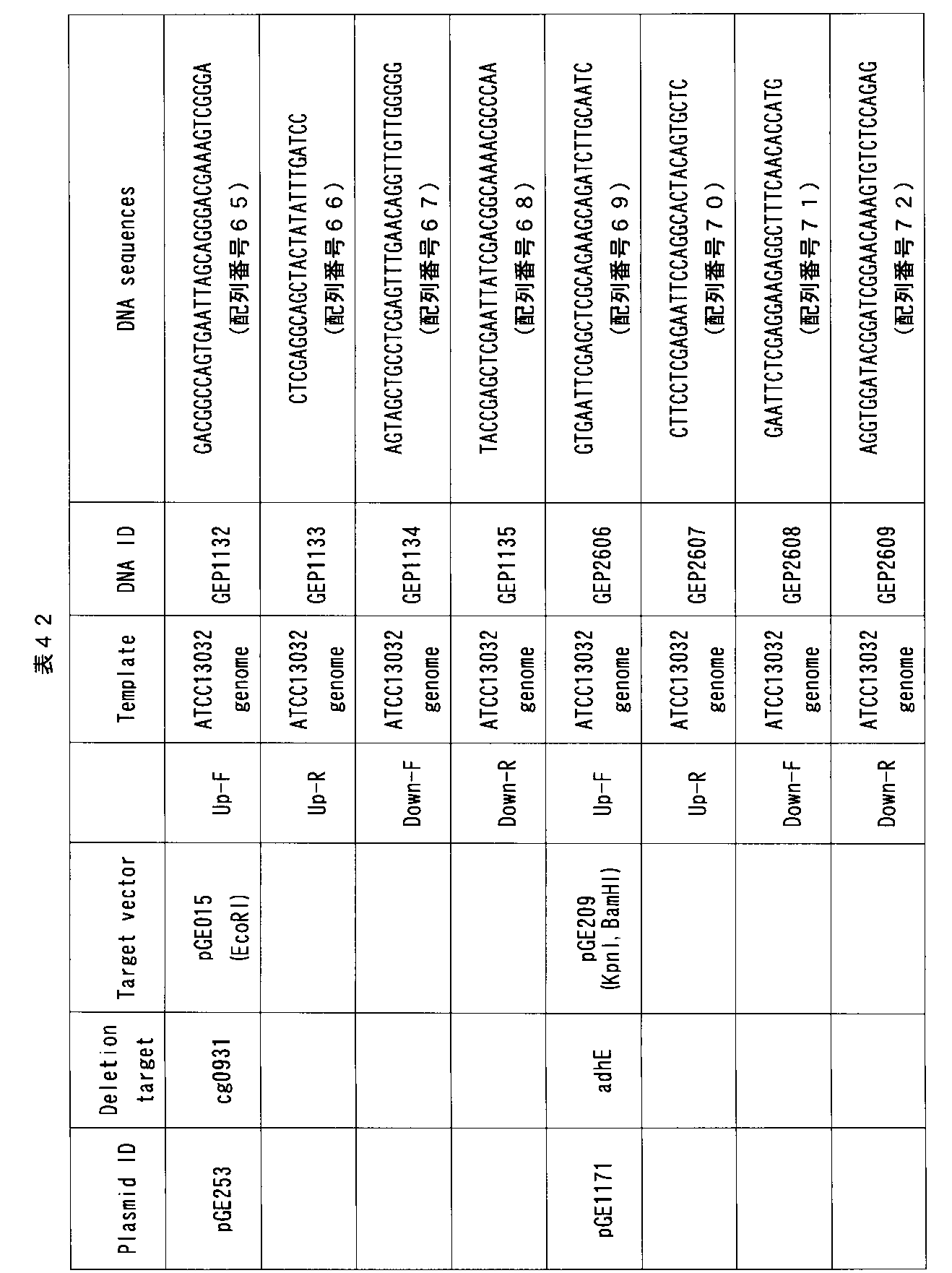

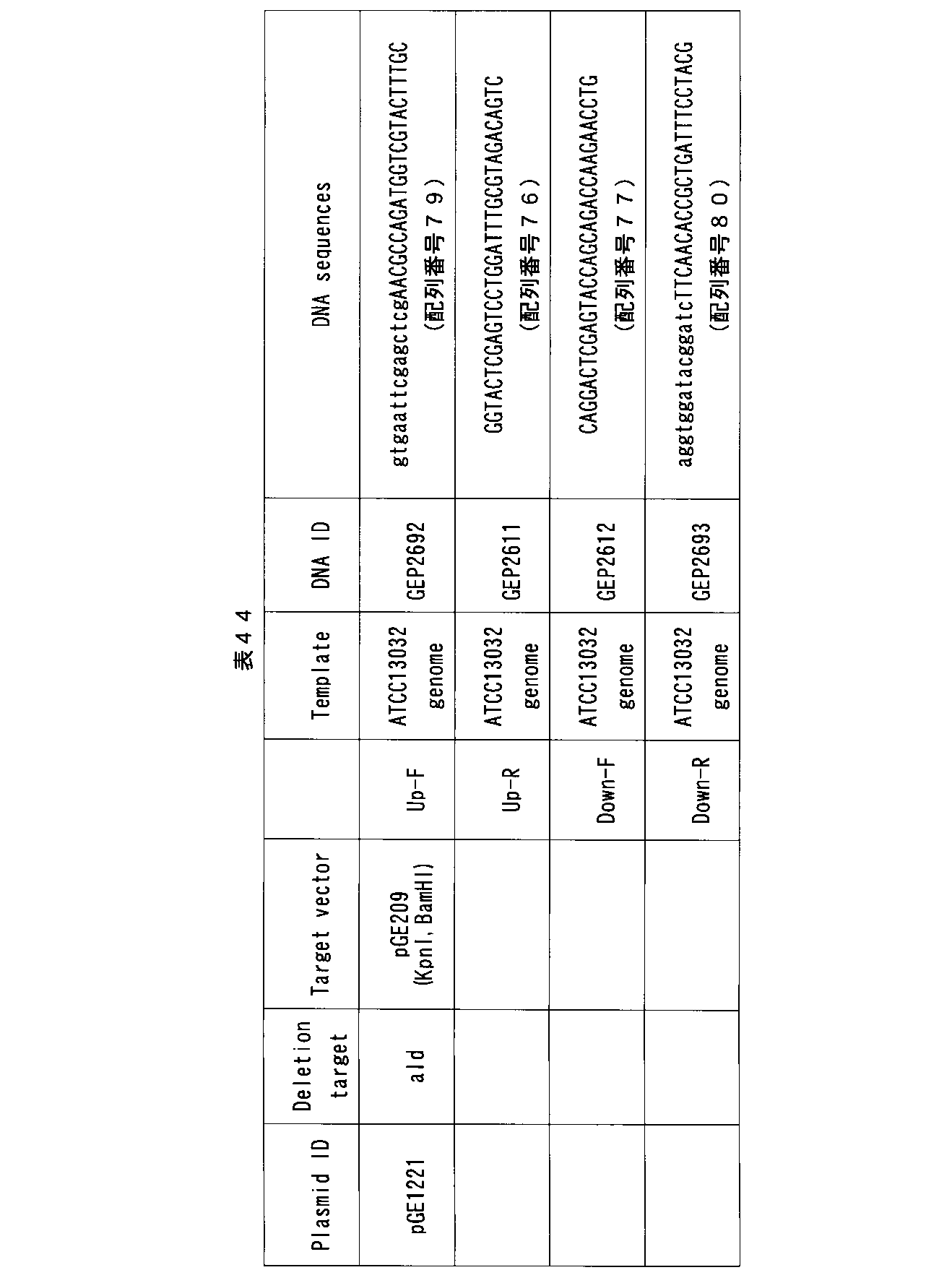


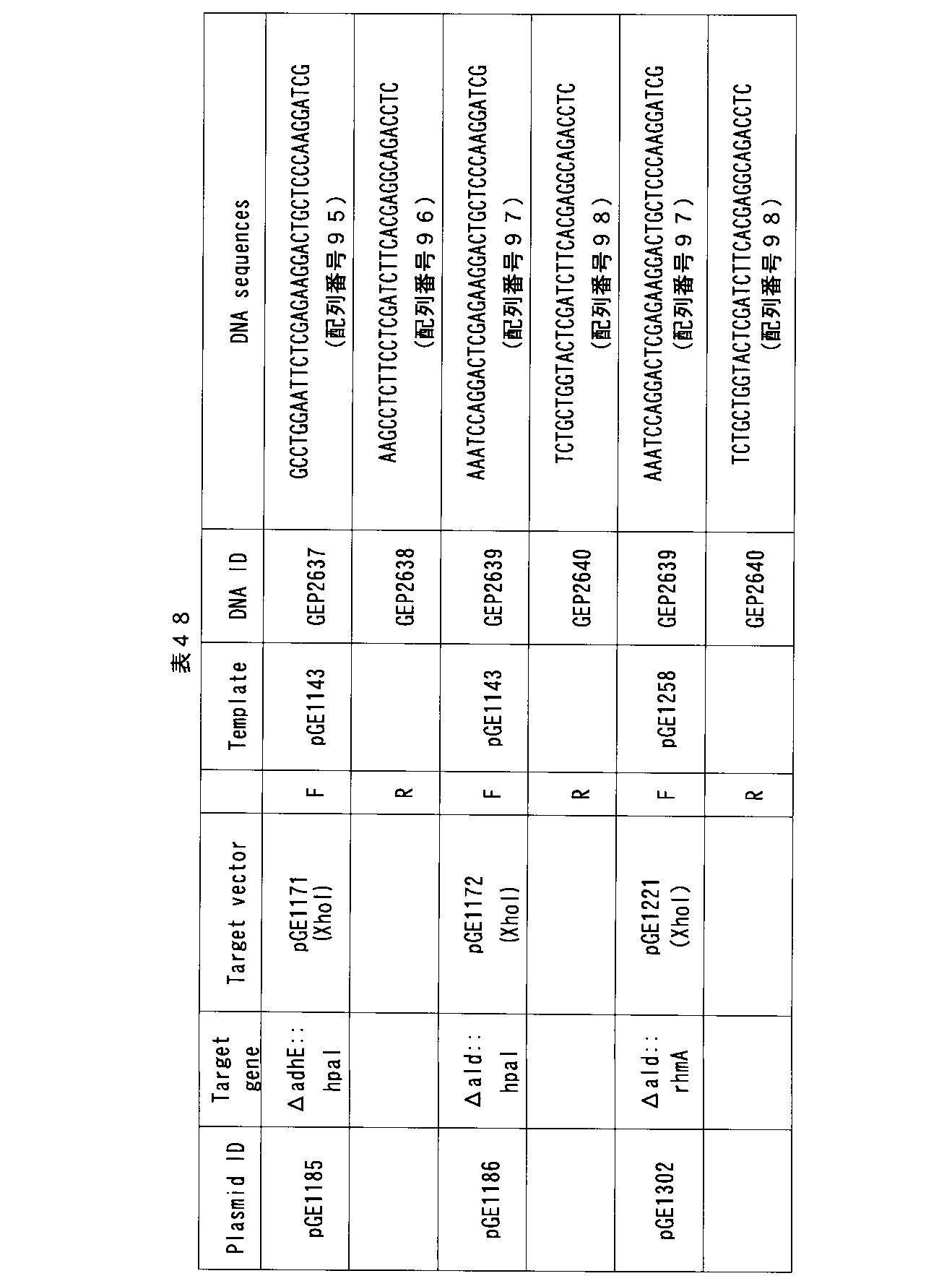

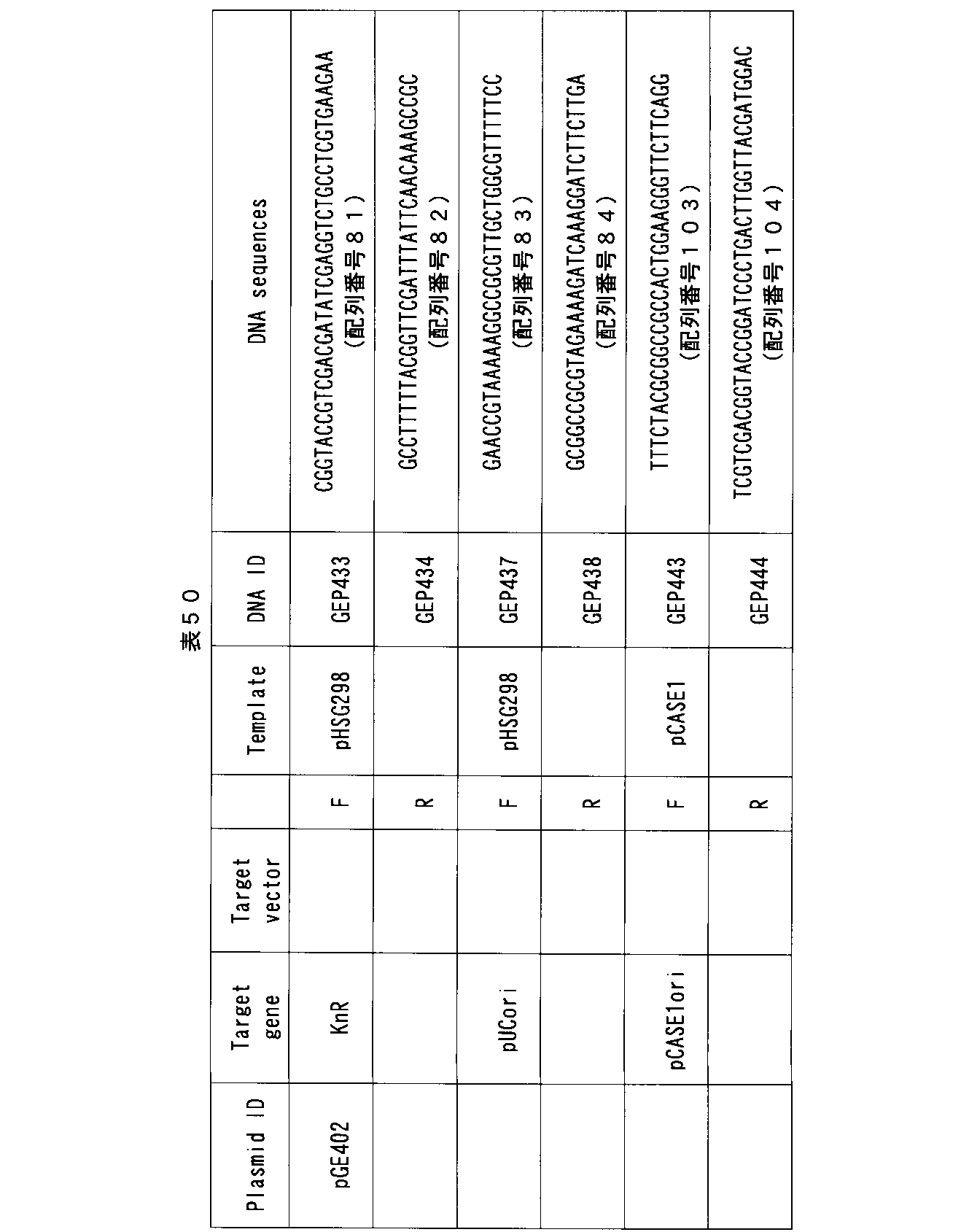
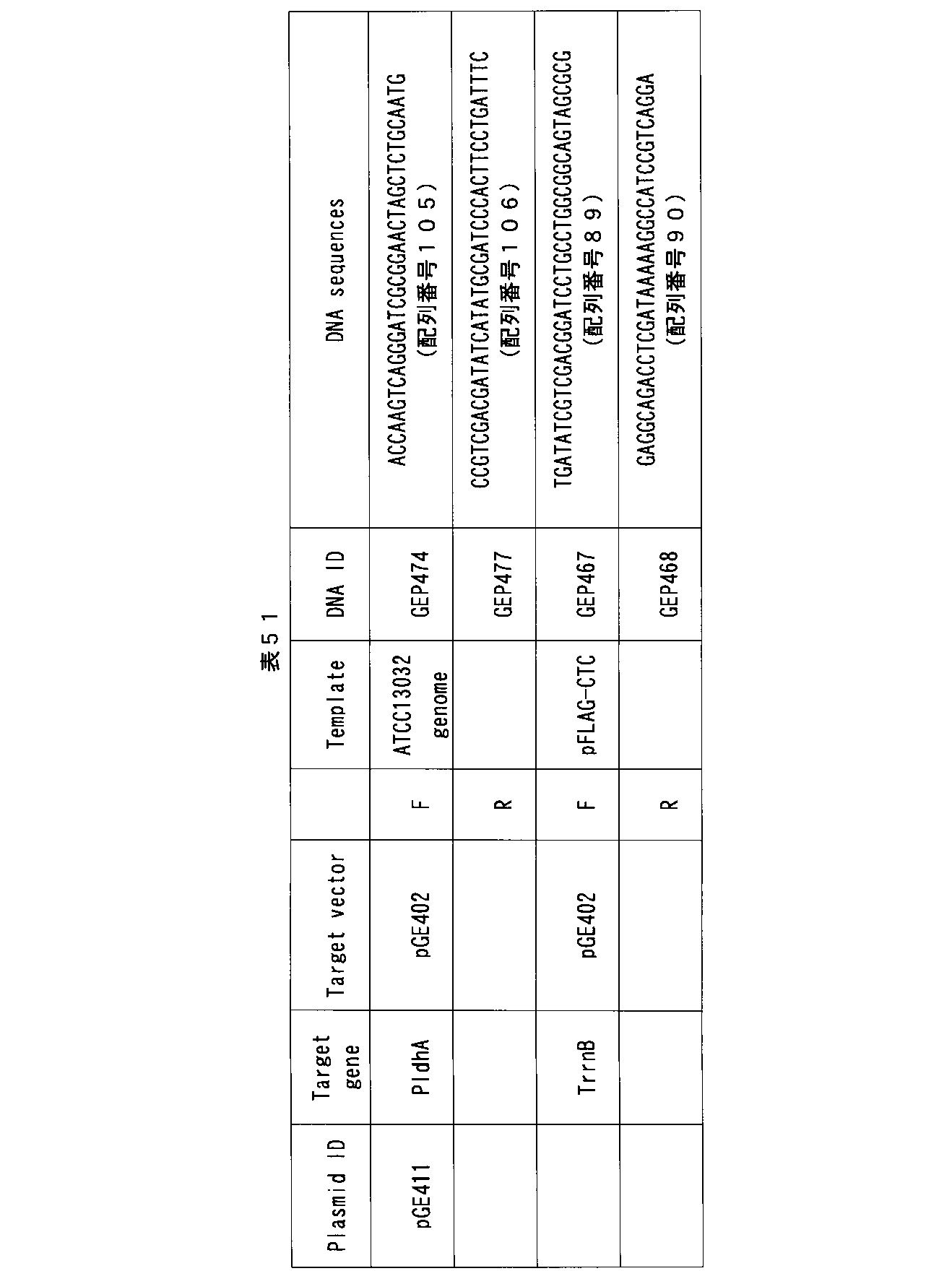


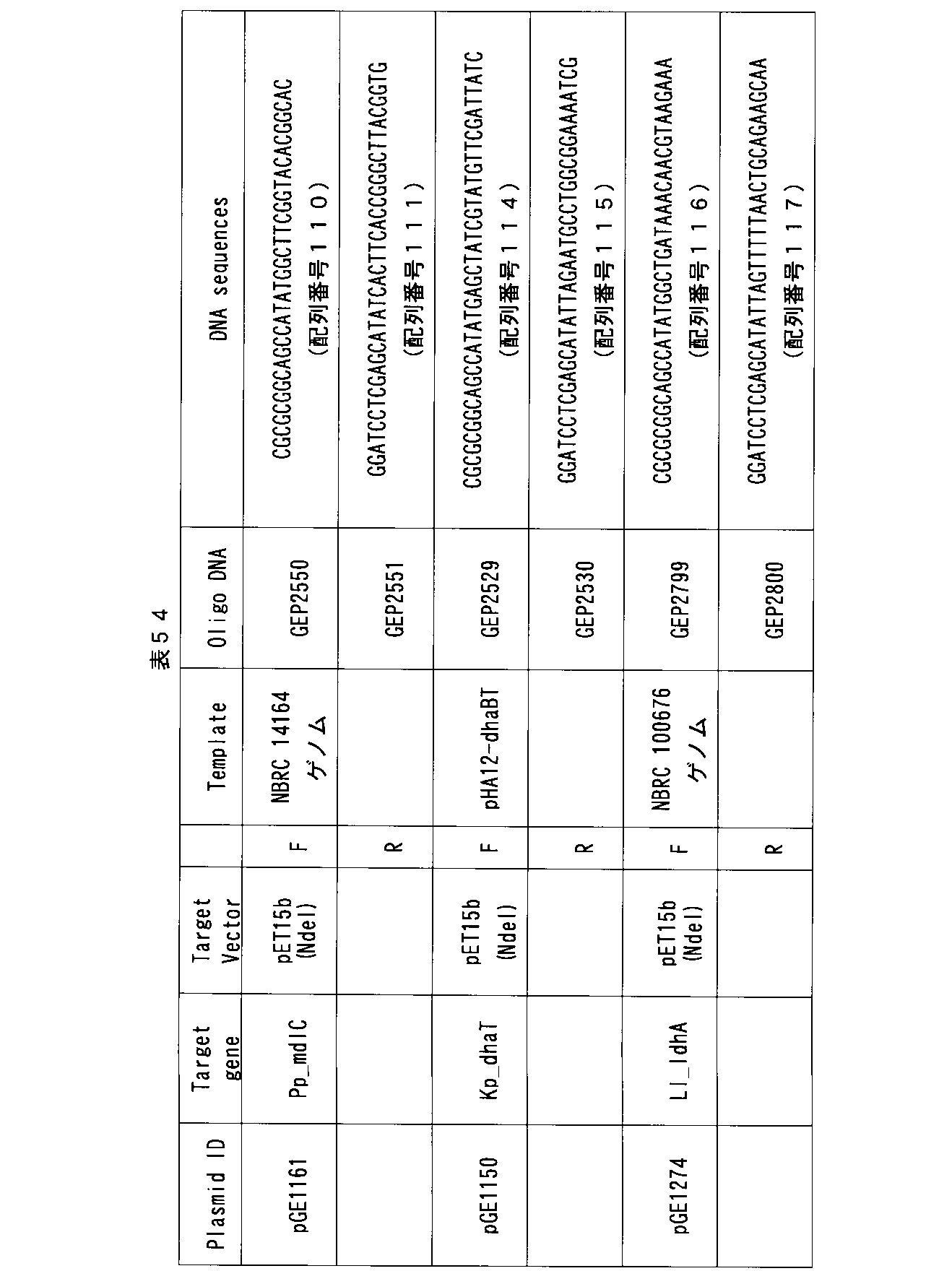
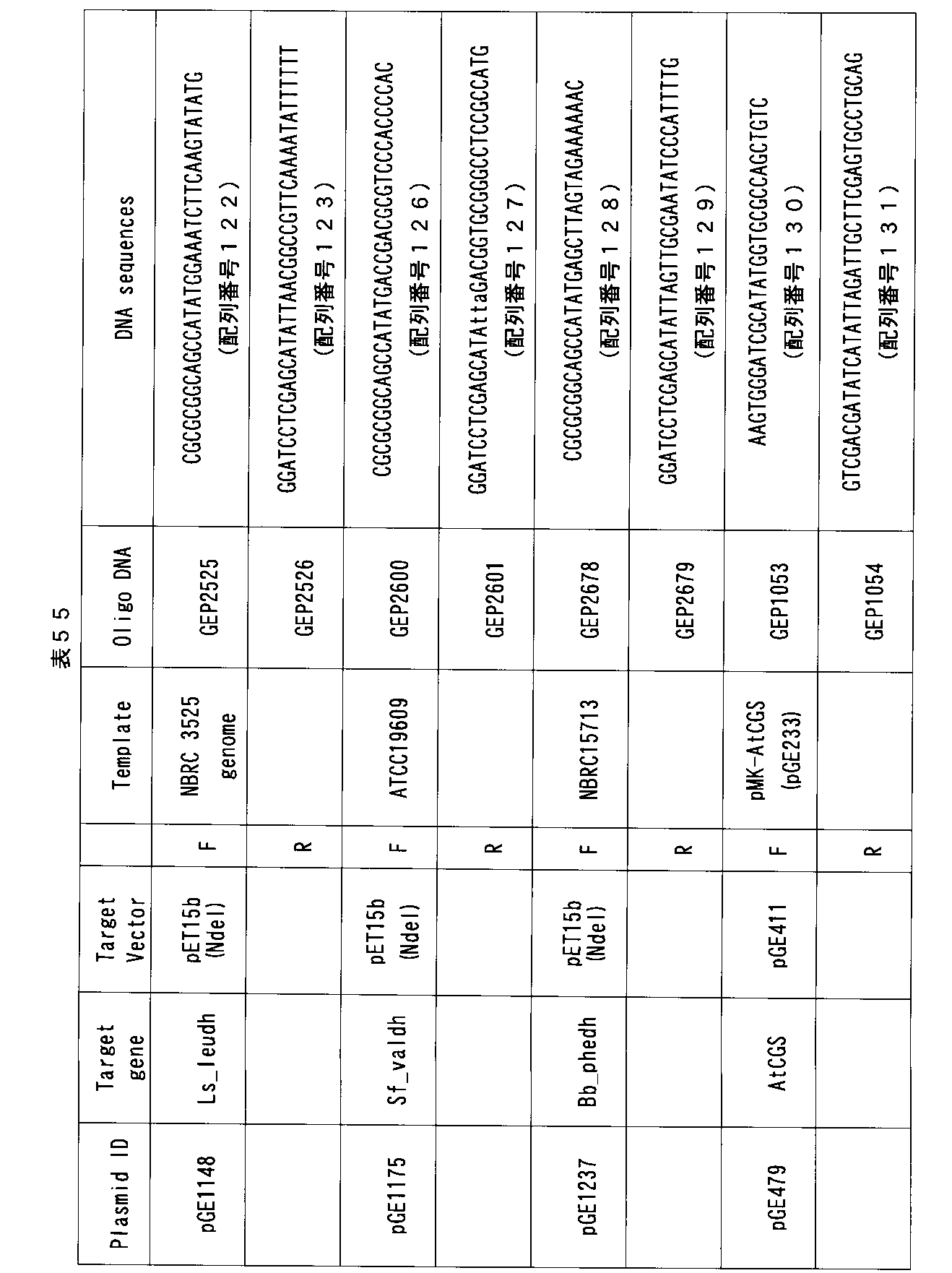
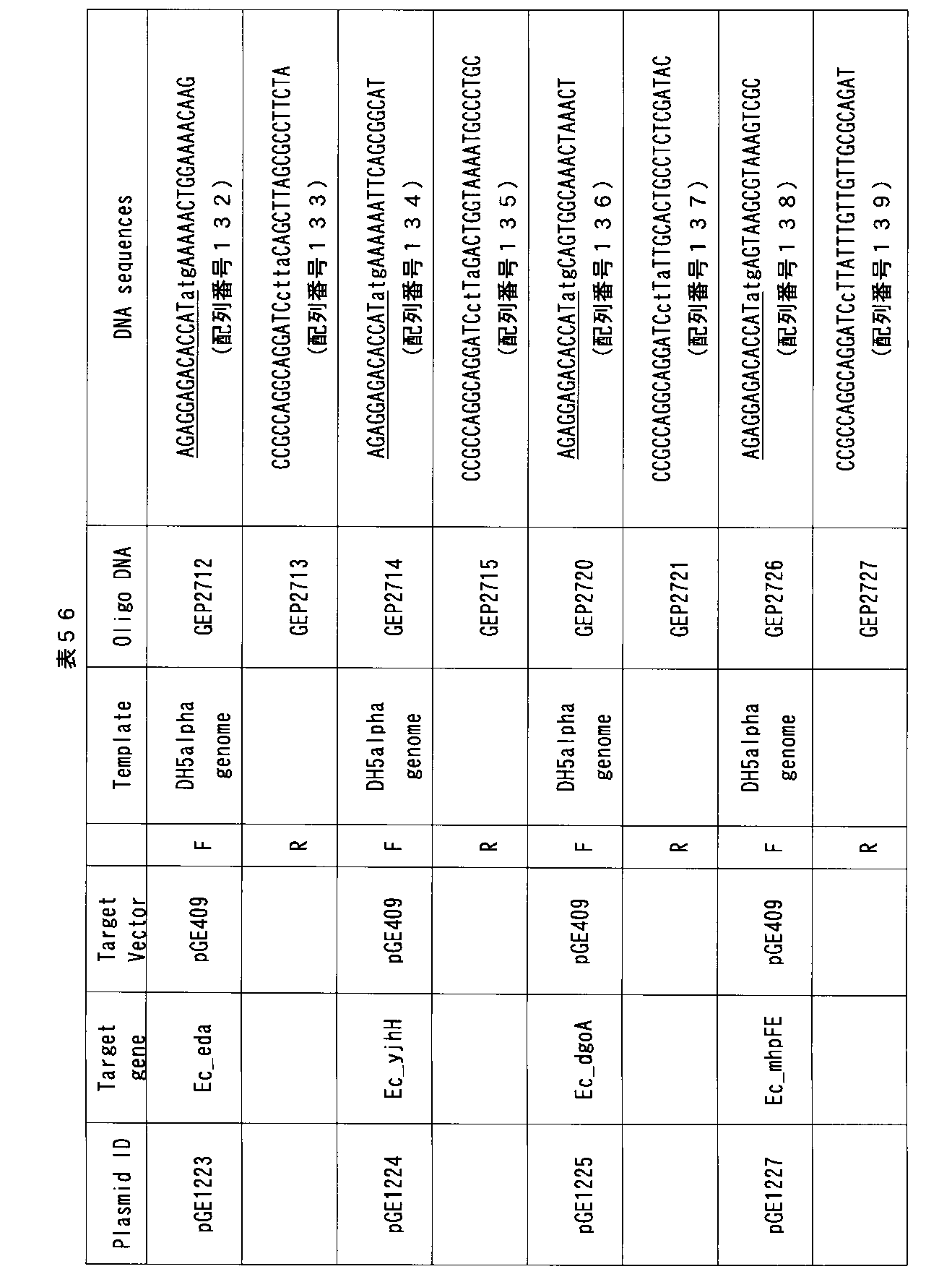


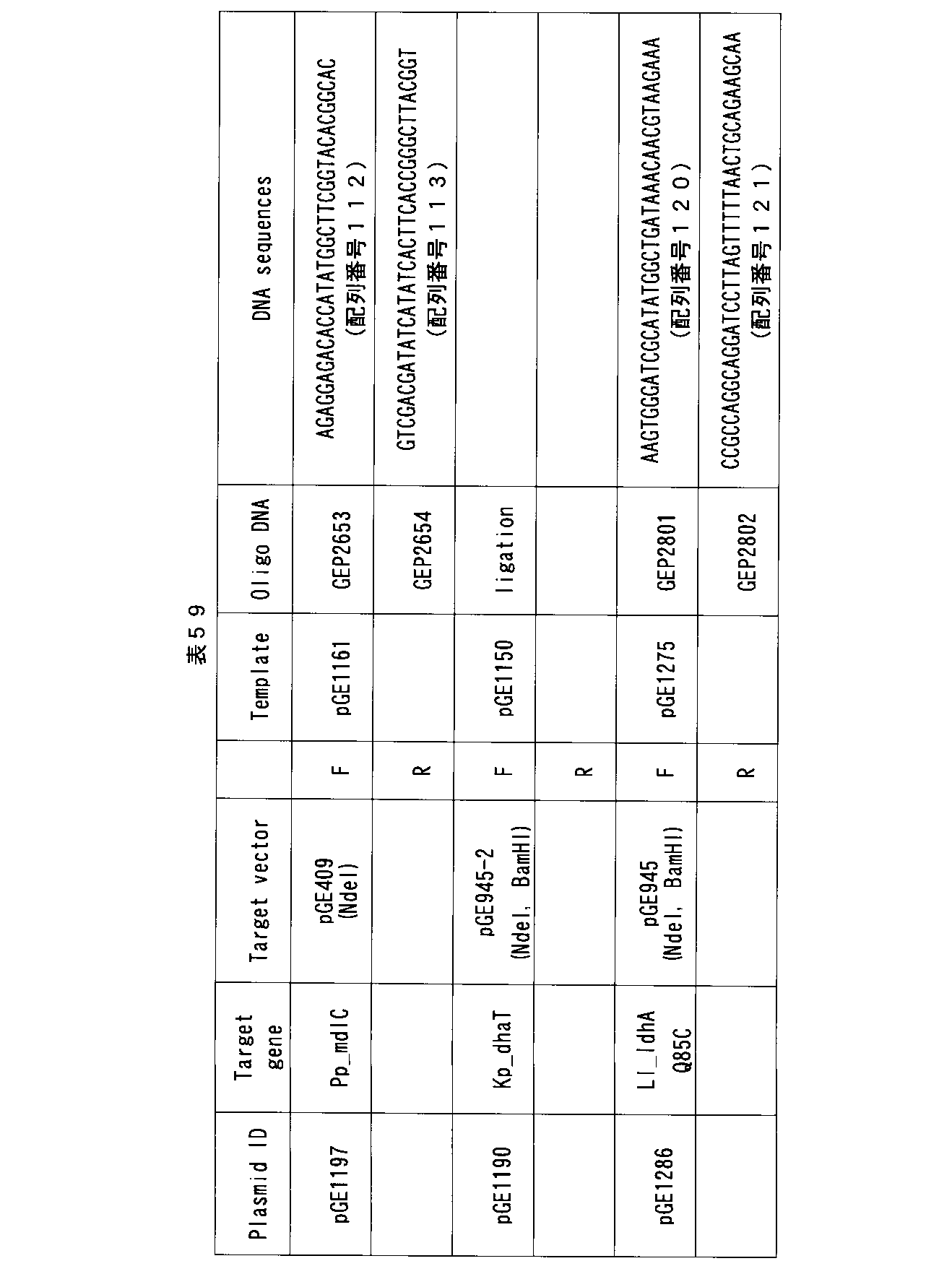

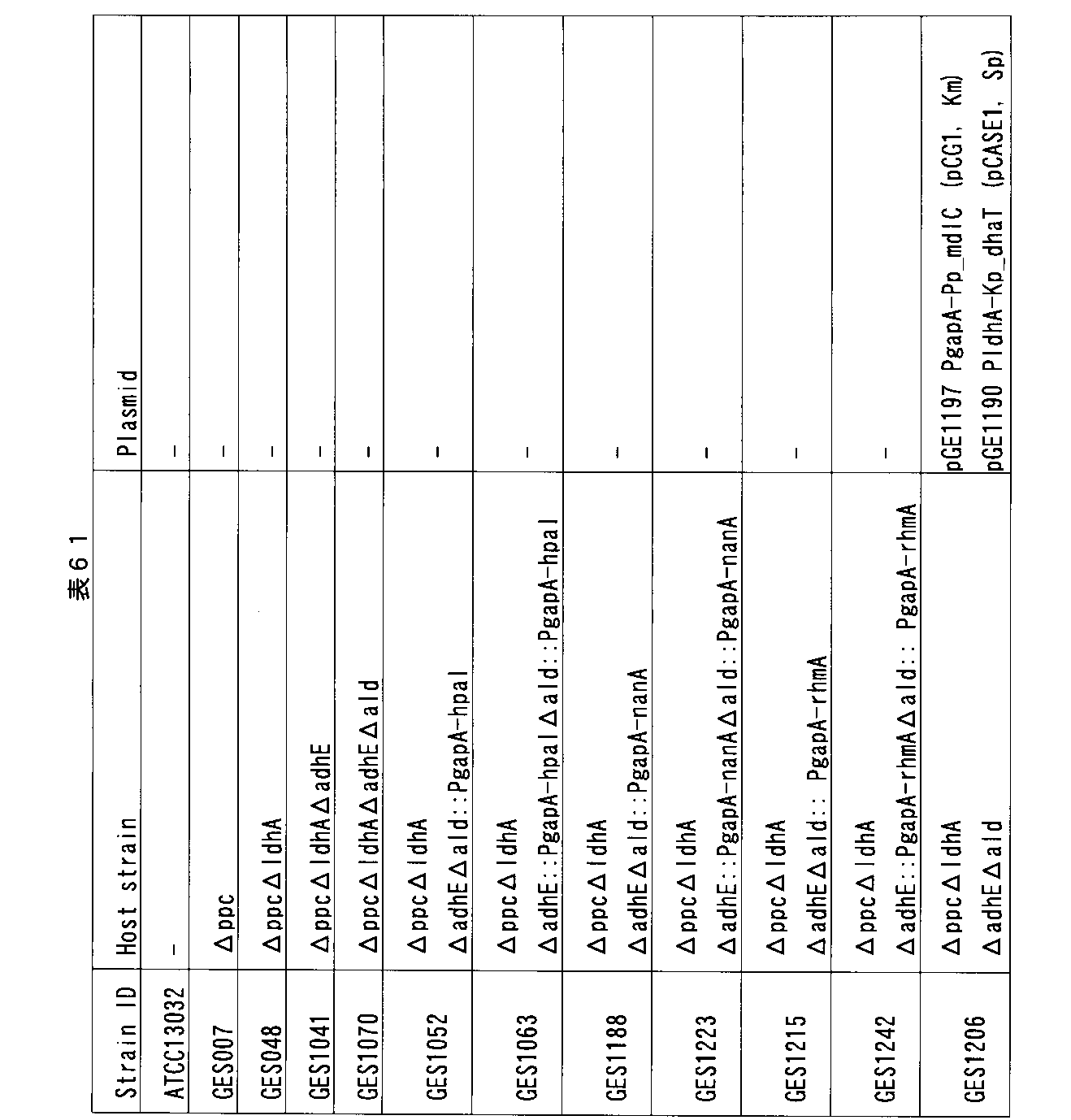



(2-1)遺伝子欠失編
2-1-(1)遺伝子破壊用プラスミドの構築
pNIC28-Bsa4(Source BioScience社製)を鋳型とし、GEP007(配列番号37)とGEP008(配列番号38)で示される塩基配列のDNAを用いて、Bacillus subtilis由来sacB遺伝子を含むDNA断片〔Mol.Microbiol., 6, 1195(1992)〕をPCR法により増幅した。このPCR産物をBamHIおよびPstIで処理し、アガロース・ゲル電気泳動後に、DNA断片の抽出、精製を行った。また、カナマイシンに対する耐性を付与する遺伝子を有するプラスミドpHSG299(タカラバイオ社製)をBamHIおよびPstIで処理し、アガロース・ゲル電気泳動後に、DNA断片の抽出、精製を行った。これら2つのDNA断片をDNA Ligation Kit< Mighty Mix >(タカラバイオ社製)をその指示書通りに用いて連結し、プラスミドpGE015を得た。
コリネバクテリウム グルタミカムATCC13032株は独立行政法人製品評価技術基盤機構バイオテクノロジーセンターからNBRC12168株として入手し、添付の指示書通りに培養を行った後に、ゲノムDNA抽出を行った。
pGE020を用い、電気穿孔法によりコリネバクテリウム グルタミカムATCC13032株を形質転換し、33℃にて25μg/mlのカナマイシンを含むA培地上でカナマイシン耐性株を選択した。次に、得られたカナマイシン耐性株をSuc寒天培地上に塗布し、33℃で培養した。生育したコロニーをさらにA培地で培養し、コロニーPCRによりppc遺伝子が欠失している株を選択した。これをGES007と命名した。
ATCC13032株のゲノムDNAを鋳型とし、GEP169(配列番号45)とGEP170(配列番号46)で示される塩基配列のDNAの組み合わせ、およびGEP215(配列番号47)とGEP216(配列番号48)で示される塩基配列のDNAの組み合わせを用いて、PCR法により2種類のPCR産物を得、これらをアガロース・ゲル電気泳動の後、抽出、精製を行った。さらに、pGE015をEcoRIで処理し、これをアガロース・ゲル電気泳動の後、抽出、精製を行った。これらの3つのDNA断片を混和し、pGE020作成時と同様な操作により得られたプラスミドをpGE033とした。
pGE033を用い、電気穿孔法によりGES007を形質転換し、GES007作成時と同様な操作により選択した株をGES048と命名した。
ATCC13032株のゲノムDNAを鋳型とし、GEP615(配列番号49)とGEP616(配列番号50)で示される塩基配列のDNAの組み合わせ、およびGEP617(配列番号51)とGEP618(配列番号52)で示される塩基配列のDNAの組み合わせを用いて、PCR法により2種類のPCR産物を得、これらをアガロース・ゲル電気泳動の後、抽出、精製を行った。さらに、pGE015をEcoRIで処理し、これをアガロース・ゲル電気泳動の後、抽出、精製を行った。これらの3つのDNA断片を混和し、pGE020作成時と同様な操作により得られたプラスミドをpGE177とした。
pGE177を用い、電気穿孔法によりGES048を形質転換し、GES007作成時と同様な操作により選択した株をGES385と命名した。
ATCC13032株のゲノムDNAを鋳型とし、GEP406(配列番号53)とGEP407(配列番号54)で示される塩基配列のDNAの組み合わせ、およびGEP698(配列番号55)とGEP409(配列番号56)で示される塩基配列のDNAの組み合わせを用いて、PCR法により2種類のPCR産物を得、これらをアガロース・ゲル電気泳動の後、抽出、精製を行った。さらに、pGE015をEcoRIで処理し、これをアガロース・ゲル電気泳動の後、抽出、精製を行った。これらの3つのDNA断片を混和し、pGE020作成時と同様な操作により得られたプラスミドをpGE191とした。
pGE191を用い、電気穿孔法によりGES385を形質転換し、GES007作成時と同様な操作により選択した株をGES388と命名した。
ATCC13032株のゲノムDNAを鋳型とし、GEP810(配列番号57)とGEP811(配列番号58)で示される塩基配列のDNAの組み合わせ、およびGEP812(配列番号59)とGEP813(配列番号60)で示される塩基配列のDNAの組み合わせを用いて、PCR法により2種類のPCR産物を得、これらをアガロース・ゲル電気泳動の後、抽出、精製を行った。さらに、pGE015をEcoRIで処理し、これをアガロース・ゲル電気泳動の後、抽出、精製を行った。これらの3つのDNA断片を混和し、pGE020作成時と同様な操作により得られたプラスミドをpGE210とした。
pGE210を用い、電気穿孔法によりGES388を形質転換し、GES007作成時と同様な操作により選択した株をGES393と命名した。
ATCC13032株のゲノムDNAを鋳型とし、GEP956(配列番号61)とGEP957(配列番号62)で示される塩基配列のDNAの組み合わせ、およびGEP958(配列番号63)とGEP959(配列番号64)で示される塩基配列のDNAの組み合わせを用いて、PCR法により2種類のPCR産物を得、これらをアガロース・ゲル電気泳動の後、抽出、精製を行った。さらに、pGE015をEcoRIで処理し、これをアガロース・ゲル電気泳動の後、抽出、精製を行った。これらの3つのDNA断片を混和し、pGE020作成時と同様な操作により得られたプラスミドをpGE228とした。
pGE228を用い、電気穿孔法によりGES393を形質転換し、GES007作成時と同様な操作により選択した株をGES405と命名した。
ATCC13032株のゲノムDNAを鋳型とし、GEP1132(配列番号65)とGEP1133(配列番号66)で示される塩基配列のDNAの組み合わせ、およびGEP1134(配列番号67)とGEP1135(配列番号68)で示される塩基配列のDNAの組み合わせを用いて、PCR法により2種類のPCR産物を得、これらをアガロース・ゲル電気泳動の後、抽出、精製を行った。さらに、pGE015をEcoRIで処理し、これをアガロース・ゲル電気泳動の後、抽出、精製を行った。これらの3つのDNA断片を混和し、pGE020作成時と同様な操作により得られたプラスミドをpGE253とした。
pGE253を用い、電気穿孔法によりGES405を形質転換し、GES007作成時と同様な操作により選択した株をGES435と命名した。
ATCC13032株のゲノムDNAを鋳型とし、GEP2606(配列番号69)とGEP2607(配列番号70)で示される塩基配列のDNAの組み合わせ、およびGEP2608(配列番号71)とGEP2609(配列番号72)で示される塩基配列のDNAの組み合わせを用いて、PCR法により2種類のPCR産物を得、これらをアガロース・ゲル電気泳動の後、抽出、精製を行った。さらに、pGE209をKpnIとBamHIで処理し、これをアガロース・ゲル電気泳動の後、抽出、精製を行った。これらの3つのDNA断片を混和し、pGE020作成時と同様な操作により得られたプラスミドをpGE1171とした。
pGE1171を用い、電気穿孔法によりGES048を形質転換し、GES007作成時と同様な操作により選択した株をGES1041と命名した。
ATCC13032株のゲノムDNAを鋳型とし、GEP2610(配列番号75)とGEP2611(配列番号76)で示される塩基配列のDNAの組み合わせ、およびGEP2612(配列番号77)とGEP2613(配列番号78)で示される塩基配列のDNAの組み合わせを用いて、PCR法により2種類のPCR産物を得、これらをアガロース・ゲル電気泳動の後、抽出、精製を行った。さらに、pGE209をKpnIとBamHIで処理し、これをアガロース・ゲル電気泳動の後、抽出、精製を行った。これらの3つのDNA断片を混和し、pGE020作成時と同様な操作により得られたプラスミドをpGE1172とした。
pGE1172を用い、電気穿孔法によりGES1041を形質転換し、GES007作成時と同様な操作により選択した株をGES1070と命名した。
2-2-(1)pGE409の構築
pHSG298(タカラバイオ社製)を鋳型とし、GEP433(配列番号81)とGEP434(配列番号82)で示される塩基配列のDNAの組み合わせ、およびGEP437(配列番号83)とGEP438(配列番号84)で示される塩基配列のDNAの組み合わせを用いて、PCR法によりPCR産物を得、これらをアガロース・ゲル電気泳動の後、抽出、精製を行った。これらはそれぞれカナマイシン耐性遺伝子および大腸菌用複製起点pUCoriを含むDNA断片である。
ECOSTM Competent E. coli BL21(DE3)(ニッポンジーン社製)を購入し、これをLB寒天培地に無菌条件下で接種し、37℃にて培養した。寒天培地上に生育した菌体を10mLのLB培地に接種して生育した菌体を回収し、ゲノムDNA抽出を行った。BL21(DE3)株のゲノムDNAを鋳型とし、GEP2268(配列番号91)とGEP2269(配列番号92)で示される塩基配列のDNAの組み合わせを用いて、PCR法によりPCR産物を得、これらをアガロース・ゲル電気泳動の後、抽出、精製を行った。これは大腸菌BL21(DE3)株hpaI遺伝子(Ec_hpaI)を含むDNA断片である。さらに、pET-15b(ノバジェン社製)をNdeIで処理し、これをアガロース・ゲル電気泳動の後、抽出、精製を行った。これらの2つのDNA断片を混和し、In-Fusion(登録商標) HD Cloning Kitをその指示書通りに用いてDNA断片の結合反応を行った。反応産物を用い、E.coli DH5α Competent Cells(タカラバイオ社製)をその指示書通りに形質転換した。目的の形質転換株は、100μg/mlのアンピシリンを含むLB寒天培地上で培養することで選択した。この形質転換株を100μg/mlのアンピシリンを含むLB培地で培養し、得られた培養懸濁液を用いてプラスミド抽出を行った。こうしてEc_hpaIがpET-15bへとクローニングされたプラスミドpGE1031を得た。
pGE1143を鋳型とし、GEP2639(配列番号97)とGEP2640(配列番号98)で示される塩基配列のDNAの組み合わせを用いて、PCR法によりPCR産物を得、これらをアガロース・ゲル電気泳動の後、抽出、精製を行った。これはPgapA-hpaI-TrrnBを含むDNA断片である。さらに、pGE1172をXhoIで処理し、これをアガロース・ゲル電気泳動の後、抽出、精製を行った。これらの2つのDNA断片を混和し、pGE1185作成時と同様な操作により得られたプラスミドをpGE1186とした。
pGE1186を用い、電気穿孔法によりGES1041を形質転換し、33℃にて25μg/mlのカナマイシンを含むA培地上でカナマイシン耐性株を選択した。次に、得られたカナマイシン耐性株をSuc寒天培地上に塗布し、33℃で培養した。生育したコロニーをさらにA培地で培養し、コロニーPCRによりald遺伝子がPgapA-hpaI-TrrnBに置換している株を選択した。これをGES1052と命名した。さらに、pGE1185を用い、電気穿孔法によりGES1052を形質転換し、GES1052作成時と同様な操作によりadhE遺伝子の位置にPgapA-hpaI-TrrnBが挿入した株を選択した。これをGES1063と命名した。
E. coli DH5α Competent Cells(タカラバイオ社製)を購入し、これをLB寒天培地に無菌条件下で接種し、37℃にて培養した。寒天培地上に生育した菌体を10mLのLB培地に接種して生育した菌体を回収し、ゲノムDNA抽出を行った。DH5α株のゲノムDNAを鋳型とし、GEP2765(配列番号99)とGEP2766(配列番号100)で示される塩基配列のDNAの組み合わせを用いて、PCR法によりPCR産物を得、これらをアガロース・ゲル電気泳動の後、抽出、精製を行った。これは大腸菌DH5α株rhmA遺伝子(Ec_rhmA)を含むDNA断片である。さらに、pGE409をNdeIとBamHIで処理し、これをアガロース・ゲル電気泳動の後、抽出、精製を行った。これらの2つのDNA断片を混和し、GE1143作成時と同様な操作によりEc_rhmAがpGE409へとクローニングされたプラスミドpGE1258を得た。
pGE1258を鋳型とし、GEP2639(配列番号97)とGEP2640(配列番号98)で示される塩基配列のDNAの組み合わせを用いて、PCR法によりPCR産物を得、これらをアガロース・ゲル電気泳動の後、抽出、精製を行った。さらに、pGE1221をXhoIで処理し、これをアガロース・ゲル電気泳動の後、抽出、精製を行った。これはPgapA-rhmA-TrrnBを含むDNA断片である。これらの2つのDNA断片を混和し、pGE1185作成時と同様な操作により得られたプラスミドをpGE1302とした。
pGE1302を用い、電気穿孔法によりGES1041を形質転換し、GES1052作成時と同様な操作によりald遺伝子がPgapA-rhmA-TrrnBに置換している株を選択した。これをGES1215と命名した。さらに、pGE1304を用い、電気穿孔法によりGES1215を形質転換し、GES1052作成時と同様な操作によりadhE遺伝子の位置にPgapA-rhmA-TrrnBが挿入した株を選択した。これをGES1242と命名した。
E. coli DH5α Competent Cells(タカラバイオ社製)を購入し、これをLB寒天培地に無菌条件下で接種し、37℃にて培養した。寒天培地上に生育した菌体を10mLのLB培地に接種して生育した菌体を回収し、ゲノムDNA抽出を行った。DH5α株のゲノムDNAを鋳型とし、GEP2722(配列番号101)とGEP2723(配列番号102)で示される塩基配列のDNAの組み合わせを用いて、PCR法によりPCR産物を得、これらをアガロース・ゲル電気泳動の後、抽出、精製を行った。これは大腸菌DH5α株nanA遺伝子(Ec_nanA)を含むDNA断片である。さらに、pGE409をNdeIとBamHIで処理し、これをアガロース・ゲル電気泳動の後、抽出、精製を行った。これらの2つのDNA断片を混和し、pGE1143作成時と同様な操作によりEc_nanAがpGE409へとクローニングされたプラスミドpGE1226を得た。
pGE1226を鋳型とし、GEP2639(配列番号97)とGEP2640(配列番号98)で示される塩基配列のDNAの組み合わせを用いて、PCR法によりPCR産物を得、これらをアガロース・ゲル電気泳動の後、抽出、精製を行った。さらに、pGE1221をXhoIで処理し、これをアガロース・ゲル電気泳動の後、抽出、精製を行った。これはPgapA-nanA-TrrnBを含むDNA断片である。これらの2つのDNA断片を混和し、pGE1185作成時と同様な操作により得られたプラスミドをpGE1273とした。
pGE1273を用い、電気穿孔法によりGES1041を形質転換し、GES1052作成時と同様な操作によりald遺伝子がPgapA-nanA-TrrnBに置換している株を選択した。これをGES1188と命名した。さらに、pGE1272を用い、電気穿孔法によりGES1188を形質転換し、GES1052作成時と同様な操作によりadhE遺伝子の位置にPgapA-nanA-TrrnBが挿入した株を選択した。これをGES1223と命名した。
pGE1273を用い、電気穿孔法によりGES1041を形質転換し、GES1052作成時と同様な操作によりald遺伝子がPgapA-nanA-TrrnBに置換している株を選択した。これをGES1188と命名した。さらに、pGE1272を用い、電気穿孔法によりGES1188を形質転換し、GES1052作成時と同様な操作によりadhE遺伝子の位置にPgapA-nanA-TrrnBが挿入した株を選択した。これをGES1223と命名した。
2-3-(1)pGE411の構築
pHSG298(タカラバイオ社製)を鋳型とし、GEP433(配列番号81)とGEP434(配列番号82)で示される塩基配列のDNAの組み合わせ、およびGEP437(配列番号83)とGEP438(配列番号84)で示される塩基配列のDNAの組み合わせを用いて、PCR法によりPCR産物を得、これらをアガロース・ゲル電気泳動の後、抽出、精製を行った。これらはそれぞれカナマイシン耐性遺伝子および大腸菌用複製起点pUCoriを含むDNA断片である。
pCR8/GW/TOPO(インビトロジェン社製)を鋳型とし、GEP435(配列番号107)とGEP436(配列番号108)で示される塩基配列のDNAの組み合わせを用いて、PCR法によりPCR産物を得、これをアガロース・ゲル電気泳動の後、抽出、精製を行った。また、pHSG298(タカラバイオ社製)を鋳型とし、GEP437(配列番号83)とGEP438(配列番号84)で示される塩基配列のDNAの組み合わせを用いて、PCR法によりPCR産物を得、これをアガロース・ゲル電気泳動の後、抽出、精製を行った。これらはそれぞれスペクチノマイシン耐性遺伝子および大腸菌用複製起点pUCoriを含むDNA断片である。
シュードモナス プチダNBRC14164株は独立行政法人製品評価技術基盤機構バイオテクノロジーセンターから入手し、添付の指示書通りに培養を行った後に、ゲノムDNA抽出を行った。NBRC14164株のゲノムDNAを鋳型とし、GEP2550(配列番号110)とGEP2551(配列番号111)で示される塩基配列のDNAの組み合わせを用いて、PCR法によりPCR産物を得、これをアガロース・ゲル電気泳動の後、抽出、精製を行った。これはシュードモナス プチダNBRC14164株mdlC遺伝子(Pp_mdlC)を含むDNA断片である。さらに、pET-15b(ノバジェン社製)をNdeIで処理し、これをアガロース・ゲル電気泳動の後、抽出、精製を行った。これらの2つのDNA断片を混和し、pGE1031作成時と同様な操作によりPp_mdlCがpET-15bへとクローニングされたプラスミドpGE1161を得た。
クレブシエラ ニューモニエ由来の遺伝子(DDBJアクセッション番号:LC412902)を含むプラスミドpHA12-dhaBTを広島大学田島誉久博士より供与を頂いた。これを鋳型とし、GEP2529(配列番号114)とGEP2530(配列番号115)で示される塩基配列のDNAの組み合わせを用いて、PCR法によりPCR産物を得、これをアガロース・ゲル電気泳動の後、抽出、精製を行った。これはクレブシエラ ニューモニエdhaT遺伝子(Kp_dhaT)を含むDNA断片である。さらに、pET-15b(ノバジェン社製)をNdeIで処理し、これをアガロース・ゲル電気泳動の後、抽出、精製を行った。これらの2つのDNA断片を混和し、pGE1161作成時と同様な操作によりKp_dhaTがpET-15bへとクローニングされたプラスミドpGE1150を得た。
ラクトコッカス ラクティスNBRC100676株は独立行政法人製品評価技術基盤機構バイオテクノロジーセンターから入手し、添付の指示書通りに培養を行った後に、ゲノムDNA抽出を行った。NBRC100676株のゲノムDNAを鋳型とし、GEP2799(配列番号116)とGEP2800(配列番号117)で示される塩基配列のDNAの組み合わせを用いて、PCR法によりPCR産物を得、これをアガロース・ゲル電気泳動の後、抽出、精製を行った。これはラクトコッカス ラクティスNBRC100676株ldhA遺伝子(Ll_ldhA)を含むDNA断片である。さらに、pET-15b(ノバジェン社製)をNdeIで処理し、これをアガロース・ゲル電気泳動の後、抽出、精製を行った。これらの2つのDNA断片を混和し、pGE1031作成時と同様な操作によりLl_ldhAがpET-15bへとクローニングされたプラスミドpGE1274を得た。
リシニバシラス スフェリカスNBRC3525株は独立行政法人製品評価技術基盤機構バイオテクノロジーセンターから入手し、添付の指示書通りに培養を行った後に、ゲノムDNA抽出を行った。NBRC3525株のゲノムDNAを鋳型とし、GEP2525(配列番号122)とGEP2526(配列番号123)で示される塩基配列のDNAの組み合わせを用いて、PCR法によりPCR産物を得、これをアガロース・ゲル電気泳動の後、抽出、精製を行った。これはリシニバシラス スフェリカスNBRC3525株leudh遺伝子(Ls_leudh)を含むDNA断片である。さらに、pET-15b(ノバジェン社製)をNdeIで処理し、これをアガロース・ゲル電気泳動の後、抽出、精製を行った。これらの2つのDNA断片を混和し、pGE1031作成時と同様な操作によりLs_leudhがpET-15bへとクローニングされたプラスミドpGE1148を得た。
ストレプトミセス フラジエATCC19609株はAmerican Type Culture Collectionから入手し、添付の指示書通りに培養を行った後に、ゲノムDNA抽出を行った。ATCC19609株のゲノムDNAを鋳型とし、GEP2600(配列番号126)とGEP2601(配列番号127)で示される塩基配列のDNAの組み合わせを用いて、PCR法によりPCR産物を得、これをアガロース・ゲル電気泳動の後、抽出、精製を行った。これはストレプトミセス フラジエATCC19609株valdh遺伝子(Sf_valdh)を含むDNA断片である。さらに、pET-15b(ノバジェン社製)をNdeIで処理し、これをアガロース・ゲル電気泳動の後、抽出、精製を行った。これらの2つのDNA断片を混和し、pGE1031作成時と同様な操作によりSf_valdhがpET-15bへとクローニングされたプラスミドpGE1175を得た。
バシラス バディウスNBRC15713株は独立行政法人製品評価技術基盤機構バイオテクノロジーセンターから入手し、添付の指示書通りに培養を行った後に、ゲノムDNA抽出を行った。NBRC15713株のゲノムDNAを鋳型とし、GEP2678(配列番号128)とGEP2679(配列番号129)で示される塩基配列のDNAの組み合わせを用いて、PCR法によりPCR産物を得、これをアガロース・ゲル電気泳動の後、抽出、精製を行った。これはバシラス バディウスNBRC15713株phedh遺伝子(Bb_phedh)を含むDNA断片である。さらに、pET-15b(ノバジェン社製)をNdeIで処理し、これをアガロース・ゲル電気泳動の後、抽出、精製を行った。これらの2つのDNA断片を混和し、pGE1031作成時と同様な操作によりBb_phedhがpET-15bへとクローニングされたプラスミドpGE1237を得た。
pMK-AtCGSはサーモ・フィッシャー社より購入した。pMK-AtCGSはシロイヌナズナのCGS1遺伝子(Biochem.J.331,639-648(1998)、DDBJアクセッション番号:U43709)がコードするアミノ酸配列のうち、69番目のアミノ酸以降の配列についてコリネバクテリウム グルタミカムでの発現が最適化された合成DNAを含むプラスミドである。これを鋳型とし、GEP1053(配列番号130)とGEP1054(配列番号131)で示される塩基配列のDNAの組み合わせを用いて、PCR法によりPCR産物を得、これをアガロース・ゲル電気泳動の後、抽出、精製を行った。これはコリネバクテリウム グルタミカムでの発現が最適化されたシロイヌナズナCGS1遺伝子(AtCGS1)を含むDNA断片である。さらに、pGE411をNdeIで処理し、これをアガロース・ゲル電気泳動の後、抽出、精製を行った。これらの2つのDNA断片を混和し、pGE1185作成時と同様な操作によりAtCGS1がpGE411へとサブクローニングされたプラスミドpGE479を得た。
DH5α株のゲノムDNAを鋳型とし、GEP2712(配列番号132)とGEP2713(配列番号133)で示される塩基配列のDNAの組み合わせ、GEP2714(配列番号134)とGEP2715(配列番号135)で示される塩基配列のDNAの組み合わせ、GEP2720(配列番号136)とGEP2721(配列番号137)で示される塩基配列のDNAの組み合わせ、GEP2726(配列番号138)とGEP2727(配列番号139)で示される塩基配列のDNAの組み合わせ、GEP2767(配列番号140)とGEP2768(配列番号141)で示される塩基配列のDNAの組み合わせを用いて、PCR法によりPCR産物を得、これらをアガロース・ゲル電気泳動の後、抽出、精製を行った。これはそれぞれ大腸菌DH5α株eda遺伝子(Ec_eda)、yjjJ遺伝子(Ec_yjhH)、dgoA遺伝子(Ec_dgoA)、mhpFE遺伝子(Ec_mhpFE)、garL遺伝子(Ec_garL)を含むDNA断片である。さらに、pGE409をNdeIとBamHIで処理し、これをアガロース・ゲル電気泳動の後、抽出、精製を行った。各種遺伝子を有するDNA断片、およびpGE409由来のDNA断片を混和し、pGE1185作成時と同様な操作によりEc_eda、Ec_yjhH、Ec_dgoA、Ec_mhpFE、Ec_garLがpGE409へとクローニングされたプラスミドpGE1223、pGE1224、pGE1225、pGE1227、pGE1259を得た。
(3-1)Pp_mdlCおよびKp_dhaT過剰発現プラスミド導入株の作成
pGE1197とpGE1190を用い、電気穿孔法によりGES1070を形質転換し、33℃にて25μg/mlのカナマイシンと100μg/mlのスペクチノマイシを含むA寒天培地上でカナマイシン・スペクチノマイシ耐性株を選択した。これをGES1206と命名した。
pGE1197とpGE1190を用い、電気穿孔法によりGES1223を形質転換し、33℃にて25μg/mlのカナマイシンと100μg/mlのスペクチノマイシを含むA寒天培地上でカナマイシン・スペクチノマイシ耐性株を選択した。これをGES1253と命名した。
pGE1197とpGE1190を用い、電気穿孔法によりGES1242を形質転換し、33℃にて25μg/mlのカナマイシンと100μg/mlのスペクチノマイシを含むA寒天培地上でカナマイシン・スペクチノマイシ耐性株を選択した。これをGES1282と命名した。
pGE1286を用い、電気穿孔法によりGES1064を形質転換し、33℃にて100μg/mlのスペクチノマイシを含むA寒天培地上でスペクチノマイシ耐性株を選択した。これをGES1232と命名した。
pGE1286を用い、電気穿孔法によりGES1211を形質転換し、33℃にて100μg/mlのスペクチノマイシを含むA寒天培地上でスペクチノマイシ耐性株を選択した。これをGES1294と命名した。
pGE1203を用い、電気穿孔法によりGES1064を形質転換し、33℃にて100μg/mlのスペクチノマイシを含むA培地上でスペクチノマイシ耐性株を選択した。これをGES1073と命名した。
pGE1203を用い、電気穿孔法によりGES1211を形質転換し、33℃にて100μg/mlのスペクチノマイシを含むA培地上でスペクチノマイシ耐性株を選択した。これをGES1295と命名した。
pGE1203とpGE513を用い、電気穿孔法によりGES1064を形質転換し、33℃にて25μg/mlのカナマイシンと100μg/mlのスペクチノマイシを含むA寒天培地上でカナマイシン・スペクチノマイシ耐性株を選択した。これをGES1097と命名した。
pGE1143、pGE1223、pGE1224、pGE1225、pGE1226、pGE1227、pGE1239、pGE1258、pGE1259、pGE1260、pGE1262をそれぞれ用い、電気穿孔法によりGES435を形質転換し、33℃にて25μg/mlのカナマイシンを含むA寒天培地上でカナマイシン耐性株を選択した。これをそれぞれGES1009、GES1119、GES1120、GES1121、GES1122、GES1123、GES1127、GES1154、GES1155、GES1156、GES1157と命名した。
(4-1)4-ヒドロキシ-2-オキソ酪酸(HOB)の生産
4-1-(1)GES1077の培養
GES1077のグリセロールストックをカナマイシン25μg/mLおよびスペクチノマイシン100μg/mLを含むA寒天培地に無菌条件下で接種し、33℃にて培養した。寒天培地上に生育した菌体をカナマイシン25μg/mLおよびスペクチノマイシン100μg/mLを含む10mLのBA培地に接種し、33℃にて振盪培養を行い種培養液とした。この種培養液を濁度が0.1となるように2Lフラスコ中に用意されたカナマイシン25μg/mLおよびスペクチノマイシン100μg/mLを含む500mLのBA培地に接種した。33℃にて振盪を行い終夜培養した。この本培養液を4℃、5500xgにて15分間遠心分離を行い、上澄み液を除去した。このようにして得られた湿菌体を以下の反応に用いた。
前記の通り調製された湿菌体を10%(w/v)となるようにBRバッファーに懸濁した。この菌体懸濁液に50%(w/v)のグルコース水溶液および1.2Mのホルムアルデヒド水溶液をそれぞれ50mM、40mMとなるように加え、1.0M水酸化カリウム水溶液を用いてpHを6.0に維持しながら33℃にて培養を行った。当該湿菌体濃度においては、攪拌を水酸化カリウム水溶液が効率的に混和する程度に抑えておき、かつ、通気を行わなければ、自ずと嫌気的条件下または微好気的条件が達成される。3時間後、反応液の上清を有機酸分析用液体クロマトグラフィーにより分析したところ、HOBが0.65mM生成していた。
前記の通り調製された湿菌体を10%(w/v)となるようにBRバッファーに懸濁した。この菌体懸濁液に50%(w/v)のグルコース水溶液を50mMとなるように加え、1.0M水酸化カリウム水溶液を用いてpHを6.0に維持しながら33℃にて反応を行った。3時間後、反応懸濁液の上清を有機酸分析用液体クロマトグラフィーにより分析したところ、HOBは検出されなかった。
GES1206について、前記4-1-(1)、4-1-(2)と同様の実験を行った。反応3時間後、反応懸濁液の上清を有機酸分析用液体クロマトグラフィーにより分析したところ、HOBは検出されなかった。
GES1282のグリセロールストックから4-1-(1)と同様に培養し得られた湿菌体を以下の反応に用いた。
前記の通り調製された湿菌体を4-1-(2)と同様に培養を行った。培養においては、水酸化カリウム水溶液を効率的に混和するように撹拌を行い、かつ、通気を行わなかった。なお、この操作によって、当該湿菌体濃度では、嫌気的条件または微好気的条件は達成されている。3時間後、反応液の上清を有機酸分析用液体クロマトグラフィーにより分析したところ、HOBが0.36mM生成していた。
前記の通り調製された湿菌体を4-1-(3)と同様に培養を行った。培養においては、水酸化カリウム水溶液を効率的に混和するように撹拌を行い、かつ、通気を行わなかった。なお、この操作によって、当該湿菌体濃度では、嫌気的条件または微好気的条件は達成されている。3時間後、反応懸濁液の上清を有機酸分析用液体クロマトグラフィーにより分析したところ、HOBは検出されなかった。
GES1253のグリセロールストックから4-1-(1)と同様に培養し得られた湿菌体を以下の反応に用いた。
前記の通り調製された湿菌体を4-1-(2)と同様に培養を行った。培養においては、水酸化カリウム水溶液を効率的に混和するように撹拌を行い、かつ、通気を行わなかった。なお、この操作によって、当該湿菌体濃度では、嫌気的条件または微好気的条件は達成されている。3時間後、反応液の上清を有機酸分析用液体クロマトグラフィーにより分析したところ、HOBが0.34mM生成していた。
前記の通り調製された湿菌体を4-1-(2)と同様に培養を行った。培養においては、水酸化カリウム水溶液を効率的に混和するように撹拌を行い、かつ、通気を行わなかった。なお、この操作によって、当該湿菌体濃度では、嫌気的条件または微好気的条件は達成されている。3時間後、反応懸濁液の上清を有機酸分析用液体クロマトグラフィーにより分析したところ、HOBは検出されなかった。
GES1068およびGES1254のグリセロールストックから4-1-(1)と同様に培養し得られた湿菌体を以下の反応に用いた。
前記の通り調製された湿菌体を4-1-(2)と同様に培養を行った。培養においては、水酸化カリウム水溶液を効率的に混和するように撹拌を行い、かつ、通気を行わなかった。なお、この操作によって、当該湿菌体濃度では、嫌気的条件または微好気的条件は達成されている。3時間後、反応液の上清を有機酸分析用液体クロマトグラフィーにより分析したところ、HOBがGES1068を用いた反応では1.2mM、GES1254を用いた反応では0.42mM生成していた。
4-2-(1)GES1077、GES1068の培養
GES1077、GES1068のグリセロールストックをカナマイシン25μg/mLおよびスペクチノマイシン100μg/mLを含むA寒天培地に無菌条件下で接種し、33℃にて培養した。寒天培地上に生育した菌体をカナマイシン25μg/mLおよびスペクチノマイシン100μg/mLを含む10mLのBA培地に接種し、33℃にて振盪培養を行い種培養液とした。この種培養液を濁度が0.1となるように2Lフラスコ中に用意されたカナマイシン25μg/mLおよびスペクチノマイシン100μg/mLを含む500mLのBA培地に接種した。33℃にて振盪を行い終夜培養した。この本培養液を4℃、5500xgにて15分間遠心分離を行い、上澄み液を除去した。このようにして得られた湿菌体を以下の反応に用いた。
前記の通り調製された湿菌体を10%(w/v)となるようにBRバッファーに懸濁した。この菌体懸濁液に50%(w/v)のグルコース水溶液および1.2Mのホルムアルデヒド水溶液をそれぞれ50mM、40mMとなるように加え、1.0M水酸化カリウム水溶液を用いてpHを6.0に維持しながら33℃にて培養を行った。培養においては、水酸化カリウム水溶液を効率的に混和するように撹拌を行い、かつ、通気を行わなかった。なお、この操作によって、当該湿菌体濃度では、嫌気的条件または微好気的条件は達成されている。3時間後、反応液の上清を糖分析用液体クロマトグラフィーにより分析したところ、PDOがGES1077を用いた反応では7.4mM、GES1068を用いた反応では11.4mM生成していた。
GES1282のグリセロールストックから4-2-(1)と同様に培養し得られた湿菌体を以下の反応に用いた。
前記の通り調製された湿菌体を4-2-(2)と同様に培養を行った。培養においては、水酸化カリウム水溶液を効率的に混和するように撹拌を行い、かつ、通気を行わなかった。なお、この操作によって、当該湿菌体濃度では、嫌気的条件または微好気的条件は達成されている。6時間後、反応液の上清を糖分析用液体クロマトグラフィーにより分析したところ、PDOが11.4mM生成していた。
GES1254のグリセロールストックから4-2-(1)と同様に培養し得られた湿菌体を以下の反応に用いた。
前記の通り調製された湿菌体を4-2-(2)と同様に培養を行った。培養においては、水酸化カリウム水溶液を効率的に混和するように撹拌を行い、かつ、通気を行わなかった。なお、この操作によって、当該湿菌体濃度では、嫌気的条件または微好気的条件は達成されている。6時間後、反応液の上清を糖分析用液体クロマトグラフィーにより分析したところ、PDOがGES1253を用いた反応では4.1mM、GES1254を用いた反応では5.8mM生成していた。
4-3-(1)GES1068の培養
GES1068のグリセロールストックから4-2-(1)と同様に培養し得られた湿菌体を以下の反応に用いた。
前記の通り調製された湿菌体を10%(w/v)となるようにBRバッファーに懸濁した。この菌体懸濁液に50%(w/v)のグルコース水溶液および1.2Mのアセトアルデヒド水溶液をそれぞれ50mM、40mMとなるように加え、1.0M水酸化カリウム水溶液を用いてpHを6.0に維持しながら33℃にて培養を行った。培養においては、水酸化カリウム水溶液を効率的に混和するように撹拌を行い、かつ、通気を行わなかった。なお、この操作によって、当該湿菌体濃度では、嫌気的条件または微好気的条件は達成されている。3時間後、反応液の上清を糖分析用液体クロマトグラフィーにより分析したところ、BDOが8.2mM生成していた。
4-4-(1)GES1068の培養
GES1068のグリセロールストックから4-2-(1)と同様に培養し得られた湿菌体を以下の反応に用いた。
前記の通り調製された湿菌体を10%(w/v)となるようにBRバッファーに懸濁した。この菌体懸濁液に50%(w/v)のグルコース水溶液およびアルデヒド(プロピオンアルデヒド、ノルマルブチルアルデヒド、イソブチルアルデヒド、ノルマルバレルアルデヒド)をそれぞれ50mM、40mMとなるように加え、1.0M水酸化カリウム水溶液を用いてpHを6.0に維持しながら33℃にて培養を行った。培養においては、水酸化カリウム水溶液を効率的に混和するように撹拌を行い、かつ、通気を行わなかった。なお、この操作によって、当該湿菌体濃度では、嫌気的条件または微好気的条件は達成されている。3時間後、反応液の上清をGCMSにより分析したところ、各反応でプロピオンアルデヒド、ノルマルブチルアルデヒド、イソブチルアルデヒド、ノルマルバレルアルデヒドに由来する1,3-ペンタンジオール、1,3-ヘキサンジオール、4-メチル-1,3-ペンタンジオール、1,3-ヘプタンジオールがそれぞれ確認された。図6は、プロピオンアルデヒドを使用した場合におけるガスクロマトグラフ質量分析の結果を示す。図7は、ノルマルブチルアルデヒドを使用した場合におけるガスクロマトグラフ質量分析の結果を示す。図8は、イソブチルアルデヒドを使用した場合におけるガスクロマトグラフ質量分析の結果を示す。図8は、ノルマルバレルアルデヒドを使用した場合におけるガスクロマトグラフ質量分析の結果を示す。
4-5-(1)GES1232の培養
GES1232のグリセロールストックをスペクチノマイシン100μg/mLを含むA寒天培地に無菌条件下で接種し、33℃にて培養した。寒天培地上に生育した菌体をスペクチノマイシン100μg/mLを含む10mLのBA培地に接種し、33℃にて振盪培養を行い種培養液とした。この種培養液を濁度が0.1となるように2Lフラスコ中に用意されたスペクチノマイシン100μg/mLを含む500mLのBA培地に接種した。33℃にて振盪を行い終夜培養した。この本培養液を4℃、5500xgにて15分間遠心分離を行い、上澄み液を除去した。このようにして得られた湿菌体を以下の反応に用いた。
前記の通り調製された湿菌体を10%(w/v)となるようにBRバッファーに懸濁した。この菌体懸濁液に50%(w/v)のグルコース水溶液および1.2Mのホルムアルデヒド水溶液をそれぞれ100mM、40mMとなるように加え、1.0M水酸化カリウム水溶液を用いてpHを7.0に維持しながら33℃にて培養を行った。培養においては、水酸化カリウム水溶液を効率的に混和するように撹拌を行い、かつ、通気を行わなかった。なお、この操作によって、当該湿菌体濃度では、嫌気的条件または微好気的条件は達成されている。3時間後、反応液の上清を有機酸分析用液体クロマトグラフィーにより分析したところ、DHBが11mM生成していた。
前記の通り調製された湿菌体を10%(w/v)となるようにBRバッファーに懸濁した。この菌体懸濁液に50%(w/v)のグルコース水溶液を100mMとなるように加え、1.0M水酸化カリウム水溶液を用いてpHを7.0に維持しながら33℃にて反応を行った。3時間後、反応液の上清を有機酸分析用液体クロマトグラフィーにより分析したところ、DHBは検出されなかった。
GES1294について、前記(1)(2)と同様の実験を行った。反応3時間後、反応懸濁液の上清を有機酸分析用液体クロマトグラフィーにより分析したところ、DHBは検出されなかった。
4-6-(1)ロイシンデヒドロゲナーゼの発現と酸化的脱アミノ化反応活性の測定
pGE1148を用いてECOSTM Competent E. coli BL21(DE3)(ニッポンジーン社製)をその指示書通りに形質転換し、得られた菌株をGES1007とした。GES1007をアンピシリン100μg/mLを含むLB寒天培地に無菌条件下で接種し、37℃にて培養した。寒天培地上に生育した菌体をアンピシリン100μg/mLを含む10mLのLB培地に接種し、37℃にて振盪培養を行い種培養液とした。この種培養液を濁度が0.1となるように500mLフラスコ中に用意されたアンピシリン100μg/mLを含む100mLのLB培地に接種した。37℃にて振盪を行い濁度が0.7になるまで培養した。IPTGを終濃度0.2mMになるように加え、16℃にて終夜振盪培養を行った。この本培養液を4℃、6000xgにて5分間遠心分離を行い、上澄み液を除去した。このようにして得られた湿菌体を-80℃にて一度凍結した後、室温で融解させた。4.5mLの50mMリン酸ナトリウムバッファー(pH8.0)、500mM塩化ナトリウム、10%グリセロールに懸濁させ、これに2.0gのグラスビーズYGB01 Φ0.1mm(安井器械社製)を加え、マルチビーズショッカーMB1001C(S)(安井器械社製)を用いて2500rpm、4℃にて菌体の破砕を行った。18000xg、4℃にて3分間遠心分離を行い、上清を回収した。この破砕液のタンパク質濃度を測定したところ12mg/mLであった。
pGE1175を用いてECOSTM Competent E. coli BL21(DE3)(ニッポンジーン社製)をその指示書通りに形質転換し、得られた菌株をGES1057とした。GES1057について、GES1007と同様な操作によって得られた破砕液のタンパク質濃度を測定したところ4.2mg/mLであった。
pGE1237を用いてECOSTM Competent E. coli BL21(DE3)(ニッポンジーン社製)をその指示書通りに形質転換し、得られた菌株をGES1136とした。GES1136について、GES1007と同様な操作によって得られた破砕液のタンパク質濃度を測定したところ11mg/mLであった。
4-6-(1)で得られた菌体破砕液をシリンジフィルター ポアサイズ0.2μm(ザルトリウス社製)を用いて濾過処理を行った。これをHisTrapTM FF 1mLカラムを接続したAKTA purifierシステム(GEヘルスケア社製)を用い、50mMリン酸ナトリウムバッファー(pH8.0)、500mM塩化ナトリウム、10%グリセロールを吸着バッファーとして、50mMリン酸ナトリウムバッファー(pH8.0)、500mM塩化ナトリウム、10%グリセロール、500mMイミダゾールを溶出バッファーとして分画した。SDS-PAGEで確認したロイシンデヒドロゲナーゼを含有するフラクションを回収し、限外濾過を用いて濃縮し、その後PD-10カラム(GEヘルスケア社製)を用いて50mMリン酸カリウム(pH7.4)、100mM塩化ナトリウム、1mM EDTA、10%グリセロールへとバッファー置換を行い、限外濾過を用いて再度濃縮することで5.9mg/mLのロイシンデヒドロゲナーゼ水溶液を得た。
4-7-(1)GES1073の培養
GES1073のグリセロールストックから4-5-(1)と同様に培養し得られた湿菌体を以下の反応に用いた。
前記の通り調製された湿菌体を10%(w/v)となるようにBTバッファーに懸濁した。この菌体懸濁液に50%(w/v)のグルコース水溶液および2.0Mのホルムアルデヒド水溶液をそれぞれ2%(w/v)、100mMとなるように加え、5.0Mアンモニア水溶液を用いてpHを7.0に維持しながら33℃にて培養を行った。培養においては、水酸化カリウム水溶液を効率的に混和するように撹拌を行い、かつ、通気を行わなかった。なお、この操作によって、当該湿菌体濃度では、嫌気的条件または微好気的条件は達成されている。6時間後、反応液の上清をアミノ酸分析用液体クロマトグラフィーにより分析したところ、L-ホモセリンが15.7mM、L-スレオニンが1.3mM、2-アミノ酪酸が0.15mM生成していた。
前記の通り調製された湿菌体を10%(w/v)となるようにBTバッファーに懸濁した。この菌体懸濁液に50%(w/v)のグルコース水溶液を2%(w/v)となるように加え、5.0Mアンモニア水溶液を用いてpHを7.0に維持しながら33℃にて反応を行った。6時間後、反応液の上清をアミノ酸分析用液体クロマトグラフィーにより分析したところ、L-ホモセリン、L-スレオニン、2-アミノ酪酸のいずれも定量限界以下であった。
GES1295について、前記4-7-(1)、4-7-(2)と同様の実験を行った。反応6時間後、反応懸濁液の上清をアミノ酸分析用液体クロマトグラフィーにより分析したところ、L-ホモセリン、L-スレオニン、2-アミノ酪酸のいずれも定量限界以下であった。
4-8-(1)GES1097の培養
GES1097のグリセロールストックから4-2-(1)と同様に培養し得られた湿菌体を以下の反応に用いた。
前記の通り調製された湿菌体を20%(w/v)となるようにBTバッファーに懸濁した。この菌体懸濁液に50%(w/v)のグルコース水溶液および2.0Mのホルムアルデヒド水溶液および0.2Mのメチルメルカプタン水溶液(15%メチルメルカプタンナトリウム水溶液(東京化成工業社製)をBTバッファーを用いて希釈し、濃塩酸を用いてpH8.0になるように調整)を加え、さらにBTバッファーで希釈することで、それぞれ2%(w/v)、100mM、50mMとなるように調整した。また、この時、最終的な湿菌体濃度は10%(w/v)となるようにした。5.0Mアンモニア水溶液を用いてpHを7.0に維持しながら33℃にて培養を行った。培養においては、水酸化カリウム水溶液を効率的に混和するように撹拌を行い、かつ、通気を行わなかった。なお、この操作によって、当該湿菌体濃度では、嫌気的条件または微好気的条件は達成されている。21時間後、反応液の上清をアミノ酸分析用液体クロマトグラフィーにより分析したところ、L-メチオニンが2.1mM生成していた。また、L-ホモセリンが8.6mM、L-スレオニンが3.0mM、2-アミノ酪酸が0.86mM生成していた。
前記の通り調製された湿菌体を20%(w/v)となるようにBTバッファーに懸濁した。この菌体懸濁液に50%(w/v)のグルコース水溶液および2.0Mのホルムアルデヒド水溶液を加え、さらにBTバッファーで希釈することで、それぞれ2%(w/v)、100mMとなるように調整した。また、この時、最終的な湿菌体濃度は10%(w/v)となるようにした。5Nアンモニア水溶液を用いてpHを7.0に維持しながら33℃にて反応を行った。21時間後、反応液の上清をアミノ酸分析用液体クロマトグラフィーにより分析したところ、L-メチオニンは定量限界以下であった。一方、L-ホモセリンが5.4mM、L-スレオニンが5.6mM、2-アミノ酪酸が0.98mM生成していた。
GES1073について、前記4-8-(1)、4-8-(2)と同様の実験を行った。反応21時間後、反応懸濁液の上清をアミノ酸分析用液体クロマトグラフィーにより分析したところ、L-メチオニンの生成は定量限界以下であった。一方、L-ホモセリンが12.8mM、L-スレオニンが1.6mM、2-アミノ酪酸が0.40mM生成していた。
(5-1)GES1009、GES1119、GES1120、GES1121、GES1122、GES1123、GES1127、GES1154、GES1155、GES1156、GES1157の培養
GES1009、GES1119、GES1120、GES1121、GES1122、GES1123、GES1127、GES1154、GES1155、GES1156、GES1157のグリセロールストックをカナマイシン25μg/mLを含むA寒天培地に無菌条件下で接種し、33℃にて培養した。寒天培地上に生育した菌体をカナマイシン25μg/mLを含む10mLのBA培地に接種し、33℃にて振盪を行い終夜培養した。この培養液を4℃、5500xgにて15分間遠心分離を行い、上澄み液を除去した。このようにして得られた湿菌体を以下の反応に用いた。
前記の通り調製された湿菌体を10%(w/v)となるようにBSバッファーに懸濁した。この菌体懸濁液に1.0Mピルビン酸水溶液および1.2Mのホルムアルデヒド水溶液をともに40mMとなるように加え、33℃にて培養を行った。培養においては、水酸化カリウム水溶液を効率的に混和するように撹拌を行い、かつ、通気を行わなかった。なお、この操作によって、当該湿菌体濃度では、嫌気的条件または微好気的条件は達成されている。6時間後、反応液の上清を有機酸分析用液体クロマトグラフィーにより分析したところ、HOBがGES1009、GES1119、GES1120、GES1121、GES1122、GES1123、GES1127、GES1154、GES1155、GES1156、GES1157を用いた反応では、それぞれ3.6、4.1、2.1、3.4、30.5、1.9、18.3、19.5、6.5、4.5、2.0mM生成していた。
(5-3)比較例1
前記の通り調製された湿菌体を10%(w/v)となるようにBSバッファーに懸濁した。この菌体懸濁液に1.0Mピルビン酸水溶液を40mMとなるように加え、33℃にて反応を行った。6時間後、反応液の上清を有機酸分析用液体クロマトグラフィーにより分析したところ、いずれの場合もHOBは検出されなかった。



Claims (22)
- ピルビン酸とカルボニル化合物とのアルドール反応を触媒する酵素をコードする遺伝子を含む微生物を、ピルビン酸および糖類から選ばれるピルビン酸供給化合物と、
下記一般式(1):
R101C(O)R102
(ここでR101およびR102は、互いに独立に、水素、または1~5個の炭素原子を有するアルキル基である)
により表されるカルボニル化合物と
の存在下で培養して、
下記一般式(2):
R101C(R102)(OH)CH2COCOOH
(上記一般式(2)におけるR101およびR102は、それぞれ上記一般式(1)におけるR101およびR102と同じ基である)
により表されるα-ケト酸を生産する工程を含む、α-ケト酸の製造方法。 - 前記培養が、嫌気的条件または微好気的条件の下で行われる請求項1に記載のα-ケト酸の製造方法。
- 前記培養が、前記微生物を培養液中に高密度に懸濁させた状態で行われる請求項1または2に記載のα-ケト酸の製造方法。
- 前記一般式(1)及び(2)中、R101が、水素、メチル基、エチル基、ノルマルプロピル基、イソプロピル基またはノルマルペンチル基であり、かつ、R102が水素である請求項1~3の何れか1項に記載のα-ケト酸の製造方法。
- 以下の遺伝子:
(a)ピルビン酸とカルボニル化合物とのアルドール反応を触媒する酵素をコードする第1遺伝子、
(b)α-ケト酸の脱炭酸反応を触媒する酵素をコードする第2遺伝子、および
(c)アルデヒドの還元反応を触媒する酵素をコードする第3遺伝子
を含む微生物を、ピルビン酸および糖類から選ばれるピルビン酸供給化合物と、
下記一般式(3):
R103C(O)R104
(ここでR103およびR104は、互いに独立に、水素、または1~5個の炭素原子を有するアルキル基である。ただし、R103が水素であるとき、R104は水素ではない。)
により表されるカルボニル化合物と
の存在下で培養して、
下記一般式(4):
R103C(R104)(OH)CH2CH2OH
(上記一般式(4)におけるR103およびR104は、それぞれ上記一般式(3)におけるR103およびR104と同じ基である)
により表される1,3-ジオールを生産する工程を含む、1,3-ジオールの製造方法。 - 前記一般式(3)及び(4)中、R103が、メチル基、エチル基、ノルマルプロピル基、イソプロピル基またはノルマルペンチル基であり、かつ、R104が水素である請求項5に記載の1,3-ジオールの製造方法。
- 以下の遺伝子:
(a)ピルビン酸とカルボニル化合物とのアルドール反応を触媒する酵素をコードする第1遺伝子、
(b)α-ケト酸の脱炭酸反応を触媒する酵素をコードする第2遺伝子、および
(c)アルデヒドの還元反応を触媒する酵素をコードする第3遺伝子
を含む微生物を、ピルビン酸および糖類から選ばれるピルビン酸供給化合物の存在下で培養して、1,3-ブタンジオールを生産する工程を含む、1,3-ブタンジオールの製造方法。 - 以下の遺伝子:
(a)ピルビン酸とカルボニル化合物とのアルドール反応を触媒する酵素をコードする第1遺伝子、および
(d)α-ケト酸の還元反応を触媒する酵素をコードする第4遺伝子
を含む微生物を、ピルビン酸および糖類から選ばれるピルビン酸供給化合物と、
下記一般式(1):
R101C(O)R102
(ここでR101およびR102は、互いに独立に、水素、または1~5個の炭素原子を有するアルキル基である)
により表されるカルボニル化合物と
の存在下で培養して、
下記一般式(5):
R101C(R102)(OH)CH2CH(OH)COOH
(上記一般式(5)におけるR101およびR102は、それぞれ上記一般式(1)におけるR101およびR102と同じ基である)
により表される2,4-ジヒドロキシカルボン酸を生産する工程を含む、2,4-ジヒドロキシカルボン酸の製造方法。 - 前記一般式(1)及び(5)中、R101およびR102が、水素である請求項8に記載の2,4-ジヒドロキシカルボン酸の製造方法。
- 下記一般式(2):
R101C(R102)(OH)CH2COCOOH
(ここでR101およびR102は、互いに独立に、水素、または1~5個の炭素原子を有するアルキル基である)
により表されるα-ケト酸と窒素源と還元剤とを、
グルタミン酸/フェニルアラニン/ロイシン/バリンデヒドロゲナーゼの存在下で反応させて、
下記一般式(6):
R101C(R102)(OH)CH2CH(NH2)COOH
(上記一般式(6)におけるR101およびR102は、それぞれ上記一般式(2)におけるR101およびR102と同じ基である)
により表される2-アミノ-4-ヒドロキシカルボン酸を生産する工程を含む、2-アミノ-4-ヒドロキシカルボン酸の製造方法。 - 下記一般式(6):
R101C(R102)(OH)CH2CH(NH2)COOH
(ここでR101およびR102は、互いに独立に、水素、または1~5個の炭素原子を有するアルキル基である)
により表される2-アミノ-4-ヒドロキシカルボン酸と酸化剤とを、
グルタミン酸/フェニルアラニン/ロイシン/バリンデヒドロゲナーゼの存在下で反応させて、
下記一般式(2):
R101C(R102)(OH)CH2COCOOH
(上記一般式(2)におけるR101およびR102は、それぞれ上記一般式(6)におけるR101およびR102と同じ基である)
により表されるα-ケト酸を生産する工程を含む、α-ケト酸の製造方法。 - 以下の遺伝子:
(a)ピルビン酸とカルボニル化合物とのアルドール反応を触媒する酵素をコードする第1遺伝子、および
(e)α-ケト酸の還元的アミノ化反応を触媒する酵素をコードする第5遺伝子
を含む微生物を、ピルビン酸および糖類から選ばれるピルビン酸供給化合物と、
下記一般式(1):
R101C(O)R102
(ここでR101およびR102は、互いに独立に、水素、または1~5個の炭素原子を有するアルキル基である)
により表されるカルボニル化合物と
の存在下で培養して、
下記一般式(6):
R101C(R102)(OH)CH2CH(NH2)COOH
(上記一般式(6)におけるR101およびR102は、それぞれ上記一般式(1)におけるR101およびR102と同じ基である)
により表される2-アミノ-4-ヒドロキシカルボン酸を生産する工程を含む、2-アミノ-4-ヒドロキシカルボン酸の製造方法。 - 以下の遺伝子:
(a)ピルビン酸とカルボニル化合物とのアルドール反応を触媒する酵素をコードする第1遺伝子、および
(e)α-ケト酸の還元的アミノ化反応を触媒する酵素をコードする第5遺伝子
を含む微生物を、ピルビン酸および糖類から選ばれるピルビン酸供給化合物とホルムアルデヒドとの存在下で培養して、ホモセリン、スレオニンおよび2-アミノ酪酸のうち少なくとも1つを生産する工程を含む、ホモセリン、スレオニンおよび2-アミノ酪酸のうち少なくとも1つの製造方法。 - 以下の遺伝子:
(a)ピルビン酸とカルボニル化合物とのアルドール反応を触媒する酵素をコードする第1遺伝子、
(e)α-ケト酸の還元的アミノ化反応を触媒する酵素をコードする第5遺伝子、および
(f)2-アミノ-4-ホスホノオキシカルボン酸が有するリン酸基をメチルメルカプタンが有するメチルメルカプト基で置換する反応を触媒する酵素をコードする第6遺伝子
を含む微生物を、ピルビン酸および糖類から選ばれるピルビン酸供給化合物と、メチルメルカプタンと、
下記一般式(1):
R101C(O)R102
(ここでR101およびR102は、互いに独立に、水素、または1~5個の炭素原子を有するアルキル基である)
により表されるカルボニル化合物と
の存在下で培養して、
下記一般式(7):
R101C(R102)(SCH3)CH2CH(NH2)COOH
(上記一般式(7)におけるR101およびR102は、それぞれ上記一般式(1)におけるR101およびR102と同じ基である)
により表される2-アミノ-4-メチルチオカルボン酸を生産する工程を含む、2-アミノ-4-メチルチオカルボン酸の製造方法。 - 前記一般式(1)及び(7)中、R101およびR102が、水素である請求項14に記載の2-アミノ-4-メチルチオカルボン酸の製造方法。
- 前記微生物が、好気性細菌である請求項1~9および12~15の何れか1項に記載の方法。
- 前記好気性細菌が、コリネ型細菌である請求項16に記載の方法。
- 以下からなる群より選択される第1遺伝子:
(1-1)配列番号2に記載のアミノ酸配列からなるタンパク質であって、ピルビン酸とカルボニル化合物とのアルドール反応を触媒するタンパク質をコードする遺伝子、
(1-2)配列番号2において1又は数個のアミノ酸が欠失、置換若しくは付加されたアミノ酸配列からなるタンパク質であって、ピルビン酸とカルボニル化合物とのアルドール反応を触媒する活性を有するタンパク質をコードする遺伝子、
(1-3)配列番号4に記載のアミノ酸配列からなるタンパク質であって、ピルビン酸とカルボニル化合物とのアルドール反応を触媒するタンパク質をコードする遺伝子、
(1-4)配列番号4において1又は数個のアミノ酸が欠失、置換若しくは付加されたアミノ酸配列からなるタンパク質であって、ピルビン酸とカルボニル化合物とのアルドール反応を触媒する活性を有するタンパク質をコードする遺伝子、
(1-5)配列番号6に記載のアミノ酸配列からなるタンパク質であって、ピルビン酸とカルボニル化合物とのアルドール反応を触媒するタンパク質をコードする遺伝子、および
(1-6)配列番号6において1又は数個のアミノ酸が欠失、置換若しくは付加されたアミノ酸配列からなるタンパク質であって、ピルビン酸とカルボニル化合物とのアルドール反応を触媒する活性を有するタンパク質をコードする遺伝子;
を含むコリネ型細菌。 - 以下からなる群より選択される第2遺伝子:
(2-1)配列番号24に記載のアミノ酸配列からなるタンパク質であって、α-ケト酸の脱炭酸反応を触媒するタンパク質をコードする遺伝子、および
(2-2)配列番号24において1又は数個のアミノ酸が欠失、置換若しくは付加されたアミノ酸配列からなるタンパク質であって、α-ケト酸の脱炭酸反応を触媒する活性を有するタンパク質をコードする遺伝子;および
以下からなる群より選択される第3遺伝子:
(3-1)配列番号26に記載のアミノ酸配列からなるタンパク質であって、アルデヒドの還元反応を触媒するタンパク質をコードする遺伝子、および
(3-2)配列番号26において1又は数個のアミノ酸が欠失、置換若しくは付加されたアミノ酸配列からなるタンパク質であって、アルデヒドの還元反応を触媒する活性を有するタンパク質をコードする遺伝子
を更に含む請求項18に記載のコリネ型細菌。 - 以下からなる群より選択される第4遺伝子:
(4-1)配列番号28に記載のアミノ酸配列からなるタンパク質であって、α-ケト酸の還元反応を触媒するタンパク質をコードする遺伝子、および
(4-2)配列番号28において1又は数個のアミノ酸が欠失、置換若しくは付加されたアミノ酸配列からなるタンパク質であって、α-ケト酸の還元反応を触媒する活性を有するタンパク質をコードする遺伝子
を更に含む請求項18に記載のコリネ型細菌。 - 以下からなる群より選択される第5遺伝子:
(5-1)配列番号30に記載のアミノ酸配列からなるタンパク質であって、α-ケト酸の還元的アミノ化反応を触媒するタンパク質をコードする遺伝子、
(5-2)配列番号30において1又は数個のアミノ酸が欠失、置換若しくは付加されたアミノ酸配列からなるタンパク質であって、α-ケト酸の還元的アミノ化反応を触媒する活性を有するタンパク質をコードする遺伝子、
(5-3)配列番号32に記載のアミノ酸配列からなるタンパク質であって、α-ケト酸の還元的アミノ化反応を触媒するタンパク質をコードする遺伝子、
(5-4)配列番号32において1又は数個のアミノ酸が欠失、置換若しくは付加されたアミノ酸配列からなるタンパク質であって、α-ケト酸の還元的アミノ化反応を触媒する活性を有するタンパク質をコードする遺伝子、
(5-5)配列番号34に記載のアミノ酸配列からなるタンパク質であって、α-ケト酸の還元的アミノ化反応を触媒するタンパク質をコードする遺伝子、および
(5-6)配列番号34において1又は数個のアミノ酸が欠失、置換若しくは付加されたアミノ酸配列からなるタンパク質であって、α-ケト酸の還元的アミノ化反応を触媒する活性を有するタンパク質をコードする遺伝子
を更に含む請求項18に記載のコリネ型細菌。 - 以下からなる群より選択される第5遺伝子:
(5-1)配列番号30に記載のアミノ酸配列からなるタンパク質であって、α-ケト酸の還元的アミノ化反応を触媒するタンパク質をコードする遺伝子、
(5-2)配列番号30において1又は数個のアミノ酸が欠失、置換若しくは付加されたアミノ酸配列からなるタンパク質であって、α-ケト酸の還元的アミノ化反応を触媒する活性を有するタンパク質をコードする遺伝子、
(5-3)配列番号32に記載のアミノ酸配列からなるタンパク質であって、α-ケト酸の還元的アミノ化反応を触媒するタンパク質をコードする遺伝子、
(5-4)配列番号32において1又は数個のアミノ酸が欠失、置換若しくは付加されたアミノ酸配列からなるタンパク質であって、α-ケト酸の還元的アミノ化反応を触媒する活性を有するタンパク質をコードする遺伝子、
(5-5)配列番号34に記載のアミノ酸配列からなるタンパク質であって、α-ケト酸の還元的アミノ化反応を触媒するタンパク質をコードする遺伝子、および
(5-6)配列番号34において1又は数個のアミノ酸が欠失、置換若しくは付加されたアミノ酸配列からなるタンパク質であって、α-ケト酸の還元的アミノ化反応を触媒する活性を有するタンパク質をコードする遺伝子;および
以下からなる群より選択される第6遺伝子:
(6-1)配列番号36に記載のアミノ酸配列からなるタンパク質であって、2-アミノ-4-ホスホノオキシカルボン酸が有するリン酸基をメチルメルカプタンが有するメチルメルカプト基で置換する反応を触媒するタンパク質をコードする遺伝子、および
(6-2)配列番号36において1又は数個のアミノ酸が欠失、置換若しくは付加されたアミノ酸配列からなるタンパク質であって、2-アミノ-4-ホスホノオキシカルボン酸が有するリン酸基をメチルメルカプタンが有するメチルメルカプト基で置換する反応を触媒する活性を有するタンパク質をコードする遺伝子
を更に含む請求項18に記載のコリネ型細菌。
Priority Applications (4)
| Application Number | Priority Date | Filing Date | Title |
|---|---|---|---|
| JP2019551409A JP6894650B2 (ja) | 2018-10-30 | 2018-10-30 | 有機化合物の製造方法およびコリネ型細菌 |
| PCT/JP2018/040415 WO2020090016A1 (ja) | 2018-10-30 | 2018-10-30 | 有機化合物の製造方法およびコリネ型細菌 |
| EP18938531.3A EP3875590A4 (en) | 2018-10-30 | 2018-10-30 | PROCESS FOR THE PRODUCTION OF AN ORGANIC COMPOUND AND CORYNEFORM BACTERIUM |
| CN201880055787.8A CN111315888A (zh) | 2018-10-30 | 2018-10-30 | 有机化合物的制造方法及棒状细菌 |
Applications Claiming Priority (1)
| Application Number | Priority Date | Filing Date | Title |
|---|---|---|---|
| PCT/JP2018/040415 WO2020090016A1 (ja) | 2018-10-30 | 2018-10-30 | 有機化合物の製造方法およびコリネ型細菌 |
Publications (1)
| Publication Number | Publication Date |
|---|---|
| WO2020090016A1 true WO2020090016A1 (ja) | 2020-05-07 |
Family
ID=70462898
Family Applications (1)
| Application Number | Title | Priority Date | Filing Date |
|---|---|---|---|
| PCT/JP2018/040415 Ceased WO2020090016A1 (ja) | 2018-10-30 | 2018-10-30 | 有機化合物の製造方法およびコリネ型細菌 |
Country Status (4)
| Country | Link |
|---|---|
| EP (1) | EP3875590A4 (ja) |
| JP (1) | JP6894650B2 (ja) |
| CN (1) | CN111315888A (ja) |
| WO (1) | WO2020090016A1 (ja) |
Cited By (3)
| Publication number | Priority date | Publication date | Assignee | Title |
|---|---|---|---|---|
| CN114150026A (zh) * | 2021-05-10 | 2022-03-08 | 永州恒飞生物医药有限公司 | 普罗维登斯菌在生产1位取代的-丙磺酸中的应用 |
| WO2022255160A1 (ja) * | 2021-06-03 | 2022-12-08 | Green Earth Institute株式会社 | 組換え微生物及びこれを用いたl-ロイシンを製造する方法 |
| EP4509610A4 (en) * | 2022-04-11 | 2025-11-26 | Mint Biotechnologies Co Ltd | PROCESS FOR THE PREPARATION OF KETO ACIDS AND THEIR USE IN THE PREPARATION OF AMINO ACIDS OR AMINO ACID DERIVATIVES |
Families Citing this family (2)
| Publication number | Priority date | Publication date | Assignee | Title |
|---|---|---|---|---|
| CN115948482B (zh) * | 2023-02-07 | 2024-02-09 | 中国科学院天津工业生物技术研究所 | 一种2,4-二羟基丁酸生物合成途径的构建方法及应用 |
| CN118652828B (zh) * | 2024-06-19 | 2025-11-25 | 江西唯铂莱生物制药有限公司 | 一种生产(s)-2-氨基-4-羟基丁酸的方法 |
Citations (10)
| Publication number | Priority date | Publication date | Assignee | Title |
|---|---|---|---|---|
| JPS6062982A (ja) * | 1983-09-14 | 1985-04-11 | Ajinomoto Co Inc | 組換えdνa,該組換えdνaを有する細菌及び該細菌を用いるl−スレオニン又はl−イソロイシンの製造法 |
| JP2008530978A (ja) * | 2005-03-03 | 2008-08-14 | 味の素株式会社 | 4−ハイドロキシ−l−イソロイシン又はその塩の製造法 |
| JP2013066469A (ja) * | 2006-03-07 | 2013-04-18 | Verenium Corp | アルドラーゼ、それらをコードする核酸ならびにそれらの作製および使用方法 |
| JP2013538060A (ja) * | 2010-08-30 | 2013-10-10 | アルゼダ コーポレーション | レブリン酸、レブリン酸エステル、バレロラクトン、およびこれらの誘導体の産生のための発酵経路 |
| JP2014521365A (ja) * | 2011-08-19 | 2014-08-28 | ジェノマティカ・インコーポレイテッド | 2,4−ペンタジエノエート、ブタジエン、プロピレン、1,3−ブタンジオールおよび関連アルコールを生成するための微生物および方法 |
| JP2015533280A (ja) * | 2012-10-26 | 2015-11-24 | アディッソ・フランス・エス.エー.エス.Adisseo France S.A.S. | O−ホスホ−l−ホモセリンおよびメタンチオールからl−メチオニンを酵素的に産生する手段および方法 |
| WO2016006521A1 (ja) * | 2014-07-11 | 2016-01-14 | 住友化学株式会社 | 酸化酵素、それをコードするポリヌクレオチド、及びそれらの利用 |
| US20160257976A1 (en) * | 2013-05-06 | 2016-09-08 | Korea Research Institute Of Bioscience And Biotechnology | Biological Synthesis of 6-Aminocaproic Acid and Transgenic Microorganism Therefor |
| JP2016533162A (ja) * | 2013-09-17 | 2016-10-27 | ズィモケム インコーポレイテッドZymochem Inc. | 再生可能資源から化合物を生成するための高収量経路 |
| WO2017198717A1 (en) * | 2016-05-18 | 2017-11-23 | Consejo Superior De Investigaciones Científicas | Fusion proteins comprising an aldolase enzyme joined to a maltose binding protein |
Family Cites Families (6)
| Publication number | Priority date | Publication date | Assignee | Title |
|---|---|---|---|---|
| EP3301182B1 (en) * | 2005-10-26 | 2020-03-18 | Butamax (TM) Advanced Biofuels LLC | Fermentative production of four carbon alcohols |
| ES2672883T3 (es) * | 2012-07-11 | 2018-06-18 | Institut National Des Sciences Appliquees | Microorganismo modificado para la producción de 1,3-propanodiol |
| BR112017010010A2 (pt) * | 2014-11-14 | 2018-02-06 | Invista Tech Sarl | método para produzir 3-oxo-5-hidroxipentanoil-coa, método para biossintetizar 1,3-butanodiol, hospedeiro recombinante, produto bioderivado, produto biobaseado ou produto derivado de fermentação, retícula bioquímica de ocorrência não natural, construto de ácido nucleico ou vetor de expressão e composição |
| EP3095868A1 (en) * | 2015-05-19 | 2016-11-23 | Evonik Degussa GmbH | Methionine production |
| CA3025584A1 (en) * | 2016-06-30 | 2018-01-04 | Ardra Bio Inc. | Methods and microorganisms for producing flavors and fragrance chemicals |
| EP3330380A1 (en) * | 2016-12-05 | 2018-06-06 | Evonik Degussa GmbH | Process for producing l-methionine from methional |
-
2018
- 2018-10-30 CN CN201880055787.8A patent/CN111315888A/zh active Pending
- 2018-10-30 JP JP2019551409A patent/JP6894650B2/ja active Active
- 2018-10-30 WO PCT/JP2018/040415 patent/WO2020090016A1/ja not_active Ceased
- 2018-10-30 EP EP18938531.3A patent/EP3875590A4/en not_active Withdrawn
Patent Citations (10)
| Publication number | Priority date | Publication date | Assignee | Title |
|---|---|---|---|---|
| JPS6062982A (ja) * | 1983-09-14 | 1985-04-11 | Ajinomoto Co Inc | 組換えdνa,該組換えdνaを有する細菌及び該細菌を用いるl−スレオニン又はl−イソロイシンの製造法 |
| JP2008530978A (ja) * | 2005-03-03 | 2008-08-14 | 味の素株式会社 | 4−ハイドロキシ−l−イソロイシン又はその塩の製造法 |
| JP2013066469A (ja) * | 2006-03-07 | 2013-04-18 | Verenium Corp | アルドラーゼ、それらをコードする核酸ならびにそれらの作製および使用方法 |
| JP2013538060A (ja) * | 2010-08-30 | 2013-10-10 | アルゼダ コーポレーション | レブリン酸、レブリン酸エステル、バレロラクトン、およびこれらの誘導体の産生のための発酵経路 |
| JP2014521365A (ja) * | 2011-08-19 | 2014-08-28 | ジェノマティカ・インコーポレイテッド | 2,4−ペンタジエノエート、ブタジエン、プロピレン、1,3−ブタンジオールおよび関連アルコールを生成するための微生物および方法 |
| JP2015533280A (ja) * | 2012-10-26 | 2015-11-24 | アディッソ・フランス・エス.エー.エス.Adisseo France S.A.S. | O−ホスホ−l−ホモセリンおよびメタンチオールからl−メチオニンを酵素的に産生する手段および方法 |
| US20160257976A1 (en) * | 2013-05-06 | 2016-09-08 | Korea Research Institute Of Bioscience And Biotechnology | Biological Synthesis of 6-Aminocaproic Acid and Transgenic Microorganism Therefor |
| JP2016533162A (ja) * | 2013-09-17 | 2016-10-27 | ズィモケム インコーポレイテッドZymochem Inc. | 再生可能資源から化合物を生成するための高収量経路 |
| WO2016006521A1 (ja) * | 2014-07-11 | 2016-01-14 | 住友化学株式会社 | 酸化酵素、それをコードするポリヌクレオチド、及びそれらの利用 |
| WO2017198717A1 (en) * | 2016-05-18 | 2017-11-23 | Consejo Superior De Investigaciones Científicas | Fusion proteins comprising an aldolase enzyme joined to a maltose binding protein |
Non-Patent Citations (1)
| Title |
|---|
| See also references of EP3875590A4 * |
Cited By (4)
| Publication number | Priority date | Publication date | Assignee | Title |
|---|---|---|---|---|
| CN114150026A (zh) * | 2021-05-10 | 2022-03-08 | 永州恒飞生物医药有限公司 | 普罗维登斯菌在生产1位取代的-丙磺酸中的应用 |
| CN114150026B (zh) * | 2021-05-10 | 2024-05-28 | 永州恒飞生物医药有限公司 | 普罗维登斯菌在生产1位取代的-丙磺酸中的应用 |
| WO2022255160A1 (ja) * | 2021-06-03 | 2022-12-08 | Green Earth Institute株式会社 | 組換え微生物及びこれを用いたl-ロイシンを製造する方法 |
| EP4509610A4 (en) * | 2022-04-11 | 2025-11-26 | Mint Biotechnologies Co Ltd | PROCESS FOR THE PREPARATION OF KETO ACIDS AND THEIR USE IN THE PREPARATION OF AMINO ACIDS OR AMINO ACID DERIVATIVES |
Also Published As
| Publication number | Publication date |
|---|---|
| EP3875590A4 (en) | 2023-02-15 |
| EP3875590A1 (en) | 2021-09-08 |
| JPWO2020090016A1 (ja) | 2021-02-15 |
| CN111315888A (zh) | 2020-06-19 |
| JP6894650B2 (ja) | 2021-06-30 |
Similar Documents
| Publication | Publication Date | Title |
|---|---|---|
| JP7139478B2 (ja) | 発酵経路を経由するフラックスの増大を示す組み換え微生物体 | |
| JP6894650B2 (ja) | 有機化合物の製造方法およびコリネ型細菌 | |
| JP5774493B2 (ja) | ジオールの生産方法 | |
| CN106459958B (zh) | 使高活性突变型酶高表达的棒状细菌转化体及使用它的4-羟基苯甲酸或其盐的制造方法 | |
| EP3201326B1 (en) | Mutant glutamate dehydrogenase for the conversion of homoserine into 4-hydroxy-2-ketobutyrate | |
| CN104862352A (zh) | 生产o-磷酸丝氨酸的微生物和使用该微生物由o-磷酸丝氨酸生产l-半胱氨酸或其衍生物的方法 | |
| CN101535489B (zh) | 利用辅酶合成强化进行的羟基羧酸类的生产方法 | |
| JP7370587B2 (ja) | 有機化合物の製造方法およびコリネ型細菌 | |
| TW201005094A (en) | Polypeptide having glyoxalase III activity, polynucleotide encoding the same and uses thereof | |
| JP7194950B2 (ja) | ヒドロキシチロソールの製造 | |
| CA2936252C (en) | Recombinant acetogenic bacterium with mutated lactate biosynthesis pathway enzyme and methods of use thereof | |
| KR101521045B1 (ko) | 유기산을 생산하기 위한 재조합 미생물유기체 | |
| KR102324663B1 (ko) | 글리콜산 및/또는 글리옥실산의 생산을 위한 방법 및 미생물 | |
| JP6668577B1 (ja) | 1,3−プロパンジオールの製造方法 | |
| JP5698655B2 (ja) | コリネ型細菌形質転換体及びそれを用いるイソブタノールの製造方法 | |
| US20140099676A1 (en) | Microorganisms and methods for producing acrylate and other products from homoserine | |
| EP3470512A1 (en) | Mutant phosphoserine aminotransferase for the conversion of homoserine into 4-hydroxy-2-ketobutyrate | |
| KR20190088648A (ko) | 에탄올에서 부탄디올의 생산방법 | |
| JP2021524262A (ja) | コリネ型細菌由来のD−キシロースデヒドロゲナーゼおよびD−キシロネートの生産(Herstellung)方法 | |
| KR20190088660A (ko) | 에탄올에서 부탄올의 생산방법 | |
| Class et al. | Patent application title: MUTANT GLUTAMATE DEHYDROGENASE FOR THE CONVERSION OF HOMOSERINE INTO 4-HYDROXY-2-KETOBUTYRATE |
Legal Events
| Date | Code | Title | Description |
|---|---|---|---|
| ENP | Entry into the national phase |
Ref document number: 2019551409 Country of ref document: JP Kind code of ref document: A |
|
| 121 | Ep: the epo has been informed by wipo that ep was designated in this application |
Ref document number: 18938531 Country of ref document: EP Kind code of ref document: A1 |
|
| NENP | Non-entry into the national phase |
Ref country code: DE |
|
| ENP | Entry into the national phase |
Ref document number: 2018938531 Country of ref document: EP Effective date: 20210531 |
|
| WWW | Wipo information: withdrawn in national office |
Ref document number: 2018938531 Country of ref document: EP |