WO2020090016A1 - Procédé de production d'un composé organique et bactérie corynéforme - Google Patents
Procédé de production d'un composé organique et bactérie corynéforme Download PDFInfo
- Publication number
- WO2020090016A1 WO2020090016A1 PCT/JP2018/040415 JP2018040415W WO2020090016A1 WO 2020090016 A1 WO2020090016 A1 WO 2020090016A1 JP 2018040415 W JP2018040415 W JP 2018040415W WO 2020090016 A1 WO2020090016 A1 WO 2020090016A1
- Authority
- WO
- WIPO (PCT)
- Prior art keywords
- acid
- protein
- gene
- seq
- general formula
- Prior art date
- Legal status (The legal status is an assumption and is not a legal conclusion. Google has not performed a legal analysis and makes no representation as to the accuracy of the status listed.)
- Ceased
Links
Images



Classifications
-
- C—CHEMISTRY; METALLURGY
- C12—BIOCHEMISTRY; BEER; SPIRITS; WINE; VINEGAR; MICROBIOLOGY; ENZYMOLOGY; MUTATION OR GENETIC ENGINEERING
- C12N—MICROORGANISMS OR ENZYMES; COMPOSITIONS THEREOF; PROPAGATING, PRESERVING, OR MAINTAINING MICROORGANISMS; MUTATION OR GENETIC ENGINEERING; CULTURE MEDIA
- C12N15/00—Mutation or genetic engineering; DNA or RNA concerning genetic engineering, vectors, e.g. plasmids, or their isolation, preparation or purification; Use of hosts therefor
- C12N15/09—Recombinant DNA-technology
- C12N15/11—DNA or RNA fragments; Modified forms thereof; Non-coding nucleic acids having a biological activity
- C12N15/52—Genes encoding for enzymes or proenzymes
-
- C—CHEMISTRY; METALLURGY
- C12—BIOCHEMISTRY; BEER; SPIRITS; WINE; VINEGAR; MICROBIOLOGY; ENZYMOLOGY; MUTATION OR GENETIC ENGINEERING
- C12N—MICROORGANISMS OR ENZYMES; COMPOSITIONS THEREOF; PROPAGATING, PRESERVING, OR MAINTAINING MICROORGANISMS; MUTATION OR GENETIC ENGINEERING; CULTURE MEDIA
- C12N9/00—Enzymes; Proenzymes; Compositions thereof; Processes for preparing, activating, inhibiting, separating or purifying enzymes
- C12N9/88—Lyases (4.)
-
- C—CHEMISTRY; METALLURGY
- C12—BIOCHEMISTRY; BEER; SPIRITS; WINE; VINEGAR; MICROBIOLOGY; ENZYMOLOGY; MUTATION OR GENETIC ENGINEERING
- C12P—FERMENTATION OR ENZYME-USING PROCESSES TO SYNTHESISE A DESIRED CHEMICAL COMPOUND OR COMPOSITION OR TO SEPARATE OPTICAL ISOMERS FROM A RACEMIC MIXTURE
- C12P13/00—Preparation of nitrogen-containing organic compounds
-
- C—CHEMISTRY; METALLURGY
- C12—BIOCHEMISTRY; BEER; SPIRITS; WINE; VINEGAR; MICROBIOLOGY; ENZYMOLOGY; MUTATION OR GENETIC ENGINEERING
- C12P—FERMENTATION OR ENZYME-USING PROCESSES TO SYNTHESISE A DESIRED CHEMICAL COMPOUND OR COMPOSITION OR TO SEPARATE OPTICAL ISOMERS FROM A RACEMIC MIXTURE
- C12P7/00—Preparation of oxygen-containing organic compounds
- C12P7/02—Preparation of oxygen-containing organic compounds containing a hydroxy group
- C12P7/04—Preparation of oxygen-containing organic compounds containing a hydroxy group acyclic
- C12P7/18—Preparation of oxygen-containing organic compounds containing a hydroxy group acyclic polyhydric
-
- C—CHEMISTRY; METALLURGY
- C12—BIOCHEMISTRY; BEER; SPIRITS; WINE; VINEGAR; MICROBIOLOGY; ENZYMOLOGY; MUTATION OR GENETIC ENGINEERING
- C12P—FERMENTATION OR ENZYME-USING PROCESSES TO SYNTHESISE A DESIRED CHEMICAL COMPOUND OR COMPOSITION OR TO SEPARATE OPTICAL ISOMERS FROM A RACEMIC MIXTURE
- C12P7/00—Preparation of oxygen-containing organic compounds
- C12P7/40—Preparation of oxygen-containing organic compounds containing a carboxyl group including Peroxycarboxylic acids
- C12P7/42—Hydroxy-carboxylic acids
-
- C—CHEMISTRY; METALLURGY
- C12—BIOCHEMISTRY; BEER; SPIRITS; WINE; VINEGAR; MICROBIOLOGY; ENZYMOLOGY; MUTATION OR GENETIC ENGINEERING
- C12P—FERMENTATION OR ENZYME-USING PROCESSES TO SYNTHESISE A DESIRED CHEMICAL COMPOUND OR COMPOSITION OR TO SEPARATE OPTICAL ISOMERS FROM A RACEMIC MIXTURE
- C12P7/00—Preparation of oxygen-containing organic compounds
- C12P7/40—Preparation of oxygen-containing organic compounds containing a carboxyl group including Peroxycarboxylic acids
- C12P7/44—Polycarboxylic acids
- C12P7/50—Polycarboxylic acids having keto groups, e.g. 2-ketoglutaric acid
Definitions
- the present invention relates to a method for producing an organic compound and a coryneform bacterium.
- bioresources which are renewable resources, as raw materials in place of petroleum resources, which are considered to be the cause of global warming. Therefore, for the purpose of producing chemical products from bio-derived raw materials such as sugars, research for producing chemical products used for industrial raw materials, fuels, feeds, food additives, etc. using microorganisms and their transformants. Is being actively practiced. For example, it has been reported that a transformant of yeast or Escherichia coli is used to produce an organic compound such as an alcohol or an amino acid from a saccharide (see US Pat. No. 9926577 and US Pat. No. 8647847).
- An object of the present invention is to provide a novel method for producing an organic compound and a coryneform bacterium that can be used in this production method.
- the production of chemical products using microorganisms is generally limited to microbial metabolites as the production target.
- microbial metabolites even among microbial metabolites, there are many microbial metabolites that are difficult to produce due to lack of energy in the microbial metabolism system and imbalance of redox balance.
- One effective approach to solve such a problem is to create a transformant.
- the present inventors believe that it may take a long time to develop a bacterium capable of producing a target compound if the problem is solved only by this method.
- a microorganism containing a gene encoding an enzyme that catalyzes an aldol reaction between pyruvic acid and a carbonyl compound, a pyruvic acid-supplying compound selected from pyruvic acid and a saccharide The following general formula (1): R 101 C (O) R 102 (Wherein R 101 and R 102 are, independently of each other, hydrogen or an alkyl group having 1 to 5 carbon atoms) Cultured in the presence of a carbonyl compound represented by The following general formula (2): R 101 C (R 102 ) (OH) CH 2 COCOOH (R 101 and R 102 in the general formula (2) are the same groups as R 101 and R 102 in the general formula (1), respectively) There is provided a method for producing ⁇ -keto acid, which comprises the step of producing ⁇ -keto acid represented by
- the following genes (A) a first gene encoding an enzyme that catalyzes an aldol reaction between pyruvic acid and a carbonyl compound, A microorganism containing a second gene encoding an enzyme that catalyzes a decarboxylation reaction of ⁇ -keto acid and (c) a third gene encoding an enzyme that catalyzes a reduction reaction of an aldehyde is prepared from pyruvic acid and a saccharide.
- a selected pyruvic acid-supplying compound The following general formula (3): R 103 C (O) R 104 (Wherein R 103 and R 104 , independently of each other, are hydrogen or an alkyl group having 1 to 5 carbon atoms, provided that when R 103 is hydrogen, R 104 is not hydrogen.) Cultured in the presence of a carbonyl compound represented by The following general formula (4): R 103 C (R 104 ) (OH) CH 2 CH 2 OH (R 103 and R 104 in the general formula (4) are the same groups as R 103 and R 104 in the general formula (3), respectively) A method for producing a 1,3-diol is provided, which comprises a step of producing a 1,3-diol represented by
- the following genes (A) a first gene encoding an enzyme that catalyzes an aldol reaction between pyruvic acid and a carbonyl compound, A microorganism containing a second gene encoding an enzyme that catalyzes a decarboxylation reaction of ⁇ -keto acid and (c) a third gene encoding an enzyme that catalyzes a reduction reaction of an aldehyde is prepared from pyruvic acid and a saccharide.
- a method for producing 1,3-butanediol which comprises culturing in the presence of a selected pyruvic acid-supplying compound to produce 1,3-butanediol.
- a microorganism containing (a) a first gene encoding an enzyme that catalyzes an aldol reaction between a pyruvic acid and a carbonyl compound, and (d) a fourth gene encoding an enzyme that catalyzes a reduction reaction of ⁇ -keto acid is treated with pyruvin.
- a pyruvic acid-supplying compound selected from acids and sugars The following general formula (1): R 101 C (O) R 102 (Wherein R 101 and R 102 are, independently of each other, hydrogen or an alkyl group having 1 to 5 carbon atoms) Cultured in the presence of a carbonyl compound represented by The following general formula (5): R 101 C (R 102 ) (OH) CH 2 CH (OH) COOH (R 101 and R 102 in the general formula (5) are the same groups as R 101 and R 102 in the general formula (1), respectively)
- a method for producing 2,4-dihydroxycarboxylic acid which comprises the step of producing 2,4-dihydroxycarboxylic acid represented by
- R 101 C (R 102 ) (OH) CH 2 COCOOH wherein R 101 and R 102 are, independently of each other, hydrogen or an alkyl group having 1 to 5 carbon atoms
- a method for producing 2-amino-4-hydroxycarboxylic acid which comprises the step of producing 2-amino-4-hydroxycarboxylic acid represented by
- R 101 C (R 102 ) (OH) CH 2 CH (NH 2 ) COOH (Wherein R 101 and R 102 are, independently of each other, hydrogen or an alkyl group having 1 to 5 carbon atoms) 2-amino-4-hydroxycarboxylic acid represented by Reacting in the presence of glutamate / phenylalanine / leucine / valine dehydrogenase,
- R 101 C (R 102 ) (OH) CH 2 COCOOH R 101 and R 102 in the general formula (2) are the same groups as R 101 and R 102 in the general formula (6), respectively
- a method for producing ⁇ -keto acid which comprises the step of producing ⁇ -keto acid represented by
- a microorganism containing (a) a first gene encoding an enzyme that catalyzes an aldol reaction between pyruvic acid and a carbonyl compound, and (e) a fifth gene encoding an enzyme that catalyzes a reductive amination reaction of ⁇ -keto acid.
- a pyruvic acid-supplying compound selected from pyruvic acid and sugars The following general formula (1): R 101 C (O) R 102 (Wherein R 101 and R 102 are, independently of each other, hydrogen or an alkyl group having 1 to 5 carbon atoms) Cultured in the presence of a carbonyl compound represented by The following general formula (6): R 101 C (R 102 ) (OH) CH 2 CH (NH 2 ) COOH (R 101 and R 102 in the general formula (6) are the same groups as R 101 and R 102 in the general formula (1), respectively)
- a method for producing 2-amino-4-hydroxycarboxylic acid which comprises the step of producing 2-amino-4-hydroxycarboxylic acid represented by
- a microorganism containing (a) a first gene encoding an enzyme that catalyzes an aldol reaction between pyruvic acid and a carbonyl compound, and (e) a fifth gene encoding an enzyme that catalyzes a reductive amination reaction of ⁇ -keto acid.
- a homoserine, threonine and 2- A method of making at least one of aminobutyric acid is provided.
- a ninth aspect of the present invention The following genes: (A) a first gene encoding an enzyme that catalyzes an aldol reaction between pyruvic acid and a carbonyl compound, (E) Fifth gene encoding an enzyme that catalyzes a reductive amination reaction of ⁇ -keto acid, and (f) methyl having methyl phosphate having a phosphate group of 2-amino-4-phosphonooxycarboxylic acid A microorganism containing a sixth gene encoding an enzyme that catalyzes a reaction of substituting with a mercapto group, a pyruvic acid-supplying compound selected from pyruvic acid and saccharides, and methyl mercaptan,
- a first gene selected from the group consisting of: (1-1) a gene comprising a protein consisting of the amino acid sequence set forth in SEQ ID NO: 2, which encodes a protein that catalyzes the aldol reaction between pyruvic acid and a carbonyl compound, (1-2) A protein comprising an amino acid sequence in which one or several amino acids are deleted, substituted or added in SEQ ID NO: 2, which has an activity of catalyzing the aldol reaction between pyruvic acid and a carbonyl compound.
- the encoding gene (1-3) a gene comprising a protein consisting of the amino acid sequence set forth in SEQ ID NO: 4, which encodes a protein that catalyzes the aldol reaction between pyruvic acid and a carbonyl compound, (1-4) A protein comprising an amino acid sequence in which one or several amino acids are deleted, substituted or added in SEQ ID NO: 4, which has an activity of catalyzing the aldol reaction between pyruvic acid and a carbonyl compound.
- the encoding gene (1-5) a protein consisting of the amino acid sequence set forth in SEQ ID NO: 6, which encodes a protein that catalyzes an aldol reaction between pyruvic acid and a carbonyl compound; and (1-6) 1 in SEQ ID NO: 6 or A gene encoding a protein having an amino acid sequence in which several amino acids have been deleted, substituted or added, the protein having an activity of catalyzing the aldol reaction between pyruvic acid and a carbonyl compound;
- a coryneform bacterium comprising:
- a method for producing an organic compound and a coryneform bacterium that can be used in this production method are provided.
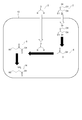
- FIG. 3 is a schematic diagram showing a process in which a microorganism produces 4-hydroxy-2-oxobutyric acid.
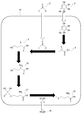
- FIG. 3 is a schematic diagram showing a process in which a microorganism produces 1,3-butanediol.
- FIG. 3 is a schematic diagram showing a process in which a microorganism produces 2,4-dihydroxybutyric acid.
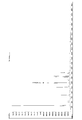
- the schematic diagram which shows the process in which a microorganism produces methionine The figure which shows the result of a gas chromatograph mass spectrometry.
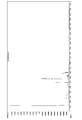
- the figure which shows the result of a gas chromatograph mass spectrometry The figure which shows the result of a gas chromatograph mass spectrometry.
- the figure which shows the result of a gas chromatograph mass spectrometry The figure which shows the result of a gas chromatograph mass spectrometry.
- the method for producing ⁇ -keto acid is A microorganism containing a gene encoding an enzyme that catalyzes an aldol reaction between pyruvic acid and a carbonyl compound, a pyruvic acid-supplying compound selected from pyruvic acid and a saccharide,
- R 101 C (R 102 ) (OH) CH 2 COCOOH (R 101 and R 102 in the general formula (2) are the same groups as R 101 and R 102 in the general formula (1), respectively)
- the above-mentioned microorganism containing a gene encoding an enzyme that catalyzes the aldol reaction between pyruvic acid and a carbonyl compound (hereinafter referred to as the first gene) is also referred to as “ ⁇ -keto acid-producing microorganism”.
- the ⁇ -keto acid-producing microorganism may be a microorganism that naturally has the first gene, or may be a microorganism obtained by transforming a host with the first gene.
- the case where the ⁇ -keto acid-producing microorganism is a transformant will be described as an example.
- Transformant (1.1.1)
- Host any microorganism can be used.
- the host for example, yeast, bacteria, more specifically aerobic bacteria, more specifically coryneform bacteria, Escherichia coli, or Vibrio natriegens can be used.
- the host is a coryneform bacterium.
- Coryneform bacteria are a group of microorganisms defined in Bargeys Manual of Determinative Bacteriology, Vol.8, 599 (1974), and are under normal aerobic conditions. There is no particular limitation as long as it proliferates. Specific examples include Corynebacterium, Brevibacterium, Arthrobacter, Mycobacterium, Micrococcus and the like. Among the coryneform bacteria, Corynebacterium is preferable.
- Corynebacterium examples include Corynebacterium glutamicum, Corynebacterium efficiens, Corynebacterium ammoniagenes, Corynebacterium halotolerance, and Corynebacterium alkano.
- Riticom Corynebacterium alkanolyticum
- Corynebacterium glutamicum is preferable because of its high productivity of ⁇ -keto acid.
- Suitable strains include ATCC13032 strain, ATCC13869 strain, ATCC13058 strain, ATCC13059 strain, ATCC13060 strain, ATCC13232 strain, ATCC13286 strain, ATCC13287 strain, ATCC13655 strain, ATCC13745 strain, ATCC13746 strain, ATCC13761 strain, ATCC14020 strain, ATCC31831 strain, MJ-233. (FERMBP-1497), MJ-233AB-41 (FERMBP-1498) and the like. Among them, ATCC13032 strain and ATCC13869 strain are preferable.
- coryneforms such as Brevibacterium flavum, Brevibacterium lactofermentum, Brevibacterium divaricatum, Corynebacterium lilium. Bacteria are also unified in corynebacterium glutamicum (Corynebacterium glutamicum) [Liebl, W. et al. , And Corynebacterium glutamicum and their distinction by rRNA gene restriction patterns. Int J Sysst Bacteriol. 41: 255-260. (1991), Komagata K. et al., Coryneform bacteria classification, fermentation and industry, 45: 944-963 (1987) ].
- Brevibacterium lactofermentum ATCC13869 strain of old classification Brevibacterium flavum MJ-233 strain (FERM BP-1497), MJ-233AB-41 strain (FERM BP-1498), etc. are also suitable Corynebacterium glutamicum. ..
- Brevibacterium genus include Brevibacterium ammoniagenes (eg ATCC 6872 strain) and the like.
- Arthrobacter examples include Arthrobacter globiformis (eg, ATCC8010 strain, ATCC4336 strain, ATCC21056 strain, ATCC31250 strain, ATCC31738 strain, ATCC35698 strain).
- Mycobacterium bovis for example, ATCC19210 strain, ATCC27289 strain
- Mycobacterium bovis for example, ATCC19210 strain, ATCC27289 strain
- Micrococcus genus bacteria include Micrococcus freudenreichii (for example, No.239 strain (FERM P-13221)), Micrococcus leuteus (for example, No.240 strain (FERM P-13222)), and Micrococcus freudenreichii.
- Micrococcus ureae for example, IAM1010 strain
- Micrococcus roseus for example, IFO3764 strain
- the first gene encodes “an enzyme that catalyzes the aldol reaction between pyruvic acid and a carbonyl compound”.
- Enzyme that catalyzes the aldol reaction between pyruvic acid and a carbonyl compound means purified protein, pyruvic acid (initial substrate concentration 1 mM) and carbonyl compound (initial substrate concentration 1 mM) as an enzyme reaction solution according to the measurement method described below.
- the carbonyl compound in the "enzyme which catalyzes the aldol reaction of pyruvic acid and a carbonyl compound" is, for example, formaldehyde, acetaldehyde, propionaldehyde, butyraldehyde, isobutyraldehyde, valeraldehyde or acetone.
- Butyraldehyde is specifically normal butyraldehyde or isobutyraldehyde.
- Valeraldehyde is specifically normal valeraldehyde.
- the "enzyme that catalyzes the aldol reaction between pyruvic acid and a carbonyl compound” is, for example, aldolase.
- the first gene may be a gene encoding an aldolase exemplified below.
- Examples of the aldolase contained in (a1), (a2), (a3) and (a4) include eda protein.
- the eda protein is from E. coli.
- Examples of the aldolase contained in (a2) include dgoA protein.
- the dgoA protein is from E. coli.
- Examples of the aldolase contained in (a5) include yjhH protein.
- the yjhH protein is from E. coli.
- Examples of the aldolase contained in (a6) include yagE protein.
- the yagE protein is from E. coli.
- Examples of the aldolase contained in (a7) include nanA protein.
- the nanA protein is from E. coli.
- the aldolase contained in (a8) include mhpE protein.
- the mhpE protein is from E. coli.
- the aldolase contained in (a8) and (a10) include hpaI protein.
- the hpaI protein is from E. coli.
- the aldolase contained in (a8) and (a14) include bphI protein.
- the bphI protein is from Burkholderia xenovorans.
- the bphI gene may be introduced into the host in a state linked to the bphJ gene.
- the aldolase contained in (a9) include phdJ protein.
- the phdJ protein is derived from Nocardioides sp.
- the aldolase contained in (a11) include garL protein.
- the garL protein is from E. coli.
- the aldolase contained in (a12) include rhmA protein.
- the rhmA protein is from E. coli.
- Examples of the aldolase contained in (a13) include galC protein.
- the galC protein is from Pseudomonas putida.
- the first gene may encode a class I aldolase or a class II aldolase.
- class I aldolases include eda protein, yjhH protein, yagE protein, dgoA protein, nanA protein, mphE protein and phdJ protein.
- class II aldolases include hpaI protein, garL protein, rhmA protein, galC protein and bphI protein.
- the first gene is selected from the group consisting of: (1-1) A gene comprising a protein consisting of the amino acid sequence set forth in SEQ ID NO: 2 (that is, an hpaI protein derived from Escherichia coli), which encodes a protein that catalyzes an aldol reaction between pyruvic acid and a carbonyl compound, (1-2) A protein comprising an amino acid sequence in which one or several amino acids are deleted, substituted or added in SEQ ID NO: 2, which has an activity of catalyzing the aldol reaction between pyruvic acid and a carbonyl compound.
- the encoding gene (1-3) a gene comprising a protein consisting of the amino acid sequence set forth in SEQ ID NO: 4 (that is, a rhmA protein derived from Escherichia coli), which encodes a protein that catalyzes an aldol reaction between pyruvic acid and a carbonyl compound, (1-4) A protein comprising an amino acid sequence in which one or several amino acids are deleted, substituted or added in SEQ ID NO: 4, which has an activity of catalyzing the aldol reaction between pyruvic acid and a carbonyl compound.
- the encoding gene (1-5) a gene comprising a protein consisting of the amino acid sequence set forth in SEQ ID NO: 6 (that is, a nanA protein derived from Escherichia coli), which encodes a protein that catalyzes an aldol reaction between pyruvic acid and a carbonyl compound, (1-6) A protein consisting of an amino acid sequence in which one or several amino acids are deleted, substituted or added in SEQ ID NO: 6, which has the activity of catalyzing the aldol reaction between pyruvic acid and a carbonyl compound.
- the encoding gene (1-7) A gene comprising a protein consisting of the amino acid sequence of SEQ ID NO: 8 (that is, an eda protein derived from Escherichia coli), which encodes a protein that catalyzes an aldol reaction between pyruvic acid and a carbonyl compound, (1-8) A protein consisting of an amino acid sequence in which one or several amino acids are deleted, substituted or added in SEQ ID NO: 8 and which has an activity to catalyze the aldol reaction between pyruvic acid and a carbonyl compound.
- SEQ ID NO: 8 that is, an eda protein derived from Escherichia coli
- the encoding gene (1-9) a gene comprising a protein consisting of the amino acid sequence set forth in SEQ ID NO: 10 (that is, a yjhH protein derived from Escherichia coli), which encodes a protein that catalyzes the aldol reaction between pyruvic acid and a carbonyl compound, (1-10) A protein consisting of an amino acid sequence in which one or several amino acids are deleted, substituted or added in SEQ ID NO: 10, which has the activity of catalyzing the aldol reaction between pyruvic acid and a carbonyl compound.
- the encoding gene (1-11) A gene comprising a protein consisting of the amino acid sequence set forth in SEQ ID NO: 12 (that is, a dgoA protein derived from Escherichia coli), which encodes a protein that catalyzes an aldol reaction between pyruvic acid and a carbonyl compound, (1-12) A protein consisting of an amino acid sequence in which one or several amino acids are deleted, substituted or added in SEQ ID NO: 12, which has an activity to catalyze the aldol reaction between pyruvic acid and a carbonyl compound.
- the encoding gene (1-13) a gene comprising a protein consisting of the amino acid sequence set forth in SEQ ID NO: 14 (that is, a mhpE protein derived from Escherichia coli), which encodes a protein that catalyzes an aldol reaction between pyruvic acid and a carbonyl compound, (1-14) A protein having an amino acid sequence in which one or several amino acids are deleted, substituted or added in SEQ ID NO: 14, which has an activity of catalyzing the aldol reaction of pyruvic acid and a carbonyl compound.
- the encoding gene (1-15) A gene comprising a protein consisting of the amino acid sequence of SEQ ID NO: 16 (that is, a GarL protein derived from Escherichia coli), which encodes a protein that catalyzes an aldol reaction between pyruvic acid and a carbonyl compound, (1-16) A protein consisting of an amino acid sequence in which one or several amino acids are deleted, substituted or added in SEQ ID NO: 16, which protein has an activity to catalyze the aldol reaction between pyruvic acid and a carbonyl compound.
- SEQ ID NO: 16 that is, a GarL protein derived from Escherichia coli
- the encoding gene (1-17) a protein comprising the amino acid sequence of SEQ ID NO: 18 (that is, a GalC protein derived from Pseudomonas putida), the gene encoding a protein that catalyzes an aldol reaction between pyruvic acid and a carbonyl compound, (1-18) A protein consisting of an amino acid sequence in which one or several amino acids are deleted, substituted or added in SEQ ID NO: 18, which has the activity of catalyzing the aldol reaction between pyruvic acid and a carbonyl compound.
- the encoding gene (1-19) A gene comprising a protein consisting of the amino acid sequence set forth in SEQ ID NO: 20 (that is, a phdJ protein derived from Nocardioides genus), which encodes a protein that catalyzes the aldol reaction between pyruvic acid and a carbonyl compound.
- the encoding gene (1-21) a gene comprising a protein consisting of the amino acid sequence set forth in SEQ ID NO: 22 (that is, a bphI protein derived from Burkholderia zenovorans), which encodes a protein that catalyzes an aldol reaction between pyruvic acid and a carbonyl compound, And (1-22) a protein consisting of an amino acid sequence in which one or several amino acids are deleted, substituted or added in SEQ ID NO: 22, which has an activity to catalyze the aldol reaction between pyruvic acid and a carbonyl compound
- SEQ ID NO: 22 that is, a bphI protein derived from Burkholderia zenovorans
- amino acid residues in the protein three-dimensional structure or the kind of amino acid residue , But preferably 1 to 60, more preferably 1 to 30, further preferably 1 to 15, further preferably 1 to 10, and further preferably 1 to 5.
- a conservative mutation is a polar amino acid between Phe, Trp, and Tyr when the substitution site is an aromatic amino acid, and a Leu, Ile, and Val when the substitution site is a hydrophobic amino acid.
- Gln and Asn in the case of a basic amino acid, between Lys, Arg, His, in the case of an acidic amino acid, between Asp and Glu, in the case of an amino acid having a hydroxyl group.
- substitution considered as conservative substitution, specifically, substitution from Ala to Ser or Thr, substitution from Arg to Gln, His or Lys, substitution from Asn to Glu, Gln, Lys, His or Asp, Asp to Asn, Glu or Gln substitution, Cys to Ser or Ala substitution, Gln to Asn, Glu, Lys, His, Asp or Arg substitution, Glu to Gly, Asn, Gln, Lys or Asp substitution Substitution, Gly to Pro, His to Asn, Lys, Gln, Arg or Tyr, Ile to Leu, Met, Val or Phe, Leu to Ile, Met, Val or Phe, Lys to Asn, Glu, Gln, His or Arg substitution, Met to Ile, Leu, Val or Phe substitution, Phe to Trp, Tyr, Met, Ile or Leu substitution, Ser to Thr or Ala Substitution, Thr to Ser or Ala, Trp to Phe or Tyr, Tyr to His, Phe or Trp,
- a gene encoding a protein having an amino acid sequence in which one or several amino acids are deleted, substituted or added in SEQ ID NO: 2 and having an activity of catalyzing the aldol reaction between pyruvic acid and a carbonyl compound Means “80% or more, preferably 90% or more, more preferably 95% or more, still more preferably 97% or more, still more preferably 98% or more, still more preferably 99% with respect to the amino acid sequence of SEQ ID NO: 2.
- a gene having a homology of at least% and coding for a protein having an activity of catalyzing the aldol reaction between pyruvic acid and a carbonyl compound may be used.
- a gene encoding a protein having an amino acid sequence in which one or several amino acids are deleted, substituted or added in SEQ ID NO: 4 and having an activity of catalyzing an aldol reaction between pyruvic acid and a carbonyl compound Means “80% or more, preferably 90% or more, more preferably 95% or more, further preferably 97% or more, further preferably 98% or more, further preferably 99% based on the amino acid sequence of SEQ ID NO: 4.
- a gene having a homology of at least% and coding for a protein having an activity of catalyzing the aldol reaction between pyruvic acid and a carbonyl compound may be used.
- a gene comprising a protein consisting of an amino acid sequence in which one or several amino acids are deleted, substituted or added in SEQ ID NO: 6, which encodes a protein having an activity of catalyzing the aldol reaction between pyruvic acid and a carbonyl compound "Has 80% or more, preferably 95% or more, more preferably 97% or more, still more preferably 98% or more, still more preferably 99% or more homology to the amino acid sequence of SEQ ID NO: 6. It may be a "gene encoding a protein having an amino acid sequence and having an activity of catalyzing the aldol reaction between pyruvic acid and a carbonyl compound".
- a gene which encodes a protein having an amino acid sequence in which one or several amino acids are deleted, substituted or added in SEQ ID NO: 8 and having an activity of catalyzing the aldol reaction between pyruvic acid and a carbonyl compound "Has 80% or more, preferably 95% or more, more preferably 97% or more, still more preferably 98% or more, still more preferably 99% or more homology to the amino acid sequence of SEQ ID NO: 8. It may be a "gene encoding a protein having an amino acid sequence and having an activity of catalyzing the aldol reaction between pyruvic acid and a carbonyl compound".
- a gene which encodes a protein having an amino acid sequence in which one or several amino acids are deleted, substituted or added in SEQ ID NO: 10 and having an activity of catalyzing the aldol reaction between pyruvic acid and a carbonyl compound "Has 80% or more, preferably 95% or more, more preferably 97% or more, still more preferably 98% or more, still more preferably 99% or more homology to the amino acid sequence of SEQ ID NO: 10. It may be a "gene encoding a protein having an amino acid sequence and having an activity of catalyzing the aldol reaction between pyruvic acid and a carbonyl compound".
- Gene encoding a protein having an amino acid sequence in which one or several amino acids are deleted, substituted or added in SEQ ID NO: 12 and having an activity of catalyzing the aldol reaction between pyruvic acid and a carbonyl compound "Has 80% or more, preferably 95% or more, more preferably 97% or more, still more preferably 98% or more, still more preferably 99% or more homology to the amino acid sequence of SEQ ID NO: 12. It may be a "gene encoding a protein having an amino acid sequence and having an activity of catalyzing the aldol reaction between pyruvic acid and a carbonyl compound”.
- a gene which encodes a protein having an amino acid sequence in which one or several amino acids are deleted, substituted or added in SEQ ID NO: 14 and having an activity of catalyzing an aldol reaction between pyruvic acid and a carbonyl compound "Has 80% or more, preferably 95% or more, more preferably 97% or more, still more preferably 98% or more, still more preferably 99% or more homology to the amino acid sequence of SEQ ID NO: 14. It may be a "gene encoding a protein having an amino acid sequence and having an activity of catalyzing the aldol reaction between pyruvic acid and a carbonyl compound".
- Gene encoding a protein having an amino acid sequence in which one or several amino acids are deleted, substituted or added in SEQ ID NO: 16 and having an activity of catalyzing the aldol reaction between pyruvic acid and a carbonyl compound "Has 80% or more, preferably 95% or more, more preferably 97% or more, still more preferably 98% or more, still more preferably 99% or more homology to the amino acid sequence of SEQ ID NO: 16. It may be a "gene encoding a protein having an amino acid sequence and having an activity of catalyzing the aldol reaction between pyruvic acid and a carbonyl compound”.
- a gene encoding a protein having an amino acid sequence in which one or several amino acids are deleted, substituted or added in SEQ ID NO: 18 and having an activity of catalyzing the aldol reaction between pyruvic acid and a carbonyl compound "Has 80% or more, preferably 95% or more, more preferably 97% or more, still more preferably 98% or more, still more preferably 99% or more homology to the amino acid sequence of SEQ ID NO: 18. It may be a "gene encoding a protein having an amino acid sequence and having an activity of catalyzing the aldol reaction between pyruvic acid and a carbonyl compound".
- a gene comprising a protein consisting of an amino acid sequence in which one or several amino acids are deleted, substituted or added in SEQ ID NO: 20, which encodes a protein having an activity to catalyze the aldol reaction between pyruvic acid and a carbonyl compound "Has 80% or more, preferably 95% or more, more preferably 97% or more, still more preferably 98% or more, still more preferably 99% or more homology to the amino acid sequence of SEQ ID NO: 20. It may be a "gene encoding a protein having an amino acid sequence and having an activity of catalyzing the aldol reaction between pyruvic acid and a carbonyl compound".
- Gene encoding a protein having an amino acid sequence in which one or several amino acids are deleted, substituted or added in SEQ ID NO: 22 and having an activity of catalyzing the aldol reaction between pyruvic acid and a carbonyl compound “Has 80% or more, preferably 95% or more, more preferably 97% or more, still more preferably 98% or more, still more preferably 99% or more homology to the amino acid sequence of SEQ ID NO: 22. It may be a "gene encoding a protein having an amino acid sequence and having an activity of catalyzing the aldol reaction between pyruvic acid and a carbonyl compound".
- the E. coli-derived hpaI protein UniprotKB accession number is, for example, Q47098
- the E. coli-derived rhmA protein UniprotKB accession number is, for example, P76469-derived E. coli-derived nanA protein, UniprotKBLab0Lb, pAb6abAsion, etc.
- the eda protein UniprotKB accession number is, for example, P0A955, the E. coli-derived yjhH protein UniprotKB accession number is, for example, P39359, and the E. coli-derived dgoA protein is UniprotKB accession number6, number Eq.
- the conventional mhpE protein UniprotKB accession number is, for example, P51020
- the E. coli-derived garL protein UniprotKB accession number is, for example, P23522
- the Pseudomonas putida-derived galC protein is Uniprothion, for example, 88 urnJonce ox
- Qb is QJ access.
- the first gene is An hpaI gene derived from Escherichia coli, which comprises the nucleotide sequence of SEQ ID NO: 1, An Escherichia coli-derived rhmA gene consisting of the nucleotide sequence of SEQ ID NO: 3, A nanA gene derived from Escherichia coli, which comprises the nucleotide sequence of SEQ ID NO: 5; An eda gene derived from Escherichia coli, which comprises the nucleotide sequence of SEQ ID NO: 7, A yjhH gene derived from Escherichia coli, which comprises the nucleotide sequence of SEQ ID NO: 9; A dgoA gene derived from Escherichia coli, which comprises the nucleotide sequence of SEQ ID NO: 11, An Escherichia coli-derived mhpE gene consisting of the nucleotide sequence of SEQ ID NO: 13, A GarL gene derived from Escherichia
- SEQ ID Nos: 1, 3, 5, 7, 9, 11, 13, 15, 17, 19 and 21 and SEQ ID Nos: 2, 4, 6, 8, 10, 12, 14, 16, 18, 20 The amino acid sequences described in and 22 are as follows.
- PSI-Blast or PHI-Blast can be used to perform an iterated search that detects positional relationships (Id.) Between molecules and relationships between molecules that share a common pattern.
- BLAST Altschul et al.
- Gapped BLAST the default parameters of each program can be used. See http://www.ncbi.nlm.nih.gov.
- the activity of catalyzing the aldol reaction between pyruvic acid and a carbonyl compound is carried out, for example, by carrying out the enzyme reaction in 100 mM HEPES-NaOH buffer (pH 8.0) containing 2 mM magnesium chloride at 25 ° C. It can be calculated by measuring the initial production rate of the aldol compound produced from the carbonyl compound and the carbonyl compound. The production rate of the aldol compound can be calculated, for example, from the time change of the concentration of the aldol compound itself.
- the activity of forming 1 ⁇ mol of the aldol compound in 1 minute at 25 ° C. is defined as 1 unit.
- a gene comprising a protein consisting of an amino acid sequence in which one or several amino acids are deleted, substituted or added in SEQ ID NO: 2 and having an activity of catalyzing the aldol reaction between pyruvic acid and a carbonyl compound can be selected from a DNA library of another species by PCR or hybridization using, for example, a primer or probe designed according to the information based on the nucleotide sequence of SEQ ID NO: 2. .. The gene thus selected encodes a protein having a high probability of catalyzing the aldol reaction between pyruvic acid and a carbonyl compound.
- a gene consisting of a protein consisting of an amino acid sequence in which one or several amino acids are deleted, substituted or added in SEQ ID NO: 4, which encodes a protein having an activity of catalyzing the aldol reaction between pyruvic acid and a carbonyl compound (The “rhmA gene mutant)” can be selected from a DNA library of another organism species by a method similar to the above method for selecting an hpaI gene mutant.
- a gene comprising a protein consisting of an amino acid sequence in which one or several amino acids are deleted, substituted or added in SEQ ID NO: 6, which encodes a protein having an activity of catalyzing the aldol reaction between pyruvic acid and a carbonyl compound can be selected from a DNA library of another species by a method similar to the above method for selecting an hpaI gene mutant.
- a gene comprising a protein consisting of an amino acid sequence in which one or several amino acids are deleted, substituted or added in SEQ ID NO: 8 and having an activity of catalyzing the aldol reaction between pyruvic acid and a carbonyl compound can be selected from a DNA library of another species by a method similar to the above method for selecting an hpaI gene mutant.
- a gene comprising a protein consisting of an amino acid sequence in which one or several amino acids are deleted, substituted or added in SEQ ID NO: 10 and having an activity of catalyzing the aldol reaction between pyruvic acid and a carbonyl compound can be selected from a DNA library of another species by a method similar to the above method for selecting an hpaI gene mutant.
- a gene comprising a protein consisting of an amino acid sequence in which one or several amino acids are deleted, substituted or added in SEQ ID NO: 12 and having an activity of catalyzing the aldol reaction between pyruvic acid and a carbonyl compound can be selected from a DNA library of another species by a method similar to the above method for selecting an hpaI gene mutant.
- a gene comprising a protein consisting of an amino acid sequence in which one or several amino acids are deleted, substituted or added in SEQ ID NO: 14 and having an activity of catalyzing the aldol reaction between pyruvic acid and a carbonyl compound can be selected from a DNA library of another species by a method similar to the above method for selecting an hpaI gene mutant.
- a gene comprising a protein having an amino acid sequence in which one or several amino acids are deleted, substituted or added in SEQ ID NO: 16 and which has an activity of catalyzing the aldol reaction between pyruvic acid and a carbonyl compound can be selected from a DNA library of another species by a method similar to the above method for selecting an hpaI gene mutant.
- a gene comprising a protein consisting of an amino acid sequence in which one or several amino acids are deleted, substituted or added in SEQ ID NO: 18 and which has an activity of catalyzing the aldol reaction between pyruvic acid and a carbonyl compound can be selected from a DNA library of another species by a method similar to the above method for selecting an hpaI gene mutant.
- a gene comprising a protein having an amino acid sequence in which one or several amino acids are deleted, substituted or added in SEQ ID NO: 20 and having an activity of catalyzing the aldol reaction between pyruvic acid and a carbonyl compound can be selected from a DNA library of another organism species by a method similar to the above method for selecting an hpaI gene mutant.
- a gene consisting of a protein consisting of an amino acid sequence in which one or several amino acids are deleted, substituted or added in SEQ ID NO: 22, which encodes a protein having an activity of catalyzing the aldol reaction between pyruvic acid and a carbonyl compound (bphI gene mutant)” can be selected from a DNA library of another species by a method similar to the above method for selecting an hpaI gene mutant.
- the first gene can be incorporated into an appropriate plasmid vector for transformation.
- the plasmid vector a known plasmid vector can be used depending on the host.
- the plasmid vector may contain a gene that controls the autonomous replication function in the host, or may contain a base sequence necessary for integration into the chromosome of the host.
- a transformant can be prepared using the obtained recombinant vector.
- Transformation method a known method can be used without limitation.
- known methods include, for example, calcium chloride / rubidium chloride method, calcium phosphate method, DEAE-dextran mediated transfection, electric pulse method and the like.
- the obtained transformant may be cultured immediately after transformation using a medium usually used for culturing the transformant.
- the culture temperature may be any temperature as long as it is a temperature suitable for the growth of transformants.
- the pH of the medium may be any pH as long as it is a pH suitable for the growth of transformants.
- the pH of the medium can be adjusted by a known method.
- the culture time may be any time as long as it is sufficient for the transformant to grow.
- the first gene when a transformant is produced using a recombinant vector as described above, the first gene may be integrated into the host chromosome or, alternatively, in the form of the recombinant vector in the host cytoplasm. It may exist.
- the host may be a wild strain, a mutant strain thereof, or an artificial gene recombinant.
- the host may be a gene-disrupted strain or a gene-deleted strain obtained by disrupting or deleting at least one of the following genes originally possessed by the wild-type coryneform bacterium.
- lactate dehydrogenase (ldhA) gene phosphoenolpyruvate carboxylase (ppc) gene, pyruvate carboxylase (pyc) gene, pyruvate dehydrogenase (pyruvate dehydrogenase, For example, poxB) gene, glutamate-pyruvate aminotransferase (eg, alaA) gene, acetolactate synthase (eg, ilvB) gene, N-succinyldiene Minopimereto (N-succinyldiaminopimelate aminotransferase, for example Cg0931) gene, S- (hydroxymethyl) Miko thiol dehydrogenase (S- (hydroxymethyl) mycothiol dehydrogenase, e.g., adhE) gene, and acetaldehyde dehydrogenase (acetaldehyde Dehydrogenase, e.g. ald
- Construction of a gene-disrupted strain or a gene-deficient strain can be performed by a known method.
- the encoding gene (1-3) a gene comprising a protein consisting of the amino acid sequence set forth in SEQ ID NO: 4, which encodes a protein that catalyzes the aldol reaction between pyruvic acid and a carbonyl compound, (1-4) A protein comprising an amino acid sequence in which one or several amino acids are deleted, substituted or added in SEQ ID NO: 4, which has an activity of catalyzing the aldol reaction between pyruvic acid and a carbonyl compound.
- the encoding gene (1-5) a protein consisting of the amino acid sequence set forth in SEQ ID NO: 6, which encodes a protein that catalyzes an aldol reaction between pyruvic acid and a carbonyl compound; and (1-6) 1 in SEQ ID NO: 6 or A gene encoding a protein having an amino acid sequence in which several amino acids have been deleted, substituted or added, the protein having an activity of catalyzing the aldol reaction between pyruvic acid and a carbonyl compound; Coryneform bacteria including can be used.
- An ⁇ -keto acid-producing microorganism (eg, the above-mentioned transformant) can be cultured in the presence of a pyruvate-supplying compound and a carbonyl compound to produce ⁇ -keto acid.
- a pyruvate-supplying compound and a carbonyl compound can be cultured in the presence of a pyruvate-supplying compound and a carbonyl compound to produce ⁇ -keto acid.
- “Culturing in the presence of a pyruvic acid-supplying compound and a carbonyl compound” can be carried out by culturing in a culture medium containing the pyruvic acid-supplying compound and the carbonyl compound.
- culturing in the presence of a pyruvic acid-supplying compound and a carbonyl compound can be carried out by culturing in a culture medium containing the pyruvic acid-supplying compound and the carbonyl compound.
- culturing under aerobic conditions means culturing under conditions in which oxygen is supplied to the culture medium in an amount sufficient for the growth of transformants during the culturing period.
- Culturing under aerobic conditions can be performed by a known method.
- Culturing under aerobic conditions can be realized by supplying oxygen to the culture medium by, for example, aeration, stirring, shaking, or a combination thereof. More specifically, the culture under aerobic conditions can be realized by shaking culture or deep aeration stirring culture.
- the growth culture and the subsequent production culture can be performed as follows, for example.
- a container containing the culture solution used for the growth culture hereinafter, referred to as the growth culture solution
- the transformant suspended in the growth culture solution is centrifuged to transform the vessel.
- the body can be precipitated.
- the culture medium for growth is removed from the container, and the isolated transformant is suspended in a culture medium used for production culture (hereinafter referred to as the culture medium for production) to perform production culture.
- the pyruvic acid-supplying compound and the carbonyl compound are added to the growth medium containing the transformant, and the aerobic condition is changed to anaerobic or microaerobic.
- the production culture can be carried out without changing the culture solution by changing the biological conditions. In this way, the multiplication culture and the production culture can be continuously performed.
- culture means maintaining a transformant under specific controlled conditions suitable for growth of the transformant.
- the transformant may or may not grow during the culture period. Therefore, the term “culture” can be referred to as "incubation”.
- Proliferation culture medium As the proliferation culture medium, a medium usually used for culturing transformants, for example, a known medium containing a carbon source, a nitrogen source, inorganic salts and the like can be used. it can.
- the culture temperature in the growth culture may be any temperature as long as it is a temperature suitable for growing the transformant.
- the pH of the culture medium for growth may be any pH as long as it is a pH suitable for the growth of transformants.
- the pH of the culture medium for growth can be adjusted by a known method.
- the culture time in the growth culture may be any time as long as it is a time sufficient for the transformant to grow.
- Culture medium for production As the culture medium for production, a culture medium containing a pyruvic acid-supplying compound, a carbonyl compound, and other necessary components can be used. As other necessary components, for example, inorganic salts, carbon sources other than sugars, or nitrogen sources can be used.
- the concentration of each component in the culture medium described herein refers to the final concentration in the culture medium at the time when each component is added.
- pyruvic acid-supplying compound a compound selected from pyruvic acid and saccharides can be used.
- the pyruvic acid-supplying compound may be pyruvic acid itself or a saccharide that is converted into pyruvic acid in the living body of a microorganism.
- pyruvic acid-supplying compound pyruvic acid, saccharides, or a combination thereof can be used.
- any saccharide can be used as long as it can be taken into the living body by the transformant and can be converted into pyruvic acid.
- the saccharides monosaccharides such as glucose, fructose, mannose, xylose, arabinose and galactose; disaccharides such as sucrose, maltose, lactose, cellobiose, xylobiose and trehalose; polysaccharides such as starch; molasses Etc. Of these, monosaccharides are preferable, and fructose and glucose are more preferable.
- a saccharide containing glucose as a constituent monosaccharide specifically, a disaccharide such as sucrose, an oligosaccharide containing glucose as a constituent monosaccharide, and a polysaccharide containing glucose as a constituent monosaccharide are also preferable.
- the saccharides may be used alone or in combination of two or more.
- sugars are saccharified liquids obtained by saccharifying non-edible agricultural wastes such as rice straw, bagasse, and corn stover, and energy crops such as switchgrass, napiergrass, and miscanus with saccharifying enzymes.
- the concentration of the pyruvic acid-supplying compound in the production medium can be as high as possible within the range that does not inhibit the production of ⁇ -keto acid.
- the concentration of the pyruvic acid-supplying compound in the production medium is preferably within the range of 0.1-40 (w / v)%, more preferably within the range of 1-20 (w / v)%. preferable. Further, in accordance with the decrease in the pyruvic acid-supplying compound associated with the production of ⁇ -keto acid, the addition of the pyruvic acid-supplying compound can be performed.
- R 101 C (O) R 102 (Wherein R 101 and R 102 are, independently of each other, hydrogen or an alkyl group having 1 to 5 carbon atoms)
- a carbonyl compound represented by can be used.
- R 101 is hydrogen or an alkyl group having 1 to 5 carbon atoms
- R 102 is hydrogen.
- R 101 is a methyl group
- R 102 is an alkyl group having 1 to 5 carbon atoms. You can
- a carbonyl compound in which R 101 is hydrogen and R 102 is hydrogen ie formaldehyde
- a carbonyl compound in which R 101 is a methyl group and R 102 is hydrogen ie, acetaldehyde
- a carbonyl compound in which R 101 is an ethyl group and R 102 is hydrogen ie, propionaldehyde
- a carbonyl compound in which R 101 is a propyl group and R 102 is hydrogen that is, butyraldehyde
- a carbonyl compound in which R 101 is a normal propyl group and R 102 is hydrogen That is, normal butyraldehyde
- a carbonyl compound in which R 101 is an isopropyl group and R 102 is hydrogen ie, isobutyraldehyde
- R 101 is a pentyl group, and R 102 is hydrogen.
- a carbonyl compound ie, valeraldehyde
- a carbonyl compound in which R 101 is a normal pentyl group and R 102 is hydrogen ie, normal valeraldehyde
- R 101 and R 102 in the general formula (1) are both methyl groups (that is, acetone) can also be used.
- the carbonyl compounds may be used alone or in combination of two or more.
- the concentration of the carbonyl compound in the culture broth for production is preferably in the range of 0.001 to 10 (w / v)%, more preferably in the range of 0.01 to 1 (w / v)%. preferable. Further, additional addition of the carbonyl compound can be carried out according to the decrease of the carbonyl compound accompanying the production of ⁇ -keto acid.
- inorganic salts can be added.
- metal salts such as phosphates, sulfates, magnesium, potassium, manganese, iron and zinc can be used.
- the inorganic salt one kind may be used, or two or more kinds may be mixed and used.
- the concentration of the inorganic salt in the culture broth for production varies depending on the inorganic salt used, but is usually about 0.01 to 1 (w / v)%.
- carbon sources other than sugars can be added if necessary.
- sugar alcohols such as mannitol, sorbitol, xylitol, glycerol and glycerin
- organic acids such as acetic acid, fermentation, lactic acid, fumaric acid, maleic acid and gluconic acid
- carbonization such as normal paraffin Hydrogen or the like can be used.
- a nitrogen source can be added.
- inorganic or organic ammonium salts such as ammonium chloride, ammonium sulfate, ammonium nitrate and ammonium acetate; urea; aqueous ammonia; nitrates such as sodium nitrate and potassium nitrate can be used.
- corn steep liquor; meat extract; yeast extract; soybean hydrolysate; protein hydrolysate such as peptone, NZ-amine or casein hydrolysate; nitrogen-containing organic compounds such as amino acids can also be used.
- the nitrogen source one kind may be used, or two or more kinds may be mixed and used.
- the concentration of the nitrogen source in the culture broth for production varies depending on the nitrogen compound used, but is usually about 0.1 to 10 (w / v)%.
- vitamins can be added if necessary.
- vitamins include biotin, thiamine (vitamin B1), pyridoxine (vitamin B6), pantothenic acid, inositol, nicotinic acid and the like.
- Specific culture medium for production contains glucose, formaldehyde, potassium dihydrogen phosphate, dipotassium hydrogen phosphate, magnesium sulfate, iron (II) sulfate and manganese (II) sulfate, and has a pH of 6.0.
- a medium can be used.
- Specific production broths include pyruvic acid, formaldehyde, potassium dihydrogen phosphate, dipotassium hydrogen phosphate, magnesium sulfate, iron (II) sulfate, manganese (II) sulfate and 4-morpholinopropanesulfonic acid.
- a medium can also be used.
- a culture medium obtained by adding a pyruvic acid-supplying compound and a carbonyl compound to a base culture medium having the same composition as the growth culture medium used in the growth culture can also be used.
- the pyruvic acid-supplying compound is present in a sufficient amount in the above-mentioned base culture solution, the pyruvic acid-supplying compound need not be added.
- the culture temperature in the production culture may be any temperature as long as it is a temperature suitable for producing ⁇ -keto acid.
- the culture temperature in the production culture is preferably about 20 to 50 ° C, more preferably about 25 to 47 ° C. Within the above temperature range, ⁇ -keto acid can be efficiently produced.
- the pH of the culture medium for production may be any pH as long as it is a pH suitable for producing ⁇ -keto acid.
- the pH of the production medium is preferably maintained within the range of about 6-8.
- the pH of the culture medium for production should be adjusted using an inorganic or organic acid; an alkaline solution such as an aqueous potassium hydroxide solution; urea; calcium carbonate; ammonia; a pH buffer solution containing 4-morpholinopropanesulfonic acid, etc. You can During production culture, the pH of the production culture solution can be appropriately adjusted as necessary.
- the culture time in the production culture may be any time as long as it is a time sufficient for the transformant to produce ⁇ -keto acid.
- the culture time in the production culture is preferably about 3 hours to 7 days, more preferably about 1 to 3 days.
- the production culture may be performed under aerobic conditions, and may be performed under anaerobic conditions or microaerobic conditions.
- Production culture is preferably carried out under anaerobic or microaerobic conditions.
- the transformant When the transformant is cultured under anaerobic or microaerobic conditions, the transformant does not substantially grow, and ⁇ -keto acid can be produced more efficiently.
- “Anaerobic conditions or microaerobic conditions” refer to conditions in which the dissolved oxygen concentration in the culture medium for production is within the range of 0 to 2 ppm, for example.
- the "anaerobic condition or microaerobic condition” preferably refers to a condition in which the dissolved oxygen concentration in the production medium is within the range of 0 to 1 ppm, more preferably the dissolved oxygen in the production medium. It refers to the condition that the concentration is within the range of 0 to 0.5 ppm.
- the dissolved oxygen concentration in the culture solution can be measured using, for example, a dissolved oxygen meter.
- anaerobic conditions is a technical term that refers to conditions under which there are no electron acceptors such as dissolved oxygen and oxides such as nitric acid.
- these electron acceptors are not sufficient, or due to the nature of the electron acceptors, the transformant does not grow, and the carbon source supplied by that amount is for the production of ⁇ -keto acid. If it is used and its production efficiency can be improved, it is not necessary to adopt the above strict conditions.
- the production culture solution may contain dissolved oxygen and oxides such as nitric acid.
- An electron acceptor may be present.
- the expression "anaerobic or microaerobic conditions" as used herein also includes such conditions.
- Anaerobic conditions and microaerobic conditions can be realized by, for example, not passing gas containing oxygen, because oxygen supplied from the gas-liquid interface becomes insufficient for the growth of transformants.
- it can be realized by aerating an inert gas, specifically nitrogen gas, into the culture medium for production.
- it can be realized by sealing the container used for production culture.
- the production culture is preferably carried out in a state in which the transformant is suspended at high density in the culture medium for production. By culturing the transformant in such a state, it is possible to more efficiently produce ⁇ -keto acid.
- the “state in which the transformant is suspended in the culture medium for production at a high density” means, for example, that the transformant is contained in the culture medium for production and the weight% of wet cells of the transformant is 1 to 50 (w. / V) indicates a state of being suspended so as to fall within the range of%.
- the “state in which the transformant is suspended in the culture medium for production at a high density” is preferably such that the transformant is contained in the culture medium for production and the weight% of wet cells of the transformant is 3 to 30 ( w / v) It refers to the state of being suspended so as to be in the range of%.
- the production culture is carried out under a condition of anaerobic or microaerobic conditions in which the transformant is suspended in the culture medium for production at a high density.
- R 101 C (O) R 102 (Wherein R 101 and R 102 are, independently of each other, hydrogen or an alkyl group having 1 to 5 carbon atoms)
- R 101 C (R 102 ) (OH) CH 2 COCOOH R 101 and R 102 in the general formula (2) are the same groups as R 101 and R 102 in the general formula (1), respectively)
- the ⁇ -keto acid represented by can be produced.
- R 101 when a carbonyl compound in which R 101 is hydrogen and R 102 is hydrogen is used, in the general formula (2), R 101 is hydrogen. , And R 102 is hydrogen, an ⁇ -keto acid (ie, 4-hydroxy-2-oxobutyric acid) can be produced.
- R 101 when a carbonyl compound in which R 101 is a methyl group and R 102 is hydrogen is used, in the general formula (2), R 101 is a methyl group, and R is An ⁇ -keto acid where 102 is hydrogen (ie 4-hydroxy-2-oxovaleric acid) can be produced.
- R 101 when a carbonyl compound in which R 101 is a normal propyl group and R 102 is hydrogen is used, in the general formula (2), R 101 is a normal propyl group. It is possible to produce an ⁇ -keto acid which is a group and R 102 is hydrogen (ie 4-hydroxy-2-oxo-normal heptanoic acid). Further, specifically, in the general formula (1), when a carbonyl compound in which R 101 is an isopropyl group and R 102 is hydrogen is used, in the general formula (2), R 101 is isopropyl. It is possible to produce an ⁇ -keto acid (ie 4-hydroxy-2-oxoisoenanthic acid) which is a group and R 102 is hydrogen.
- R 101 when a carbonyl compound in which R 101 is a pentyl group and R 102 is hydrogen is used, in the general formula (2), R 101 is a pentyl group, and R An ⁇ -keto acid where 102 is hydrogen (ie 4-hydroxy-2-oxocaprylic acid) can be produced.
- R 101 when a carbonyl compound in which R 101 is a normal pentyl group and R 102 is hydrogen is used, in the general formula (2), R 101 is normal pentyl. It is possible to produce an ⁇ -keto acid which is a group and R 102 is hydrogen (ie 4-hydroxy-2-oxonormalcaprylic acid).
- the above ⁇ -keto acid can be recovered by recovering the production culture medium, but it is also possible to separate and purify the ⁇ -keto acid from the production culture medium by a known method.
- known methods include a crystallization method, a chromatography method, an ion exchange resin method, an activated carbon adsorption elution method, a solvent extraction method and the like.
- ⁇ -keto acids when multiple types of carbonyl compounds are used, multiple types of ⁇ -keto acids are produced in the culture medium. Plural kinds of ⁇ -keto acids can be separated from each other by crystallization or chromatography.
- the ⁇ -keto acid-producing microorganism 1 takes in glucose 2 and formaldehyde 3. Glucose 2 is then converted to pyruvate 4 through glycolysis. Next, pyruvic acid 4 and formaldehyde 3 are converted into 4-hydroxy-2-oxobutyric acid 5 by the “enzyme that catalyzes the aldol reaction between pyruvic acid and an aldehyde” encoded by the first gene. As described above, 4-hydroxy-2-oxobutyric acid is produced.
- the production method described above finds a production process in which a microorganism having a specific gene is cultured in the presence of a carbonyl compound to obtain an intermediate which is a key to the synthesis of useful substances such as amino acids. It was made. In general, carbonyl compounds are harmful to the growth of microorganisms, so it was surprising that useful compounds were obtained in the presence thereof. In addition, at this time, since the carbonyl compound is incorporated into the microbial metabolic system, an intermediate that is not produced by a normal microbial metabolic system was obtained, which indicates that future needs for producing various compounds from biologically-derived raw materials are obtained. Expected as a method to satisfy In fact, as will be described later in the present specification, the development of various useful substances through this intermediate shows some of the possibility of producing various compounds by the technique of the present invention.
- the method for producing 1,3-diol is The following genes: (A) a first gene encoding an enzyme that catalyzes an aldol reaction between pyruvic acid and a carbonyl compound, A microorganism containing a second gene encoding an enzyme that catalyzes a decarboxylation reaction of ⁇ -keto acid and (c) a third gene encoding an enzyme that catalyzes a reduction reaction of an aldehyde is prepared from pyruvic acid and a saccharide.
- a selected pyruvic acid-supplying compound The following general formula (3): R 103 C (O) R 104 (Wherein R 103 and R 104 , independently of each other, are hydrogen or an alkyl group having 1 to 5 carbon atoms, provided that when R 103 is hydrogen, R 104 is not hydrogen.) Cultured in the presence of a carbonyl compound represented by The following general formula (4): R 103 C (R 104 ) (OH) CH 2 CH 2 OH (R 103 and R 104 in the general formula (4) are the same groups as R 103 and R 104 in the general formula (3), respectively) To produce a 1,3-diol represented by
- the above-mentioned microorganism containing the first, second and third genes is also referred to as "1,3-diol producing microorganism".
- the 1,3-diol producing microorganism may be a microorganism that naturally has the first, second and third genes, or can be obtained by transforming a host with the first, second and third genes. It may be a microorganism.
- the 1,3-diol producing microorganism is a transformant will be described as an example.
- the second gene encodes “an enzyme that catalyzes the decarboxylation reaction of ⁇ -keto acid”.
- “An enzyme that catalyzes the decarboxylation reaction of ⁇ -keto acid” means that an enzyme reaction solution containing purified protein and ⁇ -keto acid (initial substrate concentration 1 mM) is used as the enzyme reaction solution according to the measurement method described below.
- the second gene encodes, for example, an enzyme that catalyzes the decarboxylation reaction of ⁇ -keto acid obtained by the aldol reaction catalyzed by the protein encoded by the first gene.
- the ⁇ -keto acid in the “enzyme that catalyzes the decarboxylation reaction of ⁇ -keto acid” is represented by the general formula (2) described in the section “(1.) Method for producing ⁇ -keto acid”, for example. ⁇ -keto acid.
- the “enzyme that catalyzes the decarboxylation reaction of ⁇ -keto acid” is, for example, decarboxylase.
- the second gene may be a gene encoding a decarboxylase exemplified below.
- Examples of the decarboxylase contained in (b1) include pdc protein.
- the pdc protein is from Zymomonas mobilis.
- Examples of the decarboxylase contained in (b2) include mdlC protein.
- the mdlC protein is from Pseudomonas putida.
- Examples of the decarboxylase contained in (b3) include kivD protein.
- the kivD protein is from Lactococcus lactis.
- the second gene is selected from the group consisting of: (2-1) A gene comprising a protein consisting of the amino acid sequence of SEQ ID NO: 24 (that is, mdlC protein derived from Pseudomonas putida), which encodes a protein that catalyzes the decarboxylation reaction of ⁇ -keto acid, and (2) -2) A gene encoding a protein having an amino acid sequence in which one or several amino acids have been deleted, substituted or added in SEQ ID NO: 24, the protein having an activity of catalyzing the decarboxylation reaction of ⁇ -keto acid. ..
- a gene comprising a protein consisting of an amino acid sequence in which one or several amino acids are deleted, substituted or added in SEQ ID NO: 24, which encodes a protein having an activity of catalyzing the decarboxylation reaction of ⁇ -keto acid is , “80% or more, preferably 90% or more, more preferably 95% or more, further preferably 97% or more, further preferably 98% or more, further preferably 99% based on the amino acid sequence of SEQ ID NO: 24. It may be a "gene encoding a protein having an amino acid sequence having the above-mentioned homology and having an activity of catalyzing the decarboxylation reaction of ⁇ -keto acid".
- UniprotKB accession number of mdlC protein derived from Pseudomonas putida is, for example, P20906.
- the second gene is the Pseudomonas putida-derived mdlC gene consisting of the nucleotide sequence of SEQ ID NO: 23.
- the base sequence shown in SEQ ID NO: 23 and the amino acid sequence shown in SEQ ID NO: 24 are as follows.
- the activity of catalyzing the decarboxylation reaction of ⁇ -keto acid is, for example, 100 mM potassium phosphate buffer containing 0.5 mM thiamine pyrophosphate, 1 mM magnesium chloride, 10 mM NADH and an excess amount of alcohol dehydrogenase (pH 6. It can be calculated by measuring the initial production rate of an alcohol compound produced by sequentially reducing the aldehyde compound produced from the raw material ⁇ -keto acid at 30 ° C. in 0). The production rate of the alcohol compound can be calculated, for example, from the change over time in the concentration of the alcohol compound itself.
- the concentration of the alcohol compound can be measured, for example, by detecting the alcohol compound using high performance liquid chromatography and comparing it with a standard product having a known concentration.
- the activity of decarboxylating 1 ⁇ mol of ⁇ -keto acid per minute at 30 ° C. is defined as 1 unit.
- the “gene variant)” can be selected from a DNA library of another species by a method similar to the above-mentioned method for selecting the hpaI gene variant.
- the third gene encodes “an enzyme that catalyzes the reduction reaction of aldehyde”. “Enzyme that catalyzes the reduction reaction of aldehyde” means 10 mU / when measured by an enzyme reaction solution containing purified protein and aldehyde (initial substrate concentration 1 mM) An enzyme having an activity equal to or higher than mg protein.
- the third gene encodes, for example, an enzyme that catalyzes the reduction reaction of the aldehyde obtained by the decarboxylation reaction catalyzed by the protein encoded by the second gene.
- the aldehyde in the "enzyme which catalyzes the reduction reaction of aldehyde” is, for example, 3-hydroxybutyraldehyde, 3-hydroxyvaleraldehyde, 3-hydroxyhexylaldehyde, 3-hydroxyisohexylaldehyde, 3-hydroxyheptylaldehyde or 3-methyl. It is 3-hydroxybutyraldehyde.
- the “enzyme that catalyzes the reduction reaction of aldehyde” is, for example, alcohol dehydrogenase.
- the third gene may be, for example, a gene encoding 1,3-propanediol dehydrogenase (1,3-propanediol dehydrogenase, EC number 1.1.1.102).
- 1,3-propanediol dehydrogenase examples include dhaT protein and lpo protein.
- the dhaT protein is derived from Klebsiella pneumoniae.
- the lpo protein is derived from Lactobacillus reuteri.
- the third gene is selected from the group consisting of: (3-1) A gene comprising a protein consisting of the amino acid sequence set forth in SEQ ID NO: 26 (that is, a Klebsiella pneumoniae-derived dhaT protein), which codes for a protein that catalyzes an aldehyde reduction reaction, and (3-2) sequence A gene encoding a protein having an amino acid sequence in which one or several amino acids are deleted, substituted or added in No. 26, and which has an activity of catalyzing the reduction reaction of aldehyde.
- (3-1) A gene comprising a protein consisting of the amino acid sequence set forth in SEQ ID NO: 26 that is, a Klebsiella pneumoniae-derived dhaT protein
- sequence A gene encoding a protein having an amino acid sequence in which one or several amino acids are deleted, substituted or added in No. 26, and which has an activity of catalyzing the reduction reaction of aldehyde.
- a gene encoding a protein having an amino acid sequence in which one or several amino acids are deleted, substituted or added in SEQ ID NO: 26 and having an activity of catalyzing the reduction reaction of aldehyde is defined as "SEQ ID NO: 80% or more, preferably 90% or more, more preferably 95% or more, further preferably 97% or more, further preferably 98% or more, more preferably 99% or more homology to the amino acid sequence described in 26. It may be a "gene encoding a protein having an activity of catalyzing the reduction reaction of aldehyde", which is composed of an amino acid sequence having
- Klebsiella pneumoniae-derived dhaT protein UniprotKB accession number is, for example, Q59477.
- the third gene is the Klebsiella pneumoniae-derived dhaT gene consisting of the nucleotide sequence of SEQ ID NO: 25.
- the base sequence shown in SEQ ID NO: 25 and the amino acid sequence shown in SEQ ID NO: 26 are as follows.
- the activity of catalyzing the reduction reaction of aldehyde is performed, for example, by performing the enzyme reaction in 50 mM MES-NaOH buffer (pH 6.5) containing 0.2 mM NADH at 30 ° C. to reduce the raw material aldehyde to an alcohol compound. It can be calculated by measuring the initial consumption rate of NADH consumed during the operation. The initial consumption rate of NADH can be calculated, for example, by measuring the rate of decrease in absorbance at 340 nm derived from NADH in the enzyme reaction solution.
- the activity of reducing 1 ⁇ mol of aldehyde per minute at 30 ° C. is defined as 1 unit.
- a gene consisting of an amino acid sequence in which one or several amino acids are deleted, substituted or added in SEQ ID NO: 26, which encodes a protein having an activity to catalyze an aldehyde reduction reaction (dhaT gene mutant) can be selected from a DNA library of another species by a method similar to the above method for selecting hpaI gene variants.
- the first, second and third genes can be incorporated into a suitable plasmid vector for transformation.
- plasmid vector a plasmid vector similar to the plasmid vector described in the section “(1.1.3) Construction of recombinant vector for transformation” can be used.
- the first, second, and third genes may be integrated into individual plasmid vectors or may be integrated into the same plasmid vector.
- a transformant can be prepared using the obtained recombinant vector.
- each of the first, second, and third genes may be integrated into the host chromosome, or the recombinant vector may be used. May be present in the cytoplasm of the host.
- the host may be a wild strain, a mutant strain thereof, or an artificial gene recombinant.
- the host is a gene-disrupted strain or gene similar to the gene-disrupted strain or gene-deleted strain described in the section "(1.1.5) Destruction or deletion of host chromosomal gene".
- Deletion strains can be used.
- As a method for producing a gene-disrupted strain or a gene-deleted strain the same methods as those described in the section "(1.1.5) Destruction or deletion of host chromosomal gene” can be used. ..
- the productivity of 1,3-diol can be improved and the production of by-products can be suppressed.
- 1,3-Diol-Producing Microorganisms Specifically, as 1,3-diol-producing microorganisms, A first gene selected from the group consisting of: (1-1) a gene comprising a protein consisting of the amino acid sequence set forth in SEQ ID NO: 2, which encodes a protein that catalyzes the aldol reaction between pyruvic acid and a carbonyl compound, (1-2) A protein comprising an amino acid sequence in which one or several amino acids are deleted, substituted or added in SEQ ID NO: 2, which has an activity of catalyzing the aldol reaction between pyruvic acid and a carbonyl compound.
- the encoding gene (1-3) a gene comprising a protein consisting of the amino acid sequence set forth in SEQ ID NO: 4, which encodes a protein that catalyzes the aldol reaction between pyruvic acid and a carbonyl compound, (1-4) A protein comprising an amino acid sequence in which one or several amino acids are deleted, substituted or added in SEQ ID NO: 4, which has an activity of catalyzing the aldol reaction between pyruvic acid and a carbonyl compound.
- the encoding gene (1-5) a protein consisting of the amino acid sequence set forth in SEQ ID NO: 6, which encodes a protein that catalyzes an aldol reaction between pyruvic acid and a carbonyl compound; and (1-6) 1 in SEQ ID NO: 6 or A gene encoding a protein having an amino acid sequence in which several amino acids have been deleted, substituted or added, the protein having an activity of catalyzing the aldol reaction between pyruvic acid and a carbonyl compound; A second gene selected from the group consisting of: (2-1) a protein comprising the amino acid sequence set forth in SEQ ID NO: 24, encoding a protein that catalyzes the decarboxylation reaction of ⁇ -keto acid, and (2-2) 1 or a number in SEQ ID NO: 24 Selected from the group consisting of: a protein consisting of an amino acid sequence in which 4 amino acids have been deleted, substituted or added, which encodes a protein having an activity of catalyzing the decar
- a 1,3-diol-producing microorganism may be cultured in the presence of a pyruvic acid-supplying compound and a carbonyl compound to produce 1,3-diol. it can.
- “Culturing in the presence of a pyruvic acid-supplying compound and a carbonyl compound” can be carried out by culturing in a culture medium containing the pyruvic acid-supplying compound and the carbonyl compound.
- "culturing in the presence of a pyruvic acid-supplying compound and a carbonyl compound” can be carried out by culturing in a culture medium containing the pyruvic acid-supplying compound and the carbonyl compound.
- the proliferative culture and the subsequent production culture can be carried out, for example, as described in the section “(1.2) Culture step”.
- (2.2.1) Proliferation medium As the proliferation medium, the same culture medium as the proliferation medium described in the column of "(1.2.1) Proliferation medium” may be used. it can.
- a production medium a culture medium containing a pyruvic acid-supplying compound, a carbonyl compound, and other necessary components can be used.
- a carbon source or a nitrogen source other than inorganic salts and sugars can be used.
- the pyruvic acid supply compound As the pyruvic acid supply compound, the pyruvic acid supply compound described in the column of “(1.2.2) culture medium for production” can be used.
- R 103 C (O) R 104 (Wherein R 103 and R 104 , independently of each other, are hydrogen or an alkyl group having 1 to 5 carbon atoms, provided that when R 103 is hydrogen, R 104 is not hydrogen.)
- a carbonyl compound represented by can be used.
- the carbonyl compound a carbonyl compound in which R 103 is hydrogen or an alkyl group having 1 to 5 carbon atoms in the general formula (3) and R 104 is hydrogen is used. can do.
- R 103 is a methyl group
- R 104 is an alkyl group having 1 to 5 carbon atoms. You can
- a carbonyl compound in which R 103 is a methyl group and R 104 is hydrogen ie, acetaldehyde
- a carbonyl compound in which R 103 is a propyl group and R 104 is hydrogen that is, butyraldehyde
- a carbonyl compound in which R 103 is a normal propyl group and R 104 is hydrogen That is, normal butyraldehyde
- R 103 is an isopropyl group and R 104 is hydrogen (ie, isobutyraldehyde)
- R 103 is a pentyl group, and R 104 is hydrogen.
- a carbonyl compound ie, valeraldehyde
- a carbonyl compound in which R 103 is a normal pentyl group and R 104 is hydrogen ie, normal valeraldehyde
- a ketone that is, acetone
- the carbonyl compounds may be used alone or in combination of two or more.
- the concentration of the carbonyl compound in the culture broth for production is preferably in the range of 0.001 to 10 (w / v)%, more preferably in the range of 0.01 to 1 (w / v)%. preferable. Further, additional addition of the carbonyl compound can be performed according to the decrease of the carbonyl compound accompanying the production of 1,3-diol.
- Specific culture medium for production contains glucose, acetaldehyde, potassium dihydrogen phosphate, dipotassium hydrogen phosphate, magnesium sulfate, iron (II) sulfate and manganese (II) sulfate and has a pH of 6.0.
- a medium can be used.
- the production culture medium it is also possible to use a culture medium obtained by adding a pyruvic acid-supplying compound and a carbonyl compound to a base culture medium having the same composition as the growth medium used in the growth culture. When the pyruvic acid-supplying compound is present in a sufficient amount in the above-mentioned base culture solution, the pyruvic acid-supplying compound need not be added.
- the culture temperature in the production culture may be any temperature as long as it is a temperature suitable for producing 1,3-diol.
- the culture temperature in the production culture is preferably about 20 to 50 ° C, more preferably about 25 to 47 ° C. Within the above temperature range, 1,3-diol can be efficiently produced.
- the pH of the culture medium for production may be any pH as long as it is a pH suitable for producing 1,3-diol.
- the pH of the production medium is preferably maintained within the range of about 6-8.
- the pH of the culture medium for production should be adjusted using an inorganic or organic acid; an alkaline solution such as an aqueous potassium hydroxide solution; urea; calcium carbonate; ammonia; a pH buffer solution containing 4-morpholinopropanesulfonic acid, etc. You can During production culture, the pH of the production culture solution can be appropriately adjusted as necessary.
- the culture time in the production culture may be any time as long as it is a time sufficient for the transformant to produce 1,3-diol.
- the culture time in the production culture is preferably about 3 hours to 7 days, more preferably about 1 to 3 days.
- the production culture may be performed under aerobic conditions, and may be performed under anaerobic conditions or microaerobic conditions.
- Production culture is preferably carried out under anaerobic or microaerobic conditions.
- the transformant When the transformant is cultured under anaerobic or microaerobic conditions, the transformant does not substantially grow, and 1,3-diol can be produced more efficiently.
- the "anaerobic condition or microaerobic condition” may be the same as the “anaerobic condition or microaerobic condition” described in the "(1.2.3) Production culture condition” column. it can.
- the production culture is preferably carried out in a state in which the transformant is suspended at high density in the culture medium for production. By culturing the transformant in such a state, it is possible to more efficiently produce 1,3-diol.
- the production culture is carried out under a condition of anaerobic or microaerobic conditions in which the transformant is suspended in the culture medium for production at a high density.
- R 103 C (O) R 104 (Here, R 103 and R 104 are each independently hydrogen or an alkyl group having 1 to 5 carbon atoms. However, neither R 103 nor R 104 is hydrogen.)
- R 103 C (R 104 ) (OH) CH 2 CH 2 OH (R 103 and R 104 in the general formula (4) are the same groups as R 103 and R 104 in the general formula (3), respectively)
- the 1,3-diol represented by can be produced.
- R 103 is a methyl group.
- R 104 is hydrogen
- a 1,3-diol ie, 1,3-butanediol
- R 103 in the general formula (4) is an ethyl group
- R is 1,3-diols (ie, 1,3-pentanediol) where 104 is hydrogen can be produced.
- R 103 is a propyl group
- R is It is possible to produce a 1,3-diol in which 104 is hydrogen (ie, 1,3-hexanediol).
- R 103 is a normal propyl group. It is possible to produce a 1,3-diol which is a group and R 104 is hydrogen (ie 1,3-normal hexanediol).
- R 103 is isopropyl. It is possible to produce a 1,3-diol which is a group and R 104 is hydrogen (ie 4-methyl-1,3-pentanediol).
- R 103 is a pentyl group and R It is possible to produce a 1,3-diol in which 104 is hydrogen (ie, 1,3-heptanediol).
- R 103 is normal pentyl. It is possible to produce a 1,3-diol (ie, 1,3-normal heptanediol) which is a group and R 104 is hydrogen.
- R 103 and R 104 are both methyl groups 1,3 It is possible to produce a diol (ie 3-methyl-1,3-butanediol).
- 1,3-diol can be recovered by collecting the production medium, it is also possible to separate and purify the 1,3-diol from the production medium by a known method.
- known methods include a distillation method, a concentration method, an ion exchange resin method, an activated carbon adsorption elution method, a solvent extraction method, a crystallization method and the like.
- substances such as ⁇ -keto acid generated by the aldol reaction catalyzed by the enzyme encoded by the first gene can also be recovered from the production culture medium.
- FIG. 2 schematically shows a process in which a 1,3-diol-producing microorganism produces 1,3-diol.
- the pyruvic acid-supplying compound is glucose
- the carbonyl compound is acetaldehyde
- the 1,3-diol is 1,3-butanediol is described as an example.
- the 1,3-diol producing microorganism 6 takes in glucose 2 and acetaldehyde 7.
- Glucose 2 is then converted to pyruvate 4 through glycolysis.
- pyruvic acid 4 and acetaldehyde 7 are converted into 4-hydroxy-2-oxovaleric acid 8 by the “enzyme that catalyzes the aldol reaction between pyruvic acid and aldehyde” encoded by the first gene.
- 4-hydroxy-2-oxovaleric acid 8 is converted into 3-hydroxybutyraldehyde 9 by the “enzyme that catalyzes the decarboxylation reaction of ⁇ -keto acid” encoded by the second gene.
- 3-hydroxybutyraldehyde 9 is converted to 1,3-butanediol 10 by the “enzyme that catalyzes the reduction reaction of aldehyde” encoded by the third gene. As described above, 1,3-butanediol is produced.
- the method for producing 1,3-butanediol includes a step of culturing a 1,3-diol-producing microorganism in the presence of a pyruvic acid-supplying compound to produce 1,3-butanediol. Including. This embodiment can be carried out according to the same procedure as in the above-mentioned “method for producing 1,3-diol” except that acetaldehyde is not added to the production medium.
- the present inventors consider as follows the reason why 1,3-butanediol can be produced even if the production medium does not contain acetaldehyde.
- the 1,3-diol-producing microorganism takes up the pyruvic acid-supplying compound in the production medium into the living body.
- the pyruvic acid-supplying compound is pyruvic acid
- a part of pyruvic acid is converted into acetaldehyde by the enzyme encoded by the second gene.
- the pyruvic acid-supplying compound is a saccharide
- the saccharide is converted into pyruvic acid, and then a part of pyruvic acid is converted into acetaldehyde by the enzyme encoded by the second gene.
- acetaldehyde and pyruvate are converted to 4-hydroxy-2-oxovaleric acid by the enzyme encoded by the first gene.
- 4-hydroxy-2-oxovaleric acid is converted to 3-hydroxybutyraldehyde by the enzyme encoded by the second gene.
- 3-hydroxybutyraldehyde is converted to 1,3-butanediol.
- the 1,3-diol producing microorganism can produce acetaldehyde in vivo. Therefore, 1,3-butanediol is produced even if the production medium does not contain acetaldehyde.
- the acetaldehyde produced by the 1,3-diol-producing microorganism may be secreted from the 1,3-diol-producing microorganism into the culture solution.
- the method for producing 2,4-dihydroxycarboxylic acid is The following genes: A microorganism containing (a) a first gene encoding an enzyme that catalyzes an aldol reaction between a pyruvic acid and a carbonyl compound, and (d) a fourth gene encoding an enzyme that catalyzes a reduction reaction of ⁇ -keto acid is treated with pyruvin.
- a pyruvic acid-supplying compound selected from acids and sugars The following general formula (1): R 101 C (O) R 102 (Wherein R 101 and R 102 are, independently of each other, hydrogen or an alkyl group having 1 to 5 carbon atoms) Cultured in the presence of a carbonyl compound represented by The following general formula (5): R 101 C (R 102 ) (OH) CH 2 CH (OH) COOH (R 101 and R 102 in the general formula (5) are the same groups as R 101 and R 102 in the general formula (1), respectively) And producing a 2,4-dihydroxycarboxylic acid represented by
- the above-mentioned microorganism containing the first and fourth genes is also referred to as "2,4-dihydroxycarboxylic acid-producing microorganism".
- the 2,4-dihydroxycarboxylic acid-producing microorganism may be a microorganism that naturally has the first and fourth genes, or a microorganism obtained by transforming a host with the first and fourth genes. Good.
- a case where the 2,4-dihydroxycarboxylic acid-producing microorganism is a transformant will be described as an example.
- the fourth gene encodes “an enzyme that catalyzes the reduction reaction of ⁇ -keto acid”. “Enzyme that catalyzes the reduction reaction of ⁇ -keto acid” is measured using an enzyme reaction solution containing purified protein and ⁇ -keto acid (initial substrate concentration 1 mM) as the enzyme reaction solution according to the measurement method described below. In this case, it means an enzyme having an activity of 10 mU / mg protein or more.
- the fourth gene encodes, for example, an enzyme that catalyzes the reduction reaction of ⁇ -keto acid obtained by the aldol reaction catalyzed by the protein encoded by the first gene.
- the ⁇ -keto acid in the “enzyme which catalyzes the reduction reaction of ⁇ -keto acid” is represented by, for example, the general formula (2) described in the section “(1.) Method for producing ⁇ -keto acid”. It is an ⁇ -keto acid.
- the “enzyme that catalyzes the reduction reaction of ⁇ -keto acid” is, for example, dehydrogenase.
- the fourth gene may be, for example, a gene encoding lactate dehydrogenase (EC number 1.1.1.27).
- lactate dehydrogenase examples include ldhA protein.
- the ldhA protein is a protein derived from Lactococcus lactis.
- the “protein derived from Lactococcus lactis” may be a protein isolated from Lactococcus lactis, or a mutant of the isolated protein as long as the activity of the protein is maintained. May be.
- the ldhA protein is a protein derived from Lactococcus lactis NBRC100676 strain. More preferably, it is the ldhA protein derived from Lactococcus lactis NBRC100676 strain, in which the glutamine residue at the 85th position from the N-terminus is replaced with a cysteine residue.
- the fourth gene is selected from the group consisting of: (4-1) A protein consisting of the amino acid sequence of SEQ ID NO: 28 (that is, the ldhA protein derived from Lactococcus lactis NBRC100676 strain, in which the glutamine residue at the 85th position from the N-terminus is replaced with a cysteine residue.
- a protein which encodes a protein that catalyzes a reduction reaction of ⁇ -keto acid
- (4-2) an amino acid sequence in which one or several amino acids in SEQ ID NO: 28 are deleted, substituted, or added
- a gene encoding a protein having the activity of catalyzing the reduction reaction of ⁇ -keto acid.
- a gene consisting of an amino acid sequence in which one or several amino acids are deleted, substituted or added in SEQ ID NO: 28, which encodes a protein having an activity of catalyzing the reduction reaction of ⁇ -keto acid is "80% or more, preferably 90% or more, more preferably 95% or more, still more preferably 97% or more, still more preferably 98% or more, still more preferably 99% or more with respect to the amino acid sequence of SEQ ID NO: 28. , which is a gene consisting of an amino acid sequence having homology with, and which encodes a protein having an activity of catalyzing the reduction reaction of ⁇ -keto acid.
- a gene consisting of an amino acid sequence in which one or several amino acids are deleted, substituted or added in SEQ ID NO: 28, which encodes a protein having an activity of catalyzing the reduction reaction of ⁇ -keto acid is It preferably encodes a protein that maintains a cysteine residue at the 85th residue from the N-terminus.
- the fourth gene is the ldhA gene derived from the Lactococcus lactis NBRC100676 strain, which comprises the nucleotide sequence of SEQ ID NO: 27.
- the base sequence shown in SEQ ID NO: 27 encodes a protein having a cysteine residue at the 85th residue from the N-terminus.
- the base sequence shown in SEQ ID NO: 27 and the amino acid sequence shown in SEQ ID NO: 28 are as follows.
- the activity of catalyzing the reduction reaction of ⁇ -keto acid is, for example, 60 mM containing 0.25 mM NADH, 50 mM potassium chloride, 5 mM magnesium chloride, 5 mM magnesium chloride, 5 mM D-fructose 1,6-bisphosphoric acid. It can be calculated by carrying out in HEPES-NaOH buffer (pH 7.0) at 30 ° C. and measuring the initial consumption rate of NADH consumed when the starting ⁇ -keto acid is reduced. The initial consumption rate of NADH can be calculated, for example, by measuring the rate of decrease in absorbance at 340 nm derived from NADH in the enzyme reaction solution.
- the activity of reducing 1 ⁇ mol of ⁇ -keto acid per minute at 30 ° C. is defined as 1 unit.
- a gene consisting of an amino acid sequence in which one or several amino acids are deleted, substituted or added in SEQ ID NO: 28, which encodes a protein having an activity of catalyzing the reduction reaction of ⁇ -keto acid (ldhA gene "Mutant)" can be selected from DNA libraries of other species by a method similar to the above method for selecting hpaI gene mutants.
- the first and fourth genes can be incorporated into a suitable plasmid vector for transformation.
- plasmid vector a plasmid vector similar to the plasmid vector described in the section “(1.1.3) Construction of recombinant vector for transformation” can be used.
- the first and fourth genes may be integrated into separate plasmid vectors or the same plasmid vector.
- a transformant can be prepared using the obtained recombinant vector.
- Transformation As a transformation method, a known method can be used without limitation. As such a known method, a method similar to the method described in the section "(1.1.4) Transformation” can be used.
- each of the first and fourth genes may be integrated into the host chromosome, or the recombinant vector may be used in the form of the host. May be present in the cytoplasm of.
- the host may be a mutant strain thereof or an artificial gene recombinant in addition to the wild strain.
- the host is a coryneform bacterium
- the host is a gene-disrupted strain or gene similar to the gene-disrupted strain or gene-deleted strain described in the section "(1.1.5) Destruction or deletion of host chromosomal gene".
- Deletion strains can be used.
- As a method for producing a gene-disrupted strain or a gene-deleted strain the same methods as those described in the section "(1.1.5) Destruction or deletion of host chromosomal gene” can be used. ..
- the productivity of 2,4-dihydroxycarboxylic acid can be improved and the production of by-products can be suppressed.
- the encoding gene (1-3) a gene comprising a protein consisting of the amino acid sequence set forth in SEQ ID NO: 4, which encodes a protein that catalyzes the aldol reaction between pyruvic acid and a carbonyl compound, (1-4) A protein comprising an amino acid sequence in which one or several amino acids are deleted, substituted or added in SEQ ID NO: 4, which has an activity of catalyzing the aldol reaction between pyruvic acid and a carbonyl compound.
- the encoding gene (1-5) a protein consisting of the amino acid sequence set forth in SEQ ID NO: 6, which encodes a protein that catalyzes an aldol reaction between pyruvic acid and a carbonyl compound; and (1-6) 1 in SEQ ID NO: 6 or A gene comprising a protein having an amino acid sequence in which several amino acids have been deleted, substituted or added, the protein encoding a protein having an activity to catalyze the aldol reaction between pyruvic acid and a carbonyl compound; and selected from the group consisting of: 4th gene: (4-1) a protein consisting of the amino acid sequence set forth in SEQ ID NO: 28, which codes for a protein that catalyzes a reduction reaction of ⁇ -keto acid, and (4-2) one or several of SEQ ID NO: 28 A coryneform bacterium containing a gene encoding a protein having an amino acid sequence in which the amino acid of 1 is deleted, substituted, or added, and which has an activity of
- Step A 2,4-dihydroxycarboxylic acid-producing microorganism (for example, the above-mentioned transformant) is cultured in the presence of a pyruvic acid-supplying compound and a carbonyl compound to give 2,4-dihydroxycarboxylic acid.
- a pyruvic acid-supplying compound and a carbonyl compound can be produced.
- “Culturing in the presence of a pyruvic acid-supplying compound and a carbonyl compound” can be carried out by culturing in a culture medium containing the pyruvic acid-supplying compound and the carbonyl compound.
- "culturing in the presence of a pyruvic acid-supplying compound and a carbonyl compound” can be carried out by culturing in a culture medium containing the pyruvic acid-supplying compound and the carbonyl compound.
- the proliferative culture and the subsequent production culture can be carried out, for example, as described in the section “(1.2) Culture step”.
- (3.2.1) Proliferation medium As the proliferation medium, the same culture medium as the proliferation medium described in the column of "(1.2.1) Proliferation medium” may be used. it can.
- (3.2.2) Production Culture Solution As the production culture solution, the same culture solution as the production culture solution described in the section “(1.2.2) Production culture solution” may be used. it can.
- Specific culture medium for production contains glucose, formaldehyde, potassium dihydrogen phosphate, dipotassium hydrogen phosphate, magnesium sulfate, iron (II) sulfate and manganese (II) sulfate and has a pH of 7.0.
- a medium can be used.
- the culture temperature in the production culture may be any temperature as long as it is a temperature suitable for producing 2,4-dihydroxycarboxylic acid.
- the culture temperature in the production culture is preferably about 20 to 50 ° C, more preferably about 25 to 47 ° C. Within the above temperature range, 2,4-dihydroxycarboxylic acid can be efficiently produced.
- the pH of the culture medium for production may be any pH as long as it is a pH suitable for producing 2,4-dihydroxycarboxylic acid.
- the pH of the production medium is preferably maintained within the range of about 6-8.
- the pH of the culture medium for production should be adjusted using an inorganic or organic acid; an alkaline solution such as an aqueous potassium hydroxide solution; urea; calcium carbonate; ammonia; a pH buffer solution containing 4-morpholinopropanesulfonic acid, etc. You can During production culture, the pH of the production culture solution can be appropriately adjusted as necessary.
- the culture time in the production culture may be any time as long as it is a time sufficient for the transformant to produce 2,4-dihydroxycarboxylic acid.
- the culture time in the production culture is preferably about 3 hours to 7 days, more preferably about 1 to 3 days.
- the production culture may be performed under aerobic conditions, and may be performed under anaerobic conditions or microaerobic conditions.
- Production culture is preferably carried out under anaerobic or microaerobic conditions.
- the transformant When the transformant is cultured under anaerobic or microaerobic conditions, the transformant does not substantially grow, and it is possible to more efficiently produce 2,4-dihydroxycarboxylic acid.
- the "anaerobic condition or microaerobic condition” may be the same as the “anaerobic condition or microaerobic condition” described in the "(1.2.3) Production culture condition” column. it can.
- the production culture is preferably carried out in a state in which the transformant is suspended at high density in the culture medium for production. By culturing the transformant in such a state, it is possible to more efficiently produce 2,4-dihydroxycarboxylic acid.
- the production culture is carried out under a condition of anaerobic or microaerobic conditions in which the transformant is suspended in the culture medium for production at a high density.
- R 101 C (O) R 102 (Wherein R 101 and R 102 are, independently of each other, hydrogen or an alkyl group having 1 to 5 carbon atoms)
- R 101 C (R 102 ) (OH) CH 2 CH (OH) COOH R 101 and R 102 in the general formula (5) are the same groups as R 101 and R 102 in the general formula (1), respectively) 2,4-dihydroxycarboxylic acid represented by can be produced.
- R 101 is hydrogen in the general formula (5).
- R 101 is a methyl group in the general formula (5), and R is 2,4-dihydroxycarboxylic acid in which 102 is hydrogen (ie, 2,4-dihydroxyvaleric acid) can be produced.
- R 101 when a carbonyl compound in which R 101 is an ethyl group and R 102 is hydrogen is used, in the general formula (5), R 101 is an ethyl group, and R is 2,4-dihydroxycarboxylic acid in which 102 is hydrogen (ie, 2,4-dihydroxycaproic acid) can be produced.
- R 101 when a carbonyl compound in which R 101 is a propyl group and R 102 is hydrogen is used, in the general formula (5), R 101 is a propyl group, and R is It is possible to produce a 2,4-dihydroxycarboxylic acid in which 102 is hydrogen (ie, a 2,4-dihydroxyenanthic acid).
- R 101 is a normal propyl group
- R 102 is hydrogen
- R 101 when a carbonyl compound in which R 101 is an isopropyl group and R 102 is hydrogen is used, in the general formula (5), R 101 is no It is possible to produce a 2,4-dihydroxycarboxylic acid that is an isopropyl group and R 102 is hydrogen (ie, 2,4-dihydroxyisoenanthic acid).
- R 101 when a carbonyl compound in which R 101 is a pentyl group and R 102 is hydrogen is used, in the general formula (5), R 101 is a pentyl group, and R 2,4-dihydroxycarboxylic acid in which 102 is hydrogen (ie, 2,4-dihydroxycaprylic acid) can be produced.
- R 101 is normal pentyl. It is possible to produce a 2,4-dihydroxycarboxylic acid which is a group and R 102 is hydrogen (ie 2,4-dihydroxy normalcaprylic acid). More specifically, in the general formula (1), when a carbonyl compound in which both R 101 and R 102 are methyl groups is used, in the general formula (5), both R 101 and R 102 are methyl.
- the group 2,4-dihydroxycarboxylic acid ie 4-methyl-2,4-dihydroxyvaleric acid
- the above 2,4-dihydroxycarboxylic acid can be recovered by collecting the production medium, but it is also possible to separate and purify the 2,4-dihydroxycarboxylic acid from the production medium by a known method.
- known methods include a crystallization method, a chromatography method, an ion exchange resin method, an activated carbon adsorption elution method, a solvent extraction method and the like.
- substances such as ⁇ -keto acid produced by the aldol reaction catalyzed by the enzyme encoded by the first gene can also be recovered from the culture medium for production.
- multiple types of carbonyl compounds when multiple types of carbonyl compounds are used, multiple types of 2,4-dihydroxycarboxylic acid are produced in the culture solution.
- a plurality of types of 2,4-dihydroxycarboxylic acid can be separated from each other by crystallization or chromatography.
- FIG. 3 schematically shows a process in which a 2,4-dihydroxycarboxylic acid-producing microorganism produces 2,4-dihydroxycarboxylic acid.
- the pyruvic acid supplying compound is glucose
- the carbonyl compound is formaldehyde
- the 2,4-dihydroxycarboxylic acid is 2,4-dihydroxybutyric acid
- the 2,4-dihydroxycarboxylic acid-producing microorganism 11 takes in glucose 2 and formaldehyde 3. Glucose 2 is then converted to pyruvate 4 through glycolysis. Next, pyruvic acid 4 and formaldehyde 3 are converted into 4-hydroxy-2-oxobutyric acid 5 by the “enzyme that catalyzes the aldol reaction between pyruvic acid and an aldehyde” encoded by the first gene. Next, 4-hydroxy-2-oxobutyric acid 5 is converted to 2,4-dihydroxybutyric acid 12 by the “enzyme that catalyzes the reduction reaction of ⁇ -keto acid” encoded by the fourth gene. As described above, 2,4-dihydroxybutyric acid is produced.
- the method for producing 2-amino-4-hydroxycarboxylic acid is The following genes: A microorganism containing (a) a first gene encoding an enzyme that catalyzes an aldol reaction between pyruvic acid and a carbonyl compound, and (e) a fifth gene encoding an enzyme that catalyzes a reductive amination reaction of ⁇ -keto acid.
- a pyruvic acid-supplying compound selected from pyruvic acid and sugars The following general formula (1): R 101 C (O) R 102 (Wherein R 101 and R 102 are, independently of each other, hydrogen or an alkyl group having 1 to 5 carbon atoms) Cultured in the presence of a carbonyl compound represented by The following general formula (6): R 101 C (R 102 ) (OH) CH 2 CH (NH 2 ) COOH (R 101 and R 102 in the general formula (6) are the same groups as R 101 and R 102 in the general formula (1), respectively) To produce a 2-amino-4-hydroxycarboxylic acid.
- the above-mentioned microorganism containing the first and fifth genes is also referred to as "2-amino-4-hydroxycarboxylic acid-producing microorganism".
- the 2-amino-4-hydroxycarboxylic acid-producing microorganism may be a microorganism that naturally has the first and fifth genes, or is a microorganism obtained by transforming a host with the first and fifth genes. It may be.
- the case where the 2-amino-4-hydroxycarboxylic acid-producing microorganism is a transformant will be described as an example.
- First Gene As the first gene, the same gene as the first gene described in the column of “(1.1.2) First gene” can be used.
- the fifth gene encodes “an enzyme that catalyzes the reductive amination reaction of ⁇ -keto acid”. “Enzyme that catalyzes the reductive amination reaction of ⁇ -keto acid” refers to an enzyme reaction solution containing purified protein and ⁇ -keto acid (initial substrate concentration 1 mM) as the enzyme reaction solution according to the measurement method described below. It means an enzyme having an activity of 10 mU / mg protein or more when measured by.
- the fifth gene encodes, for example, an enzyme that catalyzes the reductive amination reaction of ⁇ -keto acid obtained by the aldol reaction catalyzed by the protein encoded by the first gene.
- the ⁇ -keto acid in the “enzyme which catalyzes the reductive amination reaction of ⁇ -keto acid” is represented by the general formula (2) described in the section “(1.) Method for producing ⁇ -keto acid”.
- the “enzyme that catalyzes the reductive amination reaction of ⁇ -keto acid” is, for example, glutamic acid / phenylalanine / leucine / valine dehydrogenase [Glutamate / phenylalanine / leucine / valine dehydrogenase, (IPR006095)].
- Glutamic acid / phenylalanine / leucine / valine dehydrogenase is used in the art to refer to the dehydrogenase family that includes glutamate dehydrogenase, phenylalanine dehydrogenase, leucine dehydrogenase and valine dehydrogenase.
- glutamate / phenylalanine / leucine / valine dehydrogenase is at least one dehydrogenase selected from the group consisting of glutamate dehydrogenase, phenylalanine dehydrogenase, leucine dehydrogenase and valine dehydrogenase.
- the fifth gene may be a gene encoding glutamate / phenylalanine / leucine / valine dehydrogenase exemplified below.
- Examples of the dehydrogenase contained in (d1) include leuDH protein.
- the leuDH protein is derived from Lysinibacillus sphaericus, Bacillus cereus or Geobacillus stearothermophillus.
- Examples of the dehydrogenase contained in (d2) include phedh protein.
- the phedh protein is from Bacillus badius.
- Examples of the dehydrogenase contained in (d3) include valdh protein.
- the valdh protein is from streptomyces fradiae.
- the fifth gene is selected from the group consisting of: (5-1) A gene comprising a protein consisting of the amino acid sequence set forth in SEQ ID NO: 30 (that is, leuDH protein derived from Lysinibacillus sphaericus), which encodes a protein that catalyzes the reductive amination reaction of ⁇ -keto acid, (5-2) A protein having an amino acid sequence in which one or several amino acids are deleted, substituted or added in SEQ ID NO: 30, which has an activity to catalyze the reductive amination reaction of ⁇ -keto acid A gene that encodes (5-3) a protein comprising the amino acid sequence of SEQ ID NO: 32 (that is, phedh protein derived from Bacillus badius), which encodes a protein that catalyzes the reductive amination reaction of ⁇ -keto acid, (5-4) A protein consisting of an amino acid sequence in which one or several amino acids are deleted, substituted or added in SEQ ID NO: 32
- a gene that encodes (5-5) A gene comprising a protein consisting of the amino acid sequence set forth in SEQ ID NO: 34 (that is, a valdh protein derived from Streptomyces fladie), which encodes a protein that catalyzes a reductive amination reaction of ⁇ -keto acid, And (5-6) a protein consisting of an amino acid sequence in which one or several amino acids are deleted, substituted or added in SEQ ID NO: 34, which has an activity of catalyzing the reductive amination reaction of ⁇ -keto acid A gene that encodes a protein.
- a gene comprising a protein consisting of an amino acid sequence in which one or several amino acids are deleted, substituted or added in SEQ ID NO: 30 and which has an activity of catalyzing the reductive amination reaction of ⁇ -keto acid.
- a gene comprising a protein consisting of an amino acid sequence in which one or several amino acids are deleted, substituted or added in SEQ ID NO: 32, which encodes a protein having an activity of catalyzing the reductive amination reaction of ⁇ -keto acid
- Is 80% or more, preferably 90% or more, more preferably 95% or more, still more preferably 97% or more, still more preferably 98% or more, still more preferably with respect to the amino acid sequence of SEQ ID NO: 32. It may be a "gene encoding a protein having an amino acid sequence having a homology of 99% or more and having an activity of catalyzing the reductive amination reaction of ⁇ -keto acid".
- a gene which encodes a protein having an amino acid sequence in which one or several amino acids are deleted, substituted or added in SEQ ID NO: 34, and which has an activity of catalyzing the reductive amination reaction of ⁇ -keto acid "Is” 80% or more, preferably 90% or more, more preferably 95% or more, still more preferably 97% or more, still more preferably 98% or more, still more preferably with respect to the amino acid sequence of SEQ ID NO: 34. It may be a "gene encoding a protein having an amino acid sequence having a homology of 99% or more and having an activity of catalyzing the reductive amination reaction of ⁇ -keto acid".
- the fifth gene is A leuDH gene derived from Lysinibacillus sphaericus comprising the nucleotide sequence of SEQ ID NO: 30; It is the phedh gene derived from Bacillus badius, which consists of the nucleotide sequence set forth in SEQ ID NO: 32, or the valdh gene derived from Streptomyces frazier, which consists of the nucleotide sequence set forth in SEQ ID NO: 34.
- the base sequence shown in SEQ ID NO: 29 and the amino acid sequence shown in SEQ ID NO: 30 are as follows.
- the base sequence shown in SEQ ID NO: 31 and the amino acid sequence shown in SEQ ID NO: 32 are as follows.
- the base sequence shown in SEQ ID NO: 33 and the amino acid sequence shown in SEQ ID NO: 34 are as follows.
- the enzyme reaction is performed at 25 ° C. in 100 mM HEPES-KOH buffer (pH 7.5) containing 0.2 mM NADH and 200 mM ammonium chloride. It can be calculated by measuring the initial consumption rate of NADH consumed when the raw material ⁇ -keto acid is reduced to ⁇ -amino acid. The initial consumption rate of NADH can be calculated, for example, by measuring the rate of decrease in absorbance at 340 nm derived from NADH in the enzyme reaction solution.
- the activity of reducing 1 ⁇ mol of ⁇ -keto acid to ⁇ -amino acid at 25 ° C. for 1 minute is defined as 1 unit.
- a gene comprising a protein consisting of an amino acid sequence in which one or several amino acids are deleted, substituted or added in SEQ ID NO: 30 and which has an activity of catalyzing the reductive amination reaction of ⁇ -keto acid.
- (LeuDH gene mutant) can be selected from a DNA library of another species by a method similar to the above method for selecting an hpaI gene mutant.
- a gene comprising a protein consisting of an amino acid sequence in which one or several amino acids are deleted, substituted or added in SEQ ID NO: 32, which encodes a protein having an activity of catalyzing the reductive amination reaction of ⁇ -keto acid
- the “(phedh gene variant)” can be selected from a DNA library of another species by a method similar to the above method for selecting an hpaI gene variant.
- the “(valdh gene mutant)” can be selected from a DNA library of another species by a method similar to the above method for selecting an hpaI gene mutant.
- the first and fifth genes can be incorporated into a suitable plasmid vector for transformation.
- plasmid vector a plasmid vector similar to the plasmid vector described in the section “(1.1.3) Construction of recombinant vector for transformation” can be used.
- the first and fifth genes may be integrated into separate plasmid vectors or the same plasmid vector.
- a transformant can be prepared using the obtained recombinant vector.
- Transformation As a transformation method, a known method can be used without limitation. As such a known method, a method similar to the method described in the section "(1.1.4) Transformation” can be used.
- each of the first and fifth genes may be integrated into the host chromosome, or alternatively, the recombinant vector may be used in the form of the host. May be present in the cytoplasm of.
- the host may be a wild strain, a mutant strain thereof, or an artificial gene recombinant.
- the host is a gene-disrupted strain or gene similar to the gene-disrupted strain or gene-deleted strain described in the section "(1.1.5) Destruction or deletion of host chromosomal gene".
- Deletion strains can be used.
- As a method for producing a gene-disrupted strain or a gene-deleted strain the same methods as those described in the section "(1.1.5) Destruction or deletion of host chromosomal gene” can be used. ..
- By using such a gene-disrupted strain or gene-deleted strain as a host it is possible to improve the productivity of 2-amino-4-hydroxycarboxylic acid and suppress the production of by-products.
- 2-amino-4-hydroxycarboxylic Acid-Producing Microorganisms Specifically, as 2-amino-4-hydroxycarboxylic acid-producing microorganisms, A first gene selected from the group consisting of: (1-1) a gene comprising a protein consisting of the amino acid sequence set forth in SEQ ID NO: 2, which encodes a protein that catalyzes the aldol reaction between pyruvic acid and a carbonyl compound, (1-2) A protein comprising an amino acid sequence in which one or several amino acids are deleted, substituted or added in SEQ ID NO: 2, which has an activity of catalyzing the aldol reaction between pyruvic acid and a carbonyl compound.
- the encoding gene (1-3) a gene comprising a protein consisting of the amino acid sequence set forth in SEQ ID NO: 4, which encodes a protein that catalyzes the aldol reaction between pyruvic acid and a carbonyl compound, (1-4) A protein comprising an amino acid sequence in which one or several amino acids are deleted, substituted or added in SEQ ID NO: 4, which has an activity of catalyzing the aldol reaction between pyruvic acid and a carbonyl compound.
- the encoding gene (1-5) a protein consisting of the amino acid sequence set forth in SEQ ID NO: 6, which encodes a protein that catalyzes an aldol reaction between pyruvic acid and a carbonyl compound; and (1-6) 1 in SEQ ID NO: 6 or A gene comprising a protein having an amino acid sequence in which several amino acids have been deleted, substituted or added, the protein encoding a protein having an activity to catalyze the aldol reaction between pyruvic acid and a carbonyl compound; and selected from the group consisting of: Fifth Gene: (5-1) A gene comprising a protein consisting of the amino acid sequence of SEQ ID NO: 30, which encodes a protein that catalyzes the reductive amination reaction of ⁇ -keto acid, (5-2) A protein having an amino acid sequence in which one or several amino acids are deleted, substituted or added in SEQ ID NO: 30, which has an activity to catalyze the reductive amination reaction of ⁇ -keto acid A
- a gene that encodes (5-5) a gene consisting of the amino acid sequence set forth in SEQ ID NO: 34, which codes for a protein that catalyzes the reductive amination reaction of ⁇ -keto acid, and (5-6) 1 in SEQ ID NO: 34
- a coryneform bacterium containing a gene encoding a protein having an amino acid sequence in which several amino acids have been deleted, substituted or added, the protein having an activity of catalyzing the reductive amination reaction of ⁇ -keto acid Can be used.
- Step 2-amino-4-hydroxycarboxylic acid-producing microorganism (for example, the above-mentioned transformant) is cultured in the presence of a pyruvic acid-supplying compound and a carbonyl compound to give 2-amino-4-hydroxy-4-carboxylic acid.
- a hydroxycarboxylic acid can be produced.
- “Culturing in the presence of a pyruvic acid-supplying compound and a carbonyl compound” can be carried out by culturing in a culture medium containing the pyruvic acid-supplying compound and the carbonyl compound.
- "culturing in the presence of a pyruvic acid-supplying compound and a carbonyl compound” can be carried out by culturing in a culture medium containing the pyruvic acid-supplying compound and the carbonyl compound.
- the proliferative culture and the subsequent production culture can be carried out, for example, as described in the section “(1.2) Culture step”.
- (4.2.1) Proliferation medium As the proliferation medium, the same culture medium as the proliferation medium described in the column of "(1.2.1) Proliferation medium” may be used. it can.
- (4.2.2) Production Culture Solution As the production culture solution, the same culture solution as the production culture solution described in the section “(1.2.2) Production culture solution” may be used. it can.
- Specific production broth includes glucose, formaldehyde, ammonium sulfate, potassium dihydrogen phosphate, dipotassium hydrogen phosphate, magnesium sulfate, iron (II) sulfate and manganese (II) sulfate, and has a pH of 7.0.
- a medium having a can be used.
- the culture temperature in the production culture may be any temperature as long as it is a temperature suitable for producing 2-amino-4-hydroxycarboxylic acid.
- the culture temperature in the production culture is preferably about 20 to 50 ° C, more preferably about 25 to 47 ° C. Within the above temperature range, 2-amino-4-hydroxycarboxylic acid can be efficiently produced.
- the pH of the culture medium for production may be any pH as long as it is a pH suitable for producing 2-amino-4-hydroxycarboxylic acid.
- the pH of the production medium is preferably maintained within the range of about 6-8.
- the pH of the culture medium for production should be adjusted using an inorganic or organic acid; an alkaline solution such as an aqueous potassium hydroxide solution; urea; calcium carbonate; ammonia; a pH buffer solution containing 4-morpholinopropanesulfonic acid, etc. You can During production culture, the pH of the production culture solution can be appropriately adjusted as necessary.
- the culture time in the production culture may be any time as long as it is a time sufficient for the transformant to produce 2-amino-4-hydroxycarboxylic acid.
- the culture time in the production culture is preferably about 3 hours to 7 days, more preferably about 1 to 3 days.
- the production culture may be performed under aerobic conditions, and may be performed under anaerobic conditions or microaerobic conditions.
- Production culture is preferably carried out under anaerobic or microaerobic conditions.
- the transformant When the transformant is cultured under anaerobic or microaerobic conditions, the transformant does not substantially grow, and 2-amino-4-hydroxycarboxylic acid can be produced more efficiently.
- the "anaerobic condition or microaerobic condition” may be the same as the “anaerobic condition or microaerobic condition” described in the "(1.2.3) Production culture condition” column. it can.
- the production culture is preferably carried out in a state in which the transformant is suspended at high density in the culture medium for production.
- 2-amino-4-hydroxycarboxylic acid can be produced more efficiently.
- the production culture is carried out under a condition of anaerobic or microaerobic conditions in which the transformant is suspended in the culture medium for production at a high density.
- R 101 C (O) R 102 (Wherein R 101 and R 102 are, independently of each other, hydrogen or an alkyl group having 1 to 5 carbon atoms)
- R 101 C (R 102 ) (OH) CH 2 CH (NH 2 ) COOH R 101 and R 102 in the general formula (6) are the same groups as R 101 and R 102 in the general formula (1), respectively) 2-amino-4-hydroxycarboxylic acid represented by can be produced.
- R 101 when a carbonyl compound in which R 101 is hydrogen and R 102 is hydrogen is used, in the general formula (6), R 101 is hydrogen. And, it is possible to produce a 2-amino-4-hydroxycarboxylic acid (ie, 2-amino-4-hydroxybutyric acid) in which R 102 is hydrogen.
- R 101 when a carbonyl compound in which R 101 is a methyl group and R 102 is hydrogen is used, in the general formula (6), R 101 is a methyl group, and R 2-Amino-4-hydroxycarboxylic acid in which 102 is hydrogen (ie, 2-amino-4-hydroxyvaleric acid) can be produced.
- R 101 is a normal propyl group. It is possible to produce a 2-amino-4-hydroxycarboxylic acid which is a group and R 102 is hydrogen (ie, 2-amino-4-hydroxynormal heptanoic acid). Further, specifically, in the general formula (1), when a carbonyl compound in which R 101 is an isopropyl group and R 102 is hydrogen is used, in the general formula (6), R 101 is isopropyl.
- R 101 is normal pentyl.
- R 102 is hydrogen
- 2-amino-4-hydroxycarboxylic acid which is a group and R 102 is hydrogen
- both R 101 and R 102 are methyl.
- the group 2-amino-4-hydroxycarboxylic acid ie 4-methyl-2-amino-4-hydroxyvaleric acid
- 2-amino-4-hydroxybutyric acid obtained by using a carbonyl compound in which R 101 is hydrogen and R 102 is hydrogen is also called homoserine.
- Homoserine is, for example, L-homoserine.
- a homoserine derivative is produced in addition to homoserine in the production medium.
- Homoserine derivatives include threonine and 2-aminobutyric acid.
- Threonine is produced from homoserine by, for example, an enzyme (eg, homoserine kinase and threonine synthase) that converts homoserine into threonine, which is retained by a 2-amino-4-hydroxycarboxylic acid-producing microorganism.
- Threonine is, for example, L-threonine.
- 2-Aminobutyric acid is an enzyme that converts threonine into 2-aminobutyric acid, which is retained by, for example, a 2-amino-4-hydroxycarboxylic acid-producing microorganism (for example, threonine deaminase and either an amino acid dehydrogenase or an aminotransferase). Produced from threonine.
- the amino acid dehydrogenase is, for example, glutamate / phenylalanine / leucine / valine dehydrogenase.
- Glutamic acid / phenylalanine / leucine / valine dehydrogenase is specifically leucine dehydrogenase.
- the above-mentioned 2-amino-4-hydroxycarboxylic acid or homoserine derivative can be recovered by collecting the production medium, and further, 2-amino-4-hydroxycarboxylic acid is separated from the production medium by a known method. It can also be purified. Examples of such known methods include a crystallization method, a chromatography method, an ion exchange resin method, an activated carbon adsorption elution method, a solvent extraction method and the like.
- substances such as ⁇ -keto acid produced by the aldol reaction catalyzed by the enzyme encoded by the first gene can also be recovered from the culture medium for production.
- the 2-amino-4-hydroxycarboxylic acid-producing microorganism 13 takes in glucose 2 and formaldehyde 3. Glucose 2 is then converted to pyruvate 4 through glycolysis. Next, pyruvic acid 4 and formaldehyde 3 are converted into 4-hydroxy-2-oxobutyric acid 5 by the “enzyme that catalyzes the aldol reaction between pyruvic acid and an aldehyde” encoded by the first gene. Next, 4-hydroxy-2-oxobutyric acid 5 is converted to homoserine 14 by the “enzyme that catalyzes the reductive amination reaction of ⁇ -keto acid” encoded by the fifth gene. Homoserine is produced as described above.
- the method for producing 2-amino-4-hydroxycarboxylic acid is The following general formula (2): R 101 C (R 102 ) (OH) CH 2 COCOOH (Wherein R 101 and R 102 are, independently of each other, hydrogen or an alkyl group having 1 to 5 carbon atoms)
- R 101 and R 102 are, independently of each other, hydrogen or an alkyl group having 1 to 5 carbon atoms
- the ⁇ -keto acid represented by Reacting in the presence of glutamate / phenylalanine / leucine / valine dehydrogenase The following general formula (6): R 101 C (R 102 ) (OH) CH 2 CH (NH 2 ) COOH (R 101 and R 102 in the general formula (6) are the same groups as R 101 and R 102 in the general formula (2), respectively)
- the reaction of ⁇ -keto acid, a nitrogen source and a reducing agent in the presence of glutamic acid / phenylalanine / leucine / valine dehydrogenase can be carried out, for example, by reacting ⁇ -keto acid, a nitrogen source and a reducing agent with glutamic acid / phenylalanine / leucine / valine dehydrogenase. It can be performed in a reaction solution containing a buffer.
- ⁇ -keto acid has the following general formula (2): R 101 C (R 102 ) (OH) CH 2 COCOOH (Wherein R 101 and R 102 are, independently of each other, hydrogen or an alkyl group having 1 to 5 carbon atoms) Represented by
- the ⁇ -keto acid is an ⁇ -keto in the above general formula (2), wherein R 101 is hydrogen or an alkyl group having 1 to 5 carbon atoms and R 102 is hydrogen. Acids can be used.
- the ⁇ -keto acid is the ⁇ -keto acid represented by the general formula (2), in which R 101 is a methyl group and R 102 is an alkyl group having 1 to 5 carbon atoms. Can be used.
- ⁇ -keto acid represented by the general formula (2) in the general formula (2), An ⁇ -keto acid where R 101 is hydrogen and R 102 is hydrogen (ie 4-hydroxy-2-oxobutyric acid); An ⁇ -keto acid in which R 101 is a methyl group and R 102 is hydrogen (ie 4-hydroxy-2-oxovaleric acid); An ⁇ -keto acid where R 101 is an ethyl group and R 102 is hydrogen (ie 4-hydroxy-2-oxocaproic acid); An ⁇ -keto acid in which R 101 is a propyl group and R 102 is hydrogen (that is, 4-hydroxy-2-oxoenanthic acid), specifically, R 101 is a normal propyl group, and R An ⁇ -keto acid in which 102 is hydrogen (ie, 4-hydroxy-2-oxonormalheptanoic acid), or an ⁇ -keto acid in which R 101 is an isopropyl group and R 102 is hydrogen (ie, 4 -H
- the ⁇ -keto acid represented by the general formula (2) the ⁇ -keto acid in which R 101 and R 102 are both methyl groups in the general formula (2) (that is, 4-methyl- 4-Hydroxy-2-oxovaleric acid) can also be used.
- the ⁇ -keto acids may be used alone or in combination of two or more.
- the concentration of ⁇ -keto acid in the reaction solution can be as high as possible within the range that does not inhibit the production of 2-amino-4-hydroxycarboxylic acid.
- the concentration of ⁇ -keto acid in the reaction solution is preferably in the range of 0.1 mM to 1 M, more preferably in the range of 1 mM to 300 mM. Further, according to the decrease in ⁇ -keto acid accompanying the production of 2-amino-4-hydroxycarboxylic acid, additional addition of ⁇ -keto acid can be performed.
- nitrogen source any compound that supplies an amino group in a reductive amination reaction catalyzed by glutamic acid / phenylalanine / leucine / valine dehydrogenase can be used.
- an ammonium salt that dissociates in the reaction solution to generate an ammonium ion for example, ammonium chloride, ammonium sulfate, or ammonium carbonate can be used.
- the concentration of the nitrogen source in the reaction solution can be as high as possible within the range that does not inhibit the production of 2-amino-4-hydroxycarboxylic acid.
- the concentration of the nitrogen source in the reaction solution is preferably in the range of 0.1 mM to 1 M, and more preferably in the range of 1 mM to 300 mM. Further, according to the decrease of the nitrogen source accompanying the production of 2-amino-4-hydroxycarboxylic acid, the additional addition of the nitrogen source can be performed.
- any electron donor capable of utilizing glutamic acid / phenylalanine / leucine / valine dehydrogenase can be used.
- NADH and NADPH can be used.
- the concentration of the reducing agent in the reaction solution is preferably in the range of 0.01 mM to 100 mM, more preferably in the range of 0.1 mM to 10 mM.
- the reducing agent that decreases with the production of 2-amino-4-hydroxycarboxylic acid can be regenerated by using an appropriate compound and enzyme. Suitable compounds and enzymes are, for example, ethanol and alcohol dehydrogenase.
- Glutamic acid / phenylalanine / leucine / valine dehydrogenase As glutamic acid / phenylalanine / leucine / valine dehydrogenase, any enzyme included in glutamic acid / phenylalanine / leucine / valine dehydrogenase can be used. According to one example, "glutamate / phenylalanine / leucine / valine dehydrogenase" is at least one dehydrogenase selected from the group consisting of glutamate dehydrogenase, phenylalanine dehydrogenase, leucine dehydrogenase and valine dehydrogenase.
- the dehydrogenases exemplified below can be used as the glutamic acid / phenylalanine / leucine / valine dehydrogenase.
- Examples of the dehydrogenase contained in (d1) include leuDH protein.
- the leuDH protein is derived from Lysinibacillus sphaericus, Bacillus cereus or Geobacillus stearothermophillus.
- Examples of the dehydrogenase contained in (d2) include phedh protein.
- the phedh protein is from Bacillus badius.
- Examples of the dehydrogenase contained in (d3) include valdh protein.
- the valdh protein is from streptomyces fradiae.
- the glutamate / phenylalanine / leucine / valine dehydrogenase is selected from the group consisting of: (5′-1) a protein consisting of the amino acid sequence of SEQ ID NO: 30, which catalyzes the reductive amination reaction of ⁇ -keto acid, (5′-2) A protein having an amino acid sequence in which one or several amino acids are deleted, substituted or added in SEQ ID NO: 30, and has an activity of catalyzing the reductive amination reaction of ⁇ -keto acid protein, (5′-3) A protein consisting of the amino acid sequence of SEQ ID NO: 32, which protein catalyzes the reductive amination reaction of ⁇ -keto acid, (5′-4) A protein having an amino acid sequence in which one or several amino acids are deleted, substituted or added in SEQ ID NO: 32, and has an activity of catalyzing the reductive amination reaction of ⁇ -keto acid protein, (5'-5) A protein consisting of the amino acid sequence of
- a protein consisting of an amino acid sequence in which one or several amino acids are deleted, substituted or added in SEQ ID NO: 30 and having an activity of catalyzing the reductive amination reaction of ⁇ -keto acid is 80% or more, preferably 90% or more, more preferably 95% or more, still more preferably 97% or more, still more preferably 98% or more, still more preferably 99% or more with respect to the amino acid sequence of SEQ ID NO: 30. It may be a protein consisting of amino acid sequences having homology and having the activity of catalyzing the reductive amination reaction of ⁇ -keto acid.
- a protein consisting of an amino acid sequence in which one or several amino acids are deleted, substituted or added in SEQ ID NO: 32 and having an activity of catalyzing the reductive amination reaction of ⁇ -keto acid is 80% or more, preferably 90% or more, more preferably 95% or more, still more preferably 97% or more, still more preferably 98% or more, still more preferably 99% or more with respect to the amino acid sequence of SEQ ID NO: 32. It may be a protein consisting of amino acid sequences having homology and having the activity of catalyzing the reductive amination reaction of ⁇ -keto acid.
- a protein consisting of an amino acid sequence in which one or several amino acids are deleted, substituted or added in SEQ ID NO: 34, which has an activity of catalyzing the reductive amination reaction of ⁇ -keto acid is 80% or more, preferably 90% or more, more preferably 95% or more, still more preferably 97% or more, still more preferably 98% or more, still more preferably 99% or more with respect to the amino acid sequence of SEQ ID NO: 34. It may be a protein consisting of amino acid sequences having homology and having the activity of catalyzing the reductive amination reaction of ⁇ -keto acid.
- the activity that catalyzes the reductive amination reaction of ⁇ -keto acid can be measured by the same method as the method for measuring the activity described in the section “(4.1.3) Fifth gene”.
- glutamate / phenylalanine / leucine / valine dehydrogenase for example, a commercially available enzyme may be used, or by expressing a gene encoding glutamate / phenylalanine / leucine / valine dehydrogenase in a host such as Escherichia coli or coryneform bacterium.
- the obtained enzyme may be used.
- a cell lysate of a microorganism expressing the enzyme can be used as the enzyme, or an enzyme-containing solution obtained by purifying the cell lysate can be used as the enzyme.
- the concentration of glutamic acid / phenylalanine / leucine / valine dehydrogenase in the reaction solution can be made as high as possible without inhibiting the production of 2-amino-4-hydroxycarboxylic acid.
- the concentration of glutamate / phenylalanine / leucine / valine dehydrogenase in the reaction solution is preferably in the range of 0.01 ug / mL to 1 mg / mL, more preferably in the range of 0.1 to 100 ug / mL.
- Buffer contains, for example, a buffer and other necessary components.
- any buffer can be used.
- the buffer for example, HEPES or glycine can be used.
- the concentration of the buffer in the reaction solution can be in the range of 1 mM to 1M.
- inorganic salts can be added.
- the reaction temperature may be any temperature as long as it is a temperature suitable for producing 2-amino-4-hydroxycarboxylic acid.
- the reaction temperature is preferably about 4-80 ° C, more preferably about 20-60 ° C.
- 2-amino-4-hydroxycarboxylic acid can be efficiently produced.
- the pH of the reaction solution may be any pH as long as it is a pH suitable for producing 2-amino-4-hydroxycarboxylic acid.
- the pH of the reaction solution is preferably maintained within the range of about 5-11.
- the pH of the reaction solution can be adjusted using hydrochloric acid, an aqueous potassium hydroxide solution or the like. During the reaction, the pH of the reaction solution can be appropriately adjusted as necessary.
- the reaction time may be any time as long as it is a time sufficient to produce 2-amino-4-hydroxycarboxylic acid.
- the reaction time is preferably about 1 minute to 10 days, more preferably about 1 hour to 3 days.
- R 101 C (R 102 ) (OH) CH 2 COCOOH wherein R 101 and R 102 are, independently of each other, hydrogen or an alkyl group having 1 to 5 carbon atoms
- R 101 and R 102 are, independently of each other, hydrogen or an alkyl group having 1 to 5 carbon atoms
- R 101 C (R 102 ) (OH) CH 2 CH (NH 2 ) COOH R 101 and R 102 in the general formula (6) are the same groups as R 101 and R 102 in the general formula (2), respectively
- 2-amino-4-hydroxycarboxylic acid represented by can be produced.
- R 101 is hydrogen in the general formula (6).
- R 102 is hydrogen, a 2-amino-4-hydroxycarboxylic acid (ie, 2-amino-4-hydroxybutyric acid) can be produced.
- R 101 in the general formula (6) is a methyl group, and , R 102 can be hydrogen to produce 2-amino-4-hydroxycarboxylic acid (ie 2-amino-4-hydroxyvaleric acid).
- R 101 when an R- 101 is an ethyl group and an ⁇ -keto acid in which R 102 is hydrogen is used, in the general formula (6), R 101 is an ethyl group, and , R 102 is hydrogen, a 2-amino-4-hydroxycarboxylic acid (ie, 2-amino-4-hydroxycaproic acid) can be produced.
- R 101 when R 101 is a propyl group and R 102 is hydrogen, an ⁇ -keto acid is used.
- R 101 is a propyl group, and , 2-amino-4-hydroxycarboxylic acid where R 102 is hydrogen (ie, 2-amino-4-hydroxyenanthic acid) can be produced.
- R 101 in the general formula (6) is It is possible to produce a 2-amino-4-hydroxycarboxylic acid that is a normal propyl group and R 102 is hydrogen (ie, 2-amino-4-hydroxy normal heptanoic acid). Further, specifically, when an ⁇ -keto acid in which R 101 is an isopropyl group and R 102 is hydrogen in the general formula (2) is used, R 101 in the general formula (6) is used.
- 2-amino-4-hydroxycarboxylic acid ie, 2-amino-4-hydroxyisoenanthic acid
- R 102 is hydrogen
- an ⁇ -keto acid is used.
- R 101 is an isopentyl group
- R 102 can be hydrogen to produce 2-amino-4-hydroxycarboxylic acid (ie, 2-amino-4-hydroxycaprylic acid).
- R 101 in the general formula (6) is It is possible to produce a 2-amino-4-hydroxycarboxylic acid that is a normal pentyl group and R 102 is hydrogen (ie, 2-amino-4-hydroxynormalcaprylic acid).
- R 101 and R 102 are both methyl groups
- both R 101 and R 102 are methyl groups.
- -Amino-4-hydroxycarboxylic acid ie 4-methyl-2-amino-4-hydroxyvaleric acid
- 2-Amino-4-hydroxycarboxylic acid can be recovered by recovering the reaction solution, but it is also possible to separate and purify 2-amino-4-hydroxycarboxylic acid from the reaction solution by a known method.
- known methods include a crystallization method, a chromatography method, an ion exchange resin method, an activated carbon adsorption elution method, a solvent extraction method and the like. ..
- multiple types of 2-amino-4-hydroxycarboxylic acid are produced in the reaction solution.
- a plurality of types of 2-amino-4-hydroxycarboxylic acid can be separated from each other by crystallization or a chromatography method.
- oxidative deamination of glutamic acid / phenylalanine / leucine / valine dehydrogenase can be used to produce ⁇ -keto acids from 2-amino-4-hydroxycarboxylic acids. Therefore, according to another embodiment, there is provided a method for producing ⁇ -keto acid using an oxidative deamination reaction of glutamic acid / phenylalanine / leucine / valine dehydrogenase.
- the method for producing ⁇ -keto acid according to this embodiment is The following general formula (6): R 101 C (R 102 ) (OH) CH 2 CH (NH 2 ) COOH (Wherein R 101 and R 102 are, independently of each other, hydrogen or an alkyl group having 1 to 5 carbon atoms) 2-amino-4-hydroxycarboxylic acid selected from 2-amino-4-hydroxycarboxylic acid represented by Reacting in the presence of glutamate / phenylalanine / leucine / valine dehydrogenase,
- R 101 C (R 102 ) (OH) CH 2 COCOOH R 101 and R 102 in the general formula (2) are the same groups as R 101 and R 102 in the general formula (6), respectively
- R 101 C (R 102 ) (OH) CH 2 CH (NH 2 ) COOH wherein R 101 and R 102 are, independently of each other, hydrogen or an alkyl group having 1 to 5 carbon atoms
- the reaction of 2-amino-4-hydroxycarboxylic acid in the presence of glutamic acid / phenylalanine / leucine / valine dehydrogenase includes, for example, 2-amino-4-hydroxycarboxylic acid, an oxidizing agent and glutamic acid / phenylalanine / leucine / valine dehydrogenase. It can be performed in a reaction solution containing a buffer.
- 2-amino-4-hydroxycarboxylic acid represented by the general formula (6) the general formula (6) described in the column “(5.3) Recovery of 2-amino-4-hydroxycarboxylic acid” can be used.
- 2-amino-4-hydroxycarboxylic acid represented by can be used.
- the 2-amino-4-hydroxycarboxylic acid may be used alone or in combination of two or more. When one type of 2-amino-4-hydroxycarboxylic acid is used in the reaction solution, it is possible to easily separate and purify the ⁇ -keto acid, which will be described later.
- glutamic acid / phenylalanine / leucine / valine dehydrogenase As glutamic acid / phenylalanine / leucine / valine dehydrogenase, glutamic acid / phenylalanine / leucine / valine dehydrogenase described in the column of “(5.1.4) glutamic acid / phenylalanine / leucine / valine dehydrogenase” can be used.
- any electron acceptor which can utilize glutamic acid / phenylalanine / leucine / valine dehydrogenase can be used.
- NAD + and NADP + can be used.
- the concentration of the oxidizing agent in the reaction solution is preferably in the range of 0.01 mM to 100 mM, more preferably in the range of 0.1 mM to 10 mM.
- the oxidant that decreases with the production of ⁇ -keto acid can be regenerated by using an appropriate compound and enzyme. Suitable compounds and enzymes are, for example, pyruvate and lactate dehydrogenase.
- the buffer described in the "(5.1.5) Buffer" column can be used as the buffer.
- the reaction temperature may be any temperature as long as it is a temperature suitable for producing ⁇ -keto acid.
- the reaction temperature is preferably about 4-80 ° C, more preferably about 20-60 ° C. Within the above temperature range, ⁇ -keto acid can be efficiently produced.
- the pH of the reaction solution may be any pH as long as it is a pH suitable for producing ⁇ -keto acid.
- the pH of the reaction solution is preferably maintained within the range of about 5-11.
- the pH of the reaction solution can be adjusted using hydrochloric acid, an aqueous solution of potassium hydroxide or the like. During the reaction, the pH of the reaction solution can be appropriately adjusted as necessary.
- the reaction time may be any time as long as it is a time sufficient for producing ⁇ -keto acid.
- the reaction time is preferably about 1 minute to 10 days, more preferably about 1 hour to 3 days.
- R 101 C (R 102 ) (OH) CH 2 CH (NH 2 ) COOH wherein R 101 and R 102 are, independently of each other, hydrogen or an alkyl group having 1 to 5 carbon atoms
- R 101 and R 102 are, independently of each other, hydrogen or an alkyl group having 1 to 5 carbon atoms
- the ⁇ -keto acid represented by can be produced.
- R 101 in the general formula (2) is ethyl. It is possible to produce an ⁇ -keto acid (ie 4-hydroxy-2-oxocaproic acid) which is a group and R 102 is hydrogen.
- R 101 in the general formula (2) is propyl
- R 101 in the general formula (2) is propyl
- the general formula (2) when 2-amino-4-hydroxycarboxylic acid in which R 101 is a normal propyl group and R 102 is hydrogen is used, the general formula (2) Among them, an ⁇ -keto acid (that is, 4-hydroxy-2-oxo-normal heptanoic acid) in which R 101 is a normal propyl group and R 102 is hydrogen can be produced.
- an ⁇ -keto acid ie 4-hydroxy-2-oxocaprylic acid
- R 101 is a normal pentyl group and R 102 is hydrogen
- the general formula (2) when 2-amino-4-hydroxycarboxylic acid in which R 101 is a normal pentyl group and R 102 is hydrogen is used, the general formula (2) Among them, an ⁇ -keto acid (that is, 4-hydroxy-2-oxo-normalcaprylic acid) in which R 101 is a normal pentyl group and R 102 is hydrogen can be produced.
- both R 101 and R 102 are methyl groups
- the above ⁇ -keto acid can be recovered by recovering the reaction liquid, but it is also possible to separate and purify the ⁇ -keto acid from the reaction liquid by a known method.
- known methods include a crystallization method, a chromatography method, an ion exchange resin method, an activated carbon adsorption elution method, a solvent extraction method and the like.
- the method for producing 2-amino-4-methylthiocarboxylic acid is The following genes: (A) a first gene encoding an enzyme that catalyzes an aldol reaction between pyruvic acid and a carbonyl compound, (E) Fifth gene encoding an enzyme that catalyzes a reductive amination reaction of ⁇ -keto acid, and (f) methyl having methyl phosphate having a phosphate group of 2-amino-4-phosphonooxycarboxylic acid A microorganism containing a sixth gene encoding an enzyme that catalyzes a reaction of substituting with a mercapto group, a pyruvic acid-supplying compound selected from pyruvic acid and saccharides, and methyl mercaptan, The following general formula (1): R 101 C (O) R 102 (Wherein R 101 and R 102 are, independently of each other, hydrogen or an alkyl group
- the above-mentioned microorganism containing the first, fifth and sixth genes is also referred to as "2-amino-4-methylthiocarboxylic acid-producing microorganism".
- the 2-amino-4-methylthiocarboxylic acid-producing microorganism may be a microorganism that naturally has the first, fifth and sixth genes, or the host is transformed with the first, fifth and sixth genes. It may be a microorganism thus obtained.
- the case where the 2-amino-4-methylthiocarboxylic acid-producing microorganism is a transformant will be described as an example.
- the sixth gene is an enzyme that catalyzes the reaction of substituting the phosphoric acid group of 2-amino-4-phosphonooxycarboxylic acid with the methylmercapto group of methylmercaptan.
- the “enzyme that catalyzes the reaction of substituting the phosphoric acid group of 2-amino-4-phosphonooxycarboxylic acid with the methylmercapto group of methylmercaptan” means a purified protein as an enzyme reaction solution according to the measurement method described later.
- An activity of 0.1 mU / mg protein or more when measured using an enzyme reaction solution containing 2-amino-4-phosphonooxycarboxylic acid (initial substrate concentration 1 mM) and methyl mercaptan (initial substrate concentration 5 mM) refers to the enzyme that it has.
- the sixth gene is, for example, a methyl group of methyl mercaptan having a phosphate group of 2-amino-4-phosphonooxycarboxylic acid obtained through a reductive amination reaction catalyzed by a protein encoded by the fifth gene. Encodes an enzyme that catalyzes the reaction of substituting with a mercapto group.
- the "enzyme that catalyzes the reaction of substituting the phosphate group of 2-amino-4-phosphonooxycarboxylic acid with the methylmercapto group of methylmercaptan” is, for example, a transsulfation enzyme.
- 2-amino-4-hydroxycarboxylic acid obtained by the reaction catalyzed by the protein encoded by the fifth gene is 2-amino-4 which is retained by the 2-amino-4-methylthiocarboxylic acid-producing microorganism.
- 2-amino-4-phosphonooxycarboxylic acid is converted to 2-amino-4-phosphonooxycarboxylic acid by an enzyme that phosphorylates a hydroxycarboxylic acid (eg homoserine kinase).
- 2-Amino-4-phosphonooxycarboxylic acid is used as a substrate for the reaction catalyzed by the protein encoded by the sixth gene.
- the sixth gene may be, for example, a gene encoding cystathionine ⁇ -synthase (Cystathionine ⁇ -synthase, EC number 2.5.1.48).
- cystathionine ⁇ -synthase examples include CGS1 protein.
- the CGS1 protein is derived from Arabidopsis thaliana. More preferably, the CGS1 protein is a CGS1 mature protein from Arabidopsis thaliana.
- the Arabidopsis thaliana-derived CGS1 mature protein is a wild-type CGS1 protein derived from Arabidopsis thaliana, in which amino acid residues 2 to 68 from the N-terminus are deleted.
- the sixth gene is selected from the group consisting of: (6-1) A protein having the amino acid sequence set forth in SEQ ID NO: 36 (that is, a CGS1 mature protein derived from Arabidopsis thaliana), wherein methyl mercaptan has a phosphate group of 2-amino-4-phosphonooxycarboxylic acid.
- a gene encoding a protein that catalyzes a reaction of substituting with a methylmercapto group and (6-2) a protein comprising an amino acid sequence in which one or several amino acids in SEQ ID NO: 36 are deleted, substituted or added ,
- a gene encoding a protein having an activity of catalyzing a reaction of substituting with a methylmercapto group refers to "80% or more, preferably 90% or more, more preferably 95% or more with respect to the amino acid sequence of SEQ ID NO: 36.
- a protein having an amino acid sequence having a homology of 97% or more, more preferably 98% or more, further preferably 99% or more, and a phosphoric acid of 2-amino-4-phosphonooxycarboxylic acid Has the activity of catalyzing the reaction of substituting the group with the methylmercapto group of methylmercaptan Protein may be a coding gene for "a.
- the sixth gene is a gene synthesized from the Arabidopsis thaliana-derived CGS1 gene consisting of the nucleotide sequence set forth in SEQ ID NO: 35, so that the location of the mature protein is optimally expressed in coryneform bacteria. Is.
- the base sequence shown in SEQ ID NO: 35 and the amino acid sequence shown in SEQ ID NO: 36 are as follows.
- the activity of catalyzing the reaction of substituting the phosphoric acid group of 2-amino-4-phosphonooxycarboxylic acid with the methylmercapto group of methylmercaptan is, for example, 100 mM HEPES-containing 1 mM dithiothreitol for the enzyme reaction. It can be calculated by carrying out at 25 ° C. in a KOH buffer (pH 7.5) and measuring the initial generation rate of inorganic phosphate ions liberated with the reaction. If necessary, a trace amount of pyridoxal phosphate may be added. The production rate of inorganic phosphate ions can be calculated, for example, from the change over time in the concentration of inorganic phosphate ions.
- the concentration of the inorganic phosphate ion can be measured by, for example, the malachite green method after mixing the enzyme reaction solution and 20% (w / v) trichloroacetic acid at a ratio of 1: 2 to stop the reaction.
- the activity of forming 1 ⁇ mol of a sulfide compound in 1 minute at 25 ° C. is defined as 1 unit.
- a gene encoding a protein having an activity of catalyzing a reaction of substituting with a methylmercapto group is obtained from a DNA library of another species by a method similar to the above method for selecting an hpaI gene mutant. You can choose.
- the first, fifth and sixth genes can be incorporated into a suitable plasmid vector for transformation.
- plasmid vector a plasmid vector similar to the plasmid vector described in the section “(1.1.3) Construction of recombinant vector for transformation” can be used.
- the first, fifth, and sixth genes may be integrated into individual plasmid vectors, or may be integrated into the same plasmid vector.
- a transformant can be prepared using the obtained recombinant vector.
- Transformation As a transformation method, a known method can be used without limitation. As such a known method, a method similar to the method described in the section "(1.1.4) Transformation" can be used.
- each of the first, fifth, and sixth genes may be integrated into the host chromosome, or alternatively, the recombinant vector It may be present in the form of cytoplasm in the host.
- the host may be a mutant strain thereof or an artificial gene recombinant in addition to the wild strain.
- the host is a coryneform bacterium
- the host is a gene-disrupted strain or gene similar to the gene-disrupted strain or gene-deleted strain described in the section "(1.1.5) Destruction or deletion of host chromosomal gene".
- Deletion strains can be used.
- As a method for producing a gene-disrupted strain or a gene-deleted strain the same methods as those described in the section "(1.1.5) Destruction or deletion of host chromosomal gene” can be used. ..
- By using such a gene-disrupted strain or gene-deleted strain as a host it is possible to improve the productivity of 2-amino-4-methylthiocarboxylic acid and suppress the production of by-products.
- 2-amino-4-methylthiocarboxylic Acid-Producing Microorganisms Specifically, as 2-amino-4-methylthiocarboxylic acid-producing microorganisms, A first gene selected from the group consisting of: (1-1) a gene comprising a protein consisting of the amino acid sequence set forth in SEQ ID NO: 2, which encodes a protein that catalyzes the aldol reaction between pyruvic acid and a carbonyl compound, (1-2) A protein comprising an amino acid sequence in which one or several amino acids are deleted, substituted or added in SEQ ID NO: 2, which has an activity of catalyzing the aldol reaction between pyruvic acid and a carbonyl compound.
- the encoding gene (1-3) a gene comprising a protein consisting of the amino acid sequence set forth in SEQ ID NO: 4, which encodes a protein that catalyzes the aldol reaction between pyruvic acid and a carbonyl compound, (1-4) A protein comprising an amino acid sequence in which one or several amino acids are deleted, substituted or added in SEQ ID NO: 4, which has an activity of catalyzing the aldol reaction between pyruvic acid and a carbonyl compound.
- the encoding gene (1-5) a protein consisting of the amino acid sequence set forth in SEQ ID NO: 6, which encodes a protein that catalyzes an aldol reaction between pyruvic acid and a carbonyl compound; and (1-6) 1 in SEQ ID NO: 6 or A gene encoding a protein having an amino acid sequence in which several amino acids have been deleted, substituted or added, the protein having an activity of catalyzing the aldol reaction between pyruvic acid and a carbonyl compound; Fifth gene selected from the group consisting of: (5-1) A gene comprising a protein consisting of the amino acid sequence of SEQ ID NO: 30, which encodes a protein that catalyzes the reductive amination reaction of ⁇ -keto acid, (5-2) A protein having an amino acid sequence in which one or several amino acids are deleted, substituted or added in SEQ ID NO: 30, which has an activity to catalyze the reductive amination reaction of ⁇ -keto acid A gene that encodes (5-3)
- a gene that encodes (5-5) a gene consisting of the amino acid sequence set forth in SEQ ID NO: 34, which codes for a protein that catalyzes the reductive amination reaction of ⁇ -keto acid, and (5-6) 1 in SEQ ID NO: 34
- a gene consisting of an amino acid sequence in which several amino acids have been deleted, substituted or added which encodes a protein having an activity of catalyzing the reductive amination reaction of ⁇ -keto acid
- the group consisting of 6th gene selected from: (6-1) A protein comprising the amino acid sequence of SEQ ID NO: 36, which catalyzes a reaction in which a phosphoric acid group of 2-amino-4-phosphonooxycarboxylic acid is replaced with a methylmercapto group of methylmercaptan
- (6-1) A protein comprising the amino acid sequence of SEQ ID NO: 36, which catalyzes a reaction in which a phosphoric acid group of 2-amino-4-phosphon
- a coryneform bacterium containing a gene encoding a protein having the activity of catalyzing the reaction of substituting the phosphoric acid group of a carboxylic acid with the methylmercapto group of methylmercaptan can be used.
- culturing in the presence of a pyruvic acid-supplying compound, a carbonyl compound and methyl mercaptan is carried out by culturing in a culture medium containing a pyruvic acid-supplying compound, a carbonyl compound and methyl mercaptan. it can.
- the growth culture and the subsequent production culture can be performed as follows, for example.
- a container containing the culture solution used for the growth culture hereinafter, referred to as the growth culture solution
- the transformant suspended in the growth culture solution is centrifuged to transform the vessel.
- the body can be precipitated.
- the culture medium for growth is removed from the container, and the isolated transformant is suspended in a culture medium used for production culture (hereinafter referred to as the culture medium for production) to perform production culture.
- the growth culture and the subsequent production culture after the growth culture, a pyruvic acid-supplying compound, a carbonyl compound and methyl mercaptan are added to a growth medium containing a transformant, and aerobic conditions are anaerobic conditions or By changing to microaerobic conditions, production culture can be performed without exchanging the culture solution. In this way, the multiplication culture and the production culture can be continuously performed.
- (6.2.1) Proliferation medium As the proliferation medium, the same culture medium as the proliferation medium described in the column of "(1.2.1) Proliferation medium” may be used. it can.
- a culture medium containing a pyruvic acid-supplying compound, a carbonyl compound, methyl mercaptan and other necessary components can be used.
- a carbon source or a nitrogen source other than inorganic salts and sugars can be used.
- the pyruvic acid supply compound As the pyruvic acid supply compound, the pyruvic acid supply compound described in the column of “(1.2.2) culture medium for production” can be used.
- the concentration of methyl mercaptan in the culture medium for production is preferably in the range of 1 mM to 1 M, more preferably in the range of 10 mM to 300 mM. Further, according to the decrease of methyl mercaptan accompanying the production of 2-amino-4-methylthiocarboxylic acid, additional addition of methyl mercaptan can be performed.
- Specific production broths include glucose, formaldehyde, methyl mercaptan, ammonium sulfate, potassium dihydrogen phosphate, dipotassium hydrogen phosphate, magnesium sulfate, iron (II) sulfate and manganese (II) sulfate, and 7.
- a medium having a pH of 0 can be used.
- the production culture medium it is also possible to use a culture medium obtained by adding a pyruvic acid-supplying compound, a carbonyl compound and methyl mercaptan to a base culture medium having the same composition as that of the growth medium used in the growth culture. it can.
- the pyruvic acid-supplying compound is present in a sufficient amount in the above-mentioned base culture solution, the pyruvic acid-supplying compound need not be added.
- the culture temperature in the production culture may be any temperature as long as it is a temperature suitable for producing 2-amino-4-methylthiocarboxylic acid.
- the culture temperature in the production culture is preferably about 20 to 50 ° C, more preferably about 25 to 47 ° C. Within the above temperature range, 2-amino-4-methylthiocarboxylic acid can be efficiently produced.
- the pH of the culture medium for production may be any pH as long as it is suitable for producing 2-amino-4-methylthiocarboxylic acid.
- the pH of the production medium is preferably maintained within the range of about 6-8.
- the pH of the culture medium for production should be adjusted using an inorganic or organic acid; an alkaline solution such as an aqueous potassium hydroxide solution; urea; calcium carbonate; ammonia; a pH buffer solution containing 4-morpholinopropanesulfonic acid, etc. You can During production culture, the pH of the production culture solution can be appropriately adjusted as necessary.
- the culture time in the production culture may be any time as long as it is a time sufficient for the transformant to produce 2-amino-4-methylthiocarboxylic acid.
- the culture time in the production culture is preferably about 3 hours to 7 days, more preferably about 1 to 3 days.
- the production culture may be performed under aerobic conditions, and may be performed under anaerobic conditions or microaerobic conditions.
- Production culture is preferably carried out under anaerobic or microaerobic conditions.
- the transformant When the transformant is cultured under anaerobic or microaerobic conditions, the transformant does not substantially grow and 2-amino-4-methylthiocarboxylic acid can be produced more efficiently.
- anaerobic condition or microaerobic condition is the same as the “anaerobic condition or microaerobic condition” described in the column “(1.2.3) Production culture condition” described in the column. It can be a condition.
- the production culture is preferably carried out in a state in which the transformant is suspended at high density in the culture medium for production.
- the transformant is cultured in such a state, 2-amino-4-methylthiocarboxylic acid can be produced more efficiently.
- the production culture is carried out under a condition of anaerobic or microaerobic conditions in which the transformant is suspended in the culture medium for production at a high density.
- R 101 C (O) R 102 (Wherein R 101 and R 102 are, independently of each other, hydrogen or an alkyl group having 1 to 5 carbon atoms)
- R 101 C (R 102 ) (SCH 3 ) CH 2 CH (NH 2 ) COOH R 101 and R 102 in the general formula (7) are the same groups as R 101 and R 102 in the general formula (1), respectively) 2-amino-4-methylthiocarboxylic acid represented by can be produced.
- R 101 is hydrogen in the general formula (7).
- 2-amino-4-methylthiocarboxylic acid in which R 102 is hydrogen ie, 2-amino-4-methylthiobutyric acid
- R 101 in the general formula (7) is a methyl group
- R is 2-Amino-4-methylthiocarboxylic acid in which 102 is hydrogen (ie, 2-amino-4-methylthiovaleric acid) can be produced.
- R 101 is a normal propyl group. It is possible to produce 2-amino-4-methylthiocarboxylic acid which is a group and R 102 is hydrogen (ie 2-amino-4-methylthionormal heptanoic acid). Further, specifically, in the general formula (1), when a carbonyl compound in which R 101 is an isopropyl group and R 102 is hydrogen is used, in the general formula (7), R 101 is isopropyl.
- R 101 in the general formula (7) is normal pentyl. It is possible to produce 2-amino-4-methylthiocarboxylic acid (ie, 2-amino-4-methylthionormalcaprylic acid), which is a group and R 102 is hydrogen.
- 2-amino in which R 101 and R 102 are both methyl groups in the general formula (1) is used, 2-amino in which R 101 and R 102 are both methyl groups in the general formula (7)
- -4-methylthiocarboxylic acid ie 4-methyl-2-amino-4-methylthiovaleric acid.
- 2-amino-4-methylthiobutyric acid is also called methionine. Methionine is, for example, L-methionine.
- the above-mentioned 2-amino-4-methylthiocarboxylic acid can be recovered by recovering the production medium, and further, 2-amino-4-methylthiocarboxylic acid can be separated and purified from the production medium by a known method.
- a known method include a crystallization method, a chromatography method, an ion exchange resin method, an activated carbon adsorption elution method, a solvent extraction method and the like.
- substances such as ⁇ -keto acid produced by the aldol reaction catalyzed by the enzyme encoded by the first gene can also be recovered from the culture medium for production.
- multiple types of 2-amino-4-methylthiocarboxylic acid are produced in the culture solution.
- a plurality of types of 2-amino-4-methylthiocarboxylic acid can be separated from each other by crystallization or chromatography.
- FIG. 5 schematically shows a process in which a 2-amino-4-methylthiocarboxylic acid-producing microorganism produces 2-amino-4-methylthiocarboxylic acid.
- the pyruvic acid-supplying compound is glucose
- the carbonyl compound is formaldehyde
- the 2-amino-4-methylthiocarboxylic acid is methionine
- the 2-amino-4-methylthiocarboxylic acid-producing microorganism 15 takes in glucose 2, formaldehyde 3 and methyl mercaptan 16. Glucose 2 is then converted to pyruvate 4 through glycolysis. Next, pyruvic acid 4 and formaldehyde 3 are converted into 4-hydroxy-2-oxobutyric acid 5 by the “enzyme that catalyzes the aldol reaction between pyruvic acid and an aldehyde” encoded by the first gene.
- 4-hydroxy-2-oxobutyric acid 5 is converted to homoserine 14 by the “enzyme that catalyzes the reductive amination reaction of ⁇ -keto acid” encoded by the fifth gene.
- homoserine 14 is converted into O-phosphohomoserine 17 by homoserine kinase naturally possessed by the 2-amino-4-methylthiocarboxylic acid-producing microorganism.
- Methyl mercaptan 16 and O-phosphohomoserine 17 are converted to methionine 18 by the "enzyme that converts O-phosphohomoserine to methionine" encoded by the sixth gene. As described above, methionine is produced.
- a microorganism containing a gene encoding an enzyme which catalyzes an aldol reaction between pyruvic acid and a carbonyl compound, and a pyruvic acid-supplying compound selected from pyruvic acid and saccharides The following general formula (1): R 101 C (O) R 102 (Wherein R 101 and R 102 are, independently of each other, hydrogen or an alkyl group having 1 to 5 carbon atoms) Cultured in the presence of a carbonyl compound represented by The following general formula (2): R 101 C (R 102 ) (OH) CH 2 COCOOH (R 101 and R 102 in the general formula (2) are the same groups as R 101 and R 102 in the general formula (1), respectively) A method for producing ⁇ -keto acid, which comprises the step of producing ⁇ -keto acid represented by [A2] The method according to [A1], wherein R 102 is hydrogen in the general formulas
- R 101 is hydrogen, a methyl group, an ethyl group, a propyl group or a pentyl group
- R 102 is hydrogen [A1] or [A2].
- R 102 is hydrogen [A1 ] The method of any one of [A3].
- [A5] The method according to any one of [A1] to [A4], wherein the culture is performed by culturing the microorganism in a culture medium containing the pyruvic acid-supplying compound and a carbonyl compound.
- [A6] The method according to [A5], wherein the culture medium is a culture medium containing the pyruvic acid-supplying compound and the carbonyl compound.
- the pyruvic acid-supplying compound is added to the culture solution at a concentration of 0.1 to 40 (w / v)%, preferably 1 to 20 (w / v)% [A6. ] The method of description.
- the carbonyl compound is added to the culture solution at a concentration of 0.001 to 10 (w / v)%, preferably 0.01 to 1 (w / v)% [A6]. Alternatively, the method described in [A7]. [A9] The method according to any one of [A1] to [A8], wherein the pyruvic acid-supplying compound is a saccharide.
- the saccharide is a monosaccharide such as fructose or glucose; a disaccharide such as sucrose; a polysaccharide such as a polysaccharide containing glucose as a constituent monosaccharide; or a saccharifying enzyme for a plant (for example, non-edible agricultural waste or an energy crop).
- [A11] The method according to any one of [A1] to [A10], wherein the saccharide is glucose.
- the pyruvic acid-supplying compound is pyruvic acid.
- [A13] The method according to any one of [A1] to [A12], wherein the culture is performed under anaerobic conditions or microaerobic conditions.
- [A14] The method according to [A13], wherein the culture is performed by culturing the microorganism in a culture medium containing the pyruvic acid-supplying compound and the carbonyl compound.
- the dissolved oxygen concentration in the culture medium is in the range of 0 to 2 ppm, preferably in the range of 0 to 1 ppm, and more preferably in the range of 0 to The method according to [A14], which is a condition within a range of 0.5 ppm.
- [A16] The method according to any one of [A1] to [A15], wherein the culturing is performed in a state in which the microorganism is suspended in a culture solution at a high density.
- [A17] The method according to [A16], wherein the culture is performed by culturing the microorganism in a culture medium containing the pyruvic acid-supplying compound and a carbonyl compound.
- the wet cell content of the microorganism is 1 to 50 (w / v)% in the culture solution.
- [A19] The method according to any one of [A1] to [A18], wherein the gene encodes aldolase.
- [A20] The method according to any one of [A1] to [A19], wherein the gene encodes a type I aldolase.
- A21] The method according to any one of [A1] to [A19], wherein the gene encodes a type II aldolase.
- the gene encodes an aldolase selected from the group consisting of: (A1) 2-dehydro-3-deoxy-phosphogluconate aldolase, (A2) 2-dehydro-3-deoxy-6-phosphogluconate aldolase, (A3) 4-hydroxy-2-oxoglutarate aldolase, (A4) (4S) -4-hydroxyl-2-oxoglutarate aldolase ((4S) -4-hydroxyl-2-oxoglutarate aldolase), (A5) 2-dehydro-3-deoxy-D-pentonate aldolase, (A6) 2-dehydro-3-deoxy-D-gluconate aldolase, (A7) 3-deoxy-D-manno-octulosonate aldolase, (A8) 4-hydroxyl-2-oxovalerate aldolase, (A9) 4- (2-carboxyphenyl) -2-oxobut-3-enoate aldolase (4- (2-carboxyphenyl) -2-ox
- the gene is eda protein, preferably eda protein derived from E. coli; dgoA protein, preferably dgoA protein derived from E. coli; yjhH protein, preferably yjhH protein derived from E. coli; yagE protein, preferably E. coli.
- coli derived hpaI protein bphI protein, preferably Burkholderia BphI protein derived from xenoborans; phdJ protein, preferably phdJ protein derived from Nocardioides genus; garL protein, preferably [A1] to [A22] that encode an aldolase selected from the group consisting of an E. coli-derived galL protein; a rhmA protein, preferably an E. coli-derived rhmA protein; and a galC protein, preferably a Pseudomonas putida-derived galC protein; The method according to any one of 1.
- the gene is selected from the group consisting of: (1-1) a gene comprising a protein consisting of the amino acid sequence set forth in SEQ ID NO: 2, which encodes a protein that catalyzes the aldol reaction between pyruvic acid and a carbonyl compound, (1-2) A protein comprising an amino acid sequence in which one or several amino acids are deleted, substituted or added in SEQ ID NO: 2, which has an activity of catalyzing the aldol reaction between pyruvic acid and a carbonyl compound.
- the encoding gene (1-3) a gene comprising a protein consisting of the amino acid sequence set forth in SEQ ID NO: 4, which encodes a protein that catalyzes the aldol reaction between pyruvic acid and a carbonyl compound, (1-4) A protein comprising an amino acid sequence in which one or several amino acids are deleted, substituted or added in SEQ ID NO: 4, which has an activity of catalyzing the aldol reaction between pyruvic acid and a carbonyl compound.
- the encoding gene (1-5) a gene comprising a protein consisting of the amino acid sequence set forth in SEQ ID NO: 6, which encodes a protein that catalyzes the aldol reaction between pyruvic acid and a carbonyl compound, (1-6) A protein consisting of an amino acid sequence in which one or several amino acids are deleted, substituted or added in SEQ ID NO: 6, which has the activity of catalyzing the aldol reaction between pyruvic acid and a carbonyl compound.
- the encoding gene (1-7) a gene comprising a protein consisting of the amino acid sequence of SEQ ID NO: 8, which encodes a protein that catalyzes the aldol reaction between pyruvic acid and a carbonyl compound, (1-8) A protein consisting of an amino acid sequence in which one or several amino acids are deleted, substituted or added in SEQ ID NO: 8 and which has an activity to catalyze the aldol reaction between pyruvic acid and a carbonyl compound.
- the encoding gene (1-9) a gene comprising a protein consisting of the amino acid sequence set forth in SEQ ID NO: 10, which encodes a protein that catalyzes an aldol reaction between pyruvic acid and a carbonyl compound, (1-10) A protein consisting of an amino acid sequence in which one or several amino acids are deleted, substituted or added in SEQ ID NO: 10, which has the activity of catalyzing the aldol reaction between pyruvic acid and a carbonyl compound.
- the encoding gene (1-11) a gene comprising a protein consisting of the amino acid sequence set forth in SEQ ID NO: 12, which encodes a protein that catalyzes the aldol reaction between pyruvic acid and a carbonyl compound, (1-12) A protein consisting of an amino acid sequence in which one or several amino acids are deleted, substituted or added in SEQ ID NO: 12, which has an activity to catalyze the aldol reaction between pyruvic acid and a carbonyl compound.
- the encoding gene (1-13) a gene comprising a protein consisting of the amino acid sequence of SEQ ID NO: 14, which encodes a protein that catalyzes the aldol reaction of pyruvic acid and a carbonyl compound, (1-14) A protein having an amino acid sequence in which one or several amino acids are deleted, substituted or added in SEQ ID NO: 14, which has an activity of catalyzing the aldol reaction of pyruvic acid and a carbonyl compound.
- the encoding gene (1-15) a protein comprising the amino acid sequence of SEQ ID NO: 16, which encodes a protein that catalyzes an aldol reaction between pyruvic acid and a carbonyl compound, (1-16) A protein consisting of an amino acid sequence in which one or several amino acids are deleted, substituted or added in SEQ ID NO: 16, which protein has an activity to catalyze the aldol reaction between pyruvic acid and a carbonyl compound.
- the encoding gene (1-17) a gene comprising a protein consisting of the amino acid sequence of SEQ ID NO: 18, which encodes a protein that catalyzes the aldol reaction between pyruvic acid and a carbonyl compound, (1-18) A protein consisting of an amino acid sequence in which one or several amino acids are deleted, substituted or added in SEQ ID NO: 18, which has the activity of catalyzing the aldol reaction between pyruvic acid and a carbonyl compound.
- the encoding gene (1-19) a gene comprising a protein consisting of the amino acid sequence of SEQ ID NO: 20, which encodes a protein that catalyzes the aldol reaction of pyruvic acid and a carbonyl compound, (1-20) A protein consisting of an amino acid sequence in which one or several amino acids are deleted, substituted or added in SEQ ID NO: 20, which has an activity to catalyze the aldol reaction between pyruvic acid and a carbonyl compound.
- the encoding gene (1-21) a protein consisting of the amino acid sequence set forth in SEQ ID NO: 22, which codes for a protein that catalyzes an aldol reaction between pyruvic acid and a carbonyl compound, and (1-22) 1 or in SEQ ID NO: 22
- a gene encoding a protein having an amino acid sequence in which several amino acids have been deleted, substituted or added, the protein having an activity to catalyze the aldol reaction between pyruvic acid and a carbonyl compound; The method according to any one of [A1] to [A23].
- the gene is selected from the group consisting of: A gene comprising the nucleotide sequence set forth in SEQ ID NO: 1, A gene comprising the nucleotide sequence set forth in SEQ ID NO: 3, A gene comprising the nucleotide sequence set forth in SEQ ID NO: 5, A gene comprising the nucleotide sequence set forth in SEQ ID NO: 7, A gene comprising the nucleotide sequence set forth in SEQ ID NO: 9, A gene comprising the nucleotide sequence set forth in SEQ ID NO: 11, A gene comprising the nucleotide sequence set forth in SEQ ID NO: 13, A gene comprising the nucleotide sequence set forth in SEQ ID NO: 15, A gene comprising the nucleotide sequence set forth in SEQ ID NO: 17, A gene having the nucleotide sequence set forth in SEQ ID NO: 19 and a gene having the nucleotide sequence set forth in SEQ ID NO: 21; The method according to any one of [A1] to [A24].
- the microorganism is an aerobic bacterium, preferably a coryneform bacterium, more preferably a Corynebacterium bacterium, and more preferably a Corynebacterium glutamicum [A1] to [A1].
- the microorganism is a lactate dehydrogenase gene, a phosphoenolpyruvate carboxylase gene, a pyruvate carboxylase gene, a pyruvate dehydrogenase gene, a glutamic acid- Pyruvate aminotransferase (glutamate-pyruvate aminotransferase) gene, acetolactate synthase gene, N-succinyldiaminopimelate aminotransferase gene, S- (hydroxymethyl) mycothiol dehydrogenase (S- (hydroxymethyl) ) mycothiol dehydrogenase) gene and at least one heredity selected from the group consisting of acetaldehyde dehydrogenase gene
- the method according to any one of [A1] to [A27], which is a defective strain of offspring.
- genes The following genes: (A) a first gene encoding an enzyme that catalyzes an aldol reaction between pyruvic acid and a carbonyl compound, A microorganism containing a second gene encoding an enzyme that catalyzes a decarboxylation reaction of ⁇ -keto acid and (c) a third gene encoding an enzyme that catalyzes a reduction reaction of an aldehyde is prepared from pyruvic acid and a saccharide.
- a selected pyruvic acid-supplying compound The following general formula (3): R 103 C (O) R 104 (Wherein R 103 and R 104 , independently of each other, are hydrogen or an alkyl group having 1 to 5 carbon atoms, provided that when R 103 is hydrogen, R 104 is not hydrogen.) Cultured in the presence of a carbonyl compound represented by The following general formula (4): R 103 C (R 104 ) (OH) CH 2 CH 2 OH (R 103 and R 104 in the general formula (4) are the same groups as R 103 and R 104 in the general formula (3), respectively)
- a method for producing 1,3-diol which comprises the step of producing 1,3-diol represented by [B2] The method according to [B1], wherein R 104 is hydrogen in the general formulas (3) and (4).
- R 103 is hydrogen, a methyl group, an ethyl group, a propyl group or a pentyl group
- R 104 is hydrogen [B1] or [B2].
- R 104 is hydrogen [B1] to The method according to any one of [B3].
- [B5] The method according to any one of [B1] to [B4], wherein the culture is performed by culturing the microorganism in a culture medium containing the pyruvic acid-supplying compound and a carbonyl compound.
- the culture medium is a culture medium to which the pyruvic acid-supplying compound and the carbonyl compound have been added.
- the pyruvic acid-supplying compound is added to the culture solution at a concentration of 0.1 to 40 (w / v)%, preferably 1 to 20 (w / v)% [B6. ] The method of description.
- the carbonyl compound is added to the culture medium at a concentration of 0.001 to 10 (w / v)%, preferably 0.01 to 1 (w / v)% [B6]. Alternatively, the method described in [B7].
- the pyruvic acid-supplying compound is a saccharide.
- the saccharide is a monosaccharide such as fructose or glucose; a disaccharide such as sucrose; a polysaccharide such as polysaccharide containing glucose as a constituent monosaccharide; or a saccharifying enzyme for a plant (for example, non-edible agricultural waste or an energy crop).
- the anaerobic condition or the slightly aerobic condition is such that the dissolved oxygen concentration in the culture medium is in the range of 0 to 2 ppm, preferably in the range of 0 to 1 ppm, and more preferably in the range of 0 to
- [B17] The method according to [B16], wherein the culture is performed by culturing the microorganism in a culture medium containing the pyruvic acid-supplying compound and the carbonyl compound.
- the wet cell weight% of the microorganism is 1 to 50 (w / v)% in the culture solution.
- the method according to [B17] which is in a turbid state.
- [B19] The method according to any one of [B1] to [B18], which further comprises recovering the produced 1,3-diol.
- the following genes (A) a first gene encoding an enzyme that catalyzes an aldol reaction between pyruvic acid and a carbonyl compound, A microorganism containing a second gene encoding an enzyme that catalyzes the decarboxylation reaction of ⁇ -keto acid and (c) a third gene encoding an enzyme that catalyzes the reduction reaction of aldehyde, A method for producing 1,3-butanediol, which comprises a step of culturing in the presence of a selected pyruvic acid-supplying compound to produce 1,3-butanediol.
- [B21] The method according to [B20], wherein the culturing is performed by culturing the microorganism in a culture solution containing the pyruvic acid-supplying compound.
- the culture medium is a culture medium to which the pyruvic acid-supplying compound is added.
- the pyruvic acid-supplying compound is added to the culture solution at a concentration of 0.1 to 40 (w / v)%, preferably 1 to 20 (w / v)% [B22. ] The method of description.
- [B24] The method according to any one of [B20] to [B23], wherein the pyruvic acid-supplying compound is a saccharide.
- the saccharide is a monosaccharide such as fructose or glucose; a disaccharide such as sucrose; a polysaccharide such as polysaccharide containing glucose as a constituent monosaccharide; or a saccharifying enzyme for a plant (for example, non-edible agricultural waste or an energy crop).
- [B26] The method according to any one of [B20] to [B25], wherein the saccharide is glucose.
- [B27] The method according to any one of [B20] to [B26], wherein the culture is performed under anaerobic conditions or microaerobic conditions.
- [B28] The method according to [B27], wherein the culture is performed by culturing the microorganism in a culture medium containing the pyruvic acid-supplying compound.
- the anaerobic condition or the slightly aerobic condition is such that the dissolved oxygen concentration in the culture medium is in the range of 0 to 2 ppm, preferably in the range of 0 to 1 ppm, and more preferably in the range of 0 to The method according to [B28], which is a condition within a range of 0.5 ppm.
- [B30] The method according to any one of [B20] to [B29], wherein the culturing is performed in a state in which the microorganism is suspended in a culture solution at a high density.
- [B31] The method according to [B30], wherein the culture is performed by culturing the microorganism in a culture medium containing the pyruvic acid-supplying compound.
- the wet cell weight% of the microorganism is 1 to 50 (w / v)% in the culture solution.
- the method according to [B31] which is in a turbid state.
- [B33] The method according to any one of [B20] to [B32], further comprising recovering the produced 1,3-butanediol.
- [B34] The method according to any one of [B1] to [B33], wherein the first gene encodes aldolase.
- [B35] The method according to any one of [B1] to [B34], wherein the first gene encodes a type I aldolase.
- [B36] The method according to any one of [B1] to [B34], wherein the first gene encodes a type II aldolase.
- the first gene encodes an aldolase selected from the group consisting of: (A1) 2-dehydro-3-deoxy-phosphogluconate aldolase, (A2) 2-dehydro-3-deoxy-6-phosphogluconate aldolase, (A3) 4-hydroxy-2-oxoglutarate aldolase, (A4) (4S) -4-hydroxyl-2-oxoglutarate aldolase ((4S) -4-hydroxyl-2-oxoglutarate aldolase), (A5) 2-dehydro-3-deoxy-D-pentonate aldolase, (A6) 2-dehydro-3-deoxy-D-gluconate aldolase, (A7) 3-deoxy-D-manno-octulosonate aldolase, (A8) 4-hydroxyl-2-oxovalerate aldolase, (A9) 4- (2-carboxyphenyl) -2-oxobut-3-enoate aldolase (4- (2-carboxyphenyl)
- the first gene is eda protein, preferably eda protein derived from E. coli; dgoA protein, preferably dgoA protein derived from E. coli; yjhH protein, preferably yjhH protein derived from E. coli; yagE protein, preferably E. coli-derived yagE protein; nanA protein, preferably E. coli-derived nanA protein; mhpE protein, preferably E. coli-derived mhpE protein; hpaI protein, preferably E.
- coli-derived hpaI protein bphI protein, preferably Burk BphI protein from Horderia xenovorans; phdJ protein, preferably phdJ protein from Nocardioides genus; garL protein, preferred Encodes an aldolase selected from the group consisting of a galL protein derived from Escherichia coli; a rhmA protein, preferably a rhmA protein derived from E. coli, and a galC protein, preferably a galC protein derived from Pseudomonas putida [B1] to [B1]. B37].
- the first gene is selected from the group consisting of: (1-1) a gene comprising a protein consisting of the amino acid sequence set forth in SEQ ID NO: 2, which encodes a protein that catalyzes the aldol reaction between pyruvic acid and a carbonyl compound, (1-2) A protein comprising an amino acid sequence in which one or several amino acids are deleted, substituted or added in SEQ ID NO: 2, which has an activity of catalyzing the aldol reaction between pyruvic acid and a carbonyl compound.
- the encoding gene (1-3) a gene comprising a protein consisting of the amino acid sequence set forth in SEQ ID NO: 4, which encodes a protein that catalyzes the aldol reaction between pyruvic acid and a carbonyl compound, (1-4) A protein comprising an amino acid sequence in which one or several amino acids are deleted, substituted or added in SEQ ID NO: 4, which has an activity of catalyzing the aldol reaction between pyruvic acid and a carbonyl compound.
- the encoding gene (1-5) a gene comprising a protein consisting of the amino acid sequence set forth in SEQ ID NO: 6, which encodes a protein that catalyzes the aldol reaction between pyruvic acid and a carbonyl compound, (1-6) A protein consisting of an amino acid sequence in which one or several amino acids are deleted, substituted or added in SEQ ID NO: 6, which has the activity of catalyzing the aldol reaction between pyruvic acid and a carbonyl compound.
- the encoding gene (1-7) a gene comprising a protein consisting of the amino acid sequence of SEQ ID NO: 8, which encodes a protein that catalyzes the aldol reaction between pyruvic acid and a carbonyl compound, (1-8) A protein consisting of an amino acid sequence in which one or several amino acids are deleted, substituted or added in SEQ ID NO: 8 and which has an activity to catalyze the aldol reaction between pyruvic acid and a carbonyl compound.
- the encoding gene (1-9) a gene comprising a protein consisting of the amino acid sequence set forth in SEQ ID NO: 10, which encodes a protein that catalyzes an aldol reaction between pyruvic acid and a carbonyl compound, (1-10) A protein consisting of an amino acid sequence in which one or several amino acids are deleted, substituted or added in SEQ ID NO: 10, which has the activity of catalyzing the aldol reaction between pyruvic acid and a carbonyl compound.
- the encoding gene (1-11) a gene comprising a protein consisting of the amino acid sequence set forth in SEQ ID NO: 12, which encodes a protein that catalyzes the aldol reaction between pyruvic acid and a carbonyl compound, (1-12) A protein consisting of an amino acid sequence in which one or several amino acids are deleted, substituted or added in SEQ ID NO: 12, which has an activity to catalyze the aldol reaction between pyruvic acid and a carbonyl compound.
- the encoding gene (1-13) a gene comprising a protein consisting of the amino acid sequence of SEQ ID NO: 14, which encodes a protein that catalyzes the aldol reaction of pyruvic acid and a carbonyl compound, (1-14) A protein having an amino acid sequence in which one or several amino acids are deleted, substituted or added in SEQ ID NO: 14, which has an activity of catalyzing the aldol reaction of pyruvic acid and a carbonyl compound.
- the encoding gene (1-15) a protein comprising the amino acid sequence of SEQ ID NO: 16, which encodes a protein that catalyzes an aldol reaction between pyruvic acid and a carbonyl compound, (1-16) A protein consisting of an amino acid sequence in which one or several amino acids are deleted, substituted or added in SEQ ID NO: 16, which protein has an activity to catalyze the aldol reaction between pyruvic acid and a carbonyl compound.
- the encoding gene (1-17) a gene comprising a protein consisting of the amino acid sequence of SEQ ID NO: 18, which encodes a protein that catalyzes the aldol reaction between pyruvic acid and a carbonyl compound, (1-18) A protein consisting of an amino acid sequence in which one or several amino acids are deleted, substituted or added in SEQ ID NO: 18, which has the activity of catalyzing the aldol reaction between pyruvic acid and a carbonyl compound.
- the encoding gene (1-19) a gene comprising a protein consisting of the amino acid sequence of SEQ ID NO: 20, which encodes a protein that catalyzes the aldol reaction of pyruvic acid and a carbonyl compound, (1-20) A protein consisting of an amino acid sequence in which one or several amino acids are deleted, substituted or added in SEQ ID NO: 20, which has an activity to catalyze the aldol reaction between pyruvic acid and a carbonyl compound.
- the encoding gene (1-21) a protein consisting of the amino acid sequence set forth in SEQ ID NO: 22, which codes for a protein that catalyzes an aldol reaction between pyruvic acid and a carbonyl compound, and (1-22) 1 or in SEQ ID NO: 22
- a gene encoding a protein having an amino acid sequence in which several amino acids have been deleted, substituted or added, the protein having an activity to catalyze the aldol reaction between pyruvic acid and a carbonyl compound The method according to any one of [B1] to [B38].
- the first gene is selected from the group consisting of: A gene comprising the nucleotide sequence set forth in SEQ ID NO: 1, A gene comprising the nucleotide sequence set forth in SEQ ID NO: 3, A gene comprising the nucleotide sequence set forth in SEQ ID NO: 5, A gene comprising the nucleotide sequence set forth in SEQ ID NO: 7, A gene comprising the nucleotide sequence set forth in SEQ ID NO: 9, A gene comprising the nucleotide sequence set forth in SEQ ID NO: 11, A gene comprising the nucleotide sequence set forth in SEQ ID NO: 13, A gene comprising the nucleotide sequence set forth in SEQ ID NO: 15, A gene comprising the nucleotide sequence set forth in SEQ ID NO: 17, A gene having the nucleotide sequence set forth in SEQ ID NO: 19 and a gene having the nucleotide sequence set forth in SEQ ID NO: 21; The method according to any one of [B1] to [B39].
- [B41] The method according to any one of [B1] to [B40], wherein the second gene encodes the enzyme that catalyzes the decarboxylation reaction of ⁇ -keto acid obtained by the aldol reaction.
- [B42] The method according to any one of [B1] to [B41], wherein the second gene encodes a decarboxylase.
- the second gene encodes a decarboxylase selected from the group consisting of: (B1) pyruvate decarboxylase, (B2) benzoylformate decarboxylase, and (b3) indolepyruvate decarboxylase; The method according to any one of [B1] to [B42].
- the second gene is derived from a pdc protein, preferably a pdc protein derived from Zymomonas mobilis; an mdlC protein, preferably an mdlC protein derived from Pseudomonas putida; a kivD protein, preferably a kivD protein derived from Lactococcus lactis.
- the second gene is selected from the group consisting of: (2-1) a protein comprising the amino acid sequence set forth in SEQ ID NO: 24, which codes for a protein that catalyzes the decarboxylation reaction of ⁇ -keto acid; and (2-2) 1 or a number in SEQ ID NO: 24.
- a gene consisting of an amino acid sequence in which 4 amino acids have been deleted, substituted or added, and which has the activity of catalyzing the decarboxylation reaction of ⁇ -keto acid; The method according to any one of [B1] to [B45].
- [B47] The method according to any one of [B1] to [B46], wherein the second gene is a gene having the nucleotide sequence set forth in SEQ ID NO: 23.
- the third gene encodes the enzyme that catalyzes a reduction reaction of an aldehyde that is different from the aldehyde that is a substrate of the aldol reaction catalyzed by the enzyme encoded by the first gene [B1] to The method according to any one of [B47].
- the third gene is a 1,3-propanediol selected from the group consisting of a dhaT protein, preferably a dhaT protein derived from Klebsiella pneumoniae; and an lpo protein, preferably an lpo protein derived from Lactobacillus reuteri.
- a dhaT protein preferably a dhaT protein derived from Klebsiella pneumoniae
- an lpo protein preferably an lpo protein derived from Lactobacillus reuteri.
- the third gene is selected from the group consisting of: (3-1) A protein consisting of the amino acid sequence of SEQ ID NO: 26, which encodes a protein that catalyzes a reduction reaction of an aldehyde, and (3-2) 1 or several amino acids in SEQ ID NO: 26 A gene coding for a protein consisting of a deleted, substituted or added amino acid sequence, which has the activity of catalyzing the reduction reaction of aldehydes; The method according to any one of [B1] to [B52]. [B54] The method according to any one of [B1] to [B53], wherein the third gene is a gene having the nucleotide sequence set forth in SEQ ID NO: 25.
- the microorganism is an aerobic bacterium, preferably coryneform bacterium, more preferably Corynebacterium, and more preferably Corynebacterium glutamicum [B1] to [B1]. B54].
- the microorganism is a lactate dehydrogenase gene, a phosphoenolpyruvate carboxylase gene, a pyruvate carboxylase gene, a pyruvate dehydrogenase gene, a glutamate-.
- a microorganism containing (a) a first gene encoding an enzyme that catalyzes an aldol reaction between a pyruvic acid and a carbonyl compound, and (d) a fourth gene encoding an enzyme that catalyzes a reduction reaction of ⁇ -keto acid is treated with pyruvin.
- a pyruvic acid-supplying compound selected from acids and sugars The following general formula (1): R 101 C (O) R 102 (Wherein R 101 and R 102 are, independently of each other, hydrogen or an alkyl group having 1 to 5 carbon atoms) Cultured in the presence of a carbonyl compound represented by The following general formula (5): R 101 C (R 102 ) (OH) CH 2 CH (OH) COOH (R 101 and R 102 in the general formula (5) are the same groups as R 101 and R 102 in the general formula (1), respectively)
- a method for producing 2,4-dihydroxycarboxylic acid which comprises the step of producing 2,4-dihydroxycarboxylic acid represented by [C2] The method according to [C1], wherein R 102 is hydrogen in the general formulas (1) and (5).
- R 101 is hydrogen, methyl group, ethyl group, propyl group or pentyl group
- R 102 is hydrogen [C1] or [C2].
- [C4] The method according to any one of [C1] to [C3], wherein R 101 and R 102 are hydrogen in the general formulas (1) and (5).
- [C5] The method according to any one of [C1] to [C4], wherein the culture is performed by culturing the microorganism in a culture medium containing the pyruvic acid-supplying compound and a carbonyl compound.
- [C6] The method according to [C5], wherein the culture medium is a culture medium containing the pyruvic acid-supplying compound and the carbonyl compound.
- the pyruvic acid-supplying compound is added to the culture solution at a concentration of 0.1 to 40 (w / v)%, preferably 1 to 20 (w / v)% [C6. ] The method of description.
- the carbonyl compound is added to the culture medium at a concentration of 0.001 to 10 (w / v)%, preferably 0.01 to 1 (w / v)% [C6].
- the saccharide is a monosaccharide such as fructose or glucose; a disaccharide such as sucrose; a polysaccharide such as polysaccharide containing glucose as a constituent monosaccharide; or a saccharifying enzyme for a plant (for example, non-edible agricultural waste or an energy crop).
- the method according to any one of [C1] to [C9] which is a saccharified solution obtained by treating with.
- [C11] The method according to any one of [C1] to [C10], wherein the saccharide is glucose.
- [C12] The method according to any one of [C1] to [C11], wherein the pyruvic acid-supplying compound is pyruvic acid.
- [C13] The method according to any one of [C1] to [C12], wherein the culture is performed under anaerobic conditions or microaerobic conditions.
- [C14] The method according to [C13], wherein the culture is performed by culturing the microorganism in a culture medium containing the pyruvic acid-supplying compound and the carbonyl compound.
- the anaerobic condition or the slightly aerobic condition is such that the dissolved oxygen concentration in the culture medium is in the range of 0 to 2 ppm, preferably in the range of 0 to 1 ppm, and more preferably in the range of 0 to
- [C16] The method according to any one of [C1] to [C15], wherein the culturing is performed in a state in which the microorganism is suspended in a culture solution at a high density.
- [C17] The method according to [C16], wherein the culturing is performed by culturing the microorganism in a culture medium containing the pyruvic acid-supplying compound and the carbonyl compound.
- the wet microorganism cell weight% of the microorganism is 1 to 50 (w / v)% in the culture medium.
- the method according to [C17] which is in a turbid state.
- [C19] The method according to any one of [C1] to [C18], wherein the first gene encodes aldolase.
- [C20] The method according to any one of [C1] to [C19], wherein the first gene encodes a type I aldolase.
- [C21] The method according to any one of [C1] to [C29], wherein the first gene encodes a type II aldolase.
- the first gene encodes an aldolase selected from the group consisting of: (A1) 2-dehydro-3-deoxy-phosphogluconate aldolase, (A2) 2-dehydro-3-deoxy-6-phosphogluconate aldolase, (A3) 4-hydroxy-2-oxoglutarate aldolase, (A4) (4S) -4-hydroxyl-2-oxoglutarate aldolase ((4S) -4-hydroxyl-2-oxoglutarate aldolase), (A5) 2-dehydro-3-deoxy-D-pentonate aldolase, (A6) 2-dehydro-3-deoxy-D-gluconate aldolase, (A7) 3-deoxy-D-manno-octulosonate aldolase, (A8) 4-hydroxyl-2-oxovalerate aldolase, (A9) 4- (2-carboxyphenyl) -2-oxobut-3-enoate aldolase (4- (2-carboxyphenyl)
- the first gene is eda protein, preferably eda protein derived from E. coli; dgoA protein, preferably dgoA protein derived from E. coli; yjhH protein, preferably yjhH protein derived from E. coli; yagE protein, preferably E. coli-derived yagE protein; nanA protein, preferably E. coli-derived nanA protein; mhpE protein, preferably E. coli-derived mhpE protein; hpaI protein, preferably E.
- coli-derived hpaI protein bphI protein, preferably Burk BphI protein from Horderia xenovorans; phdJ protein, preferably phdJ protein from Nocardioides genus; garL protein, preferred Encodes an aldolase selected from the group consisting of an E. coli-derived galL protein; a rhmA protein, preferably an E. coli-derived rhmA protein; and a galC protein, preferably a Pseudomonas putida-derived galC protein [C1] to [C1]. The method according to any one of C22].
- the first gene is selected from the group consisting of: (1-1) a gene comprising a protein consisting of the amino acid sequence set forth in SEQ ID NO: 2, which encodes a protein that catalyzes the aldol reaction between pyruvic acid and a carbonyl compound, (1-2) A protein comprising an amino acid sequence in which one or several amino acids are deleted, substituted or added in SEQ ID NO: 2, which has an activity of catalyzing the aldol reaction between pyruvic acid and a carbonyl compound.
- the encoding gene (1-3) a gene comprising a protein consisting of the amino acid sequence set forth in SEQ ID NO: 4, which encodes a protein that catalyzes the aldol reaction between pyruvic acid and a carbonyl compound, (1-4) A protein comprising an amino acid sequence in which one or several amino acids are deleted, substituted or added in SEQ ID NO: 4, which has an activity of catalyzing the aldol reaction between pyruvic acid and a carbonyl compound.
- the encoding gene (1-5) a gene comprising a protein consisting of the amino acid sequence set forth in SEQ ID NO: 6, which encodes a protein that catalyzes the aldol reaction between pyruvic acid and a carbonyl compound, (1-6) A protein consisting of an amino acid sequence in which one or several amino acids are deleted, substituted or added in SEQ ID NO: 6, which has the activity of catalyzing the aldol reaction between pyruvic acid and a carbonyl compound.
- the encoding gene (1-7) a gene comprising a protein consisting of the amino acid sequence of SEQ ID NO: 8, which encodes a protein that catalyzes the aldol reaction between pyruvic acid and a carbonyl compound, (1-8) A protein consisting of an amino acid sequence in which one or several amino acids are deleted, substituted or added in SEQ ID NO: 8 and which has an activity to catalyze the aldol reaction between pyruvic acid and a carbonyl compound.
- the encoding gene (1-9) a gene comprising a protein consisting of the amino acid sequence set forth in SEQ ID NO: 10, which encodes a protein that catalyzes an aldol reaction between pyruvic acid and a carbonyl compound, (1-10) A protein consisting of an amino acid sequence in which one or several amino acids are deleted, substituted or added in SEQ ID NO: 10, which has the activity of catalyzing the aldol reaction between pyruvic acid and a carbonyl compound.
- the encoding gene (1-11) a gene comprising a protein consisting of the amino acid sequence set forth in SEQ ID NO: 12, which encodes a protein that catalyzes the aldol reaction between pyruvic acid and a carbonyl compound, (1-12) A protein consisting of an amino acid sequence in which one or several amino acids are deleted, substituted or added in SEQ ID NO: 12, which has an activity to catalyze the aldol reaction between pyruvic acid and a carbonyl compound.
- the encoding gene (1-13) a gene comprising a protein consisting of the amino acid sequence of SEQ ID NO: 14, which encodes a protein that catalyzes the aldol reaction of pyruvic acid and a carbonyl compound, (1-14) A protein having an amino acid sequence in which one or several amino acids are deleted, substituted or added in SEQ ID NO: 14, which has an activity of catalyzing the aldol reaction of pyruvic acid and a carbonyl compound.
- the encoding gene (1-15) a protein comprising the amino acid sequence of SEQ ID NO: 16, which encodes a protein that catalyzes an aldol reaction between pyruvic acid and a carbonyl compound, (1-16) A protein consisting of an amino acid sequence in which one or several amino acids are deleted, substituted or added in SEQ ID NO: 16, which protein has an activity to catalyze the aldol reaction between pyruvic acid and a carbonyl compound.
- the encoding gene (1-17) a gene comprising a protein consisting of the amino acid sequence of SEQ ID NO: 18, which encodes a protein that catalyzes the aldol reaction between pyruvic acid and a carbonyl compound, (1-18) A protein consisting of an amino acid sequence in which one or several amino acids are deleted, substituted or added in SEQ ID NO: 18, which has the activity of catalyzing the aldol reaction between pyruvic acid and a carbonyl compound.
- the encoding gene (1-19) a gene comprising a protein consisting of the amino acid sequence of SEQ ID NO: 20, which encodes a protein that catalyzes the aldol reaction of pyruvic acid and a carbonyl compound, (1-20) A protein consisting of an amino acid sequence in which one or several amino acids are deleted, substituted or added in SEQ ID NO: 20, which has an activity to catalyze the aldol reaction between pyruvic acid and a carbonyl compound.
- the encoding gene (1-21) a protein consisting of the amino acid sequence set forth in SEQ ID NO: 22, which codes for a protein that catalyzes an aldol reaction between pyruvic acid and a carbonyl compound, and (1-22) 1 or in SEQ ID NO: 22
- a gene encoding a protein having an amino acid sequence in which several amino acids have been deleted, substituted or added, the protein having an activity to catalyze the aldol reaction between pyruvic acid and a carbonyl compound The method according to any one of [C1] to [C23].
- the first gene is selected from the group consisting of: A gene comprising the nucleotide sequence set forth in SEQ ID NO: 1, A gene comprising the nucleotide sequence set forth in SEQ ID NO: 3, A gene comprising the nucleotide sequence set forth in SEQ ID NO: 5, A gene comprising the nucleotide sequence set forth in SEQ ID NO: 7, A gene comprising the nucleotide sequence set forth in SEQ ID NO: 9, A gene comprising the nucleotide sequence set forth in SEQ ID NO: 11, A gene comprising the nucleotide sequence set forth in SEQ ID NO: 13, A gene comprising the nucleotide sequence set forth in SEQ ID NO: 15, A gene comprising the nucleotide sequence set forth in SEQ ID NO: 17, A gene having the nucleotide sequence set forth in SEQ ID NO: 19 and a gene having the nucleotide sequence set forth in SEQ ID NO: 21; The method according to any one of [C1] to [C24].
- [C26] The fourth gene described in any one of [C1] to [C23], which encodes the enzyme that catalyzes the reduction reaction of ⁇ -keto acid from ⁇ -keto acid obtained by the aldol reaction.
- Method. [C27] The method according to any one of [C1] to [C26], wherein the fourth gene encodes dehydrogenase.
- the fourth gene is a ldhA protein, preferably a ldhA protein derived from Lactococcus lactis, more preferably a ldhA protein derived from a Lactococcus lactis NBRC100676 strain, and still more preferably a ldhA protein derived from a Lactococcus lactis NBRC100676 strain.
- the fourth gene is selected from the group consisting of: (4-1) a gene comprising a protein consisting of the amino acid sequence set forth in SEQ ID NO: 28, which codes for a protein that catalyzes a reduction reaction of ⁇ -keto acid; Which has a deletion, substitution or addition of the amino acid of, and which encodes a protein having an activity of catalyzing the reduction reaction of ⁇ -keto acid; The method according to any one of [C1] to [C29].
- [C31] The protein having the amino acid sequence in which one or several amino acids are deleted, substituted or added in SEQ ID NO: 28, which encodes the protein having an activity of catalyzing the reduction reaction of ⁇ -keto acid
- the fourth gene is a gene having the nucleotide sequence set forth in SEQ ID NO: 27.
- the microorganism is an aerobic bacterium, preferably a coryneform bacterium, more preferably a Corynebacterium bacterium, more preferably a Corynebacterium glutamicum [C1] to [C1] C32].
- the microorganism is a lactate dehydrogenase gene, a phosphoenolpyruvate carboxylase gene, a pyruvate carboxylase gene, a pyruvate dehydrogenase gene, a glutamic acid- Pyruvate aminotransferase (glutamate-pyruvate aminotransferase) gene, acetolactate synthase gene, N-succinyldiaminopimelate aminotransferase gene, S- (hydroxymethyl) mycothiol dehydrogenase (S- (hydroxymethyl) ) mycothiol dehydrogenase) gene and at least one heredity selected from the group consisting of acetaldehyde dehydrogenase gene
- the method according to any one of [C1] to [C34], which is a defective strain of offspring.
- a microorganism containing (a) a first gene encoding an enzyme that catalyzes an aldol reaction between pyruvic acid and a carbonyl compound, and (e) a fifth gene encoding an enzyme that catalyzes a reductive amination reaction of ⁇ -keto acid.
- a pyruvic acid-supplying compound selected from pyruvic acid and sugars The following general formula (1): R 101 C (O) R 102 (Wherein R 101 and R 102 are, independently of each other, hydrogen or an alkyl group having 1 to 5 carbon atoms) Cultured in the presence of a carbonyl compound represented by The following general formula (6): R 101 C (R 102 ) (OH) CH 2 CH (NH 2 ) COOH (R 101 and R 102 in the general formula (6) are the same groups as R 101 and R 102 in the general formula (1), respectively)
- a method for producing 2-amino-4-hydroxycarboxylic acid which comprises the step of producing 2-amino-4-hydroxycarboxylic acid represented by [D2] The method according to [D1], wherein R 102 is hydrogen in the general formulas (1) and (6).
- R 101 is hydrogen, a methyl group, an ethyl group, a propyl group or a pentyl group
- R 102 is hydrogen [D1] or [D2].
- the method described in. [D4] The method according to any one of [D1] to [D3], wherein R 101 and R 102 in the general formulas (1) and (6) are hydrogen.
- [D5] The method according to any one of [D1] to [D4], which further comprises recovering the produced 2-amino-4-hydroxycarboxylic acid.
- a microorganism containing (a) a first gene encoding an enzyme that catalyzes an aldol reaction between a pyruvic acid and a carbonyl compound, and (e) a fifth gene encoding an enzyme that catalyzes a reductive amination reaction of ⁇ -keto acid.
- formaldehyde which is a carbonyl compound
- a pyruvic acid-supplying compound selected from pyruvic acid and saccharides
- a method for producing at least one of homoserine, threonine, and 2-aminobutyric acid which comprises: [D7] The method according to [D6], further comprising recovering at least one of the produced homoserine, threonine and 2-aminobutyric acid.
- the culture medium is a culture medium containing the pyruvic acid-supplying compound and the carbonyl compound.
- the pyruvic acid-supplying compound is added to the culture solution at a concentration of 0.1 to 40 (w / v)%, preferably 1 to 20 (w / v)% [D9. ] The method of description.
- the carbonyl compound is added to the culture medium at a concentration of 0.001 to 10 (w / v)%, preferably 0.01 to 1 (w / v)% [D9]. Alternatively, the method according to [D10].
- [D12] The method according to any one of [D1] to [D11], wherein the pyruvic acid-supplying compound is a saccharide.
- the saccharide is a monosaccharide such as fructose or glucose; a disaccharide such as sucrose; a polysaccharide such as a polysaccharide containing glucose as a constituent monosaccharide; or a saccharifying enzyme for a plant (for example, non-edible agricultural waste or an energy crop).
- [D14] The method according to any one of [D1] to [D13], wherein the saccharide is glucose.
- [D15] The method according to any one of [D1] to [D14], wherein the pyruvic acid-supplying compound is pyruvic acid.
- [D16] The method according to any one of [D1] to [D15], wherein the culture is performed under anaerobic conditions or microaerobic conditions.
- [D17] The method according to [D16], wherein the culture is performed by culturing the microorganism in a culture medium containing the pyruvic acid-supplying compound and the carbonyl compound.
- the anaerobic condition or the slightly aerobic condition is such that the dissolved oxygen concentration in the culture medium is in the range of 0 to 2 ppm, preferably in the range of 0 to 1 ppm, and more preferably in the range of 0 to The method according to [D17], which is a condition within a range of 0.5 ppm.
- [D19] The method according to any one of [D1] to [D18], wherein the culturing is performed in a state in which the microorganism is suspended in a culture solution at a high density.
- [D20] The method according to [D19], wherein the culture is performed by culturing the microorganism in a culture medium containing the pyruvic acid-supplying compound and the carbonyl compound.
- the wet cell weight% of the microorganism is 1 to 50 (w / v)% in the culture solution.
- [D22] The method according to any one of [D1] to [D21], wherein the first gene encodes aldolase.
- [D23] The method according to any one of [D1] to [D22], wherein the first gene encodes a type I aldolase.
- [D24] The method according to any one of [D1] to [D22], wherein the first gene encodes a type II aldolase.
- the first gene encodes an aldolase selected from the group consisting of: (A1) 2-dehydro-3-deoxy-phosphogluconate aldolase, (A2) 2-dehydro-3-deoxy-6-phosphogluconate aldolase, (A3) 4-hydroxy-2-oxoglutarate aldolase, (A4) (4S) -4-hydroxyl-2-oxoglutarate aldolase ((4S) -4-hydroxyl-2-oxoglutarate aldolase), (A5) 2-dehydro-3-deoxy-D-pentonate aldolase, (A6) 2-dehydro-3-deoxy-D-gluconate aldolase, (A7) 3-deoxy-D-manno-octulosonate aldolase, (A8) 4-hydroxyl-2-oxovalerate aldolase, (A9) 4- (2-carboxyphenyl) -2-oxobut-3-enoate aldolase (4- (2-carboxyphenyl)
- the first gene is eda protein, preferably eda protein derived from E. coli; dgoA protein, preferably dgoA protein derived from E. coli; yjhH protein, preferably yjhH protein derived from E. coli; yagE protein, preferably E. coli-derived yagE protein; nanA protein, preferably E. coli-derived nanA protein; mhpE protein, preferably E. coli-derived mhpE protein; hpaI protein, preferably E.
- coli-derived hpaI protein bphI protein, preferably Burk BphI protein from Horderia xenovorans; phdJ protein, preferably phdJ protein from Nocardioides genus; garL protein, preferred Encodes an aldolase selected from the group consisting of an E. coli-derived garL protein; a rhmA protein, preferably an E. coli-derived rhmA protein; and a galC protein, preferably a Pseudomonas putida-derived galC protein [D1] to [D1]. D25].
- the first gene is selected from the group consisting of: (1-1) a gene comprising a protein consisting of the amino acid sequence set forth in SEQ ID NO: 2, which encodes a protein that catalyzes the aldol reaction between pyruvic acid and a carbonyl compound, (1-2) A protein comprising an amino acid sequence in which one or several amino acids are deleted, substituted or added in SEQ ID NO: 2, which has an activity of catalyzing the aldol reaction between pyruvic acid and a carbonyl compound.
- the encoding gene (1-3) a gene comprising a protein consisting of the amino acid sequence set forth in SEQ ID NO: 4, which encodes a protein that catalyzes the aldol reaction between pyruvic acid and a carbonyl compound, (1-4) A protein comprising an amino acid sequence in which one or several amino acids are deleted, substituted or added in SEQ ID NO: 4, which has an activity of catalyzing the aldol reaction between pyruvic acid and a carbonyl compound.
- the encoding gene (1-5) a gene comprising a protein consisting of the amino acid sequence set forth in SEQ ID NO: 6, which encodes a protein that catalyzes the aldol reaction between pyruvic acid and a carbonyl compound, (1-6) A protein consisting of an amino acid sequence in which one or several amino acids are deleted, substituted or added in SEQ ID NO: 6, which has the activity of catalyzing the aldol reaction between pyruvic acid and a carbonyl compound.
- the encoding gene (1-7) a gene comprising a protein consisting of the amino acid sequence of SEQ ID NO: 8, which encodes a protein that catalyzes the aldol reaction between pyruvic acid and a carbonyl compound, (1-8) A protein consisting of an amino acid sequence in which one or several amino acids are deleted, substituted or added in SEQ ID NO: 8 and which has an activity to catalyze the aldol reaction between pyruvic acid and a carbonyl compound.
- the encoding gene (1-9) a gene comprising a protein consisting of the amino acid sequence set forth in SEQ ID NO: 10, which encodes a protein that catalyzes an aldol reaction between pyruvic acid and a carbonyl compound, (1-10) A protein consisting of an amino acid sequence in which one or several amino acids are deleted, substituted or added in SEQ ID NO: 10, which has the activity of catalyzing the aldol reaction between pyruvic acid and a carbonyl compound.
- the encoding gene (1-11) a gene comprising a protein consisting of the amino acid sequence set forth in SEQ ID NO: 12, which encodes a protein that catalyzes the aldol reaction between pyruvic acid and a carbonyl compound, (1-12) A protein consisting of an amino acid sequence in which one or several amino acids are deleted, substituted or added in SEQ ID NO: 12, which has an activity to catalyze the aldol reaction between pyruvic acid and a carbonyl compound.
- the encoding gene (1-13) a gene comprising a protein consisting of the amino acid sequence of SEQ ID NO: 14, which encodes a protein that catalyzes the aldol reaction of pyruvic acid and a carbonyl compound, (1-14) A protein having an amino acid sequence in which one or several amino acids are deleted, substituted or added in SEQ ID NO: 14, which has an activity of catalyzing the aldol reaction of pyruvic acid and a carbonyl compound.
- the encoding gene (1-15) a protein comprising the amino acid sequence of SEQ ID NO: 16, which encodes a protein that catalyzes an aldol reaction between pyruvic acid and a carbonyl compound, (1-16) A protein consisting of an amino acid sequence in which one or several amino acids are deleted, substituted or added in SEQ ID NO: 16, which protein has an activity to catalyze the aldol reaction between pyruvic acid and a carbonyl compound.
- the encoding gene (1-17) a gene comprising a protein consisting of the amino acid sequence of SEQ ID NO: 18, which encodes a protein that catalyzes the aldol reaction between pyruvic acid and a carbonyl compound, (1-18) A protein consisting of an amino acid sequence in which one or several amino acids are deleted, substituted or added in SEQ ID NO: 18, which has the activity of catalyzing the aldol reaction between pyruvic acid and a carbonyl compound.
- the encoding gene (1-19) a gene comprising a protein consisting of the amino acid sequence of SEQ ID NO: 20, which encodes a protein that catalyzes the aldol reaction of pyruvic acid and a carbonyl compound, (1-20) A protein consisting of an amino acid sequence in which one or several amino acids are deleted, substituted or added in SEQ ID NO: 20, which has an activity to catalyze the aldol reaction between pyruvic acid and a carbonyl compound.
- the encoding gene (1-21) a protein consisting of the amino acid sequence set forth in SEQ ID NO: 22, which codes for a protein that catalyzes an aldol reaction between pyruvic acid and a carbonyl compound, and (1-22) 1 or in SEQ ID NO: 22
- a gene encoding a protein having an amino acid sequence in which several amino acids have been deleted, substituted or added, the protein having an activity to catalyze the aldol reaction between pyruvic acid and a carbonyl compound The method according to any one of [D1] to [D26].
- the first gene is selected from the group consisting of: A gene comprising the nucleotide sequence set forth in SEQ ID NO: 1, A gene comprising the nucleotide sequence set forth in SEQ ID NO: 3, A gene comprising the nucleotide sequence set forth in SEQ ID NO: 5, A gene comprising the nucleotide sequence set forth in SEQ ID NO: 7, A gene comprising the nucleotide sequence set forth in SEQ ID NO: 9, A gene comprising the nucleotide sequence set forth in SEQ ID NO: 11, A gene comprising the nucleotide sequence set forth in SEQ ID NO: 13, A gene comprising the nucleotide sequence set forth in SEQ ID NO: 15, A gene comprising the nucleotide sequence set forth in SEQ ID NO: 17, A gene having the nucleotide sequence set forth in SEQ ID NO: 19 and a gene having the nucleotide sequence set forth in SEQ ID NO: 21; The method according to any one of [D1] to [D27].
- [D29] The method according to any one of [D1] to [D28], wherein the fifth gene encodes the enzyme that catalyzes the reductive amination reaction of ⁇ -keto acid obtained by the aldol reaction.
- [D30] The method according to any one of [D1] to [D29], wherein the fifth gene encodes glutamic acid / phenylalanine / leucine / valine dehydrogenase.
- [D31] The method according to any one of [D1] to [D30], wherein the fifth gene encodes at least one dehydrogenase selected from the group consisting of glutamate dehydrogenase, phenylalanine dehydrogenase, leucine dehydrogenase and valine dehydrogenase.
- the fifth gene encodes a glutamic acid / phenylalanine / leucine / valine dehydrogenase selected from the group consisting of: (D1) leucine dehydrogenase (EC number 1.4.1.9), (D2) phenylalanine dehydrogenase (EC number 1.4.1.10), and (d3) valine dehydrogenase (EC numbers 1.4.1.8 and 1.4.1.13); The method according to any one of [D1] to [D31].
- the fifth gene is leuDH protein, preferably leuDH protein derived from ricinibacillus sphericus, leuDH protein derived from Bacillus cereus, or leuDH protein derived from Geobacillus stearothermophilus; phedh protein, preferably derived from Bacillus badius.
- the fifth gene is selected from the group consisting of: (5-1) A gene comprising a protein consisting of the amino acid sequence of SEQ ID NO: 30, which encodes a protein that catalyzes the reductive amination reaction of ⁇ -keto acid, (5-2) A protein having an amino acid sequence in which one or several amino acids are deleted, substituted or added in SEQ ID NO: 30, which has an activity to catalyze the reductive amination reaction of ⁇ -keto acid
- a gene that encodes (5-5) a gene consisting of the amino acid sequence set forth in SEQ ID NO: 34, which codes for a protein that catalyzes the reductive amination reaction of ⁇ -keto acid, and (5-6) 1 in SEQ ID NO: 34 Or a gene consisting of an amino acid sequence in which several amino acids have been deleted, substituted or added, which encodes a protein having the activity of catalyzing the reductive amination reaction of ⁇ -keto acid; The method according to any one of [D1] to [D33].
- the fifth gene is selected from the group consisting of: A gene comprising the nucleotide sequence set forth in SEQ ID NO: 29, A gene consisting of the nucleotide sequence set forth in SEQ ID NO: 31, and a valdh gene consisting of the nucleotide sequence set forth in SEQ ID NO: 33; The method according to any one of [D1] to [D34].
- the microorganism is an aerobic bacterium, preferably a coryneform bacterium, more preferably a Corynebacterium genus (Corynebacterium), and more preferably a Corynebacterium glutamicum [D1] to [D1]. D35].
- the microorganism is a lactate dehydrogenase gene, a phosphoenolpyrvate carboxylase gene, a pyruvate carboxylase gene, a pyruvate dehydrogenase gene, a glutamic acid- Pyruvate aminotransferase (glutamate-pyruvate aminotransferase) gene, acetolactate synthase gene, N-succinyldiaminopimelate aminotransferase gene, S- (hydroxymethyl) mycothiol dehydrogenase (S- (hydroxymethyl) ) mycothiol dehydrogenase) gene and at least one heredity selected from the group consisting of acetaldehyde dehydrogenase gene
- R 101 is hydrogen, methyl group, ethyl group, propyl group or pentyl group
- R 102 is hydrogen [E1] or [E2].
- the method described in. [E4] The method according to any one of [E1] to [E3], wherein R 101 and R 102 are hydrogen in the general formulas (1) and (7).
- [E5] The method according to any one of [E1] to [E4], wherein the culture is performed by culturing the microorganism in a culture solution containing the pyruvic acid-supplying compound, the carbonyl compound, and methyl mercaptan. ..
- [E6] The method according to [E5], wherein the culture medium is a culture medium to which the pyruvic acid-supplying compound, the carbonyl compound and methyl mercaptan are added.
- the pyruvic acid-supplying compound is added to the culture solution at a concentration of 0.1 to 40 (w / v)%, preferably 1 to 20 (w / v)% [E6. ] The method of description.
- the carbonyl compound is added to the culture medium at a concentration of 0.001 to 10 (w / v)%, preferably 0.01 to 1 (w / v)% [E6].
- [E9] The method according to any one of [E6] to [E8], wherein methyl mercaptan is added so as to have a concentration of 1 mM to 1 M, preferably 10 mM to 300 mM in the culture medium.
- the pyruvic acid-supplying compound is a saccharide.
- the saccharide is a monosaccharide such as fructose or glucose; a disaccharide such as sucrose; a polysaccharide such as polysaccharide containing glucose as a constituent monosaccharide; or a saccharifying enzyme for a plant (for example, non-edible agricultural waste or an energy crop).
- [E15] The method according to [E17], wherein the culture is performed by culturing the microorganism in a culture solution containing the pyruvic acid-supplying compound, the carbonyl compound, and methyl mercaptan.
- the anaerobic condition or the slightly aerobic condition is such that the dissolved oxygen concentration in the culture medium is in the range of 0 to 2 ppm, preferably in the range of 0 to 1 ppm, and more preferably in the range of 0 to
- the method according to [E15] which is a condition within a range of 0.5 ppm.
- [E20] The method according to any one of [E1] to [E19], wherein the first gene encodes aldolase.
- [E21] The method according to any one of [E1] to [E20], wherein the first gene encodes a type I aldolase.
- the first gene encodes a type II aldolase.
- the first gene encodes an aldolase selected from the group consisting of: (A1) 2-dehydro-3-deoxy-phosphogluconate aldolase, (A2) 2-dehydro-3-deoxy-6-phosphogluconate aldolase, (A3) 4-hydroxy-2-oxoglutarate aldolase, (A4) (4S) -4-hydroxyl-2-oxoglutarate aldolase ((4S) -4-hydroxyl-2-oxoglutarate aldolase), (A5) 2-dehydro-3-deoxy-D-pentonate aldolase, (A6) 2-dehydro-3-deoxy-D-gluconate aldolase, (A7) 3-deoxy-D-manno-octulosonate aldolase, (A8) 4-hydroxyl-2-oxovalerate aldolase, (A9) 4- (2-carboxyphenyl) -2-oxobut-3-enoate aldolase (4- (2-carboxyphenyl)
- the first gene is eda protein, preferably eda protein derived from E. coli; dgoA protein, preferably dgoA protein derived from E. coli; yjhH protein, preferably yjhH protein derived from E. coli; yagE protein, preferably E. coli-derived yagE protein; nanA protein, preferably E. coli-derived nanA protein; mhpE protein, preferably E. coli-derived mhpE protein; hpaI protein, preferably E.
- coli-derived hpaI protein bphI protein, preferably Burk BphI protein from Horderia xenovorans; phdJ protein, preferably phdJ protein from Nocardioides genus; garL protein, preferred Encodes an aldolase selected from the group consisting of an Escherichia coli-derived galL protein; a rhmA protein, preferably an E. coli-derived rhmA protein; and a galC protein, preferably a Pseudomonas putida-derived galC protein [E1] to [E1]. The method of any one of E23].
- the first gene is selected from the group consisting of: (1-1) a gene comprising a protein consisting of the amino acid sequence set forth in SEQ ID NO: 2, which encodes a protein that catalyzes the aldol reaction between pyruvic acid and a carbonyl compound, (1-2) A protein comprising an amino acid sequence in which one or several amino acids are deleted, substituted or added in SEQ ID NO: 2, which has an activity of catalyzing the aldol reaction between pyruvic acid and a carbonyl compound.
- the encoding gene (1-3) a gene comprising a protein consisting of the amino acid sequence set forth in SEQ ID NO: 4, which encodes a protein that catalyzes the aldol reaction between pyruvic acid and a carbonyl compound, (1-4) A protein comprising an amino acid sequence in which one or several amino acids are deleted, substituted or added in SEQ ID NO: 4, which has an activity of catalyzing the aldol reaction between pyruvic acid and a carbonyl compound.
- the encoding gene (1-5) a gene comprising a protein consisting of the amino acid sequence set forth in SEQ ID NO: 6, which encodes a protein that catalyzes the aldol reaction between pyruvic acid and a carbonyl compound, (1-6) A protein consisting of an amino acid sequence in which one or several amino acids are deleted, substituted or added in SEQ ID NO: 6, which has the activity of catalyzing the aldol reaction between pyruvic acid and a carbonyl compound.
- the encoding gene (1-7) a gene comprising a protein consisting of the amino acid sequence of SEQ ID NO: 8, which encodes a protein that catalyzes the aldol reaction between pyruvic acid and a carbonyl compound, (1-8) A protein consisting of an amino acid sequence in which one or several amino acids are deleted, substituted or added in SEQ ID NO: 8 and which has an activity to catalyze the aldol reaction between pyruvic acid and a carbonyl compound.
- the encoding gene (1-9) a gene comprising a protein consisting of the amino acid sequence set forth in SEQ ID NO: 10, which encodes a protein that catalyzes an aldol reaction between pyruvic acid and a carbonyl compound, (1-10) A protein consisting of an amino acid sequence in which one or several amino acids are deleted, substituted or added in SEQ ID NO: 10, which has the activity of catalyzing the aldol reaction between pyruvic acid and a carbonyl compound.
- the encoding gene (1-11) a gene comprising a protein consisting of the amino acid sequence set forth in SEQ ID NO: 12, which encodes a protein that catalyzes the aldol reaction between pyruvic acid and a carbonyl compound, (1-12) A protein consisting of an amino acid sequence in which one or several amino acids are deleted, substituted or added in SEQ ID NO: 12, which has an activity to catalyze the aldol reaction between pyruvic acid and a carbonyl compound.
- the encoding gene (1-13) a gene comprising a protein consisting of the amino acid sequence of SEQ ID NO: 14, which encodes a protein that catalyzes the aldol reaction of pyruvic acid and a carbonyl compound, (1-14) A protein having an amino acid sequence in which one or several amino acids are deleted, substituted or added in SEQ ID NO: 14, which has an activity of catalyzing the aldol reaction of pyruvic acid and a carbonyl compound.
- the encoding gene (1-15) a protein comprising the amino acid sequence of SEQ ID NO: 16, which encodes a protein that catalyzes an aldol reaction between pyruvic acid and a carbonyl compound, (1-16) A protein consisting of an amino acid sequence in which one or several amino acids are deleted, substituted or added in SEQ ID NO: 16, which protein has an activity to catalyze the aldol reaction between pyruvic acid and a carbonyl compound.
- the encoding gene (1-17) a gene comprising a protein consisting of the amino acid sequence of SEQ ID NO: 18, which encodes a protein that catalyzes the aldol reaction between pyruvic acid and a carbonyl compound, (1-18) A protein consisting of an amino acid sequence in which one or several amino acids are deleted, substituted or added in SEQ ID NO: 18, which has the activity of catalyzing the aldol reaction between pyruvic acid and a carbonyl compound.
- the encoding gene (1-19) a gene comprising a protein consisting of the amino acid sequence of SEQ ID NO: 20, which encodes a protein that catalyzes the aldol reaction of pyruvic acid and a carbonyl compound, (1-20) A protein consisting of an amino acid sequence in which one or several amino acids are deleted, substituted or added in SEQ ID NO: 20, which has an activity to catalyze the aldol reaction between pyruvic acid and a carbonyl compound.
- the encoding gene (1-21) a protein consisting of the amino acid sequence set forth in SEQ ID NO: 22, which codes for a protein that catalyzes an aldol reaction between pyruvic acid and a carbonyl compound, and (1-22) 1 or in SEQ ID NO: 22
- a gene encoding a protein having an amino acid sequence in which several amino acids have been deleted, substituted or added, the protein having an activity to catalyze the aldol reaction between pyruvic acid and a carbonyl compound The method according to any one of [E1] to [E24].
- the first gene is selected from the group consisting of: A gene comprising the nucleotide sequence set forth in SEQ ID NO: 1, A gene comprising the nucleotide sequence set forth in SEQ ID NO: 3, A gene comprising the nucleotide sequence set forth in SEQ ID NO: 5, A gene comprising the nucleotide sequence set forth in SEQ ID NO: 7, A gene comprising the nucleotide sequence set forth in SEQ ID NO: 9, A gene comprising the nucleotide sequence set forth in SEQ ID NO: 11, A gene comprising the nucleotide sequence set forth in SEQ ID NO: 13, A gene comprising the nucleotide sequence set forth in SEQ ID NO: 15, A gene comprising the nucleotide sequence set forth in SEQ ID NO: 17, A gene having the nucleotide sequence set forth in SEQ ID NO: 19 and a gene having the nucleotide sequence set forth in SEQ ID NO: 21; The method according to any one of [E1] to [E25].
- [E29] The method according to any one of [E1] to [E28], wherein the fifth gene encodes at least one dehydrogenase selected from the group consisting of glutamate dehydrogenase, phenylalanine dehydrogenase, leucine dehydrogenase and valine dehydrogenase.
- the fifth gene encodes a glutamic acid / phenylalanine / leucine / valine dehydrogenase selected from the group consisting of: (D1) leucine dehydrogenase (EC number 1.4.1.9), (D2) phenylalanine dehydrogenase (EC number 1.4.1.10), and (d3) valine dehydrogenase (EC numbers 1.4.1.8 and 1.4.1.13); The method according to any one of [E1] to [E29].
- the fifth gene is leuDH protein, preferably leuDH protein derived from ricinibacillus sphaericus, leuDH protein derived from Bacillus cereus, or leuDH protein derived from Geobacillus stearothermophilus; phedh protein, preferably derived from Bacillus badius.
- the fifth gene is selected from the group consisting of: (5-1) A gene comprising a protein consisting of the amino acid sequence of SEQ ID NO: 30, which encodes a protein that catalyzes the reductive amination reaction of ⁇ -keto acid, (5-2) A protein having an amino acid sequence in which one or several amino acids are deleted, substituted or added in SEQ ID NO: 30, which has an activity to catalyze the reductive amination reaction of ⁇ -keto acid A gene that encodes (5-3) a gene comprising a protein consisting of the amino acid sequence set forth in SEQ ID NO: 32, the protein encoding a protein that catalyzes the reductive amination reaction of ⁇ -keto acid, (5-4) A protein consisting of an amino acid sequence in which one or several amino acids are deleted, substituted or
- a gene that encodes (5-5) a gene consisting of the amino acid sequence set forth in SEQ ID NO: 34, which codes for a protein that catalyzes the reductive amination reaction of ⁇ -keto acid, and (5-6) 1 in SEQ ID NO: 34 Or a gene consisting of an amino acid sequence in which several amino acids have been deleted, substituted or added, which encodes a protein having the activity of catalyzing the reductive amination reaction of ⁇ -keto acid; The method according to any one of [E1] to [E31].
- the fifth gene is selected from the group consisting of: A gene comprising the nucleotide sequence set forth in SEQ ID NO: 30, A gene having the nucleotide sequence set forth in SEQ ID NO: 32, and a gene having the nucleotide sequence set forth in SEQ ID NO: 34; The method according to any one of [E1] to [E32].
- [E34] The method according to any one of [B1] to [B33], wherein the sixth gene encodes a transsulfation enzyme.
- [E35] The method according to any one of [E1] to [E34], wherein the sixth gene encodes cystathionine ⁇ -synthase.
- [E36] The method according to any one of [E1] to [E35], wherein the sixth gene encodes a CGS1 protein, preferably a CGS1 protein derived from Arabidopsis thaliana, and more preferably a mature CGS1 protein derived from Arabidopsis thaliana.
- the sixth gene is selected from the group consisting of: (6-1) A protein consisting of the amino acid sequence of SEQ ID NO: 36, which catalyzes a reaction in which a phosphoric acid group of 2-amino-4-phosphonooxycarboxylic acid is replaced with a methylmercapto group of methylmercaptan (6-2) A protein comprising a gene encoding a protein, and (6-2) consisting of an amino acid sequence in which one or several amino acids are deleted, substituted or added in SEQ ID NO: 36, which is 2-amino-4-phosphonooxy.
- the sixth gene is the method according to any one of [E1] to [E37], which is a gene having the nucleotide sequence set forth in SEQ ID NO: 35.
- the microorganism is an aerobic bacterium, preferably a coryneform bacterium, more preferably a Corynebacterium bacterium, and more preferably a Corynebacterium glutamicum [E1] to [E1]. The method of any one of E38].
- the microorganism is a lactate dehydrogenase gene, a phosphoenolpyrvate carboxylase gene, a pyruvate carboxylase gene, a pyruvate dehydrogenase gene, a glutamic acid- Pyruvate aminotransferase (glutamate-pyruvate aminotransferase) gene, acetolactate synthase gene, N-succinyldiaminopimelate aminotransferase gene, S- (hydroxymethyl) mycothiol dehydrogenase (S- (hydroxymethyl) ) mycothiol dehydrogenase) gene and at least one heredity selected from the group consisting of acetaldehyde dehydrogenase gene
- the reaction solution is a reaction solution in which the ⁇ -keto acid represented by the general formula (2), the nitrogen source, the reducing agent, and glutamic acid / phenylalanine / leucine / valine dehydrogenase are added [F4] ] The method of description.
- the ⁇ -keto acid represented by the general formula (2) is added to [F5] at a concentration of 0.1 mM to 1 M, preferably 1 mM to 300 mM in the reaction solution. The method described.
- [F7] The method according to [F5] or [F6], wherein the nitrogen source is added so as to have a concentration of 0.1 mM to 1 M, preferably 1 mM to 300 mM in the reaction solution.
- [F8] The reducing agent according to any one of [F5] to [F7], which is added so as to have a concentration of 0.01 mM to 100 mM, preferably 0.1 mM to 10 mM in the reaction solution.
- the glutamate / phenylalanine / leucine / valine dehydrogenase is the at least one dehydrogenase selected from the group consisting of glutamate dehydrogenase, phenylalanine dehydrogenase, leucine dehydrogenase and valine dehydrogenase, and any one of [F1] to [F12]. the method of.
- glutamate / phenylalanine / leucine / valine dehydrogenase is selected from the group consisting of: (D1) leucine dehydrogenase, (D2) phenylalanine dehydrogenase, and (d3) valine dehydrogenase; The method according to any one of [F1] to [F13].
- Glutamic acid / phenylalanine / leucine / valine dehydrogenase is a leuDH protein, preferably leuDH protein from Riciniva cillus sphaericus, leuDH protein from Bacillus cereus or leuDH protein from Geobacillus stearothermophilus; phedh protein, preferably, The method according to any one of [F1] to [F14], which is a dehydrogenase selected from the group consisting of phedh protein derived from Bacillus badius; [F16] glutamate / phenylalanine / leucine / valine dehydrogenase is selected from the group consisting of: (5′-1) a protein consisting of the amino acid sequence of SEQ ID NO: 30, which catalyzes the reductive amination reaction of ⁇ -keto acid, (5′-2) A protein having an amino acid sequence in which one or several amino acids are deleted, substituted or added in
- the reaction solution is a reaction solution in which the 2-amino-4-hydroxycarboxylic acid represented by the general formula (6), the oxidizing agent, and glutamic acid / phenylalanine / leucine / valine dehydrogenase are added [ G4].
- the 2-amino-4-hydroxycarboxylic acid represented by the general formula (6) is added to the reaction solution at a concentration of 0.1 mM to 1 M, preferably 1 mM to 300 mM. [G5].
- [G9] The method according to any one of [G1] to [G8], wherein the oxidizing agent is at least one selected from the group consisting of NAD + and NADP + .
- the glutamate / phenylalanine / leucine / valine dehydrogenase is at least one dehydrogenase selected from the group consisting of glutamate dehydrogenase, phenylalanine dehydrogenase, leucine dehydrogenase, and valine dehydrogenase, and any one of [G1] to [G9] the method of.
- glutamate / phenylalanine / leucine / valine dehydrogenase is selected from the group consisting of: (D1) leucine dehydrogenase, (D2) phenylalanine dehydrogenase, and (d3) valine dehydrogenase; The method according to any one of [G1] to [G10].
- Glutamic acid / phenylalanine / leucine / valine dehydrogenase is a leuDH protein, preferably leuDH protein derived from ricinibacillus sphaericus, leuDH protein derived from Bacillus cereus or leuDH protein derived from Geobacillus stearothermophilus; phedh protein, preferably, The method according to any one of [G1] to [G11], which is a dehydrogenase selected from the group consisting of a phedh protein derived from Bacillus badius; [G13] Glutamic acid / phenylalanine / leucine / valine dehydrogenase is selected from the group consisting of: (5′-1) a protein consisting of the amino acid sequence of SEQ ID NO: 30, which catalyzes the reductive amination reaction of ⁇ -keto acid, (5′-2) A protein having an amino acid sequence in which one or several amino
- [H1] First gene selected from the group consisting of: (1-1) a gene comprising a protein consisting of the amino acid sequence set forth in SEQ ID NO: 2, which encodes a protein that catalyzes the aldol reaction between pyruvic acid and a carbonyl compound, (1-2) A protein comprising an amino acid sequence in which one or several amino acids are deleted, substituted or added in SEQ ID NO: 2, which has an activity of catalyzing the aldol reaction between pyruvic acid and a carbonyl compound.
- the encoding gene (1-3) a gene comprising a protein consisting of the amino acid sequence set forth in SEQ ID NO: 4, which encodes a protein that catalyzes the aldol reaction between pyruvic acid and a carbonyl compound, (1-4) A protein comprising an amino acid sequence in which one or several amino acids are deleted, substituted or added in SEQ ID NO: 4, which has an activity of catalyzing the aldol reaction between pyruvic acid and a carbonyl compound.
- the encoding gene (1-5) a protein consisting of the amino acid sequence set forth in SEQ ID NO: 6, which encodes a protein that catalyzes an aldol reaction between pyruvic acid and a carbonyl compound; and (1-6) 1 in SEQ ID NO: 6 or A gene encoding a protein having an amino acid sequence in which several amino acids have been deleted, substituted or added, the protein having an activity of catalyzing the aldol reaction between pyruvic acid and a carbonyl compound; Coryneform bacteria including.
- the encoding gene (1-3) a gene comprising a protein consisting of the amino acid sequence set forth in SEQ ID NO: 4, which encodes a protein that catalyzes the aldol reaction between pyruvic acid and a carbonyl compound, (1-4) A protein comprising an amino acid sequence in which one or several amino acids are deleted, substituted or added in SEQ ID NO: 4, which has an activity of catalyzing the aldol reaction between pyruvic acid and a carbonyl compound.
- the encoding gene (1-5) a gene comprising a protein consisting of the amino acid sequence set forth in SEQ ID NO: 6, which encodes a protein that catalyzes the aldol reaction between pyruvic acid and a carbonyl compound, (1-6) A protein consisting of an amino acid sequence in which one or several amino acids are deleted, substituted or added in SEQ ID NO: 6, which has the activity of catalyzing the aldol reaction between pyruvic acid and a carbonyl compound.
- Encoding gene (1-7) a gene comprising a protein consisting of the amino acid sequence of SEQ ID NO: 8, which encodes a protein that catalyzes the aldol reaction between pyruvic acid and a carbonyl compound, (1-8) A protein consisting of an amino acid sequence in which one or several amino acids are deleted, substituted or added in SEQ ID NO: 8 and which has an activity to catalyze the aldol reaction between pyruvic acid and a carbonyl compound.
- the encoding gene (1-9) a gene comprising a protein consisting of the amino acid sequence set forth in SEQ ID NO: 10, which encodes a protein that catalyzes an aldol reaction between pyruvic acid and a carbonyl compound, (1-10) A protein consisting of an amino acid sequence in which one or several amino acids are deleted, substituted or added in SEQ ID NO: 10, which has the activity of catalyzing the aldol reaction between pyruvic acid and a carbonyl compound.
- the encoding gene (1-11) a gene comprising a protein consisting of the amino acid sequence set forth in SEQ ID NO: 12, which encodes a protein that catalyzes the aldol reaction between pyruvic acid and a carbonyl compound, (1-12) A protein consisting of an amino acid sequence in which one or several amino acids are deleted, substituted or added in SEQ ID NO: 12, which has an activity to catalyze the aldol reaction between pyruvic acid and a carbonyl compound.
- the encoding gene (1-13) a gene comprising a protein consisting of the amino acid sequence of SEQ ID NO: 14, which encodes a protein that catalyzes the aldol reaction of pyruvic acid and a carbonyl compound, (1-14) A protein having an amino acid sequence in which one or several amino acids are deleted, substituted or added in SEQ ID NO: 14, which has an activity of catalyzing the aldol reaction of pyruvic acid and a carbonyl compound.
- the encoding gene (1-15) a protein comprising the amino acid sequence of SEQ ID NO: 16, which encodes a protein that catalyzes an aldol reaction between pyruvic acid and a carbonyl compound, (1-16) A protein consisting of an amino acid sequence in which one or several amino acids are deleted, substituted or added in SEQ ID NO: 16, which protein has an activity to catalyze the aldol reaction between pyruvic acid and a carbonyl compound.
- the encoding gene (1-17) a gene comprising a protein consisting of the amino acid sequence of SEQ ID NO: 18, which encodes a protein that catalyzes the aldol reaction between pyruvic acid and a carbonyl compound, (1-18) A protein consisting of an amino acid sequence in which one or several amino acids are deleted, substituted or added in SEQ ID NO: 18, which has the activity of catalyzing the aldol reaction between pyruvic acid and a carbonyl compound.
- the encoding gene (1-19) a gene comprising a protein consisting of the amino acid sequence of SEQ ID NO: 20, which encodes a protein that catalyzes the aldol reaction of pyruvic acid and a carbonyl compound, (1-20) A protein consisting of an amino acid sequence in which one or several amino acids are deleted, substituted or added in SEQ ID NO: 20, which has an activity to catalyze the aldol reaction between pyruvic acid and a carbonyl compound.
- the encoding gene (1-21) a protein consisting of the amino acid sequence set forth in SEQ ID NO: 22, which codes for a protein that catalyzes an aldol reaction between pyruvic acid and a carbonyl compound, and (1-22) 1 or in SEQ ID NO: 22
- [H3] The protein having the amino acid sequence set forth in SEQ ID NO: 2, wherein the gene encoding the protein that catalyzes the aldol reaction between pyruvic acid and a carbonyl compound has the base sequence set forth in SEQ ID NO: 1.
- the gene having the amino acid sequence set forth in SEQ ID NO: 4, wherein the gene encoding the protein that catalyzes the aldol reaction between pyruvic acid and a carbonyl compound has the base sequence set forth in SEQ ID NO: 3.
- [H5] The gene having the amino acid sequence set forth in SEQ ID NO: 6, wherein the gene encoding the protein that catalyzes the aldol reaction between pyruvic acid and a carbonyl compound has the base sequence set forth in SEQ ID NO: 5.
- [H6] The gene having the amino acid sequence set forth in SEQ ID NO: 8, wherein the gene encoding the protein that catalyzes the aldol reaction between pyruvic acid and a carbonyl compound has the base sequence set forth in SEQ ID NO: 7.
- [H7] The gene consisting of the amino acid sequence of SEQ ID NO: 10, wherein the gene encoding the protein that catalyzes the aldol reaction of pyruvic acid and a carbonyl compound consists of the base sequence of SEQ ID NO: 9.
- the protein having the amino acid sequence set forth in SEQ ID NO: 12, wherein the gene encoding the protein that catalyzes the aldol reaction between pyruvic acid and a carbonyl compound has the base sequence set forth in SEQ ID NO: 11.
- [H9] The gene having the amino acid sequence set forth in SEQ ID NO: 14, wherein the gene encoding the protein that catalyzes the aldol reaction between pyruvic acid and a carbonyl compound has the base sequence set forth in SEQ ID NO: 13.
- the protein having the amino acid sequence set forth in SEQ ID NO: 16 wherein the gene encoding the protein that catalyzes the aldol reaction between pyruvic acid and a carbonyl compound has the base sequence set forth in SEQ ID NO: 15.
- [H11] The gene having the amino acid sequence set forth in SEQ ID NO: 18, wherein the gene encoding the protein that catalyzes the aldol reaction between pyruvic acid and a carbonyl compound has the base sequence set forth in SEQ ID NO: 17.
- the protein having the amino acid sequence set forth in SEQ ID NO: 20, wherein the gene encoding the protein that catalyzes the aldol reaction between pyruvic acid and a carbonyl compound has the base sequence set forth in SEQ ID NO: 19.
- the gene consisting of the amino acid sequence set forth in SEQ ID NO: 22, wherein the gene encoding the protein that catalyzes the aldol reaction of pyruvic acid and a carbonyl compound consists of the base sequence set forth in SEQ ID NO: 21.
- the coryneform bacterium according to any one of [H1] to [H12], which is a gene.
- the coryneform bacterium is a bacterium of the genus Corynebacterium, preferably Corynebacterium glutamicum, and more preferably, accession numbers NITE BP-02780, NITE BP-02781, and NITE BP-.
- coryneform bacterium according to any one of [H1] to [H13], which is a coryneform bacterium that is 02782, NITE BP-02783, or NITE BP-02784.
- [H15] The method according to any one of [H1] to [H14], wherein the coryneform bacterium is a coryneform bacterium transformed with the first gene.
- the coryne according to any one of [H1] to [H15] which further comprises a gene encoding a protein having a deleted, substituted or added amino acid sequence and having an activity of cat
- Type bacteria [H17] The gene consisting of the amino acid sequence of SEQ ID NO: 24, wherein the gene encoding the protein that catalyzes the decarboxylation reaction of ⁇ -keto acid is a gene consisting of the base sequence of SEQ ID NO: 23. The coryneform bacterium according to [H16]. [H18] The gene having the amino acid sequence set forth in SEQ ID NO: 26, wherein the gene encoding the protein that catalyzes an aldehyde reduction reaction is a gene having the base sequence set forth in SEQ ID NO: 25 [H16 ] Or [H17] coryneform bacterium.
- the coryneform bacterium is a bacterium of the genus Corynebacterium, preferably Corynebacterium glutamicum, and more preferably a coryneform whose accession number is NITE BP-02780 or NITE BP-02781.
- the coryneform bacterium according to any one of [H16] to [H18], which is a bacterium.
- [H21] Fourth gene selected from the group consisting of: (4-1) a gene comprising a protein consisting of the amino acid sequence set forth in SEQ ID NO: 28, which codes for a protein that catalyzes a reduction reaction of ⁇ -keto acid, and (4-2) one or several of SEQ ID NO: 28 Any of [H1] to [H20], which further comprises a gene encoding a protein having an amino acid sequence in which the amino acid of is deleted, substituted or added, and which has an activity of catalyzing the reduction reaction of ⁇ -keto acid The coryneform bacterium according to 1.
- the gene consisting of the amino acid sequence set forth in SEQ ID NO: 28, wherein the gene encoding the protein that catalyzes the reduction reaction of ⁇ -keto acid is a gene consisting of the base sequence set forth in SEQ ID NO: 27.
- the coryneform bacterium is a bacterium of the genus Corynebacterium, preferably Corynebacterium glutamicum, and more preferably a coryneform bacterium with a deposit number of NITE BP-02782 [H20]. ] Or [H21] coryneform bacterium.
- [H23] The method according to any one of [H20] to [H22], wherein the coryneform bacterium is a coryneform bacterium transformed with the first and fourth genes.
- a gene that encodes (5-5) a gene consisting of the amino acid sequence set forth in SEQ ID NO: 34, which codes for a protein that catalyzes the reductive amination reaction of ⁇ -keto acid, and (5-6) 1 in SEQ ID NO: 34
- a protein comprising an amino acid sequence in which several amino acids are deleted, substituted or added further comprising a gene encoding a protein having an activity to catalyze the reductive amination reaction of ⁇ -keto acid [H1] ⁇ The coryneform bacterium of any one of [H23].
- [H25] The protein consisting of the amino acid sequence set forth in SEQ ID NO: 30, wherein the gene encoding the protein that catalyzes the reductive amination reaction of ⁇ -keto acid, is the same as the base sequence set forth in SEQ ID NO: 29.
- Coryneform bacterium according to [H24], which is a gene consisting of [H26] The gene consisting of the amino acid sequence set forth in SEQ ID NO: 32, wherein the gene encoding the protein that catalyzes the reductive amination reaction of ⁇ -keto acid is the same as the base sequence set forth in SEQ ID NO: 31.
- the coryneform bacterium according to [H24] or [H25], which is a gene consisting of [H27] The gene consisting of the amino acid sequence set forth in SEQ ID NO: 34, wherein the gene encoding the protein that catalyzes the reductive amination reaction of ⁇ -keto acid, is the same as the base sequence set forth in SEQ ID NO: 33.
- the coryneform bacterium is a bacterium of the genus Corynebacterium, preferably Corynebacterium glutamicum, and more preferably a coryneform bacterium with a deposit number of NITE BP-02783. ] The coryneform bacterium of any one of [H27]. [H29] The method according to any one of [H24] to [H28], wherein the coryneform bacterium is a coryneform bacterium transformed with the first and fifth genes.
- [H30] Fifth gene selected from the group consisting of: (5-1) A gene comprising a protein consisting of the amino acid sequence of SEQ ID NO: 30, which encodes a protein that catalyzes the reductive amination reaction of ⁇ -keto acid, (5-2) A protein having an amino acid sequence in which one or several amino acids are deleted, substituted or added in SEQ ID NO: 30, which has an activity to catalyze the reductive amination reaction of ⁇ -keto acid A gene that encodes (5-3) a gene comprising a protein consisting of the amino acid sequence set forth in SEQ ID NO: 32, the protein encoding a protein that catalyzes the reductive amination reaction of ⁇ -keto acid, (5-4) A protein consisting of an amino acid sequence in which one or several amino acids are deleted, substituted or added in SEQ ID NO: 32, which has an activity to catalyze the reductive amination reaction of ⁇ -keto acids.
- a gene that encodes (5-5) a gene consisting of the amino acid sequence set forth in SEQ ID NO: 34, which codes for a protein that catalyzes the reductive amination reaction of ⁇ -keto acid, and (5-6) 1 in SEQ ID NO: 34
- a gene consisting of an amino acid sequence in which several amino acids have been deleted, substituted or added which encodes a protein having an activity of catalyzing the reductive amination reaction of ⁇ -keto acid
- the group consisting of 6th gene selected from: (6-1) A protein consisting of the amino acid sequence of SEQ ID NO: 36, which catalyzes a reaction in which a phosphoric acid group of 2-amino-4-phosphonooxycarboxylic acid is replaced with a methylmercapto group of methylmercaptan
- (6-1) A protein consisting of the amino acid sequence of SEQ ID NO: 36, which catalyzes a reaction in which a phosphoric acid group of 2-amino-4-
- the coryneform bacterium according to any one of [H1] to [H29], further comprising a gene encoding a protein having an activity of catalyzing the reaction of substituting the phosphoric acid group of the carboxylic acid with the methylmercapto group of methylmercaptan. .. [H31]
- the gene consisting of the amino acid sequence set forth in SEQ ID NO: 30, wherein the gene encoding the protein that catalyzes the reductive amination reaction of ⁇ -keto acid, is derived from the base sequence set forth in SEQ ID NO: 29.
- Coryneform bacterium according to [H30], which is a gene consisting of [H32] The gene consisting of the amino acid sequence set forth in SEQ ID NO: 32, wherein the gene encoding the protein that catalyzes the reductive amination reaction of ⁇ -keto acid is the same as the base sequence set forth in SEQ ID NO: 31.
- the coryneform bacterium according to [H30] or [H31], which is a gene consisting of [H33] The protein consisting of the amino acid sequence set forth in SEQ ID NO: 34, wherein the gene encoding the protein that catalyzes the reductive amination reaction of ⁇ -keto acid, is the same as the base sequence set forth in SEQ ID NO: 33.
- [H34] The protein having the amino acid sequence set forth in SEQ ID NO: 36, which catalyzes the reaction of substituting the phosphoric acid group of 2-amino-4-phosphonooxycarboxylic acid with the methylmercapto group of methylmercaptan
- the coryneform bacterium is a bacterium of the genus Corynebacterium, preferably Corynebacterium glutamicum, and more preferably a coryneform bacterium with a deposit number of NITE BP-02784 [H30. ] The coryneform bacterium of any one of [H34].
- LB medium After 10 g of bactotryptone (manufactured by Difco), 5.0 g of yeast extract (manufactured by Difco), and 10 g of sodium chloride were dissolved in 1 L of water, and the pH was adjusted to 7.0 using a 5M aqueous sodium hydroxide solution, Liquid medium prepared by autoclave sterilization at 121 ° C. for 20 minutes.
- Bactotryptone manufactured by Difco
- yeast extract manufactured by Difco
- sodium chloride 10 g and agar 15 g were dissolved and suspended in 1 L of water, and the pH was adjusted to 7.0 using a 5 M sodium hydroxide aqueous solution.
- a solid medium prepared by autoclaving at 121 ° C. for 20 minutes, cooling to 50 ° C., dispensing to a Petri dish, and solidification by cooling.
- BHIS medium Brain heart infusion (manufactured by Difco) 36 g and sorbitol 91 g were dissolved in 1 L of water, and the pH was adjusted to 7.0 with a 5 M aqueous sodium hydroxide solution, followed by autoclave sterilization at 121 ° C. for 20 minutes. Prepared liquid medium.
- BHIS-GIT medium Brain heart infusion (manufactured by Difco) 36 g, glycine 8.0 g, isoniazid 1.3 g, Tween 80 3 mL, and sorbitol 91 g were dissolved in 1 L of water, and the pH was adjusted to 7.0 using a 5 M aqueous sodium hydroxide solution. Then, a liquid medium prepared by autoclave sterilization at 121 ° C. for 20 minutes.
- TG buffer A buffer solution prepared by dissolving 0.12 g of trishydroxymethylaminomethane and 10 g of glycerol in 1 L of water and adjusting the pH to 7.5 with 6M hydrochloric acid, followed by autoclave sterilization at 121 ° C. for 20 minutes. ..
- BR buffer Potassium dihydrogen phosphate 0.50 g, dipotassium hydrogen phosphate 0.50 g, magnesium sulfate heptahydrate 0.50 g, iron (II) sulfate heptahydrate 6.0 mg, manganese (II) sulfate monohydrate
- a buffer obtained by dissolving 4.2 mg in 1.0 L of water and adjusting the pH to 7.0 with a 5 M aqueous potassium hydroxide solution.
- BS buffer Potassium dihydrogen phosphate 0.50 g, dipotassium hydrogen phosphate 0.50 g, magnesium sulfate heptahydrate 0.50 g, iron (II) sulfate heptahydrate 6.0 mg, manganese (II) sulfate monohydrate
- a buffer solution obtained by dissolving 4.2 mg and 21 g of 4-morpholinopropanesulfonic acid in 1.0 L of water and adjusting the pH to 7.0 using a 5 M aqueous potassium hydroxide solution.
- BT buffer Ammonium sulfate 7.0 g, potassium dihydrogen phosphate 0.50 g, dipotassium hydrogen phosphate 0.50 g, magnesium sulfate heptahydrate 0.50 g, iron (II) sulfate heptahydrate 6.0 mg, manganese sulfate (II )
- a buffer solution obtained by dissolving 4.2 mg of monohydrate in 1.0 L of water and adjusting the pH to 7.0 using a 5 M aqueous potassium hydroxide solution.
- Plasmid extraction The plasmid was extracted and purified using NucleoSpin (registered trademark) Plasmid EasyPure (manufactured by Machray-Nagel) according to the instructions.
- PCR PCR was performed according to the instruction using any of the following DNA polymerases and reagents attached thereto: PrimeSTAR (registered trademark) HS DNA Polymerase (manufactured by Takara Bio Inc.), PrimeSTAR (registered trademark) Max DNA Polymerase (Takara). Bios), Tks Gflex TM DNA Polymerase (Takara Bio).
- the analysis conditions are according to the Na-type rapid conditions shown in the Shimadzu High Performance Liquid Chromatograph Prominence Amino Acid Analysis System Operation Manual, and the ammonia trap column ISC-30 / S 0504 NA (manufactured by Shimadzu Corporation) and the analysis column Shim-pack AMINO-NA. The analysis was performed using (manufactured by Shimadzu Corporation).
- GCMS Gas Chromatography Mass Spectrometry
- Centrifugation was performed at 15,000 xg and 4 ° C for 5 minutes, and 500 ⁇ L of the aqueous layer was collected. To this, 300 ⁇ L of isopropanol was added, and the mixture was centrifuged at 15,000 ⁇ g and 4 ° C. for 5 minutes, and then the supernatant was removed. The genomic DNA obtained as a precipitate was washed by adding 500 ⁇ L of 70% ethanol, followed by centrifugation at 15000 ⁇ g and 4 ° C. for 5 minutes. This washing was repeated twice, and after drying at room temperature, the obtained genomic DNA was dissolved in 100 ⁇ L of TE buffer.
- a glycerol stock of a Corynebacterium glutamicum ATCC13032-derived strain to be transformed was inoculated into A agar medium under aseptic conditions and cultured at 33 ° C.
- the bacterial cells grown on the agar medium were inoculated into 10 mL of A medium and shake culture was performed at 33 ° C. to obtain a seed culture solution.
- This seed culture was inoculated into 100 mL of BHIS medium prepared in a 500 mL flask so that the turbidity was 0.2.
- the mixture was shaken at 33 ° C. and cultured until the turbidity reached 0.5-0.7.
- This culture solution was centrifuged at 4 ° C. and 5500 ⁇ g for 20 minutes to remove the supernatant.
- the collected cells were washed with 10 mL of TG buffer and centrifuged at 4500C and 5500 xg for 5 minutes to remove the supernatant. After this washing was carried out twice, it was washed with 10 mL of 10% glycerol aqueous solution and centrifuged at 4 ° C. and 5500 ⁇ g for 5 minutes to remove the supernatant.
- the obtained bacterial cell pellet was suspended in 1 mL of 10% glycerol aqueous solution, dispensed 150 ⁇ L each into a sterilized 1.5 mL tube, frozen with liquid nitrogen, and stored as competent cells at ⁇ 80 ° C. .
- the turbidity of the culture broth of Escherichia coli and Corynebacterium glutamicum was measured using Ultrospec 8000 (manufactured by GE Healthcare) at a wavelength of 610 nm.
- Plasmid Construction (2-1) Gene Deletion Edition 2-1 (1) Construction of Plasmid for Gene Disruption Using pNIC28-Bsa4 (manufactured by Source BioScience) as a template, GEP007 (SEQ ID NO: 37) and GEP008 (SEQ ID NO: 38) A DNA fragment containing the sacB gene derived from Bacillus subtilis [Mol. Microbiol. , 6, 1195 (1992)] was amplified by the PCR method. This PCR product was treated with BamHI and PstI, subjected to agarose gel electrophoresis, and then a DNA fragment was extracted and purified.
- plasmid pHSG299 (manufactured by Takara Bio Inc.) having a gene conferring resistance to kanamycin was treated with BamHI and PstI, and after agarose gel electrophoresis, a DNA fragment was extracted and purified. These two DNA fragments were ligated with each other using DNA Ligation Kit ⁇ Mighty Mix> (manufactured by Takara Bio Inc.) according to the instructions, and a plasmid pGE015 was obtained.
- PrimeSTAR registered trademark
- pGE015 was prepared using pGE015 as a template and the DNAs of the nucleotide sequences shown in GEP808 (SEQ ID NO: 39) and GEP809 (SEQ ID NO: 40).
- Mutagenesis and plasmid amplification were carried out using Mutagenesis Basal Kit (manufactured by Takara Bio Inc.) according to the instructions, and pGE209 was obtained.
- ppc gene deletion strain Using pGE020, Corynebacterium glutamicum ATCC13032 strain was transformed by electroporation and kanamycin resistant on A medium containing 25 ⁇ g / ml kanamycin at 33 ° C. Selected strains. Next, the obtained kanamycin resistant strain was spread on Suc agar medium and cultured at 33 ° C. The grown colonies were further cultured in medium A, and a strain lacking the ppc gene was selected by colony PCR. This was named GES007.
- pGE015 was treated with EcoRI, which was subjected to agarose gel electrophoresis, followed by extraction and purification. These three DNA fragments were mixed, and the plasmid obtained by the same operation as when pGE020 was prepared was designated as pGE033.
- pGE015 was treated with EcoRI, which was subjected to agarose gel electrophoresis, followed by extraction and purification. These three DNA fragments were mixed, and the plasmid obtained by the same operation as that for preparing pGE020 was designated as pGE177.
- pGE015 was treated with EcoRI, which was subjected to agarose gel electrophoresis, followed by extraction and purification. These three DNA fragments were mixed, and the plasmid obtained by the same operation as when pGE020 was prepared was designated as pGE191.
- pGE015 was treated with EcoRI, which was subjected to agarose gel electrophoresis, followed by extraction and purification. These three DNA fragments were mixed, and the plasmid obtained by the same operation as when pGE020 was prepared was designated as pGE210.
- pGE015 was treated with EcoRI, which was subjected to agarose gel electrophoresis, followed by extraction and purification. These three DNA fragments were mixed, and the plasmid obtained by the same operation as when pGE020 was prepared was designated as pGE228.
- pGE015 was treated with EcoRI, which was subjected to agarose gel electrophoresis, followed by extraction and purification.
- a plasmid obtained by mixing these three DNA fragments and carrying out the same operation as when pGE020 was prepared was designated as pGE253.
- pGE209 was treated with KpnI and BamHI, and this was subjected to agarose gel electrophoresis, followed by extraction and purification. These three DNA fragments were mixed, and the plasmid obtained by the same operation as when pGE020 was prepared was designated as pGE1171.
- GES435 was transformed by electroporation using pGE1171, and the strain selected by the same operation as when GES007 was created was named GES1042.
- pGE209 was treated with KpnI and BamHI, and this was subjected to agarose gel electrophoresis, followed by extraction and purification.
- a plasmid obtained by mixing these three DNA fragments and carrying out the same operation as when pGE020 was prepared was designated as pGE1172.
- GES1042 was transformed by the electroporation method using pGE1172, and the strain selected by the same operation as when creating GES007 was named GES1211.
- the Corynebacterium glutamicum NBRC12169 strain was obtained from the Biotechnology Center, National Institute of Technology and Evaluation, Institute of Product Evaluation Technology, cultured according to the attached instructions, and the cells were collected by centrifugation.
- the bacterial cell pellet was washed with 1 mL of 10 mM Cyclohexylenedinitrilotetraacetic acid, 25 mM Tris-HCl (pH 8.0) buffer, centrifuged at 6,000 xg and 4 ° C for 5 minutes, and recovered again.
- the cell pellet was suspended in 300 ⁇ L of Buffer A1 containing 15 mg / mL lysozyme (supplied with NucleoSpin (registered trademark) Plasmid EasyPure manufactured by Machray-Nagel Co., Ltd.) and shaken at 37 ° C. for 2 hours. Thereafter, the pCG1 plasmid was extracted and purified according to the instructions of NucleoSpin (registered trademark) Plasmid EasyPure.
- a PCR product was obtained by a PCR method using a combination of DNAs having the nucleotide sequences shown in GEP445 (SEQ ID NO: 85) and GEP446 (SEQ ID NO: 86), which was extracted after agarose gel electrophoresis. , Purified. This is a DNA fragment containing the replication origin pCG1ori for Corynebacterium.
- the above three DNA fragments were mixed, and the DNA fragment binding reaction was performed using In-Fusion (registered trademark) HD Cloning Kit according to the instructions.
- E. E. coli DH5 ⁇ Competent Cells (manufactured by Takara Bio Inc.) were transformed according to the instructions.
- the transformant of interest was selected by culturing on LB agar medium containing 50 ⁇ g / ml of kanamycin. This transformant was cultured in LB medium containing 50 ⁇ g / ml of kanamycin, and the obtained culture suspension was used for plasmid extraction.
- the plasmid thus obtained was designated as pGE403.
- PCR products were obtained by the PCR method, and these were subjected to agarose gel electrophoresis. After that, extraction and purification were performed.
- a PCR product was obtained by a PCR method using pFLAG-CTC (manufactured by Sigma-Aldrich) as a template and a combination of DNAs having the nucleotide sequences represented by GEP467 (SEQ ID NO: 89) and GEP468 (SEQ ID NO: 90).
- coli DH5 ⁇ Competent Cells (manufactured by Takara Bio Inc.) were transformed according to the instructions.
- the transformant of interest was selected by culturing on LB agar medium containing 50 ⁇ g / ml of kanamycin. This transformant was cultured in LB medium containing 50 ⁇ g / ml of kanamycin, and the obtained culture suspension was used for plasmid extraction.
- the thus obtained plasmid was designated as pGE409.
- a PCR product was obtained by a PCR method using a combination of DNAs having the nucleotide sequences shown in GEP2268 (SEQ ID NO: 91) and GEP2269 (SEQ ID NO: 92). After gel electrophoresis, extraction and purification were performed. This is a DNA fragment containing the Escherichia coli BL21 (DE3) strain hpaI gene (Ec_hpaI). Further, pET-15b (manufactured by Novagen) was treated with NdeI, which was subjected to agarose gel electrophoresis, followed by extraction and purification.
- coli DH5 ⁇ Competent Cells (manufactured by Takara Bio Inc.) were transformed according to the instructions.
- the transformant of interest was selected by culturing on LB agar medium containing 50 ⁇ g / ml of kanamycin. This transformant was cultured in LB medium containing 50 ⁇ g / ml of kanamycin, and the obtained culture suspension was used for plasmid extraction.
- a plasmid pGE1143 in which Ec_hpaI was subcloned into pGE409 was obtained.
- PCR products were obtained by the PCR method, and these were extracted after agarose gel electrophoresis. , Purified. This is a DNA fragment containing PgapA-hpaI-TrrnB. Furthermore, pGE1171 was treated with XhoI, and this was subjected to agarose gel electrophoresis, followed by extraction and purification. These two DNA fragments were mixed, and a DNA fragment ligation reaction was performed using In-Fusion (registered trademark) HD Cloning Kit according to the instructions.
- In-Fusion registered trademark
- E. E. coli DH5 ⁇ Competent Cells (manufactured by Takara Bio Inc.) were transformed according to the instructions.
- the transformant of interest was selected by culturing on LB agar medium containing 50 ⁇ g / ml of kanamycin. This transformant was cultured in LB medium containing 50 ⁇ g / ml of kanamycin, and the obtained culture suspension was used for plasmid extraction.
- the plasmid thus obtained was designated as pGE1185.
- pGE1172 was treated with XhoI, and this was subjected to agarose gel electrophoresis, followed by extraction and purification.
- a plasmid obtained by mixing these two DNA fragments and carrying out the same operation as in the case of creating pGE1185 was designated as pGE1186.
- pGE1185 was used to transform GES1052 by the electroporation method, and a strain in which PgapA-hpaI-TrrnB was inserted at the position of the adhE gene was selected by the same operation as in the production of GES1052. This was named GES1063.
- GES1042 was transformed by the electroporation method, and a strain in which the ald gene was replaced with PgapA-hpaI-TrrnB was selected by the same operation as in the production of GES1052. This was named GES1053.
- GES1053 was transformed by the electroporation method, and a strain in which PgapA-hpaI-TrrnB was inserted at the position of the adhE gene was selected by the same operation as in the preparation of GES1052. This was named GES1064.
- a PCR product was obtained by the PCR method using a combination of DNAs having the nucleotide sequences shown in GEP2765 (SEQ ID NO: 99) and GEP2766 (SEQ ID NO: 100), and these were subjected to agarose gel electrophoresis. After that, extraction and purification were performed. This is a DNA fragment containing the Escherichia coli DH5 ⁇ strain rhmA gene (Ec_rhmA). Further, pGE409 was treated with NdeI and BamHI, subjected to agarose gel electrophoresis, and then extracted and purified. These two DNA fragments were mixed, and a plasmid pGE1258 in which Ec_rhmA was cloned into pGE409 was obtained by the same operation as in the preparation of GE1143.
- telomere sequences shown in GEP2637 SEQ ID NO: 95
- GEP2638 SEQ ID NO: 96
- PCR products were obtained by the PCR method, and these were extracted after agarose gel electrophoresis. , Purified. This is a DNA fragment containing PgapA-rhmA-TrrnB.
- pGE1218 was treated with XhoI, and this was subjected to agarose gel electrophoresis, followed by extraction and purification. These two DNA fragments were mixed, and the plasmid obtained by the same operation as when pGE1185 was prepared was designated as pGE1304.
- pGE1302 ( ⁇ ald :: rhmA substitution strain construction plasmid)
- pGE1258 a combination of DNAs having the nucleotide sequences shown in GEP2639 (SEQ ID NO: 97) and GEP2640 (SEQ ID NO: 98) was used.
- PCR products were obtained by the PCR method, and these were subjected to agarose gel electrophoresis, followed by extraction and purification.
- pGE1221 was treated with XhoI, which was subjected to agarose gel electrophoresis, followed by extraction and purification. This is a DNA fragment containing PgapA-rhmA-TrrnB. These two DNA fragments were mixed, and the plasmid obtained by the same operation as when pGE1185 was prepared was designated as pGE1302.
- E. coli DH5 ⁇ Competent Cells (manufactured by Takara Bio Inc.) was purchased, and this was inoculated into LB agar medium under aseptic conditions and cultured at 37 ° C. The bacterial cells grown on the agar medium were inoculated into 10 mL of LB medium to collect the grown bacterial cells, and genomic DNA was extracted.
- a PCR product was obtained by a PCR method using a combination of DNAs having the nucleotide sequences shown in GEP2722 (SEQ ID NO: 101) and GEP2723 (SEQ ID NO: 102), and these were subjected to agarose gel electrophoresis. After that, extraction and purification were performed. This is a DNA fragment containing the E. coli DH5 ⁇ strain nanA gene (Ec_nanA). Further, pGE409 was treated with NdeI and BamHI, subjected to agarose gel electrophoresis, and then extracted and purified. These two DNA fragments were mixed, and a plasmid pGE1226 in which Ec_nanA had been cloned into pGE409 was obtained by the same operation as in the preparation of pGE1143.
- telomere sequences shown in GEP2637 SEQ ID NO: 95
- GEP2638 SEQ ID NO: 96
- PCR products were obtained by the PCR method, and these were extracted after agarose gel electrophoresis. , Purified. This is a DNA fragment containing PgapA-nanA-TrrnB.
- pGE1218 was treated with XhoI, and this was subjected to agarose gel electrophoresis, followed by extraction and purification.
- a plasmid obtained by mixing these two DNA fragments and carrying out the same operation as in the preparation of pGE1185 was designated as pGE1272.
- pGE1273 ( ⁇ ald :: nanA Substituted Strain Construction Plasmid)
- pGE1226 As a template, a combination of DNAs having the nucleotide sequences shown in GEP2639 (SEQ ID NO: 97) and GEP2640 (SEQ ID NO: 98) was used. Then, PCR products were obtained by the PCR method, and these were subjected to agarose gel electrophoresis, followed by extraction and purification. Further, pGE1221 was treated with XhoI, which was subjected to agarose gel electrophoresis, followed by extraction and purification. This is a DNA fragment containing PgapA-nanA-TrrnB. A plasmid obtained by mixing these two DNA fragments and performing the same operation as in the case of preparing pGE1185 was designated as pGE1273.
- GES1042 was transformed by the electroporation method, and a strain in which the ald gene had been replaced with PgapA-nanA-TrrnB was selected by the same operation as when GES1052 was created. This was named GES1189. Further, pGE1272 was used to transform GES1189 by electroporation, and a strain in which PgapA-nanA-TrrnB was inserted at the position of the adhE gene was selected by the same procedure as in the production of GES1052. This was named GES1233.
- GES1042 was transformed by the electroporation method, and a strain in which the ald gene had been replaced with PgapA-nanA-TrrnB was selected by the same operation as when GES1052 was created. This was named GES1189. Further, pGE1272 was used to transform GES1189 by electroporation, and a strain in which PgapA-nanA-TrrnB was inserted at the position of the adhE gene was selected by the same procedure as in the production of GES1052. This was named GES1233.
- the Corynebacterium casei JCM12072 strain was obtained from the RIKEN BioResource Research Center, cultured according to the attached instructions, and the cells were collected by centrifugation.
- the bacterial cell pellet was suspended in 1 mL of 10 mM Cyclohexylenedinitrilotetracetic acid, 25 mM Tris-HCl (pH 8.0) buffer, centrifuged at 6,000 xg at 4 ° C for 5 minutes, and recovered again.
- the bacterial cell pellet was suspended in 300 ⁇ L of Buffer A1 containing 15 mg / mL lysozyme (attached to NucleoSpin (registered trademark) Plasmid EasyPure manufactured by Machray-Nagel Co., Ltd.) and shaken at 37 ° C. for 2 hours. Then, the pCASE1 plasmid was extracted and purified according to the instructions of NucleoSpin (registered trademark) Plasmid EasyPure.
- a PCR product was obtained by a PCR method using a combination of DNAs having the nucleotide sequences shown in GEP443 (SEQ ID NO: 103) and GEP444 (SEQ ID NO: 104), which was extracted after agarose gel electrophoresis. , Purified. This is a DNA fragment containing the replication origin pCASE1ori for Corynebacterium.
- the above three DNA fragments were mixed, and the DNA fragment binding reaction was performed using In-Fusion (registered trademark) HD Cloning Kit according to the instructions.
- E. E. coli DH5 ⁇ Competent Cells (manufactured by Takara Bio Inc.) were transformed according to the instructions.
- the transformant of interest was selected by culturing on LB agar medium containing 50 ⁇ g / ml of kanamycin. This transformant was cultured in LB medium containing 50 ⁇ g / ml of kanamycin, and the obtained culture suspension was used for plasmid extraction.
- the plasmid thus obtained was designated as pGE402.
- a PCR product was obtained by the PCR method, which was then subjected to agarose gel electrophoresis. After that, extraction and purification were performed.
- a PCR product was obtained by a PCR method using pFLAG-CTC (manufactured by Sigma-Aldrich) as a template and a combination of DNAs having the nucleotide sequences represented by GEP467 (SEQ ID NO: 89) and GEP468 (SEQ ID NO: 90).
- coli DH5 ⁇ Competent Cells (manufactured by Takara Bio Inc.) were transformed according to the instructions.
- the transformant of interest was selected by culturing on LB agar medium containing 50 ⁇ g / ml of kanamycin. This transformant was cultured in LB medium containing 50 ⁇ g / ml of kanamycin, and the obtained culture suspension was used for plasmid extraction.
- the thus obtained plasmid was designated as pGE411.
- pHSG298 manufactured by Takara Bio Inc.
- GEP437 SEQ ID NO: 83
- GEP438 SEQ ID NO: 84
- the above two DNA fragments and the DNA fragment containing pCASE1ori obtained at the time of creating pGE402 were mixed, and the DNA fragment binding reaction was performed using In-Fusion (registered trademark) HD Cloning Kit according to the instructions. .. Using the reaction product, E. E. coli DH5 ⁇ Competent Cells (manufactured by Takara Bio Inc.) were transformed according to the instructions.
- the transformant of interest was selected by culturing on LB agar medium containing 100 ⁇ g / ml spectinomycin. This transformant was cultured in an LB medium containing 100 ⁇ g / ml spectinomycin, and the resulting culture suspension was used for plasmid extraction.
- the plasmid thus obtained was designated as pGE619.
- PCR product was obtained by the PCR method, which was then subjected to agarose gel electrophoresis. After that, extraction and purification were performed.
- a PCR product was obtained by a PCR method using pFLAG-CTC (manufactured by Sigma-Aldrich) as a template and a combination of DNAs having the nucleotide sequences shown in GEP467 (SEQ ID NO: 89) and GEP2897 (SEQ ID NO: 109), This was subjected to agarose gel electrophoresis, followed by extraction and purification. These are DNA fragments containing the ldhA promoter (PldhA) and the Escherichia coli ribosomal RNA transcription terminator (TrrnB) of the ATCC13032 strain, respectively.
- pFLAG-CTC manufactured by Sigma-Aldrich
- pGE619 was treated with BamHI and EcoRV, and this was subjected to agarose gel electrophoresis, followed by extraction and purification. These three DNA fragments were mixed, and a DNA fragment ligation reaction was performed using In-Fusion (registered trademark) HD Cloning Kit according to the instructions. Using the reaction product, E. E. coli DH5 ⁇ Competent Cells (manufactured by Takara Bio Inc.) were transformed according to the instructions. The transformant of interest was selected by culturing on LB agar medium containing 100 ⁇ g / ml spectinomycin. This transformant was cultured in an LB medium containing 100 ⁇ g / ml spectinomycin, and the resulting culture suspension was used for plasmid extraction. The plasmid thus obtained was designated as pGE945-2.
- telomere sequences shown in GEP2653 SEQ ID NO: 112
- GEP2654 SEQ ID NO: 113
- a PCR product was obtained by the PCR method, which was extracted after agarose gel electrophoresis. , Purified.
- pGE409 was treated with NdeI, and this was subjected to agarose gel electrophoresis, followed by extraction and purification. These two DNA fragments were mixed, and a plasmid pGE1197 in which Pp_mdlC was subcloned into pGE409 was obtained by the same operation as in the case of preparing pGE1185.
- pET-15b manufactured by Novagen
- NdeI agarose gel electrophoresis
- the pGE1150 was treated with NdeI and BamHI, and the 1.2 kb DNA fragment was subjected to agarose gel electrophoresis, followed by extraction and purification. Furthermore, pGE945-2 was treated with NdeI and BamHI, and this was subjected to agarose gel electrophoresis, followed by extraction and purification. These two DNA fragments were mixed, and the Ligation high Ver. 2 (manufactured by Toyobo Co., Ltd.) was used as instructed to perform the DNA fragment binding reaction. Using the reaction product, E. E. coli DH5 ⁇ Competent Cells (manufactured by Takara Bio Inc.) were transformed according to the instructions.
- the transformant of interest was selected by culturing on LB agar medium containing 100 ⁇ g / ml spectinomycin. This transformant was cultured in an LB medium containing 100 ⁇ g / ml spectinomycin, and the resulting culture suspension was used for plasmid extraction. Thus, a plasmid pGE1190 in which Kp_dhaT was subcloned into pGE945-2 was obtained.
- PrimeSTAR (registered trademark) using the DNAs of the nucleotide sequences shown in GEP2803 (SEQ ID NO: 118) and GEP2804 (SEQ ID NO: 119) with pGE1274 as a template for the purpose of introducing a mutation into lactate dehydrogenase derived from Lactococcus lactis NBRC100676 strain.
- Mutagenesis Basal Kit (manufactured by Takara Bio Inc.) was used according to the instructions, and mutation was introduced and the plasmid was amplified to obtain a plasmid pGE1275 having the sequence of Ll_ldhA mutant gene Ll_ldhA Q85C.
- telomere sequences represented by GEP2801 (SEQ ID NO: 120) and GEP2802 (SEQ ID NO: 121)
- a PCR product was obtained by the PCR method, which was extracted after agarose gel electrophoresis. , Purified.
- pGE945-2 was treated with NdeI and BamHI, and this was subjected to agarose gel electrophoresis, followed by extraction and purification. These two DNA fragments were mixed, and a DNA fragment ligation reaction was performed using In-Fusion (registered trademark) HD Cloning Kit according to the instructions.
- In-Fusion registered trademark
- coli DH5 ⁇ Competent Cells (manufactured by Takara Bio Inc.) were transformed according to the instructions.
- the transformant of interest was selected by culturing on LB agar medium containing 100 ⁇ g / ml spectinomycin. This transformant was cultured in an LB medium containing 100 ⁇ g / ml spectinomycin, and the resulting culture suspension was used for plasmid extraction.
- a plasmid pGE1286 in which Ll_ldhAQ85C was subcloned into pGE945-2 was obtained.
- telomere sequences shown in GEP2655 SEQ ID NO: 124) and GEP2650 (SEQ ID NO: 125)
- a PCR product was obtained by the PCR method, which was extracted after agarose gel electrophoresis. , Purified.
- pGE945-2 was treated with NdeI and BamHI, and this was subjected to agarose gel electrophoresis, followed by extraction and purification. These two DNA fragments were mixed, and a plasmid pGE1203 in which Ls_leudh had been subcloned into pGE945-2 was obtained by the same operation as that used in the preparation of pGE1286.
- pET-15b manufactured by Novagen
- NdeI agarose gel electrophoresis
- pMK-AtCGS is Corynebacterium glutamicum for the amino acid sequence after the 69th amino acid in the amino acid sequence encoded by the CGS1 gene of Arabidopsis thaliana (Biochem. J. 331, 639-648 (1998), DDBJ accession number: U43709). It is a plasmid containing a synthetic DNA with optimized expression of.
- a PCR product was obtained by a PCR method using a combination of DNAs having the nucleotide sequences shown in GEP1053 (SEQ ID NO: 130) and GEP1054 (SEQ ID NO: 131), which was extracted after agarose gel electrophoresis. , Purified.
- This is a DNA fragment containing the Arabidopsis thaliana CGS1 gene (AtCGS1) whose expression in Corynebacterium glutamicum was optimized.
- pGE411 was treated with NdeI, and this was subjected to agarose gel electrophoresis, followed by extraction and purification. These two DNA fragments were mixed, and a plasmid pGE479 in which AtCGS1 was subcloned into pGE411 was obtained by the same operation as in the production of pGE1185.
- PGE479 was treated with NdeI and BamHI, and a 1.5 kb DNA fragment was subjected to agarose gel electrophoresis, followed by extraction and purification. Further, pGE409 was treated with NdeI and BamHI, subjected to agarose gel electrophoresis, and then extracted and purified. These two DNA fragments were mixed, and the Ligation high Ver. 2 (manufactured by Toyobo Co., Ltd.) was used as instructed to perform the DNA fragment binding reaction. Using the reaction product, E. E. coli DH5 ⁇ Competent Cells (manufactured by Takara Bio Inc.) were transformed according to the instructions.
- the transformant of interest was selected by culturing on LB agar medium containing 50 ⁇ g / ml of kanamycin. This transformant was cultured in LB medium containing 50 ⁇ g / ml of kanamycin, and the obtained culture suspension was used for plasmid extraction. Thus, a plasmid pGE513 in which AtCGS1 was subcloned into pGE409 was obtained.
- a PCR product was obtained by a PCR method using a combination of DNAs having the nucleotide sequences shown in GEP2769 (SEQ ID NO: 142) and GEP2770 (SEQ ID NO: 143), and these were subjected to agarose gel. After electrophoresis, extraction and purification were performed. This is a DNA fragment containing the Pseudomonas putida NBRC14164 strain galC gene (Pp_galC). Further, pGE409 was treated with NdeI and BamHI, subjected to agarose gel electrophoresis, and then extracted and purified. These two DNA fragments were mixed, and a plasmid pGE1260 in which Pp_galC had been cloned into pGE409 was obtained by the same operation as in the preparation of pGE1185.
- the Nocardioides NBRC109351 strain was obtained from the Biotechnology Center, National Institute of Technology and Evaluation, and cultivated according to the attached instructions, and then genomic DNA was extracted. Using the genomic DNA of NBRC109351 strain as a template, a PCR product was obtained by a PCR method using a combination of DNAs having the nucleotide sequences shown in GEP2716 (SEQ ID NO: 144) and GEP2717 (SEQ ID NO: 145), which was then subjected to agarose gel electrophoresis. After that, extraction and purification were performed. This is a DNA fragment containing the phdJ gene (Ns_phdJ) of Nocardioides NBRC109351 strain.
- Ns_phdJ phdJ gene
- pGE409 was treated with NdeI and BamHI, subjected to agarose gel electrophoresis, and then extracted and purified. These two DNA fragments were mixed, and a plasmid pGE1239 in which Ns_phdJ had been cloned into pGE409 was obtained by the same operation as in the preparation of pGE1185.
- the Burkholderia xenovorans DSMZ17367 strain was obtained from Deutsche Sammlung von Mikroorganismen und Zellkulturen GmbH, and after culturing according to the attached instructions, genomic DNA extraction was performed.
- genomic DNA of the DSMZ17367 strain was obtained as a template, a PCR product was obtained by the PCR method using a combination of DNAs having the nucleotide sequences shown in GEP2771 (SEQ ID NO: 146) and GEP2772 (SEQ ID NO: 147), which was then subjected to agarose gel electrophoresis. After that, extraction and purification were performed.
- Bacterial cell construction (3-1) Preparation of Pp_mdlC and Kp_dhaT overexpression plasmid introduced strain GES1070 was transformed by electroporation using pGE1197 and pGE1190, and 25 ⁇ g / ml kanamycin and 100 ⁇ g / ml spectinomycete were prepared at 33 ° C. A kanamycin spectinomycete resistant strain was selected on A-containing agar medium. This was named GES1206.
- GES1063 was transformed by electroporation using pGE1197 and pGE1190, and a kanamycin spectinomycete resistant strain was selected on A agar medium containing 25 ⁇ g / ml kanamycin and 100 ⁇ g / ml spectinomycete at 33 ° C. This was named GES1077.
- GES1064 was transformed by electroporation using pGE1197 and pGE1190, and a kanamycin / spectinomycete resistant strain was selected on A agar medium containing 25 ⁇ g / ml kanamycin and 100 ⁇ g / ml spectinomycete at 33 ° C. This was named GES1068.
- Corynebacterium glutamicum GES1068 has been deposited at the Patent Microorganism Depositary Center, Institute for Product Evaluation Technology, 2-5-8 Kazusa Kamasa, Kisarazu City, Chiba Prefecture, Japan (zip code 292-0818). (Date: September 13, 2018, accession number: NITE BP-02780) GES1223 was transformed by electroporation using pGE1197 and pGE1190, and a kanamycin spectinomycete resistant strain was selected on A agar medium containing 25 ⁇ g / ml kanamycin and 100 ⁇ g / ml spectinomycete at 33 ° C. This was named GES1253.
- GES1233 was transformed by electroporation using pGE1197 and pGE1190, and a kanamycin / spectinomycete resistant strain was selected on A agar medium containing 25 ⁇ g / ml kanamycin and 100 ⁇ g / ml spectinomycete at 33 ° C. This was named GES1254.
- Corynebacterium glutamicum GES1254 was deposited at the Patent Microorganism Depositary Center, Institute for Product Evaluation and Technology, Incorporated Administrative Agency, 2-5-8 Kazusa Kamasa, Kisarazu City, Chiba Prefecture, Japan (Zip Code 292-0818). (Date: September 13, 2018, accession number: NITE BP-02781) GES1242 was transformed by electroporation with pGE1197 and pGE1190, and a kanamycin spectinomycete resistant strain was selected on A agar medium containing 25 ⁇ g / ml kanamycin and 100 ⁇ g / ml spectinomycete at 33 ° C. This was named GES1282.
- Corynebacterium glutamicum GES1232 has been deposited at the Patent Microorganism Depositary Center, Institute for Product Evaluation and Technology, 2-5-8 Kazusa, Kamasa, Kisarazu City, Chiba Prefecture, Japan (Postal Code 292-0818). (Date: September 13, 2018, accession number: NITE BP-02782) GES1211 was transformed by electroporation with pGE1286, and a spectinomycete resistant strain was selected on A agar medium containing 100 ⁇ g / ml spectinomycete at 33 ° C. This was named GES1294.
- Corynebacterium glutamicum GES1073 has been deposited at the Patent Microorganism Depositary Center, Institute for Product Evaluation and Technology, Incorporated Administrative Agency, 2-5-8 Kazusa, Kamasa, Kisarazu City, Chiba Prefecture, Japan (zip code 292-0818). Date: September 13, 2018, accession number: NITE BP-02783) GES1211 was transformed by electroporation with pGE1203, and a spectinomycete resistant strain was selected on A medium containing 100 ⁇ g / ml spectinomycete at 33 ° C. This was named GES1295.
- Corynebacterium glutamicum GES1097 was deposited at the Patent Microorganism Depositary Center, Institute for Product Evaluation Technology, Incorporated Administrative Agency, 2-5-8 Kazusa Kamasa, Kisarazu City, Chiba Prefecture, Japan (zip code 292-0818). Date: September 13, 2018, trust number: NITE BP-02784)
- This seed culture was inoculated into 500 mL of BA medium containing 25 ⁇ g / mL kanamycin and 100 ⁇ g / mL spectinomycin prepared in a 2 L flask so that the turbidity was 0.1.
- the plate was shaken at 33 ° C. and cultured overnight.
- This main culture liquid was centrifuged at 4 ° C. and 5500 ⁇ g for 15 minutes to remove the supernatant.
- the wet bacterial cells thus obtained were used in the following reaction.
- bacterial cells having a gene encoding a class 2 aldolase different from GES1077, such as GES1282 also contained saccharides and It was found that by culturing in the presence of an aldehyde, pyruvic acid was produced from a saccharide, and the enzyme catalyzed the aldol reaction between this and the aldehyde to produce an aldol compound represented by HOB. ..
- This seed culture was inoculated into 500 mL of BA medium containing 25 ⁇ g / mL kanamycin and 100 ⁇ g / mL spectinomycin prepared in a 2 L flask so that the turbidity was 0.1.
- the plate was shaken at 33 ° C. and cultured overnight.
- This main culture liquid was centrifuged at 4 ° C. and 5500 ⁇ g for 15 minutes to remove the supernatant.
- the wet bacterial cells thus obtained were used in the following reaction.
- cells having a gene encoding a class 2 aldolase different from GES1077 and GES1068 such as GES1282 and capable of producing HOB when cultured in the presence of saccharides and formaldehyde further encode decarboxylase and alcohol dehydrogenase. It was found that when carrying the gene, HOB can be further converted into PDO to produce PDO.
- BDO can be produced by culturing bacterial cells having genes encoding aldolase, decarboxylase and alcohol dehydrogenase such as GES1068 in the presence of sugars and acetaldehyde.
- BDO is generated by further decarboxylation and reduction by the catalytic action of mdlC and dhaT. Therefore, with respect to the bacterial cell having a gene encoding aldolase and further having genes encoding decarboxylase and alcohol dehydrogenase, BDO can be produced by culturing only saccharides as a carbon source. Actually, when GES1077 was cultured under the condition described in 4-2 (2) without addition of formaldehyde, BDO was produced at 0.60 mM after 22 hours.
- FIG. 6 shows the results of gas chromatograph mass spectrometry when propionaldehyde was used.
- FIG. 7 shows the results of gas chromatograph mass spectrometry when normal butyraldehyde was used.
- FIG. 8 shows the result of gas chromatograph mass spectrometry when isobutyraldehyde was used.
- FIG. 8 shows the result of gas chromatograph mass spectrometry when normal valeraldehyde was used.
- This seed culture was inoculated into 500 mL of BA medium containing 100 ⁇ g / mL of spectinomycin prepared in a 2 L flask so that the turbidity was 0.1. The plate was shaken at 33 ° C. and cultured overnight. This main culture liquid was centrifuged at 4 ° C. and 5500 ⁇ g for 15 minutes to remove the supernatant. The wet bacterial cells thus obtained were used in the following reaction.
- the cells grown on the agar medium were inoculated into 10 mL of LB medium containing 100 ⁇ g / mL of ampicillin, and shake culture was performed at 37 ° C. to obtain a seed culture solution.
- This seed culture was inoculated into 100 mL of LB medium containing 100 ⁇ g / mL of ampicillin prepared in a 500 mL flask so that the turbidity was 0.1.
- the mixture was shaken at 37 ° C. and cultured until the turbidity reached 0.7. IPTG was added to a final concentration of 0.2 mM, and shake culture was performed overnight at 16 ° C. This main culture solution was centrifuged at 4 ° C.
- the wet cells thus obtained were once frozen at ⁇ 80 ° C. and then thawed at room temperature. Suspended in 4.5 mL of 50 mM sodium phosphate buffer (pH 8.0), 500 mM sodium chloride, 10% glycerol, added 2.0 g of glass beads YGB01 ⁇ 0.1 mm (manufactured by Yasui Kikai Co., Ltd.), and added multi beads. Using Shocker MB1001C (S) (produced by Yasui Kikai Co., Ltd.), the cells were disrupted at 2500 rpm and 4 ° C. Centrifugation was performed at 18,000 xg and 4 ° C for 3 minutes, and the supernatant was collected. The protein concentration of this disrupted solution was measured and found to be 12 mg / mL.
- the oxidative deamination activity for L-homoserine was measured.
- the reaction conditions were as follows. The cell lysate that had been appropriately diluted was mixed with 100 mM glycine-KCl-KOH (pH 10.0), 2.5 mM NAD + , 50 mM L-homoserine, and a continuous increase in absorption by NADH at 340 nm was measured by Varioskan. It measured using LUX (Thermo Fisher company make). As a result, the specific activity of the disrupted cell suspension solution against L-homoserine was 0.21 U / mg protein.
- GES1057 the protein concentration of the disrupted solution obtained by the same operation as GES1007 was measured and found to be 4.2 mg / mL.
- the oxidative deamination reaction activity against L-homoserine was measured in the same manner as in 4-6- (1). It was 21 U / mg protein.
- leucine dehydrogenase valine dehydrogenase
- phenylalanine dehydrogenase are all expected to catalyze the reductive amination reaction of HOB to L-homoserine.
- leucine dehydrogenase was purified and enzymatic kinetic analysis was performed on the reductive amination reaction of HOB.
- a buffer pH 8.0
- 500 mM sodium chloride, 10% glycerol, 500 mM imidazole was fractionated as an elution buffer.
- the fraction containing leucine dehydrogenase confirmed by SDS-PAGE was recovered and concentrated by ultrafiltration, and then 50 mM potassium phosphate (pH 7.4) was added using PD-10 column (GE Healthcare).
- the buffer was replaced with 100 mM sodium chloride, 1 mM EDTA, 10% glycerol, and the solution was concentrated again using ultrafiltration to obtain a 5.9 mg / mL leucine dehydrogenase aqueous solution.
- leucine dehydrogenase shows catalytic activity for the reductive amination reaction of HOB as expected. From these results, it is considered that valine dehydrogenase and phenylalanine dehydrogenase also show catalytic activity for reductive amination reaction.
- L-threonine is dehydrated by an endogenous metabolic system to become 2-oxobutyric acid, which is converted to 2-aminobutyric acid by an endogenous amino acid dehydrogenase or leucine dehydrogenase specifically possessed by GES1073. It turns out that it can be manufactured.
- a bacterium that has a gene encoding aldolase such as GES1097 and a gene encoding dehydrogenase having a reductive amination activity for HOB, and can produce L-homoserine when cultured in the presence of saccharides and formaldehyde.
- L-homoserine is converted to L-methionine via OPH by culturing in the presence of sugar, formaldehyde and methyl mercaptan. It was found that L-methionine can be produced.
- the bacterial cells grown on the agar medium were inoculated into 10 mL of BA medium containing 25 ⁇ g / mL of kanamycin, shaken at 33 ° C., and cultured overnight. The culture was centrifuged at 4 ° C. and 5500 ⁇ g for 15 minutes to remove the supernatant. The wet bacterial cells thus obtained were used in the following reaction.
Landscapes
- Chemical & Material Sciences (AREA)
- Organic Chemistry (AREA)
- Life Sciences & Earth Sciences (AREA)
- Engineering & Computer Science (AREA)
- Wood Science & Technology (AREA)
- Zoology (AREA)
- Health & Medical Sciences (AREA)
- Genetics & Genomics (AREA)
- Bioinformatics & Cheminformatics (AREA)
- Biotechnology (AREA)
- General Engineering & Computer Science (AREA)
- Microbiology (AREA)
- Biochemistry (AREA)
- General Health & Medical Sciences (AREA)
- General Chemical & Material Sciences (AREA)
- Chemical Kinetics & Catalysis (AREA)
- Biomedical Technology (AREA)
- Molecular Biology (AREA)
- Physics & Mathematics (AREA)
- Biophysics (AREA)
- Plant Pathology (AREA)
- Medicinal Chemistry (AREA)
- Preparation Of Compounds By Using Micro-Organisms (AREA)
- Micro-Organisms Or Cultivation Processes Thereof (AREA)
Abstract
Priority Applications (4)
| Application Number | Priority Date | Filing Date | Title |
|---|---|---|---|
| JP2019551409A JP6894650B2 (ja) | 2018-10-30 | 2018-10-30 | 有機化合物の製造方法およびコリネ型細菌 |
| PCT/JP2018/040415 WO2020090016A1 (fr) | 2018-10-30 | 2018-10-30 | Procédé de production d'un composé organique et bactérie corynéforme |
| EP18938531.3A EP3875590A4 (fr) | 2018-10-30 | 2018-10-30 | Procédé de production d'un composé organique et bactérie corynéforme |
| CN201880055787.8A CN111315888A (zh) | 2018-10-30 | 2018-10-30 | 有机化合物的制造方法及棒状细菌 |
Applications Claiming Priority (1)
| Application Number | Priority Date | Filing Date | Title |
|---|---|---|---|
| PCT/JP2018/040415 WO2020090016A1 (fr) | 2018-10-30 | 2018-10-30 | Procédé de production d'un composé organique et bactérie corynéforme |
Publications (1)
| Publication Number | Publication Date |
|---|---|
| WO2020090016A1 true WO2020090016A1 (fr) | 2020-05-07 |
Family
ID=70462898
Family Applications (1)
| Application Number | Title | Priority Date | Filing Date |
|---|---|---|---|
| PCT/JP2018/040415 Ceased WO2020090016A1 (fr) | 2018-10-30 | 2018-10-30 | Procédé de production d'un composé organique et bactérie corynéforme |
Country Status (4)
| Country | Link |
|---|---|
| EP (1) | EP3875590A4 (fr) |
| JP (1) | JP6894650B2 (fr) |
| CN (1) | CN111315888A (fr) |
| WO (1) | WO2020090016A1 (fr) |
Cited By (3)
| Publication number | Priority date | Publication date | Assignee | Title |
|---|---|---|---|---|
| CN114150026A (zh) * | 2021-05-10 | 2022-03-08 | 永州恒飞生物医药有限公司 | 普罗维登斯菌在生产1位取代的-丙磺酸中的应用 |
| WO2022255160A1 (fr) * | 2021-06-03 | 2022-12-08 | Green Earth Institute株式会社 | Microorganisme recombiné et procédé de production de l-leucine l'utilisant |
| EP4509610A4 (fr) * | 2022-04-11 | 2025-11-26 | Mint Biotechnologies Co Ltd | Procédé de préparation de céto-acides et leur utilisation dans la préparation d'acides aminés ou de dérivés d'acides aminés |
Families Citing this family (2)
| Publication number | Priority date | Publication date | Assignee | Title |
|---|---|---|---|---|
| CN115948482B (zh) * | 2023-02-07 | 2024-02-09 | 中国科学院天津工业生物技术研究所 | 一种2,4-二羟基丁酸生物合成途径的构建方法及应用 |
| CN118652828B (zh) * | 2024-06-19 | 2025-11-25 | 江西唯铂莱生物制药有限公司 | 一种生产(s)-2-氨基-4-羟基丁酸的方法 |
Citations (10)
| Publication number | Priority date | Publication date | Assignee | Title |
|---|---|---|---|---|
| JPS6062982A (ja) * | 1983-09-14 | 1985-04-11 | Ajinomoto Co Inc | 組換えdνa,該組換えdνaを有する細菌及び該細菌を用いるl−スレオニン又はl−イソロイシンの製造法 |
| JP2008530978A (ja) * | 2005-03-03 | 2008-08-14 | 味の素株式会社 | 4−ハイドロキシ−l−イソロイシン又はその塩の製造法 |
| JP2013066469A (ja) * | 2006-03-07 | 2013-04-18 | Verenium Corp | アルドラーゼ、それらをコードする核酸ならびにそれらの作製および使用方法 |
| JP2013538060A (ja) * | 2010-08-30 | 2013-10-10 | アルゼダ コーポレーション | レブリン酸、レブリン酸エステル、バレロラクトン、およびこれらの誘導体の産生のための発酵経路 |
| JP2014521365A (ja) * | 2011-08-19 | 2014-08-28 | ジェノマティカ・インコーポレイテッド | 2,4−ペンタジエノエート、ブタジエン、プロピレン、1,3−ブタンジオールおよび関連アルコールを生成するための微生物および方法 |
| JP2015533280A (ja) * | 2012-10-26 | 2015-11-24 | アディッソ・フランス・エス.エー.エス.Adisseo France S.A.S. | O−ホスホ−l−ホモセリンおよびメタンチオールからl−メチオニンを酵素的に産生する手段および方法 |
| WO2016006521A1 (fr) * | 2014-07-11 | 2016-01-14 | 住友化学株式会社 | Oxydase, polynucléotide codant celle-ci, et mise en œuvre de ceux-ci |
| US20160257976A1 (en) * | 2013-05-06 | 2016-09-08 | Korea Research Institute Of Bioscience And Biotechnology | Biological Synthesis of 6-Aminocaproic Acid and Transgenic Microorganism Therefor |
| JP2016533162A (ja) * | 2013-09-17 | 2016-10-27 | ズィモケム インコーポレイテッドZymochem Inc. | 再生可能資源から化合物を生成するための高収量経路 |
| WO2017198717A1 (fr) * | 2016-05-18 | 2017-11-23 | Consejo Superior De Investigaciones Científicas | Protéines de fusion comprenant une enzyme aldolase reliée à une protéine de liaison au maltose |
Family Cites Families (6)
| Publication number | Priority date | Publication date | Assignee | Title |
|---|---|---|---|---|
| EP3301182B1 (fr) * | 2005-10-26 | 2020-03-18 | Butamax (TM) Advanced Biofuels LLC | Production fermentative d'alcools à quatre carbones |
| ES2672883T3 (es) * | 2012-07-11 | 2018-06-18 | Institut National Des Sciences Appliquees | Microorganismo modificado para la producción de 1,3-propanodiol |
| BR112017010010A2 (pt) * | 2014-11-14 | 2018-02-06 | Invista Tech Sarl | método para produzir 3-oxo-5-hidroxipentanoil-coa, método para biossintetizar 1,3-butanodiol, hospedeiro recombinante, produto bioderivado, produto biobaseado ou produto derivado de fermentação, retícula bioquímica de ocorrência não natural, construto de ácido nucleico ou vetor de expressão e composição |
| EP3095868A1 (fr) * | 2015-05-19 | 2016-11-23 | Evonik Degussa GmbH | Production de méthionine |
| CA3025584A1 (fr) * | 2016-06-30 | 2018-01-04 | Ardra Bio Inc. | Procedes et microorganismes pour produire des aromes et des substances chimiques de fragrances |
| EP3330380A1 (fr) * | 2016-12-05 | 2018-06-06 | Evonik Degussa GmbH | Procédé de production de l-méthionine à partir de methional |
-
2018
- 2018-10-30 CN CN201880055787.8A patent/CN111315888A/zh active Pending
- 2018-10-30 JP JP2019551409A patent/JP6894650B2/ja active Active
- 2018-10-30 WO PCT/JP2018/040415 patent/WO2020090016A1/fr not_active Ceased
- 2018-10-30 EP EP18938531.3A patent/EP3875590A4/fr not_active Withdrawn
Patent Citations (10)
| Publication number | Priority date | Publication date | Assignee | Title |
|---|---|---|---|---|
| JPS6062982A (ja) * | 1983-09-14 | 1985-04-11 | Ajinomoto Co Inc | 組換えdνa,該組換えdνaを有する細菌及び該細菌を用いるl−スレオニン又はl−イソロイシンの製造法 |
| JP2008530978A (ja) * | 2005-03-03 | 2008-08-14 | 味の素株式会社 | 4−ハイドロキシ−l−イソロイシン又はその塩の製造法 |
| JP2013066469A (ja) * | 2006-03-07 | 2013-04-18 | Verenium Corp | アルドラーゼ、それらをコードする核酸ならびにそれらの作製および使用方法 |
| JP2013538060A (ja) * | 2010-08-30 | 2013-10-10 | アルゼダ コーポレーション | レブリン酸、レブリン酸エステル、バレロラクトン、およびこれらの誘導体の産生のための発酵経路 |
| JP2014521365A (ja) * | 2011-08-19 | 2014-08-28 | ジェノマティカ・インコーポレイテッド | 2,4−ペンタジエノエート、ブタジエン、プロピレン、1,3−ブタンジオールおよび関連アルコールを生成するための微生物および方法 |
| JP2015533280A (ja) * | 2012-10-26 | 2015-11-24 | アディッソ・フランス・エス.エー.エス.Adisseo France S.A.S. | O−ホスホ−l−ホモセリンおよびメタンチオールからl−メチオニンを酵素的に産生する手段および方法 |
| US20160257976A1 (en) * | 2013-05-06 | 2016-09-08 | Korea Research Institute Of Bioscience And Biotechnology | Biological Synthesis of 6-Aminocaproic Acid and Transgenic Microorganism Therefor |
| JP2016533162A (ja) * | 2013-09-17 | 2016-10-27 | ズィモケム インコーポレイテッドZymochem Inc. | 再生可能資源から化合物を生成するための高収量経路 |
| WO2016006521A1 (fr) * | 2014-07-11 | 2016-01-14 | 住友化学株式会社 | Oxydase, polynucléotide codant celle-ci, et mise en œuvre de ceux-ci |
| WO2017198717A1 (fr) * | 2016-05-18 | 2017-11-23 | Consejo Superior De Investigaciones Científicas | Protéines de fusion comprenant une enzyme aldolase reliée à une protéine de liaison au maltose |
Non-Patent Citations (1)
| Title |
|---|
| See also references of EP3875590A4 * |
Cited By (4)
| Publication number | Priority date | Publication date | Assignee | Title |
|---|---|---|---|---|
| CN114150026A (zh) * | 2021-05-10 | 2022-03-08 | 永州恒飞生物医药有限公司 | 普罗维登斯菌在生产1位取代的-丙磺酸中的应用 |
| CN114150026B (zh) * | 2021-05-10 | 2024-05-28 | 永州恒飞生物医药有限公司 | 普罗维登斯菌在生产1位取代的-丙磺酸中的应用 |
| WO2022255160A1 (fr) * | 2021-06-03 | 2022-12-08 | Green Earth Institute株式会社 | Microorganisme recombiné et procédé de production de l-leucine l'utilisant |
| EP4509610A4 (fr) * | 2022-04-11 | 2025-11-26 | Mint Biotechnologies Co Ltd | Procédé de préparation de céto-acides et leur utilisation dans la préparation d'acides aminés ou de dérivés d'acides aminés |
Also Published As
| Publication number | Publication date |
|---|---|
| EP3875590A4 (fr) | 2023-02-15 |
| EP3875590A1 (fr) | 2021-09-08 |
| JPWO2020090016A1 (ja) | 2021-02-15 |
| CN111315888A (zh) | 2020-06-19 |
| JP6894650B2 (ja) | 2021-06-30 |
Similar Documents
| Publication | Publication Date | Title |
|---|---|---|
| JP7139478B2 (ja) | 発酵経路を経由するフラックスの増大を示す組み換え微生物体 | |
| JP6894650B2 (ja) | 有機化合物の製造方法およびコリネ型細菌 | |
| JP5774493B2 (ja) | ジオールの生産方法 | |
| CN106459958B (zh) | 使高活性突变型酶高表达的棒状细菌转化体及使用它的4-羟基苯甲酸或其盐的制造方法 | |
| EP3201326B1 (fr) | Déshydrogénase glutamate mutante pour la conversion de l'homosérine en 4-hydroxy-2-ketobutyrate | |
| CN104862352A (zh) | 生产o-磷酸丝氨酸的微生物和使用该微生物由o-磷酸丝氨酸生产l-半胱氨酸或其衍生物的方法 | |
| CN101535489B (zh) | 利用辅酶合成强化进行的羟基羧酸类的生产方法 | |
| JP7370587B2 (ja) | 有機化合物の製造方法およびコリネ型細菌 | |
| TW201005094A (en) | Polypeptide having glyoxalase III activity, polynucleotide encoding the same and uses thereof | |
| JP7194950B2 (ja) | ヒドロキシチロソールの製造 | |
| CA2936252C (fr) | Bacterie acetogene recombinante dotee d'un enzyme a cheminement de biosynthese de lactate mute et methodes d'utilisation associee | |
| KR101521045B1 (ko) | 유기산을 생산하기 위한 재조합 미생물유기체 | |
| KR102324663B1 (ko) | 글리콜산 및/또는 글리옥실산의 생산을 위한 방법 및 미생물 | |
| JP6668577B1 (ja) | 1,3−プロパンジオールの製造方法 | |
| JP5698655B2 (ja) | コリネ型細菌形質転換体及びそれを用いるイソブタノールの製造方法 | |
| US20140099676A1 (en) | Microorganisms and methods for producing acrylate and other products from homoserine | |
| EP3470512A1 (fr) | Phosphosérine aminotransférase mutante pour la conversion de homosérine en 4-hydroxy-2-cétobutyrate | |
| KR20190088648A (ko) | 에탄올에서 부탄디올의 생산방법 | |
| JP2021524262A (ja) | コリネ型細菌由来のD−キシロースデヒドロゲナーゼおよびD−キシロネートの生産(Herstellung)方法 | |
| KR20190088660A (ko) | 에탄올에서 부탄올의 생산방법 | |
| Class et al. | Patent application title: MUTANT GLUTAMATE DEHYDROGENASE FOR THE CONVERSION OF HOMOSERINE INTO 4-HYDROXY-2-KETOBUTYRATE |
Legal Events
| Date | Code | Title | Description |
|---|---|---|---|
| ENP | Entry into the national phase |
Ref document number: 2019551409 Country of ref document: JP Kind code of ref document: A |
|
| 121 | Ep: the epo has been informed by wipo that ep was designated in this application |
Ref document number: 18938531 Country of ref document: EP Kind code of ref document: A1 |
|
| NENP | Non-entry into the national phase |
Ref country code: DE |
|
| ENP | Entry into the national phase |
Ref document number: 2018938531 Country of ref document: EP Effective date: 20210531 |
|
| WWW | Wipo information: withdrawn in national office |
Ref document number: 2018938531 Country of ref document: EP |