WO2020111242A1 - Système d'utilisation de batterie, dispositif chargeur, dispositif de traitement d'informations, procédé d'utilisation de batterie, programme, et support d'informations - Google Patents
Système d'utilisation de batterie, dispositif chargeur, dispositif de traitement d'informations, procédé d'utilisation de batterie, programme, et support d'informations Download PDFInfo
- Publication number
- WO2020111242A1 WO2020111242A1 PCT/JP2019/046821 JP2019046821W WO2020111242A1 WO 2020111242 A1 WO2020111242 A1 WO 2020111242A1 JP 2019046821 W JP2019046821 W JP 2019046821W WO 2020111242 A1 WO2020111242 A1 WO 2020111242A1
- Authority
- WO
- WIPO (PCT)
- Prior art keywords
- battery
- charging
- communication unit
- unit
- charging device
- Prior art date
- Legal status (The legal status is an assumption and is not a legal conclusion. Google has not performed a legal analysis and makes no representation as to the accuracy of the status listed.)
- Ceased
Links
Images




Classifications
-
- B—PERFORMING OPERATIONS; TRANSPORTING
- B60—VEHICLES IN GENERAL
- B60L—PROPULSION OF ELECTRICALLY-PROPELLED VEHICLES; SUPPLYING ELECTRIC POWER FOR AUXILIARY EQUIPMENT OF ELECTRICALLY-PROPELLED VEHICLES; ELECTRODYNAMIC BRAKE SYSTEMS FOR VEHICLES IN GENERAL; MAGNETIC SUSPENSION OR LEVITATION FOR VEHICLES; MONITORING OPERATING VARIABLES OF ELECTRICALLY-PROPELLED VEHICLES; ELECTRIC SAFETY DEVICES FOR ELECTRICALLY-PROPELLED VEHICLES
- B60L53/00—Methods of charging batteries, specially adapted for electric vehicles; Charging stations or on-board charging equipment therefor; Exchange of energy storage elements in electric vehicles
- B60L53/60—Monitoring or controlling charging stations
- B60L53/68—Off-site monitoring or control, e.g. remote control
-
- B—PERFORMING OPERATIONS; TRANSPORTING
- B60—VEHICLES IN GENERAL
- B60L—PROPULSION OF ELECTRICALLY-PROPELLED VEHICLES; SUPPLYING ELECTRIC POWER FOR AUXILIARY EQUIPMENT OF ELECTRICALLY-PROPELLED VEHICLES; ELECTRODYNAMIC BRAKE SYSTEMS FOR VEHICLES IN GENERAL; MAGNETIC SUSPENSION OR LEVITATION FOR VEHICLES; MONITORING OPERATING VARIABLES OF ELECTRICALLY-PROPELLED VEHICLES; ELECTRIC SAFETY DEVICES FOR ELECTRICALLY-PROPELLED VEHICLES
- B60L3/00—Electric devices on electrically-propelled vehicles for safety purposes; Monitoring operating variables, e.g. speed, deceleration or energy consumption
-
- B—PERFORMING OPERATIONS; TRANSPORTING
- B60—VEHICLES IN GENERAL
- B60L—PROPULSION OF ELECTRICALLY-PROPELLED VEHICLES; SUPPLYING ELECTRIC POWER FOR AUXILIARY EQUIPMENT OF ELECTRICALLY-PROPELLED VEHICLES; ELECTRODYNAMIC BRAKE SYSTEMS FOR VEHICLES IN GENERAL; MAGNETIC SUSPENSION OR LEVITATION FOR VEHICLES; MONITORING OPERATING VARIABLES OF ELECTRICALLY-PROPELLED VEHICLES; ELECTRIC SAFETY DEVICES FOR ELECTRICALLY-PROPELLED VEHICLES
- B60L53/00—Methods of charging batteries, specially adapted for electric vehicles; Charging stations or on-board charging equipment therefor; Exchange of energy storage elements in electric vehicles
- B60L53/30—Constructional details of charging stations
-
- B—PERFORMING OPERATIONS; TRANSPORTING
- B60—VEHICLES IN GENERAL
- B60L—PROPULSION OF ELECTRICALLY-PROPELLED VEHICLES; SUPPLYING ELECTRIC POWER FOR AUXILIARY EQUIPMENT OF ELECTRICALLY-PROPELLED VEHICLES; ELECTRODYNAMIC BRAKE SYSTEMS FOR VEHICLES IN GENERAL; MAGNETIC SUSPENSION OR LEVITATION FOR VEHICLES; MONITORING OPERATING VARIABLES OF ELECTRICALLY-PROPELLED VEHICLES; ELECTRIC SAFETY DEVICES FOR ELECTRICALLY-PROPELLED VEHICLES
- B60L53/00—Methods of charging batteries, specially adapted for electric vehicles; Charging stations or on-board charging equipment therefor; Exchange of energy storage elements in electric vehicles
- B60L53/80—Exchanging energy storage elements, e.g. removable batteries
-
- G—PHYSICS
- G06—COMPUTING OR CALCULATING; COUNTING
- G06Q—INFORMATION AND COMMUNICATION TECHNOLOGY [ICT] SPECIALLY ADAPTED FOR ADMINISTRATIVE, COMMERCIAL, FINANCIAL, MANAGERIAL OR SUPERVISORY PURPOSES; SYSTEMS OR METHODS SPECIALLY ADAPTED FOR ADMINISTRATIVE, COMMERCIAL, FINANCIAL, MANAGERIAL OR SUPERVISORY PURPOSES, NOT OTHERWISE PROVIDED FOR
- G06Q10/00—Administration; Management
- G06Q10/08—Logistics, e.g. warehousing, loading or distribution; Inventory or stock management
- G06Q10/083—Shipping
- G06Q10/0836—Recipient pick-ups
-
- H—ELECTRICITY
- H01—ELECTRIC ELEMENTS
- H01M—PROCESSES OR MEANS, e.g. BATTERIES, FOR THE DIRECT CONVERSION OF CHEMICAL ENERGY INTO ELECTRICAL ENERGY
- H01M10/00—Secondary cells; Manufacture thereof
- H01M10/42—Methods or arrangements for servicing or maintenance of secondary cells or secondary half-cells
- H01M10/425—Structural combination with electronic components, e.g. electronic circuits integrated to the outside of the casing
-
- H—ELECTRICITY
- H01—ELECTRIC ELEMENTS
- H01M—PROCESSES OR MEANS, e.g. BATTERIES, FOR THE DIRECT CONVERSION OF CHEMICAL ENERGY INTO ELECTRICAL ENERGY
- H01M10/00—Secondary cells; Manufacture thereof
- H01M10/42—Methods or arrangements for servicing or maintenance of secondary cells or secondary half-cells
- H01M10/48—Accumulators combined with arrangements for measuring, testing or indicating the condition of cells, e.g. the level or density of the electrolyte
-
- H—ELECTRICITY
- H02—GENERATION; CONVERSION OR DISTRIBUTION OF ELECTRIC POWER
- H02J—ELECTRIC POWER NETWORKS; CIRCUIT ARRANGEMENTS OR SYSTEMS FOR SUPPLYING OR DISTRIBUTING ELECTRIC POWER; SYSTEMS FOR STORING ELECTRIC ENERGY
- H02J1/00—Circuit arrangements for DC mains or DC distribution networks
- H02J1/14—Balancing load and power generation in DC networks
-
- H—ELECTRICITY
- H02—GENERATION; CONVERSION OR DISTRIBUTION OF ELECTRIC POWER
- H02J—ELECTRIC POWER NETWORKS; CIRCUIT ARRANGEMENTS OR SYSTEMS FOR SUPPLYING OR DISTRIBUTING ELECTRIC POWER; SYSTEMS FOR STORING ELECTRIC ENERGY
- H02J7/00—Circuit arrangements for charging or discharging batteries or for supplying loads from batteries
- H02J7/40—Circuit arrangements for charging or discharging batteries or for supplying loads from batteries characterised by the exchange of charge or discharge related data
- H02J7/44—Circuit arrangements for charging or discharging batteries or for supplying loads from batteries characterised by the exchange of charge or discharge related data between battery management systems and power sources
-
- H—ELECTRICITY
- H02—GENERATION; CONVERSION OR DISTRIBUTION OF ELECTRIC POWER
- H02J—ELECTRIC POWER NETWORKS; CIRCUIT ARRANGEMENTS OR SYSTEMS FOR SUPPLYING OR DISTRIBUTING ELECTRIC POWER; SYSTEMS FOR STORING ELECTRIC ENERGY
- H02J7/00—Circuit arrangements for charging or discharging batteries or for supplying loads from batteries
- H02J7/50—Circuit arrangements for charging or discharging batteries or for supplying loads from batteries acting upon multiple batteries simultaneously or sequentially
-
- H—ELECTRICITY
- H02—GENERATION; CONVERSION OR DISTRIBUTION OF ELECTRIC POWER
- H02J—ELECTRIC POWER NETWORKS; CIRCUIT ARRANGEMENTS OR SYSTEMS FOR SUPPLYING OR DISTRIBUTING ELECTRIC POWER; SYSTEMS FOR STORING ELECTRIC ENERGY
- H02J7/00—Circuit arrangements for charging or discharging batteries or for supplying loads from batteries
- H02J7/80—Circuit arrangements for charging or discharging batteries or for supplying loads from batteries including monitoring or indicating arrangements
- H02J7/84—Control of state of health [SOH]
-
- H—ELECTRICITY
- H02—GENERATION; CONVERSION OR DISTRIBUTION OF ELECTRIC POWER
- H02J—ELECTRIC POWER NETWORKS; CIRCUIT ARRANGEMENTS OR SYSTEMS FOR SUPPLYING OR DISTRIBUTING ELECTRIC POWER; SYSTEMS FOR STORING ELECTRIC ENERGY
- H02J7/00—Circuit arrangements for charging or discharging batteries or for supplying loads from batteries
- H02J7/90—Regulation of charging or discharging current or voltage
- H02J7/94—Regulation of charging or discharging current or voltage in response to battery current
-
- B—PERFORMING OPERATIONS; TRANSPORTING
- B60—VEHICLES IN GENERAL
- B60L—PROPULSION OF ELECTRICALLY-PROPELLED VEHICLES; SUPPLYING ELECTRIC POWER FOR AUXILIARY EQUIPMENT OF ELECTRICALLY-PROPELLED VEHICLES; ELECTRODYNAMIC BRAKE SYSTEMS FOR VEHICLES IN GENERAL; MAGNETIC SUSPENSION OR LEVITATION FOR VEHICLES; MONITORING OPERATING VARIABLES OF ELECTRICALLY-PROPELLED VEHICLES; ELECTRIC SAFETY DEVICES FOR ELECTRICALLY-PROPELLED VEHICLES
- B60L2200/00—Type of vehicles
- B60L2200/12—Bikes
-
- B—PERFORMING OPERATIONS; TRANSPORTING
- B60—VEHICLES IN GENERAL
- B60L—PROPULSION OF ELECTRICALLY-PROPELLED VEHICLES; SUPPLYING ELECTRIC POWER FOR AUXILIARY EQUIPMENT OF ELECTRICALLY-PROPELLED VEHICLES; ELECTRODYNAMIC BRAKE SYSTEMS FOR VEHICLES IN GENERAL; MAGNETIC SUSPENSION OR LEVITATION FOR VEHICLES; MONITORING OPERATING VARIABLES OF ELECTRICALLY-PROPELLED VEHICLES; ELECTRIC SAFETY DEVICES FOR ELECTRICALLY-PROPELLED VEHICLES
- B60L53/00—Methods of charging batteries, specially adapted for electric vehicles; Charging stations or on-board charging equipment therefor; Exchange of energy storage elements in electric vehicles
- B60L53/60—Monitoring or controlling charging stations
-
- B—PERFORMING OPERATIONS; TRANSPORTING
- B60—VEHICLES IN GENERAL
- B60L—PROPULSION OF ELECTRICALLY-PROPELLED VEHICLES; SUPPLYING ELECTRIC POWER FOR AUXILIARY EQUIPMENT OF ELECTRICALLY-PROPELLED VEHICLES; ELECTRODYNAMIC BRAKE SYSTEMS FOR VEHICLES IN GENERAL; MAGNETIC SUSPENSION OR LEVITATION FOR VEHICLES; MONITORING OPERATING VARIABLES OF ELECTRICALLY-PROPELLED VEHICLES; ELECTRIC SAFETY DEVICES FOR ELECTRICALLY-PROPELLED VEHICLES
- B60L53/00—Methods of charging batteries, specially adapted for electric vehicles; Charging stations or on-board charging equipment therefor; Exchange of energy storage elements in electric vehicles
- B60L53/60—Monitoring or controlling charging stations
- B60L53/66—Data transfer between charging stations and vehicles
- B60L53/665—Methods related to measuring, billing or payment
-
- G—PHYSICS
- G06—COMPUTING OR CALCULATING; COUNTING
- G06Q—INFORMATION AND COMMUNICATION TECHNOLOGY [ICT] SPECIALLY ADAPTED FOR ADMINISTRATIVE, COMMERCIAL, FINANCIAL, MANAGERIAL OR SUPERVISORY PURPOSES; SYSTEMS OR METHODS SPECIALLY ADAPTED FOR ADMINISTRATIVE, COMMERCIAL, FINANCIAL, MANAGERIAL OR SUPERVISORY PURPOSES, NOT OTHERWISE PROVIDED FOR
- G06Q30/00—Commerce
- G06Q30/06—Buying, selling or leasing transactions
- G06Q30/0645—Rental transactions; Leasing transactions
-
- G—PHYSICS
- G06—COMPUTING OR CALCULATING; COUNTING
- G06Q—INFORMATION AND COMMUNICATION TECHNOLOGY [ICT] SPECIALLY ADAPTED FOR ADMINISTRATIVE, COMMERCIAL, FINANCIAL, MANAGERIAL OR SUPERVISORY PURPOSES; SYSTEMS OR METHODS SPECIALLY ADAPTED FOR ADMINISTRATIVE, COMMERCIAL, FINANCIAL, MANAGERIAL OR SUPERVISORY PURPOSES, NOT OTHERWISE PROVIDED FOR
- G06Q50/00—Information and communication technology [ICT] specially adapted for implementation of business processes of specific business sectors, e.g. utilities or tourism
- G06Q50/06—Energy or water supply
-
- G—PHYSICS
- G06—COMPUTING OR CALCULATING; COUNTING
- G06Q—INFORMATION AND COMMUNICATION TECHNOLOGY [ICT] SPECIALLY ADAPTED FOR ADMINISTRATIVE, COMMERCIAL, FINANCIAL, MANAGERIAL OR SUPERVISORY PURPOSES; SYSTEMS OR METHODS SPECIALLY ADAPTED FOR ADMINISTRATIVE, COMMERCIAL, FINANCIAL, MANAGERIAL OR SUPERVISORY PURPOSES, NOT OTHERWISE PROVIDED FOR
- G06Q50/00—Information and communication technology [ICT] specially adapted for implementation of business processes of specific business sectors, e.g. utilities or tourism
- G06Q50/40—Business processes related to the transportation industry
-
- H—ELECTRICITY
- H01—ELECTRIC ELEMENTS
- H01M—PROCESSES OR MEANS, e.g. BATTERIES, FOR THE DIRECT CONVERSION OF CHEMICAL ENERGY INTO ELECTRICAL ENERGY
- H01M10/00—Secondary cells; Manufacture thereof
- H01M10/42—Methods or arrangements for servicing or maintenance of secondary cells or secondary half-cells
- H01M10/46—Accumulators structurally combined with charging apparatus
-
- H—ELECTRICITY
- H01—ELECTRIC ELEMENTS
- H01M—PROCESSES OR MEANS, e.g. BATTERIES, FOR THE DIRECT CONVERSION OF CHEMICAL ENERGY INTO ELECTRICAL ENERGY
- H01M10/00—Secondary cells; Manufacture thereof
- H01M10/42—Methods or arrangements for servicing or maintenance of secondary cells or secondary half-cells
- H01M10/425—Structural combination with electronic components, e.g. electronic circuits integrated to the outside of the casing
- H01M2010/4278—Systems for data transfer from batteries, e.g. transfer of battery parameters to a controller, data transferred between battery controller and main controller
-
- H—ELECTRICITY
- H01—ELECTRIC ELEMENTS
- H01M—PROCESSES OR MEANS, e.g. BATTERIES, FOR THE DIRECT CONVERSION OF CHEMICAL ENERGY INTO ELECTRICAL ENERGY
- H01M2220/00—Batteries for particular applications
- H01M2220/20—Batteries in motive systems, e.g. vehicle, ship, plane
-
- H—ELECTRICITY
- H01—ELECTRIC ELEMENTS
- H01M—PROCESSES OR MEANS, e.g. BATTERIES, FOR THE DIRECT CONVERSION OF CHEMICAL ENERGY INTO ELECTRICAL ENERGY
- H01M50/00—Constructional details or processes of manufacture of the non-active parts of electrochemical cells other than fuel cells, e.g. hybrid cells
- H01M50/50—Current conducting connections for cells or batteries
- H01M50/572—Means for preventing undesired use or discharge
- H01M50/584—Means for preventing undesired use or discharge for preventing incorrect connections inside or outside the batteries
-
- H—ELECTRICITY
- H02—GENERATION; CONVERSION OR DISTRIBUTION OF ELECTRIC POWER
- H02J—ELECTRIC POWER NETWORKS; CIRCUIT ARRANGEMENTS OR SYSTEMS FOR SUPPLYING OR DISTRIBUTING ELECTRIC POWER; SYSTEMS FOR STORING ELECTRIC ENERGY
- H02J2105/00—Networks for supplying or distributing electric power characterised by their spatial reach or by the load
- H02J2105/30—Networks for supplying or distributing electric power characterised by their spatial reach or by the load the load networks being external to vehicles, i.e. exchanging power with vehicles
- H02J2105/33—Networks for supplying or distributing electric power characterised by their spatial reach or by the load the load networks being external to vehicles, i.e. exchanging power with vehicles exchanging power with road vehicles
- H02J2105/37—Networks for supplying or distributing electric power characterised by their spatial reach or by the load the load networks being external to vehicles, i.e. exchanging power with vehicles exchanging power with road vehicles exchanging power with electric vehicles [EV] or with hybrid electric vehicles [HEV]
-
- H—ELECTRICITY
- H02—GENERATION; CONVERSION OR DISTRIBUTION OF ELECTRIC POWER
- H02J—ELECTRIC POWER NETWORKS; CIRCUIT ARRANGEMENTS OR SYSTEMS FOR SUPPLYING OR DISTRIBUTING ELECTRIC POWER; SYSTEMS FOR STORING ELECTRIC ENERGY
- H02J2105/00—Networks for supplying or distributing electric power characterised by their spatial reach or by the load
- H02J2105/50—Networks for supplying or distributing electric power characterised by their spatial reach or by the load for selectively controlling the operation of the loads
- H02J2105/52—Networks for supplying or distributing electric power characterised by their spatial reach or by the load for selectively controlling the operation of the loads for limitation of the power consumption in the networks or in one section of the networks, e.g. load shedding or peak shaving
-
- Y—GENERAL TAGGING OF NEW TECHNOLOGICAL DEVELOPMENTS; GENERAL TAGGING OF CROSS-SECTIONAL TECHNOLOGIES SPANNING OVER SEVERAL SECTIONS OF THE IPC; TECHNICAL SUBJECTS COVERED BY FORMER USPC CROSS-REFERENCE ART COLLECTIONS [XRACs] AND DIGESTS
- Y02—TECHNOLOGIES OR APPLICATIONS FOR MITIGATION OR ADAPTATION AGAINST CLIMATE CHANGE
- Y02E—REDUCTION OF GREENHOUSE GAS [GHG] EMISSIONS, RELATED TO ENERGY GENERATION, TRANSMISSION OR DISTRIBUTION
- Y02E60/00—Enabling technologies; Technologies with a potential or indirect contribution to GHG emissions mitigation
- Y02E60/10—Energy storage using batteries
-
- Y—GENERAL TAGGING OF NEW TECHNOLOGICAL DEVELOPMENTS; GENERAL TAGGING OF CROSS-SECTIONAL TECHNOLOGIES SPANNING OVER SEVERAL SECTIONS OF THE IPC; TECHNICAL SUBJECTS COVERED BY FORMER USPC CROSS-REFERENCE ART COLLECTIONS [XRACs] AND DIGESTS
- Y02—TECHNOLOGIES OR APPLICATIONS FOR MITIGATION OR ADAPTATION AGAINST CLIMATE CHANGE
- Y02T—CLIMATE CHANGE MITIGATION TECHNOLOGIES RELATED TO TRANSPORTATION
- Y02T10/00—Road transport of goods or passengers
- Y02T10/60—Other road transportation technologies with climate change mitigation effect
- Y02T10/70—Energy storage systems for electromobility, e.g. batteries
-
- Y—GENERAL TAGGING OF NEW TECHNOLOGICAL DEVELOPMENTS; GENERAL TAGGING OF CROSS-SECTIONAL TECHNOLOGIES SPANNING OVER SEVERAL SECTIONS OF THE IPC; TECHNICAL SUBJECTS COVERED BY FORMER USPC CROSS-REFERENCE ART COLLECTIONS [XRACs] AND DIGESTS
- Y02—TECHNOLOGIES OR APPLICATIONS FOR MITIGATION OR ADAPTATION AGAINST CLIMATE CHANGE
- Y02T—CLIMATE CHANGE MITIGATION TECHNOLOGIES RELATED TO TRANSPORTATION
- Y02T10/00—Road transport of goods or passengers
- Y02T10/60—Other road transportation technologies with climate change mitigation effect
- Y02T10/7072—Electromobility specific charging systems or methods for batteries, ultracapacitors, supercapacitors or double-layer capacitors
-
- Y—GENERAL TAGGING OF NEW TECHNOLOGICAL DEVELOPMENTS; GENERAL TAGGING OF CROSS-SECTIONAL TECHNOLOGIES SPANNING OVER SEVERAL SECTIONS OF THE IPC; TECHNICAL SUBJECTS COVERED BY FORMER USPC CROSS-REFERENCE ART COLLECTIONS [XRACs] AND DIGESTS
- Y02—TECHNOLOGIES OR APPLICATIONS FOR MITIGATION OR ADAPTATION AGAINST CLIMATE CHANGE
- Y02T—CLIMATE CHANGE MITIGATION TECHNOLOGIES RELATED TO TRANSPORTATION
- Y02T10/00—Road transport of goods or passengers
- Y02T10/80—Technologies aiming to reduce greenhouse gasses emissions common to all road transportation technologies
- Y02T10/92—Energy efficient charging or discharging systems for batteries, ultracapacitors, supercapacitors or double-layer capacitors specially adapted for vehicles
-
- Y—GENERAL TAGGING OF NEW TECHNOLOGICAL DEVELOPMENTS; GENERAL TAGGING OF CROSS-SECTIONAL TECHNOLOGIES SPANNING OVER SEVERAL SECTIONS OF THE IPC; TECHNICAL SUBJECTS COVERED BY FORMER USPC CROSS-REFERENCE ART COLLECTIONS [XRACs] AND DIGESTS
- Y02—TECHNOLOGIES OR APPLICATIONS FOR MITIGATION OR ADAPTATION AGAINST CLIMATE CHANGE
- Y02T—CLIMATE CHANGE MITIGATION TECHNOLOGIES RELATED TO TRANSPORTATION
- Y02T90/00—Enabling technologies or technologies with a potential or indirect contribution to GHG emissions mitigation
- Y02T90/10—Technologies relating to charging of electric vehicles
- Y02T90/12—Electric charging stations
-
- Y—GENERAL TAGGING OF NEW TECHNOLOGICAL DEVELOPMENTS; GENERAL TAGGING OF CROSS-SECTIONAL TECHNOLOGIES SPANNING OVER SEVERAL SECTIONS OF THE IPC; TECHNICAL SUBJECTS COVERED BY FORMER USPC CROSS-REFERENCE ART COLLECTIONS [XRACs] AND DIGESTS
- Y02—TECHNOLOGIES OR APPLICATIONS FOR MITIGATION OR ADAPTATION AGAINST CLIMATE CHANGE
- Y02T—CLIMATE CHANGE MITIGATION TECHNOLOGIES RELATED TO TRANSPORTATION
- Y02T90/00—Enabling technologies or technologies with a potential or indirect contribution to GHG emissions mitigation
- Y02T90/10—Technologies relating to charging of electric vehicles
- Y02T90/16—Information or communication technologies improving the operation of electric vehicles
-
- Y—GENERAL TAGGING OF NEW TECHNOLOGICAL DEVELOPMENTS; GENERAL TAGGING OF CROSS-SECTIONAL TECHNOLOGIES SPANNING OVER SEVERAL SECTIONS OF THE IPC; TECHNICAL SUBJECTS COVERED BY FORMER USPC CROSS-REFERENCE ART COLLECTIONS [XRACs] AND DIGESTS
- Y02—TECHNOLOGIES OR APPLICATIONS FOR MITIGATION OR ADAPTATION AGAINST CLIMATE CHANGE
- Y02T—CLIMATE CHANGE MITIGATION TECHNOLOGIES RELATED TO TRANSPORTATION
- Y02T90/00—Enabling technologies or technologies with a potential or indirect contribution to GHG emissions mitigation
- Y02T90/10—Technologies relating to charging of electric vehicles
- Y02T90/16—Information or communication technologies improving the operation of electric vehicles
- Y02T90/167—Systems integrating technologies related to power network operation and communication or information technologies for supporting the interoperability of electric or hybrid vehicles, i.e. smartgrids as interface for battery charging of electric vehicles [EV] or hybrid vehicles [HEV]
-
- Y—GENERAL TAGGING OF NEW TECHNOLOGICAL DEVELOPMENTS; GENERAL TAGGING OF CROSS-SECTIONAL TECHNOLOGIES SPANNING OVER SEVERAL SECTIONS OF THE IPC; TECHNICAL SUBJECTS COVERED BY FORMER USPC CROSS-REFERENCE ART COLLECTIONS [XRACs] AND DIGESTS
- Y04—INFORMATION OR COMMUNICATION TECHNOLOGIES HAVING AN IMPACT ON OTHER TECHNOLOGY AREAS
- Y04S—SYSTEMS INTEGRATING TECHNOLOGIES RELATED TO POWER NETWORK OPERATION, COMMUNICATION OR INFORMATION TECHNOLOGIES FOR IMPROVING THE ELECTRICAL POWER GENERATION, TRANSMISSION, DISTRIBUTION, MANAGEMENT OR USAGE, i.e. SMART GRIDS
- Y04S30/00—Systems supporting specific end-user applications in the sector of transportation
- Y04S30/10—Systems supporting the interoperability of electric or hybrid vehicles
- Y04S30/14—Details associated with the interoperability, e.g. vehicle recognition, authentication, identification or billing
Definitions
- the present invention relates to a battery utilization system, a charging device, an information processing device, a battery utilization method, a program, and a storage medium.
- the present application claims priority based on Japanese Patent Application Nos. 2018-223833 and 2018-223834 filed in Japan on November 29, 2018, and the content thereof is incorporated herein.
- a portable charging and feeding device including a battery and a charging and feeding unit in which an accommodation chamber capable of accommodating the battery is formed is known (for example, Patent Document 2). reference).
- the battery manufacturer may inform you that the lot has a defect in the battery.
- the returned battery is charged and the battery is lent to another user, it may not be possible to refrain from charging even a defective lot of batteries.
- the power that can be supplied to the battery exchange device that charges the removable battery may differ depending on the environment in which the charging station is installed. For example, when the charging station is open for a limited time, the existing electric equipment may be used without constructing the electric equipment.
- the battery exchange device has a plurality of slots for accommodating removable batteries. In such a case, the electric power for charging all the removable batteries housed in each of the slots may be insufficient.
- the battery use system, the charging device, the information processing device, the battery use method, the program, and the storage medium according to the present invention have the following configurations.
- One aspect of the present invention includes a battery that is detachably attached to a power device that uses electric power, a charging device that charges the battery, and a server that communicates with the charging device.
- the device includes a first communication unit that communicates with the server, a plurality of storage units that store the battery, an acquisition unit that acquires identification information of the battery stored in the storage unit, and an acquisition unit that acquires the acquisition information.
- the received identification information is transmitted to the server via the first communication unit, and based on the reception information received by the first communication unit from the server, charging and/or charging of the battery for each accommodation unit.
- a first control unit for controlling the removal of the battery wherein the server communicates with the charging device, a second communication unit, the identification information received by the second communication unit, and information provision. Based on the provision information provided by a person, it is determined whether or not to charge and/or remove the battery housed in each of the plurality of housing units, and transmission information based on the result of the judgment of the availability. Is transmitted to the charging device via the second communication unit.
- the provision information includes first identification information that is the identification information of the battery whose charging and/or removal should be prohibited, and the second control unit.
- the second identification information which is the identification information received by the second communication unit, matches the first identification information
- the battery of the battery corresponding to the second identification information that matches the first identification information The charging device determines, via the second communication unit, the transmission information based on the determination result of determining whether to charge and/or remove the battery, and to determine whether to charge the battery and/or remove the battery. Is to be sent to.
- the aspect of (3) is, in the aspect of (2), the first control unit, based on the reception information received from the server by the first communication unit, the second control unit that matches the first identification information. Charging of the battery and/or removal of the battery corresponding to the identification information is prohibited.
- the second control unit may individually include the plurality of accommodation units based on the identification information and the provision information. Determines whether or not the battery housed in the battery can be removed, transmits the transmission information based on the determination result of the availability to the charging device via the second communication unit, and the first control unit is configured to One communication unit prohibits the removal of the battery for each accommodation unit based on the reception information received from the server.
- a mode of (5) is the mode of any one of (1) to (4), in which the charging device further includes a storage unit that stores information, and the second control unit includes the second control unit.
- the order of the batteries to be preferentially removed from the accommodation unit is associated with the identification information of each of the plurality of batteries removable from the accommodation unit.
- the attached correspondence information is generated, the generated correspondence information is transmitted to the charging device via the second communication unit, and the first control unit stores the correspondence information received by the first communication unit.
- the storage unit stores the battery and controls the removal of the battery for each of the storage units based on the correspondence information stored in the storage unit.
- a mode of (6) is, in any one mode of (1) to (5), in the case where the acquisition unit newly stores the battery in the storage unit in which the battery is not stored,
- the first control unit acquires the identification information from the battery newly stored in the storage unit, and the first control unit newly acquires the identification information by the acquisition unit.
- the identification information is transmitted to the server via the first communication unit.
- the acquisition unit further includes: a number of times the battery is charged, a deterioration state of the battery, and a charging rate of the battery. At least one incidental information included is acquired, and the first control unit transmits the incidental information acquired by the acquisition unit to the server via the first communication unit.
- the charging device in any one of the aspects (1) to (7), in the charging device, the battery is not housed in the housing portion, and the housing portion is out of order. , And that the charging device is out of order, the charging device information further includes another acquisition unit that acquires at least one of the charging device information, and the first control unit is acquired by the other acquisition unit. The charging device information is transmitted to the server via the first communication unit.
- Another aspect of the present invention has a plurality of accommodating portions for accommodating a battery that is detachably attached to a power device that uses electric power, and a charging device that charges the battery accommodated in the accommodating portion. From the communication unit that receives the identification information of the battery housed in the housing unit, the identification information received by the communication unit, and the provision information provided by the information provider, the plurality of the Whether or not to charge the battery and/or remove the battery stored in each of the storage units is determined, and based on the determination result of the availability, the charging device causes the storage unit to charge the battery and And/or a control unit that transmits transmission information for controlling the removal of the battery to the charging device via the communication unit.
- FIG. 10 Another aspect of the present invention is a charging device having a plurality of accommodating portions for accommodating a battery that is detachably attached to a power device that uses electric power, wherein the battery accommodated in the accommodating portion is A computer including a communication unit that receives identification information of the battery housed in the housing unit from a charging device for charging, the identification information received by the communication unit, and provided information provided by an information provider. Based on the step of determining whether to charge and/or remove the batteries housed in each of the plurality of housing units, and to the charging device based on the result of the determination of the availability, And a step of transmitting transmission information for controlling charging of the battery and/or control of removal of the battery for each storage unit to the charging device via the communication unit.
- FIG. 11) Another aspect of the present invention is a charging device having a plurality of accommodating portions for accommodating a battery detachably attached to a power device that uses electric power, wherein the battery accommodated in the accommodating portion is A computer having a communication unit for receiving identification information of the battery housed in the housing unit from a charging device for charging, the identification information received by the communication unit, and provision information provided by an information provider. Based on the step of determining whether to charge and/or remove the batteries housed in each of the plurality of housing units, and to the charging device based on the result of the determination of the availability, And a step of transmitting transmission information for controlling charging and/or removal of the battery for each storage unit to the charging device via the communication unit.
- Another aspect of the present invention includes a battery that is detachably attached to a power device that uses electric power, a charging device that charges the battery, and a server that communicates with the charging device.
- the apparatus acquires a first communication unit that communicates with the server, a plurality of storage units that store the battery, and an acquisition information of the storage unit that stores the battery among the plurality of storage units.
- a first control unit for controlling charging of the battery the server communicating with the charging device, a second communication unit, the identification information received by the second communication unit, and the charging Based on the receivable power that is the power that the device can receive from the outside, it is determined whether or not the battery accommodated in each of the plurality of accommodating portions can be charged, and the transmission information based on the determination result of the possibility And a second control unit that transmits to the charging device via the second communication unit.
- the aspect of (13) is the aspect of (12), in which the second control unit is capable of receiving the power and the number of storage units corresponding to the identification information received by the second communication unit.
- the second control unit is capable of receiving the power and the number of storage units corresponding to the identification information received by the second communication unit.
- the aspect of (14) is the aspect of (13), in which the first control unit is based on the reception information received by the first communication unit, and among the plurality of batteries accommodated in the accommodation unit. The charging of the batteries accommodated in the accommodating portion in excess of the upper limit number is prohibited.
- the second control unit is accommodated in the accommodation unit corresponding to the identification information received by the second communication unit.
- the total current consumption value when charging the battery is compared with the upper limit value of the receivable current of the charging device obtained based on the receivable power, and the total current consumption value is higher than the upper limit value. Is also larger, the total current consumption value is determined to be no charge of the battery in excess of the upper limit value, the transmission information based on the determination result of the determination of no charge of the battery, the second communication unit Of the plurality of batteries accommodated in the accommodating unit based on the reception information received by the first communication unit, and the first control unit transmits the total consumption to the charging device. Charging of the battery for the amount of current exceeding the upper limit is prohibited.
- the second control unit is accommodated in the accommodation unit corresponding to the identification information received by the second communication unit.
- the total power consumption value when charging the battery, and the sum of the power values required to operate the charging device, and the upper limit value of the receivable current of the charging device obtained based on the receivable power If the total is larger than the upper limit value, it is determined that charging of the battery for which the total exceeds the upper limit value is not acceptable, and the transmission based on the determination result that is determined that charging of the battery is not acceptable is performed.
- the first control unit is configured to store a plurality of information stored in the storage unit based on the reception information received by the first communication unit.
- the charging of the batteries for which the total exceeds the upper limit value is prohibited.
- the charging device further includes a storage unit that stores information
- the acquisition unit further includes the accommodating unit.
- the battery identification information which is the identification information of the battery housed in the server, is acquired, and the first control unit further acquires the battery identification information acquired by the acquisition unit from the server via the first communication unit.
- the first control unit further acquires the battery identification information acquired by the acquisition unit from the server via the first communication unit.
- Generating correspondence information in which the order of the batteries to be preferentially removed from the accommodating portion is associated, and transmitting the generated correspondence information to the charging device via the second communication unit to perform the first control.
- the unit stores the correspondence information received by the first communication unit in the storage unit, and controls the removal of the battery for each of the storage units based on the correspondence information stored in the storage unit. is there.
- Another aspect of the present invention is a charging device that charges a battery that is detachably attached to an electric power device that uses electric power, wherein a plurality of accommodating portions that accommodate the battery and the charging device are provided. Based on the receivable power that is the power that can be received from the outside, it is determined whether or not the batteries accommodated in each of the plurality of accommodation units can be charged, and based on the determination result of the availability, for each accommodation unit. And a control unit that controls the charging of the battery.
- Another aspect of the present invention has a plurality of accommodating portions that accommodate batteries that are detachably attached to a power device that uses electric power, and charges the batteries accommodated in the accommodating portions.
- a communication unit that receives identification information of the accommodation unit in which the battery is accommodated, the identification information received by the communication unit, and receivable power that is power that the charging device can receive from the outside. Based on, it is determined whether to charge the battery housed in each of the plurality of storage units, based on the determination result of the availability, the charging device, charging the battery for each of the storage unit.
- An information processing device comprising: a control unit that transmits transmission information for control to the charging device via the communication unit.
- Another aspect of the present invention has a plurality of accommodating portions that accommodate batteries that are detachably mounted in a power device that uses electric power, and charges the batteries accommodated in the accommodating portions.
- a computer including a communication unit that receives identification information of the accommodation unit in which the battery is accommodated from a device, the computer receives the identification information received by the communication unit, and power that is power that the charging device can externally receive. Based on the available power, a step of determining whether to charge the batteries housed in each of the plurality of storage units, and based on the determination result of the availability, the charging device, for each of the storage units. And a step of transmitting transmission information for controlling charging of the battery to the charging device via the communication unit.
- Another aspect of the present invention has a plurality of accommodating portions that accommodate batteries that are detachably attached to a power device that uses electric power, and charges the batteries accommodated in the accommodating portions.
- a computer including a communication unit that receives identification information of the accommodating unit in which the battery is accommodated from a device, and the identification information received by the communication unit and power reception that is power that can be externally received by the charging device. Based on the available power, a step of determining whether to charge the batteries housed in each of the plurality of storage units, and based on the determination result of the availability, the charging device, for each of the storage units. And a step of transmitting transmission information for controlling the charging of the battery to the charging device via the communication unit.
- the aspect of (22) is a computer-readable storage medium that stores the program of the aspect of (11) or (21).
- the battery can be appropriately charged according to various situations.
- the shared battery management system of the embodiment uses a plurality of saddle-ride type electric vehicles (hereinafter, “electric motorcycles”) that employ a battery (hereinafter, “detachable battery”) having a removable structure.
- electric motorcycles that employ a battery
- detachable battery having a removable structure.
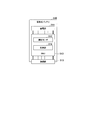
- FIG. 1 is a diagram showing a concept of a shared battery service (so-called battery sharing service) that employs the shared battery management system according to the first embodiment.
- the shared battery management system is an example of a “battery utilization system”.
- the shared battery management system 10 includes a removable battery 510, a battery exchange device 100, and an operation server 200.
- one operation server 200 may be configured to correspond to a plurality of battery exchange devices 100, but only one battery exchange device 100 is shown in FIG. 1.
- FIG. 1 also shows an electric motorcycle 50 (electric vehicle) that uses the shared battery management service employing the shared battery management system 10.
- the removable battery 510 is an example of a “battery”
- the battery exchanging device 100 is an example of a “charging device”
- the operation server 200 is an example of a “server” or an “information processing device”.
- the electric motorcycle 50 is an electric vehicle that is driven by an electric motor driven by electric power supplied from the removable battery 510.
- the two-wheeled electric vehicle 50 may be a hybrid electric vehicle that is driven by a combination of a removable battery 510 and an internal combustion engine such as a diesel engine or a gasoline engine.
- the electric motorcycle 50 is an example of a “power device”.
- the “electric power device” is not limited to the electric motorcycle 50, and may be, for example, a vehicle (one wheel, three wheels, four wheels, etc.) or an assisted bicycle that can be driven by electric power and can be detachably (detachably) attached with the detachable battery 510. And so on.
- the “electric power device” may be a portable charging/power-supplying device that is carried by a person or a vehicle, as described in Japanese Unexamined Patent Publication No. 2019-068552.
- the “power device” may be a mobile robot, an autonomous traveling device, an electric bicycle, an autonomous traveling vehicle, another electric vehicle, a drone flying vehicle, or another electric moving device (electric mobility).
- the “electric power device” is the electric motorcycle 50.
- the detachable battery 510 is, for example, a cassette-type power storage device (secondary battery) that is detachably attached to the electric motorcycle 50. At least one detachable battery 510 is attached to one electric motorcycle 50. In the following description, it is assumed that the electric motorcycle 50 is an electric vehicle to which one removable battery 510 is attached.
- the removable battery 510 is shared by multiple electric vehicles.
- the removable battery 510 is exclusively assigned with identification information capable of identifying the removable battery 510 (hereinafter referred to as “battery ID” (battery identification information)).
- the battery ID may be the serial number (production number) of the removable battery 510.
- the removable battery 510 is returned and stored in any of the slots 120-1 to 120-8 of the battery exchanging device 100.
- the detachable battery 510 that is returned to the slot 120 by the user of the electric motorcycle 50 when the electric power is consumed is referred to as a “used detachable battery 510u”.
- the removable battery 510 that has been charged by the battery exchanging device 100 and that is taken out from the slot 120 by the user of the electric motorcycle 50 is referred to as a “charged removable battery 510c”.
- “charged” is not limited to 100%, and may be a predetermined value (for example, 80%) or more.
- the battery exchange device 100 is installed in a charge exchange station (not shown).
- the charge exchange stations are installed at a plurality of points, for example.
- the battery exchange device 100 exchanges information with the operation server 200 by communication via the network NW, and controls whether to replace the removable battery 510 and whether to perform charging or refrain from charging.
- the battery exchanging device 100 stores the battery state list S in which information about the removable battery 510 that is being stored and charged when the used removable battery 510u is returned, in the network NW. To the operation server 200.
- the battery exchange device 100 receives the instruction R (charging stop instruction or lending prohibition instruction) for each slot 120 transmitted from the operation server 200.
- the battery state list S, the charge stop instruction (instruction regarding whether or not charging is possible), and the lending prohibition instruction will be described later.
- the battery exchange device 100 When the battery exchange device 100 receives the charge stop instruction for each slot 120 transmitted from the operation server 200, the battery exchange device 100 controls to refrain from charging the removable battery 510 of the target slot 120 based on the received charge stop instruction. To do.
- the charge stop instruction received by the battery exchange device 100 from the operation server 200 is an example of “reception information”.
- the battery exchanging device 100 When the battery exchanging device 100 receives the lending prohibition instruction for each slot 120 transmitted from the operation server 200, the battery exchanging device 100 controls to refrain from lending the detachable battery 510 of the target slot 120 based on the received lending prohibition instruction. To do.
- the lending prohibition instruction received by the battery exchanging device 100 from the operation server 200 is another example of “reception information”.
- the battery exchanging device 100 selects and lends the detachable battery 510 to be lent out of the charged detachable batteries 510c housed in the slots 120 that are not included in the charge stop instruction and the lending prohibition instruction, respectively.
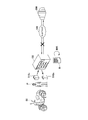
- FIG. 1 shows an example of the configuration of the battery exchange device 100.
- the battery replacement device 100 shown in FIG. 1 includes a display unit 110 and eight slots 120-1 to 120-8 having a charging function in a housing 101.
- Each slot 120 includes a housing 120H and an opening/closing lid 120L.
- the housing 120H is provided with an opening on the front surface, and has a structure that allows the removable battery 510 to be taken in and out of the housing 120H through this opening.
- a connection portion 120T (FIG. 3) is provided on the back side of the housing portion 120H for charging the stored detachable battery 510 and acquiring the battery ID of the detachable battery 510.
- the opening/closing lid 120L is a lid for opening and closing an opening on the front surface of the housing portion 120H, and by opening the opening, the removable battery 510 can be taken in and out of the housing portion 120H, and the lid 120L is closed. As a result, the detachable battery 510 cannot be taken in and out of the housing 120H.
- each slot 120 can restrict the locking/unlocking of the opening/closing lid 120L so that the detachable battery 510 housed in the housing portion 120H can be restricted from being taken in or out.
- the battery exchange device 100 locks the opening/closing lid 120L to prohibit the detachable battery 510 from being taken out from the housing 120H, or unlocks the opening/closing lid 120L to remove the removable battery 510 from the housing 120H. Or allow it to be retrieved.
- the operation server 200 is a server facility that manages a removable battery 510 that can be replaced in the battery replacement device 100.
- Operation server 200 generates a charge stop instruction or a lending prohibition instruction based on the information included in battery state list S transmitted from battery exchanging device 100 and the information stored in the operation server.
- the operation server 200 transmits the generated charging stop instruction or the lending prohibition instruction to the battery exchange device 100.
- the information stored by the operation server is, for example, the battery ID of the removable battery 510 of the defective lot.
- the charging stop instruction and the lending prohibition instruction transmitted from the operation server 200 to the battery exchange device 100 are examples of “transmission information”.
- FIG. 2 is a block diagram showing an example of the configuration of the removable battery 510 according to the first embodiment.
- the removable battery 510 includes a power storage unit 511, a BMU (Battery Management Unit) 513, and a connection unit 515.
- the BMU 513 includes a measurement sensor 512 and a storage unit 514.
- the power storage unit 511 is configured to include a storage battery that stores charged power and discharges the stored power.
- the storage battery included in power storage unit 511 is, for example, a secondary battery such as a lead storage battery or a lithium-ion battery, a capacitor such as an electric double layer capacitor, or a composite battery in which a secondary battery and a capacitor are combined.
- the measurement sensor 512 includes various sensors that measure the state of the power storage unit 511.
- the measurement sensor 512 measures the voltage stored in the power storage unit 511 by, for example, a voltage sensor.
- the measurement sensor 512 measures, for example, a current flowing through the power storage unit 511 by using a current sensor.
- the measurement sensor 512 measures the temperature when the power storage unit 511 is charged or the power storage unit 511 is discharged, for example, using a temperature sensor.
- the measurement sensor 512 outputs a measured value indicating the measured state of the power storage unit 511 to the processor on the BMU 513.
- BMU 513 is a battery management unit and controls charging and discharging of power storage unit 511.
- the BMU 513 is configured to include a processor such as a CPU (Central Processing Unit) and a memory such as a ROM (Read Only Memory) and a RAM (Random Access Memory) as the storage unit 514.
- the CPU realizes the control function of power storage unit 511 by reading and executing the program stored in storage unit 514.
- the BMU 513 causes the storage unit 514 to store information such as the content of control performed on the power storage unit 511 based on the measurement value indicating the state of the power storage unit 511 output from the measurement sensor 512.
- the storage unit 514 stores battery state information such as a battery ID assigned to the removable battery 510.
- the battery state information includes information such as the number of times of charging, the date of manufacture, the capacity in the initial state, and the charging rate.
- the storage unit 514 stores information such as an abnormality or a failure detected by the BMU 513 itself, and an abnormality or a failure of the power storage unit 511 grasped by using the measurement sensor 512.
- the connection unit 515 is a connection unit that supplies the electric power stored in the power storage unit 511 to the electric motor that is the drive source of the electric motorcycle 50 when the removable battery 510 is attached to the electric motorcycle 50.
- the connection portion 515 is connected to a structure that is connected to the removable battery 510 provided on the inner side of the storage portion 120H when the removable battery 510 is stored in the slot 120 provided in the battery exchange device 100.
- the connection unit 515 is also a connection unit for transmitting information such as a battery ID exchanged between the removable battery 510 and the battery exchanging device 100, the number of times of charging, and a measured value indicating the state of the power storage unit 511, and power transmission. is there.
- FIG. 3 is a block diagram showing a schematic configuration of the battery exchange device 100 according to the first embodiment.
- the battery replacement device 100 includes a display 110, a connection unit 120T, a charger 120C, a replacement device storage unit 130, a replacement device control unit 140, and a replacement device communication unit 150.
- the exchange device control unit 140 includes a charging control unit 141, a measurement sensor 142, an information acquisition unit 143, and a processing unit 144.
- the exchange device control unit 140 is an example of a “first control unit”
- the exchange device communication unit 150 is an example of a “first communication unit”.
- the slot 120-N (N is an integer from 1 to 8) is a slot ID (identification information of the slot 120). Slot identification information) is exclusively allocated.
- the display 110 is, for example, a liquid crystal display device, an organic EL (Electro Luminescence) display device, or the like.
- the display 110 displays the image information output by the processing unit 144.
- the image information includes, for example, the number of the slot 120 in which the rentable removable battery 510 is stored, the usage fee, and the like.
- the display 110 includes an input unit such as a touch panel sensor.
- the touch panel sensor detects the result of the user's operation and outputs the detected operation result to the processing unit 144.
- the operation result includes, for example, an instruction to replace the removable battery 510.
- the connecting portion 120T is a connecting portion that is electrically connected to the connecting portion 515 of the detachable battery 510 housed in the slot 120.
- the connecting portion 120T is provided, for example, on the back side of the housing portion 120H for each slot 120.
- Each connection part 120T is a measured value indicating the battery ID, the number of times of charging, the deterioration state, and the state of the power storage part 511, which are exchanged between the removable battery 510 housed in the corresponding slot 120 and the exchange device control part 140. Send information such as.
- the connection part 120T transmits electric power to and from the removable battery 510. That is, connection unit 120T supplies power storage unit 511 with electric power for charging.
- the slots 120-N include the connection parts 120T-N.
- the charger 120C is controlled by the exchange device controller 140 when the removable battery 510 is accommodated in the slot 120 and the connecting portion 515 and the connecting portion 120T of the accommodated removable battery 510 are connected. It is a charger that charges the removable battery 510 accordingly.
- the charger 120C charges the removable battery 510 by supplying electric power to the power storage unit 511 of the removable battery 510 via the connection unit 120T.
- the charger 120C is provided for each slot 120.
- the connection part 120T-N includes a charger 120C-N.
- the exchange device storage unit 130 stores various information in the battery exchange device 100.
- Exchange device storage unit 130 stores a program for exchange device control unit 140 to execute the function of battery exchange device 100.
- the exchange device storage unit 130 stores information as to whether or not the removable battery 510 is housed in each slot 120, and the battery ID of the removable battery 510 housed in each slot 120.
- the exchange device storage unit 130 stores the slot ID of each slot 120.
- the exchange device storage unit 130 stores the correspondence between the slot 120 and the slot ID.
- the exchange device storage unit 130 may store information such as the number of times the removable battery 510 is charged, the deterioration state, the charging rate, and a measured value indicating the state of the power storage unit 511.
- the exchange device control unit 140 controls the entire battery exchange device 100.
- the exchange device control unit 140 is configured to include a processor such as a CPU, for example.
- Exchange device control unit 140 realizes the function of battery exchange device 100 by reading and executing the program stored in exchange device storage unit 130. More specifically, the exchange device control unit 140 controls charging and lending of the removable batteries 510 housed in the respective slots 120.
- the measurement sensor 142 is configured to include various sensors that measure the state when the charger 120C is charging the removable battery 510.
- the measurement sensor 142 includes, for example, a voltage sensor, a current sensor, and a temperature sensor. Measurement sensor 142 measures the voltage applied to power storage unit 511 while charging removable battery 510 with a voltage sensor, and measures the current flowing through power storage unit 511 with a current sensor. The measurement sensor 142 measures the temperature of the power storage unit 511 when the removable battery 510 is being charged by the temperature sensor. The measurement sensor 142 outputs a measured value representing the measured state of the removable battery 510 to the charging control unit 141.
- the information acquisition unit 143 acquires, via the connection unit 120T, the removable battery 510 housed in the slot 120, that is, the battery state information of the removable battery 510 stored in the battery exchange device 100.
- the battery status information includes at least the battery ID.
- the battery state information may include information such as the number of times of charging and a measured value indicating the state of power storage unit 511.
- the information acquisition unit 143 outputs the acquired battery state information to the processing unit 144.
- the information acquisition unit 143 may store the acquired battery state information in the exchange device storage unit 130.
- the processing unit 144 executes a procedure process for replacing the removable battery 510 in the battery replacement device 100.
- the processing unit 144 opens and closes the slot 120 corresponding to the slot ID included in the lending prohibition instruction so as not to lend the removable battery 510.
- the lid 120L (FIG. 1) is controlled so as not to be opened.
- the lending prohibition instruction is an instruction to prohibit lending to the removable battery 510, and includes the slot ID of the target slot 120.
- the processing unit 144 controls to lend out the lendable detachable battery 510 to the slot 120 corresponding to the slot ID that is not included in the acquired lending prohibition instruction.
- the processing unit 144 creates a battery state list S by associating the battery ID and the slot ID for each slot with respect to all the slots 120 included in the battery exchanging device 100.
- the battery status list S may include information indicating that the slot 120-N is empty and information indicating that the slot 120-N has a failure.
- the processing unit 144 outputs the generated battery state list S to the exchange communication unit 150.
- the switching device communication unit 150 communicates with the operation server 200 via the network NW and transmits the battery state list S to the operation server 200.
- the processing unit 144 updates the battery state list S when the used detachable battery 510u is returned, and transmits the updated battery state list S to the operation server 200.
- the processing unit 144 acquires the battery IDs of the removable batteries 510 of all the slots 120 at predetermined time intervals or at predetermined time intervals or at predetermined time intervals, updates the battery status list S, and operates the updated battery status list S. It may be transmitted to the server 200.
- the charging control unit 141 controls the charging state of the removable battery 510.
- the charging control unit 141 acquires the charging stop instruction via the exchange communication unit 150, the charging control unit 141 controls the slot 120 corresponding to the slot ID included in the charging stop instruction to stop charging, or Control not to do.
- the charge stop instruction is an instruction to stop charging or not to charge the removable battery 510, and includes the slot ID of the target slot 120.
- the charging control unit 141 measures the removable battery 510 output from the measurement sensor 142 for the slot 120 corresponding to the slot ID that is not included in the acquired charge stop instruction or that is not included in the acquired charge stop instruction. By controlling the charger 120C in consideration of the value as well, the charging of the removable battery 510 is controlled. That is, the charging control unit 141 controls to charge the used removable battery 510u to be charged, excluding the slot 120 included in the charging stop instruction.
- the charging control unit 141 Based on the measurement value of the detachable battery 510 output from the measurement sensor 142, the charging control unit 141, when the charging stop instruction is not acquired or for the slot ID not included in the acquired charging stop instruction, The current charging rate of the removable battery 510 being charged, that is, the current charging rate of the power storage unit 511 included in the removable battery 510 is calculated. When the charging of the removable battery 510 is completed, the charging control unit 141 outputs information indicating that the charging is completed to the processing unit 144.
- the switching device communication unit 150 performs wireless communication with the operation server 200 via the network NW according to an instruction from the switching device control unit 140, and transmits the battery state list S to the operation server 200.
- the exchange communication unit 150 acquires the instruction R (charging stop instruction or lending prohibition instruction) from the operation server 200. Then, the exchange device communication unit 150 outputs the charge stop instruction or the lending prohibition instruction acquired from the operation server 200 to the exchange device control unit 140.
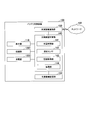
- FIG. 4 is a block diagram showing a schematic configuration of the operation server 200 configuring the shared battery management system 10 according to the first embodiment.
- the operation server 200 includes a server storage unit 210, a server control unit 220, and a server communication unit 230.
- the server control unit 220 is an example of a “second control unit”
- the server communication unit 230 is an example of a “second communication unit”.
- the server storage unit 210 stores various information in the operation server 200.
- the server storage unit 210 stores at least the battery state list S transmitted from the battery exchange device 100 via the network NW.
- the server storage unit 210 stores a program for the server control unit 220 to execute the function of the operation server 200.
- the server storage unit 210 stores the battery ID of the removable battery 510 that should be refrained from charging (to refrain from lending) based on the information provided by the information provider.
- the information provider is, for example, a manufacturer of the detachable battery 510 or an owner who owns the detachable battery 510 and lends the detachable battery 510 owned by himself/herself to another person (for example, detachable type with another person).
- the owner or the administrator may be a person who indirectly provides the information provided by the manufacturer to the operation server 200, or may process or modify the information provided by the manufacturer and process the information. A person who indirectly provides the modified information to the operation server 200 may be used. Further, the owner or the administrator may be a person who provides the operation server 200 with independently generated information that is not the information provided by the manufacturer.
- the information provided by the information provider includes, for example, the battery ID of the removable battery 510 that should be refrained from charging (want to refrain from lending).
- the server storage unit 210 may store information on the battery exchange device ID exclusively assigned to the battery exchange device 100.
- the information provider is a manufacturer of the removable battery 510.
- the server control unit 220 controls the entire operation server 200.
- the server control unit 220 is configured to include a processor such as a CPU, for example.
- the server control unit 220 realizes the function of the operation server 200 by reading and executing the program stored in the server storage unit 210. More specifically, the server control unit 220 performs charging based on the battery state list S transmitted from the battery exchanging device 100 and the battery ID of the removable battery 510 that is stored in the server storage unit 210 and that should not be charged. Generate a stop or lending prohibition instruction.
- the server control unit 220 outputs the generated charge stop instruction to the server communication unit 230.
- the server control unit 220 outputs the generated lending prohibition instruction to the server communication unit 230.
- the server communication unit 230 performs wireless communication with the switching device communication unit 150 included in the battery switching device 100 via the network NW.
- the server communication unit 230 receives the battery status list S transmitted from the battery exchange device 100 via the network NW, and stores the received battery status list S in the server storage unit 210.
- the server communication unit 230 transmits the charge stop instruction output from the processing unit 144 to the battery exchange device 100 via the network NW.
- the server communication unit 230 transmits the lending prohibition instruction output by the processing unit 144 to the battery exchange device 100 via the network NW.
- the removable battery 510 that needs to be charged is, for example, the removable battery 510 of the lot in which the malfunction has occurred. Charging is not stopped or charged for such a removable battery 510. In addition, it is preferable that such a removable battery 510 is not rented out.
- the slot 120 stores the charged removable battery 510c that has been charged before the charging is stopped. In this way, the charged removable battery 510c may be rented out when it cannot be charged due to a planned power outage or the like.
- the operation server 200 may transmit the charge stop instruction to the target removable battery to the battery exchange device 100, but may not transmit the lending prohibition instruction.
- Operation server 200 may transmit a charge stop instruction and a lending prohibition instruction, and may determine whether lending is prohibited or lending based on instruction R received by battery exchange device 100.
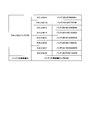
- FIG. 5 is a diagram showing an example of the battery state list S transmitted to the operation server 200 by the battery exchange device 100 according to the first embodiment.
- the battery status list S includes information in which the battery ID is associated with the slot ID of each slot 120, and the battery exchange ID.
- the battery status list S shown in FIG. 5 shows an example in which the removable batteries 510 are accommodated in all the slots 120. However, if there is a slot 120 in which the removable batteries 510 are not accommodated, a battery ID is used instead of the battery ID. Information indicating that the slot 120 is empty is associated with the slot ID.
- the battery status list includes information on the number of times the removable battery 510 has been charged, information indicating the deterioration state of the removable battery 510, information indicating the charging rate of the removable battery 510, information indicating that the slot 120 has a failure, and a battery exchange device. Information indicating that 100 is a failure, information indicating the creation date (or update date) of the battery status list, and the like may be included.
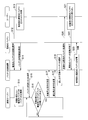
- FIG. 6 is a sequence diagram of a processing procedure example of the shared battery management system 10 according to the first embodiment.
- Step S11 The system operator registers the battery ID of the detachable battery 510 in the operation server 200, for example, for refraining from charging (or refraining from lending) due to reasons such as defective lot products. Subsequently, the server control unit 220 of the operation server 200 causes the server storage unit 210 to store the battery ID of the detachable battery 510 that should be refrained from charging (or refrain from lending).
- Step S12 The user goes to the charge exchange station in which the battery exchange device 100 is installed, operates the display 110 of the battery exchange device 100, and requests the exchange of the removable battery 510. Subsequently, the exchange device control unit 140 of the battery exchange device 100 acquires the operation result output by the touch sensor of the display 110.
- Step S13 The exchange device control unit 140 of the battery exchange device 100 controls and opens the opening/closing lid 120L of the slot 120 in which the removable battery 510 is not housed. The user stores and returns the used detachable battery 510u in the slot 120 of the battery exchange device 100 with the opening/closing lid 120L opened.
- Step S14 The exchange device control unit 140 of the battery exchange device 100 acquires the battery state information including the battery ID of the returned used detachable battery 510u. Subsequently, the exchange device control unit 140 updates the battery state list S based on the acquired battery state information. The exchange device control unit 140 creates the battery state list S at, for example, a predetermined time, a predetermined time, or a predetermined time cycle.
- Step S15 The exchange device control unit 140 of the battery exchange device 100 transmits the battery state list S to the operation server 200.
- Step S16 The server control unit 220 of the operation server 200 determines whether or not the removable battery 510 registered in step S11 that wants to refrain from charging (or refrain from lending) is in the received battery state list S. ..
- the server control unit 220 among the one or more battery IDs included in the received battery status list S, the battery of the removable battery 510 that wants to refrain from charging (or refrain from lending) registered in step S11. It is determined whether or not there is a battery ID that matches the ID.
- step S16 determines that the detachable battery 510 that wants to refrain from charging (or refrain from lending) is in the received battery status list S (step S16; YES).
- the process proceeds to step S17.
- the server control unit 220 determines that the detachable battery 510 that does not want to be charged (or refrains from lending) is not in the received battery state list S (step S16; NO), it returns to the process of step S16.
- the server control unit 220 when the one or more battery IDs included in the battery status list S include the battery ID of the removable battery 510 that should be refrained from charging (or refrain from lending), the server control unit 220 The process proceeds to step S17. If the battery ID of the removable battery 510 that does not want to be charged (or refrain from lending) is not included in the one or more battery IDs included in the battery status list S, the server control unit 220 proceeds to step S16. Return to processing.
- Step S17 The server control unit 220 of the operation server 200 transmits a charge stop instruction to the battery exchange device 100.
- Step S18 The server control unit 220 of the operation server 200 transmits a lending prohibition instruction to the battery exchange device 100.
- Step S19 The exchange device control unit 140 of the battery exchange device 100 lends from the charged removable battery 510c housed in the other slot 120 except the slot 120 included in the received lending prohibition instruction.
- the removable battery 510 is selected.
- Step S20 The exchange device control unit 140 of the battery exchange device 100 notifies the user by displaying on the display 110 image information indicating the slot 120 in which the selected detachable battery 510 to be rented is accommodated. Subsequently, the exchange device control unit 140 controls and opens the opening/closing lid 120L of the slot 120 in which the selected detachable battery 510 to be rented is accommodated.
- Step S21 The user takes out the removable battery 510 housed in the slot 120 with the opening/closing lid 120L opened, from the slot 120.
- Step S22 Exchange device control unit 140 of battery exchange device 100 detects that detachable battery 510 for lending is taken out from slot 120, for example, based on a signal from connection unit 120T. Subsequently, when the exchange device control unit 140 detects that the detachable battery 510 for lending is taken out from the slot 120, the exchange device control unit 140 ends the exchange process of the detachable battery 510 and closes the opening/closing lid 120L. To do.
- Step S23 The exchange device control unit 140 of the battery exchange device 100 stores a returned used detachable battery 510u housed in another slot 120 other than the slot 120 included in the received charge stop instruction. Charging is started for the detachable battery 510 waiting to be charged.
- the battery exchanging device 100 may transmit only the battery state information of the returned removable battery 510 to the operation server 200.
- the operation server 200 may determine whether to stop charging the returned used detachable battery 510u or prohibit the lending.
- one partition is assigned to each removable battery 510 in the battery exchanging device 100, and the status of the removable battery 510 for each partition (presence or absence of the removable battery 510). Etc.), information of the removable battery 510 (unique value such as serial number, charging rate, etc.) is transmitted to the operation server 200. In addition, in the first embodiment, whether or not charging is possible can be set by the operation server 200 for the detachable battery 510 and one unit (slot 120).
- the operation server 200 on the network side grasps the information (the unique value such as the serial number) of the removable battery 510 in the battery exchange apparatus 100.
- the operation server 200 can mechanically determine whether or not the product is a defective lot, and as a result of the determination, sends a charge stop instruction to a slot in which charging is desired to be stopped, and controls to prevent charging. can do.
- the battery state list is updated and transmitted, so that whether the returned removable battery can be charged or rented is controlled. be able to.
- the operation server 200 may determine whether or not the number of slots for refraining from charging (to refrain from lending) hinders the business continuity of the charging/exchange station in which the battery exchange device 100 is installed. For example, when one battery exchanging device 100 is installed in the charge exchanging station, the battery exchanging device 100 has eight slots 120, and the detachable batteries 510 housed in the four slots 120 are to be charged. It may be determined that there is an obstacle to business continuity. For example, when one battery exchanging device 100 is installed in the charge exchanging station, the battery exchanging device 100 has eight slots 120, and the detachable batteries 510 accommodated in the two slots 120 are to be charged, the business continues. It may be determined that there is no problem.
- the battery exchange device 100 when the battery exchange device 100 is installed in a communication environment vulnerable area, there may be a case where communication with the operation server 200 cannot be performed. Even if it corresponds to a battery that originally wants to refrain from charging (to stop lending), if information is not updated due to communication interruption, it is feared that it will be lent without being excluded from lending. .. Therefore, in the modification, an example will be described in which the battery exchange device 100 performs the lending selection even when the communication is unstable as described above.
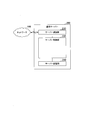
- FIG. 7 and 8 are diagrams showing the concept of the shared battery service using the shared battery management system according to the modified example of the first embodiment.
- FIG. 7 schematically illustrates how the shared battery management system 10 exchanges the battery status list S and the lendable battery list B between the battery exchange device 100 and the operation server 200 via the network NW. Is shown in.
- the battery exchanging device 100 shows a used detachable battery 510u and a charged detachable battery 510c which a user (user) P of the electric motorcycle 50 has brought in, based on the acquired rentable battery list B.
- Fig. 7 schematically shows how to replace the.
- the operation server 200 creates a lendable battery list B in which information on the lending order and the detachable battery 510 that can be rented is recorded, and the battery is created when the created lendable battery list B can be communicated. It is transmitted to the exchange device 100.
- the battery exchange device 100 stores the received lendable battery list B.
- the lendable battery list B includes the removable batteries 510 that can be charged, that is, the removable batteries 510 that should be refrained from charging are excluded.
- the lendable battery list B includes information on whether or not lending is possible for each slot.
- the battery exchanging device 100 selects the charged detachable battery 510 to be rented out according to the stored rentable battery list B.
- the operation server 200 creates the rentable battery list B based on the received battery state list S and the information of the detachable battery 510 that wants to refrain from charging (to refrain from lending).
- the lendable battery list B is, for example, a list in which battery IDs of detachable batteries 510 that can be lent (replaced) in the battery exchanging device 100 are arranged in the order of renting (replacement).
- the operation server 200 generates such a lendable battery list B based on the battery status information (for example, manufacturing date, number of times of charging, charging rate, etc.) included in the received battery status list S.
- the battery exchanging device 100 can continuously carry out the procedure for exchanging the detachable battery 510 by itself for the number of detachable batteries 510 recorded in the lendable battery list B. Therefore, in the shared battery service employing the shared battery management system 10, when the user P wants to replace the used removable battery 510u, the user P can replace the charged removable battery 510c.
- the shared battery management system 10 is very effective in maintaining the provision of the shared battery service (battery sharing service) according to the rentable battery list B as in the modified example.
- the operation server 200 is described as transmitting instructions such as a charging stop instruction and a lending prohibition instruction to the battery exchange device 100, but the present invention is not limited to this.
- the operation server 200 may determine whether to permit or prohibit charging of the removable battery 510 instead of or in addition to the charge stop instruction or the lending prohibition instruction, and lend out (detachable) the removable battery 510. The determination result as to whether to permit or prohibit the removal of the battery 510) may be transmitted to the battery exchange device 100.
- the operation server 200 determines whether to stop charging the removable battery 510 or prohibits lending, and an instruction based on the determination result (charging stop instruction).
- the lending prohibition instruction is transmitted to the battery exchange device 100, but the invention is not limited to this.
- the battery exchanging device 100 determines whether to stop charging the removable battery 510 or prohibits lending, and controls charging of the removable battery 510 according to the determination result.
- the rental of the removable battery 510 may be controlled.
- the removable battery 510 and the slot ID that the manufacturer has requested to refrain from charging or refrain from renting out are:
- the matching removable battery 510 has been described as the one that stops charging of the removable battery 510 and prohibits lending (removal from the slot) of the removable battery 510.
- the charging of the removable batteries 510 housed in each of the plurality of slots is controlled based on the constraint condition regarding the electric power that can be supplied to the battery exchange device 100.
- This is different from the first embodiment.
- differences from the first embodiment will be mainly described, and description of points common to the first embodiment will be omitted.
- the same parts as those of the first embodiment will be described with the same reference numerals.
- the operation server 200 generates a charge stop instruction based on the information included in the battery state list S transmitted from the battery exchanging device 100 and the information stored in the operation server.
- the operation server 200 transmits the generated charge stop instruction to the battery exchange device 100.
- the information stored in the operation server includes the electric power that can be received by the battery exchanging device 100 (hereinafter, the electric power that can be received) and the information about the electric power that can be received.
- the receivable electric power may be, for example, electric power (for example, the unit is [W]), or electric power amount obtained by integrating the electric power over time (for example, the unit is [Wh]).
- the information about the receivable power includes, for example, an upper limit value of the number of slots that can be simultaneously charged by the battery exchange device 100 (hereinafter, referred to as an upper limit slot number).
- the server storage unit 210 stores the upper limit number of slots of the battery exchange device 100, and stores the battery state list S transmitted from the battery exchange device 100 via the network NW.
- the server control unit 220 generates a charge stop instruction based on the battery state list S transmitted from the battery exchanging device 100 and the upper limit number of slots stored in the server storage unit 210.
- the server control unit 220 generates, for example, a charge stop instruction when the number of removable batteries 510 being charged and the total number of removable batteries 510 waiting to be charged included in the battery status list S are larger than the upper limit number of slots. In this case, the server control unit 220 may permit charging of slots up to the upper limit number of slots, for example, in descending order of charging rate. The server control unit 220 outputs the generated charge stop instruction to the server communication unit 230.
- the server control unit 220 determines the upper limit number of slots based on, for example, the power consumption of the battery replacement device 100, the current value required to charge the removable battery 510, and the current value that can be supplied to the battery replacement device 100. ..
- the current value that can be supplied to the battery exchange device 100 may be read as the current value that the battery exchange device 100 can receive.
- the server communication unit 230 performs wireless communication with the switching device communication unit 150 included in the battery switching device 100 via the network NW, as in the first embodiment.
- the server communication unit 230 receives the battery status list S transmitted from the battery exchange device 100 via the network NW, and stores the received battery status list S in the server storage unit 210.
- the server communication unit 230 transmits the charge stop instruction output from the processing unit 144 to the battery exchange device 100 via the network NW.
- the battery exchanging device 100 will have devices of the same specifications installed in various environments.
- the installation environment may be a new store that involves the construction of electrical equipment, and there may be a store that uses existing electrical equipment.
- a store that uses existing electrical equipment there is a case where it is not desirable to construct a dedicated power supply environment with the installation of the battery replacement device 100 (for example, a store for a limited time only).
- the number of removable batteries 510 that can be charged at the same time may be limited. For example, as shown in FIG. 1, even if the battery exchanging device 100 has eight slots 120 and all eight of them need to be charged, some stores cannot secure the electric power for charging the eight at the same time.
- the operation server 200 stores the upper limit number of slots in the battery exchange device 100 for each store, and based on the battery state list S and the upper limit number of slots transmitted from each store. , It is determined whether it is necessary to stop charging. For example, in the case where the battery exchange device 100 installed in the store A has an upper limit number of slots of four and the battery state list S includes six detachable batteries 510 that require charging, two slots 120 are provided. To send a charge stop instruction.
- FIG. 9 is a diagram showing an example of information included in the battery status list S according to the second embodiment.
- the battery status list S includes information in which the battery status information is associated with the slot ID of each slot 120, and the battery exchange ID.
- the charge rates of the removable batteries 510 housed in the slots 120 having slot IDs 1 to 8 are 100%, 100%, 78%, 77%, 65%, 63%, 20. % And 21%.
- the removable batteries 510 having slot IDs 1 and 2 are already charged, the removable batteries 510 having slot IDs 3 to 6 are being charged, and the removable batteries 510 having slot IDs 7 and 8 are being charged. The battery 510 is waiting for charging.
- the battery status list S shown in FIG. 9 shows an example in which the removable batteries 510 are accommodated in all the slots 120. However, when there is a slot 120 in which the removable batteries 510 are not accommodated, a battery ID is used instead of the battery ID. Information indicating that the slot 120 is empty is associated with the slot ID.
- the battery status list includes the number of times the removable battery 510 has been charged, information indicating the deterioration state of the removable battery 510, information indicating that the slot 120 has failed, information indicating the date and time when the removable battery 510 was returned, and the battery.
- Information indicating that the exchange device 100 is out of order, information indicating the creation date (or update date) of the battery status list, and the like may be included.
- FIG. 10 is a sequence diagram of a processing procedure example of the shared battery management system 10 according to the second embodiment.
- Step S11 The system operator registers information (upper limit slot number) regarding the battery exchange device for each battery exchange device 100.
- Step S12 The exchange device control unit 140 of the battery exchange device 100 acquires the battery state information including the battery ID of the removable battery 510 housed in each slot 120. Subsequently, the exchange device control unit 140 updates the battery state list S based on the acquired battery state information. The exchange device control unit 140 creates the battery state list S at, for example, a predetermined time, a predetermined time, or a predetermined time cycle.
- Step S13 The exchange device control unit 140 of the battery exchange device 100 transmits the battery state list S to the operation server 200.
- Step S14 The server control unit 220 of the operation server 200 accommodates the number of slots in which the removable battery 510 being charged included in the received battery state list S and the removable battery 510 waiting for charging are accommodated. It is determined whether or not the total number of slots is larger than the maximum number of slots stored. When the server control unit 220 determines that the total number of slots being charged and the number of slots waiting to be charged is greater than the upper limit number of slots (step S14; YES), the processing proceeds to step S15. When the server control unit 220 determines that the total number of slots being charged and the number of slots waiting to be charged is less than or equal to the upper limit number of slots (step S14; NO), the process returns to step S13.
- Step S15 The server control unit 220 of the operation server 200 selects the slot 120 that issues the charging stop instruction.
- Step S16 The server control unit 220 of the operation server 200 transmits a charge stop instruction to the battery exchange device 100.
- Step S17 The exchange device control unit 140 of the battery exchange device 100 excludes the slot 120 for which the charge stop instruction is selected, and charges the used detachable battery 510u to be charged. That is, the exchange device control unit 140 controls the detachable battery 510 accommodated in the slot 120 for which the charge stop instruction is selected so as not to be charged (to hold the charge).
- the server control unit 220 transmits a charge stop command for “(the number of slots waiting to be charged ( ⁇ (the maximum number of slots that can be charged simultaneously) ⁇ the number of slots being charged)”.
- a charge stop command for “(the number of slots waiting to be charged ( ⁇ (the maximum number of slots that can be charged simultaneously) ⁇ the number of slots being charged)”.
- one partition (slot 120) is assigned to each removable battery 510 in the battery exchanging device 100, and the status of the removable battery 510 for each partition (presence or absence of the removable battery 510). Etc.), information of the removable battery 510 (unique value such as serial number, charging rate, etc.) is transmitted to the operation server 200.
- the charge/non-charge of the removable battery 510 and the unit (slot 120) of one battery unit can be set by the operation server 200 based on the information about the battery exchange device 100.
- the information about the battery exchange device 100 includes the upper limit number of slots, as described above.
- the charging is stopped for each slot when the power that can be supplied to the removable battery 510 is exceeded according to the power that can be supplied to the battery exchange device 100.
- the removable battery 510 can be electrically charged.
- the operation server 200 side simultaneously operates the battery exchange apparatus 100.
- the number of rechargeable slots it is possible to instruct the battery exchange device 100 to stop charging so as not to exceed the number.
- the reason for depending on the installation environment of the battery exchange device 100 is, for example, that the indoor wiring of the system power to be connected cannot bear the maximum load of the exchange.
- the process of the battery exchange device 100 is executed by the command from the operation server 200 side, so that individual correspondence such as rewriting the program for each battery exchange device 100 is not required, Since it can be realized by using the same housing at multiple bases, the operating cost can be reduced.
- the battery status list is updated and transmitted, so that it is possible to control whether the returned removable battery can be charged.
- FIG. 11 is a diagram showing an example of the relationship between the charging rate of the battery and the current value.
- the horizontal axis represents time
- the left vertical axis represents the current value [A]
- the right vertical axis represents the charging rate [%].
- Reference sign g1 represents a change in current value with respect to time.
- Reference sign g2 represents a change in the charging rate with respect to time.
- the current value required for charging decreases as the charging rate changes. Therefore, for example, when eight removable batteries having a charging rate of 10% are accommodated in the battery exchanging device 100, the current value required for charging is I5 ⁇ 8 [A]. Here, power consumption due to control of the battery exchange device 100 and the like is omitted.
- the current value that can be supplied to the battery exchanging device 100 is I5 ⁇ 4 [A]
- I5 ⁇ 4 [A] the current value that can be supplied to the battery exchanging device 100
- the charging characteristic shown in FIG. 11 is a diagram for explaining the process, and the charging characteristic of the removable battery 510 is not limited to this.
- the configurations of the battery exchange device 100, the operation server 200, and the removable battery 510 in the first modified example are the same as those in FIGS. 2 to 4.
- the processing of the operation server 200 is different.
- the server storage unit 210 of the operation server 200 stores the upper limit current value (or upper limit power value) of the current value (or power) that can be supplied to the battery replacement device 100 as constraint information for each battery replacement device 100.
- the server storage unit 210 stores the charging characteristics of the removable battery 510 (see FIG. 11). When the removable batteries 510 are of multiple types, the server storage unit 210 stores the charging characteristics for each type of the removable batteries 510.
- the server control unit 220 generates a charge stop instruction based on the battery state list S transmitted from the battery exchange apparatus 100 and the upper limit current value stored in the server storage unit 210.
- the server control unit 220 for example, the power value consumed in the slot 120 by charging the removable battery 510 being charged included in the battery state list S (hereinafter, referred to as a power consumption value) and the removable battery 510 waiting for charging.
- the charging stop instruction is generated when the total of the power consumption value of the slot 120 and the basic operating power value of the battery exchanging device 100 is larger than the upper limit power value by the charging.
- the server control unit 220 may, for example, a current value consumed in the slot 120 due to charging of the removable battery 510 being charged included in the battery state list S (hereinafter, referred to as a consumed current value) and a detachable type waiting for charging.
- a consumed current value a current value consumed in the slot 120 due to charging of the removable battery 510 being charged included in the battery state list S
- a detachable type waiting for charging.
- the server control unit 220 calculates the charging current value based on the charging rates of the detachable batteries 510 in the charging state and in the charging waiting state, which are included in the battery state list S. In this case, the server control unit 220 may permit charging of slots up to the upper limit number of slots, for example, in descending order of charging rate.
- the server control unit 220 outputs the generated charge stop instruction to the server communication unit 230.
- the battery status list S is an example of “correspondence information”.
- FIG. 12 is a sequence diagram of a processing procedure example of the shared battery management system 10 according to the first modified example of the second embodiment. The same processing as that of FIG.
- Steps S11 to S13 The shared battery management system 10 performs the processing of steps S11 to S13. After the processing, the shared battery management system 10 proceeds to the processing of step S21.
- Step S21 The server control unit 220 of the operation server 200 charges the current consumption value (or power consumption value) of the slot 120 in which the removable battery 510 being charged, which is included in the received battery state list S, is stored, Whether the sum of the current consumption value (or power consumption value) of the slot 120 in which the waiting removable battery 510 is accommodated and the operating basic current value of the battery exchanging device 100 is greater than the upper limit current value (or upper limit power value). Determine whether.
- the server control unit 220 uses the current consumption value (or power consumption value) of the slot 120 in which the detachable battery 510 being charged is accommodated and the current consumption value of the slot 120 in which the detachable battery 510 waiting for charging is accommodated. If it is determined that the sum of (or the power consumption value) and the operating basic current value of the battery exchanging device 100 is greater than the upper limit current value (or the upper limit power value) (step S21; YES), the process proceeds to step S15.
- the server control unit 220 uses the current consumption value (or power consumption value) of the slot 120 in which the detachable battery 510 being charged is accommodated and the current consumption value of the slot 120 in which the detachable battery 510 waiting for charging is accommodated. If it is determined that the sum of (or the power consumption value) and the operating basic current value of the battery exchanging device 100 is less than or equal to the upper limit current value (or the upper limit power value) (step S21; NO), the process returns to step S13.
- the battery exchanging device 100 transmits the battery state list to the operation server 200 periodically (for example, every 1 minute or 5 minutes).
- the operation server 200 can accurately control the slot in which charging is stopped by acquiring the charging rate of the removable battery 510 housed in each slot 120 based on the received battery status list.
- one partition (slot 120) is assigned to each removable battery 510 in the battery exchanging device 100, and the status of the removable battery 510 for each partition (presence or absence of the removable battery 510). Etc.), information of the removable battery 510 (unique value such as serial number, charging rate, etc.) is transmitted to the operation server 200.
- the charge/non-charge of the detachable battery 510 and one unit (slot 120) can be set by the operation server 200 based on the information about the battery exchange device 100.
- the information about the battery exchange device 100 is the upper limit current value or the upper limit power value, and is information indicating the power that can be supplied to the battery exchange device.
- the charging is stopped for each slot when the power that can be supplied to the removable battery 510 is exceeded according to the power that can be supplied to the battery exchange device 100.
- the removable battery 510 can be electrically charged.
- the process of the battery exchange device 100 is executed according to a command from the operation server 200 side, and therefore, individual correspondence such as rewriting a program for each battery exchange device 100 is not required, and it is possible to use multiple locations. Since it can be realized by using the same housing, the operating cost can be reduced.
- the battery status list is updated and transmitted when the removable battery 510 is returned, it is possible to control whether the returned removable battery can be charged or not.
- the operation server 200 generates the charge stop instruction and the lending prohibition instruction based on the battery state list S received from the battery exchange device 100 and the information stored in the operation server 200. I explained an example.
- FIG. 13 and FIG. 14 are diagrams showing the concept of the shared battery service using the shared battery management system according to the second modified example of the second embodiment.
- FIG. 13 schematically shows how the shared battery management system 10 exchanges the battery state list S and the upper limit slot number B between the battery exchange device 100 and the operation server 200 via the network NW. Shows.
- the battery exchanging device 100 shows the used detachable battery 510u and the charged detachable battery 510c that the user (user) P of the electric motorcycle 50 has brought in based on the acquired upper limit slot number B.
- the state of exchanging is schematically shown.
- the operation server 200 creates the upper limit slot number B that is information indicating the number of rechargeable slots, and transmits the created upper limit slot number B to the battery exchange device 100 when communication is possible.
- the operation server 200 generates the upper limit slot number B based on the maximum charging current value of the charging characteristic shown in FIG. 11, for example.
- the battery exchange device 100 stores the received upper limit slot number B.
- the battery exchange device 100 controls the number of slots to be charged according to the stored upper limit number of slots B.
- the maximum number of slots is 4, for example, the battery exchanging device 100 may select 4 slots in the order of oldest date and time when the removable battery 510 is returned.
- the battery exchanging device 100 may start charging the removable battery 510 of the slot 120 waiting for charging instead of the slot 120 of which charging is completed.
- the shared battery management system 10 is very effective in maintaining the provision of the battery shared service (battery share service) according to the upper limit slot number B as in the modified example.
- the operation server 200 is described as transmitting instructions such as a charging stop instruction and a lending prohibition instruction to the battery exchange device 100, but the present invention is not limited to this.
- the operation server 200 may transmit the slot ID of the slot 120 in which the rechargeable removable battery 510 is housed to the battery exchange device 100, instead of or in addition to the charge stop instruction or the lending prohibition instruction. And then.
- the operation server 200 determines whether to stop charging the removable battery 510 or prohibits lending, and an instruction based on the determination result (charging stop instruction).
- the lending prohibition instruction is transmitted to the battery exchange device 100, but the invention is not limited to this.
- the battery exchanging device 100 determines whether to stop charging the removable battery 510 or prohibits lending, and controls charging of the removable battery 510 according to the determination result.
- the rental of the removable battery 510 may be controlled.
- a program for realizing all or some of the functions of the battery replacement device 100 and the operation server 200 according to the present embodiment is recorded in a computer-readable recording medium, and the program recorded in this recording medium is recorded in a computer system. All or part of the processing performed by the battery exchange device 100 or the operation server 200 may be performed by reading and executing the same.
- the “computer system” mentioned here includes an OS and hardware such as peripheral devices.
- the “computer system” also includes a WWW system having a homepage providing environment (or display environment).
- the "computer-readable recording medium” refers to a portable medium such as a flexible disk, a magneto-optical disk, a ROM, a CD-ROM, or a storage device such as a hard disk built in a computer system.
- the "computer-readable recording medium” is a volatile memory (RAM) inside a computer system that serves as a server or a client when a program is transmitted via a network such as the Internet or a communication line such as a telephone line.
- RAM volatile memory
- those that hold the program for a certain period of time are also included.
- the above program may be transmitted from a computer system that stores the program in a storage device or the like to another computer system via a transmission medium or by a transmission wave in the transmission medium.
- the "transmission medium” for transmitting the program refers to a medium having a function of transmitting information such as a network (communication network) such as the Internet or a communication line (communication line) such as a telephone line.
- the program may be a program for realizing a part of the functions described above. Further, it may be a so-called difference file (difference program) that can realize the above-mentioned functions in combination with a program already recorded in the computer system.
- a shared battery management system (10) according to one aspect of the present embodiment is detachably attached to an electric vehicle (electric two-wheeled vehicle 50), and is a removable battery that is commonly used by a plurality of the electric vehicles.
- 510) is a shared battery management system for managing charging and renting, and stores a plurality of removable batteries to which battery identification information (battery ID) for identifying the removable batteries is allocated, and the removable battery.
- a plurality of slots (120) are provided, slot identification information (slot ID) for identifying the slots is assigned to each of the plurality of slots, and the battery identification information is obtained from the removable battery housed in the slots.
- the battery status list obtained by associating the battery identification information with the slot identification information for each slot is transmitted to the operation server, and each slot is based on an instruction (charging stop instruction, lending prohibition instruction) from the operation server.
- the battery status list in which the slot identification information is associated with the removable battery identification information stored in each slot is transmitted to the operation server, and the operation server determines whether charging is possible for each slot. I did it. As a result, according to (1-1), it is possible to refrain from charging the detachable battery that should be refrained from charging.
- the operation server is configured to operate the battery exchange device based on the battery status list and information from a manufacturer of the removable battery. It is determined whether or not lending is possible for each of the plurality of slots, and an instruction regarding lending availability based on the determined result (a lending prohibition instruction) is transmitted to the battery exchanging device. The lending availability of the removable battery may be controlled for each slot based on an instruction regarding lending availability.
- the operation server determines whether charging is possible for each slot based on the battery status list and the information from the manufacturer of the removable battery. As a result, according to (1-1), for example, it is possible to refrain from lending the detachable battery of the lot in which the malfunction has occurred.
- the battery exchange device acquires the battery identification information and stores the battery status when the removable battery is housed in the slot.
- the list may be updated, and the updated battery status list may be transmitted to the operation server.
- the battery state list is updated and transmitted when the removable battery is returned, whether the returned removable battery can be charged or rented can be controlled. it can.
- the battery state list includes the number of times the removable battery is charged, information indicating a deterioration state of the removable battery, and charging of the removable battery. At least one of information indicating a rate, information indicating that the removable battery is not housed in the slot, information indicating that the slot is defective, and information indicating that the battery exchanging device is defective. It may be included.
- a removable battery having a charging rate equal to or higher than a predetermined rate can be included in the removable battery that can be lent (replaced).
- a flexible removable battery according to the idea and intention of the administrator of the shared battery management system or the operator of the shared battery service using the shared battery management system is provided. We can provide charging and renting methods.
- the operation server includes a plurality of the removable batteries that can be charged in the battery exchange device and can be lent out, and the removable batteries.
- the battery exchange device acquires and stores the lendable battery list, Even if the instruction cannot be obtained as the response to the battery state list transmitted, the detachable battery may be controlled to be lent out according to the lending order represented by the stored lendable battery list. ..
- the battery exchanging device lends the detachable battery based on the lendable battery list acquired from the operation server. It can be performed.
- a shared battery management system (10) according to one aspect of the present embodiment is detachably attached to an electric vehicle (electric two-wheeled vehicle 50) and is shared by a plurality of the electric vehicles. 510) is a shared battery management system for managing charging and renting, and stores a plurality of removable batteries to which battery identification information (battery ID) for identifying the removable batteries is allocated, and the removable battery.
- battery ID battery identification information
- a plurality of slots (120) are provided, slot identification information for identifying the slots is assigned to each of the plurality of slots, the battery identification information is acquired from the removable battery housed in the slots, and A battery that transmits a battery status list in which the battery identification information is associated with the slot identification information for each slot to the operation server, and controls whether charging is possible for each slot based on an instruction (charging stop instruction) from the operation server.
- the exchange device 100
- the plurality of slots of the battery exchange device are respectively assigned.
- An operation server (200) that determines whether charging is possible and transmits an instruction regarding whether charging is possible based on the determined result to the battery exchange device.
- the battery status list in which the slot identification information is associated with the removable battery identification information stored in each slot is transmitted to the operation server, and the operation server receives the battery status list and the battery exchanging device. Whether or not charging is possible is determined for each slot based on the information indicating the power that can be supplied to each slot.
- charging of the removable battery can be controlled for each slot according to the electric power that can be supplied to the battery exchange device.
- the information indicating the power that can be supplied to the battery exchange device indicates the upper limit number of slots that can be charged at the same time.
- the operation server is a total of the number of slots containing the removable battery being charged and the number of slots containing the removable battery waiting to be charged, which are included in the battery status list.
- the number of slots is larger than the upper limit number of slots, it transmits an instruction to stop charging to the removable battery housed in the slots exceeding the upper limit number of slots to the battery exchanging device, and the battery exchanging device, You may make it control not to charge the said removable battery accommodated in the said slot contained in the received instruction
- the operation server determines whether or not charging is possible based on the upper limit number of slots, the number of slots being charged and the number of slots waiting to be charged included in the battery status list received by the battery exchange device. I decided to distinguish each. As a result, according to (2-2), it is possible to control the charging of the removable batteries housed in the slots exceeding the number of slots corresponding to the electric power that can be supplied to the battery exchanging device.
- the information indicating the power that can be supplied to the battery replacement device indicates an upper limit current value that is the power value that can be supplied to the battery replacement device.
- the operation server stores the current consumption value of the slot containing the removable battery being charged and the current consumption of the slot containing the removable battery waiting to be charged, which are included in the battery status list.
- the detachable battery housed in the slot exceeding the upper limit current value is charged.
- An instruction to stop is transmitted to the battery exchanging device, and the battery exchanging device does not charge the detachable battery housed in the slot included in the received instruction to stop the charging. It may be controlled.
- the operation server determines that the upper limit current value, the current consumption value of the slot during charging, the current consumption value of the slot during charging, and the battery exchange included in the battery status list received by the battery exchanging device. Whether or not charging is possible is determined for each slot based on the current value required to operate the device. Thus, according to (2-3), it is possible to control the charging of the removable battery housed in the slots exceeding the number of slots corresponding to the current value that can be supplied to the battery exchanging device.
- the information indicating the power that can be supplied to the battery replacement device indicates the upper limit power value that is the power value that can be supplied to the battery replacement device.
- the operation server stores the power consumption value of the slot containing the removable battery being charged and the power consumption of the slot containing the removable battery waiting to be charged, which are included in the battery status list.
- the detachable battery housed in the slot exceeding the upper limit power value is charged.
- An instruction to stop is transmitted to the battery exchanging device, and the battery exchanging device does not charge the detachable battery housed in the slot included in the received instruction to stop the charging. It may be controlled.
- the operation server determines that the upper limit power value, the power consumption value of the slot being charged, the power consumption value of the slot being charged, and the battery exchange included in the battery status list received by the battery exchange device. Whether or not charging is possible is determined for each slot based on the power value required for the operation of the device. As a result, according to (2-4), it is possible to control the charging of the removable batteries housed in the slots exceeding the number of slots corresponding to the power value that can be supplied to the battery exchanging device.
- the battery replacement device acquires the battery identification information and stores the battery status when the removable battery is housed in the slot.
- the list may be updated, and the updated battery status list may be transmitted to the operation server.
- the battery status list includes the number of times the removable battery is charged, information indicating a deterioration state of the removable battery, and charging of the removable battery. At least one of information indicating a rate, information indicating that the removable battery is not housed in the slot, information indicating that the slot is defective, and information indicating that the battery exchanging device is defective. It may be included.
- the shared battery management system can avoid lending a detachable battery that has deteriorated beyond the limit.
- a detachable battery having a charging rate equal to or higher than a predetermined rate can also be included in the detachable battery that can be lent (replaced).
- a flexible removable battery according to the idea and intention of the administrator of the shared battery management system or the operator of the shared battery service using the shared battery management system is provided. We can provide charging and renting methods.
- the operation server includes a plurality of the removable batteries that can be charged in the battery exchange device and can be lent out, and the removable batteries.
- the battery exchange device acquires and stores the lendable battery list, Even if the instruction cannot be obtained as the response to the battery state list transmitted, the detachable battery may be controlled to be lent out according to the lending order represented by the stored lendable battery list. ..
- the battery exchanging device lends the detachable battery based on the lendable battery list acquired from the operation server. It can be performed.
- 10 Shared battery management system (battery utilization system), 100... Battery exchanging device (charging device), 200... Operation server 510, 510c, 510u... Removable battery, 120, 120-1 to 120-8... Slot (accommodation) Part), 110... indicator, 120T... connection part, 120C... charger, 130... exchange device storage part, 140... exchange device control part (first control part), 150... exchange device communication part (first communication part) , 141... Charge control unit, 142... Measurement sensor, 143... Information acquisition unit, 144... Processing unit, 210... Server storage unit, 220... Server control unit (second control unit), 230... Server communication unit (second communication) Part), 511... power storage part, 512... measurement sensor, 513... BMU, 514... storage part, 515... connection part, S... battery status list, R... instruction
Landscapes
- Engineering & Computer Science (AREA)
- Power Engineering (AREA)
- Transportation (AREA)
- Mechanical Engineering (AREA)
- Business, Economics & Management (AREA)
- Chemical & Material Sciences (AREA)
- Chemical Kinetics & Catalysis (AREA)
- Electrochemistry (AREA)
- General Chemical & Material Sciences (AREA)
- Manufacturing & Machinery (AREA)
- Accounting & Taxation (AREA)
- Economics (AREA)
- Marketing (AREA)
- Strategic Management (AREA)
- Development Economics (AREA)
- Finance (AREA)
- Theoretical Computer Science (AREA)
- General Physics & Mathematics (AREA)
- General Business, Economics & Management (AREA)
- Physics & Mathematics (AREA)
- Operations Research (AREA)
- Tourism & Hospitality (AREA)
- Microelectronics & Electronic Packaging (AREA)
- Sustainable Development (AREA)
- Human Resources & Organizations (AREA)
- Entrepreneurship & Innovation (AREA)
- Life Sciences & Earth Sciences (AREA)
- Sustainable Energy (AREA)
- Quality & Reliability (AREA)
- Charge And Discharge Circuits For Batteries Or The Like (AREA)
- Management, Administration, Business Operations System, And Electronic Commerce (AREA)
- Remote Monitoring And Control Of Power-Distribution Networks (AREA)
- Health & Medical Sciences (AREA)
- Electric Propulsion And Braking For Vehicles (AREA)
- General Health & Medical Sciences (AREA)
- Medical Informatics (AREA)
- Secondary Cells (AREA)
Abstract
Priority Applications (8)
| Application Number | Priority Date | Filing Date | Title |
|---|---|---|---|
| JP2020557858A JP6978617B2 (ja) | 2018-11-29 | 2019-11-29 | バッテリ利用システム、情報処理装置、バッテリ利用方法、及びプログラム |
| EP19891426.9A EP3890094A4 (fr) | 2018-11-29 | 2019-11-29 | Système d'utilisation de batterie, dispositif chargeur, dispositif de traitement d'informations, procédé d'utilisation de batterie, programme, et support d'informations |
| CN201980078213.7A CN113169384B (zh) | 2018-11-29 | 2019-11-29 | 电池利用系统、信息处理装置、电池利用方法及存储介质 |
| US17/296,566 US20220024340A1 (en) | 2018-11-29 | 2019-11-29 | Battery use system, charging device, information processing device, battery use method, program, and storage medium |
| PH12021551178A PH12021551178A1 (en) | 2018-11-29 | 2021-05-24 | Battery use system, charging device, information processing device, battery use method, program, and storage medium |
| JP2021184277A JP7455102B2 (ja) | 2018-11-29 | 2021-11-11 | バッテリ利用システム及び情報処理装置 |
| JP2021184276A JP7072113B2 (ja) | 2018-11-29 | 2021-11-11 | 充電装置、充電装置の制御方法、及びプログラム |
| US18/221,514 US12128787B2 (en) | 2018-11-29 | 2023-07-13 | Battery use system, charging device, information processing device, battery use method, program, and storage medium |
Applications Claiming Priority (4)
| Application Number | Priority Date | Filing Date | Title |
|---|---|---|---|
| JP2018223834 | 2018-11-29 | ||
| JP2018-223834 | 2018-11-29 | ||
| JP2018-223833 | 2018-11-29 | ||
| JP2018223833 | 2018-11-29 |
Related Child Applications (2)
| Application Number | Title | Priority Date | Filing Date |
|---|---|---|---|
| US17/296,566 A-371-Of-International US20220024340A1 (en) | 2018-11-29 | 2019-11-29 | Battery use system, charging device, information processing device, battery use method, program, and storage medium |
| US18/221,514 Continuation US12128787B2 (en) | 2018-11-29 | 2023-07-13 | Battery use system, charging device, information processing device, battery use method, program, and storage medium |
Publications (1)
| Publication Number | Publication Date |
|---|---|
| WO2020111242A1 true WO2020111242A1 (fr) | 2020-06-04 |
Family
ID=70852011
Family Applications (1)
| Application Number | Title | Priority Date | Filing Date |
|---|---|---|---|
| PCT/JP2019/046821 Ceased WO2020111242A1 (fr) | 2018-11-29 | 2019-11-29 | Système d'utilisation de batterie, dispositif chargeur, dispositif de traitement d'informations, procédé d'utilisation de batterie, programme, et support d'informations |
Country Status (6)
| Country | Link |
|---|---|
| US (2) | US20220024340A1 (fr) |
| EP (1) | EP3890094A4 (fr) |
| JP (3) | JP6978617B2 (fr) |
| CN (1) | CN113169384B (fr) |
| PH (1) | PH12021551178A1 (fr) |
| WO (1) | WO2020111242A1 (fr) |
Cited By (1)
| Publication number | Priority date | Publication date | Assignee | Title |
|---|---|---|---|---|
| JP2024517018A (ja) * | 2021-08-13 | 2024-04-18 | エルジー エナジー ソリューション リミテッド | バッテリー運営管理システム及びその動作方法 |
Families Citing this family (11)
| Publication number | Priority date | Publication date | Assignee | Title |
|---|---|---|---|---|
| JP7225153B2 (ja) * | 2020-03-13 | 2023-02-20 | 株式会社東芝 | 充放電制御方法、電池搭載機器、管理システム、充放電制御プログラム、管理方法、管理サーバ及び管理プログラム |
| DE112020007621T5 (de) * | 2020-09-17 | 2023-08-17 | Honda Motor Co., Ltd. | Anomaliedetektionssystem |
| CN115972971A (zh) * | 2021-10-14 | 2023-04-18 | 比亚迪股份有限公司 | 轨道交通车辆自动换电控制方法、设备、车辆和系统 |
| JP7851136B2 (ja) | 2022-02-04 | 2026-04-24 | 三菱重工業株式会社 | 直流マイクログリッド、直流マイクログリッドシステム、制御方法、およびプログラム |
| DE102022104039A1 (de) * | 2022-02-21 | 2023-08-24 | Einhell Germany Ag | Identifikation, Konfiguration und Steuerung eines Elektrogeräts |
| KR102861789B1 (ko) * | 2022-05-23 | 2025-09-19 | 대웅기업 주식회사 | 배터리팩을 활용한 소방용 모터 펌프 |
| TWI837737B (zh) * | 2022-07-25 | 2024-04-01 | 光陽工業股份有限公司 | 電池能源站及其充電管理方法 |
| WO2024167460A1 (fr) * | 2023-01-12 | 2024-08-15 | Sun Mobility Pte Ltd | Mécanismes de sécurité et de sûreté pour une station de charge et de permutation de batterie |
| GB2627200A (en) * | 2023-02-14 | 2024-08-21 | Ocado Innovation Ltd | Methods of exchanging a rechargeable battery and a battery exchange station |
| JP2025073907A (ja) * | 2023-10-27 | 2025-05-13 | 株式会社日立製作所 | 蓄電池部分の輸送および保管方法 |
| TWI910879B (zh) * | 2024-10-25 | 2026-01-01 | 光陽工業股份有限公司 | 電池交換之電池選擇方法及其電池能源站 |
Citations (9)
| Publication number | Priority date | Publication date | Assignee | Title |
|---|---|---|---|---|
| JPH11150809A (ja) * | 1997-09-15 | 1999-06-02 | Honda Motor Co Ltd | バッテリ・レンタルシステム |
| JP2001057711A (ja) | 1999-01-25 | 2001-02-27 | Zip Charge:Kk | 電気車両用エネルギー供給システム、電気車両用バッテリ、電気車両用バッテリ充電装置、バッテリ販売装置及び電気車両用バッテリ管理システム |
| JP2010212048A (ja) * | 2009-03-10 | 2010-09-24 | Nissan Motor Co Ltd | 充電池回収システム,充電池回収方法,及び充電池交換装置 |
| JP2011103048A (ja) * | 2009-11-10 | 2011-05-26 | Hitachi Systems & Services Ltd | 駐車・充電管理システム |
| JP2011146921A (ja) * | 2010-01-14 | 2011-07-28 | Ntt Docomo Inc | 電池管理システム及び電池管理方法 |
| JP2015015827A (ja) * | 2013-07-04 | 2015-01-22 | レスク株式会社 | 電動車両用バッテリ交換システム及びプログラム |
| US20160178678A1 (en) * | 2013-08-06 | 2016-06-23 | Systemex-Energies International Inc. | Method and apparatus for controlling the power supply from an electric vehicle to a dwelling or to an ac power distribution network |
| JP2017135922A (ja) * | 2016-01-29 | 2017-08-03 | ニチコン株式会社 | 電動車のための充電装置 |
| JP2019068552A (ja) | 2017-09-29 | 2019-04-25 | 本田技研工業株式会社 | 可搬型充電給電装置 |
Family Cites Families (100)
| Publication number | Priority date | Publication date | Assignee | Title |
|---|---|---|---|---|
| US5349535A (en) * | 1992-10-20 | 1994-09-20 | Digicomp Research Corporation | Battery condition monitoring and recording system for electric vehicles |
| US5631536A (en) * | 1994-05-16 | 1997-05-20 | Tseng; Ling-Yuan | Rechargeable battery vending apparatus |
| US5831350A (en) * | 1995-12-15 | 1998-11-03 | Compaq Computer Corporation | System using interchangeable nickel-based and lithium ion battery packs |
| JP3910255B2 (ja) * | 1997-04-18 | 2007-04-25 | 本田技研工業株式会社 | バッテリ・レンタルシステム |
| JP3715089B2 (ja) * | 1997-09-15 | 2005-11-09 | 本田技研工業株式会社 | バッテリ充電装置 |
| US20030209375A1 (en) * | 1999-01-25 | 2003-11-13 | Zip Charge Corporation | Electrical vehicle energy supply system, electrical vehicle battery, electrical vehicle battery charging apparatus, battery supply apparatus, and electrical vehicle battery management system |
| US6184655B1 (en) * | 1999-12-10 | 2001-02-06 | Stryker Corporation | Battery charging system with internal power manager |
| JP2001283931A (ja) * | 2000-04-03 | 2001-10-12 | Cadix Inc | 充電池交換サービス方法及び装置 |
| US6921939B2 (en) * | 2000-07-20 | 2005-07-26 | Fairchild Semiconductor Corporation | Power MOSFET and method for forming same using a self-aligned body implant |
| CN1261319C (zh) * | 2004-11-11 | 2006-06-28 | 北京电巴科技有限公司 | 一种电动公交系统 |
| US8100210B2 (en) * | 2006-02-07 | 2012-01-24 | Takeuchi Mfg. Co., Ltd | Electrically driven industrial vehicle |
| US8026698B2 (en) * | 2006-02-09 | 2011-09-27 | Scheucher Karl F | Scalable intelligent power supply system and method |
| US20070182576A1 (en) * | 2006-02-09 | 2007-08-09 | 1673892 Ontario, Inc. | Remote battery monitoring |
| US8860377B2 (en) * | 2006-02-09 | 2014-10-14 | Karl F. Scheucher | Scalable intelligent power supply system and method |
| US7723951B2 (en) | 2006-06-30 | 2010-05-25 | Intel Corporation | Battery charging apparatus having a chute and method of recharging a battery |
| JP4257360B2 (ja) | 2006-11-30 | 2009-04-22 | Necシステムテクノロジー株式会社 | 電池交換システム、管理装置及び電池交換方法 |
| US20090198372A1 (en) * | 2008-02-05 | 2009-08-06 | Unlimited Range Electric Car Systems Company | Battery charging and transfer system for electrically powered vehicles |
| US20100094496A1 (en) * | 2008-09-19 | 2010-04-15 | Barak Hershkovitz | System and Method for Operating an Electric Vehicle |
| US8006793B2 (en) * | 2008-09-19 | 2011-08-30 | Better Place GmbH | Electric vehicle battery system |
| US7993155B2 (en) * | 2008-09-19 | 2011-08-09 | Better Place GmbH | System for electrically connecting batteries to electric vehicles |
| US9711868B2 (en) * | 2009-01-30 | 2017-07-18 | Karl Frederick Scheucher | In-building-communication apparatus and method |
| US20110106294A1 (en) * | 2009-10-30 | 2011-05-05 | John Bean Technologies Corporation | Automatic battery exchange system for mobile vehicles |
| EP2385349A1 (fr) * | 2010-05-06 | 2011-11-09 | Leica Geosystems AG | Procédé et unité de guidage pour guider des moyens de transport fonctionnant sur batteries vers des stations de reconditionnement |
| CN102129640B (zh) * | 2011-02-07 | 2016-08-17 | 吴全 | 一种基于互联网和自动控制技术的电池快速交换方法及装置 |
| JP5273187B2 (ja) * | 2011-03-15 | 2013-08-28 | 株式会社豊田自動織機 | 車両のバッテリ交換装置 |
| US8963481B2 (en) * | 2011-05-25 | 2015-02-24 | Green Charge Networks | Charging service vehicles and methods using modular batteries |
| JP5758051B2 (ja) * | 2011-07-26 | 2015-08-05 | ゴゴロ インク | 車両の電力蓄積デバイスを物理的に保障する装置、方法、および物品 |
| TWI517078B (zh) * | 2011-07-26 | 2016-01-11 | 睿能創意公司 | 用於電力儲存器件收容空間之裝置、方法及物品 |
| ES2692524T3 (es) * | 2011-07-26 | 2018-12-04 | Gogoro Inc. | Aparato, método y artículo para proporcionar datos de diagnóstico de vehículo |
| CN103826906B (zh) * | 2011-08-16 | 2016-10-12 | 高级管理有限公司 | 与动力补充站相邻的电动交通工具的标识 |
| US9348381B2 (en) * | 2011-10-19 | 2016-05-24 | Zeco Systems Pte Ltd | Methods and apparatuses for charging of electric vehicles |
| WO2013080211A1 (fr) * | 2011-12-02 | 2013-06-06 | Better Place GmbH | Système et procédé de sélection de batteries |
| JP6004774B2 (ja) * | 2011-12-16 | 2016-10-12 | モテックス プロダクツ カンパニー リミテッド | 電気自動車用バッテリーの脱着装置 |
| NL2008058C2 (en) * | 2011-12-29 | 2013-07-03 | Epyon B V | Method, system and charger for charging a battery of an electric vehicle. |
| US9525293B2 (en) * | 2011-12-30 | 2016-12-20 | Makita Corporation | Battery charger having angled wall in battery receiving opening, and battery pack charging system and cordless power tool system including same |
| US9280654B1 (en) * | 2012-08-17 | 2016-03-08 | Electrochem Solutions, Inc. | Battery authentication circuit |
| US20140316939A1 (en) * | 2013-04-19 | 2014-10-23 | Honda Motor Co., Ltd. | System and method for selecting an electric vehicle charging station |
| WO2014189972A1 (fr) * | 2013-05-21 | 2014-11-27 | Snap-On Incorporated | Surveillance de batterie dans un système de contrôle d'inventaire en réseau |
| US9770996B2 (en) * | 2013-08-06 | 2017-09-26 | Gogoro Inc. | Systems and methods for powering electric vehicles using a single or multiple power cells |
| US9124085B2 (en) * | 2013-11-04 | 2015-09-01 | Gogoro Inc. | Apparatus, method and article for power storage device failure safety |
| TWI626183B (zh) * | 2013-11-08 | 2018-06-11 | 睿能創意公司 | 用於提供車輛事件資料的裝置、方法與物品 |
| CN104670036B (zh) * | 2013-11-28 | 2021-08-06 | 松下电器(美国)知识产权公司 | 信息输出方法以及信息输出系统 |
| US10084329B2 (en) * | 2014-02-28 | 2018-09-25 | Nrg Energy, Inc. | Power pack vending apparatus, system, and method of use for charging power packs with biased locking arrangement |
| US10549729B2 (en) * | 2014-03-10 | 2020-02-04 | Max Moskowitz | Vehicular accessory |
| US9566954B2 (en) * | 2014-03-10 | 2017-02-14 | Max Moskowitz | Vehicular accessory |
| ES2914287T3 (es) * | 2014-09-04 | 2022-06-08 | Gogoro Inc | Módulo de carga para un sistema de distribución bidireccional de dispositivos de almacenamiento de energía eléctrica |
| US9987940B2 (en) * | 2014-09-16 | 2018-06-05 | Honda Motor Co., Ltd. | Priority based vehicle control strategy |
| US20160099590A1 (en) | 2014-10-06 | 2016-04-07 | Black & Decker Inc. | System and method for renting, charging, and discharging battery packs |
| US9857863B2 (en) * | 2014-10-20 | 2018-01-02 | Seiko Epson Corporation | Display apparatus, control method for display apparatus, and program that can switch an operation mode of a display apparatus from a normal operation mode to a battery replacement mode |
| WO2016143384A1 (fr) * | 2015-03-12 | 2016-09-15 | オムロン株式会社 | Dispositif de détermination d'excès/manque, son procédé de commande, programme de commande et support d'enregistrement |
| US9731615B2 (en) * | 2015-03-24 | 2017-08-15 | Honda Motor Co., Ltd. | Grid overlay for a zip coded map system and method therefor |
| US9868421B2 (en) * | 2015-06-17 | 2018-01-16 | Ample, Inc. | Robot assisted modular battery interchanging system |
| US9960637B2 (en) * | 2015-07-04 | 2018-05-01 | Sunverge Energy, Inc. | Renewable energy integrated storage and generation systems, apparatus, and methods with cloud distributed energy management services |
| US10513193B2 (en) * | 2015-07-15 | 2019-12-24 | Honda Motor Co., Ltd. | Server device |
| WO2017043248A1 (fr) * | 2015-09-11 | 2017-03-16 | 日立工機株式会社 | Dispositif de diagnostic de batterie et bloc-batterie |
| JP6657828B2 (ja) * | 2015-11-17 | 2020-03-04 | オムロン株式会社 | 誘導装置、誘導システムおよび誘導方法 |
| CN106953374B (zh) * | 2016-01-06 | 2019-11-05 | 松下知识产权经营株式会社 | 服务器装置的控制方法和服务器装置 |
| CN106960985B (zh) * | 2016-01-08 | 2019-10-15 | 松下知识产权经营株式会社 | 服务器装置的控制方法和服务器装置 |
| US9758030B2 (en) * | 2016-02-09 | 2017-09-12 | NextEv USA, Inc. | Replaceable battery assembly having a latching mechanism |
| CN105667464A (zh) * | 2016-03-18 | 2016-06-15 | 蔚来汽车有限公司 | 基于云存储的电动汽车换电系统和方法 |
| CN107305372B (zh) * | 2016-04-25 | 2020-06-19 | 岳秀兰 | 云计算网络架构的远程监控的电动汽车能源监控和补给网 |
| US10846674B2 (en) * | 2016-06-15 | 2020-11-24 | Dignan Rayner | Rechargeable devices and kiosks for same |
| JP6683144B2 (ja) * | 2017-02-07 | 2020-04-15 | トヨタ自動車株式会社 | 電池交換支援システムおよびそれに用いられるサーバ |
| US10288439B2 (en) * | 2017-02-22 | 2019-05-14 | Robert D. Pedersen | Systems and methods using artificial intelligence for routing electric vehicles |
| JP2018152201A (ja) * | 2017-03-10 | 2018-09-27 | 本田技研工業株式会社 | 充放電制御装置 |
| JP6348629B1 (ja) * | 2017-03-23 | 2018-06-27 | 本田技研工業株式会社 | 管理装置、管理システム及びプログラム |
| CN107128194B (zh) * | 2017-05-11 | 2021-02-12 | 佑武体育科技(武汉)有限公司 | 一种智能充电系统 |
| US10405198B2 (en) * | 2017-07-18 | 2019-09-03 | Centurylink Intellectual Property Llc | Method and system for implementing self organizing mobile network (SOMNET) of drones and platforms |
| DE112018003164T5 (de) * | 2017-07-19 | 2020-03-12 | Ford Global Technologies, Llc | Austauschbares batteriesystem |
| JP6596472B2 (ja) * | 2017-08-24 | 2019-10-23 | 本田技研工業株式会社 | 充放電管理装置 |
| CN107599882A (zh) * | 2017-10-27 | 2018-01-19 | 周建业 | 自带管理功能的纯电动车共享动力电池及其共享系统 |
| CN107757408B (zh) * | 2017-10-31 | 2020-07-31 | 苏州易信安工业技术有限公司 | 一种电动车辆电池充电间管理方法、装置及系统 |
| CN107945397A (zh) * | 2017-10-31 | 2018-04-20 | 郗瑛琦 | 一种车辆系统控制方法和车辆系统以及共享服务方法 |
| TWI740082B (zh) * | 2017-12-29 | 2021-09-21 | 英屬開曼群島商睿能創意公司 | 對置於裝置交換站的複數個可交換式能源儲存裝置的充電方法、伺服器、裝置交換站的管理方法 |
| JP6820905B2 (ja) * | 2017-12-29 | 2021-01-27 | ゴゴロ インク | 交換可能エネルギー貯蔵装置ステーションを管理するためのシステムおよび方法 |
| JP2019145088A (ja) * | 2017-12-29 | 2019-08-29 | ゴゴロ インク | 交換可能エネルギー貯蔵装置ステーション間でエネルギーを動的に配分するためのシステムおよび方法 |
| WO2019163681A1 (fr) * | 2018-02-23 | 2019-08-29 | 本田技研工業株式会社 | Système de gestion de station de batterie et procédé de gestion de station de batterie |
| WO2019163574A1 (fr) * | 2018-02-23 | 2019-08-29 | パナソニックIpマネジメント株式会社 | Système de gestion de station de batterie et procédé de gestion de station de batterie |
| JP7345143B2 (ja) * | 2018-02-23 | 2023-09-15 | パナソニックIpマネジメント株式会社 | バッテリ管理システム、バッテリ管理方法および端末装置 |
| US20210192645A1 (en) * | 2018-07-31 | 2021-06-24 | Honda Motor Co., Ltd. | Server device, shared battery utilization service system, method, computer program and recording medium |
| WO2020059833A1 (fr) * | 2018-09-20 | 2020-03-26 | 本田技研工業株式会社 | Système de gestion de dispositif accumulateur de puissance, dispositif accumulateur, dispositif de serveur, procédé de gestion de dispositif accumulateur de puissance, programme, et support de sauvegarde |
| JP6963121B2 (ja) * | 2018-11-29 | 2021-11-05 | 本田技研工業株式会社 | バッテリ利用システム、保管装置、バッテリ利用方法、プログラム、及び記憶媒体 |
| US11581752B2 (en) * | 2018-11-29 | 2023-02-14 | Honda Motor Co., Ltd. | Battery charging system, charging device, information processing device, battery charging method, program, and storage medium |
| KR102190351B1 (ko) * | 2018-11-30 | 2020-12-11 | 재상전자주식회사 | 전기이륜차의 배터리 교환 시스템 및 방법 |
| JP7049278B2 (ja) * | 2019-01-17 | 2022-04-06 | 本田技研工業株式会社 | 管理サーバ及びプログラム |
| JP6892881B2 (ja) * | 2019-01-17 | 2021-06-23 | 本田技研工業株式会社 | 制御装置及びプログラム |
| JP7048519B2 (ja) * | 2019-01-25 | 2022-04-05 | 本田技研工業株式会社 | 二次電池状態検知システム、二次電池状態検知装置および二次電池状態検知方法 |
| US11097632B2 (en) * | 2019-03-25 | 2021-08-24 | Honda Motor Co., Ltd. | Method and system for coordinating a battery exchange |
| US11180049B2 (en) * | 2019-09-03 | 2021-11-23 | Honda Motor Co., Ltd. | Mobile modular battery charging and exchange system |
| CN113270649B (zh) * | 2020-02-17 | 2024-01-30 | 丰田自动车株式会社 | 电池控制装置、电池控制方法、存储介质和车辆 |
| JP2021136720A (ja) * | 2020-02-25 | 2021-09-13 | 本田技研工業株式会社 | 外部給電システム及び外部給電方法 |
| US20230080952A1 (en) * | 2020-02-26 | 2023-03-16 | Panasonic Intellectual Property Management Co., Ltd. | Battery replacing device and battery replacing system |
| JP7072597B2 (ja) * | 2020-03-05 | 2022-05-20 | 本田技研工業株式会社 | 情報提供装置及び情報提供システム |
| WO2021243550A1 (fr) * | 2020-06-02 | 2021-12-09 | Inventus Power, Inc. | Système de gestion de batterie grand format |
| CN114475340A (zh) * | 2020-10-26 | 2022-05-13 | 奥动新能源汽车科技有限公司 | 换电控制方法、系统、电子设备及计算机可读存储介质 |
| JP7577560B2 (ja) * | 2021-02-15 | 2024-11-05 | 本田技研工業株式会社 | サーバ装置 |
| CN112895971B (zh) * | 2021-03-24 | 2024-10-11 | 蔚来汽车科技(安徽)有限公司 | 待换电车辆的状态控制系统、方法及控制器和存储介质 |
| CN115723617A (zh) * | 2021-08-31 | 2023-03-03 | 比亚迪股份有限公司 | 轨道车辆自动换电控制方法、系统、电子设备及存储介质 |
| KR20230037096A (ko) * | 2021-09-08 | 2023-03-16 | 주식회사 엘지에너지솔루션 | 배터리 교환 장치, 배터리 상태 진단 서버 장치 및 방법, 그리고 이를 포함하는 배터리 교환 시스템 |
| CN118354927A (zh) * | 2021-12-07 | 2024-07-16 | 感应电动车有限公司 | 非接触式可替换电池系统 |
-
2019
- 2019-11-29 JP JP2020557858A patent/JP6978617B2/ja active Active
- 2019-11-29 US US17/296,566 patent/US20220024340A1/en not_active Abandoned
- 2019-11-29 WO PCT/JP2019/046821 patent/WO2020111242A1/fr not_active Ceased
- 2019-11-29 CN CN201980078213.7A patent/CN113169384B/zh active Active
- 2019-11-29 EP EP19891426.9A patent/EP3890094A4/fr active Pending
-
2021
- 2021-05-24 PH PH12021551178A patent/PH12021551178A1/en unknown
- 2021-11-11 JP JP2021184276A patent/JP7072113B2/ja active Active
- 2021-11-11 JP JP2021184277A patent/JP7455102B2/ja active Active
-
2023
- 2023-07-13 US US18/221,514 patent/US12128787B2/en active Active
Patent Citations (9)
| Publication number | Priority date | Publication date | Assignee | Title |
|---|---|---|---|---|
| JPH11150809A (ja) * | 1997-09-15 | 1999-06-02 | Honda Motor Co Ltd | バッテリ・レンタルシステム |
| JP2001057711A (ja) | 1999-01-25 | 2001-02-27 | Zip Charge:Kk | 電気車両用エネルギー供給システム、電気車両用バッテリ、電気車両用バッテリ充電装置、バッテリ販売装置及び電気車両用バッテリ管理システム |
| JP2010212048A (ja) * | 2009-03-10 | 2010-09-24 | Nissan Motor Co Ltd | 充電池回収システム,充電池回収方法,及び充電池交換装置 |
| JP2011103048A (ja) * | 2009-11-10 | 2011-05-26 | Hitachi Systems & Services Ltd | 駐車・充電管理システム |
| JP2011146921A (ja) * | 2010-01-14 | 2011-07-28 | Ntt Docomo Inc | 電池管理システム及び電池管理方法 |
| JP2015015827A (ja) * | 2013-07-04 | 2015-01-22 | レスク株式会社 | 電動車両用バッテリ交換システム及びプログラム |
| US20160178678A1 (en) * | 2013-08-06 | 2016-06-23 | Systemex-Energies International Inc. | Method and apparatus for controlling the power supply from an electric vehicle to a dwelling or to an ac power distribution network |
| JP2017135922A (ja) * | 2016-01-29 | 2017-08-03 | ニチコン株式会社 | 電動車のための充電装置 |
| JP2019068552A (ja) | 2017-09-29 | 2019-04-25 | 本田技研工業株式会社 | 可搬型充電給電装置 |
Cited By (3)
| Publication number | Priority date | Publication date | Assignee | Title |
|---|---|---|---|---|
| JP2024517018A (ja) * | 2021-08-13 | 2024-04-18 | エルジー エナジー ソリューション リミテッド | バッテリー運営管理システム及びその動作方法 |
| EP4318371A4 (fr) * | 2021-08-13 | 2024-10-09 | LG Energy Solution, Ltd. | Système de gestion de fonctionnement de batterie et son procédé de fonctionnement |
| JP7729566B2 (ja) | 2021-08-13 | 2025-08-26 | エルジー エナジー ソリューション リミテッド | バッテリー運営管理システム及びその動作方法 |
Also Published As
| Publication number | Publication date |
|---|---|
| JP6978617B2 (ja) | 2021-12-08 |
| EP3890094A1 (fr) | 2021-10-06 |
| JP2022016515A (ja) | 2022-01-21 |
| JP2022016516A (ja) | 2022-01-21 |
| JP7072113B2 (ja) | 2022-05-19 |
| CN113169384A (zh) | 2021-07-23 |
| US20220024340A1 (en) | 2022-01-27 |
| PH12021551178A1 (en) | 2022-02-14 |
| CN113169384B (zh) | 2024-08-06 |
| EP3890094A4 (fr) | 2022-05-11 |
| US12128787B2 (en) | 2024-10-29 |
| US20230365022A1 (en) | 2023-11-16 |
| JPWO2020111242A1 (ja) | 2021-10-14 |
| JP7455102B2 (ja) | 2024-03-25 |
Similar Documents
| Publication | Publication Date | Title |
|---|---|---|
| JP7072113B2 (ja) | 充電装置、充電装置の制御方法、及びプログラム | |
| JP7046222B2 (ja) | バッテリ充電システム、充電装置、情報処理装置、バッテリ充電方法、プログラム、及び記憶媒体 | |
| WO2020059833A1 (fr) | Système de gestion de dispositif accumulateur de puissance, dispositif accumulateur, dispositif de serveur, procédé de gestion de dispositif accumulateur de puissance, programme, et support de sauvegarde | |
| CN108629663B (zh) | 一种电动汽车电池共享系统 | |
| JP7438140B2 (ja) | 蓄電装置管理システム、保管装置及び蓄電装置管理方法 | |
| JP6963121B2 (ja) | バッテリ利用システム、保管装置、バッテリ利用方法、プログラム、及び記憶媒体 | |
| US20120101755A1 (en) | Vehicular battery pack | |
| JPWO2020115992A1 (ja) | 貸与情報生成装置、二次電池管理装置、ユーザ端末装置、コンピュータプログラム及び貸与情報生成方法 | |
| JP7424980B2 (ja) | バッテリ利用システム、保管装置、バッテリ利用方法、プログラム、及び記憶媒体 | |
| JP7426417B2 (ja) | バッテリを管理するシステムおよび方法 | |
| JP7519914B2 (ja) | 保管装置及び保管方法 | |
| JP7778074B2 (ja) | 保管装置、保管方法、プログラム、および記憶媒体 | |
| TWI920106B (zh) | 保管裝置、保管方法、程式及記憶媒體 | |
| WO2024058158A1 (fr) | Dispositif de stockage, dispositif de traitement d'informations, procédé de traitement, programme et dispositif de mémoire | |
| WO2025114782A1 (fr) | Batterie rechargeable pour véhicules électriques et système de suivi de données de fonctionnement et/ou d'état de ladite batterie rechargeable | |
| JP2025063503A (ja) | 積載数量決定方法 | |
| JP2021158879A (ja) | 電力供給システム | |
| CN118056709A (zh) | 蓄电装置的管理方法、车辆控制装置、以及车辆 |
Legal Events
| Date | Code | Title | Description |
|---|---|---|---|
| 121 | Ep: the epo has been informed by wipo that ep was designated in this application |
Ref document number: 19891426 Country of ref document: EP Kind code of ref document: A1 |
|
| ENP | Entry into the national phase |
Ref document number: 2020557858 Country of ref document: JP Kind code of ref document: A |
|
| NENP | Non-entry into the national phase |
Ref country code: DE |
|
| ENP | Entry into the national phase |
Ref document number: 2019891426 Country of ref document: EP Effective date: 20210629 |
|
| WWG | Wipo information: grant in national office |
Ref document number: 202147028085 Country of ref document: IN |