WO2020121418A1 - 成形性及び耐衝撃性に優れた高強度鋼板、及び、成形性及び耐衝撃性に優れた高強度鋼板の製造方法 - Google Patents
成形性及び耐衝撃性に優れた高強度鋼板、及び、成形性及び耐衝撃性に優れた高強度鋼板の製造方法 Download PDFInfo
- Publication number
- WO2020121418A1 WO2020121418A1 PCT/JP2018/045552 JP2018045552W WO2020121418A1 WO 2020121418 A1 WO2020121418 A1 WO 2020121418A1 JP 2018045552 W JP2018045552 W JP 2018045552W WO 2020121418 A1 WO2020121418 A1 WO 2020121418A1
- Authority
- WO
- WIPO (PCT)
- Prior art keywords
- steel sheet
- less
- formability
- impact resistance
- strength steel
- Prior art date
- Legal status (The legal status is an assumption and is not a legal conclusion. Google has not performed a legal analysis and makes no representation as to the accuracy of the status listed.)
- Ceased
Links
Images


Classifications
-
- C—CHEMISTRY; METALLURGY
- C23—COATING METALLIC MATERIAL; COATING MATERIAL WITH METALLIC MATERIAL; CHEMICAL SURFACE TREATMENT; DIFFUSION TREATMENT OF METALLIC MATERIAL; COATING BY VACUUM EVAPORATION, BY SPUTTERING, BY ION IMPLANTATION OR BY CHEMICAL VAPOUR DEPOSITION, IN GENERAL; INHIBITING CORROSION OF METALLIC MATERIAL OR INCRUSTATION IN GENERAL
- C23C—COATING METALLIC MATERIAL; COATING MATERIAL WITH METALLIC MATERIAL; SURFACE TREATMENT OF METALLIC MATERIAL BY DIFFUSION INTO THE SURFACE, BY CHEMICAL CONVERSION OR SUBSTITUTION; COATING BY VACUUM EVAPORATION, BY SPUTTERING, BY ION IMPLANTATION OR BY CHEMICAL VAPOUR DEPOSITION, IN GENERAL
- C23C2/00—Hot-dipping or immersion processes for applying the coating material in the molten state without affecting the shape; Apparatus therefor
- C23C2/04—Hot-dipping or immersion processes for applying the coating material in the molten state without affecting the shape; Apparatus therefor characterised by the coating material
- C23C2/06—Zinc or cadmium or alloys based thereon
-
- C—CHEMISTRY; METALLURGY
- C21—METALLURGY OF IRON
- C21D—MODIFYING THE PHYSICAL STRUCTURE OF FERROUS METALS; GENERAL DEVICES FOR HEAT TREATMENT OF FERROUS OR NON-FERROUS METALS OR ALLOYS; MAKING METAL MALLEABLE, e.g. BY DECARBURISATION OR TEMPERING
- C21D1/00—General methods or devices for heat treatment, e.g. annealing, hardening, quenching or tempering
- C21D1/18—Hardening; Quenching with or without subsequent tempering
-
- C—CHEMISTRY; METALLURGY
- C21—METALLURGY OF IRON
- C21D—MODIFYING THE PHYSICAL STRUCTURE OF FERROUS METALS; GENERAL DEVICES FOR HEAT TREATMENT OF FERROUS OR NON-FERROUS METALS OR ALLOYS; MAKING METAL MALLEABLE, e.g. BY DECARBURISATION OR TEMPERING
- C21D1/00—General methods or devices for heat treatment, e.g. annealing, hardening, quenching or tempering
- C21D1/18—Hardening; Quenching with or without subsequent tempering
- C21D1/185—Hardening; Quenching with or without subsequent tempering from an intercritical temperature
-
- C—CHEMISTRY; METALLURGY
- C21—METALLURGY OF IRON
- C21D—MODIFYING THE PHYSICAL STRUCTURE OF FERROUS METALS; GENERAL DEVICES FOR HEAT TREATMENT OF FERROUS OR NON-FERROUS METALS OR ALLOYS; MAKING METAL MALLEABLE, e.g. BY DECARBURISATION OR TEMPERING
- C21D1/00—General methods or devices for heat treatment, e.g. annealing, hardening, quenching or tempering
- C21D1/18—Hardening; Quenching with or without subsequent tempering
- C21D1/19—Hardening; Quenching with or without subsequent tempering by interrupted quenching
-
- C—CHEMISTRY; METALLURGY
- C21—METALLURGY OF IRON
- C21D—MODIFYING THE PHYSICAL STRUCTURE OF FERROUS METALS; GENERAL DEVICES FOR HEAT TREATMENT OF FERROUS OR NON-FERROUS METALS OR ALLOYS; MAKING METAL MALLEABLE, e.g. BY DECARBURISATION OR TEMPERING
- C21D1/00—General methods or devices for heat treatment, e.g. annealing, hardening, quenching or tempering
- C21D1/18—Hardening; Quenching with or without subsequent tempering
- C21D1/19—Hardening; Quenching with or without subsequent tempering by interrupted quenching
- C21D1/20—Isothermal quenching, e.g. bainitic hardening
-
- C—CHEMISTRY; METALLURGY
- C21—METALLURGY OF IRON
- C21D—MODIFYING THE PHYSICAL STRUCTURE OF FERROUS METALS; GENERAL DEVICES FOR HEAT TREATMENT OF FERROUS OR NON-FERROUS METALS OR ALLOYS; MAKING METAL MALLEABLE, e.g. BY DECARBURISATION OR TEMPERING
- C21D1/00—General methods or devices for heat treatment, e.g. annealing, hardening, quenching or tempering
- C21D1/18—Hardening; Quenching with or without subsequent tempering
- C21D1/25—Hardening, combined with annealing between 300 degrees Celsius and 600 degrees Celsius, i.e. heat refining ("Vergüten")
-
- C—CHEMISTRY; METALLURGY
- C21—METALLURGY OF IRON
- C21D—MODIFYING THE PHYSICAL STRUCTURE OF FERROUS METALS; GENERAL DEVICES FOR HEAT TREATMENT OF FERROUS OR NON-FERROUS METALS OR ALLOYS; MAKING METAL MALLEABLE, e.g. BY DECARBURISATION OR TEMPERING
- C21D6/00—Heat treatment of ferrous alloys
- C21D6/005—Heat treatment of ferrous alloys containing Mn
-
- C—CHEMISTRY; METALLURGY
- C21—METALLURGY OF IRON
- C21D—MODIFYING THE PHYSICAL STRUCTURE OF FERROUS METALS; GENERAL DEVICES FOR HEAT TREATMENT OF FERROUS OR NON-FERROUS METALS OR ALLOYS; MAKING METAL MALLEABLE, e.g. BY DECARBURISATION OR TEMPERING
- C21D8/00—Modifying the physical properties of ferrous metals or ferrous alloys by deformation combined with, or followed by, heat treatment
- C21D8/02—Modifying the physical properties of ferrous metals or ferrous alloys by deformation combined with, or followed by, heat treatment during manufacturing of plates or strips
- C21D8/021—Modifying the physical properties of ferrous metals or ferrous alloys by deformation combined with, or followed by, heat treatment during manufacturing of plates or strips involving particular fabrication steps or treatments of ingots or slabs
-
- C—CHEMISTRY; METALLURGY
- C21—METALLURGY OF IRON
- C21D—MODIFYING THE PHYSICAL STRUCTURE OF FERROUS METALS; GENERAL DEVICES FOR HEAT TREATMENT OF FERROUS OR NON-FERROUS METALS OR ALLOYS; MAKING METAL MALLEABLE, e.g. BY DECARBURISATION OR TEMPERING
- C21D8/00—Modifying the physical properties of ferrous metals or ferrous alloys by deformation combined with, or followed by, heat treatment
- C21D8/02—Modifying the physical properties of ferrous metals or ferrous alloys by deformation combined with, or followed by, heat treatment during manufacturing of plates or strips
- C21D8/0221—Modifying the physical properties of ferrous metals or ferrous alloys by deformation combined with, or followed by, heat treatment during manufacturing of plates or strips characterised by the working steps
- C21D8/0226—Hot rolling
-
- C—CHEMISTRY; METALLURGY
- C21—METALLURGY OF IRON
- C21D—MODIFYING THE PHYSICAL STRUCTURE OF FERROUS METALS; GENERAL DEVICES FOR HEAT TREATMENT OF FERROUS OR NON-FERROUS METALS OR ALLOYS; MAKING METAL MALLEABLE, e.g. BY DECARBURISATION OR TEMPERING
- C21D8/00—Modifying the physical properties of ferrous metals or ferrous alloys by deformation combined with, or followed by, heat treatment
- C21D8/02—Modifying the physical properties of ferrous metals or ferrous alloys by deformation combined with, or followed by, heat treatment during manufacturing of plates or strips
- C21D8/0221—Modifying the physical properties of ferrous metals or ferrous alloys by deformation combined with, or followed by, heat treatment during manufacturing of plates or strips characterised by the working steps
- C21D8/0236—Cold rolling
-
- C—CHEMISTRY; METALLURGY
- C21—METALLURGY OF IRON
- C21D—MODIFYING THE PHYSICAL STRUCTURE OF FERROUS METALS; GENERAL DEVICES FOR HEAT TREATMENT OF FERROUS OR NON-FERROUS METALS OR ALLOYS; MAKING METAL MALLEABLE, e.g. BY DECARBURISATION OR TEMPERING
- C21D8/00—Modifying the physical properties of ferrous metals or ferrous alloys by deformation combined with, or followed by, heat treatment
- C21D8/02—Modifying the physical properties of ferrous metals or ferrous alloys by deformation combined with, or followed by, heat treatment during manufacturing of plates or strips
- C21D8/0247—Modifying the physical properties of ferrous metals or ferrous alloys by deformation combined with, or followed by, heat treatment during manufacturing of plates or strips characterised by the heat treatment
-
- C—CHEMISTRY; METALLURGY
- C21—METALLURGY OF IRON
- C21D—MODIFYING THE PHYSICAL STRUCTURE OF FERROUS METALS; GENERAL DEVICES FOR HEAT TREATMENT OF FERROUS OR NON-FERROUS METALS OR ALLOYS; MAKING METAL MALLEABLE, e.g. BY DECARBURISATION OR TEMPERING
- C21D8/00—Modifying the physical properties of ferrous metals or ferrous alloys by deformation combined with, or followed by, heat treatment
- C21D8/02—Modifying the physical properties of ferrous metals or ferrous alloys by deformation combined with, or followed by, heat treatment during manufacturing of plates or strips
- C21D8/0247—Modifying the physical properties of ferrous metals or ferrous alloys by deformation combined with, or followed by, heat treatment during manufacturing of plates or strips characterised by the heat treatment
- C21D8/0263—Modifying the physical properties of ferrous metals or ferrous alloys by deformation combined with, or followed by, heat treatment during manufacturing of plates or strips characterised by the heat treatment following hot rolling
-
- C—CHEMISTRY; METALLURGY
- C21—METALLURGY OF IRON
- C21D—MODIFYING THE PHYSICAL STRUCTURE OF FERROUS METALS; GENERAL DEVICES FOR HEAT TREATMENT OF FERROUS OR NON-FERROUS METALS OR ALLOYS; MAKING METAL MALLEABLE, e.g. BY DECARBURISATION OR TEMPERING
- C21D8/00—Modifying the physical properties of ferrous metals or ferrous alloys by deformation combined with, or followed by, heat treatment
- C21D8/02—Modifying the physical properties of ferrous metals or ferrous alloys by deformation combined with, or followed by, heat treatment during manufacturing of plates or strips
- C21D8/0247—Modifying the physical properties of ferrous metals or ferrous alloys by deformation combined with, or followed by, heat treatment during manufacturing of plates or strips characterised by the heat treatment
- C21D8/0268—Modifying the physical properties of ferrous metals or ferrous alloys by deformation combined with, or followed by, heat treatment during manufacturing of plates or strips characterised by the heat treatment between cold rolling steps
-
- C—CHEMISTRY; METALLURGY
- C21—METALLURGY OF IRON
- C21D—MODIFYING THE PHYSICAL STRUCTURE OF FERROUS METALS; GENERAL DEVICES FOR HEAT TREATMENT OF FERROUS OR NON-FERROUS METALS OR ALLOYS; MAKING METAL MALLEABLE, e.g. BY DECARBURISATION OR TEMPERING
- C21D8/00—Modifying the physical properties of ferrous metals or ferrous alloys by deformation combined with, or followed by, heat treatment
- C21D8/02—Modifying the physical properties of ferrous metals or ferrous alloys by deformation combined with, or followed by, heat treatment during manufacturing of plates or strips
- C21D8/0247—Modifying the physical properties of ferrous metals or ferrous alloys by deformation combined with, or followed by, heat treatment during manufacturing of plates or strips characterised by the heat treatment
- C21D8/0273—Final recrystallisation annealing
-
- C—CHEMISTRY; METALLURGY
- C21—METALLURGY OF IRON
- C21D—MODIFYING THE PHYSICAL STRUCTURE OF FERROUS METALS; GENERAL DEVICES FOR HEAT TREATMENT OF FERROUS OR NON-FERROUS METALS OR ALLOYS; MAKING METAL MALLEABLE, e.g. BY DECARBURISATION OR TEMPERING
- C21D8/00—Modifying the physical properties of ferrous metals or ferrous alloys by deformation combined with, or followed by, heat treatment
- C21D8/02—Modifying the physical properties of ferrous metals or ferrous alloys by deformation combined with, or followed by, heat treatment during manufacturing of plates or strips
- C21D8/04—Modifying the physical properties of ferrous metals or ferrous alloys by deformation combined with, or followed by, heat treatment during manufacturing of plates or strips to produce plates or strips for drawing, e.g. for deep-drawing
- C21D8/041—Modifying the physical properties of ferrous metals or ferrous alloys by deformation combined with, or followed by, heat treatment during manufacturing of plates or strips to produce plates or strips for drawing, e.g. for deep-drawing involving a particular fabrication or treatment of ingot or slab
-
- C—CHEMISTRY; METALLURGY
- C21—METALLURGY OF IRON
- C21D—MODIFYING THE PHYSICAL STRUCTURE OF FERROUS METALS; GENERAL DEVICES FOR HEAT TREATMENT OF FERROUS OR NON-FERROUS METALS OR ALLOYS; MAKING METAL MALLEABLE, e.g. BY DECARBURISATION OR TEMPERING
- C21D8/00—Modifying the physical properties of ferrous metals or ferrous alloys by deformation combined with, or followed by, heat treatment
- C21D8/02—Modifying the physical properties of ferrous metals or ferrous alloys by deformation combined with, or followed by, heat treatment during manufacturing of plates or strips
- C21D8/04—Modifying the physical properties of ferrous metals or ferrous alloys by deformation combined with, or followed by, heat treatment during manufacturing of plates or strips to produce plates or strips for drawing, e.g. for deep-drawing
- C21D8/0421—Modifying the physical properties of ferrous metals or ferrous alloys by deformation combined with, or followed by, heat treatment during manufacturing of plates or strips to produce plates or strips for drawing, e.g. for deep-drawing characterised by the working steps
- C21D8/0426—Hot rolling
-
- C—CHEMISTRY; METALLURGY
- C21—METALLURGY OF IRON
- C21D—MODIFYING THE PHYSICAL STRUCTURE OF FERROUS METALS; GENERAL DEVICES FOR HEAT TREATMENT OF FERROUS OR NON-FERROUS METALS OR ALLOYS; MAKING METAL MALLEABLE, e.g. BY DECARBURISATION OR TEMPERING
- C21D8/00—Modifying the physical properties of ferrous metals or ferrous alloys by deformation combined with, or followed by, heat treatment
- C21D8/02—Modifying the physical properties of ferrous metals or ferrous alloys by deformation combined with, or followed by, heat treatment during manufacturing of plates or strips
- C21D8/04—Modifying the physical properties of ferrous metals or ferrous alloys by deformation combined with, or followed by, heat treatment during manufacturing of plates or strips to produce plates or strips for drawing, e.g. for deep-drawing
- C21D8/0421—Modifying the physical properties of ferrous metals or ferrous alloys by deformation combined with, or followed by, heat treatment during manufacturing of plates or strips to produce plates or strips for drawing, e.g. for deep-drawing characterised by the working steps
- C21D8/0436—Cold rolling
-
- C—CHEMISTRY; METALLURGY
- C21—METALLURGY OF IRON
- C21D—MODIFYING THE PHYSICAL STRUCTURE OF FERROUS METALS; GENERAL DEVICES FOR HEAT TREATMENT OF FERROUS OR NON-FERROUS METALS OR ALLOYS; MAKING METAL MALLEABLE, e.g. BY DECARBURISATION OR TEMPERING
- C21D8/00—Modifying the physical properties of ferrous metals or ferrous alloys by deformation combined with, or followed by, heat treatment
- C21D8/02—Modifying the physical properties of ferrous metals or ferrous alloys by deformation combined with, or followed by, heat treatment during manufacturing of plates or strips
- C21D8/04—Modifying the physical properties of ferrous metals or ferrous alloys by deformation combined with, or followed by, heat treatment during manufacturing of plates or strips to produce plates or strips for drawing, e.g. for deep-drawing
- C21D8/0447—Modifying the physical properties of ferrous metals or ferrous alloys by deformation combined with, or followed by, heat treatment during manufacturing of plates or strips to produce plates or strips for drawing, e.g. for deep-drawing characterised by the heat treatment
-
- C—CHEMISTRY; METALLURGY
- C21—METALLURGY OF IRON
- C21D—MODIFYING THE PHYSICAL STRUCTURE OF FERROUS METALS; GENERAL DEVICES FOR HEAT TREATMENT OF FERROUS OR NON-FERROUS METALS OR ALLOYS; MAKING METAL MALLEABLE, e.g. BY DECARBURISATION OR TEMPERING
- C21D8/00—Modifying the physical properties of ferrous metals or ferrous alloys by deformation combined with, or followed by, heat treatment
- C21D8/02—Modifying the physical properties of ferrous metals or ferrous alloys by deformation combined with, or followed by, heat treatment during manufacturing of plates or strips
- C21D8/04—Modifying the physical properties of ferrous metals or ferrous alloys by deformation combined with, or followed by, heat treatment during manufacturing of plates or strips to produce plates or strips for drawing, e.g. for deep-drawing
- C21D8/0447—Modifying the physical properties of ferrous metals or ferrous alloys by deformation combined with, or followed by, heat treatment during manufacturing of plates or strips to produce plates or strips for drawing, e.g. for deep-drawing characterised by the heat treatment
- C21D8/0463—Modifying the physical properties of ferrous metals or ferrous alloys by deformation combined with, or followed by, heat treatment during manufacturing of plates or strips to produce plates or strips for drawing, e.g. for deep-drawing characterised by the heat treatment following hot rolling
-
- C—CHEMISTRY; METALLURGY
- C21—METALLURGY OF IRON
- C21D—MODIFYING THE PHYSICAL STRUCTURE OF FERROUS METALS; GENERAL DEVICES FOR HEAT TREATMENT OF FERROUS OR NON-FERROUS METALS OR ALLOYS; MAKING METAL MALLEABLE, e.g. BY DECARBURISATION OR TEMPERING
- C21D8/00—Modifying the physical properties of ferrous metals or ferrous alloys by deformation combined with, or followed by, heat treatment
- C21D8/02—Modifying the physical properties of ferrous metals or ferrous alloys by deformation combined with, or followed by, heat treatment during manufacturing of plates or strips
- C21D8/04—Modifying the physical properties of ferrous metals or ferrous alloys by deformation combined with, or followed by, heat treatment during manufacturing of plates or strips to produce plates or strips for drawing, e.g. for deep-drawing
- C21D8/0447—Modifying the physical properties of ferrous metals or ferrous alloys by deformation combined with, or followed by, heat treatment during manufacturing of plates or strips to produce plates or strips for drawing, e.g. for deep-drawing characterised by the heat treatment
- C21D8/0468—Modifying the physical properties of ferrous metals or ferrous alloys by deformation combined with, or followed by, heat treatment during manufacturing of plates or strips to produce plates or strips for drawing, e.g. for deep-drawing characterised by the heat treatment between cold rolling steps
-
- C—CHEMISTRY; METALLURGY
- C21—METALLURGY OF IRON
- C21D—MODIFYING THE PHYSICAL STRUCTURE OF FERROUS METALS; GENERAL DEVICES FOR HEAT TREATMENT OF FERROUS OR NON-FERROUS METALS OR ALLOYS; MAKING METAL MALLEABLE, e.g. BY DECARBURISATION OR TEMPERING
- C21D8/00—Modifying the physical properties of ferrous metals or ferrous alloys by deformation combined with, or followed by, heat treatment
- C21D8/02—Modifying the physical properties of ferrous metals or ferrous alloys by deformation combined with, or followed by, heat treatment during manufacturing of plates or strips
- C21D8/04—Modifying the physical properties of ferrous metals or ferrous alloys by deformation combined with, or followed by, heat treatment during manufacturing of plates or strips to produce plates or strips for drawing, e.g. for deep-drawing
- C21D8/0447—Modifying the physical properties of ferrous metals or ferrous alloys by deformation combined with, or followed by, heat treatment during manufacturing of plates or strips to produce plates or strips for drawing, e.g. for deep-drawing characterised by the heat treatment
- C21D8/0473—Final recrystallisation annealing
-
- C—CHEMISTRY; METALLURGY
- C21—METALLURGY OF IRON
- C21D—MODIFYING THE PHYSICAL STRUCTURE OF FERROUS METALS; GENERAL DEVICES FOR HEAT TREATMENT OF FERROUS OR NON-FERROUS METALS OR ALLOYS; MAKING METAL MALLEABLE, e.g. BY DECARBURISATION OR TEMPERING
- C21D9/00—Heat treatment, e.g. annealing, hardening, quenching or tempering, adapted for particular articles; Furnaces therefor
- C21D9/46—Heat treatment, e.g. annealing, hardening, quenching or tempering, adapted for particular articles; Furnaces therefor for sheet metals
-
- C—CHEMISTRY; METALLURGY
- C21—METALLURGY OF IRON
- C21D—MODIFYING THE PHYSICAL STRUCTURE OF FERROUS METALS; GENERAL DEVICES FOR HEAT TREATMENT OF FERROUS OR NON-FERROUS METALS OR ALLOYS; MAKING METAL MALLEABLE, e.g. BY DECARBURISATION OR TEMPERING
- C21D9/00—Heat treatment, e.g. annealing, hardening, quenching or tempering, adapted for particular articles; Furnaces therefor
- C21D9/46—Heat treatment, e.g. annealing, hardening, quenching or tempering, adapted for particular articles; Furnaces therefor for sheet metals
- C21D9/48—Heat treatment, e.g. annealing, hardening, quenching or tempering, adapted for particular articles; Furnaces therefor for sheet metals deep-drawing sheets
-
- C—CHEMISTRY; METALLURGY
- C22—METALLURGY; FERROUS OR NON-FERROUS ALLOYS; TREATMENT OF ALLOYS OR NON-FERROUS METALS
- C22C—ALLOYS
- C22C38/00—Ferrous alloys, e.g. steel alloys
- C22C38/001—Ferrous alloys, e.g. steel alloys containing N
-
- C—CHEMISTRY; METALLURGY
- C22—METALLURGY; FERROUS OR NON-FERROUS ALLOYS; TREATMENT OF ALLOYS OR NON-FERROUS METALS
- C22C—ALLOYS
- C22C38/00—Ferrous alloys, e.g. steel alloys
- C22C38/002—Ferrous alloys, e.g. steel alloys containing In, Mg, or other elements not provided for in one single group C22C38/001 - C22C38/60
-
- C—CHEMISTRY; METALLURGY
- C22—METALLURGY; FERROUS OR NON-FERROUS ALLOYS; TREATMENT OF ALLOYS OR NON-FERROUS METALS
- C22C—ALLOYS
- C22C38/00—Ferrous alloys, e.g. steel alloys
- C22C38/005—Ferrous alloys, e.g. steel alloys containing rare earths, i.e. Sc, Y, Lanthanides
-
- C—CHEMISTRY; METALLURGY
- C22—METALLURGY; FERROUS OR NON-FERROUS ALLOYS; TREATMENT OF ALLOYS OR NON-FERROUS METALS
- C22C—ALLOYS
- C22C38/00—Ferrous alloys, e.g. steel alloys
- C22C38/02—Ferrous alloys, e.g. steel alloys containing silicon
-
- C—CHEMISTRY; METALLURGY
- C22—METALLURGY; FERROUS OR NON-FERROUS ALLOYS; TREATMENT OF ALLOYS OR NON-FERROUS METALS
- C22C—ALLOYS
- C22C38/00—Ferrous alloys, e.g. steel alloys
- C22C38/04—Ferrous alloys, e.g. steel alloys containing manganese
-
- C—CHEMISTRY; METALLURGY
- C22—METALLURGY; FERROUS OR NON-FERROUS ALLOYS; TREATMENT OF ALLOYS OR NON-FERROUS METALS
- C22C—ALLOYS
- C22C38/00—Ferrous alloys, e.g. steel alloys
- C22C38/06—Ferrous alloys, e.g. steel alloys containing aluminium
-
- C—CHEMISTRY; METALLURGY
- C22—METALLURGY; FERROUS OR NON-FERROUS ALLOYS; TREATMENT OF ALLOYS OR NON-FERROUS METALS
- C22C—ALLOYS
- C22C38/00—Ferrous alloys, e.g. steel alloys
- C22C38/12—Ferrous alloys, e.g. steel alloys containing tungsten, tantalum, molybdenum, vanadium, or niobium
-
- C—CHEMISTRY; METALLURGY
- C22—METALLURGY; FERROUS OR NON-FERROUS ALLOYS; TREATMENT OF ALLOYS OR NON-FERROUS METALS
- C22C—ALLOYS
- C22C38/00—Ferrous alloys, e.g. steel alloys
- C22C38/14—Ferrous alloys, e.g. steel alloys containing titanium or zirconium
-
- C—CHEMISTRY; METALLURGY
- C22—METALLURGY; FERROUS OR NON-FERROUS ALLOYS; TREATMENT OF ALLOYS OR NON-FERROUS METALS
- C22C—ALLOYS
- C22C38/00—Ferrous alloys, e.g. steel alloys
- C22C38/16—Ferrous alloys, e.g. steel alloys containing copper
-
- C—CHEMISTRY; METALLURGY
- C22—METALLURGY; FERROUS OR NON-FERROUS ALLOYS; TREATMENT OF ALLOYS OR NON-FERROUS METALS
- C22C—ALLOYS
- C22C38/00—Ferrous alloys, e.g. steel alloys
- C22C38/18—Ferrous alloys, e.g. steel alloys containing chromium
- C22C38/22—Ferrous alloys, e.g. steel alloys containing chromium with molybdenum or tungsten
-
- C—CHEMISTRY; METALLURGY
- C22—METALLURGY; FERROUS OR NON-FERROUS ALLOYS; TREATMENT OF ALLOYS OR NON-FERROUS METALS
- C22C—ALLOYS
- C22C38/00—Ferrous alloys, e.g. steel alloys
- C22C38/18—Ferrous alloys, e.g. steel alloys containing chromium
- C22C38/28—Ferrous alloys, e.g. steel alloys containing chromium with titanium or zirconium
-
- C—CHEMISTRY; METALLURGY
- C22—METALLURGY; FERROUS OR NON-FERROUS ALLOYS; TREATMENT OF ALLOYS OR NON-FERROUS METALS
- C22C—ALLOYS
- C22C38/00—Ferrous alloys, e.g. steel alloys
- C22C38/18—Ferrous alloys, e.g. steel alloys containing chromium
- C22C38/32—Ferrous alloys, e.g. steel alloys containing chromium with boron
-
- C—CHEMISTRY; METALLURGY
- C22—METALLURGY; FERROUS OR NON-FERROUS ALLOYS; TREATMENT OF ALLOYS OR NON-FERROUS METALS
- C22C—ALLOYS
- C22C38/00—Ferrous alloys, e.g. steel alloys
- C22C38/18—Ferrous alloys, e.g. steel alloys containing chromium
- C22C38/34—Ferrous alloys, e.g. steel alloys containing chromium with more than 1.5% by weight of silicon
-
- C—CHEMISTRY; METALLURGY
- C22—METALLURGY; FERROUS OR NON-FERROUS ALLOYS; TREATMENT OF ALLOYS OR NON-FERROUS METALS
- C22C—ALLOYS
- C22C38/00—Ferrous alloys, e.g. steel alloys
- C22C38/18—Ferrous alloys, e.g. steel alloys containing chromium
- C22C38/38—Ferrous alloys, e.g. steel alloys containing chromium with more than 1.5% by weight of manganese
-
- C—CHEMISTRY; METALLURGY
- C22—METALLURGY; FERROUS OR NON-FERROUS ALLOYS; TREATMENT OF ALLOYS OR NON-FERROUS METALS
- C22C—ALLOYS
- C22C38/00—Ferrous alloys, e.g. steel alloys
- C22C38/18—Ferrous alloys, e.g. steel alloys containing chromium
- C22C38/40—Ferrous alloys, e.g. steel alloys containing chromium with nickel
-
- C—CHEMISTRY; METALLURGY
- C22—METALLURGY; FERROUS OR NON-FERROUS ALLOYS; TREATMENT OF ALLOYS OR NON-FERROUS METALS
- C22C—ALLOYS
- C22C38/00—Ferrous alloys, e.g. steel alloys
- C22C38/18—Ferrous alloys, e.g. steel alloys containing chromium
- C22C38/40—Ferrous alloys, e.g. steel alloys containing chromium with nickel
- C22C38/42—Ferrous alloys, e.g. steel alloys containing chromium with nickel with copper
-
- C—CHEMISTRY; METALLURGY
- C22—METALLURGY; FERROUS OR NON-FERROUS ALLOYS; TREATMENT OF ALLOYS OR NON-FERROUS METALS
- C22C—ALLOYS
- C22C38/00—Ferrous alloys, e.g. steel alloys
- C22C38/18—Ferrous alloys, e.g. steel alloys containing chromium
- C22C38/40—Ferrous alloys, e.g. steel alloys containing chromium with nickel
- C22C38/44—Ferrous alloys, e.g. steel alloys containing chromium with nickel with molybdenum or tungsten
-
- C—CHEMISTRY; METALLURGY
- C22—METALLURGY; FERROUS OR NON-FERROUS ALLOYS; TREATMENT OF ALLOYS OR NON-FERROUS METALS
- C22C—ALLOYS
- C22C38/00—Ferrous alloys, e.g. steel alloys
- C22C38/18—Ferrous alloys, e.g. steel alloys containing chromium
- C22C38/40—Ferrous alloys, e.g. steel alloys containing chromium with nickel
- C22C38/58—Ferrous alloys, e.g. steel alloys containing chromium with nickel with more than 1.5% by weight of manganese
-
- C—CHEMISTRY; METALLURGY
- C23—COATING METALLIC MATERIAL; COATING MATERIAL WITH METALLIC MATERIAL; CHEMICAL SURFACE TREATMENT; DIFFUSION TREATMENT OF METALLIC MATERIAL; COATING BY VACUUM EVAPORATION, BY SPUTTERING, BY ION IMPLANTATION OR BY CHEMICAL VAPOUR DEPOSITION, IN GENERAL; INHIBITING CORROSION OF METALLIC MATERIAL OR INCRUSTATION IN GENERAL
- C23C—COATING METALLIC MATERIAL; COATING MATERIAL WITH METALLIC MATERIAL; SURFACE TREATMENT OF METALLIC MATERIAL BY DIFFUSION INTO THE SURFACE, BY CHEMICAL CONVERSION OR SUBSTITUTION; COATING BY VACUUM EVAPORATION, BY SPUTTERING, BY ION IMPLANTATION OR BY CHEMICAL VAPOUR DEPOSITION, IN GENERAL
- C23C2/00—Hot-dipping or immersion processes for applying the coating material in the molten state without affecting the shape; Apparatus therefor
- C23C2/26—After-treatment
- C23C2/261—After-treatment in a gas atmosphere, e.g. inert or reducing atmosphere
-
- C—CHEMISTRY; METALLURGY
- C23—COATING METALLIC MATERIAL; COATING MATERIAL WITH METALLIC MATERIAL; CHEMICAL SURFACE TREATMENT; DIFFUSION TREATMENT OF METALLIC MATERIAL; COATING BY VACUUM EVAPORATION, BY SPUTTERING, BY ION IMPLANTATION OR BY CHEMICAL VAPOUR DEPOSITION, IN GENERAL; INHIBITING CORROSION OF METALLIC MATERIAL OR INCRUSTATION IN GENERAL
- C23C—COATING METALLIC MATERIAL; COATING MATERIAL WITH METALLIC MATERIAL; SURFACE TREATMENT OF METALLIC MATERIAL BY DIFFUSION INTO THE SURFACE, BY CHEMICAL CONVERSION OR SUBSTITUTION; COATING BY VACUUM EVAPORATION, BY SPUTTERING, BY ION IMPLANTATION OR BY CHEMICAL VAPOUR DEPOSITION, IN GENERAL
- C23C2/00—Hot-dipping or immersion processes for applying the coating material in the molten state without affecting the shape; Apparatus therefor
- C23C2/26—After-treatment
- C23C2/28—Thermal after-treatment, e.g. treatment in oil bath
-
- C—CHEMISTRY; METALLURGY
- C23—COATING METALLIC MATERIAL; COATING MATERIAL WITH METALLIC MATERIAL; CHEMICAL SURFACE TREATMENT; DIFFUSION TREATMENT OF METALLIC MATERIAL; COATING BY VACUUM EVAPORATION, BY SPUTTERING, BY ION IMPLANTATION OR BY CHEMICAL VAPOUR DEPOSITION, IN GENERAL; INHIBITING CORROSION OF METALLIC MATERIAL OR INCRUSTATION IN GENERAL
- C23C—COATING METALLIC MATERIAL; COATING MATERIAL WITH METALLIC MATERIAL; SURFACE TREATMENT OF METALLIC MATERIAL BY DIFFUSION INTO THE SURFACE, BY CHEMICAL CONVERSION OR SUBSTITUTION; COATING BY VACUUM EVAPORATION, BY SPUTTERING, BY ION IMPLANTATION OR BY CHEMICAL VAPOUR DEPOSITION, IN GENERAL
- C23C2/00—Hot-dipping or immersion processes for applying the coating material in the molten state without affecting the shape; Apparatus therefor
- C23C2/26—After-treatment
- C23C2/28—Thermal after-treatment, e.g. treatment in oil bath
- C23C2/29—Cooling or quenching
-
- C—CHEMISTRY; METALLURGY
- C23—COATING METALLIC MATERIAL; COATING MATERIAL WITH METALLIC MATERIAL; CHEMICAL SURFACE TREATMENT; DIFFUSION TREATMENT OF METALLIC MATERIAL; COATING BY VACUUM EVAPORATION, BY SPUTTERING, BY ION IMPLANTATION OR BY CHEMICAL VAPOUR DEPOSITION, IN GENERAL; INHIBITING CORROSION OF METALLIC MATERIAL OR INCRUSTATION IN GENERAL
- C23C—COATING METALLIC MATERIAL; COATING MATERIAL WITH METALLIC MATERIAL; SURFACE TREATMENT OF METALLIC MATERIAL BY DIFFUSION INTO THE SURFACE, BY CHEMICAL CONVERSION OR SUBSTITUTION; COATING BY VACUUM EVAPORATION, BY SPUTTERING, BY ION IMPLANTATION OR BY CHEMICAL VAPOUR DEPOSITION, IN GENERAL
- C23C2/00—Hot-dipping or immersion processes for applying the coating material in the molten state without affecting the shape; Apparatus therefor
- C23C2/34—Hot-dipping or immersion processes for applying the coating material in the molten state without affecting the shape; Apparatus therefor characterised by the shape of the material to be treated
- C23C2/36—Elongated material
- C23C2/40—Plates; Strips
-
- C—CHEMISTRY; METALLURGY
- C25—ELECTROLYTIC OR ELECTROPHORETIC PROCESSES; APPARATUS THEREFOR
- C25D—PROCESSES FOR THE ELECTROLYTIC OR ELECTROPHORETIC PRODUCTION OF COATINGS; ELECTROFORMING; APPARATUS THEREFOR
- C25D5/00—Electroplating characterised by the process; Pretreatment or after-treatment of workpieces
- C25D5/48—After-treatment of electroplated surfaces
- C25D5/50—After-treatment of electroplated surfaces by heat-treatment
-
- C—CHEMISTRY; METALLURGY
- C21—METALLURGY OF IRON
- C21D—MODIFYING THE PHYSICAL STRUCTURE OF FERROUS METALS; GENERAL DEVICES FOR HEAT TREATMENT OF FERROUS OR NON-FERROUS METALS OR ALLOYS; MAKING METAL MALLEABLE, e.g. BY DECARBURISATION OR TEMPERING
- C21D2211/00—Microstructure comprising significant phases
- C21D2211/001—Austenite
-
- C—CHEMISTRY; METALLURGY
- C21—METALLURGY OF IRON
- C21D—MODIFYING THE PHYSICAL STRUCTURE OF FERROUS METALS; GENERAL DEVICES FOR HEAT TREATMENT OF FERROUS OR NON-FERROUS METALS OR ALLOYS; MAKING METAL MALLEABLE, e.g. BY DECARBURISATION OR TEMPERING
- C21D2211/00—Microstructure comprising significant phases
- C21D2211/002—Bainite
-
- C—CHEMISTRY; METALLURGY
- C21—METALLURGY OF IRON
- C21D—MODIFYING THE PHYSICAL STRUCTURE OF FERROUS METALS; GENERAL DEVICES FOR HEAT TREATMENT OF FERROUS OR NON-FERROUS METALS OR ALLOYS; MAKING METAL MALLEABLE, e.g. BY DECARBURISATION OR TEMPERING
- C21D2211/00—Microstructure comprising significant phases
- C21D2211/003—Cementite
-
- C—CHEMISTRY; METALLURGY
- C21—METALLURGY OF IRON
- C21D—MODIFYING THE PHYSICAL STRUCTURE OF FERROUS METALS; GENERAL DEVICES FOR HEAT TREATMENT OF FERROUS OR NON-FERROUS METALS OR ALLOYS; MAKING METAL MALLEABLE, e.g. BY DECARBURISATION OR TEMPERING
- C21D2211/00—Microstructure comprising significant phases
- C21D2211/005—Ferrite
-
- C—CHEMISTRY; METALLURGY
- C21—METALLURGY OF IRON
- C21D—MODIFYING THE PHYSICAL STRUCTURE OF FERROUS METALS; GENERAL DEVICES FOR HEAT TREATMENT OF FERROUS OR NON-FERROUS METALS OR ALLOYS; MAKING METAL MALLEABLE, e.g. BY DECARBURISATION OR TEMPERING
- C21D2211/00—Microstructure comprising significant phases
- C21D2211/008—Martensite
-
- C—CHEMISTRY; METALLURGY
- C21—METALLURGY OF IRON
- C21D—MODIFYING THE PHYSICAL STRUCTURE OF FERROUS METALS; GENERAL DEVICES FOR HEAT TREATMENT OF FERROUS OR NON-FERROUS METALS OR ALLOYS; MAKING METAL MALLEABLE, e.g. BY DECARBURISATION OR TEMPERING
- C21D2211/00—Microstructure comprising significant phases
- C21D2211/009—Pearlite
Definitions
- the present invention relates to a high-strength steel sheet having excellent formability and impact resistance, and a method for producing a high-strength steel sheet having excellent formability and impact resistance.
- Patent Document 1 in a high-strength steel sheet of 780 MPa class or higher, the steel sheet structure has a space factor of ferrite: 5 to 50%, retained austenite: 3% or less, balance: martensite (average aspect ratio: 1 0.5 or more), a technique for improving the strength-elongation balance and the strength-stretch flange balance is disclosed.
- Patent Document 2 discloses that in a high-strength hot-dip galvanized steel sheet, a composite structure composed of ferrite having an average grain size of 10 ⁇ m or less, martensite of 20% by volume or more, and other second phases is formed, and corrosion resistance and corrosion resistance are formed. Techniques for improving secondary work brittleness are disclosed.
- Patent Documents 3 and 8 disclose a technique in which the metal structure of a steel sheet is a composite structure of ferrite (soft structure) and bainite (hard structure) to ensure high elongation even at high strength.
- Patent Document 4 discloses that in a high-strength steel sheet, the space factor is 5 to 30% for ferrite, 50 to 95% for martensite, the average grain size of ferrite is 3 ⁇ m or less in equivalent circle diameter, and the average grain size of martensite is A technique for improving elongation and stretch-flangeability by forming a composite structure having a circle equivalent diameter of 6 ⁇ m or less is disclosed.
- Patent Document 5 at the phase interface during the transformation from austenite to ferrite, the precipitation-strengthened ferrite that is precipitated by controlling the precipitation distribution mainly by the precipitation phenomenon (interphase interface precipitation) caused by grain boundary diffusion is used. , A technique for achieving both strength and elongation is disclosed.
- Patent Document 6 discloses a technique in which the steel sheet structure has a ferrite single-phase structure and the ferrite is reinforced with fine carbides to achieve both strength and elongation.
- Patent Document 7 discloses that in a high-strength thin steel sheet, elongation and hole expansibility are improved by setting the austenite grains having a required C concentration at the interface between the ferrite phase, the bainite phase, and the martensite phase to 50% or more. Techniques for securing are disclosed.
- the present invention is a high-strength steel sheet having a maximum tensile strength (TS) of 590 MPa or more that realizes weight reduction and impact resistance of an automobile, and in view of the demand for improved formability, TS of 590 MPa or more is required.
- TS maximum tensile strength
- high-strength steel including galvanized steel sheet, zinc alloy-plated steel sheet, alloyed zinc-plated steel sheet, alloyed zinc alloy-plated steel sheet
- Another object of the present invention is to provide a method for producing a high-strength steel sheet having excellent formability and impact resistance.
- the microstructure of the material steel plate (steel plate for heat treatment) has a lath structure that encloses the specified carbides, and if the required heat treatment is applied, the steel plate after heat treatment has high strength and impact resistance It was found that an excellent microstructure can be formed.
- the present invention was made based on the above findings, and the gist thereof is as follows.
- the composition of components is% by mass, C: 0.080 to 0.500%, Si: 2.50% or less, Mn: 0.50 to 5.00%, P: 0.100% or less, S: 0.0100% or less, Al: 0.001 to 2.000%, N: 0.0150% or less, O: 0.0050% or less, Remainder:
- the microstructure in the region of 1/8 t (t: plate thickness) to 3/8 t (t: plate thickness) from the surface of the steel plate is expressed in volume %, Acicular ferrite: 20% or more, Martensite, tempered martensite, and island-like hard structure consisting of one or more of retained austenite: containing 20% or more, Retained austenite: 2% or more and 25% or less, Bulk ferrite: 20% or less, Perlite and/or cementite: limited to a total of 5% or less, In the island-shaped
- the average of the number density per unit area (hereinafter also simply referred to as “number density”) of the hard region having an equivalent circle diameter of less than 1.5 ⁇ m is 1.0 ⁇ 10 10 pieces/m ⁇ 2 or more, and three pieces
- number density 1.0 ⁇ 10 10 pieces/m ⁇ 2 or more
- the ratio of the maximum number density to the minimum number density is 2.5 or less.
- the above component composition is further mass%, Ti: 0.300% or less, Nb: 0.100% or less, V: A high-strength steel sheet having excellent formability and impact resistance according to the present invention, characterized by containing one or more of 1.00% or less.
- the above component composition is further mass%, Cr: 2.00% or less, Ni: 2.00% or less, Cu: 2.00% or less, Mo: 1.00% or less, W: 1.00% or less, B: A high-strength steel sheet having excellent formability and impact resistance according to the present invention, characterized by containing one or more of 0.0100% or less.
- the above component composition is further mass%, Sn: 1.00% or less, Sb: A high-strength steel sheet excellent in formability and impact resistance according to the present invention, characterized by containing one or two of 0.200% or less.
- the component composition further contains, in mass%, one or more of Ca, Ce, Mg, Zr, La, Hf, and REM in a total amount of 0.0100% or less.
- High strength steel plate with excellent formability and impact resistance.
- a high-strength steel sheet having excellent formability and impact resistance according to the present invention which has a zinc-plated layer or a zinc alloy-plated layer on one side or both sides of the high-strength steel sheet.
- a high-strength steel sheet excellent in formability and impact resistance according to the present invention wherein the zinc plating layer or the zinc alloy plating layer is an alloyed plating layer.
- hot rolling conditions in the temperature range from the maximum heating temperature to 1000° C. satisfy the formula (A), and further rolling is performed.
- the cooling condition from the completion of hot rolling to 600° C. satisfies the following formula (2) representing the total degree of transformation progress in each temperature range where the temperature from the rolling completion temperature to 600° C. is divided into 15 equal parts, and After the temperature reaches 600° C., a cooling process in which the temperature history calculated every 20° C.
- Intermediate heat treatment step in which the residence time in the temperature range of 0°C is limited to 100 seconds or less, and then, when cooling from the heating temperature, the average cooling rate in the temperature range of 750°C to 450°C is set to 30°C/second or more.
- the temperature history from 450°C to 650°C is set to the range that satisfies the following formula (B), and then the temperature history from 650°C to 750°C is set to the range that satisfies the following formula (C).
- Heat Hold at heating temperature for 150 seconds or less When cooling from the heating and holding temperature, the average cooling rate in the temperature range from 700° C. to 550° C. is set to 10° C./sec or more, and the temperature is cooled from 550° C. to 300° C.
- the residence time in the temperature range of 550°C to 300°C is 1000 seconds or less, Furthermore, the production of a high-strength steel sheet excellent in formability and impact resistance according to the present invention, characterized in that the present heat treatment step is carried out so that the residence condition in the temperature range of 550°C to 300°C satisfies the following formula (4). Method.
- n After removal from the furnace, the number of rolling passes of up to 1000 ° C.
- h i finish thickness after i Path [mm]
- T i Rolling temperature at pass i [°C]
- t i elapsed time from the i-th pass rolling to the i+1-th pass [seconds]
- T n Average steel plate temperature [°C] from the n-1th calculation time to the nth calculation time t n : total effective time [hours] related to the growth of carbide at the time of the n-th calculation time ⁇ t n : Elapsed time from the (n-1)th calculation time to the nth calculation time [hours]
- C Parameter related to growth rate of carbide (element symbol: mass% of element)
- each chemical composition represents the addition amount [mass %].
- F constant
- 2.57 t n elapsed time from (440+10n)° C. to (450+10n)° C. [seconds]
- K value of the middle side of expression (3)
- T(n) Average temperature of the steel sheet in the nth time zone when the residence time is divided into 10 parts
- Bs point (° C.) 611-33[Mn]-17[Cr]-17[Ni]-21[Mo ] -11[Si]+30[Al]+(24[Cr]+15[Mo] +5500[B]+240[Nb])/(8[C])
- Bs point (° C.) 611-33[Mn]-17[Cr]-17[Ni]-21[Mo ] -11[Si]+30[Al]+(24[Cr]+15[Mo] +5500[B]
- the method for producing a high-strength steel sheet excellent in formability and impact resistance according to the present invention which comprises subjecting the steel sheet for heat treatment before the main heat treatment step to cold rolling at a rolling reduction of 15% or less.
- the method for producing a high-strength steel sheet excellent in formability and impact resistance according to the present invention which comprises heating the steel sheet after the main heat treatment step to 200° C. to 600° C. and tempering the steel sheet.
- the method for producing a high-strength steel sheet excellent in formability and impact resistance according to the present invention which comprises subjecting the steel sheet after the main heat treatment step or tempering to a skin pass rolling with a rolling reduction of 2.0% or less.
- a method for producing a high-strength steel sheet having excellent formability and impact resistance according to the present invention The high-strength steel sheet excellent in formability and impact resistance produced by the method for producing a high-strength steel sheet excellent in formability and impact resistance of the present invention is immersed in a plating bath containing zinc as a main component to obtain a high-strength steel sheet.
- a method for producing a high-strength steel sheet having excellent formability and impact resistance which comprises forming a zinc plating layer or a zinc alloy plating layer on one or both sides.
- a method for producing a high-strength steel sheet excellent in formability and impact resistance according to the present invention In the method for producing a high-strength steel sheet excellent in formability and impact resistance of the present invention, a steel sheet staying in a temperature range of 550° C. to 300° C. is immersed in a plating bath containing zinc as a main component, and one surface of the high-strength steel sheet is Alternatively, a method for producing a high-strength steel sheet having excellent formability and impact resistance, characterized by forming a zinc plating layer or a zinc alloy plating layer on both sides.
- a method for producing a high-strength steel sheet having excellent formability and impact resistance according to the present invention On one or both sides of the high-strength steel sheet excellent in formability and impact resistance produced by the method for producing a high-strength steel sheet excellent in formability and impact resistance of the present invention, electroplating, zinc plating layer or zinc alloy plating A method for producing a high-strength steel sheet excellent in formability and impact resistance, which comprises forming a layer.
- a method for producing a high-strength steel sheet having excellent formability and impact resistance according to the present invention On one or both sides of the high-strength steel sheet excellent in formability and impact resistance produced by the method for producing a high-strength steel sheet excellent in formability and impact resistance of the present invention, electroplating, zinc plating layer or zinc alloy plating A method for producing a high-strength steel sheet excellent in formability and impact resistance, which comprises forming a layer.
- a production method for producing a high-strength steel sheet having excellent formability and impact resistance according to the present invention The zinc plating layer or the zinc alloy plating layer is heated from 400° C. to 600° C. to subject the zinc plating layer or the zinc alloy plating layer to an alloying treatment, which is excellent in moldability and impact resistance of the present invention. Manufacturing method of high strength steel sheet.
- FIG. 3 is a structural image diagram of a general high-strength composite steel, which is a comparative steel.
- FIG. 6 is a structural image diagram of a comparative steel, which is a high-strength composite steel with improved properties (for example, Patent Document 1).
- This heat treatment steel sheet has a composition of mass%, C: 0.080 to 0.500%, Si: 2.50% or less, Mn: 0.50 to 5.00%, P: 0.100% or less, S: 0.010% or less, Al: 0.010 to 2.000%, N: 0.0015% or less, O: 0.0050% or less, Remainder:
- the microstructure in the region of 1/8 t (t: plate thickness) to 3/8 t (t: plate thickness) from the surface of the steel plate is expressed in volume %
- Lath structure composed of one or more of martensite, tempered martensite, bainite, and bainitic ferrite and having 1.0 ⁇ 10 10 pieces/m 2 or more of carbides having an equivalent circle diameter of 0.3 ⁇ m or more: Includes 80% or more.
- the high-strength steel sheet excellent in formability and impact resistance of the present invention (hereinafter sometimes referred to as “the steel sheet A of the present invention”) has a component composition of mass%, C: 0.080 to 0.500%, Si: 2.50% or less, Mn: 0.50 to 5.00%, P: 0.100% or less, S: 0.010% or less, Al: 0.010 to 2.000%, N: 0.0015% or less, O: 0.0050% or less, Remainder:
- the microstructure in the region of 1/8 t (t: plate thickness) to 3/8 t (t: plate thickness) from the surface of the steel plate is expressed in volume %, Acicular ferrite: 20% or more, Martensite, tempered martensite, and island-like hard structure consisting of one or more of retained austenite: containing 20% or more, Retained austenite: 2% or more and 25% or less,
- the average number density (number density) per unit area of the hard region having a circle equivalent diameter of less than 1.5 ⁇ m is 1.0 ⁇ 10 10 pieces/m ⁇ 2 or more, and in three or more fields of view, When the number density of the island-shaped hard structure is obtained in an area of 5.0 ⁇ 10 ⁇ 10 m 2 or more, the ratio of the maximum number density to the minimum number density is 2.5 or less.
- the high-strength steel sheet excellent in formability and impact resistance of the present invention (hereinafter sometimes referred to as “the present invention steel sheet A1”)
- the steel sheet A of the present invention is characterized by having a zinc plating layer or a zinc alloy plating layer on one side or both sides.
- the high-strength steel sheet excellent in formability, toughness, and weldability of the present invention (hereinafter sometimes referred to as “the steel sheet A2 of the present invention”)
- the galvanized layer or the zinc alloy plated layer of the steel sheet A1 of the present invention is an alloyed plated layer.
- production method a is a production method for producing a steel sheet a, After heating the slab of the component composition of the steel sheet a to 1080° C. or higher and 1300° C. or lower, the hot rolling conditions in the temperature range from the maximum heating temperature to 1000° C. satisfy the above formula (A), and further the rolling completion temperature.
- a cold rolling step of performing cold rolling with a rolling reduction of 80% or less Heating from (Ac3-30)°C to (Ac3+100)°C at an average heating rate of 30°C/sec or more in the temperature range of 650°C to (Ac3-40)°C, and heating from the heating temperature (maximum heating temperature- 10)
- Intermediate heat treatment step in which the residence time in the temperature range of 0°C is limited to 100 seconds or less, and then, when cooling from the heating temperature, the average cooling rate in the temperature range of 750°C to 450°C is set to 30°C/second or more. And carry out.
- the method for producing a high-strength steel sheet excellent in formability and impact resistance of the present invention (hereinafter sometimes referred to as “the present production method A”) is a steel sheet a at a temperature of (Ac1+25)° C. to an Ac3 point.
- the temperature history from 450° C. to 650° C. is set to a range that satisfies the above formula (B), and then the temperature history from 650° C. to 750° C. is set to a range that satisfies the above formula (C), and heating is performed. Hold at heating temperature for 150 seconds or less, From the heating and holding temperature, the average cooling rate in the temperature range of 700° C. to 550° C.
- the present heat treatment step is characterized in that the staying condition in the temperature range of 550° C. to 300° C. satisfies the above formula (4).
- the method for producing a high-strength steel sheet excellent in formability and impact resistance of the present invention (hereinafter sometimes referred to as “the present invention production method A1a”) is a production method for producing the present invention steel sheet A1
- the high-strength steel sheet excellent in formability and impact resistance produced by the production method A of the present invention is immersed in a plating bath containing zinc as a main component, and a zinc plating layer or a zinc alloy plating layer is formed on one side or both sides of the steel sheet. It is characterized by forming.
- the method for producing a high-strength steel sheet having excellent formability and impact resistance of the present invention (hereinafter sometimes referred to as “present invention production method A1b”) is a production method for producing the present steel sheet A1, A steel sheet produced by the production method A of the present invention and staying in a temperature range of 550° C. to 300° C. is immersed in a plating bath containing zinc as a main component, and a zinc plating layer or a zinc alloy plating layer is formed on one side or both sides of the steel sheet. Is formed.
- the method for producing a high-strength steel sheet having excellent formability and impact resistance of the present invention (hereinafter sometimes referred to as "the present invention production method A1c") is a production method for producing the present invention steel sheet A1.
- a high-strength steel sheet excellent in formability and impact resistance produced by the production method A of the present invention is characterized in that a zinc plating layer or a zinc alloy plating layer is formed by electroplating on one side or both sides.
- the method for producing a high-strength steel sheet having excellent formability and impact resistance of the present invention (hereinafter sometimes referred to as “the present invention production method A2”) is a production method for producing the present invention steel sheet A2,
- the steel sheet A1 of the present invention is characterized in that the zinc plating layer or the zinc alloy plating layer is heated from 400° C. to 600° C., and the zinc plating layer or the zinc alloy plating layer is alloyed.
- steel plate a and its manufacturing method (manufacturing method a), and steel plates A, A1, and A2 of the present invention and their manufacturing methods (present invention manufacturing methods A, A1a, A1b, A1c, and A2) , Will be sequentially described.
- the steel plate of the present invention the reasons for limiting the component compositions of the steel plate a and the steel plates A, A1, and A2 of the present invention (hereinafter sometimes collectively referred to as “the steel plate of the present invention”) will be described.
- % related to the component composition means mass%.
- Ingredient composition C 0.080 to 0.500% C is an element that contributes to the improvement of strength and impact resistance. If C is less than 0.080%, the effect of addition is not sufficiently obtained, so C is set to 0.080% or more. It is preferably 0.100% or more, more preferably 0.140% or more. On the other hand, if C exceeds 0.500%, the cast slab becomes brittle and cracks easily, and the productivity is remarkably reduced, so C is made 0.500% or less. Furthermore, since a large amount of C deteriorates weldability, C is preferably 0.350% or less, more preferably 0.250% or less, from the viewpoint of ensuring good spot weldability.
- Si 2.50% or less
- Si is an element that refines iron-based carbides and contributes to improvement in strength and formability, but is also an element that embrittles steel. If the Si content exceeds 2.50%, the cast slab becomes brittle and easily cracks, and the productivity is significantly reduced. Therefore, the Si content is set to 2.50% or less.
- Si is an element that embrittles the Fe crystal, and from the viewpoint of securing impact resistance, it is preferably 2.20% or less, more preferably 2.00% or less.
- the lower limit includes 0%, but if it is reduced to less than 0.010%, coarse iron-based carbides may be generated during the bainite transformation, and the strength and formability may decrease, so Si is 0.005% or more. preferable. It is more preferably 0.010% or more.
- Mn 0.50 to 5.00%
- Mn is an element that enhances the hardenability and contributes to the improvement of strength. If Mn is less than 0.50%, a soft structure is generated during the cooling process of annealing, and it becomes difficult to secure the required strength, so Mn is made 0.50% or more. It is preferably 0.80% or more, more preferably 1.00% or more. On the other hand, when Mn exceeds 5.00%, Mn is concentrated in the central portion of the casting slab, the casting slab becomes brittle and easily cracks, and productivity is significantly reduced. Therefore, Mn is 5.00% or less. To do. Further, since a large amount of Mn deteriorates weldability, Mn is preferably 3.50% or less, more preferably 3.00% or less, from the viewpoint of ensuring good spot weldability.
- P 0.100% or less
- P is an element that embrittles the steel and also embrittles the molten portion produced by spot welding. If P exceeds 0.100%, the cast slab becomes brittle and easily cracks, so P is set to 0.100% or less. From the viewpoint of securing the strength of the spot welded portion, 0.040% or less is preferable, and 0.020% or less is more preferable.
- the lower limit includes 0%, but if P is reduced to less than 0.0001%, the manufacturing cost increases significantly. Therefore, 0.0001% is the practical lower limit for practical steel sheets.
- S 0.0100% or less
- S is an element that forms MnS and inhibits formability such as ductility, hole expandability, stretch flangeability, bendability, and weldability. If S exceeds 0.0100%, formability and weldability are significantly reduced, so S is made 0.0100% or less. From the viewpoint of ensuring good weldability, 0.0070% or less is preferable, and 0.0050% or less is more preferable.
- the lower limit includes 0%, but if it is reduced to less than 0.0001%, the manufacturing cost increases significantly, so 0.0001% is the practical lower limit for practical steel sheets.
- Al 0.001 to 2.000%
- Al functions as a deoxidizing material, but on the other hand, it is an element that embrittles steel and impairs weldability. If Al is less than 0.001%, the deoxidizing effect cannot be sufficiently obtained, so Al is made 0.001% or more. It is preferably 0.010% or more, more preferably 0.020% or more. On the other hand, if Al exceeds 2.000%, coarse oxides are generated and the cast slab is easily cracked, so Al is set to 2.000% or less. From the viewpoint of ensuring good weldability, the Al content is preferably 1.500% or less, and more preferably 1.100% or less.
- N 0.0150% or less
- N is an element that forms a nitride and hinders formability such as ductility, hole expandability, stretch flangeability, and bendability, and also causes blowholes during welding. It is an element that becomes a cause and impairs weldability. If N exceeds 0.0150%, formability and weldability deteriorate, so N is made 0.0150% or less. It is preferably 0.0100% or less, more preferably 0.0060% or less.
- the lower limit includes 0%, but if N is reduced to less than 0.0001%, the manufacturing cost increases significantly. Therefore, 0.0001% is a practical lower limit for practical steel sheets.
- O 0.0050% or less
- O is an element that forms an oxide and hinders formability such as ductility, hole expandability, stretch flangeability, and bendability. If O exceeds 0.0050%, the formability is significantly reduced, so O is made 0.0050% or less. It is preferably 0.0030% or less, more preferably 0.0020% or less.
- the lower limit includes 0%, but if O is reduced to less than 0.0001%, the manufacturing cost increases significantly. Therefore, 0.0001% is the practical lower limit for practical steel sheets.
- [element] is the mass% of the element, and the coefficient of each [element] is Si in the production process of the steel sheet a of the present invention. It is a ratio when the contribution degree that contributes to the improvement of the balance of strength, formability, and impact resistance of the steel sheet after heat treatment is 1, and the contribution degree 1 of Si and the contribution degree of each element are compared.
- the left side of the above formula (1) In the composition of the steel sheet, if the left side of the above formula (1) is less than 1.00, sufficient carbides are not formed in the steel sheet for heat treatment, and the characteristics of the steel sheet after this heat treatment deteriorate. In order to sufficiently leave the carbides in the heat treatment steel sheet and improve the characteristics, the left side of the above formula (1) needs to be 1.00 or more. It is preferably 1.25 or more, more preferably 1.50 or more.
- the upper limit of the left side of the formula (1) is not limited because it is determined by the upper limit of each element, but if the value of the left side of the formula (1) is excessively increased, the size of carbides in the steel sheet for heat treatment becomes excessively coarse. Further, since coarse carbides may remain in the subsequent heat treatment step, which may rather deteriorate the properties of the steel sheet, the left side of the above formula (1) is preferably 4.00 or less, and 3.60 is preferable. The following is more preferable.
- composition of the heat-treating steel sheet of the present invention and the high-strength steel sheet of the present invention include the above components, and the balance is Fe and inevitable impurities.
- the following elements may be contained in place of part of Fe in order to improve the characteristics.
- Ti 0.300% or less
- Ti is an element that contributes to the improvement of steel plate strength by strengthening by precipitates, grain refining by suppressing growth of ferrite crystal grains, and dislocation strengthening by suppressing recrystallization.
- Ti exceeds 0.300%, a large amount of carbonitride precipitates and the formability decreases, so Ti is preferably 0.300% or less. It is more preferably 0.150% or less.
- the lower limit includes 0%, 0.001% or more is preferable, and 0.010% or more is more preferable in order to sufficiently obtain the strength improving effect of Ti.
- Nb 0.100% or less
- Nb is an element that contributes to the improvement of steel sheet strength by strengthening by precipitates, grain refining by suppressing growth of ferrite crystal grains, and dislocation strengthening by suppressing recrystallization.
- Nb exceeds 0.100%, a large amount of carbonitrides precipitate and the formability decreases, so Nb is preferably 0.100% or less. It is more preferably 0.060% or less.
- the lower limit includes 0%, 0.001% or more is preferable and 0.005% or more is more preferable in order to sufficiently obtain the strength improving effect of Nb.
- V 1.00% or less
- V is an element that contributes to the improvement of steel sheet strength by strengthening by precipitates, grain refining by suppressing growth of ferrite crystal grains, and dislocation strengthening by suppressing recrystallization. If V exceeds 1.00%, a large amount of carbonitrides precipitate and the formability decreases, so V is preferably 1.00% or less. It is more preferably 0.50% or less. Although the lower limit includes 0%, 0.001% or more is preferable and 0.010% or more is more preferable in order to sufficiently obtain the effect of improving the strength of V.
- Cr 2.00% or less Cr is an element that enhances the hardenability and contributes to the improvement of the steel sheet strength, and is an element that can replace a part of C and/or Mn.
- Cr is preferably 2.00% or less. It is more preferably 1.20% or less.
- the lower limit includes 0%, but 0.01% or more is preferable and 0.10% or more is more preferable in order to sufficiently obtain the strength improving effect of Cr.
- Ni is an element that suppresses phase transformation at high temperature and contributes to improvement of steel plate strength, and is an element that can replace a part of C and/or Mn. If Ni exceeds 2.00%, the weldability deteriorates, so Ni is preferably 2.00% or less. It is more preferably 1.20% or less. Although the lower limit includes 0%, 0.01% or more is preferable and 0.10% or more is more preferable in order to sufficiently obtain the effect of improving the strength of Ni.
- Cu is an element that is present in the steel in the form of fine particles and contributes to the improvement of the steel sheet strength, and is an element that can replace a part of C and/or Mn.
- Cu exceeds 2.00%, the weldability deteriorates, so Cu is preferably 2.00% or less. It is more preferably 1.20% or less.
- the lower limit includes 0%, 0.01% or more is preferable and 0.10% or more is more preferable in order to sufficiently obtain the effect of improving the strength of Cu.
- Mo 1.00% or less
- Mo is an element that suppresses the phase transformation at high temperature and contributes to the improvement of the steel sheet strength, and is an element that can replace a part of C and/or Mn.
- Mo is preferably 1.00% or less. It is more preferably 0.50% or less.
- the lower limit includes 0%, 0.01% or more is preferable and 0.05% or more is more preferable in order to sufficiently obtain the strength improving effect of Mo.
- W 1.00% or less W is an element that suppresses phase transformation at high temperature and contributes to improvement of steel plate strength, and is an element that can replace a part of C and/or Mn.
- W is preferably 1.00% or less. It is more preferably 0.70% or less.
- the lower limit includes 0%, 0.01% or more is preferable and 0.10% or more is more preferable in order to sufficiently obtain the strength improving effect of W.
- B 0.0100% or less
- B is an element that suppresses phase transformation at high temperature and contributes to improvement of steel plate strength, and is an element that can replace a part of C and/or Mn.
- B exceeds 0.0100%, hot workability is deteriorated and productivity is deteriorated, so B is preferably 0.0100% or less. More preferably, it is 0.0050% or less.
- the lower limit includes 0%, 0.0001% or more is preferable and 0.0005% or more is more preferable in order to sufficiently obtain the strength improving effect of B.
- Sn 1.00% or less
- Sn is an element that suppresses coarsening of crystal grains and contributes to improvement of steel plate strength.
- Sn exceeds 1.00%, the steel sheet becomes brittle and may break during rolling. Therefore, Sn is preferably 1.00% or less. It is more preferably 0.50% or less.
- the lower limit includes 0%, but 0.001% or more is preferable and 0.010% or more is more preferable in order to sufficiently obtain the effect of adding Sn.
- Sb 0.200% or less
- Sb is an element that suppresses the coarsening of crystal grains and contributes to the improvement of steel plate strength. If Sb exceeds 0.200%, the steel sheet may become brittle and may break during rolling, so Sb is preferably 0.200% or less. It is more preferably 0.100% or less. Although the lower limit includes 0%, 0.001% or more is preferable and 0.005% or more is more preferable in order to sufficiently obtain the effect of adding Sb.
- the component composition of the steel sheet of the present invention may include one or more of Ca, Ce, Mg, Zr, La, Hf, and REM, if necessary.
- One or more of Ca, Ce, Mg, Zr, La, Hf, and REM 0.0100% or less in total Ca, Ce, Mg, Zr, La, Hf, and REM contribute to the improvement of moldability. It is an element. If the sum of one or more of Ca, Ce, Mg, Zr, La, Hf, and REM exceeds 0.0100%, the ductility may decrease, so the total amount of the above elements is 0.0100%. The following are preferred. More preferably, it is 0.0070% or less.
- the lower limit of the total of one or more of Ca, Ce, Mg, Zr, La, Hf, and REM includes 0%, but in order to sufficiently obtain the effect of improving moldability, 0.0001% or more in total is required.
- REM Radar Earth Metal
- REM and Ce are added in the form of misch metal, but in addition to La and Ce, they may inevitably contain lanthanoid series elements.
- the balance excluding the above elements is Fe and inevitable impurities.
- the unavoidable impurities are elements inevitably mixed from the steel raw material and/or in the steelmaking process.
- impurities H, Na, Cl, Sc, Co, Zn, Ga, Ge, As, Se, Y, Zr, Tc, Ru, Rh, Pd, Ag, Cd, In, Sn, Sb, Te, Cs. , Ta, Re, Os, Ir, Pt, Au, and Pb may be contained in a total amount of 0.010% or less.
- the microstructure in the region of 1/8t (t: plate thickness) to 3/8t (t: plate thickness) centering on 1/4t (t: plate thickness) from the steel plate surface is the mechanical property of the entire steel plate. Since it is responsible for (formability, strength, ductility, toughness, hole expandability, etc.), the steel sheet surface of the present invention steel sheets A, A1, and A2 (hereinafter sometimes collectively referred to as "present invention steel sheet A"). To 1/8t (t: plate thickness) to 3/8t (t: plate thickness).
- the microstructure in the region of 1/8 t (t: plate thickness) to 3/8 t (t: plate thickness) from the surface of the steel plate is made into a desired microstructure by heat treatment.
- the microstructure of the region of 1/8 t (t: plate thickness) to 3/8 t (t: plate thickness) from the steel plate surface is defined.
- microstructure a in the region of 1/8t (t: plate thickness) to 3/8t (t: plate thickness) from the surface of the steel plate (hereinafter sometimes referred to as "microstructure a") will be described.
- % relating to the microstructure means volume%.
- Microstructure a Lath structure composed of one or more of martensite, tempered martensite, bainite, and bainitic ferrite, and having 1.0 ⁇ 10 10 carbides/equivalent circle diameter of 0.1 ⁇ m or more/m 2 or more: 80% or more
- the microstructure a is composed of one or more of martensite, tempered martensite, bainite, and bainitic ferrite, and has 1.0 ⁇ 10 10 carbides with a circle-equivalent diameter of 0.1 ⁇ m or more/m 2.
- a structure containing 80% or more of the above lath structure is set. Even if the steel sheet a of the present invention having a lath structure of less than 80% is heat-treated, the required microstructure cannot be obtained in the steel sheet A of the present invention, and excellent formability cannot be ensured. % Or more. It is preferably 90% or more.
- a heat treatment produces fine austenite surrounded by ferrite of the same crystal orientation at the lath boundary, and grows along the lath boundary.
- the austenite grown along the lath boundary that is, the austenite elongated in one direction, forms an island-shaped hard structure elongated in one direction by the cooling treatment, and greatly contributes to improvement in strength and formability.
- the lath structure of the steel sheet a can be formed by subjecting a steel sheet manufactured under predetermined hot rolling and cold rolling conditions to the required intermediate heat treatment. The formation of lath structure will be described later.
- tempered martensite, bainite, and bainitic ferrite vary depending on the composition of the steel sheet, hot rolling conditions, and cooling conditions, so there is no particular limitation, but a preferred volume percentage will be described.
- the volume% of martensite in the lath structure is preferably 30% or less, more preferably 15% or less.
- Tempered martensite is a structure that greatly contributes to improving the formability-strength balance of the steel sheet A of the present invention. Further, since the strength of the steel sheet for heat treatment is not excessively increased and the bendability is excellent, the structure is positively utilized for the purpose of improving productivity.
- the volume fraction of tempered martensite in the heat-treating steel sheet a is preferably 30% or more, more preferably 50% or more, and even 100%.
- Bainite and bainitic ferrite have lower strength than martensite and tempered martensite, and may be actively used for the purpose of improving productivity.
- carbide is generated in bainite and C is consumed, the volume fraction of the heat treatment steel sheet a is preferably 50% or less.
- microstructure a In microstructure a, other structures (perlite, cementite, massive ferrite, retained austenite, etc.) should be less than 20%.
- massive ferrite does not have austenite nucleation sites in the crystal grains, it becomes ferrite that does not contain austenite in the microstructure after annealing (main heat treatment described later) and does not contribute to the improvement of strength.
- the bulk ferrite may not have a specific crystal orientation relationship with the matrix austenite, and when the bulk ferrite increases, the crystal orientation of the matrix austenite and the crystal orientation of the matrix austenite are greatly different during annealing at the boundary between the bulk ferrite and the matrix austenite.
- Austenite may form. Austenite newly formed around the ferrite and having different crystal orientation grows coarsely and isotropically, and thus does not contribute to the improvement of mechanical properties.
- the retained austenite that can act as a starting point of fracture during bending is preferably limited to 10% or less, more preferably 5% or less.
- Pearlite and cementite do not contribute to the improvement of mechanical properties because they transform into austenite during annealing and grow coarsely and isotropically. Therefore, other structures (perlite, cementite, massive ferrite, retained austenite, etc.) are less than 20%. It is preferably less than 10%.
- Carbide having a circle equivalent diameter of 0.1 ⁇ m or more in the lath structure 1.0 ⁇ 10 10 pieces/m 2 or more
- the carbide dissolves in the macrostructure to form a hard tissue generation site.
- this site exists in the lath structure, so the austenite formed grows isotropically inside the acicular ferrite and does not grow significantly in a particular direction due to the cooling treatment.
- a fine and isotropic hard island structure can be formed to improve the impact resistance of the steel sheet.
- the equivalent circle diameter of the carbide is less than 0.1 ⁇ m, it does not function as a site for forming a hard structure, so the carbide having the equivalent circle diameter of 0.1 ⁇ m or more is targeted for counting. If the number density per unit area of the carbide having a circle equivalent diameter of 0.1 ⁇ m or more (hereinafter also simply referred to as “number density”) is less than 1.0 ⁇ 10 10 pieces/m 2 , the number of nucleation sites is insufficient. In addition, since the amount of solute carbon in the microstructure is not sufficiently reduced, the number density of the above carbides is set to 1.0 ⁇ 10 10 pieces/m 2 or more. It is preferably 1.5 ⁇ 10 10 pieces/m 2 or more, more preferably 2.0 ⁇ 10 10 pieces/m 2 or more.
- the upper limit of the size of the above-mentioned carbide is not particularly defined, but an excessively coarse carbide remains without being melted even after heat treatment of the heat treatment steel sheet, and strength, formability, and impact resistance may be deteriorated, which is preferable. Absent. Further, an excessively coarse carbide may be a starting point of fracture in the shape correction of the steel sheet. From the above two viewpoints, the average equivalent circle diameter of the carbide having an equivalent circle diameter of 0.1 ⁇ m or more is preferably 1.2 ⁇ m or less, more preferably 0.8 ⁇ m or less.
- microstructure A the microstructure in the region of 1/8 t (t: plate thickness) to 3/8 t (t: plate thickness) from the steel plate surface (hereinafter sometimes referred to as “microstructure A”).
- The% relating to the microstructure means% by volume.
- the microstructure A is formed by subjecting the microstructure a of the steel plate a to a required heat treatment (main heat treatment described later).
- the microstructure A is a structure including a needle-like ferrite formed by inheriting the structure of the microstructure a and an island-shaped hard structure elongated in one direction, and an equiaxial island-shaped hard structure formed by a required heat treatment. Is. This point is a characteristic of the steel sheet A of the present invention.
- Needle-shaped ferrite 20% or more Microstructure a (Tempered martensite, bainite, and bainitic ferrite made of one or more kinds and having a circle equivalent diameter of 0.1 ⁇ m or more 1.0 ⁇ 10 10 carbides
- the lath-shaped ferrite is coalesced into needles, and austenite grains extending in one direction are generated at the crystal grain boundaries.
- the unidirectionally-stretched austenite becomes a unidirectionally-stretched island-shaped hard structure, which improves the moldability-strength balance of the microstructure A.
- the acicular ferrite content is less than 20%, the volume% of the coarse and isotropic hard island structure will remarkably increase, and the formability-strength balance of the microstructure A will decrease, so that the acicular ferrite content is 20% or more.
- the acicular ferrite content is preferably 30% or more.
- the acicular ferrite content is preferably 80% or less. From the viewpoint of high strength, it is preferable to reduce the volume% of the acicular ferrite and increase the volume% of the island-shaped hard structure. From this viewpoint, the acicular ferrite is more preferably 65% or less.
- the volume% of individual structures constituting the island-shaped hard structure is the composition of the steel sheet and heat treatment conditions.
- the preferable volume% is as follows.
- Martensite 30% or less It is a structure responsible for steel plate strength, but if it exceeds 30%, the impact resistance of the steel plate decreases, so 30% or less is preferable. It is more preferably 15% or less.
- the lower limit includes 0%.
- Tempered martensite 80% or less Tempered martensite is a structure that increases the strength of a steel sheet without impairing the formability and impact resistance of the steel sheet. In order to sufficiently enhance the strength, formability and impact resistance of the steel sheet, the tempered martensite is preferably 10% or more. It is more preferably at least 15%.
- the tempered martensite exceeds 80%, the strength of the steel sheet increases excessively and the formability decreases, so the tempered martensite is preferably 80% or less. It is more preferably 60% or less.
- Retained austenite 2% or more and 25% or less
- Retained austenite is a structure that greatly improves the formability of the steel sheet, especially the ductility. In order to sufficiently obtain this effect, the retained austenite is preferably 2% or more, more preferably 5% or more.
- retained austenite is a structure that impairs impact resistance. If the retained austenite exceeds 25%, excellent impact resistance cannot be secured, so the retained austenite is preferably 25% or less. It is more preferably 20% or less.
- Aspect ratio of hard region in island-shaped hard structure Average aspect ratio of hard region having equivalent circle diameter of 1.5 ⁇ m or more: 2.0 or more Average aspect ratio of hard region having equivalent circle diameter of less than 1.5 ⁇ m: less than 2.0
- a coarse island-shaped hard structure that extends in one direction is a structure that greatly improves the work hardening ability of the steel sheet and enhances strength and formability.
- the massive coarse island-shaped hard structure is likely to be internally broken due to deformation, resulting in poor moldability.
- the average aspect ratio of the coarse island-shaped hard structure having a circle equivalent diameter of 1.5 ⁇ m or more to 2.0 or more is preferably 2.5 or more, more preferably 3.0 or more.
- the fine island-shaped hard structure generated in the ferrite grains does not easily peel off at the interface with the surrounding ferrite and does not easily break even if strain is applied, thus contributing to the improvement of strength-formability. It is an organization.
- the isotropically grown fine island-shaped hard structure is a structure that does not easily act as a propagation site for fracture and that does not impair the impact resistance properties of the steel sheet and enhances the strength-formability balance.
- the fine island-shaped hard structure extending in one direction is a structure in which the impact resistance is impaired because it works strongly as a propagation site for fracture in the ferrite grains. Therefore, in order to sufficiently secure the impact resistance of the steel sheet, the average aspect ratio of a fine island-shaped hard structure having a circle equivalent diameter of less than 1.5 ⁇ m (preferably 1.44 ⁇ m or less) is set to less than 2.0. There is a need. In order to further improve impact resistance, the average aspect ratio is preferably 1.7 or less, more preferably 1.5 or less.
- the average number density of the fine island-shaped hard structures having a circle-equivalent diameter of less than 1.5 ⁇ m is set to 1.0 ⁇ 10 10 pieces/m 2 or more.
- it is preferably 2.5 ⁇ 10 10 pieces/m 2 or more, and more preferably 4.0 ⁇ 10 10 pieces/m 2 or more.
- the number density of the fine island-shaped hard structure is close to constant. Specifically, in three or more visual fields, the number density of island-shaped hard tissues with an equivalent circle diameter of less than 1.5 ⁇ m is calculated in an area of 5.0 ⁇ 10 ⁇ 10 m 2 or more, and the islands in each visual field are calculated. A value obtained by dividing the maximum value by the minimum value of the number density of the solid hard structure is limited to 2.5 or less. This value is preferably 2.0 or less, and the closer to 1.0, the more preferable.
- Bulk ferrite 20% or less Bulk ferrite is a structure that competes with acicular ferrite. Since the volume% of acicular ferrite decreases as the volume% of the bulk ferrite increases, the bulk ferrite is limited to 20% or less. It is preferable that the amount of massive ferrite is small, and it may be 0%.
- Bainite+Bainitic Ferrite+Inevitable Formation Phase The balance of the microstructure A is bainite, bainitic ferrite, and/or unavoidable formation phase.
- Bainite and bainitic ferrite have an excellent balance of strength and formability, and may be included in the microstructure as long as acicular ferrite and martensite are secured in sufficient volume %. If the total volume% of bainite and bainitic ferrite exceeds 40%, the volume% of acicular ferrite and/or martensite may not be sufficiently obtained. The total is preferably 40% or less.
- the inevitable formation phase in the remaining structure of microstructure A is pearlite, cementite, etc.
- the volume% of pearlite and/or cementite increases, the ductility decreases and the formability-strength balance decreases, so the total volume% of pearlite and/or cementite is preferably 5% or less in total.
- microstructure A By forming the microstructure A, an excellent formability-strength balance can be secured, and the steel sheet A of the present invention having excellent formability and impact resistance can be obtained.
- FIG. 2A is an image diagram of the microstructure A of the steel of the present invention, in which a needle-shaped ferrite 3, a hard region having a circle equivalent diameter of 1.5 ⁇ m or more (coarse island-shaped hard structure (aspect ratio: large) 4), and a circle equivalent diameter 1 It represents a hard region (fine island-shaped hard structure (aspect ratio: small) 5) of less than 0.5 ⁇ m.
- FIG. 2A is an image diagram of the microstructure A of the steel of the present invention, in which a needle-shaped ferrite 3, a hard region having a circle equivalent diameter of 1.5 ⁇ m or more (coarse island-shaped hard structure (aspect ratio: large) 4), and a circle equivalent diameter 1 It represents a hard region (fine island-shaped hard structure (aspect ratio: small) 5) of less than 0.5 ⁇ m.
- FIG. 1 is an image diagram of the microstructure A of the steel of the present invention, in which a needle-shaped ferrite 3, a hard region having a
- FIG. 2B shows a case of a comparative steel, which is a general high-strength composite structure steel, and expresses a massive ferrite 1 and a coarse island-shaped hard structure (aspect ratio: small) 2.
- FIG. 2C is a comparative steel and relates to a high-strength composite steel with improved properties (for example, Patent Document 1), and expresses acicular ferrite 3 and coarse island-shaped hard structure (aspect ratio: large) 4. There is.
- volume fraction volume %
- a test piece having a plate thickness cross section parallel to the rolling direction of the steel plate as an observation surface is taken. After polishing the observation surface of the test piece, it was subjected to nital etching, and in a region of 1/8 t (t: plate thickness) to 3/8 t (t: plate thickness) from the surface of the plate thickness, in one or more visual fields, A total area of 2.0 ⁇ 10 -9 m 2 or more was observed with a field emission scanning electron microscope (FE-SEM), and the area fraction (area other than retained austenite) of each tissue (area) was observed. %) is analyzed.
- FE-SEM field emission scanning electron microscope
- the acicular ferrite in the microstructure A refers to ferrite having an aspect ratio of 3.0 or more, which is the ratio of the major axis to the minor axis of the crystal grains, in the structure observation by FE-SEM.
- the massive ferrite refers to a ferrite having an aspect ratio of less than 3.0.
- the part composed of one or more of martensite, tempered martensite, and retained austenite is called "island hard structure”. All of these three types of tissues are hard, and are named “hard”. Further, in the microstructure A, a region surrounded by soft ferrite and connected in the observation structure is regarded as one “island”. This allows one island to be treated as one grain when the aspect ratio is evaluated by dividing the island-shaped hard structure into circle equivalent diameters of 1.5 ⁇ m or more and less.
- the steel sheet A of the present invention may be a steel sheet (the steel sheet A1 of the present invention) having a zinc plating layer or a zinc alloy plating layer on one side or both sides of the steel sheet, and the zinc plating layer or the zinc alloy plating layer is subjected to an alloying treatment.
- a steel plate having an alloyed plating layer may be used. This will be described below.
- Zinc plating layer and zinc alloy plating layer The plating layer formed on one side or both sides of the steel sheet A of the present invention is preferably a zinc plating layer or a zinc alloy plating layer containing zinc as a main component.
- the zinc alloy plating layer preferably contains Ni as an alloy component.
- the galvanized layer and zinc alloy plated layer are formed by hot dipping or electroplating.
- the amount of Al in the galvanized layer increases, the adhesion between the steel sheet surface and the galvanized layer decreases, so the amount of Al in the galvanized layer is preferably 0.5% by mass or less.
- the amount of Fe in the hot-dip galvanized layer is preferably 3.0% by mass or less in order to enhance the adhesion between the steel sheet surface and the galvanized layer.
- the amount of Fe in the galvanized layer is preferably 0.5% by mass or less from the viewpoint of improving corrosion resistance.
- the zinc plating layer and the zinc alloy plating layer are Ag, B, Be, Bi, Ca, Cd, Co, Cr, Cs, Cu, Ge, Hf, Zr, I, K, La, Li, Mg, Mn, Mo, Contains one or more of Na, Nb, Ni, Pb, Rb, Sb, Si, Sn, Sr, Ta, Ti, V, W, Zr, and REM within a range that does not impair corrosion resistance and formability. May be.
- Ni, Al and Mg are effective for improving the corrosion resistance.
- the galvanized layer or the zinc alloy plated layer is alloyed to form an alloyed plated layer on the surface of the steel sheet.
- the amount of Fe in the hot-dip galvanized layer or hot-dip zinc alloy plated layer is 7. from the viewpoint of improving the adhesion between the steel sheet surface and the alloyed plated layer. 0 to 13.0 mass% is preferable.
- the plate thickness of the steel plate A of the present invention is not particularly limited to a specific plate thickness range, but in consideration of versatility and manufacturability, 0.4 to 5.0 mm is preferable.
- the plate thickness is preferably 0.4 mm or more. More preferably, it is 0.8 mm or more.
- the plate thickness exceeds 5.0 mm, it becomes difficult to control heating conditions and cooling conditions during the manufacturing process, and a uniform microstructure may not be obtained in the plate thickness direction, so the plate thickness is 5.0 mm.
- the following are preferred. More preferably, it is 4.5 mm or less.
- production method A of the present invention As shown in FIG. 1, the hot rolling step (production method a) is carried out so as to satisfy the expression (A), and the expressions (2) and (3) By performing the cooling step so as to satisfy (4), a carbide having a desired size is uniformly formed throughout the inside of the steel.
- a cold rolling step and an intermediate heat treatment step under predetermined conditions are performed to heat the carbide without completely melting it, and then to rapidly cool it to form a lath structure inside the steel.
- the temperature is first rapidly raised so as to satisfy the formula (B), the heat treatment is loosened so as to satisfy the formula (C) from the time when the austenite transformation starts, and then rapidly cooled.
- the austenite fraction is controlled and a structure having two types of island-shaped hard structures is formed mainly of the acicular structure.
- the manufacturing method a and the manufacturing methods A, A1a, A1b, and A2 of the present invention will be described in detail.
- a slab having a predetermined component composition is heated to 1080° C. or higher and 1300° C. or lower, and then hot rolling conditions in a temperature range from the maximum heating temperature to 1000° C. satisfy the formula (A), and further rolling is performed.
- the hot rolling process of performing the hot rolling with the completion temperature in the range of 975° C. to 850° C. and the cooling condition from the completion of the hot rolling to 600° C. are the temperature from the rolling completion temperature to 600° C.
- the temperature history calculated every 20° C.
- a cooling step satisfying the formula (3) and heating at a temperature of (Ac3-30)°C to (Ac3+100)°C and an average heating rate in the temperature range of 650°C to (Ac3-40)°C of 30°C/sec or more are performed.
- the residence time in the temperature range of (maximum heating temperature-10)°C from the heating temperature is limited to 100 seconds or less, and then the average cooling rate in the temperature range of 750°C to 450°C from the heating temperature is 30°C/sec.
- the intermediate heat treatment step of cooling is performed.
- Steel plate subjected to heat treatment is a method of manufacturing steel sheet a by subjecting a steel sheet having the composition of steel sheet a to intermediate heat treatment.
- the steel sheet to be heat-treated may be a steel sheet having the composition of the steel sheet a and manufactured by hot rolling and cold rolling according to a conventional method.
- the preferable hot rolling conditions are as follows.
- Hot rolling temperature Molten steel having the composition of the steel sheet a is cast by a conventional method such as continuous casting or thin slab casting to produce a steel slab for hot rolling.
- the heating temperature is preferably 1080°C to 1300°C. If the heating temperature is less than 1080°C, coarse inclusions due to casting will not melt and the hot-rolled steel sheet may break in the step after hot rolling, so the heating temperature is preferably 1080°C or higher. .. More preferably, it is 1150°C or higher. On the other hand, if the heating temperature exceeds 1300°C, a large amount of heat energy is required, so 1300°C or lower is preferable. More preferably, it is 1230°C or lower. Further, after casting the molten steel, a steel slab in a temperature range of 1080°C to 1300°C may be directly subjected to hot rolling.
- Hot rolling is performed in order to promote recrystallization inside the steel sheet to enhance homogeneity, and rolling in a zone where the heating temperature is 1000° C. or higher and 1000° C. to introduce appropriate strain in order to uniformly promote phase transformation after rolling. It is divided into rolling in the section below. In rolling at a heating temperature of 1000° C. or higher that enhances the homogeneity of the steel sheet, recrystallization proceeds to refine the ⁇ grain size, and the homogeneity inside the steel sheet is enhanced by the diffusion of carbon along the grain boundaries. Must satisfy formula (A). Further, it is preferable that the total rolling reduction in the temperature section is 75% or more.
- n After removal from the furnace, the number of rolling passes of up to 1000 ° C.
- h i finish thickness after i Path [mm]
- T i Rolling temperature at pass i [°C]
- t i elapsed time from the i-th pass rolling to the i+1-th pass [seconds]
- the value of the formula (A) is preferably 1.50 or more, more preferably 2.00 or more.
- the total rolling reduction in the section of less than 1000°C is preferably 50% or more, and the rolling completion temperature is preferably 975°C to 850°C.
- Rolling completion temperature 850°C to 975°C
- the rolling completion temperature is preferably 850°C to 975°C. If the rolling completion temperature is lower than 850°C, the rolling reaction force increases, and it becomes difficult to stably secure the dimensional accuracy of the shape and plate thickness. Therefore, the rolling completion temperature is preferably 850°C or higher. On the other hand, if the rolling completion temperature exceeds 975°C, a steel sheet heating device is required, and the rolling cost increases, so the rolling completion temperature is preferably 975°C or lower.
- the cooling process from the completion of hot rolling to 600°C is preferably performed within a range that satisfies the following formula (2).
- the following formula (2) is a formula representing the sum of the degree of transformation progress in each temperature range in which the temperature from the rolling completion temperature to 600° C. is divided into 15 equal parts.
- the hot-rolled steel sheet that has been subjected to the cooling treatment satisfying the above formula (2) has a uniform microstructure and dispersed carbides. Therefore, in the heat-treated steel sheet obtained by subjecting the cold-rolled steel sheet to the intermediate heat treatment, In the high strength steel sheet obtained by subjecting the steel sheet for heat treatment to the main heat treatment, the dispersion of the island hard structure is leveled and the balance between strength and formability is improved.
- the phase transformation excessively proceeds at high temperature, resulting in a hot rolled steel sheet in which carbides are unevenly distributed.
- Carbides are unevenly dispersed in the heat-treated steel sheet obtained by subjecting this hot-rolled steel sheet to cold rolling/intermediate heat treatment, and further, in the steel sheet obtained by subjecting the heat-treated steel sheet to the main heat treatment, island hard structures are unevenly distributed.
- the strength-formability balance is reduced.
- the left side of the above formula (2) is preferably 0.80 or less, more preferably 0.60 or less.
- the temperature history calculated for each 20° C. from the time when the temperature reaches 600° C. after the completion of hot rolling to the time when the heat treatment (intermediate heat treatment described later) for manufacturing the steel sheet for heat treatment is started is expressed by the following formula (3). It is preferable to satisfy.
- the middle side of the following formula (3) is a formula expressing the growth degree of carbides that grow with the lapse of time (increase of n), and the value of the middle side of the following formula (3) (final before starting the intermediate heat treatment) It can be expected that the larger the value (when the value reaches), the coarser the carbides.
- T n Average steel plate temperature [°C] from the n-1th calculation time to the nth calculation time t n : total effective time [hours] related to the growth of carbide at the time of the n-th calculation time ⁇ t n : Elapsed time from the (n-1)th calculation time to the nth calculation time [hours]
- C Parameter related to growth rate of carbide (element symbol: mass% of element)
- the median side of the above formula (3) is less than 1.00, the carbides existing in the steel sheet immediately before the start of the intermediate heat treatment for obtaining the steel sheet for heat treatment are excessively fine, and the intermediate heat treatment results in Since there is a concern that the carbide may disappear, the median side of the above formula (3) is preferably 1.00 or more.
- the median side of the above formula (3) exceeds 1.50, carbides in the steel sheet become excessively coarse, the number density of carbides may be reduced, and the number density of carbides after intermediate heat treatment may be insufficient. Therefore, the median side of the formula (3) is preferably 1.50 or less. From the viewpoint of further improving the characteristics, the median side of the formula (3) is more preferably 1.10 or more and 1.40 or less.
- the structure becomes a homogenous processed structure, and in the subsequent heat treatment (intermediate heat treatment), a large number of austenite is homogeneously formed. Occurs, the structure becomes fine, and the characteristics are improved. If the reduction ratio of cold rolling exceeds 80%, recrystallization locally proceeds excessively during the intermediate heat treatment, and a lumpy structure may develop around it, so the cold rolling ratio is 80%. Below. In order to sufficiently obtain the effect of refining the structure, the rolling ratio is preferably 30% or more. If the rolling ratio is less than 30%, the development of the worked structure is insufficient, and homogeneous austenite formation may not proceed.
- the cold rolled steel sheet is subjected to an intermediate heat treatment step at an appropriate temperature and time.
- the intermediate heat treatment step when heating from (Ac3-30)° C. to (Ac3+100)° C., the average heating rate in the temperature range from 650° C. to (Ac3-40)° C.
- the residence time in the temperature range from the heating temperature to (maximum heating temperature-10)°C is limited to 100 seconds or less, and then when cooling from the heating temperature, the average cooling rate in the temperature range from 750°C to 450°C is 30°C/ Cool as more than a second. Further, the steel sheet may be heated to Ac3 point or higher and then cooled to room temperature again.
- the cold-rolled steel sheet may be pickled at least once before the intermediate heat treatment. When pickling removes oxides on the surface of the cold-rolled steel sheet for cleaning, the platability of the steel sheet is improved.
- Steel plate heating temperature (Ac3-30)°C to (Ac3+100)°C Limited heating rate temperature range: 650°C to (Ac3-40)°C Average heating rate in the above temperature range: 30°C/sec or more
- the cold rolled steel sheet is heated to (Ac3-30)°C or more. If the steel sheet heating temperature is lower than (Ac3-30)°C, lumpy and coarse ferrite remains and the mechanical properties of the high-strength steel sheet significantly deteriorate, so the steel sheet heating temperature is set to (Ac3-30)°C or higher.
- the temperature is preferably (Ac3-15)°C or higher, more preferably (Ac3-5)°C or higher.
- the heating temperature should be (Ac3+100)°C or less.
- the heating temperature is preferably (Ac3+80)° C. or lower, and more preferably (Ac3+60)° C. or lower, from the viewpoint of further suppressing the disappearance of carbides.
- the average heating rate in the temperature range of 650°C to (Ac3-40)°C is preferably 50°C/sec or more, more preferably 70°C/sec or more.
- Residence time in the temperature range from the maximum heating temperature to (maximum heating temperature-10)°C 100 seconds or less
- the residence time in the temperature range from the maximum heating temperature to (maximum heating temperature-10)°C is limited to 100 seconds or less. If the residence time exceeds 100 seconds, the carbides will dissolve and the number density of the carbides having an equivalent circle diameter of 0.1 ⁇ m or more will decrease to less than 1.0 ⁇ 10 10 pieces/m 2 , so the residence time at the heating temperature is 100 seconds or less. It is preferably 60 seconds or less, more preferably 30 seconds or less.
- the lower limit of the residence time is not specified, but if it is less than 0.1 seconds, rapid cooling is required immediately after the heating is completed, and a great cost is required to realize it. Seconds or more are preferable.
- Cooling rate limited temperature range 750°C to 450°C Average cooling rate in the above temperature range: 30°C/sec or more After heating the hot-rolled steel sheet to a temperature range of (Ac3-30)°C to (Ac3+100)°C, when cooling from the heating temperature, a temperature of 750 to 450°C The area is cooled at an average cooling rate of 30° C./sec or more. By this cooling, generation of massive ferrite in the above temperature range can be suppressed. By this series of heating and cooling, the microstructure a can be formed.
- a steel plate for heat treatment (steel plate a) can be obtained without particularly specifying cooling conditions in a temperature range of less than 450°C. If the residence time at 450°C to 200°C is short, a lath-like structure is generated at a lower temperature and the crystal grain size becomes finer. -Improves moldability balance. From this viewpoint, the residence time in the temperature range of 450° C. to 200° C. is preferably 60 seconds or less.
- the residence time at 450°C to 200°C is preferably 60 seconds or longer, more preferably 120 seconds or longer.
- the reduction ratio of the cold rolling exceeds 15%, excessive dislocations are accumulated in the lath-like structure formed by the intermediate heat treatment and a massive structure is generated during the subsequent main heat treatment, so that the cold rolling ratio is 15%. It is preferably not more than %.
- the steel sheet When cold rolling the steel sheet after the intermediate heat treatment, the steel sheet may be heated before rolling or between rolling passes. This heating softens the steel sheet, reduces the rolling reaction force during rolling, and improves the shape and dimensional accuracy of the steel sheet.
- the heating temperature is preferably 700° C. or lower. When the heating temperature exceeds 700° C., a part of the microstructure becomes agglomerate austenite, Mn segregation proceeds, and a coarse agglomerate Mn enriched region may be generated.
- the agglomerated Mn enriched region becomes untransformed austenite and remains agglomerated even in the annealing (main heat treatment) step, and a ductile and coarse hard structure is generated in the steel sheet, and ductility decreases.
- the heating temperature is lower than 300°C, a sufficient softening effect cannot be obtained, so the heating temperature is preferably 300°C or higher.
- the pickling and cold rolling may be performed either before or after the heating, or may be performed before or after the heating.
- the production method A of the present invention is a production method for producing the steel sheet A of the present invention,
- the steel sheet a is set to a temperature range from (Ac1+25)° C. to Ac3, and a temperature history from 450° C. to 650° C. is set to a range satisfying the following formula (B), and then a temperature history from 650° C. to 750° C.
- Heat as a range to fill Hold at heating temperature for 150 seconds or less, From the heating and holding temperature, the average cooling rate in the temperature range of 700° C. to 550° C. is set to 10° C./sec or more, and the temperature is cooled to the temperature range of 550° C. to 300° C.
- the residence time in the temperature range of 550°C to 300°C is 1000 seconds or less, Further, the present heat treatment step is characterized in that the residence condition in the temperature range of 550° C. to 300° C. satisfies the following formula (4).
- the present invention production method A1a is a production method for producing the present invention steel sheet A1
- the high-strength steel sheet excellent in formability and impact resistance produced by the production method A of the present invention is immersed in a plating bath containing zinc as a main component, and a zinc plating layer or a zinc alloy plating layer is formed on one side or both sides of the steel sheet. It is characterized by forming.
- the present invention production method A1b is a production method for producing the present invention steel sheet A1
- a steel sheet staying in the temperature range of 550°C to 300°C is immersed in a plating bath containing zinc as a main component to form a zinc plating layer or a zinc alloy plating layer on one side or both sides of the steel sheet. It is characterized by
- the present invention production method A1c is a production method for producing the present invention steel sheet A1
- a high-strength steel sheet excellent in formability and impact resistance produced by the production method A of the present invention is characterized in that a zinc plating layer or a zinc alloy plating layer is formed by electroplating on one side or both sides.
- the present invention production method A2 is a production method for producing the present invention steel sheet A2,
- the steel sheet A1 of the present invention is characterized in that the zinc plating layer or the zinc alloy plating layer is heated from 400° C. to 600° C., and the zinc plating layer or the zinc alloy plating layer is alloyed.
- Steel plate heating temperature (Ac1+25)°C to Ac3 points If the steel plate heating temperature is less than (Ac1+25)°C, cementite in the steel plate may remain unmelted and mechanical properties may deteriorate, so the steel plate heating temperature is (Ac1+25)°C. That is all. It is preferably (Ac1+40)° C. or higher.
- the upper limit of the steel plate heating temperature is set to Ac3 point. When the steel sheet heating temperature exceeds Ac3 point, all microstructures become austenite, the lath structure disappears, and acicular ferrite generated due to the lath structure cannot be obtained, so the steel sheet heating temperature is less than Ac3 point. To do.
- the steel sheet heating temperature is preferably (Ac3-10)° C. or lower, and more preferably (Ac3-20)° C. or lower, from the viewpoint of inheriting the lath structure of the steel sheet a of the present invention and further improving the mechanical properties.
- the steel plate heating temperature is indicated as "maximum heating temperature" in the tables of the examples.
- Heating rate limited temperature range 450°C to 650°C Average heating rate: Formula (B)
- each chemical composition represents the addition amount [mass %].
- F constant
- 2.57 t n elapsed time from (440+10n)° C. to (450+10n)° C. [seconds]
- K value of the middle side of expression (3)
- the formula (B) is strong in relation to the formula (3) showing the carbide formation/growth behavior in the hot rolling process, the temperature history in the section of 450° C. to 650° C. in the process that governs the carbide size after the intermediate heat treatment, and the carbide size.
- the temperature history in the temperature range of 450° C. to 650° C. does not satisfy the formula (B)
- the carbide of the microstructure a of the steel sheet a undergoes denominative growth and at the end of heating, Since isotropic fine austenite is not obtained and the average aspect ratio of the fine island-shaped hard structure is excessively increased, the temperature history in the limited temperature range needs to satisfy the formula (B).
- the value on the left side of the expression (B) is preferably 3.00 or less, and more preferably 2.80 or less.
- the upper limit of the average heating rate in the above-mentioned limited temperature range is not particularly set, but if it exceeds 100°C/sec, denominative growth does not occur, but the effect is saturated, so 100°C/sec is the practical upper limit.
- the formula (C) is a formula consisting of the formula (B) representing the formation and growth behavior of the carbide in the hot rolling process and the term of the chemical composition that strongly affects the stability of the carbide, and the average in the temperature range of 650°C to 750°C. If the heating rate does not satisfy the formula (C), nucleation from the fine carbide of 0.1 ⁇ m or more in the steel sheet for heat treatment does not proceed sufficiently, austenite is generated with the lath boundary as a nucleation site, and isotropic. Since fine austenite cannot be obtained and the average aspect ratio of the fine island-shaped hard structure is excessively increased, the temperature history in the above limited temperature range needs to satisfy the formula (C).
- the value of the formula (C) When the value of the formula (C) is less than 1.00, the austenite transformation having the lath boundary as the nucleation site takes precedence, so that the predetermined structure cannot be obtained. In order to avoid nucleation at the lath boundary and give priority to nucleation from fine carbides, the value of the formula (C) must be 1.00 or more, preferably 1.10 or more. , 1.20 or more is more preferable. When the value of the formula (C) exceeds 5.00, austenite generated from some nucleation sites grows, fine carbide incorporation and coalescence of austenite proceed, and a coarse lumpy structure develops. In order to avoid excessive growth of austenite, the value of the formula (C) needs to be 5.00 or less, preferably 4.50 or less, and more preferably 3.50 or less.
- Heating and holding time 150 seconds or less
- the steel sheet a is heated to the steel sheet heating temperature (maximum heating temperature) under the above conditions, and is kept in the temperature range from steel sheet heating temperature to (steel sheet heating temperature-10°C) for 150 seconds or less. If the heating and holding time exceeds 150 seconds, the microstructure becomes austenite and the lath structure may disappear, so the heating and holding time is set to 150 seconds or less. It is preferably 120 seconds or less.
- the lower limit of the heating holding time is not set in particular. Although it may be 0 second, 10 seconds or more is preferable because the coarse carbide is completely dissolved.
- Cooling rate limited temperature range 700°C to 550°C Average cooling rate: 10°C/sec or more
- the temperature range from 700°C to 550°C is cooled at an average cooling rate of 10°C/sec or more. If the average cooling rate is less than 10°C/sec, massive ferrite may be formed, and needle-shaped ferrite may not be sufficiently obtained. Therefore, the average cooling rate in the temperature range of 700°C to 550°C is 10°C/sec. That is all. It is preferably 25° C./second or more.
- the upper limit of the average cooling rate is the upper limit of the cooling capacity of the cooling equipment, and is about 200° C./sec.
- Cooling stop temperature 550°C to 300°C
- Residence time 1000 seconds or less
- the steel sheet a of the present invention which has been cooled in the temperature range of 700° C. to 550° C. at an average cooling rate of 10° C./sec or more, is cooled to a temperature range of 550° C. to 300° C., and in this temperature range Hold for 1000 seconds or less. If the residence time exceeds 1000 seconds, austenite transforms into bainite, bainitic ferrite, pearlite and/or cementite and decreases, and an island-shaped hard structure having a sufficient volume fraction cannot be obtained.
- the residence time in the area is 1000 seconds or less.
- the residence time in the above temperature range is preferably 700 seconds or less, more preferably 500 seconds or less, from the viewpoint of increasing the volume fraction of the island-shaped hard structure and further increasing the strength.
- a special cooling facility is required. Therefore, it is preferably 0.3 seconds or more.
- the residence conditions in the above temperature range satisfy the following formula (4).
- T(n) Average temperature of the steel sheet in the nth time zone when the residence time is divided into 10 parts
- Bs point (° C.) 611-33 [Mn]-17[Cr]-17[Ni]-21[Mo ] -11[Si]+30[Al]+(24[Cr]+15[Mo] +5500[B]+240[Nb])/(8[C])
- Bs point (° C.) 611-33 [Mn]-17[Cr]-17[Ni]-21[Mo ] -11[Si]+30[Al]+(24[Cr]+15[Mo] +5500[B]
- the above formula (4) is a formula showing the trend of C concentration in untransformed austenite due to the phase transformation in the temperature range of 550°C to 300°C. If the left side of the above formula (4) exceeds 1.00, the concentration of C becomes insufficient, and the austenite transforms during the cooling process to room temperature, so that a sufficient amount of retained austenite cannot be obtained. Therefore, in order to sufficiently secure the retained austenite, the left side of the above formula (4) is preferably 1.00 or less. It is preferably 0.85 or less, more preferably 0.70 or less.
- the steel sheet after the main heat treatment may be heated to 200 to 600° C. to be tempered.
- the tempering temperature is preferably 200° C. or higher, more preferably 230° C. or higher.
- the tempering temperature is preferably 600°C or lower, more preferably 550°C or lower.
- the tempering treatment time is not particularly limited to a specific range. It may be appropriately set according to the component composition of the steel sheet and the heat history so far.
- the steel sheet after the main heat treatment may be subjected to skin pass rolling with a rolling reduction of 2.0% or less.
- the shape and dimensional accuracy of the steel sheet can be improved by subjecting the steel sheet to skin pass rolling with a rolling reduction of 2.0% or less. Even if the reduction rate of the skin pass rolling exceeds 2.0%, the effect cannot be expected to increase any more, and there is a concern that the microstructural change caused by the increase of the reduction rate may cause adverse effects. % Or less is preferable.
- tempering treatment may be performed after skin pass rolling, or conversely, skin pass rolling may be performed after tempering treatment.
- the steel sheet may be subjected to skin pass rolling both before and after the tempering treatment.
- Zinc plating layer and zinc alloy plating layer A zinc plating layer or a zinc alloy plating layer is formed on one side or both sides of the steel sheet A of the present invention by the production method A1a of the present invention, the production method A1b of the present invention, and the production method A1c of the present invention. ..
- the plating method is preferably a hot dipping method or an electroplating method.
- the steel sheet A of the present invention is immersed in a plating bath containing zinc as a main component to form a zinc plating layer or a zinc alloy plating layer on one side or both sides of the steel sheet A of the present invention.
- the temperature of the plating bath is preferably 450°C to 470°C. If the temperature of the plating bath is lower than 450° C., the viscosity of the plating solution increases, it becomes difficult to control the thickness of the plating layer accurately, and the appearance of the steel sheet is impaired. It is preferably 450°C or higher.
- the temperature of the plating bath is preferably 470°C or lower.
- the temperature of the steel sheet A of the present invention immersed in the plating bath is preferably 400°C to 530°C. If the steel plate temperature is lower than 400°C, a large amount of heat is required to stably maintain the temperature of the plating bath at 450°C or higher, and the plating cost increases, so the steel plate temperature is preferably 400°C or higher. It is more preferably 430° C. or higher.
- the steel plate temperature exceeds 530°C, a large amount of heat is required to stably maintain the temperature of the plating bath at 470°C or lower, and the plating cost increases, so the steel plate temperature is 530°C or lower. preferable. It is more preferably 500° C. or lower.
- the plating bath is a zinc-based plating bath, and it is preferable that the effective Al amount obtained by subtracting the total Fe amount from the total Al amount of the plating bath is 0.01 to 0.30 mass %. If the effective Al content of the zinc plating bath is less than 0.01% by mass, the penetration of Fe into the zinc plating layer or the zinc alloy plating layer will proceed excessively and the plating adhesion will be reduced.
- the amount of Al is preferably 0.01% by mass or more. It is more preferably 0.04% or more.
- the effective Al amount in the galvanizing bath is preferably 0.30 mass% or less.
- the Al-based oxide hinders the movement of Fe atoms and Zn atoms and inhibits the formation of the alloy phase. Therefore, the effective Al amount in the plating bath is more preferably 0.20% by mass or less.
- the plating bath is made of Ag, B, Be, Bi, Ca, Cd, Co, Cr, Cs, Cu, Ge, Hf, Zr, I, K, La and Li for the purpose of improving the corrosion resistance and workability of the plating layer.
- Mg, Mn, Mo, Na, Nb, Ni, Pb, Rb, Sb, Si, Sn, Sr, Ta, Ti, V, W, Zr, and REM may be contained alone or in combination.
- the coating weight is adjusted by removing the excess plating solution by pulling the steel sheet out of the plating bath and then spraying a high-pressure gas consisting mainly of nitrogen on the surface of the steel sheet.
- a steel sheet staying in a temperature range of 550° C. to 300° C. contains zinc as a main component. It is dipped in a plating bath to form a zinc plating layer or a zinc alloy plating layer on one side or both sides of the high strength steel plate.
- Immersing in the plating bath can be performed at any timing of residence in the temperature range of 550°C to 300°C. Immediately after reaching 550° C., it can be immersed in a plating bath and then stay in a temperature range of 550° C. to 300° C. Further, after reaching 550° C., the temperature may be kept at 550° C. to 300° C. for an arbitrary time, then immersed in a plating bath, further retained in the temperature range, and then cooled to room temperature. Also, after reaching 550° C., the temperature may be kept at 550° C. to 300° C. for an arbitrary time, then immersed in a plating bath, and immediately cooled to room temperature.
- the manufacturing method A1a of the present invention is the same.
- a zinc plating layer or a zinc alloy plating layer is formed on one or both surfaces of the steel sheet A of the present invention by electroplating.
- a zinc plating layer or a zinc alloy plating layer is formed on one side or both sides of the steel sheet of the present invention steel sheet A.
- Alloying of zinc-plated layer or zinc-alloy plated layer in the production method A2 of the present invention, the production method A1a of the present invention, the production method A1b of the present invention, or the production method A1c of the present invention forms one or both sides of the steel sheet A of the present invention.
- the zinc plated layer or the zinc alloy plated layer is heated to 400 to 600° C. to be alloyed.
- the heating time is preferably 2 to 100 seconds.
- the heating temperature is less than 400° C. or the heating time is less than 2 seconds, alloying does not proceed sufficiently and plating adhesion is not improved. Therefore, the heating time is 400° C. or more and the heating time is 2 seconds or more. preferable.
- the heating temperature exceeds 600° C. or the heating time exceeds 100 seconds, alloying proceeds excessively and the plating adhesion decreases, so the heating temperature is 600° C. or less, and the heating time is 100 seconds.
- the heating temperature is more preferably 550°C or lower.
- the alloying treatment may be performed at any time after the plating treatment.
- the alloying treatment may be performed by once cooling to room temperature and then heating again.
- the condition in the example is one condition example adopted to confirm the feasibility and effect of the present invention.
- the present invention is not limited to this one condition example.
- the present invention can employ various conditions as long as the object of the present invention is achieved without departing from the gist of the present invention.
- the steel sheets shown in Tables 3 and 4 are subjected to intermediate heat treatment under the conditions shown in Tables 5 to 7, and cold-rolled as appropriate to obtain heat treatment steel sheets.
- “residence time 2” in the cooling step means a residence time at 450 to 200° C.
- Tables 5 to 7 numerical values are described in the column of "cold rolling rate”.
- Tables 8 to 10 show the microstructures of the heat-treated steel sheets obtained.
- Tables 16 to 23 show the microstructures and properties of the high strength steel sheets obtained.
- CR has no plating treatment
- EG, GI, and GA have the same meanings as in Table 15.
- acicular ⁇ and massive ⁇ mean acicular ferrite and massive ferrite, respectively.
- (martensite), (tempered martensite), and (residual austenite) mean the breakdown of the island-shaped hard structure. The total of pearlite and/or cementite is indicated as "other".
- a circle equivalent diameter of less than 1.5 ⁇ m is indicated as “ ⁇ 1.5 ⁇ m”, and a circle equivalent diameter of 1.5 ⁇ m or more is indicated as “ ⁇ 1.5 ⁇ m”.
- the ratio of the maximum number density to the minimum number density is indicated as "number density ratio”.
- Strength and formability are evaluated by conducting tensile tests and hole expansion tests.
- a No. 5 test piece described in JIS Z 2201 is manufactured, and a tensile test is performed according to JIS Z 2241 with the tensile axis in the width direction of the steel sheet.
- the hole expansion test is performed according to JIS Z2256.
- Experimental Examples 83 to 93 are comparative examples in which the component composition of the cast steel material is out of the range of the present invention and the predetermined heat treatment base plate and high strength steel plate cannot be obtained.
- Experimental Example 84 is an example in which C contained in the steel sheet is less than 0.080% by mass, a lath structure and a predetermined carbide are not obtained in the heat treatment steel sheet, and a sufficient amount of the high strength steel sheet is obtained. This is an example in which an island-shaped hard structure cannot be obtained, and TS (tensile strength) is inferior. The number density ratio was not evaluated because the island-shaped hard structure having an equivalent circle diameter of less than 1.5 ⁇ m had a number density of 0.0.
- Experimental Example 85 is an example in which C contained in the steel sheet exceeds 0.500 mass %, and since the slab breaks in the casting process, a heat treatment steel sheet and a high strength steel sheet cannot be obtained.
- Experimental Example 86 is an example in which Si contained in the steel sheet exceeds 2.50 mass %, and since the slab breaks in the casting process, a heat treatment steel sheet and a high strength steel sheet cannot be obtained.
- Experimental Example 87 is an example in which the Mn contained in the steel sheet exceeds 5.00 mass %, and since the slab breaks in the casting process, a heat treatment steel sheet and a high strength steel sheet cannot be obtained.
- Experimental Example 88 is an example in which the Mn contained in the steel sheet is less than 0.50 mass %, a lath structure is not sufficiently obtained in the heat treatment steel sheet, and acicular ferrite is not sufficiently obtained in the high strength steel sheet. This is an example, and the strength-formability balance and impact resistance are inferior.
- Experimental Example 89 is an example in which P contained in the steel sheet exceeds 0.100 mass %, and since the slab breaks in the casting process, a heat treatment steel sheet and a high strength steel sheet cannot be obtained.
- Experimental Example 90 is an example in which S contained in the steel sheet exceeds 0.0100 mass %, and since a large amount of inclusions are generated, the formability of the heat treatment steel sheet and the high-strength steel sheet is significantly reduced.
- Experimental Example 91 is an example in which the Al content of the steel sheet exceeds 2.000 mass %, and since the slab breaks in the casting process, heat treatment steel sheet and high strength steel sheet cannot be obtained.
- Experimental Example 92 is an example in which N contained in the steel sheet exceeds 0.0150 mass %, and since a large amount of coarse nitride is generated, the formability of the heat treatment steel sheet and the high strength steel sheet is significantly reduced.
- Experimental Example 93 is an example in which N contained in the steel sheet exceeds 0.0150 mass %, and a large amount of coarse nitride is generated, so that the formability of the heat treatment steel sheet and the high strength steel sheet is significantly reduced.
- Experimental Example 83 is an example in which the composition of the steel sheet does not satisfy the formula (1), the carbide density of the steel sheet for heat treatment is insufficient, and the aspect ratio of the fine island-shaped hard structure is large in the high-strength steel sheet. This is an example in which the impact resistance decreases.
- Experimental Example 52 heat treatment steel plate 32
- Experimental Example 74 heat treatment steel plate 47
- the cooling conditions in the hot rolling process do not satisfy the formula (2), and the carbide density in the heat treatment steel plate becomes insufficient.
- This is an example in which, in a high-strength steel sheet, the fine island-shaped hard structure has a large aspect ratio and the impact resistance is lowered.
- Experimental Example 13 (steel sheet 6 for heat treatment) and Experimental Example 26 (steel sheet 15 for heat treatment) are examples in which the temperature history from hot rolling to heat treatment does not satisfy the lower limit of formula (3), and carbides in the steel sheet for heat treatment In this example, the density becomes insufficient, the aspect ratio of the fine island-shaped hard structure in the high-strength steel sheet increases, and the impact resistance decreases.
- Experimental example 18 heat treatment steel plate 9 and experiment example 69 (heat treatment steel plate 43) are examples in which the temperature history from hot rolling to heat treatment does not satisfy the upper limit of formula (3), and the heat treatment steel plate is coarse. This is an example in which various carbides remain and the carbide density becomes insufficient in the steel sheet for heat treatment. For this reason, the formability of the steel sheet for heat treatment is lowered, and in the high-strength steel sheet, the aspect ratio of the fine island-shaped hard structure is increased, and the impact resistance is lowered.
- the manufacturing conditions are in the range of the present invention in the step of manufacturing the heat-treated steel sheet by intermediate heat treatment of the hot-rolled steel sheet.
- This is a comparative example in which a steel sheet for heat treatment having a predetermined microstructure is not obtained, and the characteristics after the main heat treatment are inferior.
- Experimental Example 25 (steel sheet 14B for heat treatment) and Experimental Example 50 (steel sheet 30B for heat treatment) are examples in which the maximum heating temperature is low and a sufficient amount of lath structure cannot be obtained in the steel sheet for heat treatment. , Strength-formability balance and impact resistance are reduced.
- Experimental Example 57 (heat treatment steel plate 35B) is an example in which the maximum heating temperature is high and the carbide density is insufficient in the heat treatment steel plate. For this reason, in the heat treatment steel sheet, C is excessively solid-dissolved, and the formability of the heat treatment steel sheet becomes poor. Further, in the high-strength steel sheet, the aspect ratio of the fine island-shaped hard structure increases, and the impact resistance decreases.
- Experimental Example 15 (steel sheet for heat treatment 7B) and Experimental example 33 (steel sheet for heat treatment 19B) are examples in which the residence time at the maximum heating temperature is long and the carbide density is insufficient in the heat treatment steel sheet. Therefore, in the heat treatment steel sheet, C excessively forms a solid solution and the formability of the heat treatment steel sheet becomes poor. Further, in the high-strength steel sheet, the aspect ratio of the fine island-shaped hard structure increases, and the impact resistance decreases.
- Experimental Example 98 (steel plate 68 for heat treatment) is an example in which the cold rolling ratio of the steel plate for heat treatment is large, and since the lath-like structure collapses in the steel plate for heat treatment, a predetermined microstructure cannot be obtained in the high-strength steel plate, The strength-moldability balance and impact resistance decrease.
- the steel plates except the steel plates according to the above-mentioned comparative examples are the steel plates for heat treatment of the present invention, and when subjected to the predetermined heat treatment of the present invention, the formability and impact resistance characteristics are improved. An excellent high-strength steel plate can be obtained.
- Experimental Example 4 and Experimental Example 48 are examples in which the heating rate in the temperature range of 450° C. to 650° C. is insufficient, the aspect ratio of the fine island-shaped hard structure in the high-strength steel sheet increases, and the impact resistance decreases. is there.
- Experimental Example 45 is an example in which the heating rate in the temperature range of 650° C. to 750° C. is excessively high, the aspect ratio of the fine island-shaped hard structure is increased, and the impact resistance is decreased in the high-strength steel sheet.
- Experimental Examples 17 and 79 are examples in which the maximum heating temperature is low, a large amount of carbides remain undissolved, and the strength, formability, and/or impact resistance of the high-strength steel sheet deteriorate.
- Experimental Example 55 is an example in which the maximum heating temperature is high, the lath-like structure disappears completely, and the strength-formability balance and impact resistance of the high-strength steel sheet deteriorate.
- Experimental Examples 39 and 80 are examples in which the residence time at the maximum heating temperature is long, the lath-like structure disappears completely, and the strength-formability balance and impact resistance of the high-strength steel sheet deteriorate.
- Experimental Example 3 and Experimental Example 101 are examples in which the average cooling rate in the temperature range of 700° C. to 550° C. is insufficient and massive ferrite is excessively formed. In high strength steel sheets, the strength-formability balance and impact resistance are high. Is reduced.
- Experimental Example 51 and Experimental Example 102 are examples in which the residence time in the temperature range of 550° C. to 300° C. is long, the transformation proceeds excessively, and the island-shaped hard structure cannot be obtained. Moldability balance decreases.
- Experimental Examples 94 and 99 are low deviations of the formula (C), and in the high-strength steel sheet, the number density of the fine island-shaped hard structure is insufficient, and the impact resistance decreases.
- Experimental Example 100 is an example in which the formula (C) is out of proportion, a coarse blocky island structure having a small aspect ratio develops, and the strength-formability balance and impact resistance of the high-strength steel sheet deteriorate.
- Experimental Examples 4 and 103 are out of the formula (B), and it is an example in which the isotropic fine island structure is not sufficiently obtained, and the impact resistance is lowered in the high strength steel plate.
- the experimental example 104 is out of the formula (4) and is an example in which the retained austenite is not obtained and the strength-formability balance is lowered in the high strength steel sheet.
- the steel sheets except the steel sheets according to the above-mentioned comparative examples are high-strength steel sheets excellent in formability and impact resistance according to the present invention. It is also understood that a high strength steel plate excellent in impact resistance can be obtained.
- Experimental Examples 16, 21, 28, 32, and 54 are examples in which a high-strength galvanized steel sheet excellent in formability and impact resistance of the present invention can be obtained by immersing the steel sheet in a molten zinc bath.
- Experimental Examples 16 and 21 are examples of immersing in a zinc bath and cooling to room temperature immediately after completion of the residence treatment in the temperature range of 550°C to 300°C.
- Experimental Examples 28 and 32 are examples of immersing in a zinc bath while staying in the temperature range of 550°C to 300°C.
- Experimental Example 32 is an example in which, after the heat treatments shown in Tables 10 to 17, the tempering treatment and the zinc bath are simultaneously performed.
- Experimental Examples 7, 12, 24, 72, and 78 are high-strength alloyed zinc plating excellent in formability and impact resistance according to the present invention by subjecting a steel sheet to an alloying treatment after being immersed in a molten zinc bath. This is an example of obtaining a steel plate.
- Experimental Examples 12 and 24 are examples in which the alloy is immersed in a zinc bath immediately after completion of the residence treatment in the temperature range of 550 to 300° C., subjected to alloying treatment, and then cooled to room temperature.
- Experimental Example 72 is an example of immersing in a zinc bath while staying in a temperature range of 550°C to 300°C, performing alloying treatment after completion of the staying treatment, and cooling to room temperature.
- Experimental Example 78 is an example in which after soaking in a zinc bath while staying in a temperature range of 550° C. to 300° C., cooling is performed to room temperature after completion of the staying treatment, and tempering treatment and alloying treatment are simultaneously performed. ..
- Experimental Example 7 is an example in which after performing the heat treatments shown in Tables 10 to 17, the steel sheets were immersed in a zinc bath immediately before the tempering treatment, and the tempering treatment and the alloying treatment were simultaneously performed.
- Experimental Examples 9, 42, and 82 are examples in which the galvanized high-strength steel sheet excellent in formability and impact resistance of the present invention can be obtained by the electroplating treatment.
- Experimental Examples 42 and 82 are examples in which after the heat treatments shown in Tables 10 to 17, the electroplating treatment is performed.
- Experimental Example 9 is an example in which the heat treatment shown in Tables 10 to 17 is performed, the electroplating treatment is performed, and the tempering treatment shown in Tables 10 to 17 is further performed.
- the present invention it is possible to provide a high-strength steel sheet having excellent formability and impact resistance. Since the high-strength steel sheet of the present invention is a steel sheet suitable for drastically reducing the weight of automobiles and protecting passengers and ensuring safety, the present invention is highly applicable in the steel sheet manufacturing industry and the automobile industry. is there.
Landscapes
- Chemical & Material Sciences (AREA)
- Engineering & Computer Science (AREA)
- Organic Chemistry (AREA)
- Materials Engineering (AREA)
- Metallurgy (AREA)
- Mechanical Engineering (AREA)
- Physics & Mathematics (AREA)
- Thermal Sciences (AREA)
- Crystallography & Structural Chemistry (AREA)
- Chemical Kinetics & Catalysis (AREA)
- Oil, Petroleum & Natural Gas (AREA)
- Electrochemistry (AREA)
- Heat Treatment Of Sheet Steel (AREA)
- Metal Rolling (AREA)
- Coating With Molten Metal (AREA)
Abstract
Description
C :0.080~0.500%、
Si:2.50%以下、
Mn:0.50~5.00%、
P :0.100%以下、
S :0.0100%以下、
Al:0.001~2.000%、
N :0.0150%以下、
O :0.0050%以下、
残部:Fe及び不可避的不純物からなり、かつ、下記式(1)を満たす鋼板において、
鋼板表面から1/8t(t:板厚)~3/8t(t:板厚)の領域のミクロ組織が、体積%で、
針状フェライト:20%以上、
マルテンサイト、焼戻しマルテンサイト、及び、残留オーステナイトの1種又は2種以上からなる島状硬質組織:20%以上
を含み、
残留オーステナイト:2%以上、25%以下であり、
塊状フェライト:20%以下、
パーライト及び/又はセメンタイト:合計で5%以下
に制限され、
前記島状硬質組織において、円相当径1.5μm以上の硬質領域のアスペクト比の平均が2.0以上であり、円相当径1.5μm未満の硬質領域のアスペクト比の平均が2.0未満であり、
前記円相当径1.5μm未満の硬質領域の単位面積当たり個数密度(以下単に「個数密度」ともいう。)の平均が1.0×10¹⁰個・m-2以上であり、かつ、3つ以上の視野において、それぞれ5.0×10⁻¹⁰m2以上の面積において島状硬質組織の個数密度を求めたときに、その最大個数密度と最小個数密度の比が2.5以下である
ことを特徴とする成形性及び耐衝撃性に優れた高強度鋼板。
[Si]+0.35[Mn]+0.15[Al]+2.80[Cr]
+0.84[Mo]+0.50[Nb]+0.30[Ti]
≧1.00 ・・・(1)
[元素]:元素の質量%
Ti:0.300%以下、
Nb:0.100%以下、
V :1.00%以下
の1種又は2種以上を含む
ことを特徴とする本発明の成形性及び耐衝撃性に優れた高強度鋼板。
Cr:2.00%以下、
Ni:2.00%以下、
Cu:2.00%以下、
Mo:1.00%以下、
W :1.00%以下、
B :0.0100%以下
の1種又は2種以上を含む
ことを特徴とする本発明の成形性及び耐衝撃性に優れた高強度鋼板。
Sn:1.00%以下、
Sb:0.200%以下
の1種又は2種を含む
ことを特徴とする本発明の成形性及び耐衝撃性に優れた高強度鋼板。
ことを特徴とする本発明の成形性及び耐衝撃性に優れた高強度鋼板。
熱間圧延が完了してから600℃までの冷却条件が、圧延完了温度から600℃までの温度を15等分した各温度域における変態進行度合いの総和を表す下記式(2)を満たし、かつ、600℃に達した後、後述の中間熱処理を開始するまで20℃毎に算出する温度履歴が、下記式(3)を満たす冷却工程と、
圧下率80%以下の冷間圧延を施す冷間圧延工程と、
(Ac3-30)℃から(Ac3+100)℃の温度に、650℃から(Ac3-40)℃の温度域の平均加熱速度を30℃/秒以上として加熱し、当該加熱温度から(最高加熱温度-10)℃の温度域における滞留時間を100秒以下に制限し、次いで、加熱温度から冷却するに際し、750℃から450℃の温度域の平均冷却速度を30℃/秒以上として冷却する中間熱処理工程と、を実施して得られる熱処理用鋼板に、
(Ac1+25)℃からAc3点の温度に、450℃から650℃における温度履歴を下記式(B)を満たす範囲とし、次いで、650℃から750℃における温度履歴を下記式(C)を満たす範囲として加熱し、
加熱温度に150秒以下保持し、
加熱保持温度から冷却するに際し、700℃から550℃の温度域の平均冷却速度を10℃/秒以上として、550℃から300℃の温度域に冷却し、
550℃から300℃の温度域における滞留時間を1000秒以下とし、
さらに、550℃から300℃の温度域における滞留条件が、下記式(4)を満たす本熱処理工程を実施する
ことを特徴とする本発明の成形性及び耐衝撃性に優れた高強度鋼板の製造方法。

hi:iパス後の仕上板厚[mm]
Ti:iパス目の圧延温度[℃]
ti:iパス目の圧延からi+1パス目までの経過時間[秒]
A=9.11×10⁷,B=2.72×10⁴:定数

元素記号:元素の質量%
Tf:熱間圧延完了温度[℃]
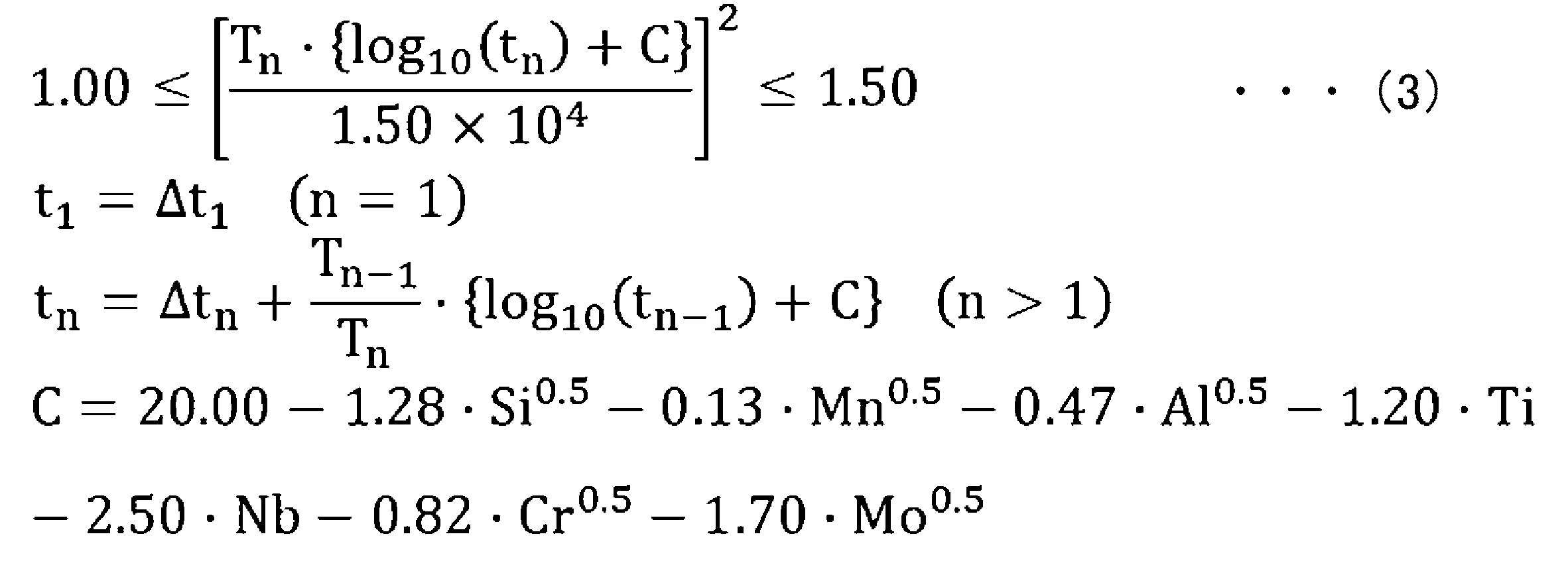
tn:n回目の算出時における炭化物の成長に関する実効総時間[時間]
Δtn:n-1回目の算出時点からn回目の算出時点に至るまでの経過時間[時間]
C:炭化物の成長速度に関するパラメター(元素記号:元素の質量%)
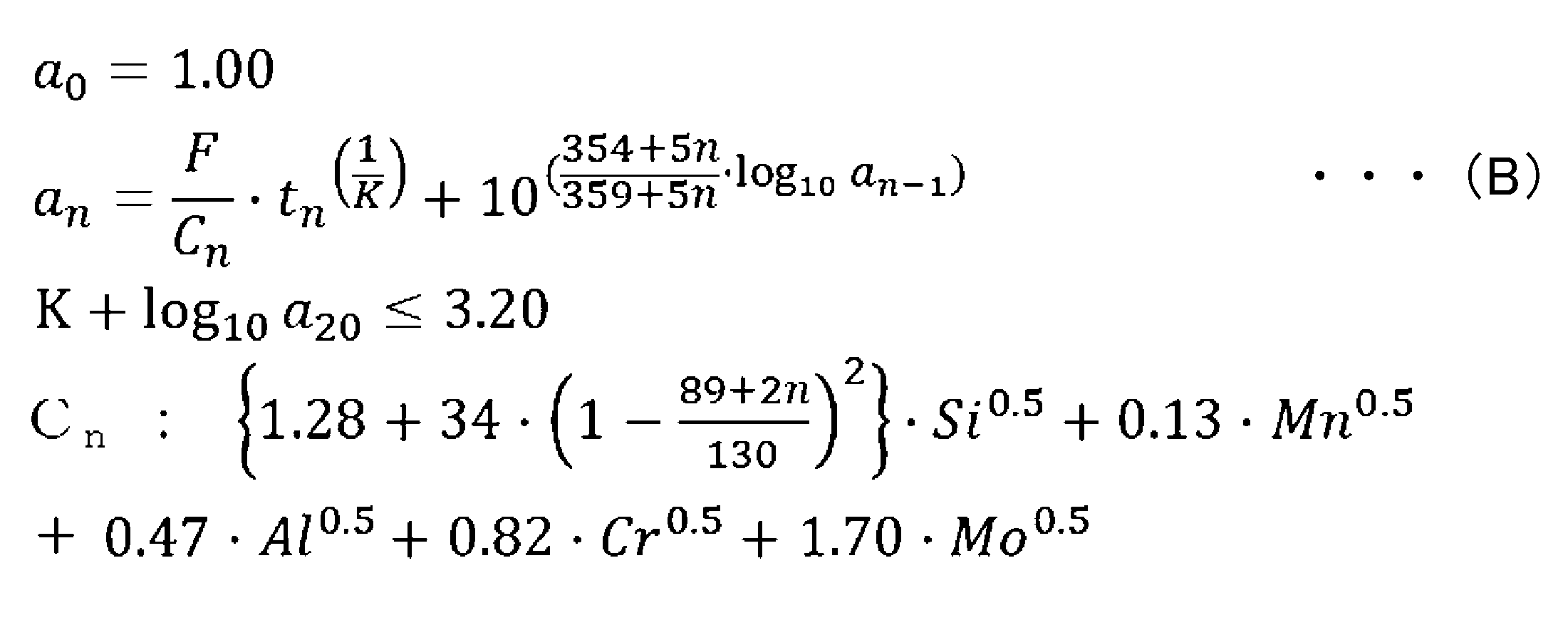
F:定数、2.57
tn:(440+10n)℃から(450+10n)℃までの経過時間[秒]
K:式(3)中辺の値

N:式(B)左辺の値
P:0.38Si+0.64Cr+0.34Mo
但し、各化学組成は添加量[質量%]を表す。
Q:2.43×10⁴
tn:(640+10n)℃から(650+10n)℃までの経過時間[秒]
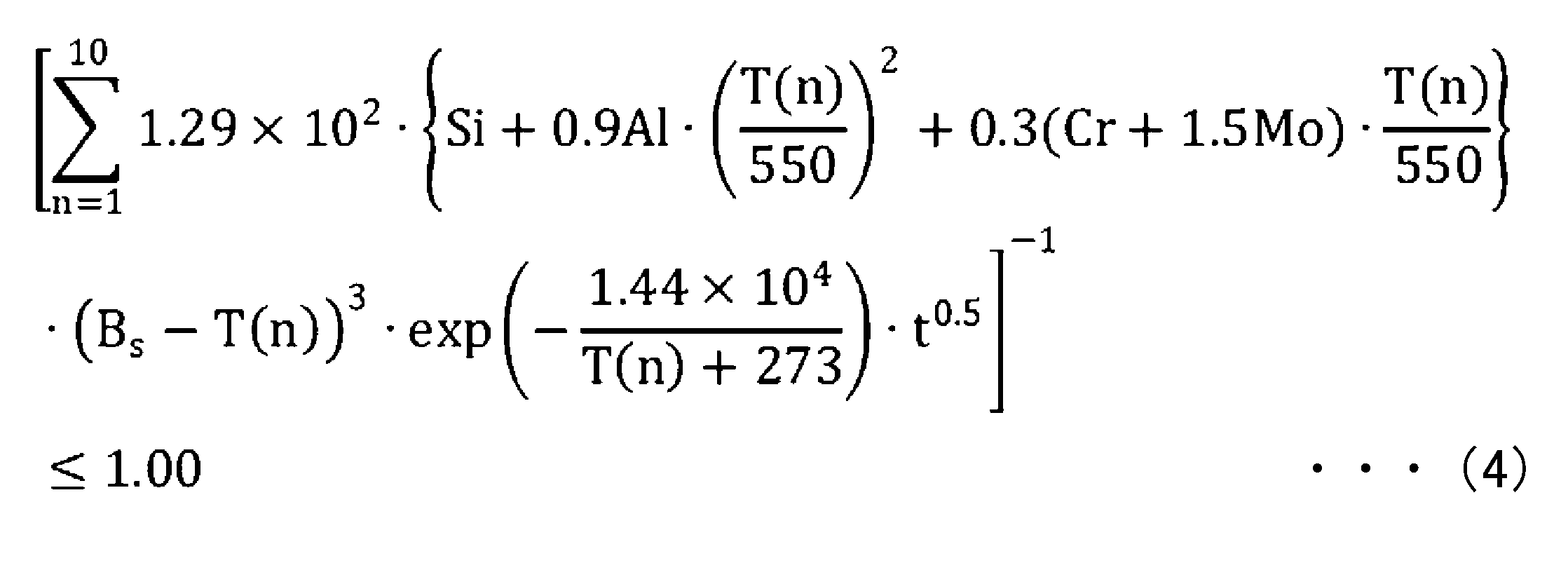
Bs点(℃)=611-33[Mn]-17[Cr]-17[Ni]-21[Mo]
-11[Si]+30[Al]+(24[Cr]+15[Mo]
+5500[B]+240[Nb])/(8[C])
[元素]:元素の質量%
Bs<T(n)のとき、(Bs-T(n))=0
t:550~300℃の温度域における滞留時間の合計[秒]
本発明の成形性及び耐衝撃性に優れた高強度鋼板の製造方法で製造した成形性及び耐衝撃性に優れた高強度鋼板を、亜鉛を主成分とするめっき浴に浸漬し、高強度鋼板の片面又は両面に、亜鉛めっき層又は亜鉛合金めっき層を形成する
ことを特徴とする成形性及び耐衝撃性に優れた高強度鋼板の製造方法。
本発明の成形性及び耐衝撃性に優れた高強度鋼板の製造方法において550℃から300℃の温度域に滞留する鋼板を、亜鉛を主成分とするめっき浴に浸漬し、高強度鋼板の片面又は両面に、亜鉛めっき層又は亜鉛合金めっき層を形成する
ことを特徴とする成形性及び耐衝撃性に優れた高強度鋼板の製造方法。
本発明の成形性及び耐衝撃性に優れた高強度鋼板の製造方法で製造した成形性及び耐衝撃性に優れた高強度鋼板の片面又は両面に、電気めっきで、亜鉛めっき層又は亜鉛合金めっき層を形成する
ことを特徴とする成形性及び耐衝撃性に優れた高強度鋼板の製造方法。
本発明の成形性及び耐衝撃性に優れた高強度鋼板の製造方法で製造した成形性及び耐衝撃性に優れた高強度鋼板の片面又は両面に、電気めっきで、亜鉛めっき層又は亜鉛合金めっき層を形成する
ことを特徴とする成形性及び耐衝撃性に優れた高強度鋼板の製造方法。
前記亜鉛めっき層又は亜鉛合金めっき層を400℃から600℃に加熱し、亜鉛めっき層又は亜鉛合金めっき層に合金化処理を施す
ことを特徴とする本発明の成形性及び耐衝撃性に優れた高強度鋼板の製造方法。
C :0.080~0.500%、
Si:2.50%以下、
Mn:0.50~5.00%、
P :0.100%以下、
S :0.010%以下、
Al:0.010~2.000%、
N :0.0015%以下、
O :0.0050%以下、
残部:Fe及び不可避的不純物からなり、かつ、下記式(1)を満たす鋼板において、
鋼板表面から1/8t(t:板厚)~3/8t(t:板厚)の領域のミクロ組織が、体積%で、
マルテンサイト、焼戻しマルテンサイト、ベイナイト、及び、ベイニティックフェライトの1種又は2種以上からなり、円相当径0.3μm以上の炭化物を1.0×10¹⁰個/m2以上有するラス組織:80%以上
を含む。
[Si]+0.35[Mn]+0.15[Al]+2.80[Cr]
+0.84[Mo]+0.50[Nb]+0.30[Ti]
≧1.00 ・・・(1)
[元素]:元素の質量%
C :0.080~0.500%、
Si:2.50%以下、
Mn:0.50~5.00%、
P :0.100%以下、
S :0.010%以下、
Al:0.010~2.000%、
N :0.0015%以下、
O :0.0050%以下、
残部:Fe及び不可避的不純物からなり、かつ、下記式(1)を満たす鋼板において、
鋼板表面から1/8t(t:板厚)~3/8t(t:板厚)の領域のミクロ組織が、体積%で、
針状フェライト:20%以上、
マルテンサイト、焼戻しマルテンサイト、及び、残留オーステナイトの1種又は2種以上からなる島状硬質組織:20%以上
を含み、
残留オーステナイト:2%以上、25%以下であり、
塊状フェライト:20%以下
に制限され、
前記島状硬質組織において、円相当径1.5μm以上の硬質領域のアスペクト比の平均が2.0以上であり、円相当径1.5μm未満の硬質領域のアスペクト比の平均が2.0未満であり、
前記円相当径1.5μm未満の硬質領域の単位面積当たりの個数密度(個数密度)の平均が1.0×10¹⁰個・m-2以上であり、かつ、3つ以上の視野において、それぞれ5.0×10⁻¹⁰m2以上の面積において島状硬質組織の個数密度を求めたときに、その最大個数密度と最小個数密度の比が2.5以下であることを特徴とする。
[Si]+0.35[Mn]+0.15[Al]+2.80[Cr]
+0.84[Mo]+0.50[Nb]+0.30[Ti]
≧1.00 ・・・(1)
[元素]:元素の質量%
本発明鋼板Aの片面又は両面に、亜鉛めっき層又は亜鉛合金めっき層を有する
ことを特徴とする。
本発明鋼板A1の亜鉛めっき層又は亜鉛合金めっき層が合金化めっき層である
ことを特徴とする。
鋼板aの成分組成の鋳片を、1080℃以上、1300℃以下に加熱した後、最高加熱温度から1000℃までの温度領域における熱間圧延条件が前記式(A)を満たし、更に圧延完了温度を975℃から850℃の区間とする熱間圧延を施す熱間圧延工程と、
熱間圧延が完了してから600℃までの冷却条件が、圧延完了温度から600℃までの温度を15等分した各温度域における変態進行度合いの総和を表す前記式(2)を満たし、かつ、600℃に達した後、後述の中間熱処理を開始するまで20℃毎に算出する温度履歴が、式(3)を満たす冷却工程と、
圧下率80%以下の冷間圧延を施す冷間圧延工程と、
(Ac3-30)℃から(Ac3+100)℃の温度に、650℃から(Ac3-40)℃の温度域の平均加熱速度を30℃/秒以上として加熱し、当該加熱温度から(最高加熱温度-10)℃の温度域における滞留時間を100秒以下に制限し、次いで、加熱温度から冷却するに際し、750℃から450℃の温度域の平均冷却速度を30℃/秒以上として冷却する中間熱処理工程とを実施する。
加熱温度に150秒以下保持し、
加熱保持温度から、700℃から550℃の温度域の平均冷却速度を10℃/秒以上として、550℃から300℃の温度域に冷却し、
550℃から300℃の温度域における滞留時間を1000秒以下とし、
さらに、550℃から300℃の温度域における滞留条件が、前記式(4)を満たす本熱処理工程を実施することを特徴とする。
本発明製造方法Aで製造した成形性及び耐衝撃性に優れた高強度鋼板を、亜鉛を主成分とするめっき浴に浸漬し、鋼板の片面又は両面に、亜鉛めっき層又は亜鉛合金めっき層を形成する
ことを特徴とする。
本発明製造方法Aで製造し、550℃から300℃の温度域に滞留する鋼板を、亜鉛を主成分とするめっき浴に浸漬し、鋼板の片面又は両面に、亜鉛めっき層又は亜鉛合金めっき層を形成する
ことを特徴とする。
本発明製造方法Aで製造した成形性及び耐衝撃性に優れた高強度鋼板の片面又は両面に、電気めっきで、亜鉛めっき層又は亜鉛合金めっき層を形成する
ことを特徴とする。
本発明鋼板A1の亜鉛めっき層又は亜鉛合金めっき層を400℃から600℃に加熱し、亜鉛めっき層又は亜鉛合金めっき層に合金化処理を施すことを特徴とする。
C:0.080~0.500%
Cは、強度と耐衝撃性の向上に寄与する元素である。Cが0.080%未満であると、添加効果が十分に得られないので、Cは0.080%以上とする。好ましくは0.100%以上、より好ましくは0.140%以上である。
一方、Cが0.500%を超えると、鋳造スラブが脆化して割れ易くなり、生産性が著しく低下するので、Cは0.500%以下とする。さらに、多量のCは溶接性を劣化させるので、良好なスポット溶接性を確保する点で、Cは0.350%以下が好ましく、0.250%以下がより好ましい。
Siは、鉄系炭化物を微細化し、強度と成形性の向上に寄与する元素であるが、鋼を脆化する元素でもある。Siが2.50%を超えると、鋳造スラブが脆化して割れ易くなり、生産性が著しく低下するので、Siは2.50%以下とする。また、SiはFe結晶を脆化させる元素であり、耐衝撃性を確保する点で、2.20%以下が好ましく、2.00%以下がより好ましい。
下限は0%を含むが、0.010%未満に低減すると、ベイナイト変態時、粗大な鉄系炭化物が生成し、強度及び成形性が低下する場合があるので、Siは0.005%以上が好ましい。より好ましくは0.010%以上である。
Mnは、焼入れ性を高めて、強度の向上に寄与する元素である。Mnが0.50%未満であると、焼鈍の冷却過程で軟質な組織が生成して、所要の強度を確保することが難しくなるので、Mnは0.50%以上とする。好ましくは0.80%以上、より好ましくは1.00%以上である。
一方、Mnが5.00%を超えると、鋳造スラブの中央部にMnが濃化して、鋳造スラブが脆化して割れ易くなり、生産性が著しく低下するので、Mnは5.00%以下とする。また、多量のMnは溶接性を低下させるので、良好なスポット溶接性を確保する点で、Mnは3.50%以下が好ましく、3.00%以下がより好ましい。
Pは、鋼を脆化し、また、スポット溶接で生じる溶融部を脆化する元素である。Pが0.100%を超えると、鋳造スラブが脆化して割れ易くなるので、Pは0.100%以下とする。スポット溶接部の強度を確保する点で、0.040%以下が好ましく、0.020%以下がより好ましい。
下限は0%を含むが、Pを0.0001%未満に低減すると、製造コストが大幅に上昇するので、実用鋼板上、0.0001%が実質的な下限である。
Sは、MnSを形成し、延性、穴広げ性、伸びフランジ性、及び、曲げ性などの成形性や、溶接性を阻害する元素である。Sが0.0100%を超えると、成形性及び溶接性が著しく低下するので、Sは0.0100%以下とする。良好な溶接性を確保する点で、0.0070%以下が好ましく、0.0050%以下がより好ましい。
下限は0%を含むが、0.0001%未満に低減すると、製造コストが大幅に上昇するので、実用鋼板上、0.0001%が実質的な下限である。
Alは、脱酸材として機能するが、一方で、鋼を脆化し、また、溶接性を阻害する元素でもある。Alが0.001%未満であると、脱酸効果が十分に得られないので、Alは0.001%以上とする。好ましくは0.010%以上、よりが好ましくは0.020%以上である。
一方、Alが2.000%を超えると、粗大な酸化物が生成し、鋳造スラブが割れ易くなるので、Alは2.000%以下とする。良好な溶接性を確保する点で、Al量は1.500%以下が好まく、1.100%以下とすることが更に好ましい。
Nは、窒化物を形成し、延性、穴広げ性、伸びフランジ性、及び、曲げ性などの成形性を阻害する元素であり、また、溶接時、ブローホール発生の原因になり、溶接性を阻害する元素である。Nが0.0150%を超えると、成形性と溶接性が低下するので、Nは0.0150%以下とする。好ましくは0.0100%以下、より好ましくは0.0060%以下である。
下限は0%を含むが、Nを0.0001%未満に低減すると、製造コストが大幅に上昇するので、実用鋼板上、0.0001%が実質的な下限である。
Oは、酸化物を形成し、延性、穴広げ性、伸びフランジ性、及び、曲げ性などの成形性を阻害する元素である。Oが0.0050%を超えると、成形性が著しく低下するので、Oは0.0050%以下とする。好ましくは0.0030%以下、より好ましくは0.0020%以下である。
下限は0%を含むが、Oを0.0001%未満に低減すると、製造コストが大幅に上昇するので、実用鋼板上、0.0001%が実質的な下限である。
+0.84[Mo]+0.50[Nb]+0.30[Ti]
≧1.00 ・・・(1)
後述の熱処理用鋼板の製造には、中間熱処理中に炭化物を適度に溶存させ、一定量以上の微細な炭化物を得る必要がある。炭化物が過度に溶け易い場合、中間熱処理中に全ての炭化物が消失してしまうため、所定の熱処理用鋼板が得られない。このため、炭化物の溶解速度を緩める元素種の添加量からなる上記式(1)を満たす必要がある。
Tiは、析出物による強化、フェライト結晶粒の成長抑制による細粒化強化及び再結晶の抑制による転位強化によって、鋼板強度の向上に寄与する元素である。Tiが0.300%を超えると、炭窒化物が多量に析出して、成形性が低下するので、Tiは0.300%以下が好ましい。より好ましくは0.150%以下である。
下限は0%を含むが、Tiの強度向上効果を十分に得るには、0.001%以上が好ましく、0.010%以上がより好ましい。
Nbは、析出物による強化、フェライト結晶粒の成長抑制による細粒化強化及び再結晶の抑制による転位強化によって、鋼板強度の向上に寄与する元素である。Nbが0.100%を超えると、炭窒化物が多量に析出して、成形性が低下するので、Nbは0.100%以下が好ましい。より好ましくは0.060%以下である。
下限は0%を含むが、Nbの強度向上効果を十分に得るには、0.001%以上が好ましく、0.005%以上がより好ましい。
Vは、析出物による強化、フェライト結晶粒の成長抑制による細粒化強化及び再結晶の抑制による転位強化によって、鋼板強度の向上に寄与する元素である。Vが1.00%を超えると、炭窒化物が多量に析出して、成形性が低下するので、Vは1.00%以下が好ましい。より好ましくは0.50%以下である。
下限は0%を含むが、Vの強度向上効果を十分に得るには、0.001%以上が好ましく、0.010%以上がより好ましい。
Crは、焼入れ性を高め、鋼板強度の向上に寄与する元素であり、C及び/又はMnの一部に替わり得る元素である。Crが2.00%を超えると、熱間加工性が低下して生産性が低下するので、Crは2.00%以下が好ましい。より好ましくは1.20%以下である。
下限は0%を含むが、Crの強度向上効果を十分に得るには、0.01%以上が好ましく、0.10%以上がより好ましい。
Niは、高温での相変態を抑制し、鋼板強度の向上に寄与する元素であり、C及び/又はMnの一部に替わり得る元素である。Niが2.00%を超えると、溶接性が低下するので、Niは2.00%以下が好ましい。より好ましくは1.20%以下である。
下限は0%を含むが、Niの強度向上効果を十分に得るには、0.01%以上が好ましく、0.10%以上がより好ましい。
Cuは、微細な粒子で鋼中に存在し、鋼板強度の向上に寄与する元素であり、C及び/又はMnの一部に替わり得る元素である。Cuが2.00%を超えると、溶接性が低下するので、Cuは2.00%以下が好ましい。より好ましくは1.20%以下である。
下限は0%を含むが、Cuの強度向上効果を十分に得るには、0.01%以上が好ましく、0.10%以上がより好ましい。
Moは、高温での相変態を抑制し、鋼板強度の向上に寄与する元素であり、C及び/又はMnの一部に替わり得る元素である。Moが1.00%を超えると、熱間加工性が低下して生産性が低下するので、Moは1.00%以下が好ましい。より好ましくは0.50%以下である。
下限は0%を含むが、Moの強度向上効果を十分に得るたには、0.01%以上が好ましく、0.05%以上がより好ましい。
Wは、高温での相変態を抑制し、鋼板強度の向上に寄与する元素であり、C及び/又はMnの一部に替わり得る元素である。Wが1.00%を超えると、熱間加工性が低下して生産性が低下するので、Wは1.00%以下が好ましい。より好ましくは0.70%以下である。
下限は0%を含むが、Wの強度向上効果を十分に得るには、0.01%以上が好ましく、0.10%以上がより好ましい。
Bは、高温での相変態を抑制し、鋼板強度の向上に寄与する元素であり、C及び/又はMnの一部に替わり得る元素である。Bが0.0100%を超えると、熱間加工性が低下して生産性が低下するので、Bは0.0100%以下が好ましい。より好ましくは0.0050%以下である。
下限は0%を含むが、Bの強度向上効果を十分に得るには、0.0001%以上が好ましく、0.0005%以上がより好ましい。
Snは、結晶粒の粗大化を抑制し、鋼板強度の向上に寄与する元素である。Snが1.00%を超えると、鋼板が脆化し、圧延時に破断することがあるので、Snは1.00%以下が好ましい。より好ましくは0.50%以下である。
下限は0%を含むが、Snの添加効果を十分に得るには、0.001%以上が好ましく、0.010%以上がより好ましい。
Sbは、結晶粒の粗大化を抑制し、鋼板強度の向上に寄与する元素である。Sbが0.200%を超えると、鋼板が脆化し、圧延時に破断することがあるので、Sbは0.200%以下がこのましい。より好ましくは0.100%以下である。
下限は0%を含むが、Sbの添加効果を十分に得るには、0.001%以上が好ましく、0.005%以上がより好ましい。
Ca、Ce、Mg、Zr、La、Hf、REMは、成形性の向上に寄与する元素である。Ca、Ce、Mg、Zr、La、Hf、REMの1種又は2種以上の合計が0.0100%を超えると、延性が低下する恐れがあるので、上記元素は、合計で0.0100%以下が好ましい。より好ましくは0.0070%以下である。
Ca、Ce、Mg、Zr、La、Hf、REMの1種又は2種以上の合計の下限は0%を含むが、成形性向上効果を十分に得るには、合計で0.0001%以上が好ましく、0.0010%以上がより好ましい。
なお、REM(Rare Earth Metal)は、ランタノイド系列に属する元素を意味する。REMやCeは、多くの場合、ミッシュメタルの形態で添加するが、La、Ceの他に、ランタノイド系列の元素を不可避的に含有していてもよい。
通常、鋼板表面から1/4t(t:板厚)を中心とする、1/8t(t:板厚)~3/8t(t:板厚)の領域のミクロ組織が、鋼板全体の機械特性(成形性、強度、延性、靱性、穴広げ性等)を担うので、本発明鋼板A、A1、及び、A2(以下「本発明鋼板A」と総称することがある。)においては、鋼板表面から1/8t(t:板厚)~3/8t(t:板厚)の領域のミクロ組織を規定する。
マルテンサイト、焼戻しマルテンサイト、ベイナイト、及び、ベイニティックフェライトの1種又は2種以上からなり、円相当径0.1μm以上の炭化物を1.0×10¹⁰個/m2以上有するラス組織:80%以上
ラス組織中に炭化物が存在していると、ミクロ組織の固溶炭素量が少なくなっていて、ミクロ組織の変態温度が高くなり、急冷しても、鋼板の形状・寸法が良好に維持されるし、また、鋼板の強度が低下し、鋼板の切断及び形状矯正が容易となり、2回目の熱処理が実施し易くなる。炭化物は、2回目の熱処理で、マクロ組織に溶け込んで、硬質組織の生成サイトを形成する。
ミクロ組織Aは、鋼板aのミクロ組織aに、所要の熱処理(後述する本熱処理)を施して形成される。ミクロ組織Aは、ミクロ組織aの組織形態を引き継いで形成される針状フェライト及び一方向に伸長した島状硬質組織と、所要の熱処理で形成される等軸状の島状硬質組織を含む組織である。この点が、本発明鋼板Aの特徴である。
ミクロ組織a(焼戻しマルテンサイト、ベイナイト、及び、ベイニティックフェライトの1種又は2種以上からなり、円相当径0.1μm以上の炭化物を1.0×10¹⁰個/m2以上有するラス組織:80%以上)に、所要の加熱処理を施すと、ラス状のフェライトが合体し針状となり、その結晶粒界に、一方向に伸長したオーステナイト粒が生成する。
島状硬質組織を構成する個々の組織の体積%は、鋼板の成分組成や熱処理条件に依るので特定しないが、好ましい体積%は、以下のとおりである。
鋼板強度を担う組織であるが、30%を超えると、鋼板の耐衝撃性が低下するので、30%以下が好ましい。より好ましくは15%以下である。下限は0%を含む。
焼戻しマルテンサイトは、鋼板の成形性及び耐衝撃性を損なわずに、鋼板強度を高める組織である。鋼板の強度、成形性及び耐衝撃性を十分に高めるため、焼戻しマルテンサイトは10%以上が好ましい。より好ましくは15%以上である。
残留オーステナイトは、鋼板の成形性、特に、延性を大きく改善する組織である。この効果を十分に得るため、残留オーステナイトは2%以上が好ましく、5%以上がより好ましい。
一方、残留オーステナイトは耐衝撃性を阻害する組織である。残留オーステナイトが25%を超えると、優れた耐衝撃性を確保することができないので、残留オーステナイトは25%以下が好ましい。より好ましくは20%以下である。
円相当径1.5μm以上の硬質領域の平均アスペクト比:2.0以上
円相当径1.5μm未満の硬質領域の平均アスペクト比:2.0未満
微細な島状硬質組織の単位面積当たりの個数密度(以下単に「個数密度」ともいう。)が少ない場合、一部の島状硬質組織および/またはその周辺に応力および/またはひずみが集中して破壊の起点や伝播経路として働く。このため、円相当径が1.5μm未満の微細な島状硬質組織の個数密度の平均は1.0×1010個/m2以上とする。破壊の伝播経路として働きにくくするには2.5×1010個/m2以上とすることが好ましく、4.0×1010個/m2以上とすることが更に好ましい。
また、微細な島状硬質組織が一部に偏在していると、破壊の伝播に際して島状硬質組織が疎な領域において一部の島状硬質組織および/またはその周辺に応力および/またはひずみが集中して破壊が伝播しやすくなる。この現象を防ぐには微細な島状硬質組織の個数密度が一定に近いことが好ましい。具体的には、3つ以上の視野において、それぞれ5.0×10-10m2以上の面積において円相当径が1.5μm未満の島状硬質組織の個数密度を求め、それぞれの視野における島状硬質組織の個数密度のうち最大の値を最小の値で除した値を2.5以下に制限する。この値は2.0以下であることが好ましく、1.0に近いほど好ましい。
塊状フェライトは、針状フェライトと競合する組織である。塊状フェライトの体積%が増大するほど、針状フェライトの体積%が減少するので、塊状フェライトは20%以下に制限する。塊状フェライトは少ない方が好ましく、0%でも構わない。
ミクロ組織Aの残部は、ベイナイト、ベイニティックフェライト、及び/又は、不可避的生成相である。
本発明鋼板Aの片面又は両面に形成するめっき層は、亜鉛めっき層、又は、亜鉛を主成分とする亜鉛合金めっき層が好ましい。亜鉛合金めっき層は、合金成分として、Niを含むものが好ましい。
亜鉛めっき層又は亜鉛合金めっき層に合金化処理を施して、鋼板表面に、合金化めっき層を形成する。溶融亜鉛めっき層又は溶融亜鉛合金めっき層に金化処理を施す場合、鋼板表面と合金化めっき層の密着性の向上の点で、溶融亜鉛めっき層又は溶融亜鉛合金めっき層のFe量は7.0~13.0質量%が好ましい。
最後に、本熱処理工程において、始めは式(B)を満たすように急速に温度を上げ、オーステナイト変態が始まる頃から式(C)を満たすように加熱処理を緩め、その後急冷する。冷却後半おいて、式(4)を満たすように冷却することにより、オーステナイト分率を制御して、針状組織を主体に2種類の島状硬質組織を有する組織を形成する。
以下、製造方法a、及び、本発明製造方法A、A1a、A1b、及び、A2について詳述する。
製造方法aは、鋼板aの成分組成の鋼板に中間熱処理を施して、鋼板aを製造する方法である。熱処理を施す鋼板は、鋼板aの成分組成を有し、常法に従って熱間圧延及び冷間圧延して製造した鋼板であればよい。好ましい熱延条件は、次の通りである。
鋼板aの成分組成の溶鋼を、連続鋳造や薄スラブ鋳造等の常法に従って鋳造し、熱間圧延に供する鋼片を製造する。鋼片を、一旦常温まで冷却した後、熱間圧延に供する際、加熱温度は1080℃から1300℃が好ましい。
加熱温度が1080℃未満であると、鋳造に起因する粗大な介在物が溶解せず、熱間圧延後の工程で、熱延鋼板が破断する恐れがあるので、加熱温度は1080℃以上が好ましい。より好ましくは1150℃以上である。
一方、加熱温度が1300℃を超えると、多量の熱エネルギーが必要となるので、1300℃以下が好ましい。より好ましくは1230℃以下である。また、上記溶鋼を鋳造後、1080℃から1300℃の温度域にある鋼片を、直接、熱間圧延に供してもよい。
鋼板の均質性を高める加熱温度が1000℃以上の区間における圧延では、再結晶を進めγ粒径を微細化し、粒界に沿った炭素の拡散によって鋼板内部の均質性を高めるため、その圧延条件は式(A)を満たす必要がある。また、当該温度区間における合計圧下率は75%以上であることが好ましい。

hi:iパス後の仕上板厚[mm]
Ti:iパス目の圧延温度[℃]
ti:iパス目の圧延からi+1パス目までの経過時間[秒]
A=9.11×10⁷,B=2.72×10⁴:定数
圧延完了温度は850℃から975℃が好ましい。圧延完了温度が850℃未満であると、圧延反力が増大して、形状・板厚の寸法精度を安定して確保することが困難となるので、圧延完了温度は850℃以上が好ましい。一方、圧延完了温度が975℃を超えると、鋼板加熱装置が必要となり、圧延コストが上昇するので、圧延完了温度は975℃以下が好ましい。

元素記号:元素の質量%
Tf:熱間圧延完了温度[℃]
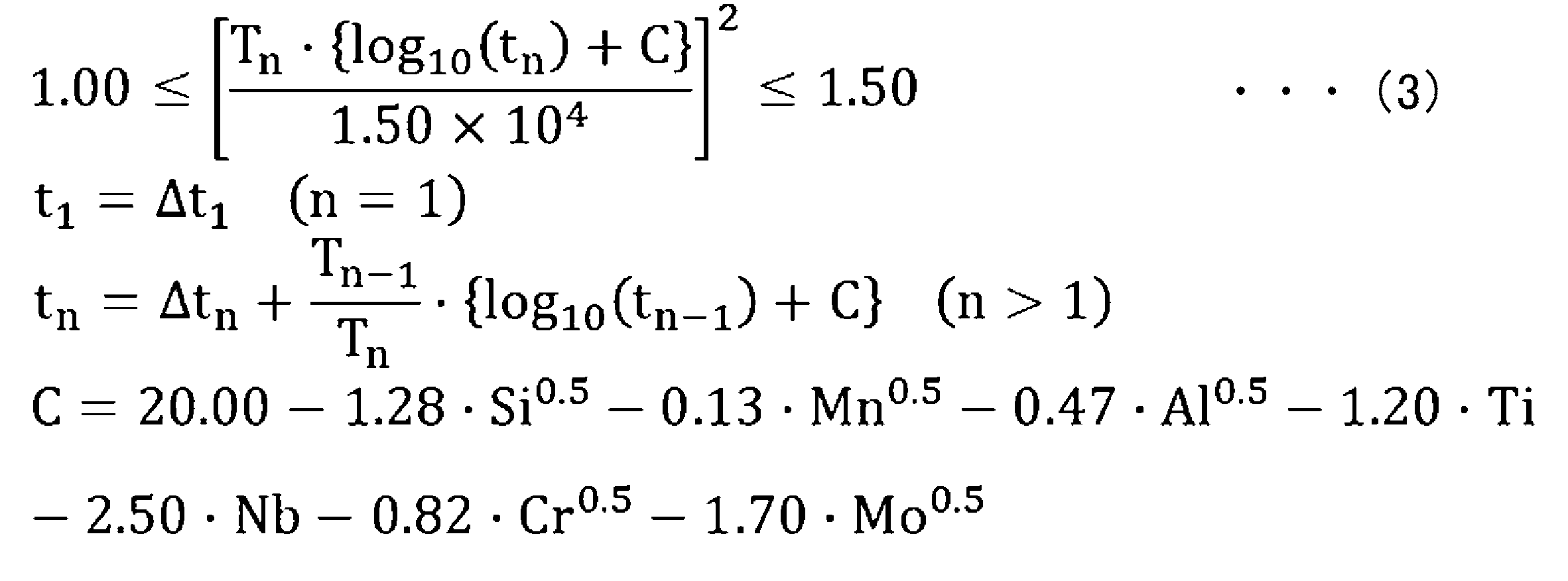
tn:n回目の算出時における炭化物の成長に関する実効総時間[時間]
Δtn:n-1回目の算出時点からn回目の算出時点に至るまでの経過時間[時間]
C:炭化物の成長速度に関するパラメータ(元素記号:元素の質量%)
下記中間熱処理前の熱延鋼板に冷間圧延を施すことにより 、組織が均質な加工組織となり、そののちの加熱処理(中間熱処理)において均質に多数のオーステナイトが生じ、組織が微細となり、特性が改善する。なお、冷間圧延の圧下率が80%を超えると中間熱処理中に局所的に過剰に再結晶が進行し、その周辺に塊状組織が発達する場合があることから、冷間圧延率は80%以下とする。組織微細化の効果を十分に得るには、圧延率は30%以上とすることが好ましい。圧延率が30%未満では、加工組織の発達が不十分となり、均質なオーステナイトの生成が進行しない場合がある。
巻き取った冷延鋼板中の炭化物のサイズを調整するため、冷延鋼板に、適宜の温度と時間の中間熱処理工程を実施する。中間熱処理工程は、(Ac3-30)℃から(Ac3+100)℃の温度に加熱するに際し、650℃から(Ac3-40)℃の温度域の平均加熱速度を30℃/秒以上として加熱し、当該加熱温度から(最高加熱温度-10)℃の温度域における滞留時間を100秒以下に制限し、次いで、加熱温度から冷却するに際し、750℃から450℃の温度域の平均冷却速度を30℃/秒以上として冷却する。また、鋼板をAc3点以上に加熱した後、再度室温まで冷却しても構わない。
加熱速度限定温度域:650℃から(Ac3-40)℃
上記温度域の平均加熱速度:30℃/秒以上
冷延鋼板を(Ac3-30)℃以上に加熱する。鋼板加熱温度が(Ac3-30)℃未満であると、塊状の粗大なフェライトが残存し、高強度鋼板の機械特性が大きく低下するので、鋼板加熱温度は(Ac3-30)℃以上とする。好ましくは(Ac3-15)℃以上、より好ましくは(Ac3-5)℃以上である。
最高加熱温度から(最高加熱温度-10)℃の温度域における滞留時間を100秒以下に制限する。滞留時間が100秒を超えると、炭化物が溶け込んで、円相当径0.1μm以上の炭化物の個数密度が1.0×10¹⁰個/m2未満に減少するので、加熱温度での滞留時間は100秒以下とする。好ましくは60秒以下、より好ましくは30秒以下である。
上記温度域の平均冷却速度:30℃/秒以上
熱延鋼板を、(Ac3-30)℃から(Ac3+100)℃の温度域に加熱した後、加熱温度からの冷却に際し、750~450℃の温度域の平均冷却速度を30℃/秒以上として冷却する。この冷却により、上記温度域における塊状フェライトの生成を抑制することができる。この一連の加熱・冷却により、ミクロ組織aを形成することができる。
鋼板aを、(Ac1+25)℃からAc3の温度に、450℃から650℃における温度履歴を下記式(B)を満たす範囲とし、次いで、650℃から750℃における温度履歴を下記式(C)を満たす範囲として加熱し、
加熱温度に150秒以下保持し、
加熱保持温度から、700℃から550℃の温度域の平均冷却速度を10℃/秒以上として、550℃から300℃の温度域に冷却し、
550℃から300℃の温度域における滞留時間を1000秒以下とし、
さらに、550℃から300℃の温度域における滞留条件が、下記式(4)を満たす本熱処理工程を実施することを特徴とする。
本発明製造方法Aで製造した成形性及び耐衝撃性に優れた高強度鋼板を、亜鉛を主成分とするめっき浴に浸漬し、鋼板の片面又は両面に、亜鉛めっき層又は亜鉛合金めっき層を形成する
ことを特徴とする。
本発明製造方法Aにおいて550℃から300℃の温度域に滞留する鋼板を、亜鉛を主成分とするめっき浴に浸漬し、鋼板の片面又は両面に、亜鉛めっき層又は亜鉛合金めっき層を形成する
ことを特徴とする。
本発明製造方法Aで製造した成形性及び耐衝撃性に優れた高強度鋼板の片面又は両面に、電気めっきで、亜鉛めっき層又は亜鉛合金めっき層を形成する
ことを特徴とする。
本発明鋼板A1の亜鉛めっき層又は亜鉛合金めっき層を400℃から600℃に加熱し、亜鉛めっき層又は亜鉛合金めっき層に合金化処理を施す
ことを特徴とする。
鋼板aを、(Ac1+25)℃からAc3点範囲の鋼板加熱温度に加熱するに際し、450℃から650℃における温度履歴を下記式(B)を満たす範囲とし、次いで、650℃から750℃における温度履歴を下記式(C)を満たす範囲として加熱し、加熱温度に150秒以下保持する。
鋼板加熱温度が(Ac1+25)℃未満であると、鋼板中のセメンタイトが溶け残り、機械特性が低下する懸念があるので、鋼板加熱温度は(Ac1+25)℃以上とする。好ましくは(Ac1+40)℃以上である。
一方、鋼板加熱温度の上限はAc3点とする。鋼板加熱温度がAc3点を超えると、全てのミクロ組織がオーステナイトとなり、ラス組織が消滅して、ラス組織に起因して生成する針状フェライトが得られないので、鋼板加熱温度はAc3点以下とする。本発明鋼板aのラス組織を引き継ぎ、機械特性を一層高める点で、鋼板加熱温度は(Ac3-10)℃以下が好ましく、(Ac3-20)℃以下がより好ましい。鋼板加熱温度を、実施例の表では「最高加熱温度」と表示している。
平均加熱速度:式(B)
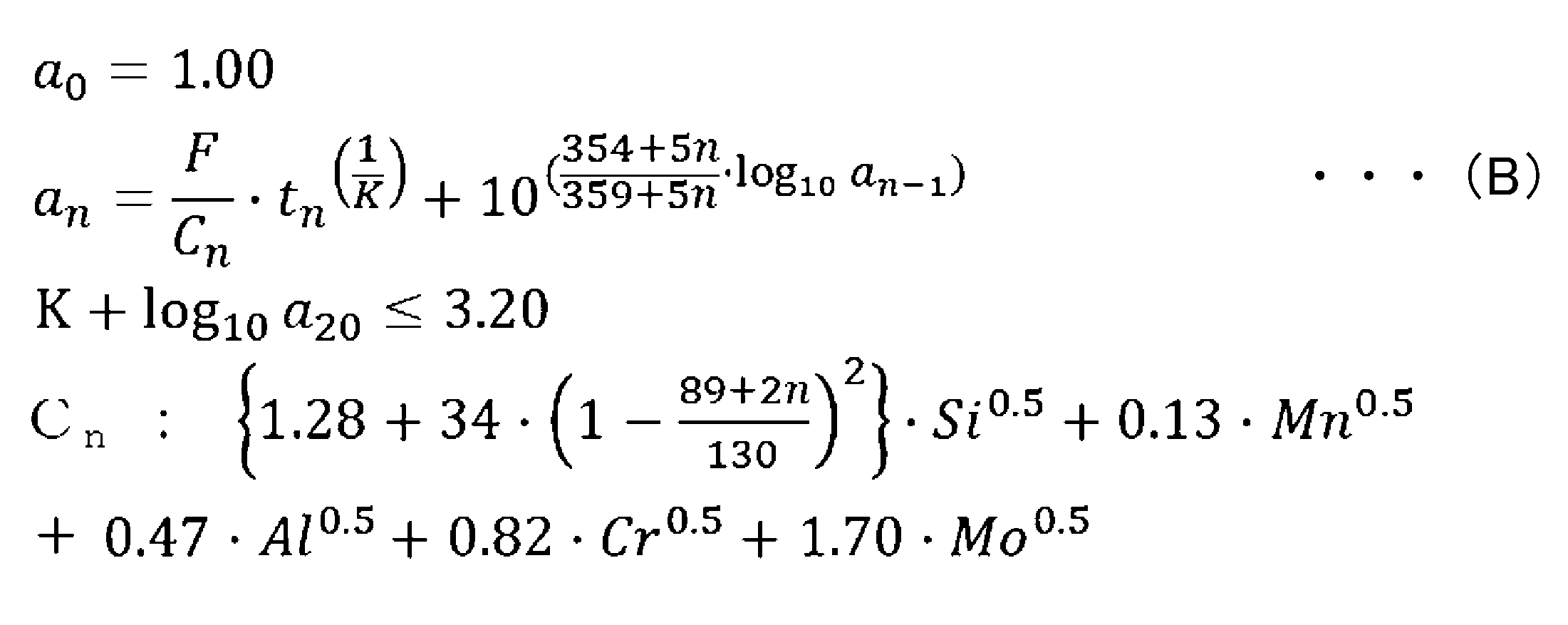
F:定数、2.57
tn:(440+10n)℃から(450+10n)℃までの経過時間[秒]
K:式(3)中辺の値
式(B)左辺の値は小さいほど好ましいが、式(3)中辺の値を下回ることはなく、これが下限となる。また、式(B)左辺の値が大きいと炭化物の減数成長が進むことから、式(B)左辺の値は3.00以下であることが好ましく、2.80以下であることが更に好ましい。
平均加熱速度:式(C)

N:式(B)左辺の値
P:0.38Si+0.64Cr+0.34Mo
但し、各化学組成は添加量[質量%]を表す。
Q:2.43×10⁴
tn:(640+10n)℃から(650+10n)℃までの経過時間[秒]
式(C)の値が1.00未満ではラス境界を核生成サイトとするオーステナイト変態が優先して起こるため、所定の組織が得られない。ラス境界での核生成を避け、微細な炭化物からの核生成を優先させるには、式(C)の値は1.00以上であることが必要であり、1.10以上であることが好ましく、1.20以上であることが更に好ましい。
式(C)の値が5.00を超えると、一部の核生成サイトから発生したオーステナイトが成長し、微細炭化物の取り込みやオーステナイト同士の合体が進行し、粗大な塊状の組織が発達する。オーステナイトの過度の成長を回避するため、式(C)の値は5.00以下とする必要があり、4.50以下であることが好ましく、3.50以下であることが更に好ましい。
鋼板aを上記条件で鋼板加熱温度(最高加熱温度)まで加熱し、鋼板加熱温度~(鋼板加熱温度-10℃)の温度域に150秒以下保持する。加熱保持時間が150秒を超えると、ミクロ組織がオーステナイトとなり、ラス組織が消滅する恐れがあるので、加熱保持時間は150秒以下とする。好ましくは120秒以下である。加熱保持時間の下限は特に設定しない。0秒でも構わないが、粗大炭化物を完全に溶解させるため、10秒以上が好ましい。
平均冷却速度:10℃/秒以上
加熱温度に150秒以下保持した本発明鋼板aを冷却するに際し、700℃から550℃の温度域を平均冷却速度10℃/秒以上で冷却する。平均冷却速度が10℃/秒未満であると、塊状フェライトが生成し、針状フェライトが十分に得られない恐れがあるので、700℃から550℃の温度域における平均冷却速度は10℃/秒以上とする。好ましくは25℃/秒以上である。
平均冷却速度の上限は、冷却設備の冷却能力の上限であり、200℃/秒程度が限度である。
滞留時間:1000秒以下
700℃から550℃の温度域を平均冷却速度10℃/秒以上で冷却した本発明鋼板aを、550℃から300℃の温度域の温度まで冷却し、この温度域で、1000秒以下滞留させる。滞留時間が1000秒を超えると、オーステナイトが、ベイナイト、ベイニティックフェライト、パーライト及び/又はセメンタイトに変態して減少して、十分な体積分率の島状硬質組織が得られないので、上記温度域での滞留時間は1000秒以下とする。
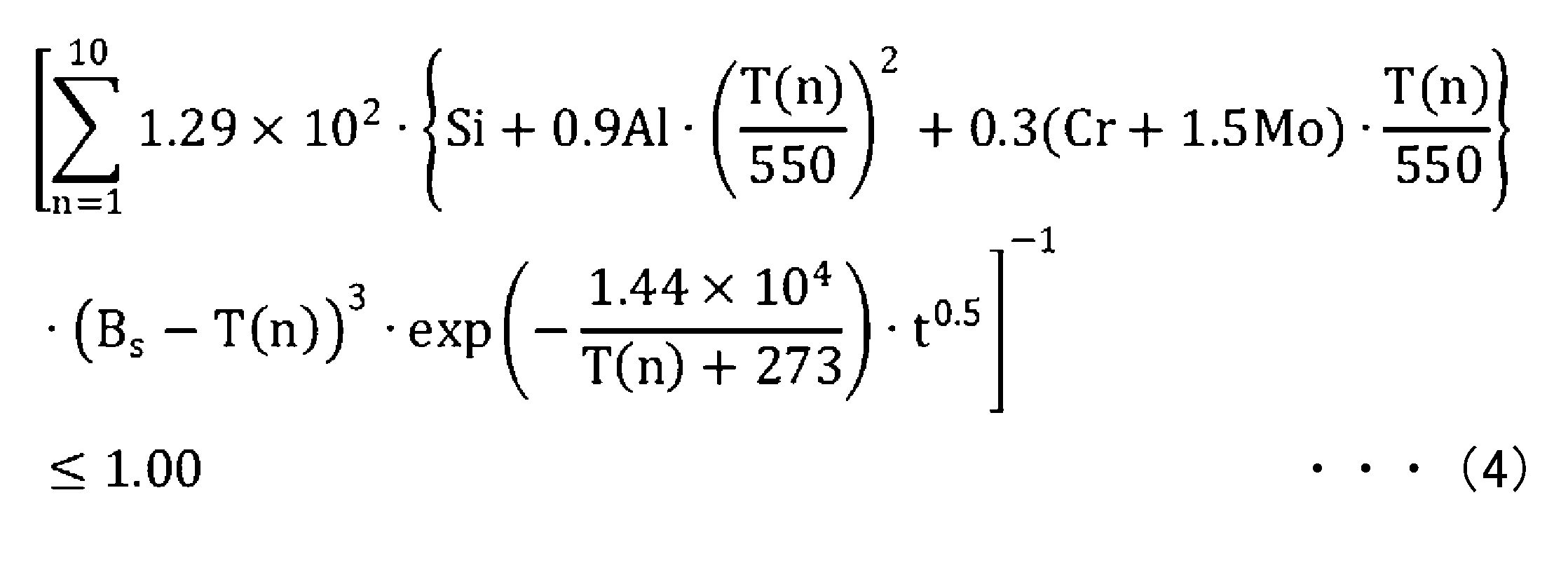
Bs点(℃)=611-33[Mn]-17[Cr]-17[Ni]-21[Mo]
-11[Si]+30[Al]+(24[Cr]+15[Mo]
+5500[B]+240[Nb])/(8[C])
[元素]:元素の質量%
Bs<T(n)のとき、(Bs-T(n))=0
t:550℃から300℃の温度域における滞留時間の合計[秒]
本発明製造方法A1a、本発明製造方法A1b、及び、本発明製造方法A1cにより、本発明鋼板Aの片面又は両面に、亜鉛めっき層又は亜鉛合金めっき層を形成する。めっき法は、溶融めっき法、又は、電気めっき法が好ましい。
めっき浴の温度は450℃から470℃が好ましい。めっき浴の温度が450℃未満であると、めっき液の粘度が上昇して、めっき層の厚さを適確に制御することが困難となり、鋼板の外観が損なわれるので、めっき浴の温度は450℃以上が好ましい。
めっき浴は、亜鉛を主体とするめっき浴であり、めっき浴の全Al量から全Fe量を引いた有効Al量が0.01~0.30質量%のめっき浴が好ましい。亜鉛めっき浴の有効Al量が0.01質量%未満であると、亜鉛めっき層又は亜鉛合金めっき層中へのFeの侵入が過度に進み、めっき密着性が低下するので、亜鉛めっき浴の有効Al量は0.01質量%以上が好ましい。より好ましくは0.04%以上である。
製造するにあたり、550℃から300℃の温度域に滞留する鋼板を、亜鉛を主成分とするめっき浴に浸漬し、該高強度鋼板の片面又は両面に、亜鉛めっき層又は亜鉛合金めっき層を形成する。
通常の電気めっき条件で、本発明鋼板Aの鋼板の片面又は両面に、亜鉛めっき層又は亜鉛合金めっき層を形成する。
本発明製造方法A2においては、本発明製造方法A1a、本発明製造方法A1b、又は、本発明製造方法A1cで、本発明鋼板Aの片面又は両面に形成した亜鉛めっき層又は亜鉛合金めっき層を、400℃から600℃に加熱して合金化する。加熱時間は2~100秒が好ましい。
表1及び表2に示す成分組成の溶鋼を鋳造して鋼片を製造する。次に、鋼片を、表3及び表4に示す条件で鋼片に熱間圧延と冷間圧延を施し、適宜、熱処理(焼戻し)を施して鋼板とする。焼戻し熱処理を行った場合、表3、表4において、「焼戻温度」欄に数値を記載している。
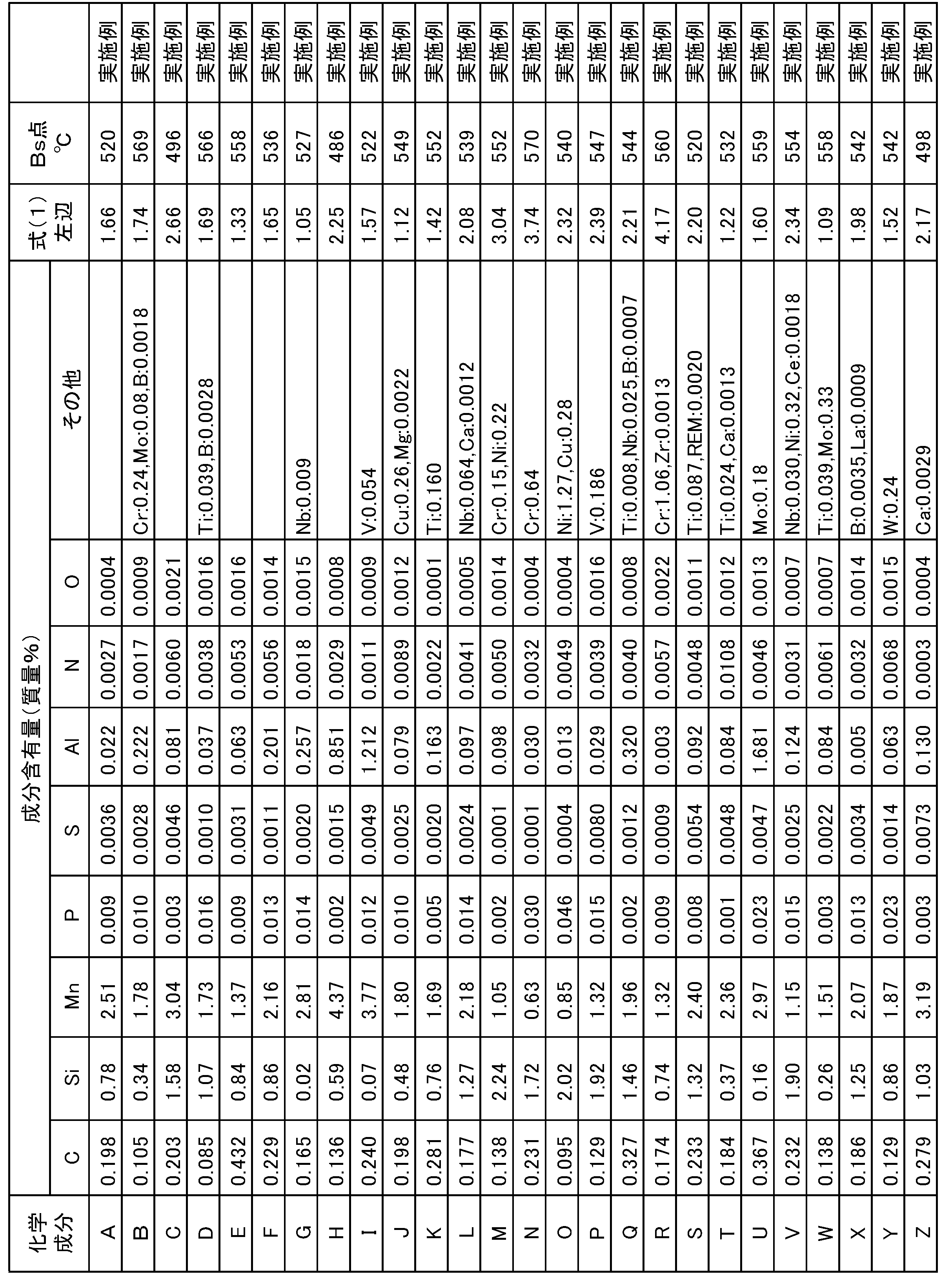
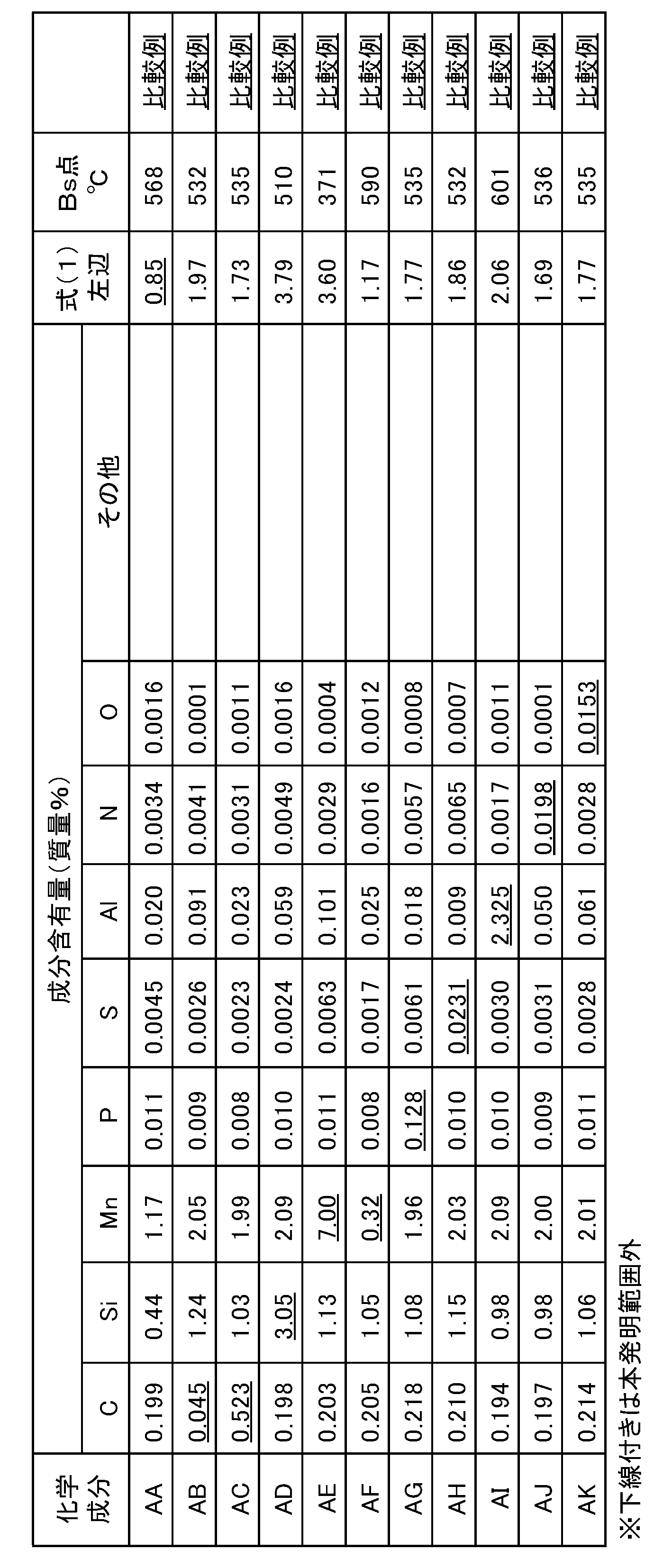
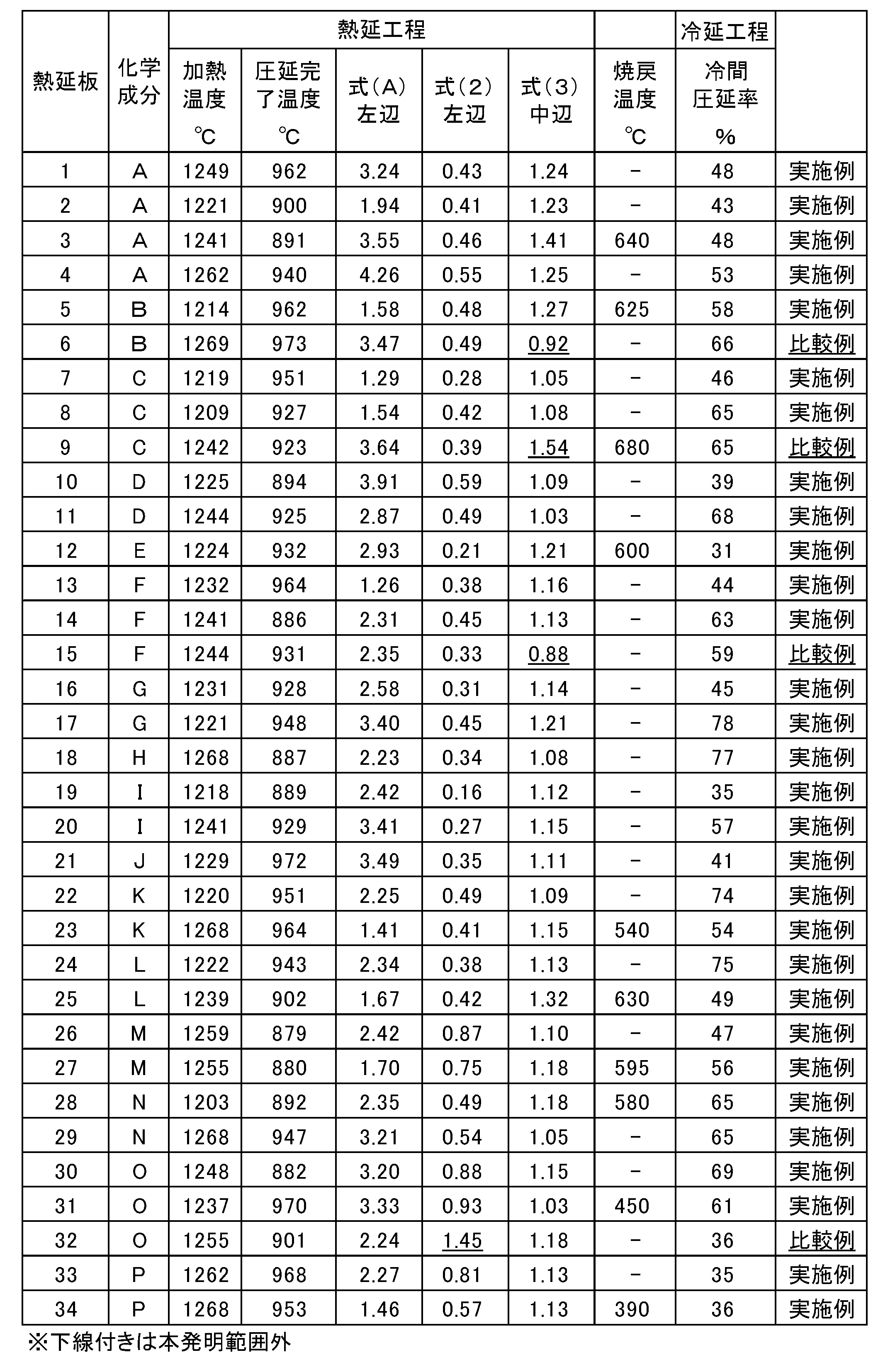
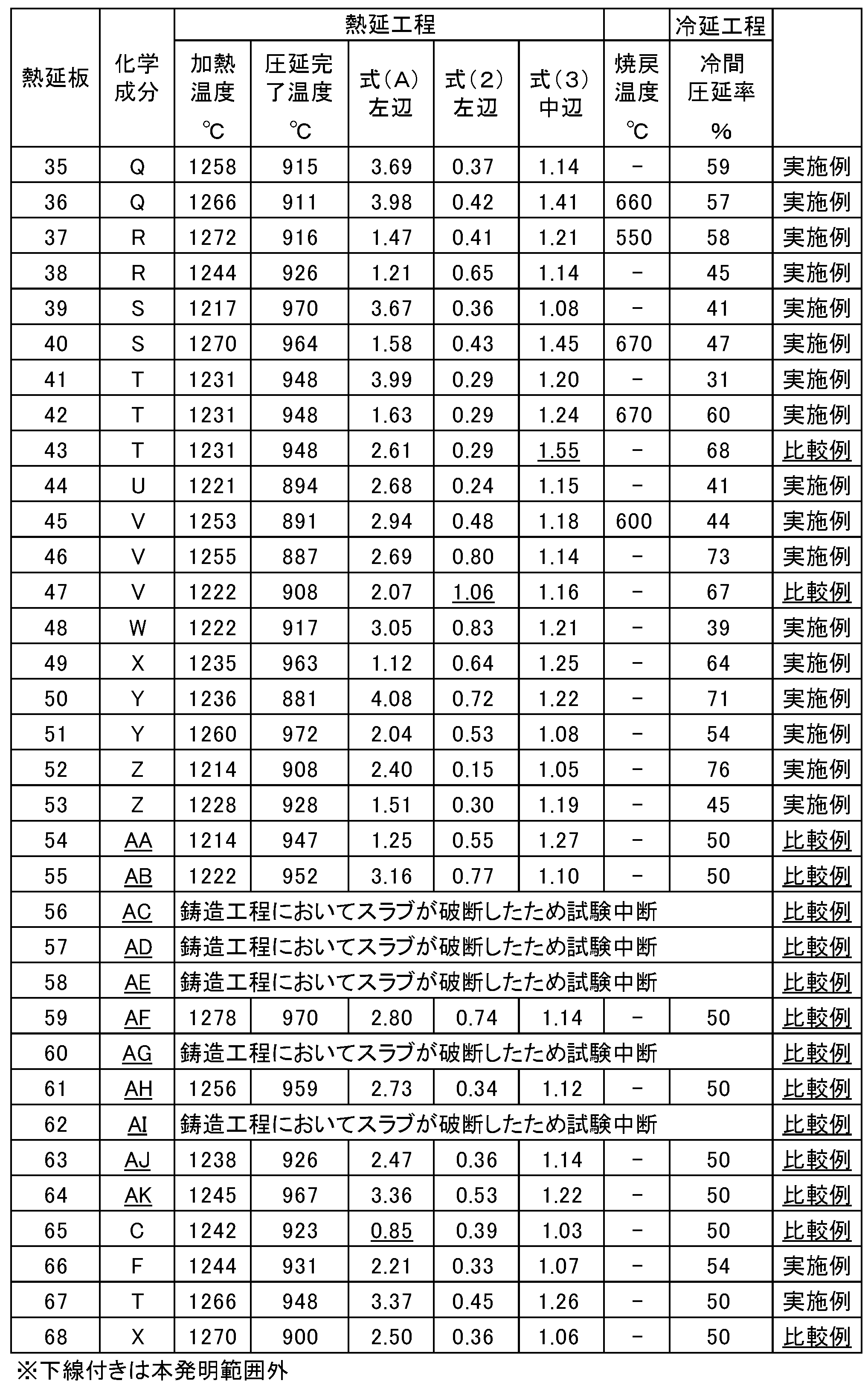


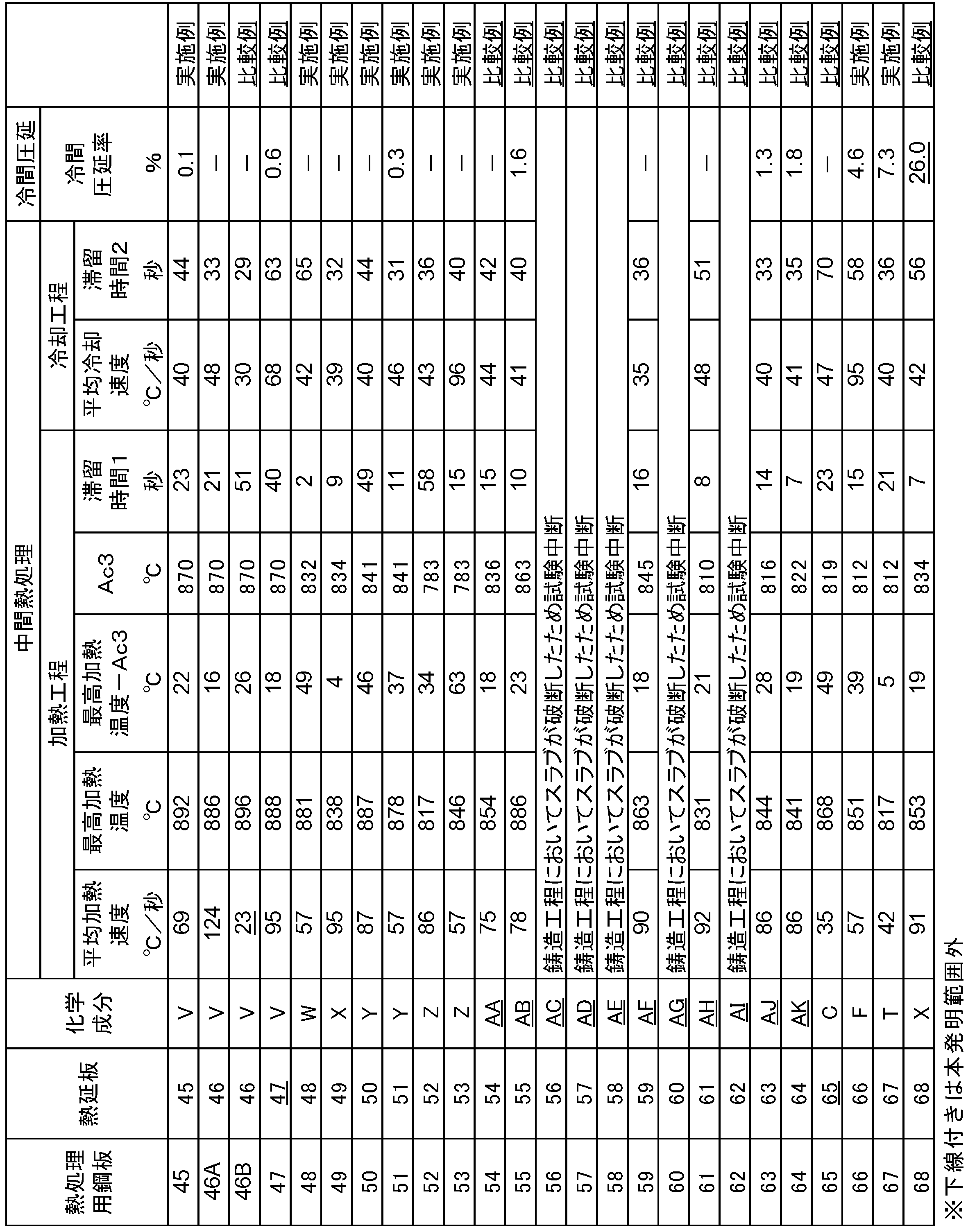
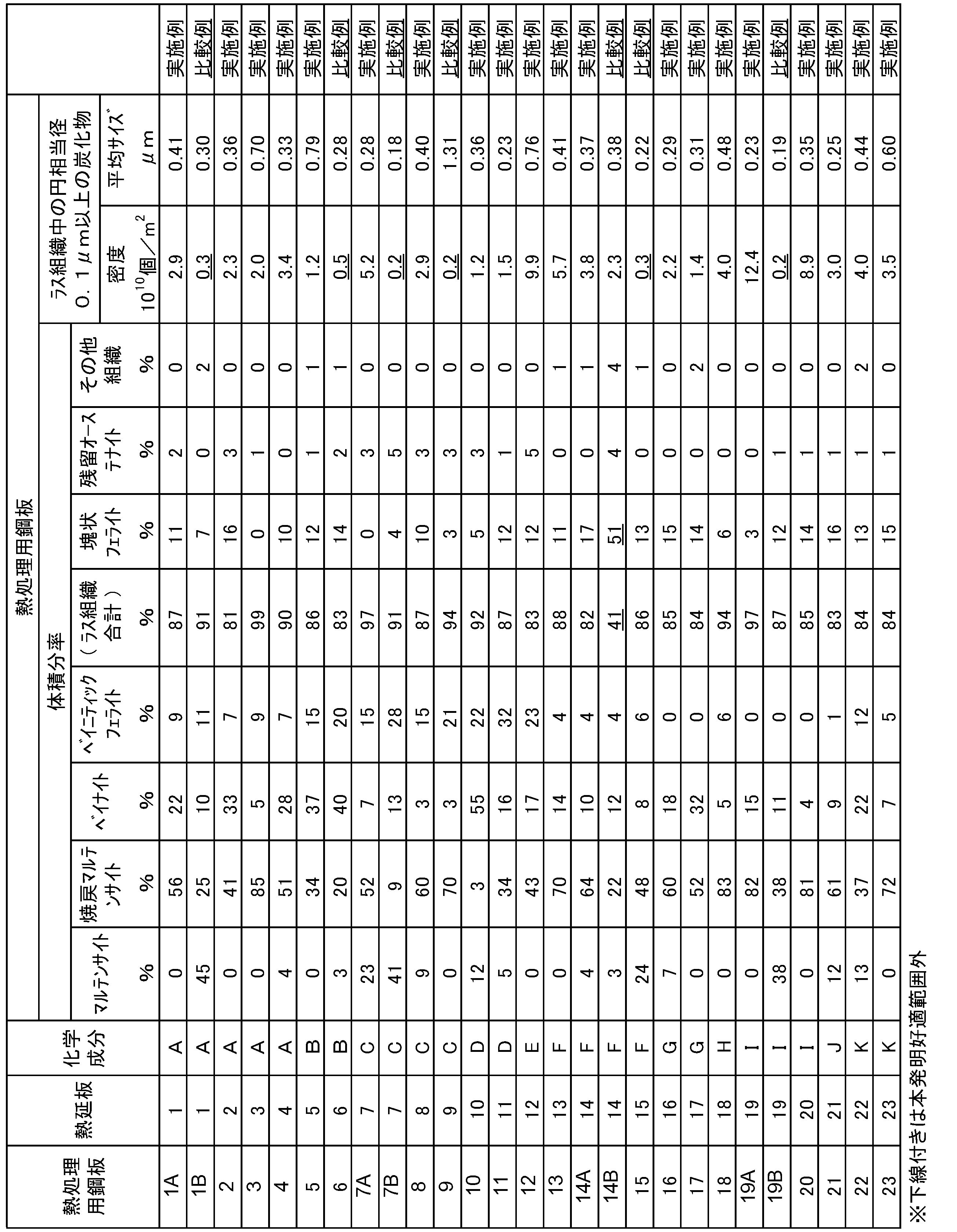


表8~表10に示す熱処理用鋼板に、表11~表14に示す条件で本熱処理を施し、適宜、スキンパスや熱処理(焼戻し)施す。参考として、加熱処理中の450~650℃における平均加熱速度を「平均加熱速度1」、650~750℃における平均加熱速度を「平均加熱速度2」とし表中に記載している。鋼板加熱温度(最高加熱温度)での保持時間を表中で「滞留時間1」と表示している。冷却工程において、700℃から550℃の温度域の平均冷却速度を表中で「平均冷却速度」と表示し、冷却を停止して滞留を始める温度を「冷却停止温度」と表示し、冷却工程における滞留時間を「滞留時間2」と表示している。スキンパス圧延を行った場合、表11~14において、「スキンパス圧延率」欄に数値を記載している。焼戻し熱処理を行った場合、表11~14において、「焼戻処理」欄に数値を記載している。
一部の熱処理用鋼板には、表11~表14に示す本熱処理と並行して、表15に示す条件でめっき処理を施す。表15の「表面」欄において、EGは電気めっき法、GIは溶融めっき法(亜鉛めっき層を形成)、GAは溶融めっき法(亜鉛合金めっき層を形成)を意味する。

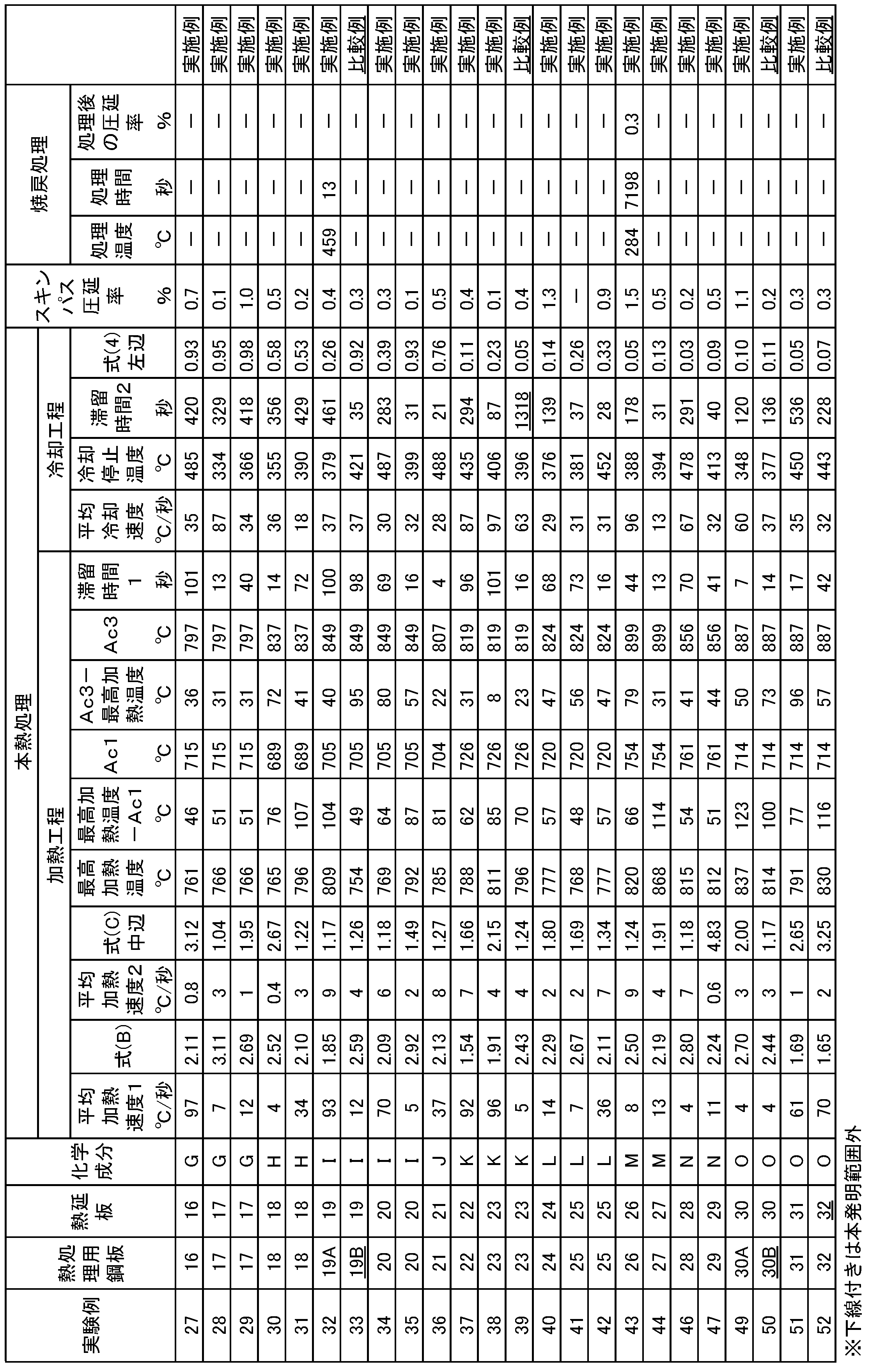
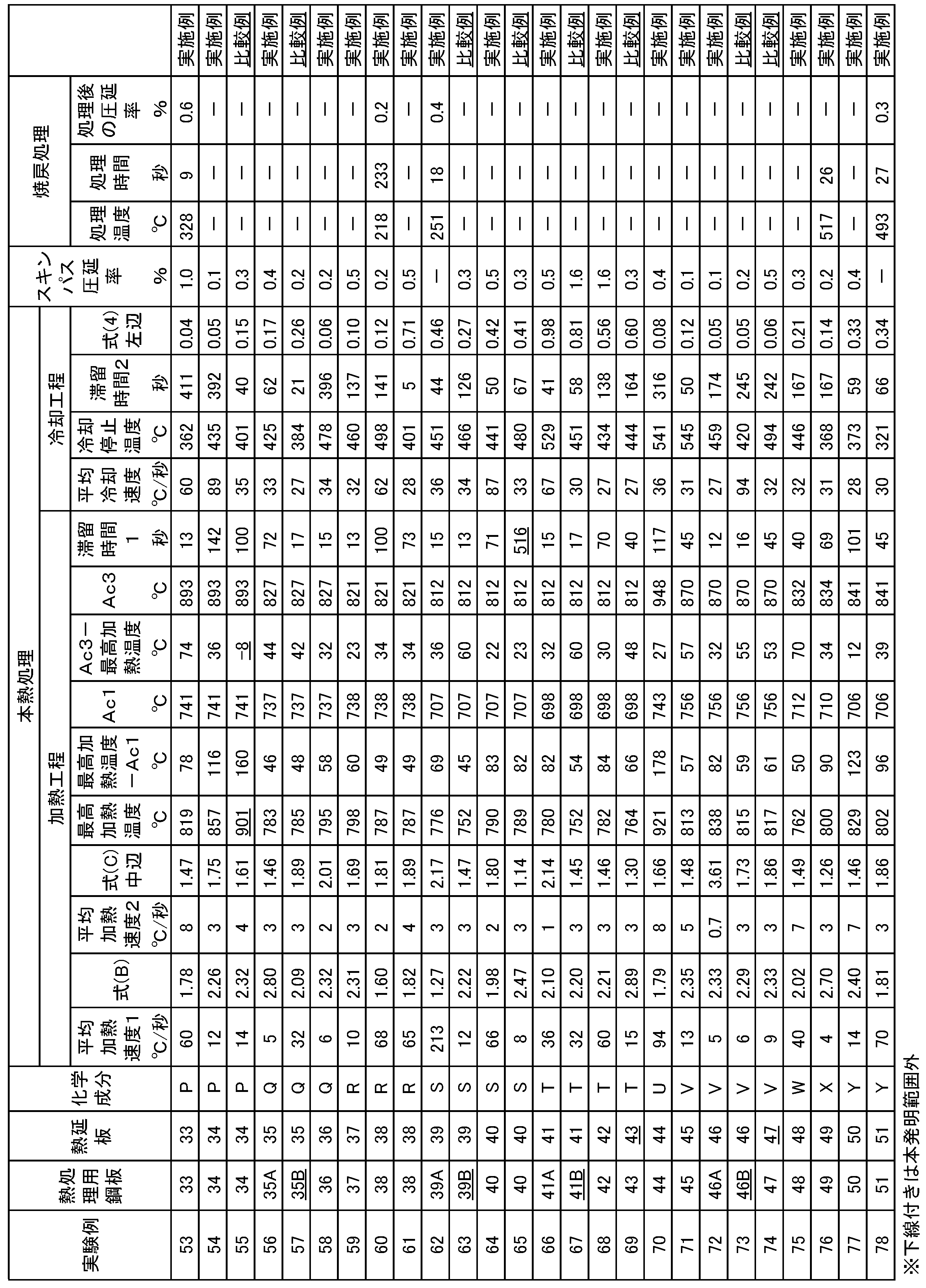
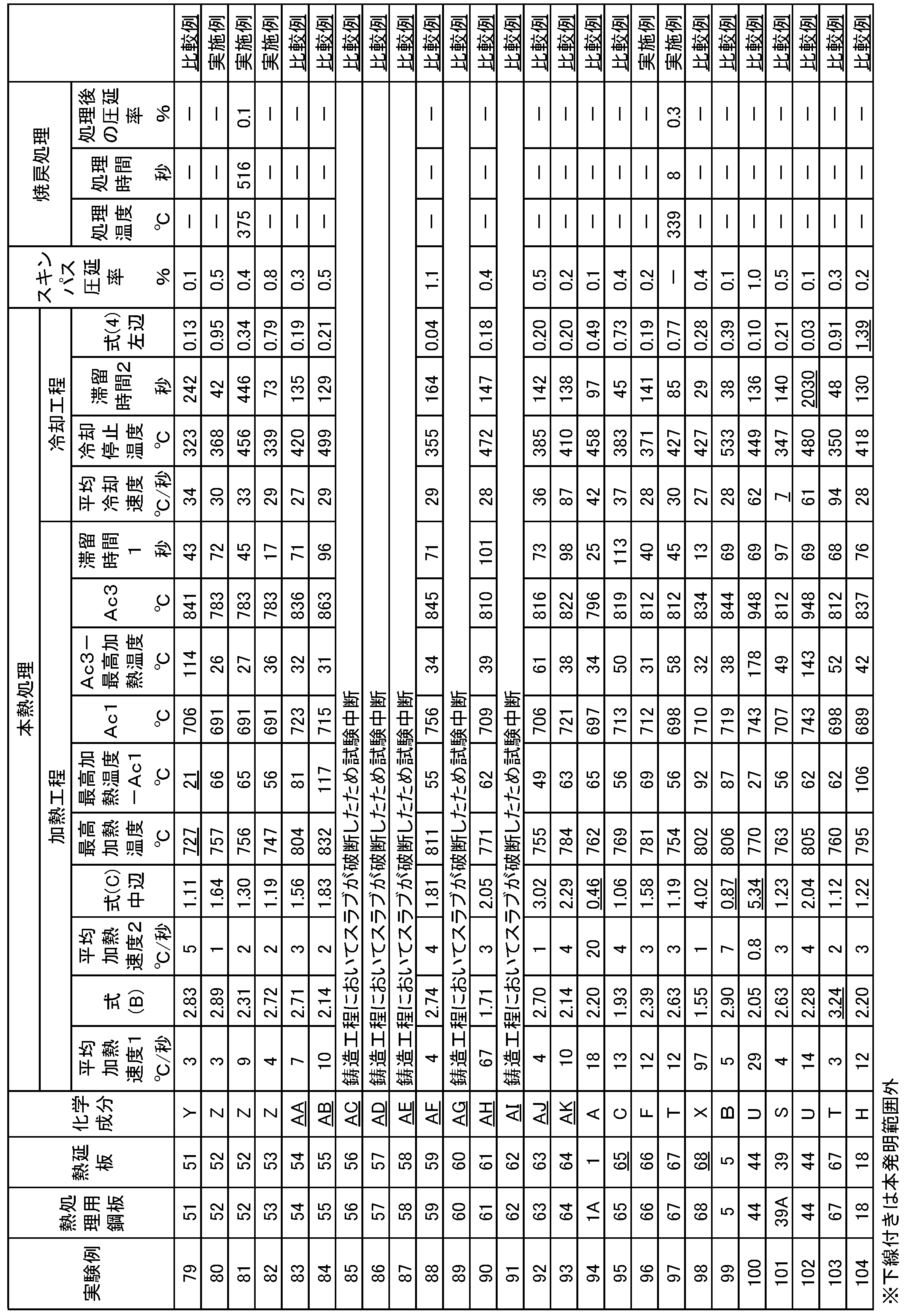
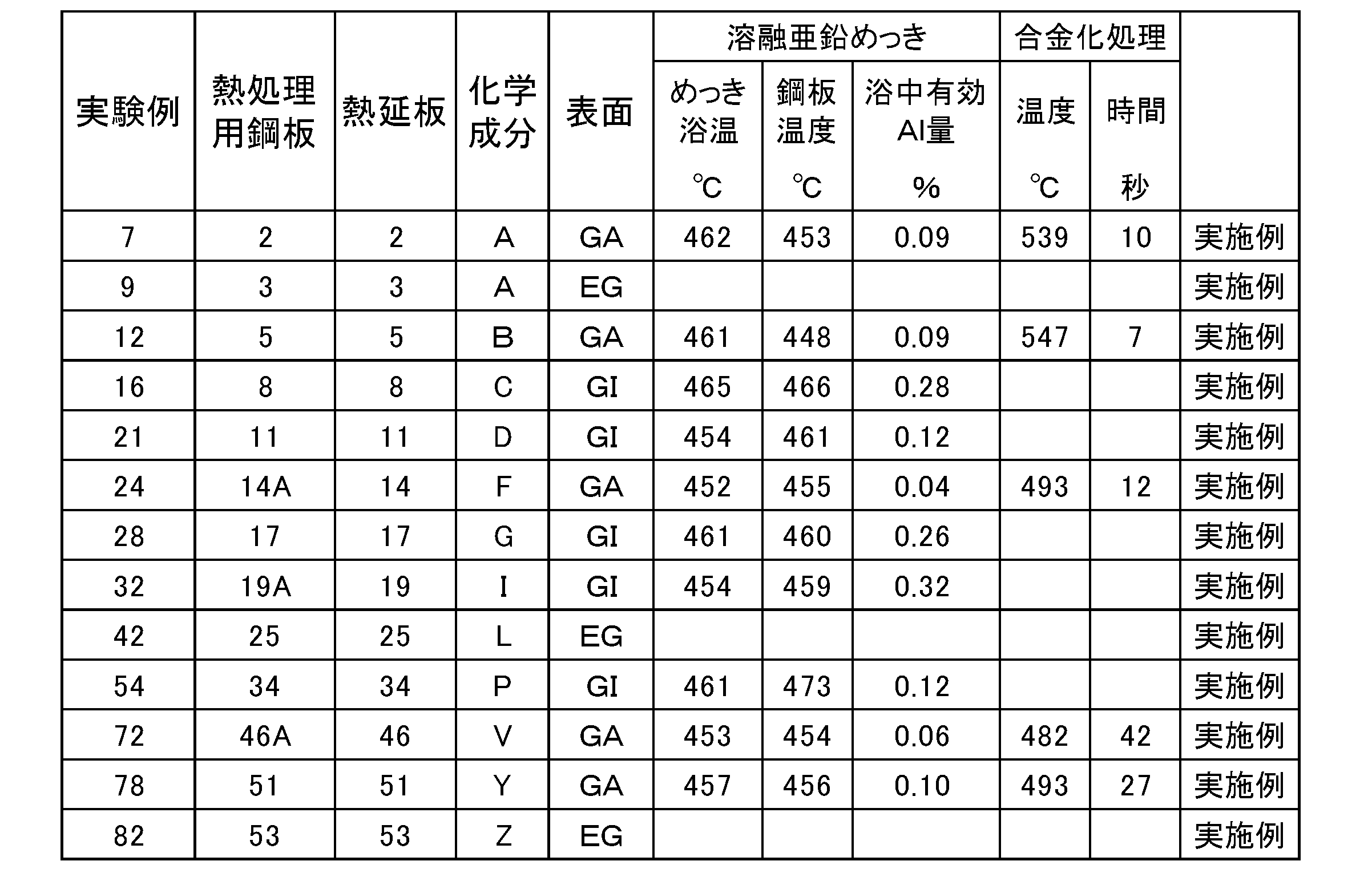
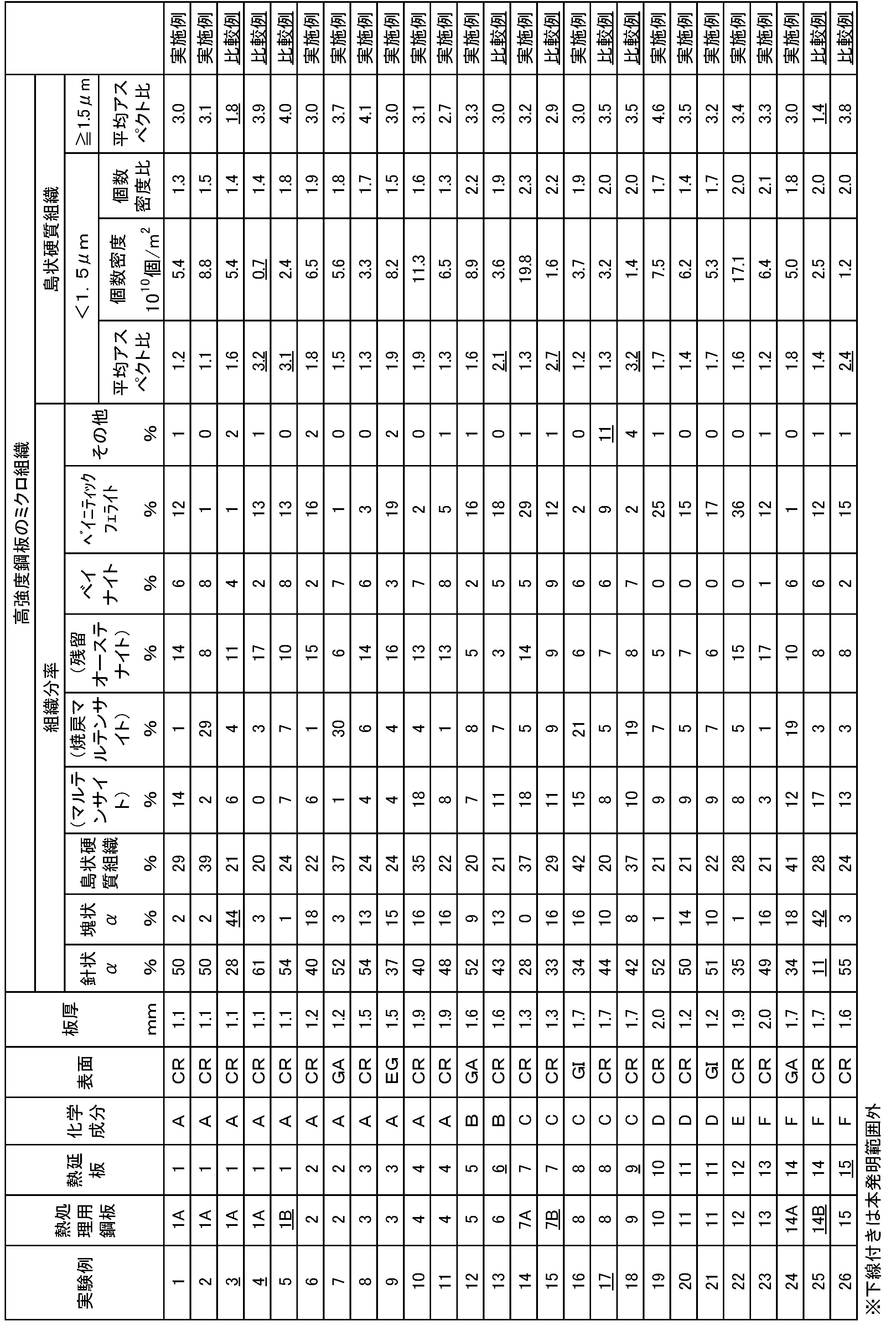
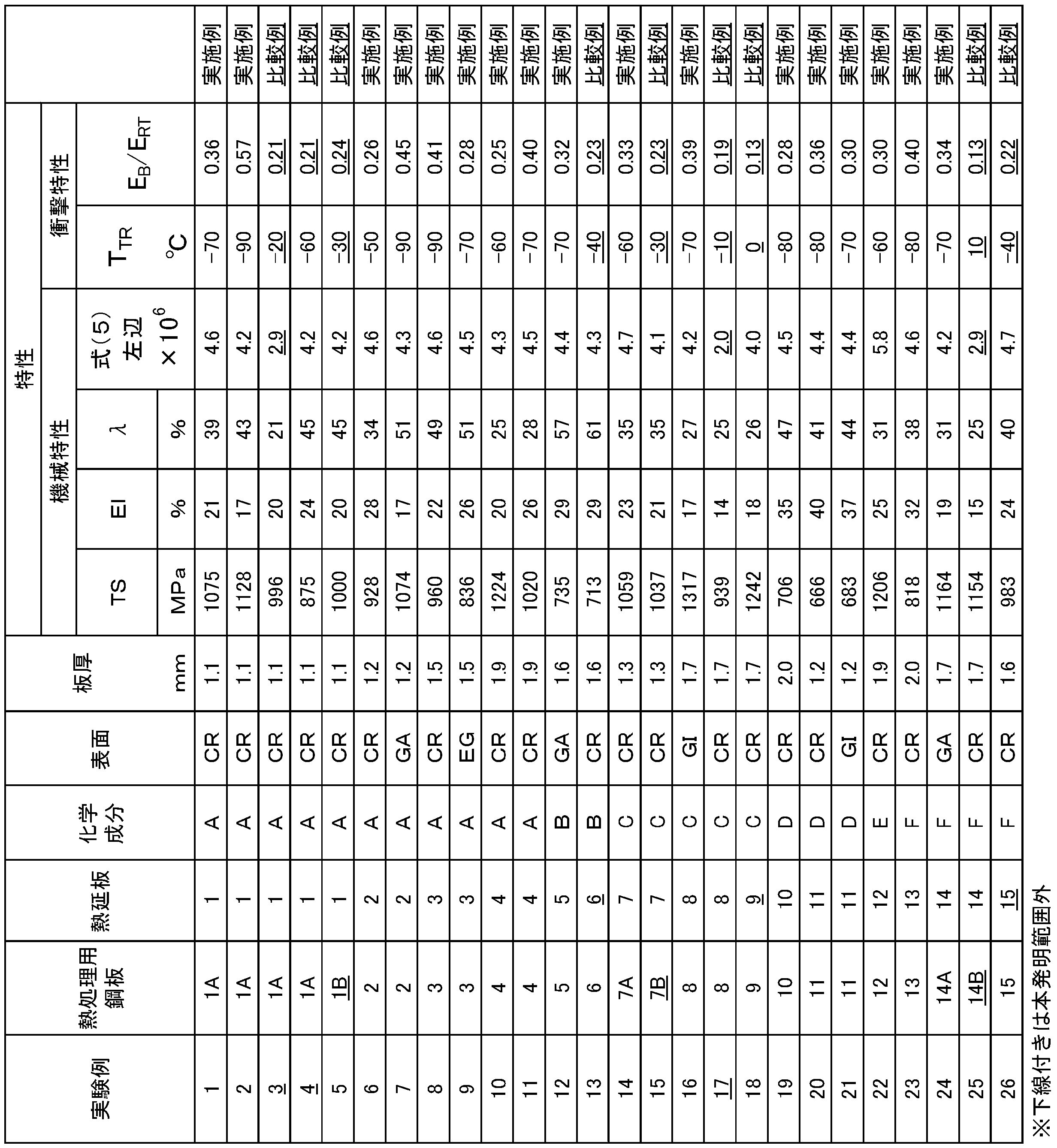
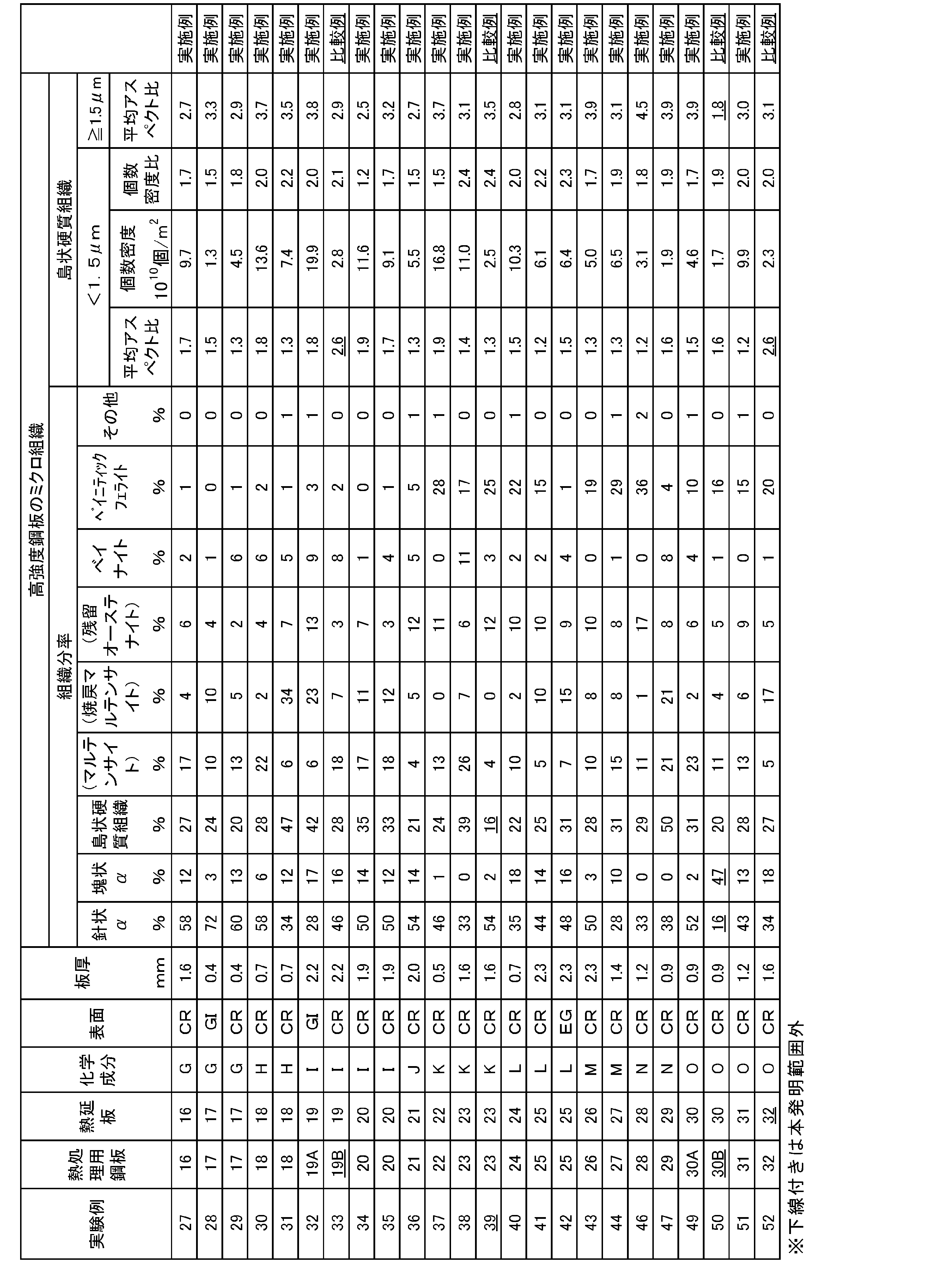

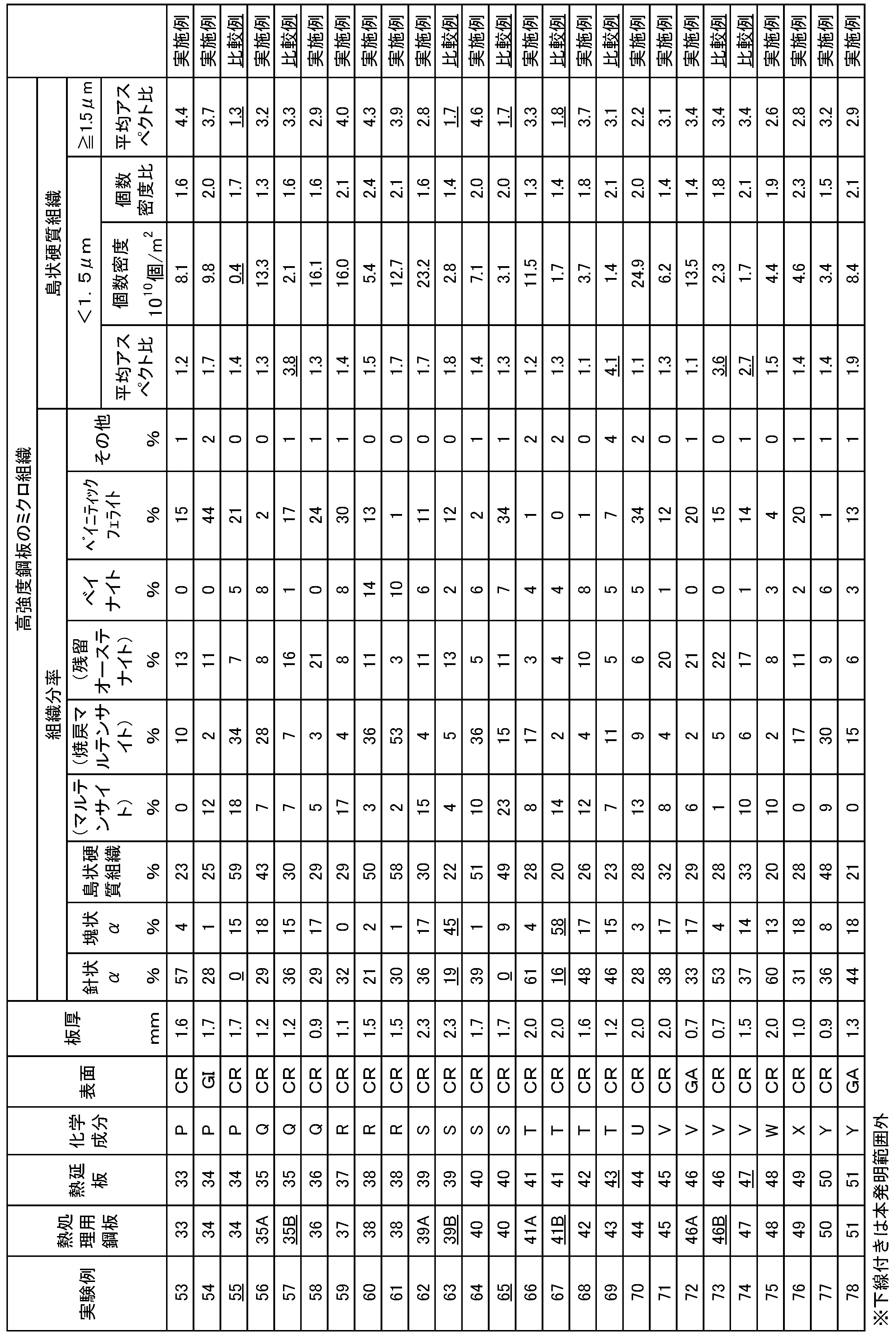

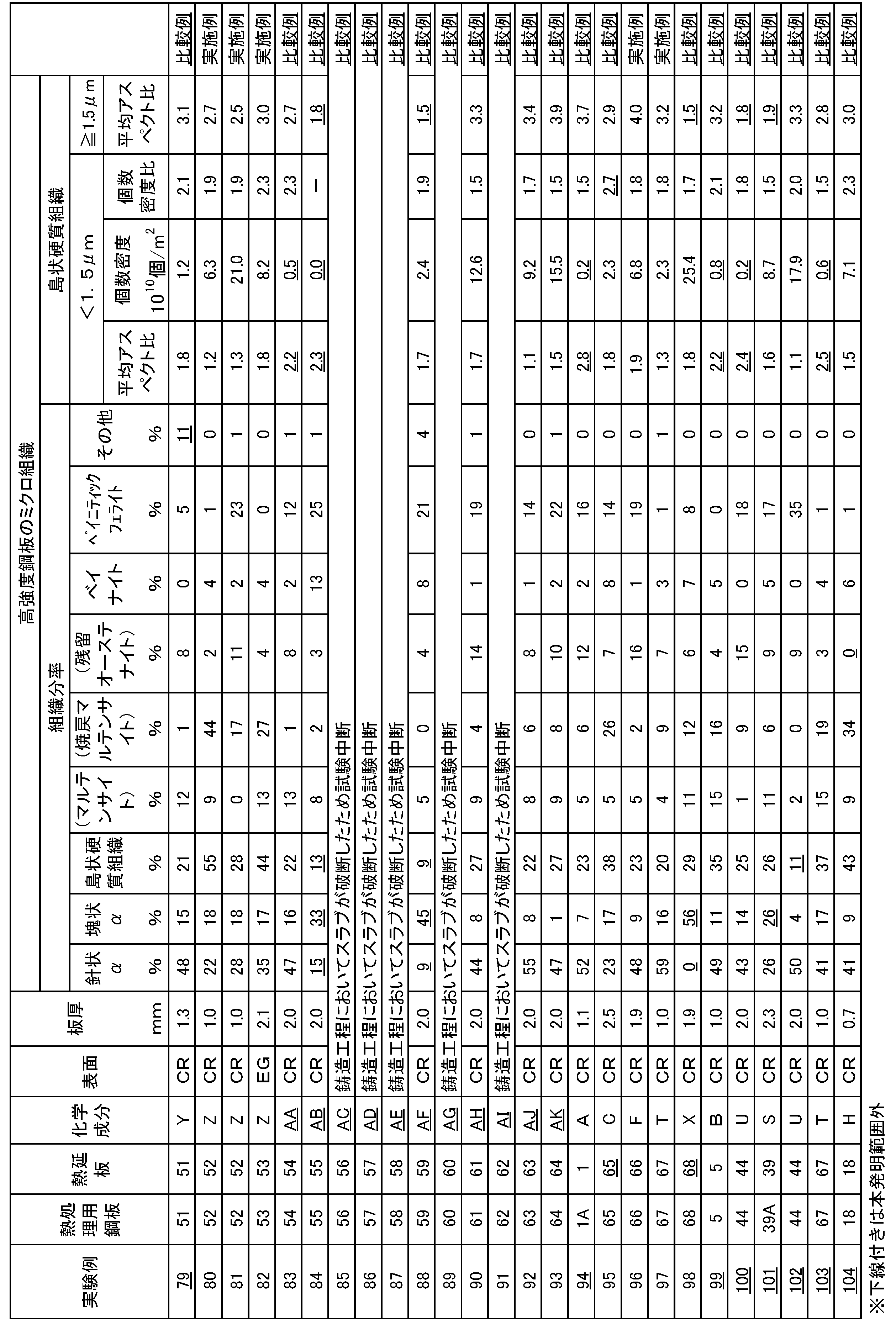
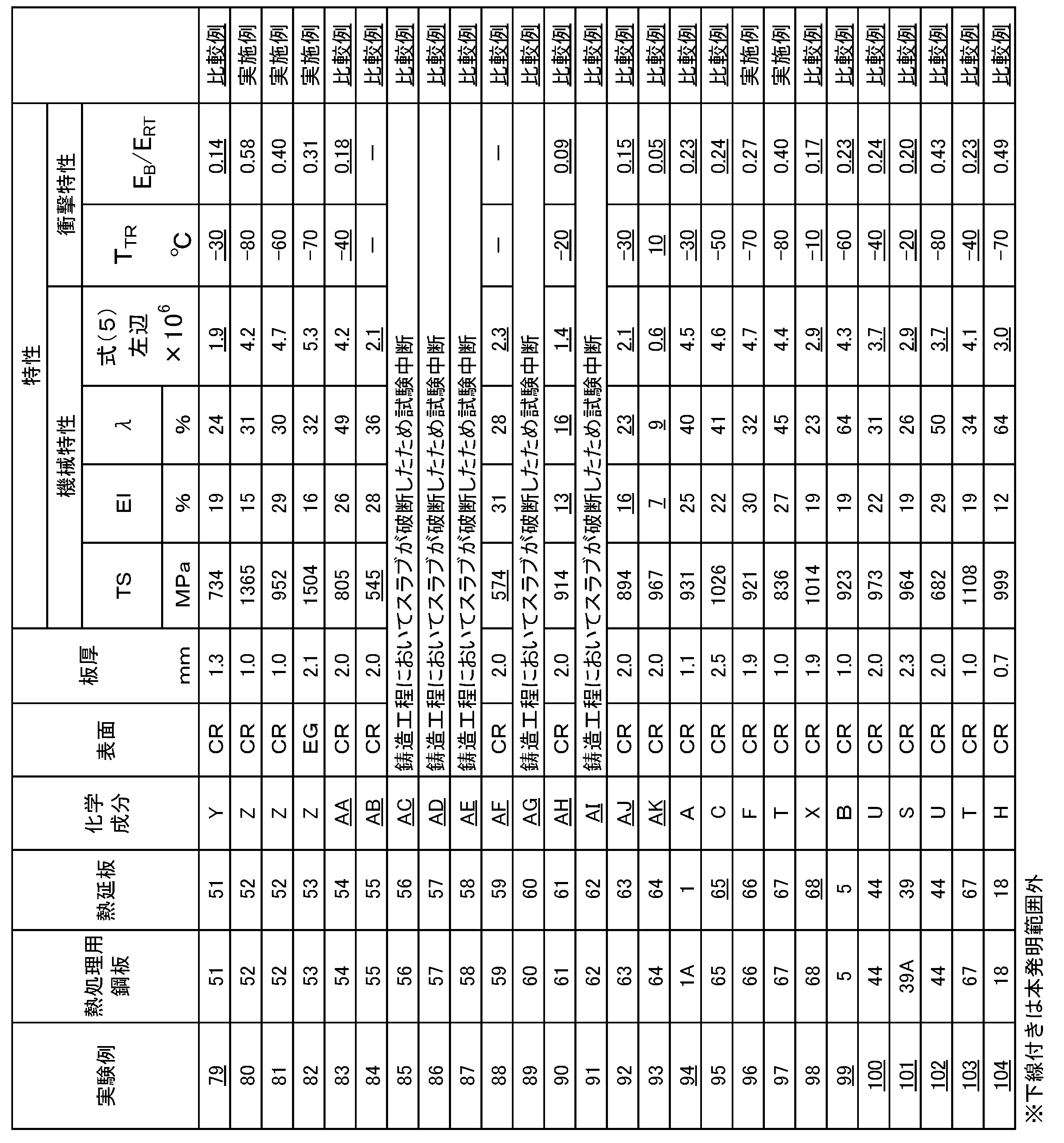
TS1.5×El×λ0.5≧4.0×10⁶ ・・・(5)
実験例94、99は式(C)低め外れであり、高強度鋼板において、微細な島状硬質組織の個数密度が不十分であり、耐衝撃性が低下する例である。
実験例100は式(C)高め外れであり、アスペクト比の小さい粗大な塊状の島状組織が発達し、高強度鋼板において、強度-成形性バランス及び耐衝撃性が低下する例である。
実験例4、103は式(B)外れであり、等方的な微細島状組織が十分に得られず、高強度鋼板において、耐衝撃性が低下する例である。
実験例104は式(4)外れであり、残留オーステナイトが得られず、高強度鋼板において、強度-成形性バランスが低下する例である。
2 粗大な島状硬質組織(アスペクト比:小)
3 針状フェライト
4 粗大な島状硬質領域(アスペクト比:大)
5 微細な島状硬質領域(アスペクト比:小)
Claims (16)
- 成分組成が、質量%で、
C :0.080~0.500%、
Si:2.50%以下、
Mn:0.50~5.00%、
P :0.100%以下、
S :0.0100%以下、
Al:0.001~2.000%、
N :0.0150%以下、
O :0.0050%以下、
残部:Fe及び不可避的不純物からなり、かつ、下記式(1)を満たす鋼板において、
鋼板表面から1/8t(t:板厚)~3/8t(t:板厚)の領域のミクロ組織が、体積%で、
針状フェライト:20%以上、
マルテンサイト、焼戻しマルテンサイト、及び、残留オーステナイトの1種又は2種以上からなる島状硬質組織:20%以上
を含み、
残留オーステナイト:2%以上、25%以下であり、
塊状フェライト:20%以下、
パーライト及び/又はセメンタイト:合計で5%以下
に制限され、
前記島状硬質組織において、円相当径1.5μm以上の硬質領域のアスペクト比の平均が2.0以上であり、円相当径1.5μm未満の硬質領域のアスペクト比の平均が2.0未満であり、
前記円相当径1.5μm未満の硬質領域の単位面積当たり個数密度(以下単に「個数密度」ともいう。)の平均が1.0×10¹⁰個・m-2以上であり、かつ、3つ以上の視野において、それぞれ5.0×10⁻¹⁰m2以上の面積において島状硬質組織の個数密度を求めたときに、その最大個数密度と最小個数密度の比が2.5以下である
ことを特徴とする成形性及び耐衝撃性に優れた高強度鋼板。
[Si]+0.35[Mn]+0.15[Al]+2.80[Cr]
+0.84[Mo]+0.50[Nb]+0.30[Ti]
≧1.00 ・・・(1)
[元素]:元素の質量% - 前記成分組成が、さらに、質量%で、
Ti:0.300%以下、
Nb:0.100%以下、
V :1.00%以下
の1種又は2種以上を含む
ことを特徴とする請求項1に記載の成形性及び耐衝撃性に優れた高強度鋼板。 - 前記成分組成が、さらに、質量%で、
Cr:2.00%以下、
Ni:2.00%以下、
Cu:2.00%以下、
Mo:1.00%以下、
W :1.00%以下、
B :0.0100%以下
の1種又は2種以上を含む
ことを特徴とする請求項1又は請求項2に記載の成形性及び耐衝撃性に優れた高強度鋼板。 - 前記成分組成が、さらに、質量%で、
Sn:1.00%以下、
Sb:0.200%以下
の1種又は2種を含む
ことを特徴とする請求項1から請求項3のいずれか一項に記載の成形性及び耐衝撃性に優れた高強度鋼板。 - 前記成分組成が、さらに、質量%で、Ca、Ce、Mg、Zr、La、Hf、REMの1種又は2種以上を合計で0.0100%以下含む
ことを特徴とする請求項1から請求項4のいずれか一項に記載の成形性及び耐衝撃性に優れた高強度鋼板。 - 前記高強度鋼板の片面又は両面に、亜鉛めっき層又は亜鉛合金めっき層を有することを特徴とする請求項1から請求項5のいずれか一項に記載の成形性及び耐衝撃性に優れた高強度鋼板。
- 前記亜鉛めっき層又は亜鉛合金めっき層が合金化めっき層であることを特徴とする請求項6に記載の成形性及び耐衝撃性に優れた高強度鋼板。
- 請求項1から請求項5のいずれか一項に記載の成分を含有する鋳片を1080℃以上、1300℃以下に加熱した後、最高加熱温度から1000℃までの温度領域における熱間圧延条件が式(A)を満たし、更に圧延完了温度を975℃から850℃の区間とする熱間圧延を施す熱間圧延工程と、
熱間圧延が完了してから600℃までの冷却条件が、圧延完了温度から600℃までの温度を15等分した各温度域における変態進行度合いの総和を表す下記式(2)を満たし、かつ、600℃に達した後、後述の中間熱処理を開始するまで20℃毎に算出する温度履歴が、下記式(3)を満たす冷却工程と、
圧下率80%以下の冷間圧延を施す冷間圧延工程と、
(Ac3-30)℃から(Ac3+100)℃の温度に、650℃から(Ac3-40)℃の温度域の平均加熱速度を30℃/秒以上として加熱し、当該加熱温度から(最高加熱温度-10)℃の温度域における滞留時間を100秒以下に制限し、次いで、加熱温度から冷却するに際し、750℃から450℃の温度域の平均冷却速度を30℃/秒以上として冷却する中間熱処理工程と、を実施して得られる熱処理用鋼板に、
(Ac1+25)℃からAc3点の温度に、450℃から650℃における温度履歴を下記式(B)を満たす範囲とし、次いで、650℃から750℃における温度履歴を下記式(C)を満たす範囲として加熱し、
加熱温度に150秒以下保持し、
加熱保持温度から冷却するに際し、700℃から550℃の温度域の平均冷却速度を10℃/秒以上として、550℃から300℃の温度域に冷却し、
550℃から300℃の温度域における滞留時間を1000秒以下とし、
さらに、550℃から300℃の温度域における滞留条件が、下記式(4)を満たす本熱処理工程を実施する
ことを特徴とする請求項1から請求項5のいずれか一項に記載の成形性及び耐衝撃性に優れた高強度鋼板の製造方法。

hi:iパス後の仕上板厚[mm]
Ti:iパス目の圧延温度[℃]
ti:iパス目の圧延からi+1パス目までの経過時間[秒]
A=9.11×10⁷,B=2.72×10⁴:定数
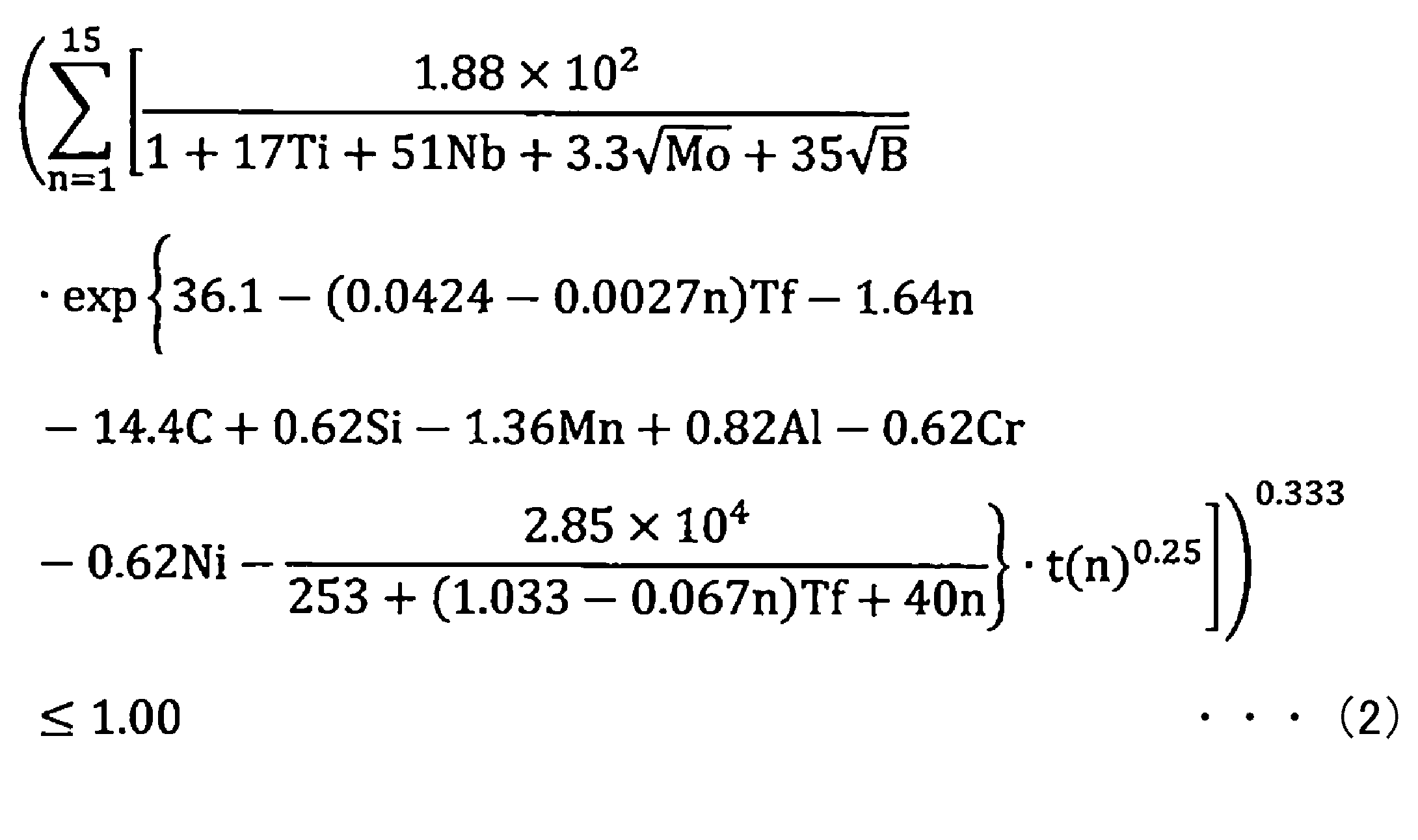
元素記号:元素の質量%
Tf:熱間圧延完了温度[℃]
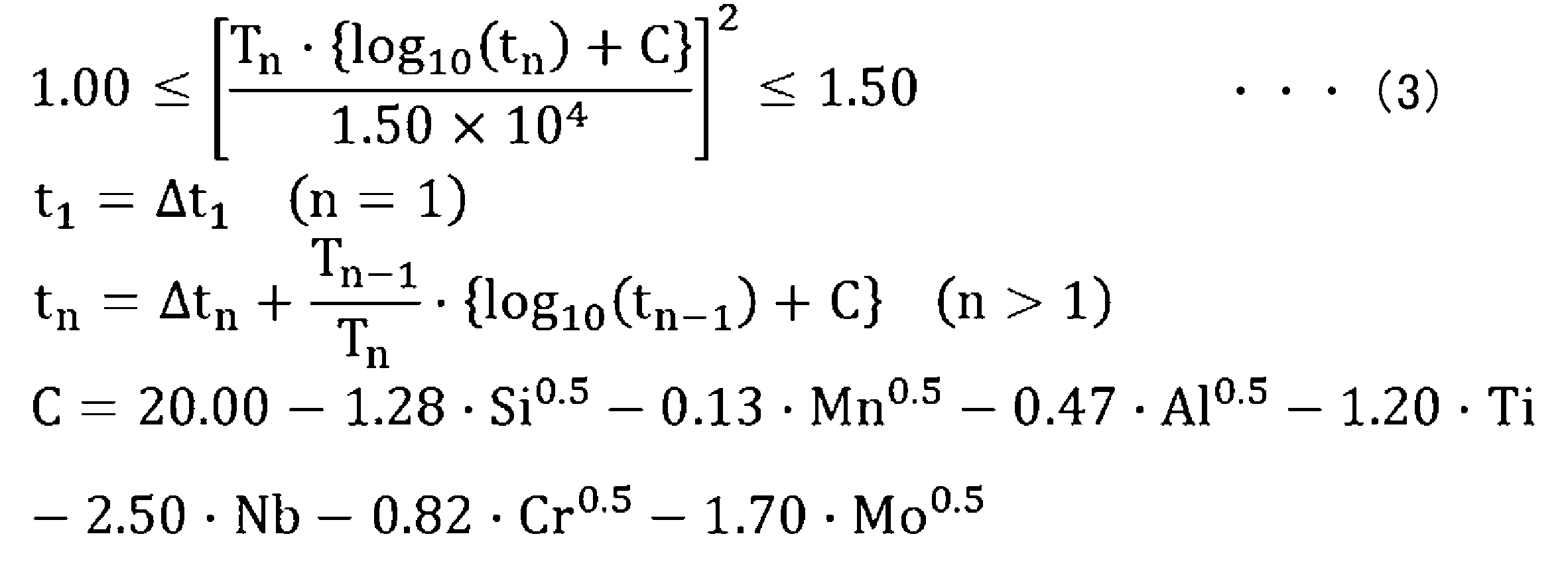
tn:n回目の算出時における炭化物の成長に関する実効総時間[時間]
Δtn:n-1回目の算出時点からn回目の算出時点に至るまでの経過時間[時間]
C:炭化物の成長速度に関するパラメータ(元素記号:元素の質量%)
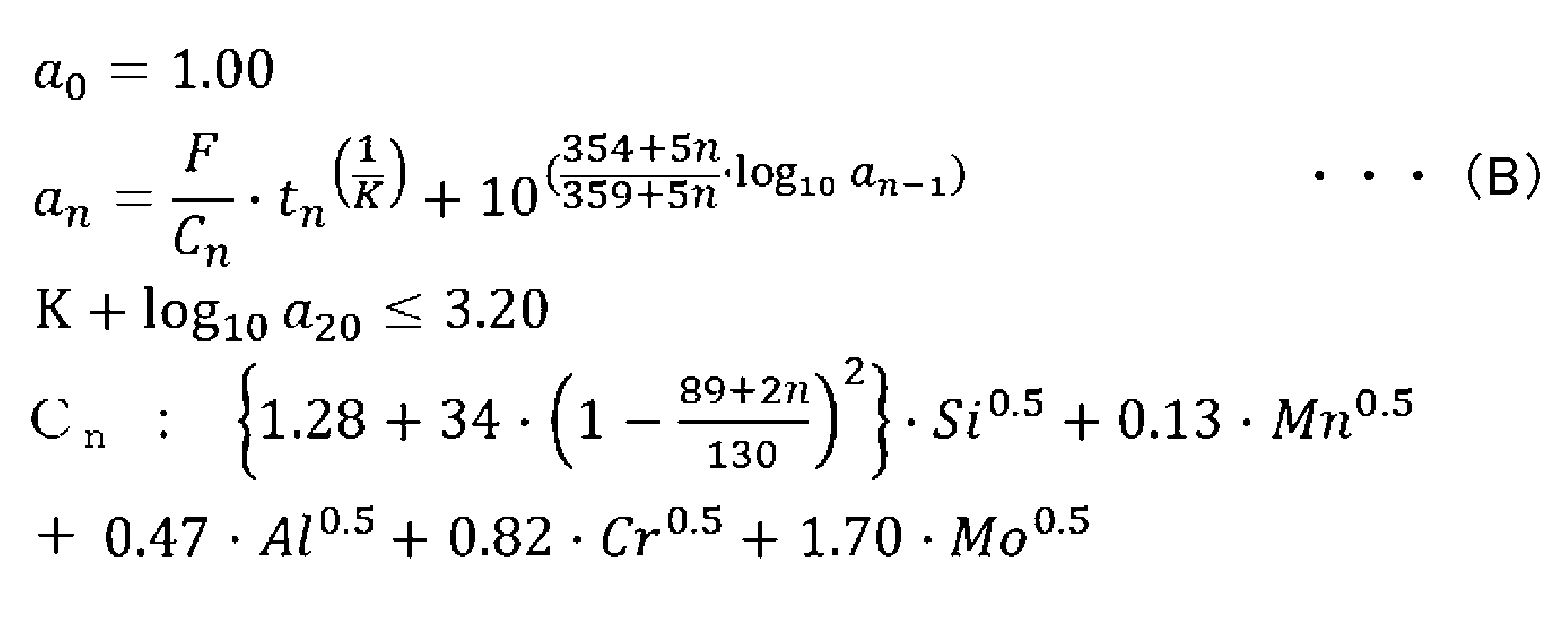
F:定数、2.57
tn:(440+10n)℃から(450+10n)℃までの経過時間[秒]
K:式(3)中辺の値

N:式(B)左辺の値
P:0.38Si+0.64Cr+0.34Mo
但し、各化学組成は添加量[質量%]を表す。
Q:2.43×10⁴
tn:(640+10n)℃から(650+10n)℃までの経過時間[秒]
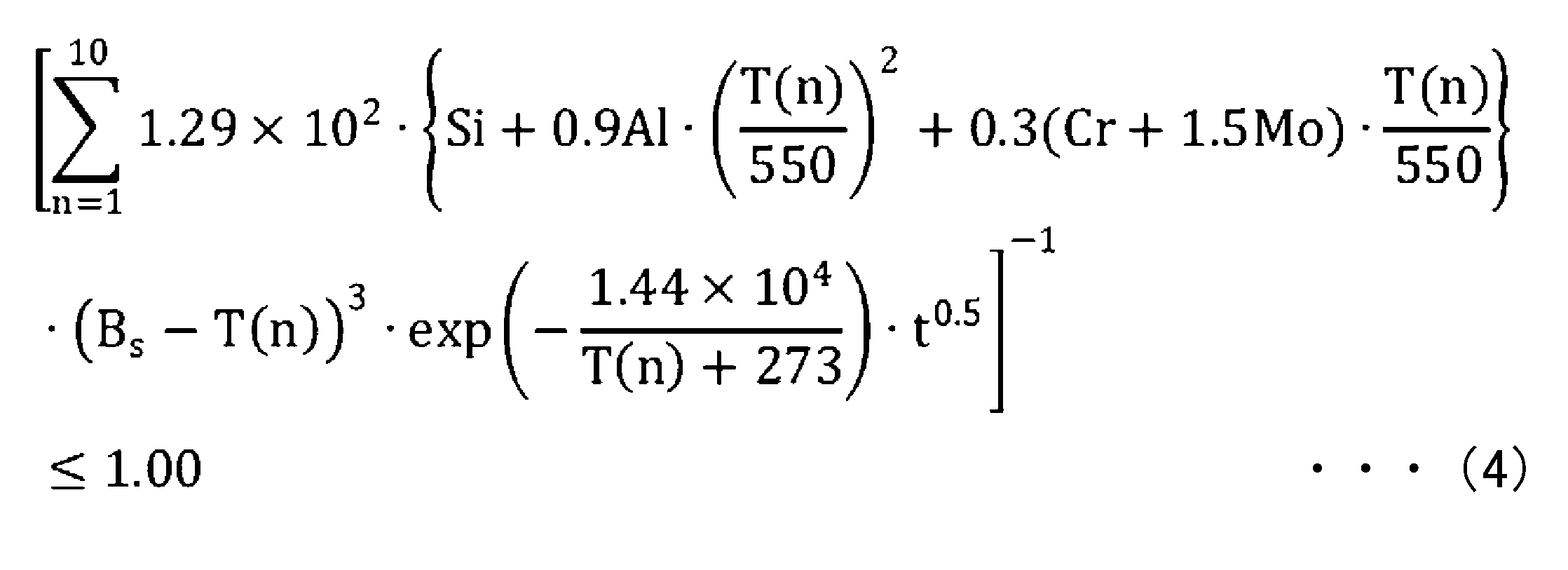
Bs点(℃)=611-33[Mn]-17[Cr]-17[Ni]-21[Mo]
-11[Si]+30[Al]+(24[Cr]+15[Mo]
+5500[B]+240[Nb])/(8[C])
[元素]:元素の質量%
Bs<T(n)のとき、(Bs-T(n))=0
t:550~300℃の温度域における滞留時間の合計[秒] - 前記本熱処理工程前の熱処理用鋼板に、圧下率15%以下の冷間圧延を施すことを特徴とする請求項8に記載の成形性及び耐衝撃性に優れた高強度鋼板の製造方法。
- 前記高強度鋼板を200℃から600℃に加熱して焼戻すことを特徴とする請求項8又は請求項9に記載の成形性及び耐衝撃性に優れた高強度鋼板の製造方法。
- 前記高強度鋼板に、圧下率2.0%以下のスキンパス圧延を施すことを特徴とする請求項8から請求項10のいずれか一項に記載の成形性及び耐衝撃性に優れた高強度鋼板の製造方法。
- 請求項6に記載の成形性及び耐衝撃性に優れた高強度鋼板の製造方法であって、
請求項8から請求項10のいずれか一項に記載の成形性及び耐衝撃性に優れた高強度鋼板の製造方法で製造した成形性及び耐衝撃性に優れた高強度鋼板を、亜鉛を主成分とするめっき浴に浸漬し、高強度鋼板の片面又は両面に、亜鉛めっき層又は亜鉛合金めっき層を形成する
ことを特徴とする成形性及び耐衝撃性に優れた高強度鋼板の製造方法。 - 請求項6に記載の成形性及び耐衝撃性に優れた高強度鋼板の製造方法であって、
請求項8から請求項11のいずれか一項に記載の成形性及び耐衝撃性に優れた高強度鋼板の製造方法において550℃から300℃の温度域に滞留する鋼板を、亜鉛を主成分とするめっき浴に浸漬し、高強度鋼板の片面又は両面に、亜鉛めっき層又は亜鉛合金めっき層を形成する
ことを特徴とする成形性及び耐衝撃性に優れた高強度鋼板の製造方法。 - 請求項6に記載の成形性及び耐衝撃性に優れた高強度鋼板の製造方法であって、
請求項8から請求項11のいずれか一項に記載の成形性及び耐衝撃性に優れた高強度鋼板の製造方法で製造した成形性及び耐衝撃性に優れた高強度鋼板の片面又は両面に、電気めっきで、亜鉛めっき層又は亜鉛合金めっき層を形成する
ことを特徴とする成形性及び耐衝撃性に優れた高強度鋼板の製造方法。 - 請求項6に記載の成形性及び耐衝撃性に優れた高強度鋼板の製造方法であって、
請求項8から請求項10のいずれか一項に記載の成形性及び耐衝撃性に優れた高強度鋼板の製造方法で製造した成形性及び耐衝撃性に優れた高強度鋼板の片面又は両面に、電気めっきで、亜鉛めっき層又は亜鉛合金めっき層を形成する
ことを特徴とする成形性及び耐衝撃性に優れた高強度鋼板の製造方法。 - 請求項7に記載の成形性及び耐衝撃性に優れた高強度鋼板を製造する製造方法であって、
前記亜鉛めっき層又は亜鉛合金めっき層を400℃から00℃に加熱し、亜鉛めっき層又は亜鉛合金めっき層に合金化処理を施す
ことを特徴とする請求項13から請求項15のいずれか一項に記載の成形性及び耐衝撃性に優れた高強度鋼板の製造方法。
Priority Applications (7)
| Application Number | Priority Date | Filing Date | Title |
|---|---|---|---|
| JP2019520911A JP6597939B1 (ja) | 2018-12-11 | 2018-12-11 | 成形性及び耐衝撃性に優れた高強度鋼板、及び、成形性及び耐衝撃性に優れた高強度鋼板の製造方法 |
| MX2021006649A MX2021006649A (es) | 2018-12-11 | 2018-12-11 | Lamina de acero de alta resistencia que tiene excelente moldeabilidad y resistencia al impacto, y metodo para fabricar lamina de acero de alta resistencia que tiene excelente moldeabilidad y resistencia al impacto. |
| EP18942859.2A EP3896184B1 (en) | 2018-12-11 | 2018-12-11 | High-strength steel sheet having excellent moldability and impact resistance, and method for manufacturing high-strength steel sheet having excellent moldability and impact resistance |
| PCT/JP2018/045552 WO2020121418A1 (ja) | 2018-12-11 | 2018-12-11 | 成形性及び耐衝撃性に優れた高強度鋼板、及び、成形性及び耐衝撃性に優れた高強度鋼板の製造方法 |
| US17/312,871 US11885025B2 (en) | 2018-12-11 | 2018-12-11 | High-strength steel sheet having excellent moldability and impact resistance, and method for manufacturing high-strength steel sheet having excellent moldability and impact resistance |
| KR1020217020801A KR102487316B1 (ko) | 2018-12-11 | 2018-12-11 | 성형성 및 내충격성이 우수한 고강도 강판, 및 성형성 및 내충격성이 우수한 고강도 강판의 제조 방법 |
| CN201880100149.3A CN113195761B (zh) | 2018-12-11 | 2018-12-11 | 成形性及耐冲击性优异的高强度钢板以及成形性及耐冲击性优异的高强度钢板的制造方法 |
Applications Claiming Priority (1)
| Application Number | Priority Date | Filing Date | Title |
|---|---|---|---|
| PCT/JP2018/045552 WO2020121418A1 (ja) | 2018-12-11 | 2018-12-11 | 成形性及び耐衝撃性に優れた高強度鋼板、及び、成形性及び耐衝撃性に優れた高強度鋼板の製造方法 |
Publications (1)
| Publication Number | Publication Date |
|---|---|
| WO2020121418A1 true WO2020121418A1 (ja) | 2020-06-18 |
Family
ID=68383212
Family Applications (1)
| Application Number | Title | Priority Date | Filing Date |
|---|---|---|---|
| PCT/JP2018/045552 Ceased WO2020121418A1 (ja) | 2018-12-11 | 2018-12-11 | 成形性及び耐衝撃性に優れた高強度鋼板、及び、成形性及び耐衝撃性に優れた高強度鋼板の製造方法 |
Country Status (7)
| Country | Link |
|---|---|
| US (1) | US11885025B2 (ja) |
| EP (1) | EP3896184B1 (ja) |
| JP (1) | JP6597939B1 (ja) |
| KR (1) | KR102487316B1 (ja) |
| CN (1) | CN113195761B (ja) |
| MX (1) | MX2021006649A (ja) |
| WO (1) | WO2020121418A1 (ja) |
Cited By (3)
| Publication number | Priority date | Publication date | Assignee | Title |
|---|---|---|---|---|
| CN113462963A (zh) * | 2021-06-10 | 2021-10-01 | 江阴市万众精密机械有限公司 | 一种增速箱联轴器用耐冲击、耐低温止推盘及其制备方法 |
| WO2022075072A1 (ja) * | 2020-10-06 | 2022-04-14 | 株式会社神戸製鋼所 | 高強度冷延鋼板、溶融亜鉛めっき鋼板および合金化溶融亜鉛めっき鋼板、ならびにこれらの製造方法 |
| WO2024203605A1 (ja) * | 2023-03-30 | 2024-10-03 | 株式会社神戸製鋼所 | めっき鋼板およびその製造方法 |
Families Citing this family (8)
| Publication number | Priority date | Publication date | Assignee | Title |
|---|---|---|---|---|
| MX2024002275A (es) | 2021-08-30 | 2024-03-06 | Jfe Steel Corp | Lamina de acero de alta resistencia, lamina de acero recubierta o chapada de alta resistencia, metodos de produccion de la misma, y miembro. |
| KR102699825B1 (ko) * | 2022-03-15 | 2024-08-27 | 한양대학교 에리카산학협력단 | 니켈(Ni)-알루미늄(Al)계 석출물을 포함하는 중망간강과 그 제조 방법 |
| CN114686763B (zh) * | 2022-03-30 | 2023-01-13 | 鞍钢股份有限公司 | 一种550MPa级耐磨损腐蚀钢 |
| KR20230038389A (ko) * | 2022-08-26 | 2023-03-20 | 주식회사 포스코 | 내충돌성이 우수한 열간 성형용 도금강판, 열간 성형 부재 및 이들의 제조방법 |
| CN115747612B (zh) * | 2022-10-19 | 2024-02-09 | 成都先进金属材料产业技术研究院股份有限公司 | 一种复相h13热作模具钢及其制备方法 |
| CN115927976A (zh) * | 2022-11-27 | 2023-04-07 | 安徽海螺川崎装备制造有限公司 | 一种经济型预热器挂板及其生产方法 |
| KR102951318B1 (ko) | 2023-12-29 | 2026-04-14 | 현대제철 주식회사 | 초고강도 냉연강판 및 그 제조방법 |
| CN118703729A (zh) * | 2024-06-04 | 2024-09-27 | 包头钢铁(集团)有限责任公司 | 一种高横纵韧性微稀土钢q355me的生产方法 |
Citations (15)
| Publication number | Priority date | Publication date | Assignee | Title |
|---|---|---|---|---|
| JP2001040451A (ja) * | 1999-07-29 | 2001-02-13 | Kawasaki Steel Corp | プレス成形用熱延鋼板 |
| JP2004238679A (ja) | 2003-02-06 | 2004-08-26 | Kobe Steel Ltd | 伸び、及び伸びフランジ性に優れた高強度複合組織鋼板 |
| JP2004323958A (ja) | 2003-04-28 | 2004-11-18 | Jfe Steel Kk | 耐二次加工脆性に優れる高張力溶融亜鉛めっき鋼板およびその製造方法 |
| JP2006274318A (ja) | 2005-03-28 | 2006-10-12 | Kobe Steel Ltd | 穴拡げ加工性に優れた高強度熱延鋼板およびその製造方法 |
| WO2007132436A2 (en) * | 2006-05-17 | 2007-11-22 | Centro Sviluppo Materiali S.P.A. | Process for the production of fine-grained carbon steel strips and strips thus obtainable |
| JP2008297609A (ja) | 2007-05-31 | 2008-12-11 | Kobe Steel Ltd | 伸びおよび伸びフランジ性に優れた高強度鋼板およびその製造方法 |
| JP2010209433A (ja) * | 2009-03-11 | 2010-09-24 | Kobe Steel Ltd | 溶接熱影響部の靭性および母材疲労特性に優れた鋼材およびその製造方法 |
| JP2011195956A (ja) | 2010-02-26 | 2011-10-06 | Nippon Steel Corp | 伸びと穴拡げに優れた高強度薄鋼板およびその製造方法 |
| JP2011225941A (ja) | 2010-04-20 | 2011-11-10 | Nippon Steel Corp | 伸びと局部延性に優れた高強度薄鋼板およびその製造方法 |
| JP2012026032A (ja) | 2010-06-25 | 2012-02-09 | Jfe Steel Corp | 伸びフランジ性に優れた高強度熱延鋼板およびその製造方法 |
| WO2013047755A1 (ja) * | 2011-09-30 | 2013-04-04 | 新日鐵住金株式会社 | 耐衝撃特性に優れた高強度溶融亜鉛めっき鋼板およびその製造方法、並びに、高強度合金化溶融亜鉛めっき鋼板およびその製造方法 |
| JP2013181208A (ja) | 2012-03-01 | 2013-09-12 | Nippon Steel & Sumitomo Metal Corp | 伸びと穴拡げ性と疲労特性に優れた高強度熱延鋼板及びその製造方法 |
| US20140261915A1 (en) * | 2013-03-15 | 2014-09-18 | Am/Ns Calvert Llc | Line pipe steels and process of manufacturing |
| WO2016035110A1 (ja) * | 2014-09-05 | 2016-03-10 | Jfeスチール株式会社 | 多層溶接継手ctod特性に優れた厚鋼板およびその製造方法 |
| WO2017164346A1 (ja) * | 2016-03-25 | 2017-09-28 | 新日鐵住金株式会社 | 高強度鋼板および高強度亜鉛めっき鋼板 |
Family Cites Families (7)
| Publication number | Priority date | Publication date | Assignee | Title |
|---|---|---|---|---|
| KR101027250B1 (ko) | 2008-05-20 | 2011-04-06 | 주식회사 포스코 | 고연성 및 내지연파괴 특성이 우수한 고강도 냉연강판,용융아연 도금강판 및 그 제조방법 |
| CN101768703B (zh) * | 2010-01-26 | 2011-09-21 | 东北大学 | 一种低屈强比x80级管线钢及其制造方法 |
| WO2013018740A1 (ja) * | 2011-07-29 | 2013-02-07 | 新日鐵住金株式会社 | 耐衝撃特性に優れた高強度鋼板およびその製造方法、高強度亜鉛めっき鋼板およびその製造方法 |
| TWI507538B (zh) * | 2011-09-30 | 2015-11-11 | Nippon Steel & Sumitomo Metal Corp | With excellent burn the attachment strength of the hardenable galvannealed steel sheet, a high strength galvannealed steel sheet and manufacturing method, etc. |
| JP5833964B2 (ja) * | 2012-03-29 | 2015-12-16 | 株式会社神戸製鋼所 | 曲げ加工性、衝撃特性および引張特性に優れた鋼板およびその製造方法 |
| KR20160014998A (ko) * | 2014-07-30 | 2016-02-12 | 현대제철 주식회사 | 강판 및 그 제조 방법 |
| CN107849652B (zh) * | 2015-07-31 | 2020-04-03 | 日本制铁株式会社 | 加工诱发相变型复合组织钢板及其制造方法 |
-
2018
- 2018-12-11 EP EP18942859.2A patent/EP3896184B1/en active Active
- 2018-12-11 MX MX2021006649A patent/MX2021006649A/es unknown
- 2018-12-11 JP JP2019520911A patent/JP6597939B1/ja active Active
- 2018-12-11 KR KR1020217020801A patent/KR102487316B1/ko active Active
- 2018-12-11 WO PCT/JP2018/045552 patent/WO2020121418A1/ja not_active Ceased
- 2018-12-11 CN CN201880100149.3A patent/CN113195761B/zh active Active
- 2018-12-11 US US17/312,871 patent/US11885025B2/en active Active
Patent Citations (15)
| Publication number | Priority date | Publication date | Assignee | Title |
|---|---|---|---|---|
| JP2001040451A (ja) * | 1999-07-29 | 2001-02-13 | Kawasaki Steel Corp | プレス成形用熱延鋼板 |
| JP2004238679A (ja) | 2003-02-06 | 2004-08-26 | Kobe Steel Ltd | 伸び、及び伸びフランジ性に優れた高強度複合組織鋼板 |
| JP2004323958A (ja) | 2003-04-28 | 2004-11-18 | Jfe Steel Kk | 耐二次加工脆性に優れる高張力溶融亜鉛めっき鋼板およびその製造方法 |
| JP2006274318A (ja) | 2005-03-28 | 2006-10-12 | Kobe Steel Ltd | 穴拡げ加工性に優れた高強度熱延鋼板およびその製造方法 |
| WO2007132436A2 (en) * | 2006-05-17 | 2007-11-22 | Centro Sviluppo Materiali S.P.A. | Process for the production of fine-grained carbon steel strips and strips thus obtainable |
| JP2008297609A (ja) | 2007-05-31 | 2008-12-11 | Kobe Steel Ltd | 伸びおよび伸びフランジ性に優れた高強度鋼板およびその製造方法 |
| JP2010209433A (ja) * | 2009-03-11 | 2010-09-24 | Kobe Steel Ltd | 溶接熱影響部の靭性および母材疲労特性に優れた鋼材およびその製造方法 |
| JP2011195956A (ja) | 2010-02-26 | 2011-10-06 | Nippon Steel Corp | 伸びと穴拡げに優れた高強度薄鋼板およびその製造方法 |
| JP2011225941A (ja) | 2010-04-20 | 2011-11-10 | Nippon Steel Corp | 伸びと局部延性に優れた高強度薄鋼板およびその製造方法 |
| JP2012026032A (ja) | 2010-06-25 | 2012-02-09 | Jfe Steel Corp | 伸びフランジ性に優れた高強度熱延鋼板およびその製造方法 |
| WO2013047755A1 (ja) * | 2011-09-30 | 2013-04-04 | 新日鐵住金株式会社 | 耐衝撃特性に優れた高強度溶融亜鉛めっき鋼板およびその製造方法、並びに、高強度合金化溶融亜鉛めっき鋼板およびその製造方法 |
| JP2013181208A (ja) | 2012-03-01 | 2013-09-12 | Nippon Steel & Sumitomo Metal Corp | 伸びと穴拡げ性と疲労特性に優れた高強度熱延鋼板及びその製造方法 |
| US20140261915A1 (en) * | 2013-03-15 | 2014-09-18 | Am/Ns Calvert Llc | Line pipe steels and process of manufacturing |
| WO2016035110A1 (ja) * | 2014-09-05 | 2016-03-10 | Jfeスチール株式会社 | 多層溶接継手ctod特性に優れた厚鋼板およびその製造方法 |
| WO2017164346A1 (ja) * | 2016-03-25 | 2017-09-28 | 新日鐵住金株式会社 | 高強度鋼板および高強度亜鉛めっき鋼板 |
Cited By (8)
| Publication number | Priority date | Publication date | Assignee | Title |
|---|---|---|---|---|
| WO2022075072A1 (ja) * | 2020-10-06 | 2022-04-14 | 株式会社神戸製鋼所 | 高強度冷延鋼板、溶融亜鉛めっき鋼板および合金化溶融亜鉛めっき鋼板、ならびにこれらの製造方法 |
| JP2022061461A (ja) * | 2020-10-06 | 2022-04-18 | 株式会社神戸製鋼所 | 高強度冷延鋼板、溶融亜鉛めっき鋼板および合金化溶融亜鉛めっき鋼板、ならびにこれらの製造方法 |
| KR20230059816A (ko) * | 2020-10-06 | 2023-05-03 | 가부시키가이샤 고베 세이코쇼 | 고강도 냉연 강판, 용융 아연 도금 강판 및 합금화 용융 아연 도금 강판, 및 이들의 제조 방법 |
| EP4198149A4 (en) * | 2020-10-06 | 2024-01-10 | Kabushiki Kaisha Kobe Seiko Sho (Kobe Steel, Ltd.) | HIGH STRENGTH COLD ROLLED STEEL SHEET, HOT DIP GALVANIZED STEEL SHEET, ALLOY HOT DIP GALVANIZED GALVANIZED STEEL SHEET AND METHOD FOR PRODUCING THE SAME |
| JP7572332B2 (ja) | 2020-10-06 | 2024-10-23 | 株式会社神戸製鋼所 | 高強度冷延鋼板、溶融亜鉛めっき鋼板および合金化溶融亜鉛めっき鋼板、ならびにこれらの製造方法 |
| KR102845159B1 (ko) | 2020-10-06 | 2025-08-12 | 가부시키가이샤 고베 세이코쇼 | 고강도 냉연 강판, 용융 아연 도금 강판 및 합금화 용융 아연 도금 강판, 및 이들의 제조 방법 |
| CN113462963A (zh) * | 2021-06-10 | 2021-10-01 | 江阴市万众精密机械有限公司 | 一种增速箱联轴器用耐冲击、耐低温止推盘及其制备方法 |
| WO2024203605A1 (ja) * | 2023-03-30 | 2024-10-03 | 株式会社神戸製鋼所 | めっき鋼板およびその製造方法 |
Also Published As
| Publication number | Publication date |
|---|---|
| CN113195761A (zh) | 2021-07-30 |
| MX2021006649A (es) | 2021-07-15 |
| CN113195761B (zh) | 2022-08-09 |
| EP3896184A1 (en) | 2021-10-20 |
| US11885025B2 (en) | 2024-01-30 |
| EP3896184A4 (en) | 2022-04-20 |
| KR20210098514A (ko) | 2021-08-10 |
| KR102487316B1 (ko) | 2023-01-13 |
| JP6597939B1 (ja) | 2019-10-30 |
| JPWO2020121418A1 (ja) | 2021-02-15 |
| EP3896184B1 (en) | 2023-10-18 |
| US20220127691A1 (en) | 2022-04-28 |
Similar Documents
| Publication | Publication Date | Title |
|---|---|---|
| JP6597939B1 (ja) | 成形性及び耐衝撃性に優れた高強度鋼板、及び、成形性及び耐衝撃性に優れた高強度鋼板の製造方法 | |
| JP7243817B2 (ja) | 鋼板およびその製造方法 | |
| JP5327410B1 (ja) | 耐衝撃特性に優れた高強度溶融亜鉛めっき鋼板およびその製造方法、並びに、高強度合金化溶融亜鉛めっき鋼板およびその製造方法 | |
| JP6569842B1 (ja) | 成形性、靱性、及び、溶接性に優れた高強度鋼板、及び、その製造方法 | |
| JP5365216B2 (ja) | 高強度鋼板とその製造方法 | |
| JP5352793B2 (ja) | 耐遅れ破壊特性に優れた高強度溶融亜鉛めっき鋼板およびその製造方法 | |
| JP5141811B2 (ja) | 均一伸びとめっき性に優れた高強度溶融亜鉛めっき鋼板およびその製造方法 | |
| JP5251208B2 (ja) | 高強度鋼板とその製造方法 | |
| JP7235102B2 (ja) | 鋼板及びその製造方法 | |
| JP5412746B2 (ja) | 溶接性と伸びフランジ性の良好な高強度鋼板 | |
| JP4956998B2 (ja) | 成形性に優れた高強度溶融亜鉛めっき鋼板およびその製造方法 | |
| WO2009054539A1 (ja) | 加工性に優れた高強度溶融亜鉛めっき鋼板およびその製造方法 | |
| WO2012133057A1 (ja) | 加工性に優れた高強度鋼板およびその製造方法 | |
| JP5685167B2 (ja) | 加工性に優れた高強度鋼板およびその製造方法 | |
| KR102755080B1 (ko) | 강판 및 그 제조 방법 | |
| JP5685166B2 (ja) | 加工性に優れた高強度鋼板およびその製造方法 | |
| KR102762207B1 (ko) | 강판 및 그 제조 방법 | |
| KR20240106696A (ko) | 내부식성 초고강도 냉연강판 및 그 제조방법 | |
| TWI667356B (zh) | High-strength steel sheet excellent in moldability and impact resistance, and method for producing high-strength steel sheet excellent in moldability and impact resistance | |
| JP2022061461A (ja) | 高強度冷延鋼板、溶融亜鉛めっき鋼板および合金化溶融亜鉛めっき鋼板、ならびにこれらの製造方法 |
Legal Events
| Date | Code | Title | Description |
|---|---|---|---|
| ENP | Entry into the national phase |
Ref document number: 2019520911 Country of ref document: JP Kind code of ref document: A |
|
| 121 | Ep: the epo has been informed by wipo that ep was designated in this application |
Ref document number: 18942859 Country of ref document: EP Kind code of ref document: A1 |
|
| WWE | Wipo information: entry into national phase |
Ref document number: MX/A/2021/006649 Country of ref document: MX |
|
| NENP | Non-entry into the national phase |
Ref country code: DE |
|
| ENP | Entry into the national phase |
Ref document number: 20217020801 Country of ref document: KR Kind code of ref document: A |
|
| ENP | Entry into the national phase |
Ref document number: 2018942859 Country of ref document: EP Effective date: 20210712 |
|
| WWP | Wipo information: published in national office |
Ref document number: MX/A/2021/006649 Country of ref document: MX |
|
| WWG | Wipo information: grant in national office |
Ref document number: MX/A/2021/006649 Country of ref document: MX |