WO2020121471A1 - Dispositif de gestion d'informations de fonctionnement et système de commande à distance - Google Patents
Dispositif de gestion d'informations de fonctionnement et système de commande à distance Download PDFInfo
- Publication number
- WO2020121471A1 WO2020121471A1 PCT/JP2018/045848 JP2018045848W WO2020121471A1 WO 2020121471 A1 WO2020121471 A1 WO 2020121471A1 JP 2018045848 W JP2018045848 W JP 2018045848W WO 2020121471 A1 WO2020121471 A1 WO 2020121471A1
- Authority
- WO
- WIPO (PCT)
- Prior art keywords
- information
- operation information
- electronic device
- terminals
- terminal
- Prior art date
- Legal status (The legal status is an assumption and is not a legal conclusion. Google has not performed a legal analysis and makes no representation as to the accuracy of the status listed.)
- Ceased
Links
Images





Classifications
-
- G—PHYSICS
- G08—SIGNALLING
- G08C—TRANSMISSION SYSTEMS FOR MEASURED VALUES, CONTROL OR SIMILAR SIGNALS
- G08C17/00—Arrangements for transmitting signals characterised by the use of a wireless electrical link
- G08C17/02—Arrangements for transmitting signals characterised by the use of a wireless electrical link using a radio link
-
- H—ELECTRICITY
- H04—ELECTRIC COMMUNICATION TECHNIQUE
- H04M—TELEPHONIC COMMUNICATION
- H04M1/00—Substation equipment, e.g. for use by subscribers
- H04M1/72—Mobile telephones; Cordless telephones, i.e. devices for establishing wireless links to base stations without route selection
- H04M1/724—User interfaces specially adapted for cordless or mobile telephones
- H04M1/72403—User interfaces specially adapted for cordless or mobile telephones with means for local support of applications that increase the functionality
- H04M1/72409—User interfaces specially adapted for cordless or mobile telephones with means for local support of applications that increase the functionality by interfacing with external accessories
- H04M1/72415—User interfaces specially adapted for cordless or mobile telephones with means for local support of applications that increase the functionality by interfacing with external accessories for remote control of appliances
-
- H—ELECTRICITY
- H04—ELECTRIC COMMUNICATION TECHNIQUE
- H04W—WIRELESS COMMUNICATION NETWORKS
- H04W4/00—Services specially adapted for wireless communication networks; Facilities therefor
- H04W4/30—Services specially adapted for particular environments, situations or purposes
- H04W4/33—Services specially adapted for particular environments, situations or purposes for indoor environments, e.g. buildings
-
- G—PHYSICS
- G08—SIGNALLING
- G08C—TRANSMISSION SYSTEMS FOR MEASURED VALUES, CONTROL OR SIMILAR SIGNALS
- G08C2201/00—Transmission systems of control signals via wireless link
- G08C2201/20—Binding and programming of remote control devices
-
- G—PHYSICS
- G08—SIGNALLING
- G08C—TRANSMISSION SYSTEMS FOR MEASURED VALUES, CONTROL OR SIMILAR SIGNALS
- G08C2201/00—Transmission systems of control signals via wireless link
- G08C2201/20—Binding and programming of remote control devices
- G08C2201/21—Programming remote control devices via third means
-
- G—PHYSICS
- G08—SIGNALLING
- G08C—TRANSMISSION SYSTEMS FOR MEASURED VALUES, CONTROL OR SIMILAR SIGNALS
- G08C2201/00—Transmission systems of control signals via wireless link
- G08C2201/50—Receiving or transmitting feedback, e.g. replies, status updates, acknowledgements, from the controlled devices
-
- G—PHYSICS
- G08—SIGNALLING
- G08C—TRANSMISSION SYSTEMS FOR MEASURED VALUES, CONTROL OR SIMILAR SIGNALS
- G08C2201/00—Transmission systems of control signals via wireless link
- G08C2201/90—Additional features
- G08C2201/93—Remote control using other portable devices, e.g. mobile phone, PDA, laptop
-
- H—ELECTRICITY
- H04—ELECTRIC COMMUNICATION TECHNIQUE
- H04M—TELEPHONIC COMMUNICATION
- H04M11/00—Telephonic communication systems specially adapted for combination with other electrical systems
- H04M11/007—Telephonic communication systems specially adapted for combination with other electrical systems with remote control systems
-
- H—ELECTRICITY
- H04—ELECTRIC COMMUNICATION TECHNIQUE
- H04M—TELEPHONIC COMMUNICATION
- H04M11/00—Telephonic communication systems specially adapted for combination with other electrical systems
- H04M11/02—Telephonic communication systems specially adapted for combination with other electrical systems with bell or annunciator systems
- H04M11/022—Paging systems
Definitions
- the present invention relates to an electronic device such as an air conditioner that can be remotely operated from a plurality of operation terminals, and an operation information management device that manages operation information issued from each operation terminal and a remote operation including the operation information management device. Regarding the system.
- a remote control system has been used in which multiple users remotely control electronic devices such as air conditioners from operating terminals such as mobile phones and smartphones.
- the operation content of the electronic device is generally updated according to an instruction issued later, but in this case, a plurality of users who desire different operations for the electronic device compete with each other and desire. There is a case where the operation instruction of is repeated, which causes a problem. For example, a plurality of users who desire different temperature settings for a shared air conditioner may compete and repeat the instruction to change the temperature setting.
- Patent Literature 1 discloses a method of giving priority to an operation instruction of a user having a high priority and, when an operation is instructed by a user having a low priority, notifies the operation terminal of the user having a high priority of the operation content. Proposed. Upon receiving this notification, the user with a high priority confirms the operation content instructed by the user with a low priority, and if there is no problem in reflecting the operation content, cancels the operation that he or she has previously performed. For example, the adjustment can be performed so that the operation content instructed by the user having a low priority is reflected.
- the present invention provides an electronic device that does not require complicated prior work of setting a priority for each user when a plurality of users remotely operate an electronic device using their respective operation terminals. It is an object of the present invention to provide an environment in which a user who is likely to operate a device can preferentially operate an electronic device.
- An operation information management device is an operation information management device that manages operation information issued from each operation terminal for an electronic device that can be remotely operated from a plurality of operation terminals. Whether additional operation information should be notified to other operation terminals when additional operation information is issued to an electronic device from a storage unit that stores operation information or an operation terminal To the notification necessity determination unit that determines each of the other operation terminals based on the operation information stored in the storage unit, and an additional operation for the operation terminal that the notification necessity determination unit determines to notify. And a notification unit for notifying the content of the information.
- an additional operation is added to the electronic device from any of the operation terminals.
- operation information is issued, determine whether to notify each of the other operation terminals of the content of the additional operation information based on various information that is available without requiring complicated preliminary work.
- the content of the additional operation information can be notified to each operation terminal that is determined to be notified.
- an air conditioner air conditioner
- a cloud server is exemplified as the operation information management device.
- FIG. 1 is a diagram showing a schematic configuration of a remote control system 100 according to this embodiment.
- an air conditioner 10 (10-1, 10-2, 10-3) installed in a space 50 such as an office, a cloud server 20, and an operation terminal 30 ( 30-1, 30-2, 30-3, 30-4, 30-5) are connected via the wide area communication network 13.
- the air conditioner 10 has target functions that can be remotely controlled, such as changing the set temperature, changing the air volume, adjusting the wind direction, and switching operation modes (cooling, heating, dehumidification, etc.).
- a communication adapter 11 (11-1, 11-2, 11-3) that enables the air conditioner 10 to perform network communication is connected to the air conditioner 10.
- the air conditioner 10 receives the operation information for the target function via the communication adapter 11, the air conditioner 10 operates according to the received operation information. For example, when the operation information for changing the air volume is received via the communication adapter 11, the rotation speed of the blower fan is increased or decreased according to the operation information to change the air volume.
- the communication adapter 11 is wirelessly connected to the router 12, and the router 12 is connected to the wide area communication network 13.
- the wide area communication network 13 is, for example, an Internet network
- the cloud server 20 is connected to this Internet network.
- the cloud server 20 and the communication adapter 11 can communicate with each other via the wide area communication network 13 and the router 12.
- the communication adapter 11 Upon receiving the operation information from the cloud server 20 via the wide area communication network 13 and the router 12, the communication adapter 11 transmits the operation information to the air conditioner 10.
- the operation terminal 30 is a smartphone, a tablet terminal, or the like that can remotely operate the air conditioner 10 via the cloud server 20.
- the operation terminal 30 is connected to the wide area communication network 13 and can communicate with the cloud server 20 via the wide area communication network 13.
- a remote operation application (program) is downloaded to the operation terminal 30.
- This remote control application can accept user input for instructing operations such as change of set temperature, change of air volume, adjustment of wind direction, and switching of operation mode for the air conditioner 10 to be operated, and can transmit to the cloud server 20. Is configured.
- the cloud server 20 is a server that manages the operation of the air conditioner 10, and mediates remote operation of the air conditioner 10 by the operation terminal 30.
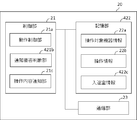
- the cloud server 20 includes a control unit 21, a storage unit 22, and a communication unit 23.
- the control unit 21 includes an arithmetic processing unit such as a CPU (Central Processing Unit), and controls the operation of each unit of the cloud server 20.
- the storage unit 22 stores various information (data) used in the cloud server 20.
- the communication unit 23 performs mutual communication with the communication adapter 11 and the operation terminal 30 via the wide area communication network 13.
- the storage unit 22 stores the operation target device information 22a and the latest operation information 22b for each operation terminal.
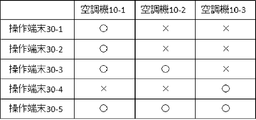
- the operation target device information 22a is information indicating a correspondence relationship between the operation terminal 30 and the air conditioner 10 operable from the operation terminal 30 as illustrated in FIG.
- “ ⁇ ” means that the operation is possible
- “x” means that the operation is not possible.
- the air conditioner 10-1 can be operated from the operation terminals 30-1, 30-2, 30-3, 30-5
- the air conditioner 10-2 is operated by the operation terminal 30-3. 30-5
- the air conditioner 10-3 can be operated from the operation terminals 30-4 and 30-5.
- Whether or not each air conditioner 10 can be operated by each operation terminal 30 can be set automatically or manually. For example, it is possible to automatically set the operation propriety according to a predetermined standard, and then allow the user to change the setting as necessary.
- the operation information 22b indicates the target function (air volume, exercise mode, set temperature, wind direction) of the air conditioner for each combination of the operation terminal 30 and the air conditioner 10 operable from the operation terminal 30 as shown in FIG.
- the information is the date and time of the operation performed by the operation terminal and the content of the operation.
- “operation content” means a set value related to the operation content.
- the "driving mode” and the "wind direction” store alternative information that means that there is no operation information.
- control unit 21 includes an operation control unit 21a, a notification necessity determination unit 121b, and an operation content notification unit 21c.
- the operation control unit 21a receives an operation instruction for the air conditioner 10 from the operation terminal 30, the operation control unit 21a refers to the operation target device information 22a stored in the storage unit 22 to determine whether the operation is possible.
- a control command for operating the air conditioner 10 is transmitted to the communication adapter 11 connected to the target air conditioner 10 according to the content of the received operation instruction.
- the communication adapter 11 Upon receiving the control command, the communication adapter 11 transmits it to the air conditioner 10, and the air conditioner 10 operates according to the received control command.
- the operation control unit 21a ignores the operation instruction or disables the operation terminal 30 that has received the operation instruction. Since it was an operation instruction for a different air conditioner, it notifies that the operation instruction was not executed.
- the notification necessity determination unit 121b operates the operation terminals 30 (other than the operation terminal that issued the operation information). Based on the operation information 22b stored in the storage unit 22, it is determined whether or not the content of the operation information should be notified to another operation terminal). Specifically, it is determined whether or not the difference between the latest operation date and time of each of the other operation terminals 30 for the air conditioner 10 and the operation date and time at which the operation information is issued is within a predetermined period (for example, within 24 hours). Then, it is determined that the content of the operation information should be notified to the operation terminal determined to be within the predetermined period.
- a predetermined period for example, within 24 hours
- the notification necessity determination unit 121b first identifies the operation terminals 30-2, 30-3, 30-5 that can operate the air conditioner 10-1 other than the operation terminal 30-1. Then, for each of the specified operation terminals 30-2, 30-3, 30-5, the latest operation date and time when the “set temperature” of the air conditioner 10-1 is operated and the above operation information are issued from the operation terminal. It is determined whether the difference from the operation date and time is within 24 hours, and it is determined that the notification is necessary only to the operation terminal determined to be within 24 hours. At this time, if the operation terminal does not have operation information for the air conditioner 10-1 in the storage unit 22 because the air conditioner 10-1 has not been operated, it is determined that the notification is unnecessary. ..
- the operation terminal 30-2 determines that the notification is unnecessary because there is no operation information for the “set temperature” of the air conditioner 10-1.
- the latest operation date and time for the “set temperature” of the air conditioner 10-1 is "9:30 on August 21", and the "operation date ( 24 hours before (August 31, 10:10)”, it is determined that the notification is unnecessary.
- the latest operation date and time for the “set temperature” of the air conditioner 10-1 is “8:50 on August 31,” and the operation date and time (8 Since it is within 24 hours, it is judged that notification is necessary.
- the operation content notification unit 21c issues operation information to the air conditioner 10 from any of the operation terminals 30, and the notification necessity determination unit 121b determines the operation terminal to which the content of the operation information should be notified.
- the contents of the operation information (target electronic device, target function, operation terminal, operation date and time, and setting values related to operation contents) are notified to the operation terminal determined to require notification.
- the operation terminal 30 that has received the notification from the operation content notification unit 21c notifies the user of the content of the notification by displaying the content of the received notification on the display screen of the operation terminal 30.
- the user who has received this notification confirms the content of the operation information issued from the other operation terminal 30, and further operates the electronic device or directly contacts the user who has issued a different operation instruction when necessary. It is possible to take actions such as consulting about the operation of electronic devices.
- the communication application telephone application, mail application, etc.
- Program is started, and the operation terminal identified by the information of the operation terminal (ID information of the operation terminal, ID information of the user of the operation terminal, name, mail address, etc.) included in the notification is set as the communication destination. You can also do so.
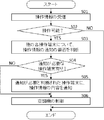
- the operation of the cloud server 20 will be described according to the flowchart of FIG. First, the operation information (additional operation information) from any of the operation terminals 30-i (i is an integer of 1 to 5) to the air conditioner 10-k (k is an integer of 1 to 3)
- the operation control unit 21a refers to the operation target device information 22a stored in the storage unit 22 and determines whether the operation is possible (S02). If it is determined that the operation is impossible, the process ends here. On the other hand, if it is determined that the operation is possible, the received operation information 22b is stored in the storage unit 22, and the process proceeds to step S03 and the subsequent steps.
- step S02 is based on the premise that the cloud server 20 may also receive operation information for the inoperable air conditioner 10-k from the operation terminal 30-i. Therefore, in the case of a configuration in which only the operation information for the operable air conditioner 10-k is received, this step S02 is unnecessary and may be omitted.
- the notification necessity determination unit 121b determines whether to notify each of the other operation terminals 30-j (j is an integer of 1 to 5 other than i) of the content of the operation information received in step S01. A determination is made based on the operation information 22b stored in the storage unit 22 (S03). Specifically, for each of the operation terminals 30-j, the difference between the latest operation date and time for the target function of the air conditioner 10-k and the operation date and time when the operation information is issued from the operation terminal 30-i is within a predetermined period ( For example, within 24 hours). Then, it is determined that the content of the additional operation information should be notified to the operation terminal determined to be within the predetermined period. At this time, it is clear that the operation terminal that cannot operate the target air conditioner 10-k does not need to be notified, so it is excluded from the judgment targets.
- the operation content notifying unit 21c determines whether or not there is an operation terminal for which notification is determined to be necessary (S04), and when there is an operation terminal for which notification is required, each operation for which notification is determined to be necessary.
- the contents of the operation information received in step S01 are notified to the terminal (S05).
- the process proceeds to step S06 and subsequent steps without executing step S05.
- the operation control unit 21a transmits a control command for operating the air conditioner 10-k to the communication adapter 11-k connected to the air conditioner 10-k according to the content of the operation information received in step S01. (S06), the process ends.
- the communication adapter 11-k receives the control command, it transmits it to the air conditioner 10-k, and the air conditioner 10-k operates according to the received control command.
- a user who has issued an operation instruction to an electronic device such as the air conditioner 10 tends to expect that the operation of the electronic device according to the operation information is maintained for a certain period or longer, and then the other.
- different operation instructions are issued by the user and the operation of the electronic device is changed, the changed content is confirmed, and in some cases, the user who further operates the electronic device or issues a different operation instruction. It can be said that there is a high possibility that the person will take actions such as contacting directly to consult with about the operation of electronic equipment. Therefore, in the present embodiment, when the operation information is issued from any of the operation terminals to the electronic device, the operation information about the same target function of the same electronic device within a predetermined period before the operation information is issued.
- the user of another operating terminal issuing a message is considered to be a user who is likely to operate the electronic device, and the operation information is notified to the operating terminal of the user.
- the user who receives this notification can obtain the information regarding the operation of the electronic device more quickly and easily than the user who has not received the notification, and can preferentially operate the electronic device. If the operation information is not recorded, or if the operation date and time is earlier than the predetermined period even if the operation information is recorded, it is considered that the user is relatively unlikely to operate the electronic device, and the notification target We try to exclude it and remove the hassle of receiving unnecessary notifications.
- the operation information when operation information is issued from any of the operation terminals 30-i to the air conditioner 10, the operation information is output to each of the other operation terminals 30-j. Whether or not to notify the content of the operation information is determined based on the operation information, particularly the operation date and time, and the content of the additional operation information is notified to the operation terminal determined to be required to be notified.
- This provides an environment in which a user who is likely to operate the air conditioner 10 can operate the air conditioner 10 preferentially without the need for complicated prior work of setting the priority for each user. can do.
- a user with a high priority is notified of operation information from a user with a low priority, while a user with a low priority is notified by a user with a high priority or an equivalent user. Since the operation information of is not notified, there is a case where the user who operated first does not know that the operation has been updated thereafter. As a result, for example, when the set temperature of the air conditioner is updated, the environment may be changed to a cold or hot environment without the knowledge of the user who operated it before, and the low priority user may feel uncomfortable. On the other hand, according to the present embodiment, the user who has performed the operation is notified of the update when the operation is updated within a predetermined period after the operation is performed. Therefore, it is possible to reduce the unpleasant sensation given to the user who previously operated.
- the “predetermined period” used for the determination by the notification necessity determination unit 121b is several hours, one day, one week, one depending on the electronic device to be operated, the target function, and the like.
- a period such as a month can be set appropriately.
- the predetermined period is set to one week or one month for the set temperature that has a relatively large influence on the user's comfort, and the predetermined period is set to one day for the air volume and the wind direction that have a relatively small influence.
- notification necessity determination unit 121b issues operation information for operating any of the target functions (for example, set temperature) to air conditioner 10 from any of operation terminals 30. Then, it is determined whether or not the difference between the latest operation date and time for the same target function of the same air conditioner 10 of each of the other operation terminals 30 and the operation date and time when the above operation information is issued is within a predetermined period, and the predetermined period.
- the difference between the operation date and time of the latest operation and the operation date and time when the above operation information is issued is within a predetermined period, among the operations performed on the function (for example, the air volume, the operation mode, etc. in addition to the set temperature). May be determined, and it may be determined that the content of the operation information should be notified to another operation terminal determined to be within the predetermined period.
- the user who is likely to be using the target device because the operation information is emitted for any of the target functions of the electronic device is If any of the target functions that may affect the usability of the target device (comfort in the case of an air conditioner) is subsequently operated, the user can be notified of the operation details. It will be possible.
- the processing performed by the notification necessity determination unit 121b and the operation content notification unit 21c is performed within a specific period in which the user is likely to operate the electronic device, for example, only weekdays, only Mondays, and only holidays.
- the work may be limited to only the working hours from 8:30 to 17:00.
- the air conditioner 10 may have a configuration in which a portion having the function of the communication adapter is incorporated in advance.
- a remote control system 200 according to a second embodiment will be described with reference to FIGS. 1 to 4.
- the same components as those of the remote control system 100 according to the first embodiment are designated by the same reference numerals, and duplicate description will be omitted.
- the difference from the first embodiment is the content of processing by the notification necessity determination unit 221b.
- the notification necessity determination unit 221b operates the operation terminals 30 (other than the operation terminal that issued the operation information). Based on the operation information 22b stored in the storage unit 22, it is determined whether or not the content of the operation information should be notified to another operation terminal). Specifically, for the target function (air volume, operation mode, set temperature, or wind direction) operated by the operation information, the set value relating to the latest operation content of the other operation terminal 30 with respect to the air conditioner 10, and the operation described above. It is determined whether or not the difference from the setting value related to the operation content included in the information exceeds a predetermined threshold value, and it is determined that the content of the operation information should be notified to the operation terminal determined to exceed the threshold value. ..
- the operation terminal 30-1 indicates “8” to the air conditioner 10-1. It is assumed that the operation information for setting the “set temperature” to “21° C.” is issued at “10:10 on the 31st of the month”.
- the notification necessity determination unit 121b first identifies the operation terminals 30-2, 30-3, 30-5 that can operate the air conditioner 10-1 other than the operation terminal 30-1. Then, for each of the specified operation terminals 30-2, 30-3, 30-5, the set value related to the latest operation content of operating the “set temperature” of the air conditioner 10-1 from the operation terminal and the above operation information.
- the operation terminal 30-2 determines that the notification is unnecessary because there is no operation information for the “set temperature” of the air conditioner 10-1. Further, the operating terminal 30-3 has the set value relating to the latest operation content for the “set temperature” of the air conditioner 10-1 is “27° C.”, and the operation content for the “set temperature” of the air conditioner 10-1 is Since the difference from the set value “21° C.” exceeds 4° C., it is determined that the notification is necessary.
- the set value relating to the latest operation content for the “set temperature” of the air conditioner 10-1 is “23° C.”
- the operation content for the “set temperature” of the air conditioner 10-1 is Since the difference from the set value “21° C.” does not exceed 4° C., it is determined that the notification is unnecessary.
- the predetermined threshold value can be set to "one level”. In this case, for example, if the difference between the set values related to the operation content is one level of "weak/medium” or “middle/strong", it is determined that the notification is unnecessary, and if there is two levels of "weak/strong", It is determined that notification is required.
- the preset threshold value can be set to "zero (meaning that there is no difference)". In this case, for example, if there is no change in the setting of the operation mode, it is determined that the notification is unnecessary, and if there is a change in the setting of the operation mode, it is determined that the notification is necessary.
- the target function is “wind direction” and it is possible to set up or down
- the preset threshold value can be set to “zero (meaning that there is no difference)”. In this case, for example, if there is no change in the setting of the wind direction, it is determined that the notification is unnecessary, and if there is a change in the setting of the wind direction, it is determined that the notification is necessary.
- a user who has issued an operation instruction to an electronic device tends to expect the operation of the electronic device to be maintained within a desired range, and then differs from other users.
- an operation instruction is issued and there is a change in the operation of the electronic device that exceeds the desired range, the changed content is confirmed, and in some cases, the electronic device is further operated or a different operation instruction is issued. It can be said that there is a high possibility that an action such as directly contacting the user to discuss the operation of the electronic device will be taken. Therefore, in the present embodiment, when the operation information is issued to the electronic device from any of the operation terminals, the difference between the setting value and the setting value related to the operation content included in the operation information is a predetermined threshold value.
- the operation information is notified to the operation terminal of that user. It was made to be seen.
- the user who receives this notification can obtain the information regarding the operation of the electronic device more quickly and easily than the user who has not received the notification, and can preferentially operate the electronic device. If the operation information is not recorded, or if the operation information is recorded and the difference in the setting value related to the operation content does not exceed the predetermined threshold value, the user who is relatively unlikely to operate the electronic device is relatively low. Therefore, I exclude it from the target of notification and try to remove the annoyance of receiving unnecessary notifications.
- the operation information when operation information is issued from any of the operation terminals 30-i to the air conditioner 10, the operation information is output to each of the other operation terminals 30-j. Whether or not to notify the content of the operation information is determined based on the operation information, particularly the set value related to the operation content, and the content of the additional operation information is notified to the operation terminal that is determined to be notified.
- This provides an environment in which a user who is likely to operate the air conditioner 10 can operate the air conditioner 10 preferentially without the need for complicated prior work of setting the priority for each user. can do.
- a remote control system 300 according to a third embodiment will be described with reference to FIGS. 1, 3, and 6.
- the same components as those of the remote control system 100 according to the first embodiment are designated by the same reference numerals, and duplicate description will be omitted.
- the difference from the first embodiment is the content of the processing by the storage unit 322 and the notification necessity determination unit 321b.
- the storage unit 322 stores terminal usage state information 322c in addition to the operation target device information 22a and the operation information 22b.
- the terminal usage status information 322c is information regarding the usage status of the operation terminal 30 by the user.
- the terminal usage state information 322c for example, position information (for example, GPS information) of the operation terminal 30 and information indicating whether or not the user is logged in to the operation terminal 30 (hereinafter, referred to as "login information").
- login information information indicating whether or not the remote operation application preinstalled in the operation terminal 30 is in the activated state
- remote operation application activation information can be used. It is assumed that the terminal usage state information 322c is acquired from each operation terminal 30 periodically and/or each time before the determination process by the notification necessity determination unit 321b is executed, and is stored in the storage unit 322.
- the notification necessity determination unit 321b When the operation information (additional operation information) is issued to the air conditioner 10 from any of the operation terminals 30, the notification necessity determination unit 321b operates the operation terminals 30 (other than the operation terminal that issued the operation information). It is determined based on the terminal usage state information 322c stored in the storage unit 322 whether or not to notify the content of the operation information to other operation terminals). Specifically, when the position information of the operation terminal 30 is acquired as the terminal usage state information 322c and stored in the storage unit 322, the notification necessity determination unit 321b causes the operation other than the operation terminal that issued the operation information.
- each terminal 30 it is determined whether or not the user can use the air conditioner 10 at the position specified by the position information stored in the storage unit 322, and the operation information is sent to the operation terminal that is determined to be available. It is judged that the contents of should be notified. At this time, it is clear that the operation terminal that cannot operate the target air conditioner 10 does not need to be notified, so it is excluded from the determination targets. In addition, even when the terminal usage state information 322c cannot be acquired from the operation terminal 30 due to a disconnection of the communication between the cloud server 20 and the operation terminal 30, the operation terminal 30 operates the target air conditioner 10. It is considered that it is not possible to do so and is excluded from the subject of judgment.
- the user can use the air conditioner 10-1 only in the space 50, and as shown in FIG. 1, the operation terminals 30-1, 30-2, 30-3, 30-4 are in the space 50. It is assumed that the operation terminal 30-5 is located inside and the operation terminal 30-5 is located outside the space 50. In such a case, when the operation information is issued from the operation terminal 30-1 to the air conditioner 10-1, the notification necessity determination unit 321b first causes the other operation terminals 30-2, 30-3, 30-. For each of 4 and 30-5, it is determined whether or not the user can use the air conditioner 10-1 at the position specified by the position information of the operation terminal. That is, it is determined whether the operating terminal is located in the space 50.
- the operation terminals 30-2, 30-3, 30-4 located in the space 50 are determined to be the operation terminals that allow the user to use the air conditioner 10-1. Further, the operation terminal 30-4 that cannot operate the air conditioner 10-1 is excluded from the determined operation terminals (see FIG. 3), and finally the operation terminals 30-2 and 30-3 are notified. It should be judged.
- a user who is in a position where the electronic device such as the air conditioner 10 can be used may operate the electronic device more than a user who is in a position where the electronic device such as the air conditioner 10 cannot be used. Can be said to be high. Therefore, in the present embodiment, the position of the operating terminal is considered to match the position of the user, and the user who can use the electronic device at the position of the operating terminal can operate the electronic device.
- the user is considered to be a highly likely user, and the operation information is notified to the operation terminal of the user. The user who receives this notification can obtain the information regarding the operation of the electronic device more quickly and easily than the user who has not received the notification, and can preferentially operate the electronic device. If the electronic device cannot be used at the position of the operation terminal, consider it as a user who is relatively unlikely to operate the electronic device, exclude it from the notification target, and eliminate the annoyance of receiving unnecessary notifications. I am trying.
- the terminal usage state information 322c may be the login information of the user with respect to the operation terminal 30, or the operation terminal 30. It is also possible to use the start information of the remote control application in. Each case will be described below.
- the notification necessity determination unit 321b is an operation terminal other than the operation terminal that issued the operation information. For each 30, it should be determined whether or not the user is in the login state by using the information stored in the storage unit 322, and the content of the operation information should be notified to the operation terminal determined to be in the login state. to decide. At this time, it is clear that the operation terminal that cannot operate the target air conditioner 10 does not need to be notified, so it is excluded from the determination targets.
- the operation terminal 30 is not the target air conditioner 10. Exclude from the judgment target because it is considered that it is in a state where it cannot be operated.
- the operation terminal 30 is often required to be in a login state. Therefore, in the above-described example, when the user is logged in to the operation terminal 30 is more likely to operate the electronic device than when the user is not logged in, the operation terminal 30 is set to the operation terminal in which the user is logged in. The operation information is notified to the user. The user who receives this notification can obtain the information regarding the operation of the electronic device more quickly and easily than the user who has not received the notification, and can preferentially operate the electronic device. If the user is not logged in to the operation terminal 30, the user is considered to have a relatively low possibility of operating the electronic device, and the user is excluded from the notification targets so as to eliminate the annoyance of receiving unnecessary notifications. ing.
- the notification necessity determination unit 321b is an operation terminal other than the operation terminal that issued the operation information.
- the information stored in the storage unit 322 is used to determine for each 30 whether or not the remote operation application is in the activated state, and the content of the operation information is notified to the operation terminal determined to be in the activated state. I think it should. At this time, it is clear that the operation terminal that cannot operate the target air conditioner 10 does not need to be notified, so it is excluded from the determination targets.
- the operation terminal 30 is not the target air conditioner 10. Exclude from the judgment target because it is considered that it is in a state where it cannot be operated.
- a remote operation application preinstalled in the operation terminal 30 is in an activated state.
- the remote operation application is more likely to operate the electronic device than the case where the remote operation application is in the activated state, and the remote operation application is operated in the activated state with respect to the operation terminal.
- the operation information is notified.
- the user who receives this notification can obtain the information regarding the operation of the electronic device more quickly and easily than the user who has not received the notification, and can preferentially operate the electronic device.
- the remote control application is not in the activated state, it is considered that the user is relatively unlikely to operate the electronic device, and is excluded from the notification targets, thereby eliminating the trouble of receiving unnecessary notifications.
- the operation information when operation information is issued from any of the operation terminals 30-i to the air conditioner 10, the operation information is output to each of the other operation terminals 30-j. Whether or not to notify the content of the operation information is determined based on the terminal usage status information, and the content of the additional operation information is notified to the operation terminal determined to be required to be notified.
- This provides an environment in which a user who is likely to operate the air conditioner 10 can operate the air conditioner 10 preferentially without the need for complicated prior work of setting the priority for each user. can do.
- 322c may be used to first determine whether or not the user of each operation terminal 30 is using the target air conditioner, and the result of the determination may be used to determine the necessity of notification. .. Specifically, when the terminal usage state information 322c is the position information of the operation terminal 30, it is first determined whether the user can use the target air conditioner 10 at the position specified by the position information. To do. If it is determined that the air conditioner can be used, it is determined that the user is using the target air conditioner, and if it is determined that the user cannot use the target air conditioner, the user does not use the target air conditioner. It is determined that it is not in the state.
- the notification necessity determination unit 321b should refer to the device usage information as illustrated in FIG. 7 and notify the operation terminal, which is in the state where the user is using the target air conditioner, of the content of the operation information. To judge.
- the terminal usage status information 322c is the login information of the user for the operation terminal 30, it is determined whether the user is in the login status. If the terminal usage status information 322c is in the login status, the user uses the target air conditioner. It is possible to determine that the user is not using the target air conditioner when it is not logged in. Further, when the terminal usage state information 322c is the activation information of the remote operation application in the operation terminal 30, it is determined whether or not the remote operation application is in the activation state. It can be determined that the air conditioner is in use, and if it is not in the activated state, it can be determined that the user is not using the target air conditioner.
- a remote operation system 400 according to a fourth embodiment will be described with reference to FIGS. 1 and 8.
- the same components as those of the remote control system 100 according to the first embodiment are designated by the same reference numerals, and duplicate description will be omitted.
- the difference from the first embodiment is the content of the processing by the storage unit 422 and the notification necessity determination unit 421b.
- the storage unit 422 stores entry/exit information 422c in addition to the operation target device information 22a and the operation information 22b.
- the entry/exit information 422c is information indicating whether or not the user is in the space 50 (room) in which the air conditioner 10 is installed for each user of each operation terminal.
- the entry/exit information 422c is acquired from the entry/exit management system (not shown) and stored in the storage unit 422 periodically and/or before the determination process by the notification necessity determination unit 421b is executed. ..
- the notification necessity determination unit 421b When the operation information (additional operation information) is issued to the air conditioner 10 from any of the operation terminals 30, the notification necessity determination unit 421b operates the operation terminals 30 (other than the operation terminal that issued the operation information). It is determined based on the entry/exit information 422c stored in the storage unit 422 whether or not to notify the content of the operation information to another operation terminal). Specifically, the notification necessity determination unit 421b uses the entry/exit information 422c stored in the storage unit 422 for each operation terminal 30 other than the operation terminal that issued the operation information, and the user is in the entry state. It is determined whether or not, and it is determined that the content of the operation information should be notified to the operation terminal determined to be in the entry state. At this time, it is clear that the operation terminal that cannot operate the target air conditioner 10 does not need to be notified, so it is excluded from the determination targets.
- a user who is in a room in which an electronic device such as the air conditioner 10 is installed is more likely to operate the electronic device than a user who is in a leaving state. Therefore, in the present embodiment, it is considered that the user who has entered the space 50 in which the air conditioner 10 is installed is the user who is likely to operate the electronic device, and the operation information of the user is input to the operation terminal of the user.
- the notification is made to be performed.
- the user who receives this notification can obtain the information regarding the operation of the electronic device more quickly and easily than the user who has not received the notification, and can preferentially operate the electronic device.
- the user In the case of leaving the room, the user is considered to have a relatively low possibility of operating the electronic device, and is excluded from the notification target, thereby eliminating the annoyance of receiving an unnecessary notification.
- the operation information when operation information is issued from any of the operation terminals 30-i to the air conditioner 10, the operation information is output to each of the other operation terminals 30-j. Whether or not to notify the content of the operation information is determined based on the entry/exit information of the user, and the content of the additional operation information is notified to the operation terminal determined to require the notification.
- This provides an environment in which a user who is likely to operate the air conditioner 10 can operate the air conditioner 10 preferentially without the need for complicated prior work of setting the priority for each user. can do.
- the notification necessity determination unit 421b directly determines the necessity of notification from the entry/exit information 422c stored in the storage unit 422 in the present embodiment
- the entry/exit information 422c is described. It may be possible to first determine whether or not the user of each operation terminal 30 is using the target air conditioner, and use the result of the determination to determine whether or not to notify. Specifically, it is determined whether or not the user is in the entry state using the entry/exit information 422c stored in the storage unit 422, and if it is in the entry state, the user is using the target air conditioner. It is determined that the air conditioner is in the state, and if the user is in the leaving state, it is determined that the user is not using the target air conditioner.
- the notification necessity determination unit 421b should notify the content of the operation information to the operation terminal in the state where the user is using the target air conditioner with reference to the device usage information as illustrated in FIG. 7. To judge.
- Each of the above embodiments can be implemented by appropriately combining two or more embodiments. That is, the operation terminal that is determined to be notified in common in all the embodiments that are implemented in combination is determined to be the operation terminal that is to be finally notified, and the operation terminal that is determined is notified. Notification can be given. For example, when the first embodiment and the second embodiment are implemented in combination, the difference between the operation dates and times is within a predetermined period, and the difference between the set values related to the operation content is predetermined. It is determined that the notification should be given to the operation terminal exceeding the threshold value.
- the operating terminal to be notified is automatically determined based on information such as operation information, terminal usage state information, and entry/exit information, and the notification is performed. It may be configured such that an individual setting for which case the notification is desired is accepted, and the necessity of the notification may be determined by further considering the setting.
- the setting is such that notification is desired only when the set value satisfies a certain condition.
- the operation information management device and the remote operation system of the present invention have been described as being applied to those that remotely operate an air conditioner from a plurality of operation terminals, but the present invention is not limited to this. It can be applied to the case of remotely operating various other electronic devices such as a lighting device from the operation terminal.
- the device usage information is generated based on the terminal usage status information 322c, the room entry/exit information 422c, and the like. It may be generated based on information. For example, when the usage state of the electronic device by the user can be determined based on the image captured by the surveillance camera, the device usage information may be generated based on the image information. In general, it can be said that the user who is using the electronic device is more likely to operate the electronic device than the user who is not using the electronic device. Therefore, the information regarding the usage status of the electronic device is information indicating that the electronic device is in use. By making a notification to a certain operation terminal, it is possible to provide an environment in which a user who is likely to operate the electronic device can preferentially operate the electronic device.
- Air conditioners (electronic devices) 11 Communication Adapter 12 Router 13 Wide Area Communication Network 20 Cloud Server (Operation Information Management Device) 21 control unit 21a operation control unit 121b, 221b, 321b, 421b notification necessity determination unit 21c operation content notification unit 22, 322, 422 storage unit 22a operation target device information 22b operation information 23 communication unit 30 operation terminal 50 space 100, 200 , 300, 400 Remote operation system 322c Terminal usage status information 422c Entrance/exit information
Landscapes
- Engineering & Computer Science (AREA)
- Computer Networks & Wireless Communication (AREA)
- Signal Processing (AREA)
- Human Computer Interaction (AREA)
- Physics & Mathematics (AREA)
- General Physics & Mathematics (AREA)
- Selective Calling Equipment (AREA)
- Air Conditioning Control Device (AREA)
- Telephonic Communication Services (AREA)
Abstract
L'invention concerne un environnement dans lequel, lorsqu'un dispositif électronique 10 doit être commandé à distance par une pluralité d'utilisateurs à l'aide de leurs propres terminaux de fonctionnement 30, l'utilisateur qui est considéré comme étant susceptible de faire fonctionner le dispositif électronique est autorisé à faire fonctionner le dispositif électronique 10 de préférence sans avoir besoin d'effectuer un travail préparatoire compliqué tel que le réglage d'un degré de priorité à chacun des utilisateurs. Lorsque des informations de fonctionnement supplémentaires sont émises depuis l'un des terminaux de fonctionnement 30 vers le dispositif électronique 10, la présente invention détermine, sur la base des informations de fonctionnement passées, si chacun des autres terminaux de fonctionnement 10 doit être informé des contenus des informations de fonctionnement supplémentaires, et notifie à chacun des terminaux de fonctionnement pour lesquels une notification est déterminée comme étant nécessaire des contenus des informations de fonctionnement supplémentaires.
Priority Applications (5)
| Application Number | Priority Date | Filing Date | Title |
|---|---|---|---|
| US17/299,592 US12177377B2 (en) | 2018-12-13 | 2018-12-13 | Control information management device and remote control system |
| JP2020559632A JP7034333B2 (ja) | 2018-12-13 | 2018-12-13 | 操作情報管理装置及び遠隔操作システム |
| CN201880100045.2A CN113170025B (zh) | 2018-12-13 | 2018-12-13 | 操作信息管理装置以及远程操作系统 |
| EP18943048.1A EP3896950B1 (fr) | 2018-12-13 | 2018-12-13 | Dispositif de gestion d'informations de fonctionnement et système de commande à distance |
| PCT/JP2018/045848 WO2020121471A1 (fr) | 2018-12-13 | 2018-12-13 | Dispositif de gestion d'informations de fonctionnement et système de commande à distance |
Applications Claiming Priority (1)
| Application Number | Priority Date | Filing Date | Title |
|---|---|---|---|
| PCT/JP2018/045848 WO2020121471A1 (fr) | 2018-12-13 | 2018-12-13 | Dispositif de gestion d'informations de fonctionnement et système de commande à distance |
Publications (1)
| Publication Number | Publication Date |
|---|---|
| WO2020121471A1 true WO2020121471A1 (fr) | 2020-06-18 |
Family
ID=71076923
Family Applications (1)
| Application Number | Title | Priority Date | Filing Date |
|---|---|---|---|
| PCT/JP2018/045848 Ceased WO2020121471A1 (fr) | 2018-12-13 | 2018-12-13 | Dispositif de gestion d'informations de fonctionnement et système de commande à distance |
Country Status (5)
| Country | Link |
|---|---|
| US (1) | US12177377B2 (fr) |
| EP (1) | EP3896950B1 (fr) |
| JP (1) | JP7034333B2 (fr) |
| CN (1) | CN113170025B (fr) |
| WO (1) | WO2020121471A1 (fr) |
Families Citing this family (1)
| Publication number | Priority date | Publication date | Assignee | Title |
|---|---|---|---|---|
| CN114189762B (zh) * | 2021-12-07 | 2022-06-07 | 珠海市鸿瑞信息技术股份有限公司 | 一种基于5g的配网加密终端远程控制系统及方法 |
Citations (4)
| Publication number | Priority date | Publication date | Assignee | Title |
|---|---|---|---|---|
| JP2002291062A (ja) * | 2001-03-28 | 2002-10-04 | Toshiba Home Technology Corp | 携帯通信装置 |
| JP2005136890A (ja) * | 2003-10-31 | 2005-05-26 | Omron Corp | 遠隔操作システムの本体装置、遠隔操作装置、制御方法 |
| JP2006094369A (ja) * | 2004-09-27 | 2006-04-06 | Nec Corp | メッセージ自動通知システムとその方法、及び、通信端末装置とそのプログラム |
| JP2016082336A (ja) | 2014-10-14 | 2016-05-16 | シャープ株式会社 | 遠隔操作システムおよび電子機器 |
Family Cites Families (5)
| Publication number | Priority date | Publication date | Assignee | Title |
|---|---|---|---|---|
| US7290037B2 (en) * | 2002-08-22 | 2007-10-30 | Clark Todd A | Scalable wireless remote control and monitoring system with automatic registration and automatic time synchronization |
| JP5528383B2 (ja) * | 2011-03-31 | 2014-06-25 | アズビル株式会社 | 空調管理システム |
| JP2013055443A (ja) * | 2011-09-02 | 2013-03-21 | Toshiba Corp | 家電制御サーバおよび家電制御方法 |
| JP2014212496A (ja) | 2013-04-22 | 2014-11-13 | 日立アプライアンス株式会社 | 冷凍サイクル機器の遠隔制御システム |
| CN105471682A (zh) * | 2014-06-25 | 2016-04-06 | 小米科技有限责任公司 | 家电状态信息通知方法和装置 |
-
2018
- 2018-12-13 WO PCT/JP2018/045848 patent/WO2020121471A1/fr not_active Ceased
- 2018-12-13 US US17/299,592 patent/US12177377B2/en active Active
- 2018-12-13 JP JP2020559632A patent/JP7034333B2/ja active Active
- 2018-12-13 EP EP18943048.1A patent/EP3896950B1/fr active Active
- 2018-12-13 CN CN201880100045.2A patent/CN113170025B/zh not_active Expired - Fee Related
Patent Citations (4)
| Publication number | Priority date | Publication date | Assignee | Title |
|---|---|---|---|---|
| JP2002291062A (ja) * | 2001-03-28 | 2002-10-04 | Toshiba Home Technology Corp | 携帯通信装置 |
| JP2005136890A (ja) * | 2003-10-31 | 2005-05-26 | Omron Corp | 遠隔操作システムの本体装置、遠隔操作装置、制御方法 |
| JP2006094369A (ja) * | 2004-09-27 | 2006-04-06 | Nec Corp | メッセージ自動通知システムとその方法、及び、通信端末装置とそのプログラム |
| JP2016082336A (ja) | 2014-10-14 | 2016-05-16 | シャープ株式会社 | 遠隔操作システムおよび電子機器 |
Non-Patent Citations (1)
| Title |
|---|
| See also references of EP3896950A4 |
Also Published As
| Publication number | Publication date |
|---|---|
| JP7034333B2 (ja) | 2022-03-11 |
| EP3896950A4 (fr) | 2021-12-29 |
| CN113170025B (zh) | 2023-03-24 |
| JPWO2020121471A1 (ja) | 2021-09-02 |
| EP3896950A1 (fr) | 2021-10-20 |
| EP3896950B1 (fr) | 2024-04-03 |
| US20220109750A1 (en) | 2022-04-07 |
| US12177377B2 (en) | 2024-12-24 |
| CN113170025A (zh) | 2021-07-23 |
Similar Documents
| Publication | Publication Date | Title |
|---|---|---|
| ES2692337T3 (es) | Sistema de acondicionador de aire | |
| EP1196003A2 (fr) | Télésurveillance et télécommande des HVAC appareils | |
| CN103929587B (zh) | 服务器以及控制服务器的方法 | |
| WO2020019662A1 (fr) | Procédé et appareil de communication d'informations, et support de stockage | |
| JP2016082336A (ja) | 遠隔操作システムおよび電子機器 | |
| KR101797812B1 (ko) | 다수의 장치들을 제어하기 위한 자동실행방법, 어플리케이션 및 설정서버 | |
| WO2020121471A1 (fr) | Dispositif de gestion d'informations de fonctionnement et système de commande à distance | |
| JP5880530B2 (ja) | 空調システム | |
| JP2009206992A (ja) | 監視カメラシステム及び監視カメラ管理方法 | |
| JP6902718B2 (ja) | 機器制御システム、機器制御方法及び制御プログラム | |
| JP7342363B2 (ja) | アダプタ、更新通知方法及び空気調和システム | |
| CN111033469B (zh) | 供与日程安排相关联地使用的系统、方法、装置和介质 | |
| JP2001273395A (ja) | 電気機器制御装置 | |
| JP7845557B2 (ja) | 表示制御装置及び監視システム | |
| JP2001285961A (ja) | 電子機器コントロールシステム | |
| WO2018179238A1 (fr) | Dispositif de commande, procédé et programme de commande | |
| JP6744444B2 (ja) | 操作端末、操作端末のプログラム、家電製品 | |
| JP6903973B2 (ja) | 情報処理装置 | |
| JP6835690B2 (ja) | 通信装置、空気調和機、およびネットワークシステム | |
| JP2005291772A (ja) | 電子機器装置およびその制御システム | |
| WO2020016993A1 (fr) | Dispositif, système et procédé de commande de climatisation | |
| KR20170002333A (ko) | 다수의 장치들을 제어하기 위한 자동실행방법, 어플리케이션 및 설정서버 | |
| JP2025096403A (ja) | ネットワークシステム、情報処理方法、およびサーバ | |
| WO2017119025A1 (fr) | Terminal d'informations, dispositif de commande, procédé de commande, et support d'enregistrement | |
| JP2007188394A (ja) | 機器制御通信システム、機器制御通信方法、制御装置及び機器制御通信プログラム |
Legal Events
| Date | Code | Title | Description |
|---|---|---|---|
| 121 | Ep: the epo has been informed by wipo that ep was designated in this application |
Ref document number: 18943048 Country of ref document: EP Kind code of ref document: A1 |
|
| ENP | Entry into the national phase |
Ref document number: 2020559632 Country of ref document: JP Kind code of ref document: A |
|
| NENP | Non-entry into the national phase |
Ref country code: DE |
|
| ENP | Entry into the national phase |
Ref document number: 2018943048 Country of ref document: EP Effective date: 20210713 |