WO2020122022A1 - Agent améliorant la fonction hépatique - Google Patents
Agent améliorant la fonction hépatique Download PDFInfo
- Publication number
- WO2020122022A1 WO2020122022A1 PCT/JP2019/048112 JP2019048112W WO2020122022A1 WO 2020122022 A1 WO2020122022 A1 WO 2020122022A1 JP 2019048112 W JP2019048112 W JP 2019048112W WO 2020122022 A1 WO2020122022 A1 WO 2020122022A1
- Authority
- WO
- WIPO (PCT)
- Prior art keywords
- liver
- function
- liver function
- acid
- pyrazino
- Prior art date
- Legal status (The legal status is an assumption and is not a legal conclusion. Google has not performed a legal analysis and makes no representation as to the accuracy of the status listed.)
- Ceased
Links
Images



Classifications
-
- A—HUMAN NECESSITIES
- A61—MEDICAL OR VETERINARY SCIENCE; HYGIENE
- A61K—PREPARATIONS FOR MEDICAL, DENTAL OR TOILETRY PURPOSES
- A61K31/00—Medicinal preparations containing organic active ingredients
- A61K31/33—Heterocyclic compounds
- A61K31/395—Heterocyclic compounds having nitrogen as a ring hetero atom, e.g. guanethidine or rifamycins
- A61K31/53—Heterocyclic compounds having nitrogen as a ring hetero atom, e.g. guanethidine or rifamycins having six-membered rings with three nitrogens as the only ring hetero atoms, e.g. chlorazanil, melamine
-
- A—HUMAN NECESSITIES
- A61—MEDICAL OR VETERINARY SCIENCE; HYGIENE
- A61P—SPECIFIC THERAPEUTIC ACTIVITY OF CHEMICAL COMPOUNDS OR MEDICINAL PREPARATIONS
- A61P1/00—Drugs for disorders of the alimentary tract or the digestive system
- A61P1/16—Drugs for disorders of the alimentary tract or the digestive system for liver or gallbladder disorders, e.g. hepatoprotective agents, cholagogues, litholytics
-
- A—HUMAN NECESSITIES
- A61—MEDICAL OR VETERINARY SCIENCE; HYGIENE
- A61P—SPECIFIC THERAPEUTIC ACTIVITY OF CHEMICAL COMPOUNDS OR MEDICINAL PREPARATIONS
- A61P3/00—Drugs for disorders of the metabolism
- A61P3/08—Drugs for disorders of the metabolism for glucose homeostasis
-
- A—HUMAN NECESSITIES
- A61—MEDICAL OR VETERINARY SCIENCE; HYGIENE
- A61P—SPECIFIC THERAPEUTIC ACTIVITY OF CHEMICAL COMPOUNDS OR MEDICINAL PREPARATIONS
- A61P43/00—Drugs for specific purposes, not provided for in groups A61P1/00-A61P41/00
Definitions
- the present invention relates to a drug useful for improving liver function.
- C-type cirrhosis In C-type cirrhosis, hepatic reserve is maintained, and no liver failure symptoms such as jaundice, ascites, hepatic encephalopathy, and gastric/esophageal varices bleeding are compensated cirrhosis, and conditions with liver failure symptoms are decompensated cirrhosis. Call.
- extracellular matrix fiber
- Cirrhosis with a high degree of liver fibrosis is a high risk group for hepatocarcinogenesis.
- the liver not only secretes bile into the digestive tract at one of the digestive glands attached to the digestive tract, but also metabolizes various substances taken into the body from the digestive tract to maintain homeostasis.
- the main functions of the liver are (1) metabolism of substances closely related to nutrition (synthesis/storage/decomposition of glycogen, metabolism of amino acids, etc.), (2) bile production, (3) generation of blood components/ Conversion, (4) detoxification and removal of foreign substances, and (5) regulation of circulating volume by storing blood.
- Liver dysfunction means a state in which the function of the liver is lowered due to some factor, and in many cases, an abnormal value is shown in a liver function test.
- liver dysfunction causes hepatitis caused by hepatitis virus (eg, hepatitis B and C viruses), alcoholic liver damage caused by long-term intake of alcohol, lifestyle-related diseases such as metabolic syndrome (metabolic syndrome), obesity, and diabetes.
- Non-alcoholic liver damage eg, non-alcoholic steatohepatitis (NASH)
- drug-induced liver damage caused by taking drugs side effects
- autoimmune liver damage due to abnormal autoimmunity etc. Be done.
- hepatic dysfunction progresses, histopathological changes are observed, and after normal hepatocyte destruction and reduction and fibrosis, hepatic cirrhosis leads to liver failure.
- liver dysfunction can be improved before the histopathological changes such as the destruction and fibrosis of normal hepatocytes occur, the progression of the disease can be suppressed and the prognosis can be expected to improve.
- the degree of progress of histopathological changes in the liver ie, liver fibrosis
- the severity of liver dysfunction do not always match, and even if no histopathological changes are observed, significant liver dysfunction is observed. In some cases, liver function is maintained even if histopathological changes are significant.
- the present invention aims to provide a drug useful for improving liver function.
- PRI-724[4-(((6S,9S,9aS)-1-(benzylcarbamoyl)-2,9-dimethyl-4,7-dioxo-8-(quinolin-8-ylmethyl)octahydro-1H-pyrazino[ [2,1-c][1,2,4]triazin-6-yl)methyl)phenyldihydrogen phosphate] has been shown to induce intracellular protein-protein interactions in the Wnt pathway, which is essential for the regulation of cancer stem cells (CSCs). It is a small molecule therapeutic drug related to inhibition.
- PRI-724 is the active species C-82 [(6S,9S,9aS)-N-benzyl-6-(4-hydroxybenzyl)-2,9-dimethyl-4,7-dioxo-8-(quinoline-8).
- -Ylmethyl)octahydro-1H-pyrazino[2,1-c][1,2,4]triazine-1-carboxamide] prodrug which is converted to C-82 in vivo and then bound to cAMP responsive element
- the present inventors investigated the relationship with liver function in addition to histopathological examination in an open-label, dose study (Phase I) trial of PRI-724. As a result, it was found that the histopathological effects and the effects on liver function do not necessarily match, and that PRI-724 has an independent effect on liver dysfunction, and further the effect of improving such liver function is detailed.
- the present invention has been completed through analysis. That is, the gist of the present invention is as follows.
- a liver function-improving agent comprising, as an active ingredient, at least one selected from 1-c][1,2,4]triazine-1-carboxamide and a pharmaceutically acceptable salt thereof.
- liver function is glucose metabolism function.
- liver function is an electron transfer system function.
- liver function is liver synthesis.
- improvement of liver function is not accompanied by defibrosis of the liver parenchymal region.
- improvement in liver function is an improvement in a patient with compensated cirrhosis.
- liver function is glucose metabolism function.
- liver function is an electron transfer system function.
- the liver function is liver synthesis.
- the improvement in liver function is not accompanied by defibrosis of the liver parenchymal region.
- the improvement in liver function is an improvement in a patient with compensated cirrhosis.
- liver function is glucose metabolism function.
- liver function is an electron transfer system function.
- liver function is liver synthesis.
- the improvement in liver function is not accompanied by defibrosis of the liver parenchymal region.
- the improvement in liver function is an improvement in a patient with compensated cirrhosis.
- the present invention provides 4-(((6S,9S,9aS)-1-(benzylcarbamoyl)-2,9-dimethyl-4,7-dioxo-8-(quinolin-8-ylmethyl)octahydro-1H-pyrazino[ 2,1-c][1,2,4]triazin-6-yl)methyl)phenyl dihydrogen phosphate, (6S,9S,9aS)-N-benzyl-6-(4-hydroxybenzyl)-2,9 -Dimethyl-4,7-dioxo-8-(quinolin-8-ylmethyl)octahydro-1H-pyrazino[2,1-c][1,2,4]triazine-1-carboxamide and their pharmaceutically acceptable
- the present invention provides a liver function improving agent (hereinafter, also referred to as “liver function improving agent of the present invention” or “agent of the present invention”) containing at least one selected from salts as an active ingredient. The details
- liver function and “liver function” referred to in the present invention mean all the functions of the liver and are not particularly limited. Specific functions of the liver include blood storage (adjustment of circulating amount, etc.); treatment of hemoglobin (treatment and discharge of hemoglobin, etc.); bile production; enterohepatic circulation of bile pigments; plasma protein (acute phase protein).
- liver mitochondria contribute to energy production in the liver by its electron transport system [Electron transport system function] Other work, published June 2018, WILEY-BLACKWELL, see).
- “improvement” of liver function is not particularly limited, but for example, prevention or suppression of deterioration of liver function (for example, activation/maintenance/improvement of liver function and aging and diseases) In addition to prevention/improvement of liver dysfunction), it also includes therapeutic effects on acute hepatitis, chronic hepatitis, liver failure, cirrhosis, and fatty liver.
- “improving” liver function means improving the state in which at least one of the above-mentioned liver functions is impaired, and preferably the liver glycogen/sugar metabolism ability, electron transfer system. The improvement of the functions and/or their functions when the liver synthetic ability is decreased.
- liver function examples include, but are not limited to, specifically improvement in hepatic reserve (liver synthetic capacity), for example, suppression of reduction of hepatic glycogen at the time of liver dysfunction. Suppression of decrease of albumin amount in blood; suppression of decrease of prothrombin time, which is a test item of liver function; suppression of decrease of cytochrome C. Activation of mitochondria in hepatocytes, which are responsible for electron transport function, is also an example of improvement in liver function.
- the effect of the agent of the present invention can be preferably evaluated by the effect on the glucose metabolism function, electron transfer system function and/or liver synthetic ability in the liver.
- a method of evaluating the glucose metabolism function of the liver for example, a method of measuring a blood glucose level can be mentioned.
- the blood glucose level can be generally measured by measuring the ⁇ -D-glucose concentration in blood.
- liver glucose metabolism function by staining liver glycogen by PAS staining using a histopathological technique and observing changes in the pathological tissue.
- the Fernandes stress test (glucose stress test, glucagon stress test and galactose stress test) is also preferable.
- liver cytochrome C is stained by immunostaining using a histopathological method as shown in Examples, and the electron of the liver is observed by observing changes in the pathological tissue. It is also possible to evaluate the function of the transmission system.
- Other methods for evaluating the function of the electron transport system include a method for examining the activating effect on mitochondria in hepatocytes. Examples of the method include a method using a tetrazolium compound formed by mitochondrial dehydrogenase as shown in Examples and a method using a dye that stains in a mitochondrial membrane potential-dependent manner.
- the liver synthetic ability of the liver there is a method of measuring the amount and function of the protein synthesized in the liver. For example, it can be evaluated by measuring the amount of serum albumin as shown in Examples.
- the amount of serum albumin can be measured by an absorptiometric method (Lowry method), electrophoresis-staining densitometry method, high performance liquid chromatography-ultraviolet absorption detection method and the like. It can also be evaluated by measuring the amount of cholinesterase or cholesterol.
- Prothrombin is mentioned as another protein synthesized in the liver, and prothrombin time is measured as a method for evaluating its function.
- factor VII When liver function is impaired, bile secretion is reduced and absorption of fat-soluble vitamin K is inhibited.
- coagulation factors II, VII, IX and X are vitamin K-dependent and decrease faster than other factors synthesized in the liver.
- factor VII has the shortest half-life, so if the hepatic synthetic capacity is reduced, the prothrombin time associated with factor VII is sharply extended.
- Factor VII is an extrinsic coagulation factor, over time, the activated partial thromboplastin time involving endogenous coagulation factors also increases.
- the liver function-improving agent of the present invention can improve liver function even in a situation where defibrosis of the liver parenchymal region is not observed.
- the appearance of fibrosis and defibrosis in the liver parenchymal region can be observed and evaluated by tissue staining (eg, Sirius red staining) using a histopathological method, as shown in Examples.
- Sirius red stain is a stain for evaluating fibrosis and stains collagen fibers in red.
- the liver function-improving agent of the present invention comprises 4-(((6S,9S,9aS)-1-(benzylcarbamoyl)-2,9-dimethyl-4,7-dioxo-8-(quinoline-8) as an active ingredient.
- “Pharmaceutically acceptable” means useful in the preparation of pharmaceutical compositions that are generally safe, non-toxic, and not biologically or otherwise undesirable, and Including that it is acceptable not only for pharmaceutical use but also for veterinary use.
- “Pharmaceutically acceptable salt” means a salt of a compound of the invention, which is pharmaceutically acceptable and has the desired pharmacological activity, as defined above.
- Such salts include, for example, inorganic acids such as hydrochloric acid, hydrobromic acid, sulfuric acid, nitric acid and phosphoric acid; or, for example, acetic acid, propionic acid, hexanoic acid, heptanoic acid, cyclopentanepropionic acid, glycolic acid, pyruvic acid.
- Acid lactic acid, malonic acid, succinic acid, malic acid, maleic acid, fumaric acid, tartaric acid, citric acid, benzoic acid, o-(4-hydroxybenzoyl)benzoic acid, cinnamic acid, mandelic acid, methanesulfonic acid, ethanesulfone Acid, 1,2-ethanedisulfonic acid, 2-hydroxyethanesulfonic acid, benzenesulfonic acid, p-chlorobenzenesulfonic acid, 2-naphthalenesulfonic acid, p-toluenesulfonic acid, camphorsulfonic acid, 4-methylbicyclo[2.
- Acceptable inorganic bases include sodium hydroxide, sodium carbonate, potassium hydroxide, aluminum hydroxide and calcium hydroxide.
- Acceptable organic bases include ethanolamine, diethanolamine, triethanolamine, tromethamine, N-methylglucamine and the like.
- the liver function-improving agent of the present invention is a human or animal (eg, mouse, rat, hamster, rabbit, as a pharmaceutical preparation formulated by a conventional method (eg, injection, capsule, tablet, powder, granule, etc.), Mammals such as cats, dogs, cows, sheep, monkeys, etc.) can be administered.
- carriers such as distilled water and physiological saline may be used, and when formulating into capsules, tablets, powders and granules, starch, lactose, sucrose, calcium carbonate.
- Excipients such as, starch paste, gum arabic, gelatin, sodium alginate, carboxymethyl cellulose, hydroxypropyl cellulose and other binders, magnesium stearate, talc and other lubricants, starch, agar, crystalline cellulose, calcium carbonate Disintegrators such as sodium hydrogencarbonate and sodium alginate may be used.
- the content of the active ingredient in the preparation can be varied from 1 to 99% by weight.
- the active ingredient in an amount of 5 to 80% by weight, and in the case of injection, 1 to 10% by weight of the active ingredient is included.
- the administration method is not particularly limited, and examples thereof include oral administration, intravenous administration, continuous intravenous administration, intraperitoneal administration and the like.
- an osmotic pump filled with the pharmaceutical composition of the present invention is subcutaneously implanted and continuously administered is also preferable.
- the present invention will be described in more detail with reference to Examples, but these do not limit the scope of the present invention.
- Example 1 Histopathological examination (PRI-724) Patients with liver cirrhosis caused by hepatitis C virus who have Child-Pugh classification of A or B and cannot expect improvement by current medical treatment (subject identification code: C2-02, C2 -(((6S,9S,9aS)-1-(benzylcarbamoyl)-2,9-dimethyl-4,7-dioxo-) for -06, C2-03, C2-04, C2-07) Unlabeled 8-(quinolin-8-ylmethyl)octahydro-1H-pyrazino[2,1-c][1,2,4]triazin-6-yl)methyl)phenyl dihydrogen phosphate (PRI-724) In the dose study (Phase I), 1 week of continuous intravenous administration and 1 week of observation period were defined as 1 cycle, and PRI- was administered at a dose of 10, 40 and 160 mg/m 2 /day for a total of 6 cycles for 12 weeks.
- liver tissues of patients who were administered at a dose of 40 mg/m 2 /day were further examined histopathologically to examine the relationship with liver function.
- the liver tissue (biopsy) on the 15th day before the treatment and the 15th day after the treatment (the sixth cycle Day 15), the screening period, and the blood on the 28th day before the treatment and before the treatment were used.
- the test methods used for the study are as follows.
- Hematoxylin and eosin (HE) staining is a staining method capable of observing the morphology of tissues by dyeing cell nuclei and cytoplasm separately, and it is possible to grasp the entire image of cells and tissue structures by HE staining. .. A section is cut from a paraffin block of liver tissue prefixed with Bouin's solution, and stained with Lillie- Mayer's Hematoxylin (Muto Chemical Co., Ltd., Japan) and Eosin solution (Wako Pure Chemical Industries, Ltd.).
- Silver Staining is a staining method of silver-plating reticulum fibers, which is one of the connective tissue fibers, with a silver-ammonia complex, and enables observation of a tissue construction image. It was carried out according to a conventional method (for example, see http://www.mutokagaku.com/products/reagent/pathology/nf_watanabe/).
- Specimen sample is deparaffinized, dexyleneed, washed with water, then treated with potassium permanganate solution, 2% oxalic acid solution, 2% iron alum aqueous solution in that order, washed with water, and then reacted with ammoniacal silver solution for 5 to 10 minutes
- the solution is treated with a reducing solution, washed with water, and then reacted with a 0.2% gold chloride solution for 10 minutes to overnight.
- it is treated with a 2% aqueous oxalic acid solution, dipped in a photographic acidic hardener fixing solution, washed with water, dehydrated, clarified and sealed for observation.
- PAS staining can be performed primarily for the demonstration of glycogen in tissues. Periodic acid selectively oxidizes glucose residues to produce aldehydes, which are turned red-purple by the Schiff reagent. It was carried out according to the usual method (eg, see http://www.mutokagaku.com/products/reagent/pathology/passtain/). The sample is deparaffinized, dexylene, washed with water, reacted with 0.5% periodic acid solution for 10 minutes, washed with water, reacted with Schiff reagent for 5 to 30 minutes, and treated with sulfite water and Mayer's hematoxylin solution sequentially. After washing with water and bleaching, dehydration, clearing, enclosing, and observing.
- Cytochrome C oxidase forms a transmembrane protein complex in mitochondria with other proteins. It is the last enzyme in the electron transport system in the mitochondrial membrane, and has the function of accepting electrons from four molecules of cytochrome C, transferring them to one molecule of oxygen, and converting them into two molecules of water. During this process, water is generated from four protons derived from the mitochondrial matrix, and at the same time, four protons permeate from the matrix into the intermembrane space, and the resulting difference in the electrochemical potential between the membranes results in ATP synthase.
- cytochrome C oxidase can be measured by the following method.
- a method utilizing an oxidative polymerization reaction (color reaction) of diaminobenzidine (3,3'-diaminobenzidine) is carried out.
- a solution DAB 1 mg/mL (0.1 M PBS) and B solution 0.6 mg/mL Cytochrome C, 80 mg/mL (0.1 M PBS) are prepared, and an equal amount is dropped on the deparaffinized tissue sample and incubated for several hours. After that, wash with 0.1 M PBS, dehydrate, seal, and use for microscopy.
- Serum albumin is a protein produced in the liver, and its amount is known to decrease as liver function declines. Serum albumin can be measured by a conventional method. For example, the amount of albumin in the sample is determined by spectroscopically measuring the dye using a reagent that produces a dye when bound to albumin. Examples of such a dye include bromocresol green which reacts with albumin at around pH 4.0 to produce a blue albumin-binding dye. It is also possible to use a commercially available measuring reagent (Silica Liquid ALB, Kanto Chemical Co., Inc.). A sample is mixed with a reagent, and the absorbance of the produced binding dye is measured.
- Prothrombin time Prothrombin is a blood coagulation factor II that is synthesized by the liver and has the property of solidifying by the addition of thromboplastin.
- a blood sample eg, plasma
- the measurement of PT can be performed using a commercially available measuring reagent (Coagsearch (registered trademark) PT, A&T Co., Ltd.) in the following manner. (1) Transfer reagents (including thromboplastin) dissolved in purified water to a plastic test tube and heat at 37°C.
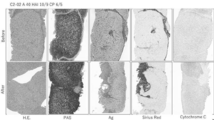
- Subject identification code: C2-02 (Fig. 1)
- Subject identification code: C2-02 is Baseline and Child-Pugh Score 6 and 5 which are liver cirrhosis severity classifications in Day 15 of the 6th cycle, and Hepatitis Histology Index (HAI) 10 and 9 which is the classification of chronic hepatitis pathology. This is a case in which the fibrotic area in the liver parenchymal region slightly increased although it was improved by one stage (Table 1).
- PAS staining (PAS staining in Fig. 1), which is a histopathological method, is a method for staining liver glycogen
- Cytochrome C (Cyto C) is one of the constituent enzymes of the electron transfer system and important for energy production.
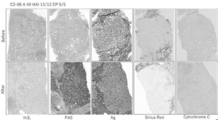
- Subject identification code C2-06 (Fig. 2)
- HAI Hepatitis Histology Index
- the fibrotic area in the liver parenchymal region tended to improve, but it was not a significant change (Table 1).
- Histopathological examination of the biopsy specimens revealed that PAS and Cyto C markedly increased the number of favorable sites and improved liver function.
- Serum albumin changed from 3.7 to 4.0 during the screening period and 3.3 to 4.0 during the treatment period, but reached 4.3 after 28 days of post-treatment observation.
- the prothrombin time (PT) was 77% during the screening period and 74% to 86% during the treatment period, but it was 92% at 28 days after treatment.
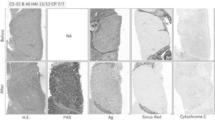
- Subject identification code C2-03 (Fig. 3)
- the fibrotic area in the liver parenchymal region was significantly reduced as shown in Table 1. Histopathological examination of the biopsy specimen revealed that the number of Cyto C favorable sites was slightly reduced (PAS-stained images before treatment could not be obtained).
- Serum albumin changed from 3.1 to 3.3 during the screening period and 2.3 during the treatment period, but reached 3.4 at 28 days after treatment.
- the prothrombin time (PT) was 51% during the screening period and 44% to 64% during the treatment period, but it was 67% at 28 days after the treatment.
- Subject identification code C2-04 (Fig. 4)
- Subject identification code: C2-04 had a Child-Pugh Score of 7 and 7, and a Hepatitis Histology Index (HAI) of 12 and 11 at baseline and Day 15 of the 6th cycle.
- HAI Hepatitis Histology Index
- the fibrotic area in the liver parenchymal region was significantly reduced as shown in Table 1.
- a histopathological examination of the biopsy specimen revealed that the number of Cyto C favorable sites was significantly increased (PAS-stained images after treatment could not be obtained).
- Serum albumin changed from 3.4 to 2.7 during the screening period and 2.7 to 3.3 during the treatment period, but reached 3.2 at 28 days after treatment.
- the prothrombin time (PT) was 62% during the screening period and 61% to 67% during the treatment period, but it was 69% at 28 days after the treatment.
- Subject identification code C2-07 (Fig. 5)
- HAI Hepatitis Histology Index
- the fibrotic area in the liver parenchymal region was significantly reduced as shown in Table 1. Histopathological examination of the biopsy specimens revealed that the number of PAS and Cyto C favorable sites was significantly increased. Serum albumin changed from 2.3 to 3.5 during the screening period and 2.3 during the treatment period, but reached 3.0 on the 28th post-treatment observation day.
- the prothrombin time (PT) was 79% during the screening period and 68% to 82% during the treatment period, but was 79% at 28 days after the treatment.
- Example 2 Cytological examination (C-82) It was verified using cell lines that C-82, which is an activator of PRI-724, activates mitochondria in hepatocytes. Human hepatoma-derived HepG2 cells and Huh7 cells were used as cell lines. Both cells are commercially available. 2-1: WST-8 assay (purpose) To verify that C82, the activator of PRI-724, activates hepatocyte intracellular mitochondria, a WST-8 assay was first performed.
- WST-8 is generally used in cytotoxicity tests and cell growth tests of compounds, and NADH produced by intracellular dehydrogenase is WST-8(2-(2-methoxy-4-nitrophenyl)-3- (4-nitrophenyl)-5-(2,4-disulfophenyl)-2H-tetrazolium, monosodium salt) is reduced to formazan.
- the amount of this formazan dye reflects intracellular metabolism. It is known that this dehydrogenase reaction mainly takes place in mitochondria and correlates well with the MTT assay for measuring mitochondrial enzyme activity. (Test method) For the measurement, Cell Counting Kit-8 (Dojindo) was used, and the absorbance at 450 nM was measured with an iMark microplate reader (Bio-rad).
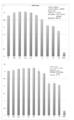
- HepG2 cells or Huh7 cells were seeded at 5000 cells/well in a 96-well microplate with 100 ⁇ l of DMEM 10% FBS in each well. After that, it was implemented according to the attached technical manual. (result) Results are shown in FIG. In both HepG2 cells (upper panel) and Huh7 cells (lower panel), the enzyme activity was increased up to 10% when C82 was 50 nM to 500 nM. It was suggested that the enzyme activity of C82 (1 ⁇ M) antagonized the control group, and that when C82 concentration was further increased, cytotoxicity appeared. DMSO was added to the control group.
- C82 which is an active form of PRI-724, also has a drug effect of increasing the mitochondrial enzyme activity, and it was suggested that the peak is from 100 nM to 500 nM. This effect supports the liver function improving effect of C82.
Landscapes
- Health & Medical Sciences (AREA)
- Medicinal Chemistry (AREA)
- Veterinary Medicine (AREA)
- Public Health (AREA)
- General Health & Medical Sciences (AREA)
- Animal Behavior & Ethology (AREA)
- Life Sciences & Earth Sciences (AREA)
- Pharmacology & Pharmacy (AREA)
- Chemical & Material Sciences (AREA)
- Bioinformatics & Cheminformatics (AREA)
- Engineering & Computer Science (AREA)
- Chemical Kinetics & Catalysis (AREA)
- Nuclear Medicine, Radiotherapy & Molecular Imaging (AREA)
- Organic Chemistry (AREA)
- General Chemical & Material Sciences (AREA)
- Diabetes (AREA)
- Hematology (AREA)
- Obesity (AREA)
- Endocrinology (AREA)
- Emergency Medicine (AREA)
- Epidemiology (AREA)
- Gastroenterology & Hepatology (AREA)
- Pharmaceuticals Containing Other Organic And Inorganic Compounds (AREA)
Abstract
L'objectif de la présente invention est de fournir un médicament utilisable pour améliorer la fonction hépatique. L'invention concerne un agent qui améliore la fonction hépatique et qui contient comme principe actif au moins un élément sélectionné parmi le 4-(((6S,9S,9aS)-1-(benzylcarbamoyl)-2,9-diméthyl-4,7-dioxo-8-(quinoléine-8-ylméthyl)octahydro-1H-pyrazino[2,1-c][1,2,4]triazine-6-yl)méthyl)phényldihydrogène phosphate, le (6S,9S,9aS)-N-benzyl-6-(4-hydroxybenzyl)-2,9-diméthyl-4,7-dioxo-8-(quinoline-8-ylméthyl)octahydro-1H-pyrazino[2,1-c][1,2,4]triazine-1-carboxamide et des sels de qualité pharmaceutique de ceux-ci, cet agent étant capable d'améliorer la fonction hépatique, en particulier les troubles de la fonction de métabolisme du glucose du foie, de la fonction de transfert d'électrons et des fonctions de synthèse du foie observées au cours de maladies hépatiques et autres.
Priority Applications (1)
| Application Number | Priority Date | Filing Date | Title |
|---|---|---|---|
| JP2020560098A JPWO2020122022A1 (ja) | 2018-12-10 | 2019-12-09 | 肝機能改善剤 |
Applications Claiming Priority (4)
| Application Number | Priority Date | Filing Date | Title |
|---|---|---|---|
| JP2018231220 | 2018-12-10 | ||
| JP2018-231220 | 2018-12-10 | ||
| JP2019-094055 | 2019-05-17 | ||
| JP2019094055 | 2019-05-17 |
Publications (1)
| Publication Number | Publication Date |
|---|---|
| WO2020122022A1 true WO2020122022A1 (fr) | 2020-06-18 |
Family
ID=71076393
Family Applications (1)
| Application Number | Title | Priority Date | Filing Date |
|---|---|---|---|
| PCT/JP2019/048112 Ceased WO2020122022A1 (fr) | 2018-12-10 | 2019-12-09 | Agent améliorant la fonction hépatique |
Country Status (2)
| Country | Link |
|---|---|
| JP (1) | JPWO2020122022A1 (fr) |
| WO (1) | WO2020122022A1 (fr) |
Cited By (1)
| Publication number | Priority date | Publication date | Assignee | Title |
|---|---|---|---|---|
| WO2023210716A1 (fr) * | 2022-04-28 | 2023-11-02 | 地方独立行政法人東京都立病院機構 | Schéma thérapeutique de fibrose hépatique pour inhibiteur de cbp/caténine |
Citations (4)
| Publication number | Priority date | Publication date | Assignee | Title |
|---|---|---|---|---|
| WO2012141038A1 (fr) * | 2011-04-15 | 2012-10-18 | 国立大学法人鳥取大学 | Synthèse et analyse de nouveau composé apte à induire la différenciation de cellule souche mésenchymateuse humaine en hépatocyte |
| WO2014092154A1 (fr) * | 2012-12-12 | 2014-06-19 | 株式会社PRISM Pharma | Agent de prévention ou de traitement pour la fibrose hépatique |
| JP2016502497A (ja) * | 2012-10-19 | 2016-01-28 | 株式会社PRISM Pharma | I型およびii型糖尿病を治療する方法 |
| JP2016535082A (ja) * | 2013-10-18 | 2016-11-10 | 弘行 小路 | Cbp/カテニン阻害剤を用いる肝線維症の治療 |
-
2019
- 2019-12-09 WO PCT/JP2019/048112 patent/WO2020122022A1/fr not_active Ceased
- 2019-12-09 JP JP2020560098A patent/JPWO2020122022A1/ja active Pending
Patent Citations (4)
| Publication number | Priority date | Publication date | Assignee | Title |
|---|---|---|---|---|
| WO2012141038A1 (fr) * | 2011-04-15 | 2012-10-18 | 国立大学法人鳥取大学 | Synthèse et analyse de nouveau composé apte à induire la différenciation de cellule souche mésenchymateuse humaine en hépatocyte |
| JP2016502497A (ja) * | 2012-10-19 | 2016-01-28 | 株式会社PRISM Pharma | I型およびii型糖尿病を治療する方法 |
| WO2014092154A1 (fr) * | 2012-12-12 | 2014-06-19 | 株式会社PRISM Pharma | Agent de prévention ou de traitement pour la fibrose hépatique |
| JP2016535082A (ja) * | 2013-10-18 | 2016-11-10 | 弘行 小路 | Cbp/カテニン阻害剤を用いる肝線維症の治療 |
Non-Patent Citations (1)
| Title |
|---|
| KIMURA, MASAMICHI; NISHIKAWA, KOJI; IMAMURA, JUN; KENICHI; HARADA; KIMINORI, KIMURA: "Analyzing anti-fibrotic mechanism of Wnt/beta-Catenin inhibitor PRI-724 against C-type cirrhosis", ACTA HEPATOLOGICA JAPONICA, vol. 59, no. Suppl. 1, 20 April 2018 (2018-04-20), pages A389, XP009522129 * |
Cited By (3)
| Publication number | Priority date | Publication date | Assignee | Title |
|---|---|---|---|---|
| WO2023210716A1 (fr) * | 2022-04-28 | 2023-11-02 | 地方独立行政法人東京都立病院機構 | Schéma thérapeutique de fibrose hépatique pour inhibiteur de cbp/caténine |
| JPWO2023210716A1 (fr) * | 2022-04-28 | 2023-11-02 | ||
| JP7719476B2 (ja) | 2022-04-28 | 2025-08-06 | 地方独立行政法人東京都立病院機構 | Cbp/カテニン阻害剤の肝線維症治療レジメン |
Also Published As
| Publication number | Publication date |
|---|---|
| JPWO2020122022A1 (ja) | 2021-10-28 |
Similar Documents
| Publication | Publication Date | Title |
|---|---|---|
| Guan et al. | Nuanxinkang prevents the development of myocardial infarction-induced chronic heart failure by promoting PINK1/Parkin-mediated mitophagy | |
| Konopelski et al. | Indole-3-propionic acid, a tryptophan-derived bacterial metabolite, increases blood pressure via cardiac and vascular mechanisms in rats | |
| Chaiwong et al. | Dried mulberry fruit ameliorates cardiovascular and liver histopathological changes in high-fat diet-induced hyperlipidemic mice | |
| Tan et al. | Honokiol post-treatment ameliorates myocardial ischemia/reperfusion injury by enhancing autophagic flux and reducing intracellular ROS production | |
| Chen et al. | Adiponectin promotes repair of renal tubular epithelial cells by regulating mitochondrial biogenesis and function | |
| TR201901422T4 (tr) | Tümörlerin tedavisinde kullanım için korteksolon 17A,21-diesterleri. | |
| Yoo et al. | Propofol attenuates renal ischemia-reperfusion injury aggravated by hyperglycemia | |
| WO2016116054A1 (fr) | Modulateurs du récepteur farnésoïde x et leurs méthodes d'utilisation | |
| JP6144775B2 (ja) | 腎臓病の治療に使用されるアーテミシニンおよびその誘導体 | |
| CN117323438B (zh) | 四面体框架核酸-姜黄素复合物在制备预防和/或治疗糖尿病性骨质疏松的药物中的用途 | |
| WO2020122022A1 (fr) | Agent améliorant la fonction hépatique | |
| CN120837468A (zh) | 3-羟基丁酸或其衍生物在肝脏相关疾病治疗或预防中的应用 | |
| Mladěnka et al. | Direct administration of rutin does not protect against catecholamine cardiotoxicity | |
| Deng et al. | Resveratrol inhibits high glucose-induced activation of AP-1 and NF-κB via SphK1/S1P2 pathway to attenuate mesangial cells proliferation and inflammation | |
| Tian et al. | Preclinical pharmacology of TP1, a novel potent triple reuptake inhibitor with antidepressant properties | |
| CN115969827A (zh) | 山椒素在制备药物中的应用 | |
| CN116549477A (zh) | 一种tas1r2受体的激活剂及其应用 | |
| CN112891361B (zh) | Pubescenoside C在制备防治心肌缺血再灌注损伤药物中的应用 | |
| CN109535075B (zh) | 喹啉类二聚体及其制备方法和应用 | |
| CN112294827B (zh) | 5-胆甾烯 -3β-醇硫酸酯盐的用途 | |
| JP6108569B2 (ja) | 虚血性疾患の治療又は予防のための薬剤及びその利用 | |
| CN107056877A (zh) | 一种甾体类化合物及其用途 | |
| KR20240139551A (ko) | 허혈-재관류 손상의 예방 또는 치료용 약학 조성물 | |
| Karakus et al. | Development of PLGA-Triiodothyronine Nanoparticles for Targeted Delivery in the Cardioprotection Against Ischemic Insult | |
| CN119930640A (zh) | 鸦胆子素a衍生物及其制备方法和应用 |
Legal Events
| Date | Code | Title | Description |
|---|---|---|---|
| 121 | Ep: the epo has been informed by wipo that ep was designated in this application |
Ref document number: 19895829 Country of ref document: EP Kind code of ref document: A1 |
|
| ENP | Entry into the national phase |
Ref document number: 2020560098 Country of ref document: JP Kind code of ref document: A |
|
| NENP | Non-entry into the national phase |
Ref country code: DE |
|
| 122 | Ep: pct application non-entry in european phase |
Ref document number: 19895829 Country of ref document: EP Kind code of ref document: A1 |