WO2020122124A1 - (メタ)アクリレート、モノマー組成物、成形体、歯科材料用組成物、及び歯科材料 - Google Patents
(メタ)アクリレート、モノマー組成物、成形体、歯科材料用組成物、及び歯科材料 Download PDFInfo
- Publication number
- WO2020122124A1 WO2020122124A1 PCT/JP2019/048500 JP2019048500W WO2020122124A1 WO 2020122124 A1 WO2020122124 A1 WO 2020122124A1 JP 2019048500 W JP2019048500 W JP 2019048500W WO 2020122124 A1 WO2020122124 A1 WO 2020122124A1
- Authority
- WO
- WIPO (PCT)
- Prior art keywords
- group
- meth
- acrylate
- compound
- thio
- Prior art date
- Legal status (The legal status is an assumption and is not a legal conclusion. Google has not performed a legal analysis and makes no representation as to the accuracy of the status listed.)
- Ceased
Links
Images







Classifications
-
- C—CHEMISTRY; METALLURGY
- C08—ORGANIC MACROMOLECULAR COMPOUNDS; THEIR PREPARATION OR CHEMICAL WORKING-UP; COMPOSITIONS BASED THEREON
- C08G—MACROMOLECULAR COMPOUNDS OBTAINED OTHERWISE THAN BY REACTIONS ONLY INVOLVING UNSATURATED CARBON-TO-CARBON BONDS
- C08G18/00—Polymeric products of isocyanates or isothiocyanates
- C08G18/06—Polymeric products of isocyanates or isothiocyanates with compounds having active hydrogen
- C08G18/08—Processes
- C08G18/16—Catalysts
- C08G18/22—Catalysts containing metal compounds
- C08G18/24—Catalysts containing metal compounds of tin
- C08G18/244—Catalysts containing metal compounds of tin tin salts of carboxylic acids
- C08G18/246—Catalysts containing metal compounds of tin tin salts of carboxylic acids containing also tin-carbon bonds
-
- A—HUMAN NECESSITIES
- A61—MEDICAL OR VETERINARY SCIENCE; HYGIENE
- A61K—PREPARATIONS FOR MEDICAL, DENTAL OR TOILETRY PURPOSES
- A61K6/00—Preparations for dentistry
- A61K6/30—Compositions for temporarily or permanently fixing teeth or palates, e.g. primers for dental adhesives
-
- A—HUMAN NECESSITIES
- A61—MEDICAL OR VETERINARY SCIENCE; HYGIENE
- A61K—PREPARATIONS FOR MEDICAL, DENTAL OR TOILETRY PURPOSES
- A61K6/00—Preparations for dentistry
- A61K6/80—Preparations for artificial teeth, for filling teeth or for capping teeth
- A61K6/884—Preparations for artificial teeth, for filling teeth or for capping teeth comprising natural or synthetic resins
- A61K6/887—Compounds obtained by reactions only involving carbon-to-carbon unsaturated bonds
-
- C—CHEMISTRY; METALLURGY
- C07—ORGANIC CHEMISTRY
- C07C—ACYCLIC OR CARBOCYCLIC COMPOUNDS
- C07C69/00—Esters of carboxylic acids; Esters of carbonic or haloformic acids
- C07C69/52—Esters of acyclic unsaturated carboxylic acids having the esterified carboxyl group bound to an acyclic carbon atom
- C07C69/533—Monocarboxylic acid esters having only one carbon-to-carbon double bond
- C07C69/54—Acrylic acid esters; Methacrylic acid esters
-
- C—CHEMISTRY; METALLURGY
- C08—ORGANIC MACROMOLECULAR COMPOUNDS; THEIR PREPARATION OR CHEMICAL WORKING-UP; COMPOSITIONS BASED THEREON
- C08F—MACROMOLECULAR COMPOUNDS OBTAINED BY REACTIONS ONLY INVOLVING CARBON-TO-CARBON UNSATURATED BONDS
- C08F290/00—Macromolecular compounds obtained by polymerising monomers on to polymers modified by introduction of aliphatic unsaturated end or side groups
- C08F290/02—Macromolecular compounds obtained by polymerising monomers on to polymers modified by introduction of aliphatic unsaturated end or side groups on to polymers modified by introduction of unsaturated end groups
- C08F290/06—Polymers provided for in subclass C08G
- C08F290/067—Polyurethanes; Polyureas
-
- C—CHEMISTRY; METALLURGY
- C08—ORGANIC MACROMOLECULAR COMPOUNDS; THEIR PREPARATION OR CHEMICAL WORKING-UP; COMPOSITIONS BASED THEREON
- C08G—MACROMOLECULAR COMPOUNDS OBTAINED OTHERWISE THAN BY REACTIONS ONLY INVOLVING UNSATURATED CARBON-TO-CARBON BONDS
- C08G18/00—Polymeric products of isocyanates or isothiocyanates
- C08G18/06—Polymeric products of isocyanates or isothiocyanates with compounds having active hydrogen
- C08G18/28—Polymeric products of isocyanates or isothiocyanates with compounds having active hydrogen characterised by the compounds used containing active hydrogen
- C08G18/67—Unsaturated compounds having active hydrogen
- C08G18/671—Unsaturated compounds having only one group containing active hydrogen
- C08G18/672—Esters of acrylic or alkyl acrylic acid having only one group containing active hydrogen
-
- C—CHEMISTRY; METALLURGY
- C08—ORGANIC MACROMOLECULAR COMPOUNDS; THEIR PREPARATION OR CHEMICAL WORKING-UP; COMPOSITIONS BASED THEREON
- C08G—MACROMOLECULAR COMPOUNDS OBTAINED OTHERWISE THAN BY REACTIONS ONLY INVOLVING UNSATURATED CARBON-TO-CARBON BONDS
- C08G18/00—Polymeric products of isocyanates or isothiocyanates
- C08G18/06—Polymeric products of isocyanates or isothiocyanates with compounds having active hydrogen
- C08G18/70—Polymeric products of isocyanates or isothiocyanates with compounds having active hydrogen characterised by the isocyanates or isothiocyanates used
- C08G18/72—Polyisocyanates or polyisothiocyanates
- C08G18/73—Polyisocyanates or polyisothiocyanates acyclic
-
- C—CHEMISTRY; METALLURGY
- C08—ORGANIC MACROMOLECULAR COMPOUNDS; THEIR PREPARATION OR CHEMICAL WORKING-UP; COMPOSITIONS BASED THEREON
- C08G—MACROMOLECULAR COMPOUNDS OBTAINED OTHERWISE THAN BY REACTIONS ONLY INVOLVING UNSATURATED CARBON-TO-CARBON BONDS
- C08G18/00—Polymeric products of isocyanates or isothiocyanates
- C08G18/06—Polymeric products of isocyanates or isothiocyanates with compounds having active hydrogen
- C08G18/70—Polymeric products of isocyanates or isothiocyanates with compounds having active hydrogen characterised by the isocyanates or isothiocyanates used
- C08G18/72—Polyisocyanates or polyisothiocyanates
- C08G18/74—Polyisocyanates or polyisothiocyanates cyclic
- C08G18/75—Polyisocyanates or polyisothiocyanates cyclic cycloaliphatic
- C08G18/751—Polyisocyanates or polyisothiocyanates cyclic cycloaliphatic containing only one cycloaliphatic ring
- C08G18/752—Polyisocyanates or polyisothiocyanates cyclic cycloaliphatic containing only one cycloaliphatic ring containing at least one isocyanate or isothiocyanate group linked to the cycloaliphatic ring by means of an aliphatic group
- C08G18/753—Polyisocyanates or polyisothiocyanates cyclic cycloaliphatic containing only one cycloaliphatic ring containing at least one isocyanate or isothiocyanate group linked to the cycloaliphatic ring by means of an aliphatic group containing one isocyanate or isothiocyanate group linked to the cycloaliphatic ring by means of an aliphatic group having a primary carbon atom next to the isocyanate or isothiocyanate group
- C08G18/755—Polyisocyanates or polyisothiocyanates cyclic cycloaliphatic containing only one cycloaliphatic ring containing at least one isocyanate or isothiocyanate group linked to the cycloaliphatic ring by means of an aliphatic group containing one isocyanate or isothiocyanate group linked to the cycloaliphatic ring by means of an aliphatic group having a primary carbon atom next to the isocyanate or isothiocyanate group and at least one isocyanate or isothiocyanate group linked to a secondary carbon atom of the cycloaliphatic ring, e.g. isophorone diisocyanate
-
- C—CHEMISTRY; METALLURGY
- C08—ORGANIC MACROMOLECULAR COMPOUNDS; THEIR PREPARATION OR CHEMICAL WORKING-UP; COMPOSITIONS BASED THEREON
- C08G—MACROMOLECULAR COMPOUNDS OBTAINED OTHERWISE THAN BY REACTIONS ONLY INVOLVING UNSATURATED CARBON-TO-CARBON BONDS
- C08G18/00—Polymeric products of isocyanates or isothiocyanates
- C08G18/06—Polymeric products of isocyanates or isothiocyanates with compounds having active hydrogen
- C08G18/70—Polymeric products of isocyanates or isothiocyanates with compounds having active hydrogen characterised by the isocyanates or isothiocyanates used
- C08G18/72—Polyisocyanates or polyisothiocyanates
- C08G18/74—Polyisocyanates or polyisothiocyanates cyclic
- C08G18/75—Polyisocyanates or polyisothiocyanates cyclic cycloaliphatic
- C08G18/751—Polyisocyanates or polyisothiocyanates cyclic cycloaliphatic containing only one cycloaliphatic ring
- C08G18/752—Polyisocyanates or polyisothiocyanates cyclic cycloaliphatic containing only one cycloaliphatic ring containing at least one isocyanate or isothiocyanate group linked to the cycloaliphatic ring by means of an aliphatic group
- C08G18/757—Polyisocyanates or polyisothiocyanates cyclic cycloaliphatic containing only one cycloaliphatic ring containing at least one isocyanate or isothiocyanate group linked to the cycloaliphatic ring by means of an aliphatic group containing at least two isocyanate or isothiocyanate groups linked to the cycloaliphatic ring by means of an aliphatic group
-
- C—CHEMISTRY; METALLURGY
- C08—ORGANIC MACROMOLECULAR COMPOUNDS; THEIR PREPARATION OR CHEMICAL WORKING-UP; COMPOSITIONS BASED THEREON
- C08G—MACROMOLECULAR COMPOUNDS OBTAINED OTHERWISE THAN BY REACTIONS ONLY INVOLVING UNSATURATED CARBON-TO-CARBON BONDS
- C08G18/00—Polymeric products of isocyanates or isothiocyanates
- C08G18/06—Polymeric products of isocyanates or isothiocyanates with compounds having active hydrogen
- C08G18/70—Polymeric products of isocyanates or isothiocyanates with compounds having active hydrogen characterised by the isocyanates or isothiocyanates used
- C08G18/72—Polyisocyanates or polyisothiocyanates
- C08G18/74—Polyisocyanates or polyisothiocyanates cyclic
- C08G18/75—Polyisocyanates or polyisothiocyanates cyclic cycloaliphatic
- C08G18/758—Polyisocyanates or polyisothiocyanates cyclic cycloaliphatic containing two or more cycloaliphatic rings
-
- C—CHEMISTRY; METALLURGY
- C08—ORGANIC MACROMOLECULAR COMPOUNDS; THEIR PREPARATION OR CHEMICAL WORKING-UP; COMPOSITIONS BASED THEREON
- C08G—MACROMOLECULAR COMPOUNDS OBTAINED OTHERWISE THAN BY REACTIONS ONLY INVOLVING UNSATURATED CARBON-TO-CARBON BONDS
- C08G18/00—Polymeric products of isocyanates or isothiocyanates
- C08G18/06—Polymeric products of isocyanates or isothiocyanates with compounds having active hydrogen
- C08G18/70—Polymeric products of isocyanates or isothiocyanates with compounds having active hydrogen characterised by the isocyanates or isothiocyanates used
- C08G18/72—Polyisocyanates or polyisothiocyanates
- C08G18/74—Polyisocyanates or polyisothiocyanates cyclic
- C08G18/76—Polyisocyanates or polyisothiocyanates cyclic aromatic
- C08G18/7614—Polyisocyanates or polyisothiocyanates cyclic aromatic containing only one aromatic ring
- C08G18/7628—Polyisocyanates or polyisothiocyanates cyclic aromatic containing only one aromatic ring containing at least one isocyanate or isothiocyanate group linked to the aromatic ring by means of an aliphatic group
- C08G18/7642—Polyisocyanates or polyisothiocyanates cyclic aromatic containing only one aromatic ring containing at least one isocyanate or isothiocyanate group linked to the aromatic ring by means of an aliphatic group containing at least two isocyanate or isothiocyanate groups linked to the aromatic ring by means of an aliphatic group having a primary carbon atom next to the isocyanate or isothiocyanate groups, e.g. xylylene diisocyanate or homologues substituted on the aromatic ring
-
- C—CHEMISTRY; METALLURGY
- C08—ORGANIC MACROMOLECULAR COMPOUNDS; THEIR PREPARATION OR CHEMICAL WORKING-UP; COMPOSITIONS BASED THEREON
- C08G—MACROMOLECULAR COMPOUNDS OBTAINED OTHERWISE THAN BY REACTIONS ONLY INVOLVING UNSATURATED CARBON-TO-CARBON BONDS
- C08G18/00—Polymeric products of isocyanates or isothiocyanates
- C08G18/06—Polymeric products of isocyanates or isothiocyanates with compounds having active hydrogen
- C08G18/70—Polymeric products of isocyanates or isothiocyanates with compounds having active hydrogen characterised by the isocyanates or isothiocyanates used
- C08G18/72—Polyisocyanates or polyisothiocyanates
- C08G18/74—Polyisocyanates or polyisothiocyanates cyclic
- C08G18/76—Polyisocyanates or polyisothiocyanates cyclic aromatic
- C08G18/7614—Polyisocyanates or polyisothiocyanates cyclic aromatic containing only one aromatic ring
- C08G18/7628—Polyisocyanates or polyisothiocyanates cyclic aromatic containing only one aromatic ring containing at least one isocyanate or isothiocyanate group linked to the aromatic ring by means of an aliphatic group
- C08G18/765—Polyisocyanates or polyisothiocyanates cyclic aromatic containing only one aromatic ring containing at least one isocyanate or isothiocyanate group linked to the aromatic ring by means of an aliphatic group alpha, alpha, alpha', alpha', -tetraalkylxylylene diisocyanate or homologues substituted on the aromatic ring
-
- C—CHEMISTRY; METALLURGY
- C08—ORGANIC MACROMOLECULAR COMPOUNDS; THEIR PREPARATION OR CHEMICAL WORKING-UP; COMPOSITIONS BASED THEREON
- C08G—MACROMOLECULAR COMPOUNDS OBTAINED OTHERWISE THAN BY REACTIONS ONLY INVOLVING UNSATURATED CARBON-TO-CARBON BONDS
- C08G2190/00—Compositions for sealing or packing joints
Definitions
- the present invention relates to a (meth)acrylate, a monomer composition, a molded body, a dental material composition, and a dental material.
- polymerizable monomers typified by (meth)acrylate have been widely used in various fields such as paints, printing plates, optical materials, and dental materials by utilizing properties such as good curability and transparency. Has been done.
- the polymerizable monomer is, in the field of dental materials, in particular, for bonding dental restoration materials such as dental composite resin used for restoration of dental caries and fracture of natural teeth, dental composite resin and teeth. It is widely used for various dental adhesives used for, artificial teeth, denture base materials and the like.
- a dental composite resin is generally composed of a polymerizable monomer, a polymerization initiator and a filler.
- the polymerizable monomer safety in vivo, mechanical strength of a cured product, abrasion resistance and From the viewpoint of aesthetics, radical-polymerizable polyfunctional (meth)acrylate is used.
- the polyfunctional (meth)acrylate include 2,2-bis[4-(3-methacryloyloxy-2-hydroxypropoxy)phenyl]propane (commonly referred to as Bis-GMA) and 2,2,4-trimethylhexa Methylenebis(2-carbamoyloxyethyl)dimethacrylate (commonly referred to as UDMA) is used.
- Polymerization shrinkage causes the occurrence of a contraction gap that occurs when the dental composite resin is peeled off from the adhesive surface, and causes secondary caries, dental pulp irritation, coloring, loss of restorations, etc. ..
- Patent Document 1 JP2007-15946A
- Patent Document 2 JP2005-187385A
- Patent Document 3 JP-A-2007-526270
- Patent Document 4 JP2005-89312A
- Patent Document 1 and Patent Document 2 polymerization shrinkage tends to be reduced by using these compounds, but there are many problems such as the need for a dedicated primer because the curing system is different. Further, in Patent Documents 3 and 4, since the shrinkage rate of the monomer used is large, the effect is limited. Further, as the (meth)acrylate used in the dental composite resin or the like, it is desirable that mechanical strength such as breaking strength can be increased when it is made into a cured product.
- One form of the present invention has been made in view of the above problems, it is possible to form a cured product having excellent breaking strength, less polymerization shrinkage during curing (meth)acrylate, a monomer composition containing the same, It is intended to provide a molded product which is a cured product of a monomer composition, a dental material composition containing the monomer composition, and a dental material which is a cured product of the dental material composition.
- the compound (X) is a reaction product of the reaction product of the epoxy compound (A) and the (meth)acrylic acid (B), and the iso(thio)cyanate compound (C). (Meth)acrylate described in 1>.
- the epoxy compound (A) contains a tert-butyl group, a tert-pentyl group, a tert-hexyl group, a tert-heptyl group, a tert-octyl group, a tert-nonyl group, a tert-decyl group or a cumyl group.
- the epoxy compound (A) is the (meth)acrylate according to any one of ⁇ 1> to ⁇ 3>, which includes a glycidyl ether group that is a functional group including the epoxy group.
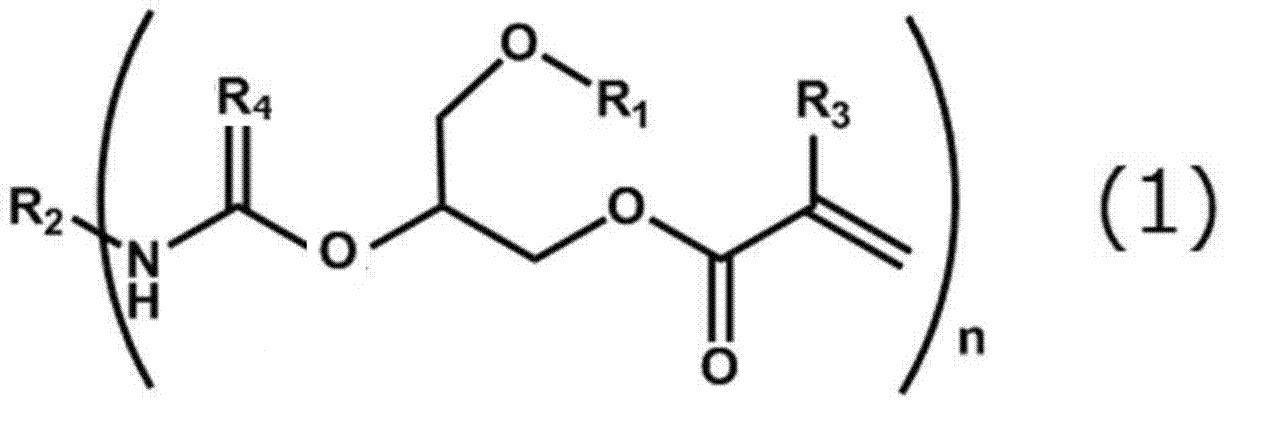
- the (meth)acrylate according to ⁇ 4> represented by the following general formula (1).
- R 1 is a residue obtained by removing the glycidyl ether group from the epoxy compound (A), and R 2 is all iso(thio)cyanate compounds (C). a group given by removing thio) cyanate group, R 3 is a hydrogen atom or a methyl group, R 4 is an oxygen atom or a sulfur atom .n is an integer of 2 or more. R 1 there are a plurality of , R 3 and R 4 may be the same or different.
- R 1 there are a plurality of , R 3 and R 4 may be the same or different.
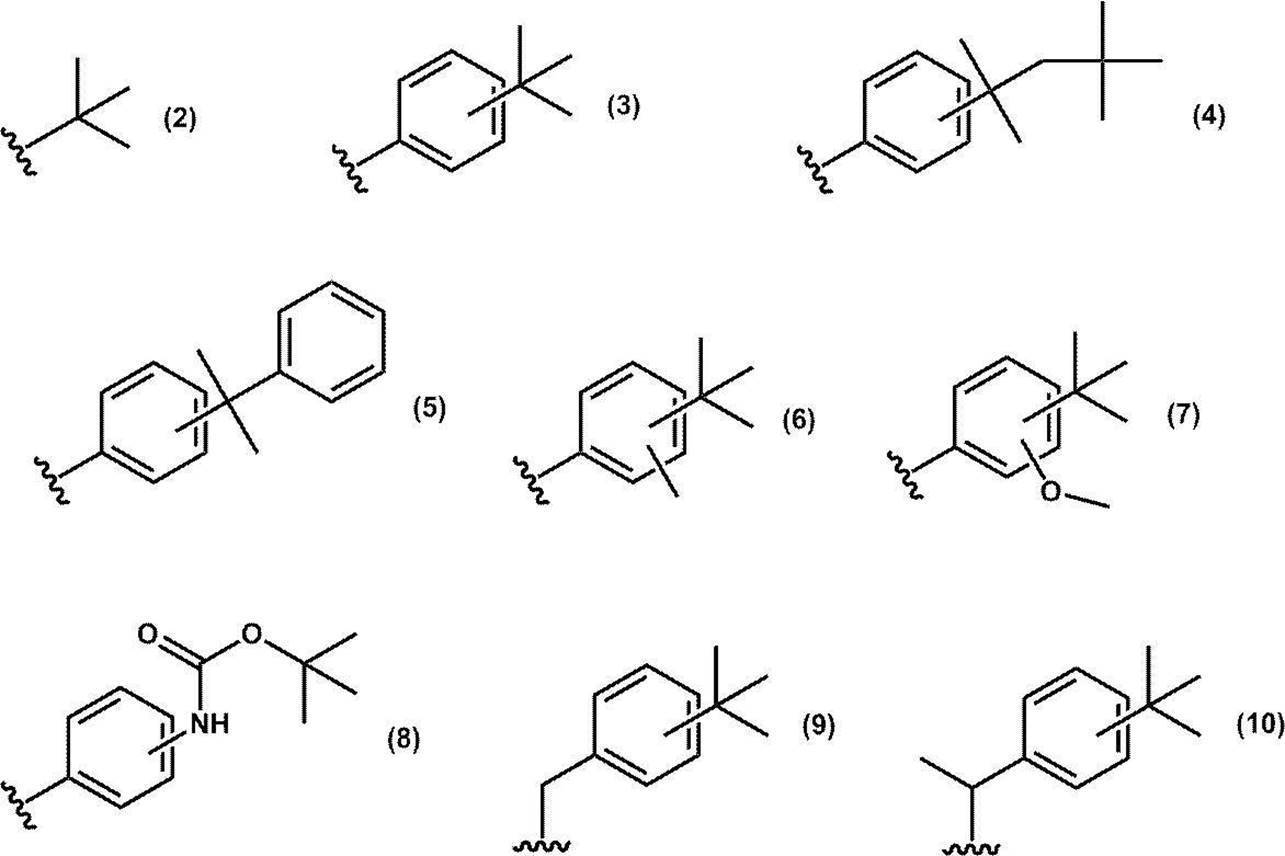
- R 1 is represented by the following formulas (2), (3), (4), (5), (6), (7), (8), (9) or ( (Meth)acrylate according to ⁇ 5>, which is a group represented by 10).
- the iso(thio)cyanate compound (C) is hexamethylene diisocyanate, 2,2,4-trimethylhexamethylene diisocyanate, 2,4,4-trimethylhexamethylene diisocyanate, pentamethylene diisocyanate, m-xylylene diisocyanate 1,3-tetramethylxylylene diisocyanate, isophorone diisocyanate, bis(isocyanatomethyl)cyclohexane, bis(isocyanatocyclohexyl)methane, 2,5-bis(isocyanatomethyl)bicyclo-[2.2.1]-heptane At least one isocyanate compound selected from the group consisting of 2,6-bis(isocyanatomethyl)bicyclo-[2.2.1]-heptane, tolylene diisocyanate, phenylene diisocyanate, and 4,4′
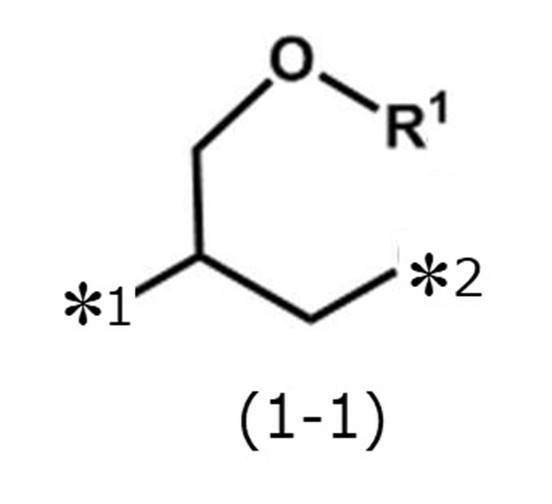
- R 1 is a structure containing a tertiary carbon atom or a quaternary carbon atom, and *1 and *2 represent bonding positions.
- D monomer composition containing (meth)acrylate (D) which is the (meth)acrylate according to any one of ⁇ 1> to ⁇ 9>.
- ⁇ 11> A molded article which is a cured product of the (meth)acrylate according to any one of ⁇ 1> to ⁇ 9> or a cured product of the monomer composition according to ⁇ 10>.
- ⁇ 12> A dental material composition containing the (meth)acrylate according to any one of ⁇ 1> to ⁇ 9> or the monomer composition according to ⁇ 10>, a polymerization initiator, and a filler.
- ⁇ 13> A dental material which is a cured product of the composition for dental material according to ⁇ 12>.
- a (meth)acrylate capable of forming a cured product having excellent breaking strength and having little polymerization shrinkage at the time of curing, a monomer composition containing the same, and a cured product of the monomer composition It is possible to provide a body, a dental material composition containing the monomer composition, and a dental material that is a cured product of the dental material composition.
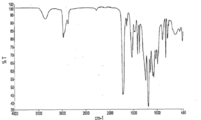
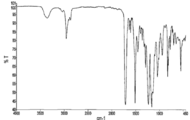
- Example 1 is an IR spectrum of the urethane diacrylate (A-1) obtained in Example 1.
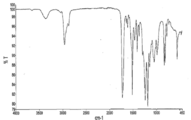
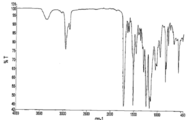
- 3 is an IR spectrum of the urethane diacrylate (A-2) obtained in Example 2.
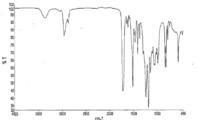
- 3 is an IR spectrum of the urethane diacrylate (A-3) obtained in Example 3.
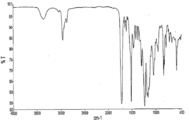
- 3 is an IR spectrum of the urethane diacrylate (A-4) obtained in Example 4.
- 3 is an IR spectrum of the urethane diacrylate (A-5) obtained in Example 5.
- 3 is an IR spectrum of the urethane diacrylate (A-6) obtained in Example 6.
- 3 is an IR spectrum of the urethane diacrylate (A-7) obtained in Example 7.
- 9 is an IR spectrum of the urethane diacrylate (A-8) obtained in Example 8.
- 3 is an IR spectrum of the urethane diacrylate (A-9) obtained in Example 9.
- 3 is an IR spectrum of the urethane diacrylate (A-10) obtained in Example 10.
- 3 is an IR spectrum of the urethane diacrylate (A-11) obtained in Example 11.
- 3 is an IR spectrum of the urethane diacrylate (A-12) obtained in Example 12.
- 9 is an IR spectrum of the urethane dimethacrylate (M-1) obtained in Example 13.
- 3 is an IR spectrum of the urethane dimethacrylate (M-2) obtained in Example 14.
- the numerical range indicated by using “to” includes the numerical values before and after “to” as the minimum value and the maximum value, respectively.
- the upper limit value or the lower limit value described in one numerical range may be replaced with the upper limit value or the lower limit value of another stepwise described numerical range. ..
- the upper limit value or the lower limit value of the numerical range may be replaced with the value shown in the examples.
- “(meth)acryloyl” means acryloyl or methacryloyl
- “(meth)acrylate” means acrylate or methacrylate.
- iso(thio)cyanate means isocyanate or isothiocyanate.
- urethane includes, for example, a reaction product of a hydroxy group of hydroxy(meth)acrylate and an isocyanate group of an isocyanate compound, and a hydroxy group of hydroxy(meth)acrylate and an isothiocyanate compound. Those which are formed by reacting with an isothiocyanate group are included.
- the (meth)acrylate of the present disclosure includes an epoxy group and an epoxy compound (A) containing a tertiary carbon atom or a quaternary carbon atom, and (meth) ) A compound (X) having a structure formed by reacting acrylic acid (B) with an iso(thio)cyanate compound (C) having two or more iso(thio)cyanate groups. Since the (meth)acrylate (D) of the present disclosure is a compound having the above-mentioned structure, it can form a cured product having excellent breaking strength, and has little polymerization shrinkage during curing.
- the compound (X) of the present disclosure is limited to a reaction product obtained by reacting an epoxy compound (A), a (meth)acrylic acid (B), and an iso(thio)cyanate compound (C) as raw materials. However, all compounds having a structure similar to this reaction product are included.
- the compound (X) is preferably a reaction product of the epoxy compound (A), the (meth)acrylic acid (B), and the iso(thio)cyanate compound (C), and the epoxy compound (A) And a reaction product of the (meth)acrylic acid (B) with the iso(thio)cyanate compound (C).
- the above-mentioned reaction product is preferably a hydroxy(meth)acrylate obtained by reacting the epoxy group of the epoxy compound (A) with the carboxy group of the (meth)acrylic acid (B), and the reaction product is A reaction product having a urethane bond formed by the reaction of the hydroxy group of hydroxy(meth)acrylate, which is the above-mentioned reaction product, and the iso(thio)cyanate group of the iso(thio)cyanate compound (C). preferable.
- the epoxy compound (A) is a compound containing an epoxy group and a tertiary carbon atom or a quaternary carbon atom, and is preferably a tertiary group which is bonded to the epoxy group directly or through a divalent linking group. It is a compound containing a carbon atom or a quaternary carbon atom.
- the epoxy compound (A) contains a tertiary carbon atom
- the epoxy group and the tertiary carbon atom are directly bonded to each other, and when the epoxy compound (A) contains a quaternary carbon atom, the epoxy compound is bonded to the epoxy group via a divalent linking group. It is preferable that a quaternary carbon atom be bonded.
- the epoxy compound (A) preferably contains a tertiary carbon atom that is directly bonded to the epoxy group, since a cured product having excellent breaking strength can be formed.
- the divalent linking group that may be contained in the epoxy compound (A) is not particularly limited, and examples thereof include an alkylene group, an arylene group, —C( ⁇ O)—, —SO 2 —, —NR— (R is hydrogen. Atom or an alkyl group having 1 to 10 carbon atoms, preferably a hydrogen atom), a group consisting of a combination thereof, and the like. Among them, an alkylene group and an arylene group are preferable as the divalent linking group.
- the carbon number of the alkylene group is preferably 1 to 20, more preferably 1 to 10, and further preferably 1 to 5.
- the alkylene group may have a substituent or may be unsubstituted.
- the alkylene group may be linear, branched or cyclic.
- the cyclic alkylene group may be monocyclic or polycyclic. Specific examples of the alkylene group include an ethylene group, an n-propylene group, an isopropylene group, an n-butylene group, an isobutylene group, a sec-butylene group, a tert-butylene group, an n-pentylene group, an isopentylene group and a neopentylene group. , Tert-pentylene group and the like.
- the arylene group preferably has 6 to 18 carbon atoms, more preferably has 6 to 14 carbon atoms, and further preferably has 6 to 10 carbon atoms.
- Specific examples of the arylene group include an o-phenylene group, an m-phenylene group, a p-phenylene group, and a divalent condensed polycyclic aromatic ring group in which two or more aromatic rings are condensed.
- the tertiary carbon atom or the quaternary carbon atom may be any carbon atom having three or four adjacent carbon atoms, and is preferably bonded to the epoxy group directly or through a divalent linking group.
- the number of adjacent carbon atoms may be 3 or 4.
- the epoxy compound (A) may have a structure containing carbon atoms having three or four adjacent carbon atoms (structure containing tertiary carbon atoms or quaternary carbon atoms), Preferably, it has a structure which is bonded to the epoxy group directly or through a divalent linking group and includes a carbon atom in which the number of adjacent carbon atoms is 3 or 4.
- Examples of the structure containing a tertiary carbon atom or a quaternary carbon atom include isopropyl group, isobutyl group, sec-butyl group, tert-butyl group, isopentyl group, neopentyl group, tert-pentyl group, isohexyl group, sec-hexyl group, tert-hexyl group, isoheptyl group, sec-heptyl group, tert-heptyl group, isooctyl group, sec-octyl group, tert-octyl group, isononyl group, sec-nonyl group, tert-nonyl group, isodecyl group, sec-decyl group Group, tert-decyl group, cumyl group and the like.
- the number of adjacent carbon atoms also includes the carbon atom of the divalent linking group.
- the divalent linking group is a p-phenylene group and the p-phenylene group is bonded to a tert-butyl group
- the epoxy compound (A) will contain a quaternary carbon atom.
- the structure containing a tertiary carbon atom or a quaternary carbon atom is preferably a structure in which no hydrogen atom is bonded to the carbon atom, and more specifically, a tert-butyl group, a tert-pentyl group, a tert-hexyl group , Tert-heptyl group, tert-octyl group, tert-nonyl group, tert-decyl group, cumyl group and the like are preferable.
- the epoxy compound (A) may contain a glycidyl ether group, a glycidyl amine group, a glycidyl ester group or the like as a functional group containing an epoxy group. Above all, it is preferable to include a glycidyl ether group as the functional group including an epoxy group.
- epoxy compound (A) examples include tert-butyl glycidyl ether, 4-tert-butylphenyl glycidyl ether, 4-tert-octylphenyl glycidyl ether, and 4-cumylphenyl glycidyl ether.
- tert-butyl glycidyl ether is preferable because it can form a cured product having particularly excellent breaking strength.
- epoxy compound (A) one kind may be used, or two or more kinds may be combined.
- ((Meth)acrylic acid (B)) (Meth)acrylic acid (B) is acrylic acid or methacrylic acid.
- the carboxy group of the (meth)acrylic acid (B) reacts with the epoxy group of the epoxy compound (A), and for example, the aforementioned reaction product is the epoxy group of the epoxy compound (A) and the (meth)acrylic acid (B It is obtained by reacting with the carboxy group of ).
- the epoxy compound (A), the (meth)acrylic acid (B), and the iso(thio)cyanate compound (C) are reacted, and the epoxy compound (A) and the (meth)acrylic acid (B) are reacted.
- the ratio ( ⁇ / ⁇ ) of the number of moles ( ⁇ ) of the epoxy group in the epoxy compound (A) to the number ( ⁇ ) of (meth)acrylic acid (B) is 0.5 to 1.2. Is preferable, 0.8 to 1.1 is more preferable, and 0.9 to 1.0 is further preferable.
- (meth)acrylic acid (B) one type of acrylic acid or methacrylic acid may be used, or two types may be combined.
- the iso(thio)cyanate compound (C) is a compound having two or more iso(thio)cyanate groups, preferably a compound having two or three iso(thio)cyanate groups.
- the iso(thio)cyanate group of the iso(thio)cyanate compound (C) reacts with the hydroxy group of the aforementioned reaction product, and, for example, the aforementioned reaction product contains the hydroxy group of the aforementioned reaction product and the iso(thio)thiol group. ) It is obtained by reacting with the iso(thio)cyanate group of the cyanate compound (C).
- isocyanate compound (C) examples include hexamethylene diisocyanate, 2,2,4-trimethylhexamethylene diisocyanate, 2,4,4-trimethylhexamethylene diisocyanate, pentamethylene diisocyanate, m-xylylene diisocyanate and 1,3-tetramethyl.
- Xylylene diisocyanate isophorone diisocyanate, bis(isocyanatomethyl)cyclohexane, bis(isocyanatocyclohexyl)methane, 2,5-bis(isocyanatomethyl)bicyclo-[2.2.1]-heptane, 2,6-bis( Isocyanate methyl)bicyclo-[2.2.1]-heptane, tolylene diisocyanate, phenylene diisocyanate, 4,4′-diphenylmethane diisocyanate and the like can be mentioned.
- the isocyanate compound (C) one kind may be used, or two or more kinds may be combined.
- isothiocyanate compound (C) examples include hexamethylene diisothiocyanate, lysine diisothiocyanate methyl ester, lysine triisothiocyanate, m-xylylene diisothiocyanate, bis(isothiocyanate methyl)sulfide, bis(isothiocyanate ethyl).
- Aliphatic polyisothiocyanate compounds such as sulfide, bis(isothiocyanate ethyl) disulfide; isophorone diisothiocyanate, bis(isothiocyanate methyl)cyclohexane, dicyclohexylmethane diisothiocyanate, cyclohexane diisothiocyanate, methylcyclohexane diisothiocyanate, 2, 5-bis(isothiocyanatomethyl)bicyclo-[2.2.1]-heptane, 2,6-bis(isothiocyanatomethyl)bicyclo-[2.2.1]-heptane, 3,8-bis(isothiocyanate) Fats such as methyl)tricyclodecane, 3,9-bis(isothiocyanatomethyl)tricyclodecane, 4,8-bis(isothiocyanatomethyl)tricyclodecane, and 4,9-bis(isothiocyanatomethyl
- the ratio ( ⁇ / ⁇ ) of the number of moles ( ⁇ ) of the iso(thio)cyanate group of the cyanate compound (C) is preferably 0.5 to 1.5, and 0.8 to 1.2. Is more preferable and about 1.0 is even more preferable.
- the iso(thio)cyanate compound (C) is reacted with the iso(thio)cyanide compound (C) relative to the number of moles ( ⁇ ) of the hydroxy group in the reaction product.
- the ratio ( ⁇ / ⁇ ) of the mole numbers ( ⁇ ) of cyanate groups is preferably 0.5 to 1.5, more preferably 0.8 to 1.2, and is about 1.0. Is more preferable.
- the (meth)acrylate (D) of the present disclosure is preferably a compound represented by the following general formula (1).
- R 1 is a residue obtained by removing the glycidyl ether group from the epoxy compound (A), and R 2 is all iso(thio) compounds from the iso(thio)cyanate compound (C).
- n is an integer of 2 or more.
- Plural R 1 , R 3 and R 4 may be the same or different.
- the residue obtained by removing the glycidyl ether group from the epoxy compound (A) in R 1 is a residue which is bonded to the oxygen atom in the general formula (1) directly or through a divalent linking group. Structures containing primary or quaternary carbon atoms are preferred.
- the molecular weight of R 1 is preferably 50 to 300.
- R 3 is preferably a hydrogen atom.
- R 4 is preferably an oxygen atom.
- n is preferably 2 or 3, and more preferably 2.
- R 1 is represented by the following formula (2), (3), (4), (5), (6), (7), (8), (9) or (10).
- a group is preferable, and a group represented by formula (2) is more preferable.
- the wavy line portion represents the bonding position.
- the method for producing (meth)acrylate (D) of the present disclosure includes a step of reacting an epoxy compound (A) and (meth)acrylic acid (B) to obtain a reaction product, and the reaction product and iso(thio)cyanate described above. It is preferable to include a step of reacting the compound (C) to obtain a reaction product (meth)acrylate (D).
- the reaction of the epoxy compound (A) and the (meth)acrylic acid (B) may be performed in the absence of a solvent or in the solvent.
- a solvent known solvents can be used as long as they are inert to the reaction, and examples thereof include hydrocarbon solvents such as n-hexane, benzene, toluene and xylene, acetone, methyl ethyl ketone, methyl isobutyl ketone and the like.
- Ketone-based solvents such as ethyl acetate and butyl acetate, ether-based solvents such as diethyl ether, tetrahydrofuran and dioxane, halogen-based solvents such as dichloromethane, chloroform, carbon tetrachloride, 1,2-dichloroethane and perkrene, N, Examples thereof include polar solvents such as N-dimethylformamide, N,N-dimethylacetamide, N,N-dimethylimidazolidinone, dimethyl sulfoxide and sulfolane. These solvents may be used alone or in combination of two or more.
- a catalyst When reacting the epoxy compound (A) and the (meth)acrylic acid (B), a catalyst may be added in order to improve the reaction rate.
- a catalyst a known catalyst that accelerates the reaction between the epoxy group of the epoxy compound (A) and the carboxy group of the (meth)acrylic acid (B) can be used.
- the catalyst examples include organic phosphine compounds such as triphenylphosphine, tertiary amines such as triethylamine and triethanolamine, quaternary ammonium salts such as trimethylammonium chloride and triethylbenzylammonium chloride, tetrabutylphosphonium bromide and tetra Examples thereof include organic phosphorus salts such as phenylphosphonium bromide, imidazoles such as 2-methylimidazole, and organometallic compounds such as cobalt octenoate.
- organic phosphine compounds such as triphenylphosphine, tertiary amines such as triethylamine and triethanolamine, quaternary ammonium salts such as trimethylammonium chloride and triethylbenzylammonium chloride, tetrabutylphosphonium bromide and tetra
- organic phosphorus salts such as phenylphospho
- the addition amount of the catalyst is preferably 0.01% by mass to 10.0% by mass, and 0.01% by mass to 5.0% by mass based on the total amount of the epoxy compound (A) and the (meth)acrylic acid (B). % Is more preferable.
- the reaction temperature is not particularly limited and is usually 0°C to 200°C, preferably 0°C to 150°C.
- the reaction time is not particularly limited because it depends on the conditions such as the reaction temperature, and is usually several minutes to several tens hours.
- the reaction may be stopped at an arbitrary reaction rate while confirming the reaction rate by a known analysis means (eg, liquid chromatography, thin layer chromatography, infrared spectroscopy, etc.).
- a polymerization inhibitor may be used from the viewpoint of suppressing the polymerization reaction of the (meth)acrylic acid (B) with each other.
- the polymerization inhibitor is not particularly limited, and examples thereof include dibutylhydroxytoluene (BHT), hydroquinone (HQ), hydroquinone monomethyl ether (MEHQ), and phenothiazine (PTZ).
- the amount of the polymerization inhibitor used may be 0.001% by mass to 0.5% by mass, based on the total amount of the epoxy compound (A) and (meth)acrylic acid (B), and 0.002% by mass. % To 0.3 mass %, or 0.005 mass% to 0.3 mass %.
- the above reaction of the reaction product and the iso(thio)cyanate compound (C) may be carried out without solvent or in a solvent.
- a solvent a known solvent can be used as long as it is an inert solvent for the reaction, and for example, the above-mentioned solvent can be used.
- a catalyst When reacting the above-mentioned reaction product and the iso(thio)cyanate compound (C), a catalyst may be added from the viewpoint of improving the reaction rate.
- a known catalyst that accelerates the reaction between the hydroxy group of the above-mentioned reactant and the iso(thio)cyanate group of the iso(thio)cyanate compound (C) can be used.
- the catalyst it is preferable to add a urethanization catalyst.
- urethanization catalyst examples include organobutyl compounds such as dibutyltin dilaurate, dibutyltin dioctate, tin octoate, copper naphthenate, cobalt naphthenate, zinc naphthenate, zirconium acetylacetonato, iron acetylacetonato, and acetylacetonato.
- organobutyl compounds such as dibutyltin dilaurate, dibutyltin dioctate, tin octoate, copper naphthenate, cobalt naphthenate, zinc naphthenate, zirconium acetylacetonato, iron acetylacetonato, and acetylacetonato.
- organometallic compounds other than tin such as germanium, triethylamine, 1,4-diazabicyclo[2.2.2]octane, 2,6,7-trimethyl-1-diazabicyclo[2.2.2]octane, 1, 8-diazabicyclo[5.4.0]undecene, N,N-dimethylcyclohexylamine, pyridine, N-methylmorpholine, N,N,N',N'-tetramethylethylenediamine, N,N,N',N' -Tetramethyl-1,3-butanediamine, N,N,N',N'-pentamethyldiethylenetriamine, N,N,N',N'-tetra(3-dimethylaminopropyl)-methanediamine, N,N Amine compounds such as'-dimethylpiperazine and 1,2-dimethylimidazole and salts thereof, trialkylphosphine compounds such as tri-n-butylpho
- the amount of the urethanization catalyst used may be 0.001% by mass to 0.1% by mass, or 0.01% by mass to the total amount of the reaction product and the iso(thio)cyanate compound (C). It may be 0.1% by mass.
- the reaction temperature is not particularly limited and is usually 20°C to 120°C, preferably 30 to 100°C.
- the reaction time is not particularly limited because it depends on the conditions such as the reaction temperature, and is usually several minutes to several tens hours.
- Examples of the method for confirming the end point of the reaction include analysis by HPLC (high performance liquid chromatography).
- the (meth)acrylate (D) according to the modified example includes a (meth)acryloyloxy group, a urethane bond, and a structure represented by the following general formula (1-1).
- a cured product having excellent breaking strength can be formed, and polymerization shrinkage during curing is small.
- R 1 is a structure containing a tertiary carbon atom or a quaternary carbon atom, and *1 and *2 represent bonding positions.
- the structure containing a tertiary carbon atom or a quaternary carbon atom may be a structure containing the above-mentioned tertiary carbon atom or a quaternary carbon atom such as a tert-butyl group, and p-phenylene may be added to the tert-butyl group. It may have a structure in which a divalent linking group such as a group is bonded. More specifically, examples of the structure containing a tertiary carbon atom or a quaternary carbon atom include the above formulas (2), (3), (4), (5), (6), (7) and (8). ), (9) or (10).
- the structure containing a tertiary carbon atom or a quaternary carbon atom may be a residue obtained by removing the glycidyl ether group from the aforementioned epoxy compound (A) containing a glycidyl ether group which is a functional group containing an epoxy group. ..
- the (meth)acrylate (D) according to the modification has a structure represented by the general formula (1-1) (hereinafter, also referred to as “structure (A)”), and in the general formula (1-1), *1 in the formula (1) is bonded to an oxygen atom of a urethane bond, and *2 in the general formula (1-1) is bonded to a (meth)acryloyloxy group (hereinafter, also referred to as “structure (B)”).
- the compound may have.
- the (meth)acrylate (D) according to the modification preferably contains two or three structures (A), more preferably two.
- the (meth)acrylate (D) according to the modified example preferably contains two or three structures (A) and (B), and more preferably contains two.
- the monomer composition of the present disclosure includes the (meth)acrylate (D) of the present disclosure.
- the monomer composition of the present disclosure may include a (meth)acrylate other than (meth)acrylate (D) (hereinafter, also referred to as (meth)acrylate (E)).
- Examples of the (meth)acrylate (E) include neopentyl di(meth)acrylate, 1,4-butanediol di(meth)acrylate, 1,6-hexanediol di(meth)acrylate, 1,8-octanediol di( (Meth)acrylate, 1,9-nonanediol di(meth)acrylate, 1,10-decanediol di(meth)acrylate, tricyclodecane dimethanol di(meth)acrylate, ethylene glycol di(meth)acrylate, diethylene glycol di( (Meth)acrylate, triethylene glycol di(meth)acrylate, tetraethylene glycol di(meth)acrylate, polyethylene glycol di(meth)acrylate, tripropylene glycol di(meth)acrylate, tetrapropylene glycol di(meth)acrylate, polypropylene glycol Di(meth)acrylate, 2,2-bis[4-
- the (meth)acrylate (E) may be used alone or in combination of two or more.
- a viscosity adjusting monomer such as triethylene glycol dimethacrylate may be used to adjust the viscosity of the monomer composition to a low level, and urethane dimethacrylate may be used in combination to obtain high mechanical strength.
- the viscosity adjusting monomer and urethane dimethacrylate may be used in a mass ratio of 1:0.8 to 1.2.
- the content of the (meth)acrylate (D) in the monomer composition is preferably 5% by mass to 90% by mass, more preferably 10% by mass to 80% by mass, and 30 to 75% by mass. Is more preferable.
- the content of the (meth)acrylate (E) in the monomer composition is preferably 10% by mass to 95% by mass, more preferably 20% by mass to 90% by mass, and 25 to 70% by mass. It is more preferable that the content is% by mass.
- the molded article of the present disclosure is a cured product of the monomer composition of the present disclosure.
- a cured product having excellent breaking strength by curing a monomer composition containing (meth)acrylate (D), preferably a monomer composition containing (meth)acrylate (D) and (meth)acrylate (E). can be obtained.
- composition for dental materials includes the monomer composition of the present disclosure, a polymerization initiator, and a filler.
- This composition for dental materials has room temperature-polymerizable, heat-polymerizable, or photopolymerizable properties, and can be preferably used, for example, as a dental restorative material.
- the blending amount of the monomer composition is preferably 20% by mass to 80% by mass, more preferably 20% by mass to 50% by mass, relative to 100% by mass of the composition for dental materials.
- the polymerization initiator a general polymerization initiator used in the dental field can be used, and usually (meth)acrylate (D), (meth)acrylate (E), etc. contained in the composition for dental materials. It is selected in consideration of the polymerizability of the polymerizable compound and the polymerization conditions.
- a redox type polymerization initiator in which an oxidizing agent and a reducing agent are combined is preferable as the polymerization initiator.
- the oxidizing agent and the reducing agent may be separately packaged, and both may be mixed immediately before use.
- the oxidizing agent is not particularly limited, and examples thereof include organic peroxides such as diacyl peroxides, peroxyesters, dialkyl peroxides, peroxyketals, ketone peroxides, and hydroperoxides. ..
- organic peroxide include diacyl peroxides such as benzoyl peroxide, 2,4-dichlorobenzoyl peroxide, and m-toluoyl peroxide; t-butylperoxybenzoate, bis-t-butylperoxy.
- Peroxyesters such as isophthalate, 2,5-dimethyl-2,5-bis(benzoylperoxy)hexane, t-butylperoxy-2-ethylhexanoate, t-butylperoxyisopropyl carbonate; dicumyl Dialkyl peroxides such as peroxide, di-t-butyl peroxide and lauroyl peroxide; peroxyketals such as 1,1-bis(t-butylperoxy)-3,3,5-trimethylcyclohexane; methyl ethyl ketone Examples thereof include ketone peroxides such as peroxides; hydroperoxides such as t-butyl hydroperoxide.
- the reducing agent is not particularly limited, and a tertiary amine is usually used.
- a tertiary amine examples include N,N-dimethylaniline, N,N-dimethyl-p-toluidine, N,N-dimethyl-m-toluidine, N,N-diethyl-p-toluidine, N,N- Dimethyl-3,5-dimethylaniline, N,N-dimethyl-3,4-dimethylaniline, N,N-dimethyl-4-ethylaniline, N,N-dimethyl-4-i-propylaniline, N,N- Dimethyl-4-t-butylaniline, N,N-dimethyl-3,5-di-t-butylaniline, N,N-bis(2-hydroxyethyl)-p-toluidine, N,N-bis(2- Hydroxyethyl)-3,5-dimethylaniline, N,N-bis(2-hydroxyethyl)
- redox polymerizations such as cumene hydroperoxide/thiourea, ascorbic acid/Cu 2+ salts, organic peroxides/amines/sulfinic acid (or its salts), etc.
- Initiators can be used.
- tributylborane, organic sulfinic acid and the like are also suitably used as the polymerization initiator.
- a polymerization initiator such as a peroxide or an azo compound is preferable.
- the peroxide is not particularly limited, and examples thereof include benzoyl peroxide, t-butyl hydroperoxide, cumene hydroperoxide and the like.
- the azo compound is not particularly limited, and examples thereof include azobisisobutyronitrile.
- redox initiators such as ⁇ -diketone/tertiary amine, ⁇ -diketone/aldehyde, ⁇ -diketone/mercaptan are preferred.
- the photopolymerization initiator is not particularly limited, and examples thereof include ⁇ -diketone/reducing agent, ketal/reducing agent, and thioxanthone/reducing agent.
- examples of the ⁇ -diketone include camphorquinone, benzyl, 2,3-pentanedione and the like.
- the ketal include benzyl dimethyl ketal and benzyl diethyl ketal.
- Examples of thioxanthone include 2-chlorothioxanthone and 2,4-diethylthioxanthone.
- Examples of the reducing agent include Michler's ketone, 2-(dimethylamino)ethyl methacrylate, N,N-bis[(meth)acryloyloxyethyl]-N-methylamine, ethyl N,N-dimethylaminobenzoate, Butyl 4-dimethylaminobenzoate, butoxyethyl 4-dimethylaminobenzoate, N-methyldiethanolamine, 4-dimethylaminobenzophenone, N,N-bis(2-hydroxyethyl)-p-toluidine, dimethylaminophenanthol, etc.
- Aldehydes such as citronellal, lauryl aldehyde, phthaldialdehyde, dimethylaminobenzaldehyde, terephthalaldehyde; 2-mercaptobenzoxazole, decanethiol, 3-mercaptopropyltrimethoxysilane, 4-mercaptoacetophenone, thiosalicylic acid , A compound having a thiol group such as thiobenzoic acid; and the like.
- Systems such as ⁇ -diketone/organic peroxide/reducing agent in which an organic peroxide is added to these redox systems are also preferably used.
- a photopolymerization initiator such as benzoin alkyl ether or benzyl dimethyl ketal is preferable. Further, a photopolymerization initiator of (bis)acylphosphine oxides is also preferably used.
- examples of the acylphosphine oxides include 2,4,6-trimethylbenzoyldiphenylphosphine oxide, 2,6-dimethoxybenzoyldiphenylphosphine oxide, and 2,6-dichlorobenzoyldiphenyl.
- bisacylphosphine oxides include bis-(2,6-dichlorobenzoyl)phenylphosphine oxide, bis-(2,6-dichlorobenzoyl)-2,5-dimethylphenylphosphine oxide and bis-( 2,6-dichlorobenzoyl)-4-propylphenylphosphine oxide, bis-(2,6-dichlorobenzoyl)-1-naphthylphosphine oxide, bis-(2,6-dimethoxybenzoyl)phenylphosphine oxide, bis -(2,6-dimethoxybenzoyl)-2,4,4-trimethylpentylphosphine oxide, bis-(2,6-dimethoxybenzoyl)-2,5-dimethylphenylphosphine oxide, bis-(2,4, Examples thereof include 6-trimethylbenzoyl)phenylphosphine oxide and (2,5,6-trimethylbenzoyl)-2,4,
- (bis)acylphosphine oxide photopolymerization initiators may be used alone or in combination with reducing agents such as various amines, aldehydes, mercaptans and sulfinates. These (bis)acylphosphine oxide photopolymerization initiators may be used in combination with the visible light photopolymerization initiator.
- the above polymerization initiators may be used alone or in combination of two or more.
- the blending amount of the polymerization initiator is preferably 0.01% by mass to 20% by mass, and more preferably 0.1% by mass to 5% by mass, relative to 100% by mass of the dental material composition.
- filler a general filler used in the dental field can be used.
- Fillers are generally classified into organic fillers and inorganic fillers.
- the organic filler include polymethylmethacrylate, polyethylmethacrylate, methylmethacrylate-ethylmethacrylate copolymer, crosslinked polymethylmethacrylate, crosslinked polyethylmethacrylate, ethylene-vinylacetate copolymer, A fine powder such as a styrene-butadiene copolymer may be used.
- the inorganic filler examples include various glasses (mainly containing silicon dioxide and, if necessary, containing oxides of heavy metals, boron, aluminum, etc.), various ceramics, diatomaceous earth, kaolin, clay minerals (montmorillonite, etc.). , Fine powder of activated clay, synthetic zeolite, mica, calcium fluoride, ytterbium fluoride, calcium phosphate, barium sulfate, zirconium dioxide, titanium dioxide, hydroxyapatite and the like.
- an inorganic filler examples include, for example, barium borosilicate glass (Kimble Raysorb T3000, shot 8235, shot GM27884, shot GM39923, etc.), strontium boroaluminosilicate glass (Raysorb T4000, shot G018-093, shot GM32087). Etc.), lanthanum glass (Shot GM31684 etc.), fluoroaluminosilicate glass (Shot G018-091, Shot G018-117 etc.), boroaluminosilicate glass containing zirconium, cesium and the like (Shot G018-307, G018-308, G018-). 310 etc.).
- an organic-inorganic composite filler obtained by previously adding a polymerizable compound to an inorganic filler to form a paste, polymerizing and curing, and pulverizing may be used.
- a composition for a dental material, in which a microfiller having a particle size of 0.1 ⁇ m or less is mixed is one of preferred embodiments for a dental composite resin.
- silica for example, trade name Aerosil
- alumina, zirconia, titania and the like are preferable.
- the incorporation of such an inorganic filler having a small particle size is advantageous in obtaining the polishing smoothness of the cured product of the composite resin.
- these fillers may be surface-treated with a surface treatment agent such as a silane coupling agent.
- a surface treatment agent such as a silane coupling agent.
- known silane coupling agents such as methacryloxyalkyltrimethoxysilane (carbon number between methacryloxy group and silicon atom: 3 to 12), methacryloxyalkyltriethoxysilane (methacryloxy group) And the number of carbon atoms between the silicon atom and the silicon atom are 3 to 12), and organic silicon compounds such as vinyltrimethoxysilane, vinylethoxysilane, and vinyltriacetoxysilane are used.
- the amount of the surface treatment agent is preferably 0.1% by mass to 20% by mass, and more preferably 1% by mass to 10% by mass, based on 100% by mass of the filler before the surface treatment.
- fillers may be used alone or in combination of two or more.
- the content of the filler may be appropriately determined in consideration of the operability (viscosity) of the dental material composition (for example, composite resin paste) and the mechanical properties of the cured product. 10 parts by mass to 2000 parts by mass, more preferably 50 parts by mass to 1000 parts by mass, and further preferably 100 parts by mass to 600 parts by mass based on 100 parts by mass of all components other than the filler contained in.
- the composition for dental materials of the present disclosure may appropriately contain components other than the monomer composition, the polymerization initiator, and the filler of the present disclosure according to the purpose.
- the aforementioned polymerization inhibitor for improving storage stability may be included.
- known pigments, dyes and other coloring matter may be contained.
- a known reinforcing material such as fiber may be included.
- the composition for dental materials of the present disclosure may contain additives such as a bactericidal agent, a disinfectant, a stabilizer, and a preservative as needed as long as the effects of the present invention are exhibited.
- the composition for dental materials of the present disclosure can be cured under appropriate conditions by the above-mentioned polymerization method of the polymerization initiator.
- a predetermined light irradiation device is used to perform predetermined processing.
- a desired cured product can be obtained by irradiating visible light for a period of time.
- Conditions such as irradiation intensity and irradiation intensity can be appropriately changed according to the curability of the composition for dental materials.
- the mechanical properties of the cured product may be improved by further heat-treating the cured product cured by light irradiation such as visible light under appropriate conditions.
- the cured product of the dental material composition of the present disclosure obtained as described above can be suitably used as a dental material.
- the method of using the dental material composition of the present disclosure is not particularly limited as long as it is generally known as a method of using a dental material.
- the dental material composition of the present disclosure is used as a caries cavity filling composite resin, after filling the cavity in the oral cavity with the dental material composition, it is photocured using a known light irradiation device. By this, the purpose can be achieved.
- the dental material composition of the present disclosure is used as a caries cavity filling composite resin, after filling the cavity in the oral cavity with the dental material composition, it is photocured using a known light irradiation device. By this, the purpose can be achieved.
- When used as a composite resin for a crown after processing the dental material composition into an appropriate shape, it is photocured using a known light irradiation device, and further heat-treated under predetermined conditions, The desired crown material can be obtained.
- the dental material composition and dental material of the present disclosure include, for example, dental restorative materials, denture base resins, denture base lining materials, impression materials, fitting materials (resin cement, resin-added glass ionomer cement, etc.), It can be preferably used as a dental adhesive (orthodontic adhesive, cavity application adhesive, etc.), tooth cleft sealing material, CAD/CAM resin block, temporary crown, artificial tooth material and the like. Further, when the dental restorative material is classified according to the application range, it can be classified into a dental crown composite resin, a caries cavity filling composite resin, an abutment building composite resin, a filling restoration composite resin and the like. Among these, the composition for dental materials and the dental material of the present disclosure are particularly suitable as a dental restorative material such as a composite resin.
- the dental material of the present disclosure is a cured product of the dental material composition of the present disclosure.
- the curing conditions for the dental material composition may be appropriately determined depending on the composition of the dental material composition, the use of the dental material, and the like.
- UDMA 2,2,4-trimethylhexamethylenebis(2-carbamoyloxyethyl) dimethacrylate 3G: triethylene glycol dimethacrylate TBG: tert-butyl glycidyl ether BPG: 4-tert-butyl phenyl glycidyl ether OPG: 4-tert -Octyl phenyl glycidyl ether CPG: 4-cumyl phenyl glycidyl ether IPDI: isophorone diisocyanate XDI: m-xylylene diisocyanate TBAB: tetrabutylammonium bromide DBTDL: dibutyltin dilaurate BHT: dibutylhydroxytoluene CQ: camphorquinone DMAB2-BE: 2-Butoxyethyl 4-dimethylaminobenzo
- IR spectrum of the (meth)acrylate obtained in each example was measured using Perkin Elmer Japan Co., Ltd., Fourier transform infrared spectroscopic analyzer, Spectrum Two/UATR (Universal Attended Total Reflectance).
- the (meth)acrylate obtained in each example was allowed to stand at 20° C. for 24 hours, and then the infrared absorption spectrum of the (meth)acrylate was measured at 20° C.
- the obtained dental material composition was placed in a 2 mm x 2 mm x 25 mm stainless steel mold, and light was irradiated for 6 minutes on both sides using a visible light irradiation device (Solidilight V, manufactured by Shofu Co., Ltd.) for 3 minutes each.
- a visible light irradiation device Solidilight V, manufactured by Shofu Co., Ltd.
- the cured product taken out from the stainless steel mold was heat-treated in an oven at 130° C. for 2 hours. After cooling the cured product taken out from the oven to room temperature, the cured product was immersed in distilled water in a sealable sample bottle and kept at 37° C. for 24 hours, which was used as a test piece (bending test piece). ..
- the test piece manufactured by the above method was subjected to a three-point bending test using a tester (Autograph EZ-S manufactured by Shimadzu Corporation) at a distance between fulcrums of 20 mm and a crosshead speed of 1 mm/min.
- a tester Autograph EZ-S manufactured by Shimadzu Corporation
- the obtained composition for measuring polymerization shrinkage was filled in a silicon mold having a diameter of 10 mm and a depth of 2 mm, and sandwiched from above and below with a cover glass, and then using a visible light irradiation device (Solidilight V manufactured by Matsufusha Co., Ltd.) Light was irradiated for 6 minutes on each side for 3 minutes on each side. A test piece taken out from the mold and having its surface wiped with acetone was used as a test sample (polymerization shrinkage rate measurement sample).
- Polymerization shrinkage measurement The densities of the monomer compositions before and after curing were measured using a dry densitometer (Acupic 1330 manufactured by Shimadzu Corporation), and the polymerization shrinkage rate was calculated from the following formula (1).
- HM-1 modified hydroxymethacrylate-1
- Example 1 In a 100 mL four-necked flask equipped with a sufficiently dried stirring blade and a thermometer, 0.03 parts by mass of DBTDL and 13.73 parts by mass of IPDI were charged and dissolved to obtain a uniform solution. The temperature of this solution was raised to 80° C., and 25.0 parts by mass of HA-1 was added dropwise over 1 hour. Since the internal temperature rose due to the heat of reaction during dropping, the dropping amount was controlled so as to be 90°C or lower. After the entire amount of HA-1 was dropped, the reaction temperature was maintained at 90° C. and the reaction was carried out for 5 hours. At this time, the progress of the reaction was followed by HPLC analysis to confirm the end point of the reaction.
- urethane diacrylate (A-1) As (meth)acrylate (D) was obtained.
- the IR spectrum of urethane diacrylate (A-1) is shown in FIG. 10.5 parts by mass of the obtained urethane diacrylate (A-1) and 4.5 parts by mass of 3G were placed in a container and stirred at 50° C. until uniform, to obtain a monomer composition (1). .. From the obtained monomer composition (1), a composition for dental material (1) and a test piece (test piece for bending test) were prepared according to the methods described in (Preparation of test piece for bending test) and (Bending test).
- the composition (1) for polymerization shrinkage measurement and the test sample were prepared according to the methods described in the sections (Preparation of Sample for Measuring Polymerization Shrinkage) and (Measurement of Polymerization Shrinkage). A sample for rate measurement) was obtained and the polymerization shrinkage rate was measured. The polymerization shrinkage rate was 2.60%.
- Example 2 to 14 Urethane diacrylates (A-2) to (A-12) and urethane dimethacrylate (M-) were used in the same manner as in Example 1 except that the modified hydroxyacrylate compound and isocyanate compound were changed to the compounds and amounts shown in Table 1. 1) to (M-2) were obtained. IR spectra of urethane diacrylates (A-1) to (A-12) and urethane dimethacrylates (M-1) to (M-2) are shown in FIGS. 2 to 14. In addition, except that the urethane diacrylate (A-1) was changed to urethane diacrylates (A-2) to (A-12) and urethane dimethacrylates (M-1) to (M-2), respectively.
- Monomer compositions (2) to (14) were obtained in the same manner as in 1. From the obtained monomer compositions (2) to (14), the compositions for dental materials (2) to (14) and test pieces according to the methods described in (Preparation of test pieces for bending test) and (Bending test) (Bending test specimen) was obtained and a bending test was performed. The elastic modulus and the breaking strength are shown in Table 1. Further, from the obtained monomer compositions (2) to (14), a composition for measuring polymerization shrinkage (2) is prepared according to the methods described in the sections (Preparation of sample for measuring polymerization shrinkage) and (Measurement of polymerization shrinkage). (14) and the test sample (polymerization shrinkage rate measurement sample) were obtained, and the polymerization shrinkage rate was measured. The polymerization shrinkage rate is shown in Table 1.
- urethane diacrylate (A-15) was obtained. 10.5 parts by mass of the obtained urethane diacrylate (A-15) and 4.5 parts by mass of 3G were placed in a container and stirred at 50° C. until uniform, to obtain a monomer composition (15). .. From the resulting monomer composition (15), a dental material composition (13) and a test piece (bending test test piece) were prepared according to the methods described in (Preparation of test piece for bending test) and (Bending test). After that, a bending test was performed, and the elastic modulus was 6880 MPa and the breaking strength was 132 MPa.
- a composition for measuring polymerization shrinkage (15) and a test sample (polymerization shrinkage) were prepared according to the methods described in (Preparation of Sample for Measuring Polymerization Shrinkage) and (Measurement of Polymerization Shrinkage). A sample for rate measurement) was obtained and the polymerization shrinkage rate was measured. As a result, the polymerization shrinkage rate was 2.94%.
- a monomer composition (16) was obtained in the same manner as in Example 1 except that the urethane diacrylate (A-1) was changed to UDMA. From the obtained monomer composition (16), the composition (16) for dental materials and a test piece (test piece for bending test) according to the method described in ((Preparation of test piece for bending test) and (Bending test) Then, a bending test was carried out to find that the elastic modulus was 5890 MPa and the breaking strength was 123 MPa from the obtained monomer composition (16) to (Preparation of sample for measuring polymerization shrinkage) and (Measurement of polymerization shrinkage).
- composition (16) for measuring the polymerization shrinkage ratio and the test sample were obtained according to the method described in the item 1, and the polymerization shrinkage ratio was measured.
- the polymerization shrinkage ratio was 7.50%. It was
- HA-1 to HA-5, HM-1, and I-1 to I-7 in Table 1 are as follows.
- HA-2 Modified hydroxyacrylate-2 synthesized by the method described in Production Example 2
- HA-3 Modified hydroxy acrylate-3 synthesized by the method described in Production Example 3
- HA-4 Modified hydroxyacrylate-4 synthesized by the method described in Production Example 4
- HM-1 modified hydroxymethacrylate-1 synthesized by the method described in Preparation Example 5.
- I-1 isophorone diisocyanate
- I-2 m-xylylene diisocyanate
- I-3 mixture of 2,2,2,4-trimethylhexamethylene diisocyanate and 2,4,4-trimethylhexamethylene diisocyanate
- I-4 2 Mixture of 5-bis(isocyanatomethyl)bicyclo[2.2.1]heptane and 2,6-bis(isocyanatomethyl)bicyclo[2.2.1]heptane
- I-5 1,3-tetramethylxylylenediene
- I-7 1,5-pentamethylene diisocyanate
- the monomer compositions of Examples 1 to 14 were able to reduce the polymerization shrinkage rate as compared with the monomer composition of Comparative Example 2 and were excellent in breaking strength. Further, the monomer compositions of Examples 2, 5, 11, 12 and 13 using the same isocyanate (I-2) as the monomer composition of Comparative Example 1 were cured products as compared with the monomer composition of Comparative Example 1. Was excellent in breaking strength.
Landscapes
- Chemical & Material Sciences (AREA)
- Health & Medical Sciences (AREA)
- Organic Chemistry (AREA)
- Chemical Kinetics & Catalysis (AREA)
- Medicinal Chemistry (AREA)
- Polymers & Plastics (AREA)
- Oral & Maxillofacial Surgery (AREA)
- Life Sciences & Earth Sciences (AREA)
- Epidemiology (AREA)
- Animal Behavior & Ethology (AREA)
- General Health & Medical Sciences (AREA)
- Public Health (AREA)
- Veterinary Medicine (AREA)
- Plastic & Reconstructive Surgery (AREA)
- Macromonomer-Based Addition Polymer (AREA)
- Organic Low-Molecular-Weight Compounds And Preparation Thereof (AREA)
- Polyurethanes Or Polyureas (AREA)
- Dental Preparations (AREA)
- Addition Polymer Or Copolymer, Post-Treatments, Or Chemical Modifications (AREA)
Abstract
Description
また、フィラーの充填量を向上させ、重合収縮を低減することも提案されている(例えば、特許文献3及び特許文献4参照)。
[特許文献2]特開2005-187385号公報
[特許文献3]特表2007-526270号公報
[特許文献4]特開2005-89312号公報
また、特許文献3及び特許文献4では、使用するモノマーの収縮率が大きいため、その効果には限界がある。
また、歯科用コンポジットレジン等に用いる(メタ)アクリレートとしては、硬化物としたときに破断強度等の機械的強度を高められることが望ましい。
<1> エポキシ基と、三級炭素原子又は四級炭素原子とを含むエポキシ化合物(A)と、(メタ)アクリル酸(B)と、イソ(チオ)シアネート基を二つ以上有するイソ(チオ)シアネート化合物(C)と、が反応してなる構造を有する化合物(X)である(メタ)アクリレート。
<2> 前記化合物(X)は、前記エポキシ化合物(A)及び前記(メタ)アクリル酸(B)の反応物と、前記イソ(チオ)シアネート化合物(C)と、の反応生成物である<1>に記載の(メタ)アクリレート。
<3> 前記エポキシ化合物(A)は、tert-ブチル基、tert-ペンチル基、tert-ヘキシル基、tert-ヘプチル基、tert-オクチル基、tert-ノニル基、tert-デシル基又はクミル基を含む<1>又は<2>に記載の(メタ)アクリレート。
<4> 前記エポキシ化合物(A)は、前記エポキシ基を含む官能基であるグリシジルエーテル基を含む<1>~<3>のいずれか1つに記載の(メタ)アクリレート。
<5> 下記一般式(1)で表される<4>に記載の(メタ)アクリレート。

<6> 前記一般式(1)において、前記R1の分子量が50~300である<5>に記載の(メタ)アクリレート。
<7> 前記一般式(1)において、前記R1が下記式(2)、(3)、(4)、(5)、(6)、(7)、(8)、(9)又は(10)で示される基である<5>に記載の(メタ)アクリレート。
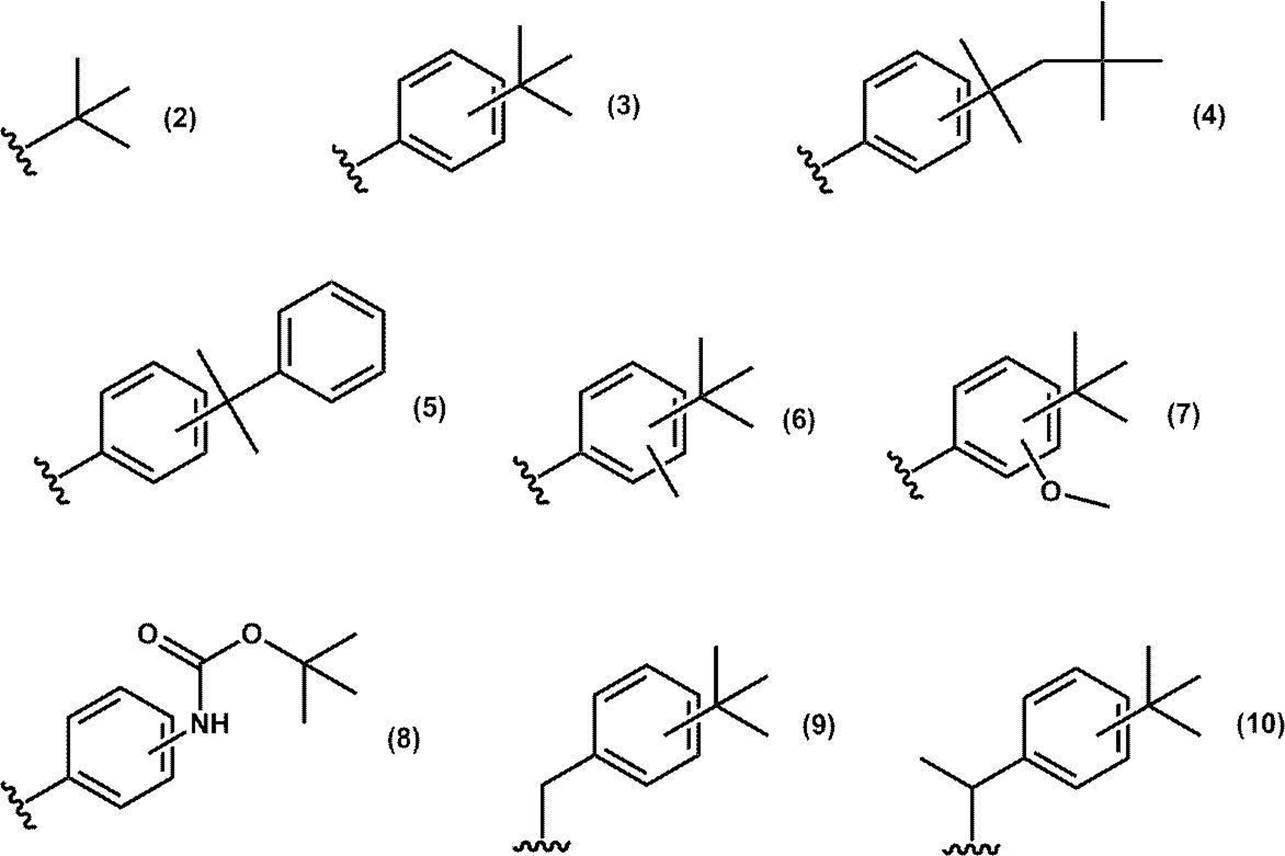
<8> 前記イソ(チオ)シアネート化合物(C)が、ヘキサメチレンジイソシアネート、2,2,4-トリメチルヘキサメチレンジイソシアネート、2,4,4-トリメチルヘキサメチレンジイソシアネート、ペンタメチレンジイソシアネート、m-キシリレンジイソシアネート、1,3-テトラメチルキシリレンジイソシアネート、イソホロンジイソシアネート、ビス(イソシアネートメチル)シクロヘキサン、ビス(イソシアネートシクロへキシル)メタン、2,5-ビス(イソシアネートメチル)ビシクロ-[2.2.1]-ヘプタン、2,6-ビス(イソシアネートメチル)ビシクロ-[2.2.1]-ヘプタン、トリレンジイソシアネート、フェニレンジイソシアネート、及び4,4‘-ジフェニルメタンジイソシアネートよりなる群から選択される少なくとも一種のイソシアネート化合物である<1>~<7>のいずれか1つに記載の(メタ)アクリレート。
<9> (メタ)アクリロイルオキシ基と、ウレタン結合と、下記一般式(1-1)で表される構造とを含む、(メタ)アクリレート。
<10> <1>~<9>のいずれか1つに記載の(メタ)アクリレートである(メタ)アクリレート(D)を含むモノマー組成物。
<11> <1>~<9>のいずれか1つに記載の(メタ)アクリレートの硬化物又は<10>に記載のモノマー組成物の硬化物である成形体。
<12> <1>~<9>のいずれか1つに記載の(メタ)アクリレート又は<10>に記載のモノマー組成物、重合開始剤、及びフィラーを含む歯科材料用組成物。
<13> <12>に記載の歯科材料用組成物の硬化物である歯科材料。
本開示中に段階的に記載されている数値範囲において、一つの数値範囲で記載された上限値又は下限値は、他の段階的な記載の数値範囲の上限値又は下限値に置き換えてもよい。また、本開示中に記載されている数値範囲において、その数値範囲の上限値又は下限値は、実施例に示されている値に置き換えてもよい。
本開示において、「(メタ)アクリロイル」とはアクリロイル又はメタクリロイルを意味し、「(メタ)アクリレート」とはアクリレート又はメタクリレートを意味する。
本開示において、「イソ(チオ)シアネート」とはイソシアネート又はイソチオシアネートを意味する。
本開示において、「ウレタン」は、例えば、ヒドロキシ(メタ)アクリレートのヒドロキシ基と、イソシアネート化合物のイソシアネート基とが反応してなるもの、及び、ヒドロキシ(メタ)アクリレートのヒドロキシ基と、イソチオシアネート化合物のイソチオシアネート基とが反応してなるものを包含する。
本開示の(メタ)アクリレート(以下、「(メタ)アクリレート(D)」とも称する。)は、エポキシ基と、三級炭素原子又は四級炭素原子とを含むエポキシ化合物(A)と、(メタ)アクリル酸(B)と、イソ(チオ)シアネート基を二つ以上有するイソ(チオ)シアネート化合物(C)と、が反応してなる構造を有する化合物(X)である。本開示の(メタ)アクリレート(D)は、前述の構造を有する化合物であるため、破断強度に優れる硬化物を形成可能であり、硬化時の重合収縮が少ない。
エポキシ化合物(A)は、エポキシ基と、三級炭素原子又は四級炭素原子とを含む化合物であり、好ましくはエポキシ基と、直接又は2価の連結基を介してエポキシ基と結合する三級炭素原子又は四級炭素原子とを含む化合物である。三級炭素原子又は四級炭素原子を含むエポキシ化合物(A)を反応生成物の生成に用いることにより、破断強度に優れる硬化物を形成でき、硬化時の重合収縮が少ない。エポキシ化合物(A)は、三級炭素原子を含む場合は直接エポキシ基と三級炭素原子とが結合することが好ましく、四級炭素原子を含む場合は2価の連結基を介してエポキシ基と四級炭素原子とが結合することが好ましい。特に、破断強度に優れる硬化物を形成できることから、エポキシ化合物(A)は、エポキシ基と直接結合する三級炭素原子を含むことが好ましい。
なお、三級炭素原子又は四級炭素原子となり得る炭素原子が2価の連結基の炭素原子と結合している場合、隣り合う炭素原子の数としては、2価の連結基の炭素原子も含める。例えば、2価の連結基がp-フェニレン基であり、p-フェニレン基がtert-ブチル基と結合している場合、エポキシ化合物(A)は四級炭素原子を含むことになる。
(メタ)アクリル酸(B)は、アクリル酸又はメタクリル酸である。(メタ)アクリル酸(B)のカルボキシ基は、エポキシ化合物(A)のエポキシ基と反応し、例えば、前述の反応物は、エポキシ化合物(A)のエポキシ基と、(メタ)アクリル酸(B)のカルボキシ基とが反応することにより得られる。
イソ(チオ)シアネート化合物(C)は、イソ(チオ)シアネート基を二つ以上有する化合物であり、好ましくはイソ(チオ)シアネート基を二つ又は三つ有する化合物である。イソ(チオ)シアネート化合物(C)のイソ(チオ)シアネート基は、前述の反応物のヒドロキシ基と反応し、例えば、前述の反応生成物は、前述の反応物のヒドロキシ基と、イソ(チオ)シアネート化合物(C)のイソ(チオ)シアネート基とが反応することにより得られる。
また、前述の反応物と、イソ(チオ)シアネート化合物(C)とを反応させる場合、前述の反応物におけるヒドロキシ基のモル数(δ)に対するイソ(チオ)シアネート化合物(C)のイソ(チオ)シアネート基のモル数(γ)の比率(γ/δ)は0.5~1.5であることが好ましく、0.8~1.2であることがより好ましく、約1.0であることがさらに好ましい。
R3は水素原子であることが好ましい。
R4は酸素原子であることが好ましい。
nは2又は3であることが好ましく、2であることがより好ましい。
以下、本開示の(メタ)アクリレート(D)の製造方法について説明する。本開示の(メタ)アクリレート(D)の製造方法は、エポキシ化合物(A)及び(メタ)アクリル酸(B)を反応させて反応物を得る工程と、前述の反応物及びイソ(チオ)シアネート化合物(C)を反応させて反応生成物である(メタ)アクリレート(D)を得る工程とを含むことが好ましい。
これらの溶媒は一種単独で用いてもよく、または二種以上を併用してもよい。

より具体的には、三級炭素原子又は四級炭素原子を含む構造としては、前述の式(2)、(3)、(4)、(5)、(6)、(7)、(8)、(9)又は(10)で示される基であってもよい。
また、三級炭素原子又は四級炭素原子を含む構造は、エポキシ基を含む官能基であるグリシジルエーテル基を含む前述のエポキシ化合物(A)からグリシジルエーテル基を除いた残基であってもよい。
変形例に係る(メタ)アクリレート(D)は、構造(A)及び構造(B)をともに2つ又は3つ含んでいることが好ましく、2つ含んでいることがより好ましい。
本開示のモノマー組成物は、本開示の(メタ)アクリレート(D)を含む。また、本開示のモノマー組成物は、(メタ)アクリレート(D)以外の(メタ)アクリレート(以下、(メタ)アクリレート(E)とも称する)と、を含んでいてもよい。
また、モノマー組成物における、(メタ)アクリレート(E)の含有量としては、10質量%~95質量%であることが好ましく、20質量%~90質量%であることがより好ましく、25~70質量%であることがさらに好ましい。
本開示の成形体は、本開示のモノマー組成物の硬化物である。例えば、(メタ)アクリレート(D)を含むモノマー組成物、好ましくは(メタ)アクリレート(D)及び(メタ)アクリレート(E)を含むモノマー組成物を硬化させることにより、破断強度に優れた硬化物を得ることができる。
本開示の歯科材料用組成物は、本開示のモノマー組成物、重合開始剤、及びフィラーを含む。この歯科材料用組成物は、常温重合性、熱重合性、又は光重合性を有し、例えば歯科修復材料として好ましく使用することができる。
過酸化物としては特に限定されず、例えば、過酸化ベンゾイル、t-ブチルヒドロペルオキシド、クメンヒドロペルオキシド等が挙げられる。アゾ系化合物としては特に限定されず、例えば、アゾビスイソブチロニトリル等が挙げられる。
光重合開始剤としては、特に限定されず、例えば、α-ジケトン/還元剤、ケタール/還元剤、チオキサントン/還元剤等が挙げられる。α-ジケトンとしては、例えば、カンファーキノン、ベンジル、2,3-ペンタンジオン等が挙げられる。ケタールとしては、例えば、ベンジルジメチルケタール、ベンジルジエチルケタール等が挙げられる。チオキサントンとしては、例えば、2-クロロチオキサントン、2,4-ジエチルチオキサントン等が挙げられる。還元剤としては、例えば、ミヒラ-ケトン等、2-(ジメチルアミノ)エチルメタクリレート、N,N-ビス〔(メタ)アクリロイルオキシエチル〕-N-メチルアミン、N,N-ジメチルアミノ安息香酸エチル、4-ジメチルアミノ安息香酸ブチル、4-ジメチルアミノ安息香酸ブトキシエチル、N-メチルジエタノールアミン、4-ジメチルアミノベンゾフェノン、N,N-ビス(2-ヒドロキシエチル)-p-トルイジン、ジメチルアミノフェナントール等の第三級アミン;シトロネラール、ラウリルアルデヒド、フタルジアルデヒド、ジメチルアミノベンズアルデヒド、テレフタルアルデヒド等のアルデヒド類;2-メルカプトベンゾオキサゾール、デカンチオール、3-メルカプトプロピルトリメトキシシラン、4-メルカプトアセトフェノン、チオサリチル酸、チオ安息香酸等のチオール基を有する化合物;などを挙げることができる。これらのレドックス系に有機過酸化物を添加したα-ジケトン/有機過酸化物/還元剤等の系も好適に用いられる。
有機フィラーとしては、例えば、ポリメタクリル酸メチル、ポリメタクリル酸エチル、メタクリル酸メチル-メタクリル酸エチル共重合体、架橋型ポリメタクリル酸メチル、架橋型ポリメタクリル酸エチル、エチレン-酢酸ビニル共重合体、スチレン-ブタジエン共重合体等の微粉末が挙げられる。
また、歯科材料用組成物において、粒径が0.1μm以下のミクロフィラーが配合された組成物は、歯科用コンポジットレジンに好適な態様の一つである。かかる粒径の小さなフィラーの材質としては、シリカ(例えば、商品名アエロジル)、アルミナ、ジルコニア、チタニア等が好ましい。このような粒径の小さい無機フィラーの配合は、コンポジットレジンの硬化物の研磨滑沢性を得る上で有利である。
本開示の歯科材料用組成物の使用方法は、歯科材料の使用法として一般に知られているものであれば、特に制限されない。例えば、本開示の歯科材料用組成物を齲蝕窩洞充填用コンポジットレジンとして使用する場合は、口腔内の窩洞に歯科材料用組成物を充填した後、公知の光照射装置を用いて光硬化させることにより、目的を達成できる。また、歯冠用コンポジットレジンとして使用する場合は、歯科材料用組成物を適切な形状に加工した後、公知の光照射装置を用いて光硬化させ、さらに所定の条件で熱処理を行うことで、所望の歯冠材料を得ることができる。
本開示の歯科材料は、本開示の歯科材料用組成物の硬化物である。歯科材料用組成物の硬化条件としては、歯科材料用組成物の組成、歯科材料の用途等に応じて適宜定めればよい。
UDMA:2,2,4-トリメチルヘキサメチレンビス(2-カルバモイルオキシエチル)ジメタクリレート
3G:トリエチレングリコールジメタクリレート
TBG:tert-ブチルグリシジルエーテル
BPG:4-tert-ブチルフェニルグリシジルエーテル
OPG:4-tert-オクチルフェニルグリシジルエーテル
CPG:4-クミルフェニルグリシジルエーテル
IPDI:イソホロンジアイソシアネート
XDI:m-キシリレンジイソシアネート
TBAB:テトラブチルアンモニウムブロミド
DBTDL:ジブチル錫ジラウレート
BHT:ジブチルヒドロキシトルエン
CQ:カンファーキノン
DMAB2-BE:4-ジメチルアミノ安息香酸2-ブトキシエチル
各実施例で得られた(メタ)アクリレートのIRスペクトルを、株式会社パーキンエルマージャパン製、フーリエ変換赤外分光分析装置、Spectrum Two/UATR (Universal Attenuated Total Reflectance)を用いて測定した。
各実施例で得られた(メタ)アクリレートを20℃にて24時間静置した後、(メタ)アクリレートについて20℃で赤外線吸収スペクトルの測定を行った。
本発明の実施例及び比較例における曲げ試験の方法を、以下に示す。
各実施例及び比較例で得たモノマー組成物 10質量部に対して、CQ 0.05質量部、DMAB2-BE 0.05質量部を添加し、均一になるまで室温で撹拌してさらに、シリカガラス(Fuselex-X(株式会社龍森))15質量部を配合し、乳鉢を用いて均一になるまで撹拌したのち、脱泡を行うことで歯科材料用組成物を調製した。得られた歯科材料用組成物を、2mm×2mm×25mmのステンレス製型に入れ、可視光照射装置(松風社製 ソリディライトV)を用いて、片面3分間ずつ両面合わせて6分間光照射して硬化物とした。さらにステンレス製型より取りだした硬化物を、オーブン中において130℃、2時間の条件で熱処理した。オーブンより取り出した硬化物を室温まで冷却したのち、密閉できるサンプル瓶中で硬化物を蒸留水に浸漬して、37℃で24時間保持したものを試験片(曲げ試験用試験片)として使用した。
上記方法で作製した試験片を、試験機(株式会社島津製作所製 オートグラフEZ-S)を使用して、支点間距離20mm、クロスヘッドスピード1mm/分で三点曲げ試験を行った。
本発明の実施例及び比較例における重合収縮率測定の方法を、以下に示す。
(重合収縮率測定用サンプルの作製)
各実施例及び比較例で得たモノマー組成物 20質量部に対して、CQ 0.1質量部、DMAB2-BE 0.1質量部を添加し、均一になるまで室温で撹拌溶解させたのち、重合収縮率測定用組成物を調製した。得られた重合収縮率測定用組成物を直径10mm、深さ2mmのシリコン型に充填し、カバーガラスで上下から挟んだ後、可視光照射装置(松風社製 ソリディライトV)を用いて、片面3分間ずつ両面合わせて6分間光照射した。型より取り出した試験片をアセトンで表面を拭いたものを試験サンプル(重合収縮率測定用サンプル)として使用した。
(重合収縮率測定)
硬化前後のモノマー組成物の密度を乾式密度計(株式会社島津製作所社製アキュピック1330)を用いて測定し、下記の式(1)より重合収縮率を求めた。
式(1):重合収縮率(%)=((重合後の密度-重合前の密度)/重合後の密度)×100
次いで、上記と同様の操作により、3G単独の重合収縮率を測定した。その結果、その重合収縮率は14.3%であった。
次いで、各実施例及び比較例で得たモノマー組成物の重合収縮率(S1)と、3G単独の重合収縮率(S2、14.3%)を用いて、以下の式(2)からウレタンジアクリレート(A-1)~(A-13)及びUDMAの重合収縮率(S3)を求めた。
式(2):(S3)=((S1)-((S2)×0.3))/0.7
十分に乾燥させた撹拌羽根、及び温度計を備えた100mLの4ツ口フラスコ内に、TBAB 3.8質量部、アクリル酸 101質量部、TBG 182.2質量部を装入し、溶解させて均一溶液とした後、100℃まで昇温した。反応温度を100~110℃に保って、12時間反応を行った。反応終了後、反応液を室温まで冷却し、トルエン400mLを加えた。得られたトルエン溶液を1000mLの分液ロートに移し、蒸留水を用いて水相のpHは中性になるまで水洗した。水洗後、BHT 0.56質量部を装入し、混合溶解させた。その後、トルエン相からエバポレーターを用いてトルエンを留去し、変性ヒドロキシアクリレート-1(HA-1)216gを得た。
十分に乾燥させた撹拌羽根、及び温度計を備えた100mLの4ツ口フラスコ内に、TBAB 3.0質量部、アクリル酸 77.35質量部、BPG 202質量部を装入し、溶解させて均一溶液とした後、100℃まで昇温した。反応温度を100~110℃に保って、18時間反応を行った。反応終了後、反応液を室温まで冷却し、トルエン400mLを加えた。得られたトルエン溶液を1000mLの分液ロートに移し、蒸留水を用いて水相のpHは中性になるまで水洗した。水洗後、BHT 0.56質量部を装入し、混合溶解させた。その後、トルエン相からエバポレーターを用いてトルエンを留去し、変性ヒドロキシアクリレート-2(HA-2)264gを得た。
十分に乾燥させた撹拌羽根、及び温度計を備えた100mLの4ツ口フラスコ内に、TBAB 3.0質量部、アクリル酸 77.35質量部、OPG 257質量部を装入し、溶解させて均一溶液とした後、100℃まで昇温した。反応温度を100~110℃に保って、22時間反応を行った。反応終了後、反応液を室温まで冷却し、トルエン400mLを加えた。得られたトルエン溶液を1000mLの分液ロートに移し、蒸留水を用いて水相のpHは中性になるまで水洗した。水洗後、BHT 0.56質量部を装入し、混合溶解させた。その後、トルエン相からエバポレーターを用いてトルエンを留去し、変性ヒドロキシアクリレート-3(HA-3)308gを得た。
十分に乾燥させた撹拌羽根、及び温度計を備えた100mLの4ツ口フラスコ内に、TBAB 3.0質量部、アクリル酸 77.35質量部、CPG 263質量部を装入し、溶解させて均一溶液とした後、100℃まで昇温した。反応温度を100~110℃に保って、22時間反応を行った。反応終了後、反応液を室温まで冷却し、トルエン400mLを加えた。得られたトルエン溶液を1000mLの分液ロートに移し、蒸留水を用いて水相のpHは中性になるまで水洗した。水洗後、BHT 0.56質量部を装入し、混合溶解させた。その後、トルエン相からエバポレーターを用いてトルエンを留去し、変性ヒドロキシアクリレート-4(HA-4)306gを得た。
十分に乾燥させた撹拌羽根、及び温度計を備えた100mLの4ツ口フラスコ内に、TBAB 3.0質量部、メタクリル酸 84.30質量部、BPG 202質量部を装入し、溶解させて均一溶液とした後、100℃まで昇温した。反応温度を100~110℃に保って、18時間反応を行った。反応終了後、反応液を室温まで冷却し、トルエン400mLを加えた。得られたトルエン溶液を1000mLの分液ロートに移し、蒸留水を用いて水相のpHは中性になるまで水洗した。水洗後、BHT 0.56質量部を装入し、混合溶解させた。その後、トルエン相からエバポレーターを用いてトルエンを留去し、変性ヒドロキシメタクリレート-1(HM-1)258gを得た。
十分に乾燥させた撹拌羽根、及び温度計を備えた100mLの4ツ口フラスコ内に、DBTDL 0.03質量部、IPDI 13.73質量部を装入し、溶解させて均一溶液とした後、この溶液を80℃まで昇温し、さらにHA-1 25.0質量部を1時間かけて滴下した。滴下中に反応熱により内温が上昇したので、90℃以下となるように滴下量をコントロールした。HA-1を全量滴下した後、反応温度を90℃に保って、5時間反応を行った。この際、HPLC分析で反応の進行を追跡して、反応の終点を確認した。反応器から生成物を排出することにより、(メタ)アクリレート(D)としてのウレタンジアクリレート(A-1)38gを得た。ウレタンジアクリレート(A-1)のIRスペクトルを図1に示す。得られたウレタンジアクリレート(A-1)10.5質量部と、3G 4.5質量部とを容器に入れ、均一になるまで50℃で撹拌して、モノマー組成物(1)を得た。得られたモノマー組成物(1)から(曲げ試験用試験片の作製)及び(曲げ試験)の項に記載の方法に従い歯科材料用組成物(1)及び試験片(曲げ試験用試験片)を得て、曲げ試験を実施したところ、弾性率6410MPa、破断強度155MPaであった。得られたモノマー組成物(1)から(重合収縮率測定用サンプルの作製)及び(重合収縮率測定)の項に記載の方法に従い重合収縮率測定用組成物(1)及び試験サンプル(重合収縮率測定用サンプル)を得て、重合収縮率測定を実施したところ、重合収縮率は2.60%であった。
変性ヒドロキシアクリレート化合物及びイソシアネート化合物を、表1に示す化合物及び量に変更したこと以外は実施例1と同様にしてウレタンジアクリレート(A-2)~(A-12)およびウレタンジメタクリレート(M-1)~(M-2)を得た。ウレタンジアクリレート(A-1)~(A-12)およびウレタンジメタクリレート(M-1)~(M-2)のIRスペクトルを図2~図14に示す。また、ウレタンジアクリレート(A-1)からウレタンジアクリレート(A-2)~(A-12)およびウレタンジメタクリレート(M-1)~(M-2)にそれぞれ変更したこと以外は、実施例1と同様にしてモノマー組成物(2)~(14)をそれぞれ得た。得られたモノマー組成物(2)~(14)から(曲げ試験用試験片の作製)及び(曲げ試験)の項に記載の方法に従い歯科材料用組成物(2)~(14)及び試験片(曲げ試験用試験片)を得て、曲げ試験を行った。弾性率及び破断強度を表1に示す。さらに、得られたモノマー組成物(2)~(14)から(重合収縮率測定用サンプルの作製)及び(重合収縮率測定)の項に記載の方法に従い重合収縮率測定用組成物(2)~(14)及び試験サンプル(重合収縮率測定用サンプル)を得て、重合収縮率測定を行った。重合収縮率を表1に示す。
十分に乾燥させた撹拌羽根、及び温度計を備えた100mLの4ツ口フラスコ内に、DBTDL 0.03質量部、XDI 11.63質量部を装入し、溶解させて均一溶液とした後、この溶液を80℃まで昇温し、さらに3-フェノキシ-2-ヒドロキシアクリレート(HA-5) 27.8質量部を1時間かけて滴下した。滴下中に反応熱により内温が上昇したので、90℃以下となるように滴下量をコントロールした。HA-5を全量滴下した後、反応温度を90℃に保って、5時間反応を行った。この際、HPLC分析で反応の進行を追跡して、反応の終点を確認した。反応器から生成物を排出することにより、ウレタンジアクリレート(A-15)39gを得た。得られたウレタンジアクリレート(A-15)10.5質量部と、3G 4.5質量部とを容器に入れ、均一になるまで50℃で撹拌して、モノマー組成物(15)を得た。得られたモノマー組成物(15)から(曲げ試験用試験片の作製)及び(曲げ試験)の項に記載の方法に従い歯科材料用組成物(13)及び試験片(曲げ試験用試験片)を得て、曲げ試験を実施したところ、弾性率6880MPa、破断強度132MPaであった。得られたモノマー組成物(15)から(重合収縮率測定用サンプルの作製)及び(重合収縮率測定)の項に記載の方法に従い重合収縮率測定用組成物(15)及び試験サンプル(重合収縮率測定用サンプル)を得て、重合収縮率測定を実施したところ、重合収縮率は2.94%であった。
ウレタンジアクリレート(A-1)からUDMAに変更したこと以外は、実施例1と同様にしてモノマー組成物(16)を得た。得られたモノマー組成物(16)から((曲げ試験用試験片の作製)及び(曲げ試験)の項に記載の方法に従い歯科材料用組成物(16)及び試験片(曲げ試験用試験片)を得て、曲げ試験を実施したところ、弾性率5890MPa、破断強度123MPaであった。得られたモノマー組成物(16)から(重合収縮率測定用サンプルの作製)及び(重合収縮率測定)の項に記載の方法に従い重合収縮率測定用組成物(16)及び試験サンプル(重合収縮率測定用サンプル)を得て、重合収縮率測定を実施したところ、重合収縮率は7.50%であった。

HA-1:製造例1に記載の方法で合成された変性ヒドロキシアクリレート-1
HA-2:製造例2に記載の方法で合成された変性ヒドロキシアクリレート-2
HA-3:製造例3に記載の方法で合成された変性ヒドロキシアクリレート-3
HA-4:製造例4に記載の方法で合成された変性ヒドロキシアクリレート-4
HA-5:3-フェノキシ-2-ヒドロキシアクリレート
HM-1:製造例5に記載の方法で合成された変性ヒドロキシメタクリレート-1
I-1:イソホロンジアイソシアネート
I-2:m-キシリレンジイソシアネート
I-3:2,2,4-トリメチルヘキサメチレンジイソシアネートと2,4,4-トリメチルヘキサメチレンジイソシアネートとの混合物
I-4:2,5-ビス(イソシアネートメチル)ビシクロ[2.2.1]ヘプタンと2,6-ビス(イソシアネートメチル)ビシクロ[2.2.1]ヘプタンとの混合物
I-5:1,3-テトラメチルキシリレンジイソシアネート
I-6:1,3-ビス(イソシアネートメチル)シクロヘキサン
I-7:1,5-ペンタメチレンジイソシアネート
本明細書に記載された全ての文献、特許出願、および技術規格は、個々の文献、特許出願、および技術規格が参照により取り込まれることが具体的かつ個々に記された場合と同程度に、本明細書中に参照により取り込まれる。
Claims (13)
- エポキシ基と、三級炭素原子又は四級炭素原子とを含むエポキシ化合物(A)と、
(メタ)アクリル酸(B)と、
イソ(チオ)シアネート基を二つ以上有するイソ(チオ)シアネート化合物(C)と、が反応してなる構造を有する化合物(X)である(メタ)アクリレート。 - 前記化合物(X)は、前記エポキシ化合物(A)及び前記(メタ)アクリル酸(B)の反応物と、前記イソ(チオ)シアネート化合物(C)と、の反応生成物である請求項1に記載の(メタ)アクリレート。
- 前記エポキシ化合物(A)は、tert-ブチル基、tert-ペンチル基、tert-ヘキシル基、tert-ヘプチル基、tert-オクチル基、tert-ノニル基、tert-デシル基又はクミル基を含む請求項1又は請求項2に記載の(メタ)アクリレート。
- 前記エポキシ化合物(A)は、前記エポキシ基を含む官能基であるグリシジルエーテル基を含む請求項1~請求項3のいずれか1項に記載の(メタ)アクリレート。
- 下記一般式(1)で表される請求項4に記載の(メタ)アクリレート。

(一般式(1)中、R1は、前記エポキシ化合物(A)から前記グリシジルエーテル基を除いた残基であり、R2は、前記イソ(チオ)シアネート化合物(C)から全てのイソ(チオ)シアネート基を除いた残基であり、R3は、水素原子又はメチル基であり、R4は、酸素原子又は硫黄原子である。nは2以上の整数である。複数存在するR1、R3及びR4はそれぞれ、同一であってもよく、異なっていてもよい。) - 前記一般式(1)において、前記R1の分子量が50~300である請求項5に記載の(メタ)アクリレート。
- 前記一般式(1)において、前記R1が下記式(2)、(3)、(4)、(5)、(6)、(7)、(8)、(9)又は(10)で示される基である請求項5に記載の(メタ)アクリレート。
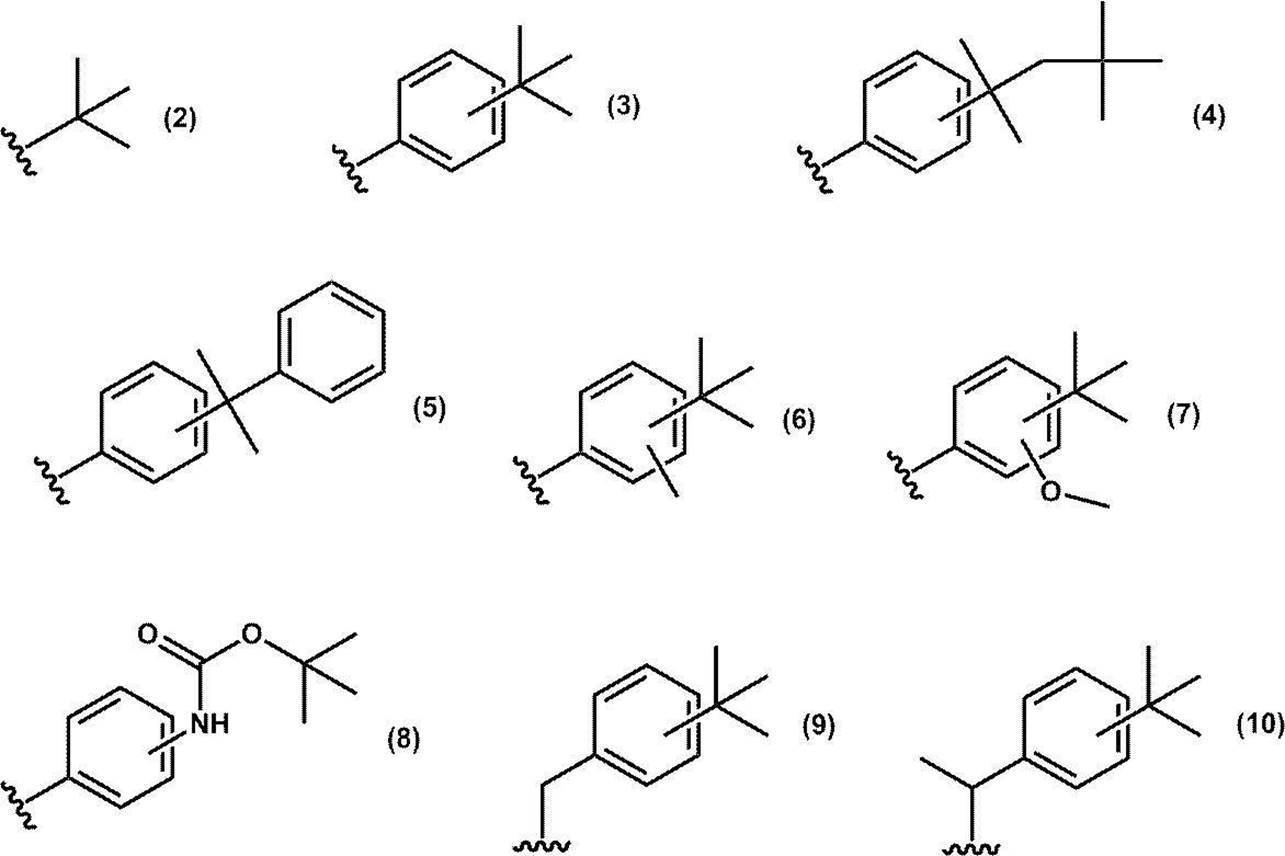
(式(2)~(10)中、波線部は、結合位置を表す。) - 前記イソ(チオ)シアネート化合物(C)が、ヘキサメチレンジイソシアネート、2,2,4-トリメチルヘキサメチレンジイソシアネート、2,4,4-トリメチルヘキサメチレンジイソシアネート、ペンタメチレンジイソシアネート、m-キシリレンジイソシアネート、1,3-テトラメチルキシリレンジイソシアネート、イソホロンジイソシアネート、ビス(イソシアネートメチル)シクロヘキサン、ビス(イソシアネートシクロへキシル)メタン、2,5-ビス(イソシアネートメチル)ビシクロ-[2.2.1]-ヘプタン、2,6-ビス(イソシアネートメチル)ビシクロ-[2.2.1]-ヘプタン、トリレンジイソシアネート、フェニレンジイソシアネート、及び4,4‘-ジフェニルメタンジイソシアネートよりなる群から選択される少なくとも一種のイソシアネート化合物である請求項1~請求項7のいずれか1項に記載の(メタ)アクリレート。
- (メタ)アクリロイルオキシ基と、ウレタン結合と、下記一般式(1-1)で表される構造とを含む、(メタ)アクリレート。
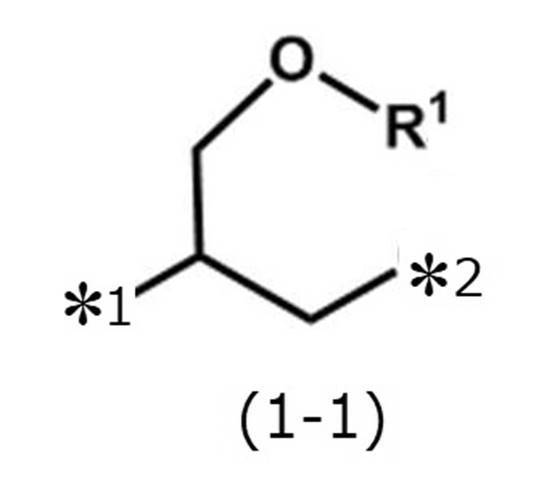
(一般式(1-1)中、R1は、三級炭素原子又は四級炭素原子を含む構造であり、*1及び*2は結合位置を表す。) - 請求項1~請求項9のいずれか1項に記載の(メタ)アクリレートである(メタ)アクリレート(D)を含むモノマー組成物。
- 請求項1~請求項9のいずれか1項に記載の(メタ)アクリレートの硬化物又は請求項10に記載のモノマー組成物の硬化物である成形体。
- 請求項1~請求項9のいずれか1項に記載の(メタ)アクリレート又は請求項10に記載のモノマー組成物、重合開始剤、及びフィラーを含む歯科材料用組成物。
- 請求項12に記載の歯科材料用組成物の硬化物である歯科材料。
Priority Applications (4)
| Application Number | Priority Date | Filing Date | Title |
|---|---|---|---|
| CN201980080405.1A CN113164327B (zh) | 2018-12-11 | 2019-12-11 | (甲基)丙烯酸酯、单体组合物、成型体、牙科材料用组合物及牙科材料 |
| EP19894486.0A EP3861977B1 (en) | 2018-12-11 | 2019-12-11 | (meth)acrylate, monomer composition, molded body, composition for dental material, and dental material |
| US17/292,866 US12275814B2 (en) | 2018-12-11 | 2019-12-11 | (Meth)acrylate, monomer composition, molded body, composition for dental material, and dental material |
| JP2020559288A JP7286674B2 (ja) | 2018-12-11 | 2019-12-11 | (メタ)アクリレート、モノマー組成物、成形体、歯科材料用組成物、及び歯科材料 |
Applications Claiming Priority (2)
| Application Number | Priority Date | Filing Date | Title |
|---|---|---|---|
| JP2018-231945 | 2018-12-11 | ||
| JP2018231945 | 2018-12-11 |
Publications (1)
| Publication Number | Publication Date |
|---|---|
| WO2020122124A1 true WO2020122124A1 (ja) | 2020-06-18 |
Family
ID=71076435
Family Applications (1)
| Application Number | Title | Priority Date | Filing Date |
|---|---|---|---|
| PCT/JP2019/048500 Ceased WO2020122124A1 (ja) | 2018-12-11 | 2019-12-11 | (メタ)アクリレート、モノマー組成物、成形体、歯科材料用組成物、及び歯科材料 |
Country Status (5)
| Country | Link |
|---|---|
| US (1) | US12275814B2 (ja) |
| EP (1) | EP3861977B1 (ja) |
| JP (1) | JP7286674B2 (ja) |
| CN (1) | CN113164327B (ja) |
| WO (1) | WO2020122124A1 (ja) |
Cited By (1)
| Publication number | Priority date | Publication date | Assignee | Title |
|---|---|---|---|---|
| JP2023101941A (ja) * | 2022-01-11 | 2023-07-24 | 日本ユピカ株式会社 | 中間基材、繊維強化複合材、及び繊維強化複合材を含む成形体 |
Families Citing this family (1)
| Publication number | Priority date | Publication date | Assignee | Title |
|---|---|---|---|---|
| CN111471067B (zh) * | 2020-05-22 | 2023-07-21 | 中国人民解放军空军军医大学 | 一种甲基丙烯酸酯改性有机硅季铵盐及其制备方法和用途 |
Citations (11)
| Publication number | Priority date | Publication date | Assignee | Title |
|---|---|---|---|---|
| JPH072940A (ja) * | 1993-03-05 | 1995-01-06 | Ciba Geigy Ag | テトラアクリレートを含有する重合性組成物 |
| JP2000063480A (ja) * | 1998-08-13 | 2000-02-29 | Shiyoufuu:Kk | 新規なウレタンジアクリレート |
| JP2005089312A (ja) | 2003-09-12 | 2005-04-07 | Tokuyama Corp | 歯科用光重合性組成物 |
| JP2005187385A (ja) | 2003-12-25 | 2005-07-14 | Tokuyama Corp | 歯科用カチオン硬化性組成物 |
| JP2006328237A (ja) * | 2005-05-26 | 2006-12-07 | Jsr Corp | ウレタン(メタ)アクリレート、放射線硬化性組成物、及びその硬化膜 |
| JP2007015946A (ja) | 2005-07-05 | 2007-01-25 | Tokuyama Corp | 歯科用カチオン硬化性組成物 |
| JP2007526270A (ja) | 2004-03-02 | 2007-09-13 | エルンスト・ミュールバウアー・ゲゼルシャフト・ミット・ベシュレンクテル・ハフツング・ウント・コムパニー・コマンディットゲゼルシャフト | 充填剤入り重合性歯科材料及びその製造方法 |
| WO2012157566A1 (ja) * | 2011-05-16 | 2012-11-22 | 三井化学株式会社 | 歯科材料、歯科材料組成物、歯科修復材料および硬化物 |
| CN106543093A (zh) * | 2015-09-18 | 2017-03-29 | 深圳德邦界面材料有限公司 | 一种双重固化光学树脂及其合成方法 |
| WO2018043127A1 (ja) * | 2016-08-29 | 2018-03-08 | 東レ株式会社 | 積層体 |
| JP2018528447A (ja) * | 2015-10-19 | 2018-09-27 | エルジー・ケム・リミテッド | 樹脂組成物およびそれを用いて製造されたブラックバンクを含むディスプレイ装置 |
Family Cites Families (4)
| Publication number | Priority date | Publication date | Assignee | Title |
|---|---|---|---|---|
| TW201035060A (en) * | 2008-10-09 | 2010-10-01 | Septodont Confi Dental Division | Carbamate-methacrylate monomers and their use in dental applications |
| CN103492446B (zh) * | 2011-05-16 | 2016-07-27 | 三井化学株式会社 | 化合物、包含该化合物的组合物及固化物 |
| JP5715616B2 (ja) * | 2012-09-28 | 2015-05-07 | 富士フイルム株式会社 | ポリウレタン樹脂およびその製造方法、ならびにその利用 |
| WO2017079825A1 (en) * | 2015-11-13 | 2017-05-18 | Exigence Technologies Inc. | Monomers, polymers and coating formulations that comprise at least one n-halamine precursor, a cationic center and a coating incorporation group |
-
2019
- 2019-12-11 JP JP2020559288A patent/JP7286674B2/ja active Active
- 2019-12-11 US US17/292,866 patent/US12275814B2/en active Active
- 2019-12-11 EP EP19894486.0A patent/EP3861977B1/en active Active
- 2019-12-11 CN CN201980080405.1A patent/CN113164327B/zh active Active
- 2019-12-11 WO PCT/JP2019/048500 patent/WO2020122124A1/ja not_active Ceased
Patent Citations (11)
| Publication number | Priority date | Publication date | Assignee | Title |
|---|---|---|---|---|
| JPH072940A (ja) * | 1993-03-05 | 1995-01-06 | Ciba Geigy Ag | テトラアクリレートを含有する重合性組成物 |
| JP2000063480A (ja) * | 1998-08-13 | 2000-02-29 | Shiyoufuu:Kk | 新規なウレタンジアクリレート |
| JP2005089312A (ja) | 2003-09-12 | 2005-04-07 | Tokuyama Corp | 歯科用光重合性組成物 |
| JP2005187385A (ja) | 2003-12-25 | 2005-07-14 | Tokuyama Corp | 歯科用カチオン硬化性組成物 |
| JP2007526270A (ja) | 2004-03-02 | 2007-09-13 | エルンスト・ミュールバウアー・ゲゼルシャフト・ミット・ベシュレンクテル・ハフツング・ウント・コムパニー・コマンディットゲゼルシャフト | 充填剤入り重合性歯科材料及びその製造方法 |
| JP2006328237A (ja) * | 2005-05-26 | 2006-12-07 | Jsr Corp | ウレタン(メタ)アクリレート、放射線硬化性組成物、及びその硬化膜 |
| JP2007015946A (ja) | 2005-07-05 | 2007-01-25 | Tokuyama Corp | 歯科用カチオン硬化性組成物 |
| WO2012157566A1 (ja) * | 2011-05-16 | 2012-11-22 | 三井化学株式会社 | 歯科材料、歯科材料組成物、歯科修復材料および硬化物 |
| CN106543093A (zh) * | 2015-09-18 | 2017-03-29 | 深圳德邦界面材料有限公司 | 一种双重固化光学树脂及其合成方法 |
| JP2018528447A (ja) * | 2015-10-19 | 2018-09-27 | エルジー・ケム・リミテッド | 樹脂組成物およびそれを用いて製造されたブラックバンクを含むディスプレイ装置 |
| WO2018043127A1 (ja) * | 2016-08-29 | 2018-03-08 | 東レ株式会社 | 積層体 |
Non-Patent Citations (1)
| Title |
|---|
| See also references of EP3861977A4 |
Cited By (2)
| Publication number | Priority date | Publication date | Assignee | Title |
|---|---|---|---|---|
| JP2023101941A (ja) * | 2022-01-11 | 2023-07-24 | 日本ユピカ株式会社 | 中間基材、繊維強化複合材、及び繊維強化複合材を含む成形体 |
| JP7773911B2 (ja) | 2022-01-11 | 2025-11-20 | 三菱ガス化学ネクスト株式会社 | 中間基材、繊維強化複合材、及び繊維強化複合材を含む成形体 |
Also Published As
| Publication number | Publication date |
|---|---|
| CN113164327A (zh) | 2021-07-23 |
| CN113164327B (zh) | 2024-07-30 |
| EP3861977A4 (en) | 2022-07-06 |
| EP3861977A1 (en) | 2021-08-11 |
| US20210403632A1 (en) | 2021-12-30 |
| JPWO2020122124A1 (ja) | 2021-10-14 |
| JP7286674B2 (ja) | 2023-06-05 |
| US12275814B2 (en) | 2025-04-15 |
| EP3861977B1 (en) | 2026-05-06 |
Similar Documents
| Publication | Publication Date | Title |
|---|---|---|
| EP3135270B1 (en) | Polymerizable monomer for dental material | |
| JP5931057B2 (ja) | 歯科材料、歯科材料組成物、歯科修復材料および硬化物 | |
| EP2711381B1 (en) | Novel compound, composition containing said compound, and cured product | |
| CA2740118A1 (en) | Carbamate-methacrylate monomers and their use in dental applications | |
| US20210378919A1 (en) | Dental polyfunctional monomers and dental hydroxyl group-containing monomers | |
| JP7286674B2 (ja) | (メタ)アクリレート、モノマー組成物、成形体、歯科材料用組成物、及び歯科材料 | |
| JP7429559B2 (ja) | (メタ)アクリレート化合物、モノマー組成物、成形体、歯科材料用組成物、歯科材料及び(メタ)アクリレート化合物の製造方法 | |
| JP7108050B2 (ja) | モノマー組成物及びその製造方法、原料組成物、硬化性組成物、並びに成形体 | |
| CN103491928B (zh) | 牙科材料、牙科材料组合物、牙科修复材料及固化物 |
Legal Events
| Date | Code | Title | Description |
|---|---|---|---|
| 121 | Ep: the epo has been informed by wipo that ep was designated in this application |
Ref document number: 19894486 Country of ref document: EP Kind code of ref document: A1 |
|
| ENP | Entry into the national phase |
Ref document number: 2019894486 Country of ref document: EP Effective date: 20210505 |
|
| ENP | Entry into the national phase |
Ref document number: 2020559288 Country of ref document: JP Kind code of ref document: A |
|
| NENP | Non-entry into the national phase |
Ref country code: DE |
|
| WWG | Wipo information: grant in national office |
Ref document number: 17292866 Country of ref document: US |
|
| WWG | Wipo information: grant in national office |
Ref document number: 2019894486 Country of ref document: EP |