WO2020130125A1 - Combinaison d'un conjugué anticorps-médicament et d'un inhibiteur de kinase - Google Patents
Combinaison d'un conjugué anticorps-médicament et d'un inhibiteur de kinase Download PDFInfo
- Publication number
- WO2020130125A1 WO2020130125A1 PCT/JP2019/050017 JP2019050017W WO2020130125A1 WO 2020130125 A1 WO2020130125 A1 WO 2020130125A1 JP 2019050017 W JP2019050017 W JP 2019050017W WO 2020130125 A1 WO2020130125 A1 WO 2020130125A1
- Authority
- WO
- WIPO (PCT)
- Prior art keywords
- inhibitor
- antibody
- pharmaceutical composition
- amino acid
- composition according
- Prior art date
- Legal status (The legal status is an assumption and is not a legal conclusion. Google has not performed a legal analysis and makes no representation as to the accuracy of the status listed.)
- Ceased
Links
- OBHOZAJDUWMUBJ-NYHFZMIOSA-N Cc(c(F)c1)c(CC[C@@H](c2c3CN45)NC(CO)=O)c2c1nc3C4=CC([C@@H](C(OC1)=O)O)=C1C5=O Chemical compound Cc(c(F)c1)c(CC[C@@H](c2c3CN45)NC(CO)=O)c2c1nc3C4=CC([C@@H](C(OC1)=O)O)=C1C5=O OBHOZAJDUWMUBJ-NYHFZMIOSA-N 0.000 description 3
- WVPVINFPRFQKHZ-PTDZGIMASA-N CCC(C)(C(CC(N1CCCCCC(NCC(NCC(N[C@@H](Cc2ccccc2)C(NCC(NCOCC(N[C@@H](CC2)c3c(CN(C4=CC([C@@H]5O)=C6COC5=O)C6=O)c4nc4c3c2c(C)c(F)c4)=O)=O)=O)=O)=O)=O)O)C1=O)N Chemical compound CCC(C)(C(CC(N1CCCCCC(NCC(NCC(N[C@@H](Cc2ccccc2)C(NCC(NCOCC(N[C@@H](CC2)c3c(CN(C4=CC([C@@H]5O)=C6COC5=O)C6=O)c4nc4c3c2c(C)c(F)c4)=O)=O)=O)=O)=O)=O)O)C1=O)N WVPVINFPRFQKHZ-PTDZGIMASA-N 0.000 description 1
- 0 Cc(c(F)c1)c(CC[C@@](c2c3CN45)NC(COCNC(CNC([C@](Cc6ccccc6)NC(CNC(CNC(CCCCCN(C(CC6*)=O)C6=O)=O)=O)=O)=O)=O)=O)c2c1nc3C4=CC([C@](C(OC1)=O)(C#CC)O)=C1C5=O Chemical compound Cc(c(F)c1)c(CC[C@@](c2c3CN45)NC(COCNC(CNC([C@](Cc6ccccc6)NC(CNC(CNC(CCCCCN(C(CC6*)=O)C6=O)=O)=O)=O)=O)=O)=O)c2c1nc3C4=CC([C@](C(OC1)=O)(C#CC)O)=C1C5=O 0.000 description 1
Images







Classifications
-
- A—HUMAN NECESSITIES
- A61—MEDICAL OR VETERINARY SCIENCE; HYGIENE
- A61K—PREPARATIONS FOR MEDICAL, DENTAL OR TOILETRY PURPOSES
- A61K31/00—Medicinal preparations containing organic active ingredients
- A61K31/33—Heterocyclic compounds
- A61K31/395—Heterocyclic compounds having nitrogen as a ring hetero atom, e.g. guanethidine or rifamycins
- A61K31/41—Heterocyclic compounds having nitrogen as a ring hetero atom, e.g. guanethidine or rifamycins having five-membered rings with two or more ring hetero atoms, at least one of which being nitrogen, e.g. tetrazole
- A61K31/42—Oxazoles
- A61K31/422—Oxazoles not condensed and containing further heterocyclic rings
-
- C—CHEMISTRY; METALLURGY
- C07—ORGANIC CHEMISTRY
- C07K—PEPTIDES
- C07K16/00—Immunoglobulins [IG], e.g. monoclonal or polyclonal antibodies
- C07K16/18—Immunoglobulins [IG], e.g. monoclonal or polyclonal antibodies against material from animals or humans
- C07K16/32—Immunoglobulins [IG], e.g. monoclonal or polyclonal antibodies against material from animals or humans against translation products of oncogenes
-
- A—HUMAN NECESSITIES
- A61—MEDICAL OR VETERINARY SCIENCE; HYGIENE
- A61K—PREPARATIONS FOR MEDICAL, DENTAL OR TOILETRY PURPOSES
- A61K31/00—Medicinal preparations containing organic active ingredients
- A61K31/33—Heterocyclic compounds
- A61K31/395—Heterocyclic compounds having nitrogen as a ring hetero atom, e.g. guanethidine or rifamycins
- A61K31/435—Heterocyclic compounds having nitrogen as a ring hetero atom, e.g. guanethidine or rifamycins having six-membered rings with one nitrogen as the only ring hetero atom
- A61K31/4353—Heterocyclic compounds having nitrogen as a ring hetero atom, e.g. guanethidine or rifamycins having six-membered rings with one nitrogen as the only ring hetero atom ortho- or peri-condensed with heterocyclic ring systems
- A61K31/436—Heterocyclic compounds having nitrogen as a ring hetero atom, e.g. guanethidine or rifamycins having six-membered rings with one nitrogen as the only ring hetero atom ortho- or peri-condensed with heterocyclic ring systems the heterocyclic ring system containing a six-membered ring having oxygen as a ring hetero atom, e.g. rapamycin
-
- A—HUMAN NECESSITIES
- A61—MEDICAL OR VETERINARY SCIENCE; HYGIENE
- A61K—PREPARATIONS FOR MEDICAL, DENTAL OR TOILETRY PURPOSES
- A61K31/00—Medicinal preparations containing organic active ingredients
- A61K31/33—Heterocyclic compounds
- A61K31/395—Heterocyclic compounds having nitrogen as a ring hetero atom, e.g. guanethidine or rifamycins
- A61K31/435—Heterocyclic compounds having nitrogen as a ring hetero atom, e.g. guanethidine or rifamycins having six-membered rings with one nitrogen as the only ring hetero atom
- A61K31/44—Non condensed pyridines; Hydrogenated derivatives thereof
-
- A—HUMAN NECESSITIES
- A61—MEDICAL OR VETERINARY SCIENCE; HYGIENE
- A61K—PREPARATIONS FOR MEDICAL, DENTAL OR TOILETRY PURPOSES
- A61K31/00—Medicinal preparations containing organic active ingredients
- A61K31/33—Heterocyclic compounds
- A61K31/395—Heterocyclic compounds having nitrogen as a ring hetero atom, e.g. guanethidine or rifamycins
- A61K31/435—Heterocyclic compounds having nitrogen as a ring hetero atom, e.g. guanethidine or rifamycins having six-membered rings with one nitrogen as the only ring hetero atom
- A61K31/44—Non condensed pyridines; Hydrogenated derivatives thereof
- A61K31/4427—Non condensed pyridines; Hydrogenated derivatives thereof containing further heterocyclic ring systems
- A61K31/4439—Non condensed pyridines; Hydrogenated derivatives thereof containing further heterocyclic ring systems containing a five-membered ring with nitrogen as a ring hetero atom, e.g. omeprazole
-
- A—HUMAN NECESSITIES
- A61—MEDICAL OR VETERINARY SCIENCE; HYGIENE
- A61K—PREPARATIONS FOR MEDICAL, DENTAL OR TOILETRY PURPOSES
- A61K31/00—Medicinal preparations containing organic active ingredients
- A61K31/33—Heterocyclic compounds
- A61K31/395—Heterocyclic compounds having nitrogen as a ring hetero atom, e.g. guanethidine or rifamycins
- A61K31/435—Heterocyclic compounds having nitrogen as a ring hetero atom, e.g. guanethidine or rifamycins having six-membered rings with one nitrogen as the only ring hetero atom
- A61K31/47—Quinolines; Isoquinolines
-
- A—HUMAN NECESSITIES
- A61—MEDICAL OR VETERINARY SCIENCE; HYGIENE
- A61K—PREPARATIONS FOR MEDICAL, DENTAL OR TOILETRY PURPOSES
- A61K31/00—Medicinal preparations containing organic active ingredients
- A61K31/33—Heterocyclic compounds
- A61K31/395—Heterocyclic compounds having nitrogen as a ring hetero atom, e.g. guanethidine or rifamycins
- A61K31/435—Heterocyclic compounds having nitrogen as a ring hetero atom, e.g. guanethidine or rifamycins having six-membered rings with one nitrogen as the only ring hetero atom
- A61K31/47—Quinolines; Isoquinolines
- A61K31/4706—4-Aminoquinolines; 8-Aminoquinolines, e.g. chloroquine, primaquine
-
- A—HUMAN NECESSITIES
- A61—MEDICAL OR VETERINARY SCIENCE; HYGIENE
- A61K—PREPARATIONS FOR MEDICAL, DENTAL OR TOILETRY PURPOSES
- A61K31/00—Medicinal preparations containing organic active ingredients
- A61K31/33—Heterocyclic compounds
- A61K31/395—Heterocyclic compounds having nitrogen as a ring hetero atom, e.g. guanethidine or rifamycins
- A61K31/435—Heterocyclic compounds having nitrogen as a ring hetero atom, e.g. guanethidine or rifamycins having six-membered rings with one nitrogen as the only ring hetero atom
- A61K31/47—Quinolines; Isoquinolines
- A61K31/4709—Non-condensed quinolines and containing further heterocyclic rings
-
- A—HUMAN NECESSITIES
- A61—MEDICAL OR VETERINARY SCIENCE; HYGIENE
- A61K—PREPARATIONS FOR MEDICAL, DENTAL OR TOILETRY PURPOSES
- A61K31/00—Medicinal preparations containing organic active ingredients
- A61K31/33—Heterocyclic compounds
- A61K31/395—Heterocyclic compounds having nitrogen as a ring hetero atom, e.g. guanethidine or rifamycins
- A61K31/435—Heterocyclic compounds having nitrogen as a ring hetero atom, e.g. guanethidine or rifamycins having six-membered rings with one nitrogen as the only ring hetero atom
- A61K31/47—Quinolines; Isoquinolines
- A61K31/4738—Quinolines; Isoquinolines ortho- or peri-condensed with heterocyclic ring systems
- A61K31/4745—Quinolines; Isoquinolines ortho- or peri-condensed with heterocyclic ring systems condensed with ring systems having nitrogen as a ring hetero atom, e.g. phenantrolines
-
- A—HUMAN NECESSITIES
- A61—MEDICAL OR VETERINARY SCIENCE; HYGIENE
- A61K—PREPARATIONS FOR MEDICAL, DENTAL OR TOILETRY PURPOSES
- A61K31/00—Medicinal preparations containing organic active ingredients
- A61K31/33—Heterocyclic compounds
- A61K31/395—Heterocyclic compounds having nitrogen as a ring hetero atom, e.g. guanethidine or rifamycins
- A61K31/495—Heterocyclic compounds having nitrogen as a ring hetero atom, e.g. guanethidine or rifamycins having six-membered rings with two or more nitrogen atoms as the only ring heteroatoms, e.g. piperazine or tetrazines
- A61K31/496—Non-condensed piperazines containing further heterocyclic rings, e.g. rifampin, thiothixene or sparfloxacin
-
- A—HUMAN NECESSITIES
- A61—MEDICAL OR VETERINARY SCIENCE; HYGIENE
- A61K—PREPARATIONS FOR MEDICAL, DENTAL OR TOILETRY PURPOSES
- A61K31/00—Medicinal preparations containing organic active ingredients
- A61K31/33—Heterocyclic compounds
- A61K31/395—Heterocyclic compounds having nitrogen as a ring hetero atom, e.g. guanethidine or rifamycins
- A61K31/495—Heterocyclic compounds having nitrogen as a ring hetero atom, e.g. guanethidine or rifamycins having six-membered rings with two or more nitrogen atoms as the only ring heteroatoms, e.g. piperazine or tetrazines
- A61K31/505—Pyrimidines; Hydrogenated pyrimidines, e.g. trimethoprim
- A61K31/506—Pyrimidines; Hydrogenated pyrimidines, e.g. trimethoprim not condensed and containing further heterocyclic rings
-
- A—HUMAN NECESSITIES
- A61—MEDICAL OR VETERINARY SCIENCE; HYGIENE
- A61K—PREPARATIONS FOR MEDICAL, DENTAL OR TOILETRY PURPOSES
- A61K31/00—Medicinal preparations containing organic active ingredients
- A61K31/33—Heterocyclic compounds
- A61K31/395—Heterocyclic compounds having nitrogen as a ring hetero atom, e.g. guanethidine or rifamycins
- A61K31/495—Heterocyclic compounds having nitrogen as a ring hetero atom, e.g. guanethidine or rifamycins having six-membered rings with two or more nitrogen atoms as the only ring heteroatoms, e.g. piperazine or tetrazines
- A61K31/505—Pyrimidines; Hydrogenated pyrimidines, e.g. trimethoprim
- A61K31/517—Pyrimidines; Hydrogenated pyrimidines, e.g. trimethoprim ortho- or peri-condensed with carbocyclic ring systems, e.g. quinazoline, perimidine
-
- A—HUMAN NECESSITIES
- A61—MEDICAL OR VETERINARY SCIENCE; HYGIENE
- A61K—PREPARATIONS FOR MEDICAL, DENTAL OR TOILETRY PURPOSES
- A61K31/00—Medicinal preparations containing organic active ingredients
- A61K31/33—Heterocyclic compounds
- A61K31/395—Heterocyclic compounds having nitrogen as a ring hetero atom, e.g. guanethidine or rifamycins
- A61K31/495—Heterocyclic compounds having nitrogen as a ring hetero atom, e.g. guanethidine or rifamycins having six-membered rings with two or more nitrogen atoms as the only ring heteroatoms, e.g. piperazine or tetrazines
- A61K31/505—Pyrimidines; Hydrogenated pyrimidines, e.g. trimethoprim
- A61K31/519—Pyrimidines; Hydrogenated pyrimidines, e.g. trimethoprim ortho- or peri-condensed with heterocyclic rings
-
- A—HUMAN NECESSITIES
- A61—MEDICAL OR VETERINARY SCIENCE; HYGIENE
- A61K—PREPARATIONS FOR MEDICAL, DENTAL OR TOILETRY PURPOSES
- A61K31/00—Medicinal preparations containing organic active ingredients
- A61K31/33—Heterocyclic compounds
- A61K31/395—Heterocyclic compounds having nitrogen as a ring hetero atom, e.g. guanethidine or rifamycins
- A61K31/55—Heterocyclic compounds having nitrogen as a ring hetero atom, e.g. guanethidine or rifamycins having seven-membered rings, e.g. azelastine, pentylenetetrazole
- A61K31/553—Heterocyclic compounds having nitrogen as a ring hetero atom, e.g. guanethidine or rifamycins having seven-membered rings, e.g. azelastine, pentylenetetrazole having at least one nitrogen and one oxygen as ring hetero atoms, e.g. loxapine, staurosporine
-
- A—HUMAN NECESSITIES
- A61—MEDICAL OR VETERINARY SCIENCE; HYGIENE
- A61K—PREPARATIONS FOR MEDICAL, DENTAL OR TOILETRY PURPOSES
- A61K31/00—Medicinal preparations containing organic active ingredients
- A61K31/66—Phosphorus compounds
- A61K31/675—Phosphorus compounds having nitrogen as a ring hetero atom, e.g. pyridoxal phosphate
-
- A—HUMAN NECESSITIES
- A61—MEDICAL OR VETERINARY SCIENCE; HYGIENE
- A61K—PREPARATIONS FOR MEDICAL, DENTAL OR TOILETRY PURPOSES
- A61K45/00—Medicinal preparations containing active ingredients not provided for in groups A61K31/00 - A61K41/00
- A61K45/06—Mixtures of active ingredients without chemical characterisation, e.g. antiphlogistics and cardiaca
-
- A—HUMAN NECESSITIES
- A61—MEDICAL OR VETERINARY SCIENCE; HYGIENE
- A61K—PREPARATIONS FOR MEDICAL, DENTAL OR TOILETRY PURPOSES
- A61K47/00—Medicinal preparations characterised by the non-active ingredients used, e.g. carriers or inert additives; Targeting or modifying agents chemically bound to the active ingredient
- A61K47/50—Medicinal preparations characterised by the non-active ingredients used, e.g. carriers or inert additives; Targeting or modifying agents chemically bound to the active ingredient the non-active ingredient being chemically bound to the active ingredient, e.g. polymer-drug conjugates
- A61K47/51—Medicinal preparations characterised by the non-active ingredients used, e.g. carriers or inert additives; Targeting or modifying agents chemically bound to the active ingredient the non-active ingredient being chemically bound to the active ingredient, e.g. polymer-drug conjugates the non-active ingredient being a modifying agent
- A61K47/54—Medicinal preparations characterised by the non-active ingredients used, e.g. carriers or inert additives; Targeting or modifying agents chemically bound to the active ingredient the non-active ingredient being chemically bound to the active ingredient, e.g. polymer-drug conjugates the non-active ingredient being a modifying agent the modifying agent being an organic compound
- A61K47/545—Heterocyclic compounds
-
- A—HUMAN NECESSITIES
- A61—MEDICAL OR VETERINARY SCIENCE; HYGIENE
- A61K—PREPARATIONS FOR MEDICAL, DENTAL OR TOILETRY PURPOSES
- A61K47/00—Medicinal preparations characterised by the non-active ingredients used, e.g. carriers or inert additives; Targeting or modifying agents chemically bound to the active ingredient
- A61K47/50—Medicinal preparations characterised by the non-active ingredients used, e.g. carriers or inert additives; Targeting or modifying agents chemically bound to the active ingredient the non-active ingredient being chemically bound to the active ingredient, e.g. polymer-drug conjugates
- A61K47/51—Medicinal preparations characterised by the non-active ingredients used, e.g. carriers or inert additives; Targeting or modifying agents chemically bound to the active ingredient the non-active ingredient being chemically bound to the active ingredient, e.g. polymer-drug conjugates the non-active ingredient being a modifying agent
- A61K47/68—Medicinal preparations characterised by the non-active ingredients used, e.g. carriers or inert additives; Targeting or modifying agents chemically bound to the active ingredient the non-active ingredient being chemically bound to the active ingredient, e.g. polymer-drug conjugates the non-active ingredient being a modifying agent the modifying agent being an antibody, an immunoglobulin or a fragment thereof, e.g. an Fc-fragment
- A61K47/6801—Drug-antibody or immunoglobulin conjugates defined by the pharmacologically or therapeutically active agent
- A61K47/6803—Drugs conjugated to an antibody or immunoglobulin, e.g. cisplatin-antibody conjugates
- A61K47/68037—Drugs conjugated to an antibody or immunoglobulin, e.g. cisplatin-antibody conjugates the drug being a camptothecin [CPT] or derivatives
-
- A—HUMAN NECESSITIES
- A61—MEDICAL OR VETERINARY SCIENCE; HYGIENE
- A61K—PREPARATIONS FOR MEDICAL, DENTAL OR TOILETRY PURPOSES
- A61K47/00—Medicinal preparations characterised by the non-active ingredients used, e.g. carriers or inert additives; Targeting or modifying agents chemically bound to the active ingredient
- A61K47/50—Medicinal preparations characterised by the non-active ingredients used, e.g. carriers or inert additives; Targeting or modifying agents chemically bound to the active ingredient the non-active ingredient being chemically bound to the active ingredient, e.g. polymer-drug conjugates
- A61K47/51—Medicinal preparations characterised by the non-active ingredients used, e.g. carriers or inert additives; Targeting or modifying agents chemically bound to the active ingredient the non-active ingredient being chemically bound to the active ingredient, e.g. polymer-drug conjugates the non-active ingredient being a modifying agent
- A61K47/68—Medicinal preparations characterised by the non-active ingredients used, e.g. carriers or inert additives; Targeting or modifying agents chemically bound to the active ingredient the non-active ingredient being chemically bound to the active ingredient, e.g. polymer-drug conjugates the non-active ingredient being a modifying agent the modifying agent being an antibody, an immunoglobulin or a fragment thereof, e.g. an Fc-fragment
- A61K47/6835—Medicinal preparations characterised by the non-active ingredients used, e.g. carriers or inert additives; Targeting or modifying agents chemically bound to the active ingredient the non-active ingredient being chemically bound to the active ingredient, e.g. polymer-drug conjugates the non-active ingredient being a modifying agent the modifying agent being an antibody, an immunoglobulin or a fragment thereof, e.g. an Fc-fragment the modifying agent being an antibody or an immunoglobulin bearing at least one antigen-binding site
- A61K47/6849—Medicinal preparations characterised by the non-active ingredients used, e.g. carriers or inert additives; Targeting or modifying agents chemically bound to the active ingredient the non-active ingredient being chemically bound to the active ingredient, e.g. polymer-drug conjugates the non-active ingredient being a modifying agent the modifying agent being an antibody, an immunoglobulin or a fragment thereof, e.g. an Fc-fragment the modifying agent being an antibody or an immunoglobulin bearing at least one antigen-binding site the antibody targeting a receptor, a cell surface antigen or a cell surface determinant
-
- A—HUMAN NECESSITIES
- A61—MEDICAL OR VETERINARY SCIENCE; HYGIENE
- A61K—PREPARATIONS FOR MEDICAL, DENTAL OR TOILETRY PURPOSES
- A61K47/00—Medicinal preparations characterised by the non-active ingredients used, e.g. carriers or inert additives; Targeting or modifying agents chemically bound to the active ingredient
- A61K47/50—Medicinal preparations characterised by the non-active ingredients used, e.g. carriers or inert additives; Targeting or modifying agents chemically bound to the active ingredient the non-active ingredient being chemically bound to the active ingredient, e.g. polymer-drug conjugates
- A61K47/51—Medicinal preparations characterised by the non-active ingredients used, e.g. carriers or inert additives; Targeting or modifying agents chemically bound to the active ingredient the non-active ingredient being chemically bound to the active ingredient, e.g. polymer-drug conjugates the non-active ingredient being a modifying agent
- A61K47/68—Medicinal preparations characterised by the non-active ingredients used, e.g. carriers or inert additives; Targeting or modifying agents chemically bound to the active ingredient the non-active ingredient being chemically bound to the active ingredient, e.g. polymer-drug conjugates the non-active ingredient being a modifying agent the modifying agent being an antibody, an immunoglobulin or a fragment thereof, e.g. an Fc-fragment
- A61K47/6835—Medicinal preparations characterised by the non-active ingredients used, e.g. carriers or inert additives; Targeting or modifying agents chemically bound to the active ingredient the non-active ingredient being chemically bound to the active ingredient, e.g. polymer-drug conjugates the non-active ingredient being a modifying agent the modifying agent being an antibody, an immunoglobulin or a fragment thereof, e.g. an Fc-fragment the modifying agent being an antibody or an immunoglobulin bearing at least one antigen-binding site
- A61K47/6851—Medicinal preparations characterised by the non-active ingredients used, e.g. carriers or inert additives; Targeting or modifying agents chemically bound to the active ingredient the non-active ingredient being chemically bound to the active ingredient, e.g. polymer-drug conjugates the non-active ingredient being a modifying agent the modifying agent being an antibody, an immunoglobulin or a fragment thereof, e.g. an Fc-fragment the modifying agent being an antibody or an immunoglobulin bearing at least one antigen-binding site the antibody targeting a determinant of a tumour cell
-
- A—HUMAN NECESSITIES
- A61—MEDICAL OR VETERINARY SCIENCE; HYGIENE
- A61K—PREPARATIONS FOR MEDICAL, DENTAL OR TOILETRY PURPOSES
- A61K47/00—Medicinal preparations characterised by the non-active ingredients used, e.g. carriers or inert additives; Targeting or modifying agents chemically bound to the active ingredient
- A61K47/50—Medicinal preparations characterised by the non-active ingredients used, e.g. carriers or inert additives; Targeting or modifying agents chemically bound to the active ingredient the non-active ingredient being chemically bound to the active ingredient, e.g. polymer-drug conjugates
- A61K47/51—Medicinal preparations characterised by the non-active ingredients used, e.g. carriers or inert additives; Targeting or modifying agents chemically bound to the active ingredient the non-active ingredient being chemically bound to the active ingredient, e.g. polymer-drug conjugates the non-active ingredient being a modifying agent
- A61K47/68—Medicinal preparations characterised by the non-active ingredients used, e.g. carriers or inert additives; Targeting or modifying agents chemically bound to the active ingredient the non-active ingredient being chemically bound to the active ingredient, e.g. polymer-drug conjugates the non-active ingredient being a modifying agent the modifying agent being an antibody, an immunoglobulin or a fragment thereof, e.g. an Fc-fragment
- A61K47/6835—Medicinal preparations characterised by the non-active ingredients used, e.g. carriers or inert additives; Targeting or modifying agents chemically bound to the active ingredient the non-active ingredient being chemically bound to the active ingredient, e.g. polymer-drug conjugates the non-active ingredient being a modifying agent the modifying agent being an antibody, an immunoglobulin or a fragment thereof, e.g. an Fc-fragment the modifying agent being an antibody or an immunoglobulin bearing at least one antigen-binding site
- A61K47/6851—Medicinal preparations characterised by the non-active ingredients used, e.g. carriers or inert additives; Targeting or modifying agents chemically bound to the active ingredient the non-active ingredient being chemically bound to the active ingredient, e.g. polymer-drug conjugates the non-active ingredient being a modifying agent the modifying agent being an antibody, an immunoglobulin or a fragment thereof, e.g. an Fc-fragment the modifying agent being an antibody or an immunoglobulin bearing at least one antigen-binding site the antibody targeting a determinant of a tumour cell
- A61K47/6855—Medicinal preparations characterised by the non-active ingredients used, e.g. carriers or inert additives; Targeting or modifying agents chemically bound to the active ingredient the non-active ingredient being chemically bound to the active ingredient, e.g. polymer-drug conjugates the non-active ingredient being a modifying agent the modifying agent being an antibody, an immunoglobulin or a fragment thereof, e.g. an Fc-fragment the modifying agent being an antibody or an immunoglobulin bearing at least one antigen-binding site the antibody targeting a determinant of a tumour cell the tumour determinant being from breast cancer cell
-
- A—HUMAN NECESSITIES
- A61—MEDICAL OR VETERINARY SCIENCE; HYGIENE
- A61K—PREPARATIONS FOR MEDICAL, DENTAL OR TOILETRY PURPOSES
- A61K47/00—Medicinal preparations characterised by the non-active ingredients used, e.g. carriers or inert additives; Targeting or modifying agents chemically bound to the active ingredient
- A61K47/50—Medicinal preparations characterised by the non-active ingredients used, e.g. carriers or inert additives; Targeting or modifying agents chemically bound to the active ingredient the non-active ingredient being chemically bound to the active ingredient, e.g. polymer-drug conjugates
- A61K47/51—Medicinal preparations characterised by the non-active ingredients used, e.g. carriers or inert additives; Targeting or modifying agents chemically bound to the active ingredient the non-active ingredient being chemically bound to the active ingredient, e.g. polymer-drug conjugates the non-active ingredient being a modifying agent
- A61K47/68—Medicinal preparations characterised by the non-active ingredients used, e.g. carriers or inert additives; Targeting or modifying agents chemically bound to the active ingredient the non-active ingredient being chemically bound to the active ingredient, e.g. polymer-drug conjugates the non-active ingredient being a modifying agent the modifying agent being an antibody, an immunoglobulin or a fragment thereof, e.g. an Fc-fragment
- A61K47/6889—Conjugates wherein the antibody being the modifying agent and wherein the linker, binder or spacer confers particular properties to the conjugates, e.g. peptidic enzyme-labile linkers or acid-labile linkers, providing for an acid-labile immuno conjugate wherein the drug may be released from its antibody conjugated part in an acidic, e.g. tumoural or environment
-
- A—HUMAN NECESSITIES
- A61—MEDICAL OR VETERINARY SCIENCE; HYGIENE
- A61P—SPECIFIC THERAPEUTIC ACTIVITY OF CHEMICAL COMPOUNDS OR MEDICINAL PREPARATIONS
- A61P35/00—Antineoplastic agents
-
- A—HUMAN NECESSITIES
- A61—MEDICAL OR VETERINARY SCIENCE; HYGIENE
- A61P—SPECIFIC THERAPEUTIC ACTIVITY OF CHEMICAL COMPOUNDS OR MEDICINAL PREPARATIONS
- A61P35/00—Antineoplastic agents
- A61P35/02—Antineoplastic agents specific for leukemia
-
- A—HUMAN NECESSITIES
- A61—MEDICAL OR VETERINARY SCIENCE; HYGIENE
- A61P—SPECIFIC THERAPEUTIC ACTIVITY OF CHEMICAL COMPOUNDS OR MEDICINAL PREPARATIONS
- A61P43/00—Drugs for specific purposes, not provided for in groups A61P1/00-A61P41/00
-
- A—HUMAN NECESSITIES
- A61—MEDICAL OR VETERINARY SCIENCE; HYGIENE
- A61K—PREPARATIONS FOR MEDICAL, DENTAL OR TOILETRY PURPOSES
- A61K2300/00—Mixtures or combinations of active ingredients, wherein at least one active ingredient is fully defined in groups A61K31/00 - A61K41/00
Definitions
- the present invention provides a pharmaceutical composition characterized in that a specific antibody-drug conjugate and a kinase inhibitor are administered in combination, and/or a specific antibody-drug conjugate and a kinase inhibitor are combined.
- the present invention relates to a therapeutic method characterized by being administered to an individual.
- a kinase inhibitor is a drug that exerts an antitumor effect by inhibiting a kinase that is involved in intracellular signal transduction that is abnormally activated.
- Such kinase inhibitors include CDK4/6 inhibitors, mTOR inhibitors, PI3K inhibitors, AKT inhibitors, ERK inhibitors, MEK inhibitors, RAF inhibitors, CDK1 inhibitors, CDK2 inhibitors, CHK1 inhibitors , WEE1 inhibitor, PLK1 inhibitor, Aurora kinase inhibitor, Bcr-Abl inhibitor, Src inhibitor, EPH inhibitor, VEGFR inhibitor, KIT inhibitor, RET inhibitor, PDGFR inhibitor, FGFR inhibitor, BTK inhibitor Agents, FLT3 inhibitors, ALK inhibitors, JAK inhibitors, MET inhibitors, CSF-1R inhibitors, and NTRK inhibitors (Non-patent Documents 1 to 11).
- ADC Antibodies-Drug Conjugate
- a cytotoxic drug is bound to an antibody that binds to an antigen that is expressed on the surface of a cancer cell and can be internalized in the cell, is selected for the cancer cell.
- a cytotoxic drug is bound to an antibody that binds to an antigen that is expressed on the surface of a cancer cell and can be internalized in the cell.
- antibody-drug conjugates comprising an antibody and a derivative of exatecan, which is a topoisomerase I inhibitor, are known (Patent Documents 1 to 8 and Non-Patent Documents 17 to 21). ..
- Patent Documents 1 to 8 describe that the antibody-drug conjugates described above can be administered together with various cancer therapeutic agents.
- the antibody-drug conjugate (antibody-drug conjugate having an exatecan derivative as a constituent) used in the present invention exhibits an excellent antitumor effect even as a single agent.
- the present invention provides a pharmaceutical composition characterized in that a specific antibody-drug conjugate and a kinase inhibitor are administered in combination, and/or a specific antibody-drug conjugate and a kinase inhibitor are combined. It is an object of the present invention to provide a therapeutic method characterized by being administered to an individual.
- the inventors of the present invention have conducted extensive studies to solve the above-mentioned problems, and have found that a specific antibody-drug conjugate and a kinase inhibitor are administered in combination to show an excellent combined effect.
- the present invention has been completed.
- the present invention provides the following [1] to [1072].
- [1] A pharmaceutical composition, characterized in that the antibody-drug conjugate and the kinase inhibitor are administered in combination,
- the antibody-drug conjugate has the formula
- the kinase inhibitor includes a CDK4/6 inhibitor, mTOR inhibitor, PI3K inhibitor, AKT inhibitor, ERK inhibitor, MEK inhibitor, RAF inhibitor, CDK1 inhibitor, CDK2 inhibitor, CHK1 inhibitor, WEE1 inhibitor.
- a pharmaceutical composition which is at least one selected from the group consisting of an inhibitor, an ALK inhibitor, a JAK inhibitor, a MET inhibitor, a CSF-1R inhibitor, an NTRK inhibitor, an EGFR inhibitor, and a HER2 inhibitor.
- Kinase inhibitors include CDK4/6 inhibitors, mTOR inhibitors, PI3K inhibitors, RAF inhibitors, VEGFR inhibitors, KIT inhibitors, RET inhibitors, PDGFR inhibitors, FGFR inhibitors, FLT3 inhibitors, ALK inhibitors
- the pharmaceutical composition according to [1] which is at least one selected from the group consisting of a CSF-1R inhibitor, an EGFR inhibitor, and a HER2 inhibitor.
- the pharmaceutical composition according to [2], wherein the kinase inhibitor is a CDK4/6 inhibitor.
- the CDK4/6 inhibitor is abemaciclib, parvocyclib, ribociclib, trilaticlib, G1T38, PF-06873600, TP-1287, FN-1501, or KRX-0601, or a pharmacologically acceptable salt thereof, [3] The described pharmaceutical composition. [5] The pharmaceutical composition according to [2], wherein the kinase inhibitor is an mTOR inhibitor.
- the mTOR inhibitor is everolimus, sirolimus, temsirolimus, TAK-228, CC-223, AZD8055, ducturisib, apitrisib, gedatriceb, LY3023414, PF-04691502, NVP-BGT226, or PQR309, or a pharmacologically acceptable salt thereof.
- PI3K inhibitors include tasericib, alpericib, TAK-117, GSK2636771, AZD8186, IPI-549, ideralisib, duberisib, AMG319, buparlishib, picutilisib, pyralalicib, copanricibu, zonoricib, ZCH4147, ST, CH5132799, CH51324799, ST5134, CH5134799. , LY3023414, PF-04691502, NVP-BGT226, PQR309, KRX-0601, or Rigosertib, or a pharmacologically acceptable salt thereof, [7].
- RAF inhibitor is regorafenib, sorafenib, vemurafenib, dabrafenib, encorafenib, RAF265, GDC-5573, LY3009120, or RO51266766, or a pharmacologically acceptable salt thereof.
- the pharmaceutical composition according to [2], wherein the kinase inhibitor is a VEGFR inhibitor.
- the VEGFR inhibitor is regorafenib, sorafenib, vandetanib, sunitinib, axitinib, pazopanib, lenvatinib, nintedanib, cabozantinib, tibozanib, brivanib, linifanib, or lucitanib, lucitanib, lucitanib 76, or ENMD, or ENMD.
- [13] The pharmaceutical composition according to [2], wherein the kinase inhibitor is a KIT inhibitor.
- kinase inhibitor is a PDGFR inhibitor.
- the PDGFR inhibitor is regorafenib, sorafenib, sunitinib, axitinib, pazopanib, lenvatinib, nintedanib, ilorasertib, imatinib, nilotinib, or dasatinib, or a pharmaceutically acceptable salt thereof.
- the kinase inhibitor is an FGFR inhibitor.
- the pharmaceutical composition according to [2], wherein the kinase inhibitor is a FLT3 inhibitor.
- the FLT3 inhibitor is gilteritinib, quizartinib, midostaurin, sorafenib, ilorasertib, ENMD-2076, or sunitinib, or a pharmacologically acceptable salt thereof.
- the kinase inhibitor is an ALK inhibitor.
- composition according to [23], wherein the ALK inhibitor is brigatinib, crizotinib, ceritinib, alectinib, or lorlatinib, or a pharmacologically acceptable salt thereof.
- the kinase inhibitor is a CSF-1R inhibitor.
- the CSF-1R inhibitor is pexidartinib, BLZ-945, JNJ-40346527, JNJ-283121141, ilorasertib, imatinib, sunitinib, or axitinib, or a pharmacologically acceptable salt thereof. Stuff.
- kinase inhibitor is an EGFR inhibitor.
- the EGFR inhibitor is gefitinib, erlotinib, afatinib, osimertinib, dacomitinib, lapatinib, neratinib, pirotinib, or posiotinib, or a pharmacologically acceptable salt thereof.
- the kinase inhibitor is a HER2 inhibitor.
- Composition [32] The pharmaceutical composition according to [31], wherein the antibody in the antibody-drug conjugate is an anti-HER2 antibody.
- the anti-HER2 antibody comprises CDRH1 consisting of the amino acid sequences of amino acid numbers 26 to 33 in SEQ ID NO: 1, CDRH2 consisting of the amino acid sequence of amino acid numbers 51 to 58 in SEQ ID NO: 1, and amino acid numbers 97 to 97 in SEQ ID NO: 1.
- the anti-HER2 antibody comprises a heavy chain containing a heavy chain variable region consisting of the amino acid sequences of amino acid numbers 1 to 120 in SEQ ID NO: 1 and a light chain variable consisting of the amino acid sequence of amino acid numbers 1 to 107 in SEQ ID NO: 2.
- the anti-HER2 antibody is an antibody comprising a heavy chain consisting of the amino acid sequence of SEQ ID NO: 1 and a light chain consisting of the amino acid sequence of SEQ ID NO: 2.
- the anti-HER2 antibody is an antibody comprising a heavy chain consisting of the amino acid sequences of amino acid numbers 1 to 449 in SEQ ID NO: 1 and a light chain consisting of the amino acid sequence of amino acid numbers 1 to 214 in SEQ ID NO: 2.
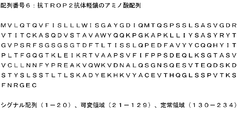
- the anti-TROP2 antibody is an antibody comprising a heavy chain consisting of the amino acid sequences of amino acid numbers 20 to 470 in SEQ ID NO:5 and a light chain consisting of the amino acid sequences of amino acid numbers 21 to 234 in SEQ ID NO:6, The pharmaceutical composition according to [42].
- the pharmaceutical composition according to [43] wherein the heavy chain carboxyl terminal lysine residue of the anti-TROP2 antibody is deleted.
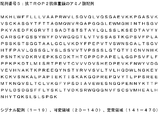
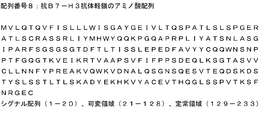
- the anti-B7-H3 antibody is an antibody comprising a heavy chain consisting of the amino acid sequences of amino acid numbers 20 to 471 in SEQ ID NO: 7 and a light chain consisting of the amino acid sequences of amino acid numbers 21 to 233 in SEQ ID NO: 8.
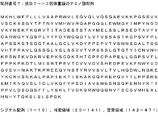
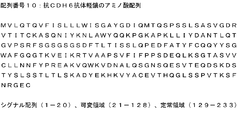
- the anti-CDH6 antibody is an antibody comprising a heavy chain consisting of the amino acid sequences of amino acid numbers 20 to 471 in SEQ ID NO: 9 and a light chain consisting of the amino acid sequences of amino acid numbers 21 to 233 in SEQ ID NO: 10, The pharmaceutical composition according to [50].
- the pharmaceutical composition according to [51] wherein the heavy chain carboxyl terminal lysine residue of the anti-CDH6 antibody is deleted.
- the pharmaceutical composition according to. [55] Breast cancer, gastric cancer, colon cancer, lung cancer, esophageal cancer, head and neck cancer, gastroesophageal junction adenocarcinoma, biliary tract cancer, Paget's disease, pancreatic cancer, ovarian cancer, uterine carcinosarcoma, urinary tract Skin cancer, prostate cancer, bladder cancer, gastrointestinal stromal tumor, cervical cancer, squamous cell carcinoma, peritoneal cancer, liver cancer, hepatocellular carcinoma, endometrial cancer, kidney cancer, At least one treatment selected from the group consisting of vulvar cancer, thyroid cancer, penile cancer, leukemia, malignant lymphoma, plasmacytoma, myeloma, glioblastoma multiforme, osteosarcoma, sarcoma
- the kinase inhibitor includes a CDK4/6 inhibitor, mTOR inhibitor, PI3K inhibitor, AKT inhibitor, ERK inhibitor, MEK inhibitor, RAF inhibitor, CDK1 inhibitor, CDK2 inhibitor, CHK1 inhibitor, WEE1 inhibitor.
- a pharmaceutical composition which is at least one selected from the group consisting of an inhibitor, an ALK inhibitor, a JAK inhibitor, a MET inhibitor, a CSF-1R inhibitor, an NTRK inhibitor, an EGFR inhibitor, and a HER2 inhibitor.
- Kinase inhibitors include CDK4/6 inhibitors, mTOR inhibitors, PI3K inhibitors, RAF inhibitors, VEGFR inhibitors, KIT inhibitors, RET inhibitors, PDGFR inhibitors, FGFR inhibitors, FLT3 inhibitors, ALK inhibitors
- the pharmaceutical composition according to [63] which is at least one selected from the group consisting of:, a CSF-1R inhibitor, an EGFR inhibitor, and a HER2 inhibitor.
- the pharmaceutical composition according to [64], wherein the kinase inhibitor is a CDK4/6 inhibitor.
- CDK4/6 inhibitor is abemaciclib, parvocyclib, ribociclib, trilaticlib, G1T38, PF-06873600, TP-1287, FN-1501, or KRX-0601, or a pharmacologically acceptable salt thereof.
- the described pharmaceutical composition [67] The pharmaceutical composition according to [64], wherein the kinase inhibitor is an mTOR inhibitor.
- the mTOR inhibitor is everolimus, sirolimus, temsirolimus, TAK-228, CC-223, AZD8055, ducturisib, apitrisib, gedatriceb, LY3023414, PF-04691502, NVP-BGT226, or PQR309, or a pharmacologically acceptable salt thereof.
- PI3K inhibitors include tasericib, alpericib, TAK-117, GSK2636771, AZD8186, IPI-549, ideralisib, duberisib, AMG319, buparlishib, picutilisib, pyralalicib, copanricibu, zonoricib, ZCH4147, ST, CH5132799, CH51324799, ST5134, CH5134799. , LY3023414, PF-04691502, NVP-BGT226, PQR309, KRX-0601, or Rigosertib, or a pharmacologically acceptable salt thereof, [69].
- kinase inhibitor is a RAF inhibitor.
- the RAF inhibitor is regorafenib, sorafenib, vemurafenib, dabrafenib, encorafenib, RAF265, GDC-5573, LY3009120, or RO51266766, or a pharmacologically acceptable salt thereof.
- the kinase inhibitor is a VEGFR inhibitor.
- the VEGFR inhibitor is regorafenib, sorafenib, vandetanib, sunitinib, axitinib, pazopanib, lenvatinib, nintedanib, cabozantinib, tibozanib, brivanib, linifanib, or lucitanib, lucitanib, lucitanib 76, or ENMD, or ENMD.
- kinase inhibitor is a PDGFR inhibitor.
- PDGFR inhibitor is regorafenib, sorafenib, sunitinib, axitinib, pazopanib, lenvatinib, nintedanib, ilorasertib, imatinib, nilotinib, or dasatinib, or a pharmaceutically acceptable salt thereof.
- the kinase inhibitor is an FGFR inhibitor.
- composition according to [85] The pharmaceutical composition according to [85], wherein the ALK inhibitor is brigatinib, crizotinib, ceritinib, alectinib, or lorlatinib, or a pharmaceutically acceptable salt thereof.
- the kinase inhibitor is a CSF-1R inhibitor.
- the pharmaceutical composition according to [87], wherein the CSF-1R inhibitor is pexidartinib, BLZ-945, JNJ-40346527, JNJ-283121141, ilorasertib, imatinib, sunitinib, or axitinib, or a pharmacologically acceptable salt thereof. Stuff.
- kinase inhibitor is an EGFR inhibitor.
- the EGFR inhibitor is gefitinib, erlotinib, afatinib, osimertinib, dacomitinib, lapatinib, neratinib, pirotinib, or posiotinib, or a pharmacologically acceptable salt thereof.
- kinase inhibitor is a HER2 inhibitor.
- the pharmaceutical composition according to [91] wherein the HER2 inhibitor is tucatinib, neratinib, mubritinib, lapatinib, pirotinib, or poiotinib, or a pharmacologically acceptable salt thereof.
- the pharmaceutical composition according to [93], wherein the antibody in the antibody-drug conjugate is an anti-HER2 antibody.
- the anti-HER2 antibody comprises CDRH1 consisting of the amino acid sequences of amino acid numbers 26 to 33 in SEQ ID NO: 1, CDRH2 consisting of the amino acid sequence of amino acid numbers 51 to 58 in SEQ ID NO: 1, and amino acid numbers 97 to 97 in SEQ ID NO: 1.
- the anti-HER2 antibody comprises a heavy chain containing a heavy chain variable region consisting of the amino acid sequences of amino acid numbers 1 to 120 in SEQ ID NO: 1, and a light chain variable consisting of the amino acid sequence of amino acid numbers 1 to 107 in SEQ ID NO: 2.
- the pharmaceutical composition according to [94] which is an antibody comprising a light chain containing a region.
- the anti-HER2 antibody is an antibody comprising a heavy chain consisting of the amino acid sequence of SEQ ID NO: 1 and a light chain consisting of the amino acid sequence of SEQ ID NO: 2.
- the anti-HER2 antibody is an antibody comprising a heavy chain consisting of the amino acid sequences of amino acid numbers 1 to 449 in SEQ ID NO: 1 and a light chain consisting of the amino acid sequence of amino acid numbers 1 to 214 in SEQ ID NO: 2.
- the pharmaceutical composition according to [100], wherein the anti-HER3 antibody is an antibody comprising a heavy chain consisting of the amino acid sequence set forth in SEQ ID NO:3 and a light chain consisting of the amino acid sequence set forth in SEQ ID NO:4.
- the anti-TROP2 antibody is an antibody comprising a heavy chain consisting of the amino acid sequences of amino acid numbers 20 to 470 in SEQ ID NO:5 and a light chain consisting of the amino acid sequences of amino acid numbers 21 to 234 in SEQ ID NO:6, The pharmaceutical composition according to [104].
- the pharmaceutical composition according to [105] wherein the heavy chain carboxyl terminal lysine residue of the anti-TROP2 antibody is deleted.
- the pharmaceutical composition according to [93], wherein the antibody in the antibody-drug conjugate is an anti-B7-H3 antibody.
- the anti-B7-H3 antibody is an antibody comprising a heavy chain consisting of the amino acid sequences of amino acid numbers 20 to 471 in SEQ ID NO: 7 and a light chain consisting of the amino acid sequences of amino acid numbers 21 to 233 in SEQ ID NO: 8.
- the anti-CDH6 antibody is an antibody comprising a heavy chain consisting of the amino acid sequences of amino acid numbers 20 to 471 in SEQ ID NO: 9 and a light chain consisting of the amino acid sequences of amino acid numbers 21 to 233 in SEQ ID NO: 10, The pharmaceutical composition according to [112].
- the antibody-drug conjugate has the formula
- the kinase inhibitor includes a CDK4/6 inhibitor, mTOR inhibitor, PI3K inhibitor, AKT inhibitor, ERK inhibitor, MEK inhibitor, RAF inhibitor, CDK1 inhibitor, CDK2 inhibitor, CHK1 inhibitor, WEE1 inhibitor.
- PLK1 inhibitor Aurora kinase inhibitor, Bcr-Abl inhibitor, Src inhibitor, EPH inhibitor, VEGFR inhibitor, KIT inhibitor, RET inhibitor, PDGFR inhibitor, FGFR inhibitor, BTK inhibitor, FLT3
- Kinase inhibitors include CDK4/6 inhibitors, mTOR inhibitors, PI3K inhibitors, RAF inhibitors, VEGFR inhibitors, KIT inhibitors, RET inhibitors, PDGFR inhibitors, FGFR inhibitors, FLT3 inhibitors, ALK inhibitors
- the treatment method according to [125] which is at least one selected from the group consisting of a CSF-1R inhibitor, an EGFR inhibitor, and a HER2 inhibitor.
- the treatment method according to [126] wherein the kinase inhibitor is a CDK4/6 inhibitor.
- CDK4/6 inhibitor is abemaciclib, parvocyclib, ribociclib, trilaticlib, G1T38, PF-06873600, TP-1287, FN-1501, or KRX-0601, or a pharmacologically acceptable salt thereof.
- the described method of treatment [129] The treatment method according to [126], wherein the kinase inhibitor is an mTOR inhibitor.
- the mTOR inhibitor is everolimus, sirolimus, temsirolimus, TAK-228, CC-223, AZD8055, ducturisib, apitrisib, gedatriceb, LY3023414, PF-04691502, NVP-BGT226, or PQR309, or a pharmacologically acceptable salt thereof.
- PI3K inhibitors include tasericib, alpericib, TAK-117, GSK2636771, AZD8186, IPI-549, ideralisib, duberisib, AMG319, buparlishib, picutilisib, pyralalicib, copanricibu, zonoricib, ZCH4147, ST, CH5132799, CH51324799, ST5134, CH5134799.
- kinase inhibitor is a RAF inhibitor.
- the RAF inhibitor is regorafenib, sorafenib, vemurafenib, dabrafenib, encorafenib, RAF265, GDC-5573, LY3009120, or RO51266766, or a pharmacologically acceptable salt thereof.
- the treatment method according to [126], wherein the kinase inhibitor is a VEGFR inhibitor.
- the VEGFR inhibitor is regorafenib, sorafenib, vandetanib, sunitinib, axitinib, pazopanib, lenvatinib, nintedanib, cabozantinib, tibozanib, brivanib, linifanib, or lucitanib, lucitanib, lucitanib 76, or ENMD, or ENMD.
- [137] The treatment method according to [126], wherein the kinase inhibitor is a KIT inhibitor.
- kinase inhibitor is a PDGFR inhibitor.
- the PDGFR inhibitor is regorafenib, sorafenib, sunitinib, axitinib, pazopanib, lenvatinib, nintedanib, ilorasertib, imatinib, nilotinib, or dasatinib, or a pharmaceutically acceptable salt thereof.
- the kinase inhibitor is an FGFR inhibitor.
- the FGFR inhibitor is regorafenib, sorafenib, lenvatinib, nintedanib, axitinib, or pazopanib, or a pharmacologically acceptable salt thereof.
- the kinase inhibitor is an FLT3 inhibitor.
- the FLT3 inhibitor is gilteritinib, quizartinib, midostaurin, sorafenib, ilorasertib, ENMD-2076, or sunitinib, or a pharmacologically acceptable salt thereof.
- kinase inhibitor is an ALK inhibitor.
- ALK inhibitor is brigatinib, crizotinib, ceritinib, alectinib, or lorlatinib, or a pharmacologically acceptable salt thereof.
- the kinase inhibitor is a CSF-1R inhibitor.
- kinase inhibitor is an EGFR inhibitor.
- the EGFR inhibitor is gefitinib, erlotinib, afatinib, osimertinib, dacomitinib, lapatinib, neratinib, pirotinib, or posiotinib, or a pharmacologically acceptable salt thereof.
- the kinase inhibitor is a HER2 inhibitor.
- [154] The treatment method according to [153], wherein the HER2 inhibitor is tucatinib, neratinib, mubritinib, lapatinib, pirotinib, or poiotinib, or a pharmacologically acceptable salt thereof.
- the antibody in the antibody-drug conjugate is an anti-HER2 antibody, an anti-HER3 antibody, an anti-TROP2 antibody, an anti-B7-H3 antibody, or an anti-CDH6 antibody.
- Method The therapeutic method according to [155], wherein the antibody in the antibody-drug conjugate is an anti-HER2 antibody.
- the anti-HER2 antibody comprises CDRH1 consisting of the amino acid sequences of amino acid numbers 26 to 33 in SEQ ID NO: 1, CDRH2 consisting of the amino acid sequence of amino acid numbers 51 to 58 in SEQ ID NO: 1, and amino acid numbers 97 to 97 in SEQ ID NO: 1.
- the anti-HER2 antibody comprises a heavy chain containing a heavy chain variable region consisting of the amino acid sequences of amino acid numbers 1 to 120 in SEQ ID NO: 1 and a light chain variable consisting of the amino acid sequence of amino acid numbers 1 to 107 in SEQ ID NO: 2.
- the method of treatment according to [156] which is an antibody comprising a light chain comprising a region.
- the anti-HER2 antibody is an antibody comprising a heavy chain consisting of the amino acid sequence set forth in SEQ ID NO: 1 and a light chain consisting of the amino acid sequence set forth in SEQ ID NO: 2.
- the anti-HER2 antibody is an antibody comprising a heavy chain consisting of the amino acid sequences of amino acid numbers 1 to 449 in SEQ ID NO: 1 and a light chain consisting of the amino acid sequence of amino acid numbers 1 to 214 in SEQ ID NO: 2.
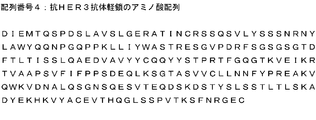
- the anti-HER3 antibody is an antibody comprising a heavy chain consisting of the amino acid sequence of SEQ ID NO:3 and a light chain consisting of the amino acid sequence of SEQ ID NO:4.
- the treatment method according to [163] wherein the heavy chain carboxyl terminal lysine residue of the anti-HER3 antibody is deleted.
- the anti-TROP2 antibody is an antibody comprising a heavy chain consisting of the amino acid sequences of amino acid numbers 20 to 470 in SEQ ID NO:5 and a light chain consisting of the amino acid sequences of amino acid numbers 21 to 234 in SEQ ID NO:6, The treatment method according to [166].
- the anti-B7-H3 antibody is an antibody comprising a heavy chain consisting of the amino acid sequences of amino acid numbers 20 to 471 in SEQ ID NO: 7 and a light chain consisting of the amino acid sequences of amino acid numbers 21 to 233 in SEQ ID NO: 8.
- [172] The treatment method according to [171], wherein the heavy chain carboxyl-terminal lysine residue of the anti-B7-H3 antibody is deleted.
- the anti-CDH6 antibody is an antibody comprising a heavy chain consisting of the amino acid sequences of amino acid numbers 20 to 471 in SEQ ID NO: 9 and a light chain consisting of the amino acid sequences of amino acid numbers 21 to 233 in SEQ ID NO: 10.
- a method of treatment characterized in that the antibody-drug conjugate and the kinase inhibitor are combined and administered to an individual in need thereof.
- the antibody-drug conjugate has the formula
- the kinase inhibitor includes a CDK4/6 inhibitor, mTOR inhibitor, PI3K inhibitor, AKT inhibitor, ERK inhibitor, MEK inhibitor, RAF inhibitor, CDK1 inhibitor, CDK2 inhibitor, CHK1 inhibitor, WEE1 inhibitor.
- a method for treatment which is at least one selected from the group consisting of an inhibitor, an ALK inhibitor, a JAK inhibitor, a MET inhibitor, a CSF-1R inhibitor, an NTRK inhibitor, an EGFR inhibitor, and a HER2 inhibitor.
- Kinase inhibitors include CDK4/6 inhibitors, mTOR inhibitors, PI3K inhibitors, RAF inhibitors, VEGFR inhibitors, KIT inhibitors, RET inhibitors, PDGFR inhibitors, FGFR inhibitors, FLT3 inhibitors, ALK inhibitors
- the treatment method according to [187] which is at least one selected from the group consisting of a CSF-1R inhibitor, an EGFR inhibitor, and a HER2 inhibitor.
- the treatment method according to [188], wherein the kinase inhibitor is a CDK4/6 inhibitor.
- CDK4/6 inhibitor is abemaciclib, parvocyclib, ribociclib, trilacyclib, G1T38, PF-06873600, TP-1287, FN-1501, or KRX-0601, or a pharmacologically acceptable salt thereof.
- the described method of treatment is abemaciclib, parvocyclib, ribociclib, trilacyclib, G1T38, PF-06873600, TP-1287, FN-1501, or KRX-0601, or a pharmacologically acceptable salt thereof.
- kinase inhibitor is an mTOR inhibitor.
- the mTOR inhibitor is everolimus, sirolimus, temsirolimus, TAK-228, CC-223, AZD8055, ducturisib, apitrisib, gedatriceb, LY3023414, PF-04691502, NVP-BGT226, or PQR309, or a pharmacologically acceptable salt thereof.
- [193] The treatment method according to [188], wherein the kinase inhibitor is a PI3K inhibitor.
- PI3K inhibitors include tasericib, alpericib, TAK-117, GSK2636771, AZD8186, IPI-549, ideralisib, duberisib, AMG319, buparlishib, picutilisib, pyralalicib, copanricibu, zonoricib, ZCH4147, ST, CH5132799, CH51324799, ST5134, CH5134799. , LY3023414, PF-04691502, NVP-BGT226, PQR309, KRX-0601, or rigosertib, or a pharmacologically acceptable salt thereof, [193].
- kinase inhibitor is a RAF inhibitor.
- the RAF inhibitor is regorafenib, sorafenib, vemurafenib, dabrafenib, encorafenib, RAF265, GDC-5573, LY3009120, or RO51267766, or a pharmacologically acceptable salt thereof.
- the kinase inhibitor is a VEGFR inhibitor.
- the VEGFR inhibitor is regorafenib, sorafenib, vandetanib, sunitinib, axitinib, pazopanib, lenvatinib, nintedanib, cabozantinib, tibozanib, brivanib, linifanib, or lucitanib, lucitanib, lucitanib 76, or ENMD, or ENMD.
- kinase inhibitor is a RET inhibitor.
- the RET inhibitor is regorafenib, sorafenib, vandetanib, lenvatinib, or sunitinib, or a pharmacologically acceptable salt thereof.
- the kinase inhibitor is a PDGFR inhibitor.
- kinase inhibitor is an ALK inhibitor.
- ALK inhibitor is brigatinib, crizotinib, ceritinib, alectinib, or lorlatinib, or a pharmacologically acceptable salt thereof.
- kinase inhibitor is a CSF-1R inhibitor.
- the CSF-1R inhibitor is pexidartinib, BLZ-945, JNJ-40346527, JNJ-283121141, ilorasertib, imatinib, sunitinib, or axitinib, or a pharmacologically acceptable salt thereof. ..
- the kinase inhibitor is an EGFR inhibitor.
- [214] The treatment method according to [213], wherein the EGFR inhibitor is gefitinib, erlotinib, afatinib, osimertinib, dacomitinib, lapatinib, neratinib, pirotinib, or posiotinib, or a pharmacologically acceptable salt thereof.
- the kinase inhibitor is a HER2 inhibitor.
- [216] The treatment method according to [215], wherein the HER2 inhibitor is tucatinib, neratinib, mubritinib, lapatinib, pirotinib, or poiotinib, or a pharmacologically acceptable salt thereof.
- [217] The treatment according to any one of [187] to [216], wherein the antibody in the antibody-drug conjugate is an anti-HER2 antibody, an anti-HER3 antibody, an anti-TROP2 antibody, an anti-B7-H3 antibody, or an anti-CDH6 antibody.
- Method. [218]
- the anti-HER2 antibody comprises CDRH1 consisting of the amino acid sequences of amino acid numbers 26 to 33 in SEQ ID NO: 1, CDRH2 consisting of the amino acid sequence of amino acid numbers 51 to 58 in SEQ ID NO: 1, and amino acid numbers 97 to 97 in SEQ ID NO: 1.
- the therapeutic method according to [218] which is an antibody comprising CDRL2 and a light chain comprising CDRL3 consisting of the amino acid sequences of amino acid numbers 89 to 97 in SEQ ID NO:2.
- the anti-HER2 antibody comprises a heavy chain containing a heavy chain variable region consisting of the amino acid sequences of amino acid numbers 1 to 120 in SEQ ID NO: 1 and a light chain variable consisting of the amino acid sequence of amino acid numbers 1 to 107 in SEQ ID NO: 2.
- the therapeutic method according to [218] which is an antibody comprising a light chain comprising a region.
- the anti-HER2 antibody is an antibody comprising a heavy chain consisting of the amino acid sequence set forth in SEQ ID NO: 1 and a light chain consisting of the amino acid sequence set forth in SEQ ID NO: 2.
- the anti-HER2 antibody is an antibody comprising a heavy chain consisting of the amino acid sequences of amino acid numbers 1 to 449 in SEQ ID NO: 1 and a light chain consisting of the amino acid sequence of amino acid numbers 1 to 214 in SEQ ID NO: 2.
- the anti-TROP2 antibody is an antibody comprising a heavy chain consisting of the amino acid sequences of amino acid numbers 20 to 470 in SEQ ID NO:5 and a light chain consisting of the amino acid sequences of amino acid numbers 21 to 234 in SEQ ID NO:6, The treatment method according to [228].
- the treatment method according to [229] wherein the heavy chain carboxyl terminal lysine residue of the anti-TROP2 antibody is deleted.
- the anti-B7-H3 antibody is an antibody comprising a heavy chain consisting of the amino acid sequences of amino acid numbers 20 to 471 in SEQ ID NO: 7 and a light chain consisting of the amino acid sequences of amino acid numbers 21 to 233 in SEQ ID NO: 8.
- the anti-CDH6 antibody is an antibody comprising a heavy chain consisting of the amino acid sequences of amino acid numbers 20 to 471 in SEQ ID NO: 9 and a light chain consisting of the amino acid sequences of amino acid numbers 21 to 233 in SEQ ID NO: 10.
- the treatment method according to [237] wherein the heavy chain carboxyl terminal lysine residue of the anti-CDH6 antibody is deleted.
- [240] [187] to [231] wherein the antibody-drug conjugate and the kinase inhibitor are contained as active ingredients in different formulations and are administered simultaneously or at different times.
- the treatment method according to any one of [187] to [240], for [242]
- a formula for treating a disease, when administered in combination with a kinase inhibitor, comprising:
- the kinase inhibitor includes a CDK4/6 inhibitor, mTOR inhibitor, PI3K inhibitor, AKT inhibitor, ERK inhibitor, MEK inhibitor, RAF inhibitor, CDK1 inhibitor, CDK2 inhibitor, CHK1 inhibitor, WEE1 inhibitor.
- PLK1 inhibitor Aurora kinase inhibitor, Bcr-Abl inhibitor, Src inhibitor, EPH inhibitor, VEGFR inhibitor, KIT inhibitor, RET inhibitor, PDGFR inhibitor, FGFR inhibitor, BTK inhibitor, FLT3 Antibody-drug conjugate, which is at least one selected from the group consisting of an inhibitor, an ALK inhibitor, a JAK inhibitor, a MET inhibitor, a CSF-1R inhibitor, an NTRK inhibitor, an EGFR inhibitor, and a HER2 inhibitor. Gate.
- Kinase inhibitors include CDK4/6 inhibitors, mTOR inhibitors, PI3K inhibitors, RAF inhibitors, VEGFR inhibitors, KIT inhibitors, RET inhibitors, PDGFR inhibitors, FGFR inhibitors, FLT3 inhibitors, ALK inhibitors
- the antibody-drug conjugate according to [249] which is at least one selected from the group consisting of a CSF-1R inhibitor, an EGFR inhibitor, and a HER2 inhibitor.
- the CDK4/6 inhibitor is abemaciclib, parvocyclib, ribociclib, trilaticlib, G1T38, PF-06873600, TP-1287, FN-1501, or KRX-0601, or a pharmacologically acceptable salt thereof, [251] The described antibody-drug conjugate.
- the mTOR inhibitor is everolimus, sirolimus, temsirolimus, TAK-228, CC-223, AZD8055, ducturisib, apitrisib, gedatriceb, LY3023414, PF-04691502, NVP-BGT226, or PQR309, or a pharmacologically acceptable salt thereof.
- PI3K inhibitors include tasericib, alpericib, TAK-117, GSK2636771, AZD8186, IPI-549, ideralisib, duberisib, AMG319, buparlishib, picutilisib, pyralalicib, copanricibu, zonoricib, ZCH4147, ST, CH5132799, CH51324799, ST5134, CH5134799. , LY3023414, PF-04691502, NVP-BGT226, PQR309, KRX-0601, or Rigosertib, or a pharmacologically acceptable salt thereof, the antibody-drug conjugate according to [255].
- the VEGFR inhibitor is regorafenib, sorafenib, vandetanib, sunitinib, axitinib, pazopanib, lenvatinib, nintedanib, cabozantinib, tibozanib, brivanib, linifanib, or lucitanib, lucitanib, lucitanib 76, or ENMD, or ENMD.
- the antibody-drug conjugate according to [259].
- [261] The antibody-drug conjugate according to [250], wherein the kinase inhibitor is a KIT inhibitor.
- the KIT inhibitor is regorafenib, sorafenib, imatinib, ilorasertib, sunitinib, pazopanib, lenvatinib, or dasatinib, or a pharmacologically acceptable salt thereof.
- the kinase inhibitor is a RET inhibitor.
- the ALK inhibitor is brigatinib, crizotinib, ceritinib, alectinib, or lorlatinib, or a pharmaceutically acceptable salt thereof.
- the kinase inhibitor is a CSF-1R inhibitor.
- the antibody-drug conjugate according to [279] wherein the antibody in the antibody-drug conjugate is an anti-HER2 antibody.
- the anti-HER2 antibody comprises CDRH1 consisting of the amino acid sequences of amino acid numbers 26 to 33 in SEQ ID NO: 1, CDRH2 consisting of the amino acid sequence of amino acid numbers 51 to 58 in SEQ ID NO: 1, and amino acid numbers 97 to 97 in SEQ ID NO: 1.
- the antibody-drug conjugate according to [280] which is an antibody comprising CDRL2 and a light chain comprising CDRL3 consisting of the amino acid sequences of amino acid numbers 89 to 97 in SEQ ID NO:2.
- the anti-HER2 antibody comprises a heavy chain containing a heavy chain variable region consisting of the amino acid sequences of amino acid numbers 1 to 120 in SEQ ID NO: 1 and a light chain variable consisting of the amino acid sequence of amino acid numbers 1 to 107 in SEQ ID NO: 2.
- the antibody-drug conjugate of [280] which is an antibody comprising a light chain comprising a region.
- the antibody-drug conjugate according to [280], wherein the anti-HER2 antibody is an antibody comprising a heavy chain consisting of the amino acid sequence of SEQ ID NO: 1 and a light chain consisting of the amino acid sequence of SEQ ID NO: 2.
- the anti-HER2 antibody is an antibody comprising a heavy chain consisting of the amino acid sequences of amino acid numbers 1 to 449 in SEQ ID NO: 1 and a light chain consisting of the amino acid sequence of amino acid numbers 1 to 214 in SEQ ID NO: 2.
- the antibody-drug conjugate according to [279] wherein the antibody in the antibody-drug conjugate is an anti-HER3 antibody.
- the anti-TROP2 antibody is an antibody comprising a heavy chain consisting of the amino acid sequences of amino acid numbers 20 to 470 in SEQ ID NO:5 and a light chain consisting of the amino acid sequences of amino acid numbers 21 to 234 in SEQ ID NO:6, The antibody-drug conjugate according to [290].
- the antibody-drug conjugate according to [292] The antibody-drug conjugate according to [291]1, wherein the heavy chain carboxyl-terminal lysine residue of the anti-TROP2 antibody is deleted.
- the anti-B7-H3 antibody is an antibody comprising a heavy chain consisting of the amino acid sequences of amino acid numbers 20 to 471 in SEQ ID NO: 7 and a light chain consisting of the amino acid sequences of amino acid numbers 21 to 233 in SEQ ID NO: 8. The antibody-drug conjugate of [294].
- the anti-CDH6 antibody is an antibody comprising a heavy chain consisting of the amino acid sequences of amino acid numbers 20 to 471 in SEQ ID NO: 9 and a light chain consisting of the amino acid sequences of amino acid numbers 21 to 233 in SEQ ID NO: 10, The antibody-drug conjugate according to [298].
- the kinase inhibitor includes a CDK4/6 inhibitor, mTOR inhibitor, PI3K inhibitor, AKT inhibitor, ERK inhibitor, MEK inhibitor, RAF inhibitor, CDK1 inhibitor, CDK2 inhibitor, CHK1 inhibitor, WEE1 inhibitor.
- PLK1 inhibitor Aurora kinase inhibitor, Bcr-Abl inhibitor, Src inhibitor, EPH inhibitor, VEGFR inhibitor, KIT inhibitor, RET inhibitor, PDGFR inhibitor, FGFR inhibitor, BTK inhibitor, FLT3 Antibody-drug conjugate, which is at least one selected from the group consisting of an inhibitor, an ALK inhibitor, a JAK inhibitor, a MET inhibitor, a CSF-1R inhibitor, an NTRK inhibitor, an EGFR inhibitor, and a HER2 inhibitor. Gate.
- Kinase inhibitors include CDK4/6 inhibitors, mTOR inhibitors, PI3K inhibitors, RAF inhibitors, VEGFR inhibitors, KIT inhibitors, RET inhibitors, PDGFR inhibitors, FGFR inhibitors, FLT3 inhibitors, ALK inhibitors
- the antibody-drug conjugate according to [311] which is at least one selected from the group consisting of a CSF-1R inhibitor, an EGFR inhibitor, and a HER2 inhibitor.
- the antibody-drug conjugate according to [312] wherein the kinase inhibitor is a CDK4/6 inhibitor.
- CDK4/6 inhibitor is abemaciclib, parvocyclib, ribociclib, trilacyclicb, G1T38, PF-06873600, TP-1287, FN-1501, or KRX-0601, or a pharmacologically acceptable salt thereof.
- the described antibody-drug conjugate [315] The antibody-drug conjugate according to [312], wherein the kinase inhibitor is an mTOR inhibitor.
- the mTOR inhibitor is everolimus, sirolimus, temsirolimus, TAK-228, CC-223, AZD8055, ducturisib, apitrisib, gedatricib, LY3023414, PF-04691502, NVP-BGT226, or PQR309, or a pharmacologically acceptable salt thereof.
- PI3K inhibitors include tasericib, alpericib, TAK-117, GSK2636771, AZD8186, IPI-549, ideralisib, duberisib, AMG319, buparlishib, picutilisib, pyralalicib, copanricibu, zonoricib, ZCH4147, ST, CH5132799, CH51324799, ST5134, CH5134799.
- the antibody-drug conjugate according to [317] which is LY3023414, PF-04691502, NVP-BGT226, PQR309, KRX-0601, or Rigosertib, or a pharmacologically acceptable salt thereof.
- [319] The antibody-drug conjugate according to [312], wherein the kinase inhibitor is a RAF inhibitor.
- the RAF inhibitor is regorafenib, sorafenib, vemurafenib, dabrafenib, encorafenib, RAF265, GDC-5573, LY3009120, or RO51266766, or a pharmacologically acceptable salt thereof.
- the VEGFR inhibitor is regorafenib, sorafenib, vandetanib, sunitinib, axitinib, pazopanib, lenvatinib, nintedanib, cabozantinib, tibozanib, brivanib, linifanib, or lucitanib, lucitanib, lucitanib 76, or ENMD, or ENMD.
- the KIT inhibitor is regorafenib, sorafenib, imatinib, ilorasertib, sunitinib, pazopanib, lenvatinib, or dasatinib, or a pharmacologically acceptable salt thereof.
- the kinase inhibitor is a RET inhibitor.
- [331] The antibody-drug conjugate according to [312], wherein the kinase inhibitor is a FLT3 inhibitor.
- the FLT3 inhibitor is gilteritinib, quizartinib, midostaurin, sorafenib, ilorasertib, ENMD-2076, or sunitinib, or a pharmacologically acceptable salt thereof.
- the kinase inhibitor is an ALK inhibitor.
- Drug conjugate. [337] The antibody-drug conjugate according to [312], wherein the kinase inhibitor is an EGFR inhibitor.
- the anti-HER2 antibody comprises CDRH1 consisting of the amino acid sequences of amino acid numbers 26 to 33 in SEQ ID NO: 1, CDRH2 consisting of the amino acid sequence of amino acid numbers 51 to 58 in SEQ ID NO: 1, and amino acid numbers 97 to 97 in SEQ ID NO: 1.
- the antibody-drug conjugate according to [342] which is an antibody comprising CDRL2 and a light chain comprising CDRL3 consisting of the amino acid sequences of amino acid numbers 89 to 97 in SEQ ID NO:2.
- the anti-HER2 antibody comprises a heavy chain containing a heavy chain variable region consisting of the amino acid sequences of amino acid numbers 1 to 120 in SEQ ID NO: 1 and a light chain variable consisting of the amino acid sequence of amino acid numbers 1 to 107 in SEQ ID NO: 2.
- the antibody-drug conjugate of [342] which is an antibody comprising a light chain comprising a region.
- the antibody-drug conjugate according to [342] wherein the anti-HER2 antibody is an antibody comprising a heavy chain consisting of the amino acid sequence set forth in SEQ ID NO: 1 and a light chain consisting of the amino acid sequence set forth in SEQ ID NO: 2.
- the anti-HER2 antibody is an antibody comprising a heavy chain consisting of the amino acid sequences of amino acid numbers 1 to 449 in SEQ ID NO: 1 and a light chain consisting of the amino acid sequence of amino acid numbers 1 to 214 in SEQ ID NO: 2.
- the antibody-drug conjugate according to [341] wherein the antibody in the antibody-drug conjugate is an anti-HER3 antibody.
- the anti-TROP2 antibody is an antibody comprising a heavy chain consisting of the amino acid sequences of amino acid numbers 20 to 470 in SEQ ID NO:5 and a light chain consisting of the amino acid sequences of amino acid numbers 21 to 234 in SEQ ID NO:6, The antibody-drug conjugate according to [352].
- [354] The antibody-drug conjugate according to [353], wherein the heavy chain carboxyl-terminal lysine residue of the anti-TROP2 antibody is deleted.
- [355] The antibody-drug conjugate according to any one of [352] to [354], wherein the average number of drug linker bonds per antibody in the antibody-drug conjugate is in the range of 3.5 to 4.5. ..
- [356] The antibody-drug conjugate according to [341], wherein the antibody in the antibody-drug conjugate is an anti-B7-H3 antibody.
- the anti-B7-H3 antibody is an antibody comprising a heavy chain consisting of the amino acid sequences of amino acid numbers 20 to 471 in SEQ ID NO: 7 and a light chain consisting of the amino acid sequences of amino acid numbers 21 to 233 in SEQ ID NO: 8.
- the antibody-drug conjugate according to [357] wherein the heavy chain carboxyl terminal lysine residue of the anti-B7-H3 antibody is deleted.
- the antibody-drug conjugate according to [341] wherein the antibody in the antibody-drug conjugate is an anti-CDH6 antibody.
- the anti-CDH6 antibody is an antibody comprising a heavy chain consisting of the amino acid sequences of amino acid numbers 20 to 471 in SEQ ID NO: 9 and a light chain consisting of the amino acid sequences of amino acid numbers 21 to 233 in SEQ ID NO: 10.
- [363] The antibody-drug conjugate according to any one of [360] to [362], wherein the average number of drug linkers bound per antibody in the antibody-drug conjugate is in the range of 7 to 8.
- the kinase inhibitor includes a CDK4/6 inhibitor, mTOR inhibitor, PI3K inhibitor, AKT inhibitor, ERK inhibitor, MEK inhibitor, RAF inhibitor, CDK1 inhibitor, CDK2 inhibitor, CHK1 inhibitor, WEE1 inhibitor.
- PLK1 inhibitor Aurora kinase inhibitor, Bcr-Abl inhibitor, Src inhibitor, EPH inhibitor, VEGFR inhibitor, KIT inhibitor, RET inhibitor, PDGFR inhibitor, FGFR inhibitor, BTK inhibitor, FLT3 Use, which is at least one selected from the group consisting of an inhibitor, an ALK inhibitor, a JAK inhibitor, a MET inhibitor, a CSF-1R inhibitor, an NTRK inhibitor, an EGFR inhibitor, and a HER2 inhibitor.
- Kinase inhibitors include CDK4/6 inhibitors, mTOR inhibitors, PI3K inhibitors, RAF inhibitors, VEGFR inhibitors, KIT inhibitors, RET inhibitors, PDGFR inhibitors, FGFR inhibitors, FLT3 inhibitors, ALK inhibitors
- the CDK4/6 inhibitor is abemaciclib, parvocyclib, ribociclib, trilaticlib, G1T38, PF-06873600, TP-1287, FN-1501, or KRX-0601, or a pharmacologically acceptable salt thereof, [375] Use as stated. [377] The use according to [374], wherein the kinase inhibitor is an mTOR inhibitor.
- the mTOR inhibitor is everolimus, sirolimus, temsirolimus, TAK-228, CC-223, AZD8055, ducturisib, apitrisib, gedatriceb, LY3023414, PF-04691502, NVP-BGT226, or PQR309, or a pharmacologically acceptable salt thereof.
- PI3K inhibitors include tasericib, alpericib, TAK-117, GSK2636771, AZD8186, IPI-549, ideralisib, duberisib, AMG319, buparlishib, picutilisib, pyralalicib, copanricibu, zonoricib, ZCH4147, ST, CH5132799, CH51324799, ST5134, CH5134799. , LY3023414, PF-04691502, NVP-BGT226, PQR309, KRX-0601, or Rigosertib, or a pharmacologically acceptable salt thereof, for use according to [379].
- kinase inhibitor is a RAF inhibitor.
- the RAF inhibitor is regorafenib, sorafenib, vemurafenib, dabrafenib, encorafenib, RAF265, GDC-5573, LY3009120, or RO51266766, or a pharmacologically acceptable salt thereof.
- the kinase inhibitor is a VEGFR inhibitor.
- the VEGFR inhibitor is regorafenib, sorafenib, vandetanib, axitinib, pazopanib, lenvatinib, nintedanib, cabozantinib, tibozanib, brivanib, linifanib, lucitanib, ioracertib, 38, or a pharmacologically effective compound thereof, or a salt thereof, or ENMD-2076.
- Use [385] The use according to [374], wherein the kinase inhibitor is a KIT inhibitor.
- kinase inhibitor is a PDGFR inhibitor.
- the PDGFR inhibitor is regorafenib, sorafenib, sunitinib, axitinib, pazopanib, lenvatinib, nintedanib, ilorasertib, imatinib, nilotinib, or dasatinib, or a pharmaceutically acceptable salt thereof.
- the kinase inhibitor is a FGFR inhibitor.
- the kinase inhibitor is a CSF-1R inhibitor.
- the CSF-1R inhibitor is pexidartinib, BLZ-945, JNJ-40346527, JNJ-283121141, ilorasertib, imatinib, sunitinib, or axitinib, or a pharmacologically acceptable salt thereof.
- kinase inhibitor is an EGFR inhibitor.
- the EGFR inhibitor is gefitinib, erlotinib, afatinib, osimertinib, dacomitinib, lapatinib, neratinib, pirotinib, or posiotinib, or a pharmacologically acceptable salt thereof.
- [401] The use according to [374], wherein the kinase inhibitor is a HER2 inhibitor.
- the HER2 inhibitor is tucatinib, neratinib, mubritinib, lapatinib, pirotinib, or poiotinib, or a pharmacologically acceptable salt thereof.
- the antibody in the antibody-drug conjugate is an anti-HER2 antibody, an anti-HER3 antibody, an anti-TROP2 antibody, an anti-B7-H3 antibody, or an anti-CDH6 antibody. ..
- the anti-HER2 antibody comprises CDRH1 consisting of the amino acid sequences of amino acid numbers 26 to 33 in SEQ ID NO: 1, CDRH2 consisting of the amino acid sequence of amino acid numbers 51 to 58 in SEQ ID NO: 1, and amino acid numbers 97 to 97 in SEQ ID NO: 1.
- a heavy chain containing CDRH3 consisting of the amino acid sequence of 109, and CDRL1 consisting of the amino acid sequences of amino acid numbers 27 to 32 in SEQ ID NO:2, and an amino acid sequence of amino acid numbers 50 to 52 in SEQ ID NO:2.
- the anti-HER2 antibody comprises a heavy chain containing a heavy chain variable region consisting of the amino acid sequences of amino acid numbers 1 to 120 in SEQ ID NO: 1, and a light chain variable consisting of the amino acid sequence of amino acid numbers 1 to 107 in SEQ ID NO: 2.
- the anti-HER2 antibody is an antibody comprising a heavy chain consisting of the amino acid sequence set forth in SEQ ID NO: 1 and a light chain consisting of the amino acid sequence set forth in SEQ ID NO: 2.
- the anti-HER2 antibody is an antibody comprising a heavy chain consisting of the amino acid sequences of amino acid numbers 1 to 449 in SEQ ID NO: 1 and a light chain consisting of the amino acid sequence of amino acid numbers 1 to 214 in SEQ ID NO: 2.
- [409] The use according to any one of [404] to [408], wherein the average number of drug linker bonds per antibody in the antibody-drug conjugate is in the range of 7 to 8.
- [411] The use according to [410], wherein the anti-HER3 antibody is an antibody comprising a heavy chain consisting of the amino acid sequence set forth in SEQ ID NO:3 and a light chain consisting of the amino acid sequence set forth in SEQ ID NO:4.
- [412] Use according to [411], wherein the heavy chain carboxyl terminal lysine residue of the anti-HER3 antibody is deleted.
- [413] The use according to any one of [410] to [412], wherein the average number of linked drug linkers per antibody in the antibody-drug conjugate is in the range of 7 to 8.
- [414] The use according to [403], wherein the antibody in the antibody-drug conjugate is an anti-TROP2 antibody.
- the anti-TROP2 antibody is an antibody comprising a heavy chain consisting of the amino acid sequences of amino acid numbers 20 to 470 in SEQ ID NO:5 and a light chain consisting of the amino acid sequences of amino acid numbers 21 to 234 in SEQ ID NO:6, Use according to [414].
- [416] Use according to [415], wherein the heavy chain carboxyl terminal lysine residue of the anti-TROP2 antibody is deleted.
- the anti-B7-H3 antibody is an antibody comprising a heavy chain consisting of the amino acid sequences of amino acid numbers 20 to 471 in SEQ ID NO: 7 and a light chain consisting of the amino acid sequences of amino acid numbers 21 to 233 in SEQ ID NO: 8. The use according to [418].
- [420] Use according to [419], wherein the heavy chain carboxyl terminal lysine residue of the anti-B7-H3 antibody is deleted.
- the anti-CDH6 antibody is an antibody comprising a heavy chain consisting of the amino acid sequences of amino acid numbers 20 to 471 in SEQ ID NO: 9 and a light chain consisting of the amino acid sequences of amino acid numbers 21 to 233 in SEQ ID NO: 10. Use according to [422].
- [424] Use according to [423], wherein the heavy chain carboxyl terminal lysine residue of the anti-CDH6 antibody is deleted. [425] The use according to any one of [422] to [424], wherein the average number of drug linker bonds per antibody in the antibody-drug conjugate is in the range of 7 to 8. [426] [373] to [425], wherein the antibody-drug conjugate and the kinase inhibitor are contained as active ingredients in different formulations and are administered simultaneously or at different times. Use as described in.
- [427] Breast cancer, gastric cancer, colon cancer, lung cancer, esophageal cancer, head and neck cancer, gastroesophageal junction adenocarcinoma, biliary tract cancer, Paget's disease, pancreatic cancer, ovarian cancer, uterine carcinosarcoma, urinary tract Skin cancer, prostate cancer, bladder cancer, gastrointestinal stromal tumor, cervical cancer, squamous cell carcinoma, peritoneal cancer, liver cancer, hepatocellular carcinoma, endometrial cancer, kidney cancer, At least one treatment selected from the group consisting of vulvar cancer, thyroid cancer, penile cancer, leukemia, malignant lymphoma, plasmacytoma, myeloma, glioblastoma multiforme, osteosarcoma, sarcoma, and melanoma Use according to any one of [373]-[426] for [428] Use according to [427] for the treatment of breast cancer. [429] Use according to [427]
- the kinase inhibitor includes a CDK4/6 inhibitor, mTOR inhibitor, PI3K inhibitor, AKT inhibitor, ERK inhibitor, MEK inhibitor, RAF inhibitor, CDK1 inhibitor, CDK2 inhibitor, CHK1 inhibitor, WEE1 inhibitor.
- PLK1 inhibitor Aurora kinase inhibitor, Bcr-Abl inhibitor, Src inhibitor, EPH inhibitor, VEGFR inhibitor, KIT inhibitor, RET inhibitor, PDGFR inhibitor, FGFR inhibitor, BTK inhibitor, FLT3 Use, which is at least one selected from the group consisting of an inhibitor, an ALK inhibitor, a JAK inhibitor, a MET inhibitor, a CSF-1R inhibitor, an NTRK inhibitor, an EGFR inhibitor, and a HER2 inhibitor.
- Kinase inhibitors include CDK4/6 inhibitors, mTOR inhibitors, PI3K inhibitors, RAF inhibitors, VEGFR inhibitors, KIT inhibitors, RET inhibitors, PDGFR inhibitors, FGFR inhibitors, FLT3 inhibitors, ALK inhibitors
- the use according to [435] which is at least one selected from the group consisting of a CSF-1R inhibitor, an EGFR inhibitor, and a HER2 inhibitor.
- [437] Use according to [436], wherein the kinase inhibitor is a CDK4/6 inhibitor.
- the CDK4/6 inhibitor is abemaciclib, parvocyclib, ribociclib, trilaticlib, G1T38, PF-06873600, TP-1287, FN-1501, or KRX-0601, or a pharmacologically acceptable salt thereof, [437] Use as stated. [439] The use according to [436], wherein the kinase inhibitor is an mTOR inhibitor.
- the mTOR inhibitor is everolimus, sirolimus, temsirolimus, TAK-228, CC-223, AZD8055, ducturisib, apitrisib, gedatriceb, LY3023414, PF-04691502, NVP-BGT226, or PQR309, or a pharmacologically acceptable salt thereof.
- PI3K inhibitors include tasericib, alpericib, TAK-117, GSK2636771, AZD8186, IPI-549, ideralisib, duberisib, AMG319, buparlishib, picutilisib, pyralalicib, copanricibu, zonoricib, ZCH4147, ST, CH5132799, CH51324799, ST5134, CH5134799.
- kinase inhibitor is a RAF inhibitor.
- the RAF inhibitor is regorafenib, sorafenib, vemurafenib, dabrafenib, encorafenib, RAF265, GDC-5573, LY3009120, or RO51266766, or a pharmacologically acceptable salt thereof.
- kinase inhibitor is a VEGFR inhibitor.
- the VEGFR inhibitor is regorafenib, sorafenib, vandetanib, axitinib, pazopanib, lenvatinib, nintedanib, cabozantinib, tibozanib, brivanib, linifanib, lucitanib, 45 or iroracertib, or a salt thereof, or pharmacologically, ENMD-2076, or a combination thereof.
- Use according to [436] wherein the kinase inhibitor is a KIT inhibitor.
- kinase inhibitor is a PDGFR inhibitor.
- the PDGFR inhibitor is regorafenib, sorafenib, sunitinib, axitinib, pazopanib, lenvatinib, nintedanib, ilorasertib, imatinib, nilotinib, or dasatinib, or a pharmaceutically acceptable salt thereof.
- the kinase inhibitor is a FGFR inhibitor.
- kinase inhibitor is an ALK inhibitor.
- ALK inhibitor is brigatinib, crizotinib, ceritinib, alectinib, or lorlatinib, or a pharmaceutically acceptable salt thereof.
- the kinase inhibitor is a CSF-1R inhibitor.
- kinase inhibitor is an EGFR inhibitor.
- the EGFR inhibitor is gefitinib, erlotinib, afatinib, osimertinib, dacomitinib, lapatinib, neratinib, pirotinib, or posiotinib, or a pharmacologically acceptable salt thereof.
- the kinase inhibitor is a HER2 inhibitor.
- [464] The use according to [463], wherein the HER2 inhibitor is tucatinib, neratinib, mubritinib, lapatinib, pirotinib, or pogiotinib, or a pharmacologically acceptable salt thereof.
- the antibody in the antibody-drug conjugate is an anti-HER2 antibody, anti-HER3 antibody, anti-TROP2 antibody, anti-B7-H3 antibody, or anti-CDH6 antibody ..
- [466] The use according to [465], wherein the antibody in the antibody-drug conjugate is an anti-HER2 antibody.
- the anti-HER2 antibody comprises CDRH1 consisting of the amino acid sequences of amino acid numbers 26 to 33 in SEQ ID NO: 1, CDRH2 consisting of the amino acid sequence of amino acid numbers 51 to 58 in SEQ ID NO: 1, and amino acid numbers 97 to 97 in SEQ ID NO: 1.
- the anti-HER2 antibody comprises a heavy chain containing a heavy chain variable region consisting of the amino acid sequences of amino acid numbers 1 to 120 in SEQ ID NO: 1 and a light chain variable consisting of the amino acid sequence of amino acid numbers 1 to 107 in SEQ ID NO: 2.
- the anti-HER2 antibody is an antibody comprising a heavy chain consisting of the amino acid sequence represented by SEQ ID NO: 1 and a light chain consisting of the amino acid sequence represented by SEQ ID NO: 2.
- the anti-HER2 antibody is an antibody comprising a heavy chain consisting of the amino acid sequences of amino acid numbers 1 to 449 in SEQ ID NO: 1 and a light chain consisting of the amino acid sequence of amino acid numbers 1 to 214 in SEQ ID NO: 2.
- [471] The use according to any one of [466] to [470], wherein the average number of linked drug linkers per antibody in the antibody-drug conjugate is in the range of 7 to 8.
- [472] The use according to [465], wherein the antibody in the antibody-drug conjugate is an anti-HER3 antibody.
- the anti-HER3 antibody is an antibody comprising a heavy chain consisting of the amino acid sequence set forth in SEQ ID NO:3 and a light chain consisting of the amino acid sequence set forth in SEQ ID NO:4.
- [474] Use according to [473], wherein the heavy chain carboxyl terminal lysine residue of the anti-HER3 antibody is deleted.
- the anti-TROP2 antibody is an antibody comprising a heavy chain consisting of the amino acid sequences of amino acid numbers 20 to 470 in SEQ ID NO:5 and a light chain consisting of the amino acid sequences of amino acid numbers 21 to 234 in SEQ ID NO:6, Use according to [476].
- [478] Use according to [477], wherein the heavy chain carboxyl terminal lysine residue of the anti-TROP2 antibody is deleted. [479] The use according to any one of [476] to [478], wherein the average number of drug linker bonds per antibody in the antibody-drug conjugate is in the range of 3.5 to 4.5. [480] The use according to [465], wherein the antibody in the antibody-drug conjugate is an anti-B7-H3 antibody.
- the anti-B7-H3 antibody is an antibody comprising a heavy chain consisting of the amino acid sequences of amino acid numbers 20 to 471 in SEQ ID NO: 7 and a light chain consisting of the amino acid sequences of amino acid numbers 21 to 233 in SEQ ID NO: 8.
- [482] Use according to [481], wherein the heavy chain carboxyl terminal lysine residue of the anti-B7-H3 antibody is deleted.
- the anti-CDH6 antibody is an antibody comprising a heavy chain consisting of the amino acid sequences of amino acid numbers 20 to 471 in SEQ ID NO: 9 and a light chain consisting of the amino acid sequences of amino acid numbers 21 to 233 in SEQ ID NO: 10. Use according to [484].
- a pharmaceutical composition characterized in that the antibody-drug conjugate and the kinase inhibitor are administered in combination, The antibody-drug conjugate has the formula
- A represents the binding position to the antibody
- the kinase inhibitors include abemaciclib, parvocyclib, ribociclib, trilacyclib, G1T38, PF-06873600, TP-1287, FN-1501, KRX-0601, everolimus, sirolimus, temsirolimus, TAK-228, CC-223, AZD8055, ducturiclib.
- At least one pharmaceutical composition At least one pharmaceutical composition.
- the pharmaceutical composition according to [497] wherein the kinase inhibitor is cabozantinib or a pharmacologically acceptable salt thereof.
- Composition Composition.
- the anti-HER2 antibody comprises CDRH1 consisting of the amino acid sequences of amino acid numbers 26 to 33 in SEQ ID NO: 1, CDRH2 consisting of the amino acid sequence of amino acid numbers 51 to 58 in SEQ ID NO: 1, and amino acid numbers 97 to 97 in SEQ ID NO: 1.
- the anti-HER2 antibody comprises a heavy chain containing a heavy chain variable region consisting of the amino acid sequences of amino acid numbers 1 to 120 in SEQ ID NO: 1 and a light chain variable consisting of the amino acid sequence of amino acid numbers 1 to 107 in SEQ ID NO: 2.
- the pharmaceutical composition according to [514] which is an antibody comprising a light chain comprising a region.
- the anti-HER2 antibody is an antibody comprising a heavy chain consisting of the amino acid sequence of SEQ ID NO: 1 and a light chain consisting of the amino acid sequence of SEQ ID NO: 2.
- the anti-HER2 antibody is an antibody comprising a heavy chain consisting of the amino acid sequences of amino acid numbers 1 to 449 in SEQ ID NO: 1 and a light chain consisting of the amino acid sequence of amino acid numbers 1 to 214 in SEQ ID NO: 2.
- the anti-TROP2 antibody is an antibody comprising a heavy chain consisting of the amino acid sequences of amino acid numbers 20 to 470 in SEQ ID NO:5 and a light chain consisting of the amino acid sequences of amino acid numbers 21 to 234 in SEQ ID NO:6, The pharmaceutical composition according to [524].
- the pharmaceutical composition according to [525] wherein the heavy chain carboxyl terminal lysine residue of the anti-TROP2 antibody is deleted.
- the anti-B7-H3 antibody is an antibody comprising a heavy chain consisting of the amino acid sequences of amino acid numbers 20 to 471 in SEQ ID NO: 7 and a light chain consisting of the amino acid sequence of amino acid numbers 21 to 233 in SEQ ID NO: 8.
- the pharmaceutical composition according to [528]. [530] The pharmaceutical composition according to [529], wherein the heavy chain carboxyl terminal lysine residue of the anti-B7-H3 antibody is deleted.
- the anti-CDH6 antibody is an antibody comprising a heavy chain consisting of the amino acid sequences of amino acid numbers 20 to 471 in SEQ ID NO: 9 and a light chain consisting of the amino acid sequences of amino acid numbers 21 to 233 in SEQ ID NO: 10.
- [534] The pharmaceutical composition according to [533], wherein the heavy chain carboxyl terminal lysine residue of the anti-CDH6 antibody is deleted.
- [535] The pharmaceutical composition according to any one of [532] to [534], wherein the average number of drug linkers bound per antibody in the antibody-drug conjugate is in the range of 7 to 8.
- [536] [497] to [535] wherein the antibody-drug conjugate and the kinase inhibitor are contained as active ingredients in different formulations, and are administered simultaneously or at different times.
- a pharmaceutical composition characterized in that the antibody-drug conjugate and the kinase inhibitor are administered in combination, The antibody-drug conjugate has the formula
- the kinase inhibitors include abemaciclib, parvocyclib, ribociclib, trilacyclib, G1T38, PF-06873600, TP-1287, FN-1501, KRX-0601, everolimus, sirolimus, temsirolimus, TAK-228, CC-223, AZD8055, ducturiclib.
- the anti-HER2 antibody comprises CDRH1 consisting of the amino acid sequences of amino acid numbers 26 to 33 in SEQ ID NO: 1, CDRH2 consisting of the amino acid sequence of amino acid numbers 51 to 58 in SEQ ID NO: 1, and amino acid numbers 97 to 97 in SEQ ID NO: 1.
- the pharmaceutical composition according to [562] which is an antibody comprising CDRL2 and a light chain comprising CDRL3 consisting of the amino acid sequences of amino acid numbers 89 to 97 in SEQ ID NO:2.
- the anti-HER2 antibody comprises a heavy chain containing a heavy chain variable region consisting of the amino acid sequences of amino acid numbers 1 to 120 in SEQ ID NO: 1, and a light chain variable consisting of the amino acid sequence of amino acid numbers 1 to 107 in SEQ ID NO: 2.
- the pharmaceutical composition according to [562] which is an antibody comprising a light chain containing a region.
- anti-HER2 antibody is an antibody comprising a heavy chain consisting of the amino acid sequence represented by SEQ ID NO: 1 and a light chain consisting of the amino acid sequence represented by SEQ ID NO: 2.
- the anti-HER2 antibody is an antibody comprising a heavy chain consisting of the amino acid sequences of amino acid numbers 1 to 449 in SEQ ID NO: 1 and a light chain consisting of the amino acid sequence of amino acid numbers 1 to 214 in SEQ ID NO: 2.
- the pharmaceutical composition according to [561] wherein the antibody in the antibody-drug conjugate is an anti-TROP2 antibody.
- the anti-TROP2 antibody is an antibody comprising a heavy chain consisting of the amino acid sequences of amino acid numbers 20 to 470 in SEQ ID NO:5 and a light chain consisting of the amino acid sequences of amino acid numbers 21 to 234 in SEQ ID NO:6,
- the anti-B7-H3 antibody is an antibody comprising a heavy chain consisting of the amino acid sequences of amino acid numbers 20 to 471 in SEQ ID NO: 7 and a light chain consisting of the amino acid sequences of amino acid numbers 21 to 233 in SEQ ID NO: 8.
- the anti-CDH6 antibody is an antibody comprising a heavy chain consisting of the amino acid sequences of amino acid numbers 20 to 471 in SEQ ID NO: 9 and a light chain consisting of the amino acid sequences of amino acid numbers 21 to 233 in SEQ ID NO: 10, The pharmaceutical composition according to [580].
- [582] The pharmaceutical composition according to [581], wherein the heavy chain carboxyl terminal lysine residue of the anti-CDH6 antibody is deleted.
- [583] The pharmaceutical composition according to any one of [580] to [582], wherein the average number of linked drug linkers per antibody in the antibody-drug conjugate is in the range of 7 to 8.
- [584] [545] to [583], wherein the antibody-drug conjugate and the kinase inhibitor are contained as active ingredients in different formulations and are administered simultaneously or at different times.
- the pharmaceutical composition according to any one of [545] to [584] for [586] The pharmaceutical composition according to [585], for treating breast cancer.
- the antibody-drug conjugate has the formula
- A represents the binding position to the antibody
- the kinase inhibitors include abemaciclib, parvocyclib, ribociclib, trilacyclib, G1T38, PF-06873600, TP-1287, FN-1501, KRX-0601, everolimus, sirolimus, temsirolimus, TAK-228, CC-223, AZD8055, ducturiclib.
- the anti-HER2 antibody comprises CDRH1 consisting of the amino acid sequences of amino acid numbers 26 to 33 in SEQ ID NO: 1, CDRH2 consisting of the amino acid sequence of amino acid numbers 51 to 58 in SEQ ID NO: 1, and amino acid numbers 97 to 97 in SEQ ID NO: 1.
- the treatment method according to [610] which is an antibody comprising CDRL2 and a light chain comprising CDRL3 consisting of the amino acid sequences of amino acid numbers 89 to 97 in SEQ ID NO:2.
- the anti-HER2 antibody comprises a heavy chain containing a heavy chain variable region consisting of the amino acid sequences of amino acid numbers 1 to 120 in SEQ ID NO: 1 and a light chain variable consisting of the amino acid sequence of amino acid numbers 1 to 107 in SEQ ID NO: 2.
- the anti-HER2 antibody is an antibody comprising a heavy chain consisting of the amino acid sequence of SEQ ID NO: 1 and a light chain consisting of the amino acid sequence of SEQ ID NO: 2.
- the anti-HER2 antibody is an antibody comprising a heavy chain consisting of the amino acid sequences of amino acid numbers 1 to 449 in SEQ ID NO: 1 and a light chain consisting of the amino acid sequence of amino acid numbers 1 to 214 in SEQ ID NO: 2.
- [615] The treatment method according to any one of [610] to [614], wherein the average number of drug linkers bound per antibody in the antibody-drug conjugate is in the range of 7 to 8.
- [616] The treatment method of [609], wherein the antibody in the antibody-drug conjugate is an anti-HER3 antibody.
- the therapeutic method according to [616], wherein the anti-HER3 antibody is an antibody comprising a heavy chain consisting of the amino acid sequence set forth in SEQ ID NO:3 and a light chain consisting of the amino acid sequence set forth in SEQ ID NO:4.
- the therapeutic method according to [617] wherein the heavy chain carboxyl terminal lysine residue of the anti-HER3 antibody is deleted.
- the anti-TROP2 antibody is an antibody comprising a heavy chain consisting of the amino acid sequences of amino acid numbers 20 to 470 in SEQ ID NO: 5 and a light chain consisting of the amino acid sequences of amino acid numbers 21 to 234 in SEQ ID NO: 6, The treatment method according to [620].
- the treatment method according to [622] The treatment method according to [621], wherein the heavy chain carboxyl terminal lysine residue of the anti-TROP2 antibody is deleted.
- the anti-B7-H3 antibody is an antibody comprising a heavy chain consisting of the amino acid sequences of amino acid numbers 20 to 471 in SEQ ID NO: 7 and a light chain consisting of the amino acid sequences of amino acid numbers 21 to 233 in SEQ ID NO: 8.
- the anti-CDH6 antibody is an antibody comprising a heavy chain consisting of the amino acid sequences of amino acid numbers 20 to 471 in SEQ ID NO: 9 and a light chain consisting of the amino acid sequences of amino acid numbers 21 to 233 in SEQ ID NO: 10.
- the antibody-drug conjugate has the formula
- the kinase inhibitors include abemaciclib, parvocyclib, ribociclib, trilacyclib, G1T38, PF-06873600, TP-1287, FN-1501, KRX-0601, everolimus, sirolimus, temsirolimus, TAK-228, CC-223, AZD8055, ducturiclib.
- the anti-HER2 antibody comprises CDRH1 consisting of the amino acid sequences of amino acid numbers 26 to 33 in SEQ ID NO: 1, CDRH2 consisting of the amino acid sequence of amino acid numbers 51 to 58 in SEQ ID NO: 1, and amino acid numbers 97 to 97 in SEQ ID NO: 1.
- the therapeutic method of [658] which is an antibody comprising CDRL2 and a light chain comprising CDRL3 consisting of the amino acid sequences of amino acid numbers 89 to 97 in SEQ ID NO:2.
- the anti-HER2 antibody comprises a heavy chain containing a heavy chain variable region consisting of the amino acid sequences of amino acid numbers 1 to 120 in SEQ ID NO: 1, and a light chain variable consisting of the amino acid sequence of amino acid numbers 1 to 107 in SEQ ID NO: 2.
- the therapeutic method according to [658], wherein the anti-HER2 antibody is an antibody comprising a heavy chain consisting of the amino acid sequence set forth in SEQ ID NO: 1 and a light chain consisting of the amino acid sequence set forth in SEQ ID NO: 2.
- the anti-HER2 antibody is an antibody comprising a heavy chain consisting of the amino acid sequences of amino acid numbers 1 to 449 in SEQ ID NO: 1 and a light chain consisting of the amino acid sequence of amino acid numbers 1 to 214 in SEQ ID NO: 2.
- the treatment method according to [665] wherein the heavy chain carboxyl terminal lysine residue of the anti-HER3 antibody is deleted.
- the anti-TROP2 antibody is an antibody comprising a heavy chain consisting of the amino acid sequences of amino acid numbers 20 to 470 in SEQ ID NO:5 and a light chain consisting of the amino acid sequences of amino acid numbers 21 to 234 in SEQ ID NO:6, The treatment method according to [668]. [670] The treatment method according to [669], wherein the heavy chain carboxyl terminal lysine residue of the anti-TROP2 antibody is deleted.
- the anti-B7-H3 antibody is an antibody comprising a heavy chain consisting of the amino acid sequences of amino acid numbers 20 to 471 in SEQ ID NO: 7 and a light chain consisting of the amino acid sequences of amino acid numbers 21 to 233 in SEQ ID NO: 8.
- the anti-CDH6 antibody is an antibody comprising a heavy chain consisting of the amino acid sequences of amino acid numbers 20 to 471 in SEQ ID NO: 9 and a light chain consisting of the amino acid sequences of amino acid numbers 21 to 233 in SEQ ID NO: 10, The method of treatment according to [676].
- [678] The treatment method according to [677], wherein the heavy chain carboxyl terminal lysine residue of the anti-CDH6 antibody is deleted.
- A represents the binding position to the antibody
- the kinase inhibitors include abemaciclib, parvocyclib, ribociclib, trilacyclib, G1T38, PF-06873600, TP-1287, FN-1501, KRX-0601, everolimus, sirolimus, temsirolimus, TAK-228, CC-223, AZD8055, ducturiclib.
- [690] The antibody-drug conjugate according to [689], wherein the kinase inhibitor is abemaciclib or a pharmaceutically acceptable salt thereof.
- [691] The antibody-drug conjugate according to [689], wherein the kinase inhibitor is parvocyclib or a pharmacologically acceptable salt thereof.
- [692] The antibody-drug conjugate according to [689], wherein the kinase inhibitor is everolimus or a pharmacologically acceptable salt thereof.
- [693] The antibody-drug conjugate according to [689], wherein the kinase inhibitor is tacellicib or a pharmacologically acceptable salt thereof.
- the anti-HER2 antibody comprises CDRH1 consisting of the amino acid sequences of amino acid numbers 26 to 33 in SEQ ID NO: 1, CDRH2 consisting of the amino acid sequence of amino acid numbers 51 to 58 in SEQ ID NO: 1, and amino acid numbers 97 to 97 in SEQ ID NO: 1.
- the antibody-drug conjugate according to [706] which is an antibody comprising CDRL2 and a light chain comprising CDRL3 consisting of the amino acid sequences of amino acid numbers 89 to 97 in SEQ ID NO:2.
- the anti-HER2 antibody comprises a heavy chain containing a heavy chain variable region consisting of the amino acid sequences of amino acid numbers 1 to 120 in SEQ ID NO: 1, and a light chain variable consisting of the amino acid sequence of amino acid numbers 1 to 107 in SEQ ID NO: 2.
- the antibody-drug conjugate of [706] which is an antibody comprising a light chain comprising a region.
- the anti-HER2 antibody is an antibody comprising a heavy chain consisting of the amino acid sequences of amino acid numbers 1 to 449 in SEQ ID NO: 1 and a light chain consisting of the amino acid sequence of amino acid numbers 1 to 214 in SEQ ID NO: 2.
- the anti-TROP2 antibody is an antibody comprising a heavy chain consisting of the amino acid sequences of amino acid numbers 20 to 470 in SEQ ID NO:5 and a light chain consisting of the amino acid sequences of amino acid numbers 21 to 234 in SEQ ID NO:6, The antibody-drug conjugate according to [716].
- the anti-B7-H3 antibody is an antibody comprising a heavy chain consisting of the amino acid sequences of amino acid numbers 20 to 471 in SEQ ID NO: 7 and a light chain consisting of the amino acid sequences of amino acid numbers 21 to 233 in SEQ ID NO: 8.
- [722] The antibody-drug conjugate according to [721], wherein the heavy chain carboxyl terminal lysine residue of the anti-B7-H3 antibody is deleted.
- the anti-CDH6 antibody is an antibody comprising a heavy chain consisting of the amino acid sequences of amino acid numbers 20 to 471 in SEQ ID NO: 9 and a light chain consisting of the amino acid sequences of amino acid numbers 21 to 233 in SEQ ID NO: 10.
- [727] The antibody-drug conjugate according to any one of [724] to [726], wherein the average number of linked drug linkers per antibody in the antibody-drug conjugate is in the range of 7 to 8. [728] [689] to [727], characterized in that the antibody-drug conjugate and the kinase inhibitor are contained as active ingredients in different formulations and are administered simultaneously or at different times.
- the antibody-drug conjugate according to any one of [689] to [728].
- the kinase inhibitors include abemaciclib, parvocyclib, ribociclib, trilacyclib, G1T38, PF-06873600, TP-1287, FN-1501, KRX-0601, everolimus, sirolimus, temsirolimus, TAK-228, CC-223, AZD8055, ducturiclib.
- the anti-HER2 antibody comprises CDRH1 consisting of the amino acid sequences of amino acid numbers 26 to 33 in SEQ ID NO: 1, CDRH2 consisting of the amino acid sequence of amino acid numbers 51 to 58 in SEQ ID NO: 1, and amino acid numbers 97 to 97 in SEQ ID NO: 1.
- the antibody-drug conjugate according to [754] which is an antibody comprising CDRL2 and a light chain comprising CDRL3 consisting of the amino acid sequences of amino acid numbers 89 to 97 in SEQ ID NO:2.
- the anti-HER2 antibody comprises a heavy chain containing a heavy chain variable region consisting of the amino acid sequences of amino acid numbers 1 to 120 in SEQ ID NO: 1 and a light chain variable consisting of the amino acid sequence of amino acid numbers 1 to 107 in SEQ ID NO: 2.
- the antibody-drug conjugate of [754] which is an antibody comprising a light chain comprising a region.
- the antibody-drug conjugate according to [754] wherein the anti-HER2 antibody is an antibody comprising a heavy chain consisting of the amino acid sequence of SEQ ID NO: 1 and a light chain consisting of the amino acid sequence of SEQ ID NO: 2.
- the anti-HER2 antibody is an antibody comprising a heavy chain consisting of the amino acid sequences of amino acid numbers 1 to 449 in SEQ ID NO: 1 and a light chain consisting of the amino acid sequence of amino acid numbers 1 to 214 in SEQ ID NO: 2.
- the anti-TROP2 antibody is an antibody comprising a heavy chain consisting of the amino acid sequences of amino acid numbers 20 to 470 in SEQ ID NO:5 and a light chain consisting of the amino acid sequences of amino acid numbers 21 to 234 in SEQ ID NO:6, The antibody-drug conjugate according to [764].
- the anti-B7-H3 antibody is an antibody comprising a heavy chain consisting of the amino acid sequences of amino acid numbers 20 to 471 in SEQ ID NO: 7 and a light chain consisting of the amino acid sequences of amino acid numbers 21 to 233 in SEQ ID NO: 8.
- the anti-CDH6 antibody is an antibody comprising a heavy chain consisting of the amino acid sequences of amino acid numbers 20 to 471 in SEQ ID NO: 9 and a light chain consisting of the amino acid sequences of amino acid numbers 21 to 233 in SEQ ID NO: 10.
- [774] The antibody-drug conjugate according to [773], wherein the heavy chain carboxyl terminal lysine residue of the anti-CDH6 antibody is deleted.
- [775] The antibody-drug conjugate according to any one of [772] to [774], wherein the average number of drug linkers bound per antibody in the antibody-drug conjugate is in the range of 7 to 8.
- [776] [737] to [775], wherein the antibody-drug conjugate and the kinase inhibitor are contained as active ingredients in different formulations and are administered at the same time or at different times.
- A represents the binding position to the antibody
- the kinase inhibitors include abemaciclib, parvocyclib, ribociclib, trilacyclib, G1T38, PF-06873600, TP-1287, FN-1501, KRX-0601, everolimus, sirolimus, temsirolimus, TAK-228, CC-223, AZD8055, ducturiclib.
- [801] Use according to any one of [785] to [800], wherein the antibody in the antibody-drug conjugate is an anti-HER2 antibody, anti-HER3 antibody, anti-TROP2 antibody, anti-B7-H3 antibody, or anti-CDH6 antibody ..
- the anti-HER2 antibody comprises CDRH1 consisting of the amino acid sequences of amino acid numbers 26 to 33 in SEQ ID NO: 1, CDRH2 consisting of the amino acid sequence of amino acid numbers 51 to 58 in SEQ ID NO: 1, and amino acid numbers 97 to 97 in SEQ ID NO: 1.
- the anti-HER2 antibody comprises a heavy chain containing a heavy chain variable region consisting of the amino acid sequences of amino acid numbers 1 to 120 in SEQ ID NO: 1 and a light chain variable consisting of the amino acid sequence of amino acid numbers 1 to 107 in SEQ ID NO: 2.
- the anti-HER2 antibody is an antibody comprising a heavy chain consisting of the amino acid sequence set forth in SEQ ID NO: 1 and a light chain consisting of the amino acid sequence set forth in SEQ ID NO: 2.
- the anti-HER2 antibody is an antibody comprising a heavy chain consisting of the amino acid sequences of amino acid numbers 1 to 449 in SEQ ID NO: 1 and a light chain consisting of the amino acid sequence of amino acid numbers 1 to 214 in SEQ ID NO: 2.
- the anti-TROP2 antibody is an antibody comprising a heavy chain consisting of the amino acid sequences of amino acid numbers 20 to 470 in SEQ ID NO:5 and a light chain consisting of the amino acid sequences of amino acid numbers 21 to 234 in SEQ ID NO:6, Use according to [812].
- [814] Use according to [813], wherein the heavy chain carboxyl terminal lysine residue of the anti-TROP2 antibody is deleted. [815] The use according to any one of [812] to [814], wherein the average number of drug linker bonds per antibody in the antibody-drug conjugate is in the range of 3.5 to 4.5. [816] The use according to [801], wherein the antibody in the antibody-drug conjugate is an anti-B7-H3 antibody.
- the anti-B7-H3 antibody is an antibody comprising a heavy chain consisting of the amino acid sequences of amino acid numbers 20 to 471 in SEQ ID NO: 7 and a light chain consisting of the amino acid sequences of amino acid numbers 21 to 233 in SEQ ID NO: 8.
- [818] Use according to [817], wherein the heavy chain carboxyl terminal lysine residue of the anti-B7-H3 antibody is deleted.
- the anti-CDH6 antibody is an antibody comprising a heavy chain consisting of the amino acid sequences of amino acid numbers 20 to 471 in SEQ ID NO: 9 and a light chain consisting of the amino acid sequences of amino acid numbers 21 to 233 in SEQ ID NO: 10, Use according to [820].
- [822] Use according to [821], wherein the heavy chain carboxyl terminal lysine residue of the anti-CDH6 antibody is deleted.
- [827] Use according to [825] for the treatment of colorectal cancer.
- [828] Use according to [825] for the treatment of gastric cancer.
- [829] Use according to [825] for the treatment of lung cancer.
- [830] Use according to [825] for the treatment of pancreatic cancer.
- [831] Use according to [825] for the treatment of kidney cancer.
- [832] Use according to [825] for the treatment of ovarian cancer.
- the kinase inhibitors include abemaciclib, parvocyclib, ribociclib, trilacyclib, G1T38, PF-06873600, TP-1287, FN-1501, KRX-0601, everolimus, sirolimus, temsirolimus, TAK-228, CC-223, AZD8055, ducturiclib.
- [837] The use according to [833], wherein the kinase inhibitor is tasericib or a pharmacologically acceptable salt thereof.
- [849] Use according to any one of [833] to [848], wherein the antibody in the antibody-drug conjugate is an anti-HER2 antibody, anti-HER3 antibody, anti-TROP2 antibody, anti-B7-H3 antibody, or anti-CDH6 antibody .. [850] The use according to [849], wherein the antibody in the antibody-drug conjugate is an anti-HER2 antibody.
- the anti-HER2 antibody comprises CDRH1 consisting of the amino acid sequences of amino acid numbers 26 to 33 in SEQ ID NO: 1, CDRH2 consisting of the amino acid sequence of amino acid numbers 51 to 58 in SEQ ID NO: 1, and amino acid numbers 97 to 97 in SEQ ID NO: 1.
- the anti-HER2 antibody comprises a heavy chain containing a heavy chain variable region consisting of the amino acid sequences of amino acid numbers 1 to 120 in SEQ ID NO: 1 and a light chain variable consisting of the amino acid sequence of amino acid numbers 1 to 107 in SEQ ID NO: 2.
- the anti-HER2 antibody is an antibody comprising a heavy chain consisting of the amino acid sequence set forth in SEQ ID NO: 1 and a light chain consisting of the amino acid sequence set forth in SEQ ID NO: 2.
- the anti-HER2 antibody is an antibody comprising a heavy chain consisting of the amino acid sequences of amino acid numbers 1 to 449 in SEQ ID NO: 1 and a light chain consisting of the amino acid sequence of amino acid numbers 1 to 214 in SEQ ID NO: 2.
- [855] The use according to any one of [850] to [854], wherein the average number of drug linkers bound per antibody in the antibody-drug conjugate is in the range of 7 to 8.
- [856] The use according to [849], wherein the antibody in the antibody-drug conjugate is an anti-HER3 antibody.
- the anti-HER3 antibody is an antibody comprising a heavy chain consisting of the amino acid sequence set forth in SEQ ID NO:3 and a light chain consisting of the amino acid sequence set forth in SEQ ID NO:4.
- [858] Use according to [857], wherein the heavy chain carboxyl terminal lysine residue of the anti-HER3 antibody is deleted.
- the anti-TROP2 antibody is an antibody comprising a heavy chain consisting of the amino acid sequences of amino acid numbers 20 to 470 in SEQ ID NO:5 and a light chain consisting of the amino acid sequences of amino acid numbers 21 to 234 in SEQ ID NO:6, Use according to [860].
- [862] Use according to [861], wherein the heavy chain carboxyl terminal lysine residue of the anti-TROP2 antibody is deleted.
- the anti-B7-H3 antibody is an antibody comprising a heavy chain consisting of the amino acid sequences of amino acid numbers 20 to 471 in SEQ ID NO: 7 and a light chain consisting of the amino acid sequences of amino acid numbers 21 to 233 in SEQ ID NO: 8. The use according to [864].
- [866] Use according to [865], wherein the heavy chain carboxyl terminal lysine residue of the anti-B7-H3 antibody is deleted.
- [867] The use according to any one of [864] to [866], wherein the average number of linked drug linkers per antibody in the antibody-drug conjugate is in the range of 3.5 to 4.5.
- the use according to [868] wherein the antibody in the antibody-drug conjugate is an anti-CDH6 antibody.
- the anti-CDH6 antibody is an antibody comprising a heavy chain consisting of the amino acid sequences of amino acid numbers 20 to 471 in SEQ ID NO: 9 and a light chain consisting of the amino acid sequences of amino acid numbers 21 to 233 in SEQ ID NO: 10, Use according to [868].
- [870] Use according to [869], wherein the heavy chain carboxyl terminal lysine residue of the anti-CDH6 antibody is deleted.
- [873] Breast cancer, gastric cancer, colon cancer, lung cancer, esophageal cancer, head and neck cancer, gastroesophageal junction adenocarcinoma, biliary tract cancer, Paget's disease, pancreatic cancer, ovarian cancer, uterine carcinosarcoma, urinary tract Skin cancer, prostate cancer, bladder cancer, gastrointestinal stromal tumor, cervical cancer, squamous cell carcinoma, peritoneal cancer, liver cancer, hepatocellular carcinoma, endometrial cancer, kidney cancer, At least one treatment selected from the group consisting of vulvar cancer, thyroid cancer, penile cancer, leukemia, malignant lymphoma, plasmacytoma, myeloma, glioblastoma multiforme, osteosarcoma, sarcoma, and melanoma
- the use of any one of [833] to [872] for [874] Use according to [873] for the treatment of breast cancer.
- the kinase inhibitor includes a CDK4/6 inhibitor, mTOR inhibitor, PI3K inhibitor, AKT inhibitor, ERK inhibitor, MEK inhibitor, RAF inhibitor, CDK1 inhibitor, CDK2 inhibitor, CHK1 inhibitor, WEE1 inhibitor.
- a pharmaceutical composition which is at least one selected from the group consisting of an inhibitor, an ALK inhibitor, a JAK inhibitor, a MET inhibitor, a CSF-1R inhibitor, an NTRK inhibitor, an EGFR inhibitor, and a HER2 inhibitor.
- Kinase inhibitors include CDK4/6 inhibitors, mTOR inhibitors, PI3K inhibitors, RAF inhibitors, VEGFR inhibitors, KIT inhibitors, RET inhibitors, PDGFR inhibitors, FGFR inhibitors, FLT3 inhibitors, ALK inhibitors
- the pharmaceutical composition according to [881] which is at least one selected from the group consisting of:, a CSF-1R inhibitor, an EGFR inhibitor, and a HER2 inhibitor.
- the pharmaceutical composition according to [882], wherein the kinase inhibitor is a CDK4/6 inhibitor.
- the CDK4/6 inhibitor is abemaciclib, parvocyclib, ribociclib, trilaticlib, G1T38, PF-06873600, TP-1287, FN-1501, or KRX-0601, or a pharmacologically acceptable salt thereof, [883] The described pharmaceutical composition. [885] The pharmaceutical composition according to [882], wherein the kinase inhibitor is an mTOR inhibitor.
- the mTOR inhibitor is everolimus, sirolimus, temsirolimus, TAK-228, CC-223, AZD8055, ducturisib, apitrisib, gedatriceb, LY3023414, PF-04691502, NVP-BGT226, or PQR309, or a pharmacologically acceptable salt thereof.
- PI3K inhibitors include tasericib, alpericib, TAK-117, GSK2636771, AZD8186, IPI-549, ideralisib, duberisib, AMG319, buparlishib, picutilisib, pyralalicib, copanricibu, zonoricib, ZCH4147, ST, CH5132799, CH51324799, ST5134, CH5134799.
- the pharmaceutical composition according to [887] which is LY3023414, PF-04691502, NVP-BGT226, PQR309, KRX-0601, or Rigosertib, or a pharmaceutically acceptable salt thereof.
- kinase inhibitor is a RAF inhibitor.
- the RAF inhibitor is regorafenib, sorafenib, vemurafenib, dabrafenib, encorafenib, RAF265, GDC-5573, LY3009120, or RO51266766, or a pharmacologically acceptable salt thereof.
- the kinase inhibitor is a VEGFR inhibitor.
- the VEGFR inhibitor is regorafenib, sorafenib, vandetanib, sunitinib, axitinib, pazopanib, lenvatinib, nintedanib, cabozantinib, tibozanib, brivanib, linifanib, or lucitanib, lucitanib, lucitanib 76, or ENMD, or ENMD.
- kinase inhibitor is a PDGFR inhibitor.
- the PDGFR inhibitor is regorafenib, sorafenib, sunitinib, axitinib, pazopanib, lenvatinib, nintedanib, irorasertib, imatinib, nilotinib, or dasatinib, or a pharmaceutically acceptable salt thereof.
- the kinase inhibitor is an FGFR inhibitor.
- the pharmaceutical composition according to [882], wherein the kinase inhibitor is a FLT3 inhibitor.
- the pharmaceutical composition according to [901], wherein the FLT3 inhibitor is gilteritinib, quizartinib, midostaurin, sorafenib, ilorasertib, ENMD-2076, or sunitinib, or a pharmacologically acceptable salt thereof.
- the pharmaceutical composition according to [882], wherein the kinase inhibitor is an ALK inhibitor.
- ALK inhibitor is brigatinib, crizotinib, ceritinib, alectinib, or lorlatinib, or a pharmaceutically acceptable salt thereof.
- the kinase inhibitor is a CSF-1R inhibitor.
- the CSF-1R inhibitor is pexidartinib, BLZ-945, JNJ-40346527, JNJ-283121141, irorasertib, imatinib, sunitinib, or axitinib, or a pharmacologically acceptable salt thereof. Stuff.
- kinase inhibitor is an EGFR inhibitor.
- the EGFR inhibitor is gefitinib, erlotinib, afatinib, osimertinib, dacomitinib, lapatinib, neratinib, pirotinib, or posiotinib, or a pharmacologically acceptable salt thereof.
- the kinase inhibitor is a HER2 inhibitor.
- the pharmaceutical composition according to any one of [881] to [910], for use in [912] formula
- An anti-cancer agent characterized by releasing the drug shown in tumor in a tumor, and a kinase inhibitor are combined and administered to an individual in need of treatment, which is a therapeutic method
- the kinase inhibitor includes a CDK4/6 inhibitor, mTOR inhibitor, PI3K inhibitor, AKT inhibitor, ERK inhibitor, MEK inhibitor, RAF inhibitor, CDK1 inhibitor, CDK2 inhibitor, CHK1 inhibitor, WEE1 inhibitor.
- a method for treatment which is at least one selected from the group consisting of an inhibitor, an ALK inhibitor, a JAK inhibitor, a MET inhibitor, a CSF-1R inhibitor, an NTRK inhibitor, an EGFR inhibitor, and a HER2 inhibitor.
- Kinase inhibitors include CDK4/6 inhibitors, mTOR inhibitors, PI3K inhibitors, RAF inhibitors, VEGFR inhibitors, KIT inhibitors, RET inhibitors, PDGFR inhibitors, FGFR inhibitors, FLT3 inhibitors, ALK inhibitors
- the treatment method according to [912] which is at least one selected from the group consisting of: a CSF-1R inhibitor, an EGFR inhibitor, and a HER2 inhibitor.
- the treatment method according to [913], wherein the kinase inhibitor is a CDK4/6 inhibitor.
- CDK4/6 inhibitor is abemaciclib, parvocyclib, ribociclib, trilacyclicb, G1T38, PF-06873600, TP-1287, FN-1501, or KRX-0601, or a pharmacologically acceptable salt thereof.
- the described method of treatment [916] The treatment method according to [913], wherein the kinase inhibitor is an mTOR inhibitor.
- the mTOR inhibitor is everolimus, sirolimus, temsirolimus, TAK-228, CC-223, AZD8055, ducturisib, apitrisib, gedatriceb, LY3023414, PF-04691502, NVP-BGT226, or PQR309, or a pharmacologically acceptable salt thereof.
- PI3K inhibitors include tasericib, alpericib, TAK-117, GSK2636771, AZD8186, IPI-549, ideralisib, duberisib, AMG319, buparlishib, picutilisib, pyralalicib, copanricibu, zonoricib, ZCH4147, ST, CH5132799, CH51324799, ST5134, CH5134799. , LY3023414, PF-04691502, NVP-BGT226, PQR309, KRX-0601, or Rigosertib, or a pharmacologically acceptable salt thereof, [918]. [920] The treatment method according to [913], wherein the kinase inhibitor is a RAF inhibitor.
- RAF inhibitor is regorafenib, sorafenib, vemurafenib, dabrafenib, encorafenib, RAF265, GDC-5573, LY3009120, or RO51266766, or a pharmacologically acceptable salt thereof.
- kinase inhibitor is a VEGFR inhibitor.
- the VEGFR inhibitor is regorafenib, sorafenib, vandetanib, sunitinib, axitinib, pazopanib, lenvatinib, nintedanib, cabozantinib, tibozanib, brivanib, linifanib, or lucitanib, lucitanib, lucitanib 76, or ENMD, or ENMD.
- kinase inhibitor is a PDGFR inhibitor.
- the PDGFR inhibitor is regorafenib, sorafenib, sunitinib, axitinib, pazopanib, lenvatinib, nintedanib, ilorasertib, imatinib, nilotinib, or dasatinib, or a pharmacologically acceptable salt thereof.
- the kinase inhibitor is an FGFR inhibitor.
- kinase inhibitor is an ALK inhibitor.
- ALK inhibitor is brigatinib, crizotinib, ceritinib, alectinib, or lorlatinib, or a pharmacologically acceptable salt thereof.
- the kinase inhibitor is a CSF-1R inhibitor.
- [937] [936] The treatment method according to [936], wherein the CSF-1R inhibitor is pexidartinib, BLZ-945, JNJ-40346527, JNJ-283121141, ilorasertib, imatinib, sunitinib, or axitinib, or a pharmacologically acceptable salt thereof. .. [938] The treatment method of [913], wherein the kinase inhibitor is an EGFR inhibitor.
- a formula for treating a disease, when administered in combination with a kinase inhibitor comprising:
- An anticancer agent characterized by releasing the drug represented by The kinase inhibitor includes a CDK4/6 inhibitor, mTOR inhibitor, PI3K inhibitor, AKT inhibitor, ERK inhibitor, MEK inhibitor, RAF inhibitor, CDK1 inhibitor, CDK2 inhibitor, CHK1 inhibitor, WEE1 inhibitor.
- PLK1 inhibitor Aurora kinase inhibitor, Bcr-Abl inhibitor, Src inhibitor, EPH inhibitor, VEGFR inhibitor, KIT inhibitor, RET inhibitor, PDGFR inhibitor, FGFR inhibitor, BTK inhibitor, FLT3 Inhibitor, ALK inhibitor, JAK inhibitor, MET inhibitor, CSF-1R inhibitor, NTRK inhibitor, EGFR inhibitor, and at least one anticancer drug selected from the group consisting of HER2 inhibitors .
- Kinase inhibitors include CDK4/6 inhibitors, mTOR inhibitors, PI3K inhibitors, RAF inhibitors, VEGFR inhibitors, KIT inhibitors, RET inhibitors, PDGFR inhibitors, FGFR inhibitors, FLT3 inhibitors, ALK inhibitors
- the anticancer agent according to [943] which is at least one selected from the group consisting of a CSF-1R inhibitor, an EGFR inhibitor, and a HER2 inhibitor.
- the anticancer agent according to [944], wherein the kinase inhibitor is a CDK4/6 inhibitor.
- the CDK4/6 inhibitor is abemaciclib, parvocyclib, ribociclib, trilaticlib, G1T38, PF-06873600, TP-1287, FN-1501, or KRX-0601, or a pharmacologically acceptable salt thereof [945].
- the described anticancer drug is administered to [947]
- the anticancer agent according to [944], wherein the kinase inhibitor is an mTOR inhibitor.
- the mTOR inhibitor is everolimus, sirolimus, temsirolimus, TAK-228, CC-223, AZD8055, ducturisib, apitrisib, gedatriceb, LY3023414, PF-04691502, NVP-BGT226, or PQR309, or a pharmacologically acceptable salt thereof.
- PI3K inhibitors include tasericib, alpericib, TAK-117, GSK2636771, AZD8186, IPI-549, ideralisib, duberisib, AMG319, buparlishib, picutilisib, pyralalicib, copanricibu, zonoricib, ZCH4147, ST, CH5132799, CH51324799, ST5134, CH5134799. , LY3023414, PF-04691502, NVP-BGT226, PQR309, KRX-0601, or rigosertib, or a pharmacologically acceptable salt thereof, the anticancer agent according to [949].
- RAF inhibitor is regorafenib, sorafenib, vemurafenib, dabrafenib, encorafenib, RAF265, GDC-5573, LY3009120, or RO51266766, or a pharmacologically acceptable salt thereof.
- RAF inhibitor is regorafenib, sorafenib, vemurafenib, dabrafenib, encorafenib, RAF265, GDC-5573, LY3009120, or RO51266766, or a pharmacologically acceptable salt thereof.
- kinase inhibitor is a VEGFR inhibitor.
- the VEGFR inhibitor is regorafenib, sorafenib, vandetanib, sunitinib, axitinib, pazopanib, lenvatinib, nintedanib, cabozantinib, tibozanib, brivanib, linifanib, or lucitanib, lucitanib, lucitanib 76, or ENMD, or ENMD.
- the anticancer agent according to [953].
- the KIT inhibitor is regorafenib, sorafenib, imatinib, ilorasertib, sunitinib, pazopanib, lenvatinib, dasatinib, or a pharmacologically acceptable salt thereof.
- the kinase inhibitor is a RET inhibitor.
- the RET inhibitor is regorafenib, sorafenib, vandetanib, lenvatinib, or sunitinib, or a pharmacologically acceptable salt thereof.
- the PDGFR inhibitor is regorafenib, sorafenib, sunitinib, axitinib, pazopanib, lenvatinib, nintedanib, ilorasertib, imatinib, nilotinib, or dasatinib, or a pharmacologically acceptable salt thereof. ..
- the FGFR inhibitor is regorafenib, sorafenib, lenvatinib, nintedanib, axitinib, or pazopanib, or a pharmacologically acceptable salt thereof.
- the kinase inhibitor is a FLT3 inhibitor.
- the FLT3 inhibitor is gilteritinib, quizartinib, midostaurin, sorafenib, ilorasertib, ENMD-2076, or sunitinib, or a pharmacologically acceptable salt thereof.
- the kinase inhibitor is an ALK inhibitor.
- the ALK inhibitor is brigatinib, crizotinib, ceritinib, alectinib, or lorlatinib, or a pharmacologically acceptable salt thereof.
- the CSF-1R inhibitor is pexidartinib, BLZ-945, JNJ-40346527, JNJ-283121141, ilorasertib, imatinib, sunitinib, or axitinib, or a pharmacologically acceptable salt thereof.
- Drug [969] The anticancer agent according to [944], wherein the kinase inhibitor is an EGFR inhibitor.
- the anticancer agent according to any one of [943] to [972].
- an anti-cancer agent characterized by releasing the drug represented by The kinase inhibitor includes a CDK4/6 inhibitor, mTOR inhibitor, PI3K inhibitor, AKT inhibitor, ERK inhibitor, MEK inhibitor, RAF inhibitor, CDK1 inhibitor, CDK2 inhibitor, CHK1 inhibitor, WEE1 inhibitor.
- PLK1 inhibitor Aurora kinase inhibitor, Bcr-Abl inhibitor, Src inhibitor, EPH inhibitor, VEGFR inhibitor, KIT inhibitor, RET inhibitor, PDGFR inhibitor, FGFR inhibitor, BTK inhibitor, FLT3 Use, which is at least one selected from the group consisting of an inhibitor, an ALK inhibitor, a JAK inhibitor, a MET inhibitor, a CSF-1R inhibitor, an NTRK inhibitor, an EGFR inhibitor, and a HER2 inhibitor.
- Kinase inhibitors include CDK4/6 inhibitors, mTOR inhibitors, PI3K inhibitors, RAF inhibitors, VEGFR inhibitors, KIT inhibitors, RET inhibitors, PDGFR inhibitors, FGFR inhibitors, FLT3 inhibitors, ALK inhibitors
- [976] Use according to [975], wherein the kinase inhibitor is a CDK4/6 inhibitor.
- the CDK4/6 inhibitor is abemaciclib, parvocyclib, ribociclib, trilaticlib, G1T38, PF-06873600, TP-1287, FN-1501, or KRX-0601, or a pharmacologically acceptable salt thereof. Use as stated. [978] Use according to [975], wherein the kinase inhibitor is an mTOR inhibitor.
- the mTOR inhibitor is everolimus, sirolimus, temsirolimus, TAK-228, CC-223, AZD8055, ducturisib, apitrisib, gedatriceb, LY3023414, PF-04691502, NVP-BGT226, or PQR309, or a pharmacologically acceptable salt thereof.
- PI3K inhibitors include tasericib, alpericib, TAK-117, GSK2636771, AZD8186, IPI-549, ideralisib, duberisib, AMG319, buparlishib, picutilisib, pyralalicib, copanricibu, zonoricib, ZCH4147, ST, CH5132799, CH51324799, ST5134, CH5134799. , LY3023414, PF-04691502, NVP-BGT226, PQR309, KRX-0601, or Rigosertib, or a pharmacologically acceptable salt thereof, for use according to [980].
- [982] Use according to [975], wherein the kinase inhibitor is a RAF inhibitor.
- the RAF inhibitor is regorafenib, sorafenib, vemurafenib, dabrafenib, encorafenib, RAF265, GDC-5573, LY3009120, or RO51266766, or a pharmacologically acceptable salt thereof.
- the kinase inhibitor is a VEGFR inhibitor.
- the VEGFR inhibitor is regorafenib, sorafenib, vandetanib, sunitinib, axitinib, pazopanib, lenvatinib, nintedanib, cabozantinib, tibozanib, brivanib, linifanib, or lucitanib, lucitanib, lucitanib 76, or ENMD, or ENMD.
- [986] Use according to [975], wherein the kinase inhibitor is a KIT inhibitor.
- kinase inhibitor is a PDGFR inhibitor.
- the PDGFR inhibitor is regorafenib, sorafenib, sunitinib, axitinib, pazopanib, lenvatinib, nintedanib, irorasertib, imatinib, nilotinib, or dasatinib, or a pharmaceutically acceptable salt thereof.
- the kinase inhibitor is a FGFR inhibitor.
- kinase inhibitor is an ALK inhibitor.
- ALK inhibitor is brigatinib, crizotinib, ceritinib, alectinib, or lorlatinib, or a pharmaceutically acceptable salt thereof.
- the kinase inhibitor is a CSF-1R inhibitor.
- [1001] The use according to [1000], wherein the EGFR inhibitor is gefitinib, erlotinib, afatinib, osimertinib, dacomitinib, lapatinib, neratinib, pirotinib, or posiotinib, or a pharmacologically acceptable salt thereof.
- the kinase inhibitor is a HER2 inhibitor.
- [1003] The use according to [1002], wherein the HER2 inhibitor is tucatinib, neratinib, mubritinib, lapatinib, pirotinib, or pogiotinib, or a pharmacologically acceptable salt thereof.
- An anticancer agent characterized by releasing the drug shown in the tumor, and a kinase inhibitor, a pharmaceutical composition characterized by being administered in combination
- the kinase inhibitors include abemaciclib, parvocyclib, ribociclib, trilacyclib, G1T38, PF-06873600, TP-1287, FN-1501, KRX-0601, everolimus, sirolimus, temsirolimus, TAK-228, CC-223, AZD8055, ducturiclib.
- One is a pharmaceutical composition.
- the pharmaceutical composition according to [1005], wherein the kinase inhibitor is abemaciclib or a pharmaceutically acceptable salt thereof.
- the pharmaceutical composition according to [1005], wherein the kinase inhibitor is parvocyclib or a pharmacologically acceptable salt thereof.
- the pharmaceutical composition according to [1005], wherein the kinase inhibitor is everolimus or a pharmacologically acceptable salt thereof.
- the pharmaceutical composition according to [1005] wherein the kinase inhibitor is tasericib or a pharmacologically acceptable salt thereof.
- An anti-cancer agent characterized by releasing the drug shown in tumor in a tumor, and a kinase inhibitor are combined and administered to an individual in need of treatment, which is a therapeutic method
- the kinase inhibitors include abemaciclib, parvocyclib, ribociclib, trilacyclib, G1T38, PF-06873600, TP-1287, FN-1501, KRX-0601, everolimus, sirolimus, temsirolimus, TAK-228, CC-223, AZD8055, ducturiclib.
- One treatment method [1023] The treatment method according to [1022], wherein the kinase inhibitor is abemaciclib or a pharmacologically acceptable salt thereof. [1024] The treatment method according to [1022], wherein the kinase inhibitor is parvocyclib or a pharmacologically acceptable salt thereof. [1025] The treatment method according to [1022], wherein the kinase inhibitor is everolimus or a pharmacologically acceptable salt thereof. [1026] The therapeutic method according to [1022], wherein the kinase inhibitor is tasericib or a pharmacologically acceptable salt thereof.
- An anticancer agent characterized by releasing the drug represented by The kinase inhibitors include abemaciclib, parvocyclib, ribociclib, trilacyclib, G1T38, PF-06873600, TP-1287, FN-1501, KRX-0601, everolimus, sirolimus, temsirolimus, TAK-228, CC-223, AZD8055, ducturiclib.
- the anticancer agent according to [1039], wherein the kinase inhibitor is tacellicib or a pharmacologically acceptable salt thereof.
- the anticancer agent according to [1039], wherein the kinase inhibitor is nintedanib or a pharmacologically acceptable salt thereof.
- the anticancer agent according to [1039], wherein the kinase inhibitor is brigatinib or a pharmacologically acceptable salt thereof.
- the anticancer agent according to [1039], wherein the kinase inhibitor is erlotinib or a pharmacologically acceptable salt thereof.
- the anticancer agent according to [1039], wherein the kinase inhibitor is neratinib or a pharmacologically acceptable salt thereof.
- the anticancer agent according to [1039], wherein the kinase inhibitor is pogiotinib or a pharmacologically acceptable salt thereof.
- the anticancer agent according to [1039], wherein the kinase inhibitor is tucatinib or a pharmacologically acceptable salt thereof.
- the anticancer agent according to [1039], wherein the kinase inhibitor is mubulitinib or a pharmacologically acceptable salt thereof.
- the use of an anti-cancer agent characterized by releasing the drug represented by The kinase inhibitors include abemaciclib, parvocyclib, ribociclib, trilacyclib, G1T38, PF-06873600, TP-1287, FN-1501, KRX-0601, everolimus, sirolimus, temsirolimus, TAK-228, CC-223, AZD8055, ducturiclib.
- kinase inhibitor is mubulitinib or a pharmaceutically acceptable salt thereof.
- a pharmaceutical composition characterized in that a specific antibody-drug conjugate and a kinase inhibitor are administered in combination, and/or a specific antibody-drug conjugate and a kinase inhibitor are combined. It is possible to provide a therapeutic method characterized by being administered to an individual.
- Tumor growth inhibitory effect of antibody-drug conjugate (1) and everolimus single agent administration group, and antibody-drug conjugate (1) and everolimus administration group in mice subcutaneously transplanted with JIMT-1 cells It is the figure shown.
- the tumor growth inhibitory effects of the antibody-drug conjugate (1) and regorafenib alone administration group and the antibody-drug conjugate (1) and regorafenib combined administration group were shown in mice subcutaneously implanted with COLO201 cells. It is a figure.
- Tumor growth inhibitory effect of antibody-drug conjugate (1) and tucatinib single agent administration group, and antibody-drug conjugate (1) and tucatinib administration group in mice transplanted with KPL-4 cells subcutaneously It is the figure shown.
- Antibody-Drug Conjugate The antibody-drug conjugate used in the present invention has the formula
- A represents the binding position to the antibody
- a partial structure of the antibody-drug conjugate which is composed of a linker and a drug
- This drug linker is a thiol group (in other words, a sulfur atom of a cysteine residue) generated at a disulfide bond site between antibody chains (between two heavy chains-heavy chains and between two heavy chains-light chains).
- thiol group in other words, a sulfur atom of a cysteine residue
- the drug linker of the present invention is an topoisomerase I inhibitor exatecan (IUPAC name: (1S,9S)-1-amino-9-ethyl-5-fluoro-1,2,3,9,12,15-hexahydro- 9-hydroxy-4-methyl-10H,13H-benzo[de]pyrano[3',4':6,7]indolidino[1,2-b]quinoline-10,13-dione, (chemical name: (1S ,9S)-1-Amino-9-ethyl-5-fluoro-2,3-dihydro-9-hydroxy-4-methyl-1H,12H-benzo[de]pyrano[3′,4′:6,7] Indolidino[1,2-b]quinoline-10,13(9H,15H)-dione))).
- Exatecan is a formula
- the antibody-drug conjugate used in the present invention can also be represented by the following formula.
- n has the same meaning as the so-called average drug bond number (DAR; Drug-to-Antibody Ratio), and represents the average number of drug linker bonds per antibody.
- DAR Drug-to-Antibody Ratio
- the compound represented by is released.
- the above compound is considered to be the main body of the antitumor activity of the antibody-drug conjugate used in the present invention, and has been confirmed to have topoisomerase I inhibitory activity (Ogitani Y. et al., Clinical Cancer Research). ,,2016, Oct15;22(20):5097-5108, Epub2016 Mar29).
- antibody-drug conjugate used in the present invention is also known to have a bystander effect (Ogitani Y. et al., Cancer Science (2016)107, 1039-1046).
- This bystander effect is due to the fact that the antibody-drug conjugate used in the present invention is internalized in the target-expressing cancer cells, and then the above-mentioned compound is released to the nearby cancer cells that do not express the target. Is also exerted by exerting an antitumor effect.
- This bystander effect is exerted as an excellent antitumor effect even when the antibody-drug conjugate according to the present invention is used in combination with a kinase inhibitor.
- the antibody in the antibody-drug conjugate used in the present invention may be derived from any species, but is preferably an antibody derived from human, rat, mouse and rabbit. is there. If the antibody is from a species other than human, it is preferably chimerized or humanized using well known techniques.
- the antibody of the present invention may be a polyclonal antibody or a monoclonal antibody, but a monoclonal antibody is preferable.
- the antibody in the antibody-drug conjugate used in the present invention preferably has the property of targeting cancer cells, and has the property of recognizing cancer cells, the property of being able to bind to cancer cells, and cancer. Those having the property of being taken up into cells and being internalized, and/or the cytocidal activity against cancer cells are preferable.
- the binding of the antibody to cancer cells can be confirmed using flow cytometry.
- the uptake of antibodies into cancer cells is (1) an assay in which a secondary antibody (fluorescent label) that binds to a therapeutic antibody is used to visualize the antibody taken up by cells with a fluorescence microscope (Cell Death and Differentiation (2008) ) 15,751-761), (2) Assay for measuring the amount of fluorescence taken up into cells using a secondary antibody (fluorescent label) that binds to the therapeutic antibody (Molecular Biology, of the Cell, Vol.
- a Mab-ZAP assay in which an immunotoxin that binds to a therapeutic antibody is used to release a toxin and suppress cell proliferation when taken up into the cell. 165, January 2000).
- an immunotoxin a recombinant complex protein of the catalytic region of diphtheria toxin and protein G can also be used.
- the antitumor activity of the antibody can be confirmed in vitro by measuring the cell growth inhibitory activity.
- a cancer cell line that overexpresses the antibody target protein can be cultured, and the antibody can be added to the culture system at various concentrations to measure the inhibitory activity against focus formation, colony formation, and spheroid proliferation.
- the antitumor activity can be confirmed by, for example, administering an antibody to a nude mouse transplanted with a cancer cell line that highly expresses the target protein and measuring the change in the cancer cell.
- the antibody itself has an antitumor effect, but since the antibody-drug conjugate is bound to a compound that exerts an antitumor effect, the antitumor effect of the antibody itself is not essential.
- the antibody has the property of internalizing and translocating into the cancer cells.
- the antibody in the antibody-drug conjugate used in the present invention can be obtained by known means. For example, it can be obtained by immunizing an animal with a polypeptide serving as an antigen and collecting and purifying an antibody produced in vivo, using a method usually practiced in this field.
- the origin of the antigen is not limited to human, and the animal may be immunized with an antigen derived from a non-human animal such as mouse or rat.
- an antibody applicable to a human disease can be selected by examining the cross-reactivity between the obtained antigen-binding antibody and human antigen.
- a monoclonal antibody can be obtained by fusing an antibody-producing cell that produces an antibody against an antigen and a myeloma cell to establish a hybridoma.
- the antigen can be obtained by causing a host cell to produce a gene encoding an antigen protein by genetic engineering. Specifically, a vector capable of expressing the antigen gene may be prepared, introduced into a host cell to express the gene, and the expressed antigen may be purified. Antibodies can also be obtained by using the above-mentioned method of immunizing animals with antigen-expressing cells by genetic manipulation or cell lines expressing antigens.
- the antibody in the antibody-drug conjugate used in the present invention is a gene recombinant antibody that is artificially modified for the purpose of reducing xenoantigenicity to humans, for example, a chimeric antibody, a humanized ( Humanized antibody, or preferably an antibody having only the gene sequence of a human-derived antibody, that is, a human antibody.
- a chimeric antibody for example, a humanized ( Humanized antibody, or preferably an antibody having only the gene sequence of a human-derived antibody, that is, a human antibody.
- chimeric antibody examples include an antibody in which the variable region and constant region of the antibody are heterologous to each other, for example, a chimeric antibody in which the variable region of a mouse or rat-derived antibody is joined to a human-derived constant region (Proc. Natl. Acad. Sci.USA, 81, 6851-6855, (1984)).
- a humanized antibody an antibody in which only the complementarity determining region (CDR; complementarity determining region) of a heterologous antibody is incorporated into an antibody of human origin (Nature (1986) 321, p.522-525), and a heterologous CDR method is used.
- CDR complementarity determining region
- some framework amino acid residues of the heterologous antibody were also transplanted into human antibody (WO 90/07861), gene conversion mutagenesis strategy.
- An example of a humanized antibody (US Pat. No. 5,821,337) can be mentioned.
- human antibody an antibody prepared by using a human antibody-producing mouse having a human chromosome fragment containing genes of heavy and light chains of human antibody (Tomizuka, K. et al., Nature Genetics (1997) 16, p. 133-143;Kuroiwa, Y. et. al., Nucl. Acids Res.(1998) 26, p.3447-3448;Yoshida, H. et. al., Animal Cell Technology:Basic and Applied Aspects vol.10, p.69-73(Kitagawa, Y., Matsuda, T. and Iijima, S. eds.), Kluwer Academic Publishers, 1999;Tomizuka, K. et.
- antibodies obtained by phage display selected from a human antibody library (Wormstone, I. M. et. al, Investigative Ophthalmology & Visual Science. (2002)43 (7), p.2301-2308; Mé, S. et. al., Briefings in FunctionalGenomics and Proteomics(2002), 1(2), p.189-203; Siriwardena, D. et. al., Ophthalmology(2002) 109(3), p.427-431 etc. See also).
- the antibody in the antibody-drug conjugate used in the present invention also includes a modified form of the antibody.
- the modified product means a product obtained by chemically or biologically modifying the antibody of the present invention.
- Chemical modifications include chemical modifications having a chemical moiety attached to the amino acid backbone, an N-linked or an O-linked carbohydrate chain attached to the chemical moiety, and the like.
- Biological modifications include post-translational modifications (eg, N-linked or O-linked sugar chain addition, N-terminal or C-terminal processing, deamidation, aspartic acid isomerization, methionine oxidation, etc.). ), a methionine residue added to the N-terminal by expression using a prokaryotic host cell, and the like.
- modified products for example, enzyme labels, fluorescent labels, and affinity labels are also included in the meaning of such modified products.
- modified form of the antibody according to the present invention is useful for improving antibody stability and blood retention, reducing antigenicity, detecting or isolating antibody or antigen, and the like.
- the present invention it is possible to enhance the antibody-dependent cytotoxic activity by controlling the sugar chain modification bound to the antibody of the present invention (glycosylation, defucose, etc.).
- examples of techniques for controlling sugar chain modification of an antibody include WO 99/54342, WO 00/61739, WO 02/31140, WO 2007/133855, and WO 2013/120066.
- the present invention is not limited to these.
- the antibody according to the present invention also includes an antibody whose sugar chain modification is regulated.
- the antibody according to the present invention also includes the modified antibody and a functional fragment of the antibody, which is a deletion product in which 1 or 2 amino acids are deleted at the carboxyl end of the heavy chain, and amidation.
- a deletion product for example, a heavy chain in which a proline residue at the carboxyl terminal site is amidated
- the deletion product at the carboxyl terminus of the heavy chain of the antibody of the present invention is not limited to the above types.
- the two heavy chains constituting the antibody according to the present invention may be any one of the heavy chains selected from the group consisting of full length and the above-mentioned deletions, or a combination of any two of them.
- the amount ratio of each deletion may be influenced by the type of cultured mammalian cells producing the antibody of the present invention and the culture conditions, but the antibody of the present invention preferably contains carboxyl groups at both of the two heavy chains. One of the amino acid residues is deleted.
- Examples of the isotype of the antibody according to the present invention include IgG (IgG1, IgG2, IgG3, IgG4) and the like, preferably IgG1 or IgG2.
- the antibody in the antibody-drug conjugate used in the present invention is not particularly limited, and examples thereof include anti-HER2 antibody, anti-HER3 antibody, anti-TROP2 antibody, anti-B7-H3 antibody, anti-CDH6 antibody, anti-CD3 antibody and anti-CD3 antibody.
- the “anti-HER2 antibody” is an activity that specifically binds to HER2 (Human Epidermal Growth Factor Receptor Type 2; ErbB-2), and is preferably internalized in HER2-expressing cells by binding to HER2. Is shown.
- trastuzumab (Trastuzumab) (US Pat. No. 5,821,337) and pertuzumab (Pertuzumab) (International Publication No. 01/00245), preferably trastuzumab.
- the “anti-HER3 antibody” specifically binds to HER3 (Human Epidermal Growth Factor Receptor Type 3; ErbB-3), and is preferably an activity that is internalized in HER3 expressing cells by binding to HER3. Is shown.
- anti-HER3 antibody examples include Patritumab (U3-1287), U1-59 (International Publication No. 2007/0777028), MM-121 (Seribantumab), and the anti-ERBB3 antibody described in International Publication No. 2008/100624, RG. -7116 (Lumretuzumab), and LJM-716 (Elgemtumab) can be mentioned, and preferably Patritumab and U1-59 can be mentioned.
- the "anti-TROP2 antibody” is specifically bound to TROP2 (TACSTD2: Tumor-associated calcium signal transducer 2; EGP-1), and preferably internalized in TROP2-expressing cells by binding to TROP2.
- TROP2 Tumor-associated calcium signal transducer 2; EGP-1
- anti-TROP2 antibody examples include hTINA1-H1L1 (International Publication No. 2015/098099).
- the "anti-B7-H3 antibody” is specifically bound to B7-H3 (B cell antigen #7 homolog 3; PD-L3; CD276), preferably by binding to B7-H3.
- B7-H3 B cell antigen #7 homolog 3; PD-L3; CD276
- 2 shows an antibody having an activity of internalizing B7-H3 expressing cells.
- anti-B7-H3 antibody examples include M30-H1-L4 (International Publication No. 2014/057687).
- the “anti-CDH6 antibody” refers to an antibody that specifically binds to CDH6 (Cadherin-6) and preferably has the activity of being internalized in a CDH6-expressing cell by binding to CDH6.
- anti-CDH6 antibody examples include H01L02 (International Publication No. 2018/212136).
- a drug linker intermediate used in the production of the antibody-drug conjugate according to the present invention is represented by the following formula.
- the above drug linker intermediate is N-[6-(2,5-dioxo-2,5-dihydro-1H-pyrrol-1-yl)hexanoyl]glycylglycyl-L-phenylalanyl-N-[(2- ⁇ [(1S,9S)-9-Ethyl-5-fluoro-9-hydroxy-4-methyl-10,13-dioxo-2,3,9,10,13,15-hexahydro-1H,12H-benzo[ de]pyrano[3′,4′:6,7]indolidino[1,2-b]quinolin-1-yl]amino ⁇ -2-oxoethoxy)methyl]glycinamide, It may be produced with reference to the descriptions of International Publication No. 2014/057687, International Publication No. 2015/098099, International Publication No. 2015/115091, International Publication No. 2015/155998, and International Publication No. 2019/044947. it can.
- the antibody-drug conjugate used in the present invention can be produced by reacting the aforementioned drug linker intermediate with an antibody having a thiol group (or also referred to as sulfhydryl group).
- An antibody having a sulfhydryl group can be obtained by a method known to those skilled in the art (Hermanson, G. T, Bioconjugate Techniques, pp.56-136, pp.456-493, Academic Press (1996)).
- a reducing agent such as tris(2-carboxyethyl)phosphine hydrochloride (TCEP) is used in an amount of 0.3 to 3 molar equivalents per one intrachain disulfide in the antibody, and a chelate such as ethylenediaminetetraacetic acid (EDTA) is used.
- TCEP tris(2-carboxyethyl)phosphine hydrochloride
- EDTA ethylenediaminetetraacetic acid
- 2 to 20 molar equivalents of a drug linker intermediate per antibody having a sulfhydryl group may be used to produce an antibody-drug conjugate having 2 to 8 drugs bound per antibody. it can.
- the average number of drug bonds per antibody molecule of the produced antibody-drug conjugate is calculated, for example, by measuring the UV absorbance of the antibody-drug conjugate and its conjugate precursor at two wavelengths of 280 nm and 370 nm.
- Method UV method
- HPLC method a method of treating each antibody-drug conjugate with a reducing agent and quantifying and calculating each fragment obtained by HPLC measurement
- anti-HER2 antibody-drug conjugate means an antibody-drug conjugate in which the antibody in the antibody-drug conjugate according to the present invention is an anti-HER2 antibody.
- the anti-HER2 antibody is preferably CDRH1 consisting of the amino acid sequences of amino acid numbers 26 to 33 in SEQ ID NO: 1, CDRH2 consisting of the amino acid sequence of amino acid numbers 51 to 58 in SEQ ID NO: 1, and SEQ ID NO: 1.
- the average number of drug linker bonds per antibody of the anti-HER2 antibody-drug conjugate is preferably 2 to 8, more preferably 3 to 8, and even more preferably 7 to 8. Even more preferably 7.5 to 8 and even more preferably about 8.
- the anti-HER2 antibody-drug conjugate can be produced with reference to the description in International Publication No. 2015/115091 and the like.
- anti-HER3 antibody-drug conjugate refers to an antibody-drug conjugate in which the antibody in the antibody-drug conjugate according to the present invention is an anti-HER3 antibody.
- the anti-HER3 antibody is preferably CDRH1 consisting of the amino acid sequences of amino acid numbers 26 to 35 in SEQ ID NO: 3, CDRH2 consisting of the amino acid sequence of amino acid numbers 50 to 65 in SEQ ID NO: 3, and SEQ ID NO: 3.
- An antibody comprising a light chain comprising a region Even more preferably, the antibody comprises a heavy chain consisting of the amino acid sequence set forth in SEQ ID NO:3 and a light chain consisting of the amino acid sequence set forth in SEQ ID NO:4, or a lysine residue at the carboxyl terminus of the heavy chain of the antibody. Is an antibody lacking.
- the average number of drug linker bonds per antibody of the anti-HER3 antibody-drug conjugate is preferably from 2 to 8, more preferably from 3 to 8, even more preferably from 7 to 8, Even more preferably 7.5 to 8 and even more preferably about 8.
- the anti-HER3 antibody-drug conjugate can be produced with reference to the description in WO 2015/155998 and the like.
- anti-TROP2 antibody-drug conjugate means an antibody-drug conjugate in which the antibody in the antibody-drug conjugate according to the present invention is an anti-TROP2 antibody.
- the anti-TROP2 antibody is preferably CDRH1 consisting of the amino acid sequences of amino acid numbers 50 to 54 in SEQ ID NO: 5, CDRH2 consisting of the amino acid sequence of amino acid numbers 69 to 85 in SEQ ID NO: 5, and SEQ ID NO: 5.
- the average number of drug linker bonds per antibody of the anti-TROP2 antibody-drug conjugate is preferably 2 to 8, more preferably 3 to 5, and even more preferably 3.5 to 4. 5 and even more preferably about 4.
- the anti-TROP2 antibody-drug conjugate can be produced with reference to the descriptions in International Publication No. 2015/098099 and International Publication No. 2017/002776.
- anti-B7-H3 antibody-drug conjugate means an antibody-drug conjugate in which the antibody in the antibody-drug conjugate according to the present invention is an anti-B7-H3 antibody.
- the anti-B7-H3 antibody is preferably CDRH1 consisting of the amino acid sequences of amino acid numbers 50 to 54 in SEQ ID NO: 7, CDRH2 consisting of the amino acid sequence of amino acid numbers 69 to 85 in SEQ ID NO: 7, and SEQ ID NO: 7, a heavy chain containing CDRH3 consisting of the amino acid sequence of amino acid Nos. 118 to 130; and a CDRL1 consisting of the amino acid sequence of amino acid Nos. 44 to 53 in SEQ ID No.
- the average number of drug linkers bound per antibody of the anti-B7-H3 antibody-drug conjugate is preferably from 2 to 8, more preferably from 3 to 5, and even more preferably from 3.5. 4.5, and even more preferably about 4.
- the anti-B7-H3 antibody-drug conjugate used in the present invention can be produced with reference to the descriptions in International Publication No. 2014/057687, International Publication No. 2017/002776 and the like.
- anti-CDH6 antibody-drug conjugate refers to an antibody-drug conjugate in which the antibody in the antibody-drug conjugate is an anti-CDH6 antibody.
- the anti-CDH6 antibody is preferably CDRH1 consisting of the amino acid sequences of amino acid numbers 45 to 54 in SEQ ID NO: 9, CDRH2 consisting of the amino acid sequence of amino acid numbers 69 to 78 in SEQ ID NO: 9, and SEQ ID NO: 9.
- An antibody comprising CDRL2 consisting of an amino acid sequence and a light chain containing CDRL3 consisting of the amino acid sequence of amino acid numbers 109 to 116 in SEQ ID NO: 10.
- a heavy chain containing a heavy chain variable region consisting of the amino acid sequences of amino acid numbers 20 to 141 in SEQ ID NO: 9 and a light chain variable consisting of the amino acid sequence of amino acid numbers 21 to 128 in SEQ ID NO: 10 An antibody comprising a light chain comprising a region, Even more preferably, an antibody comprising a heavy chain consisting of the amino acid sequences of amino acid numbers 20 to 471 in SEQ ID NO: 9 and a light chain consisting of the amino acid sequences of amino acid numbers 21 to 233 in SEQ ID NO: 10, or The antibody in which the lysine residue at the carboxyl terminal of the heavy chain of the antibody is deleted.
- the average number of drug linkers bound per antibody of the anti-CDH6 antibody-drug conjugate used in the present invention is preferably 2 to 8, more preferably 3 to 8, and even more preferably 7 to 8, even more preferably 7.5 to 8, and even more preferably about 8.
- the anti-CDH6 antibody-drug conjugate used in the present invention can be produced by referring to the description of International Publication No. 2018/212136 and the like.
- the “kinase inhibitor” refers to a drug that inhibits a kinase associated with cancer cell growth or tumor angiogenesis.
- the kinase inhibitor in the present invention include CDK4/6 inhibitor, mTOR inhibitor, PI3K inhibitor, AKT inhibitor, ERK inhibitor, MEK inhibitor, RAF inhibitor, CDK1 inhibitor, CDK2 inhibitor, CHK1 inhibitor , WEE1 inhibitor, PLK1 inhibitor, Aurora kinase inhibitor, Bcr-Abl inhibitor, Src inhibitor, EPH inhibitor, VEGFR inhibitor, KIT inhibitor, RET inhibitor, PDGFR inhibitor, FGFR inhibitor, BTK inhibitor At least one selected from the group consisting of agents, FLT3 inhibitors, ALK inhibitors, JAK inhibitors, MET inhibitors, CSF-1R inhibitors, NTRK inhibitors, EGFR inhibitors, and HER2 inhibitors. it can.
- the “pharmacologically acceptable salt” of the kinase inhibitor used in the present invention may be either an acid addition salt or a base addition salt.
- the acid addition salt include lower alkane sulfonates such as cansylate (camphor sulfonate), mesylate (methane sulfonate), trifluoromethane sulfonate, and ethane sulfonate; tosylate (P-toluene sulfonate), and aryl sulfonates such as benzene sulfonate; inorganic salts such as phosphate, nitrate, perchlorate, and sulfate; hydrochloride, hydrobromide, Hydroiodates such as hydroiodide and hydrofluoride; acetate, malate, fumarate, succinate, citrate, tartrate, oxalate, maleate, etc.
- an amino acid salt such as ornithate, glutamate, and aspartate.
- the base addition salt include alkali metal salts such as sodium salt, potassium salt and lithium salt; alkaline earth metal salts such as calcium salt and magnesium salt; inorganic salts such as ammonium salt; dibenzylamine salt, morpholine salt and phenyl.
- Glycine alkyl ester salt ethylenediamine salt, N-methylglucamine salt, diethylamine salt, triethylamine salt, cyclohexylamine salt, dicyclohexylamine salt, N,N'-dibenzylethylenediamine salt, diethanolamine salt, N-benzyl-N-(2 -Phenylethoxy)amine salts, piperazine salts, tetramethylammonium salts, organic amine salts such as tris(hydroxymethyl)aminomethane salts; amino acid salts such as arginine salts.
- the kinase inhibitor and the pharmacologically acceptable salt thereof used in the present invention may exist as a solvate, and these solvates also include the kinase inhibitor used in the present invention and a pharmacologically acceptable salt thereof. Included in acceptable salts.
- CDK4/6 inhibitor refers to a drug that inhibits cyclin-dependent kinase 4 (Cyclin Dependent Kinase 4; CDK4) and inhibits cyclin-dependent kinase 6 (Cyclin Dependent Kinase 6; CDK6). ..
- the CDK4/6 inhibitor of the present invention may have an action of inhibiting a kinase other than CDK4/6.
- the CDK4/6 inhibitor in the present invention is not particularly limited as long as it is a drug having the above-mentioned properties, but it is preferably Abemaciclib (US Pat. No. 7855211) or Parvociclib (US Pat. No. 6936612). No. ), Ribociclib (US Pat.
- PF-06873600, FN-1501, and their pharmacologically acceptable salts are also known as CDK2 inhibitors.
- TP-1287 and its pharmacologically acceptable salts are also known as CDK1 inhibitors and CDK2 inhibitors.
- KRX-0601 and its pharmacologically acceptable salts are also known as PI3K inhibitors, CDK1 inhibitors, CDK2 inhibitors, and CHK1 inhibitors.
- the “mTOR inhibitor” refers to a drug that inhibits mTOR (Mammalian target of Rapamycin), which is a type of serine/threonine kinase.
- the mTOR inhibitor in the present invention may have an action of inhibiting a kinase other than mTOR.
- the mTOR inhibitor in the present invention is not particularly limited as long as it is a drug having the above-mentioned properties, but preferably Everolimus (US Pat. No. 5,665,772) and Sirolimus (US Pat. No. 5,989,591). , Temsirolimus (U.S. Pat.No.
- ductricib, apitricib, gedatricib, LY30233414, PF-04691502, NVP-BGT226, and PQR309, and their pharmacologically acceptable salts are also known as PI3K inhibitors.
- the “PI3K inhibitor” refers to a drug that inhibits PI3K (Phosphoinositide 3-kinase), which is an enzyme that phosphorylates the hydroxyl group at the 3-position of the inositol ring of inositol phospholipids.
- the PI3K inhibitor in the present invention may have an action of inhibiting a kinase other than PI3K.
- the PI3K inhibitor in the present invention is not particularly limited as long as it is a drug having the above-mentioned properties, but preferably Taserisib (International Publication No. 2014/140073) and Alpelisib (International Publication No. 2010).
- Rigosertib and its pharmacologically acceptable salts are also known as CDK1 inhibitors and PLK1 inhibitors.
- the pharmacologically acceptable salt of copanricib is preferably the hydrochloride salt (Copanlisib Hydrochloride).
- the pharmacologically acceptable salt of rigosertib is preferably the sodium salt (Rigosertib Sodium).
- AKT inhibitor refers to a drug that inhibits AKT (also called Protein Kinase B) which is a serine/threonine kinase.
- AKT inhibitor in the present invention may have an action of inhibiting a kinase other than AKT.
- the AKT inhibitor in the present invention is not particularly limited as long as it is a drug having the above-mentioned properties, but is preferably ipatasertib (International Publication No. 2008/006040) and Uprosertib (International Publication No. 2008).
- the pharmacologically acceptable salt of ipatasertib is preferably the hydrochloride (Ipatasertib Hydrochloride).
- the "ERK inhibitor” refers to a drug that inhibits extracellular signal-regulated kinase (ERK).
- the ERK inhibitor in the present invention may have an action of inhibiting a kinase other than ERK.
- the ERK inhibitor in the present invention is not particularly limited as long as it is a drug having the above-mentioned properties, but preferably ONC201 (Oncotarget 2014, 5(24):12728-37), BVD-523 (Mol Cancer Cancer 2017). , 16(11): 2351-2363), CC-90003 (International Publication No. 2014/124230), GDC-0994 (JMed Chem 2016, 59(12): 5650-5660), LY3214996 (International Publication No. 2016/ No. 106029), and MK-8353 (ACS Med Chem Lett 2018, 9(7):761-767), and pharmacologically acceptable salts thereof.
- the “MEK inhibitor” refers to a drug that inhibits mitogen-activated extracellular signal-regulated kinase (Mitogen-activated extracellular-regulated kinase; MEK).
- the MEK inhibitor in the present invention may have an action of inhibiting a kinase other than MEK.
- the MEK inhibitor in the present invention is not particularly limited as long as it is a drug having the above properties, but preferably trametinib (US Pat. No. 7,378,423) and binimetinib (US Pat. No. 7777050).
- Trametinib is preferably a dimethylsulfoxide adduct (Trametinib Dimethyl sulfoxide).
- the “RAF inhibitor” refers to a drug that inhibits RAF (preferably BRAF) kinase activity.
- the RAF inhibitor in the present invention may have an action of inhibiting a kinase other than RAF.
- the RAF inhibitor in the present invention is not particularly limited as long as it is a drug having the above-mentioned properties, but preferably, regorafenib (Regorafenib) (US Patent No. 7351834) and sorafenib (Sorafenib) (US Patent No. 7235576). , Vemurafenib (U.S. Pat. No. 7,504,509), Dabrafenib (U.S. Pat. No.
- Encorafenib U.S. Pat. No. 8,501,758
- RAF265 ACSMed. 961-5
- GDC-5573 International Publication No. 2013/100632
- LY3009120 JMed Chem 2015, 58(10):4165-4179
- RO51267766 pharmacologically acceptable salts thereof. it can.
- regorafenib and its pharmacologically acceptable salt are also known as VEGFR inhibitor, KIT inhibitor, RET inhibitor, PDGFR inhibitor, and FGFR inhibitor.
- Sorafenib and its pharmacologically acceptable salt are also known as VEGFR inhibitor, KIT inhibitor, RET inhibitor, PDGFR inhibitor, FGFR inhibitor, and FLT3 inhibitor.
- Regorafenib is preferably a hydrate (Regorafenib Hydrate).
- the pharmacologically acceptable salt of sorafenib is preferably the tosylate salt (Sorafenib Tosilate).
- the pharmacologically acceptable salt of dabrafenib is preferably a mesylate salt (Dabrafenib Mesilate).
- the “CDK1 inhibitor” refers to a drug that inhibits cyclin dependent kinase 1 (Cyclin Dependent Kinase 1; CDK1).
- the CDK1 inhibitor of the present invention may have an action of inhibiting a kinase other than CDK1.
- the CDK1 inhibitor in the present invention is not particularly limited as long as it is a drug having the above-mentioned properties, but preferably, Dinaciclib (International Publication No. 2005/077954), Milciclib (J Med Chem 2009). , 52(16): 5152-63), Seliciclib (International Publication No. 1997/020842), Alvocidib (International Publication No. 2001/053293), Roniciclib (International Publication No.
- dinaciclib, seliciclib, arvocidib, borcyclicb, AT7519, and PHA-793887, and their pharmacologically acceptable salts are also known as CDK2 inhibitors.
- mirciclib and its pharmacologically acceptable salts are also known as CDK2 inhibitors and WEE1 inhibitors.
- loniciclib and its pharmacologically acceptable salts are also known as CDK2 inhibitors and Aurora kinase inhibitors.
- the “CDK2 inhibitor” refers to a drug that inhibits cyclin dependent kinase 2 (Cyclin Dependent Kinase 2; CDK2).
- the CDK2 inhibitor of the present invention may have an action of inhibiting a kinase other than CDK2.
- the CDK2 inhibitor in the present invention is not particularly limited as long as it is a drug having the above-mentioned properties, and preferably CYC-065, PF-06873600, FN-1501, KRX-0601, dinaciclib, seliciclib, arvocidib, borcycliclib. , AT7519, PHA-793887, and loniciclib, and their pharmaceutically acceptable salts.
- the “CHK1 inhibitor” refers to a drug that inhibits checkpoint kinase 1 (Checkpoint Kinase 1; CHK1).
- the CHK1 inhibitor in the present invention may have an action of inhibiting a kinase other than CHK1.
- the CHK1 inhibitor in the present invention is not particularly limited as long as it is a drug having the above-mentioned properties, but is preferably MK-8767 (Bioorg MedChem Lett 2011, 21(1):471-4), LY 2606368 (Mol).
- the "WEE1 inhibitor” refers to a drug that inhibits Wee1-like protein kinase (Wee1-like protein kinase).
- the WEE1 inhibitor in the present invention may have an action of inhibiting a kinase other than WEE1.
- the WEE1 inhibitor in the present invention is not particularly limited as long as it is a drug having the above-mentioned properties, but is preferably mirciclib, and MK-1775 (Mol.Cancer.Ther.2009,8(11): 2992-3000), and The pharmacologically acceptable salt can be mentioned.
- PLK1 inhibitor refers to a drug that inhibits Polo-like kinase 1 (Polo-like kinase 1; PLK1).
- the PLK1 inhibitor in the present invention may have an action of inhibiting a kinase other than PLK1.
- the PLK1 inhibitor in the present invention is not particularly limited as long as it is a drug having the above-mentioned properties, but preferably, Rigosertib and Volasertib (WO2012/049153), and pharmacologically acceptable thereof. Mentioned may be salts.
- the “aurora kinase inhibitor” refers to a drug that inhibits aurora kinase (Aurora kinase).
- the Aurora kinase inhibitor in the present invention may have an action of inhibiting a kinase other than Aurora kinase.
- the aurora kinase inhibitor in the present invention is not particularly limited as long as it is a drug having the above-mentioned properties, and preferably arisertib (International Publication No. 2005/111039) and irorasertib (international publication No.).
- irorasertib and its pharmacologically acceptable salts are also known as VEGFR inhibitors, KIT inhibitors, PDGFR inhibitors, FLT3 inhibitors, and CSF-1R inhibitors.
- ENMD-2076 is also known as a VEGFR inhibitor and a FLT3 inhibitor.
- the “Bcr-Abl inhibitor” refers to a drug that inhibits the tyrosine kinase Bcr-Abl.
- the Bcr-Abl inhibitor in the present invention may have an action of inhibiting a kinase other than Bcr-Abl.
- the Bcr-Abl inhibitor in the present invention is not particularly limited as long as it is a drug having the above-mentioned properties, but preferably imatinib (US Pat. No. 6,894,051) and dasatinib (US Pat. No. 6,596,746). No. ), Bosutinib (US Pat. No. 6002008), Nilotinib (US Pat. No. 7169791), and Ponatinib (US Pat. No. 81114874), and their pharmaceutically acceptable salts. Can be mentioned.
- Imatinib, nilotinib, and pharmacologically acceptable salts thereof are also known as KIT inhibitors and PDGFR inhibitors.
- Dasatinib and its pharmacologically acceptable salts are also known as Src inhibitors, KIT inhibitors, and PDGFR inhibitors.
- Bosutinib and its pharmacologically acceptable salts are also known as Src inhibitors.
- Ponatinib and its pharmacologically acceptable salts are also known as EPH inhibitors, VEGFR inhibitors, KIT inhibitors, RET inhibitors, PDGFR inhibitors, FGFR inhibitors, and FLT3 inhibitors.
- the pharmacologically acceptable salt of imatinib is preferably a mesylate salt (Imatinib Mesilate).
- Dasatinib is preferably a hydrate (Dasatinib Hydrate).
- Bosutinib is preferably a hydrate (Bosutinib Hydrate).
- the pharmacologically acceptable salt of nilotinib is preferably a hydrochloride/hydrate (Nilotinib Hydrochloride Hydrate).
- the pharmacologically acceptable salt of ponatinib is preferably the hydrochloride (Ponatinib Hydrochloride).
- the “Src inhibitor” refers to a drug that inhibits Src which is a protooncogene tyrosine protein kinase.
- the Src inhibitor in the present invention is not particularly limited as long as it is a drug having the above-mentioned properties, but preferred examples thereof include dasatinib and bosutinib, and pharmacologically acceptable salts thereof.
- the “EPH inhibitor” refers to a drug that inhibits tyrosine kinase of erythropoietin-producing hepatocyte receptor (EPH).
- EPH inhibitor in the present invention is not particularly limited as long as it is a drug having the above-mentioned properties, but preferred examples include dasatinib, ponatinib, and pharmacologically acceptable salts thereof.
- the “VEGFR inhibitor” refers to a drug that inhibits the tyrosine kinase of the vascular endothelial growth factor receptor (Vascular Endowment Growth Factor Receptor; VEGFR).
- VEGFR vascular endothelial growth factor receptor
- the VEGFR inhibitor in the present invention may have an action of inhibiting a kinase other than VEGFR tyrosine kinase.
- the VEGFR inhibitor in the present invention is not particularly limited as long as it is a drug having the above-mentioned properties, but preferably regorafenib, sorafenib, vandetanib (US Patent No. 7173038), sunitinib (US Patent) No.
- vandetanib and its pharmacologically acceptable salts are also known as RET inhibitors.
- Sunitinib and its pharmacologically acceptable salts are also known as KIT inhibitors, RET inhibitors, PDGFR inhibitors, FLT3 inhibitors, and CSF-1R inhibitors.
- Axitinib and its pharmacologically acceptable salts are also known as PDGFR inhibitors, FGFR inhibitors, and CSF-1R inhibitors.
- pazopanib and its pharmacologically acceptable salts are also known as KIT inhibitors, PDGFR inhibitors, and FGFR inhibitors.
- Lenvatinib and its pharmacologically acceptable salt are also known as KIT inhibitors, RET inhibitors, PDGFR inhibitors, and FGFR inhibitors.
- Nintedanib and its pharmacologically acceptable salt are also known as PDGFR inhibitors and FGFR inhibitors.
- the pharmacologically acceptable salt of sunitinib is preferably malinate (Sunitinib Malate).
- the pharmacologically acceptable salt of pazopanib is preferably the hydrochloride salt (Pazopanib Hydrochloride).
- the pharmacologically acceptable salt of lenvatinib is preferably a mesylate salt (Lenvatinib Mesilate).
- the pharmaceutically acceptable salt of nintedanib is preferably ethane sulfonate (Nintedanib Ethanesulfonate).
- the pharmacologically acceptable salt of cabozantinib is preferably malate (Cabozantinib Malate).
- the pharmacologically acceptable salt of tivozanib is preferably a hydrochloride/hydrate (Tivozanib Hydrochloride Hydrate).
- the “KIT inhibitor” refers to a drug that inhibits the tyrosine kinase of the cytokine receptor KIT (also called c-kit or CD117).
- the KIT inhibitor in the present invention may have an action of inhibiting a kinase other than KIT tyrosine kinase.
- the KIT inhibitor in the present invention is not particularly limited as long as it is a drug having the above-mentioned properties, but preferably regorafenib, sorafenib, imatinib, ilorasertib, sunitinib, pazopanib, lenvatinib, and dasatinib, and pharmacologically acceptable thereof. Mentioned may be salts.
- the “RET inhibitor” refers to a drug that inhibits RET (Rearranged Durging Transfer) tyrosine kinase.
- the RET inhibitor in the present invention may have an action of inhibiting a kinase other than RET tyrosine kinase.
- the RET inhibitor in the present invention is not particularly limited as long as it is a drug having the above-mentioned properties, and preferably regorafenib, sorafenib, vandetanib, lenvatinib, and sunitinib, and pharmacologically acceptable salts thereof are mentioned. You can
- the “PDGFR inhibitor” refers to a drug that inhibits the tyrosine kinase of the Platelet-derived growth factor receptor (PDGFR).
- the PDGFR inhibitor in the present invention may have an action of inhibiting a kinase other than PDGFR tyrosine kinase.
- the PDGFR inhibitor in the present invention is not particularly limited as long as it is a drug having the above-mentioned properties, but preferably regorafenib, sorafenib, sunitinib, axitinib, pazopanib, lenvatinib, nintedanib, irorasertib, imatinib, nilotinib, and dasatinib, And the pharmacologically acceptable salts thereof.
- the “FGFR inhibitor” refers to a drug that inhibits a tyrosine kinase of fibroblast growth factor receptor (FGFR).
- the FGFR inhibitor in the present invention may have an action of inhibiting a kinase other than the FGFR tyrosine kinase.
- the FGFR inhibitor in the present invention is not particularly limited as long as it is a drug having the above properties, but preferably regorafenib, sorafenib, lenvatinib, nintedanib, axitinib, and pazopanib, and pharmacologically acceptable salts thereof. Can be mentioned.
- the “BTK inhibitor” refers to a drug that inhibits Bruton's tyrosine kinase (BTK).
- the BTK inhibitor in the present invention may have an action of inhibiting a kinase other than BTK.
- the BTK inhibitor in the present invention is not particularly limited as long as it is a drug having the above-mentioned properties, but preferably, Ibrutinib (Ibrutinib) (US Pat. No. 7514444) and Acalabrutinib (US Pat. No. 9290504). , And Tirabrutinib (International Publication No. 2011/152351), and pharmacologically acceptable salts thereof.
- FLT3 inhibitor refers to a drug that inhibits FMS-like tyrosine kinase 3 (FMS-like tyrosine kinase 3; FLT3).
- the FLT3 inhibitor in the present invention may have an action of inhibiting a kinase other than FLT3.
- the FLT3 inhibitor in the present invention is not particularly limited as long as it is a drug having the above-mentioned properties, but is preferably Gilteritinib (US Patent No. 7514444), Quizartinib (J Med Chem2009, 52). (23): 7808-7816), Midostaurin (International Publication No. 2003/037347), sorafenib, irorasertib, ENMD-2076, and sunitinib, and their pharmacologically acceptable salts.
- the pharmacologically acceptable salt of gilteritinib is preferably the fumarate salt (Gilteritinib Fumarate).
- the “ALK inhibitor” refers to a drug that inhibits anaplastic lymphoma kinase (Anaplastic lymphoma kinase; ALK).
- ALK inhibitor in the present invention may have an action of inhibiting a kinase other than ALK.
- the ALK inhibitor in the present invention is not particularly limited as long as it is a drug having the above-mentioned properties, but it is preferably Burigatinib (US Pat. No. 9012462) or Crizotinib (US Pat. No. 7,858,643). , Ceritinib (US Pat. No. 7,153,964), Alectinib (US Pat. No. 9,126931,) and Lorlatinib (US Pat. No. 8,680,111), and their pharmaceutically acceptable salts. You can
- the pharmacologically acceptable salt of alectinib is preferably the hydrochloride salt (Alectinib Hydrochloride).
- the “JAK inhibitor” refers to a drug that inhibits Janus kinase (JAK).
- the JAK inhibitor in the present invention may have an action of inhibiting a kinase other than JAK.
- the JAK inhibitor in the present invention is not particularly limited as long as it is a drug having the above-mentioned properties, but preferably Ruxolitinib (US Pat. No. 7598257) and Tofacitinib (US Pat. No. 7265221). , Baricitinib (US Pat. No. 8,158,616), and Pacritinib (WO 2007/058627), and their pharmaceutically acceptable salts.
- the pharmacologically acceptable salt of ruxolitinib is preferably phosphate (Ruxolitinib Phosphate).
- the pharmacologically acceptable salt of tofacitinib is preferably citrate (Tofacitinib Citrate).
- the “MET inhibitor” refers to a drug that inhibits MET (also referred to as “c-Met”), which is a receptor tyrosine kinase having a hepatocyte growth factor (HGF) as a ligand.
- c-Met a receptor tyrosine kinase having a hepatocyte growth factor (HGF) as a ligand.
- HGF hepatocyte growth factor
- the MET inhibitor in the present invention may have an action of inhibiting a kinase other than MET.
- the MET inhibitor in the present invention is not particularly limited as long as it is a drug having the above-mentioned properties, but preferably, capmatinib (Capmatinib) (International Publication No. 2008/064157), and tepotinib (Tepotinib) (International Publication No. WO). 2009/006959), as well as their pharmacologically acceptable salts.
- the “CSF-1R inhibitor” refers to a drug that inhibits the tyrosine kinase of colony stimulating factor 1 receptor (Colony-Stimulating Factor-1 Receptor; CSF-1R).
- the CSF-1R inhibitor in the present invention may have an action of inhibiting a kinase other than the tyrosine kinase of CSF-1R.
- the CSF-1R inhibitor in the present invention is not particularly limited as long as it is a drug having the above-mentioned properties, but preferably, pexidartinib (Pexidartinib) (Clin Cancer Res2014, 20(12): 3146-58), BLZ -945 (International Publication No.
- JNJ-40346527 International Publication No. 2009/052237
- JNJ-283121141 JMed Chem2011, 54(22): 7860-7883
- Iloraseltib Imatinib, Sunitinib, And axitinib, and their pharmaceutically acceptable salts.
- the pharmacologically acceptable salt of pexidartinib is preferably the hydrochloride (Pexidartinib Hydrochloride).
- NTRK inhibitor refers to a drug that inhibits the neurotrophic tropomyosin receptor kinase (TRK).
- TRK neurotrophic tropomyosin receptor kinase
- the NTRK inhibitor in the present invention may have an action of inhibiting a kinase other than TRK.
- the NTRK inhibitor in the present invention is not particularly limited as long as it is a drug having the above properties, but preferably Entrectinib (International Publication No. 2009/013126) and GR-389988 (International Publication No. 2015). /089139), as well as their pharmacologically acceptable salts.
- the “EGFR inhibitor” refers to a drug that inhibits the tyrosine kinase of epidermal growth factor receptor (EGFR).
- the EGFR inhibitor in the present invention may have an action of inhibiting a kinase other than EGFR tyrosine kinase.
- the EGFR inhibitor in the present invention is not particularly limited as long as it is a drug having the above-mentioned properties, and preferably, gefitinib (Gefitinib) (International Publication No. 1996/033980) and erlotinib (International Publication No. 1996). /030347), Afatinib (International Publication No.
- the “HER2 inhibitor” refers to a drug that inhibits the tyrosine kinase of HER2 (Human Epidermal Growth Factor Receptor Type 2; ErbB-2).
- the HER2 inhibitor in the present invention may have an action of inhibiting a kinase other than HER2 tyrosine kinase.
- the HER2 inhibitor in the present invention is not particularly limited as long as it is a drug having the above-mentioned properties, but it is preferably Tucatinib (Tucatinib) (International Publication No. 2013/056183), Neratinib, Mubritinib (International Publication). No. 2001/0777107), lapatinib, pirotinib, and pogiotinib, and their pharmacologically acceptable salts.
- the pharmaceutical composition and treatment method of the present invention are characterized in that the antibody-drug conjugate and the kinase inhibitor are contained as active ingredients in different formulations, and are administered simultaneously or at different times.
- the antibody-drug conjugate and the kinase inhibitor may be contained in a single preparation as active ingredients and administered.
- two or more kinds of the kinase inhibitors used in the present invention can be administered in combination.
- the pharmaceutical composition and treatment method of the present invention can be used for the treatment of cancer, and preferably breast cancer (including triple negative breast cancer and luminal breast cancer), gastric cancer (also referred to as gastric adenocarcinoma).
- Colorectal cancer sometimes called colorectal cancer, including colon cancer and rectal cancer
- lung cancer including small cell lung cancer and non-small cell lung cancer
- esophageal cancer head and neck cancer (Including salivary gland cancer and pharyngeal cancer), gastroesophageal junction adenocarcinoma, biliary tract cancer (including bile duct cancer), Paget's disease, pancreatic cancer, ovarian cancer, uterine carcinosarcoma, urinary tract Skin cancer, prostate cancer, bladder cancer, gastrointestinal stromal tumor, cervical cancer, squamous cell carcinoma, peritoneal cancer, liver cancer, hepatocellular carcinoma, endometrial cancer, kidney cancer, At least one treatment selected from the group consisting of vulvar cancer, thyroid cancer, pen
- antibody-drug conjugates used in the present invention what kind of antibody-drug conjugate is particularly suitable is determined by examining the cancer type and tumor marker. You can For example, when HER2 expression is confirmed in cancer, an anti-HER2 antibody-drug conjugate can be preferably used, and when HER3 expression is confirmed in cancer, an anti-HER3 antibody-drug conjugate can be used. If the gate can be preferably used and the expression of TROP2 is confirmed in the cancer, the anti-TROP2 antibody-drug conjugate can be preferably used, and the expression of B7-H3 is confirmed in the cancer. When the expression of CDH6 is confirmed in the cancer, the anti-CD7-H3 antibody-drug conjugate can be preferably used. ..
- tumor tissue was collected from a cancer patient, and formalin-fixed paraffin-embedded specimen (FFPE) was used for immunohistochemistry ( IHC) method, flow cytometer, western blotting method, etc. at the gene product (protein) level, or in situ hybridization method (ISH), quantitative PCR method (q-PCR), microarray analysis, etc. It can be confirmed by a test at the transcription level of, or can be confirmed by a test using a method such as next-generation sequence (NGS) in which cell-free circulating tumor DNA (ctDNA) is collected from a cancer patient.
- NGS next-generation sequence
- the pharmaceutical composition and the treatment method of the present invention can be preferably used for mammals, and more preferably for humans.
- the antitumor effect of the pharmaceutical composition and the treatment method of the present invention includes, for example, reduction of tumor volume by preparing a model in which cancer cells are transplanted to a test animal and applying the pharmaceutical composition and the treatment method of the present invention. It can be confirmed by measuring the life prolonging effect. Then, the combined effect of the antibody-drug conjugate and the kinase inhibitor used in the present invention is compared with the antitumor effect of the single administration of each of the antibody-drug conjugate and the kinase inhibitor used in the present invention. Can be confirmed.
- the antitumor effect of the pharmaceutical composition and treatment method of the present invention was confirmed in clinical trials by Response Evaluation Criteria in Solid Tumors (RECIST) evaluation method, WHO evaluation method, Macdonald evaluation method, weight measurement, and other methods.
- Hate-free survival Progression-Free Survival; PFS), overall survival (Overall Survival; OS), etc.
- the pharmaceutical composition and treatment method of the present invention can delay the growth of cancer cells, suppress proliferation, and further destroy cancer cells. By these actions, in cancer patients, it is possible to achieve relief from the symptoms caused by cancer and improvement of QOL, and the life of the cancer patients is maintained and the therapeutic effect is achieved. Even when cancer cells are not destroyed, it is possible to achieve higher QOL in cancer patients and achieve longer-term survival by suppressing or controlling the growth of cancer cells.
- the pharmaceutical composition of the present invention can be applied as a systemic therapy to a patient, and can be locally applied to a cancer tissue to expect a therapeutic effect.
- the pharmaceutical composition of the invention may be administered containing one or more pharmaceutically compatible ingredients.
- the pharmaceutically compatible component is appropriately selected from the formulation additives and the like usually used in this field according to the dose and concentration of the antibody-drug conjugate and kinase inhibitor used in the present invention. Can be applied.
- the antibody-drug conjugate used in the present invention is administered as a pharmaceutical composition comprising a buffer such as histidine buffer, an excipient such as sucrose or trehalose, and a surfactant such as polysorbate 80 or 20. obtain.
- the pharmaceutical composition containing the antibody-drug conjugate used in the present invention can be preferably used as an injection, more preferably as an aqueous injection or a lyophilized injection. Even more preferably, it can be used as a lyophilized injection.
- the pharmaceutical composition containing the antibody-drug conjugate used in the present invention is an aqueous injection, it can be suitably intravenously administered after diluting with an appropriate diluent.
- the diluent include glucose solution, physiological saline solution, etc., preferably glucose solution, and more preferably 5% glucose solution.
- the pharmaceutical composition containing the antibody-drug conjugate used in the present invention is a lyophilized injection, it is preferably dissolved in water for injection, and then the necessary amount is diluted with an appropriate diluent and then intravenously. Can be administered by infusion.
- the diluent include glucose solution, physiological saline solution, etc., preferably glucose solution, and more preferably 5% glucose solution.
- Examples of the introduction route that can be used to administer the pharmaceutical composition of the present invention include intravenous, intracutaneous, subcutaneous, intramuscular, and intraperitoneal routes, and preferably intravenous route. You can name the route.
- the antibody-drug conjugate used in the present invention can be administered to humans at an interval of 1 to 180 days, preferably 1 week, 2 weeks, 3 weeks, or 4 weeks. Can be administered once every three weeks, and even more preferably once every three weeks. Further, the antibody-drug conjugate used in the present invention can be administered at a dose of about 0.001 to 100 mg/kg per administration, preferably 0.8 to 12.4 mg per administration. It can be administered at a dose of /kg.
- the antibody-drug conjugate used in the present invention is an anti-HER2 antibody-drug conjugate, preferably 0.8 mg/kg, 1.6 mg/kg, 3.2 mg/kg, 5 per dose Doses of 0.4 mg/kg, 6.4 mg/kg, 7.4 mg/kg, or 8 mg/kg can be administered once every 3 weeks.
- the antibody-drug conjugate used in the present invention is an anti-HER3 antibody-drug conjugate, preferably 1.6 mg/kg, 3.2 mg/kg, 4.8 mg/kg, 5 Dosages of 0.6 mg/kg, 6.4 mg/kg, 8.0 mg/kg, 9.6 mg/kg, or 12.8 mg/kg can be administered once every 3 weeks.
- the antibody-drug conjugate used in the present invention is an anti-TROP2 antibody-drug conjugate
- it is preferably 0.27 mg/kg, 0.5 mg/kg, 1.0 mg/kg, 2 per dose. Dosages of 0.0 mg/kg, 4.0 mg/kg, 6.0 mg/kg, or 8.0 mg/kg can be administered once every 3 weeks.
- the kinase inhibitor according to the present invention can be orally administered to humans at an interval of 1 to 2 times on 1 to 7 days, preferably once a day or twice a day. It can be administered orally at intervals.
- the kinase inhibitor used in the present invention can be orally administered at a dose of 0.1 mg to 3000 mg per administration, preferably 2.5 mg to 600 mg per administration. can do.
- the kinase inhibitor according to the present invention can be intravenously administered to humans once every 1 to 180 days, preferably 1 week, 2 weeks, 3 weeks, or Intravenous infusion can be given at intervals of 4 weeks.
- the kinase inhibitor used in the present invention can be administered by intravenous drip in a dose of 0.1 mg to 3000 mg per dose, and preferably in a dose of 10 mg to 100 mg per dose. It can be administered by infusion.
- a dose of 50 mg, 100 mg, 150 mg, or 200 mg be administered twice a day at intervals of twice a day. Can be administered orally.
- the kinase inhibitor used in the present invention is parvocyclib or a pharmacologically acceptable salt thereof, it is preferable that a dose of 75 mg, 100 mg, or 125 mg be orally administered once a day at an interval. It can be administered.
- a dose of 200 mg, 400 mg, or 600 mg be orally administered once a day at an interval. It can be administered.
- the dose is preferably 2.5 mg, 5 mg, 7.5 mg, 10 mg, 15 mg or 20 mg per dose. Can be administered orally once daily at intervals.
- kinase inhibitor used in the present invention is sirolimus or a pharmacologically acceptable salt thereof, preferably 0.5 mg, 1 mg, 1.5 mg, 2 mg, 3 mg, 4 mg, 5 mg, 6 mg per dose
- a dose of 8 mg, 10 mg, 12 mg, or 15 mg can be administered orally once daily at intervals.
- the dose of 25 mg is preferably administered once a week by intravenous infusion. be able to.
- a dose of 60 mg be intravenously administered once every 1 to 3 weeks. It can be administered as an infusion.
- the kinase inhibitor used in the present invention is ideralicib or a pharmacologically acceptable salt thereof, preferably, the dose of 100 mg or 150 mg is orally administered at an interval of twice a day. be able to.
- the kinase inhibitor used in the present invention is dubericib or a pharmacologically acceptable salt thereof, it is preferable that the dose of 15 mg or 25 mg is orally administered at an interval of twice a day. be able to.
- a dose of 0.5 mg, 1 mg, 1.5 mg, or 2 mg be administered per day. It can be administered orally at one time intervals.
- the kinase inhibitor used in the present invention is binimetinib or a pharmacologically acceptable salt thereof, it is preferred that the dose of 15 mg, 30 mg or 45 mg be orally administered at an interval of twice a day. It can be administered.
- the kinase inhibitor used in the present invention is cobimetinib or a pharmacologically acceptable salt thereof, it is preferable that a dose of 20 mg, 40 mg, or 60 mg be orally administered once a day at an interval. It can be administered.
- the kinase inhibitor used in the present invention is regorafenib or a pharmacologically acceptable salt thereof, preferably, the dose of 40 mg, 80 mg, 120 mg, or 160 mg is administered once a day at an interval of once a day. Can be administered orally.
- a dose of 200 mg or 400 mg is preferably orally administered twice a day at once. be able to.
- a dose of 240 mg, 480 mg, 720 mg, or 960 mg be administered at an interval of twice a day. Can be administered orally.
- a dose of 50 mg, 75 mg, 100 mg, 125 mg or 150 mg be administered once a day. Can be administered orally at intervals of.
- the kinase inhibitor used in the present invention is encorafenib or a pharmacologically acceptable salt thereof, it is preferably 50 mg, 75 mg, 100 mg, 125 mg, 150 mg, 175 mg, 200 mg, 250 mg, 300 mg, 350 mg per dose. , 400 mg or 450 mg doses can be administered orally at once daily intervals.
- the kinase inhibitor used in the present invention is imatinib or a pharmacologically acceptable salt thereof, it is preferable that the dose of 100 mg, 200 mg, 300 mg, 400 mg, 500 mg, or 600 mg be administered once a day.
- the dose of 400 mg can be orally administered at once intervals or twice a day at intervals.
- kinase inhibitor used in the present invention is dasatinib or a pharmacologically acceptable salt thereof, it is preferable that a dose of 20 mg, 50 mg, 70 mg, 80 mg, 100 mg, or 140 mg be administered per day. It can be administered orally at one time intervals.
- the kinase inhibitor used in the present invention is bosutinib or a pharmacologically acceptable salt thereof, it is preferable that a dose of 100 mg, 200 mg, 300 mg, 400 mg, 500 mg, or 600 mg be administered once a day. It can be administered orally at one time intervals.
- the kinase inhibitor used in the present invention is nilotinib or a pharmacologically acceptable salt thereof, it is preferable to administer a dose of 150 mg, 200 mg, 300 mg, or 400 mg per dose at an interval of twice a day. Can be administered orally.
- a dose of 15 mg, 30 mg or 45 mg be orally administered once a day at an interval. It can be administered.
- the kinase inhibitor used in the present invention is vandetanib or a pharmacologically acceptable salt thereof, it is preferable that the dose of 100 mg, 200 mg, or 300 mg be orally administered once a day at an interval. It can be administered.
- the kinase inhibitor used in the present invention is axitinib or a pharmacologically acceptable salt thereof, it is preferable to administer a dose of 1 mg, 2 mg, 3 mg, 4 mg, or 5 mg twice a day. Can be administered orally at intervals of.
- a dose of 200 mg, 400 mg, 600 mg or 800 mg be administered once a day at intervals of one day. Can be administered orally.
- the kinase inhibitor used in the present invention is lenvatinib or a pharmacologically acceptable salt thereof, it is preferably 4 mg, 8 mg, 10 mg, 12 mg, 14 mg, 16 mg, 18 mg, 20 mg or 24 mg per dose.
- the dose can be administered orally once daily at intervals.
- the kinase inhibitor used in the present invention is nintedanib or a pharmacologically acceptable salt thereof, preferably, the dose of 100 mg or 150 mg is orally administered twice a day at intervals. be able to.
- the kinase inhibitor used in the present invention is cabozantinib or a pharmacologically acceptable salt thereof, it is preferable that the dose of 20 mg, 40 mg or 60 mg be orally administered once a day at an interval. It can be administered.
- the dose is preferably 70 mg, 140 mg, 210 mg, 280 mg, 350 mg, 420 mg, 490 mg, or 560 mg per dose. Can be administered orally once daily at intervals.
- a dose of 100 mg can be orally administered once every 12 hours. ..
- the kinase inhibitor used in the present invention is gilteritinib or a pharmacologically acceptable salt thereof, preferably, the dose of 40 mg, 80 mg, or 120 mg is orally administered once a day at an interval. It can be administered.
- the kinase inhibitor used in the present invention is midostaurin or a pharmacologically acceptable salt thereof, it is preferable to administer a dose of 25 mg, 50 mg, 75 mg, or 100 mg once a time twice a day. Can be administered orally.
- the kinase inhibitor used in the present invention is brigatinib or a pharmacologically acceptable salt thereof, it is preferable that a dose of 30 mg, 60 mg, 90 mg, 120 mg, 150 mg, or 180 mg be administered per day. It can be administered orally at one time intervals.
- the dosage of 200 mg or 250 mg is orally administered twice a day. be able to.
- a dose of 150 mg, 300 mg, 450 mg, 600 mg, or 750 mg be administered once a day. Can be administered orally at intervals of.
- a dose of 150 mg, 300 mg, 450 mg, or 600 mg be administered at an interval of twice a day. Can be administered orally.
- the kinase inhibitor used in the present invention is lorlatinib or a pharmacologically acceptable salt thereof, it is preferable that the dose of 25 mg, 50 mg, 75 mg, or 100 mg be administered once a day at intervals of once a day. Can be administered orally.
- the kinase inhibitor used in the present invention is ruxolitinib or a pharmacologically acceptable salt thereof, it is preferable that a dose of 5 mg, 10 mg, 15 mg, 20 mg or 25 mg be administered twice a day. Can be administered orally at intervals of.
- the kinase inhibitor used in the present invention is tofacitinib or a pharmacologically acceptable salt thereof, preferably, the dose of 5 mg or 10 mg is orally administered twice a day at intervals. When it is used as a sustained-release preparation, it is possible to administer a dose of 11 mg per once at an interval of once a day.
- the dose of 2 mg can be orally administered at an interval of once a day. ..
- the dose of 250 mg can be orally administered once a day, preferably once a day. ..
- the kinase inhibitor used in the present invention is erlotinib or a pharmacologically acceptable salt thereof, it is preferable that a dose of 25 mg, 50 mg, 75 mg, 100 mg, 125 mg, or 150 mg be administered per day. It can be administered orally at one time intervals.
- the kinase inhibitor used in the present invention is afatinib or a pharmacologically acceptable salt thereof, it is preferred that the dose of 20 mg, 30 mg, or 40 mg be orally administered once a day at an interval. It can be administered.
- a dose of 40 mg or 80 mg is preferably orally administered once a day at once. be able to.
- the kinase inhibitor used in the present invention is dacomitinib or a pharmacologically acceptable salt thereof, it is preferable that the dose of 15 mg, 30 mg, or 45 mg be orally administered once a day at an interval. It can be administered.
- the kinase inhibitor used in the present invention is lapatinib or a pharmacologically acceptable salt thereof, it is preferable that a dose of 250 mg, 500 mg, 750 mg, 1000 mg, 1250 mg, or 1500 mg be administered per day. It can be administered orally at one time intervals.
- the kinase inhibitor used in the present invention is neratinib or a pharmacologically acceptable salt thereof, it is preferable that a dose of 40 mg, 80 mg, 120 mg, 160 mg, 200 mg, or 240 mg be administered per day. It can be administered orally at one time intervals.
- the pharmaceutical composition and treatment method of the present invention may further contain a cancer therapeutic agent other than the antibody-drug conjugate and kinase inhibitor of the present invention.
- the pharmaceutical composition and treatment method of the present invention can also be administered in combination with other cancer therapeutic agents, whereby the antitumor effect can be enhanced.
- Other cancer therapeutic agents used for such purpose may be administered to an individual simultaneously or separately with the pharmaceutical composition of the present invention, or may be administered at different administration intervals. May be done.
- Such a cancer therapeutic agent is not limited as long as it has an antitumor activity, and examples thereof include irinotecan (Irinotecan, CPT-11), cisplatin, carboplatin, and oxaliplatin.
- the pharmaceutical composition and treatment method of the present invention can also be used in combination with radiation therapy.
- cancer patients receive radiation therapy before and/or after treatment with the pharmaceutical composition of the present invention, or at the same time.
- the pharmaceutical composition and treatment method of the present invention can also be used as adjuvant chemotherapy in combination with surgery.
- the pharmaceutical composition of the present invention may be administered before the surgery for the purpose of reducing the size of the tumor (referred to as neoadjuvant chemotherapy or neoadjuvant therapy) and prevent the recurrence of the tumor after the surgery. It may be administered for the purpose (referred to as postoperative adjuvant chemotherapy or adjuvant therapy).
- Example 1 Preparation of antibody-drug conjugate (1) According to the production method described in International Publication No. WO 2015/115091, an anti-HER2 antibody (a heavy chain consisting of the amino acid sequence of amino acid numbers 1 to 449 in SEQ ID NO: 1 and the amino acid sequences of amino acid numbers 1 to 214 in SEQ ID NO: 2) Antibody comprising a light chain consisting of a sequence)
- antibody-drug conjugate (1) in which the drug linker represented by and the anti-HER2 antibody were bound by a thioether bond was produced.
- the DAR of the antibody-drug conjugate (1) is 7.7 or 7.8.
- Example 2 Antitumor test (1) Mice: Female BALB/c nude mice (Charles River Japan, Inc.) aged 5-6 weeks were used for the experiment.
- the antibody-drug conjugate (1) was diluted with ABS buffer (10 mM acetate buffer (pH 5.5), 5% sorbitol), and the liquid volume of 10 mL/kg was administered into the tail vein.
- Everolimus was suspended in 30% propylene glycol and 5% Tween 80, and a liquid volume of 10 mL/kg was orally administered.
- Taselicib was suspended in 0.5% methylcellulose and 0.2% Tween80, and a liquid volume of 10 mL/kg was orally administered.
- Abemashiclib was suspended in 1% hydroxyxyethyl cellulose, 0.1% antifoam/25 mM phosphate buffer, pH 2 and orally administered at a volume of 10 mL/kg.
- Human breast cancer cell line MDA-MB-453 cells purchased from ATCC (American Type Culture Collection) were suspended in Matrigel basement membrane matrix, and 1 ⁇ 10 7 cells were subcutaneously transplanted to the right side of the female nude mouse, and transplanted 7 After day, random grouping was performed (Day 0).
- the antibody-drug conjugate (1) was administered to Day 0 via the tail vein at a dose of 0.5 mg/kg.
- Everolimus was administered once a day, 5 times a week for 3 weeks at a dose of 5 mg/kg.
- Taselicib was administered once daily, 5 times a week for 3 weeks at a dose of 5 mg/kg.
- Abemaciclib was administered once a day, 5 times a week for 2 weeks at a dose of 30 mg/kg.
- a single agent and a combined administration group and a solvent administration group were set as a control group.
- Fig. 11 shows the combined use results of the antibody-drug conjugate (1) and everolimus.
- the horizontal axis represents the number of days after the start of administration
- the vertical axis represents the tumor volume, and no significant findings such as weight loss were observed in any of the single-agent and combined-administration groups. In this case, the test is performed by the method used in this evaluation example.
- Fig. 12 shows the combined use results of the antibody-drug conjugate (1) and tasericib.
- TGI after administration of tasericib alone was 67%.
- the TGI after single-dose administration of the antibody-drug conjugate (1) was 75%.
- the tumor growth inhibition rate was higher than that of each single agent administration (TGI, 92%), and a strong combination effect was observed. No significant findings such as weight loss were observed in any of the single agent and combined administration groups.
- Fig. 13 shows the combined use results of the antibody-drug conjugate (1) and abemaciclib.
- the TGI after single-dose administration of abemaciclib was 68%.
- the TGI after single-dose administration of the antibody-drug conjugate (1) was 75%.
- the tumor growth inhibitory rate was higher than that of each single agent administration (TGI, 87%), and a strong combination effect was observed. No significant findings such as weight loss were observed in any of the single agent and combined administration groups.
- Example 3 Antitumor test (2) Human breast cancer cell line JIMT-1 cells purchased from DSMZ (Deutsche Sammlung von Mikroorganismen und Zellkulturen GmbH) were suspended in physiological saline and 5 ⁇ 10 6 cells were subcutaneously transplanted to the right lateral part of a female nude mouse, and 15 days after transplantation. Grouping was performed randomly (Day 0). The antibody-drug conjugate (1) was intravenously administered to Day 0 at a dose of 10 mg/kg. Everolimus was administered once a day, 5 days a week, 7 times in total, at a dose of 5 mg/kg. A single agent and a combined administration group and a solvent administration group were set as a control group.
- Fig. 14 shows the combined use results of the antibody-drug conjugate (1) and everolimus.
- TGI after administration of everolimus alone was 52%.
- the TGI after single-dose administration of the antibody-drug conjugate (1) was 53%.
- the tumor growth inhibitory rate was higher than that of each single agent administration (TGI, 93%), and a strong combination effect was observed. No significant findings such as weight loss were observed in any of the single agent and combined administration groups.
- Example 4 Antitumor test (3) Human colon cancer COLO201 cells purchased from ATCC were suspended in 50% Matrigel solution, and 5 ⁇ 10 6 cells were subcutaneously transplanted to the right lateral part of female nude mice, and random grouping was carried out 7 days after the transplantation. (Day 0).
- the antibody-drug conjugate (1) was administered to Day 0 via the tail vein at a dose of 3 mg/kg.
- Regorafenib was dissolved in Cremophor EL/95% ethanol, diluted with distilled water and orally administered at a liquid volume of 10 mL/kg. It was administered once a day for 5 days a week for 3 weeks at a dose of 10 mg/kg.
- a single agent and a combined administration group and a solvent administration group were set as a control group.
- Fig. 15 shows the combined use results of the antibody-drug conjugate (1) and regorafenib.
- TGI after single-dose administration of regorafenib was 81%.
- the TGI after single-dose administration of the antibody-drug conjugate (1) was 67%.
- the tumor growth inhibition rate was higher than that of each single agent administration (TGI, 99%), and a strong combination effect was observed. No significant findings such as weight loss were observed in any of the single agent and combined administration groups.
- Example 5 Antitumor test (4) KPL-4 cells, a human breast cancer strain, obtained from Dr. Junichi Koubayashi of Kawasaki Medical School (British Journal of Cancer, (1999) 79(5/6).707-717) were suspended in a physiological saline solution to give 1.5.
- X 10 7 cells were subcutaneously transplanted to the right side of a female nude mouse, and random grouping was carried out 17 days after the transplantation (Day 0).
- the antibody-drug conjugate (1) was administered to Day 0 via the tail vein at a dose of 7.5 mg/kg.
- Tucatinib was suspended in 0.5% methyl cellulose and orally administered at a liquid volume of 10 mL/kg. The dose was 100 mg/kg once a day, 5 times a week for 2 weeks.
- a single agent and a combined administration group and a solvent administration group were set as a control group.
- FIG. 16 shows the combined use results of the antibody-drug conjugate (1) and tucatinib.
- the TGI of tucatinib alone was 78%.
- the TGI of single-dose administration of the antibody-drug conjugate (1) was 78%.
- the combined administration of the antibody-drug conjugate (1) and tucatinib had a higher tumor growth inhibitory rate (TGI, 96%) than the single administration of each, and a strong combined effect was observed. No significant findings such as weight loss were observed in any of the single agent and combined administration groups.
- Example 6 Antitumor test (5) Human breast cancer cell line MDA-MB-453 cells purchased from ATCC (American Type Culture Collection) were suspended in Matrigel basement membrane matrix, and 1 ⁇ 10 7 cells were subcutaneously transplanted to the right side of the female nude mouse, and transplanted 7 After day, random grouping was performed (Day 0).
- the antibody-drug conjugate (1) was administered to Day 0 via the tail vein at a dose of 0.5 mg/kg.
- Tucatinib was administered once a day, 5 times a week for 3 weeks at a dose of 100 mg/kg.
- a single agent and a combined administration group and a solvent administration group were set as a control group.
- Fig. 17 shows the combined use results of the antibody-drug conjugate (1) and tucatinib.
- the TGI of tucatinib alone was 36%.
- the TGI after single-dose administration of the antibody-drug conjugate (1) was 52%.
- the tumor growth inhibition rate was higher than that of each single agent administration (TGI, 85%), and a strong combination effect was observed. No significant findings such as weight loss were observed in any of the single agent and combined administration groups.
- Example 7 Antitumor test (6) Human gastric cancer cell line NCI-N87 cells purchased from ATCC (American Type Culture Collection) were suspended in physiological saline, and 1 ⁇ 10 7 cells were subcutaneously transplanted to the right lateral part of a female nude mouse, and randomly 6 days after the transplantation. Grouping was performed (Day 0). The antibody-drug conjugate (1) was administered to Day 0 via the tail vein at a dose of 2 mg/kg. Tucatinib was administered once a day, 5 times a week for 2 weeks at a dose of 100 mg/kg. A single agent and a combined administration group and a solvent administration group were set as a control group.
- FIG. 18 shows the combined use results of the antibody-drug conjugate (1) and tucatinib.
- TGI of tucatinib alone was 65%.
- the TGI after single-dose administration of the antibody-drug conjugate (1) was 71%.
- the tumor growth inhibition rate was higher than that of each single agent administration (TGI, 92%), and a strong combination effect was observed. No significant findings such as weight loss were observed in any of the single agent and combined administration groups.
- Example 8 Preparation of antibody-drug conjugate (2) According to the production method described in WO 2015/155998, an anti-HER3 antibody (an antibody comprising a heavy chain consisting of the amino acid sequence of SEQ ID NO:3 and a light chain consisting of the amino acid sequence of SEQ ID NO:4) is prepared. Using the formula
- antibody-drug conjugate (2) in which the drug linker represented by and the anti-HER3 antibody were bound by a thioether bond was produced.
- the DAR of the antibody-drug conjugate (2) is 7-8.
- Example 9 Antitumor test (7) KPL-4 cells, a human breast cancer strain, obtained from Dr. Junichi Koubayashi of Kawasaki Medical School (British Journal of Cancer, (1999) 79(5/6).707-717) were suspended in a physiological saline solution to give 1.5. X 10 7 cells were subcutaneously transplanted to the right side of a female nude mouse, and random grouping was carried out 17 days after the transplantation (Day 0). Antibody-drug conjugate (2) was diluted with ABS buffer and administered once a week for 3 weeks (Day 0, 7, 14) at a dose of 10 mg/kg (volume of 10 mL/kg) via the tail vein.
- Neratinib was suspended in 0.5% methyl cellulose and orally administered from Day 0 once a day, 5 times a week for 2 weeks at a dose of 20 mg/kg (volume of 10 mL/kg).
- An individual administration group and a combined administration group, and an ABS administration group were set as a control group.
- FIG. 19 shows the combined use results of the antibody-drug conjugate (2) and neratinib.
- the TGI of single-dose administration of neratinib on the day of efficacy evaluation was 84%.
- the TGI of single-dose administration of the antibody-drug conjugate (2) was 67%.
- the tumor growth inhibitory rate was higher than that of each single agent administration (TGI, 95%), and a strong combination effect was observed. No significant findings such as weight loss were observed in any of the single agent and combined administration groups.
- Example 10 Preparation of antibody-drug conjugate (3) According to the production method described in WO2018/212136, an anti-CDH6 antibody (a heavy chain consisting of the amino acid sequence of amino acid numbers 20 to 471 in SEQ ID NO: 9 and the amino acid sequences of amino acid numbers 21 to 233 in SEQ ID NO: 10) is used. Antibody comprising a light chain consisting of a sequence)
- antibody-drug conjugate (3) in which the drug linker represented by and the anti-CDH6 antibody were bound by a thioether bond was produced.
- the DAR of the antibody-drug conjugate (3) is 7-8.
- Example 11 Antitumor test (8) Human kidney cancer cell line 786-O cells purchased from ATCC were suspended in 100% Matrigel, and 4 ⁇ 10 6 cells were subcutaneously transplanted to the right lateral part of female nude mice, and random grouping was carried out 19 days after the transplantation. (Day 0). The antibody-drug conjugate (3) was administered to Day 0 via the tail vein at a dose of 10 mg/kg. Cabozantinib was administered once a day, 5 days a week for a total of 20 times at a dose of 40 mg/kg. A single agent and a combined administration group and a solvent administration group were set as a control group.
- FIG. 20 shows the combined use results of the antibody-drug conjugate (3) and cabozantinib.
- TGI after administration of cabozantinib alone was 67%.
- the TGI of single-dose administration of the antibody-drug conjugate (3) was 71%.
- the tumor growth inhibition rate was higher than that of each single agent administration (TGI, 90%), and a strong combination effect was observed. No significant findings such as weight loss were observed in any of the single agent and combined administration groups.
- Example 12 Preparation of antibody-drug conjugate (4) According to the production method described in WO 2015/098099 and WO 2017/002776, an anti-TROP2 antibody (a heavy chain consisting of the amino acid sequences of amino acid numbers 20 to 470 in SEQ ID NO: 5 and the amino acids in SEQ ID NO: 6) is used. Antibody comprising a light chain consisting of the amino acid sequence of Nos. 21 to 234)
- antibody-drug conjugate (4) in which the drug linker represented by and the anti-TROP2 antibody were bound by a thioether bond was produced.
- the DAR of the antibody-drug conjugate (4) is 3.5-4.5.
- Example 13 Production of compound (1) According to the production method described in WO 2014/057687 and WO 2015/115091, the formula is used.
- Compound (1) A compound represented by (hereinafter, referred to as “Compound (1)”) was produced.
- Example 14 Cell growth inhibition test (1) The human gastric cancer cell line NCI-N87 purchased from ATCC was used for evaluation. In a 1536-well cell culture plate, erlotinib (hydrochloride), pogiotinib, mubulitinib, brigatinib, BIBF1120 or DMnell prepared at 2 mM, 400 ⁇ M, 80 ⁇ M, 16 ⁇ M, 3.2 ⁇ M, and 640 nM with dimethyl sulfoxide (DMSO) were added to 25 n each of 25 n/ml. Added in.
- erlotinib hydrochloride
- pogiotinib pogiotinib
- mubulitinib mubulitinib
- Compound (1) or 32 nM which was adjusted to 60 nM, 24 nM, 9.6 nM, 3.8 nM, 1.5 nM, and 0.61 nM with RPMI1640 Medium (Thermo Fisher Scientific) containing 10% fetal bovine serum (GE Healthcare).
- Antibody-drug conjugate (4) prepared to 11 nM, 3.6 nM, 1.2 nM, 0.40 nM, 0.13 nM, or 8.0 nM, 2.7 nM, 0.89 nM, 0.30 nM, 0.10 nM, The antibody-drug conjugate (1) adjusted to 0.033 nM was added at 2.5 ⁇ L/well.
- NCI-N87 cells suspended in 4 ⁇ 10 4 cells/mL with RPMI1640 Medium containing 10% fetal bovine serum were seeded at 2.5 ⁇ L/well and cultured at 37° C. under 5% CO 2 for 6 days. did.
- the cell growth inhibition rate (%) under each condition was calculated using the following formula.
- Cell growth inhibition rate (%) 100 ⁇ (TB)/(CB)-100
- T average luminescence intensity of wells to which each sample was added
- B average luminescence intensity of wells to which DMSO and medium were added
- C average luminescence intensity of wells to which DMSO and cells were added
- Table 1 shows the Synergy Score of each combination.
- Compound (1) was combined with erlotinib (hydrochloride) and brigatinib, and antibody-drug conjugate (1) was tested with erlotinib (hydrochloride), poliotinib, brigatinib and BIBF1120.
- the antibody-drug conjugate (4) showed a synergistic effect in combination with erlotinib (hydrochloride), pogiotinib, mubulitinib, brigatinib, BIBF1120.
- Example 15 Cell growth inhibition test (2) The human breast cancer cell line KPL-4 obtained from Dr. Junichi Koubayashi of Kawasaki Medical School (British Journal of Cancer, (1999) 79(5/6).707-717) was used for evaluation. To a 1536-well cell culture plate, erlotinib (hydrochloride), pogiotinib, muburitinib, brigatinib, BIBF1120, or DMSO prepared at 2 mM, 400 ⁇ M, 80 ⁇ M, 16 ⁇ M, 3.2 ⁇ M, and 640 nM with DMSO were added at 25 nL/well, respectively. ..
- Compound (1) prepared to 36 nM, 20 nM, 11 nM, 6.2 nM, 3.4 nM, 1.9 nM in RPMI1640 Medium containing 10% fetal bovine serum, or 40 nM, 13 nM, 4.4 nM, 1.5 nM, 0.
- Antibody-drug conjugate (4) prepared to .49 nM, 0.16 nM or antibody-drug conjugate prepared to 3.7 nM, 1.3 nM, 0.48 nM, 0.17 nM, 0.061 nM, 0.022 nM (1) was added at 2.5 ⁇ L/well, respectively.
- KPL-4 cells suspended in RPMI1640 Medium containing 10% fetal bovine serum at 1 ⁇ 10 4 cells/mL were seeded at 2.5 ⁇ L/well and cultured at 37° C. under 5% CO 2 for 6 days. did.
- a solution prepared by diluting CellTiter-Glo 2.0 Assay with an equal amount of Glo Lysis buffer, 1 ⁇ was added at 2 ⁇ L/well, and the luminescence intensity of each well was measured after incubation at room temperature for 1 hour.
- Table 2 shows the Synergy Score in each combination.
- Compound (1) was combined with erlotinib (hydrochloride), mubulitinib, BIBF1120, and antibody-drug conjugate (1) was erlotinib (hydrochloride), pogiotinib, mubulitinib, brigatinib , BIBF1120, and the antibody-drug conjugate (4) showed a synergistic effect in combination with erlotinib (hydrochloride), mubritinib, brigatinib, BIBF1120.
- Example 16 Cell growth inhibition test (3) Human lung cancer cell line EBC-1 obtained from Human Science Research Resource Bank (currently Japan Collection of Research Bioresources (JCRB) cell bank) was used for evaluation. To a 1536-well cell culture plate, erlotinib (hydrochloride), pogiotinib, muburitinib, brigatinib, BIBF1120, or DMSO prepared at 2 mM, 400 ⁇ M, 80 ⁇ M, 16 ⁇ M, 3.2 ⁇ M, and 640 nM with DMSO were added at 25 nL/well, respectively. ..
- EBC-1 Human Science Research Resource Bank (currently Japan Collection of Research Bioresources (JCRB) cell bank
- Compound (1) prepared to 16 nM, 8.0 nM, 4.0 nM, 2.0 nM, 1.0 nM, 0.50 nM in RPMI1640 Medium containing 10% fetal bovine serum, or 40 nM, 13 nM, 4.4 nM, 1
- the antibody-drug conjugate (4) adjusted to 0.5 nM, 0.49 nM, and 0.16 nM was added at 2.5 ⁇ L/well, respectively.
- EBC-1 cells suspended in 2 ⁇ 10 4 cells/mL with RPMI1640 Medium containing 10% fetal bovine serum were seeded at 2.5 ⁇ L/well and cultured at 37° C. under 5% CO 2 for 6 days. did.
- Table 3 shows the Synergy Score for each combination.
- Compound (1) was combined with erlotinib (hydrochloride), pogiotinib, brigatinib, BIBF1120, and antibody-drug conjugate (4) was erlotinib (hydrochloride), pogiotinib, mubritinib , Burigatinib, and BIBF1120 showed a synergistic effect.
- Example 17 Cell growth inhibition test (4) Human breast cancer cell line HCC70 obtained from ATCC was used for evaluation.
- erlotinib hydrochloride
- pogiotinib pogiotinib
- muburitinib a cell growth inhibition test
- brigatinib a cell culture plate
- Compound (1) prepared to 800 nM, 200 nM, 50 nM, 13 nM, 3.1 nM, 0.78 nM in RPMI1640 Medium containing 10% fetal bovine serum, or 5.6 nM, 2.0 nM, 0.71 nM, 0.26 nM. , 0.091 nM, 0.033 nM, and antibody-drug conjugate (4) were added at 2.5 ⁇ L/well, respectively.
- HCC70 cells suspended in RPMI1640 Medium containing 10% fetal bovine serum at 4 ⁇ 10 4 cells/mL were seeded at 2.5 ⁇ L/well and cultured at 37° C. under 5% CO 2 for 6 days.
- Example 14 Analysis of cell growth inhibition rate (%) and combined effect under each condition was carried out in the same manner as in Example 14.
- Table 4 shows the Synergy Score in each combination.
- Compound (1) was combined with erlotinib (hydrochloride), pogiotinib, mubulitinib, brigatinib, BIBF1120, and antibody-drug conjugate (4) was erlotinib (hydrochloride), pogiotinib, mubritinib in a cell growth inhibition test against HCC70 cell line.
- Burigatinib, and BIBF1120 showed a synergistic effect.
- Example 18 Cell growth inhibition test (5)
- the human pancreatic cancer cell line BxPC-3 obtained from ATCC was used for evaluation.
- erlotinib (hydrochloride), pogiotinib, muburitinib, brigatinib, BIBF1120, or DMSO prepared at 2 mM, 400 ⁇ M, 80 ⁇ M, 16 ⁇ M, 3.2 ⁇ M, and 640 nM with DMSO were added at 25 nL/well, respectively. ..
- Compound (1) prepared to 80 nM, 32 nM, 13 nM, 5.1 nM, 2.0 nM, 0.82 nM with RPMI1640 Medium containing 10% fetal bovine serum, or 16 nM, 5.3 nM, 1.8 nM, 0.59 nM. , 0.20 nM, 0.066 nM antibody-drug conjugate (4) was added at 2.5 ⁇ L/well, respectively.
- BxPC-3 cells suspended at 4 ⁇ 10 4 cells/mL in RPMI1640 Medium containing 10% fetal bovine serum were seeded at 2.5 ⁇ L/well and cultured at 37° C. under 5% CO 2 for 6 days. did.
- Table 5 shows the Synergy Score in each combination.
- Example 19 Antitumor test (9) Human breast cancer cell line MDA-MB-453 cells obtained from ATCC were suspended in Matrigel basement membrane matrix, and 1 ⁇ 10 7 cells were subcutaneously transplanted into the right lateral part of female nude mice. Divided (Day 0). Antibody-drug conjugate (2) was diluted with ABS buffer and administered once a week for 3 weeks (Day 0, 7, 14) at a dose of 1 mg/kg (volume of 10 mL/kg) by tail vein. Parvocyclib was suspended in 0.5% methyl cellulose and orally administered from Day 0 once a day, 5 times a week for 3 weeks at a dose of 50 mg/kg (volume of 10 mL/kg). An individual administration group and a combined administration group, and an ABS administration group were set as a control group.
- FIG. 21 shows the combined use results of the antibody-drug conjugate (2) and parvocyclib.
- the TGI of parvocyclib alone was 72%.
- the TGI after single-dose administration of the antibody-drug conjugate (2) was 54%.
- the tumor growth inhibitory rate was higher than that of each single agent administration (TGI, 93%), and a strong combination effect was observed. No significant findings such as weight loss were observed in any of the single agent and combined administration groups.
- Example 20 Antitumor test (10) Human breast cancer cell line MDA-MB-453 cells obtained from ATCC were suspended in Matrigel basement membrane matrix, and 1 ⁇ 10 7 cells were subcutaneously transplanted to the right lateral part of female nude mice, and randomized 7 days after transplantation. Division was carried out (Day 0).
- Antibody-drug conjugate (2) was diluted with ABS buffer and administered once a week for 3 weeks (Day 0, 7, 14) at a dose of 1 mg/kg (volume of 10 mL/kg) by tail vein.
- Alpericib was suspended in 0.5% methyl cellulose and orally administered from Day 0 once a day, 5 times a week for 3 weeks at a dose of 25 mg/kg (volume of 10 mL/kg).
- An individual administration group and a combined administration group, and an ABS administration group were set as a control group.
- FIG. 22 shows the combined use results of the antibody-drug conjugate (2) and alpericib.
- the TGI of alpericib alone was 56%.
- TGI after single-agent administration of the antibody-drug conjugate (2) was 68%.
- the tumor growth inhibitory rate was higher than that of each single agent administration (TGI, 86%), and a strong combination effect was observed. No significant findings such as weight loss were observed in any of the single agent and combined administration groups.
- SEQ ID NO: 1 amino acid sequence of anti-HER2 antibody heavy chain
- SEQ ID NO: 2 amino acid sequence of anti-HER2 antibody light chain
- SEQ ID NO: 3 amino acid sequence of anti-HER3 antibody heavy chain
- SEQ ID NO: 4 amino acid sequence of anti-HER3 antibody light chain
- SEQ ID NO: 5 Amino acid sequence of anti-TROP2 antibody heavy chain
- SEQ ID NO: 6 Amino acid sequence of anti-TROP2 antibody light chain
- SEQ ID NO: 7 Amino acid sequence of anti-B7-H3 antibody heavy chain
- SEQ ID NO: 8 Amino acid sequence of anti-B7-H3 antibody light chain
- SEQ ID NO: 9 Amino acid sequence of anti-CDH6 antibody heavy chain
- SEQ ID NO: 10 Amino acid sequence of anti-CDH6 antibody light chain
Landscapes
- Health & Medical Sciences (AREA)
- Life Sciences & Earth Sciences (AREA)
- Chemical & Material Sciences (AREA)
- Medicinal Chemistry (AREA)
- General Health & Medical Sciences (AREA)
- Animal Behavior & Ethology (AREA)
- Pharmacology & Pharmacy (AREA)
- Public Health (AREA)
- Veterinary Medicine (AREA)
- Epidemiology (AREA)
- Engineering & Computer Science (AREA)
- Bioinformatics & Cheminformatics (AREA)
- Immunology (AREA)
- Organic Chemistry (AREA)
- General Chemical & Material Sciences (AREA)
- Chemical Kinetics & Catalysis (AREA)
- Nuclear Medicine, Radiotherapy & Molecular Imaging (AREA)
- Cell Biology (AREA)
- Oncology (AREA)
- Biophysics (AREA)
- Biochemistry (AREA)
- Hematology (AREA)
- Genetics & Genomics (AREA)
- Molecular Biology (AREA)
- Proteomics, Peptides & Aminoacids (AREA)
- Medicines Containing Antibodies Or Antigens For Use As Internal Diagnostic Agents (AREA)
- Pharmaceuticals Containing Other Organic And Inorganic Compounds (AREA)
- Medicinal Preparation (AREA)
- Medicines That Contain Protein Lipid Enzymes And Other Medicines (AREA)
- Peptides Or Proteins (AREA)
Abstract
Priority Applications (11)
| Application Number | Priority Date | Filing Date | Title |
|---|---|---|---|
| CA3124330A CA3124330A1 (fr) | 2018-12-21 | 2019-12-20 | Combinaison d'un conjugue anticorps-medicament et d'un inhibiteur de kinase |
| EA202191740A EA202191740A1 (ru) | 2019-04-26 | 2019-12-20 | Комбинация конъюгата антитела-лекарственного средства и ингибитора киназы |
| EP19899188.7A EP3903828A4 (fr) | 2018-12-21 | 2019-12-20 | Combinaison d'un conjugué anticorps-médicament et d'un inhibiteur de kinase |
| CN201980085178.1A CN113195000A (zh) | 2018-12-21 | 2019-12-20 | 抗体-药物缀合物和激酶抑制剂的组合 |
| JP2020561537A JPWO2020130125A1 (ja) | 2018-12-21 | 2019-12-20 | 抗体−薬物コンジュゲートとキナーゼ阻害剤の組み合わせ |
| BR112021011894-2A BR112021011894A2 (pt) | 2018-12-21 | 2019-12-20 | Composição farmacêutica |
| US17/416,487 US20220040324A1 (en) | 2018-12-21 | 2019-12-20 | Combination of antibody-drug conjugate and kinase inhibitor |
| AU2019407426A AU2019407426A1 (en) | 2018-12-21 | 2019-12-20 | Combination of antibody-drug conjugate and kinase inhibitor |
| KR1020217023043A KR20210107069A (ko) | 2018-12-21 | 2019-12-20 | 항체-약물 컨쥬게이트와 키나아제 저해제의 조합 |
| SG11202106635WA SG11202106635WA (en) | 2018-12-21 | 2019-12-20 | Combination of antibody-drug conjugate and kinase inhibitor |
| JP2024134653A JP2024161445A (ja) | 2018-12-21 | 2024-08-09 | 抗体-薬物コンジュゲートとキナーゼ阻害剤の組み合わせ |
Applications Claiming Priority (4)
| Application Number | Priority Date | Filing Date | Title |
|---|---|---|---|
| JP2018-240049 | 2018-12-21 | ||
| JP2018240049 | 2018-12-21 | ||
| JP2019-085338 | 2019-04-26 | ||
| JP2019085338 | 2019-04-26 |
Publications (1)
| Publication Number | Publication Date |
|---|---|
| WO2020130125A1 true WO2020130125A1 (fr) | 2020-06-25 |
Family
ID=71101395
Family Applications (1)
| Application Number | Title | Priority Date | Filing Date |
|---|---|---|---|
| PCT/JP2019/050017 Ceased WO2020130125A1 (fr) | 2018-12-21 | 2019-12-20 | Combinaison d'un conjugué anticorps-médicament et d'un inhibiteur de kinase |
Country Status (11)
| Country | Link |
|---|---|
| US (1) | US20220040324A1 (fr) |
| EP (1) | EP3903828A4 (fr) |
| JP (2) | JPWO2020130125A1 (fr) |
| KR (1) | KR20210107069A (fr) |
| CN (1) | CN113195000A (fr) |
| AU (1) | AU2019407426A1 (fr) |
| BR (1) | BR112021011894A2 (fr) |
| CA (1) | CA3124330A1 (fr) |
| SG (1) | SG11202106635WA (fr) |
| TW (1) | TW202038957A (fr) |
| WO (1) | WO2020130125A1 (fr) |
Cited By (38)
| Publication number | Priority date | Publication date | Assignee | Title |
|---|---|---|---|---|
| US11247995B2 (en) | 2015-09-14 | 2022-02-15 | Infinity Pharmaceuticals, Inc. | Solid forms of isoquinolinones, and process of making, composition comprising, and methods of using the same |
| US11419872B2 (en) * | 2020-07-20 | 2022-08-23 | Innoplexus Ag | Phosphoinositide 3-kinase and Src inhibitors for treatment of pancreatic cancer |
| WO2022261310A1 (fr) | 2021-06-11 | 2022-12-15 | Gilead Sciences, Inc. | Inhibiteurs de mcl-1 en combinaison avec des conjugués anti-corps-médicament |
| WO2022261301A1 (fr) | 2021-06-11 | 2022-12-15 | Gilead Sciences, Inc. | Inhibiteurs de mcl-1 en combinaison avec des agents anticancéreux |
| US11541059B2 (en) | 2014-03-19 | 2023-01-03 | Infinity Pharmaceuticals, Inc. | Heterocyclic compounds and uses thereof |
| WO2023076983A1 (fr) | 2021-10-28 | 2023-05-04 | Gilead Sciences, Inc. | Dérivés de pyridine-3(2h)-one |
| WO2023077030A1 (fr) | 2021-10-29 | 2023-05-04 | Gilead Sciences, Inc. | Composés cd73 |
| WO2023122615A1 (fr) | 2021-12-22 | 2023-06-29 | Gilead Sciences, Inc. | Agents de dégradation des doigts de zinc de la famille ikaros et leurs utilisations |
| WO2023122581A2 (fr) | 2021-12-22 | 2023-06-29 | Gilead Sciences, Inc. | Agents de dégradation de doigt de zinc de la famille ikaros et utilisations associées |
| WO2023147418A1 (fr) | 2022-01-28 | 2023-08-03 | Gilead Sciences, Inc. | Inhibiteurs de parp7 |
| EP4245756A1 (fr) | 2022-03-17 | 2023-09-20 | Gilead Sciences, Inc. | Agents de dégradation de la famille des doigts de zinc de l'ikaros et leurs utilisations |
| WO2023201267A1 (fr) | 2022-04-13 | 2023-10-19 | Gilead Sciences, Inc. | Polythérapie pour le traitement de cancers exprimant trop-2 |
| WO2023201268A1 (fr) | 2022-04-13 | 2023-10-19 | Gilead Sciences, Inc. | Polythérapie pour le traitement de cancers exprimant un antigène tumoral |
| WO2023205719A1 (fr) | 2022-04-21 | 2023-10-26 | Gilead Sciences, Inc. | Composés modulateurs de kras g12d |
| US11806405B1 (en) | 2021-07-19 | 2023-11-07 | Zeno Management, Inc. | Immunoconjugates and methods |
| WO2024006929A1 (fr) | 2022-07-01 | 2024-01-04 | Gilead Sciences, Inc. | Composés cd73 |
| WO2024097812A1 (fr) | 2022-11-04 | 2024-05-10 | Gilead Sciences, Inc. | Thérapie pour le traitement du cancer de la vessie |
| WO2024137852A1 (fr) | 2022-12-22 | 2024-06-27 | Gilead Sciences, Inc. | Inhibiteurs de prmt5 et leurs utilisations |
| WO2024153127A1 (fr) | 2023-01-18 | 2024-07-25 | 泰励生物科技(上海)有限公司 | Conjugué anticorps-médicament et son utilisation |
| WO2024190815A1 (fr) * | 2023-03-14 | 2024-09-19 | 第一三共株式会社 | Association de conjugué anticorps anti-cdh6 - médicament avec un inhibiteur de vegf |
| WO2024204679A1 (fr) * | 2023-03-31 | 2024-10-03 | 第一三共株式会社 | Association d'un conjugué anticorps anti-cdh6 - médicament et d'un inhibiteur de hif-2a |
| WO2024215754A1 (fr) | 2023-04-11 | 2024-10-17 | Gilead Sciences, Inc. | Composés modulateurs de kras |
| WO2024220917A1 (fr) | 2023-04-21 | 2024-10-24 | Gilead Sciences, Inc. | Inhibiteurs de prmt5 et leurs utilisations |
| WO2024219442A1 (fr) * | 2023-04-19 | 2024-10-24 | 第一三共株式会社 | Combinaison d'un conjugué anticorps-médicament et d'un autre médicament |
| US12152032B2 (en) | 2013-10-04 | 2024-11-26 | Infinity Pharmaceuticals, Inc. | Heterocyclic compounds and uses thereof |
| WO2025006720A1 (fr) | 2023-06-30 | 2025-01-02 | Gilead Sciences, Inc. | Composés modulateurs de kras |
| WO2025024811A1 (fr) | 2023-07-26 | 2025-01-30 | Gilead Sciences, Inc. | Inhibiteurs de parp7 |
| WO2025024663A1 (fr) | 2023-07-26 | 2025-01-30 | Gilead Sciences, Inc. | Inhibiteurs de parp7 |
| WO2025054347A1 (fr) | 2023-09-08 | 2025-03-13 | Gilead Sciences, Inc. | Composés de modulation de kras g12d |
| WO2025054530A1 (fr) | 2023-09-08 | 2025-03-13 | Gilead Sciences, Inc. | Dérivés polycycliques contenant une pyrimidine utilisés comme composés de modulation de kras g12d |
| WO2025096589A1 (fr) | 2023-11-03 | 2025-05-08 | Gilead Sciences, Inc. | Inhibiteurs de prmt5 et leurs utilisations |
| JP2025517908A (ja) * | 2022-05-24 | 2025-06-12 | 第一三共株式会社 | 抗cdh6抗体-薬物コンジュゲートの投薬量レジメン |
| WO2025137640A1 (fr) | 2023-12-22 | 2025-06-26 | Gilead Sciences, Inc. | Inhibiteurs azaspiro de wrn |
| US12351566B2 (en) | 2020-01-10 | 2025-07-08 | Immuneering Corporation | MEK inhibitors and therapeutic uses thereof |
| WO2025245003A1 (fr) | 2024-05-21 | 2025-11-27 | Gilead Sciences, Inc. | Inhibiteurs de prmt5 et leurs utilisations |
| US12545716B2 (en) | 2021-07-19 | 2026-02-10 | Immunome, Inc. | Immunoconjugates and methods |
| WO2026039365A1 (fr) | 2024-08-12 | 2026-02-19 | Gilead Sciences, Inc. | Composés de modulation de kras |
| WO2026089992A1 (fr) | 2024-10-21 | 2026-04-30 | Gilead Sciences, Inc. | Inhibiteurs de prmt5 et leurs utilisations |
Families Citing this family (6)
| Publication number | Priority date | Publication date | Assignee | Title |
|---|---|---|---|---|
| WO2023061472A1 (fr) * | 2021-10-14 | 2023-04-20 | 江苏恒瑞医药股份有限公司 | Utilisation d'un conjugué médicament-anticorps anti-her2 en combinaison avec un inhibiteur de tyrosine kinase dans la préparation d'un médicament pour le traitement de tumeurs |
| WO2023091793A1 (fr) * | 2021-11-22 | 2023-05-25 | Ohio State Innovation Foundation | Procédés et compositions pour cibler un métabolisme alternatif conjointement avec des actions antileucémiques médiées par un inhibiteur de flt3 |
| CA3242316A1 (fr) | 2021-12-30 | 2023-07-06 | Biomea Fusion, Inc. | Composes pyrazines utilises comme inhibiteurs de flt3 |
| WO2025212557A1 (fr) * | 2024-04-01 | 2025-10-09 | The Johns Hopkins University | Délivrance d'inhibiteurs de kinase aurora à l'aide de plateformes de délivrance de médicament nanométriques par conjugaison covalente |
| WO2025240673A1 (fr) * | 2024-05-15 | 2025-11-20 | Cardiff Oncology, Inc. | Traitement du cancer à l'aide d'inhibiteurs d'akt et d'inhibiteurs de plk1 |
| CN119258068B (zh) * | 2024-12-12 | 2025-02-25 | 四川大学华西医院 | 多靶点抗肿瘤药物联合raf/mek双靶点抑制剂用于制备治疗肝癌的药物中的应用及药物组合物 |
Citations (114)
| Publication number | Priority date | Publication date | Assignee | Title |
|---|---|---|---|---|
| US713485A (en) | 1902-05-15 | 1902-11-11 | Joseph Neumeier | Well-tube lifter. |
| WO1989007105A1 (fr) | 1988-02-04 | 1989-08-10 | Kyowa Hakko Kogyo Co., Ltd. | Derives de staurosporine |
| WO1990007861A1 (fr) | 1988-12-28 | 1990-07-26 | Protein Design Labs, Inc. | IMMUNOGLOBULINES CHIMERIQUES SPECIFIQUES CONTRE LA PROTEINE TAC p55 DU RECEPTEUR D'IL-2 |
| US5362718A (en) | 1994-04-18 | 1994-11-08 | American Home Products Corporation | Rapamycin hydroxyesters |
| WO1996030347A1 (fr) | 1995-03-30 | 1996-10-03 | Pfizer Inc. | Derives de quinazoline |
| WO1996033980A1 (fr) | 1995-04-27 | 1996-10-31 | Zeneca Limited | Derives de quinazoline |
| WO1997020842A1 (fr) | 1995-12-01 | 1997-06-12 | Centre National De La Recherche Scientifique (C.N.R.S.) | Nouveaux derives de purine possedant notamment des proprietes anti-proliferatives et leurs applications biologiques |
| US5665772A (en) | 1992-10-09 | 1997-09-09 | Sandoz Ltd. | O-alkylated rapamycin derivatives and their use, particularly as immunosuppressants |
| US5821337A (en) | 1991-06-14 | 1998-10-13 | Genentech, Inc. | Immunoglobulin variants |
| WO1999054342A1 (fr) | 1998-04-20 | 1999-10-28 | Pablo Umana | Modification par glycosylation d'anticorps aux fins d'amelioration de la cytotoxicite cellulaire dependant des anticorps |
| US5989591A (en) | 1997-03-14 | 1999-11-23 | American Home Products Corporation | Rapamycin formulations for oral administration |
| US6002008A (en) | 1997-04-03 | 1999-12-14 | American Cyanamid Company | Substituted 3-cyano quinolines |
| WO2000061739A1 (fr) | 1999-04-09 | 2000-10-19 | Kyowa Hakko Kogyo Co., Ltd. | Methode de regulation de l'activite d'une molecule immunologiquement fonctionnelle |
| WO2001000245A2 (fr) | 1999-06-25 | 2001-01-04 | Genentech, Inc. | Anticorps anti-erbb2 humanises et traitement a l'aide de ces anticorps |
| WO2001053293A1 (fr) | 2000-01-18 | 2001-07-26 | Aventis Pharmaceuticals Inc. | Pseudopolymorphe d'hydrochlorure (-)-cis-2-(2-chlorophenyl)-5,7-dihydroxy-8[4r-(3s-hydroxy-1-methyl)piperidinyl]-4h-1-benzopyran-4-one |
| WO2001077107A1 (fr) | 2000-04-07 | 2001-10-18 | Takeda Chemical Industries, Ltd. | Production et utilisation de composes heterocycliques |
| WO2002031140A1 (fr) | 2000-10-06 | 2002-04-18 | Kyowa Hakko Kogyo Co., Ltd. | Cellules produisant des compositions d'anticorps |
| WO2002050043A1 (fr) | 2000-12-20 | 2002-06-27 | Boehringer Ingelheim Pharma Gmbh & Co. Kg | Derives de la quinazoline, medicaments contenant ces composes, leur utilisation et leur procede de fabrication |
| WO2002088110A1 (fr) | 2001-04-27 | 2002-11-07 | Kirin Beer Kabushiki Kaisha | Derives de quinoline ayant un groupe azolyle et derives de quinazoline |
| US6534524B1 (en) | 1999-07-02 | 2003-03-18 | Agouron Pharmaceuticals, Inc. | Indazole compounds and pharmaceutical compositions for inhibiting protein kinases, and methods for their use |
| WO2003024183A2 (fr) | 2001-09-14 | 2003-03-27 | Arizona Board Of Regents On Behalf Of The University Of Arizona | Analogues de wortmannine et leurs methodes d'utilisation |
| WO2003037347A1 (fr) | 2001-10-30 | 2003-05-08 | Novartis Ag | Derives de staurosporine inhibiteurs de l'activite tyrosine kinase du recepteur flt3 |
| US6573293B2 (en) | 2000-02-15 | 2003-06-03 | Sugen, Inc. | Pyrrole substituted 2-indolinone protein kinase inhibitors |
| US6596746B1 (en) | 1999-04-15 | 2003-07-22 | Bristol-Myers Squibb Company | Cyclic protein tyrosine kinase inhibitors |
| WO2004009784A2 (fr) | 2002-07-19 | 2004-01-29 | Bristol-Myers Squibb Company | Nouveaux inhibiteurs de kinases |
| US6762180B1 (en) | 1999-10-13 | 2004-07-13 | Boehringer Ingelheim Pharma Kg | Substituted indolines which inhibit receptor tyrosine kinases |
| WO2005023251A1 (fr) | 2003-08-29 | 2005-03-17 | Array Biopharma Inc. | Derives de benzimidazole n3 alkyles utilises comme inhibiteurs de mek |
| WO2005037800A1 (fr) | 2003-10-16 | 2005-04-28 | Schering Aktiengesellschaft | Pyrimidines substituees sulfoximine en tant qu'inhibiteurs de cdk et/ou vegf, leur production et leur utilisation comme medicaments |
| US6894051B1 (en) | 1997-07-18 | 2005-05-17 | Novartis Ag | Crystal modification of a N-phenyl-2-pyrimidineamine derivative, processes for its manufacture and its use |
| WO2005077954A2 (fr) | 2004-02-11 | 2005-08-25 | Schering Corporation | Nouvelles pyrazolopyrimidines tenant lieu d'inhibiteurs de la kinase dependant de la cycline |
| US6936612B2 (en) | 2002-01-22 | 2005-08-30 | Warner-Lambert Company | 2-(Pyridin-2-ylamino)-pyrido[2,3-d]pyrimidin-7-ones |
| WO2005111039A2 (fr) | 2004-05-14 | 2005-11-24 | Millennium Pharmaceuticals, Inc. | Composés et procée pour l'inhibition de progression mitotique |
| WO2006010152A2 (fr) | 2004-07-19 | 2006-01-26 | Onconova Therapeutics, Inc. | Formulations pour l'administration parenterale de (e)-2,6-dialcoxystyryl benzylsulfones substitues en 4 |
| WO2006045514A1 (fr) | 2004-10-20 | 2006-05-04 | Applied Research Systems Ars Holding N.V. | Derives de 3-arylamino pyridine |
| US7105530B2 (en) | 2000-12-21 | 2006-09-12 | Smithkline Beecham Corporation | Pyrimidineamines as angiogenesis modulators |
| US7153964B2 (en) | 2000-03-01 | 2006-12-26 | Astrazeneca Ab | Pyrimidine compounds |
| US7169791B2 (en) | 2002-07-05 | 2007-01-30 | Novartis Ag | Inhibitors of tyrosine kinases |
| WO2007014011A2 (fr) | 2005-07-21 | 2007-02-01 | Ardea Biosciences, Inc. | Inhibiteurs n-(arylamino)-sulfonamide de mek |
| US7173038B1 (en) | 1999-11-05 | 2007-02-06 | Astrazeneca Ab | Quinazoline derivatives as VEGF inhibitors |
| WO2007044729A2 (fr) | 2005-10-07 | 2007-04-19 | Exelixis, Inc. | Inhibiteurs de la phosphatidylinositol 3-kinase et procédés pour leur utilisation |
| WO2007058627A1 (fr) | 2005-11-16 | 2007-05-24 | S*Bio Pte Ltd | Derives de pyrimidine a liaison oxygene |
| US7235576B1 (en) | 2001-01-12 | 2007-06-26 | Bayer Pharmaceuticals Corporation | Omega-carboxyaryl substituted diphenyl ureas as raf kinase inhibitors |
| WO2007077028A2 (fr) | 2005-12-30 | 2007-07-12 | U3 Pharma Ag | Anticorps dirigés contre le her-3 et leurs utilisations |
| WO2007084786A1 (fr) | 2006-01-20 | 2007-07-26 | Novartis Ag | Derives de pyrimidine utilises en tant qu’inhibiteurs de kinase pi-3 |
| US7253286B2 (en) | 2000-10-20 | 2007-08-07 | Eisai Co., Ltd | Nitrogen-containing aromatic derivatives |
| US7265221B2 (en) | 1999-12-10 | 2007-09-04 | Pfizer, Inc. | Pyrrolo[2,3-d]pyrimidine compounds |
| WO2007121484A2 (fr) | 2006-04-19 | 2007-10-25 | Novartis Ag | Composés à base de benzoxazole et de benzothiazole 6-0 substitués et procédés d'inhibition de signalisation csf-1r |
| WO2007129161A2 (fr) | 2006-04-26 | 2007-11-15 | F. Hoffmann-La Roche Ag | Composés pharmaceutiques |
| WO2007133855A2 (fr) | 2006-03-27 | 2007-11-22 | University Of Maryland Biotechnology Institute | Synthèse de glycoprotéines et remodelage par transglycosylation enzymatique |
| WO2007148158A1 (fr) | 2006-06-21 | 2007-12-27 | Piramal Life Sciences Limited | Dérivés de flavone enantiomériquement purs pour le traitement de troubles polifératifs et leurs procédés de préparation |
| WO2008006040A1 (fr) | 2006-07-06 | 2008-01-10 | Array Biopharma Inc. | Pyrimidines cyclopenta [d] hydroxylés et méthoxylés utilisés en tant qu'inhibiteurs de la protéine kinase akt |
| US7351834B1 (en) | 1999-01-13 | 2008-04-01 | Bayer Pharmaceuticals Corporation | ω-Carboxyaryl substituted diphenyl ureas as raf kinase inhibitors |
| US7378423B2 (en) | 2004-06-11 | 2008-05-27 | Japan Tobacco Inc. | Pyrimidine compound and medical use thereof |
| WO2008064157A1 (fr) | 2006-11-22 | 2008-05-29 | Incyte Corporation | Imidazotriazines et imidazopyrimidines utilisées en tant qu'inhibiteurs de kinases |
| WO2008070740A1 (fr) | 2006-12-07 | 2008-06-12 | F.Hoffmann-La Roche Ag | Composés inhibant la phosphoinositide 3 kinase et procédés d'utilisation |
| JP2008524225A (ja) * | 2004-12-15 | 2008-07-10 | ノバルティス アクチエンゲゼルシャフト | 癌を処置するための治療剤の組合せ |
| WO2008098104A1 (fr) | 2007-02-07 | 2008-08-14 | Smithkline Beecham Corporation | Inhibiteurs de l'activité de akt |
| WO2008100624A2 (fr) | 2007-02-16 | 2008-08-21 | Merrimack Pharmaceuticals, Inc. | Anticorps contre erbb3 et leur utilisation |
| WO2008112408A1 (fr) | 2007-03-14 | 2008-09-18 | Advenchen Laboratories, Llc | Composés substitués de spiro comme inhibiteurs d'angiogenèse |
| WO2009006959A1 (fr) | 2007-07-12 | 2009-01-15 | Merck Patent Gmbh | Dérivés de pyridazinone |
| WO2009013126A1 (fr) | 2007-07-20 | 2009-01-29 | Nerviano Medical Sciences S.R.L. | Dérivés d'indazole substitués actifs comme inhibiteurs de kinases |
| US7504509B2 (en) | 2003-12-19 | 2009-03-17 | Plexxikon, Inc. | Compounds and methods for development of Ret modulators |
| US7511041B2 (en) | 2002-09-30 | 2009-03-31 | Bayer Pharmaceuticals Corporation | Fused azole-pyrimidine derivatives |
| US7514444B2 (en) | 2006-09-22 | 2009-04-07 | Pharmacyclics, Inc. | Inhibitors of bruton's tyrosine kinase |
| WO2009052237A1 (fr) | 2007-10-17 | 2009-04-23 | Janssen Pharmaceutica, N.V. | Inhibiteurs de la c-fms kinase |
| US7579473B2 (en) | 2003-09-26 | 2009-08-25 | Exelixis, Inc. | c-Met modulators and methods of use |
| US7598257B2 (en) | 2005-12-13 | 2009-10-06 | Incyte Corporation | Heteroaryl substituted pyrrolo[2,3-b]pyridines and pyrrolo[2,3-b]pyrimidines as janus kinase inhibitors |
| WO2009143313A1 (fr) | 2008-05-23 | 2009-11-26 | Wyeth | Composés triazines en tant qu'inhibiteurs de kinase p13 et de mtor |
| WO2010029082A1 (fr) | 2008-09-10 | 2010-03-18 | Novartis Ag | Composés organiques |
| WO2010065825A2 (fr) | 2008-12-05 | 2010-06-10 | Abbott Laboratories | Inhibiteurs de kinase dotés d'un profil d'innocuité à cyp amélioré |
| US7772243B2 (en) | 2004-05-06 | 2010-08-10 | Warner-Lambert Company Llc | 4-phenylamino-quinazolin-6-yl-amides |
| US7777050B2 (en) | 2002-03-13 | 2010-08-17 | Array Biopharma Inc. | N3 alkylated benzimidazole derivatives as MEK inhibitors |
| US7803839B2 (en) | 2005-10-07 | 2010-09-28 | Exelixis, Inc. | Azetidines as MEK inhibitors for the treatment of proliferative diseases |
| US7855211B2 (en) | 2008-12-22 | 2010-12-21 | Eli Lilly And Company | Protein kinase inhibitors |
| US7858643B2 (en) | 2004-08-26 | 2010-12-28 | Agouron Pharmaceuticals, Inc. | Enantiomerically pure aminoheteroaryl compounds as protein kinase inhibitors |
| WO2011029265A1 (fr) | 2009-09-14 | 2011-03-17 | 江苏恒瑞医药股份有限公司 | Dérivés de la 6-amino-quinazoline ou de la 3-cyano-quinoline, leurs procédés de préparation et leurs utilisations pharmaceutiques |
| US7994185B2 (en) | 2008-05-06 | 2011-08-09 | Glaxo Smith Kline LLC | Benzene sulfonamide thiazole and oxazole compounds |
| WO2011152351A1 (fr) | 2010-05-31 | 2011-12-08 | 小野薬品工業株式会社 | Dérivé de purinone |
| US8114874B2 (en) | 2005-12-23 | 2012-02-14 | Ariad Pharmaceuticals, Inc. | Substituted acetylenic imidazo[1,2-B]pyridazine compounds as kinase inhibitors |
| US8158616B2 (en) | 2008-03-11 | 2012-04-17 | Incyte Corporation | Azetidine and cyclobutane derivatives as JAK inhibitors |
| WO2012049153A1 (fr) | 2010-10-12 | 2012-04-19 | Boehringer Ingelheim International Gmbh | Procédé de fabrication de dihydroptéridinones et intermédiaires de fabrication de celles-ci |
| WO2012061156A1 (fr) | 2010-10-25 | 2012-05-10 | Tavares Francis X | Inhibiteurs de cdk |
| US8193182B2 (en) | 2008-01-04 | 2012-06-05 | Intellikine, Inc. | Substituted isoquinolin-1(2H)-ones, and methods of use thereof |
| WO2013014448A1 (fr) | 2011-07-27 | 2013-01-31 | Astrazeneca Ab | Dérivés de 2-(anilino 2,4,5-substitué)pyrimidine utilisés comme modulateurs de l'egfr utiles pour le traitement d'un cancer |
| WO2013056183A1 (fr) | 2011-10-14 | 2013-04-18 | Array Biopharma Inc. | Polymorphes de arry-380, inhibiteur sélectif de herb2 et compositions pharmaceutiques les contenant |
| WO2013100632A1 (fr) | 2011-12-30 | 2013-07-04 | Hanmi Pharm Co., Ltd. | Dérivés thiéno[3,2-d]pyrimidines ayant une activité inhibitrice pour des protéines kinases |
| US8501758B2 (en) | 2009-08-28 | 2013-08-06 | Irm Llc | Compounds and compositions as protein kinase inhibitors |
| WO2013120066A1 (fr) | 2012-02-10 | 2013-08-15 | University Of Maryland, Baltimore | Glyco-ingénierie chimio-enzymatique d'anticorps et de leurs fragments fc |
| WO2014022975A1 (fr) | 2012-08-07 | 2014-02-13 | 上海创诺医药集团有限公司 | N-(4-(3-amino-1h-indazol-4-yl)phényl)-n'-(2-fluoro-5-méthylphényl)carbamide et un procédé de préparation pour son intermédiaire |
| US8680111B2 (en) | 2012-03-06 | 2014-03-25 | Pfizer Inc. | Macrocyclic derivatives for the treatment of diseases |
| WO2014057687A1 (fr) | 2012-10-11 | 2014-04-17 | 第一三共株式会社 | Conjugué anticorps-médicament |
| WO2014061277A1 (fr) | 2012-10-19 | 2014-04-24 | 第一三共株式会社 | Conjugué anticorps-médicament produit par liaison par l'intermédiaire d'un lieur ayant une structure hydrophile |
| WO2014116070A1 (fr) | 2013-01-28 | 2014-07-31 | Hanmi Pharm. Co., Ltd. | Procédé de préparation de 1-(4-(4-(3,4-dichloro-2-fluorophénylamino)- 7-méthoxyquinazolin-6-yloxy)pipéridin-1-yl)prop-2-én-1-one |
| WO2014124230A2 (fr) | 2013-02-08 | 2014-08-14 | Celgene Avilomics Research, Inc. | Inhibiteurs d'erk et leurs utilisations |
| WO2014140073A1 (fr) | 2013-03-13 | 2014-09-18 | F. Hoffmann-La Roche Ag | Procédé de fabrication de composés benzoazépines |
| US9012462B2 (en) | 2008-05-21 | 2015-04-21 | Ariad Pharmaceuticals, Inc. | Phosphorous derivatives as kinase inhibitors |
| WO2015089139A1 (fr) | 2013-12-10 | 2015-06-18 | Genzyme Corporation | Inhibiteurs de kinases apparentées à la tropomyosine (trk) |
| WO2015098099A1 (fr) | 2013-12-25 | 2015-07-02 | 第一三共株式会社 | Conjugué anticorps anti-trop2-médicament |
| WO2015115091A1 (fr) | 2014-01-31 | 2015-08-06 | 第一三共株式会社 | Conjugué anticorps anti-her2-médicament |
| US9126931B2 (en) | 2009-06-10 | 2015-09-08 | Chugai Seiyaku Kabushiki Kaisha | Tetracyclic compound |
| WO2015146132A1 (fr) | 2014-03-26 | 2015-10-01 | 第一三共株式会社 | Conjugué anticorps anti-cd98-médicament |
| WO2015155976A1 (fr) | 2014-04-10 | 2015-10-15 | 第一三共株式会社 | Conjugué (anticorps anti-her2)-médicament |
| WO2015155998A1 (fr) | 2014-04-10 | 2015-10-15 | Daiichi Sankyo Company, Limited | Conjugué médicament-anticorps anti-her3 |
| US9193732B2 (en) | 2010-11-10 | 2015-11-24 | Novartis Ag | Salt(s) of 7-cyclopentyl-2-(5-piperazin-1-yl-pyridin-2-ylamino)-7H-pyrrolo[2,3-D]pyrimidine-6-carboxylic acid dimethylamide and processes of making thereof |
| US9290504B2 (en) | 2011-07-19 | 2016-03-22 | Merck Sharp & Dohme B.V. | 4-imidazopyridazin-1-yl-benzamides and 4-imidazotriazin-1-yl-benzamides as Btk inhibitors |
| WO2016106029A1 (fr) | 2014-12-22 | 2016-06-30 | Eli Lilly And Company | Dérivés de thiéno[2,3-c]pyrrol-4-one utilisés en tant qu'inhibiteurs de erk |
| US9469643B2 (en) | 2012-03-05 | 2016-10-18 | Gilead Calistoga, LLC. | Polymorphic forms of (S)-2-(1-(9H-purin-6-ylamino)propyl)-5-fluoro-3-phenylquinazolin-4(3H)-one |
| WO2016187316A1 (fr) | 2015-05-18 | 2016-11-24 | Tolero Pharmaceuticals, Inc. | Promédicaments de l'alvocidib à biodisponibilité augmentée |
| WO2017002776A1 (fr) | 2015-06-29 | 2017-01-05 | 第一三共株式会社 | Procédé pour la préparation sélective d'un conjugué anticorps-médicament |
| WO2017001645A1 (fr) | 2015-07-02 | 2017-01-05 | F. Hoffmann-La Roche Ag | Composés de benzoxazépine oxazolidinone et leurs procédés d'utilisation |
| WO2018033815A1 (fr) | 2016-08-15 | 2018-02-22 | Pfizer Inc. | Inhibiteurs de pyridopyrimidinone cdk2/4/6 |
| WO2018159582A1 (fr) * | 2017-02-28 | 2018-09-07 | 学校法人近畿大学 | Méthode de traitement du cancer du poumon non à petites cellules résistant à l'egfr-tki par administration d'un conjugué anticorps anti-her3-médicament |
| WO2018212136A1 (fr) | 2017-05-15 | 2018-11-22 | 第一三共株式会社 | Anticorps anti-cdh6 et conjugué anticorps anti-cdh6-médicament |
| WO2019044947A1 (fr) | 2017-08-31 | 2019-03-07 | 第一三共株式会社 | Procédé amélioré de production d'un conjugué anticorps-médicament |
-
2019
- 2019-12-20 CA CA3124330A patent/CA3124330A1/fr active Pending
- 2019-12-20 KR KR1020217023043A patent/KR20210107069A/ko not_active Ceased
- 2019-12-20 AU AU2019407426A patent/AU2019407426A1/en active Pending
- 2019-12-20 US US17/416,487 patent/US20220040324A1/en active Pending
- 2019-12-20 WO PCT/JP2019/050017 patent/WO2020130125A1/fr not_active Ceased
- 2019-12-20 BR BR112021011894-2A patent/BR112021011894A2/pt unknown
- 2019-12-20 JP JP2020561537A patent/JPWO2020130125A1/ja not_active Withdrawn
- 2019-12-20 SG SG11202106635WA patent/SG11202106635WA/en unknown
- 2019-12-20 CN CN201980085178.1A patent/CN113195000A/zh active Pending
- 2019-12-20 TW TW108147081A patent/TW202038957A/zh unknown
- 2019-12-20 EP EP19899188.7A patent/EP3903828A4/fr active Pending
-
2024
- 2024-08-09 JP JP2024134653A patent/JP2024161445A/ja active Pending
Patent Citations (115)
| Publication number | Priority date | Publication date | Assignee | Title |
|---|---|---|---|---|
| US713485A (en) | 1902-05-15 | 1902-11-11 | Joseph Neumeier | Well-tube lifter. |
| WO1989007105A1 (fr) | 1988-02-04 | 1989-08-10 | Kyowa Hakko Kogyo Co., Ltd. | Derives de staurosporine |
| WO1990007861A1 (fr) | 1988-12-28 | 1990-07-26 | Protein Design Labs, Inc. | IMMUNOGLOBULINES CHIMERIQUES SPECIFIQUES CONTRE LA PROTEINE TAC p55 DU RECEPTEUR D'IL-2 |
| US5821337A (en) | 1991-06-14 | 1998-10-13 | Genentech, Inc. | Immunoglobulin variants |
| US5665772A (en) | 1992-10-09 | 1997-09-09 | Sandoz Ltd. | O-alkylated rapamycin derivatives and their use, particularly as immunosuppressants |
| US5362718A (en) | 1994-04-18 | 1994-11-08 | American Home Products Corporation | Rapamycin hydroxyesters |
| WO1996030347A1 (fr) | 1995-03-30 | 1996-10-03 | Pfizer Inc. | Derives de quinazoline |
| WO1996033980A1 (fr) | 1995-04-27 | 1996-10-31 | Zeneca Limited | Derives de quinazoline |
| WO1997020842A1 (fr) | 1995-12-01 | 1997-06-12 | Centre National De La Recherche Scientifique (C.N.R.S.) | Nouveaux derives de purine possedant notamment des proprietes anti-proliferatives et leurs applications biologiques |
| US5989591A (en) | 1997-03-14 | 1999-11-23 | American Home Products Corporation | Rapamycin formulations for oral administration |
| US6002008A (en) | 1997-04-03 | 1999-12-14 | American Cyanamid Company | Substituted 3-cyano quinolines |
| US6894051B1 (en) | 1997-07-18 | 2005-05-17 | Novartis Ag | Crystal modification of a N-phenyl-2-pyrimidineamine derivative, processes for its manufacture and its use |
| WO1999054342A1 (fr) | 1998-04-20 | 1999-10-28 | Pablo Umana | Modification par glycosylation d'anticorps aux fins d'amelioration de la cytotoxicite cellulaire dependant des anticorps |
| US7351834B1 (en) | 1999-01-13 | 2008-04-01 | Bayer Pharmaceuticals Corporation | ω-Carboxyaryl substituted diphenyl ureas as raf kinase inhibitors |
| WO2000061739A1 (fr) | 1999-04-09 | 2000-10-19 | Kyowa Hakko Kogyo Co., Ltd. | Methode de regulation de l'activite d'une molecule immunologiquement fonctionnelle |
| US6596746B1 (en) | 1999-04-15 | 2003-07-22 | Bristol-Myers Squibb Company | Cyclic protein tyrosine kinase inhibitors |
| WO2001000245A2 (fr) | 1999-06-25 | 2001-01-04 | Genentech, Inc. | Anticorps anti-erbb2 humanises et traitement a l'aide de ces anticorps |
| US6534524B1 (en) | 1999-07-02 | 2003-03-18 | Agouron Pharmaceuticals, Inc. | Indazole compounds and pharmaceutical compositions for inhibiting protein kinases, and methods for their use |
| US6762180B1 (en) | 1999-10-13 | 2004-07-13 | Boehringer Ingelheim Pharma Kg | Substituted indolines which inhibit receptor tyrosine kinases |
| US7173038B1 (en) | 1999-11-05 | 2007-02-06 | Astrazeneca Ab | Quinazoline derivatives as VEGF inhibitors |
| US7265221B2 (en) | 1999-12-10 | 2007-09-04 | Pfizer, Inc. | Pyrrolo[2,3-d]pyrimidine compounds |
| WO2001053293A1 (fr) | 2000-01-18 | 2001-07-26 | Aventis Pharmaceuticals Inc. | Pseudopolymorphe d'hydrochlorure (-)-cis-2-(2-chlorophenyl)-5,7-dihydroxy-8[4r-(3s-hydroxy-1-methyl)piperidinyl]-4h-1-benzopyran-4-one |
| US6573293B2 (en) | 2000-02-15 | 2003-06-03 | Sugen, Inc. | Pyrrole substituted 2-indolinone protein kinase inhibitors |
| US7153964B2 (en) | 2000-03-01 | 2006-12-26 | Astrazeneca Ab | Pyrimidine compounds |
| WO2001077107A1 (fr) | 2000-04-07 | 2001-10-18 | Takeda Chemical Industries, Ltd. | Production et utilisation de composes heterocycliques |
| WO2002031140A1 (fr) | 2000-10-06 | 2002-04-18 | Kyowa Hakko Kogyo Co., Ltd. | Cellules produisant des compositions d'anticorps |
| US7253286B2 (en) | 2000-10-20 | 2007-08-07 | Eisai Co., Ltd | Nitrogen-containing aromatic derivatives |
| WO2002050043A1 (fr) | 2000-12-20 | 2002-06-27 | Boehringer Ingelheim Pharma Gmbh & Co. Kg | Derives de la quinazoline, medicaments contenant ces composes, leur utilisation et leur procede de fabrication |
| US7105530B2 (en) | 2000-12-21 | 2006-09-12 | Smithkline Beecham Corporation | Pyrimidineamines as angiogenesis modulators |
| US7235576B1 (en) | 2001-01-12 | 2007-06-26 | Bayer Pharmaceuticals Corporation | Omega-carboxyaryl substituted diphenyl ureas as raf kinase inhibitors |
| WO2002088110A1 (fr) | 2001-04-27 | 2002-11-07 | Kirin Beer Kabushiki Kaisha | Derives de quinoline ayant un groupe azolyle et derives de quinazoline |
| WO2003024183A2 (fr) | 2001-09-14 | 2003-03-27 | Arizona Board Of Regents On Behalf Of The University Of Arizona | Analogues de wortmannine et leurs methodes d'utilisation |
| WO2003037347A1 (fr) | 2001-10-30 | 2003-05-08 | Novartis Ag | Derives de staurosporine inhibiteurs de l'activite tyrosine kinase du recepteur flt3 |
| US6936612B2 (en) | 2002-01-22 | 2005-08-30 | Warner-Lambert Company | 2-(Pyridin-2-ylamino)-pyrido[2,3-d]pyrimidin-7-ones |
| US7777050B2 (en) | 2002-03-13 | 2010-08-17 | Array Biopharma Inc. | N3 alkylated benzimidazole derivatives as MEK inhibitors |
| US7169791B2 (en) | 2002-07-05 | 2007-01-30 | Novartis Ag | Inhibitors of tyrosine kinases |
| WO2004009784A2 (fr) | 2002-07-19 | 2004-01-29 | Bristol-Myers Squibb Company | Nouveaux inhibiteurs de kinases |
| US7511041B2 (en) | 2002-09-30 | 2009-03-31 | Bayer Pharmaceuticals Corporation | Fused azole-pyrimidine derivatives |
| WO2005023251A1 (fr) | 2003-08-29 | 2005-03-17 | Array Biopharma Inc. | Derives de benzimidazole n3 alkyles utilises comme inhibiteurs de mek |
| US7579473B2 (en) | 2003-09-26 | 2009-08-25 | Exelixis, Inc. | c-Met modulators and methods of use |
| WO2005037800A1 (fr) | 2003-10-16 | 2005-04-28 | Schering Aktiengesellschaft | Pyrimidines substituees sulfoximine en tant qu'inhibiteurs de cdk et/ou vegf, leur production et leur utilisation comme medicaments |
| US7504509B2 (en) | 2003-12-19 | 2009-03-17 | Plexxikon, Inc. | Compounds and methods for development of Ret modulators |
| WO2005077954A2 (fr) | 2004-02-11 | 2005-08-25 | Schering Corporation | Nouvelles pyrazolopyrimidines tenant lieu d'inhibiteurs de la kinase dependant de la cycline |
| US7772243B2 (en) | 2004-05-06 | 2010-08-10 | Warner-Lambert Company Llc | 4-phenylamino-quinazolin-6-yl-amides |
| WO2005111039A2 (fr) | 2004-05-14 | 2005-11-24 | Millennium Pharmaceuticals, Inc. | Composés et procée pour l'inhibition de progression mitotique |
| US7378423B2 (en) | 2004-06-11 | 2008-05-27 | Japan Tobacco Inc. | Pyrimidine compound and medical use thereof |
| WO2006010152A2 (fr) | 2004-07-19 | 2006-01-26 | Onconova Therapeutics, Inc. | Formulations pour l'administration parenterale de (e)-2,6-dialcoxystyryl benzylsulfones substitues en 4 |
| US7858643B2 (en) | 2004-08-26 | 2010-12-28 | Agouron Pharmaceuticals, Inc. | Enantiomerically pure aminoheteroaryl compounds as protein kinase inhibitors |
| WO2006045514A1 (fr) | 2004-10-20 | 2006-05-04 | Applied Research Systems Ars Holding N.V. | Derives de 3-arylamino pyridine |
| JP2008524225A (ja) * | 2004-12-15 | 2008-07-10 | ノバルティス アクチエンゲゼルシャフト | 癌を処置するための治療剤の組合せ |
| WO2007014011A2 (fr) | 2005-07-21 | 2007-02-01 | Ardea Biosciences, Inc. | Inhibiteurs n-(arylamino)-sulfonamide de mek |
| US7803839B2 (en) | 2005-10-07 | 2010-09-28 | Exelixis, Inc. | Azetidines as MEK inhibitors for the treatment of proliferative diseases |
| WO2007044729A2 (fr) | 2005-10-07 | 2007-04-19 | Exelixis, Inc. | Inhibiteurs de la phosphatidylinositol 3-kinase et procédés pour leur utilisation |
| WO2007058627A1 (fr) | 2005-11-16 | 2007-05-24 | S*Bio Pte Ltd | Derives de pyrimidine a liaison oxygene |
| US7598257B2 (en) | 2005-12-13 | 2009-10-06 | Incyte Corporation | Heteroaryl substituted pyrrolo[2,3-b]pyridines and pyrrolo[2,3-b]pyrimidines as janus kinase inhibitors |
| US8114874B2 (en) | 2005-12-23 | 2012-02-14 | Ariad Pharmaceuticals, Inc. | Substituted acetylenic imidazo[1,2-B]pyridazine compounds as kinase inhibitors |
| WO2007077028A2 (fr) | 2005-12-30 | 2007-07-12 | U3 Pharma Ag | Anticorps dirigés contre le her-3 et leurs utilisations |
| WO2007084786A1 (fr) | 2006-01-20 | 2007-07-26 | Novartis Ag | Derives de pyrimidine utilises en tant qu’inhibiteurs de kinase pi-3 |
| WO2007133855A2 (fr) | 2006-03-27 | 2007-11-22 | University Of Maryland Biotechnology Institute | Synthèse de glycoprotéines et remodelage par transglycosylation enzymatique |
| WO2007121484A2 (fr) | 2006-04-19 | 2007-10-25 | Novartis Ag | Composés à base de benzoxazole et de benzothiazole 6-0 substitués et procédés d'inhibition de signalisation csf-1r |
| WO2007129161A2 (fr) | 2006-04-26 | 2007-11-15 | F. Hoffmann-La Roche Ag | Composés pharmaceutiques |
| WO2007148158A1 (fr) | 2006-06-21 | 2007-12-27 | Piramal Life Sciences Limited | Dérivés de flavone enantiomériquement purs pour le traitement de troubles polifératifs et leurs procédés de préparation |
| WO2008006040A1 (fr) | 2006-07-06 | 2008-01-10 | Array Biopharma Inc. | Pyrimidines cyclopenta [d] hydroxylés et méthoxylés utilisés en tant qu'inhibiteurs de la protéine kinase akt |
| US7514444B2 (en) | 2006-09-22 | 2009-04-07 | Pharmacyclics, Inc. | Inhibitors of bruton's tyrosine kinase |
| WO2008064157A1 (fr) | 2006-11-22 | 2008-05-29 | Incyte Corporation | Imidazotriazines et imidazopyrimidines utilisées en tant qu'inhibiteurs de kinases |
| WO2008070740A1 (fr) | 2006-12-07 | 2008-06-12 | F.Hoffmann-La Roche Ag | Composés inhibant la phosphoinositide 3 kinase et procédés d'utilisation |
| WO2008098104A1 (fr) | 2007-02-07 | 2008-08-14 | Smithkline Beecham Corporation | Inhibiteurs de l'activité de akt |
| WO2008100624A2 (fr) | 2007-02-16 | 2008-08-21 | Merrimack Pharmaceuticals, Inc. | Anticorps contre erbb3 et leur utilisation |
| WO2008112408A1 (fr) | 2007-03-14 | 2008-09-18 | Advenchen Laboratories, Llc | Composés substitués de spiro comme inhibiteurs d'angiogenèse |
| WO2009006959A1 (fr) | 2007-07-12 | 2009-01-15 | Merck Patent Gmbh | Dérivés de pyridazinone |
| WO2009013126A1 (fr) | 2007-07-20 | 2009-01-29 | Nerviano Medical Sciences S.R.L. | Dérivés d'indazole substitués actifs comme inhibiteurs de kinases |
| WO2009052237A1 (fr) | 2007-10-17 | 2009-04-23 | Janssen Pharmaceutica, N.V. | Inhibiteurs de la c-fms kinase |
| US8193182B2 (en) | 2008-01-04 | 2012-06-05 | Intellikine, Inc. | Substituted isoquinolin-1(2H)-ones, and methods of use thereof |
| US8158616B2 (en) | 2008-03-11 | 2012-04-17 | Incyte Corporation | Azetidine and cyclobutane derivatives as JAK inhibitors |
| US7994185B2 (en) | 2008-05-06 | 2011-08-09 | Glaxo Smith Kline LLC | Benzene sulfonamide thiazole and oxazole compounds |
| US9012462B2 (en) | 2008-05-21 | 2015-04-21 | Ariad Pharmaceuticals, Inc. | Phosphorous derivatives as kinase inhibitors |
| WO2009143313A1 (fr) | 2008-05-23 | 2009-11-26 | Wyeth | Composés triazines en tant qu'inhibiteurs de kinase p13 et de mtor |
| WO2010029082A1 (fr) | 2008-09-10 | 2010-03-18 | Novartis Ag | Composés organiques |
| WO2010065825A2 (fr) | 2008-12-05 | 2010-06-10 | Abbott Laboratories | Inhibiteurs de kinase dotés d'un profil d'innocuité à cyp amélioré |
| US7855211B2 (en) | 2008-12-22 | 2010-12-21 | Eli Lilly And Company | Protein kinase inhibitors |
| US9126931B2 (en) | 2009-06-10 | 2015-09-08 | Chugai Seiyaku Kabushiki Kaisha | Tetracyclic compound |
| US8501758B2 (en) | 2009-08-28 | 2013-08-06 | Irm Llc | Compounds and compositions as protein kinase inhibitors |
| WO2011029265A1 (fr) | 2009-09-14 | 2011-03-17 | 江苏恒瑞医药股份有限公司 | Dérivés de la 6-amino-quinazoline ou de la 3-cyano-quinoline, leurs procédés de préparation et leurs utilisations pharmaceutiques |
| WO2011152351A1 (fr) | 2010-05-31 | 2011-12-08 | 小野薬品工業株式会社 | Dérivé de purinone |
| WO2012049153A1 (fr) | 2010-10-12 | 2012-04-19 | Boehringer Ingelheim International Gmbh | Procédé de fabrication de dihydroptéridinones et intermédiaires de fabrication de celles-ci |
| WO2012061156A1 (fr) | 2010-10-25 | 2012-05-10 | Tavares Francis X | Inhibiteurs de cdk |
| US9193732B2 (en) | 2010-11-10 | 2015-11-24 | Novartis Ag | Salt(s) of 7-cyclopentyl-2-(5-piperazin-1-yl-pyridin-2-ylamino)-7H-pyrrolo[2,3-D]pyrimidine-6-carboxylic acid dimethylamide and processes of making thereof |
| US9290504B2 (en) | 2011-07-19 | 2016-03-22 | Merck Sharp & Dohme B.V. | 4-imidazopyridazin-1-yl-benzamides and 4-imidazotriazin-1-yl-benzamides as Btk inhibitors |
| WO2013014448A1 (fr) | 2011-07-27 | 2013-01-31 | Astrazeneca Ab | Dérivés de 2-(anilino 2,4,5-substitué)pyrimidine utilisés comme modulateurs de l'egfr utiles pour le traitement d'un cancer |
| WO2013056183A1 (fr) | 2011-10-14 | 2013-04-18 | Array Biopharma Inc. | Polymorphes de arry-380, inhibiteur sélectif de herb2 et compositions pharmaceutiques les contenant |
| WO2013100632A1 (fr) | 2011-12-30 | 2013-07-04 | Hanmi Pharm Co., Ltd. | Dérivés thiéno[3,2-d]pyrimidines ayant une activité inhibitrice pour des protéines kinases |
| WO2013120066A1 (fr) | 2012-02-10 | 2013-08-15 | University Of Maryland, Baltimore | Glyco-ingénierie chimio-enzymatique d'anticorps et de leurs fragments fc |
| US9469643B2 (en) | 2012-03-05 | 2016-10-18 | Gilead Calistoga, LLC. | Polymorphic forms of (S)-2-(1-(9H-purin-6-ylamino)propyl)-5-fluoro-3-phenylquinazolin-4(3H)-one |
| US8680111B2 (en) | 2012-03-06 | 2014-03-25 | Pfizer Inc. | Macrocyclic derivatives for the treatment of diseases |
| WO2014022975A1 (fr) | 2012-08-07 | 2014-02-13 | 上海创诺医药集团有限公司 | N-(4-(3-amino-1h-indazol-4-yl)phényl)-n'-(2-fluoro-5-méthylphényl)carbamide et un procédé de préparation pour son intermédiaire |
| WO2014057687A1 (fr) | 2012-10-11 | 2014-04-17 | 第一三共株式会社 | Conjugué anticorps-médicament |
| WO2014061277A1 (fr) | 2012-10-19 | 2014-04-24 | 第一三共株式会社 | Conjugué anticorps-médicament produit par liaison par l'intermédiaire d'un lieur ayant une structure hydrophile |
| WO2014116070A1 (fr) | 2013-01-28 | 2014-07-31 | Hanmi Pharm. Co., Ltd. | Procédé de préparation de 1-(4-(4-(3,4-dichloro-2-fluorophénylamino)- 7-méthoxyquinazolin-6-yloxy)pipéridin-1-yl)prop-2-én-1-one |
| WO2014124230A2 (fr) | 2013-02-08 | 2014-08-14 | Celgene Avilomics Research, Inc. | Inhibiteurs d'erk et leurs utilisations |
| WO2014140073A1 (fr) | 2013-03-13 | 2014-09-18 | F. Hoffmann-La Roche Ag | Procédé de fabrication de composés benzoazépines |
| WO2015089139A1 (fr) | 2013-12-10 | 2015-06-18 | Genzyme Corporation | Inhibiteurs de kinases apparentées à la tropomyosine (trk) |
| WO2015098099A1 (fr) | 2013-12-25 | 2015-07-02 | 第一三共株式会社 | Conjugué anticorps anti-trop2-médicament |
| WO2015115091A1 (fr) | 2014-01-31 | 2015-08-06 | 第一三共株式会社 | Conjugué anticorps anti-her2-médicament |
| WO2015146132A1 (fr) | 2014-03-26 | 2015-10-01 | 第一三共株式会社 | Conjugué anticorps anti-cd98-médicament |
| WO2015155976A1 (fr) | 2014-04-10 | 2015-10-15 | 第一三共株式会社 | Conjugué (anticorps anti-her2)-médicament |
| WO2015155998A1 (fr) | 2014-04-10 | 2015-10-15 | Daiichi Sankyo Company, Limited | Conjugué médicament-anticorps anti-her3 |
| JP2017503784A (ja) * | 2014-04-10 | 2017-02-02 | 第一三共株式会社 | 抗her3抗体−薬物コンジュゲート |
| WO2016106029A1 (fr) | 2014-12-22 | 2016-06-30 | Eli Lilly And Company | Dérivés de thiéno[2,3-c]pyrrol-4-one utilisés en tant qu'inhibiteurs de erk |
| WO2016187316A1 (fr) | 2015-05-18 | 2016-11-24 | Tolero Pharmaceuticals, Inc. | Promédicaments de l'alvocidib à biodisponibilité augmentée |
| WO2017002776A1 (fr) | 2015-06-29 | 2017-01-05 | 第一三共株式会社 | Procédé pour la préparation sélective d'un conjugué anticorps-médicament |
| WO2017001645A1 (fr) | 2015-07-02 | 2017-01-05 | F. Hoffmann-La Roche Ag | Composés de benzoxazépine oxazolidinone et leurs procédés d'utilisation |
| WO2018033815A1 (fr) | 2016-08-15 | 2018-02-22 | Pfizer Inc. | Inhibiteurs de pyridopyrimidinone cdk2/4/6 |
| WO2018159582A1 (fr) * | 2017-02-28 | 2018-09-07 | 学校法人近畿大学 | Méthode de traitement du cancer du poumon non à petites cellules résistant à l'egfr-tki par administration d'un conjugué anticorps anti-her3-médicament |
| WO2018212136A1 (fr) | 2017-05-15 | 2018-11-22 | 第一三共株式会社 | Anticorps anti-cdh6 et conjugué anticorps anti-cdh6-médicament |
| WO2019044947A1 (fr) | 2017-08-31 | 2019-03-07 | 第一三共株式会社 | Procédé amélioré de production d'un conjugué anticorps-médicament |
Non-Patent Citations (87)
| Title |
|---|
| ACS MED CHEM LETT, vol. 5, no. 4, 2014, pages 309 - 14 |
| ACS MED CHEM LETT, vol. 6, no. 9, 2015, pages 961 - 5 |
| ACS MED CHEM LETT, vol. 7, no. 9, 2016, pages 862 - 867 |
| ACS MED CHEM LETT, vol. 9, no. 7, 2018, pages 761 - 767 |
| ALLEY, S. C. ET AL., CURRENT OPINION IN CHEMICAL BIOLOGY, vol. 14, 2010, pages 529 - 537 |
| ANALYTICAL BIOCHEMISTRY, vol. 360, 2007, pages 75 - 83 |
| ANN ONCOL, vol. 23, no. 9, 2012, pages 2399 - 408 |
| BERGHOLZ JS. ET AL., J. CLIN. ONCOL., vol. 36, no. 13, 2018, pages 1339 - 1342 |
| BIO TECHNIQUES, vol. 28, January 2000 (2000-01-01), pages 162 - 165 |
| BIOORG CHEM, vol. 18, no. 5, 2010, pages 1844 - 53 |
| BIOORG MED CHEM LETT, vol. 21, no. 1, 2011, pages 1767 - 1772 |
| BIOORG MED CHEM LETT, vol. 24, no. 19, 2014, pages 4714 - 4723 |
| BURRIS HA. ET AL., J. CLIN. ONCOL., vol. 29, no. 4, 2011, pages 398 - 405 |
| CANCER CHEMOTHER PHARMACOL, vol. 80, no. 2, 2017, pages 261 - 273 |
| CANCER RES, vol. 70, no. 23, 2010, pages 9846 - 54 |
| CANCER RES, vol. 74, no. 16, 2014, pages 4458 - 69 |
| CANU, B . ET AL.: "Irinotecan synergistically enhances the antiproliferative and proapoptotic effects of axitinib in vitro and improves its anticancer activity in vivo", NEOPLASIA, vol. 13, no. 3, 2011, pages 217 - 229, XP055721701 * |
| CARMEN, S., BRIEFINGS IN FUNCTIONAL GENOMICS AND PROTEOMICS, vol. 1, no. 2, 2002, pages 189 - 203 |
| CAUNT CJ. ET AL., NAT. REV. CANCER, vol. 15, no. 10, 2015, pages 577 - 592 |
| CELL DEATH AND DIFFERENTIATION, vol. 15, 2008, pages 751 - 761 |
| CLIN CANCER RES, vol. 16, no. 8, 2010, pages 2450 - 7 |
| CLIN CANCER RES, vol. 17, no. 4, 2011, pages 849 - 60 |
| CLIN CANCER RES, vol. 20, no. 12, 2014, pages 3146 - 58 |
| CLIN CANCER RES, vol. 23, no. 19, 2017, pages 5981 - 92 |
| DAMLE N. K., EXPERT OPIN. BIOL. THER., vol. 4, 2004, pages 1445 - 1452 |
| DOI T ET AL., LANCET ONCOL., vol. 18, 2017, pages 1512 - 22 |
| DR. JUNICHI KUREBAYASHI: "Animal Cell Technology:Basic and Applied Aspects", vol. 79, 1999, KLUWER ACADEMIC PUBLISHERS, pages: 707 - 717 |
| DUCRY, L. ET AL., BIOCONJUGATE CHEM., vol. 21, 2010, pages 5 - 13 |
| FERQUSON FM. ET AL., NAT. REV. DRUG DISCOV., vol. 17, no. 5, 2018, pages 353 - 377 |
| HERMANSON, G. T: "Bioconjugate Techniques", 1996, ACADEMIC PRESS, pages: 56 - 136,456-493 |
| INT J CANCER, vol. 140, no. 2, 2017, pages 449 - 454 |
| INVEST NEW DRUGS, vol. 31, no. 1, 2013, pages 136 - 44 |
| INVEST NEW DRUGS, vol. 33, no. 2, 2015, pages 463 - 71 |
| J MED CHEM, vol. 48, no. 4, 2005, pages 1107 - 1131 |
| J MED CHEM, vol. 51, no. 16, 2008, pages 4986 - 4999 |
| J MED CHEM, vol. 52, no. 23, 2009, pages 7808 - 7816 |
| J MED CHEM, vol. 54, no. 22, 2011, pages 7860 - 7883 |
| J MED CHEM, vol. 58, no. 10, 2015, pages 4165 - 4179 |
| J MED CHEM, vol. 59, no. 12, 2016, pages 5650 - 5660 |
| J MED CHEM, vol. 60, no. 17, 2017, pages 7524 - 7538 |
| J MED CHEM, vol. 61, no. 4, 2018, pages 1499 - 1518 |
| J NATL CANCER INST, vol. 98, no. 8, 2006, pages 545 - 56 |
| J PHARMACOL EXP THER, vol. 331, no. 2, 2009, pages 485 - 95 |
| JOURNAL OF CHROMATOGRAPHY A, vol. 705, 1995, pages 129 - 134 |
| KENNET, R.: "Monoclonal Antibodies", 1980, PLENUM PRESS, pages: 365 - 367 |
| KHEDER ES. ET AL., CLINICAL CANCER RESEARCH, vol. 24, no. 23, 2018, pages 5807 - 5814 |
| KIM, JL. ET AL.: "Imatinib-induced apoptosis of gastric cancer cells is mediated by endoplasmic reticulum stress", ONCOLOGY REPORTS, vol. 41, 19 December 2018 (2018-12-19), pages 1616 - 1626, XP055721700 * |
| KOHLERMILSTEIN, NATURE, vol. 256, 1975, pages 495 - 497 |
| KONIG H. ET AL., CURRENT CANCER DRUG TARGETS, vol. 15, 2015, pages 803 - 821 |
| KUROIWA, Y., NUCL. ACIDS RES., vol. 26, 1998, pages 3447 - 3448 |
| MOL CANCER THER, vol. 10, no. 11, 2011, pages 2189 - 99 |
| MOL CANCER THER, vol. 11, no. 4, 2012, pages 873 - 87 |
| MOL CANCER THER, vol. 14, no. 9, 2015, pages 2004 - 13 |
| MOL CANCER THER, vol. 15, no. 10, 2016, pages 2344 - 2356 |
| MOL CANCER THER, vol. 16, no. 11, 2017, pages 2351 - 2363 |
| MOL CANCER THER, vol. 6, no. 1, 2007, pages 147 - 53 |
| MOL CANCER THER, vol. 8, no. 11, 2009, pages 2992 - 3000 |
| MOL CANCER THER, vol. 9, no. 7, 2010, pages 1956 - 67 |
| MOLECULAR BIOLOGY OF THE CELL, vol. 15, December 2004 (2004-12-01), pages 5268 - 5282 |
| NATURE, vol. 321, 1986, pages 522 - 525 |
| OGITANI Y. ET AL., CANCER SCIENCE, vol. 107, 2016, pages 1039 - 1046 |
| OGITANI Y. ET AL., CLINICAL CANCER RESEARCH, vol. 22, no. 20, 15 October 2016 (2016-10-15), pages 5097 - 5108 |
| OGITANI Y. ET AL., CLINICAL CANCER RESEARCH, vol. 22, no. 20, 2016, pages 5097 - 5108 |
| ONCOTARGET, vol. 5, no. 24, 2014, pages 12728 - 37 |
| ONCOTARGET, vol. 7, no. 3, 2016, pages 2329 - 42 |
| ONCOTARGET, vol. 8, no. 26, 2017, pages 42343 - 42358 |
| ORG PROCESS RES DEV, vol. 19, no. 6, 2015, pages 661 - 672 |
| ORG PROCESS RES DEV, vol. 21, no. 4, 2017, pages 669 - 673 |
| OTTO T. ET AL., NAT. REV. CANCER, vol. 17, no. 2, 2017, pages 93 - 115 |
| PELEG, R. ET AL.: "Modification of topolsomerases in mammospheres derived from breast cancer cell line: clinical implications for combined treatments with tyrosine kinase inhibitors", BMC CANCER, vol. 14, no. 910, 2014, pages 1 - 17, XP055396725 * |
| PROC. NATL. ACAD. SCI. USA, vol. 81, 1984, pages 6851 - 6855 |
| RYAN MB. ET AL., NAT. REV. CLIN. ONCOL., vol. 15, no. 11, 2018, pages 709 - 720 |
| SAMALIN, E. ET AL.: "Sorafenib and irinotecan (NEXIRI) as second-or later-line treatment for patients with metastatic colorectal cancer and KRAS-mutated tumours:a multicentre Phase I/II trial", BRITISH JOURNAL OF CANCER, vol. 110, 2014, pages 1148 - 1154, XP055396725, DOI: 10.1038/bjc.2013.813 * |
| See also references of EP3903828A4 |
| SENTER P. D. ET AL., NATURE BIOTECHNOLOGY, vol. 30, 2012, pages 631 - 637 |
| SIRIWARDENA, D., OPHTHALMOLOGY, vol. 109, no. 3, 2002, pages 427 - 431 |
| TAKEGAWA N ET AL., INT. J. CANCER, vol. 141, 2017, pages 1682 - 1689 |
| TOMIZUKA, K. ET AL., NATURE GENETICS, vol. 16, 1997, pages 133 - 143 |
| TOMIZUKA, K., PROC. NATL. ACAD. SCI. USA, vol. 97, 2000, pages 722 - 727 |
| WORMSTONE, I. M., INVESTIGATIVE OPHTHALMOLOGY & VISUAL SCIENCE, vol. 43, no. 7, 2002, pages 2301 - 2308 |
| YASHIRO, M. ET AL.: "An EGFR inhibitor enhances the efficacy of SN38, an active matabolite of irinotecan, in SN38-ref_ractory gastric carcinoma cells", BRITISH JOURNAL OF CANCER, vol. 105, 2011, pages 1522 - 1532, XP055721699 * |
| YONESAKA K ET AL., INT. ONCOGENE (2018, vol. 141, 2017, pages 1682 - 1689 |
| YOSHIOKA, S. ET AL.: "The PI3K-Akt pathway in SN- 38-induced apoptosis in human gastric cancer cell lines", YONAGO ACTA MEDICA, vol. 48, 2005, pages 7 - 16, XP055721703 * |
| ZAYTSEVA YY. ET AL., CANCER LETT., vol. 319, no. 1, 2012, pages 1 - 7 |
| ZHANG YJ. ET AL., DRUG DISCOV. TODAY, vol. 16, no. 7-8, 2011, pages 325 - 331 |
| ZHANG, J. ET AL.: "The CDK4/6 inhibitor palbociclib synergizes with irinotecan to promote colorectal cancer cell death under hypoxia", CELL CYCLE, vol. 16, no. 12, 2017, pages 1193 - 1200, XP055721706 * |
| ZHAO Y. ET AL., NAT. REV. CLIN. ONCOL., vol. 11, no. 7, 2014, pages 385 - 400 |
Cited By (51)
| Publication number | Priority date | Publication date | Assignee | Title |
|---|---|---|---|---|
| US12152032B2 (en) | 2013-10-04 | 2024-11-26 | Infinity Pharmaceuticals, Inc. | Heterocyclic compounds and uses thereof |
| US11541059B2 (en) | 2014-03-19 | 2023-01-03 | Infinity Pharmaceuticals, Inc. | Heterocyclic compounds and uses thereof |
| US11939333B2 (en) | 2015-09-14 | 2024-03-26 | Infinity Pharmaceuticals, Inc. | Solid forms of isoquinolinones, and process of making, composition comprising, and methods of using the same |
| US11247995B2 (en) | 2015-09-14 | 2022-02-15 | Infinity Pharmaceuticals, Inc. | Solid forms of isoquinolinones, and process of making, composition comprising, and methods of using the same |
| US12384792B2 (en) | 2015-09-14 | 2025-08-12 | Twelve Therapeutics, Inc. | Solid forms of isoquinolinones, and process of making, composition comprising, and methods of using the same |
| US12351566B2 (en) | 2020-01-10 | 2025-07-08 | Immuneering Corporation | MEK inhibitors and therapeutic uses thereof |
| US11419872B2 (en) * | 2020-07-20 | 2022-08-23 | Innoplexus Ag | Phosphoinositide 3-kinase and Src inhibitors for treatment of pancreatic cancer |
| WO2022261310A1 (fr) | 2021-06-11 | 2022-12-15 | Gilead Sciences, Inc. | Inhibiteurs de mcl-1 en combinaison avec des conjugués anti-corps-médicament |
| US11957693B2 (en) | 2021-06-11 | 2024-04-16 | Gilead Sciences, Inc. | Combination MCL-1 inhibitors with anti-cancer agents |
| US11931424B2 (en) | 2021-06-11 | 2024-03-19 | Gilead Sciences, Inc. | Combination MCL-1 inhibitors with anti-body drug conjugates |
| WO2022261301A1 (fr) | 2021-06-11 | 2022-12-15 | Gilead Sciences, Inc. | Inhibiteurs de mcl-1 en combinaison avec des agents anticancéreux |
| US12285492B2 (en) | 2021-07-19 | 2025-04-29 | Immunome, Inc. | Immunoconjugates and methods |
| US12280121B2 (en) | 2021-07-19 | 2025-04-22 | Immunome, Inc. | Immunoconjugates and methods |
| US12545716B2 (en) | 2021-07-19 | 2026-02-10 | Immunome, Inc. | Immunoconjugates and methods |
| US12274754B2 (en) | 2021-07-19 | 2025-04-15 | Immunome, Inc. | Immunoconjugates and methods |
| US12186403B2 (en) | 2021-07-19 | 2025-01-07 | Immunome, Inc. | Immunoconjugates and methods |
| US12268750B2 (en) | 2021-07-19 | 2025-04-08 | Immunome, Inc. | Immunoconjugates and methods |
| US11806405B1 (en) | 2021-07-19 | 2023-11-07 | Zeno Management, Inc. | Immunoconjugates and methods |
| WO2023076983A1 (fr) | 2021-10-28 | 2023-05-04 | Gilead Sciences, Inc. | Dérivés de pyridine-3(2h)-one |
| WO2023077030A1 (fr) | 2021-10-29 | 2023-05-04 | Gilead Sciences, Inc. | Composés cd73 |
| WO2023122615A1 (fr) | 2021-12-22 | 2023-06-29 | Gilead Sciences, Inc. | Agents de dégradation des doigts de zinc de la famille ikaros et leurs utilisations |
| WO2023122581A2 (fr) | 2021-12-22 | 2023-06-29 | Gilead Sciences, Inc. | Agents de dégradation de doigt de zinc de la famille ikaros et utilisations associées |
| EP4667056A1 (fr) | 2021-12-22 | 2025-12-24 | Gilead Sciences, Inc. | Agents de dégradation de la famille des doigts de zinc de l'ikaros et leurs utilisations |
| WO2023147418A1 (fr) | 2022-01-28 | 2023-08-03 | Gilead Sciences, Inc. | Inhibiteurs de parp7 |
| WO2023178181A1 (fr) | 2022-03-17 | 2023-09-21 | Gilead Sciences, Inc. | Agents de dégradation des doigts de zinc de la famille ikaros et leurs utilisations |
| EP4464703A2 (fr) | 2022-03-17 | 2024-11-20 | Gilead Sciences, Inc. | Agents de dégradation de la famille des doigts de zinc de l'ikaros et leurs utilisations |
| EP4245756A1 (fr) | 2022-03-17 | 2023-09-20 | Gilead Sciences, Inc. | Agents de dégradation de la famille des doigts de zinc de l'ikaros et leurs utilisations |
| WO2023201267A1 (fr) | 2022-04-13 | 2023-10-19 | Gilead Sciences, Inc. | Polythérapie pour le traitement de cancers exprimant trop-2 |
| WO2023201268A1 (fr) | 2022-04-13 | 2023-10-19 | Gilead Sciences, Inc. | Polythérapie pour le traitement de cancers exprimant un antigène tumoral |
| WO2023205719A1 (fr) | 2022-04-21 | 2023-10-26 | Gilead Sciences, Inc. | Composés modulateurs de kras g12d |
| JP2025517908A (ja) * | 2022-05-24 | 2025-06-12 | 第一三共株式会社 | 抗cdh6抗体-薬物コンジュゲートの投薬量レジメン |
| WO2024006929A1 (fr) | 2022-07-01 | 2024-01-04 | Gilead Sciences, Inc. | Composés cd73 |
| WO2024097812A1 (fr) | 2022-11-04 | 2024-05-10 | Gilead Sciences, Inc. | Thérapie pour le traitement du cancer de la vessie |
| WO2024137852A1 (fr) | 2022-12-22 | 2024-06-27 | Gilead Sciences, Inc. | Inhibiteurs de prmt5 et leurs utilisations |
| WO2024153127A1 (fr) | 2023-01-18 | 2024-07-25 | 泰励生物科技(上海)有限公司 | Conjugué anticorps-médicament et son utilisation |
| EP4653017A1 (fr) | 2023-01-18 | 2025-11-26 | Tyligand Bioscience (Shanghai) Limited | Conjugué anticorps-médicament et son utilisation |
| WO2024190815A1 (fr) * | 2023-03-14 | 2024-09-19 | 第一三共株式会社 | Association de conjugué anticorps anti-cdh6 - médicament avec un inhibiteur de vegf |
| WO2024204679A1 (fr) * | 2023-03-31 | 2024-10-03 | 第一三共株式会社 | Association d'un conjugué anticorps anti-cdh6 - médicament et d'un inhibiteur de hif-2a |
| WO2024215754A1 (fr) | 2023-04-11 | 2024-10-17 | Gilead Sciences, Inc. | Composés modulateurs de kras |
| WO2024219442A1 (fr) * | 2023-04-19 | 2024-10-24 | 第一三共株式会社 | Combinaison d'un conjugué anticorps-médicament et d'un autre médicament |
| WO2024220917A1 (fr) | 2023-04-21 | 2024-10-24 | Gilead Sciences, Inc. | Inhibiteurs de prmt5 et leurs utilisations |
| WO2025006720A1 (fr) | 2023-06-30 | 2025-01-02 | Gilead Sciences, Inc. | Composés modulateurs de kras |
| WO2025024811A1 (fr) | 2023-07-26 | 2025-01-30 | Gilead Sciences, Inc. | Inhibiteurs de parp7 |
| WO2025024663A1 (fr) | 2023-07-26 | 2025-01-30 | Gilead Sciences, Inc. | Inhibiteurs de parp7 |
| WO2025054530A1 (fr) | 2023-09-08 | 2025-03-13 | Gilead Sciences, Inc. | Dérivés polycycliques contenant une pyrimidine utilisés comme composés de modulation de kras g12d |
| WO2025054347A1 (fr) | 2023-09-08 | 2025-03-13 | Gilead Sciences, Inc. | Composés de modulation de kras g12d |
| WO2025096589A1 (fr) | 2023-11-03 | 2025-05-08 | Gilead Sciences, Inc. | Inhibiteurs de prmt5 et leurs utilisations |
| WO2025137640A1 (fr) | 2023-12-22 | 2025-06-26 | Gilead Sciences, Inc. | Inhibiteurs azaspiro de wrn |
| WO2025245003A1 (fr) | 2024-05-21 | 2025-11-27 | Gilead Sciences, Inc. | Inhibiteurs de prmt5 et leurs utilisations |
| WO2026039365A1 (fr) | 2024-08-12 | 2026-02-19 | Gilead Sciences, Inc. | Composés de modulation de kras |
| WO2026089992A1 (fr) | 2024-10-21 | 2026-04-30 | Gilead Sciences, Inc. | Inhibiteurs de prmt5 et leurs utilisations |
Also Published As
| Publication number | Publication date |
|---|---|
| BR112021011894A2 (pt) | 2021-09-08 |
| SG11202106635WA (en) | 2021-07-29 |
| EP3903828A1 (fr) | 2021-11-03 |
| AU2019407426A1 (en) | 2021-07-22 |
| JPWO2020130125A1 (ja) | 2021-11-04 |
| EP3903828A4 (fr) | 2022-10-05 |
| US20220040324A1 (en) | 2022-02-10 |
| JP2024161445A (ja) | 2024-11-19 |
| TW202038957A (zh) | 2020-11-01 |
| CA3124330A1 (fr) | 2020-06-25 |
| CN113195000A (zh) | 2021-07-30 |
| KR20210107069A (ko) | 2021-08-31 |
Similar Documents
| Publication | Publication Date | Title |
|---|---|---|
| US20220040324A1 (en) | Combination of antibody-drug conjugate and kinase inhibitor | |
| KR102905497B1 (ko) | 항체-약물 컨쥬게이트와 parp 저해제의 조합 | |
| JP7458981B2 (ja) | 抗体-薬物コンジュゲートとチューブリン阻害剤の組み合わせ | |
| TWI855989B (zh) | 藉由投予抗her3抗體-藥物複合體之egfr-tki抗性之非小細胞肺癌的治療方法 | |
| TW202216207A (zh) | 抗體-藥物結合物及cdk9抑制劑之組合 | |
| US20260091123A1 (en) | Combination of anti-b7-h3 antibody-drug conjugate and atr inhibitor or atm inhibitor | |
| US20260139074A1 (en) | Combination of antibody-drug conjugate and tubulin inhibitor | |
| CA3122946C (fr) | Combinaison d'un conjugue anticorps-medicament et d'un inhibiteur de parp | |
| HK40054690A (en) | Combination of antibody-drug conjugate and kinase inhibitor | |
| EA052828B1 (ru) | Комбинация конъюгата антитела-лекарственного средства и ингибитора киназы | |
| WO2024204679A1 (fr) | Association d'un conjugué anticorps anti-cdh6 - médicament et d'un inhibiteur de hif-2a | |
| HK40064358A (en) | Combination of antibody-drug conjugate with parp inhibitor | |
| HK40043732A (en) | Combination of antibody-drug conjugate and tubulin inhibitor | |
| BR122024023391A2 (pt) | Uso de um conjugado de anticorpo-fármaco, composição farmacêutica, e, combinação farmacêutica | |
| BR122024023393A2 (pt) | Uso de um conjugado de anticorpo-fármaco, composição farmacêutica, e, combinação farmacêutica |
Legal Events
| Date | Code | Title | Description |
|---|---|---|---|
| 121 | Ep: the epo has been informed by wipo that ep was designated in this application |
Ref document number: 19899188 Country of ref document: EP Kind code of ref document: A1 |
|
| ENP | Entry into the national phase |
Ref document number: 2020561537 Country of ref document: JP Kind code of ref document: A Ref document number: 3124330 Country of ref document: CA |
|
| NENP | Non-entry into the national phase |
Ref country code: DE |
|
| REG | Reference to national code |
Ref country code: BR Ref legal event code: B01A Ref document number: 112021011894 Country of ref document: BR |
|
| ENP | Entry into the national phase |
Ref document number: 20217023043 Country of ref document: KR Kind code of ref document: A |
|
| ENP | Entry into the national phase |
Ref document number: 2019407426 Country of ref document: AU Date of ref document: 20191220 Kind code of ref document: A |
|
| ENP | Entry into the national phase |
Ref document number: 2019899188 Country of ref document: EP Effective date: 20210721 |
|
| ENP | Entry into the national phase |
Ref document number: 112021011894 Country of ref document: BR Kind code of ref document: A2 Effective date: 20210617 |
|
| WWR | Wipo information: refused in national office |
Ref document number: 1020217023043 Country of ref document: KR |