WO2020137954A1 - 保護シート - Google Patents
保護シート Download PDFInfo
- Publication number
- WO2020137954A1 WO2020137954A1 PCT/JP2019/050315 JP2019050315W WO2020137954A1 WO 2020137954 A1 WO2020137954 A1 WO 2020137954A1 JP 2019050315 W JP2019050315 W JP 2019050315W WO 2020137954 A1 WO2020137954 A1 WO 2020137954A1
- Authority
- WO
- WIPO (PCT)
- Prior art keywords
- protective sheet
- low
- sensitive adhesive
- pressure
- glass plate
- Prior art date
- Legal status (The legal status is an assumption and is not a legal conclusion. Google has not performed a legal analysis and makes no representation as to the accuracy of the status listed.)
- Ceased
Links
Images

Classifications
-
- C—CHEMISTRY; METALLURGY
- C09—DYES; PAINTS; POLISHES; NATURAL RESINS; ADHESIVES; COMPOSITIONS NOT OTHERWISE PROVIDED FOR; APPLICATIONS OF MATERIALS NOT OTHERWISE PROVIDED FOR
- C09J—ADHESIVES; NON-MECHANICAL ASPECTS OF ADHESIVE PROCESSES IN GENERAL; ADHESIVE PROCESSES NOT PROVIDED FOR ELSEWHERE; USE OF MATERIALS AS ADHESIVES
- C09J7/00—Adhesives in the form of films or foils
- C09J7/30—Adhesives in the form of films or foils characterised by the adhesive composition
- C09J7/38—Pressure-sensitive adhesives [PSA]
- C09J7/381—Pressure-sensitive adhesives [PSA] based on macromolecular compounds obtained by reactions involving only carbon-to-carbon unsaturated bonds
- C09J7/385—Acrylic polymers
-
- B—PERFORMING OPERATIONS; TRANSPORTING
- B32—LAYERED PRODUCTS
- B32B—LAYERED PRODUCTS, i.e. PRODUCTS BUILT-UP OF STRATA OF FLAT OR NON-FLAT, e.g. CELLULAR OR HONEYCOMB, FORM
- B32B23/00—Layered products comprising a layer of cellulosic plastic substances, i.e. substances obtained by chemical modification of cellulose, e.g. cellulose ethers, cellulose esters, viscose
- B32B23/04—Layered products comprising a layer of cellulosic plastic substances, i.e. substances obtained by chemical modification of cellulose, e.g. cellulose ethers, cellulose esters, viscose comprising such cellulosic plastic substance as the main or only constituent of a layer, which is next to another layer of the same or of a different material
- B32B23/046—Layered products comprising a layer of cellulosic plastic substances, i.e. substances obtained by chemical modification of cellulose, e.g. cellulose ethers, cellulose esters, viscose comprising such cellulosic plastic substance as the main or only constituent of a layer, which is next to another layer of the same or of a different material of natural rubber or synthetic rubber
-
- B—PERFORMING OPERATIONS; TRANSPORTING
- B32—LAYERED PRODUCTS
- B32B—LAYERED PRODUCTS, i.e. PRODUCTS BUILT-UP OF STRATA OF FLAT OR NON-FLAT, e.g. CELLULAR OR HONEYCOMB, FORM
- B32B17/00—Layered products essentially comprising sheet glass, or glass, slag, or like fibres
- B32B17/06—Layered products essentially comprising sheet glass, or glass, slag, or like fibres comprising glass as the main or only constituent of a layer, next to another layer of a specific material
- B32B17/10—Layered products essentially comprising sheet glass, or glass, slag, or like fibres comprising glass as the main or only constituent of a layer, next to another layer of a specific material of synthetic resin
-
- B—PERFORMING OPERATIONS; TRANSPORTING
- B32—LAYERED PRODUCTS
- B32B—LAYERED PRODUCTS, i.e. PRODUCTS BUILT-UP OF STRATA OF FLAT OR NON-FLAT, e.g. CELLULAR OR HONEYCOMB, FORM
- B32B23/00—Layered products comprising a layer of cellulosic plastic substances, i.e. substances obtained by chemical modification of cellulose, e.g. cellulose ethers, cellulose esters, viscose
- B32B23/04—Layered products comprising a layer of cellulosic plastic substances, i.e. substances obtained by chemical modification of cellulose, e.g. cellulose ethers, cellulose esters, viscose comprising such cellulosic plastic substance as the main or only constituent of a layer, which is next to another layer of the same or of a different material
- B32B23/048—Layered products comprising a layer of cellulosic plastic substances, i.e. substances obtained by chemical modification of cellulose, e.g. cellulose ethers, cellulose esters, viscose comprising such cellulosic plastic substance as the main or only constituent of a layer, which is next to another layer of the same or of a different material of foam
-
- B—PERFORMING OPERATIONS; TRANSPORTING
- B32—LAYERED PRODUCTS
- B32B—LAYERED PRODUCTS, i.e. PRODUCTS BUILT-UP OF STRATA OF FLAT OR NON-FLAT, e.g. CELLULAR OR HONEYCOMB, FORM
- B32B23/00—Layered products comprising a layer of cellulosic plastic substances, i.e. substances obtained by chemical modification of cellulose, e.g. cellulose ethers, cellulose esters, viscose
- B32B23/04—Layered products comprising a layer of cellulosic plastic substances, i.e. substances obtained by chemical modification of cellulose, e.g. cellulose ethers, cellulose esters, viscose comprising such cellulosic plastic substance as the main or only constituent of a layer, which is next to another layer of the same or of a different material
- B32B23/06—Layered products comprising a layer of cellulosic plastic substances, i.e. substances obtained by chemical modification of cellulose, e.g. cellulose ethers, cellulose esters, viscose comprising such cellulosic plastic substance as the main or only constituent of a layer, which is next to another layer of the same or of a different material of paper or cardboard
-
- B—PERFORMING OPERATIONS; TRANSPORTING
- B32—LAYERED PRODUCTS
- B32B—LAYERED PRODUCTS, i.e. PRODUCTS BUILT-UP OF STRATA OF FLAT OR NON-FLAT, e.g. CELLULAR OR HONEYCOMB, FORM
- B32B23/00—Layered products comprising a layer of cellulosic plastic substances, i.e. substances obtained by chemical modification of cellulose, e.g. cellulose ethers, cellulose esters, viscose
- B32B23/04—Layered products comprising a layer of cellulosic plastic substances, i.e. substances obtained by chemical modification of cellulose, e.g. cellulose ethers, cellulose esters, viscose comprising such cellulosic plastic substance as the main or only constituent of a layer, which is next to another layer of the same or of a different material
- B32B23/08—Layered products comprising a layer of cellulosic plastic substances, i.e. substances obtained by chemical modification of cellulose, e.g. cellulose ethers, cellulose esters, viscose comprising such cellulosic plastic substance as the main or only constituent of a layer, which is next to another layer of the same or of a different material of synthetic resin
-
- B—PERFORMING OPERATIONS; TRANSPORTING
- B32—LAYERED PRODUCTS
- B32B—LAYERED PRODUCTS, i.e. PRODUCTS BUILT-UP OF STRATA OF FLAT OR NON-FLAT, e.g. CELLULAR OR HONEYCOMB, FORM
- B32B25/00—Layered products comprising a layer of natural or synthetic rubber
- B32B25/04—Layered products comprising a layer of natural or synthetic rubber comprising rubber as the main or only constituent of a layer, which is next to another layer of the same or of a different material
- B32B25/042—Layered products comprising a layer of natural or synthetic rubber comprising rubber as the main or only constituent of a layer, which is next to another layer of the same or of a different material of natural rubber or synthetic rubber
-
- B—PERFORMING OPERATIONS; TRANSPORTING
- B32—LAYERED PRODUCTS
- B32B—LAYERED PRODUCTS, i.e. PRODUCTS BUILT-UP OF STRATA OF FLAT OR NON-FLAT, e.g. CELLULAR OR HONEYCOMB, FORM
- B32B25/00—Layered products comprising a layer of natural or synthetic rubber
- B32B25/04—Layered products comprising a layer of natural or synthetic rubber comprising rubber as the main or only constituent of a layer, which is next to another layer of the same or of a different material
- B32B25/045—Layered products comprising a layer of natural or synthetic rubber comprising rubber as the main or only constituent of a layer, which is next to another layer of the same or of a different material of foam
-
- B—PERFORMING OPERATIONS; TRANSPORTING
- B32—LAYERED PRODUCTS
- B32B—LAYERED PRODUCTS, i.e. PRODUCTS BUILT-UP OF STRATA OF FLAT OR NON-FLAT, e.g. CELLULAR OR HONEYCOMB, FORM
- B32B25/00—Layered products comprising a layer of natural or synthetic rubber
- B32B25/04—Layered products comprising a layer of natural or synthetic rubber comprising rubber as the main or only constituent of a layer, which is next to another layer of the same or of a different material
- B32B25/06—Layered products comprising a layer of natural or synthetic rubber comprising rubber as the main or only constituent of a layer, which is next to another layer of the same or of a different material of paper or cardboard
-
- B—PERFORMING OPERATIONS; TRANSPORTING
- B32—LAYERED PRODUCTS
- B32B—LAYERED PRODUCTS, i.e. PRODUCTS BUILT-UP OF STRATA OF FLAT OR NON-FLAT, e.g. CELLULAR OR HONEYCOMB, FORM
- B32B25/00—Layered products comprising a layer of natural or synthetic rubber
- B32B25/04—Layered products comprising a layer of natural or synthetic rubber comprising rubber as the main or only constituent of a layer, which is next to another layer of the same or of a different material
- B32B25/08—Layered products comprising a layer of natural or synthetic rubber comprising rubber as the main or only constituent of a layer, which is next to another layer of the same or of a different material of synthetic resin
-
- B—PERFORMING OPERATIONS; TRANSPORTING
- B32—LAYERED PRODUCTS
- B32B—LAYERED PRODUCTS, i.e. PRODUCTS BUILT-UP OF STRATA OF FLAT OR NON-FLAT, e.g. CELLULAR OR HONEYCOMB, FORM
- B32B25/00—Layered products comprising a layer of natural or synthetic rubber
- B32B25/12—Layered products comprising a layer of natural or synthetic rubber comprising natural rubber
-
- B—PERFORMING OPERATIONS; TRANSPORTING
- B32—LAYERED PRODUCTS
- B32B—LAYERED PRODUCTS, i.e. PRODUCTS BUILT-UP OF STRATA OF FLAT OR NON-FLAT, e.g. CELLULAR OR HONEYCOMB, FORM
- B32B25/00—Layered products comprising a layer of natural or synthetic rubber
- B32B25/18—Layered products comprising a layer of natural or synthetic rubber comprising butyl or halobutyl rubber
-
- B—PERFORMING OPERATIONS; TRANSPORTING
- B32—LAYERED PRODUCTS
- B32B—LAYERED PRODUCTS, i.e. PRODUCTS BUILT-UP OF STRATA OF FLAT OR NON-FLAT, e.g. CELLULAR OR HONEYCOMB, FORM
- B32B27/00—Layered products comprising a layer of synthetic resin
- B32B27/06—Layered products comprising a layer of synthetic resin as the main or only constituent of a layer, which is next to another layer of the same or of a different material
- B32B27/065—Layered products comprising a layer of synthetic resin as the main or only constituent of a layer, which is next to another layer of the same or of a different material of foam
-
- B—PERFORMING OPERATIONS; TRANSPORTING
- B32—LAYERED PRODUCTS
- B32B—LAYERED PRODUCTS, i.e. PRODUCTS BUILT-UP OF STRATA OF FLAT OR NON-FLAT, e.g. CELLULAR OR HONEYCOMB, FORM
- B32B27/00—Layered products comprising a layer of synthetic resin
- B32B27/06—Layered products comprising a layer of synthetic resin as the main or only constituent of a layer, which is next to another layer of the same or of a different material
- B32B27/08—Layered products comprising a layer of synthetic resin as the main or only constituent of a layer, which is next to another layer of the same or of a different material of synthetic resin
-
- B—PERFORMING OPERATIONS; TRANSPORTING
- B32—LAYERED PRODUCTS
- B32B—LAYERED PRODUCTS, i.e. PRODUCTS BUILT-UP OF STRATA OF FLAT OR NON-FLAT, e.g. CELLULAR OR HONEYCOMB, FORM
- B32B27/00—Layered products comprising a layer of synthetic resin
- B32B27/06—Layered products comprising a layer of synthetic resin as the main or only constituent of a layer, which is next to another layer of the same or of a different material
- B32B27/10—Layered products comprising a layer of synthetic resin as the main or only constituent of a layer, which is next to another layer of the same or of a different material of paper or cardboard
-
- B—PERFORMING OPERATIONS; TRANSPORTING
- B32—LAYERED PRODUCTS
- B32B—LAYERED PRODUCTS, i.e. PRODUCTS BUILT-UP OF STRATA OF FLAT OR NON-FLAT, e.g. CELLULAR OR HONEYCOMB, FORM
- B32B27/00—Layered products comprising a layer of synthetic resin
- B32B27/16—Layered products comprising a layer of synthetic resin specially treated, e.g. irradiated
-
- B—PERFORMING OPERATIONS; TRANSPORTING
- B32—LAYERED PRODUCTS
- B32B—LAYERED PRODUCTS, i.e. PRODUCTS BUILT-UP OF STRATA OF FLAT OR NON-FLAT, e.g. CELLULAR OR HONEYCOMB, FORM
- B32B27/00—Layered products comprising a layer of synthetic resin
- B32B27/18—Layered products comprising a layer of synthetic resin characterised by the use of special additives
-
- B—PERFORMING OPERATIONS; TRANSPORTING
- B32—LAYERED PRODUCTS
- B32B—LAYERED PRODUCTS, i.e. PRODUCTS BUILT-UP OF STRATA OF FLAT OR NON-FLAT, e.g. CELLULAR OR HONEYCOMB, FORM
- B32B27/00—Layered products comprising a layer of synthetic resin
- B32B27/18—Layered products comprising a layer of synthetic resin characterised by the use of special additives
- B32B27/20—Layered products comprising a layer of synthetic resin characterised by the use of special additives using fillers, pigments, thixotroping agents
-
- B—PERFORMING OPERATIONS; TRANSPORTING
- B32—LAYERED PRODUCTS
- B32B—LAYERED PRODUCTS, i.e. PRODUCTS BUILT-UP OF STRATA OF FLAT OR NON-FLAT, e.g. CELLULAR OR HONEYCOMB, FORM
- B32B27/00—Layered products comprising a layer of synthetic resin
- B32B27/18—Layered products comprising a layer of synthetic resin characterised by the use of special additives
- B32B27/22—Layered products comprising a layer of synthetic resin characterised by the use of special additives using plasticisers
-
- B—PERFORMING OPERATIONS; TRANSPORTING
- B32—LAYERED PRODUCTS
- B32B—LAYERED PRODUCTS, i.e. PRODUCTS BUILT-UP OF STRATA OF FLAT OR NON-FLAT, e.g. CELLULAR OR HONEYCOMB, FORM
- B32B27/00—Layered products comprising a layer of synthetic resin
- B32B27/28—Layered products comprising a layer of synthetic resin comprising synthetic resins not wholly covered by any one of the sub-groups B32B27/30 - B32B27/42
- B32B27/281—Layered products comprising a layer of synthetic resin comprising synthetic resins not wholly covered by any one of the sub-groups B32B27/30 - B32B27/42 comprising polyimides
-
- B—PERFORMING OPERATIONS; TRANSPORTING
- B32—LAYERED PRODUCTS
- B32B—LAYERED PRODUCTS, i.e. PRODUCTS BUILT-UP OF STRATA OF FLAT OR NON-FLAT, e.g. CELLULAR OR HONEYCOMB, FORM
- B32B27/00—Layered products comprising a layer of synthetic resin
- B32B27/30—Layered products comprising a layer of synthetic resin comprising vinyl (co)polymers; comprising acrylic (co)polymers
- B32B27/302—Layered products comprising a layer of synthetic resin comprising vinyl (co)polymers; comprising acrylic (co)polymers comprising aromatic vinyl (co)polymers, e.g. styrenic (co)polymers
-
- B—PERFORMING OPERATIONS; TRANSPORTING
- B32—LAYERED PRODUCTS
- B32B—LAYERED PRODUCTS, i.e. PRODUCTS BUILT-UP OF STRATA OF FLAT OR NON-FLAT, e.g. CELLULAR OR HONEYCOMB, FORM
- B32B27/00—Layered products comprising a layer of synthetic resin
- B32B27/30—Layered products comprising a layer of synthetic resin comprising vinyl (co)polymers; comprising acrylic (co)polymers
- B32B27/304—Layered products comprising a layer of synthetic resin comprising vinyl (co)polymers; comprising acrylic (co)polymers comprising vinyl halide (co)polymers, e.g. PVC, PVDC, PVF, PVDF
-
- B—PERFORMING OPERATIONS; TRANSPORTING
- B32—LAYERED PRODUCTS
- B32B—LAYERED PRODUCTS, i.e. PRODUCTS BUILT-UP OF STRATA OF FLAT OR NON-FLAT, e.g. CELLULAR OR HONEYCOMB, FORM
- B32B27/00—Layered products comprising a layer of synthetic resin
- B32B27/30—Layered products comprising a layer of synthetic resin comprising vinyl (co)polymers; comprising acrylic (co)polymers
- B32B27/306—Layered products comprising a layer of synthetic resin comprising vinyl (co)polymers; comprising acrylic (co)polymers comprising vinyl acetate or vinyl alcohol (co)polymers
-
- B—PERFORMING OPERATIONS; TRANSPORTING
- B32—LAYERED PRODUCTS
- B32B—LAYERED PRODUCTS, i.e. PRODUCTS BUILT-UP OF STRATA OF FLAT OR NON-FLAT, e.g. CELLULAR OR HONEYCOMB, FORM
- B32B27/00—Layered products comprising a layer of synthetic resin
- B32B27/30—Layered products comprising a layer of synthetic resin comprising vinyl (co)polymers; comprising acrylic (co)polymers
- B32B27/308—Layered products comprising a layer of synthetic resin comprising vinyl (co)polymers; comprising acrylic (co)polymers comprising acrylic (co)polymers
-
- B—PERFORMING OPERATIONS; TRANSPORTING
- B32—LAYERED PRODUCTS
- B32B—LAYERED PRODUCTS, i.e. PRODUCTS BUILT-UP OF STRATA OF FLAT OR NON-FLAT, e.g. CELLULAR OR HONEYCOMB, FORM
- B32B27/00—Layered products comprising a layer of synthetic resin
- B32B27/32—Layered products comprising a layer of synthetic resin comprising polyolefins
-
- B—PERFORMING OPERATIONS; TRANSPORTING
- B32—LAYERED PRODUCTS
- B32B—LAYERED PRODUCTS, i.e. PRODUCTS BUILT-UP OF STRATA OF FLAT OR NON-FLAT, e.g. CELLULAR OR HONEYCOMB, FORM
- B32B27/00—Layered products comprising a layer of synthetic resin
- B32B27/34—Layered products comprising a layer of synthetic resin comprising polyamides
-
- B—PERFORMING OPERATIONS; TRANSPORTING
- B32—LAYERED PRODUCTS
- B32B—LAYERED PRODUCTS, i.e. PRODUCTS BUILT-UP OF STRATA OF FLAT OR NON-FLAT, e.g. CELLULAR OR HONEYCOMB, FORM
- B32B27/00—Layered products comprising a layer of synthetic resin
- B32B27/36—Layered products comprising a layer of synthetic resin comprising polyesters
-
- B—PERFORMING OPERATIONS; TRANSPORTING
- B32—LAYERED PRODUCTS
- B32B—LAYERED PRODUCTS, i.e. PRODUCTS BUILT-UP OF STRATA OF FLAT OR NON-FLAT, e.g. CELLULAR OR HONEYCOMB, FORM
- B32B27/00—Layered products comprising a layer of synthetic resin
- B32B27/36—Layered products comprising a layer of synthetic resin comprising polyesters
- B32B27/365—Layered products comprising a layer of synthetic resin comprising polyesters comprising polycarbonates
-
- B—PERFORMING OPERATIONS; TRANSPORTING
- B32—LAYERED PRODUCTS
- B32B—LAYERED PRODUCTS, i.e. PRODUCTS BUILT-UP OF STRATA OF FLAT OR NON-FLAT, e.g. CELLULAR OR HONEYCOMB, FORM
- B32B27/00—Layered products comprising a layer of synthetic resin
- B32B27/40—Layered products comprising a layer of synthetic resin comprising polyurethanes
-
- B—PERFORMING OPERATIONS; TRANSPORTING
- B32—LAYERED PRODUCTS
- B32B—LAYERED PRODUCTS, i.e. PRODUCTS BUILT-UP OF STRATA OF FLAT OR NON-FLAT, e.g. CELLULAR OR HONEYCOMB, FORM
- B32B29/00—Layered products comprising a layer of paper or cardboard
- B32B29/002—Layered products comprising a layer of paper or cardboard as the main or only constituent of a layer, which is next to another layer of the same or of a different material
- B32B29/007—Layered products comprising a layer of paper or cardboard as the main or only constituent of a layer, which is next to another layer of the same or of a different material next to a foam layer
-
- B—PERFORMING OPERATIONS; TRANSPORTING
- B32—LAYERED PRODUCTS
- B32B—LAYERED PRODUCTS, i.e. PRODUCTS BUILT-UP OF STRATA OF FLAT OR NON-FLAT, e.g. CELLULAR OR HONEYCOMB, FORM
- B32B5/00—Layered products characterised by the non- homogeneity or physical structure, i.e. comprising a fibrous, filamentary, particulate or foam layer; Layered products characterised by having a layer differing constitutionally or physically in different parts
- B32B5/18—Layered products characterised by the non- homogeneity or physical structure, i.e. comprising a fibrous, filamentary, particulate or foam layer; Layered products characterised by having a layer differing constitutionally or physically in different parts characterised by features of a layer of foamed material
-
- C—CHEMISTRY; METALLURGY
- C03—GLASS; MINERAL OR SLAG WOOL
- C03C—CHEMICAL COMPOSITION OF GLASSES, GLAZES OR VITREOUS ENAMELS; SURFACE TREATMENT OF GLASS; SURFACE TREATMENT OF FIBRES OR FILAMENTS MADE FROM GLASS, MINERALS OR SLAGS; JOINING GLASS TO GLASS OR OTHER MATERIALS
- C03C23/00—Other surface treatment of glass not in the form of fibres or filaments
- C03C23/0075—Cleaning of glass
-
- C—CHEMISTRY; METALLURGY
- C09—DYES; PAINTS; POLISHES; NATURAL RESINS; ADHESIVES; COMPOSITIONS NOT OTHERWISE PROVIDED FOR; APPLICATIONS OF MATERIALS NOT OTHERWISE PROVIDED FOR
- C09J—ADHESIVES; NON-MECHANICAL ASPECTS OF ADHESIVE PROCESSES IN GENERAL; ADHESIVE PROCESSES NOT PROVIDED FOR ELSEWHERE; USE OF MATERIALS AS ADHESIVES
- C09J133/00—Adhesives based on homopolymers or copolymers of compounds having one or more unsaturated aliphatic radicals, each having only one carbon-to-carbon double bond, and at least one being terminated by only one carboxyl radical, or of salts, anhydrides, esters, amides, imides, or nitriles thereof; Adhesives based on derivatives of such polymers
- C09J133/04—Homopolymers or copolymers of esters
- C09J133/06—Homopolymers or copolymers of esters of esters containing only carbon, hydrogen and oxygen, the oxygen atom being present only as part of the carboxyl radical
- C09J133/08—Homopolymers or copolymers of acrylic acid esters
-
- C—CHEMISTRY; METALLURGY
- C09—DYES; PAINTS; POLISHES; NATURAL RESINS; ADHESIVES; COMPOSITIONS NOT OTHERWISE PROVIDED FOR; APPLICATIONS OF MATERIALS NOT OTHERWISE PROVIDED FOR
- C09J—ADHESIVES; NON-MECHANICAL ASPECTS OF ADHESIVE PROCESSES IN GENERAL; ADHESIVE PROCESSES NOT PROVIDED FOR ELSEWHERE; USE OF MATERIALS AS ADHESIVES
- C09J5/00—Adhesive processes in general; Adhesive processes not provided for elsewhere, e.g. relating to primers
-
- C—CHEMISTRY; METALLURGY
- C09—DYES; PAINTS; POLISHES; NATURAL RESINS; ADHESIVES; COMPOSITIONS NOT OTHERWISE PROVIDED FOR; APPLICATIONS OF MATERIALS NOT OTHERWISE PROVIDED FOR
- C09J—ADHESIVES; NON-MECHANICAL ASPECTS OF ADHESIVE PROCESSES IN GENERAL; ADHESIVE PROCESSES NOT PROVIDED FOR ELSEWHERE; USE OF MATERIALS AS ADHESIVES
- C09J7/00—Adhesives in the form of films or foils
- C09J7/20—Adhesives in the form of films or foils characterised by their carriers
- C09J7/22—Plastics; Metallised plastics
- C09J7/24—Plastics; Metallised plastics based on macromolecular compounds obtained by reactions involving only carbon-to-carbon unsaturated bonds
- C09J7/241—Polyolefin, e.g.rubber
-
- C—CHEMISTRY; METALLURGY
- C09—DYES; PAINTS; POLISHES; NATURAL RESINS; ADHESIVES; COMPOSITIONS NOT OTHERWISE PROVIDED FOR; APPLICATIONS OF MATERIALS NOT OTHERWISE PROVIDED FOR
- C09J—ADHESIVES; NON-MECHANICAL ASPECTS OF ADHESIVE PROCESSES IN GENERAL; ADHESIVE PROCESSES NOT PROVIDED FOR ELSEWHERE; USE OF MATERIALS AS ADHESIVES
- C09J7/00—Adhesives in the form of films or foils
- C09J7/20—Adhesives in the form of films or foils characterised by their carriers
- C09J7/22—Plastics; Metallised plastics
- C09J7/24—Plastics; Metallised plastics based on macromolecular compounds obtained by reactions involving only carbon-to-carbon unsaturated bonds
- C09J7/245—Vinyl resins, e.g. polyvinyl chloride [PVC]
-
- C—CHEMISTRY; METALLURGY
- C09—DYES; PAINTS; POLISHES; NATURAL RESINS; ADHESIVES; COMPOSITIONS NOT OTHERWISE PROVIDED FOR; APPLICATIONS OF MATERIALS NOT OTHERWISE PROVIDED FOR
- C09J—ADHESIVES; NON-MECHANICAL ASPECTS OF ADHESIVE PROCESSES IN GENERAL; ADHESIVE PROCESSES NOT PROVIDED FOR ELSEWHERE; USE OF MATERIALS AS ADHESIVES
- C09J7/00—Adhesives in the form of films or foils
- C09J7/20—Adhesives in the form of films or foils characterised by their carriers
- C09J7/22—Plastics; Metallised plastics
- C09J7/25—Plastics; Metallised plastics based on macromolecular compounds obtained otherwise than by reactions involving only carbon-to-carbon unsaturated bonds
- C09J7/255—Polyesters
-
- C—CHEMISTRY; METALLURGY
- C09—DYES; PAINTS; POLISHES; NATURAL RESINS; ADHESIVES; COMPOSITIONS NOT OTHERWISE PROVIDED FOR; APPLICATIONS OF MATERIALS NOT OTHERWISE PROVIDED FOR
- C09J—ADHESIVES; NON-MECHANICAL ASPECTS OF ADHESIVE PROCESSES IN GENERAL; ADHESIVE PROCESSES NOT PROVIDED FOR ELSEWHERE; USE OF MATERIALS AS ADHESIVES
- C09J7/00—Adhesives in the form of films or foils
- C09J7/30—Adhesives in the form of films or foils characterised by the adhesive composition
- C09J7/38—Pressure-sensitive adhesives [PSA]
-
- C—CHEMISTRY; METALLURGY
- C09—DYES; PAINTS; POLISHES; NATURAL RESINS; ADHESIVES; COMPOSITIONS NOT OTHERWISE PROVIDED FOR; APPLICATIONS OF MATERIALS NOT OTHERWISE PROVIDED FOR
- C09J—ADHESIVES; NON-MECHANICAL ASPECTS OF ADHESIVE PROCESSES IN GENERAL; ADHESIVE PROCESSES NOT PROVIDED FOR ELSEWHERE; USE OF MATERIALS AS ADHESIVES
- C09J7/00—Adhesives in the form of films or foils
- C09J7/30—Adhesives in the form of films or foils characterised by the adhesive composition
- C09J7/38—Pressure-sensitive adhesives [PSA]
- C09J7/381—Pressure-sensitive adhesives [PSA] based on macromolecular compounds obtained by reactions involving only carbon-to-carbon unsaturated bonds
- C09J7/383—Natural or synthetic rubber
-
- B—PERFORMING OPERATIONS; TRANSPORTING
- B32—LAYERED PRODUCTS
- B32B—LAYERED PRODUCTS, i.e. PRODUCTS BUILT-UP OF STRATA OF FLAT OR NON-FLAT, e.g. CELLULAR OR HONEYCOMB, FORM
- B32B17/00—Layered products essentially comprising sheet glass, or glass, slag, or like fibres
- B32B17/06—Layered products essentially comprising sheet glass, or glass, slag, or like fibres comprising glass as the main or only constituent of a layer, next to another layer of a specific material
- B32B17/10—Layered products essentially comprising sheet glass, or glass, slag, or like fibres comprising glass as the main or only constituent of a layer, next to another layer of a specific material of synthetic resin
- B32B17/10005—Layered products essentially comprising sheet glass, or glass, slag, or like fibres comprising glass as the main or only constituent of a layer, next to another layer of a specific material of synthetic resin laminated safety glass or glazing
- B32B17/10165—Functional features of the laminated safety glass or glazing
- B32B17/1033—Laminated safety glass or glazing containing temporary protective coatings or layers
-
- B—PERFORMING OPERATIONS; TRANSPORTING
- B32—LAYERED PRODUCTS
- B32B—LAYERED PRODUCTS, i.e. PRODUCTS BUILT-UP OF STRATA OF FLAT OR NON-FLAT, e.g. CELLULAR OR HONEYCOMB, FORM
- B32B2250/00—Layers arrangement
- B32B2250/02—2 layers
-
- B—PERFORMING OPERATIONS; TRANSPORTING
- B32—LAYERED PRODUCTS
- B32B—LAYERED PRODUCTS, i.e. PRODUCTS BUILT-UP OF STRATA OF FLAT OR NON-FLAT, e.g. CELLULAR OR HONEYCOMB, FORM
- B32B2250/00—Layers arrangement
- B32B2250/24—All layers being polymeric
-
- B—PERFORMING OPERATIONS; TRANSPORTING
- B32—LAYERED PRODUCTS
- B32B—LAYERED PRODUCTS, i.e. PRODUCTS BUILT-UP OF STRATA OF FLAT OR NON-FLAT, e.g. CELLULAR OR HONEYCOMB, FORM
- B32B2255/00—Coating on the layer surface
- B32B2255/10—Coating on the layer surface on synthetic resin layer or on natural or synthetic rubber layer
-
- B—PERFORMING OPERATIONS; TRANSPORTING
- B32—LAYERED PRODUCTS
- B32B—LAYERED PRODUCTS, i.e. PRODUCTS BUILT-UP OF STRATA OF FLAT OR NON-FLAT, e.g. CELLULAR OR HONEYCOMB, FORM
- B32B2255/00—Coating on the layer surface
- B32B2255/20—Inorganic coating
- B32B2255/205—Metallic coating
-
- B—PERFORMING OPERATIONS; TRANSPORTING
- B32—LAYERED PRODUCTS
- B32B—LAYERED PRODUCTS, i.e. PRODUCTS BUILT-UP OF STRATA OF FLAT OR NON-FLAT, e.g. CELLULAR OR HONEYCOMB, FORM
- B32B2255/00—Coating on the layer surface
- B32B2255/26—Polymeric coating
-
- B—PERFORMING OPERATIONS; TRANSPORTING
- B32—LAYERED PRODUCTS
- B32B—LAYERED PRODUCTS, i.e. PRODUCTS BUILT-UP OF STRATA OF FLAT OR NON-FLAT, e.g. CELLULAR OR HONEYCOMB, FORM
- B32B2266/00—Composition of foam
- B32B2266/02—Organic
- B32B2266/0207—Materials belonging to B32B25/00
-
- B—PERFORMING OPERATIONS; TRANSPORTING
- B32—LAYERED PRODUCTS
- B32B—LAYERED PRODUCTS, i.e. PRODUCTS BUILT-UP OF STRATA OF FLAT OR NON-FLAT, e.g. CELLULAR OR HONEYCOMB, FORM
- B32B2266/00—Composition of foam
- B32B2266/02—Organic
- B32B2266/0214—Materials belonging to B32B27/00
- B32B2266/0278—Polyurethane
-
- B—PERFORMING OPERATIONS; TRANSPORTING
- B32—LAYERED PRODUCTS
- B32B—LAYERED PRODUCTS, i.e. PRODUCTS BUILT-UP OF STRATA OF FLAT OR NON-FLAT, e.g. CELLULAR OR HONEYCOMB, FORM
- B32B2270/00—Resin or rubber layer containing a blend of at least two different polymers
-
- B—PERFORMING OPERATIONS; TRANSPORTING
- B32—LAYERED PRODUCTS
- B32B—LAYERED PRODUCTS, i.e. PRODUCTS BUILT-UP OF STRATA OF FLAT OR NON-FLAT, e.g. CELLULAR OR HONEYCOMB, FORM
- B32B2274/00—Thermoplastic elastomer material
-
- B—PERFORMING OPERATIONS; TRANSPORTING
- B32—LAYERED PRODUCTS
- B32B—LAYERED PRODUCTS, i.e. PRODUCTS BUILT-UP OF STRATA OF FLAT OR NON-FLAT, e.g. CELLULAR OR HONEYCOMB, FORM
- B32B2307/00—Properties of the layers or laminate
- B32B2307/70—Other properties
- B32B2307/732—Dimensional properties
-
- B—PERFORMING OPERATIONS; TRANSPORTING
- B32—LAYERED PRODUCTS
- B32B—LAYERED PRODUCTS, i.e. PRODUCTS BUILT-UP OF STRATA OF FLAT OR NON-FLAT, e.g. CELLULAR OR HONEYCOMB, FORM
- B32B2315/00—Other materials containing non-metallic inorganic compounds not provided for in groups B32B2311/00 - B32B2313/04
- B32B2315/08—Glass
-
- B—PERFORMING OPERATIONS; TRANSPORTING
- B32—LAYERED PRODUCTS
- B32B—LAYERED PRODUCTS, i.e. PRODUCTS BUILT-UP OF STRATA OF FLAT OR NON-FLAT, e.g. CELLULAR OR HONEYCOMB, FORM
- B32B2323/00—Polyalkenes
- B32B2323/04—Polyethylene
-
- B—PERFORMING OPERATIONS; TRANSPORTING
- B32—LAYERED PRODUCTS
- B32B—LAYERED PRODUCTS, i.e. PRODUCTS BUILT-UP OF STRATA OF FLAT OR NON-FLAT, e.g. CELLULAR OR HONEYCOMB, FORM
- B32B2327/00—Polyvinylhalogenides
- B32B2327/06—PVC, i.e. polyvinylchloride
-
- B—PERFORMING OPERATIONS; TRANSPORTING
- B32—LAYERED PRODUCTS
- B32B—LAYERED PRODUCTS, i.e. PRODUCTS BUILT-UP OF STRATA OF FLAT OR NON-FLAT, e.g. CELLULAR OR HONEYCOMB, FORM
- B32B2367/00—Polyesters, e.g. PET, i.e. polyethylene terephthalate
-
- B—PERFORMING OPERATIONS; TRANSPORTING
- B32—LAYERED PRODUCTS
- B32B—LAYERED PRODUCTS, i.e. PRODUCTS BUILT-UP OF STRATA OF FLAT OR NON-FLAT, e.g. CELLULAR OR HONEYCOMB, FORM
- B32B2419/00—Buildings or parts thereof
-
- B—PERFORMING OPERATIONS; TRANSPORTING
- B32—LAYERED PRODUCTS
- B32B—LAYERED PRODUCTS, i.e. PRODUCTS BUILT-UP OF STRATA OF FLAT OR NON-FLAT, e.g. CELLULAR OR HONEYCOMB, FORM
- B32B2571/00—Protective equipment
-
- C—CHEMISTRY; METALLURGY
- C08—ORGANIC MACROMOLECULAR COMPOUNDS; THEIR PREPARATION OR CHEMICAL WORKING-UP; COMPOSITIONS BASED THEREON
- C08F—MACROMOLECULAR COMPOUNDS OBTAINED BY REACTIONS ONLY INVOLVING CARBON-TO-CARBON UNSATURATED BONDS
- C08F220/00—Copolymers of compounds having one or more unsaturated aliphatic radicals, each having only one carbon-to-carbon double bond, and only one being terminated by only one carboxyl radical or a salt, anhydride ester, amide, imide or nitrile thereof
- C08F220/02—Monocarboxylic acids having less than ten carbon atoms; Derivatives thereof
- C08F220/10—Esters
- C08F220/12—Esters of monohydric alcohols or phenols
- C08F220/16—Esters of monohydric alcohols or phenols of phenols or of alcohols containing two or more carbon atoms
- C08F220/18—Esters of monohydric alcohols or phenols of phenols or of alcohols containing two or more carbon atoms with acrylic or methacrylic acids
- C08F220/1808—C8-(meth)acrylate, e.g. isooctyl (meth)acrylate or 2-ethylhexyl (meth)acrylate
-
- C—CHEMISTRY; METALLURGY
- C08—ORGANIC MACROMOLECULAR COMPOUNDS; THEIR PREPARATION OR CHEMICAL WORKING-UP; COMPOSITIONS BASED THEREON
- C08K—Use of inorganic or non-macromolecular organic substances as compounding ingredients
- C08K2201/00—Specific properties of additives
- C08K2201/019—Specific properties of additives the composition being defined by the absence of a certain additive
-
- C—CHEMISTRY; METALLURGY
- C09—DYES; PAINTS; POLISHES; NATURAL RESINS; ADHESIVES; COMPOSITIONS NOT OTHERWISE PROVIDED FOR; APPLICATIONS OF MATERIALS NOT OTHERWISE PROVIDED FOR
- C09J—ADHESIVES; NON-MECHANICAL ASPECTS OF ADHESIVE PROCESSES IN GENERAL; ADHESIVE PROCESSES NOT PROVIDED FOR ELSEWHERE; USE OF MATERIALS AS ADHESIVES
- C09J2203/00—Applications of adhesives in processes or use of adhesives in the form of films or foils
- C09J2203/37—Applications of adhesives in processes or use of adhesives in the form of films or foils for repositionable or removable tapes
-
- C—CHEMISTRY; METALLURGY
- C09—DYES; PAINTS; POLISHES; NATURAL RESINS; ADHESIVES; COMPOSITIONS NOT OTHERWISE PROVIDED FOR; APPLICATIONS OF MATERIALS NOT OTHERWISE PROVIDED FOR
- C09J—ADHESIVES; NON-MECHANICAL ASPECTS OF ADHESIVE PROCESSES IN GENERAL; ADHESIVE PROCESSES NOT PROVIDED FOR ELSEWHERE; USE OF MATERIALS AS ADHESIVES
- C09J2301/00—Additional features of adhesives in the form of films or foils
- C09J2301/30—Additional features of adhesives in the form of films or foils characterized by the chemical, physicochemical or physical properties of the adhesive or the carrier
- C09J2301/302—Additional features of adhesives in the form of films or foils characterized by the chemical, physicochemical or physical properties of the adhesive or the carrier the adhesive being pressure-sensitive, i.e. tacky at temperatures inferior to 30°C
-
- C—CHEMISTRY; METALLURGY
- C09—DYES; PAINTS; POLISHES; NATURAL RESINS; ADHESIVES; COMPOSITIONS NOT OTHERWISE PROVIDED FOR; APPLICATIONS OF MATERIALS NOT OTHERWISE PROVIDED FOR
- C09J—ADHESIVES; NON-MECHANICAL ASPECTS OF ADHESIVE PROCESSES IN GENERAL; ADHESIVE PROCESSES NOT PROVIDED FOR ELSEWHERE; USE OF MATERIALS AS ADHESIVES
- C09J2301/00—Additional features of adhesives in the form of films or foils
- C09J2301/40—Additional features of adhesives in the form of films or foils characterized by the presence of essential components
- C09J2301/408—Additional features of adhesives in the form of films or foils characterized by the presence of essential components additives as essential feature of the adhesive layer
-
- C—CHEMISTRY; METALLURGY
- C09—DYES; PAINTS; POLISHES; NATURAL RESINS; ADHESIVES; COMPOSITIONS NOT OTHERWISE PROVIDED FOR; APPLICATIONS OF MATERIALS NOT OTHERWISE PROVIDED FOR
- C09J—ADHESIVES; NON-MECHANICAL ASPECTS OF ADHESIVE PROCESSES IN GENERAL; ADHESIVE PROCESSES NOT PROVIDED FOR ELSEWHERE; USE OF MATERIALS AS ADHESIVES
- C09J2301/00—Additional features of adhesives in the form of films or foils
- C09J2301/50—Additional features of adhesives in the form of films or foils characterized by process specific features
- C09J2301/502—Additional features of adhesives in the form of films or foils characterized by process specific features process for debonding adherents
-
- C—CHEMISTRY; METALLURGY
- C09—DYES; PAINTS; POLISHES; NATURAL RESINS; ADHESIVES; COMPOSITIONS NOT OTHERWISE PROVIDED FOR; APPLICATIONS OF MATERIALS NOT OTHERWISE PROVIDED FOR
- C09J—ADHESIVES; NON-MECHANICAL ASPECTS OF ADHESIVE PROCESSES IN GENERAL; ADHESIVE PROCESSES NOT PROVIDED FOR ELSEWHERE; USE OF MATERIALS AS ADHESIVES
- C09J2400/00—Presence of inorganic and organic materials
- C09J2400/10—Presence of inorganic materials
- C09J2400/14—Glass
- C09J2400/146—Glass in the pretreated surface to be joined
-
- C—CHEMISTRY; METALLURGY
- C09—DYES; PAINTS; POLISHES; NATURAL RESINS; ADHESIVES; COMPOSITIONS NOT OTHERWISE PROVIDED FOR; APPLICATIONS OF MATERIALS NOT OTHERWISE PROVIDED FOR
- C09J—ADHESIVES; NON-MECHANICAL ASPECTS OF ADHESIVE PROCESSES IN GENERAL; ADHESIVE PROCESSES NOT PROVIDED FOR ELSEWHERE; USE OF MATERIALS AS ADHESIVES
- C09J2421/00—Presence of unspecified rubber
-
- C—CHEMISTRY; METALLURGY
- C09—DYES; PAINTS; POLISHES; NATURAL RESINS; ADHESIVES; COMPOSITIONS NOT OTHERWISE PROVIDED FOR; APPLICATIONS OF MATERIALS NOT OTHERWISE PROVIDED FOR
- C09J—ADHESIVES; NON-MECHANICAL ASPECTS OF ADHESIVE PROCESSES IN GENERAL; ADHESIVE PROCESSES NOT PROVIDED FOR ELSEWHERE; USE OF MATERIALS AS ADHESIVES
- C09J2423/00—Presence of polyolefin
- C09J2423/006—Presence of polyolefin in the substrate
-
- C—CHEMISTRY; METALLURGY
- C09—DYES; PAINTS; POLISHES; NATURAL RESINS; ADHESIVES; COMPOSITIONS NOT OTHERWISE PROVIDED FOR; APPLICATIONS OF MATERIALS NOT OTHERWISE PROVIDED FOR
- C09J—ADHESIVES; NON-MECHANICAL ASPECTS OF ADHESIVE PROCESSES IN GENERAL; ADHESIVE PROCESSES NOT PROVIDED FOR ELSEWHERE; USE OF MATERIALS AS ADHESIVES
- C09J2427/00—Presence of halogenated polymer
- C09J2427/006—Presence of halogenated polymer in the substrate
-
- C—CHEMISTRY; METALLURGY
- C09—DYES; PAINTS; POLISHES; NATURAL RESINS; ADHESIVES; COMPOSITIONS NOT OTHERWISE PROVIDED FOR; APPLICATIONS OF MATERIALS NOT OTHERWISE PROVIDED FOR
- C09J—ADHESIVES; NON-MECHANICAL ASPECTS OF ADHESIVE PROCESSES IN GENERAL; ADHESIVE PROCESSES NOT PROVIDED FOR ELSEWHERE; USE OF MATERIALS AS ADHESIVES
- C09J2433/00—Presence of (meth)acrylic polymer
-
- C—CHEMISTRY; METALLURGY
- C09—DYES; PAINTS; POLISHES; NATURAL RESINS; ADHESIVES; COMPOSITIONS NOT OTHERWISE PROVIDED FOR; APPLICATIONS OF MATERIALS NOT OTHERWISE PROVIDED FOR
- C09J—ADHESIVES; NON-MECHANICAL ASPECTS OF ADHESIVE PROCESSES IN GENERAL; ADHESIVE PROCESSES NOT PROVIDED FOR ELSEWHERE; USE OF MATERIALS AS ADHESIVES
- C09J2467/00—Presence of polyester
- C09J2467/006—Presence of polyester in the substrate
-
- Y—GENERAL TAGGING OF NEW TECHNOLOGICAL DEVELOPMENTS; GENERAL TAGGING OF CROSS-SECTIONAL TECHNOLOGIES SPANNING OVER SEVERAL SECTIONS OF THE IPC; TECHNICAL SUBJECTS COVERED BY FORMER USPC CROSS-REFERENCE ART COLLECTIONS [XRACs] AND DIGESTS
- Y10—TECHNICAL SUBJECTS COVERED BY FORMER USPC
- Y10T—TECHNICAL SUBJECTS COVERED BY FORMER US CLASSIFICATION
- Y10T428/00—Stock material or miscellaneous articles
- Y10T428/28—Web or sheet containing structurally defined element or component and having an adhesive outermost layer
- Y10T428/2852—Adhesive compositions
- Y10T428/2878—Adhesive compositions including addition polymer from unsaturated monomer
- Y10T428/2891—Adhesive compositions including addition polymer from unsaturated monomer including addition polymer from alpha-beta unsaturated carboxylic acid [e.g., acrylic acid, methacrylic acid, etc.] Or derivative thereof
Definitions
- the present invention relates to a protective sheet.
- This application claims priority based on Japanese Patent Application No. 2018-246232 filed on Dec. 27, 2018, the entire content of which is incorporated herein by reference.
- a technique is known in which a protective sheet is adhered to the surface of various articles for the purpose of preventing damage (scratches, stains, corrosion, etc.) on the surfaces during processing or transportation.
- the objects of protection are wide-ranging, and for example, a protective sheet is also used for a glass plate with a Low-E (Low-Emissivity) layer that has been widely spread in recent years (Low-E glass plate).
- the Low-E glass plate is preferably used as a building material such as window glass because of the effect of improving the cooling and heating efficiency of the indoor space by the Low-E layer.
- the Low-E glass plate and other glass plates are usually exposed as they are until the Low-E layer side surface faces inward to form a pair of glasses.
- Patent Documents 1 and 2 are cited as prior art documents disclosing conventional techniques relating to the manufacturing method of the glass unit.
- a pressure-sensitive adhesive (also referred to as a pressure-sensitive adhesive; hereinafter the same) can be preferably used as a peelable adhesive means.
- the pressure-sensitive adhesive exhibits a state of a soft solid (viscoelastic body) in a temperature range near room temperature and has a property of easily adhering to an adherend by pressure.
- a surface protective sheet using an adhesive typically has an adhesive layer on one side of a sheet-like base material made of resin or the like, and the adhesive layer is adhered to an adherend (object to be protected). By doing so, the protection purpose can be achieved.
- Patent Documents 3 to 6 are mentioned as prior art documents disclosing an adhesive sheet that can be used as a surface protection sheet.
- Patent Document 3 discloses a surface protective sheet that protects the surface of the metal plate during drawing
- Patent Document 4 discloses a surface protective sheet of an optical film such as a polarizing plate
- Patent Document 5 relates to a surface protective sheet of a hydrophilic coated plate having a self-cleaning property
- Patent Document 6 addresses the ease of peeling and the reduction of contamination of a surface protection sheet for metal plates on which a coating film is formed.
- the Low-E glass plate By protecting the Low-E glass plate with the above protection sheet, it is possible to block not only physical damage such as damage and abrasion, but also ingress of moisture and humidity.
- the Low-E glass plate is exposed to the external environment while being protected by a protective sheet and undergoes operations such as processing and cleaning, so the deterioration and corrosion of the Low-E layer is prevented in such an environment.
- the protective sheet is required to have performance.
- the protection period with the protective sheet may be long, and it is not easy to prevent deterioration and corrosion of the Low-E layer at a satisfactory level. Absent.
- the present inventors have been investigating the improvement of the deterioration and corrosion prevention property in the Low-E glass plate, and although the protection by the protective sheet is sufficient, the deterioration The phenomenon that corrosion and corrosion occurred was confirmed. As a result of the study, it was discovered that deterioration and corrosion of the Low-E layer could occur due to the protective sheet itself, and the cause thereof was investigated to complete the present invention. It is an object of the present invention to provide a Low-E glass plate protective sheet that can prevent deterioration and corrosion for a long period of time and is excellent in long-term reliability.
- a Low-E glass plate protective sheet has an adhesive layer.
- the pressure-sensitive adhesive layer has a chloride ion amount of 105 ⁇ g or less per 1 g of the pressure-sensitive adhesive, as measured by hot water extraction. Chloride ions cause deterioration and corrosion of the Low-E glass plate (hereinafter collectively referred to as "corrosion"). Therefore, in the technique disclosed herein, the amount of chloride ions of the pressure-sensitive adhesive in contact with the Low-E glass plate is limited during protection by the protective sheet. According to the protective sheet including the pressure-sensitive adhesive layer in which chloride ions are limited to a predetermined amount or less, corrosion and the like on the Low-E glass plate can be prevented for a long period of time. That is, the protective sheet has excellent long-term reliability.
- the chloride ion amount measured by hot water extraction is less than 8.0 ⁇ g per 1 g of the protective sheet. With this configuration, the protective sheet tends to have excellent long-term reliability.
- the pressure-sensitive adhesive layer is a pressure-sensitive adhesive layer formed from a water-dispersed pressure-sensitive adhesive composition.
- the water-dispersed PSA composition is more preferable than the solvent-based PSA composition in which the PSA component is dissolved in an organic solvent. With such a configuration, it is possible to preferably realize prevention of corrosion and the like.
- the adhesive layer is an acrylic adhesive layer containing an acrylic polymer or a rubber adhesive layer containing a rubber polymer.
- the protective sheet includes a base material layer.
- the base material layer supports the pressure-sensitive adhesive layer, and the protective sheet has a structure including a base material layer and a pressure-sensitive adhesive layer provided on one surface of the base material layer. Thereby, the protection of the Low-E glass plate can be suitably realized.
- the base material layer more preferably comprises a resin film.
- a base material layer made of a polyolefin resin film, a base material layer made of a polyester resin film, or a base material layer made of a vinyl chloride resin film can be preferably adopted.
- the term "adhesive” refers to a material that is in the state of a soft solid (viscoelastic body) in a temperature range near room temperature and has a property of easily adhering to an adherend by pressure. ..
- the adhesive used herein generally has a complex tensile modulus E * (1 Hz) as defined in “C. A. Dahlquist, “Adhesion: Fundamentals and Practice”, McLaren & Sons, (1966) P. 143”. It may be a material having a property of satisfying ⁇ 10 7 dyne/cm 2 (typically, a material having the above property at 25° C.).
- the concept of the protective sheet in the present specification may include what is called an adhesive sheet, an adhesive tape, an adhesive label, an adhesive film and the like.
- the protective sheet disclosed herein may be in a roll shape or a sheet shape. Alternatively, it may be a sheet having a form further processed into various shapes.
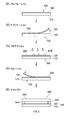
- FIG. 1 shows a cross-sectional structure of a protective sheet according to one embodiment.
- This protective sheet 10 has a structure in which a pressure-sensitive adhesive layer 2 is provided on one surface 1A of a sheet-shaped base material layer 1, and the surface 2A of the pressure-sensitive adhesive layer 2 is attached to an adherend for use. ..
- the protective sheet 10 is used as a surface protective sheet, the surface 2A of the pressure-sensitive adhesive layer 2 is attached to the object to be protected.
- the back surface 1B of the base material layer 1 (the surface opposite to the one surface 1A) is also the back surface of the protective sheet 10 and constitutes the outer surface of the protective sheet 10.
- the protective sheet 10 before use (that is, before being adhered to an adherend) has a surface (adhesive surface, that is, a surface to be adhered to an adherend) 2A of the pressure-sensitive adhesive layer 2 and a release surface at least on the pressure-sensitive adhesive layer side. It may be in a form protected by a release liner (not shown). Alternatively, the other surface (back surface) 1B of the base material layer 1 is a release surface, and when the protective sheet 10 is wound in a roll shape, the pressure-sensitive adhesive layer 2 comes into contact with the back surface and its surface (adhesion) The surface 2A may be the protective sheet 10 in a protected form.
- a conventional release paper or the like can be used and is not particularly limited.
- a release liner having a release treatment layer on the surface of a liner substrate such as a plastic film or paper, a release liner made of a low adhesion material such as a fluoropolymer (polytetrafluoroethylene) or a polyolefin resin it can.
- the release treatment layer may be formed by surface-treating the liner substrate with various release treatment agents such as silicone-based, long-chain alkyl-based, fluorine-based, and molybdenum sulfide.
- the width of the protective sheet disclosed here is not particularly limited.
- a protective sheet having a width of about 1 m or more, and further about 1.5 m or more it is possible to efficiently realize protection of a Low-E glass plate having a relatively large area.
- the width of the protective sheet is about 2 m or more.
- Such a wide protective sheet can achieve a protective function for a large-area Low-E glass plate with one sheet or a small number.
- a protective sheet having a width of, for example, about 2.5 m or more, and further, about 2.6 m or more can be preferably used.
- the width of the protective sheet may be more than 2.6 m (eg 3 m or more).
- the upper limit of the width of the protective sheet is not particularly limited, and from the viewpoint of productivity, handleability, etc., usually about 5 m or less is suitable, and for example, it may be about 4 m or less.
- the protective sheet disclosed herein may be, for example, a sheet specified by having long sides and short sides in its plane (sheet surface).
- a long side is a side longer than a short side, and a short side is defined as a side shorter than a long side.
- the short side may be a side substantially orthogonal to the long side.
- the length direction of the protective sheet is a direction along the long side, and the width direction is a direction orthogonal to the length direction. Therefore, in this specification, "width" is defined as the length in the direction orthogonal to the length direction.
- the protective sheet called a long shape, a belt shape, and a rectangular shape is a typical example of the protective sheet disclosed herein.
- the long side is a line segment that extends substantially linearly, while the short side is not limited to a straight line and may be a curved line, a polygonal line, or the like.
- the length (distance in the length direction) of the long protective sheet is equal to or more than the width.
- the thickness of the protective sheet disclosed herein is not particularly limited, and from the viewpoint of handleability, lightness, etc., it is usually appropriate that the thickness is about 1000 ⁇ m or less (typically about 300 ⁇ m or less, for example, about 150 ⁇ m or less). Is. In one aspect, the thickness of the protective sheet may preferably be about 120 ⁇ m or less, more preferably about 100 ⁇ m or less, even more preferably about 75 ⁇ m or less, for example less than 60 ⁇ m. Also, the thickness of the protective sheet may typically be above 20 ⁇ m, preferably above 30 ⁇ m, more preferably above 40 ⁇ m, for example above 45 ⁇ m. In this specification, the thickness of the protective sheet includes the thicknesses of the pressure-sensitive adhesive layer and the base material layer, but does not include the thickness of the release liner.
- the thickness of the base material layer constituting the protective sheet disclosed herein is not particularly limited.
- the thickness of the base material layer may be, for example, about 800 ⁇ m or less (typically about 250 ⁇ m or less).
- the thickness of the substrate layer (typically a non-foamed resin film) may be preferably about 150 ⁇ m or less, more preferably about 100 ⁇ m or less, even more preferably less than 65 ⁇ m, for example less than 55 ⁇ m.
- the thickness of the base material layer is typically about 10 ⁇ m or more, preferably about 25 ⁇ m or more, more preferably more than 30 ⁇ m, further preferably more than 40 ⁇ m, for example, It can be greater than 45 ⁇ m.
- the thickness of the pressure-sensitive adhesive layer that constitutes the protective sheet disclosed herein is not particularly limited. From the viewpoint of preventing adhesive residue on the adherend, the thickness of the pressure-sensitive adhesive layer is usually about 50 ⁇ m or less and about 30 ⁇ m or less, preferably about 15 ⁇ m or less, preferably about 8 ⁇ m or less (for example, less than 6 ⁇ m). Is more preferable. In another aspect, the thickness of the pressure-sensitive adhesive layer is appropriately about 5 ⁇ m or less, may be about 4 ⁇ m or less, and may be, for example, 3 ⁇ m or less, from the viewpoint of releasability and the like.
- the thickness of the pressure-sensitive adhesive layer is usually suitable to be about 0.5 ⁇ m or more, preferably about 1 ⁇ m or more, and more preferably more than 2 ⁇ m.
- the pressure-sensitive adhesive layer may have a thickness of more than 3 ⁇ m, for example, more than 4 ⁇ m.
- the protective sheet disclosed herein is not particularly limited, but the chloride ion amount measured by hot water extraction is less than 8.9 ⁇ g per 1 g of the protective sheet (for example, about 8.5 ⁇ g or less). Appropriate. As a result, it is easy to obtain a structure that prevents corrosion and the like in the Low-E glass plate that is the object of protection for a long period of time, and the protective sheet tends to have excellent long-term reliability.
- the amount of chloride ions per 1 g of the protective sheet is preferably less than 8.0 ⁇ g, more preferably less than 7.0 ⁇ g, even more preferably less than 6.5 ⁇ g, and particularly preferably less than 6.0 ⁇ g (eg less than 5.5 ⁇ g). ..
- the lower limit of the amount of chloride ions per 1 g of the protective sheet is ideally 0 ⁇ g, but from the viewpoint of production efficiency, practically acceptable level, etc., it may be approximately 1 ⁇ g or more, or approximately 3 ⁇ g or more. Or about 5 ⁇ g or more.
- the amount of chloride ions per 1 g of the protective sheet is measured by the method described in Examples below.
- the protective sheet disclosed herein has an initial peel strength of about 0.01 N/20 mm or more, which is measured at a peeling speed of 0.3 m/min and a peeling angle of 180 degrees after 30 minutes of being attached to a Low-E glass plate. Is suitable.
- the protective sheet having the above initial peel strength adheres well to the adherend within a relatively short time after being adhered to the adherend, and is unlikely to be peeled off from the adherend. It can exhibit excellent protection performance.
- the initial peel strength can be about 0.05 N/20 mm or greater (eg, about 0.1 N/20 mm or greater).
- the initial peel strength can be about 0.5 N/20 mm or greater (eg, about 1 N/20 mm or greater).
- the upper limit of the initial peel strength is not particularly limited, but from the viewpoint of light peelability, it is usually appropriate that it is approximately 5 N/20 mm or less, and preferably approximately 2.5 N/20 mm or less (for example, approximately 2 N/20 mm or less).
- the initial peel strength is measured by the following method.
- Low-E glass plate a product number “RSFL6AS” (100 mm ⁇ 100 mm) manufactured by Nippon Sheet Glass Co., Ltd. is used.
- adherend any low-E glass plate can be used without particular limitation, and equivalent products of the above products or other commercially available low-E glass plates may be used.
- the protective sheet disclosed herein has a peel strength of about 5 N as measured with a tensile speed of 0.3 m/min and a peel angle of 180 degrees after being attached to a Low-E glass plate and stored at 50° C. for 7 days. It is preferably /20 mm or less.
- a protective sheet satisfying these characteristics has a sufficiently suppressed adhesive force over time even if it is adhered to an adherend for a relatively long period of time, and can maintain light releasability from the adherend. Therefore, the workability of removing from the adherend is excellent.
- a protective sheet having a peel strength with time of about 4 N/20 mm or less (more preferably about 2 N/20 mm or less) can achieve better peeling workability.
- the time-dependent peel strength is usually about 0.05 N/20 mm or more. It is suitable that it is about 0.1 N/20 mm or more, and more preferably about 0.3 N/20 mm or more.
- the peel strength over time may be about 1 N/20 mm or more. The peel strength with time is measured by the following method.
- a protective sheet to be measured is cut into a strip having a width of 20 mm and a length of 100 mm to prepare a test piece. Under a standard environment of 23° C. and 50% RH, this test piece is pressure-bonded to a Low-E glass plate as an adherend by reciprocating a 2 kg rubber roller twice. This sample was stored in an environment of 50° C. for 7 days and then kept in a standard environment of 23° C. and 50% RH for 1 hour, and then, in the standard environment, a tensile rate of 0. The peel strength over time [N/20 mm] is measured under the conditions of 3 m/min and a peel angle of 180 degrees. The Low-E glass plate used as the adherend is the same as in the case of the above initial peel strength measurement.
- the protective sheet disclosed herein has a ratio (that is, P 2 /P 1 ratio) of the temporal peel strength P 2 [N/20 mm] to the initial peel strength P 1 [N/20 mm]. It can be 5 times or less.
- a small P 2 /P 1 ratio means that the peel strength does not increase with time.
- the initial adhesiveness and the light releasability during the peeling work are suitably compatible with each other.
- the P 2 /P 1 ratio may be preferably 4 or less, more preferably 3 or less, still more preferably 2 or less, for example 1.8 or less, and 1.5 or less, further 1.3. It may be the following.
- P 2 / P 1 ratio may typically be in is 0.8 or more, such as one or more.
- the protective sheet disclosed herein includes the protective sheet (the base material layer and the pressure-sensitive adhesive layer may be included when the protective sheet is heated at 80° C. for 30 minutes, but the release liner is not included. .)
- the total amount of volatile organic compounds (VOC: volatile organic compounds) emitted from 1 g (hereinafter, also simply referred to as VOC emission amount) is 1000 ⁇ g (hereinafter, this may be referred to as “ ⁇ g/g”). ) The following is preferable.
- the VOC emission amount is more preferably 500 ⁇ g/g or less (for example, 300 ⁇ g/g or less, typically 100 ⁇ g/g or less).
- the VOC emission amount is measured by the following method.
- a protective sheet is cut into a predetermined size (here, a size of about 5 cm 2 ) and the release liner is peeled off to form a sample piece.
- the sample piece is put in a 20 mL vial bottle and tightly stoppered.
- the above-mentioned vial bottle is heated at 80° C. for 30 minutes, and 1.0 mL of heated gas (sample gas) is injected into a gas chromatograph (GC) measuring device using a headspace autosampler (HSS). Based on the obtained gas chromatogram, the amount of gas generated from the above-mentioned sample piece is determined as an n-decane conversion amount.
- GC gas chromatograph
- HSS headspace autosampler
- the VOC emission amount ( ⁇ g/g) per 1 g of the protective sheet (excluding the release liner) is determined.
- the n-decane conversion amount is determined by applying the calibration curve of n-decane prepared in advance, by regarding the detected intensity of the generated gas obtained by GC Mass as the detected intensity of n-decane.
- the settings of HSS and GC are as follows.
- HSS Model "7694” manufactured by Agilent Technologies Heating time: 30 minutes Pressurization time: 0.12 minutes Loop filling time: 0.12 minutes Loop equilibration time: 0.05 minutes Injection time: 3 minutes
- Product name “DB-ffAP” (inner diameter 0.533 mm ⁇ length 30 m, film thickness 1.0 ⁇ m) Column temperature: 250° C. (heating from 40° C. to 90° C. at 10° C./min, then heating to 250° C.
- the protective sheet disclosed herein is the corrosion-proof property evaluated as no discoloration in the Low-E glass plate discoloration evaluation test (40° C. 92% RH ⁇ 7 days) carried out by the method described in Examples below.
- Can have A protective sheet satisfying these characteristics can prevent corrosion and the like in low-E glass plate protection applications.
- the pressure-sensitive adhesive layer constituting the protective sheet disclosed herein is characterized in that the chloride ion amount measured by hot water extraction is 105 ⁇ g or less per 1 g of the pressure-sensitive adhesive (layer). This makes it possible to prevent corrosion and the like on the Low-E glass plate that is the protection target for a long period of time.
- the amount of chloride ions per 1 g of the adhesive (layer) is preferably about 100 ⁇ g or less, more preferably about 95 ⁇ g or less, further preferably about 90 ⁇ g or less, particularly preferably about 85 ⁇ g or less, about 75 ⁇ g or less (about 70 ⁇ g or less. ).
- the lower limit of the amount of chloride ions per 1 g of the pressure-sensitive adhesive (layer) is ideally 0 ⁇ g, but from the viewpoint of production efficiency, practically acceptable level, etc., it may be approximately 1 ⁇ g or more, and approximately 10 ⁇ g. It may be more than 50 ⁇ g or more.
- the chloride ion amount per 1 g of the pressure-sensitive adhesive (layer) is measured by the method described in Examples below. Alternatively, the chloride ion amount in the protective sheet and the base material layer constituting the protective sheet is measured by hot water extraction to calculate the chloride ion amount from the pressure-sensitive adhesive layer from the difference between the chloride ion amounts of both. The obtained value may be converted into a value per unit pressure-sensitive adhesive (layer) to obtain the value.
- the type of the adhesive constituting the adhesive layer disclosed here is not particularly limited.
- the pressure-sensitive adhesive layer is, for example, various polymers such as acryl-based, polyester-based, urethane-based, polyether-based, rubber-based, silicone-based, polyamide-based, and fluorine-based polymers (also referred to as a polymer as a pressure-sensitive adhesive component or a pressure-sensitive adhesive polymer). It can be a pressure-sensitive adhesive layer formed from a pressure-sensitive adhesive composition containing, as a base polymer (a main component among polymer components, that is, a component accounting for 50% by weight or more), one or two or more selected from (4).
- the technique disclosed here can be preferably implemented in the form of a protective sheet provided with an acrylic pressure-sensitive adhesive layer or a rubber pressure-sensitive adhesive layer, for example.
- acrylic pressure-sensitive adhesive layer refers to a pressure-sensitive adhesive layer having an acrylic polymer as a base polymer.
- rubber-based pressure-sensitive adhesive layer refers to a pressure-sensitive adhesive layer having a rubber-based polymer as a base polymer.
- Acrylic polymer means a monomer having at least one (meth)acryloyl group in one molecule (hereinafter, this may be referred to as “acrylic monomer”) as a main constituent monomer component (mainly monomer).
- Component that is, a polymer that constitutes 50% by weight or more of the total amount of monomers constituting the acrylic polymer).
- (meth)acryloyl group means a comprehensive description of an acryloyl group and a methacryloyl group.
- (meth)acrylate is meant to refer to acrylate and methacrylate inclusively.
- the acrylic polymer includes, for example, an alkyl (meth)acrylate (hereinafter also referred to as "monomer A"), and another monomer having copolymerizability with the alkyl (meth)acrylate (hereinafter also referred to as "monomer B").
- the polymer of the monomer raw material which can further contain .) is preferable.
- the acrylic polymer typically has a copolymerization composition corresponding to the composition of the monomer components contained in the monomer raw material.
- an alkyl(meth)acrylate represented by the following general formula (1) can be preferably used as the monomer A.
- CH 2 C(R 1 )COOR 2 (1)
- R 1 in the above formula (1) is a hydrogen atom or a methyl group.
- R 2 is an alkyl group having 1 to 20 carbon atoms.
- such a range of the number of carbon atoms may be represented as “C 1-20 ”.
- an alkyl (meth)acrylate in which R 2 is a C 1-16 alkyl group is preferable, and R 2 is C 1-12 (typically C 1-10 , for example, Alkyl (meth)acrylate, which is a C 1-8 ) alkyl group, is more preferable.
- alkyl(meth)acrylate in which R 2 is a C 1-20 alkyl group examples include, for example, methyl(meth)acrylate, ethyl(meth)acrylate, propyl(meth)acrylate, isopropyl(meth)acrylate, n-butyl(meth)acrylate.
- the technique disclosed herein is such that the alkyl acrylate as the monomer A is about 50% by weight or more (more preferably about 75% by weight or more, further preferably about 90% by weight or more, for example, about 95% by weight) in the total monomer components.
- the above can be preferably implemented.
- the alkyl acrylate is preferably an alkyl acrylate in which R 2 in the above formula (1) is a C 1-20 alkyl group, and R 2 is C 1-12 (more preferably C 1-10 , particularly preferably C 1 ).
- Alkyl acrylate which is an alkyl group of 1-8 ) is more preferable.
- the alkyl acrylate is an alkyl acrylate in which R 2 in the formula (1) is a C 2-8 (typically C 4-8 ) alkyl group. Can be done.
- the alkyl acrylates may be used alone or in combination of two or more. When two or more alkyl acrylates are used, R 2 is C 4-20 (more preferably C 4-10 , still more preferably C 4-8 ) for the reason of adjusting the Tg of the acrylic polymer to the optimum range.
- the alkyl acrylate A1 which is the alkyl group of 1 and the alkyl acrylate A2 which is the C 1-3 (more preferably C 1-2 , for example C 2 ) alkyl group may be used in combination.
- the weight ratio (A1:A2) of the alkyl acrylate A1 and the alkyl acrylate A2 is not particularly limited, and is usually about 5:95 to 95:5, and may be about 10:90 to 90:10. It is suitable, for example, about 15:85 to 85:15.
- the monomer component contains, as the monomer A, one kind or two or more kinds of alkyl methacrylate.
- alkyl methacrylate By using alkyl methacrylate, it is possible to preferably design a base polymer that can achieve a desired adhesive hardness.
- the alkyl methacrylate is preferably an alkyl methacrylate in which R 2 in the above formula (1) is a C 1-10 alkyl group, and R 2 is a C 1-4 (more preferably C 1 or C 2-4 ) Alkyl methacrylate, which is an alkyl group, is more preferable.
- the alkyl methacrylates can preferably be used in combination with alkyl acrylates.
- the weight C AM of one or more kinds of alkyl methacrylate (for example, C 2-4 alkyl methacrylate) and the weight C AA of one or more kinds of alkyl acrylate are used.
- the ratio (C AM :C AA ) is not particularly limited, and in one embodiment, it is usually about 1:9 to 9:1, and it is suitable to be about 2:8 to 8:2, and preferably about It is 3:7 to 7:3, more preferably about 4:6 to 6:4.
- the weight C AM of alkyl methacrylate (eg, C 1 alkyl methacrylate, or methyl methacrylate (MMA)) in the total amount of alkyl (meth)acrylate (C AM +C AA ) is usually about 30 wt% or less. Approximately 20% by weight or less is suitable, preferably approximately 10% by weight or less, more preferably approximately 7% by weight or less. On the other hand, the lower limit is usually about 0.1% by weight or more and about 1% by weight or more, and preferably about 2% by weight or more (for example, about 3% by weight or more).
- the technique disclosed herein can be carried out in a mode in which the monomer component does not substantially contain alkyl methacrylate as the monomer A. In the mode in which the alkyl methacrylate is used, for example, C 1-3 alkyl methacrylate (typically Specifically, it can be carried out in a mode not including MMA).
- the acrylic polymer contains an alkyl acrylate having an alkyl group having 4 to 9 carbon atoms (hereinafter, also referred to as a monomer m A ), and may contain another monomer as necessary. It is a polymer of.
- the acrylic polymer can be synthesized by polymerizing a monomer raw material having a corresponding composition (monomer composition) by a known method.
- Non-limiting examples of monomers m A, n- butyl acrylate (BA), ethylhexyl acrylate to n-, 2-ethylhexyl acrylate (2EHA), n- octyl acrylate, n- nonyl acrylate and isononyl acrylate (iNA) is Can be mentioned.
- An alkyl acrylate having a —(CH 2 ) 3 — structure in the alkyl group is preferable, and an alkyl acrylate having a —(CH 2 ) 4 — structure in the alkyl group is more preferable.
- Suitable examples of monomers m A, 2EHA, include BA and iNA.
- the monomer m A one type can be used alone, or two or more types can be used in combination.
- the amount of monomer m A is typically at least 40 wt% of the total monomer raw material used in the synthesis of the acrylic polymer.
- Comprise a monomer m A in a proportion of more than 40 wt% in the monomer composition is advantageous in terms of flexibility and low-temperature characteristics improve pressure-sensitive adhesive layer containing an acrylic polymer.
- the ratio of the monomers m A is preferably 45 wt% or more, may be 50 wt% or more (e.g., 50 wt.%). Further, by the ratio of monomer m A in the monomer in the composition and 99.9 wt% or less, it becomes easy to impart moderate cohesiveness to the adhesive layer containing an acrylic polymer.
- the proportion of the monomers m A is preferably 95 wt% or less, more preferably 90 wt% or less, may be 85 wt% or less. In one embodiment, it may be less than 80 wt% the proportion of the monomers m A, may be less than 70 wt% (e.g. 65 wt% or less).
- the acrylic polymer in the technology disclosed herein may have a monomer composition containing a carboxy group-containing monomer (hereinafter, also referred to as a monomer m B ) as the monomer B. That is, the monomer m B may be copolymerized with the acrylic polymer.
- the monomer m B can be useful for introducing a cross-linking point into the acrylic polymer and for enhancing the cohesive force of the pressure-sensitive adhesive layer containing the acrylic polymer.
- the monomer m B can also help improve non-adhesive residue by increasing the adhesiveness (anchoring property) between the pressure-sensitive adhesive layer containing an acrylic polymer and the base material layer.
- carboxy group-containing monomer examples include ethylene such as acrylic acid, methacrylic acid, crotonic acid, isocrotonic acid, carboxyethyl (meth)acrylate, carboxypentyl (meth)acrylate, and 1-[2-(methacryloyloxy)ethyl]succinic acid.
- unsaturated monocarboxylic acids ethylenically unsaturated dicarboxylic acids such as maleic acid, fumaric acid, itaconic acid and citraconic acid, and their anhydrides (eg maleic anhydride, itaconic anhydride); and the like.
- the carboxy group-containing monomer may be used alone or in combination of two or more.
- the proportion of the monomer m B in the monomer composition is not particularly limited.
- the proportion of the monomer m B can be, for example, 0.05% by weight or more, usually 0.1% by weight or more is suitable, and 0.5% by weight or more is preferable from the viewpoint of polymerization stability and dispersion stability. It is preferably 1% by weight or more.
- the proportion of the monomer m B is preferably about 20% by weight or less (preferably about 10% by weight or less, typically about 7% by weight or less). Is about 5% by weight or less, more preferably about 4% by weight or less (for example, 3% by weight or less).
- the acrylic polymer in the technology disclosed herein is a homopolymer in which the alkyl group has 4 to 20 carbon atoms as the monomer A for the purpose of adjusting the glass transition temperature (Tg) of the acrylic polymer.
- An alkyl (meth)acrylate having a Tg of ⁇ 50° C. or higher (hereinafter, also referred to as a monomer m C ) may be copolymerized.
- the above-mentioned monomers belonging to the monomer m A are excluded from the category of the monomer m C.
- the monomer m C one type can be used alone, or two or more types can be used in combination.
- the monomer m C preferably has a Tg of a homopolymer in the range of ⁇ 40° C. to +60° C., more preferably in the range of ⁇ 30° C. to +40° C. (eg, ⁇ 20° C. to +30° C.).
- monomers m C that can be preferably used include n-butyl methacrylate (BMA), 2-ethylhexyl methacrylate and lauryl acrylate.
- the proportion of the monomer m C in the monomer composition is not particularly limited.
- the proportion of the monomer m C may be, for example, 1% by weight or more, may be 5% by weight or more, may be 10% by weight or more, and may be 15% by weight or more.
- the ratio of the monomers m C in the monomer in the composition may be more than 20 wt%, may be more than 25 wt%, even more than 30 wt% It may be 35 wt% or more (for example, 40 wt% or more).
- the proportion of the monomer m C in the monomer composition can be less than 60% by weight, and from the viewpoint of improving flexibility and low temperature characteristics, it is approximately 55% by weight or less (typically approximately 50% by weight or less, for example, approximately 45% by weight or less) is suitable. In some embodiments, the proportion of the monomer m C may be less than 30% by weight, less than 20% by weight, less than 10% by weight (eg less than 5% by weight, even less than 1% by weight). ..
- a monomer (monomer m D ) other than the monomers m A , m B , and m C may be copolymerized as the monomer A, if necessary.
- monomer m D various monomers copolymerizable with the monomer m A can be used alone or in combination of two or more.
- an alkyl(meth)acrylate represented by the above general formula (1) (monomer m D1 ) (excluding those corresponding to the monomer m A or the monomer m C ) can be used. ..
- Specific examples of the alkyl (meth)acrylate that can be used as the monomer m D1 include methyl (meth)acrylate, ethyl (meth)acrylate, propyl (meth)acrylate and the like.
- the monomer m D1 can be used alone or in combination of two or more.
- Examples of the compound that can be used as the monomer m D may include the following functional group-containing monomers (monomer B). Such a functional group-containing monomer may be useful for introducing a cross-linking point into the acrylic polymer or increasing the cohesive force of the acrylic polymer.
- Hydroxyl group-containing monomer for example, 2-hydroxyethyl (meth)acrylate, 2-hydroxypropyl (meth)acrylate, 3-hydroxypropyl (meth)acrylate, 2-hydroxybutyl (meth)acrylate, 4-hydroxybutyl (meth)acrylate, Hydroxyalkyl (such as 6-hydroxyhexyl (meth)acrylate, 8-hydroxyoctyl (meth)acrylate, 10-hydroxydecyl (meth)acrylate, 12-hydroxylauryl (meth)acrylate, (4-hydroxymethylcyclohexyl)methyl acrylate) (Meth)acrylates; unsaturated alcohols such as vinyl alcohol and allyl alcohol.
- Hydroxyalkyl such as 6-hydroxyhexyl (meth)acrylate, 8-hydroxyoctyl (meth)acrylate, 10-hydroxydecyl (meth)acrylate, 12-hydroxylauryl (meth)acrylate, (4-hydroxymethylcyclohexyl)methyl acrylate
- Amide group-containing monomer For example, (meth)acrylamide, N,N-dimethyl(meth)acrylamide, N,N-diethyl(meth)acrylamide, N,N-dimethylaminopropyl(meth)acrylamide, N-butyl(meth)acrylamide , N-methylol(meth)acrylamide, N-methylolpropane(meth)acrylamide, N-methoxymethyl(meth)acrylamide, N-butoxymethyl(meth)acrylamide, diacetone(meth)acrylamide.
- Imido group-containing monomer for example, N-isopropylmaleimide, N-cyclohexylmaleimide, itacone imide.
- Amino group-containing monomer for example, aminoethyl (meth)acrylate, N,N-dimethylaminoethyl (meth)acrylate, N,N-dimethylaminopropyl (meth)acrylate, t-butylaminoethyl (meth)acrylate.
- Monomers having an epoxy group for example, glycidyl (meth)acrylate, methylglycidyl (meth)acrylate, allylglycidyl ether.
- Cyano group-containing monomer For example, acrylonitrile, methacrylonitrile.
- Keto group-containing monomer For example, diacetone (meth)acrylamide, diacetone (meth)acrylate, vinyl methyl ketone, vinyl ethyl ketone, allyl acetoacetate, vinyl acetoacetate.
- Monomers having a nitrogen atom-containing ring eg N-vinyl-2-pyrrolidone, N-methylvinylpyrrolidone, N-vinylpyridine, N-vinylpiperidone, N-vinylpyrimidine, N-vinylpiperazine, N-vinylpyrazine, N-vinyl Pyrrole, N-vinylimidazole, N-vinyloxazole, N-vinylmorpholine, N-vinylcaprolactam, N-(meth)acryloylmorpholine, N-(meth)acryloylpyrrolidone.
- Alkoxysilyl group-containing monomer for example, 3-(meth)acryloxypropyltrimethoxysilane, 3-(meth)acryloxypropyltriethoxysilane, 3-(meth)acryloxypropylmethyldimethoxysilane, 3-(meth)acryloxy Propylmethyldiethoxysilane.
- Non-aromatic ring-containing (meth)acrylates such as (meth)acrylate, t-butylcyclohexyl (meth)acrylate, cyclopentyl di(meth)acrylate, isobornyl (meth)acrylate; aryl (meth)acrylates (eg phenyl (meth)acrylate) , Benzyl (meth)acrylate, aryloxyalkyl (meth)acrylate (for example, phenoxyethyl (meth)acrylate), arylalkyl (meth)acrylate (for example, benzyl (meth)acrylate), and other aromatic ring-containing (meth)
- Still another example of the compound that can be used as the monomer m D is a polyfunctional monomer.
- the polyfunctional monomer include 1,6-hexanediol di(meth)acrylate, ethylene glycol di(meth)acrylate, pentaerythritol di(meth)acrylate, trimethylolpropane tri(meth)acrylate, and dipentaerythritol hexa.
- examples thereof include compounds having two or more (meth)acryloyl groups in one molecule, such as (meth)acrylate and methylenebisacrylamide.
- the amount thereof is not particularly limited, but it is usually suitable to be 2% by weight or less (more preferably 1% by weight or less) of the total monomer components.
- the amount of the monomer m D used so as not to exceed 40% by weight of the monomer composition, preferably 20% by weight and more preferably 10% by weight.
- the monomer m D may not be used.
- the technique disclosed herein can be preferably carried out in an embodiment in which the amount of the monomer m D used is 0% by weight or more and less than 5% by weight of the monomer composition.
- that the amount of the monomer m D used is 0% by weight of the monomer composition means that the monomer m D is not used at least intentionally.
- the proportion of the monomer A (alkyl (meth)acrylate) in all the monomer components can be, for example, about 50% by weight or more, and is appropriately about 60% by weight or more. It is preferably about 70% by weight or more, more preferably about 80% by weight or more, still more preferably about 85% by weight or more.
- a protective sheet having desired adhesive properties can be preferably realized.
- the technique disclosed herein can be preferably carried out, for example, in a mode in which the proportion of the monomer A in all the monomer components is about 90% by weight or more. In one embodiment, the proportion of the monomer A may be about 95% by weight or more, or about 97% by weight or more.
- the pressure-sensitive adhesive composition containing such an acrylic polymer as a base polymer may be advantageous from the viewpoint of weather resistance of the pressure-sensitive adhesive layer formed from the composition (and by extension, the protective sheet having the pressure-sensitive adhesive layer).
- the ratio of the monomer A in all the monomer components can be, for example, 99.9% by weight or less from the viewpoint of appropriately exerting the effect of the monomer B. Usually, it is preferably 99.5% by weight or less, more preferably 99% by weight or less, or about 97% by weight or less (for example, 95% by weight or less).
- the proportion of the functional group-containing monomer in all the monomer components constituting the acrylic polymer is usually about 0.1% by weight or more (typically It is preferably about 0.5 wt% or more, for example about 1 wt% or more), and about 40 wt% or less (typically about 30 wt% or less, for example about 20 wt% or less).
- the proportion of the hydroxyl group-containing monomer in all the above monomer components is usually about 0.001% by weight or more (typically from the viewpoint of obtaining a desired cohesive force).
- the pressure-sensitive adhesive layer may be a rubber-based pressure-sensitive adhesive layer.
- the base polymer include natural rubber; styrene-butadiene rubber (SBR); polyisoprene; butene (1-butene, and cis- or trans-2-butene) and/or 2-methylpropene (isobutylene).
- the Tg of the base polymer of the pressure-sensitive adhesive layer disclosed herein is not particularly limited.
- the Tg of the base polymer can be, for example, about 0° C. or lower.
- the Tg of the base polymer of the pressure-sensitive adhesive layer is about -5°C or lower.
- a pressure-sensitive adhesive layer having excellent adhesiveness to an adherend can be preferably formed.
- the Tg of the base polymer is about ⁇ 15° C. or lower (more preferably about ⁇ 20° C. or lower, for example, about ⁇ 25° C. or lower), a better effect can be realized.
- the Tg of the base polymer of the pressure-sensitive adhesive layer is about ⁇ 35° C. or less, more preferably about ⁇ 40° C. or less, and further preferably about ⁇ 45 from the viewpoint of adhesiveness to an adherend. C. or lower (for example, less than about ⁇ 50° C., further about ⁇ 52° C. or less, or about ⁇ 55° C. or less).
- the Tg of the base polymer is usually appropriate to be ⁇ 70° C. or higher, and from the viewpoint of cohesiveness of the pressure-sensitive adhesive, etc., it is preferably about ⁇ 65° C. or higher, more preferably ⁇ 60° C. or higher, and further preferably Is ⁇ 55° C.
- the Tg of the base polymer can be adjusted by appropriately changing the monomer composition (that is, the type and amount ratio of the monomers used for the synthesis of the polymer).
- the Tg of a polymer means a Fox based on the Tg of a homopolymer (homopolymer) of each monomer constituting the polymer and the weight fraction (copolymerization ratio on a weight basis) of the monomer.
- the Fox equation is a relational expression between Tg of the copolymer and the glass transition temperature Tgi of a homopolymer obtained by homopolymerizing each of the monomers constituting the copolymer, as shown below.
- Tg is the glass transition temperature (unit: K) of the copolymer
- Wi is the weight fraction of the monomer i in the copolymer (copolymerization ratio on a weight basis)
- Tgi is a homopolymer of the monomer i. Represents the glass transition temperature (unit: K) of.
- the glass transition temperature of the homopolymer used for the calculation of Tg the value described in publicly known materials is used.
- the monomers listed below the following values are used as the glass transition temperature of homopolymers of the monomers.
- Tg of homopolymers of monomers other than those exemplified above the values described in the "Polymer Handbook” (3rd edition, John Wiley & Sons, Inc., 1989) shall be used. For monomers for which multiple types of values are described in this document, the highest value is adopted. When the Tg of the homopolymer is not described in the above Polymer Handbook, the value obtained by the measuring method described in JP-A-2007-51271 shall be used.
- the method for obtaining the base polymer is not particularly limited.
- a known polymerization method such as a solution polymerization method, an emulsion polymerization method, a bulk polymerization method, or a suspension polymerization method can be appropriately adopted.
- photopolymerization performed by irradiating light such as UV (typically performed in the presence of a photopolymerization initiator), radiation polymerization performed by irradiating radiation such as ⁇ -ray or ⁇ -ray.
- Active energy ray irradiation polymerization may be adopted.
- the base polymer (for example, an acrylic polymer) is typically obtained by emulsion polymerization of a monomer raw material having the above composition.
- a monomer supply method in the emulsion polymerization method a batch charging method of supplying all the monomer raw materials at once, a continuous supply (dropping) method, a divided supply (dropping) method, and the like can be appropriately adopted.
- Part or all of the monomer components may be mixed with an aqueous liquid and a surfactant in advance and emulsified, and the emulsion may be supplied to the polymerization vessel.
- the polymerization temperature can be appropriately selected according to the type of monomer and solvent used, the type of polymerization initiator, and the like.
- the polymerization temperature is usually about 20° C. or higher, preferably about 40° C. or higher, more preferably about 50° C. or higher, about 60° C. or higher, about 65° C. or higher, and further The temperature may be about 70°C or higher.
- the polymerization temperature is usually about 170° C. or lower (typically about 140° C. or lower), and preferably about 95° C. or lower (eg, about 85° C. or lower). In emulsion polymerization, the polymerization temperature is preferably about 95° C. or lower (for example, about 85° C. or lower).
- polymerization initiator examples include, but are not limited to, an azo initiator, a peroxide initiator, and a redox initiator in which a peroxide and a reducing agent are combined.
- the polymerization initiators may be used alone or in combination of two or more.
- the azo-based initiator examples include 2,2'-azobisisobutyronitrile, 2,2'-azobis[N-(2-carboxyethyl)-2-methylpropionamidine]hydrate, 2,2'.
- -Azobis(2-methylpropionamidine) disulfate 2,2'-azobis(2-methylpropionamidine) dihydrochloride, 2,2'-azobis(2-methylpropionamidine) dihydrochloride, 2,2'- Examples thereof include azobis[2-(5-methyl-2-imidazolin-2-yl)propane]dihydrochloride and 2,2′-azobis(N,N′-dimethyleneisobutylamidine)dihydrochloride.
- peroxide-based initiators include persulfates such as potassium persulfate and ammonium persulfate; benzoyl peroxide, t-butyl hydroperoxide, di-t-butyl peroxide, dicumyl peroxide, dilauroyl peroxide, di-n.
- Examples of the redox type initiator include a combination of peroxide and ascorbic acid (a combination of hydrogen peroxide solution and ascorbic acid, etc.), a combination of a peroxide and an iron (II) salt (a hydrogen peroxide solution and Iron (II) salt and the like), persulfate and sodium bisulfite, and the like.
- the amount of the polymerization initiator used can be appropriately selected according to the type of the initiator, the type of the monomer (composition of the monomer component), the polymerization conditions and the like.
- the amount of the polymerization initiator used is usually about 0.0005 to 1 part by weight with respect to 100 parts by weight of the monomer raw material, and it is suitable to set it in the range of about 0.001 to 0.5 part by weight, The amount is preferably 0.002 to 0.3 part by weight, more preferably 0.005 to 0.1 part by weight.
- chain transfer agents which can be understood as a molecular weight modifier or a polymerization degree modifier
- the chain transfer agents may be used alone or in combination of two or more.
- mercaptans such as n-dodecyl mercaptan, t-dodecyl mercaptan, glycidyl mercaptan, 2-mercaptoethanol, mercaptoacetic acid, thioglycolic acid, 2-ethylhexyl thioglycolate, and 2,3-dimercapto-1-propanol. Classes can be preferably used.
- the amount thereof may be, for example, about 0.01 to 1 part by weight, and may be 0.02 to 0.1 part by weight, based on 100 parts by weight of all the monomer components. Is preferred, and more preferably 0.03 to 0.07 parts by weight.
- the technique disclosed herein can be preferably carried out even in a mode in which no chain transfer agent is used.
- the surfactant (emulsifier) used for emulsion polymerization is not particularly limited, and known anionic surfactants, nonionic surfactants and the like can be used. You may use the surfactant which has a radically polymerizable functional group.
- the surfactant having a radically polymerizable functional group is also referred to as a reactive (polymerizable) surfactant.
- a general surfactant having no radically polymerizable functional group may be referred to as a non-reactive (non-polymerizable) surfactant.
- the surfactants may be used alone or in combination of two or more.
- the amount of the surfactant used is preferably about 0.1 part by weight or more (for example, about 0.5 part by weight or more) based on 100 parts by weight of all the monomer components, and 100 parts by weight of all the monomer components. On the other hand, it is preferably about 10 parts by weight or less (for example, about 5 parts by weight or less).
- non-reactive surfactants include sodium lauryl sulfate, ammonium lauryl sulfate, sodium dodecylbenzene sulfonate, sodium polyoxyethylene lauryl sulfate, sodium polyoxyethylene alkyl ether sulfate, ammonium polyoxyethylene alkylphenyl ether sulfate, polyoxy Anionic emulsifiers such as sodium ethylene alkylphenyl ether sulfate and sodium polyoxyethylene alkylsulfosuccinate; nonionics such as polyoxyethylene alkyl ether, polyoxyethylene alkylphenyl ether, polyoxyethylene fatty acid ester, polyoxyethylene polyoxypropylene block polymer System emulsifiers; and the like.
- the reactive surfactant is not particularly limited as long as it has a radically polymerizable functional group.
- it may be a reactive surfactant having a structure in which a radically polymerizable functional group is introduced into the above-mentioned anionic surfactant or nonionic surfactant.
- the radically polymerizable functional group include a vinyl group, a propenyl group, an isopropenyl group, a vinyl ether group (vinyloxy group), an allyl ether group (allyloxy group) and the like.
- the concept of the propenyl group as used herein includes a 1-propenyl group (CH 3 —CH ⁇ CH—) and a 2-propenyl group (CH 2 ⁇ CH—CH 2 —; sometimes referred to as an allyl group). included.
- anionic reactive surfactant examples include polyoxyethylene (allyloxymethyl) alkyl ether sulfate (for example, ammonium salt), polyoxyethylene nonylpropenyl phenyl ether sulfate (for example, ammonium salt), alkylallyl sulfosuccinic acid.
- examples thereof include salts (for example, sodium salt), methacryloxy polyoxypropylene sulfate ester salt (for example, sodium salt), polyoxyalkylene alkenyl ether sulfate (for example, ammonium salt in which the terminal of the alkenyl group is an isopropenyl group), and the like.
- the salt may be a metal salt such as sodium salt, or a non-metal salt such as ammonium salt or amine salt.
- the nonionic reactive surfactant include polyoxyethylene nonylpropenyl phenyl ether and the like.
- a reactive surfactant having an oxyethylene chain may be preferably used.
- the oxyethylene chain refers to a repeating structure of oxyethylene units, that is, a structural portion represented by —(C 2 H 4 O) n —.
- n represents the number of repeating oxyethylene units.
- a reactive surfactant having a repeating number n of about 5 to 30 (for example, 8 to 25) is preferable.
- a reactive surfactant having a propenyl group can be preferably adopted.
- Reactive surfactants having a propenyl group and an oxyethylene chain are particularly preferable.
- an anionic reactive surfactant for example, an anionic reactive surfactant having an oxyethylene chain
- the salt is preferably a non-metal salt, and particularly preferably an ammonium salt.
- other surfactants such as anionic reactive surfactant, anionic non-reactive surfactant, nonionic non-reactive surfactant, etc. When used in combination with, more preferable results can be realized.
- the reactive surfactant By subjecting the monomer raw material to emulsion polymerization in the presence of a reactive surfactant having a radically polymerizable functional group, the reactive surfactant can react and be incorporated into a base polymer (eg, acrylic polymer).
- a base polymer eg, acrylic polymer
- the movement of the reactive surfactant incorporated in the base polymer is restricted in the pressure-sensitive adhesive layer, and thus it is difficult to bleed out to the surface of the pressure-sensitive adhesive layer. Therefore, the use of the reactive surfactant can suppress the bleed-out of the low molecular weight compound to the surface of the pressure-sensitive adhesive layer. This is preferable from the viewpoint of low contamination. From the viewpoint of achieving a more excellent low contamination property, an embodiment in which only a reactive surfactant is used as a surfactant during emulsion polymerization can be preferably adopted.
- the pressure-sensitive adhesive layer of the protective sheet disclosed herein can be a pressure-sensitive adhesive layer formed from various forms of pressure-sensitive adhesive compositions.
- a water-dispersed PSA composition in which at least a part of the PSA is dispersed in an aqueous liquid can be preferably used.
- a preferred example of such a water-dispersed PSA composition is a water-dispersed PSA composition containing an acrylic polymer as a base polymer (acrylic water-dispersed PSA composition).
- the pressure-sensitive adhesive composition include, for example, a composition in which a pressure-sensitive adhesive (adhesive component) is contained in an organic solvent (solvent-type pressure-sensitive adhesive composition), and cured by active energy rays such as ultraviolet rays and radiation.
- a pressure-sensitive adhesive active energy ray-curable pressure-sensitive adhesive composition
- a hot-melt pressure-sensitive adhesive composition that is applied in a heated and melted state and forms a pressure-sensitive adhesive when cooled to around room temperature
- the thing etc. which added the aqueous liquid disclosed here to the thing etc. are mentioned.
- the pressure-sensitive adhesive composition used for forming the pressure-sensitive adhesive layer preferably contains a crosslinking agent.
- the crosslinking agent By using the crosslinking agent, the surface hardness of the pressure-sensitive adhesive layer can be appropriately adjusted.
- the type of crosslinking agent used is not particularly limited and can be appropriately selected from conventionally known crosslinking agents.
- crosslinking agent examples include oxazoline-based crosslinking agents, aziridine-based crosslinking agents, isocyanate-based crosslinking agents, epoxy-based crosslinking agents, melamine-based crosslinking agents, peroxide-based crosslinking agents, urea-based crosslinking agents, metal alkoxide-based crosslinking agents. , Metal chelate-based crosslinking agents, metal salt-based crosslinking agents, carbodiimide-based crosslinking agents, hydrazine-based crosslinking agents, amine-based crosslinking agents, silane coupling agents, and the like. These may be used alone or in combination of two or more.
- an oxazoline-based crosslinking agent for example, it is preferable to use one kind or two or more kinds selected from the group consisting of an oxazoline-based crosslinking agent, an aziridine-based crosslinking agent, an isocyanate-based crosslinking agent and an epoxy-based crosslinking agent.
- oxazoline-based crosslinking agents, isocyanate-based crosslinking agents, and epoxy-based crosslinking agents are more preferable.
- a cross-linking agent that can be dissolved or dispersed in an aqueous liquid is preferable, and a cross-linking agent that can be dissolved (that is, water-soluble) in an aqueous liquid is particularly preferable.
- oxazoline-based cross-linking agent one having one or more oxazoline groups in one molecule can be used without particular limitation.
- an oxazoline-based crosslinking agent that can be dissolved or dispersed in an aqueous liquid.
- the oxazoline group may be any of a 2-oxazoline group, a 3-oxazoline group and a 4-oxazoline group.
- an oxazoline-based cross-linking agent having a 2-oxazoline group can be preferably used.
- a water-soluble copolymer or a water-dispersible copolymer obtained by copolymerizing an addition-polymerizable oxazoline such as methyl-2-oxazoline and 2-isopropenyl-5-ethyl-2-oxazoline with another monomer And can be used as an oxazoline crosslinking agent.
- Examples of commercially available oxazoline-based cross-linking agents include trade names “Epocros WS-500”, “Epocros WS-700”, “Epocros K-2010E”, “Epocros K-2020E”, and “Epocros K-” manufactured by Nippon Shokubai Co., Ltd. 2030E” and the like.
- aziridine crosslinking agent examples include trimethylolpropane tris[3-(1-aziridinyl)propionate] and trimethylolpropane tris[3-(1-(2-methyl)aziridinylpropionate)].
- examples of commercially available products of the aziridine-based cross-linking agent include "Chemite PZ-33" and "Chemite DZ-22E” manufactured by Nippon Shokubai Co., Ltd.
- a bifunctional or higher functional polyfunctional isocyanate compound can be used as an example of the isocyanate cross-linking agent.
- aromatic isocyanate such as tolylene diisocyanate, xylene diisocyanate, polymethylene polyphenyl diisocyanate, tris(p-isocyanatophenyl)thiophosphate, diphenylmethane diisocyanate; alicyclic isocyanate such as isophorone diisocyanate; aliphatic such as hexamethylene diisocyanate Isocyanate; etc. are mentioned.
- a water-soluble, water-dispersible or self-emulsifying type isocyanate crosslinking agent can be preferably adopted.
- a so-called blocked isocyanate type isocyanate cross-linking agent in which an isocyanate group is blocked can be preferably used.
- epoxy-based cross-linking agent one having two or more epoxy groups in one molecule can be used without particular limitation.
- An epoxy-based cross-linking agent having 3 to 5 epoxy groups in one molecule is preferable.
- an epoxy-based crosslinking agent that can be dissolved or dispersed in an aqueous liquid.
- Specific examples of the epoxy-based cross-linking agent include N,N,N′,N′-tetraglycidyl-m-xylenediamine, 1,3-bis(N,N-diglycidylaminomethyl)cyclohexane, 1,6-hexane.
- Examples thereof include diol diglycidyl ether, polyethylene glycol diglycidyl ether, polyglycerol polyglycidyl ether and the like.
- Commercially available epoxy crosslinking agents are trade names "TETRAD-X” and “TETRAD-C” manufactured by Mitsubishi Gas Chemical Co., Inc., trade names “Epiclon CR-5L” manufactured by DIC, and products manufactured by Nagase ChemteX.
- the name "Denacol EX-512", the trade name "TEPIC-G” manufactured by Nissan Chemical Industries, Ltd. and the like can be mentioned.
- carbodiimide cross-linking agent a low molecular compound or a high molecular compound having two or more carbodiimide groups can be used.
- a carbodiimide-based crosslinking agent that can be dissolved or dispersed in an aqueous liquid.
- commercially available carbodiimide crosslinking agents include carbodilite V series (aqueous solution type) such as "carbodilite V-02", “carbodilite V-02-L2" and “carbodilite V-04" manufactured by Nisshinbo Co., Ltd.
- Carbodilite series such as carbodilite E series (water dispersion type) such as carbodilite E-01”, “carbodilite E-02” and “carbodilite E-04” can be mentioned.
- the content of the cross-linking agent (total amount of the cross-linking agent) in the pressure-sensitive adhesive composition disclosed herein is not particularly limited, and in consideration of the composition and the molecular weight of the base polymer, an appropriate property may be obtained after cross-linking. Can be set. Although not particularly limited, it is appropriate that the amount of the cross-linking agent used with respect to 100 parts by weight of the base polymer (typically an acrylic polymer) is usually about 0.01 parts by weight or more, and about 0.1 parts by weight or more. And preferably about 1 part by weight or more (for example, about 2 parts by weight or more).
- the amount of the cross-linking agent used is usually about 15 parts by weight or less (preferably about 10 parts by weight or less, for example, about 5 parts by weight or less) with respect to 100 parts by weight of the base polymer. From the viewpoint of enhancing the adhesion to the adherend, the amount is preferably about 4 parts by weight or less, more preferably less than 3.5 parts by weight, further preferably less than 3 parts by weight.
- the PSA composition (and thus the PSA layer) disclosed herein may contain a phosphoric acid ester.
- the phosphoric acid ester include alkyl phosphoric acid esters such as lauryl phosphoric acid and lauryl phosphate, phosphoric acid esters having an oxyethylene chain, and salts thereof.
- the salt may be, for example, a sodium salt, a potassium salt, a barium salt, a triethanolamine salt or the like of the phosphoric acid ester.
- phosphate ester is used to include a salt. Above all, it is more preferable to use a phosphoric acid ester having an oxyethylene chain.
- the phosphoric acid ester having an oxyethylene chain mainly suppresses an increase in the adhesive force with time (that is, improves the stability of the adhesive force), while at the same time adding water or acid between the adhesive layer and the surface of the adherend. It is possible to prevent the entry of corrosion-inducing components such as alkalis.
- the oxyethylene chain refers to a chain-like structural portion that contains at least one ethylene oxide (EO) unit and may further contain another oxyalkylene unit (for example, an oxyalkylene unit having about 3 to 6 carbon atoms).
- EO ethylene oxide
- a preferable example of the phosphoric acid ester having an oxyethylene chain is a phosphoric acid ester having an oxyethylene chain constituted by EO units or repeating thereof.
- a phosphoric acid ester represented by the following general formula (a) or a salt thereof can be preferably adopted.
- R 1 is —OH or —(OCH 2 CH 2 ) n OR 3
- R 2 represents —(OCH 2 CH 2 ) m OR 4
- n and m represent the number of moles of EO added.
- the EO-added mole number n is an integer of 1 to 30, typically an integer of about 1 to 20, preferably an integer of about 1 to 10, and may be an integer of about 1 to 8, for example.
- the number of moles of EO added n is preferably an integer of about 1 to 6, more preferably an integer of about 1 to 4 (for example, 2 to 4).
- the number EO-added moles m may typically be approximately the same as the number EO-added moles n.
- R 3 and R 4 are monovalent organic groups (typically hydrocarbon groups), and are, for example, independently selected from an alkyl group, a cycloalkyl group, an aryl group, an alkylaryl group and an arylalkyl group.
- R 3 and R 4 are each independently an organic group having 1 to 30 carbon atoms, and may be an organic group having 6 or more carbon atoms (preferably 8 or more, for example 11 or more).
- R 3 and R 4 may be an organic group having 20 or less carbon atoms, preferably 18 or less carbon atoms, for example 15 or less carbon atoms.
- the salt of the phosphoric acid ester represented by the general formula (a) may be, for example, sodium salt, potassium salt, barium salt, triethanolamine salt or the like of these phosphoric acid ester.
- the phosphate ester may be used alone or in combination of two or more.
- Examples of the phosphoric acid ester include polyoxyethylene tridecyl ether phosphoric acid, polyoxyethylene lauryl ether phosphoric acid, polyoxyethylene octadecyl ether phosphoric acid, and the like; polyoxyethylene alkyl phosphoric acid ester; polyoxyethylene nonylphenyl ether phosphoric acid. , Polyoxyethylene octyl phenyl ether phosphoric acid, polyoxyethylene dinonyl phenyl ether phosphoric acid, polyoxyethylene dioctyl phenyl ether phosphoric acid, etc., and the like. In one aspect, a phosphoric acid ester having a molecular weight of 150 to 5000 can be preferably used.
- the amount of the phosphoric acid ester used can be, for example, about 0.05 part by weight or more, and usually about 0.1 part by weight or more, relative to 100 parts by weight of the base polymer (eg, acrylic polymer). It is more preferably about 0.3 parts by weight or more (for example, about 0.5 parts by weight or more). From the viewpoint of low contamination of the adherend surface, the amount of the phosphoric acid ester used is usually about 30 parts by weight or less (eg 20 parts by weight or less) with respect to 100 parts by weight of the base polymer (eg acrylic polymer). ), preferably about 10 parts by weight or less, more preferably about 5 parts by weight or less, further preferably about 3 parts by weight or less, particularly preferably about 2 parts by weight or less (for example, 1 part by weight or less). Is.
- the pressure-sensitive adhesive layer according to a preferred embodiment may contain a rust preventive agent.
- the rust preventive agent is not particularly limited, and examples thereof include amine compounds, azole compounds, nitrites, ammonium benzoate, ammonium phthalate, ammonium stearate, ammonium palmitate, ammonium oleate, ammonium carbonate, and dicyclohexylamine benzoate. Examples thereof include acid salts, urea, urotropine, thiourea, phenyl carbamate, cyclohexyl ammonium-N-cyclohexyl carbamate (CHC) and the like.
- These rust preventives may be used alone or in combination of two or more. Of these, amine compounds and azole compounds are preferable.
- the content of the rust inhibitor (for example, amine compound (amine rust inhibitor) or azole compound (azole rust inhibitor)) is not particularly limited, and is, for example, 0.01 parts by weight with respect to 100 parts by weight of the base polymer. It can be more than 1 part (typically more than 0.05 part by weight). From the viewpoint of obtaining a better effect of preventing corrosion and the like, the content may be 0.1 parts by weight or more, may be 0.3 parts by weight or more, and may be 0.5 parts by weight or more.
- the content of the rust preventive agent is usually less than 8 parts by weight with respect to 100 parts by weight of the base polymer. , 6 parts by weight or less, preferably 5 parts by weight or less, for example, 3 parts by weight or less, or 1 part by weight or less.
- the technique disclosed herein can be preferably carried out even in a mode in which a rust preventive agent is not substantially used.
- the pressure-sensitive adhesive composition may contain known tackifiers such as rosin-based tackifiers, terpene-based tackifiers, and hydrocarbon-based tackifiers, if necessary.
- the amount of the tackifier used is preferably about 5 parts by weight or less, and more preferably about 1 part by weight or less, relative to 100 parts by weight of the base polymer. ..
- the protective sheet disclosed herein can effectively control the adhesive strength through the composition and Tg of the base polymer, the gel fraction of the pressure-sensitive adhesive, and the like, and thus can be preferably carried out even in a mode in which no tackifier is used.
- the above-mentioned pressure-sensitive adhesive composition contains, if necessary, a viscosity modifier (thickener, etc.), a crosslinking aid, a plasticizer, a softening agent, a filler, an antistatic agent, an antiaging agent, an ultraviolet absorber, an antioxidant.
- a viscosity modifier thickener, etc.
- a plasticizer e.g., polymethyl methacrylate
- a softening agent e.g., polymethyl methacrylate
- a filler e.g., polyethylene glycol dimethacrylate, poly(ethylene glycol)
- an antistatic agent e.g., poly(ethylene glycol)
- an antiaging agent e.g., ethylene glycol dimethacrylate
- an arbitrary polymer component different from the base polymer for example, acrylic polymer
- the content of such an arbitrary polymer is usually about 10% by weight or less, for example, about 1% by weight or less) in the pressure-sensitive adhesive composition, and the pressure-sensitive adhesive composition disclosed herein substantially includes the above-mentioned arbitrary polymer. May not be included.
- the pressure-sensitive adhesive composition according to one aspect may be one in which the content of the plasticizer such as a fatty acid ester is limited to less than 10 parts by weight (for example, less than 1 part by weight) with respect to 100 parts by weight of the base polymer. ..
- the adhesive composition may be substantially free of plasticizer.
- an antistatic agent which may be a conductive agent
- an ionic compound for example, an ionic liquid or an alkali metal salt
- the pressure-sensitive adhesive composition is, for example, an acrylic polymer obtained by emulsion polymerization using a surfactant. It can be prepared by mixing the aqueous liquid dispersion of (1) with other components (for example, a cross-linking agent, a phosphoric acid ester, etc.) used as necessary.
- the aqueous liquid dispersion may contain an aqueous liquid described below.
- a polymerization reaction liquid obtained by emulsion polymerization or one obtained by subjecting the polymerization reaction liquid to a treatment such as pH adjustment (eg, neutralization), adjustment of the nonvolatile content, adjustment of viscosity, etc. as necessary. it can.
- a treatment such as pH adjustment (eg, neutralization), adjustment of the nonvolatile content, adjustment of viscosity, etc.
- the dispersion stability of the emulsion can be improved by adding a neutralizing agent such as aqueous ammonia to the polymerization reaction solution to adjust the pH to an appropriate range (for example, a range of about pH 6 to 9).
- the nonvolatile content (NV; nonvolatile content) of the pressure-sensitive adhesive composition is, for example, about 20% by weight or more (typically about 30% by weight or more, preferably from the viewpoint of drying efficiency). It can be about 40% by weight or more), and can be about 75% by weight or less (typically about 70% by weight or less, preferably about 60% by weight or less) from the viewpoint of coatability and the like. ..
- the protective sheet disclosed herein may include a substrate layer.
- a resin film, a rubber sheet, a foam sheet, a composite of these, or the like can be used as the base material layer.
- rubber sheets include natural rubber sheets and butyl rubber sheets.
- the foam sheet include a polyurethane foam sheet, a chloroprene rubber sheet, and the like.
- the technology disclosed herein can be preferably applied to a protective sheet having a resin film as a base layer.
- the "resin film” here is typically a film formed by forming a resin composition containing a resin component as shown below into a film shape, and is distinguished from a so-called non-woven fabric or woven fabric. (That is, the concept excluding non-woven fabric and woven fabric).
- a substantially non-foamed resin film is preferred.
- the non-foamed resin film refers to a resin film that has not been intentionally treated to form a foam, and specifically, has a foaming ratio of less than about 1.1 times (for example, 1.05 times). Resin film of less than 1.01, typically less than 1.01 times).
- the resin component constituting the resin film examples include polyolefin resin (polyethylene, polypropylene, ethylene-propylene copolymer, ethylene-vinyl acetate copolymer, etc.), polyvinyl chloride resin (typically soft poly Vinyl chloride resin), polyvinyl acetate resin, polyurethane resin (ether polyurethane, ester polyurethane, carbonate polyurethane, etc.), urethane (meth)acrylate resin, thermoplastic elastomer (olefin elastomer, styrene elastomer, Acrylic elastomer, etc.), polyester resin (polyethylene terephthalate, polybutylene terephthalate, polyethylene naphthalate, polybutylene naphthalate, etc.), polycarbonate resin, polyamide resin, polyimide resin, fluorine resin, cellophane resin, etc. Resin etc. are mentioned. These resin components may be used alone or in combination of two or more.
- one or more selected from the group consisting of a polyolefin resin, a polyvinyl chloride resin, a polyurethane resin, a thermoplastic elastomer and a polyester resin can be preferably used.
- a base material layer containing the above resin component as a main component typically, a base material layer containing such a resin component in a proportion exceeding 50% by weight
- a base material layer including a polyolefin-based resin layer, a polyester-based resin layer, or a polyvinyl chloride-based resin layer can be preferably used in consideration of performance, handleability, cost, and the like.
- polyolefin-based resins, polyurethane-based resins and olefin-based elastomers are preferable from the viewpoint of thermal stability and light weight, and polyolefin-based resins and olefin-based elastomers are particularly preferable from the viewpoint of handleability.
- the protective sheet disclosed herein is preferably carried out in an aspect including a base material layer containing a polyolefin-based resin as a main component (in a proportion exceeding 50% by weight), that is, an embodiment using a polyolefin-based resin film as the base material layer.
- a polyolefin resin film in which 50% by weight or more of the entire base material layer is a polyethylene (PE) resin or a polypropylene (PP) resin can be preferably used.
- the total amount of the PE resin and the PP resin of the polyolefin resin film may account for 50% by weight or more of the entire base material layer.
- the polyolefin resin film may be a blend of PE resin and PP resin.
- the PP resin may be mainly composed of various polymers containing propylene as a constituent monomer (propylene-based polymer). It may be a PP resin substantially composed of one or two or more propylene-based polymers.
- propylene-based polymer as used herein includes, in addition to homopolypropylene, a random copolymer (random polypropylene) of propylene and another monomer or a block copolymer (block polypropylene).
- the concept of the propylene-based polymer here includes, for example, the following.
- a homopolymer of propylene homopolypropylene
- a random polypropylene containing propylene as a main monomer main constituent monomer, that is, a component that accounts for 50% by weight or more of the whole monomer.
- a copolymer (block polypropylene) obtained by block-copolymerizing propylene with another ⁇ -olefin (typically, one or more selected from ethylene and ⁇ -olefins having 4 to 10 carbon atoms).
- a block polypropylene containing propylene as a main monomer main constituent monomer, that is, a component accounting for 50% by weight or more of the whole monomer is preferable.
- the PE resin may be mainly composed of various polymers containing ethylene as a constituent monomer (ethylene-based polymers). It may be a PE resin which is substantially composed of one or more ethylene-based polymers.
- the ethylene-based polymer may be a homopolymer of ethylene, which is obtained by copolymerizing ethylene as a main monomer with another ⁇ -olefin as a sub-monomer (random copolymerization, block copolymerization, etc.). Good.
- the ⁇ -olefin include propylene, 1-butene (which may be branched 1-butene), 1-hexene, 4-methyl-1-pentene, 1-octene and the like, having 3 to 10 carbon atoms.
- a PE resin containing an ethylene-based polymer as a main component copolymerized with the ⁇ -olefin as the sub-monomer at a ratio of about 10% by weight or less (typically about 5% by weight or less) can be preferably used.
- the PE resin is also a PE resin containing a copolymer of ethylene with a monomer (functional group-containing monomer) having another functional group in addition to a polymerizable functional group, or a copolymer of the functional group-containing monomer with an ethylene-based polymer. It may be a PE resin or the like.
- copolymers of ethylene and a functional group-containing monomer include ethylene-vinyl acetate copolymer (EVA), ethylene-acrylic acid copolymer (EAA), ethylene-methacrylic acid copolymer (EMAA), ethylene-acrylic.
- Methyl acid copolymer EMA
- EAA ethylene-ethyl acrylate copolymer
- EMMA ethylene-methyl methacrylate copolymer
- ethylene-(meth)acrylic acid that is, acrylic acid and/or methacrylic acid
- the density of the PE resin is not particularly limited.
- the concept of PE resin here includes any of high density polyethylene (HDPE), medium density polyethylene (MDPE), low density polyethylene (LDPE) and linear low density polyethylene (LLDPE).
- the density of the PE resin may be, for example, about 0.90 to 0.94 g/cm 3 .
- Preferred PE resins include LDPE and LLDPE.
- the PE resin may include one or more kinds of LDPE and one or more kinds of LLDPE.
- the blending ratio of each LDPE or LLDPE and the blending ratio of LDPE and LLDPE are not particularly limited, and can be appropriately set so that the PE resin exhibits desired characteristics.
- a polyethylene resin film such as an LDPE film, which is preferably contained in a proportion of about 75% by weight or more, for example about 90% by weight or more) can be preferably used.
- a laminated resin film containing such a polyethylene resin film as a constituent may be used.
- the resin film (for example, a polyolefin resin film) used as the base material layer of the protective sheet disclosed herein may optionally contain appropriate components that are allowed to be contained in the base material layer.
- appropriate components for example, fillers, colorants (pigments such as inorganic pigments, dyes), antioxidants, light stabilizers (which means radical scavengers, UV absorbers, etc.), antistatic agents, plasticizers, slips.
- Additives such as agents and anti-blocking agents can be appropriately added.
- the amount of each additive compounded can be, for example, approximately the same as the amount normally compounded in the field of a resin film used as a base material layer of a protective sheet.
- the base material layer may have a single-layer structure or a multi-layer structure of two layers, three layers or more. In the case of a multilayer structure, at least one layer (preferably all layers) is preferably any one of the resin films described above.
- a base material layer having a structure in which 75% or more (more preferably 90% or more) of the thickness is a single-layer or multi-layer (typically single-layer) polyolefin resin film is preferable.
- the entire base material layer may be a base material layer made of a single-layer or multi-layer polyolefin resin film. From the viewpoint of economy, a base material layer made of a resin film having a single layer structure (for example, LLDPE film, LDPE film, etc.) can be preferably used.
- the method for producing the base material layer may be any conventionally known method, and is not particularly limited.
- a resin film when used as the base material layer, a resin film produced by appropriately adopting a conventionally known general film forming method such as inflation molding, extrusion molding, T die cast molding, calender roll molding, etc. Can be used.
- the surface of the resin film is subjected to corona discharge treatment, plasma treatment, ozone exposure, flame exposure, ultraviolet irradiation treatment.
- Conventionally known surface treatments such as acid treatment, alkali treatment, and application of an undercoat agent may be applied.
- Such surface treatment may be a treatment for improving the adhesion between the base material layer and the pressure-sensitive adhesive layer, in other words, the anchoring property of the pressure-sensitive adhesive layer to the base material layer.
- the polyolefin-based resin film is used as the base material layer, it is particularly significant to perform the above surface treatment.
- the method for preparing the pressure-sensitive adhesive composition disclosed herein satisfies at least one of (a) electric conductivity of less than 300 ⁇ S/cm; and (b) chloride ion amount of less than 35 ⁇ g/mL. It is preferable to use an aqueous liquid that According to this method, a pressure-sensitive adhesive composition that can prevent corrosion and the like in the Low-E layer can be obtained. Such an adhesive composition is particularly preferably used for protecting Low-E glass plate.
- the method for preparing the pressure-sensitive adhesive composition disclosed herein may include a step of preparing the above-mentioned aqueous liquid.
- the aqueous liquid satisfying the above (a) and/or (b) is desired from surface water, raw water including ground water (which may be well water), tap water, and treated water obtained by performing known water treatment. It is possible to obtain an aqueous liquid satisfying the electric conductivity and/or the amount of chloride ion of 1 by selecting it by analyzing it as necessary.
- the above-mentioned aqueous liquid is obtained by subjecting an aqueous liquid (untreated aqueous liquid) such as raw water to a known treatment such as filtration, membrane separation, ion exchange, distillation, physical adsorption, electrolysis and the like.
- a known treatment such as filtration, membrane separation, ion exchange, distillation, physical adsorption, electrolysis and the like.
- the treatment by membrane separation using a reverse osmosis membrane, a nanofiltration membrane, an ultrafiltration membrane, a microfiltration membrane or the like is more preferable, and a reverse osmosis membrane is particularly preferable.
- ion exchange is adopted as the water treatment method, cation exchange (using cation exchange resin), anion exchange (using anion exchange resin), or a mixed system thereof can be used, but corrosion etc.
- the untreated aqueous liquid used in the treatment step has an electric conductivity of 300 ⁇ S/cm or more and a chloride ion amount of 35 ⁇ g/mL or more.
- the processing device is not particularly limited, and a known or commonly used processing device can be used.
- the treatment condition may be appropriately set depending on the untreated water, the device, and the required water quality, and is not limited to a specific condition.
- a polymer-containing liquid containing a polymer (which may be a base polymer described later) as an adhesive component is obtained. That is, the method disclosed herein may include the step of obtaining a polymer-containing liquid containing the above-mentioned aqueous liquid and polymer.
- the usage form of the aqueous liquid is not particularly limited as long as it is used for preparation of the pressure-sensitive adhesive composition, and the timing of use is also not particularly limited.
- the above aqueous liquid is also referred to as water for preparing the pressure-sensitive adhesive composition.
- Examples of the form of use of the water for preparation include water for polymerization in polymerizing the polymer and water for post-polymerization (post-added water) added after the polymerization.
- the resulting polymer-containing liquid may be used as it is as a pressure-sensitive adhesive composition, or a mixture of the polymer-containing liquid and additional components may be used as a pressure-sensitive adhesive composition.
- the pressure-sensitive adhesive composition obtained using the aqueous liquid may be in the form of a water-dispersed pressure-sensitive adhesive composition in which at least a part (typically all) of the polymer is dispersed in the aqueous liquid.
- the above aqueous liquid is used as water for polymerization in emulsion polymerization.
- the pressure-sensitive adhesive composition preparation method disclosed herein may include a step of performing emulsion polymerization in the presence of the aqueous liquid to obtain a polymer.
- the details of the polymer obtained by the emulsion polymerization are as described above, and thus the duplicate description is omitted.
- the electric conductivity of the aqueous liquid used in the preparation of the pressure-sensitive adhesive composition is not particularly limited.
- the chloride ions in the aqueous liquid are preferably limited to less than a predetermined amount, in which case the electrical conductivity of the aqueous liquid need not be less than 300 ⁇ S/cm.
- the electrical conductivity of the aqueous liquid in another aspect is preferably less than 300 ⁇ S/cm, It is more preferably less than 200 ⁇ S/cm, even more preferably less than 100 ⁇ S/cm, particularly preferably less than 50 ⁇ S/cm (eg less than 30 ⁇ S/cm, even less than 15 ⁇ S/cm).
- Such an aqueous liquid can be used as a material having a corrosion prevention property without quantifying the amount of chloride ions, which is considered to be the main cause of corrosion.
- the lower limit of the electrical conductivity of the aqueous liquid used may be a theoretical lower limit value (around 0.05 ⁇ S/cm at room temperature), but in consideration of production efficiency and practically acceptable level, it is about 1 ⁇ S/cm or more. May be about 5 ⁇ S/cm or more, about 10 ⁇ S/cm or more, about 50 ⁇ S/cm or more (for example, about 100 ⁇ S/cm or more, and further about 200 ⁇ S/cm or more). It may be.
- the electric conductivity of the aqueous liquid is measured at room temperature (23°C) using a commercially available electric conductivity meter. Specifically, it can be measured using a portable electric conductivity meter “ES-71” manufactured by Horiba Ltd. or its equivalent.
- the amount of chloride ions in the aqueous liquid used in the preparation of the adhesive composition is preferably limited. Specifically, when the electric conductivity of the aqueous liquid is 300 ⁇ S/cm or more, the chloride ion amount thereof is preferably less than 35 ⁇ g/mL. Thereby, the effect of preventing corrosion and the like can be realized. Although not particularly limited, the chloride ion amount in the aqueous liquid is preferably less than 35 ⁇ g/mL even when the electrical conductivity thereof is less than 300 ⁇ S/cm. In that case, the aqueous liquids used in the preparation of the PSA compositions disclosed herein contain less than 35 ⁇ g/mL chloride ions, regardless of their electrical conductivity.
- the amount of chloride ions in the aqueous liquid is suitably less than 35 ⁇ g/mL (for example, less than 30 ⁇ g/mL), preferably less than 25 ⁇ g/mL, more preferably less than 20 ⁇ g/mL, still more preferably less than 15 ⁇ g/mL. , Particularly preferably less than 10 ⁇ g/mL, most preferably less than 5 ⁇ g/mL, and may be less than 3 ⁇ g/mL (eg less than 1 ⁇ g/mL).
- the lower limit of the chloride ion amount of the above aqueous liquid is ideally 0 ⁇ g/mL, but in consideration of production efficiency, practically acceptable level, etc., it may be about 1 ⁇ g/mL or more, about 3 ⁇ g. /ML or more.
- the ratio (A Cl /C) of the chloride ion amount A Cl [ ⁇ g/mL] to the electrical conductivity C [ ⁇ S/cm] of the aqueous liquid is about 1 ⁇ 5 or less.
- the ratio (A Cl /C) is not more than the predetermined value, it means that the amount of chloride ions is relatively low among all the ions.
- the above ratio (A Cl /C) is more preferably about 1 ⁇ 8 or less, may be about 1/10 or less, or may be about 1/15 or less.
- the lower limit value of the ratio (A Cl /C) is not particularly limited and may be about 1/30 or more (for example, about 1/20 or more).
- the amount of sulfate ion of the aqueous liquid used in the preparation of the adhesive composition is limited from the viewpoint of preventing corrosion and the like.
- the amount of sulfate ions in the aqueous liquid is usually about 50 ⁇ g/mL or less, about 35 ⁇ g/mL or less (for example, about 25 ⁇ g/mL or less) is appropriate, and preferably about 15 ⁇ g/mL or less, more preferably It is about 5 ⁇ g/mL or less, more preferably about 2 ⁇ g/mL or less (for example, about 1 ⁇ g/mL or less).
- the lower limit of the amount of sulfate ion of the aqueous liquid is ideally 0 ⁇ g/mL, but may be about 10 ⁇ g/mL or more, about 20 ⁇ g in consideration of production efficiency and practically acceptable level. /ML or more.
- the amount of nitrate ion of the aqueous liquid used in the preparation of the pressure-sensitive adhesive composition is limited from the viewpoint of preventing corrosion and the like.
- the amount of nitrate ion in the aqueous liquid is usually about 30 ⁇ g/mL or less, about 20 ⁇ g/mL or less (for example, about 10 ⁇ g/mL or less) is suitable, and preferably about 7 ⁇ g/mL or less, more preferably It is about 5 ⁇ g/mL or less, more preferably about 2 ⁇ g/mL or less (for example, about 1 ⁇ g/mL or less).
- the lower limit of the amount of nitrate ions in the above aqueous liquid is ideally 0 ⁇ g/mL, but in consideration of production efficiency, practically acceptable level, etc., it may be about 1 ⁇ g/mL or more, about 3 ⁇ g. /ML or more, or about 5 ⁇ g/mL or more (for example, 10 ⁇ g/mL or more).
- the total amount of nitrate ion, sulfate ion and chloride ion is about 80 ⁇ g/mL or less.
- the total amount of the above three kinds of ions is preferably less than 50 ⁇ g/mL, more preferably less than 30 ⁇ g/mL, further preferably less than 15 ⁇ g/mL, and approximately 10 ⁇ g/mL or less (for example, approximately 5 ⁇ g/mL or less). May be.
- the lower limit of the total amount of the three kinds of ions in the aqueous liquid is ideally 0 ⁇ g/mL, but may be about 1 ⁇ g/mL or more from the viewpoint of production efficiency, practically acceptable level, and the like. It may be about 5 ⁇ g/mL or more, or about 10 ⁇ g/mL or more (for example, 30 ⁇ g/mL or more).
- the amount of anions (typically chloride ions) among the ions contained in the aqueous liquid is not particularly limited.
- the amount of cations in the aqueous liquid can be in the range of having an electrical conductivity of less than 300 ⁇ S/cm.
- the amount of calcium ion or magnesium ion removed by general water softening treatment is not particularly limited, and the amount of calcium ion or magnesium ion in the aqueous liquid used in the preparation of the pressure-sensitive adhesive composition is 1 ⁇ g/mL. It may be more than 10 ⁇ g/mL, or may be more than 20 ⁇ g/mL.
- the amount of chloride ion, amount of sulfate ion, amount of nitrate ion, amount of calcium ion, and amount of magnesium ion of the aqueous liquid can be determined by an ion chromatographic method using each commercially available ion standard solution (for example, available from Wako Pure Chemical Industries, Ltd.). Can be measured. Specifically, it is measured by the following method.
- Ion chromatography measurement conditions are as follows. (Measurement condition) Anion analysis: Equipment: “ICS-3000" made by Thermo Fisher Scientific Separation column: Dionex IonPac AS18-fast (4mm x 250mm) Guard column: Dionex IonPac AG18-fast (4mm x 50mm) Removal system: Dionex AERS-500 (external mode) Detector: Electric conductivity detector Eluent: KOH aqueous solution (using eluent generator cartridge) Eluent flow rate: 1.0 mL/min Sample injection volume: 250 ⁇ L Cation analysis: Equipment: Thermo Fisher Scientific "DX-320" Separation column: Dionex Ion Pac CS16 (5 mm x 250 mm) Guard column: Dionex Ion Pac CG16 (5mm x 50mm) Removal system: Dionex CSRS-500 (recycle mode) Detector: Electrical conductivity detector Eluent: KOH aqueous solution (using eluent generator
- the aqueous liquid disclosed herein refers to a liquid containing water (H 2 O) as a main component, and may contain an organic solvent such as alcohol in a ratio smaller than that of water.
- a liquid having a water content of more than 50% by volume is used as the aqueous liquid.
- the proportion of water in the aqueous liquid is usually about 90% by volume or more, and about 99% by volume or more (for example, 99.9% by volume or more) is suitable.
- the technology disclosed herein includes a method for manufacturing a protective sheet.
- the method for producing the protective sheet may be a method including a step of obtaining a pressure-sensitive adhesive composition by the above-mentioned preparation method and a step of forming a pressure-sensitive adhesive layer from the obtained pressure-sensitive adhesive composition.
- the protective sheet having such a pressure-sensitive adhesive layer can prevent corrosion and the like derived from the pressure-sensitive adhesive, and thus is particularly preferably used for protecting the Low-E glass plate.
- the method for producing the protective sheet may include a step of providing the pressure-sensitive adhesive layer on one surface of the base material layer.
- the formation of the pressure-sensitive adhesive layer can be performed according to a known pressure-sensitive adhesive layer forming method for a pressure-sensitive adhesive sheet.
- a method (direct method) in which a pressure-sensitive adhesive composition is directly applied (typically applied) to a substrate and dried to form a pressure-sensitive adhesive layer can be preferably used.
- a method of forming a pressure-sensitive adhesive layer on the surface having peelability (drying surface) by applying the pressure-sensitive adhesive composition and drying it, and transferring the pressure-sensitive adhesive layer to a substrate (transfer method) May be adopted.
- the release surface the surface of a release liner, the back surface of a release-treated substrate, or the like can be used.
- the pressure-sensitive adhesive layer is typically formed continuously, but may be formed in a regular or random pattern such as a dot shape or a stripe shape depending on the purpose or application.
- the pressure-sensitive adhesive composition for example, gravure roll coater, reverse roll coater, kiss roll coater, comma coater, dip roll coater, die coater, bar coater, knife coater, spray coater, etc., using a known or conventional coater.
- the pressure-sensitive adhesive composition may be applied by impregnation or curtain coating.
- the drying temperature may be, for example, about 40° C. to 150° C., and is usually preferably about 50° C. to 130° C. (eg 60° C. to 100° C.).
- further aging may be performed for the purpose of adjusting component transfer in the pressure-sensitive adhesive layer, proceeding of a crosslinking reaction, and relaxing strain that may be present in the substrate or the pressure-sensitive adhesive layer. Good.
- the method for manufacturing a glass unit disclosed herein includes a step (A) of preparing a Low-E glass plate including a glass substrate and a Low-E layer laminated on the glass substrate; A step (B) of attaching a protective sheet to the surface of the Low-E layer of the above; and at least one selected from the group consisting of transportation, storage, processing, cleaning and handling of the Low-E glass plate to which the protective sheet is attached.
- the protective sheet disclosed herein also referred to as a surface protective sheet
- description will be given with reference to FIG.
- a Low-E glass plate 100 including a glass substrate 110 and a Low-E layer 120 laminated on the glass substrate 110 is prepared.
- the Low-E glass plate 100 is prepared by forming a Low-E layer 120 on one surface of a glass substrate 110.
- the Low-E layer includes a metal layer, an oxide layer such as a metal oxide layer, and a layer such as a nitride layer such as a silicon nitride layer, and usually has a multilayer structure, and a known or commonly used method such as sputtering. Is formed by.
- each layer of the Low-E layer examples include TiO 2 , ZrO 2 , Si X N Y , ZnO X , Ag, NiCrO X , and SnO 2 .
- An Ag layer is preferably used as the infrared reflective layer.
- the Ag layer is typically sandwiched between ZnO x layers.
- the material of the outermost surface of the Low-E layer should be an oxide such as TiO 2 , ZrO 2 , ZnO x , NiCrO x , SnO 2 or a nitride such as Si x N y. However, it is usually not a metal such as Ag.
- the Low-E layer may have a multilayer structure of 5 layers or more, for example, 10 layers or more, and further 15 layers or more, depending on the purpose and required characteristics.
- the thickness of each layer is not particularly limited and is usually 0 to 1000 ⁇ , and about 10 to 700 ⁇ is suitable, for example, about 30 to 300 ⁇ .
- the thickness (total thickness) of the Low-E layer may be about 10 nm to 1000 nm (eg, about 50 to 500 nm).
- the size of the glass substrate is not particularly limited, and the length of one side (width) is, for example, about 1 m or more and about 2 m or more, and recently, a glass substrate having a large area of more than 2.6 m, or even about 3 m or more. It is used.
- the protective sheet 200 is attached to the surface of the Low-E layer 120 formed on the glass substrate 110.
- the protective sheet 200 is typically releasably attached to the surface.
- “removably attached” means attachment intended or planned for removal, and in many cases, the surface of the adherend after peeling off the protective sheet (adhesive sheet) is Basically, it refers to pasting that can maintain the same state. From the viewpoint of protection, it is preferable that the size of the protective sheet 200 be about the same as the surface of the Low-E layer 120.
- the surface to be protected may be covered by partially overlapping two or more protective sheets. By covering the surface of the Low-E layer 120 with the protective sheet 200, corrosion or the like of the Low-E layer 120 can be prevented or suppressed.
- At least one step selected from the group consisting of transportation, storage, processing, cleaning and handling is arbitrarily performed on the Low-E glass plate to which the protective sheet is attached.
- the processing may be cutting of a Low-E glass plate to which a protective sheet is attached, edge seam, or the like.
- the cutting means and the size after cutting are appropriately set according to the purpose and are not particularly limited.
- the protective sheet may remain attached to the surface of the Low-E layer even after cutting the Low-E glass plate.
- the cut Low-E glass plate is typically washed with water or the like. In the washing step, in addition to water, a detergent (including a surfactant) can be optionally used.
- the Low-E layer 120 is formed by the protective sheet 200 being present thereon. Protected from damage, wear, deterioration and corrosion.
- step (D) the protective sheet 200 is removed from the Low-E glass plate 100 ((D) in FIG. 2).
- the protection sheet 200 is removed from the adherend, the Low-E glass plate 100, after achieving the protection purpose.
- the Low-E glass plate 100 from which the protective sheet 200 has been removed is usually heat-treated in a heating furnace and tempered.
- the glass unit 300 is manufactured using the Low-E glass plate 100 (step (E)).
- the glass unit 300 is typically a heat-shielding or heat-insulating glass unit, and a pair of glass plates, at least one of which is the Low-E glass plate 100, is prepared, and the Low-E layer of the Low-E glass plate 100 is prepared.
- Reference numerals 320 and 340 in the figure respectively represent other glass plates and spacers that constitute the glass unit 300.
- the spacer 340 is disposed between the Low-E glass plate 100 and the other glass plate 320 to create a space between the glass plates 100 and 320.
- a known or commonly used powder or liquid coating may be used in combination with the protective sheet.
- the surface protection method disclosed herein is a surface protection method using a protection sheet (also referred to as a surface protection sheet) disclosed herein, and typically, a part or all of the surface of a Low-E glass plate. Regarding how to protect.
- the protection method disclosed herein is characterized by including a step (sticking step) of sticking a protective sheet on the surface of the Low-E glass plate.
- the surface protection method disclosed herein may further include a step (removal step) of removing the protective sheet from the Low-E glass plate. Further, between the attaching step and the removing step, the article to which the protective sheet is attached may optionally include at least one step selected from the group consisting of transportation, storage, processing, cleaning and handling.
- Suitable examples of the surface protection method disclosed herein are as described in the above-mentioned method for manufacturing a glass unit, and the attaching step and the removing step in this method are performed in steps (B) and (D) in the above-mentioned manufacturing method. Corresponds to each. Other matters in the surface protection method are not particularly limited, but since they can be understood by those skilled in the art in consideration of the above description of the method for manufacturing the glass unit, detailed description thereof will be omitted here.
- the protective sheet disclosed herein is suitable for a surface protective sheet for a glass plate used as a building material such as a window glass.
- a glass plate to be attached typically includes a glass substrate and a coating layer laminated on the glass substrate, and the coating layer may include a metal layer.
- the glass plate may be a glass plate having a Low-E layer on one surface.
- the Low-E layer usually includes a metal layer such as silver.
- the low-E layer forming surface can be exposed until two glass plates including the Low-E glass plate are paired with the Low-E layer side surface facing inward. ..
- the protective sheet disclosed herein is preferably used for the purpose of preventing the surface on which the Low-E layer is formed from damage, abrasion, deterioration, corrosion and the like. That is, the protective sheet can be used as a low-E layer forming surface protective sheet.
- the Low-E glass plate has higher heat shielding properties and heat insulating properties than conventional glass plates, and can improve the cooling and heating efficiency of the indoor space, and is therefore widely used as a building material such as window glass.
- the technology disclosed herein can indirectly contribute to energy saving and reduction of greenhouse gas emissions by being used for manufacturing such a material.
- the protective sheet disclosed herein is preferably used for a large-area adherend surface whose peel strength tends to be limited in terms of workability for removal.
- the protective sheet disclosed herein is preferably used in a mode of covering the entire surface of an adherend having a width of about 1 m or more, for example, about 2 m or more (further, about 3 m or more).
- the length of the surface of the adherend is equal to or larger than the width.
- the flat plate having a large area preferably, a flat plate having a smooth surface
- glass plates for building materials such as window glass are becoming larger in area in terms of efficiency of production, transportation and the like.
- the entire surface of a glass plate having such a large area (for example, a surface width of more than 2.6 m, and a surface width of about 3 m or more) (typically, a Low-E layer of a Low-E glass plate). It is preferably used in a form of covering the entire formation surface). According to a preferred aspect of the technique disclosed herein, excellent corrosion resistance and the like can be realized for an adherend having a large area as described above while maintaining light peelability.
- the protective sheet according to some aspects may have a suppressed adhesive force over time, for example, the period of attachment to the adherend (which may be the period of protection of the adherend) is relatively long. Good removal workability can be exhibited even (typically for 2 weeks or longer, for example, for 4 weeks or longer). Therefore, for example, it can be suitably used even in a usage mode in which the period from attachment to an adherend (specifically, Low-E glass plate) to removal from the adherend can be 2 weeks or more (eg, 4 weeks or more). Can be done.
- the period from attachment to an adherend specifically, Low-E glass plate
- a method of manufacturing a glass unit comprising: A step (A) of preparing a Low-E glass plate including a glass substrate and a Low-E layer laminated on the glass substrate; A step (B) of attaching a protective sheet to the surface of the Low-E layer of the Low-E glass plate; An optional step (C) of carrying out at least one selected from the group consisting of transportation, storage, processing, cleaning and handling on the Low-E glass plate having the protective sheet attached thereto; A step (D) of removing the protective sheet from the Low-E glass plate; A step (E) of assembling a glass unit using the Low-E glass plate; Including,
- the protective sheet has an adhesive layer,
- the said adhesive layer is a method whose chloride ion amount measured by hot water extraction is 105 microgram or less per 1g of this adhesive.
- a step of attaching a protective sheet to the surface of a Low-E glass plate including a glass substrate and a Low-E layer laminated on the glass substrate (attaching step);
- the protective sheet has an adhesive layer
- the method for protecting a Low-E glass plate wherein the pressure-sensitive adhesive layer has a chloride ion amount measured by hot water extraction of 105 ⁇ g or less per 1 g of the pressure-sensitive adhesive.
- the method further includes a step (removal step) of removing the protective sheet from the Low-E glass plate, Between the attaching step and the removing step, at least one step selected from the group consisting of transportation, storage, processing, cleaning and handling of the Low-E glass plate to which the protective sheet is attached is optionally included.
- the Low-E glass plate has a width of 1 m or more,
- the pressure-sensitive adhesive layer is a pressure-sensitive adhesive layer formed from a water-dispersed pressure-sensitive adhesive composition.
- the adhesive layer is an acrylic adhesive layer containing an acrylic polymer or a rubber adhesive layer containing a rubber polymer.
- the protective sheet includes a base material layer.
- the base material layer is made of a resin film.
- the base material layer comprises a polyolefin resin film.
- the base material layer is made of a polyester resin film.
- the base material layer is made of a vinyl chloride resin film.
- the pressure-sensitive adhesive layer is a protective sheet, wherein the chloride ion amount measured by hot water extraction is 105 ⁇ g or less per 1 g of the pressure-sensitive adhesive.
- Sheet. The protective sheet according to any of (21) to (24) above, which comprises a base material layer.
- ⁇ Evaluation method> [Amount of chloride ion in adhesive (layer)]
- the protective sheet to be measured is thoroughly washed with pure water, cut into a sheet area of 200 cm 2 and only the adhesive is collected.
- the collected adhesive is put in a polypropylene (PP) container and weighed. Pure water (25 mL) is added to the PP container, and hot extraction is performed at 120° C. for 1 hour using a dryer.
- the amount of chloride ion in the extract was quantified by ion chromatography using a commercially available chloride ion standard solution (obtained from Wako Pure Chemical Industries, Ltd.), and the adhesive used for extraction Determine the amount of chloride ion per gram.
- Ion chromatography measurement conditions are as follows. (Measurement condition) Anion analysis: Equipment: “ICS-3000” made by Thermo Fisher Scientific Separation column: Dionex IonPac AS18-fast (4mm x 250mm) Guard column: Dionex IonPac AG18-fast (4mm x 50mm) Removal system: Dionex AERS-500 (external mode) Detector: Electric conductivity detector Eluent: KOH aqueous solution (using eluent generator cartridge) Eluent flow rate: 1.0 mL/min Sample injection volume: 250 ⁇ L Cation analysis: Equipment: Thermo Fisher Scientific "DX-320" Separation column: Dionex Ion Pac CS16 (5 mm x 250 mm) Guard column: Dionex Ion Pac CG16 (5mm x 50mm) Removal system: Dionex CSRS-500 (recycle mode) Detector: Electrical conductivity detector Eluent: Methanesulfonic acid aqueous solution Elu
- the protective sheet to be measured is thoroughly washed with pure water, cut into a sheet area of 50 cm 2 and put into a polypropylene (PP) container and weighed. Pure water (25 mL) is added to the PP container, and hot extraction is performed at 120° C. for 1 hour using a dryer. About the obtained extract, the amount of chloride ion in the extract was quantified by ion chromatography using a commercially available chloride ion standard solution (obtained from Wako Pure Chemical Industries, Ltd.), and the protective sheet used for extraction Determine the amount of chloride ion per gram.
- the ion chromatography measurement conditions are the same as the chloride ion amount measurement conditions of the adhesive.
- any low-E glass plate can be used without particular limitation, and equivalent products of the above products or other commercially available low-E glass plates may be used. (40°C 92%RH x 30 days) The presence or absence of discoloration of the Low-E glass plate is evaluated by the same method as above except that the storage period of the sample is changed from 7 days to 30 days.
- Example 1 Monomer raw material consisting of 58 parts of 2-ethylhexyl acrylate, 40 parts of n-butyl methacrylate and 2 parts of acrylic acid, and a surfactant (trade name "Aqualon KH-1025" manufactured by Dai-ichi Kogyo Seiyaku Co., Ltd., EO addition mole number 30 or less) 3 parts of polyoxyethylene-1-(allyloxymethyl)alkyl ether ammonium sulfate) and 150 parts of water for polymerization are mixed, and emulsified with a homogenizer while introducing nitrogen gas to emulsify the monomer raw material. A liquid was prepared.
- RO-treated water obtained by subjecting raw water to RO treatment using a reverse osmosis membrane device (product name "Osmoclear RO-FC” manufactured by Organo) was used. ..
- the RO treatment was carried out until the electric conductivity after the treatment became 26 ⁇ S/cm.
- the chloride ion concentration of the RO water used was 2.5 ⁇ g/mL.
- the above emulsified liquid was placed in a reaction vessel equipped with a thermometer, a nitrogen gas introduction tube, a condenser and a stirrer, and heated to a liquid temperature of 50°C while stirring under a nitrogen stream.
- an oxazoline-based cross-linking agent (trade name "Epocros WS-500” manufactured by Nippon Shokubai Co., Ltd.) was mixed with 100 parts of a non-volatile component contained in the aqueous dispersion.
- An adhesive composition was prepared.
- This pressure-sensitive adhesive composition was applied to a corona-treated surface (first surface) of a 55- ⁇ m-thick polyethylene film having one surface subjected to corona discharge treatment by a bar coater so that the thickness after drying was 6 ⁇ m. This was dried at 70° C. for 2 minutes and then aged at 50° C. for 1 day to prepare a single-sided adhesive pressure-sensitive adhesive sheet having an acrylic pressure-sensitive adhesive layer on one surface of a base material layer made of polyethylene film. The pressure-sensitive adhesive sheet thus obtained was used as the protective sheet according to this example.
- Example 2 RO-treated water was obtained in the same manner as in Example 1 except that the RO treatment was carried out until the electric conductivity after the treatment reached 8 ⁇ S/cm.
- a protective sheet according to this example was obtained in the same manner as in Example 1 except that this RO water was used as polymerization water.
- the chloride ion concentration of the RO water used was 0.6 ⁇ g/mL.
- Example 3 RO-treated water was obtained in the same manner as in Example 1 except that the RO treatment was carried out until the electric conductivity after the treatment reached 40 ⁇ S/cm.
- a protective sheet according to this example was obtained in the same manner as in Example 1 except that this RO water was used as polymerization water.
- the chloride ion concentration of the RO water used was 4.0 ⁇ g/mL.
- Example 4 As the water for polymerization, the softened water (softened water) obtained by softening the raw water using a softened water treatment device (product name “MS-CL/FCL” manufactured by Miura Kogyo Co., Ltd., using cation exchange resin) is used. used. A protective sheet according to this example was obtained in the same manner as in Example 1 except for the above. The soft water used had a chloride ion concentration of 17.4 ⁇ g/mL. The total amount of calcium ions and magnesium ions in this treated water was less than 1 ⁇ g/mL.
- a softened water treatment device product name “MS-CL/FCL” manufactured by Miura Kogyo Co., Ltd., using cation exchange resin
- Table 1 shows the Low-E glass plate color change evaluation results for the protective sheet of each example. Table 1 also shows the chloride ion amount per 1 g of the pressure-sensitive adhesive obtained by hot water extraction and the chloride ion amount per 1 g of the protective sheet obtained by hot water extraction.
- the discoloration evaluation at 40° C., 92% RH ⁇ 7 days showed practically no problem in discoloration in all cases.
- the chloride ion amount of the adhesive measured by hot water extraction was 105 ⁇ g or less per 1 g of the adhesive
- the low-E glass plate discolored even in the discoloration evaluation at 40° C. 92% RH ⁇ 30 days. was a level with no practical problems.
- discoloration of the Low-E glass plate was not substantially observed in the discoloration evaluation at 40° C., 92% RH ⁇ 30 days.
- the chloride ion content of the protective sheet was also low.
- the chloride ion amount of the base material layer constituting the protective sheet of each example was also measured by the same method as that of the protective sheet, but it was below the detection limit.
- Example 4 in which the amount of chloride ions per 1 g of the pressure-sensitive adhesive exceeded 105 ⁇ g, discoloration of the Low-E glass plate was observed after long-term storage. From this result, it can be seen that the protective sheet having a chloride ion amount of 105 ⁇ g or less per 1 g of the adhesive measured by hot water extraction can prevent corrosion of the Low-E glass plate for a long period of time.
- Base material layer 1A One surface 1B: Other surface 2: Adhesive layer 2A: Adhesive surface 10: Protective sheet 100: Low-E glass plate 110: Glass substrate 120: Low-E layer 200: Protective sheet 300 : Glass unit 320: Other glass plate 340: Spacer
Landscapes
- Chemical & Material Sciences (AREA)
- Organic Chemistry (AREA)
- Chemical Kinetics & Catalysis (AREA)
- Life Sciences & Earth Sciences (AREA)
- Engineering & Computer Science (AREA)
- General Chemical & Material Sciences (AREA)
- Geochemistry & Mineralogy (AREA)
- Materials Engineering (AREA)
- Adhesive Tapes (AREA)
- Adhesives Or Adhesive Processes (AREA)
Abstract
Description
本出願は、2018年12月27日に出願された日本国特許出願2018-246232号に基づく優先権を主張しており、その出願の全内容は本明細書中に参照として組み入れられている。
本明細書において「粘着剤」とは、前述のように、室温付近の温度域において柔らかい固体(粘弾性体)の状態を呈し、圧力により簡単に被着体に接着する性質を有する材料をいう。ここでいう粘着剤は、「C. A. Dahlquist, “Adhesion : Fundamentals and Practice”, McLaren & Sons, (1966) P. 143」に定義されているとおり、一般的に、複素引張弾性率E*(1Hz)<107dyne/cm2を満たす性質を有する材料(典型的には、25℃において上記性質を有する材料)であり得る。
また、本明細書における保護シートの概念には、粘着シート、粘着テープ、粘着ラベル、粘着フィルム等と称されるものが包含され得る。なお、ここに開示される保護シートは、ロール状であってもよく、枚葉状であってもよい。あるいは、さらに種々の形状に加工された形態のシートであってもよい。
なお、本明細書において保護シートの厚さは、粘着剤層および基材層の厚さを含むが、剥離ライナーの厚さは含まない。
ここに開示される保護シートは、特に限定されるものではないが、熱水抽出により測定される塩化物イオン量が保護シート1g当たり8.9μg未満(例えば凡そ8.5μg以下)であることが適当である。これにより、保護対象であるLow-Eガラス板における腐食等を長期にわたって防止する構成が得られやすく、保護シートは長期信頼性に優れたものとなりやすい。保護シート1g当たりの塩化物イオン量は、好ましくは8.0μg未満、より好ましくは7.0μg未満、さらに好ましくは6.5μg未満、特に好ましくは6.0μg未満(例えば5.5μg未満)である。保護シート1g当たりの塩化物イオン量の下限値は、理想的には0μgであるが、生産効率や実用上の許容レベル等の観点から、凡そ1μg以上であってもよく、凡そ3μg以上であってもよく、凡そ5μg以上であってもよい。保護シート1g当たりの塩化物イオン量は、後述の実施例に記載の方法で測定される。
測定対象である保護シートを幅20mm、長さ100mmの短冊状にカットして試験片を作製する。23℃、50%RHの標準環境下にて、この試験片を、被着体としてのLow-Eガラス板に、2kgのゴムローラを2往復させて圧着する。このサンプルを上記標準環境下に30分間保持した後、該標準環境下にて、万能引張試験機を用いて、引張速度0.3m/分、剥離角度180度の条件で、初期剥離強度[N/20mm]を測定する。Low-Eガラス板としては、日本板硝子社製の品番「RSFL6AS」(100mm×100mm)を用いる。なお、被着体としては、Low-Eガラス板であれば特に制限なく使用することができ、上記製品の相当品や他の市販のLow-Eガラス板を用いてもよい。
測定対象である保護シートを幅20mm、長さ100mmの短冊状にカットして試験片を作製する。23℃、50%RHの標準環境下にて、この試験片を、被着体としてのLow-Eガラス板に、2kgのゴムローラを2往復させて圧着する。このサンプルを50℃の環境下に7日間保存し、次いで23℃、50%RHの標準環境下に1時間保持した後、該標準環境にて、万能引張試験機を用いて、引張速度0.3m/分、剥離角度180度の条件で、経時剥離強度[N/20mm]を測定する。被着体として用いるLow-Eガラス板は、上記初期剥離強度測定の場合と同様である。
保護シートを所定のサイズ(ここでは面積約5cm2のサイズ)にカットし、剥離ライナーを剥がしたものを試料片とし、該試料片を20mLのバイアル瓶に入れて密栓する。次いで、上記バイアル瓶を80℃で30分間加熱し、加熱状態のガス1.0mL(サンプルガス)をヘッドスペースオートサンプラー(HSS)を用いてガスクロマトグラフ(GC)測定装置に注入する。得られたガスクロマトグラムに基づいて、上記試料片から発生したガス量をn-デカン換算量として求める。得られた値から、保護シート(剥離ライナーを除く)1g当たりのVOC放散量(μg/g)を求める。なお、このn-デカン換算量は、GC Massにより得られる発生ガスの検出強度をn-デカンの検出強度とみなして、あらかじめ作成したn-デカンの検量線を適用することにより求める。HSSおよびGCの設定は以下のとおりである。
HSS:Agilent Technologies社製 型式「7694」
加熱時間:30分間
加圧時間:0.12分
ループ充填時間:0.12分
ループ平衡時間:0.05分
注入時間:3分
サンプルループ温度:160℃
トランスファーライン温度:200℃
GC装置:Agilent Technologies社製 型式「6890」
カラム:ジーエルサイエンス社製 J&W キャピラリーカラム 商品名「DB-ffAP」(内径0.533mm×長さ30m、膜厚1.0μm)
カラム温度:250℃(40℃から90℃まで10℃/分で昇温し、引き続き250℃まで20℃/分で昇温して5分保持)
カラム圧力:24.3kPa(定流モード)
キャリアーガス:ヘリウム(5.0mL/分)
注入口:スプリット(スプリット比 12:1)
注入口温度:250℃
検出器:FID
検出器温度:250℃
ここに開示される保護シートを構成する粘着剤層は、熱水抽出により測定される塩化物イオン量が粘着剤(層)1g当たり105μg以下であることによって特徴づけられる。これにより、保護対象であるLow-Eガラス板における腐食等を長期にわたって防止することができる。粘着剤(層)1g当たりの塩化物イオン量は、好ましくは凡そ100μg以下、より好ましくは凡そ95μg以下、さらに好ましくは凡そ90μg以下、特に好ましくは凡そ85μg以下であり、凡そ75μg以下(凡そ70μg以下)であってもよい。粘着剤(層)1g当たりの塩化物イオン量の下限値は、理想的には0μgであるが、生産効率や実用上の許容レベル等の観点から、凡そ1μg以上であってもよく、凡そ10μg以上であってもよく、凡そ50μg以上であってもよい。粘着剤(層)1g当たりの塩化物イオン量は、後述の実施例に記載の方法で測定される。あるいは、保護シートと該保護シートを構成する基材層における塩化物イオン量を熱水抽出により測定して両者の塩化物イオン量の差から、粘着剤層からの塩化物イオン量を算出し、得られた値を単位粘着剤(層)当たりの値に換算して求めてもよい。
上記アクリル系ポリマーとしては、例えば、アルキル(メタ)アクリレート(以下「モノマーA」ともいう。)を含み、該アルキル(メタ)アクリレートと共重合性を有する他のモノマー(以下「モノマーB」ともいう。)をさらに含み得るモノマー原料の重合物が好ましい。上記アクリル系ポリマーは、典型的には、上記モノマー原料に含まれるモノマー成分の組成に対応する共重合組成を有する。
CH2=C(R1)COOR2 (1)
ここで、上記式(1)中のR1は、水素原子またはメチル基である。また、R2は、炭素原子数1~20のアルキル基である。以下、このような炭素原子数の範囲を「C1-20」と表すことがある。重合反応性や重合安定性等の観点から、R2がC1-16のアルキル基であるアルキル(メタ)アクリレートが好ましく、R2がC1-12(典型的にはC1-10、例えばC1-8)のアルキル基であるアルキル(メタ)アクリレートがより好ましい。
なお、ここに開示される技術は、モノマー成分がモノマーAとしてアルキルメタクリレートを実質的に含まない態様で実施することができ、アルキルメタクリレートを使用する態様においては、例えばC1-3アルキルメタクリレート(典型的にはMMA)を含まない態様で実施することができる。
水酸基含有モノマー:例えば2-ヒドロキシエチル(メタ)アクリレート、2-ヒドロキシプロピル(メタ)アクリレート、3-ヒドロキシプロピル(メタ)アクリレート、2-ヒドロキシブチル(メタ)アクリレート、4-ヒドロキシブチル(メタ)アクリレート、6-ヒドロキシヘキシル(メタ)アクリレート、8-ヒドロキシオクチル(メタ)アクリレート、10-ヒドロキシデシル(メタ)アクリレート、12-ヒドロキシラウリル(メタ)アクリレート、(4-ヒドロキシメチルシクロヘキシル)メチルアクリレート等のヒドロキシアルキル(メタ)アクリレート類;ビニルアルコール、アリルアルコール等の不飽和アルコール類。
アミド基含有モノマー:例えば(メタ)アクリルアミド、N,N-ジメチル(メタ)アクリルアミド、N,N-ジエチル(メタ)アクリルアミド、N,N-ジメチルアミノプロピル(メタ)アクリルアミド、N-ブチル(メタ)アクリルアミド、N-メチロール(メタ)アクリルアミド、N-メチロールプロパン(メタ)アクリルアミド、N-メトキシメチル(メタ)アクリルアミド、N-ブトキシメチル(メタ)アクリルアミド、ジアセトン(メタ)アクリルアミド。
イミド基含有モノマー:例えばN-イソプロピルマレイミド、N-シクロヘキシルマレイミド、イタコンイミド。
アミノ基含有モノマー:例えばアミノエチル(メタ)アクリレート、N,N-ジメチルアミノエチル(メタ)アクリレート、N,N-ジメチルアミノプロピル(メタ)アクリレート、t-ブチルアミノエチル(メタ)アクリレート。
エポキシ基を有するモノマー:例えばグリシジル(メタ)アクリレート、メチルグリシジル(メタ)アクリレート、アリルグリシジルエーテル。
シアノ基含有モノマー:例えばアクリロニトリル、メタクリロニトリル。
ケト基含有モノマー:例えばジアセトン(メタ)アクリルアミド、ジアセトン(メタ)アクリレート、ビニルメチルケトン、ビニルエチルケトン、アリルアセトアセテート、ビニルアセトアセテート。
窒素原子含有環を有するモノマー:例えばN-ビニル-2-ピロリドン、N-メチルビニルピロリドン、N-ビニルピリジン、N-ビニルピペリドン、N-ビニルピリミジン、N-ビニルピペラジン、N-ビニルピラジン、N-ビニルピロール、N-ビニルイミダゾール、N-ビニルオキサゾール、N-ビニルモルホリン、N-ビニルカプロラクタム、N-(メタ)アクリロイルモルホリン、N-(メタ)アクリロイルピロリドン。
アルコキシシリル基含有モノマー:例えば3-(メタ)アクリロキシプロピルトリメトキシシラン、3-(メタ)アクリロキシプロピルトリエトキシシラン、3-(メタ)アクリロキシプロピルメチルジメトキシシラン、3-(メタ)アクリロキシプロピルメチルジエトキシシラン。
他の好ましい一態様では、粘着剤層はゴム系粘着剤層であり得る。上記ベースポリマーの例としては、天然ゴム;スチレンブタジエンゴム(SBR);ポリイソプレン;ブテン(1-ブテン、およびcis-もしくはtrans-2-ブテンを指す。)および/または2-メチルプロペン(イソブチレン)を主モノマーとするブテン系ポリマー;A-B-A型ブロック共重合体ゴムおよびその水素化物、例えばスチレン-ブタジエン-スチレンブロック共重合体ゴム(SBS)、スチレン-イソプレン-スチレンブロック共重合体ゴム(SIS)、スチレン-イソブチレン-スチレンブロック共重合体ゴム(SIBS)、スチレン-ビニル・イソプレン-スチレンブロック共重合体ゴム(SVIS)、SBSの水素化物であるスチレン-エチレン-ブチレン-スチレンブロック共重合体ゴム(SEBS)、SISの水素化物であるスチレン-エチレン-プロピレン-スチレンブロック共重合体ゴム(SEPS);等の種々のゴム系ポリマーが挙げられる。これらのゴム系ポリマーは、1種を単独で、あるいは2種以上を組み合わせて用いることができる。
ここに開示される粘着剤層のベースポリマー(アクリル系粘着剤層の場合はアクリル系ポリマー)のTgは特に限定されない。上記ベースポリマーのTgは、例えば凡そ0℃以下であり得る。好ましい一態様では、粘着剤層のベースポリマーのTgが凡そ-5℃以下である。かかるTgを有するベースポリマーによると、被着体に対する密着性に優れた粘着剤層が好適に形成され得る。ベースポリマーのTgが凡そ-15℃以下(より好ましくは凡そ-20℃以下、例えば凡そ-25℃以下)である態様によると、より良好な効果が実現され得る。他の好ましい一態様では、被着体との接着性の観点から、粘着剤層のベースポリマーのTgは凡そ-35℃以下であり、より好ましくは凡そ-40℃以下、さらに好ましくは凡そ-45℃以下(例えば凡そ-50℃未満、さらには凡そ-52℃以下、あるいは凡そ-55℃以下)である。また、ベースポリマーのTgは、通常、-70℃以上とすることが適当であり、粘着剤の凝集性等の観点から、好ましくは凡そ-65℃以上、より好ましくは-60℃以上、さらに好ましくは-55℃以上(例えば凡そ-50℃以上)であり、凡そ-35℃以上であってもよい。ベースポリマーのTgは、モノマー組成(すなわち、該ポリマーの合成に使用するモノマーの種類や使用量比)を適宜変えることにより調整することができる。
1/Tg=Σ(Wi/Tgi)
上記Foxの式において、Tgは共重合体のガラス転移温度(単位:K)、Wiは該共重合体におけるモノマーiの重量分率(重量基準の共重合割合)、Tgiはモノマーiのホモポリマーのガラス転移温度(単位:K)を表す。
2-エチルヘキシルアクリレート -70℃
n-ヘキシルアクリレート -65℃
n-オクチルアクリレート -65℃
イソノニルアクリレート -60℃
n-ノニルアクリレート -58℃
n-ブチルアクリレート -55℃
エチルアクリレート -20℃
ラウリルアクリレート 0℃
2-エチルヘキシルメタクリレート -10℃
メチルアクリレート 8℃
n-ブチルメタクリレート 20℃
メチルメタクリレート 105℃
アクリル酸 106℃
メタクリル酸 228℃
酢酸ビニル 32℃
スチレン 100℃
ベースポリマー(例えばアクリル系ポリマー)を得る方法は特に限定されない。例えば、溶液重合法、エマルション重合法、塊状重合法、懸濁重合法等の、公知の重合方法を適宜採用することができる。あるいは、UV等の光を照射して行う光重合(典型的には、光重合開始剤の存在下で行われる。)や、β線、γ線等の放射線を照射して行う放射線重合等の活性エネルギー線照射重合を採用してもよい。ベースポリマー(例えばアクリル系ポリマー)は、典型的には、上述のような組成のモノマー原料のエマルション重合により得られる。例えば、エマルション重合法におけるモノマー供給方式としては、全モノマー原料を一度に供給する一括仕込み方式、連続供給(滴下)方式、分割供給(滴下)方式等を適宜採用することができる。モノマー成分の一部または全部をあらかじめ水性液体および界面活性剤と混合して乳化し、その乳化液を重合容器に供給してもよい。
アゾ系開始剤の例としては、2,2’-アゾビスイソブチロニトリル、2,2’-アゾビス[N-(2-カルボキシエチル)-2-メチルプロピオンアミジン]ハイドレート、2,2’-アゾビス(2-メチルプロピオンアミジン)二硫酸塩、2,2’-アゾビス(2-メチルプロピオンアミジン)ジヒドロクロライド、2,2’-アゾビス(2-メチルプロピオンアミジン)ジヒドロクロライド、2,2’-アゾビス[2-(5-メチル-2-イミダゾリン-2-イル)プロパン]ジヒドロクロライド、2,2’-アゾビス(N,N’-ジメチレンイソブチルアミジン)ジヒドロクロライド等が挙げられる。
過酸化物系開始剤の例としては、過硫酸カリウム、過硫酸アンモニウム等の過硫酸塩;ベンゾイルペルオキシド、t-ブチルハイドロペルオキシド、ジ-t-ブチルペルオキシド、ジクミルペルオキシド、ジラウロイルペルオキシド、ジ-n-オクタノイルペルオキシド、ジ(4-メチルベンゾイル)ペルオキシド、t-ブチルペルオキシベンゾエート、t-ブチルペルオキシソブチレート、t-ヘキシルペルオキシピバレート、t-ブチルペルオキシピバレート、ジ(2-エチルヘキシル)ペルオキシジカーボネート、ジ(4-t-ブチルシクロヘキシル)ペルオキシジカーボネート、ジ-sec-ブチルペルオキシジカーボネート、t-ブチルペルオキシネオデカノエート、1,1,3,3-テトラメチルブチルペルオキシ2-エチルヘキサノエート、1,1-ビス(t-ブチルペルオキシ)-3,3,5-トリメチルシクロヘキサン、1,1-ビス(t-ブチルペルオキシ)シクロドデカン、1,1-ビス(t-ヘキシルペルオキシ)シクロヘキサン、過酸化水素等が挙げられる。
レドックス系開始剤の例としては、過酸化物とアスコルビン酸との組み合わせ(過酸化水素水とアスコルビン酸との組み合わせ等)、過酸化物と鉄(II)塩との組み合わせ(過酸化水素水と鉄(II)塩との組み合わせ等)、過硫酸塩と亜硫酸水素ナトリウムとの組み合わせ、等が挙げられる。
ノニオン性の反応性界面活性剤の例としては、ポリオキシエチレンノニルプロペニルフェニルエーテル等が挙げられる。
ノニオン性の反応性界面活性剤を使用する場合は、他の界面活性剤、例えばアニオン性の反応性界面活性剤、アニオン性の非反応性界面活性剤、ノニオン性の非反応性界面活性剤等と併用することにより、より好適な結果が実現され得る。
ここに開示される技術において、粘着剤層を形成するために用いられる粘着剤組成物は、架橋剤を含むことが好ましい。架橋剤の使用により、粘着剤層の表面硬さを適切に調節することができる。使用する架橋剤の種類は特に制限されず、従来公知の架橋剤から適宜選択することができる。
オキサゾリン基は、2-オキサゾリン基、3-オキサゾリン基、4-オキサゾリン基のいずれでもよい。通常は、2-オキサゾリン基を有するオキサゾリン系架橋剤を好ましく使用し得る。例えば、2-ビニル-2-オキサゾリン、2-ビニル-4-メチル-2-オキサゾリン、2-ビニル-5-メチル-2-オキサゾリン、2-イソプロペニル-2-オキサゾリン、2-イソプロペニル-4-メチル-2-オキサゾリン、2-イソプロペニル-5-エチル-2-オキサゾリン等の付加重合性オキサゾリンと他のモノマーとを共重合させて得られた水溶性共重合体または水分散型共重合体を、オキサゾリン系架橋剤として使用することができる。
オキサゾリン系架橋剤の市販品としては、例えば日本触媒社製の商品名「エポクロスWS-500」、「エポクロスWS-700」、「エポクロスK-2010E」、「エポクロスK-2020E」、「エポクロスK-2030E」等が挙げられる。
エポキシ系架橋剤の具体例としては、N,N,N’,N’-テトラグリシジル-m-キシレンジアミン、1,3-ビス(N,N-ジグリシジルアミノメチル)シクロヘキサン、1,6-ヘキサンジオールジグリシジルエーテル、ポリエチレングリコールジグリシジルエーテル、ポリグリセロールポリグリシジルエーテル等が挙げられる。
エポキシ系架橋剤の市販品としては、三菱ガス化学社製の商品名「TETRAD-X」、「TETRAD-C」、DIC社製の商品名「エピクロンCR-5L」、ナガセケムテックス社製の商品名「デナコールEX-512」、日産化学工業社製の商品名「TEPIC-G」等が挙げられる。
ここに開示される粘着剤組成物(ひいては粘着剤層)は、リン酸エステルを含んでもよい。リン酸エステルとしては、例えば、ラウリルリン酸、ラウリルリン酸塩等のアルキルリン酸エステルや、オキシエチレン鎖を有するリン酸エステル、その塩が挙げられる。上記塩は、例えば、上記リン酸エステルのナトリウム塩、カリウム塩、バリウム塩、トリエタノールアミン塩等であり得る。以下、特記しない限り「リン酸エステル」は塩を含む意味で用いる。なかでも、オキシエチレン鎖を有するリン酸エステルを用いることがより好ましい。オキシエチレン鎖を有するリン酸エステルは、主に粘着力の経時上昇を抑制しつつ(すなわち、粘着力の安定性を向上させつつ)、粘着剤層と被着体表面との間で水や酸、アルカリ等の腐食誘発成分の進入を防止し得る。ここで、オキシエチレン鎖とは、少なくとも1つのエチレンオキシド(EO)単位を含み、他のオキシアルキレン単位(例えば、炭素原子数3~6程度のオキシアルキレン単位)をさらに含み得る鎖状の構造部分をいう。オキシエチレン鎖を有するリン酸エステルの一好適例として、EO単位またはその繰返しにより構成されたオキシエチレン鎖を有するリン酸エステルが挙げられる。例えば、以下の一般式(a)で表わされるリン酸エステルまたはその塩を好ましく採用し得る。

好ましい一態様に係る粘着剤層は防錆剤を含み得る。防錆剤としては、特に限定されず、例えば、アミン化合物、アゾール系化合物、亜硝酸塩類、安息香酸アンモニウム、フタル酸アンモニウム、ステアリン酸アンモニウム、パルミチン酸アンモニウム、オレイン酸アンモニウム、炭酸アンモニウム、ジシクロヘキシルアミン安息香酸塩、尿素、ウロトロピン、チオ尿素、カルバミン酸フェニル、シクロヘキシルアンモニウム-N-シクロヘキシルカルバメート(CHC)等が挙げられる。これらの防錆剤は、1種を単独でまたは2種以上を組み合わせて用いることができる。なかでも、アミン系化合物、アゾール系化合物が好ましい。
ここに開示される保護シートは基材層を含み得る。基材層としては、樹脂フィルム、ゴムシート、発泡体シート、これらの複合体等を用いることができる。ゴムシートの例としては、天然ゴムシート、ブチルゴムシート等が挙げられる。発泡体シートの例としては、発泡ポリウレタンシート、発泡クロロプレンゴムシート等が挙げられる。
プロピレンのホモポリマー(ホモポリプロピレン)。例えばアイソタクチックポリプロピレン。
プロピレンと他のα-オレフィン(典型的には、エチレンおよび炭素原子数4~10のα-オレフィンから選択される1種または2種以上)とのランダムコポリマー(ランダムポリプロピレン)。好ましくは、プロピレンを主モノマー(主構成単量体、すなわち単量体全体の50重量%以上を占める成分)とするランダムポリプロピレン。
プロピレンに他のα-オレフィン(典型的には、エチレンおよび炭素原子数4~10のα-オレフィンから選択される1種または2種以上)をブロック共重合したコポリマー(ブロックポリプロピレン)。好ましくは、プロピレンを主モノマー(主構成単量体、すなわち単量体全体の50重量%以上を占める成分)とするブロックポリプロピレン。
ここに開示される粘着剤組成物の調製方法は、(a)電気伝導度が300μS/cm未満である;および(b)塩化物イオン量が35μg/mL未満である;のうち少なくとも一方を満足する水性液体を用いることが好ましい。この方法によると、Low-E層における腐食等を防止し得る粘着剤組成物を得ることができる。このような粘着剤組成物は、Low-Eガラス板の保護用途に特に好ましく用いられる。
ここに開示される粘着剤組成物の調製方法は、上記水性液体を用意する工程を含み得る。上記(a)および/または(b)を満足する水性液体は、地表水、地下水(井戸水であり得る。)を含む原水や、水道水、公知の水処理を実施した処理水のなかから、所望の電気伝導度および/または塩化物イオン量を満足する水性液体を、必要に応じて分析するなどして選択することにより得ることができる。
次いで、上記のようにして用意された水性液体を用いて、粘着成分としてのポリマー(後述するベースポリマーであり得る。)を含むポリマー含有液を得る。すなわち、ここに開示される方法は、上記水性液体とポリマーとを含むポリマー含有液を得る工程を含み得る。水性液体の使用形態は、粘着剤組成物の調製に用いられるかぎり特に制限されず、使用のタイミングも特に制限されない。なお、上記水性液体は粘着剤組成物の調製用水ともいう。調製用水の使用形態としては、ポリマーの重合における重合用水、重合後に添加されるポスト重合用水(後添加水)としての使用が挙げられる。得られるポリマー含有液は、そのまま粘着剤組成物として用いてもよく、ポリマー含有液にさらに添加成分を混合したものを粘着剤組成物として用いてもよい。上記水性液体を用いて得られる粘着剤組成物は、上記ポリマーの少なくとも一部(典型的には全部)が上記水性液体に分散した水分散型粘着剤組成物の形態であり得る。粘着剤組成物に用いられるポリマー(典型的にはベースポリマー)の詳細や、粘着剤組成物の詳細、粘着剤組成物の調製に関わるその他の事項については前述のとおりであるので、重複する説明は省略する。
粘着剤組成物の調製において使用される水性液体の電気伝導度は特に限定されない。水性液体中の塩化物イオンが所定量未満に制限されていることが好ましく、その場合、水性液体の電気伝導度が300μS/cm未満でなくてもよい。一方、電気伝導度は水性液体中のイオン量と相関するので、腐食等の原因となるイオン量制限の観点から、他の一態様における水性液体の電気伝導度は、好ましくは300μS/cm未満、より好ましくは200μS/cm未満、さらに好ましくは100μS/cm未満、特に好ましくは50μS/cm未満(例えば30μS/cm未満、さらには15μS/cm未満)である。このような水性液体は、腐食等の主因と考えられる塩化物イオン量を定量することなく、腐食等防止性を有するものとして用いることができる。
イオンクロマトグラフィ測定条件は下記のとおりである。
(測定条件)
アニオン分析:
装置:Thermo Fisher Scientific社製の「ICS-3000」
分離カラム:Dionex IonPac AS18-fast(4mm×250mm)
ガードカラム:Dionex IonPac AG18-fast(4mm×50mm)
除去システム:Dionex AERS-500(エクスターナルモード)
検出器:電気伝導度検出器
溶離液:KOH水溶液(溶離液ジェネレーターカートリッジ使用)
溶離液流量:1.0mL/min
試料注入量:250μL
カチオン分析:
装置:Thermo Fisher Scientific社製の「DX-320」
分離カラム:Dionex Ion Pac CS16(5mm×250mm)
ガードカラム:Dionex Ion Pac CG16(5mm×50mm)
除去システム:Dionex CSRS-500(リサイクルモード)
検出器:電気伝導度検出器
溶離液:メタンスルホン酸水溶液
溶離液流量:1.0mL/min
試料注入量:25μL
ここに開示される技術は保護シートの製造方法を含む。この保護シートの製造方法は、上記の調製方法により粘着剤組成物を得る工程と、得られた粘着剤組成物から粘着剤層を形成する工程と、を含む方法であり得る。このような粘着剤層を有する保護シートは、粘着剤に由来する腐食等が防止され得るので、Low-Eガラス板の保護用途に特に好ましく用いられる。保護シートが基材層と粘着剤層とを備える構成においては、保護シートの製造方法は、基材層の一方の面に粘着剤層を設ける工程を含み得る。
ここに開示されるガラスユニットの製造方法は、ガラス基板と、該ガラス基板上に積層されたLow-E層とを備えるLow-Eガラス板を用意する工程(A)と;Low-Eガラス板のLow-E層表面に保護シートを貼り付ける工程(B)と;保護シートが貼り付けられたLow-Eガラス板につき、輸送、保管、加工、洗浄およびハンドリングからなる群から選択される少なくとも1つを実施する任意の工程(C)と;Low-Eガラス板から保護シートを除去する工程(D)と;上記Low-Eガラス板を用いてガラスユニットを組み立てる工程(E)と;を含み得る。この方法では、ここに開示される保護シート(表面保護シートともいう。)を用いる。以下、図2を参照しながら説明する。
ここに開示される表面保護方法は、ここに開示される保護シート(表面保護シートともいう。)を用いる表面保護方法であり、典型的には、Low-Eガラス板の表面の一部または全部を保護する方法に関する。ここに開示される保護方法は、Low-Eガラス板の表面に保護シートを貼り付ける工程(貼付け工程)を含むことによって特徴づけられる。
ここに開示される保護シートは、窓ガラス等の建築材料として用いられるガラス板用表面保護シートに好適である。貼り付け対象となるガラス板は、典型的には、ガラス基板と、該ガラス基板上に積層されたコーティング層とを備え、該コーティング層は金属層を含むものであり得る。より具体的には、上記ガラス板は、一方の表面にLow-E層を有するガラス板であり得る。Low-E層は、通常、銀等の金属層を含む。上記ガラス板の製造では、Low-Eガラス板を含む2枚のガラス板を、Low-E層側表面を内側に向けてペアガラスとするまで、Low-E層形成面は露出した状態となり得る。そのLow-E層形成面を損傷、摩耗、劣化、腐食等から防ぐ目的で、ここに開示される保護シートは好ましく用いられる。すなわち、保護シートは、Low-E層形成面保護シートとして用いられ得る。Low-Eガラス板は、従来のガラス板に比べて高い遮熱性、断熱性を有し、室内空間の冷暖房効率を改善し得ることから、窓ガラス等の建築材料として広く用いられている。ここに開示される技術は、そのような材料の製造に用いられることにより、省エネルギー化、温室効果ガス排出低減に間接的に貢献し得る。
(1) ガラスユニットの製造方法であって、
ガラス基板と、該ガラス基板上に積層されたLow-E層とを備えるLow-Eガラス板を用意する工程(A)と;
前記Low-Eガラス板の前記Low-E層表面に保護シートを貼り付ける工程(B)と;
前記保護シートが貼り付けられた前記Low-Eガラス板につき、輸送、保管、加工、洗浄およびハンドリングからなる群から選択される少なくとも1つを実施する任意の工程(C)と;
前記Low-Eガラス板から前記保護シートを除去する工程(D)と;
前記Low-Eガラス板を用いてガラスユニットを組み立てる工程(E)と;
を含み、
ここで、前記保護シートは粘着剤層を備えており、
前記粘着剤層は、熱水抽出により測定される塩化物イオン量が該粘着剤1g当たり105μg以下である、方法。
(2) 前記Low-Eガラス板は1m以上の幅を有する、上記(1)に記載の方法。
(3) 前記Low-Eガラス板は2m以上の幅を有する、上記(1)に記載の方法。
(4) 前記Low-Eガラス板は2.6m超の幅を有する、上記(1)に記載の方法。
(5) 前記Low-Eガラス板は3m以上の幅を有する、上記(1)に記載の方法。
(6) 前記Low-E層は金属層を含む、上記(1)~(5)のいずれかに記載の方法。
(7) 前記Low-E層は銀層を含む、上記(1)~(5)のいずれかに記載の方法。
(8) 前記Low-E層の厚さは1000nm以下である、上記(1)~(7)のいずれかに記載の方法。
(9) 前記工程(B)は、少なくとも1枚の前記保護シートで前記Low-Eガラス板の一方の表面全体を覆う工程を含む、上記(1)~(8)のいずれかに記載の方法。
(10) 前記工程(C)は必須の工程であり、該工程(C)において、前記Low-Eガラス板に対して水を用いた洗浄を実施する、上記(1)~(9)のいずれかに記載の方法。
ここで、前記保護シートは粘着剤層を備えており、
前記粘着剤層は、熱水抽出により測定される塩化物イオン量が該粘着剤1g当たり105μg以下である、Low-Eガラス板の保護方法。
(12) 前記Low-Eガラス板から前記保護シートを除去する工程(除去工程)をさらに含み、
前記貼付け工程および除去工程の間に、前記保護シートが貼り付けられた前記Low-Eガラス板の輸送、保管、加工、洗浄およびハンドリングからなる群から選択される少なくとも1種の工程を任意に含んでよい、上記(11)に記載の方法。
(13) 前記Low-Eガラス板は1m以上の幅を有しており、
前記貼付け工程は、少なくとも1枚の前記保護シートで前記Low-Eガラス板の一方の表面全体を覆う工程を含む、上記(11)または(12)に記載の方法。
(15) 前記粘着剤層は、アクリル系ポリマーを含むアクリル系粘着剤層、または、ゴム系ポリマーを含むゴム系粘着剤層である、上記(14)に記載の方法。
(16) 前記保護シートは基材層を備える、上記(1)~(15)のいずれかに記載の方法。
(17) 前記基材層は樹脂フィルムからなる、上記(16)に記載の方法。
(18) 前記基材層はポリオレフィン系樹脂フィルムからなる、上記(16)または(17)に記載の方法。
(19) 前記基材層はポリエステル系樹脂フィルムからなる、上記(16)または(17)に記載の方法。
(20) 前記基材層は塩化ビニル系樹脂フィルムからなる、上記(16)または(17)に記載の方法。
前記粘着剤層は、熱水抽出により測定される塩化物イオン量が該粘着剤1g当たり105μg以下である、保護シート。
(22) 熱水抽出により測定される塩化物イオン量が保護シート1g当たり8.0μg未満である、上記(21)に記載の保護シート。
(23) 前記粘着剤層は、水分散型粘着剤組成物から形成された粘着剤層である、上記(21)または(22)に記載の保護シート。
(24) 前記粘着剤層は、アクリル系ポリマーを含むアクリル系粘着剤層、または、ゴム系ポリマーを含むゴム系粘着剤層である、上記(21)~(23)のいずれかに記載の保護シート。
(25) 基材層を備える、上記(21)~(24)のいずれかに記載の保護シート。
(26) 前記基材層は樹脂フィルムからなる、上記(25)に記載の保護シート。
(27) 前記基材層はポリオレフィン系樹脂フィルムからなる、上記(25)または(26)に記載の保護シート。
(28) 前記基材層はポリエステル系樹脂フィルムからなる、上記(25)または(26)に記載の保護シート。
(29) 前記基材層は塩化ビニル系樹脂フィルムからなる、上記(25)または(26)に記載の保護シート。
(30) 前記保護シートはLow-Eガラス板保護シートである、上記(21)~(29)のいずれかに記載の保護シート。
[粘着剤(層)の塩化物イオン量]
測定対象である保護シートを純水でよく洗って、シート面積200cm2サイズに切り出し、粘着剤のみを採取する。採取した粘着剤をポリプロピレン(PP)製容器に入れて秤量する。純水25mLをPP製容器に添加し、乾燥器を用いて120℃で1時間の加温抽出を行う。得られた抽出液について、イオンクロマトグラフ法で、市販の塩化物イオン標準液(和光純薬工業社より入手)を用いて抽出液中の塩化物イオン量を定量し、抽出に用いた粘着剤1g当たりの塩化物イオン量を求める。イオンクロマトグラフィ測定条件は下記のとおりである。
(測定条件)
アニオン分析:
装置:Thermo Fisher Scientific社製の「ICS-3000」
分離カラム:Dionex IonPac AS18-fast(4mm×250mm)
ガードカラム:Dionex IonPac AG18-fast(4mm×50mm)
除去システム:Dionex AERS-500(エクスターナルモード)
検出器:電気伝導度検出器
溶離液:KOH水溶液(溶離液ジェネレーターカートリッジ使用)
溶離液流量:1.0mL/min
試料注入量:250μL
カチオン分析:
装置:Thermo Fisher Scientific社製の「DX-320」
分離カラム:Dionex Ion Pac CS16(5mm×250mm)
ガードカラム:Dionex Ion Pac CG16(5mm×50mm)
除去システム:Dionex CSRS-500(リサイクルモード)
検出器:電気伝導度検出器
溶離液:メタンスルホン酸水溶液
溶離液流量:1.0mL/min
試料注入量:25μL
測定対象である保護シートを純水でよく洗って、シート面積50cm2サイズに切り出し、ポリプロピレン(PP)製容器に入れて秤量する。純水25mLをPP製容器に添加し、乾燥器を用いて120℃で1時間の加温抽出を行う。得られた抽出液について、イオンクロマトグラフ法で、市販の塩化物イオン標準液(和光純薬工業社より入手)を用いて抽出液中の塩化物イオン量を定量し、抽出に用いた保護シート1g当たりの塩化物イオン量を求める。イオンクロマトグラフィ測定条件は、上記粘着剤の塩化物イオン量の測定条件と同じである。
(40℃92%RH×7日)
測定対象の保護シートを幅20mm、長さ100mmの短冊状にカットして試験片を作製する。23℃、50%RHの標準環境下にて、この試験片を、被着体としてのLow-Eガラス板のLow-E層表面に、2kgのゴムローラを2往復させて圧着する。Low-Eガラス板としては、日本板硝子社製の品番「RSFL6AS」(100mm×100mm)を用いる。このサンプルを40℃、92%RHの環境下に7日間保存した後、保護シートを引き剥がし、保護シートで保護した領域におけるガラス板表面の状態を目視で観察する。変色が認められなかった場合を「◎」と判定し、変色がわずかに認められたが実用上問題ないレベルであったものを「○」と判定し、変色が認められた場合を「×」と判定する。なお、被着体としては、Low-Eガラス板であれば特に制限なく使用することができ、上記製品の相当品や他の市販のLow-Eガラス板を用いてもよい。
(40℃92%RH×30日)
サンプルの保存期間を7日から30日に変更する他は上記と同様の方法でLow-Eガラス板の変色の有無を評価する。
2-エチルヘキシルアクリレート58部、n-ブチルメタクリレート40部およびアクリル酸2部からなるモノマー原料と、界面活性剤(第一工業製薬社製の商品名「アクアロンKH-1025」、EO付加モル数30以下のポリオキシエチレン-1-(アリルオキシメチル)アルキルエーテル硫酸アンモニウム)3部および重合用水150部とを混合し、窒素ガスを導入しながら乳化機(ホモミキサー)で乳化させることにより、モノマー原料の乳化液を調製した。
重合用水としては、逆浸透(Reverse Osmosis)膜装置(オルガノ社製の製品名「オスモクリアーRO-FC」)を用いて原水に対してRO処理を施したRO処理水(RO水)を使用した。RO処理は、処理後の電気伝導度が26μS/cmとなるまで実施した。使用したRO水の塩化物イオン濃度は2.5μg/mLであった。
温度計、窒素ガス導入管、冷却器および攪拌装置を備えた反応容器に上記乳化液を入れ、窒素気流下で攪拌しながら液温50℃まで加熱した。これに重合開始剤として2,2’-アゾビス(2-メチルプロピオンアミジン)ジヒドロクロライド(和光純薬工業社製、商品名「V-50」)0.03部を加え、液温を50℃付近に保って5時間重合反応を行った。得られた重合反応液にアンモニア水を加えてpHを8程度に調整した。このようにしてアクリル系ポリマーの水分散液を調製した。
この水分散液に、該水分散液に含まれる不揮発分100部に対し、オキサゾリン系架橋剤(日本触媒社製の商品名「エポクロスWS-500」)2部を混合して、本例に係る粘着剤組成物を調製した。
この粘着剤組成物を、片面にコロナ放電処理が施された厚さ55μmのポリエチレンフィルムのコロナ処理面(第一面)に、乾燥後の厚さが6μmとなるようにバーコーターで塗布した。これを70℃で2分間乾燥した後、50℃で1日間エージングして、ポリエチレンフィルムからなる基材層の片面にアクリル系粘着剤層を有する片面接着性粘着シートを作製した。このようにして得た粘着シートを本例に係る保護シートとした。
RO処理を、処理後の電気伝導度が8μS/cmとなるまで実施した他は例1と同様にしてRO処理水を得た。このRO水を重合用水として用いた他は例1と同様にして、本例に係る保護シートを得た。使用したRO水の塩化物イオン濃度は0.6μg/mLであった。
RO処理を、処理後の電気伝導度が40μS/cmとなるまで実施した他は例1と同様にしてRO処理水を得た。このRO水を重合用水として用いた他は例1と同様にして、本例に係る保護シートを得た。使用したRO水の塩化物イオン濃度は4.0μg/mLであった。
重合用水として、軟水処理装置(三浦工業社製の製品名「MS-CL/FCL」、陽イオン交換樹脂使用)を用いて原水に対して軟水化処理を施した軟水化処理水(軟水)を使用した。その他は例1と同様にして本例に係る保護シートを得た。使用した軟水の塩化物イオン濃度は17.4μg/mLであった。なお、この処理水におけるカルシウムイオンおよびマグネシウムイオンの合計量は1μg/mL未満であった。

1A:一方の面
1B:他方の面
2 :粘着剤層
2A:接着面
10 :保護シート
100 :Low-Eガラス板
110 :ガラス基板
120 :Low-E層
200 :保護シート
300 :ガラスユニット
320 :他のガラス板
340 :スペーサ
Claims (39)
- Low-Eガラス板保護シートであって、
粘着剤層を備えており、
前記粘着剤層は、熱水抽出により測定される塩化物イオン量が該粘着剤1g当たり105μg以下である、保護シート。 - 熱水抽出により測定される塩化物イオン量が前記保護シート1g当たり8.0μg未満である、請求項1に記載の保護シート。
- 前記粘着剤層は、水分散型粘着剤組成物から形成された粘着剤層である、請求項1または2に記載の保護シート。
- 前記粘着剤層は、アクリル系ポリマーを含むアクリル系粘着剤層、または、ゴム系ポリマーを含むゴム系粘着剤層である、請求項1~3のいずれか一項に記載の保護シート。
- 基材層を備える、請求項1~4のいずれか一項に記載の保護シート。
- 前記基材層は樹脂フィルムからなる、請求項5に記載の保護シート。
- 前記基材層はポリオレフィン系樹脂フィルムからなる、請求項5または6に記載の保護シート。
- 前記基材層はポリエステル系樹脂フィルムからなる、請求項5または6に記載の保護シート。
- 前記基材層は塩化ビニル系樹脂フィルムからなる、請求項5または6に記載の保護シート。
- ガラスユニットの製造方法であって、
ガラス基板と、該ガラス基板上に積層されたLow-E層とを備えるLow-Eガラス板を用意する工程(A)と;
前記Low-Eガラス板の前記Low-E層表面に保護シートを貼り付ける工程(B)と;
前記保護シートが貼り付けられた前記Low-Eガラス板につき、輸送、保管、加工、洗浄およびハンドリングからなる群から選択される少なくとも1つを実施する任意の工程(C)と;
前記Low-Eガラス板から前記保護シートを除去する工程(D)と;
前記Low-Eガラス板を用いてガラスユニットを組み立てる工程(E)と;
を含み、
ここで、前記保護シートは粘着剤層を備えており、
前記粘着剤層は、熱水抽出により測定される塩化物イオン量が該粘着剤1g当たり105μg以下である、方法。 - 前記Low-Eガラス板は1m以上の幅を有する、請求項10に記載の方法。
- 前記Low-Eガラス板は2m以上の幅を有する、請求項10に記載の方法。
- 前記Low-Eガラス板は2.6m超の幅を有する、請求項10に記載の方法。
- 前記Low-Eガラス板は3m以上の幅を有する、請求項10に記載の方法。
- 前記Low-E層は金属層を含む、請求項10~14のいずれか一項に記載の方法。
- 前記Low-E層は銀層を含む、請求項10~15のいずれか一項に記載の方法。
- 前記Low-E層の厚さは1000nm以下である、請求項10~16のいずれか一項に記載の方法。
- 前記工程(B)は、少なくとも1枚の前記保護シートで前記Low-Eガラス板の一方の表面全体を覆う工程を含む、請求項10~17のいずれか一項に記載の方法。
- 前記工程(C)は必須の工程であり、該工程(C)において、前記Low-Eガラス板に対して水を用いた洗浄を実施する、請求項10~18のいずれか一項に記載の方法。
- ガラス基板と、該ガラス基板上に積層されたLow-E層とを備えるLow-Eガラス板の表面に保護シートを貼り付ける工程(貼付け工程);を含み、
ここで、前記保護シートは粘着剤層を備えており、
前記粘着剤層は、熱水抽出により測定される塩化物イオン量が該粘着剤1g当たり105μg以下である、Low-Eガラス板の保護方法。 - 前記Low-Eガラス板から前記保護シートを除去する工程(除去工程)をさらに含み、
前記貼付け工程および除去工程の間に、前記保護シートが貼り付けられた前記Low-Eガラス板の輸送、保管、加工、洗浄およびハンドリングからなる群から選択される少なくとも1種の工程を任意に含んでよい、請求項20に記載の方法。 - 前記Low-Eガラス板は1m以上の幅を有しており、
前記貼付け工程は、少なくとも1枚の前記保護シートで前記Low-Eガラス板の一方の表面全体を覆う工程を含む、請求項20または21に記載の方法。 - 前記粘着剤層は、水分散型粘着剤組成物から形成された粘着剤層である、請求項10~22のいずれか一項に記載の方法。
- 前記粘着剤層は、アクリル系ポリマーを含むアクリル系粘着剤層、または、ゴム系ポリマーを含むゴム系粘着剤層である、請求項23に記載の方法。
- 前記保護シートは基材層を備える、請求項10~24のいずれか一項に記載の方法。
- 前記基材層は樹脂フィルムからなる、請求項25に記載の方法。
- 前記基材層はポリオレフィン系樹脂フィルムからなる、請求項25または26に記載の方法。
- 前記基材層はポリエステル系樹脂フィルムからなる、請求項25または26に記載の方法。
- 前記基材層は塩化ビニル系樹脂フィルムからなる、請求項25または26に記載の方法。
- 粘着剤層を備えており、
前記粘着剤層は、熱水抽出により測定される塩化物イオン量が該粘着剤1g当たり105μg以下である、保護シート。 - 熱水抽出により測定される塩化物イオン量が保護シート1g当たり8.0μg未満である、請求項30に記載の保護シート。
- 前記粘着剤層は、水分散型粘着剤組成物から形成された粘着剤層である、請求項30または31に記載の保護シート。
- 前記粘着剤層は、アクリル系ポリマーを含むアクリル系粘着剤層、または、ゴム系ポリマーを含むゴム系粘着剤層である、請求項30~32のいずれか一項に記載の保護シート。
- 基材層を備える、請求項30~33のいずれか一項に記載の保護シート。
- 前記基材層は樹脂フィルムからなる、請求項34に記載の保護シート。
- 前記基材層はポリオレフィン系樹脂フィルムからなる、請求項34または35に記載の保護シート。
- 前記基材層はポリエステル系樹脂フィルムからなる、請求項34または35に記載の保護シート。
- 前記基材層は塩化ビニル系樹脂フィルムからなる、請求項34または35に記載の保護シート。
- 前記保護シートはLow-Eガラス板保護シートである、請求項30~38のいずれか一項に記載の保護シート。
Priority Applications (3)
| Application Number | Priority Date | Filing Date | Title |
|---|---|---|---|
| EP19906458.5A EP3904088B1 (en) | 2018-12-27 | 2019-12-23 | Protective sheet |
| US17/418,395 US12545815B2 (en) | 2018-12-27 | 2019-12-23 | Protective sheet |
| CN201980086490.2A CN113226751A (zh) | 2018-12-27 | 2019-12-23 | 保护片 |
Applications Claiming Priority (2)
| Application Number | Priority Date | Filing Date | Title |
|---|---|---|---|
| JP2018246232A JP2020105407A (ja) | 2018-12-27 | 2018-12-27 | 保護シート |
| JP2018-246232 | 2018-12-27 |
Publications (1)
| Publication Number | Publication Date |
|---|---|
| WO2020137954A1 true WO2020137954A1 (ja) | 2020-07-02 |
Family
ID=71127281
Family Applications (1)
| Application Number | Title | Priority Date | Filing Date |
|---|---|---|---|
| PCT/JP2019/050315 Ceased WO2020137954A1 (ja) | 2018-12-27 | 2019-12-23 | 保護シート |
Country Status (5)
| Country | Link |
|---|---|
| US (1) | US12545815B2 (ja) |
| EP (1) | EP3904088B1 (ja) |
| JP (1) | JP2020105407A (ja) |
| CN (1) | CN113226751A (ja) |
| WO (1) | WO2020137954A1 (ja) |
Families Citing this family (3)
| Publication number | Priority date | Publication date | Assignee | Title |
|---|---|---|---|---|
| JP2020105407A (ja) | 2018-12-27 | 2020-07-09 | 日東電工株式会社 | 保護シート |
| CN113226748A (zh) * | 2018-12-27 | 2021-08-06 | 日东电工株式会社 | 粘合片 |
| EP3904084A4 (en) * | 2018-12-27 | 2022-08-31 | Nitto Denko Corporation | PROTECTIVE FILM |
Citations (10)
| Publication number | Priority date | Publication date | Assignee | Title |
|---|---|---|---|---|
| JPS571460B2 (ja) | 1972-06-12 | 1982-01-11 | ||
| JPS5719194B2 (ja) | 1975-12-01 | 1982-04-21 | ||
| JPH04211145A (ja) * | 1990-02-14 | 1992-08-03 | Mitsui Toatsu Chem Inc | ウエハ加工用フィルム |
| JP2007051271A (ja) | 2005-07-21 | 2007-03-01 | Nitto Denko Corp | 粘着剤組成物、両面粘着テープ、接着方法及び携帯用電子機器 |
| EP2150669A1 (en) | 2007-06-06 | 2010-02-10 | Centre Luxembourgeois de Recherches pour le Verre et la Céramique S.A. ( C.R.V.C.) | Method of making coated glass article, and intermediate product used in same |
| JP2012131976A (ja) | 2010-11-30 | 2012-07-12 | Nitto Denko Corp | 表面保護シート |
| JP2015128897A (ja) * | 2013-12-03 | 2015-07-16 | 三菱樹脂株式会社 | 表面保護フィルム |
| WO2016139318A1 (en) | 2015-03-04 | 2016-09-09 | Agc Glass Europe | Temporary surface protective adhesive layer |
| JP2017186517A (ja) | 2016-03-31 | 2017-10-12 | 日東電工株式会社 | 表面保護シート |
| US20190202171A1 (en) * | 2017-12-28 | 2019-07-04 | Nitto Denko Corporation | Method for producing glass unit and pressure-sensitive adhesive sheet |
Family Cites Families (24)
| Publication number | Priority date | Publication date | Assignee | Title |
|---|---|---|---|---|
| KR910015403A (ko) | 1990-02-14 | 1991-09-30 | 사와무라 하루오 | 웨이퍼 가공용 필름 |
| JP3733405B2 (ja) | 1993-07-06 | 2006-01-11 | 三菱化学フーズ株式会社 | 揮発性薬剤徐放化シート並びにその製造方法 |
| JP3257391B2 (ja) | 1996-03-18 | 2002-02-18 | 東洋インキ製造株式会社 | インクジェット記録液 |
| JP3571460B2 (ja) | 1996-05-30 | 2004-09-29 | 日東電工株式会社 | 再剥離型感圧接着シ―ト類 |
| US7396871B2 (en) | 2002-01-14 | 2008-07-08 | Eastman Chemical Comapny | Rubber modified acrylic and/or vinyl hybrid resins |
| JP2004175960A (ja) | 2002-11-28 | 2004-06-24 | Nitto Denko Corp | 加熱剥離型粘着シートおよび電子部品 |
| KR20070066929A (ko) * | 2005-12-22 | 2007-06-27 | 닛토덴코 가부시키가이샤 | 제거가능한 수분산성 아크릴 접착제 조성물 및 접착 시트 |
| WO2008130894A1 (en) * | 2007-04-16 | 2008-10-30 | Designer Molecules, Inc. | Low temperature curing acrylate and maleimide based formulations and methods for use thereof |
| JP2009074083A (ja) | 2007-08-31 | 2009-04-09 | Nitto Denko Corp | 粘着剤組成物および粘着シート |
| JP2009277652A (ja) | 2008-04-17 | 2009-11-26 | Hitachi Chem Co Ltd | 回路接続材料及び回路部材の接続構造 |
| KR101206591B1 (ko) | 2009-08-25 | 2012-11-29 | (주)엘지하우시스 | 수성 점착제 조성물, 그 제조방법 및 점착 필름 |
| JP5625625B2 (ja) | 2010-08-30 | 2014-11-19 | 大日本印刷株式会社 | 金属貼付用粘着シート |
| JP5719194B2 (ja) | 2011-02-25 | 2015-05-13 | 日東電工株式会社 | 再剥離用水分散型アクリル系粘着剤組成物及び粘着シート |
| TW201305306A (zh) | 2011-07-25 | 2013-02-01 | 日東電工股份有限公司 | 接著片及其用途 |
| CN104768752B (zh) | 2012-10-30 | 2017-03-08 | 旭硝子株式会社 | 层叠体以及显示装置 |
| JP2014189786A (ja) | 2013-03-28 | 2014-10-06 | Nitto Denko Corp | 粘着剤組成物、粘着シート、及び光学フィルム |
| JP6424070B2 (ja) | 2014-11-20 | 2018-11-14 | リンテック株式会社 | 耐熱性粘着シート及び機能性フィルムの製造方法 |
| CN106003910B (zh) | 2015-03-31 | 2020-10-27 | 住友化学株式会社 | 光学层叠体及液晶显示装置 |
| JP6659308B2 (ja) * | 2015-11-04 | 2020-03-04 | リンテック株式会社 | 第1保護膜形成用シート |
| EP3225669B1 (en) | 2016-03-31 | 2020-12-30 | Nitto Denko Corporation | Surface protection sheet |
| WO2019176719A1 (ja) | 2018-03-12 | 2019-09-19 | 住友化学株式会社 | 積層体、複合偏光板および画像表示装置 |
| CN113226748A (zh) * | 2018-12-27 | 2021-08-06 | 日东电工株式会社 | 粘合片 |
| EP3904084A4 (en) * | 2018-12-27 | 2022-08-31 | Nitto Denko Corporation | PROTECTIVE FILM |
| JP2020105407A (ja) | 2018-12-27 | 2020-07-09 | 日東電工株式会社 | 保護シート |
-
2018
- 2018-12-27 JP JP2018246232A patent/JP2020105407A/ja active Pending
-
2019
- 2019-12-23 US US17/418,395 patent/US12545815B2/en active Active
- 2019-12-23 CN CN201980086490.2A patent/CN113226751A/zh active Pending
- 2019-12-23 EP EP19906458.5A patent/EP3904088B1/en active Active
- 2019-12-23 WO PCT/JP2019/050315 patent/WO2020137954A1/ja not_active Ceased
Patent Citations (10)
| Publication number | Priority date | Publication date | Assignee | Title |
|---|---|---|---|---|
| JPS571460B2 (ja) | 1972-06-12 | 1982-01-11 | ||
| JPS5719194B2 (ja) | 1975-12-01 | 1982-04-21 | ||
| JPH04211145A (ja) * | 1990-02-14 | 1992-08-03 | Mitsui Toatsu Chem Inc | ウエハ加工用フィルム |
| JP2007051271A (ja) | 2005-07-21 | 2007-03-01 | Nitto Denko Corp | 粘着剤組成物、両面粘着テープ、接着方法及び携帯用電子機器 |
| EP2150669A1 (en) | 2007-06-06 | 2010-02-10 | Centre Luxembourgeois de Recherches pour le Verre et la Céramique S.A. ( C.R.V.C.) | Method of making coated glass article, and intermediate product used in same |
| JP2012131976A (ja) | 2010-11-30 | 2012-07-12 | Nitto Denko Corp | 表面保護シート |
| JP2015128897A (ja) * | 2013-12-03 | 2015-07-16 | 三菱樹脂株式会社 | 表面保護フィルム |
| WO2016139318A1 (en) | 2015-03-04 | 2016-09-09 | Agc Glass Europe | Temporary surface protective adhesive layer |
| JP2017186517A (ja) | 2016-03-31 | 2017-10-12 | 日東電工株式会社 | 表面保護シート |
| US20190202171A1 (en) * | 2017-12-28 | 2019-07-04 | Nitto Denko Corporation | Method for producing glass unit and pressure-sensitive adhesive sheet |
Non-Patent Citations (2)
| Title |
|---|
| "Polymer Handbook", 1989, JOHN WILEY & SONS |
| See also references of EP3904088A4 |
Also Published As
| Publication number | Publication date |
|---|---|
| EP3904088A1 (en) | 2021-11-03 |
| CN113226751A (zh) | 2021-08-06 |
| US20220064495A1 (en) | 2022-03-03 |
| EP3904088B1 (en) | 2026-01-28 |
| US12545815B2 (en) | 2026-02-10 |
| EP3904088A4 (en) | 2022-08-31 |
| JP2020105407A (ja) | 2020-07-09 |
Similar Documents
| Publication | Publication Date | Title |
|---|---|---|
| CN107267080B (zh) | 表面保护片 | |
| JP2021509427A (ja) | ガラスユニットの製造方法および粘着シート | |
| JP2021509428A (ja) | ガラスユニットの製造方法および粘着シート | |
| JP2021509927A (ja) | ガラスユニットの製造方法、粘着シートおよび腐食防止剤の使用 | |
| CN114051490B (zh) | Low-E玻璃板的保护方法、玻璃单元的制造方法、层叠体及Low-E玻璃板用保护片 | |
| US12291660B2 (en) | Method for preparing pressure-sensitive adhesive composition, method for producing protective sheet and method for producing glass unit | |
| WO2020137954A1 (ja) | 保護シート | |
| WO2020137956A1 (ja) | 保護シート | |
| WO2020262358A1 (ja) | Low-Eガラス板、Low-Eガラス板用保護シートおよびその利用 | |
| WO2020170820A1 (ja) | 保護シートおよびガラスユニットの製造方法 | |
| CN114040952B (zh) | Low-E玻璃板的保护方法、玻璃单元的制造方法、层叠体及Low-E玻璃板用保护片 | |
| WO2020137953A1 (ja) | 粘着剤組成物の調製方法、保護シートの製造方法およびガラスユニットの製造方法 | |
| JP2021004298A (ja) | 粘着シート | |
| CN115427528B (zh) | Low-E玻璃板的保护方法、玻璃单元的制造方法、层叠体及Low-E玻璃板用保护片 | |
| JP2021004299A (ja) | 保護シート | |
| WO2025084280A1 (ja) | 表面保護シート |
Legal Events
| Date | Code | Title | Description |
|---|---|---|---|
| 121 | Ep: the epo has been informed by wipo that ep was designated in this application |
Ref document number: 19906458 Country of ref document: EP Kind code of ref document: A1 |
|
| NENP | Non-entry into the national phase |
Ref country code: DE |
|
| ENP | Entry into the national phase |
Ref document number: 2019906458 Country of ref document: EP Effective date: 20210727 |
|
| WWG | Wipo information: grant in national office |
Ref document number: 2019906458 Country of ref document: EP |
|
| WWG | Wipo information: grant in national office |
Ref document number: 17418395 Country of ref document: US |