WO2020144970A1 - Dispositif et procédé de planification d'action, et programme - Google Patents
Dispositif et procédé de planification d'action, et programme Download PDFInfo
- Publication number
- WO2020144970A1 WO2020144970A1 PCT/JP2019/046931 JP2019046931W WO2020144970A1 WO 2020144970 A1 WO2020144970 A1 WO 2020144970A1 JP 2019046931 W JP2019046931 W JP 2019046931W WO 2020144970 A1 WO2020144970 A1 WO 2020144970A1
- Authority
- WO
- WIPO (PCT)
- Prior art keywords
- action
- action plan
- plan
- unit
- level
- Prior art date
- Legal status (The legal status is an assumption and is not a legal conclusion. Google has not performed a legal analysis and makes no representation as to the accuracy of the status listed.)
- Ceased
Links
Images


Classifications
-
- G—PHYSICS
- G05—CONTROLLING; REGULATING
- G05D—SYSTEMS FOR CONTROLLING OR REGULATING NON-ELECTRIC VARIABLES
- G05D1/00—Control of position, course, altitude or attitude of land, water, air or space vehicles, e.g. using automatic pilots
- G05D1/02—Control of position or course in two dimensions
- G05D1/021—Control of position or course in two dimensions specially adapted to land vehicles
- G05D1/0268—Control of position or course in two dimensions specially adapted to land vehicles using internal positioning means
- G05D1/0274—Control of position or course in two dimensions specially adapted to land vehicles using internal positioning means using mapping information stored in a memory device
-
- G—PHYSICS
- G05—CONTROLLING; REGULATING
- G05D—SYSTEMS FOR CONTROLLING OR REGULATING NON-ELECTRIC VARIABLES
- G05D1/00—Control of position, course, altitude or attitude of land, water, air or space vehicles, e.g. using automatic pilots
- G05D1/02—Control of position or course in two dimensions
- G05D1/021—Control of position or course in two dimensions specially adapted to land vehicles
- G05D1/0212—Control of position or course in two dimensions specially adapted to land vehicles with means for defining a desired trajectory
- G05D1/0217—Control of position or course in two dimensions specially adapted to land vehicles with means for defining a desired trajectory in accordance with energy consumption, time reduction or distance reduction criteria
-
- G—PHYSICS
- G01—MEASURING; TESTING
- G01C—MEASURING DISTANCES, LEVELS OR BEARINGS; SURVEYING; NAVIGATION; GYROSCOPIC INSTRUMENTS; PHOTOGRAMMETRY OR VIDEOGRAMMETRY
- G01C21/00—Navigation; Navigational instruments not provided for in groups G01C1/00 - G01C19/00
- G01C21/20—Instruments for performing navigational calculations
-
- G—PHYSICS
- G05—CONTROLLING; REGULATING
- G05D—SYSTEMS FOR CONTROLLING OR REGULATING NON-ELECTRIC VARIABLES
- G05D1/00—Control of position, course, altitude or attitude of land, water, air or space vehicles, e.g. using automatic pilots
- G05D1/02—Control of position or course in two dimensions
- G05D1/021—Control of position or course in two dimensions specially adapted to land vehicles
- G05D1/0231—Control of position or course in two dimensions specially adapted to land vehicles using optical position detecting means
- G05D1/0238—Control of position or course in two dimensions specially adapted to land vehicles using optical position detecting means using obstacle or wall sensors
Definitions
- the present disclosure relates to an action planning device, an action planning method, and a program.
- the robot device creates an action plan based on the external world map and acts based on the created action plan.
- the robot device when the robot device tries to move to the destination, the robot device first creates an external map that maps the existence probability of the obstacle by observing the obstacle with a sensor or the like. Next, the robot apparatus uses a graph search algorithm or the like to search for an optimal movement route that avoids an obstacle region where the probability of existence of an obstacle is high, and creates an action plan for moving the searched optimal movement route. .. Accordingly, the robot device can move to the destination while avoiding obstacles by acting based on the created action plan.
- Patent Document 1 an integrated map in which information on observed obstacles is overlaid on an environmental information map is created, and on the integrated map, obstacles are avoided and along a predetermined route. It is disclosed to search for an optimum path for moving a robot device.
- the robot apparatus re-creates the action plan, which may make it difficult for the robot apparatus to perform a smooth action.
- a higher-level action plan that includes an optimal solution that achieves an action goal and that is capable of deriving a suboptimal solution different from the optimal solution is created based on an external world map.
- An action planning device provided with an action planning unit is provided.
- a higher-order action plan that includes an optimal solution that achieves an action goal and that can derive a suboptimal solution different from the optimal solution by using a computing device
- an action planning method for creating an action map based on an external map.
- the computer in order to control the behavior of the robot device, includes a high-level action plan that includes an optimal solution that achieves an action goal and is capable of deriving a sub-optimal solution different from the optimal solution.
- a program is provided to function as an action plan section created based on the above.
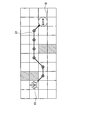
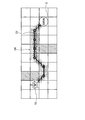
- FIG. 3 is a block diagram showing a functional configuration of a control device according to an embodiment of the present disclosure. It is explanatory drawing explaining the high-order action plan containing several action plans. It is explanatory drawing explaining the high-order action plan which has the distribution created based on a some route. It is explanatory drawing explaining the high-order action plan which has the distribution created based on the optimal route. It is explanatory drawing explaining the high-order action plan which has the distribution created based on the optimal route.
- the technology according to the present disclosure is not limited to the following example.
- the technology according to the present disclosure can be applied to various actions of a robot device other than moving to a destination.
- the robot device may be a movable moving body or a manipulator device, or may be a robot device in another mode.
- the technology according to the present disclosure creates an upper-level action plan that includes an optimal solution that achieves an action goal and that can derive a quasi-optimal solution different from the optimal solution in order to control the action of the robot device.
- the upper-level action plan is an action plan that is not uniquely determined and has a plurality of options or distributions.
- a lower-level action plan that uniquely defines the action of the robot device is created based on such an upper-level action plan.
- the higher-level action plan By creating a higher-level action plan having a plurality of options or distributions in advance, even if a rapid change in the external environment, a change in the position of an obstacle, or the like occurs, the higher-level action plan It is possible to control the behavior of the robot device without recreating. That is, since a plurality of action plans can be derived from the upper action plan, the robot device can derive an appropriate action plan from the upper action plans as the lower action plan according to the external environment at the time of action. ..
- FIG. 1A is an explanatory diagram showing an example of a higher-level action plan created by a robot apparatus for moving to a destination.
- FIG. 1B is an explanatory diagram showing an example of a lower-level action plan used for actual control of the robot apparatus when moving to a destination.
- the robot device 10 when the robot device 10 moves to the destination D, the robot device 10 first creates an external world map that is two-dimensional matrix data based on the external environment information. Next, the robot apparatus 10 searches for the optimum route 21 that is the optimum solution to the destination D by applying a graph search algorithm such as the Dijkstra method or the A* algorithm to the created external world map.
- a graph search algorithm such as the Dijkstra method or the A* algorithm
- the robot apparatus 10 searches for a plurality of route groups 20 including a sub-optimal solution in addition to the optimal route 21, and a higher-level action plan including the optimal route 21 and the plurality of route groups 20. To create.
- the robot device 10 derives a lower-level action plan that actually controls the action of the robot device 10 from the upper-level action plan, and moves to the destination D based on the lower-level action plan.
- the robot apparatus 10 determines an appropriate movement route 22 for avoiding a dynamic obstacle from the upper action plan based on the environmental information of the outside world when the robot apparatus 10 actually behaves. Can be derived. According to this, the robot apparatus 10 derives an appropriate lower-level action plan from the upper-level action plan without recreating the upper-level action plan even when the external environment changes, and based on the lower-level action plan. Can control the behavior.
- the upper action plan does not have to be an action plan including the optimum route 21 and a plurality of route groups 20 as shown in FIGS. 1A and 1B.
- the higher-level action plan may be an action plan having a distribution or a tolerance range.
- the higher-level action plan may be an action plan in which possible positions and postures of the robot apparatus 10 are represented by weighted distribution.
- the lower-level action plan is created in consideration of weighting within the range of the distribution or the allowable range defined in the upper-level action plan.
- the robot device 10 creates a higher-order action plan that includes a sub-optimal solution other than the optimum solution and is not uniquely determined, so that the higher-order action is performed according to the external environment. It is possible to derive an appropriate sub-action plan from the plan.
- the technology according to the present disclosure can make the action plan of the robot device 10 more robust against the external environment.
- the technology according to the present disclosure can reduce the amount of calculation required to create an action plan, as compared with the case where the robot apparatus 10 re-creates the action plan after detecting a change in the external environment.
- the robot device suspends the action, but according to the technology of the present disclosure, it is possible to prevent such action suspension of the robot device. .. Therefore, the technology according to the present disclosure can make the robot device 10 act more smoothly.
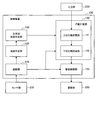
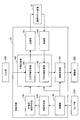
- FIG. 2 is a block diagram showing a functional configuration of the control device 100 according to this embodiment.
- the control device 100 is a control device that controls the drive unit 220 based on the environmental information acquired by the sensor unit 210 in order to achieve the action goal input from the input unit 230. .. Thereby, the control device 100 can control the behavior of the robot device 10.
- the control device 100 includes a recognition unit 110, a map creation unit 120, a planning map creation unit 130, an action planning unit 140, and a drive control unit 150.
- the control device 100 may be provided inside the robot apparatus 10 together with the sensor unit 210 and the driving unit 220. Alternatively, the control device 100 may be provided outside the robot device 10 by transmitting and receiving information to and from the robot device 10 via a network or the like.
- the sensor unit 210 includes a sensor that acquires environmental information of the outside of the robot apparatus 10 and a sensor that acquires information about the robot apparatus 10 itself.
- the sensor unit 210 uses various cameras such as an RGB camera, a grayscale camera, a stereo camera, a depth camera, an infrared camera, or a ToF (Time of Flight) camera as a sensor for acquiring environmental information of the outside of the robot apparatus 10. May be included.
- the sensor unit 210 may include various ranging sensors such as a LIDAR (Laser Imaging Detection and Ranging) sensor or a RADAR (Radio Detecting and Ranging) sensor as a sensor for acquiring environmental information of the external environment of the robot apparatus 10. ..
- LIDAR Laser Imaging Detection and Ranging
- RADAR Radio Detecting and Ranging
- the sensor unit 210 may include a sensor such as a microphone, an illuminance meter, a thermometer, or a hygrometer as a sensor that acquires environmental information of the outside of the robot apparatus 10.
- the sensor unit 210 may include, for example, an encoder, a voltmeter, an ammeter, a strain gauge, a pressure gauge, an IMU (Internal Measurement Unit), or the like as a sensor that acquires information about the robot apparatus 10.
- the sensor unit 210 may include a known sensor other than the above-mentioned sensors as long as it can acquire environment information around the robot apparatus 10 or information about the robot apparatus 10 itself.
- the recognition unit 110 recognizes the external environmental condition of the robot device 10 or the self-device condition of the robot device 10 based on the information acquired by the sensor unit 210. Specifically, the recognition unit 110 performs obstacle recognition, shape recognition, object recognition, marker recognition, character recognition, white line recognition, lane recognition, or voice recognition based on the environmental information acquired by the sensor unit 210. Then, the external environmental condition of the robot apparatus 10 may be recognized. Further, the recognition unit 110 recognizes a position, recognizes a motion state (speed, acceleration, jerk, angular velocity, angular acceleration, or the like), or recognizes a machine state (remaining power source, temperature, or temperature) based on the self-machine information acquired by the sensor unit 210. The state of the robot apparatus 10 itself may be recognized by performing recognition (joint angle, etc.).
- the above recognition by the recognition unit 110 can be performed by using a known recognition technique.
- the recognition by the recognition unit 110 may be performed based on a predetermined rule or a machine learning algorithm, for example.
- the map creation unit 120 creates a map showing the environment of the outside world based on the environment state of the outside world which is the recognition result by the recognition unit 110.
- the map creation unit 120 shows, for example, an obstacle map or a moving area map showing an area through which the robot apparatus 10 can pass, an object map showing the existence positions of various objects, or the name, relevance or meaning of each area.
- a topology map may be created.
- the map creating unit 120 may create a moving map that expresses the movable area, the obstacle area, and the moving cost of each area, and the name, position, shape, and existence of an object or place. You can create an object map that expresses areas, you can create a topology map that expresses the connection between places and the direction of passage, and you can express the position, road width, slope, curvature, etc. of passage areas that connect places. You may create a road map.
- the map creation unit 120 may create a plurality of different types of maps according to the purpose, type or conditions.
- the planning map creation unit 130 provides information necessary for creating an action plan of the robot device 10 based on the map showing the external environment created by the map creation unit 120 and the own device information of the robot device 10.
- An action plan map embedded in the map is created. Specifically, the planning map creation unit 130 determines what meaning each of the area and the object included in the map showing the external environment has to the robot apparatus 10, and gives the determined meaning.
- An action plan map is created by embedding it in the map.
- the plan map creation unit 130 can create the action plan map by embedding the evaluation information according to the airframe characteristic or the action characteristic of the robot apparatus 10 in the map showing the external environment.
- the action plan unit 140 in the subsequent stage can create an action plan according to the machine body characteristic or the action characteristic of the robot apparatus 10.
- the plan map creation unit 130 may create a plurality of different types of action plan maps according to the use, type, or condition.
- the planning map creation unit 130 can set a map region in which a puddle or a hole exists on the ground surface as a pass-through area.
- the planning map creation unit 130 can set the map region in which a puddle or a hole exists on the ground surface as a passable region.
- the robot device 10 is a flying body such as a drone
- the planning map creation unit 130 sets the map region in which an obstacle exists at a position lower than the feasible altitude of the robot device 10 as a passable region. You can
- the input unit 230 outputs the action target of the robot apparatus 10 based on the input from the user. Specifically, when the destination of the robot apparatus 10 is input by the user, the input unit 230 may output an action goal of “moving to the destination” as the action goal.
- the input unit 230 includes, for example, an input device such as a touch panel, a keyboard, a mouse, a button, a microphone, a switch, or a lever to which information is input by a user, and an input control circuit that generates an input signal based on the input information. May be included.
- the action goal output from the input unit 230 is input to the action planning unit 140.
- the action goal of “moving to the destination” includes the location of the destination, the motion state of the robot apparatus 10 at the destination, the time to reach the destination, and the obstacle on the route to the destination.
- the relative distance may be included.
- the robot device 10 may further include a display unit that provides information to the user by using images or characters.
- the display unit can present to the user an action that can be performed, a map for setting an action goal, an action plan for achieving the action goal, and the like by using an image or a character. According to this, the user can give an appropriate action target to the robot apparatus 10.
- the action plan unit 140 achieves an action goal based on the action plan map created by the plan map creation unit 130 and the own state of the robot apparatus 10 recognized by the recognition unit 110. To create. Specifically, the action planning unit 140 includes an upper action planning unit 141 and a lower action planning unit 142, and the action planning unit 141 and the lower action planning unit 142 each create an action plan stepwise. To do.
- the action goal may be an action goal input by the user to the input unit 230 or may be an action goal stored in the storage area of the control device 100 in advance.
- the higher-level action plan unit 141 is based on the action plan map created by the plan map creation unit 130 and the state of the robot device 10 recognized by the recognition unit 110 in order to achieve the action goal. And create a high-level action plan, which is a global action plan. Specifically, the higher-level action plan is an action plan that includes an optimal solution and that has a plurality of options or distributions.
- the upper-level action planning unit 141 is not uniquely defined, and creates an upper-level action plan having a changeable tolerance range, so that the action plan of the robot apparatus 10 is robust against changes in the external environment. It is possible to improve the sex. For example, the higher-level action planning unit 141 may create a list of actions for transitioning the state of the robot apparatus 10 to the state where the action target has been achieved.
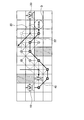
- FIG. 3 is an explanatory diagram illustrating a higher-level action plan including a plurality of action plans.
- the action plan map is a two-dimensional obstacle map
- the action target is the arrival of the robot device 10 at the destination D.
- the high-level action planning unit 141 When creating such a high-level action plan, the high-level action planning unit 141 creates a graph structure in which each grid of the obstacle map is a node and adjacent grids are connected by edges, and a graph search algorithm is applied to the graph structure. The route to reach the destination D is searched for by using. That is, the higher-level action planning unit 141 can search for the optimum route 21, which is the optimum solution, by searching "which grid should be moved in order to reach the destination D".
- the higher-level action planning unit 141 searches for a route group 20 including a plurality of routes reaching the destination D by searching for a plurality of sub-optimal solutions in addition to the optimum route 21. Accordingly, the higher-level action planning unit 141 creates an upper-level action plan including a plurality of routes by putting together the optimum route 21 to the destination D and the route group 20 including a plurality of routes that are suboptimal solutions. be able to. Therefore, the lower-level action planning unit 142, which will be described later, can derive a route from the route group 20 that avoids the obstacle when an unexpected dynamic obstacle enters the optimum route 21.
- the number of the plurality of routes included in the route group 20 may be set by the user, or may be set by the control device 100 based on the action plan map. For example, in an external environment in which a large number of dynamic obstacles exist, or in an external environment in which it is difficult to secure a visual field due to many obstacles, in order to increase the flexibility of the derived lower-level action plan, a plurality of routes included in the route group 20 may be included. The number of routes may be set more.
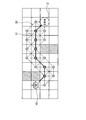
- FIG. 4 is an explanatory diagram illustrating a higher-level action plan having a distribution created based on a plurality of routes.
- the action plan map is a two-dimensional obstacle map
- the action target is the arrival of the robot device 10 at the destination D.
- the higher-level action planning unit 141 searches for the route group 20 reaching the destination D by using the graph search algorithm. Next, the higher-level action planning unit 141 obtains a Gaussian distribution centered on points arranged at regular intervals on each route of the route group 20, and weights the Gaussian distribution with the reciprocal of the cost (that is, low cost). The weighted average distribution is obtained by weighting so that the greater the specific gravity becomes, the more. Accordingly, the higher-level action plan unit 141 can create the higher-level action plan 23 having a distribution. Therefore, the lower-level action planning unit 142, which will be described later, can derive an appropriate route from the upper-level action plan 23 within the range of distribution according to the external environment when executing the action.
- the spread of the Gaussian distribution used when deriving the higher-level action plan 23 having a distribution may be set by the user, or may be set by the control device 100 based on the action plan map. For example, in an external environment with a large number of dynamic obstacles, or in an external environment with many obstacles and where it is difficult to secure a field of view, the spread of the Gaussian distribution should be larger to increase the flexibility of the derived lower action plan. May be set.
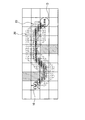
- FIGS. 5A and 5B are explanatory diagrams illustrating a higher-level action plan having a distribution created based on the optimum route.
- the action plan map is a two-dimensional obstacle map
- the action target is the arrival of the robot device 10 at the destination D.
- the high-level action planning unit 141 searches for a single optimum route 21 reaching the destination D by using a graph search algorithm. To do.
- the higher-level action planning unit 141 sets a Gaussian distribution that spreads from the optimum route 21 in a direction perpendicular to the traveling direction of the optimum route 21, and superimposes these Gaussian distributions.
- the higher-level action plan unit 141 can create the higher-level action plan 24 having a distribution. Therefore, the lower-level action planning unit 142, which will be described later, can derive an appropriate route from the upper-level action plan 24 within the range of distribution according to the external environment at the time of executing the action.
- the spread of the Gaussian distribution used when deriving the higher-level action plan 24 having a distribution may be set by the user, or may be set by the control device 100 based on the action plan map. For example, in an external environment with a large number of dynamic obstacles, or in an external environment with many obstacles and where it is difficult to secure a field of view, the spread of the Gaussian distribution should be larger to increase the flexibility of the derived lower action plan. May be set.
- the spread of the Gaussian distribution may be set so as to change for each position of the optimum route 21. For example, in a region near a dynamic obstacle, the spread of the Gaussian distribution may be set to be larger in order to increase the flexibility of the derived subordinate action plan. Further, in the region near the start point of the movement and the destination D, there are many constraint conditions, and thus the spread of the Gaussian distribution may be set to be smaller.
- the Gaussian distribution is used to derive the upper action plans 23 and 24 having the distribution, but the present embodiment is not limited to this example.
- the higher-level action plan unit 141 may create the higher-level action plans 23 and 24 using distributions other than the Gaussian distribution.
- the lower-level action planning unit 142 determines the robot device from the higher-level action plan.
- the lower-level action plan actually used for the control of 10 is created.
- the lower-level action plan is a uniquely-defined action plan, and is derived from an upper-level action plan having a plurality of options or distributions.
- the lower-level action planning unit 142 creates a lower-level action plan used for controlling the robot device 10 from the upper-level action plan, based on the information on the external environment when the robot device 10 actually behaves.
- the lower-level action plan unit 142 can flexibly create an appropriate action plan according to the external environment when the robot apparatus 10 actually acts.
- the lower-level action planning unit 142 may create a list of actions for transitioning the state of the robot apparatus 10 to the midway state of the upper-level action plan.
- the lower action plan unit 142 selects an evaluation function from the upper action plans having a plurality of options.
- An optimal route may be selected by using it, and a subordinate action plan for following the route may be created.
- the lower action planning unit 142 uses the evaluation function to optimize the distribution in the upper action plan. It is also possible to select a different route and create a lower-level action plan for following the route. In such a case, the lower-level action planning unit 142 can create an appropriate lower-level action plan by setting an extremely high cost in a region outside the distribution of the upper-level action plan and using the graph search algorithm.
- the evaluation function used when the lower-level action planning unit 142 creates the lower-level action plan from the upper-level action plan includes, for example, the possibility of following the state of the robot apparatus 10 itself, the possibility of collision between the robot apparatus 10 and an obstacle, or It is possible to use the closeness to the action history selected in the past.
- the lower-level action planning unit 142 can use the magnitude of deviation from the action plan of the optimum solution as an evaluation function when creating the lower-level action plan from the upper-level action plan. In such a case, the lower-level action plan unit 142 can create a lower-level action plan from the upper-level action plan so that the deviation of the optimum solution from the action plan becomes smaller.
- the lower-level action planning unit 142 may differ from the upper-level action planning unit 141 in at least one or more of the action plan creation cycle or the action plan creation range.
- the lower-level action planning unit 142 may create an action plan in a spatially or temporally local range than the upper-level action planning unit 141. According to this, the lower-level action planning unit 142 can create the lower-level action plan with the intermediate state of the upper-level action plan as a target, and therefore the action plan that is based on the actual external environment is not the predicted external environment. Can be created.
- the lower-level action planning unit 142 may create the action plan at a shorter cycle than the upper-level action planning unit 141. According to this, the lower-level action plan unit 142 can create an action plan in accordance with the changing own-machine state and the external environment by creating the action plan in a shorter cycle. In addition, the lower-level action plan unit 142 can easily create a lower-level action plan that avoids a dynamic obstacle by creating the action plan in a shorter cycle.
- the lower-level action plan unit 142 may create a lower-level action plan in consideration of a dynamic target from an upper-level action plan created in consideration of a static target. According to this, since the target to be considered can be shared between the higher-level action planning unit 141 and the lower-level action planning unit 142, the overall calculation amount of the higher-level action planning unit 141 and the lower-level action planning unit 142 is reduced. can do.
- Each of the upper action planning unit 141 and the lower action planning unit 142 may create an action plan having a hierarchical structure such as an action policy, a long-term action or a short-term action. Further, each of the higher-level action planning unit 141 and the lower-level action planning unit 142 may generate a plurality of action plans that are executed in parallel. For example, each of the upper-level action planning unit 141 and the lower-level action planning unit 142 includes a topological route plan using a wide area topological map, a coordinate route plan using an obstacle in the observation range, or a dynamics executed by the robot apparatus 10. The motion plans may be generated in parallel.
- the drive control unit 150 causes the robot apparatus 10 to perform an action according to the lower-level action plan based on the lower-level action plan created by the lower-level action planning unit 142 of the action planning unit 140 and the state of the robot apparatus 10 itself.
- the control command is output to the drive unit 220.
- the drive control unit 150 detects an error between the state of the robot apparatus 10 planned in the lower-level action plan and the current state of the robot apparatus 10, and controls to reduce the detected error.
- the command may be output to the drive unit 220.
- the drive control unit 150 may hierarchically generate control commands to be output to the drive unit 220.
- the drive unit 220 drives based on a control command from the drive control unit 150, and causes the robot apparatus 10 to perform an action according to the lower action plan.
- the drive unit 220 is a module that outputs to the real space.
- the drive unit 220 may be an engine, a motor, a speaker, a projector, a display, a light emitter (for example, a light bulb, an LED or a laser, etc.), or the like.
- the control device 100 creates the action plan of the robot device 10 by dividing it into two stages, that is, a higher-order action plan having a plurality of options or distributions and a lower-order action plan uniquely determined. You can According to this, when the external environment changes, the control device 100 may create a spatially or temporally local lower-level action plan without re-creating a higher-level action plan. The behavior of the device 10 can be controlled.
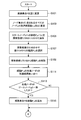
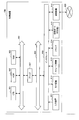
- FIG. 6A is a flowchart showing the first half of the flow of action plan creation by the higher-level action planning unit 141
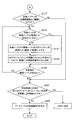
- FIG. 6B is a flowchart diagram showing the latter half of the flow of action plan creation by the upper-level action planning unit 141.
- the operations of the recognition unit 110, the map creation unit 120, the planning map creation unit 130, and the drive control unit 150 are substantially the same as the flow of general operations, so description thereof will be omitted here. ..
- the higher-level action planning unit 141 changes the route set P to empty (S101).
- the higher-level action planning unit 141 changes the reaching route number c_u of all the nodes u included in the node set V to 0 (S103).
- the higher-level action planning unit 141 selects the route P_u with the lowest cost C in the search candidate list B (S107), and deletes the route P_u from the search candidate list B (S109).
- the higher-level action planning unit 141 increments the reaching route number c_t of the tip node t of the route P_u by 1 (S111).
- the higher-level action planning unit 141 determines whether the tip node t matches the goal node g (S113). When the tip node t matches the goal node g (S113/Yes), the higher-level action planning unit 141 adds the route P_u to the route set P (S115). On the other hand, when the tip node t does not match the goal node g (S113/No), the higher-level action planning unit 141 does not add the route P_u to the route set P.
- the higher-level action planning unit 141 determines whether or not the number of routes reaching the tip node t is less than or equal to a threshold K (S117). When the number of routes reaching the tip node t is less than or equal to the threshold K (S117/Yes), the higher-level action planning unit 141 determines whether or not the adjacent node v of the tip node t is included in the route P_u (S119). ).
- the higher-level action planning unit 141 connects the edge (u, v) from the tip node t to the adjacent node v to the route P_u. To be the route P_v (S121). Next, the higher-level action planning unit 141 adds the route P_v to the search candidate list B at a cost obtained by adding the movement cost w(u,v) of the edge (u,v) to the cost C (S123). After that, the higher-level action planning unit 141 determines whether or not the leading node t has an unprocessed adjacent node v (S125). When the adjacent node v of the tip node t is included in the route P_u (S119/Yes), the higher-level action planning unit 141 omits steps S121 and S123 and makes a determination in step S125.
- the higher-level action planning unit 141 If there is an unprocessed adjacent node v (S125/Yes), the higher-level action planning unit 141 returns to step S119, and performs the processing from step S119 onward for the unprocessed adjacent node v.
- the higher-level action planning unit 141 It is determined whether or not the search candidate list B is not empty and the number c_g of routes reaching the goal node g is less than or equal to the threshold K (S127).
- the higher-level action planning unit 141 When the search candidate list B is not empty and the number c_g of routes reaching the goal node g is less than or equal to the threshold K (S127/Yes), the higher-level action planning unit 141 returns to step S107 and returns to the search candidate list B. The subsequent processing is similarly performed for the route P_u having the lowest cost C among them.
- the higher-level action planning unit 141 sets the route set P of the goal node g to the higher-level action. It is output as a plan (S129). With such an operation, the higher-level action plan unit 141 can create a higher-level action plan.
- the upper-level action planning unit 141 may further obtain a weighted average distribution in which the Gaussian distribution of each route of the route set P is weighted by the reciprocal of the cost, and the obtained weighted average distribution may be output as the upper-level action plan.
- the flow of operation of the above-mentioned upper-level action planning unit 141 is roughly the same as the flow of A* algorithm or Dijkstra algorithm.
- the upper-level action planning unit 141 differs from the A* algorithm or the Dijkstra algorithm in that a plurality of routes that are quasi-optimal solutions are obtained up to a threshold value K without stopping calculation even after obtaining a route that is an optimal solution.
- the higher-level action plan unit 141 can create a higher-level action plan having options or distributions of the threshold value K.
- the threshold value K may be set by the user, may be set based on the external environment shown on the action plan map, or may be set based on the cost or the mechanism of the robot apparatus 10.
- the higher-level action plan unit 141 may determine the number of options or the size of distribution of the upper-level action plan based on the calculation time or the amount of calculation required to create the higher-level action plan, instead of the threshold value K. For example, the higher-level action plan unit 141 may create a higher-level action plan including a plurality of routes calculated when the calculation time or the calculation amount reaches a predetermined value. Furthermore, the higher-level action planning unit 141 may set options for the route to be excluded based on the cost or the mechanism of the robot device 10, and exclude the options for the route to be excluded from the higher-level action plan. According to this, the higher-level action planning unit 141 can exclude positions and orientations that are singular points in the mechanism of the robot apparatus 10 from the higher-level action plan.
- FIG. 7 is a block diagram showing a functional configuration of the control device 101 according to this modification.
- the control device 101 allows the robot device 10 and the cooperative robot device 31 to smoothly and cooperatively operate by sharing a higher-level action plan between the robot device 10 and an external cooperative robot device 31. Is.
- the control device 101 transmits a higher-level action plan to the cooperative robot device 31 with respect to the control device 100 described with reference to FIG. 161, and a receiving unit 162 for transmitting the higher-level action plan from the cooperative robot apparatus 31 is different.
- a receiving unit 162 for transmitting the higher-level action plan from the cooperative robot apparatus 31 is different.
- the transmitting unit 161 transmits the higher-level action plan created by the higher-level action planning unit 141 to the cooperative robot apparatus 31.
- the transmission unit 161 may be, for example, a wireless communication module of a known communication method capable of communicating with the cooperative robot apparatus 31 directly or via a network.
- the receiving unit 162 receives the higher-level action plan of the cooperative robot apparatus 31 from the cooperative robot apparatus 31.
- the reception unit 162 may be, for example, a wireless communication module of a known communication method capable of communicating with the cooperative robot apparatus 31 directly or via a network.
- the transmission unit 161 and the reception unit 162 may be configured as a communication unit that transmits and receives information to and from the cooperative robot apparatus 31.
- the lower-level action planning unit 142 controls the robot device 10 from the upper-level action plan of the robot device 10 based on the action plan map, the state of the robot device 10 itself, and the upper-level action plan of the cooperative robot device 31. Develop a subordinate action plan that is actually used. Unlike the control device 100 shown in FIG. 2, the lower-level action planning unit 142 creates a lower-level action plan based on the upper-level action plan of the cooperative robot apparatus 31. Accordingly, the lower-level action plan unit 142 can derive a lower-level action plan that does not interfere with the action of the cooperative robot apparatus 31.
- the cooperative robot device 31 is a robot device that divides an upper action plan and a lower action plan and creates an action plan stepwise.
- the cooperative robot apparatus 31 is a global action plan having a plurality of options or distributions, based on the action target, the action plan map, and the state of the cooperative robot apparatus 31 itself, a higher-level action. Make a plan.
- the cooperative robot apparatus 31 creates a lower-level action plan that is actually used for controlling the robot apparatus 10 from the upper-level action plan, based on the action plan map and the state of the cooperative robot apparatus 31 itself.
- the collaborative robot device 31 is, for example, a robot device whose action target or action range overlaps with the robot device 10. Therefore, it is important to act in a coordinated manner so that the action plan does not conflict with the robot device 10.
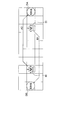
- FIG. 8A and FIG. 8B the cooperative behavior of the robot device 10 and the cooperative robot device 31 will be described.
- FIG. 8A is an explanatory diagram showing respective upper-level action plans of the robot apparatus 10 and the cooperative robot apparatus 31
- FIG. 8B is an explanatory diagram showing respective lower-level action plans of the robot apparatus 10 and the cooperative robot apparatus 31.
- the robot device 10 and the cooperative robot device 31 share the action plan with each other, change the conditions, re-create the action plan, and share the re-created action plan again.
- the robot device 10 and the cooperative robot device 31 can realize a cooperative action having no possibility of collision by repeatedly sharing and recreating the action plan until the possibility of collision disappears.
- the higher-level action plan created by each of the robot device 10 and the cooperative robot device 31 has a plurality of options or distributions.
- the higher-order action plan of the robot apparatus 10 includes movement routes A1, A2, and A3 to the destination DA
- the higher-order action plan of the cooperative robot apparatus 31 is the movement route B1 to the destination DB.
- B2, B3 are included. Therefore, the robot device 10 and the cooperative robot device 31 re-create and re-share the action plan by selecting a combination of action plans in which a collision does not occur from the shared upper action plans based on the common evaluation function. Without this, it is possible to realize cooperative actions.
- the movement routes A1, A2, and A3 included in the higher-level action plan of the robot device 10 and the movement routes B1, B2, and B3 included in the higher-level action plan of the cooperative robot device 31 are described below. It is assumed that the cost c shown in Table 1 is set. The robot device 10 and the cooperative robot device 31 can select the combination of the movement routes that realize the cooperative action by considering the presence or absence of the collision due to the combination of the movement routes and the total cost.
- the robot device 10 and the cooperative robot device 31 select the combination of the movement routes A3 and B1 having the smallest total cost from the combinations of the movement routes in which no collision occurs, and thereby, It is possible to select a movement route that does not collide.
- the robot device 10 and the cooperative robot device 31 may select a combination of movement routes that do not cause a collision based on the priority of the movement route instead of the total cost of the movement route. For example, the robot device 10 and the cooperative robot device 31 may select a combination that gives the highest priority to each of the movement routes out of the combinations of the movement routes in which no collision occurs. Furthermore, the robot device 10 and the cooperative robot device 31 may select a combination of movement paths in which no collision occurs, based on another evaluation function. Any evaluation function can be used as the evaluation function for selecting a combination of movement paths in which no collision occurs, as long as it is shared by the robot device 10 and the cooperative robot device 31.
- the robot device 10 and the cooperative robot device 31 share a higher-rank action plan having a plurality of choices or distributions, so that lower-order actions capable of cooperating with each other from the range of the higher-order action plan. It is possible to derive an action plan. Therefore, according to this modification, the robot device 10 and the cooperative robot device 31 can perform smooth cooperative action by one communication without re-creating or re-sharing the action plan.
- FIG. 9 is a block diagram showing an example of the hardware configuration of the control device 100 according to this embodiment.
- the control device 100 includes a CPU (Central Processing Unit) 901, a ROM (Read Only Memory) 902, a RAM (Random Access Memory) 903, a host bus 905, a bridge 907, an external bus 906, and an interface 908.
- An input device 911, an output device 912, a storage device 913, a drive 914, a connection port 915, and a communication device 916 are provided.
- the control device 100 may include a processing circuit such as an electric circuit, a DSP, or an ASIC instead of or in addition to the CPU 901.
- the CPU 901 functions as an arithmetic processing unit and a control unit, and controls the overall operation inside the control unit 100 according to various programs. Further, the CPU 901 may be a microprocessor.
- the ROM 902 stores programs used by the CPU 901, calculation parameters, and the like.
- the RAM 903 temporarily stores a program used in the execution of the CPU 901, parameters that appropriately change in the execution, and the like.
- the CPU 901 may execute the functions of, for example, the recognition unit 110, the map creation unit 120, the planning map creation unit 130, the action planning unit 140, and the drive control unit 150.
- the CPU 901, ROM 902, and RAM 903 are connected to each other by a host bus 905 including a CPU bus and the like.
- the host bus 905 is connected to an external bus 906 such as a PCI (Peripheral Component Interconnect/Interface) bus via a bridge 907.
- PCI Peripheral Component Interconnect/Interface
- the host bus 905, the bridge 907, and the external bus 906 do not necessarily have to be configured separately, and these functions may be mounted on one bus.
- the input device 911 is a device such as a mouse, a keyboard, a touch panel, a button, a microphone, a switch, or a lever for inputting information by the user.
- the input device 911 may be a remote control device that uses infrared rays or other radio waves, or may be an externally connected device such as a mobile phone or PDA that corresponds to the operation of the control device 100.
- the input device 911 may include, for example, an input control circuit that generates an input signal based on the information input by the user using the above-mentioned input means.
- the output device 912 is a device capable of visually or audibly notifying a user of information.
- the output device 912 is, for example, a display device such as a CRT (Cathode Ray Tube) display device, a liquid crystal display device, a plasma display device, an EL (Electro Luminescence) display device, a laser projector, an LED (Light Emitting Diode) projector or a lamp.
- a sound output device such as a speaker or headphones may be used.
- the output device 912 may output the results obtained by various processes by the control device 100, for example. Specifically, the output device 912 may visually display the results obtained by various processes by the control device 100 in various formats such as text, images, tables, or graphs. Alternatively, the output device 912 may convert an audio signal such as voice data or acoustic data into an analog signal and output it audibly.
- the storage device 913 is a device for storing data formed as an example of a storage unit of the control device 100.
- the storage device 913 may be realized by, for example, a magnetic storage device such as a HDD (Hard Disk Drive), a semiconductor storage device, an optical storage device, a magneto-optical storage device, or the like.
- the storage device 913 may include a storage medium, a recording device that records data in the storage medium, a reading device that reads data from the storage medium, a deletion device that deletes data recorded in the storage medium, and the like.
- the storage device 913 may store programs executed by the CPU 901, various data, various data acquired from the outside, and the like.
- the drive 914 is a reader/writer for a storage medium, and is built in or externally attached to the control device 100.
- the drive 914 reads out information recorded in a removable storage medium such as a mounted magnetic disk, optical disk, magneto-optical disk, or semiconductor memory, and outputs it to the RAM 903.
- the drive 914 can also write information in a removable storage medium.
- connection port 915 is an interface connected to an external device.
- the connection port 915 is a connection port that enables data transmission with an external device, and may be, for example, a USB (Universal Serial Bus).
- the communication device 916 is, for example, an interface formed of a communication device or the like for connecting to the network 920.
- the communication device 916 may be, for example, a communication card for wired or wireless LAN (Local Area Network), LTE (Long Term Evolution), Bluetooth (registered trademark) or WUSB (Wireless USB).
- the communication device 916 may be a router for optical communication, a router for ADSL (Asymmetric Digital Subscriber Line), a modem for various kinds of communication, or the like.
- the communication device 916 can send and receive signals and the like to and from the Internet or other communication devices, for example, according to a predetermined protocol such as TCP/IP.
- the communication device 916 may execute the functions of the transmission unit 161 and the reception unit 162, for example.
- the network 920 is a wired or wireless transmission path for information.
- the network 920 may include the Internet, a public line network such as a telephone line network or a satellite communication network, various LANs (Local Area Network) including Ethernet (registered trademark), WAN (Wide Area Network), and the like.
- the network 920 may include a dedicated line network such as an IP-VPN (Internet Protocol-Virtual Private Network).
- IP-VPN Internet Protocol-Virtual Private Network
- a computer program for causing the hardware such as the CPU, ROM, and RAM built in the control device 100 to exhibit the same functions as the respective configurations of the control device according to the present embodiment described above can be created. .. It is also possible to provide a storage medium that stores the computer program.
- the control device 100 selects a quasi-optimal action plan even when the planned action plan is not the optimal solution due to a change in the external environment, and thereby takes action. It is possible to continue. According to this, the control device 100 can reduce the calculation amount as a whole as compared with the case where the action plan is re-created according to the change in the external environment. This is because the information for obtaining the sub-optimal solution can be acquired in the process of obtaining the optimal solution, and therefore deriving an action plan having a plurality of choices or distributions imposes less load on the control device 100. is there.
- control device 100 can switch to the action plan of the sub-optimal solution and continue the action without recreating the action plan. .. According to this, the control device 100 can prevent a temporary stop during the action in order to re-create the action plan.
- control device 101 can be shared by sharing an action plan having a plurality of options or distributions in advance when the plurality of robot devices 10 cooperate with each other. It is possible to eliminate the collision of actions among the plurality of robot devices 10.
- the effects described in the present specification are merely explanatory or exemplifying ones, and are not limiting. That is, the technique according to the present disclosure may have other effects that are apparent to those skilled in the art from the description of the present specification, in addition to or instead of the above effects.
- the action plan unit that includes an optimal solution that achieves an action goal and that can derive a sub-optimal solution different from the optimal solution based on an external map is provided.
- Action planning device (2) The action plan device according to (1), wherein the higher-level action plan includes a plurality of action plans, and at least the action plan that is the optimum solution and the action plan that is the sub-optimal solution.
- the action planning apparatus according to (1), wherein the higher-level action plan is an action plan having a distribution.
- the higher-level action plan is created by giving a distribution to the action plan that is the optimum solution.
- the action planning apparatus according to (3), wherein the higher-level action plan is created by converting a superposition of a plurality of action plans into a distribution.
- the action plan device according to (2), wherein the number of action plans included in the higher-order action plan is controlled based on the outside world map.
- the action plan device according to any one of (3) to (5), wherein the size of the distribution included in the upper action plan is controlled based on the external world map.
- the action planning unit includes an upper action planning unit that creates the upper action plan, and a lower action planning unit that creates a lower action plan used for actual control of the robot apparatus based on the upper action plan.
- the action planning device according to any one of (1) to (7) above.
- the action plan device (9) The action plan device according to (8), wherein the lower-order action planning unit is different from the higher-order action planning unit in at least one of the action plan creation period and the action plan creation range. (10) The action planning device according to (9), wherein the lower action planning unit creates an action plan in a spatially or temporally local range of the upper action planning unit. (11) The upper-level action plan unit creates the upper-level action plan in consideration of a static target, and the lower-level action plan unit creates the lower-level action plan in consideration of a dynamic target, (9) Alternatively, the action planning device according to (10).
- the lower-level action plan unit creates the lower-level action plan based on at least one of followability of the state of the robot apparatus itself, possibility of collision with an obstacle, or past action history.
- the action planning apparatus according to any one of (8) to (11) above.
- the action planning device according to any one of (8) to (12), wherein the lower-level action planning unit creates the lower-level action plan such that a deviation from the optimal action plan is reduced. ..
- the action planning device according to any one of (8) to (13), wherein the lower action planning unit creates an action plan up to an intermediate action target in the upper action plan.
- Computer In order to control the behavior of the robot device, it functions as a behavior planning unit that creates an upper-level behavior plan that includes an optimal solution that achieves an action goal and that can derive a sub-optimal solution different from the optimal solution based on the external world map. ,program.
- Robot device 20 Route group 21 Optimal route 22 Moving route 23, 24 High-level action plan 31 Cooperative robot device 100, 101 Control device 110 Recognition unit 120 Map creation unit 130 Planning map creation unit 140 Action planning unit 141 High-level action planning unit 142 Subordinate action planning unit 150 Drive control unit 161 Transmission unit 162 Reception unit 210 Sensor unit 220 Drive unit 230 Input unit
Landscapes
- Engineering & Computer Science (AREA)
- Radar, Positioning & Navigation (AREA)
- Remote Sensing (AREA)
- Physics & Mathematics (AREA)
- General Physics & Mathematics (AREA)
- Automation & Control Theory (AREA)
- Aviation & Aerospace Engineering (AREA)
- Electromagnetism (AREA)
- Manipulator (AREA)
- Control Of Position, Course, Altitude, Or Attitude Of Moving Bodies (AREA)
Abstract
La présente invention vise à commander l'action d'un dispositif robotique. À cet effet, un dispositif de planification d'action est équipé d'une unité de planification d'action qui crée, sur la base d'une carte du monde extérieur, un plan d'action de niveau supérieur comprenant une solution optimale afin d'atteindre une cible d'action et permettant de dériver une solution sous-optimale différente de la solution optimale.
Priority Applications (1)
| Application Number | Priority Date | Filing Date | Title |
|---|---|---|---|
| US17/419,532 US20220083076A1 (en) | 2019-01-11 | 2019-12-02 | Action planning apparatus, action planning method, and program |
Applications Claiming Priority (2)
| Application Number | Priority Date | Filing Date | Title |
|---|---|---|---|
| JP2019-003276 | 2019-01-11 | ||
| JP2019003276 | 2019-01-11 |
Publications (1)
| Publication Number | Publication Date |
|---|---|
| WO2020144970A1 true WO2020144970A1 (fr) | 2020-07-16 |
Family
ID=71521202
Family Applications (1)
| Application Number | Title | Priority Date | Filing Date |
|---|---|---|---|
| PCT/JP2019/046931 Ceased WO2020144970A1 (fr) | 2019-01-11 | 2019-12-02 | Dispositif et procédé de planification d'action, et programme |
Country Status (2)
| Country | Link |
|---|---|
| US (1) | US20220083076A1 (fr) |
| WO (1) | WO2020144970A1 (fr) |
Cited By (3)
| Publication number | Priority date | Publication date | Assignee | Title |
|---|---|---|---|---|
| JP2022082419A (ja) * | 2020-11-20 | 2022-06-01 | ラピュタロボティックス株式会社 | 動作環境におけるルートプランを最適化するためのシステム及び方法 |
| CN114911221A (zh) * | 2021-02-09 | 2022-08-16 | 北京小米移动软件有限公司 | 机器人的控制方法、装置及机器人 |
| WO2023157510A1 (fr) * | 2022-02-18 | 2023-08-24 | 株式会社日立製作所 | Dispositif de planification d'itinéraire, moyens pour son application, et procédé de planification d'itinéraire |
Families Citing this family (3)
| Publication number | Priority date | Publication date | Assignee | Title |
|---|---|---|---|---|
| CN117769484A (zh) * | 2021-06-04 | 2024-03-26 | 波士顿动力公司 | 指向移动机器人的自主和远程操作传感器 |
| US20230099772A1 (en) * | 2021-09-29 | 2023-03-30 | Waymo Llc | Lane search for self-driving vehicles |
| WO2024232947A1 (fr) | 2023-05-08 | 2024-11-14 | Boston Dynamics, Inc. | Détection de changement basée sur l'emplacement dans des données d'image par un robot mobile |
Citations (8)
| Publication number | Priority date | Publication date | Assignee | Title |
|---|---|---|---|---|
| US4812990A (en) * | 1987-04-29 | 1989-03-14 | Merit Technology Incorporated | System and method for optimizing aircraft flight path |
| US6148259A (en) * | 1997-03-18 | 2000-11-14 | Aerospatiale Societe Nationale Industrielle | Process and device for determining an optimal flight path of an aircraft |
| JP2007257274A (ja) * | 2006-03-23 | 2007-10-04 | Toyota Motor Corp | 移動体の経路探索システム及び経路探索方法 |
| JP2009025974A (ja) * | 2007-07-18 | 2009-02-05 | Toyota Motor Corp | 経路計画装置及び方法、コスト評価装置、並びに移動体 |
| JP2011059043A (ja) * | 2009-09-14 | 2011-03-24 | Nara Institute Of Science & Technology | 経路探索装置及び移動システム |
| CN104850011A (zh) * | 2015-05-22 | 2015-08-19 | 上海电力学院 | 一种障碍物环境中tsp避障最优路径规划方法 |
| CN106041931A (zh) * | 2016-06-30 | 2016-10-26 | 广东工业大学 | 一种多障碍空间多agv机器人协作防碰撞路径优化方法 |
| JP2017037468A (ja) * | 2015-08-10 | 2017-02-16 | トヨタ自動車株式会社 | 経路探索システム、経路探索方法及びプログラム |
Family Cites Families (3)
| Publication number | Priority date | Publication date | Assignee | Title |
|---|---|---|---|---|
| JP4989532B2 (ja) * | 2007-03-30 | 2012-08-01 | 成均館大学校産学協力団 | 移動サービスロボットの中央情報処理システム、移動サービスロボットの情報処理方法及び移動サービスロボットの情報処理方法を記録したコンピュータで読み取り可能な記録媒体 |
| GB201803292D0 (en) * | 2018-02-28 | 2018-04-11 | Five Ai Ltd | Efficient computation of collision probabilities for safe motion planning |
| EP3823795A4 (fr) * | 2018-07-16 | 2022-04-06 | Brain Corporation | Systèmes et procédés d'optimisation de planification d'itinéraire pour des virages serrés pour appareils robotiques |
-
2019
- 2019-12-02 WO PCT/JP2019/046931 patent/WO2020144970A1/fr not_active Ceased
- 2019-12-02 US US17/419,532 patent/US20220083076A1/en not_active Abandoned
Patent Citations (8)
| Publication number | Priority date | Publication date | Assignee | Title |
|---|---|---|---|---|
| US4812990A (en) * | 1987-04-29 | 1989-03-14 | Merit Technology Incorporated | System and method for optimizing aircraft flight path |
| US6148259A (en) * | 1997-03-18 | 2000-11-14 | Aerospatiale Societe Nationale Industrielle | Process and device for determining an optimal flight path of an aircraft |
| JP2007257274A (ja) * | 2006-03-23 | 2007-10-04 | Toyota Motor Corp | 移動体の経路探索システム及び経路探索方法 |
| JP2009025974A (ja) * | 2007-07-18 | 2009-02-05 | Toyota Motor Corp | 経路計画装置及び方法、コスト評価装置、並びに移動体 |
| JP2011059043A (ja) * | 2009-09-14 | 2011-03-24 | Nara Institute Of Science & Technology | 経路探索装置及び移動システム |
| CN104850011A (zh) * | 2015-05-22 | 2015-08-19 | 上海电力学院 | 一种障碍物环境中tsp避障最优路径规划方法 |
| JP2017037468A (ja) * | 2015-08-10 | 2017-02-16 | トヨタ自動車株式会社 | 経路探索システム、経路探索方法及びプログラム |
| CN106041931A (zh) * | 2016-06-30 | 2016-10-26 | 广东工业大学 | 一种多障碍空间多agv机器人协作防碰撞路径优化方法 |
Cited By (8)
| Publication number | Priority date | Publication date | Assignee | Title |
|---|---|---|---|---|
| JP2022082419A (ja) * | 2020-11-20 | 2022-06-01 | ラピュタロボティックス株式会社 | 動作環境におけるルートプランを最適化するためのシステム及び方法 |
| JP7429372B2 (ja) | 2020-11-20 | 2024-02-08 | Rapyuta Robotics株式会社 | 動作環境におけるルートプランを最適化するためのシステム及び方法 |
| US12124261B2 (en) | 2020-11-20 | 2024-10-22 | Rapyuta Robotics Co., Ltd. | Systems and methods for optimizing route plans in an operating environment |
| CN114911221A (zh) * | 2021-02-09 | 2022-08-16 | 北京小米移动软件有限公司 | 机器人的控制方法、装置及机器人 |
| CN114911221B (zh) * | 2021-02-09 | 2023-11-28 | 北京小米机器人技术有限公司 | 机器人的控制方法、装置及机器人 |
| WO2023157510A1 (fr) * | 2022-02-18 | 2023-08-24 | 株式会社日立製作所 | Dispositif de planification d'itinéraire, moyens pour son application, et procédé de planification d'itinéraire |
| JP2023120649A (ja) * | 2022-02-18 | 2023-08-30 | 株式会社日立製作所 | 経路計画装置、その適用設備、並びに経路計画方法 |
| JP7770648B2 (ja) | 2022-02-18 | 2025-11-17 | 株式会社日立製作所 | 経路計画装置、その適用設備、並びに経路計画方法 |
Also Published As
| Publication number | Publication date |
|---|---|
| US20220083076A1 (en) | 2022-03-17 |
Similar Documents
| Publication | Publication Date | Title |
|---|---|---|
| WO2020144970A1 (fr) | Dispositif et procédé de planification d'action, et programme | |
| US11797023B2 (en) | Controller, control method, and program | |
| Sundarraj et al. | Route planning for an autonomous robotic vehicle employing a weight-controlled particle swarm-optimized Dijkstra algorithm | |
| JP5429901B2 (ja) | ロボット及び情報処理装置のプログラム | |
| KR20210014065A (ko) | 인공 지능 심층 학습 타겟 탐지 및 속도 퍼텐셜 필드 알고리즘 기반 장애물 회피 및 자율 주행 방법 및 장치 | |
| JP5068840B2 (ja) | ロボットのプログラム及び情報処理装置のプログラム | |
| WO2021081960A1 (fr) | Procédé, dispositif et système de planification d'itinéraire et support de stockage | |
| KR20210033808A (ko) | 아웃도어 영역에서 이종의 위치정보 획득 메커니즘을 적용하는 방법 및 이를 구현하는 로봇과 클라우드 서버 | |
| KR102837653B1 (ko) | 대면적의 공간에서 로컬 영역별로 위치를 추정하는 방법 및 이를 구현하는 로봇과 클라우드 서버 | |
| CN115222808B (zh) | 基于无人机的定位方法、装置、存储介质和电子设备 | |
| Torres et al. | BIM-SLAM: Integrating BIM models in multi-session SLAM for lifelong mapping using 3D LiDAR | |
| KR102145054B1 (ko) | 인간의 뇌지도 모델 및 인지 기반 이동로봇 주행을 위한 시맨틱 지도 작성 시스템 | |
| US20210190529A1 (en) | Adaptive, imitative navigational assistance | |
| CN109737980A (zh) | 一种导航方法及其对应的机器人 | |
| Chen et al. | Dynamic obstacle avoidance for UAVs using a fast trajectory planning approach | |
| WO2020179459A1 (fr) | Dispositif de création de carte, procédé de création de carte et programme | |
| Tsuru et al. | Online object searching by a humanoid robot in an unknown environment | |
| Liu et al. | Toponav: Topological graphs as a key enabler for advanced object navigation | |
| CN110456785A (zh) | 一种基于履带机器人的室内自主探索方法 | |
| Sun et al. | Path planning for mobile robot based on the fusion algorithm of Improved A* and APF | |
| CN113296504A (zh) | 基于rgbd深度相机的移动机器人建图与路径规划方法 | |
| JP2021081758A (ja) | 制御装置、制御方法及びプログラム | |
| US20250093876A1 (en) | Robot local planner selection | |
| CN118392195A (zh) | 一种基于改进3dvfh算法的无人机路径数据规划方法 | |
| JP2024165836A (ja) | 制御装置、移動体、経路計画装置、プログラム、及び、学習済みモデルを生成するための方法 |
Legal Events
| Date | Code | Title | Description |
|---|---|---|---|
| 121 | Ep: the epo has been informed by wipo that ep was designated in this application |
Ref document number: 19908279 Country of ref document: EP Kind code of ref document: A1 |
|
| NENP | Non-entry into the national phase |
Ref country code: DE |
|
| 122 | Ep: pct application non-entry in european phase |
Ref document number: 19908279 Country of ref document: EP Kind code of ref document: A1 |
|
| NENP | Non-entry into the national phase |
Ref country code: JP |