WO2020158748A1 - エタノール - Google Patents
エタノール Download PDFInfo
- Publication number
- WO2020158748A1 WO2020158748A1 PCT/JP2020/003026 JP2020003026W WO2020158748A1 WO 2020158748 A1 WO2020158748 A1 WO 2020158748A1 JP 2020003026 W JP2020003026 W JP 2020003026W WO 2020158748 A1 WO2020158748 A1 WO 2020158748A1
- Authority
- WO
- WIPO (PCT)
- Prior art keywords
- ethanol
- minutes
- seconds
- gas
- peak
- Prior art date
- Legal status (The legal status is an assumption and is not a legal conclusion. Google has not performed a legal analysis and makes no representation as to the accuracy of the status listed.)
- Ceased
Links
Images

Classifications
-
- C—CHEMISTRY; METALLURGY
- C08—ORGANIC MACROMOLECULAR COMPOUNDS; THEIR PREPARATION OR CHEMICAL WORKING-UP; COMPOSITIONS BASED THEREON
- C08F—MACROMOLECULAR COMPOUNDS OBTAINED BY REACTIONS ONLY INVOLVING CARBON-TO-CARBON UNSATURATED BONDS
- C08F236/00—Copolymers of compounds having one or more unsaturated aliphatic radicals, at least one having two or more carbon-to-carbon double bonds
- C08F236/02—Copolymers of compounds having one or more unsaturated aliphatic radicals, at least one having two or more carbon-to-carbon double bonds the radical having only two carbon-to-carbon double bonds
- C08F236/04—Copolymers of compounds having one or more unsaturated aliphatic radicals, at least one having two or more carbon-to-carbon double bonds the radical having only two carbon-to-carbon double bonds conjugated
- C08F236/06—Butadiene
-
- C—CHEMISTRY; METALLURGY
- C08—ORGANIC MACROMOLECULAR COMPOUNDS; THEIR PREPARATION OR CHEMICAL WORKING-UP; COMPOSITIONS BASED THEREON
- C08F—MACROMOLECULAR COMPOUNDS OBTAINED BY REACTIONS ONLY INVOLVING CARBON-TO-CARBON UNSATURATED BONDS
- C08F236/00—Copolymers of compounds having one or more unsaturated aliphatic radicals, at least one having two or more carbon-to-carbon double bonds
- C08F236/02—Copolymers of compounds having one or more unsaturated aliphatic radicals, at least one having two or more carbon-to-carbon double bonds the radical having only two carbon-to-carbon double bonds
- C08F236/04—Copolymers of compounds having one or more unsaturated aliphatic radicals, at least one having two or more carbon-to-carbon double bonds the radical having only two carbon-to-carbon double bonds conjugated
- C08F236/10—Copolymers of compounds having one or more unsaturated aliphatic radicals, at least one having two or more carbon-to-carbon double bonds the radical having only two carbon-to-carbon double bonds conjugated with vinyl-aromatic monomers
-
- B—PERFORMING OPERATIONS; TRANSPORTING
- B01—PHYSICAL OR CHEMICAL PROCESSES OR APPARATUS IN GENERAL
- B01D—SEPARATION
- B01D53/00—Separation of gases or vapours; Recovering vapours of volatile solvents from gases; Chemical or biological purification of waste gases, e.g. engine exhaust gases, smoke, fumes, flue gases, aerosols
- B01D53/02—Separation of gases or vapours; Recovering vapours of volatile solvents from gases; Chemical or biological purification of waste gases, e.g. engine exhaust gases, smoke, fumes, flue gases, aerosols by adsorption, e.g. preparative gas chromatography
- B01D53/04—Separation of gases or vapours; Recovering vapours of volatile solvents from gases; Chemical or biological purification of waste gases, e.g. engine exhaust gases, smoke, fumes, flue gases, aerosols by adsorption, e.g. preparative gas chromatography with stationary adsorbents
- B01D53/047—Pressure swing adsorption
-
- B—PERFORMING OPERATIONS; TRANSPORTING
- B01—PHYSICAL OR CHEMICAL PROCESSES OR APPARATUS IN GENERAL
- B01J—CHEMICAL OR PHYSICAL PROCESSES, e.g. CATALYSIS OR COLLOID CHEMISTRY; THEIR RELEVANT APPARATUS
- B01J20/00—Solid sorbent compositions or filter aid compositions; Sorbents for chromatography; Processes for preparing, regenerating or reactivating thereof
- B01J20/02—Solid sorbent compositions or filter aid compositions; Sorbents for chromatography; Processes for preparing, regenerating or reactivating thereof comprising inorganic material
- B01J20/10—Solid sorbent compositions or filter aid compositions; Sorbents for chromatography; Processes for preparing, regenerating or reactivating thereof comprising inorganic material comprising silica or silicate
- B01J20/16—Alumino-silicates
- B01J20/18—Synthetic zeolitic molecular sieves
-
- B—PERFORMING OPERATIONS; TRANSPORTING
- B01—PHYSICAL OR CHEMICAL PROCESSES OR APPARATUS IN GENERAL
- B01J—CHEMICAL OR PHYSICAL PROCESSES, e.g. CATALYSIS OR COLLOID CHEMISTRY; THEIR RELEVANT APPARATUS
- B01J20/00—Solid sorbent compositions or filter aid compositions; Sorbents for chromatography; Processes for preparing, regenerating or reactivating thereof
- B01J20/30—Processes for preparing, regenerating, or reactivating
- B01J20/34—Regenerating or reactivating
-
- C—CHEMISTRY; METALLURGY
- C01—INORGANIC CHEMISTRY
- C01B—NON-METALLIC ELEMENTS; COMPOUNDS THEREOF; METALLOIDS OR COMPOUNDS THEREOF NOT COVERED BY SUBCLASS C01C
- C01B3/00—Hydrogen; Gaseous mixtures containing hydrogen; Separation of hydrogen from mixtures containing it; Purification of hydrogen; Reversible storage of hydrogen
- C01B3/50—Separation of hydrogen or hydrogen-containing gases from gaseous mixtures, e.g. purification
- C01B3/56—Separation of hydrogen or hydrogen-containing gases from gaseous mixtures, e.g. purification by contacting with solids; Regeneration of used solids
-
- C—CHEMISTRY; METALLURGY
- C01—INORGANIC CHEMISTRY
- C01B—NON-METALLIC ELEMENTS; COMPOUNDS THEREOF; METALLOIDS OR COMPOUNDS THEREOF NOT COVERED BY SUBCLASS C01C
- C01B39/00—Compounds having molecular sieve and base-exchange properties, e.g. crystalline zeolites; Their preparation; After-treatment, e.g. ion-exchange or dealumination
- C01B39/02—Crystalline aluminosilicate zeolites; Isomorphous compounds thereof; Direct preparation thereof; Preparation thereof starting from a reaction mixture containing a crystalline zeolite of another type, or from preformed reactants; After-treatment thereof
- C01B39/20—Faujasite type, e.g. type X or Y
- C01B39/22—Type X
-
- C—CHEMISTRY; METALLURGY
- C07—ORGANIC CHEMISTRY
- C07B—GENERAL METHODS OF ORGANIC CHEMISTRY; APPARATUS THEREFOR
- C07B61/00—Other general methods
-
- C—CHEMISTRY; METALLURGY
- C07—ORGANIC CHEMISTRY
- C07C—ACYCLIC OR CARBOCYCLIC COMPOUNDS
- C07C1/00—Preparation of hydrocarbons from one or more compounds, none of them being a hydrocarbon
- C07C1/20—Preparation of hydrocarbons from one or more compounds, none of them being a hydrocarbon starting from organic compounds containing only oxygen atoms as heteroatoms
-
- C—CHEMISTRY; METALLURGY
- C07—ORGANIC CHEMISTRY
- C07C—ACYCLIC OR CARBOCYCLIC COMPOUNDS
- C07C1/00—Preparation of hydrocarbons from one or more compounds, none of them being a hydrocarbon
- C07C1/20—Preparation of hydrocarbons from one or more compounds, none of them being a hydrocarbon starting from organic compounds containing only oxygen atoms as heteroatoms
- C07C1/24—Preparation of hydrocarbons from one or more compounds, none of them being a hydrocarbon starting from organic compounds containing only oxygen atoms as heteroatoms by elimination of water
-
- C—CHEMISTRY; METALLURGY
- C07—ORGANIC CHEMISTRY
- C07C—ACYCLIC OR CARBOCYCLIC COMPOUNDS
- C07C11/00—Aliphatic unsaturated hydrocarbons
- C07C11/12—Alkadienes
- C07C11/16—Alkadienes with four carbon atoms
- C07C11/167—1, 3-Butadiene
-
- C—CHEMISTRY; METALLURGY
- C07—ORGANIC CHEMISTRY
- C07C—ACYCLIC OR CARBOCYCLIC COMPOUNDS
- C07C29/00—Preparation of compounds having hydroxy or O-metal groups bound to a carbon atom not belonging to a six-membered aromatic ring
- C07C29/74—Separation; Purification; Use of additives, e.g. for stabilisation
- C07C29/76—Separation; Purification; Use of additives, e.g. for stabilisation by physical treatment
- C07C29/80—Separation; Purification; Use of additives, e.g. for stabilisation by physical treatment by distillation
-
- C—CHEMISTRY; METALLURGY
- C07—ORGANIC CHEMISTRY
- C07C—ACYCLIC OR CARBOCYCLIC COMPOUNDS
- C07C31/00—Saturated compounds having hydroxy or O-metal groups bound to acyclic carbon atoms
- C07C31/02—Monohydroxylic acyclic alcohols
- C07C31/08—Ethanol
-
- C—CHEMISTRY; METALLURGY
- C07—ORGANIC CHEMISTRY
- C07C—ACYCLIC OR CARBOCYCLIC COMPOUNDS
- C07C41/00—Preparation of ethers; Preparation of compounds having groups, groups or groups
- C07C41/01—Preparation of ethers
- C07C41/05—Preparation of ethers by addition of compounds to unsaturated compounds
- C07C41/06—Preparation of ethers by addition of compounds to unsaturated compounds by addition of organic compounds only
-
- C—CHEMISTRY; METALLURGY
- C07—ORGANIC CHEMISTRY
- C07C—ACYCLIC OR CARBOCYCLIC COMPOUNDS
- C07C43/00—Ethers; Compounds having groups, groups or groups
- C07C43/02—Ethers
- C07C43/03—Ethers having all ether-oxygen atoms bound to acyclic carbon atoms
- C07C43/04—Saturated ethers
-
- C—CHEMISTRY; METALLURGY
- C07—ORGANIC CHEMISTRY
- C07C—ACYCLIC OR CARBOCYCLIC COMPOUNDS
- C07C45/00—Preparation of compounds having >C = O groups bound only to carbon or hydrogen atoms; Preparation of chelates of such compounds
- C07C45/27—Preparation of compounds having >C = O groups bound only to carbon or hydrogen atoms; Preparation of chelates of such compounds by oxidation
- C07C45/32—Preparation of compounds having >C = O groups bound only to carbon or hydrogen atoms; Preparation of chelates of such compounds by oxidation with molecular oxygen
- C07C45/37—Preparation of compounds having >C = O groups bound only to carbon or hydrogen atoms; Preparation of chelates of such compounds by oxidation with molecular oxygen of >C—O—functional groups to >C=O groups
- C07C45/38—Preparation of compounds having >C = O groups bound only to carbon or hydrogen atoms; Preparation of chelates of such compounds by oxidation with molecular oxygen of >C—O—functional groups to >C=O groups being a primary hydroxyl group
-
- C—CHEMISTRY; METALLURGY
- C07—ORGANIC CHEMISTRY
- C07C—ACYCLIC OR CARBOCYCLIC COMPOUNDS
- C07C47/00—Compounds having —CHO groups
- C07C47/02—Saturated compounds having —CHO groups bound to acyclic carbon atoms or to hydrogen
- C07C47/06—Acetaldehyde
-
- C—CHEMISTRY; METALLURGY
- C07—ORGANIC CHEMISTRY
- C07C—ACYCLIC OR CARBOCYCLIC COMPOUNDS
- C07C51/00—Preparation of carboxylic acids or their salts, halides or anhydrides
- C07C51/16—Preparation of carboxylic acids or their salts, halides or anhydrides by oxidation
- C07C51/21—Preparation of carboxylic acids or their salts, halides or anhydrides by oxidation with molecular oxygen
- C07C51/23—Preparation of carboxylic acids or their salts, halides or anhydrides by oxidation with molecular oxygen of oxygen-containing groups to carboxyl groups
- C07C51/235—Preparation of carboxylic acids or their salts, halides or anhydrides by oxidation with molecular oxygen of oxygen-containing groups to carboxyl groups of —CHO groups or primary alcohol groups
-
- C—CHEMISTRY; METALLURGY
- C07—ORGANIC CHEMISTRY
- C07C—ACYCLIC OR CARBOCYCLIC COMPOUNDS
- C07C53/00—Saturated compounds having only one carboxyl group bound to an acyclic carbon atom or hydrogen
- C07C53/08—Acetic acid
-
- C—CHEMISTRY; METALLURGY
- C07—ORGANIC CHEMISTRY
- C07C—ACYCLIC OR CARBOCYCLIC COMPOUNDS
- C07C67/00—Preparation of carboxylic acid esters
- C07C67/08—Preparation of carboxylic acid esters by reacting carboxylic acids or symmetrical anhydrides with the hydroxy or O-metal group of organic compounds
-
- C—CHEMISTRY; METALLURGY
- C07—ORGANIC CHEMISTRY
- C07C—ACYCLIC OR CARBOCYCLIC COMPOUNDS
- C07C69/00—Esters of carboxylic acids; Esters of carbonic or haloformic acids
- C07C69/76—Esters of carboxylic acids having a carboxyl group bound to a carbon atom of a six-membered aromatic ring
- C07C69/78—Benzoic acid esters
-
- C—CHEMISTRY; METALLURGY
- C07—ORGANIC CHEMISTRY
- C07C—ACYCLIC OR CARBOCYCLIC COMPOUNDS
- C07C9/00—Aliphatic saturated hydrocarbons
- C07C9/14—Aliphatic saturated hydrocarbons with five to fifteen carbon atoms
- C07C9/15—Straight-chain hydrocarbons
-
- C—CHEMISTRY; METALLURGY
- C07—ORGANIC CHEMISTRY
- C07C—ACYCLIC OR CARBOCYCLIC COMPOUNDS
- C07C9/00—Aliphatic saturated hydrocarbons
- C07C9/22—Aliphatic saturated hydrocarbons with more than fifteen carbon atoms
-
- C—CHEMISTRY; METALLURGY
- C08—ORGANIC MACROMOLECULAR COMPOUNDS; THEIR PREPARATION OR CHEMICAL WORKING-UP; COMPOSITIONS BASED THEREON
- C08C—TREATMENT OR CHEMICAL MODIFICATION OF RUBBERS
- C08C19/00—Chemical modification of rubber
-
- C—CHEMISTRY; METALLURGY
- C08—ORGANIC MACROMOLECULAR COMPOUNDS; THEIR PREPARATION OR CHEMICAL WORKING-UP; COMPOSITIONS BASED THEREON
- C08F—MACROMOLECULAR COMPOUNDS OBTAINED BY REACTIONS ONLY INVOLVING CARBON-TO-CARBON UNSATURATED BONDS
- C08F10/00—Homopolymers and copolymers of unsaturated aliphatic hydrocarbons having only one carbon-to-carbon double bond
- C08F10/02—Ethene
-
- C—CHEMISTRY; METALLURGY
- C08—ORGANIC MACROMOLECULAR COMPOUNDS; THEIR PREPARATION OR CHEMICAL WORKING-UP; COMPOSITIONS BASED THEREON
- C08F—MACROMOLECULAR COMPOUNDS OBTAINED BY REACTIONS ONLY INVOLVING CARBON-TO-CARBON UNSATURATED BONDS
- C08F10/00—Homopolymers and copolymers of unsaturated aliphatic hydrocarbons having only one carbon-to-carbon double bond
- C08F10/04—Monomers containing three or four carbon atoms
- C08F10/06—Propene
-
- C—CHEMISTRY; METALLURGY
- C08—ORGANIC MACROMOLECULAR COMPOUNDS; THEIR PREPARATION OR CHEMICAL WORKING-UP; COMPOSITIONS BASED THEREON
- C08F—MACROMOLECULAR COMPOUNDS OBTAINED BY REACTIONS ONLY INVOLVING CARBON-TO-CARBON UNSATURATED BONDS
- C08F110/00—Homopolymers of unsaturated aliphatic hydrocarbons having only one carbon-to-carbon double bond
- C08F110/02—Ethene
-
- C—CHEMISTRY; METALLURGY
- C08—ORGANIC MACROMOLECULAR COMPOUNDS; THEIR PREPARATION OR CHEMICAL WORKING-UP; COMPOSITIONS BASED THEREON
- C08F—MACROMOLECULAR COMPOUNDS OBTAINED BY REACTIONS ONLY INVOLVING CARBON-TO-CARBON UNSATURATED BONDS
- C08F20/00—Homopolymers and copolymers of compounds having one or more unsaturated aliphatic radicals, each having only one carbon-to-carbon double bond, and only one being terminated by only one carboxyl radical or a salt, anhydride, ester, amide, imide or nitrile thereof
- C08F20/02—Monocarboxylic acids having less than ten carbon atoms, Derivatives thereof
- C08F20/10—Esters
-
- C—CHEMISTRY; METALLURGY
- C08—ORGANIC MACROMOLECULAR COMPOUNDS; THEIR PREPARATION OR CHEMICAL WORKING-UP; COMPOSITIONS BASED THEREON
- C08F—MACROMOLECULAR COMPOUNDS OBTAINED BY REACTIONS ONLY INVOLVING CARBON-TO-CARBON UNSATURATED BONDS
- C08F212/00—Copolymers of compounds having one or more unsaturated aliphatic radicals, each having only one carbon-to-carbon double bond, and at least one being terminated by an aromatic carbocyclic ring
- C08F212/02—Monomers containing only one unsaturated aliphatic radical
- C08F212/04—Monomers containing only one unsaturated aliphatic radical containing one ring
- C08F212/06—Hydrocarbons
-
- C—CHEMISTRY; METALLURGY
- C08—ORGANIC MACROMOLECULAR COMPOUNDS; THEIR PREPARATION OR CHEMICAL WORKING-UP; COMPOSITIONS BASED THEREON
- C08F—MACROMOLECULAR COMPOUNDS OBTAINED BY REACTIONS ONLY INVOLVING CARBON-TO-CARBON UNSATURATED BONDS
- C08F236/00—Copolymers of compounds having one or more unsaturated aliphatic radicals, at least one having two or more carbon-to-carbon double bonds
- C08F236/02—Copolymers of compounds having one or more unsaturated aliphatic radicals, at least one having two or more carbon-to-carbon double bonds the radical having only two carbon-to-carbon double bonds
- C08F236/04—Copolymers of compounds having one or more unsaturated aliphatic radicals, at least one having two or more carbon-to-carbon double bonds the radical having only two carbon-to-carbon double bonds conjugated
-
- C—CHEMISTRY; METALLURGY
- C08—ORGANIC MACROMOLECULAR COMPOUNDS; THEIR PREPARATION OR CHEMICAL WORKING-UP; COMPOSITIONS BASED THEREON
- C08F—MACROMOLECULAR COMPOUNDS OBTAINED BY REACTIONS ONLY INVOLVING CARBON-TO-CARBON UNSATURATED BONDS
- C08F36/00—Homopolymers and copolymers of compounds having one or more unsaturated aliphatic radicals, at least one having two or more carbon-to-carbon double bonds
- C08F36/02—Homopolymers and copolymers of compounds having one or more unsaturated aliphatic radicals, at least one having two or more carbon-to-carbon double bonds the radical having only two carbon-to-carbon double bonds
- C08F36/04—Homopolymers and copolymers of compounds having one or more unsaturated aliphatic radicals, at least one having two or more carbon-to-carbon double bonds the radical having only two carbon-to-carbon double bonds conjugated
-
- C—CHEMISTRY; METALLURGY
- C08—ORGANIC MACROMOLECULAR COMPOUNDS; THEIR PREPARATION OR CHEMICAL WORKING-UP; COMPOSITIONS BASED THEREON
- C08F—MACROMOLECULAR COMPOUNDS OBTAINED BY REACTIONS ONLY INVOLVING CARBON-TO-CARBON UNSATURATED BONDS
- C08F36/00—Homopolymers and copolymers of compounds having one or more unsaturated aliphatic radicals, at least one having two or more carbon-to-carbon double bonds
- C08F36/02—Homopolymers and copolymers of compounds having one or more unsaturated aliphatic radicals, at least one having two or more carbon-to-carbon double bonds the radical having only two carbon-to-carbon double bonds
- C08F36/04—Homopolymers and copolymers of compounds having one or more unsaturated aliphatic radicals, at least one having two or more carbon-to-carbon double bonds the radical having only two carbon-to-carbon double bonds conjugated
- C08F36/06—Butadiene
-
- C—CHEMISTRY; METALLURGY
- C08—ORGANIC MACROMOLECULAR COMPOUNDS; THEIR PREPARATION OR CHEMICAL WORKING-UP; COMPOSITIONS BASED THEREON
- C08J—WORKING-UP; GENERAL PROCESSES OF COMPOUNDING; AFTER-TREATMENT NOT COVERED BY SUBCLASSES C08B, C08C, C08F, C08G or C08H
- C08J3/00—Processes of treating or compounding macromolecular substances
- C08J3/20—Compounding polymers with additives, e.g. colouring
- C08J3/203—Solid polymers with solid and/or liquid additives
-
- C—CHEMISTRY; METALLURGY
- C08—ORGANIC MACROMOLECULAR COMPOUNDS; THEIR PREPARATION OR CHEMICAL WORKING-UP; COMPOSITIONS BASED THEREON
- C08K—Use of inorganic or non-macromolecular organic substances as compounding ingredients
- C08K3/00—Use of inorganic substances as compounding ingredients
- C08K3/01—Use of inorganic substances as compounding ingredients characterized by their specific function
- C08K3/013—Fillers, pigments or reinforcing additives
-
- C—CHEMISTRY; METALLURGY
- C08—ORGANIC MACROMOLECULAR COMPOUNDS; THEIR PREPARATION OR CHEMICAL WORKING-UP; COMPOSITIONS BASED THEREON
- C08L—COMPOSITIONS OF MACROMOLECULAR COMPOUNDS
- C08L101/00—Compositions of unspecified macromolecular compounds
-
- C—CHEMISTRY; METALLURGY
- C08—ORGANIC MACROMOLECULAR COMPOUNDS; THEIR PREPARATION OR CHEMICAL WORKING-UP; COMPOSITIONS BASED THEREON
- C08L—COMPOSITIONS OF MACROMOLECULAR COMPOUNDS
- C08L9/00—Compositions of homopolymers or copolymers of conjugated diene hydrocarbons
-
- C—CHEMISTRY; METALLURGY
- C10—PETROLEUM, GAS OR COKE INDUSTRIES; TECHNICAL GASES CONTAINING CARBON MONOXIDE; FUELS; LUBRICANTS; PEAT
- C10J—PRODUCTION OF PRODUCER GAS, WATER-GAS, SYNTHESIS GAS FROM SOLID CARBONACEOUS MATERIAL, OR MIXTURES CONTAINING THESE GASES; CARBURETTING AIR OR OTHER GASES
- C10J3/00—Production of combustible gases containing carbon monoxide from solid carbonaceous fuels
- C10J3/72—Other features
-
- C—CHEMISTRY; METALLURGY
- C10—PETROLEUM, GAS OR COKE INDUSTRIES; TECHNICAL GASES CONTAINING CARBON MONOXIDE; FUELS; LUBRICANTS; PEAT
- C10K—PURIFYING OR MODIFYING THE CHEMICAL COMPOSITION OF COMBUSTIBLE GASES CONTAINING CARBON MONOXIDE
- C10K1/00—Purifying combustible gases containing carbon monoxide
- C10K1/002—Removal of contaminants
- C10K1/003—Removal of contaminants of acid contaminants, e.g. acid gas removal
- C10K1/005—Carbon dioxide
-
- C—CHEMISTRY; METALLURGY
- C10—PETROLEUM, GAS OR COKE INDUSTRIES; TECHNICAL GASES CONTAINING CARBON MONOXIDE; FUELS; LUBRICANTS; PEAT
- C10K—PURIFYING OR MODIFYING THE CHEMICAL COMPOSITION OF COMBUSTIBLE GASES CONTAINING CARBON MONOXIDE
- C10K1/00—Purifying combustible gases containing carbon monoxide
- C10K1/32—Purifying combustible gases containing carbon monoxide with selectively adsorptive solids, e.g. active carbon
-
- C—CHEMISTRY; METALLURGY
- C10—PETROLEUM, GAS OR COKE INDUSTRIES; TECHNICAL GASES CONTAINING CARBON MONOXIDE; FUELS; LUBRICANTS; PEAT
- C10L—FUELS NOT OTHERWISE PROVIDED FOR; NATURAL GAS; SYNTHETIC NATURAL GAS OBTAINED BY PROCESSES NOT COVERED BY SUBCLASSES C10G OR C10K; LIQUIFIED PETROLEUM GAS; USE OF ADDITIVES TO FUELS OR FIRES; FIRE-LIGHTERS
- C10L1/00—Liquid carbonaceous fuels
- C10L1/02—Liquid carbonaceous fuels essentially based on components consisting of carbon, hydrogen, and oxygen only
-
- C—CHEMISTRY; METALLURGY
- C12—BIOCHEMISTRY; BEER; SPIRITS; WINE; VINEGAR; MICROBIOLOGY; ENZYMOLOGY; MUTATION OR GENETIC ENGINEERING
- C12M—APPARATUS FOR ENZYMOLOGY OR MICROBIOLOGY; APPARATUS FOR CULTURING MICROORGANISMS FOR PRODUCING BIOMASS, FOR GROWING CELLS OR FOR OBTAINING FERMENTATION OR METABOLIC PRODUCTS, i.e. BIOREACTORS OR FERMENTERS
- C12M1/00—Apparatus for enzymology or microbiology
-
- C—CHEMISTRY; METALLURGY
- C12—BIOCHEMISTRY; BEER; SPIRITS; WINE; VINEGAR; MICROBIOLOGY; ENZYMOLOGY; MUTATION OR GENETIC ENGINEERING
- C12N—MICROORGANISMS OR ENZYMES; COMPOSITIONS THEREOF; PROPAGATING, PRESERVING, OR MAINTAINING MICROORGANISMS; MUTATION OR GENETIC ENGINEERING; CULTURE MEDIA
- C12N1/00—Microorganisms; Compositions thereof; Processes of propagating, maintaining or preserving microorganisms or compositions thereof; Processes of preparing or isolating a composition containing a microorganism; Culture media therefor
-
- C—CHEMISTRY; METALLURGY
- C12—BIOCHEMISTRY; BEER; SPIRITS; WINE; VINEGAR; MICROBIOLOGY; ENZYMOLOGY; MUTATION OR GENETIC ENGINEERING
- C12N—MICROORGANISMS OR ENZYMES; COMPOSITIONS THEREOF; PROPAGATING, PRESERVING, OR MAINTAINING MICROORGANISMS; MUTATION OR GENETIC ENGINEERING; CULTURE MEDIA
- C12N1/00—Microorganisms; Compositions thereof; Processes of propagating, maintaining or preserving microorganisms or compositions thereof; Processes of preparing or isolating a composition containing a microorganism; Culture media therefor
- C12N1/20—Bacteria; Culture media therefor
-
- C—CHEMISTRY; METALLURGY
- C12—BIOCHEMISTRY; BEER; SPIRITS; WINE; VINEGAR; MICROBIOLOGY; ENZYMOLOGY; MUTATION OR GENETIC ENGINEERING
- C12P—FERMENTATION OR ENZYME-USING PROCESSES TO SYNTHESISE A DESIRED CHEMICAL COMPOUND OR COMPOSITION OR TO SEPARATE OPTICAL ISOMERS FROM A RACEMIC MIXTURE
- C12P7/00—Preparation of oxygen-containing organic compounds
- C12P7/02—Preparation of oxygen-containing organic compounds containing a hydroxy group
- C12P7/04—Preparation of oxygen-containing organic compounds containing a hydroxy group acyclic
- C12P7/06—Ethanol, i.e. non-beverage
-
- C—CHEMISTRY; METALLURGY
- C12—BIOCHEMISTRY; BEER; SPIRITS; WINE; VINEGAR; MICROBIOLOGY; ENZYMOLOGY; MUTATION OR GENETIC ENGINEERING
- C12P—FERMENTATION OR ENZYME-USING PROCESSES TO SYNTHESISE A DESIRED CHEMICAL COMPOUND OR COMPOSITION OR TO SEPARATE OPTICAL ISOMERS FROM A RACEMIC MIXTURE
- C12P7/00—Preparation of oxygen-containing organic compounds
- C12P7/02—Preparation of oxygen-containing organic compounds containing a hydroxy group
- C12P7/04—Preparation of oxygen-containing organic compounds containing a hydroxy group acyclic
- C12P7/06—Ethanol, i.e. non-beverage
- C12P7/065—Ethanol, i.e. non-beverage with microorganisms other than yeasts
-
- C—CHEMISTRY; METALLURGY
- C12—BIOCHEMISTRY; BEER; SPIRITS; WINE; VINEGAR; MICROBIOLOGY; ENZYMOLOGY; MUTATION OR GENETIC ENGINEERING
- C12P—FERMENTATION OR ENZYME-USING PROCESSES TO SYNTHESISE A DESIRED CHEMICAL COMPOUND OR COMPOSITION OR TO SEPARATE OPTICAL ISOMERS FROM A RACEMIC MIXTURE
- C12P7/00—Preparation of oxygen-containing organic compounds
- C12P7/02—Preparation of oxygen-containing organic compounds containing a hydroxy group
- C12P7/04—Preparation of oxygen-containing organic compounds containing a hydroxy group acyclic
- C12P7/06—Ethanol, i.e. non-beverage
- C12P7/08—Ethanol, i.e. non-beverage produced as by-product or from waste or cellulosic material substrate
-
- B—PERFORMING OPERATIONS; TRANSPORTING
- B60—VEHICLES IN GENERAL
- B60C—VEHICLE TYRES; TYRE INFLATION; TYRE CHANGING; CONNECTING VALVES TO INFLATABLE ELASTIC BODIES IN GENERAL; DEVICES OR ARRANGEMENTS RELATED TO TYRES
- B60C1/00—Tyres characterised by the chemical composition or the physical arrangement or mixture of the composition
- B60C1/0016—Compositions of the tread
-
- B—PERFORMING OPERATIONS; TRANSPORTING
- B60—VEHICLES IN GENERAL
- B60C—VEHICLE TYRES; TYRE INFLATION; TYRE CHANGING; CONNECTING VALVES TO INFLATABLE ELASTIC BODIES IN GENERAL; DEVICES OR ARRANGEMENTS RELATED TO TYRES
- B60C1/00—Tyres characterised by the chemical composition or the physical arrangement or mixture of the composition
- B60C1/0025—Compositions of the sidewalls
-
- B—PERFORMING OPERATIONS; TRANSPORTING
- B60—VEHICLES IN GENERAL
- B60C—VEHICLE TYRES; TYRE INFLATION; TYRE CHANGING; CONNECTING VALVES TO INFLATABLE ELASTIC BODIES IN GENERAL; DEVICES OR ARRANGEMENTS RELATED TO TYRES
- B60C1/00—Tyres characterised by the chemical composition or the physical arrangement or mixture of the composition
- B60C1/0041—Compositions of the carcass layers
-
- B—PERFORMING OPERATIONS; TRANSPORTING
- B60—VEHICLES IN GENERAL
- B60C—VEHICLE TYRES; TYRE INFLATION; TYRE CHANGING; CONNECTING VALVES TO INFLATABLE ELASTIC BODIES IN GENERAL; DEVICES OR ARRANGEMENTS RELATED TO TYRES
- B60C1/00—Tyres characterised by the chemical composition or the physical arrangement or mixture of the composition
- B60C2001/005—Compositions of the bead portions, e.g. clinch or chafer rubber or cushion rubber
-
- C—CHEMISTRY; METALLURGY
- C07—ORGANIC CHEMISTRY
- C07C—ACYCLIC OR CARBOCYCLIC COMPOUNDS
- C07C2521/00—Catalysts comprising the elements, oxides or hydroxides of magnesium, boron, aluminium, carbon, silicon, titanium, zirconium or hafnium
- C07C2521/06—Silicon, titanium, zirconium or hafnium; Oxides or hydroxides thereof
-
- C—CHEMISTRY; METALLURGY
- C07—ORGANIC CHEMISTRY
- C07C—ACYCLIC OR CARBOCYCLIC COMPOUNDS
- C07C2523/00—Catalysts comprising metals or metal oxides or hydroxides, not provided for in group C07C2521/00
- C07C2523/06—Catalysts comprising metals or metal oxides or hydroxides, not provided for in group C07C2521/00 of zinc, cadmium or mercury
-
- C—CHEMISTRY; METALLURGY
- C08—ORGANIC MACROMOLECULAR COMPOUNDS; THEIR PREPARATION OR CHEMICAL WORKING-UP; COMPOSITIONS BASED THEREON
- C08F—MACROMOLECULAR COMPOUNDS OBTAINED BY REACTIONS ONLY INVOLVING CARBON-TO-CARBON UNSATURATED BONDS
- C08F36/00—Homopolymers and copolymers of compounds having one or more unsaturated aliphatic radicals, at least one having two or more carbon-to-carbon double bonds
- C08F36/02—Homopolymers and copolymers of compounds having one or more unsaturated aliphatic radicals, at least one having two or more carbon-to-carbon double bonds the radical having only two carbon-to-carbon double bonds
- C08F36/04—Homopolymers and copolymers of compounds having one or more unsaturated aliphatic radicals, at least one having two or more carbon-to-carbon double bonds the radical having only two carbon-to-carbon double bonds conjugated
- C08F36/08—Isoprene
-
- C—CHEMISTRY; METALLURGY
- C08—ORGANIC MACROMOLECULAR COMPOUNDS; THEIR PREPARATION OR CHEMICAL WORKING-UP; COMPOSITIONS BASED THEREON
- C08J—WORKING-UP; GENERAL PROCESSES OF COMPOUNDING; AFTER-TREATMENT NOT COVERED BY SUBCLASSES C08B, C08C, C08F, C08G or C08H
- C08J2309/00—Characterised by the use of homopolymers or copolymers of conjugated diene hydrocarbons
- C08J2309/06—Copolymers with styrene
-
- C—CHEMISTRY; METALLURGY
- C10—PETROLEUM, GAS OR COKE INDUSTRIES; TECHNICAL GASES CONTAINING CARBON MONOXIDE; FUELS; LUBRICANTS; PEAT
- C10J—PRODUCTION OF PRODUCER GAS, WATER-GAS, SYNTHESIS GAS FROM SOLID CARBONACEOUS MATERIAL, OR MIXTURES CONTAINING THESE GASES; CARBURETTING AIR OR OTHER GASES
- C10J2300/00—Details of gasification processes
- C10J2300/09—Details of the feed, e.g. feeding of spent catalyst, inert gas or halogens
- C10J2300/0913—Carbonaceous raw material
- C10J2300/0946—Waste, e.g. MSW, tires, glass, tar sand, peat, paper, lignite, oil shale
-
- C—CHEMISTRY; METALLURGY
- C10—PETROLEUM, GAS OR COKE INDUSTRIES; TECHNICAL GASES CONTAINING CARBON MONOXIDE; FUELS; LUBRICANTS; PEAT
- C10J—PRODUCTION OF PRODUCER GAS, WATER-GAS, SYNTHESIS GAS FROM SOLID CARBONACEOUS MATERIAL, OR MIXTURES CONTAINING THESE GASES; CARBURETTING AIR OR OTHER GASES
- C10J2300/00—Details of gasification processes
- C10J2300/16—Integration of gasification processes with another plant or parts within the plant
- C10J2300/164—Integration of gasification processes with another plant or parts within the plant with conversion of synthesis gas
- C10J2300/1656—Conversion of synthesis gas to chemicals
- C10J2300/1665—Conversion of synthesis gas to chemicals to alcohols, e.g. methanol or ethanol
-
- C—CHEMISTRY; METALLURGY
- C10—PETROLEUM, GAS OR COKE INDUSTRIES; TECHNICAL GASES CONTAINING CARBON MONOXIDE; FUELS; LUBRICANTS; PEAT
- C10L—FUELS NOT OTHERWISE PROVIDED FOR; NATURAL GAS; SYNTHETIC NATURAL GAS OBTAINED BY PROCESSES NOT COVERED BY SUBCLASSES C10G OR C10K; LIQUIFIED PETROLEUM GAS; USE OF ADDITIVES TO FUELS OR FIRES; FIRE-LIGHTERS
- C10L2290/00—Fuel preparation or upgrading, processes or apparatus therefore, comprising specific process steps or apparatus units
- C10L2290/26—Composting, fermenting or anaerobic digestion fuel components or materials from which fuels are prepared
-
- C—CHEMISTRY; METALLURGY
- C12—BIOCHEMISTRY; BEER; SPIRITS; WINE; VINEGAR; MICROBIOLOGY; ENZYMOLOGY; MUTATION OR GENETIC ENGINEERING
- C12R—INDEXING SCHEME ASSOCIATED WITH SUBCLASSES C12C - C12Q, RELATING TO MICROORGANISMS
- C12R2001/00—Microorganisms ; Processes using microorganisms
- C12R2001/01—Bacteria or Actinomycetales ; using bacteria or Actinomycetales
- C12R2001/145—Clostridium
-
- Y—GENERAL TAGGING OF NEW TECHNOLOGICAL DEVELOPMENTS; GENERAL TAGGING OF CROSS-SECTIONAL TECHNOLOGIES SPANNING OVER SEVERAL SECTIONS OF THE IPC; TECHNICAL SUBJECTS COVERED BY FORMER USPC CROSS-REFERENCE ART COLLECTIONS [XRACs] AND DIGESTS
- Y02—TECHNOLOGIES OR APPLICATIONS FOR MITIGATION OR ADAPTATION AGAINST CLIMATE CHANGE
- Y02C—CAPTURE, STORAGE, SEQUESTRATION OR DISPOSAL OF GREENHOUSE GASES [GHG]
- Y02C20/00—Capture or disposal of greenhouse gases
- Y02C20/40—Capture or disposal of greenhouse gases of CO2
-
- Y—GENERAL TAGGING OF NEW TECHNOLOGICAL DEVELOPMENTS; GENERAL TAGGING OF CROSS-SECTIONAL TECHNOLOGIES SPANNING OVER SEVERAL SECTIONS OF THE IPC; TECHNICAL SUBJECTS COVERED BY FORMER USPC CROSS-REFERENCE ART COLLECTIONS [XRACs] AND DIGESTS
- Y02—TECHNOLOGIES OR APPLICATIONS FOR MITIGATION OR ADAPTATION AGAINST CLIMATE CHANGE
- Y02E—REDUCTION OF GREENHOUSE GAS [GHG] EMISSIONS, RELATED TO ENERGY GENERATION, TRANSMISSION OR DISTRIBUTION
- Y02E50/00—Technologies for the production of fuel of non-fossil origin
- Y02E50/10—Biofuels, e.g. bio-diesel
Definitions
- Japanese Patent Application 2019-050465, Japanese Patent Application 2019-050472, Japanese Patent Application 2019-050474, Japanese Patent Application 2019-050480, Japanese Patent Application 2019-050484, and Japanese Patent Application No. 2019-050489 Japanese Patent Application No. 2019-117720 filed on June 25, 2019, Japanese Patent Application No. 2019-117745, Japanese Patent Application No. 2019-17749, and Japanese Patent Application 2019- No. 117754, as well as Japanese Patent Application No. 2019-126455 filed on Jul. 5, 2019, the entire disclosures of which are incorporated herein by reference. Be part of.
- the present invention relates to ethanol, and more particularly to ethanol having a regulated content of a specific trace component, in particular, a gas containing carbon monoxide and hydrogen, which is not derived from conventional petroleum resources or biomass resources, as a substrate.
- the present invention relates to a novel resource recycling type ethanol.
- non-edible raw materials that have been discarded in the past.
- a method of producing alcohols by a fermentation method using a waste material or a cellulose derived from waste paper as a non-edible raw material, or gasifying a biomass raw material as described above, and using a catalyst from synthesis gas to produce alcohol Although a method for producing the same has been proposed, it has not yet been put into practical use. Further, even if various petrochemical products can be produced from these decalcified raw materials, they will eventually become waste plastics that do not decompose naturally, so they cannot be said to be effective as a drastic solution to environmental problems. ..
- Patent Documents 1 and 2 and the like disclose a technique of producing synthetic gas (gas containing CO and H 2 as main components) from waste and producing ethanol from the synthetic gas by a fermentation method. There is.
- a conventional C2 raw material represented by ethanol is known to be a starting raw material for various chemical products, but as described above, it does not depend on petroleum resources or biomass resources.
- Alcohol produced from resources was found to contain various trace amounts of unknown substances, unlike chemical raw materials derived from naphtha.
- the characteristics of substances are unknown, and it has not been sufficiently studied in the past whether all substances should be removed or only specific substances should be removed. Therefore, even if an alcohol produced from a recycling resource is proposed in the above patent document, there is still room for technical improvement in order to put the alcohol into practical use.
- the present invention has been made in view of such background art, and an object thereof is to provide a practical novel alcohol and its derivative which are more industrially valuable than existing petrochemical raw materials.
- the present inventors have identified a wide variety of trace substances contained in alcohol produced from recyclable resources, and further determined the content by a novel production method. It was found that it was possible to control within a specific range, and in addition, various derivatives thereof exhibited superior effects as compared with existing petrochemical-derived alcohols. For example, in the step of synthesizing butadiene from ethanol, the ethanol conversion rate is improved as compared with the case of using conventional petrification-derived ethanol, and it is possible to obtain a practical level of alcohol equivalent to or higher than the petrification-derived alcohol. Heading out, the present invention was reached.
- the present invention includes the following points.
- Ethanol having a retention time of at least one peak selected from the group consisting of (A) to (D) below.
- [2] In the gas chromatograph, in addition to the peak of (A), Further, the ethanol according to [1], which has a peak of 5 minutes 30 seconds to 5 minutes 35 seconds.
- [12] converting a carbon source into a synthesis gas containing carbon monoxide and hydrogen;
- a microbial fermentation step of supplying a synthesis gas containing carbon monoxide and hydrogen to a microbial fermentation tank to obtain an ethanol-containing liquid by microbial fermentation,
- a separation step of separating the ethanol-containing liquid into a liquid or solid component containing microorganisms and a gas component containing ethanol;
- a purification step of purifying ethanol from the liquid material obtained in the liquefaction step, Including The purified ethanol is In the gas chromatograph measured by gas chromatograph mass spectrometry (GC/MS method), A method for producing ethanol, wherein the retention time has at least one of the peaks selected from the group consisting of the following (A) to (D).
- the polymer raw material according to [18] which is selected from the group consisting of ethylene, propylene, butadiene, ethyl acetate, isobutene, methyl (meth)acrylate, acrylic acid, aminohexanoic acid, and diethyl carbonate.
- the present invention by using ethanol containing a specific trace amount of organic components, various different effects can be obtained as compared with commercial industrial ethanol.
- the ethanol conversion rate when synthesizing butadiene using ethanol as a raw material is improved
- the reaction rate when synthesizing a carboxylic acid ester by adding ethanol to a carboxylic acid is improved, or ethanol is added.
- the combustion efficiency when used as fuel can be improved.
- it is expected that the same effect can be obtained by containing a specific amount of a specific organic component.
- ethanol according to the present invention includes, for example, butadiene, ethylene, propylene, isobutene, acetaldehyde, acetic acid, ethyl acetate, methyl (meth)acrylate, ethyl-t-butyl ether ethylene glycol, ester composition, polyester, acrylic acid, amino.
- ethanol according to the present invention, cosmetics, perfume, fuel, antifreeze, bactericide, disinfectant, cleaning agent, mildew remover, detergent, hair wash, soap, antiperspirant, face wash sheet, solvent, paint, adhesive, It can be used for various uses of chemical products such as diluents and food additives.
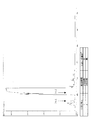
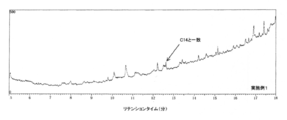
- 3 is a gas chromatogram of ethanol used in Example A1.
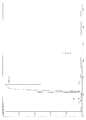
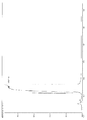
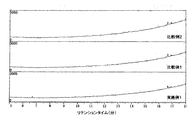
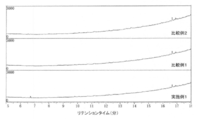
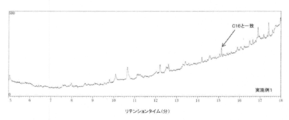
- 3 is a gas chromatogram of ethanol used in Comparative Example A1. It is a gas chromatogram of ethanol used in Comparative Example A2. It is a gas chromatogram of ethanol used in Example B1, Comparative Example B1, and Comparative Example B2. It is an enlarged view of the chromatogram of Example B1. It is a gas chromatogram of ethanol used in Example C1, Comparative Example C1, and Comparative Example C2. It is a gas chromatogram of ethanol used in Example D1, Comparative Example D1, and Comparative Example D2. It is an enlarged view of the chromatogram of Example D1.
- ethanol does not mean pure ethanol (a chemical formula: ethanol represented by CH 3 CH 2 OH) as a compound, and ethanol produced through synthesis or purification is inevitably water or inevitably. It means a composition containing impurities (contaminant components) contained therein.
- the content of each component such as an inorganic component and an organic component in the alcohol raw material is the amount (mg) of each component with respect to 1 L of alcohol.
- the ethanol according to the present invention is used in a gas chromatograph measured by gas chromatograph mass spectrometry (GC/MS method).
- the retention time has at least one of the peaks selected from the group consisting of (A) to (D) below.
- the peaks (A) to (D) are obtained by analyzing ethanol by the GC/MS method under the following analysis conditions. That is, the two peaks of (A) are obtained by analyzing ethanol by the GC/MS method under the following analysis conditions.
- ⁇ GC/MS analysis conditions> Column: Capillary column (length 60 m, inner diameter 0.25 mm, film thickness 0.25 ⁇ m) Oven temperature: 40°C, 1 minute ⁇ 5°C/minute ⁇ 100°C, 10 minutes ⁇ 10°C/minute ⁇ 250°C, 4 minutes Sampling time: 5 minutes
- Carrier gas He (3.0 mL/minute)
- peaks (B) to (D) are obtained by analyzing ethanol by the GC/MS method under the following analysis conditions.
- ⁇ GC/MS analysis conditions> Column: DB-5MS (length 30 m, inner diameter 0.25 mm, film thickness 0.25 ⁇ m) Oven temperature: 40°C ⁇ 10°C/min ⁇ 300°C Carrier gas: He (1.28 mL/min) Inlet temperature: 300°C Detector temperature: 300°C Detector: Hydrogen flame ionization detector Injection volume: 1 ⁇ L (split ratio 1:20)
- the purity of 100% was measured by the GC/MS method under the above-mentioned conditions.
- the retention time was 2 min 55 sec to 3 min 5 sec
- the peak was 12 min 30 sec to 12 min.
- Commercially available fossil fuel-derived industrial ethanol also had a retention time of 2 minutes 55 seconds to 3 minutes 5 seconds, a peak of 12 minutes 30 seconds to 12 in a gas chromatograph measured under the above conditions by the GC/MS method.
- ethanol produced by fermentation using a biomass material such as cellulose also has a retention time of 2 minutes 55 seconds to 3 minutes 5 seconds, 12 minutes 30 seconds to 12 minutes 40 seconds, and 6 minutes 36 seconds.
- ethanol produced by fermentation using a biomass material such as cellulose also has a retention time of 2 minutes 55 seconds to 3 minutes 5 seconds, 12 minutes 30 seconds to 12 minutes 40 seconds, and 6 minutes 36 seconds.
- the retention time is from 2 minutes 55 seconds to 3 minutes 5 seconds, from 12 minutes 30 seconds to 12 minutes 40 seconds, from 6 minutes 36 seconds to 6 minutes 45 seconds, and from 15 minutes 00 seconds to 15 minutes.
- the peak at 15 seconds is considered to be unique to ethanol derived from microbial fermentation using a gas containing carbon monoxide and hydrogen as a substrate.
- ethanol derived from microbial fermentation using a gas containing carbon monoxide and hydrogen as a substrate has various synthetic gases other than carbon monoxide and hydrogen in the production process. It is considered that the trace amount of the above components is included, and even the alcohol obtained through the purification process such as distillation inevitably contains a substance having a boiling point higher than that of ethanol such as an aldehyde compound.
- these unavoidable substances are contained in ethanol to improve the conversion rate of ethanol when butadiene is synthesized from ethanol as a raw material, or to synthesize carboxylic acid ester by adding ethanol to carboxylic acid. It is thought that the reaction rate at the time can be improved.
- the peak at retention times of 12 minutes 30 seconds to 12 minutes 40 seconds is presumed to be derived from n-tetradecane.
- the content of n-tetradecane is preferably 0.01 mg/L or more, more preferably 0.02 mg/L or more, still more preferably 0.03 mg/L or more, based on the whole ethanol. More preferably 0.05 mg/L or more, preferably 1 mg/L or less, more preferably 0.5 mg/L or less, still more preferably 0.2 mg/L or less, and even more preferably Is 0.1 mg/L or less.
- n-tetradecane When the content of n-tetradecane is in the above numerical range, the conversion rate of ethanol when butadiene is synthesized from ethanol as a raw material is improved, or the reaction rate when carboxylic acid ester is synthesized by adding ethanol to carboxylic acid. And the combustion efficiency when ethanol is used as a fuel can be improved.
- the peak of retention time from 6 minutes 36 seconds to 6 minutes 45 seconds is assumed to be derived from n-decane.
- the content of n-decane is preferably 0.01 mg/L or more, more preferably 0.02 mg/L or more, still more preferably 0.03 mg/L or more, based on the whole ethanol. More preferably 0.05 mg/L or more, preferably 1 mg/L or less, more preferably 0.5 mg/L or less, still more preferably 0.2 mg/L or less, and even more preferably Is 0.1 mg/L or less.
- the conversion rate of ethanol when butadiene is synthesized from ethanol as a raw material is improved, or the reaction rate when carboxylic acid ester is synthesized by adding ethanol to carboxylic acid. And the combustion efficiency when ethanol is used as a fuel can be improved.
- the peak at retention times of 15:00 to 15:15 is estimated to be derived from n-hexadecane.
- the content of n-hexadecane is preferably 0.01 mg/L or more, more preferably 0.02 mg/L or more, still more preferably 0.03 mg/L or more, based on the whole ethanol. More preferably 0.05 mg/L or more, preferably 1 mg/L or less, more preferably 0.5 mg/L or less, still more preferably 0.2 mg/L or less, and even more preferably Is 0.1 mg/L or less.
- the conversion rate of ethanol when butadiene is synthesized from ethanol as a raw material is improved, or the reaction rate when carboxylic acid ester is synthesized by adding ethanol to carboxylic acid. And the combustion efficiency when ethanol is used as a fuel can be improved.
- Ethanol derived from microbial fermentation using a gas containing carbon monoxide and hydrogen as a substrate has a retention time of 5 minutes 30 seconds to 5 minutes 35 seconds in addition to a retention time peak of 2 minutes 55 seconds to 3 minutes 5 seconds. It preferably has a peak.
- ethanol obtained through a purification step such as distillation contains a substance having a boiling point extremely close to that of ethanol such as an aldehyde compound, and these plural inevitable substances are included. It is considered that some effect is exerted in the reaction step using ethanol as a raw material to improve the ethanol conversion rate and the reaction rate.
- the ethanol of the present invention is obtained by extracting an ethanol-containing liquid obtained from a microbial fermenter as described below and further purifying it, but contains the following other components in addition to the above unavoidable substances. May be.
- a slight amount of aromatic compound may be contained.
- the aromatic compound contained in ethanol include toluene, ethylbenzene, o-xylene, m-xylene, and p-xylene. One kind of them may be contained, or two or more kinds may be contained. May be.
- Ethylbenzene is preferably contained as the aromatic compound.
- the lower limit of the content (total) of aromatic compounds contained in ethanol is 0.001 mg/L or more, preferably 0.01 mg/L or more, and more preferably 0.1 mg/L, with respect to the whole ethanol. L or more, more preferably 0.4 mg/L or more, particularly preferably 1.0 mg/L or more.
- the upper limit of the content (total) of aromatic compounds contained in ethanol is 100 mg/L or less, preferably 50 mg/L or less, more preferably 1 mg/L or less, and further preferably 7 mg/L or less. And particularly preferably 3.0 mg/L or less.
- the content of the aromatic compound When the content of the aromatic compound is within the above numerical range, it improves the ethanol conversion rate when butadiene is synthesized from ethanol as a raw material, or the reaction rate when the carboxylic acid ester is synthesized by adding ethanol to carboxylic acid. And the combustion efficiency when ethanol is used as a fuel can be improved.
- the content of ethylbenzene is preferably 0.1 mg/L or more, more preferably 0.2 mg/L or more, further preferably 0.3 mg, based on the whole ethanol. /L or more, more preferably 0.5 mg/L or more, preferably 5 mg/L or less, more preferably 3 mg/L or less, further preferably 2 mg/L or less, Even more preferably, it is 1 mg/L or less.
- ethylbenzene When the content of ethylbenzene is within the above numerical range, it improves the ethanol conversion rate when butadiene is synthesized from ethanol as a raw material, or improves the reaction rate when carboxylic acid ester is synthesized by adding ethanol to carboxylic acid. It is possible to improve the combustion efficiency when ethanol is used as a fuel.
- the content of toluene is preferably 0.01 mg/L or more, more preferably 0.02 mg/L or more, further preferably 0.03 mg, based on the whole ethanol. /L or more, still more preferably 0.05 mg/L or more, preferably 1 mg/L or less, more preferably 0.5 mg/L or less, further preferably 0.2 mg/L Or less, and even more preferably 0.1 mg/L or less.
- the content of toluene is within the above numerical range, it improves the ethanol conversion rate when butadiene is synthesized from ethanol as a raw material, or improves the reaction rate when carboxylic acid ester is synthesized by adding ethanol to carboxylic acid. It is possible to improve the combustion efficiency when ethanol is used as a fuel.
- the content of o-xylene is preferably 0.1 mg/L or more, more preferably 0.2 mg/L or more, and further preferably, based on the whole ethanol. Is 0.3 mg/L or more, more preferably 0.5 mg/L or more, preferably 5 mg/L or less, more preferably 3 mg/L or less, and further preferably 2 mg/L. Or less, and even more preferably 1 mg/L or less.
- the conversion rate of ethanol when butadiene is synthesized from ethanol as a raw material is improved, or the reaction rate when carboxylic acid ester is synthesized by adding ethanol to carboxylic acid. And the combustion efficiency when ethanol is used as a fuel can be improved.
- the content (total) of m-xylene and/or p-xylene is preferably 0.2 mg/L or more based on the whole ethanol. , More preferably 0.3 mg/L or more, further preferably 0.4 mg/L or more, even more preferably 0.5 mg/L or more, and preferably 5 mg/L or less, It is preferably 3 mg/L or less, more preferably 2 mg/L or less, and even more preferably 1 mg/L or less.
- the ethanol conversion rate when butadiene is synthesized from ethanol as a raw material is improved, or ethanol is added to carboxylic acid to form a carboxylic acid ester. It is possible to improve the reaction rate when synthesizing and to improve the combustion efficiency when ethanol is used as a fuel.
- the ethanol according to the present invention may further contain a trace amount of an aliphatic hydrocarbon.
- the aliphatic hydrocarbon include n-hexane, n-heptane, n-octane, n-dodecane, and n-tetradecane, and may include only one kind or two or more kinds. You may The aromatic compound preferably contains one or more of n-hexane and n-dodecane.
- the content (total) of aliphatic hydrocarbons contained in ethanol is preferably 0.001 mass ppm or more, preferably 0.005 mass ppm or more, and more preferably 0.01 mass with respect to the whole ethanol.
- ppm or more more preferably 0.1 mass ppm or more, and 100 mass ppm or less, preferably 50 mass ppm or less, more preferably 10 mass ppm or less, still more preferably 5 mass ppm or less.
- the content of n-hexane is preferably 0.1 mass ppm or more, more preferably 0.2 mass ppm or more, and further preferably, based on the whole ethanol. Is 0.3 mass ppm or more, still more preferably 0.5 mass ppm or more, preferably 5 mass ppm or less, more preferably 3 mass ppm or less, and further preferably 2 mass ppm. Or less, and even more preferably 1 mass ppm or less.
- the content of n-heptane is preferably 0.01 mass ppm or more, more preferably 0.02 mass ppm or more, and further preferably, based on the whole ethanol. Is 0.03 mass ppm or more, further preferably 0.05 mass ppm or more, preferably 1 mass ppm or less, more preferably 0.5 mass ppm or less, and further preferably 0. 0.2 mass ppm or less, and even more preferably 0.1 mass ppm or less.
- the content of n-octane is preferably 0.01 mass ppm or more, more preferably 0.02 mass ppm or more, and further preferably, based on the whole ethanol. Is 0.03 mass ppm or more, further preferably 0.05 mass ppm or more, preferably 1 mass ppm or less, more preferably 0.5 mass ppm or less, and further preferably 0. 0.2 mass ppm or less, and even more preferably 0.1 mass ppm or less.
- the content of n-dodecane is preferably 0.01 mass ppm or more, more preferably 0.02 mass ppm or more, and further preferably, based on the whole ethanol. Is 0.03 mass ppm or more, further preferably 0.05 mass ppm or more, preferably 1 mass ppm or less, more preferably 0.5 mass ppm or less, and further preferably 0. 0.2 mass ppm or less, and even more preferably 0.1 mass ppm or less.
- the content of n-tetradecane is preferably 0.01 mass ppm or more, more preferably 0.02 mass ppm or more, and further preferably, based on the whole ethanol. Is 0.03 mass ppm or more, further preferably 0.05 mass ppm or more, preferably 1 mass ppm or less, more preferably 0.5 mass ppm or less, and further preferably 0. 0.2 mass ppm or less, and even more preferably 0.1 mass ppm or less.
- the ethanol according to the present invention may further contain a trace amount of dialkyl ether.
- dialkyl ether examples include dimethyl ether, diethyl ether, dipropyl ether, dibutyl ether, and dipentyl ether, and only one of these may be contained, or two or more thereof may be contained.
- the dialkyl ether preferably includes dibutyl ether.
- the content (total) of dialkyl ether contained in ethanol is preferably 0.001 mg/L or more, preferably 0.01 mg/L or more, and more preferably 0.1 mg/L or more, based on the whole ethanol. , More preferably 1.0 mg/L or more, and 100 mg/L or less, preferably 80 mg/L or less, more preferably 50 mg/L or less, and further preferably 30 mg/L or less.
- the content of the dialkyl ether is within the above numerical range, it improves the ethanol conversion rate when synthesizing butadiene from ethanol as a raw material, or improves the reaction rate when synthesizing a carboxylic acid ester by adding ethanol to a carboxylic acid. It is possible to improve or improve the combustion efficiency when ethanol is used as a fuel.
- the content of dibutyl ether is preferably 1 mg/L or more, more preferably 2 mg/L or more, still more preferably 5 mg/L or more, relative to ethanol. , Still more preferably 10 mg/L or more, preferably 50 mg/L or less, more preferably 40 mg/L or less, further preferably 30 mg/L or less, even more preferably 25 mg/L It is as follows.
- the content of dibutyl ether is within the above numerical range, it improves the ethanol conversion rate when synthesizing butadiene from ethanol as a raw material, or improves the reaction rate when synthesizing a carboxylic acid ester by adding ethanol to carboxylic acid. It is possible to improve or improve the combustion efficiency when ethanol is used as a fuel.
- the ethanol of the present invention contains an extremely small amount of the above organic compounds, but may contain compounds containing elements such as Si, K, Na, Fe and Cr.
- the compound containing these elements may be an inorganic compound or an organometallic compound.
- Si when Si is contained, silica or organosiloxane may be contained.
- the content of Si is preferably 10 mg/L or more, more preferably 20 mg/L or more, still more preferably 30 mg/L or more, based on ethanol. , Preferably 100 mg/L or less, more preferably 90 mg/L or less, and further preferably 80 mg/L or less.
- the Si content is the Si element equivalent amount of the Si compound.
- the content of K is preferably 1.0 mg/L or more, more preferably 1.5 mg/L or more, still more preferably 2.0 mg/L, relative to ethanol.
- L or more more preferably 2.5 mg/L or more, preferably 10 mg/L or less, more preferably 7 mg/L or less, and further preferably 5 mg/L or less.
- the K content is the K element equivalent amount of the K compound.
- the content of Na is preferably 150 mg/L or more, more preferably 170 mg/L or more, still more preferably 190 mg/L or more, based on ethanol. , Preferably 1000 mg/L or less, more preferably 500 mg/L or less, further preferably 400 mg/L or less, more preferably 300 mg/L or less.
- the content of Na is the Na element equivalent amount of the Na compound.
- the content of Fe is preferably 2.0 mg/L or less, more preferably 1.5 mg/L or less, still more preferably 1.0 mg/L with respect to ethanol. Or less, and even more preferably 0.5 mg/L or less.
- the Fe content is the Fe element equivalent amount of the Fe compound.
- the content of Cr is preferably 0.6 mg/L or less, more preferably 0.5 mg/L or less with respect to ethanol.
- the Cr content is the Cr element equivalent amount of the Cr compound.
- the ethanol of the present invention contains the above-mentioned inorganic components and, if desired, a trace amount of organic components such as aromatic hydrocarbons and aliphatic hydrocarbons.
- the concentration of pure ethanol is 75% by volume or more, preferably 80% by volume or more, more preferably 90% by volume or more, even more preferably 95% by volume or more, and even more preferably 98% by volume, based on the whole ethanol.
- the ethanol concentration in the ethanol of the present invention may be set according to the intended use. For example, 90% by volume or more for cosmetics and 75% by volume or more for disinfectant ethanol. It is preferably used, and the upper limit can be similarly set according to the application. The higher the concentration of ethanol is, the more preferable as a product from the viewpoint of transportation cost and the like.
- ethanol can be produced by microbial fermentation of synthetic gas containing carbon monoxide derived from waste or exhaust gas.
- the content of the aromatic compound or the like in the raw material gas derived from the waste or the exhaust gas and the refining conditions may be controlled to control the amount of the aromatic compound or the like contained in the final product.
- a method for producing ethanol by microbial fermentation of synthetic gas containing carbon monoxide derived from waste or exhaust gas will be described.
- the method for producing ethanol comprises a step of converting a carbon source into a synthesis gas containing carbon monoxide and hydrogen, and supplying the synthesis gas containing carbon monoxide and hydrogen to a microbial fermentation tank to obtain an ethanol-containing liquid by microbial fermentation.
- a purification step of purifying ethanol from a liquid substance is included as a step, but a raw material gas generation step, a synthesis gas preparation step, a wastewater treatment step, etc. may be included as necessary.
- each step will be described.
- the raw material gas production step is a step of producing a raw material gas by gasifying a carbon source in the gasification section.
- a gasification furnace may be used in the raw material gas generation step.
- the gasification furnace is a furnace for burning a carbon source (incomplete combustion), and examples thereof include a shaft furnace, a kiln furnace, a fluidized bed furnace, and a gasification reforming furnace.
- the gasification furnace is preferably a fluidized bed furnace type because a high hearth load and excellent operability can be achieved by partially burning the waste.
- the waste is gasified in a fluidized-bed furnace at low temperature (about 450-600°C) and low oxygen atmosphere, and decomposed into gas (carbon monoxide, carbon dioxide, hydrogen, methane, etc.) and carbon-rich char. To do. Furthermore, since the incombustibles contained in the waste are separated from the furnace bottom in a sanitary and low-oxidation state, it is possible to selectively recover valuable substances such as iron and aluminum in the incombustibles. Therefore, gasification of such waste enables efficient resource recycling.
- the gasification temperature in the raw material gas production step is not particularly limited, but is usually 100 to 2500°C, preferably 200 to 2100°C.
- the reaction time for gasification in the raw material gas generation step is usually 2 seconds or longer, preferably 5 seconds or longer.
- the carbon source used in the raw material gas generation process is not particularly limited, and examples thereof include a coke oven in a steel mill, a blast furnace (blast furnace gas), coal used in a converter or a coal-fired power plant, an incinerator (especially a gasification furnace).
- Various carbon-containing materials can be suitably used for the purpose of recycling, such as general waste and industrial waste introduced into, and carbon dioxide by-produced by various industries.
- the carbon source is preferably waste, and specifically, plastic waste, garbage, municipal solid waste (MSW), industrial solid waste, waste tires, biomass waste, futon.
- Household waste such as paper and paper, waste such as building materials, coal, petroleum, compounds derived from petroleum, natural gas, shale gas, and the like.
- various wastes are preferable, from the viewpoint of separation cost, unsorted Municipal solid waste is more preferred.
- the raw material gas obtained by gasifying the carbon source contains carbon monoxide and hydrogen as essential components, but may further contain carbon dioxide, oxygen, and nitrogen. As other components, the raw material gas may further contain components such as soot, tar, nitrogen compounds, sulfur compounds, phosphorus compounds and aromatic compounds.
- the raw material gas is subjected to a heat treatment (commonly called gasification) for burning (incompletely burning) the carbon source, that is, by partially oxidizing the carbon source, so that carbon monoxide is
- a heat treatment commonly called gasification
- the carbon source that is, by partially oxidizing the carbon source, so that carbon monoxide is
- it may be produced as a gas containing 0.1 vol% or more, preferably 10 vol% or more, more preferably 20 vol% or more.
- the synthesis gas purification step is a step of removing or reducing specific substances such as various pollutants, dust particles, impurities, and undesired amounts of compounds from the raw material gas.
- the source gas is usually 0.1 vol% or more and 80 vol% or less of carbon monoxide, 0.1 vol% or more and 70 vol% or less of carbon dioxide, and 0% or less of hydrogen. 1% by volume or more and 80% by volume or less, further containing 1 mg/L or more of nitrogen compounds, 1 mg/L or more of sulfur compounds, 0.1 mg/L or more of phosphorus compounds, and/or 10 mg/L or more of aromatic compounds.
- the pressure swing adsorption device filled with the above-mentioned regenerated adsorbent is used to adsorb carbon dioxide gas in the syngas to the regenerated adsorbent (zeolite), and the carbon dioxide gas concentration in the syngas is increased.
- the synthesis gas may be subjected to other conventionally known processing steps to remove impurities and adjust the gas composition.
- Other processing steps include, for example, a gas chiller (water separator), a low temperature separator (deep cooling separator), a cyclone, a particle (soot) separator such as a bag filter, and a scrubber (water-soluble impurity separator).
- the treatment can be carried out using one or more of a device (PTSA), a separation device using activated carbon, a deoxygenation catalyst, specifically, a separation device using a copper catalyst or a palladium catalyst.
- a device PTSA
- a separation device using activated carbon PTSA
- a deoxygenation catalyst specifically, a separation device using a copper catalyst or a palladium catalyst.
- the synthesis gas used in the method for producing ethanol of the present invention contains at least carbon monoxide as an essential component, and may further contain hydrogen, carbon dioxide, and nitrogen.
- the synthesis gas used in the present invention produces a raw material gas by gasifying a carbon source (raw material gas producing step), and then adjusts the concentration of each component of carbon monoxide, carbon dioxide, hydrogen and nitrogen from the raw material gas.
- the gas obtained through the steps of reducing or removing the substances and compounds as described above may be used as the synthesis gas.
- the carbon monoxide concentration in the synthesis gas is usually 20% by volume or more and 80% by volume or less, preferably 25% by volume or more and 50% by volume, based on the total concentration of carbon monoxide, carbon dioxide, hydrogen and nitrogen in the synthesis gas. It is not more than 35% by volume, and more preferably not less than 35% by volume and not more than 45% by volume.
- the hydrogen concentration in the synthesis gas is usually 10% by volume or more and 80% by volume or less, preferably 30% by volume or more and 55% by volume, with respect to the total concentration of carbon monoxide, carbon dioxide, hydrogen and nitrogen in the synthesis gas. It is below, and more preferably from 40% by volume to 50% by volume.
- the carbon dioxide concentration in the synthesis gas is usually 0.1% by volume or more and 40% by volume or less, preferably 0.3% by volume or more with respect to the total concentration of carbon monoxide, carbon dioxide, hydrogen and nitrogen in the synthesis gas. It is 30 volume% or less, more preferably 0.5 volume% or more and 10 volume% or less, and particularly preferably 1 volume% or more and 6 volume% or less.
- the nitrogen concentration in the synthesis gas is usually 40% by volume or less, preferably 1% by volume or more and 20% by volume or less, with respect to the total concentration of carbon monoxide, carbon dioxide, hydrogen and nitrogen in the synthesis gas. It is more preferably 5% by volume or more and 15% by volume or less.
- Concentrations of carbon monoxide, carbon dioxide, hydrogen and nitrogen can be changed by changing the elemental composition of hydrocarbons (carbon and hydrogen) and nitrogen of the carbon source in the raw material gas production process, combustion temperature and oxygen concentration of the supply gas during combustion.
- the combustion conditions such as the above, it is possible to obtain a predetermined range. For example, if you want to change the concentration of carbon monoxide or hydrogen, change to a carbon source that has a high ratio of hydrocarbons (carbon and hydrogen) such as waste plastic, and if you want to reduce the nitrogen concentration, you need to change the oxygen concentration in the source gas generation process.
- the synthesis gas used in the present invention is not particularly limited in addition to the above-mentioned components, but may contain a sulfur compound, a phosphorus compound, a nitrogen compound and the like.
- the content of each of these compounds is preferably 0.05 mg/L or more, more preferably 0.1 mg/L or more, still more preferably 0.5 mg/L or more, and preferably 2000 mg/L or less, It is more preferably 1000 mg/L or less, still more preferably 80 mg/L or less, even more preferably 60 mg/L or less, and particularly preferably 40 mg/L or less.
- the microorganisms can be suitably cultured, and by setting the content to the upper limit or less, the microorganisms were not consumed. There is an advantage that the medium is not contaminated by various nutrient sources.
- Examples of the sulfur compound generally include sulfur dioxide, CS 2 , COS, and H 2 S.
- H 2 S and sulfur dioxide are preferable because they are easily consumed as nutrient sources for microorganisms. Therefore, it is more preferable that the synthesis gas contains the sum of H 2 S and sulfur dioxide in the above range.
- phosphorus compound phosphoric acid is preferable because it can be easily consumed as a nutrient source for microorganisms. Therefore, it is more preferable that the synthesis gas contains phosphoric acid in the above range.
- the nitrogen compound examples include nitric oxide, nitrogen dioxide, acrylonitrile, acetonitrile, HCN and the like, and HCN is preferable because it can be easily consumed as a nutrient source for microorganisms. Therefore, it is more preferable that the syngas contains HCN in the above range.
- the synthesis gas may contain 0.01 mg/L or more and 90 mg/L or less of an aromatic compound, preferably 0.03 mg/L or more, more preferably 0.05 mg/L or more, and further preferably 0.1 mg/L. It is L or more and preferably 70 mg/L or less, more preferably 50 mg/L or less, and further preferably 30 mg/L or less.
- the microbial fermentation step is a step of producing ethanol by microbially fermenting the above synthetic gas in a microbial fermentation tank.
- the microbial fermentation tank is preferably a continuous fermentation device.
- the microbial fermenter can be used in any shape, and examples thereof include a stirring type, an airlift type, a bubble column type, a loop type, an open bond type, and a photobio type.
- a known loop reactor having a main tank section and a reflux section can be preferably used. In this case, it is preferable to further include a circulation step of circulating the liquid medium between the main tank section and the reflux section.
- the synthesis gas supplied to the microbial fermenter may be the gas obtained through the raw material gas production step as it is as long as the above-mentioned conditions for the components of the synthetic gas are satisfied, or impurities etc. can be reduced from the raw material gas.
- the synthesis gas may be used after adding another predetermined gas to the removed gas.
- another predetermined gas for example, at least one compound selected from the group consisting of sulfur compounds such as sulfur dioxide, phosphorus compounds, and nitrogen compounds may be added to form a synthesis gas.
- the microbial fermenter may be continuously supplied with the synthetic gas and the microbial culture solution, but it is not necessary to supply the synthetic gas and the microbial culture solution at the same time.
- Syngas may be supplied. It is known that a certain kind of anaerobic microorganism produces ethanol and the like from a substrate gas such as a synthetic gas by a fermentation action, and this kind of gas-utilizing microorganism is cultured in a liquid medium. For example, a liquid medium and a gas-assimilating bacterium may be supplied and housed, and in this state, the synthetic gas may be supplied into the microbial fermentation tank while stirring the liquid medium. As a result, the gas-utilizing bacteria can be cultured in a liquid medium, and ethanol can be produced from the synthetic gas by the fermentation action.
- the temperature of the medium or the like may be any temperature, but is preferably about 30 to 45°C, more preferably about 33 to 42°C, further preferably 36.5 to 37. It can be about 5°C.
- the culture time is preferably 12 hours or longer in continuous culture, more preferably 7 days or longer, particularly preferably 30 days or longer, and most preferably 60 days or longer. From the viewpoint, it is preferably 720 days or less, more preferably 365 days or less.
- the culture time means the time from the addition of the inoculum to the culture tank until the discharge of the entire culture solution from the culture tank.
- the microorganism (seed) contained in the microorganism culture liquid is not particularly limited as long as it can produce ethanol by microbial fermentation of synthetic gas using carbon monoxide as a main raw material.
- the microorganism (seed) is one that produces ethanol from the synthetic gas by the fermentation action of the gas-utilizing bacterium, and particularly a microorganism having a metabolic pathway of acetyl COA.
- the gas-utilizing bacteria the genus Clostridium is more preferable, and Clostridium autoethanogenum is particularly preferable, but the bacterium is not limited thereto. Further examples will be given below.
- -Gas-utilizing bacteria include both eubacteria and archaebacteria.
- the eubacterium include, for example, Clostridium genus bacteria, Moorella genus bacteria, Acetobacterium genus bacteria, Carboxydocella genus bacteria, Rhodopseudomonas genus bacteria, and Eubacterium.
- Esubacterium Clostridium genus bacteria, Moorella genus bacteria, Acetobacterium genus bacteria, Carboxydocella genus bacteria, Rhodopseudomonas genus bacteria, and Eubacterium.
- Eubacterium Clostridium genus bacteria
- Moorella genus bacteria Acetobacterium genus bacteria
- Carboxydocella genus bacteria Rhodopseudomonas genus bacteria
- Eubacterium Eubacterium
- Butyribacterium Butyribacterium
- Oligotropha Oligotropha
- Oxitropha genus bacterium
- examples of archaea include Methanobacterium, Methanobrevibacter, Methanocalculus, Methanococcus, Methanosarcina, Methanosphaera, Methanothermobacter, Methanothrix, Methanoculleus, Methanofollis, Methanogenium.
- Bacteria, Methanospirillium genus bacterium, Methanosaeta genus bacterium, Thermococcus genus bacterium, Thermofilum genus bacterium, Arcaheoglobus genus bacterium and the like can be mentioned.
- Methanosarcina genus bacterium Methanococcus genus bacterium, Methanothermobacter genus bacterium, Methanothrix genus bacterium, Thermococcus genus bacterium, Thermofilum genus bacterium, Archaeoglobus genus bacterium are preferable.
- Methanosarcina genus bacterium since the archaea are excellent in assimilating carbon monoxide and carbon dioxide, Methanosarcina genus bacterium, Methanothermobactor genus bacterium or Methanococcus genus bacterium is preferable, and Methanosarcina genus bacterium or Methanococcus genus bacterium is particularly preferable.
- Specific examples of the bacterium of the genus Methanosarcina include Methanosarcina barkeri, Methanosarcina mazei, Methanosarcina acetivorans, and the like.
- the target bacteria with high ethanol-producing ability are selected and used.
- gas-utilizing bacteria with high ethanol-producing ability Clostridium autoethanogenum, Clostridium ljungdahlii, Clostridium aceticum, Clostridium carboxydivorance. , Moorella thermoacetica, Acetobacterium woodii, and the like.
- Clostridium autoethanogenum is particularly preferable.
- the medium used when culturing the above-mentioned microorganism is not particularly limited as long as it has a suitable composition according to the bacterium, and water as the main component and nutrients dissolved or dispersed in this water (for example, vitamins, And a phosphoric acid).
- the composition of such a medium is adjusted so that the gas-utilizing bacteria can grow well.
- Clostridium for the microorganism reference can be made to “0097” to “0099” and the like in US Patent Application Publication No. 2017/260552.
- the ethanol-containing liquid obtained by the microbial fermentation process can be obtained as a suspension containing microorganisms, their carcasses, proteins derived from microorganisms, and the like.
- the protein concentration in the suspension varies depending on the type of microorganism, but is usually 30 to 1000 mg/L.
- the protein concentration in the ethanol-containing liquid can be measured by the Kjeldahl method.
- ⁇ Separation process> The ethanol-containing liquid obtained by the microbial fermentation process is then subjected to a separation process.
- the ethanol-containing liquid is heated to room temperature to 500° C. under the condition of 0.01 to 1000 kPa (absolute pressure) to separate into a liquid or solid component containing microorganisms and a gas component containing ethanol. ..
- the ethanol-containing liquid obtained by the microbial fermentation step was distilled and the desired ethanol was separated and purified, but since the ethanol-containing liquid contains microorganisms and proteins derived from microorganisms, etc. If the liquid is distilled as it is, foaming may occur in the distillation apparatus and continuous operation may be hindered.
- the membrane evaporator As a method for purifying an effervescent liquid, but the membrane evaporator has a low concentration efficiency and is not suitable for purifying a liquid containing a solid component.
- the ethanol-containing liquid is heated to give a liquid or solid component containing microorganisms and a gas containing ethanol.
- the desired ethanol is separated and purified only from the separated gaseous component containing ethanol.
- foaming does not occur in the distillation apparatus during the distillation operation during the separation and purification of ethanol, so that the distillation operation can be continuously performed.
- the concentration of ethanol contained in the gas component containing ethanol is higher than the concentration of ethanol in the liquid containing ethanol, it is possible to efficiently separate and purify ethanol in the purification step described later.
- the present invention from the viewpoint of efficiently separating a liquid or solid component containing a microorganism, a carcass thereof, a protein derived from the microorganism, and the like, and a gas component containing ethanol, it is preferably under the condition of 10 to 200 kPa, more preferably Is under conditions of 50 to 150 kPa, more preferably under normal pressure, preferably at a temperature of 50 to 200° C., more preferably at a temperature of 80 to 180° C., further preferably at a temperature of 100 to 150° C. I do.
- the heating time in the separation step is not particularly limited as long as the gas component can be obtained, but from the viewpoint of efficiency or economy, it is usually 5 seconds to 2 hours, preferably 5 seconds to 1 hour, and more preferably It is preferably 5 seconds to 30 minutes.
- the separation step described above is not particularly limited as long as it is an apparatus capable of efficiently separating an ethanol-containing liquid into a liquid or solid component (microorganisms or carcasses, proteins derived from microorganisms, etc.) and a gas component (ethanol) by thermal energy.
- a drying device such as a rotary dryer, a fluidized bed dryer, a vacuum dryer, a conduction heating dryer, etc.
- a conduction heating type dryer examples include a drum type dryer and a disk type dryer.
- the liquefaction step is a step of liquefying the gas component containing ethanol obtained in the above separation step by condensation.
- the apparatus used in the liquefaction process is not particularly limited, but it is preferable to use a heat exchanger, particularly a condenser (condenser).
- the condenser include a water-cooled type, an air-cooled type, an evaporation type, and the like, and among them, the water-cooled type is preferable.
- the condenser may have a single stage or a plurality of stages.
- the liquefaction obtained by the liquefaction step does not contain the components contained in the ethanol-containing liquid such as microorganisms and carcasses and proteins derived from the microorganisms. It does not exclude that the protein is contained in it. Even when a protein is contained in the liquefaction product, its concentration is preferably 40 mg/L or less, more preferably 20 mg/L or less, further preferably 15 mg/L or less.
- the heat of condensation of the gas component obtained by the condenser may be reused as a heat source in the purification process described later. By reusing the heat of condensation, ethanol can be produced efficiently and economically.
- ethanol is purified from the liquefaction product obtained in the liquefaction process.
- the ethanol-containing liquid obtained in the microbial fermentation step can be supplied to the purification step without going through the above-mentioned separation step when components such as microorganisms have already been removed.
- the refining step is a step of separating the ethanol-containing liquid obtained in the liquefaction step into a distillate having an increased concentration of the desired ethanol and a bottom liquid having a reduced concentration of the desired ethanol.
- the apparatus used in the purification step is, for example, a distillation apparatus, a processing apparatus including a pervaporation membrane, a processing apparatus including a zeolite dehydration membrane, a processing apparatus for removing low boiling point substances having a lower boiling point than ethanol, a high boiling point having a higher boiling point than ethanol.
- a processing device that removes a substance and a processing device that includes an ion exchange membrane. These devices may be used alone or in combination of two or more. As the unit operation, heat distillation or membrane separation may be suitably used.
- desired ethanol can be obtained as a distillate with high purity using a distillation apparatus.
- the temperature inside the distiller during the distillation of ethanol is not particularly limited, but is preferably 100° C. or lower, more preferably about 70 to 95° C. By setting the temperature in the still in the above range, the separation of ethanol from other components, that is, the distillation of ethanol can be performed more reliably.
- the ethanol-containing liquid obtained in the liquefaction step into a distillation apparatus equipped with a heater using steam of 100° C. or higher and raising the temperature of the bottom of the distillation column to 90° C. or higher within 30 minutes
- a distillation apparatus equipped with a heater using steam of 100° C. or higher and raising the temperature of the bottom of the distillation column to 90° C. or higher within 30 minutes
- high-purity ethanol can be obtained.
- the difference in distillation temperature is preferably ⁇ 13°C, more preferably ⁇ 11°C. The difference in the distillation temperature allows more reliable separation from other components, that is, ethanol distillation.
- the above ethanol-containing liquid contains tetradecane or decane, which has a higher boiling point than ethanol.
- the temperature of the uppermost part of the distillation column is raised to 5 to 10° C. higher than usual, so that the aromatic compound is also distilled and the distillate is obtained.
- Aromatic compounds in the included ethanol can be adjusted.
- the content of aromatic compounds in the final ethanol can be adjusted.
- the pressure in the distillation apparatus at the time of ethanol distillation may be atmospheric pressure, but is preferably less than atmospheric pressure, more preferably about 60 to 95 kPa (absolute pressure).
- the yield of ethanol (the concentration of ethanol contained in the distillate after distillation) is preferably 90% by volume or more, more preferably 95% by volume or more.
- a known separation membrane can be appropriately used, and for example, a zeolite membrane can be preferably used.
- the concentration of ethanol contained in the distillate separated in the purification step is preferably 20% by volume to 99.99% by volume, more preferably 60% by volume to 99.9% by volume.
- the concentration of ethanol contained in the bottom solution is preferably 0.001% by volume to 10% by volume, and more preferably 0.01% by volume to 5% by volume.
- the bottom liquid separated in the purification process does not substantially contain nitrogen compounds.
- “substantially free” does not mean that the concentration of the nitrogen compound is 0 mg/L, and the bottom liquid obtained in the refining process does not require the wastewater treatment process. It means that the concentration of the nitrogen compound is.
- the desired ethanol is not purified from the ethanol-containing solution obtained in the microbial fermentation step, but the ethanol-containing solution is a liquid or solid component containing microorganisms and a gas component containing ethanol as described above. To separate. At that time, since the nitrogen compound remains on the side of the liquid or solid component containing the microorganism, the gas component containing ethanol contains almost no nitrogen compound.
- the bottom product obtained when purifying ethanol from a liquefied product obtained by liquefying a gas component does not substantially contain a nitrogen compound.
- the concentration of the nitrogen compound is 0.1 to 200 mg/L, preferably 0.1 to 100 mg/L, more preferably 0.1 to 50 mg/L. is there.
- the bottom liquid separated in the refining process does not substantially contain phosphorus compounds.
- the term "substantially free from” does not mean that the concentration of the phosphorus compound is 0 mg/L, and the bottom liquid obtained in the purification step does not require the wastewater treatment step. Means concentration. Even when the bottom product is contained in the phosphorus compound, the concentration of the phosphorus compound is 0.1 to 100 mg/L, preferably 0.1 to 50 mg/L, more preferably 0.1 to 25 mg/L. is there.
- the bottoms discharged in the ethanol purification step are substantially free of nitrogen compounds and phosphorus compounds, and almost free of other organic substances. Therefore, it is possible to simplify the conventionally required wastewater treatment process.
- the bottoms liquid separated in the refining process may be supplied to the wastewater treatment process.
- organic substances such as nitrogen compounds and phosphorus compounds can be further removed from the bottom liquid.
- the organic matter may be removed by anaerobically or aerobically treating the bottoms.
- the removed organic matter may be used as a fuel (heat source) in the refining process.
- the treatment temperature in the wastewater treatment step is usually 0 to 90°C, preferably 20 to 40°C, more preferably 30 to 40°C.
- the waste liquor treatment etc. is more effective than the bottom liquor obtained by directly supplying the microbial fermentation step to the purification step. The load is reduced.
- the concentration of the nitrogen compound in the treated liquid obtained by treating the bottom liquid is preferably 0.1 to 30 mg/L, more preferably 0.1 to 20 mg/L, and further preferably 0.1. It is ⁇ 10 mg/L, and it is particularly preferable that no nitrogen compound is contained.
- the phosphorus compound concentration in the treatment liquid is preferably 0.1 to 10 mg/L, more preferably 0.1 to 5 mg/L, further preferably 0.1 to 1 mg/L. It is particularly preferred that no phosphorus compound is included.
- ethanol according to the present invention can be used as a raw material for manufacturing various organic compounds.
- ethanol according to the present invention includes butadiene, ethylene, propylene, isobutene, acetaldehyde, acetic acid, ethyl acetate, methyl (meth)acrylate, ethyl-t-butyl ether ethylene glycol, ester composition, polyester, acrylic acid, aminohexanoic acid.
- Butadiene is a raw material of synthetic rubber, which is mainly produced by refining a C4 fraction produced as a by-product when synthesizing ethylene from petroleum (that is, naphtha cracking).
- ethanol ethanol derived from microbial fermentation
- 1,3-butadiene 1,3-butadiene in place of chemical industrial raw materials obtained from petroleum.
- a method for synthesizing butadiene using ethanol derived from such microbial fermentation a method using MgO as a catalyst, a method using a mixture of Al 2 O 3 and ZnO, a catalyst having a magnesium silicate structure, etc. are known.
- vanadium, manganese, iron, cobalt, nickel, copper, zinc, gallium, niobium, silver, indium, cerium, etc. are used as the catalyst.
- the heating temperature for proceeding the conversion reaction is such that the temperature in the reaction system is, for example, 300 to 450° C., preferably 350 to 400° C. If the temperature in the reaction system is lower than the above range, sufficient catalytic activity may not be obtained, the reaction rate may decrease, and the production efficiency may decrease. On the other hand, if the temperature in the reaction system exceeds the above range, the catalyst may be easily deteriorated.
- the reaction can be performed by a conventional method such as a batch system, a semi-batch system, or a continuous system.
- a conventional method such as a batch system, a semi-batch system, or a continuous system.
- the conversion rate of ethanol can be increased, but with the ethanol according to the present invention, even if the continuous system is adopted, the ethanol can be converted more efficiently than in the conventional case. can do.
- ethanol derived from a recyclable resource having a gas containing carbon monoxide and hydrogen as a substrate such as that of the present invention, is a fossil fuel-derived ethanol in a gas chromatograph measured by gas chromatography-mass spectrometry It is thought that this is due to the presence of a unique peak that is not found in ethanol of.
- a suspension bed system for example, a suspension bed system, a fluidized bed system, a fixed bed system, etc.
- a gas phase method or a liquid phase method may be used.
- a fixed-bed gas-phase continuous flow reactor for filling the above-mentioned catalyst into a reaction tube to form a catalyst layer and allowing the raw materials to flow as a gas and react in the gas phase in terms of easy recovery and regeneration of the catalyst. It is preferable to use.
- the ethanol of the present invention may be gasified and supplied to the reactor without being diluted, or may be appropriately diluted with an inert gas such as nitrogen, helium, argon, carbon dioxide or the like into the reactor. May be supplied.
- an inert gas such as nitrogen, helium, argon, carbon dioxide or the like into the reactor. May be supplied.
- reaction product (1,3-butadiene) can be separated and purified by a separation means such as filtration, concentration, distillation, extraction, or a combination of these.
- the ethanol according to the present invention can be preferably used as a raw material for polyethylene, which is widely used as a general-purpose plastic.
- Conventional polyethylene has been produced by synthesizing ethylene from petroleum and polymerizing ethylene monomers. By producing polyethylene using the ethanol of the present invention, it becomes possible to realize an ultimate resource recycling society that does not depend on petroleum resources.
- ethylene which is a raw material for polyethylene, is synthesized using ethanol according to the present invention as a raw material.
- the method for producing ethylene is not particularly limited, and it can be obtained by a conventionally known method.
- ethylene can be obtained by a dehydration reaction of ethanol.
- a catalyst is usually used when ethylene is obtained by the dehydration reaction of ethanol, but this catalyst is not particularly limited, and a conventionally known catalyst can be used.
- What is advantageous in the process is a fixed bed flow reaction in which the catalyst and the product can be easily separated, and for example, ⁇ -alumina and the like are preferable.
- the dehydration reaction is an endothermic reaction, so it is usually performed under heating conditions.
- the heating temperature is not limited as long as the reaction proceeds at a commercially useful reaction rate, but a temperature of 100°C or higher, preferably 250°C or higher, more preferably 300°C or higher is suitable.
- the upper limit is also not particularly limited, but from the viewpoint of energy balance and equipment, it is preferably 500°C or lower, more preferably 400°C or lower.
- the reaction pressure is not particularly limited, but a pressure equal to or higher than normal pressure is preferable in order to facilitate the subsequent gas-liquid separation.
- a pressure equal to or higher than normal pressure is preferable, but a liquid phase suspension bed, a fluidized bed or the like may be used.
- the yield of the reaction depends on the amount of water contained in the ethanol supplied as the raw material. In general, when performing a dehydration reaction, it is preferable that there is no water in view of the removal efficiency of water. However, in the case of ethanol dehydration reaction using a solid catalyst, the production amount of other olefins, especially butene, tends to increase in the absence of water.
- the lower limit of the permissible water content is 0.1% by mass or more, preferably 0.5% by mass or more.
- the upper limit is not particularly limited, but from the viewpoint of mass balance and heat balance, it is preferably 50% by mass or less, more preferably 30% by mass or less, and further preferably 20% by mass or less.
- ethylene is a gas at a pressure of about 5 MPa or less.
- This method may be a known method.
- ethylene obtained by gas-liquid separation is further distilled, and the distillation method, operating temperature, residence time, etc. are not particularly limited, except that the operating pressure at this time is atmospheric pressure or higher.
- Ethanol derived from a recyclable resource using a gas containing carbon monoxide and hydrogen as a substrate as in the present invention is unique to fossil fuel-derived ethanol in a gas chromatograph measured by gas chromatograph mass spectrometry. There is a peak of. Therefore, it is considered that ethylene obtained from ethanol contains an extremely small amount of impurities. These trace amounts of impurities may pose a problem depending on the use of ethylene, and may be removed by purification.
- the purification method is not particularly limited and can be performed by a conventionally known method. As a suitable purification operation, for example, an adsorption purification method can be mentioned.
- the adsorbent used is not particularly limited, and a conventionally known adsorbent can be used.
- caustic water treatment may be used in combination as a method for purifying impurities in ethylene.
- the method of polymerizing the monomer containing ethylene is not particularly limited, and a conventionally known method can be used.
- the polymerization temperature and the polymerization pressure may be appropriately adjusted depending on the polymerization method and the polymerization apparatus.
- the polymerization device is also not particularly limited, and a conventionally known device can be used.
- an example of a method for polymerizing a monomer containing ethylene will be described.
- the method for polymerizing polyolefins is based on the type of polyethylene of interest, such as high density polyethylene (HDPE), medium density polyethylene (MDPE), low density polyethylene (LDPE). ), and linear low-density polyethylene (LLDPE), etc., can be appropriately selected depending on the difference in density and branching.
- high density polyethylene HDPE
- MDPE medium density polyethylene
- LDPE low density polyethylene
- LLDPE linear low-density polyethylene
- a polymerization catalyst using a multi-site catalyst such as Ziegler-Natta catalyst, or a single-site catalyst such as a metallocene catalyst, by any one of gas phase polymerization, slurry polymerization, solution polymerization, and high pressure ionic polymerization, It is preferable to carry out in one step or in multiple steps of two or more steps.
- a multi-site catalyst such as Ziegler-Natta catalyst, or a single-site catalyst such as a metallocene catalyst
- the above single-site catalyst is a catalyst that can form a uniform active species, and is usually prepared by contacting a metallocene-based transition metal compound or a nonmetallocene-based transition metal compound with an activating cocatalyst. ..
- the single-site catalyst is preferable since it has a more active site structure than the multi-site catalyst and can polymerize a polymer having a high molecular weight and a high degree of uniformity.
- the metallocene catalyst is a catalyst including a transition metal compound of Group IV of the periodic table containing a ligand having a cyclopentadienyl skeleton, a cocatalyst, an organometallic compound if necessary, and each catalyst component of a carrier. is there.
- the cyclopentadienyl skeleton is a cyclopentadienyl group, a substituted cyclopentadienyl group, or the like.
- the substituted cyclopentadienyl group has a substituent such as a hydrocarbon group having 1 to 30 carbon atoms.
- the transition metal include zirconium, titanium and hafnium, and zirconium and hafnium are particularly preferable.
- the transition metal compound usually has two ligands having a cyclopentadienyl skeleton, and it is preferable that each ligand having a cyclopentadienyl skeleton is bound to each other by a bridging group.
- the above-mentioned transition metal compound can use one kind or a mixture of two or more kinds as a catalyst component.
- the co-catalyst is one that can effectively use the above-mentioned transition metal compound as a polymerization catalyst or can balance the ionic charge in a catalytically activated state.
- a benzene-soluble aluminoxane of an organoaluminum oxy compound, a benzene-insoluble organoaluminum oxy compound, an ion-exchange layered silicate, a boron compound, a cation with or without an active hydrogen group and a non-coordinating anion are used.
- lanthanoid salts such as lanthanum oxide, tin oxide, and a phenoxy compound containing a fluoro group.
- the above-mentioned transition metal compound may be used by supporting it on an inorganic or organic compound carrier.
- an inorganic or organic compound porous oxide is preferable, and specifically, an ion-exchange layered silicate such as montmorillonite, SiO 2 , Al 2 O 3 , MgO, ZrO 2 , TiO 2 , B 2 O. 3 , CaO, ZnO, BaO, ThO 2 and the like, or a mixture thereof.
- organometallic compound used as needed examples include organoaluminum compounds, organomagnesium compounds, organozinc compounds and the like. Of these, organic aluminum is preferably used.
- polystyrene resin a polymer of ethylene or a copolymer of ethylene and ⁇ -olefin may be used alone or in combination of two or more.
- Acetaldehyde is an important chemical as an industrial raw material. Acetaldehyde is useful as a raw material for acetic acid and ethyl acetate, for example.
- Acetaldehyde can be produced by oxidizing ethanol by a conventionally known method.
- ethanol can be oxidized with chlorine to produce acetaldehyde.
- Chlorine is usually reacted with ethanol in the gaseous state.
- Chlorine may be supplied at a concentration of about 100%, or may be diluted with an inert gas (for example, nitrogen, helium, neon, argon, etc.) and supplied.
- the degree of dilution in this case is 50% by weight or less, preferably 25% by weight or less, in consideration of reaction efficiency.
- This oxidation can be realized by, for example, a photoreaction, a thermal reaction, a catalytic reaction, or the like.
- photochlorination of ethanol with chlorine gas and oxidation by thermal chlorination are preferable, and oxidation by photochlorination with chlorine gas is more preferable.
- Examples of the photoreaction include a method of irradiating light with various wavelengths such as ultraviolet rays and visible light, and among these, it is preferable to irradiate with light from a light source having a wavelength of about 300 to 500 nm to react. ..
- the light source is not particularly limited, and a fluorescent lamp, a mercury lamp, a halogen lamp, a xenon lamp, a metal halide lamp, an excimer lamp, an LED lamp or the like can be used.
- the reaction temperature is about 0 to 80°C, preferably about 0 to 50°C. A reaction time of about 1 to 5 hours is suitable.
- ethanol can be oxidized in the gas phase in the presence of molecular oxygen and a catalyst to produce acetaldehyde.
- a catalyst for example, a base metal oxide in which fine gold particles are dispersed and fixed can be used.
- the base metal oxide La 2 O 3, MoO 3 , Bi 2 O 3, SrO, Y 2 O 3, MgO, BaO, composite oxides containing WO 3, CuO and their one or more thereof.
- the oxidation reaction of ethanol is carried out by bringing a gas containing ethanol and oxygen molecules into contact with the catalyst at, for example, 100 to 280°C.
- the oxygen molecule used in the reaction may be supplied as oxygen gas, or air may be used.
- the raw material gas that is the gas may contain a diluent gas (carrier gas), if necessary.
- the apparatus used for the reaction may be a general apparatus that is usually used when performing a gas phase reaction. For example, a catalyst is filled in a reaction tube, and a gas containing ethanol and oxygen gas or air is fed into the reaction tube in a state where the reaction tube is heated to a predetermined temperature, and the raw material gas and the catalyst are brought into contact with each other. It is carried out by collecting.
- the reaction pressure may be normal pressure, and if necessary, it may be increased by about 0.5 to 5 Pa (atmospheric pressure).
- the diluent gas so-called inert gas such as nitrogen, argon, helium, carbon dioxide, etc. is used.
- the amount of the diluent gas to be used may be appropriately determined in consideration of the composition of the raw material gas, the flow rate, the heat of reaction, etc., but it is usually preferably 1 to 100 times the volume of ethanol.
- the ratio of ethanol and oxygen molecules (oxygen gas) supplied to the reaction tube is not particularly limited, but is usually 0.5 to 100% by volume of oxygen gas or oxygen gas in air with respect to ethanol. It is preferably 1 to 10% by volume, more preferably 2 to 5% by volume.
- the amount of the catalyst used is also not particularly limited, but is generally about 0.1 to 1.0 g if the inner diameter of the reaction tube is 6 to 10 mm. Practically, it is preferable to use an amount such that the space velocity (SV) is in the range of about 10,000 to 40,000 hr ⁇ 1 ⁇ ml ⁇ g cat ⁇ 1 in relation to the gas flow rate.
- acetaldehyde can be produced by dehydrogenating ethanol in the presence of a catalyst.
- a catalyst for example, a solid catalyst containing copper as an active species can be used.
- the copper as the active species may be in a form having an activity of converting ethanol into acetaldehyde, and includes copper metal (a simple substance), copper compounds (oxides, hydroxides, copper salts (copper sulfate, copper phosphate, copper nitrate).
- An inorganic acid salt such as copper carbonate; an organic acid salt such as a copper salt of a carboxylic acid).
- the solid catalyst may contain at least one selected from such a copper simple substance and a copper compound. Copper as the active species is preferably in the form of metallic copper.
- copper may be used as it is in the form of metallic copper or a copper compound, or may be used in the form of being supported on a carrier. It should be noted that copper as an active species has only to act as a main catalyst of the solid catalyst, and may be used in combination with a co-catalyst or the like. Further, the solid catalyst may have a form in which both the copper and the co-catalyst are supported on the carrier.
- the above dehydrogenation reaction may be a liquid phase reaction as long as ethanol can be brought into contact with the solid catalyst, but is usually a gas phase reaction in which gaseous ethanol and the solid catalyst are brought into contact with each other in the gas phase.
- the temperature may be 150 to 350° C., preferably 170 to 300° C., more preferably 200 to 280° C., from the viewpoint of the equilibrium relationship between ethanol and acetaldehyde, the catalyst life, and the like. The higher the reaction temperature, the more the equilibrium shifts to the acetaldehyde side, so the conversion rate can be improved.
- the reaction may be carried out under pressure, but may be carried out under normal pressure for the sake of simplicity. It can also be carried out under reduced pressure because it is advantageous for the ethanol conversion rate.
- Acetic acid is an important chemical as an industrial raw material. Acetic acid is useful as a raw material for vinyl acetate monomers, acetic anhydride, acetic acid esters, and the like.
- Acetic acid can be produced by oxidation of acetaldehyde by a conventionally known method.
- acetic acid can be produced by air oxidation of acetaldehyde in the presence of a catalyst.
- the catalyst include manganese acetate and cobalt acetate.
- Ethyl-t-butyl ether is an important chemical as an industrial raw material. ETBE is useful, for example, as an alternative fuel to gasoline, especially as a high-octane fuel.
- ETBE can be synthesized from ethanol and isobutene by a conventionally known method. For example, it can be produced by reacting ethanol and isobutene in the presence of a reaction catalyst.
- the molar ratio of isobutene to ethanol as a raw material is preferably 0.1 to 10 mol, and more preferably 0.5 to 2 mol.
- a cation exchange resin is preferably used, and a strongly acidic cation exchange resin is more preferably used.
- a strongly acidic cation exchange resin a porous type (MR type) styrene resin in which a strong acid group such as a sulfonic acid group (—SO 3 H) is introduced as an ion exchange group is preferable.
- the particle size of the strongly acidic cation exchange resin is preferably 0.5 to 1.0 mm.
- the amount of reaction catalyst used is preferably 1 to 90 g, more preferably 1 to 90 g, and further preferably 4 to 9 g, relative to 1 mol of ethanol.
- the method of using the reaction catalyst is not particularly limited, and it can be used in the reaction in a fixed bed, fluidized bed, or suspension bed state.
- the form of reacting isobutene and ethanol is not particularly limited, but it is preferable to use a pressurized gas-liquid mixed phase reaction system in which ethanol can maintain a liquid phase. In this case, the yield of ETBE obtained is further improved.
- esters can be synthesized by reacting ethanol with various carboxylic acids.
- ethyl benzoate can be obtained from ethanol and benzoic acid
- diethylene glycol which is a raw material for polyester, can be obtained from ethanol through ethylene.
- the polyester is composed of a diol unit and a dicarboxylic acid unit, and is obtained by a polycondensation reaction using ethylene glycol as the diol unit and terephthalic acid and isophthalic acid as the dicarboxylic acid unit.
- Ethylene glycol is obtained by using the ethanol of the present invention as a raw material, and for example, ethylene glycol can be obtained by a conventionally known method such as a method of producing ethylene glycol via ethylene oxide.
- aromatic dicarboxylic acid aromatic dicarboxylic acid, aliphatic dicarboxylic acid, and derivatives thereof can be used without limitation.
- aromatic dicarboxylic acid include terephthalic acid and isophthalic acid
- derivative of the aromatic dicarboxylic acid include lower alkyl ester of aromatic dicarboxylic acid, specifically, methyl ester, ethyl ester, propyl ester and butyl ester. Examples thereof include esters.
- terephthalic acid is preferable, and dimethyl terephthalate is preferable as the derivative of the aromatic dicarboxylic acid.
- aliphatic dicarboxylic acid specifically, oxalic acid, succinic acid, glutaric acid, adipic acid, sebacic acid, dodecanedioic acid, dimer acid, cyclohexanedicarboxylic acid and the like usually have 2 to 40 carbon atoms.
- a chain or alicyclic dicarboxylic acid may be mentioned.
- a lower alkyl ester such as methyl ester, ethyl ester, propyl ester and butyl ester of the above aliphatic dicarboxylic acid, or a cyclic acid anhydride of the above aliphatic dicarboxylic acid such as succinic anhydride.
- adipic acid, succinic acid, dimer acid or a mixture thereof is preferable, and one containing succinic acid as a main component is particularly preferable.
- the derivative of the aliphatic dicarboxylic acid the methyl ester of adipic acid and succinic acid, or a mixture thereof is more preferable.
- the polyester can be obtained by a conventionally known method in which the above-mentioned diol unit and dicarboxylic acid unit are polycondensed. Specifically, a general method of melt polymerization in which a polycondensation reaction is performed under reduced pressure after an esterification reaction and/or a transesterification reaction between the above dicarboxylic acid component and a diol component, and an organic solvent Can be produced by a known solution heating dehydration condensation method using.
- the polycondensation reaction is preferably carried out in the presence of a polymerization catalyst, and examples of the polymerization catalyst include titanium compounds, zirconium compounds and germanium compounds.
- the reaction temperature of the esterification reaction and/or transesterification reaction between the dicarboxylic acid component and the diol component is usually in the range of 150 to 260° C.
- the reaction atmosphere is usually an inert gas atmosphere such as nitrogen or argon. ..
- a chain extender (coupling agent) may be added to the reaction system. After completion of polycondensation, the chain extender is added to the reaction system without solvent in a uniform molten state to react with the polyester obtained by polycondensation.
- the obtained polyester may be subjected to solid-phase polymerization, if necessary, to further increase the degree of polymerization and to remove oligomers such as cyclic trimers.
- various additives may be added as long as the characteristics are not impaired, for example, plasticizer, ultraviolet stabilizer, anti-coloring agent, matting agent, deodorant, flame retardant, A weather resistance agent, an antistatic agent, a friction reducing agent, a release agent, an antioxidant, an ion exchange agent, a coloring pigment and the like can be added.
- the ethanol according to the present invention is not limited to the above-mentioned polymers, but can be used as a raw material for various other polymers. Since the molded article of the obtained polymer is a carbon neutral material, it can be used as an ultimate product that does not depend on petroleum resources. It becomes possible to realize a resource recycling society.
- the ethanol according to the present invention can be used not only as a polymer raw material as described above but also in various products.
- examples of products include cosmetics, perfumes, fuels, antifreeze liquids, bactericides, disinfectants, cleaning agents, mildew removers, detergents, hair washes, soaps, antiperspirants, face wash sheets, solvents, paints, adhesives, and diluents. , And chemical products such as food additives. By using it for these purposes, it is possible to exert an appropriate effect according to the application.
- the ethanol according to the present invention can also be used as a raw material for fuels (eg jet fuel, kerosene, gas oil, gasoline) and the like. Since ethanol has a high sterilizing ability, they can also function as a sterilizing agent for preventing bacteria and the like from propagating in a fuel system such as an engine or piping.
- fuels eg jet fuel, kerosene, gas oil, gasoline
- the ethanol according to the invention can be mixed with gasoline and used as ethanol-blended gasoline.
- Environmental load can be reduced by using ethanol-blended gasoline.
- the ethanol used in the ethanol-blended gasoline has a purity of 92.0% by volume or higher, preferably 95.0% by volume or higher, more preferably 99.5% by volume or higher.
- the content of ethanol in the ethanol mixed gasoline is preferably 1% by volume or more and 15% by volume or less, more preferably 2% by volume or more and 12% by volume or less, and further preferably 3% by volume or more and 10% by volume or less. .. If the content of ethanol is 1% by volume or more, the advantage of improving the octane number by blending ethanol will be obtained, and if it is 15% by volume or less, the evaporation characteristics will change significantly due to the azeotropic phenomenon with other gasoline base materials. Therefore, proper drivability of a gasoline vehicle can be secured.
- the water content in the ethanol-blended gasoline is preferably 0.01% by mass or more and 0.9% by mass or less, more preferably 0.01% by mass or more and 0.7% by mass or less.
- the lower limit of the water content depends on the saturated water content of the gasoline base material and the water content in ethanol, but is substantially about 0.01% by mass. If the upper limit is 0.9% by mass or less, phase separation can be prevented, and even when phase separation occurs, the gasoline layer enables proper operation of the gasoline engine.
- the water content can be measured by the “crude oil and petroleum products-water content test method” described in JIS K2275, and for example, the Karl Fischer coulometric titration method can be used.
- gasoline base material a commonly used gasoline base material can be arbitrarily used and is not particularly limited.
- gasoline base material for example, light naphtha obtained by distilling crude oil under atmospheric pressure, preferably desulfurized light naphtha obtained by desulfurizing it, desulfurization of heavy naphtha, catalytic reforming gasoline obtained by catalytic reforming, and Benzene-free catalytic reforming gasoline, benzene-free light catalytic reforming gasoline, benzene-free heavy catalytic reforming gasoline, and mixtures thereof, cracked gasoline obtained by catalytic cracking or hydrocracking , Light cracked gasoline, heavy cracked gasoline, and mixtures thereof, isomerized gasoline obtained by isomerizing light naphtha, and the like.
- ETBE made from ethanol according to the invention can be mixed with gasoline and used as ETBE mixed gasoline.
- the ETBE content of the ETBE-blended gasoline is preferably 1% by volume or more and 15% by volume or less, more preferably 2% by volume or more and 12% by volume or less, and further preferably 3% by volume or more and 10% or less. If the content of ETBE is 1% by volume or more, the advantage of improving the octane number by blending ETBE is obtained, and if it is 15% by volume or less, the evaporation characteristics are significantly changed by the azeotropic phenomenon with other gasoline base materials. Therefore, proper drivability of a gasoline vehicle can be secured.
- Example A ⁇ Ethanol component evaluation method>
- the components of ethanol were evaluated by analysis using an odor sniffing gas chromatograph mass spectrometer (JMS-Q1050GC Ultra Quad GC/MS, manufactured by JEOL Ltd.).
- the measurement conditions were as follows.
- ⁇ GC/MS analysis conditions> Column: DB-WAX (length 60m, inner diameter 0.25mm, film thickness 0.25 ⁇ m) Oven temperature: 40°C, 1 minute ⁇ 5°C/minute ⁇ 100°C, 10 minutes ⁇ 10°C/minute ⁇ 250°C, 4 minutes Sampling time: 5 minutes
- Carrier gas He (3.0 mL/minute)
- ⁇ Butadiene determination method> The quantitative evaluation of butadiene was carried out by analysis using a gas chromatography device (GC-2014, manufactured by SHIMADZU). The measurement conditions were as follows. ⁇ GC/MS analysis conditions> Column: Rt-Q-BOND (length 30 m, inner diameter 0.32 mm, film thickness 10 ⁇ m) Oven temperature: 60°C, 11.5 minutes ⁇ 10°C/min ⁇ 100°C, 14.5 minutes ⁇ 10°C/min ⁇ 250°C Sampling time: 5 minutes Carrier gas: He (30 cm/s) Split ratio: 75
- ⁇ Method for quantifying ethyl benzoate The quantitative evaluation of ethyl benzoate was carried out by analysis using a gas chromatography device. The measurement conditions were as follows. ⁇ GC/MS analysis conditions> Column: DB-1 (length 30.0m, inner diameter 0.254mm, film thickness 0.25m) Temperature rising condition: 30°C-300°C 15°C/min Carrier gas: He 100 kPa Split ratio: 50
- Ethanol was produced as follows. (Raw material gas generation process) The gas discharged after burning general waste in a refuse incineration facility was used. The components of the source gas were about 30% by volume of carbon monoxide, about 30% by volume of carbon dioxide, about 30% by volume of hydrogen and about 10% by volume of nitrogen.
- the ethanol-containing liquid was introduced into a distillation apparatus equipped with a heater using steam at 170°C. After raising the temperature of the bottom of the distillation column to 101° C. within 8 to 15 minutes, the above-mentioned ethanol-containing liquid was introduced from the middle of the distillation column, and during continuous operation, the bottom of the column was 101° C., the middle of the column was 99° C., The top part was continuously operated at 91° C. under the condition of 15 seconds/L to obtain purified ethanol.
- Butadiene was produced using the ethanol obtained as described above. First, the ethanol obtained was passed through a single tube heated to 90° C. to be vaporized in order to use it as a gas to be subjected to the reaction, and the vaporized ethanol gas was combined with nitrogen. At this time, the flow rate of ethanol gas was SV 360 L/hr/L, and nitrogen was controlled to be SV 840 L/hr/L by mass flow control, so that 30% by volume of ethanol (gas conversion) and 70% by volume of nitrogen (gas conversion) were obtained. A mixed gas was used.
- a butadiene-containing gas was obtained by continuously supplying the above mixed gas while maintaining the temperature of the reaction tube of above at 350° C. and the pressure (pressure of the reaction bed) of 0.1 MPa.
- the content of butadiene in the obtained butadiene-containing gas was quantified using a gas chromatograph GC-2014 (manufactured by SHIMADZU). The results were as shown in Table A1.
- ethanol produced using the gas discharged after burning general waste in a refuse incineration facility is compared with conventional ethanol derived from fossil fuels and ethanol derived from saccharification and fermentation from plants. It was found that the conversion efficiency to butadiene was high.
- Example A2 (Production of ethyl benzoate) Ethyl benzoate was produced as follows using the same ethanol as that used in Example A1. First, under an argon stream, 36.8 g of benzoic acid and 200 ml of ethanol were mixed, 9 ml of concentrated sulfuric acid was added, and the mixture was stirred for 5 hours under reflux. Then, the mixture was allowed to cool to room temperature, unreacted ethanol was removed under reduced pressure, and ethyl benzoate synthesized with 100 ml of diethyl ether was recovered. The recovered liquid was washed with distilled water, dried using magnesium sulfide, and then filtered and concentrated.
- the obtained filtrate was subjected to component analysis using a gas chromatography device to quantify the amount of ethyl benzoate synthesized.
- the analysis conditions in that case are shown below.
- the analysis result was as shown in Table A2.
- ethanol produced using the gas discharged after burning general waste in a refuse incineration facility is compared to conventional fossil fuel-derived ethanol and plant saccharification and fermentation-derived ethanol. It was found that the conversion efficiency to ethyl benzoate was high.
- Example A3 Using the same ethanol as that used in Example A1, the combustion efficiency of ethanol was quantified. Regarding fuel efficiency, under non-heated conditions, 30 g of ethanol was added to a heat-resistant container having a length of 60 mm, a width of 60 mm and a height of 30 mm, followed by ignition and complete combustion in a corn calorimeter (FTT). The amount of oxygen reduction was measured, and the total calorific value was calculated based on the amount of oxygen reduction to quantify. The quantitative results were as shown in Table A3.
- Example B ⁇ Ethanol component evaluation method>
- the component evaluation of ethanol was measured using a gas chromatography device (GC-2014, manufactured by SHIMADZU) GC/MS method.
- the measurement conditions were as follows.
- ⁇ GC/MS analysis conditions> Column: DB-5MS (length 30 m, inner diameter 0.25 mm, film thickness 0.25 ⁇ m)
- Carrier gas He (1.28 mL/min)
- Injection volume 1 ⁇ L (split ratio 1:20)
- Example B1 ⁇ Preparation of ethanol> Ethanol was prepared in the same manner as in Example A.
- ethanol produced using the gas discharged after burning general waste in a refuse incineration facility is compared with conventional ethanol derived from fossil fuels and ethanol derived from saccharification and fermentation from plants. It was found that the conversion efficiency to butadiene was high.
- Example B2 (Production of ethyl benzoate) Using the same ethanol as that used in Example A1, ethyl benzoate was produced in the same manner as in Example A, and subsequently, component analysis was performed using a gas chromatography device to quantify the amount of ethyl benzoate synthesized. .. The analysis result was as shown in Table B2.
- ethanol produced by using the gas discharged after burning general waste in a refuse incineration facility is compared to conventional fossil fuel-derived ethanol and plant saccharification and fermentation-derived ethanol. It was found that the conversion efficiency to ethyl benzoate was high.
- Example B3 The combustion efficiency of ethanol was quantified using the same ethanol as that used in Example B1. Regarding fuel efficiency, under non-heated conditions, 30 g of ethanol was added to a heat-resistant container having a length of 60 mm, a width of 60 mm and a height of 30 mm, followed by ignition and complete combustion in a corn calorimeter (FTT). The amount of oxygen reduction was measured, and the total calorific value was calculated based on the amount of oxygen reduction to quantify. The quantitative results were as shown in Table B3.
- Example C ⁇ Ethanol component evaluation method> The ethanol component evaluation method was performed in the same manner as in Example A described above.
- Example C1 ⁇ Preparation of ethanol> Ethanol was prepared in the same manner as in Example A.
- ethanol produced by using the gas discharged after burning general waste in a refuse incineration facility is compared with conventional ethanol derived from fossil fuels and ethanol derived from saccharification and fermentation from plants. It was found that the conversion efficiency to butadiene was high.
- Example C2 (Production of ethyl benzoate) Using the same ethanol as that used in Example C1, ethyl benzoate was produced in the same manner as in Example A, and then the components were analyzed using a gas chromatography device to quantify the amount of ethyl benzoate synthesized. .. The analysis result was as shown in Table C2.
- Example C3 The combustion efficiency of ethanol was quantified using the same ethanol as that used in Example C1. Regarding fuel efficiency, under non-heated conditions, 30 g of ethanol was added to a heat-resistant container having a length of 60 mm, a width of 60 mm and a height of 30 mm, followed by ignition and complete combustion in a corn calorimeter (FTT). The amount of oxygen reduction was measured, and the total calorific value was calculated based on the amount of oxygen reduction to quantify. The quantification result was as shown in Table C3.
- Example D ⁇ Ethanol component evaluation method> The ethanol component evaluation method was performed in the same manner as in Example A described above.
- Example D1 ⁇ Preparation of ethanol> Ethanol was prepared in the same manner as in Example A.
- Example D1 Using 99-degree ethanol (manufactured by Kanka Chemical Industry Co., Ltd.), which is ethanol derived from fossil fuel, butadiene was produced in the same manner as in Example D1, and the content of butadiene was quantified in the same manner as in Example D1. The results were as shown in Table D1. The components of ethanol used were evaluated in the same manner as in Example D1. The gas chromatographic analysis result was as shown in FIG. D1. In a magnified view of the gas chromatograph (not shown), no peaks with retention times derived from n-hexadecane at 15 minutes 00 seconds to 15 minutes 15 seconds were detected.
- Example D2 Using 99-degree ethanol (manufactured by Kanka Chemical Industry Co., Ltd.) derived from saccharification and fermentation of plants, butadiene was produced in the same manner as in Example D1, and the content of butadiene was quantified in the same manner as in Example D1. The results were as shown in Table D1. The components of ethanol used were evaluated in the same manner as in Example D1. The gas chromatographic analysis result was as shown in FIG. D1. In a magnified view of the gas chromatograph (not shown), no peaks with retention times derived from n-hexadecane at 15 minutes 00 seconds to 15 minutes 15 seconds were detected.
- ethanol produced using the gas discharged after burning general waste in a refuse incineration facility is compared to conventional fossil fuel-derived ethanol and plant-derived saccharification and fermentation-derived ethanol. It was found that the conversion efficiency to butadiene was high.
- Example D2 (Production of ethyl benzoate) Using the same ethanol as that used in Example D1, ethyl benzoate was produced in the same manner as in Example B, and then component analysis was performed using a gas chromatography device to quantify the amount of ethyl benzoate synthesized. ..
- Example D3 Ethyl benzoate was produced and quantified in the same manner as in Example D2 except that the petrochemical-derived ethanol used in Comparative Example D1 was used. The analysis results were as shown in Table D2.
- Example D4 Ethyl benzoate was produced and quantified in the same manner as in Example D2 except that the petrochemical-derived ethanol used in Comparative Example D2 was used. The analysis results were as shown in Table D2.
- Example D3 The combustion efficiency of ethanol was quantified using the same ethanol as that used in Example D1. Regarding fuel efficiency, under non-heated conditions, 30 g of ethanol was added to a heat-resistant container having a length of 60 mm, a width of 60 mm and a height of 30 mm, followed by ignition and complete combustion in a corn calorimeter (FTT). The amount of oxygen reduction was measured, and the total calorific value was calculated based on the amount of oxygen reduction to quantify. The quantification result was as shown in Table D3.
Landscapes
- Chemical & Material Sciences (AREA)
- Organic Chemistry (AREA)
- Engineering & Computer Science (AREA)
- Health & Medical Sciences (AREA)
- Chemical Kinetics & Catalysis (AREA)
- Life Sciences & Earth Sciences (AREA)
- Medicinal Chemistry (AREA)
- Wood Science & Technology (AREA)
- Zoology (AREA)
- Polymers & Plastics (AREA)
- General Chemical & Material Sciences (AREA)
- Bioinformatics & Cheminformatics (AREA)
- Biotechnology (AREA)
- Genetics & Genomics (AREA)
- Oil, Petroleum & Natural Gas (AREA)
- General Engineering & Computer Science (AREA)
- General Health & Medical Sciences (AREA)
- Microbiology (AREA)
- Biochemistry (AREA)
- Combustion & Propulsion (AREA)
- Biomedical Technology (AREA)
- Analytical Chemistry (AREA)
- Inorganic Chemistry (AREA)
- Tropical Medicine & Parasitology (AREA)
- Virology (AREA)
- General Life Sciences & Earth Sciences (AREA)
- Geology (AREA)
- Sustainable Development (AREA)
- Materials Engineering (AREA)
- Organic Low-Molecular-Weight Compounds And Preparation Thereof (AREA)
- Separation Of Gases By Adsorption (AREA)
- Liquid Carbonaceous Fuels (AREA)
- Preparation Of Compounds By Using Micro-Organisms (AREA)
Abstract
[課題]既存の石化原料よりも産業的価値のある実用的な新規なアルコール及びその誘導品を提供する。 [解決手段]ガスクロマトグラフ質量分析法(GC/MS法)により測定したガスクロマトグラフにおいて、リテンションタイムが、(A)5分25秒~5分35秒のピークと2分55秒~3分5秒の二つのピーク、(B)12分30秒~12分40秒のピーク、(C)6分36秒~6分45秒のピーク、および(D)15分00秒~15分15秒のピークの少なくとも一つのピークを有するエタノール。
Description
本願は、2019年1月28日に出願された日本国特許出願2019-012564号、および日本国特許出願2019-012568号、2019年3月18日に出願された日本国特許出願2019-050436号、日本国特許出願2019-050465号、日本国特許出願2019-050472号、日本国特許出願2019-050474号、日本国特許出願2019-050480号、日本国特許出願2019-050484号、および日本国特許出願2019-050489号、2019年6月25日に出願された日本国特許出願2019-117720号、日本国特許出願2019-117745号、日本国特許出願2019-117749号、および日本国特許出願2019-117754号、ならびに2019年7月5日に出願された日本国特許出願2019-126455号に基づく優先権を主張するものであり、これら全体の開示内容は参照されることにより、本明細書の開示の一部とされる。
本発明は、エタノールに関し、より詳細には、特定の微量成分の含有量を調節したエタノール、とりわけ、従来の石油資源由来やバイオマス資源由来によらない、一酸化炭素および水素を含むガスを基質とする資源循環型の新規なエタノールに関する。
我々の生活のさまざまなところに、石油化学製品が使われている。一方で、身近な製品であるが故、大量生産と大量消費により様々な環境問題を引き起こしていることが地球規模で大きな問題となっている。例えば、石油化学工業製品の代表であるポリエチレン、ポリ塩化ビニルは大量消費され、使い捨てられており、それら廃棄物が環境汚染の大きな一因となっている。加えて、石油化学工業製品を大量生産する上で、化石燃料資源の枯渇への危惧や、大気中の二酸化炭素増加という地球規模での環境問題も議論されている。
そのような環境問題への地球規模での意識の高まりから、近年、石油化学工業製品の原料であるナフサ以外の原料で各種有機物質を製造する手法が検討されている。例えば、トウモロコシ等の可食原料から糖発酵法によってバイオエタノールを製造する方法が注目されている。しかし、このような可食原料を用いた糖発酵法は、限られた農地面積を食料以外の生産に用いることから、食料価格の高騰を招く等の問題が指摘されている。
この問題点を解決するために、従来、廃棄されていたような非可食原料を用いることも検討されている。具体的には、非可食原料として廃材や古紙由来のセルロース等を使用して発酵法によりアルコール類を製造する方法や、上記のようなバイオマス原料をガス化し、合成ガスから触媒を用いてアルコール類を製造する方法等が提案されているが未だ実用化されていないのが現状である。また、これらの脱石化原料から種々の石油化学製品を製造できたとしても、最終的には自然には分解しない廃プラスチックとなるため、環境問題の抜本的な解決策としては有効ではないといえる。
ところで、現在、日本国内で廃棄されている可燃性ごみは約6,000万トン/年にも及ぶ。そのエネルギー量は約200兆キロカロリーに相当し、日本国内のプラスチック原料用ナフサの持つエネルギー量を大きく上回っており、これらのゴミも重量な資源であるといえる。これらごみ資源を石油化学製品に転換できれば、石油資源に依らない究極の資源循環社会を実現することが可能となる。上記観点から、特許文献1および2等には、廃棄物から合成ガス(CO及びH2を主成分とするガス)を製造し、その合成ガスから発酵法によりエタノールを製造する技術が開示されている。
しかしながら、特許文献3においても指摘されているように、廃棄物から製造した合成ガス中には、解明されていない多種多様な不純物が含まれており、そのなかには微生物にとって毒性をもつものも存在するため、合成ガスから微生物発酵によりアルコールを生産する上でその生産性が大きな課題となっていた。また、合成ガスを微生物発酵して得られたアルコールにも、合成ガス中の不純物に起因した種々の成分が含まれており、これらの成分は蒸留等の精製処理によっても完全には除去できない。そのため、合成ガスの微生物発酵により得られたアルコールからの誘導品開発が大きな技術課題であった。
本発明者らの検討によれば、例えば、従来のエタノールに代表されるC2原料は、種々の化学製品の出発原料と知られているが、上述したように、石油資源やバイオマス資源によらない資源(循環型資源)から製造されるアルコールは、ナフサ由来の化学原料とは異なり、様々な微量の未知の物質が含有されていることが分かった。しかしながら、従来技術では物質の特性も不明であり、全ての物質を取り除けばよいのか、特定の物質のみを除去すればよいのか、従来は十分な検討がなされてこなかった。そのため、上記特許文献において循環型資源から製造されたアルコールが提案されていても、当該アルコールを実用化するにはまだまだ技術改良の余地が残されているのが現状であった。
一方、上記文献によれば一般的な発酵・蒸留方法や最適な合成ガスの組成等が開示されているものの、その工程等の詳細は記載されておらず、また得られたアルコール物質の特定すらもされていない。
そこで、本発明は、かかる背景技術に鑑みなされたものであり、その課題は、既存の石化原料よりも産業的価値のある実用的な新規なアルコール及びその誘導品を提供することにある。
本発明者らは、上記の課題を解決すべく鋭意検討を行った結果、循環型資源から製造されるアルコールに含まれる多種多様な微量な物質を特定し、更に含有量を新規な製造方法により特定範囲に制御することが可能となり、加えてその種々の誘導品が、既存の石化由来アルコールに比べて優れた効果を発揮することがわかった。例えば、エタノールからブタジエンを合成する工程において、従来の石化由来エタノールを用いた場合よりもエタノール転化率が向上し、石化由来のアルコールと同等ないしそれ以上に実用的なレベルのアルコールが得られることを見出し、本発明に至った。
より具体的には、廃棄物を炭素原とする一酸化炭素および水素を含むガス基質からエタノールを製造した場合、当該エタノールからブタジエンを合成するとエタノールの転化率が向上する事実を見出し、この理由を詳細に調べたところ、一酸化炭素および水素を含むガスを基質とする循環型資源由来のエタノールには、ガスクロマトグラフ質量分析法によって測定されたガスクロマトグラフにおいて、化石燃料由来のエタノールには見られない特有のピークが存在することが判明した。本発明はかかる知見に基づくものである。
即ち、本発明は以下の要旨を含む。
[1]
ガスクロマトグラフ質量分析法(GC/MS法)により測定したガスクロマトグラフにおいて、
リテンションタイムが、下記(A)~(D)からなる群より選択されるピークの少なくとも一つを有する、エタノール。
(A)5分25秒~5分35秒のピークと2分55秒~3分5秒の二つのピーク、
(B)12分30秒~12分40秒のピーク、
(C)6分36秒~6分45秒のピーク、および
(D)15分00秒~15分15秒のピーク
[2] 前記ガスクロマトグラフにおいて、リテンションタイムが前記(A)のピークに加えて更に5分30秒~5分35秒のピークを有する、[1]に記載のエタノール。
[3] 前記(B)のピークが、n-テトラデカン由来である、[1]に記載のエタノール。
[4] n-テトラデカンの濃度が、0.01mg/L以上1.0mg/L以下である、[3]に記載のエタノール。
[5]前記(C)のピークが、n-デカン由来である、[1]に記載のエタノール。
[6]
n-デカンの濃度が、0.01mg/L以上1.0mg/L以下である、[5]に記載のエタノール。
[7] 前記(D)のピークが、のピークが、n-ヘキサデカン由来である、[1]に記載のエタノール。
[8] n-ヘキサデカンの濃度が、0.01mg/L以上1.0mg/L以下である、[7]に記載のエタノール。
[9] 一酸化炭素および水素を含むガスを基質とする、[1]~[8]のいずれか一項に記載のエタノール。
[10] 前記一酸化炭素および水素を含むガスが廃棄物由来である、[9]に記載のエタノール。
[11] 微生物発酵由来である、[1]~[10]のいずれか一項に記載のエタノール。
[12] 炭素源を一酸化炭素および水素を含む合成ガスに変換する工程と、
前記一酸化炭素および水素を含む合成ガスを微生物発酵槽に供給し、微生物発酵によりエタノール含有液を得る微生物発酵工程と、
前記エタノール含有液を、微生物を含む液体ないし固体成分とエタノールを含む気体成分とに分離する分離工程と、
前記気体成分を凝縮させて液化する液化工程と、
前記液化工程で得られた液体物からエタノールを精製する精製工程と、
を含み、
前記精製されたエタノールは、
ガスクロマトグラフ質量分析法(GC/MS法)により測定したガスクロマトグラフにおいて、
リテンションタイムが、下記(A)~(D)からなる群より選択されるピークの少なくとも一つを有する、エタノールの製造方法。
(A)5分25秒~5分35秒のピークと2分55秒~3分5秒の二つのピーク、
(B)12分30秒~12分40秒のピーク、
(C)6分36秒~6分45秒のピーク、および
(D)15分00秒~15分15秒のピーク
[13] 前記合成ガスを精製する工程を更に含む、[12]に記載の方法。
[14] 前記炭素源が廃棄物由来である、[12]または[13]に記載の方法。
[15] 化成品、ポリマー原料、または燃料に使用される、[1]~[11]のいずれか一項に記載のエタノール。
[16] [1]~[11]のいずれか一項に記載のエタノールを原料とする化成品。
[17] [1]~[11]のいずれか一項に記載のエタノールおよび/または請求項1~6のいずれか一項に記載のエタノールを原料とするエチル-t-ブチルエーテルを含む、燃料。
[18] [1]~[11]のいずれか一項に記載のエタノールを原料とするポリマー原料。
[19] エチレン、プロピレン、ブタジエン、酢酸エチル、イソブテン、(メタ)アクリル酸メチル、アクリル酸、アミノヘキサン酸、およびジエチルカーボネートからなる群から選択される、[18]に記載のポリマー原料。
[20] [18]または[19]に記載のポリマー原料からなるポリマー。
[21] [20]に記載のポリマーからなる成形品。
[1]
ガスクロマトグラフ質量分析法(GC/MS法)により測定したガスクロマトグラフにおいて、
リテンションタイムが、下記(A)~(D)からなる群より選択されるピークの少なくとも一つを有する、エタノール。
(A)5分25秒~5分35秒のピークと2分55秒~3分5秒の二つのピーク、
(B)12分30秒~12分40秒のピーク、
(C)6分36秒~6分45秒のピーク、および
(D)15分00秒~15分15秒のピーク
[2] 前記ガスクロマトグラフにおいて、リテンションタイムが前記(A)のピークに加えて更に5分30秒~5分35秒のピークを有する、[1]に記載のエタノール。
[3] 前記(B)のピークが、n-テトラデカン由来である、[1]に記載のエタノール。
[4] n-テトラデカンの濃度が、0.01mg/L以上1.0mg/L以下である、[3]に記載のエタノール。
[5]前記(C)のピークが、n-デカン由来である、[1]に記載のエタノール。
[6]
n-デカンの濃度が、0.01mg/L以上1.0mg/L以下である、[5]に記載のエタノール。
[7] 前記(D)のピークが、のピークが、n-ヘキサデカン由来である、[1]に記載のエタノール。
[8] n-ヘキサデカンの濃度が、0.01mg/L以上1.0mg/L以下である、[7]に記載のエタノール。
[9] 一酸化炭素および水素を含むガスを基質とする、[1]~[8]のいずれか一項に記載のエタノール。
[10] 前記一酸化炭素および水素を含むガスが廃棄物由来である、[9]に記載のエタノール。
[11] 微生物発酵由来である、[1]~[10]のいずれか一項に記載のエタノール。
[12] 炭素源を一酸化炭素および水素を含む合成ガスに変換する工程と、
前記一酸化炭素および水素を含む合成ガスを微生物発酵槽に供給し、微生物発酵によりエタノール含有液を得る微生物発酵工程と、
前記エタノール含有液を、微生物を含む液体ないし固体成分とエタノールを含む気体成分とに分離する分離工程と、
前記気体成分を凝縮させて液化する液化工程と、
前記液化工程で得られた液体物からエタノールを精製する精製工程と、
を含み、
前記精製されたエタノールは、
ガスクロマトグラフ質量分析法(GC/MS法)により測定したガスクロマトグラフにおいて、
リテンションタイムが、下記(A)~(D)からなる群より選択されるピークの少なくとも一つを有する、エタノールの製造方法。
(A)5分25秒~5分35秒のピークと2分55秒~3分5秒の二つのピーク、
(B)12分30秒~12分40秒のピーク、
(C)6分36秒~6分45秒のピーク、および
(D)15分00秒~15分15秒のピーク
[13] 前記合成ガスを精製する工程を更に含む、[12]に記載の方法。
[14] 前記炭素源が廃棄物由来である、[12]または[13]に記載の方法。
[15] 化成品、ポリマー原料、または燃料に使用される、[1]~[11]のいずれか一項に記載のエタノール。
[16] [1]~[11]のいずれか一項に記載のエタノールを原料とする化成品。
[17] [1]~[11]のいずれか一項に記載のエタノールおよび/または請求項1~6のいずれか一項に記載のエタノールを原料とするエチル-t-ブチルエーテルを含む、燃料。
[18] [1]~[11]のいずれか一項に記載のエタノールを原料とするポリマー原料。
[19] エチレン、プロピレン、ブタジエン、酢酸エチル、イソブテン、(メタ)アクリル酸メチル、アクリル酸、アミノヘキサン酸、およびジエチルカーボネートからなる群から選択される、[18]に記載のポリマー原料。
[20] [18]または[19]に記載のポリマー原料からなるポリマー。
[21] [20]に記載のポリマーからなる成形品。
本発明によれば、特定の微量な有機成分を含むエタノールとすることにより、市販の工業用エタノールに比べて種々の異質な効果を得ることができる。例えば、本発明によれば、エタノールを原料としてブタジエンを合成する際のエタノール転化率を向上させたり、カルボン酸にエタノールを加えてカルボン酸エステルを合成する際の反応率を向上させたり、エタノールを燃料として用いた際の燃焼効率を向上させたりすることができる。加えて、既存のアルコールであっても、特定の有機成分を特定量含有させることでも同様の効果が得られることが期待される。
また、本発明によるエタノールは、例えば、ブタジエン、エチレン、プロピレン、イソブテン、アセトアルデヒド、酢酸、酢酸エチル、(メタ)アクリル酸メチル、エチル-t-ブチルエーテルエチレングリコール、エステル組成物、ポリエステル、アクリル酸、アミノヘキサン酸、ジエチルカーボネート、ポリエチレン(PE)、ポリエチレンテレフタレート(PET)、ポリプロピレン(PP)、ポリイソブチレン、ポリメチルメタクリレート(PMMA)、エチレンプロピレンジエンゴム(EPDM)、ポリブチレンテレフタレート(PBT)、ポリエチレンフラノエート(PEF)、ポリウレタン(PU)等の製造の原料として用いることができる。また、本発明によるエタノールは、化粧品、香水、燃料、不凍液、殺菌剤、消毒剤、清掃剤、カビ取り剤、洗剤、洗髪剤、石鹸、制汗剤、洗顔シート、溶剤、塗料、接着剤、希釈剤、食品添加物等の化成品の様々な用途に用いることができる。
以下、本発明を実施する好ましい形態の一例について説明する。ただし、下記の実施形態は本発明を説明するための例示であり、本発明は下記の実施形態に何ら限定されるものではない。
<定義>
本発明において「エタノール」とは、化合物として純粋なエタノール(化学式:CH3CH2OHで表されるエタノール)を意味するものではなく、合成ないし精製を経て製造されたエタノールに水や不可避的に含まれる不純物(夾雑物成分)を含む組成物を意味するものとする。
また、本発明において、アルコール原料中の無機成分や有機成分等の各成分の含有量とは、アルコール1Lに対する各成分の量(mg)である。
本発明において「エタノール」とは、化合物として純粋なエタノール(化学式:CH3CH2OHで表されるエタノール)を意味するものではなく、合成ないし精製を経て製造されたエタノールに水や不可避的に含まれる不純物(夾雑物成分)を含む組成物を意味するものとする。
また、本発明において、アルコール原料中の無機成分や有機成分等の各成分の含有量とは、アルコール1Lに対する各成分の量(mg)である。
<エタノール>
本発明によるエタノールは、ガスクロマトグラフ質量分析法(GC/MS法)により測定したガスクロマトグラフにおいて、
リテンションタイムが、下記(A)~(D)からなる群より選択されるピークの少なくとも一つを有する。
(A)5分25秒~5分35秒のピークと2分55秒~3分5秒の二つのピーク、
(B)12分30秒~12分40秒のピーク、
(C)6分36秒~6分45秒のピーク、および
(D)15分00秒~15分15秒のピーク
本発明によるエタノールは、ガスクロマトグラフ質量分析法(GC/MS法)により測定したガスクロマトグラフにおいて、
リテンションタイムが、下記(A)~(D)からなる群より選択されるピークの少なくとも一つを有する。
(A)5分25秒~5分35秒のピークと2分55秒~3分5秒の二つのピーク、
(B)12分30秒~12分40秒のピーク、
(C)6分36秒~6分45秒のピーク、および
(D)15分00秒~15分15秒のピーク
上記(A)~(D)のピークは、エタノールを以下の分析条件にてGC/MS法により分析して得られるものである。
即ち、(A)の二つのピークは、エタノールを以下の分析条件にてGC/MS法により分析して得られるものである。
<GC/MS法の分析条件>
カラム:キャピラリーカラム(長さ60m、内径0.25mm、膜厚0.25μm)
オーブン温度:40℃、1分間→5℃/分→100℃、10分間→10℃/分→250℃、4分間
サンプリング時間:5分
キャリアガス:He(3.0mL/分)
即ち、(A)の二つのピークは、エタノールを以下の分析条件にてGC/MS法により分析して得られるものである。
<GC/MS法の分析条件>
カラム:キャピラリーカラム(長さ60m、内径0.25mm、膜厚0.25μm)
オーブン温度:40℃、1分間→5℃/分→100℃、10分間→10℃/分→250℃、4分間
サンプリング時間:5分
キャリアガス:He(3.0mL/分)
また、(B)~(D)のピークは、エタノールを以下の分析条件にてGC/MS法により分析して得られるものである。
<GC/MS法の分析条件>
カラム:DB-5MS(長さ30m、内径0.25mm、膜厚0.25μm)
オーブン温度:40℃→10℃/分→300℃
キャリアガス:He(1.28mL/分)
注入口温度:300℃
検出器温度:300℃
検出器:水素炎イオン化検出器
注入量:1μL(スプリット比1:20)
<GC/MS法の分析条件>
カラム:DB-5MS(長さ30m、内径0.25mm、膜厚0.25μm)
オーブン温度:40℃→10℃/分→300℃
キャリアガス:He(1.28mL/分)
注入口温度:300℃
検出器温度:300℃
検出器:水素炎イオン化検出器
注入量:1μL(スプリット比1:20)
純度が100%、即ち不純物を全く含まないエタノールは、GC/MS法により上記条件において測定したガスクロマトグラフにおいて、リテンションタイムが2分55秒~3分5秒のピーク、12分30秒~12分40秒のピーク、6分36秒~6分45秒のピーク、15分00秒~15分15秒のピークは有なさい。また、市販されている化石燃料由来の工業用エタノールも、GC/MS法により上記条件において測定したガスクロマトグラフにおいて、リテンションタイムが2分55秒~3分5秒のピーク、12分30秒~12分40秒のピーク、6分36秒~6分45秒のピーク、15分00秒~15分15秒のピークは有なさい。更に、セルロース等のバイオマス原料を用いて発酵法により製造したエタノールも、リテンションタイムが2分55秒~3分5秒のピーク、12分30秒~12分40秒のピーク、6分36秒~6分45秒のピーク、15分00秒~15分15秒のピークは有なさい。このように、リテンションタイムが2分55秒~3分5秒のピーク、12分30秒~12分40秒のピーク、6分36秒~6分45秒のピーク、15分00秒~15分15秒のピークは、一酸化炭素および水素を含むガスを基質とする微生物発酵由来のエタノールに特有のものであると考えられる。
理論に拘束されるわけではないが、一酸化炭素および水素を含むガスを基質とする微生物発酵由来のエタノールは、その製造工程において、使用される合成ガスが、一酸化炭素および水素以外にも種々の微量成分を含んでいると考えられ、蒸留等の精製工程を経て得られたアルコールであってもアルデヒド化合物等のエタノールよりも沸点が高い物質が不可避的に含まれているものと考えられる。本発明においては、これらの不可避的物質がエタノール中に含まれることにより、エタノールを原料としてブタジエンを合成する際のエタノール転化率を向上させたり、カルボン酸にエタノールを加えてカルボン酸エステルを合成する際の反応率を向上させたりすることができるものと考えられる。
リテンションタイムが12分30秒~12分40秒のピークはn-テトラデカン由来のものであると推測される。n-テトラデカンの含有量は、エタノール全体に対して、好ましくは0.01mg/L以上であり、より好ましくは0.02mg/L以上であり、さらに好ましくは0.03mg/L以上であり、さらにより好ましくは0.05mg/L以上であり、また、好ましくは1mg/L以下であり、より好ましくは0.5mg/L以下であり、さらに好ましくは0.2mg/L以下であり、さらにより好ましくは0.1mg/L以下である。n-テトラデカンの含有量が上記数値範囲にあることで、エタノールを原料としてブタジエンを合成する際のエタノール転化率を向上させたり、カルボン酸にエタノールを加えてカルボン酸エステルを合成する際の反応率を向上させたり、エタノールを燃料として用いた際の燃焼効率を向上させたりすることができる。
リテンションタイムが6分36秒~6分45秒のピークはn-デカン由来のものであると推測される。n-デカンの含有量は、エタノール全体に対して、好ましくは0.01mg/L以上であり、より好ましくは0.02mg/L以上であり、さらに好ましくは0.03mg/L以上であり、さらにより好ましくは0.05mg/L以上であり、また、好ましくは1mg/L以下であり、より好ましくは0.5mg/L以下であり、さらに好ましくは0.2mg/L以下であり、さらにより好ましくは0.1mg/L以下である。n-デカンの含有量が上記数値範囲にあることで、エタノールを原料としてブタジエンを合成する際のエタノール転化率を向上させたり、カルボン酸にエタノールを加えてカルボン酸エステルを合成する際の反応率を向上させたり、エタノールを燃料として用いた際の燃焼効率を向上させたりすることができる。
リテンションタイムが15分00秒~15分15秒のピークはn-ヘキサデカン由来のものであると推測される。n-ヘキサデカンの含有量は、エタノール全体に対して、好ましくは0.01mg/L以上であり、より好ましくは0.02mg/L以上であり、さらに好ましくは0.03mg/L以上であり、さらにより好ましくは0.05mg/L以上であり、また、好ましくは1mg/L以下であり、より好ましくは0.5mg/L以下であり、さらに好ましくは0.2mg/L以下であり、さらにより好ましくは0.1mg/L以下である。n-デカンの含有量が上記数値範囲にあることで、エタノールを原料としてブタジエンを合成する際のエタノール転化率を向上させたり、カルボン酸にエタノールを加えてカルボン酸エステルを合成する際の反応率を向上させたり、エタノールを燃料として用いた際の燃焼効率を向上させたりすることができる。
一酸化炭素および水素を含むガスを基質とする微生物発酵由来のエタノールは、リテンションタイムが2分55秒~3分5秒のピーク以外にも、リテンションタイムが5分30秒~5分35秒のピークを有するものであることが好ましい。上記と同様の理由により、蒸留等の精製工程を経て得られたエタノールであってもアルデヒド化合物等のエタノールと沸点が極めて近い物質が含まれているものと考えられ、これら複数の不可避的物質が、エタノールを原料とした反応工程において何らかの作用を及ぼして、エタノール転化率や反応率を向上させているものと考えられる。
本発明のエタノールは、後記するように微生物発酵槽から得られたエタノール含有液を抽出し、更に精製して得られるものであるが、上記した不可避的物質以外に下記の他の成分が含まれていてもよい。例えば、微量の芳香族化合物が含まれていてもよい。エタノール中に含まれる芳香族化合物としては、トルエン、エチルベンゼン、o-キシレン、m-キシレン、およびp-キシレンが挙げられ、これらの1種のみが含まれても良いし、2種以上が含まれても良い。芳香族化合物としては、エチルベンゼンが含まれることが好ましい。
エタノール中に含まれる芳香族化合物の含有量(総和)の下限値は、エタノール全体に対して、0.001mg/L以上であり、好ましくは0.01mg/L以上、より好ましくは0.1mg/L以上、さらに好ましくは0.4mg/L以上、特に好ましくは1.0mg/L以上である。また、エタノール中に含まれる芳香族化合物の含有量(総和)の上限値は、100mg/L以下であり、好ましくは50mg/L以下、より好ましくは1mg/L以下、さらに好ましくは7mg/L以下、特に好ましくは3.0mg/L以下である。
芳香族化合物の含有量が上記数値範囲にあることで、エタノールを原料としてブタジエンを合成する際のエタノール転化率を向上させたり、カルボン酸にエタノールを加えてカルボン酸エステルを合成する際の反応率を向上させたり、エタノールを燃料として用いた際の燃焼効率を向上させたりすることができる。
エタノール中にエチルベンゼンが含まれる場合、エチルベンゼンの含有量は、エタノール全体に対して、好ましくは0.1mg/L以上であり、より好ましくは0.2mg/L以上であり、さらに好ましくは0.3mg/L以上であり、さらにより好ましくは0.5mg/L以上であり、また、好ましくは5mg/L以下であり、より好ましくは3mg/L以下であり、さらに好ましくは2mg/L以下であり、さらにより好ましくは1mg/L以下である。エチルベンゼンの含有量が上記数値範囲にあることで、エタノールを原料としてブタジエンを合成する際のエタノール転化率を向上させたり、カルボン酸にエタノールを加えてカルボン酸エステルを合成する際の反応率を向上させたり、エタノールを燃料として用いた際の燃焼効率を向上させたりすることができる。
エタノール中にトルエンが含まれる場合、トルエンの含有量は、エタノール全体に対して、好ましくは0.01mg/L以上であり、より好ましくは0.02mg/L以上であり、さらに好ましくは0.03mg/L以上であり、さらにより好ましくは0.05mg/L以上であり、また、好ましくは1mg/L以下であり、より好ましくは0.5mg/L以下であり、さらに好ましくは0.2mg/L以下であり、さらにより好ましくは0.1mg/L以下である。トルエンの含有量が上記数値範囲にあることで、エタノールを原料としてブタジエンを合成する際のエタノール転化率を向上させたり、カルボン酸にエタノールを加えてカルボン酸エステルを合成する際の反応率を向上させたり、エタノールを燃料として用いた際の燃焼効率を向上させたりすることができる。
エタノール中にo-キシレンが含まれる場合、o-キシレンの含有量は、エタノール全体に対して、好ましくは0.1mg/L以上であり、より好ましくは0.2mg/L以上であり、さらに好ましくは0.3mg/L以上であり、さらにより好ましくは0.5mg/L以上であり、また、好ましくは5mg/L以下であり、より好ましくは3mg/L以下であり、さらに好ましくは2mg/L以下であり、さらにより好ましくは1mg/L以下である。o-キシレンの含有量が上記数値範囲にあることで、エタノールを原料としてブタジエンを合成する際のエタノール転化率を向上させたり、カルボン酸にエタノールを加えてカルボン酸エステルを合成する際の反応率を向上させたり、エタノールを燃料として用いた際の燃焼効率を向上させたりすることができる。
エタノール中にm-キシレンおよび/またはp-キシレンが含まれる場合、m-キシレンおよび/またはp-キシレンの含有量(総和)は、エタノール全体に対して、好ましくは0.2mg/L以上であり、より好ましくは0.3mg/L以上であり、さらに好ましくは0.4mg/L以上であり、さらにより好ましくは0.5mg/L以上であり、また、好ましくは5mg/L以下であり、より好ましくは3mg/L以下であり、さらに好ましくは2mg/L以下であり、さらにより好ましくは1mg/L以下である。m-キシレンおよび/またはp-キシレンの含有量が上記数値範囲にあることで、エタノールを原料としてブタジエンを合成する際のエタノール転化率を向上させたり、カルボン酸にエタノールを加えてカルボン酸エステルを合成する際の反応率を向上させたり、エタノールを燃料として用いた際の燃焼効率を向上させたりすることができる。
また、本発明によるエタノールは、微量の脂肪族炭化水素がさらに含まれていてもよい。脂肪族炭化水素としては、n-ヘキサン、n-ヘプタン、n-オクタン、n-ドデカン、およびn-テトラデカン等が挙げられ、これらの1種のみが含まれても良いし、2種以上が含まれても良い。芳香族化合物としては、n-ヘキサン、およびn-ドデカンの1種以上が含まれることが好ましい。
エタノール中に含まれる脂肪族炭化水素の含有量(総和)は、エタノール全体に対して、好ましくは0.001質量ppm以上であり、好ましくは0.005質量ppm以上、より好ましくは0.01質量ppm以上、さらに好ましくは0.1質量ppm以上であり、また、100質量ppm以下であり、好ましくは50質量ppm以下、より好ましくは10質量ppm以下、さらに好ましくは5質量ppm以下である。
エタノール中にn-ヘキサンが含まれる場合、n-ヘキサンの含有量は、エタノール全体に対して、好ましくは0.1質量ppm以上であり、より好ましくは0.2質量ppm以上であり、さらに好ましくは0.3質量ppm以上であり、さらにより好ましくは0.5質量ppm以上であり、また、好ましくは5質量ppm以下であり、より好ましくは3質量ppm以下であり、さらに好ましくは2質量ppm以下であり、さらにより好ましくは1質量ppm以下である。
エタノール中にn-ヘプタンが含まれる場合、n-ヘプタンの含有量は、エタノール全体に対して、好ましくは0.01質量ppm以上であり、より好ましくは0.02質量ppm以上であり、さらに好ましくは0.03質量ppm以上であり、さらにより好ましくは0.05質量ppm以上であり、また、好ましくは1質量ppm以下であり、より好ましくは0.5質量ppm以下であり、さらに好ましくは0.2質量ppm以下であり、さらにより好ましくは0.1質量ppm以下である。
エタノール中にn-オクタンが含まれる場合、n-オクタンの含有量は、エタノール全体に対して、好ましくは0.01質量ppm以上であり、より好ましくは0.02質量ppm以上であり、さらに好ましくは0.03質量ppm以上であり、さらにより好ましくは0.05質量ppm以上であり、また、好ましくは1質量ppm以下であり、より好ましくは0.5質量ppm以下であり、さらに好ましくは0.2質量ppm以下であり、さらにより好ましくは0.1質量ppm以下である。
エタノール中にn-ドデカンが含まれる場合、n-ドデカンの含有量は、エタノール全体に対して、好ましくは0.01質量ppm以上であり、より好ましくは0.02質量ppm以上であり、さらに好ましくは0.03質量ppm以上であり、さらにより好ましくは0.05質量ppm以上であり、また、好ましくは1質量ppm以下であり、より好ましくは0.5質量ppm以下であり、さらに好ましくは0.2質量ppm以下であり、さらにより好ましくは0.1質量ppm以下である。
エタノール中にn-テトラデカンが含まれる場合、n-テトラデカンの含有量は、エタノール全体に対して、好ましくは0.01質量ppm以上であり、より好ましくは0.02質量ppm以上であり、さらに好ましくは0.03質量ppm以上であり、さらにより好ましくは0.05質量ppm以上であり、また、好ましくは1質量ppm以下であり、より好ましくは0.5質量ppm以下であり、さらに好ましくは0.2質量ppm以下であり、さらにより好ましくは0.1質量ppm以下である。
また、本発明によるエタノールは、微量のジアルキルエーテルがさらに含まれていてもよい。ジアルキルエーテルとしては、ジメチルエーテル、ジエチルエーテル、ジプロピルエーテル、ジブチルエーテル、およびジペンチルエーテルが挙げられ、これらの1種のみが含まれても良いし、2種以上が含まれても良い。ジアルキルエーテルとしては、ジブチルエーテルが含まれることが好ましい。
エタノール中に含まれるジアルキルエーテルの含有量(総和)は、エタノール全体に対して、好ましくは0.001mg/L以上であり、好ましくは0.01mg/L以上、より好ましくは0.1mg/L以上、さらに好ましくは1.0mg/L以上であり、また、100mg/L以下であり、好ましくは80mg/L以下、より好ましくは50mg/L以下、さらに好ましくは30mg/L以下である。ジアルキルエーテルの含有量が上記数値範囲にあることで、エタノールを原料としてブタジエンを合成する際のエタノール転化率を向上させたり、カルボン酸にエタノールを加えてカルボン酸エステルを合成する際の反応率を向上させたり、エタノールを燃料として用いた際の燃焼効率を向上させたりすることができる。
エタノール中にジブチルエーテルが含まれる場合、ジブチルエーテルの含有量は、エタノールに対して、好ましくは1mg/L以上であり、より好ましくは2mg/L以上であり、さらに好ましくは5mg/L以上であり、さらにより好ましくは10mg/L以上であり、また、好ましくは50mg/L以下であり、より好ましくは40mg/L以下であり、さらに好ましくは30mg/L以下であり、さらにより好ましくは25mg/L以下である。ジブチルエーテルの含有量が上記数値範囲にあることで、エタノールを原料としてブタジエンを合成する際のエタノール転化率を向上させたり、カルボン酸にエタノールを加えてカルボン酸エステルを合成する際の反応率を向上させたり、エタノールを燃料として用いた際の燃焼効率を向上させたりすることができる。
本発明のエタノールは、上記のような有機化合物を極微量含むものであるが、Si、K、Na、Fe、Cr等の元素を含む化合物を含んでいてもよい。これらの元素を含む化合物は、無機化合物の場合もあるが有機金属化合物の場合もある。例えば、Siを含む場合において、シリカやオルガノシロキサンが含まれていてもよい。
エタノール中にSiが含まれる場合、Siの含有量は、エタノールに対して、好ましくは10mg/L以上であり、より好ましくは20mg/L以上であり、さらに好ましくは30mg/L以上であり、また、好ましくは100mg/L以下であり、より好ましくは90mg/L以下であり、さらに好ましくは80mg/L以下である。Siの含有量とは、Si化合物のSi元素換算量である。Siの含有量が上記数値範囲にあることで、エタノールを原料としてブタジエンを合成する際のエタノール転化率を向上させたり、カルボン酸にエタノールを加えてカルボン酸エステルを合成する際の反応率を向上させたり、エタノールを燃料として用いた際の燃焼効率を向上させたりすることができる。
エタノール中にKが含まれる場合、Kの含有量は、エタノールに対して、好ましくは1.0mg/L以上であり、より好ましくは1.5mg/L以上であり、さらに好ましくは2.0mg/L以上であり、さらにより好ましくは2.5mg/L以上であり、また、好ましくは10mg/L以下であり、より好ましくは7mg/L以下であり、さらに好ましくは5mg/L以下である。Kの含有量とは、K化合物のK元素換算量である。Kの含有量が上記数値範囲にあることで、エタノールを原料としてブタジエンを合成する際のエタノール転化率を向上させたり、カルボン酸にエタノールを加えてカルボン酸エステルを合成する際の反応率を向上させたり、エタノールを燃料として用いた際の燃焼効率を向上させたりすることができる。
エタノール中にNaが含まれる場合、Naの含有量は、エタノールに対して、好ましくは150mg/L以上であり、より好ましくは170mg/L以上であり、さらに好ましくは190mg/L以上であり、また、好ましくは1000mg/L以下であり、より好ましくは500mg/L以下であり、さらに好ましくは400mg/L以下であり、より好ましくは300mg/L以下である。Naの含有量とは、Na化合物のNa元素換算量である。Naの含有量が上記数値範囲にあることで、エタノールを原料としてブタジエンを合成する際のエタノール転化率を向上させたり、カルボン酸にエタノールを加えてカルボン酸エステルを合成する際の反応率を向上させたり、エタノールを燃料として用いた際の燃焼効率を向上させたりすることができる。
エタノール中にFeが含まれる場合、Feの含有量は、エタノールに対して、好ましく2.0mg/L以下であり、より好ましくは1.5mg/L以下であり、さらに好ましくは1.0mg/L以下であり、さらにより好ましくは0.5mg/L以下である。Feの含有量とは、Fe化合物のFe元素換算量である。Feの含有量が上記数値範囲にあることで、エタノールを原料としてブタジエンを合成する際のエタノール転化率を向上させたり、カルボン酸にエタノールを加えてカルボン酸エステルを合成する際の反応率を向上させたり、エタノールを燃料として用いた際の燃焼効率を向上させたりすることができる。
エタノール中にCrが含まれる場合、Crの含有量は、エタノールに対して、好ましくは0.6mg/L以下であり、より好ましくは0.5mg/L以下である。Crの含有量とは、Cr化合物のCr元素換算量である。Crの含有量が上記数値範囲にあることで、エタノールを原料としてブタジエンを合成する際のエタノール転化率を向上させたり、カルボン酸にエタノールを加えてカルボン酸エステルを合成する際の反応率を向上させたり、エタノールを燃料として用いた際の燃焼効率を向上させたりすることができる。
本発明のエタノールは、上記したような無機成分、および所望により微量の芳香族炭化水素や脂肪族炭化水素等の有機成分が含まれるものであるが、エタノール中の主成分であるエタノール(化合物として純粋なエタノール)の濃度は、エタノール全体に対して、75体積%以上、好ましくは80体積%以上、より好ましくは90体積%以上、さらに好ましくは95体積%以上であり、さらにより好ましくは98体積%以上であり、また、好ましくは99.999体積%以下、より好ましくは99.99体積%以下、さらに好ましくは99.9体積%以下、さらにより好ましくは99.5体積%以下である。
本発明のエタノール中のエタノール濃度は目的とする用途に応じて設定すればよく、例えば、化粧品等であれば90体積%以上のものを、消毒剤用エタノールであれば75体積%以上のものが好ましく用いられ、上限も同様に用途に応じて便宜設定することができる。輸送コスト等から製品としてはエタノールの濃度が高い程好ましい。
<エタノールの製造方法>
上記したような特有のガスクロマトグラフピークを有するエタノールを製造する方法としては、例えば、廃棄物や排ガス由来の一酸化炭素を含む合成ガスを微生物発酵によってエタノールを製造することができる。このような方法においては、廃棄物や排ガス由来の原料ガス中の芳香族化合物等の含有量および精製条件を制御し、最終製品に含まれる芳香族化合物量等を制御してもよい。以下、一例として、廃棄物や排ガス由来の一酸化炭素を含む合成ガスを微生物発酵によってエタノールを製造する方法について説明する。
上記したような特有のガスクロマトグラフピークを有するエタノールを製造する方法としては、例えば、廃棄物や排ガス由来の一酸化炭素を含む合成ガスを微生物発酵によってエタノールを製造することができる。このような方法においては、廃棄物や排ガス由来の原料ガス中の芳香族化合物等の含有量および精製条件を制御し、最終製品に含まれる芳香族化合物量等を制御してもよい。以下、一例として、廃棄物や排ガス由来の一酸化炭素を含む合成ガスを微生物発酵によってエタノールを製造する方法について説明する。
エタノールの製造方法は、炭素源を一酸化炭素および水素を含む合成ガスに変換する工程と、前記一酸化炭素および水素を含む合成ガスを微生物発酵槽に供給し微生物発酵によりエタノール含有液を得る微生物発酵工程と、前記エタノール含有液を、微生物を含む液体ないし固体成分とエタノールを含む気体成分とに分離する分離工程と、前記気体成分を凝縮させて液化する液化工程と、液化工程で得られた液体物からエタノールを精製する精製工程と、を工程として含むが、必要に応じて、原料ガス生成工程、合成ガス調製工程、排水処理工程等を含んでもよい。以下、各工程について説明する。
<原料ガス生成工程>
原料ガス生成工程は、ガス化部において、炭素源をガス化させることによって原料ガスを生成する工程である。原料ガス生成工程では、ガス化炉を用いてもよい。ガス化炉は、炭素源を燃焼(不完全燃焼)させる炉であり、例えば、シャフト炉、キルン炉、流動床炉、ガス化改質炉等が挙げられる。ガス化炉は、廃棄物を部分燃焼させることにより、高い炉床負荷、優れた運転操作性が可能となるため、流動床炉式であることが好ましい。廃棄物を低温(約450~600℃)かつ低酸素雰囲気の流動床炉中でガス化することで、ガス(一酸化炭素、二酸化炭素、水素、メタン等)および炭素分を多く含むチャーに分解する。さらに廃棄物に含まれる不燃物が炉底から、衛生的でかつ酸化度の低い状態で分離されるため、不燃物中の鉄やアルミニウム等といった有価物を選択回収することが可能である。従って、このような廃棄物のガス化は、効率の良い資源リサイクルが可能である。
原料ガス生成工程は、ガス化部において、炭素源をガス化させることによって原料ガスを生成する工程である。原料ガス生成工程では、ガス化炉を用いてもよい。ガス化炉は、炭素源を燃焼(不完全燃焼)させる炉であり、例えば、シャフト炉、キルン炉、流動床炉、ガス化改質炉等が挙げられる。ガス化炉は、廃棄物を部分燃焼させることにより、高い炉床負荷、優れた運転操作性が可能となるため、流動床炉式であることが好ましい。廃棄物を低温(約450~600℃)かつ低酸素雰囲気の流動床炉中でガス化することで、ガス(一酸化炭素、二酸化炭素、水素、メタン等)および炭素分を多く含むチャーに分解する。さらに廃棄物に含まれる不燃物が炉底から、衛生的でかつ酸化度の低い状態で分離されるため、不燃物中の鉄やアルミニウム等といった有価物を選択回収することが可能である。従って、このような廃棄物のガス化は、効率の良い資源リサイクルが可能である。
原料ガス生成工程における上記ガス化の温度は、特に制限されるものではないが、通常100~2500℃であり、好ましくは200~2100℃である。
原料ガス生成工程におけるガス化の反応時間は、通常2秒以上、好ましくは5秒以上である。
原料ガス生成工程において使用される炭素源は、特に限定されず、例えば、製鉄所のコークス炉、高炉(高炉ガス)、転炉や石炭火力発電所に用いる石炭、焼却炉(特にガス化炉)に導入される一般廃棄物および産業廃棄物、各種産業によって副生した二酸化炭素等、リサイクルを目的として種々の炭素含有材料も好適に利用することができる。
より詳しくは、炭素源には、廃棄物であることが好ましく、具体的には、プラスチック廃棄物、生ゴミ、都市固形廃棄物(MSW)、産業固形廃棄物、廃棄タイヤ、バイオマス廃棄物、布団や紙等の家庭ごみ、建築部材等の廃棄物や、石炭、石油、石油由来化合物、天然ガス、シェールガス等が挙げられ、その中でも各種廃棄物が好ましく、分別コストの観点から、未分別の都市固形廃棄物がより好ましい。
炭素源をガス化して得られる原料ガスは、一酸化炭素および水素を必須成分として含むが、二酸化炭素、酸素、窒素をさらに含んでもよい。その他の成分として、原料ガスは、スス、タール、窒素化合物、硫黄化合物、リン系化合物、芳香族系化合物等の成分をさらに含んでもよい。
原料ガスは、上記原料ガス生成工程において、炭素源を燃焼(不完全燃焼)させる熱処理(通称:ガス化)を行うことにより、即ち、炭素源を部分酸化させることにより、一酸化炭素を、特に制限はないが、0.1体積%以上、好ましくは10体積%以上、より好ましくは20体積%以上含むガスとして生成してもよい。
<合成ガス精製工程>
合成ガス精製工程は、原料ガスから、様々な汚染物質、ばいじん粒子、不純物、好ましくない量の化合物等の特定の物質を除去ないし低減する工程である。原料ガスが廃棄物由来である場合には、通常、原料ガスは、一酸化炭素を0.1体積%以上80体積%以下、二酸化炭素を0.1体積%以上70体積%以下、水素を0.1体積%以上80体積%以下含み、さらに窒素化合物を1mg/L以上、硫黄化合物を1mg/L以上、リン化合物を0.1mg/L以上、および/または芳香族系化合物を10mg/L以上含む傾向にある。また、その他の環境汚染物質、ばいじん粒子、不純物等の物質が含まれる場合もある。そのため、微生物発酵槽へ合成ガスを供給するにあたっては、原料ガスから、微生物の安定培養に好ましくない物質や、好ましくない量の化合物等を低減ないし除去し、原料ガスに含まれる各成分の含有量が微生物の安定培養に好適な範囲となるようにしておくことが好ましい。
合成ガス精製工程は、原料ガスから、様々な汚染物質、ばいじん粒子、不純物、好ましくない量の化合物等の特定の物質を除去ないし低減する工程である。原料ガスが廃棄物由来である場合には、通常、原料ガスは、一酸化炭素を0.1体積%以上80体積%以下、二酸化炭素を0.1体積%以上70体積%以下、水素を0.1体積%以上80体積%以下含み、さらに窒素化合物を1mg/L以上、硫黄化合物を1mg/L以上、リン化合物を0.1mg/L以上、および/または芳香族系化合物を10mg/L以上含む傾向にある。また、その他の環境汚染物質、ばいじん粒子、不純物等の物質が含まれる場合もある。そのため、微生物発酵槽へ合成ガスを供給するにあたっては、原料ガスから、微生物の安定培養に好ましくない物質や、好ましくない量の化合物等を低減ないし除去し、原料ガスに含まれる各成分の含有量が微生物の安定培養に好適な範囲となるようにしておくことが好ましい。
特に、合成ガス精製工程では、上記の再生吸着材を充填した圧力スイング吸着装置を用いて、合成ガス中の二酸化炭素ガスを再生吸着材(ゼオライト)に吸着させ、合成ガス中の二酸化炭素ガス濃度を低減する。さらに、合成ガスには、従来公知の他の処理工程を行って、不純物の除去やガス組成の調整を行ってもよい。他の処理工程としては、例えば、ガスチラー(水分分離装置)、低温分離方式(深冷方式)の分離装置、サイクロン、バグフィルターのような微粒子(スス)分離装置、スクラバー(水溶性不純物分離装置)、脱硫装置(硫化物分離装置)、膜分離方式の分離装置、脱酸素装置、圧力スイング吸着方式の分離装置(PSA)、温度スイング吸着方式の分離装置(TSA)、圧力温度スイング吸着方式の分離装置(PTSA)、活性炭を用いた分離装置、脱酸素触媒、具体的には、銅触媒またはパラジウム触媒を用いた分離装置等のうちの1種または2種以上を用いて処理することができる。
本発明のエタノールの製造方法において使用する合成ガスは、少なくとも一酸化炭素を必須成分として含み、水素、二酸化炭素、窒素をさらに含んでもよい。
本発明において使用する合成ガスは、炭素源をガス化させることによって原料ガスを生成し(原料ガス生成工程)、次いで、原料ガスから一酸化炭素、二酸化炭素、水素および窒素の各成分の濃度調整とともに、上記したような物質や化合物を低減ないし除去する工程を経ることで得られたガスを、合成ガスとして用いてもよい。
合成ガス中の一酸化炭素濃度は、合成ガス中の一酸化炭素、二酸化炭素、水素および窒素の合計濃度に対して、通常20体積%以上80体積%以下であり、好ましくは25体積%以上50体積%以下であり、より好ましくは35体積%以上45体積%以下である。
合成ガス中の水素濃度は、合成ガス中の一酸化炭素、二酸化炭素、水素および窒素の合計濃度に対して、通常10体積%以上80体積%以下であり、好ましくは30体積%以上55体積%以下であり、より好ましくは40体積%以上50体積%以下である。
合成ガス中の二酸化炭素濃度は、合成ガス中の一酸化炭素、二酸化炭素、水素および窒素の合計濃度に対して、通常0.1体積%以上40体積%以下、好ましくは0.3体積%以上30体積%以下であり、より好ましくは0.5体積%以上10体積%以下、特に好ましくは1体積%以上6体積%以下である。
合成ガス中の窒素濃度は、合成ガス中の一酸化炭素、二酸化炭素、水素および窒素の合計濃度に対して、通常40体積%以下であり、好ましくは1体積%以上20体積%以下であり、より好ましくは5体積%以上15体積%以下である。
一酸化炭素、二酸化炭素、水素および窒素の濃度は、原料ガス生成工程において炭素源の炭化水素(炭素および水素)や窒素の元素組成を変更することや、燃焼温度や燃焼時供給ガスの酸素濃度等の燃焼条件を適宜変更することで、所定の範囲とすることができる。例えば、一酸化炭素や水素濃度を変更したい場合は、廃プラ等の炭化水素(炭素および水素)の比率が高い炭素源に変更し、窒素濃度を低下させたい場合は原料ガス生成工程において酸素濃度の高いガスを供給する方法等がある。
本発明において使用される合成ガスは、上記した成分以外にも、特に制限はないが、硫黄化合物、リン化合物、窒素化合物等を含んでいてもよい。これらの化合物のそれぞれの含有量は、好ましくは0.05mg/L以上、より好ましくは0.1mg/L以上、さらに好ましくは0.5mg/L以上であり、また、好ましくは2000mg/L以下、より好ましくは1000mg/L以下、さらに好ましくは80mg/L以下、さらにより好ましくは60mg/L以下、特に好ましくは40mg/L以下である。硫黄化合物、リン化合物、窒素化合物等を下限値以上の含有量とすることにより、微生物が好適に培養できるという利点があり、また上限値以下の含有量とすることにより、微生物が消費しなかった各種栄養源によって培地が汚染されないという利点がある。
硫黄化合物としては、通常、二酸化硫黄、CS2,COS、H2Sが挙げられ、中でもH2Sと二酸化硫黄が微生物の栄養源として消費しやすい点で好ましい。そのため、合成ガス中にH2Sと二酸化硫黄の和が上記範囲で含まれていることがより好ましい。 リン化合物としては、リン酸が微生物の栄養源として消費しやすい点が好ましい。そのため、合成ガス中にリン酸が上記範囲で含まれていることがより好ましい。
窒素化合物としては、一酸化窒素、二酸化窒素、アクリルニトリル、アセトニトリル、HCN等が挙げられ、HCNが微生物の栄養源として消費しやすい点で好ましい。そのため合成ガス中に、HCNが上記範囲で含まれていることがより好ましい。
窒素化合物としては、一酸化窒素、二酸化窒素、アクリルニトリル、アセトニトリル、HCN等が挙げられ、HCNが微生物の栄養源として消費しやすい点で好ましい。そのため合成ガス中に、HCNが上記範囲で含まれていることがより好ましい。
また、合成ガスは、芳香族化合物を0.01mg/L以上90mg/L以下含んでもよく、好ましくは0.03mg/L以上、より好ましくは0.05mg/L以上、さらに好ましくは0.1mg/L以上であり、かつ、好ましくは70mg/L以下、より好ましくは50mg/L以下、さらに好ましくは30mg/L以下である。下限値以上の含有量とすることにより、微生物が好適に培養できる傾向にあり、又、上限値以下の含有量とすることにより、微生物が消費しなかった各種栄養源によって培地が汚染されにくい傾向にある。
<微生物発酵工程>
微生物発酵工程は、微生物発酵槽において、上記した合成ガスを微生物発酵させて、エタノールを製造する工程である。微生物発酵槽は、連続発酵装置とすることが好ましい。一般に、微生物発酵槽は任意の形状のものを用いることができ、撹拌型、エアリフト型、気泡塔型、ループ型、オープンボンド型、フォトバイオ型が挙げられるが、本発明においては、微生物発酵槽が、主槽部と還流部とを有する公知のループリアクターを好適に用いることができる。この場合、前記の液状の培地を、主槽部と還流部の間で循環させる循環工程をさらに備えるのが好ましい。
微生物発酵工程は、微生物発酵槽において、上記した合成ガスを微生物発酵させて、エタノールを製造する工程である。微生物発酵槽は、連続発酵装置とすることが好ましい。一般に、微生物発酵槽は任意の形状のものを用いることができ、撹拌型、エアリフト型、気泡塔型、ループ型、オープンボンド型、フォトバイオ型が挙げられるが、本発明においては、微生物発酵槽が、主槽部と還流部とを有する公知のループリアクターを好適に用いることができる。この場合、前記の液状の培地を、主槽部と還流部の間で循環させる循環工程をさらに備えるのが好ましい。
微生物発酵槽に供給する合成ガスは、上記した合成ガスの成分条件を充足する限り、原料ガス生成工程を経て得られたガスをそのまま合成ガスとして用いてもよいし、原料ガスから不純物等を低減ないし除去したガスに、別の所定のガスを追加してから合成ガスを用いてもよい。別の所定ガスとして、例えば二酸化硫黄等の硫黄化合物、リン化合物、および窒素化合物からなる群から選択される少なくとも1種の化合物を加えて合成ガスとしてもよい。
微生物発酵槽には、合成ガスと微生物培養液とが連続的に供給されてもよいが、合成ガスと微生物培養液とを同時に供給する必要はなく、予め微生物培養液を供給した微生物発酵槽に合成ガスを供給してもよい。ある種の嫌気性微生物は、発酵作用によって、合成ガス等の基質ガスから、エタノール等を生成することが知られており、この種のガス資化性微生物は、液状の培地で培養される。例えば、液状の培地とガス資化性細菌とを供給して収容しておき、この状態で液状の培地を撹拌しつつ、微生物発酵槽内に合成ガスを供給してもよい。これにより、液状の培地中でガス資化性細菌を培養して、その発酵作用により合成ガスからエタノールを生成することができる。
微生物発酵槽において、培地等の温度(培養温度)は、任意の温度を採用してよいが、好ましくは30~45℃程度、より好ましくは33~42℃程度、さらに好ましくは36.5~37.5℃程度とすることができる。また、培養時間は、好ましくは連続培養で12時間以上、より好ましくは7日以上、特に好ましくは30日以上、最も好ましくは60日以上であり、上限は特に設定されないが設備の定修等の観点から720日以下が好ましく、より好ましくは365日以下である。なお、培養時間とは、種菌を培養槽に添加してから、培養槽内の培養液を全量排出するまでの時間を意味するものとする。
微生物培養液に含まれる微生物(種)は、一酸化炭素を主たる原料として合成ガスを微生物発酵させることによってエタノールを製造できるものであれば、特に限定されない。例えば、微生物(種)は、ガス資化性細菌の発酵作用によって、合成ガスからエタノールを生成するものであること、特にアセチルCOAの代謝経路を有する微生物であることが好ましい。ガス資化性細菌のなかでも、クロストリジウム(Clostridium)属がより好ましく、クロストリジウム・オートエタノゲナムが特に好ましいが、これに限定されるものではない。以下、さらに例示する。
ガス資化性細菌は、真性細菌および古細菌の双方を含む。真性細菌としては、例えば、クロストリジウム(Clostridium)属細菌、ムーレラ(Moorella)属細菌、アセトバクテリウム(Acetobacterium)属細菌、カルボキシドセラ(Carboxydocella)属細菌、ロドシュードモナス(Rhodopseudomonas)属細菌、ユーバクテリウム(Eubacterium)属細菌、ブチリバクテリウム(Butyribacterium)属細菌、オリゴトロファ(Oligotropha)属細菌、ブラディリゾビウム(Bradyrhizobium)属細菌、好気性水素酸化細菌であるラルソトニア(Ralsotonia)属細菌等が挙げられる。
一方、古細菌としては、例えば、Methanobacterium属細菌、Methanobrevibacter属細菌、Methanocalculus属、Methanococcus属細菌、Methanosarcina属細菌、Methanosphaera属細菌、Methanothermobacter属細菌、Methanothrix属細菌、Methanoculleus属細菌、Methanofollis属細菌、Methanogenium属細菌、Methanospirillium属細菌、Methanosaeta属細菌、Thermococcus属細菌、Thermofilum属細菌、Arcaheoglobus属細菌等が挙げられる。これらの中でも、古細菌としては、Methanosarcina属細菌、Methanococcus属細菌、Methanothermobacter属細菌、Methanothrix属細菌、Thermococcus属細菌、Thermofilum属細菌、Archaeoglobus属細菌が好ましい。
さらに、一酸化炭素および二酸化炭素の資化性に優れることから、古細菌としては、Methanosarcina属細菌、Methanothermobactor属細菌、またはMethanococcus属細菌が好ましく、Methanosarcina属細菌、またはMethanococcus属細菌が特に好ましい。なお、Methanosarcina属細菌の具体例として、例えば、Methanosarcina barkeri、Methanosarcina mazei、Methanosarcina acetivorans等が挙げられる。
以上のようなガス資化性細菌の中から、目的とするエタノールの生成能の高い細菌が選択されて用いられる。例えば、エタノール生成能の高いガス資化性細菌としては、クロストリジウム・オートエタノゲナム(Clostridium autoethanogenum)、クロストリジウム・ユングダリイ(Clostridium ljungdahlii)、クロストリジウム・アセチクム(Clostridium aceticum)、クロストリジウム・カルボキシジボランス(Clostridium carboxidivorans)、ムーレラ・サーモアセチカ(Moorella thermoacetica)、アセトバクテリウム・ウッディイ(Acetobacterium woodii)等が挙げられ、これらのなかでもクロストリジウム・オートエタノゲナムが特に好ましい。
上記した微生物(種)を培養する際に用いる培地は、菌に応じた適切な組成であれば特に限定されないが、主成分の水と、この水に溶解または分散された栄養分(例えば、ビタミン、リン酸等)とを含有する液体である。このような培地の組成は、ガス資化性細菌が良好に成育し得るように調製される。例えば、微生物にクロストリジウム属を用いる場合の培地は、米国特許出願公開2017/260552号の「0097」~「0099」等を参考にすることができる。
微生物発酵工程により得られたエタノール含有液は、微生物やその死骸、微生物由来のタンパク質等を含む懸濁液として得ることができる。懸濁液中のタンパク質濃度は、微生物の種類により異なるが、通常は30~1000mg/Lである。なお、エタノール含有液中のタンパク質濃度は、ケルダール法により測定することができる。
<分離工程>
微生物発酵工程により得られたエタノール含有液は、次いで分離工程に付される。本発明においては、エタノール含有液を、0.01~1000kPa(絶対圧)の条件下、室温~500℃に加熱して、微生物を含む液体ないし固体成分と、エタノールを含む気体成分とに分離する。従来の方法では、微生物発酵工程により得られたエタノール含有液を蒸留し、所望とするエタノールを分離精製していたが、エタノール含有液には微生物や微生物由来のタンパク質等が含まれるため、エタノール含有液をそのまま蒸留すると蒸留装置内で発泡が生じ連続的な運転が妨げられる場合があった。また、発泡性液体の精製方法として膜式エバポレーターを使用することが知られているが、膜式エバポレーターは濃縮効率が低く、固体成分を含む液体の精製には適していない。本発明においては、微生物発酵工程により得られたエタノール含有液から蒸留操作等により所望のエタノールを分離精製する前に、エタノール含有液を加熱し、微生物を含む液体ないし固体成分と、エタノールを含む気体成分とに分離し、分離されたエタノールを含む気体成分のみから、所望とするエタノールを分離精製するものである。分離工程を実施することにより、エタノールの分離精製時の蒸留操作において、蒸留装置内で発泡が生じなくなるため、連続的に蒸留操作を行うことができる。また、エタノール含有液中のエタノール濃度よりも、エタノールを含む気体成分中に含まれるエタノール濃度の方が高くなるため、後述する精製工程において、効率的にエタノールの分離精製を行うことができる。
微生物発酵工程により得られたエタノール含有液は、次いで分離工程に付される。本発明においては、エタノール含有液を、0.01~1000kPa(絶対圧)の条件下、室温~500℃に加熱して、微生物を含む液体ないし固体成分と、エタノールを含む気体成分とに分離する。従来の方法では、微生物発酵工程により得られたエタノール含有液を蒸留し、所望とするエタノールを分離精製していたが、エタノール含有液には微生物や微生物由来のタンパク質等が含まれるため、エタノール含有液をそのまま蒸留すると蒸留装置内で発泡が生じ連続的な運転が妨げられる場合があった。また、発泡性液体の精製方法として膜式エバポレーターを使用することが知られているが、膜式エバポレーターは濃縮効率が低く、固体成分を含む液体の精製には適していない。本発明においては、微生物発酵工程により得られたエタノール含有液から蒸留操作等により所望のエタノールを分離精製する前に、エタノール含有液を加熱し、微生物を含む液体ないし固体成分と、エタノールを含む気体成分とに分離し、分離されたエタノールを含む気体成分のみから、所望とするエタノールを分離精製するものである。分離工程を実施することにより、エタノールの分離精製時の蒸留操作において、蒸留装置内で発泡が生じなくなるため、連続的に蒸留操作を行うことができる。また、エタノール含有液中のエタノール濃度よりも、エタノールを含む気体成分中に含まれるエタノール濃度の方が高くなるため、後述する精製工程において、効率的にエタノールの分離精製を行うことができる。
本発明においては、微生物やその死骸、微生物由来のタンパク質等が含まれる液体ないし固体成分と、エタノールを含む気体成分とに効率的に分離する観点から、好ましくは10~200kPaの条件下、より好ましくは50~150kPaの条件下、さらに好ましくは常圧下で、好ましくは50~200℃の温度、より好ましくは80℃~180℃の温度、さらに好ましくは100~150℃の温度でエタノール含有液の加熱を行う。
分離工程における加熱時間は、気体成分を得ることができる時間であれば特に制限はないが、効率性または経済性の観点から、通常は5秒~2時間、好ましくは5秒~1時間、より好ましくは5秒~30分である。
上記した分離工程は、熱エネルギーにより、エタノール含有液を液体ないし固体成分(微生物やその死骸、微生物由来のタンパク質等)と気体成分(エタノール)とに効率的に分離できる装置であれば特に制限なく使用することができ、例えば、回転乾燥機、流動層乾燥機、真空型乾燥機、伝導加熱型乾燥機等の乾燥装置を用いることができるが、特に固体成分濃度が低いエタノール含有液から液体ないし固体成分と気体成分とに分離する際の効率の観点からは伝導加熱型乾燥機を用いることが好ましい。伝導加熱型乾燥機の例としては、ドラム型乾燥機やディスク型乾燥機等が挙げられる。
<液化工程>
液化工程は、上記分離工程で得られたエタノールを含む気体成分を、凝縮により液化する工程である。液化工程で用いられる装置は、特に限定されないが、熱交換器、特にコンデンサー(凝縮器)を用いることが好ましい。凝縮器の例としては、水冷式、空冷式、蒸発式等が挙げられ、それらのなかでも水冷式が好ましい。凝縮器は一段でもよいし、複数段からなるものでもよい。
液化工程は、上記分離工程で得られたエタノールを含む気体成分を、凝縮により液化する工程である。液化工程で用いられる装置は、特に限定されないが、熱交換器、特にコンデンサー(凝縮器)を用いることが好ましい。凝縮器の例としては、水冷式、空冷式、蒸発式等が挙げられ、それらのなかでも水冷式が好ましい。凝縮器は一段でもよいし、複数段からなるものでもよい。
液化工程により得られた液化物には、微生物やその死骸、微生物由来のタンパク質等のエタノール含有液に含まれていた成分が含まれていないことが好ましいといえるが、本発明においては、液化物中にタンパク質が含まれていることを排除するものではない。液化物中にタンパク質が含まれる場合であっても、その濃度は、40mg/L以下であることが好ましく、より好ましくは20mg/L以下、さらに好ましくは15mg/L以下である。
凝縮器によって得られた気体成分の凝縮熱は、後述する精製工程において熱源として再利用してもよい。凝縮熱を再利用することで、効率的かつ経済的にエタノールを製造することができる。
<精製工程>
次に、液化工程で得られた液化物から、エタノールを精製する。微生物発酵工程で得られたエタノール含有液は、微生物等の成分が既に除去されている場合に、上記した分離工程を経ないで精製工程に供給することができる。精製工程は、液化工程において得られたエタノール含有液を、目的のエタノールの濃度を高めた留出液と、目的のエタノールの濃度を低下させた缶出液とに分離する工程である。精製工程に用いられる装置は、例えば、蒸留装置、浸透気化膜を含む処理装置、ゼオライト脱水膜を含む処理装置、エタノールより沸点の低い低沸点物質を除去する処理装置、エタノールより沸点の高い高沸点物質を除去する処理装置、イオン交換膜を含む処理装置等が挙げられる。これらの装置は単独でまたは2種以上を組み合わせてもよい。単位操作としては、加熱蒸留や膜分離を好適に用いてもよい。
次に、液化工程で得られた液化物から、エタノールを精製する。微生物発酵工程で得られたエタノール含有液は、微生物等の成分が既に除去されている場合に、上記した分離工程を経ないで精製工程に供給することができる。精製工程は、液化工程において得られたエタノール含有液を、目的のエタノールの濃度を高めた留出液と、目的のエタノールの濃度を低下させた缶出液とに分離する工程である。精製工程に用いられる装置は、例えば、蒸留装置、浸透気化膜を含む処理装置、ゼオライト脱水膜を含む処理装置、エタノールより沸点の低い低沸点物質を除去する処理装置、エタノールより沸点の高い高沸点物質を除去する処理装置、イオン交換膜を含む処理装置等が挙げられる。これらの装置は単独でまたは2種以上を組み合わせてもよい。単位操作としては、加熱蒸留や膜分離を好適に用いてもよい。
加熱蒸留では、蒸留装置を用いて、所望のエタノールを留出液として、高純度で得ることができる。エタノールの蒸留時における蒸留器内の温度は、特に限定されないが、100℃以下であることが好ましく、70~95℃程度であることがより好ましい。蒸留器内の温度を前記範囲に設定することにより、エタノールとその他の成分との分離、即ち、エタノールの蒸留をより確実に行うことができる。
特に、液化工程において得られたエタノール含有液を、100℃以上のスチームを用いた加熱器を備えた蒸留装置に導入し、蒸留塔底部の温度を30分以内に90℃以上まで上昇させた後、上記エタノール含有液を蒸留塔中部から導入し、塔底部、塔中部、頭頂部の各部の温度差が、±15℃以内にて蒸留工程を行うことにより、高純度のエタノールを得ることができる。蒸留温度差は、好ましくは±13℃であり、より好ましくは±11℃である。上記蒸留温度差であれば、その他の成分との分離、即ち、エタノールの蒸留をより確実に行うことができる。
上記エタノール含有液には、沸点がエタノールよりも高いテトラデカンやデカンが含まれていると考えられる。本発明においては、上記の蒸留条件を調節することにより、例えば、蒸留塔の最上部の温度を通常よりも5~10℃高温にすることで芳香族化合物も留出させて、留出液に含まれるエタノール中の芳香族化合物を調節することができる。その結果、最終的なエタノール中の芳香族化合物の含有量を調節することができる。
エタノールの蒸留時における蒸留装置内の圧力は、常圧であってもよいが、好ましくは大気圧未満、より好ましくは60~95kPa(絶対圧)程度である。蒸留装置内の圧力を前記範囲に設定することにより、エタノールの分離効率を向上させること、ひいてはエタノールの収率を向上させることができる。エタノールの収率(蒸留後に留出液に含まれるエタノールの濃度)は、好ましくは90体積%以上であり、より好ましくは95体積%以上である。
膜分離では、公知の分離膜を適宜用いることができ、例えばゼオライト膜を好適に用いることができる。
精製工程において分離された留出液に含まれるエタノールの濃度は、20体積%~99.99体積%であることが好ましく、より好ましくは60体積%~99.9体積%である。
一方、缶出液に含まれるエタノールの濃度は、0.001体積%~10体積%であることが好ましく、より好ましくは0.01体積%~5体積%である。
一方、缶出液に含まれるエタノールの濃度は、0.001体積%~10体積%であることが好ましく、より好ましくは0.01体積%~5体積%である。
精製工程において分離された缶出液は、窒素化合物を実質的に含まない。なお、本発明において「実質的に含まない」とは、窒素化合物の濃度が0mg/Lであることを意味するものではなく、精製工程で得られる缶出液が排水処理工程を必要としない程度の窒素化合物濃度であることを意味する。分離工程においては、微生物発酵工程で得られたエタノール含有液から所望とするエタノールを精製するのではなく、上記のようにエタノール含有液を微生物を含む液体ないし固体成分と、エタノールを含む気体成分とに分離する。その際に、窒素化合物は、微生物を含む液体ないし固体成分側に残るため、エタノールを含む気体成分中には窒素化合物がほとんど含まれていない。そのため、気体成分を液化した液化物からエタノールを精製する際に得られる缶出液には窒素化合物が実質的に含まれていないと考えられる。缶出液が窒素化合物に含まれる場合であっても、窒素化合物の濃度は、0.1~200mg/L、好ましくは0.1~100mg/L、より好ましくは0.1~50mg/Lである。
また、上記と同様の理由により、精製工程において分離された缶出液はリン化合物を実質的に含まない。なお、「実質的に含まない」とは、リン化合物の濃度が0mg/Lであることを意味するものではなく、精製工程で得られる缶出液が排水処理工程を必要としない程度のリン化合物濃度であることを意味する。缶出液がリン化合物に含まれる場合であっても、リン化合物の濃度は、0.1~100mg/L、好ましくは0.1~50mg/L、より好ましくは0.1~25mg/Lである。このように、本発明の方法によれば、エタノールの精製工程において排出される缶出液には、窒素化合物やリン化合物が実質的に含まれておらず、他の有機物も殆ど含まれていないと考えられるため、従来必要とされていた排水処理工程を簡素化することができる。
<排水処理工程>
精製工程において分離された缶出液は、排水処理工程に供給されてもよい。排水処理工程において、缶出液からさらに窒素化合物やリン化合物等の有機物を除去することができる。本工程では、缶出液を嫌気処理または好気処理することで有機物を除去してもよい。除去された有機物は、精製工程における燃料(熱源)として利用してもよい。
精製工程において分離された缶出液は、排水処理工程に供給されてもよい。排水処理工程において、缶出液からさらに窒素化合物やリン化合物等の有機物を除去することができる。本工程では、缶出液を嫌気処理または好気処理することで有機物を除去してもよい。除去された有機物は、精製工程における燃料(熱源)として利用してもよい。
排水処理工程における処理温度は、通常は0~90℃、好ましくは20~40℃、より好ましくは30~40℃である。
分離工程を経て得られた缶出液は、微生物等を含む液体ないし固体成分が除去されているため、微生物発酵工程から直接精製工程に供給されて得られた缶出液よりも、排水処理などの負荷が軽減される。
排水処理工程において、缶出液を処理して得られる処理液中の窒素化合物濃度は、好ましくは0.1~30mg/L、より好ましくは0.1~20mg/L、さらに好ましくは0.1~10mg/Lであり、窒素化合物が含まれないことが特に好ましい。また、処理液中のリン化合物濃度は、好ましくは0.1~10mg/L、より好ましくは0.1~5mg/L、さらに好ましくは0.1~1mg/Lであり、缶出液中にリン化合物が含まれないことが特に好ましい。
<エタノールの用途>
本発明によるエタノールは、様々な有機化合物の製造原料として用いることができる。例えば、本発明によるエタノールは、ブタジエン、エチレン、プロピレン、イソブテン、アセトアルデヒド、酢酸、酢酸エチル、(メタ)アクリル酸メチル、エチル-t-ブチルエーテルエチレングリコール、エステル組成物、ポリエステル、アクリル酸、アミノヘキサン酸、ジエチルカーボネート、ポリエチレン(PE)、ポリエチレンテレフタレート(PET)、ポリプロピレン(PP)、ポリイソブチレン、ポリメチルメタクリレート(PMMA)、エチレンプロピレンジエンゴム(EPDM)、ポリブチレンテレフタレート(PBT)、ポリエチレンフラノエート(PEF)、ポリウレタン(PU)等の製造の原料として用いることができる。以下、本発明のエタノールを原料としてブタジエンを合成する方法、ならびにポリエチレンおよびポリエステルを製造する方法を一例として説明するが、他の化成品やポリマー原料にも使用できることはいうまでもない。
本発明によるエタノールは、様々な有機化合物の製造原料として用いることができる。例えば、本発明によるエタノールは、ブタジエン、エチレン、プロピレン、イソブテン、アセトアルデヒド、酢酸、酢酸エチル、(メタ)アクリル酸メチル、エチル-t-ブチルエーテルエチレングリコール、エステル組成物、ポリエステル、アクリル酸、アミノヘキサン酸、ジエチルカーボネート、ポリエチレン(PE)、ポリエチレンテレフタレート(PET)、ポリプロピレン(PP)、ポリイソブチレン、ポリメチルメタクリレート(PMMA)、エチレンプロピレンジエンゴム(EPDM)、ポリブチレンテレフタレート(PBT)、ポリエチレンフラノエート(PEF)、ポリウレタン(PU)等の製造の原料として用いることができる。以下、本発明のエタノールを原料としてブタジエンを合成する方法、ならびにポリエチレンおよびポリエステルを製造する方法を一例として説明するが、他の化成品やポリマー原料にも使用できることはいうまでもない。
<ブタジエンの合成方法>
ブタジエンは、主に石油からエチレンを合成(即ち、ナフサクラッキング)する際に副生するC4留分を精製することにより製造されており、合成ゴムの原料である。しかし、近年、石油から得られる化学工業原料に代えて、化石燃料由来ではないエタノール(微生物発酵由来のエタノール)を1,3-ブタジエンに変換する技術が切望されている。このような微生物発酵由来のエタノールを原料としてブタジエンを合成する方法としては、触媒としてMgOを使用する方法、Al2O3とZnOの混合物を使用する方法、マグネシウムシリケート構造を有する触媒等が知られている。触媒としては、上記した以外にも、バナジウム、マンガン、鉄、コバルト、ニッケル、銅、亜鉛、ガリウム、ニオブ、銀、インジウム、セリウム等が使用される。
ブタジエンは、主に石油からエチレンを合成(即ち、ナフサクラッキング)する際に副生するC4留分を精製することにより製造されており、合成ゴムの原料である。しかし、近年、石油から得られる化学工業原料に代えて、化石燃料由来ではないエタノール(微生物発酵由来のエタノール)を1,3-ブタジエンに変換する技術が切望されている。このような微生物発酵由来のエタノールを原料としてブタジエンを合成する方法としては、触媒としてMgOを使用する方法、Al2O3とZnOの混合物を使用する方法、マグネシウムシリケート構造を有する触媒等が知られている。触媒としては、上記した以外にも、バナジウム、マンガン、鉄、コバルト、ニッケル、銅、亜鉛、ガリウム、ニオブ、銀、インジウム、セリウム等が使用される。
本発明のエタノールと上記した触媒とを接触させ加熱することによりエタノール転化反応が生じて、1,3-ブタジエンを合成することができる。本発明のエタノールを原料としてブタジエンを合成することで、石油資源に依らない究極の資源循環社会を実現することが可能となる。
当該転化反応を進行させるための加熱温度としては、反応系内の温度が、例えば300~450℃、好ましくは350~400℃となる程度である。反応系内の温度が上記範囲を下回ると、触媒活性が十分に得られなくなって反応速度が低下し製造効率が低下する傾向がある。一方、反応系内の温度が上記範囲を上回ると、触媒が劣化し易くなる恐れがある。
反応は、回分式、半回分式、連続式等の慣用の方法により行うことができる。回分式または半回分式を採用した場合は、エタノールの転化率を高くすることができるが、本発明に係るエタノールであれば、連続式を採用しても、従来に比べて効率よくエタノールを転化することができる。この理由は明らかではないが、本発明のような一酸化炭素および水素を含むガスを基質とする循環型資源由来のエタノールには、ガスクロマトグラフ質量分析法によって測定されたガスクロマトグラフにおいて、化石燃料由来のエタノールには見られない特有のピークが存在することによるものと考えられる。
原料を上記触媒に接触させる方法としては、例えば、懸濁床方式、流動床方式、固定床方式等を挙げることができる。また、気相法、液相法のいずれであってもよい。触媒の回収や再生処理が簡便な点で、上記触媒を反応管に充填して触媒層を形成し、原料をガスとして流通させて気相にて反応させる固定床式気相連続流通反応装置を用いることが好ましい。 気相で反応を行う場合、本発明のエタノールをガス化して希釈することなく反応器に供給してもよく、窒素、ヘリウム、アルゴン、炭酸ガスなどの不活性ガスにより適宜希釈して反応器に供給してもよい。
エタノールの転化反応が終了した後、反応生成物(1,3-ブタジエン)は、例えば、濾過、濃縮、蒸留、抽出等の分離手段や、これらを組み合わせた分離手段により分離精製することができる。
<ポリエチレン>
本発明によるエタノールは、汎用プラスチックとして多岐に使用されているポリエチレンの原料としても好適に使用することができる。従来のポリエチレンは、石油からエチレンを合成し、エチレンモノマーを重合することにより製造されていた。本発明のエタノールを使用してポリエチレンを製造することにより、石油資源に依らない究極の資源循環社会を実現することが可能となる。
本発明によるエタノールは、汎用プラスチックとして多岐に使用されているポリエチレンの原料としても好適に使用することができる。従来のポリエチレンは、石油からエチレンを合成し、エチレンモノマーを重合することにより製造されていた。本発明のエタノールを使用してポリエチレンを製造することにより、石油資源に依らない究極の資源循環社会を実現することが可能となる。
先ず、本発明によるエタノールを原料として、ポリエチレンの原料であるエチレンを合成する。エチレンの製造方法は、特に限定されず、従来公知の方法により得ることができ、一例として、エタノールの脱水反応によりエチレンを得ることができる。エタノールの脱水反応によりエチレンを得る際には通常触媒が用いられるが、この触媒は、特に限定されず、従来公知の触媒を用いることができる。プロセス上有利なのは、触媒と生成物の分離が容易な固定床流通反応であり、例えば、γ―アルミナ等が好ましい。
脱水反応は吸熱反応であるため、通常加熱条件で行う。商業的に有用な反応速度で反応が進行すれば、加熱温度は限定されないが、好ましくは100℃以上、より好ましくは250℃以上、さらに好ましくは300℃以上の温度が適当である。上限も特に限定されないが、エネルギー収支および設備の観点から、好ましくは500℃以下、より好ましくは400℃以下である。
反応圧力も特に限定されないが、後続の気液分離を容易にするため常圧以上の圧力が好ましい。工業的には触媒の分離の容易な固定床流通反応が好適であるが、液相懸濁床、流動床等でもよい。
エタノールの脱水反応においては、原料として供給するエタノール中に含まれる水分量によって反応の収率が左右される。一般的に、脱水反応を行う場合には、水の除去効率を考えると水が無いほうが好ましい。しかしながら、固体触媒を用いたエタノールの脱水反応の場合、水が存在しないと他のオレフィン、特にブテンの生成量が増加する傾向にある。許容される水の含有量の下限は、0.1質量%以上、好ましくは0.5質量%以上必要である。上限は特に限定されないが、物質収支上および熱収支の観点から、好ましくは50質量%以下、より好ましくは30質量%以下、さらに好ましくは20質量%以下である。
上記のようにしてエタノールの脱水反応を行うことにより、エチレン、水および少量の未反応エタノールの混合部が得られるが、常温において約5MPa以下ではエチレンは気体であるため、これら混合部から気液分離により水やエタノールを除きエチレンを得ることができる。この方法は公知の方法で行えばよい。続いて気液分離により得られたエチレンはさらに蒸留され、このときの操作圧力が常圧以上であること以外は、蒸留方法、操作温度、および滞留時間等は特に制約されない。
本発明のような一酸化炭素および水素を含むガスを基質とする循環型資源由来のエタノールには、ガスクロマトグラフ質量分析法によって測定されたガスクロマトグラフにおいて、化石燃料由来のエタノールには見られない特有のピークが存在する。そのため、エタノールから得られたエチレンには、極微量の不純物が含まれていると考えられる。エチレンの用途によっては、これら極微量の不純物が問題となるおそれがあるので、精製により除去しても良い。精製方法は、特に限定されず、従来公知の方法により行うことができる。好適な精製操作としては、例えば、吸着精製法をあげることができる。用いる吸着剤は特に限定されず、従来公知の吸着剤を用いることができる。例えば、エチレン中の不純物の精製方法として苛性水処理を併用してもよい。苛性水処理をする場合は、吸着精製前に行うことが望ましい。その場合、苛性処理後、吸着精製前に水分除去処理を施す必要がある。
エチレンを含むモノマーの重合方法は、特に限定されず、従来公知の方法により行うことができる。重合温度や重合圧力は、重合方法や重合装置に応じて、適宜調節するのがよい。重合装置についても特に限定されず、従来公知の装置を用いることができる。以下、エチレンを含むモノマーの重合方法の一例を説明する。
ポリオレフィン、特に、エチレン重合体やエチレンとα-オレフィンの共重合体の重合方法は、目的とするポリエチレンの種類、例えば、高密度ポリエチレン(HDPE)、中密度ポリエチレン(MDPE)、低密度ポリエチレン(LDPE)、および直鎖状低密度ポリエチレン(LLDPE)等の密度や分岐の違いにより、適宜選択することができる。例えば、重合触媒として、チーグラー・ナッタ触媒等のマルチサイト触媒や、メタロセン系触媒等のシングルサイト触媒を用いて、気相重合、スラリー重合、溶液重合、および高圧イオン重合のいずれかの方法により、1段または2段以上の多段で行うことが好ましい。
上記のシングルサイト触媒とは、均一な活性種を形成しうる触媒であり、通常、メタロセン系遷移金属化合物や非メタロセン系遷移金属化合物と活性化用助触媒とを接触させることにより、調整される。シングルサイト触媒は、マルチサイト触媒に比べて、活性点構造が均一であるため、高分子量かつ均一度の高い構造の重合体を重合することができるため好ましい。シングルサイト触媒としては、特に、メタロセン系触媒を用いることが好ましい。メタロセン系触媒は、シクロペンタジエニル骨格を有する配位子を含む周期律表第IV族の遷移金属化合物と、助触媒と、必要により有機金属化合物と、担体の各触媒成分とを含む触媒である。
シクロペンタジエニル骨格を有する配位子を含む周期律表第IV族の遷移金属化合物において、そのシクロペンタジエニル骨格とは、シクロペンタジエニル基、置換シクロペンタジエニル基等である。置換シクロペンタジエニル基としては、炭素数1~30の炭化水素基等の置換基を有するものである。遷移金属としては、ジルコニウム、チタン、ハフニウム等が挙げられ、特にジルコニウム、ハフニウムが好ましい。該遷移金属化合物は、シクロペンタジエニル骨格を有する配位子としては通常2個を有し、各々のシクロペンタジエニル骨格を有する配位子は架橋基により互いに結合しているものが好ましい。上記した遷移金属化合物は、一種または二種以上の混合物を触媒成分とすることができる。
助触媒としては、上記した遷移金属化合物を重合触媒として有効になしうる、または触媒的に活性化された状態のイオン性電荷を均衝させうるものをいう。助触媒としては、有機アルミニウムオキシ化合物のベンゼン可溶のアルミノキサンやベンゼン不溶の有機アルミニウムオキシ化合物、イオン交換性層状珪酸塩、ホウ素化合物、活性水素基含有あるいは非含有のカチオンと非配位性アニオンからなるイオン性化合物、酸化ランタン等のランタノイド塩、酸化スズ、フルオロ基を含有するフェノキシ化合物等が挙げられる。
上記した遷移金属化合物は、無機または有機化合物の担体に担持して使用されてもよい。該担体としては無機または有機化合物の多孔質酸化物が好ましく、具体的には、モンモリロナイト等のイオン交換性層状珪酸塩、SiO2、Al2O3、MgO、ZrO2、TiO2、B2O3、CaO、ZnO、BaO、ThO2等またはこれらの混合物が挙げられる。
更に必要により使用される有機金属化合物としては、有機アルミニウム化合物、有機マグネシウム化合物、有機亜鉛化合物等が例示される。このうち有機アルミニウムが好適に使用される。
また、ポリオレフィンとして、エチレンの重合体やエチレンとα-オレフィンの共重合体を、単独で用いてもよいし、二種以上混合して用いてもよい。
<アセトアルデヒド>
アセトアルデヒドは工業用原料として重要な化学薬品である。アセトアルデヒドは、例えば、酢酸や酢酸エチルの原料として有用である。
アセトアルデヒドは工業用原料として重要な化学薬品である。アセトアルデヒドは、例えば、酢酸や酢酸エチルの原料として有用である。
アセトアルデヒドは、従来公知の方法によりエタノールを酸化して製造することができる。例えば、エタノールを塩素によって酸化して、アセトアルデヒドを製造することができる。塩素は、通常、気体状態でエタノールと反応させる。塩素は略100%の濃度で供給してもよいし、不活性ガス(例えば、窒素、ヘリウム、ネオン、アルゴン等)によって希釈して供給してもよい。この場合の希釈の程度は、反応効率を考慮して、50重量%以下、好ましくは25重量%以下が挙げられる。エタノールと塩素とは、例えば、エタノール水溶液100gに対して、25~100sccmの供給量で反応させることが好ましい。
エタノールの塩素による酸化は、塩素ガス、塩化水素、五塩化リン、三塩化リン、オキシ塩化リン、塩化チオニル、次亜塩素酸化合物等の塩素含有化合物を使用して行うことが好ましい。この酸化は、例えば、光反応、熱反応、触媒反応等により実現することができる。これらの中でも、エタノールの塩素ガスによる光塩素化、熱塩素化による酸化が好ましく、より好ましくは塩素ガスによる光塩素化による酸化である。光反応としては、紫外線、可視光線等の種々の波長の光を照射する方法が挙げられるが、これらの中でも、300~500nm程度の波長を有する光源からの光を照射して反応させることが好ましい。光源は、特に限定されることはなく、蛍光灯、水銀ランプ、ハロゲンランプ、キセノンランプ、メタルハライドランプ、エキシマランプ、LEDランプ等を用いることができる。反応温度は、0~80℃程度、好ましくは0~50℃程度が適している。反応時間は、1~5時間程度が適している。
また、他の例として、エタノールを気相で酸素分子および触媒の存在下で酸化して、アセトアルデヒドを製造することができる。このような触媒としては、例えば、金微粒子を分散・固定した卑金属酸化物を用いることができる。卑金属酸化物としては、La2O3、MoO3、Bi2O3、SrO、Y2O3、MgO、BaO、WO3、CuOおよびそれらを1種類以上含む複合酸化物が挙げられる。
エタノールの酸化反応は、エタノールと酸素分子を含有する気体を前記触媒と、例えば100~280℃で接触させることによって行われる。反応に用いられる酸素分子は、酸素ガスとして供給されてもよいし、空気が用いられてもよい。また前記気体である原料ガスには、必要に応じ希釈ガス(キャリアガス)が含有されてもよい。このとき反応に用いられる装置は、通常気相反応を行う際に利用されている一般的な装置によればよい。例えば、触媒を反応管内に充填し、反応管を所定の温度に加熱した状態で、エタノールおよび酸素ガスあるいは空気を含有する気体を反応管に送り込み、これら原料ガスと触媒とを接触させ、反応ガスを回収することにより行われる。反応圧は、常圧で行われればよく、必要であれば0.5~5Pa(気圧)程度加圧してもよい。希釈ガスとしては、例えば、窒素、アルゴン、ヘリウム、二酸化炭素などのいわゆる不活性ガスが用いられる。希釈ガスの使用量は、原料ガスの組成、流量、反応熱などを勘案して適宜決定すればよいが、通常エタノールに対し、1~100容量倍とされることが好ましい。
反応管に供給されるエタノールと酸素分子(酸素ガス)の割合は、特に限定されるわけではないが、通常エタノールに対し、酸素ガスあるいは空気中の酸素ガス0.5~100体積%であり、好ましくは1~10体積%、より好ましくは2~5体積%である。触媒の使用量も、特に限定されるものではないが、反応管の内径が6~10mmの条件であれば、一般的には0.1~1.0g程度とされればよい。実用的には、ガス流量との関係で、空間速度(SV)が10,000~40,000hr-1・ml・gcat
-1程度の範囲内となる量を使用することが好ましい。
さらに、アセトアルデヒドは、エタノールを触媒の存在下で脱水素化して製造することもできる。このような触媒としては、例えば、活性種としての銅を含有する固体触媒を用いることができる。活性種としての銅は、エタノールをアセトアルデヒドに変換する活性を有する形態であればよく、金属銅(単体)、銅化合物(酸化物、水酸化物、銅塩(硫酸銅、リン酸銅、硝酸銅、炭酸銅などの無機酸塩;カルボン酸の銅塩などの有機酸塩など)など)のいずれの形態であってもよい。固体触媒は、このような銅単体及び銅化合物から選択された少なくとも一種を含有すればよい。活性種としての銅は、金属銅の形態であるのが好ましい。また、銅は、金属銅又は銅化合物の形態で、そのまま用いてもよく、担体に担持させた形態で用いてもよい。なお、活性種としての銅は、固体触媒の主たる触媒として作用すればよく、助触媒などと組み合わせて用いてもよい。また、固体触媒は、銅及び助触媒の双方が担体に担持された形態であってもよい。
上記脱水素反応は、エタノールを固体触媒と接触できればよく、液相反応であってもよいが、通常、気体状のエタノールと固体触媒とを気相で接触させる気相反応である場合が多い。エタノールとアセトアルデヒドとの平衡関係、触媒寿命などの点から、150~350℃、好ましくは170~300℃、さらに好ましくは200~280℃程度であってもよい。なお、反応温度は、高温であるほど、平衡がアセトアルデヒド側に移行するため、転化率を向上できる。反応は、加圧下で行ってもよいが、簡便性の点から常圧下で行ってもよい。また、エタノール転化率に有利である点から減圧下で行うこともできる。
<酢酸>
酢酸は工業用原料として重要な化学薬品である。酢酸は、例えば、酢酸ビニルモノマー、無水酢酸、酢酸エステル等の原料として有用である。
酢酸は工業用原料として重要な化学薬品である。酢酸は、例えば、酢酸ビニルモノマー、無水酢酸、酢酸エステル等の原料として有用である。
酢酸は、従来公知の方法によりアセトアルデヒドの酸化によって製造することができる。例えば、アセトアルデヒドを触媒の存在下で空気酸化によって、酢酸を製造することができる。触媒としては、酢酸マンガンや酢酸コバルトが挙げられる。
<エチル-t-ブチルエーテル>
エチル-t-ブチルエーテル(ETBE)は工業用原料として重要な化学薬品である。ETBEは、例えば、ガソリンの代替燃料、特にハイオク燃料として有用である。
エチル-t-ブチルエーテル(ETBE)は工業用原料として重要な化学薬品である。ETBEは、例えば、ガソリンの代替燃料、特にハイオク燃料として有用である。
ETBEは、従来公知の方法によりエタノールとイソブテンから合成することができる。例えば、エタノールとイソブテンを反応触媒の存在下で反応させて製造することができる。原料のエタノールに対するイソブテンのモル比は0.1~10モルであることが好ましく、0.5~2モルであることがより好ましい。
反応触媒としては陽イオン交換樹脂を用いることが好ましく、強酸性陽イオン交換樹脂を用いることがより好ましい。このような強酸性陽イオン交換樹脂としては、イオン交換基としてスルホン酸基(-SO3H)等の強酸基が導入された多孔質タイプ(MR形)のスチレン系樹脂が好ましい。強酸性陽イオン交換樹脂の粒径は、0.5~1.0mmであることが好ましい。反応触媒の使用量は、エタノール1モルに対して、1~90gであることが好ましく、1~90gであることがより好ましく、4~9gであることが更に好ましい。
また、反応触媒の使用方法は、特に限定されず、固定床、流動床、懸濁床の状態で反応に用いることができる。また、イソブテンとエタノールとを反応させる形式は、特に制限はないが、エタノールが液相を保持出来る加圧気液混相反応方式で施すことが好ましい。この場合、得られるETBEの収率がより向上する。
<エステル>
エタノールを種々のカルボン酸と反応させることにより多種多様なエステルを合成することができる。例えば、エタノールと安息香酸とから安息香酸エチルが得られ、またエタノールからエチレンを経てポリエステルの原料であるジエチレングリコール等を得ることもできる。本発明のエタノールを使用してポリエチレンを製造することにより、石油資源に依らない究極の資源循環社会を実現することが可能となる。
エタノールを種々のカルボン酸と反応させることにより多種多様なエステルを合成することができる。例えば、エタノールと安息香酸とから安息香酸エチルが得られ、またエタノールからエチレンを経てポリエステルの原料であるジエチレングリコール等を得ることもできる。本発明のエタノールを使用してポリエチレンを製造することにより、石油資源に依らない究極の資源循環社会を実現することが可能となる。
ポリエステルは、ジオール単位とジカルボン酸単位とからなり、ジオール単位としてエチレングリコールを用い、ジカルボン酸単位としてテレフタル酸およびイソフタル酸等を用いて重縮合反応により得られるものである。エチレングリコールは、本発明のエタノールを原料としたものであり、例えば、エタノールを、従来公知の方法により、エチレンオキサイドを経由してエチレングリコールを生成する方法等によりエチレングリコールを得ることができる。
ジカルボン酸としては、芳香族ジカルボン酸、脂肪族ジカルボン酸、およびそれらの誘導体を制限なく使用することができる。芳香族ジカルボン酸としては、テレフタル酸およびイソフタル酸等が挙げられ、芳香族ジカルボン酸の誘導体としては、芳香族ジカルボン酸の低級アルキルエステル、具体的には、メチルエステル、エチルエステル、プロピルエステルおよびブチルエステル等が挙げられる。これらの中でも、テレフタル酸が好ましく、芳香族ジカルボン酸の誘導体としては、ジメチルテレフタレートが好ましい。また、脂肪族ジカルボン酸としては、具体的には、シュウ酸、コハク酸、グルタル酸、アジピン酸、セバシン酸、ドデカン二酸、ダイマー酸ならびにシクロヘキサンジカルボン酸等の通常炭素数が2以上40以下の鎖状或いは脂環式ジカルボン酸が挙げられる。また、脂肪族ジカルボン酸の誘導体として、上記脂肪族ジカルボン酸のメチルエステル、エチルエステル、プロピルエステルおよびブチルエステル等の低級アルキルエステルや、例えば無水コハク酸等の上記脂肪族ジカルボン酸の環状酸無水物が挙げられる。これらのなかでも、アジピン酸、コハク酸、ダイマー酸またはこれらの混合物が好ましく、コハク酸を主成分とするものが特に好ましい。脂肪族ジカルボン酸の誘導体としては、アジピン酸およびコハク酸のメチルエステル、またはこれらの混合物がより好ましい。
ポリエステルは、上記したジオール単位とジカルボン酸単位とを重縮合させる従来公知の方法により得ることができる。具体的には、上記のジカルボン酸成分とジオール成分とのエステル化反応及び/又はエステル交換反応を行った後、減圧下での重縮合反応を行うといった溶融重合の一般的な方法や、有機溶媒を用いた公知の溶液加熱脱水縮合方法によって製造することができる。
重縮合反応は、重合触媒の存在下に行うのが好ましく、重合触媒としては、チタン化合物、ジルコニウム化合物及びゲルマニウム化合物等が挙げられる。
ジカルボン酸成分とジオール成分とのエステル化反応及び/又はエステル交換反応の反応温度は、通常、150~260℃の範囲であり、反応雰囲気は、通常窒素、アルゴン等の不活性ガス雰囲気下である。
重縮合反応工程において、鎖延長剤(カップリング剤)を反応系に添加してもよい。鎖延長剤は、重縮合終了後、均一な溶融状態で、無溶媒で反応系に添加し、重縮合により得られたポリエステルと反応させる。
得られたポリエステルは、固化させた後、さらに重合度を高めたり、環状三量体などのオリゴマーを除去するために、必要に応じて固相重合を行ってもよい。
ポリエステルの製造工程において、その特性が損なわれない範囲において各種の添加剤を添加してもよく、例えば、可塑剤、紫外線安定化剤、着色防止剤、艶消し剤、消臭剤、難燃剤、耐候剤、帯電防止剤、摩擦低減剤、離型剤、抗酸化剤、イオン交換剤、着色顔料等を添加することができる。
本発明によるエタノールは、上記したポリマーに限られず、他の種々のポリマーの原料として使用することができ、得られたポリマーの成形品はカーボンニュートラルな材料であるため、石油資源に依らない究極の資源循環社会を実現することが可能となる。
<エタノールを含む製品>
本発明によるエタノールは、上記したようなポリマー原料としてのみならず、様々な製品にも使用することができる。製品としては、例えば、化粧品、香水、燃料、不凍液、殺菌剤、消毒剤、清掃剤、カビ取り剤、洗剤、洗髪剤、石鹸、制汗剤、洗顔シート、溶剤、塗料、接着剤、希釈剤、食品添加物等の化成品が挙げられる。これらの用途に用いることで、用途に応じた適切な効果を発揮することができる。
本発明によるエタノールは、上記したようなポリマー原料としてのみならず、様々な製品にも使用することができる。製品としては、例えば、化粧品、香水、燃料、不凍液、殺菌剤、消毒剤、清掃剤、カビ取り剤、洗剤、洗髪剤、石鹸、制汗剤、洗顔シート、溶剤、塗料、接着剤、希釈剤、食品添加物等の化成品が挙げられる。これらの用途に用いることで、用途に応じた適切な効果を発揮することができる。
<燃料>
本発明によるエタノールは、燃料(例えば、ジェット燃料、灯油、軽油、ガソリン)等の原材料にも使用することができる。エタノールは、高い殺菌能を有するため、これらは、エンジンや配管のような燃料系内で細菌等が繁殖するのを防止するための殺菌剤としても機能することができる。
本発明によるエタノールは、燃料(例えば、ジェット燃料、灯油、軽油、ガソリン)等の原材料にも使用することができる。エタノールは、高い殺菌能を有するため、これらは、エンジンや配管のような燃料系内で細菌等が繁殖するのを防止するための殺菌剤としても機能することができる。
日本国の社団法人自動車技術会規格(2006)では、燃料エタノール中のエタノールの濃度は、99.5体積%以上と定められている。他国でも(例えば、インド)でも、燃料エタノール中のエタノールの濃度は、99.5体積%以上と規定されている。したがって、純度99.5~99.9体積%のエタノールは、エタノール専用車に好適に使用することができる。また、燃料エタノールは、エタノール専用車以外の用途にも使用することができるため、純度99.5~99.9体積%のエタノールは、汎用性が特に高くなる。
また、発明によるエタノールはガソリンと混合して、エタノール混合ガソリンとして使用することもできる。エタノール混合ガソリンを用いることで、環境負荷を低減することができる。エタノール混合ガソリンに用いられるエタノールは、純度が92.0体積%以上であって、好ましくは95.0体積%以上、更に好ましくは99.5体積%以上である。
エタノール混合ガソリン中のエタノールの含有量は好ましくは1体積%以上15体積%以下であり、より好ましくは2体積%以上12体積%以下であり、更に好ましくは3体積%以上10体積%以下である。エタノールの含有量が1体積%以上であれば、エタノール配合によるオクタン価向上の利点が得られ、15体積%以下とすることで他のガソリン基材との共沸現象により蒸発特性が著しく変化することがなく、ガソリン自動車の適正な運転性が確保できる。
また、エタノール混合ガソリン中の水分量は好ましくは0.01質量%以上0.9質量%以下であり、より好ましくは0.01質量%以上0.7質量%以下である。水分量の下限はガソリン基材の飽和水分量やエタノール中の水分量に依存するものであるが、実質的に0.01質量%程度である。上限は0.9質量%以下であれば、相分離を防止することができ、相分離した場合であっても、ガソリン層によってガソリンエンジンの適正な運転が可能となる。なお、水分量は、JIS K 2275に記載の“原油及び石油製品-水分試験方法”により測定することができ、例えばカールフィッシャー式電量滴定法を用いることができる。
ガソリン基材としては、通常使用されるガソリン基材を任意に用いることができ、特に限定されない。ガソリン基材としては、例えば、原油を常圧蒸留して得られる軽質ナフサ、好ましくはそれを脱硫した脱硫軽質ナフサ、重質ナフサを脱硫後、接触改質して得られる接触改質ガソリン、及びそれを脱ベンゼン処理した脱ベンゼン接触改質ガソリン、脱ベンゼン軽質接触改質ガソリン、脱ベンゼン重質接触改質ガソリン、及びそれらを混合したもの、接触分解や水素化分解法などで得られる分解ガソリン、軽質分解ガソリン、重質分解ガソリン、及びそれらを混合したもの、軽質ナフサを異性化して得られる異性化ガソリン等が挙げられる。
さらに、発明によるエタノールを原料としたETBEはガソリンと混合して、ETBE混合ガソリンとして使用することができる。ETBE混合ガソリンを用いることで、環境負荷を低減することができる。ETBE混合ガソリンのETBEの含有量は好ましくは1体積%以上15体積%以下であり、より好ましくは2体積%以上12体積%以下であり、更に好ましくは3体積%以上10%以下である。ETBEの含有量が1体積%以上であれば、ETBE配合によるオクタン価向上の利点が得られ、15体積%以下とすることで他のガソリン基材との共沸現象により蒸発特性が著しく変化することがなく、ガソリン自動車の適正な運転性が確保できる。
以下、実施例により本発明をさらに詳細に説明するが、本発明の要旨を超えない限り以下の実施例に限定されるものではない。
[実施例A]
<エタノール成分評価方法>
以下の実施例、比較例において、エタノールの成分評価を、におい嗅ぎガスクロマトグラフ質量分析装置(JMS-Q1050GC Ultra Quad GC/MS日本電子社製)を用いた解析により行った。測定条件は以下のとおりとした。
<GC/MS法の分析条件>
カラム:DB-WAX(長さ60m、内径0.25mm、膜厚0.25μm)
オーブン温度:40℃、1分間→5℃/分→100℃、10分間→10℃/分→250℃、4分間
サンプリング時間:5分
キャリアガス:He(3.0mL/分)
<エタノール成分評価方法>
以下の実施例、比較例において、エタノールの成分評価を、におい嗅ぎガスクロマトグラフ質量分析装置(JMS-Q1050GC Ultra Quad GC/MS日本電子社製)を用いた解析により行った。測定条件は以下のとおりとした。
<GC/MS法の分析条件>
カラム:DB-WAX(長さ60m、内径0.25mm、膜厚0.25μm)
オーブン温度:40℃、1分間→5℃/分→100℃、10分間→10℃/分→250℃、4分間
サンプリング時間:5分
キャリアガス:He(3.0mL/分)
<ブタジエン定量方法>
ブタジエンの定量評価を、ガスクロマトグラフィー装置(GC-2014、SHIMADZU社製)を用いた解析により行った。測定条件は以下のとおりとした。
<GC/MS法の分析条件>
カラム:Rt-Q-BOND(長さ30m、内径0.32mm、膜厚10μm)
オーブン温度:60℃、11.5分間→10℃/分→100℃、14.5分間→10℃/分→250℃
サンプリング時間:5分
キャリアガス:He(30cm/s)
スプリット比率:75
ブタジエンの定量評価を、ガスクロマトグラフィー装置(GC-2014、SHIMADZU社製)を用いた解析により行った。測定条件は以下のとおりとした。
<GC/MS法の分析条件>
カラム:Rt-Q-BOND(長さ30m、内径0.32mm、膜厚10μm)
オーブン温度:60℃、11.5分間→10℃/分→100℃、14.5分間→10℃/分→250℃
サンプリング時間:5分
キャリアガス:He(30cm/s)
スプリット比率:75
<安息香酸エチル定量方法>
安息香酸エチルの定量評価を、ガスクロマトグラフィー装置を用いた解析により行った。測定条件は以下のとおりとした。
<GC/MS法の分析条件>
カラム:DB-1(長さ30.0m、内径0.254mm、膜厚0.25m)
昇温条件:30℃-300℃ 15℃/min
キャリアガス:He 100kPa
スプリット比:50
安息香酸エチルの定量評価を、ガスクロマトグラフィー装置を用いた解析により行った。測定条件は以下のとおりとした。
<GC/MS法の分析条件>
カラム:DB-1(長さ30.0m、内径0.254mm、膜厚0.25m)
昇温条件:30℃-300℃ 15℃/min
キャリアガス:He 100kPa
スプリット比:50
<燃焼効率定量方法>
エタノールの燃焼効率の定量評価をFTT社製のコーンカロリーメータを用いた総発熱量解析により行った。
エタノールの燃焼効率の定量評価をFTT社製のコーンカロリーメータを用いた総発熱量解析により行った。
[実施例A1]
<エタノールの調製>
以下のようにして、エタノールを製造した。
(原料ガス生成工程)
ごみ焼却設備で一般廃棄物を燃焼した後に排出されるガスを用いた。原料ガスの成分は、一酸化炭素約30体積%、二酸化炭素約30体積%、水素約30体積%および窒素は約10体積%であった。
<エタノールの調製>
以下のようにして、エタノールを製造した。
(原料ガス生成工程)
ごみ焼却設備で一般廃棄物を燃焼した後に排出されるガスを用いた。原料ガスの成分は、一酸化炭素約30体積%、二酸化炭素約30体積%、水素約30体積%および窒素は約10体積%であった。
(合成ガス精製工程)
上記にて製造された原料ガスを不純物除去装置であるPSA装置を用いて、ガス温度を80℃まで加温した条件にて、合成ガス中に含まれている二酸化炭素を、もとの含有量(約30体積%)の60~80体積%となるように除去した後、150℃のスチームを用いた二重管式熱交換器にて、ガスの昇温と25℃の冷却水を用いた二重管式熱交換器を用いて再冷却を行い、不純物を析出させ析出した不純物をフィルターで除去することにより、合成ガスを製造した。
上記にて製造された原料ガスを不純物除去装置であるPSA装置を用いて、ガス温度を80℃まで加温した条件にて、合成ガス中に含まれている二酸化炭素を、もとの含有量(約30体積%)の60~80体積%となるように除去した後、150℃のスチームを用いた二重管式熱交換器にて、ガスの昇温と25℃の冷却水を用いた二重管式熱交換器を用いて再冷却を行い、不純物を析出させ析出した不純物をフィルターで除去することにより、合成ガスを製造した。
(微生物発酵工程)
主反応器、合成ガス供給孔、および排出孔を備えた、クロストリジウム・オートエタノゲナム(微生物)の種菌と、菌培養用の液状培地(リン化合物、窒素化合物および各種ミネラル等を適切量含む)を充填した連続発酵装置(微生物発酵槽)に、上記のようにして得られた合成ガスを連続的に供給し、培養(微生物発酵)を連続300時間行った。その後、排出孔からエタノールを含有する培養液を約8000L抜き出した。
主反応器、合成ガス供給孔、および排出孔を備えた、クロストリジウム・オートエタノゲナム(微生物)の種菌と、菌培養用の液状培地(リン化合物、窒素化合物および各種ミネラル等を適切量含む)を充填した連続発酵装置(微生物発酵槽)に、上記のようにして得られた合成ガスを連続的に供給し、培養(微生物発酵)を連続300時間行った。その後、排出孔からエタノールを含有する培養液を約8000L抜き出した。
(分離工程)
上記発酵工程で得られた培養液を、固液分離フィルター装置を用いて培養液導入圧200kPa以上の条件にて、エタノール含有液を得た。
上記発酵工程で得られた培養液を、固液分離フィルター装置を用いて培養液導入圧200kPa以上の条件にて、エタノール含有液を得た。
(蒸留工程)
続いて、エタノール含有液を、170℃のスチームを用いた加熱器を備えた蒸留装置に導入した。蒸留塔底部の温度を8~15分以内に101℃まで上昇させた後、上記エタノール含有液を蒸留塔中部から導入し、連続運転時においては、塔底部を101℃、塔中部を99℃、頭頂部を91℃にて、15秒/Lの条件にて連続運転し、精製されたエタノールを得た。
続いて、エタノール含有液を、170℃のスチームを用いた加熱器を備えた蒸留装置に導入した。蒸留塔底部の温度を8~15分以内に101℃まで上昇させた後、上記エタノール含有液を蒸留塔中部から導入し、連続運転時においては、塔底部を101℃、塔中部を99℃、頭頂部を91℃にて、15秒/Lの条件にて連続運転し、精製されたエタノールを得た。
(エタノール成分評価)
上記のようにして得られたエタノールについて、ガスクロマトグラフ分析結果は図A1に示すとおりであった。
上記のようにして得られたエタノールについて、ガスクロマトグラフ分析結果は図A1に示すとおりであった。
(ブタジエンの製造方法)
上記のようにして得られたエタノールを用いてブタジエンを製造した。先ず、得られたエタノールは、反応に供するガスとするため、90℃に熱した単管にエタノールを通して気化させ、気化したエタノールガスを窒素と合流させた。この際のエタノールガスの流量をSV360L/hr/L、窒素をSV840L/hr/Lとなるようにマスフローでコントロールすることでエタノール30体積%(気体換算)と窒素70体積%(気体換算)との混合ガスとした。続いて、Hf、ZnおよびCeを主成分とするブタジエン合成用触媒0.85gが充填された直径1/2インチ(1.27cm)、長さ15.7インチ(40cm)のステンレス製の円筒型の反応管を、温度350℃、圧力(反応床の圧力)0.1MPaに保持しながら上記混合ガスを連続的に供給することにより、ブタジエン含有ガスを得た。得られたブタジエン含有ガスをGC-2014(SHIMADZU社製)のガスクロマトグラフィー装置を用いてブタジエンの含有量を定量した。結果は表A1に示されるとおりであった。
上記のようにして得られたエタノールを用いてブタジエンを製造した。先ず、得られたエタノールは、反応に供するガスとするため、90℃に熱した単管にエタノールを通して気化させ、気化したエタノールガスを窒素と合流させた。この際のエタノールガスの流量をSV360L/hr/L、窒素をSV840L/hr/Lとなるようにマスフローでコントロールすることでエタノール30体積%(気体換算)と窒素70体積%(気体換算)との混合ガスとした。続いて、Hf、ZnおよびCeを主成分とするブタジエン合成用触媒0.85gが充填された直径1/2インチ(1.27cm)、長さ15.7インチ(40cm)のステンレス製の円筒型の反応管を、温度350℃、圧力(反応床の圧力)0.1MPaに保持しながら上記混合ガスを連続的に供給することにより、ブタジエン含有ガスを得た。得られたブタジエン含有ガスをGC-2014(SHIMADZU社製)のガスクロマトグラフィー装置を用いてブタジエンの含有量を定量した。結果は表A1に示されるとおりであった。
[比較例A1]
化石燃料由来エタノールである99度エタノール(甘糟化学産業株式会社製)を用いて、実施例A1と同様の方法によりブタジエンを製造し、実施例A1と同様にしてブタジエンの含有量を定量した。結果は表A1に示されるとおりであった。なお、使用したエタノールの成分評価を実施例A1と同様にして行った。ガスクロマトグラフ分析結果は図A2に示すとおりであった。
化石燃料由来エタノールである99度エタノール(甘糟化学産業株式会社製)を用いて、実施例A1と同様の方法によりブタジエンを製造し、実施例A1と同様にしてブタジエンの含有量を定量した。結果は表A1に示されるとおりであった。なお、使用したエタノールの成分評価を実施例A1と同様にして行った。ガスクロマトグラフ分析結果は図A2に示すとおりであった。
[比較例A2]
植物の糖化発酵由来である99度エタノール(甘糟化学産業株式会社製)を用いて、実施例A1と同様の方法によりブタジエンを製造し、実施例A1と同様にしてブタジエンの含有量を定量した。結果は表A1に示されるとおりであった。なお、使用したエタノールの成分評価を実施例A1と同様にして行った。ガスクロマトグラフ分析結果は図A3に示すとおりであった。
植物の糖化発酵由来である99度エタノール(甘糟化学産業株式会社製)を用いて、実施例A1と同様の方法によりブタジエンを製造し、実施例A1と同様にしてブタジエンの含有量を定量した。結果は表A1に示されるとおりであった。なお、使用したエタノールの成分評価を実施例A1と同様にして行った。ガスクロマトグラフ分析結果は図A3に示すとおりであった。

表A1に示されるとおり、ごみ焼却設備で一般廃棄物を燃焼した後に排出されるガスを用いて製造されたエタノールは、従来の化石燃料由来のエタノールや植物からの糖化発酵由来のエタノールに比べて、ブタジエンへの変換効率が高いことが分かった。
[実施例A2]
(安息香酸エチルの製造)
実施例A1で使用したエタノールと同じエタノールを用い、以下のようにして安息香酸エチルを製造した。先ず、アルゴン気流下において、安息香酸36.8gとエタノール200mlを混合させ、濃硫酸9mlを加えて還流させながら5時間攪拌した。その後、室温まで放冷し、減圧下で未反応エタノールを除去し、ジエチルエーテル100mlで合成した安息香酸エチルを回収した。回収した液を蒸留水で洗浄し、硫化マグネシウムを用いて乾燥させた後、ろ過濃縮した。
得られたろ液を、ガスクロマトグラフィー装置を用いて成分分析を行い、安息香酸エチル合成量を定量した。その際の分析条件を以下に示す。分析結果は表A2に示されるとおりであった。
カラム:DB-1(長さ30.0m、内径0.254mm、膜厚0.25m)
昇温条件:30-300℃ 15℃/min
キャリアガス:He 100kPa
スプリット比:50
(安息香酸エチルの製造)
実施例A1で使用したエタノールと同じエタノールを用い、以下のようにして安息香酸エチルを製造した。先ず、アルゴン気流下において、安息香酸36.8gとエタノール200mlを混合させ、濃硫酸9mlを加えて還流させながら5時間攪拌した。その後、室温まで放冷し、減圧下で未反応エタノールを除去し、ジエチルエーテル100mlで合成した安息香酸エチルを回収した。回収した液を蒸留水で洗浄し、硫化マグネシウムを用いて乾燥させた後、ろ過濃縮した。
得られたろ液を、ガスクロマトグラフィー装置を用いて成分分析を行い、安息香酸エチル合成量を定量した。その際の分析条件を以下に示す。分析結果は表A2に示されるとおりであった。
カラム:DB-1(長さ30.0m、内径0.254mm、膜厚0.25m)
昇温条件:30-300℃ 15℃/min
キャリアガス:He 100kPa
スプリット比:50
[比較例A3]
比較例A1で使用した石油化学由来のエタノールを用いた以外は実施例A2と同様にして安息香酸エチルを製造し、定量した。分析結果は表A2に示されるとおりであった。
比較例A1で使用した石油化学由来のエタノールを用いた以外は実施例A2と同様にして安息香酸エチルを製造し、定量した。分析結果は表A2に示されるとおりであった。
[比較例A4]
比較例A2で使用した石油化学由来のエタノールを用いた以外は実施例A2と同様にして安息香酸エチルを製造し、定量した。分析結果は表A2に示されるとおりであった。
比較例A2で使用した石油化学由来のエタノールを用いた以外は実施例A2と同様にして安息香酸エチルを製造し、定量した。分析結果は表A2に示されるとおりであった。
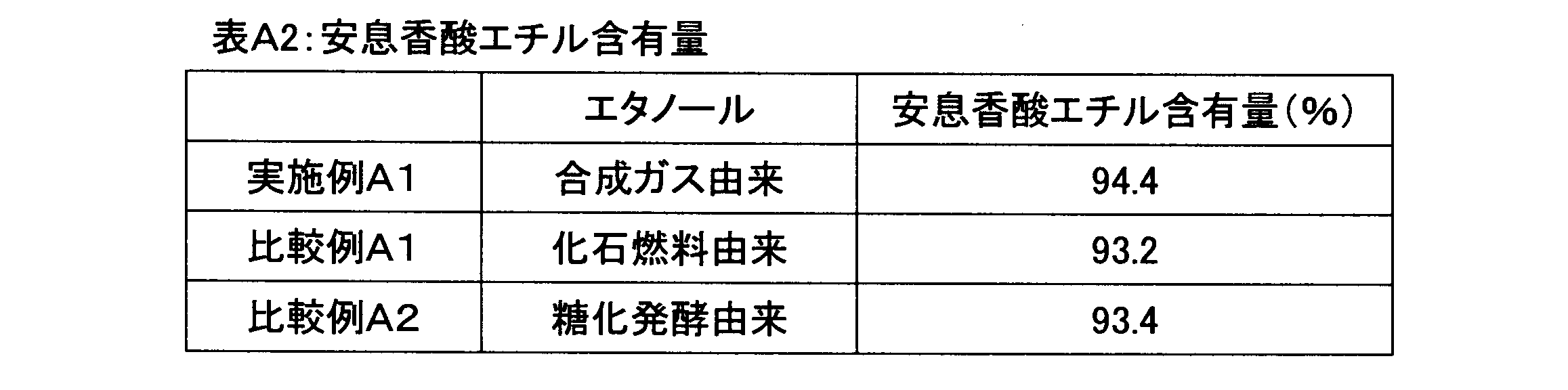
表A2に示されるとおり、ごみ焼却設備で一般廃棄物を燃焼した後に排出されるガスを用いて製造されたエタノールは、従来の化石燃料由来のエタノールや植物からの糖化発酵由来のエタノールに比べて、安息香酸エチルへの変換効率が高いことが分かった。
[実施例A3]
実施例A1で使用したエタノールと同じエタノールを用いエタノールの燃焼効率を定量した。燃料効率は、無加熱条件下にて、長さ60mm×幅60mm×高さ30mmの耐熱容器にエタノール30gを加えたのち着火し、コーンカロリーメータ(FTT社製)内で完全に燃焼しきるまでの酸素減少量を測定し、酸素減少量に基づいて総発熱量を算出することにより定量した。定量結果は表A3に示されるとおりであった。
実施例A1で使用したエタノールと同じエタノールを用いエタノールの燃焼効率を定量した。燃料効率は、無加熱条件下にて、長さ60mm×幅60mm×高さ30mmの耐熱容器にエタノール30gを加えたのち着火し、コーンカロリーメータ(FTT社製)内で完全に燃焼しきるまでの酸素減少量を測定し、酸素減少量に基づいて総発熱量を算出することにより定量した。定量結果は表A3に示されるとおりであった。
[比較例A5]
比較例A1で使用したエタノールを使用した以外は、実施例A3と同様にしてエタノールの燃焼効率を定量した。定量結果は表A3に示されるとおりであった。
比較例A1で使用したエタノールを使用した以外は、実施例A3と同様にしてエタノールの燃焼効率を定量した。定量結果は表A3に示されるとおりであった。
[比較例A6]
比較例A2で使用したエタノールを使用した以外は、実施例A3と同様にしてエタノールの燃焼効率を定量した。定量結果は表A3に示されるとおりであった。
比較例A2で使用したエタノールを使用した以外は、実施例A3と同様にしてエタノールの燃焼効率を定量した。定量結果は表A3に示されるとおりであった。
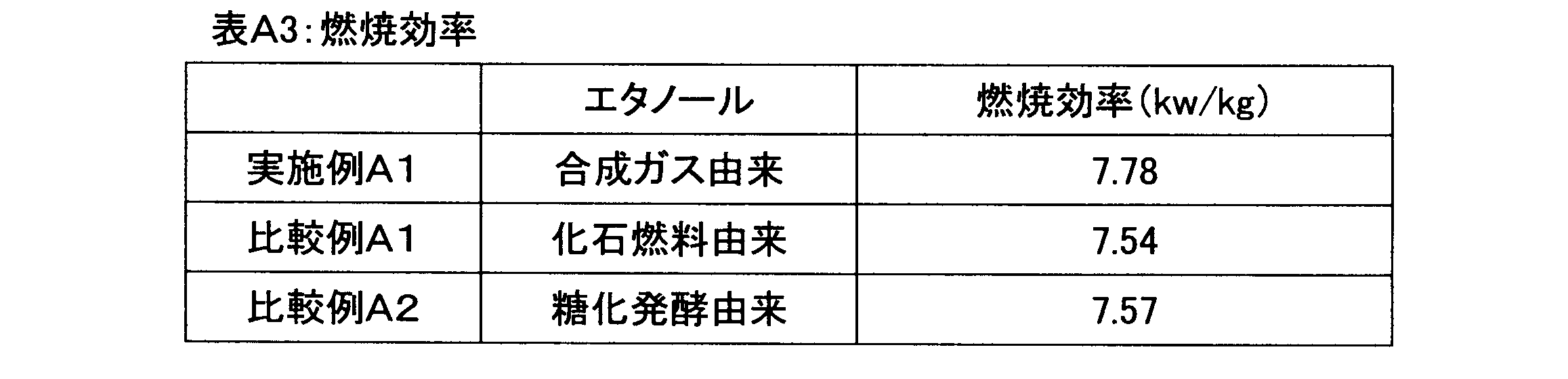
[実施例B]
<エタノール成分評価方法>
以下の実施例、比較例において、エタノールの成分評価を、ガスクロマトグラフィー装置(GC-2014、SHIMADZU社製)GC/MS法を用いて測定した。測定条件は以下のとおりとした。
<GC/MS法の分析条件>
カラム:DB-5MS(長さ30m、内径0.25mm、膜厚0.25μm)
オーブン温度:40℃→10℃/分→300℃
キャリアガス:He(1.28mL/分)
注入口温度:300℃
検出器温度:300℃
検出器:水素炎イオン化検出器
注入量:1μL(スプリット比1:20)
<エタノール成分評価方法>
以下の実施例、比較例において、エタノールの成分評価を、ガスクロマトグラフィー装置(GC-2014、SHIMADZU社製)GC/MS法を用いて測定した。測定条件は以下のとおりとした。
<GC/MS法の分析条件>
カラム:DB-5MS(長さ30m、内径0.25mm、膜厚0.25μm)
オーブン温度:40℃→10℃/分→300℃
キャリアガス:He(1.28mL/分)
注入口温度:300℃
検出器温度:300℃
検出器:水素炎イオン化検出器
注入量:1μL(スプリット比1:20)
<ブタジエン定量方法>
ブタジエンの定量評価は、実施例Aと同様にして行った。
ブタジエンの定量評価は、実施例Aと同様にして行った。
<安息香酸エチル定量方法>
安息香酸エチルの定量評価は、実施例Aと同様にして行った。
安息香酸エチルの定量評価は、実施例Aと同様にして行った。
<燃焼効率定量方法>
エタノールの燃焼効率の定量評価は、実施例Aと同様にして行った。
エタノールの燃焼効率の定量評価は、実施例Aと同様にして行った。
[実施例B1]
<エタノールの調製>
実施例Aと同様にしてエタノールを調製した。
<エタノールの調製>
実施例Aと同様にしてエタノールを調製した。
(エタノール成分評価)
上記のようにして得られたエタノールについて、ガスクロマトグラフ分析結果は図B1および図B2(拡大図)に示すとおりであった。リテンションタイムが12分30秒~12分40秒のピークは、n-テトラデカン(C14)の標品とリテンションタイムが一致したことから、n-テトラデカン由来のものであることを確認した。また、得られたエタノール中のn-テトラデカンの含有量は0.03mg/Lであった。
上記のようにして得られたエタノールについて、ガスクロマトグラフ分析結果は図B1および図B2(拡大図)に示すとおりであった。リテンションタイムが12分30秒~12分40秒のピークは、n-テトラデカン(C14)の標品とリテンションタイムが一致したことから、n-テトラデカン由来のものであることを確認した。また、得られたエタノール中のn-テトラデカンの含有量は0.03mg/Lであった。
(ブタジエンの製造方法)
上記のようにして得られたエタノールを用いて、実施例Aと同様にしてブタジエンを製造した。得られたブタジエン含有ガスをGC-2014(SHIMADZU社製)のガスクロマトグラフィー装置を用いてブタジエンの含有量を定量した。結果は表B1に示されるとおりであった。
上記のようにして得られたエタノールを用いて、実施例Aと同様にしてブタジエンを製造した。得られたブタジエン含有ガスをGC-2014(SHIMADZU社製)のガスクロマトグラフィー装置を用いてブタジエンの含有量を定量した。結果は表B1に示されるとおりであった。
[比較例B1]
化石燃料由来エタノールである99度エタノール(甘糟化学産業株式会社製)を用いて、実施例B1と同様の方法によりブタジエンを製造し、実施例B1と同様にしてブタジエンの含有量を定量した。結果は表B1に示されるとおりであった。なお、使用したエタノールの成分評価を実施例B1と同様にして行った。ガスクロマトグラフ分析結果は図B1に示すとおりであった。ガスクロマトグラフの拡大図(図示せず)において、n-テトラデカン由来のリテンションタイムが12分30秒~12分40秒のピークは検出されなかった。
化石燃料由来エタノールである99度エタノール(甘糟化学産業株式会社製)を用いて、実施例B1と同様の方法によりブタジエンを製造し、実施例B1と同様にしてブタジエンの含有量を定量した。結果は表B1に示されるとおりであった。なお、使用したエタノールの成分評価を実施例B1と同様にして行った。ガスクロマトグラフ分析結果は図B1に示すとおりであった。ガスクロマトグラフの拡大図(図示せず)において、n-テトラデカン由来のリテンションタイムが12分30秒~12分40秒のピークは検出されなかった。
[比較例B2]
植物の糖化発酵由来である99度エタノール(甘糟化学産業株式会社製)を用いて、実施例B1と同様の方法によりブタジエンを製造し、実施例B1と同様にしてブタジエンの含有量を定量した。結果は表B1に示されるとおりであった。なお、使用したエタノールの成分評価を実施例B1と同様にして行った。ガスクロマトグラフ分析結果は図B1に示すとおりであった。ガスクロマトグラフの拡大図(図示せず)において、n-テトラデカン由来のリテンションタイムが12分30秒~12分40秒のピークは検出されなかった。
植物の糖化発酵由来である99度エタノール(甘糟化学産業株式会社製)を用いて、実施例B1と同様の方法によりブタジエンを製造し、実施例B1と同様にしてブタジエンの含有量を定量した。結果は表B1に示されるとおりであった。なお、使用したエタノールの成分評価を実施例B1と同様にして行った。ガスクロマトグラフ分析結果は図B1に示すとおりであった。ガスクロマトグラフの拡大図(図示せず)において、n-テトラデカン由来のリテンションタイムが12分30秒~12分40秒のピークは検出されなかった。
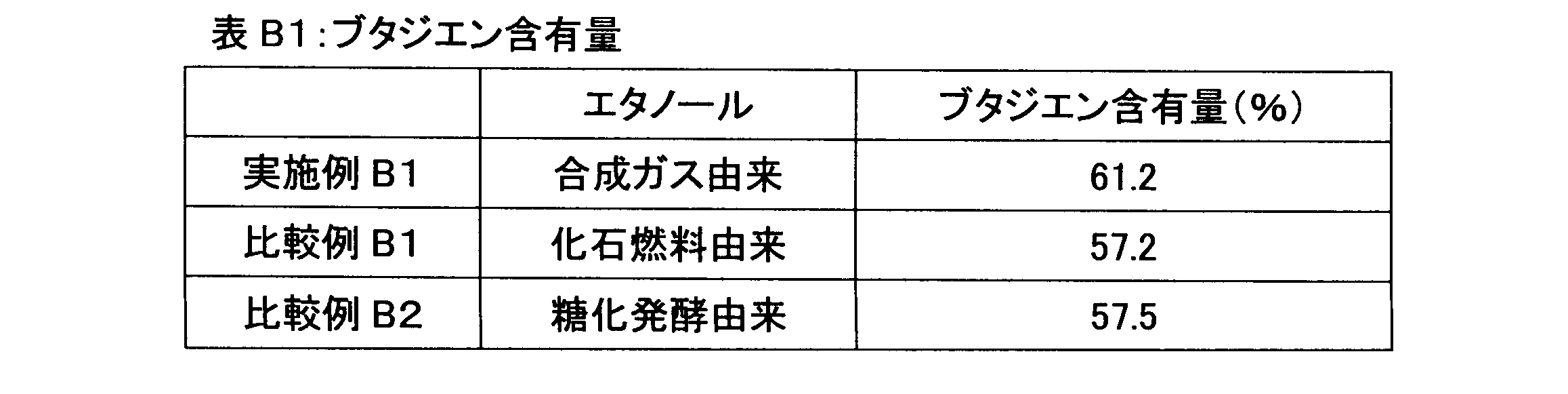
表B1に示されるとおり、ごみ焼却設備で一般廃棄物を燃焼した後に排出されるガスを用いて製造されたエタノールは、従来の化石燃料由来のエタノールや植物からの糖化発酵由来のエタノールに比べて、ブタジエンへの変換効率が高いことが分かった。
[実施例B2]
(安息香酸エチルの製造)
実施例A1で使用したエタノールと同じエタノールを用い、実施例Aと同様にして、安息香酸エチルを製造し、続いてガスクロマトグラフィー装置を用いて成分分析を行い、安息香酸エチル合成量を定量した。分析結果は表B2に示されるとおりであった。
(安息香酸エチルの製造)
実施例A1で使用したエタノールと同じエタノールを用い、実施例Aと同様にして、安息香酸エチルを製造し、続いてガスクロマトグラフィー装置を用いて成分分析を行い、安息香酸エチル合成量を定量した。分析結果は表B2に示されるとおりであった。
[比較例B3]
比較例B1で使用した石油化学由来のエタノールを用いた以外は実施例B2と同様にして安息香酸エチルを製造し、定量した。分析結果は表B2に示されるとおりであった。
比較例B1で使用した石油化学由来のエタノールを用いた以外は実施例B2と同様にして安息香酸エチルを製造し、定量した。分析結果は表B2に示されるとおりであった。
[比較例B4]
比較例B2で使用した石油化学由来のエタノールを用いた以外は実施例B2と同様にして安息香酸エチルを製造し、定量した。分析結果は表B2に示されるとおりであった。
比較例B2で使用した石油化学由来のエタノールを用いた以外は実施例B2と同様にして安息香酸エチルを製造し、定量した。分析結果は表B2に示されるとおりであった。
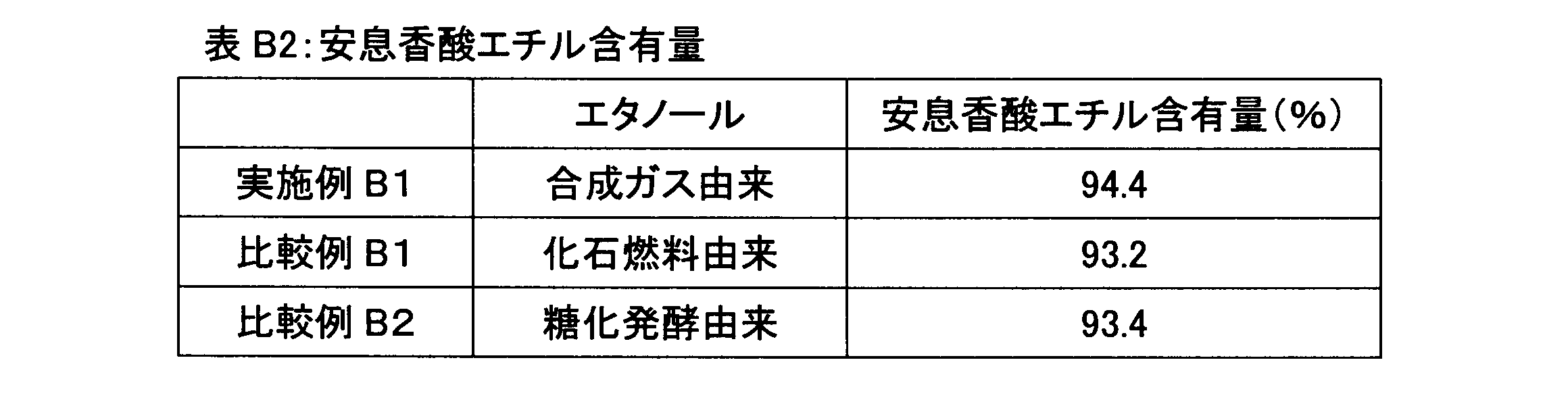
表B2に示されるとおり、ごみ焼却設備で一般廃棄物を燃焼した後に排出されるガスを用いて製造されたエタノールは、従来の化石燃料由来のエタノールや植物からの糖化発酵由来のエタノールに比べて、安息香酸エチルへの変換効率が高いことが分かった。
[実施例B3]
実施例B1で使用したエタノールと同じエタノールを用いエタノールの燃焼効率を定量した。燃料効率は、無加熱条件下にて、長さ60mm×幅60mm×高さ30mmの耐熱容器にエタノール30gを加えたのち着火し、コーンカロリーメータ(FTT社製)内で完全に燃焼しきるまでの酸素減少量を測定し、酸素減少量に基づいて総発熱量を算出することにより定量した。定量結果は表B3に示されるとおりであった。
実施例B1で使用したエタノールと同じエタノールを用いエタノールの燃焼効率を定量した。燃料効率は、無加熱条件下にて、長さ60mm×幅60mm×高さ30mmの耐熱容器にエタノール30gを加えたのち着火し、コーンカロリーメータ(FTT社製)内で完全に燃焼しきるまでの酸素減少量を測定し、酸素減少量に基づいて総発熱量を算出することにより定量した。定量結果は表B3に示されるとおりであった。
[比較例B5]
比較例B1で使用したエタノールを使用した以外は、実施例B3と同様にしてエタノールの燃焼効率を定量した。定量結果は表B3に示されるとおりであった。
比較例B1で使用したエタノールを使用した以外は、実施例B3と同様にしてエタノールの燃焼効率を定量した。定量結果は表B3に示されるとおりであった。
[比較例B6]
比較例B2で使用したエタノールを使用した以外は、実施例B3と同様にしてエタノールの燃焼効率を定量した。定量結果は表B3に示されるとおりであった。
比較例B2で使用したエタノールを使用した以外は、実施例B3と同様にしてエタノールの燃焼効率を定量した。定量結果は表B3に示されるとおりであった。
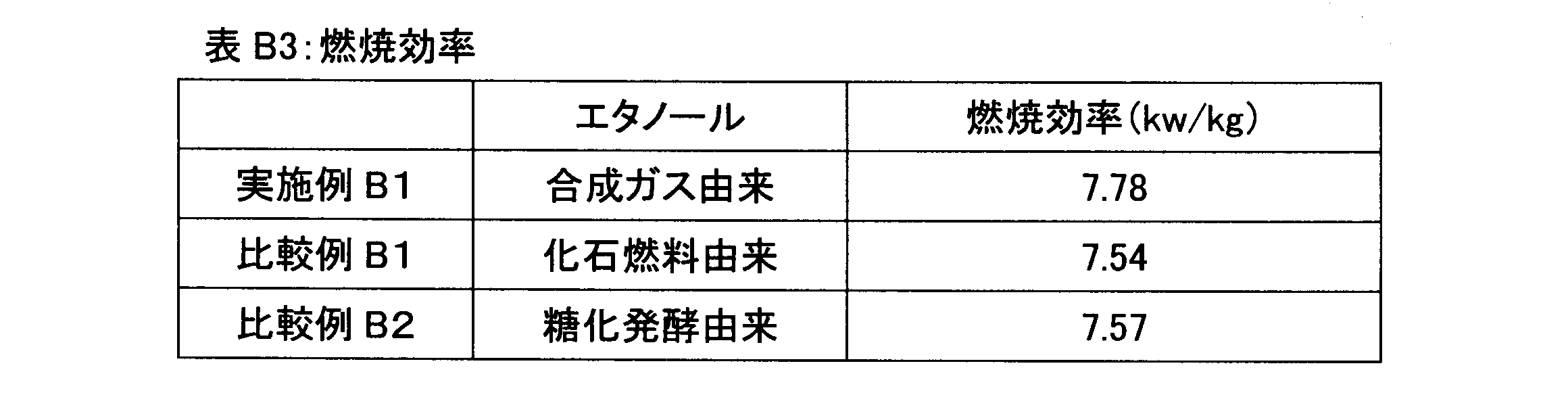
[実施例C]
<エタノール成分評価方法>
エタノール成分評価方法は、上記した実施例Aと同様にして行った。
<エタノール成分評価方法>
エタノール成分評価方法は、上記した実施例Aと同様にして行った。
<ブタジエン定量方法>
ブタジエンの定量評価は、実施例Aと同様にして行った。
ブタジエンの定量評価は、実施例Aと同様にして行った。
<安息香酸エチル定量方法>
安息香酸エチルの定量評価は、実施例Aと同様にして行った。
安息香酸エチルの定量評価は、実施例Aと同様にして行った。
<燃焼効率定量方法>
エタノールの燃焼効率の定量評価は、実施例Aと同様にして行った。
エタノールの燃焼効率の定量評価は、実施例Aと同様にして行った。
[実施例C1]
<エタノールの調製>
実施例Aと同様にしてエタノールを調製した。
<エタノールの調製>
実施例Aと同様にしてエタノールを調製した。
(エタノール成分評価)
上記のようにして得られたエタノールについて、ガスクロマトグラフ分析結果は図C1に示すとおりであった。リテンションタイムが6分36秒~6分45秒のピークは、n-デカン(C10)の標品とリテンションタイムが一致したことから、n-デカン由来のものであることを確認した。また、得られたエタノール中のn-デカンの含有量は0.32mg/Lであった。
上記のようにして得られたエタノールについて、ガスクロマトグラフ分析結果は図C1に示すとおりであった。リテンションタイムが6分36秒~6分45秒のピークは、n-デカン(C10)の標品とリテンションタイムが一致したことから、n-デカン由来のものであることを確認した。また、得られたエタノール中のn-デカンの含有量は0.32mg/Lであった。
(ブタジエンの製造方法)
上記のようにして得られたエタノールを用いて、実施例Aと同様にしてブタジエンを製造した。得られたブタジエン含有ガスをGC-2014(SHIMADZU社製)のガスクロマトグラフィー装置を用いてブタジエンの含有量を定量した。結果は表C1に示されるとおりであった。
上記のようにして得られたエタノールを用いて、実施例Aと同様にしてブタジエンを製造した。得られたブタジエン含有ガスをGC-2014(SHIMADZU社製)のガスクロマトグラフィー装置を用いてブタジエンの含有量を定量した。結果は表C1に示されるとおりであった。
[比較例C1]
化石燃料由来エタノールである99度エタノール(甘糟化学産業株式会社製)を用いて、実施例C1と同様の方法によりブタジエンを製造し、実施例C1と同様にしてブタジエンの含有量を定量した。結果は表C1に示されるとおりであった。なお、使用したエタノールの成分評価を実施例C1と同様にして行った。ガスクロマトグラフ分析結果は図C1に示すとおりであった。ガスクロマトグラフにおいて、n-デカン由来のリテンションタイムが6分36秒~6分45秒のピークは検出されなかった。
化石燃料由来エタノールである99度エタノール(甘糟化学産業株式会社製)を用いて、実施例C1と同様の方法によりブタジエンを製造し、実施例C1と同様にしてブタジエンの含有量を定量した。結果は表C1に示されるとおりであった。なお、使用したエタノールの成分評価を実施例C1と同様にして行った。ガスクロマトグラフ分析結果は図C1に示すとおりであった。ガスクロマトグラフにおいて、n-デカン由来のリテンションタイムが6分36秒~6分45秒のピークは検出されなかった。
[比較例C2]
植物の糖化発酵由来である99度エタノール(甘糟化学産業株式会社製)を用いて、実施例C1と同様の方法によりブタジエンを製造し、実施例C1と同様にしてブタジエンの含有量を定量した。結果は表C1に示されるとおりであった。なお、使用したエタノールの成分評価を実施例C1と同様にして行った。ガスクロマトグラフ分析結果は図C1に示すとおりであった。ガスクロマトグラフにおいて、n-デカン由来のリテンションタイムが6分36秒~6分45秒のピークは検出されなかった。
植物の糖化発酵由来である99度エタノール(甘糟化学産業株式会社製)を用いて、実施例C1と同様の方法によりブタジエンを製造し、実施例C1と同様にしてブタジエンの含有量を定量した。結果は表C1に示されるとおりであった。なお、使用したエタノールの成分評価を実施例C1と同様にして行った。ガスクロマトグラフ分析結果は図C1に示すとおりであった。ガスクロマトグラフにおいて、n-デカン由来のリテンションタイムが6分36秒~6分45秒のピークは検出されなかった。

表C1に示されるとおり、ごみ焼却設備で一般廃棄物を燃焼した後に排出されるガスを用いて製造されたエタノールは、従来の化石燃料由来のエタノールや植物からの糖化発酵由来のエタノールに比べて、ブタジエンへの変換効率が高いことが分かった。
[実施例C2]
(安息香酸エチルの製造)
実施例C1で使用したエタノールと同じエタノールを用い、実施例Aと同様にして、安息香酸エチルを製造し、続いてガスクロマトグラフィー装置を用いて成分分析を行い、安息香酸エチル合成量を定量した。分析結果は表C2に示されるとおりであった。
(安息香酸エチルの製造)
実施例C1で使用したエタノールと同じエタノールを用い、実施例Aと同様にして、安息香酸エチルを製造し、続いてガスクロマトグラフィー装置を用いて成分分析を行い、安息香酸エチル合成量を定量した。分析結果は表C2に示されるとおりであった。
[比較例C3]
比較例C1で使用した石油化学由来のエタノールを用いた以外は実施例C2と同様にして安息香酸エチルを製造し、定量した。分析結果は表C2に示されるとおりであった。
比較例C1で使用した石油化学由来のエタノールを用いた以外は実施例C2と同様にして安息香酸エチルを製造し、定量した。分析結果は表C2に示されるとおりであった。
[比較例C4]
比較例C2で使用した石油化学由来のエタノールを用いた以外は実施例C2と同様にして安息香酸エチルを製造し、定量した。分析結果は表C2に示されるとおりであった。
比較例C2で使用した石油化学由来のエタノールを用いた以外は実施例C2と同様にして安息香酸エチルを製造し、定量した。分析結果は表C2に示されるとおりであった。

表C2に示されるとおり、ごみ焼却設備で一般廃棄物を燃焼した後に排出されるガスを用いて製造されたエタノールは、従来の化石燃料由来のエタノールや植物からの糖化発酵由来のエタノールに比べて、安息香酸エチルへの変換効率が高いことが分かった。
[実施例C3]
実施例C1で使用したエタノールと同じエタノールを用いエタノールの燃焼効率を定量した。燃料効率は、無加熱条件下にて、長さ60mm×幅60mm×高さ30mmの耐熱容器にエタノール30gを加えたのち着火し、コーンカロリーメータ(FTT社製)内で完全に燃焼しきるまでの酸素減少量を測定し、酸素減少量に基づいて総発熱量を算出することにより定量した。定量結果は表C3に示されるとおりであった。
実施例C1で使用したエタノールと同じエタノールを用いエタノールの燃焼効率を定量した。燃料効率は、無加熱条件下にて、長さ60mm×幅60mm×高さ30mmの耐熱容器にエタノール30gを加えたのち着火し、コーンカロリーメータ(FTT社製)内で完全に燃焼しきるまでの酸素減少量を測定し、酸素減少量に基づいて総発熱量を算出することにより定量した。定量結果は表C3に示されるとおりであった。
[比較例C5]
比較例C1で使用したエタノールを使用した以外は、実施例C3と同様にしてエタノールの燃焼効率を定量した。定量結果は表C3に示されるとおりであった。
比較例C1で使用したエタノールを使用した以外は、実施例C3と同様にしてエタノールの燃焼効率を定量した。定量結果は表C3に示されるとおりであった。
[比較例C6]
比較例C2で使用したエタノールを使用した以外は、実施例C3と同様にしてエタノールの燃焼効率を定量した。定量結果は表C3に示されるとおりであった。
比較例C2で使用したエタノールを使用した以外は、実施例C3と同様にしてエタノールの燃焼効率を定量した。定量結果は表C3に示されるとおりであった。
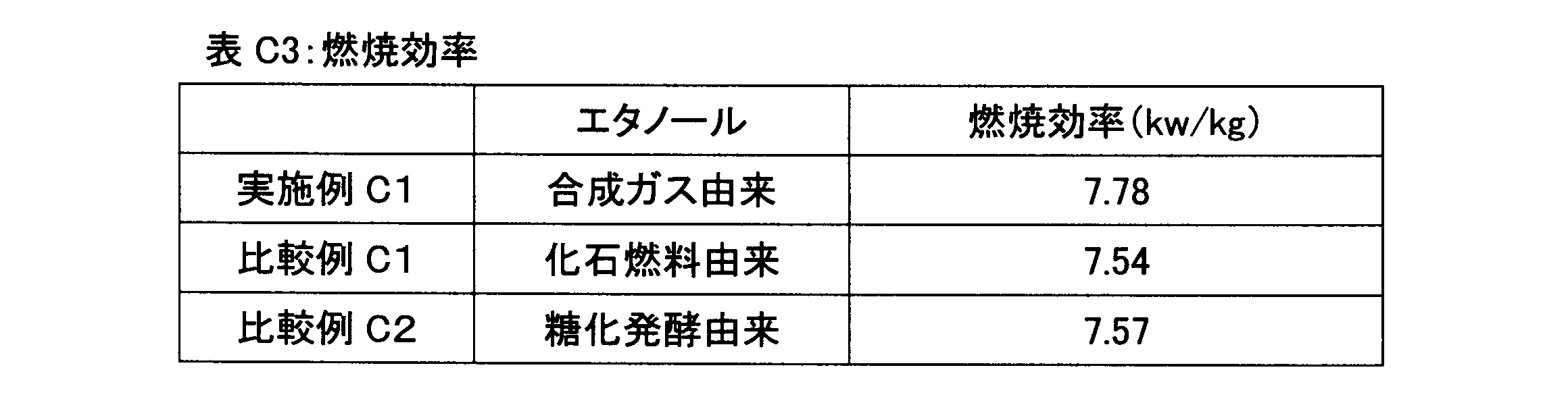
[実施例D]
<エタノール成分評価方法>
エタノール成分評価方法は、上記した実施例Aと同様にして行った。
<エタノール成分評価方法>
エタノール成分評価方法は、上記した実施例Aと同様にして行った。
<ブタジエン定量方法>
ブタジエンの定量評価は、上記した実施例Aと同様にして行った。
ブタジエンの定量評価は、上記した実施例Aと同様にして行った。
<安息香酸エチル定量方法>
安息香酸エチルの定量評価は、上記した実施例Aと同様にして行った。
安息香酸エチルの定量評価は、上記した実施例Aと同様にして行った。
<燃焼効率定量方法>
エタノールの燃焼効率の定量評価は、上記した実施例Aと同様にして行った。
エタノールの燃焼効率の定量評価は、上記した実施例Aと同様にして行った。
[実施例D1]
<エタノールの調製>
実施例Aと同様にしてエタノールを調製した。
<エタノールの調製>
実施例Aと同様にしてエタノールを調製した。
(エタノール成分評価)
上記のようにして得られたエタノールについて、ガスクロマトグラフ分析結果は図D1および図D2(拡大図)に示すとおりであった。リテンションタイムが15分00秒~15分15秒のピークは、n-ヘキサデカン(C16)の標品とリテンションタイムが一致したことから、n-ヘキサデカン由来のものであることを確認した。また、得られたエタノール中のn-ヘキサデカンの含有量は0.05mg/Lであった。
上記のようにして得られたエタノールについて、ガスクロマトグラフ分析結果は図D1および図D2(拡大図)に示すとおりであった。リテンションタイムが15分00秒~15分15秒のピークは、n-ヘキサデカン(C16)の標品とリテンションタイムが一致したことから、n-ヘキサデカン由来のものであることを確認した。また、得られたエタノール中のn-ヘキサデカンの含有量は0.05mg/Lであった。
(ブタジエンの製造方法)
上記のようにして得られたエタノールを用いて、実施例Bと同様にしてブタジエンを製造した。得られたブタジエン含有ガスをGC-2014(SHIMADZU社製)のガスクロマトグラフィー装置を用いてブタジエンの含有量を定量した。結果は表D1に示されるとおりであった。
上記のようにして得られたエタノールを用いて、実施例Bと同様にしてブタジエンを製造した。得られたブタジエン含有ガスをGC-2014(SHIMADZU社製)のガスクロマトグラフィー装置を用いてブタジエンの含有量を定量した。結果は表D1に示されるとおりであった。
[比較例D1]
化石燃料由来エタノールである99度エタノール(甘糟化学産業株式会社製)を用いて、実施例D1と同様の方法によりブタジエンを製造し、実施例D1と同様にしてブタジエンの含有量を定量した。結果は表D1に示されるとおりであった。なお、使用したエタノールの成分評価を実施例D1と同様にして行った。ガスクロマトグラフ分析結果は図D1に示すとおりであった。ガスクロマトグラフの拡大図(図示せず)において、n-ヘキサデカン由来のリテンションタイムが15分00秒~15分15秒のピークは検出されなかった。
化石燃料由来エタノールである99度エタノール(甘糟化学産業株式会社製)を用いて、実施例D1と同様の方法によりブタジエンを製造し、実施例D1と同様にしてブタジエンの含有量を定量した。結果は表D1に示されるとおりであった。なお、使用したエタノールの成分評価を実施例D1と同様にして行った。ガスクロマトグラフ分析結果は図D1に示すとおりであった。ガスクロマトグラフの拡大図(図示せず)において、n-ヘキサデカン由来のリテンションタイムが15分00秒~15分15秒のピークは検出されなかった。
[比較例D2]
植物の糖化発酵由来である99度エタノール(甘糟化学産業株式会社製)を用いて、実施例D1と同様の方法によりブタジエンを製造し、実施例D1と同様にしてブタジエンの含有量を定量した。結果は表D1に示されるとおりであった。なお、使用したエタノールの成分評価を実施例D1と同様にして行った。ガスクロマトグラフ分析結果は図D1に示すとおりであった。ガスクロマトグラフの拡大図(図示せず)において、n-ヘキサデカン由来のリテンションタイムが15分00秒~15分15秒のピークは検出されなかった。
植物の糖化発酵由来である99度エタノール(甘糟化学産業株式会社製)を用いて、実施例D1と同様の方法によりブタジエンを製造し、実施例D1と同様にしてブタジエンの含有量を定量した。結果は表D1に示されるとおりであった。なお、使用したエタノールの成分評価を実施例D1と同様にして行った。ガスクロマトグラフ分析結果は図D1に示すとおりであった。ガスクロマトグラフの拡大図(図示せず)において、n-ヘキサデカン由来のリテンションタイムが15分00秒~15分15秒のピークは検出されなかった。

表D1に示されるとおり、ごみ焼却設備で一般廃棄物を燃焼した後に排出されるガスを用いて製造されたエタノールは、従来の化石燃料由来のエタノールや植物からの糖化発酵由来のエタノールに比べて、ブタジエンへの変換効率が高いことが分かった。
[実施例D2]
(安息香酸エチルの製造)
実施例D1で使用したエタノールと同じエタノールを用い、実施例Bと同様にして、安息香酸エチルを製造し、続いてガスクロマトグラフィー装置を用いて成分分析を行い、安息香酸エチル合成量を定量した。
(安息香酸エチルの製造)
実施例D1で使用したエタノールと同じエタノールを用い、実施例Bと同様にして、安息香酸エチルを製造し、続いてガスクロマトグラフィー装置を用いて成分分析を行い、安息香酸エチル合成量を定量した。
[比較例D3]
比較例D1で使用した石油化学由来のエタノールを用いた以外は実施例D2と同様にして安息香酸エチルを製造し、定量した。分析結果は表D2に示されるとおりであった。
比較例D1で使用した石油化学由来のエタノールを用いた以外は実施例D2と同様にして安息香酸エチルを製造し、定量した。分析結果は表D2に示されるとおりであった。
[比較例D4]
比較例D2で使用した石油化学由来のエタノールを用いた以外は実施例D2と同様にして安息香酸エチルを製造し、定量した。分析結果は表D2に示されるとおりであった。
比較例D2で使用した石油化学由来のエタノールを用いた以外は実施例D2と同様にして安息香酸エチルを製造し、定量した。分析結果は表D2に示されるとおりであった。
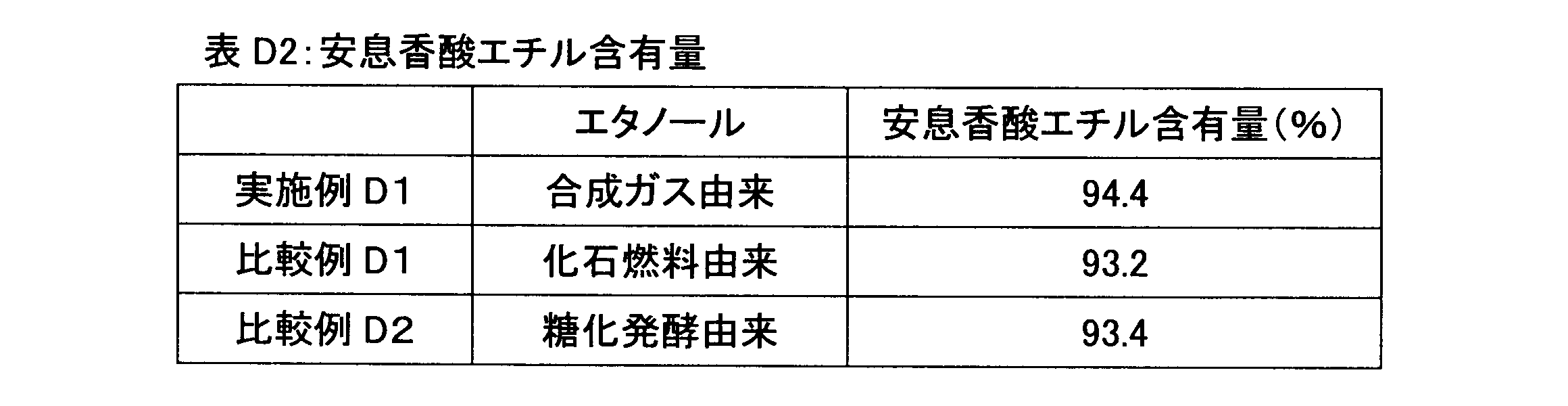
表D2に示されるとおり、ごみ焼却設備で一般廃棄物を燃焼した後に排出されるガスを用いて製造されたエタノールは、従来の化石燃料由来のエタノールや植物からの糖化発酵由来のエタノールに比べて、安息香酸エチルへの変換効率が高いことが分かった。
[実施例D3]
実施例D1で使用したエタノールと同じエタノールを用いエタノールの燃焼効率を定量した。燃料効率は、無加熱条件下にて、長さ60mm×幅60mm×高さ30mmの耐熱容器にエタノール30gを加えたのち着火し、コーンカロリーメータ(FTT社製)内で完全に燃焼しきるまでの酸素減少量を測定し、酸素減少量に基づいて総発熱量を算出することにより定量した。定量結果は表D3に示されるとおりであった。
実施例D1で使用したエタノールと同じエタノールを用いエタノールの燃焼効率を定量した。燃料効率は、無加熱条件下にて、長さ60mm×幅60mm×高さ30mmの耐熱容器にエタノール30gを加えたのち着火し、コーンカロリーメータ(FTT社製)内で完全に燃焼しきるまでの酸素減少量を測定し、酸素減少量に基づいて総発熱量を算出することにより定量した。定量結果は表D3に示されるとおりであった。
[比較例D5]
比較例D1で使用したエタノールを使用した以外は、実施例D3と同様にしてエタノールの燃焼効率を定量した。定量結果は表D3に示されるとおりであった。
比較例D1で使用したエタノールを使用した以外は、実施例D3と同様にしてエタノールの燃焼効率を定量した。定量結果は表D3に示されるとおりであった。
[比較例D6]
比較例D2で使用したエタノールを使用した以外は、実施例D3と同様にしてエタノールの燃焼効率を定量した。定量結果は表D3に示されるとおりであった。
比較例D2で使用したエタノールを使用した以外は、実施例D3と同様にしてエタノールの燃焼効率を定量した。定量結果は表D3に示されるとおりであった。
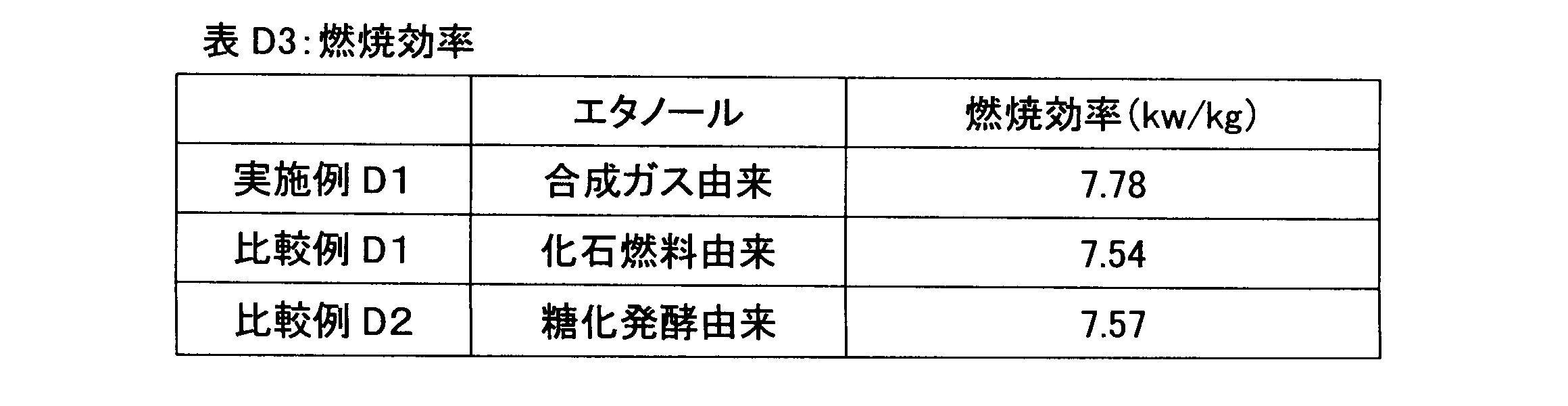
表A3~D3に示されるとおり、ごみ焼却設備で一般廃棄物を燃焼した後に排出されるガスを用いて製造されたエタノールは、従来の化石燃料由来のエタノールや植物からの糖化発酵由来のエタノールに比べて、燃焼効率が高いことが分かった。
Claims (21)
- ガスクロマトグラフ質量分析法(GC/MS法)により測定したガスクロマトグラフにおいて、
リテンションタイムが、下記(A)~(D)からなる群より選択されるピークの少なくとも一つを有する、エタノール。
(A)5分25秒~5分35秒のピークと2分55秒~3分5秒の二つのピーク、
(B)12分30秒~12分40秒のピーク、
(C)6分36秒~6分45秒のピーク、および
(D)15分00秒~15分15秒のピーク - 前記ガスクロマトグラフにおいて、リテンションタイムが前記(A)のピークに加えて更に5分30秒~5分35秒のピークを有する、請求項1に記載のエタノール。
- 前記(B)のピークが、n-テトラデカン由来である、請求項1に記載のエタノール。
- n-テトラデカンの濃度が、0.01mg/L以上1.0mg/L以下である、請求項3に記載のエタノール。
- 前記(C)のピークが、n-デカン由来である、請求項1に記載のエタノール。
- n-デカンの濃度が、0.01mg/L以上1.0mg/L以下である、請求項5に記載のエタノール。
- 前記(D)のピークが、のピークが、n-ヘキサデカン由来である、請求項1に記載のエタノール。
- n-ヘキサデカンの濃度が、0.01mg/L以上1.0mg/L以下である、請求項7に記載のエタノール。
- 一酸化炭素および水素を含むガスを基質とする、請求項1~8のいずれか一項に記載のエタノール。
- 前記一酸化炭素および水素を含むガスが廃棄物由来である、請求項9に記載のエタノール。
- 微生物発酵由来である、請求項1~10のいずれか一項に記載のエタノール。
- 炭素源を一酸化炭素および水素を含む合成ガスに変換する工程と、
前記一酸化炭素および水素を含む合成ガスを微生物発酵槽に供給し、微生物発酵によりエタノール含有液を得る微生物発酵工程と、
前記エタノール含有液を、微生物を含む液体ないし固体成分とエタノールを含む気体成分とに分離する分離工程と、
前記気体成分を凝縮させて液化する液化工程と、
前記液化工程で得られた液体物からエタノールを精製する精製工程と、
を含み、
前記精製されたエタノールは、
ガスクロマトグラフ質量分析法(GC/MS法)により測定したガスクロマトグラフにおいて、
リテンションタイムが、下記(A)~(D)からなる群より選択されるピークの少なくとも一つを有する、エタノールの製造方法。
(A)5分25秒~5分35秒のピークと2分55秒~3分5秒の二つのピーク、
(B)12分30秒~12分40秒のピーク、
(C)6分36秒~6分45秒のピーク、および
(D)15分00秒~15分15秒のピーク - 前記合成ガスを精製する工程を更に含む、請求項12に記載の方法。
- 前記炭素源が廃棄物由来である、請求項12または13に記載の方法。
- 化成品、ポリマー原料、または燃料に使用される、請求項1~11のいずれか一項に記載のエタノール。
- 請求項1~11のいずれか一項に記載のエタノールを原料とする化成品。
- 請求項1~11のいずれか一項に記載のエタノールおよび/または請求項1~6のいずれか一項に記載のエタノールを原料とするエチル-t-ブチルエーテルを含む、燃料。
- 請求項1~11のいずれか一項に記載のエタノールを原料とするポリマー原料。
- エチレン、プロピレン、ブタジエン、酢酸エチル、イソブテン、(メタ)アクリル酸メチル、アクリル酸、アミノヘキサン酸、およびジエチルカーボネートからなる群から選択される、請求項18に記載のポリマー原料。
- 請求項18または19に記載のポリマー原料からなるポリマー。
- 請求項20に記載のポリマーからなる成形品。
Priority Applications (8)
| Application Number | Priority Date | Filing Date | Title |
|---|---|---|---|
| CN202080011240.5A CN113365966A (zh) | 2019-01-28 | 2020-01-28 | 乙醇 |
| CN202511172272.4A CN120987729A (zh) | 2019-01-28 | 2020-01-28 | 乙醇 |
| CN202511172236.8A CN121471065A (zh) | 2019-01-28 | 2020-01-28 | 乙醇 |
| EP20748171.4A EP3907209A4 (en) | 2019-01-28 | 2020-01-28 | ETHANOL |
| US17/426,019 US20220204997A1 (en) | 2019-01-28 | 2020-01-28 | Ethanol |
| EP26166053.4A EP4737492A2 (en) | 2019-01-28 | 2020-01-28 | Ethanol |
| US18/387,137 US12297308B2 (en) | 2019-01-28 | 2023-11-06 | Ethanol |
| US19/028,770 US20250163199A1 (en) | 2019-01-28 | 2025-01-17 | Ethanol |
Applications Claiming Priority (28)
| Application Number | Priority Date | Filing Date | Title |
|---|---|---|---|
| JP2019012564A JP7339737B2 (ja) | 2019-01-28 | 2019-01-28 | エタノール |
| JP2019-012564 | 2019-01-28 | ||
| JP2019-012568 | 2019-01-28 | ||
| JP2019012568A JP7149864B2 (ja) | 2019-01-28 | 2019-01-28 | ゼオライト吸着材の再利用方法および再生吸着材 |
| JP2019-050472 | 2019-03-18 | ||
| JP2019-050489 | 2019-03-18 | ||
| JP2019050474A JP7323306B2 (ja) | 2019-03-18 | 2019-03-18 | エタノール |
| JP2019-050480 | 2019-03-18 | ||
| JP2019-050474 | 2019-03-18 | ||
| JP2019-050465 | 2019-03-18 | ||
| JP2019050480A JP7323307B2 (ja) | 2019-03-18 | 2019-03-18 | エタノール |
| JP2019-050484 | 2019-03-18 | ||
| JP2019050436A JP7339749B2 (ja) | 2019-03-18 | 2019-03-18 | エタノール |
| JP2019050472A JP7323305B2 (ja) | 2019-03-18 | 2019-03-18 | エタノール |
| JP2019050465 | 2019-03-18 | ||
| JP2019050484A JP7339750B2 (ja) | 2019-03-18 | 2019-03-18 | エタノール |
| JP2019050489A JP7339751B2 (ja) | 2019-03-18 | 2019-03-18 | エタノール |
| JP2019-050436 | 2019-03-18 | ||
| JP2019-117754 | 2019-06-25 | ||
| JP2019-117720 | 2019-06-25 | ||
| JP2019117745A JP7857070B2 (ja) | 2019-06-25 | 2019-06-25 | エタノール |
| JP2019117720A JP2021004189A (ja) | 2019-06-25 | 2019-06-25 | エタノール |
| JP2019-117749 | 2019-06-25 | ||
| JP2019117754A JP2021004192A (ja) | 2019-06-25 | 2019-06-25 | エタノール |
| JP2019117749A JP2021004191A (ja) | 2019-06-25 | 2019-06-25 | エタノール |
| JP2019-117745 | 2019-06-25 | ||
| JP2019-126455 | 2019-07-05 | ||
| JP2019126455 | 2019-07-05 |
Related Child Applications (2)
| Application Number | Title | Priority Date | Filing Date |
|---|---|---|---|
| US17/426,019 A-371-Of-International US20220204997A1 (en) | 2019-01-28 | 2020-01-28 | Ethanol |
| US18/387,137 Division US12297308B2 (en) | 2019-01-28 | 2023-11-06 | Ethanol |
Publications (1)
| Publication Number | Publication Date |
|---|---|
| WO2020158748A1 true WO2020158748A1 (ja) | 2020-08-06 |
Family
ID=71840344
Family Applications (4)
| Application Number | Title | Priority Date | Filing Date |
|---|---|---|---|
| PCT/JP2020/003031 Ceased WO2020158751A1 (ja) | 2019-01-28 | 2020-01-28 | 共役ジエン系重合体の製造方法 |
| PCT/JP2020/003023 Ceased WO2020158747A1 (ja) | 2019-01-28 | 2020-01-28 | エタノール |
| PCT/JP2020/003026 Ceased WO2020158748A1 (ja) | 2019-01-28 | 2020-01-28 | エタノール |
| PCT/JP2020/003033 Ceased WO2020158752A1 (ja) | 2019-01-28 | 2020-01-28 | ゼオライト吸着材の再利用方法および再生吸着材 |
Family Applications Before (2)
| Application Number | Title | Priority Date | Filing Date |
|---|---|---|---|
| PCT/JP2020/003031 Ceased WO2020158751A1 (ja) | 2019-01-28 | 2020-01-28 | 共役ジエン系重合体の製造方法 |
| PCT/JP2020/003023 Ceased WO2020158747A1 (ja) | 2019-01-28 | 2020-01-28 | エタノール |
Family Applications After (1)
| Application Number | Title | Priority Date | Filing Date |
|---|---|---|---|
| PCT/JP2020/003033 Ceased WO2020158752A1 (ja) | 2019-01-28 | 2020-01-28 | ゼオライト吸着材の再利用方法および再生吸着材 |
Country Status (4)
| Country | Link |
|---|---|
| US (7) | US12110355B2 (ja) |
| EP (4) | EP3907185A4 (ja) |
| CN (6) | CN113382963B (ja) |
| WO (4) | WO2020158751A1 (ja) |
Families Citing this family (5)
| Publication number | Priority date | Publication date | Assignee | Title |
|---|---|---|---|---|
| WO2020067177A1 (ja) * | 2018-09-25 | 2020-04-02 | 積水化学工業株式会社 | ゼオライト吸着材の再利用方法および再生吸着材 |
| CN113382963B (zh) | 2019-01-28 | 2024-07-12 | 积水化学工业株式会社 | 乙醇 |
| JP7602460B2 (ja) * | 2019-06-25 | 2024-12-18 | 積水化学工業株式会社 | 触媒及びジエン化合物の製造方法 |
| JP7765251B2 (ja) * | 2021-11-11 | 2025-11-06 | 積水化学工業株式会社 | 物品の製造方法 |
| US12077616B2 (en) * | 2021-12-15 | 2024-09-03 | Chevron Phillips Chemical Company Lp | Production of polyethylene and ethylene oligomers from ethanol and the use of biomass and waste streams as feedstocks to produce the ethanol |
Citations (5)
| Publication number | Priority date | Publication date | Assignee | Title |
|---|---|---|---|---|
| WO2010082202A2 (en) * | 2009-01-15 | 2010-07-22 | Novarena Technologies Ltd. | A composite material and method of preparing the same from substantially unsorted waste |
| JP2016059296A (ja) | 2014-09-16 | 2016-04-25 | 積水化学工業株式会社 | 有機物質を製造する装置、有機物質を製造する方法、合成ガスの製造方法及び合成ガスの製造装置 |
| US20170260552A1 (en) | 2014-05-13 | 2017-09-14 | Evonik Degussa Gmbh | Method of Producing Organic Compounds |
| JP2018058042A (ja) | 2016-10-06 | 2018-04-12 | 積水化学工業株式会社 | 合成ガスの浄化処理方法及び装置 |
| JP2018070465A (ja) * | 2016-10-25 | 2018-05-10 | 積水化学工業株式会社 | 有機組成物、有機組成物の製造方法および燃料 |
Family Cites Families (40)
| Publication number | Priority date | Publication date | Assignee | Title |
|---|---|---|---|---|
| JPS5238498A (en) * | 1975-09-22 | 1977-03-25 | Toray Ind Inc | Reactivation of zeolite |
| US5258293A (en) * | 1991-05-03 | 1993-11-02 | Trustees Of Dartmouth College | Continuous process for ethanol production from lignocellulosic materials without mechanical agitation |
| US6136577A (en) | 1992-10-30 | 2000-10-24 | Bioengineering Resources, Inc. | Biological production of ethanol from waste gases with Clostridium ljungdahlii |
| JPH06254395A (ja) * | 1993-03-05 | 1994-09-13 | Nippon Steel Corp | Co2回収のための圧力スイング吸着における吸着剤の再生法 |
| JP3518319B2 (ja) * | 1998-03-06 | 2004-04-12 | 東ソー株式会社 | 活性化された低シリカx型ゼオライト成形体 |
| US6409801B1 (en) * | 2000-09-29 | 2002-06-25 | The Boc Group, Inc. | Activation processes for monolith adsorbents |
| US7122709B2 (en) * | 2003-03-13 | 2006-10-17 | 3M Innovative Properties Company | Method for obtaining ethanol |
| JP4593964B2 (ja) * | 2003-11-06 | 2010-12-08 | 義雄 小林 | 熱分解ガスの乾式精製方法 |
| JP5085873B2 (ja) | 2006-03-16 | 2012-11-28 | 住友ゴム工業株式会社 | トレッド用ゴム組成物 |
| GB0801787D0 (en) * | 2008-01-31 | 2008-03-05 | Reclaim Resources Ltd | Apparatus and method for treating waste |
| EP2336345B1 (en) | 2008-03-11 | 2012-02-08 | INEOS Bio Limited | Process for the production of ethanol |
| BRPI0909334B1 (pt) | 2008-03-12 | 2019-10-29 | Lanzatech New Zealand Ltd | método para a conversão de ácido em álcool correspondente |
| WO2010099201A1 (en) | 2009-02-24 | 2010-09-02 | Gevo, Inc. | Methods of preparing renewable butadiene and renewable isoprene |
| CN102803497A (zh) * | 2009-04-29 | 2012-11-28 | 兰扎泰克新西兰有限公司 | 改善的发酵中的碳捕获 |
| JP2011140613A (ja) * | 2009-12-09 | 2011-07-21 | Sumitomo Rubber Ind Ltd | タイヤ用ゴム組成物及び空気入りタイヤ |
| PH12012500999A1 (en) | 2009-12-23 | 2013-02-11 | Danisco Us Inc | Methods for improving the efficiency of simultaneous saccharification and fermentation reactions |
| JP5659534B2 (ja) * | 2010-03-31 | 2015-01-28 | 新日鐵住金株式会社 | タール含有ガスの改質用触媒及びその製造方法、並びにタール含有ガスの改質方法 |
| JP2012097163A (ja) | 2010-10-29 | 2012-05-24 | Dainippon Printing Co Ltd | ポリエステル樹脂組成物 |
| JP2012122016A (ja) | 2010-12-09 | 2012-06-28 | Sumitomo Rubber Ind Ltd | タイヤ用ゴム組成物及び空気入りタイヤ |
| EP2543654B1 (en) * | 2011-01-26 | 2018-09-12 | Sumitomo Rubber Industries, Ltd. | Synthesis system, rubber chemical substance for tires, synthetic rubber for tires, and pneumatic tire |
| JP2012205530A (ja) | 2011-03-29 | 2012-10-25 | Mitsui Eng & Shipbuild Co Ltd | エタノール製造装置およびエタノール製造方法 |
| PL2711350T3 (pl) * | 2011-05-19 | 2018-02-28 | Asahi Kasei Kabushiki Kaisha | Sposób wytwarzania 1,3-butadienu |
| US20130005010A1 (en) | 2011-06-30 | 2013-01-03 | Peter Simpson Bell | Bioreactor for syngas fermentation |
| JP2013049023A (ja) | 2011-08-31 | 2013-03-14 | Sekisui Chem Co Ltd | 酸素化物合成用の触媒、酸素化物の製造装置及び酸素化物の製造方法 |
| KR102098843B1 (ko) * | 2012-05-23 | 2020-04-09 | 란자테크 뉴질랜드 리미티드 | 발효 및 모사 이동층 공정 |
| JP5638041B2 (ja) * | 2012-07-25 | 2014-12-10 | 住友ゴム工業株式会社 | タイヤ用ゴム組成物、タイヤ部材、及び空気入りタイヤ |
| JP5536840B2 (ja) * | 2012-09-07 | 2014-07-02 | 住友ゴム工業株式会社 | タイヤ用ゴム組成物、タイヤ部材、及び空気入りタイヤ |
| JP2014074121A (ja) * | 2012-10-04 | 2014-04-24 | Sumitomo Rubber Ind Ltd | トレッド用ゴム組成物、及び空気入りタイヤ |
| JP6304924B2 (ja) * | 2012-11-29 | 2018-04-04 | 住友ゴム工業株式会社 | サイドウォール用ゴム組成物、及び空気入りタイヤ |
| US9617509B2 (en) | 2013-07-29 | 2017-04-11 | Lanzatech New Zealand Limited | Fermentation of gaseous substrates |
| JP6332925B2 (ja) | 2013-08-26 | 2018-05-30 | 住友ゴム工業株式会社 | 乗用車タイヤ用キャップトレッドゴム組成物、乗用車タイヤ用キャップトレッドゴム、及び乗用車用空気入りタイヤ |
| EP3045538B1 (en) | 2013-09-13 | 2019-03-20 | Sekisui Chemical Co., Ltd. | Device for manufacturing organic substance and method for manufacturing organic substance |
| CA2927823C (en) * | 2013-10-17 | 2018-03-27 | Lanzatech New Zealand Limited | Improved carbon capture in fermentation |
| JP6532192B2 (ja) | 2014-04-24 | 2019-06-19 | 住友ゴム工業株式会社 | タイヤ用ゴム組成物、タイヤ部材、及び空気入りタイヤ |
| CN107001177A (zh) | 2015-01-13 | 2017-08-01 | 积水化学工业株式会社 | 丁二烯制造系统及丁二烯的制造方法 |
| MX2017010570A (es) | 2015-02-23 | 2017-12-07 | Versalis Spa | Proceso para la deshidratacion de compuestos oxigenados. |
| JP6612531B2 (ja) | 2015-06-09 | 2019-11-27 | 株式会社ブリヂストン | ポリブタジエンの製造方法 |
| CN109563420A (zh) | 2016-06-21 | 2019-04-02 | 积水化学工业株式会社 | 有机物质的制造装置和有机物质的制造方法 |
| JP6943733B2 (ja) | 2017-11-15 | 2021-10-06 | 積水化学工業株式会社 | 有機物質の製造方法 |
| CN113382963B (zh) | 2019-01-28 | 2024-07-12 | 积水化学工业株式会社 | 乙醇 |
-
2020
- 2020-01-28 CN CN202080011053.7A patent/CN113382963B/zh active Active
- 2020-01-28 CN CN202080011240.5A patent/CN113365966A/zh active Pending
- 2020-01-28 WO PCT/JP2020/003031 patent/WO2020158751A1/ja not_active Ceased
- 2020-01-28 CN CN202511172272.4A patent/CN120987729A/zh active Pending
- 2020-01-28 US US17/297,770 patent/US12110355B2/en active Active
- 2020-01-28 WO PCT/JP2020/003023 patent/WO2020158747A1/ja not_active Ceased
- 2020-01-28 EP EP20749002.0A patent/EP3907185A4/en active Pending
- 2020-01-28 US US17/422,654 patent/US20220090147A1/en not_active Abandoned
- 2020-01-28 EP EP20749153.1A patent/EP3770186B1/en active Active
- 2020-01-28 CN CN202410987257.4A patent/CN118979075A/zh active Pending
- 2020-01-28 EP EP26166053.4A patent/EP4737492A2/en active Pending
- 2020-01-28 CN CN202511172236.8A patent/CN121471065A/zh active Pending
- 2020-01-28 WO PCT/JP2020/003026 patent/WO2020158748A1/ja not_active Ceased
- 2020-01-28 WO PCT/JP2020/003033 patent/WO2020158752A1/ja not_active Ceased
- 2020-01-28 CN CN202080009613.5A patent/CN113348184B/zh active Active
- 2020-01-28 US US17/426,019 patent/US20220204997A1/en not_active Abandoned
- 2020-01-28 EP EP20748171.4A patent/EP3907209A4/en active Pending
-
2023
- 2023-11-06 US US18/387,137 patent/US12297308B2/en active Active
-
2024
- 2024-09-04 US US18/823,848 patent/US20240425634A1/en active Pending
- 2024-09-04 US US18/824,401 patent/US20240425635A1/en active Pending
-
2025
- 2025-01-17 US US19/028,770 patent/US20250163199A1/en active Pending
Patent Citations (5)
| Publication number | Priority date | Publication date | Assignee | Title |
|---|---|---|---|---|
| WO2010082202A2 (en) * | 2009-01-15 | 2010-07-22 | Novarena Technologies Ltd. | A composite material and method of preparing the same from substantially unsorted waste |
| US20170260552A1 (en) | 2014-05-13 | 2017-09-14 | Evonik Degussa Gmbh | Method of Producing Organic Compounds |
| JP2016059296A (ja) | 2014-09-16 | 2016-04-25 | 積水化学工業株式会社 | 有機物質を製造する装置、有機物質を製造する方法、合成ガスの製造方法及び合成ガスの製造装置 |
| JP2018058042A (ja) | 2016-10-06 | 2018-04-12 | 積水化学工業株式会社 | 合成ガスの浄化処理方法及び装置 |
| JP2018070465A (ja) * | 2016-10-25 | 2018-05-10 | 積水化学工業株式会社 | 有機組成物、有機組成物の製造方法および燃料 |
Also Published As
| Publication number | Publication date |
|---|---|
| WO2020158752A1 (ja) | 2020-08-06 |
| CN113382963B (zh) | 2024-07-12 |
| CN113382963A (zh) | 2021-09-10 |
| US20240141088A1 (en) | 2024-05-02 |
| EP3907209A4 (en) | 2022-03-30 |
| EP3770186B1 (en) | 2022-08-24 |
| EP4737492A2 (en) | 2026-05-06 |
| EP3907185A1 (en) | 2021-11-10 |
| US20250163199A1 (en) | 2025-05-22 |
| CN113348184A (zh) | 2021-09-03 |
| EP3907185A4 (en) | 2022-05-11 |
| CN121471065A (zh) | 2026-02-06 |
| US12297308B2 (en) | 2025-05-13 |
| WO2020158747A1 (ja) | 2020-08-06 |
| US20210395421A1 (en) | 2021-12-23 |
| US12110355B2 (en) | 2024-10-08 |
| CN113348184B (zh) | 2023-10-27 |
| EP3907209A1 (en) | 2021-11-10 |
| US20220204997A1 (en) | 2022-06-30 |
| CN118979075A (zh) | 2024-11-19 |
| CN120987729A (zh) | 2025-11-21 |
| US20240425634A1 (en) | 2024-12-26 |
| US20220090147A1 (en) | 2022-03-24 |
| EP3770186A1 (en) | 2021-01-27 |
| US20240425635A1 (en) | 2024-12-26 |
| CN113365966A (zh) | 2021-09-07 |
| EP3770186A4 (en) | 2021-08-04 |
| WO2020158751A1 (ja) | 2020-08-06 |
Similar Documents
| Publication | Publication Date | Title |
|---|---|---|
| US20240141088A1 (en) | Ethanol | |
| JP2026066408A (ja) | エタノール | |
| JP7575548B2 (ja) | エタノール | |
| JP7824377B2 (ja) | エタノール | |
| JP7824375B2 (ja) | エタノール | |
| JP7861077B2 (ja) | エタノール | |
| JP7575549B2 (ja) | エタノール | |
| JP7575541B2 (ja) | エタノール | |
| JP7861078B2 (ja) | エタノール | |
| JP7861075B2 (ja) | エタノール | |
| JP7857070B2 (ja) | エタノール | |
| JP2024138054A (ja) | エタノール | |
| JP2024138053A (ja) | エタノール | |
| JP2024138056A (ja) | エタノール | |
| JP2020115840A (ja) | エタノール |
Legal Events
| Date | Code | Title | Description |
|---|---|---|---|
| 121 | Ep: the epo has been informed by wipo that ep was designated in this application |
Ref document number: 20748171 Country of ref document: EP Kind code of ref document: A1 |
|
| NENP | Non-entry into the national phase |
Ref country code: DE |
|
| ENP | Entry into the national phase |
Ref document number: 2020748171 Country of ref document: EP Effective date: 20210803 |