WO2020161966A1 - Dispositif de communication - Google Patents
Dispositif de communication Download PDFInfo
- Publication number
- WO2020161966A1 WO2020161966A1 PCT/JP2019/041833 JP2019041833W WO2020161966A1 WO 2020161966 A1 WO2020161966 A1 WO 2020161966A1 JP 2019041833 W JP2019041833 W JP 2019041833W WO 2020161966 A1 WO2020161966 A1 WO 2020161966A1
- Authority
- WO
- WIPO (PCT)
- Prior art keywords
- communication
- unit
- signal
- underground cable
- communication device
- Prior art date
- Legal status (The legal status is an assumption and is not a legal conclusion. Google has not performed a legal analysis and makes no representation as to the accuracy of the status listed.)
- Ceased
Links
Images





Classifications
-
- G—PHYSICS
- G01—MEASURING; TESTING
- G01R—MEASURING ELECTRIC VARIABLES; MEASURING MAGNETIC VARIABLES
- G01R31/00—Arrangements for testing electric properties; Arrangements for locating electric faults; Arrangements for electrical testing characterised by what is being tested not provided for elsewhere
- G01R31/12—Testing dielectric strength or breakdown voltage ; Testing or monitoring effectiveness or level of insulation, e.g. of a cable or of an apparatus, for example using partial discharge measurements; Electrostatic testing
-
- G—PHYSICS
- G08—SIGNALLING
- G08C—TRANSMISSION SYSTEMS FOR MEASURED VALUES, CONTROL OR SIMILAR SIGNALS
- G08C19/00—Electric signal transmission systems
Definitions
- the present invention relates to a communication device.
- This application claims the priority on the basis of Japanese application Japanese Patent Application No. 2019-18141 for which it applied on February 4, 2019, and takes in those the indications of all here.
- Patent Document 1 JP-A-9-101342 discloses the following insulation deterioration diagnosis system. That is, the insulation deterioration diagnosis system is provided in parallel with the partial discharge detector attached to the insulation connection portion of the power cable line on which the optical fiber is laid, and in the vicinity of the insulation connection portion to which the partial discharge detector is attached. , A partial discharge measuring instrument having a function of judging insulation deterioration of the power cable line based on the output of the partial discharge detecting instrument, and an increase in local transmission loss in the optical fiber based on the judgment result of the partial discharge measuring instrument. And a measuring means for diagnosing the insulation deterioration of the power cable line by detecting the increase amount of the transmission loss and the place where the transmission loss occurs in the optical fiber by the optical pulse reflection method.
- a communication device is a communication device used in an electric power system including an underground cable, and a communication unit that outputs a communication signal including communication information and an inductive coupling of the communication signal from the communication unit.
- a discharge detection unit that detects partial discharge in the underground cable based on the detection induction signal received from the inductive coupling unit.
- One aspect of the present disclosure may be realized not only as a communication device including such a characteristic processing unit but also as a communication system including the communication device. Further, one embodiment of the present disclosure can be realized as a semiconductor integrated circuit which realizes part or all of a communication device.
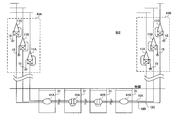
- FIG. 1 is a diagram showing a configuration of a power transmission system according to a first embodiment of the present invention.
- FIG. 2 is a diagram showing an example of a configuration of an underground cable used in the power transmission system according to the first embodiment of the present invention.
- FIG. 3 is a diagram showing an example of a method of connecting an underground cable in a normal connection portion used in the power transmission system according to the first embodiment of the present invention.
- FIG. 4 is a diagram showing an example of a method of connecting an underground cable in an insulating connection portion used in the power transmission system according to the first embodiment of the present invention.
- FIG. 5 is a figure which shows the other example of the connection method of the underground cable in the insulation connection part used for the power transmission system which concerns on the 1st Embodiment of this invention.
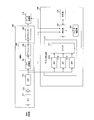
- FIG. 6 is a diagram showing a configuration of the communication system according to the first exemplary embodiment of the present invention.
- FIG. 7 is a figure which shows an example of a structure of the communication apparatus in the communication system which concerns on the 1st Embodiment of this invention.
- FIG. 8 is a diagram showing a configuration of CT in the communication apparatus according to the first embodiment of the present invention.
- FIG. 9 is a diagram showing another example of the configuration of the communication device in the communication system according to the first embodiment of the present invention.
- FIG. 10 is a figure which shows the structure of the metal foil electrode in the communication apparatus which concerns on the 1st Embodiment of this invention.
- FIG. 10 is a figure which shows the structure of the metal foil electrode in the communication apparatus which concerns on the 1st Embodiment of this invention.
- FIG. 11 is a figure which shows the structure of the communication part in the communication apparatus which concerns on the 1st Embodiment of this invention.
- FIG. 12 is a figure which shows the structure of the discharge detection part in the communication apparatus which concerns on the 1st Embodiment of this invention.
- FIG. 13 is a diagram showing an example of a BPF impulse response waveform in the discharge detection unit according to the first embodiment of the present invention.
- FIG. 14 is a figure which shows the calculation result by the discharge detection part in the communication apparatus which concerns on the 1st Embodiment of this invention.
- FIG. 15 is a diagram showing a communication band and a detection band in the communication device according to the first embodiment of the present invention.
- FIG. 16 is a figure which shows the structure of the discharge detection part in the modification 1 of the communication apparatus which concerns on the 1st Embodiment of this invention.
- FIG. 17 is a diagram showing the configuration of the discharge detection unit in the communication device according to the second embodiment of the present invention.
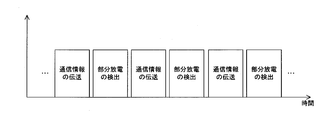
- FIG. 18 is a diagram showing operation timings of the reception unit and the discharge detection unit in the communication device according to the second embodiment of the present invention.
- the present disclosure has been made to solve the above problems, and an object thereof is to provide a communication device capable of transmitting a detection result of partial discharge in an underground cable with a simple configuration.
- the detection result of partial discharge in an underground cable can be transmitted with a simple configuration.
- a communication device is a communication device used in an electric power system including an underground cable, and includes a communication section that outputs a communication signal including communication information, and the communication section that outputs the communication signal.
- a communication signal is output to the shield layer of the underground cable as a communication induced current by inductive coupling, and a change in the current flowing through the shield layer or a change in the potential of the shield layer is acquired as a detected inductive signal by inductive coupling.
- An inductive coupling section for outputting and a discharge detecting section for detecting partial discharge in the underground cable based on the detected inductive signal received from the inductive coupling section are provided.
- the communication signal is output to the shielding layer as a communication induced current by inductive coupling, and the change in the current flowing through the shielding layer or the change in the potential of the shielding layer is acquired as a detected inductive signal by inductive coupling and acquired.
- the detection result of the partial discharge can be transmitted as communication information through the shielding layer of the underground cable.
- the detection result of the partial discharge in the underground cable can be transmitted with a simple configuration.
- the band of the communication induction current and the band of the detection induction signal are different.
- the communication unit can transmit the communication information and the discharge detection unit can detect the partial discharge in parallel, and it is necessary to adjust the relationship between the timing of performing the communication process and the timing of performing the detection process. Therefore, the communication process and the detection process can be simplified.
- the communication unit and the discharge detection unit perform transmission of the communication information and detection of the partial discharge in a time division manner.
- the filter circuit and the analog/digital conversion circuit in the unit can be shared.
- a plurality of the underground cables are connected in the power system, and the inductive coupling section is inductively coupled to the shielding layer at the connection section of the underground cable.
- the portion of the underground cable is detected by the configuration in which the detection guiding signal is detected at the connecting portion of the underground cable and the partial discharge is detected based on the detected guiding signal.
- the discharge can be detected more accurately.
- FIG. 1 is a diagram showing a configuration of a power transmission system according to a first embodiment of the present invention.
- power transmission system 502 includes underground cables 10A, 10B, 10C, ordinary connecting portions 41A, 41B, insulating connecting portions 42A, 42B, and ground connecting portions 43A, 43B.
- each of the underground cables 10A, 10B, and 10C is also referred to as an underground cable 10
- each of the ordinary connecting portions 41A and 41B is also referred to as an ordinary connecting portion 41
- each of the insulating connecting portions 42A and 42B is also referred to as an insulating connecting portion 42.
- the power transmission system 502 includes, for example, an underground part of an electric power system. In other words, a part of the power transmission system 502 is provided, for example, in an underground part of the power system.
- the ground connection unit 43 includes cable terminals 11A, 11B, 11C.
- the underground cable 10 is connected to the cable terminals 11A, 11B, 11C at the ground connection portion 43. More specifically, the underground cable 10A is connected to the cable terminal 11A, the underground cable 10B is connected to the cable terminal 11B, and the underground cable 10C is connected to the cable terminal 11C.
- the ground connection unit 43 is installed, for example, in a substation where the underground cable 10 appears on the ground.
- the ordinary connecting portion 41 and the insulating connecting portion 42 are provided inside the manhole 31.
- FIG. 2 is a diagram showing an example of a configuration of an underground cable used in the power transmission system according to the first embodiment of the present invention.
- the underground cable 10 includes a conductor 71, an inner semiconductive layer 72 made of semiconductive ethylene propylene (EP) rubber, and an insulator 73 made of EP rubber in order from the center. , An outer semiconductive layer 74 which is a semiconductive tape, a conductive shield layer 75, and a vinyl sheath 76.
- EP semiconductive ethylene propylene
- the conductor 71 in the underground cable 10 is used for power transmission and is applied with a high voltage.
- the shielding layer 75 is electrically conductive and is grounded in the middle of the underground cable 10. Therefore, the voltage of the shield layer 75 is lower than that of the conductor 71.
- a three-phase three-wire system is used as a power distribution method.
- underground cables 10A, 10B, and 10C are provided as the three-phase underground cables 10.
- the shielding layers 75 of the underground cables 10A, 10B and 10C are exposed. Terminals are provided on exposed portions of these shielding layers 75, respectively.
- Underground cables 10A, 10B, 10C are connected to ground node 15 at cable terminals 11A, 11B, 11C, respectively. More specifically, the terminals provided on each of the underground cables 10A, 10B, and 10C are connected to the ground node 15 via a cable or the like, so that the shielding layer 75 of the underground cable 10 is grounded.
- the underground cable 10 is composed of a plurality of cables whose ends are connected to each other at the normal connecting portion 41 and the insulating connecting portion 42.
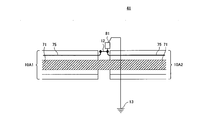
- FIG. 3 is a diagram showing an example of a method of connecting an underground cable in an ordinary connection unit used in the power transmission system according to the first embodiment of the present invention.
- the conductor 71 and the shield layer 75 of the underground cable 10A are mainly shown.
- the contents described below are the same for the underground cable 10B and the underground cable 10C.
- the underground cables 10A1 and 10A2 are connected at the normal connection portion 41.
- the shield layer 75 of the underground cables 10A1 and 10A2 is exposed at the connection portion between the conductors 71 of the underground cables 10A1 and 10A2.
- the shield layer 75 of the underground cable 10A1 and the shield layer 75 of the underground cable 10A2 are connected using, for example, a conductive wire 12.
- the terminal 81 is provided on the exposed portion of the shield layer 75 of the underground cable 10A2.
- the terminal 81 may be provided on an exposed portion of the shield layer 75 of the underground cable 10A1.
- the terminal 81 is connected to the ground node 13 via a cable or the like, so that the shield layer 75 of the underground cable 10A is grounded.
- FIG. 4 is a diagram showing an example of a method of connecting an underground cable in an insulating connection portion used in the power transmission system according to the first embodiment of the present invention.
- the conductor 71 and the shielding layer 75 in the configuration of the underground cable 10A are mainly shown.
- the contents described below are the same for the underground cable 10B and the underground cable 10C.
- the underground cables 10A1 and 10A2 are connected at the insulation connection portion 42.
- the shield layer 75 of the underground cables 10A1 and 10A2 is exposed at the connection portion between the conductors 71 of the underground cables 10A1 and 10A2, and the terminals 81 and the like are provided at the exposed portions.
- the conductor 71 of the underground cable 10A1 and the conductor 71 of the underground cable 10A2 are connected, for example, the terminal 81 in the underground cable 10A1 and the terminal 81 in the underground cable 10A2 are connected using the wire 12.
- the shield layer 75 of the underground cable 10A1 and the shield layer 75 of the underground cable 10A2 are connected.
- FIG. 5 is a diagram showing another example of a method of connecting an underground cable in an insulating connection portion used in the power transmission system according to the first embodiment of the present invention.
- the underground cables 10A1 and 10A2 are connected, the underground cables 10B1 and 10B2 are connected, and the underground cables 10C1 and 10C2 are connected.
- the shield layer 75 of the underground cables 10A1 and 10A2 is exposed at the connection portion between the conductors 71 of the underground cables 10A1 and 10A2, and the connection portion of the conductors 71 of the underground cables 10B1 and 10B2 is connected.
- the shielding layer 75 of the underground cables 10B1 and 10B2 is exposed, and the shielding layer 75 of the underground cables 10C1 and 10C2 is exposed at the connection portion between the conductors 71 of the underground cables 10C1 and 10C2, and the terminals 81 and the like are exposed at the exposed portions. It is provided.
- the shielding layer 75 of the underground cable 10A1 and the shield of the underground cable 10B2 are shielded.
- the layer 75 is connected, and by connecting the terminal 81 in the underground cable 10B1 and the terminal 81 in the underground cable 10C2 using the wire 12, the shielding layer 75 of the underground cable 10B1 and the shielding layer 75 of the underground cable 10C2 are connected.
- the terminal 81 in the underground cable 10C1 and the terminal 81 in the underground cable 10A2 are connected using the wire 12, so that the shielding layer 75 of the underground cable 10C1 and the shielding layer 75 of the underground cable 10A2 are Connected.
- the underground cable 10 may be cross-bonded at the insulating connection portion 42.
- the communication device solves the above problems by the following configurations and operations.
- FIG. 6 is a diagram showing a configuration of the communication system according to the first exemplary embodiment of the present invention.
- the underground cable 10 ⁇ /b>A of the underground cables 10 is mainly shown for ease of explanation.
- the contents described below are the same for the underground cable 10B and the underground cable 10C.
- the communication system 501 includes communication devices 500A, 500B, 500C.
- the communication devices 500A, 500B, 500C are used in a power system including the underground cable 10.
- each of the communication devices 500A, 500B and 500C is also referred to as a communication device 500.
- the communication device 500 is provided corresponding to, for example, the insulation connection part 42 or the ground connection part 43.
- the communication device 500A is provided corresponding to the insulating connection portion 42A
- the communication device 500B is provided corresponding to the insulating connection portion 42B
- the communication device 500C is connected to the ground. It is provided corresponding to the portion 43.
- the communication device 500 exchanges communication information with each other via the underground cable 10 by inductive coupling with the shield layer 75 in the underground cable 10A.
- the communication devices 500A and 500B detect partial discharge of the underground cable 10.
- the communication devices 500A and 500B generate a communication signal including the detection result of the partial discharge of the underground cable 10 as communication information, and transmit the generated communication signal to another communication device 500 such as the communication device 500C.
- the communication devices 500A and 500B generate, for example, a communication signal including various measurement results obtained by the one or more sensors 14 as communication information, and transmit the generated communication signal to another communication device 500 such as the communication device 500C. To do.
- the communication device 500 can perform communication up to a distance of several km at a variable transmission rate of 20 kbps to 130 kbps by using a low frequency PLC (Power Line Communication) used for communication of a smart meter or the like. Further, the communication device 500 can also perform shorter distance communication at a maximum transmission rate of 200 Mbps by using the high frequency PLC.
- PLC Power Line Communication
- a power coil is attached to the underground cable 10A.
- An induced current due to a current flowing through the conductor 71 of the underground cable 10 flows through the power supply coil.
- the power supply coil can take out the current.
- the communication device 500 operates by, for example, the electric power obtained by the power supply coil.
- FIG. 7 is a figure which shows an example of a structure of the communication apparatus in the communication system which concerns on the 1st Embodiment of this invention.
- communication device 500 includes electromagnetic coupling unit 120, communication unit 200, and discharge detection unit 300.
- the electromagnetic coupling part 120 is inductively coupled to the shield layer 75 of the underground cable 10. Specifically, the electromagnetic coupling part 120 electromagnetically couples with the shield layer 75 of the underground cable 10.
- the electromagnetic coupling part 120 is an example of an inductive coupling part.
- the communication unit 200 transmits communication information via the shielding layer 75.
- the discharge detector 300 detects a partial discharge in the underground cable 10.
- the electromagnetic coupling unit 120 includes a current transformer (CT) 100 and a signal distributor 110A.
- CT current transformer
- the electromagnetic coupling part 120 is electromagnetically coupled to the shielding layer 75 in the insulating connection part 42 which is a connection part of the underground cable 10, for example.
- FIG. 8 is a diagram showing a configuration of CT in the communication device according to the first embodiment of the present invention.
- CT 100 includes ring core 101 and winding 102.
- a winding 102 is wound around the ring core 101.
- the winding 102 is connected to the signal distributor 110A.
- the CT 100 is attached, for example, so that the conductive cable 53 penetrates the ring core 101.
- the conductive cable 53 is, for example, the wire 12.
- CT 100 of communication devices 500A and 500B in insulating connection portion 42 connects shield layer 75 of underground cable 10A1 and shield layer 75 of underground cable 10A2.
- the wire 12 is attached so as to penetrate the ring core 101.
- CT 100 of the communication device 500C in the ground connection unit 43 is attached such that the cable connecting between the cable terminal 11A and the ground node 15 penetrates the ring core 101.
- a current according to the communication signal transmitted from the communication unit 200 flows through the winding 102.
- an inductive current flows through the conductive cable 53 and the shielding layer 75 due to inductive coupling.
- the induced current flowing through the shield layer 75 will also be referred to as a communication induced current.
- the electromagnetic coupling unit 120 functions as a current detection unit that detects a current flowing through the shielding layer 75. More specifically, when an electric current flows through the shield layer 75 and the conductive cable 53, an inductive current flows through the winding 102 due to inductive coupling. The electromagnetic coupling unit 120 detects the induced current flowing through the winding 102.
- the communication unit 200 and the discharge detection unit 300 receive, via the signal distributor 110A, a detection induction signal which is a signal corresponding to a change in the induction current flowing through the winding 102.
- the electromagnetic coupling unit 120 receives a communication signal from the communication unit 200, and outputs the received communication signal to the shielding layer 75 of the underground cable 10 as a communication induction current by electromagnetic coupling. Further, the electromagnetic coupling unit 120 acquires a change in current flowing through the shielding layer 75 as a detection guidance signal by electromagnetic coupling, and outputs an analog signal corresponding to the acquired detection guidance signal to the discharge detection unit 300.
- FIG. 9 is a diagram showing another example of the configuration of the communication device in the communication system according to the first embodiment of the present invention.
- communication device 500 includes electrostatic coupling section 121, communication section 200, and discharge detection section 300.
- the electrostatic coupling part 121 is inductively coupled to the shield layer 75 of the underground cable 10. Specifically, the electrostatic coupling part 121 electrostatically couples with the shielding layer 75 of the underground cable 10.
- the electrostatic coupling part 121 is an example of an inductive coupling part.
- the electrostatic coupling part 121 includes metal foil electrodes 105A and 105B and a signal distributor 110B.
- the electrostatic coupling part 121 electrostatically couples with the shielding layer 75 in the insulating connection part 42 which is a connection part of the underground cable 10, for example.
- FIG. 10 is a diagram showing a configuration of a metal foil electrode in the communication device according to the first embodiment of the present invention.
- metal foil electrodes 105A and 105B are connected to signal distributor 110B.
- the metal foil electrodes 105A and 105B are, for example, attached to the surface of the sheath 76 of the underground cable 10 on opposite sides to each other via the insulating cylinder 77 in the insulating connection portion 42. More specifically, for example, in the insulated connection portion 42 to which the underground cables 10A1 and 10A2 are connected, the metal foil electrode 105A is attached to the surface of the sheath 76 of the underground cable 10A1, and the metal foil electrode 105B is connected to the underground. It is attached to the surface of the sheath 76 of the cable 10A2.
- the metal anchor electrodes 105A and 105B may be attached so as to cover the outer circumference of the sheath 76 of the underground cable 10A2. Further, the position and the number of the metal anchor electrodes 105A and 105B to be attached are not limited, and three or more metal anchor electrodes may be attached.
- a current corresponding to the communication signal transmitted from the communication unit 200 flows to the metal foil electrodes 105A and 105B.
- a communication induction current flows through the conductive cable 53 and the shielding layer 75 due to electrostatic coupling.
- the electrostatic coupling unit 121 functions as a current detection unit that detects a current flowing through the shielding layer 75. More specifically, when a current flows through the shield layer 75 and the conductive cable 53, an induced current flows through the metal foil electrodes 105A and 105B due to inductive coupling. The electrostatic coupling part 121 detects the induced current flowing to the metal foil electrodes 105A and 105B.
- the communication unit 200 and the discharge detection unit 300 receive a detection induction signal which is a signal corresponding to a change in the potential of the shielding layer 75 via the signal distributor 110B.
- the electrostatic coupling unit 121 receives a communication signal from the communication unit 200, and outputs the received communication signal to the shielding layer 75 of the underground cable 10 as a communication induction current by electrostatic coupling. Further, the electrostatic coupling unit 121 acquires a change in the potential of the shielding layer 75 as a detection guidance signal by electrostatic coupling, and outputs an analog signal corresponding to the acquired detection guidance signal to the discharge detection unit 300.
- the signal distributor 110A in the electromagnetic coupling unit 120 and the signal distributor 110B in the electrostatic coupling unit 121 are also simply referred to as the signal distributor 110.
- the communication unit 200 acquires communication information from an analog signal received via the signal distributor 110, that is, a communication signal from another communication device 500.
- the communication unit 200 of the communication device 500C in the ground connection unit 43 transmits the acquired communication information to the central monitoring device 103 using wireless communication such as a mobile phone.
- the discharge detection unit 300 detects partial discharge in the underground cable 10 based on the analog signal received via the signal distributor 110.
- the discharge detection unit 300 outputs detection information indicating the detection result of partial discharge to the communication unit 200.
- the communication unit 200 transmits communication information using a communication induced current that is an induced current flowing through the shielding layer 75 due to the inductive coupling of the inductive coupling unit. More specifically, the communication unit 200 communicates with the communication unit 200 in another communication device 500 using the communication induced current.
- FIG. 11 is a diagram showing a configuration of a communication unit in the communication device according to the first embodiment of the present invention.
- communication unit 200 includes a data processing unit 210, a transmission unit 220, and a reception unit 260.
- the receiving unit 260 converts the communication signal received via the signal distributor 110 into a digital signal, generates demodulated data by performing demodulation processing and decoding processing on the converted digital signal, and generates the demodulated data.
- the data is output to the data processing unit 210.
- the data processing unit 210 Upon receiving the demodulated data from the reception unit 260, the data processing unit 210 acquires communication information from the received demodulated data.
- the data processing unit 210 Upon receiving the detection information from the discharge detection unit 300, the data processing unit 210 generates communication data that includes the received detection information as communication information, and outputs the generated communication data to the transmission unit 220. Further, when receiving the measurement information indicating the measurement result from the sensor 14, the data processing unit 210 generates communication data including the received measurement information as communication information, and outputs the generated communication data to the transmission unit 220.
- the communication unit 200 outputs a communication signal including communication information. More specifically, the transmission unit 220 in the communication unit 200 generates a communication signal by performing an encoding process and a modulation process on the communication data received from the data processing unit 210, and the generated communication signal is a signal distributor. Output to 110.
- the data processing unit 210 generates communication data including information indicating the ID of its own communication device 500 (hereinafter, also referred to as ID information) as a part of the communication information.
- ID information information indicating the ID of its own communication device 500
- the data processing unit 210 outputs the generated communication data to the transmission unit 220.
- the data processing unit 210 confirms the ID information included in the demodulated data received from the receiving unit 260, and when the confirmed ID information indicates the ID of the communication device 500 of its own, the data processing unit 210 extracts the communication information from the demodulated data. get.
- the transmission unit 220 includes an FEC (Forward Error Correction) encoder 230 that performs coding processing in forward error correction, a modulation unit 240 that performs modulation processing, a DAC (Digital Analog Converter) 251, and a bandpass filter (BPF) 252. , And a transmission amplifier 253.
- the FEC encoder 230 has a scrambler 231, an encoder 232, and an interleaver 233.
- the modulator 240 includes a mapper 241 and an IFFT (Inverse Fast Fourier Transform) processor 242.
- the scrambler 231 scrambles the communication data received from the data processing unit 210, and outputs the processed communication data to the RS encoder 232.
- the encoder 232 performs an encoding process on the communication data received from the scrambler 231, and outputs the processed communication data to the interleaver 233.
- the interleaver 233 performs iterative encoding processing and interleaving processing on the communication data received from the encoder 232, and outputs the processed communication data to the mapper 241.
- the mapper 241 generates modulated data by modulating the communication data received from the interleaver 233 according to, for example, the DBPSK method (Differential Binary Phase Shift Keying), and outputs the generated modulated data to the IFFT processing unit 242.
- DBPSK method Different Binary Phase Shift Keying
- the mapper 241 may be configured to generate modulated data by modulating the communication data received from the interleaver 233 according to the DQPSK method (Differential Quaternary Phase Shift Keying), or according to the D8PSK method (Differential Octal Phase Shift Keying). It may be configured to generate modulated data.
- the IFFT processing unit 242 outputs, to the DAC 251, the modulated data obtained by performing signal processing such as IFFT in the orthogonal frequency division multiplexing method (OFDM: Orthogonal Frequency Division Multiplexing) on the modulated data received from the mapper 241.
- OFDM Orthogonal Frequency Division Multiplexing
- the DAC 251 converts the modulation data received from the IFFT processing unit 242 into an analog signal and outputs it to the BPF 252.
- the BPF 252 outputs, to the transmission amplifier 253, an analog signal obtained by attenuating the frequency component of the analog signal received from the DAC 251 outside the predetermined frequency band.
- the transmission amplifier 253 amplifies the analog signal received from the BPF 252 with a predetermined gain, and outputs the amplified analog signal to the signal distributor 110 as a communication signal.
- the reception unit 260 includes a high-pass filter (HPF) 271, a reception amplifier 272, an ADC (Analog Digital Converter) 273, a demodulation unit 280 that performs demodulation processing, and an FEC decoder 290 that performs decoding processing in forward error correction. ..
- the demodulation unit 280 includes an FFT (Fast Fourier Transform) processing unit 281 and a demodulator 282.
- the FEC decoder 290 has a deinterleaver 291, a decoder 292, and a descrambler 293.
- the HPF 271 outputs, to the reception amplifier 272, a communication signal obtained by attenuating a frequency component of a predetermined frequency or less among the frequency components of the communication signal received via the signal distributor 110.
- the receiving amplifier 272 amplifies the communication signal received from the HPF 271 with a predetermined gain and outputs the amplified communication signal to the ADC 273.
- the ADC 273 converts a communication signal, which is an analog signal received from the reception amplifier 272, into a digital signal and outputs the digital signal to the FFT processing unit 281.
- the FFT processing unit 281 performs signal processing such as FFT in the OFDM system on the digital signal received from the ADC 273, and outputs the processed digital signal to the demodulator 282.
- the demodulator 282 generates demodulated data obtained by demodulating the digital signal received from the FFT processing unit 281 according to, for example, the DBPSK method, and outputs the generated demodulated data to the deinterleaver 291.
- the deinterleaver 291 performs iterative decoding processing and deinterleave processing on the demodulated data received from the demodulator 282, and outputs the processed demodulated data to the decoder 292.
- the decoder 292 decodes the demodulated data received from the deinterleaver 291, and outputs the processed demodulated data to the descrambler 293.
- the descrambler 293 performs scramble decoding processing on the demodulated data received from the decoder 292, and outputs the processed demodulated data to the data processing unit 210.
- Discharge detection unit 300 detects partial discharge in underground cable 10 based on the detection induction signal received from electromagnetic coupling unit 120 or electrostatic coupling unit 121.
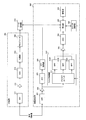
- FIG. 12 is a diagram showing the configuration of the discharge detection unit in the communication device according to the first embodiment of the present invention.
- the receiving unit 260 in the communication unit 200 is shown in addition to the discharge detecting unit 300.
- the discharge detection unit 300 includes an HPF 301, an LNA (Low Noise Amplifier) 302, an ADC 303, an FFT processing unit 304, a filter processing unit 310, an AGC (Automatic Gain Control) amplifier 305, and It includes an ADC 306, a detection unit 320, a switch control unit 330, and a storage unit 340.
- LNA Low Noise Amplifier
- ADC Analog to Digital Converter
- the filter processing unit 310 has an analog switch 311 and BPFs 312A, 312B and 312C.
- each of the BPFs 312A, 312B, and 312C will also be referred to as a BPF 312.
- the HPF 301 outputs to the LNA 302 a signal obtained by attenuating a frequency component of a predetermined frequency or lower among the frequency components of the analog signal received via the signal distributor 110.
- the analog signal received via the signal distributor 110 contains a lot of noise in a band of, for example, less than 1.6 MHz, which is superimposed on the transmission path of the underground cable 10 or the like.
- the HPF 301 removes noise included in the analog signal received via the signal distributor 110 by attenuating frequency components of less than 1.6 MHz, for example.
- the LNA 302 amplifies the analog signal received from the HPF 301 with a predetermined gain and outputs the amplified analog signal to the ADC 303 and the filter processing unit 310.
- the ADC 303 converts the analog signal received from the LNA 302 into a digital signal and outputs the digital signal to the FFT processing unit 304.
- the FFT processing unit 304 performs signal processing such as FFT on the digital signal received from the ADC 303, and outputs the processed digital signal to the detection unit 320.
- the detection unit 320 generates a frequency spectrum of the analog signal output from the HPF 301 based on the digital signal received from the FFT processing unit 304, and outputs the generated frequency spectrum to the switch control unit 330.
- the switch control unit 330 switches the analog switch 311 by generating a switch control signal based on the frequency spectrum received from the detection unit 320 and outputting the generated switch control signal to the analog switch 311.
- the analog switch 311 switches the output destination BPF 312 of the analog signal received from the LNA 302 according to the switch control signal received from the switch control unit 330.
- the passbands of the three BPFs 312 are different.
- the pass band of BPF312A is 5 MHz or more and less than 10 MHz
- the pass band of BPF312B is 10 MHz or more and less than 15 MHz
- the pass band of BPF312C is 15 MHz or more and less than 20 MHz.
- the switch control unit 330 selects one BPF 312 to be the output destination of the analog signal by the analog switch 311 from the three BPFs 312. More specifically, the switch control unit 330 determines the pass band having the smallest noise component in the analog signal output from the LNA 302 among the pass bands of the three BPFs 312, and selects the BPF 312 corresponding to the pass band. To do.
- the switch control unit 330 selects any one BPF 312 from the plurality of BPFs 312 based on the current detected by the electromagnetic coupling unit 120 or the electrostatic coupling unit 121. More specifically, based on the frequency spectrum received from the detection unit 320, the switch control unit 330 sets the pass band in which the analog signal output from the LNA 302 is the lowest among the pass bands of the three BPFs 312. Select the corresponding BPF 312.
- the current waveform due to partial discharge is an impulse waveform. Since the components of the impulse waveform in the frequency spectrum spread equally in the pass bands of each BPF 312, the difference in the spectrum level in each pass band caused by the components of the impulse waveform is so small that it can be ignored. Therefore, based on the frequency spectrum, of the pass bands of the three BPFs 312, the pass band in which the analog signal output from the LNA 302 has the lowest signal level can be regarded as the pass band in which the noise component is the smallest.
- the switch control unit 330 outputs the switch control signal to the analog switch 311 to switch the output destination of the analog signal by the analog switch 311 to the selected BPF 312.
- the switch control unit 330 selects the BPF 312 based on the frequency spectrum received from the detection unit 320 on a regular or irregular basis, and switches the analog switch 311 according to the selection result.
- the switch control unit 330 is not limited to the configuration in which the analog switch 311 is switched based on the frequency spectrum received from the detection unit 320, and regularly or irregularly monitors the digital signal received by the detection unit 320 from the ADC 306 to obtain a digital signal.
- the analog switch 311 may be switched based on the change in the value of, that is, the amount of the noise component included in the digital signal.
- the BPF 312 receives an analog signal according to an induced current flowing through the winding 102, which is an example of a signal based on a current detected by the electromagnetic coupling section 120 or the electrostatic coupling section 121. More specifically, the BPF 312 receives the analog signal via the HPF 301, the LNA 302 and the analog switch 311. The BPF 312 outputs, to the AGC amplifier 305, an analog signal obtained by attenuating the frequency component of the analog signal received from the analog switch 311 outside the pass band of itself.
- the AGC amplifier 305 amplifies the signal received from the BPF 312 and outputs it to the ADC 306 so that the output level of the analog signal to the ADC 306 becomes constant.
- the ADC 306 converts the analog signal received from the AGC amplifier 305 into a digital signal and outputs the digital signal to the detection unit 320.
- the detection unit 320 detects a partial discharge in the underground cable 10 based on the output of at least one BPF 312 of the three BPFs 312 and the characteristic data regarding the physical properties of the corresponding BPF 312. More specifically, the detection unit 320 detects the partial discharge in the underground cable 10 based on the output of the BPF 312 selected by the switch control unit 330 and the characteristic data regarding the physical properties of the BPF 312.
- the detection unit 320 receives from the ADC 306 a digital signal S obtained by amplifying and digitally converting the analog signal output by the selected BPF 312, and performs an operation using the received digital signal S and the characteristic data of the BPF 312. , Partial discharge in the underground cable 10 is detected.
- the storage unit 340 stores characteristic data regarding the characteristics of the three BPFs 312, respectively. More specifically, the storage unit 340 stores, as the characteristic data, the pulse response characteristics of the three BPFs 312, for example, the impulse response waveform Imp.
- the switch control unit 330 outputs selection information indicating the selected BPF 312 to the detection unit 320.
- the detection unit 320 acquires the impulse response waveform Imp of the BPF 312 indicated by the selection information received from the switch control unit 330 from the storage unit 340, and performs an operation using the acquired impulse response waveform Imp and the digital signal S received from the ADC 306. By doing so, the partial discharge in the underground cable 10 is detected.
- a part or all of the FFT processing unit 304, the detection unit 320, and the switch control unit 330 are realized by operating a processor such as a CPU (Central Processing Unit) and a DSP (Digital Signal Processor) with software. Further, some or all of the functions of the FFT processing unit 304, the detection unit 320, and the switch control unit 330 are realized by operating a processor such as a CPU and a DSP with software, for example.
- a processor such as a CPU (Central Processing Unit) and a DSP (Digital Signal Processor) with software.
- FIG. 13 is a diagram showing an example of a BPF impulse response waveform in the discharge detection unit according to the first embodiment of the present invention.
- the impulse response waveform Imp of the BPF 312 is stored in the storage unit 340 as a digital signal whose sample number is K in the period T1 from time t0 to time ta.
- the impulse response waveform Imp is a waveform having one or more maximum values and one or more minimum values.
- the detection unit 320 calculates the Xth value of the K sampling values included in the digital signal S in the period T1 from the time t to the time t+T1 and the Xth value of the impulse response waveform Imp according to the following equation (1). Of the sampling value and the K values obtained by the multiplication for each sampling value are added to calculate the operation value Y(t).
- S(t) is the value of the digital signal S at time t.
- FIG. 14 is a diagram showing a calculation result by the discharge detection unit in the communication device according to the first embodiment of the present invention.
- the vertical axis represents voltage and the horizontal axis represents time.
- the detection unit 320 calculates the calculation value Y(t) corresponding to each start time by shifting the start time of the period T1 by one sample of the digital signal S.
- the detection unit 320 may calculate the calculated value Y(t) by multiplying the digital signal S by the impulse response waveform Imp every time the digital signal S for one sample is received from the ADC 306, or may be received from the ADC 306.
- the calculated value Y(t) may be calculated by accumulating a predetermined number, for example, K sampling values of the digital signal S, and multiplying each accumulated sampling value by the impulse response waveform Imp.
- the calculated value Y(tk) becomes a value close to zero.
- the digital signal S in the period T1 from the time tm to the time tm+T1 includes an impulse waveform, the calculated value Y(tm) becomes a relatively large value.
- the detection unit 320 detects partial discharge based on the calculated calculation value Y(t). For example, the storage unit 340 stores the threshold value ThA of the calculated value Y(t) used for detecting partial discharge. The detection unit 320 compares the calculated value Y(t) with the threshold value ThA, and when the calculated value Y(t) is greater than or equal to the threshold value ThA, determines that partial discharge has occurred.
- the detection unit 320 when detecting a partial discharge, the detection unit 320 generates detection information indicating the detection result of the partial discharge, and outputs the generated detection information to the data processing unit 210.
- the detection unit 320 calculates the level of the impulse signal due to the partial discharge. More specifically, for example, the storage unit 340 stores the gain of the LNA 302 and the input/output ratio of the impulse response characteristic of the BPF 312. When the gain of the AGC amplifier 305 can be monitored, the detection unit 320 acquires the gain of the LNA 302 and the input/output ratio of the impulse response characteristics of the selected BPF 312 from the storage unit 340, and the gain of the LNA 302, the gain of the AGC amplifier 305, The level of the impulse signal due to the partial discharge is calculated based on the input/output ratio of the impulse response characteristic of the selected BPF 312 and the calculated value Y(t).
- the detection unit 320 calculates the phase of the impulse signal due to partial discharge (hereinafter, also referred to as impulse phase) at the high voltage applied to the conductor 71 of the underground cable 10. More specifically, the data processing unit 210 detects the waveform of 50 Hz or 60 Hz of the induced current due to the current flowing through the conductor 71, for example, via the above-described power supply coil attached to the underground cable 10. The data processing unit 210 detects the zero-cross point of the waveform of the high voltage applied to the conductor 71 based on the detected waveform.
- the data processing unit 210 generates zero-cross information indicating the timing of the detected zero-cross point and outputs it to the detection unit 320.
- the detection unit 320 calculates the impulse phase based on the received zero-cross information and the timing of generating the impulse signal due to the partial discharge.
- the data processing unit 210 in the communication device 500 is configured to receive information regarding the high voltage applied to the conductor 71, for example, the zero-cross information, from the central monitoring device 103 via the communication device 500C in the ground connection unit 43. May be.
- the detection unit 320 creates partial discharge information including the level of the impulse signal and the impulse phase due to the detected partial discharge, and saves the created partial discharge information in the storage unit 340.
- the detection unit 320 updates the threshold ThA based on the partial discharge information stored in the storage unit 340 using, for example, a machine learning method.
- FIG. 15 is a diagram showing a communication band and a detection band in the communication device according to the first embodiment of the present invention.
- the band of the communication induction current used by communication unit 200 for transmitting communication information is different from the band of the detection induction signal used by discharge detection unit 300 for detecting partial discharge.
- the band of the communication induced current (hereinafter, also referred to as the communication band) used by the communication unit 200 for transmitting the communication information is, for example, 10 kHz or more and 450 kHz or less, and the discharge detection unit 300 detects the partial discharge.
- the band of the detection induction signal used for (hereinafter, also referred to as a detection band) is, for example, 1.6 MHz or more and 50 MHz or less.
- the BPF 252 in the transmission unit 220 and the HPF 271 in the reception unit 260 have a pass band of 10 kHz or more and attenuate components with a frequency of less than 10 kHz, while the HPF 301 of the discharge detection unit 300 has a pass band of 1.
- a frequency component of 6 MHz or more and less than 1.6 MHz is attenuated.
- the communication unit 200 and the discharge detection unit 300 perform transmission of communication information and detection of partial discharge in parallel.
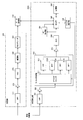
- FIG. 16 is a figure which shows the structure of the discharge detection part in the modification 1 of the communication apparatus which concerns on the 1st Embodiment of this invention.
- the reception unit 260 in the communication unit 200 is shown.
- discharge detecting section 300A does not include ADC 303 and filter processing section 310 has LPF 313 as compared with discharge detecting section 300 shown in FIG. More specifically, the discharge detection unit 300A includes an HPF 301, an LNA 302, an FFT processing unit 304, a filter processing unit 310, an AGC amplifier 305, an ADC 306, a detection unit 320, a switch control unit 330, and a storage unit. 340 and. Except for the contents described below, the discharge detector 300 is the same as the discharge detector 300 shown in FIG.
- the filter processing unit 310 includes an analog switch 311, BPFs 312A, 312B and 312C, and a low pass filter (LPF) 313.
- the cutoff frequency of the LPF 313 is, for example, a frequency that is 1 ⁇ 2 or less of the sampling frequency of the ADC 306.
- the switch control unit 330 periodically or irregularly selects the LPF 313 as a filter to be the output destination of the analog signal by the analog switch 311, and switches the output destination of the analog signal by the analog switch 311 to the LPF 313.
- the LPF 313 outputs to the AGC amplifier 305 an analog signal obtained by attenuating a frequency component of a predetermined frequency or higher among the frequency components of the analog signal received from the analog switch 311.
- the AGC amplifier 305 amplifies the signal received from the LPF 313 and outputs it to the ADC 306 so that the output level of the analog signal to the ADC 306 becomes constant.
- the ADC 306 converts the analog signal received from the AGC amplifier 305 into a digital signal and outputs the digital signal to the FFT processing unit 304.
- the FFT processing unit 304 performs signal processing such as FFT on the digital signal received from the ADC 306, and outputs the processed digital signal to the detection unit 320.
- the detection unit 320 generates a frequency spectrum of the analog signal output by the LPF 313 based on the digital signal received from the FFT processing unit 304, and outputs the generated frequency spectrum to the switch control unit 330.
- the switch control unit 330 selects one BPF 312 to be the output destination of the analog signal by the analog switch 311 from the three BPFs 312 based on the frequency spectrum received from the detection unit 320.
- the switch control unit 330 outputs the switch control signal to the analog switch 311 to switch the output destination of the analog signal by the analog switch 311 to the selected BPF 312.
- the switch control unit 330 outputs selection information indicating that the LPF 313 has been selected to the detection unit 320.
- the communication device 500 may be configured to operate with the electric power obtained by using the CT100.
- the communication device 500 operates by using an induced current of a current flowing through the shield layer 75 of the underground cable 10 and in a frequency band different from the frequency band of the communication signal transmitted and received by the communication device 500. ..
- a sheath current that is an induced current due to the influence of a current for power transmission that flows through the conductor 71 of the underground cable 10. Is flowing.
- the sheath current flowing through the shielding layer 75 of the underground cable 10 can be taken out by providing the CT 100 in the underground cable 10.
- the communication device 500 includes a filter that allows a current having a frequency of 60 Hz or less to pass therethrough.
- the communication device 500 extracts low-frequency current of 50 Hz or 60 Hz from each extracted sheath current by using a filter.
- the communication device 500 generates a power supply current sufficient to operate the communication device 500 by rectifying and combining the extracted low frequency currents.
- the communication device 500 operates with the generated power supply current.
- the detection unit 320 in the discharge detection unit 300 causes the partial discharge in the underground cable based on the output of the BPF 312 and the characteristic data regarding the physical properties of the BPF 312.
- the configuration is such that the detection is performed, the configuration is not limited to this.
- the discharge detection unit 300 may be configured to detect partial discharge by another method.
- discharge detection unit 300 may have the following configuration. That is, the HPF 301 outputs, to the LNA 302, an analog signal obtained by attenuating a frequency component of a predetermined frequency or lower among the frequency components of the analog signal received via the signal distributor 110. LNA 302 amplifies the analog signal received from HPF 301 with a predetermined gain and outputs it to ADC 303.
- the ADC 303 converts the analog signal received from the LNA 302 into a digital signal and outputs the digital signal to the FFT processing unit 304.
- FFT processing section 304 performs signal processing such as FFT on the digital signal received from ADC 303, and outputs the processed digital signal to detection section 320.
- the detection unit 320 generates a frequency spectrum of the analog signal output by the HPF 301 based on the digital signal received from the FFT processing unit 304, and detects partial discharge based on the generated frequency spectrum.
- the filter processing unit 310 in the discharge detection unit 300 is configured to have three BPFs 312, but the configuration is not limited to this.
- the filter processing unit 310 may have a configuration having two or less BPFs 312, or may have a configuration having four or more BPFs 312.
- the communication device according to the first embodiment of the present invention is configured to be provided in the insulation connection part 42 and the ground connection part 43, but the configuration is not limited to this.
- the communication device 500 may be provided in the normal connection unit 41.
- the CT 100 of the communication device 500 in the normal connection portion 41 is attached so that the cable connecting between the terminal 81 provided in the shielding layer 75 and the ground node 13 penetrates the ring core 101.
- the storage unit 340 stores the impulse response waveform Imp as the characteristic data of the BPF 312, and the detection unit 320 uses the digital signal.
- the calculation value Y(t) is calculated by multiplying S by the impulse response waveform Imp in the storage unit 340.
- the calculation value Y(t) is not limited to this. Good. That is, the storage unit 340 stores a sine wave waveform having a frequency included in the pass band of the BPF 312.
- the detection unit 320 calculates the calculated value Y(t) by multiplying the digital signal S by the waveform of the sine wave in the storage unit 340.
- the storage unit 340 stores characteristic data other than the pulse response characteristic as the characteristic data of the BPF 312.
- the detection unit 320 detects the partial discharge based on the digital signal S and the characteristic data in the storage unit 340.
- the communication device is configured to perform communication information transmission and partial discharge detection in parallel, but the configuration is not limited to this.
- the communication unit 200 and the discharge detection unit 300 may be configured to perform transmission of communication information and detection of partial discharge in time division. More specifically, the communication device 500 causes the communication unit 200 to transmit communication information and the discharge detection unit 300 to detect partial discharge in time.
- the data processing unit 210 controls the transmission timing of the communication signal by each communication device 500 and the detection timing of the partial discharge by the detection unit 320. More specifically, for example, the data processing unit 210 in any one communication device 500 in the communication system 501 generates communication data including synchronization information indicating the transmission timing of a communication signal by each communication device 500 as communication information, It transmits to another communication apparatus 500 via the transmission part 220 and the signal distributor 110. Each communication device 500 transmits a communication signal at the timing indicated by the synchronization information.
- the data processing unit 210 generates a synchronization signal indicating the detection timing of partial discharge, and outputs the generated synchronization signal to the detection unit 320.
- the detection unit 320 detects partial discharge at the timing indicated by the synchronization signal. In this way, the data processing unit 210 controls the transmission timing of the communication signal and the detection timing of the partial discharge to be different from each other, so that the communication unit 200 can transmit the communication information and the discharge detection unit 300 can detect the partial discharge. It is time-shared.
- the communication band of the communication unit 200 is 10 kHz or more and 450 kHz or less
- the detection band of the discharge detection unit 300 is 1.6 MHz or more and 50 MHz or less.
- the communication band of the communication unit 200 and the detection band of the discharge detection unit 300 may partially or entirely overlap.
- the communication device 500 causes the communication unit 200 to transmit the communication information and the discharge detection unit 300 to detect the partial discharge alternately in time.
- the communication device 500C in the ground connection unit 43 is configured to include the communication unit 200 and the discharge detection unit 300, but the configuration is not limited to this. ..
- the communication device 500C in the ground connection unit 43 may include the communication unit 200 but not the discharge detection unit 300.
- the electromagnetic coupling part 120 is electromagnetically coupled to the shielding layer 75 at the connection part of the underground cable 10 such as the ground connection part 43 and the insulation connection part 42.
- the electromagnetic coupling part 120 may be configured to be electromagnetically coupled to the shield layer 75 at a portion other than the connection portion of the underground cable 10.
- the data processing unit 210 is configured to generate the communication data including the measurement information received from the sensor 14 as the communication information, but the configuration is not limited to this. Not something to do.
- the data processing unit 210 may generate communication data including the detection information received from the discharge detection unit 300 as communication information, but may not generate communication data including the measurement information received from the sensor 14.
- the data processing unit 210 is configured to generate the communication data including the ID information of the communication device 500 of itself as a part of the communication information. , But is not limited to this.
- the data processing unit 210 may be configured to generate communication data that does not include ID information.
- the discharge detection unit 300 is configured to include the AGC amplifier 305, but the configuration is not limited to this.
- the discharge detection unit 300 may be configured to include a normal amplifier having no automatic gain control function, instead of the AGC amplifier 305.
- the discharge detection unit 300 may be configured to include an amplifier whose gain can be adjusted from the outside, instead of the AGC amplifier 305.
- the detection unit 320 generates a gain control signal according to the maximum value of the digital signal S in a predetermined period, for example, a period of several cycles of the high voltage applied to the conductor 71, and the generated gain control signal. Is output to the amplifier to adjust the gain of the amplifier.
- the switch control unit 330 is one of the three BPFs 312 that should be the output destination of the analog signal by the analog switch 311. It is assumed that the BPF 312 is selected and the detection unit 320 detects the partial discharge by the calculation using the output of the selected BPF 312, that is, the digital signal S received via the ADC 306 and the corresponding impulse response waveform Imp.
- the present invention is not limited to this, and the following configurations may be adopted. That is, the switch control unit 330 selects two or more BPFs 312 to which the analog switch 311 outputs analog signals.
- the detection unit 320 performs an operation using the digital signal S and the corresponding impulse response waveform Imp for each selected BPF 312, and detects partial discharge based on each operation result.
- the communication device is used in a power system including the underground cable 10.
- the communication unit 200 outputs a communication signal including communication information.
- the inductive coupling unit outputs the communication signal from the communication unit 200 as a communication induced current to the shield layer 75 of the underground cable 10 by inductive coupling, and changes the current flowing through the shield layer 75 or the potential of the shield layer 75. Is obtained as a detection induction signal by inductive coupling and is output to the discharge detection unit 300.
- Discharge detection unit 300 detects partial discharge in underground cable 10 based on the detection induction signal received from the inductive coupling unit.
- the communication signal is output to the shield layer 75 as a communication induced current by inductive coupling, and a change in the current flowing through the shield layer 75 or a change in the potential of the shield layer 75 is acquired as a detection inductive signal by inductive coupling.
- the detection result of the partial discharge can be transmitted as communication information through the shielding layer 75 of the underground cable 10.
- the communication device can transmit the detection result of the partial discharge in the underground cable 10 with a simple configuration.
- the communication device is different in the band of the communication induction current and the band of the detection induction signal.
- transmission of communication information by the communication unit 200 and detection of partial discharge by the discharge detection unit 300 can be performed in parallel, and the relationship between the timing of performing communication processing and the timing of performing detection processing is adjusted.
- the communication process and the detection process can be simplified because there is no need to do so.
- a plurality of underground cables 10 are connected in the power system, and the inductive coupling section is inductively coupled to the shielding layer 75 at the connection section of the underground cable 10. ..
- the partial discharge of can be detected more accurately.
- the partial discharge detection device is used in a power system including the underground cable 10.
- the inductive coupling section detects a current flowing through the shield layer 75 of the underground cable 10.
- the discharge detection unit 300 detects partial discharge in the underground cable 10 based on the detected current that is the current detected by the inductive coupling unit.
- Discharge detection unit 300 includes a BPF 312 that receives an analog signal based on the detected current, and a storage unit 340 that stores characteristic data of BPF 312.
- the discharge detection unit 300 detects a partial discharge based on the output of the BPF 312 and the characteristic data in the storage unit 340.
- the partial discharge is detected based on the output of the BPF 312 receiving the analog signal based on the current flowing through the shield layer 75 and the characteristic data of the BPF 312, and thus the waveform of the analog signal corresponding to the characteristic data is generated.
- the presence or absence can be detected.
- the current waveform due to the partial discharge can be detected while reducing the influence of the noise component included in the current flowing through the shielding layer 75.
- the partial discharge detection device can detect the partial discharge in the underground cable 10 more accurately. Further, generally, in order to detect an impulse signal due to partial discharge by digital signal processing, an ADC capable of high-speed sampling at a sampling frequency of, for example, several GHz is required. On the other hand, with the configuration in which the analog signal is analyzed via the BPF 312, a relatively low speed ADC corresponding to the pass band of the BPF 312 can be used, and the manufacturing cost can be reduced.
- the storage unit 340 stores the pulse response characteristic of the BPF 312 as the characteristic data.
- discharge detection section 300 includes a plurality of BPFs 312 having different pass bands.
- the storage unit 340 stores the characteristic data of each of the plurality of BPFs 312.
- the discharge detection unit 300 detects partial discharge based on the output of at least one of the BPFs 312 and the corresponding characteristic data.
- the discharge detection unit 300 selects any one BPF 312 from the plurality of BPFs 312 based on the detection current detected by the current detection unit 120.
- the partial discharge is detected based on the selected output of the BPF 312 and the corresponding characteristic data.
- the partial discharge can be detected more accurately. be able to.
- the present embodiment relates to a communication device in which the reception unit 260 of the communication unit 200 and the discharge detection unit 400 share a part of the configuration, as compared with the communication device according to the first embodiment. Except for the contents described below, the communication device is the same as the communication device according to the first embodiment.
- FIG. 17 is a diagram showing the configuration of the discharge detection unit in the communication device according to the second embodiment of the present invention.
- the receiving unit 260 in the communication unit 200 is shown in addition to the discharge detecting unit 400.
- the communication unit 200 and the discharge detection unit 400 are included in one semiconductor integrated circuit.
- reception unit 260 in communication unit 200 has HPF 271, reception amplifier 272, ADC 273, demodulation unit 280, and FEC decoder 290.
- the demodulation unit 280 includes an FFT processing unit 281 and a demodulator 282.
- the discharge detection unit 400 includes a filter processing unit 410, a detection unit 320, a switch control unit 330, and a storage unit 340.
- the filter processing unit 410 has a switch 411 and BPFs 412A, 412B and 412C which are digital filters.
- BPFs 412A, 412B, 412C will also be referred to as a BPF 412.
- Some or all of the FFT processing unit 281, the detection unit 320, the switch control unit 330, and the filter processing unit 410 are realized by operating a processor such as a CPU and a DSP with software. Further, some or all of the functions of the FFT processing unit 281, the detection unit 320, the switch control unit 330, and the filter processing unit 410 are realized by operating a processor such as a CPU and a DSP with software, for example.
- the HPF 271 outputs, to the reception amplifier 272, a communication signal obtained by attenuating a frequency component of a predetermined frequency or less among the frequency components of the communication signal received via the signal distributor 110.
- the receiving amplifier 272 amplifies the communication signal received from the HPF 271 with a predetermined gain and outputs the amplified communication signal to the ADC 273.
- the ADC 273 converts a communication signal, which is an analog signal received from the reception amplifier 272, into a digital signal and outputs the digital signal to the FFT processing unit 281 and the BPF 412 in the discharge detection unit 400.
- the FFT processing unit 281 performs signal processing such as FFT in the OFDM system on the digital signal received from the ADC 273, and outputs the processed digital signal to the demodulator 282 and the detection unit 320 in the discharge detection unit 400.
- the detection unit 320 in the discharge detection unit 400 generates the frequency spectrum of the communication signal output by the HPF 271 based on the digital signal received from the FFT processing unit 281, and outputs the generated frequency spectrum to the switch control unit 330.
- the passbands of the three BPFs 412 are different.
- the pass band of BPF412A is 5 MHz or more and less than 10 MHz
- the pass band of BPF412B is 10 MHz or more and less than 15 MHz
- the pass band of BPF412C is 15 MHz or more and less than 20 MHz.
- the BPF 412 outputs, to the switch 411, a digital signal in which a component outside the pass band of the digital signal received from the ADC 273 is attenuated.
- the switch control unit 330 switches the switch 411 by generating a switch control signal based on the frequency spectrum received from the detection unit 320 and outputting the generated switch control signal to the switch 411.
- the switch 411 selectively outputs the digital signal received from the BPF 412 to the detection unit 320. More specifically, the switch 411 outputs the digital signal received from the BPF 412A to the detection unit 320 or outputs the digital signal received from the BPF 412B to the detection unit 320 according to the switch control signal received from the switch control unit 330. Or the digital signal received from the BPF 412C is output to the detection unit 320.
- the switch control unit 330 selects one BPF 412 that outputs a digital signal to the detection unit 320 via the switch 411 from the three BPFs 412. More specifically, the switch control unit 330 determines the pass band having the smallest noise component in the digital signal output from the ADC 273 among the pass bands of the three BPFs 412, and selects the BPF 412 corresponding to the pass band. To do.
- the switch control unit 330 determines the BPF 412 corresponding to the pass band in which the value of the digital signal output from the ADC 273 is the smallest among the pass bands of the three BPFs 412 based on the frequency spectrum received from the detection unit 320. select.
- the current waveform due to partial discharge is an impulse waveform. Since the components of the impulse waveform in the frequency spectrum are spread equally in the pass bands of each BPF 412, the difference in the spectrum level in each pass band caused by the components of the impulse waveform is negligibly small. Therefore, based on the frequency spectrum, of the pass bands of the three BPFs 412, the pass band in which the value of the digital signal output from the ADC 273 is the smallest can be regarded as the pass band in which the noise component is the smallest.
- the switch control unit 330 switches the BPF 412 that outputs a digital signal to the detection unit 320 via the switch 411 to the selected BPF 412 by outputting the switch control signal to the switch 411.
- the switch control unit 330 periodically or irregularly selects the BPF 412 based on the frequency spectrum received from the detection unit 320, and switches the switch 411 according to the selection result.
- the switch control unit 330 is not limited to the configuration that switches the switch 411 based on the frequency spectrum received from the detection unit 320, and regularly or irregularly monitors the digital signal received by the detection unit 320 from the switch 411 to obtain a digital signal.
- the switch 411 may be switched based on the change in the value of, that is, the amount of the noise component included in the digital signal.
- the detection unit 320 detects the partial discharge in the underground cable 10 based on the output of the switch 411 and the characteristic data regarding the physical properties of the BPF 412 selected by the switch control unit 330.
- the details of the method of detecting the partial discharge by the detection unit 320 are the same as those described in the first embodiment.
- a BPF control unit that controls the output of the BPF 412 to the detection unit 320 may be used instead of the switch control unit 330 and the switch 411. That is, the BPF control unit selects the BPF 412 corresponding to the pass band in which the value of the digital signal output from the ADC 273 is the smallest, based on the frequency spectrum received from the detection unit 320. By outputting a control signal to each BPF 412, the BPF control unit causes the selected BPF 412 to start the output of the digital signal to the detection unit 320, and causes the other BPF 412 to stop the output of the digital signal to the detection unit 320.
- the detection unit 320 is configured to detect the partial discharge in the underground cable 10 based on the output of the switch 411 and the characteristic data regarding the physical properties of the BPF 412, but the configuration is not limited to this.
- the detection unit 320 is configured to, for example, extract a part of the created frequency spectrum and detect the partial discharge in the underground cable 10 based on the extracted spectrum and the characteristic data regarding the physical properties of the frequency band of the spectrum. It may be.
- At least a part of the communication band of the communication unit 200 overlaps with the detection band of the discharge detection unit 400.
- FIG. 18 is a diagram showing operation timings of the reception unit and the discharge detection unit in the communication device according to the second embodiment of the present invention.
- communication unit 200 and discharge detection unit 400 perform transmission of communication information and detection of partial discharge in a time division manner.
- the communication device 500 causes the communication unit 200 to transmit communication information and the discharge detection unit 400 to detect partial discharge in time.
- the communication unit 200 and the discharge detection unit 400 perform communication information transmission and partial discharge detection by time division.
- the filter circuit, the analog/digital conversion circuit, and the like in the reception unit 260 and the discharge detection unit 400 can be shared.
- processor used for software processing of part or all of each unit can be shared, the cost can be reduced.
- a communication device used in an electric power system including an underground cable, An electromagnetic coupling portion that is electromagnetically coupled to the shield layer of the underground cable, A communication unit that transmits communication information via the shielding layer, A discharge detecting unit for detecting a partial discharge in the underground cable, The communication unit transmits communication information using a communication induction current that is an induction current flowing through the shielding layer due to electromagnetic coupling of the electromagnetic coupling unit, The discharge detection unit detects the partial discharge, which is received from the electromagnetic coupling unit, based on a detected induced current which is an induced current of a current flowing through the shielding layer, The discharge detection unit, A bandpass filter that receives a signal based on the detected induced current, A storage unit that stores characteristic data relating to the characteristics of the bandpass filter, The communication device, wherein the discharge detection unit detects the partial discharge based on the output of the bandpass filter and the characteristic data in the storage unit.
- a communication device used in an electric power system including an underground cable, An electromagnetic coupling portion that is electromagnetically coupled to the shield layer of the underground cable, A communication unit that transmits communication information via the shielding layer, A discharge detecting unit for detecting a partial discharge in the underground cable, The communication unit transmits the communication information using a communication induction current that is an induction current flowing through the shielding layer due to electromagnetic coupling of the electromagnetic coupling unit,
- the said discharge detection part is a communication apparatus which detects the said partial discharge based on the detection induction current which is the induction current of the electric current which flows through the said shield layer received from the said electromagnetic coupling part.
Landscapes
- Physics & Mathematics (AREA)
- General Physics & Mathematics (AREA)
- Testing Relating To Insulation (AREA)
Abstract
Ce dispositif de communication est un dispositif de communication utilisé dans un système d'alimentation électrique constitué d'un câble souterrain, et comprend : une unité de communication qui délivre un signal de communication comprenant des informations de communication ; une unité de couplage inductif qui délivre, à une couche de protection du câble souterrain, le signal de communication provenant de l'unité de communication en tant que courant induit de communication par couplage inductif, et acquiert et délivre en sortie, en tant que signal inductif de détection, un changement du courant circulant à travers la couche de protection ou un changement du potentiel de la couche de protection par couplage inductif ; et une unité de détection de décharge qui détecte une décharge partielle dans le câble souterrain, sur la base du signal d'induction de détection reçu en provenance de l'unité de couplage inductif.
Priority Applications (2)
| Application Number | Priority Date | Filing Date | Title |
|---|---|---|---|
| CN201980082313.7A CN113167829B (zh) | 2019-02-04 | 2019-10-25 | 通信装置 |
| JP2020570365A JP7352199B2 (ja) | 2019-02-04 | 2019-10-25 | 通信装置 |
Applications Claiming Priority (2)
| Application Number | Priority Date | Filing Date | Title |
|---|---|---|---|
| JP2019-018141 | 2019-02-04 | ||
| JP2019018141 | 2019-02-04 |
Publications (1)
| Publication Number | Publication Date |
|---|---|
| WO2020161966A1 true WO2020161966A1 (fr) | 2020-08-13 |
Family
ID=71946982
Family Applications (1)
| Application Number | Title | Priority Date | Filing Date |
|---|---|---|---|
| PCT/JP2019/041833 Ceased WO2020161966A1 (fr) | 2019-02-04 | 2019-10-25 | Dispositif de communication |
Country Status (3)
| Country | Link |
|---|---|
| JP (1) | JP7352199B2 (fr) |
| CN (1) | CN113167829B (fr) |
| WO (1) | WO2020161966A1 (fr) |
Citations (9)
| Publication number | Priority date | Publication date | Assignee | Title |
|---|---|---|---|---|
| JPS6189566A (ja) * | 1984-10-09 | 1986-05-07 | Tokyo Electric Power Co Inc:The | 高圧配電線の相判別装置 |
| JPH0862265A (ja) * | 1994-08-19 | 1996-03-08 | Tohoku Electric Power Co Inc | ケーブル線路の電気測定方法及び測定装置 |
| JPH11211781A (ja) * | 1997-11-04 | 1999-08-06 | Furukawa Electric Co Ltd:The | 部分放電発生位置標定方法 |
| JP2001153914A (ja) * | 1999-11-29 | 2001-06-08 | Hitachi Cable Ltd | 電力ケーブル遠端への課電状況通知方法 |
| JP2001174500A (ja) * | 1999-12-22 | 2001-06-29 | Furukawa Electric Co Ltd:The | 部分放電測定における位置標定方法 |
| JP2004347424A (ja) * | 2003-05-21 | 2004-12-09 | Fujikura Ltd | 活線絶縁劣化診断方法及びその装置 |
| US20060164099A1 (en) * | 2002-06-21 | 2006-07-27 | Steennis Evert F | Method and system for transmitting an information signal over a power cable |
| US20120188095A1 (en) * | 2009-07-30 | 2012-07-26 | Lluis-Ramon Sales Casals | Method and system for monitoring a cable system of an electric power transmission system |
| CN207096379U (zh) * | 2017-06-28 | 2018-03-13 | 贵州电网有限责任公司 | 高压电缆局部放电定位系统 |
Family Cites Families (5)
| Publication number | Priority date | Publication date | Assignee | Title |
|---|---|---|---|---|
| WO2002093181A1 (fr) * | 2001-05-15 | 2002-11-21 | Synchro Co., Ltd. | Detecteur de forme d'onde et systeme de suivi d'etat l'utilisant |
| CN101196547A (zh) * | 2006-12-04 | 2008-06-11 | 中国华北电力集团公司天津市电力公司 | 基于超声辅助的局部放电带电检测装置 |
| EA022682B1 (ru) * | 2010-03-05 | 2016-02-29 | Амбиент Корпорейшн | Оценка уровня помех и избыточного тока в линии электропередачи |
| CN102305903B (zh) * | 2011-06-03 | 2014-07-23 | 云南电力试验研究院(集团)有限公司 | 带电运行单相一体gis上的脉冲电流局部放电检测方法 |
| US20150142344A1 (en) * | 2013-10-18 | 2015-05-21 | Utilx Corporation | Method and apparatus for measuring partial discharge charge value in frequency domain |
-
2019
- 2019-10-25 WO PCT/JP2019/041833 patent/WO2020161966A1/fr not_active Ceased
- 2019-10-25 CN CN201980082313.7A patent/CN113167829B/zh active Active
- 2019-10-25 JP JP2020570365A patent/JP7352199B2/ja active Active
Patent Citations (9)
| Publication number | Priority date | Publication date | Assignee | Title |
|---|---|---|---|---|
| JPS6189566A (ja) * | 1984-10-09 | 1986-05-07 | Tokyo Electric Power Co Inc:The | 高圧配電線の相判別装置 |
| JPH0862265A (ja) * | 1994-08-19 | 1996-03-08 | Tohoku Electric Power Co Inc | ケーブル線路の電気測定方法及び測定装置 |
| JPH11211781A (ja) * | 1997-11-04 | 1999-08-06 | Furukawa Electric Co Ltd:The | 部分放電発生位置標定方法 |
| JP2001153914A (ja) * | 1999-11-29 | 2001-06-08 | Hitachi Cable Ltd | 電力ケーブル遠端への課電状況通知方法 |
| JP2001174500A (ja) * | 1999-12-22 | 2001-06-29 | Furukawa Electric Co Ltd:The | 部分放電測定における位置標定方法 |
| US20060164099A1 (en) * | 2002-06-21 | 2006-07-27 | Steennis Evert F | Method and system for transmitting an information signal over a power cable |
| JP2004347424A (ja) * | 2003-05-21 | 2004-12-09 | Fujikura Ltd | 活線絶縁劣化診断方法及びその装置 |
| US20120188095A1 (en) * | 2009-07-30 | 2012-07-26 | Lluis-Ramon Sales Casals | Method and system for monitoring a cable system of an electric power transmission system |
| CN207096379U (zh) * | 2017-06-28 | 2018-03-13 | 贵州电网有限责任公司 | 高压电缆局部放电定位系统 |
Also Published As
| Publication number | Publication date |
|---|---|
| JP7352199B2 (ja) | 2023-09-28 |
| CN113167829B (zh) | 2024-05-17 |
| CN113167829A (zh) | 2021-07-23 |
| JPWO2020161966A1 (ja) | 2021-12-02 |
Similar Documents
| Publication | Publication Date | Title |
|---|---|---|
| CN101772901B (zh) | 用于在电力线信道上传输信号的方法和电力线通信调制解调器 | |
| KR101630488B1 (ko) | 적응형 주파수 노칭을 이용하는 통신 시스템 | |
| EP2154789B1 (fr) | Procédé pour détecter une entrée de signal radio à ondes courtes dans un système de communication par ligne électrique et modem de communication électrique | |
| US8368351B2 (en) | Transmission line directional awareness for a charging station | |
| CN110224721B (zh) | 对来自发送信道的模拟信号进行处理的方法和接收器 | |
| JP2010534990A5 (fr) | ||
| JP6835300B2 (ja) | 部分放電検出装置 | |
| JP2004356780A (ja) | 伝送信号等化システムとその方法及び伝送路の最適等化量決定方法 | |
| JP7352199B2 (ja) | 通信装置 | |
| CN110166081B (zh) | 经过通信线路进行通信 | |
| JP2008092238A (ja) | 電力線通信装置及び電力線通信システム | |
| CN103460614B (zh) | 操作电力线通信系统的方法、电力线通信设备、电力线通信系统 | |
| Farughian et al. | Power line signalling based earth fault location | |
| WO2022172541A1 (fr) | Dispositif de surveillance de câble, dispositif de gestion, système de surveillance de câble et procédé de surveillance de câble | |
| KR100584884B1 (ko) | Adsl 모뎀 장치 및 adsl 모뎀 통신 방법 | |
| JP6870754B1 (ja) | 通信システムおよび通信装置 | |
| JP2020178213A (ja) | 通信システムおよび通信装置 | |
| JP2008076128A (ja) | ケーブル探索方法およびケーブル探索装置 | |
| JP2005176038A (ja) | 通信装置および通信方法 | |
| Chebotayev et al. | Evaluation of the communication channel quality according to the G3-PLC standard | |
| WO2020022227A1 (fr) | Système de communication et dispositif de communication | |
| WO2010151570A1 (fr) | Sensibilite directionnelle de ligne de transmission |
Legal Events
| Date | Code | Title | Description |
|---|---|---|---|
| 121 | Ep: the epo has been informed by wipo that ep was designated in this application |
Ref document number: 19914553 Country of ref document: EP Kind code of ref document: A1 |
|
| ENP | Entry into the national phase |
Ref document number: 2020570365 Country of ref document: JP Kind code of ref document: A |
|
| NENP | Non-entry into the national phase |
Ref country code: DE |
|
| 122 | Ep: pct application non-entry in european phase |
Ref document number: 19914553 Country of ref document: EP Kind code of ref document: A1 |