WO2020162043A1 - Dispositif terminal mobile, dispositif terminal embarqué, dispositif de gestion de véhicule et procédé de traitement d'informations - Google Patents
Dispositif terminal mobile, dispositif terminal embarqué, dispositif de gestion de véhicule et procédé de traitement d'informations Download PDFInfo
- Publication number
- WO2020162043A1 WO2020162043A1 PCT/JP2019/048919 JP2019048919W WO2020162043A1 WO 2020162043 A1 WO2020162043 A1 WO 2020162043A1 JP 2019048919 W JP2019048919 W JP 2019048919W WO 2020162043 A1 WO2020162043 A1 WO 2020162043A1
- Authority
- WO
- WIPO (PCT)
- Prior art keywords
- vehicle
- terminal device
- candidate
- mobile terminal
- information
- Prior art date
- Legal status (The legal status is an assumption and is not a legal conclusion. Google has not performed a legal analysis and makes no representation as to the accuracy of the status listed.)
- Ceased
Links
Images







Classifications
-
- G—PHYSICS
- G01—MEASURING; TESTING
- G01C—MEASURING DISTANCES, LEVELS OR BEARINGS; SURVEYING; NAVIGATION; GYROSCOPIC INSTRUMENTS; PHOTOGRAMMETRY OR VIDEOGRAMMETRY
- G01C21/00—Navigation; Navigational instruments not provided for in groups G01C1/00 - G01C19/00
- G01C21/26—Navigation; Navigational instruments not provided for in groups G01C1/00 - G01C19/00 specially adapted for navigation in a road network
-
- G—PHYSICS
- G06—COMPUTING OR CALCULATING; COUNTING
- G06Q—INFORMATION AND COMMUNICATION TECHNOLOGY [ICT] SPECIALLY ADAPTED FOR ADMINISTRATIVE, COMMERCIAL, FINANCIAL, MANAGERIAL OR SUPERVISORY PURPOSES; SYSTEMS OR METHODS SPECIALLY ADAPTED FOR ADMINISTRATIVE, COMMERCIAL, FINANCIAL, MANAGERIAL OR SUPERVISORY PURPOSES, NOT OTHERWISE PROVIDED FOR
- G06Q50/00—Information and communication technology [ICT] specially adapted for implementation of business processes of specific business sectors, e.g. utilities or tourism
- G06Q50/40—Business processes related to the transportation industry
-
- G—PHYSICS
- G08—SIGNALLING
- G08G—TRAFFIC CONTROL SYSTEMS
- G08G1/00—Traffic control systems for road vehicles
- G08G1/005—Traffic control systems for road vehicles including pedestrian guidance indicator
Definitions
- This technology will improve the convenience of the vehicle with regard to mobile terminal devices, vehicle-mounted terminal devices, vehicle management devices, and information processing methods.
- a vehicle allocation is reserved by a reservation system.
- a reservation system For example, in Patent Document 1, when the allocated taxi is within a predetermined position difference from the reserved user's position, Vibration of a user's terminal device is performed.
- using a taxi is not limited to making a reservation for a vehicle dispatch, but may be using a taxi that is running in an empty state.
- the user finds a taxi that is running in an empty state, or the driver of a taxi that is running in an empty state wants to use the taxi. May be difficult to find and may be less convenient.
- the purpose of this technology is to provide a mobile terminal device, a vehicle terminal device, a vehicle management device, and an information processing method that can improve the convenience of the vehicle.
- the mobile terminal device includes a display processing unit that displays a result of predicting the passing frequency of an empty vehicle, which is generated based on traveling history information, at a corresponding position on a map image.
- the display processing unit is supplied from the vehicle management apparatus in response to notifying the vehicle management apparatus of a vehicle use request including position information indicating the current position measured by the position measurement unit that measures the current position.
- the passing frequency prediction result of the empty vehicle included in the response notification is displayed at the corresponding position on the map image.
- the passing frequency prediction result of an empty vehicle is information supplied when the vehicle management device cannot search for a candidate vehicle corresponding to the vehicle usage request.
- the display processing unit may perform a movement instruction display to an area in which the frequency of passing of empty vehicles is high, which is indicated by the passing frequency prediction result, and the empty vehicle indicated by the current position and the over-frequency prediction result on the map image is displayed.
- An information processing method includes displaying a passing frequency prediction result of an empty vehicle, which is generated based on the traveling history information, at a corresponding position on a map image by a display processing unit.
- the third aspect of this technology is A display processing unit is provided for displaying, on a map image, the position of the mobile terminal device that has issued the vehicle use request and the position of the candidate vehicle that can be searched for with reference to the position of the mobile terminal device. Located in the vehicle terminal.
- the display processing unit determines the position of the mobile terminal device and the mobile terminal based on the candidate vehicle target notification supplied from the vehicle management device in response to the notification of the vehicle use request from the mobile terminal device to the vehicle management device.
- the position of the candidate vehicle that can respond to the vehicle use request searched based on the position of the device is displayed on the map image.
- the display processing unit displays the superiority.
- the control unit causes the communication unit to transmit the vehicle traveling information and the candidate vehicle withdrawal notification to the vehicle management device when the vehicle is not traveling toward the position of the mobile terminal device that has made the vehicle use request.
- the control unit sets the position of the mobile terminal device to the destination of the route processing unit according to a user operation and causes the navigation to be performed.
- the fourth aspect of this technology is there is provided an information processing method including displaying a position of a mobile terminal device that has made a vehicle use request and a position of a candidate vehicle searched based on the position of the mobile terminal device on a map image by a display processing unit.
- the fifth aspect of this technology is A search processing unit that searches for a candidate vehicle that can respond to the vehicle usage request based on the position indicated by the vehicle usage request from the mobile terminal device, To the vehicle terminal device of the candidate vehicle searched by the search processing unit, the response notification indicating the candidate vehicle searched by the search processing unit in response to the vehicle use request is transmitted from the communication unit to the mobile terminal device.
- the vehicle management device includes a mobile terminal device that has made the vehicle use request and a control unit that causes a communication unit to transmit a candidate vehicle target notification indicating another candidate vehicle.
- the search processing unit searches for a candidate vehicle that can respond to the vehicle usage request based on the position indicated by the vehicle usage request from the mobile terminal device.
- the control unit causes the communication unit to transmit a response notification indicating the candidate vehicle searched by the search processing unit in response to the vehicle use request from the communication unit to the vehicle terminal device of the candidate vehicle searched by the search processing unit. Then, the communication unit transmits a candidate vehicle target notification indicating the portable terminal device that has made the vehicle use request and other candidate vehicles. If the control unit does not have a candidate vehicle, the prediction processing unit predicts the passing frequency of the empty vehicle based on the traveling information acquired from the vehicle terminal device stored in the storage unit. Is included in the response notification.
- control unit may include the superiority of each candidate vehicle for the vehicle use request in the candidate vehicle target notification. Further, the candidate vehicle target notification is updated based on the candidate vehicle refusal notification from the vehicle terminal device. Further, the control unit causes the communication unit to transmit a completion notification indicating that the response to the vehicle use request has been completed to the candidate vehicles, in response to the boarding notification indicating the boarding of the vehicle from the mobile terminal device.
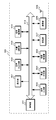
- FIG. 1 illustrates the configuration of a vehicle utilization system.
- the vehicle use system 10 includes a mobile terminal device 20 of a user, a vehicle terminal device 30 mounted in a vehicle (for example, a taxi) used by the user, and a vehicle management device (server) that manages the vehicle and provides information to the user. 40 is used.
- the mobile terminal device 20, the vehicle terminal device 30, and the vehicle management device 40 are connected via a network 50.
- FIG. 2 illustrates the configuration of the mobile terminal device.
- the mobile terminal device 20 includes a display unit 201, a voice input/output unit 202, a position measuring unit 203, a signal processing unit 204, a communication unit 205, an antenna 206, a storage unit 207, an operation input unit 208, a control unit 209, and the like. And each unit is connected via a bus 210.
- the display unit 201 is composed of, for example, a display element such as an LCD (Liquid Crystal Display) or an organic EL (organic electro-luminescence), and a drive circuit that drives the display element.
- the display unit 201 displays an image obtained by the signal processing unit 204, information received by the communication unit 205, information stored in the storage unit 207, and the like.
- the voice input/output unit 202 is configured using a microphone, a speaker, or the like.
- the voice input/output unit 202 collects a user's voice and the like to generate a voice signal.
- the audio input/output unit 202 also converts an audio signal supplied via the bus 210 into a reproduced sound and outputs the reproduced sound.
- the position measuring unit 203 receives radio waves from the positioning satellite and information from the base station of the mobile phone to detect the current position of the mobile terminal device 20, and position information (latitude, longitude, height) indicating the detected current position. Data) is generated.
- the signal processing unit 204 performs various signal processing. For example, the audio signal generated by the audio input/output unit 202 is encoded, and the encoded signal received by the communication unit 205 is decoded. The signal processing unit 204 outputs the image signal obtained by performing the decoding process to the display unit 201 and the audio signal to the audio input/output unit 202.
- the communication unit 205 is for performing communication with the vehicle management device 40 and other mobile terminal devices, performs modulation processing and frequency conversion processing of various information and coded audio signals, and generates transmission signals. .. Further, the communication unit 205 supplies the transmission signal to the antenna 206 and transmits it to a base station (not shown). The communication unit 205 also performs amplification, frequency conversion processing, demodulation processing, and the like of the reception signal received by the antenna 206, and supplies the obtained signal to the signal processing unit 204 and the control unit 209. The communication unit 205 transmits the vehicle use request supplied from the control unit 209 to the vehicle management device 40 in accordance with the vehicle use operation performed by the operation input unit 208, for example. The communication unit 205 supplies the response notification transmitted from the vehicle management apparatus 40 to the control unit 209 in response to the vehicle use request.
- the storage unit 207 is configured using a rewritable storage medium, for example, a semiconductor memory such as a RAM or a built-in flash memory.
- the storage medium of the storage unit 207 may be fixed or may be removable.
- the storage unit 207 stores various information and programs. For example, as various information, user information of the mobile terminal device, registration information registered by the user, various history information, map information, image signals and audio signals, operation setting information of the mobile terminal device, and the like are stored.
- an operating system and an application program such as a program for using a vehicle, are stored.
- the operation input unit 208 is composed of operation switches and a touch panel and the like arranged so as to overlap the display screen of the display unit 201.
- the operation input unit 208 generates an operation signal according to a user operation on an operation switch, a touch panel, or the like.
- the control unit 209 executes the program stored in the storage unit 207, and based on the operation signal generated by the operation input unit 208, the mobile terminal device 20 performs an operation according to a user operation. Control movements.
- the display unit 201 and the control unit 209 function as a display processing unit of the present technology.
- the control unit 209 displays a map on the display unit 201 based on the map information stored in the storage unit 207. Further, the control unit 209 notifies the vehicle management device 40 of the vehicle use request according to the vehicle use operation performed by the operation input unit 208.
- control unit 209 sets the candidate vehicle corresponding to the passing frequency prediction result of the empty vehicle (empty vehicle) and the vehicle usage request to the corresponding position on the map image. Performs processing such as displaying.
- FIG. 3 illustrates the configuration of the vehicle terminal device.
- the vehicle terminal device 30 includes a display unit 301, a voice input/output unit 302, a position measuring unit 303, a signal processing unit 304, a communication unit 305, an antenna 306, a storage unit 307, a route processing unit 308, a charge calculation unit 309, and an operation input unit. It has a control unit 310, a control unit 311, and the like, and each unit is connected via a bus 312.
- the display unit 301 is configured using a display element such as an LCD (Liquid Crystal Display) or an organic EL (organic electro-luminescence) or a drive circuit that drives the display element, and is obtained by the signal processing unit 304.
- a display element such as an LCD (Liquid Crystal Display) or an organic EL (organic electro-luminescence) or a drive circuit that drives the display element, and is obtained by the signal processing unit 304.
- the image, the information received by the communication unit 305, the information stored in the storage unit 307, and the like are displayed.
- the voice input/output unit 302 is configured by using a microphone and a speaker.
- the voice input/output unit 302 collects voices of the driver and the inside of the vehicle to generate a voice signal.
- the audio input/output unit 302 also converts the audio signal supplied via the bus 312 into reproduced sound and outputs the reproduced sound.
- the position measurement unit 303 receives radio waves from positioning satellites and information from mobile phone base stations to detect the current position of the vehicle, and position information indicating the detected current position (latitude, longitude, height data). ) Is generated. Further, the position measurement unit 303 includes a gyro sensor, a geomagnetic sensor, and the like, and may include the detection result of the traveling direction of the vehicle in which the vehicle terminal device 30 is mounted in the position information.
- the signal processing unit 304 performs various signal processing.
- the audio input/output unit 302 performs an encoding process of the audio signal generated and the communication unit 305 performs a decoding process of the encoded signal received.
- the signal processing unit 304 outputs the audio signal obtained by performing the decoding process to the audio input/output unit 302.
- the communication unit 305 is for communicating with the vehicle management device 40 and the like, and performs modulation processing and frequency conversion processing of various information and encoded audio signals, and generates transmission signals. Further, the communication unit 305 supplies the transmission signal to the antenna 306 and transmits it to a base station (not shown). The communication unit 305 also performs amplification, frequency conversion processing, demodulation processing, and the like on the received signal received by the antenna 306, and supplies the obtained signal to the signal processing unit 304 and the control unit 311.
- the communication unit 205 transmits, for example, the behavior information or the candidate vehicle refusal notification supplied from the control unit 209 to the vehicle management device 40 at a predetermined timing. Further, the communication unit 205 supplies the vehicle use notification and the completion notification notified from the vehicle management device 40 to the control unit 209.
- the storage unit 307 is configured using a rewritable storage medium, for example, a semiconductor memory such as a RAM or a built-in flash memory, or a hard disk device. Further, the recording medium of the storage unit 307 may be fixed or may be removable.
- the storage unit 307 stores various information and programs. Various types of information include vehicle information regarding the installed vehicle (for example, identification information of the company to which the vehicle belongs, identification information for identifying each vehicle, driver information regarding the driver, etc.), vehicle dynamics information (for example, position). Information and running speed, running direction, boarding time and getting off time and its position, running distance from boarding to getting off, elapsed time and fee, etc., operation setting information of the vehicle terminal device, etc. are stored.
- an operating system and application programs such as a program for improving the convenience of the vehicle, are stored.
- the route processing unit 308 searches for a route to a destination designated by the driver or the like, and displays the search result on the display unit 301.
- the route processing unit 308 supports the driver with images and voice so that the vehicle can run along the searched route.
- the fare calculation unit 309 calculates a fare based on the distance traveled from getting on and off and the elapsed time. Further, the fare calculation unit 309 includes a car fare and a surcharge as needed.
- the operation input unit 310 is composed of operation switches and a touch panel or the like arranged so as to overlap the display screen of the display unit 301.
- the operation input unit 310 generates an operation signal according to a user operation on an operation switch, a touch panel, or the like.
- the control unit 311 executes a program stored in the storage unit 307, and based on the operation signal generated by the operation input unit 208, an operation preset in the vehicle terminal device 30 or an operation corresponding to a user operation is performed. The operation of each unit is controlled so as to be performed. For example, the control unit 311 transmits the behavior information including the vehicle information and the vehicle dynamics information stored in the storage unit 307 from the communication unit 305 to the vehicle management device 40 at a predetermined timing. Further, the display unit 301 and the control unit 311 function as a display processing unit of the present technology.
- the control unit 311 displays the map on the display unit 301 based on the map information stored in the storage unit 307, and based on the candidate vehicle target notification supplied from the vehicle management device 40, the mobile device that issued the vehicle use request. Based on the position of the terminal device 20 and the position of the mobile terminal device 20 indicated by the vehicle use request, the position of the candidate vehicle that can respond to the vehicle use request is displayed on the map image.
- the control unit 311 performs a process of generating a candidate vehicle refusal notice and transmitting it from the communication unit 305 to the vehicle management device 40, and performs navigation using the position of the mobile terminal device as a destination of the route processing unit 308 according to a user operation. Perform processing to be performed.
- FIG. 4 illustrates the configuration of the vehicle management device.
- the vehicle management device 40 includes a communication unit 401, a storage unit 402, a prediction processing unit 403, a search processing unit 404, and a control unit 405. The respective units are connected via a bus 406.
- the communication unit 401 is for communicating with the mobile terminal device 20 and the vehicle terminal device 30, and receives, for example, a vehicle usage request from the mobile terminal device 20, behavior information from the vehicle terminal device 30, and a candidate vehicle refusal notification. To do. In addition, the communication unit 401 transmits the response notification generated in response to the vehicle usage request to the mobile terminal device 20, and the candidate vehicle target notification generated in response to the vehicle usage request to the vehicle terminal device of the candidate vehicle. Performs processing such as transmission.
- the storage unit 402 is configured using a rewritable storage medium, for example, a semiconductor memory such as a RAM or a built-in flash memory, or a hard disk device. Various information and programs are stored in the storage unit 402.
- the storage unit 402 stores, as various information, the traveling information supplied from the vehicle terminal device 30, the weather condition, the road condition, and the like.
- the storage unit 402 also stores, as programs, an operating system, a program for improving the convenience of the vehicle, and the like.
- the prediction processing unit 403 predicts the passing frequency of an empty vehicle for each position or each region based on the information stored in the storage unit 402. Further, the prediction processing unit 403 performs the demand prediction of the vehicle for each position or for each divided area obtained by dividing the map into a two-dimensional mesh based on the traveling information stored in the storage unit 402.
- the search processing unit 404 can respond to the vehicle use request from the mobile terminal device 20 based on the information stored in the storage unit 402 and the selection criteria in response to the vehicle use request from the mobile terminal device 20. To explore. As the selection criterion, for example, information such as the distance from the position indicated by the vehicle use request and the congestion status of the road is used, and the search processing unit 404 determines the predetermined arrival order at the position indicated by the vehicle use request, for example. Select an empty vehicle within the number range. Further, in consideration of the sales situation of each empty vehicle and the like, if there is little difference in expected arrival time, the empty vehicle with less sales may be preferentially selected.
- the selection criterion for example, information such as the distance from the position indicated by the vehicle use request and the congestion status of the road is used, and the search processing unit 404 determines the predetermined arrival order at the position indicated by the vehicle use request, for example. Select an empty vehicle within the number range. Further, in consideration of the sales situation of each empty vehicle and the like, if there is
- the search processing unit 404 may use the predicted arrival order as the degree of precedence, and the distance from the position indicated by the vehicle use request, the congestion state of the road, the positional relationship with other empty vehicles, and the like are used as the parameters.
- the degree may be calculated, and the candidate vehicle may be selected based on the calculated degree of superiority.
- the control unit 405 executes the program stored in the storage unit 402 to perform response processing corresponding to the notification supplied from the mobile terminal device 20 or the vehicle terminal device 30, and the traveling information supplied from the vehicle terminal device 30. Etc., and demand forecasting processing based on travel information. Further, when the vehicle usage request is notified from the mobile terminal device 20, the control unit 405 generates a response notification indicating a candidate vehicle searched by the search processing unit with the position indicated by the vehicle usage request as a reference, and carries the mobile notification. Send to the terminal device. Further, the response notification may include the expected arrival time.
- control unit 405 generates a candidate vehicle target notification indicating the mobile terminal device that has made the vehicle use request to the vehicle terminal device of the candidate vehicle searched by the search processing unit and another candidate vehicle to generate a candidate vehicle target notification. It is transmitted to the vehicle terminal device 30. Further, the search processing unit 404 or the control unit 405 calculates the superiority of the candidate vehicle with respect to the vehicle use request based on at least the position of the mobile terminal device and the position of the candidate vehicle, and the control unit 405 notifies the candidate vehicle target notification. Processing such as including the superiority of each candidate vehicle is performed. When there is no candidate vehicle, the control unit 405 performs a process of including the passing frequency prediction result of the empty vehicle generated by the prediction processing unit 403 in the response notification and transmitting the result to the mobile terminal device 20.
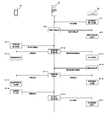
- FIG. 5 is a sequence diagram illustrating the overall operation of the vehicle utilization system.
- the vehicle terminal device 30 starts notification of traveling information.
- the vehicle terminal device 30 starts a process of generating traveling information and transmitting the traveling information to the vehicle management device when the vehicle starts to be used.
- the traveling information indicates vehicle information and vehicle dynamics information.
- the traveling information may include traveling environment information (information indicating weather, traffic jam conditions, etc.).
- step ST2 the vehicle management device 40 performs a demand forecast process.
- the vehicle management device 40 predicts an area or a position where a passenger rides frequently based on the traveling information stored in the storage unit 402, the current position and current time of the target vehicle, the traveling environment (weather, traffic jam condition, etc.), and the like. Then, the demand prediction result is transmitted to the vehicle terminal device 30 of the target vehicle.
- the vehicle terminal device 30 displays the demand forecast result.
- the vehicle terminal device 30 displays the demand forecast result on the map image displayed on the display unit 301, for example, based on the demand forecast information notified from the vehicle management device 40.
- FIG. 6 shows a display example of the demand forecast result, in which a high demand area, a low demand area and a medium demand area are displayed together with the position of the own vehicle on the map image.
- the direction of the arrow in FIG. 6 and FIGS. 7 to 10 described later indicates the traveling direction of the vehicle.
- step ST11 the mobile terminal device 20 performs vehicle usage request processing.
- the mobile terminal device 20 transmits a vehicle use request to the vehicle management device 40 in response to the vehicle use operation being performed.
- the vehicle use request includes information indicating the current position of the mobile terminal device 20, and the like.
- the vehicle management device 40 performs a candidate vehicle search process.
- the vehicle management device 40 uses the information stored in the storage unit 402 to send a vehicle use request to a vehicle in an empty state that is running near the current position of the mobile terminal device 20 indicated by the vehicle use request. Search as a possible candidate vehicle. Note that the number of candidate vehicles is, for example, within a preset number.
- the vehicle management device 40 generates a response notification indicating the searched candidate vehicle and transmits it to the mobile terminal device 20.
- the vehicle management device 40 generates a candidate vehicle target notification indicating the mobile terminal device that has requested the vehicle use to the vehicle terminal device of the searched candidate vehicle and other candidate vehicles, and transmits the candidate vehicle target notification to the candidate vehicles.
- the vehicle management device 40 may calculate the superiority of the candidate vehicle based on at least the position of the mobile terminal device and the position of the candidate vehicle, and include it in the candidate vehicle target notification.
- the mobile terminal device 20 displays candidate vehicles in step ST13.
- the mobile terminal device 20 displays a candidate vehicle on the display unit 201 based on the response notification from the vehicle management device 40.
- FIG. 7 illustrates the candidate vehicle display, and a display indicating the candidate vehicle position is provided on the map image. Note that FIG. 7 shows the own position and the positions of five candidate vehicles.
- the vehicle terminal device 30 displays the user in step ST14.
- the vehicle terminal device 30 displays a user on the display unit 301 based on the candidate vehicle target notification from the vehicle management device 40.
- FIG. 8 exemplifies the user display, and a display showing the position (user position) of the mobile terminal device 20 that has issued the vehicle use request is provided on the map image.
- the positions of other candidate vehicles are displayed.
- the notification of the candidate vehicle target indicates the superiority
- the notification is also displayed together with the superiority. It should be noted that in FIG. 8, the degree of superiority is indicated by the numbers in the squares, and the case where the superiority is low as the numerical value becomes large is illustrated.
- the vehicle terminal device 30 performs a behavior determination process. Based on the traveling state, the vehicle terminal device 30 determines whether the vehicle terminal device 30 is heading to the user position (the position of the mobile terminal device that has issued the vehicle use request) indicated in the candidate vehicle target notification. When the vehicle terminal device 30 is not heading to the user position, for example, the user position is not heading to the user position because the user position is different from the direction desired by the driver, or the vehicle terminal device 30 is When the empty vehicle state is changed to the actual vehicle state by causing the user of the vehicle to get on, the candidate vehicle refusal notice is transmitted to the vehicle management device 40.
- the vehicle terminal device 30 determines whether the vehicle terminal device 30 is heading to the user position (the position of the mobile terminal device that has issued the vehicle use request) indicated in the candidate vehicle target notification.
- the vehicle terminal device 30 is not heading to the user position, for example, the user position is not heading to the user position because the user position is different from the direction desired by the driver, or the vehicle terminal device 30 is When the empty vehicle state is changed to the actual vehicle state
- step ST16 the vehicle management device 40 updates the candidate vehicle.
- the vehicle management device 40 performs an update process of excluding a vehicle that is not traveling toward the user position from the candidate vehicles based on the candidate vehicle refusal notification supplied from the vehicle terminal device 30, and an update indicating the updated candidate vehicle.
- the notification is transmitted to the mobile terminal device 20 and the vehicle terminal device 30 of the candidate vehicle.
- the mobile terminal device 20 updates the candidate vehicle display in step ST17.
- the mobile terminal device 20 updates the candidate vehicle display based on the update notification transmitted from the vehicle management device 40.
- FIG. 9 illustrates the updated candidate vehicle display, and illustrates the case where the number of candidate vehicles is reduced from five to three.
- the vehicle terminal device 30 updates the user display.
- the vehicle terminal device 30 updates the user display based on the update notification transmitted from the vehicle management device 40.
- FIG. 10 illustrates the updated user display, and illustrates the case where the number of other candidate vehicles has decreased from four to two.
- the processing from step ST12 is performed, a new candidate vehicle is selected, and the portable terminal device 20 and the vehicle terminal device 30 are notified.
- the mobile terminal device 20 may include an update notification including a result of predicting the passing frequency of an empty vehicle, and instructing the mobile terminal device 20 to move to an area in which an empty vehicle has a high passing frequency.
- FIG. 11 exemplifies a case where the passing frequency prediction result is displayed, and shows a case where an instruction to move to an area where the frequency of passing empty vehicles is high and a movement instruction to the self position and an area where passing frequencies of empty vehicles are high are displayed. There is.
- the mobile terminal device 20 determines whether or not the vehicle is in the vehicle.
- the mobile terminal device 20 notifies the vehicle management device 40 that the user has boarded the vehicle, in response to the determination that the user has boarded the vehicle.
- the fact that the user got into the vehicle may be determined based on a user operation on the mobile terminal device 20, or may be automatically determined based on a moving position or a moving speed detected by the mobile terminal device 20.
- step ST20 the vehicle management device 40 performs a response completion notification process.
- the vehicle management device 40 determines from the boarding notice that the user has been able to use the vehicle, the vehicle management device 40 has completed the response to the vehicle use request so that the user can determine that the user is using the vehicle with another candidate vehicle.
- a completion notification indicating that the request has been made is generated and transmitted to the vehicle terminal device 30 of the candidate vehicle.
- step ST21 the vehicle terminal device 30 ends the user display.
- the vehicle terminal device 30 terminates the user display on the display unit 301 based on the completion notification so that the user can determine that the vehicle can be used. For example, the position display of the user and the position display of other candidate vehicles are deleted from the map image.
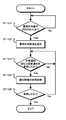
- FIG. 12 is a flowchart illustrating the operation of the mobile terminal device.
- the mobile terminal device 20 determines whether a vehicle use operation has been performed. The mobile terminal device 20 proceeds to step ST102 when it is determined that the vehicle use operation is performed by the operation input unit 208 or the voice input/output unit 202, and returns to step ST101 when the vehicle use operation is not performed.
- the mobile terminal device 20 transmits a vehicle use request in step ST102.
- the mobile terminal device 20 transmits a vehicle use request from the communication unit 205 to the vehicle management device 40 via the antenna 206 and the network, and proceeds to step ST103.
- step ST103 the mobile terminal device 20 determines whether a response notification or update information has been received.
- the mobile terminal device 20 proceeds to step ST104 when the response notification or the update information is received from the vehicle management device 40, and otherwise returns to step ST103.
- step ST104 the mobile terminal device 20 performs a notification information display process.
- the mobile terminal device 20 displays the position of the candidate vehicle on the map image displayed on the display unit 201 based on the received response notification or update information.
- the mobile terminal device 20 gives an instruction to move to an area where the empty vehicle passing frequency prediction result or the empty vehicle passing frequency is high.
- the movement instruction may be given using the voice input/output unit 202.
- the display scale of the map image is adjusted based on the position indicated by the notification information and the self position. For example, the display scale is adjusted so that the own position and the position of the candidate vehicle can be displayed on the map image. In addition, the display scale is adjusted so that the self-position and the area where the empty vehicle passes frequently are displayed on the map image. In this way, by adjusting the display scale, it becomes possible to easily confirm the areas where the candidate vehicles and the empty vehicles pass frequently. In this way, the mobile terminal device 20 performs the display process of the notification information and proceeds to step ST105.
- step ST105 the mobile terminal device 20 determines whether or not it has boarded.
- the mobile terminal device 20 returns to step ST103 when it is not determined that the user has got in the vehicle, and transmits the boarding notification to the vehicle management device 40 when it is determined that the user has got in the vehicle and ends the process.
- the boarding notification may be transmitted to the vehicle management device 40 as the completion of the vehicle use request.
- FIG. 13 is a flowchart illustrating the operation of the vehicle terminal device.
- the vehicle terminal device 30 starts notification of traveling information.
- the vehicle terminal device 30 starts a process of generating traveling information at a predetermined timing and transmitting it to the vehicle management device 40, and proceeds to step ST202.
- step ST202 the vehicle terminal device 30 determines whether the demand forecast result has been received.
- the vehicle terminal device 30 determines whether or not the demand forecast result is received from the vehicle management device 40, and if the demand forecast result is received, the process proceeds to step ST203, and if not, the process proceeds to step ST204.
- step ST203 the vehicle terminal device 30 displays the demand forecast result.
- the vehicle terminal device 30 displays the demand forecast result on the map image displayed on the display unit 301 based on the received demand forecast result information, and proceeds to step ST204.
- step ST204 the vehicle terminal device 30 determines whether the notification has been received.
- the vehicle terminal device 30 determines whether or not the candidate vehicle target notification, the update notification, or the completion notification is received from the vehicle management device 40. If the notification is received, the process proceeds to step ST205, and if not, to step ST202. Return.
- step ST205 the vehicle terminal device 30 performs the display process of the notification information.
- the vehicle terminal device 30 displays information based on the received notification on the map image displayed on the display unit 301 based on the candidate vehicle target notification or the update notification, and proceeds to step ST206.
- step ST206 the vehicle terminal device 30 determines whether the user has designated.
- the vehicle terminal device 30 proceeds to step ST207 when it is determined that the driver has designated the user through the operation input unit 310 or the voice input/output unit 302, and proceeds to step ST208 when it is determined that the driver is not designated. ..
- step ST207 the vehicle terminal device 30 performs navigation processing.
- the vehicle terminal device 30 uses the position of the user (the position of the mobile terminal device 20 that has issued the vehicle use request) as the destination, performs a route search based on the position of the own vehicle, the position of the user, and the map information, and the display unit
- the route guidance to the position of the user is performed using 301 and the voice input/output unit 302, and the process proceeds to step ST210.
- step ST208 the vehicle terminal device 30 determines whether or not the vehicle is running toward the user's position. If the vehicle terminal device 30 determines from the movement of the vehicle in which the vehicle terminal device 30 is mounted that the vehicle is not in the traveling state toward the position of the user, the process proceeds to step ST209, and the vehicle terminal device 30 travels toward the position of the user. If it is determined to be in the state, the process proceeds to step ST210.
- step ST209 the vehicle terminal device 30 transmits a candidate vehicle refusal notice. Since the vehicle terminal device 30 is not in the traveling state toward the position of the user, the vehicle terminal device 30 transmits a candidate vehicle withdrawal notification to the vehicle management device 40, and proceeds to step ST210.
- step ST210 the vehicle terminal device 30 determines whether the completion notification has been received.
- the vehicle terminal device 30 determines whether or not the completion notification is received from the vehicle management device 40, and if the completion notification is received, the process proceeds to step ST211, and if not, the process returns to step ST204.
- step ST211 the vehicle terminal device 30 finishes displaying the user information. Since the vehicle terminal device 30 indicates that the user has boarded the vehicle or the user has finished using the vehicle by the completion notification, the user shown in the map image displayed on the display unit 301 The display indicating the position of and the position of the candidate vehicle is erased and the process returns to step ST202.
- FIG. 14 is a flowchart illustrating the operation of the vehicle management device.
- the vehicle management device 40 determines whether the traveling information has been received.
- the vehicle management device 40 proceeds to step ST302 when receiving the traveling information from the vehicle terminal device 30, and proceeds to step ST303 when not receiving the traveling information.
- step ST302 the vehicle management device 40 accumulates travel information.
- the vehicle management device 40 stores the received traveling information in the storage unit 402 and proceeds to step ST303.
- step ST303 the vehicle management device 40 performs a demand forecast process.
- the vehicle management device 40 predicts, with the prediction processing unit 403, an area and a place where the user of the vehicle is easily found in the current time, the current traveling environment, and the like based on the traveling information stored in the storage unit 402, and then the step ST304. Proceed to.
- the vehicle management device 40 transmits the demand forecast result.
- the vehicle management device 40 transmits the demand prediction result to the vehicle terminal device 30 of the vehicle in an empty state at a predetermined timing, for example, a timing of a request from the driver or a timing of a predetermined time interval, and proceeds to step ST305.
- the demand forecast result may notify the demand forecast result in a predetermined surrounding range based on the position of the vehicle terminal device 30, or the demand forecast result in a predetermined range based on the traveling direction of the vehicle terminal device 30. You may. For example, when the position of the vehicle terminal device 30 is a downtown area, the demand prediction result of a predetermined surrounding area based on the position of the vehicle terminal device 30 is transmitted, and the position of the vehicle terminal device 30 is a highway. By transmitting the demand forecast result in a predetermined range based on the traveling direction of the vehicle terminal device 30, the user can easily use the demand forecast result.
- step ST305 the vehicle management device 40 determines whether the vehicle use request has been received.
- the vehicle management device 40 determines whether or not the vehicle use request is received from the mobile terminal device 20, and if the vehicle use request is received, the process proceeds to step ST306, and if not, the process returns to step ST301.
- the vehicle management device 40 performs a candidate vehicle search process.
- the vehicle management device 40 searches for a candidate vehicle based on the position of the mobile terminal device 20 indicated by the vehicle use request. For example, the vehicle management device 40 searches for an empty vehicle located within a predetermined range from the position indicated by the vehicle use request. Further, when the number of empty vehicles located within the predetermined range is larger than the predetermined number, vehicle management device 40 selects a predetermined number of empty vehicles based on a preset selection criterion, and proceeds to step ST307 as a candidate vehicle.
- the selection criterion for example, information such as the distance from the position indicated by the vehicle use request, the congestion state of the road, and the positional relationship with other empty vehicles is used to select the position indicated by the vehicle use request. Select empty vehicles in order of expected arrival. Further, in consideration of the sales situation of each empty vehicle and the like, if there is little difference in expected arrival time, the empty vehicle with less sales may be preferentially selected.
- step ST307 the vehicle management device 40 transmits a response notification.
- the vehicle management device 40 transmits a response notification including information indicating the searched candidate vehicle to the mobile terminal device 20 that has transmitted the vehicle use request, and proceeds to step ST308.
- the vehicle management device 40 includes the pass frequency prediction result of an empty vehicle in the response notification.
- step ST308 the vehicle management device 40 transmits a candidate vehicle target notification.
- the vehicle management device 40 generates a candidate vehicle target notification indicating the position of the mobile terminal device 20 that has transmitted the vehicle use request, the position of the candidate vehicle, or the like to the vehicle terminal device 30 of the candidate vehicle, and the vehicle of the candidate vehicle. It transmits to the terminal device 30, and progresses to step ST309.
- step ST309 the vehicle management device 40 determines whether the candidate vehicle refusal notice is received.
- the vehicle management device 40 determines whether or not the candidate vehicle refusal notification indicating that the candidate vehicle refusal is not received is received from the vehicle terminal device 30 of the candidate vehicle, and when the candidate vehicle refusal notification is received, the process proceeds to step ST310 to receive. If not, the process proceeds to step ST311.
- step ST310 vehicle management device 40 transmits an update notification.
- the vehicle management device 40 updates the candidate vehicle based on the received notification of the candidate vehicle refusal.
- the vehicle management device 40 performs update processing for excluding the vehicle for which the candidate vehicle refusal notification has been given from the candidate vehicles, and issues an update notification indicating the candidate vehicles after the update processing to the mobile terminal device 20 and the vehicle terminal devices of the candidate vehicles before the update. 30 and the process proceeds to step ST311.
- step ST311 the vehicle management device 40 determines whether the boarding notification has been received.
- the vehicle management device 40 determines whether or not the boarding notification from the mobile terminal device 20 is received, and if the boarding notification is received, the process proceeds to step ST312, and if not, the process returns to step ST301.
- step ST312 the vehicle management device 40 transmits a completion notice.
- the vehicle management device 40 transmits the completion notification to the candidate vehicles and returns to step ST301 because the completion notification indicates that the user who owns the mobile terminal device 20 has boarded the vehicle.
- the user who owns the mobile terminal device 20 only transmits a vehicle use request to the vehicle management device 40, and the available candidate vehicles are displayed on the mobile terminal device 20 in the map image. Displayed above. Therefore, the user can easily determine the position of the available vehicle.
- the response notification includes the expected arrival time
- the user can know the waiting time.
- the passing frequency prediction result of an empty vehicle is displayed on the map image. Therefore, even if there is no candidate vehicle, the user can easily find an empty vehicle.
- the present technology is not a system for allocating a specific vehicle to the user's position in response to a vehicle use request from the user, the user can avoid paying the vehicle fare.
- the driver of the vehicle equipped with the vehicle terminal device 30 can easily find the user who wants to use the vehicle and can reduce the number of running in an empty state. It becomes possible to do. Further, since other candidate vehicles are shown on the map image, it is possible to judge whether or not the vehicle should run toward the position of the user who desires to use the vehicle. Further, when the superiority of the candidate vehicle is displayed, it becomes possible to more correctly determine whether to drive toward the position of the user who wants to use the vehicle.
- the vehicle management device 40 searches for a candidate vehicle in response to a vehicle use request from a user who desires to use the vehicle, and sets the user position of the searched candidate vehicle or the position of another candidate vehicle as a candidate vehicle. By notifying, it becomes possible to operate the vehicle efficiently. Further, since the vehicle management device 40 gives a response notification in response to the vehicle use request, the user can easily use the vehicle.
- the series of processes described in the specification can be executed by hardware, software, or a composite configuration of both.
- the program recording the processing sequence is installed in a memory in a computer incorporated in dedicated hardware and executed.
- the program can be installed and executed in a general-purpose computer that can execute various processes.
- the program can be recorded in advance in a hard disk device, SSD (Solid State Drive), or ROM (Read Only Memory) as a recording medium.
- the program is a flexible disk, CD-ROM (Compact Disc Read Only Memory), MO (Magneto optical) disc, DVD (Digital Versatile Disc), BD (Blu-Ray Disc (registered trademark)), magnetic disc, semiconductor memory card. It can be stored (recorded) temporarily or permanently in a removable recording medium such as.
- a removable recording medium can be provided as so-called package software.
- the program may be wirelessly or wired transferred from the download site to the computer via a network such as a LAN (Local Area Network) or the Internet.
- a network such as a LAN (Local Area Network) or the Internet.
- the program thus transferred can be received and installed in a recording medium such as a built-in hard disk device.
- the mobile terminal device of the present technology can also have the following configurations.
- a mobile terminal device including a display processing unit that displays a passing frequency prediction result of an empty vehicle generated based on traveling history information at a corresponding position on a map image.
- the passing frequency prediction result is included in the response notification supplied from the vehicle management device in response to notifying the vehicle management device of the vehicle use request including the position information indicating the current position measured by the position measurement unit.
- the vehicle terminal device according to (1) which is the information obtained.
- the mobile terminal device according to (2), wherein the passage frequency prediction result is information supplied when the vehicle management device cannot search for a candidate vehicle corresponding to the vehicle use request.
- the mobile terminal device (4) The mobile terminal device according to (2) or (3), wherein the display processing unit displays a movement instruction to an area in which an empty vehicle has a high passing frequency indicated by the passing frequency prediction result. (5) The display processing unit adjusts the display scale of the map image so that the current position and the area where the frequency of passing empty vehicles is high, which is indicated by the passing frequency prediction result, can be displayed on the map image ( The mobile terminal device according to any one of 2) to (4). (6) The response notification includes candidate vehicle information indicating a candidate vehicle corresponding to the vehicle use request, The display processing unit is the mobile terminal device according to (2), in which the position of the candidate vehicle indicated by the candidate vehicle information is displayed on the map image. (7) The display processing unit adjusts the display scale of the map image so that the current position and the position of the candidate vehicle indicated by the candidate vehicle information can be displayed on the map image. Mobile terminal device.
- the vehicle terminal device of the present technology can also have the following configurations.
- (2) The position of the mobile terminal device and the position of the candidate vehicle are indicated by the candidate vehicle target notification supplied from the vehicle management device in response to the vehicle usage request being notified from the mobile terminal device to the vehicle management device.
- the vehicle terminal device according to (2) which is at the opened position.
- the candidate vehicle target notification includes information indicating the superiority of each candidate vehicle searched by the vehicle management device in response to the vehicle use request,
- the display processing unit is the vehicle terminal device according to (3), which displays the superiority.
- the vehicle further includes travel information and a control unit that causes the communication unit to transmit a candidate vehicle withdrawal notification to the vehicle management device when the vehicle is not traveling toward the position of the mobile terminal device that has made the vehicle use request.
- the vehicle terminal device according to any one of (1) to (3).
- a route processing unit that searches for a route to the destination is further provided,
- the said control part is a vehicle terminal device in any one of (1) thru
- the vehicle management device of the present technology can also have the following configurations.
- a search processing unit that searches for a candidate vehicle that can respond to the vehicle usage request based on the position indicated by the vehicle usage request from the mobile terminal device.
- the response notification indicating the candidate vehicle searched by the search processing unit in response to the vehicle use request is transmitted from the communication unit to the mobile terminal device.
- a control unit that causes a communication unit to transmit a candidate vehicle target notification indicating another candidate vehicle, the mobile terminal device that has made the vehicle use request.
- a storage unit that stores traveling information of the vehicle acquired from the vehicle terminal device, Based on the traveling information stored in the storage unit, further comprises a prediction processing unit for predicting the passing frequency of an empty vehicle,
- the said management part is a vehicle management apparatus as described in (1) which includes the passage frequency prediction result of the said prediction process part in the said response notification, when the said candidate vehicle does not exist.
- the control unit updates the candidate vehicle target notification based on a candidate vehicle refusal notification from the vehicle terminal device.
- the control unit causes the communication unit to transmit a completion notification indicating that the response to the vehicle use request has been completed to the candidate vehicles, in response to a boarding notification from the mobile terminal device indicating boarding of the vehicle.
- the vehicle management device according to any one of (1) to (4).
- the present technology may be the following programs.
- a program for causing a computer to execute operation control of a mobile terminal device A program that causes the computer to execute a procedure of displaying a passing frequency prediction result of an empty vehicle generated based on traveling history information at a corresponding position on a map image.
- a program that causes a computer to execute operation control of an in-vehicle terminal device A procedure for displaying on the map image the position of the mobile terminal device that has made the vehicle use request and the position of the candidate vehicle that can correspond to the vehicle use request searched with the position of the mobile terminal device as a reference are displayed on the computer.
Landscapes
- Engineering & Computer Science (AREA)
- Radar, Positioning & Navigation (AREA)
- Remote Sensing (AREA)
- Physics & Mathematics (AREA)
- General Physics & Mathematics (AREA)
- Business, Economics & Management (AREA)
- Human Resources & Organizations (AREA)
- Strategic Management (AREA)
- Economics (AREA)
- General Health & Medical Sciences (AREA)
- Automation & Control Theory (AREA)
- Marketing (AREA)
- Primary Health Care (AREA)
- Health & Medical Sciences (AREA)
- Tourism & Hospitality (AREA)
- General Business, Economics & Management (AREA)
- Theoretical Computer Science (AREA)
- Traffic Control Systems (AREA)
- Management, Administration, Business Operations System, And Electronic Commerce (AREA)
- Navigation (AREA)
Abstract
L'invention concerne un dispositif terminal mobile 20 qui affiche, à une position correspondante sur une image de carte, un véhicule candidat correspondant à une demande d'utilisation de véhicule, ou un résultat de prédiction de fréquence de passage de véhicule disponible inclus dans une notification de réponse qui est fournie en réponse à la transmission de la demande d'utilisation de véhicule qui comprend les informations de position de l'utilisateur à un dispositif de gestion de véhicule 40. Le dispositif de gestion de véhicule 40 inclut dans la notification de réponse des informations concernant des véhicules candidats extraits en réponse à la demande d'utilisation de véhicule provenant du terminal mobile. Lorsqu'il n'y a pas de véhicule candidat, le résultat de prédiction de fréquence de passage de véhicule disponible est inclus dans la notification de réponse. En outre, le dispositif de gestion de véhicule 40 transmet, à un dispositif terminal de véhicule 30 d'un véhicule candidat, une notification désignée par un véhicule candidat indiquant le dispositif terminal mobile 20 et d'autres véhicules candidats. Le dispositif terminal de véhicule 30 affiche le dispositif terminal mobile et d'autres véhicules candidats sur l'image de carte, sur la base du véhicule candidat désigné par notification. En utilisant les informations affichées sur l'image de carte, la commodité d'un véhicule peut être améliorée.
Priority Applications (3)
| Application Number | Priority Date | Filing Date | Title |
|---|---|---|---|
| JP2020571024A JP7459803B2 (ja) | 2019-02-07 | 2019-12-13 | 携帯端末装置と車載端末装置と車両管理装置および情報処理方法 |
| JP2024039494A JP7708257B2 (ja) | 2019-02-07 | 2024-03-13 | 車載端末装置と車両管理装置および情報処理方法 |
| JP2025112725A JP2025133857A (ja) | 2019-02-07 | 2025-07-03 | 車両利用システム、車両利用方法、コンピュータプログラム、及び車両管理装置 |
Applications Claiming Priority (2)
| Application Number | Priority Date | Filing Date | Title |
|---|---|---|---|
| JP2019020427 | 2019-02-07 | ||
| JP2019-020427 | 2019-09-12 |
Publications (1)
| Publication Number | Publication Date |
|---|---|
| WO2020162043A1 true WO2020162043A1 (fr) | 2020-08-13 |
Family
ID=71947858
Family Applications (1)
| Application Number | Title | Priority Date | Filing Date |
|---|---|---|---|
| PCT/JP2019/048919 Ceased WO2020162043A1 (fr) | 2019-02-07 | 2019-12-13 | Dispositif terminal mobile, dispositif terminal embarqué, dispositif de gestion de véhicule et procédé de traitement d'informations |
Country Status (2)
| Country | Link |
|---|---|
| JP (3) | JP7459803B2 (fr) |
| WO (1) | WO2020162043A1 (fr) |
Citations (8)
| Publication number | Priority date | Publication date | Assignee | Title |
|---|---|---|---|---|
| JPH09128690A (ja) * | 1995-11-07 | 1997-05-16 | Syst Sogo Kaihatsu Kk | 配車システム |
| JP2001333455A (ja) * | 2000-05-23 | 2001-11-30 | Aisin Aw Co Ltd | 移動体広告情報配信方法、移動体広告情報配信システム、移動体広告情報登録システム、移動体広告情報課金システム、移動体通信機器及び記録媒体 |
| JP2002258742A (ja) * | 2001-02-28 | 2002-09-11 | Secom Co Ltd | 捜索支援装置、及び捜索支援システム |
| JP2002352388A (ja) * | 2001-05-25 | 2002-12-06 | Aisin Seiki Co Ltd | 車両検索システム及び該車両検索システムを用いた配車システム |
| JP2009054072A (ja) * | 2007-08-29 | 2009-03-12 | Navitime Japan Co Ltd | 情報収集・配信システム、情報収集・配信サーバ、ユーザ端末装置、及び情報収集・配信方法 |
| JP2013134641A (ja) * | 2011-12-27 | 2013-07-08 | Media Mobile Co Ltd | 携帯端末を用いたタクシー車両の呼び寄せシステム |
| JP2015204005A (ja) * | 2014-04-15 | 2015-11-16 | Necエンジニアリング株式会社 | 配車管理システム、配車管理装置、配車管理方法、及び、配車管理プログラム |
| WO2015198593A1 (fr) * | 2014-06-25 | 2015-12-30 | 日本電気株式会社 | Dispositif de traitement d'image, procédé de traitement, et support d'enregistrement mémorisant un programme associé |
Family Cites Families (10)
| Publication number | Priority date | Publication date | Assignee | Title |
|---|---|---|---|---|
| JP2002056078A (ja) | 2000-08-09 | 2002-02-20 | Csk Corp | サービス利用者探知システム、サービス利用者探知方法、および、記録媒体 |
| JP2003067889A (ja) | 2001-08-24 | 2003-03-07 | Oki Electric Ind Co Ltd | 営業用自動車配車システム |
| JP2003296426A (ja) | 2002-03-29 | 2003-10-17 | Ntt Comware Corp | 配車管理装置 |
| JP2003296887A (ja) | 2002-03-29 | 2003-10-17 | Eiichiro Inakazu | タクシー配車方法、タクシー配車システム及びタクシー配車用ウェブサーバ |
| JP2008065396A (ja) * | 2006-09-04 | 2008-03-21 | Fujitsu Ten Ltd | 需要予測表示方法、需要予測表示システム、無線端末およびプログラム |
| JP4568314B2 (ja) | 2007-09-04 | 2010-10-27 | 株式会社ナビタイムジャパン | 情報収集・配信システム、情報収集・配信サーバ、ユーザ端末装置、及び情報収集・配信方法 |
| CN103578265B (zh) | 2012-07-18 | 2015-07-08 | 北京掌城科技有限公司 | 基于出租车gps数据的打车热点获取方法 |
| JP5914399B2 (ja) | 2013-03-26 | 2016-05-11 | 株式会社ゼンリンデータコム | タクシー案内システムおよびタクシー案内方法 |
| JP6916158B2 (ja) * | 2018-10-31 | 2021-08-11 | トヨタ自動車株式会社 | 需要予測情報の表示制御方法、表示制御装置、及び表示制御プログラム |
| JP7621585B2 (ja) * | 2018-12-13 | 2025-01-27 | 株式会社フューチャー・ブレイン | 車両顧客マッチングシステム及び端末表示装置 |
-
2019
- 2019-12-13 JP JP2020571024A patent/JP7459803B2/ja active Active
- 2019-12-13 WO PCT/JP2019/048919 patent/WO2020162043A1/fr not_active Ceased
-
2024
- 2024-03-13 JP JP2024039494A patent/JP7708257B2/ja active Active
-
2025
- 2025-07-03 JP JP2025112725A patent/JP2025133857A/ja active Pending
Patent Citations (8)
| Publication number | Priority date | Publication date | Assignee | Title |
|---|---|---|---|---|
| JPH09128690A (ja) * | 1995-11-07 | 1997-05-16 | Syst Sogo Kaihatsu Kk | 配車システム |
| JP2001333455A (ja) * | 2000-05-23 | 2001-11-30 | Aisin Aw Co Ltd | 移動体広告情報配信方法、移動体広告情報配信システム、移動体広告情報登録システム、移動体広告情報課金システム、移動体通信機器及び記録媒体 |
| JP2002258742A (ja) * | 2001-02-28 | 2002-09-11 | Secom Co Ltd | 捜索支援装置、及び捜索支援システム |
| JP2002352388A (ja) * | 2001-05-25 | 2002-12-06 | Aisin Seiki Co Ltd | 車両検索システム及び該車両検索システムを用いた配車システム |
| JP2009054072A (ja) * | 2007-08-29 | 2009-03-12 | Navitime Japan Co Ltd | 情報収集・配信システム、情報収集・配信サーバ、ユーザ端末装置、及び情報収集・配信方法 |
| JP2013134641A (ja) * | 2011-12-27 | 2013-07-08 | Media Mobile Co Ltd | 携帯端末を用いたタクシー車両の呼び寄せシステム |
| JP2015204005A (ja) * | 2014-04-15 | 2015-11-16 | Necエンジニアリング株式会社 | 配車管理システム、配車管理装置、配車管理方法、及び、配車管理プログラム |
| WO2015198593A1 (fr) * | 2014-06-25 | 2015-12-30 | 日本電気株式会社 | Dispositif de traitement d'image, procédé de traitement, et support d'enregistrement mémorisant un programme associé |
Also Published As
| Publication number | Publication date |
|---|---|
| JP7708257B2 (ja) | 2025-07-15 |
| JPWO2020162043A1 (ja) | 2021-12-09 |
| JP2025133857A (ja) | 2025-09-11 |
| JP7459803B2 (ja) | 2024-04-02 |
| JP2024069442A (ja) | 2024-05-21 |
Similar Documents
| Publication | Publication Date | Title |
|---|---|---|
| JP4241637B2 (ja) | 地図情報処理装置 | |
| EP2126515B1 (fr) | Systèmes et procédés de détermination d'itinéraire | |
| JPWO2014073028A1 (ja) | ナビゲーション装置 | |
| JP2013117378A (ja) | ナビゲーションシステム | |
| KR20100015912A (ko) | 내비게이션 장치 및 표시 방법 | |
| JP5069574B2 (ja) | 携帯端末装置、特定施設情報提示システムおよび特定施設情報提示方法 | |
| JP6482198B2 (ja) | ナビゲーションシステム | |
| JPH0757188A (ja) | 車載用ナビゲーション装置 | |
| JP4554754B2 (ja) | ナビゲーション装置 | |
| JP5032592B2 (ja) | 経路探索装置、経路探索方法、経路探索プログラムおよび記録媒体 | |
| KR100647742B1 (ko) | 대중교통 기반의 네비게이션 서비스 시스템 및 그 방법 | |
| JP2005208041A (ja) | 動的経路探索方法 | |
| JP2008304313A (ja) | ナビゲーション装置、配信装置、ナビゲーションシステム | |
| JP7708257B2 (ja) | 車載端末装置と車両管理装置および情報処理方法 | |
| JPWO2006112172A1 (ja) | ナビゲーション装置 | |
| JP2012130024A (ja) | 端末装置、方法、プログラム、および、施設情報表示システム | |
| JP3906245B2 (ja) | ナビゲーションシステム | |
| JP2011209292A (ja) | 経路探索装置、経路探索方法、及び経路探索処理プログラム等 | |
| JP2011191169A (ja) | ナビゲーション装置 | |
| JP6625282B2 (ja) | 通知制御装置及び通知制御方法 | |
| WO2007010754A1 (fr) | Dispositif apportant des informations, procédé d’apport d’informations et programme apportant des informations | |
| JP4169919B2 (ja) | ナビゲーション装置及びナビゲーション制御用プログラムがコンピュータで読取可能に記録された情報記録媒体 | |
| JP5018755B2 (ja) | 配信システム | |
| JP4786242B2 (ja) | ナビゲーション装置及び地図配信装置 | |
| JP2013137271A (ja) | 情報端末、プログラムおよび運転支援方法 |
Legal Events
| Date | Code | Title | Description |
|---|---|---|---|
| 121 | Ep: the epo has been informed by wipo that ep was designated in this application |
Ref document number: 19914649 Country of ref document: EP Kind code of ref document: A1 |
|
| ENP | Entry into the national phase |
Ref document number: 2020571024 Country of ref document: JP Kind code of ref document: A |
|
| NENP | Non-entry into the national phase |
Ref country code: DE |
|
| 122 | Ep: pct application non-entry in european phase |
Ref document number: 19914649 Country of ref document: EP Kind code of ref document: A1 |