WO2020166045A1 - Terminal utilisateur et procédé de communication sans fil - Google Patents
Terminal utilisateur et procédé de communication sans fil Download PDFInfo
- Publication number
- WO2020166045A1 WO2020166045A1 PCT/JP2019/005452 JP2019005452W WO2020166045A1 WO 2020166045 A1 WO2020166045 A1 WO 2020166045A1 JP 2019005452 W JP2019005452 W JP 2019005452W WO 2020166045 A1 WO2020166045 A1 WO 2020166045A1
- Authority
- WO
- WIPO (PCT)
- Prior art keywords
- search space
- transmission
- coreset
- pdcch
- space set
- Prior art date
- Legal status (The legal status is an assumption and is not a legal conclusion. Google has not performed a legal analysis and makes no representation as to the accuracy of the status listed.)
- Ceased
Links
Images




Classifications
-
- H—ELECTRICITY
- H04—ELECTRIC COMMUNICATION TECHNIQUE
- H04L—TRANSMISSION OF DIGITAL INFORMATION, e.g. TELEGRAPHIC COMMUNICATION
- H04L27/00—Modulated-carrier systems
- H04L27/26—Systems using multi-frequency codes
- H04L27/2601—Multicarrier modulation systems
- H04L27/2602—Signal structure
-
- H—ELECTRICITY
- H04—ELECTRIC COMMUNICATION TECHNIQUE
- H04L—TRANSMISSION OF DIGITAL INFORMATION, e.g. TELEGRAPHIC COMMUNICATION
- H04L5/00—Arrangements affording multiple use of the transmission path
- H04L5/003—Arrangements for allocating sub-channels of the transmission path
- H04L5/0053—Allocation of signalling, i.e. of overhead other than pilot signals
-
- H—ELECTRICITY
- H04—ELECTRIC COMMUNICATION TECHNIQUE
- H04L—TRANSMISSION OF DIGITAL INFORMATION, e.g. TELEGRAPHIC COMMUNICATION
- H04L27/00—Modulated-carrier systems
- H04L27/26—Systems using multi-frequency codes
- H04L27/2601—Multicarrier modulation systems
- H04L27/2602—Signal structure
- H04L27/26025—Numerology, i.e. varying one or more of symbol duration, subcarrier spacing, Fourier transform size, sampling rate or down-clocking
Definitions
- the present disclosure relates to a user terminal and a wireless communication method in a next-generation mobile communication system.
- LTE Long Term Evolution
- UMTS Universal Mobile Telecommunications System
- Non-Patent Document 1 LTE-Advanced (3GPP Rel. 10-14) has been specified for the purpose of further increasing the capacity and sophistication of LTE (Third Generation Partnership Project (3GPP) Release (Rel.) 8, 9).
- a successor system to LTE for example, 5th generation mobile communication system (5G), 5G+(plus), New Radio (NR), 3GPP Rel. 15 or later) is also under consideration.
- 5G 5th generation mobile communication system
- 5G+(plus) 5th generation mobile communication system
- NR New Radio
- 3GPP Rel. 15 or later 3th generation mobile communication system
- the user terminal uses the downlink control information (also called Downlink Control Information (DCI), DL assignment, etc.) from the wireless base station. Based on this, the reception of the downlink shared channel (for example, Physical Downlink Shared Channel (PDSCH)) is controlled. In addition, the UE controls transmission of an uplink shared channel (for example, Physical Uplink Shared Channel (PUSCH)) based on DCI (also referred to as UL grant).
- DCI Downlink Control Information
- PUSCH Physical Uplink Shared Channel
- E-UTRA Evolved Universal Terrestrial Radio Access
- E-UTRAN Evolved Universal Terrestrial Radio Access Network
- a predetermined number of downlink control channel candidates (PDCCH candidate) or a set of downlink control channel candidates is monitored in a predetermined range of a control resource set (for example, search space) to determine DCI. It is being considered to detect.
- the UE controls the reception of DCI (or PDCCH) by monitoring PDCCH candidates in one or more search space sets for which the control resource set is set.
- the present disclosure has been made in view of the above points, and an object of the present disclosure is to provide a user terminal and a wireless communication method capable of appropriately controlling reception processing of a downlink control channel (or DCI) to which repetitive transmission is applied.
- DCI downlink control channel
- a user terminal includes a receiving unit that receives a downlink control channel repeatedly transmitted by using one or a plurality of control resource sets, and a plurality of search space sets set in a predetermined control resource set. And a control unit that controls monitoring of downlink control channel candidates in the predetermined control resource set based on at least one of the parameter and the index of repeated transmission.
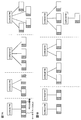
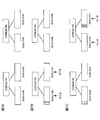
- FIGS. 1A and 1B are diagrams illustrating an example of setting PDCCH candidates corresponding to repetition of PDCCH.
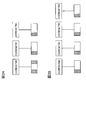
- FIG. 2A and FIG. 2B are diagrams illustrating another example of setting PDCCH candidates corresponding to repetition of PDCCH.
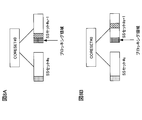
- FIG. 3 is a diagram illustrating an example of setting a PDCCH candidate corresponding to each repetition over a plurality of search space sets.
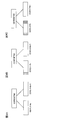
- 4A to 4C are diagrams showing an example of monitor control of PDCCH candidates corresponding to repetition.
- 5A to 5C are diagrams showing another example of monitor control of PDCCH candidates corresponding to repetition.
- 6A and 6B are diagrams showing an example of mapping positions of PDCCH candidates in different search space sets.
- 7A to 7C are diagrams showing another example of monitor control of PDCCH candidates corresponding to repetition.
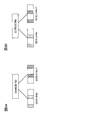
- FIG. 8A and 8B are diagrams showing an example of a PDCCH candidate mapping method in different search space sets.
- FIG. 9 is a diagram showing an example of a schematic configuration of a wireless communication system according to an embodiment.
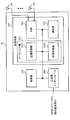
- FIG. 10 is a diagram illustrating an example of the configuration of the base station according to the embodiment.
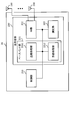
- FIG. 11 is a diagram illustrating an example of the configuration of the user terminal according to the embodiment.
- FIG. 12 is a diagram illustrating an example of a hardware configuration of the base station and the user terminal according to the embodiment.
- the radio base station uses the downlink control channel (for example, PDCCH (Physical Downlink Control Channel), extended PDCCH (EPDCCH: Enhanced PDCCH), etc.) to the UE to control downlink (DCI: Downlink Control). Information) is transmitted. Transmitting downlink control information may be read as transmitting a downlink control channel.
- PDCCH Physical Downlink Control Channel
- EPDCCH Extended PDCCH
- DCI Downlink Control
- the DCI includes, for example, information designating a time and frequency resource for scheduling data, information designating a transport block size, information designating a data modulation scheme, information designating a HARQ process identifier, information relating to a demodulation RS, and the like.
- the scheduling information may include at least one.
- DCI for scheduling DL data reception and/or DL reference signal measurement may be referred to as DL assignment or DL grant, and DCI for scheduling UL data transmission and/or UL sounding (for measurement) signal transmission. May be referred to as UL grant.
- the UE is set to monitor a set of a predetermined number of downlink control channel candidates in a predetermined time unit.
- the monitor means, for example, an attempt to decode each downlink control channel for a target DCI format in the set.
- decoding is also called blind decoding (BD: blind decoding), blind detection.
- the downlink control channel candidates are also called BD candidates, (E)PDCCH candidates, and the like.
- search area and search method for downlink control channel candidates are defined as a search space (SS: Search Space) set.
- SS Search Space
- One or more downlink control channel candidates are mapped to any search space set.
- search space In NR, a user terminal (UE:User Equipment) detects DCI by monitoring (blind decoding) one or more sets of search spaces (SS) (search space sets).
- the search space set is configured to include a set of one or more candidates (PDCCH candidates) for downlink control channels (for example, PDCCH: Physical Downlink Control Channel).
- PDCCH candidates for downlink control channels
- the “search space set” and the “search space” may be paraphrased with each other.
- the search space set includes a search space set (common search space set (CSS: Common Search Space) set) used for monitoring DCI common (cell-specific) to one or more user terminals and a DCI unique to the user terminal.
- the search space set used for monitoring (user-specific search space (USS) set) may be included.
- Each PDCCH candidate in the search space set is composed of a predetermined number of predetermined resource units according to the aggregation level.
- the predetermined resource unit may be a control channel element (CCE: Control Channel Element), a CCE group including one or more CCEs, and the like.
- CCE Control Channel Element
- Each CCE may be composed of one or more resource elements (RE: Resource Element), one or more resource element groups (REG: Resource Element Group), one or more REG bundles (REG group), or the like.
- the REG may include one or more REs, and the REG bundle may include one or more REGs.
- each PDCCH candidate may be configured with 1, 2, 4, 8 or 16 consecutive resource units (for example, CCE). ..
- a control resource set (CORESET: COntrol REsource SET) may be associated with the search space (or search space set).
- CORESET may be configured to include a predetermined frequency domain resource (for example, a predetermined number of resource blocks (Physical Resource Block (PRB))) and a time domain resource (for example, a predetermined number of symbols).
- PRB Physical Resource Block
- the search space set associated with CORESET#p may be defined using CCEs corresponding to one or more PDCCH candidates in the search space set.
- the search space set #s may be composed of CCEs of indexes (index numbers, index values) represented by the following Expression (1).
- Yp,n ⁇ s,f is a predetermined parameter, for example, 0 in the CSS set, and determined in the USS set based on a Radio Network Temporary Identifier (RNTI). May be done.
- N CCE,p is the number of CCEs in CORESET#p.
- cross-carrier scheduling configuration information also referred to as CrossCarrierSchedulingConfig etc.
- the carrier identification CI: Carrier Indicator
- the cross carrier scheduling setting information is not set (for scheduling within the same carrier) or for a CSS set, it is 0.
- m s,nCI is 0,..., M p,s,nCI (L) ⁇ 1.
- M p, s, NCI (L) is, PDCCH candidate serving cell corresponding to the n CI and the search space set #s for aggregation level L (cell, carrier, component carrier (CC)) UE is configured to monitor Is the number of.
- M p,s,max (L) is M p,s,0 (L) for the CSS set, and for the USS set everything set for the aggregation level of the search space set #s in CORESET#p
- the number of PDCCH candidates M p,s,nCI (L) for each aggregation level L of the serving cell corresponding to n CI is set in the UE.
- the UE monitors the DCI for the search space set determined based on the number M p,s,nCI (L) of the PDCCH candidates.
- CORESET COntrol REsource SET
- DCI downlink control information
- CORESET is a parameter set required for resource allocation of a control channel (for example, PDCCH (Physical Downlink Control Channel)).
- the UE may receive CORESET setting information (which may be referred to as CORESET configuration) from the base station.
- the UE monitors the PDCCH and detects the physical layer control signal based on at least the setting information of CORESET.
- CORESET settings may be notified, for example, by higher layer signaling.
- the upper layer signaling may be, for example, any one of RRC (Radio Resource Control) signaling, MAC (Medium Access Control) signaling, broadcast information, and the like, or a combination thereof.
- the UE may receive, from the base station, the setting information of the search space for performing the PDCCH monitoring (may be referred to as search space configuration (search space configuration)).
- the search space setting information may include information about the search space set set in the UE. Further, the search space setting information may be notified to the UE by, for example, higher layer signaling (RRC signaling or the like).
- the search space set set by the search space setting information may be set in association with CORESET. That is, the UE can monitor the PDCCH based on at least two of the CORESET setting information and the search space setting information.
- the search space setting information mainly includes information on PDCCH monitoring-related settings and decoding-related settings, and may include information on at least one of the following, for example.
- -Search space set identifier search space set ID
- CORESET ID CORESET ID related to the search space set
- a flag indicating whether the search space set is a common search space C-SS: Common SS
- UE-SS UE-specific search space
- the UE monitors CORESET based on the search space setting information. Further, the “monitor of CORESET” may be replaced with “monitor of search space (PDCCH candidate) associated with CORESET”, “monitor of downlink control channel (for example, PDCCH)”, or the like.
- PDCCH candidate a search space associated with CORESET
- PDCCH downlink control channel
- the UE may determine the correspondence between the search space set and CORESET based on the search space set ID included in the search space setting information and the CORESET ID.
- One CORESET may be associated with one or more search space sets.
- the case where a plurality of search space settings are associated with one CORESET may be a case where both C-SS and UE-SS are set in the CORESET.
- one search space setting may be associated with a plurality of CORESETs.
- the base station network (NW), gNB) repeatedly transmits the downlink control channel (or downlink control information) a predetermined number of times.
- PDCCH Physical Downlink Control Channel
- the number of repetitions may also be referred to as a repetition factor N rep or an aggregation factor N rep .
- the nth iteration is also called the nth transmission occasion, etc., and may be identified by the iteration index j (0 ⁇ j ⁇ N rep ⁇ 1).
- the UE may receive the information regarding the number of repetitions by higher layer signaling.
- the higher layer signaling may be, for example, any one of RRC (Radio Resource Control) signaling, MAC (Medium Access Control) signaling, broadcast information, and the like, or a combination thereof.
- the UE receives PDCCH repeatedly transmitted by monitoring PDCCH candidates corresponding to repeated transmission. For example, when the number of repetitions is 4 (the PDCCH is repeatedly transmitted 4 times), the UE monitors PDCCH candidates in a given search space set to receive 4 PDCCHs.
- FIG. 1A shows a case where PDCCH candidates corresponding to repeated transmission are arranged in a search space set set in one control resource set (here, CORESET#0). In this case, it is assumed that a PDCCH candidate corresponding to repeated transmission is arranged in one search space set set to CORESET#0.
- search space set #0 may have PDCCH candidates corresponding to two repetitions of four repetitions
- search space set #1 may have PDCCH candidates corresponding to the remaining two repetitions.
- the PDCCH candidates corresponding to each repetition may be arranged in different search space sets.
- FIG. 1B shows a case where PDCCH candidates corresponding to repeated transmission are arranged in search space sets respectively set in two control resource sets (here, CORESET#0 and CORESET#1).
- CORESET#0 and CORESET#1 two control resource sets
- PDCCH candidates corresponding to repeated transmissions are arranged in one or a plurality of search space sets set to CORESET#0 and in one or a plurality of search space sets set to CORESET#1. To be done.
- a PDCCH candidate corresponding to two repetitions of four repetitions is arranged in one or a plurality of search space sets set in CORESET#0, and one or a plurality of search space sets set in CORESET#1.
- the PDCCH candidates corresponding to the remaining two repetitions may be arranged.
- the PDCCH candidate corresponding to three repetitions is arranged in the search space set set to CORESET#0, and the PDCCH candidate corresponding to one repetition is arranged in the search space set set to CORESET#1. Good.
- FIG. 2A shows a case where PDCCH candidates corresponding to repeated transmission are arranged in search space sets respectively set in three control resource sets (here, CORESET#0 to CORESET#2).
- CORESET#0 to CORESET#2 three control resource sets
- a configuration in which PDCCH candidates corresponding to repeated transmission are arranged in one or a plurality of search space sets respectively set in CORESET #0 to #2 is assumed.
- PDCCH candidates corresponding to two repetitions out of four repetitions are arranged in one or a plurality of search space sets set in CORESET#0, and search spaces set in CORESET#1 and CORESET#2, respectively.
- PDCCH candidates corresponding to the remaining two repetitions may be arranged in the set.
- FIG. 2B shows a case where PDCCH candidates corresponding to repeated transmission are arranged in search space sets respectively set in four control resource sets (here, CORESET#0-CORESET#3). In this case, it is assumed that PDCCH candidates corresponding to repeated transmissions are arranged in one or a plurality of search space sets respectively set in CORESET #0 to #3.
- the present inventors have conceived to apply at least one of the configurations shown in FIG. 1 and FIG. 2 when repeatedly transmitting PDCCH (or DCI). Further, the inventors of the present invention have conceived the monitor control of PDCCH candidates corresponding to the repeated transmission of PDCCH.
- the present inventors may encounter cases where the PDCCH candidates collide (or block) between the search spaces depending on the content of the parameters of each search space set. Focused on the point. For example, when the predetermined parameters of each search space set are set to the same content, there is a possibility that blocking or collision may occur between the repetitions (for example, the nth repetition and the n+1th repetition) (see FIG. 3). ..
- search space sets #0 and #1 are set in CORESET#0, and PDCCH candidates corresponding to the n-th repetition are assigned a predetermined CCE index of search space set #0.
- the case of detection by X is shown.
- the search space set #0 and the search space set #1 have the same predetermined parameters and the PDCCH candidate corresponding to the (n+1)th repetition is arranged in the predetermined CCE index X of the search space set #1, the nth time May collide with the PDCCH candidate corresponding to the repetition of.
- the PDCCHs that are repeatedly transmitted cannot be properly combined (for example, soft combination), and the communication quality may deteriorate.
- the inventors of the present invention map the PDCCH candidates based on the parameters of each search space (or correspond to the search spaces). The idea was to control the CCE index determination method).
- the UE monitors PDCCH candidates corresponding to repetitive transmission based on the CORESET setting information and the search space setting information set from the network (eg, base station).
- the base station may notify the UE of the CORESET setting information, the search space setting information, and the like by using higher layer signaling.
- the UE may control the monitor of PDCCH candidates corresponding to repeated transmission according to the following operation.
- the following operations 1 to 3 may be applied in a different order, or any operation (or a part of the procedure in each operation) may be omitted. Further, another operation may be added between the operations 1 to 3. Although the following operations 1 to 3 are based on FIG. 1A, they may be applied to FIGS. 1B, 2A, and B.
- the UE determines whether the target to be monitored (repetition index j) is less than or equal to a predetermined value.
- the predetermined value may be determined based on the number of repetitions. For example, the UE starts (or continues) monitoring if j ⁇ N rep ⁇ 1 is satisfied.
- the UE determines CORESET and a search space set for monitoring PDCCH candidates.
- PDCCH candidates are monitored in the search space set set in the CORESET.
- the order of monitoring the search space sets may be determined based on a predetermined rule.
- the UE may preferentially monitor a search space set with a small index.
- the monitoring order of the search spaces is not limited to the smallest index, but may be the largest index or may be determined based on other conditions.
- the order of monitoring CORESETs may be determined based on a predetermined rule. For example, the UE may preferentially monitor CORESET having a small index.
- the monitor order of CORESET is not limited to the order of the smallest index, and may be the order of the largest index or may be determined based on other conditions.
- the monitoring order of PDCCH candidates may be controlled in consideration of a predetermined condition (eg, cell index).
- the UE selects CORESET to which PDCCH candidates can be assigned in ascending order of index (or in order of increasing index), starting from CORESET#p to which PDCCH candidates corresponding to the initial transmission are assigned, and performs monitoring.
- CORESET#p ⁇ k is selected as the current search candidate, and when the PDCCH candidate to which the PDCCH is assigned cannot be detected in the CORESET, k is advanced to search for the next CORESET.
- the UE may control the presence/absence of monitoring in CORESET#p+k based on the number of CCEs allocated in the CORESET#p+k.
- p is an index of CORESET to which PDCCH candidates are assigned at the time of initial transmission
- k is a search index of CORESET that is an assignment candidate.
- N alloc CCE,p+k when the number of CCEs actually allocated in CORESET#p+k (N alloc CCE,p+k ) is less than or equal to the number of CCEs in CORESET#p+k (N CCE,p+k ) (for example, N CCE,p+k).
- N CCE,p+k alloc the number of CCEs actually allocated in CORESET#p+k
- N CCE,p+k for example, N CCE,p+k.
- the UE When the search space #s is selected as the search space set corresponding to CORESET#p+k, the UE is based on the number of PDCCH candidates for each aggregation level (AL) of the search space set #s (the number of PDCCH candidates to monitor). It is also possible to control the presence or absence of a monitor in the search space set #s. For example, when the number of PDCCH candidates actually monitored for the predetermined AL of the search space set #s is less than or equal to the number of PDCCH candidates set for the predetermined AL of the search space set #s (for example, M s (L) ⁇ M s,alloc (L) ), and start (or continue) monitoring with the search space set #s.
- AL aggregation level
- a search space set #s and a search space set #s+1 are set for CORESET #0 (see FIG. 4A).
- the UE monitors PDCCH candidates in the search space set #s corresponding to CORESET#0 for the first iteration.
- the UE monitors the PDCCH candidate corresponding to the second iteration.
- the UE may be a PDCCH candidate corresponding to the second repetition in the same search space set #s. May be monitored.
- the PDCCH candidate monitoring operation may be terminated.
- the PDCCH candidates are monitored in order for each CORESET, so it is effective to place the PDCCH candidates in as few (for example, one) CORESET as possible.
- search space set #s for example, search space set #s
- the UE determines whether or not the predetermined parameters set in the search space set #s+1 and the monitored search space set #s are the same. May be. Further, the UE may determine the position where the PDCCH candidates arranged in the search space set #s+1 are mapped (for example, the CCE index to which the PDCCH candidates are mapped) based on the determination result.
- the UE When the predetermined parameter corresponding to the search space set #s is the same as the predetermined parameter corresponding to the search space set #s+1, the UE is located at a different position (eg, CCE index) in the search space set #s+1.
- the monitor may be controlled assuming it is mapped (see FIG. 5B).
- the predetermined parameter may be at least one (all or part) of the following parameters set in the UE by an upper layer parameter (for example, SearchSpace) for each search space set.
- SearchSpaceID Search Space ID
- ControlResourceSetId ControlResourceSetId
- Information indicating the monitoring interval and offset of the search space (monitoringSlotPeriodicityAndOffset)
- Search space duration (5) Number of monitoring symbols in the slot (monitoringSymbolWithinSlot) (6) Number of PDCCH candidates for each AL in search space (nofCandidates) (7) Search space type (searchSpaceType)
- the positions where the PDCCH candidates are different between the respective search space sets (for example, CCE). It may be controlled so that it is mapped to the index) (Different mapping).
- the PDCCH candidate corresponding to the two repetitions mapped to the search space set #s and the PDCCH candidate corresponding to the two repetitions mapped to the search space set #s+1 are different. It may be mapped to a position (see FIG. 6A).
- the UE determines that the PDCCH candidates are at the same position (eg, CCE index) in the search space set #s+1.
- the monitor may be controlled on the assumption that the monitor is placed in (see FIG. 5C).
- the PDCCH candidates are at the same position (eg, CCE) between the search space sets. It may be controlled so that it is mapped to the index) (Same mapping).
- the PDCCH candidate corresponding to the two repetitions mapped to the search space set #s and the PDCCH candidate corresponding to the two repetitions mapped to the search space set #s+1 are different. It may be mapped to a position (see FIG. 6B).
- the mapping of PDCCH candidates in each search space set is controlled according to the parameter contents corresponding to different search space sets.
- PDCCH blocking can be suppressed even when a configuration in which PDCCH candidates corresponding to repeated transmissions are arranged over a plurality of search space sets is supported.
- repeated transmission of the PDCCH can be appropriately realized, so that deterioration of communication quality can be suppressed.
- N CCE,p+k and N CCE,p+k alloc may be replaced with N CCE,j and N CCE,j alloc , respectively.
- the predetermined CORESET#p may be replaced with CORESET associated with the repeated index.
- the UE may determine at least one of CORESET and search space to monitor based on the index of repeated transmission (also referred to as repeated index (j)).
- the repetition index (j) and the CORESET index may be set in association with each other.
- the correspondence between the repetition index and CORESET may be defined in the specifications, or the base station may notify the UE by using higher layer signaling or the like.
- the UE monitors the PDCCH candidates corresponding to the repetition index (j) with the search space set set in CORESET(j) associated with the repetition index.
- CORESET#1 is set for the first repeat and RESET#2 is set for the second repeat transmission (see FIG. 7A).
- one or a plurality of search space sets are set in each CORESET.
- the search spaces (for example, at least one of the index and the set number) set in each CORESET may be the same or different.
- the UE monitors PDCCH candidates in the search space set (here, search space set #0, #1) set in CORESET #1 for the first iteration.
- the UE detects a PDCCH candidate to which the PDCCH (or DCI) is assigned in the search space set #0 (see FIG. 7B)
- the UE may omit monitors in other search space sets set in CORESET #1.
- the UE cannot detect the PDCCH candidates to which the PDCCH is assigned in the search space set #0 within a predetermined range (for example, equal to or less than the set number of PDCCH candidates), another search space set set in CORESET#1. Monitor with.
- the UE When the UE detects the first iteration in the search space set set in CORESET#1, it detects the second iteration in the search space set (eg, search space set #0) of another CORESET (eg, CORESET#2).
- the PDCCH candidates corresponding to the repetition of are monitored (see FIG. 7C).
- FIG. 7C shows a case where the UE detects a PDCCH candidate to which PDCCH (or DCI) is assigned in search space set #1.
- the effect of frequency diversity can be obtained. Further, by arranging the PDCCH candidates corresponding to each repetition over different CORESET, it is possible to suppress the occurrence of blocking of the PDCCH candidates corresponding to each repetition.
- mapping positions for example, CCE index
- control may be performed such that PDCCH candidates are mapped to different positions (for example, CCE indexes) between the search space sets.
- the UE assumes that the CCE index is set such that the mapping position of the PDCCH candidate in the search space set #s and the mapping position of the PDCCH candidate in the search space set #s+1 are different, and the reception process (for example, the decoding process). ) May be controlled.
- mapping method at least one of the first mapping (for example, Sequential mapping) and the second mapping (for example, Distributed mapping) may be applied.
- first mapping for example, Sequential mapping
- second mapping for example, Distributed mapping
- FIG. 8A shows a case where a PDCCH candidate corresponding to the nth iteration is detected in the search space set #s and a PDCCH candidate corresponding to the n+1th iteration is monitored in the search space #s+1.
- the position (eg, CCE index) of the PDCCH candidate corresponding to the second iteration may be shifted from the position of the PDCCH candidate corresponding to the first iteration by a predetermined distance.
- the CCE index corresponding to each search space set may be determined based on a predetermined parameter.
- the predetermined parameter may be, for example, a PDCCH repetition index.
- the UE may determine the CCE index corresponding to each search space set using Equation (2) below.
- O rep corresponds to a repetition offset
- N rep corresponds to a number of repetitions
- j corresponds to a repetition index
- L corresponds to an aggregation level.
- other parameters may be the same as those in the equation (1).
- the positions of the PDCCH candidates between the search space sets are controlled to be different.
- the repetition offset may use other parameters.
- ⁇ Second mapping> For a plurality of search space sets (for example, search space sets #s and #s+1) set in a predetermined CORESET, CCE indexes (or PDCCH candidates) corresponding to the predetermined search space are set to be dispersed (see FIG. 8B).
- FIG. 8B shows a case where a PDCCH candidate corresponding to the nth iteration is detected in the search space set #s and a PDCCH candidate corresponding to the n+1th iteration is monitored in the search space #s+1.
- positions of PDCCH candidates corresponding to the second repetition may be arranged so as to be dispersed from positions of PDCCH candidates corresponding to the first repetition.
- the CCE index corresponding to each search space set may be determined based on a predetermined parameter.
- the predetermined parameter may be, for example, a PDCCH repetition index.
- the UE may determine the CCE index corresponding to each search space set using Equation (3) below.
- O rep corresponds to the repetition offset
- N rep corresponds to the number of repetitions
- j corresponds to the repetition index.
- other parameters may be the same as those in the equation (1).
- the repetition offset determined based on the repetition index of the PDCCH is used to control the positions of the PDCCH candidates between the search space sets to be different. Note that the repetition offset may use other parameters. Moreover, you may change and apply some parameters of Formula (3).
- first mapping or the second mapping may be defined in the specification, or may be set from the base station to the UE by higher layer signaling or the like. Alternatively, the UE may select a suitable mapping based on a predetermined condition.
- wireless communication system Wireless communication system
- communication is performed using any one or a combination of the wireless communication methods according to the above-described embodiments of the present disclosure.
- FIG. 9 is a diagram showing an example of a schematic configuration of a wireless communication system according to an embodiment.
- the wireless communication system 1 may be a system that realizes communication by using Long Term Evolution (LTE), 5th generation mobile communication system New Radio (5G NR), etc. specified by Third Generation Partnership Project (3GPP). ..
- the wireless communication system 1 may support dual connectivity (Multi-RAT Dual Connectivity (MR-DC)) between multiple Radio Access Technologies (RATs).
- MR-DC has dual connectivity (E-UTRA-NR Dual Connectivity (EN-DC)) with LTE (Evolved Universal Terrestrial Radio Access (E-UTRA)) and NR, and dual connectivity (NR-E) with NR and LTE.
- E-UTRA-NR Dual Connectivity EN-DC
- NR-E Dual Connectivity
- NE-DC Dual Connectivity
- the base station (eNB) of LTE (E-UTRA) is the master node (Master Node (MN)), and the base station (gNB) of NR is the secondary node (Secondary Node (SN)).
- the NR base station (gNB) is the MN, and the LTE (E-UTRA) base station (eNB) is the SN.
- the wireless communication system 1 has dual connectivity between a plurality of base stations within the same RAT (eg, dual connectivity (NR-NR Dual Connectivity (NN-DC)) in which both MN and SN are NR base stations (gNB). )) may be supported.
- a plurality of base stations within the same RAT eg, dual connectivity (NR-NR Dual Connectivity (NN-DC)
- N-DC dual connectivity
- MN and SN are NR base stations (gNB).
- the wireless communication system 1 includes a base station 11 forming a macro cell C1 having a relatively wide coverage and a base station 12 (12a-12c) arranged in the macro cell C1 and forming a small cell C2 narrower than the macro cell C1. You may prepare.
- the user terminal 20 may be located in at least one cell. The arrangement and number of each cell and user terminal 20 are not limited to those shown in the figure.
- the base stations 11 and 12 are not distinguished, they are collectively referred to as the base station 10.
- the user terminal 20 may be connected to at least one of the plurality of base stations 10.
- the user terminal 20 may use at least one of carrier aggregation (Carrier Aggregation (CA)) using a plurality of component carriers (Component Carrier (CC)) and dual connectivity (DC).
- CA Carrier Aggregation
- CC Component Carrier
- DC dual connectivity
- Each CC may be included in at least one of the first frequency band (Frequency Range 1 (FR1)) and the second frequency band (Frequency Range 2 (FR2)).
- the macro cell C1 may be included in FR1 and the small cell C2 may be included in FR2.
- FR1 may be in a frequency band of 6 GHz or less (sub-6 GHz (sub-6 GHz)), and FR2 may be in a frequency band higher than 24 GHz (above-24 GHz).
- the frequency bands and definitions of FR1 and FR2 are not limited to these, and for example, FR1 may correspond to a frequency band higher than FR2.
- the user terminal 20 may communicate with each CC using at least one of Time Division Duplex (TDD) and Frequency Division Duplex (FDD).
- TDD Time Division Duplex
- FDD Frequency Division Duplex
- the plurality of base stations 10 may be connected by wire (for example, optical fiber compliant with Common Public Radio Interface (CPRI), X2 interface, etc.) or wirelessly (for example, NR communication).
- wire for example, optical fiber compliant with Common Public Radio Interface (CPRI), X2 interface, etc.
- NR communication for example, when NR communication is used as a backhaul between the base stations 11 and 12, the base station 11 corresponding to the upper station is the Integrated Access Backhaul (IAB) donor, and the base station 12 corresponding to the relay station (relay) is the IAB. It may be called a node.
- IAB Integrated Access Backhaul
- relay station relay station
- the base station 10 may be connected to the core network 30 via another base station 10 or directly.
- the core network 30 may include at least one of, for example, Evolved Packet Core (EPC), 5G Core Network (5GCN), and Next Generation Core (NGC).
- EPC Evolved Packet Core
- 5GCN 5G Core Network
- NGC Next Generation Core
- the user terminal 20 may be a terminal compatible with at least one of communication methods such as LTE, LTE-A, and 5G.
- an orthogonal frequency division multiplexing (Orthogonal Frequency Division Multiplexing (OFDM)) based wireless access method may be used. For example, on at least one of downlink (Downlink (DL)) and uplink (Uplink (UL)), Cyclic Prefix OFDM (CP-OFDM), Discrete Fourier Transform Spread OFDM (DFT-s-OFDM), Orthogonal Frequency Division Multiple Access (OFDMA), Single Carrier Frequency Division Multiple Access (SC-FDMA), etc. may be used.
- OFDM Orthogonal Frequency Division Multiplexing
- the wireless access method may be called a waveform.
- other wireless access methods eg, other single carrier transmission method, other multicarrier transmission method
- the UL and DL wireless access methods may be used as the UL and DL wireless access methods.
- downlink shared channels Physical Downlink Shared Channel (PDSCH)
- broadcast channels Physical Broadcast Channel (PBCH)
- downlink control channels Physical Downlink Control
- an uplink shared channel Physical Uplink Shared Channel (PUSCH)
- an uplink control channel Physical Uplink Control Channel (PUCCH)
- a random access channel that are shared by each user terminal 20.
- Physical Random Access Channel (PRACH) Physical Random Access Channel
- User data, upper layer control information, System Information Block (SIB), etc. are transmitted by PDSCH.
- User data, upper layer control information, and the like may be transmitted by the PUSCH.
- the Master Information Block (MIB) may be transmitted by the PBCH.
- Lower layer control information may be transmitted by PDCCH.
- the lower layer control information may include downlink control information (Downlink Control Information (DCI)) including scheduling information of at least one of PDSCH and PUSCH, for example.
- DCI Downlink Control Information
- the DCI for scheduling PDSCH may be called DL assignment, DL DCI, etc.
- the DCI for scheduling PUSCH may be called UL grant, UL DCI, etc.
- PDSCH may be replaced with DL data
- PUSCH may be replaced with UL data.
- a control resource set (COntrol REsource SET (CORESET)) and a search space (search space) may be used to detect the PDCCH.
- CORESET corresponds to a resource for searching DCI.
- the search space corresponds to the search area and the search method of the PDCCH candidates (PDCCH candidates).
- a CORESET may be associated with one or more search spaces. The UE may monitor CORESET associated with a search space based on the search space settings.
- One search space may correspond to PDCCH candidates corresponding to one or more aggregation levels.
- One or more search spaces may be referred to as a search space set. Note that the “search space”, “search space set”, “search space setting”, “search space set setting”, “CORESET”, “CORESET setting”, etc. of the present disclosure may be read as each other.
- channel state information (Channel State Information (CSI)
- delivery confirmation information for example, Hybrid Automatic Repeat reQuest ACKnowledgement (HARQ-ACK), ACK/NACK, etc.
- scheduling request (Scheduling Request (Scheduling Request ( Uplink Control Information (UCI) including at least one of (SR))
- CSI Channel State Information
- HARQ-ACK Hybrid Automatic Repeat reQuest ACKnowledgement
- ACK/NACK ACK/NACK
- scheduling request Scheduling Request (Scheduling Request ( Uplink Control Information (UCI) including at least one of (SR)
- a random access preamble for establishing a connection with a cell may be transmitted by the PRACH.
- downlink, uplink, etc. may be expressed without adding “link”. Further, it may be expressed without adding "Physical" to the head of each channel.
- a synchronization signal (Synchronization Signal (SS)), a downlink reference signal (Downlink Reference Signal (DL-RS)), etc. may be transmitted.
- a cell-specific reference signal Cell-specific Reference Signal (CRS)
- a channel state information reference signal Channel State Information Reference Signal (CSI-RS)
- CSI-RS Channel State Information Reference Signal
- DMRS Demodulation reference signal
- PRS Positioning Reference Signal
- PTRS Phase Tracking Reference Signal
- the synchronization signal may be at least one of a primary synchronization signal (Primary Synchronization Signal (PSS)) and a secondary synchronization signal (Secondary Synchronization Signal (SSS)), for example.
- PSS Primary Synchronization Signal
- SSS Secondary Synchronization Signal
- a signal block including SS (PSS, SSS) and PBCH (and DMRS for PBCH) may be called SS/PBCH block, SS block (SSB), or the like. Note that SS and SSB may also be referred to as reference signals.
- a measurement reference signal Sounding Reference Signal (SRS)
- a demodulation reference signal DMRS
- UL-RS Uplink Reference Signal
- UE-specific Reference Signal UE-specific Reference Signal
- FIG. 10 is a diagram illustrating an example of the configuration of the base station according to the embodiment.
- the base station 10 includes a control unit 110, a transmission/reception unit 120, a transmission/reception antenna 130, and a transmission line interface 140. It should be noted that the control unit 110, the transmission/reception unit 120, the transmission/reception antenna 130, and the transmission path interface 140 may each be provided with one or more.
- the functional blocks of the characteristic part in the present embodiment are mainly shown, and it may be assumed that the base station 10 also has other functional blocks necessary for wireless communication. A part of the processing of each unit described below may be omitted.
- the control unit 110 controls the entire base station 10.
- the control unit 110 can be configured by a controller, a control circuit, and the like described based on common recognition in the technical field according to the present disclosure.
- the control unit 110 may control signal generation, scheduling (for example, resource allocation, mapping) and the like.
- the control unit 110 may control transmission/reception using the transmission/reception unit 120, the transmission/reception antenna 130, and the transmission path interface 140, measurement, and the like.
- the control unit 110 may generate data to be transmitted as a signal, control information, a sequence, etc., and transfer the generated data to the transmission/reception unit 120.
- the control unit 110 may perform call processing (setting, release, etc.) of the communication channel, state management of the base station 10, wireless resource management, and the like.
- the transmission/reception unit 120 may include a baseband unit 121, a Radio Frequency (RF) unit 122, and a measurement unit 123.
- the baseband unit 121 may include a transmission processing unit 1211 and a reception processing unit 1212.
- the transmission/reception unit 120 includes a transmitter/receiver, an RF circuit, a baseband circuit, a filter, a phase shifter, a measurement circuit, a transmission/reception circuit, etc., which are explained based on common recognition in the technical field of the present disclosure. be able to.
- the transmission/reception unit 120 may be configured as an integrated transmission/reception unit, or may be configured by a transmission unit and a reception unit.
- the transmission unit may include a transmission processing unit 1211 and an RF unit 122.
- the receiving unit may include a reception processing unit 1212, an RF unit 122, and a measuring unit 123.
- the transmission/reception antenna 130 can be configured by an antenna described based on common recognition in the technical field of the present disclosure, for example, an array antenna or the like.
- the transmitter/receiver 120 may transmit the above-mentioned downlink channel, synchronization signal, downlink reference signal, and the like.
- the transceiver 120 may receive the above-mentioned uplink channel, uplink reference signal, and the like.
- the transmission/reception unit 120 may form at least one of a transmission beam and a reception beam by using digital beamforming (for example, precoding), analog beamforming (for example, phase rotation), or the like.
- digital beamforming for example, precoding
- analog beamforming for example, phase rotation
- the transmission/reception unit 120 processes the Packet Data Convergence Protocol (PDCP) layer and the Radio Link Control (RLC) layer (for example, for the data and control information acquired from the control unit 110) (for example, RLC retransmission control), Medium Access Control (MAC) layer processing (for example, HARQ retransmission control), etc. may be performed to generate a bit string to be transmitted.
- PDCP Packet Data Convergence Protocol
- RLC Radio Link Control
- MAC Medium Access Control
- the transmission/reception unit 120 performs channel coding (may include error correction coding), modulation, mapping, filtering, and discrete Fourier transform (Discrete Fourier Transform (DFT)) on the bit string to be transmitted. Processing (if necessary), inverse fast Fourier transform (Inverse Fast Transform (IFFT)) processing, precoding, digital-analog conversion, and other transmission processing may be performed to output the baseband signal.
- channel coding may include error correction coding
- modulation modulation
- mapping mapping, filtering
- DFT discrete Fourier transform
- IFFT inverse fast Fourier transform
- precoding coding
- digital-analog conversion digital-analog conversion
- the transmitting/receiving unit 120 may modulate the baseband signal into a radio frequency band, perform filtering, amplifying, etc., and transmit the radio frequency band signal via the transmission/reception antenna 130. ..
- the transmission/reception unit 120 may perform amplification, filtering, demodulation to a baseband signal, etc., on the signal in the radio frequency band received by the transmission/reception antenna 130.
- the transmission/reception unit 120 (reception processing unit 1212) performs analog-digital conversion, fast Fourier transform (Fast Fourier Transform (FFT)) processing, and inverse discrete Fourier transform (Inverse Discrete Fourier Transform (IDFT)) on the acquired baseband signal. )) Applying reception processing such as processing (if necessary), filtering, demapping, demodulation, decoding (may include error correction decoding), MAC layer processing, RLC layer processing, and PDCP layer processing, User data may be acquired.
- FFT fast Fourier transform
- IDFT inverse discrete Fourier Transform
- the transmission/reception unit 120 may perform measurement on the received signal.
- the measurement unit 123 may perform Radio Resource Management (RRM) measurement, Channel State Information (CSI) measurement, etc. based on the received signal.
- the measurement unit 123 receives power (for example, Reference Signal Received Power (RSRP)), reception quality (for example, Reference Signal Received Quality (RSRQ), Signal to Interference plus Noise Ratio (SINR), Signal to Noise Ratio (SNR)).
- Signal strength for example, Received Signal Strength Indicator (RSSI)
- channel information for example, CSI
- the measurement result may be output to the control unit 110.
- the transmission line interface 140 transmits/receives signals (backhaul signaling) to/from devices included in the core network 30, other base stations 10, and the like, and user data (user plane data) for the user terminal 20 and a control plane. Data or the like may be acquired or transmitted.
- the transmission unit and the reception unit of the base station 10 may be configured by at least one of the transmission/reception unit 120, the transmission/reception antenna 130, and the transmission path interface 140.
- the transmission/reception unit 120 repeatedly transmits (repetition) the downlink control channel using one or a plurality of control resource sets.
- the transmission/reception unit 120 may transmit information regarding CORESET and information regarding a search space set by using at least one of upper layer signaling, MAC control information, and downlink control information.
- the control unit 110 maps PDCCH candidates corresponding to each repetition (for example, to a search space) based on at least one of a plurality of search space set parameters set in a predetermined control resource set and an index of repeated transmission. The determination of the corresponding CCE index) may be controlled.
- the control unit 110 repeats each search space set.
- the PDCCH candidates corresponding to may be controlled to be mapped to different positions.
- FIG. 11 is a diagram illustrating an example of the configuration of the user terminal according to the embodiment.
- the user terminal 20 includes a control unit 210, a transmission/reception unit 220, and a transmission/reception antenna 230. Note that each of the control unit 210, the transmission/reception unit 220, and the transmission/reception antenna 230 may be provided with one or more.
- the functional blocks of the characteristic part in the present embodiment are mainly shown, and the user terminal 20 may be assumed to also have other functional blocks necessary for wireless communication. A part of the processing of each unit described below may be omitted.
- the control unit 210 controls the entire user terminal 20.
- the control unit 210 can be configured by a controller, a control circuit, and the like described based on common recognition in the technical field according to the present disclosure.
- the control unit 210 may control signal generation, mapping, and the like.
- the control unit 210 may control transmission/reception, measurement, and the like using the transmission/reception unit 220 and the transmission/reception antenna 230.
- the control unit 210 may generate data to be transmitted as a signal, control information, a sequence, etc., and transfer the data to the transmission/reception unit 220.
- the transmission/reception unit 220 may include a baseband unit 221, an RF unit 222, and a measurement unit 223.
- the baseband unit 221 may include a transmission processing unit 2211 and a reception processing unit 2212.
- the transmitter/receiver 220 may include a transmitter/receiver, an RF circuit, a baseband circuit, a filter, a phase shifter, a measurement circuit, a transmitter/receiver circuit, and the like, which are described based on common recognition in the technical field of the present disclosure.
- the transmission/reception unit 220 may be configured as an integrated transmission/reception unit, or may be configured by a transmission unit and a reception unit.
- the transmission unit may include a transmission processing unit 2211 and an RF unit 222.
- the receiving unit may include a reception processing unit 2212, an RF unit 222, and a measuring unit 223.
- the transmission/reception antenna 230 can be configured from an antenna described based on common recognition in the technical field according to the present disclosure, for example, an array antenna or the like.
- the transmitter/receiver 220 may receive the above-mentioned downlink channel, synchronization signal, downlink reference signal, and the like.
- the transceiver 220 may transmit the above-mentioned uplink channel, uplink reference signal, and the like.
- the transmission/reception unit 220 may form at least one of a transmission beam and a reception beam by using digital beamforming (for example, precoding), analog beamforming (for example, phase rotation), or the like.
- digital beamforming for example, precoding
- analog beamforming for example, phase rotation
- the transmission/reception unit 220 processes the PDCP layer, the RLC layer (for example, RLC retransmission control), and the MAC layer (for example, for the data and control information acquired from the control unit 210). , HARQ retransmission control) may be performed to generate a bit string to be transmitted.
- the transmission/reception unit 220 (transmission processing unit 2211) performs channel coding (which may include error correction coding), modulation, mapping, filter processing, DFT processing (if necessary), IFFT processing on the bit string to be transmitted.
- the baseband signal may be output by performing transmission processing such as precoding, digital-analog conversion, or the like.
- the transmission/reception unit 220 transmits the channel using the DFT-s-OFDM waveform when transform precoding is enabled for the channel (for example, PUSCH).
- the DFT process may be performed as the transmission process, or otherwise, the DFT process may not be performed as the transmission process.
- the transmission/reception unit 220 may modulate the baseband signal into a radio frequency band, perform filtering, amplification, etc., and transmit the radio frequency band signal via the transmission/reception antenna 230. ..
- the transmission/reception unit 220 may perform amplification, filtering, demodulation to a baseband signal, etc., on the signal in the radio frequency band received by the transmission/reception antenna 230.
- the transmission/reception unit 220 (reception processing unit 2212) performs analog-digital conversion, FFT processing, IDFT processing (if necessary), filter processing, demapping, demodulation, decoding (error correction) on the acquired baseband signal.
- User data and the like may be acquired by applying reception processing such as MAC layer processing, RLC layer processing, and PDCP layer processing.
- the transmission/reception unit 220 may perform measurement on the received signal.
- the measurement unit 223 may perform RRM measurement, CSI measurement, and the like based on the received signal.
- the measurement unit 223 may measure received power (for example, RSRP), reception quality (for example, RSRQ, SINR, SNR), signal strength (for example, RSSI), channel information (for example, CSI), and the like.
- the measurement result may be output to the control unit 210.
- the transmission unit and the reception unit of the user terminal 20 may be configured by at least one of the transmission/reception unit 220 and the transmission/reception antenna 230.
- the transmission/reception unit 220 receives a downlink control channel (or DCI) to which repeated transmission (repetition) is applied using one or a plurality of control resource sets.
- the transmission/reception unit 220 may receive the information about CORESET and the information about the search space set by using at least one of upper layer signaling, MAC control information, and downlink control information.
- the control unit 210 may perform control so that downlink control channel candidates are monitored in the same search space set until the number of downlink control channel candidates to be monitored reaches a predetermined value.
- the control unit 210 may perform control so as to monitor downlink control channel candidates in the second search space set when the number of downlink control channel candidates monitored in the first search space set reaches a predetermined value. Good.
- the control unit 210 may determine the mapping position of the downlink control channel candidate (or the CCE index corresponding to each search space) based on the predetermined parameters of the plurality of search space sets.
- control unit 210 positions the downlink control channel candidates arranged in the respective search space sets at different positions (or different CCEs). Index).
- each functional block may be realized by using one device physically or logically coupled, or directly or indirectly (for example, two or more devices physically or logically separated). , Wired, wireless, etc.) and may be implemented using these multiple devices.
- the functional block may be implemented by combining the one device or the plurality of devices with software.
- the functions include judgment, determination, judgment, calculation, calculation, processing, derivation, investigation, search, confirmation, reception, transmission, output, access, solution, selection, selection, establishment, comparison, assumption, expectation, and deemed. , Broadcasting (notifying), notifying (communicating), forwarding (forwarding), configuring (reconfiguring), allocating (allocating, mapping), assigning, etc.
- a functional block (configuration unit) that causes transmission to function may be referred to as a transmitting unit (transmitting unit), a transmitter (transmitter), or the like.
- the implementation method is not particularly limited.
- the base station, the user terminal, and the like may function as a computer that performs the process of the wireless communication method of the present disclosure.
- FIG. 12 is a diagram illustrating an example of a hardware configuration of the base station and the user terminal according to the embodiment.
- the base station 10 and the user terminal 20 described above may be physically configured as a computer device including a processor 1001, a memory 1002, a storage 1003, a communication device 1004, an input device 1005, an output device 1006, a bus 1007, and the like. ..
- the terms such as a device, a circuit, a device, a section, and a unit can be read as each other.
- the hardware configurations of the base station 10 and the user terminal 20 may be configured to include one or a plurality of each device illustrated in the figure, or may be configured not to include some devices.
- processor 1001 For example, only one processor 1001 is shown, but there may be multiple processors. Further, the processing may be executed by one processor, or the processing may be executed by two or more processors simultaneously, sequentially, or by using another method.
- the processor 1001 may be mounted by one or more chips.
- the processor 1001 For each function in the base station 10 and the user terminal 20, for example, by causing a predetermined software (program) to be loaded onto hardware such as the processor 1001 and the memory 1002, the processor 1001 performs calculation and communication via the communication device 1004. Is controlled, and at least one of reading and writing of data in the memory 1002 and the storage 1003 is controlled.
- a predetermined software program
- the processor 1001 operates an operating system to control the entire computer, for example.
- the processor 1001 may be configured by a central processing unit (CPU) including an interface with peripheral devices, a control device, an arithmetic device, a register, and the like.
- CPU central processing unit
- the control unit 110 (210) and the transmission/reception unit 120 (220) described above may be realized by the processor 1001.
- the processor 1001 reads a program (program code), a software module, data, and the like from at least one of the storage 1003 and the communication device 1004 into the memory 1002, and executes various processes according to these.
- a program program code
- the control unit 110 may be realized by a control program stored in the memory 1002 and operating in the processor 1001, and may be realized similarly for other functional blocks.
- the memory 1002 is a computer-readable recording medium, and for example, at least Read Only Memory (ROM), Erasable Programmable ROM (EPROM), Electrically EPROM (EEPROM), Random Access Memory (RAM), and other appropriate storage media. It may be configured by one.
- the memory 1002 may be called a register, a cache, a main memory (main storage device), or the like.
- the memory 1002 may store an executable program (program code), a software module, etc. for implementing the wireless communication method according to an embodiment of the present disclosure.
- the storage 1003 is a computer-readable recording medium such as a flexible disk, a floppy (registered trademark) disk, a magneto-optical disk (for example, a compact disk (Compact Disc ROM (CD-ROM), etc.), a digital versatile disk, Blu-ray® disk), removable disk, hard disk drive, smart card, flash memory device (eg, card, stick, key drive), magnetic stripe, database, server, and/or other suitable storage medium May be configured by The storage 1003 may be called an auxiliary storage device.
- a computer-readable recording medium such as a flexible disk, a floppy (registered trademark) disk, a magneto-optical disk (for example, a compact disk (Compact Disc ROM (CD-ROM), etc.), a digital versatile disk, Blu-ray® disk), removable disk, hard disk drive, smart card, flash memory device (eg, card, stick, key drive), magnetic stripe, database, server, and/or other suitable storage medium May be configured by
- the storage 1003
- the communication device 1004 is hardware (transmission/reception device) for performing communication between computers via at least one of a wired network and a wireless network, and is also called, for example, a network device, a network controller, a network card, a communication module, or the like.
- the communication device 1004 for example, realizes at least one of frequency division duplex (Frequency Division Duplex (FDD)) and time division duplex (Time Division Duplex (TDD)), a high frequency switch, a duplexer, a filter, a frequency synthesizer, and the like. May be included.
- FDD Frequency Division Duplex
- TDD Time Division Duplex
- the transmission/reception unit 120 (220) and the transmission/reception antenna 130 (230) described above may be realized by the communication device 1004.
- the transmitter/receiver 120 (220) may be physically or logically separated from the transmitter 120a (220a) and the receiver 120b (220b).
- the input device 1005 is an input device (for example, a keyboard, a mouse, a microphone, a switch, a button, a sensor, etc.) that receives an input from the outside.
- the output device 1006 is an output device (for example, a display, a speaker, a Light Emitting Diode (LED) lamp, etc.) that performs output to the outside.
- the input device 1005 and the output device 1006 may be integrated (for example, a touch panel).
- Each device such as the processor 1001 and the memory 1002 is connected by a bus 1007 for communicating information.
- the bus 1007 may be configured using a single bus, or may be configured using different buses for each device.
- the base station 10 and the user terminal 20 include a microprocessor, a digital signal processor (DSP), an Application Specific Integrated Circuit (ASIC), a Programmable Logic Device (PLD), a Field Programmable Gate Array (FPGA), and the like. It may be configured to include hardware, and part or all of each functional block may be realized by using the hardware. For example, the processor 1001 may be implemented using at least one of these hardware.
- DSP digital signal processor
- ASIC Application Specific Integrated Circuit
- PLD Programmable Logic Device
- FPGA Field Programmable Gate Array
- CMOS complementary metal-oxide-semiconductor
- CC component carrier
- a radio frame may be composed of one or a plurality of periods (frames) in the time domain.
- Each of the one or more periods (frames) forming the radio frame may be referred to as a subframe.
- a subframe may be composed of one or more slots in the time domain.
- the subframe may have a fixed time length (for example, 1 ms) that does not depend on the numerology.
- the numerology may be a communication parameter applied to at least one of transmission and reception of a certain signal or channel.
- the numerology includes, for example, subcarrier spacing (SubCarrier Spacing (SCS)), bandwidth, symbol length, cyclic prefix length, transmission time interval (Transmission Time Interval (TTI)), number of symbols per TTI, and radio frame configuration. , At least one of a specific filtering process performed by the transceiver in the frequency domain, a specific windowing process performed by the transceiver in the time domain, and the like.
- a slot may be composed of one or more symbols (Orthogonal Frequency Division Multiplexing (OFDM) symbol, Single Carrier Frequency Division Multiple Access (SC-FDMA) symbol, etc.) in the time domain.
- the slot may be a time unit based on numerology.
- a slot may include multiple minislots. Each minislot may be composed of one or more symbols in the time domain. The minislot may also be called a subslot. Minislots may be configured with fewer symbols than slots.
- a PDSCH (or PUSCH) transmitted in a time unit larger than a minislot may be referred to as PDSCH (PUSCH) mapping type A.
- the PDSCH (or PUSCH) transmitted using the minislot may be referred to as PDSCH (PUSCH) mapping type B.
- Radio frame, subframe, slot, minislot, and symbol all represent the time unit for signal transmission. Radio frames, subframes, slots, minislots, and symbols may have different names corresponding to them. It should be noted that time units such as frames, subframes, slots, minislots, and symbols in the present disclosure may be interchanged with each other.
- one subframe may be called a TTI
- a plurality of consecutive subframes may be called a TTI
- one slot or one minislot may be called a TTI. That is, at least one of the subframe and the TTI may be a subframe (1 ms) in the existing LTE, a period shorter than 1 ms (eg, 1-13 symbols), or a period longer than 1 ms. May be
- the unit representing the TTI may be called a slot, a minislot, etc. instead of a subframe.
- TTI means, for example, a minimum time unit of scheduling in wireless communication.
- the base station performs scheduling to allocate radio resources (frequency bandwidth that can be used in each user terminal, transmission power, etc.) to each user terminal in units of TTI.
- the definition of TTI is not limited to this.
- the TTI may be a transmission time unit of a channel-encoded data packet (transport block), code block, codeword, or the like, or may be a processing unit of scheduling, link adaptation, or the like.
- the time interval for example, the number of symbols
- the transport block, code block, codeword, etc. may be shorter than the TTI.
- one slot or one minislot is called a TTI
- one or more TTIs may be the minimum time unit for scheduling.
- the number of slots (the number of mini-slots) forming the minimum time unit of the scheduling may be controlled.
- a TTI having a time length of 1 ms may be called a normal TTI (TTI in 3GPP Rel. 8-12), a normal TTI, a long TTI, a normal subframe, a normal subframe, a long subframe, a slot, or the like.
- a TTI shorter than the normal TTI may be called a shortened TTI, a short TTI, a partial TTI (partial or fractional TTI), a shortened subframe, a short subframe, a minislot, a subslot, a slot, and the like.
- a long TTI (eg, normal TTI, subframe, etc.) may be read as a TTI having a time length of more than 1 ms, and a short TTI (eg, shortened TTI, etc.) is less than the TTI length of the long TTI and 1 ms. It may be read as a TTI having the above TTI length.
- a resource block is a resource allocation unit in the time domain and the frequency domain, and may include one or more continuous subcarriers in the frequency domain.
- the number of subcarriers included in the RB may be the same regardless of the numerology, and may be 12, for example.
- the number of subcarriers included in the RB may be determined based on numerology.
- the RB may include one or more symbols in the time domain, and may be one slot, one minislot, one subframe, or one TTI in length.
- One TTI, one subframe, etc. may be configured by one or a plurality of resource blocks.
- One or more RBs are physical resource blocks (Physical RB (PRB)), subcarrier groups (Sub-Carrier Group (SCG)), resource element groups (Resource Element Group (REG)), PRB pairs, RBs. It may be called a pair or the like.
- PRB Physical RB
- SCG Sub-Carrier Group
- REG Resource Element Group
- a resource block may be composed of one or more resource elements (Resource Element (RE)).
- RE resource elements
- 1 RE may be a radio resource area of 1 subcarrier and 1 symbol.
- Bandwidth Part (may be called partial bandwidth etc.) represents a subset of consecutive common RBs (common resource blocks) for a certain neurology in a certain carrier. Good.
- the common RB may be specified by the index of the RB based on the common reference point of the carrier.
- PRBs may be defined in a BWP and numbered within the BWP.
- BWP may include UL BWP (BWP for UL) and DL BWP (BWP for DL).
- BWP for UL UL BWP
- BWP for DL DL BWP
- one or more BWPs may be set in one carrier.
- At least one of the configured BWPs may be active, and the UE does not have to expect to send and receive a given signal/channel outside the active BWP.
- “cell”, “carrier”, and the like in the present disclosure may be read as “BWP”.
- the structure of the radio frame, subframe, slot, minislot, symbol, etc. described above is merely an example.
- the number of subframes included in a radio frame, the number of slots per subframe or radio frame, the number of minislots included in a slot, the number of symbols and RBs included in a slot or minislot, and included in RBs The number of subcarriers, the number of symbols in the TTI, the symbol length, the cyclic prefix (CP) length, and the like can be variously changed.
- the information, parameters, etc. described in the present disclosure may be represented by using an absolute value, may be represented by using a relative value from a predetermined value, or by using other corresponding information. May be represented.
- the radio resource may be indicated by a predetermined index.
- the names used for parameters and the like in the present disclosure are not limited names in any respect. Further, the mathematical formulas and the like using these parameters may differ from those explicitly disclosed in this disclosure.
- the various channels (PUCCH, PDCCH, etc.) and information elements can be identified by any suitable name, so the various names assigned to these various channels and information elements are not limiting in any way. ..
- data, instructions, commands, information, signals, bits, symbols, chips, etc. that may be referred to throughout the above description include voltage, current, electromagnetic waves, magnetic fields or magnetic particles, optical fields or photons, or any of these. May be represented by a combination of
- Information and signals can be output from the upper layer to at least one of the lower layer and the lower layer to the upper layer.
- Information, signals, etc. may be input/output via a plurality of network nodes.
- Input/output information, signals, etc. may be stored in a specific location (for example, memory), or may be managed using a management table. Information input/output, signals, etc. may be overwritten, updated, or added. The output information, signal, etc. may be deleted. The input information, signal, etc. may be transmitted to another device.
- a specific location for example, memory
- Information input/output, signals, etc. may be overwritten, updated, or added.
- the output information, signal, etc. may be deleted.
- the input information, signal, etc. may be transmitted to another device.
- notification of information is not limited to the aspect/embodiment described in the present disclosure, and may be performed using another method.
- notification of information in the present disclosure includes physical layer signaling (for example, downlink control information (Downlink Control Information (DCI)), uplink control information (Uplink Control Information (UCI))), upper layer signaling (for example, Radio Resource Control). (RRC) signaling, broadcast information (master information block (Master Information Block (MIB)), system information block (System Information Block (SIB)), etc.), Medium Access Control (MAC) signaling), other signals, or a combination thereof May be implemented by.
- DCI Downlink Control Information
- UCI Uplink Control Information
- RRC Radio Resource Control
- MIB Master Information Block
- SIB System Information Block
- MAC Medium Access Control
- the physical layer signaling may also be called Layer 1/Layer 2 (L1/L2) control information (L1/L2 control signal), L1 control information (L1 control signal), and the like.
- the RRC signaling may be called an RRC message, and may be, for example, an RRC connection setup (RRC Connection Setup) message, an RRC connection reconfiguration (RRC Connection Reconfiguration) message, or the like.
- the MAC signaling may be notified using, for example, a MAC control element (MAC Control Element (CE)).
- CE MAC Control Element
- the notification of the predetermined information is not limited to the explicit notification, and may be implicitly (for example, by not notifying the predetermined information or another information). May be carried out).
- the determination may be performed by a value represented by 1 bit (0 or 1), or may be performed by a boolean value represented by true or false. , May be performed by comparison of numerical values (for example, comparison with a predetermined value).
- software, instructions, information, etc. may be transmitted and received via a transmission medium.
- the software uses at least one of wired technology (coaxial cable, optical fiber cable, twisted pair, digital subscriber line (DSL), etc.) and wireless technology (infrared, microwave, etc.) , Servers, or other remote sources, these wired and/or wireless technologies are included within the definition of transmission media.
- Network may mean a device (eg, a base station) included in the network.
- precoding “precoding”, “precoder”, “weight (precoding weight)”, “pseudo-collocation (Quasi-Co-Location (QCL))”, “Transmission Configuration Indication state (TCI state)”, “space” “Spatial relation”, “spatial domain filter”, “transmission power”, “phase rotation”, “antenna port”, “antenna port group”, “layer”, “number of layers”, Terms such as “rank”, “resource”, “resource set”, “resource group”, “beam”, “beam width”, “beam angle”, “antenna”, “antenna element”, and “panel” are interchangeable. Can be used for
- base station BS
- radio base station fixed station
- NodeB NodeB
- eNB eNodeB
- gNB gNodeB
- Access point "Transmission Point (TP)", “Reception Point (RP)”, “Transmission/Reception Point (TRP)”, “Panel”
- Cell Cell
- femto cell femto cell
- pico cell femto cell
- a base station can accommodate one or more (eg, three) cells.
- a base station accommodates multiple cells, the entire coverage area of the base station can be divided into multiple smaller areas, each smaller area being defined by a base station subsystem (for example, a small indoor base station (Remote Radio Head (RRH))) to provide communication services.
- a base station subsystem for example, a small indoor base station (Remote Radio Head (RRH))
- RRH Remote Radio Head
- the term "cell” or “sector” refers to part or all of the coverage area of a base station and/or a base station subsystem providing communication services in this coverage.
- MS Mobile Station
- UE User Equipment
- a mobile station is a subscriber station, mobile unit, subscriber unit, wireless unit, remote unit, mobile device, wireless device, wireless communication device, remote device, mobile subscriber station, access terminal, mobile terminal, wireless terminal, remote terminal. , Handset, user agent, mobile client, client or some other suitable term.
- At least one of the base station and the mobile station may be called a transmitting device, a receiving device, a wireless communication device, or the like.
- the base station and the mobile station may be a device mounted on the mobile body, the mobile body itself, or the like.
- the moving body may be a vehicle (eg, car, airplane, etc.), an unmanned moving body (eg, drone, self-driving car, etc.), or a robot (manned type or unmanned type).
- At least one of the base station and the mobile station also includes a device that does not necessarily move during communication operation.
- at least one of the base station and the mobile station may be an Internet of Things (IoT) device such as a sensor.
- IoT Internet of Things
- the base station in the present disclosure may be replaced by the user terminal.
- the communication between the base station and the user terminal is replaced with communication between a plurality of user terminals (eg, may be called Device-to-Device (D2D), Vehicle-to-Everything (V2X), etc.)
- D2D Device-to-Device
- V2X Vehicle-to-Everything
- each aspect/embodiment of the present disclosure may be applied.
- the user terminal 20 may have the function of the base station 10 described above.
- the words such as “up” and “down” may be replaced with the words corresponding to the terminal-to-terminal communication (for example, “side”).
- the uplink channel and the downlink channel may be replaced with the side channel.
- the user terminal in the present disclosure may be replaced by the base station.
- the base station 10 may have the function of the user terminal 20 described above.
- the operation supposed to be performed by the base station may be performed by its upper node in some cases.
- various operations performed for communication with a terminal include a base station and one or more network nodes other than the base station (for example, Mobility Management Entity (MME), Serving-Gateway (S-GW), etc. are conceivable, but not limited to these) or a combination of these is clear.
- MME Mobility Management Entity
- S-GW Serving-Gateway
- each aspect/embodiment described in the present disclosure may be used alone, in combination, or may be switched according to execution. Further, the order of the processing procedure, sequence, flowchart, etc. of each aspect/embodiment described in the present disclosure may be changed as long as there is no contradiction. For example, the methods described in this disclosure present elements of the various steps in a sample order, and are not limited to the specific order presented.
- LTE Long Term Evolution
- LTE-A LTE-Advanced
- LTE-B LTE-Beyond
- SUPER 3G IMT-Advanced
- 4G 4th generation mobile communication system
- 5G 5th generation mobile communication system
- Future Radio Access FAA
- New-Radio Access Technology RAT
- NR New Radio
- NX New radio access
- FX Future generation radio access
- GSM Global System for Mobile communications
- CDMA2000 CDMA2000
- Ultra Mobile Broadband UMB
- IEEE 802.11 Wi-Fi (registered trademark)
- IEEE 802.16 WiMAX (registered trademark)
- Ultra-WideBand (UWB), Bluetooth (registered trademark), a system using any other suitable wireless communication method, and a next-generation system extended based on these may be applied.
- a plurality of systems may be combined and applied (for example, a combination of LTE or LTE-A and 5G).
- the phrase “based on” does not mean “based only on,” unless expressly specified otherwise. In other words, the phrase “based on” means both "based only on” and “based at least on.”
- references to elements using designations such as “first”, “second”, etc. used in this disclosure does not generally limit the amount or order of those elements. These designations may be used in this disclosure as a convenient way to distinguish between two or more elements. Thus, references to the first and second elements do not mean that only two elements can be employed or that the first element must precede the second element in any way.
- determining may encompass a wide variety of actions.
- judgment means “judging", “calculating”, “computing”, “processing”, “deriving”, “investigating”, “searching” (looking up, search, inquiry) ( For example, it may be considered to be a “decision” for a search in a table, database or another data structure), ascertaining, etc.
- “decision (decision)” includes receiving (eg, receiving information), transmitting (eg, transmitting information), input (input), output (output), access ( Accessing) (e.g., accessing data in memory) and the like may be considered to be a “decision.”
- judgment (decision) is considered to be “judgment (decision)” such as resolving, selecting, choosing, choosing, establishing, establishing, and comparing. Good. That is, “determination (decision)” may be regarded as “determination (decision)” of some operation.
- connection refers to any direct or indirect connection or coupling between two or more elements. And can include the presence of one or more intermediate elements between two elements that are “connected” or “coupled” to each other.
- the connections or connections between the elements may be physical, logical, or a combination thereof. For example, “connection” may be read as “access”.
- radio frequency domain microwave Regions
- electromagnetic energy having wavelengths in the light (both visible and invisible) region, etc. can be used to be considered “connected” or “coupled” to each other.
- the term “A and B are different” may mean “A and B are different from each other”.
- the term may mean that “A and B are different from C”.
- the terms “remove”, “coupled” and the like may be construed similarly as “different”.
Landscapes
- Engineering & Computer Science (AREA)
- Signal Processing (AREA)
- Computer Networks & Wireless Communication (AREA)
- Mobile Radio Communication Systems (AREA)
Abstract
Afin de commander de manière appropriée le traitement de réception d'un canal de commande de liaison descendante (ou un DCI) auquel une transmission répétée est appliquée, selon un mode de réalisation, la présente invention concerne un terminal utilisateur qui comprend : une unité de réception pour recevoir un canal de commande de liaison descendante transmis de manière répétée à l'aide d'un ou d'une pluralité d'ensembles de ressources de commande ; et une unité de commande pour commander la surveillance d'un candidat de canal de commande de liaison descendante dans un ensemble de ressources de commande prescrit sur la base du paramètre pour une pluralité d'ensembles d'espace de recherche qui est réglé sur l'ensemble de ressources de commande prescrit et/ou l'indice de transmission répétée.
Priority Applications (2)
| Application Number | Priority Date | Filing Date | Title |
|---|---|---|---|
| PCT/JP2019/005452 WO2020166045A1 (fr) | 2019-02-14 | 2019-02-14 | Terminal utilisateur et procédé de communication sans fil |
| EP19914805.7A EP3926905A4 (fr) | 2019-02-14 | 2019-02-14 | Terminal utilisateur et procédé de communication sans fil |
Applications Claiming Priority (1)
| Application Number | Priority Date | Filing Date | Title |
|---|---|---|---|
| PCT/JP2019/005452 WO2020166045A1 (fr) | 2019-02-14 | 2019-02-14 | Terminal utilisateur et procédé de communication sans fil |
Publications (1)
| Publication Number | Publication Date |
|---|---|
| WO2020166045A1 true WO2020166045A1 (fr) | 2020-08-20 |
Family
ID=72044644
Family Applications (1)
| Application Number | Title | Priority Date | Filing Date |
|---|---|---|---|
| PCT/JP2019/005452 Ceased WO2020166045A1 (fr) | 2019-02-14 | 2019-02-14 | Terminal utilisateur et procédé de communication sans fil |
Country Status (2)
| Country | Link |
|---|---|
| EP (1) | EP3926905A4 (fr) |
| WO (1) | WO2020166045A1 (fr) |
Cited By (14)
| Publication number | Priority date | Publication date | Assignee | Title |
|---|---|---|---|---|
| WO2022067227A1 (fr) * | 2020-09-28 | 2022-03-31 | Zhou, Hua | Procédure d'accès aléatoire dans une répétition de canal de contrôle |
| WO2022082709A1 (fr) * | 2020-10-23 | 2022-04-28 | 华为技术有限公司 | Procédé de surveillance aveugle de canal physique de commande de liaison descendante, et appareil de communication |
| US20220190988A1 (en) * | 2019-05-01 | 2022-06-16 | Yuwei REN | Control channel demodulation reference signal bundling |
| WO2022155623A1 (fr) * | 2021-01-13 | 2022-07-21 | Qualcomm Incorporated | Résolution d'ambiguïtés pour la liaison d'un ensemble d'espace de recherche pour une répétition de canal de commande de liaison descendante physique |
| US20220232406A1 (en) * | 2021-01-16 | 2022-07-21 | Qualcomm Incorporated | Physical downlink control channel repetition in the presence of search space set switching |
| WO2022178862A1 (fr) * | 2021-02-26 | 2022-09-01 | Nec Corporation | Procédés, dispositifs et supports de stockage informatiques pour la communication |
| CN115314151A (zh) * | 2021-05-07 | 2022-11-08 | 中国移动通信有限公司研究院 | 参考pdcch的确定方法、装置、设备及可读存储介质 |
| CN115606112A (zh) * | 2021-05-07 | 2023-01-13 | 苹果公司(Us) | 波束故障恢复和搜索空间及控制资源集索引0的改善的可靠性 |
| WO2023011324A1 (fr) * | 2021-07-31 | 2023-02-09 | 华为技术有限公司 | Procédé d'attribution de ressources, appareil, et système |
| US20230247640A1 (en) * | 2020-05-25 | 2023-08-03 | Beijing Xiaomi Mobile Software Co., Ltd. | Methods and apparatus for sending and receiving physical downlink control channel, and electronic device |
| CN116711435A (zh) * | 2021-01-14 | 2023-09-05 | 株式会社电装 | 终端、基站以及无线通信方法 |
| CN116848814A (zh) * | 2020-10-06 | 2023-10-03 | 欧芬诺有限责任公司 | 控制信道重复中的资源确定 |
| JP2023545687A (ja) * | 2020-10-01 | 2023-10-31 | オフィノ, エルエルシー | 制御チャネルの繰り返しにおける中断された送信 |
| US12490125B2 (en) | 2021-01-13 | 2025-12-02 | Qualcomm Incorporated | Resolving ambiguities for search space set linking for physical downlink control channel repetition |
Family Cites Families (1)
| Publication number | Priority date | Publication date | Assignee | Title |
|---|---|---|---|---|
| US9667386B2 (en) * | 2013-11-13 | 2017-05-30 | Samsung Electronics Co., Ltd | Transmission of control channel and data channels for coverage enhancements |
-
2019
- 2019-02-14 WO PCT/JP2019/005452 patent/WO2020166045A1/fr not_active Ceased
- 2019-02-14 EP EP19914805.7A patent/EP3926905A4/fr not_active Withdrawn
Non-Patent Citations (8)
| Title |
|---|
| "Evolved Universal Terrestrial Radio Access (E-UTRA) and Evolved Universal Terrestrial Radio Access Network (E-UTRAN); Overall description; Stage 2 (Release 8", 3GPP TS 36.300, April 2010 (2010-04-01) |
| HUAWEI: "Summary of 7.2.6.1.1 Potential enhancements to PDCCH", 3GPP TSG RAN WG1 AD-HOC MEETING 1901 R1-1901459, 25 January 2019 (2019-01-25), XP051601372 * |
| INTERDIGITAL INC: "On Potential PDCCH Enhancements for URLLC", 3GPP TSG RAN WG1 AD-HOC MEETING 1901 R1-1900803, 12 January 2019 (2019-01-12), XP051576341 * |
| NTT DOCOMO; INC: "PDCCH enhancements for URLLC", 3GPP TSG RAN WG1 AD-HOC MEETING 1901 R1-1900969, 12 January 2019 (2019-01-12), XP051576504 * |
| See also references of EP3926905A4 |
| VIVO: "PDCCH enhancements for URLLC", 3GPP TSG RAN WG1 AD-HOC MEETING 1901 R1-1900126, 12 January 2019 (2019-01-12), XP051575750 * |
| VIVO: "Remaining issues on search space design", 3GPP TSG RAN WG1 MEETING #90BIS R1-1717484, 8 October 2017 (2017-10-08), XP051340672 * |
| ZTE: "On PDCCH enhancements for URLLC", 3GPP TSG RAN WG1 AD-HOC MEETING 1901 R1-1900069, 12 January 2019 (2019-01-12), XP051575695 * |
Cited By (27)
| Publication number | Priority date | Publication date | Assignee | Title |
|---|---|---|---|---|
| US20220190988A1 (en) * | 2019-05-01 | 2022-06-16 | Yuwei REN | Control channel demodulation reference signal bundling |
| US12155512B2 (en) * | 2019-05-01 | 2024-11-26 | Qualcomm Incorporated | Control channel demodulation reference signal bundling |
| US20230247640A1 (en) * | 2020-05-25 | 2023-08-03 | Beijing Xiaomi Mobile Software Co., Ltd. | Methods and apparatus for sending and receiving physical downlink control channel, and electronic device |
| US12471105B2 (en) * | 2020-05-25 | 2025-11-11 | Beijing Xiaomi Mobile Software Co., Ltd. | Methods and apparatus for sending and receiving physical downlink control channel, and electronic device |
| WO2022067227A1 (fr) * | 2020-09-28 | 2022-03-31 | Zhou, Hua | Procédure d'accès aléatoire dans une répétition de canal de contrôle |
| JP7752389B2 (ja) | 2020-10-01 | 2025-10-10 | オフィノ, エルエルシー | 制御チャネルの繰り返しにおける中断された送信 |
| US12402143B2 (en) | 2020-10-01 | 2025-08-26 | Ofinno, Llc | Interrupted transmission in control channel repetition |
| JP2023545687A (ja) * | 2020-10-01 | 2023-10-31 | オフィノ, エルエルシー | 制御チャネルの繰り返しにおける中断された送信 |
| US12167394B2 (en) | 2020-10-06 | 2024-12-10 | Ofinno, Llc | Resource block numbering in control channel repetition |
| CN116848814A (zh) * | 2020-10-06 | 2023-10-03 | 欧芬诺有限责任公司 | 控制信道重复中的资源确定 |
| WO2022082709A1 (fr) * | 2020-10-23 | 2022-04-28 | 华为技术有限公司 | Procédé de surveillance aveugle de canal physique de commande de liaison descendante, et appareil de communication |
| CN116686240A (zh) * | 2021-01-13 | 2023-09-01 | 高通股份有限公司 | 解决物理下行链路控制信道重复的搜索空间集链接的模糊性 |
| JP7802807B2 (ja) | 2021-01-13 | 2026-01-20 | クアルコム,インコーポレイテッド | 物理ダウンリンク制御チャネル反復に対する探索空間セットリンキングにとっての多義性の解決 |
| JP2024503039A (ja) * | 2021-01-13 | 2024-01-24 | クアルコム,インコーポレイテッド | 物理ダウンリンク制御チャネル反復に対する探索空間セットリンキングにとっての多義性の解決 |
| US12490125B2 (en) | 2021-01-13 | 2025-12-02 | Qualcomm Incorporated | Resolving ambiguities for search space set linking for physical downlink control channel repetition |
| WO2022155623A1 (fr) * | 2021-01-13 | 2022-07-21 | Qualcomm Incorporated | Résolution d'ambiguïtés pour la liaison d'un ensemble d'espace de recherche pour une répétition de canal de commande de liaison descendante physique |
| CN116711435A (zh) * | 2021-01-14 | 2023-09-05 | 株式会社电装 | 终端、基站以及无线通信方法 |
| US12598488B2 (en) * | 2021-01-16 | 2026-04-07 | Qualcomm Incorporated | Physical downlink control channel repetition in the presence of search space set switching |
| US20220232406A1 (en) * | 2021-01-16 | 2022-07-21 | Qualcomm Incorporated | Physical downlink control channel repetition in the presence of search space set switching |
| WO2022178862A1 (fr) * | 2021-02-26 | 2022-09-01 | Nec Corporation | Procédés, dispositifs et supports de stockage informatiques pour la communication |
| CN115606112A (zh) * | 2021-05-07 | 2023-01-13 | 苹果公司(Us) | 波束故障恢复和搜索空间及控制资源集索引0的改善的可靠性 |
| CN115314151A (zh) * | 2021-05-07 | 2022-11-08 | 中国移动通信有限公司研究院 | 参考pdcch的确定方法、装置、设备及可读存储介质 |
| WO2022233281A1 (fr) * | 2021-05-07 | 2022-11-10 | 中国移动通信有限公司研究院 | Procédé, appareil et dispositif pour déterminer un pdcch de référence, et support de stockage lisible |
| US12016060B2 (en) | 2021-05-07 | 2024-06-18 | Apple Inc. | Reliability for beam failure recovery and search space and control resource set index 0 |
| US12506531B2 (en) | 2021-05-07 | 2025-12-23 | Apple Inc. | Reliability for beam failure recovery and search space and control resource set index 0 |
| EP4122119A4 (fr) * | 2021-05-07 | 2023-01-25 | Apple Inc. | Fiabilité améliorée pour une reprise après défaillance de faisceau et espace de recherche et indice 0 d'ensemble de ressources de commande |
| WO2023011324A1 (fr) * | 2021-07-31 | 2023-02-09 | 华为技术有限公司 | Procédé d'attribution de ressources, appareil, et système |
Also Published As
| Publication number | Publication date |
|---|---|
| EP3926905A4 (fr) | 2022-10-12 |
| EP3926905A1 (fr) | 2021-12-22 |
Similar Documents
| Publication | Publication Date | Title |
|---|---|---|
| JP7171926B2 (ja) | 端末、無線通信方法、基地局及びシステム | |
| JP7337848B2 (ja) | 端末、無線通信方法及びシステム | |
| JP7273072B2 (ja) | 端末、無線通信方法及びシステム | |
| JP7290712B2 (ja) | 端末、無線通信方法、基地局及びシステム | |
| JP7244545B2 (ja) | 端末、無線通信方法、基地局及びシステム | |
| JP7335329B2 (ja) | 端末、無線通信方法及びシステム | |
| WO2020166033A1 (fr) | Terminal utilisateur et procédé de communication sans fil | |
| WO2020217408A1 (fr) | Terminal utilisateur et procédé de communication sans fil | |
| WO2020121413A1 (fr) | Terminal utilisateur et procédé de communication sans fil | |
| JPWO2020066025A1 (ja) | 端末、無線通信方法、基地局及びシステム | |
| WO2020090059A1 (fr) | Terminal d'utilisateur et procédé de communication sans fil | |
| JP7494201B2 (ja) | 端末、無線通信方法及びシステム | |
| WO2020217514A1 (fr) | Terminal utilisateur et procédé de communication sans fil | |
| JPWO2020065977A1 (ja) | 端末、無線通信方法及びシステム | |
| WO2020188644A1 (fr) | Terminal utilisateur et procédé de communication sans fil | |
| WO2020165997A1 (fr) | Terminal utilisateur | |
| JP7321251B2 (ja) | 端末、無線通信方法、基地局及びシステム | |
| WO2020059150A1 (fr) | Terminal utilisateur et procédé de communication sans fil | |
| WO2020202429A1 (fr) | Équipement d'utilisateur et procédé de communication sans fil | |
| WO2020202517A1 (fr) | Terminal utilisateur et procédé de communication sans fil | |
| WO2020153210A1 (fr) | Terminal utilisateur et procédé de communication sans fil | |
| WO2020144782A1 (fr) | Équipement utilisateur et procédé de communication sans fil | |
| WO2020090061A1 (fr) | Équipement utilisateur | |
| WO2021029069A1 (fr) | Terminal et procédé de communication sans fil | |
| WO2020202448A1 (fr) | Terminal utilisateur et procédé de communication sans fil |
Legal Events
| Date | Code | Title | Description |
|---|---|---|---|
| 121 | Ep: the epo has been informed by wipo that ep was designated in this application |
Ref document number: 19914805 Country of ref document: EP Kind code of ref document: A1 |
|
| NENP | Non-entry into the national phase |
Ref country code: DE |
|
| ENP | Entry into the national phase |
Ref document number: 2019914805 Country of ref document: EP Effective date: 20210914 |
|
| NENP | Non-entry into the national phase |
Ref country code: JP |