WO2020171060A1 - 着色樹脂組成物、カラーフィルタ、及び画像表示装置 - Google Patents
着色樹脂組成物、カラーフィルタ、及び画像表示装置 Download PDFInfo
- Publication number
- WO2020171060A1 WO2020171060A1 PCT/JP2020/006269 JP2020006269W WO2020171060A1 WO 2020171060 A1 WO2020171060 A1 WO 2020171060A1 JP 2020006269 W JP2020006269 W JP 2020006269W WO 2020171060 A1 WO2020171060 A1 WO 2020171060A1
- Authority
- WO
- WIPO (PCT)
- Prior art keywords
- group
- mass
- resin composition
- preferable
- colored resin
- Prior art date
- Legal status (The legal status is an assumption and is not a legal conclusion. Google has not performed a legal analysis and makes no representation as to the accuracy of the status listed.)
- Ceased
Links
- 0 CC(COC)OC(C[n]1c(C=C[C@](C2)C(C)=NOC(C)=O)c2c2cc([N+]([O-])=O)ccc12)=* Chemical compound CC(COC)OC(C[n]1c(C=C[C@](C2)C(C)=NOC(C)=O)c2c2cc([N+]([O-])=O)ccc12)=* 0.000 description 3
- PJUVOHPYASHZQF-OVVQPSECSA-N CC(COC)OC(CCCCC[n]1c(ccc([N+]([O-])=O)c2)c2c2c1ccc(/C(/C)=N/OC(C)=O)c2)=O Chemical compound CC(COC)OC(CCCCC[n]1c(ccc([N+]([O-])=O)c2)c2c2c1ccc(/C(/C)=N/OC(C)=O)c2)=O PJUVOHPYASHZQF-OVVQPSECSA-N 0.000 description 1
- JEHGBPZSCVKGHG-CCFHIKDMSA-N CCCCCCCCCC(C/C(/c(cc1c2c3)ccc1[n](CC)c2ccc3[N+]([O-])=O)=N\OC(C)=O)OC(C)=O Chemical compound CCCCCCCCCC(C/C(/c(cc1c2c3)ccc1[n](CC)c2ccc3[N+]([O-])=O)=N\OC(C)=O)OC(C)=O JEHGBPZSCVKGHG-CCFHIKDMSA-N 0.000 description 1
- MNWZNRVLGVKCKU-DCHJEOHPSA-N CCCCCCCCCCCC[n]1c(C=CC([C@H](C)C2)/C(/C)=N/OC(C)=O)c2c2cc([N+]([O-])=O)ccc12 Chemical compound CCCCCCCCCCCC[n]1c(C=CC([C@H](C)C2)/C(/C)=N/OC(C)=O)c2c2cc([N+]([O-])=O)ccc12 MNWZNRVLGVKCKU-DCHJEOHPSA-N 0.000 description 1
- ITAXWIBHGDLGCT-FYJGNVAPSA-N CCOCC[n]1c(ccc([N+]([O-])=O)c2)c2c2cc(/C(/C)=N/OC(C)=O)ccc12 Chemical compound CCOCC[n]1c(ccc([N+]([O-])=O)c2)c2c2cc(/C(/C)=N/OC(C)=O)ccc12 ITAXWIBHGDLGCT-FYJGNVAPSA-N 0.000 description 1
- BDTCIUFGZLIUAG-YBFXNURJSA-N CC[n](c(ccc(/C(/C)=N/OC(C)=O)c1)c1c1c2)c1ccc2[N+]([O-])=O Chemical compound CC[n](c(ccc(/C(/C)=N/OC(C)=O)c1)c1c1c2)c1ccc2[N+]([O-])=O BDTCIUFGZLIUAG-YBFXNURJSA-N 0.000 description 1
- QLDLZUBNOZNIDZ-ZIADKAODSA-N CC[n](c(ccc(/C(/c(cc1)c(C)cc1OC(C)COC)=N/OC(C)O)c1)c1c1c2)c1ccc2[N+]([O-])=O Chemical compound CC[n](c(ccc(/C(/c(cc1)c(C)cc1OC(C)COC)=N/OC(C)O)c1)c1c1c2)c1ccc2[N+]([O-])=O QLDLZUBNOZNIDZ-ZIADKAODSA-N 0.000 description 1
- NLWSYHOWYOYOMI-YYDJUVGSSA-N CC[n]1c(ccc([N+]([O-])=O)c2)c2c2c1ccc(/C(/CCC1CCCC1)=N/OC(C)O)c2 Chemical compound CC[n]1c(ccc([N+]([O-])=O)c2)c2c2c1ccc(/C(/CCC1CCCC1)=N/OC(C)O)c2 NLWSYHOWYOYOMI-YYDJUVGSSA-N 0.000 description 1
- SPHKDHJSPUIPCY-KSPZHUHSSA-N CC[n]1c(ccc([N+]([O-])=O)c2)c2c2cc(/C(/C=C/c(cc3)ccc3C(OC)=O)=N/OC(C)=O)ccc12 Chemical compound CC[n]1c(ccc([N+]([O-])=O)c2)c2c2cc(/C(/C=C/c(cc3)ccc3C(OC)=O)=N/OC(C)=O)ccc12 SPHKDHJSPUIPCY-KSPZHUHSSA-N 0.000 description 1
Images
Classifications
-
- G—PHYSICS
- G03—PHOTOGRAPHY; CINEMATOGRAPHY; ANALOGOUS TECHNIQUES USING WAVES OTHER THAN OPTICAL WAVES; ELECTROGRAPHY; HOLOGRAPHY
- G03F—PHOTOMECHANICAL PRODUCTION OF TEXTURED OR PATTERNED SURFACES, e.g. FOR PRINTING, FOR PROCESSING OF SEMICONDUCTOR DEVICES; MATERIALS THEREFOR; ORIGINALS THEREFOR; APPARATUS SPECIALLY ADAPTED THEREFOR
- G03F7/00—Photomechanical, e.g. photolithographic, production of textured or patterned surfaces, e.g. printing surfaces; Materials therefor, e.g. comprising photoresists; Apparatus specially adapted therefor
- G03F7/004—Photosensitive materials
-
- C—CHEMISTRY; METALLURGY
- C08—ORGANIC MACROMOLECULAR COMPOUNDS; THEIR PREPARATION OR CHEMICAL WORKING-UP; COMPOSITIONS BASED THEREON
- C08F—MACROMOLECULAR COMPOUNDS OBTAINED BY REACTIONS ONLY INVOLVING CARBON-TO-CARBON UNSATURATED BONDS
- C08F2/00—Processes of polymerisation
- C08F2/44—Polymerisation in the presence of compounding ingredients, e.g. plasticisers, dyestuffs, fillers
-
- C—CHEMISTRY; METALLURGY
- C08—ORGANIC MACROMOLECULAR COMPOUNDS; THEIR PREPARATION OR CHEMICAL WORKING-UP; COMPOSITIONS BASED THEREON
- C08F—MACROMOLECULAR COMPOUNDS OBTAINED BY REACTIONS ONLY INVOLVING CARBON-TO-CARBON UNSATURATED BONDS
- C08F2/00—Processes of polymerisation
- C08F2/46—Polymerisation initiated by wave energy or particle radiation
- C08F2/48—Polymerisation initiated by wave energy or particle radiation by ultraviolet or visible light
- C08F2/50—Polymerisation initiated by wave energy or particle radiation by ultraviolet or visible light with sensitising agents
-
- C—CHEMISTRY; METALLURGY
- C08—ORGANIC MACROMOLECULAR COMPOUNDS; THEIR PREPARATION OR CHEMICAL WORKING-UP; COMPOSITIONS BASED THEREON
- C08F—MACROMOLECULAR COMPOUNDS OBTAINED BY REACTIONS ONLY INVOLVING CARBON-TO-CARBON UNSATURATED BONDS
- C08F290/00—Macromolecular compounds obtained by polymerising monomers on to polymers modified by introduction of aliphatic unsaturated end or side groups
- C08F290/08—Macromolecular compounds obtained by polymerising monomers on to polymers modified by introduction of aliphatic unsaturated end or side groups on to polymers modified by introduction of unsaturated side groups
- C08F290/12—Polymers provided for in subclasses C08C or C08F
-
- C—CHEMISTRY; METALLURGY
- C08—ORGANIC MACROMOLECULAR COMPOUNDS; THEIR PREPARATION OR CHEMICAL WORKING-UP; COMPOSITIONS BASED THEREON
- C08K—Use of inorganic or non-macromolecular organic substances as compounding ingredients
- C08K5/00—Use of organic ingredients
- C08K5/0008—Organic ingredients according to more than one of the "one dot" groups of C08K5/01 - C08K5/59
- C08K5/0041—Optical brightening agents, organic pigments
-
- C—CHEMISTRY; METALLURGY
- C08—ORGANIC MACROMOLECULAR COMPOUNDS; THEIR PREPARATION OR CHEMICAL WORKING-UP; COMPOSITIONS BASED THEREON
- C08K—Use of inorganic or non-macromolecular organic substances as compounding ingredients
- C08K5/00—Use of organic ingredients
- C08K5/0091—Complexes with metal-heteroatom-bonds
-
- G—PHYSICS
- G02—OPTICS
- G02B—OPTICAL ELEMENTS, SYSTEMS OR APPARATUS
- G02B5/00—Optical elements other than lenses
- G02B5/20—Filters
-
- G—PHYSICS
- G02—OPTICS
- G02F—OPTICAL DEVICES OR ARRANGEMENTS FOR THE CONTROL OF LIGHT BY MODIFICATION OF THE OPTICAL PROPERTIES OF THE MEDIA OF THE ELEMENTS INVOLVED THEREIN; NON-LINEAR OPTICS; FREQUENCY-CHANGING OF LIGHT; OPTICAL LOGIC ELEMENTS; OPTICAL ANALOGUE/DIGITAL CONVERTERS
- G02F1/00—Devices or arrangements for the control of the intensity, colour, phase, polarisation or direction of light arriving from an independent light source, e.g. switching, gating or modulating; Non-linear optics
- G02F1/01—Devices or arrangements for the control of the intensity, colour, phase, polarisation or direction of light arriving from an independent light source, e.g. switching, gating or modulating; Non-linear optics for the control of the intensity, phase, polarisation or colour
- G02F1/13—Devices or arrangements for the control of the intensity, colour, phase, polarisation or direction of light arriving from an independent light source, e.g. switching, gating or modulating; Non-linear optics for the control of the intensity, phase, polarisation or colour based on liquid crystals, e.g. single liquid crystal display cells
- G02F1/133—Constructional arrangements; Operation of liquid crystal cells; Circuit arrangements
- G02F1/1333—Constructional arrangements; Manufacturing methods
- G02F1/1335—Structural association of cells with optical devices, e.g. polarisers or reflectors
-
- G—PHYSICS
- G03—PHOTOGRAPHY; CINEMATOGRAPHY; ANALOGOUS TECHNIQUES USING WAVES OTHER THAN OPTICAL WAVES; ELECTROGRAPHY; HOLOGRAPHY
- G03F—PHOTOMECHANICAL PRODUCTION OF TEXTURED OR PATTERNED SURFACES, e.g. FOR PRINTING, FOR PROCESSING OF SEMICONDUCTOR DEVICES; MATERIALS THEREFOR; ORIGINALS THEREFOR; APPARATUS SPECIALLY ADAPTED THEREFOR
- G03F7/00—Photomechanical, e.g. photolithographic, production of textured or patterned surfaces, e.g. printing surfaces; Materials therefor, e.g. comprising photoresists; Apparatus specially adapted therefor
- G03F7/0005—Production of optical devices or components in so far as characterised by the lithographic processes or materials used therefor
- G03F7/0007—Filters, e.g. additive colour filters; Components for display devices
-
- G—PHYSICS
- G03—PHOTOGRAPHY; CINEMATOGRAPHY; ANALOGOUS TECHNIQUES USING WAVES OTHER THAN OPTICAL WAVES; ELECTROGRAPHY; HOLOGRAPHY
- G03F—PHOTOMECHANICAL PRODUCTION OF TEXTURED OR PATTERNED SURFACES, e.g. FOR PRINTING, FOR PROCESSING OF SEMICONDUCTOR DEVICES; MATERIALS THEREFOR; ORIGINALS THEREFOR; APPARATUS SPECIALLY ADAPTED THEREFOR
- G03F7/00—Photomechanical, e.g. photolithographic, production of textured or patterned surfaces, e.g. printing surfaces; Materials therefor, e.g. comprising photoresists; Apparatus specially adapted therefor
- G03F7/004—Photosensitive materials
- G03F7/027—Non-macromolecular photopolymerisable compounds having carbon-to-carbon double bonds, e.g. ethylenic compounds
- G03F7/028—Non-macromolecular photopolymerisable compounds having carbon-to-carbon double bonds, e.g. ethylenic compounds with photosensitivity-increasing substances, e.g. photoinitiators
-
- G—PHYSICS
- G03—PHOTOGRAPHY; CINEMATOGRAPHY; ANALOGOUS TECHNIQUES USING WAVES OTHER THAN OPTICAL WAVES; ELECTROGRAPHY; HOLOGRAPHY
- G03F—PHOTOMECHANICAL PRODUCTION OF TEXTURED OR PATTERNED SURFACES, e.g. FOR PRINTING, FOR PROCESSING OF SEMICONDUCTOR DEVICES; MATERIALS THEREFOR; ORIGINALS THEREFOR; APPARATUS SPECIALLY ADAPTED THEREFOR
- G03F7/00—Photomechanical, e.g. photolithographic, production of textured or patterned surfaces, e.g. printing surfaces; Materials therefor, e.g. comprising photoresists; Apparatus specially adapted therefor
- G03F7/004—Photosensitive materials
- G03F7/09—Photosensitive materials characterised by structural details, e.g. supports, auxiliary layers
- G03F7/105—Photosensitive materials characterised by structural details, e.g. supports, auxiliary layers having substances, e.g. indicators, for forming visible images
Definitions
- the present invention relates to a colored resin composition, a color filter, and an image display device.
- a pigment dispersion method, a dyeing method, an electrodeposition method, and a printing method are known as methods for manufacturing a color filter used in a liquid crystal display device or the like.
- the pigment dispersion method which has excellent properties on average, is most widely adopted from the viewpoints of spectral characteristics, durability, pattern shape, accuracy, and the like.
- color filters are required to have higher brightness, higher contrast, and higher color gamut.
- a pigment is generally used from the viewpoint of heat resistance, light resistance, etc., but with the pigment, it has become impossible to satisfy the market demand for high brightness.
- the use of dyes instead of pigments as agents is being actively studied. For green pixels, studies are being conducted using specific phthalocyanine dyes as dyes (see, for example, Patent Documents 1 to 5).
- an object of the present invention is to provide a colored resin composition capable of forming a high-luminance pixel.
- the present invention has the following configurations.
- a colored resin composition containing (A) a colorant, (B) a solvent, (C) an alkali-soluble resin, and (D) a photopolymerization initiator,
- the (A) colorant is a zinc phthalocyanine dye having a maximum peak in a diffraction angle (2 ⁇ ) of 2 to 5° in a thin film X-ray diffraction spectrum using CuK ⁇ rays after heating at 230° C.
- a colored resin composition comprising (a1).
- a 1 to A 16 each independently represents a hydrogen atom, a chlorine atom, a fluorine atom, or a group represented by the following general formula (2).
- X represents a divalent linking group.
- the benzene ring in the formula (2) may have any substituent. * represents a bond.
- a color filter having pixels formed using the colored resin composition according to any one of [1] to [8].
- An image display device having the color filter according to [9].
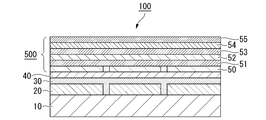
- FIG. 1 is a schematic sectional view showing an example of an organic EL display device having a color filter of the present invention.
- the constituent features and the like of the present invention will be described in detail below, but these are examples of the embodiments of the present invention and are not limited to these contents.
- “(meth)acrylic”, “(meth)acrylate” and the like mean “acrylic and/or methacrylic”, “acrylate and/or methacrylate” and the like, for example, “(meth)acrylic acid” It means “acrylic acid and/or methacrylic acid”.
- the “total solid content” means all components other than the solvent component contained in the pigment dispersion liquid or the colored resin composition.
- the numerical range represented by “to” means the range including the numerical values before and after “to”.
- the “weight average molecular weight” means a polystyrene-equivalent weight average molecular weight (Mw) by GPC (gel permeation chromatography).
- the “amine value” means an amine value in terms of effective solid content, unless otherwise specified, and is a value represented by the amount of base and equivalent weight of KOH per 1 g of solid content of the dispersant. is there.
- C.I.” means a color index.
- the colored resin composition according to the present invention contains (A) a colorant, (B) a solvent, (C) an alkali-soluble resin, and (D) a photopolymerization initiator as essential components, and if necessary, components other than the above components. Other additives and the like may be blended.
- A a colorant
- B a solvent
- C an alkali-soluble resin
- D a photopolymerization initiator
- colorant (A) contained in the colored resin composition of the present invention has a diffraction angle (2 ⁇ of 2 ⁇ in a thin film X-ray diffraction spectrum using CuK ⁇ rays after heating at 230° C. )
- a1 zinc phthalocyanine dye having a maximum peak in the range of 2 to 5° (hereinafter, may be referred to as “zinc phthalocyanine dye (a1)”).
- the zinc phthalocyanine dye (a1) is a zinc phthalocyanine dye having a maximum peak in a diffraction angle (2 ⁇ ) of 2 to 5° in a thin film X-ray diffraction spectrum using CuK ⁇ rays after heating at 230°C.
- the zinc phthalocyanine dye molecules are associated with each other during heating (230° C.) in the firing step for manufacturing the pixel of the color filter, and the zinc phthalocyanine dye molecules are regularly arranged (crystallized), so that It is considered that the peak has a maximum peak.
- Zinc phthalocyanine dyes tend to crystallize easily, but especially when the phthalocyanine rings form regular H-aggregates in which the phthalocyanine rings face each other in parallel with each other, the maximum absorption wavelength is short wavelength side ( For example, the wavelength shifts to 640 to 660 nm), and the tailing of the absorption peak on the short-wave absorption side is reduced, resulting in a sharp rise.
- the zinc phthalocyanine-based dye (a1) has a high absorbance due to the central metal being zinc and has an absorption peak showing a steeper rise. It is considered to be brightness.
- the zinc phthalocyanine dye (a1) contained in the colored resin composition is not particularly limited in the procedure and method for measuring the thin film X-ray diffraction spectrum using CuK ⁇ ray after heating at 230° C., but the colored resin composition is applied. Then, the colored cured film obtained by drying under reduced pressure, exposing to a high pressure mercury lamp, and then baking at 230° C. for 30 minutes can be measured by thin film X-ray diffraction using CuK ⁇ rays.
- the conditions for forming the colored cured film it is preferable to adopt the conditions described in Examples below.
- the conditions for measuring the thin film X-ray diffraction spectrum using CuK ⁇ rays are not particularly limited, but an automatic X-ray diffractometer RINT2000 manufactured by Rigaku Corporation is used and an X-ray output of 50 kV, 250 mA and a fixed incident angle ( ⁇ ) of 0.20°. , Scanning range (2 ⁇ ) 2 to 40°, scanning speed 3.0°/min.
- the out-of-plane method is preferable.
- As the measurement conditions it is preferable to adopt those described in the examples below.
- the maximum peak is a peak existing within the measurement range (2 to 5°), that is, a peak whose peak top is within the measurement range, and whose intensity at the peak top is the maximum value within the measurement range. Refers to. For example, even if a peak exists in the measurement range and the intensity at the peak top does not reach the maximum value in the measurement range, it is not the maximum peak.
- the maximum peak existing in the range of the diffraction angle (2 ⁇ ) of 2 to 5° (hereinafter, referred to as “ There is no particular limitation on the diffraction angle of the peak top of the "maximum peak A”.), but it is preferably 2.0° or more, more preferably 2.5° or more, further preferably 3.0° or more, 3 0.2° or more is further preferable, 3.4° or more is particularly preferable, 3.5° or more is most preferable, 5.0° or less is preferable, 4.5° or less is more preferable, and 4.0° is more preferable.
- the peak top diffraction angle of the maximum peak A is preferably 2.0° to 5.0°, more preferably 2.5° to 5.0°, further preferably 3.0° to 5.0°, 3.2° to 4.5° is even more preferable, 3.4° to 4.0° is even more preferable, 3.5° to 3.9° is particularly preferable, and 3.5° to 3.8° is preferable. Most preferred.
- the full width at half maximum of the maximum peak A of the zinc phthalocyanine dye (a1) is not particularly limited, but is preferably 2.0° or less, more preferably 1.6° or less, still more preferably 1.2° or less, 1.0°
- the following is particularly preferable, and is usually 0.4° or more.
- the full width at half maximum of the maximum peak A is preferably 0.4° to 2.0°, more preferably 0.4° to 1.6°, further preferably 0.4° to 1.2°, 4° to 1.0° is particularly preferable.
- the ratio (I 1 /I 2 ) of the intensity I 1 of the peak top of the maximum peak A and the intensity I 2 of the halo peak top Is not particularly limited, but is preferably 1 or more, more preferably 1.5 or more, further preferably 2 or more, further preferably 3 or more, particularly preferably 5 or more, and usually 10 or less.
- I 1 /I 2 is preferably 1 to 10, more preferably 1.5 to 10, still more preferably 2 to 10, still more preferably 3 to 10, and particularly preferably 5 to 10.
- the chemical structure of the zinc phthalocyanine dye (a1) is zinc having a maximum peak in the range of 2 to 5° in the diffraction angle (2 ⁇ ) in the thin film X-ray diffraction spectrum using CuK ⁇ rays after heating at 230°C.
- the zinc phthalocyanine represented by the following general formula (1) is not particularly limited as long as it is a phthalocyanine-based dye, but from the viewpoint of facilitating the formation of an association between dye molecules and sharpening the rise of the main absorption peak on the short wavelength side. It is preferable to use a system dye.
- a 1 to A 16 each independently represents a hydrogen atom, a chlorine atom, a fluorine atom, or a group represented by the following general formula (2).
- X represents a divalent linking group.
- the benzene ring in the formula (2) may have any substituent. * represents a bond.
- a 1 to A 16 each independently represent a hydrogen atom, a chlorine atom, a fluorine atom, or a group represented by the following general formula (2).
- X represents a divalent linking group.
- the benzene ring in formula (2) may have an arbitrary substituent. * Represents a bond.
- (X) X in the general formula (2) represents a divalent linking group.
- the divalent linking group is not particularly limited, and examples thereof include an oxygen atom, a sulfur atom, and a —N(R a1 )— group.
- R a1 represents a hydrogen atom or an aliphatic hydrocarbon group having 1 to 6 carbon atoms. Of these, an oxygen atom or a sulfur atom is preferable, and an oxygen atom is more preferable, from the viewpoint that the tailing of the absorption maximum of the main absorption on the short-wave side is reduced and a sharp rise is exhibited.
- the benzene ring in formula (2) may have an arbitrary substituent.
- the substituent is not particularly limited, but is a halogen atom, an alkyl group (—R A group (where R A represents an alkyl group)), an alkoxy group (—OR A group (where R A represents an alkyl group). )), an alkoxycarbonyl group (—COOR A group (where R A represents an alkyl group)), an aryl group (—R B group (where R B represents an aryl group)), an aryloxy group.
- alkyl group (—R A group) and aryl group (—R B group) contained in the group may be further substituted with these substituents or may not be substituted.
- the alkyl group (—R A group) and aryl group (—R B group) contained in these groups are halogen atom, alkyl group, alkoxy group, alkoxycarbonyl group, aryl group, aryloxy group, aryloxycarbonyl group. It may be substituted with a group or a cyano group.
- the alkyl group may or may not be separated by an oxygen atom, a sulfur atom, a nitrogen atom or the like.
- an alkoxycarbonyl group and an alkyl group substituted with an alkoxycarbonyl group are preferable, and an alkoxycarbonyl group is more preferable, from the viewpoints of light selective transmission and solubility in a solvent.
- the alkyl group contained in these groups may be linear, branched, cyclic, or a combination thereof, but is preferably linear or branched, and is easy to synthesize or alkali-soluble resin. Also, from the viewpoint of solubility in a solvent, it is preferably linear.
- the carbon number of the alkyl group is not particularly limited, it is usually preferably 1 or more and 2 or more, more preferably 6 or less, more preferably 5 or less, further preferably 4 or less, and particularly preferably 3 or less.
- the solubility in the solvent tends to be improved by setting the lower limit or more, and the hydrophobic portion and the hydrophobic interaction in the alkali-soluble resin work by setting the upper limit or less, and molecules in the heating step.
- the alkyl group include a methyl group, an ethyl group, a propyl group, a butyl group, an isobutyl group, a pentyl group, a hexyl group, and the like, which maintain the solubility in a solvent and the efficiency with a hydrophobic portion in an alkali-soluble resin.
- an ethyl group, a propyl group, an isobutyl group, or a butyl group is preferable, an ethyl group or a propyl group is more preferable, and an ethyl group is further preferable.
- the aryl group contained in these groups may be an aromatic hydrocarbon ring group or an aromatic heterocyclic group.
- the carbon number of the aryl group is not particularly limited, but is usually preferably 4 or more and 6 or more, more preferably 12 or less, more preferably 10 or less, and further preferably 8 or less. When it is at least the above lower limit, the raw material tends to be easily available, and when it is at most the above upper limit, the solubility in a solvent tends to be improved.
- the aromatic hydrocarbon ring in the aromatic hydrocarbon ring group may be a single ring or a condensed ring.
- the aromatic hydrocarbon ring group include groups having one free valence such as a benzene ring, a naphthalene ring, a pentalene ring, an indene ring, an azulene ring, and a heptalene ring.
- the aromatic heterocycle in the aromatic heterocyclic group may be a single ring or a condensed ring.
- aromatic heterocyclic group examples include a furan ring, a thiophene ring, a pyrrole ring, a 2H-pyran ring, a 4H-thiopyran ring, a pyridine ring, a 1,3-oxazole ring, and isoxazole each having one free valence.
- the number of substitutions is not particularly limited, but is preferably 4 or less, more preferably 3 or less, further preferably 2 or less, and particularly preferably 1.
- the substitution position is not particularly limited, and examples thereof include the 2-position, 3-position, and 4-position, which are easy to form a phthalocyanine association. To 4th position are preferred.
- a 1 to A 16 each independently represent a hydrogen atom, a chlorine atom, a fluorine atom, or a group represented by the general formula (2). It is preferable that at least one of A 1 to A 16 is a group represented by the general formula (2), more preferably 2 or more is a group represented by the general formula (2), and 4 or more. Is more preferably a group represented by the general formula (2), particularly preferably 6 or more is a group represented by the general formula (2), and 15 or less is a group represented by the general formula (2). ) Are preferred, groups of 14 or less are more preferably groups of the general formula (2), and groups of 12 or less are groups of the general formula (2).
- the group represented by the general formula (2) is preferably 1 to 15, more preferably 2 to 14, still more preferably 4 to 12, and particularly preferably 6 to 10.
- a 1 to A 16 each independently represent a hydrogen atom, a chlorine atom, a fluorine atom, or a group represented by the general formula (2).
- One or more of A 1 to A 16 are preferably a chlorine atom or a fluorine atom, two or more are more preferably a chlorine atom or a fluorine atom, and more preferably four or more are a chlorine atom or a fluorine atom.
- 6 or more is particularly preferably a chlorine atom or a fluorine atom, 15 or less is preferably a chlorine atom or a fluorine atom, 14 or less is more preferably a chlorine atom or a fluorine atom, and 12 or less is It is more preferably a chlorine atom or a fluorine atom, and particularly preferably 10 or less is a chlorine atom or a fluorine atom.
- chlorine atom or fluorine atom is preferably 1 to 15, more preferably 2 to 14, still more preferably 4 to 12, and particularly preferably 6 to 10.
- the zinc phthalocyanine dye represented by the formula (1) is preferable.
- each A 20 independently represents a hydrogen atom, a chlorine atom, or a fluorine atom.
- X represents a divalent linking group.
- the benzene ring in formula (3) may have an arbitrary substituent.
- a 20 each independently represent a hydrogen atom, a chlorine atom, or a fluorine atom, but from the viewpoint of solubility in a solvent, a chlorine atom or a fluorine atom is preferable, and a fluorine atom is more preferable.
- the eight A 20 's contained in the above formula (3) may be the same or different, but are the same from the viewpoint of easy formation of the phthalocyanine association. preferable.
- an embodiment in which all eight A 20 included in the formula (3) are fluorine atoms and an embodiment in which all eight A 20 included in the formula (3) are chlorine atoms can be mentioned.
- X represents a divalent linking group.
- the divalent linking group mentioned as X in the above formula (2) can be adopted.
- the benzene ring (8 benzene rings bonded to the phthalocyanine ring via X) in the formula (3) may have an arbitrary substituent, and the substituent is the same as in the above formula (2). What was mentioned as a substituent which a benzene ring may have can be employ
- the number of the substituents that one benzene ring has is not particularly limited, but is preferably 4 or less, more preferably 3 or less, further preferably 2 or less, and particularly preferably 1.
- the content is less than or equal to the upper limit, the association formation of phthalocyanine is promoted, and the absorption on the short wavelength side of the main absorption tends to be sharpened.
- the substitution position is not particularly limited, but examples thereof include the 2-position, 3-position, and 4-position, and the 4-position is preferable from the viewpoint of easy formation of phthalocyanine association.
- zinc phthalocyanine dye (a1) examples include the followings.
- Me in the formula represents methyl.
- Et in the formula represents ethyl.
- N-Pr in the formula represents n-propyl.
- I-Bu in the formula represents isobutyl.
- IBu in the formula represents isobutyl.
- a known method As a method for producing the zinc phthalocyanine dye (a1), a known method can be adopted. For example, JP-A-5-345861, JP-A-2014-153554, JP-A-2015 The method described in Japanese Patent No. 152861 can be adopted.
- the (A) colorant may contain other colorants in addition to the zinc phthalocyanine dye (a1).
- Other colorants include pigments and dyes.
- a green pigment, a green dye, a yellow pigment, a yellow dye, or the like and a yellow pigment and/or a yellow dye is used. More preferable.
- green pigments include C.I. I. Pigment Green 7, 36, 58, 59, 62, 63 and the like, and C.I. I. Pigment Green 58 is preferable.
- the green dyes which are classified as dyes by the color index, C.I. I. C. as a solvent dye. I.
- Modend Greens 1, 3, 4, 5, 10, 15, 19, 26, 29, 33, 34, 35, 41, 43, 53 and the like can be mentioned. Among these, from the viewpoint of suppressing dye decomposition during thermal firing, C.I. I. Solvent Greens 1, 3, 4, 5, 7, 28, 29, 32, 33, 34, 35 are preferred.
- C.I. I. Pigment Yellow 1 1:1, 2, 3, 4, 5, 6, 9, 10, 12, 13, 14, 16, 17, 20, 24, 31, 32, 34, 35, 35:1, 36, 36:1, 37, 37:1, 40, 41, 42, 43, 48, 53, 55, 61, 62, 62:1, 63, 65, 73, 74, 75, 81, 83, 86, 87, 93, 94, 95, 97, 100, 101, 104, 105, 108, 109, 110, 111, 116, 117, 119, 120, 125, 126, 127, 127:1, 128, 129, 133, 134, 136, 137, 138, 139, 142, 147, 148, 150, 151, 153, 154, 155, 157, 158, 159, 160, 161, 162, 163, 164, 165, 166, 167, 168, 169, 170, 172, 173, 174, 175, 176, 180
- C.I. I. Pigment Yellow 83, 117, 129, 138, 139, 154, 155, 180, 185, and the nickel azo complex represented by the formula (i) are preferable, and C.I. I. Pigment Yellow 83, 138, 139, 180, 185 and the nickel azo complex represented by the formula (i) are more preferable.
- yellow dyes examples include barbituric acid azo dyes, pyridone azo dyes, pyrazolone azo dyes, quinophthalone dyes, and cyanine dyes. Specific examples thereof include specific compounds described in Japanese Patent Laid-Open No. 2010-168531.
- C.I. I. As a solvent dye, C.I. I. Solvent Yellow 4, 14, 15, 23, 24, 38, 62, 63, 68, 79, 82, 94, 98, 99, 162, 163 and the like.
- C.I. I. C. as an acid dye.
- C.I. I. C. as a direct dye.
- I. Direct Yellow 2, 33, 34, 35, 38, 39, 43, 47, 50, 54, 58, 68, 69, 70, 71, 86, 93, 94, 95, 98, 102, 108, 109, 129 Dyes such as 136, 138 and 141.
- C.I. I. C. as a modant dye.
- Examples include dyes such as Mordant Yellow 5, 8, 10, 16, 20, 26, 30, 31, 33, 42, 43, 45, 56, 61, 62, 65, and preferably C.I. I.
- Solvent Yellow 4 14, 15, 23, 24, 38, 62, 63, 68, 82, 94, 98, 99, 162, C.I. I. Acid Yellow 1, 3, 7, 9, 11, 17, 23, 25, 29, 34, 36, 38, 40, 42, 54, 65, 72, 73, 76, 79, 98, 99, 111, 112 , 113, 114, 116, 119, 123, 128, 134, 135, 138, 139, 140, 144, 150, 155, 157, 160, 161, 163, 168, 169, 172, 177, 178, 179, 184.
- C.I. I It is preferably at least one selected from the group consisting of Solvent Yellow 4, 14, 15, 23, 24, 38, 62, 63, 68, 79, 82, 94, 98, 99, 162 and 163.
- the average primary particle diameter of the pigment is usually 0.2 ⁇ m or less, preferably 0.1 ⁇ m or less, more preferably 0.04 ⁇ m or less.
- a method such as solvent salt milling is preferably used.
- the content of the (A) colorant in the colored resin composition of the present invention is not particularly limited, but is preferably 5% by mass or more, more preferably 10% by mass or more, and 20% by mass in the total solid content of the colored resin composition.
- the above is more preferable, 30% by mass or more is further preferable, 35% by mass or more is particularly preferable, 70% by mass or less is preferable, 60% by mass or less is more preferable, 50% by mass or less is further preferable, 45% by mass
- the following is more preferable, and 40% by mass or less is particularly preferable.
- the content ratio of the (A) colorant is preferably 5 to 70% by mass, more preferably 10 to 60% by mass, further preferably 20 to 50% by mass, further preferably 30 to 45% by mass, and 35 to 40% by weight is particularly preferred.
- the content ratio of the zinc phthalocyanine dye (a1) in the colored resin composition of the present invention is not particularly limited, but is preferably 5% by mass or more, more preferably 8% by mass or more, based on the total solid content of the colored resin composition. Mass% or more is more preferable, 15 mass% or more is particularly preferable, 45 mass% or less is preferable, 40 mass% or less is more preferable, 35 mass% or less is further preferable, 30 mass% or less is further more preferable, 25 mass% The following are particularly preferred. When it is at least the lower limit value, color characteristics such as brightness tend to be improved, and when it is at most the upper limit value, pattern formability tends to be good.
- the content ratio of the zinc phthalocyanine dye (a1) is preferably 5 to 45% by mass, more preferably 5 to 40% by mass, further preferably 8 to 35% by mass, further preferably 10 to 30% by mass, 15 to 25 mass% is particularly preferable.
- the content ratio is not particularly limited, but is preferably 1% by mass or more, more preferably 5% by mass or more, and further preferably 8% by mass or more, based on the total solid content of the colored resin composition. 10 mass% or more is more preferable, 15 mass% or more is particularly preferable, 40 mass% or less is preferable, 35 mass% or less is more preferable, 30 mass% or less is further preferable, and 25 mass% or less is particularly preferable. When it is at least the above lower limit, thermal decomposition at the time of thermal firing at the time of producing a color filter tends to be suppressed, and when it is at most the above upper limit, pattern formability tends to be good. When other coloring agent is contained, for example, the content ratio is more preferably 5 to 40% by mass, further preferably 8 to 35% by mass, further preferably 10 to 30% by mass, and particularly preferably 15 to 25% by mass. preferable.
- the solvent (B) has a function of dissolving or dispersing a colorant, an alkali-soluble resin, a photopolymerization initiator, and other components in the colored resin composition of the present invention to adjust the viscosity.
- the (B) solvent may be any solvent that can dissolve or disperse each component.
- glycol monoalkyl ethers such as propylene glycol monomethyl ether (PGME); glycol alkyl ether acetates such as propylene glycol monomethyl ether acetate (PGMEA), and the like.
- PGME propylene glycol monomethyl ether
- PGMEA propylene glycol monomethyl ether acetate
- glycol monoalkyl ethers such as ethylene glycol monomethyl ether, ethylene glycol monoethyl ether, ethylene glycol monopropyl ether, ethylene glycol monobutyl ether;
- Glycol dialkyl ethers such as ethylene glycol dimethyl ether and ethylene glycol diethyl ether;
- Glycol alkyl ether acetates such as ethylene glycol monomethyl ether acetate and ethylene glycol monoethyl ether acetate, ethers such as dimethyl ether, diethyl ether, dipropyl ether and diisopropyl ether; Ketones such as methyl ethyl ketone and diisopropyl ketone;
- Alcohols such as ethanol, propanol, butanol;
- Aliphatic hydrocarbons such as n-pentane, n-octane, n-hexane;
- Alicyclic hydrocarbons such as
- a solvent having a boiling point of 100 to 155° C. pressure 1013.25 [hPa] condition; hereinafter, the same applies to all boiling points
- Glycol alkyl ether acetates are preferred because they have a good balance of coatability, surface tension and the like in the above-mentioned solvent and have relatively high solubility of the constituent components in the composition. For example, propylene glycol monomethyl ether acetate and the like can be mentioned.
- glycol alkyl ether acetates may be used alone, but may be used in combination with other solvents.
- glycol monoalkyl ethers are particularly preferable.
- propylene glycol monomethyl ether is particularly preferable from the viewpoint of solubility of constituent components in the composition.
- the glycol monoalkyl ethers have high polarity, and if the addition amount is too large, the pigment tends to aggregate, and the storage stability such as the viscosity of the colored resin composition obtained later tends to decrease,
- the proportion of glycol monoalkyl ethers in the solvent is preferably 5% by mass to 30% by mass, more preferably 5% by mass to 20% by mass.
- the content ratio of the solvent in the colored resin composition of the present invention is not particularly limited, but the upper limit thereof is usually 99% by mass or less, preferably 90% by mass or less, more preferably 85% by mass or less. When the content is not more than the upper limit, the coating film tends to be easily formed.
- the lower limit of the solvent content ratio is usually 70% by mass or more, preferably 75% by mass or more, and more preferably 78% by mass or more, in consideration of the viscosity suitable for coating.
- the content ratio of the solvent is preferably 70 to 99% by mass, more preferably 75 to 90% by mass, and further preferably 78 to 85% by mass.
- the (C) alkali-soluble resin is soluble in the above-mentioned solvent and is capable of forming a cured film having a sufficient degree of curing, and subjected to alkali development.
- the pattern is not limited as long as it can form a pattern.
- Japanese Unexamined Patent Publication No. 7-207211 Japanese Unexamined Patent Publication No. 8-259876, Japanese Unexamined Patent Publication No. 10-300922, Japanese Unexamined Patent Publication No. 11-140144, Japanese Unexamined Patent Publication No. 11-174224.
- the polymer compounds described in Japanese Patent Laid-Open No. 2000-56118, Japanese Patent Laid-Open No. 2003-233179 and the like can be used, and among them, the following (C-1) is preferable.
- Resins (C-5) and the like can be mentioned.
- (C-1) An unsaturated monobasic acid is added to at least a part of the epoxy group of the copolymer with respect to the copolymer of the epoxy group-containing (meth)acrylate and another radically polymerizable monomer.
- the resin thus obtained, or an alkali-soluble resin obtained by adding a polybasic acid anhydride to at least a part of hydroxyl groups generated by the addition reaction hereinafter sometimes referred to as "resin (C-1)").
- (C-2) linear alkali-soluble resin containing a carboxyl group (hereinafter sometimes referred to as "resin (C-2)")
- C-3) A resin obtained by adding an epoxy group-containing unsaturated compound to the carboxyl group portion of the resin (C-2) (hereinafter sometimes referred to as “resin (C-3)").
- C-4) (meth)acrylic resin (hereinafter sometimes referred to as “resin (C-4)”.
- (C-5) Epoxy acrylate resin having a carboxyl group (hereinafter sometimes referred to as “resin (C-5)”).
- the resin (C-1) is particularly preferable and will be described in detail below.
- the resins (C-2) to (C-5) are not limited as long as they are dissolved by an alkaline developer and have such a solubility that the intended developing treatment is carried out. It is the same as that described as the same item in Japanese Unexamined Patent Publication No. 2009-025813. The preferred embodiment is also the same.
- (C-1) An unsaturated monobasic acid is added to at least a part of the epoxy group of the copolymer with respect to the copolymer of the epoxy group-containing (meth)acrylate and another radically polymerizable monomer.
- the resulting resin, or an alkali-soluble resin obtained by adding a polybasic acid anhydride to at least a part of the hydroxyl groups generated by the addition reaction thereof.
- an epoxy group-containing resin is used as one of the particularly preferable resins of the resin (C-1).
- the resin include an acid-added resin and an alkali-soluble resin obtained by adding a polybasic acid anhydride to 10 to 100 mol% of hydroxyl groups generated by the addition reaction.
- epoxy group-containing (meth)acrylate examples include glycidyl (meth)acrylate, 3,4-epoxybutyl (meth)acrylate, (3,4-epoxycyclohexyl)methyl (meth)acrylate, and 4-hydroxybutyl (meth)acrylate.
- An acrylate glycidyl ether etc. are mentioned. Of these, glycidyl (meth)acrylate is preferable.
- These epoxy group-containing (meth)acrylates may be used alone or in combination of two or more.
- the other radical polymerizable monomer copolymerized with the epoxy group-containing (meth)acrylate is not particularly limited as long as the effects of the present invention are not impaired, and examples thereof include vinyl aromatics, dienes, and (meth)acrylic acid. Examples thereof include esters, (meth)acrylic acid amides, vinyl compounds, unsaturated dicarboxylic acid diesters, and monomaleimides. Among them, mono(meth)acrylate having a structure represented by the following formula (III) is preferable.
- the content ratio of the repeating unit derived from the mono(meth)acrylate having the structure represented by the following formula (III) is 5 to 90 mol% in the repeating unit derived from the "other radically polymerizable monomer". It is preferably 10 to 70 mol%, more preferably 15 to 50 mol%.
- R 89 represents a hydrogen atom or a methyl group
- R 90 represents a structure represented by the following formula (IV).
- R 91 to R 98 each independently represent a hydrogen atom or an alkyl group having 1 to 3 carbon atoms.
- R 96 and R 98 may be linked to each other to form a ring.
- the ring formed by connecting R 96 and R 98 is preferably an aliphatic ring, and may be saturated or unsaturated.
- the ring formed by connecting R 96 and R 98 preferably has 5 to 6 carbon atoms.
- those represented by the following structural formulas (IVa), (IVb), or (IVc) are particularly preferable.
- the mono(meth)acrylate having the structure represented by the formula (IV) may be used alone or in combination of two or more.
- the "other radically polymerizable monomer” other than the mono(meth)acrylate having the structure represented by the formula (IV) it is possible to improve the heat resistance and strength of the colored resin composition.
- Styrene n-butyl (meth)acrylate, tert-butyl (meth)acrylate, cyclohexyl (meth)acrylate, isobornyl (meth)acrylate, adamantyl (meth)acrylate, benzyl (meth)acrylate, ( Examples thereof include 2-hydroxyethyl (meth)acrylate, N-phenylmaleimide, N-cyclohexylmaleimide and the like.
- the content ratio of the repeating unit derived from at least one selected from the above monomer group is preferably 1 to 70 mol% in the repeating unit derived from "another radically polymerizable monomer", and 3 to 50 mol% Is more preferable.
- a known solution polymerization method is applied to the copolymerization reaction between the epoxy group-containing (meth)acrylate and the other radically polymerizable monomer.
- a repeating unit of 5 to 90 mol% derived from the epoxy group-containing (meth)acrylate and other A repeating unit derived from a radical-polymerizable monomer is preferably 10 to 95 mol%, more preferably 20 to 80 mol% of the former and 80 to 20 mol% of the latter, further preferably 30 to 70 mol%. And the latter 70 to 30 mol% are particularly preferable.
- the addition amount of the polymerizable component and the alkali-soluble component described later is sufficient, and the heat resistance and the strength of the film are sufficient, which is preferable.
- An unsaturated monobasic acid (polymerizable component) and a polybasic acid anhydride (alkali-soluble component) are reacted with the epoxy group portion of the epoxy group-containing copolymer synthesized as described above.
- unsaturated monobasic acid added to the epoxy group known ones can be used, and examples thereof include unsaturated carboxylic acids having an ethylenically unsaturated double bond.
- (meth)acrylic acid examples include (meth)acrylic acid; crotonic acid, o-, m- or p-vinylbenzoic acid; the ⁇ -position is substituted with a haloalkyl group, an alkoxyl group, a halogen atom, a nitro group, a cyano group or the like
- monocarboxylic acids such as (meth)acrylic acid.
- (meth)acrylic acid is preferable. These may be used alone or in combination of two or more.
- the alkali-soluble resin used in the present invention can be imparted with polymerizability.
- These unsaturated monobasic acids are usually added to 10 to 100 mol% of the epoxy groups contained in the copolymer, preferably 30 to 100 mol%, more preferably 50 to 100 mol%. Within the above range, the colored resin composition is excellent in stability over time, which is preferable.
- a known method can be adopted as a method of adding an unsaturated monobasic acid to the epoxy group of the copolymer.
- polybasic acid anhydride to be added to the hydroxyl group generated when the unsaturated monobasic acid is added to the epoxy group of the copolymer known compounds can be used.
- dibasic acid anhydrides such as maleic anhydride, succinic anhydride, itaconic anhydride, phthalic anhydride, tetrahydrophthalic anhydride, hexahydrophthalic anhydride and chlorendic anhydride; trimellitic anhydride, pyromellitic anhydride, benzophenone
- An anhydride of an acid having three or more bases such as tetracarboxylic acid anhydride and biphenyltetracarboxylic acid anhydride can be used.
- succinic anhydride and tetrahydrophthalic anhydride are preferable.
- These polybasic acid anhydrides may be used alone or in combination of two or more.
- alkali solubility can be imparted to the alkali soluble resin used in the present invention.
- These polybasic acid anhydrides are usually added to the epoxy group of the above copolymer in an amount of 10 to 100 mol% of hydroxyl groups generated by adding an unsaturated monobasic acid, and preferably 20 to 90 mol. %, more preferably 30 to 80 mol %.
- a method for adding a polybasic acid anhydride to a hydroxyl group a known method can be adopted. Furthermore, in order to improve photosensitivity, after adding the above-mentioned polybasic acid anhydride, a glycidyl ether compound having a glycidyl (meth)acrylate or a polymerizable unsaturated group is added to a part of the generated carboxyl group. May be.
- the structure of such a resin is described, for example, in Japanese Unexamined Patent Publication No. 8-297366 and Japanese Unexamined Patent Publication No. 2001-89533.
- the polystyrene-equivalent weight average molecular weight (Mw) of the (C) alkali-soluble resin measured by GPC (gel permeation chromatography) is preferably 3,000 or more, more preferably 5,000 or more, further preferably 7,000 or more, and 100,000.
- the following is preferable, 50000 or less is more preferable, 30000 or less is further preferable, 15000 or less is further preferable, and 13000 or less is particularly preferable.
- weight average molecular weight (Mw) is within the above range, heat resistance, film strength, and solubility in a developing solution are favorable, which is preferable.
- the weight average molecular weight of the alkali-soluble resin is preferably 3,000 to 100,000, more preferably 3,000 to 50,000, further preferably 5,000 to 30,000, further preferably 5,000 to 15,000, and particularly preferably 7,000 to 13,000.
- the weight average molecular weight (Mw)/number average molecular weight (Mn) ratio is preferably 2.0 to 5.0.
- the acid value of the (C) alkali-soluble resin is usually 10 mgKOH/g or more, preferably 15 mgKOH/g or more, more preferably 25 mgKOH/g or more, further preferably 50 mgKOH/g or more, and usually 200 mgKOH/g or less, It is preferably 150 mgKOH/g or less, more preferably 100 mgKOH/g or less.
- the acid value of the alkali-soluble resin is preferably 10 to 200 mgKOH/g, more preferably 15 to 200 mgKOH/g, further preferably 25 to 150 mgKOH/g, particularly preferably 50 to 100 mgKOH/g.
- the content ratio of the alkali-soluble resin (C) is not particularly limited, but is preferably 5% by mass or more, more preferably 10% by mass or more, and 15% by mass based on the total solid content of the colored resin composition. It is more preferably at least mass%, particularly preferably at least 20 mass%, preferably at most 50 mass%, more preferably at most 40 mass%, further preferably at most 35 mass%, even more preferably at most 30 mass%, 25 A mass% or less is particularly preferable.
- the ratio is at least the lower limit, the pattern tends to be formed favorably, and when it is at most the upper limit, the resolution and the residual film ratio tend to be improved.
- the content ratio of the (C) alkali-soluble resin is preferably 5 to 50% by mass, more preferably 5 to 40% by mass, further preferably 10 to 35% by mass, further preferably 15 to 30% by mass, and 20. It is particularly preferably about 25% by mass.
- the colored resin composition of the present invention contains (D) a photopolymerization initiator.
- a photopolymerization initiator By containing (D) a photopolymerization initiator, film curability by photopolymerization can be obtained.
- the photopolymerization initiator (D) can also be used as a mixture (photopolymerization initiation system) with an accelerator (chain transfer agent) and an additive such as a sensitizing dye added as necessary.
- the photopolymerization initiation system is a component having a function of directly absorbing light or being photosensitized to cause a decomposition reaction or a hydrogen abstraction reaction to generate a polymerization active radical.
- photopolymerization initiator examples include metallocene compounds containing a titanocene compound described in JP-A-59-152396 and JP-A-61-151197, and JP-A-10-39503. Described hexaarylbiimidazole derivatives, halomethyl-s-triazine derivatives, N-aryl- ⁇ -amino acids such as N-phenylglycine, N-aryl- ⁇ -amino acid salts, N-aryl- ⁇ -amino acid esters, etc. Radical activators, ⁇ -aminoalkylphenone-based compounds, oxime ester-based initiators described in Japanese Patent Laid-Open No. 2000-80068 and the like can be mentioned.
- photopolymerization initiator that can be used in the present invention are listed below.
- Benzophenone derivatives such as benzophenone, Michler's ketone, 2-methylbenzophenone, 3-methylbenzophenone, 4-methylbenzophenone, 2-chlorobenzophenone, 4-bromobenzophenone and 2-carboxybenzophenone; 2,2-dimethoxy-2-phenylacetophenone, 2,2-diethoxyacetophenone, 1-hydroxycyclohexylphenyl ketone, ⁇ -hydroxy-2-methylphenylpropanone, 1-hydroxy-1-methylethyl-(p -Isopropylphenyl)ketone, 1-hydroxy-1-(p-dodecylphenyl)ketone, 2-methyl-1-[4-(methylthio)phenyl]-2-morpholinopropan-1-one, 1,1,1 -Acetophenone derivatives such as trichloromethyl-(p-butylphenyl)ketone; Thioxanthone derivatives such as thioxanthone, 2-ethy
- Benzoic acid ester derivatives such as ethyl p-dimethylaminobenzoate and ethyl p-diethylaminobenzoate; Acridine derivatives such as 9-phenylacridine and 9-(p-methoxyphenyl)acridine; Phenazine derivatives such as 9,10-dimethylbenzphenazine; Anthrone derivatives such as benzanthrone; Dicyclopentadienyl-Ti-dichloride, dicyclopentadienyl-Ti-bis-phenyl, dicyclopentadienyl-Ti-bis-2,3,4,5,6-pentafluorophenylyl, dicyclopenta Dienyl-Ti-bis-2,3,5,6-tetrafluorophenylyl, dicyclopentadienyl-Ti-bis-2,4,6-trifluorophenyl, dicyclopentadienyl-Ti
- Oxime ester compounds are preferable from the viewpoint of sensitivity and surface properties.
- Oxime ester compounds have a structure that absorbs ultraviolet rays, a structure that transmits light energy, and a structure that generates radicals, and therefore has a high sensitivity even in a small amount and is stable against thermal reaction. Therefore, a small amount of highly sensitive colored resin composition can be designed.
- an oxime ester compound having a carbazole ring which may have a substituent is preferable from the viewpoint of the light absorption property for the i-line (365 nm) of the exposure light source.
- Examples of the oxime ester compound include compounds represented by the following general formula (I-1).
- R 21a represents a hydrogen atom, an alkyl group which may have a substituent, or an aromatic ring group which may have a substituent.
- R 21b represents an arbitrary substituent containing an aromatic ring or a heteroaromatic ring.
- R 22a represents an alkanoyl group which may have a substituent or an aryloyl group which may have a substituent.
- the carbon number of the alkyl group in R 21a is not particularly limited, but is usually 1 or more, preferably 2 or more, and usually 20 or less, preferably 15 or less, more preferably from the viewpoint of solubility in a solvent and sensitivity to exposure. It is 10 or less, more preferably 5 or less.
- Specific examples of the alkyl group include a methyl group, an ethyl group, a propyl group and a cyclopentylethyl group.
- the substituent which the alkyl group may have is an aromatic ring group, a hydroxyl group, a carboxy group, a halogen atom, an amino group, an amide group, 4-(2-methoxy-1-methyl)ethoxy-2-methylphenyl. Group or N-acetyl-N-acetoxyamino group, and the like, and is preferably unsubstituted from the viewpoint of ease of synthesis.
- Examples of the aromatic ring group for R 21a include an aromatic hydrocarbon ring group and an aromatic heterocyclic group.
- the carbon number of the aromatic ring group is not particularly limited, but is preferably 5 or more from the viewpoint of solubility in the colored resin composition. From the viewpoint of developability, it is preferably 30 or less, more preferably 20 or less, further preferably 12 or less, particularly preferably 8 or less.
- aromatic ring group examples include a phenyl group, a naphthyl group, a pyridyl group, a furyl group, a fluorenyl group and the like.
- a phenyl group, a naphthyl group or a fluorenyl group is preferable, and a phenyl group. More preferred are groups or fluorenyl groups.
- substituent which the aromatic ring group may have, a hydroxyl group, an alkyl group which may have a substituent, an alkoxy group which may have a substituent, a carboxy group, a halogen atom, an amino group , An amide group, an alkyl group, and the like.
- a hydroxyl group and a carboxy group are preferable, and a carboxy group is more preferable.
- substituent in the alkyl group which may have a substituent and the alkoxy group which may have a substituent include a hydroxyl group, an alkoxy group, a halogen atom and a nitro group.
- R 21a is preferably an alkyl group which may have a substituent, more preferably an unsubstituted alkyl group, and further preferably a methyl group.
- R 21b is an arbitrary substituent containing an aromatic ring or a heteroaromatic ring, but from the viewpoint of solubility in a solvent and sensitivity to exposure, it may have a carbazolyl group which may have a substituent or a substituent. Preferred examples thereof include a thioxanthonyl group which may be present, a diphenyl sulfide group which may have a substituent, a fluorenyl group which may have a substituent, and a group in which these groups and a carbonyl group are linked.
- a carbazolyl group which may have a substituent or a carbazolyl group which may have a substituent and a carbonyl group are linked from the viewpoint of light absorptivity to the i-line (365 nm) of the exposure light source. Groups are preferred.
- the carbon number of the alkanoyl group in R 22a is not particularly limited, but is usually 2 or more, preferably 3 or more, and usually 20 or less, preferably 15 or less, more preferably 10 or less from the viewpoint of solubility in a solvent and sensitivity. , And more preferably 5 or less.
- Specific examples of the alkanoyl group include an acetyl group, a propanoyl group, a butanoyl group and the like.
- Examples of the substituent that the alkanoyl group may have include an aromatic ring group, a hydroxyl group, a carboxy group, a halogen atom, an amino group and an amide group, and from the viewpoint of ease of synthesis, it is unsubstituted. Is preferred.
- the carbon number of the aryloyl group in R 22a is not particularly limited, but is usually 7 or more, preferably 8 or more, and usually 20 or less, preferably 15 or less, more preferably 10 or less from the viewpoint of solubility in a solvent and sensitivity.
- Specific examples of the aryloyl group include a benzoyl group and a naphthoyl group.
- Examples of the substituent that the aryloyl group may have include a hydroxyl group, a carboxy group, a halogen atom, an amino group, an amide group, and an alkyl group, and from the viewpoint of ease of synthesis, it is preferably unsubstituted. ..
- R 21a and R 22a have the same meaning as in the general formula (I-1).
- R 23a represents an alkyl group which may have a substituent.
- R 24a represents an alkyl group which may have a substituent, an aryloyl group which may have a substituent, a heteroaryloyl group which may have a substituent, or a nitro group.
- the benzene ring constituting the carbazole ring may be further condensed with an aromatic ring to form a polycyclic aromatic ring.
- the number of carbon atoms of the alkyl group in R 23a and R 24a is not particularly limited, but is usually 1 or more, preferably 2 or more, and usually 20 or less, preferably 15 or less, more preferably 10 from the viewpoint of solubility in a solvent. Or less, more preferably 5 or less.
- Specific examples of the alkyl group include a methyl group, an ethyl group, a propyl group, a butyl group, a cyclohexyl group and the like.
- R 23a is preferably an alkyl group, and more preferably an ethyl group, from the viewpoint of solubility in a solvent and easiness of synthesis.
- the carbon number of the aryloyl group in R 24a is not particularly limited, but is usually 7 or more, preferably 8 or more, more preferably 9 or more, and usually 20 or less, preferably 15 or less, from the viewpoint of solubility in a solvent. It is preferably 10 or less, more preferably 9 or less.
- Specific examples of the aryloyl group include a benzoyl group and a naphthoyl group.
- aryloyl group may have examples of the substituent that the aryloyl group may have include a carboxy group, a hydroxy group, a phenyl group, a benzyl group, a cyclohexyl group, a nitro group and the like, and from the viewpoint of ease of synthesis, an ethyl group. Is preferred.
- the carbon number of the heteroaryloyl group in R 24a is not particularly limited, but from the viewpoint of solubility in a solvent, it is usually 7 or more, preferably 8 or more, more preferably 9 or more, and usually 20 or less, preferably 15 or less. , More preferably 10 or less, still more preferably 9 or less.
- Specific examples of the heteroaryloyl group include a furancarbonyl group, a thiophenecarbonyl group, a pyrrolylcarbonyl group and a pyridinecarbonyl group.
- heteroaryloyl group may have include a carboxy group, a hydroxy group, a phenyl group, a benzyl group, a cyclohexyl group, a nitro group, and the like, and are unsubstituted from the viewpoint of ease of synthesis. It is preferable.
- the benzene ring constituting the carbazole ring may be further condensed with an aromatic ring to form a polycyclic aromatic ring.
- oxime ester compounds include OXE-02, OXE-03 manufactured by BASF, TR-PBG-304, TR-PBG-314 manufactured by Changzhou Power Electronics Co., Ltd., or N-1919 manufactured by ADEKA. There are NCI-930 and NCI-831.
- oxime ester compound examples include the following compounds, but the compounds are not limited to these compounds.
- Each of these photopolymerization initiators may be used alone or in combination of two or more.
- a chain transfer agent may be used in addition to the photopolymerization initiator (D).
- the chain transfer agent is a compound having a function of receiving a generated radical and transferring the received radical to another compound.
- various compounds can be used as long as they have the above-mentioned functions, but examples thereof include a mercapto group-containing compound and carbon tetrachloride, which tend to have a high chain transfer effect. It is more preferable to use a compound having a mercapto group. It is considered that this is because bond cleavage is likely to occur due to the small SH bond energy, and hydrogen abstraction reaction and chain transfer reaction are likely to occur. It is effective in improving sensitivity and surface curability.
- Examples of the mercapto group-containing compound include 2-mercaptobenzothiazole, 2-mercaptobenzimidazole, 2-mercaptobenzoxazole, 3-mercapto-1,2,4-triazole, 2-mercapto-4(3H)-quinazoline, ⁇ - Mercapto group-containing compounds having an aromatic ring such as mercaptonaphthalene and 1,4-dimethylmercaptobenzene; hexanedithiol, decanedithiol, butanediol bis(3-mercaptopropionate), butanediol bisthioglycolate, ethylene glycol Bis(3-mercaptopropionate), ethylene glycol bisthioglycolate, trimethylolpropane tris(3-mercaptopropionate), trimethylolpropane tristhioglycolate, trishydroxyethyltristhiopropionate, pentaerythritol tetrakis (3-
- 2-mercaptobenzothiazole and 2-mercaptobenzimidazole are preferable among the mercapto group-containing compounds having an aromatic ring, and among the aliphatic mercapto group-containing compounds, trimethylolpropane tris(3- Mercaptopropionate), pentaerythritol tetrakis (3-mercaptopropionate), pentaerythritol tris (3-mercaptopropionate), trimethylolpropane tris (3-mercaptobutyrate), pentaerythritol tetrakis (3-mercaptobutyrate) Rate), pentaerythritol tris(3-mercaptobutyrate), 1,3,5-tris(3-mercaptobutyloxyethyl)-1,3,5-triazine-2,4,6(1H,3H,5H) -Trione is preferred.
- an aliphatic mercapto group-containing compound is preferable, and specifically, trimethylolpropane tris(3-mercaptopropionate), pentaerythritol tetrakis(3-mercaptopropionate), pentaerythritol.
- the content of the (D) photopolymerization initiator is not particularly limited, but is preferably 1% by mass or more, more preferably 2% by mass or more, based on the total solid content of the colored resin composition. 3 mass% or more is more preferable, 4 mass% or more is still more preferable, 6 mass% or more is particularly preferable, 7 mass% or more is most preferable, 20 mass% or less is preferable, and 15 mass% or less is more preferable. 12 mass% or less is more preferable, and 10 mass% or less is particularly preferable.
- the content ratio of the (D) photopolymerization initiator is preferably 1 to 20% by mass, more preferably 2 to 20% by mass, further preferably 3 to 15% by mass, further preferably 4 to 15% by mass, 6 to 12 mass% is particularly preferable, and 7 to 10 mass% is the most preferable.
- the colored resin composition of the present invention contains a chain transfer agent
- its content is not particularly limited, but preferably 0.01% by mass or more, and 0.1% by mass or more in the total solid content of the colored resin composition. More preferably, it is more preferably 0.2 mass% or more, still more preferably 0.5 mass% or more, still more preferably 1 mass% or more, particularly preferably 1.5 mass% or more, and preferably 5 mass% or less. 3 mass% or less is more preferable, and 2 mass% or less is further preferable. Within the above range, storage stability and patterning ability during alkali development tend to be secured.
- the content ratio thereof is preferably 0.01 to 5% by mass, more preferably 0.1 to 5% by mass, further preferably 0.2 to 3% by mass, and 0.5 to 3% by mass. Mass% is more preferable, 1 to 2 mass% is still more preferable, and 1.5 to 2 mass% is particularly preferable.
- the colored resin composition of the present invention may further contain a solid content other than the above components, if necessary.
- a solid content other than the above components, if necessary.
- examples of such components include photopolymerizable monomers, dispersants, dispersion aids, and surfactants.
- the photopolymerizable monomer is not particularly limited as long as it is a polymerizable low molecular weight compound, but it is an addition polymerizable compound having at least one ethylenic double bond (hereinafter, (Referred to as "ethylenic compound”) is preferred.
- the ethylenic compound is a compound having an ethylenic double bond that undergoes addition polymerization by the action of a photopolymerization initiator and is cured when the colored resin composition of the present invention is irradiated with an actinic ray.
- the monomer in the present invention means a concept facing a so-called polymer substance, and means a concept including a dimer, a trimer, and an oligomer in addition to the narrowly defined monomer.
- a polyfunctional ethylenic monomer having two or more ethylenic double bonds in one molecule.
- the number of ethylenic double bonds contained in the polyfunctional ethylenic monomer is not particularly limited, but is usually 2 or more, preferably 4 or more, more preferably 5 or more, and preferably It is 8 or less, and more preferably 7 or less. When it is at least the lower limit value, the sensitivity tends to be high, and when it is at most the upper limit value, the solubility in a solvent tends to be improved.
- Examples of the ethylenic compound include unsaturated carboxylic acids, esters of unsaturated carboxylic acids with monohydroxy compounds, esters of aliphatic polyhydroxy compounds with unsaturated carboxylic acids, aromatic polyhydroxy compounds with unsaturated carboxylic acids.
- An ester obtained by an esterification reaction of an unsaturated carboxylic acid with a polycarboxylic acid and a polyhydroxy compound such as an aliphatic polyhydroxy compound and an aromatic polyhydroxy compound, a polyisocyanate compound and a (meth)acryloyl-containing hydroxy
- Examples thereof include ethylenic compounds having a urethane skeleton reacted with a compound.
- ester of an aliphatic polyhydroxy compound and an unsaturated carboxylic acid examples include ethylene glycol diacrylate, triethylene glycol diacrylate, trimethylolpropane triacrylate, trimethylolethane triacrylate, pentaerythritol diacrylate, pentaerythritol triacrylate.
- acrylic acid esters such as pentaerythritol tetraacrylate, dipentaerythritol tetraacrylate, dipentaerythritol pentaacrylate, dipentaerythritol hexaacrylate, and glycerol acrylate.
- acrylic acid moiety of these acrylates examples include esters.
- ester of an aromatic polyhydroxy compound and an unsaturated carboxylic acid examples include hydroquinone diacrylate, hydroquinone dimethacrylate, resorcin diacrylate, resorcin dimethacrylate, and pyrogallol triacrylate.
- the ester obtained by the esterification reaction of the unsaturated carboxylic acid with the polyvalent carboxylic acid and the polyvalent hydroxy compound is not necessarily a single substance, but may be a mixture.
- condensates of acrylic acid, phthalic acid and ethylene glycol condensates of acrylic acid, maleic acid and diethylene glycol, condensates of methacrylic acid, terephthalic acid and pentaerythritol, acrylic acid, adipic acid, butanediol.
- a condensate of glycerin and the like condensates of acrylic acid, phthalic acid and ethylene glycol, condensates of acrylic acid, maleic acid and diethylene glycol, condensates of methacrylic acid, terephthalic acid and pentaerythritol, acrylic acid, adipic acid, butanediol.
- a condensate of glycerin and the like condensates of acrylic acid, phthalic acid and ethylene glycol
- condensates of acrylic acid, maleic acid and diethylene glycol condensates of methacrylic acid, terephthalic acid and pentaerythrito
- Examples of the ethylenic compound having a urethane skeleton obtained by reacting a polyisocyanate compound with a (meth)acryloyl group-containing hydroxy compound include aliphatic diisocyanates such as hexamethylene diisocyanate and trimethylhexamethylene diisocyanate; cyclohexane diisocyanate, isophorone diisocyanate and the like.
- Alicyclic diisocyanates such as tolylene diisocyanate and diphenylmethane diisocyanate, 2-hydroxyethyl acrylate, 2-hydroxyethyl methacrylate, 3-hydroxy(1,1,1-triacryloyloxymethyl)propane, 3- Examples thereof include a reaction product with a (meth)acryloyl group-containing hydroxy compound such as hydroxy(1,1,1-trimethacryloyloxymethyl)propane.
- the ethylenic compound used in the present invention for example, acrylamides such as ethylenebisacrylamide; allyl esters such as diallyl phthalate; and vinyl group-containing compounds such as divinylphthalate are also useful.
- the ethylenic compound may be a monomer having an acid value.
- the monomer having an acid value is an ester of an aliphatic polyhydroxy compound and an unsaturated carboxylic acid, and an unreacted hydroxy group of the aliphatic polyhydroxy compound is reacted with a non-aromatic carboxylic acid anhydride to form an acid group.
- a polyfunctional monomer carried is preferred, and in this ester, an ester in which the aliphatic polyhydroxy compound is pentaerythritol and/or dipentaerythritol is particularly preferred.
- the acid value of the polyfunctional monomer having an acid group is preferably 0.1 to 40 mgKOH/g, particularly preferably 5 to 30 mgKOH/g.
- the acid value of the polyfunctional monomer having an acid group is preferably 0.1 to 40 mgKOH/g, particularly preferably 5 to 30 mgKOH/g.
- a more preferable polyfunctional monomer having an acid group is mainly composed of dipentaerythritol hexaacrylate, dipentaerythritol pentaacrylate, and succinic acid ester of dipentaerythritol pentaacrylate, which are commercially available as TO1382 manufactured by Toagosei Co., Ltd. It is a mixture.
- Other polyfunctional monomers of this polyfunctional monomer can also be used in combination. Further, those described in paragraphs [0056] and [0057] of Japanese Patent Laid-Open No. 2013-140346 can also be used.
- the polymerizable monomer described in Japanese Patent Laid-Open No. 2013-195971 from the viewpoint of improving the chemical resistance of the pixel and the linearity of the edge of the pixel. From the viewpoint of achieving both the sensitivity of the coating film and the shortening of the development time, it is preferable to use the polymerizable monomer described in JP-A-2013-195974.
- the content ratio of the photopolymerizable monomer is usually 0% by mass or more, preferably 5% by mass or more, more preferably in the total solid content of the colored resin composition. Is 10 mass% or more, more preferably 15 mass% or more, even more preferably 20 mass% or more, particularly preferably 22 mass% or more, and usually 80 mass% or less, preferably 70 mass% or less, more preferably Is 50% by mass or less, more preferably 40% by mass or less, and particularly preferably 30% by mass or less.
- the content ratio of the photopolymerizable monomer is preferably 0 to 80% by mass, more preferably 5 to 80% by mass, further preferably 10 to 70% by mass, and 15 to 50% based on the total solid content of the colored resin composition. Mass% is even more preferable, 20 to 40 mass% is particularly preferable, and 22 to 30 mass% is the most preferable. Further, the ratio of the colorant (A) to 100 parts by mass is usually 0 parts by mass or more, preferably 5 parts by mass or more, more preferably 10 parts by mass or more, still more preferably 20 parts by mass or more, still more preferably 40 parts by mass.
- the content ratio of the photopolymerizable monomer is preferably 0 to 200 parts by mass, more preferably 5 to 200 parts by mass, still more preferably 10 to 100 parts by mass, and 20 to 100 parts by mass of the colorant (A). To 100 parts by mass are even more preferred, 40 to 80 parts by mass are particularly preferred, and 60 to 80 parts by mass are most preferred.
- Dispersant Dispersion Aid
- a dispersant can be added for the purpose of stably dispersing the pigment.
- a polymeric dispersant is preferable because it is excellent in dispersion stability over time.
- the polymer dispersant include urethane dispersants, polyethyleneimine dispersants, polyoxyethylene alkyl ether dispersants, polyoxyethylene glycol diester dispersants, sorbitan aliphatic ester dispersants, and aliphatic modified polyesters.
- a system dispersant can be mentioned.
- dispersants include EFKA (registered trademark, manufactured by BASF), DisperBYK (registered trademark, manufactured by Big Chemie), Disparon (registered trademark, manufactured by Kusumoto Kasei), and SOLSPERSE (registered trademark, Lubri). Zol Co., KP (Shin-Etsu Chemical Co., Ltd.), Polyflow (Kyoeisha Chemical Co., Ltd.), and those described in JP-A-2013-119568.
- a block copolymer having a functional group containing a nitrogen atom is preferable, and an acrylic block copolymer is more preferable.
- the block copolymer having a functional group containing a nitrogen atom includes an A block having a quaternary ammonium salt group and/or an amino group in a side chain and a B block having no quaternary ammonium salt group and/or an amino group. It is preferable that the AB block copolymer and/or the BAB block copolymer are
- Examples of the functional group containing a nitrogen atom include a primary to tertiary amino group and a quaternary ammonium base. From the viewpoint of dispersibility and storage stability, it is preferable to have a primary to tertiary amino group. It is more preferable to have a group.
- the structure of the repeating unit having a tertiary amino group in the block copolymer is not particularly limited, but from the viewpoint of dispersibility and storage stability, a repeating unit represented by the following general formula (1) is preferable. ..
- R 1 and R 2 each independently have a hydrogen atom, an alkyl group which may have a substituent, an aryl group which may have a substituent, or a substituent. And R 1 and R 2 may be bonded to each other to form a cyclic structure.
- R 3 is a hydrogen atom or a methyl group.
- X is a divalent linking group.
- the number of carbon atoms of the alkyl group which may have a substituent in the above formula (1) is not particularly limited, but is usually 1 or more, and is preferably 10 or less, more preferably 6 or less, and further preferably 4 or less. preferable.
- Specific examples of the alkyl group include a methyl group, an ethyl group, a propyl group, a butyl group, a pentyl group, a hexyl group, a heptyl group, an octyl group, and the like. Among these, a methyl group, an ethyl group, a propyl group, and a butyl group.
- a group, a pentyl group, or a hexyl group is preferable, and a methyl group, an ethyl group, a propyl group, or a butyl group is more preferable. Further, it may be linear or branched. It may also contain a cyclic structure such as a cyclohexyl group or a cyclohexylmethyl group.
- the carbon number of the aryl group which may have a substituent in the above formula (1) is not particularly limited, but is usually 6 or more, and is preferably 16 or less, more preferably 12 or less, and further 8 or less. preferable.
- Specific examples of the aryl group include a phenyl group, a methylphenyl group, an ethylphenyl group, a dimethylphenyl group, a diethylphenyl group, a naphthyl group, an anthracenyl group, and the like.
- a phenyl group, a methylphenyl group, an ethylphenyl group. Dimethylphenyl group, or diethylphenyl group is preferable, and phenyl group, methylphenyl group, or ethylphenyl group is more preferable.
- the number of carbon atoms of the aralkyl group which may have a substituent in the above formula (1) is not particularly limited, but is usually 7 or more, 16 or less is preferable, 12 or less is more preferable, and 9 or less is further. preferable.
- Specific examples of the aralkyl group include a phenylmethylene group, a phenylethylene group, a phenylpropylene group, a phenylbutylene group, a phenylisopropylene group, and the like.
- a phenylmethylene group, a phenylethylene group, a phenylpropylene group, or A phenylbutylene group is preferable, and a phenylmethylene group or a phenylethylene group is more preferable.
- R 1 and R 2 are each independently an alkyl group which may have a substituent, and a methyl group or an ethyl group is preferable. More preferable.
- Examples of the substituent which the alkyl group, aralkyl group or aryl group in the above formula (1) may have include a halogen atom, an alkoxy group, a benzoyl group, a hydroxyl group and the like, and from the viewpoint of easiness of synthesis, Substitution is preferred.
- the cyclic structure formed by combining R 1 and R 2 with each other includes, for example, a 5- to 7-membered nitrogen-containing heterocyclic monocycle or a condensed ring formed by condensing two of these. Is mentioned.
- the nitrogen-containing heterocycle preferably has no aromaticity, and is more preferably a saturated ring. Specific examples include the following (IV).
- the divalent linking group X is, for example, an alkylene group having 1 to 10 carbon atoms, an arylene group having 6 to 12 carbon atoms, a -CONH-R 13 -group, a -COOR 14 -group [.
- R 13 and R 14 each represent a single bond, an alkylene group having 1 to 10 carbon atoms, or an ether group (alkyloxyalkyl group) having 2 to 10 carbon atoms, and the like, and preferably —COO—R 14 -It is a group.
- the content ratio of the repeating unit represented by the formula (1) in all the repeating units of the block copolymer is preferably 1 mol% or more, more preferably 5 mol% or more, further preferably 10 mol% or more.
- 15 mol% or more is more preferable, 20% or more is particularly preferable, 25 mol% or more is the most preferable, 90 mol% or less is preferable, 70 mol% or less is more preferable, and 50 mol% or less is further preferable.
- 40 mol% or less is particularly preferable.
- the content ratio of the repeating unit represented by the formula (1) in all repeating units of the block copolymer is preferably 1 to 90 mol%, more preferably 5 to 90 mol%, and further preferably 10 to 70 mol%. % Is more preferred, 15-70 mol% is even more preferred, 20-50% is particularly preferred, and 25-40 mol% is most preferred.
- the block copolymer preferably has a repeating unit represented by the following formula (2) from the viewpoint of improving the compatibility of the dispersant with a binder component such as a solvent and improving the dispersion stability.
- R 10 is an ethylene group or a propylene group
- R 11 is an alkyl group which may have a substituent
- R 12 is a hydrogen atom or a methyl group.
- n is an integer of 1 to 20.
- the number of carbon atoms of the alkyl group which may have a substituent in R 11 of the above formula (2) is not particularly limited, but is usually 1 or more, preferably 2 or more, and preferably 10 or less, and 6 or less. Is more preferable, and 4 or less is further preferable.
- Specific examples of the alkyl group include a methyl group, an ethyl group, a propyl group, a butyl group, a pentyl group, a hexyl group, a heptyl group, an octyl group, and the like. Among these, a methyl group, an ethyl group, a propyl group, and a butyl group.
- a group, a pentyl group, or a hexyl group is preferable, and a methyl group, an ethyl group, a propyl group, or a butyl group is more preferable. Further, it may be linear or branched. It may also contain a cyclic structure such as a cyclohexyl group or a cyclohexylmethyl group. Examples of the substituent that may have include a halogen atom, an alkoxy group, a benzoyl group, a hydroxyl group and the like, and it is preferably unsubstituted from the viewpoint of ease of synthesis.
- n in the above formula (2) is preferably 1 or more, more preferably 2 or more, more preferably 10 or less, and more preferably 5 or less, from the viewpoint of compatibility and dispersibility with a binder component such as a solvent.
- the content ratio of the repeating unit represented by the formula (2) in all the repeating units of the block copolymer is preferably 1 mol% or more, more preferably 2 mol% or more, still more preferably 4 mol% or more. It is preferably 30 mol% or less, more preferably 20 mol% or less, still more preferably 10 mol% or less. Within the above range, compatibility with a binder component such as a solvent and dispersion stability tend to be compatible.
- the content ratio of the repeating unit represented by the formula (2) in all repeating units of the block copolymer is preferably 1 to 30 mol%, more preferably 2 to 20 mol%, and further preferably 4 to 10 mol%. % Is more preferable.
- the block copolymer preferably has a repeating unit represented by the following formula (3) from the viewpoint of increasing the compatibility of the dispersant with a binder component such as a solvent and improving the dispersion stability.
- R 8 is an alkyl group which may have a substituent, an aryl group which may have a substituent, or an aralkyl group which may have a substituent.
- R 9 is a hydrogen atom or a methyl group.
- the number of carbon atoms of the alkyl group which may have a substituent in R 8 of the above formula (3) is not particularly limited, but is usually 1 or more, preferably 1 or more, and preferably 10 or less, and 6 or less. Is more preferable.
- Specific examples of the alkyl group include a methyl group, an ethyl group, a propyl group, a butyl group, a pentyl group, a hexyl group, a heptyl group, an octyl group, and the like. Among these, a methyl group, an ethyl group, a propyl group, and a butyl group.
- a group, a pentyl group, or a hexyl group is preferable, and a methyl group, an ethyl group, a propyl group, or a butyl group is more preferable. Further, it may be linear or branched. It may also contain a cyclic structure such as a cyclohexyl group or a cyclohexylmethyl group.
- the number of carbon atoms of the aryl group which may have a substituent in R 8 of the above formula (3) is not particularly limited, but is usually 6 or more, and is preferably 16 or less, more preferably 12 or less.
- Specific examples of the aryl group include a phenyl group, a methylphenyl group, an ethylphenyl group, a dimethylphenyl group, a diethylphenyl group, a naphthyl group, an anthracenyl group, and the like.
- a phenyl group, a methylphenyl group, an ethylphenyl group , Dimethylphenyl group, or diethylphenyl group is preferable, and phenyl group, methylphenyl group, or ethylphenyl group is more preferable.
- the number of carbon atoms of the aralkyl group which may have a substituent in R 8 of the above formula (3) is not particularly limited, but is usually 7 or more, and is preferably 16 or less, more preferably 12 or less.
- Specific examples of the aralkyl group include a phenylmethylene group, a phenylethylene group, a phenylpropylene group, a phenylbutylene group, a phenylisopropylene group and the like.
- a phenylmethylene group, a phenylethylene group, a phenylpropylene group, or A phenylbutylene group is preferable, and a phenylmethylene group or a phenylethylene group is more preferable.
- R 8 is preferably an alkyl group or an aralkyl group, and more preferably a methyl group, an ethyl group or a phenylmethylene group.
- substituent which the alkyl group may have in R 8 include a halogen atom and an alkoxy group.
- the substituent that the aryl group or aralkyl group may have include a chain alkyl group, a halogen atom and an alkoxy group.
- the chain alkyl group represented by R 8 includes both straight chain and branched chain groups.
- the content ratio of the repeating unit represented by the formula (3) in all the repeating units of the block copolymer is preferably 30 mol% or more, more preferably 40 mol% or more, further preferably 50 mol% or more. It is preferably 80 mol% or less, more preferably 70 mol% or less. Within the above range, dispersion stability and high brightness tend to be compatible.
- the content ratio of the repeating unit represented by the formula (3) in all the repeating units of the block copolymer is preferably 30 to 80 mol%, more preferably 40 to 80 mol%, and 50 to 70 mol%. % Is more preferable.
- the block copolymer has a repeating unit represented by the general formula (1), a repeating unit represented by the general formula (2), and a repeating unit other than the repeating unit represented by the general formula (3).
- repeating units include styrene-based monomers such as styrene and ⁇ -methylstyrene; (meth)acrylate-based monomers such as (meth)acrylic acid chloride; (meth)acrylamide, N- (Meth)acrylamide-based monomers such as methylolacrylamide; vinyl acetate; acrylonitrile; allyl glycidyl ether, crotonic acid glycidyl ether; and repeating units derived from monomers such as N-methacryloylmorpholine.
- the block having a repeating unit represented by the general formula (1) and a B block having no repeating unit represented by the general formula (1) It is preferably a block copolymer.
- the block copolymer is preferably an AB block copolymer or a BAB block copolymer.
- the B block has a repeating unit represented by the general formula (2) and a repeating unit represented by the general formula (3).
- a repeating unit other than the repeating unit represented by the general formula (1) may be contained in the A block, and examples of such a repeating unit include the above-mentioned (meth)acrylic acid ester series. Examples include repeating units derived from monomers.
- the content of the repeating unit other than the repeating unit represented by the general formula (1) in the A block is preferably 0 to 50 mol %, more preferably 0 to 20 mol %. Most preferably, it is not contained in the A block.
- a repeating unit other than the repeating unit represented by the general formula (2) and the repeating unit represented by the general formula (3) may be contained in the B block, and examples of such a repeating unit include Styrene-based monomers such as styrene, styrene and ⁇ -methylstyrene; (meth)acrylic acid salt-based monomers such as (meth)acrylic acid chloride; (meth)acrylamide-based compounds such as (meth)acrylamide and N-methylolacrylamide Monomers; vinyl acetate; acrylonitrile; allyl glycidyl ether, crotonic acid glycidyl ether; repeating units derived from monomers such as N-methacryloylmorpholine.
- the content of the repeating unit represented by the general formula (2) and the repeating unit other than the repeating unit represented by the general formula (3) in the B block is preferably 0 to 50 mol %, and more preferably It is 0 to 20 mol %, but it is most preferable that such a repeating unit is not contained in the B block.
- the acid value of the block copolymer is preferably low from the viewpoint of dispersibility, and particularly preferably 0 mgKOH/g.
- the acid value represents the number of mg of KOH necessary to neutralize 1 g of the dispersant solid content.
- the amine value of the block copolymer is preferably 30 mgKOH/g or more, more preferably 50 mgKOH/g or more, further preferably 70 mgKOH/g or more, and more preferably 90 mgKOH/g or more from the viewpoint of dispersibility and developability. More preferably, 100 mgKOH/g or more is particularly preferable, 110 mgKOH/g or more is most preferable, 150 mgKOH/g or less is preferable, and 130 mgKOH/g or less is more preferable.
- the amine value represents an amine value in terms of effective solid content, and is a value represented by the mass of KOH equivalent to the amount of base per 1 g of solid content of the dispersant.
- the amine value of the block copolymer is preferably 30 to 150 mgKOH/g, more preferably 50 to 150 mgKOH/g, further preferably 70 to 150 mgKOH/g, further preferably 90 to 130 mgKOH/g, and 100 to 130 mg KOH/g is particularly preferable, and 110 to 130 mg KOH/g is most preferable.
- the molecular weight of the block copolymer is preferably in the range of 1,000 to 30,000 in terms of polystyrene-reduced weight average molecular weight (hereinafter sometimes referred to as “Mw”). Within the above range, the dispersion stability tends to be good, and dry foreign matter tends to be less likely to occur during coating by the slit nozzle method.
- the block copolymer can be produced by a known method.
- the block copolymer can be produced by living polymerization of the monomer into which each of the repeating units is introduced.
- Examples of the living polymerization method include JP-A-9-62002, JP-A-2002-31713, and P.I. Lutz, P.; Masson et al, Polym. Bull. 12, 79 (1984), B.I. C. Anderson, G.M. D. Andrews et al., Macromolecules, 14, 1601 (1981), K.S. Hatada, K.; Ute, et al, Polym. J.
- the content ratio of the dispersant is not particularly limited, but is preferably 1% by mass or more and more preferably 2% by mass or more in the total solid content of the colored resin composition. 4 mass% or more is more preferable, 5 mass% or more is particularly preferable, 20 mass% or less is preferable, 15 mass% or less is more preferable, 10 mass% or less is further preferable, and 8 mass% or less is particularly preferable. Within the above range, a colored resin composition having excellent dispersion stability and high brightness tends to be obtained.
- the content ratio of the dispersant is not particularly limited, but is preferably 0.5 parts by mass or more, and more preferably 100 parts by mass of the pigment. Is 5 parts by mass or more, more preferably 10 parts by mass or more, even more preferably 15 parts by mass or more, particularly preferably 20 parts by mass or more, and preferably 70 parts by mass or less, more preferably 50 parts by mass or less, It is more preferably 40 parts by mass or less, and particularly preferably 30 parts by mass or less. Within the above range, a coloring resin composition having excellent dispersion stability and high brightness tends to be obtained.
- the content ratio of the dispersant is preferably 0.5 to 70 parts by mass, more preferably 5 to 70 parts by mass, and further preferably 10 to 50 parts by mass with respect to 100 parts by mass of the pigment. More preferably, 15 to 40 parts by mass is even more preferable, and 20 to 30 parts by mass is particularly preferable.
- a pigment derivative or the like may be contained as a dispersion aid in order to improve the dispersibility of the pigment and the dispersion stability.
- pigment derivatives include azo, phthalocyanine, quinacridone, benzimidazolone, quinophthalone, isoindolinone, isoindoline, dioxazine, anthraquinone, indanthrene, perylene, perinone, diketopyrrolone.
- examples include derivatives such as pyrrole pigments and dioxazine pigments.
- a sulfonic acid group, a sulfonamide group and a quaternary salt thereof, a phthalimidomethyl group, a dialkylaminoalkyl group, a hydroxyl group, a carboxy group, an amide group or the like may be directly attached to the pigment skeleton or may be an alkyl group, an aryl group, a hetero group. Examples thereof include those bonded via a ring group or the like, preferably a sulfonamide group, a quaternary salt thereof, and a sulfonic acid group, and more preferably a sulfonic acid group.
- pigment derivatives include azo pigment sulfonic acid derivatives, phthalocyanine pigment sulfonic acid derivatives, quinophthalone pigment sulfonic acid derivatives, isoindoline pigment sulfonic acid derivatives, anthraquinone pigment sulfonic acid derivatives, and quinacridone pigment sulfonic acid derivatives.
- examples thereof include sulfonic acid derivatives of diketopyrrolopyrrole pigments and sulfonic acid derivatives of dioxazine pigments.
- surfactant Various types of surfactants such as anionic, cationic, nonionic, and amphoteric surfactants can be used, but they may adversely affect various properties. It is preferable to use a nonionic surfactant because of its low value.
- the content ratio of the surfactant is not particularly limited, but is usually 0.001% by mass or more, preferably 0.01% by mass or more, more preferably 0.05% by mass or more, based on the total solid content of the colored resin composition. It is preferably used in an amount of 0.1% by mass or more, and usually 10% by mass or less, preferably 1% by mass or less, more preferably 0.5% by mass or less, and most preferably 0.3% by mass or less.
- the content ratio of the surfactant is preferably 0.001 to 10% by mass, more preferably 0.01 to 1% by mass based on the total solid content of the colored resin composition.
- 0.05 to 0.5 mass% is more preferable, and 0.1 to 0.3 mass% is even more preferable.
- a colorant-containing pigment When preparing a colorant-containing pigment, first weigh each predetermined amount of pigment, solvent, and dispersant, and disperse the pigment in the dispersion treatment step to prepare a pigment dispersion liquid.
- a paint conditioner, a sand grinder, a ball mill, a roll mill, a stone mill, a jet mill, a homogenizer or the like can be used.
- the pigment is made into fine particles, so that the coating characteristics of the colored resin composition are improved and the transmittance of the pixels on the color filter substrate of the product is improved.
- the pigment is dispersed, as described above, it is preferable to appropriately use a dispersion aid, a dispersion resin, or the like.
- a dispersion aid When the dispersion treatment is performed using a sand grinder, it is preferable to use glass beads having a diameter of 0.1 to several mm or zirconia beads.
- the temperature for the dispersion treatment is usually set to 0° C. or higher, preferably room temperature or higher, and usually 100° C. or lower, preferably 80° C. or lower.
- the dispersion time varies depending on the composition of the pigment dispersion liquid, the size of the sand grinder device, and the like, and therefore may be appropriately adjusted.
- a solvent, an alkali-soluble resin, a photopolymerization initiator and, in some cases, components other than the above may be mixed with the pigment dispersion obtained by the above dispersion treatment to form a uniform dispersion solution.
- fine dust since fine dust may be mixed in each of the dispersion treatment step and the mixing step, it is preferable to filter the obtained pigment dispersion liquid with a filter or the like.
- a pigment When a pigment is not contained as a colorant, a colorant, a solvent, an alkali-soluble resin, a photopolymerization initiator and, in some cases, components other than the above may be mixed to obtain a uniform solution.
- the obtained solution is preferably filtered by a filter or the like.
- the color filter according to the present invention has pixels formed by using the colored resin composition of the present invention.
- the colored resin composition of the present invention is preferably a colored resin composition for forming pixels of a color filter.
- the transparent substrate of the color filter is not particularly limited in material as long as it is transparent and has appropriate strength.
- the material include polyester resin such as polyethylene terephthalate, polyolefin resin such as polypropylene and polyethylene, thermoplastic resin sheet of polycarbonate, polymethylmethacrylate, polysulfone, epoxy resin, unsaturated polyester resin, poly(meth)acrylic.
- thermosetting resin sheets such as resin and various glasses. Among these, glass or heat resistant resin is preferable from the viewpoint of heat resistance.
- Corona discharge treatment, ozone treatment, silane coupling agent, thin film formation treatment of various resins such as urethane resin, etc. for improvement of surface properties such as adhesiveness on transparent substrate and black matrix forming substrate May be performed.
- the thickness of the transparent substrate is usually 0.05 mm or more, preferably 0.1 mm or more, and usually 10 mm or less, preferably 7 mm or less.
- the film thickness is usually in the range of 0.01 ⁇ m or more, preferably 0.05 ⁇ m or more, and usually 10 ⁇ m or less, preferably 5 ⁇ m or less.
- the color filter according to the present invention can be manufactured by providing a black matrix on the transparent substrate and forming red, green, and blue pixel images. It is preferable to use the colored resin composition as a coating liquid for forming a green pixel (resist pattern) among red, green, and blue pixels (hereinafter, may be abbreviated as “green resist”). Coating, heat drying, image exposure, and development on a resin black matrix forming surface formed on a transparent substrate using a green resist or on a metal black matrix forming surface formed using a chrome compound or other light shielding metal material. And each process of heat curing are performed to form a pixel image.
- the black matrix is formed on the transparent substrate by using the light-shielding metal thin film or the colored resin composition for black matrix.
- the light-shielding metal material chromium compounds such as metal chromium, chromium oxide, and chromium nitride, nickel and tungsten alloys, and the like are used, and these may be laminated in a plurality of layers.
- These metal light-shielding films are generally formed by a sputtering method, and after forming a desired pattern in a film shape with a positive photoresist, cerium ammonium nitrate and perchloric acid and/or nitric acid are added to chromium. Etching solution mixed with the above is used, and other materials are etched by using an etching solution suitable for the material. Finally, the positive photoresist is removed with a dedicated release agent to form a black matrix. be able to.
- a thin film of these metals or metal/metal oxides is formed on the transparent substrate by vapor deposition or sputtering. Then, after forming a coating film of the colored resin composition on this thin film, the coating film is exposed and developed using a photomask having a repeating pattern of stripes, mosaics, triangles, etc. to form a resist image. Then, the coating film can be subjected to etching treatment to form a black matrix.
- the colored resin composition containing a black colorant is used to form the black matrix.
- a black colorant such as carbon black, graphite, iron black, aniline black, cyanine black, and titanium black, or a plurality of black colorants, or a red, green, blue, or the like appropriately selected from inorganic or organic pigments and dyes.
- a black matrix can be formed by using a colored resin composition containing a black colorant obtained by mixing in the same manner as in the method of forming a red, green and blue pixel image described below.
- FIG. 3 A pixel formation method will be described. On a transparent substrate provided with a black matrix, a colored resin composition of one of red, green, and blue is applied, dried, and a photomask is overlaid on the applied film, and image exposure is performed through the photomask. A pixel image is formed by development and, if necessary, heat curing or light curing. By performing this operation for each of the three colored resin compositions of red, green and blue, a color filter image can be formed.
- the application of the colored resin composition for the color filter can be performed by a spinner method, a wire bar method, a flow coating method, a die coating method, a roll coating method, a spray coating method, or the like.
- a spinner method a wire bar method
- a flow coating method a die coating method
- a roll coating method a spray coating method
- the amount of the coating liquid used is significantly reduced, and there is no influence of mist or the like adhered when the spin coating method is used, and further, the generation of foreign matter is suppressed. From the viewpoint, it is preferable.
- the thickness of the coating film after drying is usually 0.2 ⁇ m or more, preferably 0.5 ⁇ m or more, more preferably 0.8 ⁇ m or more, and usually 20 ⁇ m or less, preferably 10 ⁇ m or less, more preferably 5 ⁇ m.
- the range is as follows.
- Drying of Coating Film Drying of the coating film after coating the substrate with the colored resin composition is preferably performed by a drying method using a hot plate, an IR oven, or a convection oven. Usually, after preliminary drying, heating is performed again to dry. Preliminary drying conditions can be appropriately selected depending on the type of the solvent component, the performance of the dryer used, and the like.
- the drying temperature and the drying time are selected according to the type of solvent component, the performance of the dryer used, and the like. Specifically, the drying temperature is usually 40°C or higher, preferably 50°C or higher, and usually 80°C.
- the temperature is in the range of not higher than 70°C, preferably not higher than 70°C, and the drying time is usually not shorter than 15 seconds, preferably not shorter than 30 seconds, and usually not longer than 5 minutes, preferably not longer than 3 minutes.
- the temperature condition for the reheating drying is preferably higher than the predrying temperature, specifically, usually 50°C or higher, preferably 70°C or higher, and usually 200°C or lower, preferably 160°C or lower, particularly preferably 130°C. It is in the range of °C or less.
- the drying time which depends on the heating temperature, is usually 10 seconds or longer, preferably 15 seconds or longer, and usually 10 minutes or shorter, preferably 5 minutes. The higher the drying temperature is, the higher the adhesion to the transparent substrate is. However, if the drying temperature is too high, the alkali-soluble resin may be decomposed and thermal polymerization may be induced to cause poor development.
- a reduced pressure drying method in which the temperature is not raised and drying is performed in a reduced pressure chamber may be used.
- Exposure Step Image exposure is performed by superimposing a negative matrix pattern on the coating film of the colored resin composition and irradiating a light source of ultraviolet rays or visible light through the mask pattern. At this time, if necessary, in order to prevent the sensitivity of the photopolymerizable layer from being lowered by oxygen, exposure may be performed after forming an oxygen barrier layer such as a polyvinyl alcohol layer on the photopolymerizable layer.
- the light source used for the above image exposure is not particularly limited.
- a lamp light source such as a xenon lamp, a halogen lamp, a tungsten lamp, a high pressure mercury lamp, an ultrahigh pressure mercury lamp, a metal halide lamp, a medium pressure mercury lamp, a low pressure mercury lamp, a carbon arc, a fluorescent lamp, an argon ion laser, a YAG laser
- laser light sources such as excimer laser, nitrogen laser, helium cadmium laser, and semiconductor laser.
- An optical filter can also be used when irradiating and using the light of a specific wavelength.
- the coating film using the colored resin composition according to the present invention is subjected to image exposure with the above-mentioned light source, and then an organic solvent or a surfactant.
- an organic solvent or a surfactant By developing using an aqueous solution containing an alkali compound and an image, an image can be formed on the substrate to be manufactured.
- the aqueous solution may further contain an organic solvent, a buffer, a complexing agent, a dye or a pigment.
- Inorganic alkaline compounds such as sodium hydrogen phosphate, potassium hydrogen phosphate, sodium dihydrogen phosphate, potassium dihydrogen phosphate and ammonium hydroxide, and mono-, di- or triethanolamine, mono-, di- or trimethylamine
- TMAH tetramethylammonium hydroxide
- TMAH tetramethylammonium hydroxide
- the surfactant examples include nonionic surfactants such as polyoxyethylene alkyl ethers, polyoxyethylene alkylaryl ethers, polyoxyethylene alkyl esters, sorbitan alkyl esters, monoglyceride alkyl esters, and alkylbenzene sulfonic acid.
- nonionic surfactants such as polyoxyethylene alkyl ethers, polyoxyethylene alkylaryl ethers, polyoxyethylene alkyl esters, sorbitan alkyl esters, monoglyceride alkyl esters, and alkylbenzene sulfonic acid.
- anionic surfactants such as salts, alkylnaphthalene sulfonates, alkyl sulfates, alkyl sulfonates, and sulfosuccinic acid ester salts
- amphoteric surfactants such as alkyl betaines and amino acids.
- the organic solvent examples include isopropyl alcohol, benzyl alcohol, ethyl cellosolve, butyl cellosolve, phenyl cellosolve, propylene glycol, diacetone alcohol and the like.
- the organic solvent can be used alone or in combination with the aqueous solution.
- the conditions of the development treatment are not particularly limited, but the development temperature is usually 10° C. or higher, particularly 15° C. or higher, further 20° C. or higher, and usually 50° C. or lower, particularly 45° C. or lower, further 40° C. or lower. Is preferred.
- the developing method can be any method such as an immersion developing method, a spray developing method, a brush developing method, and an ultrasonic developing method.
- the color filter after development is subjected to heat curing treatment.
- the heat curing treatment conditions at this time are selected such that the temperature is usually 100° C. or higher, preferably 150° C. or higher, and usually 280° C. or lower, preferably 250° C. or lower, and the time is 5 minutes or longer and 60 minutes or shorter. Selected in a range.
- the patterning image formation for one color is completed through these series of steps. This process is sequentially repeated to pattern black, red, green and blue to form a color filter.
- the order of patterning the four colors is not limited to the order described above.
- the color filter according to the present invention is used as a part of parts such as a color display and a liquid crystal display device by forming a transparent electrode such as ITO on an image in this state.
- a transparent electrode such as ITO
- a top coat layer of polyamide, polyimide or the like can be provided on the image, if necessary.
- the transparent electrode may not be formed in some applications such as a plane alignment driving method (IPS mode).
- image display device panel
- image display device of the present invention has the color filter described above.
- a liquid crystal display device and an organic EL display device will be described in detail as image display devices.
- [4-1] Liquid Crystal Display Device A method for manufacturing the liquid crystal display device according to the present invention will be described.
- an alignment film is usually formed on the color filter according to the present invention, spacers are scattered on the alignment film, and then a liquid crystal cell is formed by bonding with a counter substrate to form a liquid crystal cell.
- the liquid crystal is injected into the liquid crystal cell, and connected to the counter electrode to complete the process.
- the orientation film is preferably a resin film such as polyimide.
- a gravure printing method and/or a flexographic printing method is usually adopted, and the thickness of the alignment film is set to several tens nm. After the alignment film is cured by thermal baking, it is subjected to surface treatment by irradiation with ultraviolet rays or treatment with a rubbing cloth to obtain a surface state in which the tilt of the liquid crystal can be adjusted.
- the spacer a size corresponding to the gap with the counter substrate is used, and usually a size of 2 to 8 ⁇ m is suitable. It is also possible to form a photo spacer (PS) of a transparent resin film on the color filter substrate by a photolithography method and use this as a spacer.
- An array substrate is usually used as the counter substrate, and a TFT (thin film transistor) substrate is particularly suitable.
- the bonding gap with the counter substrate varies depending on the application of the liquid crystal display device, but is usually selected in the range of 2 ⁇ m or more and 8 ⁇ m or less.
- a sealing material such as epoxy resin.
- the sealing material is cured by UV irradiation and/or heating, and the periphery of the liquid crystal cell is sealed.
- the liquid crystal cell whose periphery is sealed is cut into panel units, the pressure is reduced in a vacuum chamber, the liquid crystal inlet is immersed in the liquid crystal, and then the chamber is leaked to inject the liquid crystal into the liquid crystal cell. ..
- the degree of pressure reduction in the liquid crystal cell is usually in the range of 1 ⁇ 10 ⁇ 2 Pa or higher, preferably 1 ⁇ 10 ⁇ 3 or higher, and usually 1 ⁇ 10 ⁇ 7 Pa or lower, preferably 1 ⁇ 10 ⁇ 6 Pa or lower. .. Further, it is preferable to heat the liquid crystal cell during depressurization, and the heating temperature is usually 30° C. or higher, preferably 50° C. or higher, and usually 100° C. or lower, preferably 90° C. or lower.
- liquid crystal display device panel
- the type of liquid crystal is not particularly limited, and conventionally known liquid crystals such as aromatic compounds, aliphatic compounds, and polycyclic compounds, and may be any of lyotropic liquid crystals and thermotropic liquid crystals.
- thermotropic liquid crystals are nematic liquid crystals, smectic liquid crystals, cholesteric liquid crystals and the like, but any of them may be used.
- FIG. 1 An organic EL display device having a color filter of the present invention is produced, for example, as shown in FIG. 1, a pixel 20 is formed on a transparent support substrate 10 by the colored resin composition of the present invention.
- a multicolor organic EL element is manufactured by stacking the organic light-emitting body 500 on the blue color filter formed with the organic protective layer 30 and the inorganic oxide film 40.
- the organic light emitting device 500 As a method of stacking the organic light emitting device 500, a method of sequentially forming a transparent anode 50, a hole injection layer 51, a hole transport layer 52, a light emitting layer 53, an electron injection layer 54, and a cathode 55 on the upper surface of the color filter, Another method is to bond the organic light-emitting body 500 formed on another substrate to the inorganic oxide film 40.
- the organic EL element 100 thus manufactured is applicable to both a passive drive type organic EL display device and an active drive type organic EL display device.
- Et in the formula represents ethyl.
- Et in the formula represents ethyl.
- N-Pr in the formula represents n-propyl.
- N-Pr in the formula represents n-propyl.
- I-Bu in the formula represents isobutyl.
- I-Bu in the formula represents isobutyl.
- reaction solution was extracted with chloroform-water, the organic layer was extracted with saturated saline, and the concentrated product was subjected to medium pressure preparative liquid chromatography (developing solvent was a mixed solvent of hexane and ethyl acetate, 94:6 ⁇ ). It was purified by a gradient of 73:27 (volume ratio) to obtain 3.00 g (yield 58%, purity 97.8%) of intermediate D.
- the purity is a value of area% calculated from the result of high performance liquid chromatography analysis.
- I-Bu in the formula represents isobutyl.
- IBu in the formula represents isobutyl.
- Et in the formula represents ethyl.
- Dye F 1 mg was dissolved in 100 mL of DMSO, and the visible absorption spectrum was measured with an ultraviolet-visible spectrophotometer (U-4100 manufactured by Hitachi High-Technologies Corporation) using a 1 cm square quartz cell. 698.0 nm, molar extinction coefficient ( ⁇ ) was 3.759 ⁇ 10 4 .
- the obtained residue was purified by medium pressure preparative liquid chromatography (developing solvent was a mixed solvent of hexane and ethyl acetate, a gradient of 97:3 to 77:23 (volume ratio)) to obtain 1.43 g (yield: Intermediate G having a rate of 24% and a purity of 94.8% was obtained.
- the purity is a value of area% calculated from the result of high performance liquid chromatography analysis.
- Ph in the formula represents phenyl
- the obtained residue was purified by medium pressure preparative liquid chromatography (developing solvent was a mixed solvent of hexane and ethyl acetate, gradient of 78:22 to 50:50 (volume ratio)) to give 0.30 g ( Intermediate H having a yield of 4.1% and a purity of 86.3%) was obtained.
- the purity is a value of area% calculated from the result of high performance liquid chromatography analysis.
- Me in the formula represents methyl.
- Me in the formula represents methyl.
- Dye H 1 mg was dissolved in 100 mL of DMSO, and the visible absorption spectrum was measured with an ultraviolet-visible spectrophotometer (U-4100 manufactured by Hitachi High-Technologies Corporation) using a 1 cm square quartz cell. It was 668.0 nm and the molar extinction coefficient ( ⁇ ) was 6.103 ⁇ 10 4 .
- ⁇ Synthesis example 9 Binder resin A> 148.0 parts by mass of propylene glycol monomethyl ether acetate was stirred with nitrogen substitution and the temperature was raised to 120°C. 7.3 parts by mass of styrene, 91.0 parts by mass of glycidyl methacrylate and 61.7 parts by mass of monomethacrylate having a tricyclodecane skeleton (FA-513M manufactured by Hitachi Chemical Co., Ltd.) were added dropwise, and the mixture was further stirred at 120° C. for 2 hours. Continued to do.
- the thus-obtained binder resin A had a polystyrene-equivalent weight average molecular weight Mw of 5700 and an acid value of 88 mgKOH/g as measured by GPC. Propylene glycol monomethyl ether acetate was added to this resin so that the solid content was 58.7% by mass, and used.
- ⁇ Synthesis example 10 Binder resin B> 145 parts by mass of propylene glycol monomethyl ether acetate was stirred while substituting with nitrogen, and the temperature was raised to 120°C. 5.2 parts by mass of styrene, 132 parts by mass of glycidyl methacrylate, 4.4 parts by mass of monomethacrylate FA-513M (manufactured by Hitachi Chemical Co., Ltd.) having a tricyclodecane skeleton, and 2,2'-azobis-2-methylbutyro. A mixed solution of 8.47 parts by mass of nitrile was added dropwise over 3 hours, and the mixture was further stirred at 90° C. for 2 hours.
- the thus-obtained binder resin B had a polystyrene-equivalent weight average molecular weight Mw of 9000 and an acid value of 25 mgKOH/g as measured by GPC. Propylene glycol monomethyl ether acetate was added to this resin so that the solid content was 59.5% by mass, and used.
- Binder resin C> Prepare a separable flask equipped with a cooling tube as a reaction tank, add 400 parts by mass of propylene glycol monomethyl ether acetate, replace with nitrogen, and heat with an oil bath while stirring to raise the temperature of the reaction tank to 90°C. did.
- the dropping was started from the monomer tank and the chain transfer agent tank to start the polymerization. While maintaining the temperature at 90° C., the dropping was carried out for 135 minutes each, and 60 minutes after the dropping was completed, the temperature was raised to 110° C. in the reaction tank.
- Dispersant A Dispersant “BYK-LPN6919” manufactured by Big Chemie> A methacrylic acid type AB block copolymer comprising an A block having a nitrogen atom-containing functional group and a B block having a solvophilic group. It has the repeating units of the following formulas (2a) and (3a) and does not have the repeating unit of the following formula (1a).
- the amine value is 120 mgKOH/g and the acid value is 1 mgKOH/g or less.
- the content ratios of the following formulas (2a) and (3a) in all repeating units are 33.3 mol% and 6.7 mol%, respectively.
- Pigment Green 58 is 13.1 parts by mass
- Dispersant A is 1.8 parts by mass in solid content
- Binder Resin C is 4.0 parts by mass in solid content
- propylene glycol monomethyl ether acetate is 81.1 parts by mass as a solvent.
- Parts (including the amount of the solvent derived from the dispersant A and the solvent derived from the binder resin C) and 225 parts by mass of zirconia beads having a diameter of 0.5 mm were filled in a stainless steel container and dispersed in a paint shaker for 6 hours. Then, the zirconia beads and the dispersion liquid were separated by a filter to prepare a green pigment dispersion liquid.
- Photopolymerization initiator A 3-(2-acetoxyimino-1,5-dioxo-5-methoxypentyl)-9-ethyl-6-(o-toluoyl)-9H-carbazole synthesized by the method described in WO 2009/131189 was added. , Used as photopolymerization initiator A.
- Tables 1 to 4 show the dyes A to H synthesized above, the binder resins A and B obtained in Synthesis Examples 9 and 10, the yellow pigment dispersion, the green pigment dispersion, the photopolymerization initiator A, and other components.
- the colored resin composition was prepared by mixing so as to obtain the above composition.
- the numerical values in the upper column represent the content ratio (mass %) of each component to be added in the colored resin composition, and the numerical values in the lower column represent each component (solid content).
- the components were stirred for 10 minutes or more until they were sufficiently mixed, and then sonicated at 23° C. for 10 minutes. Finally, filtration was performed with a piece filter having a pore size of 5 ⁇ m to remove foreign matters.
- a thin film X-ray diffraction spectrum was measured using the obtained colored cured film.
- an X-ray diffractometer manufactured by Rigaku Corporation, automatic X-ray diffractometer RINT2000
- the measurement conditions were as follows: X-ray output 50 kV, 250 mA, fixed incident angle ( ⁇ ) 0.20°, scanning range (2 ⁇ ) 2-40°, scanning speed 3.0°/min. Out-of-plane method.
- the colored resin composition of Example 1 was applied onto a 0.7 mm-thick glass substrate (AN100 manufactured by AGC Co., Ltd.) cut into 5 cm square by a spin coating method so that the film thickness after firing would be 2 ⁇ m. and, after vacuum drying, hot plate baked for 3 minutes at 80 ° C. at the by 2kW high-pressure mercury lamp, 32mW / cm 2, 60mJ / cm 2 of the colored coating film obtained by overall exposure at an exposure amount ( A thin film X-ray diffraction spectrum was measured by the same procedure using a clean oven that had not been baked at 230° C. for 30 minutes), and the diffraction angle of the peak top of the maximum peak in the range of 2 to 5° was 3 It was 0.99°, full width at half maximum was 2.43°, and I 1 /I 2 was 1.29.
- Examples 1 to 5 and Comparative Examples 1 to 3 Each of the colored resin compositions of Examples 1 to 5 and Comparative Examples 1 to 3 shown in Table 1 was spin-coated on a 0.7 mm thick glass substrate (AN100 manufactured by AGC Co., Ltd.) cut into 5 cm squares. It was applied so that the film thickness after firing would be 2 ⁇ m, dried under reduced pressure, and then prebaked on a hot plate at 80° C. for 3 minutes. Then, the whole surface was exposed with a 2 kW high pressure mercury lamp at an exposure amount of 32 mW/cm 2 and 60 mJ/cm 2 , and then baked in a clean oven at 230° C. for 30 minutes. Further, the spectral transmittance of the obtained colored cured film was measured with a spectrophotometer U-3310 (manufactured by Hitachi Ltd.) to obtain a transmission spectrum.
- a spectrophotometer U-3310 manufactured by Hitachi Ltd.
- a colored cured film was prepared by the same method except that the film thickness after firing was adjusted to 2.32 ⁇ m, and spectral transmission was performed. The rate was measured and a transmission spectrum was obtained.
- Example 6 to 8 and Comparative Example 4 Each of the colored resin compositions of Examples 6 to 8 and Comparative Example 4 shown in Tables 2 and 3 was spin-coated on a 0.7 mm-thick glass substrate (AN100 manufactured by AGC Co., Ltd.) cut into 5 cm squares. After coating and drying under reduced pressure, prebaking was performed on a hot plate at 80° C. for 3 minutes. Then, the whole surface was exposed with a 2 kW high pressure mercury lamp at an exposure amount of 32 mW/cm 2 and 60 mJ/cm 2 , and then baked in a clean oven at 230° C. for 30 minutes. Further, the spectral transmittance of the obtained colored cured film was measured with a spectrophotometer U-3310 (manufactured by Hitachi Ltd.) to obtain a transmission spectrum. The thickness of this colored cured film is as shown in Table 7.
- a contrast meter (CT-1 manufactured by Tsubosaka Electric Co., color difference meter BM-5AS manufactured by Topcon Corporation, light source F-10, polarizing plate manufactured by Tsubosaka Electric Co., Ltd.) was used for the colored cured film.
- the contrast was measured as blank 18000. The results are shown in Table 7.
- the colored resin compositions of Examples 1 to 5 containing the dyes A to E have high brightness, whereas the colored resin compositions of Comparative Examples 1 to 3 containing the dyes F to H have low brightness. ing.
- the dyes A to E contained in Examples 1 to 5 have a diffraction angle (2 ⁇ ) of 2 to 5° in a thin film X-ray diffraction spectrum using CuK ⁇ ray after heating at 230°C. Since it has a maximum peak in the range, it is considered that zinc phthalocyanine dye molecules are associated with each other in the firing step for obtaining a colored cured film, and crystallization is progressing.
- the electronic state of the dye is changed, the maximum absorption wavelength of the main absorption is shortened to around 640 to 660 nm, and the tail of the absorption peak on the short wavelength side is reduced to show a sharp rise. It is thought that high brightness is realized.
- the dyes F to H contained in Comparative Examples 1 to 3 had a diffraction angle (2 ⁇ ) within the range of 2 to 5° in the thin film X-ray diffraction spectrum using CuK ⁇ ray after heating at 230°C. Since it does not have the maximum peak, crystallization of the zinc phthalocyanine dye does not proceed in the firing step when obtaining a colored cured film, and the electronic state change of the dye and the accompanying absorption spectrum change are small, so it is the same as before heating. It is considered that the absorption around 620 nm is small, the content ratio of the dye necessary for adjusting to a predetermined chromaticity is high, and the brightness is lowered.
- Transparent Support Substrate 20 Pixel 30 Organic Protective Layer 40 Inorganic Oxide Film 50 Transparent Anode 51 Hole Injection Layer 52 Hole Transport Layer 53 Light Emitting Layer 54 Electron Injection Layer 55 Cathode 100 Organic EL Element 500 Organic Light Emitting Element
Landscapes
- Physics & Mathematics (AREA)
- Chemical & Material Sciences (AREA)
- General Physics & Mathematics (AREA)
- Polymers & Plastics (AREA)
- Organic Chemistry (AREA)
- Medicinal Chemistry (AREA)
- Chemical Kinetics & Catalysis (AREA)
- Health & Medical Sciences (AREA)
- Optics & Photonics (AREA)
- Spectroscopy & Molecular Physics (AREA)
- Nonlinear Science (AREA)
- Architecture (AREA)
- Engineering & Computer Science (AREA)
- Structural Engineering (AREA)
- Mathematical Physics (AREA)
- Crystallography & Structural Chemistry (AREA)
- Materials For Photolithography (AREA)
- Optical Filters (AREA)
- Liquid Crystal (AREA)
Priority Applications (3)
| Application Number | Priority Date | Filing Date | Title |
|---|---|---|---|
| KR1020217016966A KR102691107B1 (ko) | 2019-02-21 | 2020-02-18 | 착색 수지 조성물, 컬러 필터, 및 화상 표시 장치 |
| JP2021502022A JP7652688B2 (ja) | 2019-02-21 | 2020-02-18 | 着色樹脂組成物、カラーフィルタ、及び画像表示装置 |
| CN202080008015.6A CN113272346B (zh) | 2019-02-21 | 2020-02-18 | 着色树脂组合物、滤色片、以及图像显示装置 |
Applications Claiming Priority (4)
| Application Number | Priority Date | Filing Date | Title |
|---|---|---|---|
| JP2019029160 | 2019-02-21 | ||
| JP2019-029160 | 2019-02-21 | ||
| JP2019-124095 | 2019-07-03 | ||
| JP2019124095 | 2019-07-03 |
Publications (1)
| Publication Number | Publication Date |
|---|---|
| WO2020171060A1 true WO2020171060A1 (ja) | 2020-08-27 |
Family
ID=72144607
Family Applications (1)
| Application Number | Title | Priority Date | Filing Date |
|---|---|---|---|
| PCT/JP2020/006269 Ceased WO2020171060A1 (ja) | 2019-02-21 | 2020-02-18 | 着色樹脂組成物、カラーフィルタ、及び画像表示装置 |
Country Status (5)
| Country | Link |
|---|---|
| JP (1) | JP7652688B2 (ko) |
| KR (1) | KR102691107B1 (ko) |
| CN (1) | CN113272346B (ko) |
| TW (1) | TWI884938B (ko) |
| WO (1) | WO2020171060A1 (ko) |
Cited By (4)
| Publication number | Priority date | Publication date | Assignee | Title |
|---|---|---|---|---|
| JP2023003551A (ja) * | 2021-06-24 | 2023-01-17 | 株式会社日本触媒 | 着色感光性樹脂組成物及びその用途 |
| JPWO2023176882A1 (ko) * | 2022-03-16 | 2023-09-21 | ||
| KR20240074783A (ko) | 2021-10-12 | 2024-05-28 | 미쯔비시 케미컬 주식회사 | 착색 수지 조성물, 컬러 필터 및 화상 표시 장치 |
| KR20240164887A (ko) | 2022-03-16 | 2024-11-21 | 미쯔비시 케미컬 주식회사 | 컬러 필터의 제조 방법, 및 화상 표시 장치의 제조 방법 |
Families Citing this family (2)
| Publication number | Priority date | Publication date | Assignee | Title |
|---|---|---|---|---|
| CN117903607B (zh) * | 2024-01-16 | 2026-07-10 | 大连理工大学 | 一类高溶解性酞菁染料及其合成方法与彩色滤光片 |
| CN121500669A (zh) * | 2025-07-11 | 2026-02-10 | Tcl华星光电技术有限公司 | 色阻组合物、彩色滤光层及显示面板 |
Citations (5)
| Publication number | Priority date | Publication date | Assignee | Title |
|---|---|---|---|---|
| JP2009051896A (ja) * | 2007-08-24 | 2009-03-12 | Sumitomo Chemical Co Ltd | 着色硬化性組成物 |
| JP2013182213A (ja) * | 2012-03-02 | 2013-09-12 | Fujifilm Corp | 着色硬化性組成物およびカラーフィルタ |
| JP2013213208A (ja) * | 2012-03-07 | 2013-10-17 | Fujifilm Corp | 着色組成物、着色感光性組成物、カラーフィルタ、及びそれを備えた液晶表示装置、有機el表示装置、及び固体撮像素子 |
| JP2019113732A (ja) * | 2017-12-25 | 2019-07-11 | 三菱ケミカル株式会社 | 着色樹脂組成物、カラーフィルタ、及び画像表示装置 |
| JP2019144543A (ja) * | 2018-02-16 | 2019-08-29 | 三菱ケミカル株式会社 | 着色樹脂組成物、カラーフィルタ、及び画像表示装置 |
Family Cites Families (17)
| Publication number | Priority date | Publication date | Assignee | Title |
|---|---|---|---|---|
| JP2907624B2 (ja) * | 1991-02-28 | 1999-06-21 | 株式会社日本触媒 | 新規含フッ素フタロシアニン化合物、その製造方法、およびそれらを含んでなる近赤外線吸収材料 |
| JP3014221B2 (ja) * | 1992-09-30 | 2000-02-28 | 株式会社日本触媒 | 新規含フッ素フタロシアニン化合物、その製造方法、およびそれを含んでなる近赤外線吸収材料 |
| JP2011197670A (ja) * | 2010-02-26 | 2011-10-06 | Nippon Shokubai Co Ltd | カラーフィルタ組成物 |
| JP2012197428A (ja) * | 2011-03-07 | 2012-10-18 | Mitsubishi Chemicals Corp | 添加剤、顔料分散液、着色樹脂組成物、カラーフィルタ、液晶表示装置及び有機el表示装置 |
| JP2013182214A (ja) | 2012-03-02 | 2013-09-12 | Fujifilm Corp | 着色硬化性組成物およびカラーフィルタ |
| JP2014028950A (ja) * | 2012-07-04 | 2014-02-13 | Nippon Shokubai Co Ltd | 組成物およびカラーフィルタ |
| JP6205193B2 (ja) | 2012-07-30 | 2017-09-27 | 富士フイルム株式会社 | 着色硬化性組成物、これを用いたカラーフィルタ |
| JP2014125460A (ja) * | 2012-12-27 | 2014-07-07 | Sumitomo Chemical Co Ltd | フタロシアニン化合物 |
| TWI641649B (zh) * | 2013-01-11 | 2018-11-21 | 日本觸媒股份有限公司 | 積層用樹脂組成物及其用途 |
| JP6043645B2 (ja) | 2013-02-08 | 2016-12-14 | 富士フイルム株式会社 | 硬化性組成物およびカラーフィルタ |
| JP6251530B2 (ja) * | 2013-09-20 | 2017-12-20 | 株式会社日本触媒 | 撮像素子用硬化性樹脂組成物及びその用途 |
| JP2016017147A (ja) * | 2014-07-09 | 2016-02-01 | 株式会社日本触媒 | 樹脂組成物及びその用途 |
| JP2016081056A (ja) * | 2014-10-20 | 2016-05-16 | 株式会社日本触媒 | 光選択透過フィルター及び撮像素子 |
| JP6629508B2 (ja) * | 2015-01-30 | 2020-01-15 | 株式会社日本触媒 | 赤外線吸収フィルター |
| CN110618583B (zh) * | 2015-03-27 | 2024-02-23 | 三菱化学株式会社 | 着色树脂组合物、滤色片、以及图像显示装置 |
| CN110908241B (zh) * | 2018-09-14 | 2024-11-15 | Jsr株式会社 | 感光性着色组合物、彩色滤光片及显示元件 |
| TWI812845B (zh) * | 2019-02-22 | 2023-08-21 | 日商三菱化學股份有限公司 | 著色樹脂組合物、彩色濾光片及圖像顯示裝置 |
-
2020
- 2020-02-18 JP JP2021502022A patent/JP7652688B2/ja active Active
- 2020-02-18 KR KR1020217016966A patent/KR102691107B1/ko active Active
- 2020-02-18 CN CN202080008015.6A patent/CN113272346B/zh active Active
- 2020-02-18 WO PCT/JP2020/006269 patent/WO2020171060A1/ja not_active Ceased
- 2020-02-20 TW TW109105475A patent/TWI884938B/zh active
Patent Citations (5)
| Publication number | Priority date | Publication date | Assignee | Title |
|---|---|---|---|---|
| JP2009051896A (ja) * | 2007-08-24 | 2009-03-12 | Sumitomo Chemical Co Ltd | 着色硬化性組成物 |
| JP2013182213A (ja) * | 2012-03-02 | 2013-09-12 | Fujifilm Corp | 着色硬化性組成物およびカラーフィルタ |
| JP2013213208A (ja) * | 2012-03-07 | 2013-10-17 | Fujifilm Corp | 着色組成物、着色感光性組成物、カラーフィルタ、及びそれを備えた液晶表示装置、有機el表示装置、及び固体撮像素子 |
| JP2019113732A (ja) * | 2017-12-25 | 2019-07-11 | 三菱ケミカル株式会社 | 着色樹脂組成物、カラーフィルタ、及び画像表示装置 |
| JP2019144543A (ja) * | 2018-02-16 | 2019-08-29 | 三菱ケミカル株式会社 | 着色樹脂組成物、カラーフィルタ、及び画像表示装置 |
Cited By (6)
| Publication number | Priority date | Publication date | Assignee | Title |
|---|---|---|---|---|
| JP2023003551A (ja) * | 2021-06-24 | 2023-01-17 | 株式会社日本触媒 | 着色感光性樹脂組成物及びその用途 |
| KR20240074783A (ko) | 2021-10-12 | 2024-05-28 | 미쯔비시 케미컬 주식회사 | 착색 수지 조성물, 컬러 필터 및 화상 표시 장치 |
| JPWO2023176882A1 (ko) * | 2022-03-16 | 2023-09-21 | ||
| KR20240163067A (ko) | 2022-03-16 | 2024-11-18 | 미쯔비시 케미컬 주식회사 | 착색 수지 조성물, 경화물, 컬러 필터 및 화상 표시 장치 |
| KR20240164887A (ko) | 2022-03-16 | 2024-11-21 | 미쯔비시 케미컬 주식회사 | 컬러 필터의 제조 방법, 및 화상 표시 장치의 제조 방법 |
| JP7878395B2 (ja) | 2022-03-16 | 2026-06-23 | 三菱ケミカル株式会社 | 着色樹脂組成物、硬化物、カラーフィルタ及び画像表示装置 |
Also Published As
| Publication number | Publication date |
|---|---|
| JP7652688B2 (ja) | 2025-03-27 |
| CN113272346B (zh) | 2025-04-15 |
| KR102691107B1 (ko) | 2024-08-05 |
| CN113272346A (zh) | 2021-08-17 |
| JPWO2020171060A1 (ja) | 2021-12-23 |
| TW202045628A (zh) | 2020-12-16 |
| KR20210134603A (ko) | 2021-11-10 |
| TWI884938B (zh) | 2025-06-01 |
Similar Documents
| Publication | Publication Date | Title |
|---|---|---|
| JP7652688B2 (ja) | 着色樹脂組成物、カラーフィルタ、及び画像表示装置 | |
| JP7451906B2 (ja) | 着色樹脂組成物、カラーフィルタ、及び画像表示装置 | |
| JP7230558B2 (ja) | 着色樹脂組成物、カラーフィルタ、及び画像表示装置 | |
| JP7003637B2 (ja) | 着色樹脂組成物、カラーフィルタ、及び画像表示装置 | |
| JP5978888B2 (ja) | 添加剤、顔料分散液、カラーフィルタ用着色樹脂組成物、カラーフィルタ、液晶表示装置及び有機el表示装置 | |
| JP7833289B2 (ja) | 着色樹脂組成物、カラーフィルタ、及び画像表示装置 | |
| JP7207173B2 (ja) | 着色樹脂組成物、カラーフィルタ、及び画像表示装置 | |
| WO2022024876A1 (ja) | 着色樹脂組成物、カラーフィルタ、画像表示装置、及び着色剤分散液 | |
| JP7848683B2 (ja) | 着色樹脂組成物、カラーフィルタ、及び画像表示装置 | |
| WO2012005203A1 (ja) | トリアリールメタン系着色剤、着色組成物、カラーフィルタ及び表示素子 | |
| WO2012023474A1 (ja) | 着色剤、着色組成物、カラーフィルタ及び表示素子 | |
| JP7180545B2 (ja) | カラーフィルタ用着色組成物、及び感光性着色樹脂組成物 | |
| JP7124406B2 (ja) | 着色樹脂組成物、カラーフィルタ、及び画像表示装置 | |
| KR20240164887A (ko) | 컬러 필터의 제조 방법, 및 화상 표시 장치의 제조 방법 | |
| JP2021056382A (ja) | 着色樹脂組成物、カラーフィルタ、及び画像表示装置 | |
| JP7447397B2 (ja) | 感光性着色樹脂組成物、カラーフィルタ、及び画像表示装置 | |
| JP7159948B2 (ja) | 着色樹脂組成物、カラーフィルタ、及び画像表示装置 | |
| JP7395986B2 (ja) | 着色樹脂組成物、カラーフィルタ、及び画像表示装置 | |
| JP7449642B2 (ja) | 着色樹脂組成物、カラーフィルタ、及び画像表示装置 | |
| WO2023063336A1 (ja) | 着色樹脂組成物、カラーフィルタ及び画像表示装置 | |
| WO2024075837A1 (ja) | 着色剤含有液、着色樹脂組成物、カラーフィルタ、画像表示装置、及び着色樹脂組成物の製造方法 | |
| WO2025033443A1 (ja) | 着色剤分散液、着色樹脂組成物、硬化物、カラーフィルタ、液晶表示装置及び有機el表示装置 | |
| WO2023176882A1 (ja) | 着色樹脂組成物、硬化物、カラーフィルタ及び画像表示装置 |
Legal Events
| Date | Code | Title | Description |
|---|---|---|---|
| 121 | Ep: the epo has been informed by wipo that ep was designated in this application |
Ref document number: 20759229 Country of ref document: EP Kind code of ref document: A1 |
|
| ENP | Entry into the national phase |
Ref document number: 2021502022 Country of ref document: JP Kind code of ref document: A |
|
| NENP | Non-entry into the national phase |
Ref country code: DE |
|
| 122 | Ep: pct application non-entry in european phase |
Ref document number: 20759229 Country of ref document: EP Kind code of ref document: A1 |
|
| WWG | Wipo information: grant in national office |
Ref document number: 202080008015.6 Country of ref document: CN |