WO2020175338A1 - ポリオルガノシルセスキオキサン、及びハードコート層形成用組成物 - Google Patents
ポリオルガノシルセスキオキサン、及びハードコート層形成用組成物 Download PDFInfo
- Publication number
- WO2020175338A1 WO2020175338A1 PCT/JP2020/006913 JP2020006913W WO2020175338A1 WO 2020175338 A1 WO2020175338 A1 WO 2020175338A1 JP 2020006913 W JP2020006913 W JP 2020006913W WO 2020175338 A1 WO2020175338 A1 WO 2020175338A1
- Authority
- WO
- WIPO (PCT)
- Prior art keywords
- group
- polyorganosilsesquioxane
- structural unit
- general formula
- hard coat
- Prior art date
- Legal status (The legal status is an assumption and is not a legal conclusion. Google has not performed a legal analysis and makes no representation as to the accuracy of the status listed.)
- Ceased
Links
- IQGQHCISWDIFKW-UHFFFAOYSA-N C1C2OC2C[IH]C1 Chemical compound C1C2OC2C[IH]C1 IQGQHCISWDIFKW-UHFFFAOYSA-N 0.000 description 1
Classifications
-
- C—CHEMISTRY; METALLURGY
- C08—ORGANIC MACROMOLECULAR COMPOUNDS; THEIR PREPARATION OR CHEMICAL WORKING-UP; COMPOSITIONS BASED THEREON
- C08G—MACROMOLECULAR COMPOUNDS OBTAINED OTHERWISE THAN BY REACTIONS ONLY INVOLVING UNSATURATED CARBON-TO-CARBON BONDS
- C08G77/00—Macromolecular compounds obtained by reactions forming a linkage containing silicon with or without sulfur, nitrogen, oxygen or carbon in the main chain of the macromolecule
- C08G77/04—Polysiloxanes
- C08G77/14—Polysiloxanes containing silicon bound to oxygen-containing groups
-
- C—CHEMISTRY; METALLURGY
- C08—ORGANIC MACROMOLECULAR COMPOUNDS; THEIR PREPARATION OR CHEMICAL WORKING-UP; COMPOSITIONS BASED THEREON
- C08G—MACROMOLECULAR COMPOUNDS OBTAINED OTHERWISE THAN BY REACTIONS ONLY INVOLVING UNSATURATED CARBON-TO-CARBON BONDS
- C08G77/00—Macromolecular compounds obtained by reactions forming a linkage containing silicon with or without sulfur, nitrogen, oxygen or carbon in the main chain of the macromolecule
- C08G77/04—Polysiloxanes
- C08G77/20—Polysiloxanes containing silicon bound to unsaturated aliphatic groups
-
- C—CHEMISTRY; METALLURGY
- C08—ORGANIC MACROMOLECULAR COMPOUNDS; THEIR PREPARATION OR CHEMICAL WORKING-UP; COMPOSITIONS BASED THEREON
- C08G—MACROMOLECULAR COMPOUNDS OBTAINED OTHERWISE THAN BY REACTIONS ONLY INVOLVING UNSATURATED CARBON-TO-CARBON BONDS
- C08G77/00—Macromolecular compounds obtained by reactions forming a linkage containing silicon with or without sulfur, nitrogen, oxygen or carbon in the main chain of the macromolecule
- C08G77/04—Polysiloxanes
- C08G77/22—Polysiloxanes containing silicon bound to organic groups containing atoms other than carbon, hydrogen and oxygen
- C08G77/24—Polysiloxanes containing silicon bound to organic groups containing atoms other than carbon, hydrogen and oxygen halogen-containing groups
-
- C—CHEMISTRY; METALLURGY
- C08—ORGANIC MACROMOLECULAR COMPOUNDS; THEIR PREPARATION OR CHEMICAL WORKING-UP; COMPOSITIONS BASED THEREON
- C08L—COMPOSITIONS OF MACROMOLECULAR COMPOUNDS
- C08L83/00—Compositions of macromolecular compounds obtained by reactions forming in the main chain of the macromolecule a linkage containing silicon with or without sulfur, nitrogen, oxygen or carbon only; Compositions of derivatives of such polymers
- C08L83/04—Polysiloxanes
- C08L83/08—Polysiloxanes containing silicon bound to organic groups containing atoms other than carbon, hydrogen and oxygen
-
- C—CHEMISTRY; METALLURGY
- C09—DYES; PAINTS; POLISHES; NATURAL RESINS; ADHESIVES; COMPOSITIONS NOT OTHERWISE PROVIDED FOR; APPLICATIONS OF MATERIALS NOT OTHERWISE PROVIDED FOR
- C09D—COATING COMPOSITIONS, e.g. PAINTS, VARNISHES OR LACQUERS; FILLING PASTES; CHEMICAL PAINT OR INK REMOVERS; INKS; CORRECTING FLUIDS; WOODSTAINS; PASTES OR SOLIDS FOR COLOURING OR PRINTING; USE OF MATERIALS THEREFOR
- C09D183/00—Coating compositions based on macromolecular compounds obtained by reactions forming in the main chain of the macromolecule a linkage containing silicon, with or without sulfur, nitrogen, oxygen, or carbon only; Coating compositions based on derivatives of such polymers
- C09D183/04—Polysiloxanes
- C09D183/08—Polysiloxanes containing silicon bound to organic groups containing atoms other than carbon, hydrogen, and oxygen
Definitions
- the present invention relates to a polyorganosilsesquioxane, and a composition for forming a hard coat layer.
- CRT cathode ray tube
- PDP plasma display
- Image display devices such as electroluminescent displays (ELDs), fluorescent display displays (VFDs), field emission displays (FEDs), and liquid crystal displays (LCDs) are designed to prevent scratches on the display surface. It is preferable to provide an optical film having a hard coat layer (hard coat film) on the substrate.
- ELDs electroluminescent displays
- VFDs fluorescent display displays
- FEDs field emission displays
- LCDs liquid crystal displays
- Patent Document 1 describes that a hard coat film having excellent scratch resistance can be obtained by using a fluorine-containing epoxy-modified silsesquioxane.
- Patent Document 1 Japanese Patent Laid-Open No. 201 8- 1 78003
- Patent Document 2 Japanese Patent Laid-Open No. 2004 _2 1 2983
- Patent Document 3 Japanese Special Table 201 8-5 1 7737
- An object of the present invention is to provide a polyorganosilsesquioxane capable of forming a hard coat film having excellent scratch resistance, and a composition for forming a hard coat layer.
- the above structural unit (3) is a structural unit represented by the following general formula (3_1) and the above structural unit ( ⁇ ) is a structural unit represented by the following general formula (3_2) is the above structural unit ( ⁇ ) Is a constitutional unit represented by the following general formula (3_3):
- 1_ 2 represents a single bond or a divalent linking group
- 0 2 denotes the Kachio down polymerizable group.
- 1_ 3 represents a single bond or a divalent linking group
- 0 3 represents the radical Le polymerizable group
- a composition for forming a hard coat layer which comprises the polyorganosilsesquioxane according to any one of ⁇ 1> to ⁇ 9>.
- the polyorganosilsesquioxane of the present invention comprises a structural unit (3) having a group containing a fluorine atom, a structural unit (13) having a cationically polymerizable group, and a structural unit ( ⁇ ) having a radically polymerizable group. ) And.
- the structure of the polyorganosilsesquioxane is not particularly limited, and may have a structure that can be adopted as the polyorganosilsesquioxane, for example, having a random structure, a ladder structure, a cage structure, or the like. Is preferred.
- structural unit (3) having a group containing a fluorine atom also referred to as “structural unit (3) ” contained in the polyorganosilsesquioxane of the present invention will be described.
- a group containing a fluorine atom is a group containing at least one fluorine atom, for example, a fluorine atom, at least ⁇ 2020/175 338 5 ⁇ (:171? 2020 /006913
- an organic group having one fluorine atom examples include an alkyl group, a cycloalkyl group, an alkenyl group, a cycloalkenyl group, an alkynyl group, a cycloalkynyl group, an aryl group, and a group formed by combining at least two of these, and an alkyl group. It is preferable. Further, the alkyl group, cycloalkyl group, alkenyl group, cycloalkenyl group, alkynyl group, cycloalkynyl group, and aryl group may further have a substituent in addition to the fluorine atom.
- the fluorine-containing group is preferably a fluoroalkyl group having 1 to 20 carbon atoms, more preferably a fluoroalkyl group having 2 to 15 carbon atoms, and a fluoroalkyl group having 4 to 10 carbon atoms. It is more preferable that the fluoroalkyl group is a fluoroalkyl group having 4 to 8 carbon atoms.
- the number of fluorine atoms contained in one fluorine-containing group is preferably 3 or more, more preferably 5 or more, and further preferably 9 or more.
- the number of fluorine atoms contained in one fluorine-containing group is preferably 17 or less, and more preferably 13 or less.
- the fluorine-containing group is preferably a group represented by the following general formula (Chi...!).
- 91 is preferably an integer of 1 to 7, more preferably an integer of 1 to 5, and even more preferably 1 or 2.
- 92 is preferably an integer of 2 to 8, more preferably an integer of 4 to 8, and even more preferably an integer of 4 to 6.
- the structural unit ( 3 ) is preferably a structural unit represented by the following general formula (3_1).
- _ ⁇ represents a single bond or a divalent linking group.
- _ ⁇ represents a divalent linking group, 101, 1001, _ ⁇ ⁇ _, _ ⁇ ⁇ _, — 3 — % -30 2 -, _ [3 ⁇ 4_, carbon number 1 ⁇ 20 organic linking groups (eg, an alkylene group which may have a substituent, a cycloalkylene group which may have a substituent, an arylene group which may have a substituent), or two or more of these Examples include a linking group formed by combining them.
- the above represents a hydrogen atom or a substituent.
- _ general formula (3_ 1) a structural unit represented by the following _ general formula - is preferably a structural unit table in (3_ 1 ⁇ ).
- 9 1 represents an integer from 0 to 12
- 9 2 represents an integer from 1 to 8
- the content molar ratio of the structural unit (3) in the polyorganosilsesquioxane of the present invention is preferably 70 mol% or less based on all structural units, It is more preferably 0 mol% or less, still more preferably 30 mol% or less, and particularly preferably 20 mol% or less.
- the content molar ratio of the structural unit (3) in the polyorganosilsesquioxane of the present invention is preferably 1 mol% or more, and more preferably 3 mol% or more, based on all the structural units. More preferably, it is more preferably 5 mol% or more.
- constitutional unit (container) having a cationically polymerizable group which is contained in the polyorganosilsesquioxane of the present invention (also referred to as “constitutional unit (container) ”), will be described.
- the cationically polymerizable group is not particularly limited, and is a generally known cationically polymerizable group. ⁇ 2020/175 338 8 ⁇ (:171? 2020 /006913
- the functional group can be used, and specific examples thereof include an alicyclic ether group, a cyclic acetal group, a cyclic lactone group, a cyclic thioether group, a spiroorthoester group, and a vinyloxy group.
- an alicyclic ether group and a vinyloxy group are preferable, an epoxy group, an oxetanyl group and a vinyloxy group are particularly preferable, and an epoxy group is most preferable.
- the epoxy group is particularly preferably an alicyclic epoxy group (a group having a condensed ring structure of an epoxy group and an alicyclic group). Each of the above groups may have a substituent.
- the cationically polymerizable group is a group represented by the following formula (6-1), a group represented by the following general formula (6-2), or a group represented by the following general formula (6-3). It is preferable to have.
- alkyl group having 1 to 6 carbon atoms examples include a methyl group, an ethyl group, an 11-propyl group, a _propyl group, a butyl-butyl group, and a hexyl group.
- ⁇ 02020/175338 9 ⁇ (: 17 2020/006913
- examples of the substituent include a hydroxyl group, a carboxyl group, an alkoxy group, an aryl group, a heteroaryl group, a halogen atom, a nitro group, a cyano group and a silyl group.
- 8 13 is preferably an unsubstituted linear alkyl group having 1 to 3 carbon atoms, and more preferably a methyl group or an ethyl group.
- alkyl group having 1 to 6 carbon atoms include a methyl group, an ethyl group, a 11-propyl group, a __propyl group, a door-butyl group, a door-hexyl group and the like.
- examples of the substituent include a hydroxyl group, a carboxyl group, an alkoxy group, an aryl group, a heteroaryl group, a halogen atom, a nitro group, a cyano group and a silyl group.
- 93 represents an integer of 0 to 2, preferably 0 or 1, and more preferably 0.
- the structural unit (distance) is preferably a structural unit represented by the following general formula (3_2).
- 1_ 2 represents a single bond or a divalent linking group, 0 2 Kachio ⁇ 2020/175 338 10 ⁇ (: 171? 2020 /006913
- 1_ 2 represents a single bond or a divalent linking group.
- Alkylene group of 0 good carbon atoms 1-1 may have a substituent, one hundred and one, one thousand and one, It is preferably a linking group consisting of 100001, 10011, 13-, or a combination of two or more thereof, and an alkylene group having 1 to 5 carbon atoms which may have a substituent, _ ⁇ 1, _ ⁇ ⁇ 1,
- 301 is a linking group formed by combining two or more of these, and an alkylene group having 1 to 5 carbon atoms which may have a substituent, or a substituted group.
- a linking group formed by combining a C1-5 alkylene group which may have a group and 101 is more preferable.
- 0 2 represents a cation polymerizable group.
- the cationically polymerizable group is the same as described above.
- structural units represented by the general formula (3_2) structural units represented by the following general formula (3_2_ 6 1), the structural unit represented by the following general formula (3_2_ 6 2), or the following general formula is preferably a structural unit represented by (3_2_ 6 3).
- 1_ 2 represents a single bond or a divalent linking group.
- You may 1-2 represents a single bond or a divalent linking group.
- 1 2 is the same as 1_ 2 in the above general formula (3-2).
- the content molar ratio of the structural unit (13) in the polyorganosilsesquioxane of the present invention is preferably 15 mol% or more based on all structural units, It is more preferably at least mol%, further preferably at least 30 mol%.
- the content molar ratio of the structural unit (shallow) in the polyorganosilsesquioxane of the present invention is preferably 85 mol% or less, more preferably 70 mol% or less, based on all the structural units. It is more preferably 60 mol% or less.
- structural unit ( ⁇ ) having a radically polymerizable group also referred to as “structural unit ( ⁇ ) ” contained in the polyorganosilsesquioxane of the present invention will be described.
- the radically polymerizable group is not particularly limited, and a generally known radically polymerizable group can be used.
- examples of the radically polymerizable group include a polymerizable unsaturated group, specifically, a (meth)acryloyl group, a vinyl group, an allyl group and the like, and a (meth)acryloyl group is preferable.
- Each of the above groups may have a substituent.
- the structural unit ( ⁇ ) is preferably a structural unit represented by the following general formula (3_3). ⁇ 2020/175 338 12 ⁇ (: 171? 2020 /006913
- 1_ 3 represents a single bond or a divalent linking group
- 0 3 represents the radical Le polymerizable group
- 1_ 3 represents a single bond or a divalent linking group. Specific examples and preferred ranges in the case where 1_ 3 represents a divalent linking group are the same as those in the above 1_ 2 .
- 0 3 represents a radical polymerizable group.
- the radical polymerizable group is the same as described above.
- _ general formula (3_3) a structural unit represented by the structural unit represented by the following _ general formula (3_3_ 1 "1), or structural units represented by the following general formula (3_3_" 2) Preferably.
- 1_ 3 represents a single bond or a divalent linking group.
- the content molar ratio of the structural unit ( ⁇ ) in the polyorganosilsesquioxane of the present invention is preferably 15 mol% or more based on all structural units, It is more preferably at least mol%, further preferably at least 30 mol%.
- the content molar ratio of the structural unit ( ⁇ ) in the polyorganosilsesquioxane of the present invention is preferably 85 mol% or less, more preferably 70 mol% or less based on all the structural units. It is more preferably 60 mol% or less.
- Weight average molecular weight of the polyorganosilsesquioxane of the present invention Is preferably 500 to 50,000, more preferably 1,000 to 3,000, and still more preferably 1,500 to 12,000.
- the polyorganosilsesquioxane of the present invention has a molecular weight dispersity (Mw/Mn) of, for example, 1.00 to 4.00, preferably 1.10 to 3.70, and more preferably Is from 1.20 to 3.00, more preferably from 1.20 to 2.50.
- IV! represents the weight average molecular weight and IV! n represents the number average molecular weight.
- the weight average molecular weight and the molecular weight dispersity of the polyorganosilsesquioxane of the present invention are the measured values of XX (in terms of polystyrene), unless otherwise specified.
- XX in terms of polystyrene
- 1 to 1 !_ 3_8220 (manufactured by Tosoh Corporation) was prepared as the device, tetrahydrofuran was used as the eluent, and the column was 3 ⁇ 96 I (registered trademark) ⁇ 30001 ⁇ 1_1_ + Ding 3 [ ⁇ 96 I (registered trademark) ⁇ 2 0001 to 1_1_, temperature 23° ⁇ , flow rate 1 !_/ ⁇ n , differential refraction ⁇ 02020/175338 14 ⁇ (: 17 2020/006913
- the structural unit (3) is a structural unit represented by the following general formula (3 _ 1), and the structural unit ( ⁇ ) is It is a constitutional unit represented by the formula (3 — 2), and the constitutional unit ( ⁇ ) is preferably a constitutional unit represented by the following general formula (3-3).
- 1_ 2 represents a single bond or a divalent linking group, 0 2 denotes the Kachio down polymerizable group.
- 1_ 3 represents a single bond or a divalent linking group
- 0 3 represents the radical Le polymerizable group
- the polyorganosilsesquioxane of the present invention may have an epoxy group (preferably an alicyclic epoxy group) as a cationically polymerizable group and a (meth)acryloyl group as a radically polymerizable group. preferable.
- the method for producing the polyorganosilsesquioxane of the present invention is not particularly limited and can be produced by a known production method. For example, it is produced by a method of hydrolyzing and condensing a hydrolyzable silane compound. it can.
- a hydrolyzable silane compound having a group containing a fluorine atom preferably represented by the following general formula (3 _ 1) represented by the formula
- a hydrolyzable trifunctional silane compound having a cationically polymerizable group preferably a compound represented by the following general formula (30 1 _2)
- a radically polymerizable group preferably a compound represented by the following general formula (3_3)
- a hydrolyzable trifunctional silane compound preferably a compound represented by the following general formula (3_3)
- X 4 ⁇ X 6 each independently represent an alkoxy group or a halogen atom
- l 1 represents a single bond or a divalent linking group
- X 7 ⁇ X 9 each independently represent an alkoxy group or a halogen atom
- 1_ 2 represents a single bond or a divalent linking group
- 0 2 represents a cation polymerizable group.
- X 1 ⁇ to X 12 each independently represent an alkoxy group or a halogen atom, 1-3 represents a single bond or a divalent linking group, and 0 3 represents a radically polymerizable group. Represents.
- X 4 to X 12 each independently represent an alkoxy group or a halogen atom.
- alkoxy group examples include methoxy group, ethoxy group, propoxy group, isopropyloxy group, butoxy group, isoptyloxy group, and other alkoxy groups having 1 to 4 carbon atoms.
- halogen atom examples include a fluorine atom, a chlorine atom, a bromine atom, an iodine atom and the like.
- X 4 to X 12 an alkoxy group is preferable, and a methoxy group and an ethoxy group are more preferable.
- X 4 to X 12 may be the same or different.
- the amount and composition of the hydrolyzable silane compound can be appropriately adjusted according to the desired structure of the polyorganosilsesquioxane.
- hydrolysis and condensation reaction of the hydrolyzable silane compound can be performed simultaneously or sequentially.
- the order of performing the reactions is not particularly limited.
- the hydrolysis and condensation reaction of the hydrolyzable silane compound can be carried out in the presence or absence of a solvent, and is preferably carried out in the presence of a solvent.
- the solvent examples include benzene, toluene, xylene, ethyl benzene. ⁇ 2020/175338 20 Aromatic hydrocarbons such as zen, etc.; ethers such as diethyl ether, dimethoxyethane, tetrahydrofuran and dioxane; ketones such as acetone, methyl ethyl ketone, methyl isoptyl ketone; methyl acetate , Ethyl acetate, isopropyl acetate, butyl acetate and other esters; 1 ⁇ 1, 1 ⁇ 1-dimethylformamide, 1 ⁇ 1, 1 ⁇ 1-amidoamide and other amides; acetonitrile, propionitrile, nitrile such as base Nzonitoriru; methanol, ethanol, isopropyl alcohol _ le include alcohol _ le such as butanol _ le.
- the solvent is preferably ketone or ether.
- the solvent may be used alone or in combination of two or more.
- the amount of the solvent used is not particularly limited, and is usually the total amount of the hydrolyzable silane compound.
- the hydrolysis and condensation reactions of the hydrolyzable silane compound are preferably allowed to proceed in the presence of a catalyst and water.
- the catalyst may be an acid catalyst or an alkali catalyst.
- the acid catalyst is not particularly limited, and examples thereof include mineral acids such as hydrochloric acid, sulfuric acid, nitric acid, phosphoric acid and boric acid; phosphoric acid esters; carboxylic acids such as acetic acid, sacrificial acid and trifluoroacetic acid; methanesulfonic acid, Trifluoromethanesulfonic acid, Examples thereof include sulfonic acids such as toluene sulfonic acid; solid acids such as activated clay; Lewis acids such as iron chloride.
- the alkali catalyst is not particularly limited, and examples thereof include alkali metal hydroxides such as lithium hydroxide, sodium hydroxide, potassium hydroxide and cesium hydroxide; magnesium hydroxide, calcium hydroxide, barium hydroxide and the like.
- Alkali metal hydrogencarbonates such as potassium hydrogen and cesium hydrogencarbonate
- Organic acid salts of alkali metals such as lithium acetate, sodium acetate, potassium acetate and cesium acetate (eg ⁇ 2020/175 338 21 ⁇ (:171? 2020 /006913
- alkaline earth metals such as magnesium acetate (eg, acetate); lithium methoxide, sodium methoxide, sodium ethoxide, sodium isopropoxide, potassium ethoxide, potassium I-butoxide
- Alkali metal alkoxides such as sodium phenoxide
- Alkali metal phenoxides such as sodium phenoxide
- triethylamine, 1 ⁇ 1_methylpiperidine, 1,8-diazabicyclo[5.4.0]undeca7-ene, 1,5-di Amines such as azabicyclo [4.3.0] noner 5-ene (tertiary amines, etc.); Nitride-containing aromatic heterocyclic compounds such as pyridine, 2, 2'-bibilidyl, 1, 10-phenanthroline Etc.
- the catalyst may be used alone or in combination of two or more.
- the catalyst can also be used in a state of being dissolved or dispersed in water, a solvent or the like.
- the amount of the above catalyst used is not particularly limited, and is usually appropriately adjusted within the range of 0.002 to 0.200 mol per 1 mol of the total amount of the hydrolyzable silane compound. You can
- the amount of water used in the above hydrolysis and condensation reaction is not particularly limited, and is usually within a range of 0.5 to 40 mol with respect to 1 mol of the total amount of the hydrolyzable silane compound, It can be adjusted appropriately.
- the method of adding water is not particularly limited, and the total amount of water used (total amount used) may be added all at once or sequentially. When they are added sequentially, they may be added continuously or intermittently.
- reaction temperature of the hydrolysis and condensation reaction is not particularly limited, and may be, for example, 40 to
- the reaction time of the hydrolysis and condensation reaction is not particularly limited and is, for example, 0.1 to 15 hours, and preferably 1.5 to 10 hours. Further, the hydrolysis and condensation reactions can be carried out under normal pressure, or under pressure or under reduced pressure.
- the atmosphere during the hydrolysis and condensation reaction may be, for example, a nitrogen atmosphere, an inert gas atmosphere such as an argon atmosphere, or the presence of oxygen such as air. ⁇ 2020/175 338 22 ⁇ (:171? 2020 /006913
- the polyorganosilsesquioxane of the present invention can be obtained by the hydrolysis and condensation reaction of the hydrolyzable silane compound. After completion of the hydrolysis and condensation reactions, the catalyst may be neutralized.
- the polyorganosilsesquioxane of the present invention can be separated by, for example, washing means with water, acid washing, alkali washing, filtration, concentration, distillation, extraction, crystallization, recrystallization, column chromatography, etc., or a separation means combining these. It may be separated and purified by a method such as.
- the polyorganosilsesquioxane of the present invention can be used for various purposes.
- the polyorganosilsesquioxane of the present invention can be used in the composition for forming a hard coat layer.
- the hard coat film having excellent scratch resistance can be produced by the composition for forming a hard coat layer containing the polyorganosilsesquioxane of the present invention.
- a hard coat film having a substrate, a hard coat layer, and a scratch resistant layer in this order is preferable.
- the hard coat layer is obtained by curing a composition for forming a hard coat layer containing the polyorganosilsesquioxane of the present invention described above and a polyorganosilsesquioxane (3 1) having a cationically polymerizable group described later. It is preferable that
- the scratch resistant layer is preferably formed by curing a composition for scratch resistant layer formation containing a radically polymerizable compound (O 1 ).
- a resist containing a radical polymerizable compound ( ⁇ 1) is added on a hard coat layer containing a cured product of a composition for forming a hard coat layer containing a polyorganosilsesquioxane (3 1) having a cationically polymerizable group.
- a resist containing a radical polymerizable compound ( ⁇ 1) is added on a hard coat layer containing a cured product of a composition for forming a hard coat layer containing a polyorganosilsesquioxane (3 1) having a cationically polymerizable group.
- the composition for forming a hard coat layer comprises a structural unit (3) having a group containing a fluorine atom, a structural unit (13) having a cationically polymerizable group, and a structural unit having a radically polymerizable group.
- the polyorganosilsesquioxane of the present invention has a structural unit (8) having a group containing a fluorine atom, when the composition for forming a hard coat layer is applied, The organosilsesquioxane is unevenly distributed on the surface of the hard coat layer (surface on the air interface side), and the layers can be adhered efficiently.
- the polyorganosilsesquioxane of the present invention has a constitutional unit (distance) having a cationically polymerizable group
- the polyorganosilsesquioxane ( 3 1) having a cationically polymerizable group as a material for the hard coat layer is It can be bonded by a polymerization reaction.
- the polyorganosilsesquioxane of the present invention has a structural unit ( ⁇ ) having a radically polymerizable group, it is bonded to the radically polymerizable compound ( ⁇ 1), which is a material of the scratch resistant layer, by a polymerization reaction. can do.
- the polyorganosilsesquioxane of the present invention can be bonded to both the material of the hard coat layer and the material of the scratch resistant layer, the adhesion between the layers can be enhanced, and thereby the scratch resistance can be improved. It is thought that it can improve.
- composition for forming a hard coat layer of the present invention contains the aforementioned polyorganosilsesquioxane of the present invention.
- the content of the polyorganosylsesquioxane of the present invention in the composition for forming a hard coat layer of the present invention is not particularly limited, but from the viewpoint of scratch resistance, ⁇ 2020/175 338 24 ⁇ (:171? 2020 /006913
- the total solid content in the coating layer forming composition is preferably 0.01 to 5% by mass, more preferably 0.01 to 3% by mass, and 0.1 to 2% by mass.
- the content is more preferably in the range of 0.1 to 1% by mass, particularly preferably 0.1 to 1% by mass.
- composition for forming a hard coat layer of the present invention only one kind of the polyorganosylsesquioxane of the present invention may be used, or two or more kinds having different structures may be used in combination.
- composition for forming a hard coat layer of the present invention comprises a polyorganosilsesquioxane having a cationic polymerizable group (81) ( Also referred to as “polyorganosilsesquioxane (31)”.
- the polyorganosilsesquioxane (31) is a component different from the above-mentioned polyorganosilsesquioxane of the present invention.
- the cationically polymerizable group in the polyorganosilsesquioxane (3 1) is not particularly limited, and a generally known cationically polymerizable group can be used.
- an alicyclic ether group examples thereof include a cyclic acetal group, a cyclic lactone group, a cyclic thioether group, a spiro orthoester group, and a vinyloxy group.
- an alicyclic ether group and a vinyloxy group are preferable, an epoxy group, an oxetanyl group and a vinyloxy group are particularly preferable, and an epoxy group is most preferable.
- the epoxy group may be an alicyclic epoxy group (a group having a condensed ring structure of an epoxy group and an alicyclic group).
- the polyorganosilsesquioxane (31) is preferably a polyorganosilsesquioxane represented by the following general formula (1).
- R b represents a group containing a cationically polymerizable group
- R c represents
- the plural R b and R c may be the same or different.
- a plurality of R c may form a bond with each other.
- [S i ⁇ ! . 5 ] represents a structural portion composed of a siloxane bond (S i -0-S i) in the polyorganosilsesquioxane.
- Polyorganosilsesquioxane is a network polymer or polyhedral cluster having a siloxane constitutional unit (silsesquioxane unit) derived from a hydrolyzable trifunctional silane compound, and has a random structure due to a siloxane bond. , Ladder structures, cage structures, etc. may be formed.
- siloxane constitutional unit siloxane constitutional unit derived from a hydrolyzable trifunctional silane compound
- [S i ⁇ !. 5] structure represents portion may have any structure described above, but preferably contains a large amount of ladder structure. By forming the ladder structure, it is possible to maintain good deformation recovery of the laminate. Ladder structure shape
- R b represents a group containing a cationically polymerizable group, and preferably a group containing an epoxy group.
- Examples of the group containing an epoxy group include known groups having an oxirane ring.
- 8 units is preferably a group represented by the following formulas (1 unit) to (4 units). ⁇ 2020/175 338 26 ⁇ (: 171? 2020 /006913
- * * represents a connecting portion with 3 m in the general formula (1), Represents a single bond or a divalent linking group.
- [[ 3] and [[] are preferably substituted or unsubstituted alkylene groups.
- alkylene group represented by [3 ⁇ 4 3 and [3 ⁇ 4 a linear or branched alkylene group having 1 to 10 carbon atoms is preferable, and examples thereof include a methylene group, a methylmethylene group, a dimethylmethylene group, an ethylene group, and examples thereof include a propylene group, a propylene group, a butyl-butylene group, an n-pentylene group, a hexylene group, and an n-decylene group. ⁇ 2020/175 338 27 ⁇ (:171?
- the alkylene group represented by 3 and 4 I has a substituent, the substituent is a hydroxyl group, a carboxyl group, an alkoxy group, an aryl group, a heteroaryl group, a halogen atom, a nitro group, a cyano group, a silyl group, or the like.
- the substituent is a hydroxyl group, a carboxyl group, an alkoxy group, an aryl group, a heteroaryl group, a halogen atom, a nitro group, a cyano group, a silyl group, or the like.
- an unsubstituted straight-chain alkylene group having 1 to 4 carbon atoms and an unsubstituted branched alkylene group having 3 or 4 carbon atoms are preferable, ethylene group, n-propylene More preferably, it is an ethylene group or a closed-propylene group.
- the polyorganosilsesquioxane (31) preferably has an alicyclic epoxy group (a group having a condensed ring structure of an epoxy group and an alicyclic group).
- an alicyclic epoxy group a group having a condensed ring structure of an epoxy group and an alicyclic group.
- the general formula (1) Is derived from a group (a group other than an alkoxy group and a halogen atom) bonded to a silicon atom in a hydrolyzable trifunctional silane compound used as a raw material of polyorganosilsesquioxane.
- ** represents a connecting portion with 3 g in the general formula (1).
- the monovalent group represented by ⁇ is a hydrogen atom, a substituted or unsubstituted alkyl group, a substituted or unsubstituted cycloalkyl group, a substituted or unsubstituted alkenyl group, a substituted or unsubstituted aryl group, or a substituted or unsubstituted An unsubstituted aralkyl group may be mentioned.
- the alkyl group represented by ⁇ includes an alkyl group having 1 to 10 carbon atoms, and examples thereof include a methyl group, an ethyl group, a propyl group, a _butyl group, an isopropyl group, an isoptyl group, and a 3_butyl group. , A 1-butyl group, an isopentyl group, and other linear or branched alkyl groups.
- Examples of the cycloalkyl group represented by ⁇ include a cycloalkyl group having 3 to 15 carbon atoms, and examples thereof include a cyclobutyl group, a cyclopentyl group, and a cyclohexyl group.
- Examples of the alkenyl group represented by ⁇ include an alkenyl group having 2 to 10 carbon atoms, and examples thereof include a linear or branched alkenyl group such as a vinyl group, an allyl group, and an isopropenyl group.
- Examples of the aryl group represented by ⁇ include aryl groups having 6 to 15 carbon atoms, and examples thereof include a phenyl group, a tolyl group, and a naphthyl group.
- the aralkyl group represented by ⁇ includes an aralkyl group having 7 to 20 carbon atoms, and examples thereof include a benzyl group and a phenethyl group.
- the substituted alkyl group, the substituted cycloalkyl group, the substituted alkenyl group, the substituted aryl group, and the substituted aralkyl group include the hydrogen atom in each of the above alkyl group, cycloalkyl group, alkenyl group, aryl group and aralkyl group.
- Part or all of the child or main chain skeleton is from the group consisting of ether group, ester group, carbonyl group, halogen atom (fluorine atom, etc.), acryl group, methacryl group, mercapto group, and hydroxy group (hydroxyl group) Examples include groups substituted with at least one selected.
- [0103] is preferably a substituted or unsubstituted alkyl group, which has an unsubstituted carbon number of 1 to 1
- the plurality of O may form a bond with each other. It is preferable that two or three O's form a bond with each other, and it is more preferable that two O's form a bond with each other.
- a group formed by bonding two ⁇ to each other Is preferably an alkylene group formed by combining the substituted or unsubstituted alkyl groups represented by the above.
- An unsubstituted alkylene group having 2 to 20 carbon atoms is preferable, more preferably an unsubstituted alkylene group having 2 to 20 carbon atoms, and further preferably an unsubstituted alkylene group having 2 to 8 carbon atoms, Especially preferably! ...!—Putylene group, Pentylene group, Hexylene group, 1-1-heptylene group, 1-1-octylene group.
- the alkylene group represented by 2 is preferably a trivalent group in which any hydrogen atom in the alkylene group is reduced by one.
- the general formula (1) Is derived from a group (a group other than an alkoxy group and a halogen atom) bonded to a silicon atom in a hydrolyzable silane compound used as a raw material for polyorganosilsesquioxane.
- (+ “) is preferably in the range of 0.5 to 1.0. Based on the total amount of the swallow or the group represented by ⁇ contained in the polyorganosilsesquioxane (31). ⁇ 2020/175 338 31 ⁇ (: 171? 2020 /006913
- 4 + 0 is more preferably 0.7 to 1.0, further preferably 0.9 to 1.0, and particularly preferably 0.95 to 1.0.
- 4+0 is more preferably 0.005 to 0.01, more preferably 0.005 to 0.05, and particularly preferably 0.005 to 0.025.
- the polyorganosilsesquioxane (3 1) has a poly(styrene) equivalent molecular weight dispersity (Mw/Mn) of, for example, 1.0 to 4.0, preferably 1.1. To 3.7, more preferably 1.2 to 3.0, and further preferably 1.3 to 2.5. IV! represents the weight average molecular weight, and IV! n represents the number average molecular weight.
- Mw/Mn poly(styrene) equivalent molecular weight dispersity
- the weight average molecular weight and molecular weight dispersity of the polyorganosilsesquioxane (31) are measured with the following equipment and conditions.
- Measuring device Product name "!_ (3-20 8 0" (manufactured by Shimadzu Corporation) Column: 3 0 6 fathers [ ⁇ 801 x 2 pcs, [ ⁇ 1802, and ⁇ - 803 (Showa Denko KK ) Made)
- Detector 11 _ ⁇ 3 detectors (brand name "30 _ 20 8", manufactured by Shimadzu Corporation)
- the polyorganosilsesquioxane (31) may be used alone or in combination of two or more having different structures.
- the content of the polyorganosilsesquioxane ( 31 ) in the hard coat layer-forming composition of the present invention is 50% by mass or more based on the total solid content of the hard coat layer-forming composition. Is more preferable, 70% by mass or more is more preferable, and 80% by mass or more is further preferable.
- the upper limit of the content of the polyorganosilsesquioxane (31) in the hard coat layer forming composition is preferably 99.99.9% by mass or less, and 99.99% by mass or more.
- the lower limit is more preferable, and the lower limit is 99.9% by mass or less.
- the total solid content refers to all components other than the solvent.
- the hard coat layer-forming composition of the present invention preferably contains a cationic polymerization initiator.
- the cationic polymerization initiator may be a photopolymerization initiator or a thermal polymerization initiator.
- the content of the cationic polymerization initiator in the composition for forming the hard coat layer is not particularly limited, but for example, polyorganosilsesquioxane (3 1)
- the composition for forming a hard coat layer of the present invention may contain a solvent.
- a solvent an organic solvent is preferable, and one kind or two or more kinds of organic solvents can be mixed and used at an arbitrary ratio. Specific examples of organic solvents include ⁇ 2020/175 338 33 ⁇ (:171? 2020 /006913
- alcohols such as methanol, ethanol, propanol, 11 _butanol, _ _butanol; ketones such as acetone, methylisoeptyl ketone, methyl ethyl ketone, cyclohexanone; cellosolves such as ethyl cellosolve; toluene, Aromatic compounds such as xylene; glycol ethers such as propylene glycol monomethyl ether; acetic acid esters such as methyl acetate, ethyl acetate and butyl acetate; diacetone alcohol and the like.
- ketones such as acetone, methylisoeptyl ketone, methyl ethyl ketone, cyclohexanone
- cellosolves such as ethyl cellosolve
- Aromatic compounds such as xylene
- glycol ethers such as propylene glycol monomethyl ether
- acetic acid esters such
- the content of the solvent in the composition for forming a hard coat layer of the present invention can be appropriately adjusted within a range in which the suitability for coating the composition for forming a hard coat layer can be ensured.
- it may be 50 to 500 parts by mass, preferably 80 to 200 parts by mass, based on 100 parts by mass of the total solid content of the composition for forming a hard coat layer. it can.
- composition for forming a hard coat layer usually takes the form of a liquid.
- the solid content of the composition for forming a hard coat layer is usually about 10 to 90% by mass, preferably 20 to 80% by mass, and particularly preferably about 40 to 70% by mass. ..
- composition for forming a hard coat layer of the present invention may contain components other than the above, and examples thereof include inorganic fine particles, dispersants, leveling agents, antifouling agents, antistatic agents, and ultraviolet rays. It may contain an absorbent, an antioxidant and the like.
- composition for forming a hard coat layer of the present invention can be prepared by simultaneously mixing the various components described above or sequentially in an arbitrary order.
- the preparation method is not particularly limited, and a known stirrer or the like can be used for the preparation.
- the film thickness of the hard coat layer that can be formed by the composition for forming a hard coat layer of the present invention is not particularly limited, but is preferably 0.5 to 30 and more preferably 1 to 25. It is more preferably 2 to 20.
- the thickness of the hard coat layer is calculated by observing the cross section of the laminate with an optical microscope. ⁇ 2020/175 338 34 ⁇ (:171? 2020 /006913
- the cross-section sample can be created by a microtome method using an ultra-microtome cross-section cutting device, or a cross-section processing method using a focused ion beam (Mimi) device.
- Mimi focused ion beam
- the hard coat layer-forming composition of the present invention can be applied to a substrate and the coating film can be cured to form a hard coat layer.
- the substrate preferably has a transmittance in the visible light region of 70% or more, more preferably 80% or more, and further preferably 90% or more.
- the substrate preferably comprises a polymer.
- the polymer a polymer having excellent optical transparency, mechanical strength, thermal stability and the like is preferable.
- polystyrene-based polymers examples include polycarbonate-based polymers, polyethylene terephthalate (Ming), polyethylene naphthalate (Ming 1 ⁇ 1) and other polyester-based polymers, polystyrene, acrylonitrile-styrene copolymers (83 resin), and the like.
- Polyolefins such as polyethylene and polypropylene, norbornene-based resins, polyolefin polymers such as ethylene-propylene copolymers, (meth)acrylic polymers such as polymethylmethacrylate, vinyl chloride polymers, nylon, aromatic polyamides.
- Amide-based polymers imid-based polymers, sulfone-based polymers, polyethersulfone-based polymers, polyetheretherketone-based polymers, polyphenylene sulfide-based polymers, vinylidene chloride-based polymers, vinyl alcohol-based polymers, vinyl butyral -Based polymers, arylene-based polymers, polyoxymethylene-based polymers, epoxy-based polymers, cellulosic polymers typified by triacetyl cellulose, copolymers of the above polymers, and polymers obtained by mixing the above-mentioned polymers To be
- amide-based polymers and imide-based polymers such as aromatic polyamides are
- an aromatic polyamide as shown in Example 1 of Japanese Patent No. 5 6 9 9 4 5 4, Japanese Patent Publication No. 2 0 1 5 — 5 0 8 3 4 5 and Japanese Patent Publication No. 2 0 1 6-5 The polyimides described in JP-A Nos. 2 1 2 1 6 and 0 2 0 1 7/0 1 4 2 8 7 can be preferably used as a base material.
- aromatic polyamide aromatic polyamide (aramid-based polymer) is preferable.
- the substrate preferably contains at least one polymer selected from imide-based polymers and aramid-based polymers.
- the substrate is preferably in the form of a film.
- the thickness of the substrate is more preferably 100 or less, further preferably 80 or less, and most preferably 50 or less. From the viewpoint of easy handling of the base material, the thickness of the base material is preferably 3 or more,
- a hard coat film to which the polyorganosilsesquioxane of the present invention can be preferably applied is a substrate, a hard coat layer (formed by a composition for forming a hard coat layer containing the polyorganosilsesquioxane of the present invention. Layer) and a scratch-resistant layer in this order.
- the scratch-resistant layer is not particularly limited, but is preferably a layer formed by curing a composition for forming a scratch-resistant layer containing a radically polymerizable compound (O 1 ).
- the radical-polymerizable compound ( ⁇ 1) (also referred to as “compound ( ⁇ 1)") is explained.
- the compound ( ⁇ 1) is a compound having a radically polymerizable group.
- the radically polymerizable group in the compound (O1) is not particularly limited, and a commonly known radical carboxylic acid polymerizable group can be used.
- Examples of the group include a polymerizable unsaturated group, specifically, a (meth)acryloyl group, a vinyl group, an allyl group and the like, and a (meth)acryloyl group is preferable.
- a polymerizable unsaturated group specifically, a (meth)acryloyl group, a vinyl group, an allyl group and the like, and a (meth)acryloyl group is preferable.
- Each of the above groups may have a substituent.
- the compound ( ⁇ 1) is preferably a compound having two or more (meth)acryloyl groups in one molecule, and a compound having three or more (meth)acryloyl groups in one molecule. Is more preferable.
- the molecular weight of the compound (O1) is not particularly limited, and it may be a monomer, an oligomer or a polymer.
- the compound (O 1) may be used alone or in combination of two or more having different structures.
- the content of the compound ( ⁇ 1) in the scratch resistant layer forming composition is preferably 80% by mass or more based on the total solid content in the scratch resistant layer forming composition, 85 mass% or more is more preferable, and 90 mass% or more is further preferable.
- the composition for forming a scratch resistant layer preferably contains a radical polymerization initiator. Only one radical polymerization initiator may be used, or two or more radical polymerization initiators having different structures may be used in combination.
- the radical polymerization initiator may be a photopolymerization initiator or a thermal polymerization initiator.
- the content of the radical polymerization initiator in the scratch-resistant layer-forming composition is not particularly limited, but may be, for example, 0.1 to 200 parts by mass relative to 100 parts by mass of the compound ( ⁇ 1). A part is preferable, and 1 to 50 parts by mass is more preferable.
- composition for forming a scratch resistant layer may contain a solvent.
- the solvent is the same as the solvent that may be contained in the composition for forming a hard coat layer.
- the content of the solvent in the composition for forming a scratch resistant layer in the present invention can be appropriately adjusted within a range in which the suitability for coating of the composition for forming a scratch resistant layer can be secured.
- the total solid content of 100 parts by mass of the scratch-resistant layer forming composition 50 to 50 ⁇ 2020/175 338 37 ⁇ (:171? 2020 /006913
- It can be a mass part, preferably 80 to 200 mass parts.
- the composition for forming a scratch resistant layer usually takes the form of a liquid.
- the solid content of the scratch-resistant layer-forming composition is usually about 10 to 90% by mass, preferably 20 to 80% by mass, and particularly preferably about 40 to 70% by mass.
- composition for forming a scratch resistant layer may contain components other than the above, and for example, it may contain inorganic particles, leveling agents, antifouling agents, antistatic agents, slip agents, solvents and the like. Good.
- the film thickness of the scratch-resistant layer is preferably less than 3.0, more preferably 0.01 to 2.0, and.
- Example 1 More preferably, it is 1 to 1.0.
- a hard coat film having a substrate, a hard coat layer and a scratch resistant layer was produced using the above polyorganosilsesquioxane as an interlayer adhesive, and scratch resistance was evaluated.
- Interlayer adhesive (3X 1 — 1) was added to IV! I, a solution containing the above compound (8).
- CPI 110 Metal isoptyl ketone
- the content of each contained component was adjusted as follows, and the mixture was put into a mixing tank and stirred.
- the obtained composition was filtered through a polypropylene filter having a pore size of 0.45 to obtain a composition for forming a hard coat layer! ⁇ 10_1.
- 1 0 1 0 1 is a photocationic polymerization initiator manufactured by San-Apro Co., Ltd. (solid content concentration 50% by mass).
- Irgacure 1 27 2.8 parts by mass ⁇ 2020/175 338 48 ⁇ (: 171? 2020 /006913
- the compounds used in the composition for forming a scratch resistant layer are as follows.
- D P l ⁇ A Mixture of dipentaerythritol pentaacrylate and dipentaerythritol hexaacrylate, manufactured by Nippon Kayaku Co., Ltd.
- Irgacure 127 ( ⁇ “9.127”): Radical photopolymerization initiator, manufactured by Mihachi 3
- the above hard coat layer-forming composition 1 to 10 1 1 is applied onto a polyimide base material 3 _ 1 having a thickness of 3 0! Using Wire Par # 18 to obtain a film thickness of 18 after curing. Thus, par coating was performed, and a hard coat layer coating film was provided on the substrate.
- the hard coat layer coating film was dried at 120 ° C for 1 minute, and then at 25 ° C, the oxygen concentration was 100 1 6 Using an air-cooled mercury lamp under the conditions of “111 IIII ⁇ 11”, Irradiation amount
- the outside line was irradiated. In this way, the hard coat layer coating film was semi-cured.
- the scratch-resistant layer-forming composition 3 was applied so that the film thickness after curing was 0.8.
- the obtained laminate was dried at 120 ° ⁇ for 1 minute, then at 25 ° 0, oxygen concentration 100 00 1, illuminance 6001 ⁇ / ⁇ // ⁇ rr ⁇ 2 s irradiation dose
- the hard coat layer coating film and the scratch resistant layer coating film were completely cured. Then, the obtained laminated body was heat-treated at 120 ° C. for 1 hour to obtain a hard coat film having a hard coat layer and a scratch resistant layer on a substrate.
- Hard coat films were produced in the same manner as in Example 1.
- the surface of the scratch resistant layer of each manufactured hard coat film was subjected to a rubbing test using a rubbing tester under the following conditions to give an index of scratch resistance.
- Evaluation environmental conditions 25 ° 0, relative humidity 60%
- Scrubbing material Steel wool (manufactured by Nippon Steel Wool Co., Ltd., Grade 1 ⁇ 1 ⁇ .#00000)
- Tip contact area 20 X 01 X 201
- the content (% by mass) of the interlayer adhesive is a value based on the total solid content of the composition for forming a hard coat layer.
- a polyorganosilsesquioxane capable of forming a hard coat film having excellent scratch resistance, and a composition for forming a hard coat layer.
Landscapes
- Chemical & Material Sciences (AREA)
- Chemical Kinetics & Catalysis (AREA)
- Organic Chemistry (AREA)
- Health & Medical Sciences (AREA)
- Medicinal Chemistry (AREA)
- Polymers & Plastics (AREA)
- Life Sciences & Earth Sciences (AREA)
- Engineering & Computer Science (AREA)
- Materials Engineering (AREA)
- Wood Science & Technology (AREA)
- Silicon Polymers (AREA)
- Compositions Of Macromolecular Compounds (AREA)
- Paints Or Removers (AREA)
Abstract
本発明により、フッ素原子を含有する基を有する構成単位(a)と、カチオン重合性基を有する構成単位(b)と、ラジカル重合性基を有する構成単位(c)とを有するポリオルガノシルセスキオキサン、及び上記ポリオルガノシルセスキオキサンを含むハードコート層形成用組成物が提供される。
Description
明 細 書
発明の名称 :
ポリオルガノシルセスキオキサン、 及びハードコート層形成用組成物 技術分野
[0001] 本発明は、 ポリオルガノシルセスキオキサン、 及びハードコート層形成用 組成物に関する。
背景技術
[0002] 陰極管 (CRT) を利用した表示装置、 プラズマディスプレイ (P D P)
、 エレクトロルミネッセンスディスプレイ (E L D) 、 蛍光表示ディスプレ イ (V F D) 、 フィールドエミッションディスプレイ (F E D) 、 及び液晶 ディスプレイ (LCD) のような画像表示装置では、 表示面への傷付きを防 止するために、 基材上にハードコート層を有する光学フィルム (ハードコー トフィルム) を設けることが好適である。
[0003] 特許文献 1 には、 フッ素含有エポキシ変性シルセスキオキサンを用いるこ とで、 耐擦傷性に優れたハードコートフィルムが得られることが記載されて いる。
[0004] なお、 ポリオルガノシルセスキオキサンは、 上記以外にも様々な分野で用 いられている (例えば特許文献 2及び 3参照) 。
先行技術文献
特許文献
[0005] 特許文献 1 : 日本国特開 201 8- 1 78003号公報
特許文献 2 : 日本国特開 2004 _2 1 2983号公報
特許文献 3 : 日本国特表 201 8-5 1 7737号公報
発明の概要
発明が解決しようとする課題
[0006] 本発明者らが検討したところ、 特許文献 1 に記載のハードコートフィルム は、 耐擦傷性が十分ではないことが分かった。
〇 2020/175338 2 卩(:171? 2020 /006913
本発明の課題は、 耐擦傷性に優れたハードコートフイルムを形成すること ができるポリオルガノシルセスキオキサン、 及びハードコート層形成用組成 物を提供することにある。
課題を解決するための手段
[0007] 本発明者らは鋭意検討し、 下記手段により上記課題が解消できることを見 出した。
[0008] < 1 >
フッ素原子を含有する基を有する構成単位 (3) と、 カチオン重合性基を 有する構成単位 (13) と、 ラジカル重合性基を有する構成単位 (〇) とを有 するポリオルガノシルセスキオキサン。
<2>
上記構成単位 (3) が、 下記一般式 (3_ 1) で表される構成単位であり 上記構成単位 (匕) が、 下記一般式 (3_2) で表される構成単位であり 上記構成単位 (〇) が、 下記一般式 (3_3) で表される構成単位である 、 <1 >に記載のポリオルガノシルセスキオキサン。
[0009] [化 1]

(3-1) (5-2) (3-3)
[0010] —般式 (3— 1) 中、 !_!は単結合又は 2価の連結基を表し、
 はフッ素 原子を含有する基を表す。
—般式 (3— 2) 中、 1_2は単結合又は 2価の連結基を表し、 02はカチオ ン重合性基を表す。
〇 2020/175338 3 卩(:171? 2020 /006913
一般式 (3— 3) 中、 1_3は単結合又は 2価の連結基を表し、 03はラジカ ル重合性基を表す。
<3>
上記構成単位 (匕) のカチオン重合性基がエポキシ基である、 < 1 >又は < 2 >に記載のポリオルガノシルセスキオキサン。
<4>
上記エポキシ基が脂環式エポキシ基である、 < 3 >に記載のポリオルガノ シルセスキオキサン。
<5>
上記構成単位 (〇) のラジカル重合性基が (メタ) アクリロイル基である 、 < 1 >~<4>のいずれか 1項に記載のポリオルガノシルセスキオキサン
<6>
上記構成単位 (3) のフッ素原子を含有する基に含まれるフッ素原子の数 が 9個以上である、 < 1 >〜<5>のいずれか 1項に記載のポリオルガノシ ルセスキオキサン。
<7>
上記構成単位 (3) の含有モル比率が、 全構成単位に対して、 50モル% 以下である、 < 1 >~<6>のいずれか 1項に記載のポリオルガノシルセス キオキサン。
<8>
上記構成単位 (13) の含有モル比率が、 全構成単位に対して、 1 5モル% 以上である、 < 1 >~<7>のいずれか 1項に記載のポリオルガノシルセス キオキサン。
<9>
上記構成単位 (〇) の含有モル比率が、 全構成単位に対して、 1 5モル% 以上である、 < 1 >~<8>のいずれか 1項に記載のポリオルガノシルセス キオキサン。
〇 2020/175338 4 卩(:171? 2020 /006913
< 1 〇>
< 1 >~< 9 >のいずれか 1項に記載のポリオルガノシルセスキオキサン を含むハードコート層形成用組成物。
発明の効果
[001 1 ] 本発明によれば、 耐擦傷性に優れたハードコートフィルムを形成すること ができるポリオルガノシルセスキオキサン、 及びハードコート層形成用組成 物を提供することができる。
発明を実施するための形態
[0012] 以下、 本発明を実施するための形態について詳細に説明するが、 本発明は これらに限定されるものではない。 なお、 本明細書において、 数値が物性値 、 特性値等を表す場合に、 「 (数値 1) 〜 (数値 2) 」 という記載は 「 (数 値 1) 以上 (数値 2) 以下」 の意味を表す。 また、 本明細書において、 「 ( メタ) アクリレート」 との記載は、 「アクリレート及びメタクリレートの少 なくともいずれか」 の意味を表す。 「 (メタ) アクリル酸」 、 「 (メタ) ア クリロイル」 等も同様である。
[0013] [ポリオルガノシルセスキオキサン]
本発明のポリオルガノシルセスキオキサンは、 フッ素原子を含有する基を 有する構成単位 (3) と、 カチオン重合性基を有する構成単位 (13) と、 ラ ジカル重合性基を有する構成単位 (〇) とを有する。
[0014] ポリオルガノシルセスキオキサンの構造は特に限定されず、 ポリオルガノ シルセスキオキサンとして採り得る構造を有することができ、 例えば、 ラン ダム構造、 ラダー構造、 ケージ構造などを有していることが好ましい。
[001 5] 〔フッ素原子を含有する基を有する構成単位 (3) 〕
本発明のポリオルガノシルセスキオキサンに含まれる、 フッ素原子を含有 する基を有する構成単位 (3) ( 「構成単位 (3) 」 とも呼ぶ。 ) について 説明する。
フッ素原子を含有する基 ( 「フッ素含有基」 とも呼ぶ。 ) とは、 少なくと も 1つのフッ素原子を含んでなる基であり、 例えば、 フッ素原子、 少なくと
〇 2020/175338 5 卩(:171? 2020 /006913
も 1つのフッ素原子を有する有機基などが挙げられる。 上記有機基としては 、 アルキル基、 シクロアルキル基、 アルケニル基、 シクロアルケニル基、 ア ルキニル基、 シクロアルキニル基、 アリール基、 及びこれらの少なくとも 2 つを組み合わせてなる基が挙げられ、 アルキル基であることが好ましい。 ま た、 上記アルキル基、 シクロアルキル基、 アルケニル基、 シクロアルケニル 基、 アルキニル基、 シクロアルキニル基、 アリール基は、 フッ素原子以外に 更に置換基を有していてもよい。
フッ素含有基は、 炭素数 1〜 2 0のフルオロアルキル基であることが好ま しく、 炭素数 2〜 1 5のフルオロアルキル基であることがより好ましく、 炭 素数 4〜 1 〇のフルオロアルキル基であることが更に好ましく、 炭素数 4〜 8のフルオロアルキル基であることが特に好ましい。
1つのフッ素含有基に含まれるフッ素原子の数は、 3個以上であることが 好ましく、 5個以上であることがより好ましく、 9個以上であることが更に 好ましい。
1つのフッ素含有基に含まれるフッ素原子の数は、 1 7個以下であること が好ましく、 1 3個以下であることがより好ましい。
[0016] フッ素含有基は、 下記一般式 (チー ·!) で表される基であることが好まし い。
[0017] [化 2]

[0018] _般式 (干一 *!) 中、 1は〇〜 1 2の整数を表し、 2は 1〜 8の整数 を表し、
 !は水素原子又はフッ素原子を表す。 氺は結合位置を表す。
9 1は 1〜 7の整数を表すことが好ましく、 1〜 5の整数を表すことがよ り好ましく、 1又は 2を表すことが更に好ましい。
9 2は 2〜 8の整数を表すことが好ましく、 4〜 8の整数を表すことがよ り好ましく、 4〜 6の整数を表すことが更に好ましい。

[0019] 構成単位 (3) は、 下記一般式 (3_ 1) で表される構成単位であること が好ましい。
[0020] [化 3]

(3-1)
[0021] —般式 (3_ 1) 中、 !_!は単結合又は 2価の連結基を表し、 0!はフッ素 原子を含有する基を表す。
[0022] —般式 (3- 1) 中、 「3 丨 〇!. 5」 は、 シルセスキオキサン単位を表す。
[0023] 一般式 (3_ 1) 中、 !_〗は単結合又は 2価の連結基を表す。 !_〗が 2価の 連結基を表す場合、 一〇一、 一〇〇一、 _〇〇〇_、 _〇〇〇_、 — 3— % -302 -, _ [¾_、 炭素数 1〜 20の有機連結基 (例えば、 置換基を有し てもよいアルキレン基、 置換基を有してもよいシクロアルキレン基、 置換基 を有してもよいアリーレン基など) 、 又はこれらを 2つ以上組み合わせてな る連結基などが挙げられる。 上記 は水素原子又は置換基を表す。
一般式 (3- 1) 中、 〇!はフッ素原子を含有する基を表す。 フッ素原子を 含有する基については、 前述したものと同様である。
[0024] _般式 (3_ 1) で表される構成単位は、 下記 _般式 (3_ 1 —†) で表 される構成単位であることが好ましい。
[0025]
\¥02020/175338 7 卩(:17 2020/006913
[化 4]

(8-1 -〇
[0026] —般式 (3 - 1 -干) 中、 9 1は〇〜 1 2の整数を表し、 9 2は 1〜 8の 整数を表し、
 !は水素原子又はフッ素原子を表す。
一般式 (3 _ 1 _干) 中の 9 1、 9 2、
 それぞれ前述の一般式 ( 干一 1) 中の 1、 2、 [¾ 1と同様である。
[0027] —般式 (3 - 1 -干) 中、 「3 丨 〇!. 5」 は、 シルセスキオキサン単位を表 す。
[0028] 耐擦傷性の観点から、 本発明のポリオルガノシルセスキオキサンにおける 構成単位 (3) の含有モル比率は、 全構成単位に対して、 7 0モル%以下で あることが好ましく、 5 0モル%以下であることがより好ましく、 3 0モル %以下であることが更に好ましく、 2 0モル%以下であることが特に好まし い。
また、 本発明のポリオルガノシルセスキオキサンにおける構成単位 (3) の含有モル比率は、 全構成単位に対して、 1モル%以上であることが好まし く、 3モル%以上であることがより好ましく、 5モル%以上であることが更 に好ましい。
[0029] 〔カチオン重合性基を有する構成単位 (匕) 〕
本発明のポリオルガノシルセスキオキサンに含まれる、 カチオン重合性基 を有する構成単位 (匕) ( 「構成単位 (匕) 」 とも呼ぶ。 ) について説明す る。
カチオン重合性基は、 特に限定されず、 一般に知られているカチオン重合
〇 2020/175338 8 卩(:171? 2020 /006913
性基を用いることができ、 具体的には、 脂環式エーテル基、 環状アセタール 基、 環状ラクトン基、 環状チオエーテル基、 スピロオルソエステル基、 ビニ ルオキシ基などを挙げることができる。 カチオン重合性基としては、 脂環式 エーテル基、 ビニルオキシ基が好ましく、 エポキシ基、 オキセタニル基、 ビ ニルオキシ基が特に好ましく、 エポキシ基が最も好ましい。 エポキシ基とし ては、 脂環式エポキシ基 (エポキシ基と脂環基の縮環構造を有する基) であ ることが特に好ましい。 なお、 上記した各基は置換基を有していてもよい。
[0030] カチオン重合性基は下記式 (6— 1) で表される基、 下記一般式 (6— 2 ) で表される基、 又は下記一般式 (6— 3) で表される基であることが好ま しい。
[0031 ] [化 5]

てもよい。
式 (6— 1) 、 一般式 (6— 2) 、 一般式 (6— 3) において、 氺は結合 位置を表す。

基を表す。

上記アルキル基が置換基を有する場合の置換基としては、 ヒドロキシル基 、 カルボキシル基、 アルコキシ基、 アリール基、 ヘテロアリール基、 ハロゲ ン原子、 ニトロ基、 シアノ基、 シリル基等が挙げられる。
8 1 3は無置換の炭素数 1〜 3の直鎖アルキル基であることが好ましく、 メ チル基又はエチル基であることがより好ましい。

は置換又は無置換の炭素数 1〜 6のアルキル基を表すことが好ましい 。 炭素数 1〜 6のアルキル基としては、 例えば、 メチル基、 エチル基、 11 - プロピル基、 丨 _プロピル基、 门ーブチル基、 门ーヘキシル基等が挙げられ る。
上記アルキル基が置換基を有する場合の置換基としては、 ヒドロキシル基 、 カルボキシル基、 アルコキシ基、 アリール基、 ヘテロアリール基、 ハロゲ ン原子、 ニトロ基、 シアノ基、 シリル基等が挙げられる。
8 2 3は無置換の炭素数 1〜 3の直鎖アルキル基であることが好ましく、 メ チル基又はエチル基であることがより好ましい。
9 3は〇〜 2の整数を表し、 0又は 1であることが好ましく、 0であるこ とがより好ましい。
[0035] 構成単位 (匕) は下記一般式 (3 _ 2) で表される構成単位であることが 好ましい。
[0036] [化 6]

-2)
[0037] 一般式 (3— 2) 中、 1_ 2は単結合又は 2価の連結基を表し、 0 2はカチオ
〇 2020/175338 10 卩(:171? 2020 /006913
ン重合性基を表す。
[0038] —般式 (3-2) 中、 「3 丨 〇!. 5」 は、 シルセスキオキサン単位を表す。
[0039] 一般式 (3_2) 中、 1_2は単結合又は 2価の連結基を表す。 1_2が 2価の 連結基を表す場合の具体例は 1- !と同様であり、 置換基を有してもよい炭素数 1〜 1 0のアルキレン基、 一〇一、 一〇〇一、 一〇〇〇一、 一〇〇〇一、 一 3 -, 又はこれらを 2つ以上組み合わせてなる連結基であることが好ましく 、 置換基を有してもよい炭素数 1〜 5のアルキレン基、 _〇一、 _〇〇一、
—〇〇〇一、 一0(3〇一、 又はこれらを 2つ以上組み合わせてなる連結基で あることがより好ましく、 置換基を有してもよい炭素数 1〜 5のアルキレン 基、 又は置換基を有してもよい炭素数 1〜 5のアルキレン基と一〇一を組み 合わせてなる連結基であることが更に好ましい。
一般式 (3— 2) 中、 02はカチオン重合性基を表す。 カチオン重合性基に ついては、 前述したものと同様である。
[0040] 一般式 (3_2) で表される構成単位は、 下記一般式 (3_2_6 1) で 表される構成単位、 下記一般式 (3_2_62) で表される構成単位、 又は 下記一般式 (3_2_63) で表される構成単位であることが好ましい。
[0041] [化 7]

(3-2-61) (5-2-62)
(3-2-03)
[0042] 一般式 (3_2_6 1) 中、 1_2は単結合又は 2価の連結基を表す。
一般式 (3_2_62) 中、
 は水素原子又は置換若しくは無置換のア ルキル基を表し、 1_ 2は単結合又は 2価の連結基を表す。
9
 な
〇 2020/175338 11 卩(:171? 2020 /006913
な
〇 2020/175338 11 卩(:171? 2020 /006913
っていてもよい。 1- 2は単結合又は 2価の連結基を表す。
[0043] -般式 (3-2-6 1) 、 (3-2-62) 、 及び (3-2-63) 中、
 は、 シルセスキオキサン単位を表す。
[0044] -般式 (3-2-6 1) 、 (3-2-62) 、 及び (3-2-63) 中の
1-2は、 前述の一般式 (3— 2) 中の 1_2と同様である。

[0045] 耐擦傷性の観点から、 本発明のポリオルガノシルセスキオキサンにおける 構成単位 (13) の含有モル比率は、 全構成単位に対して、 1 5モル%以上で あることが好ましく、 20モル%以上であることがより好ましく、 30モル %以上であることが更に好ましい。
また、 本発明のポリオルガノシルセスキオキサンにおける構成単位 (匕) の含有モル比率は、 全構成単位に対して、 85モル%以下であることが好ま しく、 70モル%以下であることがより好ましく、 60モル%以下であるこ とが更に好ましい。
[0046] 〔ラジカル重合性基を有する構成単位 (〇) 〕
本発明のポリオルガノシルセスキオキサンに含まれる、 ラジカル重合性基 を有する構成単位 (〇) ( 「構成単位 (〇) 」 とも呼ぶ。 ) について説明す る。
ラジカル重合性基は、 特に限定されず、 一般に知られているラジカル重合 性基を用いることができる。 ラジカル重合性基としては、 重合性不飽和基が 挙げられ、 具体的には、 (メタ) アクリロイル基、 ビニル基、 アリル基など が挙げられ、 (メタ) アクリロイル基が好ましい。 なお、 上記した各基は置 換基を有していてもよい。
[0047] 構成単位 (〇) は下記一般式 (3_3) で表される構成単位であることが 好ましい。
〇 2020/175338 12 卩(:171? 2020 /006913
[0048] [化 8]

(3-3)
[0049] 一般式 (3— 3) 中、 1_3は単結合又は 2価の連結基を表し、 03はラジカ ル重合性基を表す。
[0050] —般式 (3-3) 中、 「3 丨 〇!. 5」 は、 シルセスキオキサン単位を表す。
[0051] 一般式 (3_3) 中、 1_3は単結合又は 2価の連結基を表す。 1_3が 2価の 連結基を表す場合の具体例及び好ましい範囲は前述の 1_ 2と同様である。
—般式 (3_3) 中、 03はラジカル重合性基を表す。 ラジカル重合性基に ついては、 前述したものと同様である。
[0052] _般式 (3_3) で表される構成単位は、 下記 _般式 (3_3_ 1" 1) で 表される構成単位、 又は下記一般式 (3_3_ 「 2) で表される構成単位で あることが好ましい。
[0053] [化 9]

水素原子又はメチル基を表す。
一般式 (3_3_ 「 2) 中、 1_3は単結合又は 2価の連結基を表す。
[0055] —般式 (3-3- 「 1) 、 及び (3-3- 「 2) 中、 「3 1 0^. 5」 は、 シ ルセスキオキサン単位を表す。
[0056] 一般式 (3_3_ 「 1) 、
 中の 1_3は、 前述の一般式
(3— 3) 中の 1_3と同様である。
[0057] 耐擦傷性の観点から、 本発明のポリオルガノシルセスキオキサンにおける 構成単位 (〇) の含有モル比率は、 全構成単位に対して、 1 5モル%以上で あることが好ましく、 20モル%以上であることがより好ましく、 30モル %以上であることが更に好ましい。
また、 本発明のポリオルガノシルセスキオキサンにおける構成単位 (〇) の含有モル比率は、 全構成単位に対して、 85モル%以下であることが好ま しく、 70モル%以下であることがより好ましく、 60モル%以下であるこ とが更に好ましい。
[0058] 本発明のポリオルガノシルセスキオキサンの重量平均分子量
 は、 好ましくは 500〜 50000であり、 より好ましくは 1 000〜 3000 0であり、 更に好ましくは 1 500〜 1 2000である。
[0059] 本発明のポリオルガノシルセスキオキサンの分子量分散度 (Mw/Mn) は、 例えば 1. 00〜 4. 00であり、 好ましくは 1. 1 0〜 3. 70であ り、 より好ましくは 1. 20~3. 00であり、 さらに好ましくは 1. 20 〜 2. 50である。 IV! は重量平均分子量を表し、 IV! nは数平均分子量を表 す。
[0060] 本発明のポリオルガノシルセスキオキサンの重量平均分子量、 分子量分散 度は、 特に断りがない限り、 〇 〇の測定値 (ポリスチレン換算) である。 重量平均分子量は、 具体的には装置として 1~1 !_(3_8220 (東ソー株式会 社製) を用意し、 溶離液としてテトラヒドロフランを用い、 カラムとして丁 3 < 96 I (登録商標) ◦ 30001~1乂1_ +丁3 [< 96 I (登録商標) ◦ 2 0001~1乂1_を用い、 温度 23°〇、 流量 1 !_/ 丨 nの条件下、 示差屈折
\¥02020/175338 14 卩(:17 2020/006913
率 ([¾ 丨) 検出器を用いて測定する。
[0061 ] 以上説明したとおり、 本発明のポリオルガノシルセスキオキサンは、 構成 単位 (3) が下記一般式 (3 _ 1) で表される構成単位であり、 構成単位 ( 匕) が下記一般式 (3 _ 2) で表される構成単位であり、 構成単位 (〇) が 下記一般式 (3— 3) で表される構成単位であることが好ましい。
[0062] [化 10]

[0063] —般式 (3 _ 1) 中、 !_ 1は単結合又は 2価の連結基を表し、
 はフッ素 原子を含有する基を表す。
—般式 (3— 2) 中、 1_ 2は単結合又は 2価の連結基を表し、 0 2はカチオ ン重合性基を表す。
一般式 (3— 3) 中、 1_ 3は単結合又は 2価の連結基を表し、 0 3はラジカ ル重合性基を表す。
1_ 〇 1_ 2、 〇2、 1_ 3、 〇3はそれぞれ前述したとおりである。 特に、 本発明のポリオルガノシルセスキオキサンは、 カチオン重合性基としてエポ キシ基 (好ましくは脂環式エポキシ基) を有し、 かつラジカル重合性基とし て (メタ) アクリロイル基を有することが好ましい。
[0064] 本発明のポリオルガノシルセスキオキサンの具体例を以下に示すが、 本発 明はこれらに限定されない。 下記構造式において、 「3 丨 〇 5」 は、 シルセ スキオキサン単位を表す。
[0065]
〇 2020/175338 15 卩(:171? 2020 /006913

[0066]
\¥02020/175338 16 卩(:17 2020/006913
[化 12]


[0067]
\¥02020/175338 17 卩(:17 2020/006913
[化 13]


[0068] <ポリオルガノシルセスキオキサンの製造方法>
\¥02020/175338 18 卩(:17 2020/006913
本発明のポリオルガノシルセスキオキサンの製造方法は、 特に限定されず 、 公知の製造方法を用いて製造することができるが、 例えば、 加水分解性シ ラン化合物を加水分解及び縮合させる方法により製造できる。 上記加水分解 性シラン化合物としては、 フッ素原子を含有する基を有する加水分解性三官 能シラン化合物 (好ましくは下記一般式 (3
 _ 1) で表される化合物) 、 カチオン重合性基を有する加水分解性三官能シラン化合物 (好ましくは下記 —般式 (3〇1 _2) で表される化合物) 、 及びラジカル重合性基を有する加 水分解性三官能シラン化合物 (好ましくは下記一般式 (3 _ 3) で表され る化合物) を使用することが好ましい。
下記一般式 (3
 _ 1) で表される化合物は、 上記一般式 (3_ 1) で表 される構成単位に対応し、 下記一般式 (3〇1 _2) で表される化合物は、 上 記 _般式 (3_2) で表される構成単位に対応し、 下記 _般式 (3〇1 _3) で表される化合物は、 上記一般式 (3_3) で表される構成単位に対応する
[0069] [化 14]

1) -2) 3>
[0070] —般式 (3 _ 1) 中、 X4〜 X6は各々独立にアルコキシ基又はハロゲン 原子を表し、 1- 1は単結合又は 2価の連結基を表し、
 はフッ素原子を含有 する基を表す。
—般式 (3 _2) 中、 X7〜 X9は各々独立にアルコキシ基又はハロゲン 原子を表し、 1_2は単結合又は 2価の連結基を表し、 02はカチオン重合性基 を表す。
〇 2020/175338 19 卩(:171? 2020 /006913
—般式 (3 _3) 中、 X1◦〜 X 12は各々独立にアルコキシ基又はハロゲ ン原子を表し、 1-3は単結合又は 2価の連結基を表し、 03はラジカル重合性 基を表す。
[0071] 一般式 (3 _ 1) 中の 1_1及び は、 一般式 (3— 1)

とそれぞれ同義であり、 好ましい範囲も同様である。
一般式 (3 _2) 中の 1_2及び 02は、 一般式 (3— 2) 中の 1_2及び〇2 とそれぞれ同義であり、 好ましい範囲も同様である。
一般式 (3 _3) 中の 1_3及び〇3は、 一般式 (3— 3) 中の 1_3及び〇3 とそれぞれ同義であり、 好ましい範囲も同様である。
[0072] —般式 (3 一 1) 〜 (3 一3) 中、 X4〜 X 12は各々独立にアルコキシ 基又はハロゲン原子を示す。
上記アルコキシ基としては、 例えば、 メ トキシ基、 エトキシ基、 プロポキ シ基、 イソプロピルオキシ基、 ブトキシ基、 イソプチルオキシ基等の炭素数 1〜 4のアルコキシ基等が挙げられる。
上記ハロゲン原子としては、 例えば、 フッ素原子、 塩素原子、 臭素原子、 ヨウ素原子等が挙げられる。
X4〜 X12としては、 アルコキシ基が好ましく、 メ トキシ基、 エトキシ基が より好ましい。 なお、 X4〜 X12は、 それぞれ同一であっても、 異なっていて もよい。
[0073] 上記加水分解性シラン化合物の使用量及び組成は、 所望するポリオルガノ シルセスキオキサンの構造に応じて適宜調整できる。
[0074] また、 上記加水分解性シラン化合物の加水分解及び縮合反応は、 同時に行 うことも、 逐次行うこともできる。 上記反応を逐次行う場合、 反応を行う順 序は特に限定されない。
[0075] 上記加水分解性シラン化合物の加水分解及び縮合反応は、 溶媒の存在下で 行うことも、 非存在下で行うこともでき、 溶媒の存在下で行うことが好まし い。
上記溶媒としては、 例えば、 ベンゼン、 トルエン、 キシレン、 エチルベン
〇 2020/175338 20 卩(:171? 2020 /006913 ゼン等の芳香族炭化水素;ジエチルエーテル、 ジメ トキシエタン、 テトラヒ ドロフラン、 ジオキサン等のエーテル; アセトン、 メチルエチルケトン、 メ チルイソプチルケトン等のケトン;酢酸メチル、 酢酸エチル、 酢酸イソプロ ピル、 酢酸プチル等のエステル; 1\1 , 1\1 -ジメチルホルムアミ ド、 1\1 , 1\1 - ジメチルアセトアミ ド等のアミ ド; アセトニトリル、 プロピオニトリル、 ベ ンゾニトリル等の二トリル; メタノール、 エタノール、 イソプロピルアルコ _ル、 ブタノ _ル等のアルコ _ル等が挙げられる。
上記溶媒としては、 ケトン又はエーテルが好ましい。 なお、 溶媒は 1種を 単独で使用することも、 2種以上を組み合わせて使用することもできる。
[0076] 溶媒の使用量は、 特に限定されず、 通常、 加水分解性シラン化合物の全量
1 0 0質量部に対して、 〇〜 2 0 0 0質量部の範囲内で、 所望の反応時間等 に応じて、 適宜調整することができる。
[0077] 上記加水分解性シラン化合物の加水分解及び縮合反応は、 触媒及び水の存 在下で進行させることが好ましい。 上記触媒は、 酸触媒であってもアルカリ 触媒であってもよい。
上記酸触媒としては、 特に限定されず、 例えば、 塩酸、 硫酸、 硝酸、 リン 酸、 ホウ酸等の鉱酸; リン酸エステル;酢酸、 犠酸、 トリフルオロ酢酸等の カルボン酸; メタンスルホン酸、 トリフルオロメタンスルホン酸、
 トル エンスルホン酸等のスルホン酸;活性白土等の固体酸;塩化鉄等のルイス酸 等が挙げられる。
上記アルカリ触媒としては、 特に限定されず、 例えば、 水酸化リチウム、 水酸化ナトリウム、 水酸化カリウム、 水酸化セシウム等のアルカリ金属の水 酸化物;水酸化マグネシウム、 水酸化カルシウム、 水酸化バリウム等のアル カリ土類金属の水酸化物;炭酸リチウム、 炭酸ナトリウム、 炭酸カリウム、 炭酸セシウム等のアルカリ金属の炭酸塩;炭酸マグネシウム等のアルカリ土 類金属の炭酸塩;炭酸水素リチウム、 炭酸水素ナトリウム、 炭酸水素カリウ ム、 炭酸水素セシウム等のアルカリ金属の炭酸水素塩;酢酸リチウム、 酢酸 ナトリウム、 酢酸カリウム、 酢酸セシウム等のアルカリ金属の有機酸塩 (例
〇 2020/175338 21 卩(:171? 2020 /006913
えば、 酢酸塩) ;酢酸マグネシウム等のアルカリ土類金属の有機酸塩 (例え ば、 酢酸塩) ; リチウムメ トキシド、 ナトリウムメ トキシド、 ナトリウムエ トキシド、 ナトリウムイソプロポキシド、 カリウムエトキシド、 カリウム I —ブトキシド等のアルカリ金属のアルコキシド;ナトリウムフエノキシド等 のアルカリ金属のフエノキシド; トリエチルアミン、 1\1 _メチルピぺリジン 、 1 , 8 -ジアザビシクロ [ 5 . 4 . 0 ] ウンデカー 7 -エン、 1 , 5 -ジ アザビシクロ [ 4 . 3 . 0 ] ノナー 5—エン等のアミン類 (第 3級アミン等 ) ; ピリジン、 2 , 2’ービビリジル、 1 , 1 0 -フエナントロリン等の含窒 素芳香族複素環化合物等が挙げられる。
なお、 触媒は 1種を単独で使用することもできるし、 2種以上を組み合わ せて使用することもできる。 また、 触媒は、 水又は溶媒等に溶解又は分散さ せた状態で使用することもできる。
[0078] 上記触媒の使用量は、 特に限定されず、 通常、 加水分解性シラン化合物の 全量 1モルに対して、 〇. 0 0 2〜〇. 2 0 0モルの範囲内で、 適宜調整す ることができる。
[0079] 上記加水分解及び縮合反応に際しての水の使用量は、 特に限定されず、 通 常、 加水分解性シラン化合物の全量 1モルに対して、 〇. 5〜 4 0モルの範 囲内で、 適宜調整することができる。
[0080] 上記水の添加方法は、 特に限定されず、 使用する水の全量 (全使用量) を 一括で添加しても、 逐次的に添加してもよい。 逐次的に添加する際には、 連 続的に添加しても、 間欠的に添加してもよい。
[0081 ] 上記加水分解及び縮合反応の反応温度は、 特に限定されず、 例えば 4 0〜
1 0 0 °〇であり、 好ましくは 4 5〜 8 0 °〇である。 また、 上記加水分解及び 縮合反応の反応時間は、 特に限定されず、 例えば〇. 1〜 1 5時間であり、 好ましくは 1 . 5〜 1 0時間である。 また、 上記加水分解及び縮合反応は、 常圧下で行うこともできるし、 加圧下又は減圧下で行うこともできる。 なお 、 上記加水分解及び縮合反応を行う際の雰囲気は、 例えば、 窒素雰囲気、 ア ルゴン雰囲気等の不活性ガス雰囲気下、 空気下等の酸素存在下等のいずれで
〇 2020/175338 22 卩(:171? 2020 /006913
あってもよいが、 不活性ガス雰囲気下が好ましい。
[0082] 上記加水分解性シラン化合物の加水分解及び縮合反応により、 本発明のポ リオルガノシルセスキオキサンを得ることができる。 上記加水分解及び縮合 反応の終了後には、 触媒を中和してもよい。 また、 本発明のポリオルガノシ ルセスキオキサンを、 例えば、 水洗、 酸洗浄、 アルカリ洗浄、 濾過、 濃縮、 蒸留、 抽出、 晶析、 再結晶、 カラムクロマトグラフィー等の分離手段や、 こ れらを組み合わせた分離手段等により分離精製してもよい。
[0083] 本発明のポリオルガノシルセスキオキサンは種々の用途に用いることがで きる。 例えば、 本発明のポリオルガノシルセスキオキサンをハードコート層 形成用組成物に用いることができる。 後述するように、 本発明のポリオルガ ノシルセスキオキサンを含むハードコート層形成用組成物により、 耐擦傷性 に優れたハードコートフィルムを製造することができる。
[0084] 本発明のポリオルガノシルセスキオキサンにより、 耐擦傷性に優れるハー ドコートフィルムを製造することができるメカニズムについて、 詳細は明ら かではないが、 本発明者らは以下のように推察している。
本発明のポリオルガノシルセスキオキサンを用いることができるハードコ —トフィルムの態様としては、 基材と、 ハードコート層と、 耐擦傷層とをこ の順に有するハードコートフィルムが好ましい。 上記ハードコート層は、 前 述の本発明のポリオルガノシルセスキオキサンと、 後述するカチオン重合性 基を有するポリオルガノシルセスキオキサン (3 1) を含むハードコート層 形成用組成物を硬化させてなることが好ましい。 上記耐擦傷層は、 ラジカル 重合性化合物 (〇 1) を含む耐擦傷層形成用組成物を硬化させてなることが 好ましい。
ここで、 カチオン重合性基を有するポリオルガノシルセスキオキサン (3 1) を含むハードコート層形成用組成物の硬化物を含むハードコート層上に 、 ラジカル重合性化合物 (〇 1) を含む耐擦傷層形成用組成物の硬化物を形 成した場合、 ハードコート層はカチオン重合系であり、 耐擦傷層はラジカル 重合系であるため、 両層の重合系が異なっており、 層間の密着性が弱く、 耐
〇 2020/175338 23 卩(:171? 2020 /006913
擦傷性の向上が低くなっていると考えられる。
本発明では、 ハードコート層形成用組成物に、 フッ素原子を含有する基を 有する構成単位 (3) と、 カチオン重合性基を有する構成単位 (13) と、 ラ ジカル重合性基を有する構成単位 (〇) とを有するポリオルガノシルセスキ オキサンを添加することにより、 このポリオルガノシルセスキオキサンが、 層間密着剤として機能し、 層間の密着性が強くなり、 耐擦傷性が優れるもの となったと考えられる。
より詳細には、 本発明のポリオルガノシルセスキオキサンはフッ素原子を 含有する基を有する構成単位 (8) を有するため、 ハードコート層形成用組 成物を塗布したときに、 本発明のポリオルガノシルセスキオキサンがハード コート層表面 (空気界面側表面) に偏在し、 効率よく層間を密着させること ができる。
本発明のポリオルガノシルセスキオキサンはカチオン重合性基を有する構 成単位 (匕) を有するため、 ハードコート層の素材であるカチオン重合性基 を有するポリオルガノシルセスキオキサン (3 1) と重合反応により結合す ることができる。
また、 本発明のポリオルガノシルセスキオキサンはラジカル重合性基を有 する構成単位 (〇) を有するため、 耐擦傷層の素材であるラジカル重合性化 合物 (〇 1) と重合反応により結合することができる。
したがって、 本発明のポリオルガノシルセスキオキサンはハードコート層 の素材と耐擦傷層の素材の両方と結合することができるため、 層間の密着性 を高めることができ、 これによって、 耐擦傷性を向上することができると考 えられる。
[0085] [ハ _ドコ _卜層形成用組成物]
本発明のハードコート層形成用組成物は、 前述の本発明のポリオルガノシ ルセスキオキサンを含む。
本発明のハードコート層形成用組成物中の本発明のポリオルガノシルセス キオキサンの含有率は、 特に限定されないが、 耐擦傷性の観点から、 ハード
〇 2020/175338 24 卩(:171? 2020 /006913
コート層形成用組成物中の全固形分に対して、 〇. 0 0 1〜 5質量%である ことが好ましく、 〇. 0 1〜 3質量%であることがより好ましく、 0 . 1〜 2質量%であることが更に好ましく、 〇. 1〜 1質量%であることが特に好 ましい。
[0086] 本発明のハードコート層形成用組成物中、 本発明のポリオルガノシルセス キオキサンは一種のみ用いてもよく、 構造の異なる二種以上を併用してもよ い。
[0087] 以下、 本発明のハードコート層形成用組成物が含んでも良いその他の成分 について説明する。
[0088] (カチオン重合性基を有するポリオルガノシルセスキオキサン (3 1) ) 本発明のハードコート層形成用組成物は、 カチオン重合性基を有するポリ オルガノシルセスキオキサン (8 1) ( 「ポリオルガノシルセスキオキサン (3 1) 」 ともいう。 ) を含むことが好ましい。
ポリオルガノシルセスキオキサン (3 1) は、 前述の本発明のポリオルガ ノシルセスキオキサンとは異なる成分である。
ポリオルガノシルセスキオキサン (3 1) におけるカチオン重合性基とし ては、 特に限定されず、 一般に知られているカチオン重合性基を用いること ができ、 具体的には、 脂環式エーテル基、 環状アセタール基、 環状ラクトン 基、 環状チオエーテル基、 スピロオルソエステル基、 ビニルオキシ基などを 挙げることができる。 カチオン重合性基としては、 脂環式エーテル基、 ビニ ルオキシ基が好ましく、 エポキシ基、 オキセタニル基、 ビニルオキシ基が特 に好ましく、 エポキシ基が最も好ましい。 エポキシ基としては、 脂環式エポ キシ基 (エポキシ基と脂環基の縮環構造を有する基) であってもよい。
[0089] ポリオルガノシルセスキオキサン (3 1) は、 下記一般式 (1) で表され るポリオルガノシルセスキオキサンであることが好ましい。
[0090]
[化 15]

[0091] 一般式 ( 1 ) 中、 R bは、 カチオン重合性基を含有する基を表し、 R cは
1価の基を表す。 q及び rは、 一般式 ( 1 ) 中の R bおよび R cの比率を表 し、 q + r = 1 00であり、 qは 0超、 rは 0以上である。 一般式 ( 1 ) 中 に複数の R b及び R cがある場合、 複数の R b及び R cはそれぞれ同一であ っても異なっていてもよい。 一般式 ( 1 ) 中に複数の R cがある場合、 複数 の R cは、 互いに結合を形成してもよい。
[0092] —般式 ( 1 ) 中の [S i 〇!. 5] は、 ポリオルガノシルセスキオキサン中、 シロキサン結合 (S i -0-S i ) により構成される構造部分を表す。
ポリオルガノシルセスキオキサンとは、 加水分解性三官能シラン化合物に 由来するシロキサン構成単位 (シルセスキオキサン単位) を有するネッ トワ —ク型ポリマー又は多面体クラスターであり、 シロキサン結合によって、 ラ ンダム構造、 ラダー構造、 ケージ構造などを形成し得る。 本発明において、
[S i 〇!. 5] が表す構造部分は、 上記のいずれの構造であってもよいが、 ラ ダー構造を多く含有していることが好ましい。 ラダー構造を形成しているこ とにより、 積層体の変形回復性を良好に保つことができる。 ラダー構造の形

d S p e c t r o s c o p y) を測定した際、 1 020— 1 050 c m- 1 付近に現れるラダー構造に特徴的な S i -0-S i伸縮に由来する吸収の有 無によって定性的に確認することができる。
[0093] —般式 ( 1 ) 中、 R bは、 カチオン重合性基を含有する基を表し、 エポキ シ基を含有する基を表すことが好ましい。
エポキシ基を含有する基としては、 オキシラン環を有する公知の基が挙げ られる。
8匕は、 下記式 ( 1 匕) ~ (4 匕) で表される基であることが好ましい。
〇 2020/175338 26 卩(:171? 2020 /006913
[0094] [化 16]

[0095] 上記式 (1 匕) 〜 (4匕) 中、 * *は一般式 (1) 中の 3 丨 との連結部分 を表し、
 単結合又は 2価の連結基を表す。
 [¾ 3 及び[¾ は、 置換又は無置換のアルキレン基を表すこと が好ましい。


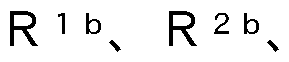
[0096] ポリオルガノシルセスキオキサン (3 1) は、 脂環式エポキシ基 (エポキ シ基と脂環基の縮環構造を有する基) を有することが好ましい。 一般式 (1 ) 中の は、 脂環式エポキシ基を有する基であることが好ましく、 エポキ シシクロヘキシル基を有する基であることがより好ましく、 上記式 (1 13) で表される基であることがさらに好ましい。
[0097] なお、 一般式 (1)
 は、 ポリオルガノシルセスキオキサンの原料 として使用する加水分解性三官能シラン化合物におけるケイ素原子に結合し た基 (アルコキシ基及びハロゲン原子以外の基) に由来する。
[0098] 以下に 匕の具体例を示すが、 本発明はこれらに限定されるものではない 。 下記具体例において、 * *は一般式 (1) 中の 3 丨 との連結部分を表す。
[0099]

[0100] —般式 (1) 中、
 を表す。
を表す。
〇が表す 1価の基としては、 水素原子、 置換若しくは無置換のアルキル 基、 置換若しくは無置換のシクロアルキル基、 置換若しくは無置換のアルケ ニル基、 置換若しくは無置換のアリール基、 又は置換若しくは無置換のアラ ルキル基が挙げられる。
[0101 ] 〇が表すアルキル基としては、 炭素数 1〜 1 0のアルキル基が挙げられ 、 例えば、 メチル基、 エチル基、 プロピル基、 门 _ブチル基、 イソプロピル 基、 イソプチル基、 3 _ブチル基、 1 _ブチル基、 イソペンチル基等の直鎖 又は分岐鎖状のアルキル基が挙げられる。
〇が表すシクロアルキル基としては、 炭素数 3〜 1 5のシクロアルキル 基が挙げられ、 例えば、 シクロブチル基、 シクロペンチル基、 シクロへキシ ル基等が挙げられる。
〇が表すアルケニル基としては、 炭素数 2〜 1 〇のアルケニル基が挙げ られ、 例えば、 ビニル基、 アリル基、 イソプロべニル基等の直鎖又は分岐鎖 状のアルケニル基が挙げられる。
〇が表すアリール基としては、 炭素数 6〜 1 5のアリール基が挙げられ 、 例えば、 フエニル基、 トリル基、 ナフチル基等が挙げられる。
〇が表すアラルキル基としては、 炭素数 7〜 2 0のアラルキル基が挙げ られ、 例えば、 ベンジル基、 フエネチル基等が挙げられる。
[0102] 上述の置換アルキル基、 置換シクロアルキル基、 置換アルケニル基、 置換 アリール基、 置換アラルキル基としては、 上述のアルキル基、 シクロアルキ ル基、 アルケニル基、 アリール基、 アラルキル基のそれぞれにおける水素原 子又は主鎖骨格の一部若しくは全部が、 エーテル基、 エステル基、 カルボニ ル基、 ハロゲン原子 (フッ素原子等) 、 アクリル基、 メタクリル基、 メルカ プト基、 及びヒドロキシ基 (水酸基) からなる群より選択された少なくとも 1種で置換された基等が挙げられる。
[0103] は、 置換又は無置換のアルキル基が好ましく、 無置換の炭素数 1〜 1
0のアルキル基であることがより好ましい。
〇 2020/175338 30 卩(:171? 2020 /006913
[0104] 一般式 (1) 中に複数の 〇がある場合、 複数の 〇は互いに結合を形成 していてもよい。 2つ又は 3つの 〇が互いに結合を形成していることが好 ましく、 2つの 〇が互いに結合を形成していることがより好ましい。
[0105] 2つの 〇が互いに結合して形成される基
 としては、 上述の が表す置換又は無置換のアルキル基が結合して形成されるアルキレン基であ ることが好ましい。
[0106]
 例えば、 メチレン基、 エチレン基、 プ ロピレン基、 イソプロピレン基、
 -プチレン基、 イソプチレン基、 3 -ブ チレン基、 ーブチレン基、 n -ペンチレン基、 イソペンチレン基、 3 -ぺ ンチレン基、 ーペンチレン基、 11—ヘキシレン基、 イソヘキシレン基、 3 —ヘキシレン基、 ーヘキシレン基、 —ヘプチレン基、 イソヘプチレン基 、 £—ヘプチレン基、 ーヘプチレン基、 —オクチレン基、 イソオクチレ ン基、 3 _オクチレン基、 I _オクチレン基等の直鎖又は分岐鎖状のアルキ レン基が挙げられる。
[0107]
 無置換の炭素数 2〜 2 0のアルキレン 基が好ましく、 より好ましくは無置換の炭素数 2〜 2 0のアルキレン基、 さ らに好ましくは無置換の炭素数 2〜 8のアルキレン基であり、 特に好ましく は!··!—プチレン基、
 ペンチレン基、
 ヘキシレン基、 1-1—ヘプチレン 基、 1-1—オクチレン基である。
[0108] 3つの 〇が互いに結合して形成される基 ([¾〇3) としては、 上述の
2が表すアルキレン基において、 アルキレン基中の任意の水素原子をひとつ減 らした 3価の基であることが好ましい。
[0109] なお、 一般式 (1)
 は、 ポリオルガノシルセスキオキサンの原料 として使用する加水分解性シラン化合物におけるケイ素原子に結合した基 ( アルコキシ基及びハロゲン原子以外の基) に由来する。
[01 10] —般式 (1) 中、 は 0超であり、 「は 0以上である。
( + 「) は〇. 5 ~ 1 . 0であることが好ましい。 ポリオルガノシ ルセスキオキサン (3 1) に含まれる 匕又は 〇で表される基全量に対し
〇 2020/175338 31 卩(:171? 2020 /006913
て、
 有機架橋基が作るネッ トワ —クが十分に形成されるため、 硬度、 繰り返し折り曲げ耐性の各性能を良好 に保つことができる。
4 + 0 は〇. 7~ 1. 0であることがより好ましく、 〇. 9〜 1 . 0がさらに好ましく、 〇. 95~ 1. 0であることが特に好ましい。
[0111] 一般式 (1) 中、 複数の
 複数の
複数の
 が互いに結合を形成して いることも好ましい。 この場合、
 4 + 0 が〇. 005〜〇. 20で あることが好ましい。
4 + 0 は〇. 005〜〇. 1 0がより好ましく、 〇. 005〜〇 . 05がさらに好ましく、 〇. 005〜〇. 025であることが特に好まし い。
[0112] ポリオルガノシルセスキオキサン (3 1) のゲル浸透クロマトグラフィー (0 ?〇 による標準ポリスチレン換算の数平均分子量 (Mn) は、 好まし くは 500〜 6000であり、 より好ましくは 1 000〜 4500であり、 更に好ましくは 1 500〜 3000である。
[0113] ポリオルガノシルセスキオキサン (3 1) の◦ 〇による標準ポリスチレ ン換算の分子量分散度 (Mw/Mn) は、 例えば 1. 〇〜 4. 0であり、 好 ましくは 1. 1〜 3. 7であり、 より好ましくは 1. 2〜 3. 0であり、 さ らに好ましくは 1. 3~2. 5である。 IV! は重量平均分子量を表し、 IV! n は数平均分子量を表す。
[0114] ポリオルガノシルセスキオキサン (3 1) の重量平均分子量、 分子量分散 度は、 下記の装置及び条件により測定する。
測定装置:商品名 「 !_(3 - 20八 0」 ( (株) 島津製作所製) カラム: 3 〇 6父 [< 一801 X2本、 [< 一802、 及び< ー 803 (昭和電工 (株) 製)
測定温度: 40°0
溶離液:テトラヒドロフラン (丁 !~1 ) 、 試料濃度〇. 1〜〇. 2質量% 流量: 1 011_ /分
〇 2020/175338 32 卩(:171? 2020 /006913
検出器: 11 _ 丨 3検出器 (商品名 「3 0 _ 2 0八」 、 (株) 島津製 作所製)
分子量:標準ポリスチレン換算
[01 15] ポリオルガノシルセスキオキサン (3 1) は一種のみ用いてもよく、 構造 の異なる二種以上を併用してもよい。
[01 16] 本発明のハードコート層形成用組成物におけるポリオルガノシルセスキオ キサン (3 1) の含有率は、 ハードコート層形成用組成物の全固形分に対し て、 5 0質量%以上であることが好ましく、 7 0質量%以上であることがよ り好ましく、 8 0質量%以上であることが更に好ましい。 ハードコート層形 成用組成物におけるポリオルガノシルセスキオキサン (3 1) の含有率の上 限は、 9 9 . 9 9 9質量%以下であることが好ましく、 9 9 . 9 9質量%以 下であることがより好ましく、 9 9 . 9質量%以下であることが更に好まし い。
なお、 全固形分とは溶剤以外の全成分のことである。
[01 17] (カチオン重合開始剤)
本発明のハードコート層形成用組成物は、 カチオン重合開始剤を含むこと が好ましい。
カチオン重合開始剤は一種のみ用いてもよく、 構造の異なる二種以上を併 用してもよい。 また、 カチオン重合開始剤は光重合開始剤でも良く、 熱重合 開始剤でも良い。
ハードコート層形成用組成物中のカチオン重合開始剤の含有率は、 特に限 定されるものではないが、 例えばポリオルガノシルセスキオキサン (3 1)
1 〇〇質量部に対して、 〇. 1〜 2 0 0質量部が好ましく、 1〜 5 0質量部 がより好ましい。
[01 18] (溶媒)
本発明のハードコート層形成用組成物は、 溶媒を含んでいてもよい。 溶媒としては、 有機溶媒が好ましく、 有機溶媒の一種または二種以上を任 意の割合で混合して用いることができる。 有機溶媒の具体例としては、 例え
〇 2020/175338 33 卩(:171? 2020 /006913
ば、 メタノール、 エタノール、 プロパノール、 11 _ブタノール、 丨 _ブタノ —ル等のアルコール類; アセトン、 メチルイソプチルケトン、 メチルエチル ケトン、 シクロへキサノン等のケトン類;エチルセロソルブ等のセロソルブ 類; トルエン、 キシレン等の芳香族類; プロピレングリコールモノメチルエ —テル等のグリコールエーテル類;酢酸メチル、 酢酸エチル、 酢酸プチル等 の酢酸エステル類;ジアセトンアルコール等が挙げられる。
本発明のハードコート層形成用組成物における溶媒の含有率は、 ハードコ -卜層形成用組成物の塗布適性を確保できる範囲で適宜調整することができ る。 例えば、 ハードコート層形成用組成物の全固形分 1 〇〇質量部に対して 、 5 0〜 5 0 0質量部とすることができ、 好ましくは 8 0〜 2 0 0質量部と することができる。
ハードコート層形成用組成物は、 通常、 液の形態をとる。
ハードコート層形成用組成物の固形分の濃度は、 通常、 1 0〜 9 0質量% 程度であり、 好ましくは 2 0〜 8 0質量%、 特に好ましくは 4 0〜 7 0質量 %程度である。
[01 19] 本発明のハードコート層形成用組成物は、 上記以外の成分を含有していて もよく、 たとえば、 無機微粒子、 分散剤、 レべリング剤、 防汚剤、 帯電防止 剤、 紫外線吸収剤、 酸化防止剤等を含有していてもよい。
[0120] 本発明のハードコート層形成用組成物は、 以上説明した各種成分を同時に 、 または任意の順序で順次混合することにより調製することができる。 調製 方法は特に限定されるものではなく、 調製には公知の攪拌機等を用いること ができる。
[0121 ] (ハードコート層の膜厚)
本発明のハードコート層形成用組成物により形成することができるハード コート層の膜厚は特に限定されないが、 〇. 5〜 3 0 であることが好ま しく、 1〜 2 5 であることがより好ましく、 2〜 2 0 であることが 更に好ましい。
ハードコート層の膜厚は、 積層体の断面を光学顕微鏡で観察して算出する
〇 2020/175338 34 卩(:171? 2020 /006913
。 断面試料は、 断面切削装置ウルトラミクロトームを用いたミクロトーム法 や、 集束イオンビーム ( 丨 巳) 装置を用いた断面加工法などにより作成で きる。
[0122] <基材>
本発明のハードコート層形成用組成物は、 基材上に塗布して、 塗膜を硬化 することで、 ハードコート層とすることができる。
基材は、 可視光領域の透過率が 7 0 %以上であることが好ましく、 8 0 % 以上であることがより好ましく、 9 0 %以上であることが更に好ましい。
[0123] (ポリマー)
基材はポリマーを含むことが好ましい。
ポリマーとしては、 光学的な透明性、 機械的強度、 熱安定性などに優れる ポリマーが好ましい。
[0124] ポリマーとしては、 例えば、 ポリカーボネート系ポリマー、 ポリエチレン テレフタレート ( 巳丁) 、 ポリエチレンナフタレート ( 巳 1\1) 等のポリ エステル系ポリマー、 ポリスチレン、 アクリロニトリル ·スチレン共重合体 (八 3樹脂) 等のスチレン系ポリマーなどが挙げられる。 また、 ポリエチレ ン、 ポリプロピレン等のポリオレフイン、 ノルボルネン系樹脂、 エチレン · プロピレン共重合体などのポリオレフイン系ポリマー、 ポリメチルメタクリ レート等の (メタ) アクリル系ポリマー、 塩化ビニル系ポリマー、 ナイロン 、 芳香族ポリアミ ド等のアミ ド系ポリマー、 イミ ド系ポリマー、 スルホン系 ポリマー、 ポリエーテルスルホン系ポリマー、 ポリエーテルエーテルケトン 系ポリマー、 ポリフエニレンスルフイ ド系ポリマー、 塩化ビニリデン系ポリ マー、 ビニルアルコール系ポリマー、 ビニルブチラール系ポリマー、 アリレ —卜系ポリマー、 ポリオキシメチレン系ポリマー、 エポキシ系ポリマー、 卜 リアセチルセルロースに代表されるセルロース系ポリマー、 又は上記ポリマ —同士の共重合体、 上記ポリマー同士を混合したポリマーも挙げられる。
[0125] 特に、 芳香族ポリアミ ド等のアミ ド系ポリマー及びイミ ド系ポリマーは、
」 I 3 (日本工業規格) 8 1 1 5 (2 0 0 1) に従い IV! I 丁試験機によ
〇 2020/175338 35 卩(:171? 2020 /006913
って測定した破断折り曲げ回数が大きく、 硬度も比較的高いことから、 基材 として好ましく用いることができる。 例えば、 特許第 5 6 9 9 4 5 4号公報 の実施例 1 にあるような芳香族ポリアミ ド、 特表 2 0 1 5— 5 0 8 3 4 5号 公報、 特表 2 0 1 6— 5 2 1 2 1 6号公報、 及び 〇 2 0 1 7 / 0 1 4 2 8 7号公報に記載のポリイミ ドを基材として好ましく用いることができる。 アミ ド系ポリマーとしては、 芳香族ポリアミ ド (アラミ ド系ポリマー) が 好ましい。
基材は、 イミ ド系ポリマー及びアラミ ド系ポリマーから選ばれる少なくと も 1種のポリマーを含有することが好ましい。
[0126] (基材の厚み)
基材はフィルム状であることが好ましい。
基材の厚みは、 1 〇〇 以下であることがより好ましく、 8 0 以下 であることが更に好ましく、 5 0 以下が最も好ましい。 また、 基材の取 り扱いの容易さの観点から基材の厚みは 3 以上であることが好ましく、
5 以上であることがより好ましく、 1 5 以上が最も好ましい。
[0127] <耐擦傷層>
本発明のポリオルガノシルセスキオキサンを好ましく適用することができ るハードコートフィルムは、 基材、 ハードコート層 (本発明のポリオルガノ シルセスキオキサンを含むハードコート層形成用組成物により形成された層 ) 、 耐擦傷層をこの順に有するハードコートフィルムである。
耐擦傷層は、 特に限定されないが、 好ましくは、 ラジカル重合性化合物 ( 〇 1) を含む耐擦傷層形成用組成物を硬化してなる層である。
[0128] (ラジカル重合性化合物 (〇 1) )
ラジカル重合性化合物 (〇 1) ( 「化合物 (〇 1) 」 ともいう。 ) につい て説明する。
化合物 (〇 1) は、 ラジカル重合性基を有する化合物である。
化合物 (〇 1) におけるラジカル重合性基としては、 特に限定されず、 一 般に知られているラジカノレ重合性基を用いることができる。 ラジカノレ重合性
〇 2020/175338 36 卩(:171? 2020 /006913
基としては、 重合性不飽和基が挙げられ、 具体的には、 (メタ) アクリロイ ル基、 ビニル基、 アリル基などが挙げられ、 (メタ) アクリロイル基が好ま しい。 なお、 上記した各基は置換基を有していてもよい。
化合物 (〇 1) は、 1分子中に 2個以上の (メタ) アクリロイル基を有す る化合物であることが好ましく、 1分子中に 3個以上の (メタ) アクリロイ ル基を有する化合物であることがより好ましい。
化合物 (〇 1) の分子量は特に限定されず、 モノマーでもよいし、 オリゴ マーでもよいし、 ポリマーでもよい。
[0129] 化合物 (〇 1) は一種のみ用いてもよく、 構造の異なる二種以上を併用し てもよい。
[0130] 耐擦傷層形成用組成物中の化合物 (〇 1) の含有率は、 耐擦傷層形成用組 成物中の全固形分に対して、 8 0質量%以上であることが好ましく、 8 5質 量%以上がより好ましく、 9 0質量%以上が更に好ましい。
[0131 ] (ラジカル重合開始剤)
耐擦傷層形成用組成物は、 ラジカル重合開始剤を含むことが好ましい。 ラジカル重合開始剤は一種のみ用いてもよく、 構造の異なる二種以上を併 用してもよい。 また、 ラジカル重合開始剤は光重合開始剤でも良く、 熱重合 開始剤でも良い。
耐擦傷層形成用組成物中のラジカル重合開始剤の含有率は、 特に限定され るものではないが、 例えば化合物 (〇 1) 1 0 0質量部に対して、 〇. 1〜 2 0 0質量部が好ましく、 1〜 5 0質量部がより好ましい。
[0132] (溶媒)
耐擦傷層形成用組成物は、 溶媒を含んでいてもよい。
溶媒としては、 前述のハードコート層形成用組成物が含んでいてもよい溶 媒と同様である。
本発明における耐擦傷層形成用組成物における溶媒の含有率は、 耐擦傷層 形成用組成物の塗布適性を確保できる範囲で適宜調整することができる。 例 えば、 耐擦傷層形成用組成物の全固形分 1 〇〇質量部に対して、 5 0〜 5 0
〇 2020/175338 37 卩(:171? 2020 /006913
〇質量部とすることができ、 好ましくは 80〜 200質量部とすることがで きる。
耐擦傷層形成用組成物は、 通常、 液の形態をとる。
耐擦傷層形成用組成物の固形分の濃度は、 通常、 1 0〜 90質量%程度で あり、 好ましくは 20〜 80質量%、 特に好ましくは 40〜 70質量%程度 である。
[0133] (その他添加剤)
耐擦傷層形成用組成物は、 上記以外の成分を含有していてもよく、 たとえ ば、 無機粒子、 レべリング剤、 防汚剤、 帯電防止剤、 滑り剤、 溶媒等を含有 していてもよい。
[0134] (耐擦傷層の膜厚)
耐擦傷層の膜厚は、 繰り返し折り曲げ耐性の観点から、 3. 〇 未満で あることが好ましく、 〇. 1〜 2. 〇 であることがより好ましく、 〇.
1〜 1. 0 であることが更に好ましい。 実施例
[0135] 以下、 実施例により本発明を更に具体的に説明するが、 本発明の範囲はこ れによって限定して解釈されるものではない。
[0136] <ポリオルガノシルセスキオキサンの合成>
( (3X 1 - 1) で表されるポリオルガノシルセスキオキサンの合成) トリメ トキシ
 1 1~1, 21~1, 2 !!-トリデカフルオロー n -オクチ ル) シラン 30ミリモル ( 1 4. 059) 、 2 _ (3, 4—エポキシシクロ ヘキシル) エチルトリメ トキシシラン 1 35ミリモル (33. 269) 、 ア クリル酸 3 - (トリメ トキシシリル) プロピル 1 35ミリモル ( 3 1. 63 9) 、 トリエチルアミン7. 399、
 (メチルイソプチルケト ン) 3709を混合し、 純水 73. 99を、 滴下口一卜を使用して 30分か けて滴下した。 この反応液を 50°〇に加熱し、 重縮合反応を 1 0時間行った
その後、 反応溶液を冷却し、 5質量%食塩水 3009を添加し、 有機層を
〇 2020/175338 38 卩(:171? 2020 /006913
抽出した。 有機層を 5質量%食塩水 3009、 純水 3009で 2回、 順次洗 浄した後、 30 1~19、 50°〇の条件で濃縮し、 固形分濃度 52質量%の IV! 丨 巳<溶液として無色透明の液状の生成物である下記式 (3乂 1 _ 1) で 表されるポリオルガノシルセスキオキサンを得た。
[0137] 上記で得られたポリマー 5
 9を重クロロホルム〇. 5 1_に溶解させ、
 (株式会社日立 ハイテクサイエンス製) で測定を行った。 結果を以下に示す。

1 1 1) アクリル部〇1~12 =〇1~1〇〇2) , 55. 7 -5. 9 (〇1, ( 1 1 1 ) アクリル部〇1~12 =〇1~1〇〇2) , 54. 0-4. 2 ( , ( 1 1 1) アク リル部の隣〇1~12 =〇1~1〇〇2〇1~12) , 53. 0-3. 2 (〇1, ( I I) エポ キシ部CH〇CH) , 5 1. 8-2. 3 (〇1, ( I) フッ素の隣〇6 13〇1~1 2〇 1~12) , 5 1. 6 - 1. 8 ( , ( 1 1 1) シリル基の隣〇1~123 1) , 5 1. 〇- 1. 5 (〇!, ( I I) 脂環部〇61~16) , 50. 8- 1. 0 ( , (
I) シリル基の隣〇6 13〇1~12〇1~123 1) , 50. 4-0. 8 ( , ( I I ) & ( I I I) メチレン部〇 1~12〇 1~12〇 1~123 1) .
[0138] 上記 (3X 1 — 1) で表されるポリオルガノシルセスキオキサンの合成に おいて、 各モノマーの使用量を変更することで、 各構成単位の含有モル比率 を変更したポリオルガノシルセスキオキサン ( (3X 1 —2) 、 (3X 1 -
3) 、 (3X 1 -4) 、 (3乂 1 -5) ) を合成した。
[0139] 上記 (3X 1 — 1) で表されるポリオルガノシルセスキオキサンの合成に おいて、 トリメ トキシ
 1 1~1, 21~1, 2 !!-トリデカフルオロー门一 オクチル) シランをトリメ トキシ ( 1 1~1, 1 1~1, 21~1, 21·!—ノナフルオロ
- n -ヘキシル) シランに変更して、 (3X2- 1) で表されるポリオルガ ノシルセスキオキサンを合成した。
[0140] 上記 (3X 1 — 1) で表されるポリオルガノシルセスキオキサンの合成に おいて、 トリメ トキシ 1 !!, 2 !·!, 2 !!-トリデカフルオロー门一
〇 2020/175338 39 卩(:171? 2020 /006913
オクチル) シランをトリメ トキシ ( 1 1~1, 1 1~1, 21~1, 21·!—トリフルオロ
-门ープロピル) シランに変更して、 (3X6- 1) で表されるポリオルガ ノシルセスキオキサンを合成した。
[0141] 上記 (3X 1 — 1) で表されるポリオルガノシルセスキオキサンの合成に おいて、 2 - (3, 4—エポキシシクロヘキシル) エチルトリメ トキシシラ ンを 3 -グリシジルオキシプロピルトリメ トキシシランに変更して、 (3乂 7 - 1) で表されるポリオルガノシルセスキオキサンを合成した。
[0142] 上記 (3X 1 — 1) で表されるポリオルガノシルセスキオキサンの合成に おいて、 アクリル酸 3 - (トリメ トキシシリル) プロピルをメタクリル酸 3 - (トリメ トキシシリル) プロピルに変更して、 (3X8- 1) で表される ポリオルガノシルセスキオキサンを合成した。
[0143] 上記 (3X 1 — 1) で表されるポリオルガノシルセスキオキサンの合成に おいて、 アクリル酸 3— (トリメ トキシシリル) プロピルをアリルトリメ ト キシシランに変更して、 (3X9- 1) で表されるポリオルガノシルセスキ オキサンを合成した。
[0144] 上記 (3X 1 - 1) で表されるポリオルガノシルセスキオキサンの合成に おいて、 2 - (3, 4—エポキシシクロヘキシル) エチルトリメ トキシシラ ンを 3—エチルー 3— [ [3 - (トリメ トキシシリル) プロポキシ] メチル ] オキセタンに変更して、 (3X 1 0- 1) で表されるポリオルガノシルセ スキオキサンを合成した。
[0145] 上記 (3X 1 — 1) で表されるポリオルガノシルセスキオキサンの合成に おいて、 2 - (3, 4—エポキシシクロヘキシル) エチルトリメ トキシシラ ンを使用せず、 その他の各モノマーの使用量を変更して、 (8— 1) で表さ れるポリオルガノシルセスキオキサンを合成した。
[0146] 上記 (3X 1 — 1) で表されるポリオルガノシルセスキオキサンの合成に おいて、 アクリル酸 3 - (トリメ トキシシリル) プロピルを使用せず、 その 他の各モノマーの使用量を変更して、 ([¾_2) で表されるポリオルガノシ ルセスキオキサンを合成した。
\¥02020/175338 40 卩(:17 2020/006913
[0147] 各ポリオルガノシルセスキオキサンの構造、 重量平均分子量 (IV! %) 及び 分子量分散度 (M w/M n) を以下に示す。 下記構造式において、 「3 丨 〇! . 5」 は、 シルセスキオキサン単位を表す。
[0148] [化 18]

1\/1¾7=2000
1\/1¾\^/1门=1.20
[0149]
\¥02020/175338 41 卩(:17 2020/006913
[化 19]


[0150]
〇 2020/175338 42 卩(:171? 2020 /006913
[化 20]
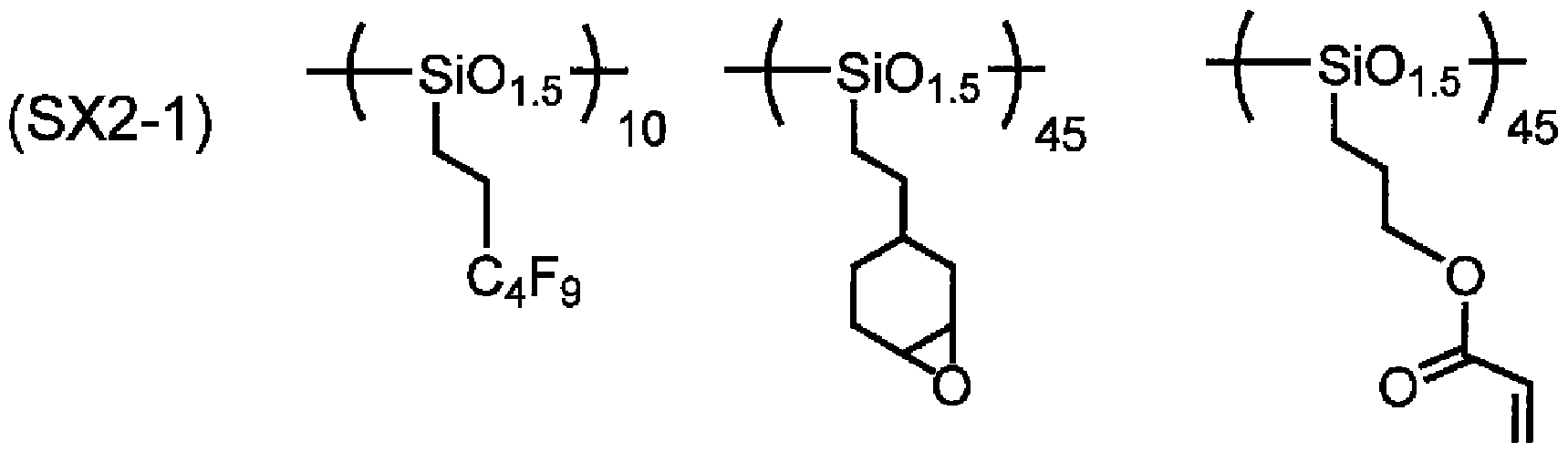


1\^=3500
1\/1 /1\/1门=1.42
[0151]
〇 2020/175338 43 卩(:171? 2020 /006913
[化 21 ]


[0152]
\¥02020/175338 44 卩(:171?2020/006913
[化 22]


1\/1 /1\/1|1=1.38

[0153]
\¥02020/175338 45 2020/006913
[化 23]

[0154] 上記ポリオルガノシルセスキオキサンを層間密着剤として用い、 基材、 ハ —ドコート層、 耐擦傷層を有するハードコートフィルムを製造し、 耐擦傷性 について評価した。
[0155] <基材の作製>
(ポリイミ ド粉末の製造)
攪拌器、 窒素注入装置、 滴下漏斗、 温度調節器及び冷却器を取り付けた 1 !_の反応器に、 窒素気流下、 1\1, 1\1—ジメチルアセトアミ ド (01\/1八〇) 8 329を加えた後、 反応器の温度を 25 °〇にした。 ここに、 ビストリフルオ ロメチルべンジジン (丁 〇巳) 64. 0469 (〇. 2〇1〇 丨) を加えて 溶解した。 得られた溶液を 25°〇に維持しながら、 2, 2—ビス (3, 4— ジカルボキシフエニル) ヘキサフルオロプロパンニ無水物 (6 0八) 3 1 . 099 (〇. 07〇1〇 1) とビフエニルテトラカルボン酸二無水物 (巳 〇八) 8. 839 (〇. 03 〇 1) を投入し、 一定時間撹拌して反応させ た。 その後、 塩化テレフタロイル (丁 〇) 20. 3029 (0. 1 〇1〇 1
〇 2020/175338 46 卩(:171? 2020 /006913
) を添加して、 固形分濃度 1 3質量%のポリアミック酸溶液を得た。 次いで 、 このポリアミック酸溶液にピリジン 25. 69、 無水酢酸 33. 1 9を投 入して 30分撹拌し、 さらに 70°〇で 1時間撹拌した後、 常温に冷却した。 ここにメタノール 20 !_を加え、 沈澱した固形分を濾過して粉砕した。 その 後、 1 00°〇下、 真空で 6時間乾燥させて、 1 1 1 9のポリイミ ド粉末を得 た。
[0156] (基材3- 1の作製)
1 009の上記ポリイミ ド粉末を 6709の 1\1, 1\1 -ジメチルアセトアミ ド (01\/1八〇) に溶かして 1 3質量%の溶液を得た。 得られた溶液をステン レス板に流延し、 1 30°〇の熱風で 30分乾燥させた。 その後フィルムをス テンレス板から剥離して、 フレームにピンで固定し、 フィルムが固定された フレームを真空才ーブンに入れ、 1 00°〇から 300°〇まで加熱温度を徐々 に上げながら 2時間加熱し、 その後、 徐々に冷却した。 冷却後のフィルムを フレームから分離した後、 最終熱処理工程として、 さらに 300°〇で 30分 間熱処理して、 ポリイミ ドフィルムからなる、 厚み 3〇 の基材3— 1 を 得た。
[0157] <ポリオルガノシルセスキオキサン (8 1) の合成>
(化合物 (八) の合成)
温度計、 攪拌装置、 還流冷却器、 及び窒素導入管を取り付けた 1 000ミ リリッ トルのフラスコ (反応容器) に、 窒素気流下で 2 _ (3, 4—ェポキ シシクロヘキシル) エチルトリメ トキシシラン 300ミリモル (73. 99 ) 、 トリエチルアミン7. 399、
 (メチルイソプチルケトン ) 3709を混合し、 純水 73. 99を、 滴下口一卜を使用して 30分かけ て滴下した。 この反応液を 80°〇に加熱し、 重縮合反応を窒素気流下で 1 0 時間行った。
その後、 反応溶液を冷却し、 5質量%食塩水 3009を添加し、 有機層を 抽出した。 有機層を 5質量%食塩水 3009、 純水 3009で 2回、 順次洗 浄した後、 1 1~19、 50°〇の条件で濃縮し、 固形分濃度 59. 8質量%
〇 2020/175338 47 卩(:171? 2020 /006913
の IV! I 巳 溶液として無色透明の液状の生成物 {脂環式エポキシ基を有する ポリオルガノシルセスキオキサン (3 1) である化合物 (八) (一般式 (1 ) 中の[¾匕 : 2 - (3, 4 -エポキシシクロヘキシル) エチル基、 = 1 0 0、 「= 0である化合物) } を87. 09得た。
生成物を分析したところ、 数平均分子量は 2050であり、 分子量分散度 は·! . 9であった。
なお、
 322 P aである。
[0158] [実施例 1]
<ハードコート層形成用組成物の調製>
(ハードコート層形成用組成物 1~10— 1)
上記化合物 (八) を含有する IV! I 巳 溶液に、 層間密着剤 (3X 1 — 1)
、 C P I 1 1 0 、
 (メチルイソプチルケトン) を添加し、 各含有成分の含有量を以下のように調整し、 ミキシングタンクに投入、 攪拌 した。 得られた組成物を孔径〇. 45 のポリプロピレン製フィルターで 濾過し、 ハードコート層形成用組成物!~1〇_ 1 とした。
[0159] 化合物 (八) 1 64. 38質量部
層間密着剤 (3X 1 — 1) 〇. 38質量部
C P I - 1 1 09 3. 0質量部
67. 70質量部
[0160] なお、 〇 丨 一 1 1 〇 は、 サンアプロ株式会社製の光カチオン重合開始 剤 (固形分濃度 50質量%) である。
[0161] <耐擦傷層形成用組成物の調製>
(耐擦傷層形成用組成物
下記に記載の組成で各成分をミキシングタンクに投入、 攪拌し、 孔径〇.

_ 1 とした。
D P l·\A 96. 2質量部
イルガキュア 1 27 2. 8質量部
〇 2020/175338 48 卩(:171? 2020 /006913
1. 0質量部
メチルエチルケトン 300. 0質量部
[0162] なお、 耐擦傷層形成用組成物中に用いた化合物は以下のとおりである。
D P l·\A :ジペンタエリスリ トールペンタアクリレートとジペンタエリス リ トールへキサアクリレートの混合物、 日本化薬 (株) 製
イルガキュア 1 27 (丨 「 9. 1 27) : ラジカル光重合開始剤、 巳八3 社製

[0163] (ハードコートフイルムの製造)
厚さ 3〇 〇!のポリイミ ド基材 3 _ 1上に上記ハードコート層形成用組成 物1~1〇一 1 をワイヤーパー# 1 8を用いて、 硬化後の膜厚が 1 8 となる ようにパー塗布し、 基材上にハードコート層塗膜を設けた。
次いで、 ハードコート層塗膜を 1 20°〇で 1分間乾燥した後、 25°〇、 酸 素濃度 1 00 111
 6 「 111 I I I I 〇 11) の条件にて空 冷水銀ランプを用いて、
 照射量
照射量

外線を照射した。 このようにしてハードコート層塗膜を半硬化した。
その後、 半硬化されたハードコート層塗膜上に、 耐擦傷層形成用組成物 3
 硬化後の膜厚が〇. 8 となるように塗 布した。
次いで、 得られた積層体を 1 20°◦で 1分間乾燥した後、 25°0, 酸素濃 度 1 00 01、 照度 6001 \/\//〇 rr\ 2 s 照射量

を照射し、 さらに 80°〇、 酸素濃度 1 00 の条件にて空冷水銀ランプ を用いて、 で照度
 照射量 600

射することで、 ハードコート層塗膜及び耐擦傷層塗膜を完全硬化させた。 その後、 得られた積層体を 1 20°〇 1時間熱処理することで、 基材上に、 ハードコート層と耐擦傷層を有するハードコートフイルムを得た。
[0164] [実施例 2〜 1 1、 比較例 1〜 3 ]
用いる層間密着剤の種類を下記表 1 に記載したとおり変更した以外は、 実
〇 2020/175338 49 卩(:171? 2020 /006913
施例 1 と同様にして、 ハードコートフィルムをそれぞれ製造した。
[0165] (耐擦傷性の評価)
製造した各ハードコートフィルムの耐擦傷層の表面を、 ラビングテスター を用いて、 以下の条件で擦り試験を行うことで、 耐擦傷性の指標とした。 評価環境条件: 2 5 °0、 相対湿度 6 0 %
こすり材:スチールウール (日本スチールウール (株) 製、 グレード1\1〇 . # 0 0 0〇番)
試料と接触するテスターのこすり先端部 (2 0 01 X 2 0 01) に巻いて、 バ ンド固定

先端部接触面積: 2〇 01 X 2〇 01
試験後のハードコートフィルムの擦った面 (耐擦傷層の表面) とは逆側の 面 (基材の表面) に油性黒インキを塗り、 反射光で目視観察して、 スチール ウールと接触していた部分に傷が生じたときの擦り回数を計測し評価した。
[0166] 下記表 1中、 層間密着剤の含有率 (質量%) は、 ハードコート層形成用組 成物の全固形分に対しての値である。
[0167]
〔¾二
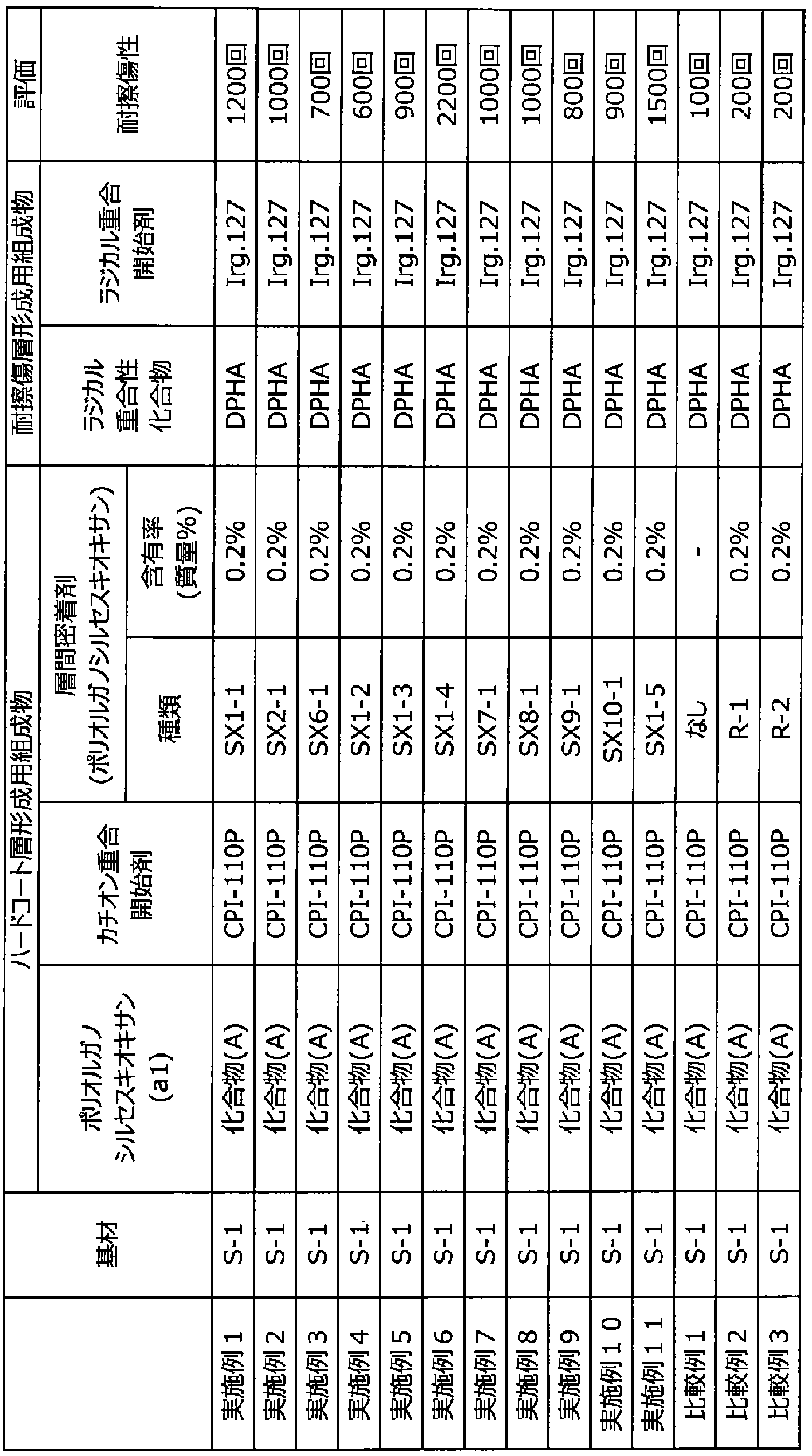
〇 2020/175338 51 卩(:171? 2020 /006913
[0168] 表 1 に示したとおり、 実施例 1〜 1 1の層間密着剤 (ポリオルガノシルセ スキオキサン) を用いたハードコートフィルムは、 耐擦傷性に優れていた。 産業上の利用可能性
[0169] 本発明によれば、 耐擦傷性に優れたハードコートフィルムを形成すること ができるポリオルガノシルセスキオキサン、 及びハードコート層形成用組成 物を提供することができる。
[0170] 本発明を詳細にまた特定の実施態様を参照して説明したが、 本発明の精神 と範囲を逸脱することなく様々な変更や修正を加えることができることは当 業者にとって明らかである。
本出願は、 2 0 1 9年 2月 2 7日出願の日本特許出願 (特願 2 0 1 9 - 3 4 9 5 6) に基づくものであり、 その内容はここに参照として取り込まれる
Claims
[請求項 1] フッ素原子を含有する基を有する構成単位 (3) と、 カチオン重合 性基を有する構成単位 (13) と、 ラジカル重合性基を有する構成単位 (〇) とを有するポリオルガノシルセスキオキサン。
[請求項 2] 前記構成単位 (3) が、 下記一般式 (3_ 1) で表される構成単位 であり、
前記構成単位 (匕) が、 下記 _般式 (3_2) で表される構成単位 であり、
前記構成単位 (〇) が、 下記 _般式 (3_3) で表される構成単位 である、 請求項 1 に記載のポリオルガノシルセスキオキサン。
[化 1]

はフッ素原子を含有する基を表す。
一般式 (3_2) 中、 1_2は単結合又は 2価の連結基を表し、 〇 2 はカチオン重合性基を表す。
一般式 (3_3) 中、 1_3は単結合又は 2価の連結基を表し、 〇 3 はラジカル重合性基を表す。
[請求項 3] 前記構成単位 (匕) のカチオン重合性基がエポキシ基である、 請求 項 1又は 2に記載のポリオルガノシルセスキオキサン。
[請求項 4] 前記エポキシ基が脂環式エポキシ基である、 請求項 3に記載のポリ オルガノシルセスキオキサン。
[請求項 5] 前記構成単位 (〇) のラジカル重合性基が (メタ) アクリロイル基
〇 2020/175338 53 卩(:171? 2020 /006913
である、 請求項 1〜 4のいずれか 1項に記載のポリオルガノシルセス キオキサン。
[請求項 6] 前記構成単位 (3) のフッ素原子を含有する基に含まれるフッ素原 子の数が 9個以上である、 請求項 1〜 5のいずれか 1項に記載のポリ オルガノシルセスキオキサン。
[請求項· 7] 前記構成単位 (3) の含有モル比率が、 全構成単位に対して、 5 0 モル%以下である、 請求項 1〜 6のいずれか 1項に記載のポリオルガ ノシルセスキオキサン。
[請求項 8] 前記構成単位 (1〇) の含有モル比率が、 全構成単位に対して、 1 5 モル%以上である、 請求項 1〜 7のいずれか 1項に記載のポリオルガ ノシルセスキオキサン。
[請求項 9] 前記構成単位 (〇) の含有モル比率が、 全構成単位に対して、 1 5 モル%以上である、 請求項 1〜 8のいずれか 1項に記載のポリオルガ ノシルセスキオキサン。
[請求項 10] 請求項 1〜 9のいずれか 1項に記載のポリオルガノシルセスキオキ サンを含むハードコート層形成用組成物。
Priority Applications (3)
| Application Number | Priority Date | Filing Date | Title |
|---|---|---|---|
| JP2021502155A JP7291199B2 (ja) | 2019-02-27 | 2020-02-20 | ハードコート層形成用組成物、及びハードコートフィルム |
| CN202080017175.7A CN113544193B (zh) | 2019-02-27 | 2020-02-20 | 聚有机硅倍半氧烷及硬涂层形成用组合物 |
| US17/394,099 US12116460B2 (en) | 2019-02-27 | 2021-08-04 | Polyorganosilsesquioxane and composition for forming hardcoat layer |
Applications Claiming Priority (2)
| Application Number | Priority Date | Filing Date | Title |
|---|---|---|---|
| JP2019034956 | 2019-02-27 | ||
| JP2019-034956 | 2019-02-27 |
Related Child Applications (1)
| Application Number | Title | Priority Date | Filing Date |
|---|---|---|---|
| US17/394,099 Continuation US12116460B2 (en) | 2019-02-27 | 2021-08-04 | Polyorganosilsesquioxane and composition for forming hardcoat layer |
Publications (1)
| Publication Number | Publication Date |
|---|---|
| WO2020175338A1 true WO2020175338A1 (ja) | 2020-09-03 |
Family
ID=72239537
Family Applications (1)
| Application Number | Title | Priority Date | Filing Date |
|---|---|---|---|
| PCT/JP2020/006913 Ceased WO2020175338A1 (ja) | 2019-02-27 | 2020-02-20 | ポリオルガノシルセスキオキサン、及びハードコート層形成用組成物 |
Country Status (4)
| Country | Link |
|---|---|
| US (1) | US12116460B2 (ja) |
| JP (1) | JP7291199B2 (ja) |
| CN (1) | CN113544193B (ja) |
| WO (1) | WO2020175338A1 (ja) |
Cited By (3)
| Publication number | Priority date | Publication date | Assignee | Title |
|---|---|---|---|---|
| WO2022004746A1 (ja) * | 2020-06-29 | 2022-01-06 | 富士フイルム株式会社 | 積層体、積層体の製造方法、積層体を含む画像表示装置用表面保護フィルム、積層体を備えた物品及び画像表示装置 |
| WO2022004747A1 (ja) * | 2020-06-29 | 2022-01-06 | 富士フイルム株式会社 | ハードコート層形成用組成物、ハードコートフィルム、ハードコートフィルムの製造方法及びハードコートフィルムを含む物品 |
| WO2025079585A1 (ja) * | 2023-10-13 | 2025-04-17 | 東亞合成株式会社 | 硬化性組成物、硬化物、ハードコート剤、ハードコート、物品及び積層体 |
Citations (2)
| Publication number | Priority date | Publication date | Assignee | Title |
|---|---|---|---|---|
| JP2007002194A (ja) * | 2005-06-27 | 2007-01-11 | Nippon Kayaku Co Ltd | フッ素含有ポリシロキサン、それを用いる感光性樹脂組成物及びその硬化物 |
| US20180142127A1 (en) * | 2016-11-24 | 2018-05-24 | Samsung Display Co., Ltd. | Hard coating composition and flexible display device including the hard coating composition |
Family Cites Families (6)
| Publication number | Priority date | Publication date | Assignee | Title |
|---|---|---|---|---|
| US7041748B2 (en) | 2003-01-08 | 2006-05-09 | International Business Machines Corporation | Patternable low dielectric constant materials and their use in ULSI interconnection |
| JP6219250B2 (ja) * | 2013-12-13 | 2017-10-25 | 株式会社ダイセル | ポリオルガノシルセスキオキサン、ハードコートフィルム、接着シート、及び積層物 |
| EP3271433A1 (en) * | 2015-03-17 | 2018-01-24 | Basf Se | Novel siloxane polymer compositions and their use |
| KR102616534B1 (ko) | 2015-06-17 | 2023-12-26 | 주식회사 다이셀 | 경화성 조성물, 접착 시트, 경화물, 적층물, 접착 시트의 제조 방법, 및 장치 |
| JP6648881B2 (ja) | 2016-01-28 | 2020-02-14 | エルジー・ケム・リミテッド | 多面体オリゴマーシルセスキオキサンの製造方法 |
| JP2018178003A (ja) | 2017-04-17 | 2018-11-15 | 株式会社ダイセル | フッ素含有エポキシ変性シルセスキオキサン、及びそれを含む硬化性組成物 |
-
2020
- 2020-02-20 WO PCT/JP2020/006913 patent/WO2020175338A1/ja not_active Ceased
- 2020-02-20 JP JP2021502155A patent/JP7291199B2/ja active Active
- 2020-02-20 CN CN202080017175.7A patent/CN113544193B/zh active Active
-
2021
- 2021-08-04 US US17/394,099 patent/US12116460B2/en active Active
Patent Citations (2)
| Publication number | Priority date | Publication date | Assignee | Title |
|---|---|---|---|---|
| JP2007002194A (ja) * | 2005-06-27 | 2007-01-11 | Nippon Kayaku Co Ltd | フッ素含有ポリシロキサン、それを用いる感光性樹脂組成物及びその硬化物 |
| US20180142127A1 (en) * | 2016-11-24 | 2018-05-24 | Samsung Display Co., Ltd. | Hard coating composition and flexible display device including the hard coating composition |
Cited By (5)
| Publication number | Priority date | Publication date | Assignee | Title |
|---|---|---|---|---|
| WO2022004746A1 (ja) * | 2020-06-29 | 2022-01-06 | 富士フイルム株式会社 | 積層体、積層体の製造方法、積層体を含む画像表示装置用表面保護フィルム、積層体を備えた物品及び画像表示装置 |
| WO2022004747A1 (ja) * | 2020-06-29 | 2022-01-06 | 富士フイルム株式会社 | ハードコート層形成用組成物、ハードコートフィルム、ハードコートフィルムの製造方法及びハードコートフィルムを含む物品 |
| JPWO2022004747A1 (ja) * | 2020-06-29 | 2022-01-06 | ||
| JP7373074B2 (ja) | 2020-06-29 | 2023-11-01 | 富士フイルム株式会社 | ハードコート層形成用組成物、ハードコートフィルム、ハードコートフィルムの製造方法及びハードコートフィルムを含む物品 |
| WO2025079585A1 (ja) * | 2023-10-13 | 2025-04-17 | 東亞合成株式会社 | 硬化性組成物、硬化物、ハードコート剤、ハードコート、物品及び積層体 |
Also Published As
| Publication number | Publication date |
|---|---|
| CN113544193B (zh) | 2023-02-24 |
| JP7291199B2 (ja) | 2023-06-14 |
| JPWO2020175338A1 (ja) | 2021-10-21 |
| US12116460B2 (en) | 2024-10-15 |
| US20210363306A1 (en) | 2021-11-25 |
| CN113544193A (zh) | 2021-10-22 |
Similar Documents
| Publication | Publication Date | Title |
|---|---|---|
| WO2020175337A1 (ja) | 積層体、積層体を備えた物品、及び画像表示装置 | |
| US7705105B2 (en) | Compound having silsequioxane skeleton and its polymer | |
| JP6967662B2 (ja) | ハードコートフィルム、ハードコートフィルムを有する物品、画像表示装置、及びハードコートフィルムの製造方法 | |
| WO2020175338A1 (ja) | ポリオルガノシルセスキオキサン、及びハードコート層形成用組成物 | |
| JP7291150B2 (ja) | ハードコート組成物、ハードコートフィルム、ハードコートフィルムを有する物品、画像表示装置、及びハードコートフィルムの製造方法 | |
| KR102810014B1 (ko) | 하드 코트층 형성용 조성물, 하드 코트 필름, 하드 코트 필름을 갖는 물품, 화상 표시 장치, 및 하드 코트 필름의 제조 방법 | |
| JPWO2006077862A1 (ja) | エポキシ樹脂組成物及びそれを用いた光学材料 | |
| JP7373074B2 (ja) | ハードコート層形成用組成物、ハードコートフィルム、ハードコートフィルムの製造方法及びハードコートフィルムを含む物品 | |
| KR102800772B1 (ko) | 하드 코트층 형성용 조성물, 하드 코트 필름, 하드 코트 필름의 제조 방법 및 하드 코트 필름을 구비한 물품 | |
| JP6879303B2 (ja) | 異なる二種類の構造単位を有する芳香族ポリケトン | |
| JP6945062B2 (ja) | ハードコート層形成用組成物、ハードコートフィルム、ハードコートフィルムを有する物品、画像表示装置、及びハードコートフィルムの製造方法 | |
| CN101652394A (zh) | 金刚烷衍生物、使用该金刚烷衍生物的树脂组合物和树脂固化物 | |
| WO2022004746A1 (ja) | 積層体、積層体の製造方法、積層体を含む画像表示装置用表面保護フィルム、積層体を備えた物品及び画像表示装置 | |
| TWI617558B (zh) | 多官能酸酐、熱硬化性樹脂組成物與其預浸料及硬化物 | |
| JP2014201531A (ja) | 重合性アルコキシシラン化合物 |
Legal Events
| Date | Code | Title | Description |
|---|---|---|---|
| 121 | Ep: the epo has been informed by wipo that ep was designated in this application |
Ref document number: 20762588 Country of ref document: EP Kind code of ref document: A1 |
|
| ENP | Entry into the national phase |
Ref document number: 2021502155 Country of ref document: JP Kind code of ref document: A |
|
| NENP | Non-entry into the national phase |
Ref country code: DE |
|
| 122 | Ep: pct application non-entry in european phase |
Ref document number: 20762588 Country of ref document: EP Kind code of ref document: A1 |