WO2020183568A1 - Dispositif d'aide à la conduite et procédé d'aide à la conduite - Google Patents
Dispositif d'aide à la conduite et procédé d'aide à la conduite Download PDFInfo
- Publication number
- WO2020183568A1 WO2020183568A1 PCT/JP2019/009688 JP2019009688W WO2020183568A1 WO 2020183568 A1 WO2020183568 A1 WO 2020183568A1 JP 2019009688 W JP2019009688 W JP 2019009688W WO 2020183568 A1 WO2020183568 A1 WO 2020183568A1
- Authority
- WO
- WIPO (PCT)
- Prior art keywords
- reliability
- unit
- driving support
- result
- support device
- Prior art date
- Legal status (The legal status is an assumption and is not a legal conclusion. Google has not performed a legal analysis and makes no representation as to the accuracy of the status listed.)
- Ceased
Links
Images









Classifications
-
- B—PERFORMING OPERATIONS; TRANSPORTING
- B60—VEHICLES IN GENERAL
- B60W—CONJOINT CONTROL OF VEHICLE SUB-UNITS OF DIFFERENT TYPE OR DIFFERENT FUNCTION; CONTROL SYSTEMS SPECIALLY ADAPTED FOR HYBRID VEHICLES; ROAD VEHICLE DRIVE CONTROL SYSTEMS FOR PURPOSES NOT RELATED TO THE CONTROL OF A PARTICULAR SUB-UNIT
- B60W50/00—Details of control systems for road vehicle drive control not related to the control of a particular sub-unit, e.g. process diagnostic or vehicle driver interfaces
- B60W50/04—Monitoring the functioning of the control system
- B60W50/045—Monitoring control system parameters
-
- G—PHYSICS
- G06—COMPUTING OR CALCULATING; COUNTING
- G06V—IMAGE OR VIDEO RECOGNITION OR UNDERSTANDING
- G06V20/00—Scenes; Scene-specific elements
- G06V20/50—Context or environment of the image
- G06V20/56—Context or environment of the image exterior to a vehicle by using sensors mounted on the vehicle
-
- G—PHYSICS
- G05—CONTROLLING; REGULATING
- G05B—CONTROL OR REGULATING SYSTEMS IN GENERAL; FUNCTIONAL ELEMENTS OF SUCH SYSTEMS; MONITORING OR TESTING ARRANGEMENTS FOR SUCH SYSTEMS OR ELEMENTS
- G05B13/00—Adaptive control systems, i.e. systems automatically adjusting themselves to have a performance which is optimum according to some preassigned criterion
- G05B13/02—Adaptive control systems, i.e. systems automatically adjusting themselves to have a performance which is optimum according to some preassigned criterion electric
- G05B13/0265—Adaptive control systems, i.e. systems automatically adjusting themselves to have a performance which is optimum according to some preassigned criterion electric the criterion being a learning criterion
-
- G—PHYSICS
- G06—COMPUTING OR CALCULATING; COUNTING
- G06V—IMAGE OR VIDEO RECOGNITION OR UNDERSTANDING
- G06V10/00—Arrangements for image or video recognition or understanding
- G06V10/70—Arrangements for image or video recognition or understanding using pattern recognition or machine learning
- G06V10/77—Processing image or video features in feature spaces; using data integration or data reduction, e.g. principal component analysis [PCA] or independent component analysis [ICA] or self-organising maps [SOM]; Blind source separation
- G06V10/776—Validation; Performance evaluation
-
- B—PERFORMING OPERATIONS; TRANSPORTING
- B60—VEHICLES IN GENERAL
- B60W—CONJOINT CONTROL OF VEHICLE SUB-UNITS OF DIFFERENT TYPE OR DIFFERENT FUNCTION; CONTROL SYSTEMS SPECIALLY ADAPTED FOR HYBRID VEHICLES; ROAD VEHICLE DRIVE CONTROL SYSTEMS FOR PURPOSES NOT RELATED TO THE CONTROL OF A PARTICULAR SUB-UNIT
- B60W50/00—Details of control systems for road vehicle drive control not related to the control of a particular sub-unit, e.g. process diagnostic or vehicle driver interfaces
- B60W50/04—Monitoring the functioning of the control system
- B60W2050/041—Built in Test Equipment [BITE]
-
- B—PERFORMING OPERATIONS; TRANSPORTING
- B60—VEHICLES IN GENERAL
- B60W—CONJOINT CONTROL OF VEHICLE SUB-UNITS OF DIFFERENT TYPE OR DIFFERENT FUNCTION; CONTROL SYSTEMS SPECIALLY ADAPTED FOR HYBRID VEHICLES; ROAD VEHICLE DRIVE CONTROL SYSTEMS FOR PURPOSES NOT RELATED TO THE CONTROL OF A PARTICULAR SUB-UNIT
- B60W2555/00—Input parameters relating to exterior conditions, not covered by groups B60W2552/00, B60W2554/00
- B60W2555/20—Ambient conditions, e.g. wind or rain
-
- B—PERFORMING OPERATIONS; TRANSPORTING
- B60—VEHICLES IN GENERAL
- B60W—CONJOINT CONTROL OF VEHICLE SUB-UNITS OF DIFFERENT TYPE OR DIFFERENT FUNCTION; CONTROL SYSTEMS SPECIALLY ADAPTED FOR HYBRID VEHICLES; ROAD VEHICLE DRIVE CONTROL SYSTEMS FOR PURPOSES NOT RELATED TO THE CONTROL OF A PARTICULAR SUB-UNIT
- B60W50/00—Details of control systems for road vehicle drive control not related to the control of a particular sub-unit, e.g. process diagnostic or vehicle driver interfaces
- B60W50/02—Ensuring safety in case of control system failures, e.g. by diagnosing, circumventing or fixing failures
- B60W50/0205—Diagnosing or detecting failures; Failure detection models
-
- G—PHYSICS
- G08—SIGNALLING
- G08G—TRAFFIC CONTROL SYSTEMS
- G08G1/00—Traffic control systems for road vehicles
- G08G1/16—Anti-collision systems
- G08G1/166—Anti-collision systems for active traffic, e.g. moving vehicles, pedestrians, bikes
Definitions
- the present invention relates to a vehicle driving support device and a driving support method.
- the conventional driving support device machine-learns the correspondence between the information acquired from the sensor mounted on the vehicle and the support information for controlling the vehicle.
- the reliability of the support information is evaluated based on the reliability of the sensor (see, for example, Patent Document 1).
- the calculation performed by the machine learning algorithm is a black box, and the support information output by the machine learning algorithm is premised on having uniform reliability. In this way, the conventional driving support device does not evaluate the reliability of the support information output by the machine learning algorithm, so that the vehicle may behave unexpectedly based on the support information with low reliability. There was a challenge.
- the present invention has been made to solve the above problems, and an object of the present invention is to suppress the occurrence of unexpected behavior of the vehicle due to machine learning.
- the driving support device controls a vehicle by using a sensor acquisition unit that acquires the output result of a sensor mounted on the vehicle and a machine learning algorithm that inputs the output result acquired by the sensor acquisition unit.
- the calculation unit that calculates the inference result of, the reliability estimation unit that estimates the reliability of the inference result calculated by the calculation unit, and the inference result calculated by the calculation unit with the reliability estimated by the reliability estimation unit.
- it is provided with a control output unit that outputs as vehicle control information.
- the reliability of the inference result calculated by using the machine learning algorithm that inputs the output result of the sensor acquisition unit is estimated, so that the occurrence of unexpected behavior of the vehicle due to machine learning is suppressed. can do.
- FIG. It is a block diagram which shows the structural example of the driving support apparatus which concerns on Embodiment 1.
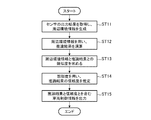
- FIG. It is a flowchart which shows the operation example of the driving support apparatus which concerns on Embodiment 1.
- FIG. It is a block diagram which shows the structural example of the driving support apparatus which concerns on Embodiment 2.
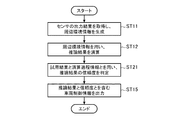
- FIG. It is a flowchart which shows the operation example of the driving support apparatus which concerns on Embodiment 2.
- It is a relative frequency distribution graph which shows the distribution example of the inference result in Embodiment 2.
- It is a block diagram which shows the structural example of the driving support apparatus which concerns on Embodiment 3.
- FIG. 1 is a block diagram showing a configuration example of the driving support device 10 according to the first embodiment.
- the vehicle 1 is equipped with a sensor 2, a vehicle control unit 3, and a driving support device 10.
- the driving support device 10 includes a sensor acquisition unit 11, a reliability estimation unit 12, a teacher data storage unit 13, a calculation unit 14, and a control output unit 15.
- a sensor 2 and a vehicle control unit 3 are connected to the driving support device 10.
- the sensor 2 detects the surrounding environment of the vehicle 1.
- the sensor 2 is, for example, a camera that images the surroundings of the vehicle 1 or a millimeter-wave radar that detects an object existing around the vehicle 1.
- the sensor 2 is not limited to one sensor or one type of sensor, and may be composed of a plurality of sensors or a plurality of types of sensors.
- FIG. 2 is a flowchart showing an operation example of the driving support device 10 according to the first embodiment.
- the driving support device 10 starts the operation shown in the flowchart of FIG. 2, and repeats the operation until the ignition switch is turned off.
- the sensor acquisition unit 11 acquires the information detected by the sensor 2 and integrates the acquired information to generate peripheral environment information indicating the surrounding environment of the vehicle 1.
- the sensor acquisition unit 11 outputs the surrounding environment information to the reliability estimation unit 12 and the calculation unit 14.
- the surrounding environment information is information that can recognize the state of other vehicles or pedestrians existing around the vehicle 1, the terrain around the vehicle 1, obstacles, and the like. Further, the surrounding environment information may be raw data output by the sensor 2 or information abstracted by some processing.
- the abstracted information is, for example, a chart in which peripheral objects and the like are plotted in a coordinate system corresponding to the peripheral space of the vehicle 1.
- step ST12 the calculation unit 14 calculates the inference result for controlling the vehicle 1 by using a machine learning algorithm that inputs the surrounding environment information from the sensor acquisition unit 11.
- the machine learning algorithm is, for example, a neural network or a multi-layer neural network (deep learning).
- the inferred result is, for example, the amount of depression of the brake or accelerator, or the steering angle of the steering wheel.
- the calculation unit 14 outputs the calculated inference result to the control output unit 15.
- the reliability estimation unit 12 compares the surrounding environment information from the sensor acquisition unit 11 with the teacher data stored in the teacher data storage unit 13 to obtain the similarity between the two.
- the teacher data storage unit 13 stores the teacher data used when learning the machine learning algorithm of the arithmetic unit 14. For example, the reliability estimation unit 12 calculates the feature amount of the teacher data by performing statistical processing on the teacher data. Similarly, the reliability estimation unit 12 calculates the feature amount of the surrounding environment information by performing statistical processing on the surrounding environment information. Then, the reliability estimation unit 12 calculates a correlation value between the feature amount of the teacher data and the feature amount of the surrounding environment information, and sets the correlation value as the similarity value.
- the statistical processing for calculating the feature amount is, for example, a processing for calculating an average value or a dimensional compression processing by an Autoencoder.
- the teacher data storage unit 13 may be configured to store the feature amount of the teacher data instead of the teacher data.
- the reliability estimation unit 12 estimates the reliability of the inference result calculated by the calculation unit 14 using the peripheral environment information based on the similarity between the teacher data and the surrounding environment information.
- the reliability estimation unit 12 outputs the estimated reliability to the control output unit 15.
- the reliability estimation unit 12 estimates the reliability of the inference result higher as the degree of similarity is higher.
- the reliability estimation unit 12 estimates the discrete reliability (for example, the reliability of levels 1 to 5) by comparing and determining the similarity and a predetermined threshold value.
- the reliability estimation unit 12 may perform polynomial transformation processing on the similarity to estimate continuous reliability (for example, reliability from 0% to 100%).
- step ST15 the control output unit 15 adds the reliability from the reliability estimation unit 12 to the inference result from the calculation unit 14 to generate vehicle control information.
- the control output unit 15 outputs vehicle control information to the vehicle control unit 3.
- the vehicle control unit 3 controls the behavior of the vehicle 1 by using the inference result included in the vehicle control information from the control output unit 15.
- the vehicle control unit 3 changes the control content according to the reliability added to the inference result. For example, if the reliability is equal to or higher than a predetermined threshold value, the vehicle control unit 3 controls the behavior of the vehicle 1 by using the inference result to which the reliability is added, and the reliability is the predetermined threshold value. If it is less than, the inference result to which this reliability is added is discarded and the behavior is not controlled.
- the driving support device 10 includes a sensor acquisition unit 11, a calculation unit 14, a reliability estimation unit 12, and a control output unit 15.
- the sensor acquisition unit 11 acquires the output result of the sensor 2 mounted on the vehicle 1.
- the calculation unit 14 calculates an inference result for controlling the vehicle 1 by using a machine learning algorithm that inputs the output result of the sensor 2 acquired by the sensor acquisition unit 11.
- the reliability estimation unit 12 obtains the similarity between the output result acquired by the sensor acquisition unit 11 and the teacher data used for learning the machine learning algorithm, and the inference result calculated by the calculation unit 14 based on the similarity. Estimate reliability.
- the control output unit 15 adds the reliability estimated by the reliability estimation unit 12 to the inference result calculated by the calculation unit 14 and outputs it as vehicle control information.
- the driving support device 10 can estimate the reliability of the inference result of the machine learning algorithm. Therefore, the driving support device 10 can suppress the occurrence of unexpected behavior of the vehicle 1 when the reliability of the inference result of the machine learning algorithm is low due to immature learning or the like.
- the reliability estimation unit 12 may be configured to obtain the similarity between the feature amount of the output result of the sensor 2 acquired by the sensor acquisition unit 11 and the feature amount of the teacher data. Good. With this configuration, the capacity of the teacher data storage unit 13 for storing teacher data can be reduced.
- Embodiment 2 the reliability of the inference result is estimated based on the similarity between the surrounding environment information which is the output result of the sensor 2 and the teacher data used for learning the machine learning algorithm. However, in the second embodiment, the reliability of the inference result is estimated. , Estimate the reliability of the inference result based on the trial result when the machine learning algorithm is tried in advance.
- FIG. 3 is a block diagram showing a configuration example of the driving support device 10 according to the second embodiment.
- the driving support device 10 according to the second embodiment is used as a trial with the reliability estimation unit 12a in place of the reliability estimation unit 12 and the teacher data storage unit 13 in the driving support device 10 of the first embodiment shown in FIG. It is configured to include a result storage unit 21.
- the same or corresponding parts as those in FIG. 1 are designated by the same reference numerals, and the description thereof will be omitted.
- the trial result storage unit 21 stores the trial result when the machine learning algorithm of the calculation unit 14 is tried.
- the trial result is, for example, the number of times each path from input to output in the neural network constituting the machine learning algorithm is used when the machine learning algorithm is tried before being set in the arithmetic unit 14.
- FIG. 4 is a diagram showing a configuration example of a multi-layer neural network included in the arithmetic unit 14 in the second embodiment.
- the machine learning algorithm is a three-layer multi-layer neural network.
- the input layer is composed of three nodes including the node N0
- the intermediate layer is composed of four nodes including the node N1
- the output layer is composed of two nodes including the node N2.
- Surrounding environment information X0, X1, X2 is input to each node of the input layer of the multi-layer neural network.
- inference results Y0 and Y1 are output from each node of the output layer of the multi-layer neural network.
- the nodes When learning the multi-layer neural network shown in FIG. 4, the nodes are connected so that the inference results Y0 and Y1 which are the teacher data are output when the surrounding environment information X0, X1 and X2 which are the teacher data are input.
- the weight of the link (for example, the link L0 connecting the node N0 and the node N1) is optimized.
- the number of times each path from input to output in this multi-layer neural network is used is collected, and the trial result storage unit is used as a trial result in which the path and the number of times of use are associated with each other. It is stored in 21.
- the route from the input to the output is, for example, a route to the node N0, the link L0, the node N1, the link L1, and the node N2.
- use means that the absolute value of the output of a certain number of nodes or more on the route is equal to or more than a predetermined threshold value. For example, when the total number of nodes on the route is "10", the fixed number is "8", and the threshold value is "0.6", the route with 8 or more nodes whose output is 0.6 or more is "used”. It is counted as "done”.
- FIG. 5 is a flowchart showing an operation example of the driving support device 10 according to the second embodiment.
- the driving support device 10 starts the operation shown in the flowchart of FIG. 5, and repeats the operation until the ignition switch is turned off.
- the operation in step ST11 of FIG. 5 is the same as the operation in step ST11 of FIG.
- step ST12 the calculation unit 14 calculates the inference result for controlling the vehicle 1 by using the machine learning algorithm that inputs the surrounding environment information from the sensor acquisition unit 11 as in the first embodiment. Further, in the second embodiment, the calculation unit 14 transfers the calculation process information indicating the path from the input to the output used when calculating the inference result in the neural network constituting the machine learning algorithm to the reliability estimation unit 12a. Output. For example, when the arithmetic unit 14 calculates the inference result Y0 and uses the routes to the node N0, the link L0, the node N1, the link L1, and the node N2 in FIG. 4, the weights of the link L0 and the link L1 are inferred. As a result, it affected Y0. Therefore, the calculation unit 14 outputs this path as calculation process information to the reliability estimation unit 12a.
- the reliability estimation unit 12a uses the number of times the route matching the route from the input to the output based on the calculation process information from the calculation unit 14 is stored in the trial result storage unit 21. Select from the number of times.
- the reliability estimation unit 12a estimates the reliability of the inference result calculated by the calculation unit 14 based on the number of times of use selected from the trial result storage unit 21.
- the reliability estimation unit 12a estimates the reliability of the inference result higher as the number of times of use increases.
- the reliability estimation unit 12a estimates the discrete reliability (for example, the reliability of levels 1 to 5) by comparing and determining the number of times of use and a predetermined threshold value.
- the reliability estimation unit 12a may perform polynomial transformation processing on the number of times of use to estimate continuous reliability (for example, reliability from 0% to 100%).
- step ST15 of FIG. 5 is the same as the operation in step ST15 of FIG.
- the reliability estimation unit 12a of the second embodiment is information indicating the number of times each path from input to output is used in the neural network constituting the machine learning algorithm when the machine learning algorithm is tried. Is used to estimate the reliability of the inference result based on the number of times of use corresponding to the path from the input to the output in the neural network used when the arithmetic unit 14 calculates the inference result.
- the driving support device 10 can estimate the reliability of the calculation process of the machine learning algorithm. Therefore, the driving support device 10 can suppress the occurrence of unexpected behavior of the vehicle 1 when the reliability of the inference result of the machine learning algorithm is low due to immature learning or the like.
- the reliability estimation unit 12a estimates the reliability of the inference result by using the number of times the path from the input to the output is used in the neural network, but the estimation method is not limited to this. ..
- the reliability estimation unit 12a compares, for example, a predetermined distribution of inference results with the distribution of inference results calculated by the calculation unit 14, and the inference result calculated by the calculation unit 14 based on the matching ratio between the two. You may estimate the reliability of.
- the predetermined distribution of inference results is, for example, a relative frequency distribution based on a large number of inference results output when the machine learning algorithm is tried, and is stored in the trial result storage unit 21.
- FIG. 6 is a relative frequency distribution graph showing an example of distribution of inference results in the second embodiment.
- the horizontal axis is the value of the inference result Y0
- the vertical axis is the relative frequency of each value of the inference result Y0.
- the black bar shows the relative frequency distribution of the inference result determined in advance
- the white bar shows the relative frequency distribution of the inference result calculated by the calculation unit 14 in the latest predetermined period.
- the reliability estimation unit 12a estimates the reliability of the inference result higher as the matching ratio of the relative frequency distribution is higher.
- the reliability estimation unit 12a estimates the discrete reliability (for example, the reliability of levels 1 to 5) by comparing and determining the matching ratio and a predetermined threshold value.
- the reliability estimation unit 12a may perform polynomial transformation processing on the match ratio to estimate continuous reliability (for example, reliability from 0% to 100%).
- Embodiment 3 the similarity between the surrounding environment information, which is the output result of the sensor 2, and the teacher data used for learning the machine learning algorithm is corrected based on the complexity of the surrounding environment information.
- FIG. 7 is a block diagram showing a configuration example of the driving support device 10 according to the third embodiment.
- the driving support device 10 according to the third embodiment has a configuration including a reliability estimation unit 12b instead of the reliability estimation unit 12 in the driving support device 10 of the first embodiment shown in FIG.
- the same or corresponding parts as those in FIG. 1 are designated by the same reference numerals, and the description thereof will be omitted.
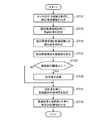
- FIG. 8 is a flowchart showing an operation example of the driving support device 10 according to the third embodiment.
- the driving support device 10 starts the operation shown in the flowchart of FIG. 8, and repeats the operation until the ignition switch is turned off.
- the operation in steps ST11, ST12, and ST13 of FIG. 8 is the same as the operation in steps ST11, ST12, and ST13 of FIG.
- the reliability estimation unit 12b calculates the complexity of the surrounding environment information from the sensor acquisition unit 11. For example, the reliability estimation unit 12b may calculate the complexity based on the entropy of the information acquired from the sensor 2 by the sensor acquisition unit 11 (for example, white noise of the captured image), or the sensor acquisition unit 11 recognizes it. The complexity may be calculated based on the number of peripheral objects of the vehicle 1.
- step ST32 the reliability estimation unit 12b compares the complexity with a predetermined threshold value.
- the reliability estimation unit 12b makes a correction to reduce the similarity in step ST33.
- the reliability estimation unit 12b calculates a reduction value having a magnitude proportional to the complexity of the surrounding environment information, and subtracts the calculated reduction value from the similarity obtained in step ST13.
- the reliability estimation unit 12b estimates the reliability of the inference result calculated by the calculation unit 14 based on the reduced similarity. Therefore, when the complexity of the surrounding environment information is large, the similarity is lowered, and as a result, the reliability is also lowered.
- step ST32 “NO” when the complexity is less than the predetermined threshold value (step ST32 “NO”), the reliability estimation unit 12b is calculated by the calculation unit 14 based on the similarity obtained in step ST13 in step ST14. Estimate the reliability of the inference result.
- the reliability estimation unit 12b of the third embodiment calculates the complexity of the output result of the sensor 2 acquired by the sensor acquisition unit 11, and corrects the similarity based on the complexity of the output result. .. With this configuration, the driving support device 10 can estimate the reliability of the inference result more accurately.
- Embodiment 4 the degree of similarity between the surrounding environment information, which is the output result of the sensor 2, and the teacher data used for learning the machine learning algorithm is determined based on the attribute information of the surrounding environment information and the attribute information of the teacher data. to correct.
- FIG. 9 is a block diagram showing a configuration example of the driving support device 10 according to the fourth embodiment.
- the driving support device 10 according to the fourth embodiment replaces the sensor acquisition unit 11, the reliability estimation unit 12, and the teacher data storage unit 13 in the driving support device 10 of the first embodiment shown in FIG.
- the configuration includes a unit 11c, a reliability estimation unit 12c, and a teacher data storage unit 13c.
- the same or corresponding parts as those in FIG. 1 are designated by the same reference numerals, and the description thereof will be omitted.
- the teacher data storage unit 13c stores the teacher data used when learning the machine learning algorithm of the calculation unit 14 and the attribute information of the teacher data.
- the teacher data storage unit 13c may store the feature amount of the teacher data instead of the teacher data.
- the attribute information includes at least one of date / time information, weather information, or geographic information when the teacher data was acquired.
- the date and time information may be a time represented by seconds, minutes, or the like, or may be a time zone such as morning or night.
- the weather information may be in categories such as sunny, rainy, and cloudy, or may be numerical values such as atmospheric pressure and wind speed. Geographic information may be numerical values such as latitude and longitude, or may be categories such as highways and urban areas.
- FIG. 10 is a flowchart showing an operation example of the driving support device 10 according to the fourth embodiment.
- the driving support device 10 starts the operation shown in the flowchart of FIG. 10, and repeats the operation until the ignition switch is turned off.
- the sensor acquisition unit 11c acquires the information detected by the sensor 2 and integrates the acquired information to generate peripheral environment information indicating the surrounding environment of the vehicle 1, as in the first embodiment. Further, in the fourth embodiment, the sensor acquisition unit 11c acquires at least one of date / time information, weather information, or geographic information from the sensor 2, and uses the acquired information as attribute information. The sensor acquisition unit 11c outputs the peripheral environment information to the calculation unit 14, and outputs the peripheral environment information and the attribute information to the reliability estimation unit 12c. In addition to acquiring the attribute information from the sensor 2, the sensor acquisition unit 11c may acquire the attribute information from a car navigation device, a server device outside the vehicle, or the like.
- steps ST12 and ST13 of FIG. 10 is the same as the operation in steps ST12 and ST13 of FIG.
- step ST42 the reliability estimation unit 12c compares the attribute information from the sensor acquisition unit 11c with the attribute information of the teacher data stored in the teacher data storage unit 13c.
- the reliability estimation unit 12c determines.
- step ST44 a correction for increasing the similarity is performed. For example, the reliability estimation unit 12c calculates an increase value having a magnitude proportional to the matching ratio of the attribute information, and adds the calculated increase value to the similarity obtained in step ST13.
- the reliability estimation unit 12c estimates the reliability of the inference result calculated by the calculation unit 14 based on the increased similarity. Therefore, when the attribute information of the surrounding environment information and the attribute information of the teacher data match, the similarity is increased, and as a result, the reliability is also increased.
- the reliability estimation unit 12c is the calculation unit 14 based on the similarity obtained in step ST13 in step ST14. Estimates the reliability of the inference result calculated by.
- the reliability estimation unit 12c of the fourth embodiment includes at least one of the date and time information, weather information, or geographic information when the sensor acquisition unit 11c acquires the output result of the sensor 2, and the teacher data.
- the similarity is corrected by comparing with at least one of the date and time information, weather information, or geographic information of.
- the driving support device 10 can estimate the reliability of the inference result more accurately.
- the machine learning algorithm of the calculation unit 14 is learned using teacher data having various date and time information, weather information, and geographic information
- the machine learning algorithm is the date and time. It may be learned for each attribute information such as for each, weather, or geography.
- the calculation unit 14 has a configuration having a machine learning algorithm for each attribute information.
- the calculation unit 14 acquires the attribute information of the surrounding environment information from the sensor acquisition unit 11c, and calculates the inference result by using the machine learning algorithm of the attribute information that matches the acquired attribute information.
- the reliability estimation unit 12c may obtain the similarity between the surrounding environment information and the teacher data having the attribute information matching the attribute information of the surrounding environment information, and estimate the reliability based on the obtained similarity. In this case, the reliability estimation unit 12c does not need to correct the similarity based on the matching ratio of the attribute information.
- the sensor acquisition unit 11c generates information on the surrounding environment at the time of rainfall.
- the calculation unit 14 calculates the inference result by using the machine learning algorithm learned by using the teacher data at the time of rainfall.
- the reliability estimation unit 12c calculates the similarity by comparing the surrounding environment information at the time of rainfall with the teacher data at the time of rainfall, and estimates the reliability based on the calculated similarity.
- the reliability estimation unit 12 obtains the similarity between the surrounding environment information from the sensor acquisition unit 11 and the teacher data stored in the teacher data storage unit 13, and based on the similarity, as in the first embodiment. Estimate the reliability of the inference result. Subsequently, the reliability estimation unit 12 estimates the reliability of the inference result using the trial result stored in the trial result storage unit 21 as in the second embodiment. Then, the reliability estimation unit 12 calculates the final reliability by using the reliability estimated by the method of the first embodiment and the reliability estimated by the method of the second embodiment, and the control output unit 15 Output to. For example, the reliability estimation unit 12 calculates the average value of the reliability estimated by the method of the first embodiment and the reliability estimated by the method of the second embodiment as the final reliability.
- 11 and 12 are diagrams showing a hardware configuration example of the driving support device 10 according to each embodiment.
- the teacher data storage units 13 and 13c and the trial result storage unit 21 in the driving support device 10 are memories 102.
- the functions of the sensor acquisition units 11, 11c, the reliability estimation units 12, 12a, 12b, 12c, the calculation unit 14, and the control output unit 15 in the driving support device 10 are realized by the processing circuit. That is, the driving support device 10 includes a processing circuit for realizing the above functions.
- the processing circuit may be a processing circuit 100 as dedicated hardware, or a processor 101 that executes a program stored in the memory 102.
- the processing circuit 100 when the processing circuit is dedicated hardware, the processing circuit 100 is, for example, a single circuit, a composite circuit, a programmed processor, a parallel programmed processor, or an ASIC (Application Specific Integrated Circuit). ), FPGA (Field Processor Gate Array), or a combination thereof.
- the functions of the sensor acquisition units 11, 11c, the reliability estimation units 12, 12a, 12b, 12c, the calculation unit 14, and the control output unit 15 may be realized by a plurality of processing circuits 100, or the functions of each unit may be integrated. It may be realized by one processing circuit 100.
- the functions of the sensor acquisition units 11, 11c, the reliability estimation units 12, 12a, 12b, 12c, the calculation unit 14, and the control output unit 15 are software. , Firmware, or a combination of software and firmware.
- the software or firmware is described as a program and stored in the memory 102.
- the processor 101 realizes the functions of each part by reading and executing the program stored in the memory 102. That is, the driving support device 10 includes a memory 102 for storing a program in which the step shown in the flowchart of FIG. 2 or the like is eventually executed when executed by the processor 101. Further, it can be said that this program causes the computer to execute the procedures or methods of the sensor acquisition units 11, 11c, the reliability estimation units 12, 12a, 12b, 12c, the calculation unit 14, and the control output unit 15.
- the processor 101 is a CPU (Central Processing Unit), a processing device, an arithmetic unit, a microprocessor, or the like.
- the memory 102 may be a non-volatile or volatile semiconductor memory such as a RAM (Random Access Memory), a ROM (Read Only Memory), an EPROM (Erasable Programmable ROM), or a flash memory, and may be a hard disk, a flexible disk, or the like. It may be a magnetic disk of the above, or an optical disk such as a CD (Compact Disc) or a DVD (Digital Versaille Disc).
- the processing circuit in the driving support device 10 can realize the above-mentioned functions by hardware, software, firmware, or a combination thereof.
- the functions of the sensor acquisition unit 11, 11c, the reliability estimation unit 12, 12a, 12b, 12c, the teacher data storage unit 13, 13c, the calculation unit 14, the control output unit 15, and the trial result storage unit 21 were integrated into the driving support device 10 which is an in-vehicle device, but may be distributed to a server device on the network, a mobile information terminal such as a smartphone, an in-vehicle device, and the like.
- a server device including a reliability estimation unit 12, 12a, 12b, 12c, a teacher data storage unit 13, 13c, a calculation unit 14, and a trial result storage unit 21, a sensor acquisition unit 11, 11c, and a control output unit 15 are provided.
- a driving support system is constructed by the on-board unit provided.
- the present invention allows any combination of embodiments, modifications of any component of each embodiment, or omission of any component of each embodiment within the scope of the invention.
- the driving support device Since the driving support device according to the present invention is designed to estimate the reliability of machine learning, it is suitable for use in a driving support device or the like that uses machine learning.
Landscapes
- Engineering & Computer Science (AREA)
- Automation & Control Theory (AREA)
- Artificial Intelligence (AREA)
- Physics & Mathematics (AREA)
- General Physics & Mathematics (AREA)
- Theoretical Computer Science (AREA)
- Health & Medical Sciences (AREA)
- Computer Vision & Pattern Recognition (AREA)
- Evolutionary Computation (AREA)
- Medical Informatics (AREA)
- Software Systems (AREA)
- Multimedia (AREA)
- Human Computer Interaction (AREA)
- Mechanical Engineering (AREA)
- Transportation (AREA)
- Computing Systems (AREA)
- Databases & Information Systems (AREA)
- General Health & Medical Sciences (AREA)
- Traffic Control Systems (AREA)
- Control Of Driving Devices And Active Controlling Of Vehicle (AREA)
Abstract
La présente invention concerne une unité d'acquisition de capteur (11) qui acquiert un résultat de sortie d'un capteur (2) qui est monté dans un véhicule (1). À l'aide d'un algorithme d'apprentissage automatique qui prend comme entrée le résultat de sortie du capteur (2) qui est acquis par l'unité d'acquisition de capteur (11), une unité de calcul (14) calcule un résultat d'inférence pour commander le véhicule (1). Une unité d'estimation de fiabilité (12) dérive une similarité entre le résultat de sortie qui est acquis par l'unité d'acquisition de capteur (11) et des données d'apprentissage qui sont utilisées dans l'apprentissage par l'algorithme d'apprentissage automatique, et sur la base de la similarité, estime la fiabilité du résultat d'inférence qui est calculé par l'unité de calcul (14). Une unité de sortie de commande (15) ajoute la fiabilité qui est estimée par l'unité d'estimation de fiabilité (12) au résultat d'inférence qui est calculé par l'unité de calcul (14) et délivre le résultat en tant qu'informations de commande de véhicule.
Priority Applications (5)
| Application Number | Priority Date | Filing Date | Title |
|---|---|---|---|
| PCT/JP2019/009688 WO2020183568A1 (fr) | 2019-03-11 | 2019-03-11 | Dispositif d'aide à la conduite et procédé d'aide à la conduite |
| US17/433,010 US20220161810A1 (en) | 2019-03-11 | 2019-03-11 | Driving assistance device and driving assistance method |
| CN201980093310.3A CN113519020B (zh) | 2019-03-11 | 2019-03-11 | 驾驶辅助装置及驾驶辅助方法 |
| JP2021504642A JP7113958B2 (ja) | 2019-03-11 | 2019-03-11 | 運転支援装置及び運転支援方法 |
| DE112019007012.6T DE112019007012T5 (de) | 2019-03-11 | 2019-03-11 | Fahrunterstützungsvorrichtung und Verfahren zur Fahrunterstützung |
Applications Claiming Priority (1)
| Application Number | Priority Date | Filing Date | Title |
|---|---|---|---|
| PCT/JP2019/009688 WO2020183568A1 (fr) | 2019-03-11 | 2019-03-11 | Dispositif d'aide à la conduite et procédé d'aide à la conduite |
Publications (1)
| Publication Number | Publication Date |
|---|---|
| WO2020183568A1 true WO2020183568A1 (fr) | 2020-09-17 |
Family
ID=72427356
Family Applications (1)
| Application Number | Title | Priority Date | Filing Date |
|---|---|---|---|
| PCT/JP2019/009688 Ceased WO2020183568A1 (fr) | 2019-03-11 | 2019-03-11 | Dispositif d'aide à la conduite et procédé d'aide à la conduite |
Country Status (5)
| Country | Link |
|---|---|
| US (1) | US20220161810A1 (fr) |
| JP (1) | JP7113958B2 (fr) |
| CN (1) | CN113519020B (fr) |
| DE (1) | DE112019007012T5 (fr) |
| WO (1) | WO2020183568A1 (fr) |
Cited By (3)
| Publication number | Priority date | Publication date | Assignee | Title |
|---|---|---|---|---|
| JP2022160848A (ja) * | 2021-04-07 | 2022-10-20 | 横浜ゴム株式会社 | 性能予測装置及びプログラム |
| JP2022176816A (ja) * | 2021-05-17 | 2022-11-30 | 株式会社日立製作所 | 運転支援システム |
| WO2023117857A1 (fr) * | 2021-12-24 | 2023-06-29 | Renault S.A.S. | Dispositif et procédé d'évaluation d'un système d'aide à la conduite pour véhicule automobile, le système d'aide à la conduite mettant en œuvre un réseau neuronal artificiel |
Families Citing this family (3)
| Publication number | Priority date | Publication date | Assignee | Title |
|---|---|---|---|---|
| CN114286772B (zh) * | 2019-09-02 | 2024-11-19 | 三菱电机株式会社 | 自动驾驶控制装置以及自动驾驶控制方法 |
| JP7363621B2 (ja) * | 2020-03-17 | 2023-10-18 | トヨタ自動車株式会社 | 情報処理装置、情報処理方法、及び、プログラム |
| CN115071757B (zh) * | 2022-06-22 | 2026-01-30 | 深圳市芯存科技有限公司 | 一种存算一体芯片、控制方法 |
Citations (2)
| Publication number | Priority date | Publication date | Assignee | Title |
|---|---|---|---|---|
| JP2004351994A (ja) * | 2003-05-27 | 2004-12-16 | Denso Corp | 車速制御装置およびプログラム |
| JP2018169672A (ja) * | 2017-03-29 | 2018-11-01 | 三菱電機インフォメーションシステムズ株式会社 | 教師画像を生成する方法、コンピュータおよびプログラム |
Family Cites Families (17)
| Publication number | Priority date | Publication date | Assignee | Title |
|---|---|---|---|---|
| JP4941752B2 (ja) * | 2007-08-15 | 2012-05-30 | オムロン株式会社 | 運転支援装置および方法、並びに、プログラム |
| JP2009117978A (ja) * | 2007-11-02 | 2009-05-28 | Denso Corp | 車両周辺表示装置 |
| JP5832644B2 (ja) * | 2011-06-03 | 2015-12-16 | シーメンス アクチエンゲゼルシヤフトSiemens Aktiengesellschaft | 殊にガスタービンまたは風力タービンのような技術システムのデータドリブンモデルを計算機支援で形成する方法 |
| US9098747B1 (en) * | 2013-04-16 | 2015-08-04 | Google Inc. | Systems and methods for identifying locations of infrastructure assets using aerial imagery |
| US9904852B2 (en) * | 2013-05-23 | 2018-02-27 | Sri International | Real-time object detection, tracking and occlusion reasoning |
| EP2865576B1 (fr) | 2013-10-22 | 2018-07-04 | Honda Research Institute Europe GmbH | Estimation de confiance composite pour systèmes d'assistance de conducteur prédictifs |
| JP2015118500A (ja) * | 2013-12-18 | 2015-06-25 | アイシン・エィ・ダブリュ株式会社 | 運転支援システム、方法およびプログラム |
| JP5991332B2 (ja) * | 2014-02-05 | 2016-09-14 | トヨタ自動車株式会社 | 衝突回避制御装置 |
| JP6462328B2 (ja) * | 2014-11-18 | 2019-01-30 | 日立オートモティブシステムズ株式会社 | 走行制御システム |
| CN109477951B (zh) * | 2016-08-02 | 2021-10-22 | 阿特拉斯5D公司 | 在保护隐私的同时识别人及/或识别并量化疼痛、疲劳、情绪及意图的系统及方法 |
| JP6658565B2 (ja) * | 2017-01-20 | 2020-03-04 | トヨタ自動車株式会社 | 運転支援装置 |
| JP6524144B2 (ja) * | 2017-06-02 | 2019-06-05 | 本田技研工業株式会社 | 車両制御システム及び方法、並びに走行支援サーバ |
| US11144786B2 (en) * | 2017-11-02 | 2021-10-12 | Canon Kabushiki Kaisha | Information processing apparatus, method for controlling information processing apparatus, and storage medium |
| US10809735B2 (en) * | 2018-04-09 | 2020-10-20 | SafeAI, Inc. | System and method for a framework of robust and safe reinforcement learning application in real world autonomous vehicle application |
| JP7380567B2 (ja) * | 2018-08-03 | 2023-11-15 | ソニーグループ株式会社 | 情報処理装置、情報処理方法及び情報処理プログラム |
| CN110874550A (zh) * | 2018-08-31 | 2020-03-10 | 华为技术有限公司 | 数据处理方法、装置、设备和系统 |
| US11100222B2 (en) * | 2018-11-05 | 2021-08-24 | Nxp B.V. | Method for hardening a machine learning model against extraction |
-
2019
- 2019-03-11 US US17/433,010 patent/US20220161810A1/en not_active Abandoned
- 2019-03-11 JP JP2021504642A patent/JP7113958B2/ja not_active Expired - Fee Related
- 2019-03-11 DE DE112019007012.6T patent/DE112019007012T5/de active Pending
- 2019-03-11 CN CN201980093310.3A patent/CN113519020B/zh not_active Expired - Fee Related
- 2019-03-11 WO PCT/JP2019/009688 patent/WO2020183568A1/fr not_active Ceased
Patent Citations (2)
| Publication number | Priority date | Publication date | Assignee | Title |
|---|---|---|---|---|
| JP2004351994A (ja) * | 2003-05-27 | 2004-12-16 | Denso Corp | 車速制御装置およびプログラム |
| JP2018169672A (ja) * | 2017-03-29 | 2018-11-01 | 三菱電機インフォメーションシステムズ株式会社 | 教師画像を生成する方法、コンピュータおよびプログラム |
Cited By (6)
| Publication number | Priority date | Publication date | Assignee | Title |
|---|---|---|---|---|
| JP2022160848A (ja) * | 2021-04-07 | 2022-10-20 | 横浜ゴム株式会社 | 性能予測装置及びプログラム |
| JP7856388B2 (ja) | 2021-04-07 | 2026-05-11 | 横浜ゴム株式会社 | 性能予測装置及びプログラム |
| JP2022176816A (ja) * | 2021-05-17 | 2022-11-30 | 株式会社日立製作所 | 運転支援システム |
| JP7600031B2 (ja) | 2021-05-17 | 2024-12-16 | 株式会社日立製作所 | 運転支援システム |
| WO2023117857A1 (fr) * | 2021-12-24 | 2023-06-29 | Renault S.A.S. | Dispositif et procédé d'évaluation d'un système d'aide à la conduite pour véhicule automobile, le système d'aide à la conduite mettant en œuvre un réseau neuronal artificiel |
| FR3131260A1 (fr) * | 2021-12-24 | 2023-06-30 | Renault | Dispositif et procédé d’évaluation d’un système d’aide à la conduite pour véhicule automobile, le système d’aide à la conduite mettant en œuvre un réseau neuronal artificiel |
Also Published As
| Publication number | Publication date |
|---|---|
| JPWO2020183568A1 (ja) | 2021-09-13 |
| CN113519020B (zh) | 2023-04-04 |
| US20220161810A1 (en) | 2022-05-26 |
| CN113519020A (zh) | 2021-10-19 |
| DE112019007012T5 (de) | 2022-01-20 |
| JP7113958B2 (ja) | 2022-08-05 |
Similar Documents
| Publication | Publication Date | Title |
|---|---|---|
| JP7113958B2 (ja) | 運転支援装置及び運転支援方法 | |
| US11783593B2 (en) | Monocular depth supervision from 3D bounding boxes | |
| CN108372857B (zh) | 自主驾驶系统的通过事件发生和情节记忆回顾进行有效情景感知 | |
| CN110850861A (zh) | 基于注意的分层变道深度强化学习 | |
| CN110850854A (zh) | 自动驾驶员代理和为自动驾驶员代理提供策略的策略服务器 | |
| US20230342960A1 (en) | Depth estimation based on ego-motion estimation and residual flow estimation | |
| US10981578B2 (en) | System and method for hardware verification in an automotive vehicle | |
| JP7629288B2 (ja) | 構築及び位置特定技術分野に焦点を当てた動的マップ生成 | |
| US12423842B2 (en) | Information processing method and storage medium for estimating camera pose using machine learning model | |
| US11619495B2 (en) | Position estimating apparatus and position estimating method | |
| WO2023119800A1 (fr) | Dispositif de traitement informatique et procédé de traitement informatique embarqués | |
| WO2020250718A1 (fr) | Dispositif de génération de données cartographiques | |
| CN118254811A (zh) | 车辆驾驶意图预测方法、装置、设备和计算机存储介质 | |
| CN118226451A (zh) | 区域的生成方法、系统、车辆设备、介质及程序产品 | |
| WO2021245972A1 (fr) | Dispositif de calcul et procédé de calcul de parallaxe | |
| JP2022066879A (ja) | 物体認識装置、物体認識システム、物体認識装置の学習方法、物体認識装置の物体認識方法、物体認識装置の学習プログラム及び物体認識装置の物体認識プログラム | |
| CN118189939A (zh) | 车辆的多传感器融合定位方法、系统、车辆及设备 | |
| US20230401440A1 (en) | Weight sharing between deep learning models used in autonomous vehicles | |
| EP3736730A1 (fr) | Réseau neuronal convolutionnel à complexité réduite | |
| US12536741B2 (en) | Computer-implemented method for creating a three-dimensional virtual model of an environment of a motor vehicle | |
| CN118259295B (zh) | 车辆定位方法、存储介质、电子设备及车辆 | |
| JP2025174812A (ja) | 情報処理装置、情報処理方法、プログラム、及び、コンピュータ読み取り可能な記録媒体 | |
| CN119417752A (zh) | 基于图片检测的点云回归框检测方法、装置、设备及介质 | |
| JP2022066878A (ja) | 物体認識装置、物体認識システム、物体認識装置の学習方法、物体認識装置の物体認識方法、物体認識装置の学習プログラム及び物体認識装置の物体認識プログラム | |
| CN121133329A (zh) | 一种电控减振器预瞄控制方法、装置、系统及存储介质 |
Legal Events
| Date | Code | Title | Description |
|---|---|---|---|
| 121 | Ep: the epo has been informed by wipo that ep was designated in this application |
Ref document number: 19919380 Country of ref document: EP Kind code of ref document: A1 |
|
| ENP | Entry into the national phase |
Ref document number: 2021504642 Country of ref document: JP Kind code of ref document: A |
|
| 122 | Ep: pct application non-entry in european phase |
Ref document number: 19919380 Country of ref document: EP Kind code of ref document: A1 |