WO2020188694A1 - 冷蔵又は冷凍焼成食品の製造方法 - Google Patents
冷蔵又は冷凍焼成食品の製造方法 Download PDFInfo
- Publication number
- WO2020188694A1 WO2020188694A1 PCT/JP2019/011150 JP2019011150W WO2020188694A1 WO 2020188694 A1 WO2020188694 A1 WO 2020188694A1 JP 2019011150 W JP2019011150 W JP 2019011150W WO 2020188694 A1 WO2020188694 A1 WO 2020188694A1
- Authority
- WO
- WIPO (PCT)
- Prior art keywords
- dough
- baked food
- frozen
- refrigerated
- baking
- Prior art date
- Legal status (The legal status is an assumption and is not a legal conclusion. Google has not performed a legal analysis and makes no representation as to the accuracy of the status listed.)
- Ceased
Links
Classifications
-
- A—HUMAN NECESSITIES
- A21—BAKING; EDIBLE DOUGHS
- A21D—TREATMENT OF FLOUR OR DOUGH FOR BAKING, e.g. BY ADDITION OF MATERIALS; BAKING; BAKERY PRODUCTS
- A21D13/00—Finished or partly finished bakery products
- A21D13/80—Pastry not otherwise provided for elsewhere, e.g. cakes, biscuits or cookies
-
- A—HUMAN NECESSITIES
- A21—BAKING; EDIBLE DOUGHS
- A21D—TREATMENT OF FLOUR OR DOUGH FOR BAKING, e.g. BY ADDITION OF MATERIALS; BAKING; BAKERY PRODUCTS
- A21D15/00—Improving finished, partly finished or par-baked bakery products
- A21D15/02—Improving finished, partly finished or par-baked bakery products by cooling, e.g. refrigeration or freezing
-
- A—HUMAN NECESSITIES
- A21—BAKING; EDIBLE DOUGHS
- A21D—TREATMENT OF FLOUR OR DOUGH FOR BAKING, e.g. BY ADDITION OF MATERIALS; BAKING; BAKERY PRODUCTS
- A21D2/00—Treatment of flour or dough by adding materials thereto before or during baking
- A21D2/02—Treatment of flour or dough by adding materials thereto before or during baking by adding inorganic substances
-
- A—HUMAN NECESSITIES
- A21—BAKING; EDIBLE DOUGHS
- A21D—TREATMENT OF FLOUR OR DOUGH FOR BAKING, e.g. BY ADDITION OF MATERIALS; BAKING; BAKERY PRODUCTS
- A21D2/00—Treatment of flour or dough by adding materials thereto before or during baking
- A21D2/08—Treatment of flour or dough by adding materials thereto before or during baking by adding organic substances
- A21D2/14—Organic oxygen compounds
- A21D2/16—Fatty acid esters
-
- A—HUMAN NECESSITIES
- A21—BAKING; EDIBLE DOUGHS
- A21D—TREATMENT OF FLOUR OR DOUGH FOR BAKING, e.g. BY ADDITION OF MATERIALS; BAKING; BAKERY PRODUCTS
- A21D2/00—Treatment of flour or dough by adding materials thereto before or during baking
- A21D2/08—Treatment of flour or dough by adding materials thereto before or during baking by adding organic substances
- A21D2/14—Organic oxygen compounds
- A21D2/18—Carbohydrates
Definitions
- the present invention relates to a refrigerated or frozen product of a baked food obtained by baking a dough containing flour.
- Patent Document 1 describes that a predetermined amount of urea is added to a dough containing wheat flour when producing pancakes.
- Patent Document 2 describes that a good texture and flavor can be obtained by replacing a part or all of the conventionally used wheat flour with durum wheat flour for all frozen bakery foods, and the frozen bread based on such findings.
- a production method using durum wheat semolina and other crushed cereals and an emulsifier selected from lecithin and monoglyceride emulsifiers as raw materials is described.
- Patent Document 3 describes a method of whipping until the dough specific volume reaches 1.4 ml / g or more as a method for producing a hot cake having a soft mouthfeel, good melting in the mouth, fine texture, increased specific volume, and good flavor.
- a production method for carrying out at least one of a total of four methods, including a method of using a specific emulsifier such as a glycerin fatty acid ester in a specific amount, is described.
- a specific emulsifier such as a glycerin fatty acid ester in a specific amount
- JP-A-2002-10181 Japanese Unexamined Patent Publication No. 9-149756 JP-A-5-15297
- Patent Documents 1 and 2 are for blending ingredients that do not originally need to be blended with the pancakes or the like in order to impart freezing resistance to the pancakes or the like.
- the combination of such ingredients may have an unexpected effect on the quality of the pancakes.
- a technique that does not adversely affect the quality of pancakes and the like and can easily and surely impart freezing resistance to pancakes and the like has not yet been provided.
- An object of the present invention is to provide a refrigerated or frozen baked food having a good texture and appearance in an edible state even though it is refrigerated or frozen.
- the present invention comprises a step of bringing a dough containing flour and having a specific gravity of 0.32 to 0.48 g / ml into contact with a heating plate to obtain a baked food, and refrigerating or freezing the baked food. This is a method for producing frozen baked foods.
- the method for producing a refrigerated or frozen baked food of the present invention includes a baking step of baking a dough to obtain a baked food, and a low temperature treatment step of refrigerating or freezing the baked food.
- the dough used in the present invention is typically prepared by mixing a dough material (mix) containing flour and water.
- flour usually used for producing bakery foods such as pancakes
- wheat flour such as weak flour, medium-strength flour, strong flour, whole wheat flour, and duram semolina
- Examples thereof include rye flour, rice flour, corn flour, corn glitz and the like, and one of these can be used alone or in combination of two or more depending on the type of baked food to be produced.
- the baked foods are pancakes and waffles, taiyaki, and large-sized baked foods, it is preferable to use at least soft flour as the flour.
- the content of the flour in the dough raw material is preferably 10 to 50% by mass, more preferably 20 to 40% by mass, based on the total mass of the dough raw material.
- the dough raw material may further contain raw materials usually used in the production of bakery foods.
- starches such as tapioca starch, potato starch, cornstarch, waxy cornstarch, wheat starch, rice starch, and treatments such as pregelatinization, acetylation, etherification, esterification, oxidation treatment, and cross-linking treatment are performed.
- swelling agent such as sodium hydrogen carbonate (baking soda), baking powder, ammonium carbonate, ammonium hydrogen carbonate, ammonium chloride or yeast
- eggs such as whole egg, egg white, egg yolk; milk, defatted milk powder, butter, etc.
- Dairy products such as salt; sugars, fats and oils, emulsifiers, thickeners, acidulants, fragrances, spices, coloring agents, fruit juices, vitamins, etc., depending on the type of baked food to be produced, etc. Can be used alone or in combination of two or more.
- the specific gravity of the dough to be baked in the baking step is in the range of 0.32 to 0.48 g / ml.
- the "specific gravity” here is the specific gravity of the dough after 10 minutes of floor time after all the dough raw materials are mixed and mixing is completed.
- the refrigerated or frozen food obtained by baking the dough is given a porous sponge structure in which relatively fine bubbles are uniformly and densely present in the entire inner layer, and aging of starch is felt when eating. I made it difficult.
- Refrigerated or frozen foods having such a sponge structure are cooked in a microwave oven or naturally thawed to be in an edible state, and are elastically deformed by an external force, and the external force (load) at that time. ) And distortion have a linear relationship, so when eaten, the mouthfeel is soft and melts in the mouth, and the texture is excellent.
- the texture of the inner layer is fine and voluminous, and the appearance is also excellent.
- the specific gravity of the dough immediately before baking is less than 0.32 g / ml, the dough is too light and may not form the body of the baked food even if it is baked. On the contrary, the specific gravity is 0.48 g / ml. If it exceeds the limit, the sponge structure cannot be obtained, and relatively large bubbles are unevenly present in the inner layer, so that the aging of the starch may be easily felt when eating.
- the specific gravity of the dough immediately before baking is preferably 0.32 to 0.45 g / ml, more preferably 0.38 to 0.45 g / ml.
- the specific gravity of the dough can be adjusted by appropriately adjusting the dough raw material, the mixing conditions at the time of dough preparation, and the like. Regarding mixing, basically, the longer the mixing time and the faster the stirring speed during mixing (the higher the rotation speed of the mixer used for mixing), the lower the specific gravity of the dough tends to be. Further, as the dough raw material, it is possible to reduce the specific gravity of the dough by using a dough material containing a large number of bubbles and having a small specific gravity, such as meringue made by whipping egg white.
- the dough contains at least one selected from the group consisting of foaming emulsified oils and fats and foaming emulsifiers. That is, it is preferable to prepare the dough by using the foaming emulsified oil and / or the foaming emulsifier together with the flour as the dough raw material, and the dough prepared in this way has relatively fine bubbles uniformly and densely formed throughout the dough. The specific gravity tends to fall within the specific range.
- the foamable emulsified oil and fat contains an emulsifier, oil and fat, and water, and may be an oil-in-water type (O / W type) emulsion in which oil droplets are dispersed in water, and a water-in-oil type (W) in which water droplets are dispersed in oil.
- O type oil-in-water type
- Emulsion may be used.
- Examples of the emulsifier contained in the foamable emulsified fat and oil or the foamable emulsifier include polyglycerin fatty acid ester, sucrose fatty acid ester, sorbitan fatty acid ester, propylene glycol fatty acid ester, stearoyl lactate calcium, stearoyl lactate sodium, monoglyceride, and organic. Examples thereof include acid monoglyceride and lecithin, and one of these can be used alone or in combination of two or more.
- Examples of fats and oils used for foaming emulsified fats and oils include rapeseed oil, soybean oil, palm oil, cottonseed oil, sunflower oil, corn oil, sesame oil, olive oil, coconut oil, rice oil, and the like.
- the total content of the foaming emulsified fat and oil and the foaming emulsifier in the dough raw material is preferably 0.5 to 5.0% by mass, more preferably 2.0 to 4.% of the total mass of the dough raw material. It is 0% by mass.
- the content of sugars in the dough raw material is preferably 5 to 35% by mass with respect to the total mass of the dough raw material from the viewpoint of improving the aging resistance and the balance between the texture and taste of the baked food. , More preferably 15 to 25% by mass.
- the sugar those usually used in the production of bakery foods can be used without particular limitation.
- sugar granulated sugar, sucrose, maltose, lactose, fructose, glucose, isomerized sugar, trehalose, oligosaccharide, dextrin.
- Monosaccharides, disaccharides or polysaccharides such as high fructose corn syrup; sugar alcohols such as sorbitol and maltose; liquid sugars such as honey, water candy and maple syrup; other sweeteners, one of these alone or two or more Can be used in combination.
- sugars have the effect of improving the aging resistance of baked foods.
- sugar which is a type of sugar, has a high sweetness and is easily colored by heating, so that the baked foods contain a large amount of sugars. This may cause inconveniences such as the sweetness of the baked food becoming too strong and the baked color tending to become dark.
- trehalose as a part or all of the saccharides.
- the content of trehalose in the dough raw material is preferably 2.5 to 17.5% by mass, more preferably 5 to 15% by mass, based on the total mass of the dough raw material.
- baking powder in the dough from the viewpoint of improving the appearance of the baked food made by baking the dough and the quality after refrigeration and freezing storage.
- baking powder as the dough raw material, it is possible to impart a porous sponge structure in which finer bubbles are uniformly and densely present in the entire inner layer of the baked dough, that is, the baked food.
- the baking powder ordinary ones that can be used in foods, for example, those containing baking soda as a base and an acidic agent as an auxiliary agent can be used.
- the acidic agent include potassium hydrogen tartrate (particularly L-form), calcium dihydrogen phosphate, baked alum, fumaric acid, sodium phosphate, and gluconodeltalactone, and one of these may be used alone or.
- baking powder has a different gas generation rate depending on the type of acidic agent contained in the baking powder.
- the baking powder used in the present invention is a single type of acidic agent. It is preferable to use a substance containing a plurality of kinds of acidic agents rather than a substance containing.
- the baking powder preferably used in the present invention include baking powders containing a plurality of types of acidic agents and containing at least one of calcium dihydrogen phosphate and potassium hydrogen tartrate in the plurality of types of acidic agents.
- the amount of baking soda in the dough is preferably 0.1 to 1.0% by mass, and more preferably 0.2 to 0.7% by mass. That is, the content of the baking powder in the dough raw material as the amount of baking soda is preferably 0.1 to 1.0% by mass, more preferably 0.2 to 0.7% by mass, based on the total mass of the dough raw material. Is.
- a bubble-containing dough having a specific gravity of 0.32 to 0.48 g / ml is brought into contact with a heating plate such as an iron plate and baked to produce a baked food, more specifically, a flour-containing puffed food.
- the method of baking the dough in the baking step is direct heating by contact with a heating plate, and is not indirect heating by infrared rays emitted from heated air or a wall surface, such as heating using an oven. Therefore, the baked foods according to the present invention do not include flour-containing swelled foods obtained by baking dough using an oven, such as sponge cakes and muffins.
- the present invention is particularly effective for baked foods produced by direct heating of dough using a heating plate.
- the dough baking procedure is typically such that the dough is poured onto the surface of a heating plate, one side of the dough is baked, and then the dough is turned upside down to the side opposite to the previously baked side. Although the side is baked, only one side of the dough may be baked.
- the temperature of the heating plate is preferably 165 to 185 ° C, more preferably 170 to 180 ° C, from the viewpoint of the balance of the texture of the baked food, the shape (thickness) due to the swelling of the dough, the baking color and the like. is there. If the temperature of the heating plate is too low, the baking of the dough will be insufficient, and if the temperature of the heating plate is too high, it will be easily burnt and the appearance of the baked food may be deteriorated.
- the baked food after baking (baked food before refrigeration or freezing) preferably has a thickness within the range of 10 to 25 mm, and it is preferable to control the thickness of the dough before baking so that the thickness falls within that range. By keeping the thickness of the baked food after baking within this range, the texture improvement due to the porous sponge structure can be maximized.
- the baked food obtained in the baking step is refrigerated or frozen.
- the product temperature of the baked food when refrigerated is usually about 2 to 10 ° C.
- the freezing method for freezing the baked food is not particularly limited, and either quick freezing or slow freezing can be adopted.
- the frozen food of the baked food may be stored and sold in a freezing temperature range, or the frozen food may be thawed at a distribution stage or the like.
- the present invention is applicable to baked foods containing flour (flour-containing swollen foods), which are produced by bringing the dough into direct contact with a heating plate, and specifically, pancakes and pancakes (pancakes).
- baked confectioneries such as pancakes
- waffles waffles
- taiyaki taiyaki
- large-sized ware can be exemplified.
- Examples 1 to 7, Comparative Examples 1 to 3 and Reference Examples 1 to 3 A dough was prepared using the dough raw materials shown in Tables 1 and 2 below. Specifically, water and whole eggs are added and mixed in a commercially available mixer (Mixer N50 Hobart), and sugars (sugar, trehalose) are first added while the product temperature of the mixture is maintained at 36 ° C. Then, mix at 2nd speed for 30 seconds, then add fat (foaming emulsified fat, soybean oil), mix at 2nd speed so that the dough has a predetermined specific gravity, and further, soft powder, skim milk powder and baking powder.
- a commercially available mixer Mater N50 Hobart
- sugars sucgar, trehalose
- the rotation speed (rotation speed) of the mixer can be adjusted in three stages from 1st speed to 3rd speed.
- the 1st speed has the slowest rotation speed, and the larger the value, the faster the rotation speed.
- the foamable emulsified fat and oil the trade name "Patigrass 500" manufactured by RIKEN Vitamin was used.
- the baking powder a baking powder containing 35% by mass of baking soda and containing two types of acid agents, calcium dihydrogen phosphate and potassium L-potassium tartrate, was used.
- Examples 8 to 11 and Reference Examples 4 to 5 Frozen pancakes were obtained in the same manner as in Example 1 except that the amount of baking powder used was changed as shown in Table 3 below.
- Example 1 In the comparison between Examples 1, 5 to 7 and Reference Examples 1 and 2 in Table 2, Examples 1, 6 and 7 were particularly highly evaluated. Therefore, the temperature of the heating plate at the time of firing was set to Example 1. It can be seen that the temperature is preferably about 170 to 185 ° C., which is the range to which 6, 7 belongs. Further, in comparison between Example 1 and Reference Example 3 in Table 2, Example 1 in which sugar and trehalose were used as sugars had a baked color of thawed pancakes as compared with Reference Example 3 in which only sugar was used. From the good results, it can be seen that trehalose has the effect of improving the baking color of baked goods such as pancakes.
- the content of baking powder in the dough is in the range of 0.1 to 1.0% by mass in terms of the amount of baking soda, the thickness of the pancake after baking is 10 to 25 mm.
- the baking powder content was within an appropriate range, and the texture and appearance of the thawed pancakes were superior to those of the reference examples outside the above range.
- the production method of the present invention even though it is refrigerated or frozen, when it is cooked in a microwave oven or naturally thawed to make it edible, it has a soft texture and melts well in the mouth.
- a refrigerated or frozen baked food having a fine texture of the inner layer, a voluminous feel, a good baked color, and a good texture and appearance.
- the present invention is particularly useful for the production of refrigerated or frozen pancakes.
Landscapes
- Life Sciences & Earth Sciences (AREA)
- Engineering & Computer Science (AREA)
- Food Science & Technology (AREA)
- Chemical & Material Sciences (AREA)
- Inorganic Chemistry (AREA)
- Physics & Mathematics (AREA)
- Thermal Sciences (AREA)
- Health & Medical Sciences (AREA)
- Molecular Biology (AREA)
- Bakery Products And Manufacturing Methods Therefor (AREA)
- Confectionery (AREA)
- Freezing, Cooling And Drying Of Foods (AREA)
Abstract
本発明の冷蔵又は冷凍焼成食品の製造方法は、穀粉を含有し且つ比重が0.32~0.48g/mlである生地を、加熱プレートに接触させて焼成食品を得、該焼成食品を冷蔵又は冷凍する工程を有する。前記加熱プレートの温度は、好ましくは165~185℃である。前記生地は、好ましくはトレハロース、起泡性乳化油脂及び/又は起泡性乳化剤を含有する。前記焼成食品は、好ましくはパンケーキ、ホットケーキ、ワッフル、たい焼き又は大判焼きである。
Description
本発明は、穀粉を含有する生地を焼成してなる焼成食品の冷蔵又は冷凍物に関する。
近年、家庭用冷蔵庫の普及、冷凍温度での食品流通の拡大などを背景に、電子レンジを用いて加熱調理するだけの簡単な操作で喫食が可能な状態となる冷蔵又は冷凍食品の販売が増加傾向にある。そのような冷蔵又は冷凍食品の1つとして、小麦粉などの穀粉を含有する生地を焼成してなる穀粉含有焼成食品の冷蔵又は冷凍物が知られており、例えば冷凍パンケーキや冷凍ホットケーキ等の冷凍パンケーキ類がある。冷凍パンケーキ類を電子レンジ等で加熱調理するなどして解凍したものは、焼成直後のパンケーキ類と比べて、含有されている澱粉の老化が進行していることなどに起因して、硬く、ボソボソした食感で口溶けが悪いという問題がある。
前記問題の解決を図った技術として、例えば特許文献1には、ホットケーキ類の製造時に、小麦粉を含む生地に尿素を所定量配合することが記載されている。また特許文献2には、冷凍ベーカリー食品全般について、従来用いられてきた小麦粉の一部又は全部をデュラム小麦粉で置き換えると良好な食感及び風味が得られる旨記載され、斯かる知見に基づく冷凍パンケーキ類の製造方法として、デュラム小麦セモリナ及び他の穀類粉砕物と、レシチン及びモノグリセリド系乳化剤から選ばれる乳化剤とを原料として用いる製造方法が記載されている。
特許文献3には、口当たりがソフトで口溶けがよく、キメが細かく比容積がアップし風味が良好なホットケーキの製造方法として、生地比容積が1.4ml/g以上になるまでホイップする方法、グリセリン脂肪酸エステル等の特定の乳化剤を特定量使用する方法などを含む、計4つの方法のうちの少なくとも1種以上を実施する製造方法が記載されている。なお、特許文献3に記載されているのは、焼成直後のホットケーキについての食感等の品質を向上させ得る手段であり、冷蔵又は冷凍ホットケーキの課題やその課題を解決するための手段は記載されていない。
特許文献1及び2に記載されている冷凍ホットケーキ等に関する技術は、ホットケーキ等に冷凍耐性を付与するために、本来ホットケーキ等に配合しなくてもよい成分を配合するものであるため、斯かる成分の配合によってホットケーキの品質に予期せぬ影響が出るおそれがある。ホットケーキ等の品質に悪影響を及ぼさず、簡便且つ確実にホットケーキ等に冷凍耐性を付与し得る技術は未だ提供されていない。
本発明の課題は、冷蔵又は冷凍されているにもかかわらず、喫食可能な状態では食感及び外観が良好な冷蔵又は冷凍焼成食品を提供することである。
本発明は、穀粉を含有し且つ比重が0.32~0.48g/mlである生地を、加熱プレートに接触させて焼成食品を得、該焼成食品を冷蔵又は冷凍する工程を有する、冷蔵又は冷凍焼成食品の製造方法である。
本発明の冷蔵又は冷凍焼成食品の製造方法は、生地を焼成して焼成食品を得る焼成工程と、該焼成食品を冷蔵又は冷凍する低温処理工程とを有する。本発明で用いる生地は、典型的には、穀粉及び水を含む生地原料(ミックス)を混合(ミキシング)することで調製される。
本発明で用いる穀粉としては、パンケーキ類等のベーカリー食品の製造に通常用いられる穀粉を特に制限なく用いることができ、例えば、薄力粉、中力粉、強力粉、小麦全粒粉、デュラムセモリナ等の小麦粉;ライ麦粉、米粉、コーンフラワー、コーングリッツ等が挙げられ、製造する焼成食品の種類等に応じて、これらの1種を単独で又は2種以上を組み合わせて用いることができる。例えば、焼成食品がパンケー類及びワッフル、たい焼き、大判焼きの場合、穀粉としては、少なくとも薄力粉を用いることが好ましい。生地原料における穀粉の含有量は、該生地原料の全質量に対して、好ましくは10~50質量%、より好ましくは20~40質量%である。
生地原料には、穀粉及び水に加えて更に、ベーカリー食品の製造に通常用いられる原材料を含有させてもよい。具体的には例えば、タピオカ澱粉、馬鈴薯澱粉、コーンスターチ、ワキシーコーンスターチ、小麦澱粉、米澱粉等の澱粉、及びこれらにα化、アセチル化、エーテル化、エステル化、酸化処理、架橋処理等の処理を施した加工澱粉;炭酸水素ナトリウム(重曹)、ベーキングパウダー、炭酸アンモニウム、炭酸水素アンモニウム、塩化アンモニウム等の膨張剤又はイースト;全卵、卵白、卵黄等の卵類;牛乳、脱脂粉乳、バター等の乳製品;食塩等の塩類;糖類、油脂類、乳化剤、増粘剤、酸味料、香料、香辛料、着色料、果汁、ビタミン類等が挙げられ、製造する焼成食品の種類等に応じて、これらの1種を単独で又は2種以上を組み合わせて用いることができる。
本発明の製造方法の主たる特徴の1つとして、前記焼成工程で焼成する生地の比重が、0.32~0.48g/mlの範囲にある点が挙げられる。ここでいう「比重」は、生地原料が全て混合され、ミキシングが終了した後、10分間フロアタイム後の生地の比重である。
従来、穀粉を含有する生地を焼成して得られる焼成食品を冷蔵又は冷凍すると、保存性が向上して長期保存が可能となる反面、これを喫食した際の食感が、硬い、ボソボソしている、口溶けが悪いといった、含有されている澱粉の老化を感じさせる好ましくない食感となることが問題であった。これに対し本発明では、焼成直前の生地の比重を前記特定範囲に設定することで、該生地を、比較的細かい気泡が該生地全体に均一且つ密に存在する含気泡生地とし、その含気泡生地を焼成して得られる焼成食品の冷蔵又は冷凍物に、比較的細かい気泡が内層全体に均一且つ密に存在する多孔質なスポンジ構造を付与して、喫食した際に澱粉の老化が感じられにくいようにした。斯かるスポンジ構造を有する焼成食品の冷蔵又は冷凍物を電子レンジなどで加熱調理又は自然解凍するなどして喫食可能な状態としたものは、外力を受けて弾性変形し、その際の外力(荷重)と歪みとの関係が直線的な関係にあるため、喫食した際には口当たりがソフトで口溶けがよく、食感に優れる。また、内層のキメが細かくボリューム感があり、外観にも優れる。焼成直前の生地の比重が0.32g/ml未満では、生地が軽すぎるため、これを焼成しても焼成食品の体をなさないおそれがあり、逆に、該比重が0.48g/mlを超えると、前記スポンジ構造が得られず、内層に比較的大きな気泡が不均一に存在するようになるため、喫食した際に澱粉の老化が感じられやすいものとなるおそれがある。焼成直前の生地の比重は、好ましくは0.32~0.45g/ml、より好ましくは0.38~0.45g/mlである。
生地の比重は、生地原料、生地調製時のミキシングの条件などを適宜調整することで調整可能である。ミキシングに関しては、基本的には、ミキシング時間が長いほど、また、ミキシングの際の攪拌速度が速いほど(ミキシングに使用するミキサーの回転数が大きいほど)、生地の比重が低下する傾向がある。また、生地原料に関しては、例えば、卵白を泡立たせたメレンゲのような、多数の気泡を含有し比重が小さいものを用いることで、生地の比重を低下させることが可能である。
生地の比重を前記特定範囲により確実に調整する観点から、生地に起泡性乳化油脂及び起泡性乳化剤からなる群から選択される1種以上を含有させることが好ましい。すなわち、生地原料に穀粉とともに起泡性乳化油脂及び/又は起泡性乳化剤を用いて生地を調製することが好ましく、そうして調製された生地は、生地全体に比較的細かい気泡が均一且つ密に存在し、比重が前記特定範囲に収まりやすい。起泡性乳化油脂は、乳化剤、油脂及び水を含み、また、水中に油滴が分散する水中油型(O/W型)エマルションでもよく、油中に水滴が分散する油中水型(W/O型)エマルションでもよい。起泡性乳化油脂に含有される乳化剤又は起泡性乳化剤としては、例えば、ポリグリセリン脂肪酸エステル、ショ糖脂肪酸エステル、ソルビタン脂肪酸エステル、プロピレングリコール脂肪酸エステル、ステアロイル乳酸カルシウム、ステアロイル乳酸ナトリウム、モノグリセリド、有機酸モノグリセリド、レシチン等が挙げられ、これらの1種を単独で又は2種以上を組み合わせて用いることができる。起泡性乳化油脂に用いられる油脂としては、例えば、菜種油、大豆油、パーム油、綿実油、ひまわり油、とうもろこし油、ごま油、オリーブ油、やし油、米油等が挙げられ、これらの1種を単独で又は2種以上を組み合わせて用いることができる。生地原料における起泡性乳化油脂及び起泡性乳化剤の総含有量は、該生地原料の全質量に対して、好ましくは0.5~5.0質量%、より好ましくは2.0~4.0質量%である。
また、生地を焼成してなる焼成食品の老化耐性を向上させる観点から、生地原料における糖類の含有量を比較的多くすることが好ましい。斯かる糖類の含有量の調整による老化耐性の向上効果と、前述した生地の比重調整による食感の向上効果とが相俟って、冷蔵又は冷凍焼成食品の食感のさらなる向上が期待できる。具体的には、生地原料における糖類の含有量は、老化耐性の向上と焼成食品の食感食味とのバランス等の観点から、該生地原料の全質量に対して、好ましくは5~35質量%、より好ましくは15~25質量%である。糖類としては、ベーカリー食品の製造に通常用いられるものを特に制限なく用いることができ、例えば、砂糖、グラニュー糖、ショ糖、麦芽糖、乳糖、果糖、ブドウ糖、異性化糖、トレハロース、オリゴ糖、デキストリン等の単糖、二糖又は多糖類;ソルビトール、マルチトール等の糖アルコール;ハチミツ、水あめ、メープルシロップ等の液糖;その他甘味料が挙げられ、これらの1種を単独で又は2種以上を組み合わせて用いることができる。
前述したように、糖類は、焼成食品の老化耐性の向上の効果があるが、例えば糖類の一種である砂糖は、甘味度が高く、加熱により着色しやすいため、これを焼成食品に高含有させると、焼成食品の甘味が強くなりすぎる、焼き色が濃くなりやすくなる等の不都合が生じるおそれがある。このような糖類の使用に起因する不都合を防止する観点から、生地原料に糖類を含有させる場合、その糖類の一部又は全部としてトレハロースを用いることが好ましい。生地原料におけるトレハロースの含有量は、該生地原料の全質量に対して、好ましくは2.5~17.5質量%、より好ましくは5~15質量%である。
生地を焼成してなる焼成食品の見栄えや冷蔵、冷凍保管後の品質を向上させる観点から、生地にベーキングパウダーを含有させることが好ましい。生地原料としてベーキングパウダーを用いることで、焼成後の生地すなわち焼成食品において、より細かい気泡が内層全体に均一且つ密に存在する多孔質なスポンジ構造を付与させることができる。ベーキングパウダーとしては、食品に使用可能な通常のもの、例えば、基剤としての重曹と、助剤としての酸性剤とを含むもの用いることができる。前記酸性剤としては、例えば、酒石酸水素カリウム(特にL-体)、リン酸二水素カルシウム、焼ミョウバン、フマル酸、リン酸ナトリウム、グルコノデルタラクトンが挙げられ、これらの1種を単独で又は2種以上を組み合わせて用いることができる。特に酸性剤としてリン酸二水素カルシウム、L-酒石酸水素カリウムを用いることが好ましい。また一般に、ベーキングパウダーは、含有する酸性剤の種類によって、ガス発生の速度が異なるところ、焼成食品に適切なスポンジ構造を持たせる観点から、本発明で使用するベーキングパウダーは、単一種の酸性剤を含有するものよりも、複数種の酸性剤を含有するものの方が好ましい。本発明で好ましく用いられるベーキングパウダーとして、複数種の酸性剤を含有し、且つその複数種の酸性剤に、リン酸二水素カルシウム及び酒石酸水素カリウムの少なくとも一方が含まれるベーキングパウダーを例示できる。
ベーキングパウダーは重曹量として、生地に0.1~1.0質量%含まれていることが好ましく、0.2~0.7質量%含まれていることがより好ましい。すなわち、生地原料におけるベーキングパウダーの重曹量としての含有量は、該生地原料の全質量に対して、好ましくは0.1~1.0質量%、より好ましくは0.2~0.7質量%である。
前記焼成工程では、比重が0.32~0.48g/mlである含気泡生地を、鉄板などの加熱プレートに接触させて焼成し、焼成食品、より具体的には、穀粉含有膨化食品を製造する。前記焼成工程における生地の焼成方法は、加熱プレートとの接触による直接的な加熱であり、オーブンを用いた加熱のような、熱した空気又は壁面などから発せられる赤外線による間接的な加熱ではない。従って、本発明に係る焼成食品には、オーブンを用いて生地を焼成して得られる穀粉含有膨化食品、例えば、スポンジケーキ、マフィンなどは包含されない。本発明は、加熱プレートを用いた生地の直接的な加熱によって製造される焼成食品に対し、特に有効である。また、生地の焼成手順は、典型的には、加熱プレートの表面に生地を流し込み、該生地の片面を焼成した後、該生地を上下反転させて、先に焼成された面とは反対側の面を焼成するが、生地の片面のみを焼成してもよい。
前記焼成工程において、加熱プレートの温度は、焼成食品の食感、生地の膨化による形状(厚み)、焼き色等のバランスの観点から、好ましくは165~185℃、より好ましくは170~180℃である。加熱プレートの温度が低すぎると、生地の焼成が不十分となり、加熱プレートの温度が高すぎると、焦げやすくなって焼成食品の外観が低下するおそれがある。
焼成後の焼成食品(冷蔵又は冷凍前の焼成食品)は、厚みが10~25mmの範囲に収まることが好ましく、その範囲に収まるように焼成前の生地の厚みを制御することが好ましい。焼成後の焼成食品の厚みをこの範囲に収めることで、多孔質なスポンジ構造による食感改良が最大限に生かせる。
前記低温処理工程では、前記焼成工程で得られた焼成食品を冷蔵又は冷凍する。冷蔵する場合の焼成食品の品温は通常、2~10℃程度である。また、焼成食品を冷凍する場合の冷凍方法は特に限定されず、急速冷凍、緩慢冷凍いずれも採用できる。また、前記焼成工程で得られた焼成食品を冷凍した場合、その焼成食品の冷凍物は、冷凍の温度帯で保管・販売等してもよく、あるいは冷凍保管したものを流通段階などで解凍し、冷蔵又は常温の温度帯で保管・販売等してもよく、後者はいわゆるフローズンチルド商品と呼ばれる形態である。
本発明は、穀粉を含有する焼成食品(穀粉含有膨化食品)であって、生地を加熱プレートに直接接触させて製造されるものに適用可能であり、具体的には、パンケーキ、ホットケーキ(以上、パンケーキ類)、ワッフル、たい焼き、大判焼き等の焼き菓子を例示できる。
以下、実施例により本発明を更に詳細に説明するが、本発明は以下の実施例に限定されるものではない。
〔実施例1~7、比較例1~3及び参考例1~3〕
下記表1~2に示す生地原料を用いて生地を調製した。具体的には、市販のミキサー(ミキサーN50 ホバート社)に水と全卵とを投入・混合し、その混合物の品温を36℃に保持した状態で、先ず、糖類(砂糖、トレハロース)を投入し、2速で30秒間ミキシングし、次いで、油脂(起泡性乳化油脂、大豆油)を投入し、2速で所定の生地比重となるようにミキシングし、更に、薄力粉、脱脂粉乳及びベーキングパウダーを投入し、1速で1分間ミキシングした後、フロアタイムを10分間とり、品温26±2℃の生地を調製した。なお、前記ミキサーの回転速度(回転数)は、1速ないし3速の3段階の調整が可能であり、1速が最も回転速度が遅く、数値が大きくなるに従って回転速度が速くなる。起泡性乳化油脂としては、理研ビタミン製の商品名「パティグラース500」を用いた。また、ベーキングパウダーとして、重曹を35質量%含有し、且つ酸性剤としてリン酸二水素カルシウム及びL-酒石酸水素カリウムの2種類を含有するベーキングパウダーを用いた。そして、所定温度に加熱された加熱プレート上に調製した生地35gを流し込み、3分間焼成した後、該生地を上下反転させて反対側の面を1分間焼成し、パンケーキ(焼成食品)を製造した。焼成したパンケーキは、粗熱をとった後、庫内温度-35℃の冷凍庫に所定時間保管して凍結し、これにより冷凍パンケーキ(冷凍焼成食品)を得た。
下記表1に示す実施例及び比較例どうしは、生地調製時における油脂投入直後の2速でのミキシング時間が互いに異なり、これに起因して、「焼成直前の生地の比重」が互いに異なる。
下記表2において、実施例1、5~7及び参考例1~2どうしは「焼成時の加熱プレートの温度」が互いに異なり、また、参考例3は「生地原料組成」が実施例1と異なる。
下記表1~2に示す生地原料を用いて生地を調製した。具体的には、市販のミキサー(ミキサーN50 ホバート社)に水と全卵とを投入・混合し、その混合物の品温を36℃に保持した状態で、先ず、糖類(砂糖、トレハロース)を投入し、2速で30秒間ミキシングし、次いで、油脂(起泡性乳化油脂、大豆油)を投入し、2速で所定の生地比重となるようにミキシングし、更に、薄力粉、脱脂粉乳及びベーキングパウダーを投入し、1速で1分間ミキシングした後、フロアタイムを10分間とり、品温26±2℃の生地を調製した。なお、前記ミキサーの回転速度(回転数)は、1速ないし3速の3段階の調整が可能であり、1速が最も回転速度が遅く、数値が大きくなるに従って回転速度が速くなる。起泡性乳化油脂としては、理研ビタミン製の商品名「パティグラース500」を用いた。また、ベーキングパウダーとして、重曹を35質量%含有し、且つ酸性剤としてリン酸二水素カルシウム及びL-酒石酸水素カリウムの2種類を含有するベーキングパウダーを用いた。そして、所定温度に加熱された加熱プレート上に調製した生地35gを流し込み、3分間焼成した後、該生地を上下反転させて反対側の面を1分間焼成し、パンケーキ(焼成食品)を製造した。焼成したパンケーキは、粗熱をとった後、庫内温度-35℃の冷凍庫に所定時間保管して凍結し、これにより冷凍パンケーキ(冷凍焼成食品)を得た。
下記表1に示す実施例及び比較例どうしは、生地調製時における油脂投入直後の2速でのミキシング時間が互いに異なり、これに起因して、「焼成直前の生地の比重」が互いに異なる。
下記表2において、実施例1、5~7及び参考例1~2どうしは「焼成時の加熱プレートの温度」が互いに異なり、また、参考例3は「生地原料組成」が実施例1と異なる。
〔実施例8~11及び参考例4~5〕
ベーキングパウダーの使用量を下記表3のように変更した以外は、実施例1と同様にして冷凍パンケーキを得た。
ベーキングパウダーの使用量を下記表3のように変更した以外は、実施例1と同様にして冷凍パンケーキを得た。
〔評価試験〕
各実施例、比較例及び参考例で製造した冷凍パンケーキを、10℃の環境下で12時間保管して解凍し、喫食可能な状態とした。この解凍パンケーキを10名の専門パネラーに喫食してもらい、食感及び外観(形状、焼き色)を下記評価基準に従って5点が最高得点となる5段階で評価してもらった。その結果を、10名の評価点の平均値として下記表1~3に示す。なお、下記表1~3に示す生地の比重は、ミキシング終了後、10分間のフロアタイム後に測定したものである。
各実施例、比較例及び参考例で製造した冷凍パンケーキを、10℃の環境下で12時間保管して解凍し、喫食可能な状態とした。この解凍パンケーキを10名の専門パネラーに喫食してもらい、食感及び外観(形状、焼き色)を下記評価基準に従って5点が最高得点となる5段階で評価してもらった。その結果を、10名の評価点の平均値として下記表1~3に示す。なお、下記表1~3に示す生地の比重は、ミキシング終了後、10分間のフロアタイム後に測定したものである。
(食感の評価基準)
5点:非常にソフトで極めて口溶けが良い。
4点:ソフトで口溶けが良い。
3点:ややソフトで若干口溶けが良い。
2点:やや硬く若干口溶けが悪い。
1点:硬く口溶けが悪い。
(形状の評価基準)
5点:内層のキメが非常に細かく極めてボリュームがある。
4点:内層のキメが細かくボリュームがある。
3点:内層のキメがやや細かく若干ボリュームがある。
2点:内層のキメがやや粗く若干ボリュームに欠ける。
1点:内層のキメが粗くボリュームに欠ける。
(焼き色の評価基準)
5点:焼き色が濃すぎる部分及び薄すぎる部分が全く無い。
4点:焼き色が濃すぎる部分及び薄すぎる部分がほとんど無い。
3点:焼き色が濃すぎる部分及び薄すぎる部分の少なくとも一方が若干ある。
2点:焼き色が濃すぎる部分及び薄すぎる部分の少なくとも一方がある。
1点:焼き色が濃すぎるか又は薄すぎる。大部分の焼き色が濃すぎるか又は薄すぎる。
5点:非常にソフトで極めて口溶けが良い。
4点:ソフトで口溶けが良い。
3点:ややソフトで若干口溶けが良い。
2点:やや硬く若干口溶けが悪い。
1点:硬く口溶けが悪い。
(形状の評価基準)
5点:内層のキメが非常に細かく極めてボリュームがある。
4点:内層のキメが細かくボリュームがある。
3点:内層のキメがやや細かく若干ボリュームがある。
2点:内層のキメがやや粗く若干ボリュームに欠ける。
1点:内層のキメが粗くボリュームに欠ける。
(焼き色の評価基準)
5点:焼き色が濃すぎる部分及び薄すぎる部分が全く無い。
4点:焼き色が濃すぎる部分及び薄すぎる部分がほとんど無い。
3点:焼き色が濃すぎる部分及び薄すぎる部分の少なくとも一方が若干ある。
2点:焼き色が濃すぎる部分及び薄すぎる部分の少なくとも一方がある。
1点:焼き色が濃すぎるか又は薄すぎる。大部分の焼き色が濃すぎるか又は薄すぎる。

表1に示すとおり、各実施例の解凍パンケーキは、その製造時において焼成直前の生地の比重が0.32~0.48g/mlの範囲内にあるため、該生地の比重が斯かる範囲から外れている各比較例の解凍パンケーキに比して、食感及び形状に優れていた。
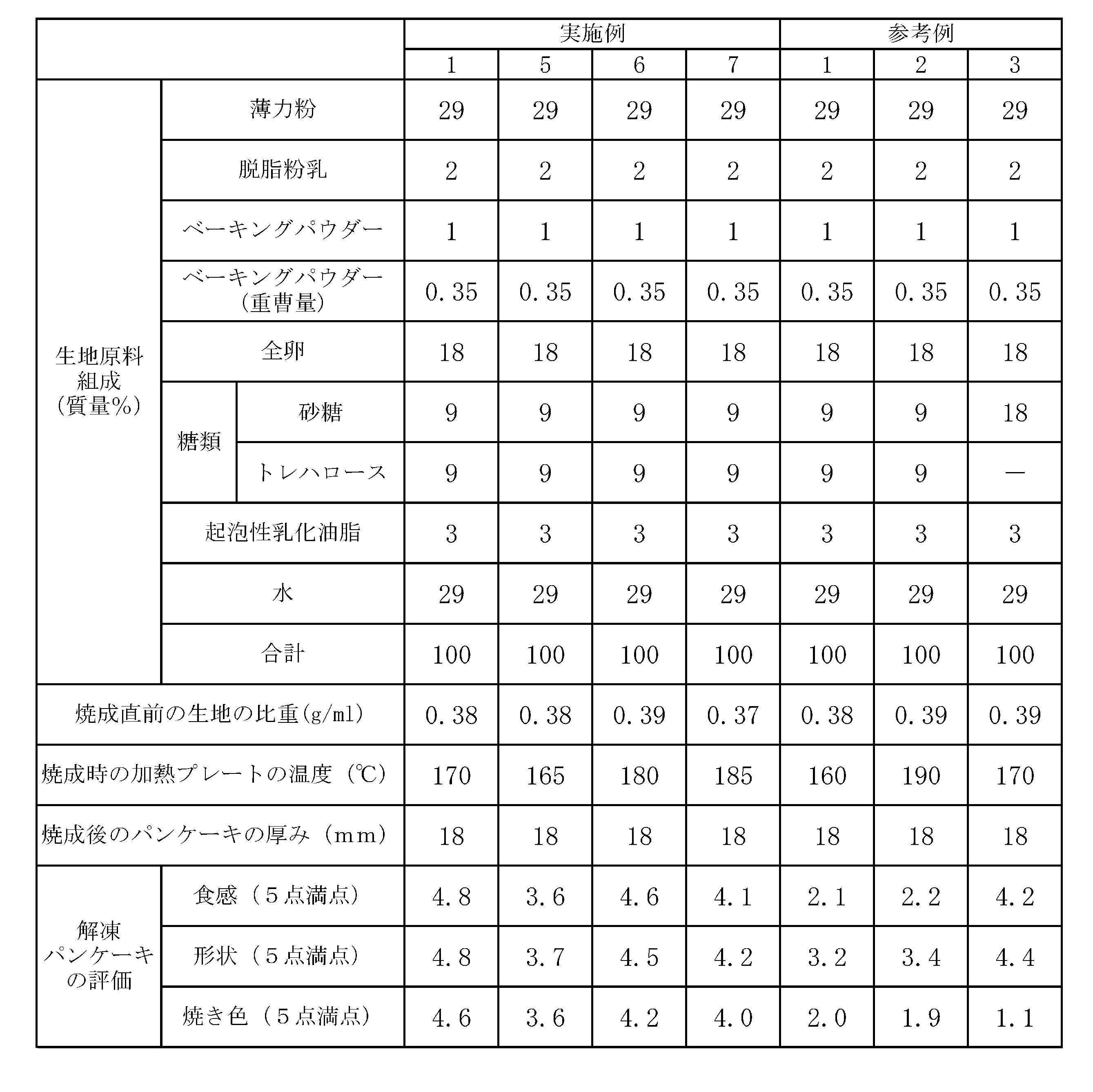
表2における実施例1、5~7と参考例1~2との対比において、実施例1、6、7が特に高評価であったことから、焼成時の加熱プレートの温度は、実施例1、6、7が属する範囲である170~185℃程度が好ましいことがわかる。
また、表2における実施例1と参考例3との対比において、糖類として砂糖及びトレハロースを用いた実施例1が、砂糖のみを用いた参考例3に比して、解凍パンケーキの焼き色が良好であったことから、トレハロースにはパンケーキの如き焼き菓子の焼き色を改善する効果があることがわかる。
また、表2における実施例1と参考例3との対比において、糖類として砂糖及びトレハロースを用いた実施例1が、砂糖のみを用いた参考例3に比して、解凍パンケーキの焼き色が良好であったことから、トレハロースにはパンケーキの如き焼き菓子の焼き色を改善する効果があることがわかる。

表3に示すとおり、各実施例は、生地におけるベーキングパウダーの含有量が重曹量換算で0.1~1.0質量%の範囲にあるため、焼成後のパンケーキの厚みが10~25mmの適切な範囲に収まり、また、ベーキングパウダーの含有量が前記範囲外の各参考例に比して、解凍パンケーキの食感及び外観に優れていた。
本発明の製造方法によれば、冷蔵又は冷凍されているにもかかわらず、電子レンジで加熱調理又は自然解凍するなどして喫食可能な状態とした場合には、口当たりがソフトで口溶けがよく且つ内層のキメが細かくボリューム感があって焼き色が良好であり、食感及び外観が良好な冷蔵又は冷凍焼成食品が提供される。本発明は特に、冷蔵又は冷凍パンケーキ類の製造に有用である。
Claims (6)
- 穀粉を含有し且つ比重が0.32~0.48g/mlである生地を、加熱プレートに接触させて焼成食品を得、該焼成食品を冷蔵又は冷凍する工程を有する、冷蔵又は冷凍焼成食品の製造方法。
- 前記加熱プレートの温度が165~185℃である請求項1に記載の冷蔵又は冷凍焼成食品の製造方法。
- 前記生地がトレハロースを含有する請求項1又は2に記載の冷蔵又は冷凍焼成食品の製造方法。
- 前記生地が、起泡性乳化油脂及び起泡性乳化剤からなる群から選択される1種以上を含有する請求項1~3のいずれか1項に記載の冷蔵又は冷凍焼成食品の製造方法。
- 前記生地が、ベーキングパウダーを重曹量として0.1~1.0質量%含有する請求項1~4のいずれか1項に記載の冷蔵又は冷凍焼成食品の製造方法。
- 前記焼成食品が、パンケーキ、ホットケーキ、ワッフル、たい焼き又は大判焼きである請求項1~5のいずれか1項に記載の冷蔵又は冷凍焼成食品の製造方法。
Priority Applications (2)
| Application Number | Priority Date | Filing Date | Title |
|---|---|---|---|
| JP2021506848A JP7325497B2 (ja) | 2019-03-18 | 2019-03-18 | 冷蔵又は冷凍焼成食品の製造方法 |
| PCT/JP2019/011150 WO2020188694A1 (ja) | 2019-03-18 | 2019-03-18 | 冷蔵又は冷凍焼成食品の製造方法 |
Applications Claiming Priority (1)
| Application Number | Priority Date | Filing Date | Title |
|---|---|---|---|
| PCT/JP2019/011150 WO2020188694A1 (ja) | 2019-03-18 | 2019-03-18 | 冷蔵又は冷凍焼成食品の製造方法 |
Publications (1)
| Publication Number | Publication Date |
|---|---|
| WO2020188694A1 true WO2020188694A1 (ja) | 2020-09-24 |
Family
ID=72519240
Family Applications (1)
| Application Number | Title | Priority Date | Filing Date |
|---|---|---|---|
| PCT/JP2019/011150 Ceased WO2020188694A1 (ja) | 2019-03-18 | 2019-03-18 | 冷蔵又は冷凍焼成食品の製造方法 |
Country Status (2)
| Country | Link |
|---|---|
| JP (1) | JP7325497B2 (ja) |
| WO (1) | WO2020188694A1 (ja) |
Cited By (1)
| Publication number | Priority date | Publication date | Assignee | Title |
|---|---|---|---|---|
| JP7077466B1 (ja) | 2021-09-21 | 2022-05-30 | 森永製菓株式会社 | 冷凍喫食用焼成食品 |
Citations (12)
| Publication number | Priority date | Publication date | Assignee | Title |
|---|---|---|---|---|
| JPH0515297A (ja) * | 1991-07-04 | 1993-01-26 | Kao Corp | ホツトケーキの製造方法 |
| JPH09149756A (ja) * | 1995-11-28 | 1997-06-10 | Nisshin Flour Milling Co Ltd | 冷凍パンケーキ類の製造法 |
| JP2000159788A (ja) * | 1992-12-02 | 2000-06-13 | Hayashibara Biochem Lab Inc | トレハロ―ス含有組成物 |
| JP2002101811A (ja) * | 2000-09-29 | 2002-04-09 | Snow Brand Milk Prod Co Ltd | ホットケーキ類 |
| JP2002354980A (ja) * | 2001-03-29 | 2002-12-10 | Morinaga Milk Ind Co Ltd | 焼成食品用起泡剤、それを用いた焼成食品、焼成食品の製造方法及び焼成食品用プレミックス |
| JP2005087145A (ja) * | 2003-09-19 | 2005-04-07 | Kanebo Ltd | 冷凍喫食用焼成食品及びそれを用いた組合せ冷菓 |
| JP2005270040A (ja) * | 2004-03-26 | 2005-10-06 | Riken Vitamin Co Ltd | ケーキ用油脂組成物およびそれを用いたホットケーキミックス |
| JP2005304373A (ja) * | 2004-04-21 | 2005-11-04 | Asahi Denka Kogyo Kk | ホットケーキ類生地 |
| US7595081B1 (en) * | 2003-10-17 | 2009-09-29 | Bellar Willis F | Non-flour containing baked and related food compositions |
| JP2010104245A (ja) * | 2008-10-28 | 2010-05-13 | Nitto Fuji Flour Milling Co Ltd | 焼き饅類用ミックス粉及び焼き饅類 |
| JP2016101143A (ja) * | 2014-11-28 | 2016-06-02 | 昭和産業株式会社 | 冷凍用のケーキ生地 |
| WO2019058956A1 (ja) * | 2017-09-19 | 2019-03-28 | 日清フーズ株式会社 | 冷蔵又は冷凍焼成食品の製造方法 |
-
2019
- 2019-03-18 JP JP2021506848A patent/JP7325497B2/ja active Active
- 2019-03-18 WO PCT/JP2019/011150 patent/WO2020188694A1/ja not_active Ceased
Patent Citations (12)
| Publication number | Priority date | Publication date | Assignee | Title |
|---|---|---|---|---|
| JPH0515297A (ja) * | 1991-07-04 | 1993-01-26 | Kao Corp | ホツトケーキの製造方法 |
| JP2000159788A (ja) * | 1992-12-02 | 2000-06-13 | Hayashibara Biochem Lab Inc | トレハロ―ス含有組成物 |
| JPH09149756A (ja) * | 1995-11-28 | 1997-06-10 | Nisshin Flour Milling Co Ltd | 冷凍パンケーキ類の製造法 |
| JP2002101811A (ja) * | 2000-09-29 | 2002-04-09 | Snow Brand Milk Prod Co Ltd | ホットケーキ類 |
| JP2002354980A (ja) * | 2001-03-29 | 2002-12-10 | Morinaga Milk Ind Co Ltd | 焼成食品用起泡剤、それを用いた焼成食品、焼成食品の製造方法及び焼成食品用プレミックス |
| JP2005087145A (ja) * | 2003-09-19 | 2005-04-07 | Kanebo Ltd | 冷凍喫食用焼成食品及びそれを用いた組合せ冷菓 |
| US7595081B1 (en) * | 2003-10-17 | 2009-09-29 | Bellar Willis F | Non-flour containing baked and related food compositions |
| JP2005270040A (ja) * | 2004-03-26 | 2005-10-06 | Riken Vitamin Co Ltd | ケーキ用油脂組成物およびそれを用いたホットケーキミックス |
| JP2005304373A (ja) * | 2004-04-21 | 2005-11-04 | Asahi Denka Kogyo Kk | ホットケーキ類生地 |
| JP2010104245A (ja) * | 2008-10-28 | 2010-05-13 | Nitto Fuji Flour Milling Co Ltd | 焼き饅類用ミックス粉及び焼き饅類 |
| JP2016101143A (ja) * | 2014-11-28 | 2016-06-02 | 昭和産業株式会社 | 冷凍用のケーキ生地 |
| WO2019058956A1 (ja) * | 2017-09-19 | 2019-03-28 | 日清フーズ株式会社 | 冷蔵又は冷凍焼成食品の製造方法 |
Cited By (2)
| Publication number | Priority date | Publication date | Assignee | Title |
|---|---|---|---|---|
| JP7077466B1 (ja) | 2021-09-21 | 2022-05-30 | 森永製菓株式会社 | 冷凍喫食用焼成食品 |
| JP2023045333A (ja) * | 2021-09-21 | 2023-04-03 | 森永製菓株式会社 | 冷凍喫食用焼成食品 |
Also Published As
| Publication number | Publication date |
|---|---|
| JPWO2020188694A1 (ja) | 2020-09-24 |
| JP7325497B2 (ja) | 2023-08-14 |
Similar Documents
| Publication | Publication Date | Title |
|---|---|---|
| TWI478671B (zh) | 烘焙食品用混合料 | |
| CN101801201B (zh) | 蒸制蛋糕型甜甜圈 | |
| JP2009072177A (ja) | 食品用品質改良剤および食品 | |
| JP4400282B2 (ja) | パン生地及びパン類 | |
| WO2014128873A1 (ja) | 生地主体食品用組成物 | |
| US20050037122A1 (en) | Rice flour cakes and process for producing the same | |
| JP2019092474A (ja) | ベーカリー食品用ミックス | |
| JP4077719B2 (ja) | 飲食品及びその製造方法 | |
| WO2019058956A1 (ja) | 冷蔵又は冷凍焼成食品の製造方法 | |
| JP2019162094A (ja) | 焼き菓子用ミックス粉、焼き菓子及び焼き菓子の製造方法 | |
| WO2020188694A1 (ja) | 冷蔵又は冷凍焼成食品の製造方法 | |
| CA2158730A1 (en) | Low fat, low calorie fat substitute | |
| JP2004049041A (ja) | 可塑性糖/たん白組成物及びそれを使用した食品の製造法 | |
| JP6557073B2 (ja) | チルドパンとその製造方法 | |
| WO1995026641A1 (en) | Low fat, low calorie, fat substitute | |
| US20060029708A1 (en) | Rice flour confection product and method of producing the same | |
| JP2016086740A (ja) | パン生地及びパン生地の製造方法 | |
| JP4278956B2 (ja) | 多層状膨化食品の製造方法及び多層状膨化食品 | |
| JP2019058117A (ja) | ベーカリー用上掛け生地 | |
| JP2026025840A (ja) | ベーカリー食品 | |
| JP2025118575A (ja) | 水種生地焼成食品用改良剤、水種生地、水種生地焼成食品用ミックス粉、水種生地焼成食品、水種生地の製造方法、水種生地焼成食品の経時劣化を抑制する方法、並びに水種生地焼成食品の食感を向上する方法 | |
| KR20240107998A (ko) | 식품의 브라우닝제 조성물 | |
| JP2025091012A (ja) | 菓子類の品質改良材、該品質改良材を含有する菓子類生地と菓子類、および菓子類の品質改良方法 | |
| JP2011087514A (ja) | バラエティブレッド生地及びその製造方法 | |
| JP2013081435A (ja) | パン生地及びその製造方法 |
Legal Events
| Date | Code | Title | Description |
|---|---|---|---|
| 121 | Ep: the epo has been informed by wipo that ep was designated in this application |
Ref document number: 19920005 Country of ref document: EP Kind code of ref document: A1 |
|
| ENP | Entry into the national phase |
Ref document number: 2021506848 Country of ref document: JP Kind code of ref document: A |
|
| NENP | Non-entry into the national phase |
Ref country code: DE |
|
| 122 | Ep: pct application non-entry in european phase |
Ref document number: 19920005 Country of ref document: EP Kind code of ref document: A1 |