WO2020196889A1 - Dispositif de planification, procédé de génération d'un plan de fonctionnement, procédé de production d'hydrogène et programme - Google Patents
Dispositif de planification, procédé de génération d'un plan de fonctionnement, procédé de production d'hydrogène et programme Download PDFInfo
- Publication number
- WO2020196889A1 WO2020196889A1 PCT/JP2020/014302 JP2020014302W WO2020196889A1 WO 2020196889 A1 WO2020196889 A1 WO 2020196889A1 JP 2020014302 W JP2020014302 W JP 2020014302W WO 2020196889 A1 WO2020196889 A1 WO 2020196889A1
- Authority
- WO
- WIPO (PCT)
- Prior art keywords
- electricity
- operation plan
- model
- period
- unit
- Prior art date
- Legal status (The legal status is an assumption and is not a legal conclusion. Google has not performed a legal analysis and makes no representation as to the accuracy of the status listed.)
- Ceased
Links
Images


Classifications
-
- C—CHEMISTRY; METALLURGY
- C25—ELECTROLYTIC OR ELECTROPHORETIC PROCESSES; APPARATUS THEREFOR
- C25B—ELECTROLYTIC OR ELECTROPHORETIC PROCESSES FOR THE PRODUCTION OF COMPOUNDS OR NON-METALS; APPARATUS THEREFOR
- C25B1/00—Electrolytic production of inorganic compounds or non-metals
- C25B1/01—Products
- C25B1/02—Hydrogen or oxygen
- C25B1/04—Hydrogen or oxygen by electrolysis of water
-
- C—CHEMISTRY; METALLURGY
- C25—ELECTROLYTIC OR ELECTROPHORETIC PROCESSES; APPARATUS THEREFOR
- C25B—ELECTROLYTIC OR ELECTROPHORETIC PROCESSES FOR THE PRODUCTION OF COMPOUNDS OR NON-METALS; APPARATUS THEREFOR
- C25B9/00—Cells or assemblies of cells; Constructional parts of cells; Assemblies of constructional parts, e.g. electrode-diaphragm assemblies; Process-related cell features
-
- G—PHYSICS
- G06—COMPUTING OR CALCULATING; COUNTING
- G06Q—INFORMATION AND COMMUNICATION TECHNOLOGY [ICT] SPECIALLY ADAPTED FOR ADMINISTRATIVE, COMMERCIAL, FINANCIAL, MANAGERIAL OR SUPERVISORY PURPOSES; SYSTEMS OR METHODS SPECIALLY ADAPTED FOR ADMINISTRATIVE, COMMERCIAL, FINANCIAL, MANAGERIAL OR SUPERVISORY PURPOSES, NOT OTHERWISE PROVIDED FOR
- G06Q50/00—Information and communication technology [ICT] specially adapted for implementation of business processes of specific business sectors, e.g. utilities or tourism
- G06Q50/06—Energy or water supply
-
- Y—GENERAL TAGGING OF NEW TECHNOLOGICAL DEVELOPMENTS; GENERAL TAGGING OF CROSS-SECTIONAL TECHNOLOGIES SPANNING OVER SEVERAL SECTIONS OF THE IPC; TECHNICAL SUBJECTS COVERED BY FORMER USPC CROSS-REFERENCE ART COLLECTIONS [XRACs] AND DIGESTS
- Y02—TECHNOLOGIES OR APPLICATIONS FOR MITIGATION OR ADAPTATION AGAINST CLIMATE CHANGE
- Y02E—REDUCTION OF GREENHOUSE GAS [GHG] EMISSIONS, RELATED TO ENERGY GENERATION, TRANSMISSION OR DISTRIBUTION
- Y02E60/00—Enabling technologies; Technologies with a potential or indirect contribution to GHG emissions mitigation
- Y02E60/30—Hydrogen technology
- Y02E60/36—Hydrogen production from non-carbon containing sources, e.g. by water electrolysis
Definitions
- the present invention relates to a planning device, an operation plan generation method, a hydrogen production method, and a program.
- a hydrogen generator or the like that generates hydrogen by electrolyzing water is known.
- a power supply system in which the charge fluctuates according to the power supply cost such as weather and wind power.
- the hydrogen generating apparatus compares a fluctuating electricity rate with a threshold value and controls the operating rate according to the comparison result to reduce the manufacturing cost.
- the amount of hydrogen to be supplied may be determined at regular intervals such as one day. In this case, during the fixed period, a time zone in which the electricity rate is low enough to generate sufficient hydrogen may not occur. Therefore, even if the production equipment is controlled using a threshold value or the like, the amount of hydrogen produced will be insufficient for a certain period of time, or hydrogen will eventually have to be produced during a period of high electricity charges. There was something like that.
- a planning device uses an electricity rate prediction model that predicts the transition of electricity rates of multiple electricity sources during the target period based on the value of the first factor available before the target period, and uses the electricity rate prediction model of the future electricity rate. It is equipped with an electricity rate prediction unit that predicts changes.
- the planning device includes an operation plan generation unit that generates an operation plan of the electrolytic device in the first period in the future based on the predicted future transition of the electricity rate.
- the electricity rate prediction unit may predict the future transition of electricity rates of each of the plurality of electricity sources based on the value of the corresponding first factor.
- the electricity rate prediction unit may predict future changes in electricity charges of each electricity source by using a plurality of electricity rate prediction models corresponding to each of the plurality of electricity sources.
- the electricity rate prediction unit may predict the probability distribution of future electricity rates.
- the electricity rate forecast model includes electricity rates, electricity demand, electricity supply, renewable energy power generation, predicted values of renewable energy power generation, electricity purchases from each electricity source, and electricity purchases before the target period.
- the transition of electricity charges during the target period may be predicted based on the value of the first factor including at least one of the weather information.
- the planning device may include a first model update unit that updates the electricity rate prediction model by learning based on the value of the first factor in the past period and the actual transition of the electricity rate after the past period.
- the operation plan generation unit uses an operation plan generation model that generates an operation plan in the target period based on the value of the second factor available before the target period and the prediction result of the transition of the electricity rate in the target period. Therefore, it may have a first operation plan generation unit that generates an operation plan of the electrolytic apparatus in the first period in the future.
- the operation plan generation model includes operation data of the electrolyzer, contract conditions with each electricity source, reliability of each electricity source, and at least one fixed electricity rate of multiple electricity sources before the target period. And, based on the value of the second factor including at least one of the product storage amount of the electrolyzer and the prediction result of the transition of the electricity price in the target period, the operation plan of the electrolyzer in the target period may be generated.
- the planning device uses a power generation prediction model that predicts the transition of the renewable energy power generation amount of the power generation device during the target period based on the values of the power generation amount predictors available before the target period, and is reproducible in the future. It may have a power generation amount prediction unit that predicts a transition of energy power generation amount.
- the operation plan generation unit may further generate an operation plan based on the predicted future transition of renewable energy power generation.
- the planning device may include a control unit that controls the operation of the electrolytic device using the operation plan.
- the control unit will charge a higher electricity rate in the future as the electricity rate of at least one of the multiple electricity sources becomes lower than expected during the period when the electrolyzer is not to be operated in the operation plan.
- the electrolyzer may be operated during the period instead of operating.
- the electrolyzer may be a hydrogen generator that produces hydrogen by electrolysis.
- a planning device In the second aspect of the present invention, a planning device is provided.
- the planning device predicts the probability distribution of future electricity charges using an electricity price prediction model that predicts the probability distribution of electricity charges in the target period based on the value of the first factor available before the target period. Equipped with an electricity rate prediction unit.
- the planning device includes an operation plan generation unit that generates an operation plan of the electrolytic device in the first period in the future based on the probability distribution of the predicted future electricity charges.
- a method for generating an operation plan of an electrolytic device uses an electricity rate prediction model that predicts the transition of electricity rates of multiple electricity sources during the target period based on the value of the first factor available before the target period, and uses the electricity rate prediction model of the future electricity rate. Be prepared to predict transitions.
- the generation method comprises generating an operation plan of the electrolyzer in the first period in the future based on the predicted future transition of electricity charges.
- a program for causing a computer to function as a planning device in the first or second aspect is provided.
- a hydrogen production method uses an electricity rate prediction model in which the electricity rate prediction unit predicts the transition of electricity rates of multiple electricity sources during the target period based on the value of the first factor available before the target period. To predict future changes in electricity prices.
- the operation plan generation unit generates an operation plan of the hydrogen generation device in the first period in the future based on the predicted future transition of the electricity rate.
- the hydrogen generator produces hydrogen based on the operation plan.
- a first configuration example of the planning apparatus 100 according to the present embodiment is shown together with the electrolytic apparatus 1000.
- a second configuration example of the planning apparatus 100 according to the present embodiment is shown.
- An example of the operation flow of the planning apparatus 100 of the 2nd configuration example which concerns on this embodiment is shown.
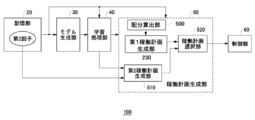
- a third configuration example of the planning apparatus 100 according to the present embodiment is shown.
- a fourth configuration example of the planning apparatus 100 according to the present embodiment is shown.
- a fifth configuration example of the planning apparatus 100 according to the present embodiment is shown.
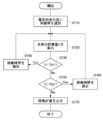
- An example of the operation flow of the second operation plan generation unit 510 according to this embodiment is shown.
- An example of a computer 1200 in which a plurality of aspects of the present invention can be embodied in whole or in part is shown.
- FIG. 1 shows a configuration example of the planning device 100 according to the present embodiment of the electrolytic device 1000 and a plurality of electricity procurement sources 1010 (1) to 1010 (n) (n ⁇ 2) (hereinafter, simply “electricity procurement source 1010””. Also shown).
- the planning apparatus 100 generates an operation plan for the first period in the future of the electrolytic apparatus 1000.
- the planning apparatus 100 operates the electrolytic apparatus 1000 by using the electric power from a plurality of electric sources 1010 according to the generated operation plan, and reduces the manufacturing cost in which the electrolytic apparatus 1000 produces a product.
- the first period may be a predetermined period such as several days, ten and several days, several weeks, or several tens of days.
- the electrolyzer 1000 is connected to a plurality of electric sources 1010 via or directly through the power grid of the electric power system.
- the electrolyzer 1000 may be an apparatus that produces a product using electrical energy from a plurality of electric sources 1010.
- the electrolytic device 1000 is, for example, a hydrogen generating device that generates hydrogen by electrolysis.
- the plurality of electricity procurement sources 1010 are, for example, a plurality of electric power companies that supply electric power generated by thermal power generation facilities and the like, power generation devices that supply electric power generated by renewable energy and the like, and power storage devices. Good.
- the planning device 100 may be a computer such as a personal computer, a tablet computer, a smartphone, a workstation, a server computer, or a general-purpose computer, or may be a computer system in which a plurality of computers are connected.
- the planning device 100 may generate a plan or the like by processing in the CPU, GPU (Graphics Processing Unit), and / or TPU (Tensor Processing Unit) of the computer. Further, the planning device 100 may perform various processes on the cloud provided by the server computer.
- the operation plan generated by the planning device 100 is, for example, a table or data describing the state in which the electrolytic device 1000 should be operated in the first period.
- the operation plan may be a table or data that defines the time zone in which the electrolytic device 1000 is operated (not operated) and / or the operating rate of the electrolytic device 1000 in each time zone.
- the operation plan may further include at least one of the distribution of the power supply of the plurality of power sources 1010 and the timing of the power supply of each power source 1010 during the period in which the electrolyzer 1000 is operated.
- the planning device 100 includes an acquisition unit 10, a storage unit 20, a model generation unit 30, a learning processing unit 40, an operation plan generation unit 50, and a control unit 60.
- the acquisition unit 10 acquires parameters used for learning, learning data, and the like.
- the acquisition unit 10 acquires learning data including, for example, an operation plan of the electrolytic apparatus 1000 to be targeted in a predetermined target period in the future and a value of a factor available before the target period.
- the target period is a predetermined period in the future.
- the target period may be a period including the first period.
- the acquisition unit 10 may acquire parameters related to electricity charges that can be obtained before the target period as the first factor.
- the acquisition unit 10 may acquire the parameters related to the electrolytic device 1000 that can be obtained before the target period as the second factor.
- the acquisition unit 10 may be connected to the electrolyzer 1000 and a plurality of electricity procurement sources 1010 and the like to acquire parameters and learning data used for learning.
- the acquisition unit 10 may be connected to a network or the like and acquire data via the network. When at least a part of the data to be acquired is stored in an external database or the like, the acquisition unit 10 may access the database or the like to acquire the data. Further, the acquisition unit 10 may supply the acquired data to the storage unit 20.
- the storage unit 20 stores the information acquired by the acquisition unit 10.
- the storage unit 20 may be able to store the data processed by the planning device 100.
- the storage unit 20 may store intermediate data, calculation results, parameters, and the like calculated (or used) in the process of generating the operation plan by the planning device 100. Further, the storage unit 20 may supply the stored data to the request source in response to the request of each unit in the planning device 100. As an example, the storage unit 20 supplies the stored data to the model generation unit 30 in response to a request from the model generation unit 30.
- the model generation unit 30 generates a learning model to be learned by the planning device 100.
- the model generation unit 30 generates a learning model according to the first factor, the second factor, and the like.
- the model generation unit 30 may generate one or more learning models.
- the model generation unit 30 supplies the generated learning model to the learning processing unit 40.
- the learning processing unit 40 learns the generated learning model based on the acquired learning data.
- the learning processing unit 40 may execute reinforcement learning to update the learning model.
- the learning processing unit 40 may update one or more learning models.
- the learning processing unit 40 supplies the updated learning model to the operation plan generation unit 50.
- the operation plan generation unit 50 generates an operation plan of the electrolytic apparatus in the first period in the future. For example, in the first period, the operation plan generation unit 50 generates an operation plan that minimizes or reduces the production cost of the product while generating the product in the amount to be generated by the electrolyzer 1000 (the amount of hydrogen in the supply plan). To generate.
- the operation plan generation unit 50 determines the value of the second factor including at least one of the contract conditions with the electricity procurement source 1010 and the reliability of the electricity procurement source 1010, and the transition of the electricity charge predicted by the electricity charge prediction unit 130. Based on the prediction results, an operation plan may be generated that includes at least one of the distribution of the power supply of the plurality of electricity sources 1010 in the first period in the future and the timing of the power supply of each electricity source.
- the operation plan generation unit 50 for example, in the first period, while generating an amount of products to be produced by the electrolyzer 1000 (amount of hydrogen in the supply plan). Generate an operational plan that minimizes or reduces the risk of receiving power.
- the operation plan generation unit 50 can satisfy the demand even if the amount of electricity or the electricity price that can be supplied from the plurality of electricity procurement sources 1010 fluctuates. The likelihood of producing a product can be increased. This is particularly effective when the electricity procurement source 1010 mainly has a power generation source whose power generation amount is unstable, or when the electricity procurement source 1010 has a contract including a plurality of contract conditions.
- the operation plan generation unit 50 supplies the generated operation plan to the control unit 60.
- the operation plan generation unit 50 may calculate the power supply risk indicating the risk of receiving power supply from a plurality of electricity procurement sources 1010. In this case, the operation plan generation unit 50 may calculate the power supply risk for each of the plurality of electricity procurement sources 1010, or collectively supply power to at least a part of the plurality of electricity procurement sources. You may calculate the risk. Further, when a contract including a plurality of contract conditions is concluded with the electricity procurement source 1010, the power supply risk may be calculated for each contract condition.
- the operation plan generation unit 50 may calculate the power supply risk by calculating the probability distribution of the power supply amount.
- the operation plan generation unit 50 sets the probability distribution of the power supply amount as one or more contract conditions with the electricity source 1010, the area where the electricity source 1010 exists, the total power generation capacity, and the amount of change in the power generation amount. It may be calculated based on at least one of the power generation and the like. Further, the operation plan generation unit 50 has the possibility of supplying the required electric energy in addition to or in place of these, the ratio of the electric energy that could not be supplied to the electric energy requested in the past, and the like. The probability distribution of electric energy may be calculated based on at least one of them.
- the operation plan generation unit 50 may use data published by each electricity procurement source or data independently recorded by the user as the data used for calculating the probability distribution of the power supply amount. ..
- the operation plan generation unit 50 uses the teacher data including these data and the power supply amount from the electricity procurement source 1010, and the probability distribution of the power supply amount by the acquisition unit 10, the storage unit 20, and the model generation unit 30 described above. You may generate a learning model that outputs.
- the electricity procurement source 1010 may be used as data by assigning a number to a country or region, for example, "1: Germany, 2: France".
- the possibility that the electricity procurement source 1010 can supply the required electric energy is, for example, "100% supply possibility: 80%, 80% supply possibility: 85%, 60% supply possibility: 90%, 40% supply possibility.
- a power source such as “1: wind power, 2: geothermal”, which is assigned a number for each type of power source, may be used.
- the operation plan generation unit 50 may calculate the supply continuity of a plurality of power procurement sources 1010 in addition to or instead of the probability distribution of the power supply amount as the power supply risk.
- the operation plan generation unit 50 may calculate the supply continuity based on at least one of the business scale, sales, profit, electricity charges, and the like of the plurality of electric power procurement sources 1010.
- the business scale for example, the number of employees, capital, etc. may be used.
- the operation plan generation unit 50 may output an operation plan satisfying a predetermined standard from the operation plans satisfying the constraints to the control unit 60. Further, the operation plan generation unit 50 may have an operation plan selection unit that selectively outputs at least one operation plan satisfying the constraint condition as an operation plan candidate. The operation plan selection unit may output the operation plan selected by the user or the like from the operation plan candidates to the control unit 60.
- the operation plan generation unit 50 may have a constraint condition specification unit that specifies the constraints to be satisfied when generating the operation plan.
- the constraint condition specification unit may specify the constraint condition in an adjustable manner according to the input from the user or the like.
- the constraint condition designation unit can specify any one of the power purchase amount, the hydrogen generation amount, the electricity charge, the power supply risk, the fluctuation range of the electricity charge, and the like.
- the fluctuation range of the electricity rate may be calculated based on the probability distribution of the electricity rate predicted by the electricity rate prediction unit 130.
- the constraint condition designation unit may use the standard deviation of the probability distribution of the electricity rate as the fluctuation range of the electricity rate.
- the constraint condition specification unit may specify a range of these numerical values (including the case where only the upper limit and the lower limit are specified) as the above constraint condition. Further, the constraint condition designation unit may specify a number or symbol assigned in advance to the range of each condition, for example, "A: 10 or more and less than 30 and B: 30 or more and less than 50". Further, the constraint condition designation unit may specify different conditions step by step, for example, "10 or more, preferably 30 or more and less than 50". In addition, the constraint condition specification unit may specify an acceptable ratio or numerical value as the constraint condition.
- the constraint condition designation unit may specify the width with respect to the constraint condition, for example, as "plus or minus 10% of the specified value" as the allowable fluctuation range of the electricity rate or the power supply risk. Further, the constraint condition designation unit may separately specify, as the above-mentioned constraint condition, an essential condition that must be satisfied and a target condition that does not necessarily have to be satisfied. In addition, the constraint condition specification unit may specify a priority for each constraint condition. Further, the constraint condition specification unit may accept the designation of the above constraint condition from the user through an input function such as a text box, a slider bar, or a drop-down list.
- the control unit 60 controls the operation of the electrolytic device 1000 by using the operation plan of the electrolytic device 1000 in the first period.
- the control unit 60 may operate each of the plurality of electrolytic devices 1000. Further, the control unit 60 may instruct to stop and start the operation of the electrolytic device 1000 when the operation of the electrolytic device 1000 and the storage amount of the generation unit are in a range different from the assumption. Further, the control unit 60 may instruct the operation of the electrolytic device 1000 to be stopped and started when the electricity rate fluctuates significantly.
- the planning apparatus 100 of the present embodiment described above it is possible to generate an operation plan of the electrolytic apparatus 1000 according to fluctuations in the electricity charges of the plurality of electricity procurement sources 1010, and a product of a predetermined amount or more can be generated. , Can be produced at lower manufacturing cost.
- a more specific configuration example of such a planning device 100 will be described below.
- FIG. 2 shows a second configuration example of the planning device 100 according to the present embodiment.
- the planning device 100 of the second configuration example those substantially the same as the operation of the planning device 100 according to the present embodiment shown in FIG. 1 are designated by the same reference numerals, and the description thereof will be omitted.
- FIG. 2 shows a configuration in which the acquisition unit 10 of the planning device 100 is omitted.
- the planning device 100 of the second configuration example includes a plurality of first model generation units 110, a plurality of first model update units 120, and a plurality of electricity charge prediction units 130, respectively, corresponding to the plurality of electricity procurement sources 1010. Forecast future changes in electricity prices for each electricity supplier 1010. Further, the planning device 100 of the second configuration example includes a second model generation unit 210, a second model update unit 220, and a first operation plan generation unit 230, and is subject to future electrolysis based on the predicted transition of electricity charges. Generate an operation plan for device 1000.
- the model generation unit 30 may have the first model generation unit 110 and the second model generation unit 210
- the learning processing unit 40 has the first model update unit 120, the electricity charge prediction unit 130, and the second model generation unit 40. It may have a model update unit 220.
- the storage unit 20 of the second configuration example stores the first factor and the second factor acquired by the acquisition unit 10.
- the first factor is the electricity rate, electricity demand, electricity supply, renewable energy power generation, predicted value of renewable energy power generation, electricity purchase from each electricity source 1010, and electricity purchase amount before the target period. Includes at least one of the weather information.
- the electricity charge may be the actual electricity charge for the electric power supplied to the electrolyzer 1000 at the place where the electrolyzer 1000 is installed. Predicted values of power demand, power supply, renewable energy power generation, and renewable energy power generation are directly connected to the power plant that supplies power to the area where the electrolyzer 1000 is installed, or to the electrolyzer 1000. Information such as a power generation device that supplies electric power may be used.
- the amount of electricity purchased from each electricity source 1010 may include the total amount of electricity purchased from each electricity source 1010 for each time zone and the total amount of electricity purchased from each electricity source 1010 in a predetermined period.
- the weather information may be information on the area where each power source 1010 has a power plant, a power generation device, or the like.
- the first factor may include information that affects the electricity charges for the electric power consumed by the electrolyzer 1000, in addition to the information on the past electricity charges of the plurality of electricity procurement sources 1010.
- the first factor may be time-series information at substantially regular time intervals.
- the first factor may contain various information in different periods.
- the first factor may include information acquired by the acquisition unit 10 from a plurality of electricity procurement sources 1010 and an external device or the like. The first factor may be associated with each of the plurality of electricity procurement sources 1010 and stored in the storage unit 20.
- the second factor is the operation data of the electrolytic device 1000, the contract conditions with each electric source 1010, the reliability of each electric source 1010, the amount of power generated by the power generation device, and the plurality of electric sources 1010 before the target period. Includes at least one fixed electricity rate and at least one of the hydrogen storage of the electrolyzer 1000. Further, the second factor may include the amount of products to be produced by the electrolytic apparatus 1000 during the target period (the amount of hydrogen in the supply plan), and the operation plan of the electrolytic apparatus 1000 produced by the planning apparatus 100 in the past. In addition, the second factor may include virtual data calculated from the physical model of the electrolyzer 1000. The second factor may be time-series information at substantially regular time intervals. In addition, the second factor may include information acquired by the acquisition unit 10 from the electrolyzer 1000.
- the contract conditions with the electricity procurement source 1010 may be the contract conditions regarding the sale and purchase of electric power between the operator of the electrolytic device 1000 and the electricity procurement source 1010.
- the terms and conditions of the contract with the electricity supplier 1010 are, for example, the electricity charge from the electricity supplier 1010 or the electricity charge according to the timing of the electricity purchase, the upper and lower limits of the electricity purchase amount, and the discount that occurs when the electricity purchase amount reaches a predetermined amount.
- a discount according to the time of receiving electricity supply, and a discount according to the contract period with the electricity supplier may be included.
- the second factor may include a contract condition group including a plurality of contract conditions.
- the reliability of the electricity procurement source 1010 may indicate the possibility that all the requested electric energy can be supplied to the electrolytic apparatus 1000.
- the reliability of the electricity source 1010 is, for example, the business scale of the electricity source 1010, the ratio of the amount of electricity that could not be supplied to the amount of electricity requested in the past, the amount of change in the electricity charge, and the amount of power generation of the electricity source 1010. , The amount of change in the amount of power generation, and at least one of the power sources may be calculated.
- the information of the first factor and the second factor may be added or updated with the passage of time, respectively.
- the acquisition unit 10 may acquire and update each information at predetermined periods. Further, the acquisition unit 10 may acquire the information at substantially the same or different periods and add or update the information according to the information to be acquired.
- Each of the plurality of first model generation units 110 (1) to 110 (n) (n ⁇ 2) (hereinafter, also simply referred to as “first model generation unit 110”) is the value of the first factor before the target period. Based on, generate an electricity rate prediction model that predicts changes in electricity rates during the target period.
- the plurality of first model generation units 110 may generate a plurality of different electricity rate prediction models for each of the plurality of electricity procurement sources 1010 by using the corresponding values of the first factor.
- the first model generation unit 110 may generate an electricity rate prediction model by a process called pre-learning, offline learning, or the like, using information past the target period.
- the first model generation unit 110 generates an electricity rate prediction model using, for example, regression analysis, Bayesian inference, a neural network, a Gaussian mixed model, a hidden Markov model, and the like.
- the first model generation unit 110 supplies the generated electricity rate prediction model as the first model to the first model update unit 120.
- the plurality of first model update units 120 (1) to 120 (n) (n ⁇ 2) are the value of the first factor in the past period and the past period, respectively.
- the electricity rate prediction model is updated by learning based on the actual transition of the electricity rate thereafter.
- Each of the plurality of first model updating units 120 has a first model learning unit 122, and updates the electricity rate prediction model according to the learning result of the first model learning unit 122.
- the first model update unit 120 may update the electricity rate prediction model learned by the first model learning unit 122 as a new electricity rate prediction model every predetermined first update period.
- the first model updating unit 120 may update the electricity rate prediction model in response to the first model learning unit 122 learning a predetermined number of times.
- Each of the plurality of first model learning units 122 (1) to 122 (n) (n ⁇ 2) (hereinafter, also simply referred to as “first model learning unit 122”) is subjected to a process called adaptive learning or online learning. You may learn the electricity rate prediction model.
- the first model learning unit 122 learns the electricity charge prediction model by executing reinforcement learning using, for example, regression analysis, Bayesian inference, neural network, Gaussian mixed model, hidden Markov model, and the like as discriminative models. It is desirable that the first model learning unit 122 learns using information that is later in time than the information of the first factor used by the first model generation unit 110 to generate the electricity rate prediction model.
- the first model learning unit 122 learns the electricity price prediction model by using the information of the first factor updated by the transition of the actual electricity price.
- the first model learning unit 122 may execute the learning of the electricity rate prediction model in response to the update of the information of the first factor.
- the first model learning unit 122 learns an electricity rate prediction model based on the value of the first factor in the past period and the actual transition of the electricity rate after the past period.
- the first model learning unit 122 executes learning one or more times during the first update period of the first model updating unit 120.
- the plurality of first model update units 120 supply the updated electricity rate prediction model to the electricity rate prediction unit 130, respectively.
- the plurality of electricity rate prediction units 130 (1) to 130 (n) (n ⁇ 2) are updated correspondingly for each of the plurality of electricity procurement sources 1010.
- electricity rate prediction unit 130 uses the electricity rate prediction model, future changes in electricity rates are predicted based on the corresponding values of the first factor.
- the electricity rate prediction unit 130 predicts the electricity rate for the predetermined period in the future for each predetermined period, for example.
- the electricity rate prediction unit 130 predicts the electricity rate by applying, for example, the information of the first factor in the period immediately before the period in which the electricity rate is to be predicted to the electricity rate prediction model.
- the electricity rate prediction unit 130 supplies the prediction result to the operation plan generation unit 50.
- the electricity rate prediction unit 130 may predict the electricity rate for each time zone of each electricity source 1010 in the target period, and also predict the probability distribution of the future electricity rate of each electricity source 1010 in the target period. May be good.
- the electricity rate prediction unit 130 predicts the maintenance cost of the electricity source 1010 during the target period as an electricity rate. Good.
- the second model generation unit 210 generates an operation plan generation model based on the value of the second factor and the transition of the electricity rate before the target period.
- the operation plan generation model is based on the value of the second factor before the target period and the prediction result of the transition of the electricity rate of each electricity procurement source 1010 in the target period by learning, and the electrolyzer 1000 in the target period. It becomes a model to generate an operation plan.
- the second model generation unit 210 may use the value of the first factor as a transition of the past electricity charges.
- the second model generation unit 210 may generate an operation plan generation model by a learning process called pre-learning, offline learning, or the like, using information past the target period.
- the second model generation unit 210 generates an operation plan generation model by executing reinforcement learning using, for example, regression analysis, Bayesian inference, neural network, Gaussian mixed model, hidden Markov model, etc. as discriminative models.
- the second model generation unit 210 supplies the generated operation plan generation model as the second model to the second model update unit 220.
- the second model update unit 220 updates the operation plan generation model by learning.
- the second model updating unit 220 has a second model learning unit 222, and updates the operation plan generation model according to the learning result of the second model learning unit 222.
- the second model update unit 220 may update the operation plan generation model learned by the second model learning unit 222 as a new operation plan generation model, for example, every predetermined second update period. Instead, the second model update unit 220 may update the operation plan generation model according to the second model learning unit 222 learning a predetermined number of times.
- the second model learning unit 222 may learn the operation plan generation model by a process called adaptive learning or online learning.
- the second model learning unit 222 learns the operation plan generation model by executing reinforcement learning using, for example, regression analysis, Bayesian inference, neural network, Gaussian mixed model, hidden Markov model, and the like as discriminative models. It is desirable that the second model learning unit 222 learns using information that is later in time than the information of the second factor that the second model generation unit 210 used to generate the operation plan generation model.
- the second model learning unit 222 uses the information of the first factor updated by the transition of the actual electricity charge and the information of the second factor updated by the actual operation of the electrolytic apparatus 1000 to plan the operation. Learn the generative model.
- the prediction result of the electricity rate prediction unit 130 may be used instead of the actual transition of the electricity rate. That is, the second model learning unit 222 learns the operation plan generation model based on the value of the second factor in the past period and the prediction result of the transition of the electricity charge or the transition of the electricity charge after the past period.
- the second model learning unit 222 may execute the learning of the operation plan generation model in response to the update of the information of the second factor.
- the second model learning unit 222 executes learning one or more times during the second updating period of the second model updating unit 220.
- the second model update unit 220 supplies the updated operation plan generation model to the operation plan generation unit 50.
- the operation plan generation unit 50 generates an operation plan of the electrolytic device 1000 in the first period in the future based on the transition of the future electricity charge predicted by the electricity charge prediction unit 130.
- the operation plan generation unit 50 has a first operation plan generation unit 230.
- the first operation plan generation unit 230 generates an operation plan in the target period based on the value of the second factor available before the target period and the prediction result of the transition of the electricity rate in the target period.
- the model is used to generate an operating plan for the electrolyzer 1000 in the first period in the future.
- the first operation plan generation unit 230 generates an operation plan for the electrolytic apparatus 1000, for example, with a period of several days, a dozen days, one or several weeks as the first period.
- the first operation plan generation unit 230 generates an operation plan for N days as an example.
- the control unit 60 controls the operation of the electrolytic device 1000 while switching between a plurality of electricity procurement sources 1010 according to the operation plan generated by the operation plan generation unit 50. Further, the control unit 60 may control the electrolyzer 1000 so that the acquisition unit 10 can acquire information on the second factor that changes as the electrolyzer 1000 operates.
- the planning device 100 generates an operation plan for the electrolytic device 1000. Further, the planning device 100 generates an operation plan of the electrolytic device 1000 while predicting the electricity charge. The operation of such a planning device 100 will be described below.
- FIG. 3 shows an example of the operation flow of the planning device 100 of the second configuration example according to the present embodiment. The planning apparatus 100 may execute the operation flow shown in FIG. 3 to operate the electrolytic apparatus 1000.
- the acquisition unit 10 acquires information on the first factor and the second factor, which are the past trends of the electricity charge and the electrolyzer 1000 (S310).
- the acquisition unit 10 acquires information on the first factor and the second factor from time t0 to time t1, for example.
- the period between the time t0 and the time t1 is the second period before the first period.
- the acquisition unit 10 stores the acquired information on the first factor and the second factor in the storage unit 20. Further, the acquisition unit 10 may supply the information of the first factor and the second factor to the model generation unit 30.
- the model generation unit 30 generates a learning model (S320).
- the model generation unit 30 generates a learning model based on the values of the first factor and the second factor in the second period.
- the first model generation unit 110 generates an electricity rate prediction model based on the value of the first factor.
- the first model generation unit 110 generates an electricity rate prediction model using the value of the first factor in the second period.
- the second model generation unit 210 generates an operation plan generation model based on the values of the first factor and the second factor.
- the second model generator 210 may use the electricity charges of a plurality of electricity sources 1010, the operation data of the electrolyzer 1000, the contract conditions with each electricity source 1010, and the reliability of each electricity source 1010 in the second period.
- At least one fixed electricity charge of the plurality of electricity sources 1010, the hydrogen storage amount of the electrolyzer 1000, and at least one of the virtual data of the operation plan are used to generate an operation plan generation model.
- the second model generation unit 210 sets virtual data based on the physical model of the electrolytic device 1000 as the target prediction data, and compares the prediction data with the actual data acquired by the operation of the electrolytic device 1000 in the past. By doing so, an operation plan generation model may be generated.
- the second model generation unit 210 executes reinforcement learning to generate an operation plan generation model so that the difference between the prediction data to be targeted and the actual data in the past is 0 or less than a predetermined value. ..
- the second model generation unit 210 sets the period of M days in the second period as a virtual prediction period.
- the M days may be, for example, a period of several days or a dozen days, one or several weeks. It is desirable that M days coincide with the first period (N days).
- the second model generation unit 210 determines the prediction result of the operation operation of the prediction period based on the values of the first factor and the second factor of the period before the prediction period in the second period, and the actual data or virtual of the prediction period. Reinforcement learning is performed so that the error with the data is minimized.
- the second model generation unit 210 sets the fluctuation range of the hydrogen storage amount to the range of 0 to the maximum storage amount (first condition), and the amount of hydrogen generated and supplied by the electrolyzer 1000 is predetermined.
- the hydrogen generation cost is reduced while satisfying the conditions such as satisfying the supply plan (second condition), selecting the electricity source 1010 with a low electricity cost and / or the time zone to operate the electrolyzer 1000 (third condition), and the like. Reinforcement learning may be done to reduce it.
- the generation of the learning model by the model generation unit 30 may be executed before the planning device 100 acquires the actual data of the electrolytic device 1000 as the electrolytic device 1000 operates.
- the learning processing unit 40 adaptively learns the generated learning model (S330).
- the acquisition unit 10 may acquire information on the first factor and the second factor.
- the acquisition unit 10 acquires information on the first factor and the second factor from time t1 to time t2, for example.
- the period between time t1 and time t2 is the third period between the first period and the second period.
- the learning processing unit 40 may perform adaptive learning using the information of the first factor and the second factor newly acquired by the acquisition unit 10.
- each of the plurality of first model learning units 122 adaptively learns the electricity rate prediction model based on the corresponding value of the first factor.
- the first model learning unit 122 may adaptively learn the electricity rate prediction model by using the first factor regarding the corresponding electricity procurement source 1010 in the third period.
- the first model learning unit 122 uses the electricity rate prediction model to predict the electricity rate of the corresponding electricity source 1010 in the third period, and the result is the obtained electricity rate of the electricity source 1010 in the third period. You may do reinforcement learning so that they match.
- the first model learning unit 122 sets the period of M days in the third period as a virtual prediction period.
- the M days may be, for example, a period of several days or a dozen days, one or several weeks. It is desirable that M days coincide with the first period (N days).
- the first model learning unit 122 determines that the difference between the prediction result of the prediction period based on the value of the first factor in the period before the prediction period in the third period and the actual data of the prediction period is 0 or predetermined. Strengthen learning so that it is less than the specified value.
- the first model learning unit 122 may improve the learning accuracy by adjusting the data to be used and the prediction period according to the actual acquisition timing of each data. For example, it can be assumed that data corresponding to the amount of power supplied at one time can be acquired at a timing deviated from the one time. As information on such a first factor, the amount of renewable energy power generation will be described as an example. If the amount of renewable energy power generation is known after the power is supplied from the power source 1010, the amount of renewable energy power generation according to the amount of power supply at one time is at a time shifted after one time. It becomes information.
- the first model learning unit 122 uses the value of the first factor excluding the renewable energy power generation amount in the period before the prediction period in the third period and the predicted value of the renewable energy power generation amount in the prediction period. Therefore, the electricity charge for the forecast period may be predicted.
- the second model learning unit 222 may apply and learn the operation plan generation model based on the values of the first factor and the second factor. For example, the second model learning unit 222 learns the operation plan generation model using at least one of the electricity charge, the operation data of the electrolyzer 1000, the hydrogen storage amount, and the actual data of the operation plan in the third period. You can. The second model learning unit 222 uses the operation plan generation model to predict the operating operation of the electrolytic device 1000 in the third period, and the difference between the acquired actual data in the third period is 0 or less than a predetermined value. Reinforcement learning may be performed so that
- the second model learning unit 222 sets the period of M days in the third period as a virtual prediction period.
- the M days may be, for example, a period of several days or a dozen days, one or several weeks. It is desirable that M days coincide with the first period (N days).
- the second model learning unit 222 sets the prediction result of the operation operation in the prediction period based on the values of the first factor and the second factor in the period before the prediction period in the third period, and the actual data of the prediction period. Reinforcement learning is performed so that the difference becomes 0 or less than a predetermined value.
- the second model learning unit 222 may similarly use the first condition, the second condition, the third condition, and the like used by the second model generation unit 210 to generate the operation plan generation model. That is, the second model learning unit 222 may reinforce the operation plan generation model so as to reduce the hydrogen generation cost while satisfying the three conditions.
- the second model learning unit 222 may execute reinforcement learning such as Q-learning, the SARSA method, or the Monte Carlo method, for example.
- the second model learning unit 222 uses the actual data of the implemented operation plan to satisfy the first condition, the second condition, the third condition, and the like used for generating the operation plan generation model. Reinforcement learning may be performed so that the evaluation index of the operation plan is within the maximum or a predetermined range.
- the evaluation index is, for example, an objective function of a weighted sum obtained by weighting and summing a plurality of the operating cost of the electrolytic apparatus 1000, the sales of hydrogen, the profit of hydrogen, and the cost per unit amount of hydrogen. , May be calculated by the planning device 100 or an external device.
- the learning processing unit 40 updates the learning model (S340).
- the learning processing unit 40 may update the learning model at predetermined time intervals. For example, the learning processing unit 40 continues adaptive learning for the initial update period required for updating after starting adaptive learning, executes the first update of the learning model, and then updates at regular intervals. repeat.
- the initial update period is N days or more, which is the period of the operation plan to be generated.
- the fixed period in which the renewal is repeated may be several hours, ten and several hours, one day, several tens of hours, several days, and the like.
- the first model update unit 120 updates the electricity rate prediction model every first update period after the initial update period.
- the plurality of first model update units 120 may update the electricity rate prediction model at different first update periods or at the same first update period.
- the second model update unit 220 updates the operation plan generation model every second update period after the initial update period.
- the first renewal period and the second renewal period may be different periods, and instead, they may be substantially the same period.
- the first renewal period and the second renewal period are, for example, one day.
- the learning processing unit 40 predicts the electricity rate using the updated learning model (S350).
- the electricity rate prediction unit 130 predicts the transition of the electricity rate in the first period for the corresponding electricity source 1010 by using the updated electricity rate prediction model and the value of the first factor.
- the electricity rate prediction unit 130 applies the value of the first factor for N days acquired by the acquisition unit 10 during the initial update period to the electricity rate prediction model, and the electricity for N days after the initial update period. Predict price changes.
- the operation plan generation unit 50 generates an operation plan of the electrolytic apparatus 1000 in the first period using the updated learning model (S360).
- the first operation plan generation unit 230 uses the updated operation plan generation model, the prediction result of the electricity charge of each electricity procurement source 1010 generated by the electricity charge prediction unit 130, and the value of the first factor. Generate an operation plan for the first period.
- the first operation plan generation unit 230 predicts the value of the second factor for N days acquired by the acquisition unit 10 during the initial update period and the transition of the electricity charge for N days after the initial update period. Is applied to the operation plan generation model to generate the operation plan for N days after the initial update period.
- the first operation plan generation unit 230 may similarly use the first condition, the second condition, the third condition, and the like used by the second model generation unit 210 to generate the operation plan generation model. That is, the first operation plan generation unit 230 may generate an operation plan that reduces the hydrogen generation cost while satisfying the three conditions. It is desirable that the first operation plan generation unit 230 generate an operation plan that minimizes the hydrogen generation cost.
- the first operation plan generation unit 230 generates, for example, an operation plan including a period in which the electrolytic device 1000 is operated and a period in which the electrolytic device 1000 is not operated in the first period. Further, the first operation plan generation unit 230 may generate an operation plan indicating the period during which the electrolytic device 1000 is operated together with the operation rates of the electric source 1010 and the electrolytic device 1000 that supply power to the electrolytic device 1000 during the period. .. It is desirable that the first operation plan generation unit 230 generate an operation plan in which the operation rate changes in time series. The first operation plan generation unit 230 generates, for example, an operation plan at regular time intervals. The first operation plan generation unit 230 may generate an operation plan every tens of minutes, one hour, or several hours.
- the first operation plan generation unit 230 may, for example, add a larger offset to the predicted electricity rate of the electricity procurement source 1010 having a lower reliability (for example, below the threshold value) so that the rate becomes higher, or a predetermined coefficient (for example). For example, a coefficient greater than 1) may be multiplied.
- a predetermined coefficient for example, a coefficient greater than 1
- an upper limit is set for the amount of procurement from each source according to the reliability (for example, when the reliability is less than the threshold value, a predetermined upper limit is set for the procurement amount, or the reliability is lower.
- the electricity procurement source 1010 may set an upper limit on the procurement amount to the total procurement amount from a source with low reliability. As a result, the first operation plan generation unit 230 can determine the electricity procurement source 1010 with the lowest electricity rate by using the predicted electricity rate according to the reliability.
- the first operation plan generation unit 230 determines the electricity procurement source 1010 to receive the power supply in each operating time zone by using the probability distribution of the predicted electricity charge of each electricity procurement source 1010 output by the electricity charge prediction unit 130. You can do it. As an example, the first operation plan generation unit 230 determines the electricity procurement source 1010 with the lowest predicted electricity rate among a plurality of electricity procurement sources 1010 by using the electricity rate with the highest probability in the probability distribution of the predicted electricity rate. You can do it. In addition, the first operation plan generation unit 230 increases the electricity rate by the standard deviation ⁇ (or 2 ⁇ , 3 ⁇ , ...) Of the probability distribution from the electricity rate with the highest probability in the probability distribution of the predicted electricity rate.
- the electricity source 1010 with the lowest estimated electricity rate may be determined using.
- the first operation plan generation unit 230 compares the electricity charges when the electricity charges with the highest probability in the probability distribution are higher than the electricity charges with a predetermined probability in consideration of the degree of dispersion of the probability distribution, and is the most. It is possible to determine the electricity source 1010, which has a high probability of reducing the electricity charge.
- the first operation plan generation unit 230 may generate an operation plan for each of the plurality of electrolytic devices 1000.
- the first operation plan generation unit 230 may generate substantially the same operation plan.
- the control unit 60 controls different types of electrolyzers, electrolyzers purchased at different times, electrolyzers of different manufacturers, or a plurality of electrolyzers 1000 including a combination thereof. In this case, different operation plans may be generated for each electrolyzer 1000.
- the second model generation unit 210 may generate a plurality of operation plan generation models corresponding to each of the operating number of the plurality of electrolytic devices 1000 or each combination of the plurality of electrolytic devices. Further, the second model learning unit 222 may learn each of a plurality of operation generation models, and the second model update unit 220 may update each of the plurality of operation generation models.
- the first operation plan generation unit 230 uses the operation plan generation model according to the operation schedule of the plurality of electrolytic devices 1000 in the first period among the plurality of operation plan generation models, and uses the operation plan generation model of the electrolytic device in the first period. May be generated.
- the operation schedule may be a predetermined hydrogen supply plan that the electrolytic apparatus 1000 should satisfy.
- the control unit 60 operates the electrolytic apparatus 1000 for N days using the operation plan generated by the operation plan generation unit 50 (S370). As a result, the electrolyzer 1000 can be operated in the first period so as to reduce the hydrogen production cost while satisfying the predetermined hydrogen supply plan.
- the planning device 100 When the planning device 100 continues the operation of the electrolytic device 1000 after the lapse of the first period (S380: No), it returns to S330 and the learning processing unit 40 adaptively learns the learning model.
- the acquisition unit 10 sequentially acquires the information of the first factor in the first period and the information of the second factor that changes due to the operation of the electrolytic apparatus 1000 in the first period, and sequentially stores the information in the storage unit 20. .. That is, the planning device 100 includes the information of the first period in the past information, and sets the target period to be predicted as a period after the first period (for example, the fourth period).
- the planning apparatus 100 repeats adaptive learning of the model using the information of the first period, updates the model according to the passage of a certain period, and generates an operation plan of the electrolytic apparatus 1000 of the fourth period.
- the electrolytic device 1000 is operated according to the operation plan.
- the planning device 100 according to the present embodiment continues the electrolyzer 1000 while updating the learning model by repeating the generation of the operation plan for the target period of the electrolyzer 1000 and the operation of the target period. Can operate.
- the second period, the third period, the first period, and the fourth period may be temporally continuous periods in this order. At least, the first period and the fourth period are preferably continuous periods.
- the planning device 100 generates an operation plan according to the transition of the electricity charges of the plurality of electricity procurement sources 1010 and the operating state of the electrolytic device 1000.
- the electrolytic device 1000 it is desirable that the electrolytic device 1000 be regularly maintained in order to prevent the operation of the electrolytic device 1000 from being stopped due to abnormal operation or failure.
- the electrolytic device 1000 may be stopped for a certain period of time due to maintenance or the like, and the operating state may fluctuate. Therefore, the planning device 100 may perform learning in consideration of fluctuations in the operating state due to maintenance or the like.
- Such a planning apparatus 100 will be described below.
- FIG. 4 shows a third configuration example of the planning device 100 according to the present embodiment.
- the planning device 100 of the third configuration example those substantially the same as the operation of the planning device 100 of the second configuration example shown in FIG. 2 are designated by the same reference numerals, and the description thereof will be omitted.
- FIG. 4 shows a configuration in which the acquisition unit 10 of the planning device 100 is omitted.
- the planning device 100 of the third configuration example includes one first model generation unit 110, one first model update unit 120, and one electricity rate prediction unit 130, and generates one electricity rate prediction model. Predict the electricity rate of each electricity source 1010.
- the first model generation unit 110, the first model update unit 120, and the electricity charge prediction unit 130 of the third configuration example are the first model generation unit 110, the first model update unit 120, and the electricity charge of the second configuration example, respectively. It may be the same as the prediction unit 130.
- the first model generation unit 110 generates one electricity rate prediction model using the first factor related to the plurality of electricity procurement sources 1010, and the first model update unit 120 generates the first factor of the plurality of electricity procurement sources 1010. It may be used to learn the electricity rate prediction model.
- the electricity rate prediction unit 130 may apply the first factor of each electricity source 1010 to the electricity rate prediction model to predict the future electricity rate of the corresponding electricity source 1010.
- the planning device 100 of the third configuration example includes a third model generation unit 310, a third model update unit 320, and a maintenance plan generation unit 330, and predicts a transition of the operating state due to maintenance of the electrolytic device 1000 in the future.
- the model generation unit 30 may have the third model generation unit 310
- the learning processing unit 40 may have the third model update unit 320 and the maintenance plan generation unit 330.
- the acquisition unit 10 further acquires the third factor and stores it in the storage unit 20.
- the third factor may include a past maintenance plan for the electrolyzer 1000.
- the third factor may include placement information such as personnel, equipment, and replacement parts capable of performing maintenance.
- the third factor may include information such as the time, period, and contents of the maintenance performed by the electrolytic device 1000 in the past, and the change in the operating rate of the electrolytic device 1000 due to the maintenance.
- the acquisition unit 10 may acquire prediction data for predicting abnormality and deterioration of the electrolytic device 1000 from the outside and store it in the storage unit 20 as information of the third factor. ..
- the prediction data may predict that the next abnormality and deterioration will occur in a period equivalent to the period from the operation of the past electrolytic apparatus 1000 to the occurrence of the abnormality and deterioration.
- the prediction data the history of abnormality and deterioration acquired as a result of operating different electrolytic devices 1000 of the same type may be used as the prediction data of the electrolytic device 1000.
- the third model generation unit 310 generates a maintenance plan generation model based on the value of the third factor that can be obtained before the target period.
- the third model generation unit 310 may generate a maintenance plan generation model by a process called pre-learning, offline learning, or the like, using information past the target period.
- the third model generation unit 310 generates a maintenance plan generation model by executing reinforcement learning using, for example, regression analysis, Bayesian inference, neural network, Gaussian mixed model, hidden Markov model, etc. as discriminative models.
- the maintenance plan generation model is a model that generates a maintenance plan including the allocation of personnel to execute maintenance, the maintenance schedule, the content of maintenance, the operating rate of the electrolytic device 1000, and the like by learning.
- the third model generation unit 310 when an abnormality or deterioration is predicted in a predetermined period, the third model generation unit 310 generates a maintenance plan so that maintenance is started or completed before the date and time when the abnormality or deterioration occurs. Reinforcement learning and generating a model.
- the maintenance plan for the electrolytic device 1000 to be targeted is a plan for starting or completing maintenance according to the prediction of abnormality and deterioration.
- the third model generation unit 310 may generate a maintenance plan generation model in the operation of S320 described with reference to FIG. That is, the third model generation unit 310 generates a maintenance plan generation model based on the value of the third factor in the second period.
- the third model generation unit 310 supplies the generated maintenance plan generation model as the third model to the third model update unit 320.
- the third model update unit 320 updates the maintenance plan generation model by learning.
- the third model update unit 320 has a third model learning unit 322, and updates the maintenance plan generation model according to the learning result of the third model learning unit 322.
- the third model update unit 320 may update the maintenance plan generation model learned by the third model learning unit 322 as a new maintenance plan generation model, for example, every predetermined third update period. Instead, the third model update unit 320 may update the maintenance plan generation model according to the third model learning unit 322 learning a predetermined number of times.
- the third model learning unit 322 may learn the maintenance plan generation model by a process called adaptive learning or online learning.
- the third model learning unit 322 reinforces the maintenance plan generation model by using, for example, regression analysis, Bayesian inference, neural network, Gaussian mixed model, hidden Markov model, and the like as discriminative models. It is desirable that the third model learning unit 322 learns using information that is later in time than the information of the third factor that the third model generation unit 310 used to generate the maintenance plan generation model.
- the third model learning unit 322 learns the maintenance plan generation model by using the information of the third factor updated by the actual operation of the electrolytic device 1000. That is, the third model learning unit 322 learns the maintenance plan generation model based on the value of the third factor in the past period and the maintenance plan of the electrolytic apparatus 1000 to be targeted after the past period.
- the third model learning unit 322 may execute learning of the maintenance plan generation model in response to the update of the information of the third factor.
- the third model learning unit 322 executes learning one or more times during the third update period of the third model update unit 320.
- the third model generation unit 310 may adaptively learn the maintenance plan generation model in the operation of S330 described with reference to FIG. 3, and update the maintenance plan generation model in the operation of S340.
- the third model update unit 320 updates the maintenance plan generation model every third update period after the initial update period described in FIG.
- the third renewal period and the first renewal period may be different periods, and instead, they may be substantially the same period.
- the third renewal period is one day as an example.
- the third model update unit 320 supplies the updated maintenance plan generation model to the maintenance plan generation unit 330.
- the maintenance plan generation unit 330 uses the updated maintenance plan generation model to generate a maintenance plan for the electrolytic apparatus 1000 in the first period in the future.
- the maintenance plan generation unit 330 generates a maintenance plan for the electrolytic device 1000 in the first period based on the value of the third factor including the abnormality prediction of the electrolytic device 1000 in the first period.
- the maintenance plan generation unit 330 generates, for example, a maintenance plan for the predetermined period in the future for each predetermined period.
- the maintenance plan generation unit 330 applies the information of the third factor in the period until immediately before the start of the future predetermined period to the maintenance plan generation model to generate the maintenance plan.
- the maintenance plan generation unit 330 may generate a maintenance plan in the operation of S350 described with reference to FIG.
- the maintenance plan generation unit 330 applies the value of the third factor for N days acquired by the acquisition unit 10 during the initial update period to the maintenance plan generation model, and N in the first period after the initial update period. Generate a daily maintenance plan.
- the maintenance plan generation unit 330 supplies the generated maintenance plan to the operation plan generation unit 50.
- the operation plan generation unit 50 of the third configuration example further generates an operation plan of the electrolytic device 1000 in the first period based on the maintenance plan of the electrolytic device 1000 in the first period.
- the first operation plan generation unit 230 of the electrolytic apparatus 1000 according to the maintenance plan according to the first condition, the second condition, the third condition, etc. used by the second model generation unit 210 to generate the operation plan generation model.
- the conditions including the fourth condition of operating at the operating number and the operating rate may be used in the same manner. That is, the first operation plan generation unit 230 may generate an operation plan that reduces the hydrogen generation cost while satisfying the four conditions. It is desirable that the first operation plan generation unit 230 generate an operation plan that minimizes the hydrogen generation cost.
- the planning device 100 of the third configuration example since the planning device 100 of the third configuration example generates an operation plan in consideration of the maintenance plan generated by learning, it is possible to execute the control of the electrolytic device 1000 with higher accuracy.
- the planning device 100 of the third configuration example has described an example of acquiring prediction data for predicting abnormality and deterioration of the electrolytic device 1000 from the outside or the like. Instead, the planning device 100 may predict the amount of power generated by the power generation device, which is the electricity procurement source 1010, and the abnormality and deterioration of the electrolytic device 1000. In addition, the planning device 100 may predict the amount of power generated by the power generation device, which is the electricity procurement source 1010, and the abnormality and deterioration of the electrolytic device 1000 by learning. Such a planning apparatus 100 will be described below.
- FIG. 5 shows a fourth configuration example of the planning device 100 according to the present embodiment.
- the planning device 100 of the fourth configuration example those substantially the same as the operation of the planning device 100 of the third configuration example shown in FIG. 4 are designated by the same reference numerals, and the description thereof will be omitted.
- FIG. 5 shows a configuration in which the acquisition unit 10 of the planning device 100 is omitted.
- the planning device 100 of the fourth configuration example includes a fourth model generation unit 410, a fourth model update unit 420, and an abnormality prediction unit 430, and predicts an abnormal operation of the electrolytic device 1000 in the future.
- the model generation unit 30 may have the fourth model generation unit 410
- the learning processing unit 40 may have the fourth model update unit 420 and the abnormality prediction unit 430.
- the acquisition unit 10 further acquires the fourth factor and stores it in the storage unit 20.
- the fourth factor includes the operating status of the electrolytic apparatus 1000 before the target period.
- the fourth factor may include a history of abnormalities and deteriorations that have occurred in the past of the electrolytic apparatus 1000.
- the fourth factor includes, for example, the occurrence time of abnormality and deterioration, the repair period, the operating rate of the electrolytic apparatus 1000 before and after the occurrence time of abnormality and deterioration, and the content of abnormality and deterioration.
- the fourth factor may include information such as the degree of wear, fatigue, and deterioration of parts and the like based on the inspection result of the electrolytic apparatus 1000 and the maintenance result. Further, the fourth factor may include information on the replacement time of the component recommended by the component manufacturer, and information such as the usage time of the component or the time elapsed since the component was mounted on the electrolytic device 1000.
- the fourth model generation unit 410 generates an abnormality prediction model based on the value of the fourth factor that can be obtained before the target period.
- the fourth model generation unit 410 may generate an abnormality prediction model by a process called pre-learning, offline learning, or the like, using information past the target period.
- the fourth model generation unit 410 generates an anomaly prediction model by using, for example, regression analysis, Bayesian inference, a neural network, a Gaussian mixed model, a hidden Markov model, and the like.
- the abnormality prediction model is a model that generates an abnormality prediction of the electrolytic apparatus 1000 in the target period based on the value of the fourth factor by learning.
- the fourth model generation unit 410 may generate an abnormality prediction model in the operation of S320 described with reference to FIG. That is, the fourth model generation unit 410 generates an abnormality prediction model based on the value of the fourth factor in the second period.
- the fourth model generation unit 410 supplies the generated abnormality prediction model as the fourth model to the fourth model update unit 420.
- the fourth model update unit 420 updates the abnormality prediction model by learning based on the value of the fourth factor in the past period and the abnormality occurrence situation after the past period.
- the fourth model updating unit 420 has a fourth model learning unit 422, and updates the abnormality prediction model according to the learning result of the fourth model learning unit 422.
- the fourth model update unit 420 may update the abnormality prediction model learned by the fourth model learning unit 422 as a new abnormality prediction model, for example, every predetermined fourth update period. Instead, the fourth model update unit 420 may update the abnormality prediction model according to the number of times the fourth model learning unit 422 has learned a predetermined number of times.
- the fourth model learning unit 422 may learn the abnormality prediction model by a process called adaptive learning or online learning.
- the fourth model learning unit 422 reinforces the anomaly prediction model by using, for example, regression analysis, Bayesian inference, neural network, Gaussian mixed model, hidden Markov model, and the like as discriminative models. It is desirable that the fourth model learning unit 422 learns by using information that is later in time than the information of the fourth factor that the fourth model generation unit 410 used to generate the abnormality prediction model.
- the fourth model learning unit 422 learns the abnormality prediction model using the information of the fourth factor updated by the actual operation of the electrolytic device 1000. That is, the fourth model learning unit 422 learns the abnormality prediction model based on the value of the fourth factor in the past period and the abnormality occurrence situation after the past period.
- the fourth model learning unit 422 may execute learning of the abnormality prediction model in response to the update of the information of the fourth factor.
- the fourth model learning unit 422 executes one or a plurality of learnings during the fourth updating period of the fourth model updating unit 420.
- the fourth model update unit 420 may adaptively learn the abnormality prediction model in the operation of S330 described with reference to FIG. 3, and update the abnormality prediction model in the operation of S340.
- the fourth model update unit 420 updates the abnormality prediction model every fourth update period after the initial update period described in FIG.
- the fourth renewal period and the first renewal period may be different periods, and instead, they may be substantially the same period.
- the fourth renewal period is one day as an example.
- the fourth model update unit 420 supplies the updated abnormality prediction model to the abnormality prediction unit 430.
- the abnormality prediction unit 430 uses the updated abnormality prediction model to generate an abnormality prediction of the electrolytic device 1000 in the target period, and uses the abnormality prediction model to generate an abnormality prediction in the first period.
- the abnormality prediction unit 430 generates an abnormality prediction of the electrolytic device in the first period based on the value of the fourth factor including the abnormality prediction of the electrolytic device 1000 in the first period.
- the anomaly prediction unit 430 generates, for example, an abnormality prediction for the predetermined period in the future for each predetermined period.
- the anomaly prediction unit 430 applies, for example, the information of the fourth factor in the period immediately before the period in which the anomaly prediction should be predicted to the anomaly prediction model to generate the anomaly prediction.
- the abnormality prediction unit 430 may generate an abnormality prediction in the operation of S350 described with reference to FIG.
- the anomaly prediction unit 430 applies the value of the fourth factor for N days of the second period acquired by the acquisition unit 10 during the initial update period to the anomaly prediction model, and applies the value of the fourth factor for the first period after the initial update period. Generates anomaly predictions for N days.
- the abnormality prediction unit 430 stores the generated abnormality prediction in the storage unit 20 as a new third factor. Instead of this, the abnormality prediction unit 430 may supply the generated abnormality prediction as a new third factor to the third model generation unit and the third model update unit 320.
- the planning device 100 of the fourth configuration example is output by the fourth model generation unit 410 and the fourth model learning unit 422 by learning in the second period and the third period before the first period, before the update.
- the prediction result of the anomaly prediction model may be used as the third factor.
- the planning device 100 of the fourth configuration example performs an abnormality prediction generated by an operation other than learning as the planning device 100 of the third configuration example. You may use it.
- the planning device 100 of the fourth configuration example includes a fifth model generation unit 440, a fifth model update unit 450, and a power generation amount prediction unit 460, and predicts the renewable energy power generation amount of the future power generation device.
- the model generation unit 30 may have the fifth model generation unit 440
- the learning processing unit 40 may have the fifth model update unit 450 and the power generation amount prediction unit 460.
- the power generation device may be one of a plurality of electricity sources 1010, and the electric power generated by using renewable energy is directly electrolyzed through the power grid or without the power grid. It may be supplied to the device 1000.
- the acquisition unit 10 further acquires the power generation amount prediction factor (hereinafter, also referred to as “fifth factor”) and stores it in the storage unit 20.
- the fifth factor may include information on the amount of power generated by the power generator.
- the fifth factor is the amount of power generated by the power generation device (for example, the cumulative amount of power generated within a predetermined period, or the power generation efficiency, etc.) before the target period, the amount of power supplied by the power generation device, the amount of power purchased by the electrolytic device 1000, and so on.
- the fifth factor may include virtual data calculated from the physical model of the power generation device.
- the fifth model generation unit 440 generates a power generation amount prediction model based on the value of the fifth factor that can be obtained before the target period.
- the fifth model generation unit 440 may generate a power generation amount prediction model by a process called pre-learning, offline learning, or the like, using information past the target period.
- the fifth model generation unit 440 generates a power generation prediction model using, for example, regression analysis, Bayesian inference, a neural network, a Gaussian mixed model, a hidden Markov model, and the like.
- the power generation amount prediction model is a model that predicts the transition of the renewable energy power generation amount of the power generation device in the target period based on the value of the fifth factor that can be obtained before the target period by learning.
- the fifth model generation unit 440 may generate a power generation amount prediction model in the operation of S320 described with reference to FIG. That is, the fifth model generation unit 440 generates a power generation amount prediction model based on the value of the fifth factor in the second period.
- the fifth model generation unit 440 supplies the generated power generation amount prediction model as the fifth model to the fifth model update unit 450.
- the fifth model update unit 450 updates the power generation amount prediction model by learning based on the value of the fifth factor in the past period and the actual power generation amount after the past period.
- the fifth model updating unit 450 has a fifth model learning unit 452, and updates the power generation amount prediction model according to the learning result of the fifth model learning unit 452.
- the fifth model update unit 450 may update the power generation amount prediction model learned by the fifth model learning unit 452 as a new power generation amount prediction model at each predetermined fourth update period.
- the fifth model updating unit 450 may update the power generation amount prediction model according to the fifth model learning unit 452 learning a predetermined number of times.
- the fifth model learning unit 452 may learn the power generation amount prediction model by a process called adaptive learning or online learning.
- the fifth model learning unit 452 reinforces the power generation prediction model by using, for example, regression analysis, Bayesian inference, neural network, Gaussian mixed model, hidden Markov model, and the like as discriminative models. It is desirable that the fifth model learning unit 452 learns by further using information that is later in time than the information of the fifth factor that the fifth model generation unit 440 used to generate the power generation amount prediction model.
- the fifth model learning unit 452 learns the power generation amount prediction model using the information of the fifth factor updated by the actual operation of the power generation device. That is, the fifth model learning unit 452 generates power so that the difference between the prediction result of the prediction period based on the value of the fifth factor in the past period and the actual data of the prediction period is 0 or less than a predetermined value. Learn the quantity prediction model.
- the fifth model learning unit 452 may execute learning of the power generation amount prediction model in response to the update of the information of the fifth factor.
- the fifth model learning unit 452 executes learning one or more times during the fifth update period of the fifth model updating unit 450.
- the fifth model update unit 450 may adaptively learn the power generation amount prediction model in the operation of S330 described with reference to FIG. 3, and update the power generation amount prediction model in the operation of S340.
- the fifth model update unit 450 updates the power generation amount prediction model every fourth update period after the initial update period described in FIG.
- the fourth renewal period and the first renewal period may be different periods, and instead, they may be substantially the same period.
- the fourth renewal period is one day as an example.
- the fifth model update unit 450 supplies the updated power generation amount prediction model to the power generation amount prediction unit 460.
- the power generation amount prediction unit 460 predicts the future transition of the renewable energy power generation amount in the target period by using the updated power generation amount prediction model.
- the power generation amount prediction unit 460 generates the predicted power generation amount in the first period based on the value of the fifth factor.
- the power generation amount prediction unit 460 generates, for example, the amount of power generation in the predetermined period in the future for each predetermined period.
- the power generation amount prediction unit 460 applies, for example, the information of the fifth factor in the period immediately before the period in which the power generation amount prediction is to be predicted to the power generation amount prediction model to generate the predicted power generation amount.
- the power generation amount prediction unit 460 may generate the predicted power generation amount in the operation of S350 described with reference to FIG.
- the power generation amount prediction unit 460 applies the value of the fifth factor for N days of the second period acquired by the acquisition unit 10 during the initial update period to the power generation amount prediction model, and the third after the initial update period. Generates predicted power generation for N days in one period.
- the power generation amount prediction unit 460 stores the generated predicted power generation amount in the storage unit 20 as a new factor. Instead of this, the power generation amount prediction unit 460 may supply the generated predicted power generation amount as a new factor to another configuration.
- the planning device 100 of the fourth configuration example is output by the fifth model generation unit 440 and the fifth model learning unit 452 by learning in the second period and the third period before the first period, before the update.
- the prediction result of the power generation prediction model may be used as a factor.
- the planning device 100 of the fourth configuration example has, as an initial value, the predicted power generation amount generated by an operation other than learning, as in the planning device 100 of the third configuration example. May be used.
- the power generation amount prediction unit 460 may store the generated predicted power generation amount in the storage unit 20 as, for example, the first factor and the second factor, and may supply the generated predicted power generation amount to the operation plan generation unit 50.
- the operation plan generation unit 50 further generates an operation plan based on at least one of the predicted future abnormality prediction and the transition of the power generation amount.
- the first operation plan generation unit 230 further applies at least one of the predicted future abnormality prediction and the transition of the power generation amount to the operation plan generation model to generate the operation plan of the electrolytic apparatus 1000 in the target period. Good.
- the planning device 100 of the fourth configuration example can generate an operation plan using the power generation amount of the power generation device predicted more accurately by learning. Therefore, the planning device 100 can operate the electrolytic device 1000 so as to satisfy the hydrogen supply plan at low cost by preferentially using the electric power from the power generation device. Further, the planning device 100 of the fourth configuration example can generate a maintenance plan based on the predicted abnormal operation of the electrolytic device 1000. That is, the planning device 100 can predict abnormal operations, failures, and the like by learning, and can generate a maintenance plan so that maintenance can be executed in advance so that the operating state of the device does not fluctuate significantly. Then, since the planning device 100 of the fourth configuration example generates an operation plan in consideration of such a maintenance plan, it is possible to execute the control of the electrolytic device 1000 with higher accuracy and reduced cost.
- the planning device 100 generates an operation plan of the electrolytic device 1000 by learning.
- Such a planning device 100 may be combined with an operation of generating an operation plan by a logic different from learning.
- the planning device 100 may improve the accuracy of the operation plan by learning according to the number of times and / or the time of learning.
- the planning apparatus 100 may generate an operation plan by logic until the accuracy of the operation plan is improved.
- Such a planning apparatus 100 will be described below.
- FIG. 6 shows a fifth configuration example of the planning device 100 according to the present embodiment.
- the operation plan generation unit 50 of any of the planning devices 100 of the first configuration example to the fourth configuration example has the allocation calculation unit 500 and the second operation plan generation unit 510.
- the operation plan selection unit 520 may be further provided.
- the distribution calculation unit 500 may receive the predicted electricity charges of the plurality of electricity procurement sources 1010 from the electricity charge prediction unit 130, and calculate the power supply distribution of the plurality of electricity procurement sources 1010 according to the hydrogen supply plan.
- the allocation calculation unit 500 may calculate the distribution of the electric power from the power generation device which is the electricity procurement source 1010 and the electric power from a plurality of electric power companies which are the electricity procurement sources 1010.
- the allocation calculation unit 500 has a risk of not exceeding the amount of the hydrogen supply plan from the probability distribution of the predicted electricity charge of each electricity procurement source 1010 received from the electricity charge prediction unit 130 and the reliability of each electricity procurement source 1010.
- the allocation may be calculated to be the lowest.
- the first operation plan generation unit 230 may generate an operation plan according to the prediction result of the transition of the electricity rate and / or the allocation from the allocation calculation unit 500.
- the second operation plan generation unit 510 uses a predetermined logic that does not learn to obtain the value of the second factor before the first period and the prediction result of the electricity charges of the plurality of electricity procurement sources 1010 in the first period. Based on this, an operation plan for the electrolyzer 1000 in the first period is generated.
- the second operation plan generation unit 510 may generate an operation plan in parallel with the first operation plan generation unit 230.
- the predetermined logic will be described later.
- the operation plan selection unit 520 is generated by the second operation plan generation unit 510 when the operation plan generated by the first operation plan generation unit 230 does not satisfy a predetermined constraint (for example, the amount of the hydrogen supply plan). Select the operation plan you have made.
- the operation plan selection unit 520 is, for example, when the hydrogen generation cost in the first period according to the operation plan of the first operation plan generation unit 230 is less than the hydrogen supply amount in the first period by the second operation plan generation unit 510.
- the operation plan of the second operation plan generation unit 510 is selected.
- the operation plan selection unit 520 may select the operation plan of the second operation plan generation unit 510 when the number of learnings and / or the learning time of the planning device 100 is less than a predetermined threshold value. Further, the operation plan selection unit 520 selects the operation plan of the second operation plan generation unit 510 when the planning device 100 stops the operation of one or more of the electrolytic devices 1000 among the plurality of electrolytic devices 1000 and executes maintenance. You can do it.
- the planning device 100 of the fifth configuration example controls the electrolytic device 1000 by adopting the operation plan by logic when the learning is insufficient or the learning is difficult.
- the planning apparatus 100 can stably operate the electrolytic apparatus 1000 and reduce the hydrogen generation cost even in the initial period and the maintenance execution period.
- the logic used by the second operation plan generation unit 510 of the electrolytic apparatus 1000 will be described below.
- FIG. 7 shows an example of the operation flow of the second operation plan generation unit 510 according to the present embodiment.
- the second operation plan generation unit 510 may execute the operation flow shown in FIG. 7 to generate an operation plan for the electrolytic device 1000.
- the second operation plan generation unit 510 generates an operation plan for the first period (N days) will be described.
- the second operation plan generation unit 510 satisfies the usage plan of the product of the electrolyzer 1000 during the first period, and the period in which the electricity rate is predicted to be higher in the period in which the electricity rate is predicted to be lower. Generate an operation plan for operating the electrolytic apparatus 1000 with priority over. Therefore, first, the second operation plan generation unit 510 selects a time zone in which the electricity charge for generating hydrogen should be low in the first period based on the plurality of predicted electricity charges in the first period (S710). The second operation plan generation unit 510 may make a judgment based on the predicted electricity charge of the lowest electricity procurement source 1010 in each time zone among the plurality of electricity procurement sources 1010.
- the second operation plan generation unit 510 selects a time zone in which hydrogen should be generated so that the amount of hydrogen generated and supplied by the electrolyzer 1000 satisfies a predetermined supply plan.
- the supply plan may be a plan to supply hydrogen at predetermined intervals. For example, in the supply plan, the total number of hydrogen supplies in the first period and the amount of hydrogen supplied for each period Q are set.
- the period Q is a period shorter than the first period, and is, for example, one day.
- the second operation plan generation unit 510 further generates an operation plan for maintaining the stored amount of the product within the reference range during the first period. For example, in the first period, the second operation plan generation unit 510 operates the electrolytic device 1000 in the selected time zone to generate hydrogen, and supplies hydrogen for each period Q, and the storage amount of hydrogen V The transition is calculated (S720). Next, the second operation plan generation unit 510 determines whether or not the hydrogen storage amount V is below the predetermined threshold value Th1 for each period Q (S730).
- the second operation plan generation unit 510 updates the operation plan of the electrolytic device 1000 when the hydrogen storage amount V is lower than the predetermined threshold value Th1 (S730: Yes).
- the second operation plan generation unit 510 increases, for example, the operation time of the electrolytic apparatus 1000 during the period Q in which the hydrogen storage amount V decreases by a predetermined fixed time (S740).
- the second operation plan generation unit 510 selects a time zone in which the electricity rate is low and the corresponding electricity procurement source 1010 to increase the operation time.
- the second operation plan generation unit 510 returns to S720 and calculates the transition of the hydrogen storage amount V according to the updated operation plan.
- the second operation plan generation unit 510 may repeat the operations of S720 to S740 until the hydrogen storage amount V does not fall below the predetermined threshold value Th1 (S730: No) in the first period.
- the second operation plan generation unit 510 determines whether or not the hydrogen storage amount V exceeds the predetermined threshold Th2 for each period Q (S750).
- the second operation plan generation unit 510 updates the operation plan of the electrolytic apparatus 1000 when the stored amount of hydrogen exceeds the predetermined threshold Th2 (S750: Yes).
- the second operation plan generation unit 510 reduces the operation time of the electrolytic apparatus 1000 in the period Q in which the hydrogen storage amount V increases by a predetermined fixed time (S760).
- the second operation plan generation unit 510 selects a time zone in which the electricity rate is high to reduce the operation time.
- the second operation plan generation unit 510 returns to S720 and calculates the transition of the hydrogen storage amount V according to the updated operation plan.
- the second operation plan generation unit 510 operates from S720 to S760 until the hydrogen storage amount V is maintained within the predetermined threshold values Th1 and Th2 (S730: No, S750: No) in the first period. May be repeated.
- the second operation plan generation unit 510 may output the operation plan when the operation plan can maintain the hydrogen storage amount within the reference range (S770). If the operation flow is looped without being able to output the operation plan even after a predetermined period of time has elapsed, the second operation plan generation unit 510 outputs a warning or the like to the outside as it cannot be generated. Good. In this case, the operation plan selection unit 520 may select the operation plan of the first operation plan generation unit 230. The second operation plan generation unit 510 may generate an operation plan for the next first period each time the first period elapses. As in the above example, the second operation plan generation unit 510 generates the operation plan of the electrolytic device 1000 by using a predetermined logic that does not learn.
- the planning device 100 predicts the electricity charges for a plurality of electricity procurement sources 1010 and generates an operation plan, but the predicted electricity charges (for example, electricity charges) for one electricity procurement source 1010. Probability distribution) may be generated to generate an operation plan.
- the planning device 100 receives power supply only from the one electricity procurement source 1010, or acquires the predicted electricity rate or the fixed electricity rate of the other electricity procurement source 1010 from the outside to generate an operation plan. You may use it.
- the planning device 100 generates an operation plan of the electrolytic device 1000 in the first period in the future based on the transition of the future electricity rate.
- the predicted value is used for the future transition of the electricity price
- the actual electricity price may suddenly deviate greatly from the predicted value.
- the control unit 60 may execute the control of the electrolytic device 1000 different from the operation plan in response to such a sudden change.
- the control unit 60 has a higher electricity rate in response to the fact that the electricity rate of at least one of the plurality of electricity sources 1010 is lower than expected during the period when the electrolytic device 1000 is not to be operated in the operation plan. Instead of operating the electrolyzer 1000 in the future for a fee, the electrolyzer 1000 will be operated during the period.
- the electricity charge of the electricity procurement source 1010 having the lowest predicted electricity charge among the plurality of electricity procurement sources 1010 becomes less than a predetermined first threshold value. In that case, the electrolyzer 1000 is operated. Further, whether the control unit 60 stops the operation of the electrolyzer 1000 when the electricity charge of the electricity procurement source 1010 scheduled to be supplied exceeds a predetermined second threshold value during the period of operating the electrolyzer 1000. , Or the operating rate may be reduced.
- the planning device 100 can revise the operation plan in response to sudden fluctuations in electricity charges. Further, since the planning device 100 according to the present embodiment generates the next operation plan by learning using the operation result of the electrolytic device 1000, even if the control unit 60 executes the control deviating from the operation plan, the learning is performed.
- the operation plan can be modified, stable operation can be realized throughout the entire period, and the hydrogen production cost can be reduced.
- the planning device 100 generates an operation plan so that the amount of hydrogen generated and supplied by the electrolyzer 1000 satisfies a predetermined supply plan.
- the actual hydrogen supply amount of the electrolyzer 1000 may differ from the supply plan.
- the supply amount may be lower than the supply plan due to a defect, failure, consumption adjustment, or the like of the supply destination of the electrolytic device 1000.
- the control unit 60 may adjust the operation of the electrolytic device 1000 according to the amount of hydrogen stored in the electrolytic device 1000.
- control unit 60 operates the electrolytic device 1000 according to the storage amount of the product of the electrolytic device 1000 exceeding the upper limit value within the period during which the electrolytic device 1000 is operated based on the operation plan. Stop it. As a result, the control unit 60 can prevent the hydrogen storage amount of the electrolyzer 1000 from exceeding the upper limit.
- the supply amount of the electrolytic device 1000 may increase more than the supply plan. In this case, the amount of hydrogen stored in the electrolytic device 1000 is lower than expected. Therefore, the control unit 60 may adjust the operation of the electrolytic device 1000 according to the amount of hydrogen stored in the electrolytic device 1000.
- control unit 60 operates the electrolytic device 1000 in response to the storage amount of the product of the electrolytic device 1000 becoming equal to or less than the lower limit value within the period in which the electrolytic device 1000 is stopped based on the operation plan. Let's get started. As a result, the control unit 60 can prevent the hydrogen storage amount of the electrolyzer 1000 from falling below the lower limit.
- Various embodiments of the present invention may be described with reference to flowcharts and block diagrams, wherein the block is (1) a stage of the process in which the operation is performed or (2) a device responsible for performing the operation. May represent a section of. Specific stages and sections are implemented by dedicated circuits, programmable circuits supplied with computer-readable instructions stored on a computer-readable medium, and / or processors supplied with computer-readable instructions stored on a computer-readable medium. You can.
- Dedicated circuits may include digital and / or analog hardware circuits, and may include integrated circuits (ICs) and / or discrete circuits.
- Programmable circuits are memory elements such as logical AND, logical OR, logical XOR, logical NAND, logical NOR, and other logical operations, flip-flops, registers, field programmable gate arrays (FPGA), programmable logic arrays (PLA), etc. May include reconfigurable hardware circuits, including.
- the computer-readable medium may include any tangible device capable of storing instructions executed by the appropriate device, so that the computer-readable medium having the instructions stored therein is specified in a flowchart or block diagram. It will be equipped with a product that contains instructions that can be executed to create means for performing the operation. Examples of computer-readable media may include electronic storage media, magnetic storage media, optical storage media, electromagnetic storage media, semiconductor storage media, and the like.
- Computer-readable media include floppy (registered trademark) disks, diskettes, hard disks, random access memory (RAM), read-only memory (ROM), erasable programmable read-only memory (EPROM or flash memory), Electrically erasable programmable read-only memory (EEPROM), static random access memory (SRAM), compact disk read-only memory (CD-ROM), digital versatile disc (DVD), Blu-ray (RTM) disc, memory stick, integrated A circuit card or the like may be included.
- RAM random access memory
- ROM read-only memory
- EPROM or flash memory erasable programmable read-only memory
- EEPROM Electrically erasable programmable read-only memory
- SRAM static random access memory
- CD-ROM compact disk read-only memory
- DVD digital versatile disc
- Blu-ray (RTM) disc memory stick, integrated A circuit card or the like may be included.
- Computer-readable instructions are assembler instructions, instruction set architecture (ISA) instructions, machine instructions, machine-dependent instructions, microcode, firmware instructions, state-setting data, or object-oriented programming such as Smalltalk, JAVA®, C ++, etc.
- ISA instruction set architecture
- Computer-readable instructions are applied locally or to a processor or programmable circuit of a general purpose computer, special purpose computer, or other programmable data processing device, or to a wide area network (WAN) such as the local area network (LAN), the Internet, etc. ) May be executed to create a means for performing the operation specified in the flowchart or block diagram.
- processors include computer processors, processing units, microprocessors, digital signal processors, controllers, microcontrollers and the like.
- FIG. 8 shows an example of a computer 1200 in which a plurality of aspects of the present invention can be embodied in whole or in part.
- the program installed on the computer 1200 causes the computer 1200 to function as an operation associated with the device according to an embodiment of the present invention or as one or more "parts" of the device, or the operation or the one or more "parts".
- a unit can be run and / or a computer 1200 can be run a process according to an embodiment of the invention or a stage of the process.
- Such a program may be executed by the CPU 1212 to cause the computer 1200 to perform a specific operation associated with some or all of the blocks of the flowcharts and block diagrams described herein.
- the computer 1200 includes a CPU 1212, a RAM 1214, a graphic controller 1216, and a display device 1218, which are connected to each other by a host controller 1210.
- the computer 1200 also includes input / output units such as a communication interface 1222, a hard disk drive 1224, a DVD-ROM drive 1226, and an IC card drive, which are connected to the host controller 1210 via the input / output controller 1220.
- the computer also includes legacy I / O units such as the ROM 1230 and keyboard 1242, which are connected to the I / O controller 1220 via the I / O chip 1240.
- the CPU 1212 operates according to the programs stored in the ROM 1230 and the RAM 1214, thereby controlling each unit.
- the graphic controller 1216 acquires image data generated by the CPU 1212 in a frame buffer or the like provided in the RAM 1214 or in the graphic controller 1216 itself, and displays the image data on the display device 1218.
- the communication interface 1222 communicates with other electronic devices via the network.
- the hard disk drive 1224 stores programs and data used by the CPU 1212 in the computer 1200.
- the DVD-ROM drive 1226 reads the program or data from the DVD-ROM 1201 and provides the program or data to the hard disk drive 1224 via the RAM 1214.
- the IC card drive reads the program and data from the IC card and / or writes the program and data to the IC card.
- the ROM 1230 internally stores a boot program or the like executed by the computer 1200 at the time of activation, and / or a program depending on the hardware of the computer 1200.
- the input / output chip 1240 may also connect various input / output units to the input / output controller 1220 via a parallel port, a serial port, a keyboard port, a mouse port, and the like.
- the program is provided by a computer-readable storage medium such as a DVD-ROM1201 or an IC card.
- the program is read from a computer-readable storage medium, installed on a hard disk drive 1224, RAM 1214, or ROM 1230, which is also an example of a computer-readable storage medium, and executed by the CPU 1212.
- the information processing described in these programs is read by the computer 1200 and provides a link between the program and the various types of hardware resources described above.
- the device or method may be configured to implement the operation or processing of information in accordance with the use of computer 1200.
- the CPU 1212 executes a communication program loaded in the RAM 1214, and performs communication processing on the communication interface 1222 based on the processing described in the communication program. You may order.
- the communication interface 1222 reads and reads the transmission data stored in the transmission buffer area provided in the recording medium such as the RAM 1214, the hard disk drive 1224, the DVD-ROM 1201, or the IC card. The data is transmitted to the network, or the received data received from the network is written to the reception buffer area or the like provided on the recording medium.
- the CPU 1212 allows the RAM 1214 to read all or necessary parts of a file or database stored in an external recording medium such as a hard disk drive 1224, a DVD-ROM drive 1226 (DVD-ROM1201), or an IC card. Various types of processing may be performed on the data on the RAM 1214. The CPU 1212 may then write back the processed data to an external recording medium.
- an external recording medium such as a hard disk drive 1224, a DVD-ROM drive 1226 (DVD-ROM1201), or an IC card.
- Various types of processing may be performed on the data on the RAM 1214.
- the CPU 1212 may then write back the processed data to an external recording medium.
- the CPU 1212 describes various types of operations, information processing, conditional judgment, conditional branching, unconditional branching, and information retrieval described in various parts of the present disclosure with respect to the data read from the RAM 1214, and is specified by the instruction sequence of the program. Various types of processing may be performed, including / replacement, etc., and the results are written back to the RAM 1214. Further, the CPU 1212 may search for information in a file, a database, or the like in the recording medium.
- the CPU 1212 is the first of the plurality of entries.
- the attribute value of the attribute of is searched for the entry that matches the specified condition, the attribute value of the second attribute stored in the entry is read, and the first attribute satisfying the predetermined condition is selected. You may get the attribute value of the associated second attribute.
- the program or software module described above may be stored on the computer 1200 or in a computer-readable storage medium near the computer 1200.
- a recording medium such as a hard disk or RAM provided in a dedicated communication network or a server system connected to the Internet can be used as a computer-readable storage medium, whereby the program can be sent to the computer 1200 via the network.
Landscapes
- Chemical & Material Sciences (AREA)
- Engineering & Computer Science (AREA)
- Business, Economics & Management (AREA)
- Chemical Kinetics & Catalysis (AREA)
- Electrochemistry (AREA)
- Materials Engineering (AREA)
- Metallurgy (AREA)
- Organic Chemistry (AREA)
- Health & Medical Sciences (AREA)
- Economics (AREA)
- General Health & Medical Sciences (AREA)
- Tourism & Hospitality (AREA)
- Public Health (AREA)
- Human Resources & Organizations (AREA)
- Marketing (AREA)
- Primary Health Care (AREA)
- Strategic Management (AREA)
- Water Supply & Treatment (AREA)
- Physics & Mathematics (AREA)
- General Business, Economics & Management (AREA)
- General Physics & Mathematics (AREA)
- Theoretical Computer Science (AREA)
- Inorganic Chemistry (AREA)
- Management, Administration, Business Operations System, And Electronic Commerce (AREA)
- Supply And Distribution Of Alternating Current (AREA)
Abstract
La présente invention réduit les coûts de production d'un produit d'un dispositif d'électrolyse dans une période fixe sans réduire la quantité du produit qui est généré. Un dispositif de planification est pourvu : d'une unité de prédiction de frais d'électricité qui prédit des changements futurs dans des frais d'électricité à l'aide d'un modèle de prédiction de frais d'électricité dans lequel des changements des frais d'électricité d'une pluralité de sources d'approvisionnement en électricité dans une période cible sont prédites sur la base de la valeur d'un premier facteur disponible avant la période cible ; et d'une unité de génération de plan de fonctionnement qui utilise les changements futurs prédits dans les frais d'électricité en tant que base pour générer un plan de fonctionnement pour un dispositif d'électrolyse dans une première période dans le futur.
Priority Applications (1)
| Application Number | Priority Date | Filing Date | Title |
|---|---|---|---|
| JP2021509681A JP7219808B2 (ja) | 2019-03-27 | 2020-03-27 | 計画装置、稼働計画の生成方法、水素製造方法、およびプログラム |
Applications Claiming Priority (2)
| Application Number | Priority Date | Filing Date | Title |
|---|---|---|---|
| JP2019060069 | 2019-03-27 | ||
| JP2019-060069 | 2019-03-27 |
Publications (1)
| Publication Number | Publication Date |
|---|---|
| WO2020196889A1 true WO2020196889A1 (fr) | 2020-10-01 |
Family
ID=72611086
Family Applications (1)
| Application Number | Title | Priority Date | Filing Date |
|---|---|---|---|
| PCT/JP2020/014302 Ceased WO2020196889A1 (fr) | 2019-03-27 | 2020-03-27 | Dispositif de planification, procédé de génération d'un plan de fonctionnement, procédé de production d'hydrogène et programme |
Country Status (2)
| Country | Link |
|---|---|
| JP (1) | JP7219808B2 (fr) |
| WO (1) | WO2020196889A1 (fr) |
Cited By (8)
| Publication number | Priority date | Publication date | Assignee | Title |
|---|---|---|---|---|
| JP2022157428A (ja) * | 2021-03-31 | 2022-10-14 | 東京瓦斯株式会社 | 水素製造サイトの管理装置、方法、及びプログラム |
| US20230332315A1 (en) * | 2022-04-18 | 2023-10-19 | Ohmium International, Inc. | System and method for controlling production, storage, and/or distribution of hydrogen |
| WO2024009714A1 (fr) | 2022-07-06 | 2024-01-11 | Eneos株式会社 | Système de génération de plan de fabrication, procédé de génération de plan de fabrication et système de fabrication |
| WO2024176993A1 (fr) * | 2023-02-21 | 2024-08-29 | Eneos株式会社 | Dispositif de commande, système de fabrication de porteuse d'hydrogène et procédé de commande |
| WO2024231872A1 (fr) * | 2023-05-11 | 2024-11-14 | Balaji C | Système et procédé pour authentifier la production, le stockage, et la distribution d'hydrogène |
| JP2024173844A (ja) * | 2023-06-01 | 2024-12-12 | 特種東海製紙株式会社 | 設備運用制御方法、プログラム、記憶媒体及び設備運用制御装置 |
| JP7715883B1 (ja) | 2024-06-25 | 2025-07-30 | 株式会社Nttドコモ | 情報処理装置 |
| US12597616B2 (en) | 2022-01-19 | 2026-04-07 | Ohmium International, Inc. | System and method for controlling hydrogen stack current and load |
Citations (3)
| Publication number | Priority date | Publication date | Assignee | Title |
|---|---|---|---|---|
| JP2015528851A (ja) * | 2012-05-28 | 2015-10-01 | ハイドロジェニクス コーポレイション | 電気分解装置及びエネルギーシステム |
| JP2016103082A (ja) * | 2014-11-27 | 2016-06-02 | 住友電気工業株式会社 | 電力管理装置、電力システム、需要家装置、電力管理方法および電力管理プログラム |
| WO2018083781A1 (fr) * | 2016-11-04 | 2018-05-11 | 株式会社 東芝 | Système de gestion d'hydrogène et procédé de gestion d'hydrogène |
-
2020
- 2020-03-27 WO PCT/JP2020/014302 patent/WO2020196889A1/fr not_active Ceased
- 2020-03-27 JP JP2021509681A patent/JP7219808B2/ja active Active
Patent Citations (3)
| Publication number | Priority date | Publication date | Assignee | Title |
|---|---|---|---|---|
| JP2015528851A (ja) * | 2012-05-28 | 2015-10-01 | ハイドロジェニクス コーポレイション | 電気分解装置及びエネルギーシステム |
| JP2016103082A (ja) * | 2014-11-27 | 2016-06-02 | 住友電気工業株式会社 | 電力管理装置、電力システム、需要家装置、電力管理方法および電力管理プログラム |
| WO2018083781A1 (fr) * | 2016-11-04 | 2018-05-11 | 株式会社 東芝 | Système de gestion d'hydrogène et procédé de gestion d'hydrogène |
Cited By (11)
| Publication number | Priority date | Publication date | Assignee | Title |
|---|---|---|---|---|
| JP2022157428A (ja) * | 2021-03-31 | 2022-10-14 | 東京瓦斯株式会社 | 水素製造サイトの管理装置、方法、及びプログラム |
| JP7606910B2 (ja) | 2021-03-31 | 2024-12-26 | 東京瓦斯株式会社 | 水素製造サイトの管理装置、方法、及びプログラム |
| US12597616B2 (en) | 2022-01-19 | 2026-04-07 | Ohmium International, Inc. | System and method for controlling hydrogen stack current and load |
| US20230332315A1 (en) * | 2022-04-18 | 2023-10-19 | Ohmium International, Inc. | System and method for controlling production, storage, and/or distribution of hydrogen |
| WO2024009714A1 (fr) | 2022-07-06 | 2024-01-11 | Eneos株式会社 | Système de génération de plan de fabrication, procédé de génération de plan de fabrication et système de fabrication |
| WO2024176993A1 (fr) * | 2023-02-21 | 2024-08-29 | Eneos株式会社 | Dispositif de commande, système de fabrication de porteuse d'hydrogène et procédé de commande |
| WO2024231872A1 (fr) * | 2023-05-11 | 2024-11-14 | Balaji C | Système et procédé pour authentifier la production, le stockage, et la distribution d'hydrogène |
| JP2024173844A (ja) * | 2023-06-01 | 2024-12-12 | 特種東海製紙株式会社 | 設備運用制御方法、プログラム、記憶媒体及び設備運用制御装置 |
| JP7730401B2 (ja) | 2023-06-01 | 2025-08-27 | 特種東海製紙株式会社 | 設備運用制御方法、プログラム、記憶媒体及び設備運用制御装置 |
| JP7715883B1 (ja) | 2024-06-25 | 2025-07-30 | 株式会社Nttドコモ | 情報処理装置 |
| JP2026004040A (ja) * | 2024-06-25 | 2026-01-14 | 株式会社Nttドコモ | 情報処理装置 |
Also Published As
| Publication number | Publication date |
|---|---|
| JPWO2020196889A1 (ja) | 2021-10-21 |
| JP7219808B2 (ja) | 2023-02-08 |
Similar Documents
| Publication | Publication Date | Title |
|---|---|---|
| JP7219805B2 (ja) | 計画装置、制御装置、方法、およびプログラム | |
| JP7219808B2 (ja) | 計画装置、稼働計画の生成方法、水素製造方法、およびプログラム | |
| JP7061616B2 (ja) | 計画装置、稼働計画の生成方法、水素製造方法、およびプログラム | |
| US12078975B2 (en) | Apparatus, method, and recording medium | |
| JP7256790B2 (ja) | 設計装置、方法、およびプログラム | |
| JP7157815B2 (ja) | 計画装置、計画方法、および計画プログラム | |
| Baringo et al. | Risk-constrained multi-stage wind power investment | |
| CN112200489B (zh) | 有色金属冶炼产供销一体优化系统、方法、装置 | |
| JP7099805B2 (ja) | 予測装置、予測システム、予測方法及びプログラム | |
| Tang et al. | Bidding strategy evolution analysis based on multi-task inverse reinforcement learning | |
| WO2020059741A1 (fr) | Appareil, procédé et programme de planification | |
| Chandra et al. | Electrical load demand forecast for Gujarat state of India using machine learning models | |
| Xu et al. | Deep Learning-Based Risk Prediction in Power Sector Financial Management Using Transformer and Actor-Critic Reinforcement Learning | |
| CA3132144C (fr) | Dispositif de planification, dispositif de commande, procédé et programme | |
| Sharifnia | Robust Optimization Approach for Systems Under Uncertainty via Hybrid Metamodeling | |
| Sala et al. | An Innovative Multi Energy Systems Design and Optimization Tool: Overview of Main Features and Case Studies | |
| JP2024101494A (ja) | 水素製造プラント収益算出装置、水素製造プラント期待収益算出装置、水素製造量算出装置、水素製造プラント設備容量算出装置 | |
| CN117057619A (zh) | 用于飞机的预测方法和预测系统 | |
| Kuoc | Hierarchical production control and distribution planning under retail uncertainty with reinforcement learning |
Legal Events
| Date | Code | Title | Description |
|---|---|---|---|
| 121 | Ep: the epo has been informed by wipo that ep was designated in this application |
Ref document number: 20777520 Country of ref document: EP Kind code of ref document: A1 |
|
| ENP | Entry into the national phase |
Ref document number: 2021509681 Country of ref document: JP Kind code of ref document: A |
|
| NENP | Non-entry into the national phase |
Ref country code: DE |
|
| 122 | Ep: pct application non-entry in european phase |
Ref document number: 20777520 Country of ref document: EP Kind code of ref document: A1 |