WO2020202685A1 - Corps de bloc pour prothèses dentaires - Google Patents
Corps de bloc pour prothèses dentaires Download PDFInfo
- Publication number
- WO2020202685A1 WO2020202685A1 PCT/JP2020/000405 JP2020000405W WO2020202685A1 WO 2020202685 A1 WO2020202685 A1 WO 2020202685A1 JP 2020000405 W JP2020000405 W JP 2020000405W WO 2020202685 A1 WO2020202685 A1 WO 2020202685A1
- Authority
- WO
- WIPO (PCT)
- Prior art keywords
- mass
- block body
- less
- dental prosthesis
- prosthesis according
- Prior art date
- Legal status (The legal status is an assumption and is not a legal conclusion. Google has not performed a legal analysis and makes no representation as to the accuracy of the status listed.)
- Ceased
Links
Images



Classifications
-
- A—HUMAN NECESSITIES
- A61—MEDICAL OR VETERINARY SCIENCE; HYGIENE
- A61K—PREPARATIONS FOR MEDICAL, DENTAL OR TOILETRY PURPOSES
- A61K6/00—Preparations for dentistry
- A61K6/80—Preparations for artificial teeth, for filling teeth or for capping teeth
- A61K6/831—Preparations for artificial teeth, for filling teeth or for capping teeth comprising non-metallic elements or compounds thereof, e.g. carbon
- A61K6/833—Glass-ceramic composites
-
- A—HUMAN NECESSITIES
- A61—MEDICAL OR VETERINARY SCIENCE; HYGIENE
- A61C—DENTISTRY; APPARATUS OR METHODS FOR ORAL OR DENTAL HYGIENE
- A61C13/00—Dental prostheses; Making same
- A61C13/0003—Making bridge-work, inlays, implants or the like
- A61C13/0022—Blanks or green, unfinished dental restoration parts
-
- A—HUMAN NECESSITIES
- A61—MEDICAL OR VETERINARY SCIENCE; HYGIENE
- A61K—PREPARATIONS FOR MEDICAL, DENTAL OR TOILETRY PURPOSES
- A61K6/00—Preparations for dentistry
- A61K6/80—Preparations for artificial teeth, for filling teeth or for capping teeth
- A61K6/802—Preparations for artificial teeth, for filling teeth or for capping teeth comprising ceramics
- A61K6/813—Preparations for artificial teeth, for filling teeth or for capping teeth comprising ceramics comprising iron oxide
-
- A—HUMAN NECESSITIES
- A61—MEDICAL OR VETERINARY SCIENCE; HYGIENE
- A61K—PREPARATIONS FOR MEDICAL, DENTAL OR TOILETRY PURPOSES
- A61K6/00—Preparations for dentistry
- A61K6/80—Preparations for artificial teeth, for filling teeth or for capping teeth
- A61K6/802—Preparations for artificial teeth, for filling teeth or for capping teeth comprising ceramics
- A61K6/816—Preparations for artificial teeth, for filling teeth or for capping teeth comprising ceramics comprising titanium oxide
-
- A—HUMAN NECESSITIES
- A61—MEDICAL OR VETERINARY SCIENCE; HYGIENE
- A61K—PREPARATIONS FOR MEDICAL, DENTAL OR TOILETRY PURPOSES
- A61K6/00—Preparations for dentistry
- A61K6/80—Preparations for artificial teeth, for filling teeth or for capping teeth
- A61K6/802—Preparations for artificial teeth, for filling teeth or for capping teeth comprising ceramics
- A61K6/818—Preparations for artificial teeth, for filling teeth or for capping teeth comprising ceramics comprising zirconium oxide
-
- A—HUMAN NECESSITIES
- A61—MEDICAL OR VETERINARY SCIENCE; HYGIENE
- A61K—PREPARATIONS FOR MEDICAL, DENTAL OR TOILETRY PURPOSES
- A61K6/00—Preparations for dentistry
- A61K6/80—Preparations for artificial teeth, for filling teeth or for capping teeth
- A61K6/802—Preparations for artificial teeth, for filling teeth or for capping teeth comprising ceramics
- A61K6/822—Preparations for artificial teeth, for filling teeth or for capping teeth comprising ceramics comprising rare earth metal oxides
-
- A—HUMAN NECESSITIES
- A61—MEDICAL OR VETERINARY SCIENCE; HYGIENE
- A61K—PREPARATIONS FOR MEDICAL, DENTAL OR TOILETRY PURPOSES
- A61K6/00—Preparations for dentistry
- A61K6/80—Preparations for artificial teeth, for filling teeth or for capping teeth
- A61K6/802—Preparations for artificial teeth, for filling teeth or for capping teeth comprising ceramics
- A61K6/824—Preparations for artificial teeth, for filling teeth or for capping teeth comprising ceramics comprising transition metal oxides
-
- C—CHEMISTRY; METALLURGY
- C03—GLASS; MINERAL OR SLAG WOOL
- C03C—CHEMICAL COMPOSITION OF GLASSES, GLAZES OR VITREOUS ENAMELS; SURFACE TREATMENT OF GLASS; SURFACE TREATMENT OF FIBRES OR FILAMENTS MADE FROM GLASS, MINERALS OR SLAGS; JOINING GLASS TO GLASS OR OTHER MATERIALS
- C03C10/00—Devitrified glass ceramics, i.e. glass ceramics having a crystalline phase dispersed in a glassy phase and constituting at least 50% by weight of the total composition
- C03C10/0018—Devitrified glass ceramics, i.e. glass ceramics having a crystalline phase dispersed in a glassy phase and constituting at least 50% by weight of the total composition containing SiO2, Al2O3 and monovalent metal oxide as main constituents
- C03C10/0027—Devitrified glass ceramics, i.e. glass ceramics having a crystalline phase dispersed in a glassy phase and constituting at least 50% by weight of the total composition containing SiO2, Al2O3 and monovalent metal oxide as main constituents containing SiO2, Al2O3, Li2O as main constituents
-
- C—CHEMISTRY; METALLURGY
- C03—GLASS; MINERAL OR SLAG WOOL
- C03C—CHEMICAL COMPOSITION OF GLASSES, GLAZES OR VITREOUS ENAMELS; SURFACE TREATMENT OF GLASS; SURFACE TREATMENT OF FIBRES OR FILAMENTS MADE FROM GLASS, MINERALS OR SLAGS; JOINING GLASS TO GLASS OR OTHER MATERIALS
- C03C3/00—Glass compositions
- C03C3/04—Glass compositions containing silica
- C03C3/076—Glass compositions containing silica with 40% to 90% silica, by weight
- C03C3/097—Glass compositions containing silica with 40% to 90% silica, by weight containing phosphorus, niobium or tantalum
-
- C—CHEMISTRY; METALLURGY
- C03—GLASS; MINERAL OR SLAG WOOL
- C03C—CHEMICAL COMPOSITION OF GLASSES, GLAZES OR VITREOUS ENAMELS; SURFACE TREATMENT OF GLASS; SURFACE TREATMENT OF FIBRES OR FILAMENTS MADE FROM GLASS, MINERALS OR SLAGS; JOINING GLASS TO GLASS OR OTHER MATERIALS
- C03C4/00—Compositions for glass with special properties
- C03C4/0007—Compositions for glass with special properties for biologically-compatible glass
- C03C4/0021—Compositions for glass with special properties for biologically-compatible glass for dental use
-
- C—CHEMISTRY; METALLURGY
- C04—CEMENTS; CONCRETE; ARTIFICIAL STONE; CERAMICS; REFRACTORIES
- C04B—LIME, MAGNESIA; SLAG; CEMENTS; COMPOSITIONS THEREOF, e.g. MORTARS, CONCRETE OR LIKE BUILDING MATERIALS; ARTIFICIAL STONE; CERAMICS; REFRACTORIES; TREATMENT OF NATURAL STONE
- C04B35/00—Shaped ceramic products characterised by their composition; Ceramics compositions; Processing powders of inorganic compounds preparatory to the manufacturing of ceramic products
- C04B35/01—Shaped ceramic products characterised by their composition; Ceramics compositions; Processing powders of inorganic compounds preparatory to the manufacturing of ceramic products based on oxide ceramics
- C04B35/16—Shaped ceramic products characterised by their composition; Ceramics compositions; Processing powders of inorganic compounds preparatory to the manufacturing of ceramic products based on oxide ceramics based on silicates other than clay
-
- C—CHEMISTRY; METALLURGY
- C04—CEMENTS; CONCRETE; ARTIFICIAL STONE; CERAMICS; REFRACTORIES
- C04B—LIME, MAGNESIA; SLAG; CEMENTS; COMPOSITIONS THEREOF, e.g. MORTARS, CONCRETE OR LIKE BUILDING MATERIALS; ARTIFICIAL STONE; CERAMICS; REFRACTORIES; TREATMENT OF NATURAL STONE
- C04B35/00—Shaped ceramic products characterised by their composition; Ceramics compositions; Processing powders of inorganic compounds preparatory to the manufacturing of ceramic products
- C04B35/622—Forming processes; Processing powders of inorganic compounds preparatory to the manufacturing of ceramic products
- C04B35/653—Processes involving a melting step
-
- C—CHEMISTRY; METALLURGY
- C04—CEMENTS; CONCRETE; ARTIFICIAL STONE; CERAMICS; REFRACTORIES
- C04B—LIME, MAGNESIA; SLAG; CEMENTS; COMPOSITIONS THEREOF, e.g. MORTARS, CONCRETE OR LIKE BUILDING MATERIALS; ARTIFICIAL STONE; CERAMICS; REFRACTORIES; TREATMENT OF NATURAL STONE
- C04B2235/00—Aspects relating to ceramic starting mixtures or sintered ceramic products
- C04B2235/02—Composition of constituents of the starting material or of secondary phases of the final product
- C04B2235/30—Constituents and secondary phases not being of a fibrous nature
- C04B2235/32—Metal oxides, mixed metal oxides, or oxide-forming salts thereof, e.g. carbonates, nitrates, (oxy)hydroxides, chlorides
- C04B2235/3201—Alkali metal oxides or oxide-forming salts thereof
- C04B2235/3203—Lithium oxide or oxide-forming salts thereof
-
- C—CHEMISTRY; METALLURGY
- C04—CEMENTS; CONCRETE; ARTIFICIAL STONE; CERAMICS; REFRACTORIES
- C04B—LIME, MAGNESIA; SLAG; CEMENTS; COMPOSITIONS THEREOF, e.g. MORTARS, CONCRETE OR LIKE BUILDING MATERIALS; ARTIFICIAL STONE; CERAMICS; REFRACTORIES; TREATMENT OF NATURAL STONE
- C04B2235/00—Aspects relating to ceramic starting mixtures or sintered ceramic products
- C04B2235/02—Composition of constituents of the starting material or of secondary phases of the final product
- C04B2235/30—Constituents and secondary phases not being of a fibrous nature
- C04B2235/32—Metal oxides, mixed metal oxides, or oxide-forming salts thereof, e.g. carbonates, nitrates, (oxy)hydroxides, chlorides
- C04B2235/3231—Refractory metal oxides, their mixed metal oxides, or oxide-forming salts thereof
- C04B2235/3232—Titanium oxides or titanates, e.g. rutile or anatase
-
- C—CHEMISTRY; METALLURGY
- C04—CEMENTS; CONCRETE; ARTIFICIAL STONE; CERAMICS; REFRACTORIES
- C04B—LIME, MAGNESIA; SLAG; CEMENTS; COMPOSITIONS THEREOF, e.g. MORTARS, CONCRETE OR LIKE BUILDING MATERIALS; ARTIFICIAL STONE; CERAMICS; REFRACTORIES; TREATMENT OF NATURAL STONE
- C04B2235/00—Aspects relating to ceramic starting mixtures or sintered ceramic products
- C04B2235/02—Composition of constituents of the starting material or of secondary phases of the final product
- C04B2235/30—Constituents and secondary phases not being of a fibrous nature
- C04B2235/32—Metal oxides, mixed metal oxides, or oxide-forming salts thereof, e.g. carbonates, nitrates, (oxy)hydroxides, chlorides
- C04B2235/3231—Refractory metal oxides, their mixed metal oxides, or oxide-forming salts thereof
- C04B2235/3244—Zirconium oxides, zirconates, hafnium oxides, hafnates, or oxide-forming salts thereof
-
- C—CHEMISTRY; METALLURGY
- C04—CEMENTS; CONCRETE; ARTIFICIAL STONE; CERAMICS; REFRACTORIES
- C04B—LIME, MAGNESIA; SLAG; CEMENTS; COMPOSITIONS THEREOF, e.g. MORTARS, CONCRETE OR LIKE BUILDING MATERIALS; ARTIFICIAL STONE; CERAMICS; REFRACTORIES; TREATMENT OF NATURAL STONE
- C04B2235/00—Aspects relating to ceramic starting mixtures or sintered ceramic products
- C04B2235/02—Composition of constituents of the starting material or of secondary phases of the final product
- C04B2235/50—Constituents or additives of the starting mixture chosen for their shape or used because of their shape or their physical appearance
- C04B2235/54—Particle size related information
- C04B2235/549—Particle size related information the particle size being expressed by crystallite size or primary particle size
-
- C—CHEMISTRY; METALLURGY
- C04—CEMENTS; CONCRETE; ARTIFICIAL STONE; CERAMICS; REFRACTORIES
- C04B—LIME, MAGNESIA; SLAG; CEMENTS; COMPOSITIONS THEREOF, e.g. MORTARS, CONCRETE OR LIKE BUILDING MATERIALS; ARTIFICIAL STONE; CERAMICS; REFRACTORIES; TREATMENT OF NATURAL STONE
- C04B2235/00—Aspects relating to ceramic starting mixtures or sintered ceramic products
- C04B2235/70—Aspects relating to sintered or melt-casted ceramic products
- C04B2235/80—Phases present in the sintered or melt-cast ceramic products other than the main phase
Definitions
- This disclosure relates to a block body for dental prostheses.
- CAD / CAM Computer Aided Design / Computer Aided Manufacturing
- the shape of the designed dental prosthesis is handled as digital data converted into a predetermined format, and the data is processed by a processing device.
- the processing apparatus automatically performs machining such as cutting and grinding based on the data to produce a dental prosthesis. This makes it possible to quickly provide dental prostheses.
- Such a dental prosthesis shall have strength, hardness, chemical durability against the oral environment, and aesthetics (hue, texture) similar to those of natural teeth, which are the basic functions of a dental prosthesis. Is required.
- the dental prosthesis has complicated irregularities, and it is important to machine the complicated shape in a short time without causing problems such as chipping. By using a material that can be processed in such a short time, it becomes possible to produce a dental prosthesis more quickly.
- Patent Document 1 discloses a material for dental prostheses containing a predetermined component, thereby improving the above basic functions and machinability.
- An object of the present disclosure is to provide a block body for a dental prosthesis having good machinability.
- One aspect of the present disclosure is a block body for a dental prosthesis before being machined to obtain a dental prosthesis, and the block body for a dental prosthesis is columnar or plate-shaped, and has a main crystal phase.
- Is lithium disilicate and when a part of the cut surface of the block body for dental prosthesis is observed in an enlarged field of view, crystals having a length of 0.5 ⁇ m or more existing in the enlarged field of view occupy.
- a block body for a dental prosthesis in which the ratio of the total area to the area of the enlarged field of view is 21% or less.
- the "main crystal phase” means the crystal phase having the largest crystal precipitation ratio among the crystal phases observed by the analysis by the X-ray diffractometer. The same applies hereinafter.
- the ratio may be 1% or less.
- SiO 2 is 60% by mass or more and 80% by mass or less
- Li 2 O is 10% by mass or more and 20% by mass or less
- Al 2 O 3 is 3% by mass or more and 15% by mass or less
- P 2 O 5 may be contained in an amount of 4.2% by mass or more and 10% by mass or less.
- SiO 2 is 60% by mass or more and 80% by mass or less
- Li 2 O is 10% by mass or more and 20% by mass or less
- Al 2 O 3 is 3% by mass or more and 15% by mass or less
- P 2 O 5 may be contained in an amount of 5% by mass or more and 10% by mass or less.
- it may contain an oxide of at least one element selected from Na, K, Ca, Sr, Ba, Mg, Rb, Cs, Fr, Be, and Ra.
- At least one of the oxides of Ti and Zr may be contained.
- At least one selected from V 2 O 5 , CeO 2 , Er 2 O 3 , MnO, Fe 2 O 3 , and Tb 4 O 7 may be included.
- the above machining may be cutting.
- the area occupied by the voids on the cut surface can be configured to be 2% or less on average.
- the block body for dental prosthesis can be configured so that granules of the coloring material are not recognized in the micrograph of the cut surface at a magnification of 200 times.
- a block body for a dental prosthesis having good machinability can be obtained.
- FIG. 1 is an external perspective view of the block body 10 for a dental prosthesis.
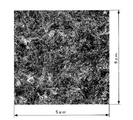
- FIG. 2 is a diagram showing a part of the cut surface enlarged so that crystals can be seen. It is a figure explaining the method of measuring the ratio. It is another figure explaining the method of measuring the ratio.
- the block body for dental prostheses (hereinafter, may be referred to as “block body”) according to one form is a columnar shape such as a prism or a cylinder, or a plate shape (disk shape), and can be cut from here. It is deformed or machined by machining such as grinding to make a dental prosthesis. Among them, when a dental prosthesis is produced by cutting, it can be formed into a prism shape or a plate shape (disc shape).
- the prismatic block body is often used mainly for carving out a single dental prosthesis, and the plate-shaped block body may be used for carving out a plurality of dental prostheses from one block body. ..
- FIG. 1 shows an external perspective view of the block body 10 which is a prism.
- the width W, the depth D, and the height H can each be in the range of 10 mm or more and 35 mm or less.
- the thickness can be configured to be in the range of 10 mm or more and 35 mm or less.
- the block body 10 according to the present embodiment shown in FIG. 1 has the following structure.
- FIG. 2 of the cut surface of the block body 10 taken along the dotted line indicated at A 1 in FIG. 1, showing the enlarged view of a portion thereof.
- This figure is an enlarged view in a field of view of 5 ⁇ m in the vertical direction (width direction) and 5 ⁇ m in the horizontal direction (depth direction).
- SEM scanning electron microscope
- the main crystal phase of the block body 10 is lithium disilicate.
- the "main crystal phase” means the crystal phase having the largest crystal precipitation ratio among the crystal phases observed by the analysis by the X-ray diffractometer.
- the block body 10 when a crystal having a length of 0.5 ⁇ m or more is extracted from the individual crystals appearing in the visual field range shown in FIG. 2, the total area of the extracted crystals is shown in FIG.
- the ratio is 21% or less with respect to the area of the visual field (5 ⁇ m ⁇ 5 ⁇ m) indicated by. This ratio is preferably 10% or less, and more preferably 1% or less.
- the block body has a main crystal phase of lithium disilicate, the conditions are equal to or higher than the conventional processing of a block body made of a material that is easy to process (for example, lithium metasilicate is used as the main crystal phase). Can be cut and ground with. According to this, since the post-processing heat treatment required for a block body having lithium metasilicate as the main crystal phase is not required, the shape does not change and the machining accuracy is maintained. It can be a dental prosthesis.
- Such a ratio is obtained as follows. Taking the block body 10 shown in FIG. 1 as an example, in the largest direction (height direction in the example of FIG. 1), the center A 1 and the two end portions A 2 at positions 10% from the end face with respect to the total length H. and obtain three cut surfaces at the ends a 3.
- the Figure 3 shows a cut surface in the central A 1 of the three cutting surfaces. Then, for each of the cut surfaces at the center A 1 , the end A 2 , and the end A 3 , the center B 1 shown by the dotted line is adjacent to the B 1 in the width W direction, and the total width W is from the end.
- the ratio obtained as described above can be 21% or less.
- the block body according to this embodiment can be configured to include the following components.
- the main crystal phase is lithium disilicate.
- SiO 2 is 60% by mass or more and 80% by mass or less, Li 2 O 10% by mass or more and 20% by mass or less, Al 2 O 3 3% by mass or more and 15% by mass or less, P 2 O 5 is 4.2% by mass or more and 10% by mass or less.
- each of the above components is as follows. If the content of SiO 2 is less than 60% by mass or more than 80% by mass, it becomes difficult to obtain a homogeneous block body. More preferably, it is 65% by mass or more and 75% by mass or less. If the content of Li 2 O is less than 10% by mass or more than 20% by mass, it becomes difficult to obtain a homogeneous block body, and the machinability tends to decrease. More preferably, it is 12% by mass or more and 18% by mass or less. If the content of Al 2 O 3 is less than 3% by mass, lithium disilicate is precipitated as the main crystal phase, but the machinability tends to decrease.
- the main crystal phase is not lithium disilicate, and the strength tends to decrease. More preferably, it is 3% by mass or more and 7% by mass or less. If the content of P 2 O 5 is less than 4.2% by mass, crystals having a length of 0.5 ⁇ m or more tend to increase, and the machinability may decrease. It is preferably 5% by mass or more. On the other hand, if it exceeds 10% by mass, it tends to be difficult to obtain a transparent block body that is devitrified.
- the block body for dental prosthesis may contain the following components in addition to the above components.
- the component represented here contains 0% by mass, it does not necessarily have to be contained, and it means that any of them may be contained.
- a component for adjusting the melting temperature can be contained in an amount of 0% by mass or more and 15% by mass or less. This makes it possible to make the melting temperature appropriate in the production described later. Each may be contained in an amount of more than 15% by mass, but the improvement in the effect is limited.
- Specific examples of the melting temperature adjusting material include oxides of Na, K, Ca, Sr, Ba, Mg, Rb, Cs, Fr, Be, and Ra. More preferably, it is as follows.
- K 2 O 10% by mass or less
- CaO 3% by mass or less
- SrO 10% by mass or less
- BaO 10% by mass or less
- MgO 3% by mass or less
- Rb 2 O 2.8% by mass %
- Cs 2 O 2.8% by mass or less
- Fr 2 O 2.8% by mass or less
- BeO 3% by mass or less
- RaO 10% by mass or less
- the components for forming crystal nuclei can be contained in a total amount of 0% by mass or more and 10% by mass or less.
- nuclei forming lithium disilicate crystals are efficiently generated.
- the content is set to 10% by mass or less.
- examples of the compound that functions as a crystal nucleation material include oxides of Zr and Ti (ZrO 2 and TiO 2 ). At that time, at least one selected from ZrO 2 and TiO 2 is included, and the total is preferably 0% by mass or more and 10% by mass or less.
- the block body for a dental prosthesis may further contain a known colorant from the viewpoint of enhancing aesthetics. This may include, for example, at least one selected from V 2 O 5 , CeO 2 , Er 2 O 3 , MnO, Fe 2 O 3 and Tb 4 O 7 .
- the area occupied by the voids is 2% on average in the observation range of 60 ⁇ m in the vertical direction (width direction) ⁇ 60 ⁇ m in the horizontal direction (depth direction) at the 15 locations where the above ratio is measured. The following is preferable. Further, it is preferable that no granules of the coloring material are visually recognized in the micrograph at a magnification of 200 times at the 15 places where the above ratio is measured. These voids and granules form an interface with the base material and may affect machinability. In addition, the presence of particles of the coloring material may cause color unevenness of the dental prosthesis.
- Such a block body for a dental prosthesis can be reliably realized by molding by melting the material as described later, instead of powder molding.
- the basic functions of the dental prosthesis are strength, hardness, chemical durability against the oral environment, and the same as natural teeth.
- Aesthetics honey be provided.
- machinability is also improved, and despite having the strength that heat treatment after processing is not required, problems occur under processing conditions equal to or higher than those of conventional ceramic block bodies for cutting. It is possible to machine without any need.
- the manufacturing method of this embodiment includes a melting step, a glass blank manufacturing step, a nucleation step, a heat treatment step, a cooling step, and a processing step.
- each component described above is melted at 1100 ° C. or higher and 1600 ° C. or lower. This makes it possible to obtain molten glass for the block body for dental prostheses. This melting is preferably carried out over several hours in order to obtain sufficiently uniform properties.
- the glass blank manufacturing process is a process of obtaining a glass blank having a shape close to the shape of the block body for dental prosthesis.
- a glass blank is obtained by pouring the molten glass obtained in the melting step into a mold and cooling it to room temperature. The cooling is performed by a slow temperature change to prevent deterioration and cracking of the material.
- the nucleation step is a step of heating the glass blank obtained in the glass blank manufacturing step and maintaining it at 400 ° C. or higher and 600 ° C. or lower for a predetermined time. This forms a nucleus for crystal formation.
- the maintenance time is preferably 10 minutes or more as long as the nucleus is sufficiently formed.
- the upper limit of the time is not particularly limited, but can be 6 hours or less.
- the heat treatment step is a step of heating the glass blank without cooling and maintaining it at 800 ° C. or higher and 1000 ° C. or lower for a predetermined time. This makes it possible to obtain a lithium disilicate blank in which the main crystal phase is lithium disilicate.
- the maintenance time is preferably 1 minute or longer, more preferably 3 minutes or longer.
- the upper limit of the time is not particularly limited, but may be 3 hours or less.
- the temperature may continue to rise.
- the heat treatment step may be provided with an intermediate process having different temperatures. That is, before maintaining at 800 ° C. or higher and 1000 ° C. or lower as described above, the glass blank is heated without cooling following the nucleation step, and is maintained at, for example, 600 ° C. or higher and 800 ° C. or lower for a predetermined time. This produces crystals that give an intermediate.
- the maintenance time at that time is preferably 10 minutes or more. The upper limit of the time is not particularly limited, but can be 6 hours or less.
- heating may be performed to maintain the temperature at 800 ° C. or higher and 1000 ° C. or lower as described above without cooling.
- the cooling step is a step of cooling the lithium disilicate blank obtained by the heat treatment step to room temperature.
- the lithium disilicate blank becomes a block body for dental prostheses and can be supplied to the processing process.
- the processing process is a process of machining the obtained block body for a dental prosthesis into the shape of a dental prosthesis.
- the machining method is not particularly limited, and examples thereof include cutting and grinding. This makes it possible to obtain a dental prosthesis.
- This processing can be performed under high productivity conditions. That is, until now, it has been difficult to perform efficient cutting because the block body for dental prostheses having a crystal phase mainly composed of lithium disilicate has poor machinability. Therefore, processing is performed with a block body made of a material that is easy to process (for example, a block body having lithium metasilicate as the main crystal phase) that does not have a crystal phase mainly containing lithium disilicate, and this is further heat-treated to make lithium disilicate It was necessary to go through a process of converting to and later increasing the strength.
- a block body having a crystal phase mainly composed of lithium disilicate can be cut or ground under the same or higher conditions as processing with a material that is easy to process. Since no heat treatment is required after processing, the dental prosthesis can be made without changing the shape and maintaining the accuracy of machining.
- Example 1 to 10 and Comparative Examples 1 to 4 a block body in which the main crystal phase is lithium disilicate by the production method by the melt molding method described above by changing the contained components. was prepared, and a dental prosthesis was prepared by cutting and the machinability was evaluated.
- the block body in each example was prepared as follows. For each example, the materials shown in Table 1 were mixed according to the ratio and melted at 1300 ° C. for 3 hours to obtain molten glass (melting step). Next, the obtained molten glass was poured into a mold and cooled to room temperature to obtain a glass blank (glass blank making step). Then, the obtained glass blank was heated and maintained at 650 ° C. for 60 minutes (nucleation step). This was further heated and maintained at 850 ° C. for 10 minutes to prepare a lithium disilicate blank in which the main crystal phase was lithium disilicate (heat treatment step). Then, it was slowly cooled to room temperature (cooling step) to obtain a block body.
- the obtained block body is a rectangular parallelepiped having a width W of 14 mm, a depth D of 12 mm, and a height H of 18 mm.
- Table 1 shows the content of each component in mass%.
- Table 1 shows the ratio (%) of crystals having a length of 0.5 ⁇ m or more obtained by the method described above, and the machinability.
- the blanks in the component items in Table 1 represent 0% by mass.
- the main crystal is measured using an X-ray diffractometer (Empylean (registered trademark); manufactured by Spectris Co., Ltd.), and as a result of quantitative analysis by the Rietveld method, the crystal phase having the highest crystal precipitation ratio among the observed crystal phases. And said.
- Both the block bodies in this example and the comparative example had a crystal phase mainly composed of lithium disilicate.
- the “ratio” is the ratio of crystals having a length of 0.5 ⁇ m or more as described above, and is the ratio (%) of the area obtained by the above method.
- Reference 1 For "machinability", two types of conventional block bodies for machining were prepared as Reference 1 and Reference 2 in the evaluation. Each is a block body as follows.
- Reference 1 A block body containing lithium metasilicate as the main crystal phase, in which SiO 2 is 72.3% by mass, Li 2 O is 15.0% by mass, and Al 2 O 3 is 1.6% by mass.
- Reference 2 a crystalline phase and a block body which is contained in about the same proportions crystalline phase and the lithium disilicate lithium metasilicate, SiO 2 is 56.3 wt%, Li 2 O 14.7 wt% , Al 2 O 3 is contained in a proportion of 2.1% by mass.
- the machinability is good even though the main crystal is lithium disilicate.
- both the block bodies of Examples and Comparative Examples had the required strength.
- the voids and granules also satisfy the above-mentioned preferable conditions.
Landscapes
- Health & Medical Sciences (AREA)
- Chemical & Material Sciences (AREA)
- Engineering & Computer Science (AREA)
- Oral & Maxillofacial Surgery (AREA)
- Ceramic Engineering (AREA)
- Life Sciences & Earth Sciences (AREA)
- Public Health (AREA)
- General Health & Medical Sciences (AREA)
- Animal Behavior & Ethology (AREA)
- Epidemiology (AREA)
- Veterinary Medicine (AREA)
- Organic Chemistry (AREA)
- Materials Engineering (AREA)
- Plastic & Reconstructive Surgery (AREA)
- General Chemical & Material Sciences (AREA)
- Geochemistry & Mineralogy (AREA)
- Chemical Kinetics & Catalysis (AREA)
- Crystallography & Structural Chemistry (AREA)
- Manufacturing & Machinery (AREA)
- Molecular Biology (AREA)
- Dentistry (AREA)
- Dispersion Chemistry (AREA)
- Structural Engineering (AREA)
- Inorganic Chemistry (AREA)
- Dental Preparations (AREA)
- Dental Prosthetics (AREA)
- Glass Compositions (AREA)
Abstract
Priority Applications (4)
| Application Number | Priority Date | Filing Date | Title |
|---|---|---|---|
| EP20782286.7A EP3949937A4 (fr) | 2019-03-29 | 2020-01-09 | Corps de bloc pour prothèses dentaires |
| JP2020503334A JP6903815B2 (ja) | 2019-03-29 | 2020-01-09 | 歯科補綴物用ブロック体 |
| CN202080023952.9A CN113710213A (zh) | 2019-03-29 | 2020-01-09 | 牙科修复体用块体 |
| US17/441,091 US12575916B2 (en) | 2019-03-29 | 2020-01-09 | Block for dental prostheses |
Applications Claiming Priority (2)
| Application Number | Priority Date | Filing Date | Title |
|---|---|---|---|
| JP2019069287 | 2019-03-29 | ||
| JP2019-069287 | 2019-03-29 |
Publications (1)
| Publication Number | Publication Date |
|---|---|
| WO2020202685A1 true WO2020202685A1 (fr) | 2020-10-08 |
Family
ID=72668942
Family Applications (1)
| Application Number | Title | Priority Date | Filing Date |
|---|---|---|---|
| PCT/JP2020/000405 Ceased WO2020202685A1 (fr) | 2019-03-29 | 2020-01-09 | Corps de bloc pour prothèses dentaires |
Country Status (5)
| Country | Link |
|---|---|
| US (1) | US12575916B2 (fr) |
| EP (1) | EP3949937A4 (fr) |
| JP (2) | JP6903815B2 (fr) |
| CN (1) | CN113710213A (fr) |
| WO (1) | WO2020202685A1 (fr) |
Cited By (2)
| Publication number | Priority date | Publication date | Assignee | Title |
|---|---|---|---|---|
| US11565941B2 (en) | 2020-03-17 | 2023-01-31 | Hagen Schray | Composite with lithium silicate and method with a quenching step |
| WO2025254115A1 (fr) * | 2024-06-07 | 2025-12-11 | Agc株式会社 | Verre cristallisé |
Citations (7)
| Publication number | Priority date | Publication date | Assignee | Title |
|---|---|---|---|---|
| US20110256409A1 (en) | 2010-04-16 | 2011-10-20 | Ivoclar Vivadent Ag | Lithium Silicate Glass Ceramic and Glass With ZrO2 Content |
| WO2012175615A1 (fr) | 2011-06-22 | 2012-12-27 | Fraunhoffer-Gesellschaft Zur Förderung Der Angewandten Forschung E.V. | Restauration dentaire, sa méthode de production et lingot |
| JP2013515659A (ja) * | 2009-12-23 | 2013-05-09 | フラオンホファー−ゲゼルシャフト・ツア・フェルデルング・デア・アンゲヴァンテン・フォルシュング・エー・ファオ | 二ケイ酸リチウムガラスセラミック、その製造方法およびその使用 |
| JP2015517337A (ja) * | 2012-05-11 | 2015-06-22 | イフォクレール ヴィヴァデント アクチェンゲゼルシャフトIvoclar Vivadent AG | 歯科目的のための予備焼結ブランク |
| WO2016031399A1 (fr) * | 2014-08-27 | 2016-03-03 | 株式会社ジーシー | Procédé de production d'une prothèse dentaire, procédé de production d'une ébauche en disilicate de lithium pour prothèses dentaires, et ébauche en disilicate de lithium pour prothèses dentaires |
| WO2016190012A1 (fr) * | 2015-05-25 | 2016-12-01 | 株式会社ジーシー | Matériau pour prothèse dentaire, corps de bloc pour produire une prothèse dentaire, et prothèse dentaire |
| JP2018145084A (ja) * | 2017-03-07 | 2018-09-20 | ハス カンパニー リミテッドHass Co.,Ltd | 熱処理温度の変化で加工性又は透光性の調節が可能な結晶化ガラスの製造方法 |
Family Cites Families (12)
| Publication number | Priority date | Publication date | Assignee | Title |
|---|---|---|---|---|
| US5219799A (en) | 1991-10-07 | 1993-06-15 | Corning Incorporated | Lithium disilicate-containing glass-ceramics some of which are self-glazing |
| US6420288B2 (en) * | 1997-11-10 | 2002-07-16 | Ivoclar Ag | Process for the preparation of shaped translucent lithium disilicate glass ceramic products |
| DE10336913C9 (de) | 2003-08-07 | 2019-02-21 | Ivoclar Vivadent Ag | Verwendung eines Lithiumsilicatmaterials |
| CN103889391B (zh) | 2011-10-14 | 2018-08-28 | 义获嘉伟瓦登特公司 | 包含二价金属氧化物的硅酸锂玻璃陶瓷和硅酸锂玻璃 |
| EP2844213B1 (fr) | 2012-05-04 | 2019-12-04 | Ivoclar Vivadent AG | Vitrocéramique à l'apatite et au lithium-silice |
| DE102012111683A1 (de) * | 2012-11-30 | 2014-06-05 | Degudent Gmbh | Verfahren zum Herstellen von Zahnersatz |
| EP2868634B1 (fr) | 2013-11-05 | 2021-07-07 | Ivoclar Vivadent AG | Vitrocéramique à l'apatite et au lithium-silice avec oxyde de métal de transition |
| CN104108883B (zh) * | 2014-08-11 | 2019-03-08 | 中国地质大学(北京) | 一种高强度二硅酸锂玻璃陶瓷及其制备方法 |
| KR101813488B1 (ko) * | 2016-04-06 | 2017-12-29 | 주식회사 하스 | 나노 크기의 결정상을 갖는 리튬 디실리케이트 결정화 유리 제조 방법 |
| CN108069611B (zh) * | 2016-11-16 | 2020-08-11 | 中国科学院过程工程研究所 | 高透性的硅酸锂微晶玻璃和二硅酸锂微晶玻璃、其制备方法和用途 |
| US10556819B2 (en) * | 2017-03-08 | 2020-02-11 | Hass Co., Ltd | Method for preparing glass-ceramics, capable of adjusting machinability or translucency through change in temperature of heat treatment |
| CN107698167A (zh) * | 2017-09-19 | 2018-02-16 | 大连工业大学 | 齿科用cad/cam可雕刻的二硅酸锂微晶玻璃及其制备方法 |
-
2020
- 2020-01-09 WO PCT/JP2020/000405 patent/WO2020202685A1/fr not_active Ceased
- 2020-01-09 EP EP20782286.7A patent/EP3949937A4/fr active Pending
- 2020-01-09 US US17/441,091 patent/US12575916B2/en active Active
- 2020-01-09 JP JP2020503334A patent/JP6903815B2/ja active Active
- 2020-01-09 CN CN202080023952.9A patent/CN113710213A/zh active Pending
-
2021
- 2021-06-22 JP JP2021102981A patent/JP7547286B2/ja active Active
Patent Citations (7)
| Publication number | Priority date | Publication date | Assignee | Title |
|---|---|---|---|---|
| JP2013515659A (ja) * | 2009-12-23 | 2013-05-09 | フラオンホファー−ゲゼルシャフト・ツア・フェルデルング・デア・アンゲヴァンテン・フォルシュング・エー・ファオ | 二ケイ酸リチウムガラスセラミック、その製造方法およびその使用 |
| US20110256409A1 (en) | 2010-04-16 | 2011-10-20 | Ivoclar Vivadent Ag | Lithium Silicate Glass Ceramic and Glass With ZrO2 Content |
| WO2012175615A1 (fr) | 2011-06-22 | 2012-12-27 | Fraunhoffer-Gesellschaft Zur Förderung Der Angewandten Forschung E.V. | Restauration dentaire, sa méthode de production et lingot |
| JP2015517337A (ja) * | 2012-05-11 | 2015-06-22 | イフォクレール ヴィヴァデント アクチェンゲゼルシャフトIvoclar Vivadent AG | 歯科目的のための予備焼結ブランク |
| WO2016031399A1 (fr) * | 2014-08-27 | 2016-03-03 | 株式会社ジーシー | Procédé de production d'une prothèse dentaire, procédé de production d'une ébauche en disilicate de lithium pour prothèses dentaires, et ébauche en disilicate de lithium pour prothèses dentaires |
| WO2016190012A1 (fr) * | 2015-05-25 | 2016-12-01 | 株式会社ジーシー | Matériau pour prothèse dentaire, corps de bloc pour produire une prothèse dentaire, et prothèse dentaire |
| JP2018145084A (ja) * | 2017-03-07 | 2018-09-20 | ハス カンパニー リミテッドHass Co.,Ltd | 熱処理温度の変化で加工性又は透光性の調節が可能な結晶化ガラスの製造方法 |
Non-Patent Citations (1)
| Title |
|---|
| See also references of EP3949937A4 |
Cited By (2)
| Publication number | Priority date | Publication date | Assignee | Title |
|---|---|---|---|---|
| US11565941B2 (en) | 2020-03-17 | 2023-01-31 | Hagen Schray | Composite with lithium silicate and method with a quenching step |
| WO2025254115A1 (fr) * | 2024-06-07 | 2025-12-11 | Agc株式会社 | Verre cristallisé |
Also Published As
| Publication number | Publication date |
|---|---|
| EP3949937A1 (fr) | 2022-02-09 |
| JPWO2020202685A1 (ja) | 2021-04-30 |
| JP7547286B2 (ja) | 2024-09-09 |
| US12575916B2 (en) | 2026-03-17 |
| JP2021169406A (ja) | 2021-10-28 |
| EP3949937A4 (fr) | 2023-01-25 |
| US20220183802A1 (en) | 2022-06-16 |
| JP6903815B2 (ja) | 2021-07-14 |
| CN113710213A (zh) | 2021-11-26 |
Similar Documents
| Publication | Publication Date | Title |
|---|---|---|
| US20240051868A1 (en) | Zirconia-toughened glass ceramics | |
| JP6347792B2 (ja) | 歯科補綴物の製造方法、歯科補綴物用二ケイ酸リチウムブランクの製造方法、及び歯科補綴物用二ケイ酸リチウムブランク | |
| JP6903815B2 (ja) | 歯科補綴物用ブロック体 | |
| JP6732868B2 (ja) | 歯科補綴物用材料、歯科補綴物作製用ブロック体、及び歯科補綴物 | |
| JP7665663B2 (ja) | 歯科補綴物用ブロック体の製造方法、歯科補綴物の製造方法 | |
| CN117279592A (zh) | 用于切削加工的牙科用大型块体及其制造方法 | |
| US11166795B2 (en) | Method for producing dental prosthesis, method for producing lithium disilicate blank for dental prosthesis and lithium disilicate blank for dental prosthesis | |
| KR102818759B1 (ko) | 보철물 제작용 대면적 블랭크 및 그 제조방법 | |
| KR20250078362A (ko) | 유리-세라믹 치과용 바디, 이를 제조하는 방법, 및 그의 용도 | |
| JP2016108178A (ja) | ガラスブロック |
Legal Events
| Date | Code | Title | Description |
|---|---|---|---|
| ENP | Entry into the national phase |
Ref document number: 2020503334 Country of ref document: JP Kind code of ref document: A |
|
| 121 | Ep: the epo has been informed by wipo that ep was designated in this application |
Ref document number: 20782286 Country of ref document: EP Kind code of ref document: A1 |
|
| NENP | Non-entry into the national phase |
Ref country code: DE |
|
| ENP | Entry into the national phase |
Ref document number: 2020782286 Country of ref document: EP Effective date: 20211029 |
|
| WWG | Wipo information: grant in national office |
Ref document number: 17441091 Country of ref document: US |