WO2020209458A1 - Chromosome recombiné artificiel et son utilisation - Google Patents
Chromosome recombiné artificiel et son utilisation Download PDFInfo
- Publication number
- WO2020209458A1 WO2020209458A1 PCT/KR2019/015351 KR2019015351W WO2020209458A1 WO 2020209458 A1 WO2020209458 A1 WO 2020209458A1 KR 2019015351 W KR2019015351 W KR 2019015351W WO 2020209458 A1 WO2020209458 A1 WO 2020209458A1
- Authority
- WO
- WIPO (PCT)
- Prior art keywords
- rrs
- cell
- chromosome
- fragment
- targeted
- Prior art date
- Legal status (The legal status is an assumption and is not a legal conclusion. Google has not performed a legal analysis and makes no representation as to the accuracy of the status listed.)
- Ceased
Links
Images


Classifications
-
- A—HUMAN NECESSITIES
- A01—AGRICULTURE; FORESTRY; ANIMAL HUSBANDRY; HUNTING; TRAPPING; FISHING
- A01K—ANIMAL HUSBANDRY; AVICULTURE; APICULTURE; PISCICULTURE; FISHING; REARING OR BREEDING ANIMALS, NOT OTHERWISE PROVIDED FOR; NEW BREEDS OF ANIMALS
- A01K67/00—Rearing or breeding animals, not otherwise provided for; New or modified breeds of animals
- A01K67/027—New or modified breeds of vertebrates
- A01K67/0275—Genetically modified vertebrates, e.g. transgenic
-
- A—HUMAN NECESSITIES
- A01—AGRICULTURE; FORESTRY; ANIMAL HUSBANDRY; HUNTING; TRAPPING; FISHING
- A01K—ANIMAL HUSBANDRY; AVICULTURE; APICULTURE; PISCICULTURE; FISHING; REARING OR BREEDING ANIMALS, NOT OTHERWISE PROVIDED FOR; NEW BREEDS OF ANIMALS
- A01K67/00—Rearing or breeding animals, not otherwise provided for; New or modified breeds of animals
- A01K67/027—New or modified breeds of vertebrates
- A01K67/0275—Genetically modified vertebrates, e.g. transgenic
- A01K67/0278—Knock-in vertebrates, e.g. humanised vertebrates
-
- C—CHEMISTRY; METALLURGY
- C07—ORGANIC CHEMISTRY
- C07K—PEPTIDES
- C07K16/00—Immunoglobulins [IG], e.g. monoclonal or polyclonal antibodies
-
- C—CHEMISTRY; METALLURGY
- C12—BIOCHEMISTRY; BEER; SPIRITS; WINE; VINEGAR; MICROBIOLOGY; ENZYMOLOGY; MUTATION OR GENETIC ENGINEERING
- C12N—MICROORGANISMS OR ENZYMES; COMPOSITIONS THEREOF; PROPAGATING, PRESERVING, OR MAINTAINING MICROORGANISMS; MUTATION OR GENETIC ENGINEERING; CULTURE MEDIA
- C12N15/00—Mutation or genetic engineering; DNA or RNA concerning genetic engineering, vectors, e.g. plasmids, or their isolation, preparation or purification; Use of hosts therefor
- C12N15/09—Recombinant DNA-technology
- C12N15/63—Introduction of foreign genetic material using vectors; Vectors; Use of hosts therefor; Regulation of expression
- C12N15/79—Vectors or expression systems specially adapted for eukaryotic hosts
- C12N15/85—Vectors or expression systems specially adapted for eukaryotic hosts for animal cells
- C12N15/8509—Vectors or expression systems specially adapted for eukaryotic hosts for animal cells for producing genetically modified animals, e.g. transgenic
-
- C—CHEMISTRY; METALLURGY
- C12—BIOCHEMISTRY; BEER; SPIRITS; WINE; VINEGAR; MICROBIOLOGY; ENZYMOLOGY; MUTATION OR GENETIC ENGINEERING
- C12N—MICROORGANISMS OR ENZYMES; COMPOSITIONS THEREOF; PROPAGATING, PRESERVING, OR MAINTAINING MICROORGANISMS; MUTATION OR GENETIC ENGINEERING; CULTURE MEDIA
- C12N5/00—Undifferentiated human, animal or plant cells, e.g. cell lines; Tissues; Cultivation or maintenance thereof; Culture media therefor
- C12N5/06—Animal cells or tissues; Human cells or tissues
- C12N5/0602—Vertebrate cells
- C12N5/0603—Embryonic cells ; Embryoid bodies
- C12N5/0606—Pluripotent embryonic cells, e.g. embryonic stem cells [ES]
-
- C—CHEMISTRY; METALLURGY
- C12—BIOCHEMISTRY; BEER; SPIRITS; WINE; VINEGAR; MICROBIOLOGY; ENZYMOLOGY; MUTATION OR GENETIC ENGINEERING
- C12N—MICROORGANISMS OR ENZYMES; COMPOSITIONS THEREOF; PROPAGATING, PRESERVING, OR MAINTAINING MICROORGANISMS; MUTATION OR GENETIC ENGINEERING; CULTURE MEDIA
- C12N5/00—Undifferentiated human, animal or plant cells, e.g. cell lines; Tissues; Cultivation or maintenance thereof; Culture media therefor
- C12N5/10—Cells modified by introduction of foreign genetic material
- C12N5/12—Fused cells, e.g. hybridomas
- C12N5/16—Animal cells
- C12N5/166—Animal cells resulting from interspecies fusion
-
- A—HUMAN NECESSITIES
- A01—AGRICULTURE; FORESTRY; ANIMAL HUSBANDRY; HUNTING; TRAPPING; FISHING
- A01K—ANIMAL HUSBANDRY; AVICULTURE; APICULTURE; PISCICULTURE; FISHING; REARING OR BREEDING ANIMALS, NOT OTHERWISE PROVIDED FOR; NEW BREEDS OF ANIMALS
- A01K2207/00—Modified animals
- A01K2207/15—Humanized animals
-
- A—HUMAN NECESSITIES
- A01—AGRICULTURE; FORESTRY; ANIMAL HUSBANDRY; HUNTING; TRAPPING; FISHING
- A01K—ANIMAL HUSBANDRY; AVICULTURE; APICULTURE; PISCICULTURE; FISHING; REARING OR BREEDING ANIMALS, NOT OTHERWISE PROVIDED FOR; NEW BREEDS OF ANIMALS
- A01K2217/00—Genetically modified animals
-
- A—HUMAN NECESSITIES
- A01—AGRICULTURE; FORESTRY; ANIMAL HUSBANDRY; HUNTING; TRAPPING; FISHING
- A01K—ANIMAL HUSBANDRY; AVICULTURE; APICULTURE; PISCICULTURE; FISHING; REARING OR BREEDING ANIMALS, NOT OTHERWISE PROVIDED FOR; NEW BREEDS OF ANIMALS
- A01K2217/00—Genetically modified animals
- A01K2217/05—Animals comprising random inserted nucleic acids (transgenic)
- A01K2217/052—Animals comprising random inserted nucleic acids (transgenic) inducing gain of function
-
- A—HUMAN NECESSITIES
- A01—AGRICULTURE; FORESTRY; ANIMAL HUSBANDRY; HUNTING; TRAPPING; FISHING
- A01K—ANIMAL HUSBANDRY; AVICULTURE; APICULTURE; PISCICULTURE; FISHING; REARING OR BREEDING ANIMALS, NOT OTHERWISE PROVIDED FOR; NEW BREEDS OF ANIMALS
- A01K2217/00—Genetically modified animals
- A01K2217/07—Animals genetically altered by homologous recombination
- A01K2217/072—Animals genetically altered by homologous recombination maintaining or altering function, i.e. knock in
-
- A—HUMAN NECESSITIES
- A01—AGRICULTURE; FORESTRY; ANIMAL HUSBANDRY; HUNTING; TRAPPING; FISHING
- A01K—ANIMAL HUSBANDRY; AVICULTURE; APICULTURE; PISCICULTURE; FISHING; REARING OR BREEDING ANIMALS, NOT OTHERWISE PROVIDED FOR; NEW BREEDS OF ANIMALS
- A01K2227/00—Animals characterised by species
- A01K2227/10—Mammal
- A01K2227/105—Murine
-
- C—CHEMISTRY; METALLURGY
- C07—ORGANIC CHEMISTRY
- C07K—PEPTIDES
- C07K2317/00—Immunoglobulins specific features
- C07K2317/20—Immunoglobulins specific features characterized by taxonomic origin
- C07K2317/24—Immunoglobulins specific features characterized by taxonomic origin containing regions, domains or residues from different species, e.g. chimeric, humanized or veneered
-
- C—CHEMISTRY; METALLURGY
- C12—BIOCHEMISTRY; BEER; SPIRITS; WINE; VINEGAR; MICROBIOLOGY; ENZYMOLOGY; MUTATION OR GENETIC ENGINEERING
- C12N—MICROORGANISMS OR ENZYMES; COMPOSITIONS THEREOF; PROPAGATING, PRESERVING, OR MAINTAINING MICROORGANISMS; MUTATION OR GENETIC ENGINEERING; CULTURE MEDIA
- C12N2800/00—Nucleic acids vectors
- C12N2800/30—Vector systems comprising sequences for excision in presence of a recombinase, e.g. loxP or FRT
Definitions
- the content disclosed by the present specification relates to an artificial recombinant chromosome and its use, and more specifically, an artificial recombinant chromosome produced by the recombination of two or more chromosomes, and the production of a transgenic animal using a cell containing the same It is about.
- Transgenic animals can contribute to the advancement of genetic engineering by allowing them to express DNA that encodes an exogenous protein or by inactivating an endogenous gene.
- DNA encoding an exogenous protein is inserted into the genome of an animal cell, and cells produced therefrom are used to make an animal.
- a vector containing the DNA encoding the exogenous protein is used, and to construct the vector, the DNA encoding the exogenous protein is cloned.
- DNA encoding an exogenous protein is inserted into the genome of an animal cell, and cells produced therefrom are used to make an animal.
- a vector containing the DNA encoding the exogenous protein is used, and to construct the vector, the DNA encoding the exogenous protein is cloned.
- the above method uses one or more vectors depending on the size of the DNA encoding the exogenous protein. For example, if the size of the DNA encoding the exogenous protein is several tens of kilobases or more, the DNA encoding the exogenous protein must be segmented and inserted using several vectors. In the case of using a plurality of vectors compared to the case of inserting using one vector, there is a problem that the efficiency of obtaining cells into which the full length of the DNA encoding the exogenous protein is inserted decreases.
- the present invention is to provide a method of efficiently inserting a gene to be inserted into the genome of an animal cell regardless of the size of the gene to be inserted.
- the content disclosed by the present application is intended to provide an artificial recombinant chromosome and a method for producing the same.
- the content disclosed by the present application is intended to provide a cell including an artificial recombinant chromosome and a method for producing the same.
- the content disclosed by the present application is intended to provide a method for producing a transgenic animal using cells containing an artificial recombinant chromosome.
- the content disclosed by the present application provides a method for inserting the full length of a gene to be inserted (coding region and non-coding region, etc.) into the genome of an animal cell without separate cloning.
- a method for producing a transgenic animal using the transgenic animal cells thus produced is also provided.
- a method for producing a cell comprising at least one artificial recombinant chromosome is provided.
- a method for producing a cell comprising one or more artificial recombinant chromosomes
- SSR site specific recombinase
- the first targeting cell may include a first targeted chromosome.
- the second targeting cell may include a second targeted chromosome.
- the first targeted chromosome may include a first portion, a first recombinase recognition sequence (RRS), and a first fragment.
- the first RRS may be located between the first portion and the first fragment.
- the second targeted chromosome may include a second part, a second a second recombinase recognition sequence (RRS), and a second fragment.
- the second RRS may be located between the second portion and the second fragment.
- the one or more microcells may include the second targeted chromosome or a fragment of the second targeted chromosome.
- the segment of the second targeted chromosome may include a second a second recombinase recognition sequence (RRS) and a second fragment.
- RTS recombinase recognition sequence
- the fusion cell may include the first targeted chromosome and the second targeted chromosome, or a fragment of the first targeted chromosome and the second targeted chromosome.
- the SSR may induce recombination by recognizing the pairing of the first RRS present in the first targeted chromosome included in the fusion cell and the second RRS present in the second targeted chromosome. .
- the first fragment present in the first targeted chromosome may be exchanged with the second fragment present in the second targeted chromosome.
- a first artificial recombinant chromosome including the first part and the second fragment may be generated.
- the cell containing the first artificial recombinant chromosome may not contain the second targeted chromosome.
- Cells containing the one or more artificial recombinant chromosomes may further include a second artificial recombinant chromosome.
- the second artificial recombinant chromosome may include the second part and the first fragment.
- the first portion may include one of the telomere ends of both sides of the first targeted chromosome.
- the first fragment may include the remaining one of the telomere ends on both sides of the first targeted chromosome.
- the second portion may include one of the telomere ends on both sides of the second targeted chromosome.
- the second fragment may include the other of the telomere ends on both sides of the second targeted chromosome.
- the first RRS may be one selected from loxP and loxP variants
- the second RRS may be one selected from loxP and loxP variants.
- the first RRS may be paired with the second RRS.
- the SSR may be Cre recombinase, and the SSR may recognize the first RRS and the second RRS.
- the first RRS may be one selected from FRT, attP, attB, ITR, and variants thereof
- the second RRS may be one selected from FRT, attP, attB, ITR, and variants thereof.
- the first RRS may be paired with the second RRS.
- the SSR may be one selected from flippase (FLP), integral, and tansposase, and the SSR may recognize the first RRS and the second RRS.
- Cells containing the one or more artificial recombinant chromosomes may undergo somatic cell division or meiosis.
- the method for producing cells containing one or more artificial recombinant chromosomes in another embodiment, the method for producing cells containing one or more artificial recombinant chromosomes
- SSR site specific recombinase
- the first targeting cell may include a first targeted chromosome.
- the first targeted chromosome is a first part, a first RRS (a first recombinase recognition sequence; a first RRS), a first fragment (a first fragment), a second RRS (a second recombinase recognition sequence; a second RRS) ) And a second part.
- the first part may include one of both telomere ends of the first targeted chromosome
- the second part may include the other one of both telomere ends of the first targeted chromosome
- the first fragment may be located between the first RRS and the second RRS.
- the second targeting cell may include a second targeted chromosome.
- the second targeted chromosome is a third part, a third RRS (a third recombinase recognition sequence; a third RRS), a second fragment (a second fragment), a fourth RRS (a fourth recombinase recognition sequence; a fourth RRS) ) And a fourth part.
- a third RRS a third recombinase recognition sequence; a third RRS
- a second fragment a second fragment
- a fourth RRS a fourth recombinase recognition sequence; a fourth RRS
- the third part may include one of both telomere ends of the second targeted chromosome
- the fourth part may include the other one of both telomere ends of the second targeted chromosome
- the second fragment may be located between the third RRS and the fourth RRS.
- the one or more microcells may include the second targeted chromosome or a fragment of the second targeted chromosome.
- the segment of the second targeted chromosome may include a third RRS, a second fragment, and a fourth RRS.
- the fusion cell may include the first targeted chromosome and the second targeted chromosome, or a fragment of the first targeted chromosome and the second targeted chromosome.
- the SSR is present in the first targeted chromosome and the first RRS present in the first targeted chromosome included in the fusion cell and the third RRS present in the second targeted chromosome. Recombination may be induced by recognizing the pairing of the second RRS and the fourth RRS present in the second targeted chromosome.
- the first fragment present in the first targeted chromosome may be exchanged with the second fragment present in the second targeted chromosome.
- a first artificial recombinant chromosome including the first part, the second fragment, and the second part may be generated.
- the cell containing the first artificial recombinant chromosome may not contain the second targeted chromosome.
- Cells containing the one or more artificial recombinant chromosomes may further include a second artificial recombinant chromosome.
- the second artificial recombinant chromosome may include the third part, the first fragment, and the fourth part.
- the first part may include a centrosome of the first targeted chromosome.
- the first fragment may include a homogenate of the first targeted chromosome.
- the third part may include a centrosome of the second targeted chromosome.
- the second fragment may include a centrosome of the first targeted chromosome.
- the first RRS may be one selected from loxP and loxP variants
- the third RRS may be one selected from loxP and loxP variants.
- the first RRS may be paired with the third RRS.
- the second RRS may be one selected from loxP and loxP variants
- the fourth RRS may be one selected from loxP and loxP variants.
- the second RRS may be paired with the fourth RRS.
- the SSR may be Cre recombinase.
- the first RRS may be one selected from FRT, attP, attB, ITR, and variants thereof
- the third RRS may be one selected from FRT, attP, attB, ITR, and variants thereof.
- the first RRS may be paired with the third RRS.
- the second RRS may be one selected from FRT, attP, attB, ITR, and variants thereof
- the fourth RRS may be one selected from FRT, attP, attB, ITR, and variants thereof.
- the second RRS may be paired with the fourth RRS.
- the SSR may be one selected from flippase (FLP), integral, and tansposase.
- FLP flippase
- integral integral
- tansposase tansposase
- Cells containing the one or more artificial recombinant chromosomes may undergo somatic cell division or meiosis.
- a method for producing a transgenic non-human animal using cells containing one or more artificial recombinant chromosomes is provided.
- SSR site specific recombinase
- the first targeting cell may be an embryonic stem cell.
- the first targeting cell may include a first targeted chromosome.
- the second targeting cell may include a second targeted chromosome.
- the first targeted chromosome may include a first portion, a first recombinase recognition sequence (RRS), and a first fragment.
- the first RRS may be located between the first portion and the first fragment.
- the second targeted chromosome may include a second part, a second a second recombinase recognition sequence (RRS), and a second fragment.
- the second RRS may be located between the second portion and the second fragment.
- the one or more microcells may include the second targeted chromosome or a fragment of the second targeted chromosome.
- the segment of the second targeted chromosome may include a second a second recombinase recognition sequence (RRS) and a second fragment.
- the fusion cell may include the first targeted chromosome and the second targeted chromosome, or a fragment of the first targeted chromosome and the second targeted chromosome.
- the SSR may induce recombination by recognizing the pairing of the first RRS present in the first targeted chromosome included in the fusion cell and the second RRS present in the second targeted chromosome. .
- the first fragment present in the first targeted chromosome may be exchanged with the second fragment present in the second targeted chromosome.
- a first artificial recombinant chromosome including the first part and the second fragment may be generated.
- the cell containing the first artificial recombinant chromosome may not contain the second targeted chromosome.
- the chimeric blastocyst may be produced by injecting cells containing the first artificial recombinant chromosome into the blastocyst.
- SSR site specific recombinase
- the first targeting cell may be an embryonic stem cell.
- the first targeting cell may include a first targeted chromosome.
- the second targeting cell may include a second targeted chromosome.
- the first targeted chromosome is a first portion, a first RRS (a first recombinase recognition sequence; a first RRS), a first fragment (a first fragment), a second RRS (a second recombinase recognition sequence; a second RRS) and It may include a second part.
- the first part may include one of both telomere ends of the first targeted chromosome
- the second part may include the other one of both telomere ends of the first targeted chromosome
- the first fragment may be located between the first RRS and the second RRS.
- the second targeted chromosome is a third part, a third RRS (a third recombinase recognition sequence; a third RRS), a second fragment (a second fragment), a fourth RRS (a fourth recombinase recognition sequence; a fourth RRS) and It may include a fourth part.
- the third part may include one of both telomere ends of the second targeted chromosome
- the fourth part may include the other one of both telomere ends of the second targeted chromosome
- the second fragment may be located between the third RRS and the fourth RRS.
- the one or more microcells may include the second targeted chromosome or a fragment of the second targeted chromosome.
- the segment of the second targeted chromosome may include a third RRS, a second fragment, and a fourth RRS.
- the fusion cell may include the first targeted chromosome and the second targeted chromosome, or a fragment of the first targeted chromosome and the second targeted chromosome.
- the SSR is present in the first targeted chromosome and the first RRS present in the first targeted chromosome included in the fusion cell and the third RRS present in the second targeted chromosome. Recombination may be induced by recognizing the pairing of the second RRS and the fourth RRS present in the second targeted chromosome.
- the first fragment present in the first targeted chromosome may be exchanged with the second fragment present in the second targeted chromosome.
- a first artificial recombinant chromosome including the first part, the second fragment, and the second part may be generated.
- the cell containing the first artificial recombinant chromosome may not contain the second targeted chromosome.
- the chimeric blastocyst may be produced by injecting cells containing the first artificial recombinant chromosome into the blastocyst.
- FIG. 1 shows a flowchart according to an embodiment.
- 2 to 10 are schematic diagrams for preparing an artificial recombinant chromosome from a targeted chromosome.
- FIG. 11 is a schematic diagram for preparing a first targeted chromosome by providing a first DNA donor and a second DNA donor to a first non-target prochromosome.
- FIG. 12 is a schematic diagram for preparing a second targeted chromosome by providing a third DNA donor and a fourth DNA donor to a second non-target prochromosome.
- FIG. 13 is a schematic diagram for preparing a first artificial recombinant chromosome and a second artificial recombinant chromosome from a first targeted chromosome and a second targeted chromosome.
- FIG. 14 is a schematic diagram of preparing a final artificial recombinant chromosome from a first artificial recombinant chromosome.
- 15 is a schematic diagram of preparing a first targeted chromosome by providing a first DNA donor and a second DNA donor to a first non-target prochromosome.
- 16 is a schematic diagram for inverting a target gene of a first targeted chromosome.
- FIG. 17 is a schematic diagram for preparing a second targeted chromosome by providing a third DNA donor and a fourth DNA donor to a second non-target prochromosome.
- 18 is a schematic diagram of inverting a target gene of a second targeted chromosome.
- 19 is a schematic diagram for preparing a first artificial recombinant chromosome and a second artificial recombinant chromosome from a first targeted chromosome and a second targeted chromosome.
- 20 is a schematic diagram for preparing a final artificial recombinant chromosome from a first artificial recombinant chromosome.
- 21 to 24 are schematic diagrams of the DNA structure of a targeted chromosome according to an embodiment.
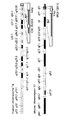
- 25 and 26 show the results of selection of targeting cells according to an embodiment.
- FIG. 28 shows a process of manufacturing a fusion cell according to an embodiment.
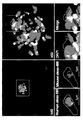
- 29 shows a fusion cell comprising a targeted chromosome according to an embodiment.
- FIG. 30 shows a fusion cell comprising an artificial recombinant chromosome according to an embodiment.
- 31 to 33 show a comparison between a fusion cell including an artificial recombinant chromosome and a fusion cell including a targeted chromosome in the fusion cell according to an embodiment.
- 34 to 35 show selection results of fusion cells including artificial recombinant chromosomes and results of confirming artificial recombinant chromosomes according to an embodiment.
- the subject matter disclosed herein relates to the production of artificial recombinant chromosomes and cells comprising the same.
- Transgenic animals are animals that have introduced artificial traits, and are used for research on various diseases, mechanisms, and development of therapeutic agents.
- the method for producing a transgenic animal includes introducing a desired trait into an animal cell. For this, a method using a cloning vector is currently being used.
- the method using a cloning vector is a method in which a desired trait, that is, a vector artificially created by cloning a target gene to be expressed in a transgenic animal, is transferred to an animal cell and inserted into the genome.
- This method uses a plasmid, a bacterial artificial chromosome (BAC) or a yeast artificial chromosome (YAC).
- BAC or YAC is a DNA construct capable of carrying a larger fragment (150-350 kbp) than a plasmid, and is widely used for transformation.
- BAC or YAC has the advantage of being able to carry a relatively large fragment compared to a plasmid, and thus is used for transduction of a gene of interest having a large size.
- a plurality of BACs or YACs are required.
- a mouse cell into which a human immunoglobulin (Ig) gene is introduced in order to produce the mouse, a mouse cell into which a human immunoglobulin (Ig) gene is introduced must be produced.
- a vector for transformation by cloning a human immunoglobulin heavy (IGH) gene having a size of 1250 kilobases (kb) must be constructed.
- the transformation vector is BAC, at least 4 to 9 BACs each having different DNA fragments are made. These BACs are sequentially introduced into mouse cells and inserted into the genome.
- the first BAC is introduced into the mouse cell and inserted into the genome, and the mouse cell into which the first BAC is inserted is selected.
- a second BAC is introduced into the selected mouse cells and inserted into the genome, and the mouse cells into which the second BAC has been inserted are selected again.
- the above process should be repeated. This repetitive process becomes a factor that reduces the yield of mouse cells into which the full length of the target gene is inserted.
- problems such as time consumption and cost consumption due to repetition of the transduction and selection process occur.
- the time and cost of creating multiple BACs is considerable.
- the present invention has developed a transformation technique using recombination between chromosomes and chromosomes.
- the content disclosed by the present specification shows that by producing an artificial recombinant chromosome through recombination between chromosomes, it is possible to replace the existing system using transformation vectors such as BAC and YAC.
- the method disclosed by this specification discloses a transduction (transformation) method using a chromosome that is not BAC or YAC.
- the transduction method using a chromosome is a process of introducing one chromosome into an animal cell instead of BAC or YAC, which was used in the previous method, and recombining the target gene into the animal's genome, thereby transforming the transformed (transduced) animal cell. To make.
- the transduction method using a chromosome disclosed by the present specification can be largely divided into three processes.
- the first is a process of artificially manipulating a target gene, that is, a chromosome containing a gene for transduction (transformation) and a chromosome into which the target gene is to be inserted, to contain elements necessary for recombination.
- This process may be performed in a donor cell having a chromosome containing a target gene and a acceptor cell having a chromosome into which the target gene is to be inserted.
- the element necessary for recombination may be a factor that enables recombination using a recombinant enzyme or homologous recombination.
- the site recognized by the recombinant enzyme can be said to be an element necessary for recombination.
- an element necessary for recombination may be loxP.
- an element required for recombination may be FRT.
- the purpose of the above process is to provide a site that can be recognized by a recombinant enzyme during recombination between chromosomes or a homologous site for homologous recombination.
- the second is microcell production and cell fusion process using the same.
- This process uses the cells (donor cells) produced in the previous process, and the microcells produced through this process have a chromosome containing a target gene into which an element necessary for recombination is inserted.
- the microcells produced through this process have a fragment of a chromosome containing a target gene into which an element necessary for recombination is inserted, wherein the fragment includes a target gene into which an element necessary for recombination is inserted.
- the above process may be performed using a known technique, MMCT (Microcell-Mediated Chromosome Transfer).
- MMCT is a technique commonly used to transfer chromosomes from donor cells to receptor cells (Thorfinn Ege et al., 1974; Thorfinn Ege et al., 1977).
- the microcells produced through the above process include a chromosome or a fragment of a chromosome, and the chromosome or fragment of a chromosome is not a cloning vector such as a plasmid replicated through artificial cloning.
- the chromosome or chromosome fragment contains an element necessary for recombination, and the contained element required for recombination is paired with an element required for recombination contained in a receptor cell.
- the produced microcells are fused with the receptor cells.
- the chromosome containing the target gene into which the element necessary for recombination of the donor cell is inserted is introduced (transferred) into the recipient cell through the fusion of the microcells.
- the third is a cell production process that includes a recombinant enzyme or an artificial recombinant chromosome using homologous recombination.
- This process is a process of inducing recombination between chromosomes by treating the cells produced in the previous process, that is, the fusion cells produced through cell fusion, with a recombinant enzyme or a factor induced by homologous recombination.
- the recombinant enzyme is processed in this process, recombination between the sites recognized by the recombinant enzyme, that is, between chromosomes having elements necessary for the recombination, is induced.
- the generated artificial recombinant chromosome is a chromosome in which a target gene is inserted into a chromosome into which the target gene is to be inserted, that is, a desired trait (target gene) is inserted.
- the generated artificial recombinant chromosome is a chromosome in which a part of the chromosome of a donor cell (i.e., the target gene) is inserted into the chromosome of the recipient cell (i.e., the chromosome into which the target gene is to be inserted), and is produced by interchromosomal recombination. It is a chromosome.
- Transgenic animals can be produced using cells having the artificial recombinant chromosome.
- a human immunoglobulin heavy (IGH) gene having a size of 1250 kilobases (kb) must be introduced into the mouse cell.
- a chromosome containing a human immunoglobulin heavy (IGH) gene that is, a human chromosome 14 is introduced into a mouse cell.
- the chromosome containing the human IGH gene is a target gene, that is, a chromosome artificially engineered to contain an element necessary for recombination at both ends of the human IGH gene.
- Microcell-Mediated Chromosome Transfer may be used.
- microcells and mouse cells are fused to form a fused cell, wherein the fused cell includes the entire chromosome of the mouse cell and the human chromosome 14.
- the fusion cell is treated with a recombinant enzyme to induce recombination between the introduced human chromosome 14 and the desired chromosome (eg, mouse chromosome 12 containing a mouse IGH gene) to be inserted.
- the desired chromosome into which the target gene is to be inserted is the locus where the target gene is desired to be inserted (eg, the mouse IGH gene Both ends) are artificially engineered chromosomes to contain elements necessary for recombination.
- the human IGH gene of the human chromosome 14 is inserted or replaced into the desired locus (eg, mouse IGH locus) in which the target gene is inserted.
- the human IGH gene can be inserted upstream or downstream of the mouse IGH locus.
- the mouse IGH gene may be replaced with a human IGH gene at the mouse IGH locus.
- Recombination insertion or replacement insertion
- Recombination can be varied depending on the design of the elements required for recombination.
- the example described above is only an example, and the target gene can be selectively changed and diversified.
- the transduction method using a chromosome disclosed by the present specification uses the chromosome itself present in the cell without an artificial cloning step, and has technical differentiation from the system using transformation vectors such as BAC and YAC.
- the transduction method using the chromosome disclosed by the present specification is to introduce a target gene, particularly, a target gene of a large size, sequential introduction over several times using a transformation vector such as BAC and YAC of the existing method. It is a new technology that can solve the problems of the existing method (efficiency, time, cost, etc.) by significantly reducing the number of times.
- the transduction method using a chromosome disclosed by the present specification does not clone the gene to be introduced, that is, the entire sequence of the target gene.
- the transduction method using a chromosome disclosed by the present specification involves recombining the chromosome by processing a recombinant enzyme (or a factor induced by homologous recombination) after fusion of cells, Does not fuse.
- the transduction method using the chromosome is performed to introduce each target gene into the genome, and at this time, the trait using the chromosome
- the step of fusing the microcells to introduce the second target gene into the cells into which the first target gene generated through the introduction method has been introduced is further performed.
- One aspect of the subject matter disclosed herein relates to an artificial recombinant chromosome.
- “Artificial recombinant chromosome” refers to a chromosome in which a portion between two or more chromosomes provided from two or more source cells is recombined.
- the artificial recombinant chromosome includes all of the chromosomes produced by replication of the recombined chromosome part between two or more chromosomes provided from the two or more source cells.
- the artificial recombinant chromosome may be a chromosome in which a chromosome provided from a first source cell and a part of a chromosome provided from a second source cell are recombined.
- the chromosome provided from the first source cell may be a first source chromosome, and the first source chromosome may be the first source cell (a first source cell).
- the chromosome provided from the second source cell may be a second source chromosome, and the second source chromosome is the second source cell (a). second source cell).
- recombinant cells Cells containing at least one or more artificial recombinant chromosomes are referred to as “recombinant cells”.
- the recombinant cell includes at least one artificial recombinant chromosome and at least one protochromosome.
- Source chromosome means a chromosome that is provided for the manufacture of artificial recombinant chromosomes.
- the primary chromosome includes both natural chromosomes and artificially engineered chromosomes.
- the natural chromosome refers to a chromosome that exists naturally and has not been subjected to any artificial modification. Human neurons, for example, have 46 naturally occurring chromosomes.
- the artificially manipulated chromosome refers to a chromosome produced by artificially modifying the natural chromosome. In this case, the artificial modification includes deletion, insertion, substitution, or a combination of one or more nucleotides constituting the natural chromosome.
- the artificially engineered chromosome includes both a targeted chromosome to be described below, a chromosome generated in the process of producing it, and chromosomes containing artificial modifications other than the purpose of producing the targeted chromosome.
- a chromosome containing an artificial modification other than the purpose of preparation of the targeted chromosome may be a chromosome into which an exogenous nucleic acid encoding the exogenous protein is inserted for expression.
- Source cell means a cell containing the original chromosome.
- the protocell includes both cells containing natural chromosomes and cells containing artificially engineered chromosomes.
- the cell containing the artificially engineered chromosome includes a targeting cell containing a targeted chromosome, a cell generated in the process of producing the same, and a cell containing a chromosome containing artificial modifications other than the purpose of producing the targeted chromosome. All inclusive.
- cells containing chromosomes other than the artificial recombinant chromosome, ie, cells not containing the artificial recombinant chromosome may also be referred to herein as protocells.
- the artificial recombinant chromosome may be a chromosome in which a part of a chromosome sequence provided from a first prochromosome and an integral chromosome sequence provided from a second prochromosome are recombined.
- the artificial recombinant chromosome may be a chromosome in which an entire chromosomal sequence provided from a first prochromosome and a part of a chromosome sequence provided from a second prochromosome are recombined.
- the artificial recombinant chromosome may be a chromosome in which an entire chromosomal sequence provided from a first prochromosome and an entire chromosome sequence provided from a second protochromosome are recombined.
- the artificial recombinant chromosome may be a chromosome in which a part of a chromosomal sequence provided from a first prochromosome and a part of a chromosome sequence provided from a second prochromosome are recombined.
- the first protochromosome may be included in the first protocell.
- the second primary chromosome may be included in the second primary cell.
- the first prochromosome may be derived from a first protochrome.
- the second protochromosome may be derived from a second protochrome.
- the first protochrome may be included in the first protochrome
- the second prochromosome may be included in the second protochrome.
- the first original cell and the second cell may be the same type of cell.
- the first progenitor cells and the second cells may be mouse fibroblasts, and at this time, the first protocell and the second protocell may exist as respective cells.
- the first chromosome may be a chromosome different from the second primary chromosome.
- the first and second primary chromosomes may be homologous chromosomes.
- the first protocell and the second protocell may be derived from the same individual.
- the first protocell and the second protocell may be derived from different individuals.
- the other individual may include both the same and different species.
- the original cell may be derived from a human cell.
- the proto cell may be derived from a non-human cell.
- the non-human cells are mouse cells, rat cells, rodent cells, goat cells, cattle cells, or ungulates. It may be derived from cells (ungulate cell), but is not limited thereto.
- the original cell may be derived from a somatic cell.
- the somatic cell may be, for example, a fibroblast cell, but is not limited thereto.
- the original cell may be derived from an immune cell.
- the immune cells may be B-cells, T-cells, NK cells, macrophages, neutrophils, basophils, or eosinophils, It is not limited thereto.
- the protocell may be derived from a germ cell.
- it may be a sperm, a sperm cell, a spermatic stem cell, an egg, an oocyte, an oval stem cell, or a fertilized egg, but is not limited thereto.
- the original cell may be derived from a stem cell.
- the stem cell may be derived from an embryonic stem cell (ES cell), an adult stem cell, an umbilical cord blood stem cell, a spermatogonial stem cell, or an oval stem cell, but is not limited thereto.
- the artificial recombinant chromosome may include a first fragment and a second fragment.
- the first fragment may be a part of the first prochromosome of the first protocell.
- the first fragment may include a first telomere end.
- the first telomere end may be one of both telomere ends of the first primary chromosome.
- the first protocell is a human cell, a mouse cell, a rat cell, a rodent cell, a goat cell, a cattle cell, or a ungulate cell. cell).
- the second fragment may be a part of the second prochromosome of the second protocell.
- the second fragment may include a centroid and a second telomere end.
- the centromere may be a centromere of the second primary chromosome.
- the second telomere end may be one of both telomere ends of the second primary chromosome.
- the second protocell is a human cell, a mouse cell, a rat cell, a rodent cell, a goat cell, a cow cell, or a ungulate cell. cell).
- the second protocell may be derived from a first protocell and a heterologous entity.
- the first protocell is a human cell
- the second protocell may be a mouse cell.
- the second progenitor cell may be derived from an organism allogeneic to the first progenitor cell.
- the first original cell is a human cell
- the second original cell may be a human cell.
- the first fragment and the second fragment may be connected by a phosphodiester bond.
- the artificial recombinant chromosome may have two telomere ends derived from heterologous individuals.
- the artificial recombinant chromosome may have two telomere ends having different lengths.
- the artificial recombinant chromosome is not the same chromosome as the first original chromosome, and the artificial recombinant chromosome is not the same chromosome as the second original chromosome.
- the artificial recombinant chromosome may include a first fragment, a second fragment, and a third fragment.
- the first fragment may be a part of the first prochromosome of the first protocell.
- the first protocell is a human cell, a mouse cell, a rat cell, a rodent cell, a goat cell, a cattle cell, or a ungulate cell. cell).
- the second fragment may be a part of the second prochromosome of the second protocell.
- the second fragment may include a centroid and a first telomere end.
- the centromere may be a centromere of the second primary chromosome.
- the first telomere end may be one of both telomere ends of the second primary chromosome.
- the third fragment may be a part of the second prochromosome of the second protocell.
- the third fragment may include a second telomere end.
- the second telomere end may be one of both telomere ends of the second primary chromosome.
- the second protocell is a human cell, a mouse cell, a rat cell, a rodent cell, a goat cell, a cow cell, or a ungulate cell. cell).
- the second protocell may be derived from a first protocell and a heterologous entity.
- the first protocell is a human cell
- the second protocell may be a mouse cell.
- the second progenitor cell may be derived from an organism allogeneic to the first progenitor cell.
- the first original cell is a human cell
- the second original cell may be a human cell.
- the first fragment and the second fragment may be connected by a phosphodiester bond.
- the first fragment and the third fragment may be connected by a phosphodiester bond.
- the artificial recombinant chromosome may be constituted in the order of [second fragment]-[first fragment]-[third fragment].
- the first fragment may have an inverted form.
- the inverted form may be an inversion of the first fragment present in the first primary chromosome.
- the cell including the artificial recombinant chromosome may not express the gene included in the first fragment as a protein.
- the cell containing the artificial recombinant chromosome may have a different expression pattern of the gene included in the first fragment compared to the first original cell containing the first original chromosome.
- the artificial recombinant chromosome may have both ends of telomeres derived from the same individual.
- the artificial recombinant chromosome is not the same chromosome as the first original chromosome, and the artificial recombinant chromosome is not the same chromosome as the second original chromosome.
- the artificial recombinant chromosome may include a first fragment, a second fragment, and a third fragment.
- the first fragment may be a part of the first prochromosome of the first protocell.
- the first fragment may include a centrosome.
- the centromere may be a centromere of the first primary chromosome.
- the first protocell is a human cell, a mouse cell, a rat cell, a rodent cell, a goat cell, a cattle cell, or a ungulate cell. cell).
- the second fragment may be a part of the second prochromosome of the second protocell.
- the second fragment may include a first telomere end.
- the first telomere end may be one of both telomere ends of the second primary chromosome.
- the third fragment may be a part of the second prochromosome of the second protocell.
- the third fragment may include a second telomere end.
- the second telomere end may be one of both telomere ends of the second primary chromosome.
- the second protocell is a human cell, a mouse cell, a rat cell, a rodent cell, a goat cell, a cow cell, or a ungulate cell. cell).
- the second protocell may be derived from a first protocell and a heterologous entity.
- the first protocell is a human cell
- the second protocell may be a mouse cell.
- the second progenitor cell may be derived from an organism allogeneic to the first progenitor cell.
- the first original cell is a human cell
- the second original cell may be a human cell.
- the first fragment and the second fragment may be connected by a phosphodiester bond.
- the first fragment and the third fragment may be connected by a phosphodiester bond.
- the artificial recombinant chromosome may be constituted in the order of [second fragment]-[first fragment]-[third fragment].
- the first fragment may have an inverted form.
- the inverted form may be an inversion of the first fragment present in the first primary chromosome.
- the cell including the artificial recombinant chromosome may not express the gene included in the first fragment as a protein.
- the cell containing the artificial recombinant chromosome may have a different expression pattern of the gene included in the first fragment compared to the first original cell containing the first original chromosome.
- the artificial recombinant chromosome may have both ends of telomeres derived from the same individual.
- the artificial recombinant chromosome is not the same chromosome as the first original chromosome, and the artificial recombinant chromosome is not the same chromosome as the second original chromosome.
- the artificial recombinant chromosome may include a first fragment, a second fragment, and a third fragment.
- the first fragment may be a part of the first prochromosome of the first protocell.
- the first fragment may include a first telomere end.
- the first telomere end may be one of both telomere ends of the first primary chromosome.
- the first protocell is a human cell, a mouse cell, a rat cell, a rodent cell, a goat cell, a cattle cell, or a ungulate cell. cell).
- the second fragment may be a part of the second prochromosome of the second protocell.
- the second fragment may include a centrosome.
- the centromere may be a centromere of the second primary chromosome.
- the second protocell is a human cell, a mouse cell, a rat cell, a rodent cell, a goat cell, a cow cell, or a ungulate cell. cell).
- the third fragment may be a part of the third prochromosome of the third protocell.
- the third fragment may include a second telomere end.
- the second telomere end may be one of both telomere ends of the third primary chromosome.
- the third primary cell is a human cell, a mouse cell, a rat cell, a rodent cell, a goal cell, a small cell, or an ungulate cell. cell).
- the third protocell may be derived from a first protocell and a second protocell and a heterologous entity.
- the third protocell may be a mouse cell.
- the third protocell may be a rat cell.
- the third protocell may be derived from a first protocell and a heterologous entity and may be derived from a second protocell and an allogeneic entity.
- the third original cell may be a mouse cell.
- the third progenitor cell may be derived from an allogeneic entity with the first progenitor cell and may be derived from a second progenitor cell and a heterologous entity.
- the third progenitor cell may be a mouse cell.
- the first fragment and the second fragment may be connected by a phosphodiester bond.
- the second fragment and the third fragment may be connected by a phosphodiester bond.
- the artificial recombinant chromosome may be composed in the order of [first fragment]-[second fragment]-[third fragment].
- the second fragment may have an inverted form.
- the inverted form may be an inversion of the second fragment present in the second primary chromosome.
- the cell including the artificial recombinant chromosome may not express the gene included in the second fragment as a protein.
- the cell containing the artificial recombinant chromosome may have a different expression pattern of the gene included in the second fragment compared to the second original cell containing the second original chromosome.
- the artificial recombinant chromosome may have both ends of telomeres derived from the same individual.
- the artificial recombinant chromosome may have two telomere ends derived from heterologous individuals.
- the artificial recombinant chromosome may have two telomere ends having different lengths.
- the artificial recombinant chromosome is not the same chromosome as the first, second, and third original chromosomes.
- One aspect of the content disclosed by the present specification relates to a method of producing an artificial recombinant chromosome.
- the primary chromosome may be an artificially engineered chromosome.
- the artificially engineered chromosome may be a targeted chromosome.
- “Targeted chromosome” refers to a chromosome that further includes one or more components for recombination in a natural chromosome.
- the targeted chromosome may be a chromosome further including one or a plurality of RRS (Recombinase recognition sites) on a natural chromosome.
- the targeted chromosome may be a chromosome further including one or a plurality of ASCEs (Artificial Sequence for Chromosome Exchange) on a natural chromosome.
- the targeted chromosome can be prepared from natural chromosomes.
- a first targeted chromosome may be constructed from a first natural chromosome.
- the first targeted chromosome may have one or a plurality of RRS (Recombinase recognition sites) on the first natural chromosome.
- the first targeted chromosome may have one or a plurality of ASCEs (Artificial Sequence for Chromosome Exchange) on the first natural chromosome.
- a second targeted chromosome may be produced from a second natural chromosome.
- the second targeted chromosome may have one or a plurality of RRS (Recombinase recognition sites) on the second natural chromosome.
- the second targeted chromosome may have one or a plurality of ASCEs (Artificial Sequence for Chromosome Exchange) on the second natural chromosome.
- RRS Recombinase recognition site
- the RRS may be a loxP site or a variant thereof (Table 1).
- the RRS may be an FRT site or a variant thereof.
- the RRS may be attP/attB or a variant thereof.
- the RRS may be an inverted terminal repeat (ITR) sequence recognized by one or more transposases or a variant thereof.
- ITR inverted terminal repeat
- a site-specific recombination system In order to construct the targeted chromosome from a natural chromosome, a site-specific recombination system can be used.
- the site-specific recombination system is a system using SSR acting on RRS, and is known in the art.
- the site-specific recombination system may include Cre-lox.
- the site-specific recombination system may include FLP/FRT.
- the site specific recombination system may include ⁇ C31 integrase-attP/attB ( ⁇ C31 integrase-attP/attB).
- the site-specific recombination system may include a transposon-ITR.
- RRS and SSR site-specific recombination system by RRS and SSR is not limited to those described, and various types of recombinase, integrase, resolvase, or trasposase can be used as SSR, and RRS can be variously changed and designed according to SSR.
- the RRS may be a known sequence.
- the RRS may be LoxP or a variant thereof.
- the LoxP variant may be any one or more of Lox m2/71, Lox m2/66, Lox71, and Lox66.
- the DNA sequence of the loxP variant is disclosed in Table 1 below. In the following, the sequence number is shown as SEQ ID NO:.
- the RRS may be a known sequence.
- the RRS may be an FRT region or a variant thereof.
- the RRS may be attP/attB or a variant thereof.
- the RRS may be an inverted terminal repeat (ITR) sequence recognized by transposase or a variant thereof.
- the ITR may be a transposon ITR, and the transposon ITR may include a transposon terminal repeat (TR) sequence.
- the transposon ITR (Transposon ITR) sequence may include a piggyBac terminal repeat (PB-TR).
- ASCE Artificial Sequence for Chromosome Exchange
- HR homologous recombination
- the ASCE may be an artificial sequence.
- the ASCE may be an artificial sequence contained in a targeted chromosome.
- the first targeted chromosome may comprise a first ASCE.
- the second targeted chromosome may comprise a second ASCE.
- the first ASCE included in the first targeted chromosome and the second ASCE included in the second targeted chromosome may be used for homologous recombination later.
- homologous recombination In order to construct the targeted chromosome from a natural chromosome, homologous recombination can be used.
- the homologous recombination may be performed by double strand breaking (DSB) and/or single strand breaking (SSB) of a chromosome.
- the SSB and/or DSB may occur naturally.
- the SSB and/or DSB may be caused by clastogen (chromosomal abnormality inducer).
- the clastogen may be ionizing radiation, UV, X-ray, ⁇ -ray, reactive oxygen species, or a specific chemical.
- the specific chemical is, for example, bleomycin, hydroxyurea, camptothecin, 4-NQO (4-nitroquinoline 1-oxide), cisplatin, EMS or MMS, etc. It may be a methylating agent or the like, but is not limited thereto.
- the SSB and/or DSB can be generated by genetic scissors.
- the SSB and / or DSB is ZFN (Zinc-finger nucleases), TALEN (Transcription activator-like effector nucleases) and CRISPR / Cas (clustered regularly interspaced short palindromic repeats / CRISPR associated protein) by any one or more of Can occur.
- the artificial recombinant chromosome may be produced by at least two or more targeted chromosomes.
- the at least two or more targeted chromosomes may be a first targeted chromosome and a second targeted chromosome.
- the first targeted chromosome may include one or more RRSs.
- the second targeted chromosome may include one or more RRSs.
- RRS included in the first targeted chromosome and RRS included in the second targeted chromosome may be recognized by a site specific recombinase (SSR).
- SSR site specific recombinase
- the RRS included in the first targeted chromosome and the RRS included in the second targeted chromosome may be paired with each other.
- the artificial recombinant chromosome may include a portion of a first targeted chromosome and a portion of a second targeted chromosome.
- the artificial recombinant chromosome may be generated by site-specific recombination using pairing of RRS included in the first targeted chromosome and RRS included in the second targeted chromosome.
- the first targeted chromosome is composed of [1st fragment]-[1st RRS]-[2nd fragment]
- the second targeted chromosome is [3rd fragment]-[2nd RRS]- If it is composed of [4th fragment]
- the artificial recombinant chromosome is [first fragment]-[third fragment], [first fragment]-[fourth fragment], [third fragment]-[second fragment] or [second fragment]-[fourth Fragment].
- the artificial recombinant chromosome may be [1st fragment]-[1st RRS]-[3rd fragment], [1st fragment]-[1st RRS]-[4th fragment], [third fragment]-[agent 1 RRS]-[2nd fragment] or [2nd fragment]-[1st RRS]-[4th fragment].
- the artificial recombinant chromosome is [1st fragment]-[2nd RRS]-[3rd fragment], [1st fragment]-[2nd RRS]-[4th fragment], [third fragment]-[agent 2 RRS]-[Second Fragment] or [Second Fragment]-[Second RRS]-[Fourth Fragment].
- the artificial recombinant chromosome is [1st fragment]-[3rd RRS]-[3rd fragment], [1st fragment]-[3rd RRS]-[4th fragment], [3rd fragment]-[agent 3 RRS]-[2nd fragment] or [2nd fragment]-[3rd RRS]-[4th fragment].
- the third RRS is an RRS generated by recombination of the first RRS and the second RRS, and may be an RRS that is not the same as the first RRS and the second RRS.
- the first targeted chromosome is composed of [first fragment]-[first RRS]-[second fragment]-[2nd RRS]-[third fragment]
- the second targeted chromosome Is composed of [4th fragment]-[3rd RRS]-[5th fragment]-[4th RRS]-[6th fragment]
- the artificial recombinant chromosome may be composed of [first fragment]-[fifth fragment]-[third fragment] or [fourth fragment]-[second fragment]-[6th fragment].
- the artificial recombinant chromosome is [1st fragment]-[1st RRS]-[5th fragment]-[2nd RRS]-[3rd fragment], [1st fragment]-[1st RRS]-[agent 5 fragment]-[4th RRS]-[3rd fragment], [1st fragment]-[3rd RRS]-[5th fragment]-[2nd RRS]-[3rd fragment], [1st fragment ]-[3rd RRS]-[Fifth fragment]-[4th RRS]-[3rd fragment], [4th fragment]-[1st RRS]-[2nd fragment]-[2nd RRS]- [6th fragment], [4th fragment]-[1st RRS]-[2nd fragment]-[4th RRS]-[6th fragment], [4th fragment]-[3rd RRS]-[first 2 fragments]-[2nd RRS]-[6th fragment] or [4th fragment]
- the artificial recombinant chromosome is [1st fragment]-[5th RRS]-[5th fragment]-[2nd RRS]-[third fragment], [1st fragment]-[5th RRS]-[agent 5 fragment]-[4th RRS]-[3rd fragment], [4th fragment]-[5th RRS]-[2nd fragment]-[2nd RRS]-[6th fragment] or [4th fragment ]-[Fifth RRS]-[Second Fragment]-[Fourth RRS]-[Sixth Fragment].
- the fifth RRS is an RRS generated by recombination of the first RRS and the third RRS, and may be an RRS that is not the same as the first RRS and the third RRS.
- the artificial recombinant chromosome is [1st fragment]-[1st RRS]-[5th fragment]-[6th RRS]-[3rd fragment], [1st fragment]-[3rd RRS]-[agent 5 fragment]-[6th RRS]-[3rd fragment], [4th fragment]-[1st RRS]-[2nd fragment]-[6th RRS]-[6th fragment] or [4th fragment ]-[3rd RRS]-[2nd fragment]-[6th RRS]-[6th fragment].
- the sixth RRS is an RRS generated by recombination of the second RRS and the fourth RRS, and may be an RRS that is not the same as the second RRS and the fourth RRS.
- the artificial recombinant chromosome is [1st fragment]-[5th RRS]-[5th fragment]-[6th RRS]-[3rd fragment] or [4th fragment]-[5th RRS]-[agent It may consist of 2 fragments]-[6th RRS]-[6th fragment].
- the fifth RRS is an RRS generated by recombination of the first RRS and the third RRS, and may be an RRS that is not the same as the first RRS and the third RRS.
- the sixth RRS is an RRS generated by recombination of the second RRS and the fourth RRS, and may be an RRS that is not the same as the second RRS and the fourth RRS.
- the artificial recombinant chromosome may be produced by at least two or more targeted chromosomes.
- the at least two or more targeted chromosomes may be a first targeted chromosome and a second targeted chromosome.
- the first targeted chromosome may include one or more ASCEs.
- the second targeted chromosome may include one or more ASCEs.
- the ASCE included in the first targeted chromosome may be a sequence homologous to the ASCE included in the second targeted chromosome.
- the artificial recombinant chromosome may include a portion of a first targeted chromosome and a portion of a second targeted chromosome.
- the artificial recombinant chromosome may be generated by homologous recombination using homology of the ASCE included in the first targeted chromosome and the ASCE included in the second targeted chromosome.
- the first targeted chromosome is composed of [1st fragment]-[1st ASCE]-[2nd fragment]-[2nd ASCE]-[third fragment]
- the second targeted chromosome is In the case of [4th fragment]-[3rd ASCE]-[5th fragment]-[4th ASCE]-[6th fragment]
- the artificial recombinant chromosome may be composed of [first fragment]-[fifth fragment]-[third fragment] or [fourth fragment]-[second fragment]-[6th fragment].
- the artificial recombinant chromosome is [1st fragment]-[1st ASCE]-[5th fragment]-[2nd ASCE]-[3rd fragment], [1st fragment]-[1st ASCE]-[agent 5 fragment]-[4th ASCE]-[3rd fragment], [1st fragment]-[3rd ASCE]-[5th fragment]-[2nd ASCE]-[3rd fragment], [1st fragment ]-[3rd ASCE]-[5th fragment]-[4th ASCE]-[3rd fragment], [4th fragment]-[1st ASCE]-[2nd fragment]-[2nd ASCE]- [6th fragment], [4th fragment]-[1st ASCE]-[2nd fragment]-[4th ASCE]-[6th fragment], [4th fragment]-[3rd ASCE]-[first 2 fragment]-[2nd ASCE]-[6th fragment] or [4th fragment]-[
- One aspect of the content disclosed by the present specification may relate to a method of producing a cell comprising one or more artificial recombinant chromosomes.
- the method for producing a cell containing the one or more artificial recombinant chromosomes may be using cell fusion.
- Cell fusion is the fusion between two or more cells; And/or a fusion between one or more cells and one or more cell analogs.
- the fusion is that one cell is formed through binding (or mixing) between two or more cells; And/or one cell may be formed through binding (or mixing) between one or more cells and one or more cell analogs.
- the cell analogue may be a cell or cell-derived material that includes a part of the genome or a part of the entire chromosome, but does not perform normal mitosis or meiosis.
- the cell fusion may form a fused cell.
- Fusion cell refers to a cell created to have one or more chromosomes or fragments of chromosomes in the original cell.
- the one or more chromosomes or fragments of chromosomes are additionally added chromosomes or fragments of chromosomes that do not naturally exist in the original cell.
- the one or more chromosomes or fragments of chromosomes may be a protochromosome, a fragment of a prochromosome, an artificial recombinant chromosome, or a fragment of an artificial recombinant chromosome.
- the fusion cell may be a cell having one or more prochromosomes or fragments of prochromosomes in the protocell.
- the at least one primary chromosome or fragment of a primary chromosome may be an additionally added chromosome or fragment of a chromosome that does not naturally exist in the primary cell.
- the fusion cells may be human fibroblast fusion cells including one or more chromosomes derived from mouse fibroblasts.
- the human fibroblast fusion cell may have a genome different from that of the human fibroblast, that is, the original cell, and may also have a different genome from the mouse fibroblast.
- the human fibroblast fusion cell may include 2n (46) human fibroblast-derived chromosomes and one mouse fibroblast-derived chromosome.
- the human fibroblast fusion cell may include 2n-1 (45) chromosomes derived from human fibroblast cells and 1 chromosome derived from mouse fibroblast cells.
- the fusion cell may be a cell having one or more recombined chromosomes in the original cell.
- the one or more recombined chromosomes may be produced by recombination between chromosomes in the fusion cell.
- the recombinant chromosome may be an artificial recombinant chromosome.
- the fusion cell when a mouse embryonic stem cell (ESC) is a proto cell, the fusion cell may be a mouse fusion ESC including one or more chromosomes derived from human fibroblasts.
- the mouse fusion ESC may have a genome different from that of the mouse ESC, that is, the original cell, and may also have a different genome from the human fibroblast.
- the mouse fusion ESC may include 2n (40) mouse ESC-derived chromosomes and one human fibroblast-derived chromosome.
- the mouse fusion ESC may include 2n-1 (39) chromosomes derived from mouse ESC and 1 chromosome derived from human fibroblasts.
- the mouse fusion ESC may include 2n-1 mouse ESC-derived chromosomes (39) and 2 recombined chromosomes, wherein the two recombined chromosomes are 1 mouse ESC-derived chromosome and human fibroblast-derived It may be produced by recombination between one chromosome.
- the mouse fusion ESC may include 2n-1 mouse ESC-derived chromosomes (39) and 1 recombined chromosome, wherein the recombined chromosome 1 is mouse ESC-derived chromosome and human fibroblast-derived It may be produced by recombination between one chromosome.
- the fusion cell may be an animal cell having 2n+1 chromosomes.
- the fusion cell may be an animal cell having 2n chromosomes. At this time, at least one of the 2n chromosomes may include artificial recombinant chromosomes.
- the fusion cell may be a cell containing one or more artificial recombinant chromosomes.
- the fused cells can undergo normal somatic cell division or meiosis.
- the fusion cell may be an animal germ cell having n+1 chromosomes.
- the fusion cell may be an animal germ cell having n chromosomes.
- the n chromosomes may include at least one artificial recombinant chromosome.
- the fusion cell may be a cell containing one or more artificial recombinant chromosomes.
- a method for producing a cell comprising one or more artificial recombinant chromosomes
- the targeting cells produced by the step i) may be two or more targeting cells.
- the two or more targeting cells may be a donor cell and a recipient cell.
- the targeting cell used in step ii) may be a donor cell.
- the microcells may be cell-fused with the receptor cells.
- the targeting cells produced by the step i) may be two or more targeting cells.
- the two or more targeting cells may be a donor cell and a recipient cell.
- the donor cell is a cell comprising one or more targeted chromosomes
- the acceptor cell is a cell comprising one or more targeted chromosomes.
- the targeted chromosome contained in the donor cell must be related to the targeted chromosome contained in the acceptor cell.
- the relationship may be a pairing or homologous binding of a component capable of inducing recombination between a targeted chromosome included in the donor cell and a targeted chromosome included in the acceptor cell.
- the component may be the RRS or ASCE described above.
- the relationship may be a pairing of RRS present in the targeted chromosome included in the donor cell and RRS present in the targeted chromosome included in the acceptor cell.
- the targeted chromosome contained in the donor cell comprises one or more RRS (e.g., a first RRS), and the targeted chromosome contained in the acceptor cell comprises one or more RRS (e.g., a second RRS).
- RRS e.g., a first RRS
- RRS e.g., a second RRS
- the targeted chromosome contained in the donor cell comprises two or more RRSs (e.g., a first RRS and a second RRS), and the targeted chromosome contained in the acceptor cell is two or more RRSs (e.g.
- the targeted chromosome contained in the acceptor cell is two or more RRSs (e.g.
- one RRS of the targeted chromosome contained in the donor cell e.g., the first RRS
- two of the targeted chromosome contained in the acceptor cell One of the four RRSs (e.g., the third RRS and the fourth RRS) should be designed to pair with each other, and the other RRS of the targeted chromosome contained in the donor cell (e.g. 2 RRS) and the other of the two RRSs of the targeted chromosome contained in the receptor cell (eg, the third RRS and the fourth RRS) should be designed to pair with each other.
- the association may be homologous binding between ASCEs present in the targeted chromosome contained in the donor cell and ASCEs present in the targeted chromosome contained in the acceptor cell.
- targeting cells that is, donor cells and acceptor cells may be produced.
- the donor cell and the acceptor cell may be produced, respectively, and may be produced by the method described below.
- “Targeted cell” refers to a type of original cell, and refers to a cell containing one or more targeted chromosomes.
- the targeting cell may comprise at least one or more targeted chromosomes.
- the targeting cell may contain one or more natural chromosomes.
- the description of the targeting chromosome is as described above.
- the targeting cells may be derived from human cells.
- the targeting cells may be derived from non-human cells.
- the non-human cells are mouse cells, rat cells, rodent cells, goat cells, cattle cells, or ungulates. It may be derived from cells (ungulate cell), but is not limited thereto.
- the targeting cells may be derived from somatic cells.
- the somatic cell may be, for example, a fibroblast cell, but is not limited thereto.
- the targeting cells may be derived from immune cells.
- the immune cells may be B-cells, T-cells, NK cells, macrophages, neutrophils, basophils, or eosinophils, It is not limited thereto.
- the targeting cells may be derived from germ cells.
- it may be a sperm, a sperm cell, a spermatic stem cell, an egg, an oocyte, an oval stem cell, or a fertilized egg, but is not limited thereto.
- the targeting cells may be derived from stem cells.
- the stem cell may be derived from an embryonic stem cell (ES cell), an adult stem cell, an umbilical cord blood stem cell, a spermatogonial stem cell, or an oval stem cell, but is not limited thereto.
- the targeting cells may be produced from cells containing natural chromosomes and/or chromosomes containing artificial modifications other than the purpose of preparation of the targeted chromosome.
- Cells containing chromosomes containing artificial modifications other than the purpose of preparation of the natural chromosome and/or the targeted chromosome are one type of protocell, and the description of the protocell is artificially described above.
- Cells containing chromosomes containing artificial modifications other than the purpose of preparation of the natural chromosome and/or the targeted chromosome are described as non-target progenitor cells below, and chromosomes containing artificial modifications other than the purpose of preparation of the natural chromosome and the targeted chromosome Is hereinafter described as a non-target primary chromosome.
- the targeting cells can be produced from non-target progenitor cells.
- the first targeting cell may be produced from a first non-target protocell.
- the first targeting cell may be one in which a single and/or two or more non-target prochromosomes contained in the first non-target protochrome are replaced with a targeted chromosome.
- the second targeting cell may be produced from a second non-target protocell.
- the second targeting cell may be one in which a single and/or two or more non-target prochromosomes included in the second non-target cells are substituted with a targeted chromosome.
- the targeting cells can be produced by providing donor DNA to non-target progenitor cells.
- the donor DNA may include a homologous arm for at least one or more RRS and at least one non-target prochromosome.
- the donor DNA may be a sequence including a homologous arm for any one of the LoxP variants disclosed in Table 1 and a non-target prochromosome.
- the donor DNA may include a homologous arm for at least one or more ASCEs and at least one or more non-target prochromosomes.
- the DNA donor may further include a selection marker gene.
- the selection marker gene may be a fluorescent protein gene, an antibiotic resistance gene, a FISH target sequence, or an inversion gene thereof.
- the fluorescent protein gene and its inversion gene may be a known sequence.
- the fluorescent protein gene may be any one or more of a GFP gene, a YFP gene, an RFP gene, or an mCherry gene, but is not limited thereto.
- the antibiotic resistance gene and its inversion gene may be a known sequence.
- the antibiotic resistance gene is a hygromycin resistant gene, a neomycin resistant gene, a kanamycin resistant gene, a blasticidin resistant gene.
- Zeocin resistance gene (zeocin resistant gene) or puro ⁇ TK gene (puro ⁇ TK gene) may be any one or more, but is not limited thereto.
- the FISH target sequence and its inversion gene may be a known sequence.
- the DNA donor may further include a transposon ITR (Transposon ITR) sequence.
- the transposon may be PiggyBac.
- the transposon ITR (Transposon ITR) sequence may be a PiggyBac right (3') ITR sequence and/or a PiggyBac left (5') ITR sequence disclosed in Table 2 above.
- the transposon ITR may include a transposon terminal repeat (TR) sequence.
- the transposon ITR (Transposon ITR) sequence may include a piggyBac terminal repeat (PB-TR).
- the DNA donor may further include a transposon ITR (Transposon ITR) sequence at a position adjacent to the homologous arm for the non-target prochromosome.
- a transposon ITR Transposon ITR
- the DNA donor may further include a transposon ITR (Transposon ITR) sequence at a position adjacent to the RRS or the ASCE.
- Transposon ITR Transposon ITR
- the donor DNA may be provided to the non-target original cell using a known transfection method.
- the transfection method is a viral transfection method, a reagent transfection method, and a physical transfection method.
- the viral transfection method may be, for example, using a lentivirus.
- the reagent transfection method is, for example, calcium phosphate, cation lipid, DEAE-dextran, and polyethyleneimine (PEI). Can be.
- the physical transfection method may be, for example, using electroporation.
- the transfection may be performed using a liposome, but is not limited thereto.
- the DNA donor may be inserted into the target sequence of the non-target prochromosome.
- the target sequence is a sequence on the non-target prochromosome provided for RRS or ASCE insertion, and may be a locus and/or a nongenic sequence.
- the target sequence can be determined through in silico design.
- the RRS or the ASCE may be inserted upstream of a target gene present in a non-target prochromosome.
- the DNA donor (Donor DNA) providing the RRS or the ASCE may include a homologous arm for a region of the upstream of the target gene.
- the RRS or the ASCE may be inserted downstream of a target gene present in a non-target primary chromosome.
- the DNA donor (Donor DNA) providing the RRS or the ASCE may include a homologous arm for a region of the downstream of the target gene.
- the DNA donor may be inserted through homologous recombination to the target sequence of the non-target original chromosome.
- the step of generating single strand breaking (SSB) and/or double strand breaking (DSB) may be included.
- the SSB and/or DSB may occur naturally.
- the SSB and/or DSB may be caused by clastogen (chromosomal abnormality inducer).
- the clastogen may be ionizing radiation, UV, X-ray, ⁇ -ray, reactive oxygen species, or a specific chemical.
- the specific chemical is, for example, bleomycin, hydroxyurea, camptothecin, 4-NQO (4-nitroquinoline 1-oxide), cisplatin, EMS or MMS, etc.
- the SSB and/or DSB can be generated by genetic scissors.
- the SSB and / or DSB is ZFN (Zinc-finger nucleases), TALEN (Transcription activator-like effector nucleases) and CRISPR / Cas (clustered regularly interspaced short palindromic repeats / CRISPR associated protein) by any one or more of Can occur.
- the targeting cells produced by the above method may contain at least one or more targeted chromosomes.
- the targeted chromosome may be produced in various ways according to the composition of the donor DNA.
- the targeted chromosome may be a targeted chromosome containing the single RRS.
- the targeted chromosome may be a targeted chromosome containing the two or more RRSs.
- the targeted chromosome may be a targeted chromosome including the single RRS and a selection marker gene.
- the targeted chromosome may be a targeted chromosome including the single RRS and transposon ITR (Transposon ITR) sequence.
- the targeted chromosome is the single RRS, a selection marker gene And it may be a targeted chromosome comprising a transposon ITR (Transposon ITR) sequence.
- the targeted chromosome is the two or more RRS, selection marker gene ) And a transposon ITR (Transposon ITR) sequence.
- the targeted chromosome may be a targeted chromosome containing the single ASCE.
- the targeted chromosome may be a targeted chromosome containing the two or more ASCEs.
- the targeted chromosome may be a targeted chromosome including the single ASCE and a selection marker gene.
- the targeted chromosome may be a targeted chromosome including the single ASCE and transposon ITR (Transposon ITR) sequence.
- the targeted chromosome is the single ASCE, a selection marker gene and it may be a targeted chromosome comprising a transposon ITR (Transposon ITR) sequence.
- the targeted chromosome is the two or more ASCEs, selection marker genes ) And a transposon ITR (Transposon ITR) sequence.
- a targeting cell including a targeted chromosome and a method for producing the same may be provided.
- the targeted chromosome may include a single RRS.
- the single RRS may be an RRS used to generate an artificial recombinant chromosome.
- the targeting cell including the targeted chromosome containing the single RRS can be produced by providing a donor DNA containing RRS to a non-target original cell.
- the donor DNA may be a donor DNA including a single RRS and a homologous arm for a non-target prochromosome.
- the donor DNA may be a sequence including a homologous arm for any one of the LoxP variants disclosed in Table 1 and a non-target prochromosome.
- the LoxP variant may be used to generate an artificial recombinant chromosome.
- the donor DNA may further include a selection marker gene and/or a transposon ITR (Transposon ITR) sequence.
- the selection marker gene and the description of the transposon ITR (Transposon ITR) sequence are as described above.
- the donor DNA may further include an additional RRS.
- the additional RRS may be an RRS that is not used to generate an artificial recombinant chromosome.
- the donor DNA may be a sequence comprising any one of the LoxP variants disclosed in Table 1, FRT, transposon ITR, antibiotic resistance gene, and a homologous arm for a non-target prochromosome.
- the FRT and transposon ITR may be RRSs that are not used for generating artificial recombinant chromosomes as additional RRSs.
- the donor DNA may be provided to the non-target original cells using a known transfection method.
- the description of the transfection method is as described above.
- a targeting cell including a targeted chromosome containing a single RRS can be prepared by the donor DNA provided to the non-target protocell.
- the donor DNA provided to the non-target proto-cell may be inserted into a target sequence of a non-target pro-chromosome to be changed into a targeted chromosome.
- Cells comprising the targeted chromosome are targeting cells.
- donor DNA having a single RRS may be transfected into non-target original cells.
- the donor DNA may include a single RRS and a homologous arm for a non-target prochromosome.
- the single RRS may be an RRS used to generate an artificial recombinant chromosome.
- the donor DNA may further include a selection marker gene and/or a transposon ITR (Transposon ITR) sequence.
- the selection marker gene and the description of the transposon ITR (Transposon ITR) sequence are as described above.
- the donor DNA may further include an additional RRS.
- the additional RRS may be an RRS that is not used to generate an artificial recombinant chromosome.
- a targeting cell having one targeted chromosome may be produced using one donor DNA.
- the targeting cell may be a donor cell.
- the donor DNA may be a sequence comprising a homologous arm for one selected from the LoxP variants disclosed in Table 1 and a non-target prochromosome.
- the homology arm may be a sequence homologous to some sequences of the non-target prochromosome.
- the donor DNA can be processed into non-target progenitor cells.
- the donor DNA may have a homologous arm with respect to a non-target prochromosome contained in a non-target protocell.
- the donor DNA may further include a selection marker gene and/or a transposon ITR (Transposon ITR) sequence.
- the selection marker gene and the description of the transposon ITR (Transposon ITR) sequence are as described above.
- the donor DNA may further include an additional RRS.
- the additional RRS may be an RRS that is not used to generate an artificial recombinant chromosome.
- the targeted chromosome may include a LoxP variant included in the donor DNA.
- the targeted chromosome may further include a selection marker gene and/or a transposon ITR (Transposon ITR) sequence.
- a selection marker gene and/or a transposon ITR (Transposon ITR) sequence.
- the targeted chromosome may further include an additional RRS.
- the acceptor cell for the donor cell can be produced using one donor DNA.
- the donor DNA may be a sequence comprising a LoxP variant that can be paired with a LoxP variant included in the donor DNA used in the donor cell production and a homologous arm for a non-target prochromosome.
- a targeting cell having two or more targeted chromosomes may be produced using two or more donor DNAs.
- the targeting cell may be a donor cell.
- the two or more donor DNAs may be a first donor DNA and a second donor DNA.
- the first donor DNA may be a sequence including a homologous arm for one selected of the LoxP variants disclosed in Table 1 and a first non-target prochromosome.
- the homology arm may be a sequence homologous to a partial sequence of the first non-target prochromosome.
- the second donor DNA may be a sequence comprising a homologous arm for one selected of the LoxP variants disclosed in Table 1 and a second non-target prochromosome.
- the homology arm may be a sequence homologous to a partial sequence of the second non-target prochromosome.
- the first donor DNA and the second donor DNA may be processed into non-target progenitor cells.
- the first donor DNA and the second donor DNA may each have a homologous arm for a first non-target prochromosome and a second non-target chromosome included in a non-target proto cell.
- the first donor DNA and the second donor DNA may further include a selection marker gene and/or a transposon ITR (Transposon ITR) sequence, respectively.
- the selection marker gene and the description of the transposon ITR (Transposon ITR) sequence are as described above.
- each of the first donor DNA and the second donor DNA may further include an additional RRS.
- the additional RRS may be an RRS that is not used to generate an artificial recombinant chromosome.
- the two or more targeted chromosomes may be a first targeted chromosome and a second targeted chromosome.
- the first targeted chromosome may include a LoxP variant included in the first donor DNA.
- the second targeted chromosome may include a LoxP variant included in the second donor DNA.
- the LoxP variant included in the first donor DNA may be the same as or different from the LoxP variant included in the second donor DNA.
- the first targeted chromosome and the second targeted chromosome may further include a selection marker gene and/or a transposon ITR (Transposon ITR) sequence, respectively.
- each of the first targeted chromosome and the second targeted chromosome may further include an additional RRS.
- the acceptor cells for the donor cells may be prepared using two or more donor DNAs (third donor DNA and fourth donor DNA).
- the third donor DNA is a sequence including a LoxP variant that can be paired with a LoxP variant included in the first donor DNA used in the production of the donor cell and a homologous arm for a non-target prochromosome I can.
- the fourth donor DNA is a sequence comprising a LoxP variant that can be paired with a LoxP variant included in the second donor DNA used in the production of the donor cell and a homologous arm for a non-target prochromosome I can.
- a first donor DNA having a first RRS may be transfected into a first non-target original cell.
- a second donor DNA having a second RRS may be transfected into a second non-target protocell.
- the single RRS may be an RRS used to generate an artificial recombinant chromosome.
- Each of the first donor DNA and the second donor DNA may include a homologous arm for a non-target prochromosome.
- the first donor DNA may have a homologous arm for the first RRS and the first non-target prochromosome.
- the homology arm may be a sequence homologous to a partial sequence of the first non-target prochromosome.
- the second donor DNA may have a homologous arm for the second RRS and the second non-target prochromosome.
- the homology arm may be a sequence homologous to a partial sequence of the second non-target prochromosome.
- the first donor DNA and the second donor DNA may further include a selection marker gene and/or a transposon ITR (Transposon ITR) sequence, respectively.
- the selection marker gene and the description of the transposon ITR (Transposon ITR) sequence are as described above.
- each of the first donor DNA and the second donor DNA may further include an additional RRS.
- the additional RRS may be an RRS that is not used to generate an artificial recombinant chromosome.
- two or more targeting cells may be produced using two or more donor DNAs.
- the two or more donor DNAs may be a first donor DNA and a second donor DNA.
- the first donor DNA may be a sequence including a homologous arm for one selected of the LoxP variants disclosed in Table 1 and a first non-target prochromosome.
- the homology arm may be a sequence homologous to a partial sequence of the first non-target prochromosome.
- the second donor DNA may be a sequence comprising a homologous arm for one selected of the LoxP variants disclosed in Table 1 and a second non-target prochromosome.
- the homology arm may be a sequence homologous to a partial sequence of the second non-target prochromosome.
- the selected LoxP variant may be paired with the LoxP variant included in the first donor DNA.
- the first donor DNA and the second donor DNA may further include a selection marker gene and/or a transposon ITR (Transposon ITR) sequence, respectively.
- the selection marker gene and the description of the transposon ITR (Transposon ITR) sequence are as described above.
- each of the first donor DNA and the second donor DNA may further include an additional RRS.
- the additional RRS may be an RRS that is not used to generate an artificial recombinant chromosome.
- the first donor DNA may be processed on the first non-target protocell.
- the second donor DNA may be processed on a second non-target protocell.
- the first donor DNA may have a homologous arm with respect to the first non-target prochromosome included in the first non-target protocell.
- the second donor DNA may have a homologous arm with respect to a second non-target chromosome included in the second non-target original cell.
- the two or more targeting cells may be a first targeting cell and a second targeting cell.
- the first targeting cell may be a donor cell
- the second targeting cell may be a acceptor cell
- the first targeting cell may include a first targeted chromosome including a LoxP variant included in the first donor DNA.
- the second targeting cell may include a second targeted chromosome including a LoxP variant included in the second donor DNA.
- the LoxP variant included in the first donor DNA may be the same as or different from the LoxP variant included in the second donor DNA.
- the LoxP variant included in the first donor DNA may be paired with the LoxP variant included in the second donor DNA.
- the first targeted chromosome and the second targeted chromosome may further include a selection marker gene and/or a transposon ITR (Transposon ITR) sequence, respectively.
- each of the first targeted chromosome and the second targeted chromosome may further include an additional RRS.
- a targeting cell including a targeted chromosome and a method for producing the same may be provided.
- the targeted chromosome may contain two or more RRSs.
- the two or more RRSs may be RRSs used to generate artificial recombinant chromosomes.
- a targeting cell comprising a targeted chromosome comprising two or more RRSs can be produced by providing a donor DNA comprising RRS to a non-target protocell.
- the donor DNA may be provided to the original cells using a known transfection method.
- the description of the transfection method is as described above.
- a targeting cell comprising a targeted chromosome containing two or more RRSs can be prepared by the donor DNA provided to the non-target progenitor cell.
- the donor DNA provided to the non-target proto-cell may be inserted into a target sequence of a non-target pro-chromosome to be changed into a targeted chromosome.
- Cells comprising the targeted chromosome are targeting cells.
- donor DNA having two or more RRSs may be transfected into non-target original cells.
- the two or more RRSs may be RRSs used to generate artificial recombinant chromosomes.
- the donor DNA may include two or more RRSs and a homologous arm for non-target prochromosomes.
- the donor DNA may further include a selection marker gene and/or a transposon ITR (Transposon ITR) sequence.
- the selection marker gene and the description of the transposon ITR (Transposon ITR) sequence are as described above.
- the donor DNA may further include an additional RRS.
- the additional RRS may be an RRS that is not used to generate an artificial recombinant chromosome.
- a targeting cell having one targeted chromosome may be produced using one donor DNA.
- the targeting cell may be a donor cell.
- the donor DNA may include two or more RRSs.
- the two or more RRSs may be a first RRS and a second RRS.
- the first RRS may be selected from the LoxP variants disclosed in Table 1.
- the second RRS may be selected from the LoxP variants disclosed in Table 1.
- the first RRS and the second RRS may be the same or different.
- the donor DNA may include a sequence comprising two or more homologous arms to non-target prochromosomes.
- the two or more homologous arms may be a first homology arm and a second homology arm.
- the first homology arm may be a sequence homologous to some sequences of the non-target prochromosome.
- the second homology arm may be a sequence homologous to some sequences of the non-target prochromosomes.
- the first homology arm may have a different sequence from the second homology arm.
- the donor DNA may further include a selection marker gene and/or a transposon ITR (Transposon ITR) sequence.
- the selection marker gene and the description of the transposon ITR (Transposon ITR) sequence are as described above.
- the donor DNA may further include an additional RRS.
- the additional RRS may be an RRS that is not used to generate an artificial recombinant chromosome.
- the donor DNA can be processed into non-target progenitor cells.
- the donor DNA may have two or more homologous arms with respect to non-target prochromosomes included in non-target protocells.
- the targeted chromosome may include a first RRS and a second RRS included in the donor DNA.
- the first RRS and the second RRS may be the same or different.
- the targeted chromosome may contain two or more LoxP variants.
- the targeted chromosome may further include a selection marker gene and/or a transposon ITR (Transposon ITR) sequence.
- a selection marker gene and/or a transposon ITR (Transposon ITR) sequence.
- the targeted chromosome may further include an additional RRS.
- Receptor cells for the donor cells may be constructed using one or more donor DNAs.
- the donor DNA may be a sequence comprising a third RRS that can be paired with the first RRS included in the donor DNA used for the donor cell production and a homologous arm for a non-target prochromosome.
- the donor DNA may be a sequence comprising a fourth RRS that can be paired with a second RRS included in the donor DNA used for the donor cell production and a homologous arm for a non-target prochromosome. .
- a targeting cell having one targeted chromosome may be produced using two or more donor DNAs.
- the targeting cell may be a donor cell.
- the two or more donor DNAs may be a first donor DNA and a second donor DNA.
- the first donor DNA may be a sequence including a first homologous arm for one selected from the LoxP variants disclosed in Table 1 and a non-target prochromosome.
- the second donor DNA may be a sequence comprising a second homologous arm for one selected from the LoxP variants disclosed in Table 1 and a non-target prochromosome.
- the first homology arm may be a sequence homologous to some sequences of the non-target prochromosome.
- the second homology arm may be a sequence homologous to some sequences of the non-target prochromosomes.
- the first homology arm may have a different sequence from the second homology arm.
- Each of the first donor DNA and the second donor DNA may further include a selection marker gene and/or a transposon ITR (Transposon ITR) sequence, respectively.
- the selection marker gene and the description of the transposon ITR (Transposon ITR) sequence are as described above.
- Each of the first donor DNA and the second donor DNA may further include an additional RRS.
- the additional RRS may be an RRS that is not used to generate an artificial recombinant chromosome.
- the first donor DNA and the second donor DNA may be processed into non-target progenitor cells.
- the first donor DNA and the second donor DNA may each have a homologous arm for a non-target prochromosome included in a non-target protocell.
- the targeted chromosome may contain two or more LoxP variants.
- one of the two or more LoxP variants may be a LoxP variant included in the first donor DNA.
- the other one of the two or more LoxP variants may be a LoxP variant included in the second donor DNA.
- the LoxP variant included in the first donor DNA may be the same as or different from the LoxP variant included in the second donor DNA.
- the targeted chromosome may further include a selection marker gene and/or a transposon ITR (Transposon ITR) sequence.
- a selection marker gene and/or a transposon ITR (Transposon ITR) sequence.
- the targeted chromosome may further include an additional RRS.
- the acceptor cells for the donor cells may be prepared using two or more donor DNAs (third donor DNA and fourth donor DNA).
- the third donor DNA is a sequence including a LoxP variant that can be paired with a LoxP variant included in the first donor DNA used in the production of the donor cell and a homologous arm for a non-target prochromosome I can.
- the fourth donor DNA is a sequence comprising a LoxP variant that can be paired with a LoxP variant included in the second donor DNA used in the production of the donor cell and a homologous arm for a non-target prochromosome I can.
- a targeting cell having two or more targeted chromosomes may be produced using two or more donor DNAs.
- the targeting cell may be a donor cell.
- the two or more donor DNAs may be a first donor DNA and a second donor DNA.
- the first donor DNA may include two or more RRSs.
- the two or more RRSs may be a first RRS and a second RRS.
- the second donor DNA may include two or more RRSs.
- the two or more RRSs may be a third RRS and a fourth RRS.
- the first RRS may be selected from the LoxP variants disclosed in Table 1.
- the second RRS may be selected from the LoxP variants disclosed in Table 1.
- the third RRS may be selected from the LoxP variants disclosed in Table 1.
- the fourth RRS may be selected from the LoxP variants disclosed in Table 1.
- the first RRS, the second RRS, the third RRS, and the fourth RRS may all be the same or all may be different.
- the first RRS, the second RRS, the third RRS, and the fourth RRS may be partially the same or partially different.
- the first RRS and the third RRS may be the same, and the second RRS and the fourth RRS may be different from the first RRS.
- the first RRS and the fourth RRS may be the same, and the second RRA and the third RRS may be the same.
- the first RRS, the second RRS, the third RRS, and the fourth RRS may all be different.
- the first RRS, the second RRS, the third RRS, and the fourth RRS may all be the same.
- the first donor DNA may include a sequence including two or more homologous arms with respect to the first non-target prochromosome.
- the two or more homologous arms may be a first homology arm and a second homology arm.
- the first homology arm may be a sequence homologous to a partial sequence of the first non-target prochromosome.
- the second homology arm may be a sequence homologous to a partial sequence of the first non-target prochromosome.
- the first homology arm may have a different sequence from the second homology arm.
- the second donor DNA may include a sequence including two or more homologous arms for a second non-target prochromosome.
- the two or more homologous arms may be a third homology arm and a fourth homology arm.
- the third homology arm may be a sequence homologous to a partial sequence of the second non-target prochromosome.
- the fourth homology arm may be a sequence homologous to a partial sequence of the second non-target prochromosome.
- the third homology arm may have a different sequence from the fourth homology arm.
- Each of the first donor DNA and the second donor DNA may further include a selection marker gene and/or a transposon ITR (Transposon ITR) sequence, respectively.
- the selection marker gene and the description of the transposon ITR (Transposon ITR) sequence are as described above.
- each of the first donor DNA and the second donor DNA may further include an additional RRS.
- the additional RRS may be an RRS that is not used to generate an artificial recombinant chromosome.
- the first donor DNA and the second donor DNA may be processed into non-target progenitor cells.
- the first donor DNA may have a homologous arm with respect to the first non-target prochromosome included in the non-target protocell.
- the second donor DNA may have a homologous arm with respect to a second non-target chromosome included in the non-target progenitor cell.
- the two or more targeted chromosomes may be a first targeted chromosome and a second targeted chromosome.
- the first targeted chromosome may include the first RRS and the second RRS.
- the first RRS and the second RRS may be the same or different.
- the second targeted chromosome may include the third RRS and the fourth RRS.
- the third RRS and the fourth RRS may be the same or different.
- the first targeted chromosome may comprise two or more LoxP variants.
- the second targeted chromosome may comprise two or more LoxP variants.
- the first targeted chromosome and the second targeted chromosome may further include a selection marker gene and/or a transposon ITR (Transposon ITR) sequence, respectively.
- each of the first targeted chromosome and the second targeted chromosome may further include an additional RRS.
- the acceptor cells for the donor cells may be prepared using two or more donor DNAs (third donor DNA and fourth donor DNA).
- the third donor DNA is included in the first RRS and the second RRS included in the first donor DNA used to make the donor cell, each pairable to the fifth RRS, the sixth RRS and the non-target prochromosomes. It may be a sequence comprising a homologous arm.
- the fourth donor DNA is included in the second donor DNA used in the donor cell production in the 7th RRS, the 8th RRS and the non-target prochromosomes which can be paired with the 3rd RRS and the 4th RRS, respectively. It may be a sequence comprising a homologous arm.
- a first donor DNA having two or more RRSs may be transfected into a first non-target protocell.
- a second donor DNA having two or more RRSs may be transfected into a second non-target protocell.
- the two or more RRSs may be RRSs used to generate artificial recombinant chromosomes.
- Each of the first donor DNA and the second donor DNA may include a homologous arm for a non-target prochromosome.
- the first donor DNA may have a homologous arm for the first RRS, the second RRS, and the first non-target prochromosome.
- the second donor DNA may have a homologous arm for the third RRS, the fourth RRS, and the second non-target prochromosome.
- the first donor DNA and the second donor DNA may further include a selection marker gene and/or a transposon ITR (Transposon ITR) sequence, respectively.
- the selection marker gene and the description of the transposon ITR (Transposon ITR) sequence are as described above.
- each of the first donor DNA and the second donor DNA may further include an additional RRS.
- the additional RRS may be an RRS that is not used to generate an artificial recombinant chromosome.
- two or more targeting cells may be produced using two or more donor DNAs.
- the two or more donor DNAs may be a first donor DNA and a second donor DNA.
- the first donor DNA may include two or more RRSs.
- the two or more RRSs may be a first RRS and a second RRS.
- the second donor DNA may include two or more RRSs.
- the two or more RRSs may be a third RRS and a fourth RRS.
- the first RRS may be selected from the LoxP variants disclosed in Table 1.
- the second RRS may be selected from the LoxP variants disclosed in Table 1.
- the third RRS may be selected from the LoxP variants disclosed in Table 1.
- the fourth RRS may be selected from the LoxP variants disclosed in Table 1.
- the first RRS, the second RRS, the third RRS, and the fourth RRS may all be the same or all may be different.
- the first RRS, the second RRS, the third RRS, and the fourth RRS may be partially the same or partially different.
- the first RRS and the fourth RRS may be the same, and the second RRS and the third RRS may be different from the first RRS.
- the second RRS and the fourth RRS may be the same, and the first RRA and the third RRS may be the same.
- the first RRS, the second RRS, the third RRS, and the fourth RRS may all be different.
- the first RRS, the second RRS, the third RRS, and the fourth RRS may all be the same.
- the first donor DNA may include a sequence including two or more homologous arms with respect to the first non-target prochromosome.
- the two or more homologous arms may be a first homology arm and a second homology arm.
- the first homology arm may be a sequence homologous to a partial sequence of the first non-target prochromosome.
- the second homology arm may be a sequence homologous to a partial sequence of the first non-target prochromosome.
- the first homology arm may have a different sequence from the second homology arm.
- the second donor DNA may include a sequence including two or more homologous arms for a second non-target prochromosome.
- the two or more homologous arms may be a third homology arm and a fourth homology arm.
- the third homology arm may be a sequence homologous to a partial sequence of the second non-target prochromosome.
- the fourth homology arm may be a sequence homologous to a partial sequence of the second non-target prochromosome.
- the third homology arm may have a different sequence from the fourth homology arm.
- the first donor DNA and the second donor DNA may further include a selection marker gene and/or a transposon ITR (Transposon ITR) sequence, respectively.
- the selection marker gene and the description of the transposon ITR (Transposon ITR) sequence are as described above.
- each of the first donor DNA and the second donor DNA may further include an additional RRS.
- the additional RRS may be an RRS that is not used to generate an artificial recombinant chromosome.
- the first donor DNA may be processed on the first non-target protocell.
- the second donor DNA may be processed on a second non-target protocell.
- the first donor DNA may have a homologous arm with respect to the first non-target prochromosome included in the first non-target protocell.
- the second donor DNA may have a homologous arm with respect to a second non-target chromosome included in the second non-target protocell.
- the two or more targeting cells may be a first targeting cell and a second targeting cell.
- the first targeting cell may be a donor cell
- the second targeting cell may be a acceptor cell
- the first targeting cell may include a first targeted chromosome including the first RRS and the second RRS.
- the second targeting cell may include a second targeted chromosome including the third RRS and the fourth RRS.
- the third RRS may be paired with one of the first RRS and the second RRS
- the fourth RRS may be paired with the other one of the first RRS and the second RRS. .
- the first targeted chromosome and the second targeted chromosome may further include a selection marker gene and/or a transposon ITR (Transposon ITR) sequence, respectively.
- each of the first targeted chromosome and the second targeted chromosome may further include an additional RRS.
- a targeting cell including a targeted chromosome and a method for producing the same may be provided.
- the targeted chromosome may include a single ASCE.
- Targeting cells containing the targeted chromosome containing the single ASCE can be produced by providing a donor DNA containing the ASCE to a non-target progenitor cell.
- the donor DNA may be provided to the original cells using a known transfection method.
- the description of the transfection method is as described above.
- a targeting cell comprising a targeted chromosome containing a single ASCE can be prepared by the donor DNA provided to the non-target protocell.
- the donor DNA provided to the non-target proto-cell may be inserted into a target sequence of a non-target pro-chromosome to be changed into a targeted chromosome.
- Cells comprising the targeted chromosome are targeting cells.
- a donor DNA having a single ASCE may be transfected into a non-target original cell.
- the donor DNA may include a single ASCE and a homologous arm for a non-target prochromosome.
- the single ASCE may be an ASCE used to generate an artificial recombinant chromosome.
- the donor DNA may further include a selection marker gene and/or a transposon ITR (Transposon ITR) sequence.
- the selection marker gene and the description of the transposon ITR (Transposon ITR) sequence are as described above.
- the donor DNA may further include an additional RRS.
- the additional RRS may be an RRS that is not used to generate an artificial recombinant chromosome.
- a targeting cell having one targeted chromosome may be produced using one donor DNA.
- the donor DNA may be a sequence comprising a single ASCE and a homologous arm for a non-target prochromosome.
- the donor DNA can be processed into non-target progenitor cells.
- the donor DNA may have a homologous arm with respect to a non-target prochromosome contained in a non-target protocell.
- the donor DNA may further include a selection marker gene and/or a transposon ITR (Transposon ITR) sequence.
- the selection marker gene and the description of the transposon ITR (Transposon ITR) sequence are as described above.
- the donor DNA may further include an additional RRS.
- the additional RRS may be an RRS that is not used to generate an artificial recombinant chromosome.
- the targeted chromosome may comprise a single ASCE contained in the donor DNA.
- the targeted chromosome may further include a selection marker gene and/or a transposon ITR (Transposon ITR) sequence.
- a selection marker gene and/or a transposon ITR (Transposon ITR) sequence.
- the targeted chromosome may further include an additional RRS.
- a targeting cell having two or more targeted chromosomes may be produced using two or more donor DNAs.
- the two or more donor DNAs may be a first donor DNA and a second donor DNA.
- the first donor DNA may be a sequence including a homologous arm for a first ASCE and a first non-target prochromosome.
- the homology arm may be a sequence homologous to a partial sequence of the first non-target prochromosome.
- the second donor DNA may be a sequence including a homologous arm for a second ASCE and a second non-target prochromosome.
- the homology arm may be a sequence homologous to a partial sequence of the second non-target prochromosome.
- the first ASCE may be the same as or different from the second ASCE.
- Each of the first donor DNA and the second donor DNA may further include a selection marker gene and/or a transposon ITR (Transposon ITR) sequence, respectively.
- the selection marker gene and the description of the transposon ITR (Transposon ITR) sequence are as described above.
- each of the first donor DNA and the second donor DNA may further include an additional RRS.
- the additional RRS may be an RRS that is not used to generate an artificial recombinant chromosome.
- the first donor DNA and the second donor DNA may be processed into non-target progenitor cells.
- the first donor DNA and the second donor DNA may each have a homologous arm for a first non-target prochromosome and a second non-target chromosome included in a non-target proto cell.
- the two or more targeted chromosomes may be a first targeted chromosome and a second targeted chromosome.
- the first targeted chromosome may include the first ASCE.
- the second targeted chromosome may include the second ASCE.
- the first targeted chromosome and the second targeted chromosome may further include a selection marker gene and/or a transposon ITR (Transposon ITR) sequence, respectively.
- each of the first targeted chromosome and the second targeted chromosome may further include an additional RRS.
- a first donor DNA having a first ASCE may be transfected into a first non-target protocell.
- a second donor DNA having a second ASCE may be transfected into a second non-target protocell.
- Each of the first donor DNA and the second donor DNA may include a homologous arm for a non-target prochromosome.
- the first donor DNA may have a homologous arm for the first ASCE and the first non-target prochromosome.
- the second donor DNA may have a homologous arm for the second ASCE and the second non-target prochromosome.
- Each of the first donor DNA and the second donor DNA may further include a selection marker gene and/or a transposon ITR (Transposon ITR) sequence, respectively.
- the selection marker gene and the description of the transposon ITR (Transposon ITR) sequence are as described above.
- each of the first donor DNA and the second donor DNA may further include an additional RRS.
- the additional RRS may be an RRS that is not used to generate an artificial recombinant chromosome.
- two or more targeting cells may be produced using two or more donor DNAs.
- the two or more donor DNAs may be a first donor DNA and a second donor DNA.
- the first donor DNA may be a sequence including a homologous arm for a first ASCE and a first non-target prochromosome.
- the homology arm may be a sequence homologous to a partial sequence of the first non-target prochromosome.
- the second donor DNA may be a sequence including a homologous arm for a second ASCE and a second non-target prochromosome.
- the homology arm may be a sequence homologous to a partial sequence of the second non-target prochromosome.
- the first ASCE may be the same as or different from the second ASCE.
- Each of the first donor DNA and the second donor DNA may further include a selection marker gene and/or a transposon ITR (Transposon ITR) sequence, respectively.
- the selection marker gene and the description of the transposon ITR (Transposon ITR) sequence are as described above.
- each of the first donor DNA and the second donor DNA may further include an additional RRS.
- the additional RRS may be an RRS that is not used to generate an artificial recombinant chromosome.
- the first donor DNA may be processed on the first non-target protocell.
- the second donor DNA may be processed on a second non-target protocell.
- the first donor DNA may have a homologous arm with respect to the first non-target prochromosome included in the first non-target protocell.
- the second donor DNA may have a homologous arm with respect to a second non-target chromosome included in the second non-target original cell.
- the two or more targeting cells may be a first targeting cell and a second targeting cell.
- the first targeting cell may include a first targeted chromosome including the first ASCE.
- the second targeting cell may include a second targeted chromosome including the second ASCE.
- the first targeted chromosome and the second targeted chromosome may further include a selection marker gene and/or a transposon ITR (Transposon ITR) sequence, respectively.
- each of the first targeted chromosome and the second targeted chromosome may further include an additional RRS.
- a targeting cell including a targeted chromosome and a method for producing the same may be provided.
- the targeted chromosome may contain two or more ASCEs.
- the two or more ASCEs may be ASCEs used to generate artificial recombinant chromosomes.
- a targeting cell comprising a targeted chromosome comprising the two or more ASCEs can be produced by providing a donor DNA comprising ASCEs to a non-target progenitor cell.
- the donor DNA may be provided to the original cells using a known transfection method.
- the description of the transfection method is as described above.
- a targeting cell including a targeted chromosome including two or more ASCEs can be prepared by the donor DNA provided to the non-target progenitor cell.
- the donor DNA provided to the non-target proto-cell may be inserted into a target sequence of a non-target pro-chromosome to be changed into a targeted chromosome.
- Cells comprising the targeted chromosome are targeting cells.
- donor DNA having two or more ASCEs may be transfected into non-target original cells.
- the donor DNA may include two or more ASCEs and a homologous arm for non-target prochromosomes.
- the two or more ASCEs may be ASCEs used to generate artificial recombinant chromosomes.
- the donor DNA may further include a selection marker gene and/or a transposon ITR (Transposon ITR) sequence.
- the selection marker gene and the description of the transposon ITR (Transposon ITR) sequence are as described above.
- the donor DNA may further include an additional RRS.
- the additional RRS may be an RRS that is not used to generate an artificial recombinant chromosome.
- a targeting cell having one targeted chromosome may be produced using one donor DNA.
- the donor DNA may include two or more ASCEs.
- the two or more ASCEs may be a first ASCE and a second ASCE.
- the first ASCE and the second ASCE may be the same or different.
- the donor DNA may include a sequence comprising two or more homologous arms to non-target prochromosomes.
- the two or more homologous arms may be a first homology arm and a second homology arm.
- the first homology arm may be a sequence homologous to some sequences of the non-target prochromosome.
- the second homology arm may be a sequence homologous to some sequences of the non-target prochromosomes.
- the first homology arm may have a different sequence from the second homology arm.
- the donor DNA may further include a selection marker gene and/or a transposon ITR (Transposon ITR) sequence.
- the selection marker gene and the description of the transposon ITR (Transposon ITR) sequence are as described above.
- the donor DNA may further include an additional RRS.
- the additional RRS may be an RRS that is not used to generate an artificial recombinant chromosome.
- the donor DNA can be processed into non-target progenitor cells.
- the donor DNA may have two or more homologous arms with respect to non-target prochromosomes included in non-target protocells.
- the targeted chromosome may include a first ASCE and a second ASCE included in the donor DNA.
- the first ASCE and the second ASCE may be the same or different.
- the targeted chromosome may further include a selection marker gene and/or a transposon ITR (Transposon ITR) sequence.
- a selection marker gene and/or a transposon ITR (Transposon ITR) sequence.
- the targeted chromosome may further comprise an additional RRS.
- a targeting cell having one targeted chromosome may be produced using two or more donor DNAs.
- the two or more donor DNAs may be a first donor DNA and a second donor DNA.
- the first donor DNA may be a sequence including a first ASCE and a first homologous arm for a non-target prochromosome.
- the second donor DNA may be a sequence including a second ASCE and a second homologous arm for a non-target prochromosome.
- the first ASCE and the second ASCE may be the same or different.
- the first homology arm may be a sequence homologous to some sequences of the non-target prochromosome.
- the second homology arm may be a sequence homologous to some sequences of the non-target prochromosomes.
- the first homology arm may have a different sequence from the second homology arm.
- Each of the first donor DNA and the second donor DNA may further include a selection marker gene and/or a transposon ITR (Transposon ITR) sequence, respectively.
- the selection marker gene and the description of the transposon ITR (Transposon ITR) sequence are as described above.
- each of the first donor DNA and the second donor DNA may further include an additional RRS.
- the additional RRS may be an RRS that is not used to generate an artificial recombinant chromosome.
- the first donor DNA and the second donor DNA may be processed into non-target progenitor cells.
- the first donor DNA and the second donor DNA may each have a homologous arm for a non-target prochromosome included in a non-target protocell.
- the targeted chromosome may contain two or more ASCEs.
- one of the two or more ASCEs may be a first ASCE included in the first donor DNA.
- the other one of the two or more ASCEs may be a second ASCE included in the second donor DNA.
- the targeted chromosome may further include a selection marker gene and/or a transposon ITR (Transposon ITR) sequence.
- a selection marker gene and/or a transposon ITR (Transposon ITR) sequence.
- the targeted chromosome may further comprise an additional RRS.
- a targeting cell having two or more targeted chromosomes may be produced using two or more donor DNAs.
- the two or more donor DNAs may be a first donor DNA and a second donor DNA.
- the first donor DNA may include two or more ASCEs.
- the two or more ASCEs may be a first ASCE and a second ASCE.
- the second donor DNA may include two or more ASCEs.
- the two or more ASCEs may be a third ASCE and a fourth ASCE.
- the first ASCE, the second ASCE, the third ASCE, and the fourth ASCE may all be the same or all may be different.
- the first ASCE, the second ASCE, the third ASCE, and the fourth ASCE may be partially the same or partially different.
- the first ASCE and the third ASCE may be the same, and the second ASCE and the fourth ASCE may be different from the first ASCE.
- the first ASCE and the fourth ASCE may be the same, and the second RRA and the third ASCE may be the same.
- the first ASCE, the second ASCE, the third ASCE, and the fourth ASCE may all be different.
- the first ASCE, the second ASCE, the third ASCE, and the fourth ASCE may all be the same.
- the first donor DNA may include a sequence including two or more homologous arms with respect to the first non-target prochromosome.
- the two or more homologous arms may be a first homology arm and a second homology arm.
- the first homology arm may be a sequence homologous to a partial sequence of the first non-target prochromosome.
- the second homology arm may be a sequence homologous to a partial sequence of the first non-target prochromosome.
- the first homology arm may have a different sequence from the second homology arm.
- the second donor DNA may include a sequence including two or more homologous arms for a second non-target prochromosome.
- the two or more homologous arms may be a third homology arm and a fourth homology arm.
- the third homology arm may be a sequence homologous to a partial sequence of the second non-target prochromosome.
- the fourth homology arm may be a sequence homologous to a partial sequence of the second non-target prochromosome.
- the third homology arm may have a different sequence from the fourth homology arm.
- Each of the first donor DNA and the second donor DNA may further include a selection marker gene and/or a transposon ITR (Transposon ITR) sequence, respectively.
- the selection marker gene and the description of the transposon ITR (Transposon ITR) sequence are as described above.
- Each of the first donor DNA and the second donor DNA may further include an additional RRS.
- the additional RRS may be an RRS that is not used to generate an artificial recombinant chromosome.
- the first donor DNA and the second donor DNA may be processed into non-target progenitor cells.
- the first donor DNA may have a homologous arm with respect to the first non-target prochromosome included in the non-target protocell.
- the second donor DNA may have a homologous arm with respect to a second non-target chromosome included in the non-target progenitor cell.
- the two or more targeted chromosomes may be a first targeted chromosome and a second targeted chromosome.
- the first targeted chromosome may include the first ASCE and the second ASCE.
- the first ASCE and the second ASCE may be the same or different.
- the second targeted chromosome may include the third ASCE and the fourth ASCE.
- the third ASCE and the fourth ASCE may be the same or different.
- the first targeted chromosome and the second targeted chromosome may further include a selection marker gene and/or a transposon ITR (Transposon ITR) sequence, respectively.
- each of the first targeted chromosome and the second targeted chromosome may further include an additional RRS.
- a first donor DNA having two or more ASCEs may be transfected into a first non-target protocell.
- a second donor DNA having two or more ASCEs may be transfected into a second non-target original cell.
- the two or more ASCEs may be ASCEs used to generate artificial recombinant chromosomes.
- Each of the first donor DNA and the second donor DNA may include a homologous arm for a non-target prochromosome.
- the first donor DNA may have a homologous arm for the first ASCE, the second ASCE, and the first non-target prochromosome.
- the second donor DNA may have a homologous arm for a third ASCE, a fourth ASCE, and a second non-target prochromosome.
- Each of the first donor DNA and the second donor DNA may further include a selection marker gene and/or a transposon ITR (Transposon ITR) sequence, respectively.
- the selection marker gene and the description of the transposon ITR (Transposon ITR) sequence are as described above.
- Each of the first donor DNA and the second donor DNA may further include an additional RRS.
- the additional RRS may be an RRS that is not used to generate an artificial recombinant chromosome.
- two or more targeting cells may be produced using two or more donor DNAs.
- the two or more donor DNAs may be a first donor DNA and a second donor DNA.
- the first donor DNA may include two or more ASCEs.
- the two or more ASCEs may be a first ASCE and a second ASCE.
- the second donor DNA may include two or more ASCEs.
- the two or more ASCEs may be a third ASCE and a fourth ASCE.
- the first ASCE, the second ASCE, the third ASCE, and the fourth ASCE may all be the same or all may be different.
- the first ASCE, the second ASCE, the third ASCE, and the fourth ASCE may be partially the same or partially different.
- the first ASCE and the fourth ASCE may be the same, and the second ASCE and the third ASCE may be different from the first ASCE.
- the second ASCE and the fourth ASCE may be the same, and the first RRA and the third ASCE may be the same.
- the first ASCE, the second ASCE, the third ASCE, and the fourth ASCE may all be different.
- the first ASCE, the second ASCE, the third ASCE, and the fourth ASCE may all be the same.
- the first donor DNA may include a sequence including two or more homologous arms with respect to the first non-target prochromosome.
- the two or more homologous arms may be a first homology arm and a second homology arm.
- the first homology arm may be a sequence homologous to a partial sequence of the first non-target prochromosome.
- the second homology arm may be a sequence homologous to a partial sequence of the first non-target prochromosome.
- the first homology arm may have a different sequence from the second homology arm.
- the second donor DNA may include a sequence including two or more homologous arms for a second non-target prochromosome.
- the two or more homologous arms may be a third homology arm and a fourth homology arm.
- the third homology arm may be a sequence homologous to a partial sequence of the second non-target prochromosome.
- the fourth homology arm may be a sequence homologous to a partial sequence of the second non-target prochromosome.
- the third homology arm may have a different sequence from the fourth homology arm.
- Each of the first donor DNA and the second donor DNA may further include a selection marker gene and/or a transposon ITR (Transposon ITR) sequence, respectively.
- the selection marker gene and the description of the transposon ITR (Transposon ITR) sequence are as described above.
- Each of the first donor DNA and the second donor DNA may further include an additional RRS.
- the additional RRS may be an RRS that is not used to generate an artificial recombinant chromosome.
- the first donor DNA may be processed on the first non-target protocell.
- the second donor DNA may be processed on a second non-target protocell.
- the first donor DNA may have a homologous arm with respect to the first non-target prochromosome included in the first non-target protocell.
- the second donor DNA may have a homologous arm with respect to a second non-target chromosome included in the second non-target protocell.
- the two or more targeting cells may be a first targeting cell and a second targeting cell.
- the first targeting cell may include a first targeted chromosome including the first ASCE and the second ASCE.
- the second targeting cell may include a second targeted chromosome including the third ASCE and the fourth ASCE.
- the first targeted chromosome and the second targeted chromosome may further include a selection marker gene and/or a transposon ITR (Transposon ITR) sequence, respectively.
- each of the first targeted chromosome and the second targeted chromosome may further include an additional RRS.
- a first DNA donor and a second DNA donor can be used to produce Embryonic stem cells (ESC) as targeting ESCs.
- ESC Embryonic stem cells
- the first DNA donor is the first homology arm, piggyBac terminal repeat (PB-TR) to be used to target the 5'end of the variable region (all V segments and J segments) of the Ig light chain (IgL) locus of the ESC genome. ), a promoter, loxm2/66 (first RRS), a first antibiotic resistance gene, and a second homologous arm to be used to target the variable region 5'end of the IgL locus in the genome of the ESC.
- PB-TR piggyBac terminal repeat
- the second DNA donor is a third homologous arm, a promoter, and a second antibiotic resistant gene to be used to target the 3'end of the variable region (all V segments and J segments) of the IgL locus in the genome of the ESC. , lox71 (second RRS), and a fourth homology arm to be used to target the variable region 3'end of the IgL locus in the genome of ESC.
- Cells into which the first DNA donor is inserted into the genome of the ESC can be selected through a first antibiotic.
- Cells in which the second DNA donor is inserted into the genome of the ESC can be selected through a second antibiotic.
- the first DNA donor and the second DNA donor may be sequentially, randomly or simultaneously introduced into the ESC.
- cells in which both the first DNA donor and the second DNA donor are inserted into the genome may be selected with a first antibiotic and a second antibiotic.
- the resulting cells that is, cells selected by the first antibiotic and the second antibiotic may be a targeting ESC.
- a third DNA donor and a fourth DNA donor are used to produce fibroblasts as targeting fibroblasts.
- the third DNA donor encodes a first homology arm, a promoter, and a fluorescent protein to be used to target the 5'end of the variable region (all V segments and J segments) of the Ig light chain (IgL) locus in the fibroblast genome.
- Gene, lox66 (third RRS), and a second homology arm to be used to target the 5'end of the variable region of the IgL locus in the fibroblast genome.
- the fourth vector is a third homology arm, promoter, antibiotic resistance gene, loxm2/ to be used to target the 3'end of the variable region (all V segments and J segments) of the Ig light chain (IgL) locus in the fibroblast genome.
- Cells into which the third DNA donor is inserted into the fibroblast genome may be selected through a fluorescent protein.
- Cells into which the fourth DNA donor is inserted into the fibroblast genome can be selected through antibiotics.
- the third DNA donor and the fourth DNA donor may be sequentially, randomly or simultaneously introduced into the fibroblast.
- cells in which both the third DNA donor and the fourth DNA donor are inserted into the genome may be selected with a fluorescent protein and an antibiotic.
- the resulting cells that is, the cells selected by the fluorescent protein and the antibiotic may be a targeting fibroblast.
- the chromosome including the Ig light chain (IgL) locus of the produced donor cell may include a first RRS and a second RRS.
- the chromosome containing the Ig light chain (IgL) locus of the produced receptor cell may include a third RRS and a fourth RRS.
- the first RRS may be paired with one of the third RRS and the fourth RRS
- the second RRS may be paired with the other one of the third RRS and the fourth RRS. I can.
- non-target cell DNA donor, targeted chromosome, targeting cell (donor cell and acceptor cell), etc.
- targeting cell donor cell and acceptor cell
- Microcell means any one of two or more separated parts of a cell by artificial manipulation, exposure to specific reagents, or specific conditions.
- the microcell refers to a cell analogue that includes one or more chromosomes or chromosomal fragments, but is unable to divide or meiosis.
- the microcell may be a single animal cell separated into two or more cells or cell analogs.
- the microcells may be one animal cell separated by the number of chromosomes, that is, 2n or more.
- the microcell may be a human fibroblast separated by the number of chromosomes, that is, 2n (46) or more. In this case, the human fibroblasts can be separated into 46 or more microcells.
- the microcells may contain one or more chromosomes or fragments of chromosomes.
- the at least one chromosome or fragment of a chromosome may be a primary chromosome or a fragment of a primary chromosome.
- the microcells may be cell analogs that cannot perform normal mitosis or meiosis.
- the microcell may have a part of the cytoplasm of the cell.
- the microcell may have a part of the cell membrane of the cell.
- the microcell may have a part of the nucleus of the cell.
- a method for microcellularization of a targeting cell may be provided.
- Microcellularization means producing microcells using one or more cells. At this time, the microcellularization is to produce one cell into a plurality of cells or cell analogs. The description of the microcell is as described above.
- the description of the targeting cell is as described above.
- the targeting cell may be a donor cell.
- a known method can be used as a method for producing microcells from targeting cells. This is described in Thorfinn Ege et al 1974; Thorfinn Ege et al 1977].
- microcells The microcells
- Micronucleation for producing micronucleated cells by treating a targeting cell with a microtubule inhibitor
- micronucleated cells are treated with a microfiber inhibitor and then centrifuged to produce microcells;
- the targeting cell may be a donor cell.
- the microtubule inhibitor may be a substance that inhibits elongation of microtubules.
- the microtubule inhibitor may be any one or more of colchicine, nocodazole, and colcemid.
- the microfiber inhibitor may be a material that inhibits elongation of microfibers.
- the microfiber inhibitor may be cytochalasin B.
- the centrifugation may be performed under a percoll gradient.
- the nuclear membrane of the targeting cell may be separated into two or more vesicles by the micronucleation.
- the cell membrane of the targeting cell may be separated into two or more vesicles by the enucleation.
- Microcells prepared by the above method may include a targeted chromosome or a segment of a targeted chromosome.
- the targeted chromosome or fragment of the targeted chromosome may include at least one RRS.
- the targeted chromosome or fragment of the targeted chromosome may include at least one ASCE.
- the RRS may be paired with an RRS located on a targeted chromosome included in a targeting cell to which the microcells are to be fused.
- the ASCE may form a homologous bond with the ASCE located on the targeted chromosome included in the targeting cell to which the microcells will be fused.
- the microcells may comprise a targeted chromosome comprising a first RRS.
- the first RRS may be paired with a second RRS located on a targeted chromosome included in a targeting cell to which the microcells are to be fused.
- the microcells may include a targeted chromosome comprising a first RRS and a second RRS.
- the targeting cell to which the microcells are to be fused may have a targeted chromosome containing a third RRS and a fourth RRS.
- the first RRS may be paired with one of the third RRS and the fourth RRS
- the second RRS may be paired with the other one of the third and fourth RRSs. .
- a microcell including a targeted chromosome and a method for producing the same may be provided.
- the targeted chromosome may include a single RRS.
- the targeted chromosome may contain two or more RRSs.
- Microcells containing the targeted chromosome containing the RRS can be prepared from targeting cells.
- the targeting cell may be a targeting cell comprising a targeted chromosome comprising RRS.
- the targeted chromosome containing the RRS has been described above.
- the microcells can be prepared from targeting cells.
- the targeting cell may comprise a targeted chromosome comprising RRS.
- the targeting cell may be a donor cell.
- microcells The microcells
- Micronucleation for producing micronucleated cells by treating a microtubule inhibitor to a targeting cell containing a targeted chromosome including RRS;
- micronucleated cells are treated with a microfiber inhibitor and then centrifuged to produce microcells;
- the microtubule inhibitor may be a substance that inhibits elongation of microtubules.
- the microtubule inhibitor may be any one or more of colchicine, nocodazole, and colcemid.
- the microfiber inhibitor may be a material that inhibits elongation of microfibers.
- the microfiber inhibitor may be cytochalasin B.
- the centrifugation may be performed under a percoll gradient.
- the microcells may contain one or more non-target chromosomes or fragments thereof.
- the microcells may contain a targeted chromosome comprising RRS or a fragment thereof.
- the microcells may further include one or more non-target chromosomes or fragments thereof.
- the microcells may be prepared as microcells including one chromosome or fragment thereof.
- One of the chromosomes may be a targeted chromosome including RRS.
- the one chromosome may be a non-target primary chromosome.
- Microcells comprising the one chromosome or fragment thereof
- Micronucleation for producing micronucleated cells by treating a microtubule inhibitor to a targeting cell containing a targeted chromosome including RRS;
- micronucleated cells are treated with a microfiber inhibitor and then centrifuged to produce microcells;
- the targeting cell may be a donor cell.
- the microtubule inhibitor may be a substance that inhibits elongation of microtubules.
- the microtubule inhibitor may be any one or more of colchicine, nocodazole, and colcemid.
- the microfiber inhibitor may be a material that inhibits elongation of microfibers.
- the microfiber inhibitor may be cytochalasin B.
- the centrifugation may be performed under a percoll gradient.
- the filtration may be performed by a membrane filter.
- the pore size of the membrane filter may be 3 to 10 ⁇ m.
- the pore size of the membrane filter may be 5 to 8 ⁇ m.
- the microcells may be prepared as microcells including two chromosomes and fragments thereof.
- the two chromosomes may be a targeted chromosome and/or a non-target prochromosome comprising RRS.
- Micronucleation for producing micronucleated cells by treating a microtubule inhibitor on a targeting cell comprising two or more targeted chromosomes including RRS;
- micronucleated cells are treated with a microfiber inhibitor and then centrifuged to produce microcells;
- the targeting cell may be a donor cell.
- the microtubule inhibitor may be a substance that inhibits elongation of microtubules.
- the microtubule inhibitor may be any one or more of colchicine, nocodazole, and colcemid.
- the microfiber inhibitor may be a material that inhibits elongation of microfibers.
- the microfiber inhibitor may be cytochalasin B.
- the centrifugation may be performed under a percoll gradient.
- the filtration may be performed by a membrane filter.
- the pore size of the membrane filter may be 8 to 15 ⁇ m.
- the microcells may be prepared as microcells including three chromosomes or fragments thereof.
- the three chromosomes may be a targeted chromosome and/or a non-target prochromosome including RRS.
- Micronucleation for producing micronucleated cells by treating a microtubule inhibitor on a targeting cell comprising two or more targeted chromosomes including RRS;
- micronucleated cells are treated with a microfiber inhibitor and then centrifuged to produce microcells;
- the targeting cell may be a donor cell.
- the microtubule inhibitor may be a substance that inhibits elongation of microtubules.
- the microtubule inhibitor may be any one or more of colchicine, nocodazole, and colcemid.
- the microfiber inhibitor may be a material that inhibits elongation of microfibers.
- the microfiber inhibitor may be cytochalasin B.
- the centrifugation may be performed under a percoll gradient.
- the filtration may be performed by a membrane filter.
- the pore size of the membrane filter may be 12 to 20 ⁇ m.
- the number of chromosomes contained in the microcells is not limited to the disclosed embodiments.
- the number of chromosomes contained in the microcells may be selected based on a membrane filter pore size.
- a microcell including a targeted chromosome and a method for producing the same may be provided.
- the targeted chromosome may include a single ASCE.
- the targeted chromosome may contain two or more ASCEs.
- Microcells comprising a targeted chromosome comprising the ASCE can be prepared from targeting cells.
- the targeting cell may be a targeting cell comprising a targeted chromosome comprising ASCE.
- the targeted chromosome containing the ASCE was described above.
- the targeting cell may be a donor cell.
- the microcells can be prepared from targeting cells.
- the targeting cell may comprise a targeted chromosome comprising ASCE.
- the targeting cell may be a donor cell.
- microcells The microcells
- Micronucleation for producing micronucleated cells by treating a microtubule inhibitor to a targeting cell containing a targeted chromosome including ASCE;
- micronucleated cells are treated with a microfiber inhibitor and then centrifuged to produce microcells;
- the microtubule inhibitor may be a substance that inhibits elongation of microtubules.
- the microtubule inhibitor may be any one or more of colchicine, nocodazole, and colcemid.
- the microfiber inhibitor may be a material that inhibits elongation of microfibers.
- the microfiber inhibitor may be cytochalasin B.
- the centrifugation may be performed under a percoll gradient.
- the microcells may contain one or more non-target chromosomes or fragments thereof.
- the microcells may comprise a targeted chromosome comprising ASCE or a fragment thereof.
- the microcells may further include one or more non-target chromosomes or fragments thereof.
- the microcells may be prepared as microcells including one chromosome or fragment thereof.
- One of the chromosomes may be a targeted chromosome including ASCE.
- the one chromosome may be a non-target primary chromosome.
- Microcells comprising the one chromosome or fragment thereof
- Micronucleation for producing micronucleated cells by treating a microtubule inhibitor to a targeting cell containing a targeted chromosome including ASCE;
- micronucleated cells are treated with a microfiber inhibitor and then centrifuged to produce microcells;
- the targeting cell may be a donor cell.
- the microtubule inhibitor may be a substance that inhibits elongation of microtubules.
- the microtubule inhibitor may be any one or more of colchicine, nocodazole, and colcemid.
- the microfiber inhibitor may be a material that inhibits elongation of microfibers.
- the microfiber inhibitor may be cytochalasin B.
- the centrifugation may be performed under a percoll gradient.
- the filtration may be performed by a membrane filter.
- the pore size of the membrane filter may be 3 to 10 ⁇ m.
- the pore size of the membrane filter may be 5 to 8 ⁇ m.
- the microcells may be prepared as microcells including two chromosomes and fragments thereof.
- the two chromosomes may be targeted chromosomes and/or non-target prochromosomes including ASCE.
- Micronucleation for producing micronucleated cells by treating a microtubule inhibitor to a targeting cell comprising two or more targeted chromosomes including ASCE;
- micronucleated cells are treated with a microfiber inhibitor and then centrifuged to produce microcells;
- the targeting cell may be a donor cell.
- the microtubule inhibitor may be a substance that inhibits elongation of microtubules.
- the microtubule inhibitor may be any one or more of colchicine, nocodazole, and colcemid.
- the microfiber inhibitor may be a material that inhibits elongation of microfibers.
- the microfiber inhibitor may be cytochalasin B.
- the centrifugation may be performed under a percoll gradient.
- the filtration may be performed by a membrane filter.
- the pore size of the membrane filter may be 8 to 15 ⁇ m.
- the microcells may be prepared as microcells including three chromosomes or fragments thereof.
- the three chromosomes may be targeted chromosomes and/or non-target prochromosomes including ASCE.
- Micronucleation for producing micronucleated cells by treating a microtubule inhibitor to a targeting cell comprising two or more targeted chromosomes including ASCE;
- micronucleated cells are treated with a microfiber inhibitor and then centrifuged to produce microcells;
- the targeting cell may be a donor cell.
- the microtubule inhibitor may be a substance that inhibits elongation of microtubules.
- the microtubule inhibitor may be any one or more of colchicine, nocodazole, and colcemid.
- the microfiber inhibitor may be a material that inhibits elongation of microfibers.
- the microfiber inhibitor may be cytochalasin B.
- the centrifugation may be performed under a percoll gradient.
- the filtration may be performed by a membrane filter.
- the pore size of the membrane filter may be 12 to 20 ⁇ m.
- the number of chromosomes contained in the microcells is not limited to the disclosed embodiments.
- the number of chromosomes contained in the microcells may be selected based on a membrane filter pore size.
- the targeting fibroblast can be treated with colcemid.
- micronucleated cells according to micronucleation induction may be produced by the colsemide treatment.
- micronuclear cells are treated with cytochalasin B, and microcells can be separated through centrifugation.
- Microcells can be produced and obtained from targeting fibroblasts through the above process.
- each component targeted cell, microcell, etc.
- each component can be variously modified or changed according to the purpose.
- a first fusion cell and a method of manufacturing the same may be provided.
- the first fusion cell may be a cell having one or more chromosomes or fragments thereof in addition to the original cell.
- the first fusion cell may be a cell having one or more chromosomes greater than the total number of chromosomes of the original cell.
- the first fusion cell may be a cell having 2n+1 (41) chromosomes.
- the first fusion cell may be a cell having all of the chromosomes (2n, ie, 40) of the original cell and one additional chromosome.
- the first fusion cell may include at least one targeted chromosome.
- the targeted chromosome may be a chromosome additionally possessed by the first fusion cell.
- the first fusion cell may include at least two or more targeted chromosomes.
- one of the two or more targeted chromosomes may be one of all chromosomes of the original cell of the first fusion cell.
- the other of the two or more targeted chromosomes may be a chromosome additionally possessed by the first fusion cell.
- the first fusion cell may include at least two or more targeted chromosomes.
- the two or more targeted chromosomes may be chromosomes additionally possessed by the first fusion cell.
- the first fusion cell may be a cell having two or more chromosomes in addition to the original cell, and the first fusion cell may be a cell having the entire chromosome of the original cell and additionally two or more chromosomes.
- the first fusion cells may be produced by fusion of one or more proto cells and one or more microcells.
- a known method may be used as a method for preparing the first fused cell by fusing microcells and protocells. This is described in Fournier RE et al 1977; McNeill CA et al 1980]. See, for example, Tomizuka et al., Nature Genetics, 16:133 (1997).
- the first fusion cell may be prepared by fusion of a targeting cell and one or more microcells.
- the targeting cell may be a receptor cell.
- the one or more microcells may be produced from donor cells.
- the targeting cell (first targeting cell) and the description of the microcell are as described above.
- the microcells may be produced using targeting cells (second targeting cells).
- the first targeting cell may be derived from the same individual as the second targeting cell.
- the first targeting cell may be derived from an individual different from the second targeting cell.
- These other individuals include both homogeneous and heterogeneous.
- the first targeting cell may be a mouse embryonic stem cell (ES cell).
- the second targeting cell may be a human fibroblast cell.
- the first targeting cell may be a mouse embryonic stem cell (ES cell).
- the second targeting cell may be a mouse fibroblast cell.
- the microcells may contain one or more targeted chromosomes or fragments thereof.
- the at least one targeted chromosome or fragment thereof may include at least one RRS.
- the one or more targeted chromosomes or fragments thereof may include one or more ASCEs.
- the one or more RRSs may be paired with one or more RRSs included in the first targeting cell.
- the one or more ASCEs may perform homologous binding with one or more ASCEs included in the first targeting cell.
- At least one or more microcells may include one or more targeted chromosomes or fragments thereof.
- the at least one targeted chromosome or fragment thereof may include at least one RRS.
- the one or more targeted chromosomes or fragments thereof may include one or more ASCEs.
- the one or more RRSs may be paired with one or more RRSs included in the first targeting cell.
- the one or more ASCEs may perform homologous binding with one or more ASCEs included in the first targeting cell.
- the first fusion cell may be produced by fusion of a targeting cell (a first targeting cell) and a first microcell.
- the first microcell may include one or more targeted chromosomes or fragments thereof.
- the one or more targeted chromosomes or fragments thereof may include one or more RRS (first RRS).
- the targeting cell (first targeting cell) may comprise a targeted chromosome comprising one or more RRS (second RRS).
- the first RRS may be paired with the second RRS.
- the first fusion cell may be produced by fusion of a targeting cell (a first targeting cell) and a first microcell.
- the first microcell may include one or more targeted chromosomes or fragments thereof.
- the one or more targeted chromosomes or fragments thereof may include two or more RRSs (a first RRS and a second RRS).
- the targeting cell (first targeting cell) may comprise a targeted chromosome comprising two or more RRSs (third RRS and fourth RRS).
- the first RRS may be paired with one of the third and fourth RRS
- the second RRS may be paired with the other one of the third and fourth RRS.
- the first fusion cell may be produced by fusion of a targeting cell (a first targeting cell), a first microcell, and a second microcell.
- the first microcell may include one or more targeted chromosomes or fragments thereof.
- the second microcell may include one or more non-target prochromosomes or fragments thereof.
- the one or more targeted chromosomes or fragments thereof may include one or more RRS (first RRS).
- the targeting cell (first targeting cell) may comprise a targeted chromosome comprising one or more RRS (second RRS). In this case, the first RRS may be paired with the second RRS.
- the first fusion cell may be produced by cell fusion of a targeting cell (a first targeting cell), a first microcell, and a second microcell.
- the first microcell may include one or more targeted chromosomes or fragments thereof.
- the second microcell may contain one or more targeted chromosomes or fragments thereof.
- the targeted chromosome included in the first microcell may be the same as or different from the targeted chromosome included in the second microcell.
- the targeted chromosome included in the first microcell may include one or more RRS (first RRS).
- the targeting cell (first targeting cell) may comprise a targeted chromosome comprising one or more RRS (second RRS). In this case, the first RRS may be paired with the second RRS.
- the first fusion cell may be produced by cell fusion of a targeting cell (first targeting cell), a first microcell, a second microcell, a third microcell, and an n-th microcell.
- first targeting cell a targeting cell
- the first microcells, the second microcells, the third microcells, and the nth microcells may include one or more targeted chromosomes or fragments thereof.
- cell fusion may be included.
- the description of the targeting cell is as described above.
- the targeting cell (first targeting cell) may comprise one or more targeted chromosomes.
- the microcells may be produced using targeting cells (second targeting cells).
- the description of the microcell is as described above.
- the first targeting cell may be derived from the same individual as the second targeting cell.
- the first targeting cell may be derived from an individual different from the second targeting cell.
- These other individuals include both homogeneous and heterogeneous.
- the first targeting cell may be a mouse embryonic stem cell (ES cell).
- the second targeting cell may be a human fibroblast cell.
- the first targeting cell may be a mouse embryonic stem cell (ES cell).
- the second targeting cell may be a mouse fibroblast cell.
- the microcells may contain one or more targeted chromosomes or fragments thereof.
- At least one or more microcells may include one or more targeted chromosomes or fragments thereof.
- Adjacenting the targeting cell (first targeting cell) and the one or more microcells may be such that the targeting cell (first targeting cell) and the one or more microcells are placed in the same medium or the same buffer.
- the positively charged active material may be PEG (polyethylene glycol).
- the plurality of micro-cells may be sequentially fused with the targeting cells (first targeting cells) one by one.
- the plurality of microcells may be fused with the targeting cells (first targeting cells) at once.
- the plurality of microcells may be randomly fused with the targeting cells (first targeting cells).
- cell fusion may be included.
- the description of the targeting cell is as described above.
- the targeting cell (first targeting cell) may comprise one or more targeted chromosomes.
- the microcells may be produced using targeting cells (second targeting cells).
- the description of the microcell is as described above.
- the first targeting cell may be derived from the same individual as the second targeting cell.
- the first targeting cell may be derived from an individual different from the second targeting cell.
- These other individuals include both homogeneous and heterogeneous.
- the first targeting cell may be a mouse embryonic stem cell (ES cell).
- the second targeting cell may be a human fibroblast cell.
- the first targeting cell may be a mouse embryonic stem cell (ES cell).
- the second targeting cell may be a mouse fibroblast cell.
- the microcells may contain one or more targeted chromosomes or fragments thereof.
- At least one or more microcells may include one or more targeted chromosomes or fragments thereof.
- Adjacenting the targeting cell (first targeting cell) and the one or more microcells may be such that the targeting cell (first targeting cell) and the one or more microcells are placed in the same medium or the same buffer.
- the mitogen may be phytohemagglutinin-P (PHA-P).
- the positively charged surface-active material may be polyethylene glycol (PEG).
- the plurality of micro cells may be sequentially fused with the targeting cells (first targeting cells) one by one.
- the plurality of microcells may be fused with the targeting cells (first targeting cells) at once.
- the plurality of microcells may be randomly fused with the targeting cells (first targeting cells).
- a first fusion cell including two or more targeted chromosomes and a method of manufacturing the same may be provided.
- the two or more targeted chromosomes may be targeted chromosomes each comprising at least one or more RRS.
- the two or more targeted chromosomes may be a first targeting chromosome and a second targeting chromosome.
- the first targeted chromosome may be a targeted chromosome comprising at least one RRS.
- the second targeted chromosome may be a targeted chromosome comprising at least one RRS.
- the first targeted chromosome may include a first RRS
- the second targeted chromosome may include a second RRS.
- the first RRS may be the same as or different from the second RRS.
- the first targeted chromosome may include a first RRS and a second RRS
- the second targeted chromosome may include a third RRS and a fourth RRS.
- the first RRS, the second RRS, the third RRS, and the fourth RRS may all be the same or all may be different.
- the first RRS, the second RRS, the third RRS, and the fourth RRS may be partially the same or partially different.
- the first targeted chromosome and the second targeted chromosome may further include a selection marker gene and/or a transposon ITR (Transposon ITR) sequence, respectively.
- the first fusion cell may include the first targeted chromosome and the second targeted chromosome.
- the first targeted chromosome may be provided from a first targeting cell.
- the second targeted chromosome may be provided from microcells.
- the microcells may be produced by using a second targeting cell including the second targeted chromosome.
- the first fusion cell may be a fusion cell having the entire chromosome of the first targeting cell and the second targeted chromosome.
- the first targeted chromosome may be provided from microcells.
- the second targeted chromosome may be provided from a second targeting cell.
- the microcells may be produced by using a first targeting cell including the first targeted chromosome.
- the first fusion cell may be a fusion cell having the entire chromosome of the second targeting cell and the first targeted chromosome.
Landscapes
- Life Sciences & Earth Sciences (AREA)
- Health & Medical Sciences (AREA)
- Engineering & Computer Science (AREA)
- Genetics & Genomics (AREA)
- Chemical & Material Sciences (AREA)
- Zoology (AREA)
- Biotechnology (AREA)
- Organic Chemistry (AREA)
- General Health & Medical Sciences (AREA)
- Environmental Sciences (AREA)
- Biomedical Technology (AREA)
- Wood Science & Technology (AREA)
- Bioinformatics & Cheminformatics (AREA)
- Veterinary Medicine (AREA)
- Biochemistry (AREA)
- General Engineering & Computer Science (AREA)
- Biodiversity & Conservation Biology (AREA)
- Animal Behavior & Ethology (AREA)
- Animal Husbandry (AREA)
- Microbiology (AREA)
- Biophysics (AREA)
- Molecular Biology (AREA)
- Developmental Biology & Embryology (AREA)
- Reproductive Health (AREA)
- Physics & Mathematics (AREA)
- Gynecology & Obstetrics (AREA)
- Cell Biology (AREA)
- Plant Pathology (AREA)
- Immunology (AREA)
- Medicinal Chemistry (AREA)
- Proteomics, Peptides & Aminoacids (AREA)
- Micro-Organisms Or Cultivation Processes Thereof (AREA)
Abstract
Priority Applications (14)
| Application Number | Priority Date | Filing Date | Title |
|---|---|---|---|
| CN201980004666.5A CN112088213A (zh) | 2019-04-12 | 2019-11-12 | 人工重组的染色体及其用途 |
| CA3136586A CA3136586A1 (fr) | 2019-04-12 | 2019-11-12 | Chromosome recombine artificiel et son utilisation |
| BR112021020556A BR112021020556A2 (pt) | 2019-04-12 | 2019-11-12 | Cromossomo recombinante artificial e uso do mesmo |
| JP2019572716A JP7302763B2 (ja) | 2019-04-12 | 2019-11-12 | 人工組換え染色体およびその使用 |
| AU2019284094A AU2019284094A1 (en) | 2019-04-12 | 2019-11-12 | Artificial recombinant chromosome and use thereof |
| EP19821431.4A EP3954765A4 (fr) | 2019-04-12 | 2019-11-12 | Chromosome recombiné artificiel et son utilisation |
| MX2021012454A MX2021012454A (es) | 2019-04-12 | 2019-11-12 | Cromosoma artificial recombinante y su uso. |
| US16/626,816 US20220033781A1 (en) | 2019-04-12 | 2019-11-12 | Artificial recombinant chromosome and use thereof |
| US17/039,784 US20210015082A1 (en) | 2019-04-12 | 2020-09-30 | Artificial recombinant chromosome and use thereof |
| US17/039,754 US20210087581A1 (en) | 2019-04-12 | 2020-09-30 | Artificial recombinant chromosome and use thereof |
| IL287187A IL287187A (en) | 2019-04-12 | 2021-10-11 | An artificially replaced chromosome and its use |
| US17/565,302 US20220112514A1 (en) | 2019-04-12 | 2021-12-29 | Artificial recombinant chromosome and use thereof |
| JP2023039215A JP2023075263A (ja) | 2019-04-12 | 2023-03-14 | 人工組換え染色体およびその使用 |
| US19/205,806 US20250280803A1 (en) | 2019-04-12 | 2025-05-12 | Artificial recombinant chromosome and use thereof |
Applications Claiming Priority (2)
| Application Number | Priority Date | Filing Date | Title |
|---|---|---|---|
| US201962833489P | 2019-04-12 | 2019-04-12 | |
| US62/833,489 | 2019-04-12 |
Related Child Applications (4)
| Application Number | Title | Priority Date | Filing Date |
|---|---|---|---|
| US16/626,816 A-371-Of-International US20220033781A1 (en) | 2019-04-12 | 2019-11-12 | Artificial recombinant chromosome and use thereof |
| US17/039,784 Continuation US20210015082A1 (en) | 2019-04-12 | 2020-09-30 | Artificial recombinant chromosome and use thereof |
| US17/039,784 Continuation-In-Part US20210015082A1 (en) | 2019-04-12 | 2020-09-30 | Artificial recombinant chromosome and use thereof |
| US17/039,754 Continuation-In-Part US20210087581A1 (en) | 2019-04-12 | 2020-09-30 | Artificial recombinant chromosome and use thereof |
Publications (1)
| Publication Number | Publication Date |
|---|---|
| WO2020209458A1 true WO2020209458A1 (fr) | 2020-10-15 |
Family
ID=72751407
Family Applications (1)
| Application Number | Title | Priority Date | Filing Date |
|---|---|---|---|
| PCT/KR2019/015351 Ceased WO2020209458A1 (fr) | 2019-04-12 | 2019-11-12 | Chromosome recombiné artificiel et son utilisation |
Country Status (9)
| Country | Link |
|---|---|
| US (1) | US20210015082A1 (fr) |
| EP (1) | EP3954765A4 (fr) |
| JP (2) | JP7302763B2 (fr) |
| CN (1) | CN112088213A (fr) |
| BR (1) | BR112021020556A2 (fr) |
| CA (1) | CA3136586A1 (fr) |
| IL (1) | IL287187A (fr) |
| MX (1) | MX2021012454A (fr) |
| WO (1) | WO2020209458A1 (fr) |
Cited By (1)
| Publication number | Priority date | Publication date | Assignee | Title |
|---|---|---|---|---|
| CN115161342A (zh) * | 2022-07-27 | 2022-10-11 | 内蒙古大学 | 一种具有新遗传性状的细胞系和动物的构建方法 |
Families Citing this family (2)
| Publication number | Priority date | Publication date | Assignee | Title |
|---|---|---|---|---|
| WO2021261620A1 (fr) * | 2020-06-25 | 2021-12-30 | 주식회사 휴맵 | Animal transgénique hétérozygote |
| JPWO2023176982A1 (fr) * | 2022-03-14 | 2023-09-21 |
Citations (3)
| Publication number | Priority date | Publication date | Assignee | Title |
|---|---|---|---|---|
| KR20050048666A (ko) * | 2002-10-04 | 2005-05-24 | 기린 비루 가부시키가이샤 | 인간 인공 염색체(hac) 벡터 |
| US20050125850A1 (en) * | 2003-12-03 | 2005-06-09 | The Board Of Trustees For The Leland Stanford Junior University | Somatic recombination |
| US7371568B1 (en) * | 1998-08-21 | 2008-05-13 | Kirin Pharma Kabushiki Kaisha | Method for modifying chromosomes |
Family Cites Families (8)
| Publication number | Priority date | Publication date | Assignee | Title |
|---|---|---|---|---|
| DK1311661T3 (da) * | 2000-08-14 | 2012-11-26 | Us Gov Health & Human Serv | Forøget homolog rekombination medieret ved lambda-rekombinationsproteiner |
| US7074611B2 (en) * | 2001-04-27 | 2006-07-11 | Gie-Cerbn, Centre Europeen De Recherche En Biologie Et En Medecine (Gie) | Method for the stable inversion of DNA sequence by site-specific recombination and DNA vectors and transgenic cells thereof |
| CA2501708C (fr) * | 2002-09-03 | 2012-01-03 | Japan Science And Technology Agency | Chromosome mammifere artificiel |
| WO2011083870A1 (fr) * | 2010-01-06 | 2011-07-14 | 国立大学法人鳥取大学 | Vecteur de chromosome artificiel de souris |
| CN103289959B (zh) * | 2012-02-28 | 2016-01-06 | 香港中文大学 | 植物微染色体及其制备方法和用途 |
| AU2017250265B2 (en) * | 2016-04-12 | 2023-08-17 | CarryGenes Bioengineering | Methods for creating synthetic chromosomes having gene regulatory systems and uses thereof |
| EP3533867A4 (fr) * | 2016-10-31 | 2020-07-22 | National University Corporation Tottori University | Animal non humain produisant un anticorps humain et procédé de préparation d'anticorps humains l'utilisant |
| WO2019037099A1 (fr) * | 2017-08-25 | 2019-02-28 | Wenning Qin | Modification à grande échelle de génome eucaryote |
-
2019
- 2019-11-12 JP JP2019572716A patent/JP7302763B2/ja active Active
- 2019-11-12 MX MX2021012454A patent/MX2021012454A/es unknown
- 2019-11-12 CN CN201980004666.5A patent/CN112088213A/zh active Pending
- 2019-11-12 EP EP19821431.4A patent/EP3954765A4/fr not_active Withdrawn
- 2019-11-12 WO PCT/KR2019/015351 patent/WO2020209458A1/fr not_active Ceased
- 2019-11-12 CA CA3136586A patent/CA3136586A1/fr active Pending
- 2019-11-12 BR BR112021020556A patent/BR112021020556A2/pt not_active IP Right Cessation
-
2020
- 2020-09-30 US US17/039,784 patent/US20210015082A1/en not_active Abandoned
-
2021
- 2021-10-11 IL IL287187A patent/IL287187A/en unknown
-
2023
- 2023-03-14 JP JP2023039215A patent/JP2023075263A/ja active Pending
Patent Citations (3)
| Publication number | Priority date | Publication date | Assignee | Title |
|---|---|---|---|---|
| US7371568B1 (en) * | 1998-08-21 | 2008-05-13 | Kirin Pharma Kabushiki Kaisha | Method for modifying chromosomes |
| KR20050048666A (ko) * | 2002-10-04 | 2005-05-24 | 기린 비루 가부시키가이샤 | 인간 인공 염색체(hac) 벡터 |
| US20050125850A1 (en) * | 2003-12-03 | 2005-06-09 | The Board Of Trustees For The Leland Stanford Junior University | Somatic recombination |
Non-Patent Citations (15)
| Title |
|---|
| BOUALLEGUE, M ET AL.: "Molecular Evolution of piggyBac Superfamily: From Selfishness to Domestication", GENOME BIOLOGY AND EVOLUTION, vol. 9, no. 2, 2017, pages 323 - 339 |
| CADIFIANOS, JBRADLEY, A: "Generation of an inducible and optimized piggyBac transposon system", NUCLEIC ACIDS RESEARCH, vol. 35, no. 12, 2007, pages e87 |
| CAMPBELL KH ET AL.: "Sheep cloned by nuclear transfer from a cultured cell line", NATURE, vol. 380, no. 6569, 1996, pages 64 - 6, XP000605296, DOI: 10.1038/380064a0 |
| FRASER, MJ ET AL.: "Acquisition of Host Cell DNA Sequences by Baculoviruses: Relationship Between Host DNA Insertions and FP Mutants of Autographa californica and Galleria mellonella Nuclear Polyhedrosis Viruses", JOURNAL OF VIROLOGY, vol. 47, no. 2, 1983, pages 287 - 300 |
| GRABUNDZIJA I ET AL.: "Comparative analysis of transposable element vector systems in human cells", MOL. THER., vol. 18, no. 6, 2010, pages 1200 - 1209, XP055605020, DOI: 10.1038/mt.2010.47 |
| GUPTA, M. K ET AL.: "Transgenic Chicken, Mice, Cattle, and Pig Embryos by Somatic Cell Nuclear Transfer into Pig Oocytes", CELLULAR REPROGRAMMING, vol. 15, no. 4, 2013, pages 322 - 328, XP055304910, DOI: 10.1089/cell.2012.0074 |
| IZSVAK ZIVICS Z: "Sleeping beauty transposition: biology and applications for molecular therapy", MOL. THER., vol. 9, no. 2, 2004, pages 147 - 156, XP002622340, DOI: 10.1016/j.ymthe.2003.11.009 |
| KAZUKI, Y . ET AL.: "Humanized UGT2 and CYP3A transchromosomic rats for improved prediction of human drag metabolism", PROCEEDINGS OF THE NATIONAL ACADEMY OF SCIENCES, vol. 116, no. 8, 4 February 2019 (2019-02-04), pages 3072 - 3081, XP055593238, DOI: 10.1073/pnas.1808255116 * |
| LEE ET AL., NANO LETT., vol. 12, 2012, pages 6322 - 6327 |
| LI, J ET AL.: "Human embryos derived by somatic cell nuclear transfer using an alternative enucleation approach", CLONING AND STEM CELLS, vol. 11, no. 1, 2009, pages 39 - 50, XP055072870, DOI: 10.1089/clo.2008.0041 |
| MATES L ET AL.: "Molecular evolution of a novel hyperactive Sleeping Beauty transposase enables robust stable gene transfer in vertebrates", NAT. GENET., vol. 41, no. 6, 2009, pages 753 - 761, XP055041328, DOI: 10.1038/ng.343 |
| OSHIMURA, M. ET AL.: "A pathway from chromosome transfer to engineering resulting in human and mouse artificial chromosomes for a variety of applications to bio-medical challenges", C HROMOSOME RESEARCH., vol. 23, 2015, pages 111 - 133, XP035473439, DOI: 10.1007/s10577-014-9459-z * |
| SARKAR, A. ET AL.: "Molecular evolutionary analysis of the widespread piggyBac transposon family and related ''domesticated'' sequences", MOLECULAR GENETICS AND GENOMICS, vol. 270, no. 2, 2003, pages 173 - 180, XP055396151, DOI: 10.1007/s00438-003-0909-0 |
| SATOH, DAISUKE, ABE SATOSHI, KOBAYASHI KAORU, NAKAJIMA YOSHIHIRO, OSHIMURA MITSUO, KAZUKI YASUHIRO: "Human and mouse artificial chromosome technologies for studies of pharmacokinetics and toxicokinetics", DRUG METABOLISM AND PHARMACOKINETICS, vol. 33, no. 1, 2018, pages 17 - 30, XP055748028, DOI: 10.1016/j.dmpk.2018.01.002 * |
| YUSA, K. ET AL.: "A hyperactive piggyBac transposase for mammalian applications", PROCEEDINGS OF THE NATIONAL ACADEMY OF SCIENCES, vol. 108, no. 4, 2011, pages 1531 - 1536, XP055035951, DOI: 10.1073/pnas.1008322108 |
Cited By (2)
| Publication number | Priority date | Publication date | Assignee | Title |
|---|---|---|---|---|
| CN115161342A (zh) * | 2022-07-27 | 2022-10-11 | 内蒙古大学 | 一种具有新遗传性状的细胞系和动物的构建方法 |
| CN115161342B (zh) * | 2022-07-27 | 2024-04-30 | 内蒙古大学 | 一种具有新遗传性状的细胞系和动物的构建方法 |
Also Published As
| Publication number | Publication date |
|---|---|
| IL287187A (en) | 2021-12-01 |
| CA3136586A1 (fr) | 2020-10-15 |
| US20210015082A1 (en) | 2021-01-21 |
| JP2022526048A (ja) | 2022-05-23 |
| JP2023075263A (ja) | 2023-05-30 |
| CN112088213A (zh) | 2020-12-15 |
| MX2021012454A (es) | 2022-01-18 |
| JP7302763B2 (ja) | 2023-07-04 |
| EP3954765A4 (fr) | 2023-01-18 |
| BR112021020556A2 (pt) | 2021-12-14 |
| EP3954765A1 (fr) | 2022-02-16 |
Similar Documents
| Publication | Publication Date | Title |
|---|---|---|
| WO2019009682A2 (fr) | Mutant crispr spécifique à une cible | |
| WO2020209458A1 (fr) | Chromosome recombiné artificiel et son utilisation | |
| WO2021086083A2 (fr) | Arn guide modifié pour augmenter l'efficacité de système crispr/cas12f1, et son utilisation | |
| WO2018062866A2 (fr) | Protéine recombinante cas9 perméable aux cellules (cp) et ses utilisations | |
| WO2017026779A1 (fr) | Protéine recombinée cre à perméabilité cellulaire améliorée (icp-cre) et son utilisation | |
| WO2017188797A1 (fr) | Procédé d'évaluation, in vivo, de l'activité d'une nucléase guidée par arn de manière très efficace | |
| WO2018190656A1 (fr) | Procédé de fabrication d'organoïdes intestinaux humains à maturation in vitro et utilisation associée | |
| WO2018194380A2 (fr) | Molécule de liaison spécifique pour la protéine lrig-1 et son utilisation | |
| WO2017026776A1 (fr) | Protéine recombinante de facteur de reprogrammation à perméabilité cellulaire améliorée (icp-rf), et utilisation de ladite protéine | |
| WO2018208067A1 (fr) | Cellule immunitaire manipulée artificiellement | |
| WO2020235974A9 (fr) | Protéine de substitution à base unique, et composition la comprenant | |
| WO2018030874A1 (fr) | Élément immunorégulateur manipulé et immunité ainsi modifiée | |
| WO2020080853A1 (fr) | Molécule de liaison spécifique à la protéine lrig-1, et utilisation associée | |
| WO2012115454A2 (fr) | Procédé pour concentrer des cellules qui sont génétiquement modifiées par des nucléases | |
| WO2020085788A1 (fr) | Modèle animal de nanisme ayant une mutation génétique igf-1 et son procédé de production | |
| WO2012134215A2 (fr) | Vecteur d'expression pour cellules animales | |
| WO2020218657A1 (fr) | Mutant crispr spécifique à une cible | |
| WO2022075793A1 (fr) | Procédé de préparation d'un animal transgénique non humain ayant un génome comprenant un locus de gène d'immunoglobuline humanisée | |
| WO2023128659A1 (fr) | Facteur de conversion directe de cellules nerveuses motrices | |
| WO2018230976A1 (fr) | Système d'édition de génome pour une mutation de type expansion de répétition | |
| WO2020085563A1 (fr) | Anticorps monoclonal n16-f2 spécifique dirigé contre des cellules souches pluripotentes naïves humaines | |
| WO2025037708A1 (fr) | Procédé de sélection d'une lignée cellulaire exprimant des niveaux élevés de protéines recombinées faisant appel à un vecteur d'expression clivé de glutamine synthétase | |
| WO2020091471A1 (fr) | Production de chien transgénique surexprimant la pck1 spécifique du muscle | |
| WO2023282730A1 (fr) | Système de transposon et utilisations associées | |
| WO2020036445A1 (fr) | Animal transgénique et embryon transgénique produisant une nucléase artificielle |
Legal Events
| Date | Code | Title | Description |
|---|---|---|---|
| ENP | Entry into the national phase |
Ref document number: 2019572716 Country of ref document: JP Kind code of ref document: A |
|
| ENP | Entry into the national phase |
Ref document number: 2019284094 Country of ref document: AU Date of ref document: 20191112 Kind code of ref document: A |
|
| 121 | Ep: the epo has been informed by wipo that ep was designated in this application |
Ref document number: 19821431 Country of ref document: EP Kind code of ref document: A1 |
|
| ENP | Entry into the national phase |
Ref document number: 3136586 Country of ref document: CA |
|
| NENP | Non-entry into the national phase |
Ref country code: DE |
|
| REG | Reference to national code |
Ref country code: BR Ref legal event code: B01A Ref document number: 112021020556 Country of ref document: BR |
|
| ENP | Entry into the national phase |
Ref document number: 2019821431 Country of ref document: EP Effective date: 20211112 |
|
| ENP | Entry into the national phase |
Ref document number: 2019821431 Country of ref document: EP Effective date: 20211112 |
|
| ENP | Entry into the national phase |
Ref document number: 112021020556 Country of ref document: BR Kind code of ref document: A2 Effective date: 20211013 |
|
| WWW | Wipo information: withdrawn in national office |
Ref document number: 2019821431 Country of ref document: EP |