WO2020218550A1 - Procédé de commande, dispositif de génération de données et programme - Google Patents
Procédé de commande, dispositif de génération de données et programme Download PDFInfo
- Publication number
- WO2020218550A1 WO2020218550A1 PCT/JP2020/017789 JP2020017789W WO2020218550A1 WO 2020218550 A1 WO2020218550 A1 WO 2020218550A1 JP 2020017789 W JP2020017789 W JP 2020017789W WO 2020218550 A1 WO2020218550 A1 WO 2020218550A1
- Authority
- WO
- WIPO (PCT)
- Prior art keywords
- transaction data
- block
- distributed ledger
- time
- recorded
- Prior art date
- Legal status (The legal status is an assumption and is not a legal conclusion. Google has not performed a legal analysis and makes no representation as to the accuracy of the status listed.)
- Ceased
Links
Images






Classifications
-
- G—PHYSICS
- G06—COMPUTING OR CALCULATING; COUNTING
- G06Q—INFORMATION AND COMMUNICATION TECHNOLOGY [ICT] SPECIALLY ADAPTED FOR ADMINISTRATIVE, COMMERCIAL, FINANCIAL, MANAGERIAL OR SUPERVISORY PURPOSES; SYSTEMS OR METHODS SPECIALLY ADAPTED FOR ADMINISTRATIVE, COMMERCIAL, FINANCIAL, MANAGERIAL OR SUPERVISORY PURPOSES, NOT OTHERWISE PROVIDED FOR
- G06Q20/00—Payment architectures, schemes or protocols
- G06Q20/30—Payment architectures, schemes or protocols characterised by the use of specific devices or networks
- G06Q20/36—Payment architectures, schemes or protocols characterised by the use of specific devices or networks using electronic wallets or electronic money safes
- G06Q20/367—Payment architectures, schemes or protocols characterised by the use of specific devices or networks using electronic wallets or electronic money safes involving electronic purses or money safes
- G06Q20/3678—Payment architectures, schemes or protocols characterised by the use of specific devices or networks using electronic wallets or electronic money safes involving electronic purses or money safes e-cash details, e.g. blinded, divisible or detecting double spending
-
- G—PHYSICS
- G06—COMPUTING OR CALCULATING; COUNTING
- G06F—ELECTRIC DIGITAL DATA PROCESSING
- G06F16/00—Information retrieval; Database structures therefor; File system structures therefor
- G06F16/20—Information retrieval; Database structures therefor; File system structures therefor of structured data, e.g. relational data
- G06F16/27—Replication, distribution or synchronisation of data between databases or within a distributed database system; Distributed database system architectures therefor
-
- G—PHYSICS
- G06—COMPUTING OR CALCULATING; COUNTING
- G06Q—INFORMATION AND COMMUNICATION TECHNOLOGY [ICT] SPECIALLY ADAPTED FOR ADMINISTRATIVE, COMMERCIAL, FINANCIAL, MANAGERIAL OR SUPERVISORY PURPOSES; SYSTEMS OR METHODS SPECIALLY ADAPTED FOR ADMINISTRATIVE, COMMERCIAL, FINANCIAL, MANAGERIAL OR SUPERVISORY PURPOSES, NOT OTHERWISE PROVIDED FOR
- G06Q20/00—Payment architectures, schemes or protocols
- G06Q20/02—Payment architectures, schemes or protocols involving a neutral party, e.g. certification authority, notary or trusted third party [TTP]
-
- G—PHYSICS
- G06—COMPUTING OR CALCULATING; COUNTING
- G06Q—INFORMATION AND COMMUNICATION TECHNOLOGY [ICT] SPECIALLY ADAPTED FOR ADMINISTRATIVE, COMMERCIAL, FINANCIAL, MANAGERIAL OR SUPERVISORY PURPOSES; SYSTEMS OR METHODS SPECIALLY ADAPTED FOR ADMINISTRATIVE, COMMERCIAL, FINANCIAL, MANAGERIAL OR SUPERVISORY PURPOSES, NOT OTHERWISE PROVIDED FOR
- G06Q20/00—Payment architectures, schemes or protocols
- G06Q20/04—Payment circuits
- G06Q20/06—Private payment circuits, e.g. involving electronic currency used among participants of a common payment scheme
- G06Q20/065—Private payment circuits, e.g. involving electronic currency used among participants of a common payment scheme using e-cash
-
- G—PHYSICS
- G06—COMPUTING OR CALCULATING; COUNTING
- G06Q—INFORMATION AND COMMUNICATION TECHNOLOGY [ICT] SPECIALLY ADAPTED FOR ADMINISTRATIVE, COMMERCIAL, FINANCIAL, MANAGERIAL OR SUPERVISORY PURPOSES; SYSTEMS OR METHODS SPECIALLY ADAPTED FOR ADMINISTRATIVE, COMMERCIAL, FINANCIAL, MANAGERIAL OR SUPERVISORY PURPOSES, NOT OTHERWISE PROVIDED FOR
- G06Q20/00—Payment architectures, schemes or protocols
- G06Q20/38—Payment protocols; Details thereof
- G06Q20/389—Keeping log of transactions for guaranteeing non-repudiation of a transaction
-
- H—ELECTRICITY
- H04—ELECTRIC COMMUNICATION TECHNIQUE
- H04L—TRANSMISSION OF DIGITAL INFORMATION, e.g. TELEGRAPHIC COMMUNICATION
- H04L9/00—Cryptographic mechanisms or cryptographic arrangements for secret or secure communications; Network security protocols
- H04L9/32—Cryptographic mechanisms or cryptographic arrangements for secret or secure communications; Network security protocols including means for verifying the identity or authority of a user of the system or for message authentication, e.g. authorization, entity authentication, data integrity or data verification, non-repudiation, key authentication or verification of credentials
- H04L9/3236—Cryptographic mechanisms or cryptographic arrangements for secret or secure communications; Network security protocols including means for verifying the identity or authority of a user of the system or for message authentication, e.g. authorization, entity authentication, data integrity or data verification, non-repudiation, key authentication or verification of credentials using cryptographic hash functions
- H04L9/3239—Cryptographic mechanisms or cryptographic arrangements for secret or secure communications; Network security protocols including means for verifying the identity or authority of a user of the system or for message authentication, e.g. authorization, entity authentication, data integrity or data verification, non-repudiation, key authentication or verification of credentials using cryptographic hash functions involving non-keyed hash functions, e.g. modification detection codes [MDCs], MD5, SHA or RIPEMD
-
- H—ELECTRICITY
- H04—ELECTRIC COMMUNICATION TECHNIQUE
- H04L—TRANSMISSION OF DIGITAL INFORMATION, e.g. TELEGRAPHIC COMMUNICATION
- H04L9/00—Cryptographic mechanisms or cryptographic arrangements for secret or secure communications; Network security protocols
- H04L9/50—Cryptographic mechanisms or cryptographic arrangements for secret or secure communications; Network security protocols using hash chains, e.g. blockchains or hash trees
-
- G—PHYSICS
- G06—COMPUTING OR CALCULATING; COUNTING
- G06Q—INFORMATION AND COMMUNICATION TECHNOLOGY [ICT] SPECIALLY ADAPTED FOR ADMINISTRATIVE, COMMERCIAL, FINANCIAL, MANAGERIAL OR SUPERVISORY PURPOSES; SYSTEMS OR METHODS SPECIALLY ADAPTED FOR ADMINISTRATIVE, COMMERCIAL, FINANCIAL, MANAGERIAL OR SUPERVISORY PURPOSES, NOT OTHERWISE PROVIDED FOR
- G06Q2220/00—Business processing using cryptography
Definitions
- This disclosure relates to control methods, data generators, and programs.
- a blockchain is a database that stores data by generating units of data called blocks at regular intervals and connecting them like a chain.
- transaction history (transaction data) is shared on a peer-to-peer (P2P) network that anyone can participate in, and by monitoring each other, reliability is ensured and data is tampered with. Can be prevented.
- P2P peer-to-peer
- the block size is limited to 1 MB, and the block generation interval is about 10 minutes.
- the amount of data processed is also increased by changing the blockchain specifications and setting the block generation interval to about 2 minutes (see, for example, Non-Patent Document 2).
- Non-Patent Document 1 and Non-Patent Document 2 a plurality of transaction data are included in one block and generated. Therefore, depending on the block generation interval, a plurality of transaction data transmitted at a plurality of time points by the same user or the same business operator may be included in one block.
- one block contains multiple transaction data transmitted by the same user or the same business operator at multiple time points.
- the weather information other than the latest is also included in one block. That is, it is a case where only the transaction data including the latest information is used among the plurality of transaction data included in the block, and the transaction data including the past information is not used. In such a case, useless transaction data that is not used is recorded in the block of the blockchain. This not only wastes a limited network bandwidth, but also wastes resources including power for block generation.
- the present disclosure has been made in view of the above circumstances, and an object of the present disclosure is to provide a control method and the like that can suppress waste of network bandwidth and resources.
- control method of the present disclosure is selected from transaction data that is communicably connected to the device and is held at each predetermined timing by the predetermined timing.
- the second transaction data one after the first transaction data is generated in the second time
- the first block included when the first transaction data is recorded in the distributed ledger and the said It is confirmed whether or not the second block included when the second transaction data is recorded in the distributed ledger is different, and if the first block and the second block are different, the second block is acquired after the first hour.
- the second transaction data including the latest information is generated after the second time and transmitted to the first server.
- a recording medium such as a system, an integrated circuit, a computer program or a computer-readable CD-ROM, and the system, method, integrated circuit, computer program and the like. It may be realized by any combination of recording media.
- waste of network bandwidth and resources can be suppressed.
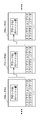
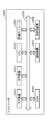
- FIG. 1 is an explanatory diagram showing the concept of a blockchain.
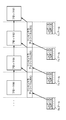
- FIG. 2 is an explanatory diagram showing a data structure of the blockchain shown in FIG.
- FIG. 3 is an explanatory diagram of processing performed at block generation intervals of the blockchain shown in FIG.
- FIG. 4 is an example of a flowchart showing processing performed by executing the consensus algorithm shown in FIG.
- FIG. 5 is a diagram schematically showing a configuration of a control system according to an embodiment.
- FIG. 6 is a block diagram schematically showing the configuration of the device according to the embodiment.
- FIG. 7 is a diagram showing an example of a computer hardware configuration in which the functions of the devices according to the embodiment are realized by software.
- FIG. 8 is a block diagram showing a functional configuration of the authentication server device according to the embodiment.
- FIG. 9 is a flowchart showing the operation of the device according to the embodiment.
- FIG. 10 is a sequence diagram of processing of the control system according to the first embodiment.
- FIG. 11 is a flowchart showing the processing of the device according to the second embodiment.
- FIG. 12 is a flow chart for explaining the effect according to the embodiment.
- FIG. 13 is a flow chart for explaining the effect according to the embodiment.
- FIG. 14 is an explanatory diagram from another viewpoint of the flow diagram shown in FIG.
- FIG. 1 is an explanatory diagram showing the concept of a blockchain.
- FIG. 1 shows an example in which a block B1 generated after the block B0 in time is connected to the block B0, and a block B2 generated after the block B1 in time is connected to the block B1. That is, FIG. 1 shows an example of a block chain in which blocks B0 to B3 are connected in a chain shape.
- FIG. 2 is an explanatory diagram showing the data structure of the blockchain shown in FIG.
- the block of the blockchain shown in FIG. 1 has a plurality of transaction data and a hash value of the immediately preceding block.
- the block B2 contains the hash value of the previous block B1.
- the hash value calculated from the plurality of transaction data included in the block B2 and the hash value of the block B1 is included in the block B3 as the hash value of the block B2.
- the blockchain technology effectively prevents tampering with the connected transaction data by connecting the blocks in a chain while including the contents of the previous block as a hash value. This is because if the past transaction data is changed, the hash value of the block will be different from the value before the change. In order to make the tampered block look correct, all subsequent blocks must be recreated, and this work is extremely difficult in reality, so it can be said that tampering is virtually impossible. Furthermore, since the distributed ledger in which the blockchain is recorded is installed at each of a large number of physically different bases, even if the ledger at a certain point is tampered with, the tampering can be detected from another ledger. From this, it can be said that the blockchain is virtually tamper-proof.
- the process until the block is generated and written to the blockchain corresponds to the process until the block of the blockchain is generated and recorded in the distributed ledger.
- FIG. 3 is an explanatory diagram of processing performed at block generation intervals of the blockchain shown in FIG.
- the transaction data is referred to as Tx data
- the transaction pool is referred to as Tx pool.
- the block generation interval is, for example, the interval from the connection of the block B1 to the block B0 of the blockchain to the connection of the next block B2.
- the transaction pool is a storehouse that stores unverified transactions (transaction data) on the blockchain. As shown in FIG. 3, a plurality of transaction data acquired from one or more users are held in the transaction pool in an unverified state.
- the consensus algorithm is a rule for selecting a "representative" who can write blocks on the blockchain, and is also called a consensus building algorithm. Since it takes time to execute the consensus algorithm, the block generation interval is defined by the time from the start of execution of the consensus algorithm to the completion of execution.
- the consensus algorithm is executed for one or more transaction data selected in the transaction pool by the start of execution. When the execution of the consensus algorithm is completed, the block is written to the blockchain. Note that the consensus algorithm may be executed for all transaction data held in the transaction pool as long as there is a block capacity that can contain all the transaction data held in the transaction pool.
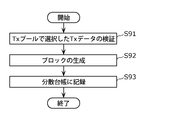
- FIG. 4 is an example of a flowchart showing the processing performed by executing the consensus algorithm shown in FIG.
- a block containing the one or more transaction data is generated (S92) and written to the blockchain (S93).
- writing a new block to the blockchain may be expressed as recording a new block in the distributed ledger.
- the block generation interval is defined by the time required to execute the consensus algorithm.
- it takes about 10 minutes to execute the consensus algorithm, so that the block generation interval is about 10 minutes.
- one block may include a plurality of transaction data transmitted at a plurality of time points by the same user or the same business operator.
- the control method is a transaction data selected from transaction data that is communicably connected to the device and is held by the predetermined timing at each predetermined timing.
- the first server among the plurality of servers and confirming the contents of the blocks recorded in the distributed ledger of the first server in one or more second hours after the first time the contents of the blocks are confirmed.
- the second transaction data one after the first transaction data is generated in the second time, the first block included when the first transaction data is recorded in the distributed ledger and the second block.
- the second transaction data including the information is generated after the second time and transmitted to the first server.
- one device that is, the same user or the same business operator transmits one transaction data including the latest information.
- one block recorded in the distributed ledger contains only one transaction data transmitted by one device. Therefore, it is possible to suppress the wasteful transaction data that is not used from being recorded in the block, and thus it is possible to suppress the wasteful use of network bandwidth and resources.
- the block when confirming the contents of the block, it may be confirmed whether the block includes the third transaction data generated immediately before the first transaction data as the contents of the block.
- the total number of received transactions which is the number of transaction data received by the first server per unit time, and the number of transaction data that can be processed per unit time when the first server records in the distributed ledger.
- the processable number is acquired and the processable number is equal to or greater than the threshold value determined by the total number of receptions, it may be confirmed whether the block includes the third transaction data as the content of the block. ..
- the contents of the block it may be confirmed as the contents of the block whether or not the first transaction data is included in the block.
- a blank block for the one device may be recorded in the distributed ledger, but one transaction data transmitted by one device in one block that is not a blank block recorded in the distributed ledger. Will only be included. Therefore, it is possible to suppress the recording of unused transaction data that is not used in the block, and thus it is possible to suppress the wasteful use of network bandwidth and resources.
- the total number of received transactions which is the number of transaction data received by the first server per unit time, and the number of transaction data that can be processed per unit time when the first server records in the distributed ledger.
- the processable number is acquired and the processable number is smaller than the threshold value determined by the total number of receptions, it may be confirmed whether or not the block includes the first transaction data as the contents of the block. ..
- one block recorded in the distributed ledger can include only one transaction data transmitted by one device.
- each of the data generation devices includes a plurality of transaction data selected from the transaction data held up to the predetermined timing at each predetermined timing in a block and records the data in the distributed ledger. It is a data generation device communicably connected to the server of the above, which includes a processor and a memory, and the processor generates first transaction data including the latest information acquired by the first hour. The data is transmitted to the first server among the plurality of servers, and the processor confirms the contents of the blocks recorded in the distributed ledger of the first server in one or more second hours after the first time.
- the second transaction data one after the first transaction data is generated in the second time
- the first block included when the first transaction data is recorded in the distributed ledger
- the second transaction data including the latest information acquired after the first time is generated after the second time and transmitted to the first server.
- the next transaction data is transmitted according to the result of checking the contents of the blocks recorded in the latest distributed ledger.
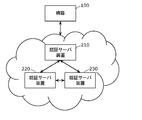
- FIG. 5 is a diagram schematically showing a configuration of a control system according to the present embodiment.
- control system includes a device 100 and authentication server devices 210, 220, 230. These are communicably connected. These communications may be any of wired Internet lines, wireless communications, dedicated communications, and the like.
- FIG. 5 shows an example in which the control system according to the present embodiment includes three servers and one device, but the present invention is not limited to this. That is, the control system according to the present embodiment may be provided with four or more authentication server devices, or may be provided with two or more devices. As will be described later, one device may represent a device used by one user or one business operator and may have a server function.
- the device 100 represents a device used by one user or one business operator.
- the device 100 may have a server function.
- FIG. 6 is a block diagram schematically showing the configuration of the device 100 according to the present embodiment.
- the device 100 includes a processor and a memory in which a program for causing the processor to execute a predetermined process is stored. That is, the device 100 is realized by the processor executing a predetermined program using the memory.
- the device 100 includes a sensor information acquisition unit 101, a transaction data generation unit 102, a transaction data confirmation unit 103, a confirmation method determination unit 104, and a communication unit 105.
- the confirmation method determination unit 104 is not an indispensable configuration and may not be provided in the device 100.
- each component will be described.
- the sensor information acquisition unit 101 periodically acquires information (sensor information) from a sensor mounted on an IoT (Internet of Things) device (not shown). That is, the sensor information acquisition unit 101 periodically acquires the latest sensor information (hereinafter, also referred to as the latest information).
- the sensor information is, for example, weather information or biometric information, but is not limited thereto.
- the sensor information may be data acquired directly from the sensor, or may be data acquired from the sensor via the Internet, for example. Further, the sensor information may be data acquired from the Internet and may be data that is periodically updated or added.
- the transaction data generation unit 102 generates transaction data based on the confirmation result of the transaction data confirmation unit 103.
- the transaction data generation unit 102 transmits the generated transaction data to at least one of the authentication server devices 210, 220, and 230 via the communication unit 105.
- the transaction data generation unit 102 generates the first transaction data including the latest information acquired by the sensor information acquisition unit 101 by the first time, and the generated first transaction data is, for example, an authentication server. It is assumed that the data is transmitted to the device 210. In this case, the transaction data generation unit 102 generates the second transaction data including the latest information acquired after the first hour according to the contents of the block recorded in the latest distribution ledger by the transaction data confirmation unit 103. .. Then, the transaction data generation unit 102 transmits the generated second transaction data to the authentication server device 210.
- the transaction data confirmation unit 103 confirms whether or not the block recorded in the latest distributed ledger includes the transaction data generated by the transaction data generation unit 102 one or two previous times and transmitted. .. By checking the contents of the blocks recorded in the latest distributed ledger, it is possible to check whether the transaction data generated next by the transaction data generation unit 102 is recorded in a block different from the previously generated transaction data. You can check.
- the transaction data confirmation unit 103 confirms the contents of the blocks recorded in the distributed ledger in one or more second hours after the first hour, so that the first block and the second block Check if it is different from the block.
- the block included when the first transaction data is recorded in the distributed ledger is referred to as the first block.
- the block included when the second transaction data is recorded in the distributed ledger is referred to as the second block.
- the transaction data generation unit 102 is provided with the second transaction data including the latest information acquired after the first time. It is generated after the second hour.
- the transaction data confirmation unit 103 determines, for example, whether the block includes the third transaction data generated immediately before the first transaction data as the contents of the block recorded in the latest distributed ledger. You may check. Then, when the transaction data confirmation unit 103 confirms that the block includes the third transaction data, the transaction data generation unit 102 may generate the second transaction data. As a result, for each block recorded in the distributed ledger, only one second transaction data generated by the device 100 is included.
- the transaction data confirmation unit 103 may confirm, for example, whether or not the first transaction data is included in the block as the contents of the block recorded in the latest distributed ledger. Then, when the transaction data confirmation unit 103 confirms that the block includes the first transaction data, the transaction data generation unit 102 may generate the second transaction data. As a result, a blank block that does not include the second transaction data may be recorded in the distributed ledger, but one block that is not a blank block recorded in the distributed ledger is one first block generated by the device 100. 2 Only transaction data will be included.
- the confirmation method determination unit 104 may determine a method for confirming the contents of the blocks recorded in the latest distributed ledger performed by the transaction data confirmation unit 103 according to the processing capacity of the authentication server device 210.
- the confirmation method determination unit 104 can process the total number of transactions, which is the number of transaction data received by the first server per unit time, and when the first server records in the distributed ledger, per unit time. The number of transaction data that can be processed is acquired.
- the confirmation method determination unit 104 includes the third transaction data in the block as the contents of the block recorded in the latest distribution ledger in the transaction data confirmation unit 103. You may be asked to confirm that it is.
- the confirmation method determination unit 104 sets the first transaction data in the block as the content of the block recorded in the latest distribution ledger in the transaction data confirmation unit 103. May be checked to see if it is included.
- the confirmation method determination unit 104 is transmitted to the transaction data confirmation unit 103 by generating the transaction data generation unit 102 one or two previous times in the block recorded in the latest distributed ledger. You can check whether transaction data is included.
- the number of transaction data transmitted from a plurality of devices including the device 100 is confirmed by the authentication server device 210 or the like, the number can be roughly acquired to the extent that the above confirmation can be performed even if the number is not accurate. it can. Further, the number of transaction data that can be processed per unit time is predetermined for each of the authentication server device 210 and the like.
- the communication unit 105 communicates with the authentication server devices 210, 220, 230.
- the communication unit 105 transmits the transaction data generated by the transaction data generation unit 102 to at least one of the authentication server devices 210, 220, and 230. Further, the communication unit 105 may acquire the total number of receptions and the number that can be processed as the processing capacity of the authentication server devices 210, 220, 230 and transmit them to the confirmation method determination unit 104. Further, the communication unit 105 may acquire the latest contents of the distributed ledger of the authentication server devices 210, 220, and 230 and transmit the contents to the transaction data confirmation unit 103.
- FIG. 7 is a diagram showing an example of a hardware configuration of a computer 1000 that realizes the functions of the device 100 according to the present embodiment by software.
- the computer 1000 is a computer including an input device 1001, an output device 1002, a CPU 1003, an internal storage 1004, a RAM 1005, a reading device 1007, a transmission / reception device 1008, and a bus 1009.
- the input device 1001, the output device 1002, the CPU 1003, the built-in storage 1004, the RAM 1005, the reading device 1007, and the transmitting / receiving device 1008 are connected by the bus 1009.
- the input device 1001 is a device that serves as a user interface such as an input button, a touch pad, and a touch panel display, and accepts user operations.
- the input device 1001 may be configured to accept a user's contact operation, a voice operation, a remote control, or the like.
- the built-in storage 1004 is a flash memory or the like. Further, in the built-in storage 1004, at least one of a program for realizing the function of the device 100 and an application using the functional configuration of the device 100 may be stored in advance.
- RAM1005 is a random access memory (RandomAccessMemory), which is used to store data or the like when executing a program or application.
- RandomAccessMemory Random AccessMemory
- the reading device 1007 reads information from a recording medium such as a USB (Universal Serial Bus) memory.
- the reading device 1007 reads the program or application from the recording medium on which the above program or application is recorded and stores the program or application in the built-in storage 1004.
- the transmitter / receiver 1008 is a communication circuit for wirelessly or wired communication.
- the transmission / reception device 1008 communicates with, for example, a server device connected to a network, downloads a program or application as described above from the server device, and stores the program or application in the built-in storage 1004.
- the CPU 1003 is a central processing unit (Central Processing Unit), copies programs and applications stored in the internal storage 1004 to RAM 1005, and sequentially reads and executes instructions included in the programs or applications from RAM 1005.
- Central Processing Unit Central Processing Unit
- FIG. 8 is a block diagram showing a functional configuration of the authentication server device 210 according to the present embodiment.
- the authentication server device 210 is communicably connected to the device 100, and records selected transaction data among the transaction data held by the predetermined timing at each predetermined timing in the distributed ledger.
- the authentication server device 210 is an example of a first server that records in the distributed ledger.
- the authentication server device 210 includes a transaction data storage unit 211, a transaction data verification unit 212, a ledger storage unit 213, and a communication unit 214.
- the authentication server device 210 can be realized by the processor executing a predetermined program using the memory.
- each component will be described.
- the transaction data storage unit 211 functions as a transaction pool that stores transaction data that has not yet been verified on the blockchain.
- the transaction data storage unit 211 stores, for example, the first transaction data, the second transaction data, or the third transaction data acquired from the device 100, and temporarily holds the transaction data storage unit 211.
- the transaction data storage unit 211 deletes the transaction data selected and written in the distributed ledger among the held transaction data, or discards the transaction data that is no longer needed.
- the transaction data storage unit 211 may verify the electronic signature included in the transaction data and the validity of the transaction data. Then, the transaction data storage unit 211 may hold the transaction data acquired from the device 100 only when the verification of the transaction data acquired from the device 100 is successful. Note that this verification may be skipped.
- Transaction data verification unit 212 verifies the validity of the selected transaction data among the transaction data stored in the transaction data storage unit 211 by executing the consensus algorithm.
- PBFT Practical Byzantine Fault Tolerance
- POS Proof Of Stake
- the transaction data verification unit 212 receives reports from each of the other plurality of authentication server devices 220 and 230 indicating whether or not the transaction data verification is successful, and the number of such reports is large. Determine if the number exceeds a predetermined number. Then, when the number of the reports exceeds a predetermined number, the transaction data verification unit 212 may determine that the validity of the transaction data has been verified by the consensus algorithm.
- the ledger storage unit 213 is a processing unit that stores new transaction data to be stored in the distributed ledger in the distributed ledger.
- the ledger storage unit 213 generates a block including transaction data whose validity has been verified by the transaction data verification unit 212, and stores the generated block in the distributed ledger. In other words, the ledger storage unit 213 generates a block containing transaction data whose validity has been verified by the transaction data verification unit 212, and writes it in the block chain stored in the distributed ledger.
- the communication unit 214 communicates with the authentication server devices 220 and 230, and communicates with the device 100.
- the communication unit 214 transmits the transaction data to be verified by the transaction data verification unit 212 to the authentication server devices 220 and 230. Further, the communication unit 214 may communicate with the device 100 to acquire transaction data, or may transmit the total number of receptions and the number that can be processed to the device 100 as the processing capacity of the authentication server device 210 itself. Further, the communication unit 214 may transmit the contents of the distributed ledger owned by the authentication server device 210 itself to the device 100.
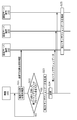
- FIG. 9 is a flowchart showing the operation of the device 100 according to the present embodiment.
- FIG. 9 shows an operation for the device 100 to include only one transaction data transmitted by the device 100 for the device 100 in one or more transaction data included in one block recorded in the distributed ledger. There is.
- the device 100 generates the first transaction data including the latest information acquired by the first hour and transmits it to the first server (S10).
- the first server corresponds to, for example, the authentication server device 210.
- the device 100 confirms the contents of the blocks recorded in the distributed ledger of the first server in the second time after the first time (S11). More specifically, when the device 100 confirms the contents of the blocks recorded in the distributed ledger and generates the second transaction data one after the first transaction data in the second time, the first transaction data. Check if it is included in a different block.
- the device 100 when the device 100 generates the second transaction data in the second time and is included in a block different from the first transaction data (YES in S12), the device 100 includes the latest information acquired after the first time. 2 Transaction data is generated and transmitted to the first server (S13). In the present embodiment, the device 100 generates the second transaction data and transmits it to the first server from the second time onward until the execution of the consensus algorithm executed at the second time is completed.
- the device 100 When the second transaction data is generated in the second time, the device 100 returns to step S11 and repeats the process if it is included in the same block as the first transaction data (No in S12).
- Example 1 Subsequently, the processing of the control system when the device 100 confirms whether or not the block recorded in the latest distributed ledger contains the transaction data transmitted two times before by the device 100 itself as the block contents. Will be described as Example 1.
- FIG. 10 is a sequence diagram of processing of the control system according to the first embodiment.
- FIG. 10 shows an example of processing of the control system after S11 shown in FIG.
- the device 100 generates the first transaction data including the latest information acquired by the first hour and transmits it to the authentication server devices 210, 220, 230, and the authentication server devices 210, 220, 230 It is assumed that the first transaction data is at least pooled (stored).
- the device 100 confirms the latest distributed ledger of the authentication server device 210 (S21).
- the device 100 confirms the latest distributed ledger by, for example, requesting the latest distributed ledger from the authentication server device 210 and acquiring the latest distributed ledger transmitted by the authentication server device 210.
- the device 100 refers to (confirms) the latest block of the distributed ledger acquired, and confirms whether the device 100 itself includes the third transaction data transmitted two times before (S22).
- the transaction data transmitted by the device 100 immediately before is set as the first transaction data.
- the transaction data transmitted by the device 100 two times before that is, the transaction data transmitted one before the first transaction data is used as the third transaction data.
- the transaction data transmitted immediately before the second transaction data generated and transmitted by the device 100 from now on (that is, after the second time) is referred to as the first transaction data.
- the transaction data transmitted two times before by the device 100 with reference to the second transaction data to be transmitted from now on is referred to as a third transaction data.
- step S22 the device 100 includes the latest information acquired after the first hour when the third transaction data transmitted by the device 100 itself two times before is included in the latest distributed ledger (YES in S22).
- the second transaction data is generated (S23).
- step S22 if the device 100 itself does not include the third transaction data transmitted two times before in the latest distributed ledger (NO in S22), the device 100 returns to step S21 and repeats the process. ..
- the device 100 transmits the second transaction data generated in step S23 to the authentication server devices 210, 220, 230 (S24).
- the authentication server devices 210, 220, and 230 each pool (store) the second transaction data acquired from the device 100 (S25).
- Example 2 a process in which the device 100 determines a method for confirming the contents of the blocks recorded in the latest distributed ledger of the authentication server device 210 according to the processing capacity of the authentication server device 210 will be described as Example 2.
- the method of confirming the contents of the block is to confirm whether or not the block recorded in the latest distributed ledger includes the transaction data transmitted by the device 100 itself two or one before. It will be explained as a method of doing so.
- FIG. 11 is a flowchart showing the processing of the device 100 according to the second embodiment.
- the device 100 Before performing step S31 described below, the device 100 generates the first transaction data including the latest information acquired by the first time and transmits it to the authentication server device 210, and the authentication server device 210 It is assumed that the first transaction data is at least pooled (stored).
- the device 100 acquires from the authentication server device 210 the number of processes that can be processed by the authentication server device 210 per unit time and the total number of receptions (S31).
- the device 100 confirms whether the processable number acquired in step S31 is equal to or greater than the threshold value (that is, the processable number ⁇ threshold value) (S32).
- the threshold value here is determined from the total number of receptions acquired by the device 100 in step S31, and is set to, for example, a value of about several% to several tens of% of the total number of receptions.
- step S32 when the number that can be processed is smaller than the threshold value (NO in S32), the device 100 confirms the latest distributed ledger of the authentication server device 210 in the second time after the first time (S33). Also in this embodiment, the device 100 confirms the latest distributed ledger by, for example, requesting the latest distributed ledger from the authentication server device 210 and acquiring the latest distributed ledger transmitted by the authentication server device 210.
- step S32 if the number that can be processed is equal to or greater than the threshold value (YES in S32), the process proceeds to step S33.
- the subsequent processing that is, the processing of step S33, step S35, and step S36 is as described in steps S21 to S24 of FIG. 10, and thus the description thereof will be omitted.
- the device 100 has been described as generating the first transaction data including the latest information and transmitting it to the authentication server device 210 before step S31, but the present invention is not limited to this.
- the first transaction data including the latest information may be generated after steps S31 and S32 and before step S33 and transmitted to the authentication server device 210.
- one device 100 that is, the same user or the same business operator has one transaction data including the latest information.
- the device 100 does not transmit the transaction data in the PUSH type, but transmits the transaction data one by one in the ASK type.
- one block recorded in the distributed ledger contains only one transaction data transmitted by one device 100 for the device 100. Therefore, it is possible to suppress the recording of unused transaction data that is not used in the block, and thus it is possible to suppress the wasteful use of network bandwidth and resources.
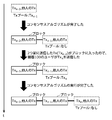
- FIGS. 12 to 14. 12 and 13 are flow charts for explaining the effects according to the embodiment.
- FIG. 14 is an explanatory diagram from another viewpoint of the flow diagram shown in FIG.
- the first transaction data generated immediately before by the device 100 based on the second transaction data to be generated next is included in the block recorded in the latest distributed ledger. After confirming that, a case where the second transaction data is generated and transmitted will be described.
- the first transaction data is referred to as Tx n-1
- the second transaction data is referred to as Tx n
- the period during which the consensus algorithm is executed is referred to as consensus.
- the period during which the consensus algorithm is executed is shown as the period required to write a block to the blockchain.
- the consensus algorithm is executed for the transaction data transmitted before the start of the consensus algorithm, and is included in the block and written to the blockchain after the execution of the consensus algorithm is completed. ing. Transaction data sent before the start of the consensus algorithm is held in the transaction pool.
- the device 100 may periodically check whether the Tx n-1 transmitted after generation is included in the block written in the blockchain. In this case, the device 100 generates and transmits Tx n after confirming that the block written in the blockchain contains Tx n-1 . Then, the transaction data generated and transmitted by the device 100 is not included in each of the continuous blocks (a blank block for the device 100 occurs). However, the block that is not a blank block includes only one transaction data generated and transmitted by the device 100 for the device 100.
- the device 100 may transmit the next transaction data after confirming that the block written in the blockchain includes the transaction data previously transmitted by the device 100.
- the device 100 suppresses that two or more transaction data transmitted by the device 100 are included in one block, although a blank block for the device 100 may occur in the block written to the blockchain. be able to.
- one block recorded in the distributed ledger includes only one transaction data transmitted by the device 100 for the device 100. Will be.
- the block in which the third transaction data generated two times before by the device 100 based on the second transaction data to be generated next is recorded in the latest distributed ledger.
- the first transaction data is the transaction data generated immediately before the second transaction data to be generated next, and is expressed as Tx n-1 .
- the second transaction data is expressed as Tx n
- the third transaction data generated immediately before the first transaction data is expressed as Tx n-2 .
- the transaction data scheduled to be generated one after the second transaction data is expressed as Tx n + 1 .
- the device 100 in order to confirm the generation and transmission timing of Tx n , the device 100 includes Tx n-2 in the block written in the blockchain after the transmission of Tx n-1. I'm checking if it was done. Then, when the device 100 confirms that the block written in the blockchain contains Tx n-2 , the device 100 generates and transmits Tx n .
- device 100 in order to confirm the production and the transmission timing of the Tx n + 1, and after transmission of the Tx n, Tx n-1 is confirmed or not included in the blocks written in the block chain. Then, when the device 100 confirms that the block written in the blockchain contains Tx n-1 , Tx n + 1 is generated and transmitted. Therefore, each consecutive block includes transaction data generated and transmitted by the device 100 (a blank block for the device 100 does not occur).
- the device 100 transmits the next transaction data after confirming that the block written in the blockchain includes the transaction data transmitted by the device 100 two times before.
- one block contains only one transaction data generated and transmitted by the device 100 for the device 100. That is, it is possible to prevent two or more transaction data transmitted by the device 100 from being included in one block. Further, since each block includes only one transaction data generated and transmitted by the device 100 for the device 100, it is possible to suppress the occurrence of a blank block for the device 100.
- the block recorded in the latest distributed ledger contains the first transaction data, or is generated immediately before the first transaction data. It may be confirmed that the third transaction data is included. Thereby, it is possible to select whether or not to allow the blank block for the device 100 to be recorded in the distributed ledger according to the processing capacity of the authentication server device.
- Each device is specifically a computer system composed of a microprocessor, a ROM, a RAM, a hard disk unit, a display unit, a keyboard, a mouse, and the like.
- a computer program is recorded in the RAM or the hard disk unit.
- the microprocessor operates according to the computer program, each device achieves its function.
- a computer program is configured by combining a plurality of instruction codes indicating instructions to a computer in order to achieve a predetermined function.
- Each device may be composed of a part or all of the constituent elements of one system LSI (Large Scale Integration: large-scale integrated circuit).
- a system LSI is an ultra-multifunctional LSI manufactured by integrating a plurality of components on a single chip, and specifically, is a computer system including a microprocessor, ROM, RAM, and the like. .. A computer program is recorded in the RAM. When the microprocessor operates according to the computer program, the system LSI achieves its function.
- each part of the component components constituting each of the above devices may be individually integrated into one chip, or may be integrated into one chip so as to include a part or all of them.
- system LSI Although it is referred to as a system LSI here, it may be referred to as an IC, an LSI, a super LSI, or an ultra LSI due to the difference in the degree of integration. Further, the method of making an integrated circuit is not limited to LSI, and may be realized by a dedicated circuit or a general-purpose processor. An FPGA (Field Programmable Gate Array) that can be programmed after the LSI is manufactured, or a reconfigurable processor that can reconfigure the connection and settings of the circuit cells inside the LSI may be used.
- FPGA Field Programmable Gate Array
- each of the above devices may be composed of an IC card or a single module that can be attached to and detached from each device.
- the IC card or the module is a computer system composed of a microprocessor, ROM, RAM and the like.
- the IC card or the module may include the above-mentioned super multifunctional LSI.
- the microprocessor operates according to a computer program, the IC card or the module achieves its function. This IC card or this module may have tamper resistance.
- the present disclosure may be the method shown above. Further, it may be a computer program that realizes these methods by a computer, or it may be a digital signal composed of the computer program.
- the present disclosure discloses a recording medium in which the computer program or the digital signal can be read by a computer, such as a flexible disc, a hard disk, a CD-ROM, an MO, a DVD, a DVD-ROM, a DVD-RAM, and a BD (Blu-ray).
- a computer such as a flexible disc, a hard disk, a CD-ROM, an MO, a DVD, a DVD-ROM, a DVD-RAM, and a BD (Blu-ray).
- BD Blu-ray
- the computer program or the digital signal may be transmitted via a telecommunication line, a wireless or wired communication line, a network typified by the Internet, data broadcasting, or the like.
- the present disclosure is a computer system including a microprocessor and a memory, in which the memory records the computer program, and the microprocessor may operate according to the computer program.
- This disclosure can be used for a method of controlling transaction data recorded in a distributed ledger and a data generator.
- a distributed ledger that records the latest information in the distributed ledger regularly but uses only the latest information and does not use past information. It can be used as a control method for transaction data to be recorded in and a data generator.
Landscapes
- Engineering & Computer Science (AREA)
- Business, Economics & Management (AREA)
- Accounting & Taxation (AREA)
- Theoretical Computer Science (AREA)
- Physics & Mathematics (AREA)
- General Physics & Mathematics (AREA)
- Finance (AREA)
- General Business, Economics & Management (AREA)
- Strategic Management (AREA)
- Databases & Information Systems (AREA)
- Computer Security & Cryptography (AREA)
- Computer Networks & Wireless Communication (AREA)
- Computing Systems (AREA)
- Data Mining & Analysis (AREA)
- General Engineering & Computer Science (AREA)
- Signal Processing (AREA)
- Information Retrieval, Db Structures And Fs Structures Therefor (AREA)
Abstract
L'invention concerne un procédé de commande qui consiste à : générer et envoyer à un premier serveur parmi une pluralité de serveurs, des premières données de transaction comprenant les dernières informations acquises jusqu'à un premier instant (S10) ; confirmer, à un ou plusieurs seconds instants ultérieurs au premier instant, les contenus de blocs enregistrés dans un registre distribué du premier serveur, et confirmer ainsi, lorsque des secondes données de transaction après la génération des premières données de transaction au second instant, si un premier bloc, qui est inclus lorsque les premières données de transaction sont enregistrées dans le registre distribué, et un second bloc, qui est inclus lorsque les secondes données de transaction sont enregistrées dans le registre distribué, sont différents ou non (S11) ; et lorsque le premier bloc et le second bloc sont différents (oui à l'étape S12), générer et transmettre au premier serveur au second instant et ultérieurement, les secondes données de transaction comprenant les dernières informations acquises après le premier instant (S13).
Priority Applications (4)
| Application Number | Priority Date | Filing Date | Title |
|---|---|---|---|
| CN202080030658.0A CN113785282A (zh) | 2019-04-25 | 2020-04-24 | 控制方法、数据生成装置及程序 |
| JP2021516282A JP7478726B2 (ja) | 2019-04-25 | 2020-04-24 | 制御方法、データ生成装置、及びプログラム |
| EP20795638.4A EP3961412A4 (fr) | 2019-04-25 | 2020-04-24 | Procédé de commande, dispositif de génération de données et programme |
| US17/506,136 US20220044228A1 (en) | 2019-04-25 | 2021-10-20 | Control method, data generation device, and recording medium |
Applications Claiming Priority (2)
| Application Number | Priority Date | Filing Date | Title |
|---|---|---|---|
| US201962838436P | 2019-04-25 | 2019-04-25 | |
| US62/838,436 | 2019-04-25 |
Related Child Applications (1)
| Application Number | Title | Priority Date | Filing Date |
|---|---|---|---|
| US17/506,136 Continuation US20220044228A1 (en) | 2019-04-25 | 2021-10-20 | Control method, data generation device, and recording medium |
Publications (1)
| Publication Number | Publication Date |
|---|---|
| WO2020218550A1 true WO2020218550A1 (fr) | 2020-10-29 |
Family
ID=72941057
Family Applications (1)
| Application Number | Title | Priority Date | Filing Date |
|---|---|---|---|
| PCT/JP2020/017789 Ceased WO2020218550A1 (fr) | 2019-04-25 | 2020-04-24 | Procédé de commande, dispositif de génération de données et programme |
Country Status (5)
| Country | Link |
|---|---|
| US (1) | US20220044228A1 (fr) |
| EP (1) | EP3961412A4 (fr) |
| JP (1) | JP7478726B2 (fr) |
| CN (1) | CN113785282A (fr) |
| WO (1) | WO2020218550A1 (fr) |
Families Citing this family (3)
| Publication number | Priority date | Publication date | Assignee | Title |
|---|---|---|---|---|
| CN113568972B (zh) * | 2021-07-13 | 2025-03-07 | 华中科技大学 | 一种面向图式区块链的混合共识实现装置及实现方法 |
| CN115237921A (zh) * | 2022-07-29 | 2022-10-25 | 中国银行股份有限公司 | 一种交易流水存储的方法及装置 |
| CN118820212B (zh) * | 2024-06-18 | 2024-12-31 | 广东联合电子服务股份有限公司 | 一种在途计费数据对比纠错的方法、设备及介质 |
Citations (2)
| Publication number | Priority date | Publication date | Assignee | Title |
|---|---|---|---|---|
| JP2009026029A (ja) * | 2007-07-19 | 2009-02-05 | Nippon Telegr & Teleph Corp <Ntt> | トランザクション制御装置、トランザクション制御方法、トランザクション制御プログラムおよびそのプログラムを記憶した記憶媒体 |
| JP2019028525A (ja) * | 2017-07-26 | 2019-02-21 | 株式会社日立製作所 | 運用管理方法、運用管理システム、および、運用管理プログラム |
Family Cites Families (8)
| Publication number | Priority date | Publication date | Assignee | Title |
|---|---|---|---|---|
| US8572137B2 (en) * | 2009-09-08 | 2013-10-29 | International Business Machines Corporation | Data de-duplication in a distributed network |
| US20160283920A1 (en) * | 2015-03-28 | 2016-09-29 | Justin Fisher | Authentication and verification of digital data utilizing blockchain technology |
| US11829998B2 (en) * | 2016-06-07 | 2023-11-28 | Cornell University | Authenticated data feed for blockchains |
| KR101851261B1 (ko) * | 2017-06-09 | 2018-04-23 | 씨토 주식회사 | 사설 블록체인 데이터 기반 중앙집중형 원격검침 보안시스템 |
| AU2018430192A1 (en) * | 2018-06-25 | 2021-01-07 | Redbelly Blockchain Holdings Pty Ltd | Blockchain system and method |
| CN109118220A (zh) * | 2018-08-03 | 2019-01-01 | 上海点融信息科技有限责任公司 | 在分布式网络中用于处理事务的方法、装置及存储介质 |
| US12008503B2 (en) * | 2018-11-07 | 2024-06-11 | International Business Machines Corporation | Sensor risk assessment database |
| EP3822894A1 (fr) * | 2019-11-13 | 2021-05-19 | Telefonica Digital España, S.L.U. | Messagerie électronique sécurisée garantissant l'intégrité et la non-répudiation |
-
2020
- 2020-04-24 WO PCT/JP2020/017789 patent/WO2020218550A1/fr not_active Ceased
- 2020-04-24 CN CN202080030658.0A patent/CN113785282A/zh active Pending
- 2020-04-24 JP JP2021516282A patent/JP7478726B2/ja active Active
- 2020-04-24 EP EP20795638.4A patent/EP3961412A4/fr not_active Withdrawn
-
2021
- 2021-10-20 US US17/506,136 patent/US20220044228A1/en not_active Abandoned
Patent Citations (2)
| Publication number | Priority date | Publication date | Assignee | Title |
|---|---|---|---|---|
| JP2009026029A (ja) * | 2007-07-19 | 2009-02-05 | Nippon Telegr & Teleph Corp <Ntt> | トランザクション制御装置、トランザクション制御方法、トランザクション制御プログラムおよびそのプログラムを記憶した記憶媒体 |
| JP2019028525A (ja) * | 2017-07-26 | 2019-02-21 | 株式会社日立製作所 | 運用管理方法、運用管理システム、および、運用管理プログラム |
Non-Patent Citations (2)
| Title |
|---|
| IMAMURA, MITSUYOSHI : "CO-004 : Analysis and evaluation of blockchain technology", LECTURE PROCEEDINGS OF 16TH FORUM ON INFORMATION TECHNOLOGY (FIT) 2007, NETWORK-SECURITY UBIQUITOUS-MOBILE COMPUTING EDUCATION-HUMANITIES INFORMATION SYSTEM, vol. 4, 5 September 2017 (2017-09-05), JP, pages 103 - 108, XP009531005 * |
| See also references of EP3961412A4 * |
Also Published As
| Publication number | Publication date |
|---|---|
| EP3961412A1 (fr) | 2022-03-02 |
| CN113785282A (zh) | 2021-12-10 |
| JP7478726B2 (ja) | 2024-05-07 |
| EP3961412A4 (fr) | 2022-06-29 |
| JPWO2020218550A1 (fr) | 2020-10-29 |
| US20220044228A1 (en) | 2022-02-10 |
Similar Documents
| Publication | Publication Date | Title |
|---|---|---|
| CN109496419B (zh) | 文件处理方法、装置和系统 | |
| CN111382456B (zh) | 提案消息处理方法、装置、设备以及存储介质 | |
| CN111343212B (zh) | 消息处理方法、装置、设备以及存储介质 | |
| WO2018158936A1 (fr) | Dispositif de gestion de chaîne de blocs, procédé de gestion de chaîne de blocs et programme | |
| WO2020218550A1 (fr) | Procédé de commande, dispositif de génération de données et programme | |
| CN110866289A (zh) | 基于区块链的数据处理方法、装置、服务器及存储介质 | |
| CN110851535B (zh) | 基于区块链的数据处理方法、装置、存储介质及终端 | |
| CN111488372A (zh) | 一种数据处理方法、设备及存储介质 | |
| CN113505354A (zh) | 一种数据处理方法、装置及存储介质 | |
| CN109766365A (zh) | 基于redis的运行事件控制方法、装置及电子设备 | |
| US20220114276A1 (en) | Controlling a data network with respect to a use of a distributed database | |
| US9563751B1 (en) | License utilization management system service suite | |
| WO2020213678A1 (fr) | Procédé de commande, serveur et structure de données | |
| KR102389139B1 (ko) | 블록체인 기반 분산저장을 통한 공간향상 솔루션 시스템 | |
| CN109586949A (zh) | 区块生成方法及计算机存储介质 | |
| US12093997B1 (en) | Systems and methods for bartering services and goods using distributed ledger techniques | |
| WO2021039453A1 (fr) | Procédé de commande, serveur et programme | |
| CN111831669A (zh) | 根据区块链上互联网投票数据的存储方法及其装置 | |
| CN111831641A (zh) | 基于pbft共识的交通数据存储方法及装置 | |
| CN117493370A (zh) | 数据获取方法、装置、设备、可读存储介质及程序产品 | |
| CN120569710B (zh) | 可编程设备、版本管理方法及记录介质 | |
| CN114377400A (zh) | 一种区块链游戏的处理方法、计算机设备 | |
| EP4687054A1 (fr) | Procédé et système de contrôle de permission d'utilisation de données d'apprentissage | |
| CN111831851A (zh) | 基于pbft共识的家庭监控数据存储方法及装置 | |
| CN111833051A (zh) | 基于pbft共识的实物抵押数据存储方法及装置 |
Legal Events
| Date | Code | Title | Description |
|---|---|---|---|
| 121 | Ep: the epo has been informed by wipo that ep was designated in this application |
Ref document number: 20795638 Country of ref document: EP Kind code of ref document: A1 |
|
| ENP | Entry into the national phase |
Ref document number: 2021516282 Country of ref document: JP Kind code of ref document: A |
|
| NENP | Non-entry into the national phase |
Ref country code: DE |
|
| ENP | Entry into the national phase |
Ref document number: 2020795638 Country of ref document: EP Effective date: 20211125 |