WO2020221012A1 - Procédé de détermination d'informations de mouvement d'un point caractéristique d'image, procédé d'exécution de tâche et dispositif - Google Patents
Procédé de détermination d'informations de mouvement d'un point caractéristique d'image, procédé d'exécution de tâche et dispositif Download PDFInfo
- Publication number
- WO2020221012A1 WO2020221012A1 PCT/CN2020/085000 CN2020085000W WO2020221012A1 WO 2020221012 A1 WO2020221012 A1 WO 2020221012A1 CN 2020085000 W CN2020085000 W CN 2020085000W WO 2020221012 A1 WO2020221012 A1 WO 2020221012A1
- Authority
- WO
- WIPO (PCT)
- Prior art keywords
- pixel
- image
- target
- pixel area
- feature point
- Prior art date
- Legal status (The legal status is an assumption and is not a legal conclusion. Google has not performed a legal analysis and makes no representation as to the accuracy of the status listed.)
- Ceased
Links
Images




Classifications
-
- G—PHYSICS
- G06—COMPUTING OR CALCULATING; COUNTING
- G06T—IMAGE DATA PROCESSING OR GENERATION, IN GENERAL
- G06T7/00—Image analysis
- G06T7/20—Analysis of motion
- G06T7/246—Analysis of motion using feature-based methods, e.g. the tracking of corners or segments
-
- G—PHYSICS
- G06—COMPUTING OR CALCULATING; COUNTING
- G06T—IMAGE DATA PROCESSING OR GENERATION, IN GENERAL
- G06T2207/00—Indexing scheme for image analysis or image enhancement
- G06T2207/10—Image acquisition modality
- G06T2207/10016—Video; Image sequence
Definitions
- This application relates to the field of Internet technology, and in particular to a method for determining motion information of image feature points, a task execution method and equipment.
- Feature point tracking technology is the process of analyzing the position changes of the same feature point in consecutive multiple frames of images.
- motion information is usually used to describe the change process of feature points in different images.
- the process of determining the motion information of the image feature points may include: the computer device obtains the pixel area where the feature points are located in the current frame of image , In order to make the result accurate, the pixel area is usually selected larger. The computer device determines the motion information of image feature points based on multiple pixel points in multiple pixel areas and multiple pixel points in multiple corresponding pixel areas in a subsequent frame of image.
- the traditional solution due to the large selected pixel area, the number of pixels to be calculated is large, resulting in low efficiency in the process of determining the motion information of the image feature points.
- a method, device, computer device, and storage medium for determining motion information of image feature points are provided, and a task execution method, device, target device, and storage medium are also provided.
- a method for determining motion information of image feature points which is executed by a computer device, and includes:
- a second pixel area including the target feature point in the first image is determined, and the second pixel area is The pixel difference of the plurality of second pixels is greater than the pixel difference of the plurality of first pixels, the number of the plurality of second pixels is the same as the number of the plurality of first pixels, and the pixel difference is used to indicate The degree of change in pixel values of multiple pixels;
- the motion information of the target feature point is acquired, and the motion information is used to indicate that the target feature point is in the first image and the second image The position changes in.
- a task execution method executed by a target device, the method including:
- the target task is executed.
- a device for determining motion information of image feature points comprising:
- a determining module configured to determine a first image and a second image, where the first image and the second image include the same object
- the determining module is further configured to determine a first pixel area in the first image that includes the target feature point based on the target feature point on the object in the first image;
- the determining module is further configured to determine the second pixel area in the first image that includes the target feature point according to the pixel difference of the multiple first pixel points in the first pixel area and the target feature point ,
- the pixel difference of the plurality of second pixels in the second pixel area is greater than the pixel difference of the plurality of first pixels, and the number of the plurality of second pixels is the same as the number of the plurality of first pixels ,
- the pixel difference is used to indicate the degree of change of the pixel values of multiple pixels;
- the acquiring module is configured to acquire the motion information of the target feature point according to the plurality of second pixel points and the second image, and the motion information is used to indicate that the target feature point is in the first image and The position in the second image changes.
- the determining module is further configured to, when the pixel difference of a plurality of first pixel points in the first pixel area is less than a target difference value, obtain a value greater than the first pixel difference according to the target feature point.
- the pixel area includes the second pixel area of the target feature point.
- the determining module is further configured to, when the pixel difference of the plurality of first pixel points in the first pixel area is less than the target difference value, obtain the difference from the first pixel point according to the target feature point. For a second pixel area with the same size of the pixel area, the pixel points included in the first pixel area and the second pixel area are different.
- the determining module is further configured to expand the first pixel area into a second pixel area including the target feature point according to a target expansion coefficient and centering on the target feature point.
- the determining module is further configured to move the first pixel area to a second pixel area including the target feature point according to the target feature point and according to the target movement track.
- the determining module is further configured to obtain a third pixel that includes the target feature point according to the target feature point when the pixel difference of the plurality of first pixel points is less than the target difference value Area, the number of the plurality of third pixels in the third pixel area is the same as the number of the plurality of first pixels; the number of the plurality of pixels is determined according to the pixel values of the plurality of third pixels in the third pixel area Pixel differences of three third pixels; and when the pixel differences of the plurality of third pixels are not less than the target difference value, the third pixel area is determined as the second pixel area.
- the determining module is further configured to increase the first sampling step of the first pixel area to the first pixel area according to the expansion coefficient from the first pixel area to the third pixel area.
- a two-sampling step size according to the second sampling step size, obtain third pixel points with the same number as the plurality of first pixel points from the third pixel area.
- the determining module is further configured to obtain, from the third pixel area, the same number of first pixels as the plurality of first pixels according to the first sampling step of the first pixel area. Three pixels.
- the device further includes:
- a detection module configured to detect whether the size of the third pixel area is greater than a target threshold when the pixel difference of the plurality of third pixels is smaller than the target difference value
- the determining module is further configured to determine a fourth pixel area larger than the third pixel area when the size of the third pixel area is not greater than the target threshold;
- the determining module is further configured to determine a second pixel area in the first image that includes the target feature point based on the pixel difference of a plurality of fourth pixel points in the fourth pixel area and the target feature point ,
- the number of the plurality of fourth pixels is the same as the number of the plurality of first pixels.
- the pixel difference is the pixel variance of the multiple pixels or the smallest feature value of the gradient matrix of the multiple pixels, and the pixel variance is used to represent the pixels of the multiple pixels.
- the degree of change of the value relative to the average value of the pixel, and the gradient matrix is used to indicate the degree of change of the pixel values of the plurality of pixels in the horizontal gradient relative to the pixel average value and the change in the vertical gradient relative to the pixel average value. degree.
- the shape of the first pixel area and the second pixel area is any shape of a square, a rectangle, a circle, a ring, an irregular polygon, or an irregular curve.
- the determining module is further configured to obtain the multiple pixels among multiple pixel points on the area boundary of the first pixel area according to the first sampling step of the first pixel area. First pixel points; and determining the pixel difference of the plurality of first pixel points according to the pixel values of the plurality of first pixel points.
- a task execution device includes:
- An obtaining module configured to obtain a first image and a second image, the first image and the second image including the same object
- the acquisition module is further configured to acquire the motion information of the target feature point on the object in the first image, and the motion information is used to indicate that the target feature point is in the first image and the second image. Position changes in the image;
- the task processing module is used to execute the target task based on the motion information of the target feature point.
- the target task includes a route planning task
- the task processing module is further configured to determine a distance target based on the movement information of multiple target feature points when the number of target feature points is multiple. At least one scene object whose device does not exceed a first threshold, and the target device is a device that collects the first image and the second image; and according to the location of the destination whose distance to the target device does not exceed the second threshold and the At least one scene object determines a first target route for the target device to reach the destination, and the second threshold is greater than the first threshold.
- the target task includes an object recognition task
- the task processing module is further configured to determine the target feature point based on the movement information of the multiple target feature points when the number of the target feature points is multiple.
- the multiple first feature points whose motion information meets the target condition among the multiple target feature points, and the multiple first feature points are used to indicate the motion in multiple objects included in the first image and the second image Object; and determining the object category to which the moving object belongs based on the positions of the plurality of first feature points in the first image or the second image.
- a computer device including a processor and a memory, and computer-readable instructions are stored in the memory, and when the computer-readable instructions are executed by the processor, the processor executes the image feature The steps of the method for determining the movement information of the point.
- a target device includes a processor and a memory, and computer-readable instructions are stored in the memory.
- the processor executes the task execution Method steps.
- a non-volatile computer-readable storage medium that stores computer-readable instructions.
- the one or more processors execute the image feature The steps of the method for determining the movement information of the point.
- a non-volatile computer-readable storage medium that stores computer-readable instructions that, when executed by one or more processors, cause the one or more processors to perform the task execution Method steps.
- FIG. 1 is a schematic diagram of an implementation environment of a method for determining motion information of image feature points provided by an embodiment of the present application
- FIG. 2 is a flowchart of a method for determining motion information of image feature points according to an embodiment of the present application
- FIG. 3 is a schematic diagram of a pixel area provided by an embodiment of the present application.
- FIG. 4 is a schematic diagram of a pixel position provided by an embodiment of the present application.
- FIG. 5 is a schematic diagram of motion information of a pixel provided by an embodiment of the present application.
- Fig. 6 is a schematic diagram of a process for determining motion information of image feature points according to an embodiment of the present application
- FIG. 7 is a flowchart of a task execution method provided by an embodiment of the present application.
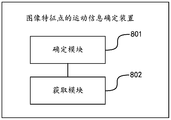
- FIG. 8 is a schematic structural diagram of an apparatus for determining motion information of image feature points according to an embodiment of the present application.
- FIG. 9 is a schematic structural diagram of a task execution device provided by an embodiment of the present application.
- FIG. 10 is a schematic structural diagram of a terminal provided by an embodiment of the present application.
- FIG. 11 is a schematic structural diagram of a server provided by an embodiment of the present application.
- FIG. 1 is a schematic diagram of an implementation environment of a method for determining motion information of image feature points provided by an embodiment of the present application.
- the implementation environment includes: a computer device 101 that can obtain information with the same object With two or more frames of images, the computer device 101 can determine the movement information of the target feature point on the object from one frame of image to another frame of image, so as to track the position change of the target feature point in different images,
- Feature points refer to pixels with prominent pixel characteristics in an image.
- the computer device 101 can acquire two or more consecutive frames of images in the video, for example, the first image and the second image, and the computer device 101 can acquire target feature points from the first image.
- the movement information to the second image the movement information is used to indicate the position change of the target feature point in the first image and the second image.
- the computer device 101 may perform position tracking based on the feature points in the pixel area of the image.
- the pixel area of the feature point includes the target feature point pixel.
- the computer device can determine that the target feature point is in the first pixel area of the first image, and based on the pixel difference of the plurality of first pixel points in the first pixel area, determine the second pixel with the larger pixel difference in the first image Area, and the second pixel area has the same number of pixels as the first pixel area, so that the target feature points from the first image to the second image can be determined based on the multiple second pixels and the second image in the second pixel area Sports information.
- the implementation environment may further include: a computer device 102, the computer device 102 may collect more than one frame of image, and send the more than one frame of image to the computer device 101.
- the computer device 101 can be provided as any device such as a server or a terminal, or any device such as an intelligent robot, an unmanned vehicle, a drone, and an unmanned vessel.
- the computer device 102 may be provided as a mobile phone, a camera, a terminal, a monitoring device, etc.
- the embodiment of the present application does not specifically limit the actual form of the computer device 101 and the computer device 102.
- Fig. 2 is a flowchart of a method for determining motion information of image feature points according to an embodiment of the present application.
- the execution subject of this embodiment of the invention is a computer device. Referring to FIG. 2, the method includes:
- the computer device determines the first image and the second image.
- the first image and the second image include the same object, and the object can be any object with an actual display form, for example, a house, a road sign, or a vehicle.
- the first image and the second image may be two frames of images including the same object in the video, and the time stamp of the second image may be after the first image.
- the computer device can capture the surrounding environment in real time to obtain a video, and the computer device can determine the first image in the video and the second image whose time stamp is located after the first image.
- the computer device may be any device such as a movable unmanned vehicle, an intelligent robot, or a drone.
- the computer device can also be a mobile device with a camera installed, and the computer device can also record a video during the movement.
- the computer device may obtain the first image and the second image from the target device.
- the target device can take a first image and a second image that include the same object during movement
- the computer device receives a video sent by the target device, and obtains the first image and the second image in the video
- the target device It can be a surveillance device, a mobile phone, or a camera.
- the computer device may also determine the target feature point on the object in the first image.
- the computer device can extract the target feature points on the object in the first image through a target algorithm.
- the target algorithm can be SIFT (Scale-invariant feature transform) algorithm or SURF (Speeded Up Robust Features) , Accelerate robust features) algorithms, etc.
- the target feature point refers to a point with a significant pixel feature in an image, for example, the difference between the pixel value and the pixel values of multiple surrounding pixels is greater than the target pixel difference. Based on the difference in image resolution, the number of sampled pixels in the same image is also different. Sampling pixels refer to the pixels where the image is sampled based on the target resolution.
- the target feature point may be a sampling pixel point in the first image, or a pixel point located between two sampling pixel points in the first image.
- the computer device may use integer coordinates to indicate the position of the sampling pixel in the first image, and integer coordinates mean that the values of the coordinates are all integers.
- the coordinates of the target feature point can be integer coordinates, and when the target feature point is a pixel between two sampled pixels, the coordinates of the target feature point can also be non- Integer coordinates.
- the computer device determines a first pixel area in the first image that includes the target feature point according to the target feature point on the object in the first image.
- the computer device may determine, in the first image, a first pixel region that includes the target feature point and has a shape of the target shape according to the position of the target feature point.
- the target shape of the first pixel area may be any shape of a square, a rectangle, a circle, a ring, an irregular polygon or a curved side.
- the shape of the first pixel area may be a center-symmetric shape, and the computer device uses the target feature point as a center to determine the first pixel area of the target shape.
- the first pixel area is an area including at least a first target number of pixels.
- the computer device may also regard the target feature point as the center according to the first target quantity and the target shape, and use an area of the target shape that includes not less than the first target quantity as the first pixel area.
- the computer device determines a square area with the target feature point as the center and the side length as the first side length as the first pixel area according to the first target number; The square of the first side length is not less than the first target quantity. For example, if the target number is 9, the first side length can be an integer of 3 or more, for example, the side length is 5 or 9, and so on.
- the computer device determines a circular area centered on the target feature point and a radius of the target radius as the first pixel area according to the number of targets; when the target shape is a rectangle, a diamond, or a circle In the case of a ring shape or any other shape, the computer device has the same principle for determining the first pixel area, and will not be repeated here.
- the pixel points in the first pixel area reflect the pixel features around the target feature point, and the computer device can also select a part of the pixels in the first pixel area to represent the pixel features around the target feature point.
- the computer device may also adopt a sampling method to determine a plurality of first pixel points from the first pixel area, and the plurality of first pixel points reflect changes in pixel characteristics around the target characteristic point.
- the computer device determines the first sampling step size according to the total number of pixels in the first pixel area and the second target number, and according to the first sampling step size, every first sampling from the plurality of pixels in the first pixel area For the pixel points of the step size, one first pixel point is obtained, and the first pixel point of the second target quantity is obtained.
- the first sampling step is 1.
- the target number of first pixel points may be evenly distributed on the boundary of the first pixel region with the target feature point as the center, and the computer device will determine the pixels located on the boundary of the first pixel region. The total number of pixels of a point is divided by the target number, and the obtained quotient is used as the first sampling step.
- the computer device starts from a plurality of pixels located on the boundary of the first pixel area. , Obtain the first pixel of the second target quantity.
- the computer device may also use a non-uniform sampling method to filter out the first pixel point.
- the computer device may also filter the first pixel points according to the distance between the multiple pixels in the first pixel area and the target feature point, and the computer device obtains the multiple pixels and the The multiple distances between the target feature points, according to the multiple distances, the multiple pixels are divided into multiple pixel point sets, and the distance between the pixel point and the target feature point in each pixel point set is located at the pixel point Within the distance range corresponding to the collection.
- the distance range corresponding to set A is 1.0 to 4.9
- the distance range corresponding to set B is 5.0 to 9.9.
- the computer device determines the first sampling step corresponding to the pixel point set according to the distance between each pixel point set and the target feature point, and according to the first sampling step corresponding to the pixel point set
- the step size is to obtain multiple first pixel points among multiple pixels in the pixel point set, so as to obtain the second target number of first pixels.
- the distance between the pixel point set and the target feature point may be the average value of the multiple distances between multiple pixels in the pixel point set and the target feature point.
- the computer device can select a dense center with a sparse edge, that is, the larger the distance between the pixel point set and the target feature point, the smaller the first sampling step corresponding to the pixel point set.
- the computer device may also adopt a random sampling method to filter out the second target number of first pixels from the first pixel area.
- a square pixel area is taken as an example for description.
- the black points are pixels and the white points are filtered out pixels.
- the computer device selects from multiple pixels on the boundary of the square area. Filter out the pixels.
- the first sampling step may be 1, and when the number of pixels on the boundary of the pixel area is greater than the second target number, the sampling step is Can be greater than 1.
- the second target number may be 9, as shown in FIG. 3(a), the pixel area is a square area including 3 ⁇ 3 pixels, and the sampling step may be 1 pixel.
- the pixel area may be a square area including 5 ⁇ 5 pixels, and the sampling step may be 2 pixels.
- the pixel area may be a 9 ⁇ 9 square area, and the sampling step may be 4 pixels.
- S203 The computer device determines the pixel difference of the plurality of first pixels according to the pixel values of the plurality of first pixels.
- the pixel difference is used to indicate the degree of change of the pixel values of multiple pixels.
- the pixel difference of the multiple pixels may be the pixel variance of the multiple pixels or the smallest value of the gradient matrix of the multiple pixels.
- Characteristic value the pixel variance of the multiple pixels is used to indicate the degree of change of the pixel values of the multiple pixels relative to the pixel average value
- the gradient matrix of the multiple pixels is used to represent the pixel values of the multiple pixels, respectively The degree of change from the average on the horizontal gradient and the degree of change from the average on the vertical gradient.
- the computer device may use the pixel variance of the plurality of first pixels or the minimum characteristic value of the gradient matrix of the plurality of first pixels to represent the pixel difference of the plurality of first pixels.
- the computer determines the average value of the pixel values of the plurality of first pixels, and determines the average value of the plurality of first pixels according to the difference between the pixel value of each first pixel and the average value. Pixel difference.
- the computer device can use the following formula 1 according to the average value of the pixel values of the plurality of first pixels and the pixel value of each first pixel: Determine the pixel variance of the plurality of first pixels;
- N is the number of the plurality of first pixels
- l is 3
- M is the average value of the pixel values of the plurality of first pixels
- I u is the pixel value of the multiple first pixels
- var represents the pixel square difference of the multiple first pixels.
- u represents multiple first pixels.
- the computer device may also use the gradient matrix of the plurality of first pixels to represent the pixel difference. Then the computer device can determine the horizontal gradient of the pixel value and the vertical gradient of the pixel value according to the pixel value of the plurality of first pixels, and the horizontal gradient of the pixel value and the vertical gradient of the pixel value.
- Gradient Obtain the minimum characteristic value of the gradient matrix of the plurality of first pixels, and determine the minimum characteristic value as the pixel difference of the plurality of first pixels.
- the gradient matrix may be a covariance matrix, and the variables are vertical gradients and horizontal gradients of pixel values of multiple pixels. Then the computer device can determine the minimum eigenvalue of the gradient matrix of the plurality of first pixels according to the horizontal gradient of the pixel values of the plurality of first pixels and the vertical gradient of the pixel values through the following formula two;
- g x (u) is the horizontal gradient of the pixel values of the multiple first pixels u
- g y (u) is the vertical gradient of the pixel values of the multiple first pixels u
- u represents the multiple first pixels .
- the matrix S represents the gradient matrix of a plurality of first pixels.
- the computer device can determine the minimum eigenvalue of the matrix S to obtain the pixel difference of the plurality of first pixels.
- the coordinates of the target feature point may be non-integer coordinates, so the coordinates of the first pixel point may also be non-integer coordinates.
- the device may determine the pixel value of the first pixel according to the pixel values of the surrounding pixels of the first pixel.
- the computer device may use a bidirectional linear interpolation algorithm to determine the pixel value of a pixel at a non-integer position, the computer device obtains the pixel value of the surrounding pixel of the first pixel, and determines according to the following formula 3. The pixel value of the first pixel;
- I represents the pixel value of the first pixel
- i0 represents the pixel value of the upper left corner of the first pixel
- the position is represented as (u0, v0)
- i1 represents the upper right corner of the first pixel.
- the pixel value of the pixel, the position is expressed as (u1, v1)
- i2 is the pixel value of the lower left corner of the first pixel
- the position is expressed as (u2, v2)
- i3 is the lower right pixel of the first pixel
- the pixel value of the point, the position is expressed as (u3, v3)
- (u, v) is the position of the first pixel.
- the computer device determines a second pixel area in the first image that includes the target feature point according to the pixel difference of the plurality of first pixel points in the first pixel area and the target feature point.
- the pixel difference of the plurality of second pixels in the second pixel area is greater than the pixel difference of the plurality of first pixels, and the number of the plurality of second pixels is the same as the number of the plurality of first pixels.
- the computer device obtains a target difference value, and when the pixel difference of the plurality of first pixels is smaller than the target difference value, the computer device adjusts the first pixel area to obtain a second pixel whose pixel difference is greater than the target difference value area.
- the computer device may obtain a second pixel area with greater pixel difference by expanding the first pixel area, or obtain a second pixel area by moving the first pixel area.
- this step can be implemented in the following two ways.
- the computer device obtains a second pixel area larger than the first pixel area and including the target characteristic point according to the target feature point.
- the computer device may expand the first pixel area according to a certain expansion rule, or randomly expand the first pixel area.
- the shape of the first pixel area may be a center-symmetrical shape, and the computer device expands the first pixel area to include the first pixel area of the target feature point according to the target expansion coefficient and centering on the target feature point.
- the computer device may adjust the first pixel area multiple times to obtain a second pixel area with a pixel difference greater than the target difference value.
- the process may be: when the pixel difference of the plurality of first pixel points is less than the target difference value, the computer device may obtain a third pixel area including the target characteristic point according to the target characteristic point, and the third pixel area is The number of the plurality of third pixels is the same as the number of the plurality of first pixels; the computer device determines the pixel difference of the plurality of third pixels according to the pixel values of the plurality of third pixels in the third pixel area; If the pixel difference of the plurality of third pixel points is not less than the target difference value, the computer device determines the third pixel area as the second pixel area.
- the computer device may expand the first pixel area into a third pixel area including the target feature point according to the target expansion coefficient and centering on the target feature point.
- the computer device may also acquire multiple third pixel points from the third pixel area according to a certain sampling step.
- the process of the computer device acquiring a plurality of third pixel points in the third pixel area may include: the computer device may according to an expansion coefficient from the first pixel area to the third pixel area, The first sampling step size of the first pixel area is increased to the second sampling step size, and according to the second sampling step size, the third pixel area with the same quantity as the plurality of first pixels is obtained from the third pixel area.
- pixel For example, for a 3 ⁇ 3 square, the computer device collects a first pixel every two pixels, and for a 5 ⁇ 5 square, the computer device collects a third pixel every three pixels.
- the computer device continues to obtain and expand the third pixel area until the second pixel area whose pixel difference is not less than the target difference value is obtained.
- the process of obtaining the pixel differences of the plurality of third pixels by the computer device is the same as the process of obtaining the pixel differences of the plurality of first pixels, and will not be repeated here.
- the computer device may also determine whether to continue expanding the third pixel area based on the size of the pixel area.
- the process may include: when the pixel difference of the plurality of third pixel points is less than the target difference value, the computer device detects whether the size of the third pixel area is greater than the target threshold; when the size of the third pixel area is not greater than the target threshold , The computer device determines a fourth pixel area that is larger than the third pixel area; the computer device determines that the first image includes the pixel difference of a plurality of fourth pixel points in the fourth pixel area and the target feature point In the second pixel area of the target feature point, the number of the fourth pixel points is the same as the number of the first pixel points.
- the computer device obtains the pixel difference of the plurality of third pixels according to the pixel value of each third pixel. In some embodiments, the computer device obtains an average value of the pixel values of the plurality of third pixels according to the pixel values of the plurality of third pixels, and according to the average value, the computer device obtains the plurality of third pixels. The pixel variance of the pixel point is determined as the pixel difference of the plurality of third pixel points.
- the computer device obtains the horizontal gradient of the pixel value and the vertical gradient of the pixel value of the plurality of third pixels according to the pixel values of the plurality of third pixels, and the computer device obtains the horizontal gradient of the pixel value and the vertical gradient of the pixel value according to the pixel values of the plurality of third pixels.
- the horizontal gradient of the pixel value of the three pixels and the vertical gradient of the pixel value are obtained, the minimum characteristic value of the gradient matrix of the plurality of third pixels is obtained, and the minimum characteristic value is determined as the pixel difference of the plurality of third pixels.
- the target difference value and the target threshold can be set based on needs, and the embodiment of the present application does not specifically limit this.
- the target threshold may be 13 ⁇ 13, that is, the maximum pixel area of the target feature point may be An area including 13 ⁇ 13 pixels.
- the computer device obtains a second pixel area having the same size as the first pixel area according to the target feature point.
- the computer device may pre-store a target movement track, and the target movement track is used to indicate the movement process of the first pixel area. Then this step may include: the computer device moves the first pixel area to the second pixel area including the target feature point according to the target feature point and the target movement track.
- the target movement trajectory can be one unit to the right. After moving the 3 ⁇ 3 square centered on the target feature point, in the second pixel area obtained, the target feature point is the middle left of the square. Point location.
- the computer device may move the first pixel area multiple times to obtain a second pixel area with a pixel difference greater than the target difference value. That is, the computer device may obtain the third pixel area in the second way, and obtain the second pixel area based on the pixel difference of the plurality of third pixel points in the third pixel area.
- This process is the same as the process of the first method above, and will not be detailed here. The difference is that in the second method, the first pixel area is not expanded. Therefore, the computer device does not need to increase the first sampling step to obtain the third pixel point.
- the computer device can directly follow the first pixel area.
- the first sampling step is to obtain the same number of third pixels as the plurality of first pixels from the third pixel area.
- the number of the first pixel or the second pixel obtained by the computer device is the same. Therefore, the number of pixels actually involved in the calculation is guaranteed when the pixel difference is increased. No change, and based on the difference between the pixel points in the pixel area and the target difference value, the continuous tentative increase or movement of the first pixel area will result in a larger difference between the pixels in the second pixel area to ensure The pixel characteristics in the special pixel area change significantly, which avoids the problem of inaccurate motion information determination due to the insignificant change in pixel brightness in some smooth or poorly textured pixel areas. Moreover, as the pixel area is continuously enlarged or moved, the pixel difference of the pixel area becomes larger.
- the area with larger pixel difference is used to represent the pixel change characteristics of the area around the target feature point, which ensures that the pixels between the pixels involved in the calculation
- the large difference ensures that the number of pixels involved in the calculation is fixed and does not increase the amount of calculation, thereby balancing the number of pixels involved in the calculation and the pixel difference of the pixels, making the calculation complexity of tracking the target feature points In the case of unchanged, the pixel richness is increased, which improves the robustness of target feature point tracking, so that it can be executed stably in a smooth or lacking texture environment, and the wide range of applicable scenes is improved.
- the computer device acquires the movement information of the target feature point according to the multiple second pixel points and the second image.
- the motion information is used to indicate the position change of the target feature point in the first image and the second image.
- the computer device can determine the starting pixel point at the corresponding position in the second image according to the target feature point at the first position of the first image, and obtain multiple fourth pixels in the pixel area of the starting pixel point, according to The plurality of fourth pixel points and the plurality of second pixel points determine the motion information of the target feature point based on a Gauss-Newton algorithm.
- the computer device can also obtain the position of the target feature point in the second image.
- the number of the fourth pixel points is the same as the number of the second pixel points.
- the motion information may include the moving distance of the target feature point on the x-axis and the y-axis of the image coordinate axis respectively.
- the computer device determines the movement information of the target feature point from the first image to the second image based on the following formula 4 based on the pixel values of the target number of second pixels and the pixel values of the plurality of fourth pixels;
- T t i multiple second pixel points in the second pixel area of the target feature point i
- d i t+1 represents the motion information of the target feature point i
- d i t+1 (u x , u y ) respectively represent the two-dimensional movement distance on the x-axis and y-axis.
- I t represents the pixel value of multiple second pixels in the first image
- I t+1 represents the pixel value of multiple fourth pixels in the second image, assuming multiple second pixels
- the pixel value of is the same in the first image and the second image, and the computer equipment can minimize the pixel difference between the pixel values of multiple second pixels in the first image and multiple fourth pixels in the second image to solve d i t+1 .
- the motion information may be represented by a homography matrix, and the computer device determines according to the pixel value of the target number of second pixels and the pixel values of the plurality of fourth pixels based on the following formula 5 Motion information of the target feature point from the first image to the second image;
- T t i represents multiple second pixel points in the second pixel area of the target feature point i
- H i t+1 represents the motion information of the target feature point i
- the computer device may express the motion information as: Among them, h 11 and h 22 respectively represent the scaling factor of the second pixel area from the first image to the second image in the x-axis direction and the y-axis direction of the image coordinate system.
- the x-axis direction and the y-axis direction can be respectively the image In the horizontal and vertical directions.
- h 11 and h 221 also indicate the process of rotating along the x axis and the normal vector of the second pixel area together with h 12 and h 21 .
- h 12 and h 21 respectively represent the projection of the second pixel area from the first image to the second image in the x-axis direction and y-axis direction of the image coordinate system.
- h 13 and h 23 represent the second pixel area from the first image.
- the moving distance between the image and the second image in the x-axis direction and the y-axis direction of the image coordinate system, h 31 and h 32 respectively represent the shear parameters of the second pixel area in the x-axis direction and y-axis direction in the image coordinate system,
- the shear parameter may be a deformation ratio of the second pixel region in the x-axis direction and the y-axis direction.
- the first pixel area of the feature point in the first image can be a square
- the second pixel area corresponding to the feature point in the second image can be a trapezoid. If the upper and lower sides of the square and the trapezoid are in the x-axis direction, then This h 31 represents the rate of change of the side lengths of the upper and lower sides of the trapezoid, and h 32 represents the rate of change of the side lengths of the left and right sides of the trapezoid.
- I t represents the pixel value of multiple second pixels in the first image
- I t+1 represents the pixel value of multiple fourth pixels in the second image, assuming multiple second pixels
- the pixel value of is the same in the first image and the second image, and the computer device can minimize the pixel difference between the pixel values of multiple second pixels in the first image and multiple fourth pixels in the second image to solve the problem H i t+1 .
- the target feature points in the embodiment of the present application are sparsely distributed in the image, and therefore may also become sparse target feature points.
- the first image and the second image may be two consecutive images in the video shot by the camera.
- the video stream captured by the camera in real time provides the camera's observation of the external environment at different moments.
- the motion information of target feature points is often used in processes such as motion detection, motion estimation, real-time positioning, three-dimensional reconstruction, and object segmentation. For example, as shown in Figure 5, for the target feature point tracking process.
- the movement trajectory of the target feature point that is, from the image position detected for the first time to the current position of the target feature point on the image, is represented by a white line after each target feature point.
- the computer device can obtain the first pixel area with the size of l ⁇ l, based on the pixels in the first pixel area.
- the pixel difference is less than the target difference value
- the step size is increased to filter out multiple third pixels in the third pixel area.
- the third pixel area is no longer increased, and the third pixel area is used as the second pixel area. If the pixel difference of the pixels in the third pixel area is less than the target difference value, and the third pixel If the size of the area is not greater than l m ⁇ l m , continue to increase the third pixel area until the second pixel area whose pixel difference is not less than the target difference value or greater than l m ⁇ l m is obtained.
- the second pixel area whose pixel difference is larger than the first pixel area and the number of pixel points is not changed is obtained, so that multiple second pixel areas based on the number of original pixels can be obtained.
- Two pixels are calculated to obtain the motion information of the target feature point. Because the pixel difference of the data involved in the calculation is increased under the premise of keeping the number of pixels unchanged, the calculation complexity and information richness are balanced to ensure the target feature point motion On the premise of the accuracy of the information, the efficiency of determining the movement information of the target feature point is improved.
- FIG. 7 is a schematic flowchart of a task execution method provided by an embodiment of the present application. The method is applied on the target device, see Figure 7. The method includes:
- the target device acquires a first image and a second image.
- the first image and the second image include the same object;
- the target device is a device that collects the first image and the second image.
- the target device may take a first image and a second image that include the same object during the movement.
- the target device may be a computer device, and the computer device may be used to determine the target feature point in the first image.
- Motion information which is used to indicate the position change of the target feature point in the first image and the second image.
- the computer device may be a mobile phone, and the computer device may move while capturing images in real time during the movement.
- the target device may not be the computer device.
- the target device captures the first image and the second image while moving, and sends the captured first image and second image to the computer in real time. equipment.
- the target device obtains motion information of a target feature point on the object in the first image.
- the motion information is used to indicate the position change of the target feature point in the first image and the second image.
- the target device may obtain the movement information of the target feature point based on the process of steps S201-S205 in the foregoing invention embodiment.
- the computer device can obtain the motion information of the target feature point based on the process of steps S201-S205 in the above-mentioned embodiment of the invention, and send the motion information of the target feature point to the target device in real time.
- the target device receives the movement information of the target feature point sent by the computer device.
- the target device executes the target task based on the movement information of the target feature point.
- the target task can be a route planning task or an object recognition task.
- the target task may be a route planning task, and the target device may construct a scene object surrounding the target device based on the movement information of the target feature point, and plan the route based on the scene object.
- the process may include: when the number of the target feature points is multiple, the target device may determine at least one scene object whose distance from the target device does not exceed a first threshold based on the motion information of the multiple target feature points; and the target The device may determine a first target route for the target device to reach the destination according to the location of the destination that is not more than a second threshold from the target device and the at least one scene object, where the second threshold is greater than the first threshold.
- the computer device can obtain the current location through positioning, and based on the current location, guide the user to the nearest restaurant, store, bathroom, etc.; for example, if the user is on a certain floor of a large shopping mall, the target device can be based on the surrounding The name of the store accurately locates the location of the target device on this floor. For example, in front of clothing store A, the target device can guide the user to watch store B.
- the target task may be a route planning task.
- the target device may also perform some operations on scene objects around the target device.
- the target device may be a robot, and the target device may place a water cup on a table. on. Then, after the target device determines at least one scene object that is not more than the first threshold from the target device, the target device can determine the second target route of the target device according to the at least one scene object and the target task to be executed.
- the task refers to performing a target operation on the target scene object in the at least one scene object.
- the VR device and the AR device can combine virtual objects based on the scene objects in the scene. Placed in the real environment.
- the target task includes an object recognition task.
- the target device can identify moving objects and stationary objects in the surrounding environment based on the first image and the second image, and can also identify the object category of the moving object, for example Whether the moving object is a person or a vehicle, the process may include: when the number of target feature points is multiple, the target device may determine that the motion information of the multiple target feature points conforms to the motion information of the multiple target feature points. Multiple first feature points of the target condition, the multiple first feature points are used to indicate a moving object among multiple objects included in the first image and the second image; the target device may be based on the multiple first features Point on the position of the first image or the second image to determine the object category to which the moving object belongs.
- the object category may include: vehicles, people, or animals.
- the target condition may include: the motion information of the multiple feature points is different from the motion information of other feature points, or is different from the motion information of the feature points that exceed the target number among the multiple feature points. For example, it is different from the motion information of 80% of the 200 feature points.
- the target device may further determine a third target route based on people walking around, a moving vehicle, or a stationary house.
- the three-target route may be a route to avoid the moving object. In order to avoid obstacles in the process of moving, more accurate route planning.
- the computer equipment can determine whether the certain object is moving, and if there is movement, in which direction to move; after detecting the moving object, it can also move the object Divide it out and judge whether it is a human or other animal, because the animal is often in the front and the scene is often in the back.
- the computer equipment can determine whether the certain object is moving, and if there is movement, in which direction to move; after detecting the moving object, it can also move the object Divide it out and judge whether it is a human or other animal, because the animal is often in the front and the scene is often in the back.
- the computer device can determine whether the target device is moving based on the position changes of all target feature points in the entire image. If the target device moves, it can also determine the moving direction and moving track of the target device, and further calculate the surroundings.
- Scene object For example, surrounding seats, obstacles, etc., based on surrounding scene objects, reconstruct a scene of the target device, and the scene includes multiple scene objects located around the target device. For example, taking the target device as a robot as an example, when the robot performs a task, the robot can avoid obstacles due to the reconstruction of the scene; another example, the robot can further plan the next path based on the current position to reach its desired Where it reaches, perform the corresponding task.
- the target device may further combine the scene object with a virtual object according to the at least one scene object, as The user shows the virtual and real environment.
- the process may include: the target device obtains at least one virtual scene object, the target device constructs a virtual scene according to the position of the at least one virtual scene object and the position of the at least one scene object, and displays the virtual scene on the screen of the target device .
- the real environment and the virtual environment can be rendered in a corresponding position relationship and displayed on the screen of the computer device.
- the target device can use the motion information of the target feature point on the object in the first image to perform target tasks, such as planning a route, motion detection, and identifying the object category to which the object belongs, and the target feature point is
- target tasks such as planning a route, motion detection, and identifying the object category to which the object belongs
- target feature point is The determination process of motion information is accurate and efficient, which improves the accuracy and efficiency of the target task.
- FIG. 8 is a schematic structural diagram of an apparatus for determining motion information of image feature points provided by an embodiment of the present application.
- the device includes:
- the determining module 801 is configured to determine a first image and a second image, where the first image and the second image include the same object.
- the determining module 801 is further configured to determine a first pixel area in the first image that includes the target feature point based on the target feature point on the object in the first image.
- the determining module 801 is further configured to determine a second pixel area including the target feature point in the first image according to the pixel difference of the plurality of first pixel points in the first pixel area and the target feature point.
- the pixel difference of the plurality of second pixels in the pixel area is greater than the pixel difference of the plurality of first pixels, the number of the plurality of second pixels is the same as the number of the plurality of first pixels, and the pixel difference is used to indicate more The degree of change in the pixel value of each pixel.
- the acquiring module 802 is configured to acquire motion information of the target feature point according to the plurality of second pixel points and the second image, and the motion information is used to indicate that the target feature point is in the first image and the second image The location changes.
- the determining module 801 is configured to obtain, according to the target feature point, when the pixel difference of the first pixel points in the first pixel area is smaller than the target difference value The second pixel area of the target feature point.
- the determining module 801 is configured to, when the pixel difference of a plurality of first pixel points in the first pixel area is less than the target difference value, obtain the size of the first pixel area according to the target feature point. For the same second pixel area, the first pixel area and the second pixel area include different pixel points.
- the determining module 801 is further configured to expand the first pixel area into a second pixel area including the target feature point according to the target expansion coefficient and centering on the target feature point.
- the determining module 801 is further configured to move the first pixel area to a second pixel area including the target feature point according to the target feature point and according to the target movement track.
- the determining module 801 is further configured to obtain a third pixel region including the target feature point according to the target feature point when the pixel difference of the plurality of first pixel points is less than the target difference value, and the The number of the plurality of third pixels in the third pixel area is the same as the number of the plurality of first pixels; according to the pixel values of the plurality of third pixels in the third pixel area, the pixels of the plurality of third pixels are determined Difference; and when the pixel difference of the plurality of third pixel points is not less than the target difference value, the third pixel area is determined as the second pixel area.
- the determining module 801 is further configured to increase the first sampling step of the first pixel area to the second sampling step according to the expansion coefficient from the first pixel area to the third pixel area. Long, according to the second sampling step size, third pixel points with the same number as the plurality of first pixels are obtained from the third pixel area.
- the determining module 801 is further configured to obtain, from the third pixel area, the same number of third pixels as the plurality of first pixels according to the first sampling step of the first pixel area .
- the device further includes:
- the detection module is configured to detect whether the size of the third pixel area is greater than the target threshold when the pixel difference of the plurality of third pixel points is less than the target difference value.
- the determining module 801 is further configured to determine a fourth pixel area larger than the third pixel area when the size of the third pixel area is not greater than the target threshold.
- the determining module 801 is further configured to determine a second pixel area including the target feature point in the first image based on the pixel difference of a plurality of fourth pixel points in the fourth pixel area and the target feature point.
- the number of the fourth pixel is the same as the number of the first pixel.
- the pixel difference is the pixel variance of the multiple pixels or the smallest characteristic value of the gradient matrix of the multiple pixels
- the pixel variance is used to indicate that the pixel values of the multiple pixels are relative to the pixel average
- the degree of change of the value, the gradient matrix is used to indicate the degree of change of the plurality of pixels on the horizontal gradient relative to the pixel average value and the degree of change on the vertical gradient relative to the pixel average value.
- the shape of the first pixel area and the second pixel area is any shape of a square, a rectangle, a circle, a ring, an irregular polygon, or an irregular curve.
- the determining module 801 is further configured to obtain the plurality of first pixel points among the plurality of pixels on the area boundary of the first pixel area according to the first sampling step of the first pixel area. Pixel points; and determining the pixel difference of the plurality of first pixel points according to the pixel values of the plurality of first pixel points.
- the second pixel area whose pixel difference is larger than the first pixel area and the number of pixels is unchanged is obtained, so that calculation can be performed based on multiple second pixel points of the original pixel number,
- the pixel difference of the data involved in the calculation is increased while keeping the number of pixels unchanged, which balances the computational complexity and information richness, and guarantees the premise of the accuracy of the target feature point motion information This improves the efficiency of determining the movement information of the target feature point.
- Fig. 9 is a schematic structural diagram of a task execution device provided by an embodiment of the present application. Referring to Figure 9, the device includes:
- the obtaining module 901 is configured to obtain a first image and a second image of a target device, where the first image and the second image include the same object.
- the acquiring module 901 is also configured to acquire motion information of a target feature point on the object in the first image, and the motion information is used to indicate a position change of the target feature point in the first image and the second image.
- the task processing module 902 is configured to execute the target task based on the motion information of the target feature point.
- the target task includes a route planning task
- the task processing module 902 is further configured to determine the distance to the target device based on the movement information of multiple target feature points when the number of target feature points is multiple. At least one scene object that does not exceed the first threshold; and the first target route for the target device to reach the destination is determined based on the location of the target device that does not exceed the second threshold and the at least one scene object.
- the second threshold is greater than the first threshold.
- the target task includes an object recognition task
- the task processing module 902 is further configured to determine the multiple target feature points based on the motion information of the multiple target feature points when the number of target feature points is multiple.
- a plurality of first feature points in the target feature point whose motion information meets the target condition, and the plurality of first feature points are used to indicate a moving object among a plurality of objects included in the first image and the second image; and based on the multiple The position of the first feature point in the first image or the second image determines the object category to which the moving object belongs.
- the target device can use the motion information of the target feature point on the object in the first image to perform the target task, such as planning a route, motion detection, or identifying the object category to which the object belongs, and the target feature point
- the target task such as planning a route, motion detection, or identifying the object category to which the object belongs
- the determination process of the movement information is accurate and efficient, which improves the accuracy and efficiency of the target task.
- the device for determining the motion information of image feature points provided in the above embodiment determines the motion information of the feature points, as well as the task execution device and the task execution, only the division of the above functional modules is used as an example.
- the above-mentioned function allocation can be completed by different function modules according to needs, that is, the internal structure of the computer device is divided into different function modules to complete all or part of the functions described above.
- the device for determining motion information of image feature points and the method for determining motion information of image feature points, as well as the embodiments of the task execution device and the task execution method provided by the foregoing embodiments belong to the same concept.
- the specific implementation process please refer to the method embodiment. No longer.
- a computer device including a memory and a processor, and computer-readable instructions are stored in the memory.
- the processor executes the computer-readable instructions to implement the method for determining motion information of image feature points. Steps in.
- a target device including a memory and a processor, where computer-readable instructions are stored in the memory, and the processor implements the steps in the above-mentioned task execution method embodiments when executing the computer-readable instructions.
- a computer-readable storage medium which stores computer-readable instructions that, when executed by a processor, implement the steps in the above-mentioned method for determining motion information of image feature points, or , To realize the steps in the above-mentioned task execution method embodiment.
- FIG. 10 is a schematic structural diagram of a terminal provided by an embodiment of the present application.
- the terminal 1000 can be: a smart phone, a tablet computer, an MP3 player (Moving Picture Experts Group Audio Layer III, moving picture expert compression standard audio layer 3), MP4 (Moving Picture Experts Group Audio Layer IV, moving picture expert compressing standard audio Level 4) Player, laptop or desktop computer.
- the terminal 1000 may also be called user equipment, portable terminal, laptop terminal, desktop terminal and other names.
- the terminal 1000 includes a processor 1001 and a memory 1002.
- the processor 1001 may include one or more processing cores, such as a 4-core processor, an 8-core processor, and so on.
- the processor 1001 may adopt at least one hardware form among DSP (Digital Signal Processing), FPGA (Field-Programmable Gate Array), and PLA (Programmable Logic Array, Programmable Logic Array). achieve.
- the processor 1001 may also include a main processor and a coprocessor.
- the main processor is a processor used to process data in the wake state, also called a CPU (Central Processing Unit, central processing unit); the coprocessor is A low-power processor used to process data in the standby state.
- the processor 1001 may be integrated with a GPU (Graphics Processing Unit, image processor), and the GPU is used for rendering and drawing content that needs to be displayed on the display screen.
- the processor 1001 may further include an AI (Artificial Intelligence, artificial intelligence) processor, which is used to process computing operations related to machine learning.
- AI Artificial Intelligence, artificial intelligence
- the memory 1002 may include one or more computer-readable storage media, which may be non-transitory.
- the memory 1002 may also include high-speed random access memory and non-volatile memory, such as one or more magnetic disk storage devices and flash memory storage devices.
- the non-transitory computer-readable storage medium in the memory 1002 is used to store at least one instruction, and the at least one instruction is used to be executed by the processor 1001 to implement the image features provided in the method embodiments of this application. Point’s motion information determination method or task execution method.
- the terminal 1000 optionally further includes: a peripheral device interface 1003 and at least one peripheral device.
- the processor 1001, the memory 1002, and the peripheral device interface 1003 may be connected by a bus or a signal line.
- Each peripheral device can be connected to the peripheral device interface 1003 through a bus, a signal line or a circuit board.
- the peripheral device includes: at least one of a radio frequency circuit 1004, a touch display screen 1005, a camera 1006, an audio circuit 1007, a positioning component 1008, and a power supply 1009.
- the peripheral device interface 1003 may be used to connect at least one peripheral device related to I/O (Input/Output) to the processor 1001 and the memory 1002.
- the processor 1001, the memory 1002, and the peripheral device interface 1003 are integrated on the same chip or circuit board; in some other embodiments, any one of the processor 1001, the memory 1002, and the peripheral device interface 1003 or The two can be implemented on separate chips or circuit boards, which are not limited in this embodiment.
- the radio frequency circuit 1004 is used for receiving and transmitting RF (Radio Frequency, radio frequency) signals, also called electromagnetic signals.
- the radio frequency circuit 1004 communicates with a communication network and other communication devices through electromagnetic signals.
- the radio frequency circuit 1004 converts electrical signals into electromagnetic signals for transmission, or converts received electromagnetic signals into electrical signals.
- the radio frequency circuit 1004 includes: an antenna system, an RF transceiver, one or more amplifiers, a tuner, an oscillator, a digital signal processor, a codec chipset, a user identity module card, and so on.
- the radio frequency circuit 1004 can communicate with other terminals through at least one wireless communication protocol.
- the wireless communication protocol includes but is not limited to: metropolitan area network, various generations of mobile communication networks (2G, 3G, 4G, and 5G), wireless local area network and/or WiFi (Wireless Fidelity, wireless fidelity) network.
- the radio frequency circuit 1004 may also include NFC (Near Field Communication) related circuits, which is not limited in this application.
- the display screen 1005 is used to display a UI (User Interface, user interface).
- the UI can include graphics, text, icons, videos, and any combination thereof.
- the display screen 1005 also has the ability to filter out touch signals on or above the surface of the display screen 1005.
- the touch signal may be input to the processor 1001 as a control signal for processing.
- the display screen 1005 may also be used to provide virtual buttons and/or virtual keyboards, also called soft buttons and/or soft keyboards.
- the display screen 1005 there may be one display screen 1005, which is provided with the front panel of the terminal 1000; in other embodiments, there may be at least two display screens 1005, which are respectively arranged on different surfaces of the terminal 1000 or in a folded design; In still other embodiments, the display screen 1005 may be a flexible display screen, which is arranged on a curved surface or a folding surface of the terminal 1000. Furthermore, the display screen 1005 can also be set as a non-rectangular irregular pattern, that is, a special-shaped screen.
- the display screen 1005 may be made of materials such as LCD (Liquid Crystal Display), OLED (Organic Light-Emitting Diode, organic light emitting diode).
- the camera assembly 1006 is used to filter out images or videos.
- the camera assembly 1006 includes a front camera and a rear camera.
- the front camera is set on the front panel of the terminal, and the rear camera is set on the back of the terminal.
- the camera assembly 1006 may also include a flash.
- the flash can be a single-color flash or a dual-color flash. Dual color temperature flash refers to a combination of warm light flash and cold light flash, which can be used for light compensation under different color temperatures.
- the audio circuit 1007 may include a microphone and a speaker.
- the microphone is used to filter out the sound waves of the user and the environment, and convert the sound waves into electrical signals and input to the processor 1001 for processing, or input to the radio frequency circuit 1004 to implement voice communication.
- the microphone can also be an array microphone or an omnidirectional screening microphone.
- the speaker is used to convert the electrical signal from the processor 1001 or the radio frequency circuit 1004 into sound waves.
- the speaker can be a traditional membrane speaker or a piezoelectric ceramic speaker.
- the speaker When the speaker is a piezoelectric ceramic speaker, it can not only convert the electrical signal into human audible sound waves, but also convert the electrical signal into human inaudible sound waves for purposes such as distance measurement.
- the audio circuit 1007 may also include a headphone jack.
- the positioning component 1008 is used to locate the current geographic position of the terminal 1000 to implement navigation or LBS (Location Based Service, location-based service).
- the positioning component 1008 may be a positioning component based on the GPS (Global Positioning System, Global Positioning System) of the United States, the Beidou system of China, the Granus system of Russia, or the Galileo system of the European Union.
- the power supply 1009 is used to supply power to various components in the terminal 1000.
- the power source 1009 may be alternating current, direct current, disposable batteries or rechargeable batteries.
- the rechargeable battery may support wired charging or wireless charging.
- the rechargeable battery can also be used to support fast charging technology.
- the terminal 1000 further includes one or more sensors 1010.
- the one or more sensors 1010 include, but are not limited to: an acceleration sensor 1011, a gyroscope sensor 1012, a pressure sensor 1013, a fingerprint sensor 1014, an optical sensor 1015, and a proximity sensor 1016.
- the acceleration sensor 1011 can detect the magnitude of acceleration on the three coordinate axes of the coordinate system established by the terminal 1000.
- the acceleration sensor 1011 can be used to detect the components of the gravitational acceleration on three coordinate axes.
- the processor 1001 may control the touch screen 1005 to display the user interface in a horizontal view or a vertical view according to the gravity acceleration signal filtered by the acceleration sensor 1011.
- the acceleration sensor 1011 can also be used to filter out the game or user's motion data.
- the gyroscope sensor 1012 can detect the body direction and rotation angle of the terminal 1000, and the gyroscope sensor 1012 can cooperate with the acceleration sensor 1011 to screen out the user's 3D actions on the terminal 1000.
- the processor 1001 can implement the following functions according to the data filtered by the gyroscope sensor 1012: motion sensing (such as changing the UI according to the user's tilt operation), image stabilization during shooting, game control, and inertial navigation.
- the pressure sensor 1013 may be disposed on the side frame of the terminal 1000 and/or the lower layer of the touch screen 1005.
- the processor 1001 performs left and right hand recognition or quick operation according to the holding signal filtered by the pressure sensor 1013.
- the processor 1001 controls the operability controls on the UI interface according to the user's pressure operation on the touch display screen 1005.
- the operability control includes at least one of a button control, a scroll bar control, an icon control, and a menu control.
- the fingerprint sensor 1014 is used to screen out the user's fingerprint.
- the processor 1001 identifies the user's identity according to the fingerprint screened out by the fingerprint sensor 1014, or the fingerprint sensor 1014 identifies the user's identity according to the screened fingerprint.
- the processor 1001 authorizes the user to perform related sensitive operations, including unlocking the screen, viewing encrypted information, downloading software, paying, and changing settings.
- the fingerprint sensor 1014 may be provided on the front, back or side of the terminal 1000. When a physical button or a manufacturer logo is provided on the terminal 1000, the fingerprint sensor 1014 can be integrated with the physical button or the manufacturer logo.
- the optical sensor 1015 is used to filter out the ambient light intensity.
- the processor 1001 may control the display brightness of the touch screen 1005 according to the intensity of the ambient light filtered by the optical sensor 1015. Specifically, when the ambient light intensity is high, the display brightness of the touch display screen 1005 is increased; when the ambient light intensity is low, the display brightness of the touch display screen 1005 is decreased.
- the processor 1001 may also dynamically adjust the shooting parameters of the camera assembly 1006 according to the ambient light intensity filtered by the optical sensor 1015.
- the proximity sensor 1016 also called a distance sensor, is usually arranged on the front panel of the terminal 1000.
- the proximity sensor 1016 is used to filter the distance between the user and the front of the terminal 1000.
- the processor 1001 controls the touch screen 1005 to switch from the on-screen state to the off-screen state; when the proximity sensor 1016 detects When the distance between the user and the front of the terminal 1000 gradually increases, the processor 1001 controls the touch display screen 1005 to switch from the rest screen state to the bright screen state.
- FIG. 10 does not constitute a limitation on the terminal 1000, and may include more or fewer components than shown in the figure, or combine certain components, or adopt different component arrangements.
- FIG. 11 is a schematic structural diagram of a server provided by an embodiment of the present application.
- the server 1100 may have relatively large differences due to different configurations or performance, and may include one or more processors (central processing units, CPU) 1101 and one Or more than one memory 1102, wherein the memory 1102 stores at least one computer-readable instruction, and the at least one computer-readable instruction is loaded and executed by the processor 1101 to implement the image feature points provided by the foregoing method embodiments. Movement information determination method or task execution method.
- the server may also have components such as a wired or wireless network interface, a keyboard, an input and output interface for input and output, and the server may also include other components for implementing device functions, which are not described here.
- a computer-readable storage medium such as a memory including instructions, which can be executed by a processor in a terminal to complete the method or task of determining motion information of image feature points in the foregoing embodiment.
- the computer-readable storage medium may be ROM (Read-Only Memory), RAM (random access memory), CD-ROM (Compact Disc Read-Only Memory, CD-ROM), Tapes, floppy disks and optical data storage devices, etc.
- the program can be stored in a computer-readable storage medium.
- the storage medium can be read-only memory, magnetic disk or optical disk, etc.
Landscapes
- Engineering & Computer Science (AREA)
- Multimedia (AREA)
- Computer Vision & Pattern Recognition (AREA)
- Physics & Mathematics (AREA)
- General Physics & Mathematics (AREA)
- Theoretical Computer Science (AREA)
- Image Analysis (AREA)
Abstract
L'invention concerne un procédé de détermination d'informations de mouvement d'un point caractéristique d'image, consistant : à déterminer une première image et une seconde image, la première image et la seconde image comprenant le même objet ; à déterminer, sur la base d'un point caractéristique cible sur l'objet dans la première image, une première zone de pixels comprenant le point caractéristique cible dans la première image ; à déterminer, en fonction d'une différence de pixels entre une pluralité de premiers points de pixels dans la première zone de pixels et le point caractéristique cible, une seconde zone de pixels comprenant le point caractéristique cible dans la première image, la différence de pixels entre une pluralité de seconds points de pixels dans la seconde zone de pixels étant supérieure à la différence de pixels entre la pluralité de premiers points de pixels, le nombre de la pluralité de seconds points de pixels étant le même que celui de la pluralité de premiers points de pixels, et la différence de pixels étant utilisée pour indiquer le degré de variation de valeurs de pixels d'une pluralité de points de pixels ; et à acquérir, en fonction de la pluralité de seconds points de pixels et de la seconde image, des informations de mouvement du point caractéristique cible, les informations de mouvement étant utilisées pour indiquer un changement dans la position du point caractéristique cible dans la première image et la seconde image.
Priority Applications (3)
| Application Number | Priority Date | Filing Date | Title |
|---|---|---|---|
| JP2021529019A JP7305249B2 (ja) | 2019-04-29 | 2020-04-16 | 画像特徴点の動き情報の決定方法、タスク実行方法およびデバイス |
| EP20798875.9A EP3965060A4 (fr) | 2019-04-29 | 2020-04-16 | Procédé de détermination d'informations de mouvement d'un point caractéristique d'image, procédé d'exécution de tâche et dispositif |
| US17/323,740 US11978219B2 (en) | 2019-04-29 | 2021-05-18 | Method and device for determining motion information of image feature point, and task performing method and device |
Applications Claiming Priority (2)
| Application Number | Priority Date | Filing Date | Title |
|---|---|---|---|
| CN201910356752.4 | 2019-04-29 | ||
| CN201910356752.4A CN110097576B (zh) | 2019-04-29 | 2019-04-29 | 图像特征点的运动信息确定方法、任务执行方法和设备 |
Related Child Applications (1)
| Application Number | Title | Priority Date | Filing Date |
|---|---|---|---|
| US17/323,740 Continuation US11978219B2 (en) | 2019-04-29 | 2021-05-18 | Method and device for determining motion information of image feature point, and task performing method and device |
Publications (1)
| Publication Number | Publication Date |
|---|---|
| WO2020221012A1 true WO2020221012A1 (fr) | 2020-11-05 |
Family
ID=67446382
Family Applications (1)
| Application Number | Title | Priority Date | Filing Date |
|---|---|---|---|
| PCT/CN2020/085000 Ceased WO2020221012A1 (fr) | 2019-04-29 | 2020-04-16 | Procédé de détermination d'informations de mouvement d'un point caractéristique d'image, procédé d'exécution de tâche et dispositif |
Country Status (5)
| Country | Link |
|---|---|
| US (1) | US11978219B2 (fr) |
| EP (1) | EP3965060A4 (fr) |
| JP (1) | JP7305249B2 (fr) |
| CN (1) | CN110097576B (fr) |
| WO (1) | WO2020221012A1 (fr) |
Cited By (2)
| Publication number | Priority date | Publication date | Assignee | Title |
|---|---|---|---|---|
| CN114913463A (zh) * | 2022-05-24 | 2022-08-16 | 北京奇艺世纪科技有限公司 | 一种图像识别方法、装置、电子设备及存储介质 |
| EP4527940A1 (fr) | 2023-09-19 | 2025-03-26 | DSM IP Assets B.V. | Nouveau procédé de production de calcifédiol |
Families Citing this family (13)
| Publication number | Priority date | Publication date | Assignee | Title |
|---|---|---|---|---|
| CN110097576B (zh) * | 2019-04-29 | 2022-11-18 | 腾讯科技(深圳)有限公司 | 图像特征点的运动信息确定方法、任务执行方法和设备 |
| CN112492249B (zh) * | 2019-09-11 | 2024-04-09 | 瑞昱半导体股份有限公司 | 图像处理方法及电路 |
| CN111068323B (zh) * | 2019-12-20 | 2023-08-22 | 腾讯科技(深圳)有限公司 | 智能速度检测方法、装置、计算机设备及存储介质 |
| US11756210B2 (en) | 2020-03-12 | 2023-09-12 | Adobe Inc. | Video inpainting via machine-learning models with motion constraints |
| CN112446901B (zh) * | 2020-11-20 | 2024-08-16 | 浙江大华技术股份有限公司 | 目标跟踪方法、装置、设备及计算机存储介质 |
| US11823357B2 (en) | 2021-03-09 | 2023-11-21 | Adobe Inc. | Corrective lighting for video inpainting |
| CN114119675B (zh) * | 2021-11-10 | 2023-07-18 | 爱芯元智半导体(上海)有限公司 | 像素点的偏移获取方法、装置、电子设备及存储介质 |
| CN114396911B (zh) * | 2021-12-21 | 2023-10-31 | 中汽创智科技有限公司 | 一种障碍物测距方法、装置、设备及存储介质 |
| CN114748872B (zh) * | 2022-06-13 | 2022-09-02 | 深圳市乐易网络股份有限公司 | 一种基于信息融合的游戏渲染更新方法 |
| CN115409943B (zh) * | 2022-09-01 | 2025-05-09 | 重庆大学 | 换流站变压器实时三维建模方法及装置 |
| CN115424353B (zh) * | 2022-09-07 | 2023-05-05 | 杭银消费金融股份有限公司 | 基于ai模型的业务用户特征识别方法及系统 |
| CN115330657B (zh) * | 2022-10-14 | 2023-01-31 | 威海凯思信息科技有限公司 | 一种海洋探测图像的处理方法、装置和服务器 |
| CN116542970B (zh) * | 2023-06-30 | 2023-09-15 | 山东金有粮脱皮制粉设备有限公司 | 基于图像处理的面粉熟化控制方法及相关装置 |
Citations (6)
| Publication number | Priority date | Publication date | Assignee | Title |
|---|---|---|---|---|
| US20070183667A1 (en) * | 2006-01-13 | 2007-08-09 | Paul Wyatt | Image processing apparatus |
| CN102378002A (zh) * | 2010-08-25 | 2012-03-14 | 无锡中星微电子有限公司 | 动态调整搜索窗的方法及装置、块匹配方法及装置 |
| CN104700415A (zh) * | 2015-03-23 | 2015-06-10 | 华中科技大学 | 一种图像匹配跟踪中匹配模板的选取方法 |
| US20180205926A1 (en) * | 2017-01-17 | 2018-07-19 | Seiko Epson Corporation | Cleaning of Depth Data by Elimination of Artifacts Caused by Shadows and Parallax |
| CN109344742A (zh) * | 2018-09-14 | 2019-02-15 | 腾讯科技(深圳)有限公司 | 特征点定位方法、装置、存储介质和计算机设备 |
| CN110097576A (zh) * | 2019-04-29 | 2019-08-06 | 腾讯科技(深圳)有限公司 | 图像特征点的运动信息确定方法、任务执行方法和设备 |
Family Cites Families (17)
| Publication number | Priority date | Publication date | Assignee | Title |
|---|---|---|---|---|
| KR0171120B1 (ko) * | 1995-04-29 | 1999-03-20 | 배순훈 | 특징점 기반 움직임 보상을 이용한 비디오 신호 부호화에서의 움직임 영역 설정방법 및 장치 |
| JPH11218499A (ja) * | 1998-02-03 | 1999-08-10 | Hitachi Denshi Ltd | 外観検査装置およびその画像処理方法 |
| JP4774401B2 (ja) * | 2007-04-06 | 2011-09-14 | 本田技研工業株式会社 | 自律移動体の経路設定装置 |
| EP1978432B1 (fr) * | 2007-04-06 | 2012-03-21 | Honda Motor Co., Ltd. | Appareil de routage pour unité mobile autonome |
| US9307251B2 (en) * | 2009-08-19 | 2016-04-05 | Sharp Laboratories Of America, Inc. | Methods and systems for determining data-adaptive weights for motion estimation in a video sequence |
| JP5824936B2 (ja) * | 2011-07-25 | 2015-12-02 | 富士通株式会社 | 携帯型電子機器、危険報知方法及びプログラム |
| JP5976126B2 (ja) * | 2011-12-12 | 2016-08-24 | アセルサン・エレクトロニク・サナイ・ヴェ・ティジャレット・アノニム・シルケティAselsan Elektronik Sanayi ve Ticaret Anonim Sirketi | ターゲットサイズを見積もるためのシステム及び方法 |
| WO2015004501A1 (fr) * | 2013-07-09 | 2015-01-15 | Aselsan Elektronik Sanayi Ve Ticaret Anonim Sirketi | Procédé de mise à jour de taille de fenêtre de suivi de cible |
| CN104881881B (zh) * | 2014-02-27 | 2018-04-10 | 株式会社理光 | 运动对象表示方法及其装置 |
| US10445862B1 (en) * | 2016-01-25 | 2019-10-15 | National Technology & Engineering Solutions Of Sandia, Llc | Efficient track-before detect algorithm with minimal prior knowledge |
| US10002435B2 (en) * | 2016-01-29 | 2018-06-19 | Google Llc | Detecting motion in images |
| CN108960012B (zh) * | 2017-05-22 | 2022-04-15 | 中科创达软件股份有限公司 | 特征点检测方法、装置及电子设备 |
| EP3435330B1 (fr) * | 2017-07-24 | 2021-09-29 | Aptiv Technologies Limited | Procédé à base de véhicule de poursuite d'objet |
| CN107590453B (zh) * | 2017-09-04 | 2019-01-11 | 腾讯科技(深圳)有限公司 | 增强现实场景的处理方法、装置及设备、计算机存储介质 |
| CN109523570B (zh) * | 2017-09-20 | 2021-01-22 | 杭州海康威视数字技术股份有限公司 | 运动参数计算方法及装置 |
| US11044404B1 (en) * | 2018-11-28 | 2021-06-22 | Vulcan Inc. | High-precision detection of homogeneous object activity in a sequence of images |
| US10923084B2 (en) * | 2019-03-29 | 2021-02-16 | Intel Corporation | Method and system of de-interlacing for image processing |
-
2019
- 2019-04-29 CN CN201910356752.4A patent/CN110097576B/zh active Active
-
2020
- 2020-04-16 EP EP20798875.9A patent/EP3965060A4/fr active Pending
- 2020-04-16 JP JP2021529019A patent/JP7305249B2/ja active Active
- 2020-04-16 WO PCT/CN2020/085000 patent/WO2020221012A1/fr not_active Ceased
-
2021
- 2021-05-18 US US17/323,740 patent/US11978219B2/en active Active
Patent Citations (6)
| Publication number | Priority date | Publication date | Assignee | Title |
|---|---|---|---|---|
| US20070183667A1 (en) * | 2006-01-13 | 2007-08-09 | Paul Wyatt | Image processing apparatus |
| CN102378002A (zh) * | 2010-08-25 | 2012-03-14 | 无锡中星微电子有限公司 | 动态调整搜索窗的方法及装置、块匹配方法及装置 |
| CN104700415A (zh) * | 2015-03-23 | 2015-06-10 | 华中科技大学 | 一种图像匹配跟踪中匹配模板的选取方法 |
| US20180205926A1 (en) * | 2017-01-17 | 2018-07-19 | Seiko Epson Corporation | Cleaning of Depth Data by Elimination of Artifacts Caused by Shadows and Parallax |
| CN109344742A (zh) * | 2018-09-14 | 2019-02-15 | 腾讯科技(深圳)有限公司 | 特征点定位方法、装置、存储介质和计算机设备 |
| CN110097576A (zh) * | 2019-04-29 | 2019-08-06 | 腾讯科技(深圳)有限公司 | 图像特征点的运动信息确定方法、任务执行方法和设备 |
Non-Patent Citations (1)
| Title |
|---|
| See also references of EP3965060A4 * |
Cited By (2)
| Publication number | Priority date | Publication date | Assignee | Title |
|---|---|---|---|---|
| CN114913463A (zh) * | 2022-05-24 | 2022-08-16 | 北京奇艺世纪科技有限公司 | 一种图像识别方法、装置、电子设备及存储介质 |
| EP4527940A1 (fr) | 2023-09-19 | 2025-03-26 | DSM IP Assets B.V. | Nouveau procédé de production de calcifédiol |
Also Published As
| Publication number | Publication date |
|---|---|
| CN110097576A (zh) | 2019-08-06 |
| EP3965060A4 (fr) | 2022-10-05 |
| JP2022511427A (ja) | 2022-01-31 |
| JP7305249B2 (ja) | 2023-07-10 |
| US11978219B2 (en) | 2024-05-07 |
| CN110097576B (zh) | 2022-11-18 |
| EP3965060A1 (fr) | 2022-03-09 |
| US20210272294A1 (en) | 2021-09-02 |
Similar Documents
| Publication | Publication Date | Title |
|---|---|---|
| WO2020221012A1 (fr) | Procédé de détermination d'informations de mouvement d'un point caractéristique d'image, procédé d'exécution de tâche et dispositif | |
| US11205282B2 (en) | Relocalization method and apparatus in camera pose tracking process and storage medium | |
| CN110502954B (zh) | 视频分析的方法和装置 | |
| CN110210571B (zh) | 图像识别方法、装置、计算机设备及计算机可读存储介质 | |
| KR102635373B1 (ko) | 이미지 처리 방법 및 장치, 단말 및 컴퓨터 판독 가능 저장 매체 | |
| WO2021008456A1 (fr) | Procédé et appareil de traitement d'image, dispositif électronique et support d'informations | |
| CN110110787A (zh) | 目标的位置获取方法、装置、计算机设备及存储介质 | |
| CN108682036A (zh) | 位姿确定方法、装置及存储介质 | |
| CN111754386B (zh) | 图像区域屏蔽方法、装置、设备及存储介质 | |
| CN110807361A (zh) | 人体识别方法、装置、计算机设备及存储介质 | |
| CN112084811A (zh) | 身份信息的确定方法、装置及存储介质 | |
| CN112308103B (zh) | 生成训练样本的方法和装置 | |
| CN110290426B (zh) | 展示资源的方法、装置、设备及存储介质 | |
| CN109886208B (zh) | 物体检测的方法、装置、计算机设备及存储介质 | |
| CN110839128A (zh) | 拍照行为检测方法、装置及存储介质 | |
| CN111784841B (zh) | 重建三维图像的方法、装置、电子设备及介质 | |
| CN113627413B (zh) | 数据标注方法、图像比对方法及装置 | |
| CN109754439B (zh) | 标定方法、装置、电子设备及介质 | |
| CN113592874B (zh) | 图像显示方法、装置和计算机设备 | |
| CN111860064B (zh) | 基于视频的目标检测方法、装置、设备及存储介质 | |
| CN110147796A (zh) | 图像匹配方法及装置 | |
| CN112804481B (zh) | 监控点位置的确定方法、装置及计算机存储介质 | |
| CN112257594B (zh) | 多媒体数据的显示方法、装置、计算机设备及存储介质 | |
| CN111757146B (zh) | 视频拼接的方法、系统及存储介质 | |
| CN113486811B (zh) | 悬崖检测方法、装置、电子设备及计算机可读存储介质 |
Legal Events
| Date | Code | Title | Description |
|---|---|---|---|
| 121 | Ep: the epo has been informed by wipo that ep was designated in this application |
Ref document number: 20798875 Country of ref document: EP Kind code of ref document: A1 |
|
| ENP | Entry into the national phase |
Ref document number: 2021529019 Country of ref document: JP Kind code of ref document: A |
|
| NENP | Non-entry into the national phase |
Ref country code: DE |
|
| ENP | Entry into the national phase |
Ref document number: 2020798875 Country of ref document: EP Effective date: 20211129 |