WO2020226460A1 - Acide nucléique dérivé de micro-organisme et son utilisation - Google Patents
Acide nucléique dérivé de micro-organisme et son utilisation Download PDFInfo
- Publication number
- WO2020226460A1 WO2020226460A1 PCT/KR2020/006117 KR2020006117W WO2020226460A1 WO 2020226460 A1 WO2020226460 A1 WO 2020226460A1 KR 2020006117 W KR2020006117 W KR 2020006117W WO 2020226460 A1 WO2020226460 A1 WO 2020226460A1
- Authority
- WO
- WIPO (PCT)
- Prior art keywords
- nucleic acid
- microorganism
- composition
- derived nucleic
- derived
- Prior art date
- Legal status (The legal status is an assumption and is not a legal conclusion. Google has not performed a legal analysis and makes no representation as to the accuracy of the status listed.)
- Ceased
Links
- IGELDTXGMACMRK-UHFFFAOYSA-N CCC(C)CCC(C)N Chemical compound CCC(C)CCC(C)N IGELDTXGMACMRK-UHFFFAOYSA-N 0.000 description 1
Images





Classifications
-
- A—HUMAN NECESSITIES
- A61—MEDICAL OR VETERINARY SCIENCE; HYGIENE
- A61K—PREPARATIONS FOR MEDICAL, DENTAL OR TOILETRY PURPOSES
- A61K35/00—Medicinal preparations containing materials or reaction products thereof with undetermined constitution
- A61K35/66—Microorganisms or materials therefrom
- A61K35/74—Bacteria
- A61K35/741—Probiotics
- A61K35/744—Lactic acid bacteria, e.g. enterococci, pediococci, lactococci, streptococci or leuconostocs
-
- A—HUMAN NECESSITIES
- A61—MEDICAL OR VETERINARY SCIENCE; HYGIENE
- A61K—PREPARATIONS FOR MEDICAL, DENTAL OR TOILETRY PURPOSES
- A61K31/00—Medicinal preparations containing organic active ingredients
- A61K31/70—Carbohydrates; Sugars; Derivatives thereof
- A61K31/7088—Compounds having three or more nucleosides or nucleotides
-
- A—HUMAN NECESSITIES
- A61—MEDICAL OR VETERINARY SCIENCE; HYGIENE
- A61K—PREPARATIONS FOR MEDICAL, DENTAL OR TOILETRY PURPOSES
- A61K35/00—Medicinal preparations containing materials or reaction products thereof with undetermined constitution
-
- A—HUMAN NECESSITIES
- A61—MEDICAL OR VETERINARY SCIENCE; HYGIENE
- A61K—PREPARATIONS FOR MEDICAL, DENTAL OR TOILETRY PURPOSES
- A61K8/00—Cosmetics or similar toiletry preparations
- A61K8/18—Cosmetics or similar toiletry preparations characterised by the composition
- A61K8/30—Cosmetics or similar toiletry preparations characterised by the composition containing organic compounds
- A61K8/60—Sugars; Derivatives thereof
-
- A—HUMAN NECESSITIES
- A61—MEDICAL OR VETERINARY SCIENCE; HYGIENE
- A61K—PREPARATIONS FOR MEDICAL, DENTAL OR TOILETRY PURPOSES
- A61K8/00—Cosmetics or similar toiletry preparations
- A61K8/18—Cosmetics or similar toiletry preparations characterised by the composition
- A61K8/30—Cosmetics or similar toiletry preparations characterised by the composition containing organic compounds
- A61K8/60—Sugars; Derivatives thereof
- A61K8/606—Nucleosides; Nucleotides; Nucleic acids
-
- A—HUMAN NECESSITIES
- A61—MEDICAL OR VETERINARY SCIENCE; HYGIENE
- A61K—PREPARATIONS FOR MEDICAL, DENTAL OR TOILETRY PURPOSES
- A61K8/00—Cosmetics or similar toiletry preparations
- A61K8/18—Cosmetics or similar toiletry preparations characterised by the composition
- A61K8/96—Cosmetics or similar toiletry preparations characterised by the composition containing materials, or derivatives thereof of undetermined constitution
- A61K8/99—Cosmetics or similar toiletry preparations characterised by the composition containing materials, or derivatives thereof of undetermined constitution from microorganisms other than algae or fungi, e.g. protozoa or bacteria
-
- A—HUMAN NECESSITIES
- A61—MEDICAL OR VETERINARY SCIENCE; HYGIENE
- A61P—SPECIFIC THERAPEUTIC ACTIVITY OF CHEMICAL COMPOUNDS OR MEDICINAL PREPARATIONS
- A61P17/00—Drugs for dermatological disorders
- A61P17/02—Drugs for dermatological disorders for treating wounds, ulcers, burns, scars, keloids, or the like
-
- A—HUMAN NECESSITIES
- A61—MEDICAL OR VETERINARY SCIENCE; HYGIENE
- A61P—SPECIFIC THERAPEUTIC ACTIVITY OF CHEMICAL COMPOUNDS OR MEDICINAL PREPARATIONS
- A61P19/00—Drugs for skeletal disorders
-
- A—HUMAN NECESSITIES
- A61—MEDICAL OR VETERINARY SCIENCE; HYGIENE
- A61Q—SPECIFIC USE OF COSMETICS OR SIMILAR TOILETRY PREPARATIONS
- A61Q19/00—Preparations for care of the skin
-
- A—HUMAN NECESSITIES
- A61—MEDICAL OR VETERINARY SCIENCE; HYGIENE
- A61K—PREPARATIONS FOR MEDICAL, DENTAL OR TOILETRY PURPOSES
- A61K35/00—Medicinal preparations containing materials or reaction products thereof with undetermined constitution
- A61K2035/11—Medicinal preparations comprising living procariotic cells
- A61K2035/115—Probiotics
Definitions
- the present invention relates to a composition having a tissue regeneration effect comprising a microorganism-derived nucleic acid or a fragment thereof as an active ingredient, and can be applied to a pharmaceutical composition or cosmetic composition for skin regeneration, wound treatment, or bone regeneration.
- the skin is an organ that covers the outside and protects the internal organs from temperature and humidity changes, ultraviolet rays, pollutants, and stimuli of the external environment, and consists of the epidermis, dermis and subcutaneous fat from the outside.
- the epidermis which determines the nature of the skin, is directly and frequently damaged from the outside, wound recovery is very important.
- the cells in the basal layer located at the innermost part of the epidermis undergo proliferation and division, differentiate into the stratum corneum, and maintain the overall double-layer structure to protect the skin surface from external harmful environments.
- the outer skin cells are peeled off and removed, and cell regeneration, a process in which the cells growing underneath them take their place, is constantly repeated.
- drugs for maintaining healthier and more beautiful skin are being developed by rapidly and effectively healing wounds and promoting regeneration while maintaining the skin's own function.
- Bone fractures or osteomyelitis easily occur in areas where bone tissue is defective.
- skin, muscles, bone tissues, cartilage tissues, nerve tissues, and the like are complexly damaged, it is difficult to regenerate into normal tissues or organs for each layer, and it is replaced with scar tissue, resulting in restrictions in mobility and functionality.
- An object of the present invention is to provide a nucleic acid derived from microorganisms that are effective for tissue regeneration, and specifically, the present invention was completed by confirming that the nucleic acid derived from the microorganism has skin regeneration, wound healing, and bone regeneration effects.
- One aspect of the present invention provides a composition for regeneration of tissue cells comprising a microorganism-derived nucleic acid or a fragment thereof as an active ingredient.
- Another aspect of the present invention provides a pharmaceutical composition for skin regeneration and wound treatment comprising a microorganism-derived nucleic acid or a fragment thereof as an active ingredient.
- Another aspect of the present invention provides a cosmetic composition for skin regeneration and wound improvement comprising a microorganism-derived nucleic acid or a fragment thereof as an active ingredient.
- Another aspect of the present invention provides a pharmaceutical composition for preventing or treating bone-related diseases comprising a microorganism-derived nucleic acid or a fragment thereof as an active ingredient.
- the composition comprising a microorganism-derived nucleic acid or fragment thereof according to the present invention as an active ingredient can improve the growth rate and mobility of fibroblasts, and has the effect of promoting the growth and differentiation of osteoblasts. Accordingly, the microorganism-derived nucleic acid or fragment thereof may be usefully used as a pharmaceutical composition for skin regeneration and wound healing, a cosmetic composition, or a pharmaceutical composition for preventing or treating bone-related diseases.
- LMDNA-1 microorganism-derived nucleic acids
- BSDNA BSDNA
- BEDNA microorganism-derived nucleic acids
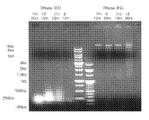
- LMDNA-2 shows the molecular weight of the microbial-derived nucleic acid (LMDNA-2) confirmed by acrylamide gel electrophoresis analysis.
- LMDNA-2 microbial-derived nucleic acid
- Figure 4 shows the cell growth rate of fibroblasts (L929) according to the treatment of the control group (DMSO), the positive control group (PDRN) and the experimental group (LMDNA-1 and BSDNA).
- TCP control group
- LMDNA-1 and BSDNA experimental group
- PDRN positive control group
- FIG 6 shows the proliferation ability of the L929 cell line according to the treatment of the control group (TCP), the experimental group (LMDNA-2), and the positive control group (PDRN).
- TCP control group
- LMDNA-2 experimental group
- PDRN positive control group
- TCP control group
- LMDNA-2 experimental group
- PDRN positive control group
- LMDNA-2 is a view confirming the mobility of the L929 cell line according to the treatment of the experimental group (LMDNA-2).
- FIG 9 shows the growth of osteoblasts (MC3T3-E1) according to the treatment of the control group (TCP), the experimental group (LMDNA-1, BSDNA and BEDNA) and the positive control group (PDRN).
- FIG. 10 shows the alkaline phosphatase activity in osteoblasts (MC3T3-E1) according to the treatment of the control group (TCP), the experimental group (LMDNA-1 and BSDNA), and the positive control group (PDRN).
- TCP control group
- LMDNA-1 and BSDNA experimental group
- PDRN positive control group
- One aspect of the present invention provides a composition for regeneration of tissue cells comprising a microorganism-derived nucleic acid or a fragment thereof as an active ingredient.
- microorganism refers to a microscopic organism having a size of 0.1 mm or less beyond the visible limit of the human eye. Microorganisms mainly consist of single cells or hyphae, and as living organisms, they live the smallest living unit.
- nucleic acid refers to a purine base or a pyrimidine base; Party; And a polymeric material consisting of phosphoric acid. Nucleotides composed of base, pentose, and phosphoric acid are polymerized with a phosphate diester bond to form a long chain-shaped molecule. Phosphoric acid binds alternately at the 5'and 3'positions of pentose.
- the nucleic acid may be deoxyribonucleic acid (DNA), preferably polydeoxyribonucleotide (PDRN).
- DNA deoxyribonucleic acid
- PDRN polydeoxyribonucleotide
- the polydeoxyribonucleotide is a DNA complex, that is, a compound containing a deoxyribonucleotide polymer. It stimulates the A2 puringergic receptor to act as an activator necessary for cell regeneration without any special side effects. Stem cells, fibroblasts, chondrocytes As it promotes cell differentiation, it is an effective substance for burns and chronic wounds.
- the PDRN is a substance having excellent safety due to its high similarity with human genes, and having effects such as incidental anti-inflammatory, thrombolytic, and growth factor promoting effects by activating VEGF.
- the PDRN has been isolated and identified from animal tissues such as sperm or testis of fish, but there is a problem that it is very difficult to obtain an unlimited amount of nucleic acids derived from animal tissues.
- the present inventors have separated and identified nucleic acids from microorganisms, and completed the present invention by confirming that the nucleic acids have very excellent efficacy in promoting the growth of fibroblasts and osteoblasts.
- the microorganism-derived nucleic acid or fragment thereof not only has superior tissue regeneration effect compared to conventionally marketed PDRN, but can also greatly increase the amount of nucleic acid obtainable according to the characteristics of the microorganism capable of mass production, and solve animal ethical problems. There is an advantage to be able to do.
- the microorganism may be a probiotic.
- the probiotics may be lactic acid bacteria.
- probiotics refers to living bacteria that enter the body and give good health effects. Probiotics have long been used in the food industry because lactic acid can be converted into other carbohydrates and sugars. Probiotics not only provide the sour taste of fermented dairy products such as yogurt, but also rebuild damaged tissue for growth and act as a preservative by lowering the pH. Probiotics are known to be effective in lowering cholesterol and blood pressure, improving immune function, preventing infection, improving absorption of minerals, preventing the growth of harmful bacteria due to stress, and improving irritable bowel syndrome and colitis.
- the term "Lactic acid bacteria” is a bacterium that acquires energy by fermenting sugars and produces a large amount of lactic acid. It is widely distributed in the natural world, such as agricultural products, food, and the body of humans and animals. It is widely used for fermentation of cheese, fermented milk, kimchi, and baking. In general, it is known that when lactic acid bacteria are ingested, not only harmful bacteria among the intestinal microorganisms are suppressed, but also beneficial bacteria that help digest, absorb, and decompose food increase. Therefore, it has been reported that ingestion of lactic acid bacteria has various effects such as reducing blood cholesterol, enhancing immunity, suppressing endogenous infection, improving liver cirrhosis, and anti-cancer effect.
- the lactic acid bacteria are Lactobacillus sp. , genus, Bifidobacterium sp. , Streptococcus sp. , genus, Lactococcus sp. , genus, Enterococcus sp. , Pediococcus sp. , Leuconostoc sp. , Weissella sp. , Bacillus sp. , and combinations thereof It may be any one strain selected from the group consisting of.
- a composition comprising a nucleic acid or fragment thereof derived from a strain of the genus Leuconostoc sp. or Bacillus sp. has an effect of skin regeneration or wound healing.
- the composition contains a nucleic acid or fragment thereof derived from any one strain selected from the group consisting of Leuconostoc mesenteroides , Bacillus subtilis , and combinations thereof as an active ingredient. can do.
- Leuconostoc mesenteroides is a lactic acid bacteria of the genus Leuconostoc , which mainly grows at the beginning of fermentation of kimchi.
- Leukonostock mecenteroides is a fungus that does not grow well below pH 4.8. The size of the cells is 0.9 to 1.2 ⁇ m, and the optimum temperature for growth is 21 to 25°C.
- the sugar solution is characterized by being wrapped in a layer of dextran.
- Leukonostock mecenteroides produces lactic acid by fermenting glucose, fructose, galactose, manose, xylose, arabinose, and sucrose.
- Bacillus subtilits also called Bacillus subtilits , is a non-pathogenic bacterium widely distributed in nature, particularly present in air, dry grass, sewage, and soil. It is a rod-shaped bacillus that has flagella, so it moves actively, and forms a circular or oval-shaped spore in the center of the cell. It develops well in a normal incubator, forms large gray-white colonies, and forms a radial shape around it. Because it has spores, it has strong resistance, and the cells are Gram-positive bacteria containing glycogen, and they decompose many carbohydrates to produce acids.
- the cultured microorganism was treated with a proteinase and then centrifuged to cleave the peptide bonds in the microorganism, and then treated with sodium acetate and guanidine hydrochloride and centrifuged to obtain a nucleic acid derived from the microorganism of the present invention.
- the proteinase SDS (Sodium Dodecyl Sulfate) was treated.
- the proteinase SDS-treated microorganism was centrifuged to cleave peptide bonds in the microorganism, and sodium acetate and ethanol were added, followed by centrifugation to obtain a microorganism-derived nucleic acid of the present invention.
- the length of the microorganism-derived nucleic acid or fragment thereof may be 50 bp to 10,000 bp, 60 bp to 7,500 bp, 70 bp to 1,500 bp, 80 bp to 1,000 bp, 90 bp to 700 bp, or 100 bp to 500 bp.
- the length of the nucleic acid or fragment is embodied in the above range, the effect of promoting skin regeneration and wound healing of a composition comprising them may be exhibited best.
- the molecular weight of the microorganism-derived nucleic acid or fragment thereof may be 30 kDa to 7,000 kDa, 35 kDa to 5,000 kDa, 40 kDa to 1,000 kDa, 45 kDa to 700 kDa, or 55 kDa to 350 kDa.
- Such molecular weight may be optimal when a microorganism-derived nucleic acid or a fragment thereof is considered in terms of both the expression level of the effect and the fast-acting aspect in wound treatment, improvement, or bone disease treatment.
- skin regeneration means that skin tissue is recovered from damage caused by external and internal causes of the skin, and “wound” refers to epithelial tissue caused by internal and external factors. It refers to damage to the connective tissue and, preferably, may be damage to the skin.
- bone regeneration means that bone tissue damaged by external shock or aging is restored. Bone regeneration can occur by differentiation of osteoblasts, and the degree of osteoblast differentiation can be confirmed by measuring the activity of a marker, Alkaline Phosphatase (ALP).
- ALP Alkaline Phosphatase
- the alkaline phosphatase is most often found in bone, is connected to the cell membrane of osteoblasts, and is known to exist in a large number of matrix vesicles of the growing bone.
- Another aspect of the present invention provides a pharmaceutical composition for skin regeneration and wound treatment comprising a microorganism-derived nucleic acid or a fragment thereof as an active ingredient.
- the pharmaceutical composition of the present invention may further include a pharmaceutically acceptable additive, wherein the pharmaceutically acceptable additives include starch, gelatinized starch, microcrystalline cellulose, lactose, povidone, colloidal silicon dioxide, and hydrogen phosphate.
- the pharmaceutically acceptable additives include starch, gelatinized starch, microcrystalline cellulose, lactose, povidone, colloidal silicon dioxide, and hydrogen phosphate.
- Calcium, lactose, mannitol, syrup, arabic rubber, pregelatinized starch, corn starch, powdered cellulose, hydroxypropyl cellulose, Opadry, sodium starch glycolate, lead carnauba, synthetic aluminum silicate, stearic acid, magnesium stearate, aluminum stearate , Calcium stearate, sucrose, dextrose, sorbitol and talc, and the like may be used.
- the pharmaceutically acceptable additive according to the present invention may be included in an amount of 0.1 to 90 parts by weight with respect to the composition, but is
- the pharmaceutical composition can be administered in various oral and parenteral dosage forms at the time of actual clinical administration.
- diluents or excipients such as commonly used fillers, extenders, binders, wetting agents, disintegrants, and surfactants are used. It can be prepared by
- Solid preparations for oral administration include tablets, pills, powders, granules, capsules, and the like, and these solid preparations include at least one excipient, such as starch, calcium carbonate, and water in the mixed extract of the present invention. It can be prepared by mixing sucrose, lactose or gelatin. In addition, in addition to simple excipients, lubricants such as magnesium stearate and talc may also be used.
- Liquid preparations for oral use include suspensions, liquid solutions, emulsions, and syrups. In addition to water and liquid paraffin, which are commonly used simple diluents, various excipients such as wetting agents, sweetening agents, fragrances, and preservatives may be included. .
- Formulations for parenteral administration may include sterilized aqueous solutions, non-aqueous solutions, suspensions, emulsions, lyophilized formulations, and suppositories.
- non-aqueous solvent and the suspension solvent propylene glycol, polyethylene glycol, vegetable oil such as olive oil, and injectable ester such as ethyl oleate may be used.
- injectable ester such as ethyl oleate
- a base for suppositories witepsol, macrogol, tween 61, cacao butter, laurin, glycerogelatin, and the like may be used.
- composition of the present invention can be administered orally or parenterally according to a desired method, and when administered parenterally, external use of the skin or intraperitoneal injection, rectal injection, subcutaneous injection, intravenous injection, intramuscular injection or intrathoracic injection injection method You can choose.
- the dosage may vary depending on the patient's weight, age, sex, health status, diet, administration time, administration method, excretion rate, and severity of disease.
- the dosage of the composition of the present invention varies according to the patient's weight, age, sex, health condition, diet, administration time, administration method, excretion rate, and severity of disease.
- the present invention provides a method for treating a wound comprising administering to an individual a pharmaceutical composition for skin regeneration and wound treatment comprising a microorganism-derived nucleic acid or a fragment thereof as an active ingredient.
- the term "administration” means introducing a predetermined substance to an individual by an appropriate method
- “individual” means all animals such as rats, mice, livestock, etc., including humans that may be injured. it means. As a specific example, it may be a mammal including a human.
- Another aspect of the present invention provides a cosmetic composition for skin regeneration and wound improvement comprising a microorganism-derived nucleic acid or a fragment thereof as an active ingredient.
- the cosmetic composition may be formulated into a cosmetic formulation conventionally manufactured in the art.
- the cosmetic composition is formulated as, for example, a solution, a suspension, an emulsion, a paste, a gel, a cream, a lotion, a powder, a soap, a surfactant-containing cleansing, an oil, a powder foundation, an emulsion foundation, a wax foundation, and a spray. May be, but is not limited thereto. More specifically, it may be formulated as a flexible lotion, nutritional lotion, nutritional cream, massage cream, essence, eye cream, cleansing cream, cleansing foam, cleansing water, pack, spray or powder formulation.
- the formulation of the cosmetic composition is a paste, cream or gel, animal oil, vegetable oil, wax, paraffin, starch, tragacanth, cellulose derivatives, polyethylene glycol, silicone, bentonite, silica, talc, zinc oxide, and mixtures thereof It may contain a carrier component selected from the group consisting of.
- the formulation of the cosmetic composition may include a carrier component selected from the group consisting of a solution or emulsion, a solvent, a solvating agent, an emulsifying agent, and a mixture thereof.
- a carrier component selected from the group consisting of a solution or emulsion, a solvent, a solvating agent, an emulsifying agent, and a mixture thereof.
- examples thereof include water, ethanol, isopropanol, ethyl carbonate, ethyl acetate, benzyl alcohol, benzyl benzoate, propylene glycol, 1,3-butyl glycol oil, glycerol aliphatic ester, polyethylene glycol, sorbitan fatty acid ester, and mixtures thereof.
- liquid diluents such as water, ethanol or propylene glycol, ethoxylated isostearyl alcohol, suspending agents such as polyoxyethylene sorbitol ester and polyoxyethylene sorbitan ester, microcrystals It may contain a carrier component selected from the group consisting of cellulose, aluminum metahydroxide, bentonite, agar, tragacanth, and mixtures thereof.
- the present invention provides a wound improvement method comprising the step of applying to an individual a cosmetic composition for improving wounds comprising a microorganism-derived nucleic acid or a fragment thereof as an active ingredient.
- Another aspect of the present invention provides a pharmaceutical composition for preventing or treating bone-related diseases comprising a microorganism-derived nucleic acid or a fragment thereof as an active ingredient.
- the present invention provides a method for treating bone-related diseases comprising administering to an individual a pharmaceutical composition for treating bone-related diseases comprising a microorganism-derived nucleic acid or a fragment thereof as an active ingredient.
- the bone-related disease may be any one selected from the group consisting of osteoporosis, bone growth disorder, fracture, periodontal disease, Paget's disease, bone metastasis cancer, rheumatoid arthritis, and combinations thereof.
- the description of the microorganism-derived nucleic acid or fragment thereof is provided in the composition for regeneration of tissue cells comprising the microorganism-derived nucleic acid or fragment thereof as an active ingredient. See the described description.
- Example 1.1 Leukono Stock Mecenteroides ( Leuconostoc mesenteroides ) Preparation of derived nucleic acid (LMDNA-1)
- Leuconostoc mesenteroides were incubated in lactic acid bacteria medium MRS at 30°C for 16 hours, and then 100 ⁇ l of ampicillin was added and incubated at 30°C for 3 hours. .
- the culture solution was obtained by centrifugation at 10,000 xg for 10 minutes, and washed 3 times with 10 mM Tris-HCl (pH 8.0) buffer solution.
- LMDNA-1 Leukonostock mecenteroides nucleic acid
- Example 1.2 Bacillus subtilis ( Bacillus subtilis ) Preparation of derived nucleic acid (BSDNA)
- Example 1.1 Except for using Bacillus subtilis instead of Leuconostoc mesenteroides in Example 1.1., the same procedure as in Example 1.1 was repeated to obtain a Bacillus subtilis nucleic acid (BSDNA). I did.
- Bacillus subtilis was incubated for 24 hours, centrifuged at 13,000 xg for 10 minutes to take 100 ml of the supernatant, and 10 ml of 3 M sodium acetate (pH 5.2) was added thereto, followed by complete mixing.
- 250 ml of 100% ethanol cooled in a refrigerator was treated, and then left in the refrigerator for about 3 hours.
- Example 1.1 Except for using the extracellular nucleic acid material derived from Bacillus subtilis obtained above instead of Leuconostoc mesenteroides in Example 1.1., the same procedure as in Example 1.1 was repeated to be derived from Bacillus subtilis. Extracellular nucleic acid (BEDNA) was obtained.
- BEDNA Extracellular nucleic acid
- Example 1.4 Leukono Stock Mecenteroides ( Leuconostoc mesenteroides ) Preparation of derived nucleic acid (LMDNA-2)
- Leuconostoc mesenteroides was cultivated in lactic acid bacteria medium MRS medium at 30° C. for 24 hours to obtain an Active Seed Culture, and then 0.2 ml of the Active Seed Culture was re-inoculated with 200 MRS broth to obtain an OD value. In order not to exceed 2.0, the culture was obtained by stationary culture at 30° C. for 10 to 12 hours.
- TES buffer 20 mM Tris-HCl pH 8.0, 2 mM EDTA, 10 mM NaCl), 750 ⁇ l lysozyme solution (10 mg/ml in TE, pH 8.0).
- LMDNA-2 leukonostock mecenteroides nucleic acid
- Example 1.1 And after dissolving the microorganism-derived nucleic acid obtained in 1.3. in an appropriate amount of TE buffer solution, the nucleic acid was quantified using Nano-drop and the concentration and purity were evaluated (FIG. 1).
- the amount of DNA in the nucleic acid was measured as 4450.4 ng/ ⁇ l, and the absorbance value of 260 nm/280 nm, which is an index indicating purity, is 2.20 compared to the value at 280 nm representing the protein content. As measured by, it was confirmed that the purity of the microorganism-derived nucleic acid was high.
- the microbial-derived nucleic acid obtained in Example 1.4 was treated with DNase I and RNase A, and then the molecular weight was measured using acrylamide gel electrophoresis analysis (FIG. 2).
- LMDNA-2 in LMDNA-2 treated with DNase I, the molecular weight of the nucleic acid was 250 bp or less, whereas in LMDNA-2 treated with RNase A, the molecular weight of the nucleic acid was 10 kb or more. This suggests that LMDNA-2 is a polymer genomic DNA of 10 kb or more.
- Example 1.4 The microbial-derived nucleic acid obtained in Example 1.4 was applied with a pulse at 20% power for 10 seconds with an ultrasonic grinder (Sonicator-XL2020, Misonix, USA), and the cycle was repeated for 10 seconds to repeat 5 minutes, 10 minutes, 15 minutes and Crushed for 20 minutes, and its effective molecular weight was measured by electrophoresis (100 V, 40 minutes) (Fig. 3).
- an ultrasonic grinder Sonicator-XL2020, Misonix, USA
- Example 1.1 using the animal cell line L929 (murine fibroblast, ATCC CRL-2148). And reduction of MTT formazan (3-(4,5-dimethylthiazol-2-yl)-2,5-diphenyl-tetrazolium bromide) to the effect of microbial-derived nucleic acids obtained through Example 1.2 on the growth of fibroblasts The degree was measured and evaluated.
- MTT formazan 3-(4,5-dimethylthiazol-2-yl)-2,5-diphenyl-tetrazolium bromide
- cultured L929 cells were counted using 0.4% trypsin blue, and then dispensed into 96 well microtiter plates at 200 ⁇ l of a total medium volume per well, 1 ⁇ 10 5 cells.
- Example 1.1 In each well of a 96 well plate, Example 1.1. And 0.1 mg/ml of the microbial-derived nucleic acid obtained in Example 1.2 was added, followed by incubation for 3 or 6 days at 37° C. in an air incubator of 5% and CO 2 /95% for 24 hours. After incubation, MTT solution (5.0 mg/ml, BBS) was added to each well and incubated for 4 hours. After incubation, the remaining MTT solution was removed, 150 ⁇ l of DMSO was added to dissolve the formazan crystal, and the absorbance at 490 nm was measured using an ELISA plate reader.
- MTT solution 5.0 mg/ml, BBS
- the cell growth rate was expressed as a percentage of the absorbance when the sample was treated with respect to the absorbance of the control group (FIG. 4).
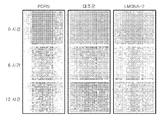
- LMDNA-1 and BSDNA which are microbial-derived nucleic acids, adhered to the cells at the same level as that of the positive control group (FIG. 5).
- the degree of proliferation of the cells after 3 hours, 6 hours, 9 hours, 12 hours and 24 hours compared to 0 hours while culturing the cells was measured.
- the positive control was treated with salmon PDRN (Placentax, Italy) at the same concentration, and the negative control was not treated with any sample (FIG. 6).
- the L929 cell line of 5 ⁇ 10 5 cells/well was seeded into a 24-well plate containing DMEM medium containing 10% FBS, and cultured overnight in a humidified 5% CO 2 , 37°C incubator. Thereafter, the DMEM medium was completely removed, the attached cell layer was removed with a sterilized yellow pipette tip to scratch, and the cell debris was removed by washing with phosphate buffer saline (PBS). Thereafter, the scratched cell line was inoculated into 10% FBS DMEM medium containing the microorganism-derived nucleic acid sample obtained in Example 1.4 at 10 ⁇ g/ml.
- PBS phosphate buffer saline
- Mitomycin C (mitomycin C) of 10 ⁇ g / ml was treated to evaluate only the migration ability while inhibiting the proliferative ability of cells. Cells were cultured for 12 hours in a humidified 5% CO 2 atmosphere incubator at 37°C.
- microorganism-derived nucleic acid according to the present invention has an excellent wound healing effect.
- Example 1.1 using the animal cell line MC3T3-E1 (Preosteoblast, ATCC CRL-2593). To the effect of the microorganism-derived nucleic acid obtained through Example 1.3 on the growth of osteoblasts was evaluated by measuring the degree of reduction of MTT formazan.
- cultured MC3T3-E1 cells were counted using 0.4% trypsin blue, and then dispensed into 96 well microtiter plates with a total volume of medium 200 ⁇ l per well, 1 ⁇ 10 5 cells.
- MTT solution 5.0 mg/ml, BBS
- MTT solution 150 ⁇ l of DMSO was added to dissolve the formazan crystal, and the absorbance at 490 nm was measured using an ELISA plate reader (FIG. 9).
- the control group (Tissue Culture Plate, TCP) was not treated with the sample, and the positive control group was treated with DNA (PDRN, Mastelli, Italy) extracted from the same concentration of commercial salmon instead of the sample.
- Alkaline Phosphatase is widely known as a marker of osteoblast differentiation.
- ALP Alkaline Phosphatase
- Example 1.1 after 24 hours.
- Example 1.2 the microbial-derived nucleic acids obtained in Example 1.2 were treated with 1 ⁇ g/ml, 10 ⁇ g/ml, or 100 ⁇ g/ml, respectively, washed with PBS after 4 days, and dissolved in PBS with Triton 0.1% (Triton X-100) After rinsing, it was frozen at -20°C.
- the sample was not treated as a control (Tissue Culture Plate, TCP), and as a positive control, DNA (PDRN) extracted from commercially available salmon at the same concentration was treated instead of the sample.
- TCP tissue Culture Plate
- PDRN DNA extracted from commercially available salmon at the same concentration
- the alkaline phosphatase activity was equal to or superior to that of the positive control group, and in particular, 1 ⁇ g/ml and 10 ⁇ g/ml of Leukonostock mecenteroides-derived nucleic acid were treated.
- LMDNA-1 compared with the positive control group treated with PDRN at the same concentration, showed excellent alkaline phosphatase activity.
Landscapes
- Health & Medical Sciences (AREA)
- Life Sciences & Earth Sciences (AREA)
- Animal Behavior & Ethology (AREA)
- General Health & Medical Sciences (AREA)
- Public Health (AREA)
- Veterinary Medicine (AREA)
- Chemical & Material Sciences (AREA)
- Medicinal Chemistry (AREA)
- Pharmacology & Pharmacy (AREA)
- Epidemiology (AREA)
- Engineering & Computer Science (AREA)
- Molecular Biology (AREA)
- General Chemical & Material Sciences (AREA)
- Nuclear Medicine, Radiotherapy & Molecular Imaging (AREA)
- Birds (AREA)
- Bioinformatics & Cheminformatics (AREA)
- Dermatology (AREA)
- Chemical Kinetics & Catalysis (AREA)
- Mycology (AREA)
- Microbiology (AREA)
- Organic Chemistry (AREA)
- Tropical Medicine & Parasitology (AREA)
- Biotechnology (AREA)
- Physical Education & Sports Medicine (AREA)
- Biochemistry (AREA)
- Medicines Containing Material From Animals Or Micro-Organisms (AREA)
Abstract
La présente invention concerne une composition de régénération cutanée ou osseuse comprenant un acide nucléique dérivé de micro-organisme ou d'un fragment de celui-ci en tant qu'ingrédient actif. Les présents inventeurs ont confirmé que l'acide nucléique dérivé de micro-organisme a un effet de promotion de la croissance sur des fibroblastes et des pré-ostéoblastes, et a pour effet de favoriser la différenciation en ostéoblastes. Ainsi, la composition comprenant l'acide nucléique dérivé de micro-organisme en tant que principe actif de la présente invention peut être utilement employée pour la régénération cutanée, le traitement ou la réduction des plaies et le traitement ou la prévention des maladies osseuses.
Applications Claiming Priority (2)
| Application Number | Priority Date | Filing Date | Title |
|---|---|---|---|
| KR20190053835 | 2019-05-08 | ||
| KR10-2019-0053835 | 2019-05-08 |
Publications (1)
| Publication Number | Publication Date |
|---|---|
| WO2020226460A1 true WO2020226460A1 (fr) | 2020-11-12 |
Family
ID=73051147
Family Applications (1)
| Application Number | Title | Priority Date | Filing Date |
|---|---|---|---|
| PCT/KR2020/006117 Ceased WO2020226460A1 (fr) | 2019-05-08 | 2020-05-08 | Acide nucléique dérivé de micro-organisme et son utilisation |
Country Status (2)
| Country | Link |
|---|---|
| KR (1) | KR20200130174A (fr) |
| WO (1) | WO2020226460A1 (fr) |
Cited By (1)
| Publication number | Priority date | Publication date | Assignee | Title |
|---|---|---|---|---|
| WO2025176205A1 (fr) * | 2024-02-22 | 2025-08-28 | 华熙生物科技股份有限公司 | Pdrn, son procédé de préparation et son utilisation |
Families Citing this family (3)
| Publication number | Priority date | Publication date | Assignee | Title |
|---|---|---|---|---|
| KR102316637B1 (ko) * | 2021-03-09 | 2021-10-25 | 코스맥스 주식회사 | 병풀 유래 바실러스 서브틸리스 균주 및 그의 피부 상태 개선 용도 |
| KR20250175500A (ko) | 2024-06-10 | 2025-12-17 | 한지성 | 해조류 유래 폴리데옥시리보뉴클레오티드(Polydeoxyribonucleotide)를 이용한 골다공증 예방 및 개선용 조성물 |
| KR102907856B1 (ko) | 2025-01-21 | 2026-01-08 | (주) 옵트바이오 | 프로바이오틱스 유래 폴리리보뉴클레오티드를 유효성분으로 포함하는 안티에이징 화장료 조성물 |
Citations (5)
| Publication number | Priority date | Publication date | Assignee | Title |
|---|---|---|---|---|
| US20060263378A1 (en) * | 1998-07-27 | 2006-11-23 | Microbial Technics Limited | Nucleic acids and proteins from Streptococcus pneumoniae |
| KR20080081486A (ko) * | 2007-03-05 | 2008-09-10 | (주)네오팜 | 신규 유산균 균주 및 이를 포함하는 유산균 제제 |
| WO2011027829A1 (fr) * | 2009-09-02 | 2011-03-10 | 京都府公立大学法人 | Composition contenant de l'arn dérivé d'une bactérie lactique en tant que principe actif |
| WO2013153358A1 (fr) * | 2012-04-13 | 2013-10-17 | The University Of Manchester | Bactéries probiotiques |
| KR20160086249A (ko) * | 2015-07-27 | 2016-07-19 | (주) 와이디생명과학 | 락토바실러스 플란타룸 yd-212 균주 및 이를 이용하여 제조되는 발효물을 포함하는 조성물 |
Family Cites Families (2)
| Publication number | Priority date | Publication date | Assignee | Title |
|---|---|---|---|---|
| KR101488716B1 (ko) | 2012-09-03 | 2015-02-04 | 엄인웅 | 치조골 재생용 키트 |
| KR20180060537A (ko) | 2016-11-29 | 2018-06-07 | (주)웰빙해피팜 | 피부재생 및 보습기능을 강화한 미백기능성 화장품 조성물 |
-
2020
- 2020-05-07 KR KR1020200054685A patent/KR20200130174A/ko not_active Ceased
- 2020-05-08 WO PCT/KR2020/006117 patent/WO2020226460A1/fr not_active Ceased
Patent Citations (5)
| Publication number | Priority date | Publication date | Assignee | Title |
|---|---|---|---|---|
| US20060263378A1 (en) * | 1998-07-27 | 2006-11-23 | Microbial Technics Limited | Nucleic acids and proteins from Streptococcus pneumoniae |
| KR20080081486A (ko) * | 2007-03-05 | 2008-09-10 | (주)네오팜 | 신규 유산균 균주 및 이를 포함하는 유산균 제제 |
| WO2011027829A1 (fr) * | 2009-09-02 | 2011-03-10 | 京都府公立大学法人 | Composition contenant de l'arn dérivé d'une bactérie lactique en tant que principe actif |
| WO2013153358A1 (fr) * | 2012-04-13 | 2013-10-17 | The University Of Manchester | Bactéries probiotiques |
| KR20160086249A (ko) * | 2015-07-27 | 2016-07-19 | (주) 와이디생명과학 | 락토바실러스 플란타룸 yd-212 균주 및 이를 이용하여 제조되는 발효물을 포함하는 조성물 |
Cited By (1)
| Publication number | Priority date | Publication date | Assignee | Title |
|---|---|---|---|---|
| WO2025176205A1 (fr) * | 2024-02-22 | 2025-08-28 | 华熙生物科技股份有限公司 | Pdrn, son procédé de préparation et son utilisation |
Also Published As
| Publication number | Publication date |
|---|---|
| KR20200130174A (ko) | 2020-11-18 |
Similar Documents
| Publication | Publication Date | Title |
|---|---|---|
| WO2020226460A1 (fr) | Acide nucléique dérivé de micro-organisme et son utilisation | |
| AU2021269282B2 (en) | Novel lactic acid bacteria and use thereof | |
| EP0555618B1 (fr) | Compositions diététiques ou pharmaceutiques comprenant des bactéries lactiques lyophilisées | |
| JP7624219B2 (ja) | ニキビの治療のためのプロピオニバクテリウム・アクネスに対する細菌療法 | |
| KR20010101171A (ko) | 비뇨생식기 감염의 치료 및 예방을 위한 락토바실러스의경구 투여 | |
| CN116004465A (zh) | 一株格氏乳杆菌及其应用 | |
| KR102296288B1 (ko) | 락토바실러스 루테리 균주, 및 그의 유래의 소포체 및 그의 항염증 및 항균 용도 | |
| WO2020040408A1 (fr) | Nouvelle souche de cutibacterium granulosum, et composition comprenant une telle souche ou une culture de ladite souche pour prévenir ou traiter l'acné | |
| AU2025213694A1 (en) | Strains, composition and method of use | |
| CN117004503B (zh) | 一株唾液联合乳杆菌mb1及其在制备助睡眠和调理肠胃食品药品中的应用 | |
| WO2021242056A1 (fr) | Souche de l'espèce bifidobacterium et vésicule extracellulaire dérivée de cette dernière, et leurs utilisations anti-inflammatoires et antibactériennes | |
| WO2024075937A1 (fr) | Produit de fermentation du fucoïdane et ses utilisations pour améliorer l'état de la peau | |
| WO2021246610A1 (fr) | Composition pour la prévention ou le traitement de maladies inflammatoires, comprenant une souche de lactobacillus sakei cvl-001 | |
| RU2151606C1 (ru) | Штамм бактерий bifidobacterium longum z4 для приготовления бактерийных препаратов, нормализующих микрофлору при нарушениях микробиоценоза влагалища | |
| JP5980987B2 (ja) | プロバイオティクス菌株及びその使用、並びにその組成物 | |
| CN118028148A (zh) | 一株粪肠球菌mb2及其在制备抗炎和降血糖食品药品中的应用 | |
| WO2018139703A1 (fr) | Composition pharmaceutique pour le traitement d'une maladie colorectale contenant de la cystatine et une protéine dérivée de bactéries lactiques | |
| WO2023243835A9 (fr) | Bacteriophage cap-1 à capacité de destruction de cutibacterium acnes | |
| WO2023038404A1 (fr) | Bifidobacterium animalis subsp. lactis et son utilisation pour améliorer l'état de la peau | |
| KR102296287B1 (ko) | 락토바실러스 퍼멘텀 균주, 및 그의 유래의 소포체 및 그의 항염증 및 항균 용도 | |
| CN109652334A (zh) | 一种微生物复合菌剂及其制备方法和应用 | |
| CN117866840A (zh) | 一株粪肠球菌xy2及其在制备抗炎和美白食品药品中的应用 | |
| WO2019205506A1 (fr) | Bactéroïdes ovoïdes pour soulager une infection par des endotoxines et application associée | |
| WO2021242057A1 (fr) | Souche de lactobacillus sp., reticulum endoplasmique dérivé de cette dernière, et utilisation anti-inflammatoire et antibactérienne associée | |
| KR102351148B1 (ko) | 페디오코쿠스 펜토사세우스 균주, 및 그의 유래의 소포체 및 그의 항염증 및 항균 용도 |
Legal Events
| Date | Code | Title | Description |
|---|---|---|---|
| 121 | Ep: the epo has been informed by wipo that ep was designated in this application |
Ref document number: 20802776 Country of ref document: EP Kind code of ref document: A1 |
|
| NENP | Non-entry into the national phase |
Ref country code: DE |
|
| 122 | Ep: pct application non-entry in european phase |
Ref document number: 20802776 Country of ref document: EP Kind code of ref document: A1 |