WO2020244389A1 - Procédé et appareil de prévision de volume de trafic téléphonique - Google Patents
Procédé et appareil de prévision de volume de trafic téléphonique Download PDFInfo
- Publication number
- WO2020244389A1 WO2020244389A1 PCT/CN2020/091586 CN2020091586W WO2020244389A1 WO 2020244389 A1 WO2020244389 A1 WO 2020244389A1 CN 2020091586 W CN2020091586 W CN 2020091586W WO 2020244389 A1 WO2020244389 A1 WO 2020244389A1
- Authority
- WO
- WIPO (PCT)
- Prior art keywords
- traffic
- message
- management device
- forecast
- predicted
- Prior art date
- Legal status (The legal status is an assumption and is not a legal conclusion. Google has not performed a legal analysis and makes no representation as to the accuracy of the status listed.)
- Ceased
Links
Images


Classifications
-
- H—ELECTRICITY
- H04—ELECTRIC COMMUNICATION TECHNIQUE
- H04W—WIRELESS COMMUNICATION NETWORKS
- H04W24/00—Supervisory, monitoring or testing arrangements
- H04W24/08—Testing, supervising or monitoring using real traffic
-
- H—ELECTRICITY
- H04—ELECTRIC COMMUNICATION TECHNIQUE
- H04W—WIRELESS COMMUNICATION NETWORKS
- H04W16/00—Network planning, e.g. coverage or traffic planning tools; Network deployment, e.g. resource partitioning or cells structures
- H04W16/22—Traffic simulation tools or models
-
- H—ELECTRICITY
- H04—ELECTRIC COMMUNICATION TECHNIQUE
- H04L—TRANSMISSION OF DIGITAL INFORMATION, e.g. TELEGRAPHIC COMMUNICATION
- H04L41/00—Arrangements for maintenance, administration or management of data switching networks, e.g. of packet switching networks
- H04L41/08—Configuration management of networks or network elements
- H04L41/0896—Bandwidth or capacity management, i.e. automatically increasing or decreasing capacities
-
- H—ELECTRICITY
- H04—ELECTRIC COMMUNICATION TECHNIQUE
- H04L—TRANSMISSION OF DIGITAL INFORMATION, e.g. TELEGRAPHIC COMMUNICATION
- H04L41/00—Arrangements for maintenance, administration or management of data switching networks, e.g. of packet switching networks
- H04L41/14—Network analysis or design
- H04L41/147—Network analysis or design for predicting network behaviour
-
- H—ELECTRICITY
- H04—ELECTRIC COMMUNICATION TECHNIQUE
- H04L—TRANSMISSION OF DIGITAL INFORMATION, e.g. TELEGRAPHIC COMMUNICATION
- H04L43/00—Arrangements for monitoring or testing data switching networks
- H04L43/08—Monitoring or testing based on specific metrics, e.g. QoS, energy consumption or environmental parameters
- H04L43/0876—Network utilisation, e.g. volume of load or congestion level
-
- H—ELECTRICITY
- H04—ELECTRIC COMMUNICATION TECHNIQUE
- H04L—TRANSMISSION OF DIGITAL INFORMATION, e.g. TELEGRAPHIC COMMUNICATION
- H04L47/00—Traffic control in data switching networks
- H04L47/70—Admission control; Resource allocation
- H04L47/83—Admission control; Resource allocation based on usage prediction
-
- H—ELECTRICITY
- H04—ELECTRIC COMMUNICATION TECHNIQUE
- H04W—WIRELESS COMMUNICATION NETWORKS
- H04W24/00—Supervisory, monitoring or testing arrangements
- H04W24/04—Arrangements for maintaining operational condition
-
- H—ELECTRICITY
- H04—ELECTRIC COMMUNICATION TECHNIQUE
- H04W—WIRELESS COMMUNICATION NETWORKS
- H04W28/00—Network traffic management; Network resource management
- H04W28/02—Traffic management, e.g. flow control or congestion control
- H04W28/08—Load balancing or load distribution
- H04W28/09—Management thereof
- H04W28/0925—Management thereof using policies
- H04W28/0942—Management thereof using policies based on measured or predicted load of entities- or links
-
- H—ELECTRICITY
- H04—ELECTRIC COMMUNICATION TECHNIQUE
- H04L—TRANSMISSION OF DIGITAL INFORMATION, e.g. TELEGRAPHIC COMMUNICATION
- H04L43/00—Arrangements for monitoring or testing data switching networks
- H04L43/02—Capturing of monitoring data
- H04L43/026—Capturing of monitoring data using flow identification
-
- H—ELECTRICITY
- H04—ELECTRIC COMMUNICATION TECHNIQUE
- H04W—WIRELESS COMMUNICATION NETWORKS
- H04W84/00—Network topologies
- H04W84/02—Hierarchically pre-organised networks, e.g. paging networks, cellular networks, WLAN [Wireless Local Area Network] or WLL [Wireless Local Loop]
- H04W84/04—Large scale networks; Deep hierarchical networks
- H04W84/042—Public Land Mobile systems, e.g. cellular systems
-
- H—ELECTRICITY
- H04—ELECTRIC COMMUNICATION TECHNIQUE
- H04W—WIRELESS COMMUNICATION NETWORKS
- H04W84/00—Network topologies
- H04W84/02—Hierarchically pre-organised networks, e.g. paging networks, cellular networks, WLAN [Wireless Local Area Network] or WLL [Wireless Local Loop]
- H04W84/04—Large scale networks; Deep hierarchical networks
- H04W84/06—Airborne or Satellite Networks
Definitions
- This application relates to the field of communications, and in particular to a method and device for predicting traffic in the field of communications.
- Network optimization is a time-consuming process, that is, optimization algorithms, effect evaluation, decision-making, and Necessary steps such as reconfiguration, therefore, will affect business requirements within a certain period of time, and may cause problems such as no user access for a certain period of time, user access time-consuming, and stalling.
- 5G business for example, enhanced mobile broadband (eMBB) business, massive machine type communications, mMTC) business, ultra-reliable and low latency communications (URLLC) business
- eMBB enhanced mobile broadband
- mMTC massive machine type communications
- URLLC ultra-reliable and low latency communications
- the present application provides a method and device for predicting the volume of traffic, which can predict the volume of traffic, which is beneficial to avoid the impact on services due to unreasonable resource allocation.
- a method for predicting traffic is provided, which is characterized by comprising: a first management device receiving a first message from a second management device, the first message being used to request the first
- the management device performs traffic forecasting, the first message includes forecasting object, traffic type, and forecast demand information, and the forecast demand information includes forecast granularity and/or forecast period, wherein the forecast granularity includes at least one of the following: Predicted area, predicted service type, predicted slice, predicted cell, predicted land public mobile communication network PLMN, or predicted tenant; the first management device determines the traffic for the predicted target according to the predicted demand information The predicted traffic volume corresponding to the type.
- the first management device according to the prediction object, the traffic type, and the predicted demand information sent by the second management device can determine the traffic volume of the predicted object meeting the predicted demand information. Prediction, so that the network can allocate resources as needed according to the obtained traffic forecast, which is beneficial to avoid the impact of unreasonable resource allocation on services, thereby improving system performance.
- the first management device may continuously collect at least one historical traffic volume of the predicted object corresponding to the traffic type included in the first message for a period of time and analyze the historical traffic volume during this period of time.
- the traffic volume is analyzed to obtain the law of the historical traffic volume, and then according to the law of the historical traffic volume and then according to the at least one historical traffic volume, the traffic forecast volume that meets the predicted demand information is determined, namely The predicted traffic volume corresponding to the traffic type determined according to the predicted demand information in the embodiment of the present application.
- the traffic volume obtained by the prediction method can be called the traffic forecast volume
- the actual traffic forecast volume can be called the traffic volume or the historical traffic volume.
- the embodiment of the application does not limit its name.
- the aforementioned traffic volume may also be referred to as traffic volume, and may also have other names, which are not limited in the embodiment of the present application.
- the traffic type includes at least one of the following: number of users, user distribution, user activation ratio, coverage, throughput, number of radio resource control RRC connections, physical resources Block PRB number, PRB usage rate, or load situation.
- the number of users mentioned above may be the number of registered users or the number of active users.
- the prediction object includes at least one of the following: a service, a network, a network element, a network function, or a cell.
- the first message may carry information used to indicate the aforementioned prediction object, for example, service identification, network identification, network element identification, network function identification, cell identification, etc.
- the network identifier is used to identify the object of this prediction service, and the network may refer to a subnetwork (subnetwork), a network slice (network slice), a network slice subnet (network slice subnet), etc., correspondingly, the network identifier
- the indication can be a sub-network identifier, a network slice instance identifier, a network slice sub-network instance identifier, or a network slice selection assistance identifier (s-NSSAI), etc.
- the method further includes: the first management device configures traffic prediction service information under the management object of the prediction object according to the first message, and the traffic prediction service information is used to indicate The predicted demand information predicts the traffic volume of the traffic type, and the traffic forecast service information includes the traffic type and the predicted demand information.
- the first message includes the prediction object
- the first management device may create a traffic forecast service under the management object of the prediction object, that is, configure the traffic volume Forecast service information is used to forecast the traffic volume of this time.
- the first management device may include the above-mentioned traffic type, prediction granularity, prediction period and other information in the current traffic prediction service information.
- the first management device determines the traffic forecast corresponding to the traffic type for the forecast object according to the forecast demand information, including: When the predicted demand information includes the predicted granularity, the first management device collects the traffic volume according to the predicted granularity, and determines the traffic type at the predicted granularity according to the collected traffic volume Corresponding traffic forecast volume; or, when the forecast demand information includes the forecast period, the first management device collects the traffic volume, and according to the collected traffic volume, determines the amount of traffic within the forecast period The traffic forecast volume corresponding to the traffic type; or, when the forecast demand information includes the forecast granularity and the forecast period, the first management device collects the traffic volume according to the forecast granularity and collects For the received traffic volume, determine the traffic prediction volume corresponding to the traffic type under the prediction granularity and within the prediction period.
- the method before the first management device determines the traffic volume corresponding to the traffic type according to the predicted demand information, the method further includes: The first management device determines the predicted sub-object associated with the predicted object according to the first message; the first management device sends a seventh message to the management device of the predicted sub-object, and the seventh message is used The management device that requests the predicted sub-object performs traffic prediction of the predicted sub-object.
- the first management device may determine the prediction sub-object according to the prediction object.
- the network traffic forecast may be divided into access network traffic forecast and core network traffic forecast, or divided into network services in different regions Volume forecast, or forecast of network traffic divided into different sites.
- the first management device may respectively send to the management device predicting the child object a seventh message requesting to predict the traffic volume of the predicting child object.
- the management device predicting the child object may report to the management device predicting the child object Configure traffic forecast service information for the forecast sub-object under the management object.
- one management object corresponds to only one management device, but one management device can correspond to multiple management objects.
- the method further includes: the first management device sends a second message to the second management device, the second message is used to indicate a traffic volume prediction result, and the second message carries the traffic type corresponding At least one traffic forecast.
- the first management device may send a traffic prediction result including at least one traffic prediction amount to the second management device.
- the at least one traffic forecast amount may be determined by the first management device according to the forecast object, traffic type, and forecast demand information.
- the multiple traffic forecasts may respectively correspond to one piece of time information.
- the number of multiple traffic forecasts is 24, which respectively correspond to For 24 hours in a day, the predicted traffic volume may be the maximum value of the predicted traffic volume in each hour, or the minimum value of the predicted traffic volume, or the average value of the predicted traffic volume, etc. This embodiment of the present application Not limited.
- the above-mentioned time information may be carried in the second message together with the plurality of traffic forecasts, and the time information and the traffic forecasts are bound one-to-one.
- the first management device and the second management device may pre-appoint the sending order of multiple traffic forecasts, so that the sending order of the multiple traffic forecasts corresponds to the agreed time sequence.
- the second management device can obtain the traffic forecast corresponding to the specific time according to the agreement.
- the method further includes: the first management device receives a third message from the second management device, the third message is used to request the first management device to return a traffic forecast, the third message Carry the information of the query object and the information of the query granularity; the first management device sends a fourth message to the second management device according to the third message, and the fourth message is used to indicate that the query object is in the The traffic forecast under the query granularity.
- the aforementioned query object includes all or part of the prediction object, and the aforementioned query granularity includes all or part of the prediction granularity.
- the first management device can obtain the corresponding traffic forecast according to the query object and query granularity.
- the aforementioned third message also includes query time, which is used to predict the traffic volume at a specific time point or a specific time period.
- the method further includes: receiving, by the first management device, a fifth message from the second management device, the fifth message requesting a traffic volume assessment, and the fifth message carrying the information of the assessment object and the assessment time
- the first management device determines whether the evaluation object can meet the traffic demand value at the evaluation time according to the fifth message; the first management device sends The second management device sends a sixth message, where the sixth message is used to indicate the result of the traffic volume evaluation.
- the above evaluation object includes all or part of the prediction object, and the specific evaluation situation is similar to the above query object, and will not be repeated here.
- the fifth message sent by the second management device to the first management device may carry the traffic demand value, and the first management device may directly according to the traffic demand value, combined with the evaluation object and the evaluation time, It is sufficient to judge whether the traffic volume of the assessment object can meet the traffic volume demand value at the assessment time. Therefore, the result of the traffic evaluation in the embodiment of the present application is "Yes" or "No".
- the second management device may adjust the conversation traffic demand value and re-evaluate, but this embodiment of the application does not limit this.
- the first message is a traffic measurement control request
- the traffic measurement control request also carries prediction indication information
- the prediction indication information is Instruct the first management device to perform traffic forecasting.
- the foregoing first message may be a message only used to request traffic prediction, or other messages may be reused, which is not limited in the embodiment of the present application.
- the foregoing first message is included in a traffic measurement control request message, that is, the traffic measurement control request message not only requests the first management device to perform traffic measurement control, but also carries The first message requests the first management device to predict the traffic volume.
- another method for predicting traffic which is characterized in that it includes: a second management device sends a first message to a first management device, and the first message is used to request the first
- the management device performs traffic forecasting, the first message includes forecasting object, traffic type, and forecast demand information, and the forecast demand information includes forecast granularity and/or forecast period, wherein the forecast granularity includes at least one of the following: Predicted area, predicted service type, predicted slice, predicted cell, predicted land public mobile communication network PLMN, or predicted tenant; the second management device receives the predicted traffic volume from the first management device.
- the traffic type includes at least one of the following: number of users, user distribution, user activation ratio, coverage, throughput, number of radio resource control RRC connections, physical resources Block PRB number, PRB usage rate, or load situation.
- the prediction object includes at least one of the following: a service, a network, a network element, a network function, or a cell.
- the second management device receiving the traffic forecast from the first management device includes: the second management device receives the traffic forecast from the first management device A second message of the management device, where the second message is used to indicate a traffic volume prediction result, and the second message carries at least one traffic prediction volume corresponding to the traffic type.
- the method further includes: the second management device sends the first message to the first management device.
- a management device sends a third message, the third message is used to request the first management device to return the traffic forecast, the third message carries information about the query object and query granularity information;
- the second management device Receiving the traffic forecast from the first management device includes: the second management device receives a fourth message from the first management device, where the fourth message is used to indicate that the query object is in the Query the traffic forecast volume under the granularity of the query.
- the method further includes: the second management device sends the first message to the first management device.
- a management device sends a fifth message, the fifth message requests a traffic evaluation, and the fifth message carries information about the evaluation object, information about the evaluation time, and a traffic demand value; the second management device receives
- the predicted traffic volume of the first management device includes: the second management device receives a sixth message from the first management device, where the sixth message is used to indicate a result of the traffic volume evaluation.
- a device for executing the above-mentioned aspects or methods in any possible implementation manners of the aspects.
- the device includes a unit for executing the above-mentioned aspects or methods in any possible implementation manners of the aspects.
- the device may include modules that perform one-to-one correspondence of the methods/operations/steps/actions described in the above aspects.
- the modules may be hardware circuits, software, or hardware circuits combined with software. .
- the device is a communication chip
- the communication chip may include an input circuit or interface for sending information or data, and an output circuit or interface for receiving information or data.
- the device is a communication device, and the communication device may include a transmitter for sending information or data, and a receiver for receiving information or data.
- the device is used to execute the above-mentioned aspects or methods in any possible implementation manner of each aspect.
- the device can be configured in a network device, or the device itself is a network device.
- a device in a fourth aspect, includes: a processor coupled with a memory, the memory is used to store a computer program, and the processor is used to call and run the computer program from the memory so that the device executes.
- processors there are one or more processors and one or more memories.
- the memory may be integrated with the processor, or the memory and the processor may be provided separately.
- the communication device further includes a transmitter (transmitter) and a receiver (receiver).
- the transmitter and the receiver can be set separately or integrated together, which is called a transceiver.
- a communication system including: a first management device and a second management device; the second management device is configured to send a first message to the first management device, and the first message is used to request the The first management device performs traffic forecasting, the first message includes forecasting object, traffic type, and forecast demand information, and the forecast demand information includes forecast granularity and/or forecast period, where the forecast granularity includes at least one of the following: forecast Area, predicted service type, predicted slice, predicted cell, predicted land public mobile communication network PLMN, or predicted tenant; the first management device is used to: receive the first message, and target the predicted target according to the predicted demand information To determine the predicted traffic volume corresponding to the traffic type, and send the predicted traffic volume to the second management device; the second management device is further configured to: receive the predicted traffic volume.
- the first management device is configured to: before determining the traffic forecast corresponding to the traffic type for the forecast object according to the forecast demand information, according to In the first message, traffic forecast service information is configured under the management object of the forecast object, and the traffic forecast service information is used to instruct to predict the traffic volume of the traffic type according to the forecast demand information.
- the traffic forecast service information includes the traffic type and the forecast demand information.
- the first management device is configured to: when the predicted demand information includes the predicted granularity, collect traffic according to the predicted granularity, and according to the collected words Traffic volume, determine the traffic forecast volume corresponding to the traffic type at the prediction granularity; or, when the forecast demand information includes the forecast period, collect the traffic volume, and determine the forecast based on the collected traffic volume The predicted traffic volume corresponding to the traffic type within the period; or, when the predicted demand information includes the predicted granularity and the predicted period, the traffic volume is collected according to the predicted granularity, and the collected traffic volume is determined The predicted traffic volume corresponding to the traffic type under the prediction granularity and within the prediction period.
- the first management device is further configured to: send a second message to the second management device, where the second message is used to indicate a traffic volume prediction result, and the The second message carries at least one traffic forecast corresponding to the traffic type; the second management device is further configured to: receive the second message.
- the second management device is further configured to: send a third message to the first management device, and the third message is used to request the first management device to return a call
- the third message carries the information of the query object and the information of the query granularity
- the first management device is further configured to: receive the third message, and send a fourth message to the second management device according to the third message.
- the fourth message is used to indicate the predicted traffic volume of the query object under the query granularity
- the second management device is also used to: receive the fourth message.
- the second management device is further configured to: send a fifth message to the first management device, the fifth message requests a traffic volume assessment, and the fifth The message carries the information of the evaluation object, the information of the evaluation time, and the traffic demand value; the first management device is also used to: receive the fifth message, and according to the fifth message, determine whether the evaluation object can be within the evaluation time When the traffic demand value is met, a sixth message is sent to the second management device, where the sixth message is used to indicate the result of the traffic evaluation; the second management device is further configured to: receive the sixth message.
- the traffic type includes at least one of the following: number of users, user distribution, user activation ratio, coverage, throughput, number of radio resource control RRC connections, physical resource block The number of PRBs, PRB usage rate, or load conditions.
- the prediction object includes at least one of the following: a service, a network, a network element, a network function, or a cell.
- a computer program product includes: computer program code, when the computer program code is run by a computer, the computer can execute each of the above aspects or any of the possibilities The method in the implementation mode.
- a computer-readable medium for storing instructions that, when the instructions run on a computer, cause the computer to execute the above aspects or the methods in any possible implementation manners of the aspects Instructions.
- the embodiments of the present application provide a chip system, which includes one or more processors, configured to call and execute instructions stored in the memory from the memory, so that the above aspects or any of the above aspects The methods in one possible implementation are executed.
- the chip system can be composed of chips, or can include chips and other discrete devices.
- the chip system may include an input circuit or interface for sending information or data, and an output circuit or interface for receiving information or data.
- Figure 1 is a schematic structural diagram of the system architecture of the present application.
- Fig. 2 is a schematic flowchart of a method for predicting traffic volume of the present application.
- Fig. 3 is a schematic flowchart of another method for predicting traffic volume of the present application.
- Fig. 4 is a schematic flowchart of another method for predicting traffic volume of the present application.
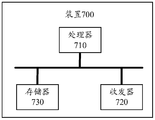
- Fig. 5 is a schematic block diagram of the device of the present application.
- Fig. 6 is a schematic block diagram of another device of the present application.
- Fig. 7 is a schematic block diagram of another device of the present application.
- LTE long term evolution
- FDD frequency division duplex
- UMTS universal mobile telecommunication system
- 5G fifth generation
- NR new radio
- Fig. 1 shows a system architecture 100 to which an embodiment of the present application can be applied.
- the system architecture 100 may include a business operation system 110 and a network management system 120.
- the business operation system 110 is used to provide business operation functions, including: business issuance, business guarantee, business scheduling and other functions.
- the business operation system 110 may include a business operation system of a vertical industry, or a business operation system of an operator, for example, a business support system (BSS) or a communication service management function (communication service management function). CSMF) system.
- BSS business support system
- CSMF communication service management function
- the network management system 120 is used to provide network operation and maintenance functions, including: network life cycle management, network deployment, network fault management, network performance management, network configuration management, network security, etc.
- the aforementioned network may include one or more network elements, or one or more sub-networks.
- the network management system 120 may be a system capable of implementing a network slice management function (NSMF), or a system capable of implementing a management data analysis function (MDAF).
- NSMF network slice management function
- MDAF management data analysis function
- the aforementioned system architecture 100 may also include a domain management system 130 and one or more network elements 140.
- the domain management system 130 is used to provide intra-domain network operation and maintenance functions, that is, the operation and maintenance functions of sub-networks or network elements.
- the domain management system 130 can provide life cycle management of sub-networks or network elements, deployment of sub-networks or network elements, fault management of sub-networks or network elements, performance management of sub-networks or network elements, protection of sub-networks or network elements, etc.
- the aforementioned sub-network may include one or more network elements.
- the domain management system 130 may be a system capable of realizing a network slice subnet management function (network slice subnet management function), a domain manager (DM), or an element manager (EM), etc. .
- the network element 140 is an entity that provides network services, and may include a core network network element and an access network network element.
- the core network elements can be access and mobility management function (AMF) network elements, session management function (SMF) network elements, policy control function (PCF) Network elements, network data analysis function (NWDAF) network elements, network storage function (network repository function, NRF) network elements, gateways and other equipment.
- AMF access and mobility management function
- SMF session management function
- PCF policy control function
- NWDAF network data analysis function
- NRF network storage function
- gateways gateways and other equipment.
- An access network element may be a device used to communicate with terminal equipment.
- the access network element may also be called an access network device or a wireless access network device, and may be a transmission reception point (TRP), It can also be an evolved base station (evolved NodeB, eNB or eNodeB) in the LTE system, a home base station (for example, home evolved NodeB, or home NodeB, HNB), baseband unit (BBU), and It can be a wireless controller in a cloud radio access network (CRAN) scenario, or the network element of the access network can be a relay station, an access point, a vehicle-mounted device, a wearable device, and a network device in a 5G network Or the network equipment in the future evolved PLMN network, etc., may be an access point (AP) in a WLAN, or a gNB in a new radio system (new radio, NR) system, which is not limited in the embodiment of this application .
- TRP transmission reception point
- eNB evolved NodeB
- eNB evolved NodeB
- eNodeB
- the access network elements may include centralized unit (CU) nodes, or distributed unit (DU) nodes, or RAN equipment including CU nodes and DU nodes, or control plane CU.
- CU centralized unit
- DU distributed unit
- Node CU-CP node
- CU-UP node user plane CU node
- RAN equipment of DU node RAN equipment of DU node.
- the related functions of the business operation system 110 and the network management system 120 in FIG. 1 can be implemented by a management device.
- all the functions of the business operation system 110 and the network management system 120 can be integrated into the management device by means of software.
- the network entity corresponding to the network management system 120 is the first management device
- the network entity corresponding to the business operation system 110 is the second management device.
- the network entity used to implement the foregoing systems is referred to herein as a management device, and the first management device and the second management device are used to describe the embodiments of the present application.
- the foregoing network entity may also have other names, which are not limited in the embodiment of the present application.
- the domain management system 130, the business operation system 110 and the network management system 120, and the corresponding network entities are management devices.
- FIG. 1 exemplarily shows a domain management system 130 and three network elements 140 managed by the domain management system 130.
- the system architecture 100 may include other domain management systems and other numbers of network elements managed under other domain management systems, which is not limited in the embodiment of the present application.
- the system architecture 100 may also include other network entities such as a network controller, a mobility management entity, and the embodiment of the present application is not limited thereto.
- the management device includes a hardware layer, an operating system layer running on the hardware layer, and an application layer running on the operating system layer.
- the hardware layer includes hardware such as a central processing unit (CPU), a memory management unit (MMU), and memory (also referred to as main memory).
- the operating system may be any one or more computer operating systems that implement business processing through processes, for example, Linux operating system, Unix operating system, Android operating system, iOS operating system, or windows operating system.
- the application layer includes applications such as browsers, address books, word processing software, and instant messaging software.
- the embodiments of the application do not specifically limit the specific structure of the execution subject of the methods provided in the embodiments of the application, as long as the program that records the codes of the methods provided in the embodiments of the application can be provided according to the embodiments of the application.
- the execution subject of the method provided in the embodiment of the present application may be a network device, or a functional module in the network device that can call and execute the program.
- various aspects or features of the present application can be implemented as methods, devices, or products using standard programming and/or engineering techniques.
- article of manufacture as used in this application encompasses a computer program accessible from any computer-readable device, carrier, or medium.
- computer-readable media may include, but are not limited to: magnetic storage devices (for example, hard disks, floppy disks, or tapes, etc.), optical disks (for example, compact discs (CD), digital versatile discs (DVD)) Etc.), smart cards and flash memory devices (for example, erasable programmable read-only memory (EPROM), cards, sticks or key drives, etc.).
- various storage media described herein may represent one or more devices and/or other machine-readable media for storing information.
- machine-readable medium may include, but is not limited to, wireless channels and various other media capable of storing, containing, and/or carrying instructions and/or data.
- Network optimization is a time-consuming process, that is, optimization algorithms, effect evaluation, decision-making, and Necessary steps such as reconfiguration, therefore, will affect business requirements within a certain period of time, and may cause problems such as no user access for a certain period of time, user access time-consuming, and stalling.
- 5G business for example, enhanced mobile broadband (eMBB) business, massive machine type communications, mMTC) business, ultra-reliable and low latency communications (URLLC) business
- eMBB enhanced mobile broadband
- mMTC massive machine type communications
- URLLC ultra-reliable and low latency communications
- the embodiment of the present application proposes a method that can predict the traffic volume, which is beneficial to avoid the impact on services due to unreasonable resource allocation.
- FIG. 2 shows a schematic flowchart of a method 200 for predicting traffic volume according to an embodiment of the present application.
- the method 200 can be applied to the system architecture 100 shown in FIG. 1, but the embodiment of the present application is not limited thereto.
- the second management device sends a first message to the first management device, and correspondingly, the first management device receives a first message from the second management device, and the first message is used to request the first management device.
- the device performs traffic prediction, the first message includes prediction object, traffic type, and predicted demand information, and the predicted demand information includes prediction granularity and/or prediction period, wherein the prediction granularity includes at least one of the following: prediction Area, predicted service type, predicted slice, predicted cell, predicted land public mobile communication network PLMN, or predicted tenants.
- the first management device determines a traffic prediction amount corresponding to the traffic type for the prediction object according to the predicted demand information.
- the first management device sends the predicted traffic amount to the second management device, and correspondingly, the second management device receives the predicted traffic amount from the first management device.
- the first management device according to the prediction object, the traffic type, and the predicted demand information sent by the second management device can determine the traffic volume of the predicted object meeting the predicted demand information. Prediction, so that the network can allocate resources as needed according to the obtained traffic forecast, which is beneficial to avoid the impact of unreasonable resource allocation on services, thereby improving system performance.
- the second management device may send a first message requesting traffic prediction to the first management device, and the first message may include prediction object, traffic type, and predicted demand information, so that the first management device can Forecast demand information, for the forecast object, determine the traffic forecast corresponding to the traffic type.
- the first management device may predict the traffic volume corresponding to the traffic type that meets the predicted demand information for the prediction target, and return the traffic forecast volume to the second management device.
- the first management device may continuously collect the historical traffic volume of the predicted object corresponding to the traffic type for a period of time, and analyze the historical traffic volume during this period of time to obtain the historical traffic volume.
- the predicted traffic volume that meets the predicted demand information is determined, that is, the predicted traffic volume corresponding to the traffic type determined according to the predicted demand information in the embodiment of the present application.
- the traffic volume obtained by the prediction method can be called the traffic forecast volume
- the actual traffic forecast volume can be called the traffic volume or the historical traffic volume.
- the embodiment of the application does not limit its name.
- the aforementioned traffic volume may also be referred to as traffic volume, and may also have other names, which are not limited in the embodiment of the present application.
- the foregoing first message may be a message only used to request traffic prediction, or other messages may be reused, which is not limited in the embodiment of the present application.
- the foregoing first message is included in a traffic measurement control request message, that is, the traffic measurement control request message not only requests the first management device to perform traffic measurement control, but also carries The first message requests the first management device to predict the traffic volume.
- the prediction granularity represents the prediction range supported by this prediction service, which may specifically include one or more of the following:
- Prediction area which means that this prediction service can predict traffic volume according to the regional granularity of the network. Specifically, it can be represented by an area code (for example, an administrative area code or a track area code), or the longitude and latitude information of the area (for example, a set of longitude and latitude points to describe the area information).
- area code for example, an administrative area code or a track area code
- longitude and latitude information of the area for example, a set of longitude and latitude points to describe the area information
- Forecast site which means that this forecast service can predict traffic volume at site granularity.
- the site may refer to a site of an access network (for example, a base station) or a site of a core network (for example, AMF, UPF), etc. Specifically, it can be represented by the identity of the site, such as the identity of the base station or the identity of the core network element.
- the identifier of the base station may also be the identifier of the management object of the base station, and the identifier of the core network element may also be the identifier of the management object of the core network element.
- this prediction service can predict the traffic volume for the cell granularity. Specifically, it can be represented by the identity of the cell or the identity of the management object of the cell.
- Predictive slices including network slice (NS) instances and network slice subnet (NSS), indicating that this prediction service can be performed for the granularity of network slices, network slice instances or network slice subnet instances Traffic forecast.
- NS network slice
- NSS network slice subnet
- Predicting tenants which means that this forecasting service can predict traffic volume based on tenant granularity. Specifically, it can be represented by the tenant's identifier.
- Forecast service type which means that this forecast service can predict the traffic volume according to the granularity of the service type.
- the service type may be eMBB, URLLC, massive internet of things (mIoT), wireless broadband to the home (wireless to the x, WTTx), video (video), voice (voice), etc.
- the forecast period represents the maximum forecast time that this forecast service needs to support. For example, when the forecast period is 1 week, this forecast service should support the forecast of the traffic volume within 1 week. For another example, when the forecast period is 1 day, this forecast service should support the forecast of traffic volume within 1 day.
- the above-mentioned traffic type represents the type of traffic that this predicted service needs to support.
- the traffic type includes at least one of the following: number of users, user distribution, user activation ratio, coverage, throughput, radio resource control (radio resource control, RRC) connection number, physical resource block ( physical resource block (PRB) number, PRB usage rate, or load situation.
- RRC radio resource control
- PRB physical resource block
- PRB usage rate or load situation.
- the number of users mentioned above may be the number of registered users or the number of activated users, which is not limited in the embodiment of the present application.
- the prediction object includes at least one of the following: business, network, network element, network function, or cell.
- the prediction based on the foregoing prediction object may specifically include the following multiple situations:
- the above prediction object is a business, it means that the traffic forecast volume of the specified business needs to be predicted.
- the aforementioned prediction object is a network, it means that the overall traffic forecast of the specified network needs to be predicted.
- the aforementioned prediction object is a network element, it indicates that the traffic forecast volume of the specified network element needs to be predicted.
- the above prediction object is a network function, it means that the traffic forecast of the specified network function needs to be predicted.
- the above prediction object is a cell, it means that the traffic forecast of the specified cell needs to be predicted.
- the above prediction object is a cell and a network, it means that it is necessary to predict the traffic forecast of the specified network in the specified cell.
- a cell can support multiple networks.
- the first message may carry information used to indicate the aforementioned prediction object, for example, service identification, network identification, network element identification, network function identification, cell identification, etc.
- the network identifier is used to identify the object of this prediction service, and the network may refer to a subnetwork (subnetwork), a network slice (network slice), a network slice subnet (network slice subnet), etc., correspondingly, the network identifier
- the indication can be a sub-network identifier, a network slice instance identifier, a network slice sub-network instance identifier, or a network slice selection assistance identifier (s-NSSAI), etc.
- the aforementioned network identifier may also be the identifier of the management object of the corresponding network.
- the network slice instance identifier may be the identifier of the network slice management object
- the network slice sub-network instance identifier may be the identifier of the network slice sub-network management object.
- the sub-network identifier may be the identifier of the sub-network management object, which is not limited in the embodiment of the present application.
- the first management device may determine the predicted traffic volume corresponding to the foregoing traffic type in different ways according to the content included in the predicted demand information.
- the first management device determines the traffic forecast corresponding to the traffic type for the forecast object according to the forecast demand information, including:
- the first management device collects the traffic volume according to the predicted granularity, and determines the traffic type at the predicted granularity according to the collected traffic volume The corresponding traffic forecast; or,
- the first management device collects the traffic volume, and according to the collected traffic volume, determines the traffic forecast corresponding to the traffic type in the forecast period Amount; or,
- the first management device collects the traffic volume according to the forecast granularity, and according to the collected traffic volume, determines the forecast granularity, The predicted traffic volume corresponding to the traffic type within the prediction period.
- the predicted demand information includes prediction granularity
- the first management device may collect the traffic volume according to the predicted granularity, and determine the predicted traffic volume corresponding to the traffic type under the predicted granularity.
- the traffic volume prediction in the following embodiments all refer to the prediction of the number of users, that is, the traffic volume and the traffic forecast volume are both the number of users, and will not be repeated one by one.
- the prediction granularity is the prediction area.
- the network 1 can cover multiple areas, namely, area 1, area 2, and area 3, and the prediction granularity is a prediction area, it means that the first message requests traffic prediction for the area granularity corresponding to the network 1. Specifically, it may include forecasting the traffic volume of (Network 1, Area 1), (Network 1, Area 2), (Network 1, Area 3) respectively.
- the above-mentioned first management device may obtain the area information contained in the network 1, that is, the information of area 1, area 2, and area 3.
- the first management device collects the traffic volume of network 1. Analyze the correspondence between the traffic volume of network 1 and each area to obtain the traffic volume of each area of network 1.
- the first management device analyzes the traffic volume of each area corresponding to network 1 to obtain the volume of traffic in each area The law of traffic volume, and then calculate the traffic forecast volume of each area corresponding to network 1.
- the morning, noon, and evening traffic in the same day are different, but the morning, mid, and evening traffic is similar each day, such as week
- the traffic volume of a morning is similar to the traffic volume of Tuesday morning.
- the above-mentioned method can be used to calculate the forecast volume of morning, mid, and evening traffic in the future; for example, in each Sunday morning, area 1 (with Church) traffic volume is very large, then the above method can be used to calculate the traffic forecast volume of area 1 every Sunday morning.
- the prediction granularity is the prediction site.
- network 1 includes multiple sites, namely site 1, site 2, and site 3, and the prediction granularity is a predicted site, it means that the first message requests traffic prediction for the site granularity included in network 1. Specifically, it may include forecasting the traffic volume of (Network 1, Site 1), (Network 1, Site 2), and (Network 1, Site 3) respectively.
- the above-mentioned first management device can obtain the site information contained in network 1, that is, the information of site 1, site 2, and site 3.
- the first management device collects the traffic volume of network 1. Analyze the correspondence between the traffic of network 1 and each site to obtain the traffic of each site of network 1.
- the first management device analyzes the traffic of each site corresponding to network 1, and obtains the traffic of each site According to the law of traffic volume, the traffic forecast volume of each site corresponding to network 1 is then calculated.
- the prediction granularity is the prediction cell.
- the network 1 includes multiple cells, namely, cell 1, cell 2, and cell 3, and the prediction granularity is a predicted cell, it means that the first message requests traffic prediction for the cell granularity included in the network 1. Specifically, it may include forecasting the traffic volume of (network 1, cell 1), (network 1, cell 2), and (network 1, cell 3) respectively.
- the above-mentioned first management device may obtain the cell information contained in the network 1, that is, the information of cell 1, cell 2, and cell 3.
- the first management device collects the traffic of network 1. Analyze the correspondence between the traffic volume of network 1 and each cell to obtain the traffic volume of each cell of network 1; the first management device analyzes the traffic volume of each cell corresponding to network 1, and obtains the voice of each cell According to the law of traffic volume, the traffic forecast volume of each cell corresponding to network 1 is then calculated.
- the prediction granularity is the prediction slice.
- the prediction granularity is predicted slice, which means that the first message requests traffic for the slice granularity contained in network 1 Quantity forecast.
- the traffic volume prediction may be performed on (network 1, network slice instance 1), (network 1, network slice instance 2), and (network 1, network slice instance 3) respectively.
- the above-mentioned first management device may obtain network slice instance information contained in network 1, that is, information about network slice instance 1, network slice instance 2, and network slice instance 3; the first management The device collects the traffic of network 1, analyzes the correspondence between the traffic of network 1 and each network slice instance, and obtains the traffic of each network slice instance of network 1. The first management device analyzes the corresponding network 1 For the traffic volume of each network slice instance, the law of the traffic volume of each network slice instance is obtained, and then the traffic forecast volume of each network slice instance corresponding to network 1 is calculated.
- the prediction granularity is the prediction tenant.
- the network 1 contains multiple tenants, namely, tenant 1, tenant 2, and tenant 3, and the prediction granularity is a predicted tenant, it means that the first message requests traffic prediction for the tenant granularity contained in the network 1. Specifically, it may include forecasting the traffic volume of (Network 1, Tenant 1), (Network 1, Tenant 2), and (Network 1, Tenant 3) respectively.
- the above-mentioned first management device may obtain tenant information contained in network 1, namely information of tenant 1, tenant 2, and tenant 3.
- the first management device collects the traffic volume of network 1. Analyze the correspondence between the traffic volume of network 1 and each tenant to obtain the traffic volume of each tenant of network 1; the first management device analyzes the traffic volume of each tenant corresponding to network 1 to obtain the voice of each tenant According to the law of traffic volume, the traffic forecast volume of each tenant corresponding to network 1 is then calculated.
- the prediction granularity is the prediction service type.
- the network 1 contains multiple service types, namely, service type 1, service type 2, and service type 3, and the prediction granularity is the predicted service type, it means that the first message requests the traffic forecast for the service type granularity contained in this network 1. . Specifically, it may include forecasting the traffic volume of (Network 1, Service Type 1), (Network 1, Service Type 2), and (Network 1, Service Type 3) respectively.
- the above-mentioned first management device may obtain the service type information contained in the network 1, that is, the information of service type 1, service type 2, and service type 3; the first management device collects network 1 Analyze the corresponding relationship between the traffic of network 1 and each service type, and obtain the traffic of each service type of network 1. The first management device analyzes the traffic of each service type corresponding to network 1. The traffic volume of each service type is obtained, and then the traffic forecast volume of each service type corresponding to the network 1 is calculated.
- the prediction granularity is the prediction PLMN.
- the network 1 includes multiple PLMNs, namely PLMN 1, PLMN 2, PLMN 3, and the prediction granularity is a predicted PLMN, it means that the first message requests traffic prediction for the PLMN granularity included in the network 1. Specifically, it may include forecasting the traffic volume of (Network 1, PLMN 1), (Network 1, PLMN 2), and (Network 1, PLMN 3) respectively.
- the above-mentioned first management device can obtain the PLMN information contained in network 1, that is, the information of PLMN 1, PLMN 2, and PLMN 3; the first management device collects the traffic of network 1 Analyze the correspondence between the traffic of network 1 and each PLMN to obtain the traffic of each PLMN of network 1. The first management device analyzes the traffic of each PLMN corresponding to network 1, and obtains the traffic of each PLMN The law of traffic volume, and then calculate the traffic forecast volume of each PLMN corresponding to network 1.
- the predicted demand information includes the predicted period, and the first management device may collect the traffic volume and determine the predicted traffic volume corresponding to the traffic type in the predicted period.
- the traffic type is the number of users as an example
- the first management device can collect the traffic on the network 1, analyze the traffic on the network 1, and determine the traffic forecast in the forecast period. Both the traffic volume and the traffic forecast volume refer to the number of users.
- the aforementioned forecast demand information includes forecast granularity and forecast period.
- the first management device may collect the traffic volume according to the forecast granularity, and determine the predicted traffic volume corresponding to the aforementioned traffic type under the forecast granularity and within the forecast period. The specific method is similar to the previous one, and will not be repeated here.
- the method further includes: According to the first message, the first management device configures traffic prediction service information under the management object of the prediction object, where the traffic prediction service information is used to instruct the traffic volume prediction service information according to the predicted demand information.
- the traffic volume of the type is predicted, and the traffic forecast service information includes the traffic type and the predicted demand information.
- the first message includes the prediction object
- the first management device may create a traffic forecast service under the management object of the prediction object, that is, configure the traffic volume Forecast service information is used to forecast the traffic volume of this time.
- the first management device may include the above-mentioned traffic type, prediction granularity, prediction period and other information in the current traffic prediction service information.
- the method further includes: The first management device determines the predicted sub-object associated with the predicted object according to the first message; the first management device sends a seventh message to the management device of the predicted sub-object, and the seventh message is used for Request the management device of the predicted sub-object to predict the traffic volume of the predicted sub-object.
- the first management device may determine the prediction sub-object according to the prediction object.
- the network traffic forecast may be divided into access network traffic forecast and core network traffic forecast, or divided into network services in different regions Volume forecast, or forecast of network traffic divided into different sites.
- the first management device may respectively send to the management device predicting the child object a seventh message requesting to predict the traffic volume of the predicting child object.
- the management device predicting the child object may report to the management device predicting the child object Configure traffic forecast service information for the forecast sub-object under the management object.
- one management object corresponds to only one management device, but one management device can correspond to multiple management objects.
- the management device for predicting sub-objects in the embodiment of the present application may be the domain management device 130 in FIG. 1, and the management object may be the network element 140 in FIG. 1.
- the second management device can predict the conversation traffic in various ways.
- the method further includes: The first management device sends a second message to the second management device, where the second message is used to indicate a traffic volume prediction result, and the second message carries at least one traffic prediction volume corresponding to the traffic type.
- the second management device receives the traffic forecast from the first management device includes: the second management device receives the second message from the first management device.
- the first management device may send a traffic prediction result including at least one traffic prediction amount to the second management device.
- the at least one traffic forecast amount may be determined by the first management device according to the forecast object, traffic type, and forecast demand information.
- the multiple traffic forecasts may respectively correspond to one piece of time information.
- the number of multiple traffic forecasts is 24, which respectively correspond to For 24 hours in a day, the predicted traffic volume may be the maximum value of the predicted traffic volume in each hour, or the minimum value of the predicted traffic volume, or the average value of the predicted traffic volume, etc. This embodiment of the present application Not limited.
- the above-mentioned time information may be carried in the second message together with the plurality of traffic forecasts, and the time information and the traffic forecasts are bound one-to-one.
- the first management device and the second management device may pre-appoint the sending order of multiple traffic forecasts, so that the sending order of the multiple traffic forecasts corresponds to the agreed time sequence.
- the second management device can obtain the traffic forecast corresponding to the specific time according to the agreement.
- the first management device may send the above-mentioned second message to the second management device according to an agreed reporting period, for example, every 2 days or every 1 week.
- the reporting period may be the prediction period carried in the foregoing first message, that is, the second management device may instruct the first management to report the predicted traffic forecast amount according to the prediction period through the first message.
- the method further includes: the second management device sends a third message to the first management device, The third message is used to request the first management device to return the traffic forecast, and the third message carries information about the query object and query granularity information; then, correspondingly, the first management device receives information from the The third message of the second management device.
- the first management device sends a fourth message to the second management device according to the third message, where the fourth message is used to indicate the predicted traffic volume of the query object under the query granularity, then
- that the second management device receives the traffic forecast from the first management device includes: the second management device receives a fourth message from the first management device.
- the aforementioned query object includes all or part of the prediction object, and the aforementioned query granularity includes all or part of the prediction granularity.
- the first management device can obtain the corresponding traffic forecast according to the query object and query granularity.
- the aforementioned third message also includes query time, which is used to predict the traffic volume at a specific time point or a specific time period.
- the prediction based on the above query object may specifically include the following multiple situations:
- the aforementioned query object is a network identifier, it is instructed to query the predicted traffic volume of the entire specified network.
- the query object is the area information or the latitude and longitude information of the area, it is instructed to query the traffic forecast in the specified area.
- the query object is area information and network identification, it indicates that the traffic forecast of the corresponding network in the specified area is to be queried. It should be understood that a region can correspond to multiple networks.
- the query object When the query object is site information, it indicates to query the traffic forecast of the specified site.
- the query object is site information and network identification, it is instructed to query the predicted traffic volume of the network corresponding to the specified site. It should be understood that one site can support multiple networks.
- the query object When the query object is cell information, it indicates to query the traffic forecast of the specified cell.
- the query object is the cell information and the network identifier, it is instructed to query the predicted traffic volume of the corresponding network of the specified cell. It should be understood that one cell can support multiple networks.
- the query object is slice information
- it is instructed to query the traffic forecast of the specified slice.
- the query object is the slice information and the network identifier, it is instructed to query the traffic forecast of the specified slice supported by the specified network. It should be understood that one network can support multiple slices.
- the query object is tenant information and network identification, it is instructed to query the traffic volume of the specified tenant supported by the specified network. It should be understood that one network can support multiple tenants.
- the query object When the query object is a service type, it indicates to query the traffic forecast volume of the specified service type.
- the query object When the query object is the service type and the network identifier, it is instructed to query the traffic forecast volume of the corresponding specified service type of the specified network.
- the method further includes: the second management device sends a fifth message to the first management device, The fifth message requests traffic evaluation, and the fifth message carries the information of the evaluation object, the information of the evaluation time, and the traffic demand value; then, correspondingly, the first management device receives from the second The fifth message of the management device, the first management device determines whether the evaluation object can meet the traffic demand value at the evaluation time according to the fifth message; the first management device sends the The second management device sends a sixth message, where the sixth message is used to indicate the result of the traffic volume evaluation; correspondingly, the second management device receives the traffic forecast volume from the first management device,
- the method includes: the second management device receives a sixth message from the first management device, where the sixth message is used to indicate the result of the traffic volume evaluation.
- the above evaluation object includes all or part of the prediction object, and the specific evaluation situation is similar to the above query object, and will not be repeated here.
- the fifth message sent by the second management device to the first management device may carry the traffic demand value, and the first management device may directly according to the traffic demand value, combined with the evaluation object and the evaluation time, It is sufficient to judge whether the traffic volume of the assessment object can meet the traffic volume demand value at the assessment time. Therefore, the result of the traffic evaluation in the embodiment of the present application is "Yes" or "No".
- the second management device may adjust the conversation traffic demand value and re-evaluate, but this embodiment of the application does not limit this.
- FIG. 3 shows a schematic flowchart of another method 300 for predicting traffic volume according to an embodiment of the present application.
- the method 300 can be applied to the system architecture 100 shown in FIG. 1, but the embodiment of the present application is not limited thereto.
- the business operation system sends a first message to the network management system, and correspondingly, the network management system receives the first message.
- the first message includes prediction object, traffic type, and predicted demand information, and the predicted demand information includes prediction granularity and/or prediction period, where the prediction granularity includes at least one of the following: prediction area, predicted service type, predicted slice, predicted Residential area, predicted land public mobile communication network PLMN, or predicted tenants.
- the network management system configures traffic forecast service information according to the first message, where the traffic forecast service information includes the aforementioned traffic type and forecast demand information.
- the network management system sends a seventh message to the domain management system.
- the domain management system receives the seventh message.
- the seventh message is used to request the management device of the predicted sub-object to perform the prediction of the sub-object. Business forecast.
- S304 The domain management system configures the traffic prediction sub-service information according to the seventh message.
- S305 The domain management system sends a configuration confirmation message to the network management system, indicating that the corresponding traffic prediction sub-service is successfully configured, and correspondingly, the network management system receives the configuration confirmation message.
- S306 The network management system sends a configuration confirmation message to the business operation system, indicating that the traffic prediction service is successfully configured, and correspondingly, the business operation system receives the configuration confirmation message.
- S307 to S309 show the process of the business operation system for querying the business volume.
- the business operation system sends a third message to the network management system, and correspondingly, the network management system receives the third message, the third message is used to request the network management system to return the traffic forecast, and the third message carries the query object Information and query granularity information.
- the network management system performs a query, that is, predicts the service information based on the relevant traffic volume and the traffic forecast sub-service information, thereby determining the traffic forecast.
- the network management system sends a fourth message to the service operation system, and correspondingly, the service operation system receives the fourth message, which is used to indicate the traffic forecast volume of the query object under the query granularity.
- S310-S312 show a process of the business operation system performing business volume assessment.
- the business operation system sends a fifth message to the network management system.
- the network management system receives the fifth message.
- the fifth message requests traffic evaluation.
- the fifth message carries the information of the evaluation object and the evaluation time. Demand value of information and traffic.
- the network management system performs evaluation, namely, calls related traffic forecasting services and traffic forecasting sub-services to determine the traffic evaluation result.
- the traffic evaluation result indicates whether the evaluation object can meet the requirements of the evaluation time. Demand value of traffic volume.
- S312 The network management system sends a sixth message to the service operation system, where the sixth message carries the above-mentioned traffic volume assessment result, and correspondingly, the service operation system receives the sixth message.
- the first management device according to the prediction object, the traffic type, and the predicted demand information sent by the second management device can determine the traffic volume of the predicted object meeting the predicted demand information. Prediction, so that the network can allocate resources as needed according to the obtained traffic forecast, which is beneficial to avoid the impact of unreasonable resource allocation on services, thereby improving system performance.
- FIG. 4 shows a schematic flowchart of another method 400 for predicting traffic volume according to an embodiment of the present application.
- the method 400 can be applied to the system architecture 100 shown in FIG. 1, but the embodiment of the present application is not limited thereto.
- the business operation system sends a request to the network management system to order the traffic forecast service for drone flights, which is equivalent to the first message in the above-mentioned embodiment, and the request carries drone business demand information, for example, the largest user Data, time delay, area information, etc., correspondingly, the network management system receives the request.
- the request carries drone business demand information, for example, the largest user Data, time delay, area information, etc., correspondingly, the network management system receives the request.
- the network management system interacts with the domain management system corresponding to the drone service to configure relevant information of the traffic forecast service.
- S403 The network management system sends a configuration confirmation message to the service operation system, indicating that the above-mentioned traffic forecast service configuration is successful, and correspondingly, the service operation system receives the configuration confirmation message.
- S404-S406 show the process of the business operation system inquiring about the business volume of the drone.
- the business operation system sends the drone flight intention to the network management system.
- the drone flight intention may specifically include information such as flight time, departure place, destination, etc., and the network management system receives the drone flight intention accordingly. .
- S405 The network management system makes an inquiry according to the above-mentioned drone flight intention, so as to determine the predicted value of the traffic volume.
- the network management system determines the flight route of the drone according to the predicted traffic volume, and sends the flight route of the drone to the business operation system. Accordingly, the business operation system receives the flight route of the drone.
- S407 to S410 show a process of the business operation system for evaluating the business volume of the drone.
- the business operation system sends the flight route of the drone to the network management system.
- the flight route of the drone may specifically include information such as flight time, departure place, destination, and flight area passed by. Accordingly, the network management system receives the flight route. Man-machine flight path.
- the network management system performs an evaluation based on the flight route of the drone to determine whether the traffic volume of the passing flight area can support the flight mission of the drone, thereby determining the traffic volume evaluation result.
- S409 The network management system sends the traffic volume assessment result to the service operation system, and correspondingly, the service operation system receives the traffic volume assessment result.
- S410 can be continued, that is, the business operation system adjusts the flight route of the drone and continues the evaluation until the result of the traffic volume evaluation is "Yes” .
- the traffic prediction service of the drone business is configured through the network management system, so that the business operation system can confirm a reasonable flight route according to the flight mission and improve the utilization rate of network resources .
- Fig. 5 shows an apparatus 500 provided by an embodiment of the present application.
- the apparatus 500 may be a first management device, or a device capable of supporting the first management device to realize its functions, for example, a chip or a chip system that can be used in the first management device.
- the device 500 includes: a transceiver unit 510 and a processing unit 520.
- the transceiving unit 510 may include a receiving unit and a sending unit, wherein the receiving unit is used to execute the receiving process corresponding to the following transceiver unit 510, and the sending unit is used to execute the sending process corresponding to the following transceiver unit 510.
- the transceiving unit 520 is configured to receive a first message from a second management device, the first message is used to request the first management device to predict traffic, and the first message includes the prediction object and the traffic type And predicted demand information, the predicted demand information includes prediction granularity and/or prediction period, wherein the prediction granularity includes at least one of the following: prediction area, predicted service type, predicted slice, predicted cell, predicted land public mobile communication network PLMN, or predicted tenant; the processing unit 520 is configured to: according to the predicted demand information, determine the predicted traffic volume corresponding to the traffic type for the predicted object.
- the traffic type includes at least one of the following: number of users, user distribution, user activation ratio, coverage, throughput, number of radio resource control RRC connections, number of physical resource blocks PRB, PRB usage rate, or load situation.
- the prediction object includes at least one of the following: business, network, network element, network function, or cell.
- the processing unit 520 is further configured to: before determining the predicted traffic volume corresponding to the traffic type for the predicted target according to the predicted demand information, in accordance with the first message,
- the traffic prediction service information is configured under the management object of the prediction object, and the traffic prediction service information is used to indicate the prediction of the traffic volume of the traffic type according to the predicted demand information, and the traffic volume
- the predicted service information includes the traffic type and the predicted demand information.
- the processing unit 520 is specifically configured to: when the predicted demand information includes the predicted granularity, collect traffic according to the predicted granularity, and determine the predicted granularity according to the collected traffic. , The traffic forecast volume corresponding to the traffic type; or, when the forecast demand information includes the forecast period, collect the traffic volume, and determine the traffic volume within the forecast period according to the collected traffic volume. The traffic forecast volume corresponding to the traffic type; or, when the forecast demand information includes the forecast granularity and the forecast period, the traffic volume is collected according to the forecast granularity, and the traffic volume is determined according to the collected traffic volume. The predicted traffic volume corresponding to the traffic type under the prediction granularity and within the prediction period.
- the transceiving unit 510 is further configured to send a second message to the second management device, the second message is used to indicate a traffic volume prediction result, and the second message carries the traffic type The corresponding at least one traffic forecast.
- the transceiving unit 510 is further configured to: receive a third message from the second management device, the third message being used to request the first management device to return the traffic forecast, and the third The message carries the information of the query object and the information of the query granularity; according to the third message, a fourth message is sent to the second management device, and the fourth message is used to indicate that the query object is under the query granularity. Forecast volume of traffic.
- the transceiving unit 510 is further configured to: receive a fifth message from the second management device, the fifth message requesting a traffic evaluation, and the fifth message carrying information about the evaluation object, evaluation Time information and traffic demand value; the processing unit 520 is further configured to: according to the fifth message, determine whether the evaluation object can meet the traffic demand value at the evaluation time; The unit 510 is further configured to send a sixth message to the second management device, where the sixth message is used to indicate the result of the traffic volume evaluation.
- the device 500 here is embodied in the form of a functional unit.
- the term "unit” here can refer to application specific integrated circuit (application specific integrated circuit, ASIC), electronic circuit, processor for executing one or more software or firmware programs (such as shared processor, proprietary processor or group Processor, etc.) and memory, merge logic circuits and/or other suitable components that support the described functions.
- ASIC application specific integrated circuit
- the apparatus 500 may be specifically a terminal device or a network device in the foregoing embodiment, and the apparatus 500 may be used to execute each process corresponding to the first management device in the foregoing method embodiment. And/or steps, in order to avoid repetition, I will not repeat them here.
- Fig. 6 shows an apparatus 600 provided by an embodiment of the present application.
- the device 600 may be a second management device, or a device capable of supporting the second management device to realize its functions, for example, a chip or a chip system that can be used in the second management device.
- the device 600 includes a sending unit 610 and a receiving unit 620.
- the sending unit 610 is configured to send a first message to the first management device, the first message is used to request the first management device to predict traffic, and the first message includes the prediction object, the traffic type, and Forecast demand information, where the forecast demand information includes a forecast granularity and/or a forecast period, where the forecast granularity includes at least one of the following: predicted area, predicted service type, predicted slice, predicted cell, predicted land public mobile communication network PLMN , Or predicting tenants; the receiving unit 620 is configured to: receive the predicted traffic volume from the first management device.
- the traffic type includes at least one of the following: number of users, user distribution, user activation ratio, coverage, throughput, number of radio resource control RRC connections, number of physical resource blocks PRB, PRB usage rate, or load situation.
- the prediction object includes at least one of the following: business, network, network element, network function, or cell.
- the receiving unit 620 is specifically configured to: receive a second message from the first management device, the second message is used to indicate a traffic volume prediction result, and the second message carries the traffic At least one traffic forecast corresponding to the type.
- the sending unit 610 is specifically configured to: send a fifth message to the first management device, the fifth message requesting a traffic evaluation, and the fifth message carries the information of the evaluation object and the evaluation time
- the receiving unit 620 is specifically configured to receive a sixth message from the first management device, and the sixth message is used to indicate the result of the traffic volume evaluation.
- the device 600 here is embodied in the form of a functional unit.
- the term "unit” here can refer to application specific integrated circuit (application specific integrated circuit, ASIC), electronic circuit, processor for executing one or more software or firmware programs (such as shared processor, proprietary processor or group Processor, etc.) and memory, merge logic circuits and/or other suitable components that support the described functions.
- ASIC application specific integrated circuit
- the apparatus 600 may be specifically a terminal device or a network device in the foregoing embodiment, and the apparatus 600 may be used to execute each process corresponding to the first management device in the foregoing method embodiment. And/or steps, in order to avoid repetition, I will not repeat them here.
- the apparatus 500 of each of the foregoing solutions has the function of implementing the corresponding steps performed by the first management device in the foregoing method; the apparatus 600 has the function of implementing the corresponding steps performed by the second management device in the foregoing method.
- the function can be realized by hardware, or by hardware executing corresponding software.
- the hardware or software includes one or more modules corresponding to the above-mentioned functions; for example, the sending unit and the receiving unit can be replaced by a communication interface, and other units, such as a processing unit, can be replaced by a processor to execute the respective method embodiments. Send and receive operations and related processing operations.
- the communication interface may be a circuit, module, bus, bus interface, transceiver, and other devices that can implement communication functions.
- the devices in FIG. 5 and FIG. 6 may also be a chip or a chip system, such as a system on chip (system on chip, SoC).
- the receiving unit and the sending unit may be the transceiver circuit of the chip, which is not limited here.
- FIG. 7 shows another apparatus 700 provided by an embodiment of the present application.
- the device 700 includes a processor 710 and a transceiver 720.
- the device 700 may further include a memory 750.
- the memory 750 may be included in the processor 710.
- the processor 710, the transceiver 720, and the memory 750 communicate with each other through an internal connection path.
- the memory 750 is used to store instructions, and the processor 710 is used to execute instructions stored in the memory 750 to implement the method provided in the embodiments of the present application.
- the apparatus 700 is configured to execute various processes and steps corresponding to the first management device in the method provided in the embodiment of the present application.
- the processor 710 is configured to: receive a first message from a second management device through the transceiver 720, the first message is used to request the first management device to perform traffic prediction, and the first message includes the prediction Object, traffic type, and predicted demand information, where the predicted demand information includes a prediction granularity and/or a prediction period, where the prediction granularity includes at least one of the following: prediction area, predicted service type, predicted slice, predicted cell, predicted land Go to the public mobile communication network PLMN or predict tenants; determine the traffic volume corresponding to the traffic type according to the predicted demand information.
- the apparatus 700 is configured to execute various processes and steps corresponding to the second management device in the method provided in the embodiment of the present application.
- the processor 710 is configured to: send a first message to the first management device through the transceiver 720, the first message is used to request the first management device to perform traffic forecasting, and the first message includes the prediction object , Traffic type and forecast demand information, where the forecast demand information includes forecast granularity and/or forecast period, wherein the forecast granularity includes at least one of the following: forecast area, forecast service type, forecast slice, forecast cell, forecast land Public mobile communication network PLMN, or predicted tenant; receiving the predicted traffic volume from the first management device through the transceiver 720.
- the apparatus 700 may be specifically the first management device or the second management device in the foregoing embodiment, and may be used to execute the steps and/or steps corresponding to the first management device or the second management device in the foregoing method embodiment.
- the memory 750 may include a read-only memory and a random access memory, and provide instructions and data to the processor. A part of the memory may also include a non-volatile random access memory.
- the memory can also store device type information.
- the processor 710 may be configured to execute instructions stored in the memory, and when the processor 710 executes the instructions stored in the memory, the processor 710 is configured to execute the above-mentioned method embodiments corresponding to the first management device or the second management device. Individual steps and/or processes.
- the processor of the above-mentioned device may be a central processing unit (CPU), and the processor may also be other general-purpose processors, digital signal processors (DSP), or application-specific integrated circuits. (ASIC), Field Programmable Gate Array (FPGA) or other programmable logic devices, discrete gates or transistor logic devices, discrete hardware components, etc.
- the general-purpose processor may be a microprocessor or the processor may also be any conventional processor or the like.
- the steps of the above method can be completed by hardware integrated logic circuits in the processor or instructions in the form of software.
- the steps of the method disclosed in the embodiments of the present application may be directly embodied as being executed and completed by a hardware processor, or executed and completed by a combination of hardware and software units in the processor.
- the software unit may be located in a mature storage medium in the field such as random access memory, flash memory, read-only memory, programmable read-only memory, or electrically erasable programmable memory, registers.
- the storage medium is located in the memory, and the processor executes the instructions in the memory and completes the steps of the above method in combination with its hardware. To avoid repetition, it will not be described in detail here.
- the memory in the embodiment of the present application may be a volatile memory or a non-volatile memory, or may include both volatile and non-volatile memory.
- the non-volatile memory can be read-only memory (ROM), programmable read-only memory (programmable ROM, PROM), erasable programmable read-only memory (erasable PROM, EPROM), and electronic Erase programmable read-only memory (electrically EPROM, EEPROM) or flash memory.
- the volatile memory may be random access memory (RAM), which is used as an external cache.
- RAM random access memory
- static random access memory static random access memory
- dynamic RAM dynamic random access memory
- DRAM dynamic random access memory
- SDRAM synchronous dynamic random access memory
- double data rate synchronous dynamic random access memory double data rate SDRAM, DDR SDRAM
- enhanced synchronous dynamic random access memory enhanced SDRAM, ESDRAM
- serial link DRAM SLDRAM
- direct rambus RAM direct rambus RAM
- the present application also provides a computer program product, the computer program product includes: computer program code, when the computer program code runs on a computer, causes the computer to execute any of the above embodiments method.
- the present application also provides a computer-readable medium that stores program code, and when the program code runs on a computer, the computer executes the steps shown in FIGS. 2 to 4 The method of any one of the embodiments is shown.
- the present application also provides a system, which includes the aforementioned one or more terminal devices and one or more network devices.
- At least one refers to one or more, and “multiple” refers to two or more.
- And/or describes the association relationship of the associated objects, indicating that there can be three relationships, for example, A and/or B, which can mean: A alone exists, A and B exist at the same time, and B exists alone, where A, B can be singular or plural.
- the character “/” generally indicates that the associated objects are in an “or” relationship.
- "The following at least one item (a)” or similar expressions refers to any combination of these items, including any combination of a single item (a) or plural items (a).
- At least one of a, b, or c can represent: a, b, c, a-b, a-c, b-c or a-b-c, wherein a, b, and c can be single or multiple.
- the disclosed system, device, and method may be implemented in other ways.
- the device embodiments described above are only illustrative.
- the division of the units is only a logical function division, and there may be other divisions in actual implementation, for example, multiple units or components can be combined or It can be integrated into another system, or some features can be ignored or not implemented.
- the displayed or discussed mutual coupling or direct coupling or communication connection may be indirect coupling or communication connection through some interfaces, devices or units, and may also be electrical, mechanical or other forms of connection.
- the units described as separate components may or may not be physically separated, and the components displayed as units may or may not be physical units, that is, they may be located in one place, or they may be distributed on multiple network units. Some or all of the units may be selected according to actual needs to achieve the objectives of the solutions of the embodiments of the present application.
- the functional units in the various embodiments of the present application may be integrated into one processing unit, or each unit may exist alone physically, or two or more units may be integrated into one unit.
- the above-mentioned integrated unit can be implemented in the form of hardware or software functional unit.
- the integrated unit is implemented in the form of a software functional unit and sold or used as an independent product, it can be stored in a computer readable storage medium.
- the methods provided in the embodiments of the present application may be implemented in whole or in part by software, hardware, firmware, or any combination thereof.
- software When implemented by software, it can be implemented in the form of a computer program product in whole or in part.
- the computer program product includes one or more computer instructions.
- the computer may be a general-purpose computer, a dedicated computer, a computer network, network equipment, user equipment, or other programmable devices.
- the computer instructions may be stored in a computer-readable storage medium or transmitted from one computer-readable storage medium to another computer-readable storage medium. For example, the computer instructions may be transmitted from a website, computer, server, or data center.
- the computer-readable storage medium may be any available medium that can be accessed by a computer or a data storage device such as a server or data center integrated with one or more available media.
- the usable medium may be a magnetic medium (for example, a floppy disk, a hard disk, and a magnetic tape), an optical medium (for example, a digital video disc (DVD)), or a semiconductor medium (for example, SSD).
Landscapes
- Engineering & Computer Science (AREA)
- Computer Networks & Wireless Communication (AREA)
- Signal Processing (AREA)
- Environmental & Geological Engineering (AREA)
- Mobile Radio Communication Systems (AREA)
- Data Exchanges In Wide-Area Networks (AREA)
- Telephonic Communication Services (AREA)
Abstract
La présente invention concerne un procédé et un appareil de prévision d'un volume de trafic téléphonique, susceptibles de prévoir un volume de trafic téléphonique en facilitant la prévention de l'impact sur un service en raison d'une attribution inadaptée de ressources. Le procédé consiste à envoyer, par un second dispositif de gestion, un premier message à un premier dispositif de gestion, le premier message servant à demander au premier dispositif de gestion d'effectuer une prévision de volume de trafic téléphonique et le premier message comprenant un objet de prévision, un type de trafic téléphonique et des informations en matière d'exigence de prévision. Les informations d'exigence de prévision comprennent une granularité de prévision et/ou une période de prévision. La granularité de prévision comprend au moins l'un des éléments suivants : une région de prévision, un type de service de prévision, une tranche de prévision, une cellule de prévision, un réseau mobile terrestre public (PLMN) de prévision et une agence de prévision. Le procédé consiste ensuite à recevoir, par un premier dispositif de gestion, le premier message, et selon les informations d'exigence de prévision, à déterminer un volume de trafic téléphonique correspondant au type de trafic téléphonique pour l'objet de prévision.
Priority Applications (4)
| Application Number | Priority Date | Filing Date | Title |
|---|---|---|---|
| EP25161124.0A EP4586683A3 (fr) | 2019-06-06 | 2020-05-21 | Procédé et appareil de prédiction de volume de trafic |
| EP20817849.1A EP3972318B1 (fr) | 2019-06-06 | 2020-05-21 | Procédé et appareil de prévision de volume de trafic téléphonique |
| US17/543,026 US12375938B2 (en) | 2019-06-06 | 2021-12-06 | Traffic volume prediction method and apparatus |
| US19/261,740 US20260012810A1 (en) | 2019-06-06 | 2025-07-07 | Traffic volume prediction method and apparatus |
Applications Claiming Priority (2)
| Application Number | Priority Date | Filing Date | Title |
|---|---|---|---|
| CN201910490641.2 | 2019-06-06 | ||
| CN201910490641.2A CN112055380B (zh) | 2019-06-06 | 2019-06-06 | 用于预测话务量的方法和装置 |
Related Child Applications (1)
| Application Number | Title | Priority Date | Filing Date |
|---|---|---|---|
| US17/543,026 Continuation US12375938B2 (en) | 2019-06-06 | 2021-12-06 | Traffic volume prediction method and apparatus |
Publications (1)
| Publication Number | Publication Date |
|---|---|
| WO2020244389A1 true WO2020244389A1 (fr) | 2020-12-10 |
Family
ID=73609649
Family Applications (1)
| Application Number | Title | Priority Date | Filing Date |
|---|---|---|---|
| PCT/CN2020/091586 Ceased WO2020244389A1 (fr) | 2019-06-06 | 2020-05-21 | Procédé et appareil de prévision de volume de trafic téléphonique |
Country Status (4)
| Country | Link |
|---|---|
| US (2) | US12375938B2 (fr) |
| EP (2) | EP3972318B1 (fr) |
| CN (1) | CN112055380B (fr) |
| WO (1) | WO2020244389A1 (fr) |
Families Citing this family (8)
| Publication number | Priority date | Publication date | Assignee | Title |
|---|---|---|---|---|
| CN113056016B (zh) * | 2021-03-17 | 2022-07-12 | 中国联合网络通信集团有限公司 | 一种共建共享的资源块配置方法和接入网设备 |
| CN115550205B (zh) * | 2021-06-30 | 2026-03-17 | 中国电信股份有限公司 | 数据获取方法和系统、管理数据分析服务装置和存储介质 |
| CN113723665A (zh) * | 2021-07-20 | 2021-11-30 | 山东环维通讯科技有限公司 | 一种呼叫中心话务预测方法以及具有该方法的设备及装置 |
| KR20230119971A (ko) * | 2022-02-08 | 2023-08-16 | 현대자동차주식회사 | 교통 정보 예측 시스템 및 방법 |
| WO2024063678A1 (fr) * | 2022-09-19 | 2024-03-28 | Telefonaktiebolaget Lm Ericsson (Publ) | Détermination d'une configuration d'un réseau sans fil |
| WO2024217661A1 (fr) * | 2023-04-17 | 2024-10-24 | Telefonaktiebolaget Lm Ericsson (Publ) | Technique d'estimation de nombre d'abonnés dans un contexte analytique de réseau |
| CN120456109A (zh) * | 2024-02-08 | 2025-08-08 | 华为技术有限公司 | 话务拥塞分析的方法和通信装置 |
| CN118964219B (zh) * | 2024-10-18 | 2025-02-28 | 恒丰银行股份有限公司 | 一种用于非功能测试的测试资源管理方法、设备及介质 |
Citations (3)
| Publication number | Priority date | Publication date | Assignee | Title |
|---|---|---|---|---|
| CN101778400A (zh) * | 2010-01-08 | 2010-07-14 | 哈尔滨工业大学 | 基于数据库的话务量分析与预测系统及使用该系统的话务量预测方法 |
| CN103987056A (zh) * | 2014-05-30 | 2014-08-13 | 南京华苏科技有限公司 | 基于大数据统计模型的无线网络话务量预测方法 |
| US20180376407A1 (en) * | 2016-01-08 | 2018-12-27 | Telefonaktiebolaget Lm Ericsson (Publ) | Access Control In A Network Comprising Network Slices |
Family Cites Families (24)
| Publication number | Priority date | Publication date | Assignee | Title |
|---|---|---|---|---|
| US6272450B1 (en) * | 1998-06-16 | 2001-08-07 | Telefonaktiebolaget L M Ericsson (Publ) | Cellular network traffic simulator (cents) |
| JP3647677B2 (ja) * | 1999-07-26 | 2005-05-18 | 富士通株式会社 | ネットワークのシミュレーションモデル生成装置、その方法、及びその方法を実現するプログラムを記録した記録媒体 |
| FI113329B (fi) * | 2002-02-15 | 2004-03-31 | Validitas Oy | Laite pakettikytkentäisen solukkoradioverkon testaamiseksi |
| US7561876B2 (en) * | 2003-02-21 | 2009-07-14 | Groundhog Technologies Inc. | System with user interface for network planning and mobility management optimization in a mobile communication network and method thereof |
| DE10344346A1 (de) * | 2003-09-24 | 2005-04-28 | Siemens Ag | Verfahren zur Laststeuerung in einem Paketdatennetz |
| ES2312821T3 (es) * | 2003-11-28 | 2009-03-01 | Telecom Italia S.P.A. | Procedimiento y dispositivo para la evaluacion del rendimiento de una red de telefonia movil. |
| JPWO2005060161A1 (ja) * | 2003-12-16 | 2007-12-13 | 株式会社エヌ・ティ・ティ・ドコモ | 通信システム、通信方法、網負荷予測ノード及び網構成管理ノード |
| US20090319248A1 (en) * | 2008-06-18 | 2009-12-24 | Eads Na Defense Security And Systems | Systems and methods for a simulated network traffic generator |
| US20140046645A1 (en) * | 2009-05-04 | 2014-02-13 | Camber Defense Security And Systems Solutions, Inc. | Systems and methods for network monitoring and analysis of a simulated network |
| US20120020216A1 (en) * | 2010-01-15 | 2012-01-26 | Telcordia Technologies, Inc. | Cognitive network load prediction method and apparatus |
| CN104901827B (zh) * | 2014-03-07 | 2019-02-15 | 中国移动通信集团安徽有限公司 | 一种基于用户业务结构的网络资源评估方法及装置 |
| US9204319B2 (en) * | 2014-04-08 | 2015-12-01 | Cellco Partnership | Estimating long term evolution network capacity and performance |
| US9930548B2 (en) * | 2014-12-01 | 2018-03-27 | Verizon Patent And Licensing Inc. | Identification of wireless communication congestion |
| CN105873087B (zh) * | 2015-01-22 | 2019-06-28 | 中国移动通信集团浙江有限公司 | 一种网络指标预测方法、装置及电子设备 |
| CN106469332A (zh) * | 2015-08-19 | 2017-03-01 | 阿里巴巴集团控股有限公司 | 一种数据处理方法及装置 |
| US10506457B2 (en) * | 2015-09-30 | 2019-12-10 | Telecom Italia S.P.A. | Method for managing wireless communication networks by prediction of traffic parameters |
| EP3417647B1 (fr) * | 2016-02-17 | 2019-11-20 | NEC Corporation | Procédé d'exploitation d'un réseau sans fil, réseau sans fil et entité d'administration |
| CN107301466A (zh) * | 2016-04-15 | 2017-10-27 | 中国移动通信集团四川有限公司 | 对业务负载及资源配置与性能关系的预测方法及预测系统 |
| US20170339022A1 (en) * | 2016-05-17 | 2017-11-23 | Brocade Communications Systems, Inc. | Anomaly detection and prediction in a packet broker |
| KR102277946B1 (ko) * | 2017-03-17 | 2021-07-16 | 삼성전자주식회사 | 차량의 무선 통신을 지원하기 위한 방법들 및 장치들 |
| US10735273B2 (en) * | 2017-07-31 | 2020-08-04 | Accenture Global Solutions Limited | Using machine learning to make network management decisions |
| US10582526B2 (en) * | 2017-11-30 | 2020-03-03 | Verizon Patent And Licensing Inc. | System and method for measuring end-to-end channel capacity entropy |
| US11121957B2 (en) * | 2018-12-28 | 2021-09-14 | Intel Corporation | Dynamic quality of service in edge cloud architectures |
| EP3949152A4 (fr) * | 2019-04-01 | 2022-07-13 | Telefonaktiebolaget LM Ericsson (publ.) | Stations de base et procédés pour réseaux de communication sans fil |
-
2019
- 2019-06-06 CN CN201910490641.2A patent/CN112055380B/zh active Active
-
2020
- 2020-05-21 EP EP20817849.1A patent/EP3972318B1/fr active Active
- 2020-05-21 WO PCT/CN2020/091586 patent/WO2020244389A1/fr not_active Ceased
- 2020-05-21 EP EP25161124.0A patent/EP4586683A3/fr active Pending
-
2021
- 2021-12-06 US US17/543,026 patent/US12375938B2/en active Active
-
2025
- 2025-07-07 US US19/261,740 patent/US20260012810A1/en active Pending
Patent Citations (3)
| Publication number | Priority date | Publication date | Assignee | Title |
|---|---|---|---|---|
| CN101778400A (zh) * | 2010-01-08 | 2010-07-14 | 哈尔滨工业大学 | 基于数据库的话务量分析与预测系统及使用该系统的话务量预测方法 |
| CN103987056A (zh) * | 2014-05-30 | 2014-08-13 | 南京华苏科技有限公司 | 基于大数据统计模型的无线网络话务量预测方法 |
| US20180376407A1 (en) * | 2016-01-08 | 2018-12-27 | Telefonaktiebolaget Lm Ericsson (Publ) | Access Control In A Network Comprising Network Slices |
Non-Patent Citations (2)
| Title |
|---|
| HUAWEI: "New SID: Study of enablers for Network Automation for 5G", 3GPP DRAFT; S2-186041_5282_SP-170591_CLEAN, 3RD GENERATION PARTNERSHIP PROJECT (3GPP), MOBILE COMPETENCE CENTRE ; 650, ROUTE DES LUCIOLES ; F-06921 SOPHIA-ANTIPOLIS CEDEX ; FRANCE, vol. SA WG2, no. Newport Beach, USA; 20180528 - 20180601, 1 June 2018 (2018-06-01), Mobile Competence Centre ; 650, route des Lucioles ; F-06921 Sophia-Antipolis Cedex ; France, XP051456793 * |
| See also references of EP3972318A4 |
Also Published As
| Publication number | Publication date |
|---|---|
| US12375938B2 (en) | 2025-07-29 |
| US20220095164A1 (en) | 2022-03-24 |
| CN112055380B (zh) | 2022-04-29 |
| EP3972318A1 (fr) | 2022-03-23 |
| EP3972318A4 (fr) | 2022-07-13 |
| EP4586683A3 (fr) | 2025-09-10 |
| EP4586683A2 (fr) | 2025-07-16 |
| US20260012810A1 (en) | 2026-01-08 |
| EP3972318B1 (fr) | 2025-03-26 |
| CN112055380A (zh) | 2020-12-08 |
Similar Documents
| Publication | Publication Date | Title |
|---|---|---|
| US12375938B2 (en) | Traffic volume prediction method and apparatus | |
| CA3112926C (fr) | Procede et appareil de traitement d'informations de tranche | |
| US11546806B2 (en) | Communication system | |
| US12408058B2 (en) | Method and device for providing network analysis information for RFSP index selection in mobile communication network | |
| CN110830542B (zh) | 获取网络配置信息的方法和相关设备 | |
| EP4072071A1 (fr) | Procédé et appareil de commande de tranche | |
| WO2022068250A1 (fr) | Procédé, appareil et système de gestion de réseau | |
| CN112218263B (zh) | 一种数据处理的方法、装置和系统 | |
| CN113542050B (zh) | 网络性能监控方法、装置及系统 | |
| US20240251376A1 (en) | Time-related network resource management | |
| US12273251B2 (en) | Data analysis apparatus management and control method and communication apparatus | |
| CN115967951A (zh) | 一种优化网络容量的方法、装置及系统 | |
| WO2022253001A1 (fr) | Procédé et appareil de transfert intercellulaire | |
| WO2021208920A1 (fr) | Procédé, appareil et système de surveillance des performances d'un réseau | |
| CN121420590A (zh) | 无线网络中的切片编排的网络切片可行性评定 | |
| WO2025194790A1 (fr) | Procédé d'envoi de rapport de mesure, appareil de communication et support de stockage | |
| US12506658B2 (en) | Access network management configuration method, system, and apparatus | |
| US20250358803A1 (en) | Communication system, control device, radio allocation device, and communication method | |
| WO2024109114A1 (fr) | Procédé d'optimisation de ressource de tranche pour communication sans fil, appareil et support de stockage lisible par ordinateur | |
| WO2025167837A1 (fr) | Procédé d'analyse de congestion routière et appareil de communication | |
| WO2026001685A1 (fr) | Procédé et appareil de communication | |
| CN120835321A (zh) | 数据处理方法、装置、设备及存储介质 | |
| CN118158282A (zh) | 算力网络的控制方法、装置及通信设备 | |
| CN120238879A (zh) | 一种通信方法通信装置 | |
| WO2021062751A1 (fr) | Procédé et dispositif de configuration de fréquences de réseau |
Legal Events
| Date | Code | Title | Description |
|---|---|---|---|
| 121 | Ep: the epo has been informed by wipo that ep was designated in this application |
Ref document number: 20817849 Country of ref document: EP Kind code of ref document: A1 |
|
| NENP | Non-entry into the national phase |
Ref country code: DE |
|
| ENP | Entry into the national phase |
Ref document number: 2020817849 Country of ref document: EP Effective date: 20211213 |