WO2020255933A1 - セロオリゴ糖を含む植物活力剤及びその使用 - Google Patents
セロオリゴ糖を含む植物活力剤及びその使用 Download PDFInfo
- Publication number
- WO2020255933A1 WO2020255933A1 PCT/JP2020/023469 JP2020023469W WO2020255933A1 WO 2020255933 A1 WO2020255933 A1 WO 2020255933A1 JP 2020023469 W JP2020023469 W JP 2020023469W WO 2020255933 A1 WO2020255933 A1 WO 2020255933A1
- Authority
- WO
- WIPO (PCT)
- Prior art keywords
- plant
- vitalizer
- plants
- mass
- cellooligosaccharide
- Prior art date
- Legal status (The legal status is an assumption and is not a legal conclusion. Google has not performed a legal analysis and makes no representation as to the accuracy of the status listed.)
- Ceased
Links
Classifications
-
- A—HUMAN NECESSITIES
- A01—AGRICULTURE; FORESTRY; ANIMAL HUSBANDRY; HUNTING; TRAPPING; FISHING
- A01N—PRESERVATION OF BODIES OF HUMANS OR ANIMALS OR PLANTS OR PARTS THEREOF; BIOCIDES, e.g. AS DISINFECTANTS, AS PESTICIDES OR AS HERBICIDES; PEST REPELLANTS OR ATTRACTANTS; PLANT GROWTH REGULATORS
- A01N43/00—Biocides, pest repellants or attractants, or plant growth regulators containing heterocyclic compounds
- A01N43/02—Biocides, pest repellants or attractants, or plant growth regulators containing heterocyclic compounds having rings with one or more oxygen or sulfur atoms as the only ring hetero atoms
- A01N43/04—Biocides, pest repellants or attractants, or plant growth regulators containing heterocyclic compounds having rings with one or more oxygen or sulfur atoms as the only ring hetero atoms with one hetero atom
- A01N43/14—Biocides, pest repellants or attractants, or plant growth regulators containing heterocyclic compounds having rings with one or more oxygen or sulfur atoms as the only ring hetero atoms with one hetero atom six-membered rings
- A01N43/16—Biocides, pest repellants or attractants, or plant growth regulators containing heterocyclic compounds having rings with one or more oxygen or sulfur atoms as the only ring hetero atoms with one hetero atom six-membered rings with oxygen as the ring hetero atom
-
- A—HUMAN NECESSITIES
- A01—AGRICULTURE; FORESTRY; ANIMAL HUSBANDRY; HUNTING; TRAPPING; FISHING
- A01G—HORTICULTURE; CULTIVATION OF VEGETABLES, FLOWERS, RICE, FRUIT, VINES, HOPS OR SEAWEED; FORESTRY; WATERING
- A01G7/00—Botany in general
- A01G7/06—Treatment of growing trees or plants, e.g. for preventing decay of wood, for tingeing flowers or wood, for prolonging the life of plants
-
- A—HUMAN NECESSITIES
- A01—AGRICULTURE; FORESTRY; ANIMAL HUSBANDRY; HUNTING; TRAPPING; FISHING
- A01C—PLANTING; SOWING; FERTILISING
- A01C21/00—Methods of fertilising, sowing or planting
-
- A—HUMAN NECESSITIES
- A01—AGRICULTURE; FORESTRY; ANIMAL HUSBANDRY; HUNTING; TRAPPING; FISHING
- A01G—HORTICULTURE; CULTIVATION OF VEGETABLES, FLOWERS, RICE, FRUIT, VINES, HOPS OR SEAWEED; FORESTRY; WATERING
- A01G7/00—Botany in general
-
- A—HUMAN NECESSITIES
- A01—AGRICULTURE; FORESTRY; ANIMAL HUSBANDRY; HUNTING; TRAPPING; FISHING
- A01P—BIOCIDAL, PEST REPELLANT, PEST ATTRACTANT OR PLANT GROWTH REGULATORY ACTIVITY OF CHEMICAL COMPOUNDS OR PREPARATIONS
- A01P21/00—Plant growth regulators
-
- C—CHEMISTRY; METALLURGY
- C05—FERTILISERS; MANUFACTURE THEREOF
- C05F—ORGANIC FERTILISERS NOT COVERED BY SUBCLASSES C05B, C05C, e.g. FERTILISERS FROM WASTE OR REFUSE
- C05F11/00—Other organic fertilisers
-
- C—CHEMISTRY; METALLURGY
- C05—FERTILISERS; MANUFACTURE THEREOF
- C05G—MIXTURES OF FERTILISERS COVERED INDIVIDUALLY BY DIFFERENT SUBCLASSES OF CLASS C05; MIXTURES OF ONE OR MORE FERTILISERS WITH MATERIALS NOT HAVING A SPECIFIC FERTILISING ACTIVITY, e.g. PESTICIDES, SOIL-CONDITIONERS, WETTING AGENTS; FERTILISERS CHARACTERISED BY THEIR FORM
- C05G3/00—Mixtures of one or more fertilisers with additives not having a specially fertilising activity
Definitions
- the present invention relates to a plant revitalizing agent containing cellooligosaccharide and a method for cultivating and producing a plant using the plant revitalizing agent.
- Fertilizer is a nutrient source required for plant growth, but it does not have a function of relieving stress.
- Pesticides directly exterminate pests that parasitize plants and eliminate biological stress, but when pesticides are used, although their safety has been sufficiently confirmed, the effects of overdose on the human body and the environment In particular, there is a concern that chemicals such as pesticides produced by the chemical synthesis method will remain in the soil for a long period of time once sprayed, and if possible, it is possible to make them resistant to biological stress by other methods. It was desired. For this reason, in recent years, in addition to these, the use of biostimulants as substances that are safe for both the human body and the environment has attracted attention.
- Biostimulant is also called “biostimulant” or "plant vitalizer”, contains any substance group / microorganism, and is in a natural state when applied to a plant or its root system. By stimulating a series of processes that are also occurring in the crop body, it is possible to improve nutrient absorption, fertilization efficiency, stress tolerance, and quality improvement, and against pests. Those that do not show direct action and are therefore not classified as any insecticide or fungicide. That is, it refers to a substance (including microorganisms) that exists in nature, not a plant hormone or nutrient, but stimulates the vitality of a plant and promotes its growth even in a very small amount.
- biostimulant to plants enhances the nutrient absorption and nutrient utilization rate of plants, promotes their growth, and improves the yield and quality of crops.
- Agricultural biostimulants include a variety of compounds, substances and other products applied to plants or soils to control and enhance the physiological processes of crops. Biostimulants act on plant physiology through a pathway different from nutrients to improve crop vitality, yield, quality and post-harvest shelf life. In this way, biostimulants can stimulate the plant's inherent abilities and promote its growth without the problems of conventional pesticides and fertilizers.
- Patent Document 1 a plant vitalizing agent in which chitin oligosaccharide and chitosan having antibacterial activity are combined, oligosaccharide and plant extract component are blended in vinegar.
- Plants using a plant vitalizer (Patent Document 2), a plant growth promoter containing cellulose (Patent Document 3), a plant growth regulator containing a hexoflanose derivative (Patent Document 4), and low molecular weight chitin and chitosan.
- Patent Document 5 a fertilizer containing chitin and / or chitosan
- Japanese Unexamined Patent Publication No. 9-1403013 Japanese Unexamined Patent Publication No. 2001-64112 Japanese Unexamined Patent Publication No. 2002-114610 Japanese Unexamined Patent Publication No. 2013-151438 JP-A-2015-48436 JP-A-2017-95352 International Publication No. 2017/10467
- the problem to be solved by the present invention is to control and strengthen the physiological process of plants and improve the vitality, yield, quality and post-harvest storage stability of crops.
- the present invention is as follows. [1] A plant vitalizing agent containing cellooligosaccharide. [2] The plant vitalizing agent according to 1, wherein the content of the cellooligosaccharide in the plant vitalizing agent is 0.05 to 10% by mass. [3] The plant vitalizing agent according to 1 or 2, further comprising xylooligosaccharide. [4] The plant vitalizing agent according to 3, wherein the total content of the cellooligosaccharide and the xylooligosaccharide in the plant vitalizing agent is 0.05 to 10% by mass.
- the plant vitalizing agent according to 3 or 4 wherein the mass ratio of the cellooligosaccharide to the xylooligosaccharide in the plant vitalizing agent is 0.5 to 2.
- a plant cultivation method comprising applying the plant energizing agent according to any one of 1 to 6 to a plant.
- the plant vitalizer is applied to a plant at a concentration such that the total content of oligosaccharides is 0.1 to 500 mass ppm.
- the method according to 7 or 8 wherein the application of the plant vitalizer to a plant is carried out by foliar spraying.
- the physiological processes of plants are controlled and strengthened without causing problems such as the effects of conventional pesticides and fertilizers on the human body and the environment, and the vitality, yield, quality and post-harvest storage stability of agricultural products are improved. It will be possible to improve.
- a plant energizing agent comprising a cellooligosaccharide.
- the "plant vitalizer” according to the present invention not only has an action of alleviating non-biological stress such as temperature, light, water, and salt related to plant growth, but also has an action of alleviating biological stress such as pests. Including those that have.
- cellooligosaccharides are used as elicitors of plant-derived substances (that is, "endogenous elicitors").
- Elicitor is a general term for substances that induce a biological defense reaction in tissues or cultured cells of higher plants, and induces disease resistance in the immune system of plants. Plants sense elicitors at receptors on the leaf surface and activate pathogenic resistance reactions. As a result, a biological defense action (immunity) in which various compounds are secreted occurs against various pathogenic bacteria. When elicitor acts on plants, defense reactions such as phytoalexin and pathogenesis-related protein synthesis / accumulation, reactive oxygen species production, active nitrogen production, hypersensitive reactive cell death, and gene expression changes are induced, and these reactions induce defense reactions. Plants are thought to protect themselves from pathogens and increase disease resistance.
- Phytoalexin is an antibacterial compound synthesized and accumulated in a plant by the action of elicitor, and the antibacterial compound produced differs depending on the plant species.
- Typical phytoalexins include flavonoids, terpenoids, fatty acid derivatives and the like.
- Reactive oxygen has the effect of killing pathogenic microorganisms, and active oxygen and active nitrogen function as signals to trigger various defense reactions alone or in cooperation.
- Disease resistance due to such an elicitor effect is expected to be used in agriculture because it enhances resistance to a wide range of diseases.
- Cellooligosaccharides are oligosaccharides in which multiple glucoses are polymerized by ⁇ -glycosidic bonds, and have recently been found to have functions such as moisturizing properties, suppressing stickiness, imparting freshness, reducing starch aging, and suppressing protein denaturation. , Food and feed fields are expected to be used.
- cellooligosaccharides having a glucose polymerization degree of 3 or more are expected to have greater functionality in terms of increasing the above-mentioned functionality and imparting new functionality.
- crystalline fine powder cellulose such as Abyssel (manufactured by Merck & Co., Ltd.) or cotton linter pulp as the cellulose raw material.
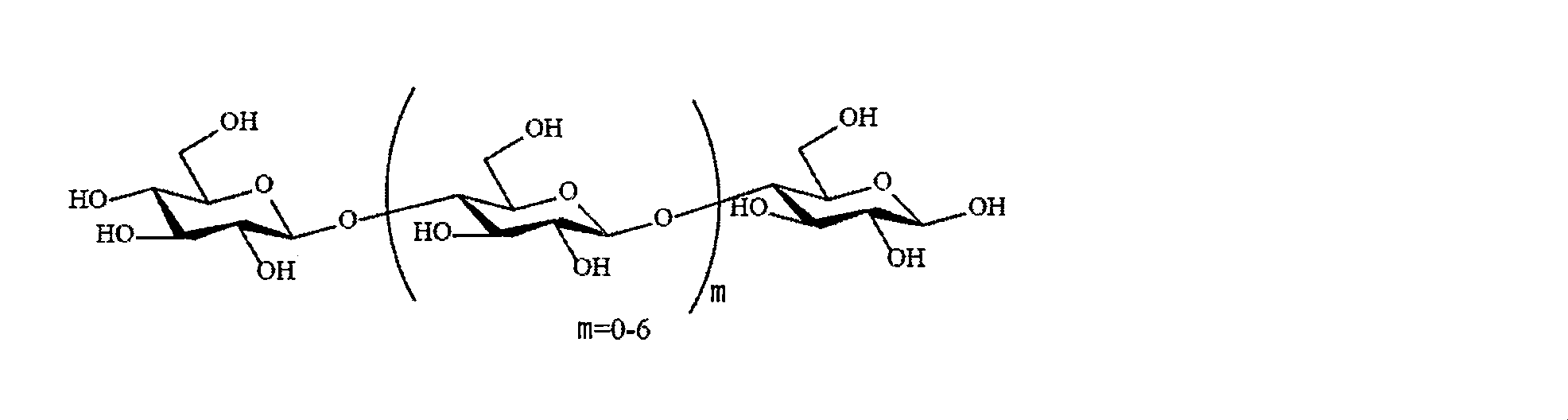
- the cellooligosaccharide used in the present invention is particularly preferably one having the following chemical structure.
- the plant vitalizer according to the present invention preferably further contains xylooligosaccharide as an endogenous elicitor.
- Xylooligosaccharides are oligosaccharides in which several xyloses are polymerized by ⁇ -glycosidic bonds, and are generally obtained by hydrolysis of xylan, which is the main component of hemicellulose, and are mainly sold for food use.
- the xylooligosaccharide used in the present invention is particularly preferably one having the following chemical structure.
- the plant vitalizer according to the present invention may be commercialized in any form such as powder, granules, liquid, etc., but in general, it is preferably liquid that is easy to spray.
- the plant vitalizer according to the present invention can be supplied as a stock solution in which cellooligosaccharide and, in some cases, xylooligosaccharide are dissolved in a solvent such as water at a high concentration.
- the total content of the cellooligosaccharide and the xylooligosaccharide in the plant vitalizer stock solution is preferably 0.05 to 10% by mass, more preferably 0.1 to 8% by mass, and further preferably 0.1 to 8% by mass. It is 0.5 to 6% by mass.
- the total content of the cellooligosaccharide and the xylooligosaccharide in the plant vitalizer stock solution is preferably 1 to 15% by mass, more preferably 3 to 12% by mass, and more preferably. Is 5 to 10% by mass.
- the total content refers to the content of cellooligosaccharide in the plant vitalizer stock solution.
- the mass ratio of the cellooligosaccharide to the xylooligosaccharide in the plant vitalizer is preferably It is 0.5 to 2, more preferably 0.6 to 1.5, and even more preferably 0.8 to 1.2.
- the mass ratio of the cellooligosaccharide to the xylooligosaccharide is preferably 0.2 to 1.5, more preferably 0.3 to 1.2, and even more preferably 0. It is 4-1.
- the plant vitalizing agent according to the present invention may further contain components other than oligosaccharides, which are active components, such as preservatives, spreading agents, anti-precipitation agents, thickeners, and excipients.
- active components such as preservatives, spreading agents, anti-precipitation agents, thickeners, and excipients.
- the preservative include potassium sorbate, paraoxybenzoic acid ester, benzoin, sodium dehydroacetate, hinokitiol, phenoxyethanol, polyaminopropyl biguanide, polylysine and the like.
- the spreading agent is a viscous liquid containing a surfactant as a main component, and is not particularly limited as long as it can be used as a spreading agent for plant vitalizing agents.
- polyoxyethylene nonylphenyl ether examples include ethylene hexitane fatty acid ester.
- examples thereof include ethylene hexitane fatty acid ester.
- examples of the precipitation inhibitor include polyphosphoric acid or salts of polyphosphoric acid, polycarboxylic acid type polymer surfactants, and the like.
- examples of the thickener include water-soluble polymers such as carboxymethyl cellulose (CMC), polyacrylamide, and starch, molasses, alcoholic fermentation concentrated waste liquid, amino acid fermentation concentrated waste liquid, and the like.
- excipients include lactose and starch.
- a plant cultivation method including applying the plant energizing agent according to the present invention to a plant is provided.
- the target plant to which the plant vitalizer according to the present invention is applied is not particularly limited, but is typically an agricultural product, which is Asteraceae, Solanaceae, Brassicaceae, Asteraceae, Umbelliferae, Rosaceae, Liliaceae, and Morning glories. Plants such as family, Brassicaceae, Liliaceae, Umbelliferae, Asteraceae, Morningglories, Solanaceae can be mentioned.
- abrana plants such as hakusai, cabbage, broccoli, honeybees, komatsuna, mizuna, daikon, and cub
- eggplants such as potatoes, tomatoes, eggplants, peppers, peppers, citrus fruits, tobacco, shungiku, lettuce
- Kiku family plants such as leafletas, gobo, and fuuki
- uri family plants such as watermelon, melon, pumpkin, cucumber, niggauri, hechima, gourd, spinach, ordinary grass, Swiss chard, okahijiki, beet, etc.
- Celery plants such as celery, parsley, honeybee, soybeans (edamame), red beans, green beans, soramame, pea, deer bear, peanuts, etc.
- Lily plants such as garlic and asparagus, rose plants such as strawberries, apples, pears and biwa, blue plants such as okura and cotton, ginger plants such as ginger, herbaceous plants such as hass, corn and rice.
- Abranaceae plants such as cabbage and komatsuna, Solanaceae plants such as tomato and eggplant, Asteraceae plants such as lettuce and leafletas, and Rosaceae plants such as strawberries and apples are preferable, and komatsuna and tomato are more preferable. preferable.
- the plant vitalizer according to the present invention is generally used by adding water or the like to the stock solution and diluting it to a desired concentration (for example, diluting 1000 times), and the total content of oligosaccharides in the plant vitalizer is suitable. Is applied to plants at concentrations ranging from 0.1 to 500 mass ppm. The total content of oligosaccharides in the plant energizer is more preferably applied to the plant at a concentration of 0.5 to 200 mass ppm, more preferably 1 to 100 mass ppm.
- the plant vitalizer can be applied to plants by a method customary in the art, and the spraying method is not particularly limited.
- a method of directly spraying on the leaves, stems, etc. of a plant, a culture group for cultivating a plant or It may be either a method of spraying in soil, a method of blending with fertilizer or the like and spraying in a culture group or soil.
- the types of fertilizers include chemical fertilizers containing nitrogen, phosphoric acid, and potassium, oil residue, fish residue, bone powder, seaweed powder, amino acids, sugars, and organic fertilizers such as vitamins.
- foliar spraying it is particularly preferable to carry out by foliar spraying in order to effectively express the elicitor activity.
- Foliar spraying can be performed by techniques customary in the art, such as power sprayers, shoulder sprayers, broadcasters, sprayers, manned or unmanned helicopters, fumes, hand sprays and the like.
- the content of the cellooligosaccharide is preferably 5 to 40% by mass, preferably 10 to 25% by mass, based on 100% by mass of the solid content in the fertilizer composition. Is more preferable.
- the content of the xylooligosaccharide is preferably 5 to 40% by mass and 10 to 25% by mass with respect to 100% by mass of the solid content in the fertilizer composition. Is more preferable.
- the fertilizer composition preferably contains at least one nutrient selected from nitrogen, phosphoric acid, and potassium in addition to the cellooligosaccharide and xylooligosaccharide, and contains all three nutrients of nitrogen, phosphoric acid, and potassium. Is more preferable.
- the fertilizer composition preferably contains 70 to 99% by mass of water, more preferably 75 to 99% by mass, and the undiluted solution is diluted 100 to 1000 times before use. Is preferable.
- a plant having elicitor activity or a part thereof for example, roots, stems, leaves, flowers, fruits, seeds, tissues, as compared with the case where no plant vitalizer is applied, It is possible to produce cells, etc.), which in turn can improve the vitality, yield, quality and post-harvest storage stability of the crop.
- the elicitor effect is important as an index of disease resistance, but the present inventors have now measured the enzyme activity by the amount of glucanase produced, which is one signal of the elicitor effect. We found that the elicitor activity could be evaluated. By collecting a part of the leaf of the plant under cultivation and analyzing its glucanase activity, it is possible to evaluate the same individual over time.
- the procedure for assessing elicitor activity is outlined below: (I) Plant sampling and pretreatment; (ii) Prepare a calibration curve using BSA as a protein standard (using the absorbance at a wavelength (600 nm) by the dye binding method); (iii) Specimen prepared in (i) Measure the protein concentration of; (iV) Measure the glucanase activity of the sample prepared in (i). Specifically, the activity is evaluated as an absorbance value at a wavelength of 590 nm with a B-HS reagent that develops color when a soluble low molecular weight decomposition product is liberated by glucanase; (v) the glucanase activity per protein unit is calculated.
- the specific procedure of such an evaluation method of elicitor activity is described in detail in the following examples.
- oligosaccharides [1. Preparation of oligosaccharides]
- a ceramic pot mill having a capacity of 3600 mL, 10 g of cellooligosaccharide Avicel (crystalline fine powder cellulose manufactured by Merck & Co., Ltd.) and 1.5 g of activated carbon BA50 (manufactured by Ajinomoto Fine-Techno Co., Ltd.) together with 2000 g of alumina balls having a diameter of 1.5 cm.
- the reaction material was obtained by setting it on a tabletop pot mill turntable (manufactured by Nikko Kagaku Co., Ltd., tabletop pot mill model ANZ-51S) and treating it at 60 rpm for 48 hours.
- the temperature was started at room temperature, and the temperature rise due to shear heat generation was left to the discretion. Subsequently, 0.374 g of the reaction raw material and 40 mL of water were placed in a high-pressure reactor (internal volume 100 mL, autoclave manufactured by OM Labotech Co., Ltd., manufactured by Hastelloy C22), and then stirred at 600 rpm to a reaction temperature of 10 to 30 ° C. After heating to 230 ° C. at / min (average heating rate 11.3 ° C./min), immediately stop heating and air-cool the reactor at 10-30 ° C./min (average temperature lowering rate 16.7 ° C./min). The reaction solution was prepared by cooling. Subsequently, the reaction solution was collected by a centrifuge, and the supernatant was freeze-dried to obtain a cellooligosaccharide powder.
- a high-pressure reactor internal volume 100 mL, autoclave manufactured by OM Labotech Co., Ltd.,
- MS Murashige and Skoog
- agar medium was used for growing Komatsuna.
- the prepared plant vitalizer was added to the MS medium to the final concentrations shown in each Comparative Example and Example, and then autoclaved at 121 ° C. for 20 minutes.
- the Abs600 measured value of the extract deviated from the calibration curve, it was appropriately diluted with ultrapure water (MilliQ) and remeasured to determine the protein concentration. Using the obtained values, the extract was diluted so that the concentration was constant, and used for the following glucanase activity measurement.
Landscapes
- Life Sciences & Earth Sciences (AREA)
- Environmental Sciences (AREA)
- Wood Science & Technology (AREA)
- Engineering & Computer Science (AREA)
- Pest Control & Pesticides (AREA)
- Botany (AREA)
- Forests & Forestry (AREA)
- Ecology (AREA)
- Biodiversity & Conservation Biology (AREA)
- Zoology (AREA)
- Plant Pathology (AREA)
- Chemical & Material Sciences (AREA)
- Soil Sciences (AREA)
- Organic Chemistry (AREA)
- Agronomy & Crop Science (AREA)
- Health & Medical Sciences (AREA)
- Dentistry (AREA)
- General Health & Medical Sciences (AREA)
- General Chemical & Material Sciences (AREA)
- Chemical Kinetics & Catalysis (AREA)
- Agricultural Chemicals And Associated Chemicals (AREA)
- Fertilizers (AREA)
Abstract
Description
このように、バイオスティミュラントにより、従来の農薬や肥料による問題を生じることなく、植物が本来有する能力を刺激して、その成長を促進することができる。
[1] セロオリゴ糖を含むことを特徴とする植物活力剤。
[2] 前記植物活力剤中の前記セロオリゴ糖の含有量が0.05~10質量%である、1に記載の植物活力剤。
[3] キシロオリゴ糖をさらに含む、1又は2に記載の植物活力剤。
[4] 前記植物活力剤中の前記セロオリゴ糖及び前記キシロオリゴ糖の合計含有量が、0.05~10質量%である、3に記載の植物活力剤。
[5] 前記植物活力剤中の前記キシロオリゴ糖に対する前記セロオリゴ糖の質量比が、0.5~2である、3又は4に記載の植物活力剤。
[6] 展着剤をさらに含む、1~5のいずれかに記載の植物活力剤。
[7] 1~6のいずれかに記載の植物活力剤を植物に適用することを含む、植物栽培方法。
[8] 前記植物活力剤を、オリゴ糖の合計含有量が0.1~500質量ppmとなる濃度で植物に適用することを含む、7に記載の方法。
[9] 前記植物活力剤の植物への適用が葉面散布により行われる、7又は8に記載の方法。
[10] 1~6のいずれかに記載の植物活力剤を適用しない場合と比較して、増大したエリシター活性を有する植物又はその一部の生産方法であって、7~9のいずれかに記載の方法により植物を栽培することを含む、方法。
[11] 前記エリシター活性が、植物中のグルカナーゼ産生量を測定することにより決定される、10に記載の方法。
[12] 1~6のいずれかに記載の植物活力剤を含有する肥料組成物。
本発明に係る「植物活力剤」は、植物の生育に関わる温度、光、水、及び塩等の非生物的ストレスの緩和作用を有するものだけでなく、病害虫等の生物的ストレスの緩和作用を有するものも含む。
ファイトアレキシンは、エリシターの作用によって植物体内で合成、蓄積される抗菌性化合物であり、植物種ごとに生産される抗菌性化合物は異なる。代表的なファイトアレキシンとして、フラボノイド、テルペノイド、脂肪酸誘導体などが挙げられる。活性酸素は病原微生物を殺す作用を有し、さらに、活性酸素及び活性窒素は単独で又は協調して様々な防御反応を発動するシグナルとして機能する。このようなエリシター効果による病害抵抗性は、幅広い病害に対して抵抗性を増強させることなどから農業利用に期待されている。
セロオリゴ糖をセルロースの加水分解反応により得る場合、セルロース原料としてはアビセル(Merck社製)などの結晶性微粉セルロースや、コットンリンターパルプを使用することが好ましい。

具体的には、ハクサイ、キャベツ、ブロッコリー、ハナヤサイ類、コマツナ、ミズナ、ダイコン、カブなどのアブラナ科植物、ジャガイモ、トマト、ナス、ピーマン、トウガラシ、シシトウ、タバコなどのナス科植物、シュンギク、レタス、リーフレタス、ゴボウ、フキなどのキク科植物、スイカ、メロン、カボチャ、キュウリ、ニガウリ、へちま、ひょうたんなどのウリ科植物、ホウレン草、ふだん草、スイスチャード、おかひじき、ビート等などのアカザ科植物、ニンジン、セロリ、パセリ、ミツバなどのセリ科植物、大豆(エダマメ)、小豆、インゲンマメ、ソラマメ、エンドウマメ、シカクマメ、落花生などのマメ科植物、サツマイモ、エンサイなどのヒルガオ科植物、ニラ、ネギ類、タマネギ、ニンニク、アスパラガスなどのユリ科植物、イチゴ、リンゴ、ナシ、ビワなどのバラ科植物、オクラ、綿などのアオイ科植物、ショウガなどのショウガ科植物、ハスなどのハス科植物、とうもろこし、米、大麦、小麦、サトウキビなどのイネ科植物等が挙げられる。
なかでも、キャベツ、コマツナなどのアブラナ科植物、トマト、ナスなどのナス科植物、レタス、リーフレタスなどのキク科植物、イチゴ、リンゴなどのバラ科植物が好ましく、そのなかでもコマツナ、トマトがより好ましい。
(i)植物のサンプリング及び前処理を行う;(ii)BSAをタンパク質標準として検量線を作成する(色素結合法による波長(600nm)の吸光度を利用);(iii)(i)で調製した検体のタンパク質濃度を測定する;(iV)(i)で調製した検体のグルカナーゼ活性を測定する。具体的には、グルカナーゼにより可溶性の低分子分解物が遊離すると発色するB-HS試薬にて、その活性を波長590nmの吸光度値として評価する;(v)タンパク質単位あたりのグルカナーゼ活性を算出する。
このようなエリシター活性の評価方法の具体的な手順については下記実施例で詳細に説明されている。
(1)セロオリゴ糖
アビセル(Merck社製結晶性微粉セルロース)10gと、活性炭BA50(味の素ファインテクノ(株)製)1.5gを、直径1.5cmのアルミナ球2000gと共に容量3600mLのセラミックポットミルの中に入れて、卓上ポットミル回転台(日陶科学(株)製,卓上ポットミル型式ANZ-51S)にセットし、60rpmで48時間処理して反応原料を取得した。なお、温度については室温で開始し、剪断発熱による温度上昇は成り行きに任せた。
続いて、反応原料0.374gと水40mLを、高圧反応器(内容積100mL,オーエムラボテック(株)製オートクレーブ,ハステロイC22製)に入れた後、600rpmで撹拌しながら反応温度まで10~30℃/分(平均昇温速度11.3℃/分)で230℃まで加熱後、直ちに加熱を止め、反応器を10~30℃/分(平均降温速度16.7℃/分)で風冷にて冷却して反応液を作製した。
続いて反応液を、遠心分離装置により回収した上清液を、凍結乾燥してセロオリゴ糖粉末を取得した。
物産フードサイエンス株式会社製、キシロオリゴ糖95Pを用いた。
(1)植物活力剤の調製
[1.オリゴ糖の準備]で用意した各オリゴ糖を、下記表中の実施例1-6における植物活力剤濃度(質量ppm)の1000倍になるよう、それぞれの組成比率でスターラー撹拌して水に溶解後、0.45μmフィルターで除菌したものを植物活力剤原液とした。この原液を水で1000倍に希釈して、以下の栽培試験に使用した。
トマトの種子を蒸留水に6時間浸漬した後に角質層を取り除き、次にそれを30分間通気した場所で乾燥した。次に複数の吸収紙を敷いた培養皿にそれぞれ10個ずつの種子を載せた後、培養皿毎に各条件の植物活力剤液を満たして6時間浸漬した。その後、各培養皿から大きさの揃った3個の種子を選抜して、条件ごとに鉢植えして11日間栽培した。発芽した種子は、植物乾燥重量及び根乾燥重量を測定し、植物活力剤を適用しない場合(比較例1)と比較した。植物乾燥重量は、根の部分をカットして残った上部をそのまま、恒温乾燥機により50℃で12時間、乾燥させてから測定した。また、根の部分は付着物をよく水洗し、恒温乾燥機により50℃で12時間、乾燥させてから重量を測定した。

(1)植物活力剤の調製
[1.オリゴ糖の準備]で用意した各オリゴ糖を、下記表中の実施例7及び8における植物活力剤濃度(質量ppm)の1000倍になるよう、それぞれの組成比率でスターラー撹拌して水に溶解後、0.45μmフィルターで除菌したものを植物活力剤原液とした。この原液を水で1000倍に希釈して、以下の栽培試験に使用した。
コマツナの育成にはムラシゲスクーグ(MS)寒天培地を使用した。調製した植物活力剤を各比較例及び実施例に示される終濃度となるようにMS培地に添加し、その後、121℃20分でオートクレーブを行った。
クリーンベンチ上にて、高圧蒸気滅菌したMS培地をプラントボックスに移し、よく冷ました後、コマツナ(わかみ、サカタのタネ)の種を10粒ずつ播種した。その後、明所にて22℃24時間、長日条件下で6日間生育させた。
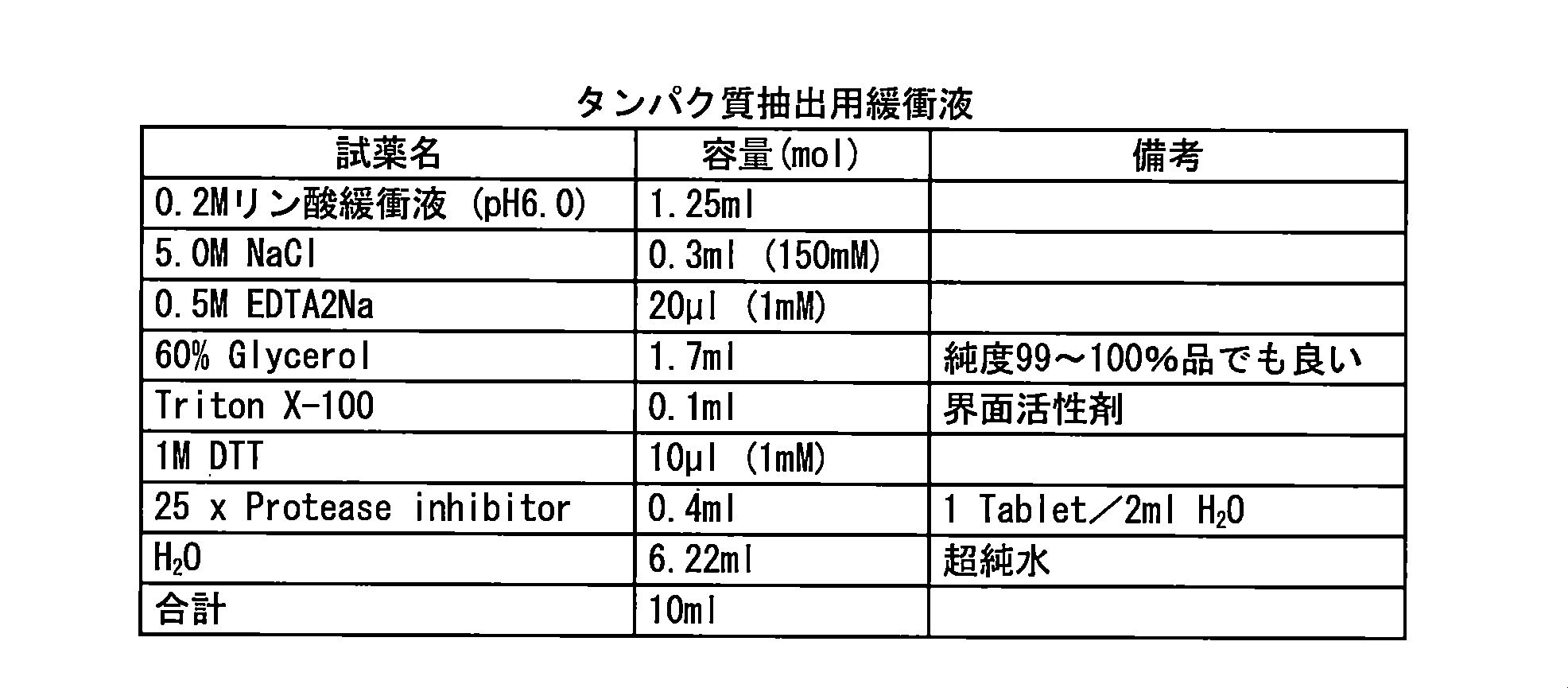
以下の組成のタンパク質抽出用緩衝液を調製した。
純度既知の牛血清アルブミン(BSA)2mg/mlを段階希釈(1/2、1/4、1/8、1/16、1/32、1/64希釈)してスタンダードを作製した。作製したスタンダードを用い、600nmにおける吸光度(Abs600)の平均値をとり、検量線を作成した(n=3)。クマシーブリリアントブルー(CBB)液300μlを96ウェルプレートに分注し、上記で調製した抽出液を6μl添加した。Abs600を測定した。ブランクはMilliQを用いた。抽出液の吸光度を段階希釈したBSA2mg/mlによって作成した検量線に当てはめ、タンパク質濃度を求めた。
なお、抽出液のAbs600測定値が検量線から外れた場合は、超純水(MilliQ)で適宜希釈して再測定してタンパク質濃度を求めた。
求めた値を用いて抽出液の濃度が一定になるように希釈を行い以下のグルカナーゼ活性測定に用いた。
1.5mlチューブに、B-HS試薬(Megazyme社)1錠をMilliQ 10mlに懸濁したB-HS基質溶液100μl、0.2M リン酸緩衝液(pH6.0)50μl、及び上記で調製した希釈液又は超純水(ブランク)50μlを混合し、各比較例及び実施例のサンプルを調製した。15分毎にサンプルをよく振りつつ、30℃のウォーターバスで、1時間30分、酵素反応を行った。反応停止液0.2N NaOHを100μl(合計300μl)加えて反応を停止した。15,000rpm、5分の条件下で遠心分離し、上清200μlを96ウェルプレートに分注し、グルカナーゼ活性を評価するために590nmにおける吸光度(Abs590)を測定し、植物活力剤を適用しない場合(比較例2)と比較した。

(1)植物活力剤の調製
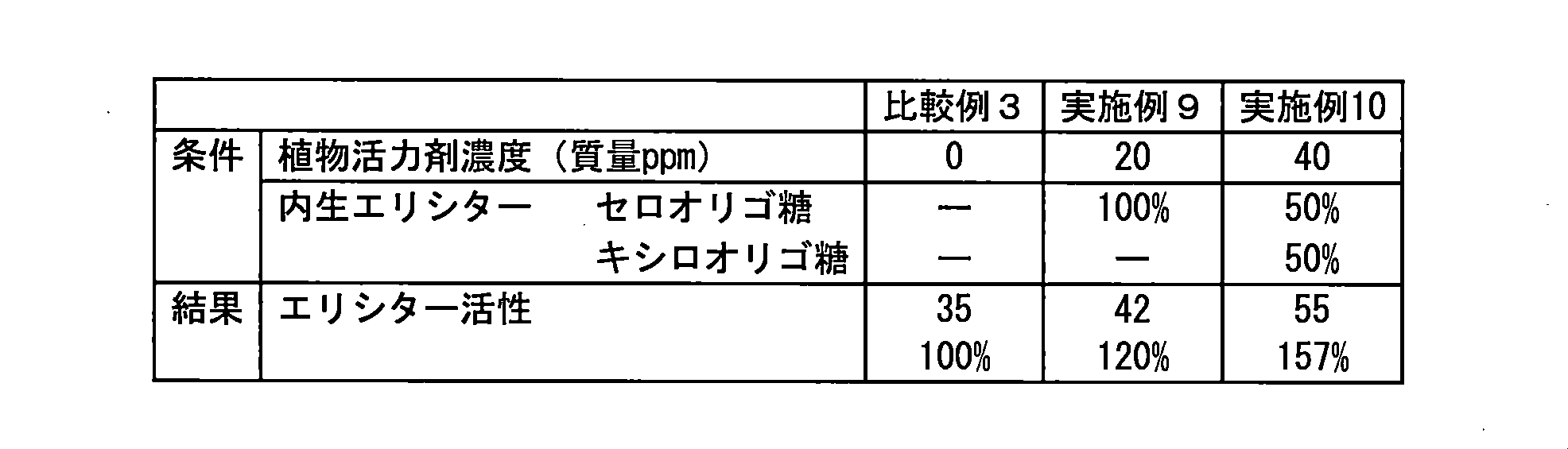
[1.オリゴ糖の準備]で用意した各オリゴ糖を、下記表中の実施例9及び10における植物活力剤濃度(質量ppm)の1000倍になるよう、それぞれの組成比率でスターラー撹拌して水に溶解後、0.45μmフィルターで除菌したものを植物活力剤原液とした。この原液を水で1000倍に希釈して、以下の栽培試験に使用した。
Claims (12)
- セロオリゴ糖を含むことを特徴とする植物活力剤。
- 前記植物活力剤中の前記セロオリゴ糖の含有量が0.05~10質量%である、請求項1に記載の植物活力剤。
- キシロオリゴ糖をさらに含む、請求項1又は2に記載の植物活力剤。
- 前記植物活力剤中の前記セロオリゴ糖及び前記キシロオリゴ糖の合計含有量が、0.05~10質量%である、請求項3に記載の植物活力剤。
- 前記植物活力剤中の前記キシロオリゴ糖に対する前記セロオリゴ糖の質量比が、0.5~2である、請求項3又は4に記載の植物活力剤。
- 展着剤をさらに含む、請求項1~5のいずれか一項に記載の植物活力剤。
- 請求項1~6のいずれか一項に記載の植物活力剤を植物に適用することを含む、植物栽培方法。
- 前記植物活力剤を、オリゴ糖の合計含有量が0.1~500質量ppmとなる濃度で植物に適用することを含む、請求項7に記載の方法。
- 前記植物活力剤の植物への適用が葉面散布により行われる、請求項7又は8に記載の方法。
- 請求項1~6のいずれか一項に記載の植物活力剤を適用しない場合と比較して、増大したエリシター活性を有する植物又はその一部の生産方法であって、請求項7~9のいずれか一項に記載の方法により植物を栽培することを含む、方法。
- 前記エリシター活性が、植物中のグルカナーゼ産生量を測定することにより決定される、請求項10に記載の方法。
- 請求項1~6のいずれか一項に記載の植物活力剤を含有する肥料組成物。
Priority Applications (5)
| Application Number | Priority Date | Filing Date | Title |
|---|---|---|---|
| JP2021528235A JP7435606B2 (ja) | 2019-06-17 | 2020-06-15 | セロオリゴ糖を含む植物活力剤及びその使用 |
| US17/619,801 US20220369568A1 (en) | 2019-06-17 | 2020-06-15 | Plant vitalizer containing cello-oligosaccharide, and use for said plant vitalizer |
| CN202080044290.3A CN114007423A (zh) | 2019-06-17 | 2020-06-15 | 包含纤维寡糖的植物活力剂及其使用 |
| EP20826940.7A EP3984362A4 (en) | 2019-06-17 | 2020-06-15 | PLANT VITALIZERS WITH CELLO-OLIGOSACCHARIDE AND USE OF THIS PLANT VITALIZERS |
| KR1020217037015A KR102709060B1 (ko) | 2019-06-17 | 2020-06-15 | 셀로올리고당을 포함하는 식물 활력제 및 그 사용 |
Applications Claiming Priority (2)
| Application Number | Priority Date | Filing Date | Title |
|---|---|---|---|
| JP2019-112247 | 2019-06-17 | ||
| JP2019112247 | 2019-06-17 |
Publications (1)
| Publication Number | Publication Date |
|---|---|
| WO2020255933A1 true WO2020255933A1 (ja) | 2020-12-24 |
Family
ID=74040774
Family Applications (1)
| Application Number | Title | Priority Date | Filing Date |
|---|---|---|---|
| PCT/JP2020/023469 Ceased WO2020255933A1 (ja) | 2019-06-17 | 2020-06-15 | セロオリゴ糖を含む植物活力剤及びその使用 |
Country Status (7)
| Country | Link |
|---|---|
| US (1) | US20220369568A1 (ja) |
| EP (1) | EP3984362A4 (ja) |
| JP (1) | JP7435606B2 (ja) |
| KR (1) | KR102709060B1 (ja) |
| CN (1) | CN114007423A (ja) |
| TW (1) | TWI840572B (ja) |
| WO (1) | WO2020255933A1 (ja) |
Cited By (1)
| Publication number | Priority date | Publication date | Assignee | Title |
|---|---|---|---|---|
| JP2024508844A (ja) * | 2021-02-26 | 2024-02-28 | シグナルケム・プランテック・コーポレイション | レッドレタスからポリフェノールを大量に生成する方法及びその使用 |
Families Citing this family (2)
| Publication number | Priority date | Publication date | Assignee | Title |
|---|---|---|---|---|
| CN116097998A (zh) * | 2023-02-28 | 2023-05-12 | 中国农业科学院农业环境与可持续发展研究所 | 一种基于偶数聚合度纤维寡糖的植物抗病免疫调控方法 |
| CN120982518A (zh) * | 2025-07-31 | 2025-11-21 | 湘湖实验室(农业浙江省实验室) | 纤维寡糖在诱导植物pti以促进根瘤菌招募与共生结瘤中的应用 |
Citations (12)
| Publication number | Priority date | Publication date | Assignee | Title |
|---|---|---|---|---|
| JPS63215606A (ja) * | 1987-03-03 | 1988-09-08 | Meiji Seika Kaisha Ltd | 植物の栽培方法 |
| JPH09143013A (ja) | 1995-11-20 | 1997-06-03 | Yaizu Suisan Kagaku Kogyo Kk | 植物活力剤 |
| JPH09216806A (ja) * | 1996-02-09 | 1997-08-19 | Gun Ei Chem Ind Co Ltd | 作物栄養補助剤及び該作物栄養補助剤を用いた作物栽培方法 |
| JP2001017176A (ja) * | 1999-07-02 | 2001-01-23 | Univ Kyoto | 病害抵抗性ポリペプチド、病害抵抗性遺伝子、植物に病害抵抗性を付与する方法、病害抵抗性を付与した形質転換植物、ヌクレオチドトリホスフェイト分解酵素 |
| JP2001064112A (ja) | 1999-08-26 | 2001-03-13 | Gun Ei Chem Ind Co Ltd | 植物活力剤及び該植物活力剤を用いた作物栽培方法 |
| JP2002114610A (ja) | 2000-04-14 | 2002-04-16 | Toyama Chem Co Ltd | 植物成長促進剤 |
| WO2011087002A1 (ja) * | 2010-01-13 | 2011-07-21 | 味の素株式会社 | ウリ科植物病害抵抗性増強剤およびそれを用いた植物病害防除法 |
| WO2012046758A1 (ja) * | 2010-10-07 | 2012-04-12 | 味の素株式会社 | イネ科植物病害抵抗性増強剤およびそれを用いたイネ科植物の病害防除法 |
| JP2013151438A (ja) | 2012-01-24 | 2013-08-08 | National Univ Corp Shizuoka Univ | 植物生長調節剤 |
| JP2015048436A (ja) | 2013-09-03 | 2015-03-16 | 公立大学法人福井県立大学 | 植物の耐病性を向上させる、生物由来キチン質含有物、その使用方法、及びその製造方法 |
| JP2017095352A (ja) | 2017-01-12 | 2017-06-01 | 秀夫 草桶 | キチン及び/若しくはキトサン又はキチン及び/若しくはキトサン含有物、並びにキチン及び/若しくはキトサン分解能を有する微生物の培養物を含む肥料、並びにその製造方法等 |
| WO2017104687A1 (ja) | 2015-12-18 | 2017-06-22 | 昭和電工株式会社 | セロオリゴ糖の製造方法 |
Family Cites Families (12)
| Publication number | Priority date | Publication date | Assignee | Title |
|---|---|---|---|---|
| JPH0645521B2 (ja) * | 1985-01-21 | 1994-06-15 | イーシー化学株式会社 | 土壌に散布する殺虫殺菌剤用展着剤組成物 |
| CA1332880C (en) * | 1986-10-17 | 1994-11-08 | Takashi Adachi | Plant cultivation method |
| JP3386489B2 (ja) * | 1992-05-29 | 2003-03-17 | 大日本製薬株式会社 | ファイトアレキシンの誘導剤 |
| JPH09315907A (ja) * | 1996-05-31 | 1997-12-09 | Gun Ei Chem Ind Co Ltd | 作物栄養補助剤及び該作物栄養補助剤を用いた作物栽培方法 |
| JP5001847B2 (ja) * | 2005-09-27 | 2012-08-15 | 旭化成ケミカルズ株式会社 | セロオリゴ糖含有組成物 |
| US20080072494A1 (en) * | 2006-09-07 | 2008-03-27 | Stoner Richard J | Micronutrient elicitor for treating nematodes in field crops |
| JP5138316B2 (ja) * | 2007-08-31 | 2013-02-06 | 花王株式会社 | 植物の栽培方法 |
| KR101232936B1 (ko) * | 2010-11-10 | 2013-02-13 | 전라남도 | 식물추출물을 함유한 딸기 잿빛곰팡이병 및 흰가루병을 포함하는 식물병 동시방제제 및 방제방법 |
| CN102965408B (zh) * | 2012-09-28 | 2014-04-23 | 中国农业科学院饲料研究所 | 一种甘薯复合功能寡糖及其制备方法与应用 |
| JP6017282B2 (ja) * | 2012-11-28 | 2016-10-26 | Nok株式会社 | 密封構造 |
| WO2015059864A1 (ja) * | 2013-10-25 | 2015-04-30 | コニカミノルタ株式会社 | 粒子状肥料およびその製造方法 |
| CN106103726A (zh) * | 2014-01-16 | 2016-11-09 | A·M·拉里 | 从农业废弃物分级分离寡糖的方法 |
-
2020
- 2020-06-15 WO PCT/JP2020/023469 patent/WO2020255933A1/ja not_active Ceased
- 2020-06-15 KR KR1020217037015A patent/KR102709060B1/ko active Active
- 2020-06-15 JP JP2021528235A patent/JP7435606B2/ja active Active
- 2020-06-15 TW TW109120006A patent/TWI840572B/zh active
- 2020-06-15 EP EP20826940.7A patent/EP3984362A4/en active Pending
- 2020-06-15 US US17/619,801 patent/US20220369568A1/en active Pending
- 2020-06-15 CN CN202080044290.3A patent/CN114007423A/zh active Pending
Patent Citations (12)
| Publication number | Priority date | Publication date | Assignee | Title |
|---|---|---|---|---|
| JPS63215606A (ja) * | 1987-03-03 | 1988-09-08 | Meiji Seika Kaisha Ltd | 植物の栽培方法 |
| JPH09143013A (ja) | 1995-11-20 | 1997-06-03 | Yaizu Suisan Kagaku Kogyo Kk | 植物活力剤 |
| JPH09216806A (ja) * | 1996-02-09 | 1997-08-19 | Gun Ei Chem Ind Co Ltd | 作物栄養補助剤及び該作物栄養補助剤を用いた作物栽培方法 |
| JP2001017176A (ja) * | 1999-07-02 | 2001-01-23 | Univ Kyoto | 病害抵抗性ポリペプチド、病害抵抗性遺伝子、植物に病害抵抗性を付与する方法、病害抵抗性を付与した形質転換植物、ヌクレオチドトリホスフェイト分解酵素 |
| JP2001064112A (ja) | 1999-08-26 | 2001-03-13 | Gun Ei Chem Ind Co Ltd | 植物活力剤及び該植物活力剤を用いた作物栽培方法 |
| JP2002114610A (ja) | 2000-04-14 | 2002-04-16 | Toyama Chem Co Ltd | 植物成長促進剤 |
| WO2011087002A1 (ja) * | 2010-01-13 | 2011-07-21 | 味の素株式会社 | ウリ科植物病害抵抗性増強剤およびそれを用いた植物病害防除法 |
| WO2012046758A1 (ja) * | 2010-10-07 | 2012-04-12 | 味の素株式会社 | イネ科植物病害抵抗性増強剤およびそれを用いたイネ科植物の病害防除法 |
| JP2013151438A (ja) | 2012-01-24 | 2013-08-08 | National Univ Corp Shizuoka Univ | 植物生長調節剤 |
| JP2015048436A (ja) | 2013-09-03 | 2015-03-16 | 公立大学法人福井県立大学 | 植物の耐病性を向上させる、生物由来キチン質含有物、その使用方法、及びその製造方法 |
| WO2017104687A1 (ja) | 2015-12-18 | 2017-06-22 | 昭和電工株式会社 | セロオリゴ糖の製造方法 |
| JP2017095352A (ja) | 2017-01-12 | 2017-06-01 | 秀夫 草桶 | キチン及び/若しくはキトサン又はキチン及び/若しくはキトサン含有物、並びにキチン及び/若しくはキトサン分解能を有する微生物の培養物を含む肥料、並びにその製造方法等 |
Non-Patent Citations (1)
| Title |
|---|
| See also references of EP3984362A4 |
Cited By (1)
| Publication number | Priority date | Publication date | Assignee | Title |
|---|---|---|---|---|
| JP2024508844A (ja) * | 2021-02-26 | 2024-02-28 | シグナルケム・プランテック・コーポレイション | レッドレタスからポリフェノールを大量に生成する方法及びその使用 |
Also Published As
| Publication number | Publication date |
|---|---|
| JP7435606B2 (ja) | 2024-02-21 |
| US20220369568A1 (en) | 2022-11-24 |
| EP3984362A4 (en) | 2023-07-12 |
| KR20210151932A (ko) | 2021-12-14 |
| TWI840572B (zh) | 2024-05-01 |
| CN114007423A (zh) | 2022-02-01 |
| TW202110328A (zh) | 2021-03-16 |
| JPWO2020255933A1 (ja) | 2020-12-24 |
| EP3984362A1 (en) | 2022-04-20 |
| KR102709060B1 (ko) | 2024-09-25 |
Similar Documents
| Publication | Publication Date | Title |
|---|---|---|
| TWI768374B (zh) | 含有胺基酸或其鹽與寡醣之植物活力劑及其使用 | |
| TWI767251B (zh) | 含有外源誘導因子(elicitor)與內源誘導因子之植物活力劑及其使用 | |
| JP7435606B2 (ja) | セロオリゴ糖を含む植物活力剤及びその使用 | |
| JP2024161442A (ja) | 果樹の栽培方法及び果樹の栽培用の植物活力剤 | |
| WO2022004741A1 (ja) | 植物栽培方法及び植物活力剤 | |
| JP7567349B2 (ja) | サトイモ科植物の栽培方法及びサトイモ科植物の栽培用の植物活力剤 | |
| JP2001302426A (ja) | 抗菌性植物活性剤 | |
| JP2022024682A (ja) | キャッサバの栽培方法及びキャッサバの栽培用の植物活力剤 | |
| JP7831292B2 (ja) | 綿花の栽培方法及び綿花の栽培用の植物活力剤 | |
| JP2024044093A (ja) | バイオスティミュラント組成物、葉面散布剤及び植物栽培方法 | |
| JP7825375B2 (ja) | イチゴの栽培方法及びイチゴの栽培用の植物活力剤 | |
| JP2024044044A (ja) | バイオスティミュラント組成物、葉面散布剤及び植物栽培方法 |
Legal Events
| Date | Code | Title | Description |
|---|---|---|---|
| 121 | Ep: the epo has been informed by wipo that ep was designated in this application |
Ref document number: 20826940 Country of ref document: EP Kind code of ref document: A1 |
|
| ENP | Entry into the national phase |
Ref document number: 2021528235 Country of ref document: JP Kind code of ref document: A |
|
| ENP | Entry into the national phase |
Ref document number: 20217037015 Country of ref document: KR Kind code of ref document: A |
|
| NENP | Non-entry into the national phase |
Ref country code: DE |
|
| ENP | Entry into the national phase |
Ref document number: 2020826940 Country of ref document: EP Effective date: 20220117 |